Google

Is Adachi’s pension reform a Tea Party initiative?

54

With all eyes on Wisconsin, local labor leaders are suggesting that Public Defender Jeff Adachi’s proposed retirement/health plan reforms are really Tea Party initiatives, even as Adachi threatens to place another Measure B-like initiative on the fall ballot if city leaders can’t agree on a fix for the city’s fiscal problems

Last fall, Adachi started a war with the local labor movement when he placed Measure B on the November ballot. Measure B proposed increasing employee contributions for retirement benefits, decreasing employer contributions for heath benefits for employees, retirees and their dependents, and changing rules for arbitration proceedings about city collective bargaining agreements,

Measure B ultimately failed, but not after both sides spent a ton of cash. And now labor is refusing to have Adachi sit in on their pension reform talks with Mayor Ed Lee, former SEIU President Andy Stern is describing the fight in Wisconsin as a ’15 state GOP Power grab,” and SEIU Local 1021 leader Gabriel Haaland is pointing to Wisconsin as a reason for excluding Adachi from pension reform talks

“Adachi’s obviously scapegoating a group that’s part of a national agenda,” Haaland said, noting that in the states where Republicans gained statehouse control in 2010, there’s talk about eliminating collective bargaining, and ending defined benefit plans and paycheck protection.

“The problem is that pension reform has been blowing on the anti-public sector worker winds that are blowing in Wisconsin and other states, whether progressives want to acknowledge it or not,” Haaland continued. “There is a reason that Adachi got so much money last year, and the corporate interests behind him are part of this effort to bash public sector workers.”

Prop. B’s campaign finance records show the campaign raised $1.125 million in 2010, and that the lion’s share came from wealthy individuals.

Billionaire venture capitalist, former Google board member and Obama supporter Michael Moritz gave $245,000. Author Harrier Heyman, Moritz’ wife, donated $172,500. financial analyst Richard Beleson donated $110,000. George Hume of Basic American Foods donated $50,000. Gov. Schwarzenegger’s former economic policy advisor David Crane gave $37,500. Philanthropist Warren Hellman donated $50,000. Republican investor Howard Leach, who co-hosted a Prop. B fundraiser with former Mayor Willie L. Brown, gave $25,000. Investor Joseph Tobin gave $15,750. Maverick Capital partner David Singer gave $15,000. JGE Capital Partners donated  $15,000; Bechtel owner  Stephen Bechtel Jr gave $10,000: Matthew Cohler, a general partner of Benchmark Capital, donated $10,000; the California Chamber of Commerce donated $5,000 and philanthropist Dede Wilsey gave $1,000.

But records also show that Measure B opponents, which included San Francisco Firefighters, SF Police Officers Association, SF First Responders, the California Nurses Association, United Educators, San Francisco Gardeners, San Francisco Teachers, Library Workers, laguna Honda Workers, donated over $1 million in their successful bid to squash Adachi’s reform. And that just about every elected Democrat, including Assemblymember Tom Ammiano, then mayor Gavin Newsom, Sheriff Mike Hennessey, and Board President David Chiu, came out against Adachi’s original plan.
 
Haaland acknowledged that the argument could be made that the progressives’ version of the hotel tax didn’t pass and less attention was paid to the district elections last fall, because labor focused primarily on defeating Adachi’s Measure B.

“But at the end of the day, we did get the real estate transfer tax and we defeated Measure B,” Haaland observed. “So, we need to keep fighting anti-worker pressure. It’s challenging times, but I feel like the connections need to be made.”

Adachi was swift to refute Haaland’s claim that his Measure B pension reform is and was a Tea Party initiative.
“What’s not been reported is the fact that there are all these people supporting pension reform who are progressive Democrats,” Adachi said, pointing to Moritz, Crane and former Board President and Green Party member Matt Gonzalez, who all supported Measure B last fall.

“You are talking about saving basic services and that’s a progressive cause,” Adachi continued. “You might argue that pension reform isn’t a progressive solution. But then you are saying that the needs of one group of workers are subservient to the needs of other workers. And even if you raised every tax in the city, you’d not be able to keep up with pension and healthcare costs.”

“Even if we could raise parking tickets to $200 a pop, and tax folks who make more than $100,000 a year, that still wouldn’t solve the problem, because the problem is so huge,” Adachi added. “When you look at this crisis, you can’t simply redbait and say, you are a Republican, or Sarah Palin. Matt Gonzales has always spoken for progressive values, but because he supports pension reform, he’s suddenly a member of the Tea Party? At a certain point, it begins to become absurd.”

Haaland countered that he’s  “challenged by the notion that thousands show up in Wisconsin to fight some of the same people behind Measure B, but our discourse has lowered to whether or not Jeff Adachi is a good guy.”

And Adachi expressed doubt that Mayor Ed Lee can come up with a suitable pension reform plan.

“I’ve heard Lee say there has to be a solution involving pension reform and underfunded healthcare benefits that would save $300 million to $400 million in annual savings, and that corresponds with the solution he needs to come up with to close the budget deficit,” Adachi said.

Adachi said that he has met with Lee on his own to discuss pension reform, but the new mayor did not list specifics.
“He didn’t tell me what his plan was,” Adachi said, “The Prop. B supporters have a plan, but Lee did not ask what that was. But he said he sincerely wants to solve that problem, and that his preference would be one ballot initiative that everyone would agree on. And I fully support a solution that is going to truly solve the problem. I’ve always believed it’s important for the public to understand the gravity of the situation. For too long, it’s been the elephant in the room and there hasn’t been enough public information.”

Adachi said he had a beef with the idea of “groups of labor unions holding meetings at City Hall and deciding who can participate.”

“It’s also troubling that there is no information publicly available about what the ideas on the table are, no explanation of how they got there, and no documenting of the extent of the problem,” Adachi continued. “And that’s what got us here in the first place: a lack of transparency, and voters being asked to weigh in without the full information.”

Adachi said he has an upcoming meeting with Lee, the Department of Human Resources and Sup. Sean Elsbernd about pension reform that is separate from the working group that includes labor and philanthropist Warren Hellmann.

And Elsbernd told the Guardian he believes the pension reform process would go smoother if Adachi were at the table.
“I have no problem with Jeff at the table, it makes sense to have him there to avoid two ballot measures,” Elsbernd said.

Elsbernd added that it was too early to cite numbers when it comes to talk of capping pensions.
“It’s a mistake to pick a number right now because you don’t know what it’s worth,” he said, noting that the pension reform working group has sent a bunch of different scenarios to retirement actuaries to crunch the numbers to see how much they would save the city.

“I can see a case being made for asking the highest paid city workers to contribute higher amounts for healthcare benefits,” Elsbernd said. “But I’m not sure that’s equitable on retirement benefits, though I could see a situation where safety pays more, regardless, because they have better pensions.”

“My girlfriend is a hacker”: Inside the EFF party

2

On our way to the Electronic Frontier Foundation’s 21st Birthday party, my programmer friend explained to me why, if it weren’t for the work of the good folks over at EFF, neither eBay nor WikiLeaks could do their thing.

See, it’s all about encryption, a topic my friend is slightly obsessed with. It used to be illegal for anyone but the government to send encrypted information through electronic channels, he explained, using technology that’s now commonplace and used in any website that requires a log in. In the 1990s, the EFF came along with a lawsuit to open up the ability to offer a secure transfer of information to the masses. The tech law firm prevailed, and soon it became possible to securely log in to a website and enter your credit card information without fear that it would be intercepted. Hence, the trail was blazed for online shopping.

From minds far more subversive than that of Meg Whitman sprang a very different use of the technology. Utilizing encryption software, WikiLeaks designed a way for whistleblowers to securely submit classified documents to an online repository.

That’s just one of many accomplishments that EFF could point to at its Feb. 16 celebration. A nonprofit, EFF “fights for freedom primarily in the courts,” according to its website, taking on the US government and major corporations on issues that threaten Internet freedom and digital rights. EFF boasts more than 61,000 contacts through its Action Center, which it uses to beat back bad legislation and raise awareness.

Just in the last few weeks, EFF has taken on the FBI over its plan to expand federal surveillance laws, weighed in on net neutrality, fended off against attacks from Congress over its aggressive protection of online privacy, and spearheaded a program that allows web users to surf secure all the time.

The EFF staged its 21st bash at Bricks and Mortar Media (BAMM.tv), a “content creation factory” in SoMa.

The place was adorned with festive, futuristic hacker art, from a flat-screen monitor displaying a word cloud, to a stage setup featuring an aerial array of computer bits and video game controllers.

One room featured a live video feed projected onto the wall with a strobe-light effect, and partygoers delighted in throwing kung-fu kicks in front of it and watching themselves flicker on screen like action figures seconds later.

In true tech-pioneer fashion, the night featured live nerdcore performances. What’s nerdcore? Let me put it this way. When the star of Dual Core shouts into the mic, “Throw your hands in the air if you’ve got mad skills,” the people he’s addressing really do have mad skills – like programming, web design, developing apps for mobile devices, managing vast databases, creating video games, and yes, even hacking. One of Dual Core’s raps included the line, “My girlfriend is a hacker.” He’s clearly smitten.

Several chiptune artists also performed, including Crashfaster  — “a chip musician, retro remixer, and low-bit concert promoter whose outreach has galvanized the Bay Area’s vibrant chiptune community,” according to EFF – and Trash80, “the eminent chip musician behind ArduinoBoy — software that helps integrate the Nintendo Game Boy into any existing electronic music arsenal.”

I had the honor of chatting with Doctor Popular, described on EFF’s site as a “professional yo-yoer, nerdcore artist, and innovator.” The good doctor makes music using only an iPhone, iPad, and some wires. He told me he writes songs using a handful of apps while riding CalTrain from San Francisco to San Mateo for his day job at a company that makes video games.

And oh, the nerdy crowd! The knowing glint in their eyes, those people who really understand how to manipulate technology. They program software, develop apps, eat, sleep and breathe online communication, whip out iPhones and Droid phones and talk about video games, latest versions of browsers and operating systems, and other matters that this reporter could not quite comprehend, because they were using acronyms.

They were gracious. “Sorry,” some one said to me after launching into a paragraph of alphabet-soup gibberish to my programmer friend. “Sometimes I forget, and then I notice people’s eyes glazing over.”

And yet, when you hang out with hardcore nerdcore fans, you learn the most fascinating things. For example, how when you begin typing “Torrent” into a Google search engine, the word “torrent” will not show up in the automatic feed that suggests search terms. Why? Well, there are theories.

Herrera’s crackpipe crackdown

45

I lived at Hayes and Fillmore in the 1980s, at the height of the crack epidemic, and a spectacularly unsuccessful dealer hung out on my corner. He was so bad at selling the stuff (or else was smoking so much of it) that he was constantly broke and used to knock on my door late at night ask to borrow a buck to buy a can of beer.


At one point he owed me about $10, and offered to pay me back with “some hubba.” He proceded to open his fist and show me a couple of grimy rocks rolling around in his filthy, sweaty palm.


It looked so appealing. I politely declined.


That was my one and only chance to smoke crack, and I passed it up. So when I heard that city attorney Dennis Herrera was going to sue a bunch of local stores for selling crack pipes, I must admit I was curious: What’s the definition of a “crack pipe?” How can you tell what a piece of smoking apparatus is going to be used for?


I asked Jack Song, a spokesperson for Herrera, and he told me it was pretty clear. “They’re glass, and they have certain characteristics,” he said.


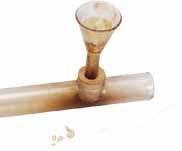
Again: I’ve never actually smoked crack, so I have no personal experience with crack pipes. But I used to have a really nice glass pot pipe, which unfortunately was seized by the police in upstate New York many years ago. I went on Google images, the source for all truth, and checked out “crack pipes,” and some of them looked a little like the one I used to use for what we now consider a legal medical treatment.


According to the press reports, an undercover cop went into these stores and asked to buy a crack pipe. The store owners allegedly offered up a specific device, which would not have been terrible smart; when we used to buy bongs in Connecticut, where selling any sort of drug paraphernalia was illegal, the salespeople would talk loudly about how to load “the tobacco.”


In this case, Herrera’s even going a bit beyond crack pipes:


At all times relevant to this Complaint, up to and including the present, in addition to
the permitted tobacco products, Defendants have also displayed and sold smoking paraphernalia, including a large array of pipes and devices commonly referred to as “bongs.”


But Song told me marijuana devices wouldn’t be targeted.


At any rate, the legal case is now going to rest, I guess, on what defines a “crack pipe.” (Apparently there are “meth pipes,” too, which are a little different from crack pipes. I feel so old and uninformed.)


And while I understand the neighbors griping about the stores attracting a nasty element (my old pal on Hayes and Fillmore was harmless enough, but your typical crackhead isn’t great company), I wonder about the ultimate impact of this particular, uh, crackdown.


Herrera’s lawsuit notes:


By providing their customers with a way to ingest illegal and dangerous narcotics, Defendants are creating and contributing to conditions which are injurious to the health, safety and welfare of their customers, neighbors, and the community at large. Defendants’ conduct causes or contributes to offensive and annoying conditions, including, but not limited to: illegal and dangerous trafficking of controlled substances, illegal and dangerous use and abuse of controlled substances, public intoxication, and the crime and nuisance related thereto.


I get that the city attorney considers these stores a community nusiance, and he may well be right. But I don’t think this is going to do much about crack and meth use.


I mean, can’t you smoke crack out of a pot pipe? Can’t you pretty much smoke it out of anything? When I was in high school people stuck their pencils into apples and made holes to smoke pot out of; in college, I learned that, in a pinch, Tampax wrappers made perfectly adequate rolling papers.


Druggies (of the sort who use crack pipes, anyway) may be violent and otherwise fucked up, but they’re notoriously creative. They may stop hanging around these particular stores in these particular neighborhoods, but they’ll find someplace else.


It seems likely that the only ones who are going to suffer for this are the store owners; the crackheads will be just fine. In a manner of speaking.


Not forgotten

0

arts@sfbg.com

HAIRY EYEBALL Around 500 people a day pass through the long corridor that bisects San Francisco City Hall’s lower level: supervisors dashing to the café for a quick lunch; tour groups of elementary school children; aides making a post office run; the occasional member of a wedding party looking for the bathroom.

It is also one of the last places where you’d expect to find a politically vital art installation, which is what makes San Francisco Art Commission gallery director Meg Shiffler’s decision to hang its current exhibit, “Afghanistan in 4 Frames,” in such a public and heavily-trafficked area so gutsy. Though the SFAC regularly puts on three to four art shows a year in the City Hall space, none in recent memory have resonated so powerfully with the dynamics of the venue itself.

The “4 Frames” exhibit presents a ground-level (no pun intended) portrait of the country through the lenses of four photojournalists who, over the past five years, have embedded themselves with various military forces and units stationed there. Though each photographer varies in style and background, their work — presented as photo-essays — shares a focus on the day-to-day, intersecting lives of civilians and soldiers off the battlefield.

James Lee, a U.S. Marine Corps veteran and current San Francisco State University graduate student whose move to photography from writing was a recent one, captures in crisp color the downtime faced by young Afghan National Security Force soldiers stationed near the Pakistan border.

In contrast to the all-male environment Lee documents, Lynsey Addario’s series “Women at War” focuses on the experience of female U.S. troops and their engagement with female civilians. The Pulitzer Prize-winning photographer has a knack for taking a picture at the moment her subjects are at their most unguarded, whether sharing a laugh with each other or shaving their legs in the barracks.

Addario’s photos are pointedly hung on a wall across from Bay Area photographer Eros Hoagland’s slightly more testosterone-driven series, “Siege Perilous.” The high contrast black and white photos depicting British military forces in the Korengal Valley and Helmand Province practically crackle with tension.

Another veteran photographer, Teru Kuwayama, is the only one who works with actual film, and his grainy, black and white Holga and Leica portraits of rural clans and armed mercenaries feel as if they are from another era. Kuwayama’s most timely work on Afghanistan actually resides offsite and online: his Web reporting initiative, Basetrack, links deployed Marines with life at home through images and video created by embedded journalists (although just last week military brass asked the embeds to leave).

Afghanistan made front pages again last summer after WikiLeaks uncovered 90,000 pages of classified materials chronicling a five-year window in the U.S. military’s long slog there. But “4 Frames” reminds those who encounter it — as well as those who seek it out — that regardless of the headlines, there will always be an ongoing, human side to what has been so often dubbed “the forgotten war.” And forgetting is not a luxury we can afford.


THE ATROCITY EXHIBITION

Although a vastly different beast from “Afghanistan in Four Frames,” SFMOMA’s current juggernaut of a thematic survey “Exposed: Voyeurism, Surveillance and the Camera Since 1870” offers a pointed study in contrast, demonstrating how not to curate a photography show with clarity of vision or regard to what could be called an ethics of representation.

As proclaimed by its title, “Exposed,” which was organized by SFMOMA and the Tate Modern in London, where it originally premiered, attempts to track — across various eras, technologies, and milieu — what the introductory wall text calls the “voyeuristic impulse” in modern and contemporary photography: “an eagerness to see a subject commonly considered taboo.”

With such an open-ended criteria, the curators have essentially given themselves carte blanche to include everything from early 20th-century “detective cameras,” Walker Evans’ portraits of unknowing New York City subway passengers, Ron Galella’s paparazzi snaps of Jackie O., Nick Ut’s iconic image of a crying Kim Phuc in Vietnam (as well as his 2007 picture of a crying Paris Hilton), Robert Mapplethorpe’s BDSM pictures, surreptitious documentation of the liberation of Nazi concentration camps, and Trevor Paglen’s near-abstract renderings of distant military sites.

The 200 or so pieces are arranged in thematically-grouped galleries (“Celebrity and the Public Gaze,” “Witnessing Violence”) that wind through half of the museum’s fifth floor. By the time you’ve made it through the lengthy, final “Surveillance” section of the show, “Exposed” feels more like a photography catalog that become the genesis for an exhibit, and not the other way around.

Such tidy categorization has the negative effect of creating closed systems rather than allowing different pieces to speak to each other. For example, two harrowing, anonymously-attributed lynching photos belong next to one of the most moving selections in “Exposed,” Oliver Lutz’s Lynching of Leo Frank, which hangs in another gallery. At the same time, the very proximity of death images and paparazzi shots cheapens both.

When presenting highly-charged, difficult images, many of which document humankind at its most brutal and unsavory, the context they are displayed in becomes as crucial as the images themselves. “Exposed,” which feels like the result of several unseemly Google image searches rather than a decade of curatorial sweat, disappoints in this regard.

Atrocity. Murder. Fame. Kinky sex. It’s all here! The question no one seemed to ask is: does it need to be? “Exposed” is simply too much. *

AFGHANISTAN IN 4 FRAMES

Through May 13, free

City Hall

1 Dr Carlton B. Goodlett Place (ground floor), SF

(415) 554-6080

www.sfartscommission.org/gallery

EXPOSED: VOYEURISM, SURVEILLANCE, AND THE CAMERA SINCE 1870

Through April 17; free–<\d>$18

San Francisco Museum of Modern Art

151 Third St., SF

(415) 357-4000

www.sfmoma.org


The Performant: Stalking the voice of young America

0

Listening in at SF Sketchfest and Live Evil

Is it just me, or do you also catch yourself wondering on occasion, “I wonder what the sound of young America is today?” Where is it lurking, and how will I recognize it when I find it? Well one pretty obvious solution is to just Google “the sound of young America” — the first hit will be Bay Area native Jesse Thorn’s podcast/radio show webpage on Maximum Fun. Delightful, irreverent, not unintelligible, and better yet, not unintelligent, “The Sound of Young America” is both talk show and time capsule. I mean, podcasts? How 2007!

But with comedy, it still works. A good joke is timeless, and a good comedian, whose primary tool is language, can generally carry off being funny, with or without additional visuals. And at the special SF Sketchfest edition of TSOYA, recorded at the Eureka Theatre  to a small but spirited afternoon crowd, funny people were in plentiful supply. LA stand-up comic Baron Vaughn, SF’s finest absurdist sketch troupe Kasper Hauser, creator of animated series “The Life and Times of Tim” Steve Dildarian. But as for the sound of “young” America, it was actually the comfortingly middle-aged “Bobcat” Goldthwait, no longer the mercurial situationist he was in his twenties, who stole the show with his affable demeanor and his relatively grounded philosophy of artistic fulfillment over monetary reward or “the usual trappings”.

Walking into Noh Space Saturday night was a little like walking into a high school Drama Club party, or Heavy Metal Karaoke in the Lower East Side, with everyone dressed up in their very best rock concert t-shirts, mullet wigs, and fingerless gloves: and that was just the oddience!

Onstage was Laurent Martini in a nerdy cardigan and his “younger self—‘Little Evil’” (Max Hartman), eagerly reenacting every past embarrassment of Laurent’s coming-of-age as an upper middle class fat kid from the Marina, with a desperate yearning to get laid, write rock songs, and be Nikki Sixx. These scenes were interspersed with “Don’t make me look too psychotic” vignettes from Martini’s now-defunct married life with desperate housewife Missy (Sara Faith Alterman) who spent a good portion of the show either bitching about Laurent’s uncool passion for hair metal, or getting frisky with “extra-curricular” construction workers, surfer dudes, and drug dealers.

Humiliation is central to the plot of “Live Evil”: it debuted appropriately enough as a share-and-tell at the Mortified story-telling series before it was written down in play form, and five years later still feels, in many ways, like a perpetually adolescent work. But actually, that’s the over-arching secret to its success. Because back when the sound of young America was “Pour Some Sugar on Me” every day was awkward embarrassment, and every desire over-wrought. And we’ve all been there—maybe not penning lyrics like “I’m gonna fuck my way across this great big land” — but certainly harboring impossible dreams of our own. And watching even a small slice of an impossible dream come true for a fellow romanticist, whether still the voice of “young” America or not-so-much, totally rocks.

Cannabis Club Guide

8

CANNABIS CLUB GUIDE 2012 When we first created our detailed local Cannabis Club Guide two years ago — which you can find at www.sfbg.com/cannabisguide — it seemed as if the marijuana business had entered a golden age of openness and professionalism in San Francisco. But with a federal crackdown shuttering at least a half-dozen dispensaries in the Bay Area (Market Street Collective, Sanctuary, Mr. Nice Guy, Medithrive, Divinity Tree, Marin Alliance for Medical Marijuana) things have changed. Luckily for needy patients and stoners alike, San Francisco has always been a resourceful city, so those meddling feds have actually done very little to disrupt the free flow of the world’s best marijuana.

Even before the cannabis industry moved above ground and into brick-and-mortar storefronts, there were always pot delivery services here. Now they’re really proliferating, so we thought it was high time to add them to our guide. And once we delved into this realm, we found that it was every bit as civilized and professional as a visit to our friendly neighborhood dispensary — and perhaps even more convenient and cost-effective.

The process seems just as secure and legally compliant as it is at the clubs, with most reputable delivery services requiring that you become a member before accessing their products. That means sending them copies of your doctor’s recommendation and California ID, which can be even done from a photo on your smart phone. After the services verify you, you’re good to go.

We’re starting the guide with just a trio of the most high-profile delivery services, as well as a couple more dispensaries, but we’ll be adding to the online guide throughout the year, so check back frequently for more updates.

DELIVERIES

THE GREEN CROSS

This is one of San Francisco’s premier cannabis clubs, setting the standard for everyone else in terms of quality, professionalism, and advocacy for the industry. My sources had long been telling me that the Green Cross carries the best weed in the city — information validated by the long string of awards it accumulates at cannabis competitions. And founder Kevin Reed has been a passionate, high-profile leader in the community for years.

But I became even more impressed once I actually used the service. Its great website features the best descriptions of its nearly two dozen strains of lab-tested marijuana, including where and how it was grown, as well as products ranging from inexpensive pipes to eye drops. I settled on a $40 eighth of Blue Deliah, a sativa-dominant hybrid that looked both cheap and good.

Within about 30 minutes, the friendly delivery guy showed up at my apartment, handed me a white paper bag full of goodies, and charged me $35 with my new customer discount. Inside the bag, there was a grinder, a cool jar, rolling papers, a lighter and other Green Cross swag, a pot cookie, non-medicated munchies, an information packet, a receipt stuck to the inside of the bag — and a baggie of beautifully trimmed buds.

www.thegreencross.org

(415) 648-4420

Opened in 2004

Price: Low to average

Selection: Huge and high-quality

Delivery time: Super fast

Sketch factor: Very low

Access: Secure but easy to use


MEDITHRIVE

When Medithrive opened as a dispensary in my Mission District neighborhood, it became one of my favorite clubs, so I was disappointed to see it shut down by threats from the federal government late last year. But it immediately reinvented itself as a delivery-only club, and it still retains the friendly service and large selection that first endeared me to it.

“It’s definitely been a change for us, but if patients can handle the delivery thing, it ends up being better for everyone,” said the employee who took my order: the Apocalypse Medi-Mix, a mix of high-quality small buds (better for vaporizers) for $40 for four grams. And because I was a newbie to its delivery service, they threw in a free joint.

I called at 3 p.m. and was told to expect delivery between 4:15 p.m.-4:45 p.m. — and it actually showed up at 4 p.m. It wasn’t a problem because I was working at home all afternoon, but I can imagine such a long arrival window wouldn’t be ideal for some. And frankly, the buds were pretty dry, perhaps the result of not moving as much inventory as Medithrive is used to.

But on the whole, it’s still a solid dispensary and a very friendly staff that’s still worth using.

www.medithrive.com

(415) 562-MEDI

Opened in 2010

Price: Average with good deals

Selection: Large

Delivery time: Fast but uncertain

Sketch factor: Low

Access: Secure but easy to use


FOGGY DAZE DELIVERY

This place pops up prominently when people Google marijuana delivery services in San Francisco, but other parts of its operation don’t seem quite as tight as its search engine savvy. Even its readily available website, I learned while trying to order, has an outdated menu of available items. For what it actually offers, customers need to visit www.weedmaps.com, where the guy said the menu would quickly appear when I typed in “foggydaze,” but it didn’t.

Finally, I just asked him to recommend a good sativa strain, and he mentioned just two that they had in stock: Headband and Cheezle. Shooting in the dark, I went with an eighth of Cheezle for $45, and he offered me a new member gift of a joint or sample of equal or lesser priced weed. I opted for the joint because it just seemed easier at that point, particularly since my initial call went to voicemail and then I had to wait 45 minutes to get my information verified. An hour later (he said it would be 45 minutes), I had my weed.

Compared to the bad old days of ordering whatever my underground drug dealer had and jumping through whatever hoops he required, Foggy Daze is much better. But in the modern marijuana scene in this highly evolved city, Foggy Daze doesn’t quite measure up as is.

www.foggydazedelivery.com

(415) 200-7451

Price: Average

Selection: Small

Delivery time: OK, but slow on verification

Sketch factor: Medium

Access: Pretty good


DISPENSARIES

APOTHECARIUM

It was only a matter of time before someone had the idea to really emphasize excellent personal service with high-end products in an elegant environment — but the folks at Apothecarium have done it in a way that really sets them apart from the rest of the pack. This place is an experience more than just a place to score weed, much the same way adventurous bars like Alembic aren’t just about getting tipsy but appreciating just what a cocktail can become in the right hands.

Visitors to the Apothecarium are warmly greeted and seated in front of an extensive (and well-designed) menu, which an knowledgeable staffer patiently and enticingly walks you through, focusing exclusively on you and your needs. Once you finally find what you want, a large jar of your chosen buds emerge, and the employee uses long silver tweezers to place the prettiest ones on a display tray in front of you to inspect while he weighs out your choice of small or large buds with an air of showmanship.

2095 Market, SF

(415) 500-2620

www.apothecariumsf.com

Buds weighed on purchase

Opened in 2011

Price: High to low (“compassionately priced” strains available)

Selection: Large, extremely informative menu available

Ambiance: Looks like a fancy hair salon, hardwood floors and patterned wallpaper

Smoke on site: No

Sketch factor: Low

Access/security: Secure but easy access


1944 OCEAN COLLECTIVE

Despite a somewhat forbidding waiting room, this neighborhood dispensary on a mellow stretch of Ingleside’s Ocean Avenue has a real family feel once you step onto the salesfloor.

I was in the market for edibles when I went to 1944, and chatted with the jocular sales staff about which available edible wouldn’t give me couch lock or paranoia — a fully-functioning treat, as it were. My budtender pointed me towards a sativa-based peanut butter cookie with high potency, and then made me feel OK about our difficulty making a decision. “We’re all stoners here,” he laughed.

Once you make your selection among the edibles, flowers, and tinctures on offer, head to the back of the low-glitz, comfortably appointed room to give your money at the cash register. Head back to the bud counter to pick up your selection — if you’re lucky you can grab a brownie bite, cup of tea, or apple from the buffet to assuage your munchies. There’s even a sign that announces the dispensary’s job counseling and resume writing classes. A somewhat cold exterior sure, but it belies a warm heart. (Reviewed by Caitlin Donohue)

1944 Ocean, SF.

(415) 239-4766

Buds weighed on purchase

Opened in 2004

Price: From cheap to high

Selection: Large

Ambiance: Comfortable seating, jovial staff, family feel

Smoke on site: No

Sketch factor: Forbidding waiting room, friendly inside

Access/security: Tight 


2011 REVIEWS

SPARC

The San Francisco Patient and Resource Center, or SPARC (1256 Mission, SF) immediately set a new standard for dispensaries when it opened last August, combining a stunningly beautiful facility with deep connections to the medical marijuana community and a strong commitment to taking care of patients and moving the movement forward.

Even the casual observer can see what a unique place this is. A selection of almost three dozen bud varietals is presented in the style of a Chinese apothecary, each strain laboratory-tested for strength and purity and labeled with THC and CBD levels. The facility was lovingly designed from scratch with state-of-the-art humidors and security systems, creating an environment that is warm, friendly, and secure, with more employees per customer than other clubs.

Below the surface, SPARC is also setting a standard. Founder Erich Pearson and others involved with the club have been movement leaders for many years and they have deep connections with growers, patient groups, and the progressive political community. So they offer everything from free acupuncture and other services to generous compassionate giving programs to strong support for all aspects of the vertically-integrated collective.

But it is the experience of visiting that is most striking. Get expert advice on choosing from a huge range on indoor and outdoor strains and then settle into one of the tables, load a bowl into the high-end Volcano vaporizer, and taste the fruits of SPARC’s expertise.

There are always lots of great deals to choose from, from one-pound bags for baking for $300 to eighths of the finest outdoor weed for as low as $28.

SPARC is truly an industry leader, setting a high bar for what dispensaries can be.

Prepackaged buds

Opened in 2010

Price: Wide range

Selection: Huge!

Ambiance: Warm, comfortable, hip

Smoke on site: Vaporizing only

Sketch factor: Low

Access/security: Tight but welcoming

———–

IGZACTLY HEALTH CENTER

Opening in late 2010, Igzactly (527 Howard, SF) is the new kid of the block — but it’s already establishing itself as one of the best cannabis clubs around. With a rotating supply of almost 40 varieties of buds to choose from at a full range of prices, it has the biggest selection in town. I asked the bud tender how the club is able to offer such a wide array of high-quality buds, and he said it’s because they’re using a different model than most clubs. Rather than buying the buds from growers, Igzactly uses a consignment system, splitting the proceeds with the growers.

Complementing the huge stock of dried buds, Igzactly also has a large selection of cannabis-infused edibles, concentrates, tinctures, ointments, and just about anything you can get weed into. On top of that, Igzactly has a comfortable lounge and is one of just a handful of clubs that allows vaporizing on site, giving clients a choice of using the top-end Volcano or the Zephyr (my personal favorite) vaporizer models. They even offer complimentary teas and coffee.

The staff there is friendly and customer-oriented. For example, when the club opened, it offered prepackaged buds like most clubs, but it heeded customer input and quickly switched to displaying all their buds in huge jars and weighing them out on purchase, which many patients prefer. And he said the club plans to expand the lounge soon and to add on-site laboratory services by year’s end.

If Igzactly is a sign of where the industry’s headed, the future looks bright and verdant.

Buds weighed on purchase

Opened in 2010

Price: From cheap to average

Selection: Huge!

Ambiance: Green, friendly, inviting

Smoke on site: Vaporizing only

Sketch factor: Low

Access/security: Secure but easy access

———–

SHAMBHALA

I visited Shambhala (2441 Mission, SF) on its second day open, when the smell of paint was stronger than that of weed, so it’s hard to judge it fairly. Check-in for new patients was maddening slow to an almost comical degree, they weren’t yet taking credit cards and had no ATM on site, and they offered a bigger selection of rolling papers than bud varieties.

But I still liked this place, the only one in that stretch of Mission Street. The staff is very friendly and they seem to really know their products. Unlike many clubs that offer a few good deals, the only cheap weed here was Afgoo for $25 per eighth, less than half the price of most of the 13 varieties they offered. When I asked why it was so much cheaper, the bud tender explained that the buds weren’t as tight or well-trimmed as the dispensary expects, although it still proved to be plenty strong and tasty.

Beyond the buds, Shambhala is also part head shop, selling lots of nice glass bongs, a display case filled with pipes, and rolling papers of all shapes and flavors. And while its selection of edibles is small, they do feature all of Auntie Dolores’ yummy cookies and savory snacks, even displaying the pretzels, chili-lime peanuts, and caramel corn in large glass jars on the counter.

Once Shambhala finds its groove, it will be a solid addition to the city’s dispensary network.

Prepackaged buds

Open since 2011

Price: Moderate

Selection: Limited buds, lots of paraphernalia

Ambiance: Clean, open, friendly

Smoke on site: No

Sketch factor: Low

Access/security: Tight

———-

MARKET STREET COOPERATIVE

It’s easy to overlook this place (1884 Market, SF), as I did last year when I first began to compile this guide. Nestled into the back of a wide sidewalk courtyard where Market meets Laguna just up the street from the LGBT Center, Market Street Cooperative has low-key signage and doesn’t seem to do much advertising or outreach, particularly compared to marketing-savvy clubs such as the Vapor Room, Medithrive, and SPARC.

But the operators clearly know what they’re doing, offering a wide product selection in a quiet, clean, no-nonsense environment. They offer a choice of buds for every taste and use, from the best high-end buds at a good price down to eighths for a dirt-cheap $18 and three different grades of shake, which many vaporizer users prefer over the tight buds that they need to grind themselves.

Access is limited to members, and the club insists on being able to verify the recommendation of users in a phone call to their doctors, a stricter standard that most clubs use and one that can get users turned away if their visit is after normal business hours (as they unapologetically did to my friend, the first time a club had denied him entry).

But once you’re in, you’re in, and this long-running club will take good care of you. 

Prepackaged buds

Opened in 1999

Price: Moderate with lots of good deals

Selection: High

Ambiance: Low-key and business-like

Smoke on site: No

Sketch factor: Very low

Access/security: Tight 


RE-LEAF HERBAL CENTER

I wasn’t terribly impressed by ReLeaf (1284 Mission, SF) when I first reviewed the club in 2010, so at their owner’s request I returned recently to give them another look. They have definitely improved in both the feel of the club and its customer service, but it still suffers from some of the same shortcomings I noticed last year.

While they allow smoking on site, which is great, they don’t have any vaporizers or bongs on hand for patients to use, making it seem a little sketchy. The selection of buds is also fairly limited, with about a dozen varieties divided into two pricing tiers (although only a couple selections on each tier really looked and smelled great), and the clones they had on sale during my visit looked scraggly and sickly.

But the employees there are very nice and helpful, and the atmosphere in the club has become more inviting. There carry a large stock of edibles not available in other clubs, including smoothies and other refrigerated snacks that require a special permit from the city to sell. And the customer appreciation barbecue events they offer are a nice touch.

For a small storefront operation, Releaf does a fine job and it’s worth a visit. But with the way in which the bar has been raised for dispensaries in this city, I wouldn’t put Releaf in the top tier. Sorry guys, maybe next year.


Buds weighed on purchase

Open since 2007 ( with three years at previous SF location)

Price: Moderate

Selection: Limited

Ambiance: A loud head shop that also has some weed

Smoke On Site: Yes

Sketch factor: Low

Access/Security: Moderate

—————

2010 REVIEWS

DIVINITY TREE

While the reviews on Yelp rave about Divinity Tree (958 Geary St.), giving it five stars, I found it a little intimidating and transactional (although it was the first club I visited, so that might be a factor). But if you’re looking to just do your business in a no-frills environment and get out, this could be your place.

The staff and most of the clientele were young men, some a bit thuggish. One worker wore a “Stop Snitching” T-shirt and another had “Free the SF8.” But they behaved professionally and were knowledgeable and easy to talk to. When I asked for a strain that would ease my anxiety but still allow me enough focus to write, my guy (patients wait along a bench until called to the counter) seemed to thoughtfully ponder the question for a moment, then said I wanted a “sativa-dominant hybrid” and recommended Neville’s Haze.

I bought 1/16 for $25 and when I asked for a receipt, it seemed as though they don’t get that question very often. But without missing a beat he said, “Sure, I’ll give you a receipt,” and gave me a hand-written one for “Meds.”

Buds weighed on purchase

Open for: four years

Price: Fairly low

Selection: Moderate

Ambiance: A transactional hole in the wall

Smoke On Site: No

Sketch factor: Moderate

Access/Security: Easy. Membership available but not required

————-

GRASS ROOTS

Located at 1077 Post St. right next to Fire Station #3, Grass Roots has the feel of a busy saloon. Indeed, as a worker named Justin told me, many of the employees are former bartenders who know and value customer service. With music, great lighting, and nice décor, this place feels comfortable and totally legit. Whereas most clubs are cash-only, Grass Roots allows credit card transactions and has an ATM on site.

The steady stream of customers are asked to wait along the back wall, perusing the menus (one for buds and another with pictures for a huge selection of edibles) until called to the bar. When asked, my guy gave me a knowledgeable breakdown of the difference between sativa and indica, but then Justin came over to relieve him for a lunch break with the BBQ they had ordered in and ate in the back.

Justin answered my writing-while-high inquiry by recommending Blue Dream ($17 for a 1.2-gram), and when I asked about edibles, he said he really likes the indica instant hot chocolate ($6), advising me to use milk rather than water because it bonds better with the cannabinoids to improve the high. Then he gave me a free pot brownie because I was a new customer. I was tempted to tip him, but we just said a warm goodbye instead.

Buds weighed on purchase

Open for: six years

Price: Moderate

Selection: High

Ambiance: A warm and welcoming weed bar

Smoke On Site: No

Sketch factor: Low

Access/Security: Easy

————–

HOPENET

Hopenet (223 Ninth St.) is one of the few places in the city where you can smoke on site, in a comfortable, homey style, as if you’re visiting a friend’s apartment. In addition to the loveseat, two chairs, and large bong, there is a small patio area for smoking cigarettes or playing a guitar, as someone was doing during my visit.

Although the small staff is definitely knowledgeable, they all seemed stoned. And when I asked about the right weed for my writing problem, a gruff older woman impatiently dismissed any indica vs. sativa distinctions and walked away. But I learned a lot about how they made the wide variety of concentrates from the young, slow-talking guy who remained.

He weighed out a heavy gram of White Grapes for $15, the same price for Blue Dream, and $2 cheaper than I had just paid at Grass Roots. That was in the back room, the big middle area was for hanging out, and the front area was check-in and retail, with a case for pipes and wide variety of stoner T-shirts on the walls.

Buds weighed on purchase

Open for: eight years

Price: Low

Selection: Moderate

Ambiance: Like a converted home with retail up front

Smoke On Site: Yes!

Sketch factor: Low

Access/Security: Easy

————

VAPOR ROOM

Vapor Room (607A Haight, www.vaporroom.com) is San Francisco’s best pot club, at least in terms of feeling like an actual club and having strong connections to its community of patients. It’s a large room where customers can smoke on site, giving this collective a warm, communal vibe that facilitates social interaction and fosters a real sense of inclusiveness.

Each of the four large tables has a high-end Volcano vaporizer on it, there’s a big-screen TV, elegant décor, and large aquarium. There’s a nice mix of young heads and older patients, the latter seeming to know each other well. But, lest members feel a little too at home, a sign on the wall indicates a two-hour time limit for hanging out.

Its early days in the spot next door were a bit grungier, but the new place is bright and elegant. It has a low-key façade and professional feel, and it strongly caters to patients’ needs. Low-income patients are regularly offered free medicine, such as bags full of vapor prepared by staff. Mirkarimi said the Vapor Room is very involved in the Lower Haight community and called it a “model club.”

But they’re still all about the weed, and they have a huge selection that you can easily examine (with a handy magnifying glass) and smell, knowledgeable staff, lots of edibles and concentrates, a tea bar (medicated and regular), and fairly low standardized pot prices: $15 per gram, $25 per 1/16th, $50 per eighth. And once you got your stuff, grab a bong off the shelf and settle into a table — but don’t forget to give them your card at the front desk to check out a bowl for your bong. As the guy told me, “It’s like a library.”

Buds weighed on purchase

Open for: seven years

Price: Moderate

Selection: High

Ambiance: Warm, communal hangout

Smoke On Site: Yes!

Sketch factor: Low

Access/Security: Easy, but membership required

————-

MEDITHRIVE

The newest cannabis club in town, MediThrive (1933 Mission, www.medithrive.com) has a bright, fresh, artsy feel to it, with elegantly frosted windows and a welcoming reception area as you enter. This nonprofit coop takes your photo and requires free membership, and already had almost 3,000 members when I signed up a couple weeks ago. Tiana, the good-looking young receptionist, said the club recently won a reader’s choice Cannabis Cup award and noted that all the art on the walls was a rotating collection by local patients: “We’re all about supporting local art.”

The decorators seemed to have fun with the cannabis concept, with a frosted window with a pot leaf photo separating the reception area from the main room, while the walls alternated wood planks with bright green fake moss that looked like the whole place was bursting with marijuana. There’s a flat-screen TV on the wall, at low volume.

The large staff is very friendly and seemed fairly knowledgeable, and the huge selection of pot strains were arranged on a spectrum with the heaviest indica varieties on the left to the pure sativas on the right. Lots of edibles and drinkables, too. The cheapest bud was a cool steel tin with a gram of Mission Kush for $14 (new members get a free sample), while the high rollers could buy some super-concentrated OG Kush Gold Dust ($50) or Ear Wax ($45) to sprinkle over their bowls.

Prepackaged buds

Open for: one year

Price: Moderate

Selection: High

Ambiance: Professional, like an artsy doctor’s office

Smoke On Site: No

Sketch factor: Very low

Access/Security: Easy, but membership required

————

KETAMA COLLECTIVE

At 14 Valencia St., Ketama is a testament to how silly it is that clubs within 1,000 feet of schools aren’t permitted to allow smoking on site. This former café has a large, comfortable seating area and full kitchen, both of which have had little use since a school opened way down the street last year, causing city officials to ban smoking at Ketama.

Pity, because it seems like a great place to just hang out. Yet now it just seemed underutilized and slow. The staff is small (one door guy and a woman hired last summer doing sales), and we were the only customers during the 20 minutes I was there (except for the weird old guy drinking beer from a can in a bag who kept popping in and out).

But it still had jars of good green bud, several flavors of weed-laced drinks and edibles, and a pretty good selection of hash and kief at different prices, and the woman spoke knowledgeably about the different processes by which they were created. To counteract the slow business, Ketama has a neon sign out front that explicitly announces its business — another indication the industry has gone legit.

Buds weighed on purchase

Open for: six years

Price: Low

Selection: Limited

Ambiance: Hippie hangout, but with nobody there

Smoke On Site: No

Sketch factor: Low

Access/Security: Easy, but free membership required

————

MR. NICE GUY

Belying its name, Mr. Nice Guy (174 Valencia St.) thrilled and scared me, but not necessarily in a bad way. Located across the street from Zeitgeist, the thug factor here was high and so was the security, allowing no human interaction that wasn’t mediated by thick Plexiglass, presumably bulletproof.

After initially being told by a disembodied voice to come back in five minutes, I submitted my doctor’s recommendation and ID into the slot of a teller’s window, darkened to hide whoever I was dealing with. Quickly approved, I was buzzed into a small, strange room with three doors.

I paused, confused, until the disembodied voice again told me, “Keep going,” and I was buzzed through another door into a hallway that led to a large room, its walls completely covered in brilliant murals, expertly painted in hip-hop style. Along the front walls, a lighted menu broke down the prices of about 20 cannabis varieties.

Then finally, I saw people: two impossibly hot, young female employees, lounging nonchalantly in their weed box, like strippers waiting to start their routines. The only other customer, a young B-boy, chatted them up though the glass, seemingly more interested in these striking women than their products.

I finally decided to go with the special, an ounce of Fever, normally $17, for just $10. I opened a small door in the glass, set down my cash, and watched the tall, milk chocolate-skinned beauty trade my money for Fever, leaving me feeling flushed. It was the best dime-bag I ever bought.

Prepackaged buds

Price: Moderate, with cheap specials

Selection: High

Ambiance: Hip hop strip club

Smoke On Site: No

Sketch factor: High

Access/Security: High security but low scrutiny

————-

BERNAL HEIGHTS COLLECTIVE

Bernal Collective (33 29th St. at Mission) seemed both more casual and more strict than any of the other clubs in town — and it also turned out to be one of my favorites.

After refusing to buy pot for a guy out front who had just been turned away, I entered the club and faced more scrutiny than I had at any other club. It was the only club to ask for my doctor’s license number and my referral number, and when I tried to check an incoming text message, I was told cell phone use wasn’t allowed for “security reasons.” On the wall, they had a blown-up copy of their 2007 legal notice announcing their opening.

But beyond this by-the-book façade, this club proved warm and welcoming, like a comfortable clubhouse. People can smoke on site, and there’s even a daily happy hour from 4:20–5:20 p.m., with $1 off joints and edibles, both in abundant supply. Normal-sized prerolled joints are $5, but they also offer a massive bomber joint with a full eighth of weed for $50.

The staff of a half-dozen young men were knowledgeable about the 20 varieties they had on hand and offered excellent customer service, even washing down the bong with an alcohol-wipe before letting a customer take a rip from the XXX, a strong, sticky bud that was just $15 for a gram.

Buds weighed at purchase

Open for: six years

Price: Fairly low

Selection: High

Ambiance: A clubhouse for young stoners

Smoke On Site: Yes

Sketch factor: Low

Access/Security: Fairly tight

————-

LOVE SHACK

This longtime club (502 14th St.) has had its ups and downs, the downs coming mostly because of its location on a fairly residential block. After taking complaints from neighbors, the city required Love Shack to cap its membership, although that seems to be changing because the club let me in, albeit with a warning that next time I would need to have a state ID card. It was the only club I visited to have such a requirement.

Once inside this tiny club, I could see why people might have been backed up onto the street at times. But the staff was friendly and seemed to have a great rapport with the regulars, who seemed be everyone except me. The knowledgeable manager walked me through their 20-plus varieties, most costing the standard street price of $50 per eighth, or more for stronger stuff like Romulan.

On the more affordable end of the spectrum was the $10 special for Jack Herrer Hash, named for the longtime legalization advocate who wrote The Emperor Wears No Clothes, a classic book on the history of the movement.

Buds weighed at purchase

Open for: nine years

Price: Moderate

Selection: High

Ambiance: Small, like a converted apartment

Smoke On Site: No

Sketch factor: Moderate

Access/Security: Tight

————-

COFFEE SHOP BLUE SKY

Blue Sky (377 17th St., Oakland)is based on the Amsterdam model of combining marijuana dispensaries with coffee shops, although it suffers a bit from Oakland’s ban on smoking. Still, it’s a cool concept and one that Richard Lee sees as the future of marijuana-related businesses because of the synergy between smoking and grabbing a bite or some coffee.

Most of Blue Sky is a small coffee shop and smoothie bar, but there’s a little room in back for buying weed. “We’ve got the best prices around,” said the guy who checked my ID, and indeed, $44 eighths and $10 “puppy bags” were pretty cheap. Customers can also sign up to do volunteer political advocacy work for free weed.

The only downside is the limited selection, only four varieties when I was there, although the woman at the counter said the varieties rotate over the course of the day based on the club’s purchases from growers.

Prepackaged buds

Open for: 15 years

Price: Low

Selection: Very limited

Ambiance: A fragrant little room behind a coffee shop

Smoke On Site: No

Sketch factor: Low

Access/Security: Easy

————–

HARBORSIDE HEALTH CENTER

I have seen the future of legitimized medical marijuana businesses, and it’s Harborside (1840 Embarcadero, Oakland). With its motto of “Out of the shadows, into the light,” this place is like the Costco of pot — a huge, airy facility with a dizzying number of selections and even a “rewards card” program.

All new members are given a tour, starting with sign-up sheets for daily free services that include yoga, chiropractic, acupuncture, reiki, consultations with herbalists, and classes on growing. Then we moved to a section with the clones of dozens of pot plant varieties available for purchase (limit of 72 plants per visit), along with a potted marijuana plant the size of a tree.

Harborside is also blazing the trail on laboratory services, testing all of its pot for contaminants and THC content, labeling it on the packaging just like the alcohol industry does. Some of the smaller clubs don’t like how over-the-top Harborside is, and they complain that its prices are high. But those profits seem to be poured back into the services at this unique facility.

Prepackaged buds

Open for: four years

Price: High

Selection: Huge

Ambiance: A big, open shopping emporium

Smoke On Site: No

Sketch factor: Low

Access/Security: Tight

————-

SANCTUARY

The people who run Sanctuary (669 O’Farrell St.), the first club to fully comply with the new city regulations and get its permanent license, have been active in the political push for normalizing medical marijuana, as a wall full of awards and letters from politicians attests. Owner Michael Welch was commended for his work by the Harvey Milk LGBT Democratic Club, where Sanctuary employee Tim Durning has been an active longtime member and former elected officer.

Sanctuary has a generous compassionate giving program and caters to lots of poor residents of the Tenderloin neighborhood. While the club is prohibited from allowing smoking, they fudge the restriction with a Volcano vaporizer. “A lot of patients are on fixed income and live in the SROs, where they can’t smoke, so we let them vaporize here whether they buy from us or not,” Durning told us.

Those who do buy from them find a huge selection — including 20 different kinds of hash and 17 varieties of buds — at a wide price range. Staffers know their products well and take their business seriously, giving a regular spiel to new members about responsible use, which includes maintaining neighborhood relations by not smoking near the business.

Buds weighed on purchase

Open for: six years

Price: Low to moderate

Selection: High

Ambiance: Campaign headquarters for the marijuana movement

Smoke On Site: No, but vaporizing OK

Sketch factor: Low

Access/Security: Easy

————–

GREEN DOOR

If low prices or a huge selection of edibles are what you seek, Green Door (843 Howard St., www.greendoorsf.com) could be the club for you.

Eighths of good green buds start at a ridiculously low $25 and go up to just $50 (the cheapest price for eighths at many clubs and also the standard black market price). If that’s not low enough, super-broke users can buy a quarter-ounce bag of high-grade shake for $40.

If you didn’t already have the munchies going in, you’ll get them perusing the huge menu of edibles: from weed-laced knockoffs of Snickers bars and Reese’s Peanut Butter Cups for just $5 to cupcakes, ice cream, or Chex party mix. They have lots of hash and other concentrates as well.

Somehow, the club also manages to have a strong compassionate giving program and contibutes to local civic organizations that include the Black Rock Arts Foundation, Maitri AIDS Hospice, and Friends of the Urban Forest.

The club itself is a little sterile and transactional, with an institutional feel and employees stuck behind teller windows. But even though that and the steady flow of tough-looking young male customers raise its thug factor a bit, the employees all seemed friendly and helpful, giving free edibles to first-time customers.

Prepackage buds

Open for: nine years (five here, four in Oakland)

Price: Cheap

Selection: High for edibles, moderate for weed

Ambiance: Like a community bank of cheap weed

Smoke On Site: No

Sketch factor: Moderate

Access/Security: Easy access, high security

————–

 

Our Weekly Picks: January 19-25

0

WEDNESDAY 19

EVENT

“20 Under 40: Stories from The New Yorker”

Leave it to The New Yorker to pull out a short story series of “young fiction writers who we will believe are, or will be, key to their generation” who makes good on the promise. The 20 Under 40 class of 1999 featured Junot Díaz, Jhumpa Lahiri, and Jonathan Franzen — before the three had soared to the forefront of modern literature. This year’s edition has now been anthologized after being run story by story in the magazine. This event at City Lights gives Left Coasters a chance to thrill to readings by the collection’s exciting West Coast names: Chris Adrian, Daniel Alarcón, and Yiyun Li. (Caitlin Donohue)

7 p.m., free

City Lights Bookstore

261 Columbus, SF

(415) 362-4921

www.citylights.com


EVENT

“Nerd Nite”

Last year’s megahit The Social Network proved that nerds are now totally mainstream (see also: Mark “Person of the Year” Zuckerberg’s face taking up the entire cover of Time magazine). Geeks are golden (literally — Zuck’s worth like $7 billion), so there’s no shame in hitting up “Nerd Nite,” the monthly gathering for those who enjoy celebrating the cerebral (also, drinking; it’s at a bar, after all). As you might suspect, January’s edition goes way beyond center parts and suspenders; featured smarty-pants include an engineer heading up an open-source team competing for a $30 mil prize offered by Google to anyone who can fund, build, and land a robot on the Moon (what, like it’s hard?) and an actual (necro)neuroscientist speaking on “Scanning the Zombie Brain.” Brains: trendy, and delicious! (Cheryl Eddy)

7:30 p.m., $8

Rickshaw Stop

155 Fell, SF

www.rickshawstop.com


THURSDAY 20

MUSIC

Tobacco

Dusting off the confetti and party debris that usually accompanies Black Moth Super Rainbow’s performances, Tobacco breaks from his so-called side project to take matters into his own smokin’ hot meat hooks and show off last year’s Maniac Meat and his freshest slab of sound, La Uti EP. It’s all bewitching stuff, even without the motor-mouthed rap by Aesop Rock that graced Tobacco’s debut Fucked Up Friends. These days matters are less manic though plenty witchy (“Fresh Hex,” featuring Beck) with beats that land as heavily as heck (“Sweatmother”). Hex, if the Butthole Surfers can luck into a hit, who’s to say that the Pittsburgh music meister won’t have the kids singing along to “Motorlicker” or “Lamborghini Meltdown” sometime soon? (Kimberly Chun)

With Seventeen Evergreen and Odd Nosdam

10 p.m., $13–$16

New Parish

579 18th St., Oakl.

www.thenewparish.com


PERFORMANCE

Raw-Dios

Sing it, Roots (from the group’s song “Rising Up”): “Yesterday I saw a B-girl crying/ She told me that the radio’s been playing the same song all day long.” Clear Channel now owns 10 percent of all radio stations in this country, 776,000 advertising displays, and 200 major concert venues. Small wonder the truth is hard to come by. But this stage production, starring veterans of the Teatro Campesino activist theater and the spoken word scene, finds hope: the based-on-truth story of a raunchy morning show DJ that flips the corporate script when the U.S. starts bombing Iraq in 2003. A play to hope to … (Donohue)

Thurs/20-Sat/22, 8 p.m., $16

Mission Cultural Center for Latino Arts

2868 Mission, SF

(415) 643-2785

www.missionculturalcenter.org


THEATER

Bone to Pick and Diadem

Cutting Ball Theater presents a reimagining of the myth of Ariadne, Theseus, and the Minotaur. Bone to Pick premiered in 2008 to critical acclaim, and now returns with its sequel, Diadem. Bone to Pick begins with Ariadne as a waitress in a diner — 3,000 years after being left on the island of Naxos, which now happens to be a deserted U.S. Army base. Diadem flashes back to the day Ariadne was left on Naxos by Theseus. Written by Eugenie Chan and directed by Rob Melrose, Greek mythology takes a new twist in this postmodern explanation of love, war, and complicity. (Emmaly Wiederholt)

Through Feb. 13

Thurs.–Sat., 8 p.m.; Sun., 5 p.m., $15–$50

Exit on Taylor

277 Taylor, SF

(415) 419-3584

www.cuttingball.com


FILM/COMEDY

“RiffTrax Presents Night of the Shorts”

In the tradition of Mystery Science Theater 3000, RiffTrax can help turn even the lamest piece of cinematic garbage into worthwhile viewing. Selling audio commentaries through its website meant to be played in sync with various current or justifiably forgotten films, the RiffTrax team wastes no opportunity to exploit plot holes or bash lame special effects and embarrassingly awful acting. As part of the SF Sketchfest, Kevin Murphy and Bill Corbett, two of the company’s founding members and former MST3000 writers, will be ripping apart PSAs and training and safety shorts alongside comedians such as Maria Bamford, Paul F. Tomkins, and Adam Savage. (Landon Moblad)

9:30 p.m., $25

Castro Theatre

429 Castro, SF

www.sfsketchfest.com


FRIDAY 21

MUSIC

Witchburn

Jamie Nova’s voice takes no prisoners. Bluesy and deep, gritty and unfaltering — think, “Black Velvet, If You Please” but without all the drama. It makes sense considering her years of practice in her other endeavor, the AC/DC tribute band Hells Belles, as Bon Scott-Brian Johnson. In the Seattle-based Witchburn, Nova’s strong vocals are a quintessential match for straightforward rock. Guitarist Mischa Kianne, who’s been hammering away metal riffs since junior high, is her six-string equivalent. With a debut album produced by Jack Endino, the man behind seemingly every good band from Nirvana to High on Fire, Witchburn is rock incarnate. (Kat Renz)

With Sassy!!! and Diemond

9 p.m., $5

El Rio

3158 Mission, SF

(415) 282-3325

www.elriosf.com FILM


FILM

Two in the Wave and “Bringing Up Léaud: The Antoine Doinel Cycle”

Emmanuel Laurent chronicles the hugely influential French nouvelle vague through the lives of its flagship auteurs in Two in the Wave. Raised in hardscrabble poverty, Francois Truffaut made films that reflected an increasingly sentimental yearning for the middle class. Jean-Luc Godard was raised in Swiss bourgeois comfort — yet he gravitated toward a Marxist proletarianism perversely avant-garde in the extreme. Both shared (and fought over) onscreen muse Jean-Pierre Léaud, plucked from Parisian streets to star in Truffaut’s 1959 The 400 Blows. One might reasonably conclude from evidence here that Truffaut, dead from a brain tumor in 1984, was the greater artist — or at least humanitarian. Yet coldly intellectual, ever-more-bilious Godard continues into his 80s, last year’s abstract Film Socialisme restoring him to rarefied critical if not popular favor. This dual portrait reaches an ingratiating zenith toward its end, when we see surviving interviewee Léaud growing up onscreen, anxious to please twin mentors. The Roxie’s weeklong showcase is double-billed with all five films in which the actor played Truffaut alter ego Antoine Doinel, from Blows to 1979’s Love on the Run. (Dennis Harvey)

Jan. 21–27, $5–$9.75

Roxie

3117 16th St., SF

(415) 863-1087

www.roxie.com


SATURDAY 22

MUSIC

“Jersey Score”

It’s not enough that the Situation, Ronnie, and Vinny graced a certain New York alt weekly’s 2010 Queer Issue cover. It’s not enough that Snooki’s novel, A Shore Thing, could be read as an homage to Truman Capote’s Answered Prayers. (Sample line: “She could pour a shot of tequila down his belly and slurp it out of his navel without getting splashed in the face.”) Nor is it sufficient that the gay community has enough G.T.L. freaks — call them gaydos — to fill a million grenade-filled hot tubs. No, now we must celebrate Jersey Shore‘s beachy meatballs with a one-off party dedicated to “tanned-up muscle boys and fist-pumping homos that are D.T.F.” Exuberant promoter Joshua J.’s shindigs are equal parts irony and earnestness, which in this case basically equals frickle bombs no matter how you slice it. With creepin’ DJs Robert Jeffrey and Juan Garcia playing Pauly D classics. (Marke B.)

9 p.m., $5

UndergroundSF

424 Haight, SF

www.joshuajpresents.com


MUSIC

Juan MacLean DJ set

“The” Juan MacLean, club cornerstone of heralded New York City dance punk label DFA: that affiliation goes back to Six Finger Satellite, the band in which MacLean (at that time John) played guitar and future LCD Soundsystem mastermind James Murphy produced material and ear-drum destroying live setups. Since then MacLean has transitioned to creating steady dance grooves, where drums hit hard and fast atop a background of melancholy melodies, uncompressed and rarely distorted. His recent !K7 release, DJ-Kicks, is a straightforward ode to house music and was labeled the best compilation of last year by DJ Mag. (Ryan Prendiville)

With Conor and Vin Sol, and Jason Kendig

10 p.m., call for price

Public Works

161 Erie, SF

(415) 932-0955

www.publicsf.com


MUSIC

Fu Manchu

Sometimes, when I can’t get warm to save my life, I’ll bundle up, find a south-facing hillside full of sage and agave, and listen to Fu Manchu. I’ll forget I’m in San Francisco where I haven’t had tan legs in more than four years, reveling instead in that consummate blend of 1970s classic rock, 1980s SoCal punk, 1990s stoner metal, and skate-movie soundtrack sunshine. This is the band’s 20th anniversary tour, it’s playing two sets: one of its third album, “In Search of …” from an unprecedented start to finish, and the other with songs off its first two records. Opening band Santa Cruz’s Dusted Angel is worth being on time. (Renz)

With Dusted Angel

10 p.m., $12

Bottom of the Hill

1233 17th St., SF

(415) 621-4455

www.bottomofthehill.com


MONDAY 24

EVENT

“Porchlight”

This month at Porchlight, San Francisco’s “premiere storytelling series,” hosts Arline Klatte and Beth Lisick present “Giving It Up! Stories about Quitting, Stopping, Letting Go, and Never Coming.” Featured anecdotalists this month include up-and-coming comedian and “Lazy Sunday” counter clerk Emily Heller, and working-class weirdo Scott “Meatman” Vermiere, a self-admitted expert in hiding places whose nickname is absolutely not ironic. With an ever-changing cast of yarn-spinners, there’s no way of knowing where the 10-minute tales will go. But that’s the point. (Prendiville)

8 p.m., $15

Verdi Club

2424 Mariposa, SF

www.porchlightsf.com


The Guardian listings deadline is two weeks prior to our Wednesday publication date. To submit an item for consideration, please include the title of the event, a brief description of the event, date and time, venue name, street address (listing cross streets only isn’t sufficient), city, telephone number readers can call for more information, telephone number for media, and admission costs. Send information to Listings, the Guardian Building, 135 Mississippi St., SF, CA 94107; fax to (415) 487-2506; or e-mail (paste press release into e-mail body — no text attachments, please) to listings@sfbg.com. Digital photos may be submitted in jpeg format; the image must be at least 240 dpi and four inches by six inches in size. We regret we cannot accept listings over the phone.

Pwning the classics

0

Jennie Ottinger’s last solo painting show at Johansson Projects, “ibid,” presented an assortment of ghostly figures — ballerinas, nurses, schoolchildren, businessmen — lifted from found photographs. The less-is-more aesthetic of Ottinger’s small oil and gouache canvases underscored the fact that, save for the recovered images used as source material, the everyday people depicted in them had long been lost to history.

The same could hardly be said of the authors Ottinger breezily engages with in her latest show, “Due By,” in which she casts a gimlet eye on William Faulkner, Virginia Woolf, David Foster Wallace, Gabriel Garcia Marquez, Harper Lee, John Updike, and Leo Tolstoy, among other notable figures of the modern Western literary canon.

Ottinger has essentially remade these authors’ best-known works in her own image with her own images. In addition to painting scenes from titles such as The Loved One and To Kill A Mockingbird, she has also created new covers for them (based on the design of older editions) enfolding her art around actual books. The contents of the books don’t match their titles. Their plastic slipcases, though, are a clever nod at authenticity.

On one wall these new-old books have been stacked horizontally into humorous thematic groupings whose titles frequently double as groan-inducing punchlines: the Madame Bovary, Couples, and Anna Karenina stack is called Why Buy the Cow When You Can Get the MILF For Free? Another short stack that includes Lolita, Sons and Lovers, and Oedipus Rex is titled, appropriately enough, Inappropriate Lovers.

Also throughout the gallery are single volumes, propped open on shelves. Ottinger has glued together the books’ pages and carved out small rectangular spaces into which she has placed her own summaries of the re-covered work, which you are allowed to pick up and leaf through.

Ottinger’s retellings — handwritten in a tiny, tidy scrawl that resembles birdtracks across fresh snow — are by far the best thing in “Due By.” Her observations are pithy, and at times, flash an understated brilliance. Ottinger is also, on occasion, not above proclaiming her ignorance of the text she’s writing on and doesn’t hesitate to quote Wikipedia and SparkNotes for backup.

Here she is on Anna Karenina‘s titular doomed heroine: “We will soon see evidence of her extraordinary relationship skills.”

Or the protagonist of Ralph Ellison’s Invisible Man: “Much like tofu, he adopts the qualities of those around him.”

And I challenge any English PhD to come up with a more perfect gloss on As I Lay Dying‘s Budren clan as, “Holy shit! This family is cursed. Very National Lampoon’s Vacation.”

If Ottinger were a high school student, she would be the bright kid who always makes wisecracks in class because she’s bored with or understimulated by her surroundings, and not necessarily by the assigned reading (I wonder, in fact, if Ottinger was that student). Her writing, for all its glibness and front-loaded superficiality, carries a palpable amount of affection for the texts. Ottinger’s sassiness is an informed sassiness; it lacks the underlying vitriol of true snark.

In other words, Ottinger’s armchair criticism is the sort that the Internet — and blogs, in particular — has made us more accustomed to. At the same time, educators attempting to teach any of the texts featured in “Due By,” have had to become more adept at sniffing out the lines in their students’ papers lifted from the same Wikipedia and SparkNotes entries that Ottinger playfully quotes. You can read Anna Karenina in its entirety online, or you can find a million ways to get around reading it and still turn in a term paper on “the death of the heart.”

Mind you, I don’t think Ottinger is clutching her pearls over the fate of the literary canon (or the book as object, or the coarsening of pedagogy, etc.) in the age of Google. If the smart, funny, and lovingly crafted objects she has created in “Due By” must be burdened with a takeaway message about the way we read now, I’d like to quote one of the great antiheros of television, Don Draper: “Change isn’t good or bad. It just is.”


MAGIC EYES

With Ed Moses’ dazzling acrylics, what you see is what you get. That’s not a diss by any means. Rather, don’t expect something else to emerge if you give into the temptation to slowly cross and uncross your eyes while staring down one of the textile-like paintings in “Wic Wac,” Moses’ current show at Brian Gross Fine Art.

Moses — a L.A. veteran who had his first show at the city’s legendary Ferus Gallery in 1958 — identifies as an abstract artist, even though paintings such as Anima Kracker can’t help but cause pattern recognition: their fractal-like smears of off-set yellows and purples are in fact made up of the morphed stripes, spots, and other tell-tale markings of zebras, giraffes, and tigers. 

JENNIE OTTINGER: DUE BY

Through Jan. 8, 2011

Johansson Projects

2300 Telegraph Ave, Oakland

(510) 444-9140

www.johanssonprojects.com

ED MOSES: WIC WAC

Through Dec. 23

Brian Gross Fine Art

49 Geary, SF

(415) 788-1050

www.briangrossfineart.com

PG&E exec fails as a spy

3

You’d think California’s largest utility company would know a thing or two about spying. From toxic groundwater plumes to deadly pipeline explosions, Pacific Gas & Electric Company has given plenty of Californians reason to mobilize against their practices, and countless campaigns have been launched against the monopolistic energy giant. Yet former SmartMeter program director William Devereaux revealed himself to be an amateur when he tried using an anonymous email address to infiltrate his activist opponents — with an account that displays his real name.

The Chronicle is reporting that Devereaux resigned from his post as director of the $2.2 billion SmartMeter program once the news broke that he’d been outed by the very anti-SmartMeter activists he later admitted to keeping tabs on.

It wasn’t too difficult to figure it out. Devereaux attempted to join an activist listserv for the EMF Safety Coalition, an organization that opposes SmartMeter installations. Apparently assuming that his name would be hidden, he signed his e-mail to Sandi Maurer, the group moderator, as “Ralph.” Here’s the message:

On Nov 4, 2010, at 3:23 PM, William Devereaux <manasota99@gmail.com> wrote:

Hi Sandi,

Sorry for the delay in getting back to you, I’ve been travelling a lot.  I live in Oakland where Smart meters have been sweeping across town and wanted to learn more about them and join the conversation to see what I can do to help out here.

Thanks,

Ralph

Just a regular old SmartMeter-hating guy called Ralph. Except that until the news story broke, a Google search of the name beside his email address yielded countless PG&E press releases in which the utility executive publicly extolls the virtues of the electricity-usage meters, which activists fear will expose people to unhealthy levels of radiation. Now that he’s been outed, said Google search speaks to Devereaux’s rather deficient skills as an infiltrator instead.

“We think he’s been lurking on one of our lists for a couple of months,” activist Joshua Hart with Stop Smart Meters told the Guardian. Hart said SmartMeter protesters got a surprise when they showed up at a Sonoma County location a couple weeks ago to stage a demonstration against the PG&E contractor hired to install SmartMeters. By the time they got there, all of the contractor’s trucks and signs had vanished. It was like they’d known what to expect. “His judgment has been called into question,” Hart said, “and his honesty has been called into question.” Apparently, his career has now been called into question too.

Appetite: David Wondrich on Punch

0

When cocktail historian and Esquire columnist David Wondrich speaks about drink, you listen — or read, as the case may be. His latest book Punch, debuts Nov. 2, the first of its kind on the glories and history of the punch bowl. I had the privilege of speaking with Dave over the phone from his New York home. The question at hand: why punch? Or to quote from the book, what makes punch “necessary”?

Wondrich stands by his punch bowl. He tells me it’s “the greatest social beverage of all time,” that “now more than ever we need beverages that promote friendship.” He calls punch “more gentle than cocktails”, its preparation “easy and utterly pleasurable.” The punch bowl is communal, ideal for a group or festive gathering, less laborious than individual cocktails, and a hell of a lot more fun. As Dave states in the book’s preface: “most of punch’s stories are of warm fellowship, and conviviality, and high-spirited gatherings afloat on oceans of witty talk” — not to mention a few “battles and brawls.”

We’re not talking about “frat juice” here. We’re talking honest-to-God punch: boozy yet delicious, layered with citrus, raw sugar, and varying spirits. The book starts with a comprehensive history — who drank punch and where. Wondrich says the book started as a big chunk cut out of his first book Imbibe.

The convivial punch houses of antiquity that feature in Punch sound so appealing that I ask Dave if he envisions their return. “I certainly hope so,” he replies. Besides Rickhouse here in SF, some of his favorite bars for punch around the globe include Hix in London, Brooklyn’s Clover Club (which lies a dangerously close distance from his present location), and Manhattan’s Death & Co. He’s also a fan of Savoy Cocktail Night at SF’s own Alembic (hear, hear!)

Like most classic concoctions, the name of punch’s first mixologist has been lost to the sands of time — though there are countless early references to the drink. One of Wondrich’s strongest sources is Google Books, where he digs up old newspapers, pamphlets, and rare books before he cross references them in the libraries of New York and London. Another research source?  “I am trained as an academic so I have a lot of 1600s books,” he says. “I start with a lot of blank space and start to fill that in using every kind of source possible… I’ll track down the original source, and don’t settle for first mention.”

I asked if he’d ever write the book he wishes existed, a dream mentioned on page six of Punch, which is a detailed source on distilling, the drink’s origins, its history, and importance. He says it’s a project “too big for any one person to bite off, unless they have all the time in the world and know multiple languages.” Wondrich says he “could tackle parts of it.” He estimates that it would take at least three co-writers: someone fluent in Dutch, German, Chinese, and Indian.

What we’re more likely to see Wondrich write about next is how the American style of drinking — particularly our contributions in cocktails and spirits — went global. He’s already done “tons of research” for past presentations on the subject. Spots of particular interest for him include our country’s legendary World’s Fair cocktail showcases and the way the techniques they highlighted spread across the rest of the globe. 

Wondrich expects the section called Book II of his recently released Punch will be limited to “total mixology geeks.” But I found Book II a useful, necessary account of the ingredients, tools, and proper measurements needed for the drink, particularly his recommendations for spirits in the “Ingredients” chapter.

A good half of Punch is recipes, ranging from Milk Punch to American Fancy Punch. When asked which ones he makes the most, Wondrich named the bracing Chatham Artillery punch on page 248 (a Savannah original, a poorly-crafted version of which I’ve imbibed whilst walking down the city’s streets). Back in the day, a local paper described this punch thusly: “as a vanquisher of men its equal has never been found.” Dave says the recipe in this book (there’s yet another included in Imbibe!) “claims to be the original, and very well might be,” though when it comes to  traditional recipes “they get passed down like a game of telephone,” each iteration evolving from the last.

One of his biggest crowd-pleasers — which he says people consume in “shocking amounts” — is his own recipe of Royal Hibernian punch (p. 269):

Prepare an oleo-saccharum with the peel of three lemons and six ounces of white sugar. Add six ounces strained lemon juice and stir until the sugar has dissolved. Add to this 12 ounces Sandeman Rainwater Madeira, stir and pour the Madeira shrub into a clean 750-milliliter bottle. Add enough water to the bottle to fill it, seal and refrigerate. Fill another clean 750-milliliter bottle with filtered water and refrigerate that too.

To serve, pour the bottle of the shrub, the bottle of water, and one 750-milliliter bottle of Jameson 12 or Redbreast Irish whiskey into a gallon Punch bowl, add a 1 1/2 quart block of ice and grate nutmeg over the top.

Yield: 9 1/2 cups.


Subscribe to Virgina’s twice monthly newsletter, The Perfect Spot


On the cheap listings

0

Events listings are compiled by Caitlin Donohue. Submit items for the listings at listings@sfbg.com.

WEDNESDAY 20

hell strung and crooked Release Party The Beat Museum, 540 Broadway, SF; www.thebeatmuseum.com. 6pm, free. The Beat Museum helps to present a night of intensely creative bards from the world over in anticipation of the release of their new poetry tome.

Smack Dab Open Mic Magnet, 4122 18th St., SF; wwwmagnetsf.org. 8pm, free. All ages and genders are welcome to this open mic, which sets a medley of musicians and poets onstage to the tune of five minutes a piece. No open mic traumas here, people.

THURSDAY 21

Art Attack One Year Anniversary supperclub, 657 Harrison, SF; www.visualsby3.com. 9:30 pm, $8. The flopsy, floozy art performance group celebrates its first 365 days on this earth with a burlesque-off featuring Alotta Boutté, Scotty the Blue Bunny, and more local A-listers from the world of tassels and tease.

"Graphic Details: Confessional Comics by Jewish Women" Cartoon Art Museum, 655 Mission, SF; (415) CAR-TOON, www.cartoonart.org. 7pm, $5. Beyond the kvetch and kibitz, female Jewish cartoonists have proven themselves adept at a stark, honest rendering of life in the 21st century. Hear them discuss their art at this panel discussion.

Jo Scott-Coe Books Inc., 2275 Market, SF; (415) 864-6777, www.booksinc.net. 7:30 pm, free. An ex-public school teacher exposes the subtle and overt forms of violence in the education system in her latest book, which she’ll discuss at this bookstore klatch.

BAY AREA

Homeless Connect Health Fair Multi Service Center, 2362 Bancroft, Berk; (510) 809-8516, www.sites.google.com/site/bfhphealth. Noon, free. Vision screenings, STD tests, flu shots, therapist and addiction referrals, haircuts, and more at this gathering of service providers for the homeless.

FRIDAY 22

UN-65 Muir Woods Walking Tour Cathedral UN Grove, Muir Woods, Sausalito; (415) 267-1866; www.una-sf.org. 11am, free. Advance registration requested. Mark 65 years of the United Nations’ brand of global collaboration with this trek through the redwoods, a cup of tea, and some Qi Gong — a path braved by UN founders in 1945.

Fog City Necropolis 354 5th St., SF; (415) 606-2503. 7pm, 10pm. Take a tour through SF’s interactive haunted house, whose theme this year is a truly scary trope: eviction! Evade the undead grasp of Jack Kerouac, Frida Kahlo, the crazy cat man of the Presidio, and more so that you can live to pay rent again.

BAY AREA

"Analysis of the Tea Party Movement" UC Berkeley Alumni House, Bancroft and Telegraph, Berk; www.ccsrwm.berkeley.edu/conferences. 8:30am-5:30am, free. Political scientists and sociologists take a look at America’s most grating political movement: are the Tea Partiers part of a grass roots campaign, a media-driven construction, or something in between?

SATURDAY 23

Actors Theatre Season Kick-Off Actors Theatre, 855 Bush, SF; (415) 345-1287; www.actorstheatresf.org. 7 pm, $10. A cabaret to celebrate the new stage season, featuring the psychedelic tropes of comedian Wil Franken, and the world premiere of William Blake Sings the Blues, penned by the theater’s own company member.

Bernal Yoga Literacy Series Bernal Yoga, 461 Cortland, SF; (4125) 643-9007, www.bernalyoga.com. 8pm, $5 suggested donation. Tsering Wangmo Dhopma and Stephen O’Connor, writers both, will fill the chakras of this neighborhood ayurvedic space with readings from their recent publications.

Bring Your Own Queer Festival Music Concourse, Golden Gate Park, SF; www.byoq.org. Noon-6pm, free. Pack a gay in your rucksack for this community collaboration of art, performance, and music, featuring DJ collectives Honey Soundsystem and Hard French, the Bay Area Derby Girls, and a rescue dog fashion show.

Drag Racing Day Velma’s, 2246 Jerrold, SF; (415) 824-4606. Noon, by donation. A Bayview family needs help raising funds for their drag racing team. They make their own motors and transmissions! Grab a bite at this neighborhood restaurant while you watch racing footage and dad Mike Henery’s presentation to interested young people.

Potrero Hill History Night International Studies Academy, 655 De Haro, SF; (415) 863-0784. 5:30 pm barbeque, $6; 7 pm historical program, free. A movie on Potrero Hill public housing, urban gardening in the neighborhood, and hood tales from 50-year residents like "Goat Hill Phil."

Seismic Safety Fair San Francisco General Hospital, 1001 Potrero, SF; www.sfdph.org/dph/rebuildsfgh. 9am, free. Feeling a little shaky? SF General’s setting aside a day to explain the base-isolated design of its new earthquake retrofitting. It’s meant to be the most seismically-resistant plan available today, so go on and get grounded.

BAY AREA

Cal Science and Engineering Festival Haas Pavilion, Bancroft, Berk; (510) 642-0352, www.scienceatcal.berkeley.edu/festival. 10am, free. Kids been clamoring to touch a real human brain? Bring ’em to this hands-on extravaganza of natural science — for free.

Fantastic Fountain Thistle Recovery Work Party Highway 92-W and I-280-N, San Mateo. 9am, free with RSVP. Remove invasive pampas grass and Australian tea tree so that our small bristly friend the fountain thistle can continue to live long and prosper in the Bay Area.

SUNDAY 24

Sunday Streets: Civic Center and Tenderloin Civic Center Plaza, SF; www.sundaystreetssf.com. 10 am- 3pm, free. The last Sunday Streets car-free community event takes the action to the heart of downtown, with clear biking and walking from a roller disco outside the Asian Art Museum to the Tenderloin National Forest.

Tricycle Music Fest West Various libraries and times, SF; www.sfpl.org/tricycle. Free. Three wheel from library to library or plunk the kiddies in front of a show of their choosing for this day of kids’ music, that effervescent establisher of early literary skills.

It’s not easy being an arrogant know-it-all

0

arts@sfbg.com

WRITERS ISSUE Having to constantly suffer the company of the ignorant, it’s difficult to suppress my condescension. After all, I know about obscure music and books that few others know of and this makes me superior.

For that matter, I must also tolerate the naive with regard to politics and current events. It is a constant struggle to maintain a civil façade, to avoid an outburst. After all, the polite response to the uninformed is not to point out their glaring faults but to gently correct their errors in a subtle, guiding way. Maintaining patience is not easy.

I was talking the other day to an acquaintance (it’s hard for people to actually be friends with one as superior as me) and I was shocked to find he’d never heard of Sainkho Namtchylak. Come on, what rock do you have to be living under to not know of the Tuvan throat-singing virtuoso — a singer who makes Diamanda Galas sound like Whitney Houston — who collaborates with free-jazzers like saxophonist Evan Parker? I tried not to be too disdainful as I informed him of her numerous releases on the British record label, Leo. It’s just so difficult not to get sarcastic when faced with that sort of colossal ignorance and cultural complacency.

Do these people just take whatever is offered them on MTV, instead of digging deeper? I have to laugh at the people who think they’re hip just because they listen to something they consider obscure, like Borbetomagus. Come on, they’ve been around forever. Even some grunge-listening moron who hasn’t picked up a magazine since Forced Exposure turned into a mail-order company knows that.

How did I become as I am: namely, one of the most hip people on the planet, endowed with a broad cultural knowledge? Obscurantists are made, not born. To tell the wounding truth, my strength came from weakness. In high school, I was a geek, woefully ignorant of popular culture and rock music in particular. My reading was predominantly in the genre of science fiction. I listened to the folk and classical music my parents preferred and, for exoticism’s sake, enjoyed the synthesizer stylings of Wendy Carlos and Tomita. Children have no taste. We’re shaped (or should I say twisted?) by our environment.

Once I discovered punk rock, I shot up like a late bloomer whose delayed pubescence doesn’t preclude his growth to a height greater than six feet. I devoured the Trouser Press Record Guide, listened to lots of music from the collections of friends. I started reading obscure magazines that reviewed music none of my friends listened to and I was an early adopter of the Internet: I had email in college in 1984 and my Usenet newsgroup posts archived on Google Groups date back that far, before the 1987 Great Renaming, which reorganized online discussion forums. I was an invited member of a secret e-mail music list called “Music-flamers” in 1986.

Let’s face it, it’s too easy to put someone down for being a fan of Korn or Britney Spears (what’s the difference, really?). I prefer to insult people for being so obvious as to be fans of virtually mainstream 1970s British psyche-folk group Caravan instead of Everyone Involved or fill-in-the-blank with your favorite ultra-obscure, private pressing, un-reissued psyche-folk LP of the early ’70s.

Why should music be something that we have in common, something that might bring us together, when it can be a soapbox to stand on to put us above other people? Why settle for the pleasure of turning on someone to good music when you can use it to put them down? If you can tell me, I’ll let you listen to my copy of Jim French and Galas’ If Looks Could Kill or Orchid Spangiafora’s Flee Past’s Ape Elf

Excerpted from The International Homosexual Conspiracy (Manic D Press, 224 pages, $14.95).


SEIU and the new McCarthyism

2

OPINION More than 43,000 California health care employees are currently involved in the largest union election in private industry since the 1940s, a contentious campaign that pits officials of the Service Employees International Union (SEIU) against the National Union of Health Care Workers (NUHW). The outcome of the election may well determine the future of the labor movement for years to come.

The leaders of NUHW (the interim president is Sal Rosselli) are the same organizers who inspired and united us in achieving a historic victory: the five-year Kaiser Permanente contract of 2005-10. Health care workers all over the state depend on the benefits enumerated in that contract, including employment and income seniority, paid retirement, paid family health care, and employee participation in staffing and health care issues. The contract is still considered the national gold standard for hospitals.

A few years ago, our union, part of SEIU, was united and strong. The nurses, lab technicians, secretaries, operators, environmental service personnel, x-ray technologists — we were all proud to work together in a noble enterprise, fostering and saving human life. Today, SEIU is in disarray.

The decline began when Andy Stern took power in Washington. He established absentee rule of California. After he withdrew SEIU from the AFL-CIO (which prohibits union raids of other unions), Stern launched a series of raids on two sister unions, UNITE HERE and the Puerto Rican Teachers’ Union. The San Francisco Labor Council (along with the AFL-CIO) formally denounced the Stern raid on UNITE HERE. The raid cost our members millions of dollars. Stern then moved against our California locals, particularly United Healthcare Workers-West, led by Rosselli. Rosselli was the leading champion of democratic unionism in the state. In defiance of the wishes of our membership, Stern fired Rosselli.

The bitterness and hostility within our union today are a direct result of Stern’s mass purges. One hundred elected members of the executive board were removed by fiat. Hundreds of elected shop stewards were dismissed. Subsequently, 48 other stewards resigned in protest of the autocratic policies of the national office. The standard joke at California Kaiser worksites is, “Got a grievance? Call Washington!” Juan Gonzalez, the widely read columnist for the New York Daily News, called the Stern blitz “a stunning assault on democracy within his own union.”

SEIU represents a new kind of McCarthyism in the labor movement, a trend that threatens the unity of labor as a whole.

SEIU bully tactics to prevent workers from joining NUHW are so widespread, so well-documented, that Dolores Huerta, cofounder of the United Farm Workers, sent an open letter to SEIU President Mary Kay Henry, who succeeded Stern after he retired. Huerta complained that “every time workers met to talk about NUHW, SEIU staff surrounded them and began chanting and yelling insults, refusing to let workers talk.”

Even the homes of workers are not off limits. In Fresno, local TV stations (just Google “TV Coverage of SEIU Threats”) documented SEIU pressure tactics during house visits, after workers received their ballots in the mail.

The demise of our once great union has implications far beyond our locals in California. If California’s most successful, democratic labor organizers can be overthrown, If elected shop steward networks (shop stewards are the backbone of union democracy) can be dismantled by fiat, if Washington can establish absentee rule of locals from 3,000 miles away, no union is safe, and American democracy itself is diminished.

Jessica Garcia and Elaine Monney are rank-and-file members of SEIU.

Huffing Internet

0

caitlin@sfbg.com

DRUGS Remember those elementary school sleepovers when you’d pin your friend’s throat against the wall so they could experience a few moments of sweet, sweet asphyxiation? The heady realization that you could easily make yourself feel really weird, in an almost-good way? Well, that brilliant brand of adolescent inanity is back, and this time, it’s on the Internet! Enter I-dosing — binaural beats stripped from the Enya, trance, and Pearl Jam albums (sometimes accompanied by tacky Op art visuals) so that nerdy teens can pretend they’re doing something bad.

Bubble-headed hyperventilators on the local evening news have already declared a new drug menace. “Kelly, parents really need to listen up on this one,” warned one lushly coiffed correspondent recently on Oklahoma City’s News9, opening a sequence that cobbled together hilarious footage those crazy I-dosers posted of themselves. Headphone-clad teens — in blindfolds! — curling into balls, spastically clenching their muscles in the rec room. It doesn’t look like much fun, but when has that ever stopped anyone from trying to get high on the cheap?

Subsequent studies have shown that these tracks, basically a pair of tones played simultaneously at slightly different frequencies, aren’t really melting your face. No detectable variance in brainwaves was detected while listeners were I-dosing into insanity. But long-term experiments are turning up interesting results — daily use of the tracks (which start around 99 cents on Amazon), which have names like “Demerol,” “Peyote,” “Orgasm,” and the more benign “Quick Happy,” “Confidence,” and “Brain+,” can produce overall reductions in anxiety and other slightly positive effects.

That, and my parents are afraid of it? No brainer! For the sake of Guardian readers, who obviously don’t do drugs of any bandwidth, I dove into the search engine to try.

The bad: there’s a bewildering array of I-dose options. I went straight for the free stuff, the files that have been converted to YouTube video. Granted, these aren’t at the same sound quality as the $200 I-dosing tracks you can buy on such sites as www.i-doser.com — but no one’s footing that bill, lemme tell ya.

“Gates of Hades” seems to be the most downloaded of the bunch. And while I didn’t quite witness the “death and destruction” promised by its creators, I did rip out my headphones when the sounds, which began with a steady, grinding noise that made me want to vomit, then switched jarringly into a key more apt to rupture my ear drums. If we’re going to be faking trips, can we at least choose a good trip? You’d think the nervous Nellies out there would want kids to think drugs were like this.

The good: Some of the more mellow I-doses produced a pleasantly confusing buzz — like being happy at a sober rave. The free ones accompanied by visuals got me slightly out of my head, at least, with whirling circles, throbbing triangles, and jouncing animated penguins. I may not have experienced Timothy Leary-esque cosmic transcendence, but after a couple minutes of staring at my pulsating screen, my pupils got nice and Google-y. No dramatic seizures, though.

Conclusion: buy a Magic Eye book.