Girls

Chick it out

0

arts@sfbg.com

YEAR IN FILM Cluck as you may, it was only a matter of time before the chicks started rewriting those chick flicks. Tina Fey, Kristen Wiig, and their peers represent the girls — how politically incorrect — in all their messy, sexy, oozy, frizzy-haired, fallible, flabby, and unflappable glory. And this year saw a major meeting in the ladies room, films out real soon, that poked fun at women’s work, relationships, identities, and insecurities.

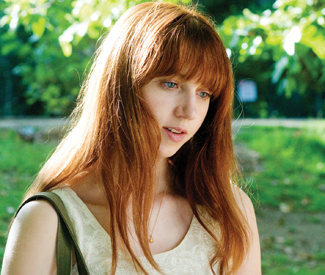
The pedestal that history’s most notorious auteur-patriarch was so quick to place his icy blondes upon, rhapsodized in the nostalgia-laced Hitchcock, was toppled in feminist Pygmalion revamp Ruby Sparks, penned by lead actress Zoe Kazan. Meanwhile, Rashida Jones took a revisionist tact and rethought the second-wave myth of the woman who can have it all by writing and playing the lovable power bitch who nevertheless kicks her slacker soul mate to the curb in Celeste and Jesse Forever.

>>Read more from our Year in Film issue here.

In a more clearly chick-flicky vein, writer-star Lauren Miller amped up the sexual side of the rom-com with For a Good Time, Call…, whereas Julie Delpy reveled in an old-world/new-urban interracial culture clash while writing, directing, and starring in 2 Days in New York. Zoe Lister Jones got the second-banana gal-pal’s revenge by writing herself all the best lines in the unsettlingly girlie Lola Versus, a movie that seemed designed to test the patience of men, critics (especially male ones) by wallowing in one girl’s mournful sexual shenanigans.

Why take on the notoriously powerless role of screenwriter? “A pretty dreary lot of hacks,” Raymond Chandler once put it. “On billboards, in newspaper advertisements, [the writer’s] name will be smaller than that of the most insignificant bit-player who achieves what is known as billing.” It’s a critical step in deconstructing the tropes, disassembling the lines, and unpacking the baggage so many so-called women’s films have been supplying for years. No wonder female actor-writers so often seem to be in a race for the bottom with the guys, writing themselves roles that make themselves look more morally ambiguous, sexually conflicted, taste-testingly lurid, and simply screwed-up. Born in Flames (1983), these movies aren’t.

Instead, dub them the natural byproduct of a DIY video-making movement or simply a pendulum swing away from 2011, when it seemed like all the blockbuster roles for women lay in servant’s quarters of The Help and females were protagonists of only 11 percent of all films, in contrast to 2002’s 16 percent (according to a report by the Center for the Study of Women in Television and Film at San Diego State University).

Chalk it up to the afterglow of Wiig’s Bridesmaids (2011), spinning off the comedy that won over audiences with its flurry of frenemy backstabbing, scatological humor, and extremely close attention to women’s bizarro rites of passage. Or attribute it to the seismic activity set off by Lena Dunham, who satirized the YouTube generation in 2010’s Tiny Furniture, a comedy she herself shot on a Canon 5D digital camera. Dunham’s HBO hit, Girls, only added fuel to a blogosphere backlash that seemed less about Dunham (her looks, her privileged background) and more about hipster-culture smugness, an entire generation’s perceived sense of entitlement, and good ol’ jealousy.

That kind of outcry is a risk that women are increasingly willing to take, as they wrote themselves onto the big screen and told their own stories. They spun tales about their perhaps petty, perhaps big-deal concerns, and went there — to the not so deep, but sort of dirty little secrets in the Hidden World of Girls, to crib the title of that Fey-hosted NPR series.

And however you felt about her genre-defining rom-coms, there was a certain sad poetry to the fact that writer-director Nora Ephron quietly passed away amid this year’s girlquake. She spent less time in front of the camera than many of these actress-writers do, but you know the woman who directed and co-wrote 1992’s This Is My Life — the film that inspired Dunham to make movies — would have been eager to pass the baton.


KIMBERLY CHUN’S TOP 10 SHOTS IN THE DARK OF 2012


Attenberg (Athina Rachel Tsangari, Greece, 2010)

Crazy Horse (Frederick Wiseman, USA/France, 2011)

The Deep Blue Sea (Terence Davies, UK, 2011)

Django Unchained (Quentin Tarantino, US)

Elena (Andrey Zvyagintsev, Russia)

Gerhard Richter Painting (Corinna Belz, Germany, 2011)

Gimme the Loot (Adam Leon, US)

I Wish (Hirokazu Kore-eda, Japan, 2011) Marina Abramovich: The Artist Is Present (Matthew Akers, Jeff Dupre, US) Searching for Sugar Man (Malik Bendjelloul, Sweden/UK)

Ficks’ picks

0

1. Cosmopolis (David Cronenberg, Canada/France/Portugal/Italy) During the five times I watched this brilliantly slow-burning, transcendental flick, I saw dozens of audience members fall asleep, walk out early, and complain all the way down the corridor of the Embarcadero Center Cinema hallways. I had to watch it that many times (plus read the book and have countless late-night discussions) just to try and wrap my brain around this era-defining exploration of what it means to be a (hu)man in the Y2Ks. Robert Pattinson proved he’s a truly spectacular actor, Paul Giamatti has never been better, and David Cronenberg is only getting better as he gets older.

2. In the Family  (Patrick Wang, US, 2011) Self-distributed due to its length (169 minutes), this is a stunningly haunting and devastating work. Viewers with the patience to stick with it are rewarded with a genuinely achieved emotional volcano that I can only relate to John Cassavetes’ greatest films. A truly landmark film, in both style and content.

3. The Master  (Paul Thomas Anderson, US) Of all the films that Anderson has boldly attempted, audaciously experimented with, and (perhaps most importantly) been critically embraced for, The Master is a balanced period piece that combines both poetic and historical elements with a couple of truly profound performances by Joaquin Phoenix and Philip Seymour Hoffman. This is not a film only about Scientology, or about just one master. This is a film that asks many questions, but supplies few answers.

4. The Comedy (Rick Alverson, US) Perhaps containing the most mean-spirited characters of the decade, this harrowingly insightful satire of the hipster generation’s compulsion to heap irony upon irony inspired many an audience member to exit mid-film. But the many who dared to remain (including fans of the film’s lead actor, Tim Heidecker, from Tim and Eric Awesome Show, Great Job!) may have found themselves forced to question their own heartless (and even sociopath) tendencies.

Director Rick Alverson’s perceptive use of a contemporary antihero is quite comparable to the counterculture characters of the 1970s: Robert De Niro in Taxi Driver (1976), Peter Falk in Husbands (1970), and Jack Nicholson in Five Easy Pieces (1970). And since The Comedy was not necessarily made to be enjoyed, it will probably, sadly, take 20 years for people to recognize that there is no finer film to define this generation.

5. Florentina Hubaldo CTE (Lav Diaz, Philippines) With this six-hour film, Lav Diaz has created yet another minimalist masterpiece that few will even attempt to watch — 20 people started out in the Yerba Buena Center for the Arts’ screening, and only 10 finished it. Diaz has a monumental goal in mind for his character, and his film’s length is a major part of achieving it. I am not sure if there will ever be a time when six-hour character studies will be all the rage, but until then, Diaz is paving an uncharted road for others to follow.

6. Shanghai (Dibakar Banerjee, India) This Hindi remake of Costa-Gavras’ monumental political thriller Z (1969) may not have French New Wave cinematographer Raoul Coutard behind the camera, but Shanghai‘s director of photography Nikos Andritsakis adds his own brand of raw intensity. For his part, writer-director Banerjee creates an even more complicated look at the state of politics in the age of the modern terrorist. Seemingly inspired by fellow director Ram Gopal Varma’s career of gritty political dramas, Banerjee is an international director to watch.

7. Holy Motors (Leos Carax, France) The perfect companion to David Cronenberg’s Cosmopolis, this film contains a tour de force performance by the almighty Denis Lavant (of Claire Denis’ 1999 Beau Travail), with Michel Piccoli, Eva Mendes, Édith Scob, and Kylie Minogue in supporting roles. Unique, surreal, and completely inspired, this day-in-the-life journey will make you want to watch it again as soon as it ends.

8. The Grey  (Joe Carnahan, US) The best existential “animal attacking human” flick since David Mamet’s 1997 cult classic The Edge. It’s a film that showcases Liam Neeson as he tapes glass to his fists to battle a pack of giant wolves — and manages to be emotionally stirring at the same time. Make sure to keep watching all the way through the credits.

9a. Your Sister’s Sister (Lynn Shelton, US, 2011) Lynn Shelton’s follow-up to her genre-defining bromance Humpday (2009) is a pitch-perfect indie that attempts to dig deep within its dark and confused characters. Depressed and confused thirtysomething Jack (played by Mark Duplass, master of casual awkwardness) heads off to a remote island to figure out his life. The only trouble: his best friend (a mesmerizing Emily Blunt) also has a lesbian sister (Rosemarie DeWitt) who is already there doing her own soul searching. With this contemplative, honest, and hilarious film, Shelton is turning out to be quite a splendid voice for our current generation of progressive pitfallers.

9b. Jeff, Who Lives At Home (Jay Duplass and Mark Dupass, US) They’ve done it again! With Jeff, the mumblecore masters (2005’s The Puffy Chair; 2010’s Cyrus) construct a stoner comedy-existential trip for the man-child generation. While inspiring outstanding performances from Jason Segal and Ed Helms (both the best they’ve ever been), playing brothers, a poignantly performance by Susan Sarandon as their mother raises this wonderfully earned sentimental indie flick to the ranks of family dramas like Jodie Foster’s Home for the Holidays (1995) and her most recent overlooked gem, The Beaver (2011).

10. Lotus Community Workshop (Harmony Korine, US) His next film, Spring Breakers (due out next year), is poised to become Harmony Korine’s most accessible film to date; it’s a T&A-filled exploitation film, led by James Franco as a grimy, gold-grilled-grinning, dreadlocked drug dealer who lives to prey on bikini-clad young girls. But 30-minute meta-masterpiece Lotus Community Workshop, which played the San Francisco International Film Festival earlier this year (as part of omnibus film The Fourth Dimension), is maybe Korine’s greatest film to date. The almighty Val Kilmer plays a dirt bike-riding, fanny-pack wearing, roller-rink guru named Val Kilmer — and yep, it’s as mind-blowing as it sounds.

11. ParaNorman  (Chris Butler and Sam Fell, US) This stop-motion animated film surprised parents who felt its PG rating should have been PG-13 — and it inspired gasps and even yells (from adults!) in every screening I attended. Daringly shot on a Canon 5D Mark II DSLR Camera and released in a fully utilized 3D, this ode to midnight movies is a kids’ film that will stand the test of time and should rank right alongside Shaun of the Dead (2004) and Army of Darkness (1992): horror parodies that transcended their own self-awareness and become classics themselves.

12-14 [tie]. A Simple Life (Ann Hui, Hong Kong, 2011), Amour (Michael Haneke, Austria/France/Germany), The Turin Horse (Béla Tarr and Ágnes Hranitzky, Hungary/France/Germany/Switzerland/US, 2011) Ann Hui’s simple, straightforward tale of a woman’s choice to check herself into a retirement home after suffering a stroke will probably get overshadowed by Michael Haneke’s wonderfully minimalist approach to an elderly couple’s decline after one of them experiences the same ailment. Meanwhile, Béla Tarr’s final film is for acquired tastes only; it’s a cyclical journey with a rural couple, who eat potatoes, are isolated in a stormy darkness, and care for their horse. All three films lay out a terrifyingly realistic blueprint of old age.

15. Compliance  (Craig Zobel, US) No film at the 2012 Sundance Film Festival encountered as much controversy as Compliance. At the first public screening, an all-out shouting match erupted, with one audience member yelling “Sundance can do better!” You can’t buy that kind of publicity. Every screening that followed was jam-packed with people hoping to experience the most shocking film at the fest. And it doesn’t disappoint: Zobel unleashes an uncomfortable psychological mindfuck on the viewer all the way through to the stunning final 15 minutes, which are even more shocking than all the twists and turns that came before.

16. The Kid With a Bike (Jean-Pierre Dardenne and Luc Dardenne, Belgium/France/Italy, 2011) Can these Belgian brothers make a bad film? Seriously? Like their Palme D’Or winners Rosetta (1999), The Son (2002), and L’enfant (2005), Kid is yet another hypnotic, neo-realist portrait of modern-day youth. Every character makes unexpected yet inevitable decisions. No moment is false. The Dardennes create movies that make life feel more real.

17. Beasts of the Southern Wild ( Benh Zeitlin, US) Fantastical special effects created by 31 students at San Francisco’s own Academy of Art University (yes, I am biased), plus star Quvenzhané Wallis as Hushpuppy, a precocious six-year-old searching to understand a world post-Katrina, post-race, and more importantly post-childhood. Combining David Gordon Green’s George Washington (2001), Spike Jonze’s Where the Wild Things Are (2008) and perhaps even Julie Dash’s Daughters of the Dust (1991), Zeitlin has created a haunting enigma for modern audiences that deserves multiple viewings. But even though it won multiple prizes at the 2012 Sundance Film Festival, will it get the Oscar attention it deserves?

18. Universal Soldier: Day of Reckoning (John Hyams, US) When Jean-Claude Van Damme started this franchise back in 1992, it was a nice little combo of First Blood (1982), The Terminator (1984) and Robocop (1987). Twenty years later, the series’ fourth entry is co-written, co-edited, and directed by John Hyams, the son of Peter Hyams, who directed JCVD classics Timecop (1994) and Sudden Death (1995) — and man oh man does he deliver a tough and gritty little action sci-fi film. Van Damme takes on an even darker role than his scene-stealing turn in Expendables 2; with a cleverly subversive script, eloquently choreographed fight scenes (one of which gives Dolph Lundgren some pretty priceless moments), and a denouement that has to be seen to be believed, you may be rooting for this VOD released genre film as much as I am — not to mention Indiewire, which called it “One of the Best Action Movies of the Year!”

19. John Carter (Andrew Stanton, US) With a budget of $250 million, this epic based on Edgar Rice Burroughs stories brought the Walt Disney company to its knees by only making $73 million back. If you saw the film in 3D, you might be confused as to why no one bothered to see it. In my opinion (having watched it twice), John Carter achieves everything James Cameron’s Avatar (2009) did, as far as sci-fi extravaganzas go, but it also has an inspired story and a charming cast: Taylor Kitsch, Lynn Collins, Samantha Morton, and Willem Dafoe. This is possibly this generation’s Ishtar (1987), and like Elaine May’s infamous still-unavailable bomb, John Carter is actually enjoyable; it’ll need a decade or two for audiences to find it as one of the most enjoyable CGI spectacles in recent years.

20. The Dark Knight Rises (Christopher Nolan, US) [SPOILER ALERT!] I found The Dark Knight Rises hard to dismiss as just another money-making super-hero adaptation. After multiple viewings, I’ve come to think of the conclusion to the trilogy as the finest of the three. I’ve also had time to puzzle over the film’s intricate plot.

While many fellow critics seemed to find the film’s political handlings of Bane’s Occupy/French Revolution movement to be flimsy and even irresponsible, I would argue that the film works in a more complicated way toward politics. If Bane’s misguided revolution fell flat, then it would be important to look at Catwoman’s anarchist ways. And about that — did she put her selfishness aside to start over with a broke Bruce Wayne, or is the closing sequence just Alfred’s fantasy? (And if the latter is true, did Batman actually blow himself up in the end?)

And then there’s Blake, who bests the pathetic Deputy Commissioner, then turns his back on the well-meaning yet lying-to-the-people Commissioner Gordon. Though Blake knows he has to quit the police force amid such corruption, he can’t dismiss his urge to help the helpless and downtrodden — after all, he’s an orphan from the streets — and Robin is born. He’s alone (no butlers down in that cave anymore …), and will need to figure out what to do in Gotham City — a town that’s always wild at heart and weird on top.

(Note: list compiled prior to viewing Zero Dark Thirty or Les Misérables.)

Best Actor of 2012
Matthew McConaughey for Bernie (Richard Linklater, US, 2011), Killer Joe (William Friedkin, US, 2011), Magic Mike (Steven Soderbergh, US, 2011), and The Paperboy (Lee Daniels, US)

Best Unreleased Films of 2012

The Act of Killing (Joshua Oppenheimer, Christine Cynn, and Anonymous, Denmark/Norway/UK)

Black Rock (Katie Aselton, USA)

Berberian Sound Studio (Peter Strickland, UK)

Pilgrim Song (Martha Stephens, US)

The Lords of Salem (Rob Zombie, US)

Jesse Hawthorne Ficks programs the Midnites for Maniacs series, which emphasizes dismissed, underrated, and overlooked films. He is the Film History Coordinator at Academy of Art University.

Film Listings and Reviews

0

Film listings are edited by Cheryl Eddy. Reviewers are Kimberly Chun, Dennis Harvey, Lynn Rapoport, and Sara Maria Vizcarrondo. For rep house showtimes, see Rep Clock. Due to the Christmas holiday, theater information was incomplete at presstime.

OPENING

My Worst Nightmare First seen locally in the San Francisco Film Society’s 2012 “French Cinema Now” series, My Worst Nightmare follows icy art curator Agathe (Isabelle Huppert) as her airless, tightly-controlled world begins to crumble — thanks in no small part to an exuberantly uncouth, down-on-his-luck Belgian contractor named Patrick (Benoît Poelvoorde). (His obnoxious, freewheeling presence in Agathe’s precision-mapped orbit gives rise to the film’s title.) Director and co-writer Anne Fontaine (2009’s Coco Before Chanel) injects plenty of offbeat, occasionally raunchy humor into what could’ve been a predictable personal-liberation tale — the sight of classy dame Huppert driving through a bikini car wash, for instance. (1:43) Smith Rafael. (Eddy)

Not Fade Away How to explain why the Beatles have been tossed so many cinematic bon mots and not the Stones? The group’s relatively short lifespan — and even the tragic, unexpectedly dramatic passing of John Lennon — seem to have all played into the band’s nostalgia-marinated legend, while the Stones’ profitable tour rotation and shocking physical resilience have lessened their romantic charge. So it reads as a counterintuitive, and a bit random, that Sopranos creator David Chase would open his first feature film with a black and white re-creation of the Mick Jagger and Keith Richards meet-up, before switching to the ’60s coming-of-age of New Jersey teen geek Douglas (John Magaro), trapped in an oppressively whiny nuclear family headed up by his Pep Boy grouch of a dad (James Gandolfini) — at least until rock ‘n’ roll saves his soul and he starts beating the skins. Graduating to better-than-average singer after his band’s frontman Eugene (Boardwalk Empire‘s Jack Huston) inhales a joint, Douglas not only finds his voice, but also wins over dream girl Grace (Bella Heathcote). Sure, Not Fade Away is about sex, drugs, and rock ‘n’ roll — and much attention is dutifully squandered on basement shows, band practice, and politics, and posturing with wacky new haircuts and funny cigarettes, thanks to Chase’s own background in garage bands and executive producer, music supervisor, and true believer Steve Van Zandt’s considerable passion. Yet despite the amount screen time devoted to rock’s rites, those familiar gestures never rise above the clichéd, and Not Fade Away only finds its authentic emotional footing when Gandolfini’s imposing yet trapped patriarch and the rest of Douglas’s beaten-down yet still kicking family enters the picture — they’re the force that refuses to fade away, even after they disappear in the rear view. (1:52) (Chun)

Promised Land Gus Van Sant’s fracking fable — co-written by stars Matt Damon and John Krasinski, from a story by Dave Eggers — offers a didactic lesson in environmental politics, capped off by the earth-shattering revelation that billion-dollar corporations are sleazy and evil. You don’t say! Formulated like a Capra movie, Promised Land follows company man Steve Butler (Matt Damon) as he and sales partner Sue (Frances McDormand) travel to a small Pennsylvania town to convince its (they hope) gullible residents to allow drilling on their land. But things don’t go as smoothly as hoped, when the pair faces opposition from a science teacher with a brainiac past (Hal Holbrook), and an irritatingly upbeat green activist (Krasinski) breezes into town to further monkey-wrench their scheme. That Damon is such a likeable actor actually works against him here; his character arc from soulless salesman to emotional-creature-with-a-conscience couldn’t be more predictable or obvious. McDormand’s wonderfully biting supporting performance is the best (and only) reason to see this ponderous, faux-folksy tale, which targets an audience that likely already shares its point of view. (1:46) (Eddy)

We Are Legion: The Story of the Hacktivists Documentary about the radical online community known as Anonymous — famed for their activist attacks on big business, corrupt governments, criminals, and other deserving targets. (1:33) Roxie.

ONGOING

Anna Karenina Joe Wright broke out of British TV with the 9,000th filmed Pride and Prejudice (2005), unnecessary but quite good. Too bad it immediately went to his head. His increasing showiness as director enlivened the silly teenage-superspy avenger fantasy Hanna (2011), but it started to get in the way of Atonement (2007), a fine book didn’t need camera gymnastics to make a great movie. Now it’s completely sunk a certified literary masterpiece still waiting for a worthy film adaptation. Keira Knightley plays the titular 19th century St. Petersburg aristocrat whose staid, happy-enough existence as a doting mother and dutiful wife (to deglammed Jude Law’s honorable but neglectful Karenin) is upended when she enters a mutually passionate affair with dashing military officer Count Vronsky (Aaron Taylor-Johnson, miscast). Scandal and tragedy ensue. There’s nothing wrong with the screenplay, by Tom Stoppard no less. What’s wrong is Wright’s bright idea of staging the whole shebang as if it were indeed staged — a theatrical production in which nearly everything (even a crucial horse race) takes place on a proscenium stage, in the auditorium, or “backstage” among riggings. Whenever we move into a “real” location, the director makes sure that transition draws attention to its own cleverness as possible. What, you might ask, is the point? That the public social mores and society Anna lives in are a sort of “acting”? Like wow. Add to that another brittle, mannered performance by Wright’s muse Knightley, and there’s no hope of involvement here, let alone empathy — in love with its empty (but very prettily designed) layers of artifice, this movie ends up suffocating all emotion in gilded horseshit. The reversed-fortune romance between Levin (Domhall Gleeson) and Kitty (Alicia Vikander) does work quite well — though since Tolstoy called his novel Anna Karenina, it’s a pretty bad sign when the subsidiary storyline ends up vastly more engaging than hers. (2:10) (Harvey)

Any Day Now In 1970s West Hollywood, flamboyant drag queen Rudy (Alan Cumming) and closeted, newly divorced lawyer Paul (Garret Dillahunt) meet and become an unlikely but loving couple. Their opposites-attract bond strengthens when they become de facto parents to Marco (Isaac Leyva), a teen with Down syndrome left adrift when his party-girl mother (Jamie Anne Allman) is arrested. Domestic bliss — school for Marco with a caring special-education teacher (Kelli Williams); a fledgling singing career for Rudy (so: lots of crooning, for Cumming superfans) — is threatened by rampant homophobia, so Rudy and Paul must conceal their true relationship from Paul’s overbearing boss and the other parents at Marco’s school. When the secret gets out, the fact that Marco is being well cared-for matters not to the law; he’s immediately shunted into a foster home while Paul and Rudy battle the court for custody. Actor-turned-director and co-writer Travis Fine (2010’s The Space Between) guides a veteran cast through this based-on-true-events tale, with sensitive performances and realistic characterizations balancing out the story’s broader strokes. (1:43) Smith Rafael. (Eddy)

Argo If you didn’t know the particulars of the 1979 Iranian Revolution, you won’t be an expert after Argo, but the film does a good job of capturing America’s fearful reaction to the events that followed it — particularly the hostage crisis at the US embassy in Tehran. Argo zeroes in on the fate of six embassy staffers who managed to escape the building and flee to the home of the sympathetic Canadian ambassador (Victor Garber). Back in Washington, short-tempered CIA agents (including a top-notch Bryan Cranston) cast about for ways to rescue them. Enter Tony Mendez (Ben Affleck, who also directs), exfil specialist and father to a youngster wrapped up in the era’s sci-fi craze. While watching 1973’s Battle for the Planet of the Apes, Tony comes up with what Cranston’s character calls “the best bad idea we have:” the CIA will fund a phony Canadian movie production (corny, intergalactic, and titled Argo) and pretend the six are part of the crew, visiting Iran for a few days on a location shoot. Tony will sneak in, deliver the necessary fake-ID documents, and escort them out. Neither his superiors, nor the six in hiding, have much faith in the idea. (“Is this the part where we say, ‘It’s so crazy it just might work?'” someone asks, beating the cliché to the punch.) Argo never lets you forget that lives are at stake; every painstakingly forged form, every bluff past a checkpoint official increases the anxiety (to the point of being laid on a bit thick by the end). But though Affleck builds the needed suspense with gusto, Argo comes alive in its Hollywood scenes. As the show-biz veterans who mull over Tony’s plan with a mix of Tinseltown cynicism and patiotic duty, John Goodman and Alan Arkin practically burst with in-joke brio. I could have watched an entire movie just about those two. (2:00) (Eddy)

The Central Park Five Acclaimed documentarian Ken Burns takes on the 1989 rape case that shocked and divided a New York City already overwhelmed by racially-charged violence. The initial crime was horrible enough — a female jogger was brutally assaulted in Central Park — but what happened after was also awful: cops and prosecutors, none of whom agreed to appear in the film, swooped in on a group of African American and Latino teenagers who had been making mischief in the vicinity (NYC’s hysterical media dubbed the acts “wilding,” a term that became forever associated with the event). Just 14 to 16 years old, the boys were questioned for hours and intimidated into giving false, damning confessions. Already guilty in the court of public opinion, the accused were convicted in trials — only to see their convictions vacated years after they’d served their time, when the real assailant was finally identified. Using archival news footage (in one clip, Gov. Mario Cuomo calls the crime “the ultimate shriek of alarm that says none of us are safe”) and contemporary, emotional interviews with the Five, Burns crafts a fascinating study of a crime that ran away with itself, in an environment that encouraged it, leaving lives beyond just the jogger’s devastated in the process. (1:59) Roxie. (Eddy)

Chasing Ice Even wild-eyed neocons might reconsider their declarations that global warming is a hoax after seeing the work of photographer James Balog, whose images of shrinking glaciers offer startling proof that our planet is indeed being ravaged by climate change (and it’s getting exponentially worse). Jeff Orlowski’s doc follows Balog and his Extreme Ice Survey team as they brave cruel elements in Iceland, Greenland, and Alaska, using time-lapse cameras to record glacier activity, some of it quite dramatic, over months and years. Balog is an affable subject, doggedly pursuing his work even after multiple knee surgeries make him a less-than-agile hiker, but it’s the photographs — as hauntingly beautiful as they are alarming — that make Chasing Ice so powerful. Could’ve done without Scarlett Johansson crooning over the end credits, though. (1:15) (Eddy)

Cirque du Soleil: Worlds Away (1:31)

Citadel Irish import Citadel begins with terror: a young pregnant woman, on the verge of moving out of her soon-to-be-condemned high-rise, is attacked — while her husband, Tommy (Aneurin Barnard), looks on helplessly — by a pack of hoodie-wearing youths who inject her with a mysterious substance. Though the baby lives, the woman dies, and Tommy becomes a haunted, paranoid husk of a man. Not that you can really blame him; the housing project he lives in is nearly deserted, and those hoodie-wearing gangs seem to be increasing (and are increasingly interested in his infant daughter). After an ominous build-up, the darkly disturbing Citadel can’t quite keep the momentum going, though James Cosmo (Game of Thrones fans will recognize him even out of his Night’s Watch blacks) offers an amusingly over-the-top performance as a foul-mouthed priest. (1:24) Roxie. (Eddy)

Cloud Atlas Cramming the six busy storylines of David Mitchell’s wildly ambitious novel into just three hours — the average reader might have thought at least 12 would be required — this impressive adaptation directed (in separate parts) by Tom Twyker (1998’s Run Lola Run) and Matrix siblings Lana and Andy Wachowski has a whole lot of narrative to get through, stretching around the globe and over centuries. In the mid 19th century, Jim Sturgess’ sickly American notory endures a long sea voyage as reluctant protector of a runaway-slave stowaway from the Chatham Islands (David Gyasi). In 1931 Belgium, a talented but criminally minded British musician (Ben Whishaw) wheedles his way into the household of a famous but long-inactive composer (Jim Broadbent). A chance encounter sets 1970s San Francisco journalist Luisa (Halle Berry) on the path of a massive cover-up conspiracy, swiftly putting her life in danger. Circa now, a reprobate London publisher’s (Broadbent) huge windfall turns into bad luck that gets even worse when he seeks help from his brother (Hugh Grant). In the not-so-distant future, a disposable “fabricant” server to the “consumer” classes (Doona Bae) finds herself plucked from her cog-like life for a rebellious higher purpose. Finally, in an indeterminately distant future after “the Fall,” an island tribesman (Tom Hanks) forms a highly ambivalent relationship toward a visitor (Berry) from a more advanced but dying civilization. Mitchell’s book was divided into huge novella-sized blocks, with each thread split in two; the film wastes very little time establishing its individual stories before beginning to rapidly intercut between them. That may result in a sense of information (and eventually action) overload, particularly for non-readers, even as it clarifies the connective tissues running throughout. Compression robs some episodes of the cumulative impact they had on the page; the starry multicasting (which in addition to the above mentioned finds many uses for Hugo Weaving, Keith David, James D’Arcy, and Susan Sarandon) can be a distraction; and there’s too much uplift forced on the six tales’ summation. Simply put, not everything here works; like the very different Watchmen, this is a rather brilliant “impossible adaptation” screenplay (by the directors) than nonetheless can’t help but be a bit too much. But so much does work — in alternating currents of satire, melodrama, pulp thriller, dystopian sci-fi, adventure, and so on — that Cloud Atlas must be forgiven for being imperfect. If it were perfect, it couldn’t possibly sprawl as imaginatively and challengingly as it does, and as mainstream movies very seldom do. (2:52) (Harvey)

The Collection As soon as you behold the neon sign “Hotel Argento” shining over the grim warehouse-cum-evil dead trap, you know exactly what you’re in for — a wink, and even a little bit of a horror superfan’s giggle. In other words, to tweak that killer Roach Motel tagline: kids check in, but they don’t check out. No need to see 2009’s The Collector — the previous movie by director-cowriter Marcus Dunstan and writer Patrick Melton (winners of the third season of Project Greenlight, now with the screenplays for multiple Saw films beneath their collective belt) — the giallo fanboy and gorehound hallmarks are there for all to enjoy: tarantulas (straight from 1981’s The Beyond), a factory kitted out as an elaborate murder machine, and end credits that capture characters’ last moments. Plus, plenty of fast-paced shocks and seemingly endless splatter, with a heavy sprinkle of wince-inducing compound fractures. The Collection ups the first film’s ante, as gamine Elena (Emma Fitzpatrick) is lured to go dancing with her pals. Their underground party turns out to be way beyond the fringe, as the killer mows down the dance floor, literally, and gives the phrase “teen crush” a bloody new spin. Stumbling on The Collector‘s antihero thief Arkin (Josh Stewart) locked in a box, Elena releases him but can’t prevent her own capture, so killer-bodyguard Lucello (Oz‘s Lee Tergesen) snatches Arkin from the hospital and forces him to lead his team of toughs through a not-so-funhouse teeming with booby traps as well as victims-turned-insidious-weapons. All of which almost convinces you of nutty-nutball genius of the masked, dilated-pupiled Collector (here stuntman Randall Archer), who takes trendy taxidermy to icky extremes — even when his mechanism is threatened by a way smart last girl and a lock picker who’s adept at cracking building codes. Despite Dunstan’s obvious devotion to horror-movie landmarks, The Collection doesn’t turn out to be particularly original: rather, it attempts to stand on the shoulders — and arms and dismembered body parts — of others, in hopes of finding its place on a nonexistent drive-in bill. (1:23) (Chun)

Deadfall Thriller Deadfall, set amid a howling blizzard, has an all-star cast: Eric Bana and Olivia Wilde play a creepy-close brother-sister team who crash their getaway car after a successful casino heist; Sons of Anarchy‘s Charlie Hunnam plays a vengeful boxer just out of the slammer (with nervous parents played by Kris Kristofferson and Sissy Spacek); and Treat Williams and Kate Mara are an antagonistic father-daughter team of cops chasing after most of the above. Bana’s glowering performance is the high point of this noir-Western, though if the snowy landscape were a character, it’d be the most important part of the ensemble. (1:35) (Eddy)

Django Unchained Quentin Tarantino’s spaghetti western homage features a cameo by the original Django (Franco Nero, star of the 1966 film), and solid performances by a meticulously assembled cast, including Jamie Foxx as the titular former slave who becomes a badass bounty hunter under the tutelage of Dr. Schultz (Christoph Waltz). Waltz, who won an Oscar for playing the evil yet befuddlingly delightful Nazi Hans Landa in Tarantino’s 2009 Inglourious Basterds, is just as memorable (and here, you can feel good about liking him) as a quick-witted, quick-drawing wayward German dentist. There are no Nazis in Django, of course, but Tarantino’s taboo du jour (slavery) more than supplies motivation for the filmmaker’s favorite theme (revenge). Once Django joins forces with Schultz, the natural-born partners hatch a scheme to rescue Django’s still-enslaved wife, Broomhilda (Kerry Washington), whose German-language skills are as unlikely as they are convenient. Along the way (and it’s a long way; the movie runs 165 minutes), they encounter a cruel plantation owner (Leonardo DiCaprio), whose main passion is the offensive, shocking “sport” of “Mandingo fighting,” and his right-hand man, played by Tarantino muse Samuel L. Jackson in a transcendently scandalous performance. And amid all the violence and racist language and Foxx vengeance-making, there are many moments of screaming hilarity, as when a character with the Old South 101 name of Big Daddy (Don Johnson) argues with the posse he’s rounded up over the proper construction of vigilante hoods. It’s a classic Tarantino moment: pausing the action so characters can blather on about something trivial before an epic scene of violence. Mr. Pink would approve. (2:45) (Eddy)

Flight To twist the words of one troubled balladeer, he believes he can fly, he believes he can touch the sky. Unfortunately for Denzel Washington’s Whip Whitaker, another less savory connotation applies: his semi-sketchy airline captain is sailing on the overconfidence that comes with billowing clouds of blow. Beware the quickie TV spot — and Washington’s heroic stance in the poster — that plays this as a quasi-action flick: Flight is really about a man’s efforts to escape responsibility and his flight from facing his own addiction. It also sees Washington once again doing what he does so well: wrestling with the demons of a charismatic yet deeply flawed protagonist. We come upon Whip as he’s rousing himself from yet another bender, balancing himself out with a couple lines with a gorgeous, enabling flight attendant by his side. It’s a checks-and-balances routine we’re led to believe is business as usual, as he slides confidently into the cockpit, gives the passengers a good scare by charging through turbulence, and proceeds to doze off. The plane, however, goes into fail mode and forces the pilot to improvise brilliantly and kick into hero mode, though he can’t fly from his cover, which is slowly blown despite the ministrations of kindred addict Nicole (Kelly Reilly) and dealer Harling (John Goodman at his most ebullient) and the defensive moves of his pilots union cohort (Bruce Greenwood) and the airline’s lawyer (Don Cheadle). How can Whip fly out of the particular jam called his life? Working with what he’s given, Washington summons reserves of humanity, though he’s ultimately failed by John Gatins’ sanctimonious, recovery-by-the-numbers script and the tendency of seasoned director Robert Zemeckis to blithely skip over the personal history and background details that would have more completely filled out our picture of Whip. We’re left grasping for the highs, waiting for the instances that Harling sails into view and Whip tumbles off the wagon. (2:18) (Chun)

The Guilt Trip (1:35)

Hitchcock On the heels of last year’s My Week With Marilyn comes another biopic about an instantly recognizable celebrity viewed through the lens of a specific film shoot. Here, we have Anthony Hopkins (padded and prosthetic’d) playing the Master of Suspense, mulling over which project to pursue after the success of 1959’s North by Northwest. Even if you’re not a Hitch buff, it’s clear from the first scene that Psycho, based on Robert Bloch’s true crime-inspired pulpy thriller, is looming. We open on “Ed Gein’s Farmhouse, 1944;” Gein (Michael Wincott) is seen in his yard, his various heinous crimes — murder, grave-robbing, body-part hoarding, human-skin-mask crafting, etc. — as yet undiscovered. Hitchcock, portrayed by the guy who also played the Gein-inspired Hannibal Lecter, steps into the frame with that familiar droll greeting: “Guhhd eevvveeeening.” And we’re off, following the veteran director as he muses “What if somebody really good made a horror picture?” Though his wife and collaborator, Alma (Helen Mirren), cautions him against doing something simply because everyone tells him not to, he plows ahead; the filmmaking scenes are peppered with behind-the-scenes moments detailed in Stephen Rebello’s Alfred Hitchcock and the Making of Psycho, the source material for John J. McLaughlin’s script. But as the film’s tagline — “Behind every Psycho is a great woman” — suggests, the relationship between Alma and Hitch is, stubbornly, Hitchcock‘s main focus. While Mirren is effective (and I’m all for seeing a lady who works hard behind the scenes get recognition), the Hitch-at-home subplot exists only to shoehorn more conflict into a tale that’s got plenty already. Elsewhere, however, Hitchcock director Sacha Gervasi — making his narrative debut after hit 2008 doc Anvil: The Story of Anvil — shows stylistic flair, working Hitchcock references into the mise-en-scène. (1:32) (Eddy)

The Hobbit: An Unexpected Journey Make no mistake: the Lord of the Rings trilogy represented an incredible filmmaking achievement, with well-deserved Oscars handed down after the third installment in 2003. If director Peter Jackson wanted to go one more round with J.R.R. Tolkien’s beloved characters for a Hobbit movie, who was gonna stop him? Not so fast. This return to Middle-earth (in 3D this time) represents not one but three films — which would be self-indulgent enough even if part one didn’t unspool at just under three hours, and even if Jackson hadn’t decided to shoot at 48 frames per second. (I can’t even begin to explain what that means from a technical standpoint, but suffice to say there’s a certain amount of cinematic lushness lost when everything is rendered in insanely crystal-clear hi-def.) Journey begins as Bilbo Baggins (a game, funny Martin Freeman) reluctantly joins Gandalf (a weary-seeming Ian McKellan) and a gang of dwarves on their quest to reclaim their stolen homeland and treasure, batting Orcs, goblins, Gollum (Andy Serkis), and other beasties along the way. Fan-pandering happens (with characters like Cate Blanchett’s icy Galadriel popping in to remind you how much you loved LOTR), and the story moves at a brisk enough pace, but Journey never transcends what came before — or in the chronology of the story, what comes after. I’m not quite ready to declare this Jackson’s Phantom Menace (1999), but it’s not an unfair comparison to make, either. (2:50) (Eddy)

Hyde Park on Hudson Weeks after the release of Lincoln, Hyde Park on Hudson arrives with a lighthearted (-ish) take on Franklin D. Roosevelt’s 1939 meeting with King George VI (of stuttering fame) and Queen Elizabeth at FDR’s rural New York estate. Casting Bill Murray as FDR is Hyde Park‘s main attraction, though Olivia Williams makes for a surprisingly effective Eleanor. But the thrust of the film concerns FDR’s relationship with his cousin, Daisy — played by Laura Linney, who’s relegated to a series of dowdy outfits, pouting reaction shots, and far too many voice-overs. The affair has zero heat, and the film is disappointingly shallow — how many times can one be urged to giggle at someone saying “Hot dogs!” in an English accent? — not to mention a waste of a perfectly fine Bill Murray performance. As that sideburned Democrat bellows in Lincoln, “Howwww dare you!” (1:35) (Eddy)

The Impossible Spanish director Juan Antonio Bayona (2007’s The Orphanage) directs The Impossible, a relatively modestly-budgeted take on the 2004 Indian Ocean tsunami, based on the real story of a Spanish family who experienced the disaster. Here, the family (Naomi Watts, Ewan McGregor, three young sons) is British, on a Christmas vacation from dad’s high-stress job in Japan. Beachy bliss is soon ruined by that terrible series of waves; they hit early in the film, and Bayona offers a devastatingly realistic depiction of what being caught in a tsunami must feel like: roaring, debris-filled water threatening death by drowning, impalement, or skull-crushing. And then, the anguish of surfacing, alive but injured, stranded, and miles from the nearest doctor, not knowing if your family members have perished. Without giving anything away (no more than the film’s suggestive title, anyway), once the survivors are established (and the film’s strongest performer, Watts, is relegated to hospital-bed scenes) The Impossible finds its way inevitably to melodrama, and triumph-of-the-human-spirit theatrics. As the family’s oldest son, 16-year-old Tom Holland is effective as a kid who reacts exactly right to crisis, morphing from sulky teen to thoughtful hero — but the film is too narrowly focused on its tourist characters, with native Thais mostly relegated to background action. It’s a disconnect that’s not quite offensive, but is still off-putting. (1:54) (Eddy)

Jack Reacher (2:10)

Killing Them Softly Lowest-level criminal fuckwits Frankie (Scoot McNairy) and Russell (Ben Mendelsohn) are hired to rob a mob gambling den, a task which miraculously they fail to blow. Nevertheless, the repercussions are swift and harsh, as a middleman suit (Richard Jenkins) to the unseen bosses brings in one hitman (Brad Pitt), who brings in another (James Gandolfini) to figure out who the thieves are and administer extreme justice. Based on a 1970s novel by George V. Higgins, this latest collaboration by Pitt and director-scenarist Andrew Dominik would appear superficially to be a surer commercial bet after the box-office failure of their last, 2007’s The Assassination of Jesse James By the Coward Robert Ford — one of the great films of the last decade. But if you’re looking for action thrills or even Guy Ritchie-style swaggering mantalk (though there is some of that), you’ll be disappointed to find Killing more in the abstracted crime drama arena of Drive (2011) or The American (2010), landing somewhere between the riveting former and the arid latter. This meticulously crafted tale is never less than compelling in imaginative direction and expert performance, but it still carries a certain unshakable air of so-what. Some may be turned off by just how vividly unpleasant Mendelsohn’s junkie and Gandolfini’s alchie are. Others will shrug at the wisdom of re-setting this story in the fall of 2008, with financial-infrastructure collapse and the hollow promise of President-elect Obama’s “Change” providing ironical background noise. It’s all a little too little, too soon. (1:37) (Harvey)

A Late Quartet Philip Seymour Hoffman is fed up playing second fiddle — literally. He stars in this grown-up soap opera about the internal dramas of a world-class string quartet. While the group is preparing for its 25th season, the eldest member (Christopher Walken) is diagnosed with early stage Parkinson’s. As he’s the base note in the quartet, his retirement challenges the group’s future, not just his own. Hoffman’s second violinist sees the transition as an opportunity to challenge the first violin (Mark Ivanir) for an occasional Alpha role. When his wife, the quartet’s viola player (Catherine Keener), disagrees, it’s a slight (“You think I’m not good enough?”) and a betrayal because prior to their marriage, viola and first violin would “duet” if you get my meaning. This becomes a grody aside when Hoffman and Keener’s violin prodigy daughter (Imogen Poots) falls for her mother’s old beau and Hoffman challenges their marriage with a flamenco dancer. These quiet people finds ways to use some loud instruments (a flamenco dancer, really?) and the music as well as the views of Manhattan create a deeply settled feeling of comfort in the cold —insulation can be a dangerous thing. When we see (real world) cellist Nina Lee play, and her full body interacts with a drama as big as vaudeville, we see what tension was left out of the playing and forced into the incestuous “family” conflicts. In A Late Quartet, pleasures are great and atmosphere, heavy. You couldn’t find a better advertisement for this symphonic season; I wanted to buy tickets immediately. And also vowed to stay away from musicians. (1:45) Smith Rafael. (Vizcarrondo)

Life of Pi Several filmmakers including Alfonso Cuarón, Jean-Pierre Jeunet, and M. Night Shyamalan had a crack at Yann Martel’s “unfilmable” novel over the last decade, without success. That turns out to have been a very good thing, since Ang Lee and scenarist David Magee have made probably the best movie possible from the material — arguably even an improvement on it. Framed as the adult protagonist’s (Irrfan Khan) lengthy reminiscence to an interested writer (Rafe Spall) it chronicles his youthful experience accompanying his family and animals from their just shuttered zoo on a cargo ship voyage from India to Canada. But a storm capsizes the vessel, stranding teenaged Pi (Suraj Sharma) on a lifeboat with a mini menagerie — albeit one swiftly reduced by the food chain in action to one Richard Parker, a whimsically named Bengal tiger. This uneasy forced cohabitation between Hindu vegetarian and instinctual carnivore is an object lesson in survival as well as a fable about the existence of God, among other things. Shot in 3D, the movie has plenty of enchanted, original imagery, though its outstanding technical accomplishment may lie more in the application of CGI (rather than stereoscopic photography) to something reasonably intelligent for a change. First-time actor Sharma is a natural, while his costar gives the most remarkable performance by a wild animal this side of Joaquin Phoenix in The Master. It’s not a perfect film, but it’s a charmed, lovely experience. (2:00) (Harvey)

Lincoln Distinguished subject matter and an A+ production team (Steven Spielberg directing, Daniel Day-Lewis starring, Tony Kushner adapting Doris Kearns Goodwin, John Williams scoring every emotion juuust so) mean Lincoln delivers about what you’d expect: a compelling (if verbose), emotionally resonant (and somehow suspenseful) dramatization of President Lincoln’s push to get the 13th amendment passed before the start of his second term. America’s neck-deep in the Civil War, and Congress, though now without Southern representation, is profoundly divided on the issue of abolition. Spielberg recreates 1865 Washington as a vibrant, exciting place, albeit one filled with so many recognizable stars it’s almost distracting wondering who’ll pop up in the next scene: Jared Harris as Ulysses S. Grant! Joseph Gordon-Levitt as Robert Lincoln! Lena Dunham’s shirtless boyfriend on Girls (Adam Driver) as a soldier! Most notable among the huge cast are John Hawkes, Tim Blake Nelson, and a daffy James Spader as a trio of lobbyists; Sally Field as the troubled First Lady; and likely Oscar contenders Tommy Lee Jones (as winningly cranky Rep. Thaddeus Stevens) and Day-Lewis, who does a reliably great job of disappearing into his iconic role. (2:30) (Eddy)

The Master Paul Thomas Anderson’s much-hyped likely Best Picture contender lives up: it’s easily the best film of 2012 so far. Philip Seymour Hoffman stars as Lancaster Dodd, the L. Ron Hubbard-ish head of a Scientology-esque movement. “The Cause” attracts Freddie Quell (Joaquin Phoenix, in a welcome return from the faux-deep end), less for its pseudo-religious psychobabble and bizarre personal-growth exercises, and more because it supplies the aimless, alcoholic veteran — a drifter in every sense of the word — with a sense of community he yearns for, yet resists submitting to. As with There Will Be Blood (2007), Anderson focuses on the tension between the two main characters: an older, established figure and his upstart challenger. But there’s less cut-and-dried antagonism here; while their relationship is complex, and it does lead to dark, troubled places, there are also moments of levity and weird hilarity — which might have something to do with Freddie’s paint-thinner moonshine. (2:17) (Eddy)

The Matchmaker In 2006, amid ongoing conflict with Lebanon, an Israeli novelist learns he’s received an unexpected inheritance from a man he knew in 1968, the summer before he turned 16. Most of Avi Nesher’s The Matchmaker takes place during those golden months in Haifa, when young Arik (Tuval Shafir) — lover of Dashiell Hammett, son of Holocaust survivors — takes a job working for a charismatic but vaguely shady matchmaker (comedian Adir Miller, who won the Israeli equivalent of a Best Actor Oscar), following potential clients to assure their quest for love is on the level. His exciting new gig whisks the budding writer out of middle-class monotony and introduces him to a wealth of colorful “Low Rent district” types; he also nurses a raging crush on his best friend’s free-spirited American cousin. Mostly a gently nostalgic tale, The Matchmaker also offers an unusual take on the Holocaust, viewing it from two decades later and using its looming memory to shape the characters who experienced it firsthand — as well as members of the younger generation, like Arik, who pages through The House of Dolls to learn more, even as he refers to the concentration camp where his father was held as simply “there.” (1:52) (Eddy)

Les Misérables There is a not-insignificant portion of the population who already knows all the words to all the songs of this musical-theater warhorse, around since the 1980s and honored here with a lavish production by Tom Hooper (2010’s The King’s Speech). As other reviews have pointed out, this version only tangentially concerns Victor Hugo’s French Revolution tale; its true raison d’être is swooning over the sight of its big-name cast crooning those famous tunes. Vocals were recorded live on-set, with microphones digitally removed in post-production — but despite this technical achievement, there’s a certain inorganic quality to the proceedings. Like The King’s Speech, the whole affair feels spliced together in the Oscar-creation lab. The hardworking Hugh Jackman deserves the nomination he’ll inevitably get; jury’s still out on Anne Hathaway’s blubbery, “I cut my hair for real, I am so brave!” performance. (2:37) (Eddy)

Monsters, Inc. 3D (1:35)

The New Jerusalem (1:34) Roxie.

Parental Guidance (1:36)

The Perks of Being a Wallflower Move over, Diary of a Wimpy Kid series — there’s a new shrinking-violet social outcast in town. These days, life might not suck quite so hard for 90-pound weaklings in every age category, what with so many films and TV shows exposing, and sometimes even celebrating, the many miseries of childhood and adolescence for all to see. In this case, Perks author Stephen Chbosky takes on the directorial duties — both a good and bad thing, much like the teen years. Smart, shy Charlie is starting high school with a host of issues: he’s painfully awkward and very alone in the brutal throng, his only friend just committed suicide, and his only simpatico family member was killed in a car accident. Charlie’s English teacher Mr. Andersen (Paul Rudd) appears to be his only connection, until the freshman strikes up a conversation with feline, charismatic, shop-class jester Patrick (Ezra Miller) and his magnetic, music- and fun-loving stepsister Sam (Emma Watson). Who needs the popular kids? The witty duo head up their gang of coolly uncool outcasts their own, the Wallflowers (not to be confused with the deeply uncool Jakob Dylan combo), and with them, Charlie appears to have found his tribe. Only a few small secrets put a damper on matters: Patrick happens to be gay and involved with football player Brad (Johnny Simmons), who’s saddled with a violently conservative father, and Charlie is in love with the already-hooked-up Sam and is frightened that his fragile equilibrium will be destroyed when his new besties graduate and slip out of his life. Displaying empathy and a devotion to emotional truth, Chbosky takes good care of his characters, preserving the complexity and ungainly quirks of their not-so-cartoonish suburbia, though his limitations as a director come to the fore in the murkiness and choppily handled climax that reveals how damaged Charlie truly is. (1:43) (Chun)

Playing For Keeps Not a keeper: the marketing imagery that makes Gerard Butler look like an insufferable creep with bad hair. Dennis Quaid, seen in a small pic toward the base of the Playing For Keeps poster, gets that thankless role instead in this family-oriented rom-com, which is better than some while still being capable of eliciting very audible yawns from an audience supposedly primed for cutesy hijinks. Butler is George Dryer, a onetime pro soccer star now on the decline yet desperately seeking his next opening — a career as a sportscaster. To get there he has to run a networking gauntlet called coaching children’s soccer, which he gets roped into by ex Stacie (Jessica Biel) and spawn Lewis (Noah Lomax). The ankle biters are the least of his problems: more challenging are hot ‘n’ horny soccer moms like TV sports vet Denise (Catherine Zeta-Jones), cry-face Barn (Judy Greer), and desperate trophy housewife Patti (Uma Thurman), who’s saddled with all-American a-hole Carl (Dennis Quaid). The charisma-oozing George has to practically fight them off, while somehow shooting for that family-first goal. With its sex farce tendencies, rom-com DNA, and vaguely sour attitude toward hard-up moms, hot or not, I’m not sure who Playing For Keeps is really making a play for — perhaps married ladies looking for date-night possibilities and some shirtless Butler action? Projecting believability even under the most plausibility-taxing circumstances, Butler manages, as always, to be the best thing in the movie, though it seems like less of an achievement when his projects tend toward mediocrity. (1:46) (Chun)

Rise of the Guardians There’s nothing so camp as “Heat Miser” from The Year Without a Santa Claus (1974) in Rise of the Guardians,, but there’s plenty here to charm all ages. The mystery at its center: we open on Jack Frost (voiced by Chris Pine) being born, pulled from the depths of a frozen pond by the Man on the Moon and destined to spread ice and cold everywhere he goes, invisible to all living creatures. It’s an individualistic yet lonely lot for Jack, who’s styled as an impish snowboarder in a hoodie and armed with an icy scepter, until the Guardians — spirits like North/Santa Claus (Alec Baldwin), the Tooth Fairy (Isla Fisher), and the Easter Bunny (Hugh Jackman) — call on him to join them. Pitch the Boogeyman (Jude Law) is threatening to snuff out all children’s hopes and dreams with fears and nightmares, and it’s up to the Guardians must keep belief in magic alive. But what’s in it for Jack, except the most important thing: namely who is he and what is his origin story? Director Peter Ramsey keeps those fragile dreams aloft with scenes awash with motion and animation that evokes the chubby figures and cozy warm tones of ’70s European storybooks. And though Pine verges on blandness with his vocal performance, Baldwin, Jackman, and Fisher winningly deliver the jokes. (1:38) (Chun)

A Royal Affair At age 15 in 1766, British princess Caroline (Alicia Vikander) travels abroad to a new life — as queen to the new ruler of Denmark, her cousin. Attractive and accomplished, she is judged a great success by everyone but her husband. King Christian (Mikkel Boe Følsgaard) is just a teenager himself, albeit one whose mental illness makes him behave alternately like a debauched libertine, a rude two year-old, a sulky-rebellious adolescent, and a plain old abusive spouse. Once her principal official duty is fulfilled — bearing a male heir — the two do their best to avoid each other. But on a tour of Europe Christian meets German doctor Johann Friedrich Struenesse (Mads Mikkelsen), a true man of the Enlightenment who not only has advanced notions about calming the monarch’s “eccentricities,” but proves a tolerant and agreeable royal companion. Lured back to Denmark as the King’s personal physician, he soon infects the cultured Queen with the fervor of his progressive ideas, while the two find themselves mutually attracted on less intellectual levels as well. When they start manipulating their unstable but malleable ruler to push much-needed public reforms through in the still basically feudal nation, they begin acquiring powerful enemies. This very handsome-looking history lesson highlights a chapter relatively little-known here, and finds in it an interesting juncture in the eternal battle between masters and servants, the piously self-interested and the secular humanists. At the same time, Nikolaj Arcel’s impressively mounted and acted film is also somewhat pedestrian and overlong. It’s a quality costume drama, but not a great one. (2:17) (Harvey)

Rust and Bone Unlike her Dark Knight Rises co-star Anne Hathaway, Rust and Bone star Marion Cotillard never seems like she’s trying too hard to be sexy, or edgy, or whatever (plus, she already has an Oscar, so the pressure’s off). Here, she’s a whale trainer at a SeaWorld-type park who loses her legs in an accident, which complicates (but ultimately strengthens) her relationship with Ali (Belgian actor Matthias Schoenaerts, so tremendous in 2011’s Bullhead), a single dad trying to make a name for himself as a boxer. Jacques Audiard’s follow-up to 2009’s A Prophet gets a bit overwrought by its last act, but there’s an emotional authenticity in the performances that makes even a ridiculous twist (like, the kind that’ll make you exclaim “Are you fucking kidding me?”) feel almost well-earned. (2:00) (Eddy)

The Sessions Polio has long since paralyzed the body of Berkeley poet Mark O’Brien (John Hawkes) from the neck down. Of course his mind is free to roam — but it often roams south of the personal equator, where he hasn’t had the same opportunities as able-bodied people. Thus he enlists the services of Cheryl (Helen Hunt), a professional sex surrogate, to lose his virginity at last. Based on the real-life figures’ experiences, this drama by Australian polio survivor Ben Lewin was a big hit at Sundance this year (then titled The Surrogate), and it’s not hard to see why: this is one of those rare inspirational feel-good stories that doesn’t pander and earns its tears with honest emotional toil. Hawkes is always arresting, but Hunt hasn’t been this good in a long time, and William H. Macy is pure pleasure as a sympathetic priest put in numerous awkward positions with the Lord by Mark’s very down-to-earth questions and confessions. (1:35) (Harvey)

Silver Linings Playbook After guiding two actors to Best Supporting Oscars in 2010’s The Fighter, director David O. Russell returns (adapting his script from Matthew Quick’s novel) with another darkly comedic film about a complicated family that will probably earn some gold of its own. Though he’s obviously not ready to face the outside world, Pat (Bradley Cooper) checks out of the state institution he’s been court-ordered to spend eight months in after displaying some serious anger-management issues. He moves home with his football-obsessed father (Robert De Niro) and worrywart mother (Jacki Weaver of 2010’s Animal Kingdom), where he plunges into a plan to win back his estranged wife. Cooper plays Pat as a man vibrating with troubled energy — always in danger of flying into a rage, even as he pursues his forced-upbeat “silver linings” philosophy. But the movie belongs to Jennifer Lawrence, who proves the chops she showcased (pre-Hunger Games megafame) in 2010’s Winter’s Bone were no fluke. As the damaged-but-determined Tiffany, she’s the left-field element that jolts Pat out of his crazytown funk; she’s also the only reason Playbook‘s dance-competition subplot doesn’t feel eye-rollingly clichéd. The film’s not perfect, but Lawrence’s layered performance — emotional, demanding, bitchy, tough-yet-secretly-tender — damn near is. (2:01) (Eddy)

Skyfall Top marks to Adele, who delivers a magnificent title song to cap off Skyfall‘s thrilling pre-credits chase scene. Unfortunate, then, that the film that follows squanders its initial promise. After a bomb attack on MI6, the clock is running out for Bond (Daniel Craig) and M (Judi Dench), accused of Cold War irrelevancy in a 21st century full of malevolent, stateless computer hackers. The audience, too, will yearn for a return to simpler times; dialogue about “firewalls” and “obfuscated code” never fails to sound faintly ridiculous, despite the efforts Ben Whishaw as the youthful new head of Q branch. Javier Bardem is creative and creepy as keyboard-tapping villain Raoul Silva, but would have done better with a megalomaniac scheme to take over the world. Instead, a small-potatoes revenge plot limps to a dull conclusion in the middle of nowhere. Skyfall never decides whether it prefers action, bon mots, and in-jokes to ponderous mythologizing and ripped-from-the-headlines speechifying — the result is a unsatisfying, uneven mixture. (2:23) (Ben Richardson)

This is 40 A spin-off of sorts from 2007’s Knocked Up, Judd Apatow’s This is 40 continues the story of two characters nobody cared about from that earlier film: Debbie (Leslie Mann, Apatow’s wife) and Pete (Paul Rudd), plus their two kids (played by Mann and Apatow’s kids). Pete and Debbie have accumulated all the trappings of comfortable Los Angeles livin’: luxury cars, a huge house, a private personal trainer, the means to throw catered parties and take weekend trips to fancy hotels (and to whimsically decide to go gluten-free), and more Apple products than have ever before been shoehorned into a single film. But! This was crap they got used to having before Pete’s record label went into the shitter, and Debbie’s dress-shop employee (Charlene Yi, another Knocked Up returnee who is one of two people of color in the film; the other is an Indian doctor who exists so Pete can mock his accent) started stealing thousands from the register. How will this couple and their whiny offspring deal with their financial reality? By arguing! About bullshit! In every scene! For nearly two and a half hours! By the time Melissa McCarthy, as a fellow parent, shows up to command the film’s only satisfying scene — ripping Pete and Debbie a new one, which they sorely deserve — you’re torn between cheering for her and wishing she’d never appeared. Seeing McCarthy go at it is a reminder that most comedies don’t make you feel like stabbing yourself in the face. I’m honestly perplexed as to who this movie’s audience is supposed to be. Self-loathing yuppies? Masochists? Apatow’s immediate family, most of whom are already in the film? (2:14) (Eddy)

The Twilight Saga: Breaking Dawn – Part 2 The final installment of the Twilight franchise picks up shortly after the medical-emergency vampirization of last year’s Breaking Dawn – Part 1, giving newly undead Bella Swan (Kristen Stewart) just enough time to freshen up after nearly being torn asunder during labor by her hybrid spawn, Renesmee. In a just world, Bella and soul mate Edward Cullen (Robert Pattinson) would get more of a honeymoon period, given how badly Part 1‘s actual honeymoon turned out. Alas, there’s just enough time for some soft-focus vampire-on-vampire action (a letdown after all the talk of rowdy undead sex), some catamount hunting, some werewolf posturing, a reunion with Jacob (Taylor Lautner), and a few seconds of Cullen family bonding, and then those creepy Volturi are back, convinced that the Cullens have committed a vampire capital crime and ready to exact penance. Director Bill Condon (1998’s Gods and Monsters, 2004’s Kinsey) knows what the Twi-hards want and methodically doles it out, but the overall effect is less sweeping action and shivery romance and more “I have bugs crawling on me — and yet I’m bored.” Some of that isn’t his fault — he bears no responsibility for naming Renesmee, for instance, to say nothing of a January-May subplot that we’re asked to wrap our brains around. But the film maintains such a loose emotional grip, shifting clumsily and robotically from comic interludes to unintentionally comic interludes to soaring-music love scenes to attempted pathos to a snowy battlefield where the only moment of any dramatic value occurs. Weighed down by the responsibility of bringing The Twilight Saga to a close, it limps weakly to its anticlimax, leaving one almost — but not quite — wishing for one more installment, a chance for a more stirring farewell. (1:55) (Rapoport)

Wreck-It Ralph Wreck-It Ralph cribs directly from the Toy Story series: when the lights go off in the arcade, video game characters gather to eat, drink, and endure existential crises. John C. Reilly is likable and idiosyncratic as Ralph, the hulking, ham-fisted villain of a game called Fix-It-Felix. Fed up with being the bad guy, Ralph sneaks into gritty combat sim Hero’s Duty under the nose of Sergeant Calhoun (Jane Lynch), a blond space marine who mixes Mass Effect‘s Commander Shepard with a PG-rated R. Lee Ermey. Things go quickly awry, and soon Ralph is marooned in cart-racing candyland Sugar Rush, helping Vanellope Von Schweetz (a manic Sarah Silverman), with Calhoun and opposite number Felix (Jack McBrayer) hot on his heels. Though often aggressively childish, the humor will amuse kids, parents, and occasionally gamers, and the Disney-approved message about acceptance is moving without being maudlin. The animation, limber enough to portray 30 years of changing video game graphics, deserves special praise. (1:34) (Ben Richardson) *


Haley Zaremba’s Top 10 Concerts of 2012

0

For our annual Year in Music issue, I asked local musicians, rappers, producers, and music writers to sound off on the year’s best songs, album releases, shows – pretty much anything they wanted, music-wise. For the next few days, I’ll be posting them up individually on the Noise blog. You can also check the full list here.

Haley Zaremba, Guardian
Top 10 Concerts of 2012

1. El Ten Eleven at the New Parish
http://www.youtube.com/watch?v=ltdqEoyjnz0

2. Good Old War at Slim’s

3. Girls at Bimbo’s
http://www.youtube.com/watch?v=JxHZ63dr0aI

4. St. Vincent and Tune-Yards at The Fox
https://www.youtube.com/watch?v=Et2IOb5HpaA

5. Bomb the Music Industry! at Bottom of the Hill

6. Fucked Up at Slim’s

7. Amanda Palmer and the Grand Theft Orchestra at the Fillmore
https://www.youtube.com/watch?v=4AyAmSBQscI

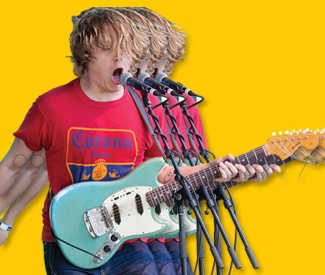
8. Ariel Pink at Bimbo’s

9. Conor Oberst at the Fillmore
http://www.youtube.com/watch?v=fzUhb_QI6kA

10. Titus Andronicus at the Great American Music Hall

Emily Savage’s Top 10 Albums and Shows of 2012

37

For our annual Year in Music issue, I asked local musicians, rappers, producers, and music writers to sound off on the year’s best songs, album releases, shows – pretty much anything they wanted, music-wise. For the next few days, I’ll be posting them up individually on the Noise blog. You can also check the full list here.

So, I (Emily Savage, Guardian music editor) included my top albums list in my Ty Segall cover story (also a part of the Year in Music issue). For easier access, here’s that list below, along with my “Top Live Shows That Created The Most Post Memories in 2012” list. Whew, what a year:

Emily Savage, Guardian

New Albums I Listened to Endlessly in 2012
1. Grass Widow, Internal Logic (HLR)
2. Cloud Nothings, Attack on Memory (Carpark)
https://www.youtube.com/watch?v=6X1URP5eg6I
3. Ty Segall, Slaughterhouse (In the Red)
4. Dum Dum Girls, End of Daze EP (Sub Pop)
https://www.youtube.com/watch?v=q3f9ZiH6Euw
5. Frankie Rose, Interstellar (Slumberland)
6. Godspeed You! Black Emperor, Alleluja! Don’t Bend! Ascend! (Constellation)
https://www.youtube.com/watch?v=IEsdiiYkhT8
7. The Fresh and Onlys, Long Slow Dance (Mexican Summer)
8. THEESatisfaction, awE naturalE (Sub Pop)
https://www.youtube.com/watch?v=qGWFBt_IPOg
9. Terry Malts, Killing Time (Slumberland)
10. Guantanamo Baywatch, Chest Crawl (Dirtnap Records)


Live Shows that Created the Most Posi Memories in 2012
1. Feb. 14: Black Cobra, Walken, Yob at New Parish
https://www.youtube.com/watch?v=33TPqjurEsE
2. Feb. 23: Budos Band and Allah-Lahs at the Independent
3. March 30: Hot Snakes at Bottom of the Hill
https://www.youtube.com/watch?v=VOj3sW6Tm38
4. April 10: Jeff Mangum at the Fox Theater
5. July 21: Fresh and Onlys and La Sera at Phono Del Sol Music Fest
6. July 28: Total Trash BBQ Weekend at the Continental Club
7. Aug. 11: Metallica at Outside Lands
https://www.youtube.com/watch?v=hjfpBPItgoM
8. Aug. 31: Eyehategod at Oakland Metro
9. Oct. 9: Saint Vitus at the Independent
10. Oct. 27: Coachwhips and Traditional Fools at Verdi Club
 

Music Listings

0

Since club life is unpredictable, it’s a good idea to call ahead or check the venue’s website to confirm bookings and hours. Prices are listed when provided to us. Visit www.sfbg.com/venue-guide for venue information. Submit items for the listings at listings@sfbg.com. For further information on how to submit items for the listings, see Picks.

WEDNESDAY 19

ROCK/BLUES/HIP-HOP

Greg Adams East Bay Soul: Sweet Soul Christmas Yoshi’s SF. 8pm, $25.

Another Funky Reggae Party Milk Bar. 9pm, $5. With Creation, Ceasar Myles, Dreaded Truth.

Black Rebel Motorcycle Club Slim’s. 7pm, $31.

Burnt Ones, Violent Change, Cumstain, Cheap Bliss Brick and Mortar Music Hall. 9pm, $7.

Chronic Town Make-Out Room. 7:30pm, $5.

Fuzz (with Ty Segall) Hemlock Tavern. 8:30pm, $7.

Gunshy Johnny Foley’s. 9pm, free.

Charlie Hunter and Scott Amendola Duo Independent. 8pm, $20.

Keith Crossan Blues Showcase with Mark Karan Biscuits and Blues. 8pm, $15.

Psychic Ills, Wymond Miles, 3 Leafs Bottom of the Hill. 9pm, $12.

Jill Tracey DNA Lounge. 9pm, $10.

Rags Tuttle vs Papi Johnny Foley’s Dueling Pianos. 9pm, free.

JAZZ/NEW MUSIC

Cat’s Corner with Nathan Dias Savanna Jazz. 9pm, $10.

Dink Dink Dink, Gaucho, Eric Garland’s Jazz Session Amnesia. 7pm, free.

Gennaro’s Wax Trio 144 King Art Cafe, SF; www.144kingcafe.com. 6-9pm, $10.

Ricardo Scales Top of the Mark, 999 California, SF; www.topofthemark.com. 6:30pm, $5.

FOLK/WORLD/COUNTRY

Justin Ancheta Pena Pachamama, 1630 Powell, SF; www.pachammacenter.org. 8pm.

"Timba Dance Party" Bissap Baobab, 3372 19th, SF; www.bissapbaobab.com. 10pm, $5. With DJ Walt Diggz.

DANCE CLUBS

Aisle 45 Elbo Room. 9pm, $5. With DJs Sureshot, Romanowski, Mauby, DJ Mauricio Aviles.

Booty Call Q-Bar, 456 Castro, SF; www.bootycallwednesdays.com. 9pm. Juanita MORE! and Joshua J host this dance party.

Coo-Yah! Slate Bar, 2925 16th St, SF; www.slate-sf.com. 10pm, free. With Vinyl Ambassador, DJ Silverback, DJs Green B and Daneekah.

Hardcore Humpday Happy Hour RKRL, 52 Sixth St, SF; (415) 658-5506. 6pm, $3.

Martini Lounge John Colins, 138 Minna, SF; www.johncolins.com. 7pm. With DJ Mark Divita.

THURSDAY 20

ROCK/BLUES/HIP-HOP.

"A Very Castle Face Christmas: Benefit for the Coalition on Homelessness" Chapel, 777 Valencia, SF; www.thechapelsf.com. 8:30pm, $15. With Thee Oh Sees, Mallard, Blasted Canyons, Warm Soda.

Blank Tapes, Electric Shepherd, Black Oscillators, Down Dirty Shake, DJ Neil Martinson Brick and Mortar Music Hall. 9pm, $7-$10.

Capital Cities, Jerffrey Jerusalem, popscene DJs Rickshaw Stop. 9:30pm, $15-$17.

Chrystian Rawk, Rin Tin Tiger Amnesia. 9pm.

Dredg, Judgement Day, Strange Vine Great American Music Hall. 8pm, $20.

Girls in Suede, Of Shape and Sound, Coast Humper, Wes Leslie Leafs Bottom of the Hill. 8:30pm, $10.

John Lawton Trio Johnny Foley’s. 9pm, free.

King City, Aloha Screwdriver, Business End Thee Parkside. 9pm, $5.

Lenny Lashley’s Gang of One, Tater Famine Knockout. 10pm, $8.

Laurie Morvan Band Biscuits and Blues. 8 and 10pm, $15.

"Nat Keefe Concert Carnival" Independent. 8pm, $20-$35. With Allie Krall, Reed Mathis, Sharon Gilchrist, and more.

Papi vs Nathan Temby Johnny Foley’s Dueling Pianos. 9pm, free.

Powder, Rain Parade, Bang Cafe Du Nord. 8pm, $7.

Space Waves, Venus Beltran, In Letter Form Hemlock Tavern. 8:30pm, $6.

This Can’t End Well, Victoria and the Vaudevillians, Vagabondage DNA Lounge. 9pm, $8.

JAZZ/NEW MUSIC

David Lanz: Solo Holiday Show Yoshi’s SF. 8pm, $25.

Stompy Jones Top of the Mark, 999 California, SF; www.topofthemark.com. 7:30pm, $10.

Eddy Ramirez Savanna Jazz. 7:30pm, $5.

SF Jazz Hotplate Series Amnesia. 9pm.

FOLK/WORLD/COUNTRY

Twang! Honky Tonk Fiddler’s Green, 1330 Columbus, SF; www.twanghonkytonk.com. 5pm. Live country music.

Tipsy House Plough and Stars. 9pm.

DANCE CLUBS

Afrolicious Elbo Room. 9:30pm, $5-$7. With DJ-host Pleasuremaker.

All 80s Thursday Cat Club. 9pm, $6 (free before 9:30pm). The best of ’80s mainstream and underground.

Base: Holiday Special Vessel, 85 Campton Place, SF; www.vesselsf.com. 10pm, $10.

Ital, Loric, Hawa Public Works Loft. 10pm, $12. Presented by Future|Perfect.

Ritual Dubstep Temple. 10pm-3am, $5. Trap and bass.

Tropicana Madrone Art Bar. 9pm, free. Salsa, cumbia, reggaeton, and more with DJs Don Bustamante, Apocolypto, Sr. Saen, Santero, and Mr. E.

FRIDAY 21

ROCK/BLUES/HIP-HOP

"A Very Bowie Glampocalypse" Cafe Du Nord. 9:30pm, $12-$15. With First Church of the Sacred Silversexual, Straight-Ups, Coo Coo Birds, and more.

"Beatrock Music Anniversary" Brick and Mortar Music Hall. 9pm, $9-$12. With Bambu, Prometheus Brown, Rocky Rivera, Otayo Dubb, Power Struggle, Bwan, DJ Roza, DJ Tanner.

Fishbone Inner Mission SF, 2050 Bryant, SF; www.fishbone.net. 8pm, $20-$25.

Karen Lovely Biscuits and Blues. 8pm, $20.

Maysa Yoshi’s SF. 8pm, $35; 10pm, $27.

Mother Hips, Jackpot Great American Music Hall. 9pm, $23.

Murder City Devils, Mallard Slim’s. 9pm, $22.

Music Box: Tribute to Genesis Regency Ballroom. 9pm, $45-$55.

Sambada Independent. 9pm, $15.

Scissors For Lefty, Solwave, Trims, DJ Taylor Fife Bottom of the Hill. 9:30pm, $10.

Sole Johnny Foley’s. 9pm, free.

Nathan Temby, Papi, Jason Marion Johnny Foley’s Dueling Pianos. 9pm, free.

"The End" DNA Lounge. 10pm, $25. With Zion I, Mochipet, Stephan Jacobs, CandyLand, Robotic Pirate Monkey, Sound Remedy, and more.

JAZZ/NEW MUSIC

Audium 1616 Bush, SF; www.audium.org. 8:30pm, $20. Theater of sound-sculptured space.

Benn Bacot Savanna Jazz. 7:30pm, $8.

Black Market Jazz Orchestra Top of the Mark, 999 California, SF; www.topofthemark.com. 9pm, $10.


FOLK/WORLD/COUNTRY

Queer Cumbia Bissap Baobab, 3372 19th, SF; www.bissapbaobab.com. 8pm, $3-$7.

DANCE CLUBS

DJ What’s His Fuck Riptide Tavern. 9pm, free.

Hella Tight Amnesia. 10pm, $5.

Joe Lookout, 3600 16th St,SF; www.lookoutsf.com. 9pm. Eight rotating DJs.

Ken Loi, Elephant Guns Vessel, 85 Campton Place, SF; www.vesselsf.com. 10pm, $20-$30.

Old School JAMZ El Rio. 9pm. Fruit Stand DJs spinning old school funk, hip-hop, and R&B.

120 Minutes: End of the World Party Elbo Room. 10pm, $8. With NGUZUNGUZU, oOoOO, Boychild, resident DJs S4NtA MU3rTE, Chauncey CC.

Paris to Dakar Little Baobab, 3388 19th St, SF; (415) 643-3558. 10pm, $5. Afro and world music with rotating DJs.

SATURDAY 22

ROCK/BLUES/HIP-HOP

Bayonics Brick and Mortar Music Hall. 9pm, $7-$10.

Cafe R&B Biscuits and Blues. 8 and 10pm, $20.

"California Holiday Show" Elbo Room. 9pm, $10. With Z-Man, Eddie K, Grand Invincible, Oh Blimey, Marshall Payne, Deuce Eclipes and Caipo of Bang Data, and more.

Churches, Tijuana Panthers, Toshio Hirano Bottom of the Hill. 9pm, $12.

Cut Loose Band Johnny Foley’s. 9pm, free.

Bootsy Collins and the Funky Unity Band, Motion Potion Independent. 9pm, $49.50.

Dark Hollow Riptide Tavern. 9:30pm, free.

High on Fire, Goatwhore, Lo-Pan Slim’s. 9pm, $21.

Lost Dog Found Inner Mission, 2050 Bryant, SF; www.lostdogfound.com. 9pm, $15.

Maysa Yoshi’s SF. 8pm and 10pm, $35.

Mother Hips Great American Music Hall. 9pm, $23.

Music Box: Tribute to Genesis Regency Ballroom. 9pm, $45-$55.

Papi, Jason Marion, Nathan Temby Johnny Foley’s Dueling Pianos. 9pm, free.

Rule in Exile, James Conner Thee Parkside. 3pm, free.

Vagabond Lover’s Club with Slim Jenkins, 29th Street Swingtet Cafe, burlesque with Szandora LaVey, Roxy Reve, Bunny Pistol Cafe Du Nord. 9pm, $12-$15.

Yassou Benedict Hemlock Tavern. 9:30pm, $6.

JAZZ/NEW MUSIC

Audium 1616 Bush, SF; www.audium.org. 8:30pm, $20. Theater of sound-sculptured space.

Savanna Jazz Group Savanna Jazz. 7:30pm, $8.

FOLK/WORLD/COUNTRY

Savanna Blue, Get Off My Lawn Plough and Stars. 9pm.

"Noel Soley" Bissap Baobab, 3372 19th, SF; www.bissapbaobab.com. 7-9pm, free. Afoutayi Dance Music and Company, live Haitian drum and dance performances.

Craig Ventresco and Meredith Axelrod Atlas Cafe, 3049 20 St, SF; www.atlascafe.net. 4-6pm.

DANCE CLUBS

Bootie SF: Post-Apocalypse Party DNA Lounge. 9pm, $10-$15. With A Plus D, midnight mashup show, Keith Kraft, and more.

Paris to Dakar Little Baobab, 3388 19th St, SF; (415) 643-3558. 10pm, $5. Afro and world music with rotating DJs.

Public Works Holiday Bash Public Works. 9pm, $12. With Juan Maclean (DJ set), No Regular Play, and more.

Scooter and Lavelle, Chris Clouse Vessel, 85 Campton Place, SF; www.vesselsf.com. 10pm, $20-$30.

Temptation vs Fringe Cat Club. 9:30pm, $5-$8. Video dance party, bad sweater edition.

SUNDAY 23

ROCK/BLUES/HIP-HOP

"Battle of the Bands" DNA Lounge. 5:30pm, $12. With Miles of Machines, Refuge, Oceans and Odysseys, and more.

Tia Carroll Biscuits and Blues. 7 and 9pm, $15.

John Lawton Trio Johnny Foley’s. 9pm, free.

Dave Koz and Friends, David Benoit, Sheila E., Javier Colon, Margo Rey Warfield. 8pm, $39.50-$125.50.

Mermen Christmas Show Slim’s. 8pm, $15.

Moonfox, Prize, Mammoth Life, Liz O Show, DK Christian Joun Brick and Mortar Music Hall. 8pm, $5-$8.

Naive Melodies Boom Boom Room. 8pm, $5.

Papi vs Greg Zema Johnny Foley’s Dueling Pianos. 9pm, free.

JAZZ/NEW MUSIC

Campilongo Quartet Yoshi’s SF. 7pm, $20.

Jazz Jam with Savanna Jazz Band Savanna Jazz. 7pm, $5.

Sophisticated Ladies, Bluebelles Red Poppy Art House. 7pm, $5.

FOLK/WORLD/COUNTRY

Heel Draggers Amnesia. 8pm, $5-$10.

Twang Sunday Thee Parkside. 4pm, free. With Hoboagogo.

DANCE CLUBS

Dub Mission Elbo Room. 9pm, $6. With DJs Sep, Maneesh the Twister, guest DJ Deevice.

Jock Lookout, 3600 16th St, SF; www.lookoutsf.com. 3pm, $2.

MONDAY 24

ROCK/BLUES/HIP-HOP

Clairdee’s Christmas: Soulful Sounds of the SeasonYoshi’s SF. 8pm, $20.

Damir Johnny Foley’s. 9pm, free.

FOLK/WORLD/COUNTRY

Oakland Interfaith Gospel Ensemble Slim’s. 7 and 9:30pm, $15.

DANCE CLUBS

Crazy Mondays Beauty Bar, 2299 Mission, SF; www.thebeautybar.com. 10pm, free. Hip-hop and other stuff.

Death Guild DNA Lounge. 9:30pm, $5. Goth/industrial with Decay, Melting Room, Daniel Skellington, Sage, and Lexor.

M.O.M. Madrone Art Bar. 6pm, free. DJs Timoteo Gigante, Gordo Cabeza, and Chris Phlek playing all Motown every Monday.

Soul Cafe John Colins Lounge, 138 Minna, SF; www.johncolins.com. 9pm. R&B, Hip-Hop, Neosoul, reggae, dancehall, and more with DJ Jerry Ross.

Vibes’N’Stuff El Amigo Bar, 3355 Mission, SF; (415) 852-0092. 10pm, free. Conscious jazz and hip-hop with DJs Luce Lucy, Vinnie Esparza, and more.

TUESDAY 25

ROCK/BLUES/HIP-HOP

Craig Horton Band Biscuits and Blues. 7 and 9pm, $15.

"Black X-Mass" Elbo Room. 9:30pm, $10. With Metro Mictlan, Death Medicine Band, Skozey Fetisch, Amphibious Gestures, Theremin Wizard Barney.

Major Power and the Lo-Fi Symphony Amnesia. 9pm.

DANCE CLUBS

Death Guild X-Mess Night DNA Lounge. 9pm, $5.

Film Listings

0

Film listings are edited by Cheryl Eddy. Reviewers are Kimberly Chun, Dennis Harvey, Lynn Rapoport, and Sara Maria Vizcarrondo. For rep house showtimes, see Rep Clock.

OPENING

Cirque du Soleil: Worlds Away The fanciful, high-flying circus troupe hits the big screen in 3D. (1:31)

Citadel See “Holiday Movie Massacre.” (1:24) Roxie.

Deadfall See “Holiday Movie Massacre.” (1:35) Opera Plaza.

Django Unchained See “Holiday Movie Massacre.” (2:45) Four Star, Presidio.

Five and Six Hundred and Sixty-Six The Vortex’s apocalyptic December continues with two offbeat end-of-the-world dramas, one obscure and the other really, really, really obscure. Five (1951) was one of the few features written and directed by Arch Oboler, whose next (1952’s Bwana Devil) would have the (sole) distinction of kicking off that decade’s short-lived 3D craze. This black and white tale is less historically important but a lot more interesting thematically and otherwise. The title refers to the number of survivors whose paths cross after nuclear war presumably wipes out the rest of humanity (they’d each happened to be in lead encased surroundings when it the bomb hit). Beardo Michael (William Phipps) says good riddance: “I’m glad it’s dead, cheap honkytonk of a world.” However, his attitude turns around once pregnant Rosanne (Susan Douglas Rubes) shows up, then others. Unfortunately, their modest attempts to restart civilization are threatened by the fact that arrival number five (James Anderson) has a German accent and a Nazi attitude to go with it. Sans FX, this psychodrama uses sci-fi to ask some basic questions about existence and humanity; it may not be wildly sophisticated, but it’s surprisingly void of cliché and progressive in ideas (notably racial ones, as the villain’s most loathsome quality is his attitude toward Charles Lampkin’s genial African American ex-soldier). Five is one of the first and also best of its era’s many films about man’s potential self-destruction. Co-feature Six Hundred and Sixty-Six, by contrast, is pretty torturous — an endless talkfest among male staffers (and one female-voiced master computer) in a government installation deep underground that they can’t leave when total war extinguishes all life on the surface above. As they slowly suffocate to death, there is much debate about Biblical prophecies and Satan (who regrettably does not put in an appearance). While the combination of sci-fi suspense and religious proselytizing might sound irresistible, this extremely rare production from the “Evangelical Christian Research Foundation” is perhaps the dullest of all early ’70s dystopian indies. Vortex Room. (Harvey)

The Guilt Trip Seth Rogen and Barbra Streisand play a mother and son driving across the country. (1:35) Marina, Presidio.

The Impossible See “Holiday Movie Massacre.” (1:54)

Jack Reacher Tom Cruise: kickin’ ass, taking names, doing Tom Cruise things. (2:10)

Les Misérables See “Holiday Movie Massacre.” (2:37) Balboa, Marina.

Monsters, Inc. 3D Pixar’s 2001 hit about good-natured monsters returns in 3D form. (1:35)

The New Jerusalem Will Oldham stars as an Evangelical Christian in Rick Alverson’s drama. (1:34) Roxie.

Parental Guidance Billy Crystal and Bette Midler star as babysitting grandparents in this family comedy. (1:36)

Rust and Bone See “Holiday Movie Massacre.” (2:00) Embarcadero.

This is 40 See “Holiday Movie Massacre.” (2:14) Four Star, Marina.

ONGOING

Anna Karenina Joe Wright broke out of British TV with the 9,000th filmed Pride and Prejudice (2005), unnecessary but quite good. Too bad it immediately went to his head. His increasing showiness as director enlivened the silly teenage-superspy avenger fantasy Hanna (2011), but it started to get in the way of Atonement (2007), a fine book didn’t need camera gymnastics to make a great movie. Now it’s completely sunk a certified literary masterpiece still waiting for a worthy film adaptation. Keira Knightley plays the titular 19th century St. Petersburg aristocrat whose staid, happy-enough existence as a doting mother and dutiful wife (to deglammed Jude Law’s honorable but neglectful Karenin) is upended when she enters a mutually passionate affair with dashing military officer Count Vronsky (Aaron Taylor-Johnson, miscast). Scandal and tragedy ensue. There’s nothing wrong with the screenplay, by Tom Stoppard no less. What’s wrong is Wright’s bright idea of staging the whole shebang as if it were indeed staged — a theatrical production in which nearly everything (even a crucial horse race) takes place on a proscenium stage, in the auditorium, or “backstage” among riggings. Whenever we move into a “real” location, the director makes sure that transition draws attention to its own cleverness as possible. What, you might ask, is the point? That the public social mores and society Anna lives in are a sort of “acting”? Like wow. Add to that another brittle, mannered performance by Wright’s muse Knightley, and there’s no hope of involvement here, let alone empathy — in love with its empty (but very prettily designed) layers of artifice, this movie ends up suffocating all emotion in gilded horseshit. The reversed-fortune romance between Levin (Domhall Gleeson) and Kitty (Alicia Vikander) does work quite well — though since Tolstoy called his novel Anna Karenina, it’s a pretty bad sign when the subsidiary storyline ends up vastly more engaging than hers. (2:10) Albany, Metreon, Piedmont, Sundance Kabuki. (Harvey)

Any Day Now In 1970s West Hollywood, flamboyant drag queen Rudy (Alan Cumming) and closeted, newly divorced lawyer Paul (Garret Dillahunt) meet and become an unlikely but loving couple. Their opposites-attract bond strengthens when they become de facto parents to Marco (Isaac Leyva), a teen with Down syndrome left adrift when his party-girl mother (Jamie Anne Allman) is arrested. Domestic bliss — school for Marco with a caring special-education teacher (Kelli Williams); a fledgling singing career for Rudy (so: lots of crooning, for Cumming superfans) — is threatened by rampant homophobia, so Rudy and Paul must conceal their true relationship from Paul’s overbearing boss and the other parents at Marco’s school. When the secret gets out, the fact that Marco is being well cared-for matters not to the law; he’s immediately shunted into a foster home while Paul and Rudy battle the court for custody. Actor-turned-director and co-writer Travis Fine (2010’s The Space Between) guides a veteran cast through this based-on-true-events tale, with sensitive performances and realistic characterizations balancing out the story’s broader strokes. (1:43) Embarcadero, Shattuck, Smith Rafael. (Eddy)

Argo If you didn’t know the particulars of the 1979 Iranian Revolution, you won’t be an expert after Argo, but the film does a good job of capturing America’s fearful reaction to the events that followed it — particularly the hostage crisis at the US embassy in Tehran. Argo zeroes in on the fate of six embassy staffers who managed to escape the building and flee to the home of the sympathetic Canadian ambassador (Victor Garber). Back in Washington, short-tempered CIA agents (including a top-notch Bryan Cranston) cast about for ways to rescue them. Enter Tony Mendez (Ben Affleck, who also directs), exfil specialist and father to a youngster wrapped up in the era’s sci-fi craze. While watching 1973’s Battle for the Planet of the Apes, Tony comes up with what Cranston’s character calls “the best bad idea we have:” the CIA will fund a phony Canadian movie production (corny, intergalactic, and titled Argo) and pretend the six are part of the crew, visiting Iran for a few days on a location shoot. Tony will sneak in, deliver the necessary fake-ID documents, and escort them out. Neither his superiors, nor the six in hiding, have much faith in the idea. (“Is this the part where we say, ‘It’s so crazy it just might work?'” someone asks, beating the cliché to the punch.) Argo never lets you forget that lives are at stake; every painstakingly forged form, every bluff past a checkpoint official increases the anxiety (to the point of being laid on a bit thick by the end). But though Affleck builds the needed suspense with gusto, Argo comes alive in its Hollywood scenes. As the show-biz veterans who mull over Tony’s plan with a mix of Tinseltown cynicism and patiotic duty, John Goodman and Alan Arkin practically burst with in-joke brio. I could have watched an entire movie just about those two. (2:00) Embarcadero, Four Star, 1000 Van Ness, Presidio, SF Center, Sundance Kabuki. (Eddy)

The Central Park Five Acclaimed documentarian Ken Burns takes on the 1989 rape case that shocked and divided a New York City already overwhelmed by racially-charged violence. The initial crime was horrible enough — a female jogger was brutally assaulted in Central Park — but what happened after was also awful: cops and prosecutors, none of whom agreed to appear in the film, swooped in on a group of African American and Latino teenagers who had been making mischief in the vicinity (NYC’s hysterical media dubbed the acts “wilding,” a term that became forever associated with the event). Just 14 to 16 years old, the boys were questioned for hours and intimidated into giving false, damning confessions. Already guilty in the court of public opinion, the accused were convicted in trials — only to see their convictions vacated years after they’d served their time, when the real assailant was finally identified. Using archival news footage (in one clip, Gov. Mario Cuomo calls the crime “the ultimate shriek of alarm that says none of us are safe”) and contemporary, emotional interviews with the Five, Burns crafts a fascinating study of a crime that ran away with itself, in an environment that encouraged it, leaving lives beyond just the jogger’s devastated in the process. (1:59) Shattuck. (Eddy)

Chasing Ice Even wild-eyed neocons might reconsider their declarations that global warming is a hoax after seeing the work of photographer James Balog, whose images of shrinking glaciers offer startling proof that our planet is indeed being ravaged by climate change (and it’s getting exponentially worse). Jeff Orlowski’s doc follows Balog and his Extreme Ice Survey team as they brave cruel elements in Iceland, Greenland, and Alaska, using time-lapse cameras to record glacier activity, some of it quite dramatic, over months and years. Balog is an affable subject, doggedly pursuing his work even after multiple knee surgeries make him a less-than-agile hiker, but it’s the photographs — as hauntingly beautiful as they are alarming — that make Chasing Ice so powerful. Could’ve done without Scarlett Johansson crooning over the end credits, though. (1:15) Embarcadero, Shattuck. (Eddy)

Cloud Atlas Cramming the six busy storylines of David Mitchell’s wildly ambitious novel into just three hours — the average reader might have thought at least 12 would be required — this impressive adaptation directed (in separate parts) by Tom Twyker (1998’s Run Lola Run) and Matrix siblings Lana and Andy Wachowski has a whole lot of narrative to get through, stretching around the globe and over centuries. In the mid 19th century, Jim Sturgess’ sickly American notory endures a long sea voyage as reluctant protector of a runaway-slave stowaway from the Chatham Islands (David Gyasi). In 1931 Belgium, a talented but criminally minded British musician (Ben Whishaw) wheedles his way into the household of a famous but long-inactive composer (Jim Broadbent). A chance encounter sets 1970s San Francisco journalist Luisa (Halle Berry) on the path of a massive cover-up conspiracy, swiftly putting her life in danger. Circa now, a reprobate London publisher’s (Broadbent) huge windfall turns into bad luck that gets even worse when he seeks help from his brother (Hugh Grant). In the not-so-distant future, a disposable “fabricant” server to the “consumer” classes (Doona Bae) finds herself plucked from her cog-like life for a rebellious higher purpose. Finally, in an indeterminately distant future after “the Fall,” an island tribesman (Tom Hanks) forms a highly ambivalent relationship toward a visitor (Berry) from a more advanced but dying civilization. Mitchell’s book was divided into huge novella-sized blocks, with each thread split in two; the film wastes very little time establishing its individual stories before beginning to rapidly intercut between them. That may result in a sense of information (and eventually action) overload, particularly for non-readers, even as it clarifies the connective tissues running throughout. Compression robs some episodes of the cumulative impact they had on the page; the starry multicasting (which in addition to the above mentioned finds many uses for Hugo Weaving, Keith David, James D’Arcy, and Susan Sarandon) can be a distraction; and there’s too much uplift forced on the six tales’ summation. Simply put, not everything here works; like the very different Watchmen, this is a rather brilliant “impossible adaptation” screenplay (by the directors) than nonetheless can’t help but be a bit too much. But so much does work — in alternating currents of satire, melodrama, pulp thriller, dystopian sci-fi, adventure, and so on — that Cloud Atlas must be forgiven for being imperfect. If it were perfect, it couldn’t possibly sprawl as imaginatively and challengingly as it does, and as mainstream movies very seldom do. (2:52) Elmwood, SF Center. (Harvey)

The Collection As soon as you behold the neon sign “Hotel Argento” shining over the grim warehouse-cum-evil dead trap, you know exactly what you’re in for — a wink, and even a little bit of a horror superfan’s giggle. In other words, to tweak that killer Roach Motel tagline: kids check in, but they don’t check out. No need to see 2009’s The Collector — the previous movie by director-cowriter Marcus Dunstan and writer Patrick Melton (winners of the third season of Project Greenlight, now with the screenplays for multiple Saw films beneath their collective belt) — the giallo fanboy and gorehound hallmarks are there for all to enjoy: tarantulas (straight from 1981’s The Beyond), a factory kitted out as an elaborate murder machine, and end credits that capture characters’ last moments. Plus, plenty of fast-paced shocks and seemingly endless splatter, with a heavy sprinkle of wince-inducing compound fractures. The Collection ups the first film’s ante, as gamine Elena (Emma Fitzpatrick) is lured to go dancing with her pals. Their underground party turns out to be way beyond the fringe, as the killer mows down the dance floor, literally, and gives the phrase “teen crush” a bloody new spin. Stumbling on The Collector‘s antihero thief Arkin (Josh Stewart) locked in a box, Elena releases him but can’t prevent her own capture, so killer-bodyguard Lucello (Oz‘s Lee Tergesen) snatches Arkin from the hospital and forces him to lead his team of toughs through a not-so-funhouse teeming with booby traps as well as victims-turned-insidious-weapons. All of which almost convinces you of nutty-nutball genius of the masked, dilated-pupiled Collector (here stuntman Randall Archer), who takes trendy taxidermy to icky extremes — even when his mechanism is threatened by a way smart last girl and a lock picker who’s adept at cracking building codes. Despite Dunstan’s obvious devotion to horror-movie landmarks, The Collection doesn’t turn out to be particularly original: rather, it attempts to stand on the shoulders — and arms and dismembered body parts — of others, in hopes of finding its place on a nonexistent drive-in bill. (1:23) Metreon. (Chun)

Flight To twist the words of one troubled balladeer, he believes he can fly, he believes he can touch the sky. Unfortunately for Denzel Washington’s Whip Whitaker, another less savory connotation applies: his semi-sketchy airline captain is sailing on the overconfidence that comes with billowing clouds of blow. Beware the quickie TV spot — and Washington’s heroic stance in the poster — that plays this as a quasi-action flick: Flight is really about a man’s efforts to escape responsibility and his flight from facing his own addiction. It also sees Washington once again doing what he does so well: wrestling with the demons of a charismatic yet deeply flawed protagonist. We come upon Whip as he’s rousing himself from yet another bender, balancing himself out with a couple lines with a gorgeous, enabling flight attendant by his side. It’s a checks-and-balances routine we’re led to believe is business as usual, as he slides confidently into the cockpit, gives the passengers a good scare by charging through turbulence, and proceeds to doze off. The plane, however, goes into fail mode and forces the pilot to improvise brilliantly and kick into hero mode, though he can’t fly from his cover, which is slowly blown despite the ministrations of kindred addict Nicole (Kelly Reilly) and dealer Harling (John Goodman at his most ebullient) and the defensive moves of his pilots union cohort (Bruce Greenwood) and the airline’s lawyer (Don Cheadle). How can Whip fly out of the particular jam called his life? Working with what he’s given, Washington summons reserves of humanity, though he’s ultimately failed by John Gatins’ sanctimonious, recovery-by-the-numbers script and the tendency of seasoned director Robert Zemeckis to blithely skip over the personal history and background details that would have more completely filled out our picture of Whip. We’re left grasping for the highs, waiting for the instances that Harling sails into view and Whip tumbles off the wagon. (2:18) 1000 Van Ness, SF Center. (Chun)

Hitchcock On the heels of last year’s My Week With Marilyn comes another biopic about an instantly recognizable celebrity viewed through the lens of a specific film shoot. Here, we have Anthony Hopkins (padded and prosthetic’d) playing the Master of Suspense, mulling over which project to pursue after the success of 1959’s North by Northwest. Even if you’re not a Hitch buff, it’s clear from the first scene that Psycho, based on Robert Bloch’s true crime-inspired pulpy thriller, is looming. We open on “Ed Gein’s Farmhouse, 1944;” Gein (Michael Wincott) is seen in his yard, his various heinous crimes — murder, grave-robbing, body-part hoarding, human-skin-mask crafting, etc. — as yet undiscovered. Hitchcock, portrayed by the guy who also played the Gein-inspired Hannibal Lecter, steps into the frame with that familiar droll greeting: “Guhhd eevvveeeening.” And we’re off, following the veteran director as he muses “What if somebody really good made a horror picture?” Though his wife and collaborator, Alma (Helen Mirren), cautions him against doing something simply because everyone tells him not to, he plows ahead; the filmmaking scenes are peppered with behind-the-scenes moments detailed in Stephen Rebello’s Alfred Hitchcock and the Making of Psycho, the source material for John J. McLaughlin’s script. But as the film’s tagline — “Behind every Psycho is a great woman” — suggests, the relationship between Alma and Hitch is, stubbornly, Hitchcock‘s main focus. While Mirren is effective (and I’m all for seeing a lady who works hard behind the scenes get recognition), the Hitch-at-home subplot exists only to shoehorn more conflict into a tale that’s got plenty already. Elsewhere, however, Hitchcock director Sacha Gervasi — making his narrative debut after hit 2008 doc Anvil: The Story of Anvil — shows stylistic flair, working Hitchcock references into the mise-en-scène. (1:32) California, Embarcadero, Metreon, Piedmont, Sundance Kabuki. (Eddy)

The Hobbit: An Unexpected Journey Make no mistake: the Lord of the Rings trilogy represented an incredible filmmaking achievement, with well-deserved Oscars handed down after the third installment in 2003. If director Peter Jackson wanted to go one more round with J.R.R. Tolkien’s beloved characters for a Hobbit movie, who was gonna stop him? Not so fast. This return to Middle-earth (in 3D this time) represents not one but three films — which would be self-indulgent enough even if part one didn’t unspool at just under three hours, and even if Jackson hadn’t decided to shoot at 48 frames per second. (I can’t even begin to explain what that means from a technical standpoint, but suffice to say there’s a certain amount of cinematic lushness lost when everything is rendered in insanely crystal-clear hi-def.) Journey begins as Bilbo Baggins (a game, funny Martin Freeman) reluctantly joins Gandalf (a weary-seeming Ian McKellan) and a gang of dwarves on their quest to reclaim their stolen homeland and treasure, batting Orcs, goblins, Gollum (Andy Serkis), and other beasties along the way. Fan-pandering happens (with characters like Cate Blanchett’s icy Galadriel popping in to remind you how much you loved LOTR), and the story moves at a brisk enough pace, but Journey never transcends what came before — or in the chronology of the story, what comes after. I’m not quite ready to declare this Jackson’s Phantom Menace (1999), but it’s not an unfair comparison to make, either. (2:50) Balboa, California, Cerrito, Marina, Metreon, 1000 Van Ness, Presidio, Sundance Kabuki. (Eddy)

Hyde Park on Hudson Weeks after the release of Lincoln, Hyde Park on Hudson arrives with a lighthearted (-ish) take on Franklin D. Roosevelt’s 1939 meeting with King George VI (of stuttering fame) and Queen Elizabeth at FDR’s rural New York estate. Casting Bill Murray as FDR is Hyde Park‘s main attraction, though Olivia Williams makes for a surprisingly effective Eleanor. But the thrust of the film concerns FDR’s relationship with his cousin, Daisy — played by Laura Linney, who’s relegated to a series of dowdy outfits, pouting reaction shots, and far too many voice-overs. The affair has zero heat, and the film is disappointingly shallow — how many times can one be urged to giggle at someone saying “Hot dogs!” in an English accent? — not to mention a waste of a perfectly fine Bill Murray performance. As that sideburned Democrat bellows in Lincoln, “Howwww dare you!” (1:35) Clay, Embarcadero. (Eddy)

Killing Them Softly Lowest-level criminal fuckwits Frankie (Scoot McNairy) and Russell (Ben Mendelsohn) are hired to rob a mob gambling den, a task which miraculously they fail to blow. Nevertheless, the repercussions are swift and harsh, as a middleman suit (Richard Jenkins) to the unseen bosses brings in one hitman (Brad Pitt), who brings in another (James Gandolfini) to figure out who the thieves are and administer extreme justice. Based on a 1970s novel by George V. Higgins, this latest collaboration by Pitt and director-scenarist Andrew Dominik would appear superficially to be a surer commercial bet after the box-office failure of their last, 2007’s The Assassination of Jesse James By the Coward Robert Ford — one of the great films of the last decade. But if you’re looking for action thrills or even Guy Ritchie-style swaggering mantalk (though there is some of that), you’ll be disappointed to find Killing more in the abstracted crime drama arena of Drive (2011) or The American (2010), landing somewhere between the riveting former and the arid latter. This meticulously crafted tale is never less than compelling in imaginative direction and expert performance, but it still carries a certain unshakable air of so-what. Some may be turned off by just how vividly unpleasant Mendelsohn’s junkie and Gandolfini’s alchie are. Others will shrug at the wisdom of re-setting this story in the fall of 2008, with financial-infrastructure collapse and the hollow promise of President-elect Obama’s “Change” providing ironical background noise. It’s all a little too little, too soon. (1:37) Elmwood, Metreon, 1000 Van Ness. (Harvey)

A Late Quartet Philip Seymour Hoffman is fed up playing second fiddle — literally. He stars in this grown-up soap opera about the internal dramas of a world-class string quartet. While the group is preparing for its 25th season, the eldest member (Christopher Walken) is diagnosed with early stage Parkinson’s. As he’s the base note in the quartet, his retirement challenges the group’s future, not just his own. Hoffman’s second violinist sees the transition as an opportunity to challenge the first violin (Mark Ivanir) for an occasional Alpha role. When his wife, the quartet’s viola player (Catherine Keener), disagrees, it’s a slight (“You think I’m not good enough?”) and a betrayal because prior to their marriage, viola and first violin would “duet” if you get my meaning. This becomes a grody aside when Hoffman and Keener’s violin prodigy daughter (Imogen Poots) falls for her mother’s old beau and Hoffman challenges their marriage with a flamenco dancer. These quiet people finds ways to use some loud instruments (a flamenco dancer, really?) and the music as well as the views of Manhattan create a deeply settled feeling of comfort in the cold —insulation can be a dangerous thing. When we see (real world) cellist Nina Lee play, and her full body interacts with a drama as big as vaudeville, we see what tension was left out of the playing and forced into the incestuous “family” conflicts. In A Late Quartet, pleasures are great and atmosphere, heavy. You couldn’t find a better advertisement for this symphonic season; I wanted to buy tickets immediately. And also vowed to stay away from musicians. (1:45) Albany, Smith Rafael. (Vizcarrondo)

Life of Pi Several filmmakers including Alfonso Cuarón, Jean-Pierre Jeunet, and M. Night Shyamalan had a crack at Yann Martel’s “unfilmable” novel over the last decade, without success. That turns out to have been a very good thing, since Ang Lee and scenarist David Magee have made probably the best movie possible from the material — arguably even an improvement on it. Framed as the adult protagonist’s (Irrfan Khan) lengthy reminiscence to an interested writer (Rafe Spall) it chronicles his youthful experience accompanying his family and animals from their just shuttered zoo on a cargo ship voyage from India to Canada. But a storm capsizes the vessel, stranding teenaged Pi (Suraj Sharma) on a lifeboat with a mini menagerie — albeit one swiftly reduced by the food chain in action to one Richard Parker, a whimsically named Bengal tiger. This uneasy forced cohabitation between Hindu vegetarian and instinctual carnivore is an object lesson in survival as well as a fable about the existence of God, among other things. Shot in 3D, the movie has plenty of enchanted, original imagery, though its outstanding technical accomplishment may lie more in the application of CGI (rather than stereoscopic photography) to something reasonably intelligent for a change. First-time actor Sharma is a natural, while his costar gives the most remarkable performance by a wild animal this side of Joaquin Phoenix in The Master. It’s not a perfect film, but it’s a charmed, lovely experience. (2:00) Balboa, 1000 Van Ness, SF Center, Sundance Kabuki. (Harvey)

Lincoln Distinguished subject matter and an A+ production team (Steven Spielberg directing, Daniel Day-Lewis starring, Tony Kushner adapting Doris Kearns Goodwin, John Williams scoring every emotion juuust so) mean Lincoln delivers about what you’d expect: a compelling (if verbose), emotionally resonant (and somehow suspenseful) dramatization of President Lincoln’s push to get the 13th amendment passed before the start of his second term. America’s neck-deep in the Civil War, and Congress, though now without Southern representation, is profoundly divided on the issue of abolition. Spielberg recreates 1865 Washington as a vibrant, exciting place, albeit one filled with so many recognizable stars it’s almost distracting wondering who’ll pop up in the next scene: Jared Harris as Ulysses S. Grant! Joseph Gordon-Levitt as Robert Lincoln! Lena Dunham’s shirtless boyfriend on Girls (Adam Driver) as a soldier! Most notable among the huge cast are John Hawkes, Tim Blake Nelson, and a daffy James Spader as a trio of lobbyists; Sally Field as the troubled First Lady; and likely Oscar contenders Tommy Lee Jones (as winningly cranky Rep. Thaddeus Stevens) and Day-Lewis, who does a reliably great job of disappearing into his iconic role. (2:30) Cerrito, 1000 Van Ness, Presidio, SF Center, Shattuck, Sundance Kabuki. (Eddy)

The Master Paul Thomas Anderson’s much-hyped likely Best Picture contender lives up: it’s easily the best film of 2012 so far. Philip Seymour Hoffman stars as Lancaster Dodd, the L. Ron Hubbard-ish head of a Scientology-esque movement. “The Cause” attracts Freddie Quell (Joaquin Phoenix, in a welcome return from the faux-deep end), less for its pseudo-religious psychobabble and bizarre personal-growth exercises, and more because it supplies the aimless, alcoholic veteran — a drifter in every sense of the word — with a sense of community he yearns for, yet resists submitting to. As with There Will Be Blood (2007), Anderson focuses on the tension between the two main characters: an older, established figure and his upstart challenger. But there’s less cut-and-dried antagonism here; while their relationship is complex, and it does lead to dark, troubled places, there are also moments of levity and weird hilarity — which might have something to do with Freddie’s paint-thinner moonshine. (2:17) Elmwood. (Eddy)

The Matchmaker In 2006, amid ongoing conflict with Lebanon, an Israeli novelist learns he’s received an unexpected inheritance from a man he knew in 1968, the summer before he turned 16. Most of Avi Nesher’s The Matchmaker takes place during those golden months in Haifa, when young Arik (Tuval Shafir) — lover of Dashiell Hammett, son of Holocaust survivors — takes a job working for a charismatic but vaguely shady matchmaker (comedian Adir Miller, who won the Israeli equivalent of a Best Actor Oscar), following potential clients to assure their quest for love is on the level. His exciting new gig whisks the budding writer out of middle-class monotony and introduces him to a wealth of colorful “Low Rent district” types; he also nurses a raging crush on his best friend’s free-spirited American cousin. Mostly a gently nostalgic tale, The Matchmaker also offers an unusual take on the Holocaust, viewing it from two decades later and using its looming memory to shape the characters who experienced it firsthand — as well as members of the younger generation, like Arik, who pages through The House of Dolls to learn more, even as he refers to the concentration camp where his father was held as simply “there.” (1:52) Opera Plaza, Shattuck. (Eddy)

The Perks of Being a Wallflower Move over, Diary of a Wimpy Kid series — there’s a new shrinking-violet social outcast in town. These days, life might not suck quite so hard for 90-pound weaklings in every age category, what with so many films and TV shows exposing, and sometimes even celebrating, the many miseries of childhood and adolescence for all to see. In this case, Perks author Stephen Chbosky takes on the directorial duties — both a good and bad thing, much like the teen years. Smart, shy Charlie is starting high school with a host of issues: he’s painfully awkward and very alone in the brutal throng, his only friend just committed suicide, and his only simpatico family member was killed in a car accident. Charlie’s English teacher Mr. Andersen (Paul Rudd) appears to be his only connection, until the freshman strikes up a conversation with feline, charismatic, shop-class jester Patrick (Ezra Miller) and his magnetic, music- and fun-loving stepsister Sam (Emma Watson). Who needs the popular kids? The witty duo head up their gang of coolly uncool outcasts their own, the Wallflowers (not to be confused with the deeply uncool Jakob Dylan combo), and with them, Charlie appears to have found his tribe. Only a few small secrets put a damper on matters: Patrick happens to be gay and involved with football player Brad (Johnny Simmons), who’s saddled with a violently conservative father, and Charlie is in love with the already-hooked-up Sam and is frightened that his fragile equilibrium will be destroyed when his new besties graduate and slip out of his life. Displaying empathy and a devotion to emotional truth, Chbosky takes good care of his characters, preserving the complexity and ungainly quirks of their not-so-cartoonish suburbia, though his limitations as a director come to the fore in the murkiness and choppily handled climax that reveals how damaged Charlie truly is. (1:43) Bridge, Shattuck. (Chun)

Playing For Keeps Not a keeper: the marketing imagery that makes Gerard Butler look like an insufferable creep with bad hair. Dennis Quaid, seen in a small pic toward the base of the Playing For Keeps poster, gets that thankless role instead in this family-oriented rom-com, which is better than some while still being capable of eliciting very audible yawns from an audience supposedly primed for cutesy hijinks. Butler is George Dryer, a onetime pro soccer star now on the decline yet desperately seeking his next opening — a career as a sportscaster. To get there he has to run a networking gauntlet called coaching children’s soccer, which he gets roped into by ex Stacie (Jessica Biel) and spawn Lewis (Noah Lomax). The ankle biters are the least of his problems: more challenging are hot ‘n’ horny soccer moms like TV sports vet Denise (Catherine Zeta-Jones), cry-face Barn (Judy Greer), and desperate trophy housewife Patti (Uma Thurman), who’s saddled with all-American a-hole Carl (Dennis Quaid). The charisma-oozing George has to practically fight them off, while somehow shooting for that family-first goal. With its sex farce tendencies, rom-com DNA, and vaguely sour attitude toward hard-up moms, hot or not, I’m not sure who Playing For Keeps is really making a play for — perhaps married ladies looking for date-night possibilities and some shirtless Butler action? Projecting believability even under the most plausibility-taxing circumstances, Butler manages, as always, to be the best thing in the movie, though it seems like less of an achievement when his projects tend toward mediocrity. (1:46) Metreon, 1000 Van Ness, Shattuck. (Chun)

Red Dawn A remake of a 1984 movie that seemed a pretty nutty ideological throwback even during the Reagan Era’s revived Cold War air conditioning, Red Dawn should have come out a couple years ago, having been shot late 2009. But in the meantime MGM was undergoing yet another seismic financial rupture, and as the film sat around for lack of the means needed for distribution and marketing, it occurred that perhaps it already had a fatal, internal flaw. You see, this update re-cast our invaders from Russkies to People’s Republicans, tapping into the modern fear of China as debtor and international bully. But: China is also a huge fledgling market for Hollywood product. So a tortured makeover of the remake ensued; scenes were added, re-shot, and digitally altered to impose a drastic narrative change. The new villain is absurd it gets acknowledged as such by dialogue: “North Korea? It doesn’t make any sense!” Yup, in the new Red Dawn a coastal Washington state burg is the first attack point in a wholesale invasion of the U.S. (pop. 315 million) by the Democratic People’s Republic (pop. 25 million). It’s football season, so a Spokane suburb’s team — Wolverines!! — lends its name as battle cry and its revved up healthy young flesh as guerilla martyrs to the fight for, ohm yeah, freedom. Do they drink beer? Do they rescue cheerleader girlfriends from concentration camps? Do they kick North Korean ass? Do you really need to ask? (1:34) Metreon. (Harvey)

Rise of the Guardians There’s nothing so camp as “Heat Miser” from The Year Without a Santa Claus (1974) in Rise of the Guardians,, but there’s plenty here to charm all ages. The mystery at its center: we open on Jack Frost (voiced by Chris Pine) being born, pulled from the depths of a frozen pond by the Man on the Moon and destined to spread ice and cold everywhere he goes, invisible to all living creatures. It’s an individualistic yet lonely lot for Jack, who’s styled as an impish snowboarder in a hoodie and armed with an icy scepter, until the Guardians — spirits like North/Santa Claus (Alec Baldwin), the Tooth Fairy (Isla Fisher), and the Easter Bunny (Hugh Jackman) — call on him to join them. Pitch the Boogeyman (Jude Law) is threatening to snuff out all children’s hopes and dreams with fears and nightmares, and it’s up to the Guardians must keep belief in magic alive. But what’s in it for Jack, except the most important thing: namely who is he and what is his origin story? Director Peter Ramsey keeps those fragile dreams aloft with scenes awash with motion and animation that evokes the chubby figures and cozy warm tones of ’70s European storybooks. And though Pine verges on blandness with his vocal performance, Baldwin, Jackman, and Fisher winningly deliver the jokes. (1:38) Metreon, 1000 Van Ness. (Chun)

A Royal Affair At age 15 in 1766, British princess Caroline (Alicia Vikander) travels abroad to a new life — as queen to the new ruler of Denmark, her cousin. Attractive and accomplished, she is judged a great success by everyone but her husband. King Christian (Mikkel Boe Følsgaard) is just a teenager himself, albeit one whose mental illness makes him behave alternately like a debauched libertine, a rude two year-old, a sulky-rebellious adolescent, and a plain old abusive spouse. Once her principal official duty is fulfilled — bearing a male heir — the two do their best to avoid each other. But on a tour of Europe Christian meets German doctor Johann Friedrich Struenesse (Mads Mikkelsen), a true man of the Enlightenment who not only has advanced notions about calming the monarch’s “eccentricities,” but proves a tolerant and agreeable royal companion. Lured back to Denmark as the King’s personal physician, he soon infects the cultured Queen with the fervor of his progressive ideas, while the two find themselves mutually attracted on less intellectual levels as well. When they start manipulating their unstable but malleable ruler to push much-needed public reforms through in the still basically feudal nation, they begin acquiring powerful enemies. This very handsome-looking history lesson highlights a chapter relatively little-known here, and finds in it an interesting juncture in the eternal battle between masters and servants, the piously self-interested and the secular humanists. At the same time, Nikolaj Arcel’s impressively mounted and acted film is also somewhat pedestrian and overlong. It’s a quality costume drama, but not a great one. (2:17) Opera Plaza, Smith Rafael. (Harvey)

Searching for Sugar Man The tale of the lost, and increasingly found, artist known as Rodriguez seems to have it all: the mystery and drama of myth, beginning with the singer-songwriter’s stunning 1970 debut, Cold Fact, a neglected folk rock-psychedelic masterwork. (The record never sold in the states, but somehow became a beloved, canonical LP in South Africa.) The story goes on to parse the cold, hard facts of vanished hopes and unpaid royalties, all too familiar in pop tragedies. In Searching for Sugar Man, Swedish documentarian Malik Bendjelloul lays out the ballad of Rodriguez as a rock’n’roll detective story, with two South African music lovers in hot pursuit of the elusive musician — long-rumored to have died onstage by either self-immolation or gunshot, and whose music spoke to a generation of white activists struggling to overturn apartheid. By the time Rodriguez himself enters the narrative, the film has taken on a fairy-tale trajectory; the end result speaks volumes about the power and longevity of great songwriting. (1:25) Elmwood. (Chun)

The Sessions Polio has long since paralyzed the body of Berkeley poet Mark O’Brien (John Hawkes) from the neck down. Of course his mind is free to roam — but it often roams south of the personal equator, where he hasn’t had the same opportunities as able-bodied people. Thus he enlists the services of Cheryl (Helen Hunt), a professional sex surrogate, to lose his virginity at last. Based on the real-life figures’ experiences, this drama by Australian polio survivor Ben Lewin was a big hit at Sundance this year (then titled The Surrogate), and it’s not hard to see why: this is one of those rare inspirational feel-good stories that doesn’t pander and earns its tears with honest emotional toil. Hawkes is always arresting, but Hunt hasn’t been this good in a long time, and William H. Macy is pure pleasure as a sympathetic priest put in numerous awkward positions with the Lord by Mark’s very down-to-earth questions and confessions. (1:35) Elmwood, Four Star, Opera Plaza. (Harvey)

Silver Linings Playbook After guiding two actors to Best Supporting Oscars in 2010’s The Fighter, director David O. Russell returns (adapting his script from Matthew Quick’s novel) with another darkly comedic film about a complicated family that will probably earn some gold of its own. Though he’s obviously not ready to face the outside world, Pat (Bradley Cooper) checks out of the state institution he’s been court-ordered to spend eight months in after displaying some serious anger-management issues. He moves home with his football-obsessed father (Robert De Niro) and worrywart mother (Jacki Weaver of 2010’s Animal Kingdom), where he plunges into a plan to win back his estranged wife. Cooper plays Pat as a man vibrating with troubled energy — always in danger of flying into a rage, even as he pursues his forced-upbeat “silver linings” philosophy. But the movie belongs to Jennifer Lawrence, who proves the chops she showcased (pre-Hunger Games megafame) in 2010’s Winter’s Bone were no fluke. As the damaged-but-determined Tiffany, she’s the left-field element that jolts Pat out of his crazytown funk; she’s also the only reason Playbook‘s dance-competition subplot doesn’t feel eye-rollingly clichéd. The film’s not perfect, but Lawrence’s layered performance — emotional, demanding, bitchy, tough-yet-secretly-tender — damn near is. (2:01) Piedmont, Presidio, SF Center, Shattuck. (Eddy)

Sister Twelve-year-old Simon (Kacey Mottet Klein) looks like any other kid vacationing with a family on the slopes of a Swiss ski resort. That’s a big plus, because he’s not one of them — he’s a local living “downhill” in an anonymous high-rise apartment block, sustaining himself and his pretty but irresponsible older sister Louise (Léa Seydoux) by stealing expensive sports equipment and clothes from the oblivious guests. He has no guilt about what he does, but then why should he? Those people are rich, he’s not, and sis’ short attention span toward jobs and boyfriends isn’t going to pay the rent. Ursula Meier’s French-language second feature isn’t heavily plot-driven, though it doesn’t feel like a second is wasted. The casual, somewhat furtive relationships that develop between Simon and stray adults who glean enough to worry about him — a seasonal restaurant worker (Martin Compston), a maternal resort guest (Gillian Anderson), Louise’s better-than-usual new beau (Yann Tregouet) — come and go but are toeholds on stability for him. It’s the contrast between Simon’s aggressively take-charge premature adulthood and his unaddressed needs as a child that ultimately make Sister rather devastating. It’s been aptly compared to the Dardenne Brothers’ similar dramas, but Meier lets her film’s heart beat a little more in open empathy with its protagonist while aping those Belgians’ brisk surface objectivity. (1:37) Elmwood. (Harvey)

Skyfall Top marks to Adele, who delivers a magnificent title song to cap off Skyfall‘s thrilling pre-credits chase scene. Unfortunate, then, that the film that follows squanders its initial promise. After a bomb attack on MI6, the clock is running out for Bond (Daniel Craig) and M (Judi Dench), accused of Cold War irrelevancy in a 21st century full of malevolent, stateless computer hackers. The audience, too, will yearn for a return to simpler times; dialogue about “firewalls” and “obfuscated code” never fails to sound faintly ridiculous, despite the efforts Ben Whishaw as the youthful new head of Q branch. Javier Bardem is creative and creepy as keyboard-tapping villain Raoul Silva, but would have done better with a megalomaniac scheme to take over the world. Instead, a small-potatoes revenge plot limps to a dull conclusion in the middle of nowhere. Skyfall never decides whether it prefers action, bons mots, and in-jokes to ponderous mythologizing and ripped-from-the-headlines speechifying — the result is a unsatisfying, uneven mixture. (2:23) Metreon, 1000 Van Ness, Shattuck, Sundance Kabuki. (Ben Richardson)

The Twilight Saga: Breaking Dawn – Part 2 The final installment of the Twilight franchise picks up shortly after the medical-emergency vampirization of last year’s Breaking Dawn – Part 1, giving newly undead Bella Swan (Kristen Stewart) just enough time to freshen up after nearly being torn asunder during labor by her hybrid spawn, Renesmee. In a just world, Bella and soul mate Edward Cullen (Robert Pattinson) would get more of a honeymoon period, given how badly Part 1‘s actual honeymoon turned out. Alas, there’s just enough time for some soft-focus vampire-on-vampire action (a letdown after all the talk of rowdy undead sex), some catamount hunting, some werewolf posturing, a reunion with Jacob (Taylor Lautner), and a few seconds of Cullen family bonding, and then those creepy Volturi are back, convinced that the Cullens have committed a vampire capital crime and ready to exact penance. Director Bill Condon (1998’s Gods and Monsters, 2004’s Kinsey) knows what the Twi-hards want and methodically doles it out, but the overall effect is less sweeping action and shivery romance and more “I have bugs crawling on me — and yet I’m bored.” Some of that isn’t his fault — he bears no responsibility for naming Renesmee, for instance, to say nothing of a January-May subplot that we’re asked to wrap our brains around. But the film maintains such a loose emotional grip, shifting clumsily and robotically from comic interludes to unintentionally comic interludes to soaring-music love scenes to attempted pathos to a snowy battlefield where the only moment of any dramatic value occurs. Weighed down by the responsibility of bringing The Twilight Saga to a close, it limps weakly to its anticlimax, leaving one almost — but not quite — wishing for one more installment, a chance for a more stirring farewell. (1:55) Metreon, 1000 Van Ness. (Rapoport)

Wreck-It Ralph Wreck-It Ralph cribs directly from the Toy Story series: when the lights go off in the arcade, video game characters gather to eat, drink, and endure existential crises. John C. Reilly is likable and idiosyncratic as Ralph, the hulking, ham-fisted villain of a game called Fix-It-Felix. Fed up with being the bad guy, Ralph sneaks into gritty combat sim Hero’s Duty under the nose of Sergeant Calhoun (Jane Lynch), a blond space marine who mixes Mass Effect‘s Commander Shepard with a PG-rated R. Lee Ermey. Things go quickly awry, and soon Ralph is marooned in cart-racing candyland Sugar Rush, helping Vanellope Von Schweetz (a manic Sarah Silverman), with Calhoun and opposite number Felix (Jack McBrayer) hot on his heels. Though often aggressively childish, the humor will amuse kids, parents, and occasionally gamers, and the Disney-approved message about acceptance is moving without being maudlin. The animation, limber enough to portray 30 years of changing video game graphics, deserves special praise. (1:34) Metreon, 1000 Van Ness, Shattuck. (Ben Richardson)


Art Basel diary: Why some people never enter a gallery

0

“My favorite part about Basel is that I haven’t seen a single piece of art,” the 20-something gentleman said through giggles, pleased with himself. His statement was indicative of a simple fact regarding the last week in Miami: a lot of people came during Art Basel not to cruise the 20-plus art fairs, but to party.

>>IF YOU ARE INTO THE ART (YAWN) CHECK OUT CAITLIN DONOHUE’S EPIC JOURNEY THROUGH SIX OF THIS YEAR’S BEST FAIRS AND HAPPENINGS 

His quote was delivered on Sunday, the last day of the madness, and though countless individuals were trying to squeeze in one last look at a Mapplethorpe, Moore, or Kahlo, the two of us had found ourselves poolside at the Standard Hotel, sipping chilled white wine with new-found aquaintances who like me, preferred the works of art not found on canvas. They were more into the moments when the art fair doors were closed, when the Internet celebrities, socialites, and party-goers strapped on their heels to attend the high fashion soirees South Beach.  

Here’s the highlights of my Art Basel nightlife experience: 

Thursday, December 6: I landed in the evening with just enough time to put down my bags and hop in a cab to Lords South Beach Hotel. The building had been transformed by artist Desi Santiago into “The Black Lords.” A giant inflatable black dog engulfed the hotel with glowing, hovering eyes. To celebrate Desi’s creation the Lords threw a private party. 

Once you made it passed the several girls blocking the entrance with iPads containing the evening’s guest list (Miami’s accessory of the season, apparently), you were welcomed into a night with free designer water and an open bar hosted by a tequila brand. In attendance was the coolest of the cool, including San Francisco’s very own drag celebrity, performer, and chef Juanita More and New York-based model Shaun Ross.

Friday, December 7th: After a very long day of attending some of the biggest art fairs in South Beach, I managed to put together a cute look and head to a private party being hosted by DJ Mike Q and artist Matthew Stone. My RSVP included details of where to be picked up by yacht, but since I was running a bit behind, I decided to forgo the boat and zip straight to the party. 

I arrived in front of large gates framed by equally large manicured shrubs. Once the gates opened and I was greeted by a man holding yet another iPad. Once cleared, I was led into an extravagant Moroccan-style riad which included another open bar followed by an amazing Paris is Burning-style ballroom performance by MC Gregg Evisu and dancers Ricco Allure, Kassandra Ebony, and Tamara Prodigy. 

In attendance was San Francisco’s very own performance artists boychild and Dia Dear. I also ran into Shaun Ross again and snapped a quick photograph of him living for the evening’s ball.

Saturday, December 8: My nightlife highlights actually occurred during the day at the NADA Friends and Family pool party, hosted by New York-via-San Francisco performer Alexis Blair Penney of the House of Chez Deep. 

The afternoon started with a spectacular lip sync and performance of Rihanna’s “Diamonds” by Sam Banks, another New York-via-San-Francisco-based drag persona from the House of Chez Deep.

The day’s artists were absolutely captivating and led the audience on a visual journey that occupied the entire of the Deauville Beach Resort‘s majestic outdoor pool area. The day ended with a stunning performance from San Francisco-based performance artist Dia Dear, who had stripped nude and spray-painted herself a very Miami pastel pink. 

Sunday, December 9th: Dehydrated, heat-struck, and exhausted, I found myself cabbing it to the Standard Hotel’s end-of-Basel pool party where this story began. I was determined to take the day easy and nourish myself back to health, but first I had to check out this last event. 

In attendance was San Francisco’s very own drag performer Ben Woozy, LA-based Internet celebrity and fashion icon Niki Takesh, and photographer-model Angela Pham, from the reality TV show Gallery Girls.

I left the pool party early that evening in need of some serious rest and relaxation. I returned to my hotel and had a burger at the local tiki bar and grill by the pool, and spent my last evening at the Russian Turkish Baths’ Amythyst Room. I’m pretty sure though, you’ll never sweat the party out of this boy. 

YEAR IN MUSIC 2012: Top 10s Galore

0

YEAR IN MUSIC Local musicians, rappers, producers, and music writers sound off on the year’s best songs, album releases, shows, personal triumphs, and local acts.


HANNAH LEW, GRASS WIDOW


TOP 10 OF 2012

1. Starting our own label HLR and releasing our own record (Internal Logic)

2. Total Control’s LP

3. Touring with the Raincoats and singing “Lola” with them every night

4. Getting obsessed with Silver Apples

5. Hollywood Nails

6. Wymond Miles LP

7. Scrapers (band)

8. Sacred Paws (band)

9. Making eight music videos and losing my mind

10. Wet Hair’s LP


ANTWON, RAPPER


TOP 10 2012 RAP JAMZ

1. DJ Nate, “Gucci Gogglez” 2. Chief Keef, “Ballin” 3. French Montana, “Shot Coller” 4. Chippy Nonstop, “Money Dance” DJ Two Stacks remix 5. Cash Out, “Cashin’ Out” 6. Future, “Turn on the Lights” 7. Gucci Mane, “Bussin Juggs” 8. Juicy J, “Drugged Out” 9. Lil Mouse, “Don’t Get Smoked” 10. Lil Reese, “Traffic” feat. Chief Keef


MICHAEL KRIMPER, GUARDIAN


THE ENDLESS DESIRE LIST


(IN NO PARTICULAR ORDER, OR, OUT OF ORDER)

1. Les Sins/”Fetch”/12″ (Jiaolong)

Run, fall, catch your desire.

2. The Soft Moon/”Want”/Zeros (Captured Tracks)

Infinite want, can’t have it. O, ye of bad faith.

3. Frank Ocean/”Pyramids”/channel ORANGE (Def Jam)

Pimping Cleopatra, whoring the pyramids.

4. Daphni aka Caribou/”Ye ye”/Jiaolong (Jiaolong)

Affirmation on repeat.

5. Grimes/”Genesis”/Visions (4AD)

Whatever, you know you like it.

6. Todd Terje/”Inspector Norse”/It’s the Arps (Olsen/Smalltown Supersound)

Inspecting never felt so good.

7. Burial/”Kindred”/Kindred (Hyperdub)

Kindred outcasts, jealously desiring their solitude.

8.John Talabot/”Estiu”/Fin (Permanent Vacation)

If a permanent vacation wasn’t hell, this might be its soundtrack.

9. Purity Ring/”Obedear”/Shrines (4AD)

Nothing pure in this abject need.

10. Kendrick Lamar/”A.D.H.D.”/good kid m.A.A.d city (Interscope)

Crack babies: she says, distracted, endless desire.


TYCHO, AKA SCOTT HANSEN


FAVORITE BAY AREA AND BAY AREA-AFFILIATED MUSIC ACTS

1. Toro Y Moi 2. Christopher Willits 3. Blackbird Blackbird 4. Jessica Pratt 5. Sam Flax 6. Ty Segall 7. Yalls 8. Doombird 9. Little Foxes 10. Dusty Brown


BEN RICHARDSON, GUARDIAN


BEST METAL ALBUMS OF 2012

1. Dawnbringer, Into the Lair of the Sun God (Profound Lore)

2. Asphyx, Deathhammer (Century Media)

3. Woods of Ypres, V: Grey Skies & Electric Light (Earache)

4. Uncle Acid and The Deadbeats, Blood Lust (Metal Blade)

5. Pallbearer, Sorrow And Extinction (Profound Lore)

6. Windhand, Windhand (Forcefield Records)

7. Omens EP

8. Hour of 13, 333 (Earache)

9. Gojira, L’enfant Sauvage (Roadrunner)

10. Lord Dying, Demo


CALEB NICHOLS, CHURCHES


TOP 10 VINYL PURCHASED IN 2012, AND WHERE I PURCHASED THEM

1. The Shins, Port Of Morrow (Amazon — forgive me, I had a gift card.)

2. The Walkmen, Heaven (Urban Outfitters clearance — yeah, I know, but you can’t beat brand-new vinyl for $10.)

3. Various Artists, Death Might Be Your Santa Claus (Boo Boo Records, San Luis Obispo. My hometown record store.)

4. Ella Fitzgerald, Live at Montreaux (Boo Boo Records, San Luis Obispo)

5. Mahalia Jackson, Christmas With Mahalia (Abbot’s Thrift, Felton, CA — Great thrift store in the Santa Cruz Mountains.)

6. Benjamin Britten/Copenhagen Boys Choir, A Ceremony Of Carols (Abbot’s Thrift, Felton, Calif.)

7. Thurston Moore, Demolished Thoughts (Urban Outfitters clearance)

8. The Hunches, Exit Dreams (1234Go! Records, Oakland)

9. Various Artists/Angelo Badalamenti, Wild At Heart OST (Streetlight Records, Santa Cruz)

10. Tijuana Panthers, “Crew Cut” seven-inch (Picked up at show — Brick and Mortar Music Hall, San Francisco)


KACEY JOHANSING, SINGER-SONGERWRITER


TOP 10 FAVORITE SONGWRITERS IN THE BAY AREA

1. Sleepy Todd

2. Tommy McDonald of The Range of Light Wilderness

3. Emily Ritz of Yesway and DRMS (biased opinion, I know)

4. Kyle Field of Little Wings

5. Alexi Glickman of Sandy’s

6. Michael Musika

7. Bart Davenport

8. Indianna Hale

9. Jeffrey Manson

10. Sonya Cotton


HALEY ZAREMBA, GUARDIAN


TOP TEN CONCERTS OF 2012

1. El Ten Eleven at the New Parish

2. Good Old War at Slim’s

3. Girls at Bimbo’s

4. St Vincent and Tune-Yards at The Fox

5. Bomb the Music Industry! at Bottom of the Hill

6. Fucked Up at Slim’s

7. Amanda Palmer and the Grand Theft Orchestra at the Fillmore

8. Ariel Pink at Bimbo’s

9. Conor Oberst at the Fillmore

10. Titus Andronicus at the Great American Music Hall


CARLETTA SUE KAY, SINGER-SONGWRITER


BEST OF 2012

1. “See All Knows All,” A Thing By Sonny Smith at The Lost Church.

2. “Silent Music” music ephemera show at Vacation (651 Larkin) curated by Lee Reymore, opening party set by the Fresh and Onlys, after -party pot cookie monsters invade the Gangway.

3. Dusty Stax & The Bold Italic Present: “Summer Soul Friday Night”.

4. Wax Idol’s Hether Fortune fronting the Birthday Party cover band at Vacation.

5. Jessica Pratt’s debut LP (Birth Records).

6. Bambi Lake at the Museum of Living Art.

7. Pruno Truman, aka Heidi Alexander from the Sandwitches “Sleeping with the TV on” b/w Carletta Sue Kay “No, no” (Weird World).

8. Opening for Baby Dee at Brick & Mortar Music Hall.

9. Kelley Stoltz’s cover of “Sunday Morning” on Velvet Underground and Nico by Castle Face & Friends (Castle Face).

10. Christopher Owens premiers Lysandre live at the Lodge.

11. Mark Eitzel’s Don’t Be A Stranger (Merge) and its accompanying promo video series. Featuring Grace Zabriskie, Neil Hamburger, Parker Gibbs et al.


EMILY JANE WHITE, MUSICIAN


TOP 10 SONGS OF 2012 BY FEMALE ARTISTS

1. “Spinning Centers” Chelsea Wolfe: Unknown Rooms

2. “Who Needs Who” Dark Dark Dark: Who Needs Who

3. “Oblivion,” Grimes: Visions

4. “Old Magic” Mariee Sioux: Gift for the End

5. “Apostle” Marissa Nadler: The Sister

6. “In Your Nature” Zola Jesus: seven-inch (w/ David Lynch Re-Mix)

7. “Silent Machine” Cat Power: Sun

8. “Moon in My Mind,” Frankie Rose: Interstellar

9. “Serpents,” Sharon Van Etten: Tramp

10. “Video Games,” Lana Del Rey: Born to Die


MORNIN’ OLD SPORT


FAVORITE ARTISTS/ALBUMS

1.Moons, Bloody Mouth

2.Patti Smith, Banga

3.Mykki Blanco, Cosmic Angel: The Illuminati Prince/ss Mixtape

4.ABADABAD, The Wild EP

5.Kendrick Lamar, Good Kid m.A.A.d city

6.Shady Hawkins, Dead to Me

7.Howth, Newkirk

8. Bikini Kill EP (reissue)

9. Sharky Coast, Pizza Dreamz demo

10. FIDLAR, No Waves/No Ass seven-inch


ROSS PEACOCK AND NATHAN TILTON, MWAHAHA


ALMOST TOP 10 ALBUMS (IN NO PARTICULAR ORDER)

1. Air, Le voyage dans la lune

2. Naytronix, Dirty Glow

3. I Come To Shanghai, Eternal Life Vol. 2

4. Beak, >>

5. Steve Moore and Majeure, Brainstorm

6. Clipd Beaks, Wake

7. Brian Eno, LUX

8. Neurosis, Honor Found in Decay

ALMOST TOP 10 SHOW (IN NO PARTICULAR ORDER)

1. Pulp at the Warfield: Think that was this year. Cocker sings sexy

2. Red Red Red: just saw this guy play at a warehouse in Oakland…live house music made with actual hardware!

3. Flying Lotus at the Fox was pretty epic….. insane visuals.

5. Lumerians at the Uptown

6. Neurosis at the Fox: Fuck!

7. Deerhoof at SXSW ….. maybe the best live band in the universe

8. Indian Jewelry at the Terminal …. strobe light universe


EMILY SAVAGE, GUARDIAN


LIVE SHOWS THAT CREATED THE MOST POSI MEMORIES IN 2012

1. Feb. 14: Black Cobra, Walken, Yob at New Parish

2. Feb. 23: Budos Band and Allah-Lahs at the Independent

3. March 30: Hot Snakes at Bottom of the Hill

4. April 10: Jeff Mangum at the Fox Theater,

5. July 21: Fresh and Onlys and La Sera at Phono Del Sol Music Fest

6. July 28: Total Trash BBQ Weekend at the Continental Club

7. Aug. 11: Metallica at Outside Lands

8. Aug. 31: Eyehategod at Oakland Metro

9. Oct. 9: Saint Vitus at the Independent

10. Oct. 27: Coachwhips and Traditional Fools at Verdi Club


NEW ALBUMS I LISTENED TO ENDLESSLY IN 2012

1. Grass Widow, Internal Logic (HLR)

2. Cloud Nothings, Attack on Memory (Carpark)

3. Ty Segall, Slaughterhouse (In the Red)

4. Dum Dum Girls, End of Daze EP (Sub Pop)

5. Frankie Rose, Interstellar (Slumberland)

6. Godspeed You! Black Emperor, Alleluja! Don’t Bend! Ascend! (Constellation)

7. The Fresh and Onlys, Long Slow Dance (Mexican Summer)

8. THEESatisfaction, awE naturalE (Sub Pop)

9. Terry Malts, Killing Time (Slumberland)

10. Guantanamo Baywatch, Chest Crawl (Dirtnap Records)


TAYLOR KAPLAN, GUARDIAN


TOP 10 ALBUMS OF 2012

1. Hiatus Kaiyote: Tawk Tomahawk (self-released) I could tell you that a bunch of white Australians somehow merged the sound-worlds of Erykah Badu, J Dilla, and Thundercat into a 30-minute, self-released debut LP that rivals the best work of any of those musicians, but you just might have to hear for yourself: hiatuskaiyote.bandcamp.com.

2. Lone: Galaxy Garden (R&S) This is the Lone album we’ve been waiting for. The British laptop producer’s past efforts, while exquisitely lush, were inhibited by a sense of hollow simplicity; Galaxy Garden, his danciest effort yet, shows improvement on nearly every front, from generously layered percussion, to a nuanced, bittersweet take on melody and harmony. A gorgeous fulfillment of Lone’s hedonistic vision.

3. Scott Walker: Bish Bosch (4AD) Difficult as it is to proclaim Bish Bosch 2012’s best album, (its hulking weight and unyielding grimness renders casual listening a difficult proposition) no LP this year has matched its gutsiness and sonic adventurousness, or consolidated so many ideas into a singular space. An array of musical possibilities as dense, thorny, and encyclopedic as a Pynchon novel, with Walker’s quivering, operatic baritone as its sole, anchoring force.

4. Zammuto: s/t (Temporary Residence) Former Books member Nick Zammuto’s solo debut impresses with its vitality and strength of purpose. Despite the heightened emphasis on conventional songwriting this time around, Zammuto strikes that divine balance between bewildering sound-collage and pop approachability that made the Books such an endearing project in the first place.

5. Tame Impala: Lonerism (Modular) Kevin Parker’s first LP as a lone, multitracking solo artist under the Tame Impala moniker, is a bubbly, golden pop album, despite its pervasive theme of existential dread. Its hooks achieve a weird form of transcendence, befitting the Beatles and Britney Spears in equal measure.

6. Laurel Halo: Quarantine (Hyperdub) Much like Oneohtrix Point Never’s Replica (2011), Quarantine is ideal soundtrack material for those late-night, marathon web-surfing sessions that seem to transcend time and space. Halo’s cold, glassy electronics are anchored by dry, straightforward vocals on an album that occupies a mysterious void between vocal pop and ambient electronica.

7. Field Music: Plumb (Memphis Industries) Less a song-cycle than a series of hooks, Field Music’s latest is the work of a band with a hundred wonderful ideas up its sleeve, and only 35 minutes to communicate them. Channeling the impulsive energy of Abbey Road‘s second half with proggy dexterity, Plumb cements this vastly underrated British outfit as one of the most visionary songwriting duos around.

8. THEESatisfaction: awE naturalE (Sub Pop) Splitting the difference between progressive hip-hop and neo-soul, this Seattle duo’s breakthrough record zips through its 30-minute run-time with remarkable tenacity and economy. Bearing the exhilarating energy of J Dilla’s rip-roaring beat-tapes, and shrewd lyricism that effortlessly balances the political, the personal, and the cosmic, awE naturalE feels urgently, confrontationally NOW.

9. Nik Bärtsch’s Ronin: Live (ECM) Not quite nu-jazz, math-rock, or classical minimalism, Swiss ensemble Nik Bärtsch’s Ronin is as compelling, and innovative, as any live band around, tackling Reichian time signatures with the borderline robotic technical ability of Juilliard grads, and the undeniable groove of an airtight funk band.

10. d’Eon: LP (Hippos In Tanks) Approaching the tongue-in-cheek meta-pop of James Ferraro’s Far Side Virtual with a twisted mythology of Christianity and Islam vs. iPhones and the Internet, and a bizarrely heavy dose of Phil Collins’ influence, d’Eon’s LP‘s totally dubious backstory is redeemed by solid songwriting, lush synths, killer keyboard solos, and a ’70s big-time art-rock sensibility. The most convoluted release to date from the prankish Hippos In Tanks imprint.

Honorable mention: Farrah Abraham: My Teenage Dream Ended (self-released) You can’t make this shit up: the year’s weirdest, most haunted and terrifying album wasn’t brought to us by Swans or Scott Walker, but the star of MTV’s Teen Mom. Trapped between the real world, and a web-based alter-reality, it’s the sound of an All American girl, brought up on The Notebook and Titanic, finding herself imprisoned in a Lynchian nightmare.


Our Weekly Picks: December 12-18

0

WEDNESDAY 12/12

"The Lion and the Lamb"

Sam Flores, a graffiti-inspired artist whose work often deals with religious themes, now turns his attention to the conflicting symbols of violence and innocence. His recent paintings, which show a more classical style than previous works, depict the lion and the lamb amongst other figures in chaotic, urban settings. These bold and deeply hued paintings convey the convoluted relationship between good and evil. As a prominent artist in the crossover between urban and fine arts, you may have found his work alongside painter-designer, Jeremy Fish or tagger-tattoo artist, Mike Giant. Like many others, Flores got his start designing for skateboard and clothing companies, but with more and more solo exhibits, his painting has begun to flourish. This show should be a great example of the strong voice he has found. (Molly Champlin)

Through Feb. 12

Opening reception tonight, 6:30pm, free

Fifty24SF

218 Fillmore, SF

(415) 861-1960

www.fifty24sf.com

WEDNESDAY 12/12

Charles Phoenix Holiday Show


Oddball Americana guru Charles Phoenix has explored and celebrated the best in kitschy, cool, and kooky artifacts and history for many years now, having written several books on mid-20th century, deep-fried pop culture, fashion, lifestyle and more. The author of tomes such as Southern California In The 50s, and Americana The Beautiful brings his hilarious holiday show and talk to the city, set to roast not just Christmas, but all of the holidays with his ever-growing collection of slides and tales of his off-beat and always colorful road trip adventures. (Sean McCourt)

8pm, $25

Empress of China Ballroom

838 Grant, SF

www.charlesphoenix.com

WEDNESDAY 12/12

"How The Grouch Stole Christmas"


The Grouch is continuing his annual holiday hip-hop tour through 18 cities across the West Coast. This year the merry night in San Francisco will include performances by Bay Area native Mistah F.A.B., Minneapolis-based artist Prof, DJ Fresh, and of course, the Grouch and Eligh. Apart from the live show, Mistah F.A.B. will host a Battle of the Bands/MCs Showcase where participants will have the platform to show their own talent. The freestyle champion will win a Grouch Merchandise pack and a pair of Able Planet studio headphones. (Soojin Chang)

8pm, $20

Regency Ballroom

1300 Van Ness, SF

www.theregencyballroom.com

THURSDAY 12/13

Subterranean Arthouse’s Third Annual Chanukah Party


Yiddish supergroups, klezmer dance parties, and tzedakah, all wrapped into one shiny gold coin of an evening. The Subterranean Arthouse’s Chanukah Party is part of Heather Klein’s "Hungry for Yiddish: A Mitzvah Project" concert series, which donates proceeds from events to the Berkeley Food Pantry and similar organizations; and the event is co-presented by KlezCalifornia and the Jewish Music Festival. Acts include Klein’s Inextinguishable Trio, Anthony Mordechai-Tzvi Russell, noted Yiddish dance instructor Bruce Bierman, and Saul Goodman’s Klezmer Band. With instructions from Bierman, the lovely Yiddish songs of both Klein and Russell, and Goodman’s brassy klezmer, this should make for a fun, frenzied mid-point party during the festival of lights — and yes, they’ll light the menorah. Chag Sameach, Berkeley. (Emily Savage)

9pm, $10–$20 donation

Subterranean Arthouse

2169 Bancroft, Berk.

Klezmer.brownpapertickets.com

FRIDAY 12/14

Dylan Moran


Perhaps best known to American audiences for his appearances in Shaun of the Dead and Run, Fatboy, Run, Irish comedian Dylan Moran is a huge hit in his native UK, notably for his brilliant role as a cantankerous and drunk, yet lovable book shop owner in the tragically short-lived BBC series "Black Books." His live stand-up is where he’s really making his name now though; his current "Yeah, Yeah" tour is only stopping in New York, Los Angele, and here in San Francisco — consider yourself lucky and don’t miss your chance to see one of funniest comics on either side of the pond. (McCourt)

Also Sat/15, 8pm, $35

Marines Memorial Theatre

609 Sutter, SF

(415) 771-6900

www.marinesmemorialtheatre.com

FRIDAY 12/14

The Mountain Goats


I’d like to sit on some front porch (any porch, really) with John Darnielle and just listen to him tell stories — maybe over a glass of whiskey and several puffs of something. Sometimes telling the truth, but mostly relying on a wild imagination, the Mountain Goat’s dynamic leader has been writing songs about addiction, infidelity, and more sensitive subjects for the last 20 years. The group’s new album, Transcendental Youth, has been an excuse for Darnielle to branch out, inviting avant-symphonic rocker, Matthew E. White, to write horns for the album and working with Owen Pallett to arrange the songs for a collaboration with the a cappella quartet, Anonymous 4. This should be a well-worn show — mixing old and new in a chaotic journey through the picaresque scenes of Darnielle’s mind. (Champlin)

With Matthew E. White

9pm, $28

Fillmore

1805 Geary, SF

(415) 346-6000

www.thefillmore.com

FRIDAY 12/14

"Diez Por Arriba"


The glorious annual flamenco season is in full swing — so much emotion, so much drama, so much invigorating live sound and movement, olé! It’s all a perfect rehearsal for your upcoming family holiday gatherings. Next up, fantastic choreographer Yaelisa and her Caminos Flamencos company, an enthralling troupe that stomps, whirls, hypnotizes, and enraptures like a force of nature, all under the expert musical direction of Jason McGuire "El Rubio." I would say the distinguishing feature of Yaelisa’s work is its generous spirit and breadth of technique. As evidenced by Caminos’ show last year, she favors longer solos and duos, giving each featured performer enough time to weave a spell of exquisite technique and subtle variations. Gorgeous costumes (hello, tight-pantsed toreadors!) and music from an international ensemble helps turn up the magic past 10. (Marke B.)

Also Sat/15, 8pm; Sun/16, 3pm, $20–$40

ODC Theater

3153 17th St., SF

www.caminosflamenco.com

SATURDAY 12/15

"In One Hand A Ghost, The Other An Atom"


As urban art has become more popular, many taggers are making a profit from their work in the gallery world. New2, who has been writing in Australia since the movement began in the early ’80s, is one of these. He’s worked in a variety of spray paint alternatives when bringing his work indoors, including paint, sculpture, and paper. His most recent project, "In One Hand A Ghost, The Other an Atom," uses intricate, paper cut-outs to merge his long tradition of writing (the ghost) with his futuristic take on letters (the atom). In the show, care and thoughtfulness form the same bright colors, geometric currents, and space themes that he has developed in years of experimentation on trains and empty walls. (Champlin)

Through Jan. 5

7pm, free

White Walls Gallery

835 Larkin, SF

(415) 931-1500

www.whitewallssf.com

SATURDAY 12/15

Pilot 61


Making dances — we all know — is a lonely and precarious enterprise. You can’t just sit down on your keyboard and write your poems. You need bodies and a bigger area than your kitchen. That’s why ODC’s Pilot program is such a gift to young choreographers. They get 11 weeks, a studio, a tiny budget, and a lot of feedback. In return, they have to commit to two public performances — of which we are the beneficiary. Seeing what gifted but not-yet-established choreographers come up with is a thrill like few others. In its 61st incarnation, Pilot will introduce Jenni Bregman, David Schleiffers, Katharine Hawthorne, Erin Malley, and Phoebe Osborne. They are calling the program Nightcap. (Rita Felciano)

Also Sun/16, 8pm, $12

ODC Dance Commons

351 Shotwell, SF

(415) 863-9833

www.odctheater.org

SATURDAY 12/15

Found Footage Festival


You’ve seen ’em: those piles of mysterious VHS tapes, often unmarked, gathering dust at Community Thrift. Found Footage Festival curator-hosts Nick Prueher and Joe Pickett live for the thrill that comes from finding bizarre, hilarious cast-off videos — and they’re on the road, sharing their fascination with audiences across the country. The 2012 program of repurposed entertainment looks to be stuffed with gems, gut-busters, and things that make you go "WTF?": ferret-care tips, freaky craft-sponging, and something called "The Sexy Treadmill Workout." Head to the FFF website to whet your appetite with the "VHS Find of the Day" feature. Two words: cat massage. (Cheryl Eddy)

Also Sun/16, 8pm, $13

Roxie Theater

3117 16th St., SF

www.foundfootagefest.com

MONDAY 12/17

Dee Dee and Brandon


Dee Dee from the Dum Dum Girls and Brandon from the Crocodiles are in love — married, in fact, and make a rather swoon-worthy couple. She with her thick-lined lids and vertical striped tights, he with his dark sunglasses. Listen to Dee Dee’s crooning on "Bedroom Eyes" off 2011’s Only In Dreams, in which she repeats "fear I’ll never sleep again" and you start to get a sense of their connection, and the pain they feel apart on separate tours. To view said connection live, in all its gushy splendor, be the voyeur at their joint Rickshaw Stop show tonight; a very special showcase, indeed, where both will perform songs from their respective catalogs and — as I can only imagine — harmonize like old lovers do. Like Johnny and June, Exene and John Doe, all those passionate, oft-heartsick music mates that have come before them, the duo is sugar and spice with a splash of whiskey. (Savage)

With Gio and Stef (Young Prisms)

8pm, $15

Rickshaw Stop

155 Fell, SF (415) 861-2011

www.rickshawstop.com

TUESDAY 12/18

Kinky Friedman


Although he has garnered a considerable amount of national mainstream success in the last 25 years as the author of a series of popular mystery novels and non-fiction books touching on politics, writer and all-around raconteur Kinky Friedman first made a name for himself as a singer and songwriter. In the early 1970s, along with his band the Texas Jewboys (he was raised by Jewish parents in the Lone Star State), he penned a slew of country and twang-tinged tunes such as the rollicking and humorous "They Ain’t Making Jews Like Jesus Anymore." He hits the city tonight as part of his "Bipolar" tour. This is your chance to meet the man, as he promises to "sign anything but bad legislation!" (McCourt)

With Brian Molnar

8pm, $25

Cafe Du Nord

2170 Market, SF

www.cafedunord.com


The Guardian listings deadline is two weeks prior to our Wednesday publication date. To submit an item for consideration, please include the title of the event, a brief description of the event, date and time, venue name, street address (listing cross streets only isn’t sufficient), city, telephone number readers can call for more information, telephone number for media, and admission costs. Send information to Listings, the Guardian, 225 Bush, 17th Flr., SF, CA 94105; or e-mail (paste press release into e-mail body — no attachments, please) to listings@sfbg.com. Digital photos may be submitted in jpeg format; the image must be at least 240 dpi and four inches by six inches in size. We regret we cannot accept listings over the phone.

Film Listings

0

Film listings are edited by Cheryl Eddy. Reviewers are Kimberly Chun, Dennis Harvey, Lynn Rapoport, and Sara Vizcarrondo. For rep house showtimes, see Rep Clock.

OPENING

Any Day Now In 1970s West Hollywood, flamboyant drag queen Rudy (Alan Cumming) and closeted, newly divorced lawyer Paul (Garret Dillahunt) meet and become an unlikely but loving couple. Their opposites-attract bond strengthens when they become de facto parents to Marco (Isaac Leyva), a teen with Down syndrome left adrift when his party-girl mother (Jamie Anne Allman) is arrested. Domestic bliss — school for Marco with a caring special-education teacher (Kelli Williams); a fledgling singing career for Rudy (so: lots of crooning, for Cumming superfans) — is threatened by rampant homophobia, so Rudy and Paul must conceal their true relationship from Paul’s overbearing boss and the other parents at Marco’s school. When the secret gets out, the fact that Marco is being well cared-for matters not to the law; he’s immediately shunted into a foster home while Paul and Rudy battle the court for custody. Actor-turned-director and co-writer Travis Fine (2010’s The Space Between) guides a veteran cast through this based-on-true-events tale, with sensitive performances and realistic characterizations balancing out the story’s broader strokes. (1:43) Embarcadero, Smith Rafael. (Eddy)

The Central Park Five See "The Awful Truth." (1:59) Embarcadero, Shattuck.

The Hobbit: An Unexpected Journey Peter Jackson returns to Tolkien with the first of three movies about the epic adventures of Bilbo Baggins (Martin Freeman). (2:50) California, Cerrito, Marina, Presidio..

Hyde Park on Hudson See "The Awful Truth." (1:35) Clay, Embarcadero.

The Matchmaker In 2006, amid ongoing conflict with Lebanon, an Israeli novelist learns he’s received an unexpected inheritance from a man he knew in 1968, the summer before he turned 16. Most of Avi Nesher’s The Matchmaker takes place during those golden months in Haifa, when young Arik (Tuval Shafir) — lover of Dashiell Hammett, son of Holocaust survivors — takes a job working for a charismatic but vaguely shady matchmaker (comedian Adir Miller, who won the Israeli equivalent of a Best Actor Oscar), following potential clients to assure their quest for love is on the level. His exciting new gig whisks the budding writer out of middle-class monotony and introduces him to a wealth of colorful "Low Rent district" types; he also nurses a raging crush on his best friend’s free-spirited American cousin. Mostly a gently nostalgic tale, The Matchmaker also offers an unusual take on the Holocaust, viewing it from two decades later and using its looming memory to shape the characters who experienced it firsthand — as well as members of the younger generation, like Arik, who pages through The House of Dolls to learn more, even as he refers to the concentration camp where his father was held as simply "there." (1:52) Opera Plaza. (Eddy)

ONGOING

Anna Karenina Joe Wright broke out of British TV with the 9,000th filmed Pride and Prejudice (2005), unnecessary but quite good. Too bad it immediately went to his head. His increasing showiness as director enlivened the silly teenage-superspy avenger fantasy Hanna (2011), but it started to get in the way of Atonement (2007), a fine book didn’t need camera gymnastics to make a great movie. Now it’s completely sunk a certified literary masterpiece still waiting for a worthy film adaptation. Keira Knightley plays the titular 19th century St. Petersburg aristocrat whose staid, happy-enough existence as a doting mother and dutiful wife (to deglammed Jude Law’s honorable but neglectful Karenin) is upended when she enters a mutually passionate affair with dashing military officer Count Vronsky (Aaron Taylor-Johnson, miscast). Scandal and tragedy ensue. There’s nothing wrong with the screenplay, by Tom Stoppard no less. What’s wrong is Wright’s bright idea of staging the whole shebang as if it were indeed staged — a theatrical production in which nearly everything (even a crucial horse race) takes place on a proscenium stage, in the auditorium, or "backstage" among riggings. Whenever we move into a "real" location, the director makes sure that transition draws attention to its own cleverness as possible. What, you might ask, is the point? That the public social mores and society Anna lives in are a sort of "acting"? Like wow. Add to that another brittle, mannered performance by Wright’s muse Knightley, and there’s no hope of involvement here, let alone empathy — in love with its empty (but very prettily designed) layers of artifice, this movie ends up suffocating all emotion in gilded horseshit. The reversed-fortune romance between Levin (Domhall Gleeson) and Kitty (Alicia Vikander) does work quite well — though since Tolstoy called his novel Anna Karenina, it’s a pretty bad sign when the subsidiary storyline ends up vastly more engaging than hers. (2:10) Albany, Metreon, Piedmont, Sundance Kabuki. (Harvey)

Argo If you didn’t know the particulars of the 1979 Iranian Revolution, you won’t be an expert after Argo, but the film does a good job of capturing America’s fearful reaction to the events that followed it — particularly the hostage crisis at the US embassy in Tehran. Argo zeroes in on the fate of six embassy staffers who managed to escape the building and flee to the home of the sympathetic Canadian ambassador (Victor Garber). Back in Washington, short-tempered CIA agents (including a top-notch Bryan Cranston) cast about for ways to rescue them. Enter Tony Mendez (Ben Affleck, who also directs), exfil specialist and father to a youngster wrapped up in the era’s sci-fi craze. While watching 1973’s Battle for the Planet of the Apes, Tony comes up with what Cranston’s character calls "the best bad idea we have:" the CIA will fund a phony Canadian movie production (corny, intergalactic, and titled Argo) and pretend the six are part of the crew, visiting Iran for a few days on a location shoot. Tony will sneak in, deliver the necessary fake-ID documents, and escort them out. Neither his superiors, nor the six in hiding, have much faith in the idea. ("Is this the part where we say, ‘It’s so crazy it just might work?’" someone asks, beating the cliché to the punch.) Argo never lets you forget that lives are at stake; every painstakingly forged form, every bluff past a checkpoint official increases the anxiety (to the point of being laid on a bit thick by the end). But though Affleck builds the needed suspense with gusto, Argo comes alive in its Hollywood scenes. As the show-biz veterans who mull over Tony’s plan with a mix of Tinseltown cynicism and patiotic duty, John Goodman and Alan Arkin practically burst with in-joke brio. I could have watched an entire movie just about those two. (2:00) 1000 Van Ness, Presidio, SF Center, Sundance Kabuki. (Eddy)

Chasing Ice Even wild-eyed neocons might reconsider their declarations that global warming is a hoax after seeing the work of photographer James Balog, whose images of shrinking glaciers offer startling proof that our planet is indeed being ravaged by climate change (and it’s getting exponentially worse). Jeff Orlowski’s doc follows Balog and his Extreme Ice Survey team as they brave cruel elements in Iceland, Greenland, and Alaska, using time-lapse cameras to record glacier activity, some of it quite dramatic, over months and years. Balog is an affable subject, doggedly pursuing his work even after multiple knee surgeries make him a less-than-agile hiker, but it’s the photographs — as hauntingly beautiful as they are alarming — that make Chasing Ice so powerful. Could’ve done without Scarlett Johansson crooning over the end credits, though. (1:15) Embarcadero, Shattuck. (Eddy)

Cloud Atlas Cramming the six busy storylines of David Mitchell’s wildly ambitious novel into just three hours — the average reader might have thought at least 12 would be required — this impressive adaptation directed (in separate parts) by Tom Twyker (1998’s Run Lola Run) and Matrix siblings Lana and Andy Wachowski has a whole lot of narrative to get through, stretching around the globe and over centuries. In the mid 19th century, Jim Sturgess’ sickly American notory endures a long sea voyage as reluctant protector of a runaway-slave stowaway from the Chatham Islands (David Gyasi). In 1931 Belgium, a talented but criminally minded British musician (Ben Whishaw) wheedles his way into the household of a famous but long-inactive composer (Jim Broadbent). A chance encounter sets 1970s San Francisco journalist Luisa (Halle Berry) on the path of a massive cover-up conspiracy, swiftly putting her life in danger. Circa now, a reprobate London publisher’s (Broadbent) huge windfall turns into bad luck that gets even worse when he seeks help from his brother (Hugh Grant). In the not-so-distant future, a disposable "fabricant" server to the "consumer" classes (Doona Bae) finds herself plucked from her cog-like life for a rebellious higher purpose. Finally, in an indeterminately distant future after "the Fall," an island tribesman (Tom Hanks) forms a highly ambivalent relationship toward a visitor (Berry) from a more advanced but dying civilization. Mitchell’s book was divided into huge novella-sized blocks, with each thread split in two; the film wastes very little time establishing its individual stories before beginning to rapidly intercut between them. That may result in a sense of information (and eventually action) overload, particularly for non-readers, even as it clarifies the connective tissues running throughout. Compression robs some episodes of the cumulative impact they had on the page; the starry multicasting (which in addition to the above mentioned finds many uses for Hugo Weaving, Keith David, James D’Arcy, and Susan Sarandon) can be a distraction; and there’s too much uplift forced on the six tales’ summation. Simply put, not everything here works; like the very different Watchmen, this is a rather brilliant "impossible adaptation" screenplay (by the directors) than nonetheless can’t help but be a bit too much. But so much does work — in alternating currents of satire, melodrama, pulp thriller, dystopian sci-fi, adventure, and so on — that Cloud Atlas must be forgiven for being imperfect. If it were perfect, it couldn’t possibly sprawl as imaginatively and challengingly as it does, and as mainstream movies very seldom do. (2:52) 1000 Van Ness, SF Center. (Harvey)

The Collection As soon as you behold the neon sign "Hotel Argento" shining over the grim warehouse-cum-evil dead trap, you know exactly what you’re in for — a wink, and even a little bit of a horror superfan’s giggle. In other words, to tweak that killer Roach Motel tagline: kids check in, but they don’t check out. No need to see 2009’s The Collector — the previous movie by director-cowriter Marcus Dunstan and writer Patrick Melton (winners of the third season of Project Greenlight, now with the screenplays for multiple Saw films beneath their collective belt) — the giallo fanboy and gorehound hallmarks are there for all to enjoy: tarantulas (straight from 1981’s The Beyond), a factory kitted out as an elaborate murder machine, and end credits that capture characters’ last moments. Plus, plenty of fast-paced shocks and seemingly endless splatter, with a heavy sprinkle of wince-inducing compound fractures. The Collection ups the first film’s ante, as gamine Elena (Emma Fitzpatrick) is lured to go dancing with her pals. Their underground party turns out to be way beyond the fringe, as the killer mows down the dance floor, literally, and gives the phrase "teen crush" a bloody new spin. Stumbling on The Collector‘s antihero thief Arkin (Josh Stewart) locked in a box, Elena releases him but can’t prevent her own capture, so killer-bodyguard Lucello (Oz‘s Lee Tergesen) snatches Arkin from the hospital and forces him to lead his team of toughs through a not-so-funhouse teeming with booby traps as well as victims-turned-insidious-weapons. All of which almost convinces you of nutty-nutball genius of the masked, dilated-pupiled Collector (here stuntman Randall Archer), who takes trendy taxidermy to icky extremes — even when his mechanism is threatened by a way smart last girl and a lock picker who’s adept at cracking building codes. Despite Dunstan’s obvious devotion to horror-movie landmarks, The Collection doesn’t turn out to be particularly original: rather, it attempts to stand on the shoulders — and arms and dismembered body parts — of others, in hopes of finding its place on a nonexistent drive-in bill. (1:23) Metreon, 1000 Van Ness. (Chun)

End of Watch Buddy cop movies tend to go one of two ways: the action-comedy route (see: the Rush Hour series) or the action-drama route. End of Watch is firmly in the latter camp, despite some witty shit-talking between partners Taylor (a chrome-domed Jake Gyllenhaal) and Zavala (Michael Peña from 2004’s Crash) as they patrol the mean streets of Los Angeles. Writer-director David Ayer, who wrote 2001’s Training Day, aims for authenticity by piecing together much of (but, incongruously, not all of) the story through dashboard cameras, surveillance footage, and Officer Taylor’s own ever-present camera, which he claims to be carrying for a school project, though we never once see him attending classes or mentioning school otherwise. Gyllenhaal and Peña have an appealing rapport, but End of Watch‘s adrenaline-seeking plot stretches credulity at times, with the duo stumbling across the same group of gangsters multiple times in a city of three million people. Natalie Martinez and Anna Kendrick do what they can in underwritten cop-wife roles, but End of Watch is ultimately too familiar (but not lawsuit-material familiar) to leave any lasting impression. Case in point: in the year 2012, do we really need yet another love scene set to Mazzy Star’s "Fade Into You"? (1:49) Metreon, 1000 Van Ness. (Eddy)

Flight To twist the words of one troubled balladeer, he believes he can fly, he believes he can touch the sky. Unfortunately for Denzel Washington’s Whip Whitaker, another less savory connotation applies: his semi-sketchy airline captain is sailing on the overconfidence that comes with billowing clouds of blow. Beware the quickie TV spot — and Washington’s heroic stance in the poster — that plays this as a quasi-action flick: Flight is really about a man’s efforts to escape responsibility and his flight from facing his own addiction. It also sees Washington once again doing what he does so well: wrestling with the demons of a charismatic yet deeply flawed protagonist. We come upon Whip as he’s rousing himself from yet another bender, balancing himself out with a couple lines with a gorgeous, enabling flight attendant by his side. It’s a checks-and-balances routine we’re led to believe is business as usual, as he slides confidently into the cockpit, gives the passengers a good scare by charging through turbulence, and proceeds to doze off. The plane, however, goes into fail mode and forces the pilot to improvise brilliantly and kick into hero mode, though he can’t fly from his cover, which is slowly blown despite the ministrations of kindred addict Nicole (Kelly Reilly) and dealer Harling (John Goodman at his most ebullient) and the defensive moves of his pilots union cohort (Bruce Greenwood) and the airline’s lawyer (Don Cheadle). How can Whip fly out of the particular jam called his life? Working with what he’s given, Washington summons reserves of humanity, though he’s ultimately failed by John Gatins’ sanctimonious, recovery-by-the-numbers script and the tendency of seasoned director Robert Zemeckis to blithely skip over the personal history and background details that would have more completely filled out our picture of Whip. We’re left grasping for the highs, waiting for the instances that Harling sails into view and Whip tumbles off the wagon. (2:18) 1000 Van Ness, SF Center, Sundance Kabuki. (Chun)

Hitchcock On the heels of last year’s My Week With Marilyn comes another biopic about an instantly recognizable celebrity viewed through the lens of a specific film shoot. Here, we have Anthony Hopkins (padded and prosthetic’d) playing the Master of Suspense, mulling over which project to pursue after the success of 1959’s North by Northwest. Even if you’re not a Hitch buff, it’s clear from the first scene that Psycho, based on Robert Bloch’s true crime-inspired pulpy thriller, is looming. We open on "Ed Gein’s Farmhouse, 1944;" Gein (Michael Wincott) is seen in his yard, his various heinous crimes — murder, grave-robbing, body-part hoarding, human-skin-mask crafting, etc. — as yet undiscovered. Hitchcock, portrayed by the guy who also played the Gein-inspired Hannibal Lecter, steps into the frame with that familiar droll greeting: "Guhhd eevvveeeening." And we’re off, following the veteran director as he muses "What if somebody really good made a horror picture?" Though his wife and collaborator, Alma (Helen Mirren), cautions him against doing something simply because everyone tells him not to, he plows ahead; the filmmaking scenes are peppered with behind-the-scenes moments detailed in Stephen Rebello’s Alfred Hitchcock and the Making of Psycho, the source material for John J. McLaughlin’s script. But as the film’s tagline — "Behind every Psycho is a great woman" — suggests, the relationship between Alma and Hitch is, stubbornly, Hitchcock‘s main focus. While Mirren is effective (and I’m all for seeing a lady who works hard behind the scenes get recognition), the Hitch-at-home subplot exists only to shoehorn more conflict into a tale that’s got plenty already. Elsewhere, however, Hitchcock director Sacha Gervasi — making his narrative debut after hit 2008 doc Anvil: The Story of Anvil — shows stylistic flair, working Hitchcock references into the mise-en-scène. (1:32) California, Metreon, Piedmont, Sundance Kabuki. (Eddy)

In the Family With a running time of just under three hours, writer-director-star Patrick Wang’s In the Family rewards patient viewers with its quietly observed tale of a man battling for custody of his son. Wang’s debut feature has already earned local acclaim, picking up both the Best Narrative Feature Award and the Emerging Filmmaker Award at the 2012 San Francisco International Asian American Film Festival. It returns in an expanded engagement right when Hollywood is rolling out its flashiest year-end fare, which In the Family neither resembles nor aspires to resemble; its story unfolds via remarkably low-key scenes, most of which are shot using extremely long single takes. Not many films, even self-produced indie dramas, dare allow so much breathing room into each sequence. This technique works, for the most part, because the story is so compelling. Joey (Wang) and Cody (Trevor St. John) are a well-matched couple in small-town Tennessee, busy with jobs — Joey’s a contractor; Cody’s a teacher — and raising six-year-old Chip (Sebastian Brodziak). When tragedy strikes, and Cody is killed, Chip, who is Cody’s biological son, is placed in the care of the late man’s sister, Eileen (Kelly McAndrew). It’s weighty stuff, but Wang avoids typical melodrama clichés to convey the depths of his character’s despair; the film’s sole contrivance is containing most of its last act in a deposition scene, complete with a cartoonishly slick lawyer whose cruel questions make sure the viewer knows that homophobia (and racism) are both themes here. It’s a bottom-heavy ending to a film that otherwise prefers observing at a distance, using its long, wordless scenes to convey delicate, organically-shifting emotions. (2:49) Roxie. (Eddy)

Just 45 Minutes From Broadway (1:59) Roxie.

Killing Them Softly Lowest-level criminal fuckwits Frankie (Scoot McNairy) and Russell (Ben Mendelsohn) are hired to rob a mob gambling den, a task which miraculously they fail to blow. Nevertheless, the repercussions are swift and harsh, as a middleman suit (Richard Jenkins) to the unseen bosses brings in one hitman (Brad Pitt), who brings in another (James Gandolfini) to figure out who the thieves are and administer extreme justice. Based on a 1970s novel by George V. Higgins, this latest collaboration by Pitt and director-scenarist Andrew Dominik would appear superficially to be a surer commercial bet after the box-office failure of their last, 2007’s The Assassination of Jesse James By the Coward Robert Ford — one of the great films of the last decade. But if you’re looking for action thrills or even Guy Ritchie-style swaggering mantalk (though there is some of that), you’ll be disappointed to find Killing more in the abstracted crime drama arena of Drive (2011) or The American (2010), landing somewhere between the riveting former and the arid latter. This meticulously crafted tale is never less than compelling in imaginative direction and expert performance, but it still carries a certain unshakable air of so-what. Some may be turned off by just how vividly unpleasant Mendelsohn’s junkie and Gandolfini’s alchie are. Others will shrug at the wisdom of re-setting this story in the fall of 2008, with financial-infrastructure collapse and the hollow promise of President-elect Obama’s "Change" providing ironical background noise. It’s all a little too little, too soon. (1:37) Four Star, Metreon, 1000 Van Ness. (Harvey)

A Late Quartet Philip Seymour Hoffman is fed up playing second fiddle — literally. He stars in this grown-up soap opera about the internal dramas of a world-class string quartet. While the group is preparing for its 25th season, the eldest member (Christopher Walken) is diagnosed with early stage Parkinson’s. As he’s the base note in the quartet, his retirement challenges the group’s future, not just his own. Hoffman’s second violinist sees the transition as an opportunity to challenge the first violin (Mark Ivanir) for an occasional Alpha role. When his wife, the quartet’s viola player (Catherine Keener), disagrees, it’s a slight ("You think I’m not good enough?") and a betrayal because prior to their marriage, viola and first violin would "duet" if you get my meaning. This becomes a grody aside when Hoffman and Keener’s violin prodigy daughter (Imogen Poots) falls for her mother’s old beau and Hoffman challenges their marriage with a flamenco dancer. These quiet people finds ways to use some loud instruments (a flamenco dancer, really?) and the music as well as the views of Manhattan create a deeply settled feeling of comfort in the cold —insulation can be a dangerous thing. When we see (real world) cellist Nina Lee play, and her full body interacts with a drama as big as vaudeville, we see what tension was left out of the playing and forced into the incestuous "family" conflicts. In A Late Quartet, pleasures are great and atmosphere, heavy. You couldn’t find a better advertisement for this symphonic season; I wanted to buy tickets immediately. And also vowed to stay away from musicians. (1:45) Albany, Smith Rafael. (Vizcarrondo)

Life of Pi Several filmmakers including Alfonso Cuarón, Jean-Pierre Jeunet, and M. Night Shyamalan had a crack at Yann Martel’s "unfilmable" novel over the last decade, without success. That turns out to have been a very good thing, since Ang Lee and scenarist David Magee have made probably the best movie possible from the material — arguably even an improvement on it. Framed as the adult protagonist’s (Irrfan Khan) lengthy reminiscence to an interested writer (Rafe Spall) it chronicles his youthful experience accompanying his family and animals from their just shuttered zoo on a cargo ship voyage from India to Canada. But a storm capsizes the vessel, stranding teenaged Pi (Suraj Sharma) on a lifeboat with a mini menagerie — albeit one swiftly reduced by the food chain in action to one Richard Parker, a whimsically named Bengal tiger. This uneasy forced cohabitation between Hindu vegetarian and instinctual carnivore is an object lesson in survival as well as a fable about the existence of God, among other things. Shot in 3D, the movie has plenty of enchanted, original imagery, though its outstanding technical accomplishment may lie more in the application of CGI (rather than stereoscopic photography) to something reasonably intelligent for a change. First-time actor Sharma is a natural, while his costar gives the most remarkable performance by a wild animal this side of Joaquin Phoenix in The Master. It’s not a perfect film, but it’s a charmed, lovely experience. (2:00) 1000 Van Ness, Presidio, SF Center, Sundance Kabuki. (Harvey)

Lincoln Distinguished subject matter and an A+ production team (Steven Spielberg directing, Daniel Day-Lewis starring, Tony Kushner adapting Doris Kearns Goodwin, John Williams scoring every emotion juuust so) mean Lincoln delivers about what you’d expect: a compelling (if verbose), emotionally resonant (and somehow suspenseful) dramatization of President Lincoln’s push to get the 13th amendment passed before the start of his second term. America’s neck-deep in the Civil War, and Congress, though now without Southern representation, is profoundly divided on the issue of abolition. Spielberg recreates 1865 Washington as a vibrant, exciting place, albeit one filled with so many recognizable stars it’s almost distracting wondering who’ll pop up in the next scene: Jared Harris as Ulysses S. Grant! Joseph Gordon-Levitt as Robert Lincoln! Lena Dunham’s shirtless boyfriend on Girls (Adam Driver) as a soldier! Most notable among the huge cast are John Hawkes, Tim Blake Nelson, and a daffy James Spader as a trio of lobbyists; Sally Field as the troubled First Lady; and likely Oscar contenders Tommy Lee Jones (as winningly cranky Rep. Thaddeus Stevens) and Day-Lewis, who does a reliably great job of disappearing into his iconic role. (2:30) Cerrito, 1000 Van Ness, Presidio, SF Center, Shattuck, Sundance Kabuki. (Eddy)

North Sea Texas Growing up is never easy — especially when you know who you are and who you love from a tender young age, and live in a sleepy Belgium coastal hamlet in the early ’70s. Sexual freedom begins at home, as filmmaker Bavo Defurne’s debut feature opens on our beautiful little protagonist, Pim — a melancholy, shy, diligent soul who has a talent for drawing, a responsible nature, and a yen for ritual dress-up in lipstick and lace. He has an over-the-top role model: an accordion-playing, zaftig mother who has a rep as the village floozy. Left alone far too often as his mom parties at a bar named Texas, Pim takes refuge with kindly single-mom neighbor Marcella, her earnest daughter, and her sexy, motorcycle-loving son, Gino, who turns out to be just Pim’s speed. But this childhood idyll is under threat: Gino’s new girlfriend and a handsome new boarder at Pim’s house promise to change everything. Displaying a gentle, empathetic touch for his cast of mildly quirky characters and a genuine knack for conjuring those long, sensual days of youth, Defurne manages to shine a fresh, romantic light on a somewhat familiar bildungsroman, leaving a lingering taste of sea salt and sweat along with the feeling of walking in one young boy’s very specific shoes. (1:36) Opera Plaza. (Chun)

The Perks of Being a Wallflower Move over, Diary of a Wimpy Kid series — there’s a new shrinking-violet social outcast in town. These days, life might not suck quite so hard for 90-pound weaklings in every age category, what with so many films and TV shows exposing, and sometimes even celebrating, the many miseries of childhood and adolescence for all to see. In this case, Perks author Stephen Chbosky takes on the directorial duties — both a good and bad thing, much like the teen years. Smart, shy Charlie is starting high school with a host of issues: he’s painfully awkward and very alone in the brutal throng, his only friend just committed suicide, and his only simpatico family member was killed in a car accident. Charlie’s English teacher Mr. Andersen (Paul Rudd) appears to be his only connection, until the freshman strikes up a conversation with feline, charismatic, shop-class jester Patrick (Ezra Miller) and his magnetic, music- and fun-loving stepsister Sam (Emma Watson). Who needs the popular kids? The witty duo head up their gang of coolly uncool outcasts their own, the Wallflowers (not to be confused with the deeply uncool Jakob Dylan combo), and with them, Charlie appears to have found his tribe. Only a few small secrets put a damper on matters: Patrick happens to be gay and involved with football player Brad (Johnny Simmons), who’s saddled with a violently conservative father, and Charlie is in love with the already-hooked-up Sam and is frightened that his fragile equilibrium will be destroyed when his new besties graduate and slip out of his life. Displaying empathy and a devotion to emotional truth, Chbosky takes good care of his characters, preserving the complexity and ungainly quirks of their not-so-cartoonish suburbia, though his limitations as a director come to the fore in the murkiness and choppily handled climax that reveals how damaged Charlie truly is. (1:43) Bridge, Shattuck. (Chun)

Playing For Keeps Not a keeper: the marketing imagery that makes Gerard Butler look like an insufferable creep with bad hair. Dennis Quaid, seen in a small pic toward the base of the Playing For Keeps poster, gets that thankless role instead in this family-oriented rom-com, which is better than some while still being capable of eliciting very audible yawns from an audience supposedly primed for cutesy hijinks. Butler is George Dryer, a onetime pro soccer star now on the decline yet desperately seeking his next opening — a career as a sportscaster. To get there he has to run a networking gauntlet called coaching children’s soccer, which he gets roped into by ex Stacie (Jessica Biel) and spawn Lewis (Noah Lomax). The ankle biters are the least of his problems: more challenging are hot ‘n’ horny soccer moms like TV sports vet Denise (Catherine Zeta-Jones), cry-face Barn (Judy Greer), and desperate trophy housewife Patti (Uma Thurman), who’s saddled with all-American a-hole Carl (Dennis Quaid). The charisma-oozing George has to practically fight them off, while somehow shooting for that family-first goal. With its sex farce tendencies, rom-com DNA, and vaguely sour attitude toward hard-up moms, hot or not, I’m not sure who Playing For Keeps is really making a play for — perhaps married ladies looking for date-night possibilities and some shirtless Butler action? Projecting believability even under the most plausibility-taxing circumstances, Butler manages, as always, to be the best thing in the movie, though it seems like less of an achievement when his projects tend toward mediocrity. (1:46) Metreon, 1000 Van Ness, Shattuck. (Chun)

Red Dawn A remake of a 1984 movie that seemed a pretty nutty ideological throwback even during the Reagan Era’s revived Cold War air conditioning, Red Dawn should have come out a couple years ago, having been shot late 2009. But in the meantime MGM was undergoing yet another seismic financial rupture, and as the film sat around for lack of the means needed for distribution and marketing, it occurred that perhaps it already had a fatal, internal flaw. You see, this update re-cast our invaders from Russkies to People’s Republicans, tapping into the modern fear of China as debtor and international bully. But: China is also a huge fledgling market for Hollywood product. So a tortured makeover of the remake ensued; scenes were added, re-shot, and digitally altered to impose a drastic narrative change. The new villain is absurd it gets acknowledged as such by dialogue: "North Korea? It doesn’t make any sense!" Yup, in the new Red Dawn a coastal Washington state burg is the first attack point in a wholesale invasion of the U.S. (pop. 315 million) by the Democratic People’s Republic (pop. 25 million). It’s football season, so a Spokane suburb’s team — Wolverines!! — lends its name as battle cry and its revved up healthy young flesh as guerilla martyrs to the fight for, ohm yeah, freedom. Do they drink beer? Do they rescue cheerleader girlfriends from concentration camps? Do they kick North Korean ass? Do you really need to ask? (1:34) Metreon. (Harvey)

Rise of the Guardians There’s nothing so camp as "Heat Miser" from The Year Without a Santa Claus (1974) in Rise of the Guardians,, but there’s plenty here to charm all ages. The mystery at its center: we open on Jack Frost (voiced by Chris Pine) being born, pulled from the depths of a frozen pond by the Man on the Moon and destined to spread ice and cold everywhere he goes, invisible to all living creatures. It’s an individualistic yet lonely lot for Jack, who’s styled as an impish snowboarder in a hoodie and armed with an icy scepter, until the Guardians — spirits like North/Santa Claus (Alec Baldwin), the Tooth Fairy (Isla Fisher), and the Easter Bunny (Hugh Jackman) — call on him to join them. Pitch the Boogeyman (Jude Law) is threatening to snuff out all children’s hopes and dreams with fears and nightmares, and it’s up to the Guardians must keep belief in magic alive. But what’s in it for Jack, except the most important thing: namely who is he and what is his origin story? Director Peter Ramsey keeps those fragile dreams aloft with scenes awash with motion and animation that evokes the chubby figures and cozy warm tones of ’70s European storybooks. And though Pine verges on blandness with his vocal performance, Baldwin, Jackman, and Fisher winningly deliver the jokes. (1:38) Metreon, 1000 Van Ness. (Chun)

A Royal Affair At age 15 in 1766, British princess Caroline (Alicia Vikander) travels abroad to a new life — as queen to the new ruler of Denmark, her cousin. Attractive and accomplished, she is judged a great success by everyone but her husband. King Christian (Mikkel Boe Følsgaard) is just a teenager himself, albeit one whose mental illness makes him behave alternately like a debauched libertine, a rude two year-old, a sulky-rebellious adolescent, and a plain old abusive spouse. Once her principal official duty is fulfilled — bearing a male heir — the two do their best to avoid each other. But on a tour of Europe Christian meets German doctor Johann Friedrich Struenesse (Mads Mikkelsen), a true man of the Enlightenment who not only has advanced notions about calming the monarch’s "eccentricities," but proves a tolerant and agreeable royal companion. Lured back to Denmark as the King’s personal physician, he soon infects the cultured Queen with the fervor of his progressive ideas, while the two find themselves mutually attracted on less intellectual levels as well. When they start manipulating their unstable but malleable ruler to push much-needed public reforms through in the still basically feudal nation, they begin acquiring powerful enemies. This very handsome-looking history lesson highlights a chapter relatively little-known here, and finds in it an interesting juncture in the eternal battle between masters and servants, the piously self-interested and the secular humanists. At the same time, Nikolaj Arcel’s impressively mounted and acted film is also somewhat pedestrian and overlong. It’s a quality costume drama, but not a great one. (2:17) Opera Plaza, Smith Rafael. (Harvey)

The Sessions Polio has long since paralyzed the body of Berkeley poet Mark O’Brien (John Hawkes) from the neck down. Of course his mind is free to roam — but it often roams south of the personal equator, where he hasn’t had the same opportunities as able-bodied people. Thus he enlists the services of Cheryl (Helen Hunt), a professional sex surrogate, to lose his virginity at last. Based on the real-life figures’ experiences, this drama by Australian polio survivor Ben Lewin was a big hit at Sundance this year (then titled The Surrogate), and it’s not hard to see why: this is one of those rare inspirational feel-good stories that doesn’t pander and earns its tears with honest emotional toil. Hawkes is always arresting, but Hunt hasn’t been this good in a long time, and William H. Macy is pure pleasure as a sympathetic priest put in numerous awkward positions with the Lord by Mark’s very down-to-earth questions and confessions. (1:35) Four Star, Opera Plaza. (Harvey)

Seven Psychopaths Those nostalgic for 1990s-style chatty assassins will find much to love in the broadly sketched Seven Psychopaths. Director-writer Martin McDonough already dipped a pen into Tarantino’s blood-splattered ink well with his 2008 debut feature, In Bruges, and Seven Psychopaths reads as larkier and more off-the-cuff, as the award-winning Irish playwright continues to try to find his own discomfiting, teasing balance between goofy Grand Guignol yuks and meta-minded storytelling. Structured, sort of, with the certified lucidity of a thrill killer, Seven Psychopaths opens on Boardwalk Empire heavies Michael Pitt and Michael Stuhlbarg bantering about the terrors of getting shot in the eyeball, while waiting to "kill a chick." The talky twosome don’t seem capable of harming a fat hen, in the face of the Jack of Spades serial killer, who happens to be Psychopath No. One and a serial destroyer of hired guns. The key to the rest of the psychopathic gang is locked in the noggin of screenwriter Marty (Colin Farrell), who’s grappling with a major block and attempting the seeming impossible task of creating a peace-loving, Buddhist killer. Looking on are his girlfriend Kaya (Abbie Cornish) and actor best friend Billy (Sam Rockwell), who has a lucrative side gig as a dog kidnapper — and reward snatcher — with the dapper Hans (Christopher Walken). A teensy bit too enthusiastic about Marty’s screenplay, Billy displays a talent for stumbling over psychos, reeling in Zachariah (Tom Waits) and, on his doggie-grabbing adventures, Shih Tzu-loving gangster Charlie (Woody Harrelson). Unrest assured, leitmotifs from McDonough plays — like a preoccupation with fiction-making (The Pillowman) and the coupling of pet-loving sentimentality and primal violence (The Lieutenant of Inishmore) — crop up in Seven Psychopaths, though in rougher, less refined form, and sprinkled with a nervous, bromantic anxiety that barely skirts homophobia. Best to bask in the cute, dumb pleasures of a saucer-eyed lap dog and the considerably more mental joys of this cast, headed up by dear dog hunter Walken, who can still stir terror with just a withering gaze and a voice that can peel the finish off a watch. (1:45) Metreon. (Chun)

Silver Linings Playbook After guiding two actors to Best Supporting Oscars in 2010’s The Fighter, director David O. Russell returns (adapting his script from Matthew Quick’s novel) with another darkly comedic film about a complicated family that will probably earn some gold of its own. Though he’s obviously not ready to face the outside world, Pat (Bradley Cooper) checks out of the state institution he’s been court-ordered to spend eight months in after displaying some serious anger-management issues. He moves home with his football-obsessed father (Robert De Niro) and worrywart mother (Jacki Weaver of 2010’s Animal Kingdom), where he plunges into a plan to win back his estranged wife. Cooper plays Pat as a man vibrating with troubled energy — always in danger of flying into a rage, even as he pursues his forced-upbeat "silver linings" philosophy. But the movie belongs to Jennifer Lawrence, who proves the chops she showcased (pre-Hunger Games megafame) in 2010’s Winter’s Bone were no fluke. As the damaged-but-determined Tiffany, she’s the left-field element that jolts Pat out of his crazytown funk; she’s also the only reason Playbook‘s dance-competition subplot doesn’t feel eye-rollingly clichéd. The film’s not perfect, but Lawrence’s layered performance — emotional, demanding, bitchy, tough-yet-secretly-tender — damn near is. (2:01) Piedmont, SF Center, Shattuck. (Eddy)

Skyfall Top marks to Adele, who delivers a magnificent title song to cap off Skyfall‘s thrilling pre-credits chase scene. Unfortunate, then, that the film that follows squanders its initial promise. After a bomb attack on MI6, the clock is running out for Bond (Daniel Craig) and M (Judi Dench), accused of Cold War irrelevancy in a 21st century full of malevolent, stateless computer hackers. The audience, too, will yearn for a return to simpler times; dialogue about "firewalls" and "obfuscated code" never fails to sound faintly ridiculous, despite the efforts Ben Whishaw as the youthful new head of Q branch. Javier Bardem is creative and creepy as keyboard-tapping villain Raoul Silva, but would have done better with a megalomaniac scheme to take over the world. Instead, a small-potatoes revenge plot limps to a dull conclusion in the middle of nowhere. Skyfall never decides whether it prefers action, bons mots, and in-jokes to ponderous mythologizing and ripped-from-the-headlines speechifying — the result is a unsatisfying, uneven mixture. (2:23) Marina, Metreon, 1000 Van Ness, Shattuck, Sundance Kabuki. (Ben Richardson)

The Twilight Saga: Breaking Dawn – Part 2 The final installment of the Twilight franchise picks up shortly after the medical-emergency vampirization of last year’s Breaking Dawn – Part 1, giving newly undead Bella Swan (Kristen Stewart) just enough time to freshen up after nearly being torn asunder during labor by her hybrid spawn, Renesmee. In a just world, Bella and soul mate Edward Cullen (Robert Pattinson) would get more of a honeymoon period, given how badly Part 1‘s actual honeymoon turned out. Alas, there’s just enough time for some soft-focus vampire-on-vampire action (a letdown after all the talk of rowdy undead sex), some catamount hunting, some werewolf posturing, a reunion with Jacob (Taylor Lautner), and a few seconds of Cullen family bonding, and then those creepy Volturi are back, convinced that the Cullens have committed a vampire capital crime and ready to exact penance. Director Bill Condon (1998’s Gods and Monsters, 2004’s Kinsey) knows what the Twi-hards want and methodically doles it out, but the overall effect is less sweeping action and shivery romance and more "I have bugs crawling on me — and yet I’m bored." Some of that isn’t his fault — he bears no responsibility for naming Renesmee, for instance, to say nothing of a January-May subplot that we’re asked to wrap our brains around. But the film maintains such a loose emotional grip, shifting clumsily and robotically from comic interludes to unintentionally comic interludes to soaring-music love scenes to attempted pathos to a snowy battlefield where the only moment of any dramatic value occurs. Weighed down by the responsibility of bringing The Twilight Saga to a close, it limps weakly to its anticlimax, leaving one almost — but not quite — wishing for one more installment, a chance for a more stirring farewell. (1:55) Metreon, 1000 Van Ness, Sundance Kabuki. (Rapoport)

Waiting for Lightning The first voice you hear in Waiting for Lightning is pro skateboarder Danny Way’s mother: "I said, ‘Are you crazy? What do you think you’re doing?’" Can’t really blame her for worrying: Waiting for Lightning is a bio-doc following the fearless Way’s rise from littlest squirt at the Del Mar skate park to his determined quest to jump over the Great Wall of China in 2005. Growing up, he faced problems (his dad was killed in jail; his mom partied … a lot; his mentor died in a car crash; he suffered a broken neck after a surfing accident), but persevered to find his calling, pursuing what a peer calls "life-and-death stuntman shit." Like all docs about skateboarding — a sport that depends so much on cameras standing by — there’s no shortage of action footage, and big names like Tony Hawk and Christian Hosoi drop by to heap praise on Way’s talents and work ethic. Lightning is aimed mostly at an audience already fond of watching skate footage; it lacks the artistic heft of 2001’s Dogtown and Z-Boys, or the unusually compelling narrative of 2003’s Stoked: The Rise and Fall of Gator, and the whole "Way is a golden god" theme gets a little tiresome. But it must be said: the Great Wall jump — a self-mythologizing publicity stunt that would do Evel Knievel proud — is rather spectacular. (1:32) Metreon. (Eddy)

Wreck-It Ralph Wreck-It Ralph cribs directly from the Toy Story series: when the lights go off in the arcade, video game characters gather to eat, drink, and endure existential crises. John C. Reilly is likable and idiosyncratic as Ralph, the hulking, ham-fisted villain of a game called Fix-It-Felix. Fed up with being the bad guy, Ralph sneaks into gritty combat sim Hero’s Duty under the nose of Sergeant Calhoun (Jane Lynch), a blond space marine who mixes Mass Effect‘s Commander Shepard with a PG-rated R. Lee Ermey. Things go quickly awry, and soon Ralph is marooned in cart-racing candyland Sugar Rush, helping Vanellope Von Schweetz (a manic Sarah Silverman), with Calhoun and opposite number Felix (Jack McBrayer) hot on his heels. Though often aggressively childish, the humor will amuse kids, parents, and occasionally gamers, and the Disney-approved message about acceptance is moving without being maudlin. The animation, limber enough to portray 30 years of changing video game graphics, deserves special praise. (1:34) Metreon, 1000 Van Ness. (Ben Richardson)

On the Cheap Listings

0

WEDNESDAY 12


The Lion and the Lamb FIFTY24SF Gallery, 218 Fillmore, SF. www.fifty24sf.com. Through Feb 12. Opening reception: 6:30-10pm, free. Partnering with chic streetwear store Upper Playground, artist Sam Flores will be debuting his first solo presentation in more than three years entitled "The Lion and the Lamb." The work presented is a thorough exploration of the duality of the relationship between good and evil via the medium of oil paintings, pen and ink drawings, and sculptures.

THURSDAY 13


I See Beauty in this Life Curator’s Walkthrough California Historical Society, 678 Mission, SF. (415) 357-1848, iseebeautycurator.eventbrite.com. 5pm, 5:45pm, 6:30pm, free–$5. Jump into 100 years of pictures of rural California with writer and photographer Lisa M. Hamilton’s as your tour guide, in her new exhibit entitled "I See Beauty in this Life." For the last two years, Hamilton has been chronicling stories of rural communities as apart of work "Real Rural" and tonight some of that work will be on display at the California Historical Society.

Ditched a.Muse Gallery, 614 Alabama, SF. (415) 279-6281, www.yourmusegallery.com. Through Jan 6. Opening reception: 6:30-9pm, free. Hap Leonard’s latest photo exhibit takes a humorous approach to our city’s urban landscape. "Ditched" is a series of photographs of colorful abandoned couches set in various San Franciscan allies and streets.

FRIDAY 14


Soldering, Lapidary, and Enameling Demonstration Silvera Jewelry School, 1105 Virginia, Berk. (510) 868-4908, www.silverajewelry.com. 1-8pm, free. Interested in learning to work with soldering, lapidary, enameling, and stone cutting? Then you won’t want to miss this event at the North Berkeley Silvera Jewelry School.

Animal Dance Party Harlot, 46 Minna, SF. wildkingdom-es2.eventbrite.com. 9pm-3am, $5-10. If the name of this event doesn’t immediately make you want to burst out of your seat and start dancing like nobody’s watching, then something must be wrong you. Just kidding: we’ll still love you either way. Experience DJs Traviswild and Girls and Boomboxes ignite electro mayhem at the Harlot Club. Oh, and nimal attire is strongly encouraged.

SATURDAY 15


Steppe Warriors Shooting Gallery, 839 Larkin, SF. www.shootinggallerysf.com. Through Jan 5. Opening reception: 7-11pm, free. Did you know that Genghis Khan’s real name is Chinggis Khan? Genghis Khan is the Persian version of the Mongolian King’s name. And the horsemen of this legendary historical player are the source of inspiration for Zaya’s upcoming solo show entitled "Steppe Warriors" which will feature 12 ink and watercolor paintings.

Fabricators Jack Fischer Gallery, 49 Geary Suite 418, SF. www.jackfischergallery.com. 3-5pm, free. This new show is the result of a collaboration among five Creativity Explored artists and students from the California College of the Arts’ Fabricators ENGAGE class which is taught by art critic, writer, educator and curator Glen Helfand. Holiday gifts, baked goods, and art pieces will also be on sale at this exhibit.

Mercado de Cambio 2940 16t St. #301, SF. (415) 863-6306, www.poormagazine.org. 3-7pm, free. POOR Magazine will throwing the fourth edition of its annual Mercado de Cambio/The Po Sto’ Holiday Art party, billed as a "powerful people-led collaboration of micro-business, art, performance, and community." Sounds like the perfect holiday party for the Mission.

Poetry Reading Vi Gallery, Embarcadero Center 4, Lobby Level, 100 Drumm, SF. www.vi-gallery.com. 4-6pm, free. The Embarcadero Center isn’t the first place most people think of when asked where’s the best place in SF for a poetry reading. Nevertheless this Saturday writers Richard Hack and Mel C. Thompson will be on hand to dish out some of their own poetry.

In One Hand a Ghost, the Other an Atom White Walls, 835 Larkin, SF. www.whitewallssf.com. Through Jan 5. Opening reception: 6-9pm. Australian artist New2’s curiously named exhibit will showcase between 16 and 24 pieces of large-scale artwork completely made from paper — specifically, hand-cut layered paper collages.

SUNDAY 16


Santa Skivvies Run The Lookout, 3600 16th St., SF. www.lookoutsf.com. 1pm, free to watch, $35 to run. The only thing better than running through the streets half-naked is running through the streets half-naked for a good cause. Come watch dozens of barely clothed Santas romp around the Castro for the 2012 Santa Skivvies run, whose proceeds will go to benefit the SF AIDS Foundation.

TUESDAY 18


Sketch Tuesdays 111 Minna Gallery, 111 Minna, SF. www.111minnagallery.com. 6pm, free. On the third Tuesday of every month about 20 artists gather at this swanky SOMA gallery to fabricate art on a small scale. And if you’re a patron of the arts you’ll be able to purchase these freshly made works.

YEAR IN MUSIC 2012: Sinner’s exit

0

emilysavage@sfbg.com

YEAR IN MUSIC “We weren’t supposed to be allowed to play live on the morning news,” Ty Segall says just moments after finishing a meal at In-N-Out, on his way down the coast from San Francisco, the city he can no longer afford to live in, to pick up his 16-year-old sister from his hometown of Laguna Beach. “Giving a bunch of long-haired weirdos really loud amplifiers and free reign on the morning news is just stupid. So I thought that was a great opportunity to do whatever the hell we wanted.”

“And I’m really happy we did that,” he says of the Ty Segall Band’s bizarrely mesmerizing performance of “You’re the Doctor” off this year’s Twins (Drag City), on the Windy City’s WGN Morning News in October. It ended with screeching feedback and Segall repeatedly screaming “Chicago!” into the mic. “It was way too early, so we were already feeling a little weird.” The weirdness rubbed off on the news anchors, who, when the camera panned back to them mid-song, were throwing papers up in the air and pogoing behind their desk. It made for a great split second.

The band also made its late night debut in 2012, on perhaps more appropriate Conan. Segall, drummer Emily Rose Epstein, bassist Mikal Cronin, and guitarist Charlie Moothart seemed a bit more in tune with that set-up and host, playing Twins‘ awesome “Thank God For Sinners.”

The group of old friends toured extensively this year, playing a whole bunch of festivals including Bumbershoot, the Pitchfork Music Festival (“I had no idea what to expect with that one, because like, you know, Pitchfork is almost a mainstream media outlet now. But that was one of the most wild, definitely craziest festival we played”) and Treasure Island in San Francisco (“most beautiful festival…the scenery — it was just psychotic”).

http://www.youtube.com/watch?v=CCMSYRgRdAo

And Segall again had a full hand of releases over these 12 months. He began the year with a White Fence collaboration: Hair (Drag City), following that up with a Ty Segall Band record, Slaughterhouse (In the Red). Then in October he dropped a solo album, Twins (Drag City).

Each record stood for itself. They were recorded with different bands at various locations (Eric Bauer’s studio in Chinatown, the Hangar in Sacramento). Hair was a true collaboration between Segall and White Fence’s Tim Presley, exploring one another’s strengths through fuzzy noise, psychedelic wanderings and the occasional surfy licks. It was originally slated to be an EP, but it was going well, they decided to put out a full LP.

Slaughterhouse kicks off with foaming feedback and maintains a sonic assault of aggressive, noisy guitars, screaming in the ether, throughout — a loud, frenzied, psychedelic garage-punk masterpiece. Bluesy-punk thumper “Wave Goodbye” turns down the riffs on the intro and lets Segall’s nasal intonations take charge, with a ’70s punk approach: “I went to church and I went to school/I played by all of your other rules/but now it’s time to…wave goodbye/Bye bye.” He shrieks that last “bye bye,” simultaneously recalling early Black Sabbath, and sonically flipping the bird.

Twins was the solo triumph, lyrically exploring Segall’s dual personalities between his thrashy stage persona, and his casual, polite, dude-like demeanor off-stage.

“Who can know the heart of youth but youth itself?” — Patti Smith in ‘Just Kids.’

Segall first picked up the guitar at 15 after hearing Black Flag. “I was super into Black Sabbath and Cream and classic rock and then I heard Black Flag and I was like ‘dude, I can play punk.'”

The multi-instrumentalist still plays guitar, first and foremost. Currently, he sticks to a ’66 baby-blue Fender Mustang he calls “Old Blue” or “Blue-y,” but brings along a ’68 Hagstrom as backup.

During the week of Halloween though, Segall, 25, played drums with the first band he joined when he moved to San Francisco eight years back, straight-forward punk act Traditional Fools. It was at Total Trash’s Halloween show at the Verdi Club with a reunited Coachwhips (with Thee Oh Sees’ John Dwyer) and it made for an epic night of reunions for the two men most associated with the current garage rock scene in San Francisco. “I have always thought, and will always think, that John Dwyer is the savior of rock and roll.”

When I bring up the news of Segall’s pal Cronin signing to Merge recently, he has a similar compliment for him: “He’s going to be the savior of us all. I can’t wait until you guys hear his next record; it’s insane.” Segall swears Cronin will be the next big thing.

Late last week, In The Red Recordings announced it would be reissuing Segall and Cronin’s joint 2009 surf-laden, chainsaw-garage record Reverse Shark Attack. In a video from that era for the song “I Wear Black,” Segall and Cronin cruise through town on skateboards in washed-out clips, ever the beach-bred rockers.

It was just three years ago, but that’s lifetime in Ty-land.

As the city has watched him grow Segall has maintained a youthful glow, a raucous, energetic punk spirit surrounded by sun-kissed California locks and a fuck-everything attitude. His sound, however, has expanded. How couldn’t it? He put out three records in 2012, and a dozen more in his relatively short lifetime.

But youthful abandon has caught up Segall. He can longer afford to live and work in San Francisco, the city that loves him so. He plans to move to LA in March or April of 2013. Will the wide sea of local rockers here soon follow suit? How many have we already lost to the rising tides of tech money? It’s a question currently without an answer.

“It’s really expensive,” Segall says. “I’ve loved it there, but I can’t even play music…I can’t work at my home. It’s a drag. I think a lot of musicians and artists are being forced to move out of San Francisco because they can’t afford it, and they can’t really work anymore because they can’t afford housing that allows for noise.”

It seems backward, that a year full of such booming professional success and critical acclaim should be the final year he’s able to afford the life he’s lead for the better part of a decade. But perhaps he just needs a break, to go back and focus all of his time and energy on a single release in the far-off future. Give his tired mind a minute to grasp his explosive last year.

“[In 2013] I’m going to like, get my head wrapped around the next thing and take some time, [and] slowly and lazily start working on demos,” he says. “There’s definitely not going to be a record from me for a year. I just want to focus on one thing and make it as best as I can. I’ve never really focused on just one thing for a year straight, so I’d like to do that.”


EMILY SAVAGE’S LIST OF NEW ALBUMS I LISTENED TO ENDLESSLY IN 2012

1. Grass Widow, Internal Logic (HLR)

2. Cloud Nothings, Attack on Memory (Carpark)

3. Ty Segall, Slaughterhouse (In the Red)

4. Dum Dum Girls, End of Daze EP (Sub Pop)

5. Frankie Rose, Interstellar (Slumberland)

6. Godspeed You! Black Emperor, Alleluja! Don’t Bend! Ascend! (Constellation)

7. The Fresh and Onlys, Long Slow Dance (Mexican Summer)

8. THEESatisfaction, awE naturalE (Sub Pop)

9. Terry Malts, Killing Time (Slumberland)

10. Guantanamo Baywatch, Chest Crawl (Dirtnap Records)


Art Basel diary: The other side of the causeway, street art, Art Asia

0

Read part one of Caitlin Donohue’s Art Basel diary: South Beach here

It would be a mistake to characterize the Art-Basel-that’s-not-in-South-Beach parts of Miami as containing more DIY/indie/anti-consumerist detritus than Art Deco land during the arty wheeling and dealing that occured last week (transactions worth, the Miami New Times helpfully noted, approximately the GDP of Guyana.)

Not-South-Beach, after all, included the Design District, where my camera memorably died for the last time during our Florida adventure as I was photographing an exhibit entitled “Architecture For Dogs.” 

So maybe lumping in all the art and murals I saw in the Not-South-Beach neighborhoods is a bit confusing. I hope this helps clarify: Wynwood is the area that has been designated as hipster city clusterfuck, centering on the murals bankrolled by the recently-deceased Tony Goldman and a handful of actually-indie art fairs. It hosts many parties featuring free beer and Chromeo.

The Design District is home to “Architecture for Dogs”, the Louis Vuitton store whose facade has been refurbished by last year’s Art Basel week darling, street artist Retna, and copious amounts of fancy bathtubs on display in local businesses (a must for your post-Basel recuperation.)

Between them, Mid-Town is bisected by a street that becomes absolutly jampacked with art and design fairs (and the patrons who love them), including SCOPE, Context, Red Dot, and more. Also, a fountain accented with brightly-colored butterfly, etc. statues by Brazilian artist Romero Britto, who my companion helpfully clarified, is “the worst.”

Snarkiness aside, should you find yourself in Miami next year Baseling, you’ll want to make the trip away from the Convention Center, fashion, high-falutin’ nightlife, and beach beauties of South Beach, because the art on the mainland can be refreshing, and freakish, and gorgeous. Here’s what we saw:  

HELLA MURALS: Street art was pretty much the reason why I went to Art Basel last year, and it continues to blow my mind, even if the crushing crowds of gawkers on Wynwood’s main drag tend to dull the shine for you after awhile. Fountain Art Fair sponsored some dope pieces, and had the only formal (indoor) showing of Miami street artists I caught at the fair. Miami graff pioneer Hec 1 had a room at Fountain he’d curated, with model trains and canvases sprayed with work by some of the city’s most iconic letter artists.

I’d never seen a pro-Israel artist collective until we wandered into the Bomb Shelter Museum‘s street art complex, where Asturian street artist Belin had done one of the most technicaly proficient murals I’ve ever seen of a stretched-out, insect-proportioned young woman. 

One of the best parts of the week was just wandering the back roads, where some super-talented street artists had taken refuge from the crush. We found Molly Rose Freeman and Danielle Brutto putting up a gorgeous pair of cats on a shack in an abandoned lot, that had been informally transmorgified into an aerosol gallery. 

ART ASIA: This year I was once again blown away by the mini-fair within SCOPE that brings Asian-run galleries from Korea, Japan, Bangladesh, Taiwan, in addition to New York and Miami. 

I’d seen its near-identical showings at Art Asia last year, but even so Miami’s Art Lexing gallery was probably my favorite gallery showing of the week, including Ye Hongxing‘s intricate Buddhist collages, shining rainbows revealed to be made of stickers you’d find on a schoolkid’s notebook when you shove your nose up close to them. Lexing showed them alongside washed-out blow-ups of Quentin Shih‘s photos for the somewhat controversial Dior “Shanghai Dreams” ad campaign. Models in Dior gowns come boxed in glass, unaffected indicators of Western glamour in the middle of prosaic scenes from Chinese country life: a market, a basketball court. 

Also in Art Asia: Buhan, Korea’s Kim Jae Sun gallery brought Sehan Kim‘s dotted homage to Keith Haring and other pop artists, the legends’ work rendered on a Asian skyscaper in a busy nightscape. Seung Yong Kwak‘s “Old Future” geisha remix of Mona Lisa sat a few booths down from Tokyo’s Gallery Tomura, whose entire showing was dedicated to Kazuki Takamatsu‘s eerie depth mapping of ringleted little girls. 

For SCOPE, Context, and more on Fountain Art Fair stay tuned for my final blogstallation

Heads Up: 7 must-see concerts this week

0

Call it the influence of witch house on the folk scene, or don’t –  those involved would probably hate that. But it does feel like there have been more and more “darkly spiritual acoustic-folk” acts of late, in the vein of Chelsea Wolfe and Father John Misty (albeit, on opposite ends of the spectrum), and in particular, King Dude, who returns to the Bay for a set of Oakland shows this weekend. There’ll also be live sets this week by Lavender Diamond, less moody but certainly as spiritual and folk-infused, and the legendary, if snappier Mountain Goats.

Unrelated, but also performing in the Bay these next few days: Roy Loney and the Phantom Movers, Overwhelming Colorfast, and the Chuckleberries; Dee Dee from the Dum Dum Girls with her boo, Brandon from the Crocodiles; Wooden Shjips, Liturgy, and Barn Owl, at the same show. Plus, it’s Chanukah, and the Subterranean Arthouse is celebrating with Yiddish bands and live klezmer. I hope for your sake you get some latkes this holiday season, my first batch was oily, crispy, and vegan – perfect.

Here are your must-see Bay Area concerts this week/end:

Lavender Diamond
You know Lavender Diamond, right? The whimsical LA-based electro-folk band fronted by crystal-clear vocalist/tree fairy Becky Stark? The group plays SF’s newest venue, the Chapel, this week. And as I hinted and posted about last week, Lavender Diamond will be joined on stage by actor-musician-superhuman John C. Reilly.
With Jessica Pratt
Tue/11, 9pm, $10-$12
Chapel
777 Valencia, SF
www.thechapelsf.com
https://www.youtube.com/watch?v=SPHZY8IOgIc

Thrill Jockey 20th Anniversary
It’s finally here, the showcase I was blathering on about in the Tofu and Whiskey music column last week. Here are the specifics: awesomely independent Chicago label Thrill Jockey is celebrating 20 years of existence with showcases in towns they love, including ours. This was includes performances by Wooden Shjips, Liturgy, Barn Owl, Trans Am, Man Forever, and Eternal Tapestry. Thrilling.
Thu/13, 8pm, $18
Independent
628 Divisadero, SF
www.theindependentsf.com
https://www.youtube.com/watch?v=D2iwAAaEZvE

Subterranean Arthouse’s Chanukah Party
The Subterranean Arthouse’s Chanukah Party is part of Heather Klein‘s “Hungry for Yiddish: A Mitzvah Project” concert series, which donates proceeds from events to the Berkeley Food Pantry and similar organizations; and the event is co-presented by KlezCalifornia and the Jewish Music Festival. Acts include Klein’s Inextinguishable Trio, Anthony Mordechai-Tzvi Russell, noted Yiddish dance instructor Bruce Bierman, and Saul Goodman’s Klezmer Band. With instructions from Bierman, the lovely Yiddish songs of both Klein and Russell, and Goodman’s brassy klezmer, this should make for a fun, frenzied mid-point party during the festival of lights — and yes, they’ll light the menorah.
Thu/13, 9pm, $10-$20 donation
Subterranean Arthouse
2169 Bancroft, Berk.
Klezmer.brownpapertickets.com

The Mountain Goats
“The Mountain Goat’s dynamic leader, John Darnielle, has been writing songs about addiction, infidelity, and more sensitive subjects for the last 20 years. The group’s new album, Transcendental Youth, has been an excuse for Darnielle to branch out, inviting avant-symphonic rocker, Matthew E. White, to write horns for the album and working with Owen Pallett to arrange the songs for a collaboration with the a cappella quartet, Anonymous 4.” — Molly Champlin
With Matthew E. White
Fri/14, 9pm, $28
Fillmore
1805 Geary, SF
(415) 346-6000
www.thefillmore.com
http://www.youtube.com/watch?v=q6RQwx3r1BU

King Dude
If you missed King Dude – the “darkly spiritual acoustic-folk” side project of gravelly TJ Cowgill of Teen Cthulu and Book of Black Earth – at Elbo Room last month, chin up. Dude/Cowgil is playing two shows at the Uptown this weekend, opening for Psychic TV. So no more tears, except possibly for those drawn from King Dude’s bleak, dance-with-the-devil, Johnny Cash straining to meet Tom Waits ballads.
With Lumerians, Youth Code
Fri/14-Sat/15, 9pm, $23
Uptown
1928 Telegraph, Oakl.
www.uptownnightclub.com
https://www.youtube.com/watch?v=bP-MBHdka90

Roy Loney and the Phantom Movers, Overwhelming Colorfast, the Chuckleberries

This is an early show, and it’s a benefit to help rebuild wild rock purveyor Norton Records (its warehouse was demolished in Hurricane Sandy) so it’s already a win-win situation: donate to a worthy cause, catch every band, and still have time for an early dinner. But the lineup is even better; it’s packed with classic Bay Area musicians: roots rock’n’rollers Roy Loney and the Phantom Movers – featuring hiccuping, rockabilly star Loney, of Flamin’ Groovies fame – along with ’90s pop-punk band Overwhelming Colorfast, the Chuckleberries featuring Russell Quan of the Mummies and Phantom Surfers, and more.
With the Tomorrowmen, Dirty Robbers, Rue 66, the Devil-Ettes, DJs Ruby White and Sid Presley
Sun/16, 2-7pm, $7-$10
Elbo Room
647 Valencia, SF
www.elbo.com
http://www.brownpapertickets.com/event/301250
https://www.youtube.com/watch?v=BRD2IADQsrs
https://www.youtube.com/watch?v=DH276SrfG-M

Dee Dee and Brandon
OK, technically this is next week, but it’s a Monday so I’m letting it slide: Dee Dee from the Dum Dum Girls and Brandon from the Crocodiles are in love — married, in fact, and make a rather swoon-worthy couple. Listen to Dee Dee’s crooning on “Bedroom Eyes” off 2011’s Only In Dreams, in which she repeats “fear I’ll never sleep again” and you start to get a sense of their connection, and the pain they feel apart on separate tours. To view said connection live, in all its gushy splendor, be the voyeur at their joint Rickshaw Stop show tonight; a very special showcase, indeed, where both will perform songs from their respective catalogs and — as I can only imagine — harmonize like old lovers do.
With Gio and Stef (Young Prisms)
Mon/17, 8pm, $15
Rickshaw Stop
155 Fell, SF
(415) 861-2011
www.rickshawstop.com
https://www.youtube.com/watch?v=ysk55bI5E0U

Guns in Bayview

36

The National Rifle Association’s bid to kill two San Francisco gun control ordinances — which a federal judge initially rejected last week, although that legal process continues — highlights differing views on the issue in the violence-plagued Bayview, where two prominent activists have opposing viewpoints.

One ordinance requires guns in the home to be locked up when not on the owner’s person and the second bans the sale of fragmenting and expanding bullets, affecting only the city’s sole gun store: High Bridge Arms, in the Mission district.

The first ordinance was introduced in 2007 by then-Mayor Gavin Newsom and supported by Sheriff and then-Sup. Ross Mirkarimi and opposed by three supervisors: Ed Jew, Aaron Peskin, and Chris Daly. City Attorney Dennis Herrera was pleased at the judge’s ruling.

“The NRA took aim at San Francisco’s Police Code,” Herrera said in a press release. “I’m proud of the efforts we’ve made to beat back these legal challenges, and preserve local laws that can save lives.”

NRA attorney C.D. Michel told the San Francisco Examiner, “This is not over, not by a long shot…What if you’re old and need glasses in the middle of the night, or you have kids at home to protect? Why are they being forced to keep their guns locked up?”

Interestingly, its not the NRA’s name on the front of the lawsuit, entitled “Espanola Jackson v. City and County of San Francisco.”

Jackson, a San Francisco native and longtime Bayview Hunter’s Point civil rights activist, has been fighting for the rights of minorities since she was old enough to hold a picket sign. She was recognized last May by the San Francisco Human Rights Commission with a “Legacy Award for a Lifetime in Human Rights Advocacy.”

So why is she advocating for unlocked guns in the home, and more lethal bullets?

“I live in the Bayview and I’m 79 years old,” she told The Guardian. “We’re mostly single women, but we need to have protection.”

She cited a recent police report she’d read of an elderly woman being assaulted by several teenage girls, just blocks from her home, as one of the many reasons she feels she needs protection in her own neighborhood.

Jackson said she’s had a lifetime of training with her firearm, although she wouldn’t identify the kind of weapon she wield. Back in the ’60s, she said, “they were calling us pistol packing mamas.” It’s that history, she said, that makes her feel safest with a gun in her drawer, where she can easily get it in case of a robbery.

But Theo Ellington — a board member of the Bayview Opera House and the Southeast Community Facilities Commission — sees the issue differently. Notably, as a member of the Young Black Democrats, he led the opposition against Mayor Ed Lee’s proposal to introduce “Stop and Frisk” policing to San Francisco. Lee abandoned the idea after activists cited rampant civil rights abuses under the policy in New York City.

Ellington thinks that overturning the San Francisco’s gun ordinances would be a bad idea. “We face a much greater risk if we fail to take measures to prevent [gun] accidents,” Ellington told us. “The last thing we want is for any weapons to be in the hands of children or for potential misuse.”

He has reason to be worried about the Bayview. Recent city statistics show an upswing in most crime categories in the district from 2011 to 2012, from homicides and rape to vehicle theft and burglaries. National studies have shown gun owners or their family members are more likely to get shot by guns kept in homes than are intruders. Public safety means different things in different areas, Ellington said, especially “when we’re dealing with a population that is plagued by gun violence.”

Thrill ride

0

emilysavage@sfbg.com

Tofu and Whiskey Arbiter of good taste, Thrill Jockey Records is officially 20 years old. In another era, in another business, this would merely be a back-slapping milestone. In the present stuck-barreling-downwards roller coaster of the music industry, it’s an anniversary worthy of widespread jubilation.

“It’s a mind-boggling number of years,” label founder Bettina Richards says during a phone call from the main office in Chicago, where the label’s been based since 1995.

And how else would a record label celebrates its birthday than with a series of familial concerts? There have been shows booked in key Thrill Jockey cities such as New York (where it began in ’92), London, San Francisco, LA, Chicago. Those shows (some of which have already gone down) boast lineups packed with label notables Tortoise, the Sea and Cake, Trans Am, Liturgy, Future Islands, and Matmos.

The San Francisco version of the traveling Thrill Jockey rodeo will be headlined by the label’s Bay Area acts: psych-rockers Wooden Shjips and drone duo Barn Owl, along with Liturgy, Trans Am, Man Forever, and Eternal Tapestry (Dec. 13, 8pm, $18. Independent, 628 Divisadero, SF; www.theindependentsf.com).

SF is considered a key Thrill Jockey city for a handful of reasons; there’s the aforementioned connection with Wooden Shjips and Barn Owl, plus, one of the label’s earliest releases was a band from here called A Minor Forest. And there’s another super-secret new signing set for 2013 (sorry, you won’t learn more than that here). “We’ve had a long, fond affection for the way San Franciscans can create super individual sounds,” Richards says.

Though they create different styles of music, Wooden Shjips and Barn Owl had some similarities that stood out to Richards when she was in the process of signing each. “They both share this transportive quality…taking you to an entirely different realm. With the Wooden Shjips, it’s an active feeling of motion, and with Barn Owl, it’s really an escape. It’s hard to put into words, but they both do something compelling to me.”

It’s that compulsion that’s lead Richards to many of her choices for the roster. She tells this story about one one the label’s most beloved acts: “Trans Am, way back in 1993, were the B-side of a seven-inch that John McEntire from Tortoise had recorded, and he gave me the seven-inch. It just happened that a week later they were playing. I saw them and was like, ‘oh my god, I love them.'”

While most of the acts have been found through musician friends and pals of the label, there’s the occasional random encounter, like Sidi Toure, the gifted Malian singer-songwriter. His CD arrived via snail-mail to the Chicago office right before Christmas last year. “We don’t usually get packages from Mali. I was on a drive to go see my folks, popped it in, and I just couldn’t believe it.” I tell Richards I had the same initial reaction to Toure’s mesmerizing compositions. “And the weirder thing,” she adds, “was that he sent it because he’s a really big Radian fan, which is a band from Austria with like, atonal drums. You just wouldn’t have guessed that, right?”

Austrian prog band HP Zinker was the first band she ever signed — at the time (’92), she was living New York City and was still bartending and working at a record shop. In fact, she did that for the first eight years of the label. The band lived in a decaying squat where White Zombie used to reside, and they all ended up moving in to Richards’ studio apartment. Richards lets out a raucous laugh recalling those early days.

From signing HP Zinker, to the label’s 330th release planned for next year, Thrill Jockey has maintained a comparatively sparkling reputation as a label that treats its artists well.

I asked Wooden Shjips drummer Omar Ahsanuddin why the label is so beloved and he replied: “Because they know their shit, are music fans, and mostly because [Richards] is a straight-shooter. As Phil Manley once told me: if you like getting paid on time, you’ll like Thrill Jockey.”

Barn Owl’s Jon Porras said, “It’s great to work with a label that trusts an artistic vision…Thrill Jockey upholds a level of professionalism and is open to unconventional ideas.”

“I think one of the main things, at least to me, is that these bands would be doing what they’re doing whether anybody is paying attention or not,” says Richards. “This is something they’re compelled to do. And in the same sense, we’re compelled to put it out, whether it makes sense or not.”

And that’s important in this current musical climate, a time when the mainstream labels are floundering, record sales have plummeted, and free music is a click away. “Trying to combat it would be like trying to swim against the tide. You’d exhaust yourself and get nowhere. Instead, we just try to adapt,” Richards says. “We’re small, so we’re flexible and can adapt quickly. The people that work here are super music geeks, that keeps them really involved.”

One shift has been the number of releases it puts out. It jumped a few years back from 10 releases a year, to three or four a month, including small print, specific collector releases, which appeal to the super music geek market.

In a nostalgic mood, given the anniversary shows, I ask Richards to look back and pick out what she’d want her legacy to be, after this thrill ride is over: “I hope people are as attached to some of the bands and the records that I am. I hope to, as an octogenarian, sit in my house and blast a Barn Owl record and really feel the same feeling I felt the first time I heard it. And I hope it’s as treasured to them as it is to us.”

Warm, fuzzy feelings abound.


REED FLUTE THERAPY

In these stressful last days of the year, we likely all need a modicum of relaxation, just a taste. Local reed flute master Eliyahu Sills, best known as part of the the Qadim Ensemble, has just released an acoustic solo tribute to the sacred music of Sufism; a haunting record meant to assist in meditation, yoga, and just some overall relaxation techniques. Song of the Reeds is 10 songs of original improvisations, created on a flute made from a reed; can’t get more organic than that. www.qadimmusic.com.


THE BABIES

That Vivian Girls-Woods collaboration just keeps getting cuter. It’s fascinating how it really feels split between the two out-fronts: Cassie Ramone and Kevin Morby, one part jingly lo-fi girl-group, one part folky, acoustic forest-dweller. With all the fuzz and tender melodies on half of the songs, it gets inevitable comparisons to Best Coast, but that’s only a shade of its output. Check the new karaoke-filled, warped VHS-style video for “Baby,” off Our House on the Hill, released this month on Woodsist, then go back and try alternating tracks such as “On My Time” or “Get Lost.” It makes for an engrossing, push me/pull you dynamic that will translate nicely to the stage. Plus, the Brooklyn band plays with our own headlining post-punk heroes, Grass Widow.

Thu/6, 9pm, $12

Bottom of the Hill, 1233 17 St., SF. www.bottomofthehill.com


ANTIBALAS

Another Brooklyn export: infectious 11-piece Afrobeat band Antibalas is coming our way, with its first full-length album in five years — a self-titled LP released in August on Daptone Records — horns blazing. The long-running act has been making a big, boisterous noise since the late ’90s, and closely followed in Fela Kuti’s steps, yet has suffered in relative obscurity until recently. Earlier this year, the New York Times asserted its belief that a post-Fela! world (i.e. the rise of crossover acts like Vampire Weekend, and the wildly popular run of Fela! on Broadway), might finally “catch up” and catch on to the skill of Antibalas. With Afrolicious DJs Pleasuremaker and Senor Oz.

Mon/10, 8pm, $23

Great American Music Hall, 859 O’Farrell, SF. www.slimspresents.com