Food and Drink

Appetite: Island bites, part four

0

I spent some brilliant days — and the first three of five installations in my Hawaiian series — exploring Oahu. But based on what every traveler I’d ever met had told me, I knew it could only get better with Kauai. This time around, let’s talk the restaurant scene on Kauai – next time, I’ll feature its hotels and drink. 

But first, the ugly: traffic jams are jarring shocks on the island’s east side near Lihue, particularly in Kapaa. One-lane roads at a dead stop along stetches of strip malls are downright irritating. I almost missed my flight home when it took one hour to go 10 miles from Kapaa to Lihue Airport (the day before the same route took 10 minutes).

But on the South and North shores there was little to no traffic. Even in Lihue, where the main airport is based, mountains and fields surround the tiny town. Kauai is imminently more laid back than the already relaxed Oahu — a distinction I savored, even if Honolulu is clearly the leader in food and dining.

A helicopter ride over the famed Napali Coast and around the entirety of Kauai is nothing short of magical. Though you will spend roughly $350 per person, it’s worth it. It cost $250 when we payed in cash at Inter-island Helicopters – whose friendly, fun staff and pilot gave us a wonderful, hour-long tour, just take note: those shiny, red copters on the website are not the ones we rode, ours was more like an old army helicopters, with open air, no doors — terrifying to take off in, but one quickly acclimates to the feeling.

You’ll need a helicopter ride to take in the Napali Coast, sans blisters

I can honestly say this was one of the best travel adventures of my life, and I’ve traveled to five continents. Views are breathtaking, yes, but getting up close and personal is the real thrill.

On a less windy day, our pilot flew close into craters and mountain niches, through the gorgeous Waimea Canyon, over blowholes and coffee plantations, and along the coastline. We covered the entire island, smelled rain from the highest peaks, and took in the pristine blue of the ocean.

Whatever you do on Kauai, do this. Next time I will try an ocean boat ride, the only other way to actually see the Napali Coast without hiking it (an arduous journey meant for the hardcore and even then, limited paths mean you can’t hike it in its entirety). I’m sure a boat ride can be full of thrills, but it can’t give the all-encompassing view of the entire island you can see via air.

But no matter how you see it, see Kauai at least once in your life. It’s incredible how a tiny island can enchant. Even for a big city girl like myself, Kauai had a way of wrapping my days up in its mellow spell.


CHEAP EATS

Mark’s Place, Lihue:

Mark’s Place musubi, for those who like their Hawaiian snacks authentic

My favorite plate lunch of the trip, Mark’s Place is a true local’s gem. It’s a clean hole-in-the-wall with creative daily specials and desserts and salads on top of traditional loco moco, beef stew, and chicken katsu.

Specials were not just ultra-fresh, they were gourmet. I loved a dish of blackened mahi mahi ($8.95) gently drizzled in a lilikoi (passion fruit) mustard sauce, served over quinoa and sauteed spinach. A green salad in papaya seed dressing accompanied the fish.

At that price, the dish was a steal, and you’d expect it to shine in any restaurant setting – only you order it as take-out in an industrial neighborhood frequented by blue collar workers, with whom you’ll be sharing one outdoor picnic table. Mark’s Place’s simple, fresh musubi ($2.25), particularly the teriyaki beef variety, makes a fine snack.


Kountry Kitchen, Kapaa: 

Kountry Kitchen was my top breakfast on Kauai. Packed with locals, my eyes widened at the sight of what must have been the most massive pancakes I’ve seen (and I’ve had some gigantic ones). Good thing I saw them before ordering two — it’s a mere $6-8 for two pancakes, which could feed a few tourist between them.

Macadamia nut pancakes are a popular pick at Kountry Kitchen, but I couldn’t resist the day’s special: Elvis pancakes. Yes, this means peanut butter and bananas, the King’s beloved combo. Accompanied with awesome housemade coconut syrup, they were perfection.


Shrimp Station, Waimea:

If you’re going to Waimea, don’t miss this classic shrimp window with outdoor picnic tables, reminiscent of the shrimp trucks and window fronts on Oahu’s North Shore. Shrimp Station serves killer coconut shrimp, plus beer-battered, garlic, or sweet chili garlic.

A basket of coconut shrimp was juicy and savory with ginger-papaya tartar sauce. Our pace was slow while we lingered at the picnic tables in this sleepy little town. Quintessential southern Kauai.


Koloa Fish Market, Koloa: 

An authentic, plate lunch take-out only shop, Koloa Fish Market is beloved in southern Kauai. It serves heaps of Kalua pork, lau lau (shredded pork wrapped in a taro leaf), and all kinds of poke, from raw ahi to octopus. Ordering food and taking it back to our Grand Hyatt porch with a bottle of wine was a pleasure.

Though cheap and plentiful, I found Koloa’s flavors not particularly impressive. I’m crazy about fish (raw, cooked, any which way), but this is no pristine poke experience. Fresh as it is, I find eating at similar hole-in-the-walls around Hawaii, authenticity seems to mean hunks of seafood drowning in oil — well-prepared but lacking that ultra-fresh, of-the-sea taste. I find plenty to love in local Hawaiian cooking, but personally find more flavor and finesse with raw fish in other culinary styles.

Salty, fall-apart pork (in lau lau or Kalua styles) was better than the seafood but not as satisfying for me as pulled pork barbecue from the South. 


Papalani Gelato, Koloa: 

It’s no Italian gelato or San Francisco ice cream (à la Humphry or Bi-Rite), but Papalani Gelato is organic, with straightforward island flavors like lilikoi, mango, papaya, and macadamia nut. It’s the go-to local ice cream shop (as opposed to sugary, lower quality cream at the shop a couple doors down – I tried both).


Mermaids Cafe, Kapaa:

Mermaids Cafe is about one thing: ahi nori wraps ($9.45). Basically a giant burrito made with a green tortilla with a layer of nori, or seawood, they come stuffed with seared ahi tuna tossed in wasabi cream, pickled ginger, and rice.

This hippie-spirited walk-up counter isn’t quite what I’d call gourmet – there is something slightly amateur about the food (are things cooked in burnt oil?) But the cafe does bring fresh, vegetarian-oriented food and hippie clientele to the island — and those factors hardly mask its Hawaiian spirit. Plus, you can fill up for $10.


MID-RANGE

22 North, Lihue: 

Maybe the best meal I had in Kauai, and certainly the most creative, 22 North is on the grounds of Kilohana Plantation. Kilohana, if you squint past the touristy jewelry shops and such, is among the last remaining glimpses of the sugar glory days of Hawaii. The 1930s spirit prevails, lazy breezes blowing through the original house (where a few rooms still showcase ’30s decor), while whiffs of whole pig roasting underground in expectation of a luau intoxicate.

Tourist trappings aside, I enjoyed an hour and a half ride on the plantation’s 1939 Whitcomb diesel engine train, taking in 50 varieties of fruits and vegetables growing alongside the tracks that ran through the working farm. The best part was stopping to feed bread to a herd of pigs.

Afterwards, I sat in the courtyard of the plantation house for a meal at 22 North. Farm fresh is no exaggeration here — many ingredients come straight from the surrounding fields. 

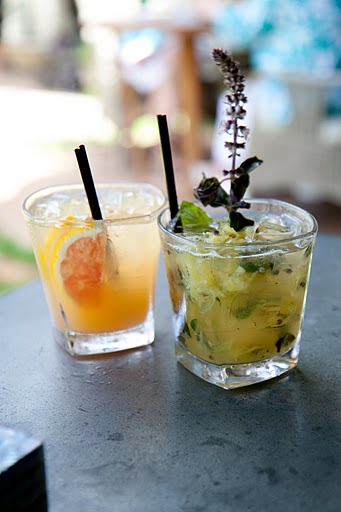
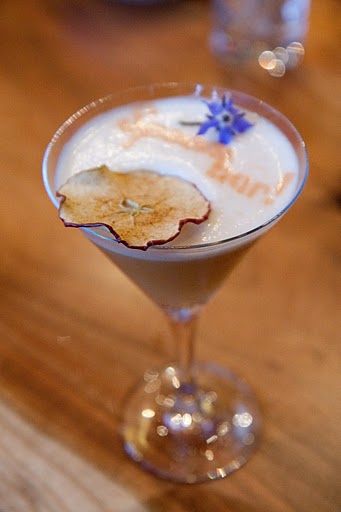
The playful, contemporary hand given to many a dish is reason enough to dine here. But 22 North’s cocktails were the best I had on Kauai. Intriguingly, one was unlike any other I’ve had before – a rare occurrence for me anywhere, much less in a region not known for cocktails. Blue Rhum ($8) impressed me with its light rum, home-grown Kilohana pineapple, lime, and a stunning frond of African blue basil – it was aromatic and sophisticated. 

The rest were a mixed bag. The Paloma Fresca ($8) was unable to find a harmony between its tequila and grapefruit, but it benefited from local citrus and Kiawe honey. Fried Green Tomatoes ($11) gave a nod to the Southern United States with tomatoes from the farm encrusted in cornmeal, served with a romaine salad in a Maui onion buttermilk chive dressing.

22 North’s burger ($11) was satisfyingly juicy, made with local meat (rotates between beef, lamb, and veal). The cubano sandwich ($9) was pulled pork and house-cured ham laden with homemade pickles and mustard. The restaurant serve gougères ($5) made with fennel honey butter, baccala fritters ($7) with macadamia nut romesco, and sesame-crusted tuna ($28) poached in carrot, ginger, and white wine with a “forbidden rice cake.”

Dessert (all $8) is another highlight here. Local fruit pie benefits from even more home-grown produce, served warm, enclosed in a surprisingly French pie crust that was flaky and buttery, and topped with a scoop of Kauai’s own Lappert’s vanilla ice cream.

22 North has four different “adult floats” ($12) all made with ice cream and beer or spirits — oddly delightful. Though I’ve had beer floats before, I’ve never had one with the refreshing tang of the coconut porter float made with Maui Brewing Co. coconut porter and toasted coconut.

All around, this meal was the most uniquely satisfying of my Kauai visit, and the one that best represents local bounty.


EXPENSIVE

Tidepools, Koloa:

Tidepools at the otherworldly Grand Hyatt captures the magic of its setting in a Disneyland-esque way. It almost feels fake: tiki torches light up a lagoon as you dine under open-air, thatched-roof huts listening to frogs croak. Idyllic.

Certainly the menu reads old school – and there is a dated air about the place, but there are culinary surprises that hold the spell of the setting. It’s $32-55 for entrees and a more reasonable $9-15 for appetizers. You’re right: in the scheme of fine restaurants, it’s not worth that high price tag. But you’re in Kauai and this is one of the best meals you’ll have there, in an environment that helps that cost go down more easily.

Salads (like $9 Manoa lettuce with a creamy Maui onion-garlic dressing and shaved manchego cheese) and sashimi starters (like $15 ahi with Hawaiian hearts of palm and shiso leaf) are fresh and pleasing. Brandt Farms organic prime NY strip steak ($48) is shockingly juicy when cooked medium-rare, and packed with flavor. The other surprise is the crowd-pleasing macadamia nut mahi mahi ($32): lightly encrusted in nuts over coconut jasmine rice in a tropical rum buerre blanc. It tastes of Hawaii: redolent of the sea, gently sweet, with a nutty goodness.


— Subscribe to Virgina’s twice monthly newsletter, The Perfect Spot
 

Appetite: Our picks from Dry Creek

1

Last year’s Passport to Dry Creek festival (April 30-May 1) was quite the weekend of hops between wineries in Dry Creek Valley. How was it different than any of the dozens of events in wine country at any given time, you might ask?

Unlike barrel tasting weekends mobbed with drunken carousers and not-yet-mature wines, or smaller events where you gain merely a handful of tastes, Passport includes the majority of wineries in the Dry Creek valley and keeps the crowds regulated enough to be enjoyable. Each winery serves unlimited food and wine, often with live music and engrossing themes.

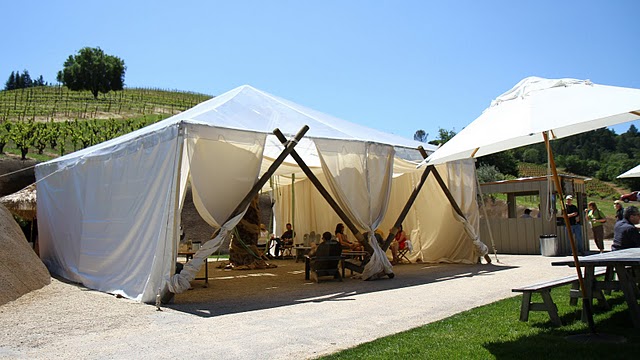
With a Passport ticket in hand, it’s like you’re invited to a private party at each winery. Some of the wines triumphed over the others, but then, many of the vineyard settings bested the rest during the weekend’s typically brilliant weather. After visiting 24 wineries, here’s my take on this year’s Passport highlights in the categories of ambiance, food, and of course, wine.


AMBIANCE

Bella Vineyards: 

Just like last year, Bella‘s African safari theme and moody, cool caves were a highlight of the entire weekend. Lingering here with a crisp rose is a joy every time.

Truett Hurst Vineyards:

Your drinking buddies at Truett Hurst

Another top spot from last year, Truett Hurst has a memorable zinfandel rose ($15) best enjoyed in the spot’s red Adirondack chairs alongside the river running through its property – after you’ve visited the goats and sheep on the back of the property. A dreamy respite, I always leave this winery relaxed.

Family Wineries: 

I don’t go to Family for the wine, nor for the cluster of non-descript tasting rooms situated off the parking lot, but I stop in annually here to spend a happy hour watching the California Cowboys play. A truly an awesome country band that keeps it real with tunes any classic country fan will love (from Waylon Jennings to Roger Miller), plus a few newer favorites. Vocals, musicianship, the Cowboys are top-notch.

Seghesio Family Vineyards:

A bowlful of steamin’ zydeco at Seghesio

With a raucous New Orleans theme based on the winery family’s NoLa roots, Seghesio boasted one of the top bands of the weekend: Andre Thierry & Zydeco Magic. Grilling Cajun ribs and spooning up bowlfuls of seafood gumbo, the spirit was festive and familial here, like one big backyard party.


FOOD

Frick Winery: 

I’m impressed every year by Frick‘s complicated bite-sized snacks offered by chef John Mitzewich and Michele Manfredi, a husband and wife dynamic duo. Chef John is known for his site Food Wishes (last year’s Saveur winner for best food video blog, nominated again this year).

Manfredi created SFQ sauce, our fair city’s first native BBQ sauce (try it if you haven’t!). Its East-meets-West flair appeared at this year’s Passport in their duck a la SFQ: duck confit in SFQ sauce on a cocoa corn chip, garnished with duck crackling remolata. Yum. 

My two favorites? Main line Philly cheesesteak: mini-baguettes topped with Snake River Farms Kobe-style steak over truffled “cheese whiz” (you read right — chef John is on the money with this one. I’ll take a jar?) Dotted with peppadew peppers and jalapeños, its perfection.

One of the ‘simplest’ bites was the best: the sausage luxe, Boccalone‘s sweet Italian sausage dusted with fennel pollen and skewered with a Luxardo maraschino cherry. Seductive and lush.


WINE

Quivara Vineyards: 

Quivara‘s high quality relies on hand-picked grapes and biodynamic farming methods. Its wines reflect care and attention, whether you’re sipping its 2008 grenache ($26) or 2008 mourvedre ($32).

Frick Winery: 

Frick is a Dry Creek favorite – from grenache blanc to C3 and C2 (Rhone blends), Bill Frick produces sophisticated wines that maintain Old World balance. This year, I’m really taking to his cinsaut and grenache.

Seghesio Family Vineyards: 

Seghesio‘s home ranch zinfandel has been an at-home go-to for a balanced zin, reflecting dark berries and the clay soil it’s grown in. At Passport, we tasted pre-releases of 2009 Home Ranch Zin ($38), a highlight of the 10 Seghesio wines sampled.

Unti Vineyards:

I’ve enjoyed Unti‘s wines the last couple years, and was reminded again last weekend that its 2007 grenache is a standout with blackberry, pepper, and even licorice notes.

Stephen & Walker: 

Besides appreciating their female winemaker, Nancy Walker, who I had the pleasure of meeting during Passport, there was a number of drinkable wines from Stephen & Walker‘s line-up of 10. The most celebrated is Walker’s 2006 Howell Mountain cabernet sauvignon ($65). Winner of multiple awards and the vineyard’s benchmark wine, it’s a fine showcase of the region’s cabs.

— Subscribe to Virgina’s twice monthly newsletter, The Perfect Spot


Appetite: Upcoming contests, from Napa cocktails to the ultimate sausage recipe

0

It’s a privilege to be part of a food and drink judging panel. One witnesses wild creativity from up-and-coming stars as well as established greats in the field. Competitions are where food geniuses take risks, and step out further than the bounds of set menus sometimes allow. 

Here are two upcoming contests I’ll be judging: one for cocktails up in Napa (wine country bartenders, please apply!) and one in SF showcasing five local chefs creating gourmet sausage recipes.

2nd Annual Wine Country Cocktail Competition 

Head to Calistoga’s Solage Resort on a Monday night to support your favorite wine country bartender. The mixologists will compete for best cocktail using two winning products: Charbay’s exceptional spirits and Perfect Purée of Napa Valley’s purees and concentrates. Top three winners get cash prizes, while first place gets to participate in a drink photo shoot at Perfect Purée’s headquarters. Bartenders work with ingredients like Perfect Purée’s yuzu luxe sour and carmelized pineapple concentrate, and are allowed to use any base spirit from Charbay’s portfolio, from vodkas to rum (with the exception of its Whiskey Release II, Nostalgie, and brandy). 

The last Charbay-Perfect Purée contest I judged at Rye delivered many memorable beauties. Wine country in the spring is already worth an excursion north, and if you attend the contest you can experience a growing cocktail scene in a region traditionally dominated by wine  – not to mention a showcase of two of the area’s best local products.

Monday, May 16, 6-8 p.m., free

The Solage Resort 

755 Silverado Trail, Calistoga

www.charbay.com 

www.perfectpuree.com


Tailgate Throwdown

Mark your calendars for what will be one of the most fun competitions of the summer. Tres Restaurant is the setting, and $10 is an oh-so-right price to sample five unique recipes featuring Saag’s Sausage. Here’s the meat of the competition: five popular Bay Area chefs will vie for best tailgating sausage recipe. You’ll get to sample each entry, along with classic game day sides like potato salad and coleslaw, then vote on who you think is top dog of the night. You’ll take home a swag bag stuffed with sausage samples, recipes, and more — the winning chef gets $250. Best of all, all ticket proceeds benefit Food Runners of San Francisco

Monday, June 20, 6:30-8:30 p.m., $10

Tres Restaurant 

130 Townsend, SF

(415) 227-0500

www.tailgatethrowdown.eventbrite.com 


–Subscribe to Virgina’s twice monthly newsletter, The Perfect Spot


No animals were harmed in the making of this sandwich

13

Last week long-time SF vegan restaurant and gathering place, Café Gratitude reopened after a short closure due to remodeling, unveiling not only their spruced-up interior but a new menu that includes old favorites as well as some new creations. 

Included in the new menu is a vegan BLT sandwich. Sounded great, so I promptly traipsed down last weekend. Of course on the restaurant’s New-Age, posi-vibes menu this BLT is called “I Am Extraordinary,” with sautéed maple bacon, romaine, tomato, spicy aioli, and avocado on an organic wheat bun. It was only the second day after its reopening, and the restaurant was packed with happy diners, whom I noticed were mostly of the older variety the day I visited. All of the tables are communal, but even so, I could barely find a seat. I felt that familiar Café Gratitude feeling: that of leaving planet Earth behind. 

If you’ve never been to Café Gratitude, then some background information is in order. The place is much like walking on board a spaceship manned by a fleet of friendly and encouraging aliens. The ship is decorated with trippy pictures of deliriously pleased humans farming, sharing, floating on rivers of love, etc. 

Once aboard, you will be expected to no longer use regular English, but instead a vocabulary relating only to epic self love. When you want something like food or water, you will have to utter phrases like, “I am pure,” and “I am luscious,” in order to procure them. 

The flight crew will bring you the healthiest of vegan food and drinks, some raw, or “alive,” referring to their probiotic qualities. All will come at a high price, usually somewhere around $15, but this is because of the local, organic, meticulously-crafted quality of the menu. While you eat, crew members will periodically come by your table and ask strange questions like, “what inspires you?” and “how do you show love?” After paying you will be released from the ship feeling great, your aura slightly aglow with an alien love light. 

I took my seat on the spaceship announced, “I am extraordinary,” and waited for my BLT to arrive, which it eventually did, with a bed of greens. Although I haven’t had a real BLT in years, I can safely say that this sandwich was not one – but it did make serious strides to honor the title. The coconut bacon was crunchy, salty and sweet, much like the “oink oink” variety. 

Vegan bacon, revealed

The interesting thing about good vegan versions of traditionally non-vegan things is that these substitutes will often take on a light of their own. This was certainly the case with Café Gratitude’s aioli. It’s cashew-based and has a hummus-like quality, so they pile it on with much more vigor and less restraint than one would conventional aioli. 

It was different, not that there’s anything wrong with that. My sandwich was hearty, flavorful, and fresh. I scarfed it down in minutes and felt satisfied – and, I guess you could say, extraordinary. “I am extraordinary” does have a nice ring to it, but still, if I had to rename it, I would call it, “nut hummus sandwich with coconut flakes.”


Cafe Gratitude 

2400 Harrison, SF

(415) 824-4652

(And other Bay Area locations)

www.cafegratitude.com

Appetite: Island bites, part two

0

After a dreamy week in Hawaii, I have a slew of food and drink recommendations to share. Part one of these covered farmers market and street food in Honolulu and snacks from the North Shore of Oahu. This time, we sleep and drink in Honolulu. In part three, we’ll talk Honolulu restaurants.

Though I arrived islandside with a head full of romantic, slightly improbable Blue Hawaii dreams — me wearing a vintage bathing suit, lei, and a mai tai being serenaded by Elvis — my vacation reality was no letdown. No doubt the touristy scourge of chain shops, restaurants, and photo-snapping throngs do indeed exist in Waikiki, but contrary to what some told me, Hawaii’s largest city can be clean and relaxed. Though you truly find “island time” on Kauai and quieter locales, Honolulu is by no means hectic (if you ignore the traffic). It is that island city where you can while away hours at the beach, explore hole-in-the-wall eats, or listen to live music as the sun sets.

Hotel Renew, Waikiki Beach: 

With Asian-modern, Zen-like decor, clean lines and big city chic, these rooms are a welcome respite from the all-day party of Waikiki surfers and sunbathers. No pool or beachfront property here, though upper rooms on the south side have views of the beach. After long walks and lots of sun, I was grateful to enter the heavy front doors of Renew and be welcomed by the tinkle of the lobby’s water fountain. I’d grab a glass of water laced with fresh oranges and head up to my room with ultra-comfy bed and an ocean view.

The winning points of Hotel Renew, which is located on the eastern end of Waikiki, is affordability and peace. Plus, you can always take their complimentary boogie boards and towels a block away to the beach. But the best part? As overpriced as Waikiki can be, here you can get a room on a busy weekend for $180 to $225 a night. 


COCKTAILS

The cocktail renaissance is finally hitting Hawaii. Here’s a handful of places and bartenders forging the way.

Lobby Bar at The Waikiki Edition:

Although it is to be found by pushing aside a bookshelf in a hotel lobby, the Lobby Bar is no speakeasy — it’s a white, urban bar with muted lighting and long couches with a semi-exclusive, yet unpretentious air in The Edition, a hot hotel perfect for ultra-cool poolside lounging.

Bar manager Sam Treadway hails direct from Boston’s best-known cocktail bar, Drink and he’s clearly loving the warm island breezes, playing off of the canon of island classics, like the deconstructed mai tai ($11). Treadway has toned down the drink’s characteristic sweetness, amping up the rum (Pyrat XO) and orgeat (almond syrup) and topping it off with mai tai foam and a shiso leaf. He served me a lovely rum manhattan made with Montecristo 12 year rum, and he’s also handy with mezcal. The Agony and the Ecstasy ($11 – nice literary reference) is a winning mix of Del Maguey’s Mezcal Vida, St. Germain, and fresh grapefruit juice, topped with a house ginger beer. Spicy, smoky, gently sweet.

The cherry on top? Treadway combines Mezcal Vida, Campari, and soda to create, yes, a mezcal negroni. I long for the day when I can get one here, in my own negroni-obsessed city.

Town:

Another of the city’s great bartenders is Town‘s Dave Power. Located in Kaimuki, just a few minutes drive from Waikiki, Town feels like I’m back home in San Francisco. Local, organic foods served with with rustic, Italian technique, all-American heart, gourmet animal parts, and classic cocktails (all $10).

Power executes cocktails simply but with a beautifully, even literary, bent. His tequila negroni is a revelation. He explains that his inspiration is M.F.K. Fisher‘s love of equal parts gin, vermouth, and bitters in her cocktail. His version adds an equal part of Don Julio Reposado and a Campari infused with local Hawaiian Kiawe wood chips for a gentle smoky taste.

He also makes a Very Very Good Martini (this being how it’s listed on the menu) and my beloved Death’s Door — something you don’t see much in these parts — and a white manhattan with moonshine (white whiskey) and Dolin Blanc vermouth.

I’d recommend eating as well as drinking here. It’s a special place that evokes other big cities, but uses Hawaiian ingredients and laid-back charm.

Mai Tai Bar:

I am in love with the Royal Hawaiian Hotel. A pink, playful beacon that jumps out of the town’s blanket of highrises, it is the one hotel that evokes the history of old Waikiki. Built in 1927 and dubbed the Pink Palace of the Pacific, this is the classic Hawaii I dreamed of.

I’ll stay there one day. But in the meantime, one can always head through its grove of trees laden with hanging lights, past torches, through the lobby, and out to the back lawn where the Mai Tai Bar looks out over the beach. Live music at sunset and my own private cabana on the beach made this scene one of the most magical I spent in Honolulu.

This is not the place for refined cocktails but the bar has a history of providing tropical oceanside drinks. Manager Mike Swerdloff is a wine lover himself, but keeps up on the national cocktail scene and is passionate about great service, food and drink.

As for cocktails, there are various versions of the mai tai here — all too sweet for me, but they’re destined to be crowd-pleasers, and are greatly enhanced by the paradisical surroundings. Were I to really go for sweetness here, I’d prefer the Chi ($13), made from coconut and Maui’s organic Ocean Vodka and perked up with fresh pineapple and basil; or Pina Rocks ($10): Bacardi 8 year, coconut cream, pineapple, and a lemon-thyme float.

We had a lot of fun with our Smoking Gun mai tai, a winner in last year’s Mai Tai Festival on Kona. A glass of Whaler’s dark rum, Bacardi White, and a housemade velvet falernum was torched with smoke, then topped with a brown sugar-torched pineapple wedge. The presentation was quite dramatic — smoke even spilled out from the glass — but I could still taste the propane when I sipped the drink. That aside, the Smoking Gun yielded a delightfully sweet, smoky island imbibement that evoked roasting marshmallows over a campfire.

Lewers Lounge:

Inside the gorgeous Halekulani Hotel hides a classic New York hotel bar, rich with history and flush with jazz. And the music really is the reason to come. Nightly live jazz sets the classy, upscale tone of Lewers — don’t you dare wear shorts or flip-flops because this elegance is maintained with a strict dress code. You’ll also need a reservation on many nights.

Despite the legendary stamp of Dale DeGroff on the menu (he created it), drinks are of the sweet, fruity variety, like the refreshing ginger lychee caipirissima ($12). More ambitious efforts like the Amante Picante ($12) — tequila with cucumber, cilantro, green tabasco — have the right idea but lack balance. All in the execution?

What is impressive is the bar’s dessert menu. The ever-popular Halekulani coconut cake ($9) is ordered for weddings all over the islands, even from as far as LA. Adult gourmet versions of popsicles and ice cream sandwiches on ice are also available. One can always order from the spirits and wine lists and enjoy a sip of brandy and a slice of cake while taking in Tennyson Stephens and Rocky Holmes’ delightful jazz duo.

La Mariana:

No, I am not recommending La Mariana Sailing Club for the drinks — this write-up is a nod to the historical appeal and charm of a rundown but well-loved space. One of the last remaining kitschy tiki bars from the 1950′s, it can be an adventure just getting here.

Located way out on a harbor, you won’t be sure you’ve found it even when you’ve arrived at the right spot. Park on the street near the “sailing club” sign, then walk around to the right side of the building and enter through the back along the water. Tiki decor and thatched roofs abound in a multi-room layout with open air patio.

The day after the Japanese tsunami hit Hawaii’s shores, I sat here with a pina colada watching boat owners pull their damaged sailboats out of the water. Crusty, sun-scorched sailors sipped mai tais and beers around me, comparing damage done to their boats.

If you go, be sure to read the story of owner Annette Nahinu on the menu. She’s the sort of local character that will make you fall in love with Honolulu and its colorful international history.

Note: I tried to make it to a new Honolulu hotspot that local bartenders recommended, Apartment 3, but couldn’t make it there on a day when Kyle was bartending (Friday nights at the moment). I hear he’s a whiskey lover like myself, and I was sure he’d be another envelope-pushing bartender on this list.

–Subscribe to Virgina’s twice monthly newsletter, The Perfect Spot
 

WonderCon diaries: Chris Cosentino is… Wolverine’s new buddy!

0

I had seen chef Chris Cosentino (of Bay Area offal ground zero Incanto, also a The Next Iron Chef contestant and host of the Food Network’s Chef Vs. City) in person for the first time a few weeks ago – he’d just made an incredible multi-course meal for a bunch of beer journalists at Anchor Brewery and was racing around, saying hi to people and describing his thought process on the various beer-food pairings. My tablemates, friends of Cosentino, told me he had a comic coming out at WonderCon, or something. So I gave him a shout – hey, dope local angle on the convention, since I knew I was going anyway.

Maybe I should have known when I saw the massive poster of Cosentino in the Ferry Building at the stand of his other business, Boccolone Tasty Salted Pig Parts (signed by the man himself, “pork is the new vegetable,”), a few days later that this was going to be no mere small press comic release.  

Perhaps a nice interview about his project for some pre-event coverage? — I inquired of the king of offal. “You have to speak with Marvel first before anything can be written sorry it’s their protocol,” he replied. Marvel! At which point I embarked on the epic voyage that is reporting on Marvel Comics, much of which involves intriguing email exchanges with C.B. Cebulski, senior V.P. of “creator and content development.” Marvel, like most of the major comic labels, luxuriates in a cycle of suspense and sneak peeks. So are Cebulski’s emails: vague, then bombshell! Damn, they’re good at what they do. 

Which is to say, the convention approached and I still had no idea what the hell Chris Cosentino had to do with WonderCon, or Marvel at all for that matter. I dug out of C.B. that he was indeed, going to be the special guest at Marvel’s “Welcome to the X-Men” panel, so that at least I would be present for when the bomb was detonated. Still, Chris — are you going to be an X-Man? “No I’m not an X-Man,” is all his email in return said. So what the hell — ? Suspense!

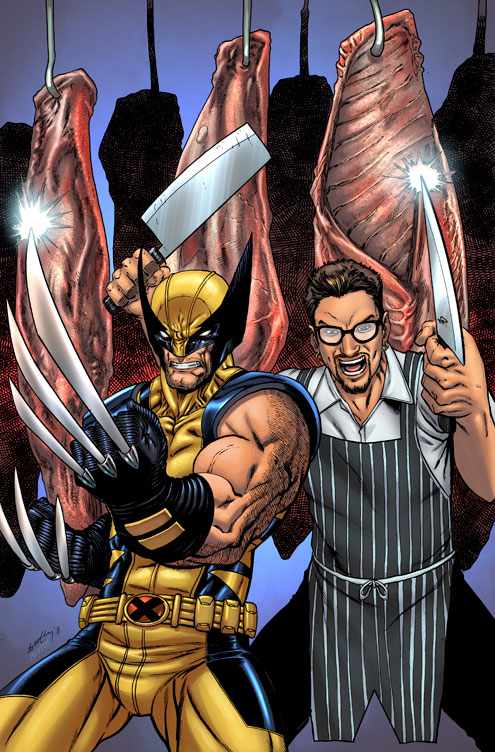
On Friday Cebulski sent me the artwork of the upcoming Cosentino Marvel appearance, which was probably a big deal that I should have tweeted about immediately: Wolverine and the chef in a meat locker poised for battle, Wolverine with his metal alloy adamantium claws, Cosentino brandishing a pair of shiny butcher knives. Best friends! 

I was hooked. Thusly, I ferreted out said Marvel presentation on Saturday, the first WonderCon event I attended and the only time I would attend a major label event this weekend, I think. I saw Cebulski and Cosentino enter, was briefly and glancingly greeted by the two, watched Cebulski assume a spot at the panel table, Cosentino grab a seat towards the back of the conference room with a friend, and then the panel began discussing upcoming X-Men releases to a rapt audience, who cheered when individual series (there are many within the X-Men universe, of course): suspense, sneak peek!

“I can’t say a lot about what’s involved — but there are lots of giant robots involved,” said a much-loved Marvel artist on the panel. And on: “something drastic will be happening in the X-Men universe — I don’t think I can say much more about it.” Suspense, sneak peek! 

And then, the artwork I’d been sent earlier flashed on screen, with Cosentino’s figure replaced with a black shape with a question mark in the middle. And then, Cosentino! I think it’ll be bigger news on Chowhound, judging from the lukewarm  WonderCon entusiasm levels expressed upon his introduction. He arose from his seat towards the back of the room and assumed a spot at the panel table.  

“It’ll be very food centric, very San Francisco-located,” Cosentino announces of his impending dance with the X-Men universe. “We’re gonna have fun with this one.”

“I grew up being infatuated with Wolverine. As a little kid, I used to sit there and stare at my hands,” he says, the best line of the panel: the audience chuckles, remembering their own metal alloy adamantium dreams. Cebulski, panel moderating, asks what Wolverine’s favorite restaurant is. 

“He has so many food loves,” Cosentino replies, unwilling to pigeonhole his childhood hero. “Japan, Germany.” Which is to say: read the comic book! You can, it comes out in June exclusively in digital form. I for one, will be stoked to see where Cosentino takes Wolverine on whatever shredding and stabbing mayhem ensues – North Beach for cioppino? Nobu’s late night meaty buffet? 

Anyway, the audience members that surfaced for the post-panel Q&A was less intrigued with these culinary concerns. The closest ask came from a young man from the South Bay. When, he wondered, will the X-Men be spending some time on the peninsula? He sees them in San Francisco, Oakland, and Marin all the time, so he’d like to know. “I want to see X-Men on my street!”

“You want to see X-Men destroy your house and your street,” a panelist says, by way of very inconclusive response, albeit one that incites much enthusiasm from the questioner and the rest of the audience. Seeing one’s house destroyed by ones heroes being the ultimate honorific here in this crowd of Marvel enthusiasts, save becoming a character oneself. 

Anyways, now our chefs are cartoon characters. What’s next, the anime version of the Tamale Lady? Alice Waters vs. Godzilla? 

More WonderCon tidings are on their way, later this week. Ziggy Marley will be involved. How’s that for a tease, Marvel?

3 reasons to drink Don Pilar tequila

0

1. A backstory you can cheers to

Yes, Don Pilar is actual tequila, which means it must be made in Jalisco, Mexico in the lowlands and highlands surrounding the town of Tequila. Now that we have that out of the way, I want to highlight that Don Pilar (a.k.a. Jose Pilar Contreras) is a Bay Area entrepreneur and all-around Latino success story.

Born and raised in the Jaliscan highlands, where his tequila is distilled near the town of San Jose de Gracia, tequila was always in Contreras’ blood. He moved to California in the 1960s to work the state’s orchards and fields. Later, he opened the popular Tres Amigos in Half Moon Bay in the ‘80s with two business partners. The restaurant now has three locations. 

Contreras also launched his own Amigos Grill in Portola Valley, where his whole family works and in 2002, he began work on his next venture: an anejo tequila. “Don Pilar” is so hands-on in every aspect of his businesses that it’s not uncommon to find him buying supplies and produce, working the kitchen, or even catch him supervising the agave fields in Mexico. 

2. Anejo value

You’d be hard-pressed to find a better anejo at this price. At places like the Jug Shop or K&L, Don Pilar anejo can be priced below $35, a steal for an anejo this good.

As tequila’s aged, golden counterpart, anejos usually cost far more than a blanco or reposado. This double-distilled anejo has been aged in virgin American white oak barrels with a medium char. The taste is redolent of butterscotch, chocolate, toasted agave. With a full, round finish, it has bested other anejos that cost twice as much or more to win industry awards.

3. A brand new blanco

 The company has recently added to the family with Don Pilar Blanco, a tequila that is bottled immediately after distillation. In honor of the tequila’s youth, its squat bottle sports a photo of a younger Don Pilar — the anejo bottle carries a more recent image.

But this is one younger sibling that refuses to be shown up by its elders. Clean and bright with pineapple and zest, it has a gently creamy finish. After a release party at the legendary Tommy’s (where of course you can sample both Don Pilar tequilas, in addition to restaurants like Tropisueno, Colibri, Maya, Seasons Bar at the Four Seasons, even El Farolito), it feels only right to celebrate tequilas that not only hold up in the saturated corner of the liquor world, but also have local roots. 

–Subscribe to Virgina’s twice monthly newsletter, The Perfect Spot


Live Shots: Whole Beast Supper Club Rabbit Tasting Dinner, 3/18/2011

0

Growing up, my best friend Suzy Q (then and now) used to raise bunny rabbits in her backyard in Pacifica. In the spring, there would sometimes be two or three new litters at the same time, and we would set up a tent on the lawn and let the dozens of fluff balls run around us in circles. Although many of the bunnies were sold once they got big enough, there were some extremely special ones, like Mr. Casey, who used to ride around on Suzy Q’s shoulder like a parrot and who I became the loving godmother of at a full-blown bunny baptism. So, you can imagine my tangle of emotions when I spent last Friday night at a pop-up rabbit tasting dinner at La Victoria Bakery, for a meal with the Whole Beast Supper Club.

The concept of this dining group is absolutely righteous. Eat the whole animal and also try out new parts of plants that you might not have thought of before as edible. The rabbits for the meal were provided by Devil’s Gulch Ranch in Nicasio. The farmer, Mark Pasternak, was also at the dinner to see for himself what an all rabbit meal would be like.


The evening started with a hearty offal stew, which contained livers, hearts, cheeks, etc, and heirloom beans, that was far from awful. It was delicious. Next came batter fried shoulders (read: southern fried chicken), topped with this amazing homemade pickled black mustard, which I could have eaten a vat of with just a spoon. Back in the kitchen, it was obvious that the chef, Kevin Bunnell, was totally enjoying himself. After chatting with him a bit, it’s clear that Bunnell is in the food business for the adventure aspect of it. One of their last dinners was all about pig, and Bunnell got the pig for the meal from a guy he knew that knew another guy who had a pig. It was dropped off at Bunnell’s house, on ice, still covered in hair, which meant Bunnell had to learn how to butcher a pig then and there. He loves getting creative with the different parts of meat and seems determined to really use the whole beast.

The rest of the dishes that evening included a delicious braised leg on a mound of fresh made pasta, topped with roasted baby artichokes, and then a seared loin on a bed of wild mushrooms. I loved Bunnell’s use of greens too, from delicate spring pea shoots to crisp fava leaves (who knew you could eat fava leaves? And they’re so yummy!). And to top it all off, there was a carrot sponge cake coated with a fluffy fennel-thyme bavarian cream custard that was over the top decadent and a delight to devour.

So, I made it through four courses of rabbit (and half a bottle of wine) and at the end of the night, I have to say I was pretty darn satisfied. Mr. Casey, you will always have a special place in my heart, but now, some of your peers have a special place on my palate, too.

Pie attack? Bike Basket Pies delivers

2

Get your fork ready: SFBG videographer Ariel Soto grabs some piping hot slices with Natalie Galatzer of Bike Basket Pies in the Mission

Secret cajun kitchen discovered, evidence of gumbo

1

Those who enjoy strolling amidst a certain vibrant stretch of  24th Street in the Mission might be under a common misguided belief that the world is flat and ends east of Potrero Avenue. But just as Christopher Columbus proved the world was round by sailing west, I confirmed this is false by sailing east — one block east of Potrero, that is. What I found was Tasty’s Creole Cajun Kitchen, a new world filled with rare goods and spices. Among them, signature po’ boy sandwiches, southern brunch specialties, gumbo, red beans and rice, hush puppies, sweet tea, even French rolls flown in from Louisiana. What wonders the new world holds!

Although… perhaps Tasty’s seemed so exotic due to entirely different challenges to accessibility — it’s discretely tucked away inside a local bar, Jack’s. Jack’s Club has been operating on the corner of 24th and Utah for over 80 years. It is itself a relic from another time, its art deco interior, with stucco ceilings and wood paneling an homage to how little has changed inside of this building over time.

On a typical Tuesday afternoon Jack’s Club is dark and cave-like, acting as a refuge for a few regulars playing pool, drinking at the bar, and carrying on with bartender and current owner, Erma. Jack’s consists of a large front room that doubles as a dining room and a bar with counter seating, a pool room in the back, a pinball room in between, and a small kitchen alongside the bar. This kitchen, equipped with one stove and one deep fryer, is where all of Tasty’s cajun magic happens.

And it’s a lot of magic, for one stove. With over 10 kinds of po’ boy sandwiches, four authentic creole entrees, an assortment of bar appetizers and sides that range from oysters remoulade to sweet potato fries, and a Monday through Friday special of the day, it’s hard to imagine how this kitchen works. This is what I was pondering as I sat at a small table and read over the mouth-wateringly affordable menu. Most entrees are around 10 bucks, and all of the generously portioned sides are less than five. I finally decided on a fried oyster po’ boy with creole slaw on the side. 

Dive bar with a side of delicious. Photo by Hannah Tepper

It was promptly served on a modest tray. I took a bite of my first fried oyster with hesitation. Fried oysters are a tricky business—when they are good they are really good, and vice versa. But this time I was happy, and almost surprised to find that Tasty’s fried oysters were delicious, crispy, with a thin cornmeal crust on the outside, smooth and tender on the inside. How did this come out of that? I thought, looking back and forth between my oysters and the utterly modest kitchen with no door. My creole slaw was without a doubt one of the best coleslaw experiences of my life. Theirs is made in a sweet, mellow mustard-y dressing that you have to taste to truly understand, but take heed—this kind of slaw will leave a woman wanting more.

By the end of my meal I had questions and I wanted answers. Why here? Why so good? What is happening? Is life real? Luckily I found owner and bartender du jour, Erma, happily talking home-renovations with Tasty’s head chef, Cullen Quave. I interrupted them with a interrogative bombardment, and they kindly told me everything I wanted to know about Jack’s, Tasty’s, and the metaphysics of reality.

Erma, who would rather not disclose her last name, has owned Jack’s with her family for the last nine years. She is a self-identified “kid from the area,” and grew up only a few blocks away from Jack’s Club. It was her idea to run an authentic creole restaurant out of Jack’s small kitchen, but it took a few tries to get it right.

“The menu is all authentic and created by me. Before Tasty’s we had rented the kitchen to another party but I’ve always managed the restaurant,” she says. Then Erma met Quave, a like-minded home chef from New Orleans who wandered into Jack’s on his birthday looking for an authentic po’ boy sandwich to satisfy his creole cravings. “I was going to fly a po’ boy in from New Orleans,” Quave says, “but luckily my buddy told me about this place and so I came here and it was delicious.” The two got to talking and decided soon after to start Tasty’s with Quave as head cook and Erma providing her own recipes. I can attest that the result is delicious food, a big authentic menu, and a weird, cozy atmosphere. 

Five stars in my book, but Erma and Quave say that business on the Potrero side of 24th is slow at times. “This is a place where people just like to hang out. I enjoy the fact that there are a lot of locals and regulars that come in here. I enjoy seeing some of the people that I actually grew up with coming by,” Erma says. Meanwhile, newcomers—like myself—are always welcome to come by and eat some jambalaya. Some other great reasons to get over to Tasty’s Creole Cajun Kitchen at Jack’s Bar—live jazz every Friday night and a Mardi Gras shindig coming up on March 8th.  Their Mardi Gras celebration will be happening all afternoon, and will include a live jazz band, King Cake, Tasty’s serving up specialty dishes, and of course plenty of booze.

As I packed up my things to go, I had one last question for Quave—“How do you fry them oysters so good?” I asked. His answer: “You have to be a really good fryer.”


Tasty’s Creole Cajun Kitchen at Jack’s Bar

Mon. – Sun., 10:30 a.m. – 8 p.m.

Brunch: Sat.-Sun. 10:30 a.m.- 2 p.m.

2545 24th St., SF

(415) 641-5371

www.jacksclubsf.com

Full Bar

MC/V

Moderately Noisy

Wheelchair Accessible


All roads lead to tandoori: Lahore Karahi’s Zulfiqar Haider speaks

1

I spoke with Zulfiqar “Guddu” Haider, the man behind Lahore Karahi, late one Wednesday evening. The last customers were making their way out the door of his unassuming Tenderloin Pakistani restaurant after a busy night, the kitchen staff had begun to clean up and head home. Haider led me over to one side of his dining room, a wall lined with glowing Yelp and Zagat reviews, and newspaper features with pictures of Haider front and center, dramatically holding out a steaming sautee pan and smiling boldly.

A tall, mustached man with a smile that could melt your heart, Haider is the owner and head chef at Lahore. He prepares every dish that comes out of the kitchen. “You have to try the tandoori fish,” he gushes. “Nobody doesn’t like it!” It’s not just Haider’s cheerful demeanor and his smoky tandoori fish that brings the crowds to Lahore – eating here doesn’t leave a dent in your wallet. Most dishes are between $5 and $12 each, with naan and appetizers all under five dollars. Haider says he’s never felt pressure to raise prices.

Friends that know him well call him Guddu, a nickname that loosely translates to baby and was first given to him by his mother. His pet name seems fitting in the best sense of the word – even at the end of a long day in the kitchen, his face lights up with a youthful glee as talks shop at his Tenderloin mainstay. 

Born in Sahiwal Punjab in Pakistan, Haider says he was a goalie on his university’s soccer team. He came to the States in 1994 and after his first stint in the restaurant industry at a pizza and pasta shop, took a job as cook at Shalimar, another popular Indian and Pakistani restaurant in the TL. Soon he was opening Taj Mahal, his first restaurant, in 1996, and then a Fremont location in 2003 named Curry Palace before he left to return to the city. “I live on Gough and Oak,” he says. “I wanted to be able to work close to where I live.” 

That led Haider to his next project, the challenging space that was Lahore Karahi. “The previous owners of this restaurant left because the location was hard. I took over and kept the name the same.” But the cooking was all his own, recipes passed down to Haider from his family in Pakistan. “All of my dishes come from my mother. She’s always close to my heart. It’s like she’s in front of me when I’m cooking.” 

A fresh option from Lahore. Photo by Alex Fine

And while Haider struggled with his TL location to begin with, he was able to take his business to his current award-winning level. “At first, taxi drivers made this place run,” he remembers. “It was mostly all taxi drivers coming in and eating here — but soon more and more people came.” He smiles as if to reflect my own unspoken thought: and the rest is history. With a packed house late on a Wednesday, a wall full of good press, and a perma-smile, it’s not difficult to see how far Haider has come in the seven years that Lahore Karahi has been his own.

Lahore Karahi

Tue – Sun 11:30 a.m. – 10:30 p.m.

612 O’Farrell, SF

(415) 567-8603

www.lahorekarahisanfrancisco.com

Beer and Wine

MC/V

Moderately Noisy

Wheelchair Accessible


Dad, Millennium. Millennium, Dad

0

San Francisco is composed of many worlds: in one, men and women wear suits and whiz up high-speed elevators to the top of the Transamerica building (until recently, I held to the belief that the uppermost floor is built entirely from Lindor truffles and boasts a wine fountain). In a cross-town galaxy, “Transamerica” might be a documentary on one’s downstairs neighbor.  

But the great thing about the city is that its various worlds frequently overlap – in laundromats, at last call, and in the occasional rare dining experience that leaves everyone happy and full, even in the wallet. Case in point: Millennium, an artful mash-up of hippie and high class.

This weekend, I experienced just such a coalescence when my father, a venerable business-type, flew in for a meeting and informed me that the highest occupiable floor of the Transam Pyramid is just an inconveniently small conference room. After introducing him to my roommate Bella Donna (formerly Donald), I wanted to treat him to a taste of the city that would satisfy his unabashedly carnivorous appetite, impress him with SF’s classy culture, and yet not leave me scrambling to find a menu item that didn’t involve au jus.

I settled on Millennium, a veggie-only venue in the Hotel California, and shuffled my old man out the door before he could ask what kind of cuisine we were headed for. We’d already de-cabbed (traveling in style being one of the many perks of dining with Pop) in front of the restaurant when he finally weaseled it out of me.

“Vegetarian? Vegetarian!” he spluttered, looking genuinely shocked that I, his own flesh and blood, would so betray and deprive him of some other animal’s skin and bone. I almost felt bad as he plopped into his seat, not at all trying not to sulk.

The décor was the first thing to soothe his spirit: rich, heavy woodwork; black-and-white tiled floor á la French bistro, and an ornate, substantial zinc-topped bar may have reassured him that his meal, too, would be a satisfyingly substantial one. Even when I informed him that the restaurant’s interior had been recently redesigned with sustainability in mind (Charles de Lisle of Your Space Interiors chose curtains from recycled plastic bags, chandeliers that started life as paper grocery sacks, and earth-toned interior paints) he seemed at home in the cozy, cruelty-free faux leather booth – or at least sufficiently insulated from SF’s raging counter-culture, viz. a heavy tattooed specimen one table over. 

Conscious, not crunchy – Millennium’s classic décor is father-approved. Photo by Alison Bagby

Our server Justin was polite, just the right amount of chatty, and swift to suggest an array of dishes that would please my flesh-craving father, who at this point was becoming sort of embarrassed by his insistence on animal, given that the restaurant’s staff seemed to be nice folk.  

(“I don’t eat that much meat,” he squirmed. I reminded him that he grew up working in a meat-packing plant, the son of its branch manager. And that his eyes turn red when he goes too long without a steak.)

The first dish to come out was the housemade tortellini ($12.75) with black chanterelle and chestnut filling and an array of accoutrements that risked sounding prissy (“carrot butter, saffron-spring onion-white wine broth, braised sunchoke and spigarello kale”) but that actually rounded the plate out with a delightful and necessary balance of flavors and textures. From the dense, sweet cubes of sunchoke to the delicate crisp breadcrumbs topping the dish, each element melted lusciously into the whole, while somehow holding on to its own identity. Dad took one bite and then made haste to safely locate his portion of the dish to his plate: half, or actually, a fair bit more than half.

Next up was the black bean torte – Justin’s suggestion – stuffed with caramelized plantains ($10.75). In truth, I thought the bean filling was a bit pasty and bland, and that it didn’t do the plantains justice. But the pumpkin-habañero papazul more than supplied the needed kick, and the accompanying cashew “sour cream” was satisfyingly rich, tart, and abundant. Here, Dad broke out with a “this is totally vegetarian?” He scraped his fork across his already-clean plate and licked it. In other words, success.

From there, things just got better. We were surprised when oyster mushrooms ($11 in most circumstances) crusted with chickpea flour and thyme landed on our table, courtesy of the kitchen, simply because we commented that they sounded good. In truth, they were fantastic. Entrees included the seared sweet potato griddle cake ($23.25) with cauliflower, winter greens, and cilantro and lime chutney, which was crowned by an extravagant mound of sweet onion pakora. Resembling nothing so much as a bouffant-like mound of playafied burner-dreadlocks, the elaborate heap had my dad ready to rave. “This,” he said, waving his fork in the air. “This. This is… better than meat.” Whoa.

His awe and appetite carried us right through a Oaxacan green corn arepa ($24.75, billed as hearty fare to sate the meat-eaters among us), the chewiness and density of which was a slight disappointment to only me.  Furthermore, it carried the now-expected array of plays on texture and contrasting tastes: poblano chiles, grapefruit, avocado and roasted butternut squash frolicked in complete harmony.  

Three appetizers and two entrees later, and despite the generous portions, we were so charmed that we committed to a slice of chocolate almond midnight torte ($9.25). By the time it came out, my dad had been converted to a vociferous proponent of vegetarian cuisine and, eager to show his approval he said, “Great! I can’t wait to try this! I can’t believe they even make vegetarian dessert!”

Though I’m pretty sure my father hasn’t imbibed too many authentic mincemeat tarts or lard-and-suet pie crusts, I refrained from pointing out the slackmindedness of his statement. I just smiled into my vegetarian cappuccino, feeling wholly content and victorious.

So deeply entrenched was my father in the afterglow of a great gourmet experience that he didn’t even mind the mingled smells of urine and weed that wafted us along through the Tenderloin. “That was the only meal you could completely gorge on and still want to take a stroll afterwards,” he commented as we wandered, now cab-less, through the San Francisco streets.


Millennium

Sun-Thurs 5:30 p.m. – 9:30 p.m.;  Fri-Sat 5:30 p.m. – 10:30 p.m.

580 Geary, SF

(415) 345-3900

www.millenniumrestaurant.com

Beer, Wine and Full Bar

AE/DC/MC/V

Quiet

Wheelchair accessible


“He will probably drown in his beer hat”: the post-punk vegan hits SF

0

Isa Chandra Moskowitz is a believer in the power of baketivism. Emerging from the wilds of Food Not Bombs mass meals and the New York City punk scene, Moskowitz started a community access TV show, The Post Punk Kitchen in 2003. Since then she’s gotten five animal product-free cookbooks published, starting with the seminal Vegan Cupcakes Take Over the World (Da Capo, 168 pages, $15.95) and progressing to her latest, Appetite for Reduction (Da Capo, 336 pages, $19.95) — a collection of low-fat recipes (a couple of which we featured over the holidays), the result of Moskowitz’s doctor’s suggestion she cut back on fat after being diagnosed with a hormone imbalance.

 She’s vegging out in SF this weekend — you can catch her doing a cooking demonstration and book signing at the Ferry Plaza Farmer’s Market on Sat/12 — and hell, read that bio again, awesome. So we interviewed her and now we know where to get vegan cheese that actually tastes good, among other highly salient points.


San Francisco Bay Guardian: When and why did you become a vegan?

Isa Chandra Moskowitz: My vegan journey began over 20 years ago, when I was 16. Yes, it’s a journey, just like on the “Bachelorette.” It was pretty simple for me, I just couldn’t see any reason to eat animals. I’ve always been an animal lover and the thought of any animal suffering or being killed just drives me nuts. I didn’t want any part of it. 


SFBG: Have you seen a change in the animal product substitutes offered in stores since your early vegan days?

ISM: Yes, and what’s even more drastic is how widely available vegan meat substitues are. I’ll be honest, I don’t really care for many of the products — I prefer to cook whole foods. But I appreciate that the subs exist and there are some yummy ones out there, like the Field Roast sausages [editor’s note: soy-free, yay!] and Tofurkey slices, which make great sandwiches in a pinch. In terms of pastries and sweets it’s like we’re living in a completely different world. Sweet & Sarah Marshmallows are to die for, and there are so many awesome cookie companies that they’re too numerous to count. And ice cream is much better, especially the coconut milk varieties. 


SFBG: Do you think the US qualifies as a vegan-friendly country now? Where, in your eyes, are the best places for vegan dining?

ISM: Yeah, for sure. I mean, it’s such a big country. Of course there are more vegan-friendly places than others. The best places are probably pretty similar to the best places for food in general – NYC, Portland, and here in San Francisco. Those are also the places where I most often find myself, so go figure!


SFBG: What (if any) has been the most compelling argument you’ve heard NOT to be a vegan?

ISM: I honestly haven’t heard anything that sounded like a good argument. The only thing that makes sense to me is when people are like ‘well, I don’t really care.’ I mean, at least it’s honest! 


SFBG: When I became a vegan, I had to deal with a lot of flack from family and friends, even those that were totally cool with my ten years of vegetarianism. Did you run into that when you decided to go animal product-free? Why do you think people get so crazy about the dietary choices of others?

ISM: I hear this type of thing a lot and I have to say I did not experience it at all. I mean, there’s always that annoying guy who’s like ‘PETA means People Eating Tasty Animals!!! Guffaw! Snort!’ but he’s not my friend and he will probably drown in his beer hat so I’m not too worried about it. But in terms of friends and family, people either didn’t think anything of it or didn’t get into it with me. 


SFBG: What’s the best vegan cheese you’ve run into out there? I’m having issues with that one.

ISM: I am not crazy about any of the US cheeses on the market at the moment, but I had the most amazing vegan cheese from Switzerland called Vegusto. It’s not available here, unfortunately, but if anyone is listening and wants to make a million dollars, strike some sort of deal with that company and bring it to the US. It will change your life. In any case it’s good to know that a delicious creamy vegan cheese is possible, hopefully it will exist here someday. 


SFBG: It seems like a lot of vegan cooking revolves around processed animal product substitutes. How do you feel about that?

ISM: Ha, this whole interview was about products and processed food and yeah, in all my books I pretty much make it clear that I’m not into that. I cook with whole foods. 


SFBG: Finally, where/what are you planning on eating in SF?

ISM: I’m definitely going to eat a couple million burrito spots, but also Millenium, Cha-Ya, Gracias Madre and hopefully a kind soul will bring me something from Cinnaholic because I don’t think I’m going to make it over to the East Bay. I already went to Papalote tonight and then had the tiramisu at Cafe Gratitude so I’m happy.


Isa Chandra Moskowitz

Sat/12 11:45-12:30 p.m., free

Ferry Plaza Farmer’s Market

One Ferry Building, SF

(415) 391-3276

www.cuesa.org


Travels in a strange sushi

0

Tanuki Restaurant on California and Sixth Avenue was my first taste of the Richmond and my millionth of raw fish. On a quiet block in unfamiliar territory far from Mother Mission, I saw her “Open Sushi” neon sign and walked towards the light. But before I go on, I should admit that my heart belongs to another: We Be Sushi on 16th and Valencia. Theirs is simple, clean, casual, and delicious fish. But as every baby bird must one day leave its nest, so must I leave my small, insular universe to discover nourishment in new land.

The Richmond – what are you? I took the #33 past Golden Gate Park and – I know I am a ridiculous Mission idiot – entered the Twilight Zone. Where were all the people? Why are the streets so wide? Why is the sky so big? I guess there were some inhabitants, but they all seemed eerily calm, mustache-less. And there was so much space between them. There I was: a stranger in a strange land trying to get a spicy tuna roll.

The disconnect was heightened upon entering Tanuki, where my friend and I were faced with that awkward bad thing where you try to give the other tables space, but your server forces you to sit next to them anyway. I comforted myself with the thought that cultural immersion really is the best way of getting to know a place.


Counter attack. Photo by Alex Fine

And what a place! We were in a 1970s ski lodge. Well not literally, you’d have to ignore the long white counter and glassed-in fish with industrious chef behind — but with the low ceilings, suspicious wood paneling, and ESPN playing on the TV that hung over the small center dining room I caught a fresh-faced, schussing vibe. There were a few other tables near us: two hetero single lady couples complaining about men, one deliriously happy Midwestern-looking middle-aged duo, and a table of dudes desperately trying to make it known that they were a band. Everyone was white. But enough about the vibes, you crunchy Mission-ite. How was the food?

I am but a casual fisherperson. Virtually all I know about sushi is based on subtle inclination, hunch, and rumor that I can’t remember the origin of. I don’t think I’m alone there. But whether or not sushi is an ancient Japanese art or a conspiracy created by the US government, most of us can agree that it’s lovable fare (even when it’s not from We Be). 

But as far as I’m concerned, there are two kinds of sushi. One, a simple, minimal kind that allows you to fully taste its one or two ingredients. Two, the kind where the rolls are named things like Kamikaze and Oompa Loompa Sex Party and contain a million varieties of mayonnaise, teriyaki sauce, and what basically amounts to ketchup. 

I enjoy both — and I’m not making any sort of heady, stuck-up judgment about which is better (see my knowledge-of-sushi caveat above). But what I am saying is that Tanuki was inching towards the latter kind. And it was a little expensive — most menu items were between $10 and $20. 

On that menu: hot hamachi, oyster shooters, carpaccio, and clams in miso soup, to name but a few offerings. Everyone around us was ordering one oyster shooter after another – delicacies I still can’t categorically define, but “shooter” anything and I start to have my doubts. 

We started with a large green salad and a seaweed salad. The seaweed salad was good, but seaweed salad is hard to screw up. The green salad was huge and semi-warm with mushy tomatoes and watered-down miso dressing. It grossed me out, but you couldn’t tell from the way I wolfed it down. My friend got a huge bowl of shrimp tempura in udon noodle soup. Halfway through she exclaimed, “I want a beer and a peanut butter Snickers.” I tried it and thought the udon noodles were fun and chewy, the broth satisfying. But I agreed that Snickers might be in order. 

I had a house roll: crab, salmon, tuna, and avocado in a moat of spicy mayo and teriyaki sauce. It was great because it was huge, and spicy, and I was starving. I didn’t pay much attention to the fish — how could I? It was covered in creamy sauce. There’s nothing wrong with that, but it does seem rather base to smother something expensive in sriracha mayo. 

I’m not whining. Much. I’m just saying that, as I finished the last droopy bites of my pal’s udon, the servers throwing me shade nearby, and the sound of show tune instrumentals playing softly overhead, it dawned on me that sometimes; it’s ok to stick with We Be Sushi.


Tanuki Restaurant

Mon- Sun 11 a.m.–10 p.m.

4419 California, SF

(415) 752-5740

Beer and Wine

MC/V

Moderately Noisy

Wheelchair Accessible


Daly City Burmese, please

0

We found it only a couple blocks away from the Daly City BART stop on the corner of John Daly Blvd and Mission St: Little Yangon. The Burmese restaurant was almost completely empty when we came in even though it was almost 9 p.m. on a Tuesday. A restaurant with one waitress, my plus one, and I. Here there was no next-door table conversation about non-profits, no street artist bros before me on the waiting list, no hipster babies crying, and no scary lesbians except for me and my dining companion — just deeply satisfying, affordable food.

The life of a Mission kid: it might start as something to brag home about, but living the dream isn’t always as all-fun-all-the-time as it sounds. When I first moved to the neighborhood, I delighted in the variety of cheap, amazing food. Cancun was what brought me here and Sunflower was why I stayed. But two years down the road, the places that once made me joyous have become sources of anxiety and malaise. I find myself making desperate choices, like going to We Be Sushi three nights in a row. And anywhere I go I fear that I will see my ex-girlfriend’s ex-girlfriend’s new boyfriend, a previous employer, someone I spilled beer on the night before, or some combination of the three.

Time for a vacation. And just as the bridge-and-tunnelers feel that they must migrate to my neighborhood on the weekends, making it louder, dumber, and harder to live in, so too must I migrate to new restaurant territory. I ventured south and only a few BART stops away I found unexplored territory in Daly City.

Little Yangon’s dining room was lined with Southeast Asian tapestries, an electronic Buddha shrine with flashing neon lights rotating around its head, the soothing sound of Thai pop music swelling around us as we sipped Coronas and leisurely flipped through the menu. I already felt about a million times better. 

We ordered a feast: fried shrimp salad, prawn curry, biriyani, and the rainbow salad – noodles in a tamarind and yellow pea dressing. Most of the items on the menu are between $6.50 and $11. The rainbow salad arrived first and when I tasted it I knew I’d have to come back. The flavors in Burmese food are totally unique: a combination of citrus meets peanut meets warm spices – a variety that’s indicative of the fact that Burmese cuisine has roots in three different cultures.

Burma is bordered by Tibet, Thailand, Bangladesh, and India – anyone familiar with eating these countries’ different cuisines will be able to note the way that they all come together in Burmese dishes. Our curry and biryani were infused with traditional Indian spices like garam masala, along with a hint of tangy sweetness. 

My fellow gourmand and I agreed that the fried shrimp salad was by far the winning plate. It was the kind of thing you would never be able to replicate, or figure out how to make at home – a magical assortment of fried and whole shrimp, crispy noodles, onions, herbs, and a sweet-spicy dressing drawn from the kitchens of Vietnam, Thailand, and India in one fell swoop.


A rainbow salad, a waitress, and thee: recipe for a mellow evening at Little Yangon. Photo by Alex Fine

Our waitress and a few quiet cooks started closing up shop as my friend and I finished our meal. Does this sound snobby? I care about service. Not in a demanding way, I’m just saying that bad vibes can ruin a meal. But in this arena too, Little Yangon was perfect. The service was mellow, respectful, but attentive nonetheless. For someone used to being either totally ignored by restaurant waitstaff or obliged to engage in way too much overly-friendly chit-chat (and eye contact, shudder), Little Yangon was once again a welcome break.

As we left we thanked one of the cooks, who also turned out to be a sweet Burmese guy named Soe Naing, the owner of Little Yangon who does all the cooking and menu-planning with his wife and sister. Naing started out in the restaurant business immediately after moving to the States, washing dishes in a sushi restaurant. Soon enough, he was learning the art of sushi-making from his boss and moved on to start his own Daly City sushi business called Sunrise Sushi. Little Yangon is Naing’s newest restaurant, and he opened it to cook the food that he grew up eating in Burma. His spontaneous friendliness, kindness, and generosity shined through as he shared his hopes for the future of the business. “We’re getting busier!” he informed us excitedly, before walking us out and thanking us for coming in to eat. Try getting that kind of experience at Sunflower.

Walking back home from 16th and Mission, weaving between people with no pants on and pigeons covered in sludge, I was protected by my full-bellied shield, knowing that I had finally escaped the Mission, even just for one good meal.


Little Yangon

Mon 10 a.m.- 5 p.m.; Tues-Sun10 a.m. – 9 p.m. 

6318 Mission, Daly City

(650) 994-0111

Beer and Wine

MC/V

Moderately noisy

Wheelchair accessible


Alerts

0

alert@sfbg.com

WEDNESDAY, JAN. 26

Free clinics aren’t free

Nothing like eating and drinking for a cause. To help raise needed funds for the Berkeley Free Clinic, Saturn Cafe will donate 10 percent of your bill to this worthy endeavor.

10 a.m.–midnight, cost of food and drink purchase

Saturn Cafe

2175 Allston, Berk.

pccbfc@gmail.com

FRIDAY, JAN. 28


UNIFEM fundraiser

The United Nations Development Fund for Women is holding a fundraiser for Ninel Babcinschi, a lawyer and advocate for trafficked women in Moldova whose life has been threatened because of her work defending these women. The fundraiser includes an informative lecture and a film screening.

6:30–9:30 p.m., $15 Artists Television Access

992 Valencia, SF www.atasite.org


Rally for Guy Jarreau

Attend a rally demanding a full investigation into the shooting by Vallejo police that resulted in the death of Guy Jarreau, a student and active community member. The Dec. 11 shooting of Jarreau, an unarmed black man, is said to be having a “Mehserle effect” on the community because of its parallels to the Oscar Grant shooting.

1–3 p.m., free Solano County District Attorney’s Office

321 Tuolumne, Vallejo www.northbayuprising.blogspot.com


SATURDAY, JAN. 29

Seattle Solidarity Network discussion

SeaSol, a support group for rights for workers and tenants, holds a discussion about the importance of building solidarity networks and small-scale collective action. Add your two cents to the debate and learn how you may not be getting all that you are entitled to as a worker or tenant.

7–9:00 p.m., free

Station 40

3030B 16th St., SF

www.seattlesolidarity.net


Go, Caltrain

Join the discussion on how to increase Caltrain ridership, improve service, and create sustainable funding. The event offers speakers, panels and workshops. Featured speakers include Sierra Club Executive Director Michael Brune, SF Sup. Sean Elsbernd, and others.

9:00 a.m.–2:30 p.m.

Registration begins at 8:30 a.m., free (RSVP required)

SamTrans Auditorium

1250 San Carlos, San Carlos

www.greencaltrain.com/summit


SUNDAY, JAN. 30

Fred Korematzu Day celebration

In December 2010, California signed a bill into law declaring Jan. 30 the first day in U.S. history named after an Asian American. Honor national civil rights hero and Oakland native Fred Korematzu in at the country’s first Korematzu Day celebration. There will be a reception and film screening, as well as spoken word performance by artist Beau Shea and a keynote speech by the Rev. Jesse Jackson.

1- 5 p.m., $15-100

Wheeler Hall

101 Zellerbach Hall #4800

UC Berkeley, Berk.

(415)882-4673


MONDAY, FEB. 1

Book Club: Trotsky discussion

Read and discuss Leon Trotsky’s History of the Russian Revolution Vol. 1, the Bolshevik revolutionary’s classic book that tells the story of how poor and working class people combined efforts to start the first socialist revolution in history. An optional light supper will be provided.

1–5 p.m., $2/6 donation

625 Larkin, SF

www.socialism.com/sanfrancisco

(415) 864-1278


Mail items for Alerts to the Guardian Building, 135 Mississippi St., SF, CA 94107; fax to (415) 437-3658; or e-mail alert@sfbg.com. Please include a contact telephone number. Items must be received at least one week prior to the publication date.

On the Cheap

0

On the Cheap listings are compiled by Jackie Andrews. Submit items for the listings at listings@sfbg.com. For further information on how to submit items for the listings, see Picks.

WEDNESDAY 12
How to Build Guitars Bazaar Cafe, 5927 California, SF; (415) 831-5620, www.julianagallin.com/howto. 7pm, free (food and drink purchase encouraged). Rickenbacker 12-string electric guitar lover, Mario DeSio, who began making his own damn guitars — by consulting the internet, no less — when his guitar-buying budget was slashed, will share his humble beginnings, experiences, tools, and finished (as well as unfinished) products. Afterwards, you may not be able to add “luthier” to your resume, but maybe you’ll become inspired by this DIY night.

THURSDAY 13
“The Journey That Saved Curious George” Contemporary Jewish Museum, 736 Mission, SF; (415) 655-7800, www.thecjm.org. 7pm, free with regular museum admission or $5 after 5pm. Experience the stranger-than-fiction journey of Margaret and H.A. Rey, the creators of Curious George, as they escape Paris from the Nazis on homemade bicycles, take a train ride across Europe, and finally a boat to America. Louise Borden, who wrote the book Curious George Saves the Day: The Art of Margaret and H.A. Rey, tells the story with an illustrated discussion and a book signing to follow — after which you will surely want to cuddle up with a sweetheart and read Curious George by the fire, er, space heater.

FRIDAY 14
Bitches Brew Park Life, 220 Clement, SF; (415) 386-7275, www.parklifestore.com. 7pm, free. A good art opening is always a great alternative to spending wads of cash on a Friday night. The possibilities of free or cheap booze and cool stuff always aim to please, and when there’s a rad band thrown in to the mix, you can’t go wrong. This Friday, check out new works from Kelly Tunstall, Marci Washington, Aiyana Udesen, Hellen Jo, and Rebecca Ebeling with special musical performance by Oakland’s Wax Idols

SATURDAY 15
Queer Porn TV Launch Party Lexington Club, 3464 19th St., SF; (415) 863-2052, www.lexingtonclub.com. 9pm, free plus with drink purchase. Celebrate the launch of QueerPorn.TV, a new queer porn site, with drinks, dancing, and general all-around debauchery. Hosted by queer porn icon Courtney Trouble and porn star Tina Horn. DJs Booty Klap (Party Hole) and Jean Jamz (Party Hole, Ships In The Night) will getcha rumps shakin’, and a special performance from porn star Maggie Mayhem should no doubt be the icing on the proverbial cake.

SUNDAY 16
Scott Alexander solo performance RockIt Room, 406 Clement, SF, (415) 387-6343, www.rock-it-room.com. 8pm, free. Brooklyn expatriate Scott Alexander, a.k.a. “Cookie Man,” is that guy you may have seen recently around town hanging out on an inflatable couch while passing out free cookies. Well, he’s a Californian now and wants to make friends – and to do that he will be singing songs, passing out more cookies and, oh yes, bacon. All bases are covered here guys, regardless of whether your thing is off-beat, comedic pop music, cruelty-free baked goods, or fried pig ass.

MONDAY 17
MLK Day of Service Contemporary Jewish Museum, 736 Mission, SF; (415) 752-2483,  www.thecjm.org, www.norcalmlk.org/2011. 11am – 5pm (art poem activity from 1-3pm), free. Yerba Buena Center for the Arts and Yerba Buena Gardens’ sponsor a day of egalitarian activities: a march starting from the park’s MLK memorial, a fair offering free family health services, a children’s reading festival, and the Contemporary Jewish Museum will be open free to the public. Whew! See website for events schedule.

MoAD MLK Day Celebration Museum of the African Diaspora, 685 Mission, SF; (415) 358-7200, www.moadsf.org, www.norcalmlk.org/2011. 11am-6pm, free. MoAD invites the public to enjoy a day at the museum free of charge – and to celebrate MLK’s dream, they’ve got a full slate of community-empowering activities planned. There’s a college fair of historically African-American schools from around the country, live Afro-Cuban music, chalk drawing outside the museum, MLK film screenings, and even a live jewelry-making demonstration and sale. See website for events schedule.

Fine (and found) dining with Wild Kitchen

0

Wild boar, Monterey squid, light-it-yourself flambe — local, wild edibles are foraged and transformed into multi-course gourmet meals, as ForageSF hosts underground restaurant Wild Kitchen. Dig in to this SFBG exclusive.

Chickpeas and kugel: two recipes for a very veggie Christmas

0

I started seeing retail sales around town marked “last minute Christmas shopping events” a week and a half ago – who are these freakish people that think two weeks is not enough time to score trinkets for one’s loved ones? 

I hereby present to you two holiday recipes from the hottest new vegan and vegetarian on the market — with the explicit reminder that you have ample time to prepare them before a nice Friday night ‘neath the Christmas tree, clutching bowls of chickpea piccata and vegan kugel, and munching in time to a bangin’ holiday mix. Oh wait, I didn’t get a tree yet either. No matter baby — we got nothing but time.

And our favorite veggie Thanksgiving recipes can make the kitchen scene this weekend too! No one has to know that their stomach’s time continuum is being shifted… 


Vegan kugel with broccoli rabe and chanterelles

From Jenn Shagrin’s Veganize This! (Da Capo, 256 pages, $19) 

Hey goy! The Jews know what’s good when it comes to festive comfort food recipes. Kugel’s a big, sweet mess of noodles – perfect for your big, sweet mess of loved ones (or just for you if that’s the extent of your wolf pack).

Serves 6

1 (1-pound) package egg-less noodles

1⁄2 pound broccoli rabe

6 tablespoons (3⁄4 stick) vegan margarine

1 clove garlic, minced

1 large yellow onion, diced

1 cup chanterelle mushrooms, cleaned well

1 (12-ounce) package extra firm tofu

1 cup vegan sour cream

1 1⁄2 cups vegan scrambled eggs (page 27)

2 teaspoons kosher salt

Freshly cracked black pepper

Preheat the oven to 350°F, and grease a 9 by 13-inch baking dish.

Cook the noodles in a large pot of salted water until just al dente, then rinse with cold water and toss with a touch of cooking oil to prevent sticking.

Prepare an ice bath (a large bowl of ice water), and set aside.

Bring a medium-size pot of salted water to a boil, drop in the rabe, and allow to cook for 2 minutes. Drain the rabe, then plunge immediately into the ice bath. Drain well again and set aside.

Melt 2 tablespoons of the margarine in a large skillet over medium-high heat, then add the garlic. Sauté for 30 seconds, then add the onion and sauté until almost translucent. Add the rabe and chanterelles and sauté for another 4 to 5 minutes. Remove the pan from the heat and set aside to cool.

In a food processor, blend the tofu and crème fraîche until mixed well. Don’t overprocess; there should still be tiny pieces of whole tofu visible.

Using a spatula, transfer the sautéed vegetables to a cutting board. Use a sharp knife to chop roughly. In a large bowl, combine the vegetables, tofu mixture, and all the rest of the ingredients except for the cooked noodles. Once mixed well, stir in the noodles and transfer to the prepared pan. Bake for 50 to 60 minutes, until the top is browned and the center is firm.


Chickpea piccata

From Isa Chandra Moskowitz’s Appetite For Reduction (Da Capo, 336 pages, $19.95)

Another great vegan recipe that you only need a half hour to create from start to finish – heads up, procrastinators! Chickpea piccata looks fancy, is a great source of fiber, and the little peas are great at helping you detoxify sulfites (preservatives that are found in a lot of processed food, particularly salad dressings).

Serves 4 

1 teaspoon olive oil

1 scant cup thinly sliced shallots

6 cloves garlic, sliced thinly

2 tablespoons bread crumbs

2 cups vegetable broth

1/3 cup dry white wine

A few pinches of freshly ground black pepper

A generous pinch of dried thyme

1 (16-ounce) can chickpeas, drained and rinsed

1/4 cup capers with a little brine

3 tablespoons freshly squeezed lemon juice

4 cups arugula

Preheat a large, heavy-bottomed pan over medium heat. Sauté the shallots and garlic for about 5 minutes, until golden. Add the bread crumbs and toast them by stirring constantly for about 2 minutes. They should turn a few shades darker.

Add the vegetable broth, wine, salt, pepper, and thyme. Turn up the heat, bring the mixture to a rolling boil, and let the sauce reduce by half; it should take about 7 minutes.

Add the chickpeas and capers and let heat through, about 3 minutes. Add the lemon juice and turn off the heat.

If you’re serving the piccata with mashed potatoes, place the arugula in a wide bowl. Place the mashed potatoes on top of the arugula and ladle the piccata over the potatoes. The arugula will wilt and it will be lovely. If you are serving the piccata solo, just pour it right over the arugula.

Shroomin’ at the Fungus Fair

2

All photos by Erik Anderson

“See, it’s starting to smell.” It’s day two of the Mycological Society of San Francisco‘s winter Fungus Fair at Berkeley’s Lawrence Hall of Science this weekend and the ‘shrooms are getting a little funky. MSSF member Peter Wegner is showing us around the caps and stems and he sounds a little apologetic for the earthy musk that has descended on us as we enter the fair’s specimen room. 

But he needn’t be – the sight of the room’s fungi, collected by society volunteers in the Bay Area over the past few days from 25 forage sites, more than makes up for any scent it emits. Not to mention the fair’s culinary offerings, educational bonanza, and the ‘shroom gnome hats so delicately worn by gung-ho clan members – this is the cardinal event of the country’s largest amateur mushroom society. 

Fungus Fair, I think I love you.

Wegner himself has been a MSSF member for eight years. His mushroom mania began on a trip to Italy, incensed by the delectable array of edible fungi that lined dinner tables in the area. He is now  happy to tell Fungus Fair newbies that his favorite mushroom is the black chanterelle (“they’re mysterious,” he says). 

Delicious meals are but one type of draw to the study of mycology – other members we spoke with yesterday expressed interest in the taxonomy of the fungi kingdom, in dyeing clothes from the mushroom’s natural pigment, and in the sheer camaraderie that’s inherent in finding roughly 800 others with an atypical attraction to fine fungal growth. 

“There’s a lot of mentoring that goes on,” says Norm Andresen, MSSF member and conductor of the society’s beginner’s forays into the wilds of McLaren Park and other damp corners of the Bay. A Brobdingnagian, white-haired man, Andresen towers above the tables of the specimen room, keeping his distance from a particularly pungent stand of growths as he answers questions on their providence, properties, and shelf life (“you probably wouldn’t want to eat any of these display ones, they’ve been getting touched by little kids all weekend.”)

In a lecture room a few halls down from Andresen’s post, a man introduced as “the best mushroom photographer in the world” by fair chair person J.R. Blair is playing the music video to his self-penned ode to the fungus among us, “Mushroom Fever.” On repeat. “Hopefully we don’t scare anybody away!” he announces blithely into his microphone as he readies his presentation on his recent mushroom-finding jaunt around the Americas.

Such is the intro to the glory that is Taylor Lockwood, who has achieved a near-godlike status in my eyes by having cobbled together a living off of traveling, digging around in the dirt, and hoisting himself up tree-supported ladders to get the best shot of aerially-inclined mysterious mushrooms. The man flips through a Power Point presentation of some of his best clips, which include squishy mushrooms (“good for the kids!”), fungi resembling tropical purple coral (“probably just convergent evolution”), and Brazilian ‘shrooms he captured on illicit night-time jaunts through a nature preserve.

Lockwood’s pitch for his calendars and assorted publications concluded, we wander past the sold-out mushroom soup kitchen and into the realm of Pat George, the society’s culinary chair. George, set up at at a table kitty-corner from an impressive display of psilocybin, is distributing recipes and information on the group’s regular potluck dinners. She explains that the events feature a carefully planned barrage of  the mushroom’s power to sate — mushroom ragus, mushroom desserts flavored by candy cap mushrooms (“cheesecake, biscotti, there’s all kinds of stuff you can make with a candy cap,” she ventures), even the rare bottle of mushroom beer. 

It’s all very tasty, as is the prospect of the MSSF’s other fare for the nascent mycological enthusiast. Beginners are welcome also to the group’s regular forays into the not-quite-wild for ‘shrooms, many of which are located here in the city for extreme accessibility. For the lazy, Far West Fungi has set up a stand in the vendor hall that stocks the farm’s “mini-farms” in oyster and shiitake — simply uncover the germinated logs and let the fungal growth loose in a shady corner of your bedroom. 

Why so much mushroom mania here in the Bay? The answer, says SF State mycology lecturer Thomas Jenkinson, who is stationed at the fair’s “Introduction to Mushrooms” booth, lies in the ubiquity of fungi throughout the year in our fair glens and dales. “The Bay Area’s a real center of mycology,” he tells me. San Francisco State is the site of the West Coast’s longest study of mycology, as well as what he calls “the most prolific mycology professors.”

And mushrooms lend themselves to a real community notion of life in our natural world. “Fungus is a whole other kingdom – we don’t think about it that much because it’s underground, but microscopic threads of it are just everywhere,” says Jenkinson. The ‘shrooms are getting real neighborly down there, due to these interconnected systems. “The concept of individuality that we have – they just don’t have that underground.” Lack of individuality: a trait hardly shared by the mycological aficionados of Fungus Fair.


Whiskeyfest 2010 highlights, part two

0

Earlier on sfbg.com, Virginia Miller turned WhiskyFest into Whisky Week, meeting with seven different distillers who’d come to attend the Fest from such far-flung booze berths as Kentucky and Scotland. Here’s part one of her scotch-heavy Whisky Week highlights. Read on for part two: conversations with bourbon and rye distillers.

10/8 COFFEE WITH JIMMY RUSSELL OF WILD TURKEY – The morning before WhiskyFest I learned about a company that’s been a Kentucky mainstay since 1855, and met with its master-distiller since 1954. Jimmy Russell comes from a family of distillers: grandad, dad — who worked for him at Wild Turkey in the early years — and now Russell is distilling with his son, Eddie. Jimmy could not be more charming. An older Southern gentleman, he’s soft-spoken, with an adorable sense of humor that I discovered as we chatted over coffee.

Russell makes Wild Turkey bourbons and ryes “the old-fashioned way” and says he doesn’t even tell his son all of his distilling secrets. They use barrels charred four times and made of white oak mainly from Missouri, Kentucky and the Ozarks of Arkansas. Their basic bourbons are a blend of six, eight and ten year-aged, with a lower proof than some bourbons, generally 108-110 proof. He explains lower proof is actually more costly as there is more water added to dilute higher proof bourbons. 

The distiller’s yarns about his town of Lawrenceburg, KY are fascinating, particularly because it’s in a mostly dry county where no drinks are allowed in restaurants and bars do not exist. “We’re not dry, we’re moist”, he says, as there are a few limited options to purchase drink in the area. It was only a couple years ago they secured a souvenir liquor license, one of many complicated hoops to jump through to in order to allow tastings in their actual distillery. Russell says he adheres to the Southern Baptist tradition that one only drinks hard liquor for medicinal purposes. He qualifies in a gentle, Southern drawl, “I keep a cough pretty much most of the time”.

10/7 SIPPIN’ WHEATED BOURBON WITH PARKER BEAM – Amidst the annoying happy hour din at Bloodhound last Thursday night, distilling legend Parker Beam was hanging out with the Heaven Hill crew and a few of their whiskeys. They pulled out a bottle of brand new Parker’s Heritage Wheated Bourbon, an earthy, wood-laced wheat beauty whose mix blends in corn and malted barley.

Parker raised a glass as we attempted to chat above the din. Hearing took some effort as the delightful Parker speaks in a slow, Southern drawl that lulls one into a real enjoyment of the moment. His passion for distilling shines in his calm demeanor. He’s distilled for decades, both with father, Earl and son, Craig. And yes, he’s related to “that” Beam. His grandfather and namesake, Park Beam’s, brother was the storied Jim Beam (aka James Beauregard Beam). Parker is part of a royal distilling heritage. I asked if his son had any children who might next enter the fray. “My son has five daughters, so no,” he surmised. “But who knows? Maybe we’ll have the first female bourbon distiller someday.” It wouldn’t be the first noteworthy accomplishment in the Beam family’s rich history.

10/10 BACON BRUNCH WITH KEITH KERKHOFF OF TEMPLETON RYE – Setting: Reza Esmaili’s Long Bar. Food: delectable spread from chef Erik Hopfinger. Heaping bacon piles of Eden Farms Berkshire Pork — And don’t forget the rye. Templeton Rye from Templeton, Iowa, to be exact. The brunch was in celebration of this delightful rye — previously restricted for sale to Illinois and Iowa — finally becoming available in San Francisco.

Templeton is so small batch that you won’t find it in any Bay Area shops outside of SF, where our usual suspects, like Cask, Jug Shop, and K&L all stock the brand. Assistant master-distiller Keith Kerkhoff (I wrote about a Whiskies of the World seminar with their president, Scott Bush earlier this year) and brand manager Michael Killmer hosted us for a relaxed, festive brunch where the coffees were spiked with the rye and topped with Fernet whipped cream. Welcome to SF, Templeton.

Waxing poetic with Maker’s Mark at The Alembic

10/10 DIPPING WAX WITH KEVIN SMITH OF MAKER’S MARK — At The Alembic, Kevin Smith, the master distiller of Maker’s Mark, spent a couple hours with a small group, tasting through various ages of the bourbon from white dog to pours that were years older than the finished Maker’s product, so that we could get an idea of when a spirit is ready. From a somewhat neutral base cut down to 90 proof, the bourbon gained most of its flavor from barrel aging, and we sampled a woody 12-year version that came off astringent and tannic, though not unpleasant. Smith used the two to highlight their choice of the smoother, rounder balance of the fully matured final product which is aged roughly years.

We finished with Maker’s 46, their first new product in 50 years. I’ve had it a few times and it makes sense Kevin said the inspiration was rye whiskey with advanced spicing, toasty oak and that “cinnamon bite.” It’s certainly my preferred Makers. Thanks to The Alembic for serving us a gorgeous, bright Maker’s 46 cocktail: sweet vermouth, absinthe, maraschino and a mint garnish. But the session wasn’t over until we had hand-dipped glasses in Maker’s signature red wax, a tradition established from the chemist wife of Bill Samuels, Sr. (Maker’s original owner). She loved brandy and wanted the bottle shape and wax to imbue Maker’s with a brandy elegance.

Interestingly, California just surpassed Kentucky as Maker’s number one-selling US market. Raise a glass, shall we, to the pioneers and tastemakers who brought love of spirits to share during this past whirlwind week of whisky.

Subscribe to Virgina’s twice monthly newsletter, The Perfect Spot