Films

On the cheap listings

0

On the Cheap listings are compiled by Paula Connelly. Submit items for the listings at listings@sfbg.com.

WEDNESDAY 14

Make Beer in Your Basement Bazaar Café, 5927 California, SF; (415) 831-5620. 7pm, free. Learn to make your own beer to both save money and get invited to more parties. Home brewer Caleb Shaffer presents an overview of the beer brewing process, complete with explanations on technique, equipment, and ingredients.

Vive le Film! Hotel Rex, 562 Sutter, SF; www.disposablefilmfest.com. 8pm, free. In honor of Bastille Day, the Disposable Film Festival will present a collection of disposable films with a French flare. Enjoy drink specials courtesy of Hotel Rex and valet bike parking provided by Globe Bikes.

THURSDAY 15

Hayes Valley Farm Tour Hayes Valley Farm, Laguna between Oak and Fell, SF; www.laborfest.net. 3pm, free. Attend this LaborFest sponsored tour of Hayes Valley Farm, an urban agriculture education and research project, and learn about the alliance of urban farmers, educators, and designers that comprise the Hayes Valley Farm Project Team and the innovative strategies used on the farm in order to meet the needs of our planet and the surrounding communities of San Francisco. Tours of the farm are held every Thursday and Sunday.

FRIDAY 16

Free Museum Weekend Various museums in San Francisco, visit www.onlyinsanfrancisco.com/target for exact dates and times. Fri.-Sun., free. The de Young Museum, Asian Art Museum, SFMOMA, Contemporary Jewish Museum, Museum of African Diaspora, Zeum, and the Yerba Buena Gardens Festival are all offering free admission days throughout the weekend for all ages along with hands-on art activities, and family friendly performances.

SATURDAY 17

“Art Show” Cat Club, 1190 Folsom, SF; (415) 703-8964. 5pm, $5 suggested donation. Watch interpretive drag performances devoted to the works of Keith Gaspari, who will be hosting along with the lovely Bebe Sweetbriar. Featuring works by local artists and performers, champagne toasts, a raffle, and special Bulleit bourbon cocktails to benefit Visual Aid, a non-profit that supports artists living with HIV.

“Beatles to Bowie” San Francisco Art Exchange, 458 Geary, SF; (415) 441-8840. 7pm, free. Attend the opening of this Rock n’ Roll photo exhibition displaying original photos showcasing the evolution of music from the British invasion to glam rock from 1962 to 1974. Featuring never before seen photos by Terry O’Neill.

Behind the Storefronts Chinese Cultural Center of San Francisco, 3rd floor, 750 Kearny, SF; (415) 252-2598. 2pm, free. Learn about how Art in Storefronts, a citywide project that temporarily places original art installations and murals into vacant storefront windows and exposed walls, from some of the artists and property owners who participated in the current Chinatown exhibition. An artist-led tour of the storefronts and murals will follow the discussion.

Night Light SOMArts Cultural Center, 934 Brannan, SF; (415) 552-1770. 9pm, $5 suggested donation. Get lost in a multimedia garden party featuring temporary multimedia, abstract sound, video, and film installation set in the garden of SOMArts. In conjunction with the current “Totally Unrealistic: the art of abstraction” exhibit.

Schools for Salone El Rio, 3158 Mission, SF; (415) 648-4767. 4pm, $10 suggested donation. Enjoy an afternoon of dancing, eating, drinking, and probable sunshine to benefit Schools for Salone, a non profit that build schools in Sierra Leone. Featuring music by DJs Marcos, Eschew, SpinCycle, PMS, and Ras Kanta, African food by Bissap Baobab, and raffle prizes.

Song and Poetry Swap The San Francisco Folk Music Club, 885 Clayton, SF; (415) 648-3457. 8pm, free. Join the Freedom Song Network to help keep the spirit of labor and political song alive in the Bay Area by bringing songs or poems to share at this swap of picket line, rally, and concert songs and poems. No musical training or talent required. Part of LaborFest 2010: www.laborfest.net.

Union Square Art Walk Participating galleries along Post and Sutter streets, SF; for exact locations visit http://artwalksf.com/. Noon-5pm, free. Take a free, self-guided walking tour of Union Square art galleries at this art walk featuring artist talks, performance art, live music, film screenings, refreshments, and more.

SUNDAY 18

Lots of Abundance Meet at CCA Farm, 8th St. at Hooper, SF; www.sfbike.org. 9:45am, $5 suggested donation. Discover local projects that reclaim abandoned lots and former freeways for public use and for the purpose of restoring connections to food on this two and a half hour bike tour led by TransitionSF and the San Francisco Permaculture Guild. The tour will highlight local efforts to create community and garner support for both the environment and the economy.

MONDAY 19

Ubu Roi Theater Pub, Café Royale, 800 Post, SF; www.sftheaterpub.wordpress.com. 8pm, free. Take in a one night performance of Alfred Jarry’s 1896 bawdy and nihilistic re-imagining of Macbeth, translated and modernized by Bennett Fisher. Enjoy this original work and workshop at the Café Royale bar featuring musical accompaniment by DJ Wait What.

For Lit, Talks, and Benefits listings, visit the Pixel Vision blog at www.sfbg.com/pixel_vision.

Rep Clock

0

Schedules are for Wed/14–Tues/20 except where noted. Director and year are given when available. Double and triple features are marked with a •. All times are p.m. unless otherwise specified.

ARTISTS’ TELEVISION ACCESS 992 Valencia, SF; www.atasite.org. $5-10. “OpenScreening: Free NYC 2009,” Thurs, 8. “Short Movie Revolution,” Fri, 8. Why Isn’t Chris von Sneidern Famous? (McNamera, 2009), Sun, 8. All events co-presented by the Mission Creek Music and Arts Festival.

BERKELEY FELLOWSHIP OF UNITARIAN UNIVERSALISTS 1924 Cedar, Berk; (510) 841-4824, www.bfuu.org. Free. Defamation (Shamir, 2009), Thurs, 7:30.

BRIDGE 3010 Geary, SF; (415) 668-6384. $10. “Rocksploitation with Citizen Midnight:” Little Shop of Horrors (Oz, 1986), Sat, midnight.

CASTRO 429 Castro, SF; (415) 621-6120, www.castrotheatre.com. $7.50-20. •Mildred Pierce (Curtiz, 1945), Wed, 7, and Leave Her to Heaven (Stahl, 1945), Wed, 9:10. “San Francisco Silent Film Festival:” The Iron Horse (Ford, 1924), Thurs, 7; “Amazing Tales from the Archives: Lost and Found Films,” Fri, 11:30am (free admission); A Spray of Plum Blossoms (Bu, 1931), Fri, 2; Rotaie (Camerini, 1929), Fri, 6; Metropolis (Lang, 1927), Fri, 8:15; “The Big Business of Short, Funny Films,” with Pete Docter in person, Sat, 10am; “Variations on a Theme: Musicians on the Craft of Composing and Performing for Silent Film,” Sat, noon; The Flying Ace (Norman, 1926), Sat, 2; The Strong Man (Capra, 1926), Sat, 4; Diary of a Lost Girl (Pabst, 1929), Sat, 6:30; Haxan: Witchcraft Through the Ages (Christensen, 1922), Sat, 9:30; “Amazing Tales from the Archives: First the Bad News … then the Good!”, Sun, 10am (free admission); The Shakedown (Wyler, 1929), Sun, noon; Man With a Movie Camera (Vertov, 1929), Sun, 2:30; The Woman Disputed (King and Taylor, 1928), Sun, 4:30; L’heureuse mort (Nadejdine, 1924), Sun, 7:30. For more information, visit www.silentfilm.org.

CHRISTOPHER B. SMITH RAFAEL FILM CENTER 1118 Fourth St, San Rafael; (415) 454-1222, www.cafilm.org. $6.50-10.25. The Girl Who Played With Fire (Alfredson, 2009), call for dates and times. The Girl With the Dragon Tattoo (Oplev, 2009), call for dates and times. OSS 117: Lost in Rio (Hazanavicius, 2009), call for dates and times. Touching Home (Miller and Miller, 2009), call for dates and times. “San Francisco Opera: Grand Opera Cinema Series:” Don Giovanni, Thurs, 7 and Sat, 10. Blackmail (Hitchcock, 1929), Mon, 7:15. With a score performed by Alloy Orchestra (tickets for this event, $15).

DELANCEY STREET SCREENING ROOM 600 The Embarcadero, SF; http://action.eff.org/ninapaley. $30. Sita Sings the Blues (Paley, 2009), Tues, 7. With Nina Paley in person; benefit for the Electronic Frontier Foundation and the Cartoon Art Museum.

FORBIDDEN ISLAND TIKI LOUNGE 1304 Lincoln, Alameda; www.forbiddenislandalameda.com. Free. “Forbidden Thrills: Mermaid Mania!”: •Night Tide (Harrington, 1961), Mon, 7:30, and Mermaids of Tiburon (Lamb, 1962), Mon, 9:15.

HUMANIST HALL 390 27th St, Oakl; www.humanisthall.org. $5. Stealing America, Vote By Vote (Fadiman, 2008), Wed, 7:30.

PACIFIC FILM ARCHIVE 2575 Bancroft, Berk; (510) 642-5249, www.bampfa.berkeley.edu. $5.50-9.50. “Akira Kurosawa Centennial:” •The Most Beautiful (1944), and The Men Who Tread on the Tiger’s Tail (1945), Wed, 7; Seven Samurai (1954), Sat, 7. “A Theater Near You:” Easy Rider (Hopper, 1969), Thurs, 7 and Sun, 7:10. “Modernist Master: The Cinema of Francesco Rosi:” Salvatore Giuliano (1961), Fri, 7; The Moment of Truth (1965), Fri, 9:05; Hands Over the City (1963), Sun, 5.

RED VIC 1727 Haight, SF; (415) 668-3994. $6-10. The Secret in Their Eyes (Campanella, 2009), Wed-Thurs, 7, 9:35 (also Wed, 2). Wild in the Streets (Shear, 1968), Fri-Sat, 7:15, 9:20 (also Sat, 2, 4). Lolita (Kubrick, 1962), Sun, 2, 5, 8, and Mon, 7:30. Freaks (Browning, 1932), July 20-21, 7:15, 9:15 (also July 31, 2).

ROXIE 3117 and 3125 16th St, SF; (415) 863-1087, www.roxie.com. $5-11.50. “SF Indie Presents: Another Hole in the Head Film Festival,” through July 22. See www.sfindie.com for schedule.

“TEMESCAL STREET CINEMA” 49th St at Telegraph, Oakl; www.temescalstreetcinema.com. Free. The Beard Club (Lukitsch, sneak preview), Thurs, 8. With free popcorn and live music.

VIZ CINEMA New People, 1746 Post, SF; www.newpeopleworld.com/films. $8-10. “Samurai Saga Vol.1: From Classic Noir to New Colors:” Samurai Rebellion (Kobayashi, 1967), Wed, 4:30; Fri, 4:15; and Sat, 7; Bandits vs. Samurai Squadron (Gosha, 1976), Wed-Thurs, 7, and Sat, 3:15; Three Outlaw Samurai (Gosha, 1964), Thurs, 4:45; Fri, 7; and Sat, 1; Twilight Samurai (Yamada, 2002), Sun, 11:20, and July 22, 4:30, 7; The Hidden Blade (Yamada, 2004), Sun, 1:50; Tues, 7; and July 21, 4:15. Love and Honor (Yamada, 2006), Sun, 4:20; Mon, 7; and Tues, 4:30. Yamazakura: The Cherry Tree in the Hills (Shinohara, 2008), Sun and July 21, 7; Mon, 4:50.

VOGUE 3290 Sacramento, SF; www.lolsf.org. $10. “LOL-SF: A Celebration of Comedy On-Screen,” comedy films with celebrity presenters, through Thurs/15.

YERBA BUENA CENTER FOR THE ARTS 701 Mission, SF; (415) 978-2787, www.ybca.org. $6-8. “Something From Nothing: Films on Design and Architecture:” Citizen Architect: Samuel Mockbee and the Spirit of the Rural Studio (Douglas, 2010), Sun, 2.

Film listings

0

Film listings are edited by Cheryl Eddy. Reviewers are Kimberly Chun, Michelle Devereaux, Max Goldberg, Dennis Harvey, Johnny Ray Huston, Erik Morse, Louis Peitzman, Lynn Rapoport, Ben Richardson, and Matt Sussman. For rep house showtimes, see Rep Clock. For first-run showtimes, see Movie Guide.

ANOTHER HOLE IN THE HEAD

The seventh Another Hole in the Head Film Festival runs July 8-29 at the Roxie, 3117 16th St, SF; and Viz Cinema, New People, 1746 Post, SF. For tickets (most shows $11) and schedule, visit www.sfindie.com.

OPENING

Inception Christopher Nolan takes a break from the Bat-Director’s Chair to helm this Leonardo DiCaprio thriller about futuristic mind crimes. (2:30) Marina, Presidio.

*Let It Rain Well-known feminist author Agathe Villanova (writer-director Agnès Jaoui) is taking a rare break from her busy Paris life, visiting her hometown to see family, vacation with boyfriend Antoine (Frédéric Pierrot), and do a little stumping for her nascent political career. But despite the ever-picturesque French countryside as background, all is not harmonious. Antoine complains Agathe’s workaholism (among other things) is killing their relationship, particularly once she agrees to be time-consumingly interviewed for film about "successful women" by shambling documentarian Michel (coscenarist Jean-Pierre Bacri) and local Karim (Jamel Debbouze). Her married-with-children sister Florence (Pascale Arbillot) is having a secret affair with Michel, but seems more focused on old resentments springing from Agathe being their late mother’s favorite. Karim — son of the family’s longtime housekeeper (Mimouna Hadji) — bears his own grudge against the clan and brusque, officious Agathe in particular. Being happily wed, he’s further bothered at his hotel day job by his attraction to co-worker Aurélie (Florence Loiret-Caille). These various conflicts simmer, then boil over as the documentary shooting goes from bumbling to disastrous. In 2004, Jaoui delivered a pretty near perfect Gallic ensemble seriocomedy in Look at Me. This isn’t quite that good. Still, her seemingly effortless skill at managing complex character dynamics, eliciting expert performances (including her own), and weaving it all together with insouciant panache makes this a real pleasure. The problem with Agnès Jaoui: she’s so good it chafes that (acting-only gigs aside) she’s made just three films in ten years. Pick it up, girl! (1:39) Opera Plaza. (Harvey)

*[Rec] 2 See "666-ZOMB." (1:24) Lumiere.

The Sorcerer’s Apprentice Socially awkward science nerd Dave (Jay Baruchel) toils away on his suspiciously elaborate NYU physics project, unaware that he’s about to have a Harry Potter-style moment of awakening. Enter Balthazar (Nicolas Cage), a centuries-old, steampunky sorcerer who believes Dave to be "the Prime Merlinian" — i.e., the greatest conjurer since Merlin himself. (Literally) rising from ashes to provide conflict are fellow sorcerers Horvath (Alfred Molina) and Morgana (Alice Krige); signing on for romantic-interest purposes are Monica Bellucci and newcomer Teresa Palmer. The Sorcerer’s Apprentice spins off Disney classic Fantasia (1940) in only the loosest sense, though there is a scene of dancing brooms. The bland Baruchel’s rise to fame continues to mystify, but at least Cage and Molina seem to be having a blast exchanging insults and zapping each other around. (1:43) (Eddy)

South of the Border After a prolific career of dramatic films steeped in political commentary, Oliver Stone drops the pretext. South of the Border is his Michael Moore moment, a chance for the filmmaker to make a direct and focused documentary in which his bias is readily apparent. Stone travels to South American nations and meets with their political leaders, men and women — including Hugo Chávez, Evo Morales, and Rafael Correa — who have long been considered enemies of the United States. His goal is to show that they are not ruthless dictators but rather democratically elected representatives of their country, cast in a negative light by a mainstream media with ulterior motives. Stone’s rapport with these politicians is intimate: at one point, he plays soccer with Morales. Even if you’re skeptical of his assertions, you can at least appreciate the unique perspective South of the Border offers. As a film, it’s somewhat slipshod, not nearly as glossy as a Moore production. But provided you’re willing to fill in the blanks, it’s a captivating and well-intentioned endeavor. (1:18) (Peitzman)

Spring Fever Shot surreptitiously and chock full of gay sex, Chinese director Lou Ye’s latest film isn’t likely to earn him any additional slack from Chinese government censors (his 2006 film, Summer Palace, got him banned from filmmaking for five years after he failed to preview it before it screened at Cannes). Using hand-held cameras, public settings, and natural lighting, Lou follows Wang Ping (Wu Wei), who’s been having a passionate, messy affair with travel agent Jiang Cheng (Qin Hao). Things get more complicated when the snoop Wang’s wife hires to follow her closeted husband winds up pursuing the two men in ways he never imagined. What Spring Fever lacks in continuity and psychological depth, it makes up for with sexual candor and a genuine frisson of risk, given the secretive conditions under which it was made. That thrill doesn’t quite last through the film’s duration, but as a document of defiance Spring Fever is commendable. (1:56) Four Star. (Sussman)

Standing Ovation Atlantic City teens form a song-and-dance troupe in this High School Musical-style family film. (1:48)

ONGOING

Beetle Queen Conquers Tokyo Opening with the humid buzz of crickets and the probings of bug aficionados in the thick of a forest, first-time documentarian Jessica Oreck puts Japan’s fascination with insects under the microscope. Preferring to let the images and interview subjects speak for themselves, she turns a lens to young children who clamor to buy sleek, shiny, obsidian beetles, as well as the giant big city gatherings of insect collectors — events that likely are less than familiar to western audiences. Oreck’s intent is to get at the ineffable attraction behind such astonishing sales as that of a single beetle for $90,000 not so long ago, and to that end, she weaves in looks at insect literature and art, visits to Buddhist temples, and historical factoids about, for instance, the first cricket-selling business in the early 1800s. (1:30) Sundance Kabuki. (Chun)

*City Island The Rizzo family of City Island, N.Y. — a tiny atoll associated historically with fishing and jurisdictionally with the Bronx — have reached a state where their primary interactions consist of sniping, yelling, and storming out of rooms. These storm clouds operate as cover for the secrets they’re all busy keeping from one another. Correctional officer Vince (Andy Garcia) pretends he’s got frequent poker nights so he can skulk off to his true shameful indulgence: a Manhattan acting class. Perpetually fuming spouse Joyce (Julianna Margulies) assumes he’s having an affair. Daughter Vivian (Dominik García-Lorido) has dropped out of school to work at a strip joint, while the world class-sarcasms of teenager Vinnie (Ezra Miller) deflect attention from his own hidden life as an aspiring chubby chaser. All this (plus everyone’s sneaky cigarette habit) is nothing, however, compared to Vince’s really big secret: he conceived and abandoned a "love child" before marrying, and said guilty issue has just turned up as a 24-year-old car thief on his cell block. Writer-director Raymond De Felitta made a couple other features in the last 15 years, none widely seen; if this latest is typical, we need more of him, more often. Perfectly cast, City Island is farcical without being cartoonish, howl-inducing without lowering your brain-cell count. It’s arguably a better, less self-conscious slice of dysfunctional family absurdism than Little Miss Sunshine (2006) — complete with an Alan Arkin more inspired in his one big scene here than in all of that film’s Oscar-winning performance. (1:40) Four Star. (Harvey)

Cyrus It’s tempting to label Mark and Jay Duplass’ Cyrus as "mumblecore goes mainstream." Yes, the mumblecore elements are all there: plentiful moments of awkward humiliation, characters fumbling verbally and sometimes physically in desperate attempts to establish emotional connections, and a meandering, character-driven plot, in the sense that the characters themselves possess precious little drive. The addition of bona fide indie movie stars John C. Reilly, Catherine Keener, and Marisa Tomei — not to mention Hollywood’s chubby-funny guy du jour, Jonah Hill — could lead some to believe that the DIY-loving Duplass brothers (2005’s The Puffy Chair, 2008’s Baghead) have gone from slacker disciples of John Cassavetes (informally known as "Slackavetes") to worshippers at the slickly profane (with a heart) altar of Judd Apatow. But despite the presence of Apatow protégé Hill (2007’s Superbad) in the title role, Cyrus steers clear of crowd-pleasing bombast, instead favoring small, relatively naturalistic moments. That is to say, not much actually happens. Mumblecore? More or less. Mainstream? Not exactly. Despite playing a character with some serious psychological issues, Hill comes off as likeable. Unfortunately the movie is neither as broadly comic nor as emotionally poignant as it needs to be — the two opposing forces seem to cancel each other out like acids and bases. (1:32) Empire, Sundance Kabuki. (Devereaux)

Despicable Me Judging from the adorable, booty-shaking, highly merchandisable charm of its sunny-yellow Percocet-like minions, Despicable Me‘s makers have more than a few fond memories of the California Raisins. That gives you an idea of the 30-second attention-span level at work here. Thanks to Pixar and company, our expectations for animated features are high, but despite the single lob at Lehman Brothers aimed toward the grown-ups, the humor here is pitched straight at the eight and younger crowd: from the mugging, child-like minions to the all-in-good-fun, slightly quease-inducing 3-D roller-coaster ride. Gru (Steve Carell) is Despicable‘s also-ran supervillain — a bit too old and too unoriginal for a game that’s been rigged in the favor of the youthful, annoyingly perky Vector (Jason Segel), who’s managed to swipe the Giza Pyramids and become the world’s number one bad dude. When Vector steals away the crucial shrink ray needed for Gru’s plot to thieve the moon, the latter pulls out the big guns: three adorable orphans who have managed to penetrate Vector’s defenses with their fund-raising cookie sales. It turns out kids have their own insidiously heart-warming way of wrecking havoc on one’s well-laid plans. Filmmakers Pierre Coffin and Chris Renaud do their best to exploit the 3-D medium, but Avatar (2009) this is not. Nor will many adults be able to withstand the onslaught of cute undertaken by all those raisins, I mean, minions. (1:35) 1000 Van Ness, Presidio, SF Center. (Chun)

*Exit Through the Gift Shop Exit Through the Gift Shop is not a film about the elusive graffiti-cum-conceptual artist and merry prankster known as Banksy, even though he takes up a good chunk of this sly and by-no-means impartial documentary and is listed as its director. Rather, as he informs us — voice electronically altered, face hidden in shadow — in the film’s opening minutes, the film’s real subject is one Thierry Guetta, a French expat living in LA whose hangdog eyes, squat stature, and propensity for mutton chops and polyester could pass him off as Ron Jeremy’s long lost twin. Unlike Jeremy, Guetta is not blessed with any prodigious natural talent to propel him to stardom, save for a compulsion to videotape every waking minute of his life (roughly 80 percent of the footage in Exit is Guetta’s) and a knack for being in the right place at the right time. When Guetta is introduced by his tagger cousin to a pre-Obamatized Shepard Fairey in 2007, he realizes his true calling: to make a documentary about the street art scene that was then only starting to get mainstream attention. Enter Banksy, who, at first, is Guetta’s ultimate quarry. Eventually, the two become chummy, with Guetta acting as lookout and documenter for the artist just as the art market starts clambering for its piece of, "the Scarlet Pimpernel of street art," as one headline dubs him. When, at about three quarters of the way in, Guetta, following Banksy’s casual suggestion, drops his camcorder and tries his hand at making street art, Exit becomes a very different beast. Guetta’s flashy debut as Mr. Brainwash is as obscenely successful as his "art" is terribly unimaginative — much to the chagrin of his former documentary subjects. But Guetta is no Eve Harrington and Banksy, who has the last laugh here, gives him plenty of rope with which to truss himself. Is Mr. Brainwash really the ridiculous and inevitable terminus of street art’s runaway mainstream success (which, it must be said, Banksy has handsomely profited from)? That question begs another: with friends like Banksy, who needs enemies? (1:27) Lumiere. (Sussman)

Get Him to the Greek At this point movie execs can throw producer Judd Apatow’s name on the marquee of a film and it’s a guaranteed blockbuster. It’s hard to say whether this Forgetting Sarah Marshall (2008) spin-off benefits from the Apatow sign of approval or if it would be better off standing on its own, but it definitely doesn’t benefit from comparisons to its predecessor. Russell Brand returns as the British rock star Aldous Snow, and Jonah Hill, playing a different character this time, is given the task of chaperoning the uncooperative Snow from London to LA in 48 hours. Despite a great cast, including a surprisingly animated P. Diddy, the story is pretty bland and can’t match the blend of drama and comedy that Marshall achieved. Of course, none of that matters because the movie execs are right: if you like Apatow’s brand of humor, you’re going to have a good time anyway. (1:49) Four Star, 1000 Van Ness, Presidio. (Peter Galvin)

*The Girl Who Played With Fire Lisbeth Salander is cooler than you are. The heroine of Stieg Larsson’s bestselling book series is fierce, mysterious, and utterly captivating: in the movie adaptations, she’s perfectly realized by Noomi Rapace, who has the power to transform Lisbeth from literary hero to film icon. Rapace first impressed audiences in The Girl With the Dragon Tattoo (2009), a faithful adaptation of Larsson’s premiere novel, and she returns as Lisbeth in The Girl Who Played With Fire. The sequel, as is often the case, isn’t quite on par with the original, but it’s still a page-to-screen success. And while the first film spent equal time on journalist Mikael Blomkvist (Michael Nyqvist), The Girl Who Played With Fire is almost entirely Lisbeth’s story. Sure, there’s more to the movie than the hacker-turned-sleuth — and the actor who plays her — but she carries the film. Rapace is Lisbeth; Lisbeth is Rapace. I’d watch both in anything. (2:09) Embarcadero, Smith Rafael. (Peitzman)

*The Girl With the Dragon Tattoo By the time the first of Stieg Larsson’s so-called "Millennium" books had been published anywhere, the series already had an unhappy ending: he died (in 2004). The following year, The Girl With the Dragon Tattoo became a Swedish, then eventually international sensation, its sequels following suit. The books are addicting, to say the least; despite their essential crime-mystery-thriller nature, they don’t require putting your ear for writing of some literary value on sleep mode. Now the first of three adaptive features shot back-to-back has reached U.S. screens. (Sorry to say, yes, a Hollywood remake is already in the works — but let’s hope that’s years away.) Even at two-and-a-half hours, this Girl With the Dragon Tattoo by necessity must do some major truncating to pack in the essentials of a very long, very plotty novel. Still, all but the nitpickingest fans will be fairly satisfied, while virgins will have the benefit of not knowing what’s going to happen and getting scared accordingly. Soon facing jail after losing a libel suit brought against him by a shady corporate tycoon, leftie journalist Mikael Blomkvist (Michael Nyqvist) gets a curious private offer to probe the disappearance 40 years earlier of a teenage girl. This entangles him with an eccentric wealthy family and their many closet skeletons (including Nazi sympathies) — as well as dragon-tattooed Lisbeth Salander (Noomi Rapace), androgynous loner, 24-year-old court ward, investigative researcher, and skillful hacker. Director Niels Arden Oplev and his scenarists do a workmanlike job — one more organizational than interpretive, a faithful transcription without much style or personality all its own. Nonetheless, Larsson’s narrative engine kicks in early and hauls you right along to the depot. (2:32) Four Star, Lumiere, Smith Rafael. (Harvey)

Grown Ups In order of star power, Grown Ups casts Adam Sandler, Kevin James, Chris Rock, Rob Schneider, and David Spade as five fortysomething friends who reunite to attend the funeral of their high school basketball coach, and play catch-up over a long weekend together at a cabin by the lake. If you’re expecting five of America’s biggest comedy stars to form like Voltron and make the most hilarious movie of the year, you’ve got a sad day coming. Grown Ups is never the sum of its parts, it’s about on par with Sandler’s other producing/starring affairs, and probably features a lot of the same jokes. People fall in poop and little kids say cute things designed to make audiences awww, but history has shown that’s exactly what a popcorn viewer is looking for. By these standards, Grown Ups is a perfectly summer-y movie. (1:42) 1000 Van Ness. (Galvin)

*I Am Love I Am Love opens in a chilly, Christmastime Milan and deliberately warms in tandem with its characters. Members of the blue-blood Recchi family are content hosting lavish parties and gossiping about one another, none more than the matriarch Emma (Tilda Swinton). But when prodigal son Edoardo befriends a local chef, Emma finds herself taken by both the chef’s food and his everyman personality, and is reminded of her poor Soviet upbringing. The courtship that follows is familiar on paper, but director Luca Guadagnino lenses with a strong style and small scenes acquire a distinct energy through careful editing and John Adams’ unpredictable score. Swinton portrays Emma’s unraveling with the same gritty gusto she brought to Julia (2008), and her commitment to the role recognizes few boundaries. You’ve probably seen this story before, but it has rarely been this powerful. (2:00) Embarcadero, Sundance Kabuki. (Galvin)

*Joan Rivers: A Piece of Work Whether you’re a fan of its subject or not, Ricki Stern and Annie Sundberg’s documentary is an absorbing look at the business of entertainment, a demanding treadmill that fame doesn’t really make any easier. At 75, comedian Rivers has four decades in the spotlight behind her. Yet despite a high Q rating she finds it difficult to get the top-ranked gigs, no matter that as a workaholic who’ll take anything she could scarcely be more available. Funny onstage (and a lot ruder than on TV), she’s very, very focused off-, dismissive of being called a "trailblazer" when she’s still actively competing with those whose women comics trail she blazed for today’s hot TV guest spot or whatever. Anyone seeking a thorough career overview will have to look elsewhere; this vérité year-in-the-life portrait is, like the lady herself, entertainingly and quite fiercely focused on the here-and-now. (1:24) Embarcadero. (Harvey)

John Rabe John Rabe (Ulrich Tukur) was the Oskar Schindler of Nanking: A man who, under discreetly opportunist pretenses, attempted to keep the Chinese in a safety zone from the Japanese in the late 30s. Steve Buscemi plays Robert Wilson, a surly American doctor. He’s to Tukur as Ben Kingsley was to Liam Neeson in 1993’s Schindler’s List, but without the nuance or iconic chemistry. Tukur is understated, bordering on uninteresting, and Buscemi is just over-the-top. Unlike Spielberg’s film, John Rabe grants us little access to the stories of civilians. The film is so preoccupied with people of power and those like Rabe, couched in a world of privilege, that the film lacks an emotional, human center. It’s impossible to feel much of anything because we’re never asked to feel, nor are we ever asked to endure any especially difficult scenes. Even the occasional rain of hellfire isn’t as wallop-packing as it ought to be. (2:14) Four Star, Presidio. (Ryan Lattanzio)

The Karate Kid The most baffling thing about The Karate Kid is its title: little Dre Parker (Jaden Smith) never actually learns karate. He practices kung-fu, an entirely different form of martial arts — you know, from a different country. There’s something obnoxious and absurd about the misnomer: the film seems to suggest that if you’ve seen one Asian culture, you’ve seen them all. That aside, it’s not a bad movie. Smith is mostly pretty likeable, and there’s a definite satisfaction to seeing him grow from bullied weakling to kung-fu star. And Jackie Chan gets to exercise his dramatic chops — he even gets a crying scene! But Karate Kid is a "reboot," the preferred term for the endless stream of unnecessary remakes Hollywood keeps churning out. You can’t help but think about the superior 1984 version. Jaden Smith is no Ralph Macchio, Jackie Chan is no Pat Morita, and kung-fu is no karate. Don’t even get me started on the "jacket on, jacket off" crap. Which, if you say it quickly, sounds a little adult for a PG movie. (2:20) 1000 Van Ness, SF Center. (Peitzman)

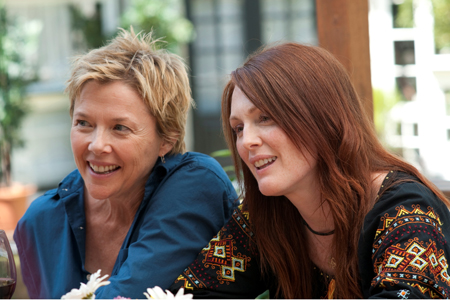
*The Kids Are All Right In many ways, The Kids Are All Right is a straightforward family dramedy: it’s about parents trying to do what’s best for their children and struggling to keep their relationship together. But it’s also a film in which Jules (Julianne Moore) goes down on Nic (Annette Bening) while they’re watching gay porn. Director Lisa Cholodenko (1998’s High Art) co-wrote the script (with Stuart Blumberg), and the film’s blend between mainstream and queer is part of what makes Kids such an important — not to mention enjoyable — film. Despite presenting issues that might be contentious to large portions of the country, the movie maintains an approachability that’s often lacking in queer cinema. Of course, being in the gay mecca of the Bay Area skews things significantly — most locals wouldn’t bat an eye at Kids, which has Nic and Jules’ children inviting their biological father ("the sperm donor," played by Mark Ruffalo) into their lives. But for those outside the liberal bubble, the idea of a nontraditional family might be more eye-opening. It’s not a message movie, but Kids may still change minds. And even if it doesn’t, the film is a success that works chiefly because it isn’t heavy-handed. It refuses to take itself too seriously. At its best, Kids is laugh-out-loud funny, handling the heaviest of issues with grace and humor. (1:47) Bridge, SF Center. (Peitzman)

*Knight and Day A Bourne-again Vanilla Sky (2001)? Considerably better than that embarrassingly silly stateside remake, though not quite as fulfilling as director James Mangold’s 3:10 to Yuma (2007) rework, this action caper played for yuks still isn’t the most original article in the cineplex. But coasting on the dazzling Cheshire grins of its stars, Tom Cruise and Cameron Diaz, reunited for the first time since Sky, you can just make out the birth of a beautiful new franchise. Everygirl June Havens (Diaz) is on her way to her sister’s wedding when she collides-cute at the airport with Roy Miller (Cruise). After killing the passengers and pilots on their plane, he literally sweeps her off her feet — thanks to some potent drugs. Picture a would-be Bond girl dragged against a spy-vs.-spy thriller semi-against-her-will — grappling with the subtextual anxiety rushing beneath all brief romantic encounters as well as some very justifiable survival fears. Can June overcome her trust issues? Is Roy the man of her dreams — or nightmares? Mangold and company miss a few opportunities to have more fun with those barely teased out ideas, and the polished, adult-yet-far-from-knowing charisma of the leads doesn’t quite live up to sophisticated interplay of Cary Grant and Grace Kelly, or even the down-home fun of Burt Reynolds and Sally Field, but it’s substantial enough for Knight and Day to coast on, for about 90 minutes tops. (2:10) 1000 Van Ness. (Chun)

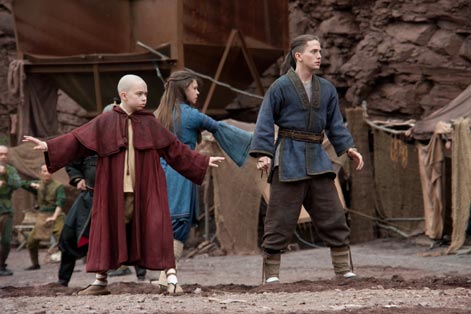
The Last Airbender There must be some M. Night Shyamalan fans out there. How else does one explain the fact that he keeps making movies? And yet, most of his post-Sixth Sense (1999) work has ranged from forgettable to downright reviled. His latest disaster is sure to fall into the latter category: in The Last Airbender, he takes a much-loved Nickelodeon cartoon and transforms it into an awkwardly paced, poorly acted mess. Woefully miscast Noah Ringer stars as Aang, the avatar with the power to end the Fire Nation’s dominion. Along with his friends, siblings Sokka (Jackson Rathbone) and Katara (Nicola Peltz), Aang must — oh, just watch the damn show. For newcomers, the film is as confusing as Shyamalan’s equally self-indulgent Lady in the Water (2006). For fans of the TV show, The Last Airbender is nearly unbearable, condensing the entire first season into one film by removing the humor, the heart, and the complexity of the characters. There’s no twist here — we expect Shyamalan to disappoint, and he does. (1:34) 1000 Van Ness, SF Center, Sundance Kabuki. (Peitzman)

Micmacs An urge to baby-talk at the screen underlines what is wrong with Jean-Pierre Jeunet’s new film: it is like a precocious child all too aware how to work a room, reprising adorable past behaviors with pushy determination and no remaining spontaneity whatsoever. There will be cooing. There will be clucking. But there will also a few viewers rolling their eyes, thinking "This kid rides my last nerve." It’s easy to understand why Jeunet’s movies (including 2001’s Amélie) are so beloved, doubtless by many previously allergic to subtitles. (Of course, few filmmakers need dialogue less.) They are eye-candy, and brain-candy too: fantastical, hyper, exotic, appealing to the child within but with dark streaks, byzantine of plot yet requiring no close narrative attention at all. The artistry and craftsmanship are unmissable, no ingenious design or whimsical detail left unemphasized. In Micmacs, hero Bazil (Dany Boon) is a lovable misfit who lost his father to an Algerian landmine, then loses his own job and home when he’s brain-injured by a stray bullet. He falls in with a crazy coterie of lovable misfits who live underground, make wacky contraptions from junk, and each have their own special, not-quite-super "power." They help him wreak elaborate, fanciful revenge on the greedy arms manufacturers (André Dussollier, Nicolas Marié) behind his misfortunes, as well as various human rights-y global ones. So there’s a message here, couched in fun. But the effect is rather like a birthday clown begging funds for Darfur — or Robert Benigni’s dreaded Life is Beautiful (1997), good intentions coming off a bit hubristic, even distasteful. (1:44) Opera Plaza. (Harvey)

Predators Anyone who claims to be disappointed by Predators has clearly never seen parts one and two in the series; all three are straight B-movie affairs (though 1990’s Predator 2 takes everything oh-so-slightly over the top. Gary Busey’ll do that). And if you’ve seen either of the recent Predator-versus-Alien flicks, Predators should feel like a masterpiece. Nimród Antal directs under the banner of Robert Rodriguez’s production company, which explains the presence of Danny "Machete" Trejo in the cast. Adrien Brody stashes his Oscar in a safe place to star as Royce, a well-armed mercenary who awakes to find himself in free fall, plummeting into a strange jungle along with other elite-forces types (including Brazilian Alice Braga, playing an Israeli soldier). It doesn’t take long before Royce realizes that "this is a game preserve, and we’re the game." I wish Predators had allowed itself to have a little more fun with its uniquely skilled characters (the yakuza guy does have a nice, if culturally-stereotyped, swordplay scene); there’s also an underdeveloped "plot twist" involving the presence of the decidedly un-badass Topher Grace among the human prey. But all is forgiven when Laurence Fishburne turns up as Crazy Old Dude Who’s Been Hiding Out With Predators a Little Too Long. Fishburne’s presence also adds to the heart-of-darkness vibe the movie seems vaguely interested in conveying. (1:51) 1000 Van Ness. (Eddy)

*Restrepo Starting mid-’07, journalists-filmmakers Tim Hetherington and Sebastian Junger spent some 15 months off and on embedded with a U.S. Army platoon in Afghanistan’s Korengal Valley, a Taliban stronghold with steep, mountainous terrain that could hardly be more advantageous for snipers. Particularly once a second, even more isolated outpost is built, the soldiers’ days are fraught with tension, whether they’re ordered out into the open on a mission or staying put under frequent fire. Strictly vérité, with no political commentary overt or otherwise, the documentary could be (and has been) faulted for not having enough of a "narrative arc" — as if life often does, particularly under such extreme circumstances. But it’s harrowingly immediate (the filmmakers themselves often have to dive for cover) and revelatory as a glimpse not just of active warfare, but of the near-impossible challenges particular to foreign armed forces trying to make any kind of "progress" in Afghanistan. (1:33) Clay. (Harvey)

The Secret in Their Eyes (2:07) Opera Plaza, Red Vic.

*Stonewall Uprising On the night of June 28, 1969, police embarked on what they thought would be a routine raid on a gay bar in New York’s Greenwich Village, the sleazy, Mafia-run Stonewall Inn. The ensuing three days of rioting — during which mostly young men and drag queens accustomed to being marginalized and hauled off to jail stood their ground and fought back — became what historian Lillian Faderman has called "the shot heard round the world" for LGBT activism: a spontaneous expression of street-level outrage that fueled the birth of a movement. Kate Davis and David Heilbroner’s solid documentary Stonewall Uprising takes a "just the facts, ma’am" approach to this historic flashpoint that makes for an information-packed, if at times dry, 80 minutes. Working around the paucity of photographic documentation of the actual riots (itself a testament to the marginalization of homosexuality in the late 1960s), Davis and Heilbroner make extensive use of period news footage and photography, reenactments, and most important, the first-person testimonies of who those who witnessed and participated in what one interviewee terms "our Rosa Parks moment." The filmmakers’ contextual groundwork is as impressive for its archival research as it is repetitive in its message: pre-Stonewall life was hell. The documentary becomes more nuanced as it zeros in on reconstructing the first night of rioting via eyewitness accounts. (1:22) Lumiere. (Sussman)

Touching Home Hometown boys (Logan and Noah Miller) make good in this based-on-a-true-story tale of identical twins who must divide their time at home between training for major league baseball and looking after their alcoholic father. The brothers, who also wrote and directed the film, aim for David Gordon Green by way of Marin, but fall short of mastering that director’s knack for natural dialogue. Ed Harris is, unsurprisingly, compelling as the alcoholic father, but the actors in the film who are not named Ed Harris tend to contribute to the script’s distracting histrionics. Touching Home has some amazing NorCal cinematography, and I could see how family audiences might enjoy its "feel bad, then feel good" style of melodrama. But while it’s awkward to say that someone’s real-life experiences come off as trite, there are moments here that feel as clichéd as a Lifetime movie. (1:48) Smith Rafael. (Galvin)

*Toy Story 3 You’ve got a friend in Pixar. We all do. The animation studio just can’t seem to make a bad movie — even at its relative worst, a Pixar film is still worlds better than most of what Hollywood churns out. Luckily, Toy Story 3 is far from the worst: it’s actually one of Pixar’s most enjoyable and poignant films yet. Waiting 11 years after the release of Toy Story 2 was, in fact, a stroke of genius, in that it amplifies the nostalgia that runs through so many of the studio’s releases. The kids who were raised on Toy Story and its first sequel have now grown up, gone to college, and, presumably, abandoned their toys. For these twentysomethings, myself included, Toy Story 3 is a uniquely satisfying and heartbreaking experience. While the film itself may not be the instant classic that WALL-E (2008) was, it’s near flawless regardless of a viewer’s age. Warm, funny, and emotionally devastating—it’s Pixar as it should be. (1:49) Empire, Marina, 1000 Van Ness, Sundance Kabuki. (Peitzman)

The Twilight Saga: Eclipse The only person more bored by the Twilight franchise than I am is Kristen Stewart. In Eclipse, the third installment of the film series, she mopes her way through further adventures with creepily obsessive vampire Edward (Robert Pattinson). Look, you’re either sold on this star-crossed love story or you’re not, and it’s clear which camp I fall into. Besides, Eclipse is at least better than New Moon, the dreadful Twilight film that preceded it last year. But the story is still ponderous and predictable — Eclipse sets up a conflict and then quickly resolves it, just so it can spend more time on the Bella-Edward-Jacob love triangle. (As if we don’t know how that ends.) Then there’s the unfortunate anti-sex subtext: carnal relations are cast as dirty, wrong, and soul-destroying. I’m not saying we should be encouraging all teenagers to have sex, but that doesn’t mean we should make them feel ashamed of their desires. And what parent would approve of Eclipse‘s conclusion? Marrying your first boyfriend at 18 — not always the best move. (2:04) Empire, 1000 Van Ness, Sundance Kabuki. (Peitzman)

*Wild Grass The premise of Wild Grass, Alain Resnais’ loopy new film, could have come straight from Nancy Meyers: an older married man finds a single, middle-aged woman’s wallet. He returns it but can’t stop thinking about her. She, in turn, is intrigued by his attentions. Both are surprised by the connection they feel growing between them, one which they nevertheless have difficulty articulating. When they finally meet, sparks fly. That purloined wallet, along with the romcom set-up, aren’t the only MacGuffins in Resnais’ Wild ride, which uses Christian Gailly’s novel L’ Incindent as a rough guide for its careening tour of the irrational courses that desire can lead us down. The man and woman in question are Georges, an embittered writer with a possibly dark past, and flame-haired Marguerite, a dentist and part-time aviatrix, both played to neurotic perfection by longtime Resnais regulars André Dussollier and Sabine Azéma. Resnais’ attempt to translate what he has called the "musicality" of Gailly’s prose has resulted in a frenetic everything-but-the-kitchen-sink approach that tries to visually approximate Georges and Marguerites’ every internal monologue, fantasy, and increasingly risky instance of impulsive behavior, throwing in some knowing winks to classic Hollywood cinema for good measure. It’s a mess, to be sure (there are even two endings!). But like Mr. Magoo, the 87-year-old Resnais, as if by some unseen hand, steers clear of complete disaster. There hasn’t been a Gallic car crash this delightful to watch since Godard’s famous pile-up in 1967’s Week End. (1:44) Opera Plaza, Shattuck. (Sussman)

*Winter’s Bone Winter’s Bone has already won awards at the Berlin International Film Festival and the Sundance Film Festival, but it’s the kind of downbeat, low-key, quiet film that may elude larger audiences (and, as these things go, Oscar voters). Like Andrea Arnold’s recent Fish Tank, it tells the story of a teenage girl who draws on unlikely reserves of toughness to navigate an unstable family life amid less-than-ideal economic circumstances. And it’s also directed by a woman: Debra Granik, whose previous feature, 2004’s Down to the Bone, starred Vera Farmiga (2009’s Up in the Air) as a checkout clerk trying to balance two kids and a secret coke habit.

Drugs also figure into the plot of the harrowing Winter’s Bone, though its protagonist, Ree Dolly (Jennifer Lawrence), is faced with a different set of circumstances: her meth head father has jumped bail, leaving the family’s humble mountain home as collateral; the two kids at stake are her younger siblings. With no resources other than her own tenacity, Ree strikes out into her rural Missouri community, seeking information from relatives who clearly know where her father is — but ain’t sayin’ a word. It’s a journey fraught with menace, shot with an eye for near-documentary realism and an appreciation for slow-burn suspense; Lawrence anchors a solid cast with her own powerful performance. Who says American independent film is dead? (1:40) Embarcadero. (Eddy)

REP PICKS

*Beyond the Doors and Bigfoot This double bill in the middle of the Vortex Room’s conspiracy-focused schedule of Thursday screenings offers musings on some favorite 1970s subjects for paranoid speculation. "Our assignment: neutralize the three Pied Pipers of rock n’ roll music," recalls a government operative near the beginning of Larry Buchanan’s Beyond the Doors. Upset at Vietnam protests and drug culture, President Nixon hits on the logical solution: Jimi, Janis and Jim (Morrison) must die. Made in 1984, this late effort by Southern cheesebagger Buchanan followed three decades of such titles as Naughty Dallas (1964), Zontar: The Thing from Venus (1966), Mars Needs Women (1967), and The Loch Ness Horror (1981). Having achieved modest box-office success with his tabloid-tenored 1976 take on Marilyn Monroe, Goodbye Norma Jean, Buchanan applied the same delicate brushstrokes to this dramatized imagining of what really happened to acid rock’s martyred holy trinity. Actor "discoveries" Gregory Allen Chatman (Hendrix), Riba Meryl (Joplin), and Bryan Wolf (Morrison) were, not entirely surprisingly heard from again, though the various approximations of those musicians’ sounds could be worse. In the second half of the Vortex Room bill, John Carradine helps helps various bikers, rednecks, and cops investigate the abduction of underdressed white-meat babes which Bigfoot (or rather, several Bigfoots … or is that Bigfeet?) kidnaps to chain up in a cave so that they might squirm and scream in their bikini briefs. (The original ad line was "Breeds with anything.") Leading victim is 1950s starlet Joi Lansing, a Mormon-raised Monroe wannabe whose prior career highlights were a brief run on The Beverly Hillbillies, bits in studio features and leads in Z-grade films like the glorified ’67 country-music concert compendium Hillbillies in a Haunted House. This being a 1970 drive-in feature (by Robert F. Slatzer, who’d made the rather stupendously bad 1967 Hellcats), naturally a biker club rides to the eventual rescue, pitting one group of hairy primitives against another. Add Faster, Pussycat! Kill! Kill! (1965) star Haji, Elvis bodyguard Del "Sonny" West, some hoary Hollywood veterans, and lesser Mitchum family members, and you’ve got one weird time capsule. Thurs/15, 8 p.m., $5, Vortex Room, 1082 Howard, SF; www.myspace.com/thevortexroom. (Harvey)

Docs! More Another Hole in the Head reviews

0

More bloodthirsty coverage of the San Francisco IndieFest’s horror-fest offshoot, Another Hole in the Head, in this week’s Guardian.

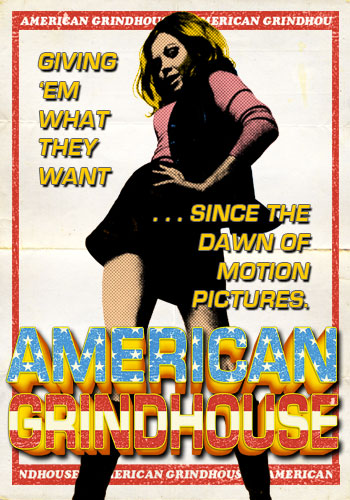
Another Hole in the Head’s two documentary offerings concern themselves with the distinctly American roots of two related strains of genre filmmaking. Elijah Drenner’s American Grindhouse traces the history of exploitation film, with a particular focus on the grindhouse theater as a cultural institution. Narrator Robert Forster recounts the tendency of even the earliest films to cater to prurient interests, and how the establishment and eventual dissolution of the Motion Picture Production Code stimulated the development of exploitation subgenres. The featured film clips are impeccably selected, mixing titillation and shock with a healthy sense of humor about the over-the-top absurdity of films like Ilsa: She Wolf of the SS (1975). Surprisingly candid interviews with gore luminary Herschell Gordon Lewis and blaxploitation director Larry Cohen prevent the film from taking on a too-self-important tone — these folks knew they were making b-pictures, and were damn proud of it. One of the most charming aspects of the documentary is the juxtaposition of different attitudes, wherein one interviewee will sing the praises of a classic, followed in quick succession by another talking head declaring it to be trash. It feels like John Landis gets the most screen time of any subject, but his charisma as well as the breadth of his oeuvre make it seem appropriate.

Nightmares in Red, White, and Blue, on the other hand, focuses specifically on horror, and director Andrew Monument in turn delivers a harsher, more self-serious take on shocking cinema. Some interviewees cross over, but standouts here include John Carpenter and modern torture porn auteur Darren Lynn Bousman. The editing here is less edifying and more irritating, though since we’re dealing with horror films, sometimes the heavy-handedness works — case in point, a lengthy montage of nudity and sex from slasher films effectively communicates both the puerile interests and blunt moralizing of much of the genre. Nightmares is also more explicitly concerned with how horror films relate to America, with many interview subjects noting how each decade’s horror trends mirrored its political issues, hence the title’s direct allusion to the perversion of the American dream.

Both films provide a historical framework for films that, as Grindhouse insists, have become part of our modern mythology and mindset. Grindhouse is more watchable, but both are worth seeing for anyone who didn’t live through the long history of genre madness and brilliance.

ANOTHER HOLE IN THE HEAD FILM FESTIVAL
July 8–29, $11
Roxie, 3117 16th St, SF
Viz Cinema, New People, 1746 Post, SF
www.sfindie.com

Gore … and bores: more Another Hole in the Head reviews

0

More bloodthirsty coverage of the San Francisco IndieFest’s horror-fest offshoot, Another Hole in the Head, in this week’s Guardian.

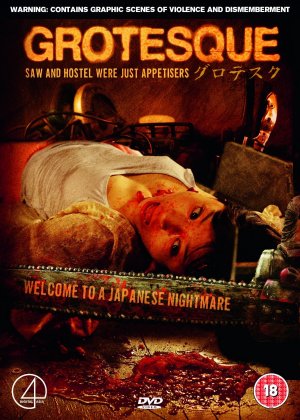
Grotesque (Koji Shiraishi, Japan, 2009) When did gorno stop being sick and start becoming sad? In Koji Shiraishi’s Gurotesuku, or Grotesque – banned in the UK – a chainsaw is brought to chests, arms, legs, and fingers when really it should be brought down on this celluloid garbage. Shiraishi presents a film that is sloppy, badly written, badly acted, and is above all things, deeply unentertaining. The plot is as thin and drawn-out as one of the protagonist’s intestines: While on a date, two dumbfucks get picked up by a craaaaaazy doctor (at least I think he’s a doctor – and I think he’s lost his board certification) who proceeds to do sick but unoriginal things to them (sawing off a girl’s fingers and stringing them on a necklace for her BF? C’MON!). There are some brief moments of respite, albeit painfully acted and ridiculous respite, but the torture tries not to let up its chokehold on the audience. Unfortunately, it just ends up being a chokehold on our time. Fri/16, 5 p.m. and Sun/18, 7 p.m., Roxie.

Ticked-Off Trannies With Knives (Israel Luna, USA, 2010) Trannies should get ticked-off more often. In a mock-exploitation fest like this one – which has the candid crudeness of a John Waters film – the tranny is the ultimate hero because she embodies the street smarts and agility of a woman, and the muscles and thirst for vengeance of a man. After an aggressive brush-up with some nasty bros (and what’s worse than a weapon-wielding homophobe?) the titular trannies in Ticked-Off set out to put the ol’ Hammurabi’s Code to the test – and with results both hilarious and flat-out gross. The cheeseball aesthetics and maudlin acting are surprisingly funny and self-conscious rather than self-effacing – yet in dealing with something like a hate crime, how else can you approach the material? July 22, 5 p.m., Roxie and July 23, 9 p.m., Viz.

Doctor S Battles the Sex Crazed Reefer Zombies (Bryan Ortiz, USA, 2008) Apparently, Reefer Madness (1936) and the public health warnings like it were right: weed does turn you into a monster. But in this underachieving student film, the message arrives a little too late. Doctor S has a promising start: some hilarious faux-film reel ads, and many a nod to cult horror films. In stark black-and-white, it’s as if Candace Hilligoss were running from stoners in Carnival of Souls (1962). But once the PhD of the title teams up with a cheerleader, saved from her post-puff zombified boyfriend at Make Out Hill, the film quickly devolves into amateurism. The thrills are cheap – too cheap – and the laughs are forced. Not to mention the title is way cooler than the movie itself. July 23, 7 p.m and July 26, 9 p.m., Viz.

ANOTHER HOLE IN THE HEAD FILM FESTIVAL
July 8–29, $11
Roxie, 3117 16th St, SF
Viz Cinema, New People, 1746 Post, SF
www.sfindie.com

Lisa Cholodenko on “The Kids Are All Right”

0

Writer-director Lisa Cholodenko earned attention with critically acclaimed features like High Art (1998) and Laurel Canyon (2002). Her latest movie, The Kids Are All Right, is a “personal film” about a lesbian couple raising teenagers. I spoke to Cholodenko about queer politics, explicit content, and keeping things lighthearted.

San Francisco Bay Guardian: Recently, there was a lot of controversy surrounding a Newsweek article, in which the author wrote about the difficulty of queer actors playing straight roles. I was wondering about your take on that, and on the opposite — straight actors playing queer roles. Is that something you even considered when casting?
 
Lisa Cholodenko: I’ll be honest, I was just told about this article and I didn’t read it. You know, I think it’s kind of weird thing to even discuss in a way, to me. Chiefly because I think actors’ personal lives — I just think people should have a private life, not that they should be in the closet, but that there should be a separation between professional life and personal life. And if a director feels like so-and-so, whether they’re gay or straight, would be good for a role, give them the role. What does it matter? As it turns out, I think gay people have more of an affect, whether they’re lesbians or gay men, that’s harder to camouflage in straight roles. Why that is, I mean, you could talk about that. I think it’s easier to go the other way. That’s just what it is. I say that without a value judgment. It is what it is.

SFBG: The Kids Are All Right has a same-sex relationship, of course, but it also has a fair amount of graphic sex and even a snippet of hardcore gay porn. Do you think it will shock a mainstream audience? Are they ready for it, and does that matter?

LC: I think it’s shocking in a sense that it’s portrayed in such a real way, that it’s not super arch, or it’s not like The L Word. This stuff has been on TV and in films. In a way, I’m not inventing the wheel at all. But I think the package that it’s coming in is going to be disarming to people. I think we tried and I think we were somewhat successful in making it so that you don’t realize exactly what you’re watching, the subversiveness of what you’re seeing. You can settle into watching it without that kind of discomfort of being super aware of, “This is something I’m not. I’m other and this is not my thing.” I think we figured out a way for people to enter it, and that was really important for us.

SFBG: I ask because I do feel like this shouldn’t be a big deal, that people should be able to handle it. And yet, the night before I saw your movie, I saw Sex and the City 2, in which there was a gay wedding. And as soon as the two men kissed, the camera cut away. There’s a lot of intimacy between Nic and Jules in the movie, so I was wondering particularly about that. Are people outside of San Francisco going to be apprehensive?

LC: Yeah. You know, I think we didn’t really know. I think we tried to write it and I tried to direct it in a way that the humor would be disarming enough, and the images themselves, if you really deconstruct it, would be tame enough. So it was more the suggestion of it. That would be the kind of twist. The people in the know would get it more than the people that were not in the know, maybe. I think we hoped that it would have a mainstream appeal to it, and that we could get beyond the people who would be apprehensive. There were questions about the gay porn and about how much sexuality we were showing, but we felt like, this is the fun of the film. It’s not going to be Spider-man 12 or something. It’s not going to be a multiplex film. But we hope it’s not going to be super rarefied art house film. So in terms of the Sex and the City thing, I think that they’re looking to go as wide as humanly possible, to every grandmother to every neck of whatever, so you can only take it so far.

SFBG: I want to touch on the humor that you mentioned, because I think it’s one of the movie’s real strong points. It’s so funny. What was your approach when you were co-writing to keeping the drama of the story but still making it fun?

LC: It was like a process, it was a real evolution. We had sort of a plot, a conceit for how the plot comes together, which was this thing about the kind of doofus friend wanting to watch the DVDs, and finding the porn, and blah, blah, blah, blah. So that all was funny, and then the kind of awkward conversation about trying to tiptoe around trying to figure out if their kid was gay, and that they would even care that the kid is gay, and how ironic that two gay moms are going to care that there kid is gay. And all that stuff. So it made us laugh, but there was a lot of other stuff in there that we took a lot more seriously and played a lot more seriously. I think as we went deeper into the drafts and moved along in the evolution of getting the film done, I really, really, really pushed for us to take whatever was potentially funny in there and just kick it up a notch. Stuart [Blumberg, who co-wrote the film] is a really funny guy — we have a similar sensibility. The same kind of stuff makes us laugh. So we knew if we were sitting there writing it and laughing, it was good. We had kind of gotten there.

SFBG: I think a lot of the humor comes from the fact that the film is so real and grounded. You have Laser, a 15-year-old boy, who talks like a 15-year-old boy, and that’s something we don’t always see in movies. And so it’s not stereotypical or preachy—it feels more organic than that.

LC: Yeah, we were really passionate about making it not politically correct and not sanctimonious and not super earnest and just hoping that there would be heart in it, simply because these were sympathetic and three-dimensional characters in a difficult situation.

SFBG: I wanted to ask about the character of Nic [played by Annette Bening], who could have been played very typically butch, because she has a masculine name and short hair and these traditionally “male” qualities. In terms of the writing and the directing, how did you make sure there was more complexity there?

LC: You know, I think that wasn’t super overdetermined. It’s really just kind of my worldview. I don’t live in a world where people are super stratified. I don’t feel like my partner and I are super — I kind of see the butch and femme in every lesbian I know. I know that there are lesbians who really kind of identify with that, and that’s there thing in the world, and that’s good. But it’s a personal film, so it’s written from my worldview. So there’s that, and then there’s also, you get Annette Bening and you get Julianne Moore, and they come with their own essence and personality. Julianne Moore has some butch in her and Annette Bening has some femme in her. They are who they are.

SFBG: There’s a great conversation early on in the film about the spectrum of sexuality and how it’s not so easily defined, which ties into Jules sleeping with a man. Were you concerned about an audience’s reaction to a lesbian having sex with a straight guy?

LC: I mean, it was a concern for me, but I felt like, you know what, oh well. I might be nailing the coffin. It might just be a bad choice. But in essence, the whole plot of the film revolves around that, so it was either, ditch the film or run with it and try to make it feel earned and interesting and viable and what not. In the early drafts I would show people — and when I started getting feedback in the early drafts, and “This is good,” I stopped being so uptight about that and just let myself kind of take it to the next place.

SFBG: It wasn’t an issue for me, but I think for a lot of people, they expect more rigid definitions. We don’t see a lot of queer characters on screen, and so when we do, many want them to be perfect: the queer voice, the lesbian, the gay man. And when they step outside those boundaries, suddenly it becomes an issue, politically.

LC: The calculated thing was that, I thought, a) I identify with this. This is something that I feel like, that makes sense to me. That makes sense to people I know. That makes sense to whatever. So it didn’t feel like some weird kind of conceit that I came up with that was like, that never happens. All lesbians are rigidly this and don’t go over that boundary. Because we know that’s not true. So there was that, and then I thought, I like this set-up and I like this plot, and also I feel like, it’s kind of an interesting intermingling of straight and gay. I felt like, if I really want this to be a mainstream film, that’s good. This is really inclusive of gay and straight, and I like that. I like that personally and I like that for this film. I was much more interested in reaching out to the male population than I was concerned about alienating a sector of the lesbian population.

SFBG: I wanted to talk about the title, The Kids Are All Right, and that focus on the children. How did the title come about? How do you feel about the role the kids play, and why is that central to the film?

LC: The film is about, you know, these women and their experience making a family. The family. The man who comes in and wants to be part of the family. Really when you’re talking about the family, it’s about the life of the kids. So it’s sort of an ironic title, in the sense that the kids are kind of doing better than the moms, in a way. And it’s also a kind of a wink to the notion that gay people can’t raise healthy, psychologically healthy children. Like, the kids are fine. Don’t worry about them. They’re just right.

SFBG: You talked a bit about what Annette Bening and Julianne Moore brought to the film, but I was wondering if you could elaborate on casting.

LC: Julianne was someone I had probably 10 years ago, just at some function somewhere. We had spoken about wanting to work together at some point. She was a fan of the first film that I made, High Art, and I was always a fan of hers, particularly in Boogie Nights (1997). So when Stuart and I wrote this, we asked ourselves several times, could Julianne play this part or that part? We were sort of on the fence. We thought she could play either part. So I sent it to her and I said, “Which part would you like to play?” And she picked Jules. Which, we weren’t surprised. We knew she’d want to play that part, but I thought I’d offer her the other one if she wanted it. And that was great.

Then finding her counterpart, the Nic character, was more difficult. It was kind of vexing. I just didn’t know what actor in that age group who had great acting chops, who was funny and dramatic and sexy, could be a good match for her. But when I stumbled on the idea of Annette Bening, I kind of got rabid about it. OK, this is it, this is the only person who can do it. So come hell or high water, she’s gonna do it.

SFBG: And then in terms of the younger actors — you don’t always see teenagers who actually look like teenagers.

LC: Well, they’re pretty close to the ages they’re supposed to play. Mia [Wasikowska] was like 19 at the time, and Josh [Hutcherson] was maybe 16, going on 17. So they were pretty close. Mia was someone that I had seen on an HBO series called In Treatment and thought she was interesting. I liked that she was Australian, not a typical American young actor, from LA or New York and wouldn’t have that baggage or affect that you might find in a lot of young actors from here. And he — I didn’t know his work, but I knew that he had done a lot of work. I was told he was an up-and-coming actor, so I was open to meeting him as well as other people, but when he came in and did the scene, it was just one of those things where you go like, “Oh, yeah.” I thought maybe Laser would be more of a Paul Dano-type kid, a little bit more twee, but when I saw him, I thought, oh, that’s good. He should be more boyish and more kind of robust, and just like a dude. I like that.

SFBG: There’s a lot of subtlety in The Kids Are All Right. I liked Nic’s drinking, which was fairly underplayed but came up several times. What was the thought process behind that? Does she have a drinking problem, or is that just the manifestation of the turmoil going on in her family?

LC: I think we felt like, oh, you know what? She’s kind of borderline. She’s a little bit of a lush. She’s kind of leaning on the wine too much, and this has become a thing and the other partner is now noticing. She’s drinking too much and she’s a stress case and she’s not dealing with it very well. She doesn’t have a good off valve. I think we tried to design it in a way that it felt like, this is something that’s coming to a head in their relationship. One partner’s seeing a behavior that’s making her concerned and the other one doesn’t want to deal with it yet, and she’s boozing it up.

SFBG: It’s also interesting because it’s easy to label Nic the control freak. But here’s Nic, who can’t control her drinking, and Jules, the free spirit, trying to get her to keep it in line.

LC: Right, right, right. Well, I felt like everybody has their ironies and contradictions and stuff. It’s endemic, I think, in all long-term relationships.

SFBG: There was another relationship that interested me, which was the relationship between Paul [Mark Ruffalo] and Tanya [Yaya DaCosta]. I was wondering if it was significant that it was an interracial relationship. In the sense that, 40 years ago, audiences might have been shocked by an interracial relationship, but now it plays naturally — and hopefully, the same will be true of same-sex relationships. Was that intentional, or am I reading into things too much?

LC: You know, I think it wasn’t totally consciously mediated, but at a certain point when I was thinking about casting, I had Erykah Badu in my mind for that role. I felt like, who’s the kind of person who Paul would be with? It seems like he’s the kind of guy who would be running after the most exotic person. That character to me was sort of gorgeous and exotic and whatever. And then, to go from that to Jules, who is totally exotic in her own way, because she’s who she is and she’s older and she’s beautiful and she’s a lesbian. It was this kind of motif of like, what’s exotic? The Tanya character, the black character, is clearly in love with him and would be devoted to him in a heartbeat. And the white character, who’s a lesbian and completely inaccessible, is not available at all.

I guess the second part to that question is, at a certain point when we were putting this together was, it’s not only that, in terms of the psychology of the character, but I think this is good to mix it up. You know, he’s screwing this black woman, and OK, compare that to the lesbians watching gay male porn. This is what people do in life. It’s not just white people and straight people. It’s mixed up.

The Kids Are All Right opens Fri/9 in San Francisco.

Splattergories

0

FILM FESTIVAL Now in its seventh year, San Francisco’s Another Hole in the Head Film Festival aims to draw fans of fantastical and shocking cinema into the Roxie and Viz theaters for its slate of 32 films. Spanning horror, science fiction, and fantasy, Hole Head features films from Singapore to Serbia, including 10 flicks from Japan.

Despite this cultural eclecticism, there is one theme that seems to crop up throughout the program: homage. A surprising number of these films are primarily interested in referencing or commenting on formative genre pictures that came before.

Of course, such an approach to genre filmmaking need not be retrograde. When it works, as in the hilarious kaiju pastiche Death Kappa, there’s no question about why someone would want to both mock and commemorate the storied run of man-in-suit monster movies. Kappa brings out the humor in an already existing template, mixing shades of H.P. Lovecraft and E.T. (1982) with Japanese folklore but ultimately ending up in the same place: city-smashing mayhem.

Among the Japanese selections is an assortment of gore films, weird fantasy-action movies entirely predicated on opportunities for spouting blood. These often feel like they’re in dialogue with themselves, lampooning older forms but also riffing on their own ridiculousness. RoboGeisha plays like a live-action cartoon, where laws of logic and good taste don’t apply and the best way to deal with a terrorist is two tempura shrimp to the eyes. Not gory but similarly frenetic is shock auteur Takashi Miike’s latest, an unexpectedly light adaptation of a children’s anime series called Yatterman, which is literally a live-action cartoon as well as a 1970s throwback.

Sometimes, though, the tribute-obsession can seem like wallowing. Reykjavik Whale Watching Massacre, blessed with an absurd title and the exotic appeal of being an Icelandic horror film, is basically a by-the-numbers slasher that retreads The Texas Chain Saw Massacre (1974) and others to the point that its shocks are predictable.

Many other subgenres are represented, from torture porn to luchador action, but one of the festival’s highlights dwells outside any such bracket. Japanese comedian Hitoshi Matsumoto’s metaphysical fantasy Symbol documents the travails of a man inexplicably trapped in a mysteriously interactive white room. It sometimes feels like a feature-length comedy sketch, governed by certain rules or patterns that drive its simple but ultimately cosmic plot. Constrained though it may be, it makes no concessions to genre and feels inspiringly new as a result.

Regardless of a few staid entries, such a forum for genre cinema is absolutely crucial, particularly on such an international scale. Even if we need another zombie reinterpretation like we need a hole in the head, Another Hole in the Head will hopefully be with us well into the future.

ANOTHER HOLE IN THE HEAD FILM FESTIVAL

July 8–29, $11

Roxie, 3117 16th St, SF

Viz Cinema, New People, 1746 Post, SF

www.sfindie.com


Sicily unbound

0

arts@sfbg.com

FILM Francesco Rosi once remarked to an interviewer, “A film is always a testimony of the age in which it lives.” It’s one thing to recognize this as an incipient truth and quite another to enact it as a code of filmmaking. Rosi’s films from the 1960s and ’70s evince the common roots of aesthetic and ethic, exhibiting what can only be called an ardor for the analysis of social conditions — both their mechanisms and mentalities. Though still relatively unsung among the major Italian auteurs, of which he is certainly one, a career-spanning retrospective at the Pacific Film Archive makes the case for the writer-director’s staying power.

Rosi studied law at school and film with the Italian directors of the 1940s and ’50s. In his own early features, he placed additional demands upon the conventions of neorealism. Putting aside the tempting notion that the camera will discover a transcendent truth if only stripped of the artifices of professional actors and sets, Rosi’s films are concerned with inventing a public sphere for argument and questioning — this before the age of the Internet and 24-hour news.

Take Salvatore Giuliano (1961), his sophisticated dissembling of the tangled (and at that time recent) history of the eponymous gangster, a Robin Hood figure in the postwar Sicilian imagination who aided the area’s separatist movement. “He took from the rich and gave to the poor,” a local tells a bored reporter. When he finds out the newsman is from Rome, he adds, “What can you understand about Sicily?”

Rosi’s out-of-joint narration of events from before and after Giuliano’s death in 1950 takes at least a couple of viewings to puzzle together, and even then, much remains pointedly obscure. The film recalls Borges’ description of Citizen Kane (1941) as “a labyrinth without a center,” and, as such, contains an implicit disavowal of neorealist orthodoxy (if such a thing ever existed). If “reality” is transparent, why the confusing jumps in time? Why go to such lengths to keep Giuliano himself in the shadows? Why leave so much basic plot material unclear, from major events (the motivation behind Giuliano’s orchestration of a massacre of communists at Portella della Ginestro, for instance) to minor gestures (like when, at the end, one of Giuliano’s associates palms the bottle of medicine that has apparently just poisoned the bandit’s right-hand man)?

The answer has to do with Rosi’s desire to replace the “not knowing” of complacency with that of skepticism. The subject of the film is not Giuliano so much as the Sicilians who presume to know him. We begin with the bandit’s death, in Kane fashion, but even before the plot has insinuated a cover-up, Rosi visually undermines any easy sense of certitude. We watch the inspection of Giuliano’s prone corpse from several striking bird’s-eye-view shots, but soon discover these compositions are not as omniscient as we might first (complacently) assume. In fact, they represent the vantage point of the reporters hounding the carabinieri and citizens for a story quite separate from Rosi’s. Here the director insinuates how difficult it is to find your footing in the Sicilian situation. Taking aim at collusion, he formally imbricates us in its grip.

Rosi’s neorealism is one of provocation. He obsessively stages recent history in the actual locations in which it unfolded, employing eyewitnesses as themselves. Testimony is activated, not relegated to incidental afterthought. Even in later, more traditionally allegorical films like Three Brothers (1981), in which Rosi seems to move toward seeing political discourses as being channeled and contained by subjective experience, his visual and narrative designs mirror the macro controls at work in complex social systems. Watching Rosi’s work, we realize that the news lives inside us, whether we like it or not.

MODERNIST MASTER: THE CINEMA OF FRANCESCO ROSI

July 8-Aug 28, $5.50–$9.50

Pacific Film Archive

2575 Bancroft, Berk.

(510) 642-5249

www.bampfa.berkeley.edu

Benefits: July 7-July 13

0

Ways to have fun while giving back this week


Thursday, July 8

Do Good Lab
Join the Do Good Lab to raise money for The Champions, a primary school for orphans and vulnerable children who lack access to state provided education. Baobab Restaurant will donate 20% of their proceeds to the project.
6 p.m., donations encouraged
Baobab Restaurant
2323 Mission, SF
www.do-good-lab.org

IFCO Pastors for Peace Cuba Caravan
Attend this sendoff and benefit for the 21st annual Cuba Caravan carrying 100 tons of humanitarian aid to the blockade-starved people of Cube featuring a potluck dinner at 6pm, speakers from the caravan, two short films, music by Dave Welsh, salsa dancing lessons, and more.
6:30 p.m., $10-$15 suggested donation
Berkeley Fellowship Unitarian Universalists
Fellowship Hall
1924 Cedar, Berk.
(510) 495-5132

Saturday, July 10

“Land, Villains, and Revolutionaries”
Take a walking tour across 200 years of the social movements of San Fransico history and help raise funds for Revolution Books’ ongoing program, Put Revolution on the Map.
1 p.m., $15
Meet at Cable Car turnaround
Powell and Market, SF
www.thecommonsSF.org

Sunday, July 11

ArtSeed Apprenticeships
Join Surfpulse for a benefit party and surf board raffle for ArtSeed’s Apprenticeships Program, which brings long term artist mentors into the lives of children. Featuring food, music, raffles, and surf flicks.
6 p.m., free
Joxer Daily’s
46 West Portal, SF
www.artseed.org

Berkeley East Bay Humane Society
Help raise funds for the Berkeley East Bay Humane Society, which suffered a tragic fire that destroyed most of the building and help get their adoption offices and hospital open again at this fundraiser featuring performances by over a dozen singer-songwriters.
2 p.m., $10 suggested donation
Starry Plough Pub
3101 Shattuck, Berk.
www.starryploughpub.com

Rep Clock

0

Schedules are for Wed/7–Tues/13 except where noted. Director and year are given when available. Double and triple features are marked with a •. All times are p.m. unless otherwise specified.

BRIDGE 3010 Geary, SF; (415) 668-6384. $10. “Rocksploitation with Citizen Midnight:” Ladies and Gentlemen: The Fabulous Stains (Adler, 1981), Sat, midnight.

CASTRO 429 Castro, SF; (415) 621-6120, www.castrotheatre.com. $7.50-10. •Myra Breckenridge (Sarne, 1970), Wed, 3, 7, and The Wild Party (Merchant, 1975), Wed, 4:45, 8:50. •Mulholland Dr. (Lynch, 2001), Thurs, 7, and The Loved One (Richardson, 1965), Thurs, 9:45. •The Bad and the Beautiful (Minnelli, 1952), Fri, 2:35, 7, and The Big Knife (Aldrich, 1955), Fri, 4:50, 9:20. “Alan Cumming: I Bought a Blue Car Today,” Sat, 8. Tickets ($37.50-85) at www.ticketweb.com. “Midnites for Maniacs: Embracing Aliens:” •E.T.:The Extra-terrestrial (Spielberg, 1982), Sun, 2, and Mac and Me (Raffill, 1988), Sun, 4:15. Five Easy Pieces (Rafelson, 1970), Sun, 7, 9.

CERRITO 10070 San Pablo, El Cerrito; www.rialtocinemas.com. $7. “Cerrito Classics:” Jaws (Spielberg, 1975), Thurs, 7:15.

CHRISTOPHER B. SMITH RAFAEL FILM CENTER 1118 Fourth St, San Rafael; (415) 454-1222, www.cafilm.org. $6.50-10.25. Babies (Balmès, 2010), call for dates and times. The Girl With the Dragon Tattoo (Oplev, 2009), call for dates and times. Micmacs (Jeunet, 2010), call for dates and times. OSS 117: Lost in Rio (Hazanavicius, 2009), call for dates and times. The Sun Behind the Clouds (Sonam and Sarin, 2010), call for dates and times. Touching Home (Miller and Miller, 2009), call for dates and times. The Girl Who Played With Fire (Alfredson, 2009), July 9-15, call for times. “San Francisco Opera: Grand Opera Cinema Series:” “Madama Butterfly,” Thurs, 7.

“FILM NIGHT IN THE PARK” This week: Creek Park, 451 Sir Francis Drake, San Anselmo; (415) 272-2756, www.filmnight.org. Donations accepted. Let It Be (Lindsay-Hogg, 1970), Fri, 8. Union Square, Geary and Powell, SF; same contact and ticket info. Dirty Dancing (Ardolino, 1987), Sat, 8.

MECHANICS’ INSTITUTE 57 Post, SF; (415) 393-0100 (reservations required). $10. “CinemaLit: Musicals With a Message:” Pennies From Heaven (Ross, 1981), Fri, 6.

PACIFIC FILM ARCHIVE 2575 Bancroft, Berk; (510) 642-5249, www.bampfa.berkeley.edu. $5.50-9.50. “Akira Kurosawa Centennial:” •Sanshiro Sugata (1943) and Sanshiro Sugata II (1945), Wed, 7; Stray Dog (1949), Sat, 8:30. “Modernist Master: The Cinema of Francesco Rosi:” Three Brothers (1981), Thurs, 7; The Challenge (1958), Fri, 7; The Swindlers (1959), Fri, 8:55; The Mattel Affair (1972), Sun, 7. “A Theater Near You:” Close-Up (Kiarostami, 1990), Sat, 6:30; Sun, 5.

RED VIC 1727 Haight, SF; (415) 668-3994. $6-10. “Big Wednesday: Best of Powerlines Productions,” Wed, 2, 7:15, 9:15. Greenberg (Baumbach, 2010), Thurs-Sat, 7, 9:20 (also Sat, 2, 4:30). Sweetgrass (Castaing-Taylor and Barbash, 2010), Sun-Mon, 7:15, 9:25 (also Sun, 2, 4). “The San Francisco Museum and Historical Society Presents: The Haight: Before, During, and After the Sixties,” Tues, 7.

ROXIE 3117 and 3125 16th St, SF; (415) 863-1087, www.roxie.com. $5-11.50. Trash Humpers (Korine, 2009), Wed-Thurs, call for times. “SF Indie Presents: Another Hole in the Head Film Festival,” July 8-22. See www.sfindie.com for schedule.

“TEMESCAL STREET CINEMA” 49th St at Telegraph, Oakl; www.temescalstreetcinema.com. Free. “Will Power: A Night of Short Films,” Thurs, 8. With free popcorn and live music.

VOGUE 3290 Sacramento, SF; www.lolsf.org. $10. “LOL-SF: A Celebration of Comedy On-Screen,” comedy films with celebrity presenters, July 8-15.

YERBA BUENA CENTER FOR THE ARTS 701 Mission, SF; (415) 978-2787, www.ybca.org. $6-8. “Something From Nothing: Films on Design and Architecture:” “Refrigerator Fetish: Vintage Industrial Design Films,” Sun, 2.

On the cheap listings

0

On the Cheap listings are compiled by Paula Connelly. Submit items for the listings at listings@sfbg.com.

WEDNESDAY 7

“Misspelled” Robert Berman/E6 Gallery, 1632 Market, SF; (415) 558-9975. 7pm, free. Attend the opening reception for Victor Reyes’ public art installation turned gallery exhibition that explores Reyes’ unique approach to graffiti, by dissecting individual letters and exposing the anatomy and architecture found in the symbols we use to communicate. Inspired by San Francisco’s streets, these alphabets recontextualize abandoned city surfaces to raise questions about how we interpret these spaces and the content within them.

FRIDAY 9

Japanese Superheroes Viz Cinema, New People, 1746 Post, SF; (415) 525-8600. 7pm, $10. Join hosts Patrick Macias, August Ragone, and Tomohiro Machiyama for a new talk in the TokyoScope Talk Series about the fascinating history and origins of Japanese superheroes featuring rare film clips and images from numerous tokusatsu, sentai, and henshin hero productions including Ultra Seven, Kikaida, Space Sheriff Gavan, and more.

BAY AREA

Juggling and Unicycling Festival Berkeley High School, Jacket Gym, 1980 Allston, Berk.; www.berkeleyjuggling.org/festival. Fri. 3pm-Midnight, Sat. 9am-Midnight, Sun. 9am-5pm; free. Vaudeville style variety show Sat. 7:30pm, $15. Meet and watch some of the best jugglers and unicyclists on the West Coast and learn some tricks of the trade for all skill levels at juggling, unicycle, and circus arts workshops.

SATURDAY 10

Art Riot Space Gallery, 1141 Polk, SF; www.hyphenmagazine.com. 7pm; $5, or $15 including a one year subscription to Hyphen Magazine. Featuring an exhibit by illustrators and painters from across the country, live painting, music by DJs B-Haul and Gordon Gartrell, and vegan cupcakes by Black Orchid Bakery. Featured artists include Danny Neece, Eve Skyler, Jon Stich, Jorge Mascarenhas, and more.

“Borders” Root Division, 3175 17th St., SF; (415) 863-7668?. 7pm, free. This exhibit about lines and how we cross them will feature work by artists from 9 different states, representing 9 different ethnicities, that explores how we define and interact with the borders that surround us. Mediums to include interactive sculpture, video, photography, installation, performance, and new media.

Hayes Valley Community Picnic Patricia’s Green Park, Hayes at Octavia, SF; RSVP at (415) 240-2433. 1pm, free. Join members of your community for a picnic brought to you by the Dean Clark Store, where revelers will share food, soft drinks, play games, and exchange gifts.

Strike Reenactment Hyde Street Pier, Jefferson at Hyde, SF; www.laborfest.net. Noon and 3pm, free. See a live reenactment of the 1901 San Francisco Waterfront strike, when sailors, teamsters, and longshoremen went on strike for better pay and working conditions. Hear speeches and join the march to implore ships’ crews to join the ranks. Part of the 2010 LaborFest.

Summer Freedom School St. Francis Lutheran Church, 152 Church, SF; (415) 703-0465. Saturdays through Aug. 14; 10am, free. This six week seminar on the Civil Rights Movement (aka the Southern Freedom Movement) serves as a case study for how social movements happen and a tool for getting ready for the next one. Mornings will feature guest speakers, short films and discussions, followed by a pot luck lunch, and an afternoon portion of discussions and activities. For more information visit www.educationanddemocracy.org.

A Voice for Justice in Honduras Mission Cultural Center for Latino Arts Theater, 2868 Mission, SF; 415-643-5001. 7pm, donations encouraged. Hear Karla Lara sing from the classic “Nueva Trova” repertoire with added themes of love, motherhood, and human rights. Lara and other musicians formed Artists in Resistance, a group that performs to maintain an open public opposition to the de facto governments of Roberto Micheletti and Porfirio Lobo, which repress media and democracy. Proceeds benefit Artists in Resistencia in Honduras.

BAY AREA

Treasure Island Triathlon 533 California, Treasure Island, San Francisco Bay; www.tricalifornia.com. 5k-10k Run Race, Sat. 7am-Noon; Olympic Distance Triathlon, Sat. 7:30am-5pm; Sprint Distance Triathlon, Sun. 7am-Noon; Sports Expo, Sat. 7am-3pm, Sun. 7am-Noon. All events free for spectators. Enjoy views from the scenic looped course as you watch athletes compete, including 50 contestants from past seasons of the TV series The Biggest Losers. A Sports Expo will be going on all weekend featuring the latest triathlon gear, athlete services and food vendors.

SUNDAY 11

Big Umbrella Open Studios Big Umbrella Studios, 906.5 Divisadero, SF; (415) 359-9211. 3:30pm; free, suggested donation for use of supplies. Join Big Umbrella artists in art making, art being, or art gazing at this participatory workshop for adults and children. Bring supplies, found objects, and works in progress. Art making supplies will also be available. Collaboration encouraged.

Jewish Music Festival Party Yerba Buena Gardens, Mission at 3rd. St., SF; (510) 848-0237 ext. 119. Noon, free. Celebrate the 25th Anniversary of the Jewish Music Festival at this picnic and party featuring performances, instrumental jams, a parade, and an instrument petting zoo for all ages. Instruments encouraged. Artists to include Eprhyme, Glenn Hartman and the Klezmer Playboys, Peter Jacques, Elana Jagoda, and more.

World Cup Finals Civic Center Plaza, Polk between McAllister and Grove, SF; (415) 831-2782. 11:30 a.m., free. Join fellow San Francisco soccer fans for a big screen broadcast of the World Cup finals featuring soccer-related activities for youth, food vendors, and valet bike parking. No glass bottles or alcohol permitted.

MONDAY 12

“What’s Cookin’ with Josh Kornbluth” Contemporary Jewish Museum Café, 736 Mission, SF; (415) 655-7800. Noon, free. Liven up your Mondays with an interactive improvised lunch performance by monologist Josh Kornbluth, who will entertain and engage you with lively lunchtime banter all summer long. Every Monday through August 30.


Film listings

0

Film listings are edited by Cheryl Eddy. Reviewers are Kimberly Chun, Michelle Devereaux, Max Goldberg, Dennis Harvey, Johnny Ray Huston, Erik Morse, Louis Peitzman, Lynn Rapoport, Ben Richardson, and Matt Sussman. For rep house showtimes, see Rep Clock. For first-run showtimes, see Movie Guide. Due to the July 4 holiday, theater information was incomplete at presstime.

ANOTHER HOLE IN THE HEAD

The seventh Another Hole in the Head Film Festival runs July 8-29 at the Roxie, 3117 16th St, SF; and Viz Cinema, New People, 1746 Post, SF. For tickets (most shows $11), visit www.sfindie.com. For commentary, see Trash and http://www.sfbg.com/pixel_vision

THURS/8

Roxie Death Kappa 5. Mutant Girls Squad 7. A Serbian Film 9.

FRI/9

Roxie Samurai Princess 5. Symbol 7. RoboGeisha 9. Tucker and Dale vs. Evil 11.

SAT/10

Roxie Satan Hates You 5. A Serbian Film 7. Vampire Girl vs. Frankenstein Girl 9. The Exterminator 11.

SUN/11

Roxie Nightmares in Red, White, and Blue 5. The Violent Kind 7. Yatterman 9.

MON/12

Roxie Sexy Time Trip Ninjas 5. Samurai Princess 7. Nightmares in Red, White, and Blue 9.

TUES/13

Roxie Satan Hates You 5. Silent Night, Zombie Night 7. Yatterman 9.

OPENING

Beetle Queen Conquers Tokyo Opening with the humid buzz of crickets and the probings of bug aficionados in the thick of a forest, first-time documentarian Jessica Oreck puts Japan’s fascination with insects under the microscope. Preferring to let the images and interview subjects speak for themselves, she turns a lens to young children who clamor to buy sleek, shiny, obsidian beetles, as well as the giant big city gatherings of insect collectors — events that likely are less than familiar to western audiences. Oreck’s intent is to get at the ineffable attraction behind such astonishing sales as that of a single beetle for $90,000 not so long ago, and to that end, she weaves in looks at insect literature and art, visits to Buddhist temples, and historical factoids about, for instance, the first cricket-selling business in the early 1800s. (1:30) Elmwood, Sundance Kabuki. (Chun)

*Daddy Longlegs Purportedly based on their own growing-up experiences, Ben and Joshua Safdie’s feature does for the terminally immature Manhattan reluctant father what Roger Dodger (2002) did for the terminally predatory heterosexual Manhattan bachelor: provide gruesome shaky-cam dissection of a dad dreadful by any common moral standard, yet who is more pathetic and oddly ingratiating than loathsome. The two weeks Lenny (Ronald Bronstein) is charged with caring for his two unruly young sons (Sage Ranaldo, Frey Ranaldo) by a pointedly estranged, vacationing ex-spouse provide enough evidence for a hundred angry divorce proceedings. While a friend is behaving inappropriately with the kids, Lenny goes into the bathroom to smoke a doob; when he’s got a babysitting work conflict, he sedates them into a near-coma. Yet at the same time he’s also a really fun, loving dad — just one lacking all conventional instincts for appropriate behavior. On the one hand this is a parental horror film, on the other a touching and delicate portrait of someone who would very much like to be a good dad but is congenitally doomed as fuckup. Both hands say: this is rather wonderful, ultimately very poignant movie. (1:40) Roxie. (Harvey)

Despicable Me The ad campaign for this film is completely impenetrable, is it not? Apparently it’s a 3-D animated comedy about a guy plotting to steal the moon, with some sentimental stuff thrown as a bonus. (1:35)

*The Girl Who Played With Fire Lisbeth Salander is cooler than you are. The heroine of Stieg Larsson’s bestselling book series is fierce, mysterious, and utterly captivating: in the movie adaptations, she’s perfectly realized by Noomi Rapace, who has the power to transform Lisbeth from literary hero to film icon. Rapace first impressed audiences in The Girl With the Dragon Tattoo (2009), a faithful adaptation of Larsson’s premiere novel, and she returns as Lisbeth in The Girl Who Played With Fire. The sequel, as is often the case, isn’t quite on par with the original, but it’s still a page-to-screen success. And while the first film spent equal time on journalist Mikael Blomkvist (Michael Nyqvist), The Girl Who Played With Fire is almost entirely Lisbeth’s story. Sure, there’s more to the movie than the hacker-turned-sleuth — and the actor who plays her — but she carries the film. Rapace is Lisbeth; Lisbeth is Rapace. I’d watch both in anything. (2:09) Smith Rafael. (Peitzman)

Grease Sing-A-Long Snore. Where’s the sing-a-long love for Grease 2 (1982)? “Cool Rider” forever! (1:50)

John Rabe John Rabe (Ulrich Tukur) was the Oskar Schindler of Nanking: A man who, under discreetly opportunist pretenses, attempted to keep the Chinese in a safety zone from the Japanese in the late 30s. Steve Buscemi plays Robert Wilson, a surly American doctor. He’s to Tukur as Ben Kingsley was to Liam Neeson in 1993’s Schindler’s List, but without the nuance or iconic chemistry. Tukur is understated, bordering on uninteresting, and Buscemi is just over-the-top. Unlike Spielberg’s film, John Rabe grants us little access to the stories of civilians. The film is so preoccupied with people of power and those like Rabe, couched in a world of privilege, that the film lacks an emotional, human center. It’s impossible to feel much of anything because we’re never asked to feel, nor are we ever asked to endure any especially difficult scenes. Even the occasional rain of hellfire isn’t as wallop-packing as it ought to be. (2:14) Elmwood, Presidio. (Ryan Lattanzio)

*The Kids Are All Right See “We Are Family.” (1:47) SF Center.

Predators The hunt-happy creatures take a break from fighting the Aliens to terrorize a surprisingly highbrow cast, including Adrien Brody and Laurence Fishburne (but not, alas, Chris Hansen). (runtime not available)

*Stonewall Uprising See “Riot Awakening.” (1:22)

*Wild Grass The premise of Wild Grass, Alain Resnais’ loopy new film, could have come straight from Nancy Meyers: an older married man finds a single, middle-aged woman’s wallet. He returns it but can’t stop thinking about her. She, in turn, is intrigued by his attentions. Both are surprised by the connection they feel growing between them, one which they nevertheless have difficulty articulating. When they finally meet, sparks fly. That purloined wallet, along with the romcom set-up, aren’t the only MacGuffins in Resnais’ Wild ride, which uses Christian Gailly’s novel L’ Incindent as a rough guide for its careening tour of the irrational courses that desire can lead us down. The man and woman in question are Georges, an embittered writer with a possibly dark past, and flame-haired Marguerite, a dentist and part-time aviatrix, both played to neurotic perfection by longtime Resnais regulars André Dussollier and Sabine Azéma. Resnais’ attempt to translate what he has called the “musicality” of Gailly’s prose has resulted in a frenetic everything-but-the-kitchen-sink approach that tries to visually approximate Georges and Marguerites’ every internal monologue, fantasy, and increasingly risky instance of impulsive behavior, throwing in some knowing winks to classic Hollywood cinema for good measure. It’s a mess, to be sure (there are even two endings!). But like Mr. Magoo, the 87-year-old Resnais, as if by some unseen hand, steers clear of complete disaster. There hasn’t been a Gallic car crash this delightful to watch since Godard’s famous pile-up in 1967’s Week End. (1:44) Clay, Shattuck. (Sussman)

ONGOING

The A-Team Why was the original A-Team the most popular band of mercenaries on TV? The estimable chemistry and comedic skills of Mr. T; legit Breakfast at Tiffany‘s star George Peppard; conservative commentator Dwight Schultz; and Dirk Benedict, fresh from his role as the original Starbuck on Battlestar Galactica, played a major part, as did the quasi-anti-authoritarian, boyish, blow-’em-up-real-good tone, making it more of a cartoonishly violent kin to MASH than First Blood (1982). The cheeky humor and snappy writing were the real key to The A-Team‘s popularity — the reason impressionable protein units like yours truly tuned in. Director Joe Carnahan (2006’s Smokin’ Aces) and cast seem to have sussed out a bit of that magic, especially when the sun-roasted Bradley Cooper as Faceman and Sharlto Copley as Murdock roll with the what-the-hell non-sequiturs (less sure is the star of last year’s District 9‘s grip on exactly what accent he’s been charged with). But the cinematic version won’t be rehabbing the public’s view of guns-for-hire like Blackwater anytime soon. Liam Neeson lacks the cigar-chomping paternal bravado of Peppard, Quinton “Rampage” Jackson is tasked with the unenviable job of following T time, and the script, complete with the ludicrously elaborate plans and a spark-challenged romance between Cooper and Jessica Biel, is just a rough excuse to watch boys and their toys. (1:57) (Chun)

*Babies Thomas Balmes’ camera records the first year in the lives of four infants in vastly different circumstances. They’re respectively born to hip young couple in Tokyo’s high-tech clutter; familiar moderately alterna-types (the father is director Frazer Bradshaw of last year’s excellent indie drama Everything Strange and New) in SF’s Mission District; a yurt-dwelling family isolated in the vast Mongolian tundra; and a Namibian village so maternally focused that adult menfolk seem to have been banished. Yes, on one level this is the cutest li’l documentary you ever saw. But if you were planning to avoid thinking that is all (or most) of what Babies would be like, you will miss out big time. Void of explanatory titles, voice-over narration, or subtitle translations, this is a purely observatory piece that reveals just how fascinating the business of being a baby is. There’s very little predictable pooping, wailing, or coddling. Instead, Balmes’ wonderful eye captures absorbing moments of sussing things out, decision-making, and skill learning. While the First World tykes firstborns both — are hauled off to (way) pre-school classes, the much less day planned Third Worlders have more complex, unmediated dealings with community. Those range from fending off devilish older siblings to Mongol Bayarjargal’s startlingly casual consorting with large furry livestock. (Imagine the horror of parents you know were their baby found surrounded by massive cows — a situation that here causes no concern whatsoever for adults, children, or bovines.) So accustomed to the camera that it doesn’t influence their behavior, the subjects here are viewed with an intimacy that continually surprises. Babies is getting a wider-than-usual release for a documentary, one cannily timed to coincide with Mother’s Day. But don’t be fooled: this movie is actually very cool. (1:19) Smith Rafael. (Harvey)

*Coco Chanel and Igor Stravinsky Revered for the innovative fashion house that set the bar for style and was always knocked off but never cut prices for the real deal (and still sniffs at online clothing sales), Gabrielle “Coco” Chanel gets her second biopic, as an artist on par with composer Igor Stravinsky in this rhapsodically sensuous love letter to an unlikely romance. It opens with the designer and future branding legend (depicted with burning eyes and pantherine mystery by Anna Mouglalis) attending the controversial, riot-starting 1913 premiere of Stravinsky’s The Rite of Spring in Paris. Recognizing Stravinsky (a viral avant-garde stud-muffin in the hands of Mads Mikkelsen, last in deadlocks and warrior face in Clash of the Titans) as a simpatico radical spirit, Chanel lends her house to the composer. He comes with considerable baggage: a slew of children and a consumptive wife, Katarina (Elena Morozova). Morozova’s performance as the angel-faced earth mother scorned, so blatantly disrespected by the rad lovers madly getting down on the music-room carpet, almost steals the show, but then the house-porn fabulosity of the recreated Chanel villa in Garches — a symbol of their hermetic attraction and shot like a seductive, claustrophobic, black-and-white deco womb — takes over, and we’re back in the thick of CoGor’s somewhat inexplicable affair once again. (1:55) (Chun)

Cyrus It’s tempting to label Mark and Jay Duplass’ Cyrus as “mumblecore goes mainstream.” Yes, the mumblecore elements are all there: plentiful moments of awkward humiliation, characters fumbling verbally and sometimes physically in desperate attempts to establish emotional connections, and a meandering, character-driven plot, in the sense that the characters themselves possess precious little drive. The addition of bona fide indie movie stars John C. Reilly, Catherine Keener, and Marisa Tomei — not to mention Hollywood’s chubby-funny guy du jour, Jonah Hill — could lead some to believe that the DIY-loving Duplass brothers (2005’s The Puffy Chair, 2008’s Baghead) have gone from slacker disciples of John Cassavetes (informally known as “Slackavetes”) to worshippers at the slickly profane (with a heart) altar of Judd Apatow. But despite the presence of Apatow protégé Hill (2007’s Superbad) in the title role, Cyrus steers clear of crowd-pleasing bombast, instead favoring small, relatively naturalistic moments. That is to say, not much actually happens. Mumblecore? More or less. Mainstream? Not exactly. Despite playing a character with some serious psychological issues, Hill comes off as likeable. Unfortunately the movie is neither as broadly comic nor as emotionally poignant as it needs to be — the two opposing forces seem to cancel each other out like acids and bases. (1:32) (Devereaux)

8: The Mormon Proposition (1:30)

*Everyone Else Maren Ade’s Everyone Else is a distinctly modernist romantic comedy — one without air. Gitti (Birgit Minichmayr) and Chris (Lars Eidinger) are on vacation, and failing miserably at basic communication. Everyone Else figures holiday as a stage, in which the principles grasp for their roles in relationship to the other. They are a young, bourgeoisie German couple staying at his parents’ villa in Sardinia. He is a disappointed architect, she a music publicist. Already, though, this capsule betrays the film’s methodical mode of exposition, whereby facts like “his parents’ villa” and “in Sardinia” are realized in conversation, later than we expect. Before then, we’re privy to inner jokes, private nonsense, and gestural rapport. Rather than using such minutiae to ingratiate us into Chris and Gitti’s quirks, Ade is embedding us in the relationship’s interior. We realize how deeply during the course of two dinners with an architect acquaintance and his wife, the first at the new couple’s house and the second at the villa. The other pair stands in for the “everybody else” of the title, and, in their outsized performance as a couple, acts as a convenient cipher for Chris and Gitti’s bottomless insecurities. Chris and Gitti are not cold fish — their passion is intense, if swollen by doubt — but the fact that their relationship’s obstacles are self-imposed leads to a certain captive mentality, in which staying together means being marooned from the outside world. (1:59) (Goldberg)

*Exit Through the Gift Shop Exit Through the Gift Shop is not a film about the elusive graffiti-cum-conceptual artist and merry prankster known as Banksy, even though he takes up a good chunk of this sly and by-no-means impartial documentary and is listed as its director. Rather, as he informs us — voice electronically altered, face hidden in shadow — in the film’s opening minutes, the film’s real subject is one Thierry Guetta, a French expat living in LA whose hangdog eyes, squat stature, and propensity for mutton chops and polyester could pass him off as Ron Jeremy’s long lost twin. Unlike Jeremy, Guetta is not blessed with any prodigious natural talent to propel him to stardom, save for a compulsion to videotape every waking minute of his life (roughly 80 percent of the footage in Exit is Guetta’s) and a knack for being in the right place at the right time. When Guetta is introduced by his tagger cousin to a pre-Obamatized Shepard Fairey in 2007, he realizes his true calling: to make a documentary about the street art scene that was then only starting to get mainstream attention. Enter Banksy, who, at first, is Guetta’s ultimate quarry. Eventually, the two become chummy, with Guetta acting as lookout and documenter for the artist just as the art market starts clambering for its piece of, “the Scarlet Pimpernel of street art,” as one headline dubs him. When, at about three quarters of the way in, Guetta, following Banksy’s casual suggestion, drops his camcorder and tries his hand at making street art, Exit becomes a very different beast. Guetta’s flashy debut as Mr. Brainwash is as obscenely successful as his “art” is terribly unimaginative — much to the chagrin of his former documentary subjects. But Guetta is no Eve Harrington and Banksy, who has the last laugh here, gives him plenty of rope with which to truss himself. Is Mr. Brainwash really the ridiculous and inevitable terminus of street art’s runaway mainstream success (which, it must be said, Banksy has handsomely profited from)? That question begs another: with friends like Banksy, who needs enemies? (1:27) (Sussman)

Get Him to the Greek At this point movie execs can throw producer Judd Apatow’s name on the marquee of a film and it’s a guaranteed blockbuster. It’s hard to say whether this Forgetting Sarah Marshall (2008) spin-off benefits from the Apatow sign of approval or if it would be better off standing on its own, but it definitely doesn’t benefit from comparisons to its predecessor. Russell Brand returns as the British rock star Aldous Snow, and Jonah Hill, playing a different character this time, is given the task of chaperoning the uncooperative Snow from London to LA in 48 hours. Despite a great cast, including a surprisingly animated P. Diddy, the story is pretty bland and can’t match the blend of drama and comedy that Marshall achieved. Of course, none of that matters because the movie execs are right: if you like Apatow’s brand of humor, you’re going to have a good time anyway. (1:49) (Peter Galvin)

*The Girl With the Dragon Tattoo By the time the first of Stieg Larsson’s so-called “Millennium” books had been published anywhere, the series already had an unhappy ending: he died (in 2004). The following year, The Girl With the Dragon Tattoo became a Swedish, then eventually international sensation, its sequels following suit. The books are addicting, to say the least; despite their essential crime-mystery-thriller nature, they don’t require putting your ear for writing of some literary value on sleep mode. Now the first of three adaptive features shot back-to-back has reached U.S. screens. (Sorry to say, yes, a Hollywood remake is already in the works — but let’s hope that’s years away.) Even at two-and-a-half hours, this Girl With the Dragon Tattoo by necessity must do some major truncating to pack in the essentials of a very long, very plotty novel. Still, all but the nitpickingest fans will be fairly satisfied, while virgins will have the benefit of not knowing what’s going to happen and getting scared accordingly. Soon facing jail after losing a libel suit brought against him by a shady corporate tycoon, leftie journalist Mikael Blomkvist (Michael Nyqvist) gets a curious private offer to probe the disappearance 40 years earlier of a teenage girl. This entangles him with an eccentric wealthy family and their many closet skeletons (including Nazi sympathies) — as well as dragon-tattooed Lisbeth Salander (Noomi Rapace), androgynous loner, 24-year-old court ward, investigative researcher, and skillful hacker. Director Niels Arden Oplev and his scenarists do a workmanlike job — one more organizational than interpretive, a faithful transcription without much style or personality all its own. Nonetheless, Larsson’s narrative engine kicks in early and hauls you right along to the depot. (2:32) Smith Rafael. (Harvey)

Grown Ups In order of star power, Grown Ups casts Adam Sandler, Kevin James, Chris Rock, Rob Schneider, and David Spade as five fortysomething friends who reunite to attend the funeral of their high school basketball coach, and play catch-up over a long weekend together at a cabin by the lake. If you’re expecting five of America’s biggest comedy stars to form like Voltron and make the most hilarious movie of the year, you’ve got a sad day coming. Grown Ups is never the sum of its parts, it’s about on par with Sandler’s other producing/starring affairs, and probably features a lot of the same jokes. People fall in poop and little kids say cute things designed to make audiences awww, but history has shown that’s exactly what a popcorn viewer is looking for. By these standards, Grown Ups is a perfectly summer-y movie. (1:42) (Galvin)

*I Am Love I Am Love opens in a chilly, Christmastime Milan and deliberately warms in tandem with its characters. Members of the blue-blood Recchi family are content hosting lavish parties and gossiping about one another, none more than the matriarch Emma (Tilda Swinton). But when prodigal son Edoardo befriends a local chef, Emma finds herself taken by both the chef’s food and his everyman personality, and is reminded of her poor Soviet upbringing. The courtship that follows is familiar on paper, but director Luca Guadagnino lenses with a strong style and small scenes acquire a distinct energy through careful editing and John Adams’ unpredictable score. Swinton portrays Emma’s unraveling with the same gritty gusto she brought to Julia (2008), and her commitment to the role recognizes few boundaries. You’ve probably seen this story before, but it has rarely been this powerful. (2:00) (Galvin)

*Iron Man 2 Tony Stark (Robert Downey Jr.) returns, just as rich and self-involved as before, though his ego his inflated to unimaginable heights due to his superheroic fame. Pretty much, he’s put the whole “with great power comes great responsibility” thing on the back burner, exasperating everyone from Girl Friday Pepper Potts (Gwyneth Paltrow); to BFF military man Rhodey (Don Cheadle, replacing the first installment’s Terrence Howard); to certain mysterious Marvels played by Samuel L. Jackson and Scarlett Johansson; to a doofus-y rival defense contractor (Sam Rockwell); to a sanctimonius Senator (Garry Shandling). Frankly, the fact that a vengeful Russian scientist (Mickey Rourke) is plotting Tony’s imminent death is a secondary threat here — for much of the film, Tony’s biggest enemy is himself. Fortunately, this is conveyed with enjoyable action (props to director Jon Favreau, who also has a small role), a witty script (actor Justin Theroux — who knew? He also co-wrote 2008’s Tropic Thunder, by the way), and gusto-going performances by everyone, from Downey on down. Stay for the whole credits or miss out on the geek-gasm. (2:05) (Eddy)

Jonah Hex Based on DC’s dark western comics, Jonah Hex is a jumbled mess of mishandled superhero tropes and obligatory attempts at badass-ery. The title character, a grizzled gunfighter with a distinctive facial scar, could be an engaging outsider antihero, but as portrayed by Josh Brolin, he feels neither as cool nor as tortured as we’re clearly expected to believe. The film has a decidedly ’90s feel to it — think overbudgeted, underthought masterpieces like Wild Wild West (1999) — with its farcically fantastical take on post-Civil War supervillainy. Its ridiculous cast of character actors is almost completely squandered, including archvillain John Malkovich, Aidan Quinn as Ulysses S. Grant, and Will Arnett in an inexplicably serious role. Megan Fox is trying the hardest out of the whole cast, but in a rather sleazy move, her character always seems to appear in soft focus. Oh, and there are a few explosions. (1:81) (Sam Stander)

The Karate Kid The most baffling thing about The Karate Kid is its title: little Dre Parker (Jaden Smith) never actually learns karate. He practices kung-fu, an entirely different form of martial arts — you know, from a different country. There’s something obnoxious and absurd about the misnomer: the film seems to suggest that if you’ve seen one Asian culture, you’ve seen them all. That aside, it’s not a bad movie. Smith is mostly pretty likeable, and there’s a definite satisfaction to seeing him grow from bullied weakling to kung-fu star. And Jackie Chan gets to exercise his dramatic chops — he even gets a crying scene! But Karate Kid is a “reboot,” the preferred term for the endless stream of unnecessary remakes Hollywood keeps churning out. You can’t help but think about the superior 1984 version. Jaden Smith is no Ralph Macchio, Jackie Chan is no Pat Morita, and kung-fu is no karate. Don’t even get me started on the “jacket on, jacket off” crap. Which, if you say it quickly, sounds a little adult for a PG movie. (2:20) (Peitzman)

*The Killer Inside Me This January a Sundance controversy broke. The movie in question was eclectic English director Michael Winterbottom’s The Killer Inside Me, the latest screen version of a beloved and spectacularly nasty noir tale by literary pulp hero Jim Thompson. The protest was that the onscreen violence against women was viciously excessive. The accusation is true: in Winterbottom’s film, violence is horribly immediate, sadistic yet matter-of-fact, almost unendurable — everything movie violence almost never is. There’s nothing remotely comfortable about the highly personal, unnecessary cruelty our antihero wreaks. Sheriff Lou Ford (Casey Affleck), a good ol’ boy in his dusty, back-slappy west Texas hometown of the late 1950s, is a world-class sociopath who depends on lazy small-town gullibility and rote suspicion toward outsiders to literally get away with murder. Lou is shagging local Amy (Kate Hudson) — but gets distracted by Joyce (Jessica Alba), a probable prostitute he’s asked to bum rush outta town. Leading ladies Alba and Hudson are widely perceived as spoiled hotties of little talent — hence perfect battering-rams for pulp-machismo movie violence. What’s cool about Winterbottom’s Killer is that it refuses to let you enjoy the abuse they endure, which is viscerally unpleasant as a fist to the gut. It’s abrupt, grueling, and horrific. At once folksy-nostalgic and vicious, The Killer Inside Me is unabashedly about men who hate women. It successfully translates Thompson’s gambit of insinuating us into the seemingly pleasant, reasonable viewpoint of a protagonist we are then surprised to discover is psychotic and without a conscience. Offended Sundance attendees should’ve gotten a clue: deliberately misleading in its pulp-nostalgia trappings, this is one movie that upsets not gratuitously, but exactly as it should. (1:48) (Harvey)

Killers (1:40)

*Knight and Day A Bourne-again Vanilla Sky (2001)? Considerably better than that embarrassingly silly stateside remake, though not quite as fulfilling as director James Mangold’s 3:10 to Yuma (2007) rework, this action caper played for yuks still isn’t the most original article in the cineplex. But coasting on the dazzling Cheshire grins of its stars, Tom Cruise and Cameron Diaz, reunited for the first time since Sky, you can just make out the birth of a beautiful new franchise. Everygirl June Havens (Diaz) is on her way to her sister’s wedding when she collides-cute at the airport with Roy Miller (Cruise). After killing the passengers and pilots on their plane, he literally sweeps her off her feet — thanks to some potent drugs. Picture a would-be Bond girl dragged against a spy-vs.-spy thriller semi-against-her-will — grappling with the subtextual anxiety rushing beneath all brief romantic encounters as well as some very justifiable survival fears. Can June overcome her trust issues? Is Roy the man of her dreams — or nightmares? Mangold and company miss a few opportunities to have more fun with those barely teased out ideas, and the polished, adult-yet-far-from-knowing charisma of the leads doesn’t quite live up to sophisticated interplay of Cary Grant and Grace Kelly, or even the down-home fun of Burt Reynolds and Sally Field, but it’s substantial enough for Knight and Day to coast on, for about 90 minutes tops. (2:10) (Chun)

The Last Airbender There must be some M. Night Shyamalan fans out there. How else does one explain the fact that he keeps making movies? And yet, most of his post-Sixth Sense (1999) work has ranged from forgettable to downright reviled. His latest disaster is sure to fall into the latter category: in The Last Airbender, he takes a much-loved Nickelodeon cartoon and transforms it into an awkwardly paced, poorly acted mess. Woefully miscast Noah Ringer stars as Aang, the avatar with the power to end the Fire Nation’s dominion. Along with his friends, siblings Sokka (Jackson Rathbone) and Katara (Nicola Peltz), Aang must — oh, just watch the damn show. For newcomers, the film is as confusing as Shyamalan’s equally self-indulgent Lady in the Water (2006). For fans of the TV show, The Last Airbender is nearly unbearable, condensing the entire first season into one film by removing the humor, the heart, and the complexity of the characters. There’s no twist here — we expect Shyamalan to disappoint, and he does. (1:34) (Peitzman)

Love Ranch “Who do you think you are, the queen of fucking England?” That’s Joe Pesci to Helen Mirren in Love Ranch, a film that takes Mirren about as far as possible from her titular role in 2006’s The Queen. She stars as Grace Botempo, co-owner of Nevada’s first legal brothel alongside her husband, Pesci’s Charlie. The fact that the regal British dame is entirely convincing as an American madam speaks to her impressive versatility. While the movie as a whole is engaging — insofar as it’s a 1970s period piece about legalized prostitution — the plot is mostly predictable. Grace finds herself drawn to the Argentinean prize fighter her husband forces her to manage. In Bruza (Sergio Peris-Mencheta), she gets the attention and appreciation Charlie can no longer offer. In Grace, Bruza gets a woman who looks damn good at 64. Above all else, it’s enjoyable watching Mirren in this context; she gets ravaged by a much younger man, breaks up girl-on-girl fights, and says things like “I’ve got 25 psychotic whores to manage. That’s a full dance card.” Though it has its charmingly trashy moments, it’s doubtful Love Ranch would be worthwhile without her performance. (1:57) (Peitzman)

Micmacs An urge to baby-talk at the screen underlines what is wrong with Jean-Pierre Jeunet’s new film: it is like a precocious child all too aware how to work a room, reprising adorable past behaviors with pushy determination and no remaining spontaneity whatsoever. There will be cooing. There will be clucking. But there will also a few viewers rolling their eyes, thinking “This kid rides my last nerve.” It’s easy to understand why Jeunet’s movies (including 2001’s Amélie) are so beloved, doubtless by many previously allergic to subtitles. (Of course, few filmmakers need dialogue less.) They are eye-candy, and brain-candy too: fantastical, hyper, exotic, appealing to the child within but with dark streaks, byzantine of plot yet requiring no close narrative attention at all. The artistry and craftsmanship are unmissable, no ingenious design or whimsical detail left unemphasized. In Micmacs, hero Bazil (Dany Boon) is a lovable misfit who lost his father to an Algerian landmine, then loses his own job and home when he’s brain-injured by a stray bullet. He falls in with a crazy coterie of lovable misfits who live underground, make wacky contraptions from junk, and each have their own special, not-quite-super “power.” They help him wreak elaborate, fanciful revenge on the greedy arms manufacturers (André Dussollier, Nicolas Marié) behind his misfortunes, as well as various human rights-y global ones. So there’s a message here, couched in fun. But the effect is rather like a birthday clown begging funds for Darfur — or Robert Benigni’s dreaded Life is Beautiful (1997), good intentions coming off a bit hubristic, even distasteful. (1:44) Smith Rafael. (Harvey)

*Ondine You want to believe in mermaids, leprechauns, tooth fairies, and Father Christmas — and director Neil Jordan plays with those hopes, and fears, in this unabashedly romantic fable set in a Irish fishing village. Mullet-ed fisherman Syracuse (Colin Farrell), dubbed “Circus,” thanks to his days as a drinking fool, is the butt of everyone’s jokes till he happens to catch a mysterious girl (Alicja Bachleda) in his net. She calls herself Ondine, shies away from people, and sings in an unknown tongue to the sea, drawing salmon, lobster, and fortune to the fisherman otherwise down on his luck. His precocious daughter, Annie (Alison Barry), is in need of a kidney transplant — and a measure of hope — and she grows convinced that her father’s hidden-away water baby is a selkie, a mythical Celtic sea creature that can shed its seal skin, bond with humans, and make wishes come true. Unfortunately believing in magic doesn’t always make it so, though Ondine gracefully limns that space between belief and reality, squeezing small moments of pleasure and humor from its rough, albeit attractive, characters and absolutely stunning landscapes in scenes beautifully lensed by onetime Wong Kar Wai cinematographer Christopher Doyle. (1:43) (Chun)

*Please Give Manhattan couple Kate (Catherine Keener) and Alex (Oliver Platt) are the proprietors of an up-market vintage furniture store — they troll the apartments of the recently deceased, redistributing the contents at an astonishing markup — and they’ve purchased the entire apartment of their elderly next-door neighbor (Ann Guilbert). As they wait for her to expire so they can knock down a wall, they try not to loom in anticipation in front of her granddaughters, the softly melancholic Rebecca (Rebecca Hall) and the brittle pragmatist Mary (Amanda Peet). Filmmaker Nicole Holofcener has entered this territory before, examining the interpersonal pressures that a sizable income gap can exert in 2006’s Friends with Money. Here she turns to the pangs and blunderings of the liberal existence burdened with the discomforts of being comfortable and the desire to do some good in the world. The film capably explores the unexamined impulses of liberal guilt, though the conclusion it reaches is unsatisfying. Like Holofcener’s other work, Please Give is constructed from the episodic material of mundane, intimate encounters between characters whose complexity forces us to take them seriously, whether or not we like them. Here, though, it offers these private connections as the best one can hope for, a sort of domestic grace accrued by doing right, authentically, instinctively, by the people in your immediate orbit, leaving the larger world to muddle along on its axis as best it can. (1:30) (Rapoport)

*Restrepo Starting mid-’07, journalists-filmmakers Tim Hetherington and Sebastian Junger spent some 15 months off and on embedded with a U.S. Army platoon in Afghanistan’s Korengal Valley, a Taliban stronghold with steep, mountainous terrain that could hardly be more advantageous for snipers. Particularly once a second, even more isolated outpost is built, the soldiers’ days are fraught with tension, whether they’re ordered out into the open on a mission or staying put under frequent fire. Strictly vérité, with no political commentary overt or otherwise, the documentary could be (and has been) faulted for not having enough of a “narrative arc” — as if life often does, particularly under such extreme circumstances. But it’s harrowingly immediate (the filmmakers themselves often have to dive for cover) and revelatory as a glimpse not just of active warfare, but of the near-impossible challenges particular to foreign armed forces trying to make any kind of “progress” in Afghanistan. (1:33) (Harvey)

The Secret in Their Eyes (2:07)

Sex and the City 2 Sex and the City 2 couldn’t be anymore brazenly shameless, dizzyingly shallow, or patently offensive if it tried. This is aspiration porn, pure and simple, kitted out in the Orientalist trappings of a Vogue spread and with all the emotional intelligence of a 12 year-old brat. As the first SATC film nearly made short work of any shred of nuance or humanity that Carrie, Samantha, Charlotte, and Miranda carried over from their televised selves, SATC 2 fully embraces the bad pun-spewing, couture-clad clichés the girls have hardened into. Sure they have kids, husbands, career changes, and menopause to deal with, but who cares about those tired signposts of middle age when there is more shit to buy, more champagne to swill, private airlines to fly on, $22,000-a-night luxury suites to inhabit, Helen Reddy songs to butcher, and whole other peoples — specifically, the people of Abu Dhabi, who speak funny, dress funnier, and have craaazy notions about what it means to be “one of the girls” — to alternately boss around, offend, and pity? (Fun SATC2 fact: did you know that in the “new Middle East” women secretly wear designer duds underneath their abayas?) Oh, that one tiny pang of sympathy you feel during the tipsy confessional between Charlotte and Miranda in which they bond over how being a mother and giving up one’s life ambition is difficult? A mirage. Because really, the greater concern is flying back to JFK first class or bust. And let’s not even get into the few bones the film tosses to the homos, such as the opening set piece: a gay wedding only a straight man could’ve thought up, replete with a shopworn Liza Minnelli having her Gene Kelly-in-Xanadu moment. But seriously, Michael Patrick King, don’t get it twisted: Stanford may call it such, but it’s not “cheating” if you’re already in an open relationship. Then again, if being a foil for your straight BFF’s insecurities about the luxe confines of monogamy gets you a gift registry at Bergdorf’s, why not? The laughs are cheaper this time around, but SATC 2‘s fuckery is strictly price-upon-request. (2:24) (Sussman)

Solitary Man Consider this another chapter in a larger recession-era cinematic narrative: a kind of corollary to Up in the Air and another dispatch from the flip side of the American dream — namely, American failure. Wheeling, dealing, disgusting, and charming in turns, Michael Douglas manages the dubious achievement of making a hungry and lecherous BMW dealership honcho compelling, even as we roll our eyeballs in disgust. His Ben Kalmen was once at the top of the world, a fairy-tale self-made star whose luxury auto commercials were all over TV, a sharp-tongued wife (Susan Sarandon) and tenderly tolerant daughter (Jenna Fischer) by his side. After his career lands in the crapper, Ben begins a long climb up, trading favors with his girlfriend Jordan (Mary-Louise Parker) and taking her daughter Allyson (Imogen Poots) to his alma mater for her college interview. During this trip down memory lane he renews his ties with old pal Jimmy (Danny DeVito) and befriends budding schlub Daniel (Jesse Eisenberg), all while making some very bad, reflexively womanizing choices. If you can stomach its morally bereft, perpetually backsliding yet endearingly honest protagonist, you’ll be rewarded with on-point dialogue and a clear-eyed yet empathetic character study concerning the free fall of a self-sabotaging, old-enough-to-know-better prick, individualistic to the core and even more. Is Ben as worthy of a bailout, or a second chance, as the American auto industry? The answer remains up in the air. (1:30) (Chun)

*Splice “If we don’t use human DNA now, someone else will,” declares Elsa (Sarah Polley), the brash young genetic scientist bent on defying the orders of her benign corporate benefactors in Vincenzo Natali’s pseudo-cautionary hybrid love child, Splice. From that moment on, it’s pretty clear that any ethical conundrums the movie raises aren’t really worthy of debate: what Elsa wants to do in the name of scientific progress — splice human DNA into gooey muscle masses to provide said corporation with proteins for gene therapy — is, you know, deranged. Elsa bucks both corporate policy and sound moral judgment and does it anyway, much to the horror of her husband and fellow hotshot research scientist, Clive (Adrien Brody). Her genetic tinkering soon results in the dramatic birth of something akin to a homicidal fetal chick crossed with a skinned bunny. It grows at an alarming rate, and when human characteristics become apparent, Elsa clings to it with the instinctual vigor of a tigress protecting her cub. When Elsa and Clive are forced to hide their creation at Elsa’s abandoned family farmhouse to escape detection from prying corporate eyes, Splice evolves into another kind of hybrid: a genetically engineered Scenes from a Marriage (1973) crossed with the DNA of The Omen (1976) and grafted onto the most very special My So-Called Life episode ever. Not that there’s anything wrong with that. Splice may be a ludicrous, cut-rate exercise in Brood-era David Cronenberg — but it’s a damned entertaining one. (1:45) (Devereaux)

Touching Home Hometown boys (Logan and Noah Miller) make good in this based-on-a-true-story tale of identical twins who must divide their time at home between training for major league baseball and looking after their alcoholic father. The brothers, who also wrote and directed the film, aim for David Gordon Green by way of Marin, but fall short of mastering that director’s knack for natural dialogue. Ed Harris is, unsurprisingly, compelling as the alcoholic father, but the actors in the film who are not named Ed Harris tend to contribute to the script’s distracting histrionics. Touching Home has some amazing NorCal cinematography, and I could see how family audiences might enjoy its “feel bad, then feel good” style of melodrama. But while it’s awkward to say that someone’s real-life experiences come off as trite, there are moments here that feel as clichéd as a Lifetime movie. (1:48) Smith Rafael. (Galvin)

*Toy Story 3 You’ve got a friend in Pixar. We all do. The animation studio just can’t seem to make a bad movie — even at its relative worst, a Pixar film is still worlds better than most of what Hollywood churns out. Luckily, Toy Story 3 is far from the worst: it’s actually one of Pixar’s most enjoyable and poignant films yet. Waiting 11 years after the release of Toy Story 2 was, in fact, a stroke of genius, in that it amplifies the nostalgia that runs through so many of the studio’s releases. The kids who were raised on Toy Story and its first sequel have now grown up, gone to college, and, presumably, abandoned their toys. For these twentysomethings, myself included, Toy Story 3 is a uniquely satisfying and heartbreaking experience. While the film itself may not be the instant classic that WALL-E (2008) was, it’s near flawless regardless of a viewer’s age. Warm, funny, and emotionally devastating—it’s Pixar as it should be. (1:49) (Peitzman)

The Twilight Saga: Eclipse The only person more bored by the Twilight franchise than I am is Kristen Stewart. In Eclipse, the third installment of the film series, she mopes her way through further adventures with creepily obsessive vampire Edward (Robert Pattinson). Look, you’re either sold on this star-crossed love story or you’re not, and it’s clear which camp I fall into. Besides, Eclipse is at least better than New Moon, the dreadful Twilight film that preceded it last year. But the story is still ponderous and predictable — Eclipse sets up a conflict and then quickly resolves it, just so it can spend more time on the Bella-Edward-Jacob love triangle. (As if we don’t know how that ends.) Then there’s the unfortunate anti-sex subtext: carnal relations are cast as dirty, wrong, and soul-destroying. I’m not saying we should be encouraging all teenagers to have sex, but that doesn’t mean we should make them feel ashamed of their desires. And what parent would approve of Eclipse‘s conclusion? Marrying your first boyfriend at 18—not always the best move. (2:04) (Peitzman)

*Winter’s Bone Winter’s Bone has already won awards at the Berlin International Film Festival and the Sundance Film Festival, but it’s the kind of downbeat, low-key, quiet film that may elude larger audiences (and, as these things go, Oscar voters). Like Andrea Arnold’s recent Fish Tank, it tells the story of a teenage girl who draws on unlikely reserves of toughness to navigate an unstable family life amid less-than-ideal economic circumstances. And it’s also directed by a woman: Debra Granik, whose previous feature, 2004’s Down to the Bone, starred Vera Farmiga (2009’s Up in the Air) as a checkout clerk trying to balance two kids and a secret coke habit.

Drugs also figure into the plot of the harrowing Winter’s Bone, though its protagonist, Ree Dolly (Jennifer Lawrence), is faced with a different set of circumstances: her meth head father has jumped bail, leaving the family’s humble mountain home as collateral; the two kids at stake are her younger siblings. With no resources other than her own tenacity, Ree strikes out into her rural Missouri community, seeking information from relatives who clearly know where her father is — but ain’t sayin’ a word. It’s a journey fraught with menace, shot with an eye for near-documentary realism and an appreciation for slow-burn suspense; Lawrence anchors a solid cast with her own powerful performance. Who says American independent film is dead? (1:40) (Eddy)


 

Fisher-priced cinema that isn’t Pixelvision at SFMOMA

0

This week SFMOMA inaugurates a film series called “A Portrait of the Artist, or Fisher-Inspired Films” with Dreams That Money Can Buy (1946), a surrealist collaboration directed by Hans Richter and featuring contributions by Max Ernst, Man Ray, and others. The series is constructed around the collection of Doris and Donald Fisher, featuring cinematic work by artists including Andy Warhol and Agnes Martin.
Here’s an excerpt from the Alexander Calder portion of Dreams That Money Can Buy:

http://www.youtube.com/watch?v=CdjbJsWNEdA

Next week, Chelsea Girls (1965):

http://www.youtube.com/watch?v=KvOnRdMi4OM


A PORTRAIT OF THE ARTIST, OR FISHER-INSPIRED FILMS

Through August 26
Dreams That Money Can Buy: Thurs/1, 7 p.m., free-$5
SFMOMA
151 Third St, SF
(415) 357-4000
www.sfmoma.org

Sibling rivalry with the stars of “The Last Airbender”

0

While Twihards know Jackson Rathbone from his portrayal of Jasper Hale in the first three Twilights films, Nicola Peltz is a relative newcomer. But both are sure to get a burst of fame with their starring roles in M. Night Shyamalan’s The Last Airbender, an epic live-action adaptation (out Fri/2) of the animated Nickelodeon series. Rathbone and Peltz play siblings Sokka and Katara, refugees of the water tribe who join forces with Aang (that’d be the last airbender) to save the world. In talking to the actors about their filming experiences, it’s clear they’ve got the sibling rivalry thing down pat: their snarky back-and-forth dominated the conversation.

San Francisco Bay Guardian: I’ve got to start by asking you guys the obvious question, which is if you were familiar with the series Avatar: The Last Airbender before you signed on to the movie.

Nicola Peltz: Yes, I was. I actually have six brothers and a sister, and two of my younger brothers that are seven, we watch the cartoon all the time together. And when I got the role, they literally didn’t believe me. They were like, “You’re lying!” “No, I’m really not!” They’re really excited for me.

Jackson Rathbone: I knew of it, too. I hadn’t seen the entire series, but a lot of my really good friends had, so I told them I was going out for the role, and they were extremely impressed. It was nice to have my friends behind me on this one.


SFBG: How would you say the movie is different from the series, and do you think it’ll still appeal to those fans?

JR: I think it definitely will still appeal to all the hardcore fans, because the filmmakers were fans of the series themselves. [M.] Night [Shyamalan] really wanted to make the film for his daughters, who loved the series.

NP: Yeah, it was actually his daughter’s idea to make the film, because she fell in love with the series so much, and she loved the characters. And I think this movie’s so interesting because it is for all ages. It’s not like just a kids’ movie. A lot of grown-ups were into the cartoon as well.

SFBG: How are Last Airbender fans different from, say, Twilight fans?

NP: Jackson?

JR: [laughs] I think with Twilight fans, there’s definitely a larger female fanbase, just based off the first two films. I think Eclipse is going to probably bring a lot more guys in. But for The Last Airbender, I find that it’s across the board. I mean, like Nikki’s just said, it’s kind of an all ages thing.

NP: It’s a family movie. You know, like some Friday nights, people go to them. It’s like the perfect movie, because everyone’s gonna love it. It’s not like the parents are going to be bored watching a kids’ movie.

JR: Yeah, it’s like the first Shrek. It’s a family film, except this is an action film so it’s going to be a lot more entertaining for everyone, because it’s really exciting. There’s all this martial arts, there’s all this special bending. It’s gorgeous.

SFBG: As a fan of the series myself, my main concern was if Appa [a “sky bison”] and Momo [a “winged lemur”] were involved in the movie. [Both appear in CG form.]

NP: Yes! Of course. It wouldn’t be a movie without Appa and Momo.

JR: You’ve gotta have those characters. They’re so much fun. My only regret is that I didn’t get to work with Momo as much.

NP: Yeah, same here. Actually, one of those scenes, I got to feed him a little peach. That was the only thing, but it was really cute.

SFBG: You’ve talked about how it’s a pretty intense action movie. How much stuntwork was involved?

NP: Yeah, there was a lot. I learned kung-fu and tai chi. I started in October last year, and then we went through the end of the movie, but we all went in February, moved to Philly and we did boot camp. We did hours and hours and hours a day, and it was so much fun. We got to do — did you do wire work? You did, right?

JR: I didn’t do wire work, because I don’t have special bending abilities. No, I just did mainly kung-fu, like hand-to-hand kind of kung-fu, and then they taught me wrestling and grappling moves. Because they wanted Sokka to be more like a young warrior, who doesn’t necessarily have the technical ability but he definitely has the heart. And a boomerang. And a really sharp wit.

NP: Oh, do you want to tell him what happened when you first tried to use your boomerang?

JR: …No.

SFBG: Well, now I have to hear.

JR: OK, well, the boomerang’s a little bit different than the boomerang that you think of from Australia or whatever. But the shape is actually of a common, real boomerang. And so when I went to go throw it—

NP: He hit the only rock in Greenland! The only big stone in Greenland.

JR: Greenland is all rocks and ice! It’s everywhere. But I was throwing it up in an incline, it went straight up, and—

NP: It never came back.

JR: It went straight. It broke.

SFBG: But I assume your skills improved?

JR: Yeah, definitely, definitely. However, I did break like four boomerangs and three spears.

NP: Yeah, he had like six boomerangs throughout the movie.

JR: Well, that’s because I was learning to do tricks with them. I would like flip it behind my back and catch it and try to just make it as cool as possible.

NP: He would attempt, but…

SFBG: You guys definitely have this rapport down — you do seem like siblings. How did you develop that on set?

JR: Well, basically, the first day of filming, I picked Nicola up and I dunked her in a snowbank, to really get the brother and sister thing going. That’s the only reason.

NP: Oh, yeah, he was getting into character, as he tells everybody. But at the Kids’ Choice Awards, I got to slime him.

JR: Yeah, that’s called payback.

SFBG: That’s awesome. Although getting slimed is kind of a good thing. I would love to get slimed.

NP: Actually, it was fun. I tasted it.

SFBG: How was that?

NP: It was slimy.

JR: I had no choice but to taste it. So thank you.

SFBG: With all this back-and-forth, I feel like a fight is inevitable. If Sokka and Katara threw down, who would win?

JR: Katara.

NP: Come on!

JR: There’s no way Sokka would ever raise a fist to his little sister.

NP: OK, well, even if he did, I would win. Obviously. I’m a water bender! Please. He has a boomerang.

SFBG: Can you talk about what it was like working with M. Night Shyamalan?

JR: It was incredible. Being young actors, it’s one of those things, you get to work with somebody that you’ve respected and admired. He’s just an incredible artist and a really awesome, down-to-earth family guy.

NP: Yeah, he’s a really great guy. When I saw The Sixth Sense, I was like — it’s one of my favorite movies ever. And now I get to work with him, which is so much fun. Family and morals and values are really important to him, and it definitely shines in the movie. You can definitely tell. But he was so much fun to work with.

SFBG: He’s known for having a very particular mark. Does that carry over to The Last Airbender? Because this does seem very different from his past projects.

NP: Yeah, it is different. He did a lot of scary movies and this is a movie for all ages.

JR: It’s a family film. He did thrillers. With The Happening, he did his first R-rated film. And here with The Last Airbender, he’s doing his first family film. It’s an action, epic, fantasy adventure — there’s a lot of CGI. ILM did the CGI.

NP: We also went to Greenland, though. So a lot of it was real, which was really cool.

SFBG: Now you’ve probably been asked this before, but if you had to pick one bending power, what would you choose?

NP: Water! And I’m not just saying that because I’m a water bender in the movie. But water’s so interesting because it can harm you but it can also save you. It does heal people, but at the same time, there are tsunamis, which harm things. I think it’s the most interesting element.

JR: Oh, yeah, definitely. I’ve always been a big fan of Bruce Lee, and in his book, Artist of Life, he talks about how to be like water and what that means. You kind of go with the flow. Water can become strong and become like ice, and in it’s flowing form even, in hundreds of years, it’ll carve the Grand Canyon. Water’s a very powerful element.

The Last Airbender opens Fri/2 in Bay Area theaters.

Rep Clock

0

Schedules are for Wed/30–Tues/6 except where noted. Director and year are given when available. Double and triple features are marked with a •. All times are p.m. unless otherwise specified.

BRIDGE 3010 Geary, SF; www.peacheschrist.com. $13. "Midnight Mass:" Purple Rain (Magnoli, 1984), Fri-Sat, midnight.

CASTRO 429 Castro, SF; (415) 621-6120, www.castrotheatre.com. $7.50-10. •Singin’ in the Rain (Donen and Kelly, 1952), Wed, 3:05, 7, and It’s A Great Feeling (Butler, 1949), Wed, 5:10, 9:05. •In a Lonely Place (Ray, 1950), Thurs, 2:35, 7, and The Player (Altman, 1992), Thurs, 4:30, 8:55. •What’s the Matter With Helen? (Harrington, 1971), Fri, 2:30, 7, and What Ever Happened to Baby Jane? (Aldrich, 1962), Fri, 4:20, 9:05. •The Star (Heisler, 1952), Sat, 1. 5:05, 9:10, and Sunset Blvd. (Wilder, 1950), Sat, 2:55, 7. A Star is Born (Cukor, 1954), Sun, noon, 3:30, 7. •The Aviator (Scorsese, 2004), Mon, noon, 6, and Boogie Nights (Anderson, 1997), Mon, 3:05, 9:05. •Gods and Monsters (Condon, 1998), Tues, 2:30, 7, and Ed Wood (Burton, 1997), Tues, 4:30, 9:05.

CHRISTOPHER B. SMITH RAFAEL FILM CENTER 1118 Fourth St, San Rafael; (415) 454-1222, www.cafilm.org. $6.50-10.25. Babies (Balmès, 2010), call for dates and times. The Girl With the Dragon Tattoo (Oplev, 2009), call for dates and times. Micmacs (Jeunet, 2010), call for dates and times. Touching Home (Miller and Miller, 2009), call for dates and times. Have You Heard from Johannesburg? (Field, 2006), Wed-Thurs, call for times. Joan Rivers: A Piece of Work (Stern and Sundberg, 2010), Wed-Thurs, call for times. Every War Has Two Losers (Reiss, 2009), Wed, 7:15. Filmmaker Haydn Reiss in person with Alice Walker and Norman Solomon. The Sun Behind the Clouds (Sonam and Sarin, 2010), July 2-8, call for times.

JACK LONDON SQUARE PAVILION THEATER 98 Broadway, Oakl; www.oakuff.org. Free. "Oakland Underground Film Festival: "Hot Summer and Salon with Tracy Snelling," Fri, 7:30.

PACIFIC FILM ARCHIVE 2575 Bancroft, Berk; (510) 642-5249, www.bampfa.berkeley.edu. $5.50-9.50. "Akira Kurosawa Centennial:" The Hidden Fortress (1958), Wed, 7. No programs July 1-6.

RED VIC 1727 Haight, SF; (415) 668-3994. $6-10. Casino Jack and the United States of Money (Gibney, 2010), Wed-Thurs, 7, 9:30 (also Wed, 2). Kick-Ass (Vaughn, 2010), Fri-Sat and Mon, 7, 9:25 (also Sat, 2, 4:30). Closed Sun/4 and Tues/6.
ROXIE 3117 and 3125 16th St, SF; (415) 863-1087, www.roxie.com. Free-$10.75. Have You Heard from Johannesburg? (Field, 2006), Wed-Thurs, 7. Lovers of Hate (Poyser, 2010), Wed-Thurs, 9:30. La Mission (Bratt, 2009), Wed-Thurs, 7. San Francisco Frozen Film Festival, cutting-edge films from indie artists, Fri-Sat. Full schedule at www.frozenfilmfestival.com.
"TEMESCAL STREET CINEMA" 49th St at Telegraph, Oakl; www.temescalstreetcinema.com. Free. P-Star Rising (Noble), Thurs, 8. With free popcorn and live music.

Film listings

0

Film listings are edited by Cheryl Eddy. Reviewers are Kimberly Chun, Michelle Devereaux, Max Goldberg, Dennis Harvey, Johnny Ray Huston, Erik Morse, Louis Peitzman, Lynn Rapoport, Ben Richardson, and Matt Sussman. For rep house showtimes, see Rep Clock. For first-run showtimes, see Movie Guide.

OPENING

*Everyone Else See "Nobody But You." (1:59) Lumiere, Shattuck.

The Last Airbender Millions of people out of work, and M. Night Shyamalan is still making movies. (1:34) Presidio.

Love Ranch See "Madam Majesty." (1:57) Embarcadero.

*Restrepo Starting mid-’07, journalists-filmmakers Tim Hetherington and Sebastian Junger spent some 15 months off and on embedded with a U.S. Army platoon in Afghanistan’s Korengal Valley, a Taliban stronghold with steep, mountainous terrain that could hardly be more advantageous for snipers. Particularly once a second, even more isolated outpost is built, the soldiers’ days are fraught with tension, whether they’re ordered out into the open on a mission or staying put under frequent fire. Strictly vérité, with no political commentary overt or otherwise, the documentary could be (and has been) faulted for not having enough of a "narrative arc" — as if life often does, particularly under such extreme circumstances. But it’s harrowingly immediate (the filmmakers themselves often have to dive for cover) and revelatory as a glimpse not just of active warfare, but of the near-impossible challenges particular to foreign armed forces trying to make any kind of "progress" in Afghanistan. (1:33) Bridge. (Harvey)

The Twilight Saga: Eclipse Another one already? Jeez. (2:04) California, Shattuck, Sundance Kabuki.

ONGOING

The A-Team Why was the original A-Team the most popular band of mercenaries on TV? The estimable chemistry and comedic skills of Mr. T; legit Breakfast at Tiffany‘s star George Peppard; conservative commentator Dwight Schultz; and Dirk Benedict, fresh from his role as the original Starbuck on Battlestar Galactica, played a major part, as did the quasi-anti-authoritarian, boyish, blow-’em-up-real-good tone, making it more of a cartoonishly violent kin to MASH than First Blood (1982). The cheeky humor and snappy writing were the real key to The A-Team‘s popularity — the reason impressionable protein units like yours truly tuned in. Director Joe Carnahan (2006’s Smokin’ Aces) and cast seem to have sussed out a bit of that magic, especially when the sun-roasted Bradley Cooper as Faceman and Sharlto Copley as Murdock roll with the what-the-hell non-sequiturs (less sure is the star of last year’s District 9‘s grip on exactly what accent he’s been charged with). But the cinematic version won’t be rehabbing the public’s view of guns-for-hire like Blackwater anytime soon. Liam Neeson lacks the cigar-chomping paternal bravado of Peppard, Quinton "Rampage" Jackson is tasked with the unenviable job of following T time, and the script, complete with the ludicrously elaborate plans and a spark-challenged romance between Cooper and Jessica Biel, is just a rough excuse to watch boys and their toys. (1:57) 1000 Van Ness, SF Center. (Chun)

*Babies Thomas Balmes’ camera records the first year in the lives of four infants in vastly different circumstances. They’re respectively born to hip young couple in Tokyo’s high-tech clutter; familiar moderately alterna-types (the father is director Frazer Bradshaw of last year’s excellent indie drama Everything Strange and New) in SF’s Mission District; a yurt-dwelling family isolated in the vast Mongolian tundra; and a Namibian village so maternally focused that adult menfolk seem to have been banished. Yes, on one level this is the cutest li’l documentary you ever saw. But if you were planning to avoid thinking that is all (or most) of what Babies would be like, you will miss out big time. Void of explanatory titles, voice-over narration, or subtitle translations, this is a purely observatory piece that reveals just how fascinating the business of being a baby is. There’s very little predictable pooping, wailing, or coddling. Instead, Balmes’ wonderful eye captures absorbing moments of sussing things out, decision-making, and skill learning. While the First World tykes firstborns both — are hauled off to (way) pre-school classes, the much less day planned Third Worlders have more complex, unmediated dealings with community. Those range from fending off devilish older siblings to Mongol Bayarjargal’s startlingly casual consorting with large furry livestock. (Imagine the horror of parents you know were their baby found surrounded by massive cows — a situation that here causes no concern whatsoever for adults, children, or bovines.) So accustomed to the camera that it doesn’t influence their behavior, the subjects here are viewed with an intimacy that continually surprises. Babies is getting a wider-than-usual release for a documentary, one cannily timed to coincide with Mother’s Day. But don’t be fooled: this movie is actually very cool. (1:19) Shattuck, Smith Rafael. (Harvey)

*Coco Chanel and Igor Stravinsky Revered for the innovative fashion house that set the bar for style and was always knocked off but never cut prices for the real deal (and still sniffs at online clothing sales), Gabrielle "Coco" Chanel gets her second biopic, as an artist on par with composer Igor Stravinsky in this rhapsodically sensuous love letter to an unlikely romance. It opens with the designer and future branding legend (depicted with burning eyes and pantherine mystery by Anna Mouglalis) attending the controversial, riot-starting 1913 premiere of Stravinsky’s The Rite of Spring in Paris. Recognizing Stravinsky (a viral avant-garde stud-muffin in the hands of Mads Mikkelsen, last in deadlocks and warrior face in Clash of the Titans) as a simpatico radical spirit, Chanel lends her house to the composer. He comes with considerable baggage: a slew of children and a consumptive wife, Katarina (Elena Morozova). Morozova’s performance as the angel-faced earth mother scorned, so blatantly disrespected by the rad lovers madly getting down on the music-room carpet, almost steals the show, but then the house-porn fabulosity of the recreated Chanel villa in Garches — a symbol of their hermetic attraction and shot like a seductive, claustrophobic, black-and-white deco womb — takes over, and we’re back in the thick of CoGor’s somewhat inexplicable affair once again. (1:55) Shattuck, Sundance Kabuki. (Chun)

Cyrus It’s tempting to label Mark and Jay Duplass’ Cyrus as "mumblecore goes mainstream." Yes, the mumblecore elements are all there: plentiful moments of awkward humiliation, characters fumbling verbally and sometimes physically in desperate attempts to establish emotional connections, and a meandering, character-driven plot, in the sense that the characters themselves possess precious little drive. The addition of bona fide indie movie stars John C. Reilly, Catherine Keener, and Marisa Tomei — not to mention Hollywood’s chubby-funny guy du jour, Jonah Hill — could lead some to believe that the DIY-loving Duplass brothers (2005’s The Puffy Chair, 2008’s Baghead) have gone from slacker disciples of John Cassavetes (informally known as "Slackavetes") to worshippers at the slickly profane (with a heart) altar of Judd Apatow. But despite the presence of Apatow protégé Hill (2007’s Superbad) in the title role, Cyrus steers clear of crowd-pleasing bombast, instead favoring small, relatively naturalistic moments. That is to say, not much actually happens. Mumblecore? More or less. Mainstream? Not exactly. Despite playing a character with some serious psychological issues, Hill comes off as likeable. Unfortunately the movie is neither as broadly comic nor as emotionally poignant as it needs to be — the two opposing forces seem to cancel each other out like acids and bases. (1:32) California, Metreon. (Devereaux)

8: The Mormon Proposition (1:30) Elmwood, Sundance Kabuki.

*Exit Through the Gift Shop Exit Through the Gift Shop is not a film about the elusive graffiti-cum-conceptual artist and merry prankster known as Banksy, even though he takes up a good chunk of this sly and by-no-means impartial documentary and is listed as its director. Rather, as he informs us — voice electronically altered, face hidden in shadow — in the film’s opening minutes, the film’s real subject is one Thierry Guetta, a French expat living in LA whose hangdog eyes, squat stature, and propensity for mutton chops and polyester could pass him off as Ron Jeremy’s long lost twin. Unlike Jeremy, Guetta is not blessed with any prodigious natural talent to propel him to stardom, save for a compulsion to videotape every waking minute of his life (roughly 80 percent of the footage in Exit is Guetta’s) and a knack for being in the right place at the right time. When Guetta is introduced by his tagger cousin to a pre-Obamatized Shepard Fairey in 2007, he realizes his true calling: to make a documentary about the street art scene that was then only starting to get mainstream attention. Enter Banksy, who, at first, is Guetta’s ultimate quarry. Eventually, the two become chummy, with Guetta acting as lookout and documenter for the artist just as the art market starts clambering for its piece of, "the Scarlet Pimpernel of street art," as one headline dubs him. When, at about three quarters of the way in, Guetta, following Banksy’s casual suggestion, drops his camcorder and tries his hand at making street art, Exit becomes a very different beast. Guetta’s flashy debut as Mr. Brainwash is as obscenely successful as his "art" is terribly unimaginative — much to the chagrin of his former documentary subjects. But Guetta is no Eve Harrington and Banksy, who has the last laugh here, gives him plenty of rope with which to truss himself. Is Mr. Brainwash really the ridiculous and inevitable terminus of street art’s runaway mainstream success (which, it must be said, Banksy has handsomely profited from)? That question begs another: with friends like Banksy, who needs enemies? (1:27) Lumiere. (Sussman)

Get Him to the Greek At this point movie execs can throw producer Judd Apatow’s name on the marquee of a film and it’s a guaranteed blockbuster. It’s hard to say whether this Forgetting Sarah Marshall (2008) spin-off benefits from the Apatow sign of approval or if it would be better off standing on its own, but it definitely doesn’t benefit from comparisons to its predecessor. Russell Brand returns as the British rock star Aldous Snow, and Jonah Hill, playing a different character this time, is given the task of chaperoning the uncooperative Snow from London to LA in 48 hours. Despite a great cast, including a surprisingly animated P. Diddy, the story is pretty bland and can’t match the blend of drama and comedy that Marshall achieved. Of course, none of that matters because the movie execs are right: if you like Apatow’s brand of humor, you’re going to have a good time anyway. (1:49) Empire, Four Star, 1000 Van Ness, Presidio, SF Center, Shattuck, Sundance Kabuki. (Peter Galvin)

*The Girl With the Dragon Tattoo By the time the first of Stieg Larsson’s so-called "Millennium" books had been published anywhere, the series already had an unhappy ending: he died (in 2004). The following year, The Girl With the Dragon Tattoo became a Swedish, then eventually international sensation, its sequels following suit. The books are addicting, to say the least; despite their essential crime-mystery-thriller nature, they don’t require putting your ear for writing of some literary value on sleep mode. Now the first of three adaptive features shot back-to-back has reached U.S. screens. (Sorry to say, yes, a Hollywood remake is already in the works — but let’s hope that’s years away.) Even at two-and-a-half hours, this Girl With the Dragon Tattoo by necessity must do some major truncating to pack in the essentials of a very long, very plotty novel. Still, all but the nitpickingest fans will be fairly satisfied, while virgins will have the benefit of not knowing what’s going to happen and getting scared accordingly. Soon facing jail after losing a libel suit brought against him by a shady corporate tycoon, leftie journalist Mikael Blomkvist (Michael Nyqvist) gets a curious private offer to probe the disappearance 40 years earlier of a teenage girl. This entangles him with an eccentric wealthy family and their many closet skeletons (including Nazi sympathies) — as well as dragon-tattooed Lisbeth Salander (Noomi Rapace), androgynous loner, 24-year-old court ward, investigative researcher, and skillful hacker. Director Niels Arden Oplev and his scenarists do a workmanlike job — one more organizational than interpretive, a faithful transcription without much style or personality all its own. Nonetheless, Larsson’s narrative engine kicks in early and hauls you right along to the depot. (2:32) Clay, Four Star, Piedmont, Shattuck, Smith Rafael. (Harvey)

Grown Ups In order of star power, Grown Ups casts Adam Sandler, Kevin James, Chris Rock, Rob Schneider, and David Spade as five fortysomething friends who reunite to attend the funeral of their high school basketball coach, and play catch-up over a long weekend together at a cabin by the lake. If you’re expecting five of America’s biggest comedy stars to form like Voltron and make the most hilarious movie of the year, you’ve got a sad day coming. Grown Ups is never the sum of its parts, it’s about on par with Sandler’s other producing/starring affairs, and probably features a lot of the same jokes. People fall in poop and little kids say cute things designed to make audiences awww, but history has shown that’s exactly what a popcorn viewer is looking for. By these standards, Grown Ups is a perfectly summer-y movie. (1:42) Empire, Marina, 1000 Van Ness, Shattuck. (Peter Galvin)

Have You Heard from Johannesburg? The best word to describe Connie Field’s Have You Heard From Johannesburg? is "impressive." At eight-and-a-half hours, the seven-part documentary series spans nearly five decades of the South African anti-apartheid movement. The individual films are well-researched and thought-provoking. The stories are compelling — that is, until you put them all together. The complete series is just too long for those without a strong, vested interest in South African history. It’s simply not approachable for the mainstream, and the approximately three-hour chunks it’s meant to be consumed in are daunting. These films are better suited to a televised series, where viewers could appreciate hearing about anti-apartheid pioneers like Oliver Tambo and Desmond Tutu in smaller, digestible bites. As it stands, Field’s documentary is not likely to find a wide audience — a real pity, given the 10 years of effort she put into it, and the importance of sharing the South African struggle for equality with the rest of the world. (8:30) Roxie, Smith Rafael. (Peitzman)

*I Am Love I Am Love opens in a chilly, Christmastime Milan and deliberately warms in tandem with its characters. Members of the blue-blood Recchi family are content hosting lavish parties and gossiping about one another, none more than the matriarch Emma (Tilda Swinton). But when prodigal son Edoardo befriends a local chef, Emma finds herself taken by both the chef’s food and his everyman personality, and is reminded of her poor Soviet upbringing. The courtship that follows is familiar on paper, but director Luca Guadagnino lenses with a strong style and small scenes acquire a distinct energy through careful editing and John Adams’ unpredictable score. Swinton portrays Emma’s unraveling with the same gritty gusto she brought to Julia (2008), and her commitment to the role recognizes few boundaries. You’ve probably seen this story before, but it has rarely been this powerful. (2:00) Albany, Embarcadero, Sundance Kabuki. (Galvin)

*Iron Man 2 Tony Stark (Robert Downey Jr.) returns, just as rich and self-involved as before, though his ego his inflated to unimaginable heights due to his superheroic fame. Pretty much, he’s put the whole "with great power comes great responsibility" thing on the back burner, exasperating everyone from Girl Friday Pepper Potts (Gwyneth Paltrow); to BFF military man Rhodey (Don Cheadle, replacing the first installment’s Terrence Howard); to certain mysterious Marvels played by Samuel L. Jackson and Scarlett Johansson; to a doofus-y rival defense contractor (Sam Rockwell); to a sanctimonius Senator (Garry Shandling). Frankly, the fact that a vengeful Russian scientist (Mickey Rourke) is plotting Tony’s imminent death is a secondary threat here — for much of the film, Tony’s biggest enemy is himself. Fortunately, this is conveyed with enjoyable action (props to director Jon Favreau, who also has a small role), a witty script (actor Justin Theroux — who knew? He also co-wrote 2008’s Tropic Thunder, by the way), and gusto-going performances by everyone, from Downey on down. Stay for the whole credits or miss out on the geek-gasm. (2:05) 1000 Van Ness. (Eddy)

*Joan Rivers: A Piece of Work Whether you’re a fan of its subject or not, Ricki Stern and Annie Sundberg’s documentary is an absorbing look at the business of entertainment, a demanding treadmill that fame doesn’t really make any easier. At 75, comedian Rivers has four decades in the spotlight behind her. Yet despite a high Q rating she finds it difficult to get the top-ranked gigs, no matter that as a workaholic who’ll take anything she could scarcely be more available. Funny onstage (and a lot ruder than on TV), she’s very, very focused off-, dismissive of being called a "trailblazer" when she’s still actively competing with those whose women comics trail she blazed for today’s hot TV guest spot or whatever. Anyone seeking a thorough career overview will have to look elsewhere; this vérité year-in-the-life portrait is, like the lady herself, entertainingly and quite fiercely focused on the here-and-now. (1:24) Embarcadero, Piedmont, Shattuck, Smith Rafael. (Harvey)

Jonah Hex Based on DC’s dark western comics, Jonah Hex is a jumbled mess of mishandled superhero tropes and obligatory attempts at badass-ery. The title character, a grizzled gunfighter with a distinctive facial scar, could be an engaging outsider antihero, but as portrayed by Josh Brolin, he feels neither as cool nor as tortured as we’re clearly expected to believe. The film has a decidedly ’90s feel to it — think overbudgeted, underthought masterpieces like Wild Wild West (1999) — with its farcically fantastical take on post-Civil War supervillainy. Its ridiculous cast of character actors is almost completely squandered, including archvillain John Malkovich, Aidan Quinn as Ulysses S. Grant, and Will Arnett in an inexplicably serious role. Megan Fox is trying the hardest out of the whole cast, but in a rather sleazy move, her character always seems to appear in soft focus. Oh, and there are a few explosions. (1:81) 1000 Van Ness. (Sam Stander)

The Karate Kid The most baffling thing about The Karate Kid is its title: little Dre Parker (Jaden Smith) never actually learns karate. He practices kung-fu, an entirely different form of martial arts — you know, from a different country. There’s something obnoxious and absurd about the misnomer: the film seems to suggest that if you’ve seen one Asian culture, you’ve seen them all. That aside, it’s not a bad movie. Smith is mostly pretty likeable, and there’s a definite satisfaction to seeing him grow from bullied weakling to kung-fu star. And Jackie Chan gets to exercise his dramatic chops — he even gets a crying scene! But Karate Kid is a "reboot," the preferred term for the endless stream of unnecessary remakes Hollywood keeps churning out. You can’t help but think about the superior 1984 version. Jaden Smith is no Ralph Macchio, Jackie Chan is no Pat Morita, and kung-fu is no karate. Don’t even get me started on the "jacket on, jacket off" crap. Which, if you say it quickly, sounds a little adult for a PG movie. (2:20) 1000 Van Ness, SF Center. (Peitzman)

*The Killer Inside Me This January a Sundance controversy broke. The movie in question was eclectic English director Michael Winterbottom’s The Killer Inside Me, the latest screen version of a beloved and spectacularly nasty noir tale by literary pulp hero Jim Thompson. The protest was that the onscreen violence against women was viciously excessive. The accusation is true: in Winterbottom’s film, violence is horribly immediate, sadistic yet matter-of-fact, almost unendurable — everything movie violence almost never is. There’s nothing remotely comfortable about the highly personal, unnecessary cruelty our antihero wreaks. Sheriff Lou Ford (Casey Affleck), a good ol’ boy in his dusty, back-slappy west Texas hometown of the late 1950s, is a world-class sociopath who depends on lazy small-town gullibility and rote suspicion toward outsiders to literally get away with murder. Lou is shagging local Amy (Kate Hudson) — but gets distracted by Joyce (Jessica Alba), a probable prostitute he’s asked to bum rush outta town. Leading ladies Alba and Hudson are widely perceived as spoiled hotties of little talent — hence perfect battering-rams for pulp-machismo movie violence. What’s cool about Winterbottom’s Killer is that it refuses to let you enjoy the abuse they endure, which is viscerally unpleasant as a fist to the gut. It’s abrupt, grueling, and horrific. At once folksy-nostalgic and vicious, The Killer Inside Me is unabashedly about men who hate women. It successfully translates Thompson’s gambit of insinuating us into the seemingly pleasant, reasonable viewpoint of a protagonist we are then surprised to discover is psychotic and without a conscience. Offended Sundance attendees should’ve gotten a clue: deliberately misleading in its pulp-nostalgia trappings, this is one movie that upsets not gratuitously, but exactly as it should. (1:48) Shattuck, Sundance Kabuki. (Harvey)

Killers (1:40) 1000 Van Ness.

*Knight and Day A Bourne-again Vanilla Sky (2001)? Considerably better than that embarrassingly silly stateside remake, though not quite as fulfilling as director James Mangold’s 3:10 to Yuma (2007) rework, this action caper played for yuks still isn’t the most original article in the cineplex. But coasting on the dazzling Cheshire grins of its stars, Tom Cruise and Cameron Diaz, reunited for the first time since Sky, you can just make out the birth of a beautiful new franchise. Everygirl June Havens (Diaz) is on her way to her sister’s wedding when she collides-cute at the airport with Roy Miller (Cruise). After killing the passengers and pilots on their plane, he literally sweeps her off her feet — thanks to some potent drugs. Picture a would-be Bond girl dragged against a spy-vs.-spy thriller semi-against-her-will — grappling with the subtextual anxiety rushing beneath all brief romantic encounters as well as some very justifiable survival fears. Can June overcome her trust issues? Is Roy the man of her dreams — or nightmares? Mangold and company miss a few opportunities to have more fun with those barely teased out ideas, and the polished, adult-yet-far-from-knowing charisma of the leads doesn’t quite live up to sophisticated interplay of Cary Grant and Grace Kelly, or even the down-home fun of Burt Reynolds and Sally Field, but it’s substantial enough for Knight and Day to coast on, for about 90 minutes tops. (2:10) Four Star, 1000 Van Ness, Presidio. (Chun)

Lovers of Hate Living out of his car after being dumped by Diana (Heather Kafka), perpetually dour Rudy (Chris Doubek) can hardly find a place to take a shower. In stark contrast to his desperate situation, Rudy’s brother Paul (Alex Karpovsky) is a successful children’s fantasy writer, holed up in a borrowed mansion in Utah to work on his next book. Rudy decides to pay his bro an unwelcome surprise visit, but he arrives just behind Diana, who has come to have a serious chat (and also some sex) with Paul. Still in love with Diana, Rudy skulks unnoticed through the tremendous house, playing vengeful voyeur to the new couple’s already rather weird relationship. Lovers of Hate‘s central trinity are not especially nice people, but neither are any of them evil; writer-director Bryan Poyser balances pity and disgust at their painfully human actions, without necessarily making a case for why we care. (1:33) Roxie. (Stander)

Micmacs An urge to baby-talk at the screen underlines what is wrong with Jean-Pierre Jeunet’s new film: it is like a precocious child all too aware how to work a room, reprising adorable past behaviors with pushy determination and no remaining spontaneity whatsoever. There will be cooing. There will be clucking. But there will also a few viewers rolling their eyes, thinking "This kid rides my last nerve." It’s easy to understand why Jeunet’s movies (including 2001’s Amélie) are so beloved, doubtless by many previously allergic to subtitles. (Of course, few filmmakers need dialogue less.) They are eye-candy, and brain-candy too: fantastical, hyper, exotic, appealing to the child within but with dark streaks, byzantine of plot yet requiring no close narrative attention at all. The artistry and craftsmanship are unmissable, no ingenious design or whimsical detail left unemphasized. In Micmacs, hero Bazil (Dany Boon) is a lovable misfit who lost his father to an Algerian landmine, then loses his own job and home when he’s brain-injured by a stray bullet. He falls in with a crazy coterie of lovable misfits who live underground, make wacky contraptions from junk, and each have their own special, not-quite-super "power." They help him wreak elaborate, fanciful revenge on the greedy arms manufacturers (André Dussollier, Nicolas Marié) behind his misfortunes, as well as various human rights-y global ones. So there’s a message here, couched in fun. But the effect is rather like a birthday clown begging funds for Darfur — or Robert Benigni’s dreaded Life is Beautiful (1997), good intentions coming off a bit hubristic, even distasteful. (1:44) Embarcadero, Shattuck, Smith Rafael. (Harvey)

La Mission A veteran S.F. vato turned responsible — if still muy macho — widower, father, and Muni driver, fortysomething Che (Benjamin Bratt) isn’t the type for mushy displays of sentiment. But it’s clear his pride and joy is son Jess (Jeremy Ray Valdez), a straight-A high school grad bound for UCLA. That filial bond, however, sustains some serious damage when Che discovers Jes has a secret life — with a boyfriend, in the Castro, just a few blocks away from their Mission walkup but might as well be light-years away as far as old-school dad is concerned. This Bratt family project (Benjamin’s brother Peter writes-directs, his wife Talisa Soto Bratt has a supporting role) has a bit of a predictable TV-movie feel, but its warm heart is very much in the right place. (1:57) Opera Plaza, Roxie. (Harvey)

*Ondine You want to believe in mermaids, leprechauns, tooth fairies, and Father Christmas — and director Neil Jordan plays with those hopes, and fears, in this unabashedly romantic fable set in a Irish fishing village. Mullet-ed fisherman Syracuse (Colin Farrell), dubbed "Circus," thanks to his days as a drinking fool, is the butt of everyone’s jokes till he happens to catch a mysterious girl (Alicja Bachleda) in his net. She calls herself Ondine, shies away from people, and sings in an unknown tongue to the sea, drawing salmon, lobster, and fortune to the fisherman otherwise down on his luck. His precocious daughter, Annie (Alison Barry), is in need of a kidney transplant — and a measure of hope — and she grows convinced that her father’s hidden-away water baby is a selkie, a mythical Celtic sea creature that can shed its seal skin, bond with humans, and make wishes come true. Unfortunately believing in magic doesn’t always make it so, though Ondine gracefully limns that space between belief and reality, squeezing small moments of pleasure and humor from its rough, albeit attractive, characters and absolutely stunning landscapes in scenes beautifully lensed by onetime Wong Kar Wai cinematographer Christopher Doyle. (1:43) Opera Plaza. (Chun)

*Please Give Manhattan couple Kate (Catherine Keener) and Alex (Oliver Platt) are the proprietors of an up-market vintage furniture store — they troll the apartments of the recently deceased, redistributing the contents at an astonishing markup — and they’ve purchased the entire apartment of their elderly next-door neighbor (Ann Guilbert). As they wait for her to expire so they can knock down a wall, they try not to loom in anticipation in front of her granddaughters, the softly melancholic Rebecca (Rebecca Hall) and the brittle pragmatist Mary (Amanda Peet). Filmmaker Nicole Holofcener has entered this territory before, examining the interpersonal pressures that a sizable income gap can exert in 2006’s Friends with Money. Here she turns to the pangs and blunderings of the liberal existence burdened with the discomforts of being comfortable and the desire to do some good in the world. The film capably explores the unexamined impulses of liberal guilt, though the conclusion it reaches is unsatisfying. Like Holofcener’s other work, Please Give is constructed from the episodic material of mundane, intimate encounters between characters whose complexity forces us to take them seriously, whether or not we like them. Here, though, it offers these private connections as the best one can hope for, a sort of domestic grace accrued by doing right, authentically, instinctively, by the people in your immediate orbit, leaving the larger world to muddle along on its axis as best it can. (1:30) Elmwood. (Rapoport)

The Secret in Their Eyes (2:07) Albany, Lumiere.

Sex and the City 2 Sex and the City 2 couldn’t be anymore brazenly shameless, dizzyingly shallow, or patently offensive if it tried. This is aspiration porn, pure and simple, kitted out in the Orientalist trappings of a Vogue spread and with all the emotional intelligence of a 12 year-old brat. As the first SATC film nearly made short work of any shred of nuance or humanity that Carrie, Samantha, Charlotte, and Miranda carried over from their televised selves, SATC 2 fully embraces the bad pun-spewing, couture-clad clichés the girls have hardened into. Sure they have kids, husbands, career changes, and menopause to deal with, but who cares about those tired signposts of middle age when there is more shit to buy, more champagne to swill, private airlines to fly on, $22,000-a-night luxury suites to inhabit, Helen Reddy songs to butcher, and whole other peoples — specifically, the people of Abu Dhabi, who speak funny, dress funnier, and have craaazy notions about what it means to be "one of the girls" — to alternately boss around, offend, and pity? (Fun SATC2 fact: did you know that in the "new Middle East" women secretly wear designer duds underneath their abayas?) Oh, that one tiny pang of sympathy you feel during the tipsy confessional between Charlotte and Miranda in which they bond over how being a mother and giving up one’s life ambition is difficult? A mirage. Because really, the greater concern is flying back to JFK first class or bust. And let’s not even get into the few bones the film tosses to the homos, such as the opening set piece: a gay wedding only a straight man could’ve thought up, replete with a shopworn Liza Minnelli having her Gene Kelly-in-Xanadu moment. But seriously, Michael Patrick King, don’t get it twisted: Stanford may call it such, but it’s not "cheating" if you’re already in an open relationship. Then again, if being a foil for your straight BFF’s insecurities about the luxe confines of monogamy gets you a gift registry at Bergdorf’s, why not? The laughs are cheaper this time around, but SATC 2‘s fuckery is strictly price-upon-request. (2:24) 1000 Van Ness, Presidio, SF Center. (Sussman)

Solitary Man Consider this another chapter in a larger recession-era cinematic narrative: a kind of corollary to Up in the Air and another dispatch from the flip side of the American dream — namely, American failure. Wheeling, dealing, disgusting, and charming in turns, Michael Douglas manages the dubious achievement of making a hungry and lecherous BMW dealership honcho compelling, even as we roll our eyeballs in disgust. His Ben Kalmen was once at the top of the world, a fairy-tale self-made star whose luxury auto commercials were all over TV, a sharp-tongued wife (Susan Sarandon) and tenderly tolerant daughter (Jenna Fischer) by his side. After his career lands in the crapper, Ben begins a long climb up, trading favors with his girlfriend Jordan (Mary-Louise Parker) and taking her daughter Allyson (Imogen Poots) to his alma mater for her college interview. During this trip down memory lane he renews his ties with old pal Jimmy (Danny DeVito) and befriends budding schlub Daniel (Jesse Eisenberg), all while making some very bad, reflexively womanizing choices. If you can stomach its morally bereft, perpetually backsliding yet endearingly honest protagonist, you’ll be rewarded with on-point dialogue and a clear-eyed yet empathetic character study concerning the free fall of a self-sabotaging, old-enough-to-know-better prick, individualistic to the core and even more. Is Ben as worthy of a bailout, or a second chance, as the American auto industry? The answer remains up in the air. (1:30) Elmwood, Opera Plaza, Piedmont. (Chun)

*Splice "If we don’t use human DNA now, someone else will," declares Elsa (Sarah Polley), the brash young genetic scientist bent on defying the orders of her benign corporate benefactors in Vincenzo Natali’s pseudo-cautionary hybrid love child, Splice. From that moment on, it’s pretty clear that any ethical conundrums the movie raises aren’t really worthy of debate: what Elsa wants to do in the name of scientific progress — splice human DNA into gooey muscle masses to provide said corporation with proteins for gene therapy — is, you know, deranged. Elsa bucks both corporate policy and sound moral judgment and does it anyway, much to the horror of her husband and fellow hotshot research scientist, Clive (Adrien Brody). Her genetic tinkering soon results in the dramatic birth of something akin to a homicidal fetal chick crossed with a skinned bunny. It grows at an alarming rate, and when human characteristics become apparent, Elsa clings to it with the instinctual vigor of a tigress protecting her cub. When Elsa and Clive are forced to hide their creation at Elsa’s abandoned family farmhouse to escape detection from prying corporate eyes, Splice evolves into another kind of hybrid: a genetically engineered Scenes from a Marriage (1973) crossed with the DNA of The Omen (1976) and grafted onto the most very special My So-Called Life episode ever. Not that there’s anything wrong with that. Splice may be a ludicrous, cut-rate exercise in Brood-era David Cronenberg — but it’s a damned entertaining one. (1:45) SF Center. (Devereaux)

Touching Home Hometown boys (Logan and Noah Miller) make good in this based-on-a-true-story tale of identical twins who must divide their time at home between training for major league baseball and looking after their alcoholic father. The brothers, who also wrote and directed the film, aim for David Gordon Green by way of Marin, but fall short of mastering that director’s knack for natural dialogue. Ed Harris is, unsurprisingly, compelling as the alcoholic father, but the actors in the film who are not named Ed Harris tend to contribute to the script’s distracting histrionics. Touching Home has some amazing NorCal cinematography, and I could see how family audiences might enjoy its "feel bad, then feel good" style of melodrama. But while it’s awkward to say that someone’s real-life experiences come off as trite, there are moments here that feel as clichéd as a Lifetime movie. (1:48) Smith Rafael. (Galvin)

*Toy Story 3 You’ve got a friend in Pixar. We all do. The animation studio just can’t seem to make a bad movie — even at its relative worst, a Pixar film is still worlds better than most of what Hollywood churns out. Luckily, Toy Story 3 is far from the worst: it’s actually one of Pixar’s most enjoyable and poignant films yet. Waiting 11 years after the release of Toy Story 2 was, in fact, a stroke of genius, in that it amplifies the nostalgia that runs through so many of the studio’s releases. The kids who were raised on Toy Story and its first sequel have now grown up, gone to college, and, presumably, abandoned their toys. For these twentysomethings, myself included, Toy Story 3 is a uniquely satisfying and heartbreaking experience. While the film itself may not be the instant classic that WALL-E (2008) was, it’s near flawless regardless of a viewer’s age. Warm, funny, and emotionally devastating—it’s Pixar as it should be. (1:49) Empire, Marina, 1000 Van Ness, Sundance Kabuki. (Peitzman)

*Winter’s Bone Winter’s Bone has already won awards at the Berlin International Film Festival and the Sundance Film Festival, but it’s the kind of downbeat, low-key, quiet film that may elude larger audiences (and, as these things go, Oscar voters). Like Andrea Arnold’s recent Fish Tank, it tells the story of a teenage girl who draws on unlikely reserves of toughness to navigate an unstable family life amid less-than-ideal economic circumstances. And it’s also directed by a woman: Debra Granik, whose previous feature, 2004’s Down to the Bone, starred Vera Farmiga (2009’s Up in the Air) as a checkout clerk trying to balance two kids and a secret coke habit.

Drugs also figure into the plot of the harrowing Winter’s Bone, though its protagonist, Ree Dolly (Jennifer Lawrence), is faced with a different set of circumstances: her meth head father has jumped bail, leaving the family’s humble mountain home as collateral; the two kids at stake are her younger siblings. With no resources other than her own tenacity, Ree strikes out into her rural Missouri community, seeking information from relatives who clearly know where her father is — but ain’t sayin’ a word. It’s a journey fraught with menace, shot with an eye for near-documentary realism and an appreciation for slow-burn suspense; Lawrence anchors a solid cast with her own powerful performance. Who says American independent film is dead? (1:40) Embarcadero, Shattuck. (Eddy)

So ya wanna be in pictures? Two calls for onscreen lovemakers

0

Has your lover ever gazed at you over a post coital puff, coughed, and whispered through a cancer-wracked, husky voice (sorry, those damn cigs have me all riled today) “baby, we should be in pictures,”? Of course, right? Like, this morning, probably! Well, fire up that Gchat and ready your Flip on its charger, because you and and he-she-it have a date with destiny — times two! — this Pride weekend. That’s because Good Vibes is running two calls for submissions of homemade/independent sex films, both due Wed/30.


Numero uno: The Independent Erotic Film Festival 

Everyone’s always dreaming of the day when Dr. Carol Queen and Peaches Christ dissect your lovemaking onstage in front of the audience of the Castro Theater! Right? Right? “There’s nothing like discussing film criticism with a bunch of drag queens,” Queen told me in a recent phone interview. Queen, SF’s resident sexpert, one-time Lusty Lady peep show tease, and founder of the Center for Sex and Culture, said the 4th year of the IXFF (which will take place Sept. 23) will be great because “we can see things that aren’t in the genre expectations of porn — it expands peoples’ ideas of what a sex movie is. If people are only looking at porn on cable TV, they’re only seenig a little bit of what sexuality can be.”

And you, gentle reader, can be part of that sexuality expansion! Of course, not everyone’s entry needs to be hard core. Says Dr. Queen, some past films could have made it as a documentary. “Some are different,” she told me. “They’re artier, they’re more personal.” Whatever’s sexy to you, mmkay?

Entries can be up to seven minutes long (keep it short and more of your randy peers can air their nasty bits at the festival). Good Vibes chooses the shorts they air based on how “good” they are, as well as in the spirit of fostering diversity of sexual representation. Oh, and the People’s Choice award winner gets $1,500 — that’ll keep you condoms for days! You can send it in until midnight on Wed/30, which by my count means you have about 5 days and 10 hours to get it up.


Numero dos: “The G-Spot Does Exist” challenge

“We decided to make this film after after all the press about the G-spot not really existing,” said Dr. Queen about Good Vibes and Je Joue‘s new project, Gush: The Official Guide to the G-Spot and Female Ejaculation, the third in the Good Releasing “Pleasure Ed” series (for which she writes and hosts). “It was this ridiculous study they did — they weren’t sex researchers! They asked a lot of dumb questions, got dumb answers.”

The companies will be tapping porn performers to act in G-spot stimulating scenes — with real life partners, and favored co stars, as has been the series’ wont in the first “Pleasure Ed” movies, of which the first two installations focused on cunnilingus and fellatio. “We want people to learn seeing genuine sexual energy,” said Queen.

But they’re also seeking a regular gal who just really likes her spongey mass of pleasure.

“We wanted to see who out there wanted to represent her own skills and knowledge,” Queen told me. They’re accepting submissions in the form of videos, or even an essay and photos. Once you have won the G-spot crown, your next task is to find out who you want to share it with; like the pros, you’ll be performing for Gush with a partner of your choice — even if that’s a Je Joue G-Ki.


For salacious details on how to submit to the The Independent Erotic Film Festival (entries due Wed/30), go to www.gv-ixff.org

For all the gushing glory of “The G-Spot Does Exist” challenge, send videos to: Good Releasing G-Spot Video, 934 Howard Street, San Francisco, CA 94103. Or or or! Just join the rest of the world by digitizing, and sending a link, photo and/or essay to casting@goodreleasing.com

Frameline34: Local drama “The Stranger in Us”

0

Local filmmaker Scott Boswell may not have set out to make the film he ended up with, but he stands behind the finished product. The Stranger In Us stars ShortbusRaphael Barker as Anthony, a young man who moves from Virginia to San Francisco in order to live with his boyfriend Stephen (Scott Cox). When the relationship turns violent, Anthony finds solace in his friendship with Gavin (Adam Perez), an underage street huster. I spoke to Boswell and Barker about the film’s origins, its unique content, and what this year’s San Francisco International LGBT Film Festival says about the future of queer cinema.

San Francisco Bay Guardian: What was your inspiration for The Stranger In Us? Where did the story come from?

Scott Boswell: Ultimately the story ended up being fairly autobiographical. But it started in a different place. Originally — and Raphael knows this because we talked about it — originally, I had intended to do a much more experimental film, kind of a hybrid documentary-narrative, because of my fascination with the Polk Street, Tenderloin area, which I’ve always had since I moved here in the mid ‘90s. I had considered doing a bit of a portrait of the neighborhood, and kind of infusing actors into it, just shooting a lot of footage and seeing what we came up with. There’s a part of me that wishes I had still done that, but in all honesty, I can say that after Raphael expressed some interest in the project, I suddenly felt like it needed to be more narrative in its scope. He didn’t suggest that. It was just my intuition around the project. So I had been talking to him about doing it for months, without even having a complete script, and continued writing it and auditioning actors. Eventually it became much more traditional in terms of its narrative. It became what it is now.

SFBG: And Raphael, what brought you onto the project?

Raphael Barker: Scott. There wasn’t really a finished script and a lot of it was sort of up in the air, but I was just really comfortable with the process and how it evolved, because it was Scott. He and I just hit it off really well.

SFBG: Did you collaborate at all in terms of creating the character of Anthony or writing the script?

SB: Not so much on the script. I run a screenwriting group, here in the city. It’s a small group and we meet a couple times a month, and they had the most impact on the final script. However, there are quite a few places in the script where it suddenly says, “We’re gonna improv here.” And there are definitely scenes where the actors brought the dialog to the scene. Quite a few, actually, especially between his character and Gavin, the street kid. Largely because they had such wonderful chemistry, and I felt like I could trust them to pull it off.

SFBG: Raphael, can you talk about how the improv process was, as an actor?

RB: Scott would set up the scene and then let us go, and just see what happens. And then would make comments as necessary and readjustments. But I felt very free to just let the scene kind of take over and do its thing. I think Scott and I are just both very instinctual. Like, “That’s not how I planned it, but I kind of like it that way. Let’s play with that.” I think especially when you’re talking about Gavin, there was something almost unwritten about our relationship that was allowed to evolve through improv.

SB: Right, because there’s a piece that’s semi-autobiographical that has a place in history, and then there’s the piece that — I feel like Gavin’s character brings a newness, a sort of unfinished, still to be defined ending. There was something about the energy that really brought novelty to the script.

SFBG: You said originally you wanted to showcase this particular neighborhood in your film, and then it became more of a narrative. But it’s still a very San Francisco film. How did you go about capturing that?

SB: The main thing was choosing that location as his studio that he moves into after leaving Stephen, which actually wasn’t true to my experience. However, the person on which Stephen is most based actually lives there, so I kind of flipped it. And the character on whom Gavin is based actually hung out in the Castro, not the Tenderloin. So I flipped those around, and then because the character is so stuck and lost and wandering, he was able to go out into the street and that became the portrait of the neighborhood right there. We had spent a lot of time trying to work out just how we were going to portray that, and ultimately he’s always in the space. I actually did go out and shoot footage of the neighborhood without Raphael, and none of that is in the film.

SFBG: Anthony moves to San Francisco from Virginia, so he’s experiencing the city from an outsider’s perspective. Why did you decide to write him that way? And Raphael, how did that affect your performance?

SB: I think it’s a very common experience in San Francisco. It seems like the majority of people I meet here have migrated from somewhere else. And I think especially for gay men, when we arrive here, we don’t always quite find what we’re expecting, and especially for queer youth, which is an idea that Gavin embodies. I’m very interested in that sort of push-pull between the desire to be in the city of San Francisco and the challenges that you can face when you arrive. So I was interested in exploring that experience, and I’ve found subsequently that quite a few people — they’re almost always gay men — have come to me and said that they relate to that experience. Different generations of men, and different decades of coming here. It seems to be a continuing phenomenon in a way. In that sense, I think it’s very much a San Francisco story, even though it could probably happen in just about any urban area, especially when someone who doesn’t have experience in an urban environment suddenly arrives and is just thrown into it.

RB: I experienced something very similar coming out here to chase after someone I was pretty in love with, and then being dumped like a week and a half after moving here. And just feeling like I didn’t have that orientation anymore, and everything in the city was associated with this person. I’m sure I’ve one of millions of stories of people — with San Francisco being a kind of pilgrimage, then as soon as we get here we complain about it. But we wouldn’t want to be anywhere else, so there’s kind of that love-hate relationship with it. So I could definitely relate to coming out here to be with someone and having all that kind of expectation and hope, and then me kind of losing that central focus and orientation and realizing, “Now what?” I think that’s a theme that’s not just gay or even queer, but it seems like anyone I talk to who comes from a different place has that similar experience. They knew they needed to be out of wherever they were at, but they weren’t sure what they were exactly coming into.

SFBG: The film also deals with an abusive relationship, which is something we don’t see a lot of in queer cinema. I was wondering why you think that is, and also why you wanted to include it in your movie?

SB: I don’t know why it is, but because it is [not often seen] is one of the main reasons I wanted to include it. Hustlers and street kids appear in a lot of gay cinema  — and just to go down that tangent for a second — which is why I chose to not make that character the protagonist but a supporting role. In terms of same sex domestic violence, it is an issue that permeates probably just about any community, but I have seen and heard very little about it among same sex couples. There are some things, some things written and there’s an organization in San Francisco called Community United Against Violence that works to combat and end violence. So there are resources out there, but I wanted to explore it because it’s an issue that’s personal for me, on several levels. It’s something that I’ve experienced and it’s also something that I just personally have always cared about. I volunteered to do work at battered women’s shelters in the past—this was actually in Madison, Wisconsin, long before I’d ever had any kind of experience with it. What I find really interesting is the degree to which people don’t really understand it. No one thinks they’re going to enter a relationship like that. I certainly didn’t think so. I thought I understood it.

RB: Much less something that’s so countercultural in some sense.

SB: Yes, exactly.

RB: Like, “Oh, if I can requite this kind of relationship, that’s kind of the end game.”

SB: The thing is you don’t necessarily recognize it when you’re there. People always say, many people say and have said about this film, “Why does he stay? Why doesn’t he leave?” It’s interesting that people continue to not understand that issue, because it’s clearly a very common human experience. So I guess in a sense, that question to me opens up a dialog on the issue that I find very important. I’ve been asked that a lot from people, and so far, that’s only come from the very limited number of people who have seen [the film].

SFBG: Well, without sounding like I’m trying to justify the abuse at all, these characters are complex enough that you get a sense of why they’re together. You can see how they got to that point. How did you go about creating that, and making sure they weren’t too clear cut or one-dimensional?

RB: I think to show just how much we loved each other is one way to do it.

SB: Yeah, that was important. I approached this very much as a character piece. I mean, that’s what interests me as a filmmaker and as a writer. In terms of the kind of genres I might be able to work in, I think it’s an area I probably have more of a knack for. But I think it’s true for any genre you’re working in, you have to rewrite. You have to be able to get down the ideas and the scenes on paper, and then take a look at them and be open to feedback. And assessing where it is that they’re black-and-white or flat and one-dimensional, and trying to create scenes that are more organic and layered. So that’s what we did. Once I knew what the story was, it still took me a good nine months to write the thing before we started shooting.

SFBG: One last, much broader question. How have you seen queer cinema change over the years, and what is the direction that you see it taking?

SB: In just the past few days, in the films that I’ve seen at Frameline this year, I’m very excited. I think queer cinema has gotten better and better. I have reaffirmed my understanding of the necessity of LGBT festivals, because it has definitely gone through phases. There was kind of an indie new queer cinema in the early ‘90s, when Gus Van Sant was coming on the scene, and Gregg Arraki and Todd Haynes. Then in the later ‘90s and maybe early 2000s, it kind of evolved into a lighter, more mainstream cinema, which I actually don’t relate to as much. But the best of them are actually quite good. What I’ve seen more recently, and I hope our film falls into that, is really kind of the ability to look more closely at ourselves and tell our own stories without any kind of concern about the broader mainstream appeal. I know that those kinds of films still exist. I think that independent cinema has gotten to a place where it’s not just simply seeing ourselves portrayed on screen anymore, but it has to be good cinema now.

RB: I saw a lot of films at the Frameline festival two or three years ago when the documentary about the making of Shortbus came out, and it just made me realize that the quality — instead of it being a kind of niche genre, I don’t want to say the opposite of what you’re saying, but I almost see Frameline as becoming redundant, because the films are good enough to stand on their own. They don’t have to be a genre film or a niche or a sexuality genre film. We have to keep working and working toward the specific, and then eventually the specific becomes universal. And I think that’s the beauty of the films that are starting to come out. In the Frameline context, it’s going to actually make it almost redundant because they’re just going to be good films, period. That’s what excites me, because everyone’s experience is so unique. And sure, we’re working within paradigms and categories, but I think it’s just getting better.

SB: It’s interesting looking at where these films fit in in terms of festivals and markets and things like that. I guess what I was trying to say is that I feel like Frameline still needs to be around in order for these films to get shown, because they’re not all going to fit into SF International, they’re not all going to fit into all of the big festivals. The sort of bigger queer films coming out may not need Frameline. There have been a quite a few in recent years: Bad Education, Mysterious Skin, Capote. They’re playing at the bigger festivals or getting distribution without festivals. There is sort of a distinction there. But when I see something like I Killed My Mother, which just kind of knocked me on my ass because I thought it was so brilliant, I don’t know where else I would have seen it.

THE STRANGER IN US

Wed/23, 6:45 p.m., Roxie

Fri/25, 11 a.m., Castro

www.frameline.org


Pulp vicious

0

arts@sfbg.com

FILM An entirely fake controversy brewed at the Sundance Film Festival three years ago in anticipation of the "Dakota Fanning rape movie," otherwise known as Hounddog. Fanning was then a cloyingly cute, frequently tearful actor known for family-friendly films — ergo, her appearance as a victim of child abuse in a 1950s rural drama got fanned by hysterical pundits and popular media into terrible child actor abuse. Before anyone actually saw the film, of course.

Once they had, however, the scandal quickly slunk into a corner and died. Hounddog was barely released many months later — and not because it was an exploitative shocker. Rather, it turned out to be a ludicrous gumbo of Southern gothic clichés and clumsy good intentions that violated no standards beyond those of intelligence and art.

This January another Sundance controversy broke. It was, coincidentally, over another Deep South period piece, and also wrong-headed. The movie was eclectic English director Michael Winterbottom’s The Killer Inside Me, the latest screen version of a beloved and spectacularly nasty noir tale by literary pulp hero Jim Thompson. The protest, aired in audience walkouts and complaints, was that the onscreen violence against women was viciously excessive.

In this case, the accusation is as true as the ones against Hounddog were false. But that’s just one reason that Killer is good art while Hounddog is fraudulently bad. In Winterbottom’s film, violence is horribly immediate, sadistic yet matter-of-fact, almost unendurable — everything movie violence almost never is. There’s nothing remotely comfortable about the highly personal, unnecessary cruelty our antihero wreaks. And there’s real deliberateness about the way that brutality escalates when he’s putting down female, as opposed to male, obstacles. S’called misogyny, folks.

The Killer Inside Me is about Sheriff Lou Ford (Casey Affleck), a good ol’ boy (if not yet so old) in his dusty, back-slappy west Texas hometown of the late 1950s. Lou plays the part so well no one in this sleepily, routinely corrupt berg would ever suspect him of being … complicated. Indeed, he is a world-class sociopath who depends on their lazy small-town gullibility and rote suspicion toward outsiders to literally) get away with murder.

Affleck is oddly cast in that he lacks the innate bully heft or lunacy that made Stacey Keach an ideal embodiment of Thompson’s ultimate unreliable-narrator concept in Burt Kennedy’s 1976 screen version. This Affleck can’t possibly be mistaken for John Wayne 4.0. But could the Duke have played the game-changing weenie in 2007’s The Assassination of Jesse James By the Coward Robert Ford?

Winterbottom’s Killer Inside Me is all about antiheroic nightmares hidden beneath blinding Texan skies. Outwardly placid, inwardly paranoid, Lou is shagging local Amy (Kate Hudson) — secretly, because she’s a "nice girl" — but gets distracted by Joyce (Jessica Alba), a probable prostitute he’s asked to bum rush outta town. They discover an S–M bond he’s reluctant to sever. Unless, that is, imminent exposures of a criminal, monetary, or moral kind direct otherwise. Which they rapidly do.

Leading ladies Alba and Hudson are widely perceived as spoiled hotties of little talent — hence perfect battering-rams for pulp-machismo movie violence. What’s cool about Winterbottom’s Killer is that it refuses to let you enjoy the abuse they endure, which is viscerally unpleasant as a fist to the gut. Escapist air sucks from the room every time these long-term starlets (both actually pretty good here) get battered. It’s not slasher-flick funny, entertaining, or otherwise easily dismissed. It’s abrupt, grueling, and horrific.

At once folksy-nostalgic and vicious, The Killer Inside Me is unabashedly about men who hate women. It successfully translates Thompson’s gambit of insinuating us into the seemingly pleasant, reasonable viewpoint of a protagonist we are then surprised to discover is psychotic and without a conscience. Offended Sundance attendees should’ve gotten a clue: deliberately misleading in its pulp-nostalgia trappings, this is one movie that upsets not gratuitously, but exactly as it should.
THE KILLER INSIDE ME opens Fri/25 at the Sundance Kabuki.

Sonny dearest

0

FILM It’s tempting to label Mark and Jay Duplass’ Cyrus as “mumblecore goes mainstream.” Yes, the mumblecore elements are all there: plentiful moments of awkward humiliation, characters fumbling verbally and sometimes physically in desperate attempts to establish emotional connections, and a meandering, character-driven plot, in the sense that the characters themselves possess precious little drive.

The addition of bona fide indie movie stars John C. Reilly, Catherine Keener, and Marisa Tomei — not to mention Hollywood’s chubby-funny guy du jour, Jonah Hill — could lead some to believe that the DIY-loving Duplass brothers (2005’s The Puffy Chair, 2008’s Baghead) have gone from slacker disciples of John Cassavetes (informally known as “Slackavetes”) to worshippers at the slickly profane (with a heart) altar of Judd Apatow.

But despite the presence of Apatow protégé Hill (2007’s Superbad) in the title role, Cyrus steers clear of crowd-pleasing bombast, instead favoring small, relatively naturalistic moments. That is to say, not much actually happens. Mumblecore? More or less. Mainstream? Not exactly.

On the surface, Hill’s character in particular has the ring of an outrageous Hollywood comedic foil, the kind of outsized and broadly drawn (in every sense) clown who ratchets up the action by assaulting the movie’s loser hero, John (Reilly, in lost puppy dog mode) with endless, over-the-top Machiavellian schemes.

Cyrus — a disingenuous 21-year-old schlub who still lives with his mother (Tomei) and engages in creepy, inappropriate activities with her, like wrestling in the park — is actually more sad mouse than psychotic lion. The most heinous crime he ever perpetrates on fellow schlub John — this one painfully sincere, competing for his mother’s affections — is stealing his shoes.

“Molly and I are really best friends,” he tells John, before giving him a steely-eyed stare-down while serenading him on the synthesizer, in one the few moments between Cyrus and John that’s both funny and tension-filled.

Despite playing a character with some serious psychological issues, Hill comes off as likeable. Unfortunately the movie is neither as broadly comic nor as emotionally poignant as it needs to be — the two opposing forces seem to cancel each other out like acids and bases.

Strongly evocative of 1970s new American filmmaking, Cyrus‘ naturalism mixed with absurdity brings to mind great ’70s auteurs like Hal Ashby or even Robert Altman. Even the set and wardrobe (particularly the winsome Tomei’s poodle curls, heavy mascara, and hippie caftans) nostalgically evoke the era. But the Duplass brothers have neither the chops nor the strong point of view of world-class filmmakers. Those great earlier films were shambling and disjointed, yes, but they did ultimately have a destination. Cyrus is content to just spend the day in the park, engaging in some Oedipal wrestling.

CYRUS opens Fri/25 in San Francisco theaters.

25 ideas for our queer future

1

What does the future hold in store for us? In an age of mainstream assimilation and aspiration, is there even such a thing as the queer future? We asked 25 queer leaders, artists, and activists to offer visions in their areas of expertise. The results — philosophical, poetic, practical, and priceless — are inspiring. One thing’s for sure, we’ll never lose our creative spark. Nor will we lose our motivational zeal. Fate is for the lazy: take action now. (Marke B.)

>>Click here for ideas from our amazing 2010 Hot Pink List

>>Click here for our Pride listings, and get out there!

THE FUTURE OF QUEER ACTIVISM We need to take back the power and stop being led by what the other side is doing. We need to empower ourselves enough so that we are no longer reacting but acting. We must use online social networks the way we used the streets and bullhorns to show our strength, speak out against wrongdoing, change minds, and win back our rights. We also must unite with our allies in other communities that are underrepresented and maligned in much of the same ways we are. When we stand with one another, we have that much stronger a voice.

Kelly Rivera Hart is the founder of Poz Activists Network (pansf.blogspot.com).

THE FUTURE OF QUEER COMMUNITY The difference between straight and gay cultures seems to be breaking down more and more, which is one of our goals, but we still need to support our own businesses, nonprofits, and leaders. We need to continue interacting with each other in the real world and not lose sight of who we are and what we share. Despite how the rest of the world sees us, there is still a lot of loneliness and isolation in the queer community. I think many of us have forgotten even simple things, like how to make actual friends, not just online. And it’s so easy! Renewing that spirit of interaction, freeing ourselves from fear of judgment, and moving outside our “safe zone” can lead to the greatest rewards.

Mark Rhoades is a charitable event planner and fundraiser who throws the annual Cupid’s Back and City Hall Pride parties.

THE FUTURE OF QUEER FASHION The past decade has witnessed an obsession with bulky, voluminous silhouettes disguised as “futuristic avant-garde” and inspired by GaGa and the ’80s. Let’s move on. Through clean lines, elegance, and wearable pieces, the future of queer fashion will shine light on socially relevant issues like bottom shame, positive-negative status reinforcement, and elite subcultures by using gay textiles and forgotten, non-era-specific imagery.

Allán Herrera is the design head of fashion house Homo Atelier (www.homoatelier.com) and a founder of HomoChic (www.homochic.com).

THE FUTURE OF QUEER FILM Future queer film will depend on the gays being at the forefront of distribution technology in the same way we pioneered social networking 15 years ago, spreading provocative and sexually honest/explicit films beyond the film festival circuit and toward a global audience. Special attention must be paid to the creeping homophobia of cultural and technological juggernauts like Apple. Our stories will need to bust through the pigeonhole, weaving our traditional themes (AIDS, coming-of-age) into larger storylines that are relevant to multicultural and transcontinental viewers.

Leo Herrera is a video artist, filmmaker, and a founder of HomoChic (www.homochic.com).

THE FUTURE OF QUEER YOUTH To be a true leader, one must envision the future. The future is a diverse society where LGBTQQ youth are embraced for who they are and encouraged to be who they want to be. In my pursuit for LGBTQQ youth rights, leadership has been about fostering the awareness in LGBTQQ young people about their own power as individuals and as a group, supporting them to access, develop, and master the skills and knowledge they need to transform their power into action, and building bridges to opportunities where their action can create just communities.

Jodi Schwartz is the executive director of LYRIC Lavender Youth Recreation and Information Center (www.lyric.org).

THE FUTURE OF QUEER LABOR Storm of protest drives Congress to pass trans-inclusive ENDA! Support by labor unions critical to passage of this landmark legislation. Screaming, “We’re too queer for this bullshit!” workers hold drag-runway picket lines at transphobic companies across the country. Activists redefine the crisis of trans poverty and unemployment as the most critical queer civil rights issue of our time.

Bad hotel boycott forces Hyatt to sign a fair contract and treat their employees with respect. LGBTQ organizations rally with labor unions for immigration reform, hold signs reading “No borders on my cunt, no border on our countries!

Jane Martin is a queer labor activist and community organizer with SF Pride at Work (www.sfprideatwork.org).

THE FUTURE OF QUEER DRAG (PART ONE) My vision for the future of queer drag requires you to take a moment, stop, look, and listen to our past. We have such a rich history of fierce and amazing queens to learn from. The key is to get involved with a queer family that supports and loves you and what you do. Next, figure out your niche — whether it’s high drag or low camp, just be sure to always do it like you don’t need the money! Then pull it together and serve it up with lots of love and generosity. And, of course, top it all off with a fabulous wig!

Juanita More! (www.juanitamore.com) is the queen. Attend her boisterous Pride party on Sun/27 (see Pride listings), benefiting Bay Area Young Positives (www.baypositives.org).

THE FUTURE OF QUEER DRAG (PART TWO) Meg Whitman will become president of the United States and hire Lady Bunny as one of her speech writers. Oprah and Gayle will finally come out, and gender illusionist shows will dominate the OWN Network — every other channel will follow. In 2050, Heklina will clone herself, twice, and perform the hospital-convalescent home circuit as the Del Rubio Triplets. Apple will come out with a product called the iDrag, that transforms anyone into anything.

Fudgie Frottage is the king. He puts on the annual, wonderful SF Drag King Contest (www.sfdragkingcontest.com).

THE FUTURE OF QUEER DANCE FLOORS Lets start with a nice, clean piece of paper. Black paper. A clean slate. Say, for example, a deliriously rich and tasteful daddy were to buy the Stud. Step one: a deep, five-stage gay cleaning. Step two: gut the interior, maybe keep the bar and choo-choo train intact, they are cute. Otherwise keep it simple. Step three: install an exact copy of the sound system used by Dave Mancuso at the Loft parties in New York City. The tasteful daddy would have a matte gray private jet at our disposal to bring guests of our choosing. For the launch party we would have an all Kenny line-up: Kenny Dixon Jr., Kenny Hawkes, Kenny Carpenter, and Ken Collier (back from the dead) would DJ. Live PA by Kenny Bobien. Oh, and Kenny Kenny on the door. At the end, everyone would get together and cry like they do on those exploitative renovation reality shows. Daddy would miss the ribbon-cutting, but that’s OK — he sent flowers and bought an $80 Diptyque candle for the new bathroom. That would be a good start.

Honey Soundsystem is a future-past DJ collective. Catch the old-school house Honey Pride party on Sun/27 (see Pride listings).

THE FUTURE OF QUEER COMEDY The future is here. And now that gay marriage is mandatory for everyone, queer and straight, the same goes for comedy. All comedians, regardless of sexual orientation, are now required to do at least 75 percent queer comedy in their acts unless they obtain Permit No. 758219B through the Comedy Board, allowing for the special provision to do only 50 percent queer material. That’s right: comedy is now regulated by law. No jokes are allowed to have homophobic content, especially if you’re performing for tourists. Remember, you are ambassadors now. If you’re straight and have no queer material, just ask your aunt or your second cousin or your bachelor uncle whose best friend of 40 years, Bruce, comes to all the family functions.

Lisa Geduldig (www.koshercomedy.com) is a comic and MC who puts on such shows as Kung Pao Kosher Comedy, Funny Girlz, and Comedy Returns to El Rio!

THE FUTURE OF QUEER HOUSING It is beyond time for us queers to focus our fabulous and substantial God-given talents toward a vision of the future of queer housing. We are the trailblazers, the social entrepreneurs, the avant-garde. Imagining and creating the future is what we do best. Let’s put those substantial talents to work to realize our very own “No Place Like Home” dream of a home for our LGBT elders, our homeless LGBT youth, our people with HIV/AIDS, our artists, our activists, and everything in between. I’ll show you mine: the largest affordable housing for people with HIV/AIDS in the nation next to the Castro Theater and an LGBT homeless shelter at Geary and Polk. Now you show me yours.

Brian Basinger is the director of AIDS Housing Alliance/SF (www.ahasf.org).

THE FUTURE OF QUEER COMICS The future of LGBT comics will be about creators moving out of the traditional queer media ghetto and into new digital undergrounds, indie markets, and even the publishing mainstream. Web comics, graphic novels, minicomics, and zines … Queer comics will have to continue to diversify their formats to survive. At the core, though, remains the need to tell good stories! Look for more poignant narratives about the intersection of queer identities and the human condition. Also, robo-dykes, super-powered trannies, bisexual Lotharios, and zombie fags!

Justin Hall, a queer and erotic comics artist, runs All Thumbs Press (www.allthumbspress.com).

THE FUTURE OF QUEER LAW We would like to see the law catch up with the reality of transgender lives. Your gender identity is an innate and deeply felt sense of who you are. Whether you feel male, female, both, or neither, we envision a future where your legal gender will be exclusively determined by you and not by doctors or lawyers. By respecting your autonomy and your ability to know yourselves better than anyone else, the law will finally reflect society at large. The law is not far from fully recognizing that fact of life, but there is still work to be done. So break out your queer legal briefs and join in the fight for transgender civil rights!

Executive Director Masen Davis and the staff of the Transgender Law Center (www.transgenderlawcenter.org)

THE FUTURE OF QUEER SPIRIT As I look toward the future, I want to see the consciousness shift that Harry Hay and other gay pioneers were pushing for manifest itself more fully in both the gay culture and the larger hetero culture. As queer liberationists, we’ve already taught the world that we are a people. I want to see us recognized as always having been a people. I want to see us given the opportunity to cocreate a new, more beautiful world. To paraphrase: what if there were no “faggots,” only master healers, teachers, shamans? I hope to see the end of shame.

Zac Benfield is the president of the radical faerie Church of Nomenus. Attend his “Woo 101 for Hipster Faggots” workshop, part of the Faetopia Festival (See “Ongoing” in our Pride listings)

THE FUTURE OF QUEER SCIENCE

The alien scientist pipettes liquid
Into a flask to be shaken vigorously.
The origins of gay life.

On Earth, planets align, exposing
Realities once thought to be utterly impossible:
Gays are outta this world!

Queer scientists make the future
Always brighter, cleaner, sexier, and more fabulous
Stopping only for a cocktail.

Quietly, the gay scientist works,
Inching closer to the final answer that
Will change the world forever.

In the future of science
We see the world with different eyes,
All judged by ability alone.

Chris Waddling is a PhD scientist at UCSF.

THE FUTURE OF THE QUEER PAST The future of the queer past has always been fragile — and despite some positive developments in the past 25 years, it remains fragile today. The legacy of LGBT people is still largely invisible in the settings where our society formalizes its history. Our stories are rarely told in high school classrooms, in the galleries of museums, on the plaques of public monuments. Supporting the efforts and the growth of such organizations as the GLBT Historical Society and other pioneering queer history institutions will be key to ensuring that the memory of LGBT lives, struggles, setbacks, and triumphs can inform and inspire future generations.

Writer, editor, and antiquarian book dealer Gerard Koskovich is a founding member of the GLBT Historical Society and a member of the board of directors of the Mémorial de la Déportation Homosexuelle, a French national group that commemorates the homosexual victims of the Nazis.

THE FUTURE OF THE QUEER FUTURE My future selves are always popping back from the year 2023 or 2034 for the weekend, mostly because they know I’ll be their sex slave. They remember what 2010-me was like. (And apparently in the mid-2020s, time-traveling self-flagellation becomes a big fetish.) They’re not supposed to tell me anything about The Future, but they let slip wee details here and there — the 20-teens are a troubling time, but then we discover queer telepathy, and everybody starts secreting empathy endorphins and building communal gardens in the upper atmosphere. Hang in there until we get the first queer president, they always say. Once she comes out during her second term, that’s when the government really starts building something.

Charlie Anders is the managing editor of science fiction-forward site io9.com

Old reliable true confessions — John Waters on secret idols, polar opposites, and role models

0

By Ryan Lattanzio

John Waters. Forefather of filth, pundit of provocation. Not to be mistaken, of course, for 1934 Academy Award recipient John Waters, who kept coming up in my research of the other John Waters.


There’s no point in introducing the man, because — well, if you’re reading this, chances are you’re doing so deliberately. No one ever picked up Pink Flamingos by accident and if they did, I’m sorry. His latest book, a collage of candid essays entitled Role Models (Farrar, Straus, and Giroux; 320 pages; $25) is like Hollywood Babylon meets Sodom and Gomorrah. He even tells us, “I know your eyes are not garbage cans, but somehow I feel it is my duty to share with you the depths of depravity some of our long-lost brothers have fallen to.”

Waters is a writer who has seen all tiers of the entertainment industry’s caste system. For him, perversity is pleasure — something to revel in. The titular role models are his own: some are cult figures and pop cultural pariahs, while others are famous figures with whom he’s found inspiration, friendship, and frustration.

There’s little to say on Waters in terms of biography that hasn’t already been said –- the man defines himself. Still, his material is entirely fresh. He remains, and likely always will be, culturally relevant. “I also like Alvin and the Chipmunks better than the Beatles, Jayne Mansfield more than Marilyn Monroe, and, for me, the Three Stooges are way funnier than Charlie Chaplin,” he writes in “The Kindness of Strangers,” an essay on Tennessee Williams.

Waters begins Role Models with a piece on Johnny Mathis, who represents more or less the beginning of what would become his long line of pop cultural idolatry, an ancestry that runs from Rei Kawakubo to NSFW porn auteur Bobby Garcia. “Is it because Johnny Mathis is the polar opposite of me?” he wonders, puzzling over the source of his Mathis fixation. “Do we secretly idolize our imagined opposites, yearning to become the role models for others we know we could never be for ourselves?”

Role Models is eight chapters total, with a few photographs culled from Waters’ grotesque archive. Each chapter is rather long, as he oscillates between discussing the role model in question and discussing himself -– and there’s plenty of the latter. Then again, no one ever looked to John Waters for brevity. In the course of his name-dropping, shit-talking, and first-person autobiographical passages, he places his audience within close emotional proximity. His approach is never didactic. When he comes clean – but when is it ever clean? – it is often shocking and hilarious. No surprise there.

In the flight path of his name-drops, Waters inconspicuously troubles what we know about certain celebrities, and what we’re comfortable knowing. Considering all the people that can be found in his Rolodex, he traffics in some dubious social territory, like his longtime friendship with convicted ex-Charles Manson groupie Leslie Van Houten. His acquaintances also include Little Richard (the progenitor of the pencil-thin moustache!) and pornographer David Hurles, for whom “danger is the turn-on.”

http://www.youtube.com/watch?v=QlJDAPlg8rY

Hurles, for one, films “psychos. Nude ones. Money-hungry drug addicts with big dicks. Rage-filled robbers without rubbers. And of course, convicts — his ultimate Prince Charmings.” In Waters’ terms, what would seem like the material for a Hubert Selby, Jr. tragedy or a J.G. Ballard nightmare is actually treated with levity. He makes these misfits, these role models, entirely human — even if their occupations suggest otherwise. Still, the book is rife with freakiness of all shapes and sizes. Waters even recommends Ivy Compton-Burnett as one of his most influential writers.

Waters’ persona is so founded on equal parts artifice and honesty that in deconstructing himself, even the artifice we know and love can be overwhelming. I don’t want the perfectly preserved Waters I imagine in my head to be ruffled. I certainly don’t want to know that his moustache is sometimes penciled on. At this point Waters is such a god-among-gods that the everyday nature of his autobiographical confessions can be jarring.

“I’m so tired of writing ‘Cult Filmmaker’ on my income tax forms,” Waters declares near the close of Role Models. “If only I could write ‘Cult Leader,’ I’d finally be happy.” Such humanizing, humbling moments like these unravel the Waters we normally know to be tethered to a pedestal in the art world. Though he wears his sexuality like a bejeweled blazer, he still defies or subverts gender norms. He’s the prince of filmmaking.

Role Models certainly isn’t the final word on Waters, nor is it the first. This isn’t Waters For Beginners, nor is it Advanced Waters, and anyone will find both comfort and trouble in this book. As an autobiography, Role Models isn’t thorough. But like the Love Map he describes in “Outsider Porn” – an estimate of one’s sexual trajectory spanning their entire lives – this book is a way to trace the path of the artist and really get to the roots. Or maybe it’s more of a palimpsest, something Waters will return to, erase, revise, and rewrite as he gets older. Thankfully, in his case, getting older doesn’t mean maturing.

Film listings

0

Film listings are edited by Cheryl Eddy. Reviewers are Kimberly Chun, Michelle Devereaux, Max Goldberg, Dennis Harvey, Johnny Ray Huston, Erik Morse, Louis Peitzman, Lynn Rapoport, Ben Richardson, and Matt Sussman. For rep house showtimes, see Rep Clock. For first-run showtimes, see Movie Guide at www.sfbg.com.

FRAMELINE34

The 34th San Francisco International LGBT Film Festival runs through Sun/27 at the Castro, 429 Castro, SF; Roxie, 3117 16th St, SF; Victoria, 2961 16th St, SF; and Rialto Cinemas Elmwood, 2966 College, Berk. Tickets (most shows $8-15) can be purchased at www.frameline.org. All times pm unless otherwise noted.

WED/23

Castro Thy Will Be Done: A Transsexual Woman’s Journey Through Family and Faith 11am. Mädchen in Uniform 1:30. The Golden Pin 4. Beautiful Darling 7. Children of God 9:30.

Roxie The Stranger in Us 6:45. Tough Girls 9:30.

Victoria Bloomington 7. The Adults in the Room 9:30.

Elmwood We Have to Stop Now 7. Going South 9:30.

THURS/24

Castro "Deep Red" (shorts program) 11am. "Says Who? Gender Variant Representation in Media" (free panel discussion) 2. All Boys 4:30. The Sea Purple 6:45. Spring Fever 9:30.

Roxie Stonewall Uprising 7. The Motionless 9:30.

Victoria Plan B 6:30. "Transtastic!" (shorts program) 9:30.

Elmwood The Last Summer of La Boyita 7. The Man Who Loved Yngve 9:30.

FRI/25

Castro TBA 1 11am. Gay Days 1:30. "Worldly Affairs" (shorts program) 4. Elena Undone 6:45. Hideaway 9:30.

Roxie Out in the Silence 7. The Fish Child 9:30.

Victoria The String 7. We Have to Stop Now 9:30.

SAT/26

Castro Out of Annapolis 11am. FIT 1. "Dyke Delights" (shorts program) 3:45. From Beginning to End 6. BearCity 8:30.

Roxie Holding Hands 11am. The Sons of Tennessee Williams 1:30. Uncle Bob 4. Mother Earth 7. "The Experimentals" (shorts program) 9:30.

Victoria Heretics 11am. Other Nature 1:30. The Chorus/HIV Story Project 4:15. Lost in the Crowd 7. TBA 2 9:30.

SUN/27

Castro "Fun in Girls’ Shorts" (shorts program) 11:30. "Fun in Boys’ Shorts" 2. Going South 4:30. Howl 7:30.

OPENING

*Air Doll See "Inflated Meaning." (1:56) Lumiere.

Cyrus See "Sonny Dearest." (1:32)

Grown Ups Another man-child comedy? Is there a time-traveling hot tub in this one? (1:42) Marina, Shattuck.

Have You Heard from Johannesburg? The best word to describe Connie Field’s Have You Heard From Johannesburg? is "impressive." At eight-and-a-half hours, the seven-part documentary series spans nearly five decades of the South African anti-apartheid movement. The individual films are well-researched and thought-provoking. The stories are compelling — that is, until you put them all together. The complete series is just too long for those without a strong, vested interest in South African history. It’s simply not approachable for the mainstream, and the approximately three-hour chunks it’s meant to be consumed in are daunting. These films are better suited to a televised series, where viewers could appreciate hearing about anti-apartheid pioneers like Oliver Tambo and Desmond Tutu in smaller, digestible bites. As it stands, Field’s documentary is not likely to find a wide audience — a real pity, given the 10 years of effort she put into it, and the importance of sharing the South African struggle for equality with the rest of the world. (8:30) Roxie, Smith Rafael. (Peitzman)

*The Killer Inside Me See "Pulp Vicious." (1:48) Sundance Kabuki.

*I Am Love I Am Love opens in a chilly, Christmastime Milan and deliberately warms in tandem with its characters. Members of the blue-blood Recchi family are content hosting lavish parties and gossiping about one another, none more than the matriarch Emma (Tilda Swinton). But when prodigal son Edoardo befriends a local chef, Emma finds herself taken by both the chef’s food and his everyman personality, and is reminded of her poor Soviet upbringing. The courtship that follows is familiar on paper, but director Luca Guadagnino lenses with a strong style and small scenes acquire a distinct energy through careful editing and John Adams’ unpredictable score. Swinton portrays Emma’s unraveling with the same gritty gusto she brought to Julia (2008), and her commitment to the role recognizes few boundaries. You’ve probably seen this story before, but it has rarely been this powerful. (2:00) Albany, Embarcadero. (Peter Galvin)

*Knight and Day A Bourne-again Vanilla Sky (2001)? Considerably better than that embarrassingly silly stateside remake, though not quite as fulfilling as director James Mangold’s 3:10 to Yuma (2007) rework, this action caper played for yuks still isn’t the most original article in the cineplex. But coasting on the dazzling Cheshire grins of its stars, Tom Cruise and Cameron Diaz, reunited for the first time since Sky, you can just make out the birth of a beautiful new franchise. Everygirl June Havens (Diaz) is on her way to her sister’s wedding when she collides-cute at the airport with Roy Miller (Cruise). After killing the passengers and pilots on their plane, he literally sweeps her off her feet — thanks to some potent drugs. Picture a would-be Bond girl dragged against a spy-vs.-spy thriller semi-against-her-will — grappling with the subtextual anxiety rushing beneath all brief romantic encounters as well as some very justifiable survival fears. Can June overcome her trust issues? Is Roy the man of her dreams — or nightmares? Mangold and company miss a few opportunities to have more fun with those barely teased out ideas, and the polished, adult-yet-far-from-knowing charisma of the leads doesn’t quite live up to sophisticated interplay of Cary Grant and Grace Kelly, or even the down-home fun of Burt Reynolds and Sally Field, but it’s substantial enough for Knight and Day to coast on, for about 90 minutes tops. (2:10) Four Star, Presidio. (Chun)

The Message This period melodrama-meets-spy thriller is set in 1942 Nanjing. (1:57) Four Star.

ONGOING

The A-Team (1:57) 1000 Van Ness, Presidio, SF Center.

*Babies (1:19) Shattuck, Smith Rafael, Sundance Kabuki.

*City Island (1:40) Shattuck.

*Coco Chanel and Igor Stravinsky (1:55) Shattuck, Sundance Kabuki.

*Exit Through the Gift Shop (1:27) Lumiere, Shattuck, Sundance Kabuki.

Get Him to the Greek (1:49) Empire, Four Star, 1000 Van Ness, Presidio, SF Center, Shattuck, Sundance Kabuki.

*The Girl With the Dragon Tattoo (2:32) Clay, Piedmont, Red Vic, Shattuck, Smith Rafael.

*Iron Man 2 (2:05) 1000 Van Ness, Sundance Kabuki.

*Joan Rivers: A Piece of Work (1:24) Bridge, Embarcadero, Piedmont, Shattuck, Smith Rafael.

Jonah Hex Based on DC’s dark western comics, Jonah Hex is a jumbled mess of mishandled superhero tropes and obligatory attempts at badass-ery. The title character, a grizzled gunfighter with a distinctive facial scar, could be an engaging outsider antihero, but as portrayed by Josh Brolin, he feels neither as cool nor as tortured as we’re clearly expected to believe. The film has a decidedly ’90s feel to it — think overbudgeted, underthought masterpieces like Wild Wild West (1999) — with its farcically fantastical take on post-Civil War supervillainy. Its ridiculous cast of character actors is almost completely squandered, including archvillain John Malkovich, Aidan Quinn as Ulysses S. Grant, and Will Arnett in an inexplicably serious role. Megan Fox is trying the hardest out of the whole cast, but in a rather sleazy move, her character always seems to appear in soft focus. Oh, and there are a few explosions. (1:81) 1000 Van Ness. (Sam Stander)

The Karate Kid (2:20) 1000 Van Ness, SF Center, Sundance Kabuki.

Killers (1:40) 1000 Van Ness.

Letters to Juliet (1:46) SF Center.

Lovers of Hate (1:33) Roxie.

Micmacs (1:44) Embarcadero, Shattuck, Smith Rafael.

La Mission (1:57) Opera Plaza, Red Vic.

*Ondine (1:43) California, Opera Plaza.

*Please Give (1:30) Opera Plaza.

Prince of Persia: The Sands of Time (2:10) California, 1000 Van Ness.

The Secret in Their Eyes (2:07) Albany, Lumiere.

Sex and the City 2 (2:24) 1000 Van Ness, SF Center, Sundance Kabuki.

Solitary Man (1:30) Empire, Opera Plaza, Piedmont, Shattuck, Sundance Kabuki.

*Splice (1:45) 1000 Van Ness.

The Sun Behind the Clouds A delicate political subject that penetrates to the roots of a nation’s cultural identity, the Tibetan "issue" most recently re-entered the Western consciousness in 2008, preceding China’s hosting of the Olympics. Ritu Sarin and Tenzing Sonam’s informative documentary addresses the issue from many perspectives, including those of protest marchers, Tibetans dwelling around the world, Chinese anti-Tibetan-independence campaigners, cultural commentators, and the Dalai Lama himself. Thoughtful narration by Sonam elaborates on the difficult ramifications of the Dalai Lama’s pursuit over the past few decades of the "Middle Way Approach," which does not incorporate Tibetan independence from Chinese rule. The film is tinged with great sadness, which gives the proceedings a decidedly biased feel but also a sincere glow. The Chinese state’s continuing suspicion of the Dalai Lama’s intentions led to a breakdown in talks, but the documentary’s very title alludes to a protest song which predicts the inevitability of Tibetan freedom. (1:19) Opera Plaza. (Stander)

Touching Home (1:48) Smith Rafael.

*Toy Story 3 You’ve got a friend in Pixar. We all do. The animation studio just can’t seem to make a bad movie — even at its relative worst, a Pixar film is still worlds better than most of what Hollywood churns out. Luckily, Toy Story 3 is far from the worst: it’s actually one of Pixar’s most enjoyable and poignant films yet. Waiting 11 years after the release of Toy Story 2 was, in fact, a stroke of genius, in that it amplifies the nostalgia that runs through so many of the studio’s releases. The kids who were raised on Toy Story and its first sequel have now grown up, gone to college, and, presumably, abandoned their toys. For these twentysomethings, myself included, Toy Story 3 is a uniquely satisfying and heartbreaking experience. While the film itself may not be the instant classic that WALL-E (2008) was, it’s near flawless regardless of a viewer’s age. Warm, funny, and emotionally devastating—it’s Pixar as it should be. (1:49) Empire, Marina, 1000 Van Ness, Sundance Kabuki. (Peitzman)

*Winter’s Bone Winter’s Bone has already won awards at the Berlin International Film Festival and the Sundance Film Festival, but it’s the kind of downbeat, low-key, quiet film that may elude larger audiences (and, as these things go, Oscar voters). Like Andrea Arnold’s recent Fish Tank, it tells the story of a teenage girl who draws on unlikely reserves of toughness to navigate an unstable family life amid less-than-ideal economic circumstances. And it’s also directed by a woman: Debra Granik, whose previous feature, 2004’s Down to the Bone, starred Vera Farmiga (2009’s Up in the Air) as a checkout clerk trying to balance two kids and a secret coke habit.

Drugs also figure into the plot of the harrowing Winter’s Bone, though its protagonist, Ree Dolly (Jennifer Lawrence), is faced with a different set of circumstances: her meth head father has jumped bail, leaving the family’s humble mountain home as collateral; the two kids at stake are her younger siblings. With no resources other than her own tenacity, Ree strikes out into her rural Missouri community, seeking information from relatives who clearly know where her father is — but ain’t sayin’ a word. It’s a journey fraught with menace, shot with an eye for near-documentary realism and an appreciation for slow-burn suspense; Lawrence anchors a solid cast with her own powerful performance. Who says American independent film is dead? (1:40) California, Embarcadero. (Eddy)

Rep Clock

0

Schedules are for Wed/23–Tues/29 except where noted. Director and year are given when available. Double and triple features are marked with a •. All times are p.m. unless otherwise specified.

AMNESTY INTERNATIONAL 350 Sansome, SF; www.theresponsemovie.com. Free. The Response (2009) Wed, 6.

ARTISTS’ TELEVISION ACCESS 992 Valencia, SF; www.atasite.org. $6. The Female Face of AIDS: Crisis in Malawi (Boyce and Karr, 2008), Sun, 7.

CASTRO 429 Castro, SF; (415) 621-6120, www.castrotheatre.com. $8-13. San Francisco International LGBT Film Festival, through Sun/27. See film listings. The Castro (1997) Tues, 6:30. Free screening presented by KQED in honor of Pride.

CHRISTOPHER B. SMITH RAFAEL FILM CENTER 1118 Fourth St, San Rafael; (415) 454-1222, www.cafilm.org. $6.50-10.25. Babies (Balmès, 2010), call for dates and times. The Girl With the Dragon Tattoo (Oplev, 2009), call for dates and times. Micmacs (Jeunet, 2010), call for dates and times. Touching Home (Miller and Miller, 2009), call for dates and times. Have You Heard from Johannesburg? (Field, 2006), June 25-July 1, call for times. Joan Rivers: A Piece of Work (Stern and Sundberg, 2010), June 25-July 1, call for times.

HUMANIST HALL 390 27th St, Oakl; www.humanisthall.org. $5. Food, Inc. (Kenner, 2008), Wed, 7:30.

OPERA PLAZA 601 Van Ness, SF; (415) 267-4893, www.anightmaretoremember.com. $8-10. “A Nightmare to Remember International Film Festival,” short horror films, Sat, 7.

PACIFIC FILM ARCHIVE 2575 Bancroft, Berk; (510) 642-5249, www.bampfa.berkeley.edu. $5.50-9.50. “Brought to Light: Recent Acquisitions to the PFA Collection:” Forest of Bliss (Gardner, 1985), Wed, 7. “El Futuro Está Aqui: Sci-Fi Classics from Mexico:” The Ship of Monsters (González, 1959), Thurs, 7:30; The Stronger Sex (Muriel, 1945), Fri, 7:30; The Aztec Mummy vs. The Human Robot (Portillo, 1957), Sat, 7; Santo vs. the Martian Invasion (Crevenna, 1966), Sat, 8:35; Planet of the Female Invaders (Crevenna, 1965), Sun, 7:10. “Tales from the Golden Age: Recent Romanian Cinema:” The Death of Mr. Lazarescu (Puiu, 2005), Fri, 7:30; Videograms of a Revolution (Farocki and Ujica, 1992), Sun, 5.

RED VIC 1727 Haight, SF; (415) 668-3994. $6-10. No One Knows About Persian Cats (Ghobadi, 2009), Wed, 2, 7:15, 9:25. La Mission (Bratt, 2010), Thurs-Fri, 7, 9:25. “Fundraiser for Bay Area Young Positives,” Sat, 2-4. For more info, visit www.baypositives.org. The Bigtop (Reed, 2010), Sat, 7, 9:15. The Girl With the Dragon Tattoo (Oplev, 2009), Sun, 2, 5:15, 8:30; Mon, 7:30. Casino Jack and the United States of Money (Gibney, 2010), June 29-July 1, 7, 9:30 (also June 30, 2).

ROXIE 3117 and 3125 16th St, SF; (415) 863-1087, www.roxie.com. Free-$10.75. Lovers of Hate (Poyser, 2010), Wed-Thurs, 7:15, 9:15. San Francisco International LGBT Film Festival, Wed-Sun. See film listings. Have You Heard from Johannesburg? (Field, 2006), June 27-July 1, call for times.

“TEMESCAL STREET CINEMA” 49th St at Telegraph, Oakl; www.temescalstreetcinema.com. Free. Etienne! (Mizushima), Thurs, 8. With free popcorn and live music.

VIZ CINEMA New People, 1746 Post, SF; www.thirdi.org. $10-16. “Mizoguchi on Desperate Women:” Street of Shame (1965), Wed, 5; Utamaro and His Five Women (1946), Wed-Thurs, 7; Sisters of the Gion (1936), Thurs, 5.

YERBA BUENA CENTER FOR THE ARTS 701 Mission, SF; (415) 978-2787, www.ybca.org. $6-8. Eccentricites of a Blond Hair Girl (de Oliveira, 2009), Thurs and Sat, 7:30; Sun, 2.<\!s>