Films

Feliz cumple, Tamale lady!

0

Jack Daniels and I were hanging out late last week at the 500 Club when in she came. No one was particularly hungry, but when the Tamale Lady’s there, the Tamale Lady’s there, so we ate. And along with my cheese and rajas ‘male, she passed me a flier. “Virginia, it’s your birthday next week?” It was, and to celebrate, her traditional fiesta/documentary is going down at Zeitgeist Mon/21.

Writing about the Tamale Lady is frustrating, because what angle, exactly, are you going to take? She makes delicious tamales? Well obviously. She is nice to punks, and hooligans? Anyone who has ever taken a bench at Zeitgeist can tell you that. I went ahead and enlisted her documentarian, Cecil B. Feeder, to help make this blog post interesting.

“I love her tamales, I always have.” Great, thanks Cecil. Actually, he did have a theory as to her continued late night allure. “I think she’s human enough to know that it doesn’t matter what people think of you – it’s what you think of yourself.” And if what you think of yourself is drunk and hungry, well than you’ve found your savior in Virginia “Tamale Lady” Ramos.

Feeder will be screening his 2004 film on Virginia’s life, “Our Lady of Tamale,” on the patio wall of the Zeit at Monday festivities – the same place he debuted the movie six years ago, on the night that big wooden “Tamale Lady” plaque was first erected near the front door inside the Zeitgeist bar. Where’d that thing come from, anyway?

According to Ramos, the plaque was made for a SOMarts benefit for a man with cancer many years ago that she catered. After the party, she took it home, but when she showed up for her film debut/birthday party, she found the sign hanging near Zietgeist’s formidable selection of draft beers and famously surly bartenders. “I said ‘who brought my board in here!’ ” Ramos told me. Turns out, her kids had put it up there to honor her. “I’m telling you, I don’t know why they bring it out here!”

She kind of wanted it back. But to be honest, it looked nice up there, and Ramos concluded that the man for whom the original benefit had been thrown (who has since passed away), had engineered its placement in spirit. “I realized he wants to keep it over there, because he wants people to know my name,” she says. A tamale lady’s work, she realized, is never done.

A word about Mr. Feeder’s involvement – after seeing his flick Meter Maid Me Massacre (introduced on his Youtube as “ “The Gone with the Wind” of kung fu zombie movies”), Ramos approached him about making a documentary of her life. What exactly drew Ramos to Feeder’s vision of parking ticket revenge? Has Ramos had issues of her own from past times improperly parking her tamale wagon?

Well, we’re not really sure. “I always thought she was ambitious, you know?” Feeder told me over the phone. “At the time, I had just started making films. I thought about it and I said, ‘you know what Virginia, I don’t think we can make a straight documentary – but we can make a rockumentary!’ ”


And a rockumentary was made.

Our Lady of Tamale is comprised of scenes from the life of Virginia, backed by over 50 songs composed by local musicians especially for the occasion. They debuted it at the Zeit in honor of her 50th birthday party – a tradition that continues on Monday, with another screening of the film, some additional Feeder shorts, and a performance by his band.

Oh, and there will be free booze, according to Feeder. “Speakeasy and Zeitgeist are donating beer, four kegs flowing until they’re gone!” Some of the proceeds from the night (should those kegs be tapped), will go to Feeder’s plane ticket to Bolivia, where he’s in the midst of filming a documentary about an Engineers Without Borders project in progress.

“Hey Honey, It’s My Birthday!”: The Tamale Lady’s 57th Birthday Celebration
Mon/21 6-10 p.m., free
Zeitgeist
199 Valencia, SF
(415) 255-7505
www.cecilbfeeder.com
www.zeitgeistsf.com

Before I die, if printing still exists: An interview with Daniel Clowes

0

By Sam Stander

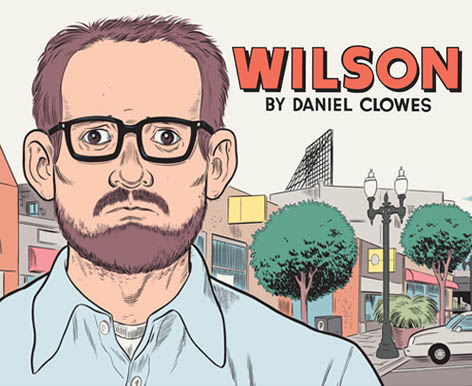
Daniel Clowes has made the leap over the past decade from underground comics hero to a more mainstream identity, with an Oscar nomination for screenwriting, several New Yorker covers, and a comic serialized in the New York Times Magazine under his belt. Despite his raised profile, his newest work, Wilson (Drawn and Quarterly, 80 pages, $15.37), comes closer to home than ever before. The cynical comic strip-based book is largely set in Oakland, of which he is a proud denizen. Clowes recently appeared at Diesel in Oakland, in conversation with McSweeney’s editor Eli Horowitz and the audience. On the setting of the comic, he proclaimed, “I’m pro-Oakland, I’m not sure Wilson is.” He also discussed his forays into film, his debt to Charles M. Schulz and R. Crumb, and the slight controversy over his recent New Yorker cover, among other things.

A lengthy signing followed, where fans presented everything from freshly purchased copies of Wilson to old favorites like David Boring to collector’s items like Lout Rampage for signing. Once the line had dwindled, Clowes sat down for a one-on-one interview.

San Francisco Bay Guardian One of the things I wanted to ask you, if the Oakland observations haven’t been beaten into the ground, was that you also used to live in Berkeley, right? When you were writing Ghost World?
Daniel Clowes Yeah, I was living up by College and Ashby.

SFBG Why are you explicitly writing about Oakland now, and why did you choose to live in Oakland? What do you see as the differences between the different areas?
DC It’s funny, I sort of wound up in Oakland by default. We were living in Berkeley, because my wife was going to Berkeley, and our landlord doubled our rent one month, which I actually didn’t think was legal. And so we said, well, maybe we should try to buy a house. This was years ago. We looked all around Berkeley and it was really expensive, and we found this neighborhood in Oakland that we didn’t even know about, over where we live now, and wound up buying a house there.
You know, I never really thought about Oakland. Even living there for two or three years, I thought, well, we’re near San Francisco and Berkeley. Then I started to walk around and embrace the idea of Oakland. I kind of learned to like Oakland above all its other surrounding cities. I’ve gotten to the point where I almost never go to San Francisco. It’s like, I go to LA more than I go to San Francisco. I just don’t relate to San Francisco at all, and somehow Oakland feels — I grew up in Chicago, and Oakland has this kind of second-tier quality that I find appealing.

SFBG Second-tier?
DC It’s not San Francisco. It’s [its] ugly sister across the Bay, and I prefer that somehow. I was in New York recently, and I was on a block in the Upper East 70s, I think, and I was looking around and I realized every building on the block was a beautiful art deco building built in the ’20s. And I thought, well, Oakland has one building like that. It has the Bellevue-Staten down by Lake Merritt. That’s it. But I’d prefer that, because, to see 20 of them, it has no impact anymore. It’s just, wow, a lot of buildings, and your brain can’t grasp that. But somehow I’m obsessed with this one building in Oakland and I know all about it. I can fixate on that one thing, so I like a city that has one of everything rather than hundreds of the same thing.

SFBG One of the strips in Wilson is him talking about all the bookstores closing down. I was wondering if that was you speaking through him at all, and if so, what bookstore are you saddest to see close down?
DC Well, that was really all about Cody’s. My wife worked at Cody’s, and when I moved here, I sort of agreed to move to Berkeley with my wife because of Cody’s. I thought that [was] something I needed, this world-class bookstore. It was sort of the focal point of my life for many years. I would go there two, three times a week and see what was new, and it just felt like the focus of my world in a way. And when it closed down, it was really hard for me to accept. It was like, you know, you always hear stories of guys who talk about their baseball team leaving town. The guys from Brooklyn are like, “The Dodgers left town in 1958,” or whenever it was. It felt like that to me…Still, when I go to downtown Berkeley and see that empty building, it seems so awful. It seems just like an awful thing that the world couldn’t support that.

SFBG At least it didn’t become a CVS.
DC Exactly.

SFBG [There] was a brief interlude where it was going to be a CVS.
DC Yeah, that’s true. There is that. At least the tomb of Cody’s is still there. And you think, “Well, somebody could just reopen it. Why not? Nobody’s paying rent.”

SFBG Looming over Moe’s.
DC Yeah, I should count my blessings. At least Moe’s is still around, and this place. Better than most cities.

SFBG You were talking about Wilson sort of materializing as a character, [that] you didn’t know who he was at first, but that it was you interacting with him. I was wondering if you’ve ever had experiences with a character who you didn’t have such a productive relationship with, or if you’ve ever had characters who worked against you?
DC Oh, that’s a good question. It’s more that they just run out of — it’s usually a character that I’ve kind of predetermined. Like, I need a character who’s a certain type of person to fit into a story, like, “I need a comic relief character.” Something where you have a role for them, and then they’re never that interesting. I find the best way to do it is to just let the characters come naturally. If they’re forced at all, they tend to [be] artificial. They have to seem like real people. There are characters that I’ve written the hell out of for page after page and they never quite are real people to me. Those are the things that never work, and that I usually have the good sense to throw away before they see print. [Laughs]

SFBG You’ve always had a really strong interest in perversity and human weirdness, and that’s not so central in Wilson. Was that a conscious move away or a permanent move away, or just a change in interests?
DC I think that’s true, you know. I always had a real interest in outsider culture. When I first began doing comics, that kind of thing was so inaccessible. I had a little group of friends who would send me all these weird things. You’d find out about little groups of people who were all linked together by some really odd interest, but they were so segregated. They’d maybe have some little newsletter that they all communicated through, but it felt like the world was filled with these little secret societies. And ever since the Internet has taken hold, it doesn’t feel like that anymore. It feels like the minute anybody hears about any weird little perversion or interest or anything like that, that everybody finds out about it and they know all about it, so it’s sort of lost its interest.
Also, having a child, you sort of reassess what you’re interested in, and you think, would this make me proud for my son to find my collection of books of pictures of freaks, or whatever? You just think, “Ehhh, I’m not sure I want to stand behind that.” Certain [times], you [decide] “I really do think this is cool and I will defend this,” but you weed out a lot of things that were just there because they would get a good reaction out of people.

SFBG Possibly spinning off from that question, but on another angle: You said [during the Q&A] that, specifically, no filmmaker has a strong specific influence on you, but certain films or certain scenes do. Are there any films or scenes you have in mind for Wilson or any of your other works?
DC I feel like Wilson is very non-filmic as far as most of my books go. It’s not about the images at all. A lot of my comics come from ideas that are images, that then turn into stories. Like David Boring and the Velvet Glove thing, and even a little bit of Ghost World. But Wilson was really all about this guy. If it were a movie, it would be more like a Mike Leigh movie or something than a Stanley Kubrick movie. [Laughs]

SFBG And you were saying that to make it into a film would be a strange format for a film.
DC It would be a strange format. I mean, you could certainly rethink it as a story about a guy, and sort of have the same elements, but to replicate the feel of the book would be a very odd thing. That’s the beauty of comics, is you can do all those different styles and they actually resonate off of each other, and even a really amateurish reader, a non-reader of comics, can tell the difference between the styles, whereas in a movie it’d be very hard to do different styles. Only film experts would get that you’re doing, you know, Michael Bay and then Alfred Hitchcock, or whatever.

SFBG Have you seen Natural Born Killers?
DC Yeah, that’s a perfect example.

SFBG Where it’s kind of off-putting at the end of the movie.
DC Right, it’s just a little irritating. Although I think that was the idea, I suppose. I haven’t seen that movie in a long time, I bet it’s really irritating now.

SFBG I’ve never seen all of it, actually. I’ve had friends show me parts.
DC I barely could tolerate it in theaters.

SFBG Woody Harrelson and Juliette Lewis are —
DC Yeah, she’s great. I like him, too.

SFBG In the right role.
DC Yeah, yeah.

SFBG Somebody was asking you about drawing eyes and mouths and conceiving of how people look in each panel, and you were saying that you do [stick-figure] sketches beforehand. How much do you script or plan out or storyboard versus just drawing a comic?
DC It depends on, not even the story, but just on my mood before I start. I usually try to do each story somewhat consistently, but I’m always trying to come up with a new way to do things. Not to be different or to give myself a challenge, but [because] I’m looking for a better way to work. And I always have this carrot dangling in front of me that there’s some other way, that if I could only find that way, it’ll make everything easy. And then it never does, and it always comes out exactly the same, no matter if I script the thing carefully or if I make it up off the top of my head. I could show those comics to a hundred people, and they would have no idea what was the planned-out one and what was the one I just made up. It all turns out the same. And I think that’s true of most artists. You can’t really tell what they’re going through, it’s just their work is always them, you know.

SFBG Do you always get a stack of other people’s works [at signings]?
DC [Holding a thick stack of various printed matter presented by fans] This was a good stack, I’d have to say. Often it’s much more, like, Xeroxed stuff. This actually looks like some pretty decent stuff that people have actually printed up. But yeah, usually you get a big pile of stuff, although not as much anymore, because a lot of people don’t print anything. So now I get business cards, like, “Check out my webcomic.” I have to go type it in at home.

SFBG You have the thing in the little author’s bio in Wilson about [how] you have danielclowes.com reserved.
DC That’s right.

SFBG Do you have any ideas for using that, or anything you want to use it for?
DC Well, my publisher actually said, “Now you have to put something on there, since you said that in the book.” So they just put an ad for Wilson that links right back to their website. I don’t want to get into doing, like, a blog or responding to people, ’cause my life is already so taken up by just responding to e-mails from my friends that I can’t imagine introducing a whole ’nother element of that. But it would be good to make announcements, and just to clarify things. I feel like the average reader doesn’t understand that I used to do a comic called Eightball and the stories were serialized — I figure if there’s some way [to] really concisely explain my career, then I won’t have to explain it to everybody over and over. [Laughs]

SFBG Are the original sequences of Eightball ever going to be made available again, and things that aren’t collected?
DC One of these days we’re going to do the complete Eightball, and do like a hardcover thing, but that’s nine projects down the road or something. But before I die, if printing still exists.

SFBG As far as film projects, is there anything on the horizon or anything you’re excited about working on?
DC With Ghost World, I learned, don’t tell anybody about your film projects until they have a release date. I used to tell people, “Oh, they’re going to make a Ghost World movie,” and then five years later, they finally actually made it. I felt like such a chump. But I wrote a screenplay for this thing that Michel Gondry came up with, this crazy dystopian sci-fi epic. I wrote a script based on his ideas. His son is going to do the drawings for it. I’m not animating it, but I think he wants to do that as his next film, so that should be fun, if that actually happens.

SFBG Have you ever done any animation?
DC I did a video for the Ramones in 1995, and that was it.

SFBG Would you ever do it again?
DC Yeah, I’d like to, I’d like to. I need to sort of come up with an idea that’s only appropriate for animation, and then actually try to get somebody interested in producing it. So there’s lots of hurdles there. [Laughs] But yeah, I’d love to. I feel like I should do that one of these days.


Now voyager

0

arts@sfbg.com

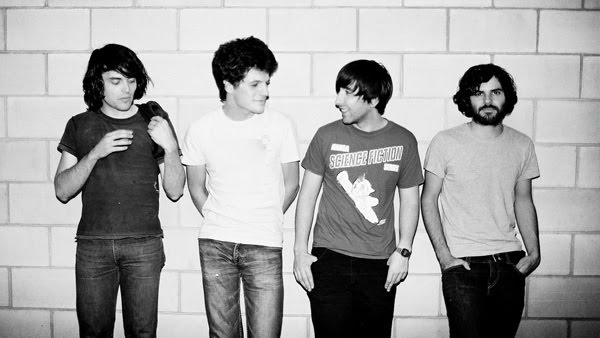
MUSIC What might Jefre Cantu-Ledesma’s status be? Casual but committed, relaxed yet extremely productive sounds about right for the Alps music-maker, Root Strata label head, On Land festival organizer, and now the third leg of the recently formed Moholy-Nagy.

Not another reunion band-cum-supergroup — Cantu-Ledesma, Danny Paul Grody (the Drift), and Trevor Montgomery (Lazarus) were founding members of Tarentel — the new SF project shares a moniker with the Bauhaus movement mover-and-shaker, although the trio is much more unassuming than all that.

“I think Danny and Trevor had been playing for a couple months, and they called and asked if they could borrow one of my synthesizers,” recalls Cantu-Ledesma on the phone, taking a break from his day job in operations at the San Francisco Museum of Modern Art. “I said, ‘No, but I’ll come down and play it’ — an asshole move on my part, but that’s typical of me.” You can practically hear his tongue being firmly thrust in cheek.

Very casually, but consistently, in the spirit of a “nerding-out recording project” with the members switching instruments and utilizing a “junky analog” ’70s drum machine Montgomery found on eBay, the threesome hunkered down in its longtime Hunters Point practice space, making what Cantu-Ledesma describes as the “most synthesized thing any of us has ever done before. It’s largely improvised around bass lines or drum parts, so things weigh it down and other things can have freedom around it.”

“It’s more like hanging out with friends having some lunch and getting some coffee and making music,” he adds. “It’s not like, ‘Dude! We’re in a band!'<0x2009>”

Easy-going but quick to step back and see the folly or humor in whatever’s before him, often issuing a loud, bright laugh, Cantu-Ledesma seems less than impressed with self-important “band dudes,” even after years spent in an influential combo like Tarentel.

“Oh, gosh, are you picking up on that?” he replies, dryly ironic, when asked about it. “Well, even with the Alps, when you look at it on the surface, it looks like we’re writing songs, but we’re not writing songs. We just want to create stuff and not so much worry about the fidelity of recreating things.”

But what things Cantu-Ledesma makes, judging from the haunting watercolor tone poems of Moholy-Nagy — music that could easily slip into a cinematic mood piece like Zabriskie Point (1970) or Paris, Texas (1984) — and the alternately motorik-beatific and insinuatingly delicate experiments of the Alps’ new Le Voyage (Type). For Cantu-Ledesma’s forthcoming solo album, due this fall, he’ll dig into his more shoegaze-ish background, but for Moholy-Nagy, he gets to “exercise another side. I’m a total knob-tweaker kind of guy, but we get to move around a lot more than we get to on other projects. Things are tending to sound more quirky or funky than other things we’ve done.”

In a way this project is an extension of the San Francisco Art Institute painting and sculpture graduate’s interior, rather than audibly exterior, work. “I’m going to say this, and I’m not trying to be new age,” he confesses. “But honestly, I used to be really intense about stuff happening a certain way. But I worked on my own development and became more secure with my own personality. and that really helped in terms of — without sounding too Californian — just letting it flow.”

That goes for his collaborations with filmmaker and kindred SFMOMA staffer Paul Clipson: a DVD of their Super-8 films and sound pieces since 2007 comes out this summer and coincides with an August performance at Yerba Buena Center for the Arts. “We love what we do, but there’s no plan behind any of it,” Cantu-Ledesma ponders. “I know this probably sounds facetious, but I’m not really motivated to make things happen — though obviously with things like On Land, you’re booking and buying plane tickets and stuff.”

On Land is firmly grounded in Cantu-Ledesma’s Root Strata imprint, which materialized in 2004, inspired by SF collectives like Jeweled Antler and then-Bay Area-based performers like Yellow Swans, Axolotl, and Skaters. It’s a way to present artists that Cantu-Ledesma and co-organizer and label cohort Maxwell Croy like and have worked with in the last year, in a “nice venue,” otherwise known as Cafe Du Nord. In early September, label musicians and friends like Charalambides, Grouper, Oneohtrix Point Never, Zelienople, Dan Higgs, White Rainbow, Barn Owl, and Bill Orcutt will appear, with video collaborations by Clipson and Nate Boyce, at the second annual gathering.

“Does the Bay Area need another music festival? Probably not,” Cantu-Ledesma quips wryly. “But you’re not going to see Bonnie ‘Prince’ Billy or Vampire Weekend. We’re trying to show a different strata of stuff from California or Oregon, kind of a West Coast underground, or people who just fit into our tastes, which are idiosyncratic and weird.”

MOHOLY-NAGY

With Brother Raven and Golden Retriever

Wed/16, 9 p.m., $7

Hemlock Tavern

1131 Polk, SF

(415) 923-0923

www.hemlocktavern.com

rootstrata.com

www.onlandfestival.com

Our Weekly Picks: June 16-22, 2010

0

WEDNESDAY 16

THEATER/DANCE

The Tosca Project

American Conservatory Theater artistic director Carey Perloff and San Francisco Ballet choreographer Val Caniparoli have teamed up with an all-star cast of ACT actors and San Francisco Ballet principal dancers (Lorena Feijoo, Pascal Molat, and Sabina Allemann) to bring theater and dance to one stage. Tracing the history of SF’s famous Tosca Café, The Tosca Project at ACT journeys through the love, loss, and popular dances of the past century to a soundtrack (featuring everything from Stravinsky to Hendrix) as diverse as the café’s ever-changing clientele. (Katie Gaydos)

Through June 27

Tues.–Sat., 8 p.m. (also Wed. and Sat., 2 p.m.); Sun, 2 p.m., $15–$85

American Conservatory Theater

415 Geary, SF

(415) 749-2228

www.act-sf.org/0910/tosca/index

THURSDAY 17

PERFORMANCE

Fresh Meat Festival

It’s that time again when Sean Dorsey brings tranny and queer performers for a love feast of dance, humor, music theater, and just about any other form of performance you could want. Most remarkable perhaps is how the Fresh Meat Festival — a tiny, local event only a few years ago — has grown into a national forum for often very polished performers who stick their necks out in every direction. Part of the festival’s fun is people-watching; some audience members’ get-ups nearly rival what’s seen on stage. Highlights from the lineup include world premieres of Dorsey’s take on Craigslist’s Missed Connections, Annie Danger’s media-style life coaching session, and SoliRose’s music-theater reflections about life in the Middle East. (Rita Felciano)

Thurs/17-Sat/19, 8 p.m.; Sun/20, 7 p.m., $17–$20

Z Space @ Theater Artaud

450 Florida, SF

www.brownpapertickets.com

MUSIC

U.S. Bombs

Boasting one of the most unpredictable, energetic, and enthralling bandleader of any punk band ever to set foot in front of an audience, U.S. Bombs has cultivated an incendiary reputation thanks to singer, legendary skateboarder, and all-around “master of disaster,” Duane Peters. Combining sounds culled from old school influences like the Clash and mixing them with the raw, adrenaline-pumping attitude needed while attacking a half-pipe, the band’s lineup has gone through several variations. But no matter which members of punk rock royalty he has behind him, Peters is guaranteed to steal the spotlight and make for a show you won’t likely soon forget. (Sean McCourt)

With the Forgotten, Druglords of the Avenues, and Cunt Sparrer

8 p.m., $14

Slim’s

333 11th St., SF

(415) 255-0333

www.slims-sf.com

EVENT

Decomposition reading

It’s sometimes said that, like pop songs, all good poems are ultimately about either love or death. Instinctively, I think most of us know this to be incorrect. Sometimes, though, we need a little reminder, which is where events like this one come in handy. Decomposition is an anthology of fungi-themed poetry from throughout the ages — apparently, many of America’s most seminal wordsmiths, including Sylvia Plath and Emily Dickinson, drew tremendous inspiration from the lowly mushroom (and no, not like that). Leading this tour of verse’s dark, dewy reaches will be editor Kelly Chadwick and poet Charlotte Innes. (Zach Ritter)

7–9 p.m., free

Ecology Center Store

2530 San Pablo, Berk.

(510) 548-3402

www.ecologycenter.org

FRIDAY 18

DANCE

Great Integration: A Chamber Hip-Hop Opera

By calling Great Integration — an allegory about the end of times — a hip-hop opera, choreographer Raissa Simpson and composer-pianist JooWan Kim may be on to something. Hip-hop is music, it’s dance, it’s poetry, and above all it’s a way of being. It means living on the edge, on unstable ground and embracing the subversive. Longtime East Bay activist and Integration contributor MC Kirby Dominant can attest to that. As far as the opera part is concerned, the Chinese and the Italians discovered centuries ago that opera is a messy, all-encompassing form of theater splendidly suited for big topics. Sounds just about right for all aspects of Integration. On opening night, jazz vocalist Christopher Nicholas joins Kim’s Ensemble Mik Nawooj and Simpson’s Push Dance Company. (Felciano)

Fri/18–Sat/19, 8 p.m., $15–$25

ODC Commons

351 Shotwell, SF

(415) 863-9834

www.brownpapertickets.com/event/104653

MUSIC

QM

Do you like hip-hop? Do you like cheap booze? Get your ass down to Hotel Utah for a stiff double dose of both and party like your parents are outta town. Local rapper QM of the Rec-League, self-described as “your favorite rapper’s favorite rapper to drink with,” is finally releasing his latest album, Happy Hour, and is throwing his own happy hour to celebrate. QM’s clever punch lines and West Coast sound may not change your political views, but they just might leave you hung over. Throw in $1 PBRs and Happy Hour grab bags filled with the album, a beer koozie, and other surprises, and Hotel Utah’s guaranteed to get wild. Be prepared for a drunken good time, and keep some aspirin and water ready for the morning after. (Ben Hopfer)

With Rec-League, Adverse, and Parable Paul

9 p.m., $10

Hotel Utah

500 Fourth St., SF

(415) 546-6300

www.routinefly.com

EVENT

“Cultural Encounters: Friday Nights at the de Young”

If you’re one of those people for whom a croissant is a “kwah-sahn,” then this week’s Friday Soirée at the de Young Museum, presented in partnership with the Alliance Française, should cater to your Francophiliac tastes. Though not French himself, Rich Kuhns accompanies the “Birth of Impressionism” exhibit as a strolling accordionist. The Bay Area monsieur of musette hearkens back to traditional French sounds — he plays Jacques Brel and Edith Piaf, of course — while also adding some contemporary flair to the fête. Following his performance, Dr. Alexandra Amati-Camperi lectures on the Fête de la Musique, French singer-songwriter Eric John Kaiser performs, and you can make your own found object instrument with Kim Erickson, described as an “art diva” by the de Young website. It’s no coincidence that the word “cliché” is French,” but zut alors, clichés never sounded so good. (Ryan Lattanzio)

5–8:45 p.m., free

de Young Museum

50 Hagiwara Tea Garden Drive, SF

(415) 750-3600

www.deyoung.famsf.org

FILM

Top of the Food Chain

Bluntly retitled Invasion! for its American release, Canadian filmmaker John Paizs’ homage to 1950s sci-fi films, Top of the Food Chain (1999), is the second of his films to screen at Artists’ Television Access in as many months. Previously, the auteur worked on beloved Canadian comedy series Kids in the Hall, but his films have a miniscule presence on the Internet — a few blog reviews here and there, and only two relevant YouTube clips. However, both of those clips are of hilariously non sequitur musical numbers, so that’s a promising sign. Indeed, Paizs’ fetishization of a seemingly outdated genre should be right at home alongside ATA’s usual assemblage of experimental video art. (Sam Stander)

8 p.m., $6

Artists’ Television Access

992 Valencia, SF

(415) 824-3890

www.atasite.org

PERFORMANCE

Miriam’s Well

This cultural and artistic mashup tells the stories of Mary, Maryam, and Miriam from the Christian, Muslim, and Jewish traditions connecting across time and distance at an ancient water well, the source of life and strife in a world that has yet to come to terms with how we can come together around our most basic shared needs. The performance involves dance, live music, poetry, and readings of sacred texts by a variety of acclaimed artists, from creator and dancer Miriam Peretz to musicians the Qadim Ensemble and master percussionist Pezhham Ackavass to spoken word artist Lana Nasser. It’s a story of visionary women leading all us past our historical and still-growing divisions and toward the realization that “without peace the well will soon run dry.” (Steven T. Jones)

8 p.m., $20

Grace Cathedral

1100 California, SF

(415) 749-6355

www.brownpapertickets.com/event/97354

SATURDAY 19

EVENT/PERFORMANCE

Birthfest and The Dynamite Show

FouFouHa!, San Francisco’s uniquely zany clown dance troupe, wants to take you on a strange journey all the way from a woman’s womb to a glitzy reality show set in Hollywood. That may seem like a long road to travel, but with troupe founder and performance director/choreographer Maya Culbertson-Lane, a.k.a. MamaFou, behind the wheel, it’s sure to be a fun ride. The play, which runs at Brava June 17-26, follows the Fous as they audition to be humiliated on television, exploring the role of the fool in society. But this show is preceded by a film festival on midwifery, with proceeds benefiting the Foundation for the Advancement of Midwifery, which recently helped MamaFou deliver her second child. What’s the connection? As she explains, it’s about power, “the power to not give into social fears created by a system run by money — in this case Hollywood and insurance companies.” With live music by the Gomorrans Social Aide and Pleasure Club and a photo exhibit by Eric Gillet. (Jones)

Birthfest, noon-6 p.m.; The Dynamite Show, 8 p.m., $20–$40

Brava Theater

2781 24th St., SF

www.foufouha.com

www.birthfest.com

EVENT

StreetSmARTS Community Extravaganza

It’s afternoon in the Tenderloin, and muralist Jet Martinez has been sponsored by the SF Arts Commission to paint traditional Oaxacan embroidery flowers in Cedar Alley. His audience: a man who has been yelling “I’m gonna kill you!” to no one in particular all day. The guy starts to approach him, and when he gets close enough says this to Jet in a low, articulate voice: “We really appreciate what you’re doing for the community.” Don’t ever let them tell you art doesn’t matter. Celebrate the beautiful walls created through StreetSmARTS with b-boys, DJs, and a midnight unveiling of “The Elements of Hip Hop,” a indoor gallery of works by the muralists themselves. (Caitlin Donohue)

Sat/19, 6 p.m., free

African American Art and Culture Complex

762 Fulton, SF

(415) 252-2598

www.sfartscommission.org

MONDAY 21

MUSIC

Brian Jonestown Massacre

Who Killed Sgt. Pepper? the Brian Jonestown Massacre asks in the title of its latest album. It’s possible bandleader Anton Newcombe did, if you recall how insane he was in Ondi Timoner’s documentary Dig! (2004). The San Francisco-bred band returns to the Fillmore in conjunction with its new release — a rather disquieting listen with plenty of dissonant space noise and expletives to make for a psychedelic headbanger’s wet dream. Newcombe, steeped in notoriety since Dig! and its frenetic portrait of the artist as a disturbed man, has been honing his sound since 1990. If you can separate art and artist (or don’t even bother — it makes things more interesting), BJM is one of today’s only bands that should be allowed to remain as prolific as it is. (Lattanzio)

9 p.m., $22.50

Fillmore

1805 Geary, SF

(415) 346-6000

www.livenation.com The Guardian listings deadline is two weeks prior to our Wednesday publication date. To submit an item for consideration, please include the title of the event, a brief description of the event, date and time, venue name, street address (listing cross streets only isn’t sufficient), city, telephone number readers can call for more information, telephone number for media, and admission costs. Send information to Listings, the Guardian Building, 135 Mississippi St., SF, CA 94107; fax to (415) 487-2506; or e-mail (paste press release into e-mail body — no text attachments, please) to listings@sfbg.com. We cannot guarantee the return of photos, but enclosing an SASE helps. Digital photos may be submitted in jpeg format; the image must be at least 240 dpi and four inches by six inches in size. We regret we cannot accept listings over the phone.

Reel groundbreaking

0

FRAMELINE Appropriately enough, Kathy Wolfe — founder and CEO of this year’s Frameline Award winner, Wolfe Video — realized her calling while attending a Frameline screening.

“Somewhere around 1979, I went to a Frameline screening of [pioneering 1977 doc] Word is Out. Within the body of that film, there’s a challenge to make a difference,” she remembers, speaking from her San Jose office. “I started working in my local public access television station, and for four years I studied and worked in every aspect of video production. At the end of that, I actually had a few documentary-style pieces and some women’s music videos I wanted to sell. In order to get more serious, I took out a business license, and that was in 1985. But I very much was inspired by the challenge in the movie. Our mission today is very similar to the mission we had at that time: to make these images more available to the world at large so that people would feel empowered to come out.”

Today, Wolfe Video is the leading exclusive distributor of LGBT films, which they do via film festivals, video stores, video on demand, and the Internet, including their website, Wolfevideo.com. Their catalog includes hits like Big Eden (2000) and Claire of the Moon (1992), as well as the entire performance catalog of Lily Tomlin — whose early support helped the company make key contacts with distribution networks and retail outlets. According to president Maria Lynn, who joined in 1993, the fact that Wolfe Video is celebrating its 25th anniversary is a testament to the increasing popularity of LGBT films.

“[In 1985] the gay genre, as it were, was considered small and unknown. Now it’s a very significant genre in independent film. Between Wolfe distributing them, and filmmakers making them, and festivals like Frameline screening them, it has created its own category within independent film,” she says. “We have a lot of movies now that have a more mainstream appeal, for example Undertow, which is going to be a centerpiece at Frameline, is a beautiful film from Peru. And the way people talked about Brokeback Mountain as being about love — people will talk about this one similarly. It touches people very deeply and it is not limited to a gay and lesbian audience as well. That’s one of the biggest things that’s changed: the filmmakers have really been able to branch out, whether it’s with casting, or better stories, or bigger budgets.” 

FRAMELINE AWARD: WOLFE VIDEO

With Undertow Tues/22, 7 p.m., Castro

Super stories

0

arts@sfbg.com

FILM It’s film festival season, which means one thing: stories. Lots of them. And not just the ones that happen on film, but all the ones that happen before, during, and after the tapes get mastered and the crowds go home. While this is certainly true of all films, it’s especially true for the Queer Women of Color Film Festival, held annually at Brava Theater Center in the Mission.

Each year the festival premieres 25 short films made by and for women of color, who travel from across the Bay Area, and sometimes the state, to a small workshop in the Sunset District and learn the ins and outs of video production. The end results are nuanced, gripping, and often hilarious stories of how amazing, awkward, and complex love can be. So even though the festival’s yearly themes may be heavy — last year’s focused on immigration, this year’s celebrates queer indigenous communities — crowds pack the theatre, enjoy free food, and see that there’s more than enough to smile about.

This year’s festival brought a variety of movies. In Ferment Me My Heart, one Korean Canadian woman used animation to explore her love-hate relationship with kimchi and what it tastes like to be an outsider. Home is Where My Mother Is showed that all ain’t pretty in the world of queer families, as one woman confronted her lesbian mother over a traumatic interracial relationship. Bulldagger Women and Sissy Men paid homage to the Harlem Renaissance’s queer characters. A mother and daughter bonded over basketball in Hoops, and Passing Through Like Water followed three generations of Iranian women as they navigated how to deal with change and one another.

The festival also included a sacred ceremony for indigenous queer communities, and related films that unearthed the lessons of Cherokee elders and explored what Proposition 8 means to native women. If you missed out, you still have a chance to see some highlights when “F**king Traditional Values: Queer Women of Color Shorts” screens at Frameline.

F**KING TRADITIONAL VALUES: QUEER WOMEN OF COLOR SHORTS

Sun/20, 4:15 p.m., $8

Victoria Theatre

2961 16th St.

(415) 863-7576

www.frameline.org

www.qwocmap.org 


Get thee to the gym

2

arts@sfbg.com

FRAMELINE It’s a little-noted fact that the gay community is absolutely thick with twins. Not biological, but the kind that grow more identical when they take their shirts off.

Whoever said opposites attract clearly never went to the Folsom Street Fair, where every body type runs in packs of two (or several). Sure, mom said looks aren’t everything. But was she a gay man? It’s brutal out there. Combine a sophisticated, compartmentalized urban gay scene like San Francisco’s own with the Internet’s heightened judging-book-by-cover — no actual book reading implied — and you’ve got a recipe for looks obsessiveness that can snare even the safely off-market.

An older friend who said at 40 he’d eventually retire from gym habituation because “I don’t want to be a 50-year-old face on a 25-year-old body” is now a 60-year-old with a 35-year-old bodybuilder’s torso — plus the blown-out knees and other ailments decades of body-sculpting punishment have wrought. What for? Not for his committed partner, one assumes, but for the accustomed thrill of feeling the breeze shift from swiveling heads.

A number of films in Frameline’s 34th edition (Skinnyfat, BearCity, The Adonis Factor, Bear Nation) address the complicated landscape of gay male body image issues. They’re not always pretty — at least emotionally. Although it is generally also the business of people in movies to be pretty. It is also the business of these particular movies to question just what pretty is, and why the hell it has to be so important.

The topic is taken head-on — if also superficially, which is ironically apt — by The Adonis Factor. Its interviewees from various gay terrariums (SF, Palm Springs, West Hollywood) say things like “Gay men tend to have more of an appreciation for beauty in all aspects, whether it is other male bodies or just antiques.”

Leafing through relevant issues magazine-style, from circuit parties to surgery to eating disorders, Christopher Hines’ documentary ponders endemic, sometimes compulsive shallowness while providing a lot of eye candy. “If you’re gonna be gay, you’re just gonna have to experience the wrath of the A crowd,” one perfect 10 in search of an 11 attests. Some of us are just too allergic to house music to hazard that.

A mutable “culture of desire” has spawned myriad subdivisions based on body type, the greatest latest boom being bear-ish. But Malcolm Ingram’s documentary Bear Nation finds fissure in a movement supposedly all about including the excluded. One specialty magazine publisher bluntly insists “bear” means hairy, not big (save musculature), and who asked these fat fucks to the party anyway? If there was a fetish mag focused on the proudly obnoxious, he’d rate the cover.

Frameline34 — so old! who’d sleep with that?! — features a lot of films that in one way or another uphold a beauty standard. Among them are conventional gay romcoms like Is It Just Me?, whose John Cusack-y protagonist — torso more rectangle than triangle — is appalled by the looks-ist superficiality of the L.A. gay scene he’s just moved into. But of course there’s a selfless hunk who, amid Cyrano de Bergerac-inspired contrivances, is eager to love him for his mind.

Foreign films — like such excellent Frameline entries as Undertow, Children of God, or Francois Ozon’s Hideaway — tend to be less rigidly codified in terms of physical casting. Their protagonists are attractive but natural, not conspicuously pumped by hours of gym devotion. Still, their soft-pedaled sexy glamour seems contrite alongside the futurist masculinity line-blurring of Frameline flicks like tranny-band survey Riot Acts: Flaunting Gender Deviance in Music Performance. Or Jake Yerra’s Open, whose ethereal dramatic panoply encompasses a femmy boi in love with a pregnant FTM as well as an intersex couple undergoing surgery to become identical. “Being average in a world of physical perfection is the worst kind of gay purgatory,” a character says in Is It Just Me? Maybe worse: being slave to that sensibility.

FRAMELINE34: SAN FRANCISCO INTERNATIONAL LGBT FILM FESTIVAL

June 17–27, most shows $8–$15

Castro, 429 Castro, SF; Roxie, 3117 16th St., SF; Victoria, 2961 16th St, SF; Rialto Cinemas Elmwood, 2966 College, Berk.

On the Cheap listings

0

On the Cheap listings are compiled by Paula Connelly. Submit items for the listings at listings@sfbg.com.

THURSDAY 17

Another Science Fiction Get Lost Travel Books, 1885 Market, SF; (415) 437-0529. 7pm, free. San Francisco author and archivist Megan Prelinger will discuss and show images from her new book, Another Science Fiction: Advertising the space race 1957-1962, where she presents 100s of advertisement images from a time that marked the beginning of space research as well as the golden age of science fiction writing.

FRIDAY 18

FINKTOONS Element Lounge, 1028 Geary, SF; (415) 440-0111. 10pm, free if you say "FINKTOONS" at the door. What do you get when you cross sketch comedy, horror movies, cartoons, and bizarre short films? FINKTOONS, of course. Enjoy a night of never before seen sketches and cartoons, including a live performance by the project’s co-creators Brandon Fink and Tyler Moazed.

Giants County Fair McCovey Cove, Giants Lot A, behind AT&T Park, SF; www.sfgiants.com/fair. Fri./11-Sun/20, free. This old-fashioned county fair with a San Francisco spin features games, fair food, music, a CUESA urban farming tent dedicated to cooking and gardening, and over 20 carnival rides, including a Ferris wheel, bumper cars, super-swings, and more. $5 per ride or $20 for unlimited rides. The fair will overlap with six Giants games, including the Bay Bridge Series against the A’s.

SATURDAY 19

Breaking Ground San Francisco County Fair Building, 9th Ave. at Lincoln, Golden Gate Park, SF; (415) 750-5110. 9am-1pm, free. This urban gardening youth conference is open to all Bay Area high school students featuring youth led, hands on workshops, information about jobs and paid internship opportunities, food and entertainment, tours of some of San Francisco’s coolest gardens, and more.

Mission Community Market 22nd St. between Mission and Bartlett, SF; http://missioncommunitymarket.blogspot.com. 4pm-8pm, free. Attend the kick off to this weekly summer outdoor market that celebrates the Mission by promoting healthy eating, locally owned businesses, community programs, public space, and live music in the street. Proceeds from all food bought at Lolo’s, Café Revolution, and Escape from New York Pizza will be donated to the MCM Fund. All market profits will be reinvested into public space improvements. Featuring live music by Seth Augustus, Diana Gameros, Santos Perdidos, and King City and live performances from Abada Capoeira, Danza Azteca, and Sirron Norris.

"Obviously You’re Not a Golfer" Kokoro Studio, 682 Geary, SF; (415) 400-4110. 7pm, free.

The Flat Earth Collective presents this literary event featuring readings by Tom Andes, David Holler, Erica Lewis, and Sara Mumolo and dramatic performances of new work by Sarah Ciston and Tavia Stewart-Streit.

StreetSmARTS African American Art and Culture Complex, 762 Fulton, SF; www.sfartscommission.org/streetsmarts. 6pm, free. Celebrate StreetSmARTS pilot-program murals, a program that connects established muralists with San Francisco private property owners to create vibrant art based on visual concepts reflecting the fabric of the neighborhood and make property less likely to be vandalized. Festivities to feature live muraling, film screenings, speakers, DJs, and a break-dance contest. A StreetSmARTS art exhibition will be unveiled at midnight.

Tetris Tournament II The Lab, 2948 16th St., SF; (415) 864-8855. 8pm, $5-$15 sliding scale. Test your skills with the world’s most popular puzzle game at this karaoke-style arcade competition. Musician, media artist, and performer Bryan Von Reuter rigged it so the highest scoring players will reap all the glory on a jumbo-tron projected screen and score board with DJ Middle D spinning records all night.

SUNDAY 20

Cardboard Tube Fighting League Hayes Valley Farm, 450 Laguna, SF; www.tubeduel.com. 3pm, free. Come in your best cardboard armor attire, bring food to participate in the picnic potluck, and vie for a chance to win a legendary cardboard sword. Prizes also awarded for best cardboard costume. If you need a costume go to the free Cardboard Amor Building Workshop Sat/19 3pm at Hayes Valley Farm. Bring scissors, glue, twine, and anything you think you might need to build righteous armor.

Rock the Bike Valencia and 24th St., SF; www.projectsoundwave.com. The ongoing green sound festival, Project Soundwave, teamed up with Rock the Bike to bring you this unique free environmental music event at the Mission District Sunday Streets program featuring the acoustic punk sounds of Kemo Sabe brought to you by pedal powered mics, amps, and instruments.

MONDAY 21

BAY AREA

Summer Solstice Celebration Muir Beach, Golden Gate National Recreation Area, Route 1, Marin; (415) 388-2596. 6pm, free. Celebrate the longest day of the year at this bonfire solstice party featuring storytelling and songs. Dress warmly and bring a mug for hot drinks. No reservations required.

Ubiquity Anniversary Exhibit Guerilla Art Café, 1620 Shattuck, Berk.; (510) 845-CAFÉ. 6pm, free. Attend the opening of this art exhibit celebrating the 20th anniversary of Bay Area funk and soul from Ubiquity Records with paints of, and inspired by, Darondo, Eugene Blacknell, Sugarpie Desanto, and Twilight. The opening will feature Guerilla Café art collective and Ubiquity artists live painting and creating a video montage. Throughout the show, Guerilla will host guest appearances by the musicians and DJ sets playing their music.

For Lit, Talks, and Benefits listings, visit the Pixel Vision blog at

Rep Clock

0

Schedules are for Wed/16–Tues/22 except where noted. Director and year are given when available. Double and triple features are marked with a •. All times are p.m. unless otherwise specified.

ARTISTS’ TELEVISION ACCESS 992 Valencia, SF; www.atasite.org. $5-6. “OpenScreening,” Thurs, 8. For participation information, email ataopenscreening@atasite.org. Top of the Food Chain (Paisz), Fri, 8.

CAFÉ OF THE DEAD 3208 Grand, Oakl; (510) 931-7945. Free. “Independent Filmmakers Screening Nite,” Wed, 6:30.

CASTRO 429 Castro, SF; (415) 621-6120, www.castrotheatre.com. $8-13. Sex and the City 2 (King, 2010), Wed, call for times. San Francisco International LGBT Film Festival, June 17-27. See film listings.

CHRISTOPHER B. SMITH RAFAEL FILM CENTER 1118 Fourth St, San Rafael; (415) 454-1222, www.cafilm.org. $6.50-10.25. Babies (Balmès, 2010), call for dates and times. The Girl With the Dragon Tattoo (Oplev, 2009), call for dates and times. Looking for Eric (Loach, 2010), call for dates and times. Micmacs (Jeunet, 2010), call for dates and times. Touching Home (Miller and Miller, 2009), call for dates and times.

CONTEMPORARY JEWISH MUSEUM 736 Mission, SF; (415) 655-7800, info@thecjm.org. Free with museum admission ($8-10). Sixty Six (Weiland, 2006), Sun, 2.

DE YOUNG MUSEUM Piazzoni Mural Room, 50 Hagiwara Tea Garden Dr, Golden Gate Park, SF; (415) 488-1211, www.marinmindscapes.com. Free. Marin Mind/Scapes (2010), Sat, 2.

DECO LOUNGE 510 Larkin, SF; (415) 346-2025, www.decosf.com. Free. “Queer Cinema 101,” Mon, 10. Holly DeVille hosts this weekly show highlighting films that have had an impact on queer culture.

EXPLORATORIUM McBean Theater, 3601 Lyon, SF; http://asifa.net. Free. “A Tribute to the International Festival of Animation and to Prescott Wright: The Early Years,” Fri, 7:30.

FILM NIGHT IN THE PARK This week: Old Mill Park, 300 block of Throckmorton, Mill Valley; (415) 272-2756, www.filmnight.org. Donations accepted. Star Trek (Abrams, 2009), Fri, 8. Dolores Park, Dolores and 19th St, SF; same contact info and price. Grease (Kleiser, 1978), Sat, 8.

FORBIDDEN ISLAND TIKI LOUNGE 1304 Lincoln, Alameda; www.forbiddenislandalameda.com. Free. “Forbidden Thrills: Freaky Filipino Flix!”: •Mad Doctor of Blood Island (de Leon and Romero, 1968), Mon, 7:30, and For Your Height Only (Nicart, 1981), Mon, 9:15.

HUMANIST HALL 390 27th St, Oakl; www.humanisthall.org. $5. Processed People (Nelson and Nelson), Wed, 7:30.

JACK LONDON SQUARE PAVILION THEATER 98 Broadway, Oakl; www.oakuff.org. Free. “Oakland Underground Film Festival: Leading Local Talent Local Shorts Showcase,” Fri, 7:30.

ODDBALL FILMS 275 Capp, SF; (415) 558-8117, info@oddballfilms.com (RSVP required as space is limited). $5-10. “Oddball Wants Children: A Matinee of Accidental Edutainment for Kids and their Adults,” Sat, 3 (kid-friendly matinee), 8.

PACIFIC FILM ARCHIVE 2575 Bancroft, Berk; (510) 642-5249, www.bampfa.berkeley.edu. $5.50-9.50. Gravity Was Everywhere Back Then (Green, 2010), Wed, 7:30. “Akira Kurosawa Centennial:” The Lower Depths (1957), Thurs, 7; The Bad Sleep Well (1960), Sat, 6:30; Ikiru (1952), Sun, 7:15. “Tales from the Golden Age: Recent Romanian Cinema:” Police, Adjective (Porumboiu, 2009), Fri, 7 and Sun, 5. “Brought to Light: Recent Acquisitions to the PFA Collection:” The Host (Bong, 2006), Fri, 9:15; Payday (Duke, 1972), Sat, 9:15.

RED POPPY ART HOUSE 2698 Folsom, SF; www.redpoppyarthouse.org. $10-15. “Mission Ear and Eye,” live film music by Lisa Mezzacappa and Nightshade, plus music by Katy Stephan, Adam Shulman, and the Holly Martins, and live film projection by Alfonso Alvarez, Fri, 9.

RED VIC 1727 Haight, SF; (415) 668-3994. $6-10. Mother (Bong, 2010), Wed-Thurs, 7, 9:35 (also Wed, 2). The Runaways (Sigismondi, 2010), Fri-Sat, 7:15, 9:30 (also Sat, 2). Smoked (The Movie), Sat, 4:20. Oceans (Perrin and Cluzand, 2010), Sun-Mon, 7:15, 9:25 (also Sun, 2). No One Knows About Persian Cats (Ghobadi, 2009), June 22-23, 7:15, 9:25 (also June 23, 2).

ROXIE 3117 and 3125 16th St, SF; (415) 863-1087, www.roxie.com. Free-$10.75. The Full Picture (Bowden, 2008), Wed-Thurs, 7, 8:45. “San Francisco United Film Festival,” narrative and documentary films, Wed-Thurs.

“TEMESCAL STREET CINEMA” 49th St at Telegraph, Oakl; www.temescalstreetcinema.com. Free. Pelada (Fergusson, Boughen, Oxenham, and White, 2010), Thurs, 8. With free popcorn and live music.

YERBA BUENA CENTER FOR THE ARTS 701 Mission, SF; (415) 978-2787, www.ybca.org. $6-8. Bluebeard (Breillat, 2009), Thurs-Sat, 7:30; Sun, 2.

Film listings

0

Film listings are edited by Cheryl Eddy. Reviewers are Kimberly Chun, Michelle Devereaux, Max Goldberg, Dennis Harvey, Johnny Ray Huston, Erik Morse, Louis Peitzman, Lynn Rapoport, Ben Richardson, and Matt Sussman. For rep house showtimes, see Rep Clock. For first-run showtimes, see Movie Guide.

FRAMELINE34

The 34th San Francisco International LGBT Film Festival runs June 17-27 at the Castro, 429 Castro, SF; Roxie, 3117 16th St, SF; Victoria, 2961 16th St, SF; and Rialto Cinemas Elmwood, 2966 College, Berk. Tickets (most shows $8-15) can be purchased at www.frameline.org. All times pm unless otherwise noted.

THURS/17

Castro The Secret Diaries of Miss Anne Lister 7. Off World 10.

FRI/18

Castro The Real Anne Lister noon. "Curious Thing" (shorts program) 1:45. Sasha 4:30. The Owls 7. Grown Up Movie Star 9:30.

Roxie "Hustlers and Exhibitionists: Andy Warhol Retrospective" 7. "Bi Request" (shorts program) 9:30.

Victoria 8: The Mormon Proposition 7. Open 9:30.

SAT/19

Castro "Fun in Boys’ Shorts" (shorts program) 11am. "Fun in Girls’ Shorts" (shorts program) 1:30. Elvis and Madona 4. I Killed My Mother 6:45. A Marine Story 9:30.

Roxie Mississippi Queen 11am. On These Shoulders We Stand 1:30. Postcard to Daddy 4. Hooters 6:30. "Sex, Leather Jackets, and Hustlers: Andy Warhol Retrospective" 9:30.

Victoria "Trans Francisco" (shorts program) 11am. The Adonis Factor 2. "Gay Aesthetics and Iconography in the Films of Andy Warhol" (illustrated talk) 4:15. Arias With a Twist 6:30. The Man Who Loved Yngve 9:30.

SUN/20

Castro "Dottie’s Magic Pockets Live!" 11am. We Were Here: Voices From the AIDS Years in San Francisco 1. The Topp Twins: Untouchable Girls 3:45. The Four Faced Liar 6:30. The Consul of Sodom 9:30.

Roxie Mountains That Take Wing 11am. "Skinnyfat" (shorts program) 1:45. "Generations: Youth and Elders Making Movies" (shorts program) 4:15. Bear Nation 6:45. Out of the Blue 9:30.

Victoria Beyond Gay: The Politics of Pride 11am. Paulista 1:30. "F**king Traditional Values: Queer Women of Color Shorts" (shorts program) 4:15. William S. Burroughs: The Man Within 7. The Queer X Show 9:30.

MON/21

Castro Dzi Croquettes 11am. Swimming with Lesbians 2. Off World 4. The Last Summer of La Boyita 7. Brotherhood 9:30.

Roxie New York Memories 7. "Are You Krazy?" (shorts program) 9:30.

Victoria Riot Acts: Flaunting Gender Deviance in Music Performance 7. My Normal 9:30.

Elmwood The Sea Purple 7. Plan B 9:30.

TUES/22

Castro The Motionless 11am. Sex in an Epidemic 1:15. Is It Just Me? 3:45. Undertow 7. Baby Jane? 9:45.

Roxie Gayby 7. One Night 9:30.

Victoria The Sisters 7. Eyes Wide Open 9:30.

Elmwood William S. Burroughs: The Man Within 7. The Fish Child 9:30.

OPENING

Bluebeard Writer-director Catherine Breillat returns to her 2001 Fat Girl‘s motifs of troubled sisterhood and the adolescent female imagination in this stealthy adaptation of Charles Perrault’s pathological fairy tale. Bluebeard‘s parable of murder coiled around marriage resonates rather obviously with Breillat’s own signature themes, but she avoids obviousness by serving the punishing logic of Perrault’s story chilled. That Breillat is concerned with how the fairy tale is experienced, and specifically the adolescent desires it awakens, is clear from the frame narrative in which two sisters (named autobiographically) ritualistically read "Bluebeard," both of them knowing it (and each other’s reactions) by heart. Their dualities mirror those of the sisters trapped inside the story, the younger of whom, prone to romantic fantasies of castles and marooned by her father’s death, joins Bluebeard in unholy matrimony. Marie-Catherine (Lola Créton) may be a sprite next to the titular ogre (Dominique Thomas), but never underestimate the appetite of a younger sibling. Breillat’s visual style is unassuming in its tableaus, but her mastery of point-of-view and restricted narration brings great insight to the mechanisms of the fairy tale. Créton conjures the younger girl’s familiar mix of confidence and innocence with something like joy, while Thomas plays Bluebeard as a tender foil. He appears nearly forlorn when he uncovers his young wife’s fateful act of disobedience and realizes he will now and forever carry out the terrible deed we expect of him. A sharp turn provides a different moral than we might expect, and while it’s not so self-consciously shocking an ending as Fat Girl‘s, it inscribes the birth of a storyteller named Catherine with far greater piquancy.(1:20) Yerba Buena Center for the Arts. (Goldberg)

*Coco Chanel and Igor Stravinsky Revered for the innovative fashion house that set the bar for style and was always knocked off but never cut prices for the real deal (and still sniffs at online clothing sales), Gabrielle "Coco" Chanel gets her second biopic, as an artist on par with composer Igor Stravinsky in this rhapsodically sensuous love letter to an unlikely romance. It opens with the designer and future branding legend (depicted with burning eyes and pantherine mystery by Anna Mouglalis) attending the controversial, riot-starting 1913 premiere of Stravinsky’s The Rite of Spring in Paris. Recognizing Stravinsky (a viral avant-garde stud-muffin in the hands of Mads Mikkelsen, last in deadlocks and warrior face in Clash of the Titans) as a simpatico radical spirit, Chanel lends her house to the composer. He comes with considerable baggage: a slew of children and a consumptive wife, Katarina (Elena Morozova). Morozova’s performance as the angel-faced earth mother scorned, so blatantly disrespected by the rad lovers madly getting down on the music-room carpet, almost steals the show, but then the house-porn fabulosity of the recreated Chanel villa in Garches — a symbol of their hermetic attraction and shot like a seductive, claustrophobic, black-and-white deco womb — takes over, and we’re back in the thick of CoGor’s somewhat inexplicable affair once again. (1:55) Shattuck. (Chun)

Gravity Was Everywhere Back Then Before it was torn down by a new landowner, multimedia artist Brent Green went to visit the house built by late Kentucky hardware store clerk Leonard Wood — a poor man’s Winchester Mystery House, endlessly elaborated with newly knocked-down walls and weird handmade detailing. This obsessive one-man construction effort was commenced as a hopeful "healing machine" for its other resident, his beloved wife Mary, and continued after her death from cancer. Green built his own backyard replica of the house for this experimental first feature, a sort of live-action stop motion movie whose characters like move like puppets in stuttering frame jumps, with animation, dubbed occasional dialogue, crude intertitles, and some gently fantastical imagery adding to its dreamlike aura. Mary (played by Donna K.) makes a curious living breeding and selling wild bird eggs; Leonard (Michael McGinley), among his other callings, composes and records droning minimalist "church music." They met, purportedly, in a car crash. Green’s strangle-voiced blank verse narration and filmic folk-art affectations can sometimes make Gravity just sit there — certainly it feels longer than its 75 minutes. But it also has an off-center lyricism that in the end serves honorably this story of profound love between two very odd people. The director (who currently has an installation across the street at the Berkeley Art Museum) will appear at this one-night Pacific Film Archive screening. (1:20) Pacific Film Archive. (Harvey)

Jonah Hex Josh Brolin and Megan Fox star in this Wild West-set graphic novel adaptation. (1:81) Elmwood.

Lovers of Hate Living out of his car after being dumped by Diana (Heather Kafka), perpetually dour Rudy (Chris Doubek) can hardly find a place to take a shower. In stark contrast to his desperate situation, Rudy’s brother Paul (Alex Karpovsky) is a successful children’s fantasy writer, holed up in a borrowed mansion in Utah to work on his next book. Rudy decides to pay his bro an unwelcome surprise visit, but he arrives just behind Diana, who has come to have a serious chat (and also some sex) with Paul. Still in love with Diana, Rudy skulks unnoticed through the tremendous house, playing vengeful voyeur to the new couple’s already rather weird relationship. Lovers of Hate‘s central trinity are not especially nice people, but neither are any of them evil; writer-director Bryan Poyser balances pity and disgust at their painfully human actions, without necessarily making a case for why we care. (1:33) Roxie. (Sam Stander)

*The Oath Laura Poitras’ disturbing documentary is a portrait of two men closely bound to al Qaeda, though only one is interviewed. That would be Abu Jandal, a husband, father, current Yemen taxi driver, erstwhile jihadist operating from Bosnia to Afghanistan, and former chief bodyguard to Osama bin Laden. The off-camera one is his brother-in-law Salim Hamdan, a Guantanamo Bay prisoner from late 2001 whom he’d recruited as bin Laden’s driver-mechanic. Was Salim merely a for-hire worker with no knowledge of the 9/11 conspiracy or other terrorist actions? Was his lengthy imprisonment an example of the War on Terror’s flaunting of legal conventions? (After Hamdan won a Supreme Court victory, Congress invented a whole new kind of charge — "material support to terrorism" — to keep him in custody.) These are questions more pondered than answered here. We do, however, get a big close-up dose of Jandal, who laments the harm he might have done his bro-in-law while still counseling young Muslim Yemenites and his own barely-past-toddler son in jihadist righteousness, not excluding justification of killing Western civilians. He comes off as dangerous and charming, a hustler and braggart. Offering further insight into what makes up (or sculpts) a terrorist mindset is a pre-9/11 clip of an elegant, prissy bin Laden — a salt pillar of airless judgment
sure he’s channeling the intentions of Allah. (1:36) Lumiere, Shattuck. (Harvey)

The Sun Behind the Clouds In this doc, the Dalai Lama comments on the 2008 Tibetan demonstrations against Chinese rule. (1:19) Opera Plaza, Shattuck.

Toy Story 3 Somehow, it’s terrifying that in this installment, the toy-owning kid is heading off to college. (1:49) Cerrito, Marina.

*Winter’s Bone See "True Grit." (1:40) California, Embarcadero.

ONGOING

The A-Team Why was the original A-Team the most popular band of mercenaries on TV? The estimable chemistry and comedic skills of Mr. T; legit Breakfast at Tiffany‘s star George Peppard; conservative commentator Dwight Schultz; and Dirk Benedict, fresh from his role as the original Starbuck on Battlestar Galactica, played a major part, as did the quasi-anti-authoritarian, boyish, blow-’em-up-real-good tone, making it more of a cartoonishly violent kin to MASH than First Blood (1982). The cheeky humor and snappy writing were the real key to The A-Team‘s popularity — the reason impressionable protein units like yours truly tuned in. Director Joe Carnahan (2006’s Smokin’ Aces) and cast seem to have sussed out a bit of that magic, especially when the sun-roasted Bradley Cooper as Faceman and Sharlto Copley as Murdock roll with the what-the-hell non-sequiturs (less sure is the star of last year’s District 9‘s grip on exactly what accent he’s been charged with). But the cinematic version won’t be rehabbing the public’s view of guns-for-hire like Blackwater anytime soon. Liam Neeson lacks the cigar-chomping paternal bravado of Peppard, Quinton "Rampage" Jackson is tasked with the unenviable job of following T time, and the script, complete with the ludicrously elaborate plans and a spark-challenged romance between Cooper and Jessica Biel, is just a rough excuse to watch boys and their toys. (1:57) Cerrito, 1000 Van Ness, Presidio, SF Center. (Chun)

*Babies Thomas Balmes’ camera records the first year in the lives of four infants in vastly different circumstances. They’re respectively born to hip young couple in Tokyo’s high-tech clutter; familiar moderately alterna-types (the father is director Frazer Bradshaw of last year’s excellent indie drama Everything Strange and New) in SF’s Mission District; a yurt-dwelling family isolated in the vast Mongolian tundra; and a Namibian village so maternally focused that adult menfolk seem to have been banished. Yes, on one level this is the cutest li’l documentary you ever saw. But if you were planning to avoid thinking that is all (or most) of what Babies would be like, you will miss out big time. Void of explanatory titles, voice-over narration, or subtitle translations, this is a purely observatory piece that reveals just how fascinating the business of being a baby is. There’s very little predictable pooping, wailing, or coddling. Instead, Balmes’ wonderful eye captures absorbing moments of sussing things out, decision-making, and skill learning. While the First World tykes firstborns both — are hauled off to (way) pre-school classes, the much less day planned Third Worlders have more complex, unmediated dealings with community. Those range from fending off devilish older siblings to Mongol Bayarjargal’s startlingly casual consorting with large furry livestock. (Imagine the horror of parents you know were their baby found surrounded by massive cows — a situation that here causes no concern whatsoever for adults, children, or bovines.) So accustomed to the camera that it doesn’t influence their behavior, the subjects here are viewed with an intimacy that continually surprises. Babies is getting a wider-than-usual release for a documentary, one cannily timed to coincide with Mother’s Day. But don’t be fooled: this movie is actually very cool. (1:19) Presidio, Shattuck, Smith Rafael, Sundance Kabuki. (Harvey)

*City Island The Rizzo family of City Island, N.Y. — a tiny atoll associated historically with fishing and jurisdictionally with the Bronx — have reached a state where their primary interactions consist of sniping, yelling, and storming out of rooms. These storm clouds operate as cover for the secrets they’re all busy keeping from one another. Correctional officer Vince (Andy Garcia) pretends he’s got frequent poker nights so he can skulk off to his true shameful indulgence: a Manhattan acting class. Perpetually fuming spouse Joyce (Julianna Margulies) assumes he’s having an affair. Daughter Vivian (Dominik García-Lorido) has dropped out of school to work at a strip joint, while the world class-sarcasms of teenager Vinnie (Ezra Miller) deflect attention from his own hidden life as an aspiring chubby chaser. All this (plus everyone’s sneaky cigarette habit) is nothing, however, compared to Vince’s really big secret: he conceived and abandoned a "love child" before marrying, and said guilty issue has just turned up as a 24-year-old car thief on his cell block. Writer-director Raymond De Felitta made a couple other features in the last 15 years, none widely seen; if this latest is typical, we need more of him, more often. Perfectly cast, City Island is farcical without being cartoonish, howl-inducing without lowering your brain-cell count. It’s arguably a better, less self-conscious slice of dysfunctional family absurdism than Little Miss Sunshine (2006) — complete with an Alan Arkin more inspired in his one big scene here than in all of that film’s Oscar-winning performance. (1:40) Shattuck. (Harvey)

*Exit Through the Gift Shop Exit Through the Gift Shop is not a film about the elusive graffiti-cum-conceptual artist and merry prankster known as Banksy, even though he takes up a good chunk of this sly and by-no-means impartial documentary and is listed as its director. Rather, as he informs us — voice electronically altered, face hidden in shadow — in the film’s opening minutes, the film’s real subject is one Thierry Guetta, a French expat living in LA whose hangdog eyes, squat stature, and propensity for mutton chops and polyester could pass him off as Ron Jeremy’s long lost twin. Unlike Jeremy, Guetta is not blessed with any prodigious natural talent to propel him to stardom, save for a compulsion to videotape every waking minute of his life (roughly 80 percent of the footage in Exit is Guetta’s) and a knack for being in the right place at the right time. When Guetta is introduced by his tagger cousin to a pre-Obamatized Shepard Fairey in 2007, he realizes his true calling: to make a documentary about the street art scene that was then only starting to get mainstream attention. Enter Banksy, who, at first, is Guetta’s ultimate quarry. Eventually, the two become chummy, with Guetta acting as lookout and documenter for the artist just as the art market starts clambering for its piece of, "the Scarlet Pimpernel of street art," as one headline dubs him. When, at about three quarters of the way in, Guetta, following Banksy’s casual suggestion, drops his camcorder and tries his hand at making street art, Exit becomes a very different beast. Guetta’s flashy debut as Mr. Brainwash is as obscenely successful as his "art" is terribly unimaginative — much to the chagrin of his former documentary subjects. But Guetta is no Eve Harrington and Banksy, who has the last laugh here, gives him plenty of rope with which to truss himself. Is Mr. Brainwash really the ridiculous and inevitable terminus of street art’s runaway mainstream success (which, it must be said, Banksy has handsomely profited from)? That question begs another: with friends like Banksy, who needs enemies? (1:27) Lumiere, Shattuck, Sundance Kabuki. (Sussman)

*The Father of My Children Grégoire Canvel (Louis-Do de Lencquesaing) is a perpetual motion machine: a Paris-based veteran film producer of complicated multinational whose every waking moment is spent pleading, finessing, reassuring, and generally putting out fires of the artistic, logistic, or financial kind. But lately the strain has begun to surpass even his Herculean coping abilities. Debtors are closing in; funding might collapse for a brilliant but uncommercial director’s already half-finished latest. After surviving any number of prior crises, Gregoire’s whole production company might finally dissolve into a puddle of red ink and lawsuits. He barely has time to enjoy his perfect family, with Italian wife Sylvia (Chiara Caselli) and three young daughters happily ensconced in a charming country house. Something’s got to give — and when it does, writer-director Mia Hansen-Love’s drama (very loosely based on the life of a late European film producer) drastically shifts its focus midway. Her film’s first half is so arresting — with its whirlwind glimpse at a job so few of us know much about, yet which couldn’t be more important in keeping cinema afloat — that the second half inevitably seems less interesting by comparison. Still, for about 55 minutes The Father of My Children offers something you haven’t quite seen before, an experience well worthwhile even if the subsequent 55 are less memorable. (1:50) Opera Plaza. (Harvey)

*The Full Picture The unusually high proportion of non-native San Franciscans not only underlines our living in a "destination" city, but also suggests that many of us were eager to leave something behind. Certainly it’s no accident The Full Picture’s fraternal protagonists both chose to live here. Yes, it’s a lovely place. It also happens to be 3,000 insulating miles from where they were raised, and where the dragon still dwells. Unfortunately, she can fly: sensible heels clacking militaristically across airport tarmac first clue us to the personality of monster-mother Gretchen Foster (Bettina Devin), who sweetly announces she’s off to visit "my boys" in SF, then breathes fire when that charm fails to secure a first class upgrade. Clearly it’s going to be a bumpy ride. Jon Bowden’s first feature is based on his original play, and this screen incarnation doesn’t entirely leave the whiff of stagecraft behind. It’s smart, fluid, funny, and biting, as well as a nice addition to the roster of movies that really do convey something about living here. (1:20) Roxie. (Harvey)

Get Him to the Greek At this point movie execs can throw producer Judd Apatow’s name on the marquee of a film and it’s a guaranteed blockbuster. It’s hard to say whether this Forgetting Sarah Marshall (2008) spin-off benefits from the Apatow sign of approval or if it would be better off standing on its own, but it definitely doesn’t benefit from comparisons to its predecessor. Russell Brand returns as the British rock star Aldous Snow, and Jonah Hill, playing a different character this time, is given the task of chaperoning the uncooperative Snow from London to LA in 48 hours. Despite a great cast, including a surprisingly animated P. Diddy, the story is pretty bland and can’t match the blend of drama and comedy that Marshall achieved. Of course, none of that matters because the movie execs are right: if you like Apatow’s brand of humor, you’re going to have a good time anyway. (1:49) Empire, Four Star, 1000 Van Ness, Presidio, SF Center, Shattuck, Sundance Kabuki. (Peter Galvin)

*The Girl With the Dragon Tattoo By the time the first of Stieg Larsson’s so-called "Millennium" books had been published anywhere, the series already had an unhappy ending: he died (in 2004). The following year, The Girl With the Dragon Tattoo became a Swedish, then eventually international sensation, its sequels following suit. The books are addicting, to say the least; despite their essential crime-mystery-thriller nature, they don’t require putting your ear for writing of some literary value on sleep mode. Now the first of three adaptive features shot back-to-back has reached U.S. screens. (Sorry to say, yes, a Hollywood remake is already in the works — but let’s hope that’s years away.) Even at two-and-a-half hours, this Girl With the Dragon Tattoo by necessity must do some major truncating to pack in the essentials of a very long, very plotty novel. Still, all but the nitpickingest fans will be fairly satisfied, while virgins will have the benefit of not knowing what’s going to happen and getting scared accordingly. Soon facing jail after losing a libel suit brought against him by a shady corporate tycoon, leftie journalist Mikael Blomkvist (Michael Nyqvist) gets a curious private offer to probe the disappearance 40 years earlier of a teenage girl. This entangles him with an eccentric wealthy family and their many closet skeletons (including Nazi sympathies) — as well as dragon-tattooed Lisbeth Salander (Noomi Rapace), androgynous loner, 24-year-old court ward, investigative researcher, and skillful hacker. Director Niels Arden Oplev and his scenarists do a workmanlike job — one more organizational than interpretive, a faithful transcription without much style or personality all its own. Nonetheless, Larsson’s narrative engine kicks in early and hauls you right along to the depot. (2:32) Clay, Piedmont, Shattuck, Smith Rafael. (Harvey)

Harry Brown Shades of Dirty Harry (1971) for the tea cozy and tweed set: elegantly rendered and very nicely played, Harry Brown might be the dark, late-in-the-day elder brother to 1971’s Get Carter, in the hands of eponymous lead Michael Caine. He’s a pensioner mourning the passing of his beloved wife, his mysterious life as a Marine stationed in Northern Ireland firmly behind him. Then his chess-playing pal Leonard (David Bradley) is terrorized and killed by the unsavory gang of heroin dealing hoodlums who lurk near their projects in a tunnel walkway like gun-toting, foul-mouthed, sociopathic trolls. Harry Brown is, er, forced to forsake a vow of peace and go commando on the culprits’ asses, triggering some moments of ultraviolence that are unsettling in their whole-hearted embrace of vigilante justice. Like predecessors similarly fixated on vengeance in their respective urban hells, a la Hardcore (1979) and Taxi Driver (1976) (Harry Brown echoes key moments in the latter, in particular — see, for instance, its keenly tense, eerily humorous gun shopping scene), Harry Brown is essentially an arch-conservative film, if good looking and even likable with Caine meting out the punishment. The overall denouement just might make some seniors feel very, very good about the coiled potential for hurt embedded in their aging frames. (1:42) Four Star. (Chun)

Holy Rollers Holy Rollers isn’t a movie — it’s a headline stretched out to 90 minutes. Yes, the set-up is worthy of adaptation: Hassidic Jewish kid begins importing ecstasy from Amsterdam. And it’s based on a true story! But the film is far too matter-of-fact, never delving into the important questions that might elevate it past a glorified reenactment. That’s not to say the performances aren’t good. Jesse Eisenberg continues to prove he can do well in leading roles, while supporting actors Justin Bartha and Ari Graynor are both charming, in their own ways. The problem is the material. What is Holy Rollers saying about the war on drugs, or organized religion, or the desire to live above one’s means? Nothing, really. The tone is equally problematic, as it repeatedly fails to find the right blend of comedy and drama. The movie’s major selling point is that it will make you want to visit Amsterdam — you know, if you didn’t already. (1:29) Lumiere, Shattuck. (Peitzman)

*Iron Man 2 Tony Stark (Robert Downey Jr.) returns, just as rich and self-involved as before, though his ego his inflated to unimaginable heights due to his superheroic fame. Pretty much, he’s put the whole "with great power comes great responsibility" thing on the back burner, exasperating everyone from Girl Friday Pepper Potts (Gwyneth Paltrow); to BFF military man Rhodey (Don Cheadle, replacing the first installment’s Terrence Howard); to certain mysterious Marvels played by Samuel L. Jackson and Scarlett Johansson; to a doofus-y rival defense contractor (Sam Rockwell); to a sanctimonius Senator (Garry Shandling). Frankly, the fact that a vengeful Russian scientist (Mickey Rourke) is plotting Tony’s imminent death is a secondary threat here — for much of the film, Tony’s biggest enemy is himself. Fortunately, this is conveyed with enjoyable action (props to director Jon Favreau, who also has a small role), a witty script (actor Justin Theroux — who knew? He also co-wrote 2008’s Tropic Thunder, by the way), and gusto-going performances by everyone, from Downey on down. Stay for the whole credits or miss out on the geek-gasm. (2:05) California, 1000 Van Ness, Sundance Kabuki. (Eddy)

*Joan Rivers: A Piece of Work Whether you’re a fan of its subject or not, Ricki Stern and Annie Sundberg’s documentary is an absorbing look at the business of entertainment, a demanding treadmill that fame doesn’t really make any easier. At 75, comedian Rivers has four decades in the spotlight behind her. Yet despite a high Q rating she finds it difficult to get the top-ranked gigs, no matter that as a workaholic who’ll take anything she could scarcely be more available. Funny onstage (and a lot ruder than on TV), she’s very, very focused off-, dismissive of being called a "trailblazer" when she’s still actively competing with those whose women comics trail she blazed for today’s hot TV guest spot or whatever. Anyone seeking a thorough career overview will have to look elsewhere; this vérité year-in-the-life portrait is, like the lady herself, entertainingly and quite fiercely focused on the here-and-now. (1:24) Bridge, Embarcadero. (Harvey)

The Karate Kid The most baffling thing about The Karate Kid is its title: little Dre Parker (Jaden Smith) never actually learns karate. He practices kung-fu, an entirely different form of martial arts — you know, from a different country. There’s something obnoxious and absurd about the misnomer: the film seems to suggest that if you’ve seen one Asian culture, you’ve seen them all. That aside, it’s not a bad movie. Smith is mostly pretty likeable, and there’s a definite satisfaction to seeing him grow from bullied weakling to kung-fu star. And Jackie Chan gets to exercise his dramatic chops — he even gets a crying scene! But Karate Kid is a "reboot," the preferred term for the endless stream of unnecessary remakes Hollywood keeps churning out. You can’t help but think about the superior 1984 version. Jaden Smith is no Ralph Macchio, Jackie Chan is no Pat Morita, and kung-fu is no karate. Don’t even get me started on the "jacket on, jacket off" crap. Which, if you say it quickly, sounds a little adult for a PG movie. (2:20) SF Center, Sundance Kabuki. (Peitzman)

Killers (1:40) 1000 Van Ness.

Letters to Juliet If you can stomach the inevitable Barbara Cartland/Harlequin-romance-style clichés — and believe that Amanda Seyfried as a New Yorker fact-checker — then Letters to Juliet might be the ideal Tuscan-sunlit valentine for you. Seyfried’s Sophie is on a pre-honeymoon trip to Verona with her preoccupied chef-restaurateur intended, Victor (Gael Garcia Bernal), who’s more interested in sampling cheese and purchasing vino than taking in the romantic attractions of Verona with his fiancée. Luckily she finds the perfect diversion for a wannabe scribe: a small clutch of diehard romantics enlisted by the city of Verona to answer the letters to Juliet posted by lovelorn ladies. They’re Juliet’s secretaries — never mind that Juliet never managed to maintain a successful or long-term relationship herself. When Sophie finds a lost, unanswered letter from the ’50s, she sets off sequence of unlikely events, as the letter’s English writer, Claire (Vanessa Redgrave), returns to Verona with her grandson Charlie (Christopher Egan), in search of her missed-connection, Lorenzo. Alas, Lorenzo’s long gone, and the fact-checker decides to help the warm-hearted, hopeful Claire find her lost lover. Unfortunately Sophie’s chemistry with both her matches isn’t as powerful as Redgrave’s with real-life husband Franco Nero — after all he was Lancelot to her Guenevere in 1967’s Camelot and the father of her son. Still, Redgrave’s power as an actress — and her relationship with Nero — adds a resonance that takes this otherwise by-the-numbers romance to another level. (1:46) SF Center. (Chun)

*Looking for Eric Eric Bishop (Steve Everts) is a single dad, frustrated at his inability to bond with his teenage sons and heartbroken over his failed marriage to Lily (Stephanie Bishop), the woman he walked out on 20 years ago but never managed to get over. Just when things are looking dire, Eric is delivered in surprising, magical fashion by hallucinatory visitations from Eric Cantona, his favorite soccer player, a philosophical Frenchman who was as renowned for his inscrutable press conferences as he was for his scintillating goals. Cantona plays himself, and passes pensive joints with Bishop as they slowly piece his shattered life back together. American viewers might be have trouble deciphering the intricacies of soccer culture or the molasses-thick Mancunian accents, but at its heart the movie (by Brit director Ken Loach) is an amusing, tautly crafted fable of middle-aged alienation giving way to hope and gumption. (1:57) Smith Rafael. (Richardson)

Marmaduke (1:27) 1000 Van Ness.

Micmacs An urge to baby-talk at the screen underlines what is wrong with Jean-Pierre Jeunet’s new film: it is like a precocious child all too aware how to work a room, reprising adorable past behaviors with pushy determination and no remaining spontaneity whatsoever. There will be cooing. There will be clucking. But there will also a few viewers rolling their eyes, thinking "This kid rides my last nerve." It’s easy to understand why Jeunet’s movies (including 2001’s Amélie) are so beloved, doubtless by many previously allergic to subtitles. (Of course, few filmmakers need dialogue less.) They are eye-candy, and brain-candy too: fantastical, hyper, exotic, appealing to the child within but with dark streaks, byzantine of plot yet requiring no close narrative attention at all. The artistry and craftsmanship are unmissable, no ingenious design or whimsical detail left unemphasized. In Micmacs, hero Bazil (Dany Boon) is a lovable misfit who lost his father to an Algerian landmine, then loses his own job and home when he’s brain-injured by a stray bullet. He falls in with a crazy coterie of lovable misfits who live underground, make wacky contraptions from junk, and each have their own special, not-quite-super "power." They help him wreak elaborate, fanciful revenge on the greedy arms manufacturers (André Dussollier, Nicolas Marié) behind his misfortunes, as well as various human rights-y global ones. So there’s a message here, couched in fun. But the effect is rather like a birthday clown begging funds for Darfur — or Robert Benigni’s dreaded Life is Beautiful (1997), good intentions coming off a bit hubristic, even distasteful. (1:44) Embarcadero, Shattuck, Smith Rafael. (Harvey)

La Mission A veteran S.F. vato turned responsible — if still muy macho — widower, father, and Muni driver, fortysomething Che (Benjamin Bratt) isn’t the type for mushy displays of sentiment. But it’s clear his pride and joy is son Jess (Jeremy Ray Valdez), a straight-A high school grad bound for UCLA. That filial bond, however, sustains some serious damage when Che discovers Jes has a secret life — with a boyfriend, in the Castro, just a few blocks away from their Mission walkup but might as well be light-years away as far as old-school dad is concerned. This Bratt family project (Benjamin’s brother Peter writes-directs, his wife Talisa Soto Bratt has a supporting role) has a bit of a predictable TV-movie feel, but its warm heart is very much in the right place. (1:57) Four Star, Opera Plaza. (Harvey)

*Ondine You want to believe in mermaids, leprechauns, tooth fairies, and Father Christmas — and director Neil Jordan plays with those hopes, and fears, in this unabashedly romantic fable set in a Irish fishing village. Mullet-ed fisherman Syracuse (Colin Farrell), dubbed "Circus," thanks to his days as a drinking fool, is the butt of everyone’s jokes till he happens to catch a mysterious girl (Alicja Bachleda) in his net. She calls herself Ondine, shies away from people, and sings in an unknown tongue to the sea, drawing salmon, lobster, and fortune to the fisherman otherwise down on his luck. His precocious daughter, Annie (Alison Barry), is in need of a kidney transplant — and a measure of hope — and she grows convinced that her father’s hidden-away water baby is a selkie, a mythical Celtic sea creature that can shed its seal skin, bond with humans, and make wishes come true. Unfortunately believing in magic doesn’t always make it so, though Ondine gracefully limns that space between belief and reality, squeezing small moments of pleasure and humor from its rough, albeit attractive, characters and absolutely stunning landscapes in scenes beautifully lensed by onetime Wong Kar Wai cinematographer Christopher Doyle. (1:43) Albany, Piedmont, Opera Plaza. (Chun)

*Please Give Manhattan couple Kate (Catherine Keener) and Alex (Oliver Platt) are the proprietors of an up-market vintage furniture store — they troll the apartments of the recently deceased, redistributing the contents at an astonishing markup — and they’ve purchased the entire apartment of their elderly next-door neighbor (Ann Guilbert). As they wait for her to expire so they can knock down a wall, they try not to loom in anticipation in front of her granddaughters, the softly melancholic Rebecca (Rebecca Hall) and the brittle pragmatist Mary (Amanda Peet). Filmmaker Nicole Holofcener has entered this territory before, examining the interpersonal pressures that a sizable income gap can exert in 2006’s Friends with Money. Here she turns to the pangs and blunderings of the liberal existence burdened with the discomforts of being comfortable and the desire to do some good in the world. The film capably explores the unexamined impulses of liberal guilt, though the conclusion it reaches is unsatisfying. Like Holofcener’s other work, Please Give is constructed from the episodic material of mundane, intimate encounters between characters whose complexity forces us to take them seriously, whether or not we like them. Here, though, it offers these private connections as the best one can hope for, a sort of domestic grace accrued by doing right, authentically, instinctively, by the people in your immediate orbit, leaving the larger world to muddle along on its axis as best it can. (1:30) Elmwood, Lumiere, Piedmont. (Rapoport)

Prince of Persia: The Sands of Time It takes serious effort to make a movie with a story dumber than the video game it’s based on. Director Mike Newell somehow accomplishes this feat with Prince of Persia: The Sands of Time, a Disneyfied flop that flails clumsily in the PG-13 demilitarized zone, delivering sanitized violence, chaste romance, and dreary drama. Jake Gyllenhaal plays Dastan, an urchin boy — one jump, ahead of the bread line — adopted by the king and raised to be the wise-cracking black sheep in a family of feuding princes. He’s got Middle East ninja skills — one swing, ahead of the sword — and his infiltration of a sacred city nets him the magical Dagger of Time, a gilded rewind button coveted by his evil uncle Nizam (Ben Kingsley), who wants to use it for, well, evil, and Princess Tamina (Gemma Arterton), who’s sworn to protect it. Pressing a button on the dagger’s hilt allows its wielder to undo past events. If you have the misfortune of seeing this movie, you’ll want one for yourself. (2:10) California, 1000 Van Ness, Sundance Kabuki. (Richardson)

Robin Hood Like it or not, we live in the age of the origin story. Ridley Scott’s Robin Hood introduces us to the outlaw while he’s still in France, wending his way back to Albion in the service of King Richard III. The Lionheart soon takes an arrow in the neck in order to demonstrate the film’s historical bona fides, and yeoman archer Robin Longstride (Russell Crowe) — surrounded by a nascent band of merry men — accidentally embroils himself in a conspiracy to wrest control of England. The complications of this intrigue hie Robin to Nottingham, where he is thrown together with Maid Marion (Cate Blanchett), a plucky rural aristocrat who likes getting her hands dirty almost as much as she likes a bit of smoldering Crowe seduction. A lot of hollow medieval verisimilitude ensues, along with a good bit of slow-mo swordplay, but the cumulative effect is tepid and rote. (2:20) 1000 Van Ness. (Richardson)

The Secret in Their Eyes (2:07) Albany, Embarcadero.

Sex and the City 2 Sex and the City 2 couldn’t be anymore brazenly shameless, dizzyingly shallow, or patently offensive if it tried. This is aspiration porn, pure and simple, kitted out in the Orientalist trappings of a Vogue spread and with all the emotional intelligence of a 12 year-old brat. As the first SATC film nearly made short work of any shred of nuance or humanity that Carrie, Samantha, Charlotte, and Miranda carried over from their televised selves, SATC 2 fully embraces the bad pun-spewing, couture-clad clichés the girls have hardened into. Sure they have kids, husbands, career changes, and menopause to deal with, but who cares about those tired signposts of middle age when there is more shit to buy, more champagne to swill, private airlines to fly on, $22,000-a-night luxury suites to inhabit, Helen Reddy songs to butcher, and whole other peoples — specifically, the people of Abu Dhabi, who speak funny, dress funnier, and have craaazy notions about what it means to be "one of the girls" — to alternately boss around, offend, and pity? (Fun SATC2 fact: did you know that in the "new Middle East" women secretly wear designer duds underneath their abayas?) Oh, that one tiny pang of sympathy you feel during the tipsy confessional between Charlotte and Miranda in which they bond over how being a mother and giving up one’s life ambition is difficult? A mirage. Because really, the greater concern is flying back to JFK first class or bust. And let’s not even get into the few bones the film tosses to the homos, such as the opening set piece: a gay wedding only a straight man could’ve thought up, replete with a shopworn Liza Minnelli having her Gene Kelly-in-Xanadu moment. But seriously, Michael Patrick King, don’t get it twisted: Stanford may call it such, but it’s not "cheating" if you’re already in an open relationship. Then again, if being a foil for your straight BFF’s insecurities about the luxe confines of monogamy gets you a gift registry at Bergdorf’s, why not? The laughs are cheaper this time around, but SATC 2‘s fuckery is strictly price-upon-request. (2:24) Castro, Empire, Marina, 1000 Van Ness, Presidio, SF Center, Shattuck, Sundance Kabuki. (Sussman)

Shrek Forever After 3D It’s easy to give Dreamworks a hard time for pumping out a fourth sequel to a film that never really needed a sequel in the first place. But Shrek Forever After isn’t all that bad — it’s mostly just irrelevant. The film does begin on an interesting note, with Shrek discovering the consequences of settling down with a wife and kids: serious ennui. It’s refreshing to see a fairy tale in which "happily ever after" is revealed to be rather mundane. But soon there are wacky magical hijinks that spawn an alternate universe, a cheap way to inject new life into tired old characters. (You like Puss in Boots? Well, he’s fat now.) Luckily, the voice actors are still game and the animation remains top-notch. The 3D effects are well used for once, fleshing out Shrek’s world rather than providing an unnecessary distraction. The end result is a mildly entertaining addition to the franchise, but like the alternate universe in which Shrek finds himself stranded, there’s no real reason it should exist. (1:33) 1000 Van Ness. (Peitzman)

Solitary Man Consider this another chapter in a larger recession-era cinematic narrative: a kind of corollary to Up in the Air and another dispatch from the flip side of the American dream — namely, American failure. Wheeling, dealing, disgusting, and charming in turns, Michael Douglas manages the dubious achievement of making a hungry and lecherous BMW dealership honcho compelling, even as we roll our eyeballs in disgust. His Ben Kalmen was once at the top of the world, a fairy-tale self-made star whose luxury auto commercials were all over TV, a sharp-tongued wife (Susan Sarandon) and tenderly tolerant daughter (Jenna Fischer) by his side. After his career lands in the crapper, Ben begins a long climb up, trading favors with his girlfriend Jordan (Mary-Louise Parker) and taking her daughter Allyson (Imogen Poots) to his alma mater for her college interview. During this trip down memory lane he renews his ties with old pal Jimmy (Danny DeVito) and befriends budding schlub Daniel (Jesse Eisenberg), all while making some very bad, reflexively womanizing choices. If you can stomach its morally bereft, perpetually backsliding yet endearingly honest protagonist, you’ll be rewarded with on-point dialogue and a clear-eyed yet empathetic character study concerning the free fall of a self-sabotaging, old-enough-to-know-better prick, individualistic to the core and even more. Is Ben as worthy of a bailout, or a second chance, as the American auto industry? The answer remains up in the air. (1:30) Empire, Piedmont, Shattuck, Sundance Kabuki. (Chun)

*Splice "If we don’t use human DNA now, someone else will," declares Elsa (Sarah Polley), the brash young genetic scientist bent on defying the orders of her benign corporate benefactors in Vincenzo Natali’s pseudo-cautionary hybrid love child, Splice. From that moment on, it’s pretty clear that any ethical conundrums the movie raises aren’t really worthy of debate: what Elsa wants to do in the name of scientific progress — splice human DNA into gooey muscle masses to provide said corporation with proteins for gene therapy — is, you know, deranged. Elsa bucks both corporate policy and sound moral judgment and does it anyway, much to the horror of her husband and fellow hotshot research scientist, Clive (Adrien Brody). Her genetic tinkering soon results in the dramatic birth of something akin to a homicidal fetal chick crossed with a skinned bunny. It grows at an alarming rate, and when human characteristics become apparent, Elsa clings to it with the instinctual vigor of a tigress protecting her cub. When Elsa and Clive are forced to hide their creation at Elsa’s abandoned family farmhouse to escape detection from prying corporate eyes, Splice evolves into another kind of hybrid: a genetically engineered Scenes from a Marriage (1973) crossed with the DNA of The Omen (1976) and grafted onto the most very special My So-Called Life episode ever. Not that there’s anything wrong with that. Splice may be a ludicrous, cut-rate exercise in Brood-era David Cronenberg — but it’s a damned entertaining one. (1:45) 1000 Van Ness, Sundance Kabuki. (Devereaux)

Touching Home Hometown boys (Logan and Noah Miller) make good in this based-on-a-true-story tale of identical twins who must divide their time at home between training for major league baseball and looking after their alcoholic father. The brothers, who also wrote and directed the film, aim for David Gordon Green by way of Marin, but fall short of mastering that director’s knack for natural dialogue. Ed Harris is, unsurprisingly, compelling as the alcoholic father, but the actors in the film who are not named Ed Harris tend to contribute to the script’s distracting histrionics. Touching Home has some amazing NorCal cinematography, and I could see how family audiences might enjoy its "feel bad, then feel good" style of melodrama. But while it’s awkward to say that someone’s real-life experiences come off as trite, there are moments here that feel as clichéd as a Lifetime movie. (1:48) Smith Rafael. (Galvin)

Women Without Men Potent imagery has always been at the forefront of photographer and installation artist Shirin Neshat’s explorations of gender in Islamic society, and her debut feature Women Without Men certainly has its share. Loosely based on Shahrnush Parsipur’s novel of the same name, the film follows four Iranian women (down from the novel’s original five) — Fakhri, an upper-class military wife who longs to reconnect with an old lover; Zarin, a traumatized prostitute who escapes captivity; Munis, a housebound young woman reborn as a political dissident; and her friend, Faezeh, who longs to marry Munis’ domineering brother — in the days leading up to the 1953 coup d’etat that overturned democracy and restored the Shah to power. From the suicidal leap — filmed so as to suggest flight as much as falling — which opens the film, to the mist-shrouded groves of a rural orchard that becomes a refuge for the women, each shot is as striking for its beauty as it is uneven in conveying the allegorical significance behind all the lushness. The casts’ largely stilted performances don’t help much in this regard either. "All that we wanted to was to find a new form, a new way," says Munis in voiceover. As a creative act of mourning for Iran’s short-lived experiment in democracy — a moment, Neshat acknowledges in the film’s postscript, that clearly resonated with last year’s Green revolution — Women Without Men ambitiously attempts, albeit with mixed success, to envision just that. (1:35) Elmwood. (Sussman)

Music listings

0

Music listings are compiled by Paula Connelly and Cheryl Eddy. Since club life is unpredictable, it’s a good idea to call ahead to confirm bookings and hours. Prices are listed when provided to us. Submit items at listings@sfbg.com.

WEDNESDAY 16

ROCK/BLUES/HIP-HOP

Bernadette, Stripmall Architecture, Conspiracy of Venus, Ziva Independent. 8pm, $14. With a burlesque performance by the Cheese Puffs.

Better Than Lahar, Last Ambassadors Elbo Room. 9pm, $7.

Jay Brannan, Terra Naomi, Jhameel Bottom of the Hill. 9pm, $14.

Brother Raven, Golden Retriever, Moholy-Nagy Hemlock Tavern. 9pm, $6.

David Broza, GE Smith Great American Music Hall. 8pm, $35.

Delphic, Butterfly Bones, Delle Vellum Rickshaw Stop. 8pm, $12.

Genius and the Thieves, Victory and Associates, Hi-Nobles El Rio. 8pm, $7.

Cathy Lemon and Johnny Ace with guests Tommy Castro, Kid Andersen, and Ron

Thompson Biscuits and Blues. 8 and 10pm, $15.

Pink Noise, Spiro Agnew, Sharing Type Kimo’s. 9pm, $5.

Ray Collins Hot Club, Go Getters Verdi Club, 2424 Mariposa, SF; www.atownagency.com. 8pm, $15.

Spindrift Knockout. 9:30pm, $7.

Tea Leaf Green Café du Nord. 9pm, $30.

Wheels on Fire Pissed-Off Pete’s, 4528 Mission, SF; www.pissedoffpetes.com. 9pm.

DANCE CLUBS

Booty Call Q-Bar, 456 Castro, SF; www.bootycallwednesdays.com. 9pm. Juanita Moore hosts this dance party, featuring DJ Robot Hustle.

Hands Down! Bar on Church. 9pm, free. With DJs Claksaarb, Mykill, and guests spinning indie, electro, house, and bangers.

Jam Fresh Wednesdays Vessel, 85 Campton, SF; (415) 433-8585. 9:30pm, free. With DJs Slick D, Chris Clouse, Rich Era, Don Lynch, and more spinning top40, mashups, hip hop, and remixes.

Machine Sloane, 1525 Mission, SF; (415) 621-7007. 10pm, free. Warm beats for happy feet with DJs Sergio, Conor, and André Lucero.

Mary-Go-Round Lookout, 3600 16th St, SF; (415) 431-0306. 10pm, $5. A weekly drag show with hosts Cookie Dough, Pollo Del Mar, and Suppositori Spelling.

RedWine Social Dalva. 9pm-2am, free. DJ TophOne and guests spin outernational funk and get drunk.

Respect Wednesdays End Up. 10pm, $5. Rotating DJs Daddy Rolo, Young Fyah, Irie Dole, I-Vier, Sake One, Serg, and more spinning reggae, dancehall, roots, lovers rock, and mash ups.

Synchronize Il Pirata, 2007 16th St, SF; (415) 626-2626. 10pm, free. Psychedelic dance music with DJs Helios, Gatto Matto, Psy Lotus, Intergalactoid, and guests.

Yoruba Dance Sessions Bacano! Som., 2925 16th St, SF; (415) 558-8521. 9pm, free. With resident DJ Carlos Mena and guests spinning afro-deep-global-soulful-broken-techhouse.

THURSDAY 17

ROCK/BLUES/HIP-HOP

Athlete, Carney Independent. 8pm, $15.

Electric Sister, Deeva, Royal Highness Café du Nord. 9pm, $12.

Melody Gardot Fillmore. 8pm, $35.

Jeremy Jay, My First Earthquake, Attachments Rickshaw Stop. 8pm, $10.

Eilen Jewell, Sallie Ford and the Sound Outside Hotel Utah. 9pm, $10.

Kill Moi, Cinematography, Fake Your Own Death Independent. 9:30pm, $6.

Mallard, Wolf, Ryan Moritz, Camp Out Thee Parkside. 9pm, $6.

Moanin’ Dove, Geographer, Leopold and His Fiction, DJ John Vanderslice Bottom of the Hill. 9pm, $10.

Moonalice, Eoin Harrington, Barry "The Fish" Melton Great American Music Hall. 7:30pm, $25. Benefit for Haight Ashbury Free Clinics.

Nachtmahr, Underbyte DNA Lounge. 9pm, $15.

Thrones, Hot Victory Hemlock Tavern. 9pm, $10.

*US Bombs, Forgotten, Druglords of the Avenues, Cunt Sparrer Slim’s. 8pm, $14.

FOLK/WORLD/COUNTRY

JimBo Trout and the Fishpeople Atlas Café. 8pm, free.

Tipsy House Plough and Stars. 9pm.

DANCE CLUBS

Afrolicious Elbo Room. 9:30pm, $5-7. DJs Pleasuremaker and Señor Oz and special guest Frank(e) spin Afro-tropical, samba, and funk.

Caribbean Connection Little Baobab, 3388 19th St, SF; (415) 643-3558. 10pm, $3. DJ Stevie B and guests spin reggae, soca, zouk, reggaetón, and more.

Club Jammies Edinburgh Castle. 10pm, free. DJs EBERrad and White Mice spinning reggae, punk, dub, and post punk.

Drop the Pressure Underground SF. 6-10pm, free. Electro, house, and datafunk highlight this weekly happy hour.

Electric Feel Lookout, 3600 16th St, SF; (415) 431-0306. 9pm, $2. With DJs subOctave and Blondie K spinning indie music videos.

Good Foot Som., 2925 16th St, SF; (415) 558-8521. 10pm, free. With DJs spinning R&B, Hip hop, classics, and soul.

Jivin’ Dirty Disco Butter, 354 11th St., SF; (415) 863-5964. 8pm, free. With DJs spinning disco, funk, and classics.

Koko Puffs Koko Cocktails, 1060 Geary, SF; (415) 885-4788. 10pm, free. Dubby roots reggae and Jamaican funk from rotating DJs.

Mestiza Bollywood Café, 3376 19th St, SF; (415) 970-0362. 10pm, free. Showcasing progressive Latin and global beats with DJ Juan Data.

Nightvision Harlot, 46 Minna, SF; (415) 777-1077. 9:30pm, $10. DJs Danny Daze, Franky Boissy, and more spinning house, electro, hip hop, funk, and more.

Peaches Skylark, 10pm, free. With an all female DJ line up featuring Deeandroid, Lady Fingaz, That Girl, and Umami spinning hip hop.

Popscene 330 Rich. 10pm, $10. Rotating DJs spinning indie, Britpop, electro, new wave, and post-punk.

Rock Candy Stud. 9pm-2am, $5. Luscious Lucy Lipps hosts this electro-punk-pop party with music by ReXick.

Solid Thursdays Club Six. 9pm, free. With DJs Daddy Rolo and Tesfa spinning roots, reggae, dancehall, soca, and mashups.

FRIDAY 18

ROCK/BLUES/HIP-HOP

Birdmonster, Dynamite Walls, King Baldwin Bottom of the Hill. 10pm, $12.

Bryan Minus and the Disconnect, Baker London, Odd Owl Brainwash Café, 1122 Folsom; www.brainwash.com. 8pm.

Junip, LoveLikeFire Rickshaw Stop. 8:30pm, $15.

Jamie Lidell Amoeba, 1855 Haight, SF; (415) 831-1200. 6pm, free.

Jamie Lidell, Alex B Independent. 9pm, $20.

LSD and the Search for God, Meek, Fuxa, DJ Darragh Skelton Hemlock Tavern. 9:30pm, $8.

Manicato, Band Data Elbo Room. 10pm, $13.

"Mix Tape: A Night of Music with Locus Favorite and Emerging Artists" ARC Studios and Gallery, 1246 Folsom; http://kearnystreet.org. 8pm, $10. Benefit for Kearny Street Workshop.

Moccretro, Borneo Epicenter Café, 764 Harrison, SF; (415) 543-5436. 7pm, free.

Portugal the Man, Builders and the Butchers, Morning Teleportation Fillmore. 9pm, $20.

*Chuck Prophet and the Mission Express, Stephanie Finch and the Company Men, DJ

QM, Rec-League, Adverse, Parable Paul Hotel Utah. 9pm, $10.

EC Scott Bimbo’s 365 Club. 8 and 10pm, $20.

Shellshag, Grass Widow, Dirty Marquis, Street Eaters El Rio. 9pm, $8.

Kelley Stoltz Great American Music Hall. 9pm, $16.

Tha Dogg Pound (Daz and Kurupt), thekeenone, Beatiki, Sincere, DJ Mr. E Rock-It Room. 10pm, $25.

Thou, Molloch, Fell Voices, Pale Chalice, DJ Rob Metal Thee Parkside. 9pm, $8.

Wang Chung, Notorious Slim’s. 9pm, $25.

Devon Williams, Impediments, Haunted Tiger, Blue Jungle, Cum Stain, Cosmonauts Pissed-Off Pete’s, 4528 Mission, SF; www.pissedoffpetes.com. 9pm.

JAZZ/NEW MUSIC

Audium 9 1616 Bush, SF; (415) 771-1616. 8:30pm, $15.

Black Market Jazz Orchestra Top of the Mark. 9pm, $10.

Karen Segal Group Savanna Jazz. 7:30pm, $8.

Lalah Hathaway Yoshi’s San Francisco. 8 and 10pm, $22-30.

FOLK/WORLD/COUNTRY

Bluegrass Bonanza Plough and Stars. 9pm.

Ila Mawana Mojito. 9pm, $7.

Amy Obenski, Liz Ryder Bazaar Café, 5927 California, SF; (415) 831-5620. 7pm, free.

Pine Box Boys, Good Luck Thriftstore Outfit, Shitkickers Café du Nord. 9:30pm, $12.

Rob Reich and Craig Ventresco Amnesia. 6pm, free.

Tempo: A Brazilian Musical Journey Icthus Gallery, 1769 15th St., SF; (415) 563-3896. 7:30pm, $20. Featuring Brazilian popular music, prayer songs, bossa nova, poetry, movement, and more.

DANCE CLUBS

Activate! Lookout, 3600 16th St, SF; (415) 431-0306. 9pm, $3. Face your demigods and demons at this Red Bull-fueled party.

Blow Up Rickshaw Stop. 10pm, $10. With rotating DJs.

Carl Craig and Amp Fiddler Mighty. 10pm, $12.

Dirty Rotten Dance Party Madrone Art Bar. 9pm, $5. With DJs Morale, Kap10 Harris, and Shane King spinning electro, bootybass, crunk, swampy breaks, hyphy, rap, and party classics.

Electric Kingdom Eve Lounge, 575 Howard, SF; www.trueskool.com. 10pm, free. With DJ Ren the Vinyl Archaeologist spinning electro, breaks, and house.

Exhale, Fridays Project One Gallery, 251 Rhode Island, SF; (415) 465-2129. 5pm, $5. Happy hour with art, fine food, and music with Vin Sol, King Most, DJ Centipede, and Shane King.

Fat Stack Fridays Koko Cocktails, 1060 Geary, SF; (415) 885-4788. 10pm, free. With rotating DJs Romanowski, B-Love, Tomas, Toph One, and Vinnie Esparza.

Fubar Fridays Butter, 354 11th St., SF; (415) 863-5964. 6pm, $5. With DJs spinning retro mashup remixes.

Gay Asian Paradise Club Eight, 1151 Folsom, SF; www.eightsf.com. 9pm, $8. Featuring two dance floors playing dance and hip hop, smoking patio, and 2 for 1 drinks before 10pm.

Good Life Fridays Apartment 24, 440 Broadway, SF; (415) 989-3434. 10pm, $10. With DJ Brian spinning hip hop, mashups, and top 40.

Hot Chocolate Milk. 9pm, $5. With DJs Big Fat Frog, Chardmo, DuseRock, and more spinning old and new school funk.

Hubba Hubba Revue: Hell DNA Lounge. 9pm, $10-15. Burlesque.

Look Out Weekend Bambuddha Lounge. 4pm, free. Drink specials, food menu and resident DJs White Girl Lust, Swayzee, Philie Ocean, and more.

Loose Stud. 10pm-3am, $5. DJs Domino and Six spin electro and indie, with vintage porn visual projections to get you in the mood.

M4M Fridays Underground SF. 10pm-2am. Joshua J and Frankie Sharp host this man-tastic party.

Oldies Night Knockout. 9pm, $2-4. Doo-wop, one-hit wonders, and more with DJs Primo, Daniel, and Lost Cat.

Radioactivity 222 Hyde, SF; (415) 440-0222. 6pm. Followed by Warm Leatherette at Space Gallery, 1141 Polk, SF; (415) 377-3325. 9pm. A back to back traveling Cold Wave night with DJs spinning danceable post-punk and psychedelic.

Rockabilly Fridays Jay N Bee Club, 2736 20th St, SF; (415) 824-4190. 9pm, free. With DJs Rockin’ Raul, Oakie Oran, Sergio Iglesias, and Tanoa "Samoa Boy" spinning 50s and 60s Doo Wop, Rockabilly, Bop, Jive, and more.

Too Cool for (Pre)School Som. 9pm, $10-$20 donation. With DJs Space Cowboy, Mancub, Shissler, and more. Proceeds to benefit the Silverspot Cooperative Nursery School.

SATURDAY 19

ROCK/BLUES/HIP-HOP

*Earthless, Dirty Power, Hot Fog, Carlton Melton Bottom of the Hill. 9pm, $12.

"Epic Daze: Cannabis Cup USA" Mezzanine. 6:30pm. With Eagles of Death Metal, Lyrics Born, and more.

Terry Hanck Biscuits and Blues. 8 and 10pm, $20.

*He Who Cannot Be Named, White Barons, Lords El Rio. 10pm, $7.

Head Like a Kite, Jonesin’, Smoosh Hemlock Tavern. 9:30pm, $7.

Jim Lauderdale Noe Valley Ministry, 1021 Sanchez, SF; www.noevalleymusicseries.com. 8:15pm, $22.

Mensclub, Bar Feeders, Sassy, Thinger El Rio. 4pm, $8.

*Murphy’s Law, Hoods, Pressure Point, Wolves and Thieves Thee Parkside. 9pm, $12.

Playing for Change Band Slim’s. 9pm, $35.

Point of View, Binky, New Hope for the Dead Thee Parkside. 3pm, free.

Super Adventure Club, PC Muñoz’s Left Hook, Punk Funk Mob Hotel Utah. 9pm, $8.

Thumper Pissed-Off Pete’s, 4528 Mission, SF; www.pissedoffpetes.com. 9pm.

JAZZ/NEW MUSIC

Al Coster Group Savanna Jazz. 7:30pm, $5.

Audium 9 1616 Bush, SF; (415) 771-1616. 8:30pm, $15.

Eric Kurtzrock Trio Ana Mandara, Ghirardelli Square, 891 Beach, SF; (415) 771-6800. 8pm, free.

Lalah Hathaway Yoshi’s San Francisco. 8 and 10pm, $30.

Rita Lackey and friends Caffe Trieste, 1667 Market, SF; www.caffetrieste.com. 6:30pm.

FOLK/WORLD/COUNTRY

Infamous Stringdusters Café du Nord. 9pm, $14.

Andy Irvine Plough and Stars. 9pm.

Keep the Faith: New Old Time Chautauqua Cowell Theater, Fort Mason, Marina at Bay, SF; (415) 345-7575. 7:30pm, $28. A benefit for KPFA.

Sun Araw, Jealousy Amnesia. 9pm, $6.

DANCE CLUBS

Bar on Church 9pm. Rotating DJs Foxxee, Joseph Lee, Zhaldee, Mark Andrus, and Niuxx.

Bootie DNA Lounge. 9pm, $6-12.

Booty Bassment Knockout. 10pm, $5. Booty-shaking hip-hop with DJs Ryan Poulsen and Dimitri Dickenson.

Club Skirts Orson, 508 4th St., SF; (415) 777-1508?. 9pm, free. With Topp Twins performing live and more. Honoring the women’s films at Frameline.

Cock Fight Underground SF. 9pm, $7. Locker room antics galore with electro-spinning DJ Earworm and hostess Felicia Fellatio.

Dead After Dark Knockout. 6-9pm, free. With DJ Touchy Feely.

Fire Corner Koko Cocktails, 1060 Geary, SF; (415) 885-4788. 9:30pm, free. Rare and outrageous ska, rocksteady, and reggae vinyl with Revival Sound System and guests.

Fringe Madrone Art Bar. 9pm, $5. With DJs Blondie K and subOctave spinning indie music videos.

Full House Gravity, 3505 Scott, SF; (415) 776-1928. 9pm, $10. With DJs Roost Uno and Pony P spinning dirty hip hop.

Larry Heard aka Mr. Fingers Som. 9pm, $20.

Gemini Pride Party Supperclub. 9:30pm, $10. With DJs Mei Lwun, Nuxx, Kipp Glass, and Tristan Jaxx and dance performances throughout the night.

HYP Club Eight, 1151 Folsom, SF; www.eightsf.com. 10pm, free. Gay and lesbian hip hop party, featuring DJs spinning the newest in the top 40s hip hop and hyphy.

Non Stop Bhangra Rickshaw Stop. 9pm, $20. Bhangra beats with Dholrhythms and DJ Jimmy Love.

Prince vs. Michael Madrone Art Bar. 8pm, $5. With DJs Dave Paul and Jeff Harris battling it out on the turntables with album cuts, remixes, rare tracks, and classics.

Rock City Butter, 354 11th St., SF; (415) 863-5964. 6pm, $5 after 10pm. With DJs spinning party rock.

Saturday Night Soul Party Elbo Room. 10pm, $10. Sixties soul with DJs Lucky, Phengren Oswald, and Paul Paul.

Social Club Lookout, 3600 16th St, SF; (415) 431-0306. 9pm. Shake your money maker with DJs Lee Decker and Luke Fry.

Spirit Fingers Sessions 330 Ritch. 9pm, free. With DJ Morse Code and live guest performances.

SUNDAY 20

ROCK/BLUES/HIP-HOP

*BellRays, Hank IV, Carlos, Primitivas, Ezee Tiger Bottom of the Hill. 2pm, $12.

Christian Mistress, Serpent Crown Hemlock Tavern. 9pm, $6.

Drag the River, Famous, Stacey Dee and Lil Jen Thee Parkside. 8pm, $10.

Angélique Kidjo, Sarazino Sigmund Stern Grove, 19th Ave at Sloat, SF; www.sterngrove.org. 2pm, free.

Little Wings, Aaron Novik’s Thorny Brocky, NoHow On Make-Out Room. 8pm, $8.

Andy McKee, Johnny Dickinson Great American Music Hall. 8pm, $21.

A Place to Bury Strangers, Light Pollution, Weekend Rickshaw Stop. 7:30pm, $14.

Rescues Café du Nord. 8pm, $10.

"Soundwave Festival ((4)): Rock the Bike at Sunday Streets Mission" 24th St and Valencia, SF; www.projectsoundwave.com. 1pm, free. Bike-powered music with Kemo Sabe.

Bobbie Spider Webb Biscuits and Blues. 8 and 10pm, $15.

William Control, Mankind Is Obsolete, Savi0r, Cystem Cex DNA Lounge. 8:30pm, $15.

JAZZ/NEW MUSIC

Lalah Hathaway Yoshi’s San Francisco. 5 and 7pm, $5-30.

Cal Keoola and Jon Rubin Bliss Bar, 4026 24th St, SF; www.blissbarsf.com. 4:30pm, $10.

Tango #9 Café Royale, 800 Post, SF; (415) 641-6033. 7pm, free.

FOLK/WORLD/COUNTRY

Kally Price Band, SF Bourbon Kings Amnesia. 9pm, $7-$10.

Kitchen Fire Thee Parkside. 4pm, free.

Ray Martinez and Azabache El Rio. 4pm, $8.

Darcy Noonan, Richard Mandel, Jack Glider and friends Plough and Stars. 9pm.

2010 Country Throwdown Tour Shoreline Amphitheatre, One Amphitheatre Parkway, Mountain View; (650) 967-3000. 1pm, $21-$41. With Montgomery Gentry, Jamey Johnson, Little Big Town, Jack Ingram, Eric Church, Eli Young Band, Lost Trailers, Heidi Newfield, and more.

DANCE CLUBS

Call In Sick Skylark. 9pm, free. DJs Animal and I Will spin danceable hip-hop.

DiscoFunk Mashups Cat Club. 10pm, free. House and 70’s music.

Dub Mission Elbo Room. 9pm, $6. Dub, roots, and classic dancehall with Vinnie Esparza and Ludichris.

Gloss Sundays Trigger, 2344 Market, SF; (415) 551-CLUB. 7pm. With DJ Hawthorne spinning house, funk, soul, retro, and disco.

Honey Soundsystem Paradise Lounge. 8pm-2am. "Dance floor for dancers – sound system for lovers." Got that?

Jock! Lookout, 3600 16th St, SF; (415) 431-0306. 3pm, $2. This high-energy party raises money for LGBT sports teams.

Kick It Bar on Church. 9pm. Hip-hop with DJ Zax.

Lowbrow Sunday Delirium. 1pm, free. DJ Roost Uno and guests spinning club hip hop, indie, and top 40s.

Religion Bar on Church. 3pm. With DJ Nikita.

Stag AsiaSF. 6pm, $5. Gay bachelor parties are the target demo of this weekly erotic tea dance.

MONDAY 21

ROCK/BLUES/HIP-HOP

Boyce Avenue, Tamar Kaprelian Café du Nord. 8:30pm, $14.

Brian Jonestown Massacre, Federale Fillmore. 9pm, $22.50.

Gregory Isaacs Independent. 9pm, $30.

Peggy Sue, Pepper Rabbit, todayokay Bottom of the Hill. 9pm, $12.

Pulse Right Bullet Vibe, Great Magnet Band, Rules to Ruin El Rio. 7pm, $5.

Smokin’ Joe Lubeck with Bnois King Biscuits and Blues. 8 and 10pm, $16.

Yelawolf, DJ Quest, Z-Man, DJ B. Cause Slim’s. 9pm, $15.

FOLK/WORLD/COUNTRY

Homespun Rowdy, Bluegrass Jam Amnesia. 6pm, free.

DANCE CLUBS

Bacano! Som., 2925 16th St, SF; (415) 558-8521. 9pm, free. With resident DJs El Kool Kyle and Santero spinning Latin music.

Black Gold Koko Cocktails, 1060 Geary, SF; (415) 885-4788. 10pm-2am, free. Senator Soul spins Detroit soul, Motown, New Orleans R&B, and more — all on 45!

Ceremony Knockout. 10pm, free. Darkpop, goth, industrial, and more with DJs Deadbeat and Yule Be Sorry.

Death Guild DNA Lounge. 9:30pm, $3-5. Gothic, industrial, and synthpop with Decay, Joe Radio, and Melting Girl.

Krazy Mondays Beauty Bar. 10pm, free. With DJs Ant-1, $ir-Tipp, Ruby Red I, Lo, and Gelo spinning hip hop.

M.O.M. Madrone Art Bar. 6pm, free. With DJ Gordo Cabeza and guests playing all Motown every Monday.

Manic Mondays Bar on Church. 9pm. Drink 80-cent cosmos with Djs Mark Andrus and Dangerous Dan.

Monster Show Underground SF. 10pm, $5. Cookie Dough and DJ MC2 make Mondays worth dancing about, with a killer drag show at 11pm.

Musik for Your Teeth Revolution Café, 3248 22nd St., SF; (415) 642-0474. 5pm, free. Soul cookin’ happy hour tunes with DJ Antonino Musco.

Network Mondays Azul Lounge, One Tillman Pl, SF; www.inhousetalent.com. 9pm, $5. Hip-hop, R&B, and spoken word open mic, plus featured performers.

Skylarking Skylark. 10pm, free. With resident DJs I & I Vibration, Beatnok, and Mr. Lucky and weekly guest DJs.

TUESDAY 22

ROCK/BLUES/HIP-HOP

Brier Rose, Big Blue Whale, American Studies Hemlock Tavern. 9pm, $6.

Fat Freddy’s Drop, Jeremy Sole Independent. 9pm.

Gema, Sang Matiz Elbo Room. 9pm, $7.

Dave Hause, Chon Travis, Travis Hayes and friends Thee Parkside. 8pm, $6.

Hot Air Platoon, Storming Stages and Stereos Knockout. 9pm, $3.

Kate Miller-Heidke Café du Nord. 8pm, $12.

Old Tunnel Road, Wee the Band El Rio. 7pm, free.

Psychedelic Furs, She Wants Revenge Fillmore. 8pm, $32.50.

Rooney, Young Veins, Black Gold Slim’s. 8pm, $16.

Shants, Il gato, Jen Grady Bottom of the Hill. 9pm, $8.

Topp Twins Swedish American Hall (upstairs from Café du Nord). 8pm, $20.

DANCE CLUBS

Eclectic Company Skylark, 9pm, free. DJs Tones and Jaybee spin old school hip hop, bass, dub, glitch, and electro.

La Escuelita Pisco Lounge, 1817 Market, SF; (415) 874-9951. 7pm, free. DJ Juan Data spinning gay-friendly, Latino sing-alongs but no salsa or reggaeton.

Matmos, So Percussion, Lexington Mountain Boys Rickshaw Stop. 8pm, $12.

Rock Out Karaoke! Amnesia. 7:30pm. With Glenny Kravitz.

Share the Love Trigger, 2344 Market, SF; (415) 551-CLUB. 5pm, free. With DJ Pam Hubbuck spinning house.

Womanizer Bar on Church. 9pm. With DJ Nuxx.

The Daily Blurgh: Pissed librarians, neighborhood art, zoo babies

0

Curiosities, quirks, oddites, and items from around the Bay and beyond

I want my LGBTV! Prop 8 Trial closing arguments will not be televised.

*****

Andrei Tarkovsky made a whole lotta gorgeous films. He also took a whole lotta gorgeous Polaroids.  (Thanks Boing Boing).

*****

Mea Culpa: Sirron Norris offers this sincere, respectful open letter in regard to the mural dispute at 22nd and Mission. Whatever your opinion of his art, there is no denying that the man is all class.

*****

On the radar: The Bay Citizen previews the new, new media arts fest, City Centered, which kicks off in the Tenderloin starting tomorrow.

*****

UC librarians to Nature Publishing Group: We aren’t gonna take it!

*****

Speaking of libraries, the British Library has acquired all the papers of the late, great SF author J.G. Ballard. Lucky them.

*****

Cute overlords: Baby animals at the SF Zoo!

*****
“Oh, I’m a singer/ You’re a whore!” (NSFW, duh):

http://www.youtube.com/watch?v=eJ-2e5CyJgg

Love, danger, and the enjoyable lightness of Delorean

3

On Subiza, Barcelona’s Delorean best all the other acclaimed bands (Tough Alliance, jj) who’ve resurrected the spirit of Madchester, creating something exhilarating with a poignant undertow. Before last weekend’s French Open final, I posted member Ekhi Lopetegi’s thoughts on Rafael Nadal. Now, on the eve of a Thurs/10 performance at Popscene, it’s time for the rest of the interview with Lopetegi, whose relaxed cadences, cigarette voice and thoughtful answers made for a pleasurable conversation.

SFBG One review of Subiza described it as “luminiscent,” and I thought that word was fitting. Were you trying for that kind of effect within the album’s sound?
Ekhi Lopetegi It was a conscious choice. Not that you sit down to try and make a bright, luminescent sound, but there is a feeling or atmosphere you are looking for, and when the record’s on, you recognize you’ve found it. We wanted to make it bright, but not silly. We wanted the sound of enthusiasm.

SFBG “Grow” is one of my favorite songs on the album. The melody is quite immediate and catchy, but it’s also complicated, and so is the sentiment of the song. Could you tell me more about it?
EL It’s one of my favorites. We built this song out of a sample of a British pop rock band, Prefab Sprout.

SFBG I love Prefab Sprout.
EL It’s a sample from the song “Bonny” (from Steve McQueen, 1985). We started to sing over the sample, and build from there. It’s a completely different song. I like the lyrics and the vocals and how it blows up.
There’s a line taken from Holderlin, “Where danger grows, well that’s what it saves.” It’s about love, and keeping up with it. It’s ambiguous — it can save you and also put you in a situation of total danger.

SFBG Some of my favorite songs on Subiza, like “Grow” and “Real Love,” use a female vocal sample as a hook. Was that a conscious decision when writing and recording?
EL We love female vocal samples. We usually use (samples from music) libraries. We’ll take a line, chop it, reverse it, transpose it, pitch it up, pitch it down. It’s almost like homework. We make our own melody.
In “Real Love,” the melody is made from chopped-up vocal samples. In the end, we have this melody that usually works almost as a theme. A lot of songs are built out of this — a small loop. We keep on working until we’ve made a song.

SFBG It might be cliche to reduce what’s happening in Barcelona to a scene, but I wanted to ask you about music there right now, and about Pablo Díaz-Reixa of El Guincho and Coconot, because I’m also a big fan of his music.
EL We love El Guincho. He’s a great musician. A real one. I honestly admire him. We aren’t close friends, but we know each other.
The scene in Barcelona is very vivid, very heterogeneous and spread out. It’s not totally united, but it’s a community. Extraperlo, who El Guincho produced, are an amazing band. We’re all doing our own thing, we each have our own universe.

SFBG The photo collage of the band on the sleeve of Subiza remind me a bit of a recent movie by Albert Serra. Do you like him, or other contemporary Spanish directors like José Luis Guerin?
EL To be honest I don’t know much about Spanish cinema. Though one director I’d really like to start watching is Victor Erice.

SFBG He’s great.
EL I don’t like Spanish cinema as much as films from other countries. My favorite two directors are John Cassavetes and Werner Herzog. To me, they’re the two most important ones who I’ll always watch.

SFBG I’m ending with a subject that you probably hear about too often, but I’ll try to talk about it in a different way. New Order has been an influence for Delorean, but more than that, I’m struck by how hugely influential New Order is on a lot of music being made today. Last year I thought their influence had crested with bands like Memory Tapes, but here we are in 2010 and I’m hearing their spirit and sound in a lot of good music right now. What do you think of them?
EL New Order is always going to be an influence on us. They definitely were a great influence in the past. We identify with them.
They were the first punk band that literally embraced house music. They started to use electronic stuff, not just keyboards and synths, but (instruments used to make) house music and club music. They’re very down to earth at the same time — they’re not fancy people. Their shows are shitty. They’re a bunch of hooligans trying to make great music. We don’t listen to them as much as we used to, but I feel very close to them in a certain way. Not that I like to do shitty shows, but I embrace their attitude.

SFBG What are you listening to now?
EL I’ve been listening to a lot of Roedelius and Cluster. Last year, a lot of Anna Domino, Cocteau Twins, Durutti Column and UK funky dubstep. And Cubahia — my friends here in the States listen to a lot of it.

DELOREAN
With Teengirl Fantasy
Thurs/10, 9pm, sold out (a limited number of tickets will be available at the door)
330 Ritch, SF
www.myspace.com/delorean

Hot sexy events June 9-15

0

Ohhhh baby yeah, stroke that compound tubuloalveolar exocrine gland! That’s right, transmit my sperm from the ductus deferens into my urethra! Yeah, yeah… I love it when you understand my anatomy. Science = so hot right now. Well, especially when scientifical edumacation can school you on how to make you partner come harder, better, faster. With that in mind, I give you Good Vibrations’ Ask Our Doc series, a weekly meet and great with a legitimate, PhD holding medical professional that knows dirty, dirty things about what you’ve got going on down there. This week’s smarty pants; Dr. Charles Glickman, who can tell you all about the prostate gland, that underutilized hot spot. Oh, doctor…

——————————————-

Prostate Play and Pleasure

You would think that something the size of a chesnut nestled at the base of your penis would little need an instruction manual, but you know what? The human body is a complex and multi-layered entity. Sometimes you need a doctor to tell you how to get off. Charles Glickman is happy to oblige – the doc will be advising on how to facilitate that happy little gland, and the toys and tricks that can take your prostate productions up a notch.

Wed/9 6-7 p.m., free

Good Vibrations

603 Valencia, SF

(415) 522-5460

www.goodvibes.com

——————————————-

Effective Flogging Playshop

Does your wrist flick not get quite the whip crack you’re looking for? Are your lashings lacking luster? Not a worry, my sweet, sweet dominatrix. Come on down to the Citadel for Edukink’s monthly Paideia munch/class/play time, which focuses on 12 basic skill flogging techniques for the month of June.

Thurs/10 7:30-10:30 p.m., $15-25

SF Citadel

1277 Mission, SF

(415) 626-1746

www.edukink.org

——————————————-

thread | bare

Hot models strutting down the runway in flash local indie fashion. Hot, yes – but is it sexy? It is when the clothes on their backs are available for you to grab in your sweaty little hands — like, right now. The show is a benefit for the Lab, and those involved are fairly star studded. Comedian Philip Huang, and vocalist Lily Taylor are among the soon to be naked, and hair will be done by 2010 SFBG Small Business Award winner, Glam-A-Rama.

Fri/11 7-10 p.m., $10-20

The Lab

2948 16th St., SF

(415) 864-8855

www.thelab.org

——————————————-

Hot Tears of Shame

Those Japanese, they’re naughty, aren’t they? They’ve pretty much cornered the market when it comes to absolutely unique ways to make filth (tentacle porn, anyone?). Tonight, film experts from the Land of the Rising Sun talk trash, showing films from the schools of “Roman Porno,” and “Pinky Violence,” as well as those ever popular short skirted schoolgirls.

Fri/11 7 p.m., $10

Viz Cinema at New People

1746 Post, SF

(415) 525-8631

www.newpeopleworld.com

——————————————-

Robert Philipson

Ah, the gay Internet personal ad. The married man who wants to “keep it simple,” the single guy who self describes as “public property,” that ever elusive “VGL” – if it means “very good looking” then where, oh where darling, is that photo? Poet Philipson has read them all, and channeled the Interweb romantical rondelay into a new book of verse, Very Good Looking Seeks Same: Gay Profiles in Search of Love, which he’ll be reading today at A Different Light.

Sat/12 4 p.m., free

A Different Light bookstore

489 Castro, SF

(415) 431-0891

www.adlbooks.com

——————————————-

Beginning Pole 101

I just went into detail about how awesome stripping is for the ego, but apparently it’s good for the love handles, as well. This particular class pitches itself as poleside workout. And with only four to nine budding exotic dancers per class, you’re getting lots of hands-on attention from the instructor.

Sat/12 and Sun/13 2-4 p.m., $126

Center for Sex and Culture

1519 Mission, SF

(415) 552-7399

www.sexandculture.org

——————————————-

Tease

Kick off Pride with one of its official parties; Trigger’s post brunch, dance off that eggs benedict, moveathon. Djs Calalo and Motive keep you dancing right into Saturday club night with hip hop, electro… and if their website sets any precedent, Ke$ha. Oh, Ke$sha.

Sat/12 5-10 p.m., $5-8

Trigger

2344 Market, SF

(415)

www.movementinthebay.com

——————————————-

Show Me Mine, Show Me Yours: Modern Porn and Pinup Photography

Local queer porn icon Courtney Trouble tells you how to take a pretty picture. She’ll demo porn/pinup photography with a special surprise guest, then set you on your own personal road to pixelated glory. Pose yourself up with props, costumes, partners, and special lighting – all of which will be available, even though you’re more than welcome to bring ’em if you’ve got ’em.

Sun/13 5 p.m., $25

Femina Potens

2199 Market, SF

(415) 864-1558

www.feminapotens.org

——————————————-

Our Lady of Burning Dreams

Penny Slinger first emerged in the London art scene of the 1960s, but her career didn’t hit its screaming, sheet clawing climax until her emergence as a force in erotic art in the early ’80s. Nowadays, she makes florid digital kalidescopes of sensual human form and goddess imagery. Good Vibes is teaming her up with Carol Queen and Bobby Morgan, two more who use the wonders of technology to express physical ecstasy.

Closing reception Tues/15 5:30-7:30 p.m., free

Good Vibrations

1620 Polk, SF

(415) 345-0400

www.goodvibes.com

Rep Clock

0

Schedules are for Wed/9–Tues/15 except where noted. Director and year are given when available. Double and triple features are marked with a •. All times are p.m. unless otherwise specified.

AFRICAN AMERICAN ARTS AND CULTURE COMPLEX 762 Fulton, SF; (415) 762-2071. $12-20. Submerged Queer Spaces: Music and Architectural Remains (Dubrowsky), with live music by the Jack Curtis Dubrowsky Ensemble, Fri, 7:30.

ARTISTS’ TELEVISION ACCESS 992 Valencia, SF; www.atasite.org. $6. “ANSWER Coalition Film Series:” The Inner Tour (2000), Thurs, 7:30. “Experimental Films and Sounds from the Bay Area,” works by Wiggwaum, Chen Santa Maria, and Jay Korber, Sat, 8.

BRAVA THEATRE 2789 24th St, SF; http://qwocmap.org. Free. “Sixth Annual Queer Women of Color Film Festival,” Fri, 7:30; Sat, 4; Sun, 2.

CAFÉ OF THE DEAD 3208 Grand, Oakl; (510) 931-7945. Free. “Independent Filmmakers Screening Nite,” Wed, 6:30.

CASTRO 429 Castro, SF; (415) 621-6120, www.castrotheatre.com. $8-13. Sex and the City 2 (King, 2010), call for times, through June 16. “Midnites for Maniacs: She-Roes:” •A League of Their Own (Marshall, 1992), Fri, 6:30; Jennifer’s Body (Kusama, 2009), Fri, 9:30, with screenwriter Diablo Cody in person; The Legend of Billie Jean (Robbins, 1985), Fri, 11:59.

CERRITO 10070 San Pablo, El Cerrito; www.rialtocinemas.com. $7. “Cerrito Classics:” Born Yesterday (Cukor, 1950), Thurs, 7:15.

CHRISTOPHER B. SMITH RAFAEL FILM CENTER 1118 Fourth St, San Rafael; (415) 454-1222, www.cafilm.org. $6.50-10.25. Babies (Balmès, 2010), call for dates and times. The Girl With the Dragon Tattoo (Oplev, 2009), call for dates and times. Looking for Eric (Loach, 2010), call for dates and times. Micmacs (Jeunet, 2010), call for dates and times. Touching Home (Miller and Miller, 2009), call for dates and times. The Prisoner of Zenda (Cromwell, 1937), Sun, 7. With Oscar-winning visual effects supervisor Craig Barron and Oscar-winning sound designer Ben Burtt in person to discuss the film’s groundbreaking special effects.

CONTEMPORARY JEWISH MUSEUM 736 Mission, SF; www.thecjm.org. $10. Holy Rollers (Asch, 2010), Wed, 7. With director Kevin Asch and screenwriter Antonio Macia in person.

DECO LOUNGE 510 Larkin, SF; (415) 346-2025, www.decosf.com. Free. “Queer Cinema 101,” Mon, 10. Holly DeVille hosts this weekly show highlighting films that have had an impact on queer culture.

MEZZANINE 444 Jessie, SF; www.sffs.org. $8. “SFFS Film Arts Forum: Far-Flung Films,” Mon, 7.

PACIFIC FILM ARCHIVE 2575 Bancroft, Berk; (510) 642-5249, www.bampfa.berkeley.edu. $5.50-9.50. “Icky Flix: Videos by the Residents,” Wed, 7:30. “Brought to Light: Recent Acquisitions to the PFA Collection:” Le bonheur (Varda, 1965), Thurs, 7; The Wild Parrots of Telegraph Hill (Irving, 2005), Sat, 5. “Tales from the Golden Age: Recent Romanian Cinema:” Tales from the Golden Age (various directors, 2009), Fri, 6:30 and Sun, 5; 4 Months, 3 Weeks and 2 Days (Mungiu, 2007), Fri, 9:05. “Akira Kurosawa Centennial:” Red Beard (1965), Sat, 7:15; I Live in Fear (1955), Sun, 7:35.

RED VIC 1727 Haight, SF; (415) 668-3994. $6-10. When You’re Strange (DiCillo, 2010), Wed-Thurs, 7:15, 9:15 (also Wed, 2). Ride the Divide (Dion and Weeks, 2010), Fri, 7, 9. This show, $10-15. “Burning Man Film Festival,” Sat-Sun, 2. It Came From Kuchar (Kroot, 2009), Mon-Tues, 7:15, 9:15.

ROXIE 3117 and 3125 16th St, SF; (415) 863-1087, www.roxie.com. Free-$10.75. “San Francisco United Film Festival,” narrative and documentary films, June 11-17.

YERBA BUENA CENTER FOR THE ARTS 701 Mission, SF; (415) 978-2787, www.ybca.org. $6-8. “Hardcore Manila:” Kinatay (Mendoza, 2009), Sat, 7:30; Sun, 4:30. Pearls on the Ocean Floor (Adanto), Sun, 2. Presented in conjunction with the exhibit “Taravat Talepasand: Drawings.”

Worst worst movie?

0

INTERNATIONAL CINEMA It wouldn’t be a Cannes Film Festival without scandals onscreen and off. The recent 63rd edition found international media struggling to come up with some — Jean-Luc Godard’s no-show, the generally feh quality of competition films. Pretty weak. Little incited righteous outrage over artistic license as before: think of prior provocations by Gaspar Noé, Carlos Reygadas, and Vincent Gallo.

But last year there was not only Lars von Trier’s polarizing Antichrist but a film Roger Ebert called "the worst film in the history of Cannes." Kinatay nonetheless won Brillante Mendoza a best director jury prize. This unwatchable piece of arty trash (per Ebert) premieres locally this weekend. Clearly, differences of opinion will prevail.

Kinatay — i.e. "butchery," so Tagalog speakers are forewarned — falls into that Cinema of Punishment category von Trier, Noé, and ever-increasing younger filmmakers seem inordinately fond of. The basic idea being to rub your nose in it, "it" being the soullessness of contemporary life as illustrated by some combination of cruelty, tedium, unpleasantly graphic content, and aesthetic onslaught. At worst, movies classifiable this way exist for nothing beyond their smug, empty shock value. At best, they really do shock you into a state of heightened … something. Sensitivity? Dismay?

Kinatay is not a vanity wank à la Gallo’s The Brown Bunny (2003). Nor does
it over-enjoy the sadism it’s decrying a la Noé. It is grueling, not just in content terms but the viewer effort required. But it’s also a work by a clearly gifted filmmaker, the Philippines’ leading indie talent, serious in intent if problematic.

Newlywed police trainee Peping (Coco Martin) needs extra cash. So he agrees to a shady mission whose purpose is only gradually gleaned, to his horror: riding along with corrupt fellow cops as they abduct, beat, rape, and murder prostitute Madonna (Maria Isabel Lopez), ostensibly to punish her large drug debt.

Peping’s long night of squirming empathy, inaction, and major disillusionment feels like it passes in real time. Yet there’s considerable craft in Mendoza’s aesthetic choices, not to mention an uncommonly rich sense of teeming, dangerous Manila street life in his opening scenes. I highly doubt Kinatay was the worst Cannes film of 2009, let alone ever.

Ebert, freshly anointed by San Francisco International Festival celebration and generally considered a "seventh art" angel, has a history of such pronouncements. Prior movies he’s been appalled by include Blue Velvet (1986), I Am Curious (Yellow) (1967), Pink Flamingos (1972), The Tenant (1976), and recent Australian horror Wolf Creek (2005). The latter was terrific (and a commercial bust) precisely because it made its characters’ serial-killer’d travails truly punishing to watch. Ebert isn’t infallible, and "worst ever" pronouncements are often fallible in the extreme.

KINATAY

Sat/12, 7:30 p.m.; Sun/13, 4:30 p.m., $6–$8

Yerba Buena Center for the Arts, 701 Mission, SF

(415) 978-2787

www.ybca.org

Our Weekly Picks: June 9-15, 2010

0

WEDNESDAY 9

EVENT

Jim Woodring

Seattle-based cartoonist Jim Woodring just released the latest in his two-decade run of comics featuring Frank, a character somewhat resembling a 1930s animation-style cat. But Frank is probably the most realistic entity on display in Weathercraft, a wordless graphic novel that features a constant barrage of mytho-psychedelic abominations ranging from what Woodring calls a “two-mouthed fear cow” to an amorphous giant ear-creature taking notes with its paw. His drawing style is stunningly detailed, and he’ll be “showing” his work at two Bay Area bookstores — a fitting approach since he can hardly present a reading of his complex but text-less explorations. (Sam Stander)

7:30 p.m., free

Pegasus Books Downtown

2349 Shattuck, Berk.

(510) 649-1320

www.pegasusbookstore.com

Also Thurs/10, 7:30 p.m., free

Booksmith

1644 Haight, SF

(415) 863-8688

www.booksmith.com

MUSIC

Ferocious Few

The Ferocious Few is one of the most exciting rock bands in the Bay Area, and still relatively obscure. Locally renowned for its ability to command a street corner as if it’s Wembley Stadium, the Few traffics in the kind of hard-edged, twangy blues-rock that never goes out of style. Having just returned from a West Coast tour in support of its debut LP Juices, the band is poised to explode into national prominence (at least within the indie circuit) any second now. This show could be the last chance you’ll ever get to say “I saw them before they got huge.” (Zach Ritter)

With the Generals and Eugene and the 1914

9 p.m., $8

Bottom of the Hill

1233 17th St., SF

(415) 621-4455

www.bottomofthehill.com

THURSDAY 10

STAGE

Gutenberg! The Musical!

In the grand tradition of theater about theater, Beards Beards Beards: A Theatre Company is producing Scott Brown and Anthony King’s Gutenberg! The Musical! But don’t expect a reliable primer on Johann Gutenberg and his fabulous printing press. Instead, Gutenberg! traces two Broadway hopefuls, Doug Simon and Bud Davenport, who are pitching their rather absurd musical concept to any producers who might be listening. If their YouTube trailer is to be believed, the production will feature deliberately groan-worthy choreography and several hats. And possibly Dragonball-inspired posing. Beards Beards Beards was cofounded by SF State grad Amanda Dolan, who is directing, and Joey Price, who costars as Bud. (Stander)

8 p.m., $20

Exit Stage Left

156 Eddy, SF

(949) 742-2365

www.beardsbeardsbeards.com

MUSIC

Stiff Little Fingers

Northern Irish punk outfit Stiff Little Fingers was never as critically acclaimed or commercially successful as its late-1970s contemporaries The Clash and the Sex Pistols, but it damn well should’ve been. In a just world, the opening riff from “Alternative Ulster” alone would be enough to secure an eternal spot in the proto-punk pantheon. The Fingers made its bones amid the political disquiet of post-troubles Belfast, wielding barbed lyrics and razor-sharp guitars against the grim partisans on both sides of Ireland’s ethnic conflict. The band broke up in 1982, but five years later it returned, like Arthur out of Avalon, to resume battle against the world’s injustices. Slim’s, with its cramped-basement aesthetic and battered barstools, is the perfect venue for these guys — bring a fist to pump, a foot to stomp, and all the righteous outrage you can muster. (Ritter)

With Culann’s Hounds

9 p.m., $20

Slim’s

333 11th St., SF

(415) 255-0333

www.slims-sf.com

STAGE

Die Walküre

Following its production of Das Rheingold in 2008, San Francisco Opera is offering Die Walkre, the second installment in Richard Wagner’s notorious operatic tetralogy. Baritone Mark Delavan continues from Das Rheingold as Wotan, head of the Norse pantheon of gods (a role he will reprise in SF Opera’s production of the entire Der Ring des Nibelungen cycle next summer). Whether you’re an Apocalypse Now fan in for “Ride of the Valkyries,” an epic fantasy lover seeking squabbling gods, or just someone who likes a bit of weird incest with your German musical theater, SF Opera’s take on this classic work of Romantic intensity promises to be … intense. Francesca Zambello directs and Donald Runnicles conducts. (Stander)

Also Sun/13, June 19, 22, 25, and 30

7 p.m., $20–$325

War Memorial Opera House

301 Van Ness, SF

(415) 864-3330

www.sfopera.com

FRIDAY 11

FILM

“Midnites for Maniacs: She-Roes”

Smack-dab in the middle of the Castro’s inexplicably long Sex and the City 2 booking comes “Midnites for Maniacs: She-Roes,” a trio of films that celebrate women in less shrill, less shoe-obsessed ways. First up is Penny Marshall’s 1992 ode to World War II-era women’s baseball, A League of Their Own, featuring one of Madonna’s least cringe-worthy acting turns. Several film stars will be in attendance — most notably Lori “Tank Girl” Petty. Then, polarizing feminist/femi-not horror film Jennifer’s Body (2009) begs you to give it a second chance, with the added bonus of Oscar-winning, slang-slinging screenwriter Diablo Cody in person. Finally, invincible Midnites for Maniacs fave The Legend of Billie Jean (1985) returns. Holding out for a She-Ro? Look no further. (Cheryl Eddy)

A League of Their Own, 6:30 p.m., $13 (for one or all three films)

Jennifer’s Body, 9:30 p.m.

The Legend of Billie Jean, 11:59 p.m.

Castro Theatre

429 Castro, SF

(415) 621-6120

www.castrotheatre.com

VISUAL ART

“Pony Up, Bot”

Do you like ponies? Robots? Trippy whimsy? If you answered “yes” to any of the above questions, then I suggest you check out “Pony up, Bot,” an exhibition of new work by artists Adrianna Bamber and Eric Nichols. (If you answered no to all of them, then yours must be a gray existence indeed.) Bamber’s mind-warping-yet-adorable watercolors are what you get when you spill Ralph Steadman all over your Dr. Seuss. And Nichols? According to the Design Guild, his pieces “showcas(e) a postapocalyptic existence where PartyBot interacts with endless nights while remaining the sole resistance to annoying evil scum.” Now you can be forgiven for not being able to wrap your head around all that since it is, admittedly, insane. But admit it — “PartyBot”? Whoever he is, you know he’s up to something brain-meltingly awesome. This show is your opportunity to feel like a kid again — if you were the kind of kid who did tons of mescaline. (Ritter)

Through July 1

7 p.m. (opening), free

Design Guild San Francisco

427 Bryant, SF

(415) 462-6303

www.designguildsf.com

DANCE

San Francisco Moving Men

In the professional dance world, the male dancer is a rare and coveted entity. Thus a contemporary dance company consisting solely of men, like Joe Landini’s San Francisco Moving Men, should be treated with awe and appreciation. If graceful, athletic boys aren’t enough to win your admiration, Landini’s provocative choreography certainly will. In Dancing @ The Garage, part of the National Queer Arts Festival, the Men run up walls, bounce off artificial turf, duck flying tennis balls, and disco on a three-by-five shag rug. The show also features Christine Cali’s dance company Cali & Co. (Katie Gaydos)

Through June 26

Fri.–Sat., 8 p.m.; Sun., 2 p.m., $20

Garage

975 Howard, SF

(415) 518-1517

www.sfmovingmen.org

EVENT

thread | bare

Why shop at the boring ol’ mall when you can support local designers — and see the clothes in a runway show populated by local performers, including the fabulous Fauxnique? Plus, not for nothing is “thread | bare” dubbed “a striptease fashion auction,” since you can bid on, and get your mitts on, outfits as soon as they come down the catwalk. If you can’t make tonight’s festivities, which also feature a performance by all-male burlesque troupe SF Boylesque, stop by the Lab to peruse the goods during the weekend-long trunk show. Designs include the “neo-couture” of Miss Velvet Cream, graphic tees by Turk and Taylor, dresses by Invisible Hero Clothing, and more, plus several artists who work with repurposed materials, including Kittinhawk, Mittenmaker, and Ghetto Goldilocks. Recycling is fierce! (Eddy)

7–10 p.m., $10–$20

Trunk show Sat/12-Sun/13, noon-6 p.m., free

The Lab

2948 16th St., SF

(415) 864-8855, www.thelab.org

SATURDAY 12

FILM

Burning Man Film Festival

Want to visit the playa without all the dust? Whether you’re a seasoned burner or a wide-eyed newbie, the Burning Man Film Festival is sure to offer a thought-provoking perspective on Black Rock City. In honor of Burning Man’s 25th anniversary, the film festival traces the past and present of BM and examines how various aspects of the event have changed over time. Saturday’s four shows center around BM footage shot from 1991 to 2003, while Sunday’s three shows feature films shot from 2002-10. (Gaydos)

Sat-Sun, 2 p.m., $10

Red Vic Movie House

1727 Haight, SF

www.burningman-filmfest.com

SUNDAY 13

MUSIC

Real Estate

Though the real estate market’s down, you can go see the band Real Estate for a measly cost. Martin Courtney and his cohorts offer plenty in the way of sun-soaked pop hooks and dreamy lyricism to match our cold SF summer. With a self-titled debut that garnered critical raves in 2009, Real Estate is sort of like the Beach Boys on downers. Opening for the band is the SF-based Young Prisms, your standard roughly hewn, unpolished indie band. But like the night’s other act, All Saints Day, it’s harmless, catchy fun. Real Estate, on the other hand, is fun with brains. No escrow required. (Ryan Lattanzio)

8 p.m., $14

Independent

628 Divisadero, SF

(415) 771-1421

www.theindependentsf.com

MONDAY 14

MUSIC

Jenny Owen Youngs

Female adult alternative is a frequently snubbed genre, probably due to its proximity to the Lilith Fair. But these two shouldn’t necessarily be yoked, especially for East Coast darling Jenny Owen Youngs. She wears humility on the sleeves of her boyish duds, revealing she’s neither starlet nor simpleton. Like Youngs herself, the songs are blunt and oddly sexy. And she’s far more than just a girl and her guitar, especially since she spiked the placid drawl of her first EP with a cover of Nelly’s “Hot in Herre.” That song was probably written for a dive as small as Bottom of the Hill, so it feels right that Youngs is playing here again. (Lattanzio)

With April Smith and the Great Picture Show, William Tell

8 p.m., $12

Bottom of the Hill

1233 17th St. SF

(415) 621-4455

www.bottomofthehill.com

TUESDAY 15

EVENT

Bret Easton Ellis

American literary psycho Bret Easton Ellis reprises his nihilist vision of L.A. and the wilting of once sprightly youths, along with their brain-dulling drug use, in Imperial Bedrooms. The sequel to 1985’s cult classic Less Than Zero, a novel you should read in that first winter break of freshman year, this new book revisits the same milieu of users and losers. But now they’re all middle-aged and having much less sex. A notorious asshole among the contemporary literati, Ellis continues to probe the surface of social mores — with a hot, poison-dipped poker. It’s smart of his press to host this event (a conversation with book critic Tom Barbash) on the book’s release date. If you read it before, you might not be inclined to show up. (Lattanzio)

6 p.m., $20

Commonwealth Club

595 Market, SF

(415) 597-6700

www.commonwealthclub.org The Guardian listings deadline is two weeks prior to our Wednesday publication date. To submit an item for consideration, please include the title of the event, a brief description of the event, date and time, venue name, street address (listing cross streets only isn’t sufficient), city, telephone number readers can call for more information, telephone number for media, and admission costs. Send information to Listings, the Guardian Building, 135 Mississippi St., SF, CA 94107; fax to (415) 487-2506; or e-mail (paste press release into e-mail body — no text attachments, please) to listings@sfbg.com. We cannot guarantee the return of photos, but enclosing an SASE helps. Digital photos may be submitted in jpeg format; the image must be at least 240 dpi and four inches by six inches in size. We regret we cannot accept listings over the phone.


Bucharest calling

0

arts@sfbg.com

FILM In the five years since Cristi Puiu’s improbable epic, The Death of Mr. Lazarescu (2005), a small group of philosophically-inclined filmmakers who were still young during the last days of Ceausescu have been disproportionately responsible for the minor masterpieces of world cinema. None of the Romanian films at Cannes (including Puiu’s follow-up, Aurora) nabbed a prize this year. But the three features in the Pacific Film Archive’s “Tales from the Golden Age: Recent Romanian Cinema” series — Lazarescu, 4 Months, 3 Weeks and 2 Days (2007), and Police, Adjective (2009) — were all heavily garlanded. They gain power when seen in series, where their common syntax comes into focus.

All three films unfold as underground odysseys. A character is tested in a series of trials flowing, directly or indirectly, from the state. In Lazarescu, the eponymous figure is sent upon a Styx-like course of hospitals, accompanied first by reproachful neighbors and then a willful medic. By the time the doctors correctly diagnose his original complaint of the stomach and head, his neurological condition has deteriorated to the point that he can no longer form the words himself. In 4 Months, we trace a young woman’s movements through the city as she ensures a safe course for her friend’s illegal abortion (the film is set two years before Ceausescu’s fall). As more and more is asked of her promise, the film’s handheld style comes to seem charged by irreversibility. In Police, Adjective, we watch a quiet young detective trail a dead-end case: he’s been assigned to gather evidence for a uselessly punitive drug bust of a few teenaged hash-smokers. When he finally refuses to order a raid, he gets an unexpected linguistics lesson from his chief (played with appalling charisma by Vlad Ivanov, the abortionist in 4 Months; in both films he seems the very embodiment of the banality of evil) who dismantles the detective’s logic word by word.

With narratives like case histories, peeling back a social situation until its very marrow is exposed, these films take no shortcuts to empathy. Morality is specifically broached, and each centers on protracted, tangled negotiations carried off by wonderful acting. The apparent detachment of the long-take style is deceptive. In fact, the films’ scenarios are rigorously worked out to express moral quandaries with concern for those on the receiving end. The ostensible real time of the long take is easily distended by exigent circumstances; the decision not to cut gives a taste of the agony, powerlessness, and tension that meet the characters. Indeed, the observational camera is an insinuation, drawing us into the complex ethical mechanics at the level of action and plot. They induce the presence of mind required to dislodge a nasty splinter. It’s difficult to imagine an American documentary taking on health care with an unblinking intransigence on par with Lazarescu, and this, more than the formal style, accounts for critics using the language of ethics and truth to describe the film.

By positioning individual characters at the margins of a centralized bureaucracy, the Romanian films certainly do illuminate untruths. Several of the broad shorts in the new omnibus film, Tales from the Golden Age, threaten to turn the gnomic quality of the Romanian films into shtick, but in the context of the PFA series, these “urban legends from the Ceausescu era” put a gentle historical spin on some of the leitmotifs of the earlier features. The best by far is The Legend of the Air Sellers, a tender 4 Months-meets-John Hughes film in which a teenage girl joins up with a scruffy older guy for a decidedly low-tech scam: they take bottles from local residents under the premises of collecting water and air samples for the state and then redeem the glass for change. The con is revealing of a central paradox of the period: that citizens could be frustrated by the state of things while at the same time credulous that the state would fix them. The girl is a natural capitalist, farming out bottle collecting to unwitting landlords; the boy, for his part, only really wants to watch VHS tapes on a prized video player.

Harun Farocki and Andrei Ujica’s found footage essay-film, Videograms of a Revolution (1992), is the outlier of the series both in terms of age and form, but in its methodical analysis of the Romanian Revolution of 1989 as a paradigmatic modern event, the film draws very close to the social relevance of the recent Romanian films — much closer than the nostalgia-tinged episodes of Tales from the Golden Age. Two sequences in Videograms loom large for the Romanian films in the PFA series. In the first, Ujica’s voice-over identifies an initial spark for the revolution in a moment of intercessional static, when an official camera trained upon Ceausescu’s scripted reality pans to observe a disturbance in the crowd, “more out of curiosity than resolve.” Then there are those bundled shots depicting newly victorious revolutionaries dug in at the political headquarters and TV station (an important location for Police, Adjective director Corneliu Poumboiu’s 2006 film, 12:08 East of Bucharest). Attempting to forge their initial reforms, they flail at the deeply ingrained restraints of institutional language.

Toward the end of Videograms, we watch dramatic embedded footage of ragtag revolutionaries and other civilians taking cover from sniper fire coming from one of the oppressive high-rise buildings that play such a prominent part in the Romanian cinematic imagination. Ujica’s voice-over takes analytical measure of the scene: that the belief in an enemy is a binding legacy, a “recollected habit,” and that the unspoken fear so long deployed by Ceausescu’s regime as “internal tactic of deterrence” will not simply vanish. The new Romanian cinema was surely born in the shadows of this phantom fighting.

TALES FROM THE GOLDEN AGE: RECENT ROMANIAN CINEMA

June 11–June 27, $5.50–$9.50

Pacific Film Archive

2757 Bancroft, Berk.

(510) 642-5249

www.bampfa.berkeley.edu

From freeway to favas

0

Perhaps you’ve noticed a fresh mountain of fava beans arising along Octavia Boulevard as you travel toward Market Street, in the spot where a freeway used to touch down. Don Wiepert certainly has. He’s a senior citizen who lives across the street from the rows of green sprouts, and even helped to raise the crop in his own living room.

Wiepert is one of 1,500 neighborhood volunteers who have taken part in the birth of Hayes Valley Farm, an exciting experiment in participatory urban agriculture. Started in January by three young permaculture activists, the project has converted into farmland a city block whose previous harvests were auto exhaust from the freeway on-ramp, and most recently, crime and vagrancy.

Farm organizer Jay Rosenberg explains the process as we tour the fields he helped to envision. Back in 1964, neighborhood activists from Hayes Valley Neighborhood Association and other groups organized to stop the progress of the Central Freeway that would connect Highway 101 to the Golden Gate Bridge. The show of community force was impressive, but it stranded the planned highway on- and off-ramps on a block of land between Octavia and Laguna streets. “They left them here standing like ruins,” Rosenberg said. “This was a 2.2-acre forgotten space.”

“It was a place for homeless living,” Wiepert said on a recent trip to the farm’s biweekly work party, while volunteers and a handful of paid staff buzzed about replanting seedlings and erecting a homemade greenhouse. “It was fenced off, ugly, inaccessible.” He looks around. Not to resort to a cliché, but there’s a discernible twinkle in his eyes as he says, “Now it’s wonderful.”

Although the block was in a desirable central location, its soil had been damaged from years of exposure to car emissions, which can leave behind lead and other heavy metals. But the team behind Hayes Valley Farm has a plan. The ivy that threatened to strangle the farm’s trees has been stripped, piled into heaps that are covered with cardboard and horse manure to begin a turbo-fertilization process that mimics what happens on forest floors. Once this new soil has been created, it is spread and implanted with fava seedlings, which were selected for their nitrogen-producing capabilities.

Rosenberg halts his tour of the process to pluck a bean plant from the ground and finger the white nitrogen nodule its roots have produced. “Look how well they’re doing,” he says over the nascent crop, proud as a papa. Once these plants are mature, half will be harvested as food, and half chopped at the root to speed the release of their nitrogen into the rest of the soil. Already young lettuces peek beneath the rows of beans, signs that the farm is ready to experiment with other foods.

San Francisco is a weather system unto itself, rendering the city’s ideal crops the subject of much conjecture. “This is a cool, Mediterranean-like, foggy desert,” Rosenberg says. “We’re doing lots of research on species that do well here, which will be knowledge the public can use.” The farm, like the Alameda County Master Gardeners (www.mastergardeners.org) who run a similar program, is serving as a test arena to see what urban gardeners can reasonably expect to thrive here.

The farm is now home to 1,500 plants, including 150 fruit trees, most sitting in pots on the old freeway on-ramp in what Rosenberg calls “the biggest patio garden in San Francisco.” So far, all the crops have gone into the bellies of the volunteers who raised them, putting in more than 4,000 person-hours during the four months the farm has been open.

But it’s not just the free groceries that keep neighbors returning to Hayes Valley Farm. In addition to the work parties, the site has been home to popular screenings of environmentally-themed films and a locus of outdoor learning. One group of students from the Crissy Field Center painted a mural for the farm that will soon occupy one wall of its planned on-site classroom. A weekly yoga class is planned, as are daily tours for farm newbies interested in learning more about the planting going on down the street.

In a time of uncertainty about what we’re supposed to eat, people are finding something to be sure about here. “I appreciate the opportunity to hang out with the younger people and their energy,” Wiepert says, moments before flinging a stick for one of the farm’s part-time dogs to chase after. “I think this place facilitates a feeling for a lot of people that they’re doing something meaningful.” *

HAYES VALLEY FARM

450 Laguna, SF

(415) 763-7645

www.hayesvalleyfarm.com

Cute is what he aims for

0

FILM Cutie pie. Kissy face. Snuggle bunny. Aren’t you just the sweetest thing ever?

The above pull quote will likely not be showing up in Sony Classics’
ads for Micmacs. Nonetheless, an urge to baby-talk at the screen underlines what is wrong with Jean-Pierre Jeunet’s new film: it is like a precocious child all too aware how to work a room, reprising adorable past behaviors with pushy determination and no remaining spontaneity whatsoever. There will be cooing. There will be clucking. But there will also a few viewers rolling their eyes, thinking "This kid rides my last nerve."

It’s easy to understand why Jeunet’s movies are so beloved, doubtless by many previously allergic to subtitles. (Of course, few filmmakers need dialogue less.) They are eye-candy, and brain-candy too: fantastical, hyper, exotic, appealing to the child within but with dark streaks, byzantine of plot yet requiring no close narrative attention at all. The artistry and craftsmanship are unmissable, no ingenious design or whimsical detail left unemphasized. You can detect influences — Chaplin, Jacques Tati, Jan Svankmajer — but the unified vision is distinctively his.

Actually it was his and codirector Marc Caro’s, through 1995’s The City of Lost Children. That uneven but impressive fantasy greatly expanded on the template introduced by their early shorts and by 1991’s Delicatessen, a perfectly self-contained first feature contraption, a live-action cartoon of the genially macabre and puckishly romantic.

These were cult films, albeit big cult films. The point at which Jeunet supersized — in both popularity and in turning a few stomachs — was his first movie entirely without Caro, plucky-as-fuck Amélie (2001). It was the world’s most ornate cuckoo clock, an entire football field of dominoes falling toward an inevitable je t’aime. Whether it is also a testament to the perils of excessive storyboarding can be argued — but say that and it’s as if you had just kicked a dog. Or "an elf with big eyes," as Jeunet described his "perfect actress" Audrey Tautou. A Very Long Engagement (2004) suggested the limits of what they could do for each other, but at least it was a step away from circusy cuteness and contrivance.

Into which puddle of cuddle Micmacs leaps back with a vengeance. It took Jeunet five years to painstakingly construct a vehicle he could repeat himself this completely? Our hero Bazil (Dany Boon) is a lovable misfit who lost his father to an Algerian landmine, then loses his own job and home when he’s brain-injured by a stray bullet. He falls in with a crazy coterie of lovable misfits who live underground, make wacky contraptions from junk, and each have their own special, not-quite-super "power." (His love interest is dubbed Elastic Girl — though it’s Julie Ferrier’s facial contortions that really alarm.) It’s like Santa’s Gallic Toyshop, populated by chimney-sweeps and organ grinders and mimes. They help him wreak elaborate, fanciful revenge on the greedy arms manufacturers (André Dussollier, Nicolas Marié) behind his
misfortunes, as well as various human rights-y global ones.

So there’s a message here, couched in fun. But the effect is rather like a birthday clown begging funds for Darfur — or Robert Benigni’s dreaded Life is Beautiful (1997), good intentions coming off a bit hubristic, even distasteful. (It doesn’t help that the sole black characters here feel like racial caricatures dropped into Cirque du Soleil.) Of course the film’s all-important design aspects are impeccably wrought. And using old Max Steiner orchestral excerpts was a terrific idea — one of Micmacs‘ few simple, genuinely charming ones.

The actors make funny faces, some (like Boon, Jeunet regular Dominique Pinon, and the villains) amusingly, others laboriously. They’re just props in a series of Rube Goldbergian set-pieces that are showy, intricate yet somehow stale. If Amelie‘s pursuit of charm could feel incongruously elephantine — like a space shuttle chasing a feather — Micmacs likewise exerts way too much effort just trying to be cute and funny. It’s so overpoweringly delighted with itself that you don’t need to be.

MICMACS opens Fri/4 in Bay Area theaters.

Vow and later

0

FILM A friend recently opined that movies about hitched couples stumbling through matrimony were far less fun to watch than movies about unmarried couples fumbling toward commitment. There is a kernel of truth here. The question "Will they get together?" is certainly more tension-filled than "when will they finally concede defeat?"

Agnès Varda, one of cinema’s smartest and slyest observers of gender relations, disproves my friend’s hypothesis and gives matrimonial ennui a gentle ribbing in two early films: La Pointe Courte (1955), her debut, and Le bonheur (1965). Screening as part of the Pacific Film Archive’s showcase of recent acquisitions, "Brought to Light," both films nominally revolve around married couples negotiating crises. Varda, however, is far more interested in observing marriage as a social contract, one that not only frequently skews in favor of men, but that also isolates both participants from the rest of the world as much as from each other.

Arguably the stylistic precursor to what would become the French New Wave, La Pointe Courte cuts between the everyday tragedies that befall the inhabitants of a small Mediterranean fishing village and the urban married couple visiting their community. The couple complains of looking for something new and fresh (hence the vacation), even as they remain oblivious to the villagers’ dramas happening around them. When the two narrative threads join at the film’s end, at the town’s ritual jousting match, the couple’s resolution to continue on is secondary to their finally coming together with the social whole.

In contrast to the black and white pensiveness of La Pointe Courte, Varda’s third feature, La bonheur, is a cheerful affair about, well, an affair. Infidelity has never looked so painfully pleasant. Filmed in a sunny palette with a soundtrack of Mozart chestnuts, Le bonheur revolves around François and Therese (real-life couple Jean-Claude and Claire Drouot), whose picture-perfect marriage includes two adorable kids and Sunday picnics in the country. Enter Émile, a young woman who catches François’ eye. The two start an affair, and François discovers that he has doubled his happiness. Eventually he comes clean to Therese, who, in the film’s most shocking moment, steps down as his "wife," offering Émile her place.

François tries to be an honest husband and have it both ways, but has to make a choice. He chooses his happiness over Therese and the family he has made with her. Varda doesn’t judge him for it, but she doesn’t really have to: he’s effectively tied the rope to hang himself with. After all, as Varda later remarked about her film, "Happiness is a fruit that tastes of cruelty." Perhaps the problem with marriage, then, is the "happily ever after" part.

LA POINTE COURTE

Sun/6, 5 p.m., $5.50–$9.50

Le bonheur

June 10, 7 p.m., $5.50–$9.50

Pacific Film Archive

2575 Bancroft, Berk

(510) 642-5249

Film listings

0

Film listings are edited by Cheryl Eddy. Reviewers are Kimberly Chun, Michelle Devereaux, Max Goldberg, Dennis Harvey, Johnny Ray Huston, Erik Morse, Louis Peitzman, Lynn Rapoport, Ben Richardson, and Matt Sussman. For rep house showtimes, see Rep Clock. For first-run showtimes, see Movie Guide. Due to the Memorial Day holiday, theater information was incomplete at presstime.

OPENING

*Best Worst Movie See "Green is Good." (1:33)

Get Him to the Greek At this point movie execs can throw producer Judd Apatow’s name on the marquee of a film and it’s a guaranteed blockbuster. It’s hard to say whether this Forgetting Sarah Marshall (2008) spin-off benefits from the Apatow sign of approval or if it would be better off standing on its own, but it definitely doesn’t benefit from comparisons to its predecessor. Russell Brand returns as the British rock star Aldous Snow, and Jonah Hill, playing a different character this time, is given the task of chaperoning the uncooperative Snow from London to LA in 48 hours. Despite a great cast, including a surprisingly animated P. Diddy, the story is pretty bland and can’t match the blend of drama and comedy that Marshall achieved. Of course, none of that matters because the movie execs are right: if you like Apatow’s brand of humor, you’re going to have a good time anyway. (1:49) (Galvin)

Killers Katherine Heigl and Ashton Kutcher star in this comedy about marriage and hired assassins. (1:40)

Living in Emergency Filmmakers follow four volunteers of Médecins Sans Frontiéres (MSF) in Liberia and the Congo, from the initial shock of a first-timer to the overwhelming exhaustion of a veteran. Morally ambiguous decisions have left many of them arrogant and bitter and it’s apparent that these people are not the inflated heroes that we might wish, but normal people who were drawn to test themselves in circumstances of little hope. Some fail. Living in Emergency is an interesting glimpse into a provocative world, and the morally icky stuff is sometimes worse than the blood and death on screen. But a glimpse is all it is. The filmmakers clearly have an agenda that doesn’t include time for exploring the lives of any of the doctors, patients or procedures, and they leave the audience wondering whether there might be more lurking beneath the surface. (1:33) (Galvin)

Marmaduke Big. Talking. Dog. (1:27)

Micmacs See "Cute Is What He Aims For." (1:44) Smith Rafael.

*Ran Akira Kurosawa’s 1985 historical epic Ran brings the old adage that absolute power corrupts absolutely to life with such veracity and ambition, such magnificence and devastation, that its like has never been equaled since. Storyboarded by Kurosawa in paintings a decade prior to filming and equipped with the largest budget for a Japanese film up until that time, Ran is gorgeous to behold (in no small part to Emi Wada’s Oscar-winning costumes and thousands of extras) and harrowing to experience. Kurosawa fuses the premise of Shakespeare’s King Lear with historical accounts of Warring States-era general Mori Motonari to tell the tragedy of Lord Hidetora (Tatsuya Nakadai), the senile patriarch of the once powerful Ichimonji clan who erroneously decides to divide his kingdom among his three sons. Like his Shakespearean counterpart, Hidetora is certainly a fool, but unlike Lear, he’s also a merciless despot who learns firsthand, as his empire crumbles around him and he sinks further into dementia, that bloodshed can only be repaid with further bloodshed. Nakadai, his face made up to resemble the furrowed intensity of a Noh mask, turns out a performance as resplendent as it is terrifying, equaled only by Mieko Harada’s turn as the Lady MacBeth-like Lady Kaede, who welcomes Hidetora’s downfall with vengeful relish.Catch this 35mm restored print while you can, since no home entertainment system, no matter how pimped out, can truly do Kurosawa’s late masterpiece justice. (2:42) (Sussman)

Solitary Man Michael Douglas has a (post?) midlife crisis. (1:30)

*Splice See "In the Cut." (1:45)

*Trash Humpers What is Trash Humpers? Is it filmmaker Harmony Korine’s rage against his experiences making 2007’s Mister Lonely? Despite being characteristically bizarre, with tales of celebrity impersonators and flying nuns, Mister Lonely was Korine’s most technically polished (i.e., expensive-looking) film to date. By contrast, Trash Humpers, shot on the quick and mega-cheap, literally looks like "an old VHS tape that was in some attick [sic] or buried in some ditch," per the film’s charmingly lo-fi press kit. There’s also Trash Humpers’ rather, uh, subversive content. Basically, it’s 78 minutes of shenanigans, starring a trio of ne’er-do-wells who are either wearing elderly-burn-victim masks or are actually supposed to be elderly burn victims. The creepy crew and their pals cavort through an unidentified Nashville, smashing TVs, slipping razor blades into apples, guzzling booze, spanking hookers, setting off firecrackers, cracking racist and/or homophobic jokes, eating pancakes doused in dish soap, and humping trash cans. Lots of trash cans. Primitive video technology (the film was edited on two VCRs) makes everything look even worse, if that’s even possible. Now, if you or I submitted Trash Humpers, the programmers at the Toronto International Film Festival would chuckle condescendingly and fling it into the nearest (humpable) trash bin. But you have to consider the source: Salon recently dubbed Korine "the most hated man in art-house cinema," which if true is probably the director’s most cherished triumph. (1:18) Yerba Buena Center for the Arts. (Eddy)

Women Without Men Potent imagery has always been at the forefront of photographer and installation artist Shirin Neshat’s explorations of gender in Islamic society, and her debut feature Women Without Men certainly has its share. Loosely based on Shahrnush Parsipur’s novel of the same name, the film follows four Iranian women (down from the novel’s original five) — Fakhri, an upper-class military wife who longs to reconnect with an old lover; Zarin, a traumatized prostitute who escapes captivity; Munis, a housebound young woman reborn as a political dissident; and her friend, Faezeh, who longs to marry Munis’ domineering brother — in the days leading up to the 1953 coup d’etat that overturned democracy and restored the Shah to power. From the suicidal leap — filmed so as to suggest flight as much as falling — which opens the film, to the mist-shrouded groves of a rural orchard that becomes a refuge for the women, each shot is as striking for its beauty as it is uneven in conveying the allegorical significance behind all the lushness. The casts’ largely stilted performances don’t help much in this regard either. "All that we wanted to was to find a new form, a new way," says Munis in voiceover. As a creative act of mourning for Iran’s short-lived experiment in democracy — a moment, Neshat acknowledges in the film’s postscript, that clearly resonated with last year’s Green revolution — Women Without Men ambitiously attempts, albeit with mixed success, to envision just that. (1:35) (Sussman)

ONGOING

Alice in Wonderland Tim Burton’s take on the classic children’s tale met my mediocre expectations exactly, given its months of pre-release hype (in the film world, fashion magazines, and even Sephora, for the love of brightly-colored eye shadows). Most folks over a certain age will already know the story, and much of the dialogue, before the lights go down and the 3-D glasses go on; it’s up to Burton and his all-star cast (including numerous big-name actors providing voices for animated characters) to make the tale seem newly enthralling. The visuals are nearly as striking as the CG, with Helena Bonham Carter’s big-headed Red Queen a particularly marvelous human-computer creation. But Wonderland suffers from the style-over-substance dilemma that’s plagued Burton before; all that spooky-pretty whimsy can’t disguise the film’s fairly tepid script. Teenage Alice (Mia Wasikowska) displaying girl-power tendencies is a nice, if not surprising, touch, but Johnny Depp’s grating take on the Mad Hatter will please only those who were able to stomach his interpretation of Willy Wonka. (1:48) (Eddy)

*Babies Thomas Balmes’ camera records the first year in the lives of four infants in vastly different circumstances. They’re respectively born to hip young couple in Tokyo’s high-tech clutter; familiar moderately alterna-types (the father is director Frazer Bradshaw of last year’s excellent indie drama Everything Strange and New) in SF’s Mission District; a yurt-dwelling family isolated in the vast Mongolian tundra; and a Namibian village so maternally focused that adult menfolk seem to have been banished. Yes, on one level this is the cutest li’l documentary you ever saw. But if you were planning to avoid thinking that is all (or most) of what Babies would be like, you will miss out big time. Void of explanatory titles, voice-over narration, or subtitle translations, this is a purely observatory piece that reveals just how fascinating the business of being a baby is. There’s very little predictable pooping, wailing, or coddling. Instead, Balmes’ wonderful eye captures absorbing moments of sussing things out, decision-making, and skill learning. While the First World tykes firstborns both — are hauled off to (way) pre-school classes, the much less day planned Third Worlders have more complex, unmediated dealings with community. Those range from fending off devilish older siblings to Mongol Bayarjargal’s startlingly casual consorting with large furry livestock. (Imagine the horror of parents you know were their baby found surrounded by massive cows — a situation that here causes no concern whatsoever for adults, children, or bovines.) So accustomed to the camera that it doesn’t influence their behavior, the subjects here are viewed with an intimacy that continually surprises. Babies is getting a wider-than-usual release for a documentary, one cannily timed to coincide with Mother’s Day. But don’t be fooled: this movie is actually very cool. (1:19) Smith Rafael. (Harvey)

*Big River Man Some people are just larger than life. Martin Strel is 53-year-old overweight, alcoholic, endurance swimmer from Slovenia who has made it his calling to swim the world’s longest rivers. Borut Strel, his son and primary publicist, might say his father does it to increase awareness about pollution or, in the Amazon’s case, deforestation, but we quickly see that there is a deeper compulsion that goes into Martin’s swims. Big River Man chronicles Martin’s descent down the Amazon river, from Peru to Brazil, as he scoffs at piranhas and alligators, all while drinking two bottles of wine a day. Martin is definitely a funny guy and he helps make Big River Man a funny film, but most impressive is the subtle shift from quirky human interest documentary to Heart of Darkness-style thriller when too many days in the sun cause Martin to lose his grip on reality. (1:34) Roxie. (Peter Galvin)

*City Island The Rizzo family of City Island, N.Y. — a tiny atoll associated historically with fishing and jurisdictionally with the Bronx — have reached a state where their primary interactions consist of sniping, yelling, and storming out of rooms. These storm clouds operate as cover for the secrets they’re all busy keeping from one another. Correctional officer Vince (Andy Garcia) pretends he’s got frequent poker nights so he can skulk off to his true shameful indulgence: a Manhattan acting class. Perpetually fuming spouse Joyce (Julianna Margulies) assumes he’s having an affair. Daughter Vivian (Dominik García-Lorido) has dropped out of school to work at a strip joint, while the world class-sarcasms of teenager Vinnie (Ezra Miller) deflect attention from his own hidden life as an aspiring chubby chaser. All this (plus everyone’s sneaky cigarette habit) is nothing, however, compared to Vince’s really big secret: he conceived and abandoned a "love child" before marrying, and said guilty issue has just turned up as a 24-year-old car thief on his cell block. Writer-director Raymond De Felitta made a couple other features in the last 15 years, none widely seen; if this latest is typical, we need more of him, more often. Perfectly cast, City Island is farcical without being cartoonish, howl-inducing without lowering your brain-cell count. It’s arguably a better, less self-conscious slice of dysfunctional family absurdism than Little Miss Sunshine (2006) — complete with an Alan Arkin more inspired in his one big scene here than in all of that film’s Oscar-winning performance. (1:40) (Harvey)

The City of Your Final Destination In James Ivory’s latest literary adaptation, Omar (Omar Metwally), an Iranian American graduate student of Latin American literature, precipitously descends on a rural estate in Paraguay, hoping to petition the relatives of deceased writer Jules Gund for authorization to write his biography. Numbering among the somewhat complicated ménage are Gund’s widow, Caroline (Laura Linney), his mistress, Arden (Charlotte Gainsbourg), their child, Portia (Ambar Mallman), the author’s brother, Adam (Anthony Hopkins), and Adam’s lover, Pete (Hiroyuki Sanada), a household that the film depicts as caught in a sedative isolation obstructing any progress or flourishing or change. But where Gund’s violent suicide has failed to produce a cataclysmic shift, the somewhat hapless Omar manages to interrupt their idle routines and mobilize them, stirring up sentiment and ambition. The notion of redirected fate is telegraphed by the title, but what the film does best is show the calm before the storm (really more of a heavy downpour) — and showcase the fineness of Hopkins’s and Linney’s dramatic abilities. In the final act, we see the characters being moved about rather than moved, and the sound of screeching brakes applied as the film reaches its conclusion undoes much of the subtlety invested in their performances. (1:58) (Rapoport)

Clash of the Titans The minds behind Clash of the Titans decided their movie should be 3D at the last possible moment before release. Consequently, the 3D is pretty janky. I don’t know what the rest of the film’s excuse is. Clash of the Titans retreads the 1981 cult classic with reasonable faithfulness, though Ray Harryhausen’s stop-motion effects have been (of course) replaced with CG renderings of all the expected monsters, magic, gods, etc. Liam Neeson and Ralph Fiennes — as other reviews have pointed out: Schindler’s List (1993) reunion! — glow and glower as Zeus and Hades, while Sam Worthington (2009’s Avatar) once again fills the role of bland hero, this time as a snooze-worthy Perseus. You might have fun in the moment with Clash of the Titans, but it’s hardly memorable, and certainly nowhere near epic. (1:58) (Eddy)

*Exit Through the Gift Shop Exit Through the Gift Shop is not a film about the elusive graffiti-cum-conceptual artist and merry prankster known as Banksy, even though he takes up a good chunk of this sly and by-no-means impartial documentary and is listed as its director. Rather, as he informs us — voice electronically altered, face hidden in shadow — in the film’s opening minutes, the film’s real subject is one Thierry Guetta, a French expat living in LA whose hangdog eyes, squat stature, and propensity for mutton chops and polyester could pass him off as Ron Jeremy’s long lost twin. Unlike Jeremy, Guetta is not blessed with any prodigious natural talent to propel him to stardom, save for a compulsion to videotape every waking minute of his life (roughly 80 percent of the footage in Exit is Guetta’s) and a knack for being in the right place at the right time. When Guetta is introduced by his tagger cousin to a pre-Obamatized Shepard Fairey in 2007, he realizes his true calling: to make a documentary about the street art scene that was then only starting to get mainstream attention. Enter Banksy, who, at first, is Guetta’s ultimate quarry. Eventually, the two become chummy, with Guetta acting as lookout and documenter for the artist just as the art market starts clambering for its piece of, "the Scarlet Pimpernel of street art," as one headline dubs him. When, at about three quarters of the way in, Guetta, following Banksy’s casual suggestion, drops his camcorder and tries his hand at making street art, Exit becomes a very different beast. Guetta’s flashy debut as Mr. Brainwash is as obscenely successful as his "art" is terribly unimaginative — much to the chagrin of his former documentary subjects. But Guetta is no Eve Harrington and Banksy, who has the last laugh here, gives him plenty of rope with which to truss himself. Is Mr. Brainwash really the ridiculous and inevitable terminus of street art’s runaway mainstream success (which, it must be said, Banksy has handsomely profited from)? That question begs another: with friends like Banksy, who needs enemies? (1:27) (Sussman)

*The Father of My Children Grégoire Canvel (Louis-Do de Lencquesaing) is a perpetual motion machine: a Paris-based veteran film producer of complicated multinational whose every waking moment is spent pleading, finessing, reassuring, and generally putting out fires of the artistic, logistic, or financial kind. But lately the strain has begun to surpass even his Herculean coping abilities. Debtors are closing in; funding might collapse for a brilliant but uncommercial director’s already half-finished latest. After surviving any number of prior crises, Gregoire’s whole production company might finally dissolve into a puddle of red ink and lawsuits. He barely has time to enjoy his perfect family, with Italian wife Sylvia (Chiara Caselli) and three young daughters happily ensconced in a charming country house. Something’s got to give — and when it does, writer-director Mia Hansen-Love’s drama (very loosely based on the life of a late European film producer) drastically shifts its focus midway. Her film’s first half is so arresting — with its whirlwind glimpse at a job so few of us know much about, yet which couldn’t be more important in keeping cinema afloat — that the second half inevitably seems less interesting by comparison. Still, for about 55 minutes The Father of My Children offers something you haven’t quite seen before, an experience well worthwhile even if the subsequent 55 are less memorable. (1:50) (Harvey)

*The Ghost Writer Roman Polanski’s never-ending legal woes have inspired endless debates on the interwebs and elsewhere; they also can’t help but add subtext to the 76-year-old’s new film, which is chock full o’ anti-American vibes anyway. It’s also a pretty nifty political thriller about a disgraced former British Prime Minister (Pierce Brosnan) who’s hanging out in his Martha’s Vineyard mansion with his whip-smart, bitter wife (Olivia Williams) and Joan Holloway-as-ice-queen assistant (Kim Cattrall), plus an eager young biographer (Ewan McGregor) recently hired to ghost-write his memoirs. But as the writer quickly discovers, the politician’s past contains the kinds of secrets that cause strange cars with tinted windows to appear in one’s rearview mirror when driving along deserted country roads. Polanski’s long been an expert when it comes to escalating tension onscreen; he’s also so good at adding offbeat moments that only seem tossed-off (as when the PM’s groundskeeper attempts to rake leaves amid relentless sea breezes) and making the utmost of his top-notch actors (Tom Wilkinson and Eli Wallach have small, memorable roles). Though I found The Ghost Writer‘s ZOMG! third-act revelation to be a bit corny, I still didn’t think it detracted from the finely crafted film that led up to it. (1:49) (Eddy)

*The Girl With the Dragon Tattoo By the time the first of Stieg Larsson’s so-called "Millennium" books had been published anywhere, the series already had an unhappy ending: he died (in 2004). The following year, The Girl With the Dragon Tattoo became a Swedish, then eventually international sensation, its sequels following suit. The books are addicting, to say the least; despite their essential crime-mystery-thriller nature, they don’t require putting your ear for writing of some literary value on sleep mode. Now the first of three adaptive features shot back-to-back has reached U.S. screens. (Sorry to say, yes, a Hollywood remake is already in the works — but let’s hope that’s years away.) Even at two-and-a-half hours, this Girl With the Dragon Tattoo by necessity must do some major truncating to pack in the essentials of a very long, very plotty novel. Still, all but the nitpickingest fans will be fairly satisfied, while virgins will have the benefit of not knowing what’s going to happen and getting scared accordingly. Soon facing jail after losing a libel suit brought against him by a shady corporate tycoon, leftie journalist Mikael Blomkvist (Michael Nyqvist) gets a curious private offer to probe the disappearance 40 years earlier of a teenage girl. This entangles him with an eccentric wealthy family and their many closet skeletons (including Nazi sympathies) — as well as dragon-tattooed Lisbeth Salander (Noomi Rapace), androgynous loner, 24-year-old court ward, investigative researcher, and skillful hacker. Director Niels Arden Oplev and his scenarists do a workmanlike job — one more organizational than interpretive, a faithful transcription without much style or personality all its own. Nonetheless, Larsson’s narrative engine kicks in early and hauls you right along to the depot. (2:32) Smith Rafael. (Harvey)

Harry Brown Shades of Dirty Harry (1971) for the tea cozy and tweed set: elegantly rendered and very nicely played, Harry Brown might be the dark, late-in-the-day elder brother to 1971’s Get Carter, in the hands of eponymous lead Michael Caine. He’s a pensioner mourning the passing of his beloved wife, his mysterious life as a Marine stationed in Northern Ireland firmly behind him. Then his chess-playing pal Leonard (David Bradley) is terrorized and killed by the unsavory gang of heroin dealing hoodlums who lurk near their projects in a tunnel walkway like gun-toting, foul-mouthed, sociopathic trolls. Harry Brown is, er, forced to forsake a vow of peace and go commando on the culprits’ asses, triggering some moments of ultraviolence that are unsettling in their whole-hearted embrace of vigilante justice. Like predecessors similarly fixated on vengeance in their respective urban hells, a la Hardcore (1979) and Taxi Driver (1976) (Harry Brown echoes key moments in the latter, in particular — see, for instance, its keenly tense, eerily humorous gun shopping scene), Harry Brown is essentially an arch-conservative film, if good looking and even likable with Caine meting out the punishment. The overall denouement just might make some seniors feel very, very good about the coiled potential for hurt embedded in their aging frames. (1:42) (Chun)

How to Train Your Dragon (1:38)

The Human Centipede (First Sequence) Director Tom Six had a vision, a glorious dream of surgically connecting three human beings via their gastro-intestinal systems, or as Kevin Smith would say — "ass to mouth." When two girlfriends on a road trip across Europe get a flat tire, they stumble upon the home of a mad doctor (Dieter Laser) with a similar dream, who drugs them and ties them up in his basement laboratory. The Human Centipede is an entry into the torture porn arena, but it feels especially icky because you just know that the girls have zero chance of escaping the "100 percent medically accurate!" surgery. Once hooked up, there’s nowhere for the film to go and two out of three actors can’t talk because they are sewn to someone else’s anus. Still, as one-note as The Human Centipede is, I think we’d do well to encourage more films to be as batshit insane as this one. (1:30) (Galvin)

*Iron Man 2 Tony Stark (Robert Downey Jr.) returns, just as rich and self-involved as before, though his ego his inflated to unimaginable heights due to his superheroic fame. Pretty much, he’s put the whole "with great power comes great responsibility" thing on the back burner, exasperating everyone from Girl Friday Pepper Potts (Gwyneth Paltrow); to BFF military man Rhodey (Don Cheadle, replacing the first installment’s Terrence Howard); to certain mysterious Marvels played by Samuel L. Jackson and Scarlett Johansson; to a doofus-y rival defense contractor (Sam Rockwell); to a sanctimonius Senator (Garry Shandling). Frankly, the fact that a vengeful Russian scientist (Mickey Rourke) is plotting Tony’s imminent death is a secondary threat here — for much of the film, Tony’s biggest enemy is himself. Fortunately, this is conveyed with enjoyable action (props to director Jon Favreau, who also has a small role), a witty script (actor Justin Theroux — who knew? He also co-wrote 2008’s Tropic Thunder, by the way), and gusto-going performances by everyone, from Downey on down. Stay for the whole credits or miss out on the geek-gasm. (2:05) (Eddy)

Just Wright (1:51)

*Kick-Ass Based on a comic book series by Mark Millar, whose work was also the model for 2008’s Wanted, Kick Ass is a similarly over-the-top action flick that plays up its absurdity to even greater comedic effect. High school nerd Dave (Aaron Johnson) decides to become the world’s first real superhero. Donning a green wetsuit he bought on the internet and mustering some unlikely courage, he takes to the streets to avenge wrongdoing. Unsurprisingly, Dave is immediately beaten almost to death because he’s just a kid who has no idea what he’s doing, but Kick-Ass‘ greatest achievement is knowing exactly how to subvert audience expectations. Scenes that marry the film’s innocent story with enormously exaggerated violence enhance the otherwise Superbad-lite high-school comedy unfolding around them, and a parallel plot-line involving Nicolas Cage instructing his 12-year-old daughter to commit grievous murders will probably end up being the most gratifying aspect of the film. Though too much set-up and spinning gears mars the middle act, it’s hard to fault the film for competently setting up one of the most crowd-pleasing endings in recent memory. (1:58) (Galvin)

Kites As randomly exuberant, shamelessly cheesy, and as garishly OTT as an amalgam of Bollywood song-and-dance flash and ’80s Hollywood blockbuster can get, Kites is a lovable mutt through and through — ready for its stateside close-up with by way of a forthcoming Brett Ratner English-language "remix" treatment. But first the two-hour original: J (Hrithik Roshan) is a poor but studly, V-chested dance teacher who hits the jackpot in Vegas with Gina (Kangna), his besotted student and the daughter of a powerful and deadly casino owner. Their dance competition number — jumpily cut like a hybrid of Dancing With the Stars, Saturday Night Fever (1977), and Fame (1980) — lands J in the bosom of Gina’s family, where he meets her sadistic bro, Tony (Nick Brown), and his fiancée, Natasha (Barbara Mori), an illegal immigrant from Mexico. But J and Natasha have met briefly before, when she hired him to marry her for a green card. How can a connected, killer family possibly get in the way of true love — between two leads who resemble a youthful, performance-enhanced, manically happily Nicolas Cage and Megan Fox? Smoothly integrating the dance numbers into the predictable narrative, Kites has polished off any possible edge from its high-energy Bollywood riff on the movies of Michael Bay and Ridley Scott, but that doesn’t mean you can tear your eyes from the screen, or stop the music. (1:30) (Chun)

Letters to Juliet If you can stomach the inevitable Barbara Cartland/Harlequin-romance-style clichés — and believe that Amanda Seyfried as a New Yorker fact-checker — then Letters to Juliet might be the ideal Tuscan-sunlit valentine for you. Seyfried’s Sophie is on a pre-honeymoon trip to Verona with her preoccupied chef-restaurateur intended, Victor (Gael Garcia Bernal), who’s more interested in sampling cheese and purchasing vino than taking in the romantic attractions of Verona with his fiancée. Luckily she finds the perfect diversion for a wannabe scribe: a small clutch of diehard romantics enlisted by the city of Verona to answer the letters to Juliet posted by lovelorn ladies. They’re Juliet’s secretaries — never mind that Juliet never managed to maintain a successful or long-term relationship herself. When Sophie finds a lost, unanswered letter from the ’50s, she sets off sequence of unlikely events, as the letter’s English writer, Claire (Vanessa Redgrave), returns to Verona with her grandson Charlie (Christopher Egan), in search of her missed-connection, Lorenzo. Alas, Lorenzo’s long gone, and the fact-checker decides to help the warm-hearted, hopeful Claire find her lost lover. Unfortunately Sophie’s chemistry with both her matches isn’t as powerful as Redgrave’s with real-life husband Franco Nero — after all he was Lancelot to her Guenevere in 1967’s Camelot and the father of her son. Still, Redgrave’s power as an actress — and her relationship with Nero — adds a resonance that takes this otherwise by-the-numbers romance to another level. (1:46) (Chun)

*Looking for Eric Eric Bishop (Steve Everts) is a single dad, frustrated at his inability to bond with his teenage sons and heartbroken over his failed marriage to Lily (Stephanie Bishop), the woman he walked out on 20 years ago but never managed to get over. Just when things are looking dire, Eric is delivered in surprising, magical fashion by hallucinatory visitations from Eric Cantona, his favorite soccer player, a philosophical Frenchman who was as renowned for his inscrutable press conferences as he was for his scintillating goals. Cantona plays himself, and passes pensive joints with Bishop as they slowly piece his shattered life back together. American viewers might be have trouble deciphering the intricacies of soccer culture or the molasses-thick Mancunian accents, but at its heart the movie (by Brit director Ken Loach) is an amusing, tautly crafted fable of middle-aged alienation giving way to hope and gumption. (1:57) Smith Rafael. (Richardson)

MacGruber Mudflaps, moptops, box-office flippity-flops, such is the sad transition Saturday Night Live skits make to the big screen. Handicapped as such MacGruber also has a very specific demographic in mind: the Gen-Xers who popularized the use of MacGyver as a verb and harbor a picture-tube-deep ironic affection for the lousy ’80s TV action shows of their youth. Does anyone younger — or older — than that population get MacGruber‘s interest in Howard Stern-style transgressive humor, its "Cunth"/dick/poop/butt jokes, and its shameful identification with badly dated hair styles? That said, MacGruber isn’t half bad if one keeps expectations nice ‘n’ low, much like its hero’s brow, and one enjoys a comic antihero who uses his buds as human shields and can’t MacGyver a weapon out of a tennis ball and rubber-band to save his life. Laughs can be had — as long as your bad Gen-X self is still in touch with your inner 13-year-old. MacGruber won’t make the Bay Area-born-and-bred Will Forte a superstar, but at least it gives Kristen Wiig fans another, if somewhat inexplicable, chance to glimpse their heroine in action, with little to do — someone get this smart, likable actress into a Nicole Holofcener comedy ASAP. (1:39) (Chun)

*Mid-August Lunch Gianni Di Gregorio’s loose, engaging comedy is about an aging bachelor still living with his ancient mum in their Rome flat. When his landlord offers to forgive some debts in return for briefly taking in his own elderly ma, Gianni (played by the director himself) soon finds himself in cat-herding charge of no less than five old ladies who delight in one another’s company while running him ragged. Gomorrah (2008) screenwriter Di Gregorio used nonprofessionals to play those parts in this semi improvised miniature, which is as light and flavorful as a first course of prosciutto and mozzarella. It’s a solid addition to the canon of palate-pleasing culinary flicks such as Big Night (1996) and Babette’s Feast (1987), as opposed to the repulsive ones like Super Size Me (2004) or Monty Python’s The Meaning of Life (1983). (1:15) (Harvey)

La Mission A veteran S.F. vato turned responsible — if still muy macho — widower, father, and Muni driver, fortysomething Che (Benjamin Bratt) isn’t the type for mushy displays of sentiment. But it’s clear his pride and joy is son Jess (Jeremy Ray Valdez), a straight-A high school grad bound for UCLA. That filial bond, however, sustains some serious damage when Che discovers Jes has a secret life — with a boyfriend, in the Castro, just a few blocks away from their Mission walkup but might as well be light-years away as far as old-school dad is concerned. This Bratt family project (Benjamin’s brother Peter writes-directs, his wife Talisa Soto Bratt has a supporting role) has a bit of a predictable TV-movie feel, but its warm heart is very much in the right place. (1:57) Roxie. (Harvey)

Mother and Child Adoption advocates who railed against Orphan (2009) should turn their sights on Mother and Child, a ridiculous melodrama with a thoroughly vile message. I’d wager writer-director Rodrigo García didn’t set out to make an anti-adoption film: this is a movie about the relationship between mothers and daughters. But the undertones are impossible to miss. Annette Bening plays Karen, a miserable woman consumed by regret for putting her daughter up for adoption 37 years ago. That biological daughter is Elizabeth (Naomi Watts), who — despite having been adopted at birth — speaks dismissively of her "adoptive" parents as though they were never really hers. She’s cold and manipulative, sleeping with her boss and married neighbor because she can. Mother and Child offers no real explanation for why these women are so unpleasant, so we’re forced to conclude it’s the four decades-old adoption. Despite a stellar cast, which also includes Kerry Washington, Samuel L. Jackson, and S. Epatha Merkerson, the film’s misguided politics are too distracting to ignore. (2:06) (Peitzman)

*OSS 117: Lost in Rio The Cold War heated up a public appetite for spy adventures well before James Bond became a pop phenomenon. In fact, Ian Fleming hadn’t yet created 007 in 1949, when Jean Bruce commenced writing novels about Hubert Bonisseur de La Bath, a.k.a. Agent OSS 117. This French superspy was ready-made to join the ranks of umpteen 007 wannabes, appearing in somewhere between six and 11 films (it’s unclear whether all involved de La Bath, or were just Bruce-based) through 1970, played by at least four actors. The series remained well-known enough to get a new life in 2006 when director Michel Hazanavicius and top French comedy star Jean Dujardin sought to spoof 1960s espionage flicks a la Austin Powers: International Man of Mystery (1997). That was a big hit, so now we’ve got a sequel. OSS 117: Lost in Rio isn’t as fresh or funny as the preceding Cairo, Nest of Spies. But it’s still a whole lot fresher and funnier than Austin Powers Nos. two (1999) and three (2002). Dujardin’s de La Bath is the very model of jet-set masculinity, twisting the night away at a ski chalet with umpteen soon-to-be-machine gunned "Oriental" lovelies in the opening sequence. Of course such pleasure pursuits take place strictly between car chases, shootouts, and karate fights. Agreeably silly, Lost in Rio doesn’t go for Hollywood-style slapstick and gross out yuks. Instead, its biggest laughs are usually droll throwaways, as when 117 explains a shocking sudden costume change with the unlikely declaration "I sew," or during an LSD-dosed hippie orgy proves quite willing to go with the flow — even when that involves another guy’s groovy finger breaching security up the pride of French intelligence’s derriere. (1:37) (Harvey)

*Please Give Manhattan couple Kate (Catherine Keener) and Alex (Oliver Platt) are the proprietors of an up-market vintage furniture store — they troll the apartments of the recently deceased, redistributing the contents at an astonishing markup — and they’ve purchased the entire apartment of their elderly next-door neighbor (Ann Guilbert). As they wait for her to expire so they can knock down a wall, they try not to loom in anticipation in front of her granddaughters, the softly melancholic Rebecca (Rebecca Hall) and the brittle pragmatist Mary (Amanda Peet). Filmmaker Nicole Holofcener has entered this territory before, examining the interpersonal pressures that a sizable income gap can exert in 2006’s Friends with Money. Here she turns to the pangs and blunderings of the liberal existence burdened with the discomforts of being comfortable and the desire to do some good in the world. The film capably explores the unexamined impulses of liberal guilt, though the conclusion it reaches is unsatisfying. Like Holofcener’s other work, Please Give is constructed from the episodic material of mundane, intimate encounters between characters whose complexity forces us to take them seriously, whether or not we like them. Here, though, it offers these private connections as the best one can hope for, a sort of domestic grace accrued by doing right, authentically, instinctively, by the people in your immediate orbit, leaving the larger world to muddle along on its axis as best it can. (1:30) (Rapoport)

Prince of Persia: The Sands of Time It takes serious effort to make a movie with a story dumber than the video game it’s based on. Director Mike Newell somehow accomplishes this feat with Prince of Persia: The Sands of Time, a Disneyfied flop that flails clumsily in the PG-13 demilitarized zone, delivering sanitized violence, chaste romance, and dreary drama. Jake Gyllenhaal plays Dastan, an urchin boy — one jump, ahead of the bread line — adopted by the king and raised to be the wise-cracking black sheep in a family of feuding princes. He’s got Middle East ninja skills — one swing, ahead of the sword — and his infiltration of a sacred city nets him the magical Dagger of Time, a gilded rewind button coveted by his evil uncle Nizam (Ben Kingsley), who wants to use it for, well, evil, and Princess Tamina (Gemma Arterton), who’s sworn to protect it. Pressing a button on the dagger’s hilt allows its wielder to undo past events. If you have the misfortune of seeing this movie, you’ll want one for yourself. (2:10) (Richardson)

Princess Kaiulani Well-meaning and controversial (the independent’s first title, Barbarian Princess, and the tragic events it depicts has distressed some native Hawaiians) in its own inoffensive way, Princess Kaiulani is unfortunately overshadowed by star Q’orianka Kilcher’s first film, 2005’s The New World, in which she portrayed Pocahontas. The Hawaii-raised Kilcher appears to be getting typecast as a tragic, romanticized native royal. Still, if you can get past director Marc Forby’s weak attempts to match New World director Terrence Malick’s searingly poetic montages and the clunky History Channel-by-the-numbers screenplay, you might give a little credit to the makers for bringing to the screen the tale of Hawaii’s last intelligent, beautiful, and accomplished princess — a young woman determined to fight an overthrow of the Hawaiian monarchy and battle its annexation against the white land owners and descendents of missionaries who tried to block the voting rights of native Hawaiians. Kilcher possesses some of the noble charisma claimed by the real Kaiulani, but the obligatory romance superimposed on the narrative and the neglect of some of genuinely promising threads, such as Kaiulani’s friendship with Robert Louis Stevenson, make Princess Kaiulani feel as faux as those who pretended to Hawaii’s rule. (2:10) (Chun)

Robin Hood Like it or not, we live in the age of the origin story. Ridley Scott’s Robin Hood introduces us to the outlaw while he’s still in France, wending his way back to Albion in the service of King Richard III. The Lionheart soon takes an arrow in the neck in order to demonstrate the film’s historical bona fides, and yeoman archer Robin Longstride (Russell Crowe) — surrounded by a nascent band of merry men — accidentally embroils himself in a conspiracy to wrest control of England. The complications of this intrigue hie Robin to Nottingham, where he is thrown together with Maid Marion (Cate Blanchett), a plucky rural aristocrat who likes getting her hands dirty almost as much as she likes a bit of smoldering Crowe seduction. A lot of hollow medieval verisimilitude ensues, along with a good bit of slow-mo swordplay, but the cumulative effect is tepid and rote. (2:20) (Richardson)

The Secret in Their Eyes (2:07)

Sex and the City 2 Sex and the City 2 couldn’t be anymore brazenly shameless, dizzyingly shallow, or patently offensive if it tried. This is aspiration porn, pure and simple, kitted out in the Orientalist trappings of a Vogue spread and with all the emotional intelligence of a 12 year-old brat. As the first SATC film nearly made short work of any shred of nuance or humanity that Carrie, Samantha, Charlotte, and Miranda carried over from their televised selves, SATC 2 fully embraces the bad pun-spewing, couture-clad clichés the girls have hardened into. Sure they have kids, husbands, career changes, and menopause to deal with, but who cares about those tired signposts of middle age when there is more shit to buy, more champagne to swill, private airlines to fly on, $22,000-a-night luxury suites to inhabit, Helen Reddy songs to butcher, and whole other peoples — specifically, the people of Abu Dhabi, who speak funny, dress funnier, and have craaazy notions about what it means to be "one of the girls" — to alternately boss around, offend, and pity? (Fun SATC2 fact: did you know that in the "new Middle East" women secretly wear designer duds underneath their abayas?) Oh, that one tiny pang of sympathy you feel during the tipsy confessional between Charlotte and Miranda in which they bond over how being a mother and giving up one’s life ambition is difficult? A mirage. Because really, the greater concern is flying back to JFK first class or bust. And let’s not even get into the few bones the film tosses to the homos, such as the opening set piece: a gay wedding only a straight man could’ve thought up, replete with a shopworn Liza Minnelli having her Gene Kelly-in-Xanadu moment. But seriously, Michael Patrick King, don’t get it twisted: Stanford may call it such, but it’s not "cheating" if you’re already in an open relationship. Then again, if being a foil for your straight BFF’s insecurities about the luxe confines of monogamy gets you a gift registry at Bergdorf’s, why not? The laughs are cheaper this time around, but SATC 2‘s fuckery is strictly price-upon-request. (2:24) Castro. (Sussman)

Shrek Forever After 3D It’s easy to give Dreamworks a hard time for pumping out a fourth sequel to a film that never really needed a sequel in the first place. But Shrek Forever After isn’t all that bad — it’s mostly just irrelevant. The film does begin on an interesting note, with Shrek discovering the consequences of settling down with a wife and kids: serious ennui. It’s refreshing to see a fairy tale in which "happily ever after" is revealed to be rather mundane. But soon there are wacky magical hijinks that spawn an alternate universe, a cheap way to inject new life into tired old characters. (You like Puss in Boots? Well, he’s fat now.) Luckily, the voice actors are still game and the animation remains top-notch. The 3D effects are well used for once, fleshing out Shrek’s world rather than providing an unnecessary distraction. The end result is a mildly entertaining addition to the franchise, but like the alternate universe in which Shrek finds himself stranded, there’s no real reason it should exist. (1:33) (Peitzman)

Survival of the Dead George A. Romero’s 2007 Diary of the Dead was a surprise hit, and with an eye toward delivering similar results, Survival of the Dead spins off one of its predecessor’s minor characters. Amid a zombie attack that already seems like old news by movie’s start, a disaffected soldier (Alan Van Sprang) goes AWOL with a few comrades and a teenage drifter they meet along the way. A possible refuge from the undead presents itself in the form of Plum Island, which despite being in the United States is populated by two extremely Irish families with a long-standing hillbilly-style feud that simply won’t be mended, zombies be damned. Props to Romero for finding a way to make movies on his own terms; the horror legend is back to working with a small budget and enjoying the kind of creative control that shaped his earliest films. But Survival of the Dead is tonally uneven, and its Western-inspired story veers into the ridiculous (surprise twins?!) End result: there’s more human drama than zombie fun. (1:30) (Eddy)

Touching Home Hometown boys (Logan and Noah Miller) make good in this based-on-a-true-story tale of identical twins who must divide their time at home between training for major league baseball and looking after their alcoholic father. The brothers, who also wrote and directed the film, aim for David Gordon Green by way of Marin, but fall short of mastering that director’s knack for natural dialogue. Ed Harris is, unsurprisingly, compelling as the alcoholic father, but the actors in the film who are not named Ed Harris tend to contribute to the script’s distracting histrionics. Touching Home has some amazing NorCal cinematography, and I could see how family audiences might enjoy its "feel bad, then feel good" style of melodrama. But while it’s awkward to say that someone’s real-life experiences come off as trite, there are moments here that feel as clichéd as a Lifetime movie. (1:48) Smith Rafael. (Galvin)

Rep Clock

0

Schedules are for Wed/2–Tues/8 except where noted. Director and year are given when available. Double and triple features are marked with a •. All times are p.m. unless otherwise specified.

ARTISTS’ TELEVISION ACCESS 992 Valencia, SF; www.atasite.org. $4-10. “CCSF Production Class,” short films, Thurs, 8. “Mike Kuchar: An Evening of Collected Consciousness,” Sat, 8.

CAFÉ OF THE DEAD 3208 Grand, Oakl; (510) 931-7945. Free. “Independent Filmmakers Screening Nite,” Wed, 6:30.

CASTRO 429 Castro, SF; (415) 621-6120, www.castrotheatre.com. $7.50-10. Sex and the City 2 (King, 2010), Wed-Thurs, call for times.

CHRISTOPHER B. SMITH RAFAEL FILM CENTER 1118 Fourth St, San Rafael; (415) 454-1222, www.cafilm.org. $6.50-10. Babies (Balmès, 2010), call for dates and times. The Girl With the Dragon Tattoo (Oplev, 2009), call for dates and times. Looking for Eric (Loach, 2010), call for dates and times. Touching Home (Miller and Miller, 2009), call for dates and times. Micmacs (Jeunet, 2010), June 4-10, call for times.

DECO LOUNGE 510 Larkin, SF; (415) 346-2025, www.decosf.com. Free. “Queer Cinema 101,” Mon, 10. Holly DeVille hosts this weekly show highlighting films that have had an impact on queer culture.

FILM NIGHT IN THE PARK This week: San Geronimo Community Center, 6350 Sir Francis Drake, San Geronimo; (415) 272-2756, www.filmnight.org. Donations accepted. Napoleon Dynamite (Hess, 2004), Fri, 8.

GAIA ARTS CENTER 2120 Allston, Berk; www.culturedisabilitytalent.org. $5-20. “Culture/Disability/Talent presents: Superfest 2010 International Disability Film Festival,” Fri, 11-5; Sat, noon-5.

HUMANIST HALL 390 27th St, Oakl; www.humanisthall.org. $5. Fast Food Nation (Linklater, 2006), Wed, 7:30.

PACIFIC FILM ARCHIVE 2575 Bancroft, Berk; (510) 642-5249, www.bampfa.berkeley.edu. $5.50-9.50. “Brought to Light: Recent Acquisitions to the PFA Collection:” Adventurera (Gout, 1949), Thurs, 7; Lola Montez (Ophuls, 1955), Sat, 8; La Pointe Courte (Varda, 1954), Sun, 5. “Akira Kurosawa Centennial:” Rashomon (1950), Fri, 7; Drunken Angel (1948), Fri, 8:50; Throne of Blood (1957), Sun, 6:50. “Strange Tales of the Whistler:” •The Power of the Whistler (Landers, 1945), and Voice of the Whistler (Castle, 1945), and Mysterious Intruder (Castle, 1946), Wed, 7; •The Secret of the Whistler (Sherman, 1946), and The Thirteenth Hour (Clemens, 1947), Sat, 5:30.

RED VIC 1727 Haight, SF; (415) 668-3994. $6-10. Hot Tub Time Machine (Pink, 2010), Wed-Thurs, 7:15, 9:25 (also Wed, 2). Green Zone (Greengrass, 2010), Fri-Sat, 7:15, 9:30 (also Sat, 2). The Secret of Kells (More and Twomey, 2009), Sun-Tues, 7:15, 9:15 (also Sun, 2, 4).

ROXIE 3117 and 3125 16th St, SF; (415) 863-1087, www.roxie.com. $5-9.75. BAVC presents: Life 2.0, plus shorts, Wed, 7:30. Big River Man (Maringouin, 2009), Wed-Thurs, 9:30. La Mission (Bratt, 2009), Wed-Thurs, 7:15. American Radical: The Trials of Norman Finkelstein (Ridgen and Rossier, 2009), Thurs, 7, 9:15.

VICTORIA 2961 16th Street, SF; (415) 863-7576. $10. Pelada (Boughen, Fergusson, Oxenham, and White, 2010), Thurs, 8. VIZ CINEMA New People, 1746 Post, SF; www.thirdi.org. $10-16. “3rd I Films Presents: 3rd I’s Queer Eye:” “Queer South Asian Shorts,” Sun, 5; Freddy Mercury: The Untold Story (Director’s Cut 2010) (Dolezal, 2010), Sun, 7.

VORTEX ROOM 1082 Howard, SF; www.thrillville.net. $10. “Thrillville’s Beatnik Bash!:” •A Bucket of Blood (Corman, 1989), and The Beat Generation (Haas, 1959), Thurs, 8.

YERBA BUENA CENTER FOR THE ARTS 701 Mission, SF; (415) 978-2787, www.ybca.org. $6-8. Trash Humpers (Korine, 2009), Thurs-Sat, 7:30; Sun, 2, 4.

Alerts

0

alert@sfbg.com

THURSDAY, JUNE 3

"Heather Has Cool Mommies"


In honor of Pride month and in light of current events around same-sex marriage, the San Francisco Public Library will be presenting a weekly documentary film series throughout June about LGBT parents. Films include Choosing Children, In My Shoes: Stories of Youth with LGBT Parents, Transparent, Transamerica, and Daddy and Pappa.

Noon, free

San Francisco Public Library

Main Branch

Koret Auditorium

100 Larkin, SF

(415) 557-4400

"Rape, Prostitution, and Trafficking"


Attend this discussion about the issue of consent in the occurrences of rape, prostitution, and trafficking worldwide and the growing international movement for women’s safety. The movement seeks to stop equating prostitution with rape, supports decriminalizing sex work, and opposes the use of trafficking laws to deport immigrant sex workers. Featuring keynote speaker Dr. Rita Nakashima Brock.

5:30 p.m., free

San Francisco Public Library

Main Branch

Latino Hispanic Room B

100 Larkin, SF

(415) 626-4114

FRIDAY, JUNE 4

Nuclear Abolition Day


In preparation for Nuclear Abolition Day on Saturday, Tri-Valley CAREs, United for Peace and Justice, and Peace Action West are organizing a protest at Bechtel Corporation, one of the top profiteers of the war in Iraq. Join protesters worldwide in demanding that governments begin negotiating a Nuclear Weapons Convention to ban all nuclear weapons.

Noon, free

Bechtel Corporation Headquarters

50 Beale, SF
www.trivalleycares.org

Respect for women


Join this conversation about violence against women and the need to foster shared respect and dignity. Featuring Elayne Doughty from Planet Breathe, Carolyn Thomas-Russell from A Safe Place, and Robert W. Plath from Worldwide Forgiveness Alliance. Proceeds benefit these organizations.

7 p.m., $5 suggested donation

Berkeley Fellowship of Unitarian Universalists Hall

1924 Cedar, Berk.

(415) 370-5466

SATURDAY, JUNE 5

Fight for Immigrant Rights


Attend this organizing meeting with the International Socialist Organization to demand amnesty and stop the racist scapegoating that Arizona’s anti-immigration law, AB 1070, encourages. A panel of immigrants’ rights and labor activists discuss what we can do to stop this civil injustice and to build a movement that can win justice and equality for all.

1 p.m., free

Redstone Building

Luna Sea Room, 2nd floor

2926-2948 16th St., SF

http://norcalsocialism.org

SUNDAY, JUNE 6

Grassroots House Collective


Attend this fundraiser for the Grassroots House Collective, a nonprofit community space and meeting place for grassroots organizations and projects like Copwatch, Prisoners Literature Project, Industrial Workers of the World, and more. Bay Area singer-songwriters will present new arrangements and interpretations of their songs.

3 p.m., $15-$25

Grassroots House Collective

2022 Blake, Berk.

www.grassrootshouse.org 2

Mail items for Alerts to the Guardian Building, 135 Mississippi St., SF, CA 94107; fax to (415) 437-3658; or e-mail alert@sfbg.com. Please include a contact telephone number. Items must be received at least one week prior to the publication date.