Films

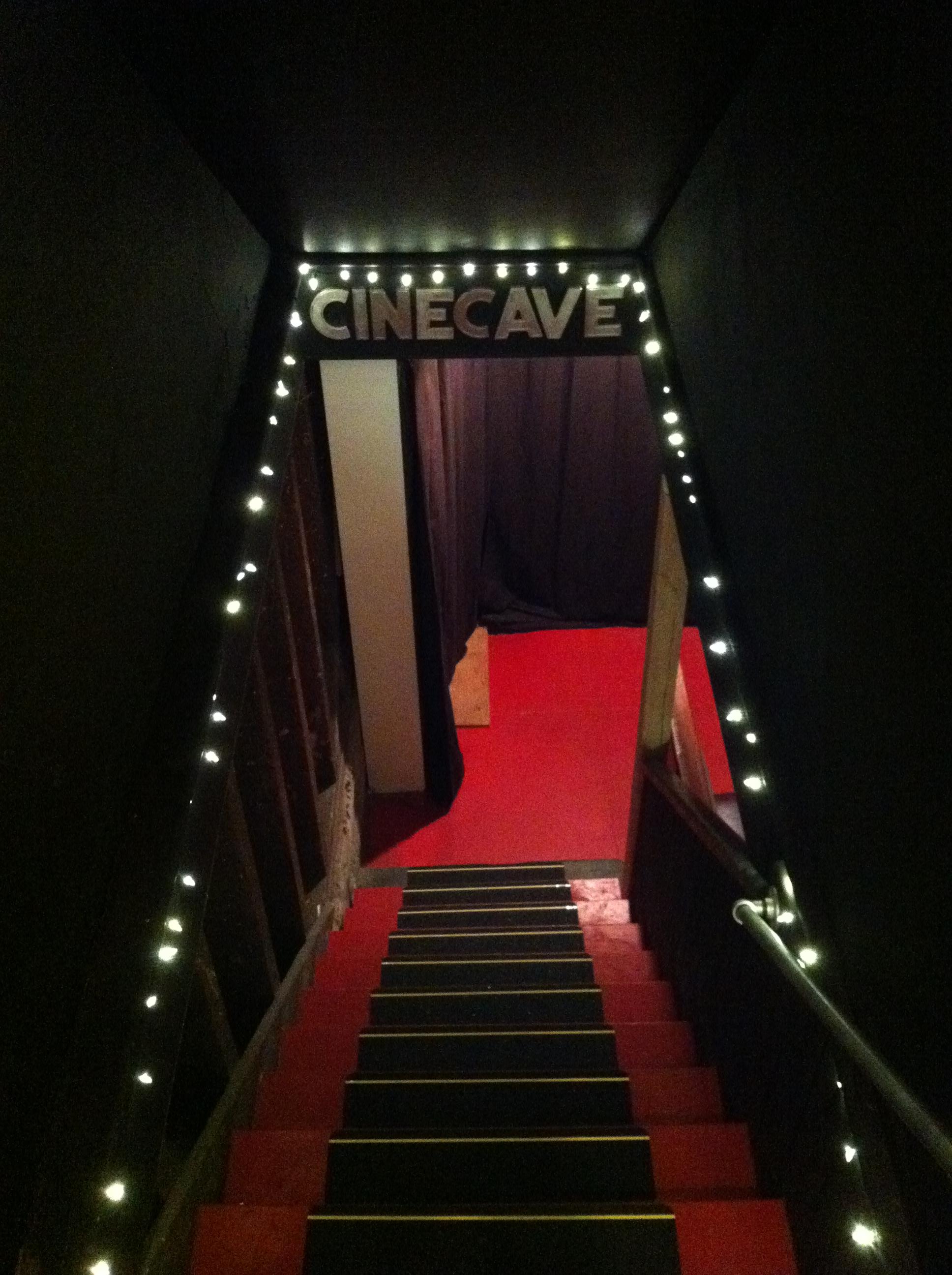
DO go in the basement! Lost Weekend’s new Cinecave opens this week

1

Exciting news rumbling from beneath Valencia Street’s staunchly independent Lost Weekend Video: the micro-theater Cinecave is opening this week with events Thu/29 and Fri/30, after an awesomely successful Kickstarter campaign. The 25-seat screening room, available for members of Lost Weekend’s Cineclub (join at the store), boasts real movie theater seats, a brand-new screen, and kickin’ sound system.

So, what-all’s gonna go down in the Cinecave? According to Lost Weekend’s Kickstarter page:

“We have an enthusiastic staff with wide-ranging tastes all eager to program fun and engaging screenings … from rare films available only on film or from our extensive collection of unavailable-to-rent imports, to sinfully satisfying Buffy marathons. We have projectors and access to thousands of films on video and 16mm film. We’ll also continue to work with local film collectives, present premieres of locally produced shorts and features, ladies’ nights, works in progress, and workshops for filmmakers.

“We’ll have obscure von Trier docs, Van Damme-athons and maybe even stand-up comedy. There will definitely be something for everyone. Most importantly, we’ll still be here and San Francisco will still have access to our many rare films either through traditional rentals or through the shared experience of a live screening. Let’s get people off of their computers and hanging out with each other again. Let’s watch some movies!”

The Cinecave will unveil a regular schedule in July; it’ll also be available for rentals for private events (contact the store for info). There’ll be an open house Thu/29 and an opening night event Sat/30 hosted by Jesse Hawthorne Ficks, a.k.a. the programmer-host of the popular “Midnites for Maniacs” film series at the Castro. Ficks, an occasional Guardian contributor who calls Lost Weekend his “neighborhood video store,” will be programming a once-a-month event at the ‘Cave that celebrates the video format. (Of the opening night event, he hints that the top-secret flicks will be “two of my all-time favorite movies;” reservations for both screenings begin at noon Sat/30 by phone or in person at Lost Weekend.)

“A lot of people have nostalgic feelings toward video stores. I hung out at video stores when I was a kid! But I was trying to think of what would be a good way to get people to come to a video store who have maybe never even been to a video store, a younger generation,” he says. “The idea was, just as the death of film is happening, the death of the video tape, or the laser disc, seemed to be just as important or nostalgic to my generation. I decided that I would host a night that would only screen movies that are available on VHS, Beta, or laser disc — actually putting the video tape in. Sometimes it gets fucked up, and you have to fast-forward, and there are those weird lines…”

So if the tape gets fucked up, I hear you wondering, what’s the point? Well, some movies are only available on these formats and will likely never be released on DVD. Some movies are available on DVD, but certain versions are only available on outdated formats. For collectors and other serious film fanatics, this is important.

“The holy grail for me of laser discs is Texasville. Sequel to The Last Picture Show, it didn’t do too well when it came out, but then, surprisingly, [it had] some real champions. On laser disc only, [there was a version of Texasville] with an extra 30 minutes. And that footage has never been restored to DVD or Blu-Ray. It’s not available on 35mm. The only way you can see the director’s cut on Texasville is on laser disc,” he says.

http://www.youtube.com/watch?v=YoQHwru0Qh8

“I started looking around at more of these movies that sort of fall between the cracks. It happens with every [change in medium] — there are all these lost films,” he explains. “You can get a lot of movies streaming nowadays, but there are also a lot that you can’t get that were even released on DVD or Blu-ray. So I think that’s where the idea [for my Cinecave programming] came from: ‘What weird films have we never even heard of, because they’re only on some obscure format that we don’t even have a player for anymore?'”

“The films that I’m going to screen cannot be screened even in a movie theater. So this isn’t just, that it’s not available on DVD or Netflix. I am running into so many difficult situations [as a programmer] with studios with 35mm prints, where they have a print maybe in the archives but they won’t mail it out. Or they don’t have a print in the archives, but they won’t let you screen a collector’s print. Literally, these movies can’t be seen in rep house programming, and they can’t be seen streaming or on DVD. It’s this weird loophole that I wanted to try and emphasize with this video madness series.”

As a film fan, Ficks is excited by the ‘Cave joining the local cinema scene. “I know they have different programmers who are going to come in. It feels like it’ll be a personal experience,” he says. “Also, I think them renting the theater out is really is amazing — when you go down there, you’ll be like, ‘Shit, I really want to bring my friends here one late night and show my favorite TV show.’ It’s like the greatest living-room set-up you could imagine.”

Open House Fri/29, 8-11pm, free
Opening Night Sat/30, 7 and 9:45pm, suggested donation $10
Lost Weekend Video
1034 Valencia, SF
(415) 643-3373
www.lostweekendvideo.com
www.midnightsformaniacs.com

Rep Clock

0

Schedules are for Wed/20-Tue/26 except where noted. Director and year are given when available. Double features (and more) are marked with a •. All times pm unless otherwise specified.

ARTISTS’ TELEVISION ACCESS 992 Valencia, SF; www.atasite.org. $6. “Colectivo Cinema Errante presents: Brazilian Voices of Cinema:” Dona Flor and Her Two Husbands (Barreto, 1976), Sun, 8.

BALBOA 3630 Balboa, SF; www.cinemasf.com/vogue. $7.50-10. “Best of God” and “Best of Drugs,” illustrated talks by comedian Owen Egerton using religious films and educational scare films, Wed (“God”) and Thu (“Drugs”), 7:30.

BERKELEY FELLOWSHIP OF UNITARIAN UNIVERSALISTS 1924 Cedar, SF; (510) 841-4824. Donations welcome. A Noble Lie: Oklahoma City 1995 (Lane, 2011), Sat, 7.

CASTRO 429 Castro, SF; (415) 621-6120, www.castrotheatre.com. Frameline 36: San Francisco LGBT Film Festival, Wed-Sun. Visit www.frameline.org for schedule and tickets. •Pina (Wenders, 2011), June 26-27, 7 (also June 27, 3:05), and Cave of Forgotten Dreams (Herzog, 2010), June 26-27, 9 (also June 27, 5:05).

CHRISTOPHER B. SMITH RAFAEL FILM CENTER 1118 Fourth St, San Rafael; (415) 454-1222, www.cafilm.org. $6.75-10.25. Bel Ami (Donnellan and Ormerod, 2012), call for dates and times. Bernie (Linklater, 2012), call for dates and times. Peace, Love and Misunderstanding (Beresford, 2011), call for dates and times.

“FILM NIGHT IN THE PARK” This week: Old Mill Park, 300 block of Throckmorton, Mill Valley; www.filmnight.org. Donations accepted. Enchanted (Lima, 2007), Fri, 8. Dolores Park, Dolores at 19th St, SF. Mamma Mia! (Lloyd, 2008), Sat, 8.

LUMIERE 1572 California, SF; www.48hourfilm.com. “48 Hour Film Project,” premiere screenings, June Wed-Thu, 6:45, 9:15.

PACIFIC FILM ARCHIVE 2575 Bancroft, Berk; (510) 642-5249, bampfa.berkeley.edu. $5.50-9.50. “Behind the Scenes: The Art and Craft of Cinema with Editor Curtiss Clayton:” To Die For (Van Sant, 1995), Wed, 7; Rick (Clayton, 2003), Fri, 7; Maladies (Carter, 2012), Fri, 9:20. “Gregory Peck: An Agreeable Gentleman:” The Man in the Grey Flannel Suit (Johnson, 1956), Thu, 7; To Kill a Mockingbird (Mulligan, 1962), Sun, 4:45. “One-Two Punch: Pulp Writers Dorothy B. Hughes, Mickey Spillane, Elmore Leonard:” In a Lonely Place (Ray, 1950), Sat, 6:30; Fallen Sparrow (Wallace, 1943), Sat, 8:30. “Afterimage: Three Nights with Nathaniel Dorsky:” “Films of Nathaniel Dorsky: Devotional Songs (2002-04),” Sun, 7:30.

ROXIE 3117 and 3125 16th St, SF; (415) 863-1087, www.roxie.com. $6.50-10. Frameline 36: San Francisco LGBT Film Festival, Wed-Sat. Visit www.frameline.org for schedule and tickets. How to Grow a Band (Meatto, 2011), Wed-Thu, 9:15. Marley (Macdonald, 2012), Wed-Thu, 6:30. Ultrasonic (Rao, 2011), June 22-28, 7, 8:45 (also Sat-Sun, 3:30, 5:15).

SF FILM SOCIETY CINEMA 1746 Post, SF. $10-11. The Story of Film: An Odyssey, Part Four: European New Wave; New Directors, New Forms (1960s) (Cousins, 2011), Sat, noon. British TV series; new episodes every Sat through June 21. Found Memories (Murat, 2011), June 22-28, 2:30, 4:30, 6:30, 8:30. The Woman in the Fifth (Pawlikowski, 2011), Wed-Thu, 3, 5, 7, 9.

Film Listings

0

Frameline36, the San Francisco International LGBT Film Festival, runs through Sun/24 at Castro Theatre, 429 Castro, SF; Roxie Theater, 3117 16th St., SF; Victoria Theatre, 2961 16th St., SF; and Rialto Cinemas Elmwood, 2966 College, Berk. For tickets (most shows $9-$11) and schedule, visit www.frameline.org.

OPENING

Abraham Lincoln: Vampire Hunter America’s 16th president jumps aboard the bloodsucker bandwagon. (1:45) Presidio.

Brave Kelly Macdonald, Emma Thompson, and Billy Connolly star in Pixar’s fantasy about a strong-willed girl who brings turmoil upon her Scottish kingdom when she defies a long-held tradition. (1:33) Balboa, Presidio, Shattuck.

5 Broken Cameras Palestinian Emad Burnat bought his first camcorder in 2005 with the intention of bottling family memories, but when Israeli forces began the construction of settlements in Bil’in (his home village in the West Bank) Burnat stumbled into activist-filmmaker territory. In documenting his community’s nonviolent resistance to the Israeli occupation, Burnat’s friends and family (much like his cameras) are shot at, injured, and even killed. His son Gabreel’s first words are “wall” and “cartridge,” epitomizing the psychological toll of the struggle. Israeli forces are depicted as an eerily faceless entity, with colonialist aspirations run amok. Burnat isn’t interested in highlighting the political delicacy of the situation, and frankly, he’s given us something far more powerful than your average piece of fair-and-balanced journalism on the Israel-Palestine conflict. Splitting the difference between home-video montage and war-zone nightmare, 5 Broken Cameras skillfully merges the political and the personal, profoundly humanizing the Palestinian movement for independence. (1:30) Embarcadero, Shattuck. (Taylor Kaplan)

Found Memories The literal Portuguese-to-English translation of this film’s title — “stories that exist only when remembered” — is clunky, but more poignantly accurate than Found Memories. At first, it’s not entirely clear if Brazilian Júlia Murat is making a narrative or a documentary. In an tiny, isolated community populated by elderly people, Madalena (Sonia Guedes) follows a schedule she’s kept for years, probably decades: making bread, attending church, doing chores, tending the cemetery gates, writing love letters to a long-absent partner (“Isn’t it strange that after all these years, I still find your things around the house?”), and grousing at the “annoying old man” who grinds the town’s coffee beans. One day, young photographer Rita (Lisa Fávero) drifts into the village, an exotic import from the outside, modern world. Slowly, despite their differences, the women become friends. That’s about it for plot, but as this deliberately-paced film reflects on aging, dying, and memories (particularly in the form of photographs), it offers atmospheric food for thought, and a few moments of droll humor. Note, however, that viewer patience is a requirement to reap its rewards. (1:38) SF Film Society Cinema. (Eddy)

The Invisible War Kirby Dick’s searing documentary takes a look at the prevalence of rape within U.S. military ranks, a problem whose unbelievably high levels of occurrence would long ago have caused huge public outcry and imposed reform in any other institutional context. Yet because it’s the military — where certain codes of loyalty, machismo, and insularity dominate from the grunt level to the highest ranks — the issue has not only been effectively kept secret, but perpetrators almost never suffer any disciplinary measures, let alone jail time or dishonorable discharges. Meanwhile the women — some studies estimate 20% of all female personnel (and 1% of the men) suffer sexual assault from colleagues — are further traumatized by an atmosphere that creates ideal conditions for stalking, rape, and “blame the victim” aftermaths from superiors. (Indeed, for many the superior to whom they would have reported an attack was the one who attacked them.) Most end up quitting promising service careers (often pursued because of generations of family enlistment), dealing with the serious mental health consequences on their own. The subjects who’ve come forward on the issue here are inspiring in their bravery, and dedication to a patriotic cause and vocation that ultimately, bitterly betrayed them. Their stories are so engrossing that The Invisible War is as compulsively watchable as its topic and statistics are inherently appalling. (1:39) Metreon. (Harvey) 

Oslo, August 31st Heroin movies are rarely much fun, and Oslo is no exception, though here the stress lies not in grisly realism but visceral emotional honesty. Following an abortive, Virginia Woolf-esque suicide attempt during evening leave from his rehab center, recovering addict Anders visits Oslo for a job interview. He reconnects bittersweetly with an old friend, tries and fails to meet up with his sister, and eventually submerges himself in the nightlife that once fueled his self-destruction. Expressionistic editing conveys Anders’ sense of detachment and urge for release, with scenes and sounds intercut achronologically and striking sound design which homes in on stray conversations. A late intellectual milieu is signified throughout, quite humorously, by serious discussions of popular television dramas, presumably an update of similar concerns addressed in Pierre Drieu La Rochelle’s 1931 novel Le Feu follet, on which the film is based. (1:35) Elmwood, Embarcadero, Smith Rafael. (Sam Stander)

Seeking a Friend for the End of the World See “Apocalypse Meh.” (1:41) Marina, Piedmont, Shattuck.

Ultrasonic Is it madness to imagine a stylish new twist on the claustrophobic conspiracy thriller? Multi-hyphenate director, co-writer, and cinematographer (and musician and software engineer) Rohit Colin Rao manages just that with this head-turning indie feature film debut, while managing to translate a stark indie aesthetic encapsulated by Dischord and Touch and Go bands, lovers of Rust Belt warehouses and waffle houses, culture vultures who revere both Don DeLillo and Wisconsin Death Trip, and critics who lean too hard on the descriptor “angular.” Musician Simon York (Silas Gordon Brigham) is one denizen firmly placed in that cultural landscape, but the pressures of funding his combo’s album, coping with the diminishing returns of his music teacher livelihood, and anticipating the arrival of a baby with his wife, Ruth (Cate Buscher), seem to be piling on his murky brow. Simon begins to hear a hard-to-pin-down sound that no one else can detect, though Ruth’s eccentric and possibly certified conspiracy-theorist brother Jonas (Sam Repshas) is quick to affirm — and build on — his fears. Painting his handsome, stylized mise-en-scène in noiry blacks and wintry whites, Rohit positively revels in this post-punk jewel of a world he’s assembled, and it’s a compelling one even if it’s far from perfect and ultimately shies away from the deepest shadows. (1:30) Roxie. (Chun)

Ongoing 

Bel Ami Judging from recent attempts to shake off the gloomy atmosphere and undead company of the Twilight franchise, Robert Pattinson enjoys a good period piece, but hasn’t quite worked out how to help make one. Last year’s Depression-era Water for Elephants was a tepid romance, and Declan Donnellan and Nick Ormerod’s belle epoque–set Bel Ami is an ungainly, oddly paced adaptation of the Guy de Maupassant novel of the same name. A down-and-out former soldier of peasant stock, Georges Duroy (Pattinson) — or “Bel Ami,” as his female admirers call him — gains a brief entrée into the upper echelons of France’s fourth estate and parlays it into a more permanent set of social footholds, campaigning for the affections of a triumvirate of Parisian power wives (Christina Ricci, Uma Thurman, and Kristin Scott Thomas) as he makes his ascent. His route is confusing, though; the film pitches forward at an alarming pace, its scenes clumsily stacked together with little character development or context to smooth the way, and Pattinson’s performance doesn’t clarify much. Duroy shifts perplexingly between rapacious and soulful modes, eyeing the ladies with a vaguely carnivorous expression as he enters drawing rooms, dining rooms, and bedrooms, but leaving us with little sense of his true appetites or other motivations. (1:42) Lumiere, Smith Rafael. (Rapoport) 

Bernie Jack Black plays the titular new assistant funeral director liked by everybody in small-town Carthage, Tex. He works especially hard to ingratiate himself with shrewish local widow Marjorie (Shirley MacLaine), but there are benefits — estranged from her own family, she not only accepts him as a friend (then companion, then servant, then as virtual “property”), but makes him her sole heir. Richard Linklater’s latest is based on a true-crime story, although in execution it’s as much a cheerful social satire as I Love You Philip Morris and The Informant! (both 2009), two other recent fact-based movies about likable felons. Black gets to sing (his character being a musical theater queen, among other things), while Linklater gets to affectionately mock a very different stratum of Lone Star State culture from the one he started out with in 1991’s Slacker. There’s a rich gallery of supporting characters, most played by little-known local actors or actual townspeople, with Matthew McConaughey’s vainglorious county prosecutor one delectable exception. Bernie is its director’s best in some time, not to mention a whole lot of fun. (1:39) Embarcadero, Four Star, Presidio, Shattuck, Smith Rafael. (Harvey)

The Best Exotic Marigold Hotel (1:42) Albany, Four Star, Piedmont, SF Center, Sundance Kabuki.

A Cat in Paris This year’s Best Animated Film nominees: big-budget entries Kung Fu Panda 2, Puss in Boots, and eventual winner Rango, plus Chico and Rita, which opened just before Oscar night, and French mega-dark-horse A Cat in Paris. Sure, Jean-Loup Felicioli and Alain Gagnol’s film failed to cash in on 2011’s Paris craze, but it’s still a charming if featherweight noir caper, being released stateside in an English version that features the voices of Marcia Gay Harden and Anjelica Huston. A streetwise kitty named Dino spends his days hanging with Zoey, a little girl who’s gone mute since the death of her father — a cop killed in the line of duty. Zoey’s mother (Harden), also a cop, is hellbent on catching the murderer, a notorious crook named Costa who runs his criminal empire with Reservoir Dogs-style imprecision. At night, Dino sneaks out and accompanies an affable burglar on his prowlings. When Zoey falls into Costa’s clutches, her mom, the thief, and (natch) the feisty feline join forces to rescue her, in a series of rooftop chase scenes that climax atop Notre Dame. At just over an hour, A Cat in Paris is sweetly old-fashioned and suitable for audiences of all ages, though staunch dog lovers may raise an objection or two. (1:07) Opera Plaza. (Eddy) 

Dark Shadows Conceptually, there’s nothing wrong with attempting to turn a now semi-obscure supernaturally themed soap opera with a five-year run in the late 1960s and early ’70s into a feature film. Particularly if the film brings together the sweetly creepy triumvirate of Tim Burton, Johnny Depp, and Helena Bonham Carter and emerges during an ongoing moment for vampires, werewolves, and other things that go hump in the night. Depp plays long-enduring vampire Barnabas Collins, the undead scion of a once-powerful 18th-century New England family that by the 1970s — the groovy decade in which the bulk of the story is set — has suffered a shabby deterioration. Barnabas forms a pact with present-day Collins matriarch Elizabeth (Michelle Pfeiffer) to raise the household — currently comprising her disaffected daughter, Carolyn (Chloë Grace Moretz), her derelict brother, Roger (Jonny Lee Miller), his mournful young son, David (Gulliver McGrath), David’s live-in lush of a psychiatrist, Dr. Hoffman (Carter), and the family’s overtaxed manservant, Willie (Jackie Earle Haley) — to its former stature, while taking down a lunatic, love-struck, and rather vindictive witch named Angelique (Eva Green). The latter, a victim of unrequited love, is the cause of all Barnabas’s woes and, by extension, the entire clan’s, but Angelique can only be blamed for so much. Beyond her hocus-pocus jurisdiction is the film’s manic pileup of plot twists, tonal shifts, and campy scenery-chewing by Depp, a startling onslaught that no lava lamp joke, no pallid reaction shot, no room-demolishing act of paranormal carnality set to Barry White, and no cameo by Alice Cooper can temper. (2:00) SF Center. (Rapoport)

The Dictator As expected, The Dictator is, yet again, Sacha Baron Cohen doing his bumbling-foreigner shtick. Said character (here, a ruthless, spoiled North African dictator) travels to America and learns a heaping teaspoon of valuable lessons, which are then flung upon the audience — an audience which, by film’s end, has spent 80 minutes squealing at a no-holds-barred mix of disgusting gags, tasteless jokes, and schadenfreude. If you can’t forgive Cohen for carbon-copying his Borat (2006) formula, at least you can muster admiration for his ability to be an equal-opportunity offender (dinged: Arabs, Jews, African Americans, white Americans, women of all ethnicities, and green activists) — and for that last-act zinger of a speech. If The Dictator doesn’t quite reach Borat‘s hilarious heights, it’s still proudly repulsive, smart in spite of itself, and guaranteed to get a rise out of anyone who watches it. (1:23) 1000 Van Ness, SF Center, Shattuck. (Eddy)

Double Trouble When crooks nab a priceless painting from a Taipei museum, two security guards — wannabe hero Jay (Jaycee “Son of Jackie” Chan) and Chinese-tourist-on-vacation Ocean (Xia Yu) — reluctantly team up to recover the piece. A road trip of sorts ensues, laden with petty bickering, wacky melees, bonding moments, mistaken identity, gangsters both comical and sinister, and other buddy-comedy trappings. As expected, there are a few high-flying fight scenes; in the film’s production notes, director David Hsun-Wei Chang reveals he was inspired by the Rush Hour movies. Alas, Chan is neither as charismatic nor as breathtakingly nimble as his father (and, obvi, Xia is no Chris Tucker). It should be noted, however, that one of the slithery art thieves is played by underwear model Jessica C., famed in Hong Kong for her “police siren boobs.” So there’s that. (1:29) Metreon. (Eddy)

Elena The opening, almost still image of breaking dawn amid bare trees — the twigs in the foreground almost imperceptibly developing definition and the sky gradually growing ever lighter and pinker in the corners of the frame — beautifully exemplifies the crux of this well-wrought, refined noir, which spins slowly on the streams of dog-eat-dog survival that rush beneath even the most moneyed echelons of Moscow. Sixtyish former nurse Elena (Nadezhda Markina) is still little more than a live-in caretaker for Vladimir (Andrey Smirnov), her affluent husband of almost 10 years. She sleeps in a separate bed in their modernist-chic condo and dutifully funnels money to her beloved layabout son and his family. Vladimir has less of a relationship with his rebellious bad-seed daughter (Yelena Lyadova), who may be too smart and hedonistic for her own good. When a certain unlikely reunion threatens Elena’s survival — and what she perceives as the survival of her own spawn — a kind of deadly dawn breaks over the seemingly obedient hausfrau, and she’s driven to desperate ends. Bathing his scenes in chilled blue light and velvety dark shadows, filmmaker Andrey Zvyagintsev (2003’s The Return) keeps a detached but close eye on the proceedings while displaying an uncanny talent for plucking the telling detail out of the wash of daily routine and coaxing magnetic performances from his cast. (1:49) Lumiere. (Chun)

Headhunters Despite being the most sought-after corporate headhunter in Oslo, Roger (Aksel Hennie) still doesn’t make enough money to placate his gorgeous wife; his raging Napoleon complex certainly doesn’t help matters. Crime is, as always, the only solution, so Roger’s been supplementing his income by stealthily relieving his rich, status-conscious clients of their most expensive artworks (with help from his slightly unhinged partner, who works for a home-security company). When Roger meets the dashing Clas Greve (Nikolaj Coster-Waldau of Game of Thrones) — a Danish exec with a sinister, mysterious military past, now looking to take over a top job in Norway — he’s more interested in a near-priceless painting rumored to be stashed in Greve’s apartment. The heist is on, but faster than you can say “MacGuffin,” all hell breaks loose (in startlingly gory fashion), and the very charming Roger is using his considerable wits to stay alive. Based on a best-selling “Scandi-noir” novel, Headhunters is just as clever as it is suspenseful. See this version before Hollywood swoops in for the inevitable (rumored) remake. (1:40) Lumiere. (Eddy)

The Hunger Games Katniss Everdeen (Jennifer Lawrence) is a teenager living in a totalitarian state whose 12 impoverished districts, as retribution for an earlier uprising, must pay tribute to the so-called Capitol every year, sacrificing one boy and one girl each to the Hunger Games. A battle royal set in a perilous arena and broadcast live to the Capitol as gripping diversion and to the districts as sadistic propaganda, the Hunger Games are, depending on your viewpoint, a “pageant of honor, courage, and sacrifice” or a brutal, pointless bloodbath involving children as young as 12. When her little sister’s name comes up in the ann­ual lottery, Katniss volunteers to take her place and is joined by a boy named Peeta Mellark (Josh Hutcherson), with whom she shares an old, unspoken bond. Tasked with translating to the screen the first installment of Suzanne Collins’s rabidly admired trilogy, writer-director Gary Ross (2003’s Seabiscuit, 1998’s Pleasantville) telescopes the book’s drawn-out, dread-filled tale into a manageable two-plus-hour entertainment, making great (and horrifying) use of the original work’s action, but losing a good deal of the narrative detail and emotional force. Elizabeth Banks is comic and unrecognizable as Effie Trinket, the two tributes’ chaperone; Lenny Kravitz gives a blank, flattened reading as their stylist, Cinna; and Donald Sutherland is sufficiently creepy and bloodless as the country’s leader, President Snow. More exceptionally cast are Woody Harrelson as Katniss and Peeta’s surly, alcoholic mentor, Haymitch Abernathy, and Stanley Tucci as games emcee Caesar Flickerman, flashing a bank of gleaming teeth at each contestant as he probes their dire circumstances with the oily superficiality of a talk show host. (2:22) 1000 Van Ness. (Rapoport)

Hysteria Tanya Wexler’s period romantic comedy gleefully depicts the genesis of the world’s most popular sex toy out of the inchoate murk of Victorian quackishness. In this dulcet version of events, real-life vibrator inventor Mortimer Granville (Hugh Dancy) is a handsome young London doctor with such progressive convictions as a belief in the existence of germs. He is, however, a man of his times and thus swallows unblinking the umbrella diagnosis of women with symptoms like anxiety, frustration, and restlessness as victims of a plague-like uterine disorder known as hysteria. Landing a job in the high-end practice of Dr. Robert Dalrymple (Jonathan Pryce), whose clientele consists entirely of dissatisfied housewives seeking treatments of “medicinal massage” and subsequent “parosysm,” Granville becomes acquainted with Dalrymple’s two daughters, the decorous Emily (Felicity Jones) and the first-wave feminist Charlotte (Maggie Gyllenhaal). A subsequent bout of RSI offers empirical evidence for the adage about necessity being the mother of invention, with the ever-underused Rupert Everett playing Edmund St. John-Smythe, Granville’s aristocratic friend and partner in electrical engineering. (1:35) Opera Plaza. (Rapoport)

The Intouchables Cries of “racism” seem a bit out of hand when it comes to this likable albeit far-from-challenging French comedy loosely based on a real-life relationship between a wealthy white quadriplegic and his caretaker of color. The term “cliché” is more accurate. And where were these critics when 1989’s Driving Miss Daisy and 2011’s The Help — movies that seem designed to make nostalgic honkies feel good about those fraught relationships skewed to their advantage—were coming down the pike? (It also might be more interesting to look at how these films about race always hinge on economies in which whites must pay blacks to interact with/educate/enlighten them.) In any case, Omar Sy, portraying Senegalese immigrant Driss, threatens to upset all those pundits’ apple carts with his sheer life force, even when he’s shaking solo on the dance floor to sounds as effortlessly unprovocative, and old-school, as Earth, Wind, and Fire. In fact, everything about The Intouchables is as old school as 1982’s 48 Hrs., spinning off the still laugh-grabbing humor that comes with juxtaposing a hipper, more streetwise black guy with a hapless, moneyed chalky. The wheelchair-bound Philippe (Francois Cluzet) is more vulnerable than most, and he has a hard time getting along with any of his nurses, until he meets Driss, who only wants his signature for his social services papers. It’s not long before the cultured, classical music-loving Philippe’s defenses are broken down by Driss’ flip, somewhat honest take on the follies and pretensions of high culture — a bigger deal in France than in the new world, no doubt. Director-writer Olivier Nakache and Eric Toledano aren’t trying to innovate —they seem more set on crafting an effervescent blockbuster that out-blockbusters Hollywood — and the biggest compliment might be that the stateside remake is already rumored to be in the works. (1:52) Embarcadero. (Chun)

Jiro Dreams of Sushi Celebrity-chef culture has surely reached some kind of zeitgeist, what with the omnipresence of Top Chef and other cooking-themed shows, and the headlines-making power of people like Paula Deen (diabetes) and Mario Batali (sued for ripping off his wait staff). Unconcerned with the trappings of fame — you’ll never see him driving a Guy Fieri-style garish sports car — is Jiro Ono, 85-year-old proprietor of Sukiyabashi Jiro, a tiny, world-renowned sushi restaurant tucked into Tokyo’s Ginza station. Jiro, a highly-disciplined perfectionist who believes in simple, yet flavorful food, has devoted his entire life to the pursuit of “deliciousness” — to the point of sushi invading his dreams, as the title of David Gelb’s reverential documentary suggests. But Jiro Dreams of Sushi goes deeper than food-prep porn (though, indeed, there’s plenty of that); it also examines the existential conflicts faced by Jiro’s two middle-aged sons. Both were strongly encouraged to enter the family business — and in the intervening years, have had to accept the soul-crushing fact that no matter how good their sushi is, it’ll never be seen as exceeding the creations of their legendary father. (1:21) Bridge. (Eddy)

Lola Versus Greta Gerwig’s embattled late-twentysomething, the titular Lola, apologetically invokes the Saturn return to explain the chaos that enters her life when her emotionally underdeveloped boyfriend proposes, panics, and dumps her. Workaday elements of the industry-standard romantic comedy surface, lightly revised: a crass, loopy BFF (co-writer Zoe Lister Jones) who can’t find true love and says things like “I have to go wash my vagina”; a vaguely soulful male friend (Hamish Linklater, 2011’s The Future) who’s secretly harboring nonplatonic feelings (or maybe just an opportunistic streak); wacky yet vaguely successful Age of Aquarius parents (a somewhat toneless Debra Winger and a nicely gone-to-seed Bill Pullman). One can see why it would be tempting to blame a planet’s galactic travels for the solipsistic meandering that Lola engages in, bemusedly lurching, often under chemical influences, from one bout of poor decision-making to the next. She claims to be searching for a path out of the chaos into some calmer place (fittingly, she’s a comp lit Ph.D. candidate who’s writing her dissertation on silence), but as the movie transports us mercilessly from one scene of turmoil to the next, we have little reason to believe her. The script has funny moments, and Gerwig sometimes succeeds in making Lola feel like a charming disaster, but her personal discoveries, while certainly valuable, feel false and forced. (1:26) Metreon. (Rapoport)

Madagascar 3: Europe’s Most Wanted (1:33) Balboa, Metreon, 1000 Van Ness, Presidio.

Marvel’s The Avengers The conflict — a mystical blue cube containing earth-shattering (literally) powers is stolen, with evil intent — isn’t the reason to see this long-hyped culmination of numerous prequels spotlighting its heroic characters. Nay, the joy here is the whole “getting’ the band back together!” vibe; director and co-writer Joss Whedon knows you’re just dying to see Captain America (Chris Evans) bicker with Iron Man (a scene-stealing Robert Downey Jr.); Thor (Chris Hemsworth) clash with bad-boy brother Loki (Tom Hiddleston); and the Hulk (Mark Ruffalo) get angry as often as possible. (Also part of the crew, but kinda mostly just there to look good in their tight outfits: Jeremy Renner’s Hawkeye and Scarlett Johansson’s Black Widow.) Then, of course, there’s Nick Fury (Samuel L. Jackson) running the whole Marvel-ous show, with one good eye and almost as many wry quips as Downey’s Tony Stark. Basically, The Avengers gives you everything you want (characters delivering trademark lines and traits), everything you expect (shit blowing up, humanity being saved, etc.), and even makes room for a few surprises. It doesn’t transcend the comic-book genre (like 2008’s The Dark Knight did), but honestly, it ain’t trying to. The Avengers wants only to entertain, and entertain it does. (2:23) Metreon, 1000 Van Ness, Sundance Kabuki. (Eddy)

Men in Black III Why not? It’s been ten years since Men in Black II (the one where Lara Flynn Boyle and Johnny Knoxville — remember them? — played the villains), Will Smith has barely aged, and he hasn’t made a full-on comedy since, what, 2005’s Hitch? Here, he does a variation on his always-agreeable exasperated-guy routine, clashing with his grim, gimlet-eyed partner Agent K (Tommy Lee Jones, and in a younger incarnation, a spot-on Josh Brolin) in a plot that involves a vicious alien named Boris (Flight of the Conchords’ Jermaine Clement), time travel, Andy Warhol, the moon (as both space-exploration destination and modern-day space-jail location), and lines that only Smith’s delivery can make funny (“This looks like it comes from planet damn.“) It’s cheerful (save a bit of melodrama at the end), crisply paced, and is neither a must-see masterpiece nor something you should mindfully sleep through if it pops up among your in-flight selections. Oh, and it’s in 3D. Well, why not? (1:42) 1000 Van Ness, SF Center, Shattuck. (Eddy)

Moonrise Kingdom Does Wes Anderson’s new film mark a live-action return to form after 2007’s disappointingly wan Darjeeling Limited? More or less. Does it tick all the Andersonian style and content boxes? Indubitably. In the most obvious deviation Anderson has taken with Moonrise, he gives us his first period piece, a romance set in 1965 on a fictional island off the New England coast. After a chance encounter at a church play, pre-teen Khaki Scout Sam (newcomer Jared Gilman) instantly falls for the raven-suited, sable-haired Suzy Bishop (Kara Hayward, ditto). The two become pen pals, and quickly bond over the shared misery of being misunderstood by both authority figures and fellow kids. The bespectacled Sam is an orphan, ostracized by his foster parents and scout troop (much to the dismay of its straight-arrow leader Edward Norton). Suzy despises her clueless attorney parents, played with gusto by Bill Murray and Frances McDormand in some of the film’s funniest and best scenes. When the two kids run off together, the whole thing begins to resemble a kind of tween version of Godard’s 1965 lovers-on the-lam fantasia Pierrot le Fou. But like most of Anderson’s stuff, it has a gauzy sentimentality more akin to Truffaut than Godard. Imagine if the sequence in 2001’s The Royal Tenenbaums where Margot and Richie run away to the Museum of Natural History had been given the feature treatment: it’s a simple yet inspired idea, and it becomes a charming little tale of the perils of growing up and selling out the fantasy. But it doesn’t feel remotely risky. It’s simply too damn tame. (1:37) California, Metreon, Piedmont, Sundance Kabuki. (Michelle Devereaux)

Music From the Big House See review at sfbg.com/pixel_vision. (1:27) Sundance Kabuki.

Peace, Love and Misunderstanding How is that even as a bona fide senior, Jane Fonda continues to embody this country’s ambivalence toward women? I suspect it’s a testament to her actorly prowess and sheer charisma that she’s played such a part in defining several eras’ archetypes — from sex kitten to counterculture-heavy Hanoi Jane to dressed-for-success feminist icon to aerobics queen to trophy wife. Here, among the talents in Bruce Beresford’s intergenerational chick-flick-gone-indie as a loud, proud, and larger-than-life hippie earth mama, she threatens to eclipse her paler, less colorful offspring, women like Catherine Keener and Elizabeth Olsen, who ordinarily shine brighter than those that surround them. It’s ostensibly the tale of high-powered lawyer Diane (Keener): her husband (Kyle MacLachlan) has asked for a divorce, so in a not-quite-explicable tailspin, she packs her kids, Zoe (Olsen) and Jake (Nat Wolff), into the car and heads to Woodstock to see her artist mom Grace (Fonda) for the first time in two decades. Grace is beyond overjoyed — dying to introduce the grandchildren to her protests, outdoor concerts, and own personal growhouse — while urbanite Diane and her kids find attractive, natch, diversions in the country, in the form of Jude (Jeffrey Dean Morgan), Cole (Chace Crawford), and Tara (Marissa O’Donnell). Yet there’s a lot of troubled water for the mother and daughter to cross, in order to truly come together. Despite some strong characterization and dialogue, Peace doesn’t quite fly — or make much sense at its close — due to the some patchy storytelling: the schematic rom-com arch fails to provide adequate scaffolding to support the required leaps of faith. But that’s not to deny the charm of the highly identifiable, generous-spirited Grace, a familiar Bay Area archetype if there ever was one, who Fonda charges with the joy and sadness of fallible parent who was making up the rules as she went along. (1:36) Opera Plaza, Shattuck, Smith Rafael. (Chun)

Prometheus Ridley Scott’s return to outer space — after an extended stay in Russell Crowe-landia — is most welcome. Some may complain Prometheus too closely resembles Scott’s Alien (1979), for which it serves as a prequel of sorts. Prometheus also resembles, among others, The Thing (1982), 2001: A Space Odyssey (1968), and Event Horizon (1997). But I love those movies (yes, even Event Horizon), and I am totally fine with the guy who made Alien borrowing from all of them and making the classiest, most gorgeous sci-fi B-movie in years. Sure, some of the science is wonky, and the themes of faith and creation can get a bit woo-woo, but Prometheus is deep-space discombobulation at its finest, with only a miscast Logan Marshall-Green (apparently, cocky dude-bros are still in effect at the turn of the next millennium) marring an otherwise killer cast: Noomi Rapace as a dreamy (yet awesomely tough) scientist; Idris Elba as Prometheus‘ wisecracking captain; Charlize Theron as the Weyland Corportation’s icy overseer; and Michael Fassbender, giving his finest performance to date as the ship’s Lawrence of Arabia-obsessed android. (2:03) Metreon, 1000 Van Ness, Sundance Kabuki. (Eddy)

Rock of Ages (2:03) California, Four Star, Marina, 1000 Van Ness, SF Center, Sundance Kabuki.

Safety Not Guaranteed San Francisco-born director Colin Trevorrow’s narrative debut feature Safety Not Guaranteed, written by Derek Connolly, has an improbable setup: not that rural loner Kenneth (Mark Duplass) would place a personal ad for a time travel partner (“Must bring own weapons”), but that a Seattle alt-weekly magazine would pay expenses for a vainglorious staff reporter (Jake Johnson, hilarious) and two interns (Aubrey Plaza, Karan Soni) to stalk him for a fluff feature over the course of several days. The publishing budget allowing that today is true science-fiction. But never mind. Inserting herself “undercover” when a direct approach fails, Plaza’s slightly goth college grad finds she actually likes obsessive, paranoid weirdo Kenneth, and is intrigued by his seemingly insane but dead serious mission. For most of its length Safety falls safely into the category of off-center indie comedics, delivering various loopy and crass behavior with a practiced deadpan, providing just enough character depth to achieve eventual poignancy. Then it takes a major leap — one it would be criminal to spoil, but which turns an admirable little movie into something conceptually surprising, reckless, and rather exhilarating. (1:34) Metreon, Shattuck. (Harvey)

Snow White and the Huntsman It’s unclear why the zeitgeist has blessed us this year with two warring iterations of the Snow White fairy tale, one broadly comedic (April’s Mirror Mirror), one starkly emo. But it was only natural that Kristen Stewart would land in the latter rendering, breaking open the hearts of swamp beasts and swordsmen alike with the chaste glory of her mien. As Snow White flees the henchmen and hired killers dispatched by her seriously evil stepmother, Queen Ravenna (Charlize Theron), and traverses a blasted, virulent forest populated with hallucinogenic vapors and other life-threatening obstacles, Stewart need not act so much as radiate a dazzling benignity, weeping the tears of a martyr rather than a frightened young girl. (Unfortunately, when required to deliver a rallying declaration of war, she sounds as if she’s speaking in tongues after a heavy hit on the crack pipe.) It’s slightly uncomfortable to be asked, alongside a grieving, drunken huntsman (The Avengers’ Chris Hemsworth), a handful of dwarfs (including Ian McShane and Toby Jones), and the kingdom’s other suffering citizenry, to fall worshipfully in line behind such a creature. But first-time director Rupert Sanders’s film keeps pace with its lovely heroine visually, constructing a gorgeous world in which armies of black glass shatter on battlefields, white stags dissolve into hosts of butterflies, and a fairy sanctuary within the blighted kingdom is an eye-popping fantasia verging on the hysterical. Theron’s Ravenna, equipped in modernist fashion with a backstory for her sociopathic tendencies, is credible and captivating as an unhinged slayer of men, thief of youth, destroyer of kingdoms, and consumer of the hearts of tiny birds. (2:07) Metreon, 1000 Van Ness, Shattuck. (Rapoport)

That’s My Boy (1:55) Metreon, SF Center.

Turn Me On, Dammit! The 15-year-old heroine of writer-director Jannicke Systad Jacobsen’s Turn Me On, Dammit! is first heard in voice-over, flatly cataloging the over familiar elements of the small town in rural Norway where she lives — and first seen lying on the kitchen floor of her house sharing an intimate moment with a phone sex operator named Stig (Per Kjerstad). Largely ruled by her hormones and longing to get it on with someone other than herself and the disembodied Stig, Alma (Helene Bergsholm) spends large segments of her life unspooling sexual fantasies starring Artur (Matias Myren), the boy she has a crush on, and Sebjorn (Jon Bleiklie Devik), who runs the grocery store where she works and is the father of her two closest friends: burgeoning political activist Sara (Malin Bjorhovde) and full-fledged mean girl Ingrid (Beate Stofring). Back in real life, a strange and awkward physical interaction with Artur leads Alma, excited and confused, to describe the experience to her friends, a mistake that precipitously leads to total social ostracism among her peers. With the possible exception of some unnecessary dog reaction shots during the aforementioned opening scene, documentary maker Jacobsen’s first narrative feature film is an engaging and impressive debut, presenting a sympathetic and uncoy depiction of a young girl’s sexuality and exploiting the rich contrast between Alma’s gauzier fantasies and the realities of her waking world to poignantly comic effect. (1:16) Opera Plaza. (Rapoport)

The Woman in the Fifth A rumpled American writer with a hinted-at dark past (Ethan Hawke) shows up in Paris, to the horror of his French ex-wife and confused delight of his six-year-old daughter. An ill-advised nap on public transportation results in all of his bags being stolen; broke and out of sorts, he takes a grimy room above a café and a gig monitoring the surveillance-cam feed at what’s obviously some kind of illegal enterprise. During the day he stalks his daughter and romances both sophisticated Margit (Kristen Scott Thomas) and nubile Ania (Joanna Kulig); he also dodges his hostile neighbor (Mamadou Minte) and shady boss (Samir Guesmi). Based on Douglas Kennedy’s novel, the latest from Pawel Pawlikowski (2004’s My Summer of Love), offers some third-act twists (gory, distressing ones) that suggest Hawke’s character (and, by extension, the viewer) may not be perceiving reality with 100 percent accuracy. Moody, melancholy, not-entirely-satisfying stuff. (1:23) SF Film Society Cinema. (Eddy)

Your Sister’s Sister The new movie from Lynn Shelton — who directed star and (fellow mumblecore director) Mark Duplass in her shaggily amusing Humpday (2009) — opens somberly, at a Seattle wake where his Jack makes his deceased brother’s friends uncomfortable by pointing out that the do-gooder guy they’d loved just the last couple years was a bully and jerk for many years before his reformation. This outburst prompts an offer from friend-slash-mutual-crush Iris (Emily Blunt) that he get his head together for a few days at her family’s empty vacation house on a nearby island. Arriving via ferry and bike, he is disconcerted to find someone already in residence — Iris’ sister Hannah (Rosemarie DeWitt), who’s grieving a loss of her own (she’s split with her girlfriend). Several tequila shots later, two Kinsey-scale opposites meet, which creates complications when Iris turns up the next day. A bit slight in immediate retrospect and contrived in its wrap-up, Shelton’s film is nonetheless insinuating, likable, and a little touching while you’re watching it. That’s largely thanks to the actors’ appeal — especially Duplass, who fills in a blunderingly lucky (and unlucky) character’s many blanks with lived-in understatement. (1:30) Albany, Embarcadero, Sundance Kabuki. (Harvey)


FREE tickets for Frameline 36

0

This year’s edition of the San Francisco International LGBT Film Festival runs Thursday, June 14 through Sunday, June 24 and is themed “Find Your Story.”

To reflect the diversity within the LGBT community, curators of Frameline 36 have gathered more than 200 films, from shorts to global documentaries and mainstream Hollywood-star narratives. Find more info here.

To receive a pair of vouchers redeemable online for any film, email sfbgpromos@sfbg.com with “Frameline 36” in the subject and provide your name and address. This promo is good while supplies last.

Out for more

0

arts@sfbg.com

FRAMELINE It was Blue (1993) and Swoon (1992) and Frisk (1995), or My Own Private Idaho (1991) and The Hours and Times (1991). Paris Is Burning (1990). The Incredibly True Adventure of Two Girls in Love (1995).

It probably depended a little on who you were and what you’d seen lately that made you feel grateful to be coinciding with this point on the timeline of queer cinema. For me, it was Lilies (1996) and Go Fish (1997), and All Over Me (1997) and Beautiful Thing (1996), and every other gay teen romance, and any totally f***ed up thing Gregg Araki chose to put onscreen (including 1995’s Doom Generation, billed as “a heterosexual film by Gregg Araki,” which made straight look like a fairly provisional state of being). It was kind of like irony or porn — I couldn’t exactly define it, but I was pretty sure I knew it when I saw it while bingeing, mid–gay adolescence, on whatever the 1990s had to offer in the way of LGBT experience on film. “It” being this thing called New Queer Cinema, a term that film critic and scholar (and past Guardian contributor) B. Ruby Rich had coined in a 1992 essay in the British film journal Sight & Sound.

Rich, these days teaching in UC Santa Cruz’s Film and Digital Media Department, offered up the idea of New Queer Cinema as a way to frame a ragged-edged genre that she saw emerging. Populating it were films that told unfamiliar, upsetting, outrageous, and sometimes deeply lyrical stories of queer experience, forcing a more complicated picture onto the screen. As many of them gained a cultural foothold (seldom reaching deep into the mainstream, but drawing respectable numbers of art-house-goers), they made a space around themselves for more such films to follow their unsettling examples.

Over the next decade and beyond, the genre, and the larger, disparate queer culture, welcomed a world of untold stories; films like My Own Private Idaho and later Velvet Goldmine (1998) and Boys Don’t Cry (1999) entered the popular culture by way of some combination of star and story power; and one morning we woke up to the sight of significant swaths of the country heading to the multiplex to watch a swoony, gloomy tale of two cowboys in love.

Now, somehow, Brokeback Mountain (2005) is starting to seem like a long time ago, and you could say that New Queer Cinema has both evolved and devolved, a fact reflected in the rom-com-packed LGBT section of your friendly neighborhood video store as well as in each passing year’s Frameline festival catalog. This year, the San Francisco International LGBT Film Festival offers the opportunity to compare and contrast, casting its eyes back on the genre 20 years after Rich pronounced its existence and sketched its parameters.

In addition to presenting Rich with its annual Frameline Award, the fest has programmed a retrospective of four films that offer a sense of New Queer Cinema’s expansive scope and permeable borders: Alex Sichel’s dark-and-light, riot grrrl music–infused All Over Me (costarring a baby-faced Leisha Hailey from The L Word); Ana Kokkinos’s Head On (1998), about a reckless but closeted young man living in a tight-knit Greek Australian community; Gregg Araki’s violent, trashily romantic, HIV-inflected road movie The Living End (1992); and Cheryl Dunye’s experimental mix of documentary and dyke drama The Watermelon Woman (1996). (In 2012’s Mommy Is Coming, also screening, Dunye adds to the mix Berlin sex clubs, explicit taxicab-backseat role play, and a parent-child dynamic likely to leave you flinching in horror.)

Elsewhere in the fest, French writer-director Virginie Despentes’s Bye Bye Blondie has a mosh pit soundtrack and follows, clumsily, Araki’s frenetic and unrestrained example. Béatrice Dalle (1986’s Betty Blue) and Emmanuelle Béart (2002’s 8 Women) play former teenage punk rock sweethearts who met in a mental institution and reunite after a long estrangement to reenact the past and rip open old wounds. A high point, though not for their relationship, occurs when Dalle’s slightly unhinged character tells a woman at a highbrow cocktail party, populated by Paris’s public-intellectual set, that her dress is sectarian, before physically assaulting another guest. Cloying and soap operatic, offering the gauzy fantasy fulfillment of a Harlequin Romance, Nicole Conn’s A Perfect Ending nevertheless earns points for its premise of an uptight housewife who employs the services of a call girl — and for casting Morgan Fairchild as a madam who uses her Barbie collection as a staffing organizational tool.

Other queer stories are more successfully delineated. Aurora Guerrero’s coming-of-age tale Mosquita y Mari, which screened at the SF International Film Fest in April, soulfully and subtly captures the ambiguous friendship that develops between two Latina high schoolers struggling with unspoken feelings as well as pressures both familial and financial. In Joshua Sanchez’s Four, adapted from a play by Christopher Shinn, Fourth of July fireworks and a mood of lonely isolation serve as a backdrop to four disparate individuals’ uncomfortable attempts to find physical and emotional connection. Stephen Cone’s The Wise Kids is set in and around a Southern Baptist church in Charleston, South Carolina, and tracks a trio of teenagers as they sort out the facts of their religious and sexual identities.

There’s a startlingly small quantity of queer baby-making going on in this year’s fest compared with recent years, and the family proposed in writer-director Jonathan Lisecki’s romantic comedy Gayby (as well as Ash Christian’s Petunia) is not necessarily nuclear or easy to encapsulate in kindergarten on “Let’s draw our family tree!” day, marrying the concept of queer family to the Heather-has-two-mommies narrative. The film’s gay-boy Matt and straight-girl BFF Jenn decide that it’s time to settle down and start a family together, but reject the idea of turkey basting or consulting a fertility specialist in favor of comically awkward, highly unerotic, goal-oriented sexual intercourse.

Come to think of it, their method could resonate with the procreation-only, can’t-wait-to-be-raptured crowd, who might be less enthusiastic when the pair switch to good old-fashioned DIY insemination and Matt’s friend Nelson (a scene-stealing Lisecki) brings over a container of holy cat cremains to sanctify the proceedings. Either way, with queer spawning sometimes serving as the rope in a tug-of-war argument about heteronormativity, queer identity, transgression, and basic rights, an unruly rom-com about queer family planning is a fitting entry in a genre and a festival that have both grown into panoramic representations of the queer world.

FRAMELINE36

June 14-24, most shows $9-$11

Various venues

www.frameline.org

You @ the festival

0

cheryl@sfbg.com

FRAMELINE What happens when a human being becomes a meme? This is the question at the heart of Me @ The Zoo, about YouTube celebrity Chris Crocker — destined to be forever known for his sobbing rant imploring the universe to “Leave Britney alone!”

What could have been a one-joke documentary is, to filmmakers Chris Moukarbel and Valerie Veatch’s credit, a layered look at insta-fame in the internet age, the perils of cultivating an oversized persona (particularly while living in a small, closed-minded town), and the hard lesson that life in the spotlight also equals life under a microscope.

Far from being reducible to a single screen grab, Chris Crocker is a deeply complicated person. As the film begins, he knows exactly who he would like to be — her name rhymes with “Britney Spears” — but is a little less certain about who he actually is. Growing up in Bristol, Tenn. (“A good place to live,” an oft-filmed town sign reassures us), Crocker was bullied for being gay; in high school, home-schooling became necessary. With few friends and little supervision (his troubled mother is a peripheral presence; he lives with his grandparents — the parents of his completely absent father), the bright, charismatic, attention-starved teen turned to the burgeoning world of internet video.

Despite homophobic haters all too happy to shower him with ugly, threatening comments, he became a MySpace sensation with his manic, lip-glossed, gender-bending videos. He cultivated a bratty catch phrase: “Bitch, please!” When YouTube appeared in 2005 (the doc’s title comes from the site’s very first upload), Crocker was one of its early addicts, and his fame grew along with his subscriber count. He danced, he provoked his tough-as-nails grandma, he modeled wigs, and he vlogged, often with exaggerated emotion. When his idol took a dive into paparazzi-documented insanity in 2007 (Feb.: head shave; Sept.: disastrous “comeback” performance on MTV), of course he made a video about it. He could not have known that the clip, which currently has over 43 million views, would go viral, and that suddenly everybody would know about Chris Crocker.

Yay! It’s what he wanted! But was it? “I love acting like I don’t want it,” he gleefully announces, faux-shunning photographers trailing behind him on a visit to Los Angeles. But the Crocker zeitgeist ends nearly as soon as it starts. His reality show (to be called Chris Crocker: Behind the Curtains) fails to find a network, and he soon becomes yesterday’s novelty-news hook. Back in Tennessee, he’s surprisingly sanguine about his short-shrift stab at stardom and eventual slide into notoriety: “I’m one of the first people who’s famous for not being famous,” he says. And later: “I can’t stop being myself.”

As the kids say, haters gonna hate. But when being yourself brings you such joy, who cares? Nickolas Bird and Eleanor Sharpe’s effervescent Ballroom Rules follows a team of Australian same-sex ballroom dancers as they train for the Gay Games. The action revolves around Melbourne’s only LGBT-centric ballroom studio, Dance Cats, and its crew of dedicated learners. Comparisons to 1992’s Strictly Ballroom (frustrating practice sessions; copious sequins; stuffy jerks who oversee the mainstream ballroom scene) can be made, except same-sex dancers must be what the movie calls “ambi-dance-trous” — able to switch leader-follower roles mid-routine. That the Dance Cats crew is such a warm, often hilarious group who’ve overcome much (homophobia is the least of it) to get where they are makes Ballroom Rules that much more inspiring.

Also inspiring: the Lance Bass-produced Mississippi: I Am, Harriet Hirshorn and Katherine Linton’s short doc about what it’s like to be a gay teen in the deep South. Hint: it sucks year-round, but prom season is especially dicey. Julie Wyman’s STRONG!, about Olympic weightlifter Cheryl Haworth, follows the 290-pound athlete as she hefts mind-blowing amounts in the gym and speaks honestly about her issues with confidence and body image. Haworth is a delight (her nickname is “Fun”), and while STRONG!‘s more serious themes are important, the off-the-cuff scenes with its subject (her car, a hilariously retro 1979 Lincoln Continental, is dubbed “Mary Todd”) are just as memorable.

Two more docs worth mentioning, about a pair of men whose fascinating lives are ideally suited for cinematic exploration: the PBS-ish Revealing Mr. Maugham, about hugely successful playwright and author W. Somerset Maugham, whose works are still being made into films today; and Times of Harvey Milk-ish Vito, about groundbreaking activist and Celluloid Closet author Vito Russo — a spot-on opening-night choice for Frameline. 

www.frameline.org

Rep Clock

0

Schedules are for Wed/13-Tue/19 except where noted. Director and year are given when available. Double features (and more) are marked with a •. All times pm unless otherwise specified.

ARTISTS’ TELEVISION ACCESS 992 Valencia, SF; www.atasite.org. $6. Toxic Energy ~ Little Miss Potentiality Returns (Drori), Sat, 8.

CASTRO 429 Castro, SF; (415) 621-6120, www.castrotheatre.com. $7.50-11. •Stranger Than Paradise (Jarmusch, 1984), Wed, 3, 7, and Down By Law (Jarmusch, 1986), Wed, 4:50, 8:50. Frameline 36: San Francisco LGBT Film Festival, June 14-24. Visit www.frameline.org for schedule.

CHRISTOPHER B. SMITH RAFAEL FILM CENTER 1118 Fourth St, San Rafael; (415) 454-1222, www.cafilm.org. $6.75-10.25. Bel Ami (Donnellan and Ormerod, 2012), call for dates and times. Bernie (Linklater, 2012), call for dates and times. I Wish (Kore-eda, 2011), call for dates and times. Peace, Love and Misunderstanding (Beresford, 2011), call for dates and times. Music from the Big House (McDonald, 2011), Sun, 7. With film subject Rita Chiarelli in person and in performance; this event, $12.

“FILM NIGHT IN THE PARK” This week: Old Mill Park, 300 block of Throckmorton, Mill Valley; www.filmnight.org. Donations accepted. Enchanted (Lima, 2007), Fri, 8. Dolores Park, Dolores at 19th St, SF. Mamma Mia! (Lloyd, 2008), Sat, 8.

LUMIERE 1572 California, SF; www.48hourfilm.com. “48 Hour Film Project,” premiere screenings, June 13-21, 6:45. 9:15.

PACIFIC FILM ARCHIVE 2575 Bancroft, Berk; (510) 642-5249, bampfa.berkeley.edu. $5.50-9.50. “Gregory Peck: An Agreeable Gentleman:” The Keys of the Kingdom (Stahl, 1944), Wed, 7; The Snows of Kilimanjaro (King, 1952), Fri, 8:50; Pork Chop Hill (Milestone, 1959), Sat, 6:30; Roman Holiday (Wyler, 1953), Sat, 8:30. “Tribute to Ken Russell (1927-2011):” Gothic (1986), Thu, 7:30. With live pre-show performance by Ken Russell tribute band Brale. “Three Czech New Wave Classics:” Fruit of Paradise (Chytilová, 1970), Fri, 7. “Afterimage: Three Nights with Nathaniel Dorsky:” “Films of Nathaniel Dorsky: The Quartet (2008-2010),” Sun, 7:30.

ROXIE 3117 and 3125 16th St, SF; (415) 863-1087, www.roxie.com. $6.50-10. The Color Wheel (Ross Perry, 2011), Wed-Thu, 9. Gerhard Richter Painting (Belz, 2011), Wed-Thu, 7. “The Life and Times of Nathaniel Hornblower:” “MCA Tribute Pre-Show,” Wed, 7; Awesome; I Fuckin’ Shot That! (Yauch, 2006), Wed, 8; Gunnin’ For That #1 Spot (Yauch, 2008), Thu, 7; Exit Through the Gift Shop (Banksy, 2010), Thu, 8:45. Frameline 36: San Francisco LGBT Film Festival, June 15-23. Visit www.frameline.org for schedule. San Francisco Black Film Festival, Sat, 2. Visit www.sfbff.org for schedule.

SF FILM SOCIETY CINEMA 1746 Post, SF. $10-11. The Story of Film: An Odyssey, Part Three: Postwar Cinema (1940s) and Sex and Melodrama (1950s) (Cousins, 2011), Sat, noon. British TV series; new episodes every Sat through June 21. The Wages of Fear (Clouzot, 1953), Wed-Thu, 2:30, 5:30, 8:30. New 35mm print. The Woman in the Fifth (Pawlikowski, 2011), June 15-21, 3, 5, 7, 9.

TOP OF THE MARK InterContinental Mark Hopkins, One Nob Hill, SF; www.topofthemark.com. Free. “Summer Movie Nights:” Arsenic and Old Lace (Capra, 1944), Tue, 7:30. Wine tasting at 5:30.

YERBA BUENA CENTER FOR THE ARTS 701 Mission, SF; (415) 978-2787, www.ybca.org. $6-8. “New Filipino Cinema:” Florentina Hubaldo, CTE (Diaz, 2012), Sun, 1.

Demand and ye shall receive: Wolfe enters the realm of VOD

0

Good news for fans of the watch-movies-at-home lifestyle (stay tuned for tomorrow’s post aimed at new-movies-in-the-theater junkies): just in time for Pride season (and just a week ahead of Frameline 36, the San Francisco International LGBT Film Festival), Wolfe — “the largest exclusive distributor of gay and lesbian films” — launched a worldwide video-on-demand service.

Zip on over to Wolfeondemand.com to check out the 30 titles available for instant streaming (kind of like Netflix, you “rent” the film for viewing via home computer, iPad, iPhone, or even iPodTouch). The company plans to have its entire library of features and docs available eventually, but for now, check out films like Tomboy, which spent just a brief time in Bay Area theaters last year but was among Guardian critic Lynn Rapoport’s top three of 2011 (read her review here).

http://www.youtube.com/watch?v=Jb-Oys-IcWE

In her blog on the Huffington Post, Wolfe founder Kathy Wolfe (speaking of Frameline, she and her groundbreaking company won the Frameline Award in 2010; check out my interview with her here), explained her motivation for starting the VOD service:

“Our goal all along has been to provide LGBT audiences with access to films that reflect their lives, but in reality, that’s not as simple as it sounds. There are certain territorial and language barriers that can complicate matters. As online distribution options have evolved, we’ve made it a priority to find ways Wolfe could provide our audiences unprecedented, timely access to our films, while at the same time discouraging the illegal ‘sharing’ of our films.”

Also among the current selections at Wolfe On Demand: critically acclaimed 2010 Peruvian import Undertow; read Dennis Harvey’s review here.

Pinoy rising

0

arts@sfbg.com

FILM Cinema has had a long and colorful history in the Philippines, with a first “golden age” of home-grown product in the 1950s, a turn toward exportable exploitation films in the ’60s, notable new-wave directors (like Lino Brocka) emerging in the ’70s, and so forth — sustaining one of the world’s most prolific film industries despite difficulties political and otherwise. At the turn of the millennium those wheels were wobbling and slowing, however, hard-hit by a combination of too many low-grade formula films, shrinking audiences, and stiffer competition from slick imported entertainments. The commercial sector stumbled on, but as a shadow of its robust former self.

But there’s something percolating beyond hard consonants on the archipelago these days, signs of a new DIY vigor coming from independent sectors juiced by the inexpensive accessibility of digital technology, undaunted (at least so far) by problems of exhibition and income-generating at home. It’s a sprawling, unpredictable, work-in-progress scene that some figure could well become the next “it” spot for cineaste types seeking one of those spontaneous combustions of fresh talent that arise occasionally where you least expect it — like Romania, to name one recent example.

One person who definitely thinks that’s the case is Joel Shepard, Yerba Buena Center for the Arts’ longtime Film/Video Curator. He’s traveled to the Philippines several times in recent years (once serving on the jury at CineManila), and has previously programmed a few prime examples of the country’s edgy new voices — particularly Brilliante Mendoza, whose notorious 2009 police-corruption grunge horror Kinatay (a.k.a. Butchered) was one of the most hotly divisive Cannes jury-prize winners in recent history. Now YBCA is presenting “New Filipino Cinema,” Shepard’s first “big fat snapshot” — hopefully to be continued on an annual basis — of a wildly diverse current filmic landscape, assembled in collaboration with Manila critic Philbert Ortiz Dy.

Shepard’s program notes call the Philippines “an extremely fascinating country…but the more I learned about the place and its people, the less I felt like I actually understood anything. The truth felt more and more slippery.” One might get a similar sensation watching the films in this expansive (nearly 30 titles, shorts included) sampler, in that they’re all over the map stylistically and thematically — from lyrical to gritty, satirical to anarchistic — suggesting no single defining “movement” or aesthetic to New Filipino Cinema.

Nor should they, since these movies reflect very different cultures, politics, and issues in regions hitherto underrepresented onscreen. After all, Manila isn’t the only place you can get your hands on a digital camera; and Tagalog is primary language for just one-third of all Filipinos.

The series opener has significant local ties: Loy Arcenas is a lauded stage set designer who’s worked frequently with our own American Conservatory Theater. Unavailable for preview, in description his feature directorial debut Niño (2011) sounds redolent of Luchino Visconti and The Garden of the Finzi-Continis (as well as, perhaps, 1975’s Grey Gardens) as it depicts a once grand family of Spanish émigrés living in decrepit splendor, diminished over generations by political inconvenience and a proud, fatal inability to adapt.

Their aristocratic pretensions are a far cry from the rowdier real life captured or depicted in other YBCA selections. A bizarre footnote to the United States’ complicated, incriminating relationship with the Philippines is documented in Monster Jiminez’s Kano: An American and His Harem (2010). Its subject is a Yankee Vietnam vet whose military pension allowed him to construct a sort of one-man imperialist paradise centered around his penis. Whether he was a gracious benefactor, a bullying rapist, or both is a puzzle only clouded further by contradictory input from former/current wives and mistresses (even while he’s in prison), stateside relatives who recall a childhood ideal to shape a sociopath, and the authorities who’ve lately kept him in prison.

War is ongoing, marriage an impractical hope in Arnel M. Mardoquio’s impressive Crossfire (2011), whose young lovers in southern region Mindanao must dodge government-vs.-rebel-vs.-bandit guns as well as a rural poverty sufficient to make our heroine vulnerable to being offered as a lender-debt payoff. Their plight is starkly contrasted with the spectacular scenery of countryside few tourists will ever hazard.

Its atmospheric opposite is Lawrence Fajardo’s Amok (2011), whose thousand threads of seemingly free-floating narrative depict life dedicatedly melting down all race, age, class, and economic divisions during a heat wave passage through one of Manila’s busiest intersections. What birth and development keeps apart gets nail-gunned together, however, once this string of naturalistic vignettes hits a plot device that delivers deus ex machina to all with no melodramatic restraint. Fate also lays heavy hand on the junior protagonists of Mes de Guzman’s At the Corner of Heaven and Earth (2011), a crude but honest neo-realist drama about four orphaned and runaway boys trying to eke out a marginal existence in Nueva Vizcaya.

Should this all sound pretty grim, be informed there’s lots of levity — albeit much of it gallows-humored — on the YBCA slate. Jade Castro’s exuberantly silly Remington and the Curse of the Zombadings (2011) finds the funny in homophobia as its crass young hero (a farcically deft Mart Escudero) is “cursed” by an angry queen he’d insulted to become gay himself; meanwhile somebody goes around their regional burg assassinating cross-dressers via ray-gun. Plus: zombies, and the proverbial kitchen sink. Also on the frivolous side is Antoinette Jadaone’s mockumentary Six Degrees of Separation from Lilia Cuntapay (2011), in which the titular veteran screen thespian struggles for recognition after decades playing bit parts and occasional showier ones, notably as witchy folkloric “aswang” attempting to suck the lifeblood from newborn babes. (See aswang-related coverage in this week’s Trash column, too.)

Yet those are but moderately playful New Filipino Cinema exercises compared to the determined off-map outrages practiced by Mondomanila (2011). This gonzo eruption of spermazoidal huzzah! by multimedia Manila punk underground mover Khavn de la Cruz seeks to leave no societal cavity unexplored, or unoffended. Opening with an infamous quote from Brokedown Palace (1999) star Claire Danes, who characterized Manila as a “ghastly and weird city … [with] no sewage system,” it delivers both fuck-you and fuck-me to that judgment via 75 minutes of mad under caste collage. There isn’t much plot. But there’s variably judged arson, pedophilia, yo-yo trick demonstrations, poultry abuse, upscale mall shopping, voyeuristic pornographia, Tagalog rap, rooftop drum soloing, and limbless-little-person salesmanship of duck eggs.

Further complicating your comprehension of a very complex scene, the YBCA series encompasses avant-garde shorts by veteran John Torres and newer experimentalists. There’s also a free afternoon Indie-Pino Music Fest Sat/9, and on June 17 there’s a postscript: Lav Diaz’s Florentina Hubaldo, CTE, the six-hour latest epic in a career whose patience-testing wide open cinematic spaces make Béla Tarr look like Michael Bay. 

“NEW FILIPINO CINEMA”

June 7-17, $8

Yerba Buena Center for the Arts

701 Mission, SF

www.ybca.org

Rites of passage

0

arts@sfbg.com

FILM It’s commonly said of Nathaniel Dorsky’s films that they are beautiful beyond words. Which is true as far as it goes, but then the same could be said of many poems and they are words. What’s clear is that Dorsky is absorbed with a classical fulfillment of form, and as such his films do better with poetics than interpretation (he has himself supplied a fine entry point with his slim volume Devotional Cinema). Poetics in this context means respecting the mystery and proceeding gingerly with gesture, metaphor, and detail. No one ever says of a Dorsky film, “I liked it the more I thought about it.” Conversely, watching a second or third time one marvels to find the beauty springing to life with the same force, subtler and lovelier now for this trick of renewal. No one ever says of a sunset, “I’ve seen this one before.”

A three-part retrospective at the Pacific Film Archive beginning June 10 retraces the last decade of Dorsky’s work. The Return (2011) and August and After (2012) receive local premieres this weekend, accompanied by the delicate Pastourelle (2010). June 17 brings his “Quartet,” to my mind a signal achievement of the young century. The series concludes June 24 with three earlier films confirming Dorsky’s mastery of an open (sometimes called polyvalent) form of montage: Song and Solitude (2006), Threnody (2004), and The Visitation (2002). How fitting that these films should be spaced out over consecutive days of rest! They will be shown on 16mm because that is what they are (last I checked the museums still show the Old Masters in paint).

It’s our good fortune to share a city with Dorsky: opportunities to see the films with him as a guide come a little more frequently, and the phenomena that supply his visual repertoire are that much more familiar. Here are the blossoms, the Chinatown lanterns, the drifting Muni trains, the ocean skies, and the seasons as we only dare to see them in deepest reverie.

Dorsky began making movies under the influence of people like Stan Brakhage and Gregory Markopoulos, filmmakers who strove for an intrinsic cinematic language (while the auteurists chiseled out an essential cinema, they sought cinema’s essence). After relocating to San Francisco in 1971, he reemerged with Hours for Jerome (1980-1982), a dense exercise in spiritual autobiography culled from pastoral years in New Jersey. The films began arriving with greater regularity after Triste (1998) and continue apace even after the desertion of his beloved Kodachrome.

The silence of Dorsky’s films is lush, providing intoxicating accompaniment to the slowed projection of 18 frames per second which dips the photographic action just out of the flow of representation. The crescendos that surge past the finish of his films invariably leave me surprised that I haven’t been listening to music, as the black of the theater seems clarified in the same way silence is after an expressive composition. Pushing the analogy further, the relationship between movement and stillness in his films is akin to that of sound and rest in music, the two leaved together as intonation. We really need a new word to describe the juddering movement of branches and buds that punctuate Dorsky’s films. “Quiver” is close, but it doesn’t capture the spring in the frame, like dancers on a stage.

A couple of months ago, Dorsky showed something called Kodachrome Dailies from the Time of Song and Solitude (Reel 1) at Lincoln Center: Song and Solitude-era footage in the chronological order in which it was shot. The material had a completely distinct character viewed this way. Dorsky talked of it as a journal. The loose form made it easier to relate to his eye being grasped by something in the world, and yet one missed the justice of the cuts.

If pressed for a defining quality of these films, I would say rightness —each shot developing to its fullness, tuned to what comes before and after. The fact that this formal refinement is itself the focus of the films creates a suspension of time which, after all, is a basic condition of paradise. Certainly the films are colored by experience, as August and After for instance is clearly marked by grief, yet this is never what they are “about.” Trust is placed in the self-expression of the film stock — its luster and dusk.

Dorsky’s films will reintroduce you to what branches make of the sky and how the grass gladdens when the sun reappears from its shade. I think this is what people are talking about when they say the films remind them of childhood. “A child said What is the grass? fetching it to me with full/hands;/How could I answer the child? I do not know what it is any/more than he./I guess it must the flag of my disposition, out of hopeful/green stuff woven.” We could choose many lines of verse to say the same, but Whitman’s will do. There is something mystical in Dorsky’s slightly ajar illuminations of worldly objects and features. And yet so too is there something altogether sensible and almost courtly in their formal arrangements. The shots of dogs make us chuckle because we’re in a position to recognize our own recognition, all too human.

On first viewing The Return struck me as a deeply melancholy work, its darkly reflecting surfaces and doublings bearing the impression of lost sleep. August and After, on the other hand, is more immediate in its effect and a superior example of how Dorsky’s style can serve distinct emotional structures (threnody here). Tender impressions taken near the end of George Kuchar’s life, the filmmaker surrounded by family and friends, are framed in the light of long afternoons. Everything that follows is touched by these pictures of intimacy: two workers sliding down a skyscraper, a distant glass door sweeping a ray of light across a café, agitated steps into bramble. A rhythmic montage focuses on packages and fruits carried down the street, the actual things transfigured into pure color. When the film’s ship finally sails, it does so with such grace as to say love without saying.

“AFTERIMAGE: THREE NIGHTS WITH NATHANIEL DORSKY”

June 10, 17, and 24, 7:30pm, $5.50-$9.50

Pacific Film Archive

2575 Bancroft, Berk.

(510) 642-5249

bampfa.berkeley.edu

Rep Clock

0

Schedules are for Wed/6-Tue/12 except where noted. Director and year are given when available. Double features (and more) are marked with a •. All times pm unless otherwise specified.

ARTISTS’ TELEVISION ACCESS 992 Valencia, SF; www.atasite.org. $6. “Colectivo Cinema Errante presents: Brazilian Voices of Cinema:” Limite (Peixoto, 1931) with “Clarice’s Cups” (Piffer, 2011), Sun, 8.

CASTRO 429 Castro, SF; (415) 621-6120, www.castrotheatre.com. $7.50-11. Titanic 3D (Cameron, 1997/2012) Wed-Thu, 7 (also Wed, 2:30). Yellow Submarine (Dunning, 1968), Fri and Sun-Tue, 7, 9 (also Sun, 2:30, 4:45). Newly restored version. “Midnites for Maniacs: Killer Summer All-Day Five Film Fest:” •One Crazy Summer (Holland, 1986), Sat, 2:30; Wet Hot American Summer (Wain, 2001), Sat, 4:45; Friday the 13th (Cunningham, 1980), Sat, 7:15; Dead Alive (Jackson, 1992), Sat, 9:20; The Burning (Maylam, 1981), Sat, 11:30. $13 for one or all five films.

CHRISTOPHER B. SMITH RAFAEL FILM CENTER 1118 Fourth St, San Rafael; (415) 454-1222, www.cafilm.org. $6.75-10.25. Bernie (Linklater, 2012), call for dates and times. First Position (Kargman, 2011), call for dates and times. I Wish (Kore-eda, 2011), call for dates and times. Bel Ami (Donnellan and Ormerod, 2012), June 8-14, call for times. Peace, Love and Misunderstanding (Beresford, 2011), June 8-14, call for times. Shining Night: A Portrait of Composer Morten Lauridsen (Stillwater, 2012), Sun, 7. With film subject Morten Lauridsen and filmmaker Michael Stillwater in person.

“FILM NIGHT IN THE PARK” This week: Central Field, Broadway at Bank, Fairfax; www.filmnight.org. Donations accepted. Rio (Saldanha, 2011), Fri, 8.

PACIFIC FILM ARCHIVE 2575 Bancroft, Berk; (510) 642-5249, bampfa.berkeley.edu. $5.50-9.50. “Peter Greenaway: Cinema and Painting:” Rembrandt’s J’Accuse (Greenaway, 2008), Fri, 7; Nightwatching (Greenaway, 2007), Sat. 6. “From the Collection:” “Trailer Trash: A Mini-Movie Extravaganza,” Fri, 8:50. “Three Czech New Wave Classics:” Daisies (Chytilová, 1966), Sat, 8:30. “Afterimage: Three Nights with Nathaniel Dorsky:” “Films of Nathaniel Dorsky: Recent Films (2010-2012),” Sun, 7:30.

ROXIE 3117 and 3125 16th St, SF; (415) 863-1087, www.roxie.com. $6.50-10. “New Czech Film Films US Tour 2012:” Long Live the Family (Sedlácek, 2011), Wed, 6:30; Leaving (Havel, 2011), Thu, 6:30. The Color Wheel (Ross Perry, 2011), Wed-Thu, 7:15, 9.

SF FILM SOCIETY CINEMA 1746 Post, SF. $10-11. Hide Away (Eyre, 2011), Wed-Thu, 3, 5, 7, 9. The Story of Film: An Odyssey, Part Two: Expressionism, Impressionism, and Surrealism: Golden Age of World Cinema (1920s) and The Arrival of Sound (1930s) (Cousins, 2011), Sat, noon. British TV series; new episodes every Sat through June 21. The Wages of Fear (Clouzot, 1953), June 8-14, 2:30, 5:30, 8:30. New 35mm print.

TOP OF THE MARK InterContinental Mark Hopkins, One Nob Hill, SF; www.topofthemark.com. Free. “Summer Movie Nights:” Mary Poppins (Stevenson, 1964), Tue, 7:30. Wine tasting at 5:30.

2969 MISSION SF; www.answersf.org. $5-10 (no one turned away for lack of funds). Under the Bombs (Aractingi, 2007), Sat, 7.

YERBA BUENA CENTER FOR THE ARTS 701 Mission, SF; (415) 978-2787, www.ybca.org. $6-8. “New Filipino Cinema:” Niño (Arcenas, 2011), Thu, 7:30; Kano: An American and His Harem (Jimenez, 2010), Fri, 1; “Poetry and Mystery: Films By John Torres,” Fri, 4; At the Corner of Heaven and Earth (de Guzman, 2011), Fri, 7; Boundary (Bautista, 2011), Fri, 9; “Sex, Drugs, and the Avant-Garde: Filipino Shorts,” Sat, 1; Six Degrees of Separation from Lilia Cuntapay (Jadaone, 2011), Sat, 4; Rakenrol (Henares, 2011), Sat, 7; Remington and the Curse of the Zombadings (Castro, 2011), Sat, 9:30; Friday Friday (Various directors, 2011), Sun, 1; Mondomanila (de la Cruz, 2011), Sun, 3; Crossfire (Mardoquio, 2011), Sun, 5; Amok (Fajardo, 2011), Sun, 7; Forever Loved (Gozum, 2012), Sun, 2 (free screening in YBCA Large Conference Room). Novellus Theater, 700 Howard, SF; www.qwocmap.org. Free. “Queer Women of Color Film Festival,” Fri-Sun.

Our Weekly Picks: June 6-12

0

WEDNESDAY 6

Church of Misery

A preternaturally crunchy, riff-savvy stoner rock band from Tokyo, Japan, whose influences are culled from the back catalogues of ’70s esoterica — think Mountain, Sir Lord Baltimore, and my beloved Captain Beyond, played through the kind of crustified old school black metal sensibilities that seem to inform a number of Japan’s most popular heavy metal exports. There’s also the serial killer thing — the vast majority of Church of Misery’s lyrics treat America’s most infamous murderers and sadists. A sly commentary on our obsession with the vaguely menacing sexuality of our cock rock icons? They do a mean cover of “Cities On Flame with Rock and Roll,” too. (Tony Papanikolas)

With Hail! Hornet, Gates of Slumber

9pm, $18

Elbo Room

647 Valencia, SF

(415) 552-7788

www.elbo.com


Teen Daze

Recalling the Balearic escapism of Air France and the Tough Alliance, Vancouver’s Teen Daze specializes in a blissed-out, beach-bound approach to DIY-electronica. His upcoming full-length, All of Us, Together (to be released June 5 on Lefse Records), sees the producer taking a cleaner, less hazy approach to his chillwavy pop aesthetic than ever before. Laptop-based sets can leave a whole lot to be desired, so let’s hope this one-man project has what it takes to translate its vision to the stage in a compelling way. (Taylor Kaplan)

With the One AM Radio, Giraffage, Slow Magic

8pm, $12

Rickshaw Stop

155 Fell, SF

(415) 861-2011

www.rickshawstop.com


THURSDAY 7

“BY Series”

In his new “BY Series,” Robert Moses formalizes a process he has engaged in over the years: inviting other choreographers to set work on his dancers. But why put Molissa Fenley, Ramon Ramos Alayo, and Sidra Bell — who probably have never even shared a cup of coffee, much less a stage — together? Like Moses, they speak with powerful 21st century voices from within the African Diaspora. Fenley spent formative years in Nigeria, Alayo in Cuba, and Bell, the youngest of the three, started her company as a community project in Harlem. Yet these artists couldn’t be more different from each other, and that’s the point. Also on the program will be the world premiere of Moses’ “Scrubbing the Dog.” (Rita Felciano)

Through June 17

Thu-Sat, 8pm; Sun, 2pm, $25

ODC Theater

3153 17th St., SF

(415) 863-9834

www.odcdance.org


The Polecats

Neo-rockabilly legends the Polecats formed in London in the late 1970s, and brought back the ’50s rock genre with classic tunes such as “Rockabilly Guy” and “Make A Circuit With Me.” Although the group fractured for several years, with singer Tim Worman performing with 13 Cats, and guitarist Boz Boorer going on to play guitar and write music with Morrissey, they still find time to reunite occasional and play a show here and there. Don’t miss this rare local appearance, a warm-up gig before the Polecats head south to perform at the Ink-N-Iron Festival in Long Beach this weekend. (Sean McCourt)

With This Charming Band, Texas Steve & the Tornadoes

9pm, $12–$15

Uptown

1928 Telegraph, Oakl.

(510) 451-8100

www.uptownnightclub.com


Sasha

Globe-trotting Welshman Alexander Coe (a.k.a. Sasha) went from underground acid house DJ in the late ’80s to worldwide icon in the early 90’s when he paired with English DJ and producer John Digweed. Sasha and Digweed would go on to become one of electronic music’s most celebrated acts, producing mix albums and performing live together for a decade. The duo broke ground with their ambitious Delta Heavy tour across the US in 2002, proving electronic musicians had gained critical mass stateside. After the pair split, Sasha continued to venture into unchartered territory, becoming among the first DJs to remix tracks during live performances. While he’s bounced around genres throughout his career, his live sets typically carry a 4/4 beat and occupy the space between driving techno and house. (Kevin Lee)

Base Seven-Year Anniversary

10pm, $25

Vessel

85 Campton, SF

(415) 433-8585

www.vesselsf.com


FRIDAY 8

The Shants

Plenty of Americana tunes will be offered at this Starry Plough show thanks to co-headliners the Shants and Sean McArdle. Sit back and enjoy the musical complexity and lyrical beauty of the Shants, then let their faster songs bring you to your feet to dance. Such classically rural sounds as the pedal steel guitar bring their sound a weary and rich twangy soul, and the use of harmonica gets the boots stomping. Their latest album Beautiful Was the Night features Brianna Lea Pruett and Quinn Deveaux on vocal harmonies, as well as violin by Howie Cockrill and horns by Ralph Carney; and in the past they’ve shared the stage with artists such as Canadian alterna-folk autoharpist Basia Bulat. This week they play both the Starry Plough tonight, and the Great American Music Hall Sat/9. (Shauna C. Keddy)

With Paige and the Thousand, Sean McArdle

9:30pm, $7–$10

Starry Plough

3101 Shattuck, Berk.

(510) 841-2082

www.starryploughpub.com

With Dirty Hand Family Band, the Famous, the Rogers, the Hot Pink Feathers

Sat/9, 8:30pm, $13

Great American Music Hall

859 O’Farrell, SF

(415) 885-0750

www.slimspresents.com

This Will Destroy You and A Place to Bury Strangers

Two headliners; two brands of face-melting guitar-rock. Hailing from San Marcos, Texas, self-described “doomgaze” outfit This Will Destroy You is sure to devastate, with its mountains of distortion and extreme dynamic range. A Place to Bury Strangers (a.k.a “The Loudest Band in NYC”) should overwhelm in equal measure, with its suffocating barrage of squalling guitars, insistent basslines, and unrelenting drums. With two distinct walls-of-sound to get lost in, this double-bill should offer up one of the most viscerally affecting evenings of music this town has seen in a while. Bring earplugs… or, don’t. (Kaplan)

With Dusted

10pm, $14

Bottom of the Hill

1233 17th St., SF

(415) 621-4455

www.bottomofthehill.com


SATURDAY 9

“I Call the Shots: New Works By Ben Venom”

Local artist Ben Venom’s signature quilts, stitched from chopped band tees, are spectacular to behold. A featured artist at the Yerba Buena Center for the Arts’ “Bay Area Now 6” exhibit last year, Venom combines traditional hesher motifs (skulls, wolves, Satan, Slayerrr!) with traditional crafting techniques. (As his artist’s statement points out, “even the beasts of metal need a warm blanket to sleep with.”) Venom’s new solo show, “I Call the Shots,” includes wing-themed quilts I Go Where Eagles Dare and War Bird West (you could spend hours staring at each, picking out all the band logos embedded within), plus embroidered jean jackets and pillows suitable for cradling lazy demon heads. And speaking of heads, they will bang: local rockers Hazzard’s Cure and Dalton perform live at the opening. (Cheryl Eddy)

Also featuring work by Adam Feibelman

Through July 7

Opening reception tonight, 7-11pm, free

Guerrero Gallery

2700 19th St., SF

www.guerrerogallery.com


Superman: The Movie

Ever had the urge to watch Christopher Reeve valiantly save a busload of helpless schoolchildren on Golden Gate Bridge… in front of the bridge itself? Well, here’s your chance. In commemoration of the SF landmark’s 75th anniversary, The Presidio Trust and the Walt Disney Family Museum are curating “The Bridge on the Big Screen,” a series of seven bridge-centric films to be screened outdoors over the coming weeks, and Superman: The Movie is the second installment. Stay tuned for Hitchcock’s Vertigo, to be shown next Saturday. And remember to bring a blanket or low lawn chair. (Kaplan)

6pm, free

Main Post Green

Presidio, SF

www.presidio.gov


Corrosion of Conformity

It’s not every band that can wear two hats, or wear them both as well as Corrosion of Conformity. The Raleigh, NC outfit began in 1982 as a frenzied hardcore band before evolving into a slower, fuzzier stoner rock beast, starting with 1991’s Blind. More than 20 years later, though, the frenzy is back, courtesy of a stripped-down, power trio lineup and a new, self-titled album. With bassist Mike Dean taking over vocal duties from guitarist Pepper Keenan (busy playing in Down), COC have returned to their hardcore roots. Expect high tempos and chaos in the pit. (Ben Richardson)

With Torche, Black Cobra, Gaza

8pm, $21

Slim’s

333 11th St., SF

(415)-255-0333

www.slimspresents.com


SUNDAY 10

Sunset Island

Now in its fourth year, this annual “electronic music picnic” from the generous party mavens at SUNSET comes with a fee for the first time. But given the music on offer — including live sets from Magda, the always enticing genre-crossing daughter of Berlin and Detroit, and shadowy UK producer BNJMN, who made a double album debut last year with Black Square and Plastic World — the tickets still are coming at a steal. And that’s not factoring in the possibility of nice weather, a pleasant crowd, and an unparalleled view from one of the best venues/lawns in the Bay Area. Just, uh, remember to pick up your trash. (Ryan Prendiville)

With Eddie C, Galen, Solar, J-Bird

Noon, $5–$15

Great Lawn, Treasure Island

www.sunsetmusicelectric.com


TUESDAY 12

Here We Go Magic

A four-piece band of Brooklynites, Here We Go Magic received a notable nod from one Thom Yorke in the summer of 2010 — he said the act was his favorite at Glastonbury that year. Since then, songwriter Luke Temple and friends have continued making saliently synthy music while touring the globe, and even picked up a hitchhiking John Waters along the way. The indie-poppers are performing in support of their third full-length album A Different Ship, a percussion-driven record that is also purely melodic in its nature. Here We Go Magic at the Independent will be a chance to catch this fast-rising band at a smaller venue before the summer festival season is upon us, and before several high-profile tour dates with Coldplay in July. (Julia B. Chan)

With Harriet

8pm, $15

Independent

628 Divisadero, SF

(415) 771-1421

www.theindependentsf.com

The Guardian listings deadline is two weeks prior to our Wednesday publication date. To submit an item for consideration, please include the title of the event, a brief description of the event, date and time, venue name, street address (listing cross streets only isn’t sufficient), city, telephone number readers can call for more information, telephone number for media, and admission costs. Send information to Listings, 71 Stevenson Street, Second Floor, SF, CA 94105 or email (paste press release into email body — no attachments, please) to listings@sfbg.com. Digital photos may be submitted in jpeg format; the image must be at least 240 dpi and four inches by six inches in size. We regret we cannot accept listings over the phone.

Stage Listings

0

Stage listings are compiled by Guardian staff. Performance times may change; call venues to confirm. Reviewers are Robert Avila, Rita Felciano, and Nicole Gluckstern. Submit items for the listings at listings@sfbg.com. For further information on how to submit items for the listings, see Picks.

THEATER

OPENING

Aftermath Stagewerx, 446 Valencia, SF; www.brownpapertickets.com. $25. Previews Thu/7, 8pm. Opens Fri/8, 8pm. Runs Thu-Sat, 8pm. Through June 30. Theatre, Period presents Jessica Blank and Erik Jenson’s docu-drama, based on interviews with Iraqi civilians forced to flee after the US military’s arrival in 2003.

Lips Together, Teeth Apart New Conservatory Theatre Center, 25 Van Ness, SF; www.nctcsf.org. $25-45. Previews Wed/6-Fri/8, 8pm. Opens Sat/9, 8pm. Runs Wed-Sat, 8pm; Sun, 2pm. Through July 1. New Conservatory Theatre Center performs Terrence McNally’s play about two straight couples spending July 4 amid Fire Island’s gay community.

Reunion SF Playhouse, Stage Two, 533 Sutter, SF; (415) 677-9596, www.sfplayhouse.org. $20. Previews Wed/6-Thu/7, 7pm; Fri/8, 8pm. Opens Sat/9, 8pm. Runs Wed-Thu, 7pm; Fri-Sat, 8pm. Through June 30. SF Playhouse presents a world premiere drama by local playwright Kenn Rabin.

“Risk Is This…The Cutting Ball New Experimental Plays Festival” Exit on Taylor, 277 Taylor, SF; (415) 525-1205, www.cuttingball.com. Free ($20 donation for reserved seating; $50 donation for five-play reserved seating pass). Opens Fri/8, 8pm. Runs Fri-Sat, 8pm. Through July 14. Cutting Ball’s annual fest of experimental plays features two new works and five new translations in staged readings.

Vital Signs Marsh San Francisco, 1062 Valencia, SF; (415) 282-3055, www.themarsh.org. $15-50. Previews Fri/8 and June 15, 8pm; Sat/9, 8:30pm. Opens June 16, 8:30pm. Runs Sat, 8:30pm; June 22, 8pm. Through July 21. The Marsh San Francisco presents Alison Whittaker’s behind-the-scenes look at nursing in America.

BAY AREA

Wheelhouse TheatreWorks at the Mountain View Center for the Performing Arts, 500 Castro, Mtn View; (650) 463-1960, www.theatreworks.org. $19-69. Previews Wed/6-Fri/8, 8pm. Opens Sat/9, 8pm. Runs Tue-Wed, 7:30pm; Thu-Sat, 8pm (also Sat, 2); Sun, 2 and 7pm. Through July 1. TheatreWorks’ 60th world premiere is a musical created by and starring pop-rock trio GrooveLily.

ONGOING

A Behanding in Spokane SF Playhouse, 533 Sutter, SF; www.sfplayhouse.org. $20-70. Tue-Thu, 7pm; Fri-Sat, 8pm (also Sat, 3pm). Through June 30. If Garth Ennis had been asked to write a comic book about a one-handed sociopath with a dark obsession, he might well have written something similar to Martin McDonagh’s A Behanding in Spokane. And admittedly, approached from that angle, a lot of the script’s dramatic flaws are more easily forgiven. There’s not a whole lot of subtle context or languid metaphor to be found in McDonagh’s criminal caper about the little-known “hand-dealing” trade, but as in Ennis’ best known work, Preacher, the pretty girl (Melissa Quine) is the smartest one in the room; the sociopath (Rod Gnapp) is interested in enacting as vicious a revenge on all humanity while spewing as many blatantly offensive invectives as possible; the boyfriend (Daveed Diggs) has some arrested development issues to work out; and the receptionist (Alex Hurt) takes the caricature of man-child to a whole new level. In fact, while all four actors deliver rock-solid performances of their mostly unsympathetic characters, it’s Hurt’s that impresses most. His spooky intensity and goofily tone-deaf determination plays like a combination of Adam Sandler and Arno Frisch, and if there’s a real sociopath in the room, the evidence suggests it’s probably him. Ultimately though the piece relies too heavily on hollow one-liners to remain interesting — a 20-minute farce stretched to 90 minutes — and quite unlike an Ennis comic, it does not leave one wanting more. (Gluckstern)

The Full Monty Eureka Theatre, 215 Jackson, SF; www.roltheatre.com. $25-36. Thu-Sat, 8pm (also Sat, 2pm); Sun, 2pm. Through June 30. In desperate times, how far would you go to turn a buck? The central premise of the 1997 movie and its namesake musical comedy The Full Monty, the answer to this question is right in the title, which limits the suspense, but amps up the expectations. Set not in Sheffield, England as in the movie, but the similarly economically challenged climate of Buffalo, New York circa the late nineties, the comical romp follows a group of unemployed steel workers who decide, rather optimistically, that spending one night as exotic dancers will solve their immediate financial woes. Banish all notions of a Hot Chocolate sing-along; the soundtrack of the stage musical has little in common with its cinematic predecessor, but there are a couple of toe-tappers, particularly the songs writ for the ladies: a belter’s anthem for their spry but elderly accompanist Jeanette (Cami Thompson), a snarky commentary on male beauty, “The Goods,” for the ensemble. On opening night, Ray of Light’s production ran about 15 minutes long after a late start, and the tempo seemed sluggish in parts, but once it hits its stride, The Full Monty should provide a welcome antidote to the ongoing, we’re-still-in-a-recession blues, red leather g-strings and all. (Gluckstern) Fwd: Life Gone Viral Marsh San Francisco, 1062 Valencia, SF; (415) 282-3055, www.themarsh.org. $20-50. Thu/7, 8pm; Sat/9, 8:30pm; Sun/10, 7pm. The internet becomes comic fodder for creator-performers Charlie Varon and Jeri Lynn Cohen, and creator-director David Ford.

100 Saints You Should Know Thick House, 1695 18th St, SF; www.therhino.org. $10-30. Wed-Thu, 7:30pm; Fri-Sat, 8pm; Sun, 3pm. Through June 17. Theatre Rhinoceros performs Kate Fodor’s comedy-drama about family love, homosexuality, and adolescence.

Othello Phoenix Theatre, 414 Mason, SF; www.brownpapertickets.com. $15-18. Thu/7-Sat/9, 8pm. Ninjaz of Drama performs Shakespeare’s classic in a contemporary setting.

Slipping New Conservatory Theatre Center, 25 Van Ness, SF; www.nctcsf.org. $25-45. Wed-Sat, 8pm; Sun, 2pm. Through July 1. New Conservatory Theatre Center performs Daniel Talbott’s drama about a gay teen who finds new hope after a traumatic breakup.

Tenderloin Exit on Taylor, 277 Taylor, SF; (415) 525-1205, www.cuttingball.com. $10-50. Extended run: June 14 and 21, 7:30pm; June 15-16 and 22-23, 8pm (also June 16 and 23, 2pm); June 18 and 24, 5pm. Annie Elias and Cutting Ball Theater artists present a world premiere “documentary theater” piece looking at the people and places in the Cutting Ball Theater’s own ‘hood.

The Waiting Period MainStage, Marsh San Francisco, 1062 Valencia, SF; (415) 282-3055, www.themarsh.org. $15-50. Fri, 8pm; Sat, 5pm. Extended through July 7. Brian Copeland (comedian, TV and radio personality, and creator-performer of the long-running solo play Not a Genuine Black Man) returns to the Marsh with a new solo, this one based on more recent and messier events in Copeland’s life. The play concerns an episode of severe depression in which he considered suicide, going so far as to purchase a handgun — the title coming from the legally mandatory 10-day period between purchasing and picking up the weapon, which leaves time for reflections and circumstances that ultimately prevent Copeland from pulling the trigger. A grim subject, but Copeland (with co-developer and director David Ford) ensures there’s plenty of humor as well as frank sentiment along the way. The actor peoples the opening scene in the gun store with a comically if somewhat stereotypically rugged representative of the Second Amendment, for instance, as well as an equally familiar “doood” dude at the service counter. Afterward, we follow Copeland, a just barely coping dad, home to the house recently abandoned by his wife, and through the ordinary routines that become unbearable to the clinically depressed. Copeland also recreates interviews he’s made with other survivors of suicidal depression. Telling someone about such things is vital to preventing their worst outcomes, says Copeland, and telling his own story is meant to encourage others. It’s a worthy aim but only a fitfully engaging piece, since as drama it remains thin, standing at perhaps too respectful a distance from the convoluted torment and alienation at its center. (Avila)

BAY AREA

Black n Blue Boys/Broken Men Berkeley Repertory Theatre, Thrust Stage, 2025 Addison, Berk; www.berkeleyrep.org. $14.50-73. Tue, Thu-Sat, 8pm (also Sat, 2pm); Wed and Sun, 7pm (also Sun, 7pm). Through June 24. Berkeley Rep presents a world premiere from writer-performer Dael Orlandersmith (a Pulitzer finalist for 2002’s Yellowman).

Crevice La Val’s Subterranean, 1834 Euclid, Berk; www.impacttheatre.com. $10-20. Thu/7-Sat/9, 8pm. Just in case you were feeling panicked about the persistently recessed state of the economy and what might be your own less than ideal place in it, the Impact Theatre and Playground co-presentation of Lauren Yee’s Crevice might help to put your woes into perspective. That’s because slacker sibs Liz (Marissa Keltie) and Rob (Timothy Redmond) are only slightly exaggerated representatives of Generation Next whose penchant for making lackluster life choices has sentenced them to an indefinite prison term of couch-surfing and Teen Mom marathons in their childhood home. Naturally, they desire change, but it’s not until their mother (Laura Jane Bailey) starts having a hot fling with a younger man that things do. In an egregious breach of the TMI line, it appears that Mom’s orgasms open a “crevice” into an alternate reality that Rob and Liz subsequently fall into. Thus removed from the entropy of their former reality they begin testing the parameters of their new one, quickly coming to the realization that sometimes the alternatives to what you already have are even worse. Getting home again is a convoluted, not fully mapped-out process, but in the interim, their navigation of their erstwhile wonderland offers most of the play’s best lines as well as the uncomfortably effective transformation of Reggie D. White from Liz’s nerdish best buddy to multi-lingual Mafia killer and casual sadist. (Gluckstern)

God of Carnage Marin Theatre Company, 397 Miller, Mill Valley; www.marintheatre.org. $34-55. Tue and Thu-Sat, 8pm (also June 16, 2pm); Wed, 7:30pm; Sun, 2 and 7pm. Through June 17. Marin Theatre Company performs Yasmina Reza’s Tony-winning comedy about two sets of parents who meet after their children get into a schoolyard fight.

The Great Divide Ashby Stage, 1901 Ashby, Berk; www.shotgunplayers.org. $20-30. Wed-Thu, 7pm; Fri-Sat, 8pm; Sun, 5pm. Through June 24. Shotgun Players performs Adamn Chanzit’s drama about the hot topic of fracking, inspired by Ibsen’s An Enemy of the People.

Not Getting Any Younger Marsh Berkeley, 2120 Allston, Berk; (415) 282-3055, www.themarsh.org. $15-50. Fri, 8pm; Sat, 5pm. Extended through June 30. Marga Gomez is back at the Marsh, a couple of too-brief decades after inaugurating the theater’s new stage with her first solo show — an apt setting, in other words, for the writer-performer’s latest monologue, a reflection on the inevitable process of aging for a Latina lesbian comedian and artist who still hangs at Starbucks and can’t be trusted with the details of her own Wikipedia entry. If the thought of someone as perennially irreverent, insouciant, and appealingly immature as Gomez makes you depressed, the show is, strangely enough, the best antidote. Note: review from the show’s 2011 run at the Marsh San Francisco. (Avila)

The Odyssey Angel Island; (415) 547-0189, www.weplayers.org. $40-76 (some tickets include ferry passage). Sat-Sun, 10:30am-4pm (does not include travel time to island). Through July 1. We Players present Ava Roy’s adaptation of Homer’s epic poem: an all-day adventure set throughout the nature and buildings of Angel Island State Park.

The Tempest Bruns Amphitheater, 100 California Shakespeare Theater Way, Orinda; (510) 809-3290, www.calshakes.org. $35-71. Tue-Thu, 7:30pm; Fri-Sat, 8pm (also June 23, 2pm); Sun, 4pm. Through June 25. California Shakespeare Theater opens its season with this dance-filled interpretation of the Bard’s classic tale.

The World’s Funniest Bubble Show Marsh Berkeley, TheaterStage, 2120 Allston, Berk; (415) 826-5750, www.themarsh.org. $8-50. Fri, 6pm; Sun/10, June 16, 24, and 30, 11am. Through June 30. Louis “The Amazing Bubble Man” Pearl returns with this kid-friendly, bubble-tastic comedy.

PERFORMANCE/DANCE

American Foundation for Equal Rights benefit Bayfront Theater, Fort Mason Center, Marina at Laguna, SF; www.brownpapertickets.com. Mon/11, 8pm. $25-50. BATS Improv and Tom Bruett of marriageequalityplays.com present short plays by local playwrights, plus an improvised short play, on the theme of marriage equality.

“Beef Cake Comedy Show” Deco Lounge, 510 Larkin, SF; www.decosf.com. Sun/10, 8pm. $10. Comedy music group Saw Dem Eyes headlines this night of “straight guys telling jokes with their shirts off.”

“The BY Series” ODC Theater, 3153 17th St, SF; www.odcdance.org. Thu-Sat, 8pm; Sun, 2pm. Through June 17. $25. Robert Moses’ Kin Dance Company presents work by guest choreographers Molissa Fenley, Ramon Ramos Alayo, and Sidra Bell, plus the world premiere of Moses’ Scrubbing the Dog.

“Elect to Laugh” Studio Theater, Marsh San Francisco, 1062 Valencia, SF; (415) 282-3055, www.themarsh.org. Tue, 8pm. Ongoing through Nov 6. $15-50. Will Durst and friends perform in this weekly political humor show that focuses on the upcoming presidential election.

“Elementary, My Dear Watson, It Was Crack” Purple Onion, 140 Columbus, SF; (415) 956-1653. Thu/7, 9pm. $20. Comedian Will Franken performs his latest one-man sketch comedy show.

“A Funny Night for Comedy” Actors Theatre of San Francisco, 855 Bush, SF; www.natashamuse.com. Sun/10, 7pm. $10. Natasha Muse and Ryan Cronin host a comedy talk show, followed by “A Funny Night for Improv” at 9pm.

“Feel the Power of the Dork Side” Exit Theatre, 156 Eddy, SF; www.brownpapertickets.com. Fri/8-Sat/9, 8pm. $15. Engineering professor by day, stand-up comedian by night: Dr. Pete Ludovice performs his solo show.

“Get In Front” Herbst Theater, 401 Van Ness, SF; www.getinfront.org. Wed/6, 7pm. $35-250. A benefit for Cancer Prevention Institute of California, this event features performances by principal dancers from San Francisco Ballet, Alonzo King LINES Ballet, ODC/Dance, and more.

“House of Matter” Dance Mission Theater, 3316 24th St, SF; www.brownpapertickets.com. Fri/8-Sat/9, 8pm; Sun/10, 7pm. $15-25. Nicole Klaymoon’s Embodiment Project presents its latest installment of urban dance theater.

“Idina Menzel: Barefoot at the Symphony” Davies Symphony Hall, 201 Van Ness, SF; (415) 864-6000. Thu/7, 8pm. $69.50-125. The Tony winner performs a show of Broadway and modern pop songs.

“Kunst-Stoff Arts/Fest 2012” Kunst-Stoff Arts, One Grove, SF; kunststoffartsfest2012.eventbrite.com. Thu/7-Sat/9 (Program One) and June 14-16 (Program Three), 8:30pm; Tue/12, 8pm (Program Two). $15. Program one: Dance Elixir and Kunst-Stoff Dance Company; program two: Silvia Girardi performing multimedia theater work All I Wanted to Say; program three: Bruno Augusto and Meisha Bosma.

“Performance Night at the Strand” Strand Theater, 1127 Market, SF; maryarmentroutdancetheater.com. Fri/8, 8:15pm. Free (donations accepted). Mary Armentrout Dance Theater, Oakland’s Milkbar, and Paz de la Calzada present an evening of site-specific performances and installations inspired by de la Calzada’s mural on the shuttered Strand Theater.

“R16 North American B-Boy Championships” Palace of Fine Arts Theater, 3301 Lyon, SF; www.r16usa.com. Sat/9, 2-6pm. $10-25. Come check out dancers popping, locking, and otherwise vying to represent North America at the Supreme World Championship finals in South Korea.

San Francisco Ethnic Dance Festival de Young Museum, 50 Hagiwara Tea Garden, Golden Gate Park, SF; www.worldartswest.org. Sat/9, 2pm. $15. Artist dialogue with “American Tribal Style Belly Dance” creator Carolena Nericcio, followed by a performance by FatChanceBellyDance. Also Sun/10, 2pm, Asian Art Museum, 200 Larkin, SF; www.worldartswest.org. Sun/10, 2pm. Free with museum admission ($7-12). Shamanic dance performace by Korean dance master Il Hyun Kim.

“Sex and the City: Live!” Rebel, 1760 Market, SF; www.brownpapertickets.com. Tue, 7 and 9pm. Through June 26. $25. Heklina, D’Arcy Drollinger, Lady Bear, Trixxie Carr play the fab four in this drag-tastic homage to the HBO series.

“Talkies” Artists’ Television Access, 992 Valencia, SF; www.atasite.org. Fri/8, 8pm. $6. Stand-up comedy and short comedic films hosted by Anna Seregina and George Chen.

“Voca People” Marines’ Memorial Theatre, 609 Sutter, Second Flr, SF; www.marinesmemorialtheatre.com. Tue-Fri, 8pm; Sat, 6:30 and 9:30pm; Sun, 3 and 6pm. Through June 17. $49-75. A capella from outer space.

“X” Garage, 715 Bryant, SF; www.brownpapertickets.com. Wed/6-Thu/7, 8pm. $10-20. Australian performer Sunny Drake presents his new show in conjunction with the National Queer Arts Festival.

BAY AREA

“Jazz Hams” Odell Johnson Performing Arts Center, Laney College, 900 Fallon, Oakl; www.brownpapertickets.com. Sat/9, 8pm; Sun/10, 1pm. $10. The plus-sized performers of Big Moves present a new, full-scale production featuring an array of dance styles.

Two for the road

0

arts@sfbg.com

FILM They met at a comedy club in Brooklyn. Carlen Altman, a nervous comedian who moonlights as a Jewish rosary maker, was doing stand-up when filmmaker and Tisch graduate Alex Ross Perry approached her about collaborating on a project.

"I came down from the experience of having my first movie out there in the world," said Perry, who directed the little-seen indie Impolex (2009) when he was only 24. "I started thinking about success, disappointment and the way that people grow apart from one another."

The idea for a brother-sister movie came to be. Altman and Perry, both 28, drafted the film in the summer of 2009 and shot it a year later. "You feel like you're stuck with someone and have been your whole life," Perry said of his time spent working with Altman on The Color Wheel, a droll and perverse take on vexed lives in transition, tinged with 16mm. Perry directed, produced, and edited the film while co-writing with Altman.

When the film begins, a dopey JR (Altman) shows up at the apartment of her misanthropic brother Colin (Perry). She is met with disdain by his girlfriend and by Colin, blue-balled by his stuffy long-term relationship. JR convinces him to help move her stuff out of her professor ex-boyfriend's place. Inevitably, their Northeastern road trip follows other tangents, taking the pair on a hilarious and sad journey that raises more questions than answers about their fraught relationship. They meet a lot of jerks, but no one more so than themselves.

"We were both really cranky filming," Altman recalled. "It [really] felt like we were brother and sister."

Both characters have had little personal and professional success, though JR, a would-be news anchor, even less than her brother.

Many of the characters' repellant mannerisms and frustrating habits are hewn from the real-life Perry and Altman — with exaggerations, of course.

"JR is more representative of what both of us actually feel and how we perceive ourselves in her creative ideas and lack of shame," Perry said. "My character represents the cautious side, what both of us feel like we should be doing."

Altman took the name of her character from a scrappy tomboy she once met at summer camp. "In terms of personality, my character is kind of my worst nightmare," Altman said of JR, who is really aggressive about success but has no specific passions of her own. "She's like 'Hey, look at me!' but, oh my god, there's nothing to look at. I feel shy about asking for favors, and I wanted to paint a picture of someone who is so not shy about asking."

Though the film is as talky, anxious, and self-revising as anything from the mumblecore school, Perry and Altman possess more maturity and even more cynicism than their profligate classmates. On the converse, their characters, filterless with no desire to grow up or shut up, are far behind everyone they encounter, from Colin's harpy high school crush to JR's haughty celebrity idol.

With all its zeitgeisty humor and lovably awful people, The Color Wheel takes some dark turns. What begins as a charming, dour comedy ends up viscerally queasy and pitiful, with its two leads as mixed-up as ever.

"The ending was my idea from the very beginning. It was easy to build it in a way that was natural and organic," Perry said of the film, which encourages, almost immediately, a repeat viewing.

Applauded by Cahiers du Cinéma and Mubi, among other cinephilic publications, The Color Wheel, a film that begins and ends in transit, no doubt has a long life ahead.

In the meantime, Altman wants to make a documentary about her Lionhead rabbit. And Perry, initially rejected by myriad producers and investors, hopes "there will be some traction after my two films," he said. "Maybe someone will help this guy."

Maybe someone will help these guys. *


THE COLOR WHEEL opens Fri/1 at the Roxie; also plays Sun/3 at the Smith Rafael Film Center.

Rep Clock

0

Schedules are for Wed/30-Tue/5 except where noted. Director and year are given when available. Double and triple features are marked with a •. All times pm unless otherwise specified.

ARTISTS’ TELEVISION ACCESS 992 Valencia, SF; www.atasite.org. $6-10. “Unexpected View,” sound and film performances by Paul Clipson and more, Thu, 8.

CASTRO 429 Castro, SF; (415) 621-6120, www.castrotheatre.com. $7.50-11. •Written on the Wind (Sirk, 1956), Wed, 3:05, 7, and The Tarnished Angels (Sirk, 1958), Wed, 5:05, 9. •A Fistful of Dollars (Leone, 1964), Thu, 2:30, 7, and The Outlaw Josey Wales (Eastwood, 1976), Thu, 4:25, 9. Grand Illusion (Renoir, 1937), Fri-Sun, 7, 9:20 (also Sat-Sun, 2, 4:30).

CHRISTOPHER B. SMITH RAFAEL FILM CENTER 1118 Fourth St, San Rafael; (415) 454-1222, www.cafilm.org. $6.75-10.25. Bernie (Linklater, 2012), call for dates and times. First Position (Kargman, 2011), call for dates and times. Marley (Macdonald, 2012), call for dates and times. I Wish (Kore-eda, 2011), June 1-7, call for times. The Color Wheel (Ross Perry, 2011), Sun, 7. Filmmakers Carlen Altman and Alex Ross Perry in person.

PACIFIC FILM ARCHIVE 2575 Bancroft, Berk; (510) 642-5249, bampfa.berkeley.edu. $5.50-9.50. No screenings scheduled; programming resumes June 8.

ROXIE 3117 and 3125 16th St, SF; (415) 863-1087, www.roxie.com. $6.50-10. Indie Game: The Movie (Pajot and Swirsky, 2012) Wed-Thu, 9:15. Keyhole (Maddin, 2012), Wed-Thu, 7:15, 9:15. “New Czech Film Films US Tour 2012:” Identity Card (Trojan, 2010), Wed, 6:30; Walking Too Fast (Špacek, 2010), Thu, 6:30. The Color Wheel (Ross Perry, 2011), June 1-7, 7:15, 9 (also Sat-Sun, 3:15, 5). “Club Chuckles presents On Cinema with Tim Heidecker and Gregg Turkington:” Moment By Moment (Wagner, 1978), Sat, 11. This event, $15.

SF FILM SOCIETY CINEMA 1746 Post, SF. $10-11. Once Upon a Time in Anatolia (Ceylan, 2011), Wed-Thu, 2, 5:30, 8:30. Hide Away (Eyre, 2011), Fri and June 4-7, 3, 5, 7, 9; Sat-Mon, 3. The Story of Film: An Odyssey: Part One, The Birth of Cinema (1900-1920) (Cousins, 2011), Sat, noon. British TV series; new episodes every Sat through June 21. “An Evening of Wholphin Love,” Sat, 7, 9.

TOP OF THE MARK InterContinental Mark Hopkins, One Nob Hill, SF; www.topofthemark.com. Free. “Summer Movie Nights:” Gone With the Wind: Part Two (Fleming, 1939), Wed, 7:30; North By Northwest (Hitchcock, 1959), Tue, 7:30. Wine tasting at 5:30.

VOGUE 3290 Sacramento, SF; www.cinemasf.com. $20. “City Scenes: Installments One and Two:” Foul Play (Higgins, 1978), presented by Vetiver, Thu, 9; The Conversation (Coppola, 1974), presented by Chuck Prophet, Fri, 9. With live music performances at 8 both nights.

YERBA BUENA CENTER FOR THE ARTS 701 Mission, SF; (415) 978-2787, www.ybca.org. $6-8. “War and Remembrance: The Films of Aleksei Guerman:” Trial on the Road (Guerman, 1971), Thu, 7:30. *

Film Listings May 23-29, 2012

0

Film listings are edited by Cheryl Eddy. Reviewers are Kimberly Chun, Max Goldberg, Dennis Harvey, and Lynn Rapoport. For rep house showtimes, see Rep Clock at www.sfbg.com. Complete film listings also posted at www.sfbg.com.

OPENING

Chernobyl Diaries A group of young tourists visit the nuked-out husk of Chernobyl in this spook flick written and produced by Paranormal Activity series creator Oren Peli. (1:26)

Hysteria Tanya Wexler’s period romantic comedy gleefully depicts the genesis of the world’s most popular sex toy out of the inchoate murk of Victorian quackishness. In this dulcet version of events, real-life vibrator inventor Mortimer Granville (Hugh Dancy) is a handsome young London doctor with such progressive convictions as a belief in the existence of germs. He is, however, a man of his times and thus swallows unblinking the umbrella diagnosis of women with symptoms like anxiety, frustration, and restlessness as victims of a plague-like uterine disorder known as hysteria. Landing a job in the high-end practice of Dr. Robert Dalrymple (Jonathan Pryce), whose clientele consists entirely of dissatisfied housewives seeking treatments of “medicinal massage” and subsequent “parosysm,” Granville becomes acquainted with Dalrymple’s two daughters, the decorous Emily (Felicity Jones) and the first-wave feminist Charlotte (Maggie Gyllenhaal). A subsequent bout of RSI offers empirical evidence for the adage about necessity being the mother of invention, with the ever-underused Rupert Everett playing Edmund St. John-Smythe, Granville’s aristocratic friend and partner in electrical engineering. (1:35) Embarcadero, Shattuck, Sundance Kabuki. (Rapoport)

Keyhole Guy Maddin’s latest is a loose — very loose — take on Homer’s Odyssey, among other elements tossed into a fragmentary whole. Loose enough to keep 30s gangster Ulysses Pick (Jason Patric) traveling no further than between rooms in his decrepit former home. He arrives there with an inept gang, a “drowned” girl (Brooke Palsson) who sure doesn’t act like she’s already dead, a gagged kidnapping victim (David Wontner) who turns out to be his own son — our protagonist is slipshod in the realm of family responsibilities, to say the least — and a powerful desire to see his estranged wife (Isabella Rosellini), who is less than enthused. Already on the premises is the latter’s elderly father, kept naked and chained to her bed for reasons unknown. Impulsive random screwings, killings that immediately give rise to ghosts, an electric chair powered by exercycles, Udo Kier, and other miscellaneous weirdness dots the progress of this phantasmagorical, free associative work — though it’s a lot less fun than that may sound. Maddin is in an experimental mood here (working for the first time in digital, for one thing), and it’s difficult to say just what he’s aiming for, or whether he succeeds. The handsome, cluttered, black-and-white results do ultimately cast a certain spell, but this may be a reliably idiosyncratic director’s least fully realized stab at dream logic and semi-new personal terrain since Twilight of the Ice Nymphs 15 years ago. (1:34) Roxie. (Harvey)

Men in Black 3 Usually movies screw up when casting the younger version of a character, but Josh Brolin as a young Tommy Lee Jones does kinda make sense. (1:42) Four Star, Presidio, Shattuck.

Polisse Comparisons to The Wire are not to be tossed around lightly, but when the Hollywood Reporter likened Polisse to an entire season of the masterpiece cop show packed into a single film, it was onto something. Director, co-writer, and star Maïwenn (the object of desire in 2003’s High Tension) hung out with real officers serving in Paris’ Child Protection Unit, drawing inspiration from their dealings with pedophiles, young rape victims, negligent mothers, pint-sized pickpockets, and the like (another TV show worth mentioning in comparison: Law & Order: SVU). But Polisse (the title is deliberately misspelled, as if by a child) is no simple procedural; it plunges the viewer directly into the day-to-day lives of its boisterous characters, who are juggling not just stressful careers but also plenty of after-hours troubles, particularly relationship issues. Between heart wrenching moments on the job (and off), the unit indulges in massive cut-loose episodes of what amounts to group therapy: charades, dance parties, and room-clearing arguments, most of which involve huge quantities of booze. Watching Polisse is a messy, emotional, rewarding experience; no wonder it picked up the Jury Prize at the 2011 Cannes Film Festival. (2:07) Embarcadero, Shattuck. (Eddy)

Whores’ Glory See “Far From Heaven.” (1:59) Lumiere, Shattuck.

ONGOING

Battleship During idle moments before the action revs up, the aliens start menacing, and the deadly razor balls-cum-air mines start rampaging, wrap your noggin around these random brainwaves: can Taylor Kitsch be any better named? Is it possible for Alexander Skarsgård’s glassy eyes to get any deader? Where are all the Hawaiians, Asians, and people of color in this white-bread vision of Hawaii? All matters to puzzle over in this toy franchise hopeful directed by ex-Chicago Hope regular Peter Berg. The 2007 Transformers is the best this gung-ho hybrid of up-with-the-military “Army of One” commercial and alien invasion flick — with plenty of blow-’em-up-real-good explosions and a dab of J-monster movies, but the writing never quite rises to the occasion. Here, an international group of navy folk and their ships are convening in Hawaii for playful war games, though the exercises turn somewhat more serious when alien vessels splash down in the middle of the fun —and some mild, no-investment family drama: Alex (Kitsch) is the screw-up younger brother of stony-faced naval man Stone (Skarsgård) and courting the daughter (Brooklyn Decker) of the fleet commander (Liam Neesom), who seems to hate his guts. The ultimate battle with space invaders, however, promises to turn that all around, as Alex is forced to sailor up and lead crew mates like Rihanna and work with former opponents like Captain Nagata (Tadanobu Asano). Here, at least, in the shadow of Pearl Harbor, U.S. and Japanese naval dudes can heal the wounds of World War II and bond in battle against the last unimpeachable interstellar villains who couldn’t give a rat’s ass if you say “I sunk your battleship.” But Berg’s muddled direction doesn’t help when it comes to piecing out the chronology and balancing assorted perspectives in this latest effort to equate militarism with the games big and little kids play. (2:11) 1000 Van Ness, SF Center. (Chun)

Bernie Jack Black plays the titular new assistant funeral director liked by everybody in small-town Carthage, Tex. He works especially hard to ingratiate himself with shrewish local widow Marjorie (Shirley MacLaine), but there are benefits — estranged from her own family, she not only accepts him as a friend (then companion, then servant, then as virtual “property”), but makes him her sole heir. Richard Linklater’s latest is based on a true-crime story, although in execution it’s as much a cheerful social satire as I Love You Philip Morris and The Informant! (both 2009), two other recent fact-based movies about likable felons. Black gets to sing (his character being a musical theater queen, among other things), while Linklater gets to affectionately mock a very different stratum of Lone Star State culture from the one he started out with in 1991’s Slacker. There’s a rich gallery of supporting characters, most played by little-known local actors or actual townspeople, with Matthew McConaughey’s vainglorious county prosecutor one delectable exception. Bernie is its director’s best in some time, not to mention a whole lot of fun. (1:39) Embarcadero, Piedmont, Shattuck, Smith Rafael. (Harvey)

The Best Exotic Marigold Hotel (1:42) Albany, Marina, Piedmont, SF Center, Sundance Kabuki.

Bully Anyone who’s ever been a kid on the wrong side of a bully — or was sensitive and observant enough not to avert his or her eyes — will be puzzling over the MPAA’s R rating of this doc, for profanity. It’s absurd when the gory violence on network and basic cable TV stops just short of cutting characters’ faces off, as one blurred-out bus bully threatens to do to the sweet, hapless Alex, dubbed “Fish Face” by the kids who ostracize him and make his life hell on the bus. It’s a jungle out there, as we all know — but it’s that real, visceral footage of the verbal (and physical) abuse bullied children deal with daily that brings it all home. Filmmaker Lee Hirsch goes above and beyond in trying to capture all dimensions of his subject: the terrorized bullied, the ineffectual school administrators, the desperate parents. There’s Kelby, the gay girl who was forced off her beloved basketball team after she came out, and Ja’Maya, who took drastic measures to fend off her tormenters — as well as the specters of those who turned to suicide as a way out. Hirsch is clearly more of an activist than a fly on the wall: he steps in at one point to help and obviously makes an uplifting effort to focus on what we can do to battle bullying. Nevertheless, at the risk of coming off like the Iowa assistant principal who’s catching criticism for telling one victim that he was just as bad as the bully that he refused to shake hands with, one feels compelled to note one prominent component that’s missing here: the bullies themselves, their stories, and the reasons why they’re so cruel — admittedly a daunting, possibly libelous task. (1:35) Smith Rafael. (Chun)

The Cabin in the Woods If the name “Joss Whedon” doesn’t provide all the reason you need to bum-rush The Cabin in the Woods (Whedon produced and co-wrote, with director and frequent collaborator Drew Goddard), well, there’s not much more that can be revealed without ruining the entire movie. In a very, very small nutshell, it’s about a group of college kids (including Chris “Thor” Hemsworth) whose weekend jaunt to a rural cabin goes horribly awry, as such weekend jaunts tend to do in horror movies (the Texas Chainsaw and Evil Dead movies are heavily referenced). But this is no ordinary nightmare — its peculiarities are cleverly, carefully revealed, and the movie’s inside-out takedown of scary movies produces some very unexpected (and delightfully blood-gushing) twists and turns. Plus: the always-awesome Richard Jenkins, and in-jokes galore for genre fans. (1:35) Metreon, Shattuck. (Eddy)

Dark Shadows Conceptually, there’s nothing wrong with attempting to turn a now semi-obscure supernaturally themed soap opera with a five-year run in the late 1960s and early ’70s into a feature film. Particularly if the film brings together the sweetly creepy triumvirate of Tim Burton, Johnny Depp, and Helena Bonham Carter and emerges during an ongoing moment for vampires, werewolves, and other things that go hump in the night. Depp plays long-enduring vampire Barnabas Collins, the undead scion of a once-powerful 18th-century New England family that by the 1970s — the groovy decade in which the bulk of the story is set — has suffered a shabby deterioration. Barnabas forms a pact with present-day Collins matriarch Elizabeth (Michelle Pfeiffer) to raise the household — currently comprising her disaffected daughter, Carolyn (Chloë Grace Moretz), her derelict brother, Roger (Jonny Lee Miller), his mournful young son, David (Gulliver McGrath), David’s live-in lush of a psychiatrist, Dr. Hoffman (Carter), and the family’s overtaxed manservant, Willie (Jackie Earle Haley) — to its former stature, while taking down a lunatic, love-struck, and rather vindictive witch named Angelique (Eva Green). The latter, a victim of unrequited love, is the cause of all Barnabas’s woes and, by extension, the entire clan’s, but Angelique can only be blamed for so much. Beyond her hocus-pocus jurisdiction is the film’s manic pileup of plot twists, tonal shifts, and campy scenery-chewing by Depp, a startling onslaught that no lava lamp joke, no pallid reaction shot, no room-demolishing act of paranormal carnality set to Barry White, and no cameo by Alice Cooper can temper. (2:00) California, Metreon, 1000 Van Ness, Sundance Kabuki. (Rapoport)

The Dictator As expected, The Dictator is, yet again, Sacha Baron Cohen doing his bumbling-foreigner shtick. Said character (here, a ruthless, spoiled North African dictator) travels to America and learns a heaping teaspoon of valuable lessons, which are then flung upon the audience — an audience which, by film’s end, has spent 80 minutes squealing at a no-holds-barred mix of disgusting gags, tasteless jokes, and schadenfreude. If you can’t forgive Cohen for carbon-copying his Borat (2006) formula, at least you can muster admiration for his ability to be an equal-opportunity offender (dinged: Arabs, Jews, African Americans, white Americans, women of all ethnicities, and green activists) — and for that last-act zinger of a speech. If The Dictator doesn’t quite reach Borat‘s hilarious heights, it’s still proudly repulsive, smart in spite of itself, and guaranteed to get a rise out of anyone who watches it. (1:23) California, 1000 Van Ness, Presidio, SF Center, Sundance Kabuki. (Eddy)

Elles Graphic sex scenes distinguish this otherwise fairly unremarkable tale of Anne (Juliette Binoche), a magazine writer whose blah life (sure, she has a luxurious apartment, but it’s populated by a distant husband, a sullen teenager, and a younger son who’d rather interface with technology than humans) becomes even more unbearable when she begins a new assignment: an article on college students who moonlight as call girls. The always-reliable Binoche brings depth to her role as a bored woman who finds herself unexpectedly titillated by her close brush with dirty thrills, but her eventual rebellion is anti-climactic after all that naughty build-up. Elles does plenty to earn its NC-17 rating, but filmmaker Malgoska Szumowska could’ve titled it Ennui instead. (1:36) Lumiere, Shattuck. (Eddy)

First Position Bess Kargman’s documentary follows a handful of exceptional young ballet dancers, ranging in age from 10 to 17, over the course of a year as they prepare for the Youth America Grand Prix, the world’s largest ballet scholarship competition. Those who make it from the semifinals (in which some 5,000 dancers aged 9 to 19 perform in 15 cities around the world) to the finals (which bring some 300 contestants to New York City) compete for scholarships to prestigious ballet schools, dance-company contracts, and general notice by both the judges and the company directors in the audience. The film’s subjects come from varied backgrounds — 16-year-old Joan Sebastian lives and studies in NYC, far from his family in Colombia; 14-year-old Michaela was born in civil war-torn Sierra Leone and adopted from an orphanage by an American couple in Philadelphia; 11-year-old Aran, an American, lives in Italy with his mother while his father serves in Kuwait. The common threads in their stories are the daily sacrifices made by them as well as their families, whose energies and other resources are largely poured into these children’s single-minded pursuit. We get a vague sense of the difficult world they are driving themselves, in nearly every waking hour, to enter. But the film largely keeps its focus on the challenges of preparing for the competition, offering us many magnificent shots of the dancers pushing their bodies to mesmerizing physical extremes both on- and offstage. (1:34) Embarcadero, Shattuck, Smith Rafael. (Rapoport)

The Five-Year Engagement In 2008’s Forgetting Sarah Marshall, viewers were treated to the startling, tragicomic sight of Jason Segel’s naked front side as his character got brutally dumped by the titular perky, put-together heartbreaker. In The Five-Year Engagement, which he reunited with director Nicholas Stoller to co-write, Segel once again sacrifices dignity and the right to privacy, this time in exchange for fake orgasms (his own), ghastly hand-knit sweaters, egregious facial-hair arrangements, and various other exhaustively humiliating psychological lows — all part of an earnest, undying quest to make people giggle uncomfortably. Segel plays Tom, a talented chef with a promising career ahead of him in San Francisco’s culinary scene (naturally, food carts get a cameo in the film). On the one-year anniversary of meeting his girlfriend, Violet (Emily Blunt), a psychology postgrad, he asks her to marry him in a meticulously planned, gloriously botched proposal scene coengineered by Tom’s oafish friend Alex (Chris Pratt), little realizing that this romantic gesture will soon lead to successive frozen winters in the Midwest (Violet gets offered a job at the University of Michigan), loss of professional stature, cabin fever, mead making, bow-hunting accidents, the titular nuptial postponement, and other, more gruesome events. The humor at times descends to some banally low depths as Segel and Stoller explore the terrain of the awkward, the poorly socialized, and the playfully grotesque. But Segel and Blunt present a believable, likable relationship between two warm, funny, flawed people, and, however disgusted, no one should walk out before a scene in which Violet and her sister (Alison Brie) channel Elmo and Cookie Monster to elaborate on the themes of romantic idealism and marital discontent. (2:04) 1000 Van Ness, SF Center. (Rapoport)

Footnote (1:45) Opera Plaza.

Girl in Progress (1:30) SF Center.

God Bless America Middle-aged office drone Frank (Joel Murray) is not having a good day-week-month-year-life. His ex-wife is about to happily remarry; his only child is a world-class brat who finds father-daughter time “boring;” his neighbors are a young couple who only get more loudly obnoxious when politely asked to keep the noise down. When that and insistent migraines keep Frank awake night after night, the parade of pundit and reality stupidities on TV only turn his insomnia into wide awake fury. Then he’s fired from his job for unjust reasons — on the same day he gets a diagnosis of brain cancer. Mad as hell, not-gonna-take-it-anymore, he impulsively decides to make a “statement” by assassinating a viral-video poster child for “entitlement.” This attracts admiring attention from extremely pushy, snarky teen Roxy (Tara Lynne Barr), who appoints herself Bonnie to his reluctant Clyde. They drive around the country bestowing “big dirt naps” on other exemplars of what’s wrong with America today, including religious hate mongers, rude moviegoers, and the purveyors of American Idol-type idiotainment. Comedian Bobcat Goldthwait’s latest feature as writer-director has its head in the right place, and so many good ideas, that it’s a pity this gonzo satire-rant runs out of steam so quickly. Aiming splattering paintball gun at the broadest possible targets, it covers them with disdainful goo but not as much wit as one would like. Plus, Barr’s hyper precocious smart mouth is yet another annoying Juno (2007) knockoff — never mind that she counts Diablo Cody among her (many) pet peeves. If God Bless winds up closer to Uwe Boll’s Postal (2007) than, say, Network (1976) in scattershot impact, it nonetheless almost makes it on sheer outré audacity and will alone. A movie that hates everything you hate should not be sneezed at; if only it hated them with more parodic snap, thematic depth and narrative structure. (1:44) Lumiere. (Harvey)

Headhunters Despite being the most sought-after corporate headhunter in Oslo, Roger (Aksel Hennie) still doesn’t make enough money to placate his gorgeous wife; his raging Napoleon complex certainly doesn’t help matters. Crime is, as always, the only solution, so Roger’s been supplementing his income by stealthily relieving his rich, status-conscious clients of their most expensive artworks (with help from his slightly unhinged partner, who works for a home-security company). When Roger meets the dashing Clas Greve (Nikolaj Coster-Waldau of Game of Thrones) — a Danish exec with a sinister, mysterious military past, now looking to take over a top job in Norway — he’s more interested in a near-priceless painting rumored to be stashed in Greve’s apartment. The heist is on, but faster than you can say “MacGuffin,” all hell breaks loose (in startlingly gory fashion), and the very charming Roger is using his considerable wits to stay alive. Based on a best-selling “Scandi-noir” novel, Headhunters is just as clever as it is suspenseful. See this version before Hollywood swoops in for the inevitable (rumored) remake. (1:40) California, Clay. (Eddy)

The Hunger Games Katniss Everdeen (Jennifer Lawrence) is a teenager living in a totalitarian state whose 12 impoverished districts, as retribution for an earlier uprising, must pay tribute to the so-called Capitol every year, sacrificing one boy and one girl each to the Hunger Games. A battle royal set in a perilous arena and broadcast live to the Capitol as gripping diversion and to the districts as sadistic propaganda, the Hunger Games are, depending on your viewpoint, a “pageant of honor, courage, and sacrifice” or a brutal, pointless bloodbath involving children as young as 12. When her little sister’s name comes up in the annual lottery, Katniss volunteers to take her place and is joined by a boy named Peeta Mellark (Josh Hutcherson), with whom she shares an old, unspoken bond. Tasked with translating to the screen the first installment of Suzanne Collins’s rabidly admired trilogy, writer-director Gary Ross (2003’s Seabiscuit, 1998’s Pleasantville) telescopes the book’s drawn-out, dread-filled tale into a manageable two-plus-hour entertainment, making great (and horrifying) use of the original work’s action, but losing a good deal of the narrative detail and emotional force. Elizabeth Banks is comic and unrecognizable as Effie Trinket, the two tributes’ chaperone; Lenny Kravitz gives a blank, flattened reading as their stylist, Cinna; and Donald Sutherland is sufficiently creepy and bloodless as the country’s leader, President Snow. More exceptionally cast are Woody Harrelson as Katniss and Peeta’s surly, alcoholic mentor, Haymitch Abernathy, and Stanley Tucci as games emcee Caesar Flickerman, flashing a bank of gleaming teeth at each contestant as he probes their dire circumstances with the oily superficiality of a talk show host. (2:22) 1000 Van Ness, SF Center. (Rapoport)

Indie Game: The Movie Much like the film business, the video-game biz is mostly controlled by a few huge companies with thousands of employees, hell-bent on ensnaring as many of the billions of dollars spent on games annually as possible. And then, as James Swirsky and Lisanne Pajot’s documentary explores, there are the little guys, who are “not trying to be professional” or produce glossy content for the masses. Instead, these individuals (or pairs) take advantage of the miracle of digital distribution to follow their own visions and create their own games. The best-case scenarios — illustrated by San Francisco indie developer Jonathan Blow and his hugely successful Braid — can reap enormous creative and financial rewards, but getting there — as the struggles facing the creators of Super Meat Boy and Fez plainly attest can be a mentally and physically draining process, filled with frustration and self-doubt, exacerbated by the taunts of haters online. A thoughtful, artfully-shot peek at one tiny corner of a behemoth industry, Indie Game also offers a surprisingly tense, raw look at some very bright minds struggling to triumph on their own terms. (1:36) Roxie. (Eddy)

Jiro Dreams of Sushi Celebrity-chef culture has surely reached some kind of zeitgeist, what with the omnipresence of Top Chef and other cooking-themed shows, and the headlines-making power of people like Paula Deen (diabetes) and Mario Batali (sued for ripping off his wait staff). Unconcerned with the trappings of fame — you’ll never see him driving a Guy Fieri-style garish sports car — is Jiro Ono, 85-year-old proprietor of Sukiyabashi Jiro, a tiny, world-renowned sushi restaurant tucked into Tokyo’s Ginza station. Jiro, a highly-disciplined perfectionist who believes in simple, yet flavorful food, has devoted his entire life to the pursuit of “deliciousness” — to the point of sushi invading his dreams, as the title of David Gelb’s reverential documentary suggests. But Jiro Dreams of Sushi goes deeper than food-prep porn (though, indeed, there’s plenty of that); it also examines the existential conflicts faced by Jiro’s two middle-aged sons. Both were strongly encouraged to enter the family business — and in the intervening years, have had to accept the soul-crushing fact that no matter how good their sushi is, it’ll never be seen as exceeding the creations of their legendary father. (1:21) Bridge, Shattuck. (Eddy)

Marley Oscar-winning documentarian Kevin Macdonald (1999’s One Day in September; he also directed Best Actor Forest Whitaker in 2006’s The Last King of Scotland) takes on the iconic Bob Marley, using extensive interviews — both contemporary (with Marley friends and family) and archival (with the musician himself) — and performance and off-the-cuff footage. The end result is a compelling (even if you’re not a fan) portrait of a man who became a global sensation despite being born into extreme poverty, and making music in a style that most people had never heard outside of Jamaica. The film dips into Marley’s Rastafari beliefs (no shocker this movie is being released on 4/20), his personal life (11 children from seven different mothers), his impact on Jamaica’s volatile politics, his struggles with racism, and, most importantly, his remarkable career — achieved via a combination of talent and boldness, and cut short by his untimely death at age 36. (2:25) Opera Plaza, Smith Rafael. (Eddy)

Marvel’s The Avengers The conflict — a mystical blue cube containing earth-shattering (literally) powers is stolen, with evil intent — isn’t the reason to see this long-hyped culmination of numerous prequels spotlighting its heroic characters. Nay, the joy here is the whole “getting’ the band back together!” vibe; director and co-writer Joss Whedon knows you’re just dying to see Captain America (Chris Evans) bicker with Iron Man (a scene-stealing Robert Downey Jr.); Thor (Chris Hemsworth) clash with bad-boy brother Loki (Tom Hiddleston); and the Hulk (Mark Ruffalo) get angry as often as possible. (Also part of the crew, but kinda mostly just there to look good in their tight outfits: Jeremy Renner’s Hawkeye and Scarlett Johansson’s Black Widow.) Then, of course, there’s Nick Fury (Samuel L. Jackson) running the whole Marvel-ous show, with one good eye and almost as many wry quips as Downey’s Tony Stark. Basically, The Avengers gives you everything you want (characters delivering trademark lines and traits), everything you expect (shit blowing up, humanity being saved, etc.), and even makes room for a few surprises. It doesn’t transcend the comic-book genre (like 2008’s The Dark Knight did), but honestly, it ain’t trying to. The Avengers wants only to entertain, and entertain it does. (2:23) Marina, Metreon, 1000 Van Ness, Presidio, Sundance Kabuki. (Eddy)

Monsieur Lazhar When their beloved but troubled teacher hangs herself in the classroom — not a thoughtful choice of location, but then we never really discover her motives — traumatized Montreal sixth-graders get Bachir Lazhar (Fellag), a middle-aged Algerian émigré whose contrastingly rather strict, old-fashioned methods prove surprisingly useful at helping them past their trauma. He quickly becomes the crush object of studious Alice (Sophie Nelisse), whose single mother is a pilot too often away, while troublemaker Simon (Emilien Neron) acts out his own domestic and other issues at school. Lazhar has his own secrets as well — for one thing, we see that he’s still petitioning for permanent asylum in Canada, contradicting what he told the principal upon being hired — and while his emotions are more tightly wrapped, circumstances will eventually force all truths out. This very likable drama about adults and children from Quebec writer-director Philippe Falardeau doesn’t quite have the heft and resonance to rate among the truly great narrative films about education (like Laurent Cantet’s recent French The Class). But it comes close enough, gracefully touching on numerous other issues while effectively keeping focus on how a good teacher can shape young lives in ways as incalculable as they are important. (1:34) Opera Plaza, Smith Rafael. (Harvey)

The Pirates! Band of Misfits Aardman Animations, home studio of the Wallace and Gromit series as well as 2000’s Chicken Run, are masters of tiny details and background jokes. In nearly every scene of this swashbuckling comedy, there’s a sight gag, double entendre, or tossed-off reference (the Elephant Man!?) that suggests The Pirates! creators are far more clever than the movie as a whole would suggest. Oh, it’s a cute, enjoyable story about a kind-hearted Pirate Captain (Hugh Grant) who dreams of winning the coveted Pirate of the Year award (despite the fact that he gets more excited about ham than gold) — and the misadventures he gets into with his amiable crew, a young Charles Darwin, and a comically evil Queen Victoria. But despite its toy-like, 3D-and-CG-enhanced claymation, The Pirates! never matches the depth (or laugh-out-loud hilarity) of other Aardman productions. Yo ho-hum. (1:27) Metreon, 1000 Van Ness. (Eddy)

Safe The poster would be slightly more on-point if its suave thug of a star, Jason Statham, were hiding behind the scrunched-faced Catherine Chan rather than the other way around — because at times it’s tough to see this alternately enjoyable and credibility-taxing action flick as more than some kind of naked play for the Chinese filmgoer. Jamming the screen with a frantic kineticism, director-writer Boaz Yakin seems to be smoothing over the problems in his vaguely stereotype-flaunting, patchy puzzle of a narrative with a high body count: the cadavers pile like those in an old martial arts flick — made in Asia, it’s implied, where life is cheap and spectacle is paramount. Picking up in the middle, with flashbacks stacked like firewood, Safe opens on young math prodigy Mei (Chan) on the run from the Russian mafia. A pawn and virtual slave of the Chinese mob, she holds a number in her head that all sorts of ruthless crime factions want. To her rescue is mystery man Luke Wright (Statham), who has had his own deadly tussle with the same Russian baddies and is now on the street and on the verge of suicide, believe it or not. It’s tough to wrap your head around the fact that any of Statham’s rock-hard tough guys could possibly crumble — or even have a sense of humor. You’ll need one to accept the ludicrous storyline as well as the notion that a jillion bullets could be fired and never hit his superhuman street-fighting man. (1:35) Metreon. (Chun)

Think Like a Man (2:02) Metreon.

Titanic 3D (3:14) Metreon.

21 Jump Street One of the more pleasant surprises on the mainstream comedy landscape has to be this, ugh, “reboot” of the late-’80s TV franchise. I wasn’t a fan of the show — or its dark-eyed, bad-boy star, Johnny Depp — back in the day, but I am of this unexpectedly funny rework overseen by apparent enthusiast, star, co-writer, and co-executive producer Jonah Hill, with a screenplay by Scott Pilgrim vs. the World (2010) co-writer Michael Bacall. There’s more than a smidge of Bacall’s other high school fantasy, Project X, in the buddy comedy premise of nerd (Hill’s Schmidt) meets blowhard (Channing Tatum’s Jenko), but 21 Jump Street thankfully leapfrogs the former with its meta-savvy, irreverent script and har-dee-har cameo turns by actors like Ice Cube as Captain Dickson (as well as a few key uncredited players who shall remain under deep cover). High school continues to haunt former classmates Schmidt and Jenko, who have just graduated from the lowly police bike corps to a high school undercover operation — don’t get it twisted, though, Dickson hollers at them; they got this gig solely because they look young. Still, the whole drug-bust enchilada is put in jeopardy when the once-socially toxic Schmidt finds his brand of geekiness in favor with the cool kids and so-called dumb-jock Jenko discovers the pleasures of the mind with the chem lab set. Fortunately for everyone, this crew doesn’t take themselves, or the source material, too seriously. (1:49) Metreon. (Chun)

What to Expect When You’re Expecting You needn’t direct what you know, but the first major misstep in this ensemble comedy was tapping a man, Kirk Jones (2005’s Nanny McPhee), to helm. Apparently Nicole Holofcener, Nancy Meyers, and Nora Ephron were too busy — busy making films not based on self-help bestsellers. Instead, What to Expect shows how marginal women can be to certain Hollywood blockbuster decision makers. On the surface, it’s all about the gals and their experiences, as an array of women from somewhat different, if pretty uniformly bourgie, walks of life — fitness star Cameron Diaz, baby store owner Elizabeth Banks, food truck chef Anna Kendrick, and trophy wife Brooklyn Decker — all find themselves knocked up. The odd woman out, surprisingly, is the boho photog played by Jennifer Lopez, who aspires to nest with a baby adopted from Ethiopia. But despite the frantic efforts of Banks, who shoulders the comedy burden here with hormones gone wild and gassy, and the climax, which should choke up all present and wannabe moms, the women are consistently upstaged by the bros, primarily the “Dudes Group” of dads headed up by Chris Rock and Thomas Lennon. Unlike the far-too-prominent, shruggable storyline involving an expectant father and son (Dennis Quaid and Ben Falcone), that crew gets the funniest, and perhaps most perceptive lines, in a baldly patriarchal play to the fellows forced into the cineplexes. Can’t the ladies catch a break, even as their waters are breaking? (1:50) Metreon, 1000 Van Ness, Presidio, Shattuck, Sundance Kabuki. (Chun)

Where Do We Go Now? With very real, deadly sectarian conflict on their doorstep, a group of Lebanese village women are making it up as they go along in this absurdist, ultimately inspiring dramedy with a dash of musical. Once sheltered by its isolation and the cheek-to-jowl intimacy of its denizens, the uneasy peace between Muslims and Christians in this small town threatens to shatter when the outside world begins to filter in, first through town-square TV broadcasts then tit-for-tat jabs that appear ready to escalate into violence. So the village’s women conspire to preserve harmony any way they can, even if that means importing a motley cadre of Ukrainian “exotic” dancers. What results is a post debauchery climax that almost one-ups 2009’s The Hangover — and a film that injects ground-level merriment and humanity into the headlines, thanks to director, co-writer, and star Nadine Labaki (2007’s Caramel), who has a gimlet eye and a generous spirit. (1:40) Opera Plaza. (Chun) *


Rep Clock May 23-29, 2012

0

Schedules are for Wed/23-Tue/29 except where noted. Director and year are given when available. Double and triple features are marked with a •. All times pm unless otherwise specified.

ARTISTS’ TELEVISION ACCESS 992 Valencia, SF; www.atasite.org. $6. “Other Cinema: New Experimental Works,” Sat, 8:30. “Colectivo Cinema Errante presents: Brazilian Voices of Cinema:” At Midnight I’ll Take Your Soul (Marins, 1964) with “Love from Mother Only” (Ramalho, 2003), Sun, 8.

BAY THEATER Aquarium of the Bay, Pier 39, Embarcadero at Beach, SF; www.aquariumofthebay.com. $10-20. “An Evening of Surfing Films,” hosted by Maverick’s surfer Grant Washburn, Thu, 6.

CASTRO 429 Castro, SF; (415) 621-6120, www.castrotheatre.com. $7.50-11. •Harold and Maude (Ashby, 1971), Wed, 3:05, 7, and Brewster McCloud (Altman, 1970), Wed, 4:55, 8:50. •Barfly (Schroeder, 1987), Thu, 7, and Road House (Harrington, 1989), Thu, 9. •Nightmare Alley (Goulding, 1947), Fri, 7, and The Warriors (Hill, 1979), Fri, 9:10. “Marx Brothers Mania:” •Monkey Business (1931), Sat, 2:30, 7:30; Horse Feathers (1932), Sat, 4, 8:50; and Animal Crackers (1930), Sat, 5:25. •Hugo (Scorsese, 2011), Mon-Tue, 7 (also Mon, 2:20), and The Adventures of Tintin (Spielberg, 2011), Mon-Tue, 9:25 (also Mon, 4:45).

CHRISTOPHER B. SMITH RAFAEL FILM CENTER 1118 Fourth St, San Rafael; (415) 454-1222, www.cafilm.org. $6.75-10.25. Bernie (Linklater, 2012), call for dates and times. Bully (Hirsch, 2012), call for dates and times. First Position (Kargman, 2011), call for dates and times. Marley (Macdonald, 2012), call for dates and times. Monsieur Lazhar (Falardeau, 2011), call for dates and times.

PACIFIC FILM ARCHIVE 2575 Bancroft, Berk; (510) 642-5249, bampfa.berkeley.edu. $5.50-9.50. No screenings scheduled; programming resumes June 8.

RICKSHAW STOP 155 Fell, SF; www.musicvideorace.com. $12. “Music Video Race,” featuring new videos and live music by local bands, Sat, 7:30.

ROXIE 3117 and 3125 16th St, SF; (415) 863-1087, www.roxie.com. $6.50-10. “I Wake Up Dreaming 2012: The French Have a Name for It!”: •He Walked By Night (Werker, 1948), Wed, 6:20, 9:45, and The Underworld Story (Endfield, 1950), Wed, 8; •Guns, Girls, and Gangsters (Cahn, 1959), Thu, 6:30, 9:45, and Inside Detroit (Sears, 1956), Thu, 8. Indie Game: The Movie (Pajot and Swirsky, 2012), May 18-24, 7, 9 (also Sat-Sun, 5). Keyhole (Maddin, 2012), May 25-31, 7:15, 9:15 (also Sat-Sun, 3:15, 5). “New Czech Film Films US Tour 2012:” Four Suns (Sláma, 2012), Tue, 6:30; Matchmaking Mayor (Hníková, 2011), Tue, 8:45.

SF FILM SOCIETY CINEMA 1746 Post, SF. $10-11. •Le Rayon Vert (Summer) (Rohmer, 1986), Wed-Thu, 2:15, 6:45, and Four Adventures of Reinette and Mirabelle (Rohmer, 1987), Wed-Thu, 4:30, 9. Once Upon a Time in Anatolia (Ceylan, 2011), May 25-31, 2, 5:30, 8:30.

TOP OF THE MARK InterContinental Mark Hopkins, One Nob Hill, SF; www.topofthemark.com. Free. “Summer Movie Nights:” Gone With the Wind: Part One (Fleming, 1939), Tue, 7:30. Wine tasting at 5:30.

YERBA BUENA CENTER FOR THE ARTS 701 Mission, SF; (415) 978-2787, www.ybca.org. $6-8. “War and Remembrance: The Films of Aleksei Guerman:” My Friend Ivan Lapshin (Guerman, 1984), Thu, 7:30; The Seventh Companion (Guerman and Aronov, 1967), Sat, 7:30; The Fall of Otrar (Amirkulov, 1991), Sun, 2.

Far from heaven

0

arts@sfbg.com

FILM Austrian writer-director Michael Glawogger’s narrative features include several comedies, which you wouldn’t necessarily guess from viewing his internationally better-known documentaries — in particular the “globalization trilogy” that began with 1998’s Megacities and continued with 2005’s Workingman’s Death. The first was a global survey of desperate lives on economic bottom-rung, from heroin-addicted NYC con artists to homeless Moscow beggars to sewer scavengers, slaughterhouse laborers, extensively pawed strippers, and so forth. The second was another look at modes of survival no one would choose, if they had a choice, from tapped-out Ukrainian coal mines to abandoned freight ships that Pakistanis risk their lives mining for scrap.

Constantly drawn to the ugly and wince-producing, these films nonetheless had a certain abstract grandeur wrought from cinematographer Wolfgang Thaler’s striking images and the director’s purist refrain from any external commentary. They were also criticized in some circles for questionably staged sequences, and for creating a sort of pornocopia of picturesque suffering halfway between Koyaanisqatsi (1982) and Mondo Cane (1962).

Now Glawogger and Thaler are back with their final panel in the series. The two-hour Whores’ Glory is itself a triptych, this time limiting itself to one profession — the world’s proverbial oldest — as it portrays life and business in three prostitution districts around the world. The services performed may (or may not) be the same, but the ways of conducting trade, and the attitudes toward it, are very different.

In Bangkok’s upscale enterprise “Fishtank,” the invariably young, slim women sit behind a glass partition to be checked out by customers until their number is called; the very non-PC comments uttered on either side go unheard on the other. Employees clock-punch in and out of work, have their own on site beauty parlor, and shrug “A job is a job.” Indeed, they seem more like unusually good-looking office temps than anything else, and are treated as such in an atmosphere of well-scrubbed corporate capitalism.

Faridpur, Bangladesh’s “City of Joy” area, by contrast, is a slum whose professional denizens are quarrelsome, foul-mouthed, high-drama, and often look well underage. Though primly clad by Western standards, they labor under a heavy societal mantle of shame — several we meet arrived here after being “driven out” of multiple prior locations. Others were sold by their impoverished families into one-year contractual obligations that one suspects will drag on much longer. “The crazy girl” is forever wailing, older women hector younger ones, a lot of raunchy talk is heard (“I tell them Allah didn’t create my mouth for that purpose” is the least of it), and johns flee the camera.

One exception is a junior barber who talks about coming here once or twice a day, and says that if prostitutes didn’t exist, horny men would assault “respectable women” on the streets. Therein lies the trouble, of course: the notion that sex (good sex at least) is never respectable, or that men can’t be expected to restrain themselves when faced with that massive cock-tease comprising 51 percent of humanity.

Finally, “La Zona” in Reynosa, Mexico is home to older, hardened, philosophical women as frank as their cheerfully horny customers. It’s a falling-down-drunk party scene in which one customer allows himself to be filmed in the act, while a retired sex worker describes a particular specialty she used to perform with an ice cube (“They bleat like goats”). The men curse and complement the women in the same breaths, Madonna-whore complex operating at maximum speed; one guy cruising around in a truck works himself into such a froth just discussing the local talent that you wonder if he’ll dirty-talk himself to climax. Yet there’s a forlorn quality to it all — even when a pro proclaims “I’m paid for it, I enjoy it. I’m paid to have fun,” the surroundings suggest she’s making the best of a deal that didn’t come with any better alternatives.

As usual Glawogger allows no overt commentary or judgment in another immaculately packaged object d’verite, this one sometimes a little too chicly scored to chill room tracks by CocoRosie, PJ Harvey, and such. More than its predecessors, though, Whores’ Glory could have used a little editorializing, or at least contextualizing. Is it even desirable to artfully yet passive observe this of all trades, so frequently rife with exploitation and complex moral issues? Raising myriad questions it’s too aesthetically clean to hazard addressing, the film becomes less an inquiry into than a scrapbook of prostitution ’round the world — a duty- (as well as STD-) free form of sex tourism for anthropologically inclined First Worlders. *


WHORES’ GLORY opens Fri/25 in Bay Area theaters.