Film

Rep Clock

0

Schedules are for Wed/28-Tues/4 except where noted. Director and year are given when available. Double features are marked with a •. All times p.m. unless otherwise specified.

ARTISTS’ TELEVISION ACCESS 992 Valencia, SF; www.atasite.org. $7-9. “Under the Pavement,” five short films by Nara Denning, Thurs-Fri, 8. “Other Cinema:” Works by Sam Green, Peter Miller, Philip Stepp, and more, Sat, 8:30.

BALBOA 3620 Balboa, SF; www.balboamovies.com. $20. “Opera and Ballet at the Balboa:” •Class Concert and Giselle, performed by the Bolshoi Ballet, Wed, 7:30; Manon, performed by Gran Teatre del Liceu, Sat-Sun, 10am; Oct 5, 7:30.

CASTRO 429 Castro, SF; (415) 621-6120, www.castrotheatre.com. $7.50-15. •The Long Goodbye (Altman, 1973), Wed, 2:40, 7, and California Split (Altman, 1974), Wed, 4:45, 9:05. The Tree of Life (Malick, 2011), Thurs, 2, 5, 8. We Were Here (Weissman and Weber, 2011), Sept 30-Oct 6, 7, 9:15 (also Sat and Oct 5, 2:30, 4:45).

CHRISTOPHER B. SMITH RAFAEL FILM CENTER 1118 Fourth St, San Rafael; (415) 454-1222, www.cafilm.org. $5.50-10.25. The Hedgehog (Achache, 2010), call for dates and times. Love Crime (Corneau, 2010), call for dates and times. Mozart’s Sister (Féret, 2010), call for dates and times. Senna (Kapadia, 2011), call for dates and times. Rigoletto in Mantua, Thurs, 7, and Sun, 2. This event, $18. Happy (Belic, 2011), Sept 30-Oct 5, call for times. Passione: A Musical Adventure (Turturro, 2011), Sept 30-Oct 5, call for times. Trust: Second Acts in Young Lives (Kelly, 2010), Sun, 7. American Teacher (Roth, 2011), Tues, 7.

MAIN POST THEATRE LAWN 99 Moraga, Presidio, SF; www.sffs.org. Free. “Film in the Fog:” Dark Passage (Daves, 1947), with live music before the film by Grass Widow, Sat, 7:15.

MECHANICS’ INSTITUTE 57 Post, SF; (415) 393-0100, rsvp@milibrary.org. $10 (reservations required as seating is limited). “CinemaLit Film Series: Euro Passages:” The Edge of Heaven (Akin, 2007), Fri, 6.

MISSION CULTURAL CENTER 2868 Mission, SF; (415) 821-1155, www.missionculturalcenter.org. $5-10. “Serbis: A Night of Film from the Filipino Diaspora,” Sun, 7.

PACIFIC FILM ARCHIVE 2575 Bancroft, Berk; (510) 642-5249, bampfa.berkeley.edu. $5.50-9.50. “Alternative Visions:” Zvenigora (Dovzhenko, 1928), Wed, 7:30. “Anatolian Outlaw: Yilmaz Güney:” The Hungry Wolves (1969), Thurs, 7; The Herd (1978), Sat, 6; Elegy (1971), Sat, 8:45. “The Outsiders: New Hollywood Cinema in the Seventies:” Hickey and Boggs (Culp, 1972), Fri, 7; Sweet Sweetback’s Baadasssss Song (Van Peebles, 1971), Fri, 9:10; Over the Edge (Kaplan, 1979), Sun, 6. “UCLA Festival of Preservation:” Native Land (Hurwitz and Strand, 1942), Sun, 4.

ROXIE 3117 and 3125 16th St, SF; (415) 863-1087, www.roxie.com. $5-9.75. Farmageddon (Canty, 2011), Wed-Thurs, 7, 9:15. The Future (July, 2011), Wed, 7, 9. The Beat is the Law: Fanfare for the Common People (Wood, 2010), Thurs, 7:30, 9:30. “TV Noir:” •”Opening Night: Program One,” Fri, 6, 9:45, and “Program Two,” Fri, 8; •”The Great Directors: Program One,” Sat, 2:15, 6:15, 9:50, and “Program Two,” Sat, 4, 8; •”An Evening with Rod Serling:” “Program One,” Sun, 2:45, 6:15, 9:50, and “Program Two,” Sun, 4:30, 8; •”Legends of Horror Go Noir: Program One,” Mon, 6:15, 9:50, and “Program Two,” Mon, 8; •”Space Age Noir: Program One,” Tues, 6:15, 9:45, and “Program Two,” Tues, 8.

SHATTUCK 2230 Shattuck, Berk; www.berkeleyvideofilmfest.org. $12-15. “20th Annual Berkeley Video and Film Festival,” Fri-Sun.

VICTORIA 2961 16th St, SF; www.reelrocktour.com. $15. “Reel Rock Film Tour,” climbing and adventure films, Thurs, 8.

YERBA BUENA CENTER FOR THE ARTS 701 Mission, SF; (415) 978-2787, www.ybca.org. $6-8. Lola (Mendoza, 2009), Thurs, 7:30; Sun, 2.

Our Weekly Picks: September 28-October 4

0

THURSDAY 29

We Don’t Belong Here Do we belong in our bodies, our skin, our families, this public space, this architectural space, this city space, the Milky Way, the planet, our species, the universe? Inquiring minds want to know. In We Don’t Belong Here, collaborators Katie Faulkner, choreographer and artistic director of little seismic dance company, and multimedia artist Michael Trigilio, along with a robust cast of 20 dancers, premiere a dance and media response to these questions as an impromptu renegade, do-it-yourself sideshow. The free performances, commissioned by Dancers’ Group as part of their Onsite series, take place at San Francisco’s Union Square and Yerba Buena Lane. Be sure to wear your San Francisco layers. (Julie Potter)

Through Fri/29, also Sun/2, 8 p.m., free

Union Square

Powell and Geary, SF

(415) 920-9181

www.dancersgroup.org


Quick Billy

Bruce Baillie’s high masterpiece moves from wounded channeling of The Tibetan Book of the Dead to metaphysical Western in the span of four reels. Baillie had thoroughly mastered his sentient film language of dissolves and superimpositions by the time of this 1970 effort. As Baillie noted then, “All of the film was recorded next to the Pacific Ocean in Fort Bragg, California, from dreams and daily life there; all of it given its own good time to evolve and become clear to me.” It still has that mysterious air of something slowly clarifying itself. Baillie, who founded Canyon Cinema fifty years ago, will be in attendance with a newly restored print of the film. (Max Goldberg)

7 p.m., $7-10

San Francisco Museum of Modern Art

151 Third St., SF

415-337-4000

www.sfmoma.org


Faustin Linyekula/Studios Kabako

“I am an African dancer. I tell exotic stories. Which one would you like today?” Congolese choreographer Faustin Linyekula does have stories to tell. Yet they have little to do with prettified harvest dances and initiation rituals. His tales are gritty, urban, and razor sharp. As a performer Linyekula is mesmerizing, a tornado of rage and vulnerability. For “more, more, more..future”, in addition to his fabulous male dancers, Linyekula is bringing a Congolese band with an indigenous pop style, ndombolo that mashes Western and African influences. Also integral to this local premiere are poems by political prisoner Antoine Vumilia Muhindo, Lineykula’s childhood friend. (Rita Felciano)

Through Sat/1, 8 p.m., $20–$25

Novellus Theater, Yerba Buena Center for the Arts

701 Mission, SF

(415) 978-2787

www.ybca.org


Weedeater

Weedeater is technically a power trio, but when the band performs, all eyes are on “Dixie” Dave Collins, its inimitable bassist-singer. With his instrument slung so low it threatens tangle between his legs, the manic North Carolingian stands cross-eyed at the mic, screaming so vehemently that it often looks like he’s about to swallow it whole. Though guitarist Dave “Shep” Shepard and drummer Keith “Keiko” Kirkum form a potent partnership, it’s Collins’ pungent bass tone that drives the music. Waves of down-tuned punishment and caterwauling fuzz seem to pour forth unabated from his amps, made musical only through Dixie’s nimble-fingered intercession. Channeled into riff after thundering riff, the onslaught is impossible to ignore. (Ben Richardson)

With Fight Amp, Bison, Saviours

8 p.m., $18

The Independent

628 Divisadero, SF

(415) 771-1421

www.theindependentsf.com


FRIDAY 30

Chicken John’s Book Release and Street Party

Chicken John Rinadi — a legendary local showman, provocateur, and one-time mayoral candidate — has written a book: The Book of the IS: Fail…To WIN! Essays in engineered disperfection. And in true Chicken fashion, he’s throwing an over-the-top book launch party featuring a stellar lineup of artists (56 of whom are designing custom book covers, including Swoon, Brian Goggin, and Rosanna Scimeca); installation art pieces by Michael Christian, Charlie Gadeken, and some Flaming Lotus Girls; live performances by Spacecraft and the Art of Bleeding; art cars and Doggie Diner heads; readings by special guests; and all manner of strange countercultural and cacophonic creations, all spilling out of the gallery into a closed-down Minna Street. This one is not to be missed. (Steven T. Jones)

7 p.m.-2 am, free

111 Minna, SF

(415) 974-1719

bookoftheis.com


FRIDAY 30

Saxon

Though they have since been overshadowed by Iron Maiden and Judas Priest, there was a time when Saxon rode on the foam-flecked crest of the New Wave of British Heavy Metal. Members have come and gone throughout the years, but a hard-rocking core formed by singer Peter “Biff” Byford and guitarist Paul Quinn dates back to the band’s beginnings in Yorkshire, in 1976. Eschewing the operatic excesses of its better-known competitors, the band has penned a vast repertoire of hard-charging, blue collar anthems. When Saxon takes the stage in Santa Clara, the fans will be wearing “Denim and Leather,” and they will expect some “Heavy Metal Thunder.” (Richardson)

With Haunted by Heroes, Hatchet, Borealis

8:30 p.m., $20

The Avalon

777 Lawrence Expressway, Santa Clara

(408) 241-0777

www.avalonsantaclara.com


SATURDAY 1

Alternative Press Expo

Although the ranks of off-the-beaten-cape comic artists swell each year at the mega-convention that is Wonder Con, the indie comic crown in San Francisco is reserved for Wonder’s younger sister, the Alternative Press Expo. At APE, special guests include not Stan Lee and Ryan Reynolds, but instead Daniel Clowes, creator of edgily neurotic texts like Wilson; Kate Beaton and her feminist re-takes of the days of the American revolution and Nancy Drew book covers; Adrian Tomime, who masterminds the Optic Nerve series. The convention also places an emphasis on pairing illustrators and writers, a useful tool for those that wish to traverse the underground tunnel to indie fame. (Caitlin Donohue)

Also Sun/2, 11 a.m.-7 p.m., $10 one day/$15 weekend pass

Concourse Exhibition Center

635 Eighth St., SF

www.comic-con.org/ape


World Vegetarian Day

Are you tentatively eying the nutritional yeast bins and blocks of jalapeño smoked tofu in the grocery store, unsure if you’re ready to take the leap beyond an animal product-dependent lifestyle? What you need is a heaping serving of vegetarian community. Enter the SF Vegetarian Society’s World Vegetarian Day expo, a meat-free miracle for those with a craving for more information on the veggie life. Two days of environmental, nutritional, and anti-paleo diet speakers have been scheduled, and those looking for a more experiential weekend can nosh on Saturday’s raw and vegan dinners — or even check out that day’s rounds of vegan speed dating. (Donohue)

Also Sun/2 10 a.m.-6 p.m., $8 suggested donation

County Fair Building

Ninth Ave. and Lincoln, SF

(415) 273-5481

www.sfvs.org/wvd


The Beat Is the Law: Fanfare for the Common People

It’s a musical fairytale story so good it could be a bad Mark Wahlberg movie: a lesser known band (Pulp) gets tapped to replace a headlining act (The Stone Roses) at a music festival (Glastonbury) and ends up blowing the non-existent roof off the place. Okay, so maybe it’s not a Wyld Stallyns level achievement, but it was supposed to be a helluva show and breakthrough in 1990s Britpop. Beyond myth-making in just the one moment, Eve Wood’s documentary, The Beat Is the Law, focuses on the decade building up to Glastonbury, in which Pulp seemed to be the little band that couldn’t. (Ryan Prendiville)

7:30 and 9:30 p.m., $10

Roxie Theater

3117 16th St., SF

(415) 863-1087

www.roxie.com


DARK PASSAGE

Celebrating the 10th anniversary of their “Film In The Fog” series, The San Francisco Film Society is presenting Dark Passage, the classic 1947 film noir thriller starring Humphrey Bogart and Lauren Bacall that was both set and filmed in San Francisco. Follow the exploits of Bogey as the wrongfully-convicted man on the run through the city at this special free outdoor screening, where audience members can set up blankets and lawn chairs and get cozy under the stars — or the city’s signature layers of fog. The movie will be preceded by a performance by local rockers Grass Widow, along with screenings of a ’50s era newsreel and a cartoon. (Sean McCourt)

5:30 p.m., free

Outside of Presidio Main Post Theater

99 Moraga, SF

www.sffs.org


SUNDAY 2

The Hades Channel

Sure, Gwyneth Paltrow just won an Emmy for guest-starring on Glee. Though she’s objectively the personification of modern evil, sinister stunt casting is actually nothing new. The Devil himself has graced the idiot box multiple times, and I’m not just talking South Park. The Vortex Room collects some of his best work (and some of the best work themed around his ominous deeds) for “The Hades Channel,” a marathon screening of episodes of classic shows like Lost in Space, Night Gallery, and Starsky and Hutch — seems Satanic Panic was a ripe plot device back in the day. Can’t get enough Beelzebub? Following “The Hades Channel,” the Vortex unleashes six weeks of hellzapoppin’ double features (sourced from the trashiest depths of the 1960s-80s), “The Vortex Incarnate,” starting October 666. Er, sixth. (Cheryl Eddy)

6:66 p.m.-1:45 a.m., $6.66

Vortex Room

1082 Howard, SF

Facebook: The Vortex Room


TUESDAY 4

John Lithgow

With a career that includes a wide spectrum of artistic output, John Lithgow has proven himself to be a versatile and talented actor, author ,and much more. His film credits such as The World According To Garp (1982) and Harry and The Hendersons (1987), television roles on shows like 3rd Rock From The Sun, and his series of stage performances and children’s books have entertained and enlightened for nearly four decades. Catch Lithgow tonight in an intimate talk about his new book, Drama (HarperCollins), focusing on his life lessons and his craft. (McCourt)

7:30 p.m., $12–$44

Sundance Kabuki Theater

1881 Post, SF

(800) 838-3006

www.booksmith.com


TUESDAY 4

Dum Dum Girls

Only In Dreams, the sophomore album from leatherette rockers Dum Dum Girls is a flavor at first consistent with the bubble gum pop of last year’s I Will Be. Half the album mechanically swings between the theme of romantic obsession, from the person you can’t bear to be without (“Bedroom Eyes”) to the one who needs to go away (“Just A Creep”). But the saccharine sweetness fades in the second half (and real substance) of the album, as singer-songwriter Dee Dee turns somber, reflecting on a loss that’s not just the sort of seasonal regularity she’s used to, but something more permanent. (Prendiville)

With Crocodiles and Colleen Green 9 p.m., $17-19

Great American Music Hall

859 O’Farrell, SF

(415) 885-0750

www.gamh.com


The Guardian listings deadline is two weeks prior to our Wednesday publication date. To submit an item for consideration, please include the title of the event, a brief description of the event, date and time, venue name, street address (listing cross streets only isn’t sufficient), city, telephone number readers can call for more information, telephone number for media, and admission costs. Send information to Listings, the Guardian Building, 135 Mississippi St., SF, CA 94107; fax to (415) 487-2506; or e-mail (paste press release into e-mail body — no text attachments, please) to listings@sfbg.com. Digital photos may be submitted in jpeg format; the image must be at least 240 dpi and four inches by six inches in size. We regret we cannot accept listings over the phone.

Twang on

0

cheryl@sfbg.com

FILM Hillbilly horror is nothing new. Some might mark its heyday as the 1970s, a decade containing Deliverance (1972), The Texas Chain Saw Massacre (1974), The Hills Have Eyes (1977), and I Spit On Your Grave (1978). Others might point to Herschell Gordon Lewis’ immortal Two Thousand Maniacs! (1964), probably cinema’s most persuasive example of why Yankees road-tripping below the Mason-Dixon Line should never, for any reason, detour off the main highway.

Twenty-first century hillbillies are still scary, at least on the big screen; this is one stereotype that’ll never die. Any number of recent horror films — most of them remakes of the films noted above (or directed by Rob Zombie) — have drawn their clichéd plots from a checklist that always includes city slickers, cars that break down, cell phones that don’t work, and inbred locals. The lesson remains the same: stay the hell out of the backwoods, yuppie!

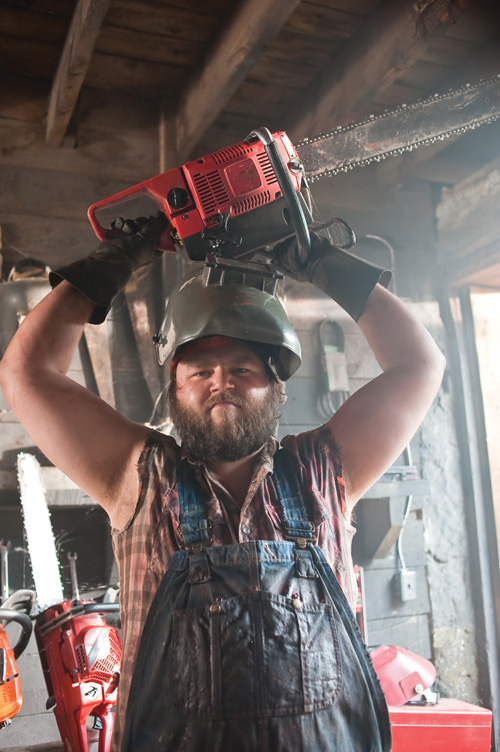
But what if, asks Eli Craig’s Tucker and Dale vs. Evil, you were totally misjudging those sinister-seeming whiskey-tango yokels? What if, despite being a little unwashed and fond of sharp objects and power tools, they happened to be really nice guys? The film — about a couple of blue-collar dudes (Tyler Labine and Alan Tudyk) hanging out at their mountain cabin who unwittingly terrify a group of vacationing college kids — finds a sense of humor in the tired genre. The result is blood-spattered comedy gold.

“The initial premise was: what if Leatherface from Texas Chainsaw Massacre was really just a good guy with an unwieldy chainsaw? It’s the good-looking college kids that have been terrorizing him!” explains first-time feature director Craig (he also co-wrote the script). “In order to pull this off, there has to be a series of misunderstandings. My writing partner, Morgan Jurgenson, and I made a rule that Tucker and Dale would never hurt the college kids. They just kept on accidentally killing themselves and leaving their mangled corpses in Tucker and Dale’s yard to deal with.”

The accidental suicides (most memorably, via wood chipper) are gruesome enough to please genre fans — but are also pretty goofy. The label “splat-stick” has rarely been so aptly applied.

“The film satirizes and often pays homage to the clichés of the slasher-horror genre. So it has the look and feel of a horror film, but I think of it as a comedy,” Craig explains. “I always erred on the side of big laughs, and for the stuff that was meant to be more horrific, I tried to push it into a realm where it was so big that it wasn’t quite believable, and hence allowed people to still laugh.”

Horror comedies may not traditionally rake it in at the box office, but they often become cult sensations — see: 1985’s Re-Animator and 2004’s Shaun of the Dead. For Craig, whose film is firmly in the midnight-movie tradition, the lasting appeal of the genre (which goes back even farther than hillbilly horror — see: Abbott and Costello) is obvious.

“To me [horror comedies are] a subcategory of black comedy which basically deals with the farce that is human existence,” he says. “We are all stuck within these hopeless limitations — we can only see life through one pair of eyes, and we will all face our own demise. But to laugh at it all, to see that the world is both cruel and hilarious, to find joy in the hopeless, that allows us to transcend our problems. Good horror-comedy is about laughter amid despair, [which] really is the best option we have sometimes.” 


TUCKER AND DALE VS. EVIL opens Fri/30 in Bay Area theaters.

Film Listings

0

OPENING

Dream House Newlyweds Daniel Craig and Rachel Weisz, plus third wheel Naomi Watts, star in this psychological thriller. (1:33)

50/50 This is nothing but a mainstream rom-com-dramedy wrapped in indie sheep’s clothes. When Adam (Joseph Gordon-Levitt) learns he has cancer, he undergoes the requisite denial, anger, bargaining, depression, and acceptance like a formality. Aided by his bird-brained but lovable best friend Kyle (Seth Rogan), lovable klutz of a counselor Katherine (Anna Kendrick), and panicky mother (Anjelica Huston), Adam gets a new lease on life. This comes in the form of one-night-stands, furious revelations in parked cars, and a prescribed dose of wacky tobaccy. If 50/50 all sounds like the setup for a pseudo-insightful, kooky feel-goodery, it is. The film doesn’t have the brains or spleen to get down to the bone of cancer. Instead, director Jonathan Levine (2008’s The Wackness) and screenwriter Will Reiser favor highfalutin’ monologues, wooden characters, and a Hollywood ending (with just the right amount of ambiguity). Still, Gordon-Levitt is the most gorgeous cancer patient you will ever see, bald head and all. (1:40) Presidio. (Ryan Lattanzio)

Machine Gun Preacher The title sounds like a sequel to Hobo with a Shotgun — but there’s nary a speck of tongue-in-cheek, kitschy-koo-koo irony in this passionate rendering of the life of Sam Childers. Childers (Gerard Butler) was a former dealing, thieving biker who found God, built a refuge for Sudanese orphans and former child soldiers, and became their fiercest fight-fire-with-fire defender. As Machine Gun Preacher opens, Childers has just emerged from the pen — he’s still the mean motherfucker he always was, shooting up within hours of release and hooking up with chum Donnie (Michael Shannon) to rob dealers. But a semi-mystical run-in forces him to face the worst and sends him to church, to join wife Lynn (Michelle Monaghan), a former stripper and addict. Childers’ fiery love of the Lord, and his spontaneous visions, lead him to construct his own church for sketched-out recovered sinners like himself and then on to war-torn Sudan, where he discovers even more to fix — and likely more than he ever can. To his credit, director Marc Forster (2001’s Monster’s Ball, 2008’s Quantum of Solace) doesn’t shy away from the visceral violence nor the enraged holy-rolling that’s a clear part of Childers’ life, although the most memorable part of Machine Gun Preacher must be Butler, who gets his righteous wrath on in his meatiest part since 2006’s 300. (2:03) (Chun)

The Mill and the Cross One of the clichés often told about art is that it is supposed to speak to us. Polish director Lech Majewski’s gorgeous experiment in bringing Flemish Renaissance painter Peter Bruegel’s sprawling 1564 canvas The Procession to Calvary to life attempts to do just that. Majeswki both re-stages Bruegel’s painting –which draws parallels between its depiction of Christ en route to his crucifixion and the persecution of Flemish citizens by the Spanish inquisition’s militia — in stunning tableaux vivant that combine bluescreen technology and stage backdrops, and gives back stories to a dozen or so of its 500 figures. Periodically, Bruegel himself (Rutger Hauer) addresses the camera mid-sketch to dolefully explain the allegorical nature of his work, but these pedantic asides speak less forcefully than Majeswki’s beautifully lit vignettes of the small joys and many hardships that comprised everyday life in the 16th century. Beguiling yet wholly absorbing. (1:37) Embarcadero, Shattuck. (Sussman) *Mysteries of Lisbon Though produced for Portuguese television, Raúl Ruiz’s Mysteries of Lisbon won awards and raves on the festival circuit. Suddenly, the aging Ruiz seemed more assured his rightful status as a master. Mysteries of Lisbon has arrived for a rather miraculous theatrical run — but Ruiz is gone. He died in August 2011, having directed many more films than his 70 years. His movies have typically been the province of hardcore cinephiles, but this splendid epic holds wider appeal. It’s difficult to think of another movie that so satisfyingly captures the intricacies and volatilities of the 19th century novel — anyone enthralled by the teeming creations of Balzac and Dickens will find that Mysteries of Lisbon‘s four-and-a-half hours stream by. Ruiz was no stranger to the 19th century — his recent films included Klimt (2006) and the Proustian Time Regained (1999) — but the ornately plotted trio of novellas by Portuguese author Camilo Castelo Branco which supply these mysteries seem specially tailored to the director’s affinity for involved narrations. The story sweeps across dozens of characters and several generations of doomed love, revenge plots, disguised identities, uncertain parentages, and religious vows. We even glimpse the Napoleonic Wars. Ruiz’s narrations are commonly likened to labyrinths, but for Mysteries of Lisbon‘s vigorous expansion I reach for the cosmos: one luminous sphere rotates another which in turn rotates a larger system, the whole of it spreading outwards in all directions at once. (4:26) Embarcadero, Shattuck. (Goldberg)

Passione John Turturro’s lush tribute to the music of Naples, Italy is beamed directly from a strange alternate universe completely devoid of snark — a place where grand emotions and sweeping melodrama are presented at face value. In other words, anyone who can’t stomach a heaping helping of cheese will miss the point of Passione. (If you can stomach a small helping of cheese, the film will suck you in after a few minutes.) Passione is more free-form than docs like Buena Vista Social Club (1999), but it’s in a similar vein: a celebration of the musical traditions and artists from a specific place, and an exploration of what it is about that specific place that inspires such creativity. In Naples, there are centuries-old folk ballads, comedic ditties about the mafia, histrionic romantic duets, slinky laments, opera, and more. Actor-turned-director Turturro — the Brooklyn-born son of Italian immigrant parents — doesn’t really provide a structure so much as simply let the performances, most of which are staged in organic settings, flow. Fans of Italian popular music might recognize some of the singers, but most will be unfamiliar to stateside viewers. The majority of the songs offer subtitles, but even the ones that don’t are so over-the-top that their meanings (usually having to do with anguish, love, or the anguish of love) are easy to decipher. Turturro is scheduled to appear in person at the film’s Mon/3 evening screenings; check www.sffs.org for updates. (1:31) SFFS New People Cinema. (Eddy)

*Tucker and Dale vs. Evil See “Twang On.” (1:28) California, Lumiere.

What’s Your Number? Unlucky-in-love Anna Faris checks back in with all her former conquests in this romantic comedy. (1:46) Presidio.

ONGOING

Abduction (1:46) 1000 Van Ness.

*The Black Power Mixtape 1967-1975 Cinematic crate-diggers have plenty to celebrate, checking the results of The Black Power Mixtape 1967-1975. Swedish documentarian Göran Hugo Olsson had heard whispers for years that Swedish television archives possessed more archival footage of the Black Panthers than anyone in the states — while poring through film for a doc on Philly soul, he discovered the rumors were dead-on. With this lyrical film, coproduced by the Bay Area’s Danny Glover, Olsson has assembled an elegant snapshot of black activists and urban life in America, relying on the vivid, startlingly crisp images of figures such as Stokely Carmichael and Huey P. Newton at their peak, while staying true to the wide-open, refreshingly nonjudgmental lens of the Swedish camera crews. Questlove of the Roots and Om’Mas Keith provide the haunting score for the film, beautifully historicized with shots of Oakland in the 1960s and Harlem in the ’70s. It’s made indelible thanks to footage of proto-Panther school kids singing songs about grabbing their guns, and an unforgettable interview with a fiery Angela Davis talking about the uses of violence, from behind bars and from the place of personally knowing the girls who died in the infamous Birmingham, Ala., church bombing of 1963. (1:36) Embarcadero, Piedmont, Shattuck. (Chun)

Circumstance Thirteen (2003) goes to Tehran? The world of sex, drugs, and underground nightclubs in Iran provides the backdrop for writer-director Maryam Keshavarz’s lusty, dreamy take on the passionate teenagers behind the hijabs. Risking jail and worse are the sassy, privileged Atafeh (Nikohl Boosheri) and the beautiful, orphaned Shireen (Sarah Kazemy), who, much like young women anywhere, just want to be free — to swim, sing, dance, test boundaries, lose, and then find themselves. The difference here is that they’re under constant, unnerving surveillance, in a country where more than 70 percent of the population is less than 30 years old. Nevertheless, within their mansion walls and without, beneath graffitied walls and undulating at intoxicating house parties, the two girls begin to fall in love with each other, as Atafeh’s handsome, albeit creepy older brother Mehran (Palo Alto-bred Reza Sixo Safai) gazes on. The onetime musical talent’s back from rehab, has returned to the mosque with all the zeal of the prodigal, and has hooked up with the Morality Police that enforces the nation’s cultural laws. Filmed underground in Beirut, with layers that permit both pleasure and protest (wait for the hilarious moment when 2008’s Milk is dubbed in Farsi), Circumstance viscerally transmits the realities and fantasies of Iranian young women on the verge. (1:45) Opera Plaza, Shattuck. (Chun)

City of Life and Death There have been a number of recent works about the “rape of Nanking,” but perhaps none tackles the brutal nature of Nanjing’s fall with as much beauty as City of Life and Death. Shot in striking black and white, the film depicts the invasion of China’s capital by Japanese forces from a number of points of view, including that of a Japanese soldier. It can be difficult at times to become emotionally attached to characters within such a restless narrative, but the structure goes a long way toward keeping the proceedings balanced. The stunningly elaborate sets and cinematography alone are worth the price of admission, and it’s amazing that such detail was achieved with a budget of less than $12 million. But it is the unflinching catalog of the some 300,000 murders and rapes that took place between 1937 and 1938 in Nanjing that will remain with you long after watching. (2:13) Four Star. (Peter Galvin)

*Contagion Tasked with such panic-inducing material, one has to appreciate director Steven Soderbergh’s cool head and hand with Contagion. Some might even dub this epic thriller (of sorts) cold, clinical, and completely lacking in bedside manner. Still, for those who’d rather be in the hands of a doctor who refuses to talk down to the patient, Contagion comes on like a refreshingly smart, somewhat melodrama-free clean room, a clear-eyed response to a messy, terrifying subject. A deadly virus is spreading swiftly — sans cure, vaccine, or sense — starting with a few unlikely suspects: globe-trotting corporate exec Beth (Gwyneth Paltrow), a waiter, a European tourist, and a Japanese businessman. The chase is on to track the disease’s genesis and find a way to combat it, from the halls of the San Francisco Chronicle and blog posts of citizen activist-journalist Alan (Jude Law), to the emergency hospital in the Midwest set up by intrepid Dr. Mears (Kate Winslet), to a tiny village in China with a World Health investigator (Marion Cotillard). Soderbergh’s brisk, businesslike storytelling approach nicely counterpoints the hysteria going off on the ground, as looting and anarchy breaks out around Beth’s immune widower Mitch (Matt Damon), and draws you in — though the tact of making this disease’s Typhoid Mary a sexually profligate woman is unsettling and borderline offensive, as is the predictable blame-it-on-the-Chinese origin coda. (1:42) California, 1000 Van Ness, Sundance Kabuki. (Chun)

Crazy, Stupid, Love Keep the poster’s allusion to 1967’s The Graduate to one side: there aren’t many revelations about midlife crises in this cleverly penned yet strangely flat ensemble rom-com, awkwardly pitched at almost every demographic at the cineplex. There’s the middle-aged romance that’s withered at the vine: nice but boring family man Cal (Steve Carell) finds himself at a hopeless loss when wife and onetime teenage sweetheart Emily (Julianne Moore) tells him she wants a divorce and she’s slept with a coworker (Kevin Bacon). He ends up waxing pathetic at a slick nightclub where he catches the eye of the well-dressed, spray-tanned smoothie Jacob (Ryan Gosling), who appears to have taken his ladies man stance from the Clooney playbook. It’s manly makeover time: GQ meets Pretty Woman (1990)! Cut to Cal and Emily’s babysitter Jessica (Analeigh Tipton), who is crushing out on Cal, while the separated couple’s tween Robbie (Jonah Bobo) hankers for Jessica. Somehow Josh Groban worms his way into the mix as the dullard suitor of Hannah (Emma Stone) in a hanging chad of a storyline that must somehow be resolved in this mad, mad, mad, mad — actually, the problem with Crazy, Stupid, Love is that it isn’t really that crazy. It tries far too hard to please everybody in the theater to its detriment, reminding the viewer of a tidy, episodic TV series (albeit a quality effort) like Modern Family more than an actual film. Likewise I yearned for a way to fast-forward through the too-cute Jessica-Robbie scenes in order to get back to the sleazy-smart, punchy complexity of Gosling, playing adeptly off both Carrell and Stone. (1:58) SF Center, Shattuck. (Chun)

The Debt On paper, The Debt has a lot going for it: captivating history-based plot, “it” actor Jessica Chastain, Helen Mirren vs. Nazis. And while the latest from John Madden (1998’s Shakespeare in Love) is fairly entertaining, the film is ultimately forgettable. Chastain plays Rachel, a member of an Israeli team tasked with capturing a Nazi war criminal and bringing him to justice. Mirren is the older Rachel, who is haunted by the long-withheld true story of the mission. Although The Debt traffics in spy secrets, it’s actually rather predictable: the big reveal is shrug-worthy, and the shocking conclusion is expected. So while the entire cast — which also includes Tom Wilkinson, Sam Worthington, and Ciaran Hinds — turn in admirable performances, the script is lacking what it needs to make The Debt an effective drama or thriller. Like 2008’s overrated The Reader, the film tries to hide its inadequacies under heavy themes and the dread with which we remember the Holocaust. (1:54) Four Star, 1000 Van Ness, Presidio, Sundance Kabuki. (Peitzman)

Detective Dee and the Mystery of the Phantom Flame (2:02) Embarcadero, Four Star, Shattuck, Sundance Kabuki.

Dolphin Tale (1:53) 1000 Van Ness, Presidio, SF Center.

*Drive Such a lovely way to Drive, drunk on the sensual depths of a lush, saturated jewel tone palette and a dreamlike, almost luxurious pacing that gives off the steamy hothouse pop romanticism of ’80s-era Michael Mann and David Lynch — with the bracing, impactful flecks of threat and ultraviolence that might accompany a car chase, a moody noir, or both, as filtered through a first-wave music video. Drive comes dressed in the klassic komforts — from the Steve McQueen-esque stances and perfectly cut jackets of Ryan Gosling as the Driver Who Shall Remain Nameless to the foreboding lingering in the shadows and the wittily static, statuesque strippers that decorate the background. Gosling’s Driver is in line with Mann’s other upstanding working men who hew to an old-school moral code and are excellent at what they do, regardless of what side of the law they’re working: he likes to keep it clear and simple — his services as a wheelman boil down to five minutes, in and out — but matters get messy when he falls for sweet-faced neighbor Irene (Carey Mulligan), who lives down the hall with her small son, and her ex-con husband (Oscar Isaac) is dragged back into the game. Populated by pungent side players like Albert Brooks, Bryan Cranston, Ron Perlman, and Christina Hendricks, and scattered with readily embeddable moments like a life-changing elevator kiss that goes bloodily wrong-right, Drive turns into a real coming-out affair for both Danish director Nicolas Winding Refn (2008’s Bronson), who rises above any crisis of influence or confluence of genre to pick up the po-mo baton that Lynch left behind, and 2011’s MVP Ryan Gosling, who gets to flex his leading-man muscles in a truly cinematic role, an anti-hero and under-the-hood psychopath looking for the real hero within. (1:40) Marina, 1000 Van Ness, SF Center, Sundance Kabuki. (Chun)

Farmageddon First-time director Kristin Canty embarked on this documentary after discovering the healing power of raw milk in helping her child’s allergies. And it shows. Farmaggedon really should have been titled A Raw Deal for Raw Milk, considering its primary focus on several small family-operated dairies and the souring treatment they have received from government bureaucrats, spurring Canty’s activist act of making this movie. Larry and Linda Failace of Three Shephard’s Cheese in Vermont (the latter wrote her own book, 2007’s Mad Sheep: The True Story Behind the USDA’s War on a Family Farm) seem to have suffered the most, driven out of business when the sheep they brought over legally, with all the required quarantines, were seized and destroyed by the government agents on the pretext that the animals might spread “mad cow” disease. The sight of Linda Failace breaking into tears reading her daughter’s words about how the sheep were like her brothers and sisters is heart-breaking. Undermining such powerful, outrageous material are Canty’s textbook missteps: the director has major problems organizing her seemingly scattershot, lopsided material into a coherent and, er, organic whole, and lets her many sources drone on without a strong narrative through-line. All of this makes Farmaggedon a bit of a struggle to watch, although the dirt Canty digs up is likely to justifiably raise the hackles of progressive foodies. (1:30) Roxie, Smith Rafael. (Chun)

*The Future Dreams and drawings, cats and fantasies, ambition and aimlessness, and the mild-mannered yet mortifying games people play, all wind their way into Miranda July’s The Future. The future’s a scary place, as many of us fully realize, even if you hide from it well into your 30s, losing yourself in the everyday. But you can’t duck July’s collection of moments, objects, and small gestures transformed into something strangely slanted and enchanted, both weird and terrifying, when viewed through July’s looking glass. Care and commitment — to oneself and others — are two vivid threads running through The Future. Cute couple Sophie (July) and Jason (Hamish Linklater) — unsettling look-alikes with their curly crops — appear at first to be sailing contently, aimlessly toward an undemanding unknown: Jason works from home as a customer-service operator, and Sophie attempts to herd kiddies as a children’s dance instructor. But enormous, frightening demands beckon — namely the oncoming adoption of a special-needs feline named Paw-Paw (voiced by July as if it’s a traumatized, innocent child). Lickety-splitsville, they must be all they can be before Paw-Paw’s arrival. The weirdness of the familiar, and the kindness of strangers, become ways into fantasy and escape when the couple bumps up against the limits of their imagination. This ultra-low-key horror movie of the banal is obviously remote territory for July (2005’s Me and You and Everyone We Know). The Future is her best film to date and finds her tumbling into a kind of magical realism or plastic fantastic, embodied by a talking cat that becomes the conscience of the movie. (1:31) Roxie. (Chun)

The Guard Irish police sergeant Gerry Boyle (Brendan Gleeson) is used to running his small town on his own terms — not in a completely Bad Lieutenant (1992) kind of way, though he’s not afraid to sample drugs and hang with hookers. More like, he’s been running the show for years, and would prefer that big-city cops stay the hell out of his village. Alas, a gang of drug smugglers is doing business in the area, so an officious group of investigators from Dublin (horrors!) and America (in the form of an FBI agent played by Don Cheadle) soon descend. His mother’s dying, his brand-new partner’s missing, and between all the interlopers on both sides of the law, Boyle’s having a hard time having a pint in peace. Good thing he’s not as simple-minded as all who surround him think he is. Writer-director John Michael McDonagh (brother of playwright Martin, who directed 2008’s In Bruges — also starring Gleeson) puts an affable Irish spin on what’s essentially a pretty typical indie comedy, with some pretty typical crime-drama elements layered atop. Boyle’s character is memorably clever, but the film that contains him never quite elevates to his level. (1:36) Lumiere, Shattuck, Sundance Kabuki. (Eddy)

*The Hedgehog You needn’t possess the rough, everyday refinement of the characters of The Hedgehog to appreciate this debut feature by director-screenwriter Mona Achache — just an appreciation for a delicate touch and a tender heart. Eleven-year-old Paloma (the wonderful Garance Le Guillermic) is too smart for her own good, bored, neglected by her parents, and left to fend for herself with only her considerable imagination and a camcorder. She drifts around her fishbowl of privilege, a deluxe art nouveau-style apartment building in Paris, leveling her all-too-wise gaze on its denizens and plotting certain suicide on her 12th birthday — that is until a new resident appears in her viewfinder: a kindly Japanese gentleman Kakuro Ozu (Togo Igawa). He has as much of a connoisseur’s eye as Paloma — the proof is in his unlikely focus of attention, the building’s concierge Renée Michel (Josiane Balasko, resembling a burly Gertrude Stein), who hides her cultured and bookish inclinations behind a gruff, drab exterior. They recognize in each other a reverence for an almost monkish life of the mind, the austere elegance of wabi-sabi, and the transient beauty of rough-hewn imperfection, even in the sleek, well-heeled heart of the City of Light. To the credit of Achache, working with Muriel Barbery’s novel, these unlikely fragile friendships between outsiders take hold in a way that sidesteps preciousness and stays with you long after its pages have turned. (1:40) Smith Rafael. (Chun)

The Help It’s tough to stitch ‘n’ bitch ‘n’ moan in the face of such heart-felt female bonding, even after you brush away the tears away and wonder why the so-called help’s stories needed to be cobbled with those of the creamy-skinned daughters of privilege that employed them. The Help purports to be the tale of the 1960s African American maids hired by a bourgie segment of Southern womanhood — resourceful hard-workers like Aibileen (Viola Davis) and Minny (Octavia Spencer) raise their employers’ daughters, filling them with pride and strength if they do their job well, while missing out on their own kids’ childhood. Then those daughters turn around and hurt their caretakers, often treating them little better than the slaves their families once owned. Hinging on a self-hatred that devalues the nurturing, housekeeping skills that were considered women’s birthright, this unending ugly, heartbreaking story of the everyday injustices spells separate-and-unequal bathrooms for the family and their help when it comes to certain sniping queen bees like Hilly (Bryce Dallas Howard). But the times they are a-changing, and the help get an assist from ugly duckling of a writer Skeeter (Emma Stone, playing against type, sort of, with fizzy hair), who risks social ostracism to get the housekeepers’ experiences down on paper, amid the Junior League gossip girls and the seismic shifts coming in the civil rights-era South. Based on the best-seller by Kathryn Stockett, The Help hitches the fortunes of two forces together — the African American women who are trying to survive and find respect, and the white women who have to define themselves as more than dependent breeders — under the banner of a feel-good weepie, though not without its guilty shadings, from the way the pale-faced ladies already have a jump, in so many ways, on their African American sisters to the Keane-eyed meekness of Davis’ Aibileen to The Help‘s most memorable performances, which are also tellingly throwback (Howard’s stinging hornet of a Southern belle and Jessica Chastain’s white-trash bimbo-with-a-heart-of-gold). (2:17) California, 1000 Van Ness, SF Center, Sundance Kabuki. (Chun)

I Don’t Know How She Does It I don’t know how a likable comedian like Sarah Jessica Parker does it — meaning, such mediocre material as this mom-com. Parker may have parlayed her Sex and the City fame into a fashion, fragrance, and spin-off franchises, but she still hasn’t quite found her stride away from Carrie Bradshaw, though her Lucille Ball-esque physical comedy here — pulling down her skirt in mid-mommy-frazzle in front of her high-powered client — can be cute. Kate (Parker) just might be the busiest mom in the world: she’s juggling two kids, a hubby whose own career is on the rise (Greg Kinnear), and a major fund idea, which she has to sell to an attractive banking bigwig (Pierce Brosnan). Poor, poor privileged mom — in the trenches of the still-unadorable field of banking, with her obviously sizable salary, enviable Boston duplex, flaky-nice nanny, and bubbly single-mom friend (Christina Hendricks)! The biggest assist comes from her careerist aide, played by Olivia Munn, who grabs the biggest laughs with her deadpan delivery. (1:35) 1000 Van Ness. (Chun)

*Killer Elite Jason Statham has a lot going on, in addition to devastatingly attractive male-pattern balding: along with fellow Brit Daniel Craig, he’s one of the most believable action heroes in the cineplex today. This continent-hopping, Bourne-ish exercise, kitted out with piercingly loud sound design, comes chock-full of promise in the form of Statham, Robert De Niro, and Clive Owen, wielding endless firearms and finding new deadly uses for bathroom tile — you don’t want to be caught solo in anger management class with these specialists in cinematic rageaholism. Mercenary assassin Danny (Statham) wants out of the game after a traumatic killing involving way too much eye contact with a small child. Killer coworker Hunter (De Niro) pulled him out of that tight spot, so when the aging gunman is held hostage, Danny must emerge from hiding in rural Australia and take on a seemingly impossible case: avenge the deaths of a dying sheik’s sons, who were gunned down by assorted highly trained British military hotshots, get them to confess, and make it all look like an accident. Oh, yes, and try to make sure his own loved ones aren’t killed in the process. Dancing backwards as fast as he can is those retired Brits’ guardian angel-of-sorts, Spike (Owen), another intense, dangerous fellow with too much time on his hands. Throw in my favorite Oz evil-doer Adewale Akinnuoye-Agbaje as Danny and Hunter’s boss, some welcome been-there twinkle from De Niro, as well as a host of riveting fight scenes (and that ’00s cliché: sudden death by bus/truck/semi), and you have diverting popcorn killer. (1:40) 1000 Van Ness, Presidio. (Chun)

The Lion King 3D (1:29) SF Center, Shattuck, Sundance Kabuki.

*Love Crime Early this year came the announcement that Brian De Palma was hot to do an English remake of Alain Corneau’s Love Crime. The results, should they come to fruition, may well prove a landmark in the annals of lurid guilty-pleasure trash. But with the original Love Crime finally making it to local theaters, it’s an opportune moment to be appalled in advance about what sleazy things could potentially be done to this neat, dry, fully clothed model of a modern Hitchcockian thriller. No doubt in France Love Crime looks pretty mainstream. But here its soon-to be-despoiled virtues of narrative intricacy and restraint are upscale pleasures. Ludivine Sagnier plays assistant to high-powered corporate executive Christine (Kristin Scott Thomas). The boss enjoys molding protégée Isabelle to her own image, making them a double team of carefully planned guile unafraid to use sex appeal as a business strategy. But Isabelle is expected to know her place — even when that place robs her of credit for her own ideas — and when she stages a small rebellion, Christine’s revenge is cruelly out of scale, a high-heeled boot brought down to squash an ant. Halfway through an act of vengeance occurs that is shocking and satisfying, even if it leaves the remainder of Corneau and Nathalie Carter’s clever screenplay deprived of the very thing that had made it such a sardonic delight so far. Though it’s no masterpiece, Love Crime closes the book on his Corneau’s career Corneau (he died at age 67 last August) not with a bang but with a crisp, satisfying snap. (1:46) Albany, Clay, Smith Rafael. (Harvey)

Mary Lou A musical fable for fans of Glee, Hedwig and the Angry Inch (2001), The Adventures of Priscilla, Queen of the Desert (1994), and Bollywood, the latest from Eytan Fox (2002’s Yossi and Jagger) is a drag-flavored dramedy (Israel’s first?) Originally a hit miniseries in its home country, Mary Lou screens at the Castro in one big chunk jammed with singing, dancing, and a dreamy cast. Pouty Ido Rosenberg stars as Meir, a gay boy obsessed with finding the mother who left him when he was 10. After a disastrous graduation party, Meir flees his homophobic high school for the worldly environs of Tel Aviv, where he soon becomes a drag star named Mary Lou, after his mother’s favorite song. Love, loss, friendship, tragedy, joy, coming-of-age, and quite a few elaborate musical numbers soon transpire — the plot is not without clichés, to be sure, but it’s hard to hate on anything possessed of such sparkly energy. Not familiar with Svika Pick, the Israeli legend whose music provides much of the soundtrack? It matters not, especially if you’re a fan of deliriously corny pop tunes. (2:30) Castro. (Eddy)

Midnight in Paris Owen Wilson plays Gil, a self-confessed “Hollywood hack” visiting the City of Light with his conservative future in-laws and crassly materialistic fiancée Inez (Rachel McAdams). A romantic obviously at odds with their selfish pragmatism (somehow he hasn’t realized that yet), he’s in love with Paris and particularly its fabled artistic past. Walking back to his hotel alone one night, he’s beckoned into an antique vehicle and finds himself transported to the 1920s, at every turn meeting the Fitzgeralds, Gertrude Stein (Kathy Bates), Dali (Adrien Brody), etc. He also meets Adriana (Marion Cotillard), a woman alluring enough to be fought over by Hemingway (Corey Stoll) and Picasso (Marcial di Fonzo Bo) — though she fancies aspiring literary novelist Gil. Woody Allen’s latest is a pleasant trifle, no more, no less. Its toying with a form of magical escapism from the dreary present recalls The Purple Rose of Cairo (1985), albeit without that film’s greater structural ingeniousness and considerable heart. None of the actors are at their best, though Cotillard is indeed beguiling and Wilson dithers charmingly as usual. Still — it’s pleasant. (1:34) Albany, Embarcadero, Four Star, Piedmont. (Harvey)

Moneyball As fun as it is to watch Brad Pitt listen to the radio, work out, hang out with his cute kid, and drive down I-80 over and over again, it doesn’t quite translate into compelling cinema for the casual baseball fan. A wholesale buy-in to the cult of personality — be it A’s manager Billy Beane or the actor who plays him — is at the center of Moneyball‘s issues. Beane (Pitt) is facing the sad, inevitable fate of having to replace his star players, Jason Giambi and Johnny Damon, once they command the cash from the more-moneyed teams. He’s gotta think outside of the corporate box, and he finds a few key answers in Peter Brand (a.k.a. Paul DePodesta, played by Jonah Hill), who’s working with the sabermetric ideas of Bill James: scout the undervalued players that get on base to work against better-funded big-hitters. Similarly, against popular thought, Moneyball works best when director Bennett Miller (2005’s Capote) strays from the slightly flattening sunniness of its lead actor and plunges into the number crunching — attempting to visualize the abstract and tapping into the David Fincher network, as it were (in a related note, Aaron Sorkin co-wrote Moneyball‘s screenplay) — though the funny anti-chemistry between Pitt and Hill is at times capable of pulling Moneyball out of its slump. (2:13) Marina, 1000 Van Ness. (Chun)

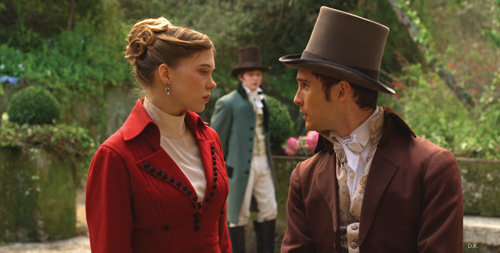
Mozart’s Sister Pity the talented sister of a world-shaking prodigy. Maria Anna “Nannerl” Mozart, who may have had just as much promise as a composer as her younger brother, according to Rene Féret’s Mozart’s Sister. A scant five years older, enlisted in the traveling family band led by father-teacher Leopold (Marc Barbe), yet forced to hide her music, being female and forbidden to play violin and compose, Nannerl (Marie Féret, the filmmaker’s daughter) tours the courts of Europe and is acclaimed as a keyboardist and vocalist but is expected to share little of her brother’s brilliant future. Following a chance carriage breakdown near a French monastery, Nannerl befriends one of its precious inhabitants, a daughter of Louis XV (Lisa Féret, another offspring), which leads her to Versailles, into a cross-dressing guise of a boy, and puts her into the sights of the Dauphin (Clovis Fouin, who could easily find a spot in the Cullen vampire clan). He’s seduced by her music and likewise charms Nannerl with his power and feline good looks — what’s a humble court minstrel to do? The conceit of casting one’s daughters in a narrative hinging on unjustly neglected female progeny — shades of Sofia Coppola in The Godfather: Part III (1990)! — almost capsizes this otherwise thoughtful re-imagination of Maria Anna’s thwarted life; despite the fact Féret has inserted his children in his films in the past, both girls offer little emotional depth to their roles. Nevertheless, as a feminist rediscovery pic akin to Camille Claudel (1988), Mozart’s Sister instructs on yet another tragically quashed woman artist and might inspire some righteous indignation. (2:00) Bridge, Shattuck, Smith Rafael. (Chun)

*My Afternoons with Margueritte There’s just one moment in this tender French dramedy that touches on star Gerard Depardieu’s real life: his quasi-literate salt-of-the-earth character, Germain, rushes to save his depressed friend from possible suicide only to have his pretentious pal pee on the ground in front of him. Perhaps Depardieu’s recent urinary run-in, on the floor of an airline cabin, was an inspired reference to this moment. In any case, My Afternoons With Margueritte offers a hope of the most humanist sort, for all those bumblers and sad cases that are usually shuttled to the side in the desperate ’00s, as Depardieu demonstrates that he’s fully capable of carrying a film with sheer life force, rotund gut and straw-mop ‘do and all. In fact he’s almost daring you to hate on his aging, bumptious current incarnation: Germain is the 50-something who never quite grew up or left home. The vegetable farmer is treated poorly by his doddering tramp of a mother and is widely considered the village idiot, the butt of all the jokes down at the cafe, though contrary to most assumptions, he manages to score a beautiful, bus-driving girlfriend (Sophie Guillemin). However the true love of his life might be the empathetic, intelligent older woman, Margueritte (Gisele Casadesus), that he meets in the park while counting pigeons. There’s a wee bit of Maude to Germain’s Harold, though Jean Becker’s chaste love story is content to remain within the wholesome confines of small-town life — not a bad thing when it comes to looking for grace in a rough world. (1:22) Embarcadero, Shattuck. (Chun)

*Point Blank Not for nothing did Hollywood remake French filmmaker Fred Cavaye’s last film, Anything for Her (2008) as The Next Three Days (2010) — Cavaye’s latest, tauter-than-taut thriller almost screams out for a similar rework, with its Bourne-like handheld camera work, high-impact immediacy, and noirish narrative economy. Point Blank — not to be confused with the 1967 Lee Marvin vehicle —kicks off with a literal slam: a mystery man (Roschdy Zem) crashing into a metal barrier, on the run from two menacing figures until he is cornered and then taken out of the action by fate. His mind mainly on the welfare of his very pregnant wife Nadia (Elena Anaya), nursing assistant Samuel (Gilles Lellouche) has the bad luck to stumble on a faux doctor attempting to make sure that the injured man never rises from his hospital bed. As police wrangle over whose case this exactly is — the murder of an industrialist seems to have expanded the powers of the stony-faced, monolithic Commandant Werner (Gerard Lanvin) — Samuel gets sucked into the mystery man’s lot, a conspiracy that allows them to trust no one, and seemingly impossibly odds against getting out of the mess alive. Cavaye never quite stops applying the pressure in this clever, unrelenting cat-and-mouse and mouse-and-his-spouse game, topping it with a nerve-jangling search through a messily chaotic police station. (1:24) Opera Plaza. (Chun)

*Rise of the Planet of the Apes “You gotta love a movie where the animals beat up on the humans,” declared my Rise of the Planet of the Apes companion. Indeed, ape must not kill ape, and this Planet of the Apes prequel-cum-remake of Conquest of the Planet of the Apes (1972) takes the long view, back to the days when ape-human relations were still high-minded enough to forbid smart apes from killing those well-armed, not-so-bright humanoids. I was a fan of the original series, but honestly, I approached Rise with trepidation: I dreaded the inevitable scenes of human cruelty meted out to exploited primates — the current wave of chimp-driven films seems focused on holding a scary, shaming mirror up to the two-legged mammalian violence toward their closest living genetic relatives. It’s a contrast to the original series, which provided prisms with which to peer at race relations and generational conflict. But I needn’t have feared this PG-13 “reboot.” There’s little CGI-driven gore, apart from the visceral opening and the showdown, though the heartbreak remains. Scientist Will (James Franco, brow perpetually furrowed with worry) is working to find a medicine designed to supercharge the brain in the wake of Alzheimer’s — a disease that has struck down his father (John Lithgow). When the experimental chimp that responds to his serum becomes violently aggressive, the project is shut down, although the primate leaves behind a surprise: a baby chimp that Will and his father name Caesar and raise like a beloved child in their idyllic Bay Area Victorian. Growing in intelligence as he matures, Caesar finds himself torn by an existential dilemma: is he a pet or a mammal with rights that must be respected? Rise becomes Caesar’s story, rendered in heart-wrenching, exhilarating ways — to director Rupert Wyatt and his team’s credit you don’t miss the performance finesse of Roddy McDowell and Kim Hunter in groundbreaking prosthetic ape face in the original movies — while resolving at least one question about why humans gave up the globe to the primates. One can only imagine the next edition will take care of the lingering question about how even the cleverest of apes will feed themselves in Muir Woods. (1:50) 1000 Van Ness, SF Center. (Chun)

Sarah’s Key (1:42) Opera Plaza.

*Senna When Ayrton Senna died in 1994 at the age of 34, he had already secured his legacy as one of the greatest and most beloved Formula One racers of all time. The three-time world champion was a hero in his native Brazil and a respected and feared opponent on the track. This eponymous documentary by director Asif Kapadia is nearly as dynamic as the man himself, with more than enough revving engines and last minute passes to satisfy your lust for speed and a decent helping Ayrton’s famous personality as well. Senna was a champion, driven to win even as the sometimes-backhanded politics of the racing world stood in his way. A tragic figure, maybe, but a legend nonetheless. You don’t have to be an F1 fan to appreciate this film, but you may wind up one by the time the credits roll. (1:44) Opera Plaza, Smith Rafael. (Cooper Berkmoyer)

*Shaolin There’s a lot to like about Shaolin, from Andy Lau, as a warlord turned passionate monk, to the return of Jackie Chan, as a stir-frying Shaolin, to its overall Buddhistic message (by way of heaps of chopsocky, blood-spitting violence), to its many action scenes, complete with mucho ax-throwing and horsing around with out-of-control carriages. We’re at the dawn of China’s republic, and the warlords are squabbling over the country’s spoils. General Hou Jie (Lau) appears to be the most ruthless of them all, following his second in command Cao Man (Nicholas Tse) into the Shaolin Temple to pursue an enemy with a golden secret and arrogantly leaving his mark on the sanctuary signage. But tragedy turns Hou around and sends him in the temple once more, where he finds real brotherhood with the good-hearted monks. Lau has reteamed here with director Benny Chan, and the results effectively recast the star, sometimes too easily pictured as a villain with his hawkish looks, as a hero once again, all while foregrounding Buddhism and giving it to the white devils at the end — an anti-imperialism message that has become rote in recent years, little wonder considering China’s growing might and the hardening of positions on the front lines of the global economy. (2:11) SFFS New People Cinema. (Chun)

Straw Dogs Never could I have predicted there would be a day when the violent finale of Straw Dogs would be met with raucous cheers. The original 1971 film was produced within a morally ambiguous social climate and remains one of director Sam Peckinpah’s most controversial efforts; contemporary audiences trained to applaud a payoff of blood and gore are likely in the wrong headspace for a film like this. The remake, which sends a good-natured screenwriter (James Marsden) on a retreat in his wife’s (Kate Bosworth) sweaty Southern hometown where they find themselves at odds with a group of good ol’ boys, remains powerful and just as uncomfortable and mean as Peckinpah’s version, but it’s in service of a moral outcome that’s more in line with its commercial placement: ultimately it takes the road of “man becomes protector” over “man becomes monster.” If you have no interest in the original, you will find a fair bit of talent in this remake, but without the cynical attitude it can be hard to separate Straw Dogs from any other horror-movie-of-the-week. (1:50) 1000 Van Ness, SF Center. (Galvin)

*3 The press literature for 3, Tom Tykwer’s latest, throws around references to classic Hollywood screwball comedies, but this romantic drama is far too self-conscious, serious, and almost pretentious to ever completely ape the mercury lightness of that genre. Apart from one slightly jarring fantasy sequence or two, this polyamorous love story is all about contemporary Berlin bohemia, from hero Hanna’s (Sophie Rois) immersion in the worlds of science and art, to her increasingly plastic relationship with partner Simon (Sebastian Schipper). On the edge of their 20th anniversary, the smart, stylish 40-ish bohos are still in love, though a younger, perpetually amused-looking doctor Adam (Devid Striesow) threatens to turn their two-decade itch into something much more involved. Tykwer kicks off his high-minded romp with a pas de trois, sprinkling split-screen interludes into the program as he goes, but such devices fall away — sucking the viewer into its heady, seductive undertow — beneath the sheer eroticism of these sexual empiricists’ couplings, particularly in the humid, Cat People-like scenes set in a Badeschiff pool, which comes to resemble a carnally charged hothouse as envisioned by Olafur Eliasson. (1:59) Sundance Kabuki. (Chun)

The Tree of Life Mainstream American films are so rarely adventuresome that overreactive gratitude frequently greets those rare, self-conscious, usually Oscar-baiting stabs at profundity. Terrence Malick has made those gestures so sparingly over four decades that his scarcity is widely taken for genius. Now there’s The Tree of Life, at once astonishingly ambitious — insofar as general addressing the origin/meaning of life goes — and a small domestic narrative artificially inflated to a maximally pretentious pressure-point. The thesis here is a conflict between “nature” (the way of striving, dissatisfied, angry humanity) and “grace” (the way of love, femininity, and God). After a while Tree settles into a fairly conventional narrative groove, dissecting — albeit in meandering fashion — the travails of a middle-class Texas household whose patriarch (a solid Brad Pitt) is sternly demanding of his three young sons. As a modern-day survivor of that household, Malick’s career-reviving ally Sean Penn has little to do but look angst-ridden while wandering about various alien landscapes. Set in Waco but also shot in Rome, at Versailles, and in Saturn’s orbit (trust me), The Tree of Life is so astonishingly self-important while so undernourished on some basic levels that it would be easy to dismiss as lofty bullshit. Its Cannes premiere audience booed and cheered — both factions right, to an extent. (2:18) Lumiere. (Harvey)

*Warrior Those wondering why the mixed martial arts scene has captured the imagination of so many can finally understand what the fuss is all about, now that it comes filtered through a melodramatic narrative akin to The Fighter (2010). Warrior‘s mis-en-scene is immediately recognizable: a prodigal returns, in the form of Tom Conlon (Tom Hardy). Once a talented teenage wrestler, the now-battered man is the damaged youngest son of alcoholic ex-boxer Paddy Conlon (Nick Nolte). Tom wants his father to train him for a major mixed martial arts tournament with a multimillion-dollar purse, though the two obviously still have a deadly hold on each other — the repentant Paddy is on the wagon and the emotionally bruised Tom harbors secrets he won’t reveal — and battle with cutting comments rather than fists. Tom isn’t the only prodigal in the house: Paddy has lost the trust of Tom’s bro, Brendan (Joel Edgerton), a former fighter and present-day physics high school teacher who’s struggling to make ends meet with an underwater mortgage. Though Warrior is no Raging Bull (1980), it almost outdukes The Fighter in terms of its brutal bouts, conveying the swift, no-holds-barred action of MMA in the ring, while giving actors plenty of drama to wrap their jowls ’round — particularly in Nolte’s case. His tore-up turn as an all-excuses patriarch is as heartbreaking as a solid kick to the jaw. (2:19) SF Center. (Chun)

*We Were Here Reagan isn’t mentioned in David Weissman’s important and moving new documentary about San Francisco’s early response to the AIDS epidemic, We Were Here — although his communications director Pat Buchanan and Moral Majority leader Jerry Falwell get split-second references. We Were Here isn’t a political polemic about the lack of governmental support that greeted the onset of the disease. Nor is it a kind of cinematic And the Band Played On that exhaustively lays out all the historical and medical minutiae of HIV’s dawn. (See PBS Frontline’s engrossing 2006 The Age of AIDS for that.) And you’ll find virtually nothing about the infected world outside the United States. A satisfying 90-minute documentary couldn’t possibly cover all the aspects of AIDS, of course, even the local ones. Instead, Weissman’s film, codirected with Bill Weber, concentrates mostly on AIDS in the 1980s and tells a more personal and, in its way, more controversial story. What happened in San Francisco when gay people started mysteriously wasting away? And how did the epidemic change the people who lived through it? The tales are well told and expertly woven together, as in Weissman’s earlier doc The Cockettes. But where We Were Here really hits home is in its foregrounding of many unspoken or buried truths about AIDS. The film will affect viewers on a deep level, perhaps allowing many to weep openly about what happened for the first time. But it’s a testimony as well to the absolute craziness of life, and the strange places it can take you — if you survive it. (1:30) Castro. (Marke B.)


Film listings are edited by Cheryl Eddy. Reviewers are Kimberly Chun, Michelle Devereaux, Max Goldberg, Dennis Harvey, Louis Peitzman, Lynn Rapoport, Ben Richardson, and Matt Sussman. For rep house showtimes, see Rep Clock. For complete film listings, see www.sfbg.com.


28 films in six days: Jesse Hawthorne Ficks at the 2011 Toronto International Film Festival (part two)

0

Check out part one here and part three here. More from the man who slept nary a wink at TIFF 2011 (or so it seems!) follows.

11) Twenty Cigarettes (James Benning, USA) Following the basic concept of 20 different people smoking an entire cigarette gives each segment its own time frame. It allows the viewer to get into a rhythm that becomes as addictive as smoking itself. Being a non-smoker, I found myself hypnotized by each person’s physical stance and style as well as what each participant must have been thinking about during the five to eight minute process. Museum cinema at its finest.

12) La folie Almayer (Chantal Akerman, Belgium/France) Adapting Joseph Conrad doesn’t sound that exciting, even for fans of Chantal Akerman (Jeanne Dielman, 1975). But there is something absolutely alluring about this experimental mood piece. Feeling abandoned and lost in the jungle becomes a state of mind here; the film sincerely builds towards two of the most beautiful shots Akerman has ever created. With an audacity that can infuriate even the most weathered cinephile, this 65-year-old French auteur has created a new work that is crisp, inventive, and quite alive. For anyone who was also ignited by Godard’s most recent abstraction, 2010’s Film socialisme — here’s another from an innovator who we too often take for granted.

13) Damsels in Distress (Whit Stillman, USA) Whit Stillman’s much-anticipated return (showcasing mumblecore queen Greta Gerwig) has all the elements you’d expect from the maker of Metropolitan (1990) and The Last Days of Disco (1998). But this is his first film since Disco, and Damsels somehow feels like a half-step behind Tina Fey’s Mean Girls (2004) and Greg Araki’s Kaboom (2010). Have people been so influenced by his films that they’ve all caught up with him by now? It’s good to have you back, Mr. Stillman, but I’m looking for you to pave some new roads with your next one.

14) Comic-Con Episode IV: A New Hope (Morgan Spurlock, USA) How has this documentary not been made until now? Spurlock (who already had a film out this year, inspired product-placement doc The Greatest Movie Ever Sold) takes a break from being in front of the camera and delivers a straightforward look at a handful of Comic-Con attendees as they hope to achieve their respective goals at the ever-growing event. As the film follows a couple of animators, a costume designer, a guy who wants to propose to his girlfriend, and a comic book seller who’s ironically trying to figure out how to sell comic books at the largest comic book convention in the world, this celebratory (if not a bit too self-congratulatory) journey refreshingly doesn’t have a shred of mean-spirited irony in a single edit. This is a movie that considerately allows its subjects to freely wear their nerd status on their sleeves.

15) Twixt (Francis Ford Coppola, USA) Val Kilmer hilariously leads the way in this low-budget, campy, sometimes-in-3D horror flick that even sports narration by Tom Waits! While being both surreal and boring, this mish-mash of genres has some particularly classic moments when master of impressions Kilmer and the magical Elle Fanning are given free reign to eat up the scenery. While seemingly inspired by John Carpenter’s In the Mouth of Madness (1995), this Edgar Allen Poe tale feels like something fun you make with your friends while you’re prepping for the next project to finally get started. Except it’s by Francis Ford Coppola.

16) The Skin I Live In (Pedro Almodóvar, Spain) Before this film’s world premiere, star Antonio Banderas gave a speech about Pedro Almodóvar and reminded everyone that even though the director is considered one of our era’s most celebrated and critically acclaimed filmmakers, it hasn’t been an easy road. Almodóvar has constantly dared to explore subject matter and characters that are still not accepted in most circles of the world. His films aim to open people’s hearts and minds, rather than reinforce already-accepted attitudes. What could be more amazing than this introduction? How about the film itself, The Skin I Live In, which could be Almodóvar’s most cryptic and difficult film to watch yet?! Don’t read any more about it. Just go experience it.

17) Livid (Alexandre Bustillo and Julien Maury, France) Creating a follow-up to this directing duo’s brilliantly feminist horror film Inside (2008) — which had more stomach-churning, psychotic gross-out sequences than Peter Jackson’s whole career combined — was a tough task. Yet this low-budget, surreal fantasy subverts every convention, twists every cliché, and culminates with a lingering aftertaste that leaves you wanting even more. It’s hard not to get excited about these filmmakers, who are clearly unafraid to push their imaginations to the limit.

18) Drive (Nicholas Winding Refn, USA) With this combination of David Lynch’s Lost Highway (1998) and Luc Besson’s Transporter (2001), all wrapped up in a John Hughes soundtrack, Refn has designed a minimalist genre classic for the Y2teens. Ryan Gosling gives an adorable performance that is sure to evoke giggles and swoons from both women and men alike (a la Steve McQueen in 1968’s Bullitt), while Albert Brooks does wonders with his deliciously demented deliveries. This is a romantic-violent cult classic has the possibility to even make some money at the box office. And, unlike any other movie on this list, it’s out in theaters now. Go see it … multiple times! 

19) Crazy Horse (Frederick Wiseman, USA/France) I can’t think of a more exciting concept for Frederick Wiseman’s 40th film: a beautiful exploration of France’s most famous burlesque strip club, the Crazy Horse. Delivering both tantalizing and uneven performances (surprisingly similar to Paul Verhoeven’s misunderstood 1995 Showgirls) combined with profoundly insufferable yet oddly relatable conversations about artistic dilemmas, this two hour and 15 minute experience perfectly encompasses everything you wanted to know about strip clubs but were afraid to ask.

20) Life Without Principle (Johnnie To, Hong Kong) Reinventing himself once again, Hong Kong auteur Johnnie To was often finishing script pages the night before scenes were to be shot, forcing this financial fable to be three years in the making. The inventive editing interweaves a disconnected group of fools who were caught within the weekend of our most recent stock market crisis. Director To painstakingly exposes how sketchy our banks and investments are contrasted with one of the best Method acting performances HK legend Lau Ching-Wan has ever given. He’s a bumbling, blinking wannabe gangster — the perfect martyr for an era that truly lives up to the title of this existential action film.

Check back soon for Jesse Hawthorne Ficks’ final eight picks from TIFF 2011! When he’s not mainlining celluloid at festivals, Ficks teaches film history at the Academy of Art University and curates the film series Midnites for Maniacs, which celebrates dismissed, underrated, and overlooked films.

28 films in six days: Jesse Hawthorne Ficks at the 2011 Toronto International Film Festival (part one!)

0

Check out parts two (here) and three (here).

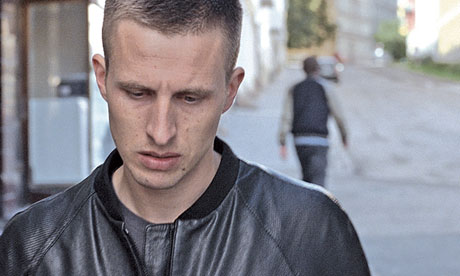
1) Oslo, August 31st (Joachim Trier, Norway) This bleaker-than-bleak exploration of drug addiction hypnotically deconstructs the genre, exposing previous entries like 2000’s Requiem for a Dream as oddly glorified and even romanticized. As with his surprise hit Reprise (2008), the soundtrack for Trier’s film (Chromatics, White Birch) seals the colder-than-cold universe that lead character Øystein (played brilliantly by Anders Borchgrevink) inhabits. Not for folks who can’t handle needles dangling out of arms.

2) This Is Not a Film (Jafar Panahi, Iran) As immediate as a heart attack, this 75 minute documentary by prison-bound Iranian filmmaker Jafar Panahi (who is serving a six-year sentence with a 20-year ban on directing films or even talking to the media), truly is not a film. What is it actually? How about a terrifying cry for expression from one of the most daring and political filmmakers alive. While the world waits for his hopeful release, go watch The White Balloon (1995), The Mirror (1997), The Circle (2000), Crimson Gold (2003), and Offside (2006) as soon as possible.

3) Mausam (Pankaj Kapur, India) Withdrawn from the festival’s public screening schedule at the last minute due to censor complications by the Indian Film Board, this epic melodrama starts out joyous and clean-shaven and devolves into a ferris wheel of destruction. While the tone feels off-balance in the film’s second half, especially with its baffling sequences mimicking Top Gun (1986), Sonam Kapoor’s devastating performance, combined with some foot stompin’ singing and dancing, make this a quite enjoyable ride. Indian censors put a disclaimer before the film, explaining that the Indian Air Force did not approve the film’s presentations of flight sequences or fire explosions.

4) The Ides of March (George Clooney, USA) In the same vein as Michael Ritchie’s The Candidate (1975) and Tim Robbins’ Bob Roberts (1992), George Clooney explores the nooks and crannies of the contradictions and hypocrisies of the idealistic Democratic Party. Whereas those films were ripe with cinema verite stylings, Clooney oddly steers clear of any sort of artistic pretension and lets his actors (Ryan Gosling, a snaggletoothed Paul Giamatti) chew up the scenery.

5) Into the Abyss (Werner Herzog, Germany/Canada) This dark and memorable look at death row inmates as well as the families of the victims should spark some spectacular debates, in true Herzog fashion. Though he sometimes only had 15 minutes to interview a particular prisoner, Herzog’s footage is gripping; the finesse of Herzog’s longtime editor Joe Bini helps make the subjects seem human — not simply, solely, monsters, but rather people who have committed monstrous acts. I can’t stop thinking about this one.

6) Le Havre (Aki Kaurismäki, Finland) The almighty Finnish filmmaker is back with yet another old fashioned morality tale for the Nick Cave generation. His characters may be a whole lot older than those in Leningrad Cowboys Go America (1989), but Kaurismäki’s take on the world is just as delightfully offbeat as ever, when an eight-year-old African refugee washes ashore in a small town in Finland. As the kindly Marcel (André Wilms) and other townsfolk do their best to protect the boy from a policeman who feels like he’s just stepped out of 1940s film noir, time seems to be running out for Marcel’s longtime life partner. Be prepared for a handful of frogs getting caught in your throat as this mini masterpiece gently rests itself onto your list of underrated films in the coming year.

7) A Dangerous Method (David Cronenberg, Canada/Germany/UK/Switzerland) Don’t believe those disappointed critics! This tightly-knit theatrical adaptation accessibly explores the worlds of Freud and Jung with a precise coldness that should remind Cronenberg fans of Dead Ringers (1991) and Spider (2006). And while this film isn’t as gooey as his visceral entries Videodrome (1983) and A History of Violence (2005), the absence of spilled guts is exactly why this film might reach a much wider audience. (Folks who may keep their psyches much cleaner than you or I). Potential Oscar nods are in order for a jaw-dropping Keira Knightley and the ever-flawless Viggo Mortensen.

8) Keyhole (Guy Maddin, Canada) Given $100k to make anything he’d like (“I could’ve taken a Polaroid and pocketed the rest”) Canadian enfant terrible Guy Maddin has concocted yet another whirlwind of black and white tears, repressed fears, and a lifetime of forgotten years. With more oppressed family members hidden away in closets and attics than a V.C. Andrews book, the psychotic camerawork, ominous narration, and ever-present rapid-fire editing equals offbeat cinematic bliss.

9) Jeff Who Lives at Home (Jay Duplass and Mark Duplass, USA) The Duplass Brothers have officially gone Hollywood. Jason Segal is a perfect fit for the brothers’ slacker lead and Susan Sarandon plays his poignant mother perfectly. It’s Ed Helms who’s the odd one out in this surprisingly moral tale; he seems to overplay his middle-class character rather than disappearing into the role. Though the film is funny, it’s more of a drama than a comedy; for that reason (along with its big-name cast), Jeff might be the Duplasses’ first big hit. It just feels a bit half-in/half-out. Either way, you’ve got to root for the Duplass Brothers. Plus this film should make you appreciate how priceless last year’s underrated Cyrus (2010) truly was.

10) Dark Horse (Todd Solondz, USA) For better or worse, Todd Solondz has made a name for himself. And his latest is right on par with the rest of his films. In fact Dark Horse could be a remake of his debut Welcome to the Dollhouse (1995), but this time we’re following a 250-pound Jewish man child, Abe (Jordan Gelber) who still lives at home, collects action figures, and hates just about everyone on the planet. The film plays like a live-action adaptation of Chicago cartoonist Chris Ware’s Rusty Brown as Abe defiantly self-destructs as well as destroys everything he may or may not love. Will polarize audiences, per usual for Solondz, as audiences question if he’s being mean-spirited or just self-reflexive. (I can’t wait to watch it again.)

Coming soon: more of Jesse Hawthore Ficks’ takes on the 2011 Toronto International Film festival, including films from Lars von Trier, Michael Winterbottom, and … Bobcat Goldthwait? Ficks teaches film history at the Academy of Art University; he also curates the Midnites for Maniacs film series, celebrating celebrates dismissed, underrated, and overlooked films.

Foreplay: Two pre-Folsom scenes

0

As Folsom Street Fair (Sat/24) looms over us like a leather daddy with an itchy whip paw, the city readies itself for the roughest, naughiest, sweatiest weekend of the year. Yesterday, I ran all over the city checking in with the sex scene. I kept my clothes mostly on, but then it is only Thursday… 

Monarchy-Andrew Wedge fitting at Mr. S Leather

“This is Spartaaa!” I’m standing outside one of SoMa’s crucial leather one-stops with an old hand local kink photographer Rich Trove (check his site after the Fair for shots of your flings in the sunshine) and a fashion journalist from the Chronicle. Guess which one is trying to explain to the other what a traditional S&M harness looks like?

Our motley crew has been assembled by Folsom Street Fair’s executive director Demetri Moshoyannis to lurk around Mr. S‘s fitting room while British synthpoppers Monarchy was being fitted for their custommade Andrew Wedge harnesses. The band will be wearing them at their FSF performance on Sunday at 5:10 p.m. on the 12th Street stage. 

“We have no idea what we’re in for,” smiled a member of the band’s entourage. Of course, that wasn’t exactly true — keyboardist Andrew Armstrong attended the fair with a friend six years ago. 

“It kind of freaked me out in a good way,” said Armstrong, modeling the tight neoprene half-tank that Wedge (who vends high end fur and leather designs from places like the Castro’s Sui Generis) had fit over he and his bandmate’s white dress shirts and under the sharp black blazers they were sporting. 

“There’s something a bit religious about it,” he said of Wedge’s designs, which had been agreed upon after a series of emails between the two of them. “It’s futuristic, but masculine as well. Even though we’re basically wearing bra tops.”

“England is very prudish. Well, we take these things seriously, but we do it behind closed doors,” he continued. Again, I found it hard to take him at his word, seeing as the band supplied its own imposing, matching black latex masks for the occasion. They don’t go out in public without them, it turns out, a comment on the nature of celebrity. 

The crew and designer lined up for one last photo opportunity in front of Mr. S’s black leather and harness covered four post king-sized bed. “Not in front of the dildos!” cautioned Moshoyannis. “We want these to be pictures they can use.” Clearly he meant in the Chronicle. 

Side note: if you’re still checking for some sexy threads for this weekend, you could do worse than check out Mr. S’s new sports section. Complete with urinals on the walls and an impressive selection of wrestling singlets, I found myself especially turned on by the display of $12 Style Pig knee socks. I picked some up in red, or as the helpful sales assistant clarified, fisting.


Good Vibrations’ Indie Erotic Film Festival at the Castro Theatre

Best reason to finally buy an iPhone: the Ohmibod Freestyle G. I snagged the mp3 compatible vibrator (really, really feel the rhythmn on your favorite beats) at the IXFF’s pre-party upstairs at the Castro, where Jiz Lee, Carol Queen, Kitty Stryker, and other SF local lustfuls drank cocktails of St. George absinthe and rootbeer, slapped on costume mustaches and generally enjoyed the burlesque stylings of Twilight Vixen Revue. 

When the short erotic film competition began, it got surprisingly jocky. Lucia Aniello’s Dildo Sport, Kelly Robinson and Oscar Salisbury’s Fight, Flight, Or Fuck, and Rollo Wenlock’s computer-aged 30 Love all featured tennis, so I guess the New York Times article was onto something with that balls metaphor

“30 love” – short film. from Rollo Wenlock on Vimeo.


Not everything was heavy breathing-appropriate, either. SF’s own Levni Yilmaz entered one of his backlit Magic Marker-ed creations from his series “Tales of Mere Existence,” What Would Penis Do?, a look at his awkward childhood forays into sexual activity. There was the quirky bunnies and peanuts and women’s rooms in Always, Only, Ever — an entry from Barbara Benas of Brooklyn — not to mention an I-guess-hot tryst between a female American soldier and burkha-clad woman in a designer cave, Julien Rotterman’s Salam and Love

But some of it was. Erika Lust — who earlier this week had an IXFF evening dedicated to her erotic, high glamour European flicks — shared Love Hotel, a threesome flick that made a trip to Barcelona seem highly advisable. Sadly, as the evening’s hosts (Peaches Christ, Hugs Bunny, Lady Bear, and Dr. Carol Queen — when Carol Queen plays the evening’s straightman you know you’re in for it) pointed out, Lust edited out all signs of genitals. Sigh.

The evening’s winner, as determined by an overwhelming audience response at the end of the night, was La Putiza. Created by Mexican director Gerardo Delgado, the short flick combined erotic comic art, overblown superhero crusading, and joyful, copious amounts of gay sex. Sure, the aesthetic was refined and the lead actor was fuckable, but one suspects that the secret to Delgado’s success, entering into this most phallic of all SF weekends, went back to Peaches Christ’s gleeful promise at the start of the night’s program: 30-foot penises. For Good Vibes’ interview with the filmmaker, voyage here

Thanks Castro Theatre, hope we didn’t make too much of a mess. 

Other Cinema remembers Helen Hill with “The Florestine Collection”

0

Other Cinema kicks off its fall 2011 season Sat/24 with a bittersweet program: the local premiere of Helen Hill‘s The Florestine Collection — her last film, left unfinished after her 2007 death, completed thanks to the dedicated efforts of her husband, Paul Gailiunas. Hill was only 36 when she was shot to death by an intruder (still unidentified) who broke into her New Orleans, LA home; her husband was injured but survived, and the couple’s toddler thankfully escaped unharmed.

South Carolina-born Hill made her first film at age 11, attended Harvard for undergrad, and received her MFA from California Institute of the Arts. Her unique animation techniques (including cut-out puppets) drew from the fairy-tale works of groundbreaking German animator Lotte Reiniger (whose remarkable filmography stretched from the 19-teens up through the 1970s) as well as DIY methods like hand-processing. She was continually inspired by her adopted hometown of New Orleans, as well as her chosen activist causes, including Food Not Bombs and animal rights. She also created the 2001 reference tome Recipes for Disaster: a Handcrafted Film Cookbooklet.

http://www.youtube.com/watch?v=o7ReG3l_9fM

Hill’s upbeat, friendly attitude (“I love New Orleans!”) and excitement at helping to set up the New Orleans Film Collective (you can also catch a glimpse of her pet potbellied pig!) are evident in this 2003 interview with Timecode: NOLA. The Florestine Collection was inspired by a particularly special day in 2001 (detailed in this interview with Gailiunas) when Hill discovered some 100 handmade dresses discarded after the recent death of an elderly seamstress. Hill’s reaction (per the article: “‘This is the best trash-pile find in the world!’ she exclaimed”) was followed by curiosity about the woman’s identity; the film reflects her findings. Joy and wonder, it seems, were two of Hill’s most accessible emotions — and despite her tragic, terrible death, her work lives on to inspire other creative thinkers and free spirits.

Other Cinema’s program also includes a slew of work by other experimental animators, including Martha Colburn, Kelly Sears, Jim Trainor, Janie Geiser, and more; the fall season runs through Dec. 17 and includes nights dedicated to such diverse topics as Muzak, Mexico and Canada, eco-horror films, social media, and Marshall McLuhan. In other words, fans of strange and unusual cinema: your Saturday nights are set until 2012.

Sat/24, 8:30 p.m., $6
Artists’ Television Access
992 Valencia, SF
www.othercinema.com

Hot sexy events: September 21-27

1

Pretty much, today’s whole paper is a hog-tied, historical, self-confessional smutfest of San Franciscan proportions. It only makes sense, because I dare say this week of sex events will reach levels of debauchery that even the City by the Bay can be happily ashamed of. 

Yep, it’s the Folsom Street Fair sex events column! Including things that aren’t Folsom Street Fair also, like Mission Control’s genderqueer play party, a Good Vibes film fest, and an art exhibition that’ll leave you panting.

Indie Erotic Film Fest short film competition and party

The culmination of a week of alternative porno presentations, tonight’s docket includes short blue films from around the world – something for everyone in this wild and wooly world of voyeurs. But cum early – the pre-screening party in the top floor of the Castro is gonna be balls, or at least mustaches. There’s a mustachio-ed photobooth and even more titillating, burlesque dancing courtesy of Twilight Vixen Review. 

Thu/22 party 7 p.m., screenings 8 p.m., $10 each

Castro Theatre

429 Castro, SF

(415) 621-6120

www.gv-ixff.org


Steam does Folsom

Get squeaky-durty at this installment of Steam, the SoMa bathouse resurrection party. So many ways to play: enter into the wet towel contest ($100 prize for the best terrycloth tease), massages for $1 per minute, cheap drinks, cheaper go-gos, and hard crusing into the kinkiest weekend in the Bay. Tunes by Honey Soundsystem’s DJ Peeplay help you get some. 

Fri/23 9 p.m.-2 a.m., $8 cover to benefit the SF Bay Area Leukemia and Lymphoma Society

Powerhouse 

1347 Folsom, SF

Facebook: Steam Does Folsom


San Francisco erotic art exhibition

From the candy-coated gazes of Yancy Mendoza’s models to the unique sextaur sculpture stylings of Peter Keresztury, there will be enough images of penetration, playtime, and penis at this group art exhibition to merit a stopover in your weekend of hedonism rendered art. 

Fri/23, 4-9 p.m.; Sat/24, 1-9 p.m.; Sun/25, noon-5 p.m., free 

The Artists Alley

863 Mission, SF

www.eroticartevents.com


Velvet

Play in the SF girls of Leather “fungeon,” and have a genderqueer good time overall at Mission Control’s queer-trans-boi-butch-femme puppy pile. Scenes from the Crash Pad Series will be playing all night to ensure that you’ve got inspiration for all the naughty things you’re about to do to your alt sex cupcake. 

Fri/23 8 p.m.-2 a.m., $20 Mission Control members only

Mission Control

www.missioncontrolsf.org


Show Me Where it Hurts

Sardine-pack into a crowd of the hottest, kinkiest dykes on the scene at this free party at the Lex. But dress to impress: Elizabeth and Buck Wilder are performing, DJs Jenna Riot and Durt are spinning… you’ll wanna look whip-smart at the night’s fetish-uniform costume contest. 

Sat/24 9 p.m., free

Lexington Club

3464 19th St., SF

www.lexingtonclub.com


Folsom Street Fair

400,000 fetish fans packed into 13 sunny city blocks – the mother of all fetish fairs takes over SF this weekend. Check for hard-bodied, sweaty-fisted action all over the place, but also the annual erotic artist’s corner and two stages of live music all day. Oh and hey, for a rad look at women’s role at the fair over the years, check out Amber Schadewald’s cover story on the SF girls of Leather from early this summer. 

Sun/25 11 a.m.-6 p.m., $10 suggested donation

Folsom between Seventh and 12th sts., SF

www.folsomstreetfair.org


Deviants: Official Folsom Street Fair after-party

There’s gonna be so much bump and grind at this union of Honey Sound System, Some Thing, and Hard French DJ crews that your harness will go bald. It’s only right – a minutes-long stumble from the main event in SoMa today gets you to the Erie Street cul-de-sac that Public Works looms over. Today, it’ll be blocked off for a outdoors-indoors party that have you screaming for more. The party features the hostessing powers of Sex Issue star Princess Donna http://bit.ly/oQu9mn and a photo confession booth staffed by queer porn maven Courtney Trouble. 

Sun/25 3 p.m.-4 a.m., $20-30

Public Works 

161 Erie, SF

www.publicsf.com


San Francisco Smut Map

3

culture@sfbg.com

SEX ISSUE 2011 In 1969, San Francisco became the first city in the country to permit the exhibition and sale of hardcore pornography. Although “permit” isn’t exactly right. The city’s vice squad (with the help of Supervisor Dianne Feinstein) fought it every step of the way. But by the time a rag-tag band of hippies with cameras began harnessing the Free Speech movement to challenge obscenity laws, San Francisco had already become, in the words of the New York Times, “a sort of Smut Capital of the United States.”

Earlier this year, director Ben Leon and I produced Smut Capital of America, a documentary short about San Francisco’s flesh-filled reign as the center of U.S. hardcore. (The skin flick industry didn’t move down to San Fernando Valley until the 1980s, when VHS took over and Los Angeles stopped arresting filmmakers.) The film industry itself may have been shaved and plucked, but San Francisco never lost its filthy patina, thank god.

Here are a few of the filthy great places, classic and new, that any self-respecting San Francisco pervert and/or fan might want to map.

1. The Condor Club

560 Broadway

The first topless dance took place in 1964 at the Condor when Carol Doda took to the stage in designer Rudi Gernreich’s revolutionary “monokini.” The bathing suit never really caught on, but topless dancing became an export that would become synonymous with San Francisco.

2. The Mitchell Brothers O’Farrell Theatre

895 O’Farrell

The good ol’ boys from Antioch made a fortune with movies like Behind the Green Door, but when obscenity busts began taking their toll, they moved to live shows. The place still give a great lap dance, but the days when you could eat a girl out for a dollar are long gone.

3. The Strand

1127 Market

I once heard it referred to as a stop on the underground gay railroad — and for good reason. While this theater showed big Hollywood movies and noir retrospectives, the balcony was the cruisiest, bleachiest-smelling place in town.

4. The Magazine

920 Larkin

This still-operational vintage magazine shop has never shied away from porn. And since few museums find it palatable to save smut, it’s a living archive of the sexual revolution, balls, and all.

5. The Screening Room

220 Jones

In 1970, the Screening Room became the first theater in America to show hardcore pornography, with a law-skirting documentary about the free-loving Danes called Pornography in Denmark. Director Alex deRenzy set off a cinematic revolution, and earned a profile in Time magazine. Perhaps fittingly, it’s now the Power Exchange sex club.

6. The Roxie and the New Follies

3117 16th Street and 2961 16th Street

Long before it was an indie movie rep house, the Roxie showed soft-and hardcore 16mm loops shot by the Mitchell Brothers, then just out of college. The New Follies, just down the street on then smut-filled 16th Street (it’s now the Victoria), pioneered bottomless dancing, and later, live sex shows.

7. The Sutter Theatre

369 Sutter

Arlene Elster and Lowell Pickett plotted the International Erotic Film Festival at their theater off Union Square in 1970, when the area was still known as the downtown Tenderloin. The films themselves screened at the prestigious Presidio Theater in the Marina with a red carpet covered by KPIX. Even smut-opponent Dianne Feinstin showed up to rant against the duo’s “very depraved wares.”

8. Le Salon

1118 Polk Street.

“There out to be a plaque on the building,” says Bay Area Reporter porn critic John Karr, who went to this bookstore to cruise and flip through dirty magazines. Store owner Roland Boudreaux eventually opened a non-smut operation next door with a connecting doorway so that customers could leave and enter without attracting stares from high-society queens.

9. The Lusty Lady

1033 Kearny

The original Lusty Lady showed 16mm films, but by the early ’80s this North Beach smut center had live dancers as well. In 1997, the dancers organized an Exotic Dancers Union to make it the first unionized sex club business in the United States. In 2003, they bought the business, making it a worker-owned cooperative.

10. The Gordon Getty Mansion

2050 Jackson

During the ’80s and ’90s, this Pacific Heights mansion was the home of smut merchant and Falcon Studios honcho Chuck Holmes, whose name now graces the LGBT community center on Market Street. In the afternoons, he shot gay porn in the basement. In the evenings, he hosted spectacular galas to raise money for visiting politicians.

11. The Armory

1800 Mission Street

Does anyone not realize that this former munitions warehouse now houses an arsenal of dildo-equipped robots and that the National Guard training hall is used to film “Wired Pussy” episodes? Thanks, Kink.com for making sure San Francisco is still known as the Smut Capital of America.

Difficult loves

0

arts@sfbg.com

FILM The critic Quintín began his review of Mysteries of Lisbon in last winter’s Cinema Scope by noting that the film’s lavish production and strong reception marked a welcome turnaround for its director Raúl Ruiz, who in the years prior struggled with funding and illness. Though produced for Portuguese television, the film won awards and raves on the festival circuit. Suddenly, Ruiz seemed more assured his rightful status as a master. A year later Mysteries of Lisbon arrives for a rather miraculous theatrical run — but Ruiz is gone. He died in August 2011, having directed many more films than his 70 years.

Ruiz’s films have typically been the province of hardcore cinephiles, but this splendid epic holds wider appeal. It’s difficult to think of another movie that so satisfyingly captures the intricacies and volatilities of the 19th century novel — anyone enthralled by the teeming creations of Balzac and Dickens will find that Mysteries of Lisbon‘s four-and-a-half hours stream by. Ruiz was no stranger to the 19th century — his recent films included Klimt (2006) and the Proustian Time Regained (1999) — but the ornately plotted trio of novellas by Portuguese author Camilo Castelo Branco which supply these mysteries seem specially tailored to the director’s affinity for involved narrations.

The story sweeps across dozens of characters and several generations of doomed love, revenge plots, disguised identities, uncertain parentages, and religious vows. We even glimpse the Napoleonic Wars. It’s gripping stuff, in other words, and Ruiz meant it that way — the film refutes the idea that an analytical narration style upbraids narrative pleasure (a cornerstone of much structuralist film theory). One hesitates to launch into describing Mysteries of Lisbon‘s plot, not only because there’s such an awful lot of it, but also because it risks underselling the brilliant means by which information is divulged.

It begins with an adolescent searching out his origins. Pedro da Silva lives under the care of kindly and knowing Father Dinis. The boy becomes dimly aware of his mother, Angela de Lima, when he’s sick with fever (realized with a neat impressionistic distortion). In the film’s first flashback, to the near past, we learn of her cruel treatment at the hands of her husband, the Count of Santa Bárbara. She eventually flees to the church, whereupon her history of misfortune tumbles out in a deeper flashback narrated by Dinis: her passion for Pedro’s father and the iron disapproval of her father, the Marquis de Montezelos. After contracting the elder Pedro’s murder to his thug, Knife Eater, Marquis arranges for the man to snuff out his daughter’s bastard child at birth. A gypsy bargains for the baby’s life from Knife Eater, and that gypsy, we later learn, is one and the same as Father Dinis.

The priest’s shadowy transformations provide a recurring template for Mysteries of Lisbon, as does his eventual commitment to God. An intermission is shrewdly positioned so that the beginning of the second half begins with another origin story — Dinis’s own. The Samsaric wheel of lost love and filial abandonment turns again. A new set of characters emerge, including a mysterious capitalist posing as a Brazilian import who eventually marries the Count of Santa Barbara’s mistress, Eugénia, and takes a peculiar interest in Pedro’s well-being. His former lover, the bewitching Duchess of Cliton, lives for revenge and arouses the idealistic romance of Pedro, now a young man: it seems we’ve spun through the past long enough for him to age.

Delirious yet? That narrow introduction doesn’t begin to convey the vertiginous experience of Mysteries of Lisbon‘s discoveries and resonances. By moving steadily further from the young Pedro’s frame of reference, Ruiz suggests that every doomed love is its own even as they are invariably connected. The immersive nature of the flashbacks all but obliterates any semblance of Pedro’s narrative through line, and leaves us vulnerable to alluring déjà vu (key repetitions of specific objects, framings, and dialog within different spheres of the plot). If Ruiz is partly poking fun at literary convention by repeatedly framing eavesdroppers in the extreme foreground and backgrounds of the frame, for instance, he’s also giving us tangible figures of the thread that connects these disparate stories.

Ruiz’s narrations are commonly likened to labyrinths, but for Mysteries of Lisbon‘s vigorous expansion I reach for the cosmos: one luminous sphere rotates another which in turn rotates a larger system, the whole of it spreading outwards in all directions at once. There are many other ways one could model the narrative’s abundance — in interviews Ruiz cited the mathematical concept of overflow — but the point is not so many films inspire this kind of reflection. And if complexity is one measure of the film’s greatness, flexibility is surely another. Throughout, Ruiz demonstrates that a distant long take need not be emotionally remote; that a shot can reveal as it conceals; that dramatic irony can fluctuate, giving knowledge itself an almost textural quality.

In one of the few scenes set outside a gilded room or convent, the older Pedro searches out his mother’s grave. There he meets his grandfather, the formerly imposing Marquis, now a deluded blind beggar. It’s the umpteenth case of a character cropping up in a different mask, and this one seems the most obvious kind of poetic justice. As the Marquis exits, his beggar companion approaches Pedro. He redundantly recounts the Marquis’ fall, but then adds his own insight, that nobility’s great tragedies are simply the stuff of life for beggars. Ruiz remains light on his feet well past the four hour mark, always prepared with another shift in perspective. Mysteries of Lisbon is not the kind of masterpiece you expect of an old man, but then Ruiz clearly had little use for such a simplistic concept of time. 

MYSTERIES OF LISBON opens Sept. 30 in San Francisco.

Twee of life

0

arts@sfbg.com

FILM For a while there it looked like Gus Van Sant, one of the most interesting U.S. directorial sensibilities of the last quarter-century, was going to settle for cashing the checks that have lured many an “edgy” artist over to the dull dark side. His mainstreaming began with the mixed rewards of 1995’s To Die For, peaking commercially with 1997’s Good Will Hunting; Finding Forrester (2000) and Psycho (1998) weren’t justifiable choices on any terms.

But then with the quartet of Gerry (2002), Elephant (2003), Last Days (2005), and Paranoid Park (2007) he was back making films as small, idiosyncratic, personal, and (but for his name) less commercial than anything he’d done since 1986’s Mala Noche. You could call them brilliant, baffling, or boring, but they weren’t works of careerist complacency. Milk (2008) was something else, crafted to reach as many as possible politically. It was a very good rather than great movie, coaxing a warmth and ebullience previously unseen from Sean Penn.

After that streak, it’s no big deal that Restless isn’t very good, let alone great, or that it falls between personal and mainstream categorization — small enough to pass as the former, formulaic enough for the latter. What is notable, however, is that it’s bad in ways Van Sant hasn’t hazarded before, and which you might reasonably have thunk he never would. Yes, Psycho, and maybe 1993’s excessively dissed Even Cowgirls Get the Blues, is still worse. But Restless is pandering and insufferable: it’s got a case of the cutes so advanced the protagonists might as well be puppies and kittens.

Making use of a certified “eccentric” identifier that (if you swap in 12 step meetings, etc.) is already an overexposed narrative gimmick, Jason Lew’s script introduces pettable Enoch (Henry Hopper) as a teenage loner so affectedly angst-ridden his primary occupation is attending the funerals of complete strangers. At one such he meets the perky, equally quirky Annabel (Mia Wasikowska), who finds his surliness delightful and presses friendship upon him. It’s not going to be a major commitment, as she soon explains she’s in treatment for cancer with a very limited remaining lifespan.

Drawn by overlapping cute fixations on morbidity (both have dead parents as well), they are fast spending all their time together, to the somewhat ill explained annoyance of her older sister (Schuyler Fisk). (He’s living with an aunt played by Jane Adams, who gets so little to do here one suspects most of her part is on the cutting-room floor.)

They do moderately wacky things and share secrets, the latter including his conversations with imaginary friend Hiroshi (Ryo Kase), the ghost of a fictive downed World War II kamikaze pilot. (Adding to the Charlie St. Cloud like levels of twee, despite his made-up status wise Hiroshi sometimes knows things Enoch doesn’t yet, and eventually Annabel can see him, too.) Both have plenty of time on their hands because, well, she’s dying and he’s been expelled from school for reasons that naturally turn out to be rather noble.

All young lovers fancy themselves in their own special world beyond others’ full understanding. But Restless buys into that specialness with a vengeance. Its romanticism is that an arrested-adolescent type spanning the tuberculic etherealism of those wasting Victorian heroines Edward Gorey parodied, the girl-dying-from-too-much-spiritual-radiance Love Story (1970) formula, and the smiley face noncomformism of Harold and Maude (1971) and its ilk, wherein acting childish was a rebellious act of sticking it to the Man. In such narratives our protagonists almost never have jobs, likable relatives, or other real-world responsibilities, the better to act out fey fanasties together, then wallow in picturesque pathos alone. They’re their own Make a Wish Foundation, 24/7.

Puppies and kittens are cute, and getting suckered by this kind of enterprise is hardly the worst form of audience manipulation. But why is Van Sant playing enabler? One suspects there was something irresistible about first-time scenarist Jason Lew, just as there doubtless was to Matt ‘n’ Ben (Good Will Hunting) and to Milk‘s Dustin Lance Black.

But those choices were solid ones, at least. Always a fan of youth, the director is to be applauded for encouraging fledgling talent offscreen as well as on it. Still, occasional traces of his recognizable style hardly dilute the sugary sentimentality at the core of Restless, lend it actual gravitas or even the kind of fanciful mood that might excuse potential preciousness as fable. Twenty-two-but-passing-for-younger of the moment Wasikowska is fine, though she has been and will be better. Hopper, son of Dennis — how did such scrubbed, nonthreatening blond adorability arise from that gene pool? — is less evidently an actor in his first film than a prepube’s pinup successor to Justin and Zac. Not that he’s asked to act so much as pose fetchingly, of course. It may be Lew’s idea to make Annabel the “mature one,” but it feels very much Van Sant’s to let the camera fawn so devotedly over Enoch. 

RESTLESS opens Fri/16 in Bay Area theaters.

Rep Clock

0

Schedules are for Wed/21-Tues/27 except where noted. Director and year are given when available. Double features are marked with a •. All times p.m. unless otherwise specified.

ARTISTS’ TELEVISION ACCESS 992 Valencia, SF; www.atasite.org. $6. “Periwinkle Queen Cinema Series,” short films, Wed, 8. “Films from Four Mountain Ranges by Marcy Saude,” Fri, 8.

BALBOA 3620 Balboa, SF; www.balboamovies.com. $20. “Opera and Ballet at the Balboa:” La Traviata, performed at the Royal Opera House, Wed, 7:30. •Class Concert and Giselle, performed by the Bolshoi Ballet, Sat-Sun, 10am.

BERKELEY FELLOWSHIP OF UNITARIAN UNIVERSALISTS 1924 Cedar, Berk; (510) 841-4824, www.bfuu.org. $5-10. The Battle of Chernobyl (Johnson, 2006), Fri, 7.

CASTRO 429 Castro, SF; (415) 621-6120, www.castrotheatre.com. $7.50-15. Mary Lou (Fox, 2010), Wed, 2, 5:15, 8:15. “Good Vibrations Indie Erotic Film Festival,” party and short-film competition (more info at www.gv-ixff.org), Thurs, 7. The Little Mermaid (Clements and Musker, 1989), presented sing-a-long style, Fri-Sun, 7pm (also Sat-Sun, 2:30).

CHRISTOPHER B. SMITH RAFAEL FILM CENTER 1118 Fourth St, San Rafael; (415) 454-1222, www.cafilm.org. $5.50-10.25. The Hedgehog (Achache, 2010), call for dates and times. Love Crime (Corneau, 2010), call for dates and times. Mozart’s Sister (Féret, 2010), call for dates and times. Senna (Kapadia, 2011), call for dates and times. A Fall From Freedom (Minasian, 2011), Sun, 7. Farmageddon (Canty, 2011), Sun, 4:15.

“FILM NIGHT IN THE PARK” This week: Dolores Park, 19th St at Dolores, SF; (415) 272-2756, www.filmnight.org. Donations accepted. Top Gun (Scott, 1986), Sat, 8.

JACK LONDON SQUARE 66 Franklin, Oakl; www.jacklondonsquare.com. Free. “Waterfront Flicks:” Chocolat (Hallström, 2000), Thurs, sunset.

MECHANICS’ INSTITUTE 57 Post, SF; (415) 393-0100, rsvp@milibrary.org. $10 (reservations required as seating is limited). “CinemaLit Film Series: Euro Passages:” Since Otar Left (Bertuccelli, 2003), Fri, 6.

“OAKLAND INTERNATIONAL FILM FESTIVAL” Grand Lake, 3200 Grand, Oakl; www.oakuff.org. $10. Yelling to the Sky (Mahoney), Thurs, 8. Also Fri, 7:30 and Sat, 5:15 at NIMBY, 8410 Amelia, Oakl. Films, music, and food trucks.

PACIFIC FILM ARCHIVE 2575 Bancroft, Berk; (510) 642-5249, bampfa.berkeley.edu. $5.50-9.50. “Kino-Eye: The Revolutionary Cinema of Dziga Vertov:” A Sixth Part of the World (Vertov, 1926), Wed, 7:30; Enthusiasm: Symphony of the Donbass (Vertov, 1930), Fri, 7; Kino-Pravda, Nos. 1-8 (Vertov, 1922), Sun, 2; Kino-Week Nos. 1, 3, 4, 5, 21–25 (1981), Tues, 7. “UCLA Festival of Preservation:” “On the Vitaphone: 1928-1930,” Thurs, 7. “A Theater Near You:” Diary of a Country Priest (Bresson, 1950), Fri, 8:30 and Sun, 4:15. “Anatolian Outlaw: Yilmaz Güney:” Yol (Güney and Gören, 1982), Sat, 6:30; The Friend (Güney, 1974), Sat, 8:40.

LA PEÑA CULTURAL CENTER 3105 Shattuck, Berk; www.lapena.org. $5. “FistUp Hip-Hop Film Festival:” Black August (2010), Thurs, 7:30.

PRESIDIO 2340 Chestnut, SF; sfslunchline.eventbrite.com. $5. “Slow Food on Film presents:” Lunch Line (Park and Graziano, 2009), Thurs, 6.

ROXIE 3117 and 3125 16th St, SF; (415) 863-1087, www.roxie.com. $5-9.75. Cold Fish (Sono, 2011), Wed, 6:50, 9:35 and Thurs, 9. The Future (July, 2011), Wed-Thurs, 7 (also Wed, 9). “San Francisco Irish Film Festival:” The Runaway (Power, 2010), Thurs, 8; festival continues Wed-Sun. Visit www.sfirishfilm.com for schedule.

SAN FRANCISCO PUBLIC LIBRARY 100 Larkin, SF; www.communitycinema.org. Free. “Bay Area Community Cinema:” Women, War, and Peace (Disney, Hogan, and Reticker), Tues, 5:45.

SFFS NEW PEOPLE CINEMA 1746 Post, SF; www.sffs.org. $13-15. “Hong Kong Cinema,” recent films from Hong Kong directors Benny Chan, Ann Hui, Johnnie To, and more, Fri-Sun.

YERBA BUENA CENTER FOR THE ARTS 701 Mission, SF; (415) 978-2787, www.ybca.org. $6-8. “Greetings on Behalf of the People of Our Planet!,” short “live documentaries” by Dave Cerf and Sam Green, Thurs and Sat, 7:30.

Our Weekly Picks: September 21-27

0

WEDNESDAY 21

Veronica Falls CANCELLED

Apparently, this UK indie rock band found its relaxed retro pop sound right from the get-go. Singles “Found Love in a Graveyard” and “Beachy Head” combined jangly, propulsive rhythms with light, morbid lyrics for a result that could easily find an anachronistic home in the recent remake of Brighton Rock (and not just because every video for the band looks like it was ran through a Hipstamatic app.) Now with a self-titled debut album on Slumberland Records, Veronica Falls is scheduled to tour in support of the Drums and Dum Dum Girls next month. This will be their West Coast record release show. (Ryan Prendiville)

With The Mantles, Brilliant Colors

9 p.m., $13

Brick and Mortar Music Hall

1710 Mission, SF

(415) 800-8782

www.brickandmortarmusic.com


THURSDAY 22

Teengirl Fantasy at Icee Hot

They put something in the water over at Oberlin. Beach House, Blondes, Teengirl Fantasy. Now at work in the real world, which includes opening for Crystal Castles, Teengirl Fantasy has found a style that’s just as likely to draw from the pop charts as it is from their academic pedigree. A little Lil Jon on one track, a little Raymond Scott on the next. With cooled, slo-mo beats and hyped up MCs turned down, the result is an aural muscle relaxant, allowing you to focus on making bedroom eyes across the dance floor. Teengirl Fantasy comes our way to play monthly party Icee Hot. (Prendiville)

With Total Freedom, Magic Touch (Damon Palermo), Shawn Reynaldo, and Rollie Fingers

10 p.m., $5-10

Public Works

161 Erie, SF

(415) 932-0955

www.publicsf.com


FRIDAY 23

Smuin Ballet

The late Michael Smuin was not one of my favorite choreographers. But he left behind a substantial inheritance that had gained him respectable audiences. Smuin choreographed one his most serious pieces, “Stabat Mater” — Dvorak’s response to the death of his infant daughter — in the aftermath of 9/11. He also loved to play with pop eroticism; “The Eternal Idol” — you can see its inspiration at the Legion of Honor — and “Tango Palace” showcase that propensity. Amy Seiwert premieres what she calls her “most “Smuinesque” piece yet — to Patsy Cline. Not the least of the company’s attractions these days is the quality of its dancers. Parking around the Palace — because of the Doyle Drive reconstruction — is somewhat restricted, so plan for extra time. Muni 43 goes there as well. (Rita Felciano)

9/23-Oct.1

$25-62

Palace of Fine Arts, San Francisco

(415) 556-5000

www.smuinballet.org


FRIDAY 23

“Hong Kong Cinema”

Though this is the San Francisco Film Society’s first-ever Hong Kong Cinema mini-fest, there’s no shortage of HK film fanatics in this town, what with the SF International Asian American Film Festival, the programming at Frank Lee’s Four Star Theatre, and even the occasional HK flick that arrives via Hollywood. If you dug Benny Chan’s now-at-the-Four-Star Shaolin, you won’t want to miss his City Under Siege, about bank-robbing, superpowered circus performers. Also on tap: another superhero action comedy, Vincent Kok’s (Pixar-inspired?) Mr. and Mrs. Incredible; Clement Chan and Yan Yan Mak’s multigenerational drama Merry-Go-Round; All About Love, from Ann Hui (her latest, A Simple Life, has been tearing up the international fest circuit); Law Wing-cheong’s kidnap thriller Punished (starring Anthony Wong, always full of win); Alex Law’s coming-of-age drama Echoes of the Rainbow; and rom-com Don’t Go Breaking My Heart, a genre departure for action man Johnnie To. (Cheryl Eddy)

Through Sun/25, $13–$20

San Francisco Film Society New People Cinema

1746 Post, SF

www.sffs.org


FRIDAY 23

SF Cocktail Week: Barbary Coast Bazaar

San Franciscans have long enjoyed a romance with alcohol — from the debauchery of the Barbary Coast era, to the modern renaissance of the artisan cocktail, the city knows how to knock ’em back. Celebrate this high-proof history with SF Cocktail Week, which features a variety of tastings, dinners, seminars, and parties, including “Barbary Coast Bazaar,” a huge fete inside the Old Mint. Expect a roaring 1920s themed party, with vintage circus acts such as stilt walkers, jugglers, contortionists, magicians, and carnival games, along with food, and of course, a wide variety of tasty cocktails. (Sean McCourt)

SF Cocktail Week events run through 9/25, pricing varies

Barbary Coast Bazaar, 9/23

8-11 p.m., $85–$95

The Old Mint

88 5th St., SF

www.sfcocktailweek.com


SATURDAY 24

Moving Planet Worldwide Rally Day

You can make yourself sick thinking about it: what are you going to tell your kids (or — hey sexy single! — the neighbor’s kids) when they ask you what you did to stop climate change back when we still had a chance and the Bayview-Sunset commute didn’t call for a rowboat? Are we creeping you out? Then let us recommend Moving Planet Day. A worldwide rally for sustainability, it’s sponsored by 350.org and will include Sept. 24 actions from Buenos Aires to Nairobi. In SF, a march of self-propelled peoples on foot, bike, and skate will trek from Justin Herman Plaza to the Civic Center, where an afternoon of speakers, music, and other events awaits. (Caitlin Donohue)

10-a.m.-6 p.m., free

March starts at Justin Herman Plaza, SF

Afternoon activities at Civic Center Plaza, SF

www.moving-planet.org


Hank 3

The grandson of country music royalty, Hank Williams III, or as he’s now known, Hank 3, continues to hone his own brand of diverse music, releasing not one, but four brand new albums this month: Ghost to a Ghost/Guttertown, a double record in a country vein, Attention Deficient Domination, with more of a “hellbilly” feeling, and Cattle Callin, which is more on the metal side of things. The modern torch bearer of outlaw country is promising that this tour will touch on all of them, which he released through his own label, Hank 3 Records, and that fans can expect a two-and-a-half to thee-hour set at each barn burning show. (McCourt)

8:30 p.m., $26

The Regency Ballroom

1290 Sutter, SF

www.theregencyballroom.com


SATURDAY 24

Celsius 7

The superchill but often splendidly goofy Bay rapper, a former member of the Psychokinetics crew, hails from one of the golden ages of local hip-hop — that late ’90s-early ’00s period when earnest showmanship and a healthy dose of good humor trumped aggro attention-seeking, niche genre overload, and crass product placement. Cel’s kept himself busy through Bay rap’s recent twists and turns, though, traveling the world and dropping some ace tracks, all the while staying true to his roots. This release party for his poppin’ second solo album, Life Well Spent (which features a nice roster of collaborators including Dirt Nasty, iLL MEDiA, and Baby Jaymes) will showcase his grin-inducing verbal dexterity, be loaded with special guest appearances, and serve as a convention of true school heads. (Marke B.)

9 p.m., $10 (includes copy of album)

Shattuck Downlow

2284 Shattuck, Berk.

(415) 455-4735

www.shattuckdownlow.com


SUNDAY 25

Chinatown Music Festival

The Yerba Buena Center for the Arts has an exhibit going on called “Daily Lives,” a group showing by local Asian American artists that takes prosaic trinkets and uses them to express the psychic winds that ruffle our insides. This weekend, “Daily Lives” is taking this exploration of the private, public. Put on your dark glasses and check out the sidewalk art exhibit in Chinatown — where your ambling will be soundtracked by a day of rad live music; traditional tunes from the SF Guzheng Society and pianist Jon Jang (who will be sharing his recently-penned homage to the Xinhai Revolution of 1911), plus more modern grooves by the grown-up local kids in Jest Jammin’ and the SF Latin Jazz Youth Ensemble. (Donohue)

1-7 p.m., free

Portsmouth Square Kearny between Clay and Washington, SF

www.apiculturalcenter.org


SUNDAY 25

Ladytron

Given the harder direction that Ladytron has gone in over the last few albums — even touring with Nine Inch Nails — I was not expecting what I heard on Gravity the Seducer: ABBA. Whether or not they were invoking the Swedish gods of pop on purpose, the opener “White Elephant” sets a tone for a lighter album. Not simply a step backwards to the sounds of Ladytron’s early albums, it’s its most synthetically dreamy, spaced out record yet. Of course, harder and softer are relative terms with the band, which has generally stuck to a distinctive sound, becoming electronic pop mainstays and developing a cult following in the process. (Prendiville)

With SONOIO, Polaris at Noon, and DJ Omar

8 p.m., $25

The Regency Ballroom

1300 Van Ness, SF

(800) 745-3000

www.theregencyballroom.com


MONDAY 26

Dr Ruth

We all fondly recall Dr. Ruth Westheimer as the funny, entertaining, and educational “sexpert” that hit the mainstream media in the 1980s and 90s, but did you know her amazing background before she was a household name? Born in 1928 in Germany, she lost her parents in the Holocaust, and actually fought (and was wounded) as a sniper during Israel’s war of independence. The icon will be touching on all these subjects, along with her new book, Heavenly Sex: Sexuality in the Jewish Tradition, at tonight’s special event. (McCourt)

7 p.m., $20–$35

Jewish Community Center of San Francisco

3200 California St., SF

(415) 292-1200

www.jccsf.org


TUESDAY 27

Tony Bennett Night

As San Francisco Giants fans know, whenever the team wins a game here at home, the crowd exits the ballpark to the sounds of the legendary crooner Tony Bennett’s signature song “I Left My Heart In San Francisco.” The 85-year-old icon performed the song live at last year’s World Series, and the team is honoring him with this special event where he will be celebrated in a pre-game ceremony. He also will perform a short set, and fans will receive a “Tony Bennett” bobblehead that has a sound chip that plays his beloved ode to our city by the bay. (McCourt)

Game starts at 7:15 p.m.; arrive early for pre-game events. Pricing varies; see website for current availability.

AT&T Park

24 Willie Mays Plaza, SF

(415) 972-2000

www.sfgiants.com/specialevents


TUESDAY 27

Nurses

If you listened to Nurses’ earliest album, you might not recognize the groovy melodic rock trio that stands before you today, presenting 2011’s Dracula (Dead Oceans). In the past five years, the harmonic freak-folk band — with a penchant for toy instruments and pianos — has gone through lineup changes, sound modifications, and location shifts. The two Nurses mainstays, singer-guitarist Aaron Chapman and singer-keyboardist John Bowers, have lived in the sweet sunshine of San Diego, close quarters during cold winters — the tour van in Chicago — and finally, settled in the dewy DIY spirit of Portland, Oreg., where they gained drummer James Mitchell, and further developed their technique. But that’s the test of a true musician, isn’t it? The ability to roll with the punches, to grow, to evolve. (Emily Savage)

With Dominant Legs

9 p.m., $12

Cafe Du Nord

2170 Market, SF

(415) 861-5016

www.cafedunord.com


The Guardian listings deadline is two weeks prior to our Wednesday publication date. To submit an item for consideration, please include the title of the event, a brief description of the event, date and time, venue name, street address (listing cross streets only isn’t sufficient), city, telephone number readers can call for more information, telephone number for media, and admission costs. Send information to Listings, the Guardian Building, 135 Mississippi St., SF, CA 94107; fax to (415) 487-2506; or e-mail (paste press release into e-mail body — no text attachments, please) to listings@sfbg.com. Digital photos may be submitted in jpeg format; the image must be at least 240 dpi and four inches by six inches in size. We regret we cannot accept listings over the phone.

Film Listings

0

OPENING

Abduction A teenager (Taylor Lautner) sets out to find his true identity (duh, dude, everyone knows you’re a werewolf) in John Singleton’s action thriller. (1:46)

*The Black Power Mixtape 1967-1975 Cinematic crate-diggers have plenty to celebrate, checking the results of The Black Power Mixtape 1967-1975. Swedish documentarian Göran Hugo Olsson had heard whispers for years that Swedish television archives possessed more archival footage of the Black Panthers than anyone in the states — while poring through film for a doc on Philly soul, he discovered the rumors were dead-on. With this lyrical film, coproduced by the Bay Area’s Danny Glover, Olsson has assembled an elegant snapshot of black activists and urban life in America, relying on the vivid, startlingly crisp images of figures such as Stokely Carmichael and Huey P. Newton at their peak, while staying true to the wide-open, refreshingly nonjudgmental lens of the Swedish camera crews. Questlove of the Roots and Om’Mas Keith provide the haunting score for the film, beautifully historicized with shots of Oakland in the 1960s and Harlem in the ’70s. It’s made indelible thanks to footage of proto-Panther school kids singing songs about grabbing their guns, and an unforgettable interview with a fiery Angela Davis talking about the uses of violence, from behind bars and from the place of personally knowing the girls who died in the infamous Birmingham, Ala., church bombing of 1963. (1:36) Embarcadero, Piedmont, Shattuck. (Chun)

City of Life and Death There have been a number of recent works about the “rape of Nanking,” but perhaps none tackles the brutal nature of Nanjing’s fall with as much beauty as City of Life and Death. Shot in striking black and white, the film depicts the invasion of China’s capital by Japanese forces from a number of points of view, including that of a Japanese soldier. It can be difficult at times to become emotionally attached to characters within such a restless narrative, but the structure goes a long way toward keeping the proceedings balanced. The stunningly elaborate sets and cinematography alone are worth the price of admission, and it’s amazing that such detail was achieved with a budge of less than $12 million. But it is the unflinching catalog of the some 300,000 murders and rapes that took place between 1937 and 1938 in Nanjing that will remain with you long after watching. (2:13) Opera Plaza. (Peter Galvin)

Dolphin Tale A wayward dolphin with an injured tail is rescued by marine biologists, befriends a little boy and his single mother (Ashley Judd), and somehow Kris Kristofferson and Morgan Freeman are involved. Admit it, you’re weeping already. (1:53) Presidio.

Farmageddon First-time director Kristin Canty embarked on this documentary after discovering the healing power of raw milk in helping her child’s allergies. And it shows. Farmaggedon really should have been titled A Raw Deal for Raw Milk, considering its primary focus on several small family-operated dairies and the souring treatment they have received from government bureaucrats, spurring Canty’s activist act of making this movie. Larry and Linda Failace of Three Shephard’s Cheese in Vermont (the latter wrote her own book, 2007’s Mad Sheep: The True Story Behind the USDA’s War on a Family Farm) seem to have suffered the most, driven out of business when the sheep they brought over legally, with all the required quarantines, were seized and destroyed by the government agents on the pretext that the animals might spread “mad cow” disease. The sight of Linda Failace breaking into tears reading her daughter’s words about how the sheep were like her brothers and sisters is heart-breaking. Undermining such powerful, outrageous material are Canty’s textbook missteps: the director has major problems organizing her seemingly scattershot, lopsided material into a coherent and, er, organic whole, and lets her many sources drone on without a strong narrative through-line. All of this makes Farmaggedon a bit of a struggle to watch, although the dirt Canty digs up is likely to justifiably raise the hackles of progressive foodies. (1:30) Roxie, Smith Rafael. (Chun)

*Killer Elite Jason Statham has a lot going on, in addition to devastatingly attractive male-pattern balding: along with fellow Brit Daniel Craig, he’s one of the most believable action heroes in the cineplex today. This continent-hopping, Bourne-ish exercise, kitted out with piercingly loud sound design, comes chock-full of promise in the form of Statham, Robert De Niro, and Clive Owen, wielding endless firearms and finding new deadly uses for bathroom tile — you don’t want to be caught solo in anger management class with these specialists in cinematic rageaholism. Mercenary assassin Danny (Statham) wants out of the game after a traumatic killing involving way too much eye contact with a small child. Killer coworker Hunter (De Niro) pulled him out of that tight spot, so when the aging gunman is held hostage, Danny must emerge from hiding in rural Australia and take on a seemingly impossible case: avenge the deaths of a dying sheik’s sons, who were gunned down by assorted highly trained British military hotshots, get them to confess, and make it all look like an accident. Oh, yes, and try to make sure his own loved ones aren’t killed in the process. Dancing backwards as fast as he can is those retired Brits’ guardian angel-of-sorts, Spike (Owen), another intense, dangerous fellow with too much time on his hands. Throw in my favorite Oz evil-doer Adewale Akinnuoye-Agbaje as Danny and Hunter’s boss, some welcome been-there twinkle from De Niro, as well as a host of riveting fight scenes (and that ’00s cliché: sudden death by bus/truck/semi), and you have diverting popcorn killer. (1:40) Presidio. (Chun)

Moneyball As fun as it is to watch Brad Pitt listen to the radio, work out, hang out with his cute kid, and drive down I-80 over and over again, it doesn’t quite translate into compelling cinema for the casual baseball fan. A wholesale buy-in to the cult of personality — be it A’s manager Billy Beane or the actor who plays him — is at the center of Moneyball‘s issues. Beane (Pitt) is facing the sad, inevitable fate of having to replace his star players, Jason Giambi and Johnny Damon, once they command the cash from the more-moneyed teams. He’s gotta think outside of the corporate box, and he finds a few key answers in Peter Brand (a.k.a. Paul DePodesta, played by Jonah Hill), who’s working with the sabermetric ideas of Bill James: scout the undervalued players that get on base to work against better-funded big-hitters. Similarly, against popular thought, Moneyball works best when director Bennett Miller (2005’s Capote) strays from the slightly flattening sunniness of its lead actor and plunges into the number crunching — attempting to visualize the abstract and tapping into the David Fincher network, as it were (in a related note, Aaron Sorkin co-wrote Moneyball‘s screenplay) — though the funny anti-chemistry between Pitt and Hill is at times capable of pulling Moneyball out of its slump. (2:13) Marina. (Chun)

*My Afternoons with Margueritte There’s just one moment in this tender French dramedy that touches on star Gerard Depardieu’s real life: his quasi-literate salt-of-the-earth character, Germain, rushes to save his depressed friend from possible suicide only to have his pretentious pal pee on the ground in front of him. Perhaps Depardieu’s recent urinary run-in, on the floor of an airline cabin, was an inspired reference to this moment. In any case, My Afternoons With Margueritte offers a hope of the most humanist sort, for all those bumblers and sad cases that are usually shuttled to the side in the desperate ’00s, as Depardieu demonstrates that he’s fully capable of carrying a film with sheer life force, rotund gut and straw-mop ‘do and all. In fact he’s almost daring you to hate on his aging, bumptious current incarnation: Germain is the 50-something who never quite grew up or left home. The vegetable farmer is treated poorly by his doddering tramp of a mother and is widely considered the village idiot, the butt of all the jokes down at the cafe, though contrary to most assumptions, he manages to score a beautiful, bus-driving girlfriend (Sophie Guillemin). However the true love of his life might be the empathetic, intelligent older woman, Margueritte (Gisele Casadesus), that he meets in the park while counting pigeons. There’s a wee bit of Maude to Germain’s Harold, though Jean Becker’s chaste love story is content to remain within the wholesome confines of small-town life — not a bad thing when it comes to looking for grace in a rough world. (1:22) Embarcadero, Shattuck. (Chun)

Restless See “Twee of Life.” (1:35) Lumiere, Shattuck.

*3 The press literature for 3, Tom Tykwer’s latest, throws around references to classic Hollywood screwball comedies, but this romantic drama is far too self-conscious, serious, and almost pretentious to ever completely ape the mercury lightness of that genre. Apart from one slightly jarring fantasy sequence or two, this polyamorous love story is all about contemporary Berlin bohemia, from hero Hanna’s (Sophie Rois) immersion in the worlds of science and art, to her increasingly plastic relationship with partner Simon (Sebastian Schipper). On the edge of their 20th anniversary, the smart, stylish 40-ish bohos are still in love, though a younger, perpetually amused-looking doctor Adam (Devid Striesow) threatens to turn their two-decade itch into something much more involved. Tykwer kicks off his high-minded romp with a pas de trois, sprinkling split-screen interludes into the program as he goes, but such devices fall away — sucking the viewer into its heady, seductive undertow — beneath the sheer eroticism of these sexual empiricists’ couplings, particularly in the humid, Cat People-like scenes set in a Badeschiff pool, which comes to resemble a carnally charged hothouse as envisioned by Olafur Eliasson. (1:59) Sundance Kabuki. (Chun)

ONGOING

Bucky Larson: Born to Be a Star (1:36) 1000 Van Ness.

Circumstance Thirteen (2003) goes to Tehran? The world of sex, drugs, and underground nightclubs in Iran provides the backdrop for writer-director Maryam Keshavarz’s lusty, dreamy take on the passionate teenagers behind the hijabs. Risking jail and worse are the sassy, privileged Atafeh (Nikohl Boosheri) and the beautiful, orphaned Shireen (Sarah Kazemy), who, much like young women anywhere, just want to be free — to swim, sing, dance, test boundaries, lose, and then find themselves. The difference here is that they’re under constant, unnerving surveillance, in a country where more than 70 percent of the population is less than 30 years old. Nevertheless, within their mansion walls and without, beneath graffitied walls and undulating at intoxicating house parties, the two girls begin to fall in love with each other, as Atafeh’s handsome, albeit creepy older brother Mehran (Palo Alto-bred Reza Sixo Safai) gazes on. The onetime musical talent’s back from rehab, has returned to the mosque with all the zeal of the prodigal, and has hooked up with the Morality Police that enforces the nation’s cultural laws. Filmed underground in Beirut, with layers that permit both pleasure and protest (wait for the hilarious moment when 2008’s Milk is dubbed in Farsi), Circumstance viscerally transmits the realities and fantasies of Iranian young women on the verge. (1:45) Embarcadero, Shattuck. (Chun)

*Cold Fish Did you love (or find yourself baffled by) Sion Sono’s Love Exposure during its Roxie run? Sono’s Cold Fish is similarly occupied with indoctrination, masochism, and extreme behavior. However, it’s also somewhat better able to sustain a tone of hysteria escalating toward dementia. An unhappy family (father Mitsuru Fukikoshi, daughter Hikari Kajiwara, stepmother Megumi Kagurazaka) is yanked into the orbit of a tropical-fish tycoon (Denden) who at first seems a boisterous benefactor providing shock therapy to their depressed lives out of simple altruism. But he and his bombshell wife (Asuka Kurosawa) soon reveal sides not just sinister but psychopathic, ensnaring all three in diabolical doings that encompass murder, rape, grisly corpse disposals, and more. Structured like Love Exposure as one long countdown to a transformative moment, Cold Fish pushes black comedy way beyond the bounds of taste with an oddly neutralizing good cheer. It’s a manic Grand Guignol set to the soothing kitsch strains of retro Hawaiian-flavored lounge music. (2:24) Roxie. (Harvey)

Colombiana (1:47) 1000 Van Ness.

*Connected: An Autoblogography About Love, Death, and Technology Local filmmaker Tiffany Shlain (founder of the Webby Awards) takes a look at 21st century connections, both technological and personal, in this documentary. And the film gets very personal at times; constructed mostly as a video collage (using animation, stock footage, etc.), its few original clips come from Shlain family movies, which become more poignant when it’s revealed that the filmmaker’s beloved father, an author and brain surgeon, is dying of brain cancer. Shlain’s film draws some of its themes from her father’s 1999 book The Alphabet Versus the Goddess, a study of literacy’s effect on male-female dynamics over history, and the film is dedicated to him. But though the Shlain family’s struggles with loss and life (the filmmaker was pregnant when her father died) form Connected‘s thru line, the film’s probing, lively exploration of links (on- and offline) is universally relatable, and ultimately quite thought-provoking. (1:20) Embarcadero, Shattuck. (Eddy)

*Contagion Tasked with such panic-inducing material, one has to appreciate director Steven Soderbergh’s cool head and hand with Contagion. Some might even dub this epic thriller (of sorts) cold, clinical, and completely lacking in bedside manner. Still, for those who’d rather be in the hands of a doctor who refuses to talk down to the patient, Contagion comes on like a refreshingly smart, somewhat melodrama-free clean room, a clear-eyed response to a messy, terrifying subject. A deadly virus is spreading swiftly — sans cure, vaccine, or sense — starting with a few unlikely suspects: globe-trotting corporate exec Beth (Gwyneth Paltrow), a waiter, a European tourist, and a Japanese businessman. The chase is on to track the disease’s genesis and find a way to combat it, from the halls of the San Francisco Chronicle and blog posts of citizen activist-journalist Alan (Jude Law), to the emergency hospital in the Midwest set up by intrepid Dr. Mears (Kate Winslet), to a tiny village in China with a World Health investigator (Marion Cotillard). Soderbergh’s brisk, businesslike storytelling approach nicely counterpoints the hysteria going off on the ground, as looting and anarchy breaks out around Beth’s immune widower Mitch (Matt Damon), and draws you in — though the tact of making this disease’s Typhoid Mary a sexually profligate woman is unsettling and borderline offensive, as is the predictable blame-it-on-the-Chinese origin coda. (1:42) California, Empire, Marina, 1000 Van Ness, Sundance Kabuki. (Chun)

Crazy, Stupid, Love Keep the poster’s allusion to 1967’s The Graduate to one side: there aren’t many revelations about midlife crises in this cleverly penned yet strangely flat ensemble rom-com, awkwardly pitched at almost every demographic at the cineplex. There’s the middle-aged romance that’s withered at the vine: nice but boring family man Cal (Steve Carell) finds himself at a hopeless loss when wife and onetime teenage sweetheart Emily (Julianne Moore) tells him she wants a divorce and she’s slept with a coworker (Kevin Bacon). He ends up waxing pathetic at a slick nightclub where he catches the eye of the well-dressed, spray-tanned smoothie Jacob (Ryan Gosling), who appears to have taken his ladies man stance from the Clooney playbook. It’s manly makeover time: GQ meets Pretty Woman (1990)! Cut to Cal and Emily’s babysitter Jessica (Analeigh Tipton), who is crushing out on Cal, while the separated couple’s tween Robbie (Jonah Bobo) hankers for Jessica. Somehow Josh Groban worms his way into the mix as the dullard suitor of Hannah (Emma Stone) in a hanging chad of a storyline that must somehow be resolved in this mad, mad, mad, mad — actually, the problem with Crazy, Stupid, Love is that it isn’t really that crazy. It tries far too hard to please everybody in the theater to its detriment, reminding the viewer of a tidy, episodic TV series (albeit a quality effort) like Modern Family more than an actual film. Likewise I yearned for a way to fast-forward through the too-cute Jessica-Robbie scenes in order to get back to the sleazy-smart, punchy complexity of Gosling, playing adeptly off both Carrell and Stone. (1:58) SF Center, Shattuck, Sundance Kabuki. (Chun)

The Debt On paper, The Debt has a lot going for it: captivating history-based plot, “it” actor Jessica Chastain, Helen Mirren vs. Nazis. And while the latest from John Madden (1998’s Shakespeare in Love) is fairly entertaining, the film is ultimately forgettable. Chastain plays Rachel, a member of an Israeli team tasked with capturing a Nazi war criminal and bringing him to justice. Mirren is the older Rachel, who is haunted by the long-withheld true story of the mission. Although The Debt traffics in spy secrets, it’s actually rather predictable: the big reveal is shrug-worthy, and the shocking conclusion is expected. So while the entire cast — which also includes Tom Wilkinson, Sam Worthington, and Ciaran Hinds — turn in admirable performances, the script is lacking what it needs to make The Debt an effective drama or thriller. Like 2008’s overrated The Reader, the film tries to hide its inadequacies under heavy themes and the dread with which we remember the Holocaust. (1:54) Four Star, 1000 Van Ness, Sundance Kabuki. (Peitzman)

Detective Dee and the Mystery of the Phantom Flame (2:02) Embarcadero, Shattuck, Sundance Kabuki.

*Drive Such a lovely way to Drive, drunk on the sensual depths of a lush, saturated jewel tone palette and a dreamlike, almost luxurious pacing that gives off the steamy hothouse pop romanticism of ’80s-era Michael Mann and David Lynch — with the bracing, impactful flecks of threat and ultraviolence that might accompany a car chase, a moody noir, or both, as filtered through a first-wave music video. Drive comes dressed in the klassic komforts — from the Steve McQueen-esque stances and perfectly cut jackets of Ryan Gosling as the Driver Who Shall Remain Nameless to the foreboding lingering in the shadows and the wittily static, statuesque strippers that decorate the background. Gosling’s Driver is in line with Mann’s other upstanding working men who hew to an old-school moral code and are excellent at what they do, regardless of what side of the law they’re working: he likes to keep it clear and simple — his services as a wheelman boil down to five minutes, in and out — but matters get messy when he falls for sweet-faced neighbor Irene (Carey Mulligan), who lives down the hall with her small son, and her ex-con husband (Oscar Isaac) is dragged back into the game. Populated by pungent side players like Albert Brooks, Bryan Cranston, Ron Perlman, and Christina Hendricks, and scattered with readily embeddable moments like a life-changing elevator kiss that goes bloodily wrong-right, Drive turns into a real coming-out affair for both Danish director Nicolas Winding Refn (2008’s Bronson), who rises above any crisis of influence or confluence of genre to pick up the po-mo baton that Lynch left behind, and 2011’s MVP Ryan Gosling, who gets to flex his leading-man muscles in a truly cinematic role, an anti-hero and under-the-hood psychopath looking for the real hero within. (1:40) Empire, 1000 Van Ness, Presidio, SF Center, Sundance Kabuki. (Chun)

*The Future Dreams and drawings, cats and fantasies, ambition and aimlessness, and the mild-mannered yet mortifying games people play, all wind their way into Miranda July’s The Future. The future’s a scary place, as many of us fully realize, even if you hide from it well into your 30s, losing yourself in the everyday. But you can’t duck July’s collection of moments, objects, and small gestures transformed into something strangely slanted and enchanted, both weird and terrifying, when viewed through July’s looking glass. Care and commitment — to oneself and others — are two vivid threads running through The Future. Cute couple Sophie (July) and Jason (Hamish Linklater) — unsettling look-alikes with their curly crops — appear at first to be sailing contently, aimlessly toward an undemanding unknown: Jason works from home as a customer-service operator, and Sophie attempts to herd kiddies as a children’s dance instructor. But enormous, frightening demands beckon — namely the oncoming adoption of a special-needs feline named Paw-Paw (voiced by July as if it’s a traumatized, innocent child). Lickety-splitsville, they must be all they can be before Paw-Paw’s arrival. The weirdness of the familiar, and the kindness of strangers, become ways into fantasy and escape when the couple bumps up against the limits of their imagination. This ultra-low-key horror movie of the banal is obviously remote territory for July (2005’s Me and You and Everyone We Know). The Future is her best film to date and finds her tumbling into a kind of magical realism or plastic fantastic, embodied by a talking cat that becomes the conscience of the movie. (1:31) Roxie. (Chun)

The Guard Irish police sergeant Gerry Boyle (Brendan Gleeson) is used to running his small town on his own terms — not in a completely Bad Lieutenant (1992) kind of way, though he’s not afraid to sample drugs and hang with hookers. More like, he’s been running the show for years, and would prefer that big-city cops stay the hell out of his village. Alas, a gang of drug smugglers is doing business in the area, so an officious group of investigators from Dublin (horrors!) and America (in the form of an FBI agent played by Don Cheadle) soon descend. His mother’s dying, his brand-new partner’s missing, and between all the interlopers on both sides of the law, Boyle’s having a hard time having a pint in peace. Good thing he’s not as simple-minded as all who surround him think he is. Writer-director John Michael McDonagh (brother of playwright Martin, who directed 2008’s In Bruges — also starring Gleeson) puts an affable Irish spin on what’s essentially a pretty typical indie comedy, with some pretty typical crime-drama elements layered atop. Boyle’s character is memorably clever, but the film that contains him never quite elevates to his level. (1:36) Lumiere, Shattuck, Sundance Kabuki. (Eddy)

*The Hedgehog You needn’t possess the rough, everyday refinement of the characters of The Hedgehog to appreciate this debut feature by director-screenwriter Mona Achache — just an appreciation for a delicate touch and a tender heart. Eleven-year-old Paloma (the wonderful Garance Le Guillermic) is too smart for her own good, bored, neglected by her parents, and left to fend for herself with only her considerable imagination and a camcorder. She drifts around her fishbowl of privilege, a deluxe art nouveau-style apartment building in Paris, leveling her all-too-wise gaze on its denizens and plotting certain suicide on her 12th birthday — that is until a new resident appears in her viewfinder: a kindly Japanese gentleman Kakuro Ozu (Togo Igawa). He has as much of a connoisseur’s eye as Paloma — the proof is in his unlikely focus of attention, the building’s concierge Renée Michel (Josiane Balasko, resembling a burly Gertrude Stein), who hides her cultured and bookish inclinations behind a gruff, drab exterior. They recognize in each other a reverence for an almost monkish life of the mind, the austere elegance of wabi-sabi, and the transient beauty of rough-hewn imperfection, even in the sleek, well-heeled heart of the City of Light. To the credit of Achache, working with Muriel Barbery’s novel, these unlikely fragile friendships between outsiders take hold in a way that sidesteps preciousness and stays with you long after its pages have turned. (1:40) Smith Rafael. (Chun)

The Help It’s tough to stitch ‘n’ bitch ‘n’ moan in the face of such heart-felt female bonding, even after you brush away the tears away and wonder why the so-called help’s stories needed to be cobbled with those of the creamy-skinned daughters of privilege that employed them. The Help purports to be the tale of the 1960s African American maids hired by a bourgie segment of Southern womanhood — resourceful hard-workers like Aibileen (Viola Davis) and Minny (Octavia Spencer) raise their employers’ daughters, filling them with pride and strength if they do their job well, while missing out on their own kids’ childhood. Then those daughters turn around and hurt their caretakers, often treating them little better than the slaves their families once owned. Hinging on a self-hatred that devalues the nurturing, housekeeping skills that were considered women’s birthright, this unending ugly, heartbreaking story of the everyday injustices spells separate-and-unequal bathrooms for the family and their help when it comes to certain sniping queen bees like Hilly (Bryce Dallas Howard). But the times they are a-changing, and the help get an assist from ugly duckling of a writer Skeeter (Emma Stone, playing against type, sort of, with fizzy hair), who risks social ostracism to get the housekeepers’ experiences down on paper, amid the Junior League gossip girls and the seismic shifts coming in the civil rights-era South. Based on the best-seller by Kathryn Stockett, The Help hitches the fortunes of two forces together — the African American women who are trying to survive and find respect, and the white women who have to define themselves as more than dependent breeders — under the banner of a feel-good weepie, though not without its guilty shadings, from the way the pale-faced ladies already have a jump, in so many ways, on their African American sisters to the Keane-eyed meekness of Davis’ Aibileen to The Help‘s most memorable performances, which are also tellingly throwback (Howard’s stinging hornet of a Southern belle and Jessica Chastain’s white-trash bimbo-with-a-heart-of-gold). (2:17) California, Empire, 1000 Van Ness, Presidio, SF Center, Sundance Kabuki. (Chun)

I Don’t Know How She Does It I don’t know how a likable comedian like Sarah Jessica Parker does it — meaning, such mediocre material as this mom-com. Parker may have parlayed her Sex and the City fame into a fashion, fragrance, and spin-off franchises, but she still hasn’t quite found her stride away from Carrie Bradshaw, though her Lucille Ball-esque physical comedy here — pulling down her skirt in mid-mommy-frazzle in front of her high-powered client — can be cute. Kate (Parker) just might be the busiest mom in the world: she’s juggling two kids, a hubby whose own career is on the rise (Greg Kinnear), and a major fund idea, which she has to sell to an attractive banking bigwig (Pierce Brosnan). Poor, poor privileged mom — in the trenches of the still-unadorable field of banking, with her obviously sizable salary, enviable Boston duplex, flaky-nice nanny, and bubbly single-mom friend (Christina Hendricks)! The biggest assist comes from her careerist aide, played by Olivia Munn, who grabs the biggest laughs with her deadpan delivery. (1:35) 1000 Van Ness. (Chun)

The Lion King 3D (1:29) 1000 Van Ness, SF Center, Shattuck, Sundance Kabuki.

*Love Crime Early this year came the announcement that Brian De Palma was hot to do an English remake of Alain Corneau’s Love Crime. The results, should they come to fruition, may well prove a landmark in the annals of lurid guilty-pleasure trash. But with the original Love Crime finally making it to local theaters, it’s an opportune moment to be appalled in advance about what sleazy things could potentially be done to this neat, dry, fully clothed model of a modern Hitchcockian thriller. No doubt in France Love Crime looks pretty mainstream. But here its soon-to be-despoiled virtues of narrative intricacy and restraint are upscale pleasures. Ludivine Sagnier plays assistant to high-powered corporate executive Christine (Kristin Scott Thomas). The boss enjoys molding protégée Isabelle to her own image, making them a double team of carefully planned guile unafraid to use sex appeal as a business strategy. But Isabelle is expected to know her place — even when that place robs her of credit for her own ideas — and when she stages a small rebellion, Christine’s revenge is cruelly out of scale, a high-heeled boot brought down to squash an ant. Halfway through an act of vengeance occurs that is shocking and satisfying, even if it leaves the remainder of Corneau and Nathalie Carter’s clever screenplay deprived of the very thing that had made it such a sardonic delight so far. Though it’s no masterpiece, Love Crime closes the book on his Corneau’s career Corneau (he died at age 67 last August) not with a bang but with a crisp, satisfying snap. (1:46) Albany, Clay, Smith Rafael. (Harvey)

Mary Lou A musical fable for fans of Glee, Hedwig and the Angry Inch (2001), The Adventures of Priscilla, Queen of the Desert (1994), and Bollywood, the latest from Eytan Fox (2002’s Yossi and Jagger) is a drag-flavored dramedy (Israel’s first?) Originally a hit miniseries in its home country, Mary Lou screens at the Castro in one big chunk jammed with singing, dancing, and a dreamy cast. Pouty Ido Rosenberg stars as Meir, a gay boy obsessed with finding the mother who left him when he was 10. After a disastrous graduation party, Meir flees his homophobic high school for the worldly environs of Tel Aviv, where he soon becomes a drag star named Mary Lou, after his mother’s favorite song. Love, loss, friendship, tragedy, joy, coming-of-age, and quite a few elaborate musical numbers soon transpire — the plot is not without clichés, to be sure, but it’s hard to hate on anything possessed of such sparkly energy. Not familiar with Svika Pick, the Israeli legend whose music provides much of the soundtrack? It matters not, especially if you’re a fan of deliriously corny pop tunes. (2:30) Castro. (Eddy)

Midnight in Paris Owen Wilson plays Gil, a self-confessed “Hollywood hack” visiting the City of Light with his conservative future in-laws and crassly materialistic fiancée Inez (Rachel McAdams). A romantic obviously at odds with their selfish pragmatism (somehow he hasn’t realized that yet), he’s in love with Paris and particularly its fabled artistic past. Walking back to his hotel alone one night, he’s beckoned into an antique vehicle and finds himself transported to the 1920s, at every turn meeting the Fitzgeralds, Gertrude Stein (Kathy Bates), Dali (Adrien Brody), etc. He also meets Adriana (Marion Cotillard), a woman alluring enough to be fought over by Hemingway (Corey Stoll) and Picasso (Marcial di Fonzo Bo) — though she fancies aspiring literary novelist Gil. Woody Allen’s latest is a pleasant trifle, no more, no less. Its toying with a form of magical escapism from the dreary present recalls The Purple Rose of Cairo (1985), albeit without that film’s greater structural ingeniousness and considerable heart. None of the actors are at their best, though Cotillard is indeed beguiling and Wilson dithers charmingly as usual. Still — it’s pleasant. (1:34) Albany, Embarcadero, Piedmont. (Harvey)

Mozart’s Sister Pity the talented sister of a world-shaking prodigy. Maria Anna “Nannerl” Mozart, who may have had just as much promise as a composer as her younger brother, according to Rene Féret’s Mozart’s Sister. A scant five years older, enlisted in the traveling family band led by father-teacher Leopold (Marc Barbe), yet forced to hide her music, being female and forbidden to play violin and compose, Nannerl (Marie Féret, the filmmaker’s daughter) tours the courts of Europe and is acclaimed as a keyboardist and vocalist but is expected to share little of her brother’s brilliant future. Following a chance carriage breakdown near a French monastery, Nannerl befriends one of its precious inhabitants, a daughter of Louis XV (Lisa Féret, another offspring), which leads her to Versailles, into a cross-dressing guise of a boy, and puts her into the sights of the Dauphin (Clovis Fouin, who could easily find a spot in the Cullen vampire clan). He’s seduced by her music and likewise charms Nannerl with his power and feline good looks — what’s a humble court minstrel to do? The conceit of casting one’s daughters in a narrative hinging on unjustly neglected female progeny — shades of Sofia Coppola in The Godfather: Part III (1990)! — almost capsizes this otherwise thoughtful re-imagination of Maria Anna’s thwarted life; despite the fact Féret has inserted his children in his films in the past, both girls offer little emotional depth to their roles. Nevertheless, as a feminist rediscovery pic akin to Camille Claudel (1988), Mozart’s Sister instructs on yet another tragically quashed woman artist and might inspire some righteous indignation. (2:00) Bridge, Shattuck, Smith Rafael. (Chun)

*One Day Why do romantic comedies get such a bad rap? Blame it on the lame set-up, the contrived hurdles artificially buttressed by the obligatory chorus of BFFs, the superficial something-for-every-demographic-with-ADD multinarrative, and the implausible resolutions topped by something as simple as a kiss or as conventional as marriage, but often no deeper, more crafted, or heartfelt than an application of lip gloss. Yet the lite-as-froyo pleasures of the genre don’t daunt Danish director Lone Scherfig, best known for her deft touch with a woman’s story that cuts closer to the bone, with 2009’s An Education. Her new film, One Day, based on the best-selling novel by David Nicholls, flirts with the rom-com form — from the kitsch associations with Same Time, Next Year (1978) to the trailer that hangs its love story on a crush — but musters emotional heft through its accumulation of period details, a latticework of flashbacks, and collection of encounters between its charming protagonists: upper-crusty TV presenter Dexter (Jim Sturgess) and working-class aspiring writer Emma (Anne Hathaway). Their quickie university friendship slowly unfolds, as they meet every St. Swithin’s Day, July 15, over a span of years, into the most important relationship of their lives. Despite the blue-collar female lead and UK backdrop that it shares with An Education, One Day feels like a departure for Scherfig, who first found international attention for her award-winning Dogme 95-affiliated Italian for Beginners (2000). (1:48) 1000 Van Ness, Piedmont. (Chun)

*Our Idiot Brother If you thought 1998’s The Big Lebowski had eked all the humor that it could from the Dude, well, screenwriter (and Vanity Fair contributor) Evgenia Peretz, her not-so-idiotic brother (director Jesse Peretz), and star Paul Rudd would differ. They correctly guessed that there are still laughs to be wrung from a shaggy stoner in floral jams, only this time with less fuuuck-s and more benevolent, idiot-savant good vibrations. Dazed and confused broheim 2.0 (Rudd) is glimpsed through the jaded, harried prism of his three dysfunctional, supposedly normal sisters: frumpadelic mom Liz (Emily Mortimer), queen-bitch Vanity Fair writer Miranda (Elizabeth Banks), and slatternly would-be comedian Natalie (Zooey Deschanel). A good-hearted naïf who’s easily entrapped by a uniformed police officer claiming to need some pity doobage, Ned has just emerged from the joint and is now couch-surfing among his sibs, exposing the hypocrisies of bourgie-hipster Brooklyn, as well as the infidelities and vanities of family, friends, and partners (Steve Coogan, Rashida Jones, Adam Scott, and Hugh Dancy) as he goes, in his own good-natured, aw-shucks way. As innocuous (and desexualized) as Andy Griffith beneath the hippie trappings, this dude-with-a-little-d knows where his real family is — with his dog, Willie Nelson, who loves him just as unconditionally. Beastie besties have never seemed so innocent as they are in this proudly feel-good comedy, and despite a cringe-y, saccharine soundtrack and lackadaisical pacing, Rudd’s charismatic sunny slacker and some pointed jabs at the follies of the cooler-than-thou save this indie-that-could. (1:36) 1000 Van Ness, Sundance Kabuki. (Chun)

*Point Blank Not for nothing did Hollywood remake French filmmaker Fred Cavaye’s last film, Anything for Her (2008) as The Next Three Days (2010) — Cavaye’s latest, tauter-than-taut thriller almost screams out for a similar rework, with its Bourne-like handheld camera work, high-impact immediacy, and noirish narrative economy. Point Blank — not to be confused with the 1967 Lee Marvin vehicle —kicks off with a literal slam: a mystery man (Roschdy Zem) crashing into a metal barrier, on the run from two menacing figures until he is cornered and then taken out of the action by fate. His mind mainly on the welfare of his very pregnant wife Nadia (Elena Anaya), nursing assistant Samuel (Gilles Lellouche) has the bad luck to stumble on a faux doctor attempting to make sure that the injured man never rises from his hospital bed. As police wrangle over whose case this exactly is — the murder of an industrialist seems to have expanded the powers of the stony-faced, monolithic Commandant Werner (Gerard Lanvin) — Samuel gets sucked into the mystery man’s lot, a conspiracy that allows them to trust no one, and seemingly impossibly odds against getting out of the mess alive. Cavaye never quite stops applying the pressure in this clever, unrelenting cat-and-mouse and mouse-and-his-spouse game, topping it with a nerve-jangling search through a messily chaotic police station. (1:24) Opera Plaza. (Chun)

*Rise of the Planet of the Apes “You gotta love a movie where the animals beat up on the humans,” declared my Rise of the Planet of the Apes companion. Indeed, ape must not kill ape, and this Planet of the Apes prequel-cum-remake of Conquest of the Planet of the Apes (1972) takes the long view, back to the days when ape-human relations were still high-minded enough to forbid smart apes from killing those well-armed, not-so-bright humanoids. I was a fan of the original series, but honestly, I approached Rise with trepidation: I dreaded the inevitable scenes of human cruelty meted out to exploited primates — the current wave of chimp-driven films seems focused on holding a scary, shaming mirror up to the two-legged mammalian violence toward their closest living genetic relatives. It’s a contrast to the original series, which provided prisms with which to peer at race relations and generational conflict. But I needn’t have feared this PG-13 “reboot.” There’s little CGI-driven gore, apart from the visceral opening and the showdown, though the heartbreak remains. Scientist Will (James Franco, brow perpetually furrowed with worry) is working to find a medicine designed to supercharge the brain in the wake of Alzheimer’s — a disease that has struck down his father (John Lithgow). When the experimental chimp that responds to his serum becomes violently aggressive, the project is shut down, although the primate leaves behind a surprise: a baby chimp that Will and his father name Caesar and raise like a beloved child in their idyllic Bay Area Victorian. Growing in intelligence as he matures, Caesar finds himself torn by an existential dilemma: is he a pet or a mammal with rights that must be respected? Rise becomes Caesar’s story, rendered in heart-wrenching, exhilarating ways — to director Rupert Wyatt and his team’s credit you don’t miss the performance finesse of Roddy McDowell and Kim Hunter in groundbreaking prosthetic ape face in the original movies — while resolving at least one question about why humans gave up the globe to the primates. One can only imagine the next edition will take care of the lingering question about how even the cleverest of apes will feed themselves in Muir Woods. (1:50) 1000 Van Ness, SF Center. (Chun)

Sarah’s Key (1:42) Four Star, Opera Plaza.

*Senna When Ayrton Senna died in 1994 at the age of 34, he had already secured his legacy as one of the greatest and most beloved Formula One racers of all time. The three-time world champion was a hero in his native Brazil and a respected and feared opponent on the track. This eponymous documentary by director Asif Kapadia is nearly as dynamic as the man himself, with more than enough revving engines and last minute passes to satisfy your lust for speed and a decent helping Ayrton’s famous personality as well. Senna was a champion, driven to win even as the sometimes-backhanded politics of the racing world stood in his way. A tragic figure, maybe, but a legend nonetheless. You don’t have to be an F1 fan to appreciate this film, but you may wind up one by the time the credits roll. (1:44) Opera Plaza, Smith Rafael. (Cooper Berkmoyer)

Straw Dogs Never could I have predicted there would be a day when the violent finale of Straw Dogs would be met with raucous cheers. The original 1971 film was produced within a morally ambiguous social climate and remains one of director Sam Peckinpah’s most controversial efforts; contemporary audiences trained to applaud a payoff of blood and gore are likely in the wrong headspace for a film like this. The remake, which sends a good-natured screenwriter (James Marsden) on a retreat in his wife’s (Kate Bosworth) sweaty Southern hometown where they find themselves at odds with a group of good ol’ boys, remains powerful and just as uncomfortable and mean as Peckinpah’s version, but it’s in service of a moral outcome that’s more in line with its commercial placement: ultimately it takes the road of “man becomes protector” over “man becomes monster.” If you have no interest in the original, you will find a fair bit of talent in this remake, but without the cynical attitude it can be hard to separate Straw Dogs from any other horror-movie-of-the-week. (1:50) 1000 Van Ness, SF Center, Shattuck. (Galvin)

The Tree of Life Mainstream American films are so rarely adventuresome that overreactive gratitude frequently greets those rare, self-conscious, usually Oscar-baiting stabs at profundity. Terrence Malick has made those gestures so sparingly over four decades that his scarcity is widely taken for genius. Now there’s The Tree of Life, at once astonishingly ambitious — insofar as general addressing the origin/meaning of life goes — and a small domestic narrative artificially inflated to a maximally pretentious pressure-point. The thesis here is a conflict between “nature” (the way of striving, dissatisfied, angry humanity) and “grace” (the way of love, femininity, and God). After a while Tree settles into a fairly conventional narrative groove, dissecting — albeit in meandering fashion — the travails of a middle-class Texas household whose patriarch (a solid Brad Pitt) is sternly demanding of his three young sons. As a modern-day survivor of that household, Malick’s career-reviving ally Sean Penn has little to do but look angst-ridden while wandering about various alien landscapes. Set in Waco but also shot in Rome, at Versailles, and in Saturn’s orbit (trust me), The Tree of Life is so astonishingly self-important while so undernourished on some basic levels that it would be easy to dismiss as lofty bullshit. Its Cannes premiere audience booed and cheered — both factions right, to an extent. (2:18) California, Lumiere. (Harvey)

*Warrior Those wondering why the mixed martial arts scene has captured the imagination of so many can finally understand what the fuss is all about, now that it comes filtered through a melodramatic narrative akin to The Fighter (2010). Warrior‘s mis-en-scene is immediately recognizable: a prodigal returns, in the form of Tom Conlon (Tom Hardy). Once a talented teenage wrestler, the now-battered man is the damaged youngest son of alcoholic ex-boxer Paddy Conlon (Nick Nolte). Tom wants his father to train him for a major mixed martial arts tournament with a multimillion-dollar purse, though the two obviously still have a deadly hold on each other — the repentant Paddy is on the wagon and the emotionally bruised Tom harbors secrets he won’t reveal — and battle with cutting comments rather than fists. Tom isn’t the only prodigal in the house: Paddy has lost the trust of Tom’s bro, Brendan (Joel Edgerton), a former fighter and present-day physics high school teacher who’s struggling to make ends meet with an underwater mortgage. Though Warrior is no Raging Bull (1980), it almost outdukes The Fighter in terms of its brutal bouts, conveying the swift, no-holds-barred action of MMA in the ring, while giving actors plenty of drama to wrap their jowls ’round — particularly in Nolte’s case. His tore-up turn as an all-excuses patriarch is as heartbreaking as a solid kick to the jaw. (2:19) California, 1000 Van Ness, SF Center. (Chun)


Film listings are edited by Cheryl Eddy. Reviewers are Kimberly Chun, Michelle Devereaux, Max Goldberg, Dennis Harvey, Louis Peitzman, Lynn Rapoport, Ben Richardson, and Matt Sussman. For rep house showtimes, see Rep Clock.

Film Listings

0

OPENING

Abduction A teenager (Taylor Lautner) sets out to find his true identity (duh, dude, everyone knows you’re a werewolf) in John Singleton’s action thriller. (1:46)

*The Black Power Mixtape 1967-1975 Cinematic crate-diggers have plenty to celebrate, checking the results of The Black Power Mixtape 1967-1975. Swedish documentarian Göran Hugo Olsson had heard whispers for years that Swedish television archives possessed more archival footage of the Black Panthers than anyone in the states — while poring through film for a doc on Philly soul, he discovered the rumors were dead-on. With this lyrical film, coproduced by the Bay Area’s Danny Glover, Olsson has assembled an elegant snapshot of black activists and urban life in America, relying on the vivid, startlingly crisp images of figures such as Stokely Carmichael and Huey P. Newton at their peak, while staying true to the wide-open, refreshingly nonjudgmental lens of the Swedish camera crews. Questlove of the Roots and Om’Mas Keith provide the haunting score for the film, beautifully historicized with shots of Oakland in the 1960s and Harlem in the ’70s. It’s made indelible thanks to footage of proto-Panther school kids singing songs about grabbing their guns, and an unforgettable interview with a fiery Angela Davis talking about the uses of violence, from behind bars and from the place of personally knowing the girls who died in the infamous Birmingham, Ala., church bombing of 1963. (1:36) Embarcadero, Piedmont, Shattuck. (Chun)

City of Life and Death There have been a number of recent works about the “rape of Nanking,” but perhaps none tackles the brutal nature of Nanjing’s fall with as much beauty as City of Life and Death. Shot in striking black and white, the film depicts the invasion of China’s capital by Japanese forces from a number of points of view, including that of a Japanese soldier. It can be difficult at times to become emotionally attached to characters within such a restless narrative, but the structure goes a long way toward keeping the proceedings balanced. The stunningly elaborate sets and cinematography alone are worth the price of admission, and it’s amazing that such detail was achieved with a budge of less than $12 million. But it is the unflinching catalog of the some 300,000 murders and rapes that took place between 1937 and 1938 in Nanjing that will remain with you long after watching. (2:13) Opera Plaza. (Peter Galvin)

Dolphin Tale A wayward dolphin with an injured tail is rescued by marine biologists, befriends a little boy and his single mother (Ashley Judd), and somehow Kris Kristofferson and Morgan Freeman are involved. Admit it, you’re weeping already. (1:53) Presidio.

Farmageddon First-time director Kristin Canty embarked on this documentary after discovering the healing power of raw milk in helping her child’s allergies. And it shows. Farmaggedon really should have been titled A Raw Deal for Raw Milk, considering its primary focus on several small family-operated dairies and the souring treatment they have received from government bureaucrats, spurring Canty’s activist act of making this movie. Larry and Linda Failace of Three Shephard’s Cheese in Vermont (the latter wrote her own book, 2007’s Mad Sheep: The True Story Behind the USDA’s War on a Family Farm) seem to have suffered the most, driven out of business when the sheep they brought over legally, with all the required quarantines, were seized and destroyed by the government agents on the pretext that the animals might spread “mad cow” disease. The sight of Linda Failace breaking into tears reading her daughter’s words about how the sheep were like her brothers and sisters is heart-breaking. Undermining such powerful, outrageous material are Canty’s textbook missteps: the director has major problems organizing her seemingly scattershot, lopsided material into a coherent and, er, organic whole, and lets her many sources drone on without a strong narrative through-line. All of this makes Farmaggedon a bit of a struggle to watch, although the dirt Canty digs up is likely to justifiably raise the hackles of progressive foodies. (1:30) Roxie, Smith Rafael. (Chun)

*Killer Elite Jason Statham has a lot going on, in addition to devastatingly attractive male-pattern balding: along with fellow Brit Daniel Craig, he’s one of the most believable action heroes in the cineplex today. This continent-hopping, Bourne-ish exercise, kitted out with piercingly loud sound design, comes chock-full of promise in the form of Statham, Robert De Niro, and Clive Owen, wielding endless firearms and finding new deadly uses for bathroom tile — you don’t want to be caught solo in anger management class with these specialists in cinematic rageaholism. Mercenary assassin Danny (Statham) wants out of the game after a traumatic killing involving way too much eye contact with a small child. Killer coworker Hunter (De Niro) pulled him out of that tight spot, so when the aging gunman is held hostage, Danny must emerge from hiding in rural Australia and take on a seemingly impossible case: avenge the deaths of a dying sheik’s sons, who were gunned down by assorted highly trained British military hotshots, get them to confess, and make it all look like an accident. Oh, yes, and try to make sure his own loved ones aren’t killed in the process. Dancing backwards as fast as he can is those retired Brits’ guardian angel-of-sorts, Spike (Owen), another intense, dangerous fellow with too much time on his hands. Throw in my favorite Oz evil-doer Adewale Akinnuoye-Agbaje as Danny and Hunter’s boss, some welcome been-there twinkle from De Niro, as well as a host of riveting fight scenes (and that ’00s cliché: sudden death by bus/truck/semi), and you have diverting popcorn killer. (1:40) Presidio. (Chun)

Moneyball As fun as it is to watch Brad Pitt listen to the radio, work out, hang out with his cute kid, and drive down I-80 over and over again, it doesn’t quite translate into compelling cinema for the casual baseball fan. A wholesale buy-in to the cult of personality — be it A’s manager Billy Beane or the actor who plays him — is at the center of Moneyball‘s issues. Beane (Pitt) is facing the sad, inevitable fate of having to replace his star players, Jason Giambi and Johnny Damon, once they command the cash from the more-moneyed teams. He’s gotta think outside of the corporate box, and he finds a few key answers in Peter Brand (a.k.a. Paul DePodesta, played by Jonah Hill), who’s working with the sabermetric ideas of Bill James: scout the undervalued players that get on base to work against better-funded big-hitters. Similarly, against popular thought, Moneyball works best when director Bennett Miller (2005’s Capote) strays from the slightly flattening sunniness of its lead actor and plunges into the number crunching — attempting to visualize the abstract and tapping into the David Fincher network, as it were (in a related note, Aaron Sorkin co-wrote Moneyball‘s screenplay) — though the funny anti-chemistry between Pitt and Hill is at times capable of pulling Moneyball out of its slump. (2:13) Marina. (Chun)

*My Afternoons with Margueritte There’s just one moment in this tender French dramedy that touches on star Gerard Depardieu’s real life: his quasi-literate salt-of-the-earth character, Germain, rushes to save his depressed friend from possible suicide only to have his pretentious pal pee on the ground in front of him. Perhaps Depardieu’s recent urinary run-in, on the floor of an airline cabin, was an inspired reference to this moment. In any case, My Afternoons With Margueritte offers a hope of the most humanist sort, for all those bumblers and sad cases that are usually shuttled to the side in the desperate ’00s, as Depardieu demonstrates that he’s fully capable of carrying a film with sheer life force, rotund gut and straw-mop ‘do and all. In fact he’s almost daring you to hate on his aging, bumptious current incarnation: Germain is the 50-something who never quite grew up or left home. The vegetable farmer is treated poorly by his doddering tramp of a mother and is widely considered the village idiot, the butt of all the jokes down at the cafe, though contrary to most assumptions, he manages to score a beautiful, bus-driving girlfriend (Sophie Guillemin). However the true love of his life might be the empathetic, intelligent older woman, Margueritte (Gisele Casadesus), that he meets in the park while counting pigeons. There’s a wee bit of Maude to Germain’s Harold, though Jean Becker’s chaste love story is content to remain within the wholesome confines of small-town life — not a bad thing when it comes to looking for grace in a rough world. (1:22) Embarcadero, Shattuck. (Chun)

Restless See “Twee of Life.” (1:35) Lumiere, Shattuck.

*3 The press literature for 3, Tom Tykwer’s latest, throws around references to classic Hollywood screwball comedies, but this romantic drama is far too self-conscious, serious, and almost pretentious to ever completely ape the mercury lightness of that genre. Apart from one slightly jarring fantasy sequence or two, this polyamorous love story is all about contemporary Berlin bohemia, from hero Hanna’s (Sophie Rois) immersion in the worlds of science and art, to her increasingly plastic relationship with partner Simon (Sebastian Schipper). On the edge of their 20th anniversary, the smart, stylish 40-ish bohos are still in love, though a younger, perpetually amused-looking doctor Adam (Devid Striesow) threatens to turn their two-decade itch into something much more involved. Tykwer kicks off his high-minded romp with a pas de trois, sprinkling split-screen interludes into the program as he goes, but such devices fall away — sucking the viewer into its heady, seductive undertow — beneath the sheer eroticism of these sexual empiricists’ couplings, particularly in the humid, Cat People-like scenes set in a Badeschiff pool, which comes to resemble a carnally charged hothouse as envisioned by Olafur Eliasson. (1:59) Sundance Kabuki. (Chun)

ONGOING

Bucky Larson: Born to Be a Star (1:36) 1000 Van Ness.

Circumstance (1:45) Embarcadero, Shattuck.

*Cold Fish (2:24) Roxie.

Colombiana (1:47) 1000 Van Ness.

*Connected: An Autoblogography About Love, Death, and Technology Local filmmaker Tiffany Shlain (founder of the Webby Awards) takes a look at 21st century connections, both technological and personal, in this documentary. And the film gets very personal at times; constructed mostly as a video collage (using animation, stock footage, etc.), its few original clips come from Shlain family movies, which become more poignant when it’s revealed that the filmmaker’s beloved father, an author and brain surgeon, is dying of brain cancer. Shlain’s film draws some of its themes from her father’s 1999 book The Alphabet Versus the Goddess, a study of literacy’s effect on male-female dynamics over history, and the film is dedicated to him. But though the Shlain family’s struggles with loss and life (the filmmaker was pregnant when her father died) form Connected‘s thru line, the film’s probing, lively exploration of links (on- and offline) is universally relatable, and ultimately quite thought-provoking. (1:20) Embarcadero, Shattuck. (Eddy)

*Contagion (1:42) California, Empire, Marina, 1000 Van Ness, Sundance Kabuki.

Crazy, Stupid, Love (1:58) SF Center, Shattuck, Sundance Kabuki.

The Debt (1:54) Four Star, 1000 Van Ness, Sundance Kabuki.

Detective Dee and the Mystery of the Phantom Flame (2:02) Embarcadero, Shattuck, Sundance Kabuki.

*Drive Such a lovely way to Drive, drunk on the sensual depths of a lush, saturated jewel tone palette and a dreamlike, almost luxurious pacing that gives off the steamy hothouse pop romanticism of ’80s-era Michael Mann and David Lynch — with the bracing, impactful flecks of threat and ultraviolence that might accompany a car chase, a moody noir, or both, as filtered through a first-wave music video. Drive comes dressed in the klassic komforts — from the Steve McQueen-esque stances and perfectly cut jackets of Ryan Gosling as the Driver Who Shall Remain Nameless to the foreboding lingering in the shadows and the wittily static, statuesque strippers that decorate the background. Gosling’s Driver is in line with Mann’s other upstanding working men who hew to an old-school moral code and are excellent at what they do, regardless of what side of the law they’re working: he likes to keep it clear and simple — his services as a wheelman boil down to five minutes, in and out — but matters get messy when he falls for sweet-faced neighbor Irene (Carey Mulligan), who lives down the hall with her small son, and her ex-con husband (Oscar Isaac) is dragged back into the game. Populated by pungent side players like Albert Brooks, Bryan Cranston, Ron Perlman, and Christina Hendricks, and scattered with readily embeddable moments like a life-changing elevator kiss that goes bloodily wrong-right, Drive turns into a real coming-out affair for both Danish director Nicolas Winding Refn (2008’s Bronson), who rises above any crisis of influence or confluence of genre to pick up the po-mo baton that Lynch left behind, and 2011’s MVP Ryan Gosling, who gets to flex his leading-man muscles in a truly cinematic role, an anti-hero and under-the-hood psychopath looking for the real hero within. (1:40) Empire, 1000 Van Ness, Presidio, SF Center, Sundance Kabuki. (Chun)

*The Future (1:31) Roxie.

The Guard (1:36) Lumiere, Shattuck, Sundance Kabuki.

*The Hedgehog (1:40) Smith Rafael.

The Help (2:17) California, Empire, 1000 Van Ness, Presidio, SF Center, Sundance Kabuki.

I Don’t Know How She Does It I don’t know how a likable comedian like Sarah Jessica Parker does it — meaning, such mediocre material as this mom-com. Parker may have parlayed her Sex and the City fame into a fashion, fragrance, and spin-off franchises, but she still hasn’t quite found her stride away from Carrie Bradshaw, though her Lucille Ball-esque physical comedy here — pulling down her skirt in mid-mommy-frazzle in front of her high-powered client — can be cute. Kate (Parker) just might be the busiest mom in the world: she’s juggling two kids, a hubby whose own career is on the rise (Greg Kinnear), and a major fund idea, which she has to sell to an attractive banking bigwig (Pierce Brosnan). Poor, poor privileged mom — in the trenches of the still-unadorable field of banking, with her obviously sizable salary, enviable Boston duplex, flaky-nice nanny, and bubbly single-mom friend (Christina Hendricks)! The biggest assist comes from her careerist aide, played by Olivia Munn, who grabs the biggest laughs with her deadpan delivery. (1:35) 1000 Van Ness. (Chun)

The Lion King 3D (1:29) 1000 Van Ness, SF Center, Shattuck, Sundance Kabuki.

*Love Crime (1:46) Albany, Clay, Smith Rafael.

Mary Lou A musical fable for fans of Glee, Hedwig and the Angry Inch (2001), The Adventures of Priscilla, Queen of the Desert (1994), and Bollywood, the latest from Eytan Fox (2002’s Yossi and Jagger) is a drag-flavored dramedy (Israel’s first?) Originally a hit miniseries in its home country, Mary Lou screens at the Castro in one big chunk jammed with singing, dancing, and a dreamy cast. Pouty Ido Rosenberg stars as Meir, a gay boy obsessed with finding the mother who left him when he was 10. After a disastrous graduation party, Meir flees his homophobic high school for the worldly environs of Tel Aviv, where he soon becomes a drag star named Mary Lou, after his mother’s favorite song. Love, loss, friendship, tragedy, joy, coming-of-age, and quite a few elaborate musical numbers soon transpire — the plot is not without clichés, to be sure, but it’s hard to hate on anything possessed of such sparkly energy. Not familiar with Svika Pick, the Israeli legend whose music provides much of the soundtrack? It matters not, especially if you’re a fan of deliriously corny pop tunes. (2:30) Castro. (Eddy)

Midnight in Paris (1:34) Albany, Embarcadero, Piedmont.

Mozart’s Sister (2:00) Bridge, Shattuck, Smith Rafael.

*One Day (1:48) 1000 Van Ness, Piedmont.

*Our Idiot Brother (1:36) 1000 Van Ness, Sundance Kabuki.

*Point Blank (1:24) Opera Plaza.

*Rise of the Planet of the Apes (1:50) 1000 Van Ness, SF Center.

Sarah’s Key (1:42) Four Star, Opera Plaza.

*Senna (1:44) Opera Plaza, Smith Rafael.

Straw Dogs Never could I have predicted there would be a day when the violent finale of Straw Dogs would be met with raucous cheers. The original 1971 film was produced within a morally ambiguous social climate and remains one of director Sam Peckinpah’s most controversial efforts; contemporary audiences trained to applaud a payoff of blood and gore are likely in the wrong headspace for a film like this. The remake, which sends a good-natured screenwriter (James Marsden) on a retreat in his wife’s (Kate Bosworth) sweaty Southern hometown where they find themselves at odds with a group of good ol’ boys, remains powerful and just as uncomfortable and mean as Peckinpah’s version, but it’s in service of a moral outcome that’s more in line with its commercial placement: ultimately it takes the road of “man becomes protector” over “man becomes monster.” If you have no interest in the original, you will find a fair bit of talent in this remake, but without the cynical attitude it can be hard to separate Straw Dogs from any other horror-movie-of-the-week. (1:50) 1000 Van Ness, SF Center, Shattuck. (Galvin)

The Tree of Life (2:18) California, Lumiere.

*Warrior (2:19) California, 1000 Van Ness, SF Center.


Film listings are edited by Cheryl Eddy. Reviewers are Kimberly Chun, Michelle Devereaux, Max Goldberg, Dennis Harvey, Louis Peitzman, Lynn Rapoport, Ben Richardson, and Matt Sussman. For rep house showtimes, see Rep Clock.

A grunge-era classic comes to DVD

0

Time to retire your janky old VHS — Dave Markey’s concert doc 1991: The Year Punk Broke is finally out on DVD, with remastered footage and re-synced audio to boot. The film captures Sonic Youth’s 1991 European festival tour, two weeks of fuzzed-out mayhem with supporting and/or festival-associated acts Dinosaur Jr., Babes in Toyland, Gumball, the Ramones, and a just-before they-got-really-huge Nirvana.

Structured fairly conventionally, with live footage — props for including complete performances of iconic songs like “Kool Thing,” “Dirty Boots,” and “Smells Like Teen Spirit” — bookended by behind-the-scenes clips, 1991: The Year Punk Broke offers pure, uncut grunge-era nostalgia for anyone who remembers tying a flannel around his or her waist for fashion purposes (guilty). But more importantly, it captures the revolutionary spirit of the era, so memorably and accurately mocked by Portlandia, in which goofy-looking musicians playing avant-garde music could become honest-to-god rock stars. The film’s title refers not just to the year it was shot, but also pinpoints the era when the outsider/punk aesthetic started breaking through to the masses. (Here’s lookin’ at you, Hot Topic — the mall chain opened its first store in 1988.)

Most of the film’s non-musical moments are provided by Sonic Youth’s Thurston Moore, who strolls through Europe clutching a cheap microphone, unleashing seemingly endless stream-of-conscious jokes (often while wife and bandmate Kim Gordon is alongside, totally deadpan). Markey lets Moore go on a little long sometimes, but the punch line is usually worth it. Other winning moments come courtesy of a very young Dave Grohl affecting a Transylvanian accent and attacking the backstage food table, and Gordon carefully applying make-up on Kurt Cobain: “I think you need some mascara.” [Long pause.] “I think so too.”

Though 1991: The Year Punk Broke‘s focus is Sonic Youth, its golden moments come courtesy of Nirvana, still in happy-go-lucky mode just prior to Nevermind‘s release and near-immediate monster success. Twenty years later (20 years — goddamn, how did that happen?), the band’s blistering stage presence remains as exciting as ever, and maybe even moreso, given hindsight and its lightning-in-a-bottle quality. That the film ends with Moore and co. giving the finger to, and mooning, a TV showing MTV — the medium that assured Nirvana’s sudden, great success, which led to Cobain’s subsequent tragic downfall — is all too appropriate.

DVD extras include a 2003 discussion about the making of the film with Markey, Moore, Dinosaur Jr.’s J. Mascis, and others, plus the film’s original trailer and additional live footage.

Hot sexy events: September 14-20

0

There are times to rejoice that we live in a city as alt-hot as we do, and this is one of them. Around the country, pornography theater might call up images of lonely men in trenchcoats – but in SF, it can mean a community celebration of sex positivity – and yeah, it’s going to be hot. 

The Indie Erotic Film Festival starts this weekend and continues to the middle of next week (Sat/17-Thu/22). The sweaty-palmed nights will include screenings of films, from Naked Sword to the works of Shine Louis Houston and the ever-fabulous short film competition, for which festival sponsor Good Vibrations has solicited snippets from around the world (New Zealand makes porn? Hooray!).

New to skin flicking? Worry not because opening night of IXFF doubles as its own 101 course. Susie Bright, sex activist is putting her erotic film criticism to work for a showing of her American porn retrospective. She’ll be speaking about the revolutionaries of pornography – maybe at the end of the festival you’ll have learned other names she can add to her list.  


Bawdy Storytelling: Candy From Strangers

The City Clinic triage survey includes a question that goes roughly like this: have you ever had sex with someone you weren’t able to contact the next day? That’s stranger danger, boys and girls – lust that has to be congratulated for its sheer simplicity. This month’s Bawdy features live stories told by local luminaries about anonymous encounters. Hey, maybe you’ll meet someone in the crowd… 

Wed/14 8 p.m., $10

The Blue Macaw

2565 Mission, SF

www.bawdystorytelling.com


Kinky Salon’s Pussyfest

Faster pussycat, faster – if you’re down to strap-on a tail and purr suggestively you’re gonna love this edition of the swinger’s party. It’s all cat costumes this time around – grab a partner and bring your catnip. 

Sat/17 10 p.m., $25-30 members only

Mission Control 

www.missioncontrolsf.org


Indie Erotic Film Festival

Gay, queer, straight as an arrow – you’re going to find something on screen you can scream to. Presentations of the films of Spain’s Erika Lust, Pink and White Production’s feminist queer porn producer Shine Louis Houston, even a night of shorts from around the world (this on Thu/22 at the Castro, preceded by a festival closing party with a mustache photo booth and burlesque prancers). 

Sat/17-Thu/22

Various times, prices, locations

www.gv-ixff.org


“Alchemy: Partner Tantra Yoga”

The town’s tantric center Dakini Temple is sending out its director out into the world to share its teachings. Bast is this emissary, and she’ll be teaching partners the basic of yogic sexuality. Male ejaculation control will be explored, as well as multi-orgasmic states and amrita – the female orgasmic ejaculation.

Tues/20 6:30-8:30 p.m., $45-50

Good Vibrations

1620 Polk, SF

(415) 345-0500

www.goodvibes.com 


Caves of forgotten dreams

0

arts@sfbg.com

HAIRY EYEBALL If you follow Canyon Drive from Hollywood Boulevard all the way up into the hilly territory of Los Angeles’ Griffith Park, you’ll reach a cul-de-sac. Beyond that, accessible by foot, is a small stone bridge which leads to a dirt trail that eventually lets you out in what’s known as Bronson Valley. This is where you’ll find the Bronson Caves.

Even if you’ve never visited the caves in person, you’ve probably at least seen them: they’ve been used in countless motion pictures and television shows. One of the mouths served as the exterior shot for the Bat Cave in the original ’60s Batman TV series. Natalie Wood’s long lost Little Debbie is discovered in one of the caves in 1956 flick The Searchers. The caves also make cameos in plenty of schlocky, B-grade sci-fi and fantasy cheese of both classic (Invasion of the Body Snatchers, 1956) and more recent (The Scorpion King, 2002) vintage.

Given their status as one of the film industry’s leading landscape doubles, it’s only fitting that the caves aren’t actually caves. There’s nothing natural about them: they’re all that remains of an early 1900s quarrying operation to supply stone with which to pave the streets of a rapidly-growing LA. On a clear day, from the other side of one of the tunnels, you can get a seemingly eye level view of the Hollywood sign.

This long history of artifice amid geologic permanence is both everywhere and nowhere in Brice Bischoff’s series of large-scale C-prints of the Bronson Caves currently hanging at Johansson Projects. The caves are the photographs’ crispest formal feature, although it’s the dazzling and seemingly supernatural rainbow-hued blurs within and near them that first catch your eye.

The colorful shapes — which vary in form from blasts of light to smoky wisps — evoke both the caves’ history as a site for staged close encounters of the third kind, as well as nineteenth century spirit photography. They’re also simply beautiful to look at. Their origin, however, is more mundane: wearing raggedy costumes made from colored paper, Bischoff gestures before his stationary camera using the space of the caves to suggest a course of movement. The time lapse captured by the camera’s long exposure renders his presence ghostly while setting into relief the surrounding rocky proscenium, although the artist never disappears entirely. (In one photograph, there is the suggestion of a human form wrapped in the Jamaican flag.)

Even though Bischoff’s presence before the camera is required to create each image, his photographs are the opposite of performance documentation. Rather, they are formally and thematically similar to Hiroshi Sugimoto’s ghostly black and white portraits of old movie palaces, for which the photographer left his exposure open for the duration of a projected feature so that the screen appears as a glowing white light that illuminates the ornate architectural decor around it. So to do Bischoff’s photographs collate an accretion of instances which, individually, are less important than the location in which they’ve occurred. They bring to the fore a history which, at 24 frames per second, has always been relegated to the background.

The Bronson Caves aren’t the only natural feature on display in this exhibit organized around California landscapes. Tabitha Soren’s carbon pigment prints that combine crashing Pacific waves into vertiginous tsunamis and Ellen Black’s videos of doctored beach-scapes and mating snakes pack plenty of visual punch but lack the elegant conceptual underpinnings of Bischoff’s series.

For a more strenuous walk in the wild, you have to trek down Broadway to Jack London Square where at Swarm Gallery Colin Christy’s living installation “Wild and Scenic” throws scare quotes around both terms. For this non-earthwork earthwork Christy transplanted native and invasive plants found around the American River from Coloma, California to a dirt mound in the gallery. The plants are watered on a regular basis, and they’re painted with a bio-luminescent pigment to differentiate between native and non-native plants, so that Christy can track their growth patterns by taking long exposure time lapse photographs at night.

Of course, there’s another contender in this battle royale: humans. The pile of wood, glinting with patches of gold spray paint, that forms a sort of bulkhead on one side of the mound, references the role the American River was forced to play during the Gold Rush, itself a massive piece of terraforming that has indelibly altered California’s landscape. While drawing attention to this history of environmental degradation, Christy’s piece — in all of its gratuitousness — cannot help but be somewhat complicit in perpetuating its legacy. There’s life on the line, here, even if it isn’t human.

BRICE BISCHOFF, TABITHA SOREN, AND ELLEN

BLACK

Through October 15

Johansson Projects

2300 Telegraph Ave., Oakl.

(510) 444-9140

www.johanssonprojects.com


INVASIVE HORIZON: NEW WORK BY JOSEPH

SMOLINSKI AND COLIN CHRISTY

Through Sept 23

Swarm Gallery

560 Second St., Oakl.

(510) 839-2787

www.swarmgallery.com

Vive Vigo

0

arts@sfbg.com

FILM The beatification of Jean Vigo as cinema’s Romantic poet — only four films before tuberculosis carried him off at 29 — is one of the less interesting things about him. As myth it’s maudlin and a little corny, nothing like his films which won’t sit still long enough for you to call them immortal. Whether structured as an exploded city symphony (1930’s À Propos de Nice), commissioned portrait (1931’s Taris), anarchic boarding school farce (1933’s Zéro de Conduite) or multivalent love story (1934’s L’Atalante), they crack open the known world and flash epiphanies like jewels before the camera.

Vigo’s most famous sequences — the pillow-fight processional in Zéro de Conduite, the lovers’ séance in L’Atalante — are lyrical outbursts expressing deep yearning. That desire can be sensual or social; the toppling effect is the same. One might take a page from Vigo’s first film, À Propos de Nice (co-directed with Boris Kaufman, Dziga Vertov’s brother and a brilliant cinematographer in his own right), and consider the intense flux of Vigo’s films as pushing towards carnival. The film’s witty comparison of the idle rich and vibrant working class of Nice goes up in smoke with the fade-in to the street fair. The social fabric suddenly tears, egged on by lusty low-angle shots and intoxicating cuts (more than that, Vigo himself appears doing the cancan).

In Vigo’s little-seen short Taris, the titular French swimmer and early media celebrity demonstrates strokes while explaining their form in voice-over. This instructive track is periodically interrupted by the filmmaker’s beautiful (and at times absurd) close-ups and slow-motion shots. In the end the libidinal again wins out, as Vigo takes advantage of a portal window to film Taris underwater turning corkscrews and circles. This sweet celebration of the body is recast as the more famous underwater idyll in L’Atalante, but here seeing Taris at play here provides a striking contrast from his more regimented athleticism. Stepping outside the rules of the sport, he doesn’t even need to come up for air.

Plenty of ink has already been spilled on Zéro de Conduite‘s joyful student revolt, though I’ve always appreciated that when the emboldened kids hail garbage down on the authorities of church and state, some of the figures below are actual puppets. Even when Vigo’s films are deadly serious, they don’t take themselves too seriously. The censors certainly did: the film was banned for its many blasphemies, though it surfaced sooner than the long shipwrecked L’Atalante. The story of a married couple coming together and apart on a barge is simplicity itself, and yet Vigo embroiders it with delicate shifts in mood and setting. The carnival spirit is here embodied by indelible Père Jules (Michel Simon), the salty sailor who whether playing a record with his finger, trying on a dress, clutching a litter of kittens or showing off his tattoos generates a turbulent vitality that’s a full partner in the film’s romance. L’Atalante is a giving film, with a musical sense of character, a wondrous balancing of melancholy and mischief, and always something new to tell you about love.

There are some who might grumble about the obvious irony of seeing Vigo’s freewheeling work packaged as a tidy commodity, but it’s humbling to think what earlier generations of film lovers would have made at being able to stuff his collected works in their coat pockets (also, Criterion’s transfers are stellar). It’s marvelous being able to explore these particular films at leisure — which is to say every which way. You see all the explosions of fantasy into real life and vice versa, and you think how unusual for someone to seek freedom not only in but through cinema.

Green dreams

0

arts@sfbg.com

FILM Has the landfill, junkyard, and lowly dumpster supplanted the factory as a site of documentary interest and even inspiration? Yerba Buena Center for the Arts features two 2010 docs this week to add to the growing list of recent films centering on scavenging, gleaning, dumpster diving, trash humping, and scrapping — activities illustrating resourcefulness in the shadow of colossal waste.

Scrappers zeroes in on the workaday routines and liabilities facing two laboring subjects, Oscar and Otis, good men who cruise Chicago’s South Side for scrap metal. The film’s three directors spent a couple of years in the passenger seat, long enough for their verité portrait of the scrappers’ lives at work to be anchored in extenuating circumstances: a deportation scare for Oscar, a hospital stay for Otis, and most significantly the collapse of scrap prices as a result of dwindling home construction (the same ton of metal that sold for $200–<\d>$300 in 2007 only brought in 20 bucks in 2008).

Without recourse to a voice-over, Scrappers details economic unrest as well as the complex race and class hierarchies of Chicago’s scrap scene. This is all secondary, however, to the film’s enduring interest in learning how Oscar and Otis actually go about their work — noteworthy in a documentary field crowded with predigested arguments. The filmmakers take liberties in editing together the scrappers’ talk into poetic monologues, but it’s a small price for granting them autonomy in defining not only the necessities but also the dispensations of their work.

While Scrappers works to convey layers of ongoing experience, the Oscar-nominated Waste Land is witness to an exceptional intervention. The film follows Vik Muniz, a successful Brooklyn-based artist originally from São Paolo, as he spearheads a collaborative art project in Jardim Gramacho, a gigantic landfill outside Rio de Janeiro. Muniz first contemplates the site from his Brooklyn studio using land art’s modern surveying tools, Google Earth and YouTube. Once on the ground, his initial disbelief at the scale of the landfill gives way to the more modest realization that many of the pickers working there don’t view themselves as the wretched of the earth.

Waste Land director Lucy Walker omits Muniz’s selection of a handful of the pickers as collaborators and subjects — a thorny process, one imagines — instead fleshing out the backstories of the (admittedly remarkable) chosen ones. They gather material from the dump to help Muniz fashion their iconic portraits back in the studio, with the proceeds of the finished work benefiting the pickers’ labor association.

Muniz’s giving act is more personal and sustained than a benefit concert, but the difference is one of quality not kind. He repeatedly stresses the project as a joint effort in making art of garbage, but the real magic consists of turning garbage into something priced as art, a conversion which undoubtedly helps the pickers but also solidifies Muniz’s privileged position in the world marketplace. In view of this, it’s worth pointing out that many other artists have adapted scavenger aesthetics as a means of dissenting from patronage systems (art or otherwise). In 1965, for instance, Brazilian director Glauber Rocha issued his “Aesthetic of Hunger” manifesto to define Third Cinema’s difference. Some years later filmmakers associated with the Tropicália movement went a step further and called for an “Aesthetics of Garbage.” Needless to say, they envisioned something different than Waste Land‘s sympathetic detachment. It’s not a fair comparison perhaps, but days after seeing the film I’m still bothered by the way it maintains a wry distance from Muniz’s earnest struggle for moral clarity while itself indulging in artsy portraiture of the pickers at work (scored to death by Moby). In any case, magnificent unsigned art grows out of landfill closer to home at the Albany Bulb. There’s a documentary about that too — Bum’s Paradise (2003).

TRASHED: TWO FILMS ABOUT GARBAGE

Scrappers, Thurs/15, 7:30 p.m.; Waste Land, Sun/18, 2 p.m., $8

Yerba Buena Center for the Arts

701 Mission, S.F.

(415) 978-2787

www.ybca.org


It’s people!

0

arts@sfbg.com

THEATER Last Thursday afternoon, the floor before the stage at Z Space was strewn with dollar-store paraphernalia, neon-colored wigs, and the odd piece of kitchenware. On the stage itself, near the front, ran a long makeshift video screen about four-and-a-half feet high. Immediately behind that, at regular intervals, four small video cameras on thin stands faced the back of the stage. Caden Manson, New York–based Big Art Group’s artistic director, had been leading a workshop all week in performance media techniques for about 15 locals (most of them active in the dance-performance scene) but today they were crafting something that would actually be a part of this week’s much anticipated Big Art Group premiere, The People: San Francisco.

To that end, performers picked through the detritus on the floor and fashioned neo-classical costumes for themselves: a broom brush for a centurion’s plume, pot lids for shields, a colander for a battle helmet, a table cloth for a toga, an incongruous toy gun, a festive pair of streamers on sticks, a black cap with beaded veil, swords, plastic flowers, and other pop neo-classical accoutrement. “If anybody wants a Molotov cocktail, there’s four of them right there,” offers one of the group’s members helpfully.

By the time they had assembled themselves on stage they had become a strikingly photogenic band of miscreants and martyrs, like the crew of the Bad Ship Lollipop. Manson, a 40ish blond with an equanimous mien and contrastingly subdued in black coat and blue sneakers, announces they have ten minutes to produce a narrative tableau in an epic vein. Maybe because most of these folks — among them Evan Johnson, Ben Randle, Honey McMoney, Maryam Rostami, Laura Arrington, Rachael Dichter, and Sara Kraft — have worked together before, this all happens surprisingly on schedule.

Manson — who with a few directorial adjustments soon has them all grandly and neatly materializing on the video screen at the front of the stage — explains to me that the pop-up tableau of civil strife the performers have just concocted will act as one of several backdrops to passages from the Oresteia, the ancient trilogy of plays by Aeschylus, which itself acts as counterpoint to the series of contemporary interviews of random Bay Area citizens that forms a key component of The People.

The results you can see for yourself this weekend, as Florida Street outside Z Space (formerly Theater Artaud) becomes a re-imagined public square where a localized discussion of democracy gets played out in a big way, through massive video projections, personal perspectives, and live performance in a dazzlingly intricate and thought-provoking merger of bodies and images, the epic and the mundane, the spectacular and the quotidian.

Big Art Group’s last appearance in the Bay Area was 2009’s deft and rowdy “action media performance,” SOS, at Yerba Buena Center for the Arts. Founded and led by Manson and executive director and writer Jemma Nelson, Big Art’s distinctive, highly integrated blend of theater and media into something it calls “real-time film” was the basis then for a rousing camp send-up and critique of this culture’s media-immersive materialism and its social ramifications.

The People: San Francisco takes Big Art’s fundamental approach to performance and democratizes it. The fourth installment of a serial project begun in 2007 in Polverigi, Italy (before moving onto Halle, Germany and Salzburg, Austria), The People was designed with two goals in mind, according to Manson. One was to craft a collaborative project that might allow Manson and Nelson greater contact with the communities they’ve been regularly traveling through on Big Art’s annual performance tours. The tradeoff would be some of the precision and expertise on display in shows like SOS for an immediate and interactive bead on a specific locale. In the Bay Area, this contact was managed through three host organizations: Marin’s Headlands Center for the Arts (where Manson and Nelson were in residency a few months ago), YBCA, and Z Space. Through this relationship, the project gathered some 40 hours of taped interviews with 42 subjects (including this writer) who were asked an identical set of questions about terrorism, justice, democracy, and war. (Manson was last week still carefully whittling down those 40 hours to a manageable 16 minutes, but notes the remainder will be archived online).

The other goal was related but more specific and immediate: “At the time we started this, in 2007, Bush was in office and he was always talking about promoting democracy,” explains Manson. “We were touring all over Europe at this time, and we’re wondering: What exactly does that mean, democracy? So we started asking. It’s the first time we’ve asked here, in the United States.”

The timing, coming just after the 10th anniversary of 9/11, is auspicious (if coincidental). As a localized act of public discussion of words like terrorism, justice, democracy, and war, The People reclaims from the centers of power and their diffuse mouthpieces the shibboleths and catchwords that normally act as so many parade floats leading us all down blind alleys, if not over cliffs. Wasn’t this the real discussion we should have had ten years ago? Some did; some tried and were shouted down. This weekend, at least, the conversation continues. 

THE PEOPLE: SAN FRANCISCO

Fri/16-Sat/17, 8 p.m., $10

Z Space

450 Florida, SF

(415) 978-2787

www.ybca.org


Rep Clock

0

Schedules are for Wed/14-Tues/20 except where noted. Director and year are given when available. Double features are marked with a •. All times p.m. unless otherwise specified.

ARTISTS’ TELEVISION ACCESS 992 Valencia, SF; www.atasite.org. $8-10. “Mission Eye and Ear: A Live Cinema Series,” featuring new film and video and music collaborations by Cory Wright and Bill Basquin, Graham Connah and Kathleen Quillian, and more, Fri, 8.

BALBOA 3620 Balboa, SF; www.balboamovies.com. $20. “Opera and Ballet at the Balboa:” The Flames of Paris, performed by the Bolshoi Ballet, Wed, 7:30; La Traviata, performed at the Royal Opera House, Sat-Sun, 10am.

CASTRO 429 Castro, SF; (415) 621-6120, www.castrotheatre.com. $7.50-10. The Strange History of Don’t Ask, Don’t Tell (Bailey and Barbato, 2011), Wed, 7. Reservations required; call (415) 765-7793. •Taxi Driver (Scorsese, 1976), Thurs, 3:30, 7:15, and Blast of Silence (Baron, 1961), Thurs, 5:35, 9:20. “Midnites for Maniacs: Colonizing ‘R’ Us Triple Bill:” •Aliens (Cameron, 1986), Fri, 7; Starship Troopers (Verhoeven, 1997), Fri, 9:30; and Dark Star (Carpenter, 1974), Fri, 11:59. Triple feature, $12. Mary Lou (Fox, 2010), Sept 17-21, 5:15, 8:15 (also Sat/17-Sun/18 and Sept 21, 2).

CHRISTOPHER B. SMITH RAFAEL FILM CENTER 1118 Fourth St, San Rafael; (415) 454-1222, www.cafilm.org. $5.50-10.25. The Hedgehog (Achache, 2010), call for dates and times. Love Crime (Corneau, 2010), call for dates and times. Senna (Kapadia, 2011), call for dates and times. The Whistleblower (Kondracki, 2010), call for dates and times. A Boy Called Dad (Percival, 2010), Thurs and Sun, 7. Mozart’s Sister (Féret, 2010), Sept 16-22, call for times. “Donizetti’s Elixir of Love for Families — The Movie,” presented by San Francisco Opera Education and CFI Education, Sat, 11am. Free event. Miss Representation (Siebel Newsom, 2011), Tues, 7. Tickets, $15; proceeds benefit Huckleberry Youth Programs.

“GOOD VIBRATIONS INDEPENDENT EROTIC FILM FEST” Various venues, SF; www.gv-ixff.org. This year’s fest kicks off with Susie Bright’s clip show and presentation, “How to Read a Dirty Movie,” and includes erotic shorts, a porn panel, the ever-popular short film competition, and more, Sept 17-22.

JACK LONDON SQUARE 66 Franklin, Oakl; www.jacklondonsquare.com. Free. “Waterfront Flicks:” No Reservations (Hicks, 2007), Thurs, sunset.

LOOKOUT BAR 3600 16th St, SF; www.skinnyfatmovie.com. Free. Skinnyfat (Bydalek), Tues, 8. Official DVD release party with screenings, giveaways, drag entertainment, and more.

MECHANICS’ INSTITUTE 57 Post, SF; (415) 393-0100, rsvp@milibrary.org. $10 (reservations required as seating is limited). “CinemaLit Film Series: Euro Passages:” Congorama (Falardeau, 2006), Fri, 6.

OPERA PLAZA 601 Van Ness, SF; www.mayaindieseries.com. “Maya Indie Film Series,” festival of seven Latino-themed films, Sept 16-23.

PACIFIC FILM ARCHIVE 2575 Bancroft, Berk; (510) 642-5249, bampfa.berkeley.edu. $5.50-9.50. “The Outsiders: New Hollywood Cinema in the 70s:” Ice (Kramer, 1970), Wed, 7:30; Dusty and Sweets McGee (Mutrux, 1971), Thurs, 7; Mikey and Nicky (May, 1976), Fri, 8:45. “Sounding Off: Portraits of Unusual Music:” We Don’t Care About Music Anyway (Dupire and Kuentz, 2009), Fri, 7; Intangible Asset Number 82 (Franz, 2009), Sun, 6:30. “Anatolian Outlaw: Yilmaz Güney:” Hope (1975), Sat, 6:30; Bride of the Earth (1968), Sat, 8:45. “UCLA Festival of Preservation:” This is Your Life: Holocaust Survivors (Gruenberg and Gottlieb, 1953, 1955, 1961), Sun, 4.

LA PEÑA CULTURAL CENTER 3105 Shattuck, Berk; www.lapena.org. $5. “FistUp Hip-Hop Film Festival:” Furious Force of Rhymes (Litle), Thurs, 7:30.

PIEDMONT 4186 Piedmont, Oakl; (510) 464-5980, www.landmarktheatres.com. $8. The Room (Wiseau, 2003), Sat, midnight.

ROXIE 3117 and 3125 16th St, SF; (415) 863-1087, www.roxie.com. $5-9.75. Bellflower (Glodell, 2011), Wed-Thurs, 7. Little Rock (Ott, 2010), Wed-Thurs, 7, 8:45. Shut Up Little Man! An Audio Misadventure (Bate, 2011), Wed-Thurs, 9. “Good Vibrations Indie Erotic Film Festival:” “Sexy Euro Cinema!”, short films, Sun, 7:30. This event, $10; www.gv-ixff.org for more info. “First Annual City College Festival of the Moving Image,” Mon-Tues, 7:30. Cold Fish (Sono, 2011), Sept 16-22, call for times.

“SAN FRANCISCO LATINO FILM FESTIVAL” Various venues in SF, Marin, San Jose, and Berk; (415) 826-7057, www.sflatinofilmfestival.org. Most events $10-12. Documentary and narrative films from Mexico, Guatemala, Chile, Brzil, Cuba, Panama, Chile, Argentina, Venezuela, and the US, Sept 16-25.

YERBA BUENA CENTER FOR THE ARTS 701 Mission, SF; (415) 978-2787, www.ybca.org. $6-8. Scrappers (Ashby, Kolak, and Prokopas, 2010), Thurs, 7:30. Waste Land (Walker, 2010), Sun, 2.