Film

Stage Listings

0

Stage listings are compiled by Guardian staff. Performance times may change; call venues to confirm. Reviewers are Robert Avila, Rita Felciano, and Nicole Gluckstern. Submit items for the listings at listings@sfbg.com. For further information on how to submit items for the listings, see Picks.

THEATER

OPENING

Cabaret Young Performers Theatre, Fort Mason Center, Bldc C, Room 300, Marina at Laguna, SF; (415) 381-1638, cabaretsf.wordpress.com. $25-45. Previews Thurs/19-Fri/20, 8pm. Opens Sat/21, 8pm. Runs Thurs-Sat, 8pm; Sun, 7pm. Through Feb 19. Shakespeare at Stinson and Independent Cabaret Productions perform the Kander and Ebb classic in an intimate setting.

Olivia’s Kitchen Exit Theatre, 156 Eddy, SF; www.generationtheatre.com. $20-40. Opens Fri/20, 8pm. Runs Fri-Sat, 8pm; Sun, 3pm. Through Feb 19. GenerationTheatre offers this “remix” of Shakespeare’s Twelfth Night.

“SF Sketchfest” Various venues, SF; www.sfsketchfest.com. Jan 19-Feb 4. $10-75. The 11th San Francisco Comedy Festival invades 15 venues in 17 days with local and celebrity-packed (and local-celebrity-packed) performances, film events, improv shows, and more.

Waiting for Godot Royce Gallery, 2901 Mariposa, SF; (415) 336-3522, www.tidestheatre.org. $20-38. Opens Fri/20, 8pm. Runs Thurs-Sat, 8pm. Through Feb 18. Tides Theatre Company debuts with a bold interpretation of the Beckett classic.

BAY AREA

The Pitmen Painters TheatreWorks at Mountain View Center for the Arts, 500 Castro, SF; (650) 463-1960, www.theatreworks.org. $19-69. Previews Wed/18-Fri/20, 8pm. Opens Sat/21, 8pm. Runs Tues-Wed, 7:30pm; Thurs-Sat, 8pm (also Sat, 2pm); Sun, 2 and 7pm. Through Feb 12. TheatreWorks performs a new comedy from the author of Billy Elliot about a group of British miners who become art world sensations.

ONGOING

Food Stories: Pleasure is Pleasure Z Space, Theater Artaud, 450 Florida, SF; www.brownpapertickets.com. $20-55. Wed-Thurs, 7pm; Fri-Sat, 8pm; Sun, 2pm. Through Feb 5. Word for Word presents performances of short stories by T.C. Boyle and Alice McDermott.

Future Motive Power Old Mint, 88 Fifth St, SF; www.mugwumpin.org. $15-30. Fri-Sun, 8pm. Through Jan 29. Mugwumpin takes on the life of Nikola Tesla in its latest performance piece.

Humor Abuse American Conservatory Theater, 415 Geary, SF; (415) 749-2228, www.act-sf.org. $10-85. Tues-Sat, 8pm (Tues/24, show at 7pm; also Wed and Sat, 2pm; no matinee Wed/18); Sun, 2pm. Through Feb 5. ACT presents Lorenzo Pisoni and Erica Schmidt’s tale (based on Pisoni’s life; he is also the sole performer) of a child growing up amid San Francisco’s Pickle Family Circus.

*New Fire: To Put Things Right Again Brava Theater, 2781 24th St, SF; (415) 647-2822, www.brava.org. $10-30. Thurs-Sat, 8pm; Sun, 3pm. Through Jan 29. You hear a lot of lip service these days to “community-building,” even when that community might represent the merest sliver, unable to reach out or expand beyond its own narrow parameters. That is not the kind of community playwright Cherrie Moraga is interested in paying lip service to, and her latest work New Fire reaches out in all possible directions, most notably digging deep into sacred spaces frequently left out of the conversation altogether. Structured not as a conventional (by Western standards) play, but as a healing ceremony centered around the story’s single protagonist, Vero (Dena Martinez), Celia Herrera Rodriguez’ staging and design blend seamlessly with Alleluia Panis’ ecstatic choreography to create a world where the sacred and the mundane coexist, almost unremarked, but certainly remarkably. Combining new media such as video by Emily Encina, with ancient ritual, the most electrifying moments are those rendered wholly without spoken words — the steady heartbeat of percussion, the ululation of Charlene O’Rourke’s magnificent chanting, the stealthy creeping of spirit figures whose faces are hidden by the wide brims of vibrantly painted hats. But don’t go in expecting a woo-woo, earth mother love fest: New Fire, is heavy with dark moments. But as El Caminante (Robert Owens-Greygrass) points out, such darkness can be beautiful too. (Gluckstern) Not Getting Any Younger Marsh San Francisco, Studio Theater, 1062 Valencia, SF; (415) 826-5750, www.themarsh.org. $15-50. Fri, 8pm; Sat, 5 and 8:30pm. Extended through Feb 25. Marga Gomez is back at the Marsh, a couple of too-brief decades after inaugurating the theater’s new stage with her first solo show — an apt setting, in other words, for the writer-performer’s latest monologue, a reflection on the inevitable process of aging for a Latina lesbian comedian and artist who still hangs at Starbucks and can’t be trusted with the details of her own Wikipedia entry. If the thought of someone as perennially irreverent, insouciant, and appealingly immature as Gomez makes you depressed, the show is, strangely enough, the best antidote. (Avila)

BAY AREA

Ghost Light Berkeley Repertory Theatre, Thrust Stage, 2025 Addison, Berk; (510) 647-2949, www.berkeleyrep.org. $14.50-73. Tues, Thurs-Sat, 8pm (also Sat, Thurs/19, and Feb 16, 2pm; no matinee Sat/21); Wed and Sun, 7pm (also Sun, 2pm). Through Feb 19. Berkeley Rep performs Tony Taccone’s world-premiere play about George Moscone’s assassination, directed by the late San Francisco mayor’s son, Jonathan Moscone.

*The Kipling Hotel: True Misadventures of the Electric Pink ’80s New venue: Marsh Berkeley, 2120 Allston, Berk; (415) 282-3055, www.themarsh.org. $20-50. Sat, 8:30pm; Sun, 7pm. Through Feb 12. This new autobiographical solo show by Don Reed, writer-performer of the fine and long-running East 14th, is another slice of the artist’s journey from 1970s Oakland ghetto to comedy-circuit respectability — here via a partial debate-scholarship to UCLA. The titular Los Angeles residency hotel was where Reed lived and worked for a time in the 1980s while attending university. It’s also a rich mine of memory and material for this physically protean and charismatic comic actor, who sails through two acts of often hilarious, sometimes touching vignettes loosely structured around his time on the hotel’s young wait staff, which catered to the needs of elderly patrons who might need conversation as much as breakfast. On opening night, the episodic narrative seemed to pass through several endings before settling on one whose tidy moral was delivered with too heavy a hand, but if the piece runs a little long, it’s only the last 20 minutes that noticeably meanders. And even with some awkward bumps along the way, it’s never a dull thing watching Reed work. (Avila)

*The Wild Bride Berkeley Repertory Theatre, Roda Theatre, 2015 Addison, Berk; (510) 647-2949, www.berkeleyrep.org. $14.50-73. Wed/18, 7pm; Thurs/19-Sat/21, 8pm (also Sat/21, 2pm); Sun/22, 2pm. In the first act of Kneehigh Theatre’s The Wild Bride, the destinies of an innocent girl (Audrey Brisson), her moonshine-making father (Stuart Goodwin), and a predatory devil in a cheap suit (Stuart McLoughlin) become inextricably entwined by an ill-fated bargain. Steeped in European fairytale logic and American folk and blues music, Bride is inventively staged at the base of a giant tree, combining mime, puppetry, dance, live music, Cirque du Soleil-style vocals, acrobatics, and taut verse into a swooping, expressionistic fable. Accidentally promised to the devil by her doting but drink-dulled dad, “The Girl” suffers first the creepy indignity of being perved on by her preternatural suitor, and secondly the horror of having her hands chopped off by her own father, actions which drive her to flee into the woods, morphing into a character known only as “The Wild” (played by Patrycja Kujawska). After a stint as an unlikely, Edward Scissorhands-esque queen, The Wild too is driven from comfort and morphs a second time into a third character “The Woman” (Éva Magyar), an experience-toughened mother bear who kicks the devil’s ass (literally), and triumphs over adversity, without even uttering a single word. At turns dark, dexterous, fanciful, and fatal, Bride rises above the usual holiday fare with a timeless enchantment. (Gluckstern)

The World’s Funniest Bubble Show Marsh Berkeley, TheaterStage, 2120 Allston, Berk; (415) 826-5750, www.themarsh.org. $8-50. Extended run: Sat/21, Feb 12, 19, 26, March 11, and 18, 11am. Louis “The Amazing Bubble Man” Pearl returns with this kid-friendly, bubble-tastic comedy.

PERFORMANCE/DANCE

Caroline Lugo and Carolé Acuña’s Ballet Flamenco Peña Pachamama, 1630 Powell, SF; www.brownpapertickets.com. Sun/22, 6:15pm. $15-19. Flamenco song and dance from a mother-daughter team.

Davalos Dance Company CounterPULSE, 1310 Mission, SF; www.counterpulse.org. Fri/20-Sat/21, 8pm. $20. The contemporary dance company performs “A Wintry Mix.”

“The Gondoliers” Yerba Buena Center for the Arts, 701 Mission, SF; www.lamplighters.org. Fri/20-Sat/21, 8pm (also Sat/21, 2pm); Sun/22, 2pm. $15-48. Also Jan 27-28, 8pm (also Jan 28, 2pm); Jan 29, 2pm. $20-53. Lamplighters Music Theatre performs the Gilbert and Sullivan operetta.

“Nameless forest” Yerba Buena Center for the Arts, 701 Mission, SF; (415) 978-2787, www.ybca.org. Thurs/19-Sat/21, 8pm. $5-25. Multidisciplinary performance matching the talents of choreographer Dean Moss with sculptor-poet Sungmyung Chun.

San Francisco Cabaret Opera Café Royale, 800 Post, SF; (415) 641-6033. Wed/18, 8pm. Free. Performance of “The Kurt Weill Project.”

“The Screwtape Letters” War Memorial Opera House, 301 Van Ness, SF; (415) 392-4400, www.screwtapeonstage.com. Sat/21, 4 and 8pm; Sun/22, 3pm. $29-59. Adaptation of the C.S. Lewis novel about spiritual warfare from a demon’s POV.

BAY AREA

Company C Contemporary Ballet Lesher Center for the Arts, 1601 Civic, Walnut Creek; (925) 943-7469. Fri/20-Sat/21, 8pm (also Sat/21, 3pm). $23-45. Also Jan 28, 7:30pm and Jan 29, 2pm, $15-27. Castro Valley Center for the Arts, 19501 Redwood, Castro Valley; (510) 889-8961. Also Feb 17, 8pm; Feb 18, 6:30pm (gala benefit); and Feb 19, 3pm, $23-175. Yerba Buena Center for the Arts, 701 Mission, SF; (415) 978-2787. The company opens its 10th anniversary season.

Peking Acrobats Zellerbach Hall, Bancroft at Telegraph, UC Berkeley, Berk; www.calperformances.org. Fri/20-Sat/21, 8pm; Sun/22, 3pm. $20-52. The Chinese folk acrobatic company performs.

Film Listings

0

Film listings are edited by Cheryl Eddy. Reviewers are Kimberly Chun, Max Goldberg, Dennis Harvey, Lynn Rapoport, and Matt Sussman. For rep house showtimes, see Rep Clock. Due to the Martin Luther King, Jr. Day holiday, theater information was incomplete at presstime.

OPENING

Addiction Incorporated Charles Evans Jr.’s documentary revisits the history of the tobacco industry’s deceptions, machinations, and other nefarious feats of profit-shielding through the story of Victor DeNoble, an industry scientist turned whistle-blower who was hired by Philip Morris in 1980 to help create a “safer” cigarette — i.e., one that didn’t contain nicotine. The material upsides of developing a product not then known to cause 138,000 strokes and heart attacks a year were clear enough — as one scientist puts it, “dead people don’t buy cigarettes.” But when DeNoble and his colleagues, in the course of their research, developed definitive proof that nicotine has “reinforcing” — a.k.a. “addictive” — properties, the company’s executives and legal counsel recognized a risk to the bottom line that far outweighed the benefits. The lab was shut down, DeNoble lost his job, and the literature generated by the project was stifled. These and subsequent events are related by a long, winding parade of talking heads broken up by archival footage; reenactments; a series of animations featuring hybridized rat-human addicts floating on a river of dopamine; and — as we enter the mid-’90s and the tobacco companies become a target of the FDA, the media, Congress, and a mammoth alliance of 51 law firms — footage from press conferences and hearings before the House Subcommittee on Health and the Environment. The film’s narrative has some gaping holes, but given recent legal setbacks to the FDA’s attempts to regulate the industry, it’s a good reminder that the tobacco behemoth can only be corralled through the energetic efforts of a conscientious, vigilant media and political bodies courageous and committed enough to use and hone the regulating tools at their disposal. (1:42) (Rapoport)

*Coriolanus For his film directing debut, Ralph Fiennes has chosen some pretty strong material: a military drama that is among Shakespeare’s least popular works, not that adapting the Bard to the screen has ever been easy. (Look how many times Kenneth Branagh, an even more fabled Shakespearean Brit on stage than Ralph, has managed to fumble that task.) The titular war hero, raised to glory in battle and little else, is undone by political backstabbers and his own contempt for the “common people” when appointed to a governmental role requiring some diplomatic finesse. This turn of events puts him right back in the role he was born for: that of ruthless, furious avenger, no matter that now he aims to conquer the Rome he’d hitherto pledged to defend. The setting of a modern city in crisis (threadbare protesting masses vs. oppressive police state) works just fine, Elizabethan language and all, as does Fiennes’ choice of a gritty contemporary action feel (using cinematographer Barry Ackroyd of 2006’s United 93 and 2008’s The Hurt Locker). He’s got a strong supporting cast — particularly Vanessa Redgrave as Coriolanus’ hawkish mother Volumnia — and an excellent lead in one Ralph Fiennes, who here becomes so warped by bloodthirst he seems to mutate into Lord Voldemort before our eyes, without need of any prosthetics. His crazy eyes under a razored bald pate are a special effect quite alarmingly inhuman enough. (2:03) (Harvey)

Extremely Loud and Incredibly Close Director Stephen Daldry is no stranger to guiding actors to Oscars; his previous two films, 2008’s The Reader and 2002’s The Hours, both earned Best Actress statuettes for their stars. So it’s no surprise that Sandra Bullock’s performance is the best thing about this big-screen take on Jonathan Safran Foer’s 2005 novel, which is otherwise hamstrung by twee, melodramatic elements that (presumably) translated poorly from page to screen. One year after 9/11, a Manhattan mother (Bullock) and her nine-year-old son Oskar (newcomer Thomas Horn, a youth Jeopardy! champ) are, unsurprisingly, still mourning their beloved husband and father (Tom Hanks), who was killed on “the worst day.” But therapy be damned — Oskar takes to the streets, knocking on the doors of strangers, searching for the lock that will fit a mysterious key his dad left behind. Carrying a tambourine. Later befriending an elderly man (Max von Sydow) whose true identity is immediately obvious, despite the fact that he writes pithy notes instead of speaking. In its attempts to explore grief through the eyes of a borderline-autistic kid (“tests were inconclusive,” according to Oskar), Extremely Loud and Incredibly Close is so forced-quirky it makes the works of Wes Anderson look like minimalist manifestos; that it bounces its maudlin, cliché-baiting plot off the biggest tragedy in recent American history is borderline offensive. Actually offensive, however, is the fact that Daldry — who also knows from young thespians, having helmed 2000’s Billy Elliot — positions the green Horn (ahem) in such a complex role. The character of Oskar is, as written, nauseatingly precocious; adding shrill and stridently unsympathetic to the mix renders the entire shebang nigh-unwatchable, despite the best efforts of supporting players like Viola Davis and Jeffrey Wright. Congrats, Kodi Smit-McPhee, child actor who single-handedly dismantled 2009’s The Road — you now have some company at the kid’s table in the literary-adaptation hall of shame. (2:09) (Eddy)

Fullmetal Alchemist: The Sacred Star of Milos There’s probably no reason to venture out to see Fullmetal Alchemist: The Sacred Star of Milos unless you’re already a fan of the Fullmetal Alchemist manga (and/or its many offshoots, including an anime series that’s aired stateside on the Cartoon Network). That’s not to say Milos is a crappy movie; it just depends an awful lot on foreknowledge about its mythical world and main characters, a pair of young brothers named Ed and Al. Their mastery of “alchemy” (a.k.a. Harry Potter-style zapping skills) has earned them government status but also cost them various body parts — Al, whose voice suggests he’s a pre-teen, exists only as a robot-like metal suit attached to the boy’s human soul. Their adventures in steampunk mischief lead them to a country called Milos that’s been repressed by the world’s superpowers; there, they meet a young girl who’s determined to restore her homeland to grandeur using what’s alternately called “the star of fresh blood,” “the stone of immortality,” or “the philosopher’s stone” to either “open the doorway of truth” or “use the alchemy of the holy land.” Or something. Mumbo-jumbo-y plot points aside, Milos is more or less a fast-paced triumph-of-the-underdog story, with pants-wearing giant wolves and other magic-with-a-k flourishes. Fun if you’re into that kind of thing. (1:50) SFFS New People Cinema. (Eddy)

Haywire Mixed martial arts star Gina Carano ascends to action hero status in genre chameleon Steven Soderbergh’s latest. (1:45)

Pina See “In the Realms of the Unreal.” (1:43)

Red Tails History (and the highly-acclaimed 1995 TV film, The Tuskeegee Airmen) tells us that during World War II, African American fighter pilots skillfully dispatched Nazi foes — while battling discrimination within the U.S. military every step of the way. From this inspiring true tale springs Red Tails, an overly earnest and awkwardly broad film which matches lavish special effects (thank you, producer George Lucas) with a flawed script stuffed with trite dialogue (thank you, “story by” George Lucas?), an overabundance of characters, and too many subplots (including a romance and a detour into Hogan’s Heroes). The movie would’ve been much stronger had it streamlined to focus on the friendship between the brash Lightning (David Oyelowo) and the not-as-perfect-as-he-seems Easy (Nate Parker); the head-butting between these two supplies the film’s only genuine moments of tension. Otherwise, there’s not much depth, just surface-to-air heroics. (2:00) (Eddy)

A Separation See “Conflict Revolution.” (2:03)

Underworld Awakening Vampires and werewolves, still goin’ at it. (1:30)

*The Viral Factor Dreamy Taiwanese megastar Jay Chou — last seen playing second banana (as if) to Seth Rogen in 2011’s The Green Hornet — reclaims center stage in Hong Kong director Dante Lam’s latest blockbuster action flick. Chou plays Jon, a supercop tasked with protecting a scientist in possession of a new and deadly smallpox strain, highly sought-after by villains who lust after its possibilities as a chemical weapon. Unbeknownst to Jon, his long-lost older brother, Yeung (dreamy HK megastar Nicholas Tse) is up to his neck on the wrong side of the law; when clean-cut bro meets hipster-mullet-and-tattoo’d bro, screeching car chases and epic fist- and gunfights soon melt away in favor of begrudging family bonding. That doesn’t mean all of the other bad guys (corrupt cops, Jon’s evil ex-partner, an arms dealer, etc.) go soft, of course — The Viral Factor very seldom stops for a breath during its chockablock two hours, what with all the bullets, grenades, and rocket launchers busting up half the globe (Kuala Lumpur gets the worst of it). The fact that Jon has one of those only-in-the-movies ticking-clock head injuries (two weeks to live! Better make it count!) ups The Viral Factor‘s already sky-high stakes; big-name salaries aside, it’s pretty clear most of the film’s $200 million budget went into special effects of the go-boom variety. Can’t argue with that. (2:00) Metreon. (Eddy)

ONGOING

*The Adventures of Tintin Producer Peter Jackson and director Steven Spielberg join forces to adapt the work of Belgian comic creator Hergé, using performance-capture 3D animation (and featuring that new technology’s most prominent performer, Andy Serkis, in a key role). Hergé wrote over 20 volumes following the globe-trotting exploits of intrepid young reporter Tintin (Jamie Bell) and his canine companion, Snowy; The Adventures of Tintin draws from a trio of books dating from the early 1940s, tweaking the tales a bit but retaining the series’ ebullient energy and sharp humor. After he impulsively buys a model ship, Tintin is sucked into a mystery involving a long-lost pirate treasure sought by the sinister Sakharine (Daniel Craig) and, eventually, newfound Tintin ally Captain Haddock (Serkis). Fan favorites Thompson and Thomson (Simon Pegg and Nick Frost — frequent compadre Edgar Wright co-wrote the script) and a certain “Milanese Nightingale” make appearances in a story that careens between exotic locales and high-seas battles, and is packed with epic chase scenes that would leave Indiana Jones breathless. And in case you were worried, Tintin boasts the least creepy, least “uncanny valley” performance-capture animation I’ve seen to date. (1:47) (Eddy)

*The Artist With the charisma-oozing agility of Douglas Fairbanks swashbuckling his way past opponents and the supreme confidence of Rudolph Valentino leaning, mid-swoon, into a maiden, French director-writer Michel Hazanavicius hits a sweet spot, or beauty mark of sorts, with his radiant new film The Artist. In a feat worthy of Fairbanks or Errol Flynn, Hazanavicius juggles a marvelously layered love story between a man and a woman, tensions between the silents and the talkies, and a movie buff’s appreciation of the power of film — embodied in particular by early Hollywood’s union of European artistry and American commerce. Dashing silent film star George Valentin (Jean Dujardin, who channels Fairbanks, Flynn, and William Powell — and won this year’s Cannes best actor prize) is at the height of his career, adorable Jack Russell by his side, until the talkies threaten to relegate him to yesterday’s news. The talent nurtured in the thick of the studio system yearns for real power, telling the newspapers, “I’m not a puppet anymore — I’m an artist,” and finances and directs his own melodrama, while his youthful protégé Peppy Miller (Bérénice Béjo) becomes a yakky flapper age’s new It Girl. Both a crowd-pleasing entertainment and a loving précis on early film history, The Artist never checks its brains at the door, remaining self-aware of its own conceit and its forebears, yet unashamed to touch the audience, without an ounce of cynicism. (1:40) (Chun)

*Battle for Brooklyn Posed as neither a left nor a right issue (though George Will does drift into view at one improbable moment), Michael Galinsky’s powerful documentary does the exhaustive, long-haul work of charting the fight between residents and business owners in Brooklyn’s Prospect Heights as they oppose the condemnation of their property — oh-so-inconveniently in the way of the proposed Atlantic Yards, a mammoth Frank Gehry-designed development involving a basketball arena for the New Jersey Nets and more than a dozen skyscrapers. The scrappy residents and activists, led in part by graphic designer Daniel Goldstein, face seemingly unbeatable forces: developer Forest City Ratner, which looks to Eminent Domain to seize a community’s land, whether it likes it or not; a complicit and corrupt state and city government; and other members of a diverse, divided community who are clamoring for the jobs that Ratner’s PR machine promises. Galinsky imparts the impact of the project — and its devastating effects on the neighborhood, despite alternate proposals and the recent real estate bust — over the course of eight years, with hundreds of hours of footage, time-lapse images, and a fortunate focus on one every-guy hero: Goldstein, who loses a fiancé and finds love at the ramparts, while his home is shorn away, all around him. Along the way, the viewer gets an education on the infuriating ways that these sorts of boondoggles get pushed through all opposition — the corollaries between this struggle and, say, the building of the 49ers stadium in Santa Clara are there for the viewer to draw. (1:33) Roxie. (Chun)

Beauty and the Beast 3D (1:24)

Carnage Nancy (Kate Winslet) and Alan (Christoph Waltz) have arrived in the apartment of Penelope (Jodie Foster) and Michael (John C. Reilly) to discuss proper follow-up to a playground incident in which one of their children went ballistic on another. But this grownup discussion about conduct between children quickly degenerates into a four-way living room sandbox melee, as the couples reveal snobbish disdain toward one another’s presumed values and the cracks in each marriage are duly bared. Roman Polanski’s unnecessary screen translation of Yasmina Reza’s play remains awkwardly rooted to the stage, where its contrivances would have seemed less obvious, or at least apt for the medium. There’s some fun to be had watching these actors play variously self-involved, accusatory Manhattanites who enact a very lite Who’s Afraid of Virginia Woolf? amid way too much single-malt Scotch ingestion. But the text gets crudely farcical after a while, and its critiques of the characters’ shallow materialism, bad parenting, knee-jerk liberal empathy, privileged class indifference, etc. would resonate more if those faults weren’t so cartoonishly drawn. In the end, Carnage‘s high-profile talent obliterates rather than illuminates the material — it’s like aiming a bazooka at a napkin. (1:20) (Harvey)

Contraband A relative gem among the dross of January film releases, Contraband works best when it doesn’t take itself too seriously, and flounders when it does. Directed by Baltasar Kormákur, the man behind much of Iceland’s popular filmography (2006’s Jar City, 2002’s The Sea, 2000’s 101 Reykjavik), this no-frills genre picture stars Mark Wahlberg as Chris Farraday, an ex-smuggler-turned-family-man who must give the life of crime another go-round when his wife (Kate Beckinsale) and brother-in-law (Caleb Landry Jones) find themselves in thrall to a nasty, drug-addicted criminal (an especially methy-looking Giovanni Ribisi). If you’ve seen any of these One Last Heist movies, you won’t be surprised that Chris’ operation goes completely awry — in Panama, on a cargo captained by J.K. Simmons, no less. Ribisi is as simpering and gleefully evil a caricature as they come, and as Chris’ best friend, brooding Ben Foster’s unexpected about-face in the film’s last third is pretty watchable. I’m not exactly saying you should go and see it, but I’m not stopping you, either. (1:49) (Ryan Lattanzio)

A Dangerous Method Cool and chatty (unsurprisingly, given its subject matter and the fact that it’s based on a play and a novel), David Cronenberg’s latest begins in 1904 Zurich as a shrieking patient (Keira Knightley) is escorted into the care of psychiatrist Carl Jung (Michael Fassbender). Dr. Jung, an admirer of Sigmund Freud, tests the “talking cure” on the woman, who turns out to be the fiercely intelligent and conveniently beautiful Sabina Spielrein. An attraction, both intellectual and sexual, soon develops, no matter that Jung is Sabina’s doctor, or that he happens to be married to a prim wife whose family wealth keeps him in boats and lake houses. Meanwhile, Jung and Freud (an excellent Viggo Mortensen) begin corresponding, eventually meeting and forming a friendship that’s tested first when Sabina comes between them, and later when Jung expresses a growing interest in fringe pursuits like parapsychology. The scenes between Freud and Jung are A Dangerous Method‘s most intriguing — save those brief few involving Vincent Cassel as a doctor-turned-patient who advises Jung to “never repress anything” — but the film is mostly concerned with Jung’s various Sabina-related dramas. Pity that this is a tightly-wound Fassbender’s least dynamic performance of the year, and that Knightley, way over the top in Sabina’s hysterical scenes, telegraphs “casting mistake” from the get-go. (1:39) (Eddy)

The Darkest Hour (1:29)

*The Descendants Like all of Alexander Payne’s films save 1996 debut Citizen Ruth, The Descendants is an adaptation, this time from Kaui Hart Hemmings’ excellent 2007 novel. Matt King (George Clooney) is a Honolulu lawyer burdened by various things, mostly a) being a haole (i.e. white) person nonetheless descended from Hawaiian royalty, rich in real estate most natives figure his kind stole from them; and b) being father to two children by a wife who’s been in a coma since a boating accident three weeks ago. Already having a hard time transitioning from workaholic to hands-on dad, Matt soon finds out this new role is permanent, like it or not — spouse Elizabeth (Patricia Hastie, just briefly seen animate) will not wake up. The Descendants covers the few days in which Matt has to share this news with Elizabeth’s loved ones, mostly notably Shailene Woodley and Amara Miller as disparately rebellious teen and 10-year-old daughters. Plus there’s the unpleasant discovery that the glam, sporty, demanding wife he’d increasingly seemed “not enough” for had indeed been looking elsewhere. When has George Clooney suggested insecurity enough to play a man afraid he’s too small in character for a larger-than-life spouse? But dressed here in oversized shorts and Hawaiian shirts, the usually suave performer looks shrunken and paunchy; his hooded eyes convey the stung joke’s-on-me viewpoint of someone who figures acknowledging depression would be an undeserved indulgence. Payne’s film can’t translate all the book’s rueful hilarity, fit in much marital backstory, or quite get across the evolving weirdness of Miller’s Scottie — though the young actors are all fine — but the film’s reined-in observations of odd yet relatable adult and family lives are all the more satisfying for lack of grandiose ambition. (1:55) (Harvey)

The Devil Inside (1:27)

*Drive Such a lovely way to Drive, drunk on the sensual depths of a lush, saturated jewel tone palette and a dreamlike, almost luxurious pacing that gives off the steamy hothouse pop romanticism of ’80s-era Michael Mann and David Lynch — with the bracing, impactful flecks of threat and ultraviolence that might accompany a car chase, a moody noir, or both, as filtered through a first-wave music video. Drive comes dressed in the klassic komforts — from the Steve McQueen-esque stances and perfectly cut jackets of Ryan Gosling as the Driver Who Shall Remain Nameless to the foreboding lingering in the shadows and the wittily static, statuesque strippers that decorate the background. Gosling’s Driver is in line with Mann’s other upstanding working men who hew to an old-school moral code and are excellent at what they do, regardless of what side of the law they’re working: he likes to keep it clear and simple — his services as a wheelman boil down to five minutes, in and out — but matters get messy when he falls for sweet-faced neighbor Irene (Carey Mulligan), who lives down the hall with her small son, and her ex-con husband (Oscar Isaac) is dragged back into the game. Populated by pungent side players like Albert Brooks, Bryan Cranston, Ron Perlman, and Christina Hendricks, and scattered with readily embeddable moments like a life-changing elevator kiss that goes bloodily wrong-right, Drive turns into a real coming-out affair for both Danish director Nicolas Winding Refn (2008’s Bronson), who rises above any crisis of influence or confluence of genre to pick up the po-mo baton that Lynch left behind, and 2011’s MVP Ryan Gosling, who gets to flex his leading-man muscles in a truly cinematic role, an anti-hero and under-the-hood psychopath looking for the real hero within. (1:40) Roxie. (Chun)

*Everyday Sunshine: The Story of Fishbone This doc offers a lively, revealing look at SoCal ska-punk rockers Fishbone, a band that formed circa 1979 in a San Fernando Valley junior high newly filled with bussed-in South Central kids. In its heyday, Fishbone enjoyed cult success with hits like “Party at Ground Zero” and the tune that gives the film its title; Everyday Sunshine speaks to Fishbone’s broad appeal, as famous faces chime in to reminisce (and longtime fan Laurence Fishburne narrates), but it also illuminates some of the reasons its members never became megastars. Codirectors Chris Metzler (a San Francisco resident best-known for 2004’s Plagues and Pleasures on the Salton Sea) and Lev Anderson spent months on the road with the band, capturing the infectious energy of its live shows in addition to behind-the-scenes tension. Past members add their voices, but the main protagonists are bassist-vocalist Norwood Fisher and lead vocalist-saxophone player Angelo Moore. Their intertwining stories offer a poignant portrait of creative soulmates who’ve weathered many storms (personality conflicts, legal and money troubles, an industry that didn’t know how to categorize them) without once giving up on their music. In addition to its compelling story, the film’s quirkier stylistic choices, including animation, lift Everyday Sunshine above the crowded field of traditional music docs. (1:47) Roxie. (Eddy)

*The Girl With the Dragon Tattoo The meeting of Stieg Larsson’s first “Millennium” book and David Fincher promised fireworks, as he’s a director who can be equally vivid and exacting with just the elements key to the series: procedural detail, obsession, violence, tweaked genre conventions, mind games, haunted protagonists, and expansive story arcs. But perhaps because this possible franchise launch had to be rushed into production to ride the Larsson wave, what should have been a terrific matchup turns out to be just a good one — superior in some stylistic departments (notably Trent Reznor and Atticus Ross’ pulsing score), but overall neither an improvement nor a disappointment in comparison to the uninspired but effective 2009 Swedish film version. Daniel Craig plays Mikael Blomkvist, the muckraking Stockholm journalist whose public disgrace after a failed expose of a suspect corporate tycoon makes him the perfect candidate for an unexpected assignment: staying sequestered in the wealthy, warring Vanger clan’s island home to secretly investigate a teenage girl’s disappearance and presumed murder 40 years ago. His testy helpmate is the singular Lisbeth Salander (Rooney Mara), antisocial hacker, researcher, and ex-mental patient par excellence. Nearly three hours long, the compressed, slightly altered (get over it) storyline nonetheless feels rushed at times; Fincher manages the rare feat of making mostly internet research exciting in filmic terms, yet oddly the book’s more shocking episodes of sex and/or mayhem don’t have the memorable impact one might expect from him. The leads are fine, as is the big support cast of recognizable faces (Christopher Plummer, Stellan Skarsgård, Robin Wright, etc.) But the knockout suspense, atmosphere, and urgency one hoped for isn’t present in this intelligent, not entirely satisfying treatment. On the other hand, maybe those who’ve already read the books and seen the prior films have already had so much exposure to this material that a revelatory experience is no longer possible. (2:38) (Harvey)

Le Havre Aki Kaurismäki’s second French-language film (following 1992’s La Vie de Boheme) offers commentary on modern immigration issues wrapped in the gauze of a feel good fairy tale and cozy French provincialism a la Marcel Pagnol. Worried about the health of his hospitalized wife (Kaurismäki regular Kati Outinen), veteran layabout and sometime shoe shiner Marcel (Andre Wilms) gets some welcome distraction in coming to the aid of Idrissa (Blondin Miguel), a young African illegally trying to make way to his mother in London while eluding the gendarmes. Marcel’s whole neighborhood of port-town busybodies and industrious émigrés eventually join in the cause, turning Le Havre into a sort of old-folks caper comedy with an incongruously sunny take on a rising European multiculturalism in which there are no real racist xenophobes, just grumps deserving comeuppance. Incongruous because Kaurismäki is, of course, the king of sardonically funny Finnish miserabilism — and while it’s charmed many on the festival circuit, this combination of his usual poker-faced style and feel-good storytelling formula may strike others as an oil-and-water mismatch. (1:43) (Harvey)

*Hipsters Though it might misleadingly draw a horde of Hipster Bingo look-alikes, the title of this goofy, passionate, generous-hearted Russian musical is fully earned. Director Valery Todorovsky’s let’s-put-on-a-show gumption, twinkly earnestness, and clownish costumes are likely drive today’s too-cool-for-schoolies out the theater, but if they stick around, the razzle-dazzle charm and cinematic flair that the filmmaker applies to this adaptation of Yuri Korotkov’s book, Boogie Bones, should win them over. The dateline is Moscow, 1955, and the scene is a West Side Story-style showdown between the hard-partying, rebellious boogie-woogie stilyagi, or hipsters, in love with American jazz and culture, and the terribly serious, grayed-out Communist hardliners who equate flashy fashion with individualistic decadence. Yet one comrade, Mels (Anton Shagin), finds himself crossing party lines after an encounter with fetching “Good Time” Polly (Oksana Akinshina of 2002’s Lilya 4-Ever) and slowly begins to assemble the look, the moves, the music, and the bad reputation that come with life as a hipster. A few of the film’s plot turns may be a bit tough to swallow, and some details, such as the music, don’t adhere strictly to era, but the affection Todorovsky feels for his characters, their plight, and musicals (particularly Baz Luhrmann’s) gleams through, especially when the director tracks alongside his freedom-loving protagonists as they occupy the streets with their subcultural kin of yesterday and today. (2:05) Smith Rafael. (Chun)

The Iron Lady Curiously like Clint Eastwood’s 2011 J. Edgar, this biopic from director Phyllida Lloyd and scenarist Abi Morgan takes on a political life of length, breadth and controversy — yet it mostly skims over the politics in favor of a generally admiring take on a famous narrow-minded megalomaniac’s “gumption” as an underdog who drove herself to the top. Looking back on her career from a senile old age spent in the illusory company of dead spouse Denis (Jim Broadbent), Meryl Streep’s ex-British Prime Minister Margaret Thatcher steamrolls past hurdles of class and gender while ironically re-enforcing the fustiest Tory values. She’s essentially a spluttering Lord in skirts, absolutist in her belief that money and power rule because they ought to, and any protesting rabble don’t represent the “real England.” That’s a mindset that might well have been explored more fruitfully via less flatly literal-minded portraiture, though Lloyd does make a few late, lame efforts at sub-Ken Russell hallucinatory style. Likely to satisfy no one — anywhere on the ideological scale — seriously interested in the motivations and consequences of a major political life, this skin-deep Lady will mostly appeal to those who just want to see another bravura impersonation added to La Streep’s gallery. Yes, it’s a technically impressive performance, but unlikely to be remembered as one of her more depthed ones, let alone among her better vehicles. (1:45) (Harvey)

Hugo Hugo turns on an obviously genius conceit: Martin Scorsese, working with 3D, CGI, and a host of other gimmicky effects, creates a children’s fable that ultimately concerns one of early film’s pioneering special-effects fantasists. That enthusiasm for moviemaking magic, transferred across more than a century of film history, was catching, judging from Scorsese’s fizzy, exhilarating, almost-nauseating vault through an oh-so-faux Parisian train station and his carefully layered vortex of picture planes as Hugo Cabret (Asa Butterfield), an intrepid engineering genius of an urchin, scrambles across catwalk above a buzzing station and a hotheaded station inspector (Sacha Baron Cohen). Despite the special effects fireworks going off all around him, Hugo has it rough: after the passing of his beloved father (Jude Law), he has been stuck with an nasty drunk of a caretaker uncle (Ray Winstone), who leaves his duties of clock upkeep at a Paris train station to his charge. Hugo must steal croissants to survive and mechanical toy parts to work on the elaborate, enigmatic automaton he was repairing with his father, until he’s caught by the fierce toy seller (Ben Kingsley) with a mysterious lousy mood and a cute, bright ward, Isabelle (Chloe Grace Moretz). Although the surprisingly dark-ish Hugo gives Scorsese a chance to dabble a new technological toolbox — and the chance to wax pedantically, if passionately, about the importance of film archival studies — the effort never quite despite transcends its self-conscious dazzle, lagging pacing, diffuse narrative, and simplistic screenplay by John Logan, based on Brian Selznick’s book. Even the actorly heavy lifting provided by assets like Kingsley and Moretz and the backloaded love for the fantastic proponents at the dawn of filmmaking fail to help matters. Scorsese attempts to steal a little of the latters’ zeal, but one can only imagine what those wizards would do with motion-capture animation or a blockbuster-sized server farm. (2:07) (Chun)

In the Land of Blood and Honey The grudging, occasionally outright hostile tone some critics, culture vultures, and fan types have taken toward In the Land of Blood and Honey points toward a fundamental problem most of them have, though few admit it: the belief that Angelina Jolie is just too damn famous, too much a figure of public speculation and private fantasy, to be taken seriously — let alone to make a movie about rape and genocide during the Balkans Wars. But the fact is, her narrative debut as writer and director would probably be getting reviews in the respectable-to-rave range if created by anyone else. It’s certainly gotten some of those, but you’d be hard-pressed not to glimpse a certain “Who does she think she is?” resentment behind others who see the film as heavy-handed do-gooderism from a chick who should leave cinematic commentary about profoundly tragic historical events to people who are less … er, sexy. Not that Blood and Honey doesn’t have its genuine faults. There’s contrivance in the way that young Muslim painter Ajla (Zana Marjanovic) and Serb cop Danijel (Goran Kostic) have a first date just as the war reaches 1992 Sarajevo, then intersect again when she’s a POW and he’s an officer in the Serbian Army. This allows him to save her from the regular rapes other women prisoners suffer at the hands of guards, and eventually to set her up as his protected mistress, a breach of code that is unwelcome news to the ears of his powerful father General Nobosjsa (Rade Serbedzija), a fanatical “ethnic cleanser.” This premise is typical movie exceptionalism, even if it’s still a good step above the usual device of casting a Western character-star as our guide in unpleasant foreign affairs. While not a great movie, Blood and Honey is a very good one; an honorable achievement, not just a vehicle for honorable intentions. Of course the point is nothing more complicated than “War is hell,” but how often do movies actually punch that across, as opposed to pouting a bit while making war look exciting? (2:07) (Harvey)

J. Edgar The usual polished, sober understatement of Clint Eastwood’s directing style and the highlights-compiling CliffsNotes nature of Dustin Lance Black’s screenplay turn out to be interestingly wrong choices for this biopic about one of the last American century’s most divisive figures. Interesting in that they’re perhaps among the very few who would now dare viewing the late, longtime FBI chief with so much admiration tempered by awareness of his faults — rather than the other way around. After all, Hoover (played by Leonardo DiCaprio) strengthened his bureau in ways that, yes, often protected citizens and state, but at what cost? The D.C. native eventually took to frequently “bending” the law, witch-hunting dubious national enemies (he thought the Civil Rights movement our worst threat since the bomb-planting Bolshevik anarchists of half a century earlier), blackmailing personal ones, weakening individual rights against surveillance, hoarding power (he resented the White House’s superior authority), lying publicly, and doing just about anything to heighten his own fame. A movie that internalized and communicated his rising paranoid megalomania (ironically Hoover died during the presidency of Nixon, his equal in that regard) might have stood some chance of making us understand this contradiction-riddled cipher. But J. Edgar is doggedly neutral, almost colorless (literally so, in near-monochrome visual presentation), its weird appreciation of the subject’s perfectionism and stick-to-it-iveness shutting out almost any penetrating insight. (Plus there’s Eastwood’s own by-now-de rigueur soundtrack of quasi-jazz noodling to make what is vivid here seem more dull and polite.) The love that dare not speak its name — or, evidently, risk more than a rare peck on the cheek — between Hoover and right-hand-man/life companion Clyde Tolson (Armie Hammer, very good if poorly served by his old-age makeup) becomes both the most compelling and borderline-silly thing here, fueled by a nervous discretion that seems equal parts Black’s interest and Eastwood’s discomfort. While you might think the directors polar opposites in many ways, the movie J. Edgar ultimately recalls most is Oliver Stone’s 1995 Nixon: both ambitiously, rather sympathetically grapple with still-warm dead gorgons and lose, filmmaker and lead performance alike laboring admirably to intelligent yet curiously stilted effect. (2:17) (Harvey)

Joyful Noise As heartfelt and anodyne as the singing underdogs at its center, Joyful Noise offers a spirited if ultimately hamstrung spin on a familiar set-up (anyone seen 1993’s Sister Act 2?). Queen Latifah and Dolly Parton (returning to the screen after a two decade hiatus) do most of the heavy lifting as working-class single mother Vi Rose Hill and flashy widow G.G. Sparrow, respectively, who find themselves locking horns as they strategize how to take the small-town Georgia church choir they both sing in to the big-time Gospel competition that gives the film its title. There’s also the matter of G.G.’s city-slicked grandson’s aggressive courting of Vi Rose’s precocious teenage daughter, who, it turns out, like many of the supporting players here, can out-belt most American Idol finalists. Writer-director Todd Graff’s script works in some genial digs at Parton’s fabulous artifice (“Who cares if I’ve had a few little nips and tucks? God didn’t make plastic surgeons so they could starve!” she proudly declares), but Parton’s singing often provides the emotional expressiveness that her face now has trouble conveying. Latifah’s performance is the biggest surprise in a movie that seems all but hatched from a Disney channel writers meeting: Vi Rose radiates both light and heat, tempering Joyful Noise’s steady stream of homespun treacle with some much-needed righteousness and fury. (1:58) (Sussman)

*Melancholia Lars von Trier is a filmmaker so fond of courting controversy it’s like he does it in spite of himself — his rambling comments about Hitler (“I’m a Nazi”) were enough to get him banned from the Cannes Film Festival earlier this year, where Melancholia had its debut (and star Kirsten Dunst won Best Actress). Oops. Maybe after the (here’s that word again) controversy that accompanied 2009’s Antichrist, von Trier felt like he needed a shocking context for his more mellow latest. Pity that, for Melancholia is one of his strongest, most thoughtful works to date. Split into two parts, the film follows first the opulent, disastrous, never-ending wedding reception of Justine (Dunst) and Michael (Alexander Skarsgard), held at a lavish estate owned by John (Kiefer Sutherland), the tweedy husband of Justine’s sister, Claire (Charlotte Gainsbourg). Amid the turmoil of arguments (John Hurt and Charlotte Rampling as Justine and Claire’s divorced parents), pushy guests (Stellan Skarsgard as Justine’s boss), livid wedding planner (Udo Kier, amazing), and hurt feelings (Michael is the least-wanted groom since Kris Humphries), it’s clear that something is wrong with Justine beyond just marital jitters. The film’s second half begins an unspecified amount of time later, as Claire talks her severely depressed, near-catatonic sister into moving into John’s mansion. As Justine mopes, it’s revealed that a small planet, Melancholia — glimpsed in Melancholia‘s Wagner-scored opening overture — is set to pass perilously close to Earth. John, an amateur astronomer, is thrilled; Claire, fearful for her young son’s future and goaded into high anxiety by internet doomsayers, is convinced the planets will collide, no matter what John says. Since Justine (apparently von Trier’s stand-in for himself) is convinced that the world’s an irredeemably evil place, she takes the news with a shrug. Von Trier’s vision of the apocalypse is somber and surprisingly poetic; Dunst and Gainsbourg do outstanding work as polar-opposite sisters whose very different reactions to impending disaster are equally extreme. (2:15) (Eddy)

Midnight in Paris Owen Wilson plays Gil, a self-confessed “Hollywood hack” visiting the City of Light with his conservative future in-laws and crassly materialistic fiancée Inez (Rachel McAdams). A romantic obviously at odds with their selfish pragmatism (somehow he hasn’t realized that yet), he’s in love with Paris and particularly its fabled artistic past. Walking back to his hotel alone one night, he’s beckoned into an antique vehicle and finds himself transported to the 1920s, at every turn meeting the Fitzgeralds, Gertrude Stein (Kathy Bates), Dali (Adrien Brody), etc. He also meets Adriana (Marion Cotillard), a woman alluring enough to be fought over by Hemingway (Corey Stoll) and Picasso (Marcial di Fonzo Bo) — though she fancies aspiring literary novelist Gil. Woody Allen’s latest is a pleasant trifle, no more, no less. Its toying with a form of magical escapism from the dreary present recalls The Purple Rose of Cairo (1985), albeit without that film’s greater structural ingeniousness and considerable heart. None of the actors are at their best, though Cotillard is indeed beguiling and Wilson dithers charmingly as usual. Still — it’s pleasant. (1:34) (Harvey)

Mission Impossible: Ghost Protocol No world landmark (the Kremlin, the Burj Khalifia) is too iconic and/or freaking tall for uber-adrenalized Impossible Missions Force agent Ethan Hunt (Tom Cruise) and his team (Jeremy Renner, Paula Patton, Simon “Comic Relief” Pegg) to infiltrate, climb, assume false identities in, use as a home base for unleashing futuristic spy technology that seems almost plausible (with the help of lots of iPads), race a BMW through, etc. One kind of gets the sense that Cruise and company sat down with a piece of paper and were like, “What stunts haven’t we done before, and how many of them can I do with my shirt off?” Celebrated animation director Brad Bird (2004’s The Incredibles) is right at home with Ghost Protocol as his first live-action effort — the film’s plot (set in the present day, it involves a positively vintage blend of Russians and nukes) and even its unmemorable villain take a back seat to Cruise’s secret-agent shenanigans, most of which take the form of a crazy plan that must be altered at the last minute, resulting in an even crazier plan, which must be implemented despite the sudden appearance of yet another ludicrously daunting obstacle, like, say, a howling sandstorm. For maximum big dumb fun, make sure you catch the IMAX version. A warning, though: any time the movie screeches to a halt to explore emotions or attempt characterization … zzz. (2:13) (Eddy)

My Week With Marilyn Statuette-clutching odds are high for Michelle Williams, as her impersonation of a famous dead celebrity is “well-rounded” in the sense that we get to see her drunk, disorderly, depressed, and so forth. Her Marilyn Monroe is a conscientious performance. But when the movie isn’t rolling in the expected pathos, it’s having other characters point out how instinctive and “magical” Monroe is onscreen — and Williams doesn’t have that in her. Who could? Williams is remarkable playing figures so ordinary you might look right through them on the street, in Wendy and Lucy (2008), Blue Valentine (2010), etc. But as Monroe, all she can do is play the little-lost girl behind the sizzle. Without the sizzle. Which is, admittedly, exactly what My Week — based on a dubious true story — asks of her. It is true that in 1956 the Hollywood icon traveled to England to co-star with director Sir Laurence Olivier (Kenneth Branagh) in a fluff romance, The Prince and the Showgirl; and that she drove him crazy with her tardiness, mood swings, and crises. It’s debatable whether she really got so chummy with young production gofer Colin Clark, our wistful guide down memory lane. He’s played with simpering wide-eyed adoration by Eddie Redmayne, and his suitably same-aged secondary romantic interest (Emma Watson) is even duller. This conceit could have made for a sly semi-factual comedy of egos, neurosis, and miscommunication. But in a rare big-screen foray, U.K. TV staples director Simon Curtis and scenarist Adrian Hodges play it all with formulaic earnestness — Marilyn is the wounded angel who turns a starstruck boy into a brokenhearted but wiser man as the inevitable atrocious score orders our eyes to mist over. (1:36) (Harvey)

*Pariah A teenage girl stands stock-still in a dark nightclub, gazing with desire and fear at the half-naked female dancers on the stage. Later, riding home on the bus, she slowly removes the layers of butch that held her together in the club, stripping down to some version of the person her parents need to see when she walks in the door. Nearly wordlessly, the opening scenes of Dee Rees’s Pariah poignantly depict the embattled internal life of Alike (Adepero Oduye), a 17-year-old African American girl living in Brooklyn with her family and struggling both to be seen as she is and to determine what that might look like. The battles are being waged externally, too, between Alike’s adoring father (Charles Parnell), living in willful ignorance, and angry, rigid mother (Kim Wayans), desperately enforcing a feminine dress code and steering Alike away from openly butch friend Laura (Pernell Walker). Rees’ script beautifully conveys a household of landmines and chasms, which widen as husband and wife and daughter struggle and fail to communicate, asking the wrong questions, fearfully skirting the truth about Alike’s sexuality and her parents’ crumbling marriage. And the world outside proves full of romantic pitfalls and the tensions of longtime friendship and peer pressure. The poems in which the talented Alike takes solace and makes her way toward a more truthful existence are beautiful, but at a certain point the lyricism overtakes the film, forcing an ending that is tidy but less than satisfying. (1:26) (Rapoport)

*Shame It’s been a big 2011 for Michael Fassbender, with Jane Eyre, X-Men: First Class, Shame, and A Dangerous Method raising his profile from art-house standout to legit movie star (of the “movie stars who can also act” variety). Shame may only reach one-zillionth of X-Men‘s audience due to its NC-17 rating, but this re-teaming with Hunger (2008) director Steve McQueen is Fassbender’s highest achievement to date. He plays Brandon, a New Yorker whose life is tightly calibrated to enable a raging sex addiction within an otherwise sterile existence, including an undefined corporate job and a spartan (yet expensive-looking) apartment. When brash, needy, messy younger sister Cissy (Carey Mulligan, speaking of actors having banner years) shows up, yakking her life all over his, chaos results. Shame is a movie that unfolds in subtle details and oversized actions, with artful direction despite its oft-salacious content. If scattered moments seem forced (loopy Cissy’s sudden transformation, for one scene, into a classy jazz singer), the emotions — particularly the titular one — never feel less than real and raw. (1:39) (Eddy)

Sherlock Holmes: A Game of Shadows Maybe Guy Ritchie should’ve quit while he was ahead. Thanks to strong performances from Robert Downey Jr. and Jude Law, the British director’s first Holmes flick proved surprisingly fun. Two years later, it’s clear that Ritchie’s well of creatitivity has run dry. Sherlock Holmes: A Game of Shadows is cliched and overlong, burying a few good ideas under an avalanche of tired action movie stalwarts gone steampunk. To be fair, the set design and art direction are still sumptuous, creating a hyperbolic, detailed vision of Victorian Europe. New cast additions Jared Harris (as Moriarty, maliciously polite) and Stephen Fry (as Mycroft, eccentric and nude) do well with limited material. Noomi Rapace, playing a helpful gypsy, is superfluous. Downey Jr. and Law are still game for some amusing PG-13 homoeroticism, but it’s the former’s disinterested performance that ensures the movie’s downfall. Forced to make do without witty quips or interesting deductions, the Holmes of A Game of Shadows is part bruiser, part buffoon. The game’s a flop, Watson. (2:09) (Ben Richardson)

The Skin I Live In I’d like to think that Pedro Almodóvar is too far along in his frequently-celebrated career to be having a midlife crisis, but all the classic signs are on display in his flashy, disjointed new thriller. Still mourning the death of his burn victim wife and removed from his psychologically disturbed daughter, brilliant-but-ethically compromised plastic surgeon Robert (played with smoldering creepiness by former Almodóvar heartthrob Antonio Banderas) throws himself into developing a new injury-resistant form of prosthetic skin, testing it on his mysterious live-in guinea pig, Vera (the gorgeous Elena Anaya, whose every curve is on view thanks to an après-ski-ready body suit). Eventually, all hell breaks loose, as does Vera, whose back story, as we find out, owes equally to 1960’s Eyes Without a Face and perhaps one of the Saw films. And that’s not even the half of it — to fully recount every sharp turn, digression, and MacGuffin thrown at us would take the entirety of this review. That’s not news for Almodóvar, though. Much like Rainer Werner Fassbinder before him, Almodóvar’s métier is melodrama, as refracted through a gay cinephile’s recuperative affections. His strength as a filmmaker is to keep us emotionally tethered to the story he’s telling, amidst all the allusions, sex changes and plot twists torn straight from a telenovela. The real shame of The Skin I Live In is that so much happens that you don’t actually have time to care much about any of it. Although its many surfaces are beautiful to behold (thanks largely to cinematographer José Luis Alcaine), The Skin I Live In ultimately lacks a key muscle: a heart. (1:57) (Sussman)

*Tinker Tailor Soldier Spy Tomas Alfredson (2008’s Let the Right One In) directs from Bridget O’Connor and Peter Straughan’s sterling adaptation of John le Carré’s classic spy vs. spy tale, with Gary Oldman making the role of George Smiley (famously embodied by Alec Guinness in the 1979 miniseries) completely his own. Your complete attention is demanded, and deserved, by this tale of a Cold War-era, recently retired MI6 agent (Oldman) pressed back into service at “the Circus” to ferret out a Soviet mole. Building off Oldman’s masterful, understated performance, Alfredson layers intrigue and an attention to weird details (a fly buzzing around a car, the sound of toast being scraped with butter) that heighten the film’s deceptively beige 1970s palette. With espionage-movie trappings galore (safe houses, code machines), a returned-to flashback to a surreal office Christmas party, and bang-on supporting performances by John Hurt, Mark Strong, Colin Firth, Toby Jones, and the suddenly ubiquitous Benedict Cumberbatch, Tinker Tailor epitomizes rule one of filmmaking: show me, don’t tell me. A movie that assumes its audience isn’t completely brain-dead is cause for celebration and multiple viewings — not to mention a place among the year’s best. (2:07) (Eddy)

*War Horse If the idea of watching heroic horses getting slaughtered amid the brutal trench warfare of World War I fills your heart with disgust, then you might want to applaud Steven Spielberg and his relatively sensitive touch with that material in the heartrending War Horse. The PG-13 rating also gives you some idea that the director will be hewing to the movie’s origins as a children’s book. Spielberg paints this tale about loss of innocence, be it in the fields of the farm or the battle, in broad strokes, but here, you might feel a bit less manipulated by his prowess as a crowd-pleasing storyteller, less conscious about the legacy he draws on, and more immersed in a story that stays as close as it can to its animal protagonist’s point of view, short of pulling a Mr. Ed. War Horse opens with Joey’s birth and follows him as he’s sold to a struggling English farm run by traumatized war veteran Ted (Peter Mullan), his spunky wife Rose (Emily Watson), and his animal-loving son Albert (Jeremy Irvine). Circumstance — and an unyielding landlord (David Thewlis) — sends Joey off to the so-called Great War, first into the care of an honorable captain (Tom Hiddleston), later a French girl (Celine Buckens), and worst, into the arms of the German enemy, where he toils as a disposable beast of burden charged with hauling the literal machines of war uphill. Spielberg shields viewers both young and old from the more explicit horrors, though gracefully imparts war’s terrors, sending fresh chills through a viewer when, for instance, a child riding a horse disappears over a ridge and fails to return. No one’s immune from tears, and you have to wonder how much healing is actually possible at War Horse‘s conclusion, despite its stylized, symbolism-laden beauty. Nonetheless cinephiles will glean a certain pleasure from images that clearly nod to the blood-red skies of Gone With the Wind (1939), the ominous deep focus of Orson Wells, and the too-bright Technicolor clarity-slash-artifice of National Velvet (1944). (2:26) (Chun)

We Bought A Zoo “If you could choose between animals or humans or animals, which would you choose?” is a standard question among passionate critter lovers, and Cameron Crowe and company go out of their way to outline which side of the divide they stand on. The result won’t please animal-centric fans of, say, Rise of the Planet of the Apes. Reporter Benjamin Mee (Matt Damon) has just lost his beloved wife and is so overwhelmed by all the solo dad time he’s had with his two cute kids, Dylan (Colin Ford) and Rosie (Maggie Elizabeth Jones), that he’s ready to do something rash. Despite the advice of his brother (Thomas Haden Church), he quits his newspaper job and throws his lot in with the ultimate child’s amusement: he buys a ramshackle zoo in the boonies and tries his darnedest to fix it. Coming with the property is the fetching if brusque zookeeper Kelly (Scarlett Johansson, slightly bushier of eyebrow — read: homelier — than usual) and a mixed bag of kooky workers (including Elle Fanning and Crowe fave Patrick Fugit). The challenge for Ben is to get the zoo up to speed, with zero previous experience and limited lucre. Unfortunately Crowe takes the human vs. animal choice to heart and errs on the side of the humanoids: there’s way too few animals here and far too little about the zoo itself. Much like an overbearing zookeeper, the filmmaker protects us from this semi-tame kingdom, when really a viewer wants to know is, when are we going to get more stories about the animals? Can we have a real tour of the grounds? Even the comic efforts of Haden Church and J.B. Smoove as Ben’s realtor aren’t enough to whisk away one’s impatience (or the unsettling feeling that Ben’s affinity for a elderly ailing tiger will end with an SF Zoo-style arm removal) with all these damn people standing between us and the creatures, like a crowd of gawkers hogging the view of the lions. (2:03) (Chun)

*Young Adult We first meet Mavis Gary (Charlize Theron) passed out next to last night’s bar pickup, whose name she won’t remember upon waking. You get the feeling this scenario happens a lot to Mavis — she’s the aging Manhattan model who seems like a trophy until the guy realizes she’s an even bigger asshole than he is. Plus, she’s in Minneapolis, on a house-grade scotch budget, where the denizens of the Midwestern home town she’s long abandoned assume she’s living a relatively glittering existence as swinging single and published author (albeit ghost author, of a petering-out tween fiction franchise). But no, her life is empty. Save your sympathy, however — Mavis might feel she’s missing something, but her consumerist values and incredible selfishness aren’t going to be sacrificed in finding it. After getting a courtesy baby announcement from old boyfriend Buddy (Patrick Wilson), she makes a determination as arbitrary as it is adamant: they were always meant to be together, and she needs to reclaim him so they can re-live their glory as King Jock and Queen Bitch of high school. Never mind that Buddy is quite happy where he is — let alone that new baby, and a wife (Elizabeth Reaser) less glam but cooler than Mavis will ever be. Acting as her confidant on this kamikaze mission is ex-classmate Matt (Patton Oswalt), who wants to reverse time about two decades for very different reasons. This reunion for the Juno (2007) duo of director Jason Reitman and writer Diablo Cody puts the latter’s facile wit to more complex, mature, organic use — though this ruthless yet quiet black character comedy is no uptempo crowd-pleaser. Rather, it’s an insidious, incisive commentary on such entertainments, as well as on juvie fiction like Sweet Valley High, whose adaptation is what Cody was developing before this tangent trumped it. It’s a surprisingly nervy movie, more like a 20-years-later sequel to Heathers (1988) than to Juno. (1:34) (Harvey)


On the Cheap Listings

0

On the Cheap listings are compiled by Lucy Schiller and Caitlin Donohue. Submit items for the listings at listings@sfbg.com. For further information on how to submit items for the listings, see Picks.

WEDNESDAY 18

Pinball tournament Vitus, 201 Broadway, Oakl. www.vitusoakland.com. 6:50 p.m., $5. Those adept at flipping the bird may discover an easy crossover into the dexterous world of pinball. Vitus hosts a tournament chock-full of raffle prizes.

A Negotiated Landscape discussion University Press Books, 2430 Bancroft, Berk. www.universitypressbooks.com. 6-7:30 p.m., free. Urban studies professor Jasper Rubin follows and examines the political wranglings over the San Francisco waterfront in his latest book, detailing grassroots activism against major development projects.

Stand-up comedy showcase Bazaar Cafe, 5927 California, SF. (415) 831-5620, www.dannydechi.com. 7 p.m., free. Bizarro winter germs got you feeling a little under-the-fog-cover? Head out to this yuckfest, featuring Danny Dechi and a passel of his funny buddies: Jill Bourque, Dhaya Lakshminarayanan, Mike Capozzola, and Rebecca Arthur, to name a few.

THURSDAY 19

Inside Story Time Café Royale, 800 Post, SF. www.caferoyale-sf.com. 6:30-8:30 p.m., $3-5. Local authors doing readings that match tonight’s theme, “aspirations.” Hopeful readings, at that.

Eric Shanower’s Road to Oz Cartoon Art Museum, 655 Mission, SF. www.cartoonart.org. 7-9 p.m., $5 suggested donation. Accomplished cartoonist Eric Shanower has made it his life’s work to convert L. Frank Baum’s Oz books into Marvel Comics graphic novels. He details his journey down his own yellow brick road as a struggling artist.

FRIDAY 20

Fullmetal Alchemist: the Sacred Star of Milos screening Film Society Cinema, 1746 Post, SF. www.sffs.org. 2, 4:30, 7, 9:15 p.m. $9-11. The latest installment in an anime series which explores Europe’s industrial revolution, alchemy, and popular resistance comes to the SF Film Society.

SF Dump artist-in-residency art opening Environmental Learning Center Gallery, 503 Tunnel, SF. www.recologysf.com. 5-9 p.m., free; Also Sat/21 1-5 p.m., free. There can be no cooler artist-in-residency program than that of Recology, which sets up its creative types to craft art from the detritus found in the dump itself. Great works have sprung from this collaboration, and this weekend Ethan Estess, Donna Anderson, and Terry Berlier will surely add to that canon.

SATURDAY 21

Gina Osterloh lecture Yerba Buena Center for the Arts, 701 Mission, SF. www.ybca.org. 2-4 p.m., $7. Osterloh’s latest work Anonymous Front, created in conjunction with a massage therapy school for the blind in the Philippines, explores blindness and identity with eye-deceiving photographs.

Ikebana demonstration Ortega Branch Library, 3223 Ortega, SF. www.sfpl.org. 2 p.m., free. Chizuko Nakamura gently coaxes flowers into sophisticated submission in a demonstration of the traditional Japanese arranging art.

Kulinarya: A Filipino culinary showdown Carnelian by the Bay, 1 Ferry Plaza, SF. www.kulinarya2.eventbrite.com. 4 p.m., free. Featuring a cornucopia of Filipino edibles and goods, this second annual event showcases the pili nut, which according to one expert is pretty much the next macadamia.

SUNDAY 22

Seasonal plant sale Hayes Valley Farm, 450 Laguna, SF. www.hayesvalleyfarm.com. Noon-5 p.m., free. Windowbox chard beats out the six-dollar variety any day. Hayes Valley Farm provides sturdy seedlings, hardy fruit trees (including pluots!), and those ever-prolific seedbombs, perfect for those whose personal green space is constrained to a crack in the sidewalk.

MONDAY 23

Ben Ehrenreich and Robert Arellano reading The Booksmith, 1644 Haight, SF. www.booksmith.com. 7:30 p.m., free. Ehrenreich’s dystopian novel Ether has been likened to “Bambi directed by Quentin Tarantino,” while Arellano’s Curse the Names is the story of an apocalypse-to-be deep in the Sangre de Cristo Mountains.

TUESDAY 24

“The Language of Flowers” lecture San Francisco Library, 100 Larkin, SF. www.sfpl.org. 6 p.m., free. Never send an ill-timed chrysanthemum again! Author Vanessa Diffenbaugh is doing a reading from her new book about the Victorian art of figuring out what severed dead blooms can say about you and the object of your affection.

Alerts

0

yael@sfbg.com


FRIDAY, JAN 20

Occupy Wall Street West

OccupySF revs back up for a day of nonviolent mass action to connect their protest against Wall Street banks and corporations to foreclosures, evictions, and homelessness here in San Francisco. The day will include teach-ins, marches, rallies, and “many ways to participate without risking arrest!”

Mobilizations at 6 a.m., noon, and 5 p.m., free

101 Market, SF

www.occupywallstwest.org/wordpress


SATURDAY 21

Chalk screening

A screening of the landmark Bay Area grassroots/indie film Chalk, which tells the story of competition, family, justice, and a game of pool. The film is a product of the Tenderloin Action Group, which creates “responsive cinema, generated out of the streets from pain and sacrifice, made from sweat, tears, and anguish.” Join producers Ethan Sing and Rand Crook for this screening.

2 p.m., free

Koret Auditorium, San Francisco Public Library main branch

100 Larkin, SF

www.sfpl.org

ggood@sfpl.org


Rally for Reproductive Justice

This annual rally for a woman’s right to choose started to counter-protest the pro-life Walk for Life march. This year, a rally will be held with speakers Sen. Mark Leno, Sup. David Chiu, and representatives from Slutwalk, Radical Women, and CA NOW. Also featuring a DIY art/activist tent and balloon artists and face paint for kids. Organized by Bay Area Coalition for our Reproductive Rights (BACORR.)

11 a.m., free

Justin Herman Plaza

Embarcadero and Market, SF

www.bacorr.org


SUNDAY 22

Remember Harding

The Kenneth Harding Jr. Foundation, in commemoration of the 19-year-old who was killed by San Francisco Police officers on July 16, calls for a protest to demand justice. Harding was unarmed when he exited the T train and was asked by police to show his transfer.

Instead, he ran away and police shot and killed him. Organizers plan to surround Candlestick Park during the NFC championship game to “raise awareness that police in the Bay View/Hunters Point community are killing our kids, violating our rights, and trying to silence us.”

Noon, free

Candlestick Park

602 Jamestown Ave, SF

www.poormagazine.org/node/4238 

How to celebrate MLK Jr. Day in the Bay

0

Use your national day of service wisely —  jump in one of of the day’s volunteering fairs, take in a black history flick, catch some awe-inspiring youth spoken word, learn about colleges 

“In the Name of Love” MLK musical tribute

Mavis Staples, the Oakland Interfaith Gospel Choir, Youth Speaks (that group’s going to be busy! See below), and Oakland’s Children’s Community Choir occupy the deco wonderland of the Paramount for this stirring tribute to the great man’s work. Hyped as the only non-denominational musical tribute to MLK Jr. in Oakland, the program also features the presentation of humanitarian awards. 

Sun/15 7 p.m., $18 

Paramount Theatre

2025 Broadway, Oakl.

www.livingjazz.org


Freedom Trains

Planning on spending your MLK Day in the city? Every year, the Martin Luther King Jr. Association of Santa Clara sponsors the Freedom Trains so that everyone can afford to make it to the celebrations. Instead of paying $17.50 for a round-trip ticket on Caltrain, today it’s just $10 – and you’ll be treated to in-route presentations on the importance of the civil rights movement in our lives. 

Mon/16, $10

Departs San Jose 9:30 a.m., arrives in San Francisco 10:55 a.m. (see website for stops in-between)

Rod Diridon train station

65 Cahill, San Jose

www.scvmlk.org


“Renewing the Dream” MLK Jr. birthday celebration

A health fair, a civil rights film festival, children’s reading celebration, interfaith commemoration, special presentations, and free entry to the Contemporary Jewish Museum, Museum of the African Diaspora, and Children’s Creativity Museum give you and yours plenty to do if you feel like spending your Monday in San Francisco’s (greener, sorry Union Square) living room. Down to attend? Check your local transportation agency for possible discounts to the event.

Mon/16 11 a.m.-5 p.m., free

Yerba Buena Gardens

Mission between Third and Fourth Sts., SF

www.norcalmlk.com


“What is Your Dream?” MLK Jr. day of service

Soak in the spirit of the day by spending it at MoAD. The regular museum offerings (currently featuring “Collected: Stories of Acquisition and Reclamation,” about the contributions of people of African descent to the American zeitgeist) will be free to the public, there will be screenings of MLK films and a documentary on a barber who turned into a civil rights leader during the 2008 elections, chalk drawings outside on the sidewalk, and vision boarding galore. But the day’s not just for remembering and dreaming – the Historically Black Colleges and Universities Fair will be providing concrete information on education for tomorrow’s march-leaders and soul-freers. 

Mon/16 11 a.m.-5 p.m., free

Museum of the African Diaspora

685 Mission, SF

(415) 358-7200

www.moadsf.org


Parks Conservancy’s MLK Jr. day of service

Let the Parks Conservancy plug you into a wildlife restoration project – you’re too late to sign up for restoring the gardens on Alcatraz, but there’s still time to help out at Crissy Field, Fort Baker, Muir Woods, Ocean Beach, and the Presidio. Contact volunteer@parksconservancy.org to reserve your spot. 

Mon/16 various times, free

Various locations, SF

(415) 561-3077

www.parksconservancy.org


MLK Jr. Day service fair

Spend your day off work (if you have it off work) with your family making a difference in the Bay Area. Organizers of this event have made it easy for you: choose from over 25 different projects from serving food at shelters, planting trees – even making toys and biscuits for homeless puppies and kitties. All ages welcome. 

Mon/16 7:30 a.m.-4 p.m., free

Oshman Family Jewish Community Center

3921 Fabian Way, Palo Alto

www.paloaltojcc.org


Piedmont’s annual MLK Jr. Day celebration

First: eating. All comers are invited to bring a dish that reflects their own cultural heritage to this lunchtime potluck at the Piedmont Community Center. Once those pressing matters have been tended: music. Oaktown Jazz will provide some lilting melodies, and Piedmont students will make presentations on the significance of the day. Capping off the festivities, the 1993 movie At the River I Stand, which revolves around the 1968 Memphis sanitation workers’ strike and concurrent assasination of King. 

Mon/16 noon-3 p.m.

Piedmont Community Center

777 Highland, Piedmont

(510) 420-1534

loiscorrin@gmail.com


“Bringing the Noise for Dr. Martin Luther King, Jr.” 

If you haven’t been to a Youth Speaks spoken word event, pack tissues and your future-seeing 3-D goggles – the young people that the organization gives an opportunity to perform are the truth. On no other day of the year should this be more evident, because these kids are all about having a dream. Today’s event brings performers to the stage who have worked up pieces on what they’d like the future to bring, imbued as ever with the fire of Youth Speaks performances. Could there be a more relevant forum to attend on today’s holiday?

Mon/16 7 p.m., $16

Herbst Theatre

401 Van Ness, SF

(415) 621-6600

www.youthspeaks.org


“Martin Luther King Jr. Day Double Feature”

“All of us have something to say, but some are never heard” — Richard Pryor, Wattstax (1973). MLK Jr. Day calls into question how we remember the past. The Wattstax concert is sometimes recalled derivatively as “the black Woodstock.” But while soul music may have been the response, the event was put on by Stax Records to commemorate and come to terms with the seventh anniversary of the Watts Riots in LA, which challenged the limits of MLK Jr.’s nonviolent philosophy. As a double feature the Wattstax documentary will be shown with The Black Power Mixtape 1967-1975 (2011), a revelatory look at a movement’s era that sadly took the distance of continent and a few decades to make. 

Wattstax 3, 7p.m.; The Black Power Mixtape 4:55, 8:55 p.m., $7.50–$10

Castro Theatre

429 Castro, SF

(415) 621-6120

www.castrotheatre.com


Martin Luther

It’s the second coming! Not really, no relation actually. But this R&B-funk crooner spins out tunes appropriately uplifting for this day of rememberance and looking forward. Bliss out, eyes closed, mind on the change you want to make, at this smoothed-out groovefest. 

Mon/16 8-9:30 p.m., $15

Yoshi’s

510 Embarcadero, Oakl.

(510) 238-9200

www.yoshis.com

Let him entertain you

0

FILM The most famous and honored Hollywood directors have always been easily identifiable by style, genre, emotional tenor, or all the above. There’s Hitchcock with his wryly misanthropic suspense, and John Ford’s outdoor archetypes of masculinity. Even Steven Spielberg, who’s made just about every kind of narrative, has a telltale penchant for sweep and sentimentality running through everything from Jaws (1975) to The Adventures of Tintin (2011).

But the director probably responsible for more popularly embraced classics than any other during the industry’s golden age remains less familiar by name than many inferior talents, and his was the classic case of a lifetime achievement Oscar offered as thinly veiled apology for being ignored by the Academy over a long, conspicuous career haul. Howard Hawks could be said to bring all this upon himself: while far from modest, he was never much interested in self-promotion, or publicity in general. Nor did his films provide the obvious auteur identification points of a recognizable visual style, or consistent interest in particular genres or story elements.

They’re immaculately crafted, with some thematic similarities one can poke an analytic stick at after extended scrutiny. Yet as much as Hawks fought for creative freedom, often exasperating studio executives with his stubborn independence, he had few pretensions (or tolerance) toward art, pretty much measuring his movies’ value by their box-office performance. As has been noted elsewhere, that wasn’t because he was a bottom-line-focused hack, but because for decades his personal taste really did seem precisely in synch with the majority public’s.

The Pacific Film Archive’s “Howard Hawks: The Measure of Man” offers plenty of opportunity to weigh that discriminating yet popular appeal via a retrospective that’s thorough if not quite exhaustive. It reaches from his earliest extant feature (1926 comedy Fig Leaves) to his penultimate (’67 John Wayne horse opera El Dorado).

Between, there’s an almost staggering array of gems, more than any one life’s work should encompass: the seminal gangster flick (1932’s Scarface); deathless screwball classics Twentieth Century (1934), Bringing Up Baby (1938), His Girl Friday (1940), and Ball of Fire (1941); war epics (1930’s The Dawn Patrol, 1941’s Sergeant York); Western totems Red River (1948) and Rio Bravo (1959); setting the standard for cinematic sexual cool via the invention of Bogart and Bacall (1944’s To Have and Have Not, 1945’s The Big Sleep). Hawks wasn’t particularly attracted to musicals or sci-fi. Yet he made one of the all-time most enduring titles in each category, Gentlemen Prefer Blondes (1953) and The Thing from Another World (1951, with “official” directing credit going to Christian Nyby).

Hawks came from Gentile gentry, which lent him an air of entitlement he didn’t mind using to intimidate the largely Jewish, working-class backgrounded studio chiefs he infuriated by running way over budget and schedule. The motion picture business was an odd, borderline-disreputable choice for his like just post-World War I. Yet its wooliness (not to mention the never-ending wellspring of pretty girls) struck his fancy, and he worked in numerous capacities before getting to direct a first feature in 1923.

Later he’d dismiss his silent-era films as apprenticeship, though the few that survive have their points — 1928’s A Girl in Every Port introduces an ongoing motif of jokily tough-loving male camaraderie and finds a quintessential Hawksian woman in coltish flapper legend Louise Brooks, while the same year’s hunk of “Arab sheik” exotica Fazil has some unusually vivid (for Hawks) depictions of sexual desire.

With sound, however, Hawks was immediately in his element: snappy patter and hardboiled realism (or something like) were more to his liking than the pictorial emotionalism of the silent screen, even if as a director he remained close-lipped toward cast and crew to a “sphinx-like” degree. (The many superficially contradictory comments about his on-set demeanor gleaned from collaborators in Todd McCarthy’s definitive biography Howard Hawks: The Grey Fox of Hollywood reveal a technique that liberated some and frustrated others.)

Scarface, which prompted his first of many censorship battles, came out as the gangster vogue was considered kaput. Yet it was a sensation, and remains the only such film from that era still shockingly violent, sexual, and modern. It’s arguable that the Hawksian template wasn’t fully formed until 1939’s Only Angels Have Wings. Its loose, episodic script suited his essential disinterest in narrative (which would become a problem in the 1960s), allowing all the greater focus on a tight group of wisecracking, poker-faced men in daily peril (as mail-delivering pilots in the remotest tropics), while Jean Arthur’s dogged pursuit of a seemingly disinterested Cary Grant posited women as an infrequently worthy adversary-companion on rare occasions invited into the boys’ club. (In the screwball comedies, however, berserk woman often simply torments man into submission.)

Allergic to mush stuff, Hawks liked slim, sporty, husky-voiced women — ones an ever-decreasing fraction of his age as time passed, both on and off screen. (Though Gentlemen made her, he professed zero understanding of bodacious Marilyn Monroe’s appeal.) Yet as with his three marriages, he seldom stuck with one for long, almost never casting leading ladies twice while working recurrently with Grant, Wayne, Gary Cooper, and numerous behind-the-camera personnel.

After a long, nearly unbroken string of hits, his touch began slipping in the mid-1950s; like many old-school Hollywood greats, he seemed quite out of synch with the times a decade later. By then Hollywood was probably relieved to be rid of a filmmaker who’d always used his success as leverage in getting maximum paydays (though as a compulsive gambler he was forever in debt), as well as against studio interference. He avoided long-term contracts whenever possible, acting like an independent agent long before seismic industry changes essentially dismantled the contract system for everyone. His politics were conservative, but seldom flexed — he had little use for politicking unless it helped him get more freedom (and money).

Hawks could be arrogant personally, yet was nothing if not unpretentious about his art, at one late point insisting “I never made a ‘statement.’ Our job is to make entertainment.” An unproduced screenplay from his twilight years describes central characters in terms one imagines he’d readily apply to himself: “Tough, resourceful, cheerfully ruthless but always within limits, deeply loyal to a friend but never sentimental, equally needing women, adventure, and a spice of danger to make life worth living.”

“HOWARD HAWKS: THE MEASURE OF MAN”

Jan. 13-April 17, $5.50-$9.50

Pacific Film Archive

2757 Bancroft, Berk.

(510) 642-5249

bampfa.berkeley.edu

A weekend of new German Cinema

0

Ringing in the New Year, German Gems returns to the Castro, San Francisco’s citadel of cinema, for a final celebration of new German films. The jam-packed day will start with a documentary about nuclear power plants in Germany, followed by a panel discussion with international speakers.

Several of the films on the program are by young, promising filmmakers: No Way Home, about two lost souls in their sixties who find each other and a new beginning; Above Us Only Sky is probing deep into the heart and mind of a young woman who is desperately trying to hold on to a broken life; and Westwind, last summer’s best German love story. The festival will close on a provocative note with Taboo – The Soul is a Stranger in Earth, a film about the forbidden love between poet Georg Trakl and his sister.

For festival passes and happy hour tickets, as well as a complete schedule of screenings, visit this link.

Saturday, January 14th @ Castro Theater, 419 Castro, SF | Sunday, January 15 @ Arena Theater, 214 Main, Point Arena | $7-$50

Capitalizing on the Auld Mug

0

news@sfbg.com

The latest America’s Cup controversy arose with a complaint filed in state court in New York City on Dec. 12, alleging that the Golden Gate Yacht Club (GGYC), defender of the coveted sailing trophy and orchestrator of the prestigious international regatta in San Francisco, unfairly rejected an African American sailing team’s bid to compete as a defender candidate.

In a move that piqued the interest of close observers in the sailing world, the suit also takes things a step farther by challenging the legitimacy of including lucrative waterfront development deals into GGYC’s December 2010 agreement to host the 34th America’s Cup in San Francisco.

The suit invokes a 159-year-old document, the America’s Cup Deed of Gift, drafted after the schooner America won the treasured Cup — affectionately known as the Auld Mug — in a match off the coast of England in 1851. Executed under the laws of New York since the schooner sailed under the New York Yacht Club, the deed establishes the America’s Cup trust, and sets out guidelines that every recipient of the cup must abide by. The suit holds that accepting the cup made GGYC a trustee under the deed, and “each club holds the Cup as ‘trustee for the benefit of all potential challengers.'”

Because GGYC set up its own America’s Cup Event Authority, which stands to profit from San Francisco real-estate development deals without sharing surplus revenue among competitors, the lawsuit charges that the yacht club violated its fiduciary duties as trustee.

“It is clear that GGYC is strictly forbidden from using its possession of the Cup and its attendant duties as trustee … in a manner that directly benefits itself, any of its members, or any third party,” asserts the complaint, filed by Madison Avenue law firm McDermott Will & Emery LLP. “The law strictly prohibits self-dealing by a trustee.”


BLACK SAILING CREW

The lawsuit was filed on behalf of African Dispora Maritime (ADM), a North Carolina nonprofit organization founded by sea captain Charles Kithcart, who developed his skills as a mariner under former America’s Cup sailors and continues to pursue an ambitious dream.

Kithcart says he’s convened a sailing team to compete in the America’s Cup that includes African American Olympian sailors, and held discussions with a prominent Rhode Island yacht designer, David Pedrick, about constructing a qualifying vessel for his team. Pedrick, who’s designed America’s Cup racing yachts before, confirmed to the Guardian that he was willing to work with ADM.

GGYC accepted and later refunded ADM’s $25,000 application fee, but rejected the nonprofit’s proposal to enter the race, saying it wasn’t satisfied Kithcart’s team would have the necessary resources to compete. Kithcart claims to have a fundraising strategy for his America’s Cup bid ready to go, but his anticipated support appears to hinge upon being accepted as an America’s Cup competitor.

“You create a groundswell with the public,” he said. “This is the essence of our organization: It’s going to excite people’s imagination. Money can be generated, and there are people who will fund things.”

Kithcart’s vision extends beyond just racing in the elitist tournament, since that alone “doesn’t fulfill any of the social needs that are not only apparent, but glaring.”

ADM’s mission, he explained, is to train African American youth as competitive sailors, cultivate youth interest in math and science as it applies to nautical skills, and make a splash on the world stage by breaking into a predominantly white sport with a black-led team, á la the Jamaican bobsledders from the film Cool Runnings.

“We can really create inspired minds,” Kithcart said, enthusiastically describing field trips through church youth groups or Boys & Girls Clubs that would educate kids about the history of black mariners and offer the empowering experience of learning to helm a ship. “Our future is the youth.” Moreover, a yacht-building team would be a job-creation engine in tough economic times, he asserted.

The once-debt-plagued GGYC — which rocketed to sailing stardom after billionaire Oracle CEO Larry Ellison joined up, installed his crew members on the board, and clinched the 33rd America’s Cup with his Team Oracle Racing off the coast of Valencia, Spain in 2010 — has approved competitors from France, Spain, Italy, New Zealand, Sweden, China, and Korea for the 34th America’s Cup. The main event, a one-on-one match following all preliminary rounds, is to be held in San Francisco in the summer of 2013.

The foreign teams are known as challengers, but ADM applied to sail as a defender candidate — a U.S. team that would race against Team Oracle in a Defender Series in a bid to represent the U.S. in the 34th America’s Cup.

Under the race protocol drafted by the winners of the 33rd America’s Cup and an Italian team that has since withdrawn as the challenger of record, GGYC stated that it would consider applications from defender candidates. However, it would only accept “those it is satisfied have the necessary resources … and experience to have a reasonable chance of winning the America’s Cup Defender Series.”

Had GGYC accepted ADM’s application to compete, Kithcart’s African American led team would have sailed against Ellison’s Team Oracle crew — a spectacle Kithcart imagines would make fine fodder for national television broadcasts. He remains optimistic that it can happen. “We’re definitely going to get into the America’s Cup,” he told the Guardian in a recent telephone conversation.

That same confidence is conveyed in ADM’s lawsuit. “Indeed, ADM’s application showed that its proposed team quite obviously could beat Team Oracle Racing,” the complaint claims, “and certainly stood a ‘reasonable chance’ of doing so.”

The lawsuit alleges that GGYC ignored Kithcart’s repeated requests to be considered for entry into the competition almost until the deadline last spring, then rejected ADM on an arbitrary and unequal basis compared with its treatment of other competitors.

Three other teams that were accepted as competitors — including Club Nautico di Roma, the challenger of record — have since withdrawn, citing financial problems. The suit suggests these economically troubled teams were accepted as competitors without question even while ADM was rejected, and charges that GGYC made no attempt to determine the status of ADM’s team or fundraising plan.

What it all adds up to, according to ADM’s claim, is breach of contract and a failure to deal in good faith as a trustee. Nor is ADM shy about making demands. The lawsuit asks the court to compel GGYC to accept ADM’s application, reschedule all the planned races in order to hold a Defender Series, cancel the development rights afforded to the Event Authority, and pay ADM in excess of $1 million to compensate for the delay in building its yacht.


SO MUCH MONEY

John Rousmaniere, an America’s Cup historian who has authored several books about the sailing competition, regarded ADM’s case with skepticism. He seemed doubtful that GGYC could be forced to accept an application from a U.S. team.

“Golden Gate could invite other U.S. yacht clubs to compete for the right to defend, but it has chosen not to do that. Instead, it’s developing its own boat and crew. This is their right under the Deed of Gift,” he said. “The Deed of Gift is very clear — there is no obligation for another American boat to sail.”

He’s also dubious of the charge that GGYC breached its fiduciary duties as trustee by engaging in self-dealing, an argument that could have far greater consequences for Ellison in the long run. A similar dispute arose when the sailing tournament was held in New Zealand about a decade ago, he said, and the exact meaning of “trust” in the Deed of Gift has been debated before in similar arguments. “I don’t think it’s ever been resolved,” he added.

The lawsuit argues that the cup is held in trust for the benefit of all competitors, and that GGYC violated its duties as a trustee when it set up a real-estate deal benefiting its own interests without sharing the wealth. Under the terms of the Host City Agreement, the America’s Cup Event Authority (ACEA) has the potential to lock in leases and long-term development rights for up to nine piers along the city’s waterfront for 66 years, with properties ranging from as far south as Pier 80 at Islais Creek to as far north as Pier 29, home of the popular dinner theater Teatro ZinZanni.

The Event Authority is a California LLC, whose agent for service of process is listed as ACEA board chairman Richard Worth of Lawrence Investments LLC — a technology and biotechnology private equity investment firm controlled by Ellison.

Under the protocol and in keeping with America’s Cup tradition, competitors will share in any “net surplus revenue” earned by the America’s Cup trust. However, this excludes the commercial and real estate rights granted to ACEA, the private entity controlled by Ellison, which is separate from the America’s Cup trust.

“For the first time in America’s Cup history, it appears that valuable rights generated by a trustee as a result of holding the America’s Cup are being explicitly excluded from the Cup’s net surplus revenue and … being held elsewhere, to the detriment of the competitors,” ADM’s suit alleges.

Rousmaniere says this isn’t the first time a legal argument invoking the Deed of Gift has found its way into court amid an America’s Cup power struggle, and that the issue remains a point of debate. Part from the problem, he believes, stems from the fact that a 21st Century event is governed by a rather vague 18th century document.

“The defender really runs the thing,” he said, referring to GGYC and by extension, the powerful Ellison. The question is, “How much authority is he going to give the challengers?”

“These people have a lot of lawyers working for them,” Rousmaniere observed, referring to GGYC and Ellison’s Team Oracle Racing, which are closely related. “People are taking a big risk here, and they want to be protected. The stakes are so high because there’s so much money involved.”

America’s Cup spokesperson Stephanie Martin referred Guardian inquiries to Tom Ehman, Vice Commodore of GGYC, who communicated with Kithcart about ADM’s application to compete. Ehman, who was taking a holiday in Spain, did not return an email request for comment and could not be reached by phone. However, a statement attributed to GGYC appeared on the blog Sailing Anarchy, which published a report about ADM’s suit.

“GGYC was served today with a complaint filed in the Supreme Court, County of New York, alleging breach of fiduciary duty, among other baseless claims,” the statement noted. “We believe the lawsuit is utterly without merit and that GGYC will prevail.”

Kithcart, meanwhile, is keeping his eye on the prize. “We need to excite our youth and then stand back and get out of the way and see what they create,” he said. “I’m betting they’ll make a movie about this. I’m betting there’ll be books about this. I’m betting this is history. We’re going to be a story.”

So long, farewell

0

arts@sfbg.com

FILM When Ingrid Eggers announced that 2012 would mark her last German Gems film festival, the news came as a bittersweet reminder that nothing lasts forever.

Perhaps not coincidentally, this theme is perfectly summed up by the quintet of films that comprise German Gems’ final line-up. From the scandal-inducing, incestuous love affair (and its slow-burning aftermath) between artistic siblings Georg and Margarethe Trackl in Christoph Stark’s Taboo: The Soul is a Stranger on Earth, to the rejection of childhood dreams portrayed in Robert Thalheim’s Westwind, this year’s festival deals overwhelmingly with the impacts and lingering reverberations of loss. Whether Eggers planned it this way — to help us work through our grief at losing her curatorial prowess — isn’t clear, but in any event, the selection does prepare the viewer emotionally to accept her graceful auf Wiedersehen.

An understated portrait of Germany’s relationship with nuclear power, Under Control is a quietly compelling observational documentary. Crafted simply from footage taken inside nuclear power plants across Germany and Austria, along with interviews with various plant operators and nuclear energy experts regarding each particular plant’s focus and future, Under Control offers an intriguing look at a side of nuclear power we’re not normally privy to: the somewhat banal day-to-day operations which go into its generation.

These glimpses include stark imagery of long, sterile white corridors; retro-futuristic control rooms filled with panels and flashing monitors; plant employees being scanned for radiation; steam curling above bucolic countryside from the giant mouths of cooling towers; a subterranean bunker where contaminated washrags go to be buried; and a tense emergency-preparedness training session during which a reactor shutdown is simulated.

By the film’s end an unexpected realization becomes apparent: the almost foregone conclusion that Germany’s nuclear age is drawing to an end. As filmmakers Volker Sattel and Stefan Stefanescu are given a tour of the remains of what was once the Kalkar nuclear facility, completed in 1985 but never taken "online," their guide mourns the loss of jobs, and more importantly, of the billions of Deutschmarks used to fund the construction of a doomed power plant.

"Chernobyl broke our backs," he asserts almost wistfully, while astonishing footage of a modern-day carnival ride built inside the shell of the old cooling tower spirals onscreen.

A film dealing more directly with loss of the utterly human variety, Jan Schomburg’s Above Us Only Sky follows Martha (Sandra Hüller), a soft-spoken schoolteacher married to PhD student Paul (Felix Schmidt-Knopp), with whom she plans to move to Marseilles after he accepts a job offer at a hospital there. Or so she thinks. In a series of brief, clipped scenes, she discovers that the man she has been living with for years has been leading a secret life she’s known nothing about.

Struggling to regain her bearings, she meets Alexander (Georg Friedrich), a charismatic, tattooed professor at Paul’s former university, and in a series of awkwardly-engineered moments, initiates a relationship with him. As their attachment grows, their pairing begins to resemble Martha’s previous relationship — right down to a discussion about moving to Marseilles. The main attraction of this film is Hüller’s nuanced performance, and her disarming veneer of almost girlish delicacy and neurotic sexuality concealing an iron will. Her previous tragedy informing her actions, she keeps her motivations to herself, revealing as little as possible for as long as possible, a stubborn survivalist strategy which finally unravels just enough for Alexander to be able to reveal his own hidden past.

A first feature for Schomburg, the deceptively simple Above Us Only Sky doesn’t waste a frame while tracing the subtle contours of a paradise lost, and one regained.


GERMAN GEMS

Sat/14, $8-$10

Castro Theatre

429 Market, SF

Sun/15, $8-$10

Arena Theatre

214 Main, Point Arena
www.germangems.com

Our Weekly Picks: January 11-17

0

WEDNESDAY 11

The Finches

The Finches are keen on the sounds of the 1960s and ’70s. While checking the band’s website recently, I found a couple of mixes that founding members Carolyn Pennypacker Riggs and Aaron Olson put together, comprised of songs by Harry Nilsson, Donovan, the Byrds, Joni Mitchell, and others. You might have been able to guess that they listened to some of those when writing their own songs. On the Finches’ most recent album, 2011’s On Golden Hill (their first in four years), there are smidgens of proto-punk, psychedelic rock, and singer-songwriter folk soaked in ’60s sheen. But while the band may quote from the past, the music is for now, distinctly their own. (James H. Miller)

With Brainstorm, and the Key Losers

9 p.m., $7

Hemlock Tavern

1131 Polk, SF

(415) 596-7777

www.hemlocktavern.com


Victims Family

With wailing guitar, gruff vocals, and jazzy bass lines, Victims Family has long crouched above the standard crusted punk pack, creating an aggressive punk-jazz-metal hybrid assault with political-circus style lyrics that satisfy the thinking-man’s pit. The long-standing hardcore act — born of Santa Rosa circa 1984 — is on Jello Biafra’s Alternative Tentacles label; AT describes Victims Family’s music in a fittingly verbose fashion: “groove/thrash/bad-acid/punk/noise/metal/samba.” All of the above. The band’s Elbo Room show this week is its first of the year, and the lineup is an Alternative Tentacles Showcase, fleshed out by the excellent Fleshies and Pins Of Light. Here’s to a pit-filled 2012. (Emily Savage)

With Fleshies, and Pins of Light

9 p.m., $10

Elbo Room

647 Valencia, SF

(415) 552-7788

www.elbo.com


THURSDAY 12

Burnt Ones

Though I’m not sure what it is about San Francisco that sparks the formation of retro garage-pop bands, I’m positive that Burnt Ones are doing it better than most. This trio laces sweet pop melodies with heavy reverb for some sweaty, good old fashioned fun. It’s been a while since Burnt Ones released its catchy debut LP Black Teeth & Golden Tongues (Roaring Colonel), yet it remains a staple in my rotation. Check out the addictive single, “Gonna Listen To T.Rex (All Night Long).” If this heavy hitter doesn’t get stuck in your head for the rest of the week, you might wanna get yourself checked out. (Frances Capell)

With the Mallard, and Koko and the Sweetmeats

9 p.m., $6

Hemlock Tavern

1131 Polk, SF

(415) 923-0925

www.hemlocktavern.com


French Cassettes

While there may not be anything explicitly French about this quartet of garage rockers from the Bay, the Baroque pop ménage they embrace along with their refined musical sensibilities suggests the French Cassettes are more quintessentially so than one might imagine. It’s a preference towards subtlety over excess, and an emphasis on the minutiae. A touch of strings here, a tinge of electric energy there, and a deep reserve of catchy hooks borrowed and reinvented from some of their forerunners in pop art. Think Kinks and Beatles, but more demure; The Shins but less morose. Their first EP Summer Darling came out last year and now the band starts the year off rocking ever-so-effortlessly at a divey venue in the Mission. (Courtney Garcia)

9 p.m., $8

Brick and Mortar Music Hall

1710 Mission, SF

(415) 800-8782

www.brickandmortarmusic.com


“Le Martyre de Saint Sébastien”

Here’s the stereotypical scandal in a nutshell: According to Roman Catholic legend, Saint Sébastien was martyred in the third century BCE during Emperor Diocletian’s persecution of Christians. First he was shot through with arrows (the homoerotic possibilities of a half-naked youth being pierced many times while in religious ecstasy has not escaped centuries of artists), then he was clubbed to death. In 1911, French composer Claude Debussy, with Italian poet Gabriele d’Annunzio, wrote a five act mystery about the saint’s life, incorporating narrative and musical accompaniment. But the star ballerina, Ida Rubinstein, was a Jewish woman, so Pope Pius X (himself later canonized) instructed Catholics to shun the performances, martyring the work. Le sigh. Now here’s the music: grounded yet unearthly, full of Debussy’s restless, swirling chords augmented with sacred-sounding chants and hypnotic figures. This multimedia interpretation by the SF Symphony, featuring narrator Frederica von Stade, should shoot to the stars.

Through Sat/14

8 p.m., $35–$140

Davies Symphony Hall

201 Van Ness, SF

(415) 864-6400

www.sfsymphony.org


FRIDAY 13

“For Your Consideration”

Unless you have the time, coin, and stamina to globe-trot around to every festival, you’re likely missing out on quite a bit of tasty international cinema. Sure, the latest Pedro Almodóvar will always hit the local art-house joint, but more obscure (and no less worthy) films that lack big-money distribution probably will not. Fortunately, San Rafael is a lot closer than Berlin or Cannes, where “For Your Consideration: A Selection of Oscar Submissions from Around the World” unspools starting today, with Sweden’s Beyond (starring Noomi “I Had the Dragon Tattoo First” Rapace); Hungarian standout Béla Tarr’s latest, The Turin Horse; Bulgarian youth-gone-wild treatise Tilt; and several others, including a movie from the Philippines (The Woman in the Septic Tank) that spoofs awards-grubbing “message” films. (Cheryl Eddy)

Through Jan. 19, $6.35–$10.25

Christopher B. Smith Rafael Film Center

1118 Fourth St., San Rafael

(415) 454-1222

www.cafilm.org


Ellis Avery

“La Belle Rafaela” (1927) is a decadent, highly erotic painting by the Polish Art Deco painter Tamara de Lempicka. The model de Lempicka used for the piece was Rafaela Fano — a woman she hired off the streets of Paris, painted several times, and with whom she became romantically involved. “La Belle” depicts Rafaela as a curvaceous nude, bathed in shadows, and flinching with euphoria. It conveys such feverish sensuality that probably would have been unachievable had the artist’s desires not been utterly real. The painting inspired author Ellis Avery to write The Last Nude, a historical novel that re-imagines the love affair from the perspective of Fano. At Books Inc., Avery reads from this story that plunges into the depths of a forbidden romance set in glamorous 1920s Paris. (Miller)

7:30 p.m., Free

Books Inc.

2275 Market, SF

(415) 864-6777

www.booksinc.net


“Midnites for Maniacs: The Mind is a Terrible Thing to Taste”

Oh, you didn’t think Midnites for Maniacs programmer Jesse Hawthorne Ficks would program a Friday the 13th flick to coincide with today’s sinister day-and-date combo? (Well, he might, but he’d pick one of the more ridiculous entries, like the one where Jason takes outer space.) Nay, fiends, tonight’s triple-feature is face-warping enough to be themed “The Mind is a Terrible Thing to Taste.” It kicks off with Sam Raimi’s 1992 Army of Darkness (Bruce. Fucking. Campbell.); followed by American Psycho, which came out in 2000 but remains eerily current in all ways (fashions excepted); and Alice Cooper’s Welcome to My Nightmare, a 1975 concert film capturing the shock rocker in his prime. All this for $12! Hockey mask optional. (Eddy)

7:30 p.m., $12

Castro Theatre

429 Castro, SF

(415) 621-6120

www.castrotheatre.com


Devo

If there is any band that is a testament to the variance in public recognition, it’s Devo. To many, it is simply the band with the flowerpot hats that sang “Whip It.” Another group, however, will assert that Devo is the greatest musical act to ever come out of the Akron, Ohio area (Ha! Take that the Black Keys!) and that those “hats” are in fact Energy Domes. But while its 2010 album Something For Everybody — the first in 20 years since 1990’s Smooth Noodle Maps — was ostensibly market tested to please all camps, it largely represents a return to the formula of cynical yet mind-numbingly catchy pop that made it a quintessential cult band in the first place. (Ryan Prendiville)

Through Sat/14, 9 p.m., $50

Fillmore

1850 Geary, SF

(415) 346-6000

www.thefillmore.com


SATURDAY 14

Coast Jumper

I recently put together a list of my top 10 self-released albums of 2011, and I’m now kicking myself for not listening to Coast Jumper’s ambitious Grand Opening before I did. As far as debuts go, this Bandcamp gem is surprisingly lush and cohesive. There are a few glimpses of Vampire Weekend and Grizzly Bear, but above all Grand Opening presents a young indie rock five-piece making an exciting contribution to our local music scene. So, I’m making a late New Year’s resolution to pay close attention to Coast Jumper in 2012. (Capell)

With Dogcatcher, Briertone, and Colin Carthen

9 p.m., $10

Hotel Utah

500 Fourth St, SF

(415) 546-6300

www.hotelutah.com


SUNDAY 15

Max Cooper

With a PhD in computational biology and a tendency to name, if not organize, tracks after abstract scientific concepts (see the Serie trilogy of Harmonisch, Stochastisch, and Chaotisch) the UK’s Max Cooper could come across as a purely heady figure — a brain floating in a jar in some IDM lab. But Cooper has made a name for himself — appearing on Resident Advisor’s Top 100 DJs of 2011 — with ambient techno that manages to be moving. A delicate, light touch at work, whether a twinkle of keys or burst of static, Cooper’s evocative effects create familiar cinematic imagery: a walk in the rain, a passing car, a gasp emitted from bright red lips. (Prendiville)

With William Wardlaw, Max Jack vs. Pedro Arbulu, Max Gardner vs. Brian Knarfield

9 p.m., $15–$20

Monarch

101 Sixth St., SF

(415) 284-9774

www.monarchsf.com


Vetiver

Vetiver’s lead singer Andy Cabic proved the value of wandering when his strolls through the Richmond District led to another critically-acclaimed album for one of San Francisco’s most compelling folk bands. The band gained serious traction last spring with the release of The Errant Charm, a title hinting there may be inherent misdeed in such vagrancy; though the music, channeling ’60s-style acoustics and California daze, is meant for musing. Through the close of last year the disheveled crooners were playing what seemed like every city in the country, promoting their newest record, and spreading the love. Now they return to their roots. The oracle predicts a jam session on a sparkly night in the Bay. (Garcia)

With Magic Trick, Prairiedog, DJ Britt Govea

8 p.m., $20

Independent

628 Divisadero, SF

(415) 771-1421

www.theindependentsf.com


MONDAY 16

“Martin Luther King Jr. Day Double Feature”

“All of us have something to say, but some are never heard” — Richard Pryor, Wattstax (1973). MLK Jr. Day calls into question how we remember the past. The Wattstax concert is sometimes recalled derivatively as “the black Woodstock.” But while soul music may have been the response, the event was put on by Stax Records to commemorate and come to terms with the seventh anniversary of the Watts Riots in LA, which challenged the limits of MLK Jr.’s nonviolent philosophy. As a double feature the Wattstax documentary will be shown with The Black Power Mixtape 1967-1975 (2011), a revelatory look at a movement’s era that sadly took the distance of continent and a few decades to make. (Prendiville)

Wattstax 3, 7p.m.; The Black Power Mixtape 4:55, 8:55 p.m., $7.50–$10

Castro Theatre

429 Castro, SF

(415) 621-6120

www.castrotheatre.com


The Guardian listings deadline is two weeks prior to our Wednesday publication date. To submit an item for consideration, please include the title of the event, a brief description of the event, date and time, venue name, street address (listing cross streets only isn’t sufficient), city, telephone number readers can call for more information, telephone number for media, and admission costs. Send information to Listings, the Guardian Building, 135 Mississippi St., SF, CA 94107; fax to (415) 487-2506; or e-mail (paste press release into e-mail body — no text attachments, please) to listings@sfbg.com. Digital photos may be submitted in jpeg format; the image must be at least 240 dpi and four inches by six inches in size. We regret we cannot accept listings over the phone.

Film Listings

0

Film listings are edited by Cheryl Eddy. Reviewers are Kimberly Chun, Max Goldberg, Dennis Harvey, Lynn Rapoport, and Matt Sussman. For rep house showtimes, see Rep Clock.

OPENING

*Battle for Brooklyn Posed as neither a left nor a right issue (though George Will does drift into view at one improbable moment), Michael Galinsky’s powerful documentary does the exhaustive, long-haul work of charting the fight between residents and business owners in Brooklyn’s Prospect Heights as they oppose the condemnation of their property — oh-so-inconveniently in the way of the proposed Atlantic Yards, a mammoth Frank Gehry-designed development involving a basketball arena for the New Jersey Nets and more than a dozen skyscrapers. The scrappy residents and activists, led in part by graphic designer Daniel Goldstein, face seemingly unbeatable forces: developer Forest City Ratner, which looks to Eminent Domain to seize a community’s land, whether it likes it or not; a complicit and corrupt state and city government; and other members of a diverse, divided community who are clamoring for the jobs that Ratner’s PR machine promises. Galinsky imparts the impact of the project — and its devastating effects on the neighborhood, despite alternate proposals and the recent real estate bust — over the course of eight years, with hundreds of hours of footage, time-lapse images, and a fortunate focus on one every-guy hero: Goldstein, who loses a fiancé and finds love at the ramparts, while his home is shorn away, all around him. Along the way, the viewer gets an education on the infuriating ways that these sorts of boondoggles get pushed through all opposition — the corollaries between this struggle and, say, the building of the 49ers stadium in Santa Clara are there for the viewer to draw. (1:33) Roxie. (Chun)

Beauty and the Beast 3D Disney’s “tale as old as time” returns in spiffy 3D form. Dancing candelabra in yo’ face! (1:24)

Carnage Nancy (Kate Winslet) and Alan (Christoph Waltz) have arrived in the apartment of Penelope (Jodie Foster) and Michael (John C. Reilly) to discuss proper follow-up to a playground incident in which one of their children went ballistic on another. But this grownup discussion about conduct between children quickly degenerates into a four-way living room sandbox melee, as the couples reveal snobbish disdain toward one another’s presumed values and the cracks in each marriage are duly bared. Roman Polanski’s unnecessary screen translation of Yasmina Reza’s play remains awkwardly rooted to the stage, where its contrivances would have seemed less obvious, or at least apt for the medium. There’s some fun to be had watching these actors play variously self-involved, accusatory Manhattanites who enact a very lite Who’s Afraid of Virginia Woolf? amid way too much single-malt Scotch ingestion. But the text gets crudely farcical after a while, and its critiques of the characters’ shallow materialism, bad parenting, knee-jerk liberal empathy, privileged class indifference, etc. would resonate more if those faults weren’t so cartoonishly drawn. In the end, Carnage‘s high-profile talent obliterates rather than illuminates the material — it’s like aiming a bazooka at a napkin. (1:20) Balboa, Embarcadero, Shattuck. (Harvey)

Cleanflix See Trash. (1:32) Roxie.

Contraband A former smuggler (Mark Wahlberg) comes out of retirement to chase one last score. Don’t they always? (1:49)

*Hipsters Though it might misleadingly draw a horde of Hipster Bingo look-alikes, the title of this goofy, passionate, generous-hearted Russian musical is fully earned. Director Valery Todorovsky’s let’s-put-on-a-show gumption, twinkly earnestness, and clownish costumes are likely drive today’s too-cool-for-schoolies out the theater, but if they stick around, the razzle-dazzle charm and cinematic flair that the filmmaker applies to this adaptation of Yuri Korotkov’s book, Boogie Bones, should win them over. The dateline is Moscow, 1955, and the scene is a West Side Story-style showdown between the hard-partying, rebellious boogie-woogie stilyagi, or hipsters, in love with American jazz and culture, and the terribly serious, grayed-out Communist hardliners who equate flashy fashion with individualistic decadence. Yet one comrade, Mels (Anton Shagin), finds himself crossing party lines after an encounter with fetching “Good Time” Polly (Oksana Akinshina of 2002’s Lilya 4-Ever) and slowly begins to assemble the look, the moves, the music, and the bad reputation that come with life as a hipster. A few of the film’s plot turns may be a bit tough to swallow, and some details, such as the music, don’t adhere strictly to era, but the affection Todorovsky feels for his characters, their plight, and musicals (particularly Baz Luhrmann’s) gleams through, especially when the director tracks alongside his freedom-loving protagonists as they occupy the streets with their subcultural kin of yesterday and today. (2:05) Lumiere, Shattuck, Smith Rafael. (Chun)

The Iron Lady Curiously like Clint Eastwood’s 2011 J. Edgar, this biopic from director Phyllida Lloyd and scenarist Abi Morgan takes on a political life of length, breadth and controversy — yet it mostly skims over the politics in favor of a generally admiring take on a famous narrow-minded megalomaniac’s “gumption” as an underdog who drove herself to the top. Looking back on her career from a senile old age spent in the illusory company of dead spouse Denis (Jim Broadbent), Meryl Streep’s ex-British Prime Minister Margaret Thatcher steamrolls past hurdles of class and gender while ironically re-enforcing the fustiest Tory values. She’s essentially a spluttering Lord in skirts, absolutist in her belief that money and power rule because they ought to, and any protesting rabble don’t represent the “real England.” That’s a mindset that might well have been explored more fruitfully via less flatly literal-minded portraiture, though Lloyd does make a few late, lame efforts at sub-Ken Russell hallucinatory style. Likely to satisfy no one — anywhere on the ideological scale — seriously interested in the motivations and consequences of a major political life, this skin-deep Lady will mostly appeal to those who just want to see another bravura impersonation added to La Streep’s gallery. Yes, it’s a technically impressive performance, but unlikely to be remembered as one of her more depthed ones, let alone among her better vehicles. (1:45) Albany. (Harvey)

Joyful Noise As heartfelt and anodyne as the singing underdogs at its center, Joyful Noise offers a spirited if ultimately hamstrung spin on a familiar set-up (anyone seen 1993’s Sister Act 2?). Queen Latifah and Dolly Parton (returning to the screen after a two decade hiatus) do most of the heavy lifting as working-class single mother Vi Rose Hill and flashy widow G.G. Sparrow, respectively, who find themselves locking horns as they strategize how to take the small-town Georgia church choir they both sing in to the big-time Gospel competition that gives the film its title. There’s also the matter of G.G.’s city-slicked grandson’s aggressive courting of Vi Rose’s precocious teenage daughter, who, it turns out, like many of the supporting players here, can out-belt most American Idol finalists. Writer-director Todd Graff’s script works in some genial digs at Parton’s fabulous artifice (“Who cares if I’ve had a few little nips and tucks? God didn’t make plastic surgeons so they could starve!” she proudly declares), but Parton’s singing often provides the emotional expressiveness that her face now has trouble conveying. Latifah’s performance is the biggest surprise in a movie that seems all but hatched from a Disney channel writers meeting: Vi Rose radiates both light and heat, tempering Joyful Noise‘s steady stream of homespun treacle with some much-needed righteousness and fury. (1:58) (Sussman)

*Kill All Redneck Pricks: A Documentary About the Band Called KARP An isolated instance of gonzo male adolescent noise in the forest of Beat Happening-type indie twee and riot grrliness that dominated Olympia, Wash.’s fertile early 1990s music scene, KARP (originally known by this documentary’s moniker) was composed of three nerdy middle-school friends from bleak neighboring Tumwater. Granted purpose by the majestic sludge of the Melvins, they dropped out of high school to become primitive sound-alikes, then gradually found their own voice in heavy, aggressive music with some pop chops and silly attitude. (At one point they adopted wrestling superhero personae, including a drag one.) “So dark and so clowny at the same time,” this “really earnest-ridiculous teenage explosion” made a name for itself touring tirelessly and recording occasionally over the decade’s course. In classic rock-doc bio fashion, however, nothing ended happily ever after: Alcoholism, drug addiction, a suicide attempt, and yea greater tragedy in time befell these kids who were pretty much born to play with each other. Even if you’ve never heard (or heard of) KARP before, William Badley’s excellent feature — packed with performance footage and scenester recollections — will make you wistful for the band’s loss. (1:25) Roxie. (Harvey)

ONGOING

*The Adventures of Tintin Producer Peter Jackson and director Steven Spielberg join forces to adapt the work of Belgian comic creator Hergé, using performance-capture 3D animation (and featuring that new technology’s most prominent performer, Andy Serkis, in a key role). Hergé wrote over 20 volumes following the globe-trotting exploits of intrepid young reporter Tintin (Jamie Bell) and his canine companion, Snowy; The Adventures of Tintin draws from a trio of books dating from the early 1940s, tweaking the tales a bit but retaining the series’ ebullient energy and sharp humor. After he impulsively buys a model ship, Tintin is sucked into a mystery involving a long-lost pirate treasure sought by the sinister Sakharine (Daniel Craig) and, eventually, newfound Tintin ally Captain Haddock (Serkis). Fan favorites Thompson and Thomson (Simon Pegg and Nick Frost — frequent compadre Edgar Wright co-wrote the script) and a certain “Milanese Nightingale” make appearances in a story that careens between exotic locales and high-seas battles, and is packed with epic chase scenes that would leave Indiana Jones breathless. And in case you were worried, Tintin boasts the least creepy, least “uncanny valley” performance-capture animation I’ve seen to date. (1:47) 1000 Van Ness, Presidio. (Eddy)

Alvin and the Chipmunks: Chip-wrecked (1:27) 1000 Van Ness.

*The Artist With the charisma-oozing agility of Douglas Fairbanks swashbuckling his way past opponents and the supreme confidence of Rudolph Valentino leaning, mid-swoon, into a maiden, French director-writer Michel Hazanavicius hits a sweet spot, or beauty mark of sorts, with his radiant new film The Artist. In a feat worthy of Fairbanks or Errol Flynn, Hazanavicius juggles a marvelously layered love story between a man and a woman, tensions between the silents and the talkies, and a movie buff’s appreciation of the power of film — embodied in particular by early Hollywood’s union of European artistry and American commerce. Dashing silent film star George Valentin (Jean Dujardin, who channels Fairbanks, Flynn, and William Powell — and won this year’s Cannes best actor prize) is at the height of his career, adorable Jack Russell by his side, until the talkies threaten to relegate him to yesterday’s news. The talent nurtured in the thick of the studio system yearns for real power, telling the newspapers, “I’m not a puppet anymore — I’m an artist,” and finances and directs his own melodrama, while his youthful protégé Peppy Miller (Bérénice Béjo) becomes a yakky flapper age’s new It Girl. Both a crowd-pleasing entertainment and a loving précis on early film history, The Artist never checks its brains at the door, remaining self-aware of its own conceit and its forebears, yet unashamed to touch the audience, without an ounce of cynicism. (1:40) California, Embarcadero, 1000 Van Ness, Piedmont, Sundance Kabuki. (Chun)

The Conquest Yet another entry in the relatively new, burgeoning genre of mostly comic biopics portraying political figures still or at least recently in office, Xavier Durringer’s film chronicles conservative Nicolas Sarkozy’s rise to the French presidency. As cannily impersonated by Denis Podalydès, Sarkozy (a.k.a. the Midget, to his detractors) is a Napoleon complex-afflicted shark whose need for perpetual careerist motion cancels out enjoyment even for his triumphs — save, perhaps, a momentary gloat over enemies left trampled. At the start he’s already neared the top of the government ladder, albeit not nearly near enough. Several years’ further upward scrambling are framed by flash-forwards to 2007, when he’s on the verge of finally becoming president, albeit at the cost of “top advisor” and long-suffering first wife Cécilia (Florence Pernel) jumping ship. Her earlier lament “Our life has become a TV show” has been ignored by a spouse quite happy living an almost entirely public, media-hounded life. (Although as his popularity continues to sink, Sarkozy almost certainly doesn’t feel that way now.) Without depiction of or insight into the main figure’s background, The Conquest becomes an entertaining but superficial, near-farcical enterprise providing little insight into what makes him tick. But then, that’s the problem with instant biographies — it’s a lot easier to grasp a significant figure’s complexities when enough time has passed for hindsight to clear the immediate fog of scandal, spectacle, and grotesquerie. (1:45) Smith Rafael. (Harvey)

A Dangerous Method Cool and chatty (unsurprisingly, given its subject matter and the fact that it’s based on a play and a novel), David Cronenberg’s latest begins in 1904 Zurich as a shrieking patient (Keira Knightley) is escorted into the care of psychiatrist Carl Jung (Michael Fassbender). Dr. Jung, an admirer of Sigmund Freud, tests the “talking cure” on the woman, who turns out to be the fiercely intelligent and conveniently beautiful Sabina Spielrein. An attraction, both intellectual and sexual, soon develops, no matter that Jung is Sabina’s doctor, or that he happens to be married to a prim wife whose family wealth keeps him in boats and lake houses. Meanwhile, Jung and Freud (an excellent Viggo Mortensen) begin corresponding, eventually meeting and forming a friendship that’s tested first when Sabina comes between them, and later when Jung expresses a growing interest in fringe pursuits like parapsychology. The scenes between Freud and Jung are A Dangerous Method‘s most intriguing — save those brief few involving Vincent Cassel as a doctor-turned-patient who advises Jung to “never repress anything” — but the film is mostly concerned with Jung’s various Sabina-related dramas. Pity that this is a tightly-wound Fassbender’s least dynamic performance of the year, and that Knightley, way over the top in Sabina’s hysterical scenes, telegraphs “casting mistake” from the get-go. (1:39) Albany, Embarcadero, Sundance Kabuki. (Eddy)

The Darkest Hour (1:29) 1000 Van Ness.

*The Descendants Like all of Alexander Payne’s films save 1996 debut Citizen Ruth, The Descendants is an adaptation, this time from Kaui Hart Hemmings’ excellent 2007 novel. Matt King (George Clooney) is a Honolulu lawyer burdened by various things, mostly a) being a haole (i.e. white) person nonetheless descended from Hawaiian royalty, rich in real estate most natives figure his kind stole from them; and b) being father to two children by a wife who’s been in a coma since a boating accident three weeks ago. Already having a hard time transitioning from workaholic to hands-on dad, Matt soon finds out this new role is permanent, like it or not — spouse Elizabeth (Patricia Hastie, just briefly seen animate) will not wake up. The Descendants covers the few days in which Matt has to share this news with Elizabeth’s loved ones, mostly notably Shailene Woodley and Amara Miller as disparately rebellious teen and 10-year-old daughters. Plus there’s the unpleasant discovery that the glam, sporty, demanding wife he’d increasingly seemed “not enough” for had indeed been looking elsewhere. When has George Clooney suggested insecurity enough to play a man afraid he’s too small in character for a larger-than-life spouse? But dressed here in oversized shorts and Hawaiian shirts, the usually suave performer looks shrunken and paunchy; his hooded eyes convey the stung joke’s-on-me viewpoint of someone who figures acknowledging depression would be an undeserved indulgence. Payne’s film can’t translate all the book’s rueful hilarity, fit in much marital backstory, or quite get across the evolving weirdness of Miller’s Scottie — though the young actors are all fine — but the film’s reined-in observations of odd yet relatable adult and family lives are all the more satisfying for lack of grandiose ambition. (1:55) California, Piedmont, Presidio, SF Center, Sundance Kabuki. (Harvey)

The Devil Inside (1:27) 1000 Van Ness.

*Drive Such a lovely way to Drive, drunk on the sensual depths of a lush, saturated jewel tone palette and a dreamlike, almost luxurious pacing that gives off the steamy hothouse pop romanticism of ’80s-era Michael Mann and David Lynch — with the bracing, impactful flecks of threat and ultraviolence that might accompany a car chase, a moody noir, or both, as filtered through a first-wave music video. Drive comes dressed in the klassic komforts — from the Steve McQueen-esque stances and perfectly cut jackets of Ryan Gosling as the Driver Who Shall Remain Nameless to the foreboding lingering in the shadows and the wittily static, statuesque strippers that decorate the background. Gosling’s Driver is in line with Mann’s other upstanding working men who hew to an old-school moral code and are excellent at what they do, regardless of what side of the law they’re working: he likes to keep it clear and simple — his services as a wheelman boil down to five minutes, in and out — but matters get messy when he falls for sweet-faced neighbor Irene (Carey Mulligan), who lives down the hall with her small son, and her ex-con husband (Oscar Isaac) is dragged back into the game. Populated by pungent side players like Albert Brooks, Bryan Cranston, Ron Perlman, and Christina Hendricks, and scattered with readily embeddable moments like a life-changing elevator kiss that goes bloodily wrong-right, Drive turns into a real coming-out affair for both Danish director Nicolas Winding Refn (2008’s Bronson), who rises above any crisis of influence or confluence of genre to pick up the po-mo baton that Lynch left behind, and 2011’s MVP Ryan Gosling, who gets to flex his leading-man muscles in a truly cinematic role, an anti-hero and under-the-hood psychopath looking for the real hero within. (1:40) Lumiere. (Chun)

*Everyday Sunshine: The Story of Fishbone This doc offers a lively, revealing look at SoCal ska-punk rockers Fishbone, a band that formed circa 1979 in a San Fernando Valley junior high newly filled with bussed-in South Central kids. In its heyday, Fishbone enjoyed cult success with hits like “Party at Ground Zero” and the tune that gives the film its title; Everyday Sunshine speaks to Fishbone’s broad appeal, as famous faces chime in to reminisce (and longtime fan Laurence Fishburne narrates), but it also illuminates some of the reasons its members never became megastars. Codirectors Chris Metzler (a San Francisco resident best-known for 2004’s Plagues and Pleasures on the Salton Sea) and Lev Anderson spent months on the road with the band, capturing the infectious energy of its live shows in addition to behind-the-scenes tension. Past members add their voices, but the main protagonists are bassist-vocalist Norwood Fisher and lead vocalist-saxophone player Angelo Moore. Their intertwining stories offer a poignant portrait of creative soulmates who’ve weathered many storms (personality conflicts, legal and money troubles, an industry that didn’t know how to categorize them) without once giving up on their music. In addition to its compelling story, the film’s quirkier stylistic choices, including animation, lift Everyday Sunshine above the crowded field of traditional music docs. (1:47) Roxie. (Eddy)

*The Girl With the Dragon Tattoo The meeting of Stieg Larsson’s first “Millennium” book and David Fincher promised fireworks, as he’s a director who can be equally vivid and exacting with just the elements key to the series: procedural detail, obsession, violence, tweaked genre conventions, mind games, haunted protagonists, and expansive story arcs. But perhaps because this possible franchise launch had to be rushed into production to ride the Larsson wave, what should have been a terrific matchup turns out to be just a good one — superior in some stylistic departments (notably Trent Reznor and Atticus Ross’ pulsing score), but overall neither an improvement nor a disappointment in comparison to the uninspired but effective 2009 Swedish film version. Daniel Craig plays Mikael Blomkvist, the muckraking Stockholm journalist whose public disgrace after a failed expose of a suspect corporate tycoon makes him the perfect candidate for an unexpected assignment: staying sequestered in the wealthy, warring Vanger clan’s island home to secretly investigate a teenage girl’s disappearance and presumed murder 40 years ago. His testy helpmate is the singular Lisbeth Salander (Rooney Mara), antisocial hacker, researcher, and ex-mental patient par excellence. Nearly three hours long, the compressed, slightly altered (get over it) storyline nonetheless feels rushed at times; Fincher manages the rare feat of making mostly internet research exciting in filmic terms, yet oddly the book’s more shocking episodes of sex and/or mayhem don’t have the memorable impact one might expect from him. The leads are fine, as is the big support cast of recognizable faces (Christopher Plummer, Stellan Skarsgård, Robin Wright, etc.) But the knockout suspense, atmosphere, and urgency one hoped for isn’t present in this intelligent, not entirely satisfying treatment. On the other hand, maybe those who’ve already read the books and seen the prior films have already had so much exposure to this material that a revelatory experience is no longer possible. (2:38) Four Star, Marina, 1000 Van Ness, Sundance Kabuki, SF Center. (Harvey)

Le Havre Aki Kaurismäki’s second French-language film (following 1992’s La Vie de Boheme) offers commentary on modern immigration issues wrapped in the gauze of a feel good fairy tale and cozy French provincialism a la Marcel Pagnol. Worried about the health of his hospitalized wife (Kaurismäki regular Kati Outinen), veteran layabout and sometime shoe shiner Marcel (Andre Wilms) gets some welcome distraction in coming to the aid of Idrissa (Blondin Miguel), a young African illegally trying to make way to his mother in London while eluding the gendarmes. Marcel’s whole neighborhood of port-town busybodies and industrious émigrés eventually join in the cause, turning Le Havre into a sort of old-folks caper comedy with an incongruously sunny take on a rising European multiculturalism in which there are no real racist xenophobes, just grumps deserving comeuppance. Incongruous because Kaurismäki is, of course, the king of sardonically funny Finnish miserabilism — and while it’s charmed many on the festival circuit, this combination of his usual poker-faced style and feel-good storytelling formula may strike others as an oil-and-water mismatch. (1:43) Opera Plaza. (Harvey)

Hugo Hugo turns on an obviously genius conceit: Martin Scorsese, working with 3D, CGI, and a host of other gimmicky effects, creates a children’s fable that ultimately concerns one of early film’s pioneering special-effects fantasists. That enthusiasm for moviemaking magic, transferred across more than a century of film history, was catching, judging from Scorsese’s fizzy, exhilarating, almost-nauseating vault through an oh-so-faux Parisian train station and his carefully layered vortex of picture planes as Hugo Cabret (Asa Butterfield), an intrepid engineering genius of an urchin, scrambles across catwalk above a buzzing station and a hotheaded station inspector (Sacha Baron Cohen). Despite the special effects fireworks going off all around him, Hugo has it rough: after the passing of his beloved father (Jude Law), he has been stuck with an nasty drunk of a caretaker uncle (Ray Winstone), who leaves his duties of clock upkeep at a Paris train station to his charge. Hugo must steal croissants to survive and mechanical toy parts to work on the elaborate, enigmatic automaton he was repairing with his father, until he’s caught by the fierce toy seller (Ben Kingsley) with a mysterious lousy mood and a cute, bright ward, Isabelle (Chloe Grace Moretz). Although the surprisingly dark-ish Hugo gives Scorsese a chance to dabble a new technological toolbox — and the chance to wax pedantically, if passionately, about the importance of film archival studies — the effort never quite despite transcends its self-conscious dazzle, lagging pacing, diffuse narrative, and simplistic screenplay by John Logan, based on Brian Selznick’s book. Even the actorly heavy lifting provided by assets like Kingsley and Moretz and the backloaded love for the fantastic proponents at the dawn of filmmaking fail to help matters. Scorsese attempts to steal a little of the latters’ zeal, but one can only imagine what those wizards would do with motion-capture animation or a blockbuster-sized server farm. (2:07) 1000 Van Ness, Shattuck, Sundance Kabuki. (Chun)

In the Land of Blood and Honey The grudging, occasionally outright hostile tone some critics, culture vultures, and fan types have taken toward In the Land of Blood and Honey points toward a fundamental problem most of them have, though few admit it: the belief that Angelina Jolie is just too damn famous, too much a figure of public speculation and private fantasy, to be taken seriously — let alone to make a movie about rape and genocide during the Balkans Wars. But the fact is, her narrative debut as writer and director would probably be getting reviews in the respectable-to-rave range if created by anyone else. It’s certainly gotten some of those, but you’d be hard-pressed not to glimpse a certain “Who does she think she is?” resentment behind others who see the film as heavy-handed do-gooderism from a chick who should leave cinematic commentary about profoundly tragic historical events to people who are less … er, sexy. Not that Blood and Honey doesn’t have its genuine faults. There’s contrivance in the way that young Muslim painter Ajla (Zana Marjanovic) and Serb cop Danijel (Goran Kostic) have a first date just as the war reaches 1992 Sarajevo, then intersect again when she’s a POW and he’s an officer in the Serbian Army. This allows him to save her from the regular rapes other women prisoners suffer at the hands of guards, and eventually to set her up as his protected mistress, a breach of code that is unwelcome news to the ears of his powerful father General Nobosjsa (Rade Serbedzija), a fanatical “ethnic cleanser.” This premise is typical movie exceptionalism, even if it’s still a good step above the usual device of casting a Western character-star as our guide in unpleasant foreign affairs. While not a great movie, Blood and Honey is a very good one; an honorable achievement, not just a vehicle for honorable intentions. Of course the point is nothing more complicated than “War is hell,” but how often do movies actually punch that across, as opposed to pouting a bit while making war look exciting? (2:07) Opera Plaza, SF Center. (Harvey)

J. Edgar The usual polished, sober understatement of Clint Eastwood’s directing style and the highlights-compiling CliffsNotes nature of Dustin Lance Black’s screenplay turn out to be interestingly wrong choices for this biopic about one of the last American century’s most divisive figures. Interesting in that they’re perhaps among the very few who would now dare viewing the late, longtime FBI chief with so much admiration tempered by awareness of his faults — rather than the other way around. After all, Hoover (played by Leonardo DiCaprio) strengthened his bureau in ways that, yes, often protected citizens and state, but at what cost? The D.C. native eventually took to frequently “bending” the law, witch-hunting dubious national enemies (he thought the Civil Rights movement our worst threat since the bomb-planting Bolshevik anarchists of half a century earlier), blackmailing personal ones, weakening individual rights against surveillance, hoarding power (he resented the White House’s superior authority), lying publicly, and doing just about anything to heighten his own fame. A movie that internalized and communicated his rising paranoid megalomania (ironically Hoover died during the presidency of Nixon, his equal in that regard) might have stood some chance of making us understand this contradiction-riddled cipher. But J. Edgar is doggedly neutral, almost colorless (literally so, in near-monochrome visual presentation), its weird appreciation of the subject’s perfectionism and stick-to-it-iveness shutting out almost any penetrating insight. (Plus there’s Eastwood’s own by-now-de rigueur soundtrack of quasi-jazz noodling to make what is vivid here seem more dull and polite.) The love that dare not speak its name — or, evidently, risk more than a rare peck on the cheek — between Hoover and right-hand-man/life companion Clyde Tolson (Armie Hammer, very good if poorly served by his old-age makeup) becomes both the most compelling and borderline-silly thing here, fueled by a nervous discretion that seems equal parts Black’s interest and Eastwood’s discomfort. While you might think the directors polar opposites in many ways, the movie J. Edgar ultimately recalls most is Oliver Stone’s 1995 Nixon: both ambitiously, rather sympathetically grapple with still-warm dead gorgons and lose, filmmaker and lead performance alike laboring admirably to intelligent yet curiously stilted effect. (2:17) Opera Plaza, Shattuck. (Harvey)

King of Devil’s Island When teenaged Erling (Benjamin Helstad) arrives at Bastøy Prison — more labor camp than reform school — he’s more worldly than many of the other boys there, especially Olav (Trond Nilssen), though the newcomer and long-time inmate bond over a shared fascination with seafaring life. That’s about the only happy thing that happens in Bastøy; set in 1915, King of Devil’s Island is based on the Norwegian island prison’s troubled past, and a rebellion that erupts when the boys reach the breaking point. Surprisingly, it’s not the exhausting work (hauling rocks and trees as rain and snow whip across gloomy fjords) that leads to unrest — it’s the failure of the camp’s strict-but-not-sadistic overseer (go-to stern Scandinavian Stellan Skarsgård) to remove a “housefather” with rapey tendencies. An overlong running time enables a few too many climaxes (though the big uprising is well-earned, and cathartic), but director Marius Holst avoids melodrama, and powerful performances, particularly by the glowering Helstad, elevate the grim King above typical hell-is-for-children fare. (1:54) SFFS New People Cinema. (Eddy)

*Melancholia Lars von Trier is a filmmaker so fond of courting controversy it’s like he does it in spite of himself — his rambling comments about Hitler (“I’m a Nazi”) were enough to get him banned from the Cannes Film Festival earlier this year, where Melancholia had its debut (and star Kirsten Dunst won Best Actress). Oops. Maybe after the (here’s that word again) controversy that accompanied 2009’s Antichrist, von Trier felt like he needed a shocking context for his more mellow latest. Pity that, for Melancholia is one of his strongest, most thoughtful works to date. Split into two parts, the film follows first the opulent, disastrous, never-ending wedding reception of Justine (Dunst) and Michael (Alexander Skarsgard), held at a lavish estate owned by John (Kiefer Sutherland), the tweedy husband of Justine’s sister, Claire (Charlotte Gainsbourg). Amid the turmoil of arguments (John Hurt and Charlotte Rampling as Justine and Claire’s divorced parents), pushy guests (Stellan Skarsgard as Justine’s boss), livid wedding planner (Udo Kier, amazing), and hurt feelings (Michael is the least-wanted groom since Kris Humphries), it’s clear that something is wrong with Justine beyond just marital jitters. The film’s second half begins an unspecified amount of time later, as Claire talks her severely depressed, near-catatonic sister into moving into John’s mansion. As Justine mopes, it’s revealed that a small planet, Melancholia — glimpsed in Melancholia‘s Wagner-scored opening overture — is set to pass perilously close to Earth. John, an amateur astronomer, is thrilled; Claire, fearful for her young son’s future and goaded into high anxiety by internet doomsayers, is convinced the planets will collide, no matter what John says. Since Justine (apparently von Trier’s stand-in for himself) is convinced that the world’s an irredeemably evil place, she takes the news with a shrug. Von Trier’s vision of the apocalypse is somber and surprisingly poetic; Dunst and Gainsbourg do outstanding work as polar-opposite sisters whose very different reactions to impending disaster are equally extreme. (2:15) Lumiere, Shattuck. (Eddy)

Midnight in Paris Owen Wilson plays Gil, a self-confessed “Hollywood hack” visiting the City of Light with his conservative future in-laws and crassly materialistic fiancée Inez (Rachel McAdams). A romantic obviously at odds with their selfish pragmatism (somehow he hasn’t realized that yet), he’s in love with Paris and particularly its fabled artistic past. Walking back to his hotel alone one night, he’s beckoned into an antique vehicle and finds himself transported to the 1920s, at every turn meeting the Fitzgeralds, Gertrude Stein (Kathy Bates), Dali (Adrien Brody), etc. He also meets Adriana (Marion Cotillard), a woman alluring enough to be fought over by Hemingway (Corey Stoll) and Picasso (Marcial di Fonzo Bo) — though she fancies aspiring literary novelist Gil. Woody Allen’s latest is a pleasant trifle, no more, no less. Its toying with a form of magical escapism from the dreary present recalls The Purple Rose of Cairo (1985), albeit without that film’s greater structural ingeniousness and considerable heart. None of the actors are at their best, though Cotillard is indeed beguiling and Wilson dithers charmingly as usual. Still — it’s pleasant. (1:34) Shattuck. (Harvey)

Mission Impossible: Ghost Protocol No world landmark (the Kremlin, the Burj Khalifia) is too iconic and/or freaking tall for uber-adrenalized Impossible Missions Force agent Ethan Hunt (Tom Cruise) and his team (Jeremy Renner, Paula Patton, Simon “Comic Relief” Pegg) to infiltrate, climb, assume false identities in, use as a home base for unleashing futuristic spy technology that seems almost plausible (with the help of lots of iPads), race a BMW through, etc. One kind of gets the sense that Cruise and company sat down with a piece of paper and were like, “What stunts haven’t we done before, and how many of them can I do with my shirt off?” Celebrated animation director Brad Bird (2004’s The Incredibles) is right at home with Ghost Protocol as his first live-action effort — the film’s plot (set in the present day, it involves a positively vintage blend of Russians and nukes) and even its unmemorable villain take a back seat to Cruise’s secret-agent shenanigans, most of which take the form of a crazy plan that must be altered at the last minute, resulting in an even crazier plan, which must be implemented despite the sudden appearance of yet another ludicrously daunting obstacle, like, say, a howling sandstorm. For maximum big dumb fun, make sure you catch the IMAX version. A warning, though: any time the movie screeches to a halt to explore emotions or attempt characterization … zzz. (2:13) 1000 Van Ness, Presidio. (Eddy)

My Week With Marilyn Statuette-clutching odds are high for Michelle Williams, as her impersonation of a famous dead celebrity is “well-rounded” in the sense that we get to see her drunk, disorderly, depressed, and so forth. Her Marilyn Monroe is a conscientious performance. But when the movie isn’t rolling in the expected pathos, it’s having other characters point out how instinctive and “magical” Monroe is onscreen — and Williams doesn’t have that in her. Who could? Williams is remarkable playing figures so ordinary you might look right through them on the street, in Wendy and Lucy (2008), Blue Valentine (2010), etc. But as Monroe, all she can do is play the little-lost girl behind the sizzle. Without the sizzle. Which is, admittedly, exactly what My Week — based on a dubious true story — asks of her. It is true that in 1956 the Hollywood icon traveled to England to co-star with director Sir Laurence Olivier (Kenneth Branagh) in a fluff romance, The Prince and the Showgirl; and that she drove him crazy with her tardiness, mood swings, and crises. It’s debatable whether she really got so chummy with young production gofer Colin Clark, our wistful guide down memory lane. He’s played with simpering wide-eyed adoration by Eddie Redmayne, and his suitably same-aged secondary romantic interest (Emma Watson) is even duller. This conceit could have made for a sly semi-factual comedy of egos, neurosis, and miscommunication. But in a rare big-screen foray, U.K. TV staples director Simon Curtis and scenarist Adrian Hodges play it all with formulaic earnestness — Marilyn is the wounded angel who turns a starstruck boy into a brokenhearted but wiser man as the inevitable atrocious score orders our eyes to mist over. (1:36) Balboa, Clay, Marina, Shattuck. (Harvey)

*Pariah A teenage girl stands stock-still in a dark nightclub, gazing with desire and fear at the half-naked female dancers on the stage. Later, riding home on the bus, she slowly removes the layers of butch that held her together in the club, stripping down to some version of the person her parents need to see when she walks in the door. Nearly wordlessly, the opening scenes of Dee Rees’s Pariah poignantly depict the embattled internal life of Alike (Adepero Oduye), a 17-year-old African American girl living in Brooklyn with her family and struggling both to be seen as she is and to determine what that might look like. The battles are being waged externally, too, between Alike’s adoring father (Charles Parnell), living in willful ignorance, and angry, rigid mother (Kim Wayans), desperately enforcing a feminine dress code and steering Alike away from openly butch friend Laura (Pernell Walker). Rees’ script beautifully conveys a household of landmines and chasms, which widen as husband and wife and daughter struggle and fail to communicate, asking the wrong questions, fearfully skirting the truth about Alike’s sexuality and her parents’ crumbling marriage. And the world outside proves full of romantic pitfalls and the tensions of longtime friendship and peer pressure. The poems in which the talented Alike takes solace and makes her way toward a more truthful existence are beautiful, but at a certain point the lyricism overtakes the film, forcing an ending that is tidy but less than satisfying. (1:26) Embarcadero. (Rapoport)

*Shame It’s been a big 2011 for Michael Fassbender, with Jane Eyre, X-Men: First Class, Shame, and A Dangerous Method raising his profile from art-house standout to legit movie star (of the “movie stars who can also act” variety). Shame may only reach one-zillionth of X-Men‘s audience due to its NC-17 rating, but this re-teaming with Hunger (2008) director Steve McQueen is Fassbender’s highest achievement to date. He plays Brandon, a New Yorker whose life is tightly calibrated to enable a raging sex addiction within an otherwise sterile existence, including an undefined corporate job and a spartan (yet expensive-looking) apartment. When brash, needy, messy younger sister Cissy (Carey Mulligan, speaking of actors having banner years) shows up, yakking her life all over his, chaos results. Shame is a movie that unfolds in subtle details and oversized actions, with artful direction despite its oft-salacious content. If scattered moments seem forced (loopy Cissy’s sudden transformation, for one scene, into a classy jazz singer), the emotions — particularly the titular one — never feel less than real and raw. (1:39) Bridge, Embarcadero, Shattuck. (Eddy)

Sherlock Holmes: A Game of Shadows Maybe Guy Ritchie should’ve quit while he was ahead. Thanks to strong performances from Robert Downey Jr. and Jude Law, the British director’s first Holmes flick proved surprisingly fun. Two years later, it’s clear that Ritchie’s well of creatitivity has run dry. Sherlock Holmes: A Game of Shadows is cliched and overlong, burying a few good ideas under an avalanche of tired action movie stalwarts gone steampunk. To be fair, the set design and art direction are still sumptuous, creating a hyperbolic, detailed vision of Victorian Europe. New cast additions Jared Harris (as Moriarty, maliciously polite) and Stephen Fry (as Mycroft, eccentric and nude) do well with limited material. Noomi Rapace, playing a helpful gypsy, is superfluous. Downey Jr. and Law are still game for some amusing PG-13 homoeroticism, but it’s the former’s disinterested performance that ensures the movie’s downfall. Forced to make do without witty quips or interesting deductions, the Holmes of A Game of Shadows is part bruiser, part buffoon. The game’s a flop, Watson. (2:09) 1000 Van Ness, SF Center, Sundance Kabuki. (Ben Richardson)

The Skin I Live In I’d like to think that Pedro Almodóvar is too far along in his frequently-celebrated career to be having a midlife crisis, but all the classic signs are on display in his flashy, disjointed new thriller. Still mourning the death of his burn victim wife and removed from his psychologically disturbed daughter, brilliant-but-ethically compromised plastic surgeon Robert (played with smoldering creepiness by former Almodóvar heartthrob Antonio Banderas) throws himself into developing a new injury-resistant form of prosthetic skin, testing it on his mysterious live-in guinea pig, Vera (the gorgeous Elena Anaya, whose every curve is on view thanks to an après-ski-ready body suit). Eventually, all hell breaks loose, as does Vera, whose back story, as we find out, owes equally to 1960’s Eyes Without a Face and perhaps one of the Saw films. And that’s not even the half of it — to fully recount every sharp turn, digression and MacGuffin thrown at us would take the entirety of this review. That’s not news for Almodóvar, though. Much like Rainer Werner Fassbinder before him, Almodóvar’s métier is melodrama, as refracted through a gay cinephile’s recuperative affections. His strength as a filmmaker is to keep us emotionally tethered to the story he’s telling, amidst all the allusions, sex changes and plot twists torn straight from a telenovela. The real shame of The Skin I Live In is that so much happens that you don’t actually have time to care much about any of it. Although its many surfaces are beautiful to behold (thanks largely to cinematographer José Luis Alcaine), The Skin I Live In ultimately lacks a key muscle: a heart. (1:57) Opera Plaza. (Sussman)

*Sutro’s: The Palace at Land’s End Filmmaker Tom Wyrsch (2008’s Watch Horror Films, Keep America Strong and 2009’s Remembering Playland) explores the unique and fascinating history behind San Francisco’s Sutro Baths in his latest project, an enjoyable documentary that covers the stories behind Adolph Sutro, the construction of his swimming pools, and the amazingly diverse, and somewhat strange collection of other attractions that entertained generations of locals that came to Land’s End for amusement. Told through interviews with local historians and residents, the narrative is illustrated with a host of rarely-seen historic photographs, archival film footage, contemporary video, and images of old documents, advertisements and newspapers. The film should appeal not only to older viewers who fondly remember going to Sutro’s as children, and sadly recall it burning down in 1966, but also younger audiences who have wandered through the ruins below the Cliff House and wondered what once stood there. (1:24) Balboa. (Sean McCourt)

*Tinker Tailor Soldier Spy Tomas Alfredson (2008’s Let the Right One In) directs from Bridget O’Connor and Peter Straughan’s sterling adaptation of John le Carré’s classic spy vs. spy tale, with Gary Oldman making the role of George Smiley (famously embodied by Alec Guinness in the 1979 miniseries) completely his own. Your complete attention is demanded, and deserved, by this tale of a Cold War-era, recently retired MI6 agent (Oldman) pressed back into service at “the Circus” to ferret out a Soviet mole. Building off Oldman’s masterful, understated performance, Alfredson layers intrigue and an attention to weird details (a fly buzzing around a car, the sound of toast being scraped with butter) that heighten the film’s deceptively beige 1970s palette. With espionage-movie trappings galore (safe houses, code machines), a returned-to flashback to a surreal office Christmas party, and bang-on supporting performances by John Hurt, Mark Strong, Colin Firth, Toby Jones, and the suddenly ubiquitous Benedict Cumberbatch, Tinker Tailor epitomizes rule one of filmmaking: show me, don’t tell me. A movie that assumes its audience isn’t completely brain-dead is cause for celebration and multiple viewings — not to mention a place among the year’s best. (2:07) 1000 Van Ness, Piedmont, SF Center, Shattuck, Sundance Kabuki. (Eddy)

*War Horse If the idea of watching heroic horses getting slaughtered amid the brutal trench warfare of World War I fills your heart with disgust, then you might want to applaud Steven Spielberg and his relatively sensitive touch with that material in the heartrending War Horse. The PG-13 rating also gives you some idea that the director will be hewing to the movie’s origins as a children’s book. Spielberg paints this tale about loss of innocence, be it in the fields of the farm or the battle, in broad strokes, but here, you might feel a bit less manipulated by his prowess as a crowd-pleasing storyteller, less conscious about the legacy he draws on, and more immersed in a story that stays as close as it can to its animal protagonist’s point of view, short of pulling a Mr. Ed. War Horse opens with Joey’s birth and follows him as he’s sold to a struggling English farm run by traumatized war veteran Ted (Peter Mullan), his spunky wife Rose (Emily Watson), and his animal-loving son Albert (Jeremy Irvine). Circumstance — and an unyielding landlord (David Thewlis) — sends Joey off to the so-called Great War, first into the care of an honorable captain (Tom Hiddleston), later a French girl (Celine Buckens), and worst, into the arms of the German enemy, where he toils as a disposable beast of burden charged with hauling the literal machines of war uphill. Spielberg shields viewers both young and old from the more explicit horrors, though gracefully imparts war’s terrors, sending fresh chills through a viewer when, for instance, a child riding a horse disappears over a ridge and fails to return. No one’s immune from tears, and you have to wonder how much healing is actually possible at War Horse‘s conclusion, despite its stylized, symbolism-laden beauty. Nonetheless cinephiles will glean a certain pleasure from images that clearly nod to the blood-red skies of Gone With the Wind (1939), the ominous deep focus of Orson Wells, and the too-bright Technicolor clarity-slash-artifice of National Velvet (1944). (2:26) 1000 Van Ness, SF Center, Shattuck, Sundance Kabuki. (Chun)

We Bought A Zoo “If you could choose between animals or humans or animals, which would you choose?” is a standard question among passionate critter lovers, and Cameron Crowe and company go out of their way to outline which side of the divide they stand on. The result won’t please animal-centric fans of, say, Rise of the Planet of the Apes. Reporter Benjamin Mee (Matt Damon) has just lost his beloved wife and is so overwhelmed by all the solo dad time he’s had with his two cute kids, Dylan (Colin Ford) and Rosie (Maggie Elizabeth Jones), that he’s ready to do something rash. Despite the advice of his brother (Thomas Haden Church), he quits his newspaper job and throws his lot in with the ultimate child’s amusement: he buys a ramshackle zoo in the boonies and tries his darnedest to fix it. Coming with the property is the fetching if brusque zookeeper Kelly (Scarlett Johansson, slightly bushier of eyebrow — read: homelier — than usual) and a mixed bag of kooky workers (including Elle Fanning and Crowe fave Patrick Fugit). The challenge for Ben is to get the zoo up to speed, with zero previous experience and limited lucre. Unfortunately Crowe takes the human vs. animal choice to heart and errs on the side of the humanoids: there’s way too few animals here and far too little about the zoo itself. Much like an overbearing zookeeper, the filmmaker protects us from this semi-tame kingdom, when really a viewer wants to know is, when are we going to get more stories about the animals? Can we have a real tour of the grounds? Even the comic efforts of Haden Church and J.B. Smoove as Ben’s realtor aren’t enough to whisk away one’s impatience (or the unsettling feeling that Ben’s affinity for a elderly ailing tiger will end with an SF Zoo-style arm removal) with all these damn people standing between us and the creatures, like a crowd of gawkers hogging the view of the lions. (2:03) 1000 Van Ness. (Chun)

*Young Adult We first meet Mavis Gary (Charlize Theron) passed out next to last night’s bar pickup, whose name she won’t remember upon waking. You get the feeling this scenario happens a lot to Mavis — she’s the aging Manhattan model who seems like a trophy until the guy realizes she’s an even bigger asshole than he is. Plus, she’s in Minneapolis, on a house-grade scotch budget, where the denizens of the Midwestern home town she’s long abandoned assume she’s living a relatively glittering existence as swinging single and published author (albeit ghost author, of a petering-out tween fiction franchise). But no, her life is empty. Save your sympathy, however — Mavis might feel she’s missing something, but her consumerist values and incredible selfishness aren’t going to be sacrificed in finding it. After getting a courtesy baby announcement from old boyfriend Buddy (Patrick Wilson), she makes a determination as arbitrary as it is adamant: they were always meant to be together, and she needs to reclaim him so they can re-live their glory as King Jock and Queen Bitch of high school. Never mind that Buddy is quite happy where he is — let alone that new baby, and a wife (Elizabeth Reaser) less glam but cooler than Mavis will ever be. Acting as her confidant on this kamikaze mission is ex-classmate Matt (Patton Oswalt), who wants to reverse time about two decades for very different reasons. This reunion for the Juno (2007) duo of director Jason Reitman and writer Diablo Cody puts the latter’s facile wit to more complex, mature, organic use — though this ruthless yet quiet black character comedy is no uptempo crowd-pleaser. Rather, it’s an insidious, incisive commentary on such entertainments, as well as on juvie fiction like Sweet Valley High, whose adaptation is what Cody was developing before this tangent trumped it. It’s a surprisingly nervy movie, more like a 20-years-later sequel to Heathers (1988) than to Juno. (1:34) California, Four Star, 1000 Van Ness, Presidio, Vogue. (Harvey) *


How to celebrate Martin Luther King, Jr. Day in the Bay

0

Use your national day of service wisely —  jump in one of of the day’s volunteering fairs, take in a black history flick, catch some awe-inspiring youth spoken word, learn about colleges 

“In the Name of Love” MLK musical tribute

Mavis Staples, the Oakland Interfaith Gospel Choir, Youth Speaks (that group’s going to be busy! See below), and Oakland’s Children’s Community Choir occupy the deco wonderland of the Paramount for this stirring tribute to the great man’s work. Hyped as the only non-denominational musical tribute to MLK Jr. in Oakland, the program also features the presentation of humanitarian awards. 

Sun/15 7 p.m., $18 

Paramount Theatre

2025 Broadway, Oakl.

www.livingjazz.org


Freedom Trains

Planning on spending your MLK Day in the city? Every year, the Martin Luther King Jr. Association of Santa Clara sponsors the Freedom Trains so that everyone can afford to make it to the celebrations. Instead of paying $17.50 for a round-trip ticket on Caltrain, today it’s just $10 – and you’ll be treated to in-route presentations on the importance of the civil rights movement in our lives. 

Mon/16, $10

Departs San Jose 9:30 a.m., arrives in San Francisco 10:55 a.m. (see website for stops in-between)

Rod Diridon train station

65 Cahill, San Jose

www.scvmlk.org


“Renewing the Dream” MLK Jr. birthday celebration

A health fair, a civil rights film festival, children’s reading celebration, interfaith commemoration, special presentations, and free entry to the Contemporary Jewish Museum, Museum of the African Diaspora, and Children’s Creativity Museum give you and yours plenty to do if you feel like spending your Monday in San Francisco’s (greener, sorry Union Square) living room. Down to attend? Check your local transportation agency for possible discounts to the event.

Mon/16 11 a.m.-5 p.m., free

Yerba Buena Gardens

Mission between Third and Fourth Sts., SF

www.norcalmlk.com


“What is Your Dream?” MLK Jr. day of service

Soak in the spirit of the day by spending it at MoAD. The regular museum offerings (currently featuring “Collected: Stories of Acquisition and Reclamation,” about the contributions of people of African descent to the American zeitgeist) will be free to the public, there will be screenings of MLK films and a documentary on a barber who turned into a civil rights leader during the 2008 elections, chalk drawings outside on the sidewalk, and vision boarding galore. But the day’s not just for remembering and dreaming – the Historically Black Colleges and Universities Fair will be providing concrete information on education for tomorrow’s march-leaders and soul-freers. 

Mon/16 11 a.m.-5 p.m., free

Museum of the African Diaspora

685 Mission, SF

(415) 358-7200

www.moadsf.org


Parks Conservancy’s MLK Jr. day of service

Let the Parks Conservancy plug you into a wildlife restoration project – you’re too late to sign up for restoring the gardens on Alcatraz, but there’s still time to help out at Crissy Field, Fort Baker, Muir Woods, Ocean Beach, and the Presidio. Contact volunteer@parksconservancy.org to reserve your spot. 

Mon/16 various times, free

Various locations, SF

(415) 561-3077

www.parksconservancy.org


MLK Jr. Day service fair

Spend your day off work (if you have it off work) with your family making a difference in the Bay Area. Organizers of this event have made it easy for you: choose from over 25 different projects from serving food at shelters, planting trees – even making toys and biscuits for homeless puppies and kitties. All ages welcome. 

Mon/16 7:30 a.m.-4 p.m., free

Oshman Family Jewish Community Center

3921 Fabian Way, Palo Alto

www.paloaltojcc.org


Piedmont’s annual MLK Jr. Day celebration

First: eating. All comers are invited to bring a dish that reflects their own cultural heritage to this lunchtime potluck at the Piedmont Community Center. Once those pressing matters have been tended: music. Oaktown Jazz will provide some lilting melodies, and Piedmont students will make presentations on the significance of the day. Capping off the festivities, the 1993 movie At the River I Stand, which revolves around the 1968 Memphis sanitation workers’ strike and concurrent assasination of King. 

Mon/16 noon-3 p.m.

Piedmont Community Center

777 Highland, Piedmont

(510) 420-1534

loiscorrin@gmail.com


“Bringing the Noise for Dr. Martin Luther King, Jr.” 

If you haven’t been to a Youth Speaks spoken word event, pack tissues and your future-seeing 3-D goggles – the young people that the organization gives an opportunity to perform are the truth. On no other day of the year should this be more evident, because these kids are all about having a dream. Today’s event brings performers to the stage who have worked up pieces on what they’d like the future to bring, imbued as ever with the fire of Youth Speaks performances. Could there be a more relevant forum to attend on today’s holiday?

Mon/16 7 p.m., $16

Herbst Theatre

401 Van Ness, SF

(415) 621-6600

www.youthspeaks.org


“Martin Luther King Jr. Day Double Feature”

“All of us have something to say, but some are never heard” — Richard Pryor, Wattstax (1973). MLK Jr. Day calls into question how we remember the past. The Wattstax concert is sometimes recalled derivatively as “the black Woodstock.” But while soul music may have been the response, the event was put on by Stax Records to commemorate and come to terms with the seventh anniversary of the Watts Riots in LA, which challenged the limits of MLK Jr.’s nonviolent philosophy. As a double feature the Wattstax documentary will be shown with The Black Power Mixtape 1967-1975 (2011), a revelatory look at a movement’s era that sadly took the distance of continent and a few decades to make. 

Wattstax 3, 7p.m.; The Black Power Mixtape 4:55, 8:55 p.m., $7.50–$10

Castro Theatre

429 Castro, SF

(415) 621-6120

www.castrotheatre.com


Martin Luther

It’s the second coming! Not really, no relation actually. But this R&B-funk crooner spins out tunes appropriately uplifting for this day of rememberance and looking forward. Bliss out, eyes closed, mind on the change you want to make, at this smoothed-out groovefest. 

Mon/16 8-9:30 p.m., $15

Yoshi’s

510 Embarcadero, Oakl.

(510) 238-9200

www.yoshis.com

Review: Keep it couch-side for Courtney Trouble’s latest Live Sex Show

3

The phrase “live sex show” invokes a history of glitzy spectacle designed for the viewer eager to escape the intimate, nuanced relationships of home. But a recently released film from director Courtney Trouble turns that idea on its head. Filmed at the Center for Sex and Culture’s annual Masturbate-A-Thon, every scene from Trouble’s Live Sex Show (Trouble Films) takes places on and around a grand green couch – and the live sex that takes place is as intimate and nuanced as it gets.

The sex in the film range from peeks that make the viewer feel voyeristic,  to fourth-wall breaking performative coupling, and actors seem to be having tons of fun playing with these varying approaches. 

Jolene Parton and Peter Devries fuck in a way that feels unaltered from if they had been on a couch in their living room. They switch between positions naturally, and do not strain to “open up” for the camera as mainstream porn actors are taught to do. Nonetheless, the scene delivers super-sexy shots of tits, ass, genitals, and sweaty orgasms – not to mention hot cuddling action after climax. 

Tina Horn and Roger Wood power-play their way through a spanking and strap-on scene, screaming and grunting with a gusto that straddles the line between “real sex” and “performance.”  In one nice moment, their movements end naturally and morph into a bow that is greeted with cheers from the audience. When the two realize they’re not being yanked with a cane, however, they shrug and keep fucking. 

This show’s indisputable main attraction is a scene with legendary porn star and sex positive crusader Nina Hartley and the young, wildly popular Jiz Lee. These two play to the audience, delivering a wonderful comedy routine-anatomy lesson-crash course in how tell your partner what you want during sex. 

Their scene does with joy and ease what the sex workers’ rights movement has been working on for years; it makes it clear that porn actors are workers who spend time having sex on camera, but who are also complete human beings with real lives and real desires. It’s sexy and exciting when, faced with Lee’s dripping pussy and smiling face Hartley exclaims, “I love my job!”

It’s also unashamedly political. Ditto Hartley’s expert dirty talk—“you’re so tight, so slick, so strong,” she moans to Lee during the fisting. Commenting on the strength of vaginal muscles is almost as unexpected as the scene’s end, with Hartley asking Lee about college majors. 

One of the ideas of queer porn is that it is made by and for people who have been oppressed and not considered part of the sexual “norm”—those with nonwhite, trans, queer, hairy, natural bodies, among others. 

People like this are often in mainstream porn, but framed as fetishes. Watching lesbians, strap-on, trans people, interracial sex is considered kinky. 

Like all good queer porn, Live Sex Show shows that when not “normal” people have sex, it’s about their own enjoyment; not who’s watching.  Wood fucks Horn with a strap on, and both parties are clearly having a blast. Lee can’t get enough of the fact that great sexcapade with icon Hartley, and brags about it to the audience. When the audience whoops and cheers, you can tell it’s because they’re just that pleased to see hot performers having such a great time.

In the immortal words of the Lady Gaga parody that went viral on YouTube, “Queer Porn this Way”: “Porn that humanizes is so hot, you’ll want that shit on DVD.” 

Yeah, you probably will.

Pick up your copy of Live Sex Show at www.courtneytrouble.com/films

The Bay Guardian respects all gender identities and preferred pronouns. This post was updated per Jiz Lee’s request to be referred to as ‘they.’

Lights, Jolie, action

0

arts@sfbg.com

FILM The grudging, occasionally outright hostile tone some critics, culture vultures, and fan types have taken toward In the Land of Blood and Honey points toward a fundamental problem most of them have, though few admit it: the belief that Angelina Jolie is just too damn famous, too much a figure of public speculation and private fantasy, to be taken seriously — let alone to make a movie about rape and genocide during the War in the Balkans.

That bleak historical chapter occurred about the same time that Jolie was a Beverly Hills goth teen into knife play, too many recreational drugs, and her brother (eww), with a fledgling professional resume consisting of modeling gigs, music videos, and an inglorious starring role in 1993’s Cyborg 2. Since then she has grown up a lot, and in ways that count (adopting children as well as bearing them, actually working at her “humanitarian causes” rather than using them as photo ops), is sort of a model world citizen as far as ginormous movie stars go. She also paired off with another such example, Brad Pitt — World’s Sexiest Woman, meet World’s Sexiest Man, cue celestial chorus — and while it may be a coincidence, shortly after that event he started consistently behaving onscreen like a real actor and less like an International Male model.

Jolie, too, can act, but since becoming a big star (circa 2001’s Lara Croft: Tomb Raider), it’s been disappointing how seldom she’s been called upon to do so — as opposed to bringing the near-cartoonish va-voom and ass-whup in movies like 2003’s Lara Croft Tomb Raider: The Cradle of Life, 2005’s Mr. & Mrs. Smith, 2008’s Wanted, and 2010’s Salt. Truth be told, when she has gotten a serious part in a serious film such as 2008’s Changeling or 2007’s A Mighty Heart, the stubborn glare of celebrity hobbles our ability to let her disappear into the role. It’s not fair, but there ya go. Those are highly competent, versatile performances that nonetheless might be more effective if delivered by someone whose first name alone seems to call for an exclamation point.

This is all beside the point when it comes to In the Land of Blood and Honey, or ought to be. But the fact is, her narrative debut as writer and director (she’s also credited with a little-seen 2007 documentary, A Place in Time) would probably be getting reviews in the respectable-to-rave range if created by anyone else. It’s certainly gotten some of those, but you’d be hard-pressed not to glimpse a certain “Who does she think she is?” resentment behind others who see the film as heavy-handed do-gooderism from a chick who should leave cinematic commentary about profoundly tragic historical events to people who are less … er, sexy.

Not that Blood and Honey doesn’t have its genuine faults. There’s contrivance in the way that young Muslim painter Ajla (Zana Marjanovic) and Serb cop Danijel (Goran Kostic) have a first date just as the war reaches 1992 Sarajevo — we never do find out how they met or how well they already know each other — then intersect again when she’s a POW and he’s an officer in the Serbian Army. This allows him to save her from the regular rapes other women prisoners suffer at the hands of guards, and eventually to set her up as his protected mistress, a breach of code that is unwelcome news to the ears of his powerful father General Nobosjsa (Rade Serbedzija), a fanatical “ethnic cleanser.” This premise is typical movie exceptionalism, even if it’s still a good step above the usual device of casting a Western character-star as our guide in unpleasant foreign affairs (see: Christian Bale in Zhang Yimou’s new Rape of Nanking drama The Flowers of War). The queasy but passionate love under impossible circumstances between Danijel and Ajla is compelling, but never as powerful as several instances of madness and cruelty that befall subsidiary characters, like the brutalization of a young woman who volunteers her sewing services, or an infant’s thoughtless fate simply for crying. The shocking senselessness of war atrocities depicted in scenes like these have some of the gut-punch impact of similar bits in Schindler’s List (1993). Keeping herself off camera (unlike many an actor turned director), Jolie also keeps stylistic flourishes likewise; Blood and Honey isn’t impersonal, but eschews any vestige of auteurist “personality.” (Comparisons may be odious, but it’s worth noting the seriousness Jolie achieves this way is the diametrical opposite of the superficial showiness displayed by Madonna’s directorial calisthenics to date.) It’s immaculately crafted, though, and the assurance with which the director tempers her own screenplay’s potential for excess suggests a refined intelligence beyond what can be condescendingly explained away by having the funds and ability to hire first-rate collaborators.

While not a great movie, Blood and Honey is a very good one; an honorable achievement, not just a vehicle for honorable intentions. Of course the point is nothing more complicated than “War is hell,” but how often do movies actually punch that across, as opposed to pouting a bit while making war look exciting?

Don’t hate her movie because she’s beautiful, rich, freaky, not Jennifer Aniston, or anything else related to the larger-than-lifeness of being Angelina Jolie. If someone else made In the Land of Blood and Honey, there would be little question about admiring its stark effectiveness. Of course, if someone else had made it, you probably wouldn’t be interested in seeing it, or even able to — the one positive her celebrity brings to bear here.

IN THE LAND OF BLOOD AND HONEY opens Fri/5 in San Francisco.

Rep Clock

0

Schedules are for Wed/4-Tues/10 except where noted. Director and year are given when available. Double and triple features are marked with a •. All times p.m. unless otherwise specified.

CASTRO 429 Castro, SF; (415) 621-6120, www.castrotheatre.com. $7.50-10. Bill Cunningham New York (Press, 2010), Wed, 3:30, 7. Jean-Michael Basquiat: The Radiant Child (Davis, 2010), Wed, 5:05, 8:40. Melancholia (Von Trier, 2011), Thurs, 2:30, 5:15, 8. Weekend (Godard, 1967), Fri-Sun, 7, 9:15 (also Sat-Sun, 2:30, 4:45).

CHRISTOPHER B. SMITH RAFAEL FILM CENTER 1118 Fourth St, San Rafael; (415) 454-1222, www.cafilm.org. $6.75-10.25. “Short Films from the 2011 Sundance Film Festival,” Wed-Thurs, call for times.

PACIFIC FILM ARCHIVE 2575 Bancroft, Berk; (510) 642-5249, bampfa.berkeley.edu. $5.50-9.50. Theater closed through Jan 11.

ROXIE 3117 and 3125 16th St, SF; (415) 863-1087, www.roxie.com. $6.50-10. Will the Real Terrorist Please Stand Up? (Landau, 2011), Wed, 6:30, 8. It Came from Detroit (Petrix, 2009), Thurs, 7:30, 9:30. Everyday Sunshine: The Story of Fishbone (Anderson and Metzler, 2010), Jan 6-12, 7:15, 9:15 (also Sat/7-Sun/8, 3:15, 5:15).

SFFS | NEW PEOPLE CINEMA 1746 Post, SF; www.sffs.org. $10-11. King of Devil’s Island (Holst, 2010), Jan 6-12, 2, 4:30, 7, 9:30.

Our Weekly Picks: January 4-10

0

WEDNESDAY 4

Starfucker

Reptilians, the latest LP from Portland, Ore.’s Starfucker, shows a clear obsession with death. But, you might not realize it from the opening track, “Born,” which takes a Flaming Lips style approach and brings some rock skuzz to a child-like stare into the abyss. This band keeps getting bigger (as does its audience — this Oakland date was added after two scheduled shows this week sold out,) and now with five touring members, the sounds gotten more expansive: euphoric electronica, Australian/Minogue-ish pop, 8bit arpeggios, Pixies’ bass lines, plus the signature Alan Watts samples. It could be a little much for a synth rock group, but for now, considering impending annihilation, Starfucker doesn’t seem to give a fuck. (Ryan Prendiville)

With Painted Palms, and Feelings

9 p.m., $20–$23

New Parish

579 18th St., Oakl.

(415) 371-1631

www.thenewparish.com


Week End

Yes, there was a standout 2011 movie called Weekend — Nottingham guy meets bound-for-America Nottingham guy for a one-night stand that turns out to be something more — but this screening is of another film with a very similar name, 1967’s Week End. Pro-tip: add Weekend to your Netflix queue and add Week End to your weekend plans. Jean-Luc Godard’s surreal, prescient satire of our ever-declining civilization, featuring cinema’s most epic (and most epically-filmed) traffic jam, unspools on the big screen in the form of a brand-new 35mm print. Oui-kend! (Cheryl Eddy)

Fri/6-Sun/8, 7 and 9:15 p.m. (also Sat/7-Sun/8, 2:30 and 4:45 p.m.), $7.50–<\d>$10

Castro Theatre

429 Castro, SF

(415) 621-6120


Grass Widow

Celebrate the first Friday of 2012 in Oakland with a free performance by San Francisco’s popular harmonizing punk trio, Grass Widow. Traipse through forward-thinking art instillations at nearby galleries as part of Art Murmur, then pop into the Uptown for an early start — doors are at 6 p.m. so there’s ample drinking time before bands. And those bands are high quality. Every time I see Grass Widow live, I’m smacked with its sheer blistering force; last catching the act upon its return from tour at a Public Works show featuring the resurgent Erase Errata, I was again swept up by the pummeling skills of guitarist Raven Mahon, drummer Lillian Maring, and bassist Hannah Lew. Art, drinks, and cheap-o rock’n’roll, it’ll be a solid First Fridays escape from reality. (Emily Savage)

With Culture Kids, Churches, and Wave Array

9 p.m., free

Uptown 1928 Telegraph, Oakl.

(510) 451-8100

www.uptownnightclub.com


Stripmall Architecture

The video for Stripmall Architecture’s “Radium Girls” features a neon-painted Rebecca Coseboom making weird “come hither” faces as she sings into the camera. It’s trippy and alluring, and it’s precisely how I would describe the local quartet’s dark-tinted pop music. Though Stripmall Architecture might be somewhat under your radar, founding couple Rebecca and Ryan Coseboom have worked with DJ Shadow, and Cocteau Twins guitarist Robin Guthrie, and toured the country with Bob Mould. The group wails on guitars and synthesizers, but Rebecca’s angelic voice is the driving force of its sound. After watching “Radium Girls,” I found a bunch of clips of the freaky light show the band puts on for live performances. So, you should probably check them out. (Frances Capell)

With Return to Mono and TIGERcat

9 p.m., $10

Rickshaw Stop

155 Fell, SF

(415) 861-2011

www.rickshawstop.com


FRIDAY 6

Frank & Tony

Francis Harris (a.k.a. Adultnapper) has a gift for building minimal tracks. One of the best songs of the last year, “Idiot Fair (feat. Black Light Smoke)” was a restrained bit of deep tech house released on Berlin’s Poker Flat Recordings. A steady bump with a little shake and some alternating clipped keys and snares for five minute — it didn’t slow build, it pleasantly idled — until a pair of brooding, stressed male vocals dropped into play. While Scissor and Thread — a Brooklyn-based label Harris started with players including French DJ (Tony) Anthony Collins — bills itself as an independent rather than dance imprint, the releases so far from Harris and Black Light Smoke sound quite promising. (Prendiville)

With Adnan Sharif (Forward), Michael Perry (Fedora)

9:30 p.m., $10–$15

Public Works

161 Erie, SF

(415) 932-0955

www.publicsf.com


The Proud

Local playwright Aaron Loeb’s previous work was entitled Abraham Lincoln’s Big, Gay Dance Party and featured a chorus line of dancin’ beardos in stovepipe hats. His latest, The Proud, workshopping at Dance Brigade’s Dance Mission Theater, features a more serious subject matter (presented in collaboration with Iraq Vets Against the War, the play is about post-traumatic stress disorder) — but a no less memorable chorus, in the form of Dance Bridgade’a formidable drummers and dancers. The Proud is drawn from interviews with Bay Area veterans of Iraq and Afghanistan, focusing on both PTSD and — in keeping with Dance Brigade’s commitment to feminist themes — the treatment of women in the military. Even in “staged reading” form, The Proud promises to be powerful stuff. (Eddy)

Sat/7, 8 p.m.; Sun/8, 6 p.m.; Mon/9, 5 p.m., free

Dance Mission Theater

3316 24th St., SF

(415) 826-4441

www.dancemission.com


SATURDAY 7

“Primo”

What gentle vibrations run through a family that produces a plural of career artists? Somewhere back in the generations was a genetic seed planted, later blooming into progeny given to walking the world with paint-spattered paws and dreamy gazes fixed on rooftops or the curvature of a cat’s cheekbones? Pending a scientific conclusion, we can look to the new art exhibition by cousins Hugh and David D’Andrade for clues. Budding geneticists will find comparisons of the two’s bodies of work — Hugh’s illustrative dream world most recently featured on an iconic Occupy flier, David’s sweeps of pigment that seem almost sculpture-like — to be catnip for the dabbler in DNA studies. (Caitlin Donohue)

Through Feb. 18

Opening reception: 6-9:30 p.m., free

a.Muse gallery

614 Alabama, SF

(415) 279-6281

www.yourmusegallery.com


“Accordions with Love II”

This event is actually a double whammy, two full shows of squeezebox pride. First, there’s the early show, “Accordion Babes Review” which kicks off at happy hour and includes accordion-filled sets by Yeti, Amber Lee & the Anomalies, Luz Gaxiola & Circus Finelli, Vagabondage, and more. Next up, there’s “The Big Squeeze,” the nighttime show beginning at 9 p.m. This one features Mark Growden, Gabrielle Ekedal & Angus Matin, Eggplant Casino, and yes, even more. It’s a packed lineup, one that should envitably lead to your perfect come-on for the night, “My, how your accordion bellows.” (Savage)

5 p.m. and 9 p.m., $10 per show

Amnesia

835 Valencia, SF

(415) 970-0012

www.amnesiathebar.com

Phonte and 9th Wonder

It’s a little hard to wrap my head around the notion that Charity Starts At Home, released in September, is the debut solo album from North Carolina Justus League rapper Phonte. One of the most straight-talking, artistically varied artists around, Phonte has done practically everything but a solo album: classic underground records with the group Little Brother, the electronic R&B project Foreign Exchange with Dutch producer Nicolay (hip-hop’s answer to the Postal Service), and alter-egos like Tigallo and the hilariously authentic old school soul singer, Percy Miracles. Among it’s highlights, Charity sees the MC once again collaborating (after a 6 year break) with top-tier producer and former Little Brother member 9th Wonder. (Prendiville)

With Median, Rapsody

9 p.m., $22-40

New Parish

579 18th St., Oakl.

(415) 371-1631

www.thenewparish.com


SUNDAY 8

The Future of Motive Power

Nikola Tesla died at the New Yorker Hotel in 1943, alone and without a cent to his name. In the last years of his life, the “electric wizard” behind wireless communication and the induction motor had been promoting a death ray, subsisting on vegetable potions, and obsessing about pigeons (he claimed to love one pigeon like “a man loves a woman”). Future Motive Power, a play by the local performance ensemble Mugwumpin, is inspired by the inventor-wizard’s life, its peculiarities and myths, and the science that lives in its wake. Created specifically for the historic Old Mint, it’s a self-proclaimed “performative fever dream.” (James H. Miller)

8 p.m., $30 includes drinks and hors d’oeuvres

Old Mint

88 Fifth St., SF

(415) 967-1574

www.mugwumpin.org


MONDAY 9

Soft White Sixties

A congregant at the church of classic, mind-reeling Seventies rock, Soft White Sixties once described its sound as “Rock ‘n’ roll, heavy on the roll, dipped in soul.” This audio-fanatic show is particularly fitting for SWS and its followers for it’s part of Communion, a live music forum began in the UK by Mumford & Sons’ Ben Lovett, Kevin Jones, and noted producer Ian Grimbl. Established in 2006 London, Communion began as a monthly showcase for emerging singer-songwriters, a modern-day creative salon. It came to San Francisco near the end of last year, and continues to produce unique lineups and fanciful collaborations monthly at Cafe Du Nord. (Savage)

With Zane Carney, Big Eagle, Gabriel Kelly, and Amy Blashkie

8:30pm, $12.

Cafe Du Nord

2170 Market, SF

(415) 861-5016

www.cafedunord.com


TUESDAY 10

Thee Cormans

In the grand tradition of costumed surf punk bands that straddle rock’n’roll and comedic timing (Phantom Surfers, Mummies), here comes Thee Cormans, a green-skinned, gorilla-masked, bug-eyed gang of wily monster motorcyclists in ripped vests riding curling waves of reverb. And like its rowdy foreparents, this fuzzed out Southern California based band has a live show that puts tender mumbling indie acts to shame. That exuberance also fits in neatly with Thee Cormans’ label, In the Red, which itself is making waves for a future-retro mishmosh output of eccentric weirdos, cultured punks, and generally genre-less acts. Viva costumery. (Savage)

With the Shrouds, the Khans, and Swiss Family Skiers

8:30 p.m., $6

Hemlock Tavern

1131 Polk, SF

(415) 923-0923

www.hemlocktavern.com 

The Guardian listings deadline is two weeks prior to our Wednesday publication date. To submit an item for consideration, please include the title of the event, a brief description of the event, date and time, venue name, street address (listing cross streets only isn’t sufficient), city, telephone number readers can call for more information, telephone number for media, and admission costs. Send information to Listings, the Guardian Building, 135 Mississippi St., SF, CA 94107; fax to (415) 487-2506; or e-mail (paste press release into e-mail body — no text attachments, please) to listings@sfbg.com. Digital photos may be submitted in jpeg format; the image must be at least 240 dpi and four inches by six inches in size. We regret we cannot accept listings over the phone.

Film Listings

0

Film listings are edited by Cheryl Eddy. Reviewers are Kimberly Chun, Max Goldberg, Dennis Harvey, Lynn Rapoport, and Matt Sussman. For rep house showtimes, see Rep Clock. Due to the New Year holiday, theater information was incomplete at presstime.

OPENING

The Conquest Yet another entry in the relatively new, burgeoning genre of mostly comic biopics portraying political figures still or at least recently in office, Xavier Durringer’s film chronicles conservative Nicolas Sarkozy’s rise to the French presidency. As cannily impersonated by Denis Podalydès, Sarkozy (a.k.a. the Midget, to his detractors) is a Napoleon complex-afflicted shark whose need for perpetual careerist motion cancels out enjoyment even for his triumphs — save, perhaps, a momentary gloat over enemies left trampled. At the start he’s already neared the top of the government ladder, albeit not nearly near enough. Several years’ further upward scrambling are framed by flash-forwards to 2007, when he’s on the verge of finally becoming president, albeit at the cost of “top advisor” and long-suffering first wife Cécilia (Florence Pernel) jumping ship. Her earlier lament “Our life has become a TV show” has been ignored by a spouse quite happy living an almost entirely public, media-hounded life. (Although as his popularity continues to sink, Sarkozy almost certainly doesn’t feel that way now.) Without depiction of or insight into the main figure’s background, The Conquest becomes an entertaining but superficial, near-farcical enterprise providing little insight into what makes him tick. But then, that’s the problem with instant biographies — it’s a lot easier to grasp a significant figure’s complexities when enough time has passed for hindsight to clear the immediate fog of scandal, spectacle, and grotesquerie. (1:45) (Harvey) The Devil Inside Another year, another CG-heavy exorcism movie. (1:27)

*Everyday Sunshine: The Story of Fishbone This doc offers a lively, revealing look at SoCal ska-punk rockers Fishbone, a band that formed circa 1979 in a San Fernando Valley junior high newly filled with bussed-in South Central kids. In its heyday, Fishbone enjoyed cult success with hits like “Party at Ground Zero” and the tune that gives the film its title; Everyday Sunshine speaks to Fishbone’s broad appeal, as famous faces chime in to reminisce (and longtime fan Laurence Fishburne narrates), but it also illuminates some of the reasons its members never became megastars. Codirectors Chris Metzler (a San Francisco resident best-known for 2004’s Plagues and Pleasures on the Salton Sea) and Lev Anderson spent months on the road with the band, capturing the infectious energy of its live shows in addition to behind-the-scenes tension. Past members add their voices, but the main protagonists are bassist-vocalist Norwood Fisher and lead vocalist-saxophone player Angelo Moore. Their intertwining stories offer a poignant portrait of creative soulmates who’ve weathered many storms (personality conflicts, legal and money troubles, an industry that didn’t know how to categorize them) without once giving up on their music. In addition to its compelling story, the film’s quirkier stylistic choices, including animation, lift Everyday Sunshine above the crowded field of traditional music docs. The filmmakers will be on hand for Q&As on opening weekend, with the band in person (and performing short sets) at Fri/6 shows. (1:47) Roxie. (Eddy)

In the Land of Blood and Honey See “Lights, Jolie, Action.” (2:07)

It Came from Detroit See Trash. (1:27) Roxie.

King of Devil’s Island When teenaged Erling (Benjamin Helstad) arrives at Bastøy Prison — more labor camp than reform school — he’s more worldly than many of the other boys there, especially Olav (Trond Nilssen), though the newcomer and long-time inmate bond over a shared fascination with seafaring life. That’s about the only happy thing that happens in Bastøy; set in 1915, King of Devil’s Island is based on the Norwegian island prison’s troubled past, and a rebellion that erupts when the boys reach the breaking point. Surprisingly, it’s not the exhausting work (hauling rocks and trees as rain and snow whip across gloomy fjords) that leads to unrest — it’s the failure of the camp’s strict-but-not-sadistic overseer (go-to stern Scandinavian Stellan Skarsgård) to remove a “housefather” with rapey tendencies. An overlong running time enables a few too many climaxes (though the big uprising is well-earned, and cathartic), but director Marius Holst avoids melodrama, and powerful performances, particularly by the glowering Helstad, elevate the grim King above typical hell-is-for-children fare. (1:54) SFFS New People Cinema. (Eddy)

ONGOING

*The Adventures of Tintin Producer Peter Jackson and director Steven Spielberg join forces to adapt the work of Belgian comic creator Hergé, using performance-capture 3D animation (and featuring that new technology’s most prominent performer, Andy Serkis, in a key role). Hergé wrote over 20 volumes following the globe-trotting exploits of intrepid young reporter Tintin (Jamie Bell) and his canine companion, Snowy; The Adventures of Tintin draws from a trio of books dating from the early 1940s, tweaking the tales a bit but retaining the series’ ebullient energy and sharp humor. After he impulsively buys a model ship, Tintin is sucked into a mystery involving a long-lost pirate treasure sought by the sinister Sakharine (Daniel Craig) and, eventually, newfound Tintin ally Captain Haddock (Serkis). Fan favorites Thompson and Thomson (Simon Pegg and Nick Frost — frequent compadre Edgar Wright co-wrote the script) and a certain “Milanese Nightingale” make appearances in a story that careens between exotic locales and high-seas battles, and is packed with epic chase scenes that would leave Indiana Jones breathless. And in case you were worried, Tintin boasts the least creepy, least “uncanny valley” performance-capture animation I’ve seen to date. (1:47) (Eddy)

Alvin and the Chipmunks: Chip-wrecked (1:27)

*The Artist With the charisma-oozing agility of Douglas Fairbanks swashbuckling his way past opponents and the supreme confidence of Rudolph Valentino leaning, mid-swoon, into a maiden, French director-writer Michel Hazanavicius hits a sweet spot, or beauty mark of sorts, with his radiant new film The Artist. In a feat worthy of Fairbanks or Errol Flynn, Hazanavicius juggles a marvelously layered love story between a man and a woman, tensions between the silents and the talkies, and a movie buff’s appreciation of the power of film — embodied in particular by early Hollywood’s union of European artistry and American commerce. Dashing silent film star George Valentin (Jean Dujardin, who channels Fairbanks, Flynn, and William Powell — and won this year’s Cannes best actor prize) is at the height of his career, adorable Jack Russell by his side, until the talkies threaten to relegate him to yesterday’s news. The talent nurtured in the thick of the studio system yearns for real power, telling the newspapers, “I’m not a puppet anymore — I’m an artist,” and finances and directs his own melodrama, while his youthful protégé Peppy Miller (Bérénice Béjo) becomes a yakky flapper age’s new It Girl. Both a crowd-pleasing entertainment and a loving précis on early film history, The Artist never checks its brains at the door, remaining self-aware of its own conceit and its forebears, yet unashamed to touch the audience, without an ounce of cynicism. (1:40) (Chun)

Being Elmo: A Puppeteer’s Journey (1:25)

A Dangerous Method Cool and chatty (unsurprisingly, given its subject matter and the fact that it’s based on a play and a novel), David Cronenberg’s latest begins in 1904 Zurich as a shrieking patient (Keira Knightley) is escorted into the care of psychiatrist Carl Jung (Michael Fassbender). Dr. Jung, an admirer of Sigmund Freud, tests the “talking cure” on the woman, who turns out to be the fiercely intelligent and conveniently beautiful Sabina Spielrein. An attraction, both intellectual and sexual, soon develops, no matter that Jung is Sabina’s doctor, or that he happens to be married to a prim wife whose family wealth keeps him in boats and lake houses. Meanwhile, Jung and Freud (an excellent Viggo Mortensen) begin corresponding, eventually meeting and forming a friendship that’s tested first when Sabina comes between them, and later when Jung expresses a growing interest in fringe pursuits like parapsychology. The scenes between Freud and Jung are A Dangerous Method‘s most intriguing — save those brief few involving Vincent Cassel as a doctor-turned-patient who advises Jung to “never repress anything” — but the film is mostly concerned with Jung’s various Sabina-related dramas. Pity that this is a tightly-wound Fassbender’s least dynamic performance of the year, and that Knightley, way over the top in Sabina’s hysterical scenes, telegraphs “casting mistake” from the get-go. (1:39) (Eddy)

The Darkest Hour (1:29)

*The Descendants Like all of Alexander Payne’s films save 1996 debut Citizen Ruth, The Descendants is an adaptation, this time from Kaui Hart Hemmings’ excellent 2007 novel. Matt King (George Clooney) is a Honolulu lawyer burdened by various things, mostly a) being a haole (i.e. white) person nonetheless descended from Hawaiian royalty, rich in real estate most natives figure his kind stole from them; and b) being father to two children by a wife who’s been in a coma since a boating accident three weeks ago. Already having a hard time transitioning from workaholic to hands-on dad, Matt soon finds out this new role is permanent, like it or not — spouse Elizabeth (Patricia Hastie, just briefly seen animate) will not wake up. The Descendants covers the few days in which Matt has to share this news with Elizabeth’s loved ones, mostly notably Shailene Woodley and Amara Miller as disparately rebellious teen and 10-year-old daughters. Plus there’s the unpleasant discovery that the glam, sporty, demanding wife he’d increasingly seemed “not enough” for had indeed been looking elsewhere. When has George Clooney suggested insecurity enough to play a man afraid he’s too small in character for a larger-than-life spouse? But dressed here in oversized shorts and Hawaiian shirts, the usually suave performer looks shrunken and paunchy; his hooded eyes convey the stung joke’s-on-me viewpoint of someone who figures acknowledging depression would be an undeserved indulgence. Payne’s film can’t translate all the book’s rueful hilarity, fit in much marital backstory, or quite get across the evolving weirdness of Miller’s Scottie — though the young actors are all fine — but the film’s reined-in observations of odd yet relatable adult and family lives are all the more satisfying for lack of grandiose ambition. (1:55) (Harvey)

*Drive Such a lovely way to Drive, drunk on the sensual depths of a lush, saturated jewel tone palette and a dreamlike, almost luxurious pacing that gives off the steamy hothouse pop romanticism of ’80s-era Michael Mann and David Lynch — with the bracing, impactful flecks of threat and ultraviolence that might accompany a car chase, a moody noir, or both, as filtered through a first-wave music video. Drive comes dressed in the klassic komforts — from the Steve McQueen-esque stances and perfectly cut jackets of Ryan Gosling as the Driver Who Shall Remain Nameless to the foreboding lingering in the shadows and the wittily static, statuesque strippers that decorate the background. Gosling’s Driver is in line with Mann’s other upstanding working men who hew to an old-school moral code and are excellent at what they do, regardless of what side of the law they’re working: he likes to keep it clear and simple — his services as a wheelman boil down to five minutes, in and out — but matters get messy when he falls for sweet-faced neighbor Irene (Carey Mulligan), who lives down the hall with her small son, and her ex-con husband (Oscar Isaac) is dragged back into the game. Populated by pungent side players like Albert Brooks, Bryan Cranston, Ron Perlman, and Christina Hendricks, and scattered with readily embeddable moments like a life-changing elevator kiss that goes bloodily wrong-right, Drive turns into a real coming-out affair for both Danish director Nicolas Winding Refn (2008’s Bronson), who rises above any crisis of influence or confluence of genre to pick up the po-mo baton that Lynch left behind, and 2011’s MVP Ryan Gosling, who gets to flex his leading-man muscles in a truly cinematic role, an anti-hero and under-the-hood psychopath looking for the real hero within. (1:40) (Chun)

The Flowers of War (2:21)

*The Girl With the Dragon Tattoo The meeting of Stieg Larsson’s first “Millennium” book and David Fincher promised fireworks, as he’s a director who can be equally vivid and exacting with just the elements key to the series: procedural detail, obsession, violence, tweaked genre conventions, mind games, haunted protagonists, and expansive story arcs. But perhaps because this possible franchise launch had to be rushed into production to ride the Larsson wave, what should have been a terrific matchup turns out to be just a good one — superior in some stylistic departments (notably Trent Reznor and Atticus Ross’ pulsing score), but overall neither an improvement nor a disappointment in comparison to the uninspired but effective 2009 Swedish film version. Daniel Craig plays Mikael Blomkvist, the muckraking Stockholm journalist whose public disgrace after a failed expose of a suspect corporate tycoon makes him the perfect candidate for an unexpected assignment: staying sequestered in the wealthy, warring Vanger clan’s island home to secretly investigate a teenage girl’s disappearance and presumed murder 40 years ago. His testy helpmate is the singular Lisbeth Salander (Rooney Mara), antisocial hacker, researcher, and ex-mental patient par excellence. Nearly three hours long, the compressed, slightly altered (get over it) storyline nonetheless feels rushed at times; Fincher manages the rare feat of making mostly internet research exciting in filmic terms, yet oddly the book’s more shocking episodes of sex and/or mayhem don’t have the memorable impact one might expect from him. The leads are fine, as is the big support cast of recognizable faces (Christopher Plummer, Stellan Skarsgård, Robin Wright, etc.) But the knockout suspense, atmosphere, and urgency one hoped for isn’t present in this intelligent, not entirely satisfying treatment. On the other hand, maybe those who’ve already read the books and seen the prior films have already had so much exposure to this material that a revelatory experience is no longer possible. (2:38) (Harvey)

Le Havre Aki Kaurismäki’s second French-language film (following 1992’s La Vie de Boheme) offers commentary on modern immigration issues wrapped in the gauze of a feel good fairy tale and cozy French provincialism a la Marcel Pagnol. Worried about the health of his hospitalized wife (Kaurismäki regular Kati Outinen), veteran layabout and sometime shoe shiner Marcel (Andre Wilms) gets some welcome distraction in coming to the aid of Idrissa (Blondin Miguel), a young African illegally trying to make way to his mother in London while eluding the gendarmes. Marcel’s whole neighborhood of port-town busybodies and industrious émigrés eventually join in the cause, turning Le Havre into a sort of old-folks caper comedy with an incongruously sunny take on a rising European multiculturalism in which there are no real racist xenophobes, just grumps deserving comeuppance. Incongruous because Kaurismäki is, of course, the king of sardonically funny Finnish miserabilism — and while it’s charmed many on the festival circuit, this combination of his usual poker-faced style and feel-good storytelling formula may strike others as an oil-and-water mismatch. (1:43) (Harvey)

Hugo Hugo turns on an obviously genius conceit: Martin Scorsese, working with 3D, CGI, and a host of other gimmicky effects, creates a children’s fable that ultimately concerns one of early film’s pioneering special-effects fantasists. That enthusiasm for moviemaking magic, transferred across more than a century of film history, was catching, judging from Scorsese’s fizzy, exhilarating, almost-nauseating vault through an oh-so-faux Parisian train station and his carefully layered vortex of picture planes as Hugo Cabret (Asa Butterfield), an intrepid engineering genius of an urchin, scrambles across catwalk above a buzzing station and a hotheaded station inspector (Sacha Baron Cohen). Despite the special effects fireworks going off all around him, Hugo has it rough: after the passing of his beloved father (Jude Law), he has been stuck with an nasty drunk of a caretaker uncle (Ray Winstone), who leaves his duties of clock upkeep at a Paris train station to his charge. Hugo must steal croissants to survive and mechanical toy parts to work on the elaborate, enigmatic automaton he was repairing with his father, until he’s caught by the fierce toy seller (Ben Kingsley) with a mysterious lousy mood and a cute, bright ward, Isabelle (Chloe Grace Moretz). Although the surprisingly dark-ish Hugo gives Scorsese a chance to dabble a new technological toolbox — and the chance to wax pedantically, if passionately, about the importance of film archival studies — the effort never quite despite transcends its self-conscious dazzle, lagging pacing, diffuse narrative, and simplistic screenplay by John Logan, based on Brian Selznick’s book. Even the actorly heavy lifting provided by assets like Kingsley and Moretz and the backloaded love for the fantastic proponents at the dawn of filmmaking fail to help matters. Scorsese attempts to steal a little of the latters’ zeal, but one can only imagine what those wizards would do with motion-capture animation or a blockbuster-sized server farm. (2:07) (Chun)

I Melt With You A lamentation frequently heard is that men don’t know how to express their feelings. At least not the theoretically less “manly” ones of vulnerability, self-doubt, weepiness, affection, “do these board shorts make me look fat?,” etc. Every once in a while, however, there comes an entertainment that makes you think: better to keep those feelings unexpressed, bud. “Entertainment” is a term pretty loosely applied to I Melt With You, which careens drunkenly between the obnoxious, embarrassing, and unintentionally hilarious before really jumping off a cliff of unearned, fatal self importance. Richard (Thomas Jane) is a once-promising novelist whose printed output stalled short of the sophomore slump, and who’s now reduced to teaching actual sophomores. Jonathan (Rob Lowe) has blown his marriage, child custody, and Hippocratic Oath playing Dr. Feelgood to prescription-addicted socialites. Ron (Jeremy Piven) is a symptom of high-flying Wall Street corruption whose lush life is about to collapse under a hailstorm of federal fraud investigation. Tim (Christian McKay) is depressed — hey, somebody has to be fourth-billed and most expendable plot-wise. They’re gathering at shared age 44 — the horror — for their annual week long bacchanal at an impressive cliffside Monterey manse. Faced with the unbearable triteness of their being, these quixotically arrogant self-loathers implode in terms just as meaningful as you’d expect from four reasonably privileged grown white men whose primary source of angst is the fact that life didn’t turn out to be as easy or fun as imagined in their freshman dorm. Credit is due to director Mark Pellington (1999’s Arlington Road) and first-time (possibly last-time) scenarist Glenn Porter for their resolute belief that such crybaby bathos merits tragic grandeur. They take the term “epic fail” seriously, making I Melt the Götterdämmerung of male menopause movies. (1:47) (Harvey)

J. Edgar The usual polished, sober understatement of Clint Eastwood’s directing style and the highlights-compiling CliffsNotes nature of Dustin Lance Black’s screenplay turn out to be interestingly wrong choices for this biopic about one of the last American century’s most divisive figures. Interesting in that they’re perhaps among the very few who would now dare viewing the late, longtime FBI chief with so much admiration tempered by awareness of his faults — rather than the other way around. After all, Hoover (played by Leonardo DiCaprio) strengthened his bureau in ways that, yes, often protected citizens and state, but at what cost? The D.C. native eventually took to frequently “bending” the law, witch-hunting dubious national enemies (he thought the Civil Rights movement our worst threat since the bomb-planting Bolshevik anarchists of half a century earlier), blackmailing personal ones, weakening individual rights against surveillance, hoarding power (he resented the White House’s superior authority), lying publicly, and doing just about anything to heighten his own fame. A movie that internalized and communicated his rising paranoid megalomania (ironically Hoover died during the presidency of Nixon, his equal in that regard) might have stood some chance of making us understand this contradiction-riddled cipher. But J. Edgar is doggedly neutral, almost colorless (literally so, in near-monochrome visual presentation), its weird appreciation of the subject’s perfectionism and stick-to-it-iveness shutting out almost any penetrating insight. (Plus there’s Eastwood’s own by-now-de rigueur soundtrack of quasi-jazz noodling to make what is vivid here seem more dull and polite.) The love that dare not speak its name — or, evidently, risk more than a rare peck on the cheek — between Hoover and right-hand-man/life companion Clyde Tolson (Armie Hammer, very good if poorly served by his old-age makeup) becomes both the most compelling and borderline-silly thing here, fueled by a nervous discretion that seems equal parts Black’s interest and Eastwood’s discomfort. While you might think the directors polar opposites in many ways, the movie J. Edgar ultimately recalls most is Oliver Stone’s 1995 Nixon: both ambitiously, rather sympathetically grapple with still-warm dead gorgons and lose, filmmaker and lead performance alike laboring admirably to intelligent yet curiously stilted effect. (2:17) (Harvey)

*Melancholia Lars von Trier is a filmmaker so fond of courting controversy it’s like he does it in spite of himself — his rambling comments about Hitler (“I’m a Nazi”) were enough to get him banned from the Cannes Film Festival earlier this year, where Melancholia had its debut (and star Kirsten Dunst won Best Actress). Oops. Maybe after the (here’s that word again) controversy that accompanied 2009’s Antichrist, von Trier felt like he needed a shocking context for his more mellow latest. Pity that, for Melancholia is one of his strongest, most thoughtful works to date. Split into two parts, the film follows first the opulent, disastrous, never-ending wedding reception of Justine (Dunst) and Michael (Alexander Skarsgard), held at a lavish estate owned by John (Kiefer Sutherland), the tweedy husband of Justine’s sister, Claire (Charlotte Gainsbourg). Amid the turmoil of arguments (John Hurt and Charlotte Rampling as Justine and Claire’s divorced parents), pushy guests (Stellan Skarsgard as Justine’s boss), livid wedding planner (Udo Kier, amazing), and hurt feelings (Michael is the least-wanted groom since Kris Humphries), it’s clear that something is wrong with Justine beyond just marital jitters. The film’s second half begins an unspecified amount of time later, as Claire talks her severely depressed, near-catatonic sister into moving into John’s mansion. As Justine mopes, it’s revealed that a small planet, Melancholia — glimpsed in Melancholia‘s Wagner-scored opening overture — is set to pass perilously close to Earth. John, an amateur astronomer, is thrilled; Claire, fearful for her young son’s future and goaded into high anxiety by internet doomsayers, is convinced the planets will collide, no matter what John says. Since Justine (apparently von Trier’s stand-in for himself) is convinced that the world’s an irredeemably evil place, she takes the news with a shrug. Von Trier’s vision of the apocalypse is somber and surprisingly poetic; Dunst and Gainsbourg do outstanding work as polar-opposite sisters whose very different reactions to impending disaster are equally extreme. (2:15) (Eddy)

Midnight in Paris Owen Wilson plays Gil, a self-confessed “Hollywood hack” visiting the City of Light with his conservative future in-laws and crassly materialistic fiancée Inez (Rachel McAdams). A romantic obviously at odds with their selfish pragmatism (somehow he hasn’t realized that yet), he’s in love with Paris and particularly its fabled artistic past. Walking back to his hotel alone one night, he’s beckoned into an antique vehicle and finds himself transported to the 1920s, at every turn meeting the Fitzgeralds, Gertrude Stein (Kathy Bates), Dali (Adrien Brody), etc. He also meets Adriana (Marion Cotillard), a woman alluring enough to be fought over by Hemingway (Corey Stoll) and Picasso (Marcial di Fonzo Bo) — though she fancies aspiring literary novelist Gil. Woody Allen’s latest is a pleasant trifle, no more, no less. Its toying with a form of magical escapism from the dreary present recalls The Purple Rose of Cairo (1985), albeit without that film’s greater structural ingeniousness and considerable heart. None of the actors are at their best, though Cotillard is indeed beguiling and Wilson dithers charmingly as usual. Still — it’s pleasant. (1:34) (Harvey)

Mission Impossible: Ghost Protocol No world landmark (the Kremlin, the Burj Khalifia) is too iconic and/or freaking tall for uber-adrenalized Impossible Missions Force agent Ethan Hunt (Tom Cruise) and his team (Jeremy Renner, Paula Patton, Simon “Comic Relief” Pegg) to infiltrate, climb, assume false identities in, use as a home base for unleashing futuristic spy technology that seems almost plausible (with the help of lots of iPads), race a BMW through, etc. One kind of gets the sense that Cruise and company sat down with a piece of paper and were like, “What stunts haven’t we done before, and how many of them can I do with my shirt off?” Celebrated animation director Brad Bird (2004’s The Incredibles) is right at home with Ghost Protocol as his first live-action effort — the film’s plot (set in the present day, it involves a positively vintage blend of Russians and nukes) and even its unmemorable villain take a back seat to Cruise’s secret-agent shenanigans, most of which take the form of a crazy plan that must be altered at the last minute, resulting in an even crazier plan, which must be implemented despite the sudden appearance of yet another ludicrously daunting obstacle, like, say, a howling sandstorm. For maximum big dumb fun, make sure you catch the IMAX version. A warning, though: any time the movie screeches to a halt to explore emotions or attempt characterization … zzz. (2:13) (Eddy)

The Muppets Of course The Muppets is a movie appropriate for small fry, with a furry cast (supplemented by human co-stars Jason Segel and Amy Adams) cracking wise and conveying broad themes about the importance of friendship, self-confidence, and keeping dreams alive despite sabotage attempts by sleazy oil tycoons (Chris Cooper, comically evil in the grand Muppet-villain tradition). But the true target seems to be adults who grew up watching The Muppet Show and the earliest Muppet movies (1999’s Muppets from Space doesn’t count); the “getting the gang back together” sequence takes up much of the film’s first half, followed by a familiar rendition of “let’s put on a show” in the second. Interwoven are constant reminders of how the Muppets’ brand of humor — including Fozzie Bear’s corny stand-up bits — is a comforting throwback to simpler times, even with a barrage of celeb cameos and contemporary gags (chickens clucking a Cee-Lo Green tune — I think you can guess which one). Co-writer Segal pays appropriate homage to the late Jim Henson’s merry creations, but it remains to be seen if The Muppets will usher in a new generation of fans, or simply serve as nostalgia fodder for grown-ups like, uh, me, who may or may not totally still own a copy of Miss Piggy’s Guide to Life. (1:38) (Eddy)

My Week With Marilyn Statuette-clutching odds are high for Michelle Williams, as her impersonation of a famous dead celebrity is “well-rounded” in the sense that we get to see her drunk, disorderly, depressed, and so forth. Her Marilyn Monroe is a conscientious performance. But when the movie isn’t rolling in the expected pathos, it’s having other characters point out how instinctive and “magical” Monroe is onscreen — and Williams doesn’t have that in her. Who could? Williams is remarkable playing figures so ordinary you might look right through them on the street, in Wendy and Lucy (2008), Blue Valentine (2010), etc. But as Monroe, all she can do is play the little-lost girl behind the sizzle. Without the sizzle. Which is, admittedly, exactly what My Week — based on a dubious true story — asks of her. It is true that in 1956 the Hollywood icon traveled to England to co-star with director Sir Laurence Olivier (Kenneth Branagh) in a fluff romance, The Prince and the Showgirl; and that she drove him crazy with her tardiness, mood swings, and crises. It’s debatable whether she really got so chummy with young production gofer Colin Clark, our wistful guide down memory lane. He’s played with simpering wide-eyed adoration by Eddie Redmayne, and his suitably same-aged secondary romantic interest (Emma Watson) is even duller. This conceit could have made for a sly semi-factual comedy of egos, neurosis, and miscommunication. But in a rare big-screen foray, U.K. TV staples director Simon Curtis and scenarist Adrian Hodges play it all with formulaic earnestness — Marilyn is the wounded angel who turns a starstruck boy into a brokenhearted but wiser man as the inevitable atrocious score orders our eyes to mist over. (1:36) (Harvey)

New Year’s Eve (1:58)

*Pariah A teenage girl stands stock-still in a dark nightclub, gazing with desire and fear at the half-naked female dancers on the stage. Later, riding home on the bus, she slowly removes the layers of butch that held her together in the club, stripping down to some version of the person her parents need to see when she walks in the door. Nearly wordlessly, the opening scenes of Dee Rees’s Pariah poignantly depict the embattled internal life of Alike (Adepero Oduye), a 17-year-old African American girl living in Brooklyn with her family and struggling both to be seen as she is and to determine what that might look like. The battles are being waged externally, too, between Alike’s adoring father (Charles Parnell), living in willful ignorance, and angry, rigid mother (Kim Wayans), desperately enforcing a feminine dress code and steering Alike away from openly butch friend Laura (Pernell Walker). Rees’ script beautifully conveys a household of landmines and chasms, which widen as husband and wife and daughter struggle and fail to communicate, asking the wrong questions, fearfully skirting the truth about Alike’s sexuality and her parents’ crumbling marriage. And the world outside proves full of romantic pitfalls and the tensions of longtime friendship and peer pressure. The poems in which the talented Alike takes solace and makes her way toward a more truthful existence are beautiful, but at a certain point the lyricism overtakes the film, forcing an ending that is tidy but less than satisfying. (1:26) (Rapoport)

*Shame It’s been a big 2011 for Michael Fassbender, with Jane Eyre, X-Men: First Class, Shame, and A Dangerous Method raising his profile from art-house standout to legit movie star (of the “movie stars who can also act” variety). Shame may only reach one-zillionth of X-Men‘s audience due to its NC-17 rating, but this re-teaming with Hunger (2008) director Steve McQueen is Fassbender’s highest achievement to date. He plays Brandon, a New Yorker whose life is tightly calibrated to enable a raging sex addiction within an otherwise sterile existence, including an undefined corporate job and a spartan (yet expensive-looking) apartment. When brash, needy, messy younger sister Cissy (Carey Mulligan, speaking of actors having banner years) shows up, yakking her life all over his, chaos results. Shame is a movie that unfolds in subtle details and oversized actions, with artful direction despite its oft-salacious content. If scattered moments seem forced (loopy Cissy’s sudden transformation, for one scene, into a classy jazz singer), the emotions — particularly the titular one — never feel less than real and raw. (1:39) (Eddy)

Sherlock Holmes: A Game of Shadows Maybe Guy Ritchie should’ve quit while he was ahead. Thanks to strong performances from Robert Downey Jr. and Jude Law, the British director’s first Holmes flick proved surprisingly fun. Two years later, it’s clear that Ritchie’s well of creatitivity has run dry. Sherlock Holmes: A Game of Shadows is cliched and overlong, burying a few good ideas under an avalanche of tired action movie stalwarts gone steampunk. To be fair, the set design and art direction are still sumptuous, creating a hyperbolic, detailed vision of Victorian Europe. New cast additions Jared Harris (as Moriarty, maliciously polite) and Stephen Fry (as Mycroft, eccentric and nude) do well with limited material. Noomi Rapace, playing a helpful gypsy, is superfluous. Downey Jr. and Law are still game for some amusing PG-13 homoeroticism, but it’s the former’s disinterested performance that ensures the movie’s downfall. Forced to make do without witty quips or interesting deductions, the Holmes of A Game of Shadows is part bruiser, part buffoon. The game’s a flop, Watson. (2:09) (Ben Richardson)

The Sitter Which lovable schlub do you identify with more — Zach Galifianakis or Jonah Hill? Galiafiankias was already a full-blown standup-of-sorts talent before he broke into the cineplexes, but Hill — son of Richard Feldstein, account to rockers such as Metallica — seems like a natural talent of the kind that wasn’t buffed and bruised onstage, but embodies a kind of Apatow-like organic funniness untied to one-liners and conventional shtick. In a way that musicians like his father’s clients might appreciate, he riffs well, and that talent serves him pretty well in The Sitter, which the actor has described as a mash-up of Adventures in Babysitting (1987) and After Hours (1985), only more punk rock. It’s actually more hip-hop pop, as filtered through a hapless but smartypants college drop-out and pitched to his 20-something peer group rather than the rug rats, but who’s sweatin’? As our tale opens, Noah (Hill) is not-so-busy failing to launch, living with his lovelorn mom, when he gets roped into sitting her pal’s kids as a good deed. The little monsters (Max Records, Landry Bender, and Kevin Hernandez) need a dose of harsh reality, and surprise, Noah is prepared to give it to them, when he goes on a drug run for his bad girlfriend (Ari Graynor). Hill does well with what he’s got to work with, as do such sketched-out figures like Sam Rockwell’s oddball gay dealer, who seems clearly derived from Alfred Molina’s character in Boogie Nights (1997), and though this effort never quite transcends its obvious sound-bite inspirations (and makes sure everyone feels far too good at the end), it delivers some cute-crass pleasure for just a brief sitting. (1:21) (Chun)

The Skin I Live In I’d like to think that Pedro Almodóvar is too far along in his frequently-celebrated career to be having a midlife crisis, but all the classic signs are on display in his flashy, disjointed new thriller. Still mourning the death of his burn victim wife and removed from his psychologically disturbed daughter, brilliant-but-ethically compromised plastic surgeon Robert (played with smoldering creepiness by former Almodóvar heartthrob Antonio Banderas) throws himself into developing a new injury-resistant form of prosthetic skin, testing it on his mysterious live-in guinea pig, Vera (the gorgeous Elena Anaya, whose every curve is on view thanks to an après-ski-ready body suit). Eventually, all hell breaks loose, as does Vera, whose back story, as we find out, owes equally to 1960’s Eyes Without a Face and perhaps one of the Saw films. And that’s not even the half of it — to fully recount every sharp turn, digression and MacGuffin thrown at us would take the entirety of this review. That’s not news for Almodóvar, though. Much like Rainer Werner Fassbinder before him, Almodóvar’s métier is melodrama, as refracted through a gay cinephile’s recuperative affections. His strength as a filmmaker is to keep us emotionally tethered to the story he’s telling, amidst all the allusions, sex changes and plot twists torn straight from a telenovela. The real shame of The Skin I Live In is that so much happens that you don’t actually have time to care much about any of it. Although its many surfaces are beautiful to behold (thanks largely to cinematographer José Luis Alcaine), The Skin I Live In ultimately lacks a key muscle: a heart. (1:57) (Sussman)

*Tinker Tailor Soldier Spy Tomas Alfredson (2008’s Let the Right One In) directs from Bridget O’Connor and Peter Straughan’s sterling adaptation of John le Carré’s classic spy vs. spy tale, with Gary Oldman making the role of George Smiley (famously embodied by Alec Guinness in the 1979 miniseries) completely his own. Your complete attention is demanded, and deserved, by this tale of a Cold War-era, recently retired MI6 agent (Oldman) pressed back into service at “the Circus” to ferret out a Soviet mole. Building off Oldman’s masterful, understated performance, Alfredson layers intrigue and an attention to weird details (a fly buzzing around a car, the sound of toast being scraped with butter) that heighten the film’s deceptively beige 1970s palette. With espionage-movie trappings galore (safe houses, code machines), a returned-to flashback to a surreal office Christmas party, and bang-on supporting performances by John Hurt, Mark Strong, Colin Firth, Toby Jones, and the suddenly ubiquitous Benedict Cumberbatch, Tinker Tailor epitomizes rule one of filmmaking: show me, don’t tell me. A movie that assumes its audience isn’t completely brain-dead is cause for celebration and multiple viewings — not to mention a place among the year’s best. (2:07) (Eddy)

*Tomboy In her second feature, French filmmaker Céline Sciamma (2007’s Water Lilies) depicts the brave and possibly perilous gender experimentations of a 10-year-old girl. Laure (Zoé Héran) moves with her family to a new town, falls in with the neighborhood gang during the summer vacation, and takes the stranger-comes-to-town opportunity to adopt a new, male persona, Mikael, a leap of faith we see her consider for a moment before jumping, eyes open. Watching Mikael quietly observe and then pick up the rough mannerisms and posturing of his new peers, while negotiating a shy romance with Lisa (Jeanne Disson), the sole female member of the gang, is to shift from amazement to amusement to anxiety and back again. As the children play games in the woods and roughhouse on a raft in the water and use a round of Truth or Dare to inspect their relationships to one another, all far from the eyes of the adults on the film’s periphery, Mikael takes greater and greater risks to inhabit an identity that he is constructing as he goes, and that is doomed to be demolished sooner, via accidental discovery, or later, when fall comes and the children march off to school together. All of this is superbly handled by Sciamma, who gently guides her largely nonprofessional young cast through the material without forcing them into a single precocious situation or speech. The result is a sweet, delicate story with a steady undercurrent of dread, as we wait for summer’s end and hope for the best and imagine the worst. (1:22) (Rapoport)

Twilight Saga: Breaking Dawn — Part One Some may have found Robert Pattinson’s stalker-suitor Edward Cullen sufficiently creepy (fits of overprotective rage, flirtatious comments about his new girlfriend’s lip-smackingly narcotic blood) in 2008’s first installment of the Twilight franchise. And nothing much in 2009’s New Moon (suicide attempt) or 2010’s Eclipse (jealous fits, poor communication) strongly suggested he was LTR material, to say nothing of marriage for all eternity. But Twilight 3.5 is where things in the land of near-constant cloud cover and perpetually shirtless adolescent werewolves go seriously off the rails — starting with the post-graduation teen nuptials of bloodsucker Edward and his tasty-smelling human bride, Bella Swan (Kristen Stewart), and ramping up considerably when it turns out that Edward’s undead sperm are, inexplicably, still viable for baby-making. One of the film’s only sensible lines is uttered at the wedding by high school frenemy Jessica (Anna Kendrick), who snidely wonders whether Bella is starting to show. Of course not, in this Mormon-made tale, directed by Bill Condon (1998’s Gods and Monsters, 2004’s Kinsey). And while Bella’s dad, Charlie (Billy Burke), seems slightly more disgruntled than usual, no one other than lovesick werewolf Jacob Black (Taylor Lautner) seems to question the wisdom of this shotgun-free leap from high school to honeymoon. The latter, however, after a few awkward allusions to rough sex, is soon over, and Bella does indeed start showing. Suffice it to say, it’s not one of those pregnancies that make your skin glow and your hair more lustrous. What follows is like a PSA warning against vampire-bleeder cohabitation, and one wonders if even the staunchest members of Team Edward will flinch, or adjust their stance of dewy-eyed appreciation. (1:57) (Rapoport)

*War Horse If the idea of watching heroic horses getting slaughtered amid the brutal trench warfare of World War I fills your heart with disgust, then you might want to applaud Steven Spielberg and his relatively sensitive touch with that material in the heartrending War Horse. The PG-13 rating also gives you some idea that the director will be hewing to the movie’s origins as a children’s book. Spielberg paints this tale about loss of innocence, be it in the fields of the farm or the battle, in broad strokes, but here, you might feel a bit less manipulated by his prowess as a crowd-pleasing storyteller, less conscious about the legacy he draws on, and more immersed in a story that stays as close as it can to its animal protagonist’s point of view, short of pulling a Mr. Ed. War Horse opens with Joey’s birth and follows him as he’s sold to a struggling English farm run by traumatized war veteran Ted (Peter Mullan), his spunky wife Rose (Emily Watson), and his animal-loving son Albert (Jeremy Irvine). Circumstance — and an unyielding landlord (David Thewlis) — sends Joey off to the so-called Great War, first into the care of an honorable captain (Tom Hiddleston), later a French girl (Celine Buckens), and worst, into the arms of the German enemy, where he toils as a disposable beast of burden charged with hauling the literal machines of war uphill. Spielberg shields viewers both young and old from the more explicit horrors, though gracefully imparts war’s terrors, sending fresh chills through a viewer when, for instance, a child riding a horse disappears over a ridge and fails to return. No one’s immune from tears, and you have to wonder how much healing is actually possible at War Horse‘s conclusion, despite its stylized, symbolism-laden beauty. Nonetheless cinephiles will glean a certain pleasure from images that clearly nod to the blood-red skies of Gone With the Wind (1939), the ominous deep focus of Orson Wells, and the too-bright Technicolor clarity-slash-artifice of National Velvet (1944). (2:26) (Chun)

We Bought A Zoo “If you could choose between animals or humans or animals, which would you choose?” is a standard question among passionate critter lovers, and Cameron Crowe and company go out of their way to outline which side of the divide they stand on. The result won’t please animal-centric fans of, say, Rise of the Planet of the Apes. Reporter Benjamin Mee (Matt Damon) has just lost his beloved wife and is so overwhelmed by all the solo dad time he’s had with his two cute kids, Dylan (Colin Ford) and Rosie (Maggie Elizabeth Jones), that he’s ready to do something rash. Despite the advice of his brother (Thomas Haden Church), he quits his newspaper job and throws his lot in with the ultimate child’s amusement: he buys a ramshackle zoo in the boonies and tries his darnedest to fix it. Coming with the property is the fetching if brusque zookeeper Kelly (Scarlett Johansson, slightly bushier of eyebrow — read: homelier — than usual) and a mixed bag of kooky workers (including Elle Fanning and Crowe fave Patrick Fugit). The challenge for Ben is to get the zoo up to speed, with zero previous experience and limited lucre. Unfortunately Crowe takes the human vs. animal choice to heart and errs on the side of the humanoids: there’s way too few animals here and far too little about the zoo itself. Much like an overbearing zookeeper, the filmmaker protects us from this semi-tame kingdom, when really a viewer wants to know is, when are we going to get more stories about the animals? Can we have a real tour of the grounds? Even the comic efforts of Haden Church and J.B. Smoove as Ben’s realtor aren’t enough to whisk away one’s impatience (or the unsettling feeling that Ben’s affinity for a elderly ailing tiger will end with an SF Zoo-style arm removal) with all these damn people standing between us and the creatures, like a crowd of gawkers hogging the view of the lions. (2:03) (Chun)

*Young Adult We first meet Mavis Gary (Charlize Theron) passed out next to last night’s bar pickup, whose name she won’t remember upon waking. You get the feeling this scenario happens a lot to Mavis — she’s the aging Manhattan model who seems like a trophy until the guy realizes she’s an even bigger asshole than he is. Plus, she’s in Minneapolis, on a house-grade scotch budget, where the denizens of the Midwestern home town she’s long abandoned assume she’s living a relatively glittering existence as swinging single and published author (albeit ghost author, of a petering-out tween fiction franchise). But no, her life is empty. Save your sympathy, however — Mavis might feel she’s missing something, but her consumerist values and incredible selfishness aren’t going to be sacrificed in finding it. After getting a courtesy baby announcement from old boyfriend Buddy (Patrick Wilson), she makes a determination as arbitrary as it is adamant: they were always meant to be together, and she needs to reclaim him so they can re-live their glory as King Jock and Queen Bitch of high school. Never mind that Buddy is quite happy where he is — let alone that new baby, and a wife (Elizabeth Reaser) less glam but cooler than Mavis will ever be. Acting as her confidant on this kamikaze mission is ex-classmate Matt (Patton Oswalt), who wants to reverse time about two decades for very different reasons. This reunion for the Juno (2007) duo of director Jason Reitman and writer Diablo Cody puts the latter’s facile wit to more complex, mature, organic use — though this ruthless yet quiet black character comedy is no uptempo crowd-pleaser. Rather, it’s an insidious, incisive commentary on such entertainments, as well as on juvie fiction like Sweet Valley High, whose adaptation is what Cody was developing before this tangent trumped it. It’s a surprisingly nervy movie, more like a 20-years-later sequel to Heathers (1988) than to Juno. (1:34) (Harvey)
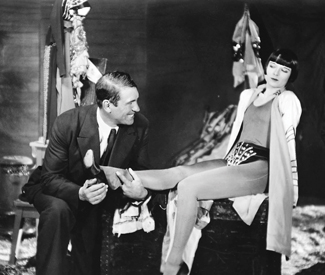
Events Listings

0

On the Cheap listings are compiled by Lucy Schiller and Caitlin Donohue. Submit items for the listings at listings@sfbg.com. For further information on how to submit items for the listings, see Picks.

WEDNESDAY 4

2012 showing Chinatown Meeting Room, Chinatown Library, 1135 Powell, SF; www.sfpl.org. 2:30-5:30pm, free. Ring in the purported year of our doom with a little cinematic apocalypse: John Cusack and Danny Glover battling mega-tsunamis, an irate Yellowstone super-volcano, and the inevitable detachment of California from the continental U.S.

BAY AREA

“Being and Ideal Grace: Love and Spirituality in Robert and Elizabeth Browning’s Letters” lecture Northbrae Community Church, 941 the Alameda, Berk; (510) 526-3805. 7:30pm, $5 donation suggested. Bay Area actor Julian Lopez-Morillas explores the written missives shot between Robert and Elizabeth Browning, two 19th century romantic poets who penned some of the steamiest pre-Victorian prose known to Fabio.

THURSDAY 5

Lands End restoration Lands End, Presidio, SF; www.parksconservancy.org. 1-4pm, free. The coastal bluffs of the Presidio are calling out for a little TLC. Help plant, water, and weed in a spot more naturally beautiful than any human-made garden.

FRIDAY 6

“Get Lucky” opening reception SOMArts Cultural Center, 934 Brannan, SF; www.somarts.org. 6-9pm, free. Celebrating experimental music pioneer and artist John Cage’s hundredth birthday, SOMArts stages an indeterminacy-themed evening, featuring the creation of a living tarot deck and an involved, improvised poem.

“Taking Stock’ opening reception Z Space, 450 Florida, SF; www.zspace.org. 6:30-8:30pm, free. Venturing daily into the packaged wilderness of grocery stores in San Francisco and Denver, artists Emily Heller and Leah Rosenberg took pains documenting and replicating how food is presented to the American public.

Sharon Lockhart’s pop-up “Lunch Break” SFMOMA, 151 Third St., SF; (415) 357-4035, www.sfmoma.org. 11:30 a.m.-1:30pm, free. An ongoing exhibition looking at the activities Americans pursue on our lunch breaks gets free and interactive today, hosting Vietnamese pop-up cafe Rice Paper Scissors, Blue Bottle Coffee, and a Skype chat with curator Sharon Lockhart. Share your lunch break traditions at a community table that will be set up to encourage conversation among fellow laborers.

“Working Conditions” closing reception Southern Exposure, 3030 20th St., SF; www.soex.org. 7-9pm, free. For almost two months, nine artists have worked in view of the public under the theme of labor and process, and with varying degrees of audience interaction. Jennie Ottinger’s method serves as one example; she promised a certificate of recognition to visitors willing to mix her paints and clean her brushes. Nathaniel Parsons is another; he bestowed a thoughtful woodcarving on every visitor who accompanied him on a walk-and-talk.

SATURDAY 7

Vintage Paper Fair Hall of Flowers, Golden Gate Park, SF; www.vintagepaperfair.com. Through Sun/8. 10am-6 pm, free. “Ephemera” can bring to mind molding moth wings and mildew spots as much as forgotten treasures of yesteryear. But Hal Lutsky’s annual vintage paper fair promises nothing but pristinely-preserved postcards, brochures — even stereoviews.

SUNDAY 8

Battle reenactment Frankenart Mart, 515 Balboa, SF; www.frankenartmart.com. Noon-6 pm, free. A hotdog-fixated art gallery in the Inner Richmond, Frankenart Mart staged a multi-month series of battles and battle-related artwork. Today’s reenactments (participant-led, nonviolent, and accompanied by hotdogs) are less Appomattox as they are Thanksgiving Day.

BAY AREA

“Hiram Johnson and Woman’s Suffrage Vote 1911” lecture Berkeley History Center, 1931 Center, Berk; www.lwvbae.org. 2pm, free. Sure, we’ve got the vote. But failing to learn about our dark(er) past will only doom us to repeat it – reason enough to head to this free lecture at the Berkeley History Center on the progressive revolution sparked by California governor Hiram Johnson. After you get your fill of the talk, all visitors are invited to tour the exhibit on our state’s voting women, which is stacked with memorabilia and facts from the last century.

TUESDAY 10

Word Is Out: A Queer Film Classic book launch SF Public Library, 100 Larkin, SF; www.sfpl.org. 6pm, free. In 1977, a documentary on the lives of gays and lesbians helped shift the political dialogue of the United States – or at least, so says author Greg Youmans, who recently penned a book exploring the significance of the film. At this roundtable discussion with Youmans, an original promoter of the film, and the Word Is Out‘s makers, rarely-seen footage of the video pre-interviews conducted for the documentary will be screened.

Alerts

0

news@sfbg.com

FRIDAY 6

Pathology of wealth

Progressive author and speaker Michael Parenti discusses this country’s dysfunctional political and economic systems during a lecture entitled “Democracy and the Pathology of Wealth,” describing how corporate capitalism has corrupted key institutions. In his books and talks, Parenti has covered a wide array of political topics, always with great passion and insights, and his perspective has never been more relevant than in the current political moment.

7:30, $12–$10

La Peña Cultural Center

3105 Shattuck, Berk.

(510) 849-2568

www.michaelparenti.org

lapena.org/event/1952


End torture now

A screening of the film Ending U.S.-Sponsored Torture Forever will be followed by a discussion led by members of the Bay Area Religious Campaign Against Torture. Berkeley Peace and Justice Commission member Rita Maran will also be honored for her efforts to get the Berkeley City Council to pass a resolution calling for President Barack Obama to honor commitments he made during his presidential campaign to close the prison at Guantanamo Bay, which became notorious for employing torture and other human rights violations.

7 p.m., $5–$10

Berkeley Fellowship of Unitarian Universalists’ Hall

1924 Cedar, Berk.

www.bfuu.org

(510) 841-4824


SATURDAY 7

Occupy and divest

Omar Barghouti, author of Boycott, Divestment, Sanctions: The Global Struggle for Palestinian Rights, gives a lecture entitled “Occupy Wall Street, Not Palestine!: BDS and the Global Struggle for Justice & Freedom.” Proceeds from the event, where Barghouti will be signing his book, benefit the Middle East Children’s Alliance and its Maia Project, which supplies clean drinking water to the children living in Gaza.

7:30, $10 (but no one turned away)

First Presbyterian Church of Oakland

2619 Broadway, Oakl.

events@mecaforpeace.org

(510) 548-0542

www.mecaforpeace.org


SUNDAY 8

Vigil for gun victims

Candlelight vigils remembers the victims of gun violence are being held around the country to mark the first anniversary for the shootings in Tuscon, Arizona that left six people dead and 13 injured, including U.S. Rep. Gabrielle Giffords. So come and light a candle to honor those affected by this senseless violence. Sponsored by Legal Community Against Violence.

6:30 p.m., free

Yerba Buena Gardens

Mission and Third St., SF

(415) 433-2062

ecartwright@lcav.org

www.bradycampaign.org/toomanyvictims


Mail items for Alerts to the Guardian Building, 135 Mississippi St., SF, CA 94107; fax to (415) 437-3658; or e-mail alert@sfbg.com. Please include a contact telephone number. Items must be received at least one week prior to the publication date.

Rep Clock

0

Documentary Holy Rollers: The True Story of Card Counting Christians plays Fri/30-Sat/31 at the Roxie.

Schedules are for Wed/28-Tues/3 except where noted. Director and year are given when available. Double and triple features are marked with a •. All times p.m. unless otherwise specified.

CASTRO 429 Castro, SF; (415) 621-6120, www.castrotheatre.com. $7.50-10. •On the Town (Donen and Kelly, 1949), Wed, 1, 5, 9:05, and Singin’ in the Rain (Kelly and Donen, 1952), Wed. 2:55, 7. •The Umbrellas of Cherbourg (Demy, 1964), Thurs, 3:25, 7, and A Woman Is a Woman (Godard, 1961), Thurs, 5:10, 8:45. West Side Story (Robbins and Wise, 1961), Fri, 7; Sat-Mon, 2 (also Sun, 7). Presented “sing-along” style.

CHRISTOPHER B. SMITH RAFAEL FILM CENTER 1118 Fourth St, San Rafael; (415) 454-1222, www.cafilm.org. $6.75-10.25. The Gold Rush (Chaplin, 1925), Wed-Thurs, call for times. Restored 35mm print. My Reincarnation (Fox, 2011), Wed-Thurs, call for times. “Short Films from the 2011 Sundance Film Festival,” Dec 30-Jan 5, call for times.

PACIFIC FILM ARCHIVE 2575 Bancroft, Berk; (510) 642-5249, bampfa.berkeley.edu. $5.50-9.50. Theater closed through Jan 11.

PARAMOUNT 2025 Broadway, Oakl; 1-800-745-3000, www.ticketmaster.com. $5. The Wizard of Oz (Fleming, 1939), Fri, 8. Costumes paying homage to the film encouraged (suggestion: flying monkey!)

ROXIE 3117 and 3125 16th St, SF; (415) 863-1087, www.roxie.com. $6.50-10. My Reincarnation (Fox, 2011), Wed-Thurs, 7, 8:45. Holy Rollers: The True Story of Card Counting Christians (Storkel, 2011), Fri-Sat, 7, 9 (also Sat, 3, 5). Silent Souls (Fedorchenko, 2010), Sun-Mon, 7, 8:30 (also Sun, 3:15, 5). 4th and Goal (Gilden Seavey, 2011), Tues, 7, 9.

SFFS | NEW PEOPLE CINEMA 1746 Post, SF; www.sffs.org. $10-11. Bill Cunningham New York (Press, 2011), Sun, 4:30, 8:30; Mon, 2:30, 6:30. Buck (Meehl, 2011), Sun, 2:30, 6:30; Mon, 4:30, 8:30. Paul Goodman Changed My Life (Lee, 2011), Jan 3-5, 2:30, 4:30, 6:30, 8:30. Silent Souls (Fedorchenko, 2010), Wed-Mon, 3, 5, 7, 9 (no 9pm show on Sat/31).

Our Weekly Picks: December 25-31

0

WEDNESDAY 28

Doe Eye

When Maryam Qudus — sole member of local indie-pop project, Doe Eye — sings “I Hate You,” it’s hard to believe her. It’s cute as hell. But the point of the song is indeed that. She doesn’t hate the faceless “you,” but is tortured by the affection. It’s that kind of thoughtfulness with an added ear for pop charm that makes Doe Eye a project you can espouse. Doe Eye released the EP, Run, Run, Run, in August, and sure, it’s about as radio-friendly as you can get. But the instrumentation, with its orchestral and wavy synth touches, is undoubtedly inspired by indie-rock acts around today, be it Beach House or St. Vincent. (James H. Miller)

With The Trims, Pounders, and Miles the DJ

9 p.m., $8

Bottom of the Hill

1233 17th St., SF

(415) 621-4455

www.bottomofthehill.com


Mara Hruby

Michael Jackson doing “Ain’t No Sunshine.” Al Green doing “Light My Fire.” Nina Simone doing “Rich Girl.” (Yeah, Hall and Oates, look it up.) While a cover rarely make the original irrelevant, a good one should make it the artist’s own. On From Her Eyes, a free EP she reportedly sang, arranged, recorded, and engineered, Oakland’s Mara Hruby lent her sweet, soulfully agile voice to tracks by Mos Def, Andre 3000, Bob Marley, Jamiroquai, and others, rendering each different and new. Since then Hruby has been at work on her debut album, teasing songs “Lucky (I Love You)” and “The Love Below” online, and will be including new material at this show. (Ryan Prendiville)

With Chris Turner

8 p.m., $15

Yoshi’s Oakland

510 Embarcadero West, Oakl.

(510) 238-9200

www.yoshis.com


THURSDAY 29

The Umbrellas of Cherbourg and A Woman is a Woman

A double bill of The Umbrellas of Cherbourg (1964) and A Woman is a Woman (1961) at the Castro is the stuff cinephilia is made of. Those sweet on The Artist should be sure to check in with these earlier Gallic interpretations of Hollywood razzle dazzle. The first, Jacques Demy’s Umbrellas is the purer confection in many ways, but the film’s tender sentimentalism and radiant color design flow towards a soulful poetry of the everyday. The second, by Jean-Luc Godard, is an early distillation of his complex movie love and a poignant offering to actress Anna Karina. Both films feature scores by Michel Legrand, so they carry their complex register of emotions with a lightness that escapes words. (Max Goldberg)

3:25 and 7 p.m., $10

Castro Theatre

429 Market, SF

(415) 621-6120

www.castrotheatre.com


Pictureplane

What do you get when you cross a gutter punk b-boy with a space goth? Sprinkle him with a little MDMA and you’ve got Travis Egedy, a.k.a. Pictureplane. Egedy works clubby ’90s vocal samples and celestial beats into infectious pop songs, which he sings over in a breathy, lusty moan. With effervescent dance anthems like “Black Nails” and “Trancegender,” Egedy gives goths something to freak to. And you’re just as likely to shake it as you are to wind up in the center of a mosh pit. We should all thank our lucky stars for the weird amalgam of personas that is Pictureplane. Speaking of stars, did I mention he’s really, really into space? (Frances Capell)

With Popscene DJs

10 p.m., $12

Rickshaw Stop

155 Fell, SF

(415) 861-2011

www.rickshawstop.com


Asher Roth

Let’s face it. A lot of us love rap, but many of us can’t relate to carrying guns or moving kilos of cocaine. Luckily there’s Asher Roth, a gifted 26-year-old MC who raps about things the everyman can identify with — like partying with friends and soaking up sunshine. Roth may be a college bro, but he’s legit enough to have earned props from the likes of Ludacris and Slick Rick. Roth prides himself on his live performances and makes them unforgettable by bringing along a full band. If that’s not incentive enough, Thursday is the release show for Roth’s fresh new Pabst & Jazz Sessions mixtape produced by Blended Babies. (Capell)

10 p.m., $25

330 Ritch, SF

(415) 542-9574

www.330ritch.com


FRIDAY 30

Wizard Of Oz

For more than 70 years and counting, The Wizard of Oz has entertained and fascinated viewers; at the time of its original release, the film’s breathtaking color sequences enthralled audiences still stuck on black and white, and the soundtrack’s beloved songs introduced the world to the talents of Judy Garland. For the majority of us who have grown up watching the movie on television, we are in for a special treat tonight when the grand old Paramount hosts a screening, a rare chance to see such a classic piece of cinema on the big screen, the way it was meant to be viewed. Just watch out for flying monkeys! (Sean McCourt)

8 p.m., $5

Paramount Theatre

2025 Broadway, Oakl.

(510) 465-6400

www.paramounttheatre.com


X

Taking the same searing energy that propelled its contemporary punk counterparts then add the rock solid drumming of DJ Bonebrake, the guitar virtuosity of Billy Zoom, and the poetic lyrics and intimate vocal interplay of John Doe and Exene Cervenka. Legendary Los Angeles punk rockers X have always distinguished themselves from the other bands of the genre. This holiday season finds the band celebrating with “The Xmas Traveling Rock & Roll Revival,” where fans are sure to hear all of their favorite iconic tunes, and probably a couple of revved-up holiday favorites as well. (McCourt)

With Sean Wheeler & Zander Schloss, and the Black Tibetans.

8 p.m. Fri.; 9 p.m. Sat/31, $33–$50

Slim’s, 333 11th St., SF

(415) 255-0333

www.slimspresents.com


Agent Orange

In the mid through late 1970s, Southern California was one of the hubs of hardcore punk, with bands like Black Flag, Circle Jerks, and Wasted Youth all forming in the region. It was also a center of skateboarding, thanks to — among other things — a newly developed polyurethane wheel and a drought that left scores of pools empty. The band Agent Orange was a by-product of both of these phenomenons. Formed in Orange County in 1979 by lead singer and guitar player Mike Palm, bassist James Levesque, and drummer Scott Miller, the band took a Dick Dale spin on hardcore and became synonymous with early incarnations of “skate punk.” Skateboarders needed an identity of their own, and Agent Orange helped with that task. Now, 30 years later, you don’t need to know how to do a kick flip to understand why they were so essential. (Miller)

With Inferno of Joy, Tokyo Raid, The Nerv, Suggies

8:30 p.m., $15

330 Ritch, SF

(925) 541-9574

www.330ritch.com


Gavin Russom

“I hear you’re buying a synthesizer and an arpeggiator.” James Murphy tipped his hand when he wrote that a decade ago, but while would-be musicians could have gone straight past the irony to eBay, one thing they wouldn’t have was Gavin Russom. The ace up the sleeve, Russom is the tech wizard, creating analog synths for LCD Soundsystem and others. But more guru than a Radio Shack hobbyist, Russon has performed, DJ’ed, and created music on his own and under the aliases of the Crystal Ark and Meteoric Black Star. His latest “Night Sky,” is an epic, speedily slow building, sexually suggestive track that proves, as usual, he knows what you really want. (Prendiville)

With LA Vampires, Bobby Browser, Magic Touch, and Pickpocket

9:30 p.m., $10

Public Works

161 Erie, SF

(415) 932-0955

www.publicsf.com


SATURDAY 31

Primus

Is one of your New Years’ resolutions to go Sailing The Seas Of Cheese? Do you plan on serving up some Frizzle Fry? Imbibing in some Pork Soda? Well, any way you look at it, the two club shows this week by musical boundary-busting Bay Area rock favorites Primus are a rare treat for local fans to see the band up close and personal. You can choose to ring in the New Year with Les Claypool and company on Saturday, or if you prefer, you can work off your holiday hangover on Sunday with the band, which will be performing two sets each night at its Hawaiian Hukilau-themed parties. (McCourt)

9 p.m.; 8 p.m. Sun/1, $50–$65

Great American Music Hall

859 O’Farrell St., SF

(415) 885-0750

www.slimspresents.com


Thee Oh Sees

There’s no shortage of New Year’s Eve events taking place in the city, but you’re hard-pressed to find a more definitively San Francisco way to spend the evening than with local psych-pop darlings Thee Oh Sees. Though many a band has hopped on the fuzzy garage train in recent years, these guys have been blazing the trail for well over a decade (under various monikers). Each new release, including the spanking new Carrion Crawler/The Dream (In The Red) finds Thee Oh Sees shredding harder and better, but its live shows will melt your face clean off. Enjoy some gnarly guitar riffage, kiss a stranger, and partake in the vices you’ve resolved to quit come sunrise. (Capell)

With The Fresh & Onlys and White Fence

9 p.m., $15–$20

Brick & Mortar Music Hall

1710 Mission, SF

(415) 371-1631

www.brickandmortarmusic.com


“Sea of Dreams NYE 2012”

Part carnivale, part circus, part burn, part Halloween, part massive: the annual Sea of Dreams event takes the promise of a wild New Year’s Eve and adds more. In part it has to do with the crowd, drawing some serious do-it-themself-ers with fantastically creative outfits. But whatever distractions are off stage, there will be hard competition from a triple bill of headliners including local favorites Beats Antique, infectious dance MC Santigold (who has new material to debut live), and the return of Amon Tobin’s deafening, eyeball melting ISAM set. (Prendiville)

With Claude VanStroke, MarchFourth Marching Band, An-ten-nae, Diego’s Umbrella, and more

8 p.m., $75–$145

SF Concourse Exhibition Center

635 8th St., SF

www.seaofdreamsnye.com


SUNDAY 1

Eliza Rickman

With her little toy piano Eliza Rickman makes bewitching alternative folk rock. Listening to her EP, Gild the Lily, is like walking through a life size dollhouse and feeling not sure whether to be frightened or enchanted. There’s something about the nature of the toy piano — its sparkling sound can be at once blood curdling and tender (like John Cages’ Suites for Toy Piano, which popularized the instrument). Similarly, Rickman’s voice has a plucked from the garden pleasantness, but her words tend toward the tragic. This balance between adorable and dreary can even be seen in the titles of her songs, like “Black Rose” and “Cinnamon Bone.” In any event, whether she’s cinnamon, bone, or both, the toy piano under her hands is more than a novelty. (Miller)

7 p.m., free

Amnesia

853 Valencia, SF

(415) 970-0012

www.amnesiathebar.com


The Guardian listings deadline is two weeks prior to our Wednesday publication date. To submit an item for consideration, please include the title of the event, a brief description of the event, date and time, venue name, street address (listing cross streets only isn’t sufficient), city, telephone number readers can call for more information, telephone number for media, and admission costs. Send information to Listings, the Guardian Building, 135 Mississippi St., SF, CA 94107; fax to (415) 487-2506; or e-mail (paste press release into e-mail body — no text attachments, please) to listings@sfbg.com. Digital photos may be submitted in jpeg format; the image must be at least 240 dpi and four inches by six inches in size. We regret we cannot accept listings over the phone. *

Film Listings

0

Film listings are edited by Cheryl Eddy. Reviewers are Kimberly Chun, Max Goldberg, Dennis Harvey, Lynn Rapoport, and Matt Sussman. For rep house showtimes, see Rep Clock. For complete film listings, see www.sfbg.com. Due to the Christmas holiday, theater information was incomplete at presstime.

OPENING

Holy Rollers: The True Story of Card Counting Christians For a time, one of the most successful card-counting outfits in America was “the Churchteam,” a group of 20-somethings who mapped out a businesslike way of relieving casinos of millions of dollars. Two managers trained a pack of players, who would then travel to Las Vegas and other places, armed with stacks of bills (contributed by investors) and the cojones to cheat until they were “backed off” from the blackjack table. (As 2009’s The Hangover, excerpted here, points out, counting cards isn’t illegal — it’s merely “frowned upon.”) Neat story, but the real hook here is that the Churchteam was comprised almost entirely of practicing Christians; their shared faith insured that nobody would steal from the team’s profits. (Of course, when the team starts losing, and theft is suspected, all eyes fasten upon the single non-Christian in the pack.) The fast-paced Holy Rollers tends toward the highly enjoyable, but the Churchteam members are so self-satisfied that they prove difficult to root for at times. Holy smugness, bro! (1:35) Roxie. (Eddy)

*Pariah A teenage girl stands stock-still in a dark nightclub, gazing with desire and fear at the half-naked female dancers on the stage. Later, riding home on the bus, she slowly removes the layers of butch that held her together in the club, stripping down to some version of the person her parents need to see when she walks in the door. Nearly wordlessly, the opening scenes of Dee Rees’s Pariah poignantly depict the embattled internal life of Alike (Adepero Oduye), a 17-year-old African American girl living in Brooklyn with her family and struggling both to be seen as she is and to determine what that might look like. The battles are being waged externally, too, between Alike’s adoring father (Charles Parnell), living in willful ignorance, and angry, rigid mother (Kim Wayans), desperately enforcing a feminine dress code and steering Alike away from openly butch friend Laura (Pernell Walker). Rees’ script beautifully conveys a household of landmines and chasms, which widen as husband and wife and daughter struggle and fail to communicate, asking the wrong questions, fearfully skirting the truth about Alike’s sexuality and her parents’ crumbling marriage. And the world outside proves full of romantic pitfalls and the tensions of longtime friendship and peer pressure. The poems in which the talented Alike takes solace and makes her way toward a more truthful existence are beautiful, but at a certain point the lyricism overtakes the film, forcing an ending that is tidy but less than satisfying. (1:26) Embarcadero. (Rapoport)

Paul Goodman Changed My Life Social theorist, poet, novelist, essayist, co-founder of Gestalt therapy, anarchist, activist, pacifist, intellectual provocateur, queer-identified bisexual, husband, father, radical nerd — these are just some of the many hats Goodman wore during his fairly brief tenure as one of the most influential American thinkers of the mid-20th century. His 1960 non-fiction tome Growing Up Absurd explained an emerging generation’s disenchantment with the “establishment” society it would soon rebel against, making him an unlikely, tweedy, middle-aged spokesman for the rising youth movement. (Though before his 1972 death at age 60, he would grow disillusioned with that movement.) A fascinating mind, a sometimes impossible personality, he’s fallen somewhat into neglect as recent decades have favored conformism over the humanist re-making of society he advocated, and which for a while there actually seemed possible. Thus it’s as good a moment as any for Jonathan Lee’s documentary, which mixes biographical overview and appreciation of the subject’s disparate work and ideas with extant footage of him speaking and interviews with surviving friends, family, and colleagues. Maybe “mixes” is a less apt term than “scrambles” — faced with an admittedly bewildering pile of information (and contradiction), Lee fails to find any viable organizing principle. Always interesting, this scattershot documentary nonetheless never quite finds a secure foothold on its sprawling, slippery subject. Still, as introduction or just nostalgic flashback to Goodman’s legacy, it’s worth a look. (1:29) SFFS New People Cinema. (Harvey)

ONGOING

*The Adventures of Tintin Producer Peter Jackson and director Steven Spielberg join forces to adapt the work of Belgian comic creator Hergé, using performance-capture 3D animation (and featuring that new technology’s most prominent performer, Andy Serkis, in a key role). Hergé wrote over 20 volumes following the globe-trotting exploits of intrepid young reporter Tintin (Jamie Bell) and his canine companion, Snowy; The Adventures of Tintin draws from a trio of books dating from the early 1940s, tweaking the tales a bit but retaining the series’ ebullient energy and sharp humor. After he impulsively buys a model ship, Tintin is sucked into a mystery involving a long-lost pirate treasure sought by the sinister Sakharine (Daniel Craig) and, eventually, newfound Tintin ally Captain Haddock (Serkis). Fan favorites Thompson and Thomson (Simon Pegg and Nick Frost — frequent compadre Edgar Wright co-wrote the script) and a certain “Milanese Nightingale” make appearances in a story that careens between exotic locales and high-seas battles, and is packed with epic chase scenes that would leave Indiana Jones breathless. And in case you were worried, Tintin boasts the least creepy, least “uncanny valley” performance-capture animation I’ve seen to date. (1:47) (Eddy)

Alvin and the Chipmunks: Chip-wrecked (1:27)

*The Artist (1:40)

Being Elmo: A Puppeteer’s Journey (1:25)

A Dangerous Method (1:39)

The Darkest Hour (1:29)

*The Descendants (1:55)

*Drive (1:40)

The Flowers of War (2:21)

*The Girl With the Dragon Tattoo The meeting of Stieg Larsson’s first “Millennium” book and David Fincher promised fireworks, as he’s a director who can be equally vivid and exacting with just the elements key to the series: procedural detail, obsession, violence, tweaked genre conventions, mind games, haunted protagonists, and expansive story arcs. But perhaps because this possible franchise launch had to be rushed into production to ride the Larsson wave, what should have been a terrific matchup turns out to be just a good one — superior in some stylistic departments (notably Trent Reznor and Atticus Ross’ pulsing score), but overall neither an improvement nor a disappointment in comparison to the uninspired but effective 2009 Swedish film version. Daniel Craig plays Mikael Blomkvist, the muckraking Stockholm journalist whose public disgrace after a failed expose of a suspect corporate tycoon makes him the perfect candidate for an unexpected assignment: staying sequestered in the wealthy, warring Vanger clan’s island home to secretly investigate a teenage girl’s disappearance and presumed murder 40 years ago. His testy helpmate is the singular Lisbeth Salander (Rooney Mara), antisocial hacker, researcher, and ex-mental patient par excellence. Nearly three hours long, the compressed, slightly altered (get over it) storyline nonetheless feels rushed at times; Fincher manages the rare feat of making mostly internet research exciting in filmic terms, yet oddly the book’s more shocking episodes of sex and/or mayhem don’t have the memorable impact one might expect from him. The leads are fine, as is the big support cast of recognizable faces (Christopher Plummer, Stellan Skarsgård, Robin Wright, etc.) But the knockout suspense, atmosphere, and urgency one hoped for isn’t present in this intelligent, not entirely satisfying treatment. On the other hand, maybe those who’ve already read the books and seen the prior films have already had so much exposure to this material that a revelatory experience is no longer possible. (2:38) (Harvey)

Le Havre (1:43)

Hugo (2:07)

I Melt With You (1:47)

J. Edgar (2:17)

*Melancholia (2:15)

Midnight in Paris (1:34)

Mission Impossible: Ghost Protocol No world landmark (the Kremlin, the Burj Khalifia) is too iconic and/or freaking tall for uber-adrenalized Impossible Missions Force agent Ethan Hunt (Tom Cruise) and his team (Jeremy Renner, Paula Patton, Simon “Comic Relief” Pegg) to infiltrate, climb, assume false identities in, use as a home base for unleashing futuristic spy technology that seems almost plausible (with the help of lots of iPads), race a BMW through, etc. One kind of gets the sense that Cruise and company sat down with a piece of paper and were like, “What stunts haven’t we done before, and how many of them can I do with my shirt off?” Celebrated animation director Brad Bird (2004’s The Incredibles) is right at home with Ghost Protocol as his first live-action effort — the film’s plot (set in the present day, it involves a positively vintage blend of Russians and nukes) and even its unmemorable villain take a back seat to Cruise’s secret-agent shenanigans, most of which take the form of a crazy plan that must be altered at the last minute, resulting in an even crazier plan, which must be implemented despite the sudden appearance of yet another ludicrously daunting obstacle, like, say, a howling sandstorm. For maximum big dumb fun, make sure you catch the IMAX version. A warning, though: any time the movie screeches to a halt to explore emotions or attempt characterization … zzz. (2:13) (Eddy)

The Muppets (1:38)

*My Reincarnation (1:22) Roxie, Smith Rafael.

My Week With Marilyn (1:36)

New Year’s Eve (1:58)

*Shame (1:39)

Sherlock Holmes: A Game of Shadows Maybe Guy Ritchie should’ve quit while he was ahead. Thanks to strong performances from Robert Downey Jr. and Jude Law, the British director’s first Holmes flick proved surprisingly fun. Two years later, it’s clear that Ritchie’s well of creatitivity has run dry. Sherlock Holmes: A Game of Shadows is cliched and overlong, burying a few good ideas under an avalanche of tired action movie stalwarts gone steampunk. To be fair, the set design and art direction are still sumptuous, creating a hyperbolic, detailed vision of Victorian Europe. New cast additions Jared Harris (as Moriarty, maliciously polite) and Stephen Fry (as Mycroft, eccentric and nude) do well with limited material. Noomi Rapace, playing a helpful gypsy, is superfluous. Downey Jr. and Law are still game for some amusing PG-13 homoeroticism, but it’s the former’s disinterested performance that ensures the movie’s downfall. Forced to make do without witty quips or interesting deductions, the Holmes of A Game of Shadows is part bruiser, part buffoon. The game’s a flop, Watson. (2:09) (Ben Richardson)

*Silent Souls Director Aleksei Fedorchenko and scenarist Denis Osokin’s enigmatic feature follows two men on a modern road trip that might well be deep into the bottomless past of Russia’s diverse religious rituals, mysticisms, and folklore. Coworkers travel cross-country to perform complicated Meryan ethnic rites for one protagonist’s late, beloved younger wife. This involves the transport of two birds, some surprisingly graphic personal reminiscences, an oceanfront funeral pyre, and other incidents whose full import the filmmakers are happy to leave somewhat cryptic. Gently comic, lyrical, at times borderline surreal, Souls belies a short running time of just an hour and a quarter — for all its intangibles, by the end this beguiling journey feels too substantial to have possibly taken so little of our time. (1:15) Roxie, SFFS New People Cinema. (Harvey)

The Sitter (1:21)

The Skin I Live In (1:57)

*Tinker Tailor Soldier Spy (2:07)

*Tomboy (1:22) (Rapoport)

Twilight Saga: Breaking Dawn — Part One

*War Horse If the idea of watching heroic horses getting slaughtered amid the brutal trench warfare of World War I fills your heart with disgust, then you might want to applaud Steven Spielberg and his relatively sensitive touch with that material in the heartrending War Horse. The PG-13 rating also gives you some idea that the director will be hewing to the movie’s origins as a children’s book. Spielberg paints this tale about loss of innocence, be it in the fields of the farm or the battle, in broad strokes, but here, you might feel a bit less manipulated by his prowess as a crowd-pleasing storyteller, less conscious about the legacy he draws on, and more immersed in a story that stays as close as it can to its animal protagonist’s point of view, short of pulling a Mr. Ed. War Horse opens with Joey’s birth and follows him as he’s sold to a struggling English farm run by traumatized war veteran Ted (Peter Mullan), his spunky wife Rose (Emily Watson), and his animal-loving son Albert (Jeremy Irvine). Circumstance — and an unyielding landlord (David Thewlis) — sends Joey off to the so-called Great War, first into the care of an honorable captain (Tom Hiddleston), later a French girl (Celine Buckens), and worst, into the arms of the German enemy, where he toils as a disposable beast of burden charged with hauling the literal machines of war uphill. Spielberg shields viewers both young and old from the more explicit horrors, though gracefully imparts war’s terrors, sending fresh chills through a viewer when, for instance, a child riding a horse disappears over a ridge and fails to return. No one’s immune from tears, and you have to wonder how much healing is actually possible at War Horse‘s conclusion, despite its stylized, symbolism-laden beauty. Nonetheless cinephiles will glean a certain pleasure from images that clearly nod to the blood-red skies of Gone With the Wind (1939), the ominous deep focus of Orson Wells, and the too-bright Technicolor clarity-slash-artifice of National Velvet (1944). (2:26) (Chun)

We Bought A Zoo “If you could choose between animals or humans or animals, which would you choose?” is a standard question among passionate critter lovers, and Cameron Crowe and company go out of their way to outline which side of the divide they stand on. The result won’t please animal-centric fans of, say, Rise of the Planet of the Apes. Reporter Benjamin Mee (Matt Damon) has just lost his beloved wife and is so overwhelmed by all the solo dad time he’s had with his two cute kids, Dylan (Colin Ford) and Rosie (Maggie Elizabeth Jones), that he’s ready to do something rash. Despite the advice of his brother (Thomas Haden Church), he quits his newspaper job and throws his lot in with the ultimate child’s amusement: he buys a ramshackle zoo in the boonies and tries his darnedest to fix it. Coming with the property is the fetching if brusque zookeeper Kelly (Scarlett Johansson, slightly bushier of eyebrow — read: homelier — than usual) and a mixed bag of kooky workers (including Elle Fanning and Crowe fave Patrick Fugit). The challenge for Ben is to get the zoo up to speed, with zero previous experience and limited lucre. Unfortunately Crowe takes the human vs. animal choice to heart and errs on the side of the humanoids: there’s way too few animals here and far too little about the zoo itself. Much like an overbearing zookeeper, the filmmaker protects us from this semi-tame kingdom, when really a viewer wants to know is, when are we going to get more stories about the animals? Can we have a real tour of the grounds? Even the comic efforts of Haden Church and J.B. Smoove as Ben’s realtor aren’t enough to whisk away one’s impatience (or the unsettling feeling that Ben’s affinity for a elderly ailing tiger will end with an SF Zoo-style arm removal) with all these damn people standing between us and the creatures, like a crowd of gawkers hogging the view of the lions. (2:03) (Chun)

*Young Adult (1:34)

Crazy, sexy (?), movies

0

arts@sfbg.com

YEAR IN FILM We ask depressingly little of our romantic comedies, particularly considering that they’re meant, one guesses, to cheer us up. While genres like the action thriller and the disaster film engage in an arms race of catastrophe that, while riddled with clichés, requires some amount of ingenuity to orchestrate, when it comes to the rom-com, the studios display fierce loyalty to a formula of marquee names, charming emotional baggage, foolish misunderstandings, and final-boarding-call epiphanies.

You could say that our relationship with the genre is going nowhere, like the one the perky, anal-retentive heroine is perpetually on the brink of settling for with some handsome, amiable cardboard cutout, too afraid to take a chance on surly, diamond-in-the-rough Mr. Right. You could say that watching these films is an empty transaction, like those the gleaming-toothed protagonist enters into with a parade of leggy, blank-faced bar pickups before recognizing eureka!-style that the best friend who tolerates his slutty superficiality is clearly a soul mate.

We don’t quite buy it, any of it, but back and back and back we go — if often lining up in numbers sustaining the briefest of theater runs, or going no further than the Netflix queue. Which perhaps explains, though just barely, how we (by which, of course, I mean I) happened to be in the theater this year for Just Go with It, staring wearily screenward at the companionable but chemistry-free pairing of Adam Sandler and Jennifer Aniston; for the tortured, slightly icky mismatch of Natalie Portman and Ashton Kutcher in No Strings Attached; and even for New Year’s Eve, wherein an ungodly hodgepodge of Hollywood brands are desperately flung at the screen in the hopes that something will stick.

Generally compiled from interchangeable parts, the romantic comedy has been manufactured so many times that the players seem exhausted by the effort to find a fresh configuration, something unattempted and captivating. The ghosts of long-ago lighthearted pictures from the golden era of madcap romance, like It Happened One Night (1934) and The Philadelphia Story (1940), hang over the proceedings, sparking wistful visions of some magical cinematic equation that, when X is solved, will result in old-fashioned sensations like a warmed heart and toasty goodwill toward the lip-locked pair over whom the credits are rolling.

On the flip side, suffering near-continuous abuse at the hands of the studios leaves a person highly susceptible to trace amounts of handcraft and invention. Perhaps only in this spirit could I embrace Friends with Benefits, which brashly arms its hero and heroine (Justin Timberlake and Mila Kunis) to take potshots at the formula while largely hewing to it. Still, as the two swear on an iPhone Bible app to uphold a vow of friendship previous to taking all their clothes off, and as they skate along on the fine, funny writing and frank talk and roll around in bed, it does seem like something better than usual has been accomplished.

Better by far is Crazy, Stupid, Love., which makes the case that a carefully woven ensemble piece need not jerk you from subplot to subplot, seeking famous-people sightings like an L.A. tourist with a star map. Steve Carell and Julianne Moore’s marriage in quiet paralysis is jarred by infidelity, triggering a badly needed upheaval and bringing one unhappy man (Carell) into the bracing orbit of another (Ryan Gosling). The creepy third-generation subplot involving a kid and his babysitter is hard to forgive, but Gosling and love interest Emma Stone, plus an intelligent script, gamely play with the conventions of the heartless womanizer and the girl who’s too much in her head.

And lastly, Bridesmaids, starring and cowritten by Kristen Wiig, arguably sidesteps both the formula and the genre itself, shifting the focus from “boy meets girl” to “woman’s life spirals wildly downward as she attempts to be happy about her best friend’s engagement.” It’s the kind of funny that makes you sink into your seat in horrified anticipation — and the kind of romance where you find yourself rooting for the inevitable rather than just resigned to it.

On nostalgia

0

arts@sfbg.com

YEAR IN FILM I haven’t laughed so hard or so deeply in a movie theater as I did watching The Muppets after a languorous Thanksgiving dinner. Perhaps it was as much due to the tryptophan, sugar, and booze coursing through my system as to the welcomely familiar zaniness transpiring onscreen, but more and more my chuckling was subtended by the throaty chokes that presage a good, deep cry. And when I caught the pointedly placed photo of Jim Henson in the background of an interior shot, it finally hit me: that warm lump in my chest was nostalgia.

For a movie as universally praised as The Muppets has been (and let it be said, its 97 percent approval rating on Rotten Tomatoes is totally deserved), most of the nitpicking I’ve noticed has centered around whether the film pours on the sentiment too thickly, spoiling the fun with too much maudlin self-awareness about the Muppets’ past. “Nostalgia and reverence are anti-Muppet,” wrote one reviewer. But I don’t know if Jason Segal — who, aside from co-writing and starring in the film, was also the project’s greatest proselytizer — could have made The Muppets any other way.

For starters, the Muppets, for all their “let’s put on a show” tenacity and plain old absurdity, are like many professional entertainers, a vulnerable bunch. Think of Gonzo or Fozzie’s frequent moments of self-doubt, or Kermit’s periodic disillusionment with his role as ringmaster. The crestfallen wistfulness he displays at the start of The Muppets isn’t too far removed from the mid-career crisis he underwent in The Muppets Take Manhattan (1984). After all, it’s not easy being green.

The Muppets is also startlingly self-reflexive about the disjuncture between the Muppets’ status as Disney-owned intellectual property (acquired from Henson’s family in 2004) and their legacy as beloved cultural icons. The movie’s climax dramatizes this situation, effectively condensing the entire operation of emotional rescue that the film is premised on: having failed to raise enough money through their spirited telethon to buy back the rights to their name, Kermit and company nevertheless exit the old Muppet theater to an adoring public who, like much of the audience watching the film, never forgot them in the first place.

The drama at heart of the Muppets, what gives their wacky antics such emotional heft, and what necessarily makes The Muppets a reconnaissance mission and not just another franchise reboot, is this: becoming aware of one’s vulnerability is a huge and unavoidable part of growing up. Life can’t always be fun or fair. Eventually, we put away our stuffed animals and frayed blankets and take bigger risks, only to return to those objects as adults when we want to retreat from putting ourselves on the line again and again. But we can’t go back; not really. We can only move forward. The show must go on.