Events

Independence/Movement: extended interview with Oakland’s SALTA dance collective

1

Note: this is an extended version of an article in this week’s Guardian.

The crowd outside the Niebyl-Proctor Marxist Library in Oakland was hopping. Fidgeting, really. Almost imperceptibly at first, while above it a bulging moon hung in the temperate June sky, just itching to go super as it would the following night. But soon enough bodies were bouncing and flailing, until finally the scrum of dancers packed shoulder-to-front-to-back on the sidewalk morphed their collective way through the front door.

We followed the dancers (choreographed by Abby Crain) inside, swept along by their momentum, and were deposited around the perimeter of the main reading room like dust mice by a strong breeze. On that same floor, a few hours later, choreographer Ronja Ver would be sending her supine audience into dreamland with a couple of Finnish lullabies. Before that, a bowl of liquid nitrogen would send a delicate fog creeping over its wooden surface as the spectators (temporarily wrapped in reflective emergency blankets) braced themselves for a performance by Daniel Stadulis that was part science experiment, part detailed meditation on the fragility of the body.

Much else went on during the event’s roughly four hours, which ended with a dance party. No one stayed put the whole time. Some wandered off to the back rooms to the free bar, or to partake in the desultory clothing swap at the free boutique (both the bar and boutique are voluntarily stocked by the guests). Upstairs, meanwhile, the ebb and flow offered other attractions — a mother and daughter did a duet; a young writer read her first novel aloud for the first time, offering each completed page to anyone who paused to listen…

June 22 marked one year’s worth of PPP, the monthly performance series instigated by Oakland-based dance collective SALTA. As much a scene as a performance platform, PPP has been building a platform for serious, unbridled experimentation in a low-key setting where failure is as valid as success, and no one ever encounters a price tag, a door charge, or a gate keeper.

As an attribute of its headlong dive into experimentation and openness, PPP never sits still but moves restlessly and freely from one donated space to another. Among these have been the Foundry, The Vulcan, The Public School, Subterranean Arthouse, Sri Louise’s Underground Yoga Parlour, private homes, Ellen Webb’s studio, and Zach Houston’s poemstore gallery (site of the inaugural PPP in June 2012). With each space come new networks as well as a growing number of PPP diehards.

Providing room for experimentation and cross-fertilization among artists — from the well known to the unknown, and as disparate as Tere O’Connor (interviewed by Monique Jenkinson), Jmy James Kidd, Peter Max Lawrence, Miriam Wolodorski, Keith Hennessy, Ethan Cowan, Laura Arrington, and Philip Huang, among many others — PPP has also been building a unique audience for contemporary dance/performance, while inspiring dialogue about the nature of art-making in the Bay Area.

The anniversary installment of PPP marked the beginning of a summer hiatus for the series, so that the collective can focus on advancing other projects — all geared to creating space, in the widest sense, for dance in Oakland.

SALTA is very much the restive and searching reflection of its monthly series. What began as necessity — a space for dance — has been embraced as ethic. Not that the two were entirely strangers to begin with. As suggested by the conversation below with the seven women who currently make up SALTA, the realities of dance today imply, more than ever, a confrontation with the values of the dominant culture.

Note: the dancers preferred to speak as members of the collective rather than use their individual names.

SF Bay Guardian Did PPP come first, or SALTA, and what’s the relationship?

SALTA It’s funny, we were just talking about this earlier — it’s so confusing!

SALTA I guess we, as a collective, came first.

SALTA And we named that SALTA.

SALTA But the name SALTA didn’t come until after we had the name PPP.

SALTA We all came together in the idea of making space for dance. We were talking a lot about having an actual space and, in the meantime, [we said] let’s do a performance series. So that came second, and then it eclipsed a lot of what we’d been doing. We’re actually going to take a break over the summer and focus on some other stuff.

SALTA We want to have classes. We would really like a dance publication. We want to work on networking. We’ve had some out of town people, but just because the West Coast can be very isolating. So that’s one of our goals, we’d really like to figure out some way to connect.

SFBG What’s the most urgent or exciting project you’re discussing now?

SALTA I think building a floor.

SALTA And also exploring what it might look like to do a pop-up for one or two months. That would then allow us to do classes and hold performance.

SALTA Yeah, I think classes and workshops and stuff. Not only us — we have a lot of things we’re interested in exploring in teaching — but also, again, people we might invite in from out of town who could come do a workshop and perform. So that kind of thing.

SALTA In that vein of dialogue, it’s important to mention that a lot of our work is multi-generational in curation. We try to reach out to people who have paved pathways for us. And we’ve been a little brazen about cold-emailing, cold-calling people who are in town, like Jeremy Wade.

SFBG I saw his performance at CounterPULSE at that time; really great. What did he do at PPP?

SALTA He tried something new!

SALTA Yeah, he took advantage.

SALTA He did a kind of magic act. He had a crazy magician’s outfit on. Yeah, it was pretty awesome.

SALTA But even he, who is touring at that time with specific ideas, still adhered to this idea of coming and experimenting with us.

SALTA That’s something we’re trying to work more. Inviting people, colleagues, or people whose work we’re interested in that we don’t actually know, from other places but also from the Bay Area. I think last month was a pretty harmonious example of that because we had Ellen Webb. She runs a space for so long and had a company in the ’80s. We didn’t really know her work. We use her space all the time — we’ve actually used it for PPP as well. So we had her come and just share. She showed some video of an amazing piece she did with a hundred dancers on Mandela Parkway, right after the [1989] earthquake. She was there, and then Keith [Hennessy] was there — who’s kind of the next [generation] — and then Jmy [Leary, a.k.a. James Kidd] from LA, who is just a little bit older than us.

SFBG How did you start working together?

SALTA We’re all based in Oakland, and we wanted to have a space for dance to happen here — there are not a lot of venues that are really open for experimental work. That was the big thing: we’re sick of going to San Francisco all the time, and we want to figure out what the community is in Oakland and see what we can build. Something that’s been really cool from the beginning is that a lot of non-dancers come to PPP, a lot of Oakland people who hear about it from different arenas.

SALTA We were also not interested in institutionalizing art, in the way that it’s done. Also, financially, making it a free event — no one is paid, free boutique, free bar  —that was really important to us as artists and the way we want to make art. Not having to play this whole [who do you know] game. It was modeled, or got a lot of guidance from Jmy in LA, who started [dance organizers/activists] AUNTS in New York. That’s been a model that we’ve been in dialogue with.

SALTA She’s a mentor of ours, and a benefactor actually, through the Yellow House fund. So we’ve been working with her. We originally wanted to create a space here in Oakland similar to Pieter Pasd in LA, but the realities of being who we are as artists and where we are in our lives, as transient people, we thought we’d keep the space moving. We figured out that that worked over the past year. We actually made a list before you got here of all the [12] spaces we’ve been in, here in Oakland.

SFBG I like this ethic of moving around, of asking for a free space each time. It seems a good thing to encourage, and it really pushes back against the spirit of the times.

SALTA It’s interesting who has said no, at the proposal, and who has been really willing to donate space and time and their art.

SALTA I feel as we continue to exist and assert ourselves into spaces, it opens up more. We have to find a space, and ask for a free space, because as dancers we don’t have the resources to be renting all the time. So where there’s this huge scene of First Friday or whatever — “art’s happening all the time in Oakland” — we’re not a part of that. It would be interesting at some point. Well, we WILL be a part of that. [Laughter.] But what does that mean? And how much more legit, in a certain sense, do we have to become?

SFBG How did your thinking about a physical space evolve into this broader idea of creating space for dance?

SALTA I live between here and LA. And when I’m in LA I spent a lot of time at Pieter, and I kept asking Jmy questions about how she runs it and how the funding worked. About a year and half ago she asked me to have coffee with her and said, ‘It seems like you really just want to run a space.’ So that planted the seed. I’d danced with some of the people here, so I just brought up the conversation, “Should we start something?” And Ethan [a founding member not currently with SALTA] used to live in New York and we would go to AUNTS events. I think Ethan had an idea to start an event series. So we thought, let’s start an events series and hopefully that will snowball into something bigger.

SALTA Into an actual space.

SALTA Before we even talked about having a performance series, it was very much, “We want a space in Oakland that is about dance/experimental performance.” But, soon we found out: that’s hard!

SALTA I think, too, we like going to different spaces, and we like how that pulls in different people. [We realized] we want to actually make space, however that can happen. One of our ideas — there have been these pop-up spaces; different people have gotten subsidies from the city and empty buildings. We want to see if we can do that kind of thing. Build a moveable floor. So, yeah, it’s just kind of expanded.

SALTA I think too there’s something about the impermanence about it that’s special and that we like. So instead of focusing on the brick-and-mortar — “We’re going to have a space. That’s our jam” — opening it up and being a bit more flexible has allowed us to think a bit more creatively about, “What does it mean to really promote dance and make space for dance in Oakland?”

SALTA All of us are dancers. But something that feels important to us in creating this event is that it’s really not about us, or our agenda as dancers. All of us at some point have performed at a PPP. There’ve been 12, so we’ve all at some point done something. We’ve talked about doing a group dance — there’s this event called Oakland Nights Live that happens once a month. They invited SALTA to perform at it, even though we’ve never made a dance together before. We thought, OK, we’ll go do something there. So there is that fluidity and it definitely feeds into the work that we do, and we’re doing other projects too. But PPP is really about creating space for dance and really trying to open it up to the community.

SFBG It sounds like you’re really creating an audience too. Do you have a lot of return people?

SALTA Yeah! We have diehards.

SALTA We have a following! It’s crazy.

SALTA Our first PPP: Zach Houston had a space in downtown Oakland. It was a poetry space, specifically; he’s a poet…

SALTA That was our first one. And I think because of that we’ve had this nice relationship with the poetry community. And so we’ve had a lot of people from that community that come and watch. So people who are around the arts, or friends of friends — I mean one of the great thing about inviting all these performers is that they bring their people. And their people maybe bring someone else. And they go to the next one. Someone last night was like, “I feel like the more I come to these I get it more, I know how to watch it better.” I thought, wow, that’s a really cool thing.

SALTA It’s very unassuming. We don’t demand a lot. People can come and leave.

SALTA There’s literally an open door policy. Like at Niebyl-Proctor last night, the front door is open and people from the street walk in. That’s happened at a lot of the events we do. And that’s really nice, to have people that are called to it.

SALTA People come to it from so many different places too, which is exciting.

SALTA I think it’s important to us all as dancers, that it is a richer audience with various interests. Because we as dancers are like that, as people, we have varied interests outside of dance that informs our dancing.

SFBG Is performing in this kind of event is more satisfying in some ways? What are the advantages to you and others, as performers, with this kind of format?

SALTA We’ve had performers who are performing on the same night together who maybe have never met each other. There have been connections that have been made there between their work and their interests that might not have happened otherwise.

SALTA It’s a space for experimentation. I think that’s one thing we’re trying to be really intentional about it, how to create a space where people will take experimentation seriously. Not just come do whatever and don’t give a shit. That’s why we were really excited about what Keith [Hennessy] did [at the May PPP at Berkeley’s Subterranean Arthouse]. He was actually late to the pre-performer meeting, saying, “I’m sorry I was late. I was rehearsing!” People come with that mindset often. Not necessarily that they’re creating their masterwork — how can they? We’re not funding them. We don’t have any money. But it’s just a chance to try things out and be able to fail or do something absolutely spectacular, and everything in between. Really, most months, there is something that’s like oh god and also something that’s so inspiring …

SALTA I like that: take experimentation seriously.

SALTA And also it’s not like a critique. We didn’t want that. It’s just a time to try something out, and then you can have conversations about it afterward if you want.

SALTA That said, whenever I’ve performed at PPP there’s always someone who comes up to me who has a really interesting, deep perspective because it’s not your typical dance, performance audience member.

SALTA And I think too that there’s something freeing in that there’s not a whole lot at stake. Oh, you finally got a show at CounterPULSE and you have to make it good if you want to show anywhere else. I think there’s a lot of freedom in knowing that everyone’s there to do the same kind of experiment.

SFBG What’s the financial model that makes possible bringing artists in from out of town, and the other projects you’re looking at?

SALTA I think, at this point, we’re trying to go for the free and grant-supported. That might not be something we continue with.

SFBG So you’ve been getting grants.

SALTA Well, we got one. [Laughter.]

SALTA That’s how it started. It was from Jmy…

SALTA But that’s what we’ve talked about — more than trying to make it a viable business.

SALTA I think it’s really important for it to stay free and non-commodified. [SALTA] has lots of thoughts about the realm of recreation, and dance as recreation rather than something you make money off of.

SALTA One more thing about the name. We had a deadline to submit a fiscal sponsorship application. So there was one meeting where we had to come up with a name. I had the idea of wanting it to be a name, like Pieter, so it could be like a sister or brother [to Pieter Pasd]. But then no one else really liked that idea. So PPP was this compromise where it would be like initials but it wouldn’t refer to a name. But then I was reading a book by Marx and I came across the term, Hic Rhodus, hic salta, which is from an Aesop fable. But Marx translates it as, “Here is the rose, dance here.” Salta is a Latin term that means both to leap and to dance. The way Marx uses it, [the phrase means], “You want to do something? OK, do it. Show the dance. Do the leap.”

So for me it was this nice metaphor for what we were doing. And it’s also something about the dance world, and the disintegration of what it means to be a professional dancer; the eclipse of a company model, where you train and then suddenly there’s this company that will employ you to dance. So it’s also part of this question: What does it mean to dance in this post-Fordist moment when it’s not financially viable to dance? (And also everyone else seemed to like the name SALTA.)

SALTA She even put that on our website: “Hic Oakland, hic salta!”

SFBG In this one year since starting, has the collective or vision changed in ways you didn’t foresee?

SALTA I feel the main change is we’ve let go of trying to have an actual, permanent space. Because a year ago we were looking at Craigslist, and biking around to different buildings, and trying to figure out square footage — and that’s — just the logistics of everyone’s lives …

SALTA And the reality of the rental market right now, it’s insane.

SALTA We were like, “How can we do that with our grant?” The grant is generous but it’s not enough to last over a year of rent.

SALTA And a lot of us do travel a lot, or live in various cities, and we all have different creative projects…

SALTA Originally we had a little flyer saying SALTA is looking for a space. We said that a lot: “PPP is this, a project of SALTA. We are looking for a space. Please contact us.” And we’ve decided we’re just always looking for a space. That’s going to be our new flyer.

In tech-dominated Mid-Market, arts center beats the odds

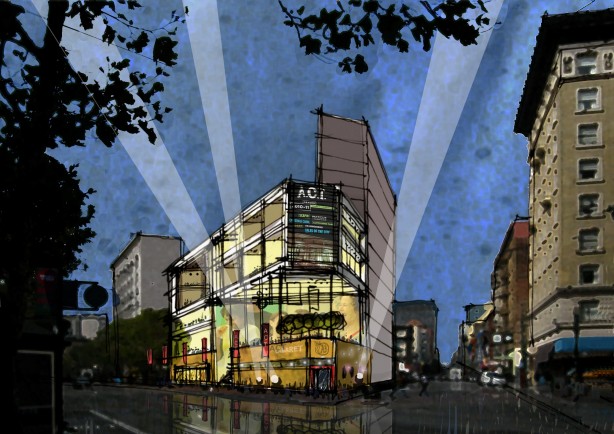
Is there a place for community theaters and nonprofit arts and education programs in pricey San Francisco? The 950 Center for Art and Education, a project that will be housed on the corner of Market and Turk streets in San Francisco, has gained a foothold against the odds.

Two years in the making, the center will provide permanently affordable performance facilities for the Lorraine Hansberry and Magic theaters, and create affordable space for art education organizations including Youth Speaks, the American Conservatory Theater and All Stars Project. Other groups, such as Lines Ballet, the Tenderloin Boys and Girls Club and others previously unsure whether they could continue to rent in the Tenderloin/SoMa area will get the chance to expand their performance and programming capabilities at the center.

Because the neighborhood is in such high demand in the wake of recent tax breaks and incentives designed to bring tech businesses to SF, it took the Tenderloin Economic Development Project, a part of the North of Market Neighborhood Improvement Corporation, at least two years to secure the property for the arts and education complex. Until very recently, the project’s fate was hanging in the balance, with many groups uncertain whether they would be able to remain in the city.

Three-quarters of the project space that TEDP had long set its sites on is located at 970 Market, and was initially owned by Lone Star, a Texas-based hedge fund. The remaining project space, at 950 Market, was under the ownership of the Thatcher family, known for philanthropy.

Initially, TEDP “had a deal with the hedge fund,” says TEDP director Elvin Padilla, but after property values rose, “they basically walked away from the negotiating table. The crisis moment was, who’s going to control the land – and will they collaborate with us?”

Padilla credits Gladys Thatcher, founder of the San Francisco Education Fund, as “the reason we decided to make the attempt [to acquire these spaces for the 950 Center] in the first place.” 

When TEDP first pitched the idea to her several years ago, “she gave us her blessing we decided to make a go of it,” he explained.

Thatcher is trustee and former board member of the San Francisco Foundation, which worked alongside TEDP and the Rainin Foundation to secure the lion’s share of the land needed for the 950 Center, by facilitating a purchase of the 970 Market Parcel from Lone Star.

On June 7, the property was transferred from Lone Star to Group I, a San Francisco-based real estate development firm that Thatcher is friendly with. Now that the sale has gone through, the space will be devoted to the arts and education programming that TEDP had long envisioned. The San Francisco Foundation plans to facilitate development of the center through the creation of a new sponsoring organization that will be housed at Community Initiatives, a nonprofit. 

While he is grateful for the community support, Padilla likened their quest to gain 970 Market to a climb up Mt. Everest.

A 2011 payroll tax exclusion zone introduced by Mayor Ed Lee vastly increased the property value in the mid-Market area. Although Lee had a soft spot for the 950 Arts and Education Center and even organized events to support bringing that use to mid-Market, his new policy left the project facing an uncertain future in a suddenly pricey strip along Market Street. “He doesn’t have any real authority over private sector transactions,” Padilla says, so all the Mayor could do was stipulate the city’s interest in using this land for “arts and education.”

The city doesn’t offer public funding for projects like 950 Center for Arts and Education. To “subsidize on the front end,” as Padilla puts it, the center will have to rely on the backing of individual investors, philanthropic groups and new market tax credits to reduce and eliminate the debt entirely, so the organizations that will be housed at the center don’t have to carry a mortgage.

In the end, it was only through the efforts of wealthy and connected individuals that plans for the center were nailed down rather than extinguished. “Mid-Market is going through a very rapid transformation,” says Dr. Sandra R. Hernández, Chief Executive Officer of the San Francisco Foundation. “We’re just lucky that Group I, the developer, shares this vision with us for an arts center.”

Looking back on the years of effort it took to piece the plan together, Padilla noted, “When we started this, it was before the tech boom. Now, the pressure on the real estate is many times what it was when we conceptualized the 950 project.” 

That uncertainty finally came to an end for Padilla’s organization when Group I closed the deal with Lone Star on June 7. “That really [did] start the project officially,” Hernández says. “We’re now working with a number of the organizations that have expressed interest in having permanent space or accessible space for their programming or rehearsals for their theater production.”

Is Larry Ellison cheating?

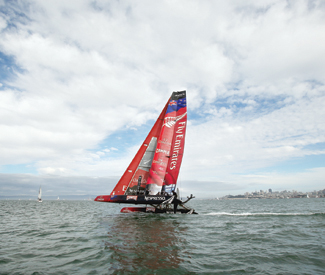
If you’re wondering why the hell there was only one boat was out there “racing” in the first match of the America’s Cup on Sunday, here’s the rundown on “Ruddergate,” yet another contentious chapter in the 162-year history of the America’s Cup.

At issue is the size and shape of the rudders on the twin hulls of the AC72s. Original design parameters were established back in 2010 when, in the interest of fairness, details of the boats were agreed upon by all teams — so exactly this kind of conflict wouldn’t occur. A “box rule” was applied, which means the boats won’t be identical, but they will be similar (Emirates Team New Zealand and Luna Rossa actually have near-identical boats as the Italians came late to the party and bought New Zealand’s design to save time.)

Then, after Andrew Simpson was killed when Artemis’s boat capsized on May 9, regatta director Iain Murray made 37 new safety recommendations, which the Coast Guard made into requirements when they permitted the race.

“Basically, for marine events, marine event sponsors are responsible for the safety of the events,” U.S. Coast Guard chief Mike Lutz explained, noting that the 37 rule changes originated with Murray and were approved by the Coast Guard as a package.

Some of those changes are straightforward and simple, like no guests aboard during races, more body armor, buoyancy and other personal safety gear, and no racing in winds over 23 knots (That one is actually a hindrance for ETNZ and Luna Rossa, who deliberately built for prevailing San Francisco Bay conditions, i.e. as much as 35 knots of wind.) 

But that’s not what the two teams are protesting. They don’t like new size and shape rules for the rudder elevators, which are designed to stabilize the boat when it’s foiling. Oracle has a pretty good description of how they work here.

The new rule lays out minimum and maximum area, depth, and span and says they should be symmetrical. None of the 36 other safety recommendations touch on design elements. The fishy part is that Oracle has been practicing with a bigger, symmetrical rudder elevator since they launched their second boat on April 24. Before Simpson died, before Murray’s new safety rules, Oracle was using what would be considered an illegal rudder. And now, voila, it’s legal.

The Kiwis immediately filed a protest to the rule, on June 28, and four days later Luna Rossa joined them.

“I’m not saying all the changes have been made for them, but it’s nothing related to safety. What really upsets me is that there is one boat sailing since they launched on April 24 who has been sailing out of the class rule,” Luna Rossa’s Max Sirena told the media on July 2. “Why design a boat that doesn’t comply with the class rule? And then one week before the Louis Vuitton Cup, you ask the other teams to change the position of the rudders and the elevators…”

In the meantime, rather than delay the first race or move up the date of the protest hearing, Murray said it was okay for the Kiwis and Italians to race without the “safer” rudder elevators, to which ETNZ’s Grant Dalton said, “The point is that under the recommendations you can run both. The question is why?  Because, if you can run both, then why do you need the ones that aren’t rule compliant?”

Dalton also thinks this design change could make the boats more dangerous because the rudder elevators would extend wider than the maximum beam of the boat and could slice a sailor in half if he slips over the side of the hull.

He hasn’t said something dirty’s going down. He told the media, “If the question is, has that rule been put in there deliberately to help Oracle, then no I don’t think it has – I don’t think for a second Iain Murray has done that. Is it helping them as a kind of byproduct of it, then yes it is.”

Luna Rossa’s Max Sirena has been more critical. “It is not safety related at all … It is the first time in the history of the America’s Cup that they can change the class rule just like that, just because they want to change it and with no reason. To change a class rule you need unanimity. Why when Oracle capsized last October did they not come up with this change then?”

Luna Rossa boycotted until the jury made a decision, stating that it would seem like silent affirmation if they raced. A last minute deal to get them on Sunday’s course fell through and for the time being, the Italians are sticking to their principles – they were out practicing yesterday, showing their boat is more than capable of performing with the smaller, asymmetrical, noncompliant rudders.

“The teams don’t believe it’s proper to change the class rule without a vote of the teams,” said America’s Cup spokesperson Sean McNeill. “They believe [Murray] didn’t have the authority to make such a change.”

If the jury rules in favor of Luna Rossa and ETNZ, Murray would have to go back to the Coast Guard with a new safety plan in order to obtain a new racing permit. “If there’s any change, they would have to submit an updated safety plan,” Lutz noted, saying he was confident that it could be reviewed in a short time and a second permit could be issued without too much of a delay.

The jury convened yesterday to hear the protests and a decision is due Wednesday, but this debacle raises a couple of questions. Why didn’t they hear the protests prior to the first race? That race day was established a long time ago, and hasn’t changed. The jury had at least five days to review the protests – ample time if the race organizers were really concerned with keeping the event from totally losing face.

Instead, two of the three boats were out of the race before it had even begun, creating animosity among the handful of sponsors still involved. Louis Vuitton’s Bruno Trouble – who initially anticipated 15 contenders, then 8, and certainly no less than 5 – is pissed that not even two could show up and the event has been very far from the big splash it was billed to be. Meanwhile, international media aren’t holding back the ridicule. Fairfax NZ’s Duncan Johnstone called it “a hugely embarrassing situation for regatta organisers, a major dent for the on-shore festivities and massive sponsorships that envelop this ridiculously expensive event.”

And, if the larger rudder elevators really are safer, why didn’t Oracle say something back in April before Simpson died? Or in October when their boat capsized? Instead, they’ve been very mum on the subject. Control is going to be as important as speed in this Cup and with the Kiwis and Italians burnt by the lowered wind limits, it looks like Ellison is hoping to top them in the control category. Larger rudders create more drag and less speed, but may get Oracle foiling for longer periods with enhanced stability – which they desperately need.

ETNZ and Luna Rossa have indicated it would be impossible for them to adapt their rudders now that racing has begun. Meanwhile, Oracle gets to hang back until the finals in September, practicing their moves while Ellison carries on with acting too rich too fail.

Rebecca Bowe contributed to this report.

Depp stinks but Death rules: new movies!

0

By now you’ve heard how much The Lone Ranger sucks (for more on that, my review here), so what else should you be spending your weekly movie-theater budget on? Well, the Roxie just opened a doc about Detroit band Death (Dennis Harvey breaks it down here), plus there’s a new Pedro Almodóvar joint, a coming-of-age summer flick starring Sam Rockwell and Steve Carell as cool and not-so-cool father figures, and (since one Carell movie ain’t enough) Despicable Me 2  — just the thing for the kidz who’ve already seen Monsters University.

Read on for our takes on these films, and more!
http://www.youtube.com/watch?v=irSSZumpYS4

Augustine When a 19-year-old Parisian kitchen maid (single-named French musician Soko) has a dramatic seizure during dinner service, she makes for Salpêtrière Hospital, where she becomes the superstar patient of Dr. Charcot (Vincent Lindon) — a real-life 19th century professor and neurologist who later mentored Sigmund Freud. There’s no “talking cure” at work here, though; Augustine’s medical treatment consists mostly of naked poking and prodding, as well as hypnosis-induced episodes of her increasingly sexualized “ovarian hysteria.” The tension builds as Charcot struggles against popular disdain for his methods (read aloud to him from newspapers by his coolly elegant wife), as well as his forbidden attraction to Augustine. Occupying the same moody, sensual milieu as David Cronenberg’s too-talky A Dangerous Method (2011), first-time feature writer-director Alice Winocour approaches her tale of misunderstood madness from a point of view that’s more emotionally-driven, with some subtle feminist undercurrents. Points deducted, though, for some obvious symbolism — like costuming Augustine in a brand-new red dress right after she starts her period for the first time. (1:42) (Cheryl Eddy)

http://www.youtube.com/watch?v=KtVEj86Vmzo

Deceptive Practice: The Mysteries and Mentors of Ricky Jay David Mamet fans will recognize Ricky Jay from multiple appearances in the director’s work; he’s also been in films like Boogie Nights and Tomorrow Never Dies (both 1997). But Jay’s true passion is stage magic, specifically card and other sleight-of-hand tricks, performed with a skill so dazzling that it’s tempting to believe he really does have supernatural powers. He’s also a witty, self-deprecating, and sometimes “irascible” (to quote a word used in Molly Bernstein and Alan Edelstein’s doc) character — and has a vast, ever-expanding interest in magic history. Using first-hand interviews, TV and stage-show clips, and some wonderful vintage footage, Deceptive Practice traces Jay’s career (he was a child prodigy in the 1950s, thanks to his supportive grandfather), pausing along the way to pay tribute to the men who influenced him and, in many cases, taught him their top-secret techniques. Throughout, Jay is seen demonstrating his own mind-bending tricks — as “simple” as changing a card’s suit, as elaborate as making it sail across the room and plunge like a knife into a watermelon rind — although never, of course, revealing how he does it. (1:28) (Cheryl Eddy)

Despicable Me 2 The laughs come quick and sweet now that Gru (Steve Carell) has abandoned his super-villainy to become a dad and “legitimate businessman” — though he still applies world-class gravitas to everyday events. (His daughter’s overproduced birthday party is a riot of medieval festoonage.) But like all the best reformed baddies, the Feds, or in this case the Anti-Villain League, recruit him to uncover the next international arch-nemesis. Now a spy, he gets a goofy but highly competent partner (Kristen Wiig) and a cupcake shop at the mall to facilitate sniffing out the criminal. This sequel surpasses the original in charm, cleverness, and general lovability, and it’s not just because they upped the number of minion-related gags, or because Wiig joined the cast; she ultimately gets the short end of the stick as the latecomer love-interest (her spy gadgets are also just so-so). However, Carell kills it as Gru 2 — his faux-Russian accent and awkward timing are more lived-in. Maybe the jokes are about more familiar stuff (like the niggling disappointments of family life) but they’re also sharper and more surprising. And though the minions seemed like one-trick ponies in the first film, those gibberish-talking jellybeans outdo themselves in the sequel’s climax. (1:38) (Sara Maria Vizcarrondo)

I’m So Excited I’m So Excited may be to Pedro Almodóvar what Hairspray (1988) was for director John Waters: a kind of low-intensity, high-fluff gateway drug for a filmmaker who’s otherwise an “acquired taste.” (Note: unlike Hairspray, this is not a family movie.) Almodóvar’s previous pictures were far more explicit about their obsessive thinking: mothers suffered (1999’s All About My Mother); sex was deadly (1990’s Tie Me Up! Tie Me Down!) and men were dishonorable (all of them). But in this drug and booze-addled flame-fest, Almodóvar takes one of his lesser themes (the joy of confinement) and transforms a flight from Madrid to Mexico into the funniest soap opera to ever feature cabaret and S&M talk. Early in the flight we learn the landing gear is shot; this means the flight’s dueling pilots have to find a place to host an emergency landing while Europe is on holiday. They anesthetize all of coach (um…metaphor, anyone?), leaving the rich to bellyache over their lost children, lost happiness, and stubborn virginity. Business class is full of drama queens so the flamboyantly gay attendants spike a cocktail with ecstasy (to make everyone get along) and an orgy ensues, complete with a seemingly victimless rape and multiple change-overs from hetero to homo. Almodóvar does have a knack for make-believe, but his biggest gift for fantasy happens in his stress-free transitions; oh, that coming out could be so liberating — but living in a Catholic country lousy with sexual disorientations, maybe the only place that can happen is at 30,000 feet. (1:35) (Sara Maria Vizcarrondo)

http://www.youtube.com/watch?v=NX9gUw3Kwb4

Kevin Hart: Let Me Explain The comedian (2012’s Think Like a Man) performs in this concert film, shot at Madison Square Garden during his 2012 stand-up tour. (1:15)

Maniac And it came to pass that William Lustig’s trashy classic Maniac (1980) was remade, with Elijah Wood assuming the role of twisted killer Frank, a role closely associated with its originator, the late, great cult actor Joe Spinell. Lustig is credited with a producing credit on this otherwise largely French effort, directed by Franck Khalfoun and co-written by Alejandre Aja and Grégory Levasseur — who also worked together on the 2006 remake of The Hills Have Eyes. Though it’s set in contemporary Los Angeles (complete with dating websites and cell phones), Maniac is shot to mimic the original film’s late-1970s New York (cabs, deserted subways, grimy streetscapes), with a synth-heavy score enhancing the retro vibe. Frank is still obsessed with mannequins, scalps, and his dead mother, with shades of both Psycho (1960) and The Silence of the Lambs (1991) filtering through. When Frank meets Anna (Nora Arnezeder), a beautiful French photographer whose preferred subject is mannequins, he grows ever more confused — and more violent. The entire movie is shot from Frank’s POV (we see Wood’s face only in mirrors and photographs), an off-putting gimmick that fails to add much in the way of suspense or scares. As for the gore, there’s nothing amid the CG enhancements that matches the work of special effects genius Tom Savini, whose memorable exploding-head scene plays just as repulsively effective in 2013 as it did in 1980. If you really wanna be freaked out by a movie maniac, skip this so-so do-over and spend some quality time with Spinell instead. (1:29) Roxie. (Cheryl Eddy)

http://www.youtube.com/watch?v=mK7AS_cITKI

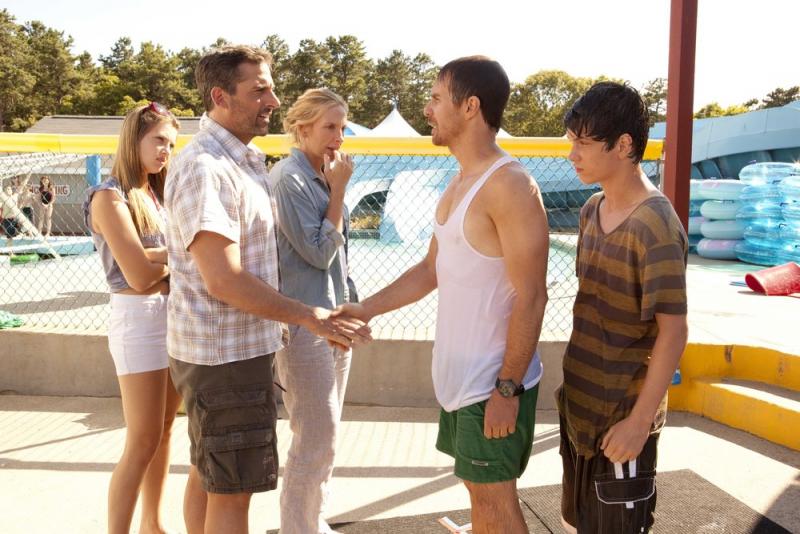
The Way, Way Back Duncan (Liam James) is 14, and if you remember being that age you remember the awkwardness, the ambivalence, and the confusion that went along with it. Duncan’s mother (Toni Collette) takes him along for an “important summer” with her jerky boyfriend, Trent (Steve Carell) — and despite being the least important guy at the summer cottage, Duncan’s only marginally sympathetic. Most every actor surrounding him plays against type (Rob Corddry is an unfunny, whipped husband; Allison Janney is a drunk, desperate divorcee), and since the cast is a cattle call for anyone with indie cred, you’ll wonder why they’re grouped for such a dull movie. Writer-directors Nat Faxon and Jim Rash previously wrote the Oscar-winning screenplay for 2011’s The Descendants, but The Way, Way Back doesn’t match that film’s caliber of intelligent, dry wit. Cast members take turns resuscitating the movie, but only Sam Rockwell saves the day, at least during the scenes he’s in. Playing another lovable loser, Rockwell’s Owen dropped out of life and into a pattern of house painting and water-park management in the fashion of a conscientious objector. Owen is antithetical to Trent’s crappy example of manhood, and raises his water wing to let Duncan in. The short stint Duncan has working at Water Wizz is a blossoming that leads to a minor romance (with AnnaSophia Robb) and a major confrontation with Trent, some of which is affecting, but none of which will help you remember the movie after credits roll. (1:42) (Sara Maria Vizcarrondo)

Dick Meister: Celebrating July Fourth with the enemy

1

By Dick Meister
Dick Meister is a veteran Guardian columnist and freelance writer.

The Fourth of July, as we all know, is Independence Day. Hurray for George
Washington and the revolutionaries, down with King George and the British.
That sort of thing.

But have you ever wondered what it’s like on the other side? Have you ever
celebrated the Fourth across the border in Canada, in that territory settled
by pro-British “Loyalists” who fled the United States after the
Revolutionary War? It is a most peculiar experience for one accustomed to
the American way of viewing the events of 1776.

My wife Gerry and I observed the Fourth on the other side a few years back
— in Fredericton, the beautiful little capital of New Brunswick, named in
honor of King George’s second son, Frederic. Going into Fredericton meant
going into the camp of a former enemy — a friend now, but a former enemy
who openly hails the “Loyalists” who fought for them against us. I mean
people who opposed our revolution and never even said they were sorry.

Our first stop was the hallowed Loyalist Cemetery near the banks of the
Saint John River at the far end of Waterloo Row, burial ground of
Fredericton’s revered founders — anti-American tories, the lot of them. We
trudged down a muddy path to a ring of trees around a swampy grass clearing
in which the tory heroes lay, prepared to utter a revolutionary sentiment or
two over them in honor of the holiday.

We managed to get a quick look at a couple of thin, well-worn, tottering
slate headstones — but that was all. Before we could even open our mouths,
they struck — angry swarms of dread North woods mosquitoes. Backwards we
dashed. Quickly. Very quickly. We slapped at each other as we squished
awkwardly over the wet ground, batting mosquitoes off hair, face, neck,
arms, clothes. Much buzzing. Much stinging. They were everywhere. The
tories’ revenge. For days afterward, we bore the swollen red marks of the
Loyalists.

More insults were to come, in the Legislative Assembly chambers downtown.
The chambers are elegant: ornately carved desks, elaborately patterned silk
wall covering, thick crimson carpeting. But look up on the walls, in the
places of honor on either side of the Speaker’s chair. To the left there’s a
portrait of George III, the very monarch we made a revolution against, to
the right a portrait of his queen, Charlotte — and both painted by no less
a master than Joshua Reynolds.

George is in fact treated much better in New Brunswick than he generally is
in Great Britain. Historians there ridicule him for being a bit of a loon
and for such loony acts as overtaxing the American colonists and
overreacting to their protests by then waging war against them. In
Fredericton, they think George did the right thing.

In the United States, of course, we celebrate the end of colonialism. But in
Fredericton they seem to yearn for its return. Union Jacks fly from staffs
all over town and portraits of Queen Elizabeth and her consort hang in
government and private buildings everywhere. Ceremonial guards outside City
Hall wear the white pith helmets, long crimson jackets and black uniform
trousers of the British colonial soldier.

Just behind City Hall stand the restored quarters of the British garrison
that was stationed in the city for more than a century, one of the buildings
now housing a museum full of anti-revolutionary twaddle. Captions below
portraits of leading Loyalists praise them for “faith, courage, sacrifices”
against Yankees, who are for the most part described as violent, crude, rude
and vulgar. Here, too, a portrait of George III hangs in a place of honor.
Among the Loyalists singled out is that other fine fellow, Benedict Arnold,
who lived in New Brunswick before slinking off to Mother England in 1791. At
least the museum keepers have the decency to own up to Arnold’s “reputation
for crookedness.”

Loyalists also are favorites in New Brunswick’s neighboring province of Nova
Scotia, particularly in the capital of Halifax. There, the American
revolutionaries are portrayed as bad guys who would have made Nova Scotia a
U.S. colony if the British hadn’t beefed up their garrison on Citadel Hill,
a massive fortress that towers high above the city, guarding every access,
be it by land or by sea.

The champion Loyalist stronghold is the New Brunswick city of Saint John.
“Loyalist City,” it’s called. It has a Loyalist Burial Ground, naturally,
but also a Loyalist Trail, Loyalist Apartments, Loyalist Coin & Collectibles
shop, Loyalist Pub and, among many other things loyalistic, Loyalist Days,
an annual week-long festival honoring Saint John’s founders. At a high point
in the festival 100 or so appropriately costumed Loyalists — “His Majesty’s
Loyal Troops” — fend off a brigade of actors portraying American rebels
attempting to “capture” Saint John.

The latter-day Loyalists claimed to like us nevertheless. In Fredericton,
for instance, a half-dozen U.S. flags fluttered smartly outside the Lord
Beaverbrook Hotel, the city’s finest, and the marquee proclaimed, “We Salute
our American Friends. Happy 4th of July.”

Sure thing. But watch out for the mosquitoes.

Dick Meister is a veteran Guardian columnist and freelance writer.

(Bruce B. Brugmann, or B3 as he signs his emails and blogs, is the editor at large of the Bay Guardian and former editor and co-founder and co-publisher with his wife Jean Dibble, 1966-2012. He can be reached at the Bruce blog at sfbg.com.)


)
       

“Eviction Free Summer” activists show up outside a landlord’s office to protest an eviction

On July 2, activists from “Eviction Free Summer,” formed to defend tenants facing eviction, gathered outside landlord Rick Holman’s South Park office building in San Francisco to protest an eviction he’d initiated against a Mission-based activist collective.

Organizer Fred Sherburn-Zimmer said it was one of many peaceful protests the housing activists plan to stage against property owners this summer. “We’re taking it to the landlord’s homes and offices,” Sherburn-Zimmer said. “They can’t pretend they’re not ruining people’s lives by displacing them.”

This past April, collective members from In The Works, an organization that rents space in what is often called the “17 Reasons” building, at 17th and Mission streets, received an eviction notice from Holman alleging illegal subletting.

Holman is a managing partner at Asher Investment Group, and from the perspective of Sherburn-Zimmer and other protesters, his move to evict the collective is helping to propel a trend of gentrification in the Mission. “We need this space, and if the whole neighborhood is high-end realty, then it’s not really helping the community,” Sherburn-Zimmer said.

The In The Works Collective bills itself as an anti-authoritarian, anti-capitalist arts and events collective, which regularly hosts skill-sharing workshops and other activism-oriented events. A collective member who introduced herself as Madeline said Holman has not been the most hospitable landlord.

“When he first came to talk to us, he said we had bad posture and body language,” she recounted. “The day after we got the three-day notice, the locks were changed.” 

When the Guardian reached Holman this past May seeking comment for a longer article about widespread evictions, he declined to comment on the matter but emphasized that he planned to keep the building as commercial office space rather than convert it into high-end condos, and said his other tenants had expressed no complaints.

Like many folks facing eviction from San Francisco rental properties, In The Works may be forced to find another space. Currently, Madeline says the collective is paying 72 cents a square foot for the 5,200 square foot place — and it’s highly unlikely that they’ll find a place in the Mission for a similar price. That’s why they welcomed support from the activists at Eviction-Free Summer.

“I totally respect them helping us out,” Madeline said. “It’s important that we stick together. Our place has always been big on solidarity and community building.” 

Eviction Free Summer hasn’t revealed what other landlords they might target, yet they plan to continue staging protests outside landlords’ homes and offices in coming months. “This is just the beginning of this direct action group,” Sherburn-Zimmer said. “We will do anything to prevent people from losing their homes and spaces.”

Wedding bells and Pride protests

0

rebecca@sfbg.com ; steve@sfbg.com

The city of San Francisco was a complete whirlwind from June 26 to June 30. First came the historic Supreme Court ruling that ended the ban on same-sex marriage in California and struck down the discriminatory Defense of Marriage Act. The historic decision, handed down just before the city’s Pride festivities got underway and as a rare heat wave gripped the city, unleashed widespread celebration June 26, culminating with a rally and dance party in the streets of the Castro.

The Supreme Court ruled that the Defense of Marriage Act, which denies federal recognition of same-sex marriage, “is unconstitutional as a deprivation of the equal liberty of persons that is protected by the Fifth Amendment.” According to the majority opinion, “DOMA’s principal effect is to identify a subset of state sanctioned marriages and make them unequal.”

Hollingsworth v. Perry, the Prop 8 case, was dismissed on standing due to the fact that the State of California refused to defend it in court. That meant the previous ruling invalidating Prop 8, by Judge Vaughan Walker and upheld by the Ninth Circuit Court, was upheld.

City Hall was totally packed at 7am when the Court convened, with hordes of journalists, gay and lesbian couples, and sign-wielding activists in the crowd. Cheers erupted when the decision was announced striking down DOMA. When the Prop 8 statement came down, the room went nuts.

“It feels good to have love triumph over ignorance,” said Mayor Ed Lee, who joined Lt. Gov. Gavin Newsom in escorting a fragile Phyllis Lyon down the stairway. When Lyon married the late Del Martin, they became the first same-sex couple to get legally married in California in 2004.

“San Francisco is not a city of dreamers, but a city of doers,” Newsom said. “Here we don’t just tolerate diversity, we celebrate our diversity.” He thanked City Attorney Dennis Herrera and others who’d contributed to the fight to for marriage equality. “It’s people with a true commitment to equality that brought us here.”

When Herrera took the podium, he turned to Newsom, and said, “Now you can say, ‘Whether you like it or not!'” — a joking reference to Newsom’s same-sex marriage rallying cry, which some blamed for boosting the anti-same-sex marriage cause. “We wouldn’t be here today if it wasn’t for Gavin Newsom’s leadership,” Herrera continued. “I remember in 2004 when people were saying it was too fast, too soon, too much.” Herrera also pledged to continue the fight that began here in City Hall more than nine years ago: “We will not rest until we have marriage equality throughout this country.”

Later that afternoon, clergy from a variety of faiths including Christianity, Judaism, Islam, Buddhism and the Church of Latter Day Saints gathered on the steps of Grace Cathedral on Nob Hill for a buoyant press conference to celebrate the court’s rulings.

“For 20 years I’ve been marrying gay and lesbian couples, because in the eyes of God, that love and commitment was real, even when it wasn’t in the eyes of the state,” said Rabbi Michael Lerner of the Beyt Tikkun Synagogue. “We as religious people have to apologize to the gay community,” he added, for religious texts that gave opponents of gay marriage ammunition to advance an agenda of discrimination.

He added that the take-home message of the long fight for marriage equality is, “don’t be ‘realistic.’ Thank God the gay community vigorously fought for the right to be married — because they were not ‘realistic,’ the reality changed. Do not limit your vision to what the politicians and the media tell you is possible.”

Mitch Mayne introduced himself as “an openly gay, active Mormon,” which is significant since the Mormon Church was a major funder of Prop 8. He called it “one of the most un-Christlike things we have ever done as a religion,” but noted that the sordid affair had brought on “a mighty change in heart from inside the Mormon community, with greater tolerance than ever before,” with many Mormons going out and marching in solidary with gay and lesbian couples, he said.

Then on June 28, earlier than expected, the County Clerk started issuing same-sex marriage licenses. Kris Perry and Sandy Stier, plaintiffs in the case against Prop. 8, became the first of dozens of happy couples to be married at City Hall that evening, and the marriages continued in the days that followed.

And as if that weren’t enough excitement, it all happened before the weekend, when Pride festivities got underway. This year featured not only the official Pride parade and myriad performances, but also an “Alternative to Pride Parade,” signifying that a radical Pride-questioning movement has been reawakened in San Francisco.

“Have you had enough with the poor political choices of some community leaders that claim to represent you? Are you over the over-corporatizing of SF Pride? Or just tired of the same old events that don’t reflect who you are, and how you want to celebrate your queer pride?” organizers wrote in a statement announcing the event.

The parade itself, meanwhile, also featured some dissenters. The third annual Bradley Manning Support Network contingent swelled in ranks this year, due to the political maelstrom touched off when the Pride Board rescinded Manning’s appointment as Grand Marshal.

The Bradley Manning Support Network contingent attracted more than 2,000 supporters who marched to show solidarity with the openly gay whistleblower, comprising the largest non-corporate contingent in the Parade. Former military strategist Daniel Ellsberg, who leaked secret government documents known as the Pentagon Papers to the press in 1971, donned a pink boa and rode alongside his wife, Patricia, in a pick-up truck labeled “Bradley Manning Grand Marshal.” Patricia told the Bay Guardian, “There is something about the energy and triumph of this beautiful event … Just as the gays have made a tremendous difference with marriage, we have to do the same with wars and aggression” in U.S. foreign policy.

Pride’s legal counsel, Brooke Oliver — who resigned over the Pride Board’s handling of the Manning debacle — marched along with the Bradley Manning contingent. Bevan Dufty, former SF Supervisor and now the mayor’s point person on homelessness, stepped down as a Grand Marshal, also because of the Pride Board’s actions, but didn’t march with the contingent.

Nor were the Bradley Manning supporters the only protest contingent to take part in the parade. A group seized the opportunity to make a political statement by marching with a faux Google bus, an action meant to call attention to gentrification and evictions in San Francisco. They rented a white coach and covered it with signs printed up in a similar font to Google’s corporate logo, proclaiming: “Gentrification & Eviction Technologies (GET) OUT: Integrated Displacement and Cultural Erasure.”

Some trailed the faux Google bus with an 8-foot banner depicting a blown-up version of an Ellis Act evictions map. Others donned red droplets stamped with “evicted” to signify Google map markers, while a few toted suitcases to represent tenants who’d been sent packing. However, their ranks were thin in comparison with the parade contingents surrounding them, which included crowds of workers representing eBay, DropBox, and, of course, Google — the largest corporate contingent in the parade.

“The organizers of this anti-gentrification and displacement contingent are not ‘proud’ that folks are being kicked out of this city that was once their refuge,” organizers of the faux Google bus contingent wrote in a press statement. “The 2013 SF Homeless Count and Survey shows that 29 percent of the city’s homeless population is ‘LGB and other.’ The Castro is experiencing the highest number of evictions in the city. Meanwhile, the SF Pride Parade is becoming as gentrified as SF. This group is calling on Pride to remember its roots.”


New Zealand’s Cup

7

news@sfbg.com

A few weeks ago I was walking down the dock in the marina where I live, in Wellington, New Zealand, when I passed a woman and a young boy. I’d never seen them before, which is uncommon here in this municipal marina — about 100 boats — in a small suburb of the country’s capital.

The boy was walking from berth to berth pointing out certain rig and hull features and expounding on them as only a future aficionado can. “Lots of different boats, huh?” I asked as I passed.

“Different than America,” he confirmed in an accent the same as mine.

The kid is sharp, I thought, or maybe it’s just obvious, even to an eight-year-old from Chicago. The New Zealand sailing scene is vastly different than its American counterpart, which is not to say there’s no comparing — they’re not exactly navigating carved logs with gunnysack sails down here.

But the boats in my marina are, in fact, mostly homebuilt from steel, cement, aluminum, and wood. They appear a motley crew compared to the cookie-cutter production fiberglass Beneteaus, Catalinas, and Hunters, with their identical pacific blue sail covers lined up in San Francisco’s South Beach Marina.

In New Zealand, a boat is rarely a status symbol — it’s part of the middle-class way of life, the home base for holidays and weekend fishing trips and lots and lots of competitive racing. If I’ve noticed one thing since I arrived in this country (aboard a sailboat, after leaving San Francisco and my job as a Bay Guardian staff writer), it’s that every little harbor town has a yacht club and an awful lot of Kiwis own boats — and they sail the shit out of them.

Which is part of the reason why the New Zealand government is willing to invest NZ$36 million (US$27 million) to compete in the 34th America’s Cup against some of the richest men in the world in a race that has become so elite there’s barely any competition.

Small as the field is, Emirates Team New Zealand (ETNZ) is quickly shaping up to be the team to beat if you’re on a high-speed, air-catching AC72 catamaran. If they succeed, it will show that developing an America’s Cup team doesn’t have to come from having deep pockets in your Nantucket Red pants — it comes from having the sport ingrained in your culture, filtered through affordable local boat clubs, city-run facilities, volunteer programs, publicly accessible shorefronts, and an innovative marine industry.

In fact, without New Zealand’s maritime way of life, Larry Ellison wouldn’t have much of a team: of the 27 sailors and management crew aboard Oracle, a third are Kiwis. Another third are Australians. If you count Ellison, there are only three Americans aboard. Just one of them — tactician and grinder John Kostecki — grew up sailing on San Francisco Bay.

Ellison’s boat is mostly a Kiwi production, too — the fixed-wing sails and structural components for Oracle’s two AC72s were made in New Zealand, as were the boats, sails, and rigs for ETNZ and Luna Rossa. The only other syndicate competing, Sweden’s Artemis, in the wind since the death of crewmember Andrew Simpson, is the outlier, but they still have eight New Zealanders on board.

America’s Cup is looking more and more like it owes a lot to New Zealand. Is the Cup doing as much for San Francisco as it is for this little island nation, with a population just a tenth of California’s?

“If it wasn’t called Team New Zealand, we wouldn’t get a lot out of it,” says Sven Pannell, a competitive dinghy racer and employee of the economic development agency Grow Wellington. “The numbers of boat builders, carbon fabricators, sail makers, yacht designers coming out of New Zealand are the reason we’re still at the top of the global game. If we can bring the Cup home that means a lot for our country.”

It may also save America’s Cup from becoming even more out of touch with reality.


IT’S THE CULTURE, STUPID

It’s June 8, summer in San Francisco but winter in Wellington. The first race of the 2013 Winter Series at Evans Bay Boat Club hits hypothermic seas beneath steely overcast skies and 20-30 knots of wind — “perfect conditions,” one sailor enthuses. Tame, actually, for Wellington. A week ago, wind blew out the fifth story windows of a building downtown.

Sven Pannell has just finished racing a 12-foot skiff, a super lightweight, often homebuilt boat that probably originated in Australia and is almost exclusively raced in the Southern Hemisphere, though an 18-foot version will be showcased in San Francisco this September alongside the America’s Cup finals. Weighing about 100 pounds, with no class restrictions on sail area, they rooster-tail around Wellington harbor, bow high, barely in the water. They seem to require a similar caliber of nerve as the AC72s.

Which Pannell, who won today, evidently has. He grew up sailing as a kid, as did his crew, Craig Anderson. Neither of them can think of anyone who didn’t get into sailing as a child.

“A lot of people around the world think yachting is a well-heeled sport, but not in New Zealand,” he says. “There’s a reason that half those [America’s Cup] boats are full of Kiwis and Aussies. Go out and see the number of eight-year-olds in Optis in all kinds of weather here. A high number of people sailing at that age creates a deep pool of sailors in demand.”

“America’s Cup is about stretching the limits, but it starts here, when you’re eight years old,” he adds.

Eager to get out of the icy Antarctic wind, I enter the boat club where about 35 people are gathered at the bar, buzzing from adrenalin, barefoot and wet from spray or capsizes, gripping ginger beers and green bottles of Steinlager, the Budweiser of New Zealand. It’s a humble looking crowd — no flash gear or cashmere.

I’m introduced to Mike Rhodes, 26, wearing a blue sweatshirt and camo pants. He’d love to race an America’s Cup boat, but he also satisfies himself with a 12-foot skiff, which he stripped and rebuilt, fashioning the stainless steel fittings himself — he’s a sheet metal worker.

“New Zealand sailing is all about learning and moving forward,” he says. “The boats we’re sailing are always changing. We have set rules for weight, width, and length. After that it’s wide open. You can put up as much rig as you can handle. We went out in 50 knots last weekend. It was insane. We probably had boat speeds of 30 knots.”

The speed and innovations are what appeal to Rhodes and also connect to the America’s Cup, which has been an historic proving ground for leaps forward in boat design. “Who thought New Zealand could make the boat fly first?” he says of ETNZ’s proficiency at foiling the AC72 — going so fast the hull actually lifts off the water.

We’re soon joined by Laura Hutton, a 30-year-old from Cape Cod. She’s raced dinghies, coached and taught sailing for years. Now a speech therapist, she moved to New Zealand three months ago and immediately hooked into the local yachting scene. It’s palpably different than what she’s used to in the States. Here, she says, “It’s a lot more laid back. It’s more inclusive than exclusive. I used to go to events at New York Yacht Club in Newport and I felt so uncomfortable there. It’s the most elite, snobby place.”

“You can’t get coaching in the US unless you’re part of a yacht club or go to a school with a racing team,” she adds, and there’s often a huge cost to enter the sport. “Here, I can join the local yacht club for $35 a month,” she deadpans.

I spend more money riding the bus, I tell her, but I wouldn’t in San Francisco, where it’s cheap to catch a bus but where most people rarely board boats.

The American yacht club tradition has a certain “if you have to ask how much it costs, you can’t afford it” attitude. Ellison is one of 300 members of Golden Gate Yacht Club, official host for the Cup. Its neighbor, St. Francis Yacht Club, 2,300 strong, also has a role in the festivities. Both are exclusive, members-only clubs and neither would tell me what their members pay for the club’s privileges.

However, they’re officially nonprofit organizations and filings with the IRS show St. Francis made nearly $13 million in 2011. Golden Gate Yacht Club took home $660,000 the same year. Ironically, both clubs are on public lands, leased from San Francisco’s Recreation and Parks Department for $231,125 and $64,000 annually respectively.

Both clubs run learn-to-sail programs for kids — $350 for St. Francis and $200 for GGYC — which seem affordable, but what’s the next step? Joining the club, but apparently it’s too rude to query the price.

By contrast, Wellington’s Evans Bay Boat Club charges NZ$281 (US$210) to join and Royal Port Nicholson Yacht Club, which is a sister club to St. Francis, costs NZ$160 (US $120). The Bay Area is lucky — Berkeley and Treasure Island both have affordable clubs, however one could argue that if St. Francis and GGYC are on public lands, they should be paying more in dues to the city.

If there’s a posh club in Auckland, it’s ETNZ’s home — the Royal New Zealand Yacht Squadron. “But it’s a Kiwi version of posh, nothing like some of the yacht clubs I have been to in places like England, where women aren’t allowed to order drinks at the bar,” says Ben Gladwell, a journalist for Boating New Zealand who will be racing an 18 foot skiff in San Francisco in a regatta concurrent with the Cup finals. “At the Squaddy, there are obviously rules, like no cell phones, and dress codes and such like, but the fees are still only a few hundred dollars per year and it is much more inclusive than other yacht clubs around the world.”

Gladwell explored the health of New Zealand’s sailing culture in a story called “State of the Racing Nation” for Boating New Zealand. He found that although there is a drop-off in interest during university years, many yacht clubs have created partnerships to keep kids in the sport, there are mobile learn-to-sail units roaming the country, and lots of accessible city-run programs for kids. Couple that with low lifetime fees to stay in the sport and you see healthy clubs like Evans Bay, where people of all ages are out racing every weekend, all year round.

“Having so many people involved in sailing is a major reason we are successful,” he says. “Children are introduced to it at such a young age…by the time they come to competing at youth international regattas, they are hugely experienced and winning becomes a habit.”


“AMERICA’S CUP IS NOW NEW ZEALAND’S CUP”

In 1995, when Black Magic smoked Dennis Connor’s Stars and Stripes in a five-race shut-out, commentator Peter Montgomery famously quipped “America’s Cup is now New Zealand’s cup,” a line that’s gone down in Kiwi history like the “I have a dream” speech.

For the first time, the Auld Mug would be defended in New Zealand. Back then, Auckland’s Viaduct Harbor probably looked a lot like parts of San Francisco’s waterfront does today — dilapidated piers and old industrial buildings crumbling on their pilings. It would cost of NZ$58 million (US$29 million at the time) to dredge the harbor and spruce up the waterfront for the Cup.

The city made its money back. Hosting for two years, in 2000 and 2003, brought NZ$1 billion (US$500 million, at the time) in economic benefits to the country, about 85 percent of that going to Auckland’s local businesses, mostly from visiting megayachts and the services required for the nine syndicates that competed — twice as many as are in San Francisco today.

And Auckland made a lot less than the US$900 million predicted for San Francisco, already trimmed from the US$1.4 billion initially estimated. What the city actually gains from the $22.5 million investment they’ve been forced to make remains to be seen. Meanwhile, Auckland continues to benefit from the race.

It’s been estimated that the four Cup contenders have collectively spent half a billion on their campaigns and a decent chunk of that has been in Auckland, particularly during the AC72 design, build, and testing phases. Already, taxes paid by ETNZ employees amount to NZ$22.4 million (US$16.5 million). That doesn’t include the employee payroll taxes of all the businesses doing Cup-related activity, like the boat builders, riggers, and sailmakers.

ETNZ CEO Grant Dalton has netted sponsorships from more than 100 companies and argues that the Cup efforts have kept many marine businesses afloat that would have otherwise shuttered. Kiwis have not been immune to the world financial situation: the high New Zealand dollar hurting exports and the NZ$30 billion (US$22.5 billion) price tag for the February 2011 Christchurch earthquake have stressed the country’s coffers.

Because of that, funding ETNZ has been as contentious here as hosting Ellison’s party has been to San Franciscans. The agreement was signed in 2007 by a Labour Party-led government and when National Party’s John Key won the Prime Minister’s seat in 2008, he looked into breaking the contract, a move supported by other parties. “Funding the America’s Cup is surely a ‘nice to have’, rather than essential spending, in the current economic climate,” said Green Party co-leader Metiria Turei at the time.

The government was advised they’d still be legally on the hook for the money if they broke the contract, so ETNZ proceeded, but proof of economic return was a contingency and Dalton has taken pains to keep the public good in the conversation, a sharp contrast to Ellison’s attitude toward San Francisco. Dalton has said if New Zealand wins, the world should expect a sharp scaling back of costs. “We stand for nationality rule and we stand for real budget numbers that real people can raise,” he has said.

There’s definitely a sense that this could be New Zealand’s last chance to bring the Auld Mug home. If they don’t, the America’s Cup also loses. Who else will save it from American-style exclusiveness?

‘Alternative to Pride Parade’ announced

57

In the wake of all the kerfuffles besetting Pride this year — from the Pride Board’s egregiously mismanaged reaction to the election of Bradley Manning as a community grand marshal (his supporters have plans of their own), to the recent announcement that military recruiters would be descending upon the celebration in earnest, and, well, just the continued corporatization of Pride in general — it comes as no surprise that a radical Pride-questioning movement has been reawakened.  Just like the ’90s are back, so is Gay Shame, at least in spirit.

And thus an alternative parade to the Pride one on Sunday has been announced — let us not be surprised that it is a bar crawl! In any case, it’s a nice start to getting us back to our gay, unlicensed roots while joining with other activists who are Over the Rainbow(TM). Here’s the statement from the organizers with more details.

Have you had enough with the poor political choices of some community leaders that claim to represent you? Are you over the over-corporatizing of SF PRIDE??? Or just tired of the same old events that don’t reflect who you are, and how you want to celebrate your queer pride?

Want to be part of something different, something fun, something that will challenge conventional thought within the SF LGBTQ community?

Then join us for an ALTERNATIVE TO PRIDE PARADE (AND BAR CRAWL).

We will be getting back to our gay roots, meeting at THE CINCH BAR at 1723 Polk Street at 12 NOON with the parade beginning at 1pm (we don’t think a 10:30am start time for a Pride Parade is appropriate), ending up at THE SF EAGLE.

We will make stops along the way, passing through SF PRIDE at Civic Center to express (peacefully) our displeasure with what passes for gay pride at this event, and then we will continue on to SOMA with stops at THE POWERHOUSE/HOLE IN THE WALL, and finally we will end up at The SF EAGLE.

We encourage you to DRESS UP, whatever you want: Drag, Leather, Freak, Nerd, Casual, Beach Wear, Furry, Punk, etc. We also encourage you to BRING PROTEST SIGNS, be creative (body paint?), be original! We will definitely want folks to know what we are up to and perhaps get people thinking about why we need BUDWEISER, VIRGIN AMERICA, VERIZON, WELLS FARGO, BANK OF AMERICA, and COMCAST to have a good time!

RSVP TODAY!!!

….and here’s your full freedom to marry dance mix, Mary

0

Today already has an amazing (and in one case sad) soundtrack of excellent tunes. But Honey Soundsystem are first on the stick with an excellent mix of underground house and techno (and indie and acid and minimal synth) picks to play as you get ready for your big fat gay wedding, called, yes, “Marry in Ecstasy.”

Go ahead and jam out as you desperately try to locate your musty rainbow feather boa (NO RAINBOW FEATHER BOAS!) for the huge celebration in the Castro tonight. Or let it float through your headphones as you float through Pride Week’s insane amount of events — culminating, of course, in Honey Soundsystem’s extended dance party. (Sun/30, 10pm-4am, $10. Holy Cow, 1535 Folsom, SF. More info.) 

Devil may care

0

emilysavage@sfbg.com

TOFU AND WHISKEY Unlike most anticipated albums these days, Austra‘s sophomore LP, Olympia (June 18, Domino Records), came out in gleaming little drops. There were no leaked full downloads — at least, nothing massively widespread. But the sparkly bits that did trickle out, namely first single “Home” and its follow-up, “Painful Like,” were enough to build interest.

The Canadian synth-pop six-piece already had a built-in audience, thanks to 2011’s Feel It Break, mostly created by darkly operatic lead vocalist Katie Stelmanis, former Trust vocalist Maya Postepski on drums, and bassist Dorian Wolf, and made almost exclusively on a computer. Now a more fully realized unit using live instrumentation, the group, which also includes keyboardist Ryan Wonsiak and supernatural twin backing vocalists Sari and Romy Lightman, created the lush, full-bodied second record together in a studio. And it shows: there’s a richness to the sound. There’s a steady dance beat throughout the record, with the addition of sounds like cowbells and even more barreling percussion underneath all those moody vocals wailings and subtle piano keys.

“We have so much percussion on the album, I had days where I would just play all day,” Postepski says from Switzerland, on the group’s brief tour through Europe. “I think it added to the richness to it, and the realness of the sound. As much as it is an electronic record, we wanted it to have a balance with real instruments.”

That first released track “Home” seduced critics earlier this spring with a more upbeat style than typical of Austra, yet the lyrics are again deeply personal for Stelmanis, about someone not coming home at night because they’re out getting wasted, and the desperate feeling of waiting for that person to return.

Sonically, second single, “Painful Like” gets more to the core of what the group does best, meshing gothy dancefloor-ready beats and bubbly synth with crashing drums and Stelmanis’ otherworldly vocals on display.

The lyrics were inspired by “the disillusionment of growing up gay in a small town and finding solace in the arms of a lover.”

Stelmis told Spinner in 2011, “Indie music is funny. It’s really not as queer positive as you would think. In a lot of ways, it’s very centered around white men, basically. I just want there to be space for gays.”

She seems to have taken that to heart on Olympia, including even more of herself than on Feel it Break.

“The lyrics on the new album are personal, intimate reflections of what Stelmanis is going through,” Postepski says.

The new record contains hints of other moody synth-based projects like former tourmate Grimes, the Knife, and Zola Jesus, though Postepski says she almost exclusively listens to music made before 1995, specifically Grace Jones and David Bowie. She does make an exception for British techno producer Andy Stott. “That’s where all the super low bassy stuff comes from,” she explains.

While many of the tracks follow the same formula, Olympia is packed with emotional dancefloor moments. It’s the kind of record that could soundtrack a crying fit in a dark club bathroom, mascara bleeding down the face, strangers surrounding the mirror, all of the drama inherent in nightlife, then follow the main character triumphantly back out onto the floor.

“As much as it is a serious album, there’s a lot of playfulness as well,” Postepski says. “I think we struck a good balance.”

Austra, which has toured internationally with groups like the XX, Grimes, and the Gossip will test the balance on a quick jaunt through the States, only stopping in a few major cities. One lucky enclave is San Francisco — the group plays here this week (Wed/26, 8pm, sold out. Independent, 628 Divisadero, SF). Noted for its creative use of stage layout and synchronized twin dance movements (“they’re kind of like our cheerleaders!”), Austra has a lot to live up to at its live shows. Postepski tells me this very short tour includes a massive, beautiful new backdrop, rented from the Chinese Opera Group in Toronto.

“People are having fun at the shows. I just want it to be a dance party, you know?” Postepski says.

There’s another group traveling to San Francisco this week that also will likely be filling up the dancefloor — and, coincidentally, also has toured with the Gossip — Magic Mouth. To get a taste of the explosive energy Magic Mouth exudes, check the YouTube video “MAGIC MOUTH LIVE: MISSISSIPPI STUDIOS,” it’s like watching James Brown front a garage-punk band. The lively Portland, Ore. queer soul-punk quartet will play Hard French Hearts Los Homos (an event described by DJ Carnita as “an intergalactic Pride Party for all the gayliens who love to dance in outer space”).

Magic Mouth will open for fellow Northwesterners, Seattle’s THEESatisfaction at the event hosted by Lil Miss Hot Mess (Sun/30, 4-11pm, $20. Roccapulco, 3140 Mission, SF; hardfrenchpride2013.eventbrite.com). This will be the band’s second time in SF, after stopping by El Rio last fall. But other tours have taken the group around the country opening for the Gossip, and JD Sampson’s MEN.

Magic Mouth has a glut of reasons to be keyed up for the SF show.

“I’m really looking forward to playing with THEESatisfaction. We’ve been admirers of theirs from afar for a minute and in kind of the same music community,” says frontperson Chanticleer Trü. “And also to celebrate at Hard French, because we love what they do.”

Guitarist Peter Condra adds, “And I’m excited to play a party that’s dedicated to a political cause, which is Bradley Manning. With what went down in San Francisco Pride, I think that fueled the organizers’ enthusiasm about the topic and I want to help them create awareness in any way we can as a band. I think it’s cool they took a stance on that.”

A crash course on those events: The LGBTQ community was torn apart when the SF Pride Board rescinded the election of Wikileaker Bradley Manning to the position of Community Grand Marshal at this year’s Pride celebration. There are planned actions and marches in support of Manning (see pTK) at the Pride parade, June 30.

So yes, Magic Mouth comes to us on a mission of both solidarity and fun. And likely, to gain new fans.

The group’s electric Believer EP saw release in 2012, and now it’s in the process of finishing up another, Devil May Care, which was funded with $10,000 raised through Kickstarter. The foursome worked on the record with Nathan Howdeshell and Hannah Blilie of the Gossip, who walked the band through the process, gave feedback, and connected Magic Mouth with a producer. Devil May Care will be released on vinyl in late summer.

“I’m really proud of this record,” Trü says.

Drummer Ana Briseño says, “Yeah, I think it’s taking us into the next level, a little more grownup, of taking this band seriously. The quality of the recording, and getting to put it out on vinyl, and being able to be involved in the artwork — I think we’re really lucky and not a lot of bands make it to that point.”

“In comparison to our first EP, which we recorded like, between two of our friends’ bedroom studios,” Trü says. “It’s definitely been an evolution, and this time around I feel like we really captured the type of energy we bring to a live performance.”

The band formed in 2010 when Briseño and guitarist Peter Condra met and started talking about music — Nina Simone being the uniting interest. Briseño and Condra started playing garage rock versions of Simone songs, and eventually created their own, which brought them to Trü and bassist Brendan Scott (Condra and Scott had played together before in a cover band). “And Trü was definitely feeling the Nina Simone thing we were channeling,” Condra says.

The group says it’s now actualizing its influences. The band members have already played with one influence in the Gossip and is about to play with another in THEESatisfaction, but future goal spots would be alongside Erykah Badu or Blood Orange. I mishear Trü, thinking he mentioned Beyonce also, so ask for clarification. He laughs and says, “no, but you must be reading my mind.”


THE WHITE BARONS/WILD EYES

Some background: local Southern fried rock group (“by way of Atlanta, Jakarta, and two Midwest podunk towns”) the White Barons includes members of Thee Merry Widows, Winter Teeth, and Whiskey Dick Darryls, and SF’s Wild Eyes recently opened for King Khan and BBQ Show at Slim’s. This Bender’s show is a party for a few things: it’s the birthday of Bender’s doorperson and Subliminal SF booker Mikey Madfes, it’s a split seven-inch release celebration for the White Barons and Wild Eyes, and lastly, there’s a band vs. band chili cookoff (if you buy a record, you’ll get a chili sample). So you know it’s going to be a messy mix of raucous rock’n’roll and tender cooked meats.

Sat/29, 10pm, $5. Bender’s Bar and Grill, 806 S. Van Ness, SF; www.bendersbar.com.


On pins and needles

3

steve@sfbg.com

[UPDATE: The Supreme Court has overturned DOMA and dismissed the Prop 8 case. Read our full coverage here.]

As San Francisco’s LGBT community and its supporters prepared for Pride Weekend, the whole city was anxiously awaiting the imminent US Supreme Court ruling on same-sex marriage. That case began here more than nine years ago when then-Mayor Gavin Newsom decided to let gay men and lesbians marry and the City Attorney’s Office launched a long and torturous legal battle.

The synchronous timing of the two events couldn’t be better. (Well, it could have been better for the Bay Guardian‘s deadline if the ruling has come out June 25, instead of when this issue will be hitting the streets on June 26, but you can read our full, live coverage here at sfbg.com tomorrow.)

LGBT activists are planning a massive rally at Castro and Market streets starting at 6:30pm on June 26, along with another performance stage at Market and 19th streets featuring Donna Sachet emceeing performances ranging from DJs to drag and other live performances, like an early start to an already packed Pride Weekend. (For more info, see www.dayofdecision.org.)

Of course, at press time it was still unclear whether we’ll see a joyous springboard for a raucous Pride that many are hoping for, with total victory and marriage equality becoming the law of the land; a bitter repudiation of LGBT rights reminiscent of Nov. 4, 2008, when the street celebrations over President Barack Obama’s election victory were tempered by frustration over voters approving Prop. 8 and banning same-sex marriage; or something in between.

The ruling will cap a see-sawing legal and political battle for which the City Attorney’s Office calculates it has written more than a half-million pages of legal briefings for more than 50 judges at various levels, including four trips before the California Supreme Court in four separate but related cases before making arguments to the US Supreme Court in March.

If the ruling doesn’t legalize same-sex marriage in California, activists say they’ll immediately return the struggle back into the political arena and use the momentum of the ruling (and the three states that legalized same-sex marriage this year, bringing the total to 12) to win at the ballot box (it would take a popular vote to undo Prop. 8).

If that happens, look for our own Sen. Mark Leno — who got the California Legislature to approve his legislation legalizing same-sex marriage, twice, only to have it vetoed by then-Gov. Arnold Schwarzenegger — to play a lead role.

“The only option is to re-amend the constitution to eliminate the discriminatory Prop. 8,” Leno told us. That measure could be placed on the 2014 ballot by either the Legislature or an initiative, which Leno said will be decision for the coalition of same-sex marriage supporters.

There are benefits and drawbacks to both options. Gathering signatures for an initiative is expensive, but that effort would also help launch the campaign to win over California voters. In the Legislature, four supportive Democrats will likely move to other offices this year, including a Senator and Assemblymember who are each joining the Los Angeles City Council, but Leno is still confident.

“We stand prepared with legislation already drafted to move forward with a bill if that’s what the coalition decides,” Leno said. “And we are confident we have the 27 votes we need [in the Senate], maybe even 28.”

City Attorney’s Office Press Secretary Matt Dorsey has been doing regular email briefings for journalists who are here from around the world, ready to report from the place where it all began as soon as the ruling comes down.

City Attorney Dennis Herrera, Chief Deputy City Attorney Terry Stewart, and their team are prepared to analyze the ruling as soon as it is released just after 7am (Pacific time) and to deliver the first press briefing on the steps of City Hall at 7:30-8am. Mayor Ed Lee, Newsom, and other officials will host a live viewing of the ruling at 7am in City Hall, following by their own press conference.

Dissecting the ruling could be a tricky task given that there at least four major scenarios that the ruling could trigger, each of those with lots of sub-scenarios that depend on the scope and details of the ruling. Everything for legalizing same-sex marriage across the country to a technical ruling that kicks it all back to a lower court are possible.

“In 10 years [working for the City Attorney’s Office], I’m never seen an outcome that could go in so many different directions,” Dorsey told us.

If the ruling invalidates Prop. 8, that decision would be formalized in about a month, then returning jurisdiction over the case to the Ninth Circuit Court of Appeal, which will then issue a formal notice of decision that gives it the force of law, according to a June 11 memo the City Attorney’s Office wrote for other city officials.

It notes, “Depending on how the Supreme Court decides the case, marriages could resume as soon as mid-to-late July.”

Psychic Dream Astrology: June 26-July 2, 2013

0

June 26-July 2, 2013

Mercury goes Retrograde on the 26th through July 20th. Put off signing contracts and the buying or selling of anything major.

ARIES

March 21-April 19

Fear has a funny way of making people act entitled, aggressive and douchey. Don’t let your worries turn you into the neighborhood jerk this week, Aries. Take the time to center yourself so that you can act in alignment with your desires, treat others as you’d like to be treated, and let things develop from there.

TAURUS

April 20-May 20

No passive yearnings or martyred dynamics for you this week! If you assert yourself you can create the conditions that you want, Taurus. Be bold, clear and ambitious. Here’s a little trick: if you believe in the possibility of your goals being attained it will be easier for others to get behind them with you.

GEMINI

May 21-June 21

This is a great time to take risks, but for you the biggest risk may not be in doing something wild, it may be to take your time and wait things out. Gravitate towards what is most authentic this week, even if it’s hecka vulnerable. If you let your fears propel you what you get will be the sum product of those fears, Gem.

CANCER

June 22-July 22

This is an excellent week to make your outsides match your insides, Moonchild. Beginnings are well favored now, and the only thing you must caution against is overwhelming yourself with too many commitments. Too much of a good thing is still too much. Pace yourself through change.

LEO

July 23-Aug. 22

It’s not enough to achieve clarity and expect others to garner by osmosis. This week it’s about how you communicate what you think, feel or need. Be honest and direct without overwhelming others, Leo. How can you expect people to meet your needs if they don’t know what they are?

VIRGO

Aug. 23-Sept. 22

This is an excellent time to execute change. The energy is there for you to create conditions that are more authentic to who you are and where you wanna be. Be willing to make a grab for what you want even when there are no assurances this week. Daring plus kindness equals awesome, Virgo.

LIBRA

Sept. 23-Oct. 22

You can’t know everything; it’s just not realistic. This is one of those times when you should to choose to be interested in the flow of events in your life instead of intimidated by the mystery of them. Move slowly enough that you can keep track of yourself and quick enough that you don’t get left behind.

SCORPIO

Oct. 23-Nov. 21

You don’t have to make decisions about the details as much as get a solid grip on the big picture. Let your thinking get Meta this week as you evaluate the things in your life will make you happy and keep you vibrant. Be prepared to change what needs it, even if that will lead down a passage of discomfort.

SAGITTARIUS

Nov. 22-Dec. 21

Don’t reactively barrel your way out of trouble this week, no matter how stressed you get. Intentional action alone will get you where you need to be. Assert yourself with consideration of your long-term needs, don’t only think this moment. You are capable of creating something wonderful; don’t screw it up.

CAPRICORN

Dec. 22-Jan. 19

Embody your strength without picking fights and getting into power struggles this week. Collaborate, don’t instigate! It’s not enough to do the right thing; you must share your process with those that it affects, Capricorn. The best-laid plans will address your needs while also considering others’ feelings.

AQUARIUS

Jan. 20-Feb. 18

There’s so much to feel good about in your life, take a moment to take it all in, Aquarius. While you’re at it, let the people who feed your life with love and support you know how much they mean to you. This is a great week to fortify what you’ve got, but hold off on adding anything new to your plate.

PISCES

Feb. 19-March 20

We’re all human and trying our best, Pisces. Even if at this moment the best that you or the folks you’re dealing with can do kinda sucks, appreciate the effort they’re making. The foundations for your success will come from acceptance of where things are at and your willingness to work with them from there.

Jessica Lanyadoo has been a Psychic Dreamer for 18 years. Check out her website at www.lovelanyadoo.com to contact her for an astrology or intuitive reading.


Guide to Pride 2013*

2

WED/26

Pullin’ Pork for Pride The Bay Guardian and Hard French Present the Ninth Annual Queer Pride Happy Hour hosted by Lil Miss Hot Mess with performances by Dick Van Dick, Tara Wrist, and Rotimi Agbabiaka with DJs Carnita and Brown Amy. Celebrate LGBT culture and our progressive heroes that keep San Francisco legit with kick-ass soul jams, free comfort food, and ice cold adult beverages. Plus: bring a dark-colored t-shirt and get your Bradley Manning screen print to wear proudly during Pride. All of the Bay Area’s queer singles, marrieds, residents, visitors, boys, girls, bears, and babydykes are invited to our hottest happy hour of the year! Wed/26 from 6-9pm @ Pilsner Inn, 225 Church, SF | FREE


THU/27

Slow Knights and Bright Light Bright Light Folsom Street Events is throwing one big-ass, sordid concert to help kick off your SF Pride weekend! Slow Knights is the new side project from Del Marquis of Scissor Sisters fame. Check out his bump-and-grind debut album Cosmos now. Bright Light Bright Light is Welsh-born Rod Thomas, a singer, writer, and producer that NME has called “the boy Robyn in all but name.” His debut album Make Me Believe In Hope is a tour-de-force, drawing influences from late 80s electro-pop and early 90s classic house to help get your juices flowing. Honey Soundsystem DJs will keep the sexy vibes going long after the bands are done. This is a must for any Scissor Sisters fan (as other band members may be in attendance). Thu/27 from 9pm-2am @ Public Works, 161 Erie, SF | $25 | showfolsompride.eventbrite.com


FRI/28

Sissy Darlings in the Night Bay Area radical queer dance parties Ships in the Night and Sissy Strut are joined by Darling Nikki for their Fourth Annual Friday Pride party, Sissy Darlings in the Night. Each of these fabulous parties has deep community roots, throwing benefits and raising cash for various local organizations. This Pride, they bring their local style of durty, bumpin’ gay-fabulousness, where every shape, size, color, and flavor of queer and queen can come shake it till they’re sweating glitter. There will be soul music in the early evening followed by hip-hop and booty jams ‘til close, featuring DJ Durt, Pony Boy, Sissyslap, and more to make you weak in the knees. After the Trans March, celebrate all things queer the way we do in the Bay of Gay. Fri/28 from 8am-2am @ Underground, 424 Haight, SF | $5

Original Plumbing Original Plumbing, the trans guy quarterly magazine born in San Francisco (and since moved to Brooklyn) is back for their fourth year in a row to host Unofficial: OP’s Dance Party After the Trans March. After a prideful day in the park stumble over to the Elbo Room to grind, sweat, and cruise with other queerios. Join hosts Rocco Katastrophe and Amos Mac and dance all night with music by DJ Average Jo from New York, Stay Gold’s DJ Rapid Fire, and DJ Chelsea Starr from Portland. Also featuring Go-Go Trans Boy Heart Throbs and Starr Violet at the door, and a creepy colorful Troll Doll photo booth that will ensure you never forget the evening. Fri/28 from 9:30pm-2am @ Elbo Room, 647 Valencia, SF. | $6-$10 | originalplumbing.com

Bearracuda It’s the high-holy gay holiday of Bearracuda Gay Pride at Public Works where 1000 bears from all over pack it into the party and kick off Pride weekend in San Francisco. This year they have a lineup you will go gay for! On the main floor are San Francisco favorites, Craig Gaibler and Steve Sherwood, who together have played for Bearracuda all over the world, from Atlanta to Auckland. Joining them are hot go-go bears Shawn (from RuPaul’s Drag Race pit crew) and Ryan. Upstairs will be two big names from San Francisco’ legendary DJ collective, Honey Soundsystem: P. Play and Josh Cheon! Jump the line with $12 advanced tickets at Body on Castro or at bearracuda.com. Fri/28 from 9pm-3am @ Public Works, 161 Erie, SF | $12| bearracuda.com


SAT/29

Dark Room Dark Room and The Black Glitter Collective Present: Black Hole – The Queer Pink Saturday After Party featuring Believe live on stage with special guest DJ and drag superstar Heklina from Trannyshack along with the debut of Per Sia and Daddies Plastik’s new single “Google Google Apps Apps,” while host Lady Bear and her Dark Dolls give dark drag and sexy looks. Dark Room resident DJs Le Perv, Omar Perez, Rachel Aiello, and Daniel Toribio blend dark electro, techno, industrial, freestyle, and more to keep you dancing all night long. Add custom visuals/art, human art installations, and drink specials, and you have one of San Francisco’s most unique and sexy queer parties ever! Sat/29 from 9:30pm-2am @ Cafe Du Nord, 2170 Market, SF | $10

The House of Babes Three of San Francisco’s beloved queer dance parties – Stay Gold, Fix yr Hair, and Swagger Like Us – present The House of Babes. Walking distance from Dolores Park and the Castro, the party kicks off with drag acts, cheap happy hour drinks, and food vendors. Look forward to performances by Micahtron, Double Duchess, and Vogue & Tone, Baltimore superstar DDm, and local and guest DJs spinning the best in booty dropping jams. Get cute for the photobooth hosted by installation artist Matt Picon and photographer Shot in the City. Feel good knowing that local queer youth heroes, Lyric, are beneficiaries of the event. This promises to be an ecstatic, sweaty Pride party not to be missed. Sat/29 from 7pm-3am @ Public Works, 161 Erie, SF | $12-$15 | thehouseofbabes.eventbrite.com


SUN/30

Hard French Hearts los Homos Hard French is hosting an intergalactic Pride Party at the historic Roccapulco nightclub on Mission Street and will keep you on your feet with a combination of classic all vinyl soul combined with live performances by some of the hottest queer bands and DJs. Hard French has hand picked their favorite artists including Seattle-based funk-psychedelic duo THEESatisfaction, Portland post-punk darlings Magic Mouth, and SF nine-piece neo-soul band Midtown Social. Joining them will be guest DJs Olga T and Taco Tuesday. Of course, no Hard French party would be complete without DJs Brown Amy and Carnita and smoking hot moves from the Hard French Jiggalicious Drag Babes. Sun/30 from 4-11pm @ Roccapulco, 3140 Mission, SF |$20-$65 | hardfrench.com

Queerly Beloved Courtney Trouble’s Queer Pride Pink Sunday Dance Party is back, hosted by Courtney Trouble and Jenna Riot – SF’s Femme Dream Team! Featuring intergalactic space group Icy Lytes, DJs Jenna Riot, Chelsea Starr, and special guest Automaton, video booth by Ajapopfilms and QueerPorn.TV, and the Queer Porn Circus with performances by Courtney Trouble, Jade Phillips, and sexy gender fucking go-go dancers. Plus, if you’re in dire need of a spanking, a smooch, or just a damn good foot rub, the Cum and Glitter Kissing Booth has got you covered with super cheap massage, lap dance, and whatever else you’re perverted heart may desire. Sun/30 from 3-9pm @ El Rio, 3158 Mission, SF | $8 | queerlybeloved.brownpapertickets.com

Big Freedia This is going to be ridiculous. The undisputed Queen Diva of NOLA Bounce is droppin’ by this unofficial Pride after party at Public Works. Words cannot do justice to the all-out sparkle-sweat blast that is a Freedia show. Bring a towel and someone to get freaky with on the dance floor with warrior-stripper-rapper Brooke Candy, the godfather of Detroit Ghettotech DJ Assault, Lady Tragik, Dick Van Dick, Marco de la Vega, and more! This show will be legend. Do. Not. Miss. Sun/30 from 7pm-1am @ Public Works, 161 Erie, SF | $20-$30| publicsf.com

Honey Soundsystem Honey Soundsystem presents its annual Extended Pride event at the Holy Cow Nightclub featuring its line-up of residents Jason Kendig, P-Play, Josh Cheon, and Robot Hustle. In celebration of Pride they will be going after-hours until 4am with the same world class dance music you have come to expect from Honey. Sun/30 from 9pm-4am @ The Holy Cow Nightclub, 1535 Folsom, SF | $10 | honeysoundsystem.com


TUE/2

Switch Tuesdays: Pride Decompression Get nasty with Jenna Riot and Deejay Andre as they present this special post-Pride edition of Switch and what may be your last chance to find the Pride babe of your dreams. QBAR has been keeping the queer-girl dream alive for seven years now, making your Tuesday nights a whole lot hotter. Get wet with DJs Jenna Riot, Andre and guest Leah Mcfly and impress all the babes with your twerkin’ skills, as they spin the hottest Top 40, hip-hop, electronic, pop, and booty bouncing beats. Cruise, werq, twerk, get naughty, and dance ’till you sweat. Tue/2 from 9pm-2am @ QBAR, 456 Castro, SF | $5


Heads Up: 7 must-see concerts this week

0

Pride Week is upon us y’all, and with those excited, proud, rainbow-waving masses, come awesome live acts, DJs, bands, you know the drill by now; there are official shows, tangential nights, and underground events (check out Mykki Blanco at Mezzanine, or Magic Mouth with THEESatisfaction at Hard French Hearts Los Homos). Many more Pride listings will be in the paper this week.

And of course, there’s also some unrelated live rock‘n’roll you should be checking out right now as well, including two doubled-headlined shows of high-quality locals; there’s the Warm Soda/Midnite Snaxxx night at Brick and Mortar, along with the White Barons/Wild Eyes SF shakedown at Bender’s. Plus, Deltron 3030 plays the free summer series at Stern Grove this weekend.

There’s plenty to do and see in San Francisco at the moment, so buckle up. An aside: I’d also recommend Austra at the Independent Wed/26, debuting its new album Olympia; the show is sold out but I know you creative types have ways around this.

Here are your must-see Bay Area concerts this week/end:

Warm Soda and Midnite Snaxxx
This should make for a fizzy summer combo: both local to Oakland and full of vigor, Warm Soda’s glistening ‘80s pop will be matched in this Brick and Mortar lineup to Midnite Snaxxx’s leather-jacket-babe rock‘n’roll bubblegum smash. The results should be explosive, like a shaking up a two-liter bottle of cola and showering those around you with its sticky sweetness. Plus, it’s your last chance to see Warm Soda this summer — the group’s about to head out on its first European tour.
With Primitive Hearts, the Wild Ones
Thu/26, 9pm, $8
Brick and Mortar
1710 Mission, SF
www.brickandmortarmusic.com
http://www.youtube.com/watch?v=OUQQDb4fkmo

Mykki Blanco
The self-described “Acid Punk Rapper” behind debut mixtape Cosmic Angel: The Illuminati Prince/ss brings his global nightlife pulse to San Francisco this week, (once again — when he performed here last year, Marke B. called Blanco a “Dark and fierce queer rapper from the future”). The hyperreal, multifaceted rapper is a supporter of underground arts and a rather busy one; he’s written books, recorded albums, posed as a fashion muse, and served as a nightclub dignitary, once telling Interview mag: “I didn’t plan for it, but everyday in the morning, for extra energy, I drink a raw garlic smoothie with fruit. I have nothing to lose and everything to gain by working hard. To have this be the beginning of my career and receive this much positive support — I cannot waste a fucking minute, and I’d be a fool to waste a minute.”
Thu/27, 9pm, $15
Mezzanine
444 Jessie, SF
www.mezzaninesf.com
http://www.youtube.com/watch?v=w39Fxx10CEI
http://www.youtube.com/watch?v=LSgVZEGpo6U

Y La Bamba
“Indie-folk rocker group Y La Bamba has been steadily building a fan base over the past couple of years, earning high praise from NPR and loaning songs to television programs such as Bones. The Portland-based band’s hauntingly rich and ethereal sound is propelled by singer-songwriter Luzelena Mendoza, whose vocals float and weave tales above Latin-inspired rhythms and unique backing vocals. Its latest full-length album, last year’s Court The Stormwas produced by Los Lobos member Steve Berlin, and an excellent EP, Oh February was released this January.” — Sean McCourt
Fri/28, 9pm, $12–$15
Chapel
777 Valencia, SF
(415) 551-5157
www.thechapelsf.com
http://www.youtube.com/watch?v=sP9U4tm8xJc

The Juan MacLean (DJ Set)
“After years of producing quality electro-disco-club music for DFA Records (home to legendary sometimes-retired LCD Soundsystem), DJ and producer the Juan MacLean (stage name for John Maclean) has leapt head first into a stripped-down, nu-house sound. With vocalist and longtime collaborator Nancy Whang, MacLean released the cool, classy “You Are My Destiny” this March, completing a shift that may have taken root as far back as 2011 with his Peach Melba side project. Transitions are standard practice for the former hardcore guitarist turned electronic music artist, who has collaborated with LCD Soundsystem, !!!, and Holy Ghost! and remixed Yoko Ono and Stevie Nicks. In the midst of a relentless international tour schedule, MacLean signaled his return to dance music prominence earlier this month with a set on BBC Radio 1’s prestigious Essential Mix program.” — Kevin Lee
With Kim Ann Foxman, Blacksheep
Sat/29, 9pm, $10–<\d>$20
Monarch
101 Sixth St., SF
(415) 284-9774
www.monarchsf.com
http://www.youtube.com/watch?v=Nwf31pKvGc4

The White Barons and Wild Eyes SF
Some background: local Southern fried rock group (“by way of Atlanta, Jakarta, and two Midwest podunk towns”) the White Barons includes members of Thee Merry Widows, Winter Teeth, and Whiskey Dick Darryls, and SF’s Wild Eyes recently opened for King Khan and BBQ Show at Slim’s. This Bender’s show is a party for a few things: it’s the birthday of Bender’s doorperson and Subliminal SF booker Mikey Madfes, it’s a split seven-inch release celebration for the White Barons and Wild Eyes, and lastly, there’s a band vs. band chili cook-off (if you buy a record, you’ll get a chili sample). So you know it’s going to be a messy mix of raucous rock’n’roll and tender cooked meats.
Sat/29, 10pm, $5
Bender’s Bar and Grill
806 S. Van Ness, SF
www.bendersbar.com
http://www.youtube.com/watch?v=9UXOSZPocks

Deltron 3030
“If you’ve lived in SF for at least a year, then you probably know about Stern Grove’s awesomely free and diverse ongoing music festival. But if not, this summer-long (June 16-Aug.18) series offers the community a chance to get outside and enjoy nature while picnicking with live musical accompaniment. This Sunday’s lineup features dance hip-hip super group Deltron 3030. Rapping about evil corporate Goliaths and space battles, often alongside an orchestral band, Deltron 3030’s performance is anything but typical.” — Hillary Smith
Sun/30, 2pm, free
Stern Grove
19th Avenue and Sloat, SF
www.sterngrove.org
http://www.youtube.com/watch?v=ijPE7fe4XTg

Magic Mouth
To get a taste of the soulful energy Magic Mouth exudes, check the YouTube video “MAGIC MOUTH LIVE: MISSISSIPPI STUDIOS,” (below); it’s like watching James Brown front a garage-punk band. The lively Portland, Ore. queer soul-punk quartet will play Hard French Hearts Los Homos (an event described by DJ Carnita as “an intergalactic Pride Party for all the gayliens who love to dance in outer space”), opening up for THEESatisfaction.
Sun/30, 4-11pm, $20
Roccapulco
3140 Mission, SF
hardfrenchpride2013.eventbrite.com
http://www.youtube.com/watch?v=otA5i0Y6wlE

Netrootin’: Dispatches from the progressive tech networking confab

4

George McIntire is reporting live from Netroots Nation ’13 in San Jose

Good morning all you liberals, progressives, socialists, leftists, environmentalists, civil libertarians, feminists, queer activists, radical freegan communists and everyone else! Today is the first day of the 8th annual running of the liberals more commonly know as the Netroots Nation Conference and your correspondent for the three-day liberalchella (I promise that’s the only time I’ll use that term) has just arrived in beautiful San Jose.


Everyone is buzzing about the issues du jour of gay marriage (SCOTUS ruling coming soon), immigration (the one issue Congress might actually work on), and civil liberties (all your phone calls are belong to NSA). Will there be a schism due to the Obama’s administration’s abhorrent record on civil liberties? Or perhaps a new era of progressivism will ignite? Maybe Pride will just kick in and everyone will throw on a wig and rainbow boa. Stay tuned to find out!

For the next 60 hours I will be reporting, blogging, and tweeting on the panels, talks, keynote speeches, attendees, and anything else I see fit to report (in addition to photographing the event). Unfortunately for me the paradox of choice will be in full effect and I do not have a way to clone myself. There are 14 events to choose from during the 3-4:15pm time slot and 16 events during the 4:30-5:45 slot, not to mention all the after parties. Here is the schedule.

So I call on you Guardian faithful to help me decide which events to cover. Should I check out “Moving the Needle: How We Won Gay Marriage in 2012” or “Smoke Signals: The Next Steps in Marijuana Reform” or “Beating Back Mansplaining & Sexism in Politics & Organizing”. Please let me know in the comments or you can tweet at me at @gorejusgeorge.