Event

Main Street’s sex club: Eros celebrates 21 years in business

40

A few things that you may not know about Eros, the 21-year old sex club with the unassuming, rainbow-flagged façade that stands across the street from the Castro Safeway strip mall. One: it is hosting an art show on Thu/11 open to all to attend (perfect for female-identified folks interested in checking out the space, or at least the front room). Two, boundary-breaking trans-cis male porn is made there.

“Transmen were not being reached out to with the safe sex message,” says Eros’ owner Ken Rowe, a snuggly looking bear sitting on a leather couch in the club’s comfy front room. T-Wood Pictures, the club’s in-house porn company, now shoots new content once or twice a month with varying combinations of trans and cis men.

New elliptical machine!

Another point of fact: “The original founders wanted this to be a community center sex club,” he says. Co-founder Buzz Bense wanted a “Main Street sex club,” says Rowe. “Not with neon lights going ‘LIVE BOYS.’ They wanted it to look respectable, shame-free. Now we’re much more like a spa — we’re a traditional bathhouse. It’s not dark and dirty, poppers wafting through the air.”

Eros opens at noon seven days a week, and the first few hours of the day management promotes it as more of a “sex-positive day spa,” says Rowe.

>>LEARN MORE ABOUT EROS’ TRANS PROGRAMMING IN KELLY LOVEMONSTER’S SFBG INTERVIEW WITH EROS STAFF MEMBER (AND RECENTLY NAMED TRANS 100 HONOREE) NIKO KOWELL

Today, male-identified customers can take yoga and tai chi classes before hitting the club’s sauna, showers, and steam room. Elliptical machines sit nearby us, the club’s newest attractions. Community groups like Homobiles hold business meetings in the space. Potted plants sit happily on a cute little smoking deck on the other side of glass sliding doors.

A licensed massage therapist provides much-needed muscle work to customers, which was especially important back in the early days of the club, when the Police Department was in charge of licensing massage therapists in sex clubs (that duty has since been transferred to the Department of Public Health, though SFPD still must approve licenses.) Eros is the only sex club with a licensed massage therapist, to the best of Rowe’s knowledge, in Northern California.

“They wanted the club to be about more than just sex, they wanted a space where you could learn about safer sex in a non-threatening manner. You know, without being jumped on,” Rowe tells me.


One of Loren Bruton’s “Bathhouse Men”

Loren Bruton’s drawings line one side of the common room, aggregations of the Eros clientele that he sees every day as the club’s general manager. Eros hosts a yearly staff art show, an event that reflects the overlapping communities of artists and sex workers in the hyper-expensive Bay Area. This week, a reception will be held to celebrate Bruton’s collection that doubles as a birthday party for Eros’ decades of community involvement.

“I like that I can be myself here,” Bruton says. “It’s nice to have a sense of community someplace that is sex-positive. I wanted to represent that this is a diverse group in terms of age, race, sexual identity.” For a club that’s spent years reworking our vision of what a Main Street business can be, the renderings make for perfect poster children.

“Bathhouse Men” Eros birthday celebration

Thu/11, 7-10pm, free

Eros

2051 Market, SF

www.erossf.com

Internet cats, in their own words: Luna the Fashion Kitty

10

While writing this week’s Pets Issue cover story on world domination by Internet-famous cat magnates — or the “Cat Pack,” as they will forever after be dubbed thanks to the quick linguistic thinking of Mike “Owner of Lil Bub” Bridavsky during our interview for the piece — a certain fashion icon was never far from my mind.

Luna the Fashion Kitty is hardly the most famous Internet cat, but her cross-eyed good looks, coupled with owner Rocio Grijalva’s ability to get her to wear tutus and hairbows, is to me emblematic of the American Dream. Let the fact that Luna hails from the city of Hermosillo, in the Mexican state of Sonora allow you to draw your own conclusions about the continued cultural relevancy of that trope.

Read about Grijalva’s motivations behind hyping Luna to the world in the cover story. But right now, take a moment to hear directly from Luna herself about what its like to be “a face fur to be admired,” as she herself put it when we chatted via email about the time commitment necessary to be an Internet cat in this brave new era. She also schooled me on the hautest pet brands today, should I ever be in the company of an animal as glorious as herself. [Sic]: 

And stay tuned, we’ll be dropping our Colonel Meow interview this week…

SFBG: Describe the average day in the life of Luna. 

LTFK: I wake up my daddy fur get my morning massage, then I like to do more beauty sleep. Around 10am my assistant brushes me, does my eye treatment fur tear stains (it’s like the Botox ritual fur the Housewives of Beverly Hills). I get my teeth cleaned, my outfit it’s carefully picked out (I don’t use the same twice in months), my accessories are the last of course. After 2pm, I usually have my photo shot since the lighting it’s good, I superhate bad lighting. If my momma has errands and I can go I usually tag along. Finally at 8 sharp I have dinner and that’s it fur the day.

SFBG: How much time do you spend on photoshoots?

LTFK: Believe it or not I don’t spend too much time in a photoshoot, when you look LIKE THIS and you pose like a PRO, 15 minutes TOPS it’s all I need.

SFBG: Do you do public appearances? 

LTFK: I’m always in public girl this FACE is fur be admired! I also made a public appearance in a event fur support kitty adoptions and recently I strolled around at Rodeo Drive, CaliFURnia with my furriends Amy and Dawn that volunteer in the Purrsian rescue Helping Persian Cats and we handed many business cards of the Rescue. 

SFBG: Have you ever gone on tour?

LTFK: I haven’t, but I would LOVE to do it and visit all my fans around the world! Well I don’t want to go to the countries that have quarantine because is NO WAY I will stay in a cage like a savage!


SFBG: Who are your favorite designers?

LTFK: I like many designers but unFURtunately they don’t make fur-child clothes, it’s sooo frustrating! So I have to say that my FAVE furchilds brands are SimplyShe, Louis Dog, and Martha Stewart fur commercial pieces. Now, talking couture I love Off the Leash custom pet couture and Ada Nieves designs. 

SFBG: Have you ever met another famous cat? What was that like for you?

LTFK: Nahhh and fur be honest I don’t want to! I’m like Mariah Carey, I don’t like to share my limelight. It’s not that we are Divas per say it’s that it’s rude to be MEGAFAB in front of the wannabes!

SFBG: What does success look like for Luna?

LTFK: Success it’s not something I think about because I was born a winner, so stuffs just happen because of my fabulousness. 

SFBG: Why do you think so much attention is being paid these days to Internet cats?

LTFK: That’s an easy answer, we are WAY more interesting and cute than purrsons. Also we provide a stress release fur everyPAWdy. Do you know how many purrsons are stressed just in the USA? TONS girl and every year gets higher. Bottom line we are not going anywhere our cuteness is the healthy PROZAC!… well at least mine megaultracuteness lol 100 purrcent natural and the only side effect is that you might turn into a cat lady 🙂

UPDATE: Luna responds to a quote in original story from Mike “Bub’s owner” Bridavsky:

Happy Wednesday guys! Guess who is being feature in the SF Bay Guardian?? ME! OMG I just love the cartoon! ps: didn’t appreciate that Bub’s owner said “Bub’s always naked, she doesn’t wear stupid outfits”. Don’t hate if your child it’s a nudist, I never hate on nudist furchilds!

Film listings

0

Film listings are edited by Cheryl Eddy. Reviewers are Kimberly Chun, Dennis Harvey, Lynn Rapoport, and Sara Maria Vizcarrondo. For rep house showtimes, see Rep Clock.

OPENING

The Company You Keep In this political thriller, a young journalist (Shia LaBeouf) pursues a scoop that uncovers the secret identity of a Weather Underground activist (Robert Redford, who also directs). (2:05) Albany.

Disconnect Ensemble drama about the darker effects of technology starring Jason Bateman, Hope Davis, Andrea Riseborough, and Alexander Skarsgard. (1:55)

42 Biopic about baseball great and civil rights hero Jackie Robinson (played by TV actor Chadwick Boseman); also stars Harrison Ford and John C. McGinley. (2:08) Marina, Vogue.

The Mafu Cage and The Witch Who Came from the Sea Don’t miss this Roxie double-bill of two neglected but fascinating 1970s psychological horrors about craaaaaazy women. Karen Arthur’s 1978 The Mafu Cage has Lee Grant and Carol Kane are sisters who were raised by an eccentric anthropologist father in Africa. Grant, the older, "normal" one, is now a professional astronomer who resists romantic overtures from her nice coworker (James Olson) because she has a "secret" life — care taking the wildly unstable Kane, who never leaves their house and appears to have been warped beyond salvage by their bizarre childhood. She keeps pet apes, acts like them, and in occasional rages kills them. When Grant goes away for a few days, all hell breaks loose as Kane goes "savage" — and unfortunately, she finds a human quarry to put in the ape cage. The performances are terrific (Kane is electrifying here), the situation farfetched yet very credibly drawn, and the whole atmosphere both suspenseful and strangely poignant. Italian director Matt Cimber’s 1976 Witch — a bizarre, disorienting psycho chiller-cum-suspense-drama — was little-seen when it first came out, and has been very hard to find since. Millie Perkins (of 1959’s The Diary of Anne Frank and Monte Hellman’s cult classics) plays Molly, a cocktail waitress in a Santa Monica dive bar who lives with her two young nephews and sad-sack welfare-mother sister. No one seems to be paying attention, but Molly is going quite insane, apparently the result of childhood molestation by the father she claims was "lost at sea" (the truth, we discover, is a lot more sordid). Prone to irrational rages, blackouts, drinking binges, and indiscriminate pill-popping, plus the occasional homicide, Molly has increasing trouble separating fantasy from reality … and so do we, since the movie deploys distortive sound/visuals and unclear time progression to convey her slippery sanity. With its very thorny protagonist and depressing view of LA’s "fringe" life, Witch is moody, creepy, and unique. Roxie. (Harvey)

My Brother the Devil Though its script hits some unsurprising beats, Sally El Hosaini’s drama is buoyed by authentic performances and a strong command of its setting: diverse London ‘hood Hackney, where sons of Egyptian immigrants Rashid (James Floyd) and Mo (Fady Elsayed) stumble toward maturity. After his best friend is killed in a gang fight, older "bruv" Rashid turns away from a life of crime, but dropping his tough-guy façade forces him to explore feelings he’s been desperately trying to deny, especially after he meets photographer Sayyid (Saïd Taghmaoui). The only thing he knows for certain is that he doesn’t want his little brother to start running with the drug-dealing crew he’s lately abandoned. The less-worldly Mo, already dealing with a tidal wave of typical teenage emotions, idolizes his brother — until he finds out Rashid’s secret, and reacts … badly, and the various conflicts careen toward a suspenseful, dread-filled, life-lessons-learned conclusion. Added bonus to this well-crafted film: sleek, vibrant lensing, which earned My Brother the Devil a cinematography prize at Sundance 2012. (1:51) Opera Plaza, Shattuck. (Eddy)

No Place on Earth "Every cave I enter has a secret," muses caver Chris Nicola in his clipped New York accent at the start of No Place on Earth. An interest in his family’s Eastern Orthodox roots brought him to the Ukraine soon after the Soviet Union dissolved; while exploring one of the country’s lengthy gypsum caves, he literally stumbled over what he calls "living history:" artifacts (shoes, buttons) that suggested people had been living in the caves in the not-too-distant past. Naturally curious, Nicola investigated further, eventually learning that two families of Ukrainian Jews (including young children) hid in the caves for 18 months during World War II. Using tasteful re-enactments and interviews with surviving members of the families, as well as narration taken from memoirs, director Janet Tobias reconstructs an incredible tale of human resilience and persistence; there are moments of terror, literally hiding behind rocks to escape roaming German soldiers, and moments of joy, as when a holiday snowfall enables precious outdoor playtime. Incredibly, the film ends with now-elderly survivors — one of whom lived just seven miles from Nicola in NYC — returning to "say thank-you to the cave," as one woman puts it, with awed and grateful grandchildren in tow. (1:24) Elmwood, Embarcadero. (Eddy)

Scary Movie 5 Not to be confused with A Haunted House, which came out earlier this year and also spoofed the Paranormal Activity series — but did not feature cameos by Charlie Sheen and Lindsay Lohan. (1:35)

To the Wonder See "Rambling Man." (1:53) California, Embarcadero.

Trance Where did Danny Boyle drop his noir? Somewhere along the way from Shallow Grave (1994) to Slumdog Millionaire (2008)? Finding the thread he misplaced among the obfuscating reflections of London’s corporate-contempo architecture, Boyle strives to put his own character-centered spin on the genre in this collaboration with Grave and Trainspotting (1996) screenwriter John Hodge, though the final product feels distinctly off, despite its Hitchcockian aspirations toward a sort of modern-day Spellbound (1945). Untrustworthy narrator Simon (James McAvoy) is an auctioneer for a Sotheby’s-like house, tasked with protecting the multimillion-dollar artworks on the block, within reason. Then the splashily elaborate theft of Goya’s Witches’ Flight painting goes down on Simon’s watch, and for his trouble, the complicit staffer is concussed by heist leader Franck (Vincent Cassel). Where did those slippery witches fly to? Simon, mixed up with the thieves due to his gambling debts, cries amnesia — the truth appears to be locked in the opaque layers of his jostled brain, and it’s up to hypnotherapist Elizabeth (Rosario Dawson) to uncover the Goya’s resting place. Is she trying to help Simon extricate himself from his impossible situation, seduce Franck, or simply help herself? Boyle tries to transmit the mutable mind games on screen, via the lighting, glass, and watery reflections that are supposed to translate as sleek sophistication. But devices like speedy, back-and-forth edits and off-and-on fourth-wall-battering instances as when Simon locks eyes with the audience, read as dated and cheesy as a banking commercial. The seriously miscast actors also fail to sell Trance on various levels — believability, likeability, etc. — as the very unmesmerized viewer falls into a light coma and the movie twirls, flaming, into the ludicrous. (1:44) Piedmont, Shattuck. (Chun)

Upstream Color See "Stop Making Sense." (1:35) Elmwood, Roxie.

ONGOING

Admission Tina Fey exposes the irritating underbelly of the Ivy League application process as Princeton admissions officer Portia Nathan. When her school falls to number two in U.S. News and World Report‘s annual ranking, Portia and her colleagues are tasked by their boss (Wallace Shawn) with boosting application numbers to bring the university back into the lead. Alterna-school headmaster John Pressman (Paul Rudd) has one more applicant to add to the pile: a charmingly gawky autodidact named Jeremiah (Nat Wolff), who John is convinced is the child Portia gave up for adoption back when they were both students at Dartmouth. Stuck in a dreary 10-year relationship with an English professor (Michael Sheen) whose bedtime endearments consist of absentmindedly patting her on the head while reading aloud from The Canterbury Tales, and seeming less than thrilled with the prospect of another season of sifting through the files of legacies and overachievers, Portia is clearly ripe for some sort of purgative crisis. When it arrives, the results are fairly innocuous, if ethically questionable. Directed by Paul Weitz, the man responsible for bringing Little Fockers (2010) into the world, but About a Boy (2002) as well, Admission is sweet and sometimes funny but unmemorable, even with Lily Tomlin playing Portia’s surly, iconoclast mother. (1:50) Presidio, SF Center, Sundance Kabuki. (Rapoport)

The Call (1:34) SF Center.

The Croods (1:38) Metreon, 1000 Van Ness, Presidio.

Evil Dead "Sacrilege!" you surely thought when hearing that Sam Raimi’s immortal 1983 classic was being remade. But as far as remakes go, this one from Uruguayan writer-director Fede Alvarez (who’d previously only made some acclaimed genre shorts) is pretty decent. Four youths gather at a former family cabin destination because a fifth (Jane Levy) has staged her own intervention — after a near-fatal OD, she needs her friends to help her go cold turkey. But as a prologue has already informed us, there is a history of witchcraft and demonic possession in this place. The discovery of something very nasty (and smelly) in the cellar, along with a book of demonic incantations that Lou Taylor Pucci is stupid enough to read aloud from, leads to … well, you know. The all-hell that breaks loose here is more sadistically squirm-inducing than the humorously over-the-top gore in Raimi’s original duo (elements of the sublime ’87 Evil Dead II are also deployed here), and the characters are taken much more seriously — without, however, becoming more interesting. Despite a number of déjà vu kamikaze tracking shots through the Michigan forest (though most of the film was actually shot in New Zealand), Raimi’s giddy high energy and black comedy are replaced here by a more earnest if admittedly mostly effective approach, with plenty of decent shocks. No one could replace Bruce Campbell, and perhaps it was wise not to even try. So: pretty good, gory, expertly crafted, very R-rated horror fun, even with too many "It’s not over yet!" false endings. But no one will be playing this version over and over and over again as they (and I) still do the ’80s films. (1:31) Balboa, Metreon, 1000 Van Ness. (Harvey)

From Up on Poppy Hill Hayao (dad, who co-wrote) and Goro (son, who directed) Miyazaki collaborate on this tale of two high-school kids — Umi, who does all the cooking at her grandmother’s boarding house, and Shun, a rabble-rouser who runs the school newspaper — in idyllic seaside Yokohama. Plans for the 1964 Olympics earmark a beloved historic clubhouse for demolition, and the budding couple unites behind the cause. The building offers a symbolic nod to Japanese history, while rehabbing it speaks to hopes for a brighter post-war future. But the past keeps interfering: conflict arises when Shun’s memories are triggered by a photo of Umi’s father, presumed lost at sea in the Korean War. There are no whimsical talking animals in this Studio Ghibli release, which investigates some darker-than-usual themes, though the animation is vivid and sparkling per usual. Hollywood types lending their voices to the English-language version include Jamie Lee Curtis, Christina Hendricks, Ron Howard, and Gilllian Anderson. (1:31) Embarcadero, Shattuck, Sundance Kabuki. (Eddy)

GI Joe: Retaliation The plot exists to justify the action, but any fan of badass-ness will forgive the skimpy storyline for the outlandish badassery in GI Joe: Retaliation. Inspired by action figures and tying loosely to the first flick, Retaliation starts with a game of "secure the defector," followed by "raise the flag," but as soon as the stakes aren’t real, the Joes outright suck. They don’t have "neutral," which is maybe why a mission to rescue and revive the Joes as a force is the most ferocious fight that ever pit metal against plastic. The set pieces are stunning: a mostly silent sequence with Snake Eyes (Ray Park) and Jinx (Elodie Yung) on a mountainside will leave the audience gaping in its high speed wake, and a prison break featuring covert explosives is nonstop amazing. You’ll notice an emphasis on chain link fences and puddles (terra nostra for action figures) and set pieces conceived as if by kids who don’t have a concept of basic irrefutable truths like gravity. It’s just that kind of imagination and ardor and limitlessness that makes this Joe incredible, memorable, and a reason to crack out your toys again. (1:50) Metreon, 1000 Van Ness. (Vizcarrondo)

Ginger and Rosa It’s the 1960s, nuclear war is a real possibility, and nuclear-family war is an absolute certainty, at least in the London house occupied by Ginger (Elle Fanning), her emotionally wounded mother (Mad Men‘s Christina Hendricks), and her narcissistic-intellectual father (Alessandro Nivola). In this downbeat coming-of-age tale from Sally Potter (1992’s Orlando), Ginger’s teenage rebellion quickly morphs into angst when her BFF Rosa (Beautiful Creatures‘ Alice Englert) wedges her sexed-up neediness between Ginger’s parents. Hendricks (playing the accordion — just like Joan!) and Annette Bening (as an American activist who encourages Ginger’s political-protest leanings) are strong, but Fanning’s powerhouse performance is the main focus — though even she’s occasionally overshadowed by her artificially scarlet hair. For an interview with writer-director Potter, visit www.sfbg.com/pixel_vision. (1:30) Smith Rafael. (Eddy)

The Host (2:01) Metreon, 1000 Van Ness.

The Incredible Burt Wonderstone Steve Carell dips into the men-at-work comic genre so associated with Will Ferrell: he’s Burt Wonderstone, who starts out as a picked-on kid discovering his powers via a kit by Las Vegas magician Rance Holloway (Alan Arkin). The ensuing years have not been kind to Burt, a relatively decent guy struggling to shed the douchey buildup of ego, corn, and dated moves à la David Copperfield (ta-da, who magically appears), while working for benevolently threatening casino boss Doug Munny (James Gandolfini) with his childhood best friend Anton (Steve Buscemi, reviving the naifitude of The Big Lebowski‘s Donny) and side fox Jane (Olivia Wilde). The shot of adrenalin to the moribund heart of Burt and Anton’s act: Jim Carrey’s "Brain Rapist," who aims to ream his colleagues by cutting playing cards from his flesh and going to bed on fiery coals. How can the old-schoolers remain relevant? Hard work is key for Carell, who rolls out the straight-man sweetness that seem to make him a fit for romantic comedies — though his earnestness and need to be liked, as usual, err on the side of convention, while taking for granted the not-quite-there chemistry with, in this instance, Wilde. Fortunately whatever edge is lacking materializes whenever Carrey’s ridiculously ombré-tressed daredevil is on screen. Using his now-battered, still-malleable features to full effect, he’s a whole different ball of cheese, lampooning those who will go to any lengths — gouging, searing, and maiming — to entertain. (1:40) Metreon. (Chun)

Jack the Giant Slayer (1:55) Metreon.

Jurassic Park 3D "Life finds a way," Jeff Goldblum’s leather-clad mathematician remarks, crystallizing the theme of this 1993 Spielberg classic, which at its core is more about human relationships than genetically manufactured terrors. Of course, it’s got plenty of those, and Jurassic Park doesn’t really need its (admittedly spiffy) 3D upgrade to remain a thoroughly entertaining thriller. The dinosaur effects — particularly the creepy Velociraptors and fan-fave T. rex — still dazzle. Only some early-90s computer references and Laura Dern’s mom jeans mark the film as dated. But a big-screen viewing of what’s become a cable TV staple allows for fresh appreciation of its less-iconic (but no less enjoyable) moments and performances: a pre-megafame Samuel L. Jackson as a weary systems tech; Bob Peck as the park’s skeptical, prodigiously thigh-muscled game warden. Try and forget the tepid sequels — including, dear gawd, 2014’s in-the-works fourth installment. This is all the Jurassic you will ever need. (2:07) 1000 Van Ness, Presidio, SF Center, Shattuck. (Eddy)

No Long before the Arab Spring, a people’s revolution went down in Chile when a 1988 referendum toppled the country’s dictator, Augusto Pinochet, thanks in part to an ad exec who dared to sell the dream to his countrymen and women — using the relentlessly upbeat, cheesy language of a Pepsi Generation. In No‘s dramatization of this true story, ad man Rene Saavedra (Gael Garcia Bernal) is approached by the opposition to Pinochet’s regime to help them on their campaign to encourage Chile’s people to vote "no" to eight more years under the brutal strongman. Rene’s well-aware of the horrors of the dictatorship; not only are the disappeared common knowledge, his activist ex (Antonia Zegers) has been beaten and jailed with seeming regularity. Going up against his boss (Alfredo Castro), who’s overseeing the Pinochet campaign, Rene takes the brilliant tact in the opposition’s TV programs of selling hope — sound familiar? — promising "Chile, happiness is coming!" amid corny mimes, dancers, and the like. Director-producer Pablo Larrain turns out to be just as genius, shooting with a grainy U-matic ’80s video camera to match his footage with 1988 archival imagery, including the original TV spots, in this invigorating spiritual kin of both 2012’s Argo and 1997’s Wag the Dog. (1:50) Opera Plaza, Shattuck. (Chun)

Olympus Has Fallen Overstuffed with slo-mo shots of the flag rippling (in breezes likely caused by all the hot air puffing up from the script), this gleefully ham-fisted tribute to America Fuck Yeah estimates the intelligence of its target audience thusly: an establishing shot clearly depicting both the Washington Monument and the US Capitol is tagged "Washington, DC." Wait, how can you tell? This wannabe Die Hard: The White House follows the one-man-army crusade of secret service agent Mike Banning (Gerard Butler), the last friendly left standing when the President (Aaron Eckhart) and assorted cabinet members are taken hostage by North Korean terrorists. The plot is to ridiculous to recap beyond that, though I will note that Morgan Freeman (as the Speaker of the House) gets to deliver the line "They’ve just opened the gates of hell!" — the high point in a performance that otherwise requires him to sit at a table and look concerned for two hours. With a few more over-the-top scenes or slightly more adventurous casting, Olympus Has Fallen could’ve ascended to action-camp heights. Alas, it’s mostly just mildly amusing, though all that caked-on patriotism is good for a smattering of heartier guffaws. (2:00) Four Star, 1000 Van Ness, SF Center, Sundance Kabuki. (Eddy)

On the Road Walter Salles (2004’s The Motorcycle Diaries) engages Diaries screenwriter Jose Rivera to adapt Jack Kerouac’s Beat classic; it’s translated to the screen in a streamlined version, albeit one rife with parties, drugs, jazz, danger, reckless driving, sex, philosophical conversations, soul-searching, and "kicks" galore. Brit Sam Riley (2007’s Control) plays Kerouac stand-in Sal Paradise, observing (and scribbling down) his gritty adventures as they unfold. Most of those adventures come courtesy of charismatic, freewheeling Dean Moriarty (Garrett Hedlund of 2010’s Tron: Legacy), who blows in and out of Sal’s life (and a lot of other people’s lives, too, including wives played by Kristen Stewart and Kirsten Dunst). Beautifully shot, with careful attention to period detail and reverential treatment of the Beat ethos, the film is an admirable effort but a little too shapeless, maybe simply due to the peripatetic nature of its iconic source material, to be completely satisfying. Among the performances, erstwhile teen dream Stewart is an uninhibited standout. (2:03) Shattuck, Smith Rafael. (Eddy)

Oz: The Great and Powerful Providing a backstory for the man behind the curtain, director Sam Raimi gives us a prequel of sorts to 1939’s The Wizard of Oz. Herein we follow the adventures of a Depression-era Kansas circus magician named Oscar (James Franco) — Oz to his friends — as he cons, philanders, bickers with his behind-the-scenes assistant Frank (Zach Braff), and eventually sails away in a twister, bound for a Technicolor land of massively proportioned flora, talking fauna, and witches ranging from dazzlingly good to treacherously wicked. From one of them, Theodora (Mila Kunis), he learns that his arrival — in Oz, just to clarify — has set in motion the fulfillment of a prophecy: that a great wizard, also named Oz, will bring about the downfall of a malevolent witch (Rachel Weisz), saving the kingdom and its cheery, goodhearted inhabitants. Unfortunately for this deserving populace, Oz spent his last pre-twister moments with the Baum Bros. Circus (the name a tribute to L. Frank Baum, writer of the Oz children’s books) demonstrating a banged-up moral compass and an undependable streak and proclaiming that he would rather be a great man than a good man. Unfortunately for the rest of us, this theme is revisited ad nauseam as Oz and the oppressively beneficent witch Glinda (Michelle Williams) — whose magic appears to consist mainly of nice soft things like bubbles and fog — stand around debating whether he’s the right man for the task. When the fog clears, though, the view is undeniably pretty. While en route to and from the Emerald City, Oz and his companions — among them a non-evil flying monkey (voiced by Braff) and a rather adorable china doll (Joey King) — wander through a deliriously arresting, Fantasia-esque landscape whose intricate, inventive construction helps distract from the plodding, saccharine rhetoric and unappealing story line. (2:07) 1000 Van Ness, SF Center, Shattuck, Sundance Kabuki. (Rapoport)

The Place Beyond the Pines Powerful indie drama Blue Valentine (2010) marked director Derek Cianfrance as one worthy of attention, so it’s with no small amount of fanfare that this follow-up arrives. The Place Beyond the Pines‘ high profile is further enhanced by the presence of Bradley Cooper (currently enjoying a career ascension from Sexiest Man Alive to Oscar-nominated Serious Actor), cast opposite Valentine star Ryan Gosling, though they share just one scene. An overlong, occasionally contrived tale of three generations of fathers, father figures, and sons, Pines‘ initial focus is Gosling’s stunt-motorcycle rider, a character that would feel more exciting if it wasn’t so reminiscent of Gosling’s turn in Drive (2011), albeit with a blonde dye job and tattoos that look like they were applied by the same guy who inked James Franco in Spring Breakers. Robbing banks seems a reasonable way to raise cash for his infant son, as well as a way for Pines to draw in another whole set of characters, in the form of a cop (Cooper) who’s also a new father, and who — as the story shifts ahead 15 years — builds a political career off the case. Of course, fate and the convenience of movie scripts dictate that the mens’ sons will meet, the past will haunt the present and fuck up the future, etc. etc. Ultimately, Pines is an ambitious film that suffers from both its sprawl and some predictable choices (did Ray Liotta really need to play yet another dirty cop?) Halfway through the movie I couldn’t help thinking what might’ve happened if Cianfrance had dared to swap the casting of the main roles; Gosling could’ve been a great ambitious cop-turned-powerful prick, and Cooper could’ve done interesting things with the Evel Knievel-goes-Point Break part. Just sayin’. (2:20) California, Embarcadero, Piedmont, Sundance Kabuki. (Eddy)

Quartet Every year there’s at least one: the adorable-old-cootfest, usually British, that proves harmless and reassuring and lightly tear/laughter producing enough to convince a certain demographic that it’s safe to go to the movies again. The last months have seen two, both starring Maggie Smith (who’s also queen of that audience’s home viewing via Downton Abbey). Last year’s The Best Exotic Marigold Hotel, in which Smith played a bitchy old spinster appalled to find herself in India, has already filled the slot. It was formulaic, cute, and sentimental, yes, but it also practiced more restraint than one expected. Now here’s Quartet, which is basically the same flower arrangement with quite a bit more dust on it. Smith plays a bitchy old spinster appalled to find herself forced into spending her twilight years at a home for the elderly. It’s not just any such home, however, but Beecham House, whose residents are retired professional musicians. Gingerly peeking out from her room after a few days’ retreat from public gaze, Smith’s Jean Horton — a famed English soprano — spies a roomful of codgers rolling their hips to Afropop in a dance class. "This is not a retirement home — this is a madhouse!" she pronounces. Oh, the shitty lines that lazy writers have long depended on Smith to make sparkle. Quartet is full of such bunk, adapted with loving fidelity, no doubt, from his own 1999 play by Ronald Harwood, who as a scenarist has done some good adaptations of other people’s work (2002’s The Pianist). But as a generator of original material for about a half-century, he’s mostly proven that it is possible to prosper that long while being in entirely the wrong half-century. Making his directorial debut: 75-year-old Dustin Hoffman, which ought to have yielded a more interesting final product. But with its workmanlike gloss and head-on take on the script’s very predictable beats, Quartet could as well have been directed by any BBC veteran of no particular distinction. (1:38) Opera Plaza, Shattuck, Smith Rafael. (Harvey)

Reality Director Matteo Garrone’s Cannes Grand Prix winner couldn’t be more different from his 2008 Gomorrah, save one similarity: that film was about organized crime, and dark comedy Reality stars Aniello Arena, a former gangster who was allowed out of prison to shoot his scenes. All things considered, he’s rather winning as Neapolitan everyman Luciano, whose daily life slinging fish can’t compete with his big dreams of appearing on the Italian version of Big Brother. He makes it through the second round of auditions — and soon starts believing he’s being watched by casting agents considering whether to put him on the show. His level-headed wife (Loredane Simioli) suspects he’s being paranoid (as does the audience, before long), though he’s told "never give up!" by cheesy-sleazy Big Brother vet Enzo (Raffaele Ferrante), a character clearly designed to comment on reality TV’s own peculiar brand of insta-fame. Nobody who’s ever watched reality TV will be surprised at the film’s ultimate messages about the hollow rewards of that fame, but Arena’s powerful performance makes the journey worthwhile. (1:55) Sundance Kabuki. (Eddy)

Renoir The gorgeous, sun-dappled French Riviera setting is the high point of this otherwise low-key drama about the temperamental women (Christa Theret) who was the final muse to elderly painter Auguste Renoir (Michel Bouquet), and who encouraged the filmmaking urges in his son, future cinema great Jean (Vincent Rottiers). Cinematographer Mark Ping Bin Lee (who’s worked with Hou Hsiao-hsein and Wong Kar Wai) lenses Renoir’s leafy, ramshackle estate to maximize its resemblance to the paintings it helped inspire; though her character, Dédée, could kindly be described as "conniving," Theret could not have been better physically cast, with tumbling red curls and pale skin she’s none too shy about showing off. Though the specter of World War I looms in the background, the biggest conflicts in Gilles Bourdos’ film are contained within the household, as Jean frets about his future, Dédée faces the reality of her precarious position in the household (which is staffed by aging models-turned-maids), and Auguste battles ill health by continuing to paint, though he’s in a wheelchair and must have his brushes taped to his hands. Though not much really happens, Renoir is a pleasant, easy-on-the-eyes experience. (1:51) Clay, Shattuck, Smith Rafael. (Eddy)

The Revolutionary Optimists If the children, as someone once sang, are our future, the inspiring work done by youth activists living in the slums of Kolkata, India hints that there might be brighter days ahead for some of the poorest communities in the world. Under the guidance of Amlan Ganguly and his non-profit, Prayasam, kids whose daily struggles include lacking easy access to drinking water, having to work backbreaking long hours at the local brick field, and worrying that their parents will marry them off as soon as they turn 13, find hope via education and artistic expression. Sensitively directed over the span of several years by Nicole Newnham (who made the excellent 2006 doc The Rape of Europa) and Maren Grainger-Monsen, The Revolutionary Optimists shows stories of both success (12-year-old sparkplug Salim speaks before Parliament about bringing water to his neighborhood) and failure (16-year-old Priyanka is forced into an abusive marriage, ending her dreams of becoming a dance teacher). With harsh reality keeping its stories firmly grounded, the film — which is, of course, ultimately optimistic — offers a look at how the youngest members of a community can help effect real change. (1:23) Marina. (Eddy)

The Sapphires The civil rights injustices suffered by these dream girls may be unique to Aboriginal Australians, but they’ll strike a chord with viewers throughout the world — at right about the same spot stoked by the sweet soul music of Motown. Co-written by Tony Briggs, the son of a singer in a real-life Aboriginal girl group, this unrepentant feel-gooder aims to make the lessons of history go down with the good humor and up-from-the-underdog triumph of films like The Full Monty (1997) — the crucial difference in this fun if flawed comedy-romance is that it tells the story of women of color, finding their voices and discovering, yes, their groove. It’s all in the family for these would-be soul sisters, or rather country cousins, bred on Merle Haggard and folk tunes: there’s the charmless and tough Gail (Deborah Mailman), the soulful single mom Julie (Jessica Mauboy, an Australian Idol runner-up), the flirty Cynthia (Miranda Tapsell), and the pale-skinned Kay (Shari Sebbens), the latter passing as white after being forcibly "assimilated" by the government. Their dream is to get off the farm, even if that means entertaining the troops in Vietnam, and the person to help them realize that checkered goal is dissolute piano player Dave (Chris O’Dowd). And O’Dowd is the breakout star to watch here — he adds an loose, erratic energy to an otherwise heavily worked story arc. So when romance sparks for all Sapphires — and the racial tension simmering beneath the sequins rumbles to the surface — the easy pleasures generated by O’Dowd and the music (despite head-scratching inclusions like 1970’s "Run Through the Jungle" in this 1968-set yarn), along with the gently handled lessons in identity politics learned, obliterate any lingering questions left sucking Saigon dust as the narrative plunges forward. They keep you hanging on. (1:38) Albany, Piedmont, SF Center. (Chun)

Side Effects Though on the surface Channing Tatum appears to be his current muse, Steven Soderbergh seems to have gotten his smart, topical groove back, the one that spurred him to kick off his feature filmmaking career with the on-point Sex, Lies, and Videotape (1989) and went missing with the fun, featherweight Ocean’s franchise. (Alas, he’s been making claims that Side Effects will be his last feature film.) Here, trendy designer antidepressants are the draw — mixed with the heady intoxicants of a murder mystery with a nice hard twist that would have intrigued either Hitchcock or Chabrol. As Side Effects opens, the waifish Emily Taylor (Rooney Mara), whose inside-trading hubby (Tatum) has just been released from prison, looks like a big-eyed little basket of nerves ready to combust — internally, it seems, when she drives her car into a wall. Therapist Jonathan Banks (Jude Law), who begins to treat her after her hospital stay, seems to care about her, but nevertheless reflexively prescribes the latest anti-anxiety med of the day, on the advice of her former doctor (Catherine Zeta-Jones). Where does his responsibility for Emily’s subsequent actions begin and end? Soderbergh and his very able cast fill out the issues admirably, with the urgency that was missing from the more clinical Contagion (2011) and the, ahem, meaty intelligence that was lacking in all but the more ingenious strip scenes of last year’s Magic Mike. (1:30) 1000 Van Ness. (Chun)

The Silence Maybe "fun" is a tasteless way to describe The Silence, which hinges on pederasty and child murder — though in the end this is more an intelligent pulp thriller than serious address of those issues, uneasily as it straddles both at times. In 1986 two men abduct an 11-year-old girl — one the initially excited, then horrified observer to the second’s murderous sexual assault. Twenty-three years later, another young girl disappears in the same place under disturbingly identical circumstances. This event gradually pulls together a large cast of characters, many initial strangers — including the original victim’s mother (Katrin Sass) and the just-retired detective (Burghart Klaubner) who failed to solve that crime; parents (Karoline Eichhorn, Roeland Wiesnekker) of the newly disappeared teen, who experience full-on mental meltdown; a solidly bourgeoise husband and father of two girls (Wotan Wilke Möhring), inordinately distressed by this repeat of history; and the erstwhile friend he hasn’t contacted in decades, an apartment-complex handyman with a secret life (Ulrich Thomsen). Part procedural, part psychological thriller, part small-town-community portrait, director-scenarist (from Jan Costin Wagner’s novel) Baran bo Odar’s The Silence is just juicy and artful enough to get away with occasional stylistic hyperbole. It’s a conflicted movie, albeit handled with such engrossing confidence that you might not notice the credibility gaps. At least until thinking it over later. Which, don’t. (1:59) Opera Plaza. (Harvey)

Silver Linings Playbook After guiding two actors to Best Supporting Oscars in 2010’s The Fighter, director David O. Russell returns (adapting his script from Matthew Quick’s novel) with another darkly comedic film about a complicated family that will probably earn some gold of its own. Though he’s obviously not ready to face the outside world, Pat (Bradley Cooper) checks out of the state institution he’s been court-ordered to spend eight months in after displaying some serious anger-management issues. He moves home with his football-obsessed father (Robert De Niro) and worrywart mother (Jacki Weaver of 2010’s Animal Kingdom), where he plunges into a plan to win back his estranged wife. Cooper plays Pat as a man vibrating with troubled energy — always in danger of flying into a rage, even as he pursues his forced-upbeat "silver linings" philosophy. But the movie belongs to Jennifer Lawrence, who proves the chops she showcased (pre-Hunger Games megafame) in 2010’s Winter’s Bone were no fluke. As the damaged-but-determined Tiffany, she’s the left-field element that jolts Pat out of his crazytown funk; she’s also the only reason Playbook‘s dance-competition subplot doesn’t feel eye-rollingly clichéd. The film’s not perfect, but Lawrence’s layered performance — emotional, demanding, bitchy, tough-yet-secretly-tender — damn near is. (2:01) Metreon, Presidio, Sundance Kabuki. (Eddy)

Spring Breakers The idea of enfant terrible emeritus Harmony Korine — 1997’s Gummo, 2007’s Mister Lonely, 2009’s Trash Humpers — directing something so utterly common as a spring break movie is head-scratching enough, even moreso compounded by the casting of teen dreams Vanessa Hudgens, Selena Gomez, and Ashley Benson as bikini-clad girls gone wild. James Franco co-stars as drug dealer Alien, all platinum teeth and cornrows and shitty tattoos, who befriends the lasses after they’re busted by the fun police. "Are you being serious?" Gomez’s character asks Alien, soon after meeting him. "What do you think?" he grins back. Unschooled filmgoers who stumble into the theater to see their favorite starlets might be shocked by Breakers‘ hard-R hijinks. But Korine fans will understand that this neon-lit, Skrillex-scored tale of debauchery and dirty menace is not to be taken at face value. The subject matter, the cast, the Britney Spears songs, the deliberately lurid camerawork — all carefully-constructed elements in a film that takes not-taking-itself-seriously, very seriously indeed. Korine has said he prefers his films to make "perfect nonsense" instead of perfect sense. The sublime Spring Breakers makes perfect nonsense, and it also makes nonsense perfect. (1:34) 1000 Van Ness, SF Center, Shattuck, Sundance Kabuki. (Eddy)

Starbuck Starbuck has a great (if not entirely original) comedic concept it chooses to play seriocomedically — i.e., less for the laughs it seldom earns than for the heart-tugging it eventually pretty much does. An ingratiatingly rumpled Patrick Huard (a major Quebec star best known for the mega-hit Les Boys series and 2006’s Good Cop, Bad Cop) plays David, erstwhile stellar contributor to a Montreal sperm bank in his salad days. Now older but no wiser, he finds himself confronted by the reality of 533 biologically fathered, now-grown offspring who’ve filed a class action lawsuit to discover his identity even as he deals with mob debt and an exasperated, pregnant semi-ex-girlfriend (Julie LeBreton). This is one of those "loser manboy must semi-grow up fast amid crisis, finding family values en route" scenarios tailor-fit for Adam Sandler. That said, the overlong, stubbornly endearing Starbuck is so much less insufferable than anything Sandler has made since … um, ever? Halfway through, this agreeable movie gets clever — as David stumbles into a meeting of his prodigious anonymous progeny — and remains reasonably so to the satisfyingly hard-won happy ending. It’s still got moments of contrivance, editorial fat (too many montages, for one thing), and more climactic hugs than any self-respecting dramedy needs to get the redemptive point across. Yet it’s also got something few comedies of any national origin have today: a lovely, distinctive, bright yet non-cartoonish widescreen look. (1:48) Opera Plaza. (Harvey)

Tyler Perry’s Temptation: Confessions of a Marriage Counselor (2:06) 1000 Van Ness, Shattuck.

Warm Bodies A decade and a half of torrid, tormented vampire-human entanglements has left us accustomed to rooting for romances involving the undead and the still-alive. Some might argue, however, that no amount of pop-cultural prepping could be sufficient to get us behind a human-zombie love story for the ages. Is guzzling human blood really measurably less gross than making a meal of someone’s brains and other body parts? Somehow, yes. Recognizing this perceptual hurdle, writer-director Jonathan Levine (2011’s 50/50, 2008’s The Wackness) secures our sympathies at the outset of Warm Bodies by situating us inside the surprisingly active brain of the film’s zombie protagonist. Zombies, it turns out, have internal monologues. R (Nicholas Hoult) can only remember the first letter of his former name, but as he shambles and shuffles and slumps his way through the terminals of a postapocalyptic airport overrun by his fellow corpses (as they’re called by the film’s human population), he fills us in as best he can on the global catastrophe that’s occurred and his own ensuing existential crisis. By the time he meets not-so-cute with Julie (Teresa Palmer), a young woman whose father (John Malkovich) is commander-in-chief of the human survivors living in a walled-off city center, we’ve learned that he collects vinyl, that he has a zombie best friend, and that he doesn’t want to be like this. We may still be flinching at the thought of his and Julie’s first kiss, but we’re also kind of rooting for him. The plot gapes in places, where a tenuous logic gets trampled and gives way, but Levine’s script, adapted from a novel by Isaac Marion, is full of funny riffs on the zombie condition, which Hoult invests with a comic sweetness as his character staggers toward the land of the living. (1:37) Metreon. (Rapoport)

SF declares Pay Equity Day as it lowers salaries for women’s jobs

87

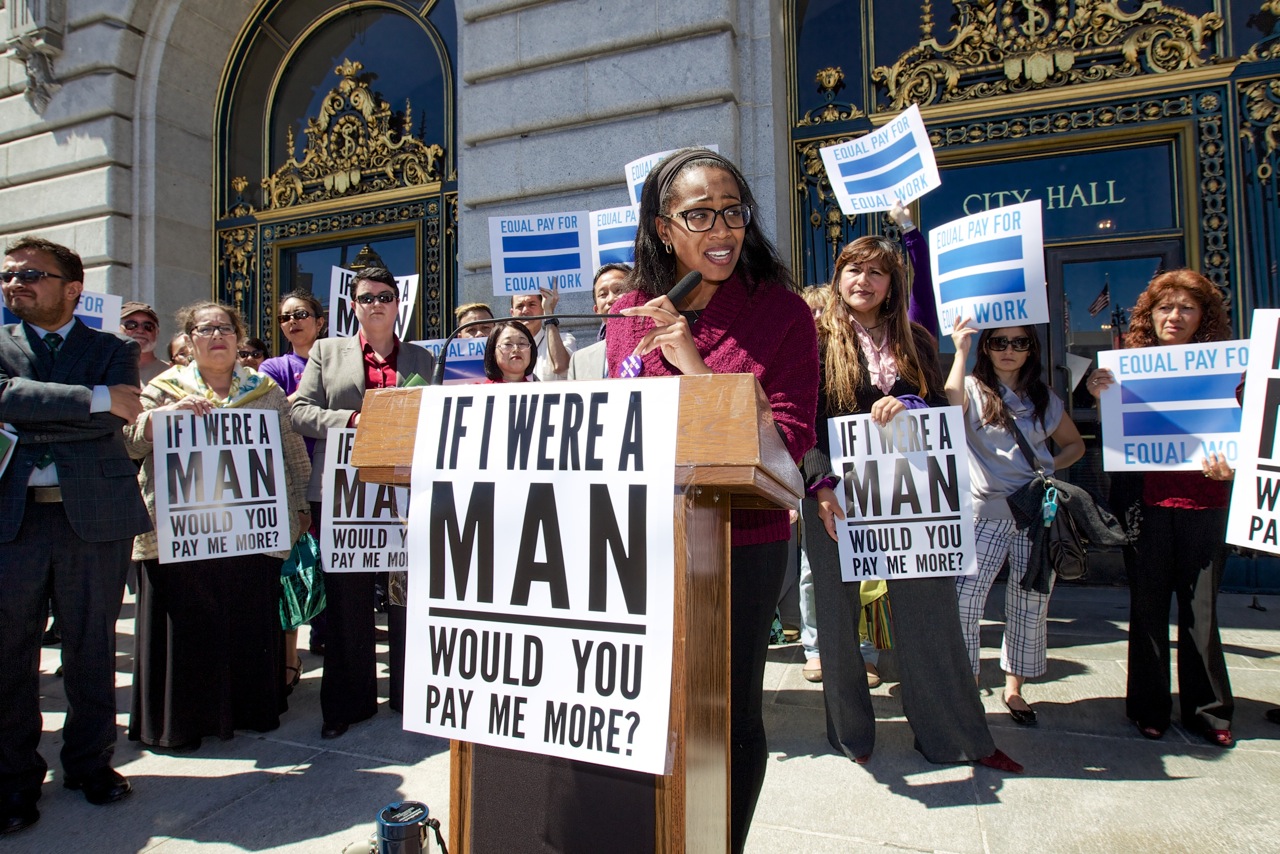
The Board of Supervisors today declared April 9 Pay Equity Day in San Francisco, in recognition of the persistent national gap between male and female financial compensation. But with the city locked in a dispute with SEIU Local 1021 over pay cuts to jobs dominated by women and workers of color, the day took on special local significance. Ahead of the declaration, union members, activists, and supervisors rallied in front of City Hall, chanting against San Francisco’s wage inequality and the general climate of fiscal austerity.

Women in San Francisco earn just 84 cents for every dollar paid to their male counterparts. Although this figure is slightly higher than the national average of 77 cents per dollar, the discrepancy represents a yearly wage gap of $9,968 per year, according to the National Partnership for Women and Families. At today’s press conference in front of City Hall, Sup. Malia Cohen called the gap “unconscionable in a country as wealthy as ours.”

Cohen was joined by Sups. David Chiu and David Campos, who both spoke out against gender-based wage gaps. “It is important for men to speak out,” Chui said. “It wasn’t women who made the decision for pay to be unequal.” Campos went a step further, promising to vote against any budget that further entrenches unequal pay. “I will not support any budget that reflect this discrepancy,” he said.

SEIU Local 1021, which represents over half of city employees, is currently locked in a budget dispute with the city over pay cuts that would adversely affect women and workers of color. The city Department of Human Resources has recommended that the city cut the salaries of 16 categories of city workers, including personnel clerks and nursing technicians, which are disproportionately females and workers of color. The dispute was recently sent to an arbitrator.

At today’s event, local SEIU leaders and the San Francisco Women’s Political Committee (SFWPC) continued to pressure the city to reconsider the salary cuts. SFWPC President Laura Hahn called persistent pay inequality “embarrassing.”

“If we can’t achieve it here in San Francisco where are we going to do it?” she asked.

Former Supervisor Chris Daly, who now works as political director for SEIU 1021, echoed Hahn’s concerns and charged that the proposal to cut pay for female-dominated categories calls into question the city’s long term commitment to pay equity.

“If you ask Mayor Lee if he supports wage equality, of course he will say yes,” Daly told us. “But in reality, his Department of Human Resources is rolling back progress.” Daly’s repeated requests for Mayor Lee to intervene in the wage-cut arbitration have not yet been answered.
But for the DHR, the recommended cuts have more to do with fiscal reality than gender equality. At a March 7th budget hearing, DHR director Micki Callahan said, “It would be improper to base any decision on demographics.”

She voiced concern over the “root causes” of pay discrepancy, but indicated that these issues fall outside the purview of her department. Spokespeople for the the DHR department have repeatedly assured us that the proposed budget cuts have nothing to do with gender, but rather reflect an effort to bring city salaries in line with market forces.

TRUST Act clears committee as immigration reform heats up nationally

It was late at night by the time New Latthivongskorn, then 22, finally started to make his way home from the University of California Berkeley campus after a long night of studying for midterm exams.  A third year molecular and cell biology major who was trying to keep up his grades in preparation for med school applications, Latthivongskorn said he noticed a man in a black hooded sweatshirt walking toward him as he approached his home. At first he didn’t think much of it – but just as he was about to unlock the door to his apartment, the young Thai student heard a voice. “Give me everything you’ve got,” the man commanded.

“I looked at him, and I looked down, and I saw a gun pointed straight at me,” Latthivongskorn recounted. Terrified, he tried to stay calm and simply cooperated; handing over his backpack and cell phone, silently feeling relieved that he hadn’t been carrying his laptop. Fortunately, Latthivongskorn was able to proceed into his apartment unscathed after the man who robbed him at gunpoint vanished down the street.

When his concerned housemate asked if he wanted to file a police report, Latthivongskorn faced a dilemma. “Yes, I wanted to report it,” he told the Guardian in a phone interview, “for me, but also for the community. That same man ended up mugging another individual later that night.”

But there was a problem. Latthivongskorn had moved with his family from Bangkok to Sacramento when he was just nine years old – and despite the fact that his entire life was rooted in California, he’d never obtained U.S. citizenship. Any interaction with police, he feared, could place him in jeopardy – even if he was approaching law enforcement as a crime victim.

“In the end, I couldn’t call,” he said. “What was going through my mind was thinking of all the sacrifices that my family had made for me … and I worked so hard to get to this point, and I’m still not there yet.” His decision not to report the armed robbery came down to “the simple fact that it could all end – that I could get deported.”

Fast-forward to today, and Latthivongskorn has graduated and earned a spot on the waitlist at Stanford while he awaits responses from a number of other med schools. He’s also active with ASPIRE, Asian Students Promoting Immigrant Rights through Education.

On April 9, he shared his experience of being mugged with California legislators at a hearing of the Public Safety Committee, and urged lawmakers to approve the TRUST Act.

Authored by Assembly Member Tom Ammiano, the bill seeks to “limit harmful deportations often stemming from trivial or discriminatory arrests,” according to a statement from Ammiano’s office.

As things stand, all arrestees have their fingerprints recorded and submitted to ICE, or U.S. Immigration and Customs Enforcement. Under the federal Secure Communities program, ICE can then direct local law enforcement to hold arrestees without bail, beyond the time they’d be detained under normal circumstances, for the purposes of immigration proceedings.

The idea is to hold and deport dangerous criminals, but in practice it’s proved problematic. “More than 90,000 Californians have been deported, with 70 percent not convicted of anything, or only of lesser crimes,” Ammiano’s office points out. “Some were never charged with crimes, and some were crime victims.”

The TRUST Act would “establish a statewide policy that says if the person has not been convicted of a serious or violent felony, they would no longer be held any longer than authorities would hold them otherwise,” explained Carlos Alcalá, a spokesperson for Ammiano. The idea is to draw a distinction between violent or serious offenders, and anyone else who could be swept up in the system and needlessly held without bail.

Also on hand to testify at the April 9 hearing was Ruth Montaño, a Bakersfield woman who was arrested and nearly deported after someone complained that her dog was barking too loud.

Alcalá recounted other horror stories that had made their way to the Capitol. There was the day laborer whose employer reported him to immigration authorities at the end of his shift when all he was expecting was a day’s wage, and the woman who was arrested outside of Walmart for trespassing – and nearly deported – for selling tamales. Then there were women who reported incidents of domestic violence only to be subjected to immigration proceedings (and their counterparts, who stayed mum about abuse because they feared deportation).

Members of the Public Safety Committee approved the TRUST Act 4-2, clearing the way for the bill to go to the floor of the Assembly as early as next week. An earlier version made its way to the desk of Gov. Jerry Brown last year, but was ultimately vetoed, leading to a revised version. “Because of last session’s history, we’re hoping to have more substantive discussions with the governor beforehand,” Alcalá told the Guardian.

The timing is significant. “Immigration changes are moving quickly at the national level,” Ammiano noted, “and California needs to make changes here to keep pace.”

Advocates expect a national proposal for immigration reform to be introduced in the Senate any day now, according to Jon Rodney of the California Immigrant Policy Center. West Coast activists are planning an event April 10 to mirror a mass rally and march for immigration reform planned in D.C.

In San Francisco, the march will begin outside Sen. Dianne Feinstein’s office on Post Street and then proceed to Civic Center, where a rally is planned for 5 p.m. Latthivongskorn plans to participate along with other organizers from ASPIRE, and a host of local and regional immigration reform advocates are getting involved.

Those joining the march “will carry 1,000 paper flowers,” Rodney said, “to represent 1,000 deportations that happen every day in the U.S. That’s one piece of Wednesday’s rally, is stopping deportations.”

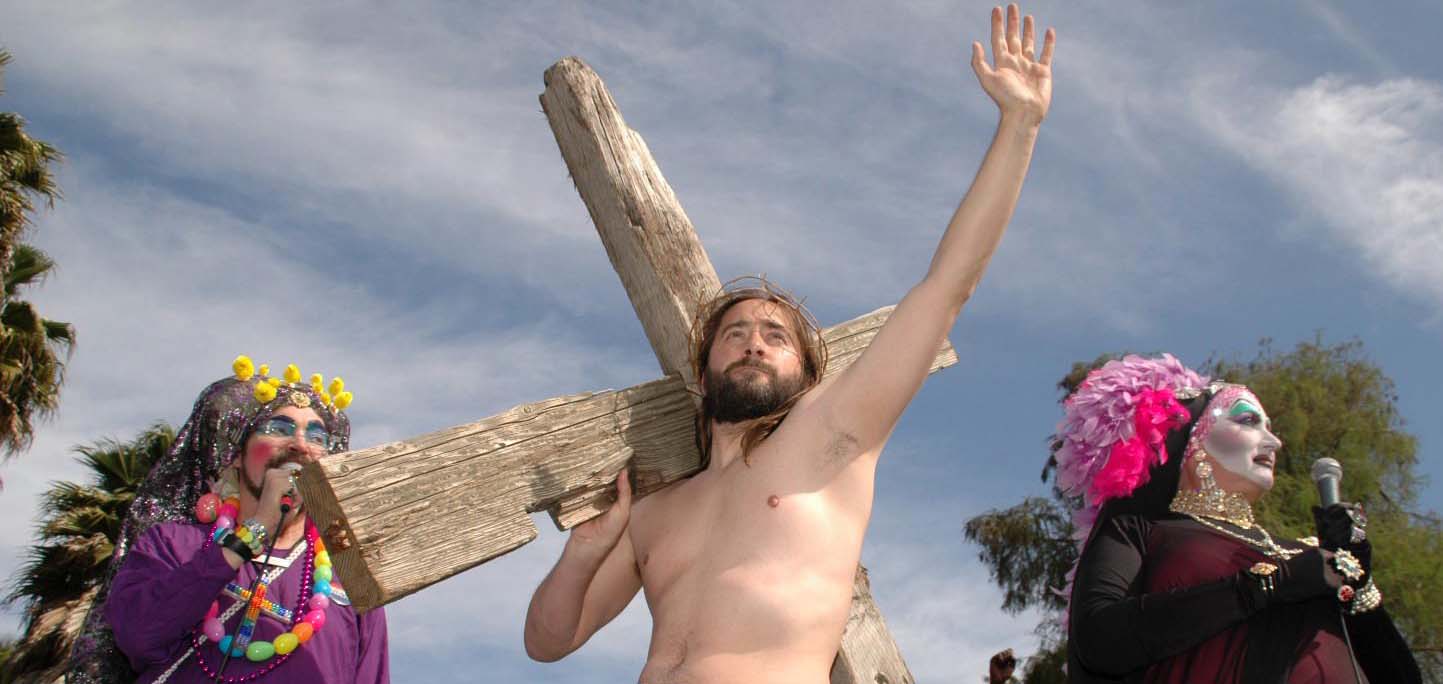
Hunky Jesus resurrected! Contest moves inside to DNA

1

A cloud of gloom settled over San Francisco’s cloisters when the Sisters of Perpetual Indulgence’s annual Hunky Jesus contest was rained out on Easter weekend. But rejoice, disciples — the deeply irreligious happenings have a new home. Gather your tithes, it’s not gonna be free this time around.

The Sisters have chosen to alight upon DNA Lounge for the resurrection, and will be charging at the door on a sliding scale — online tickets are retailing for $8 at the “apostle” level, $12 for “prophets,” and $17 for those who consider themselves worthy of paying at the “messiah” level. (We expect that the Sisters would encourage all to do so.) UPDATE: Sister Connie Pinko tells us that no one will be turned away for lack of funds, but dig deep kiddos.

What’s the cash going to pay for? Well your favorite maternal order, obviously. Briefly peruse the Sisters’ history if you need a reminder of how amazingly revolutionary and crazy these queens are. Plus, New York recording artist Love Charisse will be on hand and, DJs — the nature of whom are as yet unannounced. UPDATE: Today’s press release from the Sisters says music will be provided by the Go Bang! crew, and burlesque by Dottie Lux of Red Hots Burlesque.

Just remember to use your inside — voices. “No nudity or simulated sex acts allowed since this event is being held in a bar,” reminds the Sisters’ website. Can’t get crazy like you can at public parks, now. (Even though DNA’s doing a good job of refusing SFPD its Big Brother tendencies.)

Hunky Jesus Contest

April 19, 8pm, $8-$17 presale, $10-20 door

DNA Lounge

375 11th St., SF

www.dnalounge.com

www.thesisters.org

Facebook event

CycleSF event canceled, but RecPark gets paid anyway

115

Bicycling around San Francisco has become increasingly popular with both residents and tourists, but apparently that doesn’t mean people want to pay $40-75 for an organized ride around the city’s perimeter, even when the money goes to the San Francisco Recreation and Parks Department and the cause of putting more bike racks into the parks.

Despite a citywide ad campaign (for which I was one of several cyclists voluntarily photographed with our bikes) and aggressive social media effort, Jumping Fences – the company that also produces the San Francisco Marathon, which is set for June 16 – has canceled the CycleSF event it had planned for April 28, citing lower than anticipated demand.

The company had pledged $100,000 to RPD in connection with the event, which was to involve 13- and 26-mile rides through the city ending with a big party in the park, and the company announced that it would still be giving the department $25,000 despite “postponing” the event.

“We are disappointed Cycle SF has chosen to postpone their event. We are looking forward to working with them in the future on a family-friendly bicycle event,” said Connie Chan, spokesperson for the Recreation and Parks Department.

Jumping Fencing Marketing Director Joanna Reuland contended that “awareness was strong” surrounding the event and she wasn’t sure why it didn’t take off. “It had become clear that we weren’t going to make our promise so we thought it was probably best to just postpone the event,” Reuland told us.

Part of the problem might have been how cheap and easy it is to cycle around the city and the availability of free monthly group rides like Critical Mass and SF Bike Party. Apparently paying to bike around the city just doesn’t have the same demand as the San Francisco Marathon, which costs $35 for the 5K or $145 for the full marathon.

Some in the bike community also grumbled that the event was benefiting a city department about which many have decidedly mixed opinions, particularly given its closeness with corporate donors, rather than a bike advocacy organization such as the San Francisco Bicycle Coalition, whose 12,000-plus members organizers did little to directly target. What whatever it was, it is no more.

Is NFL’s gay day on the way?

1

Well this would be really exciting. Buried in a kinda-bummer, kinda-not-that-relevan-to-our-situation Baltimore Sun article about Baltimore Ravens linebacker and loudmouth straight ally to the LGBT community Brendon Ayanbadejo getting cut from his team’s roster were these amazingly cryptic paragraphs:

Ayanbadejo, who was given recognition along with Kluwe from former NFL commissioner Paul Tagliabue at the event Thursday night, predicted that more than one player may come out as gay during their playing career. Ayanbadejo said the groundwork is being laid to reduce the pressure on such a player, and said as many as four players could conceivably come out simultaneously.

“I think it will happen sooner than you think,” Ayanbadejo said. “We’re in talks with a handful of players who are considering it. There are up to four players being talked to right now and they’re trying to be organized so they can come out on the same day together. It would make a major splash and take the pressure off one guy. It would be a monumental day if a handful or a few guys come out.

There was a little bit of confusion, at first, that Ayanbadejo had been saying he was cut from the team for being a loudmouth about the gays, but happily that’s been straightened out.

Anyway, OMG, Gay Day at the NFL? This would be the most wonderful thing pretty much ever. Imagine what the scene would be like at Hi Tops! We hope Ayanbadejo would come hang, seeing as may not be having to watch his beer gut quite as closely now.

One more Brendon Ayanbadejo shot for the road. We luh yah, buddy.

[H/t John M. Becker]

Film listings

0

Film listings are edited by Cheryl Eddy. Reviewers are Kimberly Chun, Dennis Harvey, Lynn Rapoport, and Sara Maria Vizcarrondo. For rep house showtimes, see Rep Clock.

OPENING

Evil Dead Yep, they remade it. But before you grab your chainsaw in anger, know this: early buzz is actually pretty positive. (1:31)

Gimme the Loot Biggie Smalls’ track is just a smart starting point for this streetwise, hilarious debut feature by Adam Leon. Young graf artists Malcolm (Ty Hickson) and Sofia (Tashiana Washington) are hustling hard to get paid and fund a valiant effort to tag the Mets’ Home Run Apple to show up rival gang-bangers. The problem lies in raising the exorbitant fee their source demands, either by hook (selling pot to seductive, rich white girls) or crook (offloading cell phone contraband). The absurdity of the pair’s situation isn’t lost on anyone, especially Leon. But their passion to rise above (sorta) and yearning for expression gives the tale an emotional heft, and Gimme the Loot stays with you long after the taggers have moved onto fresh walls. (1:21) (Chun)

Jurassic Park 3D Because Velociraptors and Jeff Goldblum are even more awesome in 3D. (2:07)

The Place Beyond the Pines Powerful indie drama Blue Valentine (2010) marked director Derek Cianfrance as one worthy of attention, so it’s with no small amount of fanfare that this follow-up arrives. The Place Beyond the Pines‘ high profile is further enhanced by the presence of Bradley Cooper (currently enjoying a career ascension from Sexiest Man Alive to Oscar-nominated Serious Actor), cast opposite Valentine star Ryan Gosling, though they share just one scene. An overlong, occasionally contrived tale of three generations of fathers, father figures, and sons, Pines‘ initial focus is Gosling’s stunt-motorcycle rider, a character that would feel more exciting if it wasn’t so reminiscent of Gosling’s turn in Drive (2011), albeit with a blonde dye job and tattoos that look like they were applied by the same guy who inked James Franco in Spring Breakers. Robbing banks seems a reasonable way to raise cash for his infant son, as well as a way for Pines to draw in another whole set of characters, in the form of a cop (Cooper) who’s also a new father, and who — as the story shifts ahead 15 years — builds a political career off the case. Of course, fate and the convenience of movie scripts dictate that the mens’ sons will meet, the past will haunt the present and fuck up the future, etc. etc. Ultimately, Pines is an ambitious film that suffers from both its sprawl and some predictable choices (did Ray Liotta really need to play yet another dirty cop?) Halfway through the movie I couldn’t help thinking what might’ve happened if Cianfrance had dared to swap the casting of the main roles; Gosling could’ve been a great ambitious cop-turned-powerful prick, and Cooper could’ve done interesting things with the Evel Knievel-goes-Point Break part. Just sayin’. (2:20) (Eddy)

Reality Director Matteo Garrone’s Cannes Grand Prix winner couldn’t be more different from his 2008 Gomorrah, save one similarity: that film was about organized crime, and dark comedy Reality stars Aniello Arena, a former gangster who was allowed out of prison to shoot his scenes. All things considered, he’s rather winning as Neapolitan everyman Luciano, whose daily life slinging fish can’t compete with his big dreams of appearing on the Italian version of Big Brother. He makes it through the second round of auditions — and soon starts believing he’s being watched by casting agents considering whether to put him on the show. His level-headed wife (Loredane Simioli) suspects he’s being paranoid (as does the audience, before long), though he’s told "never give up!" by cheesy-sleazy Big Brother vet Enzo (Raffaele Ferrante), a character clearly designed to comment on reality TV’s own peculiar brand of insta-fame. Nobody who’s ever watched reality TV will be surprised at the film’s ultimate messages about the hollow rewards of that fame, but Arena’s powerful performance makes the journey worthwhile. (1:55) (Eddy)

Renoir The gorgeous, sun-dappled French Riviera setting is the high point of this otherwise low-key drama about the temperamental women (Christa Theret) who was the final muse to elderly painter Auguste Renoir (Michel Bouquet), and who encouraged the filmmaking urges in his son, future cinema great Jean (Vincent Rottiers). Cinematographer Mark Ping Bin Lee (who’s worked with Hou Hsiao-hsein and Wong Kar Wai) lenses Renoir’s leafy, ramshackle estate to maximize its resemblance to the paintings it helped inspire; though her character, Dédée, could kindly be described as "conniving," Theret could not have been better physically cast, with tumbling red curls and pale skin she’s none too shy about showing off. Though the specter of World War I looms in the background, the biggest conflicts in Gilles Bourdos’ film are contained within the household, as Jean frets about his future, Dédée faces the reality of her precarious position in the household (which is staffed by aging models-turned-maids), and Auguste battles ill health by continuing to paint, though he’s in a wheelchair and must have his brushes taped to his hands. Though not much really happens, Renoir is a pleasant, easy-on-the-eyes experience. (1:51) Clay. (Eddy)

The Revolutionary Optimists If the children, as someone once sang, are our future, the inspiring work done by youth activists living in the slums of Kolkata, India hints that there might be brighter days ahead for some of the poorest communities in the world. Under the guidance of Amlan Ganguly and his non-profit, Prayasam, kids whose daily struggles include lacking easy access to drinking water, having to work backbreaking long hours at the local brick field, and worrying that their parents will marry them off as soon as they turn 13, find hope via education and artistic expression. Sensitively directed over the span of several years by Nicole Newnham (who made the excellent 2006 doc The Rape of Europa) and Maren Grainger-Monsen, The Revolutionary Optimists shows stories of both success (12-year-old sparkplug Salim speaks before Parliament about bringing water to his neighborhood) and failure (16-year-old Priyanka is forced into an abusive marriage, ending her dreams of becoming a dance teacher). With harsh reality keeping its stories firmly grounded, the film — which is, of course, ultimately optimistic — offers a look at how the youngest members of a community can help effect real change. (1:23) (Eddy)

ONGOING

Admission Tina Fey exposes the irritating underbelly of the Ivy League application process as Princeton admissions officer Portia Nathan. When her school falls to number two in U.S. News and World Report‘s annual ranking, Portia and her colleagues are tasked by their boss (Wallace Shawn) with boosting application numbers to bring the university back into the lead. Alterna-school headmaster John Pressman (Paul Rudd) has one more applicant to add to the pile: a charmingly gawky autodidact named Jeremiah (Nat Wolff), who John is convinced is the child Portia gave up for adoption back when they were both students at Dartmouth. Stuck in a dreary 10-year relationship with an English professor (Michael Sheen) whose bedtime endearments consist of absentmindedly patting her on the head while reading aloud from The Canterbury Tales, and seeming less than thrilled with the prospect of another season of sifting through the files of legacies and overachievers, Portia is clearly ripe for some sort of purgative crisis. When it arrives, the results are fairly innocuous, if ethically questionable. Directed by Paul Weitz, the man responsible for bringing Little Fockers (2010) into the world, but About a Boy (2002) as well, Admission is sweet and sometimes funny but unmemorable, even with Lily Tomlin playing Portia’s surly, iconoclast mother. (1:50) 1000 Van Ness, SF Center, Sundance Kabuki. (Rapoport)

Amour Arriving in local theaters atop a tidal wave of critical hosannas, Amour now seeks to tempt popular acclaim — though actually liking this perfectly crafted, intensely depressing film (from Austrian director Michael Haneke) may be nigh impossible for most audience members. Eightysomething former music teachers Georges and Anne (the flawless Jean-Louis Trintignant and Emmanuelle Riva) are living out their days in their spacious Paris apartment, going to classical concerts and enjoying the comfort of their relationship. Early in the film, someone tries to break into their flat — and the rest of Amour unfolds with a series of invasions, with Anne’s declining health the most distressing, though there are also unwanted visits from the couple’s only daughter (an appropriately self-involved Isabelle Huppert), an inept nurse who disrespects Anne and curses out Georges, and even a rogue pigeon that wanders in more than once. As Anne fades into a hollow, twisted, babbling version of her former self, Georges also becomes hollow and twisted, taking care of her while grimly awaiting the inevitable. Of course, the movie’s called Amour, so there’s some tenderness involved. But if you seek heartwarming hope and last-act uplift, look anywhere but here. (2:07) New Parkway. (Eddy)

The Call (1:34) 1000 Van Ness, Shattuck, SF Center.

The Croods (1:38) Balboa, Metreon, 1000 Van Ness.

Emperor This ponderously old-fashioned historical drama focuses on the negotiations around Japan’s surrender after the bombings of Hiroshima and Nagasaki. While many on the Allied side want the nation’s "Supreme Commander" Emperor Hirohito to pay for war crimes with his life, experts like bilingual Gen. Bonners Fellers (Matthew Fox) argue that the transition to peace can be achieved not by punishing but using this "living god" to wean the population off its ideological fanaticism. Fellers must ultimately sway gruff General MacArthur (Tommy Lee Jones) to the wisdom of this approach, while personally preoccupied with finding the onetime exchange-student love (Kaori Momoi) denied him by cultural divisions and escalating war rhetoric. Covering (albeit from the U.S. side) more or less the same events as Aleksandr Sokurov’s 2005 The Sun, Peter Webber’s movie is very different from that flawed effort, but also a lot worse. The corny Romeo and Juliet romance, the simplistic approach to explaining Japan’s "ancient warrior tradition" and anything else (via dialogue routinely as flat as "Things in Japan are not black and white!"), plus Alex Heffes’ bombastic old-school orchestral score, are all as banal as can be. Even the reliable Jones offers little more than conventional crustiness — as opposed to the inspired kind he does in Lincoln. (1:46) Vogue. (Harvey)

From Up on Poppy Hill Hayao (dad, who co-wrote) and Goro (son, who directed) Miyazaki collaborate on this tale of two high-school kids — Umi, who does all the cooking at her grandmother’s boarding house, and Shun, a rabble-rouser who runs the school newspaper — in idyllic seaside Yokohama. Plans for the 1964 Olympics earmark a beloved historic clubhouse for demolition, and the budding couple unites behind the cause. The building offers a symbolic nod to Japanese history, while rehabbing it speaks to hopes for a brighter post-war future. But the past keeps interfering: conflict arises when Shun’s memories are triggered by a photo of Umi’s father, presumed lost at sea in the Korean War. There are no whimsical talking animals in this Studio Ghibli release, which investigates some darker-than-usual themes, though the animation is vivid and sparkling per usual. Hollywood types lending their voices to the English-language version include Jamie Lee Curtis, Christina Hendricks, Ron Howard, and Gilllian Anderson. (1:31) Sundance Kabuki. (Eddy)

GI Joe: Retaliation The plot exists to justify the action, but any fan of badass-ness will forgive the skimpy storyline for the outlandish badassery in GI Joe: Retaliation. Inspired by action figures and tying loosely to the first flick, Retaliation starts with a game of "secure the defector," followed by "raise the flag," but as soon as the stakes aren’t real, the Joes outright suck. They don’t have "neutral," which is maybe why a mission to rescue and revive the Joes as a force is the most ferocious fight that ever pit metal against plastic. The set pieces are stunning: a mostly silent sequence with Snake Eyes (Ray Park) and Jinx (Elodie Yung) on a mountainside will leave the audience gaping in its high speed wake, and a prison break featuring covert explosives is nonstop amazing. You’ll notice an emphasis on chain link fences and puddles (terra nostra for action figures) and set pieces conceived as if by kids who don’t have a concept of basic irrefutable truths like gravity. It’s just that kind of imagination and ardor and limitlessness that makes this Joe incredible, memorable, and a reason to crack out your toys again. (1:50) Metreon, 1000 Van Ness. (Vizcarrondo)

Ginger and Rosa It’s the 1960s, nuclear war is a real possibility, and nuclear-family war is an absolute certainty, at least in the London house occupied by Ginger (Elle Fanning), her emotionally wounded mother (Mad Men‘s Christina Hendricks), and her narcissistic-intellectual father (Alessandro Nivola). In this downbeat coming-of-age tale from Sally Potter (1992’s Orlando), Ginger’s teenage rebellion quickly morphs into angst when her BFF Rosa (Beautiful Creatures‘ Alice Englert) wedges her sexed-up neediness between Ginger’s parents. Hendricks (playing the accordion — just like Joan!) and Annette Bening (as an American activist who encourages Ginger’s political-protest leanings) are strong, but Fanning’s powerhouse performance is the main focus — though even she’s occasionally overshadowed by her artificially scarlet hair. For an interview with writer-director Potter, visit www.sfbg.com/pixel_vision. (1:30) Smith Rafael. (Eddy)

The Host (2:01) Metreon, 1000 Van Ness.

Identity Thief America is made up of asshole winners and nice guy losers — or at least that’s the thesis of Identity Thief, a comedy about a crying-clown credit card bandit (Melissa McCarthy) and the sweet sucker (Jason Bateman) she lures into her web of chaos. Bateman plays Sandy, a typical middle-class dude with a wife, two kids, and a third on the way. He’s always struggling to break even and just when it seems like his ship’s come in, Diana (McCarthy) jacks his identity — a crime that requires just five minutes in a dark room with Sandy’s social security number. Suddenly, his good name is contaminated with her prior arrests, drug-dealer entanglements, and mounting debt; it’s like the capitalist version of VD. But as the "kind of person who has no friends," Diana is as tragic as she is comic, providing McCarthy an acting opportunity no one saw coming when she was dispensing romantic advice on The Gilmore Girls. Director Seth Gordon (2011’s Horrible Bosses) treats this comedy like an action movie — as breakneck as slapstick gets — and he relies so heavily on discomfort humor that the film doesn’t just prompt laughs, it pokes you in the ribs until you laugh, man, LAUGH! While Identity Thief has a few complex moments about how defeating "sticking it to the man" can be (mostly because only middle men get hurt), it’s mostly as subtle as a pratfall and just as (un-)rewarding. (1:25) Metreon. (Vizcarrondo)

The Incredible Burt Wonderstone Steve Carell dips into the men-at-work comic genre so associated with Will Ferrell: he’s Burt Wonderstone, who starts out as a picked-on kid discovering his powers via a kit by Las Vegas magician Rance Holloway (Alan Arkin). The ensuing years have not been kind to Burt, a relatively decent guy struggling to shed the douchey buildup of ego, corn, and dated moves à la David Copperfield (ta-da, who magically appears), while working for benevolently threatening casino boss Doug Munny (James Gandolfini) with his childhood best friend Anton (Steve Buscemi, reviving the naifitude of The Big Lebowski‘s Donny) and side fox Jane (Olivia Wilde). The shot of adrenalin to the moribund heart of Burt and Anton’s act: Jim Carrey’s "Brain Rapist," who aims to ream his colleagues by cutting playing cards from his flesh and going to bed on fiery coals. How can the old-schoolers remain relevant? Hard work is key for Carell, who rolls out the straight-man sweetness that seem to make him a fit for romantic comedies — though his earnestness and need to be liked, as usual, err on the side of convention, while taking for granted the not-quite-there chemistry with, in this instance, Wilde. Fortunately whatever edge is lacking materializes whenever Carrey’s ridiculously ombré-tressed daredevil is on screen. Using his now-battered, still-malleable features to full effect, he’s a whole different ball of cheese, lampooning those who will go to any lengths — gouging, searing, and maiming — to entertain. (1:40) Metreon, Vogue. (Chun)

Jack the Giant Slayer (1:55) Metreon.

Mental Toni Collette is a batshit Mary Poppins in this side-splitting comedy about one family and Australia’s identity as the world’s Island of Misfit Toys. According to Shaz (Collette), she and her pit bull Ripper (pronounced "Reippah") came to the town of Dolphin Head to fulfill their destiny. It’s there philandering Mayor Moochmore (a brilliant Anthony LaPaglia) employs her informally as a "babysitter" (the film’s biggest plot hole). Moochmore’s a pathetic excuse for a dad but he needs someone to take care of his five daughters, since he’s finally pushed his wife into nervous-breakdown mode. Everything in Dolphin Head exists on a fulcrum: when Shaz takes the girls to climb a mountain one asks, "What’s the point of climbing to the top?", and Shaz answers, "Not being at the bottom." Mental is not a far cry from the director’s last big import, Muriel’s Wedding, the 1994 film that made Collette a star. Everyone’s nuts here, the message goes, but if we’re confident enough in ourselves, we can sway the rest into seeing how our insanity is better than theirs — or at least strong enough to withstand sharks, knife fights, and pit bulls. Good times, mate, good times. (1:56) Sundance Kabuki. (Vizcarrondo)

Olympus Has Fallen Overstuffed with slo-mo shots of the flag rippling (in breezes likely caused by all the hot air puffing up from the script), this gleefully ham-fisted tribute to America Fuck Yeah estimates the intelligence of its target audience thusly: an establishing shot clearly depicting both the Washington Monument and the US Capitol is tagged "Washington, DC." Wait, how can you tell? This wannabe Die Hard: The White House follows the one-man-army crusade of secret service agent Mike Banning (Gerard Butler), the last friendly left standing when the President (Aaron Eckhart) and assorted cabinet members are taken hostage by North Korean terrorists. The plot is to ridiculous to recap beyond that, though I will note that Morgan Freeman (as the Speaker of the House) gets to deliver the line "They’ve just opened the gates of hell!" — the high point in a performance that otherwise requires him to sit at a table and look concerned for two hours. With a few more over-the-top scenes or slightly more adventurous casting, Olympus Has Fallen could’ve ascended to action-camp heights. Alas, it’s mostly just mildly amusing, though all that caked-on patriotism is good for a smattering of heartier guffaws. (2:00) 1000 Van Ness, SF Center, Sundance Kabuki. (Eddy)

On the Road Walter Salles (2004’s The Motorcycle Diaries) engages Diaries screenwriter Jose Rivera to adapt Jack Kerouac’s Beat classic; it’s translated to the screen in a streamlined version, albeit one rife with parties, drugs, jazz, danger, reckless driving, sex, philosophical conversations, soul-searching, and "kicks" galore. Brit Sam Riley (2007’s Control) plays Kerouac stand-in Sal Paradise, observing (and scribbling down) his gritty adventures as they unfold. Most of those adventures come courtesy of charismatic, freewheeling Dean Moriarty (Garrett Hedlund of 2010’s Tron: Legacy), who blows in and out of Sal’s life (and a lot of other people’s lives, too, including wives played by Kristen Stewart and Kirsten Dunst). Beautifully shot, with careful attention to period detail and reverential treatment of the Beat ethos, the film is an admirable effort but a little too shapeless, maybe simply due to the peripatetic nature of its iconic source material, to be completely satisfying. Among the performances, erstwhile teen dream Stewart is an uninhibited standout. (2:03) Smith Rafael, Sundance Kabuki. (Eddy)

Oz: The Great and Powerful Providing a backstory for the man behind the curtain, director Sam Raimi gives us a prequel of sorts to 1939’s The Wizard of Oz. Herein we follow the adventures of a Depression-era Kansas circus magician named Oscar (James Franco) — Oz to his friends — as he cons, philanders, bickers with his behind-the-scenes assistant Frank (Zach Braff), and eventually sails away in a twister, bound for a Technicolor land of massively proportioned flora, talking fauna, and witches ranging from dazzlingly good to treacherously wicked. From one of them, Theodora (Mila Kunis), he learns that his arrival — in Oz, just to clarify — has set in motion the fulfillment of a prophecy: that a great wizard, also named Oz, will bring about the downfall of a malevolent witch (Rachel Weisz), saving the kingdom and its cheery, goodhearted inhabitants. Unfortunately for this deserving populace, Oz spent his last pre-twister moments with the Baum Bros. Circus (the name a tribute to L. Frank Baum, writer of the Oz children’s books) demonstrating a banged-up moral compass and an undependable streak and proclaiming that he would rather be a great man than a good man. Unfortunately for the rest of us, this theme is revisited ad nauseam as Oz and the oppressively beneficent witch Glinda (Michelle Williams) — whose magic appears to consist mainly of nice soft things like bubbles and fog — stand around debating whether he’s the right man for the task. When the fog clears, though, the view is undeniably pretty. While en route to and from the Emerald City, Oz and his companions — among them a non-evil flying monkey (voiced by Braff) and a rather adorable china doll (Joey King) — wander through a deliriously arresting, Fantasia-esque landscape whose intricate, inventive construction helps distract from the plodding, saccharine rhetoric and unappealing story line. (2:07) Balboa, 1000 Van Ness, SF Center, Sundance Kabuki. (Rapoport)

Quartet Every year there’s at least one: the adorable-old-cootfest, usually British, that proves harmless and reassuring and lightly tear/laughter producing enough to convince a certain demographic that it’s safe to go to the movies again. The last months have seen two, both starring Maggie Smith (who’s also queen of that audience’s home viewing via Downton Abbey). Last year’s The Best Exotic Marigold Hotel, in which Smith played a bitchy old spinster appalled to find herself in India, has already filled the slot. It was formulaic, cute, and sentimental, yes, but it also practiced more restraint than one expected. Now here’s Quartet, which is basically the same flower arrangement with quite a bit more dust on it. Smith plays a bitchy old spinster appalled to find herself forced into spending her twilight years at a home for the elderly. It’s not just any such home, however, but Beecham House, whose residents are retired professional musicians. Gingerly peeking out from her room after a few days’ retreat from public gaze, Smith’s Jean Horton — a famed English soprano — spies a roomful of codgers rolling their hips to Afropop in a dance class. "This is not a retirement home — this is a madhouse!" she pronounces. Oh, the shitty lines that lazy writers have long depended on Smith to make sparkle. Quartet is full of such bunk, adapted with loving fidelity, no doubt, from his own 1999 play by Ronald Harwood, who as a scenarist has done some good adaptations of other people’s work (2002’s The Pianist). But as a generator of original material for about a half-century, he’s mostly proven that it is possible to prosper that long while being in entirely the wrong half-century. Making his directorial debut: 75-year-old Dustin Hoffman, which ought to have yielded a more interesting final product. But with its workmanlike gloss and head-on take on the script’s very predictable beats, Quartet could as well have been directed by any BBC veteran of no particular distinction. (1:38) Smith Rafael. (Harvey)

The Sapphires The civil rights injustices suffered by these dream girls may be unique to Aboriginal Australians, but they’ll strike a chord with viewers throughout the world — at right about the same spot stoked by the sweet soul music of Motown. Co-written by Tony Briggs, the son of a singer in a real-life Aboriginal girl group, this unrepentant feel-gooder aims to make the lessons of history go down with the good humor and up-from-the-underdog triumph of films like The Full Monty (1997) — the crucial difference in this fun if flawed comedy-romance is that it tells the story of women of color, finding their voices and discovering, yes, their groove. It’s all in the family for these would-be soul sisters, or rather country cousins, bred on Merle Haggard and folk tunes: there’s the charmless and tough Gail (Deborah Mailman), the soulful single mom Julie (Jessica Mauboy, an Australian Idol runner-up), the flirty Cynthia (Miranda Tapsell), and the pale-skinned Kay (Shari Sebbens), the latter passing as white after being forcibly "assimilated" by the government. Their dream is to get off the farm, even if that means entertaining the troops in Vietnam, and the person to help them realize that checkered goal is dissolute piano player Dave (Chris O’Dowd). And O’Dowd is the breakout star to watch here — he adds an loose, erratic energy to an otherwise heavily worked story arc. So when romance sparks for all Sapphires — and the racial tension simmering beneath the sequins rumbles to the surface — the easy pleasures generated by O’Dowd and the music (despite head-scratching inclusions like 1970’s "Run Through the Jungle" in this 1968-set yarn), along with the gently handled lessons in identity politics learned, obliterate any lingering questions left sucking Saigon dust as the narrative plunges forward. They keep you hanging on. (1:38) SF Center. (Chun)

Side Effects Though on the surface Channing Tatum appears to be his current muse, Steven Soderbergh seems to have gotten his smart, topical groove back, the one that spurred him to kick off his feature filmmaking career with the on-point Sex, Lies, and Videotape (1989) and went missing with the fun, featherweight Ocean’s franchise. (Alas, he’s been making claims that Side Effects will be his last feature film.) Here, trendy designer antidepressants are the draw — mixed with the heady intoxicants of a murder mystery with a nice hard twist that would have intrigued either Hitchcock or Chabrol. As Side Effects opens, the waifish Emily Taylor (Rooney Mara), whose inside-trading hubby (Tatum) has just been released from prison, looks like a big-eyed little basket of nerves ready to combust — internally, it seems, when she drives her car into a wall. Therapist Jonathan Banks (Jude Law), who begins to treat her after her hospital stay, seems to care about her, but nevertheless reflexively prescribes the latest anti-anxiety med of the day, on the advice of her former doctor (Catherine Zeta-Jones). Where does his responsibility for Emily’s subsequent actions begin and end? Soderbergh and his very able cast fill out the issues admirably, with the urgency that was missing from the more clinical Contagion (2011) and the, ahem, meaty intelligence that was lacking in all but the more ingenious strip scenes of last year’s Magic Mike. (1:30) New Parkway, 1000 Van Ness, Shattuck. (Chun)

The Silence Maybe "fun" is a tasteless way to describe The Silence, which hinges on pederasty and child murder — though in the end this is more an intelligent pulp thriller than serious address of those issues, uneasily as it straddles both at times. In 1986 two men abduct an 11-year-old girl — one the initially excited, then horrified observer to the second’s murderous sexual assault. Twenty-three years later, another young girl disappears in the same place under disturbingly identical circumstances. This event gradually pulls together a large cast of characters, many initial strangers — including the original victim’s mother (Katrin Sass) and the just-retired detective (Burghart Klaubner) who failed to solve that crime; parents (Karoline Eichhorn, Roeland Wiesnekker) of the newly disappeared teen, who experience full-on mental meltdown; a solidly bourgeoise husband and father of two girls (Wotan Wilke Möhring), inordinately distressed by this repeat of history; and the erstwhile friend he hasn’t contacted in decades, an apartment-complex handyman with a secret life (Ulrich Thomsen). Part procedural, part psychological thriller, part small-town-community portrait, director-scenarist (from Jan Costin Wagner’s novel) Baran bo Odar’s The Silence is just juicy and artful enough to get away with occasional stylistic hyperbole. It’s a conflicted movie, albeit handled with such engrossing confidence that you might not notice the credibility gaps. At least until thinking it over later. Which, don’t. (1:59) (Harvey)

Silver Linings Playbook After guiding two actors to Best Supporting Oscars in 2010’s The Fighter, director David O. Russell returns (adapting his script from Matthew Quick’s novel) with another darkly comedic film about a complicated family that will probably earn some gold of its own. Though he’s obviously not ready to face the outside world, Pat (Bradley Cooper) checks out of the state institution he’s been court-ordered to spend eight months in after displaying some serious anger-management issues. He moves home with his football-obsessed father (Robert De Niro) and worrywart mother (Jacki Weaver of 2010’s Animal Kingdom), where he plunges into a plan to win back his estranged wife. Cooper plays Pat as a man vibrating with troubled energy — always in danger of flying into a rage, even as he pursues his forced-upbeat "silver linings" philosophy. But the movie belongs to Jennifer Lawrence, who proves the chops she showcased (pre-Hunger Games megafame) in 2010’s Winter’s Bone were no fluke. As the damaged-but-determined Tiffany, she’s the left-field element that jolts Pat out of his crazytown funk; she’s also the only reason Playbook‘s dance-competition subplot doesn’t feel eye-rollingly clichéd. The film’s not perfect, but Lawrence’s layered performance — emotional, demanding, bitchy, tough-yet-secretly-tender — damn near is. (2:01) Metreon, Sundance Kabuki. (Eddy)

Somebody Up There Likes Me A textbook illustration of what’s so frequently right and wrong with Amerindie comedies today, Bob Byington’s feature starts out near-brilliantly in a familiar, heightened Napoleon Dynamite-type milieu of ostensibly normal people as self-absorbed, socially hapless satellites revolving around an existential hole at the center in the universe. The three main ones meet working at a suburban steakhouse: Emotionally nerve-deadened youth Max (Keith Poulson), the even more crassly insensitive Sal (Nick Offerman), and contrastly nice but still weird Lyla (Teeth‘s estimable Jess Weixler). All is well until the film starts skipping ahead five years at a time, growing more smugly misanthropic and pointless as time and some drastic shifts in fortune do nothing to change (or deepen) the characters. Still, the performers are intermittently hilarious throughout. (1:24) Roxie. (Harvey)

Spring Breakers The idea of enfant terrible emeritus Harmony Korine — 1997’s Gummo, 2007’s Mister Lonely, 2009’s Trash Humpers — directing something so utterly common as a spring break movie is head-scratching enough, even moreso compounded by the casting of teen dreams Vanessa Hudgens, Selena Gomez, and Ashley Benson as bikini-clad girls gone wild. James Franco co-stars as drug dealer Alien, all platinum teeth and cornrows and shitty tattoos, who befriends the lasses after they’re busted by the fun police. "Are you being serious?" Gomez’s character asks Alien, soon after meeting him. "What do you think?" he grins back. Unschooled filmgoers who stumble into the theater to see their favorite starlets might be shocked by Breakers‘ hard-R hijinks. But Korine fans will understand that this neon-lit, Skrillex-scored tale of debauchery and dirty menace is not to be taken at face value. The subject matter, the cast, the Britney Spears songs, the deliberately lurid camerawork — all carefully-constructed elements in a film that takes not-taking-itself-seriously, very seriously indeed. Korine has said he prefers his films to make "perfect nonsense" instead of perfect sense. The sublime Spring Breakers makes perfect nonsense, and it also makes nonsense perfect. (1:34) 1000 Van Ness, SF Center, Sundance Kabuki. (Eddy)

Starbuck Starbuck has a great (if not entirely original) comedic concept it chooses to play seriocomedically — i.e., less for the laughs it seldom earns than for the heart-tugging it eventually pretty much does. An ingratiatingly rumpled Patrick Huard (a major Quebec star best known for the mega-hit Les Boys series and 2006’s Good Cop, Bad Cop) plays David, erstwhile stellar contributor to a Montreal sperm bank in his salad days. Now older but no wiser, he finds himself confronted by the reality of 533 biologically fathered, now-grown offspring who’ve filed a class action lawsuit to discover his identity even as he deals with mob debt and an exasperated, pregnant semi-ex-girlfriend (Julie LeBreton). This is one of those "loser manboy must semi-grow up fast amid crisis, finding family values en route" scenarios tailor-fit for Adam Sandler. That said, the overlong, stubbornly endearing Starbuck is so much less insufferable than anything Sandler has made since … um, ever? Halfway through, this agreeable movie gets clever — as David stumbles into a meeting of his prodigious anonymous progeny — and remains reasonably so to the satisfyingly hard-won happy ending. It’s still got moments of contrivance, editorial fat (too many montages, for one thing), and more climactic hugs than any self-respecting dramedy needs to get the redemptive point across. Yet it’s also got something few comedies of any national origin have today: a lovely, distinctive, bright yet non-cartoonish widescreen look. (1:48) Embarcadero. (Harvey)

Tyler Perry’s Temptation: Confessions of a Marriage Counselor (2:06) Metreon, 1000 Van Ness, Shattuck.

Warm Bodies A decade and a half of torrid, tormented vampire-human entanglements has left us accustomed to rooting for romances involving the undead and the still-alive. Some might argue, however, that no amount of pop-cultural prepping could be sufficient to get us behind a human-zombie love story for the ages. Is guzzling human blood really measurably less gross than making a meal of someone’s brains and other body parts? Somehow, yes. Recognizing this perceptual hurdle, writer-director Jonathan Levine (2011’s 50/50, 2008’s The Wackness) secures our sympathies at the outset of Warm Bodies by situating us inside the surprisingly active brain of the film’s zombie protagonist. Zombies, it turns out, have internal monologues. R (Nicholas Hoult) can only remember the first letter of his former name, but as he shambles and shuffles and slumps his way through the terminals of a postapocalyptic airport overrun by his fellow corpses (as they’re called by the film’s human population), he fills us in as best he can on the global catastrophe that’s occurred and his own ensuing existential crisis. By the time he meets not-so-cute with Julie (Teresa Palmer), a young woman whose father (John Malkovich) is commander-in-chief of the human survivors living in a walled-off city center, we’ve learned that he collects vinyl, that he has a zombie best friend, and that he doesn’t want to be like this. We may still be flinching at the thought of his and Julie’s first kiss, but we’re also kind of rooting for him. The plot gapes in places, where a tenuous logic gets trampled and gives way, but Levine’s script, adapted from a novel by Isaac Marion, is full of funny riffs on the zombie condition, which Hoult invests with a comic sweetness as his character staggers toward the land of the living. (1:37) Metreon. (Rapoport)

Wrong Poor Dolph Springer. His life’s already oozing downhill — he’s been unemployed for months and yet continues to show up at his old job, to the white-hot annoyance of his former co-workers — when his beloved dog, Paul, goes missing. His favorite backyard palm tree is suddenly a pine tree. His alarm clock flips from 7:59 to 7:60 every morning. Pretty much everyone he meets, from a pretty pizza-restaurant cashier to a traffic cop to the "top-level detective" who gets drawn into the search for Paul, behaves precisely the opposite of whatever normal would seem to be. What’s a lonely man living in a permanent state of mindfuck to do? Wrong is the latest surreal-absurdist-subversive comedy from writer-director-cinematographer-editor Quentin Dupieux, who rightly earned a cult following for 2010’s wickedly funny Rubber (about a tire that goes rogue after summoning Carrie-like powers of destruction). The French filmmaker — also known by his musical pseudonym, Mr. Oizo — attempts a slightly more conventional tale with Wrong; Rubber‘s Jack Plotnick stars as the hapless Dolph. Unfortunately, for all its deadpan weirdness, Wrong contains nothing so genius as that diabolical tire. (1:34) Roxie. (Eddy)

On the Cheap listings

0

Submit items for the listings at listings@sfbg.com. For further information on how to submit items for the listings, see Picks.

WEDNESDAY 3

The Great Debate: Should marijuana be legalized? Commonwealth Club, 595 Market, second floor, SF. www.commonwealthclub.org. 11:30am-1pm, $20. Tonight Kevin Sabet, a drug researcher who has served on the Clinton, Bush II, and Obama administrations, will debate Clint Werner, author of Marijuana Gateway to Health. The two will discuss the potential impact of marijuana on youth, driving laws, mental health, and medical industry.

THURSDAY 4

“The Art of Baseball” George Krevsky Gallery, 77 Geary No. 205, SF. www.georgekrevskygallery.com. Through May 25. Opening reception: 5:30-7:30pm. See America’s favorite pastime depicted by more than 40 artists from across the country in this exhibit at the George Krevsky Gallery’s 16th annual “Art of Baseball” exhibition. Head over tonight for the opening reception and come back May 2 for a night of poetry, literature, music, and short films inspired by the game.

Free rock wall climbing class Lombardi Sports, 1600 Jackson, SF. www.outdooradventureclub.com. 6-7:45pm, free. RSVP required. Take a break from your usual gym routine and give the 25-foot climbing wall at Lombardi Sports a go. The free class is put on by the Outdoor Adventure Club, which provides expert instruction and gear to new and seasoned climbers.

FRIDAY 5

“Hand to Mouth Comedy” The Dark Room Theater, 2263 Mission, SF. 10pm, $5–$8. A unique comedy show that asks comedians to write and perform all new material on a specific social, cultural, or political issue. This month’s topic: crime. Local comedians Bucky Sinister, Kevin Munroe, Clare O’Kane, and more will add a humorous spin to a felonious topic. The evening will also include a performance by bluegrass band The Creak and a burlesque routine by Rosey Booticelli.

SF Ballet School Rotunda Dance Series SF City Hall, 1 Dr. Carlton Goodlett, SF. Noon, free. Take a lunch break and peek into City Hall for a free lunchtime performance presented by the San Francisco Ballet trainee program. The event is part of the Rotunda Dance series, put on by the Dancers’ Group, an organization dedicated to helping artists produce work, build audiences, and connect with the community. World Arts West, which has supported and presented world dance artists throughout the San Francisco Bay Area for over three decades, also had a hand in the afternoon’s creation.

Guardian Presents: Another World deYoung Museum, 50 Hagiwara Tea Garden, SF. www.famsf.org. 5-9pm, free. Check out our ode to the peacemaking power of drag, in homage to the “Eye Level in Iraq” photography exhibit on display at the deYoung. Radical queens Lil’ Miss Hot Mess, Phatima and the League of Burnt Children, Miss Rahni, Rheal Tea, Mother Chucka, and more bring their fabulous freaky view of social change to the stage. Plus, a craft table and a panel discussion by the photogs whose work is on display in the museum.

SATURDAY 6

Yellowbike Project’s Upcycle Ball SOMArts Cultural Center, 934 Brannan, SF. www.sfyellowbike.org. 6pm-midnight, $10 door, presale available online. The second annual Upcycle Ball will rally cyclists from across the Bay Area to support local bicycle culture and nonprofit organizations. The evening will begin with a silent auction and workshops and finish out with a dance social with DJ Jays One.

Eileen Fisher Fashion Tips Macy’s, 170 O’Farrell, SF. www.macys.com/flowershow. As part of Macy’s annual flower show, fashion designer Eileen Fisher will be hosting a fashion show and behind-the-scenes event. Sip on refreshments and enjoy some snacks while you check out what’s in store for fall style.

SUNDAY 7

Fierce Fat Girls book signing Curvy Girl Lingerie, 1535 Meridian, San Jose. www.curvygirlinc.com. 2-4pm, $15. RSVP required. Plus-size lingerie company Curvy Girl celebrates the grand opening of its Willow Glen location with author of Hot and Heavy: Fierce Fat Girls on Life, Love, and Fashion Virgie Tovar. The author and sex educator will speak with guests while signing copies of her book.

Free hot dog day at Frankenart Mart Gallery Frankenart Mart Gallery, 515 Balboa, SF. www.frankenartmart.com. 1-6pm, free. Art and free food collide today as part of the quirky gallery’s monthly tradition. Check out some sweet interactive art projects currently on display at the 200 square foot gallery and chow down on either a beef or veggie dog.

MONDAY 8

The Shout: Life’s True Stories Grand Lake Coffee House, 440 Grand, Oakl. www.theshoutstorytelling.com. $5-20 donation accepted. The Shout is a monthly event where invited storytellers tell amazing but true 10-minute stories plucked from their daily lives. Audience members have the opportunity to put their name in a hat in hopes of being picked for a six-minute wild-card turn. Head over to the coffeehouse to hear stories about anything from a soft-core pore actress who stared in a sexy version of Don Quixote to a young man’s discovery that he was part of the witness protection program as a child.

TUESDAY 9

Lost Cat: A True Story of Love, Desperation, and GPS Technology Booksmith, 1644 Haight, SF. www.booksmith.com. 7:30pm, free. When author Caroline Paul and illustrator Wendy MacNaughton lost their kitty Tibia they thought she was gone for good. Five weeks later she came home. The two became curious as to where their cat was spending her days so they turned to technology. Join Paul and MacNaughton as they share their brief stint in the pet detective business.

Film Trivia Pub Quiz The New Parkway, 474 24th St., Oakl. www.thenewparkway.com. 7-9pm, free. Head over to New Parkway for a pub quiz that’s not actually in a pub but a movie theater. Test your knowledge of movie history, famous characters, and classic film titles. Those with the highest cinema IQ will win prizes like free beer and movie passes.


Heads Up: 7 must-see concerts this week

0

Is everyone else emotionally and physically exhausted from the Easter/Passover-torrential hailing downpour-April Fool’s Day (who can you trust on the Internet?) mess of the last few days? I certainly am, and I only participated in a few of those spiritual debacles.

No mind, I’m ready to strap on my wellies and/or sunglasses and embark on a week of Esben and the Witch, Mac DeMarco, Babysitter, Glam.I.Rock, Portland Cello Project, Future Twin, and Polkacide with Fuxedos.

Here are your must-see Bay Area concerts this week/end:

Mac DeMarco
“Mac DeMarco has written seven albums and EPs on a guitar that he bought for 30 Canadian dollars. He uses effects pedals that he claims no serious musician would be caught dead with. He’s self released four albums and coined a new genre — “jizz jazz.” Listening to DeMarco’s jangling, blissed-out pop tends to be a pleasant, laid-back experience, more reminiscent of surf pop than jazz. His calming baritone, soft and velvety, sounds like a less depressed Ian Curtis. Compared to his summery sound, DeMarco’s live shows, full of lewd humor, nudity, and scaling stage equipment with wild abandon, provide a sharp contrast. If you are easily shocked or offended, this may not be the show for you.” — Haley Zaremba
With Trails and Ways, Cocktails, Calvin Love
Wed/3, 8pm, $12
Rickshaw Stop
155 Fell, SF
(415) 861-2011
www.rickshawstop.com
https://www.youtube.com/watch?v=6bfTTeZOrs4

Portland Cello Project
The Portland, Oreg.-based indie orchestra, which is seven-deep on the cello, by the way, will play selections from the Beck song reader featuring Laura Gibson, along with some Brubeck and Bach, for good measure.
Wed/3, 8pm, $25
Yoshi’s SF
1330 Fillmore, SF
www.yoshis.com
http://www.youtube.com/watch?v=4K8ou0iA_68

Esben and the Witch
With swelling crescendos, emotional lyrics, gothy undertones, and shimmering vocals in tow, UK post-rock trio Esben and the Witch comes across the pond for the first time in two years, on tour with newest record, Wash The Sins Not Only The Face (Matador). Should be a witchy one.
With Heliotropes.
Thu/4, 9pm, $13
Brick and Mortar Music Hall
1710 Mission, SF.
www.brickandmortarmusic.com
https://www.youtube.com/watch?v=cnfx0cij2rw

Babysitter
Victoria, BC “grunge-and-roll” / “long-hair scuzz rocker” trio Babysitter has made its way through the tapes-splits-and-EPs scene since forming in 2010. Now signed to Montreal tastemaker label, Psychic Handshake Record, the band released its first proper full-length, Eye, in late ’12. This current tour takes the thrashy punks through house shows and taquerias, as it should.
With Easy Living, Hazels Wart
Thu/4, 7pm, $5
Casa Sanchez
2778 24th, SF
Facebook: Babysitter
https://www.youtube.com/watch?v=5yqP71Y87_4

Glam.I.Rock
Lyrically gifted young Oakland rapper Glam.I.Rock — the first half an acronym for “Good Lyrics And Music” — will perform a free in-store during Art Murmur this Friday. If you want to be in on an artist at the tipping point, this would be your chance. The MC has that classic ’90s female-empowerment hip-hop vibe but with some different interests (check the “Who is Glam.I.Rock?” video of her tapping out the Rugrats theme), and a more modern style. Though like her predecessors, she still very much reps her home-base, performing “Inspire Oakland” at the city’s Digital’s Inspiration Awards last December. Makes sense, she’s the daughter of Nic Nac — the only female member of the Mobb crew — and and Dangerous Dame, a member of Too $hort’s Dangerous Crew. Glam.I.Rock’s debut EP, The Feel, recently dropped on Savvie1ent/The Olive Street Agency.
Fri/5, 8pm, free.
Oaklandish
1444 Broadway, Oakl.
(510) 251-9500
www.oaklandish.com
https://www.youtube.com/watch?v=cHVIRAIFBEU

Rock/See: A Concert for the Roxie Theater
In the grand tradition of Live Aid, Farm Aid, and Kidney Now! (that last one might have been fictional), musicians in SF are stepping up to help something they care about: the Mission’s beloved Roxie Theater. The event is to support the Roxie’s campaign to renovate and upgrade its smaller theater, the Little Roxie. As the theater explains , “While many nonprofit arts organizations are joining forces with corporate entities…[we’re] partnering with members of San Francisco’s indie music community.” The Rock/See benefit boasts live performances by favored Bay Area lo-fi/garage rockers Thee Oh Sees, Sonny and the Sunsets, Future Twin, and Assateague. Being that this is for a movie hub, local filmmakers and artists are also getting in on the support: the event includes projections by Barry Jenkins, Jim Granato, and more.
Fri/5, 8:30pm, $25
Verdi Club
2424 Mariposa, SF
www.roxie.com
https://www.youtube.com/watch?v=ZMEGlZCY1o0

Polkacide and Fuxedos
“Sometimes, sweet serendipity steps up to create a lineup so stunningly perfect you can’t believe it’s true. That pretty much sums up the upcoming Polkacide and Fuxedos co-headlining gig, with the imitable Borts Minorts along for the ride as opening act. Individually, each band is well-worth the price of admission alone. You’ve got your punk rock polka, your post-punk, big band, nihilistic freakout (plus props) — and your avant-garde alien lifeform wields his dangerous dance moves and a bass made from a ski.”  —  Nicole Gluckstern
Sat/6, 9:30pm, $12
Bottom of the Hill
1233 17th St, SF
(415) 861-1615
www.bottomofthehill.com
https://www.youtube.com/watch?v=2IdrMuOdVPg

He will rise again: Hunky Jesus contest rescheduled

0

Soggy hordes of Dolores Park revelers were caught, mid-day-drunk, when unseemly amounts of rain stopped the Sisters of Perpetual Indulgence‘s famed Hunky Jesus contest in its tracks yesterday. No one likes a wet deviled egg.

But don’t worry heathens, you’ll still get a chance to blaspheme — the Sisters have announced that the event will be resurrected in April.

Full details on the time and place where our Lord and Savior will reincarnate as your hot masseuse wearing his cleanest bedsheet have yet to be released, but we’re confident that He will look just as frightening to your far-off relatives when you Snapchat them shots of your blanketmates WOO HOO-ing appreciatively over Him waltzing with a crucifix made entirely of dildos.

This was the 34th anniversary of the Sisters’ annual Easter celebrations. Back in the ’90s, the mayhem took the form of a 13-stop crawl of gay bars and organizations parodying (/updating) traditional Easter passion plays. Thankfully this year the rain spared the Sisters’ egg hunt and, barely, the bonnet contest. 

Here’s the full text from the press release, jussoyaknow:

Despite our best laid plans, the rain won out on Easter Sunday! After a beautiful morning with a flawless Children’s Celebration, the heavens opened and a downpour put a halt to the festivities just as the Bonnet Contest ended. 

But don’t fret! The Hunky Jesus Contest has been rescheduled! Keep an eye out for the “Second Coming” sometime in April. As soon as details are finalized they’ll be posted on www.thesisters.org

Hunky Jesuses, rejoice! And keep your loin cloths and thorny crowns at the ready- your moment in the spotlight will happen soon!


Live Shots: Flume at the Rickshaw Stop

0

Every time I’ve been to Popscene in the last few years, and I mean every time, I see the same guy. Deep 30s, clean cut, and so meticulously well-dressed that it’s conspicuous. Particularly conspicuous when he’s gravitating around a pair of black lingerie wearing girls dancing like they can’t drink. But I guess that mix is fairly typical of Thursdays at the Rickshaw Stop, for the weekly event that always brings in a new crowd by being an 18+ dance party, while maintaining a certain following with the promise of seeing an emerging music act that “could be the next big thing.”

Or, as the case was with Australian electronic producer Flume on Thursday night, the next Porter Robinson. As in “OMG, can you believe he’s only 20?” and the additional hype that goes with it. The crowd was sold out and eager to hear him DJ, many in the audience probably choosing the show over more established popular EDM acts playing that night like Major Lazer at the Independent or the Skrillex/Diplo (he’s everywhere) event going on for the video game convention.

“Is everyone excited to see Flume?” Dexter Tortoriello of opener Houses asked, in the cliched end of set mic break, before making the astute observation, “If we were in Australia right now, we’d be seeing him in a stadium, but instead we’re at Rickshaw Stop.”  Flume – real name Harley Streten – had a sudden rise that included knocking One Direction off the top chart spot with his self-titled debut.

Sorry to say, despite Tortoriello’s excitement, Houses performance was strangely out of place. I caught what was at the time just a duo of Tortoriello and musical-romantic partner Megan Messina at Public Works in November and, while it had been pretty awkward in a shoegazing sort of way, they showed promise and an underlying energy waiting to get out, particularly with tracks like “Reds.”

Thursday they had the addition of a drummer and a guitarist, and Messina had a lot more to do and seemed less contained by nervousness, but strangely played new, more sonorous, thoughtful, and ultimately indistinct music. It was particularly noticeable as they made a consciously slow start coming off of a pop hip-hop track DJ Aaron Axelson played, causing someone to yell out “Drums!” at the end of their first song. “It feels cold up here,” a guy in a hoodie told his friends, which usually isn’t the case at the event.

Flume came on to the sounds of chopped vocals and faux-Afropop “More Than You Thought” from his album, and I made the conscious choice to not try to get back up front to try and get a picture. The real reason is I wimped out. The aesthetic reason is there are no satisfying photos of anyone in front of Macbooks. But the jealous reason is he’s young* and handsome, as the girls in front of me who have been in love with him for soooooooo long will point out, and doesn’t really need it.

On record, Flume is entirely listenable, a palatable mix of dub grooves, steady hip-hop beats, and jazzy, spacy tweaks that occasionally recall Flying Lotus, perfectly paired with pop vocals from a range of singers. His live show aims to be just as pleasing mixing in recognizable hits like Mos Def’s “Mathmatics” and Biggie’s “Juicy.” A little easy and a little bit too much cultural appropriation for my tastes, but it worked on the crowd.

 At one point – the climax of the set really – Flume followed a version of Major Lazer’s “Get Free” (complete with a trance build and dubstep breakdown) with two of his best songs, “Insane” and “On Top.” Featuring lovely, pitch shifted vocals by Moon Holiday and the line “the only risk is that you go insane,” “Insane” is the kind of euphoric  track  you can get lost in, and the best hints at the depths Flume could delve into in the future.

But the electro hip-hop of “On Top” is the current album’s best statement of where the 20 year old is now. “All that I want in my life is the chance to do my thing,” the chorus says, and it’s entirely aspirational, before the triumphant verses kick in. “The nights forever young, it’s us that gets old,” is basically saying YOLO, but comes off a little closer to “Carpe Diem.” Or whatever is Latin for “night.”

*As his suburban origin story goes, he learned to make music from software he found in a cereal box at an age when people like me were trying to figure out masturbation.

Bow down to the robo-proletariat!

0

 
Radically refashioning a host of reactionary fashions, La Pocha Nostra Live Art Laboratory puts all borders up for grabs. The international performance art troupe returns to San Francisco Sat/30 for the US premiere of La Pocha Nostra’s latest creation, Corpo Insurrecto 3.0: The Robo-Proletariat.
 
A performance project by Guillermo Gómez-Peña, Roberto Sifuentes, and Erica Mott (with LPN associates Brittany Chavez, Rico Martin, Marcos Nájera, Esther Baker Tarpaga, and Allison Wyper), Corpo Insurrecto 3.0: The Robo-Proletariat asks the time-old question: What might you discover at the intersection of “an aging deviant shaman, a Neo-Aztec priest making romantic religious tableaux with a goat, a flamenco drag king, and an Oil Spill Madonna”?


 Audience members are invited to help figure this one out, in corporeal dialogue with the performers, in what LPN calls a “wonderfully clumsy but efficient form of radical democratic practice.” The piece will also be an exactingly strange multidisciplinary exploration of the forms ideology and power take on and through the body. LPN’s exuberant Chicano cyborg/cyberpunk sensibilities brilliantly limn the boundary lines defining the (secretly amorphous) “truths” and “identities” of masscult’s virtual reality show — those hipster beards concealing the voracious colonial maw of capitalist society.
 
In related news: In coming back from Mexico City to home-base San Francisco, LPN’s artistic director — artist/intellectual and border-crosser extraordinaire, Gómez-Peña — returns too from the border town of illness, from whence he is steadily extricating himself and about which he has written powerfully and eloquently here.

Corpo Insurrecto 3.0: The Robo-Proletariat

Sat/30th, 8pm, $15-20

435 23rd St, SF

http://theperformanceartinstitute.org, www.brownpapertickets.com/event/350355


Can’t stop fashion: Style, as always, at Oakland’s First Friday

2

We’re stoked on next week’s Oakland First Fridays, where the style is weird, wild, and exactly what you would expect to see any time Bay Area folks, art, and mingling collide. In March, despite the previous month’s tragedy, looks were lively as ever. Attendees and vendors alike seemed to have all received the same memo: throw on some sort of headwear and layer up in as many different patterns as possible.

The fair usually takes over Telegraph Avenue from 17th Street to 27th Street. During last months’ edition, the shooting that occured at the street fair in February had wrought a few changes — the event was considerably smaller, still running along Telegraph Avenue, but only from West Grand Avenue to 27th Street, and about half the usual size. The evening came to a close an hour earlier at 9pm, and public drinking was prohibited. The community paid their respect the shooting victim with altars and peace vigils. 

But fashion pressed on. In a more conventional environment, the excessive use of prints at First Fridays would likely have appeared overdone, but amid street musicians jamming on homemade instruments, ambient street lamp lighting, and a general creative atmosphere, the spirited look fit in just right.

The vendors selling mostly handmade and thrifted goods made an obvious effort to dress in the style of their products. Tua-Lisa Runsten sported a pair of leopard leggings, a tweed jacket, and naturally some gigantic, neutral-toned earrings from her Etsy line. 

We saw blue hair, pink trench coats, and even a dangerously daggery necklace, but the steampunk-inspired style of the “Window Lady”, otherwise known as Janay Rose, topped them all. Rose wore a patchwork skirt, a furry collar, and a festive fascinator while her partner looked equally as dashing in a pair of worn-in overalls and a black bowler hat. 

The bundled up merchants adorned in polka dots, animal prints, and floral anorak jackets proved to us that busier is better. So what sartorial lesson did we take away from this bustling street fair? Go ahead, throw on two pieces that don’t match whatsoever. Mix blue and black. Sport a festive mini skirt with a pair of sequined Ugg boots with for a comfortable nighttime look. Wait no …don’t do that. Please never do that. But this for sure: even in trouble times, fashion braves on. 

Oakland First Fridays

First Fridays, 5-10pm, free

Telegraph between 19th and 27th Sts., Oakl.

www.oaklandfirstfridays.org

Alternative medicine

0

arts@sfbg.com

FILM No country exports mainstream films to the extensive success that the US does. To the frequent chagrin of local filmmakers and cultural watchdogs, Hollywood dominates many nations’ box offices, non-English-speaking ones included. Nor do we reciprocate much — there remains a wide separation between what are perceived as commercial entertainments and “art house” films, with foreign-language (or even just British) ones almost invariably limited to the latter category.

We’ve all rolled our eyes at otherwise sophisticated people moaning that they can’t be bothered with even the most accessible movie in another language because subtitles are too much trouble. As a result, ‘murricans seldom hazard big-screen exposure to anything but the most rarefied, prize-winning, serious, or conceptually novel features from other nations. While we feed them plenty of our mall flicks, their less-than-exceptional homegrown genre movies are considered to have little marketable value here. (Save as fodder for remakes, of course.)

So it’s a tiny bit unusual when one week brings openings of two movies unalike in every aspect save their being solid if unremarkable examples of mainstream hits abroad. French-Canadian comedy Starbuck and German crime thriller The Silence are both an uptick or two above “decent,” but they hardly sport the thematic-stylistic edginess or other qualities that usually win US distribution. They’re just kinda fun.

Maybe “fun” is a tasteless way to describe The Silence, which hinges on pederasty and child murder — though in the end this is more an intelligent pulp thriller than serious address of those issues, uneasily as it straddles both at times. In 1986 two men abduct an 11-year-old girl — one the initially excited, then horrified observer to the second’s murderous sexual assault. Twenty-three years later, another young girl disappears in the same place under disturbingly identical circumstances.

This event gradually pulls together a large cast of characters, many initial strangers — including the original victim’s mother (Katrin Sass) and the just-retired detective (Burghart Klaubner) who failed to solve that crime; parents (Karoline Eichhorn, Roeland Wiesnekker) of the newly disappeared teen, who experience full-on mental meltdown; a solidly bourgeoisie husband and father of two girls (Wotan Wilke Möhring), inordinately distressed by this repeat of history; and the erstwhile friend he hasn’t contacted in decades, an apartment-complex handyman with a secret life (Ulrich Thomsen).

Part procedural, part psychological thriller, part small-town-community portrait, director-scenarist (from Jan Costin Wagner’s novel) Baran bo Odar’s The Silence is just juicy and artful enough to get away with occasional stylistic hyperbole. Let alone having enough subplot intrigue and weirdo characterizations — Sebastian Blomberg’s spazzy grieving-widower police detective is a bit much, in the Anthony Perkins tradition — to float a miniseries. It’s a conflicted movie, albeit handled with such engrossing confidence that you might not notice the credibility gaps. At least until thinking it over later. Which, don’t.

There’s no complicated narrative brain-teasing in Starbuck, which has a great (if not entirely original) comedic concept it chooses to play seriocomedically — i.e., less for the laughs it seldom earns than for the heart-tugging it eventually pretty much does. An ingratiatingly rumpled Patrick Huard (a major Quebec star best known for the mega-hit Les Boys series and 2006’s Good Cop, Bad Cop) plays David, erstwhile stellar contributor to a Montreal sperm bank in his salad days. Now older but no wiser, he finds himself confronted by the reality of 533 biologically fathered, now-grown offspring who’ve filed a class action lawsuit to discover his identity even as he deals with mob debt and an exasperated, pregnant semi-ex-girlfriend (Julie LeBreton).

This is one of those “loser man-boy must semi-grow up fast amid crisis, finding family values en route” scenarios tailor-fit for Adam Sandler. That said, the overlong, stubbornly endearing Starbuck is so much less insufferable than anything Sandler has made since … um, ever? Halfway through, this agreeable movie gets clever — as David stumbles into a meeting of his prodigious anonymous progeny — and remains reasonably so to the satisfyingly hard-won happy ending.

It’s still got moments of contrivance, editorial fat (too many montages, for one thing), and more climactic hugs than any self-respecting dramedy needs to get the redemptive point across. Yet it’s also got something few comedies of any national origin have today: a lovely, distinctive, bright yet non-cartoonish wide screen look.

THE SILENCE opens Fri/29 in Bay Area theaters; STARBUCK opens Fri/29 in San Francisco.