Energy

Film Listings

0

Film listings are edited by Cheryl Eddy. Reviewers are Kimberly Chun, Max Goldberg, Dennis Harvey, and Lynn Rapoport. For rep house showtimes, see Rep Clock. Due to early deadlines for the Best of the Bay issue, theater information was not available at presstime.

OPENING

Ai Weiwei: Never Sorry Unstoppable force meets immovable object — and indeed gets stopped — in Alison Klayman’s documentary about China’s most famous contemporary artist. A larger than life figure, Ai Weiwei’s bohemian rebel persona was honed during a long (1981-93) stint in the U.S., where he fit right into Manhattan’s avant-garde and gallery scenes. Returning to China when his father’s health went south, he continued to push the envelope with projects in various media, including architecture — he’s best known today for the 2008 Beijing Olympics’ “Bird’s Nest” stadium design. But despite the official approval implicit in such high-profile gigs, his incessant, obdurate criticism of China’s political repressive politics and censorship — a massive installation exposing the government-suppressed names of children killed by collapsing, poorly-built schools during the 2008 Sichuan earthquake being one prominent example — has tread dangerous ground. This scattershot but nonetheless absorbing portrait stretches its view to encompass the point at which the subject’s luck ran out: when the film was already in post-production, he was arrested, then held for two months without official charge before he was accused of alleged tax evasion. (He is now free, albeit barred from leaving China, and “suspected” of additional crimes including pornography and bigamy.) (1:31) (Harvey) The Queen of Versailles Lauren Greenfield’s obscenely entertaining The Queen of Versailles takes a long, turbulent look at the lifestyles lived by David and Jackie Siegel. He is the 70-something undisputed king of timeshares; she is his 40-something (third) wife, a former beauty queen with the requisite blonde locks and major rack, both probably not entirely Mother Nature-made. He’s so compulsive that he’s never saved, instead plowing every buck back into the business. When the recession hits, that means this billionaire is — in ready-cash as opposed to paper terms — suddenly sorta kinda broke, just as an enormous Las Vegas project is opening and the family’s stupefyingly large new “home” (yep, modeled after Versailles) is mid-construction. Plugs must be pulled, corners cut. Never having had to, the Siegels discover (once most of the servants have been let go) they have no idea how to run a household. Worse, they discover that in adversity they have a very hard time pulling together — in particular, David is revealed as a remote, cold, obsessively all-business person who has no use for getting or giving “emotional support;” not even for being a husband or father, much. What ultimately makes Queen poignantly more than a reality-TV style peek at the garishly wealthy is that Jackie, despite her incredibly vulgar veneer (she’s like a Jennifer Coolidge character, forever squeezed into loud animal prints), is at heart just a nice girl from hicksville who really, really wants to make this family work. (1:40) Smith Rafael. (Harvey)

Red Lights Skeptics and budding myth busters, get ready. Maybe. Director-writer Rodrigo Cortés blends the stuff of thrillers and horror in this slippery take on psychics and their debunkers. Psychologist Margaret Matheson (Sigourney Weaver) and her weirdly loyal assistant Tom (Cillian Murphy) investigate paranormal phenomena — faith healers, trance mediums, ghost hunters, and psychics — in order to peer behind the curtain and expose all Ozs great and small. Spoon-bending blind ESP master Simon Silver (Robert De Niro) is their biggest prize: he’s come out of retirement after the death of his most dogged critic. Has Silver learned to kill with his mind? And can we expect a brain-blowing finale on the same level as The Fury (1978)? Despite all the high-powered acting talent in the room, Red Lights never quite convinces us of the urgency of its mission — it’s hard to swallow that the debunking of paranormal phenomenon rates as international news in an online-driven 24/7 multiniched news cycle — and feels like a curious ’70s throwback with its Three Days of the Condor-style investigative nail-biter arc, while supplying little of the visceral, camp showman panache of a De Palma. (1:53) (1:53) (Chun)

Ruby Sparks Meta has rarely skewed as appealingly as with this indie rom-com spinning off a writerly version of the Pygmalion and Galatea tale, as penned by the object-of-desire herself: Zoe Kazan. Little Miss Sunshine (2006) directors Jonathan Dayton and Valerie Faris helm this heady fantasy about a crumpled, geeky novelist, Calvin (Paul Dano), who’s suffering from the sophomore slump — he can’t seem to break his rock-solid writers block and pen a follow-up to his hit debut. He’s a victim of his own success, especially when he finally begins to write, about a dream girl, a fun-loving, redheaded artist named Ruby (scriptwriter Kazan), who one day actually materializes. When he types that she speaks nothing but French, out comes a stream of the so-called language of diplomacy. Calvin soon discovers the limits and dangers of creation — say, the hazards of tweaking a manifestation when she doesn’t do what you desire, and the question of what to do when one’s baby Frankenstein grows bored and restless in the narrow circle of her creator’s imagination. Kazan — and Dayton and Faris — go to the absurd, even frightening, limits of the age-old Pygmalion conceit, giving it a feminist charge, while helped along by a cornucopia of colorful cameos by actors like Annette Bening and Antonio Banderas as Calvin’s Big Sur-dwelling boho mom and her furniture-building boyfriend. Dano is as adorably befuddled as ever and adds the crucial texture of every-guy reality, though ultimately this is Kazan’s show, whether she’s testing the boundaries of a genuinely codependent relationship or tugging at the puppeteer’s strings. (1:44) (Chun)

Sacrifice Power-mad General Tu’an (Wang Xueqi) engineers the slaughter of the entire Zhao clan — including the newborn son who’s the last of the line. But the baby’s been swapped with the child of the doctor, Cheng Ying (Ge You), who delivered him, and the deception train pretty much goes off the rails after that. Suffice to say the Zhao heir survives while Cheng Ying’s wife and infant do not, and Tu’an is none the wiser. Revenge seems the only logical move, so Cheng Ying patiently waits years for the boy to grow up and learn martial arts from Tu’an, plotting that he’ll reveal the truth when the (kinda bratty) child becomes capable of killing his beloved “godfather” — a.k.a. the guy who massacred his family (and the family of his adoptive father). If that sounds complicated, know that this epic from Chen Kaige (1993’s Farewell My Concubine) has over two hours to get through all those plot mechanics. Also, it’s gorgeously shot, mixing the classy trappings of a big-budget historical melodrama with thunderous battles and scenes of brutal violence. (2:10) SF Film Society Cinema. (Eddy)

Shit Year Santa Cruz artist Cam Archer’s 2006 debut feature Wild Tigers I Have Known was a texturally gorgeous but content-lite exercise that often seemed like an extended audition for the role of Next Gus Van Sant. (The real one was, in fact, its executive producer.) This sophomore effort strikes pretty much the same (im-) balance. Colleen West (Ellen Barkin) is a famous, now middle-aged actress who decides to retire — why, we don’t know, particularly since she only seems more brittle, dissatisfied, and hollow upon retreating to an isolated home in a woodsy area. (She doesn’t even seem to like nature.) There, she tolerates a sorta-friendship with an irritatingly chirpy neighbor (Melora Walters), endures a visit by the irritatingly uncomplicated, stable brother she was never close to (Rick Einstein), and recalls an unfulfilling affair with her much younger co-star in a play (Luke Grimes). She also imagines (?) appointments with a terse interrogator (Theresa Randle) offering some sort of futuristic experience-simulation service in an eerie all-white environ. While one questions whether there actually was one, per se, Archer’s fragmentary script alternates these flashbacks, surreal interludes, and present-tense expressions of existential ennui (“I’m surrounded by a world of nothing,” Colleen moans) into pretty formations. The film’s B&W photography (by Aaron Platt), editing, production design, musical choices, etc. are all impeccably mannered. But our protagonist’s bored self-absorbsion and self-pity, lacking any backgrounding psychology, is ultimately as vacuous a dead-end as it is when Vincent Gallo is baring his soul. Having a bitchy, platinum-haired Barkin do the job for Archer makes the effect a little campier, but no more resonant. That said, this movie would probably seem brilliant if watched on quaaludes. (1:35) Roxie. (Harvey)

Step Up Revolution It’s Occupy meets The Goonies (1985) — with better moves than the “Truffle Shuffle” — when the dancin’ Step Up kids take on an evil developer who threatens their ‘hood. (1:20)

The Watch Suburban dudes (including Ben Stiller, Vince Vaughn, and Jonah Hill) band together when aliens make an unscheduled visit. (1:38)

The Well-Diggers Daughter Daniel Auteuil owes a debt of gratitude to Marcel Pagnol, courtesy of his breakthrough roles in the 1980s remakes of the writer and filmmaker’s Jean de Florette and Manon of the Spring. He returns the favor with his debut directorial work, reworking the 1940s film and crafting a loving, old-school tribute to Pagnol. The world is poised on the edge of World War I; Auteuil plays salt-of-the-earth Pascal Amoretti. The poor widower does the town’s dirty work (oh, the dangerous symbolism of hole-digging) and cares for his six daughters — his favorite, the eldest and the most beautiful, Patricia (Astrid Berges-Frisbey), has caught the eye of his assistant, Felipe (Kad Merad). The happy home — and tidy arrangement — is shattered, however, when Patricia meets an inconveniently dashing pilot Jacques Mazel (Nicolas Duvauchelle), who sweeps her away, in the worst way possible for a girl of her day. “You’ve sinned, and I thought you were an angel,” says the stunned father when he hears his beloved offspring is pregnant. “Angels don’t live on earth,” she responds. “I’m like any other girl.” Faced with the inevitable, Auteuil and company shine a sweet but, importantly, not saccharine light — one that’s as golden warm as the celebrated sunshine of rural Provence — on the proceedings. And equipped with Pagnol’s eloquent prose, as channeled through his love of the working folk, he restores this tale’s gently throwback emotional power, making it moving once more for an audience worlds away. (1:45) (Chun)

ONGOING

Abraham Lincoln: Vampire Hunter Are mash-ups really so 2001? Not according to the literary world, where writer Seth Graham-Smith has been doing brisk trade in gore-washing perfectly interesting historical figures and decent works of literature — a fan fiction-rooted strategy that now reeks of a kind of camp cynicism when it comes to a terminally distracted, screen-aholic generation. Still, I was strangely excited by the cinematic kitsch possibilities of Graham-Smith’s Lincoln alternative history-cum-fantasy, here in the hands of Timur Bekmambetov (2004’s Night Watch). Historians, prepare to fume — it helps if you let go of everything you know about reality: as Vampire Hunter opens, young Lincoln learns some harsh lessons about racial injustice, witnessing the effects of slavery and the mistreatment of his black friend Will. As a certain poetic turn would have it, slave owners here are invariably vampires or in cahoots with the undead, as is the wicked figure, Jack Barts (Marton Csokas), who beats both boys and sucks Lincoln’s father dry financially. In between studying to be a lawyer and courting Mary Todd (Mary Elizabeth Winstead), the adult Lincoln (Benjamin Walker) vows to take revenge on the man who caused the death of his mother and enters the tutelage of vampire hunter Henry (Dominic Cooper), who puts Abe’s mad skills with an ax to good use. Toss in a twist or two; more than few freehand, somewhat humorous rewrites of history (yes, we all wish we could have tweaked the facts to have a black man working by Lincoln’s side to abolish slavery); and Bekmambetov’s tendency to direct action with the freewheeling, spectacle-first audacity of a Hong Kong martial arts filmmaker (complete with at least one gaping continuity flaw) — and you have a somewhat amusing, one-joke, B-movie exercise that probably would have made a better short or Grindhouse-esque trailer than a full-length feature — something the makers of the upcoming Pride and Prejudice and Zombies should bear in mind. (1:45) (Chun)

The Amazing Spider-Man A mere five years after Sam Raimi and Tobey Maguire’s Spider-Man 3 — forgettable on its own, sure, but 2002’s Spider-Man and especially 2004’s Spider-Man 2 still hold up — Marvel’s angsty web-slinger returns to the big screen, hoping to make its box-office mark before The Dark Knight Rises opens in a few weeks. Director Marc Webb (2009’s 500 Days of Summer) and likable stars Andrew Garfield (as the skateboard-toting hero) and Emma Stone (as his high-school squeeze) offer a competent reboot, but there’s no shaking the feeling that we’ve seen this movie before, with its familiar origin story and with-great-power themes. A little creativity, and I don’t mean in the special effects department, might’ve gone a long way to make moviegoers forget this Spidey do-over is, essentially, little more than a soulless cash grab. Not helping matters: the villain (Rhys Ifans as the Lizard) is a snooze. (2:18) (Eddy)

Beasts of the Southern Wild Six months after winning the Grand Jury Prize at Sundance (and a Cannes Camera d’Or), Beasts of the Southern Wild proves capable of enduring a second or third viewing with its originality and strangeness fully intact. Magical realism is a primarily literary device that isn’t attempted very often in U.S. cinema, and succeeds very rarely. But this intersection between Faulkner and fairy tale, a fable about — improbably — Hurricane Katrina, is mysterious and unruly and enchanting. Benh Zeitlin’s film is wildly cinematic from the outset, as voiceover narration from six-year-old Hushpuppy (Quvenzhané Wallis) offers simple commentary on her rather fantastical life. She abides in the Bathtub, an imaginary chunk of bayou country south of New Orleans whose residents live closer to nature, amid the detritus of civilization. Seemingly everything is some alchemical combination of scrap heap, flesh, and soil. But not all is well: when “the storm” floods the land, the holdouts are forced at federal gunpoint to evacuate. With its elements of magic, mythological exodus, and evolutionary biology, Beasts goes way out on a conceptual limb; you could argue it achieves many (if not more) of the same goals Terrence Malick’s 2011 The Tree of Life did at a fraction of that film’s cost and length. (1:31) Smith Rafael. (Harvey)

Bernie Jack Black plays the titular new assistant funeral director liked by everybody in small-town Carthage, Tex. He works especially hard to ingratiate himself with shrewish local widow Marjorie (Shirley MacLaine), but there are benefits — estranged from her own family, she not only accepts him as a friend (then companion, then servant, then as virtual “property”), but makes him her sole heir. Richard Linklater’s latest is based on a true-crime story, although in execution it’s as much a cheerful social satire as I Love You Philip Morris and The Informant! (both 2009), two other recent fact-based movies about likable felons. Black gets to sing (his character being a musical theater queen, among other things), while Linklater gets to affectionately mock a very different stratum of Lone Star State culture from the one he started out with in 1991’s Slacker. There’s a rich gallery of supporting characters, most played by little-known local actors or actual townspeople, with Matthew McConaughey’s vainglorious county prosecutor one delectable exception. Bernie is its director’s best in some time, not to mention a whole lot of fun. (1:39) Smith Rafael. (Harvey)

The Best Exotic Marigold Hotel (1:42)

Brave Pixar’s latest is a surprisingly familiar fairy tale. Scottish princess Merida (voiced by Kelly Macdonald) would rather ride her horse and shoot arrows than become engaged, but it’s Aladdin-style law that she must marry the eldest son of one of three local clans. (Each boy is so exaggeratedly unappealing that her reluctance seems less tomboy rebellion than common sense.) Her mother (Emma Thompson) is displeased; when they quarrel, Merida decides to change her fate (Little Mermaid-style) by visiting the local spell-caster (a gentle, absent-minded soul that Ursula the Sea Witch would eat for brunch). Naturally, the spell goes awry, but only the youngest of movie viewers will fear that Merida and her mother won’t be able to make things right by the end. Girl power is great, but so are suspense and originality. How, exactly, is Brave different than a zillion other Disney movies about spunky princesses? Well, Merida’s fiery explosion of red curls, so detailed it must have had its own full-time team of animators working on it, is pretty fantastic. (1:33) (Eddy)

A Burning Hot Summer (1:35) SF Film Society Cinema.

Dark Horse You can look at filmmaker Todd Solondz’s work and find it brilliant, savage, and challenging; or show-offy, contrived, and fraudulent. The circles of interpersonal (especially familial) hell he describes are simultaneously brutal, banal, and baroque. But what probably distresses people most is that they’re also funny — raising the issue of whether he trivializes trauma for the sake of cheap shock-value yuks, or if black comedy is just another valid way of facing the unbearable. Dark Horse is disturbing because it’s such a slight, inconsequential, even soft movie by his standards; this time, the sharp edges seem glibly cynical, and the sum ordinary enough to no longer seem unmistakably his. Abe (Jordan Gelber) is an obnoxious jerk of about 35 who still lives with his parents (Mia Farrow, Christopher Walken) and works at dad’s office, likely because no one else would employ him. But Abe doesn’t exactly see himself as a loser. He resents and blames others for being winners, which is different — he sees the inequality as their fault. Dark Horse is less of an ensemble piece than most of Solondz’s films, and in hinging on Abe, it diminishes his usual ambivalence toward flawed humanity. Abe has no redemptive qualities — he’s just an annoyance, one whose mental health issues aren’t clarified enough to induce sympathy. (1:25) Smith Rafael. (Harvey)

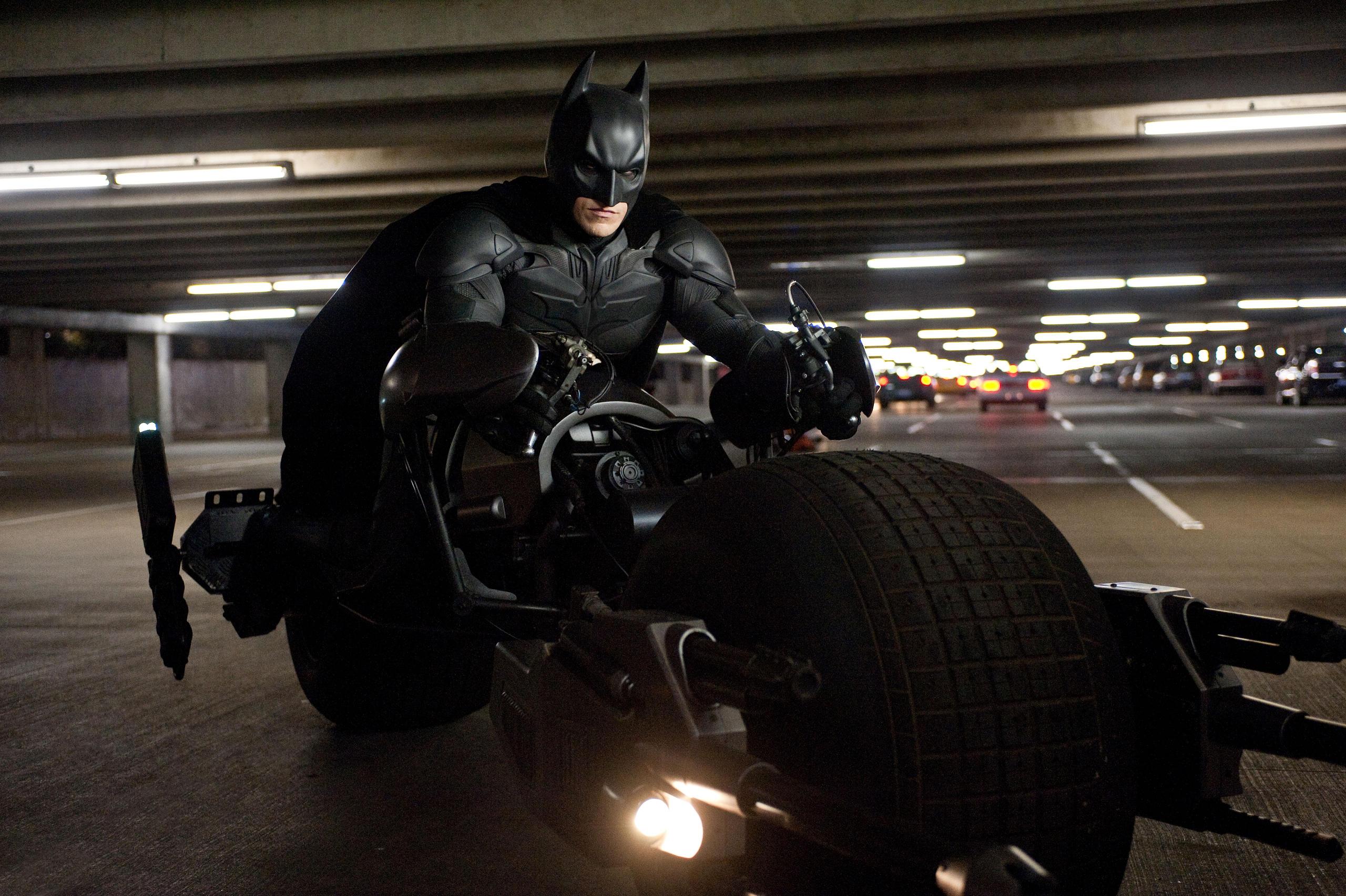
The Dark Knight Rises Early reviews that called out The Dark Knight Rises‘ flaws were greeted with the kind of vicious rage that only anonymous internet commentators can dish out. And maybe this is yet another critic-proof movie, albeit not one based on a best-selling YA book series. Of course, it is based on a comic book, though Christopher Nolan’s sophisticated filmmaking and Christian Bale’s tortured lead performance tend to make that easy to forget. In this third and “final” installment in Nolan’s trilogy, Bruce Wayne has gone into seclusion, skulking around his mansion and bemoaning his broken body and shattered reputation. He’s lured back into the Batcave after a series of unfortunate events, during which The Dark Knight Rises takes some jabs at contemporary class warfare (with problematic mixed results), introduces a villain with pecs of steel and an at-times distractingly muffled voice (Tom Hardy), and unveils a potentially dangerous device that produces sustainable energy (paging Tony Stark). Make no mistake: this is an exciting, appropriately moody conclusion to a superior superhero series, with some nice turns by supporting players Gary Oldman and Joseph Gordon-Levitt. But in trying to cram in so many characters and plot threads and themes (so many prisons in this thing, literal and figural), The Dark Knight Rises is ultimately done in by its sprawl. Without a focal point — like Heath Ledger’s menacing, iconic Joker in 2008’s The Dark Knight — the stakes aren’t as high, and the end result feels more like a superior summer blockbuster than one for the ages. (2:44) (Eddy)

Farewell, My Queen (Benoît Jacquot, France, 2012) Opening early on the morning of July 14, 1789, Farewell, My Queen depicts four days at the Palace of Versailles on the eve of the French Revolution, as witnessed by a young woman named Sidonie Laborde (Léa Seydoux) who serves as reader to Marie Antoinette (Diane Kruger). Sidonie displays a singular and romantic devotion to the queen, while the latter’s loyalties are split between a heedless amour propre and her grand passion for the Duchess de Polignac (Virginie Ledoyen). These domestic matters and other regal whims loom large in the tiny galaxy of the queen’s retinue, so that while elsewhere in the palace, in shadowy, candle-lit corridors, courtiers and their servants mingle to exchange news, rumor, panicky theories, and evacuation plans, in the queen’s quarters the task of embroidering a dahlia for a projected gown at times overshadows the storming of the Bastille and the much larger catastrophe on the horizon. (1:39) (Rapoport)

Headhunters Despite being the most sought-after corporate headhunter in Oslo, Roger (Aksel Hennie) still doesn’t make enough money to placate his gorgeous wife; his raging Napoleon complex certainly doesn’t help matters. Crime is, as always, the only solution, so Roger’s been supplementing his income by stealthily relieving his rich, status-conscious clients of their most expensive artworks (with help from his slightly unhinged partner, who works for a home-security company). When Roger meets the dashing Clas Greve (Nikolaj Coster-Waldau of Game of Thrones) — a Danish exec with a sinister, mysterious military past, now looking to take over a top job in Norway — he’s more interested in a near-priceless painting rumored to be stashed in Greve’s apartment. The heist is on, but faster than you can say “MacGuffin,” all hell breaks loose (in startlingly gory fashion), and the very charming Roger is using his considerable wits to stay alive. Based on a best-selling “Scandi-noir” novel, Headhunters is just as clever as it is suspenseful. See this version before Hollywood swoops in for the inevitable (rumored) remake. (1:40) (Eddy)

Ice Age: Continental Drift (1:27)

The Intouchables Cries of “racism” seem a bit out of hand when it comes to this likable albeit far-from-challenging French comedy loosely based on a real-life relationship between a wealthy white quadriplegic and his caretaker of color. The term “cliché” is more accurate. And where were these critics when 1989’s Driving Miss Daisy and 2011’s The Help — movies that seem designed to make nostalgic honkies feel good about those fraught relationships skewed to their advantage—were coming down the pike? (It also might be more interesting to look at how these films about race always hinge on economies in which whites must pay blacks to interact with/educate/enlighten them.) In any case, Omar Sy, portraying Senegalese immigrant Driss, threatens to upset all those pundits’ apple carts with his sheer life force, even when he’s shaking solo on the dance floor to sounds as effortlessly unprovocative, and old-school, as Earth, Wind, and Fire. In fact, everything about The Intouchables is as old school as 1982’s 48 Hrs., spinning off the still laugh-grabbing humor that comes with juxtaposing a hipper, more streetwise black guy with a hapless, moneyed chalky. The wheelchair-bound Philippe (Francois Cluzet) is more vulnerable than most, and he has a hard time getting along with any of his nurses, until he meets Driss, who only wants his signature for his social services papers. It’s not long before the cultured, classical music-loving Philippe’s defenses are broken down by Driss’ flip, somewhat honest take on the follies and pretensions of high culture — a bigger deal in France than in the new world, no doubt. Director-writer Olivier Nakache and Eric Toledano aren’t trying to innovate —they seem more set on crafting an effervescent blockbuster that out-blockbusters Hollywood — and the biggest compliment might be that the stateside remake is already rumored to be in the works. (1:52) (Chun)

Jiro Dreams of Sushi Celebrity-chef culture has surely reached some kind of zeitgeist, what with the omnipresence of Top Chef and other cooking-themed shows, and the headlines-making power of people like Paula Deen (diabetes) and Mario Batali (sued for ripping off his wait staff). Unconcerned with the trappings of fame — you’ll never see him driving a Guy Fieri-style garish sports car — is Jiro Ono, 85-year-old proprietor of Sukiyabashi Jiro, a tiny, world-renowned sushi restaurant tucked into Tokyo’s Ginza station. Jiro, a highly-disciplined perfectionist who believes in simple, yet flavorful food, has devoted his entire life to the pursuit of “deliciousness” — to the point of sushi invading his dreams, as the title of David Gelb’s reverential documentary suggests. But Jiro Dreams of Sushi goes deeper than food-prep porn (though, indeed, there’s plenty of that); it also examines the existential conflicts faced by Jiro’s two middle-aged sons. Both were strongly encouraged to enter the family business — and in the intervening years, have had to accept the soul-crushing fact that no matter how good their sushi is, it’ll never be seen as exceeding the creations of their legendary father. (1:21) (Eddy)

Katy Perry: Part of Me (1:57)

Madagascar 3: Europe’s Most Wanted (1:33)

Magic Mike Director Steven Soderbergh pays homage to the 1970s with the opening shot of his male stripper opus: the boxy old Warner Bros. logo, which evokes the gritty, sexualized days of Burt Reynolds and Joe Namath posing in pantyhose. Was that really the last time women, en masse, were welcome to ogle to their heart’s content? That might be the case considering the outburst of applause when a nude Channing Tatum rises after a hard night in a threesome in Magic Mike‘s first five minutes. Ever the savvy film historian, Soderbergh toys with the conventions of the era, from the grimy quasi-redneck realism of vintage Reynolds movies to the hidebound framework of the period’s gay porn, almost for his own amusement, though the viewer might be initially confused about exactly what year they’re in. Veteran star stripper Mike (Tatum) is working construction, stripping to the approval of many raucous ladies and their stuffable dollar bills. He decides to take college-dropout blank-slate hottie Adam (Alex Pettyfer) under his wing and ropes him into the strip club, owned by Dallas (Matthew McConaughey, whose formidable abs look waxily preserved) and show him the ropes of stripping and having a good time, much to the disapproval of Adam’s more straight-laced sister Brooke (Cody Horn). Really, though, all Mike wants to do is become a furniture designer. Boasting Foreigner’s “Feels like the First Time” as its theme of sorts and spot-on, hot choreography by Alison Faulk (who’s worked with Madonna and Britney Spears), Magic Mike takes off and can’t help but please the crowd when it turns to the stage. Unfortunately the chemistry-free budding romance between Mike and Brooke sucks the air out of the proceedings every time it comes into view, which is way too often. (1:50) (Chun)

Marvel’s The Avengers The conflict — a mystical blue cube containing earth-shattering (literally) powers is stolen, with evil intent — isn’t the reason to see this long-hyped culmination of numerous prequels spotlighting its heroic characters. Nay, the joy here is the whole “getting’ the band back together!” vibe; director and co-writer Joss Whedon knows you’re just dying to see Captain America (Chris Evans) bicker with Iron Man (a scene-stealing Robert Downey Jr.); Thor (Chris Hemsworth) clash with bad-boy brother Loki (Tom Hiddleston); and the Hulk (Mark Ruffalo) get angry as often as possible. (Also part of the crew, but kinda mostly just there to look good in their tight outfits: Jeremy Renner’s Hawkeye and Scarlett Johansson’s Black Widow.) Then, of course, there’s Nick Fury (Samuel L. Jackson) running the whole Marvel-ous show, with one good eye and almost as many wry quips as Downey’s Tony Stark. Basically, The Avengers gives you everything you want (characters delivering trademark lines and traits), everything you expect (shit blowing up, humanity being saved, etc.), and even makes room for a few surprises. It doesn’t transcend the comic-book genre (like 2008’s The Dark Knight did), but honestly, it ain’t trying to. The Avengers wants only to entertain, and entertain it does. (2:23) (Eddy)

Moonrise Kingdom Does Wes Anderson’s new film mark a live-action return to form after 2007’s disappointingly wan Darjeeling Limited? More or less. Does it tick all the Andersonian style and content boxes? Indubitably. In the most obvious deviation Anderson has taken with Moonrise, he gives us his first period piece, a romance set in 1965 on a fictional island off the New England coast. After a chance encounter at a church play, pre-teen Khaki Scout Sam (newcomer Jared Gilman) instantly falls for the raven-suited, sable-haired Suzy Bishop (Kara Hayward, ditto). The two become pen pals, and quickly bond over the shared misery of being misunderstood by both authority figures and fellow kids. The bespectacled Sam is an orphan, ostracized by his foster parents and scout troop (much to the dismay of its straight-arrow leader Edward Norton). Suzy despises her clueless attorney parents, played with gusto by Bill Murray and Frances McDormand in some of the film’s funniest and best scenes. When the two kids run off together, the whole thing begins to resemble a kind of tween version of Godard’s 1965 lovers-on the-lam fantasia Pierrot le Fou. But like most of Anderson’s stuff, it has a gauzy sentimentality more akin to Truffaut than Godard. Imagine if the sequence in 2001’s The Royal Tenenbaums where Margot and Richie run away to the Museum of Natural History had been given the feature treatment: it’s a simple yet inspired idea, and it becomes a charming little tale of the perils of growing up and selling out the fantasy. But it doesn’t feel remotely risky. It’s simply too damn tame. (1:37) (Michelle Devereaux)

Patang (The Kite) Loving memories tethered to a place (Ahmedabad, India), moment (the city’s kite festival, the largest of its kind in the country), and season (according to the Hindu calendar, the event coincides with the day that wind direction shifts) beautifully suffuse this first feature film by director and co-writer Prashant Bhargava. Certainly Patang (The Kite) is the story of a family: Delhi businessman Jayesh (Mukund Shukla) has returned with his freewheeling, movie-camera-toting daughter Priya (Sugandha Garg) to his majestically ramshackle family home, where he supports his mother, sister-in-law (Seema Biswas of 1994’s Bandit Queen), and nephew Chakku (Nawazuddin Siddiqui). He’s come to indulge his childhood love of kite flying and to introduce Priya to Ahmedabad’s old-world sights and ways. Entangled among the strands of story are past resentments —harbored by Chakku against his paternalistic uncle — and new hopes, particularly in the form of a budding romance between Priya and Bobby (Aakash Maherya), the son of the kite shop owner. Above all — and as much a presence as any other — is the city, with its fleeting pleasures and memorable faces, captured with vérité verve and sensuous lyricism on small HD cameras by Bhargava and director of photography Shanker Raman. Their imagery imprints on a viewer like an early memory, darting to mind like those many bright kites dancing buoyantly in the city sky. (1:32) (Chun)

People Like Us The opening song — James Gang’s can’t-fail “Funk #49” — only partially announces where this earnest family drama is going. Haunted by a deceased music-producer patriarch, barely sketched-out tales of his misadventures, and a soundtrack of solid AOR, this film has mixed feelings about its boomer bloodlines, much like the recent Peace, Love and Misunderstanding: these boomer-ambivalent films are the inverse of celebratory sites like Dads Are the Original Hipsters. Commodity-bartering wheeler-dealer Sam (Chris Pine) is skating on the edges of legality — and wallowing in his own kind of Type-A prickishness — so when his music biz dad passes, he tries to lie his way out of flying back home to see his mother Lillian (Michelle Pfeiffer), with his decent law student girlfriend (Olivia Wilde). He doesn’t want to face the memories of his self-absorbed absentee-artist dad, but he also doesn’t want to deal with certain legal action back home, so when his father’s old lawyer friend drops a battered bag of cash on him, along with a note to give it to a young boy (Michael Hall D’Addario) and his mother Frankie (Elizabeth Banks), he’s beset with conflict. Should he take the money and run away from his troubles or uncover the mysterious loved ones his father left behind? Director and co-writer Alexa Kurtzman mostly wrote for TV before this, his debut feature, and in many ways People Like Us resembles the tidy, well-meaning dramas about responsibility and personal growth one might still find on, say, Lifetime. It’s also tough to swallow Banks, as gifted as she is as an actress, as an addiction-scarred, traumatized single mom in combat boots. At the same time People Like Us isn’t without its charms, drawing you into its small, specific dramas with real-as-TV touches and the faintest sexy whiff of rock ‘n’ roll. (1:55) (Chun)

Prometheus Ridley Scott’s return to outer space — after an extended stay in Russell Crowe-landia — is most welcome. Some may complain Prometheus too closely resembles Scott’s Alien (1979), for which it serves as a prequel of sorts. Prometheus also resembles, among others, The Thing (1982), 2001: A Space Odyssey (1968), and Event Horizon (1997). But I love those movies (yes, even Event Horizon), and I am totally fine with the guy who made Alien borrowing from all of them and making the classiest, most gorgeous sci-fi B-movie in years. Sure, some of the science is wonky, and the themes of faith and creation can get a bit woo-woo, but Prometheus is deep-space discombobulation at its finest, with only a miscast Logan Marshall-Green (apparently, cocky dude-bros are still in effect at the turn of the next millennium) marring an otherwise killer cast: Noomi Rapace as a dreamy (yet awesomely tough) scientist; Idris Elba as Prometheus‘ wisecracking captain; Charlize Theron as the Weyland Corportation’s icy overseer; and Michael Fassbender, giving his finest performance to date as the ship’s Lawrence of Arabia-obsessed android. (2:03) (Eddy)

Rock of Ages (2:03)

Romantics Anonymous An awkward, bumbling Parisian chocolatier named Jean-Rene (Benoît Poelvoorde) falls for his gorgeous, equally awkward sales rep, Angélique (Isabelle Carré), while never missing an opportunity to say the wrong thing, surrender to shyness, or panic under pressure. It’s crucial for films involving such protracted awkwardness to give the audience something to cling to emotionally, but instead we’re handed a limp, formulaic story, sorely underdeveloped characters, and lazy writing in which the protagonists act uncharacteristically stupid/gullible/oblivious for the sake of plot-expedience. Amélie (2001) mined similar thematic territory, but its success lay in the depth of its characters; Romantics Anonymous is about little more than the idea of two hopeless romantics, and that’s simply not enough to hold interest. It’s beautifully scored, lovingly shot, and steeped in vintage French atmosphere — but that doesn’t compensate for sketchy characterization and weak, predictable storytelling. (1:20) Roxie. (Taylor Kaplan) Safety Not Guaranteed San Francisco-born director Colin Trevorrow’s narrative debut feature Safety Not Guaranteed, written by Derek Connolly, has an improbable setup: not that rural loner Kenneth (Mark Duplass) would place a personal ad for a time travel partner (“Must bring own weapons”), but that a Seattle alt-weekly magazine would pay expenses for a vainglorious staff reporter (Jake Johnson, hilarious) and two interns (Aubrey Plaza, Karan Soni) to stalk him for a fluff feature over the course of several days. The publishing budget allowing that today is true science-fiction. But never mind. Inserting herself “undercover” when a direct approach fails, Plaza’s slightly goth college grad finds she actually likes obsessive, paranoid weirdo Kenneth, and is intrigued by his seemingly insane but dead serious mission. For most of its length Safety falls safely into the category of off-center indie comedics, delivering various loopy and crass behavior with a practiced deadpan, providing just enough character depth to achieve eventual poignancy. Then it takes a major leap — one it would be criminal to spoil, but which turns an admirable little movie into something conceptually surprising, reckless, and rather exhilarating. (1:34) (Harvey)

Savages If it’s true, as some say, that Oliver Stone had lost his way after 9/11 — when seemingly many of his worst fears (and conspiracy theories) came to pass — then perhaps this toothy noir marks his return: it definitely reads as his most emotionally present exercise in years. Not quite as nihilistic as 1994’s Natural Born Killers, yet much juicier than 2010’s Wall Street: Money Never Sleeps, this pulpy effort turns on a cultural clash between pleasure-seeking, honky Cali hedonists, who appear to believe in whatever feels good, and double-dealing Mexican mafia muscle, whose apparently ironclad moral code is also shifting like drifting SoCal sands. All are draped in the Stone’s favored vernacular of manly war games with a light veneer of Buddhistic higher-mindedness and, natch, at least one notable wig. Happy pot-growing nouveau-hippies Ben (Aaron Johnson), Chon (Taylor Kitsch), and O (Blake Lively) are living the good life beachside, cultivating plants coaxed from seeds hand-imported by seething Afghanistan war vet Chon and refined by botanist and business major Ben. Pretty, privileged sex toy O sleeps with both — she’s the key prize targeted by Baja drug mogul Elena (Salma Hayek) and her minions, the scary Lado (Benicio Del Toro) and the more well-heeled Alex (Demian Bichir), who want to get a piece of Ben and Chon’s high-THC product. The twists and turnarounds obviously tickle Stone, though don’t look much deeper than Savages‘ saturated, sun-swathed façade — the script based on Don Winslow’s novel shares the take-no-prisoners hardboiled bent of Jim Thompson while sidestepping the brainy, postmodernish light-hearted detachment of Quentin Tarantino’s “extreme” ’90s shenanigans. (1:57) (Chun)

Take this Waltz Confined to the hothouse months of a summer in Toronto, Take This Waltz is a steamy, sad takedown of (rather than a take on) the romantic comedy. That’s only because it’s very romantic and very funny, often at once, but otherwise the film has nothing in common with its generic sistren. It’s a feel-good movie for the cynics, directed by actor turned director Sarah Polley (2007’s Away From Her). Margot (Michelle Williams) is a writer married to Lou (Seth Rogen), who is sweet and caring and cooks chicken for a living. Both are in their late 20s, and they are obviously each others’ first loves. It is a love like that of children: idealistic and blooming, but they never have a serious conversation. Enter neighbor Daniel (Luke Kirby) — a conventionally sexier man than Lou, more swarthy and sweaty. Soon, Margot is conflicted and confused, torturing herself with some heavy emotional gymnastics and flip-flopping. Williams is always good at using her face to convey feeling. In one of two scenes of the film set on a Scrambler carnival ride, the entire arc of Margot registers on her facial gestures, from scared to elated to uncertain as the Buggles’ “Video Killed the Radio Star” surrounds her. Margot may be indecisive, but she is never docile about her desires. She does, inevitably, make a decision and there is eventual closure, unlike most everything else out there in the indie ether. (1:56) Smith Rafael. (Ryan Lattanzio)

Ted Ah, boys and their toys — and the imaginary friends that mirror back a forever-after land of perpetual Peter Pans. That’s the crux of the surprisingly smart, hilarious Ted, aimed at an audience comprising a wide range of classes, races, and cultures with its mix of South Park go-there yuks and rom-commie coming-of-age sentiment. Look at Ted as a pop-culture-obsessed nerd tweak on dream critter-spirit animal buddy efforts from Harvey (1950) to Donnie Darko (2001) to TV’s Wilfred. Of course, we all know that the really untamable creature here wobbles around on two legs, laden with big-time baggage about growing up and moving on from childhood loves. Young John doesn’t have many friends but he is fortunate enough to have his Christmas wish come true: his beloved new teddy bear, Ted (voice by director-writer Seth MacFarlane), begins to talk back and comes to life. With that miracle, too, comes Ted’s marginal existence as a D-list celebrity curiosity — still, he’s the loyal “Thunder Buddy” that’s always there for the now-grown John (Mark Wahlberg), ready with a bong and a broheim-y breed of empathy that involves too much TV, an obsession with bad B-movies, and mock fisticuffs, just the thing when storms move in and mundane reality rolls through. With his tendency to spew whatever profanity-laced thought comes into his head and his talents are a ladies’ bear, Ted is the id of a best friend that enables all of John’s most memorable, un-PC, Hangover-style shenanigans. Alas, John’s cool girlfriend Lori (Mila Kunis) threatens that tidy fantasy setup with her perfectly reasonable relationship demands. Juggling scary emotions and material that seems so specific that it can’t help but charm — you’ve got to love a shot-by-shot re-creation of a key Flash Gordon scene — MacFarlane sails over any resistance you, Lori, or your superego might harbor about this scenario with the ease of a man fully in touch with his inner Ted. (1:46) (Chun)

30 Beats A sweltering summer day or two in the city ushers in a series of youthful good-lookers, unencumbered and less than dressed, together in kind of NYC-based mini-La Ronde that I’m surprised Woody Allen hasn’t yet attempted. Fresh young thing Julie (Condola Rashad) is off to pop her cherry with lady’s man Adam (Justin Kirk of Weeds), who’s more accustomed to chasing than being chased. Unsettled, he consults with sorceress Erika (Jennifer Tilly), who plies him with sexual magic and then finds herself chasing down her booty-call bud, bike messenger Diego (Jason Day), who’s besotted with the physically and emotionally scarred Laura (Paz de la Huerta). What goes around comes around in director-writer Alexis Lloyd’s debut feature, but alas, not till it’s contorted and triangulated itself in at least one ridiculously solemn BDSM scene. Matters get trickier when romance begins to creep into these urban one-offs. Nonetheless, those with short attention spans who like their people-watching with a healthy splash of big-city hookups, might find this adult indie as refreshing as a romp with a beautiful stranger they’ve briefly locked eyes with. (1:28) (Chun)

To Rome with Love Woody Allen’s film legacy is not like anybody else’s. At present, however, he suffers from a sense that he’s been too prolific for too long. It’s been nearly two decades since a new Woody Allen was any kind of “event,” and the 19 features since Bullets Over Broadway (1994) have been hit and-miss. Still, there’s the hope that Allen is still capable of really surprising us — or that his audience might, as they did by somewhat inexplicably going nuts for 2011’s Midnight in Paris. It was Allen’s most popular film in eons, if not ever, probably helped by the fact that he wasn’t in it. Unfortunately, he’s up there again in the new To Rome With Love, familiar mannerisms not hiding the fact that Woody Allen the Nebbish has become just another Grumpy Old Man. There’s a doddering quality that isn’t intended, and is no longer within his control. But then To Rome With Love is a doddering picture — a postcard-pretty set of pictures with little more than “Have a nice day” scribbled on the back in script terms. Viewers expecting more of the travelogue pleasantness of Midnight in Paris may be forgiving, especially since it looks like a vacation, with Darius Khondji’s photography laying on the golden Italian light and making all the other colors confectionary as well. But if Paris at least had the kernel of a good idea, Rome has only several inexplicably bad ones; it’s a quartet of interwoven stories that have no substance, point, credibility, or even endearing wackiness. The shiny package can only distract so much from the fact that there’s absolutely nothing inside. (1:52) (Harvey)

Trishna Ever difficult to pin down, director Michael Winterbottom continues his restless flipping between the light (2010’s The Trip), artily experimental (2004’s 9 Songs), pulpy (2010’s The Killer Inside Me), and the dead serious (2007’s A Mighty Heart). Trishna, loosely based on Thomas Hardy’s Tess of the d’Urbervilles and set in small-town and big-city modern-day India, lines up neatly on the bookshelf alongside Winterbottom’s other Hardy bodice-ripper, 1996’s Jude. By chance beautiful village girl Trishna (Freida Pinto) falls in with the handsome, thoroughly Westernized Jay (Riz Ahmed) and his laddish pals on holiday. A truck accident leaves her father unable to provide for their family, so she goes to work at the luxury hotel owned by Jay’s father and overseen by his privileged son. There she gently gives him language tips, accepts his offer to educate her in travel industry management, and enjoys his growing attentions, until one day when he rescues her from roving thugs only to seduce her. Though she flees to her family home and eventually has an abortion, Trishna still proves to be an innocent and consents to live in Mumbai with Jay, who is flirting with the film industry and increasingly effaces his trusting girlfriend as their sexual game-playing becomes increasingly complicated. The shadows of both Hardy and Bollywood flit around Trishna, and this cultural transplant nearly works — the hothouse erotic entanglement between its two principals almost but not quite convinces one that Trishna would be driven to desperate ends. Still, even as Trishna, like Tess, infuriates with her passivity, her story occasionally enthralls — the fruit of Pinto’s surprisingly brave, transparent performance. (1:53) (Chun)

Tyler Perry’s Madea’s Witness Protection (1:54)

Your Sister’s Sister The new movie from Lynn Shelton — who directed star and (fellow mumblecore director) Mark Duplass in her shaggily amusing Humpday (2009) — opens somberly, at a Seattle wake where his Jack makes his deceased brother’s friends uncomfortable by pointing out that the do-gooder guy they’d loved just the last couple years was a bully and jerk for many years before his reformation. This outburst prompts an offer from friend-slash-mutual-crush Iris (Emily Blunt) that he get his head together for a few days at her family’s empty vacation house on a nearby island. Arriving via ferry and bike, he is disconcerted to find someone already in residence — Iris’ sister Hannah (Rosemarie DeWitt), who’s grieving a loss of her own (she’s split with her girlfriend). Several tequila shots later, two Kinsey-scale opposites meet, which creates complications when Iris turns up the next day. A bit slight in immediate retrospect and contrived in its wrap-up, Shelton’s film is nonetheless insinuating, likable, and a little touching while you’re watching it. That’s largely thanks to the actors’ appeal — especially Duplass, who fills in a blunderingly lucky (and unlucky) character’s many blanks with lived-in understatement. (1:30) (Harvey) *
 

‘Pale kid’ Watsky raps fast — and returns to the Bay

0

In 2007, then 20-year-old George Watsky and his band at the time, Invisible Inc., rented out Slim’s nightclub in San Francisco and put themselves on stage as the opening act. Sadly, Watsky spent years repaying back the loan that he lost on that show. 

Flash forward five years to the present, and on Sunday, July 29 the now 25-year-old under the stage name “Watsky” will be headlining a show at Slim’s, presented by Slim’s itself. Watsky’s performance in San Francisco is part of a 22-city national tour, which kicked off on July 1 in Tempe, Ariz. and wraps up July 31 in LA (including three shows in London, England after the national tour ends).

The last time SFBG covered the Bay Area native and alumna of San Francisco’s University High School was back in 2008 when he was dominating the world of spoken word. He had recently been crowned champion of the National Brave New Voices competition and had made an appearance on Russell Simmons’ HBO show, Russell Simmons Presents Def Poetry.

Since then, up until a couple weeks ago, Watsky has been at college campuses across the US, performing his highly demanded spoken word poetry. But in 2009, Watsky showed fans another side to his creativity with the release of a studio rap album titled Watsky.

I spoke to Watsky over the phone about his current rap success while Watsky and his band were en route to Illinois, for a show in Chicago the following night. “I’ve been rapping since before I started doing poetry,” said Watsky. “I’ve been doing my best to get my rap out there parallel to my poetry career it’s just taken a while to catch on to an audience.”

Well it finally caught on in 2011, when Watksy put out a Youtube video that launched himself into Youtube stardom, titled “Pale Kid Raps Fast”. The video went viral, spreading to teenagers’ computers quicker than it took for their Cup Noodles to settle. It quickly amassed millions of views (over 20 million to date), multiplied Watsky’s subscribers 20 fold, and earned him an appearance on The Ellen Degeneres Show.

For Watsky, the success of “Pale Kid Raps Fast” couldn’t have come at a better time. “That video came about in a time when I was really frustrated,” said Watsky, who had just moved to LA and was trying to make it as an actor, but with little success.

“When I came back to LA after Christmas I decided I was going to take matters into my own hands.” And that’s exactly what he did. Watsky boiled down all of his talents into a single video; adding elements of humor, lyrical skill, and impressive speed. “Everything just kind of came together” said Watsky “[Pale Kid Raps Fast] came out of a sense of what are kids looking for that could be shared around and can show them exactly who I am and maybe peak their curiosity to look into my other stuff.”

Along with his Youtube videos, Watsky continued to build a solid fan base with releases of mixtapes like his first in 2011 titled, A New Kind of Sexy. He followed in early 2012 with the release of a bluegrass/hip-hop EP, tag teaming with his bandmate Kush Mody titled, Watsky and Mody. And in June of this year, Watsky released his most recent mixtape, Nothing Like the First Time, which coincided with his national tour.

He’s been enjoying the support and energy he’s been receiving from his diverse audiences on tour. “I do have a young element to my fan base but I also have a bunch of older people coming out too and a lot of these kids’ parents actually like my music also. They’re anywhere from 15-years-old to 45-years-old,” he said, adding that some of the older audience members come to his shows because they’re fans of his poetry or saw him on Def Poetry Slam. “Even some English teachers come to my shows and tell me they use my work in their classroom,” he said.

Watsky offers a style that can’t really be defined. And often times critics who seem to have only heard a sample of Watsky’s work or even just seen a headshot, tend to throw him into the category of “white rapper” or the “Frat rap scene.”

“First of all, I was never in a fraternity,”  Watsky joked. “I think the easiest way to go is to lump me in there with the other white rappers that are breaking right now. It’s accurate; I mean I am a white rapper.”

“But I’m different than Mac Miller, I’m different than Kreayshawn, I’m different than Bo Burnham, I’m different than Chris Webby in ways that I could go on about for a long time – and they’re all different than me. And it’s not like one of us is better or worse than the other, it’s just that we are speaking to different groups of people based on our experiences.”

Watsky is different. He offers something unique and genuine. “The one thing that I try and make sure that I always come back to is that [my music] is honest,” said Watsky. “When I go back to my earlier stuff, sometimes I feel like it’s not entirely me like my voice doesn’t sound like how it does in conversation. I always want people who listen to my poetry to feel like they are listening to the exact same person when they listen to my music and vice-versa and I think what’s really important to me is that I’m always coming across exactly as myself and that I’m not putting on any airs.”

You would think that after 48.5 million total Youtube views, two appearances on The Ellen Degeneres Show, two appearances at VidCon, and a profile on Last Call with Carson Daily, life would have changed dramatically, not really. “To be honest my day-to-day lifestyle didn’t change a whole lot,” said Watsky. “[It] didn’t change much at all until we hit the road. Until two weeks ago I didn’t see any real change in my life except for the increase in Youtube hits.”

After a decade of trying to make it on to the national scene, Watsky isn’t looking for a shortcut. Shortly after the video went viral, T-mobile offered Watsky a quarter of a million dollars to do a fast rap commercial. He turned down the deal.

Luckily for Watsky, the patience has paid off. In mid-May he was selected to perform at the 2012 Rock The Bells Festival in August, alongside hip-hop heavy weights like Nas, Jadakiss, Bone Thugs-N-Harmony, Kendrick Lamar, and Kid Cudi. “I’m thrilled,” Watsky said. “It’s going to be great because I’m the kid who was at Rock The Bells three years ago, fours years ago as an audience member. It’s totally unreal to be crossing over to the other side of the stage.”

At the moment, the stage Watsky is most looking forward to is the one at Slim’s. “I’m really excited to come back to San Francisco, it’s the show on the whole tour that I have been really excited about more than any other,” said Watsky.

My final question to Watsky was, what can we expect from a Watsky concert? A live five-piece band, songs from all of his projects, a little spoken word, and a lot of fun. Said Watsky, “Expect to be entertained and have a good time because we are going to put our all into it.”

Watsky
With Dumbfoundead, the Breezy Lovejoy Band
Sun/29, 9pm, $16
Slim’s
333 11th St., SF
www.slimspresents.com

Environmental groups call for fracking moratorium in California

8

California’s biggest environmental organizations are gathering in Sacramento tomorrow (Wed/25) to call for a moratorium on the controversial practice of hydraulic fracturing – also known as fracking, in which a mixture of water and chemicals is injected at high pressure deep underground to increase production in oil and natural gas wells – until its impacts are better understood.

The occasion is the last in a series of workshops on the issue by the California Department of Conservation’s Division of Oil, Gas and Geothermal Resources, which is considering new rules on a practice that is mostly unregulated in California. Other recent legislative and administrative efforts to address fracking have been scuttled by the powerful fossil fuel industry.

Earlier this year, Sen. Fran Pavley (D-Santa Monica) discovered that state officials didn’t even know how much fracking is happening in California – while it requires state permits to drill an oil or natural gas well, fracking them doesn’t – although the industry has since estimated that more than 600 wells were fracked last year, most of them in Kern Country around Bakersfield.

But there is growing concern by environmentalists that the oil industry plans to expand its use of fracking in the Monterey shale formations that run from the Central Coast to the Central Valley, where an estimated 15 billion barrels of oil could be extracted if loosened up by fracking.

“We’re calling for the Division of Oil and Gas to slow down and not rush through these regulations,” said Andrew Grinberg, spokesperson for Clean Water Action. “We’re calling for a moratorium until we have good regulations that ensure the protection of our water, air, health, and communities.”

Other organizations joining the event – which begins at 5:30pm outside the California Environmental Protection Agency building at 1001 1st St. in Sacramento, where the DOGGR hearing will be held at 7pm – and the call for a moratorium includes the Sierra Club, Planning and Conservation League, Center for Biological Diversity, Environment California, and Food & Water Watch.

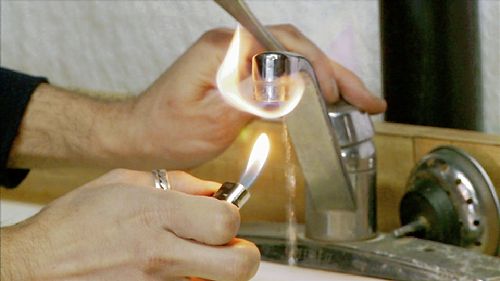
Public concerns about fracking have been on the increase in recent years, fueled by a high-profile debate in New York about ending a state moratorium against the practice and by alarming stories of groundwater contamination caused by fracking – including cases in which hydrocarbon content in drinking water is so high that people could set their faucets on fire – told in the 2010 documentary film Gasland and other media accounts.

But Tupper Hull, spokesperson for the influential trade group Western States Petroleum Association, told us fracking has been happening in California for 60 years – almost exclusively in oil wells rather than for the natural gas fields discussed in Gasland – and that it has not caused any detrimental environmental impacts, nor has its use been increasing, despite the increased public attention to the practice.

“We understand there is a lot of interest in this topic and questions about the technology,” Hull said. “We expect there will be new regulations and whatever they are, we hope they are based on facts and science and not emotional responses.”

But he said WSPA opposes the call for a moratorium because “this is a technology that aids in the production of energy.”

Yet the environmental groups say the need for energy shouldn’t cause government to abdicate its role of studying and regulating a potentially harmful practice that was given a broad federal exemption from the Clean Water Act by Congress in 2005, when it approved the Energy Policy Act that was spearheaded by then-Vice President Dick Cheney.

Environmental groups dubbed it the “Halliburton loophole” after Cheney’s former employer, which has greatly expanded the use of fracking in the US.

Charo talks flamenco guitar, San Francisco, and bulls

0

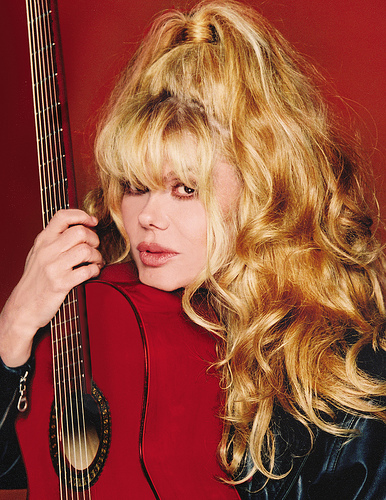
Unfortunately, Charo had to cancel all of her Yoshi’s shows this weekend due to illness. We enjoyed the conversation so thoroughly, we’re publishing it anyways. Get well soon Charo. 

Maria Rosario Pilar Martinez Molina Baeza. Charo. Cha-rrr-o (roll those Rs). The name brings to mind glittering sequined bodysuits, impossibly high hair, flashes of iconic moments sitting across from Johnny Carson or arms hooked with Dean Martin in the 1970s, and the perplexing catchphrase that made it into our shared lexicon: cuchi-cuchi.

Passionate, skilled flamenco guitar is the other thing that should be there in your conscious when you dream of Charo. The comedian-actress-drag icon has been playing guitar since before she hit puberty, back in ’50s Murcia, Spain.

These days, when she’s not grand marshaling pride parades or guest-starring on shows such as VH1’s Surreal Life, Charo is showcasing her variety talent at massive money venues: Las Vegas casinos, Southern California casinos, any dazzling commerce hotspot with slots and craps.

She was set to play far more intimate flamenco concerts at Yoshi’s this weekend and seemed beyond thrilled — or at least, that’s what she kept saying during a hyper half-hour conversation a few weeks back. Here are some of those interview highlights:

On San Francisco: “I’ve got a tremendous admiration for the city of San Francisco. There is nothing in these United States of America with the same light and energy. It’s a beautiful city, and there are a lot of cool people there.”

On performing: “To me, I’m never too happy with the success of yesterday. It’s always, what’s new? What can I do to improve? And what I discovered is that people really love and respect when I play guitar. I like comedy, and beautiful costumes and everything. But when I play the guitar, I feel like the audience is in disbelief and so respectful and appreciative.”

On flamenco guitar: “Flamenco is the spirit of excitement, passion, energy, and the position of the body; it’s telling you a story.

“In Spain, in the summer, the gypsies go to farms to help the owners take care of the animals. My grandma was nice and let them camp. They would say goodbye to the sun during sunset and make a bonfire and dance and play pure flamenco. It was so exciting around the campfire — no machine can produce what they do!

“So I began playing with them, and became part of their group. At ages 8 and 9 I knew buleria, rhumba, alegrías. Then when I auditioned for Andrés Segovia in Madrid, he was so impressed.”

On the media: “They were always a little ahead of the mentality. When I came to the United States in the 1950s, many audiences didn’t know the grandeur of musical flamenco or Latin salsa, but the media always knew it. So when I was playing heavy duty bulerias, the audience was thinking ‘okay, why doesn’t she do cuchi-cuchi?’ but the media would say, ‘this girl knows what the hell she’s doing.'”

On dealing with emotions: “When people say ‘ah, so beautiful! Everything is pink!’ that’s bullshit. Seriously, not every day is pink. But with my guitar, I try to make it easier. I go to a room with no telephones and no problems, pick up a guitar, and put my negative thoughts away.”

On reality TV: “When I appeared [on The Surreal Life], your generation had fun with me — the accent and energy, the guitar. So I’ve turned down two offers already for reality shows. One was to put cameras in my house. We are crazy! We would make the Kardashians look like they have a big case of diarrhea. I don’t know if you’ve seen the old reruns of The Beverly Hillbillies. But we are here in Beverly Hills with a bull.

“Jennifer Lopez was my neighbor; she probably is one of the people who have called the police department because, okay, I’ll bring mariachi at 10 o’clock, or we have big paella parties with flamenco. [But] the answer is, I do have a project coming, but it’s set in Hawaii where we have a house. It’s comedy, fun, and music.”

More on that bull: “His name is Manolo — it comes from the most famous matador in Spain, who was killed by a bull in the town where I was born. I hate bull fighting with a passion. They torture bulls before the fight. The young Spanish people hate it like me.

“I made a video complaining against the cruelty of bull fighting and I had a baby bull in the video — at the end of filming, I ended up with a baby bull. He didn’t know he was a bull. He’d be like ‘eh, mama mama!’

http://www.youtube.com/watch?v=5phOPenZV2g

The neighbors complained ‘we saw a bull’ and we said, ‘no! It’s a big dog!’ [laughs]. I made a deal that he also has a residence in Malibu on a huge ranch that belonged to the late Bob Hope. [Manolo] is officially supposed to live there, but he has visiting rights here.”

For refunds, contact the Yoshi’s Box Office at (415) 655-5600.

Batman and beyond: new movies

1

Yep. It’s here.

But THERE IS MORE TO LIFE THAN THE LATEST BATMAN MOVIE, PEOPLE! (Especially when this entry ain’t even the best in the series. See my review below. And to those who would jump all over a critic for being a critic … why so serious?)

First of all, the very excellent San Francisco Jewish Film Festival begins tonight. Check out our takes here (docs) and here (music docs).

Todd Solondz has a new one. Dennis Harvey reviews Dark Horse right herrre.

And the Lumiere is screening a digitally-remastered Monty Python and the Holy Grail (1975), complete with all the lines you love to quote and featuring a new 12-minute short, Terry Gilliam’s Lost Animations.

Oh yeah, and this…

http://www.youtube.com/watch?v=q-Sktgm0aD8

The Dark Knight Rises Early reviews that called out The Dark Knight Rises’ flaws were greeted with the kind of vicious rage that only anonymous internet commentators can dish out. And maybe this is yet another critic-proof movie, albeit not one based on a best-selling YA book series. Of course, it is based on a comic book, though Christopher Nolan’s sophisticated filmmaking and Christian Bale’s tortured lead performance tend to make that easy to forget. In this third and “final” installment in Nolan’s trilogy, Bruce Wayne has gone into seclusion, skulking around his mansion and bemoaning his broken body and shattered reputation. He’s lured back into the Batcave after a series of unfortunate events, during which The Dark Knight Rises takes some jabs at contemporary class warfare (with problematic mixed results), introduces a villain with pecs of steel and an at-times distractingly muffled voice (Tom Hardy), and unveils a potentially dangerous device that produces sustainable energy (paging Tony Stark). Make no mistake: this is an exciting, appropriately moody conclusion to a superior superhero series, with some nice turns by supporting players Gary Oldman and Joseph Gordon-Levitt. But in trying to cram in so many characters and plot threads and themes (so many prisons in this thing, literal and figural), The Dark Knight Rises is ultimately done in by its sprawl. Without a focal point — like Heath Ledger’s menacing, iconic Joker in 2008’s The Dark Knight — the stakes aren’t as high, and the end result feels more like a superior summer blockbuster than one for the ages. (2:44) (Cheryl Eddy)

http://www.youtube.com/watch?v=BKCWELGjpg8

Romantics Anonymous An awkward, bumbling Parisian chocolatier named Jean-Rene (Benoît Poelvoorde) falls for his gorgeous, equally awkward sales rep, Angélique (Isabelle Carré), while never missing an opportunity to say the wrong thing, surrender to shyness, or panic under pressure. It’s crucial for films involving such protracted awkwardness to give the audience something to cling to emotionally, but instead we’re handed a limp, formulaic story, sorely underdeveloped characters, and lazy writing in which the protagonists act uncharacteristically stupid/gullible/oblivious for the sake of plot-expedience. Amélie (2001) mined similar thematic territory, but its success lay in the depth of its characters; Romantics Anonymous is about little more than the idea of two hopeless romantics, and that’s simply not enough to hold interest. It’s beautifully scored, lovingly shot, and steeped in vintage French atmosphere — but that doesn’t compensate for sketchy characterization and weak, predictable storytelling. (1:20) Roxie. (Taylor Kaplan)

http://www.youtube.com/watch?v=7Iy6gPnPlks

30 Beats A sweltering summer day or two in the city ushers in a series of youthful good-lookers, unencumbered and less than dressed, together in kind of NYC-based mini-La Ronde that I’m surprised Woody Allen hasn’t yet attempted. Fresh young thing Julie (Condola Rashad) is off to pop her cherry with lady’s man Adam (Justin Kirk of Weeds), who’s more accustomed to chasing than being chased. Unsettled, he consults with sorceress Erika (Jennifer Tilly), who plies him with sexual magic and then finds herself chasing down her booty-call bud, bike messenger Diego (Jason Day), who’s besotted with the physically and emotionally scarred Laura (Paz de la Huerta). What goes around comes around in director-writer Alexis Lloyd’s debut feature, but alas, not till it’s contorted and triangulated itself in at least one ridiculously solemn BDSM scene. Matters get trickier when romance begins to creep into these urban one-offs. Nonetheless, those with short attention spans who like their people-watching with a healthy splash of big-city hookups, might find this adult indie as refreshing as a romp with a beautiful stranger they’ve briefly locked eyes with. (1:28) (Kimberly Chun)

http://www.youtube.com/watch?v=gdFiV9yDHG4

Trishna Ever difficult to pin down, director Michael Winterbottom continues his restless flipping between the light (2010’s The Trip), artily experimental (2004’s 9 Songs), pulpy (2010’s The Killer Inside Me), and the dead serious (2007’s A Mighty Heart). Trishna, loosely based on Thomas Hardy’s Tess of the d’Urbervilles and set in small-town and big-city modern-day India, lines up neatly on the bookshelf alongside Winterbottom’s other Hardy bodice-ripper, 1996’s Jude. By chance beautiful village girl Trishna (Freida Pinto) falls in with the handsome, thoroughly Westernized Jay (Riz Ahmed) and his laddish pals on holiday. A truck accident leaves her father unable to provide for their family, so she goes to work at the luxury hotel owned by Jay’s father and overseen by his privileged son. There she gently gives him language tips, accepts his offer to educate her in travel industry management, and enjoys his growing attentions, until one day when he rescues her from roving thugs only to seduce her. Though she flees to her family home and eventually has an abortion, Trishna still proves to be an innocent and consents to live in Mumbai with Jay, who is flirting with the film industry and increasingly effaces his trusting girlfriend as their sexual game-playing becomes increasingly complicated. The shadows of both Hardy and Bollywood flit around Trishna, and this cultural transplant nearly works — the hothouse erotic entanglement between its two principals almost but not quite convinces one that Trishna would be driven to desperate ends. Still, even as Trishna, like Tess, infuriates with her passivity, her story occasionally enthralls — the fruit of Pinto’s surprisingly brave, transparent performance. (1:53) (Kimberly Chun)

The Performant: Storming the Bastille

0

How fortunate for lovers of patriotic display, that just as the last of the illegal Fourth of July fireworks have been shot off, the 14th should roll around, giving us all another excuse to celebrate liberty, equality and fraternity en français. Of course Bastille Day, France’s Fête Nationale, is much less the spectacle in Californi-ay than along the Champs Elysees, but you’ll still find the Francophones of (don’t-call-it) Frisco decked out in their own brand of red-white-and-blue sipping Bordeaux and nibbling on quiche, if not rioting in the streets.

A special Friday the 13th edition of French pop dance party Bardot A Go Go kicked off the Francophilic festivities at the Rickshaw Stop Friday night. Though the awkwardly laid-out venue, with its crowded entryway and underutilized upper level, is a far cry from a smoke-filled 1960s era Parisian boîte de nuit, a modish, mostly French soundtrack, heavy on the Gainsbourg, pulsated through the room. Psychedelic minis, tall boots, sleek bouffants, and frantic fruggers crowded the dance floor, gyrating to playful hits such as the growly “Roller Girl” (which sounds suspiciously similar to “Get off of My Cloud,” but cute … and French).

As with Paris-Dakar at the Little Baobab, opportunities abounded to brush up on one’s conversational French skills, no matter how rudimentary, and for the time-pressed coquette, free mod hairstyling was being offered at the door, which lent many a mane bobbing on the dance floor a certain glamorous je ne sais quoi.

It was good for me to get my French fantasy on early, as Sat/14 I landed smack dab right back in America, the Great American Music Hall to be exact, for a locals-only double header CD release party: officially for Joe Rut, and unofficially for opening band the Low Rollers. Shades of Santa Cruz color the laid-back Caliphorisms of both bands, a bit of the old Camper Van, manifesting itself in the wryly nostalgic, conversational lyrics penned by Joel Murach of the Low Rollers, and multi-instrumental jam magic orchestrated by Joe Rut.

One aspect of Joe Rut’s oeuvre that speaks more directly of San Francisco than Santa Cruz is his fondness for silly props, including an imposing, 12-foot flyswatter, giant inflatable Koi floating around the room, and a tiny, foul-mouthed robot named “Chatbot” who threw around some abuse before being literally thrown himself. But though Rut’s props and lyrics are mostly of the overtly humorous kind, think Mojo Nixon with a bigger vocal range, they don’t detract a bit from the sheer energy and passion underlying the composition, from the down-home exasperated twang of “Turn Signal” and the breakneck blues of his foot-fetish anthem “Barbie Feet.”

His new album, Joe Rut Live, recorded during his last show at the Great American Music Hall in 2010, is a comprehensive overview of his obsessions past and present (copyright law, myspace, hippie chicks) performed by a stellar guest lineup, many of who were in attendance for this triumphal reprise. Now that they’re practically regulars, hopefully it won’t take another two years for Rut and friends to grace the GAMH stage a third time.

Film Listings

0

Film listings are edited by Cheryl Eddy. Reviewers are Kimberly Chun, Max Goldberg, Dennis Harvey, and Lynn Rapoport. For rep house showtimes, see Rep Clock.

OPENING

A Burning Hot Summer Two couples become entangled one hot Roman summer in Philippe Garrel’s New Wave-inspired drama. (1:35) SF Film Society Cinema.

The Dark Knight Rises Nolan, Bale, and the rest of the Gotham gang reunite for 2012’s most-anticipated superhero sequel. (2:44) Marina.

Dark Horse See "Do Not Disturb." (1:25) Embarcadero, SF Film Society Cinema, Shattuck, Smith Rafael.

Monty Python and the Holy Grail Back to taunt you a second (or hundredth) time, the 1975 comedy classic gets digitally remastered and boasts a new 12-minute short, "Terry Gilliam’s Lost Animations." (1:44) Lumiere.

Romantics Anonymous An awkward, bumbling Parisian chocolatier named Jean-Rene (Benoît Poelvoorde) falls for his gorgeous, equally awkward sales rep, Angélique (Isabelle Carré), while never missing an opportunity to say the wrong thing, surrender to shyness, or panic under pressure. It’s crucial for films involving such protracted awkwardness to give the audience something to cling to emotionally, but instead we’re handed a limp, formulaic story, sorely underdeveloped characters, and lazy writing in which the protagonists act uncharacteristically stupid/gullible/oblivious for the sake of plot-expedience. Amélie (2001) mined similar thematic territory, but its success lay in the depth of its characters; Romantics Anonymous is about little more than the idea of two hopeless romantics, and that’s simply not enough to hold interest. It’s beautifully scored, lovingly shot, and steeped in vintage French atmosphere — but that doesn’t compensate for sketchy characterization and weak, predictable storytelling. (1:20) Roxie. (Taylor Kaplan)

30 Beats A sweltering summer day or two in the city ushers in a series of youthful good-lookers, unencumbered and less than dressed, together in kind of NYC-based mini-La Ronde that I’m surprised Woody Allen hasn’t yet attempted. Fresh young thing Julie (Condola Rashad) is off to pop her cherry with lady’s man Adam (Justin Kirk of Weeds), who’s more accustomed to chasing than being chased. Unsettled, he consults with sorceress Erika (Jennifer Tilly), who plies him with sexual magic and then finds herself chasing down her booty-call bud, bike messenger Diego (Jason Day), who’s besotted with the physically and emotionally scarred Laura (Paz de la Huerta). What goes around comes around in director-writer Alexis Lloyd’s debut feature, but alas, not till it’s contorted and triangulated itself in at least one ridiculously solemn BDSM scene. Matters get trickier when romance begins to creep into these urban one-offs. Nonetheless, those with short attention spans who like their people-watching with a healthy splash of big-city hookups, might find this adult indie as refreshing as a romp with a beautiful stranger they’ve briefly locked eyes with. (1:28) Elmwood, Four Star. (Chun)

Trishna Ever difficult to pin down, director Michael Winterbottom continues his restless flipping between the light (2010’s The Trip), artily experimental (2004’s 9 Songs), pulpy (2010’s The Killer Inside Me), and the dead serious (2007’s A Mighty Heart). Trishna, loosely based on Thomas Hardy’s Tess of the d’Urbervilles and set in small-town and big-city modern-day India, lines up neatly on the bookshelf alongside Winterbottom’s other Hardy bodice-ripper, 1996’s Jude. By chance beautiful village girl Trishna (Freida Pinto) falls in with the handsome, thoroughly Westernized Jay (Riz Ahmed) and his laddish pals on holiday. A truck accident leaves her father unable to provide for their family, so she goes to work at the luxury hotel owned by Jay’s father and overseen by his privileged son. There she gently gives him language tips, accepts his offer to educate her in travel industry management, and enjoys his growing attentions, until one day when he rescues her from roving thugs only to seduce her. Though she flees to her family home and eventually has an abortion, Trishna still proves to be an innocent and consents to live in Mumbai with Jay, who is flirting with the film industry and increasingly effaces his trusting girlfriend as their sexual game-playing becomes increasingly complicated. The shadows of both Hardy and Bollywood flit around Trishna, and this cultural transplant nearly works — the hothouse erotic entanglement between its two principals almost but not quite convinces one that Trishna would be driven to desperate ends. Still, even as Trishna, like Tess, infuriates with her passivity, her story occasionally enthralls — the fruit of Pinto’s surprisingly brave, transparent performance. (1:53) Embarcadero, Shattuck. (Chun)

ONGOING

Abraham Lincoln: Vampire Hunter Are mash-ups really so 2001? Not according to the literary world, where writer Seth Graham-Smith has been doing brisk trade in gore-washing perfectly interesting historical figures and decent works of literature — a fan fiction-rooted strategy that now reeks of a kind of camp cynicism when it comes to a terminally distracted, screen-aholic generation. Still, I was strangely excited by the cinematic kitsch possibilities of Graham-Smith’s Lincoln alternative history-cum-fantasy, here in the hands of Timur Bekmambetov (2004’s Night Watch). Historians, prepare to fume — it helps if you let go of everything you know about reality: as Vampire Hunter opens, young Lincoln learns some harsh lessons about racial injustice, witnessing the effects of slavery and the mistreatment of his black friend Will. As a certain poetic turn would have it, slave owners here are invariably vampires or in cahoots with the undead, as is the wicked figure, Jack Barts (Marton Csokas), who beats both boys and sucks Lincoln’s father dry financially. In between studying to be a lawyer and courting Mary Todd (Mary Elizabeth Winstead), the adult Lincoln (Benjamin Walker) vows to take revenge on the man who caused the death of his mother and enters the tutelage of vampire hunter Henry (Dominic Cooper), who puts Abe’s mad skills with an ax to good use. Toss in a twist or two; more than few freehand, somewhat humorous rewrites of history (yes, we all wish we could have tweaked the facts to have a black man working by Lincoln’s side to abolish slavery); and Bekmambetov’s tendency to direct action with the freewheeling, spectacle-first audacity of a Hong Kong martial arts filmmaker (complete with at least one gaping continuity flaw) — and you have a somewhat amusing, one-joke, B-movie exercise that probably would have made a better short or Grindhouse-esque trailer than a full-length feature — something the makers of the upcoming Pride and Prejudice and Zombies should bear in mind. (1:45) 1000 Van Ness, SF Center. (Chun)

The Amazing Spider-Man A mere five years after Sam Raimi and Tobey Maguire’s Spider-Man 3 — forgettable on its own, sure, but 2002’s Spider-Man and especially 2004’s Spider-Man 2 still hold up — Marvel’s angsty web-slinger returns to the big screen, hoping to make its box-office mark before The Dark Knight Rises opens in a few weeks. Director Marc Webb (2009’s 500 Days of Summer) and likable stars Andrew Garfield (as the skateboard-toting hero) and Emma Stone (as his high-school squeeze) offer a competent reboot, but there’s no shaking the feeling that we’ve seen this movie before, with its familiar origin story and with-great-power themes. A little creativity, and I don’t mean in the special effects department, might’ve gone a long way to make moviegoers forget this Spidey do-over is, essentially, little more than a soulless cash grab. Not helping matters: the villain (Rhys Ifans as the Lizard) is a snooze. (2:18) Metreon, 1000 Van Ness, Presidio, Sundance Kabuki. (Eddy)

Ballplayer: Pelotero With upbeat music, slick editing, and narration by John Leguizamo, Ballplayer: Pelotero is an entertaining, enlightening investigation into exactly why the Dominican Republic produces so many baseball stars. Comparisons to acclaimed sports doc Hoop Dreams (1994) are apt, as filmmakers Ross Finkel, Trevor Martin, and Jonathan Paley travel to the DR to follow a pair of teenage baseball players dreaming of big-league stardom (and big-league paychecks). But the Hoop Dreams kids weren’t being confronted by the shady, sinister, bottom-line-obsessed recruiters working for Major League Baseball, which maintains a pee-wee farm system of sorts in the country to train young prospects — the best of whom are snapped up at the magic age of 16 for bargain-basement (relatively speaking) prices. And in this environment, questions about numbers reign supreme: how much with each kid be signed for? And, more intriguingly, is either youth lying about his true age? (1:12) SF Film Society Cinema. (Eddy)

Beasts of the Southern Wild Six months after winning the Grand Jury Prize at Sundance (and a Cannes Camera d’Or), Beasts of the Southern Wild proves capable of enduring a second or third viewing with its originality and strangeness fully intact. Magical realism is a primarily literary device that isn’t attempted very often in U.S. cinema, and succeeds very rarely. But this intersection between Faulkner and fairy tale, a fable about — improbably — Hurricane Katrina, is mysterious and unruly and enchanting. Benh Zeitlin’s film is wildly cinematic from the outset, as voiceover narration from six-year-old Hushpuppy (Quvenzhané Wallis) offers simple commentary on her rather fantastical life. She abides in the Bathtub, an imaginary chunk of bayou country south of New Orleans whose residents live closer to nature, amid the detritus of civilization. Seemingly everything is some alchemical combination of scrap heap, flesh, and soil. But not all is well: when "the storm" floods the land, the holdouts are forced at federal gunpoint to evacuate. With its elements of magic, mythological exodus, and evolutionary biology, Beasts goes way out on a conceptual limb; you could argue it achieves many (if not more) of the same goals Terrence Malick’s 2011 The Tree of Life did at a fraction of that film’s cost and length. (1:31) Bridge, California, Embarcadero, Smith Rafael. (Harvey)

Bel Ami Judging from recent attempts to shake off the gloomy atmosphere and undead company of the Twilight franchise, Robert Pattinson enjoys a good period piece, but hasn’t quite worked out how to help make one. Last year’s Depression-era Water for Elephants was a tepid romance, and Declan Donnellan and Nick Ormerod’s belle epoque–set Bel Ami is an ungainly, oddly paced adaptation of the Guy de Maupassant novel of the same name. A down-and-out former soldier of peasant stock, Georges Duroy (Pattinson) — or "Bel Ami," as his female admirers call him — gains a brief entrée into the upper echelons of France’s fourth estate and parlays it into a more permanent set of social footholds, campaigning for the affections of a triumvirate of Parisian power wives (Christina Ricci, Uma Thurman, and Kristin Scott Thomas) as he makes his ascent. His route is confusing, though; the film pitches forward at an alarming pace, its scenes clumsily stacked together with little character development or context to smooth the way, and Pattinson’s performance doesn’t clarify much. Duroy shifts perplexingly between rapacious and soulful modes, eyeing the ladies with a vaguely carnivorous expression as he enters drawing rooms, dining rooms, and bedrooms, but leaving us with little sense of his true appetites or other motivations. (1:42) Smith Rafael. (Rapoport)

Bernie Jack Black plays the titular new assistant funeral director liked by everybody in small-town Carthage, Tex. He works especially hard to ingratiate himself with shrewish local widow Marjorie (Shirley MacLaine), but there are benefits — estranged from her own family, she not only accepts him as a friend (then companion, then servant, then as virtual "property"), but makes him her sole heir. Richard Linklater’s latest is based on a true-crime story, although in execution it’s as much a cheerful social satire as I Love You Philip Morris and The Informant! (both 2009), two other recent fact-based movies about likable felons. Black gets to sing (his character being a musical theater queen, among other things), while Linklater gets to affectionately mock a very different stratum of Lone Star State culture from the one he started out with in 1991’s Slacker. There’s a rich gallery of supporting characters, most played by little-known local actors or actual townspeople, with Matthew McConaughey’s vainglorious county prosecutor one delectable exception. Bernie is its director’s best in some time, not to mention a whole lot of fun. (1:39) SF Center, Shattuck, Opera Plaza, Smith Rafael. (Harvey)

The Best Exotic Marigold Hotel (1:42) Opera Plaza, Piedmont.

Beyond the Black Rainbow Sci-fi in feel and striking look even though it’s set in the past (1983, with a flashback to 1966), Canadian writer-director Cosmatos’ first feature defies any precise categorization — let alone attempts to make sense of its plot (such as there is). Arboria is a corporate "commune"-slash laboratory where customers are promised what everyone wants — happiness — even as "the world is in chaos." Just how that is achieved, via chemicals or whatnot, goes unexplained. In any case, the process certainly doesn’t seem to be working on Elena (Eva Allan), a near-catatonic young woman who seems to be the prisoner as much as the patient of sinister Dr. Nyle (Michael Rogers). The barely-there narrative is so enigmatic at Arboria that when the film finally breaks out into the external world and briefly becomes a slasher flick, you can only shrug — if it had suddenly become a musical, that would have been just as (il-)logical. Black Rainbow is sure to frustrate some viewers, but it is visually arresting, and some with a taste for ambiguous, metaphysical inner-space sci-fi à la Solaris (1972) have found it mesmerizing and profound. As they are wont to remind us, half of its original audience found 1968’s 2001: A Space Odyssey boring, pointless and walk out-worthy, too. (1:50) Roxie. (Harvey)

Bonsái (1:35) SF Film Society Cinema.

Brave Pixar’s latest is a surprisingly familiar fairy tale. Scottish princess Merida (voiced by Kelly Macdonald) would rather ride her horse and shoot arrows than become engaged, but it’s Aladdin-style law that she must marry the eldest son of one of three local clans. (Each boy is so exaggeratedly unappealing that her reluctance seems less tomboy rebellion than common sense.) Her mother (Emma Thompson) is displeased; when they quarrel, Merida decides to change her fate (Little Mermaid-style) by visiting the local spell-caster (a gentle, absent-minded soul that Ursula the Sea Witch would eat for brunch). Naturally, the spell goes awry, but only the youngest of movie viewers will fear that Merida and her mother won’t be able to make things right by the end. Girl power is great, but so are suspense and originality. How, exactly, is Brave different than a zillion other Disney movies about spunky princesses? Well, Merida’s fiery explosion of red curls, so detailed it must have had its own full-time team of animators working on it, is pretty fantastic. (1:33) 1000 Van Ness, SF Center, Shattuck, Sundance Kabuki. (Eddy)

Crazy Wisdom Not exactly your average Buddhist leader, Chogyam Trungpa was one part monk to two parts rock star. Recognized as a reincarnated master while still an infant, he left Tibet behind to flee Chinese government forces in 1960, eventually landing in the UK, where he founded its first Buddhist center. A decade later he’d move to the US, founding its first Buddhist university. Amidst all that achievement and enlightenment-spreading, however, he also found time to marry a 16-year-old upper-class Brit, have myriad affairs with students, partially paralyze himself driving a car into a shop front, frequently get drunk in public, and so forth — even though, incongruously, he frowned upon marijuana (and rock music). All this made sense in a tradition of Tibetan Buddhist "crazy wisdom" — or so his supporters would (and still) claim in his defense. Having left this life at age 48, his body exhausted by decades of hedonistic excess, he still has a powerful hold over diverse, multi-faith followers and acquaintances who recall his extraordinary spiritual-personal magnetism. Johanna Demetrakas’ entertaining documentary gathers up testimony from a gamut of them, including Ram Dass, Allen Ginsberg, Robert Thurman, and Anne Waldman. (1:26) Roxie. (Harvey)

Farewell, My Queen (Benoît Jacquot, France, 2012) Opening early on the morning of July 14, 1789, Farewell, My Queen depicts four days at the Palace of Versailles on the eve of the French Revolution, as witnessed by a young woman named Sidonie Laborde (Léa Seydoux) who serves as reader to Marie Antoinette (Diane Kruger). Sidonie displays a singular and romantic devotion to the queen, while the latter’s loyalties are split between a heedless amour propre and her grand passion for the Duchess de Polignac (Virginie Ledoyen). These domestic matters and other regal whims loom large in the tiny galaxy of the queen’s retinue, so that while elsewhere in the palace, in shadowy, candle-lit corridors, courtiers and their servants mingle to exchange news, rumor, panicky theories, and evacuation plans, in the queen’s quarters the task of embroidering a dahlia for a projected gown at times overshadows the storming of the Bastille and the much larger catastrophe on the horizon. (1:39) Albany, Embarcadero. (Rapoport)

Headhunters Despite being the most sought-after corporate headhunter in Oslo, Roger (Aksel Hennie) still doesn’t make enough money to placate his gorgeous wife; his raging Napoleon complex certainly doesn’t help matters. Crime is, as always, the only solution, so Roger’s been supplementing his income by stealthily relieving his rich, status-conscious clients of their most expensive artworks (with help from his slightly unhinged partner, who works for a home-security company). When Roger meets the dashing Clas Greve (Nikolaj Coster-Waldau of Game of Thrones) — a Danish exec with a sinister, mysterious military past, now looking to take over a top job in Norway — he’s more interested in a near-priceless painting rumored to be stashed in Greve’s apartment. The heist is on, but faster than you can say "MacGuffin," all hell breaks loose (in startlingly gory fashion), and the very charming Roger is using his considerable wits to stay alive. Based on a best-selling "Scandi-noir" novel, Headhunters is just as clever as it is suspenseful. See this version before Hollywood swoops in for the inevitable (rumored) remake. (1:40) Opera Plaza. (Eddy)

Ice Age: Continental Drift (1:27) Metreon, 1000 Van Ness, Presidio.

The Intouchables Cries of "racism" seem a bit out of hand when it comes to this likable albeit far-from-challenging French comedy loosely based on a real-life relationship between a wealthy white quadriplegic and his caretaker of color. The term "cliché" is more accurate. And where were these critics when 1989’s Driving Miss Daisy and 2011’s The Help — movies that seem designed to make nostalgic honkies feel good about those fraught relationships skewed to their advantage—were coming down the pike? (It also might be more interesting to look at how these films about race always hinge on economies in which whites must pay blacks to interact with/educate/enlighten them.) In any case, Omar Sy, portraying Senegalese immigrant Driss, threatens to upset all those pundits’ apple carts with his sheer life force, even when he’s shaking solo on the dance floor to sounds as effortlessly unprovocative, and old-school, as Earth, Wind, and Fire. In fact, everything about The Intouchables is as old school as 1982’s 48 Hrs., spinning off the still laugh-grabbing humor that comes with juxtaposing a hipper, more streetwise black guy with a hapless, moneyed chalky. The wheelchair-bound Philippe (Francois Cluzet) is more vulnerable than most, and he has a hard time getting along with any of his nurses, until he meets Driss, who only wants his signature for his social services papers. It’s not long before the cultured, classical music-loving Philippe’s defenses are broken down by Driss’ flip, somewhat honest take on the follies and pretensions of high culture — a bigger deal in France than in the new world, no doubt. Director-writer Olivier Nakache and Eric Toledano aren’t trying to innovate —they seem more set on crafting an effervescent blockbuster that out-blockbusters Hollywood — and the biggest compliment might be that the stateside remake is already rumored to be in the works. (1:52) Clay, Piedmont, Shattuck. (Chun)

Jiro Dreams of Sushi Celebrity-chef culture has surely reached some kind of zeitgeist, what with the omnipresence of Top Chef and other cooking-themed shows, and the headlines-making power of people like Paula Deen (diabetes) and Mario Batali (sued for ripping off his wait staff). Unconcerned with the trappings of fame — you’ll never see him driving a Guy Fieri-style garish sports car — is Jiro Ono, 85-year-old proprietor of Sukiyabashi Jiro, a tiny, world-renowned sushi restaurant tucked into Tokyo’s Ginza station. Jiro, a highly-disciplined perfectionist who believes in simple, yet flavorful food, has devoted his entire life to the pursuit of "deliciousness" — to the point of sushi invading his dreams, as the title of David Gelb’s reverential documentary suggests. But Jiro Dreams of Sushi goes deeper than food-prep porn (though, indeed, there’s plenty of that); it also examines the existential conflicts faced by Jiro’s two middle-aged sons. Both were strongly encouraged to enter the family business — and in the intervening years, have had to accept the soul-crushing fact that no matter how good their sushi is, it’ll never be seen as exceeding the creations of their legendary father. (1:21) Lumiere. (Eddy)

Katy Perry: Part of Me (1:57) Metreon, 1000 Van Ness.

Madagascar 3: Europe’s Most Wanted (1:33) Metreon, 1000 Van Ness.

Magic Mike Director Steven Soderbergh pays homage to the 1970s with the opening shot of his male stripper opus: the boxy old Warner Bros. logo, which evokes the gritty, sexualized days of Burt Reynolds and Joe Namath posing in pantyhose. Was that really the last time women, en masse, were welcome to ogle to their heart’s content? That might be the case considering the outburst of applause when a nude Channing Tatum rises after a hard night in a threesome in Magic Mike‘s first five minutes. Ever the savvy film historian, Soderbergh toys with the conventions of the era, from the grimy quasi-redneck realism of vintage Reynolds movies to the hidebound framework of the period’s gay porn, almost for his own amusement, though the viewer might be initially confused about exactly what year they’re in. Veteran star stripper Mike (Tatum) is working construction, stripping to the approval of many raucous ladies and their stuffable dollar bills. He decides to take college-dropout blank-slate hottie Adam (Alex Pettyfer) under his wing and ropes him into the strip club, owned by Dallas (Matthew McConaughey, whose formidable abs look waxily preserved) and show him the ropes of stripping and having a good time, much to the disapproval of Adam’s more straight-laced sister Brooke (Cody Horn). Really, though, all Mike wants to do is become a furniture designer. Boasting Foreigner’s "Feels like the First Time" as its theme of sorts and spot-on, hot choreography by Alison Faulk (who’s worked with Madonna and Britney Spears), Magic Mike takes off and can’t help but please the crowd when it turns to the stage. Unfortunately the chemistry-free budding romance between Mike and Brooke sucks the air out of the proceedings every time it comes into view, which is way too often. (1:50) 1000 Van Ness, Presidio, Sundance Kabuki, SF Center. (Chun)

Marina Abramovic: The Artist is Present Matthew Akers’ sleek and telling doc explores the career and motivations of the legendary Serbian-born, New York-based performance artist on the occasion of 2010’s major retrospective and new work at the New York Museum of Modern Art. Abramovic, self-styled the "grandmother of performance art" at an eye-catching 63, steels herself with rare energy — and a determination to gain equal status for performance in the world of fine art — for an incredibly demanding new piece, The Artist Is Present, a quasi-mystical encounter between herself and individual museum patrons that takes the form of a three-month marathon of silent one-on-one gazing. Meanwhile, 30 young artists re-perform pieces from her influential career. Akers gains intimate access throughout, including Abramovic’s touching reunion with longtime love and artistic collaborator Ulay, while providing a steady pulse of suspense as the half-grueling, half-ecstatic performance gets underway. A natural charmer, Abramovic’s charismatic presence at MoMA is no act but rather a focused state in which audiences are drawn into — and in turn shape — powerful rhythms of consciousness and desire. (1:45) Roxie. (Robert Avila)

Marvel’s The Avengers The conflict — a mystical blue cube containing earth-shattering (literally) powers is stolen, with evil intent — isn’t the reason to see this long-hyped culmination of numerous prequels spotlighting its heroic characters. Nay, the joy here is the whole "getting’ the band back together!" vibe; director and co-writer Joss Whedon knows you’re just dying to see Captain America (Chris Evans) bicker with Iron Man (a scene-stealing Robert Downey Jr.); Thor (Chris Hemsworth) clash with bad-boy brother Loki (Tom Hiddleston); and the Hulk (Mark Ruffalo) get angry as often as possible. (Also part of the crew, but kinda mostly just there to look good in their tight outfits: Jeremy Renner’s Hawkeye and Scarlett Johansson’s Black Widow.) Then, of course, there’s Nick Fury (Samuel L. Jackson) running the whole Marvel-ous show, with one good eye and almost as many wry quips as Downey’s Tony Stark. Basically, The Avengers gives you everything you want (characters delivering trademark lines and traits), everything you expect (shit blowing up, humanity being saved, etc.), and even makes room for a few surprises. It doesn’t transcend the comic-book genre (like 2008’s The Dark Knight did), but honestly, it ain’t trying to. The Avengers wants only to entertain, and entertain it does. (2:23) Metreon. (Eddy)

Moonrise Kingdom Does Wes Anderson’s new film mark a live-action return to form after 2007’s disappointingly wan Darjeeling Limited? More or less. Does it tick all the Andersonian style and content boxes? Indubitably. In the most obvious deviation Anderson has taken with Moonrise, he gives us his first period piece, a romance set in 1965 on a fictional island off the New England coast. After a chance encounter at a church play, pre-teen Khaki Scout Sam (newcomer Jared Gilman) instantly falls for the raven-suited, sable-haired Suzy Bishop (Kara Hayward, ditto). The two become pen pals, and quickly bond over the shared misery of being misunderstood by both authority figures and fellow kids. The bespectacled Sam is an orphan, ostracized by his foster parents and scout troop (much to the dismay of its straight-arrow leader Edward Norton). Suzy despises her clueless attorney parents, played with gusto by Bill Murray and Frances McDormand in some of the film’s funniest and best scenes. When the two kids run off together, the whole thing begins to resemble a kind of tween version of Godard’s 1965 lovers-on the-lam fantasia Pierrot le Fou. But like most of Anderson’s stuff, it has a gauzy sentimentality more akin to Truffaut than Godard. Imagine if the sequence in 2001’s The Royal Tenenbaums where Margot and Richie run away to the Museum of Natural History had been given the feature treatment: it’s a simple yet inspired idea, and it becomes a charming little tale of the perils of growing up and selling out the fantasy. But it doesn’t feel remotely risky. It’s simply too damn tame. (1:37) California, Metreon, 1000 Van Ness, Piedmont, Presidio, Sundance Kabuki. (Michelle Devereaux)

Patang (The Kite) Loving memories tethered to a place (Ahmedabad, India), moment (the city’s kite festival, the largest of its kind in the country), and season (according to the Hindu calendar, the event coincides with the day that wind direction shifts) beautifully suffuse this first feature film by director and co-writer Prashant Bhargava. Certainly Patang (The Kite) is the story of a family: Delhi businessman Jayesh (Mukund Shukla) has returned with his freewheeling, movie-camera-toting daughter Priya (Sugandha Garg) to his majestically ramshackle family home, where he supports his mother, sister-in-law (Seema Biswas of 1994’s Bandit Queen), and nephew Chakku (Nawazuddin Siddiqui). He’s come to indulge his childhood love of kite flying and to introduce Priya to Ahmedabad’s old-world sights and ways. Entangled among the strands of story are past resentments —harbored by Chakku against his paternalistic uncle — and new hopes, particularly in the form of a budding romance between Priya and Bobby (Aakash Maherya), the son of the kite shop owner. Above all — and as much a presence as any other — is the city, with its fleeting pleasures and memorable faces, captured with vérité verve and sensuous lyricism on small HD cameras by Bhargava and director of photography Shanker Raman. Their imagery imprints on a viewer like an early memory, darting to mind like those many bright kites dancing buoyantly in the city sky. (1:32) Metreon. (Chun)

Peace, Love and Misunderstanding How is that even as a bona fide senior, Jane Fonda continues to embody this country’s ambivalence toward women? I suspect it’s a testament to her actorly prowess and sheer charisma that she’s played such a part in defining several eras’ archetypes — from sex kitten to counterculture-heavy Hanoi Jane to dressed-for-success feminist icon to aerobics queen to trophy wife. Here, among the talents in Bruce Beresford’s intergenerational chick-flick-gone-indie as a loud, proud, and larger-than-life hippie earth mama, she threatens to eclipse her paler, less colorful offspring, women like Catherine Keener and Elizabeth Olsen, who ordinarily shine brighter than those that surround them. It’s ostensibly the tale of high-powered lawyer Diane (Keener): her husband (Kyle MacLachlan) has asked for a divorce, so in a not-quite-explicable tailspin, she packs her kids, Zoe (Olsen) and Jake (Nat Wolff), into the car and heads to Woodstock to see her artist mom Grace (Fonda) for the first time in two decades. Grace is beyond overjoyed — dying to introduce the grandchildren to her protests, outdoor concerts, and own personal growhouse — while urbanite Diane and her kids find attractive, natch, diversions in the country, in the form of Jude (Jeffrey Dean Morgan), Cole (Chace Crawford), and Tara (Marissa O’Donnell). Yet there’s a lot of troubled water for the mother and daughter to cross, in order to truly come together. Despite some strong characterization and dialogue, Peace doesn’t quite fly — or make much sense at its close — due to the some patchy storytelling: the schematic rom-com arch fails to provide adequate scaffolding to support the required leaps of faith. But that’s not to deny the charm of the highly identifiable, generous-spirited Grace, a familiar Bay Area archetype if there ever was one, who Fonda charges with the joy and sadness of fallible parent who was making up the rules as she went along. (1:36) Smith Rafael. (Chun)

People Like Us The opening song — James Gang’s can’t-fail "Funk #49" — only partially announces where this earnest family drama is going. Haunted by a deceased music-producer patriarch, barely sketched-out tales of his misadventures, and a soundtrack of solid AOR, this film has mixed feelings about its boomer bloodlines, much like the recent Peace, Love and Misunderstanding: these boomer-ambivalent films are the inverse of celebratory sites like Dads Are the Original Hipsters. Commodity-bartering wheeler-dealer Sam (Chris Pine) is skating on the edges of legality — and wallowing in his own kind of Type-A prickishness — so when his music biz dad passes, he tries to lie his way out of flying back home to see his mother Lillian (Michelle Pfeiffer), with his decent law student girlfriend (Olivia Wilde). He doesn’t want to face the memories of his self-absorbed absentee-artist dad, but he also doesn’t want to deal with certain legal action back home, so when his father’s old lawyer friend drops a battered bag of cash on him, along with a note to give it to a young boy (Michael Hall D’Addario) and his mother Frankie (Elizabeth Banks), he’s beset with conflict. Should he take the money and run away from his troubles or uncover the mysterious loved ones his father left behind? Director and co-writer Alexa Kurtzman mostly wrote for TV before this, his debut feature, and in many ways People Like Us resembles the tidy, well-meaning dramas about responsibility and personal growth one might still find on, say, Lifetime. It’s also tough to swallow Banks, as gifted as she is as an actress, as an addiction-scarred, traumatized single mom in combat boots. At the same time People Like Us isn’t without its charms, drawing you into its small, specific dramas with real-as-TV touches and the faintest sexy whiff of rock ‘n’ roll. (1:55) SF Center. (Chun)

Pink Ribbons, Inc. This enraging yet very entertaining documentary by Canadian Léa Pool, who’s better known for her fiction features (1986’s Anne Trister, etc.), takes an excoriating look at "breast cancer culture" — in particular the huge industry of charitable events whose funds raised often do very little to fight the cease, and whose corporate sponsors in more than a few cases actually manufacture carcinogenic products. It’s called "cause marketing," the tactic of using alleged do gooderism to sell products to consumers who then feel good about themselves purchasing them. Even if said product and manufacturer is frequently doing less than jack-all to "fight for the cure." The entertainment value here is in seeing the ludicrous range to which this hucksterism has been applied, selling everything from lingerie and makeup to wine and guns; meanwhile the march, walk, and "fun run" for breast cancer has extended to activities as extreme (and pricey) as sky-diving.
Pool lets her experts and survivors critique misleading the official language of cancer, the vast sums raised that wind up funding very little prevention or cure research (as opposed to, say, lucrative new pharmaceuticals with only slight benefits), and the products shilled that themselves may well cause cancer. It’s a shocking picture of the dirt hidden behind "pink-washing," whose siren call nonetheless continues to draw thousands and thousands of exuberant women to events each year. They’re always so happy to be doing something for the sisterhood’s good — although you might be doing something better (if a little painful) by dragging friends inclined toward such deeds to see this film, and in the future question more closely just whether the charity they sweat for is actually all that charitable, or is instead selling "comforting lies." (1:38) Smith Rafael. (Harvey)

Prometheus Ridley Scott’s return to outer space — after an extended stay in Russell Crowe-landia — is most welcome. Some may complain Prometheus too closely resembles Scott’s Alien (1979), for which it serves as a prequel of sorts. Prometheus also resembles, among others, The Thing (1982), 2001: A Space Odyssey (1968), and Event Horizon (1997). But I love those movies (yes, even Event Horizon), and I am totally fine with the guy who made Alien borrowing from all of them and making the classiest, most gorgeous sci-fi B-movie in years. Sure, some of the science is wonky, and the themes of faith and creation can get a bit woo-woo, but Prometheus is deep-space discombobulation at its finest, with only a miscast Logan Marshall-Green (apparently, cocky dude-bros are still in effect at the turn of the next millennium) marring an otherwise killer cast: Noomi Rapace as a dreamy (yet awesomely tough) scientist; Idris Elba as Prometheus‘ wisecracking captain; Charlize Theron as the Weyland Corportation’s icy overseer; and Michael Fassbender, giving his finest performance to date as the ship’s Lawrence of Arabia-obsessed android. (2:03) Metreon, 1000 Van Ness, Sundance Kabuki. (Eddy)

Rock of Ages (2:03) SF Center.

Safety Not Guaranteed San Francisco-born director Colin Trevorrow’s narrative debut feature Safety Not Guaranteed, written by Derek Connolly, has an improbable setup: not that rural loner Kenneth (Mark Duplass) would place a personal ad for a time travel partner ("Must bring own weapons"), but that a Seattle alt-weekly magazine would pay expenses for a vainglorious staff reporter (Jake Johnson, hilarious) and two interns (Aubrey Plaza, Karan Soni) to stalk him for a fluff feature over the course of several days. The publishing budget allowing that today is true science-fiction. But never mind. Inserting herself "undercover" when a direct approach fails, Plaza’s slightly goth college grad finds she actually likes obsessive, paranoid weirdo Kenneth, and is intrigued by his seemingly insane but dead serious mission. For most of its length Safety falls safely into the category of off-center indie comedics, delivering various loopy and crass behavior with a practiced deadpan, providing just enough character depth to achieve eventual poignancy. Then it takes a major leap — one it would be criminal to spoil, but which turns an admirable little movie into something conceptually surprising, reckless, and rather exhilarating. (1:34) SF Center, Shattuck. (Harvey)

Savages If it’s true, as some say, that Oliver Stone had lost his way after 9/11 — when seemingly many of his worst fears (and conspiracy theories) came to pass — then perhaps this toothy noir marks his return: it definitely reads as his most emotionally present exercise in years. Not quite as nihilistic as 1994’s Natural Born Killers, yet much juicier than 2010’s Wall Street: Money Never Sleeps, this pulpy effort turns on a cultural clash between pleasure-seeking, honky Cali hedonists, who appear to believe in whatever feels good, and double-dealing Mexican mafia muscle, whose apparently ironclad moral code is also shifting like drifting SoCal sands. All are draped in the Stone’s favored vernacular of manly war games with a light veneer of Buddhistic higher-mindedness and, natch, at least one notable wig. Happy pot-growing nouveau-hippies Ben (Aaron Johnson), Chon (Taylor Kitsch), and O (Blake Lively) are living the good life beachside, cultivating plants coaxed from seeds hand-imported by seething Afghanistan war vet Chon and refined by botanist and business major Ben. Pretty, privileged sex toy O sleeps with both — she’s the key prize targeted by Baja drug mogul Elena (Salma Hayek) and her minions, the scary Lado (Benicio Del Toro) and the more well-heeled Alex (Demian Bichir), who want to get a piece of Ben and Chon’s high-THC product. The twists and turnarounds obviously tickle Stone, though don’t look much deeper than Savages‘ saturated, sun-swathed façade — the script based on Don Winslow’s novel shares the take-no-prisoners hardboiled bent of Jim Thompson while sidestepping the brainy, postmodernish light-hearted detachment of Quentin Tarantino’s "extreme" ’90s shenanigans. (1:57) Four Star, 1000 Van Ness, Presidio, SF Center. (Chun)

Snow White and the Huntsman It’s unclear why the zeitgeist has blessed us this year with two warring iterations of the Snow White fairy tale, one broadly comedic (April’s Mirror Mirror), one starkly emo. But it was only natural that Kristen Stewart would land in the latter rendering, breaking open the hearts of swamp beasts and swordsmen alike with the chaste glory of her mien. As Snow White flees the henchmen and hired killers dispatched by her seriously evil stepmother, Queen Ravenna (Charlize Theron), and traverses a blasted, virulent forest populated with hallucinogenic vapors and other life-threatening obstacles, Stewart need not act so much as radiate a dazzling benignity, weeping the tears of a martyr rather than a frightened young girl. (Unfortunately, when required to deliver a rallying declaration of war, she sounds as if she’s speaking in tongues after a heavy hit on the crack pipe.) It’s slightly uncomfortable to be asked, alongside a grieving, drunken huntsman (The Avengers’ Chris Hemsworth), a handful of dwarfs (including Ian McShane and Toby Jones), and the kingdom’s other suffering citizenry, to fall worshipfully in line behind such a creature. But first-time director Rupert Sanders’s film keeps pace with its lovely heroine visually, constructing a gorgeous world in which armies of black glass shatter on battlefields, white stags dissolve into hosts of butterflies, and a fairy sanctuary within the blighted kingdom is an eye-popping fantasia verging on the hysterical. Theron’s Ravenna, equipped in modernist fashion with a backstory for her sociopathic tendencies, is credible and captivating as an unhinged slayer of men, thief of youth, destroyer of kingdoms, and consumer of the hearts of tiny birds. (2:07) Metreon. (Rapoport)

Take this Waltz Confined to the hothouse months of a summer in Toronto, Take This Waltz is a steamy, sad takedown of (rather than a take on) the romantic comedy. That’s only because it’s very romantic and very funny, often at once, but otherwise the film has nothing in common with its generic sistren. It’s a feel-good movie for the cynics, directed by actor turned director Sarah Polley (2007’s Away From Her). Margot (Michelle Williams) is a writer married to Lou (Seth Rogen), who is sweet and caring and cooks chicken for a living. Both are in their late 20s, and they are obviously each others’ first loves. It is a love like that of children: idealistic and blooming, but they never have a serious conversation. Enter neighbor Daniel (Luke Kirby) — a conventionally sexier man than Lou, more swarthy and sweaty. Soon, Margot is conflicted and confused, torturing herself with some heavy emotional gymnastics and flip-flopping. Williams is always good at using her face to convey feeling. In one of two scenes of the film set on a Scrambler carnival ride, the entire arc of Margot registers on her facial gestures, from scared to elated to uncertain as the Buggles’ "Video Killed the Radio Star" surrounds her. Margot may be indecisive, but she is never docile about her desires. She does, inevitably, make a decision and there is eventual closure, unlike most everything else out there in the indie ether. (1:56) Lumiere, Shattuck, Smith Rafael. (Ryan Lattanzio)

Ted Ah, boys and their toys — and the imaginary friends that mirror back a forever-after land of perpetual Peter Pans. That’s the crux of the surprisingly smart, hilarious Ted, aimed at an audience comprising a wide range of classes, races, and cultures with its mix of South Park go-there yuks and rom-commie coming-of-age sentiment. Look at Ted as a pop-culture-obsessed nerd tweak on dream critter-spirit animal buddy efforts from Harvey (1950) to Donnie Darko (2001) to TV’s Wilfred. Of course, we all know that the really untamable creature here wobbles around on two legs, laden with big-time baggage about growing up and moving on from childhood loves. Young John doesn’t have many friends but he is fortunate enough to have his Christmas wish come true: his beloved new teddy bear, Ted (voice by director-writer Seth MacFarlane), begins to talk back and comes to life. With that miracle, too, comes Ted’s marginal existence as a D-list celebrity curiosity — still, he’s the loyal "Thunder Buddy" that’s always there for the now-grown John (Mark Wahlberg), ready with a bong and a broheim-y breed of empathy that involves too much TV, an obsession with bad B-movies, and mock fisticuffs, just the thing when storms move in and mundane reality rolls through. With his tendency to spew whatever profanity-laced thought comes into his head and his talents are a ladies’ bear, Ted is the id of a best friend that enables all of John’s most memorable, un-PC, Hangover-style shenanigans. Alas, John’s cool girlfriend Lori (Mila Kunis) threatens that tidy fantasy setup with her perfectly reasonable relationship demands. Juggling scary emotions and material that seems so specific that it can’t help but charm — you’ve got to love a shot-by-shot re-creation of a key Flash Gordon scene — MacFarlane sails over any resistance you, Lori, or your superego might harbor about this scenario with the ease of a man fully in touch with his inner Ted. (1:46) Four Star, Marina, Metreon, 1000 Van Ness, Shattuck, Sundance Kabuki. (Chun)

To Rome with Love Woody Allen’s film legacy is not like anybody else’s. At present, however, he suffers from a sense that he’s been too prolific for too long. It’s been nearly two decades since a new Woody Allen was any kind of "event," and the 19 features since Bullets Over Broadway (1994) have been hit and-miss. Still, there’s the hope that Allen is still capable of really surprising us — or that his audience might, as they did by somewhat inexplicably going nuts for 2011’s Midnight in Paris. It was Allen’s most popular film in eons, if not ever, probably helped by the fact that he wasn’t in it. Unfortunately, he’s up there again in the new To Rome With Love, familiar mannerisms not hiding the fact that Woody Allen the Nebbish has become just another Grumpy Old Man. There’s a doddering quality that isn’t intended, and is no longer within his control. But then To Rome With Love is a doddering picture — a postcard-pretty set of pictures with little more than "Have a nice day" scribbled on the back in script terms. Viewers expecting more of the travelogue pleasantness of Midnight in Paris may be forgiving, especially since it looks like a vacation, with Darius Khondji’s photography laying on the golden Italian light and making all the other colors confectionary as well. But if Paris at least had the kernel of a good idea, Rome has only several inexplicably bad ones; it’s a quartet of interwoven stories that have no substance, point, credibility, or even endearing wackiness. The shiny package can only distract so much from the fact that there’s absolutely nothing inside. (1:52) Embarcadero, 1000 Van Ness, Sundance Kabuki. (Harvey)

Tyler Perry’s Madea’s Witness Protection (1:54) Metreon.

Your Sister’s Sister The new movie from Lynn Shelton — who directed star and (fellow mumblecore director) Mark Duplass in her shaggily amusing Humpday (2009) — opens somberly, at a Seattle wake where his Jack makes his deceased brother’s friends uncomfortable by pointing out that the do-gooder guy they’d loved just the last couple years was a bully and jerk for many years before his reformation. This outburst prompts an offer from friend-slash-mutual-crush Iris (Emily Blunt) that he get his head together for a few days at her family’s empty vacation house on a nearby island. Arriving via ferry and bike, he is disconcerted to find someone already in residence — Iris’ sister Hannah (Rosemarie DeWitt), who’s grieving a loss of her own (she’s split with her girlfriend). Several tequila shots later, two Kinsey-scale opposites meet, which creates complications when Iris turns up the next day. A bit slight in immediate retrospect and contrived in its wrap-up, Shelton’s film is nonetheless insinuating, likable, and a little touching while you’re watching it. That’s largely thanks to the actors’ appeal — especially Duplass, who fills in a blunderingly lucky (and unlucky) character’s many blanks with lived-in understatement. (1:30) Opera Plaza. (Harvey)

Music Listings

0

Since club life is unpredictable, it’s a good idea to call ahead or check the venue’s website to confirm bookings and hours. Prices are listed when provided to us. Visit www.sfbg.com/venue-guide for venue information. Submit items for the listings at listings@sfbg.com. For further information on how to submit items for the listings, see Picks.

WEDNESDAY 18

ROCK/BLUES/HIP-HOP

Brian Bergeron Johnny Foley’s. 9pm, free.

Bouncing Souls, Menzingers, Luther Slim’s. 8pm, $19-$21.

Charles vs. Rags Tuttle Johnny Foley’s Dueling Pianos. 9:30pm.

Chatham County Line, Easy Leaves Cafe Du Nord. 8pm, $15.

Eddie Money Yoshi’s. 8pm, $35.

Johnny Rawls Biscuits and Blues. 8 and 10pm, $15.

SO, Glass Gavel, Shake Me! Bottom of the Hill. 9pm, $10.

Soul Train Revival Boom Boom Room. 8pm, $5.

Upstairs Downstairs, Origami Ghosts, Myonics Hemlock Tavern. 9pm, $6.

Valient Sailors Hotel Utah. 9pm.

Waters, Chasms, Churches Brick and Mortar Music Hall. 9pm, $10-$12.

Scott Weiland Independent. 8pm, $49.50.

JAZZ/NEW MUSIC

Cat’s Corner with Nathan Dias Savanna Jazz. 9pm, $10.

Cosmo AlleyCats Le Colonial, 20 Cosmo Place, SF; www.lecolonialsf.com. 7-10pm.

Dink Dink Dink, Gaucho, Eric Garland’s Jazz Session Amnesia. 7pm, free.

Ricardo Scales Top of the Mark, 999 California, SF; www.topofthemark.com. 6:30pm, $5.

Sonic Poetry Community Music Center, 544 Capp, SF; www.outsound.org. 7:30pm. $10-$12; $45 festival pass. Outsound New Music Summit.

FOLK/WORLD/COUNTRY

Cumbia Tokeson, Radio La Chusma, DJ Rabeat Elbo Room. 9pm, $8-$10.

DANCE CLUBS

Booty Call Q-Bar, 456 Castro, SF; www.bootycallwednesdays.com. 9pm. Juanita MORE! and Joshua J host this dance party.

Coo-Yah! Som., 2925 16th St, SF; (415) 558-8521. 10pm, free. DJs Daneekah and Green B spin reggae and dancehall with weekly guests.

Hardcore Humpday Happy Hour RKRL, 52 Sixth St, SF; (415) 658-5506. 6pm, $3. With Therinds, Dick Wolf, Holy Blowout.

Mary Go Round Lookout, 3600 16th St, SF; www.lookoutsf.com. 10pm, $5. Drag with Suppositori Spelling, Mercedez Munro, and Ginger Snap.

Megatallica Fiddler’s Green, 1333 Columbus, SF; www.megatallica.com. 7pm, free. Heavy metal hangout.

Obey the Kitty: Richie Panic, Justin Milla Vessel, 85 Campton, SF; www.vesselsf.com. 10pm, $10.

THURSDAY 19

ROCK/BLUES/HIP-HOP

Beachwood Sparks, Allah-Las, Sweet Chariots Independent. 8pm, $18.

Boneless Children Foundation, Bonnie & the BANG BANG, Taxes Brick and Mortar Music Hall. 7:30pm, $5-$8.

Fountains of Wayne, Mike Viola Great American Music Hall. 8pm, $26.

Guido vs. Charles Johnny Foley’s Dueling Pianos. 9:30pm.

Handshake, Fierce Creatures, Conveyor, Coast Jumper Bottom of the Hill. 9pm, $10.

“In a Cloud 2” SF compilation release Amnesia.

Jay Trainer Band, Segue & Jeff Zittrain Band Red Devil Lounge. 8pm, $8.

John Lawton Trio Johnny Foley’s. 9pm, free.

Eddie Money Yoshi’s. 8pm, $35; 10pm, $30.

Oliver, popscene DJs Rickshaw Stop. 10pm, $13-15.

Spencey Dude and Doodles record release variety show Hemlock Tavern. 9pm, $5.

Walter Trout Biscuits and Blues. 8pm, $30-$35.

Why I Hate, Shell Corporation, Mighty Fine, Hooray for Everything Thee Parkside. 9pm, $7.

JAZZ/NEW MUSIC

Composers Muse Community Music Center, 544 Capp, SF; www.outsound.org. 7:30pm. $10-$12; $45 festival pass. Outsound New Music Summit with Christina Stanley’s Skadi Quartet, and more.

Jazz Jam with Eddie Ramirez Savanna Jazz. 7:30pm, $5.

FOLK/WORLD/COUNTRY

JimBo Trout and the Fishpeople Atlas Cafe, 3049 20th St, SF; www.atlascafe.net. 8-10pm.

Twang! Honky Tonk Fiddler’s Green, 1330 Columbus, SF; www.twanghonkytonk.com. 5pm. Live country music, dancing, and giveaways.

DANCE CLUBS

Afrolicious Elbo Room. 9:30pm, $5. DJ Pleasuremaker spins Afrobeat, Tropicália, electro, samba, and funk, plus Sola Rosa.

Arcade Lookout. 9pm, free. Indie dance party.

Base: Chris Liebing Vessel, 85 Campton, SF; www.vesselsf.com. 10pm, $10.

Get Low Som., 2925 16th St, SF; (415) 558-8521. 10pm, free. Jerry Nice and Ant-1 spin Hip-Hop, ’80s and Soul with weekly guests.

Thursdays at the Cat Club Cat Club. 9pm, $6 (free before 9:30pm). Two dance floors bumpin’ with the best of 80s mainstream and underground with DJ’s Damon, Steve Washington, Dangerous Dan, and guests.

Tropicana Madrone Art Bar. 9pm, free. Salsa, cumbia, reggaeton, and more with DJs Don Bustamante, Apocolypto, Sr. Saen, Santero, and Mr. E.

FRIDAY 20

ROCK/BLUES/HIP-HOP

Back Pages Johnny Foley’s. 9pm, free.

Rome Balestrieri, Charles, Guido Johnny Foley’s Dueling Pianos. 9pm.

Frank Bey Biscuits and Blues. 8 and 10pm, $20.

Sam Bush, Allison Harris & the Barn Owls Great American Music Hall.9pm, $26.

Fast Times Maggie McGarry’s, 1353 Grant, SF; www.maggiemcgarrys.com. 9pm, free.

Glimpse Trio, Points North, S.K.O.P.E Bottom of the Hill. 10pm, $12.

Grass Widow, American Splits, Wax Idols, Worlds Longest Guitar Solo With Breaks Rickshaw Stop. 9pm, $10-$12.

Collin Ludlow-Mattson & Folks, Blank Tapes, Ash Reiter, Pat Hull Amnesia. 9pm, $8-$10.

Melvins Lite Slim’s. 9pm, $21.

Moonbell, Some Embers, Chasms, DJs Kevin Johnson and Nako Thee Parkside. 9pm, $5.

Pow!, Permanent Collection, Future Twin, Al Lover & the Haters Brick and Mortar Music Hall. 9pm, $5-$8.

Strangled Darlings, Ian Fays, Blonde Stranger Hemlock Tavern. 9:30pm, $7.

Tainted Love Bimbo’s. 9pm, $23.

Tosh Meets Marley Elbo Room. 10pm, $15. With Nnuklee Dube, DJ Irie Dole and King of Hearts.

“Vagabond Lovers Club” Cafe Du Nord. 9pm, $12-$15. With Slim Jenkins, Frantic Rockers, Golden West Trio, burlesque, DJs, and more.

JAZZ/NEW MUSIC

Audium 1616 Bush, SF; www.audium.org. 8:30pm, $20. Theater of sound-sculptured space.

Benn Bacot Savanna Jazz. 7:30pm, $8.

Midnight Sun Jazz Quartet Bubble Lounge, 714 Montgomery, SF; www.bubblelounge.com. 6-9pm, free.

Thwack. Bome. Chime Community Music Center, 544 Capp, SF; www.outsound.org. 7:30pm. $10-$12; $45 festival pass. Outsound New Music Summit.

Markus Wettstein, Betsey Biggs, Dylan Bolles, Edward Schocker Meridian Gallery, 535 Powell, SF; www.meridiangallery.org. 8-10pm.

FOLK/WORLD/COUNTRY

Bluegrass Bonanza Plough and Stars. 9:30pm, $8-$10. With Travers Chandler, Avery County, Woody Hill.

Taste Fridays 650 Indiana, SF; www.tastefridays.com. 8pm, $18. Salsa and bachata dance lessons, live music.

DANCE CLUBS

DJ What’s His Fuck Riptide Tavern, 3639 Taraval, SF; (415) 681-8433. 9pm, free. Spinning old school punk and other gems.

Joe Lookout, 3600 16th St.,SF; www.lookoutsf.com. 9pm. Eight rotating DJs, shirt-off drink specials.

Night of the Living Deadwardians Cat Club, 1190 Folsom SF; www.dancingghosts.com. 9:30pm. Miz Margo and Sage spin darkwave, synthpop, post-punk, and Xander and Fact.50 spin old world cabaret and steampunk.

Old School JAMZ El Rio. 9pm. Fruit Stand DJs spinning old school funk, hip-hop, and R&B.

Paris to Dakar Little Baobab, 3388 19th St, SF; (415) 643-3558. 10pm, $5. Afro and world music with rotating DJs including Stepwise, Steve, Claude, Santero, and Elembe.

Pledge: Fraternal Lookout. 9pm, $3-$13. Benefiting LGBT and nonprofit organizations. Bottomless kegger cups and paddling booth with DJ Christopher B and DJ Brian Maier.

Raindance Presents: Reflections with Dubtribe Sound System, Heyoka, and more Public Works. 9pm, $20.

Ron Reeser Vessel, 85 Campton, SF; www.vesselsf.com. 10pm, $10-$20.

SATURDAY 21

ROCK/BLUES/HIP-HOP

Charles, Rome Balestrieri, Guido Johnny Foley’s Dueling Pianos. 9pm.

City Deluxe, Limes, Sir Lord Von Raven Thee Parkside. 9pm, $5.

Cockasterphy, Edge Play Thee Parkside. 3pm, free.

Dig, Happy Body Slow Brain, Time Spent Driving Bottom of the Hill. 10pm, $10.

Fast Times Top of the Mark, One Nob Hill, SF; (415) 392-3434. 8pm, free.

Low Rollers Riptide Tavern, 3639 Taraval, SF; (415) 681-8433. 9:30pm, free.

My Best Fiend, White Cloud Brick and Mortar Music Hall. 9pm, $7-$10.

Owl City, Jayme Dee Slim’s. 8pm, $21-$25.

“Patiopalooza” El Rio. 4-8pm, $8 (includes barbecue). With Chris James & the Showdowns, Mission:Blackout, Finding Stella, Burn River Burn.

“Phono Del Sol Music and Food Festival” Potrero Del Sol Park, San Bruno Avenue and 25th Street, SF; www.phonodelsol.com. 11:30am-6pm. $7-$10. With Fresh & Onlys, Unknown Mortal Orchestra, La Sera, Gardens & Villa, and more.

San Francisco Music Club Biscuits and Blues. 8 and 10pm, $20.

Sonny & the Sunsets, Wet Illustrated, Pink Films, Cool Ghouls Independent. 9pm, $15.

Sole Johnny Foley’s. 9pm, free.

Sydney Ducks, Ruleta Rusa, Between Your Teeth El Rio. 10pm, $7.

Tainted Love Bimbo’s. 9pm, $23.

Thunderbleed AKA Blind Vengeance, Nate’s Denver Neck, DJ Real Hemlock Tavern. 9:30pm, $7.

Too $hort Yoshi’s Lounge. 10:30pm, $30.

JAZZ/NEW MUSIC

Audium 1616 Bush, SF; www.audium.org. 8:30pm, $20. Theater of sound-sculptured space.

Fire & Energy Community Music Center, 544 Capp, SF; www.outsound.org. 7:30pm. $10-$12; $45 festival pass. Outsound New Music Summit with Jack Wright, Dave Bryant Trio, Vinny Golia Sextet, and more.

Future Bionic Lab, 2948 16 St, SF; www.projectsoundwave.com. 8pm, $12-$25. Soundwave 5 multimedia and interactive performances by Jay Kreimer, Diana Burgoyne, and Cellar Ensemble.

Harmolodics Workshop Community Music Center, 544 Capp, SF; www.outsound.org. 2-4pm, free. Outsound New Music Summit.

Gina Harris & Torbie Philips Savanna Jazz. 7:30pm, $10.

Tiempo Libre with San Francisco Symphony Davies Symphony Hall, 201 Van Ness, SF; www.sfsymphony.org. 7:30pm.

FOLK/WORLD/COUNTRY

Andy y Su Orquesta Callao Ramp, 855 Terry Francois, SF; www.theramprestaurant.com. 5-8pm.

Alfonso Maya Mission Cultural Center, 2868 Mission, SF; www.missionculturalcenter.org. 7:30pm, $15.

Joy Mills, Miss Lonely Hearts Plough and Stars. 9pm.

Will Magid’s World Wide Dance Party: Balkan Extravaganza Cafe Du Nord. 9:30pm, $15.

DANCE CLUBS

Bootie SF: Triple Tribute DNA Lounge. 9pm, $10-$15. Bootie pays tribute to MCA of the Beastie Boys, Donna Summer, and Robin Gibb of the Bee Gees.

DJ Scotty Boy Vessel, 85 Campton, SF; www.vesselsf.com. 10pm, $10-$20.

Fringe Madrone Art Bar. 9pm, $5. Indie music video dance party with DJ Blondie K and subOctave.

Forward with Nitin, Tomas Barfod, Adnan Sharif, Galen Public Works. 9pm, $15-$20.

OK Hole Amnesia. 9pm, $7.

Paris to Dakar Little Baobab, 3388 19th St, SF; (415) 643-3558. 10pm, $5. Afro and world music with rotating DJs including Stepwise, Steve, Claude, Santero, and Elembe.

Reunited Rickshaw Stop. 10pm, $10-15. Presented by Jeffrey Paradise and Ava Berlin.

Saturday Night Soul Party Elbo Room. 10pm, $5-$10. DJs Lucky, Paul Paul, and Phengren Oswald spin ’60s soul 45s.

Ana Sia Mighty. 10pm.

Smiths Night SF Rock-It Room. 9pm, free. Revel in 80s music from the Smiths, Joy Division, New Order, and more.

Radio Franco Bissap, 3372 19th St, SF; (415) 826 9287. 6 pm. Rock, Chanson Francaise, Blues. Senegalese food and live music.

Wild Nights Kok BarSF, 1225 Folsom, SF; www.kokbarsf.com. 9pm, $3. With DJ Frank Wild.

SUNDAY 22

ROCK/BLUES/HIP-HOP

Bekah Barnett Martuni’s, Four Valencia, SF; www.urbanminstrel.com. 7pm.

City of Ships, Young Lions, Abstracer Hemlock Tavern. 6pm, $7.

John Lawton Trio Johnny Foley’s. 9pm, free.

Los Boleros Ramp, 855 Terry Francois, SF; www.theramprestaurant.com. 5-8pm.

Rome DNA Lounge. 8pm, $15.

JAZZ/NEW MUSIC

Next Generation of Jazz Orchestra Yoshi’s. 8pm, $10.

Noertker’s Moxie Quartet Cafe Royale, 800 Post, SF; www.caferoyale-sf.com. 7pm, free.

Savanna Jazz Jam Savanna Jazz. 7pm, $5.

Faith Winthrop Bliss Bar, 4026 24 St, SF; www.blissbarsf.com. 4:30-7:30pm, $10.

FOLK/WORLD/COUNTRY

E Family Sigmund Stern Grove, 19th Avenue and Sloat Boulevard, SF; www.sterngrove.org. 2pm, free. Featuring Pete, Sheila E, Juan and Peter Michael Escovedo.

Jack Gilder, Darcy Noonan, Richard Mandel Plough and Stars. 9pm.

Heel Draggers, Merchants of Moonshine Amnesia. 8pm, $7-$10.

Twang Sunday Thee Parkside. 4pm, free. With Devil’s Own, Grief Counselors.

DANCE CLUBS

Dub Mission Elbo Room. 9pm, $6. Dub, dubstep, roots, and dancehall with DJ Sep, Ludichris, and guest Dub Snakkr.

Jock Lookout, 3600 16th St, SF; www.lookoutsf.com. 3pm, $2. Raise money for LGBT sports teams while enjoying DJs and drink specials.

La Pachanga Blue Macaw, 2565 Mission, SF; www.thebluemacawsf.com. 6pm, $10. Salsa dance party with live Afro-Cuban salsa bands.

MONDAY 23

ROCK/BLUES/HIP-HOP

Adventure Playground, Froadz El Rio. 8pm, $5.

Before You Fall, Five Characters In Search of an Exit, Sun Sets Here Brick and Mortar Music Hall. 8pm, $5-$8.

Damir Johnny Foley’s. 9pm, free.

Earl Brothers Amnesia. 6pm.

Reel Big Fish, Big D and the Kids Table, Suburban Legends, Maxies Regency Ballroom. 7pm, $22.

Religious Girls, Young Lions, Hides Bottom of the Hill. 9pm, $8.

JAZZ/NEW MUSIC

Bossa Nova Tunnel Top, 601 Bush, SF; (415) 722-6620. 8-11:30pm, free. Live acoustic Bossa Nova.

DANCE CLUBS

Death Guild DNA Lounge. 9:30pm, $3-5. Gothic, industrial, and synthpop with Joe Radio, Decay, and Melting Girl.

Krazy Mondays Beauty Bar, 2299 Mission, SF; www.thebeautybar.com. 10pm, free. Hip-hop and other stuff.

M.O.M. Madrone Art Bar. 6pm, free. DJs Timoteo Gigante, Gordo Cabeza, and Chris Phlek playing all Motown every Monday.

Vibes’N’Stuff El Amigo Bar, 3355 Mission, SF; (415) 852-0092. 10pm, free. Conscious jazz and hip-hop from 1960s-early ’90s with DJs Luce Lucy, Vinnie Esparza, and more.

TUESDAY 24

ROCK/BLUES/HIP-HOP

Ava Luna, That Ghost, Youngman Grand Bottom of the Hill. 9pm, $10.

Boca Do Rio Elbo Room. 9pm, $7.

Donna Jean Godchaux Band Brick and Mortar Music Hall. 9pm, $10-$13.

Family Folk Explosion Amnesia. 9:15pm, $5.

Hollow Earth, Heavy Action, Winter Teeth Knockout. 9:30pm, $6.

Seisiun Plough and Stars. 9pm.

Stan Erhart Band Johnny Foley’s. 9pm, free.

System and Station, Brain on Fire, Control-R Hemlock Tavern. 9pm, $7.

“Summer of Love Tour” Slim’s. 8pm, $16. With Allstar Weekend, Honor Society, Namesake.

Two-Tone Steiny & the Cadillacs Biscuits and Blues. 8 and 10pm, $15.

“Wake Up Madagascar” Yoshi’s. 8pm, $20. With Jaojoby, Razia Said, Saramba and Charles Kely.

JAZZ/NEW MUSIC

Marty Eggers Pier 23 Cafe, Embarcadero, SF; (415) 362-5125. 5-8pm.

Andrea Marcovicci Rrazz Room. 7:30pm, $35-$45.

DANCE CLUBS

Eclectic Company Skylark, 9pm, free. DJs Tones and Jaybee spin old school hip hop, bass, dub, glitch, and electro.

Post-Dubstep Tuesdays Som., 2925 16th St, SF; (415) 558-8521.10pm, free. DJs Dnae Beats, Epcot, Footwerks spin UK Funky, Bass Music.

Study Hall John Colins Lounge, 138 Minna, SF; www.johncolins.com. 9pm. Hip-hop, dancehall, and Bay slaps with DJ Left Lane.

Trust the police?

11

yael@sfbg.com

On July 16, 2011, Kenneth Harding Jr. lay bleeding on the ground. He was surrounded by San Francisco Police officers, who were in turn surrounded by neighbors and community members. The minutes ticked by and no ambulance arrived. After 28 minutes, Harding was dead at 19. The official story: after being stopped in a Muni fare check, Harding ran from police, drew a gun, and shot himself.

A year later, family members and community supporters maintain that the official story is a lie. A protest on his death’s anniversary this week shut down Muni service for an hour in his honor.

But protesters weren’t speaking of just Harding. Since he was killed by law enforcement officers, so were Charles Hill, Alan Blueford, and Derrick Gaines. All have led to varying degrees of protest that feed tensions between the cops and segments of the community.

Hill’s fatal shooting by a BART cop in San Francisco sparked last summer’s OpBART demonstrations, the energy from which flowed into early manifestations of the Bay Area’s Occupy movement, which was also marked by tense standoffs with cops that were followed by “fuck the police” marches throughout the Bay Area.

Despite such lingering tensions, Mayor Ed Lee recently suggested curbing gun violence by giving cops stop-and-frisk authority, a controversial idea that has been the subject of massive protest movements in New York City where what critics say is widespread racial profiling heightens tensions between police and communities of color.

Lee’s idea was widely criticized, triggering the Board of Supervisors to pass a resolution on July 10 criticizing the idea, urging Lee to abandon it, and saying it would destroy trust between the community and police.

There has always been tension in San Francisco between police and segments of the community, but a series of emotional, high-profile episodes and unsatisfying official responses over the last year has frayed that relationship even more than normal.


HARDING’S CASE

When Harding was killed, his mother Denika Chatman moved from Seattle to San Francisco. She wanted to convict the officers she believes murdered him. But the SFPD announced within weeks of the shooting that Harding had shot himself.

Now, Chatman and attorney John Burris have filed a federal lawsuit. “I know that it was murder,” she said. “I know his human rights had been violated.”

Chatman and other family members and friends maintain that when Harding was stopped while off-boarding the T train by SFPD officers and asked for proof of paying the $2 fair, he was unarmed. Harding ran, and those officers drew guns and shot him.

Police say that Harding had pulled out a gun as he ran and shot at police, prompting their return fire. They didn’t recover a gun at the scene, but after a weeklong “community effort,” police say a neighbor turned in a gun found at the scene.

The gun shot .38 caliber bullets, police reported—smaller than the .40 caliber bullets in a standard-issue SFPD weapon. The police crime lab then concluded Harding’s fatal wound was from a .38 caliber bullet, a finding confirmed later by the Office of the Medical Examiner.

A widely circulated video show’s Harding on the ground, bleeding to death, as police stand around him.

But as SFPD spokesperson Carlos Manfredi tells it, “The officers did not just stand around. Officers had just been involved in a violent confrontation, they were fearful for their lives…A hostile crowd began surrounding the officers.”

“It wasn’t until more officers arrived on scene to assist the primary officers and prevent them from being surrounded by a hostile crowd that could have potentially escalated the situation. Not to mention, the ambulance would not be able to enter a violent scene that could potentially put their lives at risk, until we feel it is safe,” he said. “Remember, the officers did not know if Harding was laying under the gun. Approaching an armed gunmen who was shooting at officers is extremely dangerous and life-threatening.”

But many say the police shouldn’t be afraid of the community it patrols. When Chatman moved to the Bay Area, she says, she found a community in Bayview-Hunters Point. She also found support in a movement against police violence, made up largely of grieving mothers.

When hundreds marched in San Francisco demanding that George Zimmerman be charged with murdering Trayvon Martin in Florida, Chatman joined other African American mothers in condemning police killings of their sons. Since Martin’s death, similar deaths have continued in the Bay Area.

Alan Blueford, 18, was killed May 6 in Oakland three weeks before he graduated high school. Derrrick Gaines was 15 when he was fatally shot June 5 in South San Francisco. Each case feeds anew the fears and resentments some communities feel toward the police.


POLICING THE COMMUNITY

Some Occupy reactions continued a tradition of a certain type of radical response to police: just get them out. For many, police are like foreign occupying forces in neighborhoods, afraid of locals they don’t understand and willing to shoot to kill in mildly threatening situations. Harding and Gaines were running away when they were shot; Blueford was allegedly wielding a screwdriver. In all these situations, shooting to wound likely would have sufficed for self-defense.

When asked how she would like to see police interact differently with Bayview-Hunters Point residents, Chatman didn’t see much potential. “Not at this point,” Chatman said. “There’s been too many murders. Things would have to change drastically. And the mayor trying to implement a stop and frisk? Kenny is a worst example of stop and frisk and racial profiling.”

Indeed, at the end of a tense year, Mayor Lee’s idea of adopting the stop-and-frisk tactics used in New York and Philadelphia has been met with intense dissent. Sup. Malia Cohen — whose District 10 includes Bayview-Hunters Point — and former Mayor Willie Brown, two of the mayor’s supporters, immediately came out against the idea.

“San Francisco should remain focused on community policing that values both law enforcement and building relationships with communities who live with gun violence. Anything less would undermine decades of hard work in building trust between local law enforcement and our neighborhoods,” she wrote in a San Francisco Chronicle op-ed.

Even the SFPD is wary of the idea.

“We are not passing stop and frisk,” Manfredi told the Guardian. “It’s not even an option on the table for the department. We’re using the same method we’ve been using this whole time: probable cause and reasonable suspicion.”


A TROUBLING PATTERN

The anniversary of Harding’s death comes a week after the Malcolm X Grassroots Movement released a highly circulated report that concluded an African American is killed by a police officer or someone “deputized to act in their name” every 40 hours.

“We call [the killings] ‘extrajudicial’,” the report notes, “because they happen without trial or any due process, against all international law and human rights conventions.” The report notes that only nine people have been charged in the 110 killings it looks at, and none convicted.

On paper, San Francisco isn’t having a particulary bad year. Manfredi said there have been “two officer-involved shootings and at least one was a fatality” so far in 2012. That’s compared to eight officer-involved shootings with three fatalities in 2011 and 14 officer-involved shootings with three fatalities in 2010.

But community perceptions and unease can linger for a long time when incidents don’t seem properly investigated or atoned for.

“It’s very alarming. Especially the rate that it’s happening at. And anybody is paying attention, they’re starting use all the same stories for all these young black teenage males that they’re murdering,” Chatman said.

Alan Blueford, 18, was killed by Oakland Police on May 6. He was confronted by police on suspicion of hiding a gun and ran away. Police first said he had drawn a gun and shot an officer as he ran; an investigation later revealed that the officer who was injured shot himself in the foot. There has been no evidence uncovered that Blueford had a gun.

A month later, Derrick Gaines, 15, was confronted by South San Francisco police, again for looking suspicious. Police say he ran away and drew a gun, and that they needed to fire in self-defense. At a community speak-out July 13, Gaines’ mother, Rachel Guido Red, said she had just received the coroner’s report. It’s conclusion? “Derrick was shot in the back.”

She related what she believes happened: “He was running. He was scared. He was tripped by the officer, and he didn’t have a chance to pick himself up because this man played judge, jury, and executioner.”

Over and over, police investigations clear the cops of wrongdoing, as an investigation of Hill’s shooting on a San Francisco BART platform recently did. Chatman said lawsuits like the one she filed are often the only way to seek justice.


DEMANDS FOR CHANGE

Chatman wants to see shoot-to-kill policies changed. “I would like to see a bill passed making these people responsible for murder,” she said. “And then maybe they’ll start going back to original ways, of maybe wounding somebody, firing a warning shot, or doing something to injure the person, instead of shooting to kill. Because now they all come with their guns drawn. How come every police man there has to shoot? Why do they all have to shoot? Why can’t one officer shoot, and just shoot to wound?”

Manfredi said the policy isn’t shoot-to-kill, but it isn’t shoot-to-wound either. Instead, it’s to aim for “center mass” (the torso area) and shoot until there is no longer a threat. “We never, ever had a shoot to kill policy,” he said. “We shoot to stop the threat. And once we assess the threat and realize there’s no longer a threat, then we stop.”

Sharen Hewitt, founder of the Community Leadership Academy and Emergency Response Project (CLAER) is also indignant about Harding’s murder. “I don’t think that I should pay for Kenneth Harding to be shot down in my streets because he didn’t have two dollars,” she said.

In her decade of work with CLAER, Hewitt has overseen many projects that improved conditions for families whose children were killed by police, from funding funerals for families who can’t pay to bury their dead to counseling for family members other than biological parents of murdered kids. CLAER also sends emergency responders to sites of murders.

“We thought it was important to deal with the immediacy of the homicide and provide support so we could mitigate the possibility of retaliation,” Hewitt said.

Hewitt also has ideas for how to increase trust in police. “They need to understand the nuances, so they see Johnny with the hoodie on and know, he’s a star quarterback. I’d like to see my cops, paid by my tax dollars, not going to Sonoma County to spend them. One day the officer might be out running and he’ll have a hood on, and he’ll understand the nuances of what people are going through,” Hewitt said. She also advocates for housing set-aside for police in every neighborhood, insuring that officers live in neighborhoods they patrol.

We asked Manfredi about this idea. “I’m a big proponent of having officers live in the community where they work, because then they can engage with the community,” he agreed. But, he said, “one of the major issues about San Francisco, the cost of living is extremely high. To buy a home out here, we’re talking in the millions of dollars. That’s just too expensive.”

He said that to make the idea work, the city would need to “implement some type of program or plan where they offer discounts for public officials so they can afford to live in the city.” He explained that even in less expensive areas like Bayview and Sunnydale, the cost of housing would be too high for police officers to raise a family.

The current entry-level salary for SFPD officers is $88,842 to $112,164. By comparison, the median household income in San Francisco is about $71,000. According to city-data.com, the median household income in Bayview is $47,147. In Sunnydale, Hewitt’s neighborhood, that figure is $33,641. “I would say, the police are part of the community,” Hewitt said. “And they must be held to community standards. What I’d like to do is make it part of common thought that they are perceived as community members.” She said the African American community has differing ideas on how to address police-related problem, but the tension is widely felt. “It’s not like the black community is monolithic,” she said, “although we are bearing the collective brunt.”

Do not disturb

0

arts@sfbg.com

FILM Todd Solondz elicits a variety of responses, nearly all of them extreme, and nearly all reasonable enough. You can look at his work and find it brilliant, savage, challenging; or show-offy, contrived, fraudulent. The circles of interpersonal (especially familial) hell he describes are simultaneously brutal, banal, and baroque.

But what probably distresses people most is that they’re also funny — raising the issue of whether he trivializes trauma (rape, murder, child abuse, etc.) for the sake of cheap shock-value yuks, or if black comedy is just another valid way of facing the unbearable.

His dialogue is enjoyably snappy, in the sense that the cat doubtlessly enjoys the crunchy snapping of bones in the bird or mouse it’s caught (and which the fox then enjoys in the cat). He’s very good with actors — it’s not easy to draw fully dimensionalized performances from such grotesque material. But these strengths only further muddy the line he walks between a theater of cruel hyper-realism and facile, modishly mean-spirited satire.

After 17 years and six features (excluding 1989’s Fear, Anxiety & Depression, a tampered-with debut he’s disowned), it seems safe to say the truth is somewhere between. While variable, his films have stayed interesting despite their narrow thematic and stylistic range. Life During Wartime (2009), the “sequel” to Happiness (1998), had startlingly good sequences even as it dutifully handed more ammo to the naysayers. No matter how suspect his intentions, it’s difficult to shrug off the alarming punch in reptilian Charlotte Rampling’s pickup of Ciarán Hinds, his tense reunion with the son he’d molested, or Allison Janney’s whole portrait of a hapless “good” mother self-justifying one bad decision after another. It proved, at the very least, that Solondz hadn’t lost his edge.

That’s why Dark Horse is disturbing — because it isn’t, in his usual way, and because it’s such a slight, inconsequential, even soft movie by his standards. This time the sharp edges seem glibly cynical, and the sum ordinary enough to no longer seem unmistakably his.

It opens at a wedding reception, always a ghastly ordeal for single people who figure themselves losers. In that regard, Abe (Jordan Gelber) would be right — he is a big fat loser, an obnoxious jerk of about 35 who still lives with his parents (Mia Farrow, Christopher Walken) and works at dad’s office, likely because no one else would employ him.

But Abe doesn’t exactly see himself as a loser. He resents and blames others for being winners, which is different — he sees the inequality as their fault. Spying Miranda (Selma Blair) at the reception, clearly miserable, he perceives someone whose self-esteem is so low she might lack the will or good sense to resist his awful personality when it’s forced upon her.

He’s right. Miranda’s self-loathing is such that after some bewildered and mortified initial resistance, she figures she … deserves him. In the interest of full disclosure, however, she airs some skeletons from the past, and these rattle Abe’s barricade of angry obliviousness. So does getting fired by his fed-up dad, being asked to move out, discovering something weird about the office secretary (Donna Murphy), and so forth. Plus there’s the eternal aggravation of being much less smart, handsome, and successful than his brother Richard (Justin Bartha), whom he thus blames for “ruining my life” — and who doesn’t even lose points with mom and dad for being gay! So unfair.

Dark Horse flirts with something interesting by letting these factors tear at Abe’s deniability until he starts suffering delusional episodes — ones in which people tell him exactly the truth about himself. (Farrow’s simpering voice has seldom been put to better use than a sequence in which her infallibly supportive mother uses just the same sugary tone to inform Abe he’s always been a waste of space.)

But Dark Horse is less of an ensemble piece than most of Solondz’s films, and in hinging on Abe, it diminishes his usual ambivalence toward flawed humanity. Abe is a buffoon, like a particularly unfunny Zach Galifianakis supporting character in a broad commercial comedy inexplicably given center stage in a low-key seriocomedy. The awful people in prior Solondz movies were also repellant, yet partly because we could perceive enough of their pathos to make them even more squirm-inducing. Abe has no pathos, or other redemptive qualities. He’s just an annoyance, one whose mental health issues aren’t clarified enough to induce sympathy. The director’s deliberately crap pop soundtrack choices and tritely ironic ending only further reduce these 86 minutes to a thin, overextended joke.

That’s disappointing for Solondz, though admittedly if Dark Horse were by somebody else its modest virtues might be more easily appreciated. In particular, the erratic Blair is excellent here — she digs into Miranda’s depression so deeply we marvel that the woman can still summon energy to walk and talk.


DARK HORSE screens Thu/19 at San Francisco Film Society Cinema; it opens Fri/20 in Bay Area theaters.

Asylum seekers

1

arts@sfbg.com

THEATER From Broadway blockbuster Les Misérables (at the Orpheum) to offbeat courtly lounge act Her Rebel Highness (at Harlot), 18th-century radical postures are enjoying an unexpected vogue at the moment — as anachronistic and bracing as a pinch of snuff. But let the truly adventurous eat Marat/Sade. In what may be the year’s most felicitous blend of company, producer, and material, Thrillpeddlers and Marc Huestis offer an exuberant, exquisitely trashy, and note-perfect revival of Peter Weiss’s radical 1963 play, permeating the enormous Brava Theatre with an infectious delirium perfectly in sync with restive times.

Helmed with operatic flourishes and insouciant humor by artistic director Russell Blackwood, Marat/Sade unfolds meticulously and vibrantly across an imposing pasteboard set (by James Blackwood) that aptly looks something like a sprawling lavatory with enormous glory holes, covered over in political graffiti (from “El pueblo unido jamás será vencido” to “Ayn Rand fucks you”). Whatever debt it owes to the original legendary production (staged by Peter Brook for the Royal Shakespeare Company, and made into a film in 1967), this Marat/Sade is fully inhabited by the raucous libertine spirit and Grand Guignol aesthetic of Blackwood’s adventurous company and its artistic confreres — including former Cockettes Scrumbly Koldewyn (the show’s astute musical director and pianist) and Rumi Missabu (who excels as the straightjacketed and wild-eyed Jacques Roux, radical upstart priest of the French Revolution).

The play’s full title — The Persecution and Assassination of Jean-Paul Marat as Performed by the Inmates of the Asylum of Charenton Under the Direction of the Marquis de Sade — pretty much says it all, plot-wise. The date is July 13, 1808, 15 years to the day after Girondist partisan Charlotte Corday stabbed Jacobin leader Marat to death as he soaked in his bath. The French Revolution, having since lost many more lives in a tidal wave of bloodshed, has succumbed to Napoleon and the return of the old guard, wrapping themselves in the mantle of 1789. A skeptical, revolution-weary but ever defiant Sade (rivetingly personified by a darkly charming Jeff Garrett) has been granted permission to perform his play in the institution’s bathhouse. There the asylum’s director, quintessential bourgeois twit Coulmier (a comically wound yet nicely restrained Brian Trybom), watches the performance with wife (Lisa Appleyard) and daughter (Carina Lastimosa Salazar), intervening now and then to protest feebly Sade’s reinsertion of some previously censored lines.

Sade (once a real-life inmate at Charenton) meanwhile leads his variously deranged cast in a reenactment of the death of the Jacobin leader. The “actors” (or “patients” to Director Coulmier and his regime of mental hygiene) are made up of political dissenters, social deviants, the desperately poor, the disempowered, the mentally ill — the lines blur pointedly here.

This play-within-the-play unfolds like a comically unhinged historical pageant, with bursts of anarchic energy, high political debate, and low provocation — all amid excellent renderings of composer Richard Peaslee’s wonderfully serrated songs (backed by Koldewyn, Victoria Fraser, Eden Neuendorf, and Birdie-Bob Watt on a mix of keyboard, percussion, brass and wind instruments). Marat (played with a biting intensity by a fine Aaron Malberg) argues with Sade while soaking continually in a bath to assuage the fever and itching from a debilitating skin disease, his wounds attended to by spouse Simonne Evrard (a sure Kära Emry).

Before he dies, Marat suffers three separate visits by Corday (played by a delicately incandescent Bonni Suval, as a narcoleptic and melancholic beauty with volcanic depths). But the real purpose of this thin plotline is the airing of competing viewpoints on the nature of revolution, freedom, power, individuality, social solidarity, authority, and (more implicitly) art’s role as a site of radical alternatives.

To this end, the large and able cast has its say in song and other outbursts, variously hysterical, macabre, louche, and chilling. But the preeminent voices are Sade, Marat, Corday, and Roux — all of whom attack, from competing angles, the problem of resistance in the modern age, where bureaucratic class-rule comes in the name of democracy, liberty, equality, fraternity, and other terms appropriated by the modern state.

Effortlessly recalling recent popular uprisings across a shuddering planet, these archetypal voices of dissent sound as alive as ever in Weiss’s eloquent dialogue — an iridescent mix of the philosophical, poetical, and scatological. As the cast belts out for a final time the show’s blunt refrain, “We want our revolution now!”, the actors spill over the stage and the inmates take over the asylum, enveloping the audience in a coup d’état that is simultaneously a coup de theatre, and a thoroughly carnivalesque upending of norms. It’s enough to make you lose your head.

MARAT/SADE

Through July 29

Wed-Sat, 8pm; Sun, 7pm (also Sun/22, 1:30pm), $20-$38

Brava Theatre

2781 24th St, SF

(415) 863-0611

www.ticketfly.com

Like an Eric Andre in a china shop

4

What’s to be anticipated when Adult Swim’s most degenerate program hits the road? On Monday night, a sold-out crowd filled the Rickshaw Stop, ready for just about anything short of a Mitt Romney endorsement.

A love letter to the Reddit-surfing, bong-ripping, Flying Lotus-bumping demographic, The Eric Andre Show stampedes through its weekly, 15-minute time-slot with reckless abandon and utter perversity, hanging onto its “talk-show” descriptor by a single Funyun. If Pete & Pete, Hype Williams, and Gary Busey invested in a sleazy public-access channel, transmitted from the bowels of Suave Ben’s house in Blue Velvet, The Eric Andre Show would be its flagship broadcast.


MF Doom’s Special Herbs played over the soundsystem as the doors opened, aptly reflecting the intoxicated, Bohemian crowd shuffling in. The show kicked off with three stand-up routines, starting with co-host and Andre-sidekick Hannibal Buress, followed by local comics Stroy Moyd and Chris Garcia.

Buress was by far the funniest, transitioning from scrambled eggs to Eddie Griffin without the slightest thread of contrivance. Moyd’s set, while mostly successful, was hindered by a sense of forced confrontation, while Garcia uncannily recalled every schtick-dependent, guitar-equipped comedian you’ve ever seen on Comedy Central at 1am.

After a short break, Andre stormed the stage impolitely and unapologetically, ketchup and mustard bottles in hand, dousing the feverish crowd in red and yellow corn-syrup sludge, with GWAR-like contempt for social etiquette. After plopping down behind his big-kahuna desk, Andre invited Buress on stage, trading quips like Letterman and Paul Shaffer all fucked up on Ween’s Scotchgard.

Despite its chaotic pretense, the show barreled forward with an astute sense of rhythm and timing, flipping between stand-up bits, video clips, live music from the delightfully inept house band, and fake celebrity appearances, in a fast-paced spectacle, tailor-made for the goldfish-like attention spans of Adult Swim’s viewership.

The audience was treated to guest appearances from Tatyana Ali (Will Smith’s little cousin from Fresh Prince, remember?) and a very fake Russell Brand. Counterfeit TV commercials were shown, the most memorable of which involved Andre, dressed as Ronald McDonald, slamming whiskey and sobbing uncontrollably. In the most gut-bustingly hilarious moment of the night, a clown of the childrens’-parties variety took the stage, fashioning balloon animals with Seal’s “Kiss From a Rose” playing seductively in the background.

After the unrestrained, brain-frying energy of Andre’s set, acclaimed Oakland hip-hop duo Main Attrakionz cooled things down beautifully with their balance between rugged, hard-boiled lyricism and luminous, electronic soundscapes. Taking the stage with great authority, Squadda B and Mondre delivered a steadily compelling set that, at a short-and-sweet 30 minutes, never overstayed its welcome.

Sauntering back onto Fell Street, with mustard-caked belongings, the audience was visibly gratified, and for good reason. Given the scarcity of live events that merge stand-up comedy, live hip-hop, and whatever the hell Eric Andre does, Monday night’s show was as satisfyingly complete as it was totally unpredictable.

Back to the land

0

arts@sfbg.com

DANCE What a stellar idea to premiere a work called No Hero the weekend after Independence Day. There are no brass bands, flag waving-exercises, or fireworks in Foundry artistic director-choreographer Alex Ketley’s delightful and at times funny stage and video creation, which returns to Z Space August 1. Yet Hero is piece of pure Americana, a tender and amusing tribute to ordinary people and the role that dance may or may not play in their lives.

Tired of thinking of dance as something larger than life, Ketley set out on a month-long trek, camera in hand and lovely dancer Aline Wachsmuth in tow. They traipsed through dusty Western towns and hamlets from Death Valley to Oregon, talking with folks in RV parks and community halls, inside their homes, and outside some shacks. They met Shirley, who remembered the social dances of her youth; motorcyclist Ava and his dog Spirit, who are on the road trying to forget the death of Ava’s son; Dwight and Dale, who chuckled over the names of the dances they used to know; and widows who get together every afternoon to teach each other steps they learn from YouTube. Ketley and Wachsmuth also encountered the legendary Marta Beckett, who just recently stopped performing six days a week — at the age of 88 — in an old opera house whether anybody was there to watch or not.

And for all of them Wachsmuth danced. Often she looked shadowy on the video but always organic, stretching her limbs like tendrils, scooping space, and opening herself to forces surging from within. It was fascinating to see the reactions (or rather, lack thereof) of each audience: you couldn’t tell whether they were flabbergasted, indifferent, or bemused by this willowy creature in front of them. Ketley kept us guessing.

Back in the decidedly non-rural Bay Area, the two artists took the material and expanded on it for the stage, where Wachsmuth was joined by Sarah Dione Woods. What had been spatially tight but also intimate became expansive and multi-dimensional without losing its rich impulse-driven energy. The choreography often looked as if it had grown out of the screen. A demure waltz exploded into somersaults and exuberant leaps. Mirroring each other, the two women spread out but also intertwined as if trying to morph together. With her back to us, dancing alongside a sunset, Wachsmuth repeated the choreography facing us. But when onscreen a fierce storm kept her off balance, the stage couldn’t compete with that drama.

The video images (post-production by Austin Forbord) had been edited to create both a contextualization for the stage action but also developed an independent rhythm. Ballad and pop singers — ranging from Ben Howard to Patti Page — added their own voices to this poetic evocation of dance as part of the everyday.

THE FOUNDRY AND BOBBY JENE SMITH

August 1, 8pm, $15

Z Space

450 Florida, SF

www.alexketley.com


Psychic Dream Astrology: July 11-17

0

Mercury goes retrograde on the Sun/15 until August 7. Communicate directly and with care, people.

ARIES

March 21-April 19

No matter how open-minded you think you are, there are more angles to consider, Aries. Don’t look so hard for answers in any one particular corner this week. If you can, find pleasure in your search. You’re in for a long ride, so you might as well get comfortable with this process of growth.

TAURUS

April 20-May 20

If a thing is worth having, then it’s worth taking the time to invest care and time into, Taurus. Allow your relationship to your circumstances to grow and change to accommodate where things seem to be headed. You’re a free agent, so use that freedom wisely this week for best results.

GEMINI

May 21-June 21

There is no need to project into the future just yet, Twin Star. Things are good: you are gaining better perspective on how to be yourself for reals, and how to get your emotional needs addressed. But don’t get lazy. Let this week be a springboard for future success in matters of the heart.

CANCER

June 22-July 22

You are on-call to change how you relate to and participate in your life. Let go of the old baggage you’ve been lugging around with you, Moonchild. If you could be anyone, doing anything, how would your life be different? Embody as much of your ideals as you can, even if that takes a major overhaul.

LEO

July 23-Aug. 22

You are getting a crash course in how to have healthy boundaries. Frustrations and obligations must be dealt with directly. Only commit to what you can sustain, and find a healthy outlet for your overwhelmed feelings before they incite you to make things worse.

VIRGO

Aug. 23-Sept. 22

You don’t need to prove anything, Virgo, so don’t lose energy trying to. This week you would be wise to know your limits before you meet them head-on and get to know them the hard way. "Retreat is not defeat," and sometimes it’s the smartest strategy to success. Don’t let your ego screw things up.

LIBRA

Sept. 23-Oct. 22

Your impatience will get you in a heap of trouble if you don’t find a way to cultivate greater tolerance for the unknown. Things have a way of working themselves out in their own time, and you won’t have as many problems if you find a way to accept and trust that. Move slowly until you’re certain, Libra.

SCORPIO

Oct. 23-Nov. 21

Deep and meaningful growth is trying to happen inside of you, so don’t be scared of taking risks and trying new things. An innovative approach to your problems is your best course this week. You can’t control the future, but you can handle the present with less fear and more faith. Fake it till you make it, Scorpio.

SAGITTARIUS

Nov. 22-Dec. 21

Repression leads to defensiveness, and this week it will multiply your frustrations. Just ’cause you are having a hard time doesn’t entitle you to bring your bad vibes to other peoples table, Sag. Find a safe outlet for your feelings before you act out. Play nicely with others for best results.

CAPRICORN

Dec. 22-Jan. 19

A moderate and metered approach will take you where you want to go, Capricorn. This week you need to warn against obsessions and future tripping. It’s true that you need to go through some difficult transitions, but if you stay committed to what is doable for you it’ll all be okay.

AQUARIUS

Jan. 20-Feb. 18

When things become stagnant it’s easy to get stuck in a rut without even realizing it. This week, take it as a challenge to be creative and to innovate new pathways. You may not be able to change much now, but if you have a vision the wait time won’t be in vain. Don’t lament; instead invent.

PISCES

Feb. 19-March 20

Its time to look at things in a more nuanced way, Pisces. How and why you got here is only important in how it helps you; too much time spent lamenting on the past can keep you blocked. Move boldly forward this week, and prove the patterns of your past wrong.

Jessica Lanyadoo has been a Psychic Dreamer for 18 years. Check out her website at www.lovelanyadoo.com or contact her for an astrology or intuitive reading at (415) 336-8354 or dreamyastrology@gmail.com

Our Weekly Picks: July 11-17

0

WEDNESDAY 11

Marat/Sade

San Francisco theater fiends: are you ready for this? Marc Huestis local producer of such memorable star ‘n’ movie events as “A Carrie White Christmas with Piper Laurie” and “Linda Blair Live!” is collaborating with Thrillpeddlers San Francisco’s delightfully daring theater troupe, known for its Grand Guignol and Cockettes-inspired productions to heat up foggy July with Marat/Sade. Peter Weiss’ play with music (it won a Tony for Best Play; the 1967 movie version starred most of the Royal Shakespeare Company actors who’d originated the roles) is set just after the French Revolution and is “performed” by Charenton Asylum inmates, with the Marquis de Sade directing. Judging by the talent behind this show, you’d be insane (ahem) to miss it. (Cheryl Eddy)

Through July 29

Previews Wed/11-Thu/12, 8pm, $20

Opens Fri/13, 8pm, $38

Runs Wed-Sat, 8pm; Sun, 7pm (also July 22, 1:30pm), $25–$38

Brava Theater

2781 24th St., SF

(415) 863-0611

www.ticketfly.com


Campfire Guitar Lessons

If you’ve ever felt bummed when a friend whips out a guitar at a group gathering, a jam session begins, and you’re the only person who can’t join in on the fun, this class may be for you. The San Francisco Free School offers weekly Campfire Guitar Songs lessons to those in need of practice. The songs change every week but teachers Joergen and Marco favor classic bands and musicians such as the Beatles, Bob Dylan, Cat Stevens, and the Who, as well as Gospel music, nursery rhymes, and traditional tunes. They recommend doing some preliminary guitar playing at home so the group can work at a good pace, and remember: bring your own guitar. Learn the basics so you can impress your musically inclined friends, and join in at the next impromptu band night. (Shauna C. Keddy)

6pm, free

The Hapiness Institute, SF

1720 Market, SF

www.thehappinessinstitute.org


FIDLAR

Looking for a new party mantra? FIDLAR’s got you covered. This LA band’s name is an acronym for Fuck it Dog Life’s a Risk. If that’s not what you’re looking for, check out its singles “Wake Bake Skate” and “Black Out Stout.” This band’s lo-fi garage-punk is the perfect summer soundtrack, whether you’re surfing, skating, crowd surfing, or drinking. Especially drinking. Instead of pointing to like-minded artists, the band credits Four Loko, Coors Light, and a laundry list of college-caliber booze brands as its influences. Take a hint, grab your tall cans, and get ready to rage. (Haley Zaremba)

With Meat Market, the Shrills

9pm, $10

Bottom of the Hill

1233 17th St., SF

(415) 626-4455

www.bottomofthehill.com


THURSDAY 12

Steel Panther

For the spandex-clad, Aqua Net-sprayed members of Steel Panther, the 1980s hair metal scene never went away; the Los Angeles quartet keeps the glory days of the Sunset Strip alive and well with its hilariously over the top and outrageous, but nonetheless hard rocking, sound and attitude. The band’s second album, Ball Out, dropped last year, and featured a host of anthem-worthy tunes that you and your bandana-wearing buddies can sing along with tonight when it hits the city — “Supersonic Sex Machine,” “17 Girls In A Row,” and of course, “It Won’t Suck Itself.” (Sean McCourt)

8pm, $22.50–$25

Regency Ballroom

1290 Sutter St., SF

(415) 673-5716

www.theregencyballroom.com


FRIDAY 13

Mugsy Wine Bar Bastille Day pop-up happy hour

Storm the fortress of this Mission dive’s patio — it shouldn’t be too hard, there’s no cover — for El Rio’s new pop-up wine bar. Mugsy Wine Bar is organized by Granate Sosnof, mainly so that Sosnof could have a decent cup of vino while her partner works behind the Tecate-margarita-serving bar. Sosnof focuses on wines made by queer, people of color, and family producers and to honor the 223rd year of commemoration of the storming of the Bastille, Mugsy will be serving a sparkling Blanc de Noir Cremant de Bourgnone, the 2009 Cotes du Rhone from Le Clos du Caillou. If ever there were an excuse to wear your sequined beret around any one besides your cat, this is it. (Caitlin Donohue)

5:30-8:30pm, free

El Rio

3158 Mission, SF

(415) 282-3325

www.elriosf.com

mugsywinbar.tumblr.com


Reverend Horton Heat

It may be hard to believe, but the rockabilly juggernaut that is the Reverend Horton Heat has been hitting stages for more than 25 years now — and as fans of the Texas musician and same-named trio know, the band’s strong suit is its live show, which the group captured for posterity during an August 2010 concert at the historic Fillmore right here in San Francisco. Due for release later this month, 25 To Life is the new DVD/CD set documenting that night’s musical mayhem; until then, get off the couch and catch the boys live and in person, back in the Bay. (McCourt)

With Supersuckers, Goddamn Gallows

Fri/13-Sat/14, 9pm, $20–$25

Uptown

1928 Telegraph, Oakl.

(510) 451-8100

www.uptownnightclub.com


SS2

There is no single unifying thread that weaves all the motley, underground S.S. Records bands together. As the laudable DIY Sacramento label and online shop puts it, “the records we put out and the ones that we carry we actually listen to” (emphasis mine). Crystal balling it, chances are that you’ve listened to some of these bands too, or you should be: San Francisco legends Icky Boyfriends, Spray Paint, Lamps, Musk, and the list goes on. Last year, the label celebrated a decade of life with its own intimate music fest. It went so well, they’re doing it again. Bands such as the aforementioned Icky Boyfriends along with late ’80s psych-garage stalwarts Monoshock, and newer Modern Lovers-ish LA weirdos Wounded Lion (now on In the Red) will come together to play the two-day 11th anniversary gathering this weekend. (Emily Savage)

Fri/13-Sat/14, 9pm, $12 each day

Hemlock Tavern

1131 Polk Street, SF (415) 923-0923

www.hemlocktavern.com


Com Truise

Seth Haley’s technicolor electro-funk under the Com Truise moniker has all the subtlety of a giant bowl of Fruity Pebbles. His newly released full-length, In Decay, finds the Jersey-based synth-nut fine-tuning his bloggy brand of retro-futurism, with a nostalgic approach resembling Rustie or Onra. The oversaturated arpeggios pop like neon paintballs; the basslines rip like buzzsaws; the hex-drums evoke every supposedly ill-advised ’80s-ism you secretly never want to forget. Haley’s giddily excessive production ties this all together with an immediacy that should result in an exhilarating live show. Throwing restraint to the wind, Com Truise’s music revels in its garishness. (Taylor Kaplan)

With Baauer, Kid 606, Jim-E Stack, Giraffage

10pm, $15

103 Harriet, SF

(415) 264-1015

www.1015.com


SATURDAY 14

DJs from Mars

You know the basics: European DJ duo dons masks for a frisson of anonymity in our Age of Overexposure (in this case basically cardboard boxes with faces painted on them), mashes up popular tunes over aggressive electro beats, and become renowned for their antics both onstage and off, possibly involving bared breasts and chainsaws — don’t worry, not both things simultaneously. You are perhaps also familiar with that great contemporary international DJ woe: having to cancel your tour due to visa issues. Happily, Italian duo DJs from Mars manage to transcend all your familiarities. Sure, the boys(?) have got the EDM rock star schtick down, but it’s never been more polished or goofy-nuts. They’ve also got the visas, and their rescheduled tour stop at the Bootie mashup party should be what the kids used to call a real banger. (Marke B.)

9pm, $10–$20

DNA Lounge

375 11th St., SF

www.bootiesf.com


SUNDAY 15

Aesop Rock

Recently rated the industry’s most intelligent rapper by Listverse, San Francisco resident Aesop Rock is a hip-hop maverick with a quick tongue and sharp wit that will leave your feet tapping and your head spinning. His je ne sais quois coolness seems to increase with every move he makes, from collaborating with Atmosphere’s Slug to peppering his rhymes with obscure science fiction references to touring with alternative folk royalty Kimya Dawson to writing a song about Grubstake, Polk Street’s notorious greasy spoon and late-night vomitorium. See you there after the show. (Zaremba)

With Rob Sonic & DJ Big Wiz

8pm, $22.50 Fillmore

1805 Geary, SF

(415) 346-6000

www.thefillmore.com


MONDAY 16

Janka Nabay & the Bubu Gang

Sierra Leone’s Janka Nabay is the self-proclaimed King of Bubu — a traditional Muslim music genre with a lightning tempo. When Nabay relocated to New York in 2009, his passion for music and the frenetic energy of bubu gained the attention of the local music scenesters. As a result, Nabay is now backed by the Bubu Gang, an impressive array of Brooklyn indie-rockers that includes members of Chairlift, Skeletons, and Gang Gang Dance. The group recently signed with David Byrne’s record label Luaka Bop; now they’re bringing their catchy beats and bamboo pipes to the West Coast, so dust off those dancing shoes. (Zaremba).

With Sun Araw, Cash Pony

8pm, $12

Rickshaw Stop

155 Fell, SF

(415) 861-2011

www.rickshawstop.com


TUESDAY 17

Shearwater

You’d be forgiven for thinking Shearwater was beamed in from a bygone era. A time when lush, spacious production wasn’t restricted to lifestyle music for the boomer-dad demographic. On its eighth LP, Animal Joy, the Austin-based collective, and Okkervil River spinoff, out-luxuriates the competition yet again, further developing its high-concept brand of art-rock with a cavernous, naturalistic production sound worthy of Talk Talk. Frontperson Jonathan Meiburg’s vocals are surprisingly elegant for a guy on Sub Pop, bearing the full-throated quiver of Antony Hegarty or Scott Walker via Climate of Hunter. Shearwater’s Animal Joy is the sound of analog integrity trumping digital expedience; hopefully, Shearwater’s stage presence will reflect this old-school sense of refinement. (Kaplan)

With Husky, Gold Leaves

9pm, $12

Bottom of the Hill

1233 17th St., SF

(415) 621-4455

www.bottomofthehill.com

The Guardian listings deadline is two weeks prior to our Wednesday publication date. To submit an item for consideration, please include the title of the event, a brief description of the event, date and time, venue name, street address (listing cross streets only isn’t sufficient), city, telephone number readers can call for more information, telephone number for media, and admission costs. Send information to Listings, the Guardian Building, 135 Mississippi St., SF, CA 94107; fax to (415) 487-2506; or e-mail (paste press release into e-mail body — no text attachments, please) to listings@sfbg.com. Digital photos may be submitted in jpeg format; the image must be at least 240 dpi and four inches by six inches in size. We regret we cannot accept listings over the phone.

Alerts

0

WEDNESDAY 11

Students organizing for CCSF Student Union upper level lounge, CCSF Ocean Campus, 50 Phelan, SF; www.ccsfwill.blogspot.com. 5-8pm, free. At an emergency community meeting concerning the threatened closure of City College of San Francisco July 9, many meetings were called, including the organizing to form a student union, to campaign for the parcel tax initiative to get money to CCSF, and to organize in solidarity with labor. This meeting is discussing support for the parcel tax, which could send $15 million City Colleges way if it passes in November. Come organize with labor on this issue. This meeting is a working group on student response to the accreditation report.

THURSDAY 12

It calls you back 826 Valencia, SF; www.826valencia.org. A book reading and film screening with Luis Rodriguez, a poet, journalist, and fiction writer and author of the best-selling memoir Always Running, La Vida Loca, Gang Days in L.A. He will read from his new sequel and screen Rushing Waters, Rising Dreams: How the Arts are Transforming a Community, documenting how Tia Chucha’s Centro Cultural and Bookstore is bringing art and community to the once devastated post-industrial San Fernando Valley.

Happiness Happiness Institute, 1720 Market, SF; www.meetup.com/SF-Free-School. An afternoon of yoga and a workshop on community building. This event is presented by a collaboration between the Bay Area Community Exchange Time Bank, the San Francisco Free School, and the Happiness Institute- three of the organizations that work on spending time and energy in the gift economy.

FRIDAY 13

4 days for Kenneth Harding Jr. around Bayview-Hunters Point, July 13-16; www.tinyurl.com/4days4kenny. On July 16, 2011, 19-year-old Kenneth Harding Jr. was killed. He was stopped by police and asked for his transfer when off-boarding the Muni T train—he ran, and police began shooting. As far as the SFPD is concerned, the case is settled; they say Harding drew a gun and shot back at them, and the fatal bullet was his own. His family, friends, and the movement resisting police murder of black youth disagree. On this anniversary of his death, commemorate Kenny with four days of events. On July 13, a community speak out at NOI Mosque at 26a 3rd & Revere at 7pm. On July 14th, a free community hip hop show. On July 15th a free community meal at 3rd and Palou St from 10am-2pm. And on July 16th, join Kenneth Harding’s mother and a broad coalition of community and labor to shut down Muni in honor of Kenneth Harding.

SATURDAY 14

Occupy Bohemian Grove Monte Rio Amphitheater, 9925 Main, Monte Rio; www.occupybohemiangrove.com. Noon, free. What, you’ve never heard of Bohemian Grove? It’s just the private club of CEOs, politicians, and their favorite performers that meet every year for debauchery and rituals such as the “Cremation of Care” at the Owl Shrine. The rich and powerful go camping among the redwoods every year, and although business talk is frowned upon, they often make deals, including, notoriously, a 1942 Manhattan Project planning meeting that led to the atomic bomb. Many anti-war activists and others who are pissed off that the 1 percent meets in this strange private camping party to plot acts of war and environmental destruction will be setting up their own protest encampment outside Bohemian Grove this year. The kick-off on Saturday will include musical performances and speakers, including the Fukushima Mothers and Cindy Sheehan.

Tardeada/ women’s social for women’s rights, 2969 Mission, SF; www.defendwomensrights.org. 2pm, $3-10. Women Organized to Defend and Resist are planning a nationwide protest August 26 to defend women’s rights. This Saturday, come share food, entertainment and political conversation to meet and bond with others who won’t stand for attacks on women’s rights.

Missing the point on Hetch Hetchy

35

So now we have to have a vote on tearing down Hetch Hetchy. That’s fine, let’s have the discussion. But let’s be honest about it: This isn’t just, or even primarily, a water issue. It’s really about electric power.

If you want to read the piece I wrote on this for Earth Island Journal, it’s here. I’ve written loads more over the years, enough to fill a couple of good-sized books. But let me try to make the point as simply as I can.

The dam would never have been approved by Congress if it were just a reservoir for San Francisco’s water. The reason the Raker Act, which authorized the destruction of Hetch Hetchy Valley, was approved was that the conservationists, who opposed the dam, were trumped by the public-power advocates, who argued that preventing private companies from controlling the electric power grid was so important that it justified environmental sacrilege. The dam was supposed to provide the centerpiece for a local public-power system that would prevent Pacific Gas and Electric Company from controlling the city’s energy system.

The history of Hetchy Hetchy isn’t about water — it’s about how that power never made it to San Francisco. You can read it in great detail here. I have spent weeks in the National Archives in DC researching this, and have thousands of pages of documents on it. You may or may not support the idea of the city running a public-power system, but it’s hard for anyone to argue that Congress intended anything else.

The city accepted the deal, built the dam, and has for almost a century ducked, bobbed, weaved, and tried everything possible to avoid kicking out PG&E.

So why keep the dam in place? I don’t believe the Restore Hetch Hetchy people when they say that the city can find other storage for its water needs. Tear down the dam and we’ll be sucking water out of the Delta soon enough. But forget that — let’s assume we could conserve enough water that we didn’t need that reservoir.

We’d still have to replace a buttload of electric power. The city’s hydropower system generates 1.7 billion kilowatt hours a year, enough to power more than 400,000 homes — and does so without producing an ounce of CO2. Although there are other powerhouses in the system, we’d lose almost half of its capacity if we tore down the dam.

It seem to me that existing large hydro, while imperfect, is a more environmentally sound form of electricity generation than coal, oil, natural gas, or nuclear — and right now, those are the alternatives.

Soon enough the city will have enough small-scale distributed generation, mostly rooftop solar, to get rid of both PG&E and the dam. Count me as a supporter. But we’re not there yet.

In the meantime, if we’re going to have this discussion, let’s talk about electricity, and PG&E, and the Raker Act, not just water and the once-pristine valley.


Win a pair of tickets to Solar Battle of the Bands: Round two

0

Win a pair of tickets to the sold out, second annual afterhours, invitation-only solar industry party and live music performance – the biggest solar networking and entertainment event of the year. Five bands compete for the top prize, to be named the winner of Solar Battle of the Bands: Round 2. Solar Battle of the Bands is an exciting networking event that brings the solar industry together through a friendly competition of talented musicians working in the industry. Enter to win a pair of tickets to this event and see first hand the incredible energy, talent and enthusiasm that fuels the ongoing explosive growth of the solar industry. Produced by Session Solar and Quick Mount PV, Solar Battle of the Bands features a musical showdown of rock & roll bands comprised of solar industry employees from Sungevity, SMA, SolarCity, Zep Solar, and Tioga Energy; and, after the competition, Quick Mount PV. This is the can’t-miss solar party of the year for those fortunate enough to get tickets!
Doors open at 8:00 p.m.
Band competition from 9:00 p.m. until midnight
Wave Array plays from midnight till 12:30 a.m.
Winner announced at 12:30 a.m.
Raffle by NorCal Solar from 8:00 p.m. to 11:30 p.m.
For more information on the event click here

Enter to win a pair of tickets by emailing sfbgpromos@sfbg.com with the title as “Battle of the Bands” and include your name and phone number in the message.  One lucky winner will receive a phone call Wednesday at noon!

Wednesday, July 11th from 8:00 p.m. to 12:30 a.m. @ the Mezzanine, 444 Jessie St., SF | SOLD OUT

Are these the 10 best albums of the year so far?

3

What vibrant musical times we’re living in! The year is halfway done, and we’re already up to our neck in more great albums than we know what to do with. Naturally, a list of 10 required a few sacrifices (apologies, in particular, to Fiona Apple, Burial, and Spiritualized), but here you have it: a handful of the most interesting, most forward-thinking, most compulsively listenable records of 2012 so far.

10. Mount Eerie: Clear Moon (P.W. Elverum & Sun)

Few musicians evoke the dank, misty Pacific Northwest as vividly as indie-rock auteur Phil Elverum. Consolidating his naturalistic folk, quasi-metal, and Twin Peaks-ambient impulses, Clear Moon is Elverum’s most succinct, eloquent statement since his days as the Microphones.

9. Daughn Gibson: All Hell (White Denim)
http://www.youtube.com/watch?v=Og1e97QKg0M

Just when you thought nobody was interested in kicking country music’s ass into the 21st century, along comes Daughn Gibson. Filtering lovelorn trucker ballads through James Blake’s glitch machine, with Gibson’s hearty baritone along for the ride, All Hell is one of the most quietly subversive albums in recent memory.

8. Julia Holter: Ekstasis (RVNG)

There’s a rhyme and reason to Julia Holter’s musical language, but it’s not linear. Her songs flow leisurely from one idea to the next, unraveling like a cloud of smoke instead of progressing like a staircase. Folding elements of indie-pop, classical minimalism, free jazz, and Indian raga into her postmodernist stew, Ekstasis is an impressive balancing act that never buckles under its own conceptual weight.

7. Actress: RIP (Honest Jons)

Fragmented, yet weirdly cohesive, RIP is British producer Actress’ most developed statement yet. Recalling Flying Lotus’ freewheeling space crusades, Autechre’s twitchy electronics, and Hype Williams’ anarchic fuzz, each of RIP’s 15 pocket symphonies create their own little world: some of them floaty and meandering, others driven and intent, all of them captivating in their balance between the familiar and the esoteric.

6. Laurel Halo: Quarantine (Hyperdub)
http://www.youtube.com/watch?v=6UVeKLsFIeY

Much like Oneohtrix Point Never’s Replica (2011), Quarantine is ideal soundtrack material for those late-night, marathon web-surfing sessions that seem to transcend time and space. Halo’s cold, glassy electronics are anchored by dry, straightforward vocals on an album that occupies a mysterious void between vocal pop and ambient electronica.

5. Lone: Galaxy Garden (R&S)

This is the Lone album we’ve been waiting for. The British laptop producer’s past efforts, while exquisitely lush, were inhibited by a sense of hollow simplicity; Galaxy Garden, his danciest effort yet, shows improvement on nearly every front, from generously layered percussion, to a nuanced, bittersweet take on melody and harmony. A gorgeous fulfillment of Lone’s hedonistic vision.

4. Chassol: X-Pianos (Tricatel)
http://www.youtube.com/watch?v=2IJO804iNZA

Well, this is unusual: a sprawling, two-hour debut album from a French orchestra conductor who’s worked privately on his own compositions for decades. Harmonizing field recordings and spoken-word samples through a wide range of musical languages, from old-school classical to indie-pop-via-MIDI, X-Pianos isn’t a cohesive statement so much as a brilliant portfolio, waiting to be discovered, piece by piece.

3. THEESatisfaction: awE naturalE (Sub Pop)

Splitting the difference between progressive hip-hop and neo-soul, this Seattle duo’s breakthrough record zips through its 30-minute run-time with remarkable tenacity and economy. Bearing the exhilarating energy of J Dilla’s Donuts or Erykah Badu’s New Amerykah Pt. 2, and shrewd lyricism that effortlessly balances the political, the personal, and the cosmic, awE naturalE feels urgently, confrontationally NOW.

2. Zammuto: Zammuto (Temporary Residence)
http://www.youtube.com/watch?v=T7FljgW6lPI

Former Books member Nick Zammuto’s solo debut impresses with its vitality and strength of purpose. Despite the heightened emphasis on conventional songwriting this time around, Zammuto strikes that divine balance between bewildering sound-collage and pop approachability that made the Books such an endearing project in the first place.

1. Field Music: Plumb (Memphis Industries)
http://www.youtube.com/watch?v=7NnH3FFKSJI

Sometimes, a really solid pop album wins out. Less a song-cycle than a series of hooks, Field Music’s latest is the work of a band with a hundred wonderful ideas up its sleeve, and only 35 minutes to communicate them. Channeling the impulsive energy of Abbey Road’s second half with proggy dexterity, Plumb cements this vastly underrated British outfit as one of the most visionary songwriting duos around.

Bernal Heights pumps up the volume

2

Climb Bernal Hill as a sweaty pedestrian and you just might descend by flying down on a futuristic — newly charged! — electric bicycle. Or at least, with a fully-juiced iPhone. Starting this month through the end of the summer, a collaboration between Sol Design Lab and The New Wheel has brought the city’s newest solar energy recharging station to Bernal Heights. Plug in your speedy e-bike, or hell, electric toothbrush.

The New Wheel’s extensive selection of pedal-activated electric bikes and urban transportation goods and bike shop services — we recently profiled its owners for being the e-bike pioneers they are — are enhanced by Sol Design’s latest Solar Pump design, which is able to utilize solar energy to charge anything with a standard electric plug. With a single solar panel, Sol Design Lab and The New Wheel pedal-assisted electric bicycle users can get 65 miles for as little as three cents.

“The Solar Pump is mainly a way to start the discussion around sustainable energy practices,” says co-owner Brett Thurber. Although an electric bicycle doesn’t face the same difficulties in acquiring energy as does the electric car, the Solar Pump has helped to foster a sense of community that Thurber claims is important in The New Wheel’s sustainable endeavor, particularly through its ability to charge computers and phones. 

“People are hanging out outside and doing work. I think it’s all a part of goodwill,” he explains. “It’s public power and it’s free. That got a lot of people’s attention.”

The Solar Pump is an ironic re-invention of the1950s gas pump, retrofitting that product of the mid-20th century economic boom with solar panels to encourage and reinforce a vision of carbon-free cities. Originally on tour at music festivals like Coachella and set to make an appearance at this summer’s Outside Lands, Solar Pump™ technology provides free solar energy outlets to the public and to charge the store’s vast array of bikes.

With the help of the Solar Pump™ , The New Wheel creates a communal space of free-of-charge solar outlets and extensive electric bicycle products and maintenance.  Paired with San Francisco’s chaotic city layout of grid street-planning planted atop a naturally hilly landscape, the convenience of the electric bike might be a good answer for wayward progressives who like the idea of clean energy more than the reality of harrumphing their aching muscles and rickety street bikes up Jones Street, and who desperately need a solar outlet to charge their various electronic devices of communication. 

The New Wheel

420 Cortland, SF

(415) 524-7362

www.thenewwheel.net


Beasts of the NorCal movie theaters: new flicks!

0

It’s finally here! And nope, I don’t mean The Amazing Spider-Meh Man, though you can check my unenthused review below the jump. (Seriously, it’s not a bad movie if you can get past the obligatory product placement, but it ain’t amazing, either. New countdown: two weeks ’til The Dark Knight Rises!) Nay, the hotly-anticipated title I’m referring to is Sundance hit with mainstream (and Oscars?) potential, Beasts of the Southern Wild; read Dennis Harvey’s admiring review here.

Another one for indie fans: Sarah Polley’s Take this Waltz, Michelle Williams’ latest why-did-I-get-married-again? weeper. This one has Seth Rogen instead of Ryan Gosling, so proceed accordingly.

Tonight, it’s your civic duty to pack all seats at the Roxie’s kung fu double feature. Seriously, you will have a killer time (what with all the high kicks, insane weaponry, spraying gore, krayzee wigs, and horrific dubbing), and the Roxie will be all, “Hey, kung fu is what the kids want!” and dedicate one of their screens to nightly screenings in Shawscope. DO IT. (But if kung fu isn’t your thing, Midnites for Maniacs is screening a triple-feature of 1995’s Clueless, 2004’s Mean Girls, and my personal favorite, 1994’s Heavenly Creatures, at the Castro. Not a bad alternate.)

http://www.youtube.com/watch?v=50P2mxW0-Tc

And the rest of the n00bs: Spidey (out since Tuesday), two docs about artists, a French neo-noir sleeper with Twin Peaks-esque quirks, and Oliver Stone’s new weed caper.

The Amazing Spider-Man A mere five years after Sam Raimi and Tobey Maguire’s Spider-Man 3 — forgettable on its own, sure, but 2002’s Spider-Man and especially 2004’s Spider-Man 2 still hold up — Marvel’s angsty web-slinger returns to the big screen, hoping to make its box-office mark before The Dark Knight Rises opens in a few weeks. Director Marc Webb (2009’s 500 Days of Summer) and likable stars Andrew Garfield (as the skateboard-toting hero) and Emma Stone (as his high-school squeeze) offer a competent reboot, but there’s no shaking the feeling that we’ve seen this movie before, with its familiar origin story and with-great-power themes. A little creativity, and I don’t mean in the special effects department, might’ve gone a long way to make moviegoers forget this Spidey do-over is, essentially, little more than a soulless cash grab. Not helping matters: the villain (Rhys Ifans as the Lizard) is a snooze. (2:18) (Cheryl Eddy)

Marina Abramović: The Artist is Present Matthew Akers’ sleek and telling doc explores the career and motivations of the legendary Serbian-born, New York-based performance artist on the occasion of 2010’s major retrospective and new work at the New York Museum of Modern Art. Abramović, self-styled the “grandmother of performance art” at an eye-catching 63, steels herself with rare energy — and a determination to gain equal status for performance in the world of fine art — for an incredibly demanding new piece, The Artist Is Present, a quasi-mystical encounter between herself and individual museum patrons that takes the form of a three-month marathon of silent one-on-one gazing. Meanwhile, 30 young artists re-perform pieces from her influential career. Akers gains intimate access throughout, including Abramović’s touching reunion with longtime love and artistic collaborator Ulay, while providing a steady pulse of suspense as the half-grueling, half-ecstatic performance gets underway. A natural charmer, Abramović’s charismatic presence at MoMA is no act but rather a focused state in which audiences are drawn into — and in turn shape — powerful rhythms of consciousness and desire. (1:45) SF Film Society Cinema. (Robert Avila)

Neil Young Journeys Interested in going back further with Neil Young, back beyond 1969’s Everybody Knows This Is Nowhere? With Neil Young: Heart of Gold (2006) and Neil Young Trunk Show (2009) under his belt, Jonathan Demme has clearly earned the trust of the singer-songwriter, who occasionally likes to flex his multi-hyphenate creative muscles as a director himself, working under the name Bernard Shakey. The music-loving filmmaker tails Young as he drives through his hometown of Omemee, Ontario, shares glimpses of his school, named after his newspaper-man father, his small-town streets, and his home, and then takes it back to the stage and performs at Toronto’s Massey Hall. The stories and sights will interest mostly Young fans — you definitely get a feel for Young’s roots, but the place and its tales won’t jump out dramatically; they merely visualize factoids one can cull from sources like James McDonough’s bio Shakey — but performance dominates this concert film. Playing solo on guitar, harmonica, and in at least one memorable instance, pipe organ (for a hammered-home “After the Gold Rush”), the songs range from the still-moving, sprawling “Ohio” to “Love and War” off 2010’s Le Noise. It’s all love here for the Young diehard, though for an insightful, passionate tour doc, one might look to Shakey’s own CSNY/Déjà Vu (2008) or, for the performer’s finest cinematic performances, to Rust Never Sleeps (1979) and The Last Waltz (1978). (1:27) (Kimberly Chun)

http://www.youtube.com/watch?v=h74N3cXZH3s

Nobody Else But You The Marilyn Monroe pop-culture resurgence continues with director and co-writer Gérald Hustache-Mathieu’s appealingly low-key mystery, which pays homage to the iconic blonde while borrowing liberally from a pair of noir Lauras: Vera Caspary’s back-from-the-dead heroine, and Twin Peaks‘ unfortunate Ms. Palmer. Fortunately, Nobody Else But You is original enough to remain both suspenseful and highly entertaining. David (Jean-Paul Rouve), a detective novelist with writer’s block, travels from Paris to a small village where a Monroe-esque local beauty named Candice (Sophie Quinton) has just been found dead in a snowdrift. The official word is suicide, but David suspects something more sinister. With the help of a local cop (Guillaume Gouix), the newly inspired author investigates, urged onward by Candice’s evocative diary entries. Though it tries a little hard at times (drinking game: keep track of how many times the number five appears onscreen), Nobody Else But You is well worth seeking out; it layers European flair (translation: lots of casual nudity) over a plot that wouldn’t be out of place in an American indie — but relocated, memorably, to “the coldest town in France.” (1:42) (Cheryl Eddy)

Savages If it’s true, as some say, that Oliver Stone had lost his way after 9/11 — when seemingly many of his worst fears (and conspiracy theories) came to pass — then perhaps this toothy noir marks his return: it definitely reads as his most emotionally present exercise in years. Not quite as nihilistic as 1994’s Natural Born Killers, yet much juicier than 2010’s Wall Street: Money Never Sleeps, this pulpy effort turns on a cultural clash between pleasure-seeking, honky Cali hedonists, who appear to believe in whatever feels good, and double-dealing Mexican mafia muscle, whose apparently ironclad moral code is also shifting like drifting SoCal sands. All are draped in the Stone’s favored vernacular of manly war games with a light veneer of Buddhistic higher-mindedness and, natch, at least one notable wig. Happy pot-growing nouveau-hippies Ben (Aaron Johnson), Chon (Taylor Kitsch), and O (Blake Lively) are living the good life beachside, cultivating plants coaxed from seeds hand-imported by seething Afghanistan war vet Chon and refined by botanist and business major Ben. Pretty, privileged sex toy O sleeps with both — she’s the key prize targeted by Baja drug mogul Elena (Salma Hayek) and her minions, the scary Lado (Benicio Del Toro) and the more well-heeled Alex (Demian Bichir), who want to get a piece of Ben and Chon’s high-THC product. Folks lose their heads — in classic Mexican drug cartel style — and even zen-goon do-gooder Ben becomes complicit when Chon brings the war home to a decidedly lawless Southland. The twists and turnarounds obviously tickle Stone, though don’t look much deeper than Savages‘ saturated, sun-swathed façade — the script based on Don Winslow’s novel shares the take-no-prisoners hardboiled bent of Jim Thompson while sidestepping the brainy, postmodernish light-hearted detachment of Quentin Tarantino’s “extreme” ‘90s shenanigans. Our only glimpse at weird, wild depths lie in the fathomless eyes of Hayek’s soulful, castrating matriarch and the quotable interludes (“Gimme my money, gimme my money!”) bounding from Del Toro’s psycho-mulleted, striving maniac. (1:57) (Kimberly Chun)

Psychic Dream Astrology: July 4-10

0

ARIES

March 21-April 19

Change tends to be hard because the unknown is unsettling, even when you believe things are improving. Something new is entering your life, and in order to make the most of it, you’ll need an open heart and interested state of mind. Focus on the potential in front of you instead of what seems implausible.

TAURUS

April 20-May 20

You cannot go on with such a heavy load, Taurus. You are meant to stride forward, but you don’t have to bring all your baggage with you! Let go of the relationships or attachments you have that are draining you, pal. Value love over obligation this week to create the kind of life that you truly want to be living.

GEMINI

May 21-June 21

Stress and anxiety is just a part of life, Gemini, and learning to cope with it when it comes up is invaluable. This week you may feel your grasp on stability is being tested, so instead of crumbling in the face of your demons, trust that you’ve got the tools to battle them, and the balls to use ’em.

CANCER

June 22-July 22

Repressing painful truths has a way of creating rot inside of you, which corrodes other stuff. This week you must consciously deal with the things you’ve been sweeping under the rug, Cancer. You don’t have to fix or understand everything, but accepting the truth of your situations is the right place to start.

LEO

July 23-Aug. 22

Love is so valuable that it deserves all the work and care that it tends to require. This week you should not shy away from improving or strengthening the things and relationships you most love. Balance, patience and joyfulness are meant to be yours, so let them guide you as you put your energy where it’s best deserved.

VIRGO

Aug. 23-Sept. 22

Your independence is the key to keeping your equilibrium this week, Virgo. Isolating yourself is not independence, BTW. Trusting in your right and ability to connect or separate as you see fit is foundational to being authentically free. Embody your truth and “walk your talk.”

LIBRA

Sept. 23-Oct. 22

Having healthy boundaries around others means that while you have compassion for them regarding their hardships, you don’t take them on and make them your own. Make every effort to enjoy all that is wonderful in your world, even if there are difficulties surrounding you. Stay present with your own experience, pal.

SCORPIO

Oct. 23-Nov. 21

It’s over, so stop repressing or regressing, Scorpio. Embody the potential inherent in your present life, and stop looking backwards. This week you are capable of moving ahead, and to do so you need to be willing to set up a new camp, in a new part of town. Learn from your past, but don’t re-live it.

SAGITTARIUS

Nov. 22-Dec. 21

There are so many things you can choose to focus your energy on, so you may as well concentrate on the good stuff. Share your successes with others, as it’ll help to bring more warmth to them. You will catch more flies with honey than vinegar, as they say, so when in doubt this week, choose kindness.

CAPRICORN

Dec. 22-Jan. 19

The very worst move you can make is to try and figure everything out or to foresee the future. This week content yourself with finding value in whatever is in front of you, and bringing your best to it. You will get more from dealing with what is than speculating and driving yourself (and everyone around you) bonkers.

AQUARIUS

Jan. 20-Feb. 18

Confidence and strength of conviction will take you where you want to go this week, Aquarius. Your relationships need tending to, and it’s important that you don’t let your insecurities get in the mix of how you want to be with them. Reach forward with love, and trust that things will go exactly as they are meant to.

PISCES

Feb. 19-March 20

Having an open heart is wonderful, but you needn’t be open to all people and all things, Pisces. Be careful about who you trust this week, as you are extra sensitive. Self-preservation will go a long way if you use it to stay grounded and aware. Slow down and consider what you’re doing for best results.

Jessica Lanyadoo has been a Psychic Dreamer for 18 years. Check out her website at www.lovelanyadoo.com or contact her for an astrology or intuitive reading at (415) 336-8354 or dreamyastrology@gmail.com


Film Listings

0

Film listings are edited by Cheryl Eddy. Reviewers are Kimberly Chun, Max Goldberg, Dennis Harvey, and Lynn Rapoport. For rep house showtimes, see Rep Clock. For complete film listings, see www.sfbg.com.

OPENING

Beasts of the Southern Wild See "Delta Delight." (1:31) Embarcadero.

Katy Perry: Part of Me The candy-colored pop star makes the logical leap to big-screen 3D. (1:57) Metreon.

Marina Abramovic: The Artist is Present Matthew Akers’ sleek and telling doc explores the career and motivations of the legendary Serbian-born, New York-based performance artist on the occasion of 2010’s major retrospective and new work at the New York Museum of Modern Art. Abramovic, self-styled the "grandmother of performance art" at an eye-catching 63, steels herself with rare energy — and a determination to gain equal status for performance in the world of fine art — for an incredibly demanding new piece, The Artist Is Present, a quasi-mystical encounter between herself and individual museum patrons that takes the form of a three-month marathon of silent one-on-one gazing. Meanwhile, 30 young artists re-perform pieces from her influential career. Akers gains intimate access throughout, including Abramovic’s touching reunion with longtime love and artistic collaborator Ulay, while providing a steady pulse of suspense as the half-grueling, half-ecstatic performance gets underway. A natural charmer, Abramovic’s charismatic presence at MoMA is no act but rather a focused state in which audiences are drawn into — and in turn shape — powerful rhythms of consciousness and desire. (1:45) SF Film Society Cinema. (Robert Avila)

Nobody Else But You The Marilyn Monroe pop-culture resurgence continues with director and co-writer Gérald Hustache-Mathieu’s appealingly low-key mystery, which pays homage to the iconic blonde while borrowing liberally from a pair of noir Lauras: Vera Caspary’s back-from-the-dead heroine, and Twin Peaks‘ unfortunate Ms. Palmer. Fortunately, Nobody Else But You is original enough to remain both suspenseful and highly entertaining. David (Jean-Paul Rouve), a detective novelist with writer’s block, travels from Paris to a small village where a Monroe-esque local beauty named Candice (Sophie Quinton) has just been found dead in a snowdrift. The official word is suicide, but David suspects something more sinister. With the help of a local cop (Guillaume Gouix), the newly inspired author investigates, urged onward by Candice’s evocative diary entries. Though it tries a little hard at times (drinking game: keep track of how many times the number five appears onscreen), Nobody Else But You is well worth seeking out; it layers European flair (translation: lots of casual nudity) over a plot that wouldn’t be out of place in an American indie — but relocated, memorably, to "the coldest town in France." (1:42) Lumiere, Shattuck. (Eddy)

Savages Weed dudes (Aaron Johnson and Taylor Kitsch) break bad, bro, by taking on a Mexican cartel in Oliver Stone’s latest. (1:57) Four Star, Marina.

Take this Waltz See "Sad Romance." (1:56) Embarcadero, Shattuck, Smith Rafael.

ONGOING

The Amazing Spider-Man A mere five years after Sam Raimi and Tobey Maguire’s Spider-Man 3 — forgettable on its own, sure, but 2002’s Spider-Man and especially 2004’s Spider-Man 2 still hold up — Marvel’s angsty web-slinger returns to the big screen, hoping to make its box-office mark before The Dark Knight Rises opens in a few weeks. Director Marc Webb (2009’s 500 Days of Summer) and likable stars Andrew Garfield (as the skateboard-toting hero) and Emma Stone (as his high-school squeeze) offer a competent reboot, but there’s no shaking the feeling that we’ve seen this movie before, with its familiar origin story and with-great-power themes. A little creativity, and I don’t mean in the special effects department, might’ve gone a long way to make moviegoers forget this Spidey do-over is, essentially, little more than a soulless cash grab. Not helping matters: the villain (Rhys Ifans as the Lizard) is a snooze. (2:18) Metreon, 1000 Van Ness, Presidio. (Eddy)

The Connection The first re-release in a project to restore all of quintessential 1960s American independent director Shirley Clarke’s features, this 1961 vérité-style drama was adapted from a controversial off-Broadway play by Jack Gelber. Set exclusively in a dingy Greenwich Village crash pad, it captures a little time in the lives of several junkies there — many off-duty jazz musicians — listlessly waiting for the return of their dealer, Cowboy. To mimic the stage version’s breaking of the fourth wall between actors and spectators, Clarke added the device of two fictive filmmakers who are trying to record this "shocking" junkie scene, yet grow frustrated at their subjects’ levels of cooperation and resistance. With actors often speaking directly to the camera, and all polished stage language and acting preserved, The Connection offers a curious, artificial realm that is nonetheless finally quite effective and striking. A prize-winner at Cannes, it nonetheless had a very hard time getting around the censors and into theaters back home. Hard-won achievement followed by frustration would be a frequent occurrence for the late Clarke, who would only complete one more feature (a documentary about Ornette Coleman) after 1964’s Cool World and 1967’s Portrait of Jason, before her 1997 demise. She was a pioneering female indie director — and her difficulty finding projects unfortunately
also set a mold for many talented women to come. (1:50) Roxie. (Harvey)

Magic Mike Director Steven Soderbergh pays homage to the 1970s with the opening shot of his male stripper opus: the boxy old Warner Bros. logo, which evokes the gritty, sexualized days of Burt Reynolds and Joe Namath posing in pantyhose. Was that really the last time women, en masse, were welcome to ogle to their heart’s content? That might be the case considering the outburst of applause when a nude Channing Tatum rises after a hard night in a threesome in Magic Mike‘s first five minutes. Ever the savvy film historian, Soderbergh toys with the conventions of the era, from the grimy quasi-redneck realism of vintage Reynolds movies to the hidebound framework of the period’s gay porn, almost for his own amusement, though the viewer might be initially confused about exactly what year they’re in. Veteran star stripper Mike (Tatum) is working construction, stripping to the approval of many raucous ladies and their stuffable dollar bills. He decides to take college-dropout blank-slate hottie Adam (Alex Pettyfer) under his wing and ropes him into the strip club, owned by Dallas (Matthew McConaughey, whose formidable abs look waxily preserved) and show him the ropes of stripping and having a good time, much to the disapproval of Adam’s more straight-laced sister Brooke (Cody Horn). Really, though, all Mike wants to do is become a furniture designer. Boasting Foreigner’s "Feels like the First Time" as its theme of sorts and spot-on, hot choreography by Alison Faulk (who’s worked with Madonna and Britney Spears), Magic Mike takes off and can’t help but please the crowd when it turns to the stage. Unfortunately the chemistry-free budding romance between Mike and Brooke sucks the air out of the proceedings every time it comes into view, which is way too often. (1:50) 1000 Van Ness, Presidio, SF Center. (Chun)

Ted Ah, boys and their toys — and the imaginary friends that mirror back a forever-after land of perpetual Peter Pans. That’s the crux of the surprisingly smart, hilarious Ted, aimed at an audience comprising a wide range of classes, races, and cultures with its mix of South Park go-there yuks and rom-commie coming-of-age sentiment. Look at Ted as a pop-culture-obsessed nerd tweak on dream critter-spirit animal buddy efforts from Harvey (1950) to Donnie Darko (2001) to TV’s Wilfred. Of course, we all know that the really untamable creature here wobbles around on two legs, laden with big-time baggage about growing up and moving on from childhood loves. Young John doesn’t have many friends but he is fortunate enough to have his Christmas wish come true: his beloved new teddy bear, Ted (voice by director-writer Seth MacFarlane), begins to talk back and comes to life. With that miracle, too, comes Ted’s marginal existence as a D-list celebrity curiosity — still, he’s the loyal "Thunder Buddy" that’s always there for the now-grown John (Mark Wahlberg), ready with a bong and a broheim-y breed of empathy that involves too much TV, an obsession with bad B-movies, and mock fisticuffs, just the thing when storms move in and mundane reality rolls through. With his tendency to spew whatever profanity-laced thought comes into his head and his talents are a ladies’ bear, Ted is the id of a best friend that enables all of John’s most memorable, un-PC, Hangover-style shenanigans. Alas, John’s cool girlfriend Lori (Mila Kunis) threatens that tidy fantasy setup with her perfectly reasonable relationship demands. Juggling scary emotions and material that seems so specific that it can’t help but charm — you’ve got to love a shot-by-shot re-creation of a key Flash Gordon scene — MacFarlane sails over any resistance you, Lori, or your superego might harbor about this scenario with the ease of a man fully in touch with his inner Ted. (1:46) California, Four Star, Marina, Metreon, 1000 Van Ness, Sundance Kabuki. (Chun)

To Rome with Love Woody Allen’s film legacy is not like anybody else’s. At present, however, he suffers from a sense that he’s been too prolific for too long. It’s been nearly two decades since a new Woody Allen was any kind of "event," and the 19 features since Bullets Over Broadway (1994) have been hit and-miss. Still, there’s the hope that Allen is still capable of really surprising us — or that his audience might, as they did by somewhat inexplicably going nuts for 2011’s Midnight in Paris. It was Allen’s most popular film in eons, if not ever, probably helped by the fact that he wasn’t in it. Unfortunately, he’s up there again in the new To Rome With Love, familiar mannerisms not hiding the fact that Woody Allen the Nebbish has become just another Grumpy Old Man. There’s a doddering quality that isn’t intended, and is no longer within his control. But then To Rome With Love is a doddering picture — a postcard-pretty set of pictures with little more than "Have a nice day" scribbled on the back in script terms. Viewers expecting more of the travelogue pleasantness of Midnight in Paris may be forgiving, especially since it looks like a vacation, with Darius Khondji’s photography laying on the golden Italian light and making all the other colors confectionary as well. But if Paris at least had the kernel of a good idea, Rome has only several inexplicably bad ones; it’s a quartet of interwoven stories that have no substance, point, credibility, or even endearing wackiness. The shiny package can only distract so much from the fact that there’s absolutely nothing inside. (1:52) Albany, Balboa, Embarcadero, Sundance Kabuki. (Harvey)

Live Shots: Quintron and Miss Pussycat at New Parish

0

Peer pressure is the key to any good party. “Don’t leave, don’t leave,” Miss Pussycat called out from the stage Friday night at New Parish, not so much begging or pleading, but in a tone that suggested the couple heading towards the door with their coats were crazy.

The pair turned, torn, and together mouthed something inaudible about the time, or BART, or something. “Maybe Sean could give you a ride,” Miss Pussycat said, seemingly picking a name at random and pointed out into the audience, adding with a deceptively innocent smile, “…wherever you’re going, and then you’ll become best friends.”

Whether convinced or just shamed, the two walked back into the crowd, Miss Pussycat gave a cheer, and the Leslie speaker connected to Qunitron’s organ began to spin up as he launched into the frenzied warble “Banana Beat.”

Essentially in their own genre of swamp boogie, the New Orleans-based Quintron and Miss Pussycat puts on what is basically more like a dance party than a conventional show. Sure, there’s a fair amount of spectacle. It opens with Miss Pussycat’s puppet show, a sort of DIY La Voyage dans la lune that’s enjoyable if you like the aesthetic of Pee-wee’s Playhouse and watching Adult Swim cartoons in a smoked-out stupor.

When it comes to playing music, Quintron always has something going on, using a number or inventions (like his light-operated drum machine) that no one else really does (or understands).

The closest comparison might by the B-52s. Partly because of the campy silliness, partly because of the style, and partly because the combined over-the-top male and female vocals. But mainly it’s the video for “Love Shack” that used to play on VH1 every other commercial break in the early ’90s. The one where everybody is strange, fun, and getting down. The one where they are drinking everything in sight, including the bath tub water. Yeah, it’s a similar kind of atmosphere at the Quintron and Miss Pussycat show.

In addition to crowd control and vocal duties, Miss Pussycat focuses her energy on stage by playing a pair of carefully accessorized maracas. Shaking them mostly, but occasionally tossing one into the air and catching it.

As the show went on, I was concerned by the increasing number of times she dropped them onto the floor. Until I factored in that, considering how many shots she had taken with members of the audience (including one whose shirt read “fuck you YOU fuckin’ fuck – Bourbon St., New Orleans”), she was doing just fine.

Opener
Compared to Quintron and Miss Pussycat, Dent May gave a mild performance, pulling almost entirely from his latest, Do Things and the “Eastover Wives” single. (As someone that never caught him live before, I’d hoped to hear a bit from his last album, although he did play “Meet Me in the Garden.”) The live show doesn’t quite have the understated suave playfulness of May’s records, although there’s a sense that a muted energy is still emerging.

At his best, the slow R&B ballad “Do Things” gave off an Enchantment Under the Sea feel, giving a couple in the audience a chance to slow dance. Moves like jumping off the kick drum at the very end of the set, however, were a bit too calculated.