

Print this out and take it to the polls for the Nov. 3 election!
Prop. A: YES
Prop B: No, no, no! on Prop. B
Prop. C: No
Prop D: Yes
City Attorney: Dennis Herrera
Treasurer: Jose Cisneros
D4 Supervisor: Katy Tang
Read our full endorsements here.
Print this out and take it to the polls for the Nov. 3 election!
Prop. A: YES
Prop B: No, no, no! on Prop. B
Prop. C: No
Prop D: Yes
City Attorney: Dennis Herrera
Treasurer: Jose Cisneros
D4 Supervisor: Katy Tang
Read our full endorsements here.
So we’ve heard a little confusion — and even some amusing conspiracy theories — about why the Guardian’s regular voter Clip-Out Guide isn’t on our cover like it usually is in the issue before the election. Rest assured, loyal Guardian readers (and haters), it’s right there, along the bottom.
With only eight items on the ballot, and fairly minimal interest in all but two of those items, we didn’t think it made sense to devote our entire cover to the election (but check out our cool Death Issue instead). Besides, it was only a month ago that we did devote the whole cover to the hottest items on the ballot, Props. B&C.
But in the interests of tradition, let me reinforce, here and now, how the Guardian thinks you should be voting on Tuesday: Yes on Prop. A; No, no, no! on Prop. B; No on Prop. C; Yes on Prop. D; Dennis Herrera for City Attorney; Jose Cisneros for Treasurer; Katy Tang for D4 Supervisor; and Carmen Chu for Assessor.
If you want longer explanations of our reasoning, read our full endorsements. And check back here on election night for some live blogging and tweeting of the results — that may also be in a more abbreviated form than in years’ past, but blame this lackluster election and not anything going on over here at the good ole Bay Guardian.
The developer of the 8 Washington waterfront luxury condo project and his allies have spent more $1.8 million this year pushing Propositions B and C, according to new campaign finance filings with the San Francisco Ethics Commission.
San Franciscans for Parks, Jobs and Housing spent nearly $1 million in the latest Sept. 22 to Oct. 19 period, while raising $687,006 — bringing its year-to-date totals to $1.4 million raised and $1.8 million spent — and leaving the Yes on B&C committee $562,029 in debt.
But that “debt” is actually more like an investment considering developer Simon Snellgrove and his Pacific Waterfront Partners have contributed the lion’s share to this campaign, $1.1 million and counting, which is probably a pittance compared to the profits he plans to make on 134 condos that will go for around $5 million each.
By contrast, the opposition campaign, No Wall on the Northeast Waterfront, has raised $587,625 so far this year (almost half of that in the latest filing period) and spent $511,703 ($333,589 since Sept. 22), leaving the campaign with $88,553 in the bank as of Oct. 19.
Unlike the developer-funded campaign, whose only other significant financial support came from project contractor Cahill Construction, the opposition campaign was funded mostly by dozens of small contributions ranging from less than $100 up to a few $5,000 donations. Its only sizable checks came from Richard and Barbara Stewart of Stewart Economics, who live next door to the site and would have their bay views blocked by the 136-foot condo towers, which the couple has jointly kicked in $278,000 to try and stop.
For more information on 8 Washington and Props. B & C, read the Guardian’s endorsements (No on C; and No, no, no! on B) or listen to the interesting debate that KQED’s Forum hosted this morning. And don’t forget to vote.
All this year’s candidates are unopposed incumbents, which is lame. It’s a sign of an unhealthy democracy that we don’t even have a choice. Why isn’t anyone running? The citywide races on this ballot have no term limits and no public financing, so we’re stuck with career politicians until they decide to move on. Even if they’re okay at their jobs, that’s problematic.
We aren’t necessarily opposed to Treasurer Jose Cisneros or City Attorney Dennis Herrera. They each have admirable accomplishments on their résumés, but they aren’t the type of pioneering progressive leaders that we’re comfortable endorsing in uncontested elections — and Herrera has a couple ugly marks on his record (gang injunctions and invalidating a people’s referendum on Bayview/Hunters Point development).
We are, however, strongly opposed to the Guardian’s endorsements of Carmen Chu and Katy Tang. Back in the day, they worked together in Mayor Gavin Newsom’s budget office. Then he appointed Chu as District 4 supervisor and Tang became her legislative aide. Then Mayor Ed Lee appointed Chu as Assessor and it was Tang’s turn to be District 4 supervisor.
Are you sensing a trend? If Tang goes on to serve two full terms, the Sunset will go from 2007 until 2022 without a contested election. That’s crazy pants!
Odds are that will also mean 15 years without the District 4 supe ever disagreeing with the mayor. Chu was on the opposite side of virtually every contested vote The League has ever cared about: free Muni for youth, the Sit-Lie law, increasing the hotel tax, Election Day voter registration, and CleanPowerSF.
Tang hasn’t been around long, but she’s already voted against CleanPowerSF and carried the mayor’s water by trying to weaken John Avalos’s Due Process for All ordinance. She attempted to insert exceptions that would’ve made undocumented San Franciscans unsure if they could call the police without risking family members’ deportation. When she used the fearmongering image of the city becoming a “safe haven for criminals,” she was rightfully booed by hundreds of immigration and domestic violence advocates in the audience.
And then there’s the golden rule of politics: Follow the money! Chu and Tang have racked up over $150,000 each. Huge chunks of that money come from developers, property managers, consultants, and others looking to strike it rich with land use deals approved by the new board.
That’s especially troubling for Assessor-Recorder Chu. She’s responsible for assessing property taxes, most of which come from skyscrapers downtown. She should be all up in the business of those corporations: Every time a building changes hands or a company’s ownership changes, the company owes a real estate transfer tax. But Chu is buddy-buddy with the Building Owners and Managers Association, taking piles of cash from the real estate industry. That sucks.
This business of the mayor appointing his buddies who then go on to win uncontested races has got to stop. It’s troubling that the mayor — our executive branch — unilaterally fills out our legislative branch. Hello? Did the folks writing our City Charter ever hear of “checks and balances?”
We think all mayoral appointees should be placeholders, legally prohibited from running in the following election. None of this pledging not to run and then “changing your mind” (we’re looking at you, Ed Lee). That reform would be a proposition we could say yes to — and a welcome change of pace from this November’s ballot.
The San Francisco League of Pissed Off Voters is an all-volunteer local chapter of the National League of Young Voters.
We may be headed for the most widely ignored election in many years on Nov. 5 — with very low turnout expected to decide the four measures and validate the four largely unopposed incumbent officeholders — but that hasn’t stopped the regular flood of campaign contributions.
The biggest spending this cycle has been by proponents of the 8 Washington waterfront luxury condo project, who have spent at least $857,224 so far to pass either Props. B or C, according to filings with the San Francisco Ethics Commission. San Franciscans for Parks, Jobs and Housing has been funded primarily by the project developers Pacific Waterfront Partners (which just kicked in another $200,000 late contribution on Oct. 11) and contractor Cahill Construction, although even Mayor Ed Lee’s campaign committee recently kicked some cash to the effort.
By contrast, the opposition group to the project and measures, No Wall on the Northeast Waterfront, has spent less than half what the developers have, or just over $400,000. But the group is still sitting on the some of the $553,626 that it’s raised so far, waiting for the home stretch. It’s campaign also got a boost today with the San Francisco Examiner endorsed the No on Props. B&C position, surprising some 8 Washington supporters.
Assessor-Recorder Carmen Chu has no opposition in her first election since being appointed to the job earlier this year, but that hasn’t stopped her prodigious fundraising, taking in $177,425 and sitting on more than $84,000 in the bank as of Sept. 26. Perhaps Chu and her treasurer Jim Sutton — a bag man for various campaigns and schemes cooked up downtown — are flexing their muscles with an eye toward the future.
Another darling of downtown and the Mayor’s Office, Dist. 4 Sup. Katy Tang, has also been raising big money against only token opposition, taking in $169,329 for this year’s race. City Attorney Dennis Herrera has also raised a significant $127,875 for his one-horse race.
But unopposed Treasurer-Tax Collector Jose Cisneros has kept his fundraising in the realm the reasonable this year, collecting $47,441, and perhaps demonstrating the fiscal prudence that we hope to see in someone of his position.
The next round of pre-election campaign finance disclosures are due Oct. 24. For information on all the measures and candidates, read our endorsements here.
We’re heading into a lackluster election on Nov. 5. The four incumbents on the ballot have no serious challengers and voter turnout could hit an all-time low. That’s all the more reason to read up on the issues, show up at the polls, and exert an outsized influence on important questions concerning development standards and the fate of the city’s waterfront, the cost of prescription drugs, and the long-term fiscal health of the city.
Note: This article has been corrected from an earlier version, which incorrectly stated that Prop A increases employee contributions to health benefits.
Throughout the United States, the long-term employee pension and health care obligations of government agencies have been used as wedge issues for anti-government activists to attack public employee unions, even in San Francisco. The fiscal concerns are real, but they’re often exaggerated or manipulated for political reasons.
That’s one reason why the consensus-based approach to the issue that San Francisco has undertaken in recent years has been so important, and why we endorse Prop. A, which safeguards the city’s Retiree Health Care Trust Fund and helps solve this vexing problem.
Following up on the consensus pension reform measure Prop. B, which increased how much new city employees paid for lifetime health benefits, this year’s Prop. A puts the fund into a lock-box to ensure it is there to fund the city’s long-term retiree health care obligations, which are projected at $4.4 billion over the next 30 years.
“The core of it says you can’t touch the assets until it’s fully funded,” Sup. Mark Farrell, who has taken a lead role on addressing the issue, told us. “The notion of playing political football with employee health care will be gone.”
The measure has the support of the entire Board of Supervisors and the San Francisco Labor Council. Progressive Sup. David Campos strongly supports the measure and he told us, “I think it makes sense and is something that goes beyond political divides.”
There are provisions that would allow the city to tap the fund in emergencies, but only after it is fully funded or if the mayor, controller, the Trust Board, and two-thirds of the Board of Supervisors signs off, a very high bar. So vote yes and let’s put this distracting issue behind us.
Well-meaning people can arrive at different conclusions on the 8 Washington project, the waterfront luxury condo development that was approved by the Board of Supervisors last year and challenged with a referendum that became Prop. C. But Prop. B is simply the developer writing his own rules and exempting them from normal city review.
We oppose the 8 Washington project, as we explain in our next endorsement, but we can understand how even some progressive-minded people might think the developers’ $11 million affordable housing and $4.8 million transit impact payments to the city are worth letting this project slide through.
But Prop. B is a different story, and it’s something that those who believe in honesty, accountability, and good planning should oppose on principle, even if they support the underlying project. Contrary to the well-funded deceptions its backers are circulating, claiming this measure is about parks, Prop. B is nothing more than a developer and his attorneys preventing meaningful review and enforcement by the city of their vague and deceptive promises.
It’s hard to know where to begin to refute the wall of mendacity its backers have erected to fool voters into supporting this measure, but we can start with their claim that it will “open the way for new public parks, increased access to the Embarcadero Waterfront, hundreds of construction jobs, new sustainable residential housing and funding for new affordable housing.”
There’s nothing the public will get from Prop. B that it won’t get from Prop. C or the already approved 8 Washington project. Nothing. Same parks, same jobs, same housing, same funding formulas. But the developer would get an unprecedented free pass, with the measure barring discretionary review by the Planning Department — which involves planners using their professional judgment to decide if the developer is really delivering what he’s promising — forcing them to rubber-stamp the myriad details still being developed rather than acting as advocates for the general public.
“This measure would also create a new ‘administrative clearance’ process that would limit the Planning Director’s time and discretion to review a proposed plan for the Site,” is how the official ballot summary describes that provision to voters.
Proponents of the measure also claim “it empowers voters with the decision on how to best utilize our waterfront,” which is another deception. Will you be able to tweak details of the project to make it better, as the Board of Supervisors was able to do, making a long list of changes to the deal’s terms? No. You’re simply being given the opportunity to approve a 34-page initiative, written by crafty attorneys for a developer who stands to make millions of dollars in profits, the fine details of which most people will never read nor fully understand.
Ballot box budgeting is bad, but ballot box regulation of complex development deals is even worse. And if it works here, we can all expect to see more ballot measures by developers who want to write their own “special use district” rules to tie the hands of planning professionals.
When we ask proponents of this measure why they needed Prop. B, they claimed that Prop. C limited them to just talking about the project’s building height increases, a ridiculous claim for a well-funded campaign now filling mailers and broadcast ads with all kinds of misleading propaganda.
With more than $1 million and counting being funneled into this measure by the developer and his allies, this measure amounts to an outrageous, shameless lie being told to voters, which Mayors Ed Lee and Gavin Newsom have shamefully chosen to align themselves with over the city they were elected to serve.
As we said, people can differ on how they see certain development deals. But we should all agree that it’s recipe for disaster when developers can write every last detail of their own deals and limit the ability of professional planners to act in the public interest. Don’t just vote no, vote hell no, or NO, No, no!
San Francisco’s northeastern waterfront is a special place, particularly since the old Embarcadero Freeway was removed, opening up views and public access to the Ferry Building and other recently renovated buildings, piers, and walkways along the Embarcadero.
The postcard-perfect stretch is a major draw for visiting tourists, and the waterfront is protected by state law as a public trust and overseen by multiple government agencies, all of whom have prevented development of residential or hotel high-rises along the Embarcadero.
Then along came developer Simon Snellgrove, who took advantage of the Port of San Francisco’s desperate financial situation, offered to buy its Seawall Lot 351 and adjacent property from the Bay Club at 8 Washington St., and won approval to build 134 luxury condos up to 12 stories high, exceeding the city’s height limit at the site by 62 percent.
So opponents challenged the project with a referendum, a rarely used but important tool for standing up to deep-pocketed developers who can exert an outsized influence on politicians. San Franciscans now have the chance to demand a project more in scale with its surroundings.
The waterfront is supposed to be for everyone, not just those who can afford the most expensive condominiums in the city, costing an average of $5 million each. The high-end project also violates city standards by creating a parking space for every unit and an additional 200 spots for the Port, on a property with the best public transit access and options in the city.
This would set a terrible precedent, encouraging other developers of properties on or near the waterfront to also seek taller high-rises and parking for more cars, changes that defy decades of good planning work done for the sensitive, high-stakes waterfront.
The developers would have you believe this is a battle between rival groups of rich people (noting that many opponents come from the million-dollar condos adjacent to the site), or that it’s a choice between parks and the surface parking lot and ugly green fence that now surrounds the Bay Club (the owner of which, who will profit from this project, has resisted petitions to open up the site).
But there’s a reason why the 8 Washington project has stirred more emotion and widespread opposition that any development project in recent years, which former City Attorney Louise Renne summed up when she told us, “I personally feel rich people shouldn’t monopolize the waterfront.”
A poll commissioned by project opponents recently found that 63 percent of respondents think the city is building too much luxury housing, which it certainly is. But it’s even more outrageous when that luxury housing uses valuable public land along our precious waterfront, and it can’t even play by the rules in doing so.
Vote no and send the 8 Washington project back to the drawing board.
San Francisco is looking to rectify a problem consumers face every day in their local pharmacy: How can we save money on our prescription drugs?
Prop. D doesn’t solve that problem outright, but it mandates our politicians start the conversation on reducing the $23 million a year the city spends on pharmaceuticals, and to urge state and federal governments to negotiate for better drug prices as well.
San Francisco spends $3.5 million annually on HIV treatment alone, so it makes sense that the AIDS Healthcare Foundation is the main proponent of Prop. D, and funder of the Committee on Fair Drug Pricing. Being diagnosed as HIV positive can be life changing, not only for the health effects, but for the $2,000-5,000 monthly drug cost.
Drug prices have gotten so out-of-control that many consumers take the less than legal route of buying their drugs from Canada, because our neighbors up north put limits on what pharmaceutical companies can charge, resulting in prices at least half those of the United States.
The high price of pharmaceuticals affects our most vulnerable, the elderly and the infirm. Proponents of Prop. D are hopeful that a push from San Francisco could be the beginning of a social justice movement in cities to hold pharmaceutical companies to task, a place where the federal government has abundantly failed.
Even though Obamacare would aid some consumers, notably paying 100 percent of prescription drug purchases for some Medicare patients, the cost to government is still astronomically high. Turning that around could start here in San Francisco. Vote yes on D.
With residential and commercial property in San Francisco assessed at around $177 billion, property taxes bring in enough revenue to make up roughly 40 percent of the city’s General Fund. That money can be allocated for anything from after-school programs and homeless services to maintaining vital civic infrastructure.
Former District 4 Sup. Carmen Chu was appointed by Mayor Ed Lee to serve as Assessor-Recorder when her predecessor, Phil Ting, was elected to the California Assembly. Six months later, she’s running an office responsible for property valuation and the recording of official documents like property deeds and marriage licenses (about 55 percent of marriage licenses since the Supreme Court decision on Prop. 8 have been issued to same-sex couples).
San Francisco property values rose nearly 5 percent in the past year, reflecting a $7.8 billion increase. Meanwhile, appeals have tripled from taxpayers disputing their assessments, challenging Chu’s staff and her resolve. As a district supervisor, Chu was a staunch fiscal conservative whose votes aligned with downtown and the mayor, so our endorsement isn’t without some serious reservations.
That said, she struck a few notes that resonated with the Guardian during our endorsement interview. She wants to create a system to automatically notify homeowners when banks begin the foreclosure process, to warn them and connect them with helpful resources before it’s too late. Why hasn’t this happened before?
She’s also interested in improving system to capture lost revenue in cases where property transfers are never officially recorded, continuing work that Ting began. We support the idea of giving this office the tools it needs to go out there and haul in the millions of potentially lost revenue that property owners may owe the city, and Chu has our support for that effort.
Dennis Herrera doesn’t claim to be a progressive, describing himself as a good liberal Democrat, but he’s been doing some of the most progressive deeds in City Hall these days: Challenging landlords, bad employers, rogue restaurants, PG&E, the healthcare industry, opponents of City College of San Francisco, and those who fought to keep same-sex marriage illegal.
The legal realm can be more decisive than the political, and it’s especially effective when they work together. Herrera has recently used his office to compel restaurants to meet their health care obligations to employees, enforcing an earlier legislative gain. And his long court battle to defend marriage equality in California validated an act by the executive branch.
But Herrera has also shown a willingness and skill to blaze new ground and carry on important regulation of corporate players that the political world seemed powerless to touch, from his near-constant legal battles with PG&E over various issues to defending tenants from illegal harassment and evictions to his recent lawsuit challenging the Accreditation Commission of Community and Junior Colleges over its threats to CCSF.
We have issues with some of the tactics his office used in its aggressive and unsuccessful effort to remove Sheriff Ross Mirkarimi from office. But we understand that is was his obligation to act on behalf of Mayor Ed Lee, and we admire Herrera’s professionalism, which he also exhibited by opposing the Central Subway as a mayoral candidate yet defending it as city attorney.
“How do you use the power of the law to make a difference in people’s lives every single day?” was the question that Herrera posed to us during his endorsement interview, one that he says is always on his mind.
We at the Guardian have been happy to watch how he’s answered that question for nearly 11 years, and we offer him our strong endorsement.
It’s hard not to like Treasurer/Tax Collector Jose Cisneros. He’s charming, smart, compassionate, and has run this important office well for nine years, just the person that we need there to implement the complicated, voter-approved transition to a new form of business tax, a truly gargantuan undertaking.
Even our recent conflicts with Cisneros — stemming from frustrations that he won’t assure the public that he’s doing something about hotel tax scofflaw Airbnb (see “Into thin air,” Aug. 6) — are dwarfed by our understanding of taxpayer privacy laws and admiration that Cisneros ruled against Airbnb and its ilk in the first place, defying political pressure to drop the rare tax interpretation.
So Cisneros has the Guardian’s enthusiastic endorsement. He also has our sympathies for having to create a new system for taxing local businesses based on their gross receipts rather than their payroll costs, more than doubling the number of affected businesses, placing them into one of eight different categories, and applying complex formulas assessing how much of their revenues comes from in the city.
“This is going to be the biggest change to taxes in a generation,” Cisneros told us of the system that he will start to implement next year, calling the new regime “a million times more complicated than the payroll tax.”
Yet Cisneros has still found time to delve into the controversial realm of short-term apartment sublets. Although he’s barred from saying precisely what he’s doing to make Airbnb pay the $1.8 million in Transient Occupancy Taxes that we have shown the company is dodging, he told us, “We are here to enforce the law and collect the taxes.”
And Cisneros has continued to expand his department’s financial empowerment programs such as Bank on San Francisco, which help low-income city residents establish bank accounts and avoid being gouged by the high interest rates of check cashing outlets. That and similar programs are now spreading to other cities, and we’re encouraged to see Cisneros enthusiastically exporting San Francisco values, which will be helped by his recent election as president of the League of California Cities.
With just six months on the job after being appointed by Mayor Ed Lee, Sup. Katy Tang faces only token opposition in this race. She’s got a single opponent, accountant Ivan Seredni, who’s lived in San Francisco for three years and decided to run for office because his wife told him to “stop complaining and do something,” according to his ballot statement.
Tang worked in City Hall as a legislative aide to her predecessor, Carmen Chu, for six years. She told us she works well with Sups. Mark Farrell and Scott Wiener, who help make up the board’s conservative flank. In a predominantly Chinese district, where voters tend to be more conservative, Tang is a consistently moderate vote who grew up in the district and speaks Mandarin.
Representing the Sunset District, Tang, who is not yet 30 years old, faces some new challenges. Illegal “in-law” units are sprouting up in basements and backyards throughout the area. This presents the thorny dilemma of whether to crack down on unpermitted construction — thus hindering a source of housing stock that is at least within reach for lower-income residents — look the other way, or “legalize” the units in an effort to mitigate potential fire hazards or health risks. Tang told us one of the greatest concerns named by Sunset residents is the increasing cost of living in San Francisco; she’s even open to accepting a little more housing density in her district to deal with the issue.
Needless to say, the Guardian hasn’t exactly seen eye-to-eye with the board’s fiscally conservative supervisors, including Tang and her predecessor, Chu. We’re granting Tang an endorsement nevertheless, because she strikes us as dedicated to serving the Sunset over the long haul, and in touch with the concerns of young people who are finding it increasingly difficult to gain a foothold in San Francisco.
Sup. London Breed appears to have abruptly deleted her Twitter account today after engaging in a clash of tweets with some local activists online. Breed had tweeted comments that were derogatory toward bicyclists and others, after earlier attempting to distinguish between her “private” comments and public role, but now she appears to have given up entirely.
This morning, Patrick Traughber sent Breed a tweet reading, “@LondonBreed In your opinion, what is the biggest obstacle to creating safer streets for bicycling?” To which Breed responded, “bad behavior of some bicyclist [sic].” Sources say caustic exchanges with other followers then ensued before Breed apparently deleted her feed.
Breed didn’t immediately respond to Guardian calls and emails, but the flip answer comes at a time when the Board of Supervisors plans to hold hearings about how the San Francisco Police Department handles bicyclist fatalities, which were recently triggered by the exposure of blame-the-victim police bias after a truck driver ran over a cyclist.
Breed’s tendency toward making caustic and impolitic comments has gotten her in trouble before, costing her endorsements during her supervisorial campaign last year and generating some criticism and unfavorable press coverage in June following another Twitter exchange.
“Why is @LondonBreed trying to water down legislation that protects renters in the TIC/condo conversion legislation at Land Use Committee?,” activist Cynthia Crew asked via Twitter on June 3. Breed responded with, “@cynthia_says #suchahater.”
Crews responded by asking Breed why she would “talk to your constituents like that,” called it “unprofessional.” To which Breed replied, “If you want a professional response email me at sfgov and stay off my personal twitter where I refuse to be professional.”
A few days later, SFist reported that Breed tweeted, “Apologies to those I have offended I was just having fun. Although boring I will stay politically correct. I have serious work to do.”
Apparently, Breed later abandoned her “boring” and “politically correct” Twitter policy, and now she seems to have also abandoned Twitter.
UPDATE: Breed responded to our inquiries with the following email:
“Thanks for contacting me Steve.
My point was not that I think bicyclists’ behavior should be an impediment to new projects. My point was bicyclists’ behavior is the complaint I hear most often from those who oppose the projects. So as a practical matter, those behavorial concerns–whether you think they’re accurate or inaccurate, right or wrong–make it harder to get new projects moving, harder to win public and political support. But that absolutely has not, and will not, stop me from fighting to win that support.
I’ve faced a lot of fire, a LOT of fire, over the Masonic blvd project and I’ve stood strong in my support. That’s my record. So it does bother me to see masonic supporters criticizing me over a twitter post. But it is my fault for being unclear about a complicated topic on an inappropriate medium. That is why I am taking a break from that medium.”

Read the unabridged online version of this story here.
steve@sfbg.com, rebecca@sfbg.com
Longtime Bay Guardian Editor Tim Redmond left the newspaper last week in a dispute with its new owners over personnel changes and his autonomy within San Francisco Print Media Company, which also includes the San Francisco Examiner and SF Weekly.
Redmond led the Guardian newsroom for most of his 31 years with the newspaper and engineered last year’s sale to Todd Vogt and a Canadian ownership team. As part of that sale — which Redmond cast to staff as saving the Guardian from bankruptcy and closure — Bruce B. Brugmann and Jean Dibble, the couple who founded the Guardian in 1966, retired from the paper, its Potrero Hill office building was sold, and the Guardian moved into the Examiner’s downtown office in June 2012.
Redmond was the Guardian editor and publisher, the name at the top of the masthead and the person solely in charge of Guardian operations, and he told staff he had been guaranteed full autonomy by the new ownership, which was important to the Guardian staff. As such, he resisted Vogt’s periodic efforts to control the newspaper, including early threats to fire City Editor Steven T. Jones for unspecifed reasons.
Nonetheless, Vogt did make some successful incursions on the Guardian’s independence, initially by encouraging layoffs, later by interfering with Guardian endorsements in the November 2012 election.
Then, on Oct. 26, 2012, without consulting Redmond, Vogt named Examiner Editor Stephen Buel to be vice president for editorial overseeing both newspapers, announcing that Buel would “oversee the editorial direction, content, tone, and voice of our newspapers and web sites.”
Shortly after the purchase of the longtime Guardian rival SF Weekly two months later, Vogt similarly appointed Weekly writer Erin Sherbert to oversee online communications at all three papers.
Neither Buel nor Sherbert directed or reviewed any Guardian editorial content prior to publication, although some stories from the Guardian and the Weekly began to appear in the Examiner’s newspaper and website, often edited by Examiner editors but giving credit to their original source.
The Guardian’s weekly revenues continued to remain flat or decline, at least partially because of the departure of two of the Guardian’s commission-based advertising representatives, positions which remain unfilled. The Guardian’s sales staff remains significantly smaller than that of the other two publications.
Vogt, Buel, and Chief Financial Officer Pat Brown began a conversation with Redmond about the need to cut expenditures, focusing on the newsroom, which until June 14 had seven full-time Guardian staffers and a part-time art director, who also works for the Examiner.
Redmond expressed a willingness to make cuts while also emphasizing the need to hire more ad reps to boost revenue, Redmond and Buel both told us. “He made it very clear that we need more salespeople,” said Buel, who also told us that he supported Redmond’s stance with Vogt and Brown that he should be allowed to choose where the cuts would be made.
“Todd and I were in the middle of difficult and ongoing negotiations for how to cut costs. My position is that it is entirely appropriate for the owner to ask us to cut costs, and then I would come back with a plan,” Redmond told us.
Instead, on June 12, shortly before Redmond left the office to moderate a well-attended forum that he had organized on Plan Bay Area and San Francisco’s long-term growth policies (see related story), Vogt called Redmond and Buel into Brown’s office and demanded he lay off three specific people in the newsroom (ironically, not including Jones, whose work Vogt has come to publicly praise in recent months) as soon as the current issue is complete. That would have cut in half the number of writers and editors working under Redmond, making it difficult to put out a paper.
“To have me lay off three people by name is not acceptable,” Redmond told us, holding firm that he would cut expenses but that he wouldn’t let Vogt micromanage the Guardian in that fashion. Redmond informed Buel of his decision on June 13 and sought to meet with Vogt, who wasn’t in the office that day.
“Tim told me in no uncertain terms that he couldn’t do it,” Buel told us. “He was civil and cordial and adult about it, but he was very clear he was going to leave the Guardian” rather than be forced to implement that decision. Buel then conveyed to Vogt that Redmond had offered to resign rather than making the cuts.
The next night, Redmond and Vogt exchanged a series of emails in which Redmond repeatedly offered to leave and help create a smooth leadership transition and Vogt repeatedly insisted that Redmond make the cuts and/or clarify whether he was resigning.
It culminated shortly before midnight with Vogt telling Redmond that his resignation had been accepted — to which Redmond responded the next morning that he hadn’t offered his resignation — and that he was barred from returning to the office or speaking for the Guardian.
Guardian staffers arrived to the office earlier than usual for a 9:30am meeting Vogt had called shortly before midnight, but Vogt was absent. The meeting commenced around 10:15am, with Vogt phoning in from Canada for his first meeting exclusively with Guardian staff.
He described his email exchange with Redmond the night before. “I accepted his resignation as editor of the Guardian, effective immediately,” Vogt said. “I didn’t ask for his resignation, I didn’t want him to resign. But it was Tim’s decision.”
“For 12 months, we let — I let — Tim run the Guardian pretty much hands off,” he said, allowing that on a few seldom occasions, “I actually made demands, some of which Tim listened to, some of which Tim disregarded.” Vogt went on to say that he, Redmond, Buel, and Brown had been meeting to discuss “very serious and significant changes” at the paper, which would have included staffing cuts.
Vogt went on to say, “Last month, it became painfully apparent that we had to make some radical changes to the Guardian…What we’ve been doing … isn’t resonating with advertisers, and I honestly don’t believe it’s resonating with readers.”
He went on: “Whatever you heard yesterday with respect to layoffs, or freelancers no longer writing for the paper, all of those decisions…are off the table.”
Going forward, he said, “I’m going to look to Marke [Bieschke, appointed interim editor], and Dulc [Vice President of Advertising Dulcinea Gonzalez], and Steve [Buel] to quickly come up with a plan of what we need to do … to get the Guardian back on solid financial and, and sort of ideological footing, in the community…I’m not saying… that there won’t be layoffs. There may well indeed be.”
Jones asked about how Redmond’s departure would be presented to the community, and what he meant by the change in editorial tone. “No disrespect to Bruce [Brugmann], but I think the editorial changes that need to happen at the paper need to reflect sort of, progressive — the new progressive — movement, the new progressive values,” Vogt responded.
Vogt insists that Redmond helped develop the plan to lay off two of the three people they discussed. Buel also said that particular staffers had been discussed in meetings among the four of them, although Buel said only supported two of the three cuts that Vogt insisted upon.
“He fully supported two of the three cuts until Thursday,” Vogt said of Redmond. “Suddenly something happened on Thursday. I don’t know whether it was a conscience thing, or a change of heart or mind.”
Redmond denies that he supported any specific layoffs, telling us that he insisted on being the one to make decisions on who worked for the Guardian and that he wanted to broadly review the Guardian’s expenses, including what the company was charging it for rent and printing the paper.
Guardian Culture Editor Caitlin Donohue severed ties to the newspaper shortly after the meeting. “I was just shocked that I was being told by intercom to disbelieve my editor and mentor of four years,” Donohue said when asked for her response to the meeting.
In that meeting, Donohue accepted a voluntary layoff. With regard to Redmond’s ouster, Donohue said, “Getting rid of Tim, and the others they told him were next, is part and parcel of the company’s slice and dice attitude to their acquisitions. You can’t run that paper after cutting nearly 50 percent of its editorial staff — or a good one, at least.”
On Monday, Gonzalez also resigned from the Guardian, effective July 1, further reducing its advertising staff. She had no comment for this story, but Vogt called her departure “a huge blow.”
Redmond said that he was cut out of the loop on decisions that Vogt and other managers made to restructure the advertising sales team to have reps selling into all three products.
“They never asked me how the ad department should be set up,” Redmond said.
And while Redmond and Buel both say he strongly advocated for more employees to be dedicated to selling the Guardian, Redmond found himself playing the same role he had played as executive editor under the previous ownership: reacting to the paper’s financial fortunes by cutting costs.
The Guardian had seven full-time staff writers when Jones was hired in 2003, which Redmond whittled down to just one by the time the paper was sold, despite the Guardian winning a multi-million-dollar lawsuit against the SF Weekly and the chain that owned it, Village Voice Media, for unfair competition and anti-competitive pricing.
“I recognized in May that Guardian sales were down and I was not opposed to the idea that we had to cut costs,” Redmond told us, later adding, “I came back with two plans. One, sell me the Guardian, or two, tell me how much I need to cut.”
Vogt didn’t accept either idea, insisting Redmond lay off the staffers that he had identified. Whether that final standoff is seen as a straight business decision, a personality conflict, or a question of the autonomy of Redmond and the Guardian, it’s certainly true that it was the last in a series of conflicts between the two men.
Friction between Vogt and the Guardian’s newsroom had been building for some time, centered around a couple of issues: payment of tens of thousands of dollars in debts to freelance writers that Vogt assumed when taking over the Guardian, and Redmond’s authority as editor/publisher of the Guardian.
While the terms of the Guardian’s sale to Vogt’s group haven’t been made public, sources say there were a couple areas of disagreement that delayed Vogt’s acceptance of his responsibility to pay the freelance debt, although that was settled earlier this year.
Guardian staffers who work directly with the freelancers consistently complained about the unpaid debt and the bulk of the past freelance debt remains unpaid.
“We didn’t have a ton of free money to pay the debt owed under Bruce’s leadership,” Vogt told us.
Vogt also began complaining to Redmond about specific writers in the paper that he didn’t like. “I had made demands about certain freelancers, ‘I don’t want so and so writing for the paper,’ and they were still in the paper.”
Redmond resisted the owner’s suggestions to fire certain writers, including L.E. Leone. “I think it was the coolest thing in the world that we had a transgender sports columnist who was one of the best writers in San Francisco. Todd strongly disagreed,” Redmond told us. Leone resigned from the Guardian on June 15.
During the fall election Vogt clashed with Redmond over the supervisorial endorsement in District 5. After the Guardian revoked its Julian Davis endorsement, it contemplated endorsing Christina Olague, but Vogt refused to allow it.
“He told me his newspapers would not be endorsing Christina Olague,” Redmond said, a point that Vogt confirmed.
Redmond said that Vogt then “threatened to fire me” for running a pro-Olague op-ed from longtime queer activist Cleve Jones.
Vogt and Buel insist they have allowed the Guardian to remain an independent, progressive voice and that will continue. Buel said, “All I’m saying is keep reading and see if we live up to what I’m saying.”
The day news of Redmond’s firing hit the Guardian newsroom, the ousted editor created a website titled “Tim’s San Francisco” on blogspot.com and posted a statement about what had happened.
“Hi, my friends, all the people I love and care about in this city. I’m sad to announce that after 30 years, I have left the Bay Guardian,” he wrote. “I am proud of all the work that we did over those years, but sadly, it has come to an end.”
After briefly explaining the details of his departure, he added, “The good news is that Blogger is free, and I will fancy up this blog in the next couple days, and I will continue to present perspectives and news about progressive San Francisco.”
In the days that followed, online comments on Facebook, sfbg.com, and Redmond’s new blog demonstrated an outpouring of support from community members.
Brugmann also offered this statement to the Guardian: “Tim…was largely responsible for making the Guardian the major progressive voice in San Francisco.”
Redmond said he’s been engaging in lots of discussions with the Guardian’s community.
“I do have to give Todd credit for buying the Guardian and keeping it alive this year,” Redmond said, adding that he was disappointed that Vogt chose to “basically destroy the newsroom” rather than taking him up on his offer to buy back the newspaper or explore other ideas for making the Guardian sustainable.
As Redmond told us, “I’m looking at my options for ensuring progressive, independent journalism is alive in San Francisco.”
[An abridged version of this article appears in this week’s Guardian]
Longtime Bay Guardian Editor Tim Redmond left the newspaper last week in a dispute with its new owners over personnel changes and his autonomy within San Francisco Print Media Company, which also includes the San Francisco Examiner and SF Weekly.
Redmond led the Guardian newsroom for most of his 31 years with the newspaper and engineered last year’s sale to Todd Vogt and a Canadian ownership team. As part of that sale — which Redmond cast to staff as saving the Guardian from bankruptcy and closure — Bruce B. Brugmann and Jean Dibble, the couple who founded the Guardian in 1966, retired from the paper, its Potrero Hill office building was sold, and the Guardian moved into the Examiner’s downtown office in June 2012.
Redmond was the Guardian editor and publisher, the name at the top of our masthead and the person solely in charge of Guardian operations, and he told staff he had been guaranteed full autonomy by the new ownership, which was important to the Guardian staff. As such, he resisted Vogt’s periodic efforts to control the newspaper, including early threats to fire City Editor Steven T. Jones for unspecifed reasons, which Vogt had mentioned to Redmond, directly to Jones, and to Guardian writer Rebecca Bowe prior to her return to the Guardian at the beginning of this year.
Nonetheless, Vogt did make some successful incursions on the Guardian’s independence, initially by encouraging layoffs, later by interfering with Guardian endorsements in the November 2012 election.
On Oct. 26, 2012, without consulting Redmond, Vogt named Examiner Editor Stephen Buel to be vice president for editorial overseeing both newspapers, announcing that Buel would “oversee the editorial direction, content, tone and voice of our newspapers and web sites.”
Shortly after the purchase of the longtime Guardian rival SF Weekly two months later, Vogt similarly appointed Weekly writer Erin Sherbert to oversee online communications at all three papers.
Neither Buel nor Sherbert directed or reviewed any Guardian editorial content prior to publication, although some stories from the Guardian and the Weekly began to appear in the Examiner’s newspaper and website, often edited by Examiner editors but giving credit to their original source.
The Guardian’s weekly revenues continued to remain flat or decline, at least partially because of the departure of two of the Guardian’s commission-based advertising representatives, positions which remain unfilled. The San Francisco Print Media Company then instituted a new system in which ad reps would try to sell into all three papers, which particularly hurt the Guardian’s bottom line during the run-up to the SF Weekly’s large Best of San Francisco, published May 29. The Guardian’s sales staff remains significantly smaller than that of the other two publications.
Vogt, Buel, and Chief Financial Officer Pat Brown began a conversation with Redmond about the need to cut expenditures, focusing on the newsroom, which until June 14 had seven full-time Guardian staffers and a part-time art director, who also works for the Examiner.
Redmond expressed a willingness to make cuts while also emphasizing the need to hire more ad reps to boost revenue, Redmond and Buel both told us. “He made it very clear that we need more salespeople,” said Buel, who also told us that he supported Redmond’s stance with Vogt and Brown that he should be allowed to choose where the cuts would be made.
“Todd and I were in the middle of difficult and ongoing negotiations for how to cut costs. My position is that it is entirely appropriate for the owner to ask us to cut costs, and then I would come back with a plan,” Redmond told us.
Instead, on June 12, shortly before Redmond left the office to moderate a well-attended forum that he had organized on Plan Bay Area and San Francisco’s long-term growth policies (see related story), Vogt called Redmond and Buel into Brown’s office and demanded he lay off three specific people in the newsroom (ironically, not including Jones, whose work Vogt has come to publicly praise in recent months) as soon as the current issue is complete. That would have cut in half the number of writers and editors working under Redmond, making it difficult to put out a paper.
“To have me lay off three people by name is not acceptable,” Redmond told us, holding firm that he would cut expenses but that he wouldn’t let Vogt micromanage the Guardian in that fashion. Redmond informed Buel of his decision on June 13 and sought to meet with Vogt, who wasn’t in the office that day.
“Tim told me in no uncertain terms that he couldn’t do it,” Buel told us. “He was civil and cordial and adult about it, but he was very clear he was going to leave the Guardian” rather than be forced to implement that decision. Buel then conveyed to Vogt that Redmond had offered to resign rather than making the cuts.
The next night, Redmond and Vogt exchanged a series of emails in which Redmond repeatedly offered to leave and help create a smooth leadership transition and Vogt repeatedly insisted that Redmond make the cuts and/or clarify whether he was resigning.
It culminated shortly before midnight with Vogt telling Redmond that his resignation had been accepted — to which Redmond responded the next morning that he hadn’t offered his resignation — and that he was barred from returning to the office or speaking for the Guardian.
Vogt’s explanation
Guardian staffers arrived to the office earlier than usual as requested, for a 9:30am meeting Vogt had called shortly before midnight, but Vogt was absent. The meeting commenced around 10:15am, with Vogt phoning in from Canada for his first meeting exclusively with Guardian staff.
“I’ve got a bunch of apologies to make,” he began, explaining that he was flying to Canada for his six-year-old son’s school assembly. “I’m embarrassed that I’m not there, but I’m more embarrassed that I contemplated missing my son’s grade one graduation and school play.”
He went on to describe his email exchange with Redmond the night before. “I accepted his resignation as editor of the Guardian, effective immediately,” Vogt said. “I didn’t ask for his resignation, I didn’t want him to resign. But it was Tim’s decision.”
“For 12 months, we let — I let — Tim run the Guardian pretty much hands off,” he said, allowing that on a few seldom occasions, “I actually made demands, some of which Tim listened to, some of which Tim disregarded.” Vogt went on to say that he, Redmond, Buel, and Brown had been meeting to discuss “very serious and significant changes” at the paper, which would have included staffing cuts.
“Up until yesterday at 4:30, I was under the impression … that not only was Tim on side with those changes, Tim had actually recommended some of those changes, both staffing and otherwise,” Vogt said. “So I’m not exactly sure what occurred, but whatever occurred yesterday that made Tim have a change of heart is really irrelevant at this point. So, uh, again you all know Tim, and you have known Tim longer than you’ve know me, and whether you choose to believe what I just said, at the end of the day, it doesn’t really matter.”
Vogt went on to say, “Last month, it became painfully apparent that we had to make some radical changes to the Guardian. Some of the changes … were going to affect the editorial tone and position of the Guardian. We weren’t going to do anything crazy, like Philip Anschutz the Guardian,” referring to the Examiner’s former right-wing owner, “but we definitely were going to look to make some changes, because obviously what we’ve been doing … isn’t resonating with advertisers, and I honestly don’t believe it’s resonating with readers.”
He went on: “Whatever you heard yesterday with respect to layoffs, or freelancers no longer writing for the paper, all of those decisions that had been made collectively between Tim, myself, Steve, and Pat are off the table.”
Going forward, he said, “I’m going to look to Marke [Bieschke, appointed interim editor], and Dulc [Vice President of Advertising Dulcinea Gonzalez], and Steve [Buel] to quickly come up with a plan of what we need to do … to get the Guardian back on solid financial and, and sort of ideological footing, in the community. I know some of you heard that certain positions were going to be eliminated and there’s likely going to be pissed off people and hard feelings, and for that I’m sorry. And I’m not saying… that there won’t be layoffs. There may well indeed be.”
Then Vogt opened up the discussion for “Questions, comments, you can tell me to go fuck myself. Whatever it is, now is the time.”
Jones asked about how Redmond’s departure would be presented to the community, and what he meant by the change in editorial tone. “No disrespect to Bruce [Brugmann], but I think the editorial changes that need to happen at the paper need to reflect sort of, progressive — the new progressive — movement, the new progressive values,” Vogt responded. “The feature that Tim wrote two weeks ago [on the future of planning in San Francisco], that’s the kind of stuff that I think the Guardian should be. But if anybody around the table is looking or hoping that I’m the guy who’s going to provide the editorial vision of what the Guardian’s going to be, we’re in serious shit. I’ve lived in the city for 18 months, and I’m the last guy who should be opining on what the Guardian ought to be.”
Shrinking the Guardian
Guardian Culture Editor Caitlin Donohue severed ties to the newspaper shortly after the meeting. “I was just shocked that I was being told by intercom to disbelieve my editor and mentor of four years,” Donohue said when asked for her response to the meeting.
In that meeting, Donohue accepted a voluntary layoff. “After the various idiocies of last week, I realized it was time to hit the ejector button, and started putting my energies towards building new media that actually had a chance of success,” Donohue explained later via email.
With regard to Redmond’s ouster, Donohue said, “Getting rid of Tim, and the others they told him were next, is part and parcel of the company’s slice and dice attitude to their acquisitions. You can’t run that paper after cutting nearly 50 percent of its editorial staff — or a good one, at least.”
On Monday, Gonzalez also resigned from the Guardian, effective July 1, further reducing its advertising staff. She had no comment for this story, but Vogt called her departure “a huge blow.”
Vogt still insists that Redmond helped develop the plan to lay off two of the three people they discussed. Buel also said that particular staffers had been discussed in meetings among the four of them, although Buel said only supported two of the three cuts that Vogt insisted upon.
“He fully supported two of the three cuts until Thursday,” Vogt said of Redmond. “Suddenly something happened on Thursday. I don’t know whether it was a conscience thing, or a change of heart or mind.”
Redmond denies that he supported any specific layoffs, telling us that he insisted on being the one to make decisions on who worked for the Guardian and that he wanted to broadly review the Guardian’s expenses, including what the company was charging it for rent and printing the paper.
“Tim was simply more interested in the editorial side and the Guardian needed some business leadership,” Buel said, noting that he conveyed that assessment to both Redmond and Vogt a couple months ago, not intending to be named publisher of the Guardian himself last week. “I said that not at all envisioning I would be the person to do that.”
Redmond said that he was cut out of the loop on decisions that Vogt and other managers made to restructure the advertising sales team to have reps selling into all three products, which sources who have worked in the department say created dysfunction and diverted energies that hurt Guardian ad sales.
“They never asked me how the ad department should be set up,” Redmond said.
And while Redmond and Buel both say he strongly advocated for more employees to be dedicated to selling the Guardian, Redmond found himself playing the same role he had played as executive editor under the previous ownership: reacting to the paper’s financial fortunes by cutting costs.
The Guardian had seven full-time staff writers when Jones was hired in 2003, which Redmond whittled down to just one by the time the paper was sold, despite the Guardian winning a multi-million-dollar lawsuit against the SF Weekly and the chain that owned it, Village Voice Media, for unfair competition and anti-competitive pricing.
“I recognized in May that Guardian sales were down and I was not opposed to the idea that we had to cut costs,” Redmond told us, later adding, “I came back with two plans. One, sell me the Guardian, or two, tell me how much I need to cut.”
Vogt didn’t accept either idea, insisting Redmond lay off the staffers that he had identified. Whether that final standoff is seen as a straight business decision, a personality conflict, or a question of the autonomy of Redmond and the Guardian, it’s certainly true that it was the last in a series of conflicts between the two men.
Internal friction
Friction between Vogt and the Guardian’s newsroom had been building for some time, centered around a couple of issues: payment of tens of thousands of dollars in debts to freelance writers that Vogt assumed when taking over the Guardian, and Redmond’s authority as editor/publisher of the Guardian.
While the terms of the Guardian’s sale to Vogt’s group haven’t been made public, sources say there were a couple areas of disagreement that delayed Vogt’s acceptance of his responsibility to pay the freelance debt, although that was settled earlier this year.
Guardian staffers who work directly with the freelancers consistently complained about the unpaid debt and the difficulties it created in working with writers, and Redmond insisted that he was trying to faciltate payment but that there was nothing he could directly do to help. A plan was supposedly developed to pay the debts, but as of today, the bulk of the past freelance debt remains unpaid.
“We didn’t have a ton of free money to pay the debt owed under Bruce’s leadership,” Vogt told us, adding that the company has been slowly paying off that debt, including expediting payments to key freelancers “when Tim said it was important.”
Vogt also began complaining to Redmond about specific writers in the paper that he didn’t like. “I had made demands about certain freelancers, ‘I don’t want so and so writing for the paper,’ and they were still in the paper.”
Redmond maintains that it was his decision what appears in the Guardian, not Vogt’s, and that he resisted the owner’s suggestions to fire certain writers, including L.E. Leone, the Guardian’s longtime Cheap Eats columnist — who often departed from restaurant coverage to touch on an array of social topics, including her own MTF gender reassignment process — who transitioned into a sports columnist earlier this year.
“I think it was the coolest thing in the world that we had a transgender sports columnist who was one of the best writers in San Francisco. Todd strongly disagreed,” Redmond told us. In the wake of Redmond’s ouster, Leone resigned from the Guardian on June 15.
A perhaps more significant conflict over control of the Guardian came during the fall election when Vogt clashed with Redmond and Jones over the supervisorial endorsement in District 5. First Vogt opposed endorsing Julian Davis, but ultimately made it clear that it was the Guardian’s call. After Davis was hit with new sexual misconduct allegations and responded badly to the developments, the Guardian revoked the Davis endorsement.
We then contemplated endorsing Christina Olague — who had regained progressive favor after defying Mayor Ed Lee on a couple of high-profile issues — but Vogt refused to allow it.
“He told me his newspapers would not be endorsing Christina Olague,” Redmond said, a point that Vogt confirmed, explaining only that he didn’t want to revisit the D5 endorsement after the Davis debacle.
Redmond said that Vogt then “threatened to fire me” for running a pro-Olague op-ed from longtime queer activist Cleve Jones, despite Redmond’s explanation that the Guardian oftens runs guest editorials during election season supporting candidates other than those endorsed by the Guardian.
In fairness, Vogt wouldn’t be the first Guardian owner to buck the newsroom on a political endorsement. In the 2003 mayor’s race, Brugmann at the last minute overrode the consensus endorsement choice of Tom Ammiano, instead insisting the paper endorse Angela Alioto, although an apologetic Redmond allowed staff to print a dissenting endorsement in favor of Ammiano.
Meanwhile, both Vogt and Buel have issued public statements following Redmond’s ouster pledging to keep the Guardian operating as it always has.
Buel insists that he and Vogt have both allowed the Guardian to remain an independent, progressive voice throughout their tenure — something that he said is clear from the Guardian’s strong and critical coverage of corporate power this year — and they intend to maintain that approach going forward.
“I think its editorial independence has remained intact,” Buel told us, assuring Guardian readers that would continue even without Redmond at the helm. “All I’m saying is keep reading and see if we live up to what I’m saying.”
Tim’s San Francisco
The day news of Redmond’s firing hit the Guardian newsroom, the ousted editor created a website titled “Tim’s San Francisco” on blogspot.com and posted a statement about what had happened.
“Hi, my friends, all the people I love and care about in this city. I’m sad to announce that after 30 years, I have left the Bay Guardian,” he wrote. “I am proud of all the work that we did over those years, but sadly, it has come to an end.”
After briefly explaining the details of his departure, he added, “The good news is that Blogger is free, and I will fancy up this blog in the next couple days, and I will continue to present perspectives and news about progressive San Francisco.”
In the days that followed, online comments on Facebook, sfbg.com, and Redmond’s new blog demonstrated an outpouring of support from community members.
“The Bay Guardian has been a venerable source for progressive talk (and organizing) in San Francisco and the Bay Area for years,” Media Alliance wrote. “Despite the paper’s shrinking physical presence, it maintained an influential role in City Hall politics and the Bay Area progressive movement, largely thanks to Redmond’s editorial presence.”
Christopher Cook, a progressive journalist and former city editor at the Bay Guardian, expressed his outrage over Redmond’s ouster in a Facebook post and had issued a call to action, writing, “As the paper would say, let’s give them hell.” Later, he wrote, “Folks, a critical progressive institution has been bought out and now gutted by this aggressive media corporation. Where’s the protest and uproar?”
Brugmann also offered this statement to the Guardian: “Tim came to the Guardian 30 years ago as a reporter, specializing in politics and investigative reporting. Tim soon developed, in my estimation, into one of the finest all around editors in the country. He was largely responsible for making the Guardian the major progressive voice in San Francisco, a major force in Freedom of Information and public access issues throughout the state, and a national model for the alternative press throughout the country.”
Redmond said he’s been engaging in lots of discussions with the Guardian’s community in recent days, exploring whether Vogt may still be persuaded to sell the paper, or looking at ways to start a new media vehicle for the Guardian’s community.
“I do have to give Todd credit for buying the Guardian and keeping it alive this year,” Redmond said, adding that he was disappointed that Vogt chose to “basically destroy the newsroom” rather than taking him up on his offer to buy back the newspaper or explore other ideas for making the Guardian sustainable.
As Redmond told us, “I’m looking at my options for ensuring progressive, independent journalism is alive in San Francisco.”

caitlin@sfbg.com
PETS Lil Bub does not do corporate endorsements.
“I prefer going to my local pet store, so why would Bub endorse Petco?” says Mike Bridavsky, owner of the angel-faced, wide-eyed, underbite-blessed cat from Bloomington, Indiana who is one of the most prominent members of the Cat Pack, a term Bridavsky coins during our phone interview for the cadre of felines currently owning the Internet.
Who’s your favorite Internet cat? Surely you have one. Maybe it’s Maru, the Japanese Scottish fold with a panoply of oddly calming videos showcasing his cardboard box fixation.
At some point, surely, you’ve felt a kinship with that bubble-eyed scowlface Tardar Sauce, a.k.a. Tard, a.k.a. Grumpy Cat, a.k.a. 2012’s answer to the “Hang in there, baby!” poster cat.

If you’re into indie, you may hearing the meows from one of the lesser-known web celebs. Hermosillo, Mexico’s tutu-wearing Luna the Fashion Kitty, perhaps? Or Russia’s elusive Marquis of No No No Cat fame? Internet encyclopedia Knowyourmeme.com lists origin stories for 403 cat memes.
You’re under a rock with poor wifi coverage if you haven’t noticed: Though George Takei, gay marriage, and Jon Hamm’s penis are this moment’s runners-up to the throne, as the song goes, the Internet is made of cats. And some of those cats are making serious money.
Bridavsky rented out his recording studio as his primary source of income before photos of Lil Bub went viral and Vice shot the upcoming documentary based around his and Bub’s trip to the Internet Cat Video Festival in Minneapolis (a fest that is coming to Oakland May 11, more on that later.) He says he spends the long hours required to manage the career of a furry Internet luminary because of the sheer joy Lil Bub brings to the world.

“Bub’s always naked, she doesn’t wear stupid outfits.” Owner Mike Bridavsky tries to communicate his famous cat’s natural personality, unembellished. Photo by William Winchester Claytor
“People are like, ‘thank you for posting pictures of your cat, she gets me through my day,'” he says.
Located at the center of the hype storm as they are, the Cat Pack owners are hardly the ones to go to for explanations for why their beasts have become the Internet’s most important meme (sorry Beyonce.) Sure, they were the ones who posted the video or pics of their cat to the web initially — but most never expected to become part of a zeitgeist. ‘Net viralty is a mystery even to its anointed.
When Bub’s image started hitting aggregator sites like Buzzfeed and TheFW, “I was like, wow, she really has this effect on people,” Bridavsky says. It’s clear from speaking with him that he’s legitimately in awe of the little cat, who lives with dwarfism, bone disease that limits her mobility to an army crawl, “weird toes,” and no teeth.
“She’s had this effect on me since I got her, but I didn’t know it would transfer through photos on the Internet,” Bub’s owner opines. “She always looks like she’s in awe of what’s happening — like she’s from another planet and she’s seeing everything for the first time.”
Today, Lil Bub has more than 112,000 Facebook followers and an online store with totes, tanks, and mugs adorned with her furry face and protruding tongue. Despite her physical handicaps, she’s raised more than $30,000 for animal charities, according to Bridavsky. They only make public appearances at animal shelters or places sponsored by a shelter. Bub has been on Good Morning America, has an upcoming release being published by Penguin Books, and that Vice documentary debuts at the Tribeca Film Festival this month.
Unlike many of her Cat Pack cohorts, Bub’s character is unembellished by human touch. Bridavsky says he tries to make his own rules in his cat’s increasingly crazy fame funnel. “I’ve been sucked into this cat culture. But I feel like it’s a little more tastefully done with Bub. There’s no bad grammar, annoying fonts. Bub’s always naked, she doesn’t wear stupid outfits. It’s just about Bub, and being cool.”
All of Bub’s merch and production is done by his Bloomington artist friends, he says. “Everyone wants a piece of Bub, so I have a lot of muscle power. If Animal Planet wants a series on Bub [author’s note: this is a real thing], I can say yeah cool, but my friend is going to produce it.”
Yet Internet cats mean different things to different people.
It is too early in the evening for people to be wearing animal suits, but there they are: two grown British men, astride a small stage at SoMa’s Butter nightclub at 7pm on a Wednesday. One poor, off-trend soul is wearing a bunny suit, but Chris “Meme Master Meow” Quigley sports a black-and-white Sylvester outfit to host “#kittencamp,” his traveling show from the UK that compiles the best Internet videos, for an open bar full of viral-loving tech heads. Sloshed attendees hold up “LOL” signs for the videos they like the most.
A bartender shakes his head at the geeky enthusiasm that suffuses the air. “I’m not sure what the hell is going on here,” he mutters, pouring another drink for a meme freak.
“#kittencamp” is not solely comprised of cat videos, but Quigley later explains to me in an email: “cats are the biggest meme on the Internet. The cat is essentially a device through which people communicate their emotions, creativity.” He owns two cat suits to reflect this fact.
There are various hypotheses for the popularity of Internet cats. British art philosopher and historian Michael Newall says cats look like human babies, inspiring adoration from us. But baby videos aren’t exactly popping off on Reddit.
The current crop of American celebri-cats is a reflection, not the origin point of our love of strange-looking kittens. Stephanie Karim, founder of Wonder Cat Rescue (www.wondercatrescue.org), says that “cats with cosmetics differences such as amputations, missing eyes, etc., have typically been easier to adopt out as long as there are no long-term medical needs.” She adds that the propensity to take home odd cats is more pronounced in San Francisco than the Central Valley, where Wonder Cat makes many of its rescues.
“Cats with the following conditions have always attracted attention and pulled at people’s heart strings,” writes one adoptions staff member from the San Francisco SPCA, before launching into a laundry list of conditions that include protruding tongues and cerebellar hypoplasia (a neurological condition that makes cats “wobbly.”)
Another popular thesis has to do more with cat people than the felines themselves. Issabella Shields Grantham is the executive director of the Great Wall of Oakland, the outdoor screening space destined to host the Internet Cat Video Festival when it comes to the Bay next month. The festival started last year at Minneapolis’ Walker Art Center, where 10,000 people amassed for the #catvidfest compilation of the Internet’s best cats. Grantham’s team expects 5,000 for the Oakland incarnation.
“One of the things we’ve found is that dog people get to walk their dogs, but cat people don’t really have a venue to celebrate their pets,” she tells me in a phone call. Grantham, whose interest in crowdsourced content for the Wall led her to #catvidfest, has seen the fest’s hype hit cat-focused eccentrics and Internet-focused hipsters alike. “This is about a desire that people have to hang out with other cat loves, celebrate cats, talk about cats.”
One wonders how this grassroots desire for cat-person fraternization squares with the rising professional class of Internet meowmasters.
Maru, with help from his enigmatic owner known only as mugumogu, leads the pack with nearly 204 million Youtube views and an endorsement deal with Uniqlo. Grumpy Cat, the undisputed American queen of Internet cats, has appeared on Friskies commercials, buddied up with Anderson Cooper, and made a controversial appearance at this year’s South By Southwest, where the disgruntled, handicapped feline’s long hours of meeting-and-greeting in the Mashable-sponsored tent in the hot Austin climate led to the trending on Twitter of #freegrumpycat. (Maybe fear of hard questions was the reason why Tard’s owner Tabatha Bundesen didn’t respond to my pleas for an interview.)
“I find the idea of professionalizing memes quite odd — and it’s something that I’m kinda uncomfortable with,” writes Quigley. “Memes are a subculture thing and should live (or die) organically, powered by the will of the people online. As soon as you add in money, the value chain breaks.”
But regardless of what Quigley thinks, by and large the Internet cats are out to get big.
“He inspires something inside me,” says Anne Marie Avey of her famously eyebrowed rescue Persian who was left on the side of the road by his previous owner. The aspiring writer has crafted an Internet personality for Colonel Meow (Facebook fan count at time of press: 157,559; Twitter followers: 2,725; emoticon: ]:<), based around world domination, a love of scotch, and an antagonistic relationship with Avey’s golden retriever Boots.

Scotch, world domination, and foul hygiene mark Anne Marie Avey’s narration in her cat Colonel Meow’s various web endeavors. Photo by Eric Rosario
Avey started a Facebook page for Colonel Meow where she pairs photos of the cat with one-liners like “You may think I look cute … but I’m actually plotting the end of humanity.” The likes started rolling in during fall of last year and now Colonel Meow’s in a Virgin Atlantic TV spot with the Flaming Lips’ Wayne Coyle and yes, hobnobbing with Anderson Cooper (who apparently, Internet cats do it for.)
She knows not to push Colonel too hard — no sweaty Austin tents for this long hair. “He just went to Los Angeles County Museum of Art the other day and it was so much fun,” says Avey, who asserts that her star loves to walk on a leash and meet humans. “He loved it. But to do that every day … Is it hot out? He’s really furry. He’s going to be panting. There are conditions that you have to be aware of, because he is a cat.”
She’s also careful not to endorse certain pet brands. “I think it’s really important with all those recalls happening in the world to pay close attention to what your pet eats.” But ultimately, Colonel Meow’s fame is an important form of expression for Avey. She recently moved to Los Angeles with Colonel and her boyfriend to pursue her writing career.
Recently, she augmented the Colonel Meow brand with a celebrity news website (www.colonel-meow.com) — well, kind of. Items are limited to a photo and a pithy comment from the Colonel. Sample post: “Roger Ebert dies. But his horrible review of Scrooged lives on. Really, Roger? One star? It’s so entertaining! R.I.P.”
Rocio Grijalva isn’t going to lie — the seven hours (by her estimate) she spends each week on the Internet hyping her cross-eyed Persian Luna translate to kitty kibble in the bank.

Luna the Fashion Kitty (shown here in front of her closet)’s owner Rocio Grijalva uses her cat’s fame to raise awareness about rescue Persians. Photo by Rocio Grijalva
“Luna came into my life when she was 2.5 months old, because a mouse broke into my house,” she wrote me in an email. “Long story short, I don’t let Luna hunt mice, she only hunts for sales.” Nowadays, Facebook gives LunAddicts the daily chance to see the kitty’s new hairbows and fur friends — real Persians cats in shelters who need to be adopted.
“My goal is to raise awareness towards Persian cats,” writes Grijalva. “Persians are being mistreated, and end up in shelters or in the streets. The survival rate for a Persian in the wild is very low, since they need a lot of maintenance.”
At a little over 15,000 likes, Luna has her own calendar, but she’s not yet on the level of say, Grumpy Cat. Nonetheless, “Luna gets a lot of fan mail with all kind of presents, from dresses to food,” writes Grijalva. “I don’t remember the last time I bought treats for her. Luna’s fans are more than generous and we are forever thankful to each one of them.”
Consider this the moment in recent history to be a proud crazy cat lady, regardless of one’s gender. Events like “#kittencamp” and the Internet Cat Video Festival, which will make a tour of 10 US cities this year, are proliferating, leaving feline fanatics with evermore options beyond the headphones and computer necessary for a “squeeeee!” search.
The trend is exciting in light of the fact that many traits that have been associated (through a 2010 University of Texas at Austin study, y’all) with cat people may also pre-program them to spend mega-hours in the blue robot light of the computer. Those who lean feline tend to be more introverted, neurotic, yet more open to new experiences than dog lovers.
For further proof that cat culture is expanding past the computer screen, one need only listen to the festival lineup that Grantham has planned for May 11 at her Oakland manifestation of catdom.

The first incarnation of the Internet Cat Video Festival was in Minneapolis in 2012 (shown above). It attracted 10,000 attendees.
#catvidfest will be screened on the vast Great Wall of course, but the day’s other offerings include an aerial “kitten duet” performance by dance troupe Bandiloop, an appearance by Klepto Cat (the San Mateo kitty famed for compulsive burglarizing of the neighbors), cat arts and crafts, seven local animal shelters offering on-site adoptions, Pet Food Express’ foster kitten program, and two separate areas for feline-related vendors (one is specifically for local enterprise, like Unido, an Oakland company that makes cat-patterned infinity scarves.) The entire event is a benefit for the East Bay SPCA.
“Watching Youtube videos is usually a very personal experience,” writes Quigley. “So as soon as you watch them in a public context, it changes things.”
For Grantham, it really is more about the watchers rather than the watched. She’ll be peeping you more than Bub’s angelic visage rendered large on the downtown Oakland wall: “To me, it’ll be more fun watching the audience than watching the cat videos.”
May 11, 3-10pm, $10
Great Wall of Oakland
Broadway and W. Grand, Oakl.
CORRECTION: In the print version of this story, Grumpy Cat is referred to as “the undisputed American king of Internet cats.” Tardar Sauce, a.k.a. Grumpy Cat is, of course, a girl. The Guardian regrets the error.

In the life of Snoop Lion (or Doggy Dogg, for those who were done with hip-hop after Chronic 2000), there have been many steps made purely for monetary return. A partial list: various malt liquor endorsements, the AOL commercial co-starring Jerry Stiller, iFizzle, a line of clothing for dogs, an anti-viral ad campaign entitled “Hack is Wack.” One is to be excused if news of Reincarnated, the rapper’s reggae album produced by Major Lazer and featuring the drumming talent of the Police’s Stewart Copeland doesn’t set fire to one’s creative synapses.
Thank Jah he and his wife Shante co-executive produced a documentary about the making of the album in Jamaica for Vice. Somewhere in those 96 minutes, I started to feel better about things.
Witness, in a scene from Reincarnated the documentary as Snoop stands astride a roof in the Tivoli Gardens neighborhood of Kingston. Was it planned for the Vice cameras, this re-enactment of his first music video in Long Beach? It could have been, right down to the adoring throngs gathered in the street below.
Snoop explains in one of his many sit-downs with the camera that he was ready to “find a new path” for his career.
Reggae seems a likely transition for one of the world’s most famous stoners, and the connection to Jamaica does seem to go deep for Snoop. He describes the downtrodden Tivoli Gardens residents — described in the film as adrift after the extradition and imprisonment of ‘hood king Christopher “Dudus” Cook by the United States government on drug trafficking charges — as spiritual kin to his neighbors back in Long Beach. One things for sure, it doesn’t matter if you’re in Jamaica or the United States, Snoop is one of those celebrities that everyone loves, no matter how many 40 ozs. he’s endorsed.
Don’t think that Reincarnated isn’t filled with glamour shots of massive branches of Jamaican weed grown in the hills by the Rastas, the camera staring lovingly as Snoop blazes from a host of homemade smoking accoutrement and blunts. Goofy herb hijinx play throughout, most often by Snoop’s cousin Daz who has the film’s most memorable line: “I’m smoking a blunt in the jungle!”
You do get the impression that Snoop is into Jamaica for more than just the marijuana. Reincarnated follows him as he makes a pilgrimage to Bunny Wailer, who is the first in the film to call him by the new moniker he has halfway adopted these days (Snoop Lion has his own Twitter account these days, but someone is still tweeting from Snoop Dogg’s handle.)
He visits Tuff Gong Studio, a school for boys from rough homes famed for creating ace reggae musicians, makes a trip to Bob Marley’s original block back in Trench Town, ceremonies with Rastafarian priests. He compares the Marley-Bunny-Peter Tosh tough knocks trinity to that of 213, his original group formed with Nate Dogg and Warren G (Lil 1/2 Dead, that group’s less-famous member, is absent from these musings to protect their symmetry.)
Feast your eyes: track offa Reincarnated the album
This is not to say that Reincarnated is a Jamaican album. Though Snoop luvs Tuff Gong, we watch the album itself be recorded in a 10-day stint at the luxe Geejam Studio, which is “also a fully functioning resort,” as Diplo describes. The team assembled is light on dread-head. “That shit do look like Scooby Doo when you add these motherfuckers in here,” Snoop laughs about his imported album team.
Snoop allows, at the beginning of the film, that he feels he’s taken hip-hop as far as he feels he can. “I know Obama wants me to go to the White House, but what the fuck can I perform?” Jamaica provides a respite from SoCal’s distractions, although tragedy does still seep into Reincarnated when a younger family member dies. Lay-back reggae beats do seem more fitting to a man who says he wants nothing more than to spend more time with his family (in one touching scene, Shante and the couple’s luminous daughter Cori B. contribute vocals to an anti-gun violence track on Reincarnated.)
It’s interesting to watch hip-hop legends get old and start dealing with legacy. Snoop has hinted that he’s the incarnation of Bob Marley, and in some ways the comparison is apt enough. One wonders what kind of hip-hop Marley would have made, had he lived to this stage in his career. Or, at the risk of heresy: what product endorsements. Tuff Gong kitchen cleaner? Buffalo soldier wings?
Reincarnated opens Fri/15 at Opera Plaza Cinema
The inner technological workings of the Obama for America (OFA) campaign engine came into the spotlight Jan. 10 when the POTUS’ technology team, dutifully trashing any pretense of a dress code in blue jeans and hoodies, delivered a panel talk at the Hyatt Regency. They explained what it was like to be the brains behind the campaign software capable of blasting those irksome fundraising pitches out to about 60 million Americans in one go. Not surprisingly, some of the geeks who pitched in on the OFA effort hailed from San Francisco; a tech field office was also set up in the city.
In an app-tacular account of what happens when the Bay Area tech universe collides with the famously sleazy realm of national-level politics, they recounted how, on the eve of the Democratic National Convention, OFA vacuumed up “like $2 million an hour” in donations immediately after the president descended offstage. They described crash-test drills, pushing 180 terabytes of traffic, running 200 apps, and how the interns from Yale who “showed up in seersucker suits in the middle of summer” were way better dressed than they were. The first hires on the tech team apparently received winning endorsements not only from Dems connected with Rahm Emanuel’s transition team, but from some “former Blackwater guy” ideologically aligned with the right wing.
The most interesting details shared by Obama’s brainy hired guns of tech, however, pertained to the granular level of detail accessible to them about individual voters. The Narwhal project, a tech initiative launched under Obama’s reelection campaign, attracted a lot of attention last year due to its very high creep-factor: The ability to integrate every publicly available fact about individual voters into one place so as to facilitate extremely narrow campaign targeting. (Or, as one OFA teach team member put it, “to see you as a person.”) An article that ran in Slate last year described how this works:
Obama’s team is working to link once completely separate repositories of information so that every fact gathered about a voter is available to every arm of the campaign. Such information-sharing would allow the person who crafts a provocative email about contraception to send it only to women with whom canvassers have personally discussed reproductive views or whom data-mining targeters have pinpointed as likely to be friendly to Obama’s views on the issue.
“We would look at your social graph and ask you to ask three of your friends to register,” explained Director of User Experience Jason Kunesh. Other tools employed by the OFA tech team were able to monitor voter turnout and contact those who hadn’t yet gone out to the polls. This included something that could automatically issue direct messages from the POTUS’ very own Twitter account. “It was funny to see people’s reactions on the Internet,” Narwhal team lead Ryan Kolak said, “when they saw that they got a direct message from the President.”

steve@sfbg.com, tredmond@sfbg.com
The way the San Francisco Chronicle pundits put it, Mayor Ed Lee was the clear winner in a grand San Francisco election. “All his measures on the ballot won hands down,” noted Willie Brown, the high-paid lawyer and political operative who also functions as a Chron columnist. “It was a great day for Ed Lee,” proclaimed columnist C.W. Nevius.
Well, not really.
There are a lot of ways to explain and analyze the inconsistent results of one of the most heavily propagandized elections in recent San Francisco history. But no matter how you look at it, the election was at best a wash for the mayor. Indeed, we’d argue that voters rejected the basic premise of the mayor’s political agenda – that tax cuts and favors for big business are the best economic policy – despite record-breaking outside spending selling that agenda and targeting those who stood in its way.
Let’s take a look at the real facts:
• Every single initiative backed by the mayor, the ones he’s getting credit for – from the City College parcel tax to the housing fund to the business tax – was either a compromise with progressives or a measure that originated on the left. There was nothing the mayor pushed that had any significant progressive opposition; his wins were equally, if not more dramatically, wins for the left.
• Both people the mayor appointed to office were soundly rejected by the voters. Rodrigo Santos, his high-profile appointee to the troubled City College Board of Trustees, spent almost $200,000 and finished a distant sixth. Sup. Christina Olague lost to the candidate Lee had rejected for appointment, London Breed, in a complicated race where the mayor’s actual role was unclear (he never withdrew his endorsement of Olague even as his allies trashed her in nasty ways).
• A million-dollar effort funded by some of the mayor’s allies to oust Sup. Eric Mar was a spectacular failure, suggested some serious problems in the mayor’s political operation, and undermined his emphasis on “civility.”
• The voters made clear on every level that they believe higher taxes on the wealthy and closing tax loopholes on big business are the right approach to the economy and to funding government. From Prop. 30 to Prop. 39 to Prop. A to Prop. E, the message was pretty clear: The tax revolt that started in California in 1978 may be winding down, and the notion of making property owners and the wealthy pay for education and public services is no longer a radical idea.
Robert Cruikshank, who writes for the Calitics blog, argues that the November election signals a major sea change in California. “[The] vote to pass Prop 30 — by a larger margin than most observers expected — does more than just provide $6 billion of badly needed funding to the state’s public school,” he wrote. “It brings to a close a 34-year long tax revolt that came very close to destroying California’s middle class, locking its low income families into permanent poverty, and left the state on the edge of financial ruin.”
That sounds like a progressive message. The agenda put forward by the mayor’s closest allies, including right-wing billionaire Ron Conway, who played a heavy-handed role in this election, not only failed to carry the day; the big-money types may have overplayed their hand in a way that will shape the political narratives going forward.
Let’s start with the ballot measures (before we get to the huge and confusing mess that was D5).
Proposition A, the parcel tax for City College, didn’t come out of the Mayor’s Office at all; it came from a City College board whose direction the mayor tried to undermine with the appointment of Santos, a pro-development engineer so conservative that he actually endorsed the Republican opponent of Assembly member Tom Ammiano.
Lee didn’t even endorse Prop. A until a few weeks before the election, and played almost no role in raising money or campaigning for its passage (see “Words and deeds,” 9/11/12). Yet it got a higher percentage of the vote than any of the three measures that Lee actively campaigned for: Props. B, C, and E.
Then there’s Prop. C, the Housing Trust Fund. Lee’s office played a central role in drafting and promoting the measure -– but it wasn’t exactly a Lee initiative. Prop. C came out of the affordable housing community, and Lee, who has strong ties to that community, went along. There were tough negotiations -– the mayor wanted more guarantees and protections for private developers -– and the final product was much more what the progressives who have spent decades on the housing front wanted than what the mayor would have done on his own.
The way the mayor envisioned business-tax reform, the city would have eliminated the payroll tax, which tech firms hate, and replaced it with a gross-receipts tax -– and the result would have been revenue-neutral. It was only after Sup. John Avalos and the progressives demanded that the tax actually bring in more money that the outlines of Prop. E were drafted and it received strong support from groups across the ideological spectrum.
“You had a lot of consensus in the city about these ballot measures,” political consultant David Latterman, who usually works with downtown-backed campaigns, said at SPUR’s post-election round-up.
The supervisorial races were a different story, with unprecedented spending and nasty messaging aimed at tipping the balance in favor of real estate and development interests. Mayor Lee didn’t get directly involved in the District 1 race, but he was clearly not a supporter of incumbent Sup. Eric Mar.
The real-estate and tech folks who are allied with Lee spent more than $800,000 trying to oust Mar — and they failed miserably, with Mar winning by 15 points. While Mar did have the backing of Chinatown powerbroker Rose Pak, who raised money and helped organize ground troops to help, Mar’s victory was primarily the result of a massive outpouring of support from labor and progressive activists, many reacting to the over-the-top effort to oust him.
Mar, who voted to put Lee in office, won’t feel a bit indebted to the mayor for his survival against a huge money onslaught. But in District 5, the story was a whole lot more complicated, and impact more difficult to discern.
Before we get into what happened in D5, let’s dispel some of the simplistic and self-serving stories that circulated in the wake of this election, the most prominent being that Olague’s loss -– the first time an incumbent was defeated in a ranked-choice election –- was payback for crossing Mayor Lee and voting to reinstatement Sheriff Ross Mirkarimi.
It’s certainly true that Lee’s allies went after Olague and supported London Breed, and that they tried to make an issue of domestic violence, but there was much, much more to this district election. Breed is an SF native with a compelling personal story who ran a strong campaign –- and that three strongest progressive candidates in the race each had major flaws that hurt their electability. By most accounts, the Olague campaign was a disaster until the very end. Equally important, the progressive community was divided over D5, leaving room for Breed to slip in.
“It’s hard to unravel what happened here,” Latterman said.
San Francisco Women for Responsibility and an Accountable Supervisor was an independent expenditure group fronted by domestic violence advocates and funded by more than $100,000 from the families of Conway and fellow right-wing billionaire Thomas Coates. It attacked Olague’s Mirkarimi vote as being soft on domestic violence — but it also did a last minute mailer criticizing Olague’s vote for CleanPowerSF, muddling its message of moral outrage.
On election night, Olague told us she believed her split with the Mayor’s Office really had more to do with CleanPowerSF –- which the board approved with a veto-proof majority over the objections of Lee and the business community –- and with her insisting on new revenue from Prop. E than it did with Mirkarimi, whose ouster she dismissed as “a power play” aimed at weakening progressives.
“They don’t want to say it, but it was the whole thing around CleanPowerSF. Do you think PG&E wanted to lose its monopoly?” she said.
Yet Olague said the blame from her loss was also shared by progressives, who were hard on her for supporting Lee, courting his appointment to the D5 seat, and for voting with him on 8 Washington luxury condo project and other high-profile issues. “The left and the right both came at me,” she told us. “From the beginning, people were hypercritical of me in ways that might not be completely fair.”
Fair or not, Olague’s divided loyalties hurt her campaign for the D5 seat, with most prominent progressives only getting behind her at the end of the race after concluding that John Rizzo’s lackluster campaign wasn’t going anywhere, and that Julian Davis, marred as he was by his mishandling of sexual impropriety accusations, couldn’t and shouldn’t win.
Olague told us she “can’t think of anything I would have done differently.” But she later mentioned that she should have raised the threats to renters earlier, worked more closely with other progressive candidates, and relied on grassroots activists more than political consultants connected to the Mayor’s Office.
“The left shouldn’t deal with consultants, we should use steering committees to drive the agenda,” Olague said, noting that her campaign finally found its footing in just the last couple weeks of the race.
Inside sources say Olague’s relations with Lee-connected campaign consultant Enrique Pearce soured months before the campaign finally sidelined him in the final weeks, the result of his wasteful spending on ineffective strategies and divided loyalties once a wedge began to develop between Olague and the Mayor’s Office.
Progressive endorsements were all over the map in the district: The Harvey Milk Club endorsed Davis then declined to withdraw that endorsement. The Tenants Union wasn’t with Olague. The Guardian endorsed Rizzo number one. And none of the leading progressive candidates had a credible ranked-choice voting strategy — Breed got nearly as many second-place votes from Davis and Rizzo supporters as Olague did.
Meanwhile, Breed had a high-profile falling out with Brown, her one-time political ally, after her profanity-laden criticism of Brown appeared in Fog City Journal and then the San Francisco Chronicle, causing US Sen. Dianne Feinstein to withdraw her endorsement of Breed. That incident and Olague’s ties to Lee, Brown, and Pak may have solidified perceptions of Breed’s independence among even progressive voters, which the late attacks on her support from landlords weren’t ever able to overcome.
Ironically, while Breed and some of her prominent supporters, including African American ministers in the district, weren’t happy when Lee bypassed her to appoint Olague, that may have been her key to victory. Latterman noted that while Olague was plagued by having to divide loyalties between Lee and her progressive district and make votes on tough issues like reinstating Mirkarimi –- a vote that could hurt the D5 supervisor in either direction -– Breed was free to run her race and reinforce her independence: “I think Supervisor Breed doesn’t win this race; challenger Breed did.”
But even if Breed lives up to progressive fears, the balance of power on the Board of Supervisors could be up in the air. District 7 soundly rejected Mike Garcia, the hand-picked successor of the conservative outgoing Sup. Sean Elsbernd.
At press time, progressive favorite Norman Yee seemed headed for victory, although FX Crowley was within about 30 votes, making this too close to call. But either way, the once-solid conservative seat will now be a swing vote on many issues, just as Breed will be in the once-solid progressive D5.
“The Board of Supervisors as a whole is becoming a helluva lot more interesting,” was how political consultant Alex Clemens put it at SPUR election wrap-up. “Determining what’s going to happen before it happens just got more difficult.”
The other big story of this election was money, gobs of it, and how it can be spent effectively — or used to raise suspicions about hidden agendas.
Third-party spending on D1 loser David Lee’s behalf was $454,921, with another $219,039 to oppose Mar, pushing total spending to defeat Mar up over the $1 million mark, roughly doubling the previous record. Labor groups, meanwhile, spent $72,739 attacking Lee and $91,690 backing Mar. But many political analysts felt that lop-sided spending only served to turn off voters and reinforce the idea that powerful interests were trying to buy the seat.
In District 5, the landlords, Realtors, and tech moguls spent $177,556 in support of Breed, while labor spent $15,067 attacking her as a shill for the landlord lobby. The only other D5 candidate to attract significant spending by outside groups was Olague, who had $104,016 spent against her, mostly by the families of Conway and Coates, and $45,708 spent in support of her by SEIU 1021. Yet ultimately, none of these groups bought very much with their money. Conway, Salesforce CEO Marc Benioff, and San Francisco Association of Realtors each spent hundreds of thousands of dollars of their money, and the most obvious result was to convince San Franciscans that they’re working together to move an agenda in San Francisco. They may have the mayor on their side, but in a politically sophisticated city like San Francisco –- with its cost of living being driven up by the schemes of Lee, Conway, and the Realtors -– they seem to have a long way to go before they achieve they’re stated desire of destroying the progressive movement, particularly with its rising new leaders on the left, including Matt Haney and Sandra Fewer on the school board and Steven Ngo and Rafael Mandelman on the City College board. As Haney said on Election Night, “It was a good night for progressive San Francisco,” which stands for important egalitarian values. “We are the ones about equity and compassion. That’s what this city is about.”

There’s so much to say about the District 5 supervisorial race, whose top five finishers’ parties I attended tonight, gathering interesting perspectives from each candidate. But given the late hour, I’m just going to run a few thoughts and quotes and save most of it for a more in-depth report tomorrow, because there’s a fascinating story to be told here.
Christina Olague, John Rizzo, and Julian Davis – respectively the second through fourth place candidates – each presented as more progressive than the likely winner, London Breed, who has an 8-point lead going into the final ballot tally and ranked choice tabulation. They and their allies raised concerns that renters were undermined by Breed’s victory in one of the city’s most progressive districts.
“It was a lie. I’m a renter, I live in a rent-controlled apartment,” she told us just before midnight outside in party at Nickie’s on Haight. “I will do everything to protect rent control. I will work with the Tenants’ Union. I’m here to be everybody’s supervisor.”
She pledged to work productively with all the progressive groups who opposed her, such at SEIU Local 1021, whose members “ take care of my mom at Laguna Honda,” while others are her friends.
“The pettiness of politics is over and it’s time to move forward,” Breed said.
It was a widely sounded theme among jubilant progressives tonight, but D5’s (likely) runner-up Olague sounded a bit of bitterness when we caught up with her a little after 11pm as she was leaving her party at Rassela’s on Fillmore. “The Left and the Right both came at me,” she told us.
She felt unfairly attacked by progressives after being appointed to the D5 seat by Mayor Ed Lee, saying her only bad vote was in favor of the 8 Washington luxury condo project, which Sup. Eric Mar also backed without losing progressive support. “From the beginning, people were hypercritical of me in ways that might not be completely fair.”
Then, this fall, Mayor Lee’s people – chief of staff Steve Kawa, tech point person Tony Winnicker, and billionaire backer Ron Conway – turned on her after a series of votes culminating in the one to reinstate Sheriff Ross Mirkarimi, resisting what she labeled “a power play” aimed at progressives.
Yet she believes her key vote in favor of CleanPowerSF, coming after her support for Sup. John Avalos getting new revenue out of the business tax reform Prop. E, was really what turned Conway and the downtown crowd against her and attracted outrageous attacks that she condoned domestic violence and supported Big Oil.
“They don’t want to say it, but it was the whole thing around CleanPowerSF. Do you think PG&E wanted to lose its monopoly?” she said. “It’s not about disloyalty, it’s about power.”
Julian Davis was similarly deflective about his campaign’s fourth place finish, despite having a strong presence on the streets today and lots of energy at his crowded campaign party at Club Waziema, after he weathered a loss of prominent progressive endorsements over his handling of sexual misconduct allegations.
“It’s been a challenging few weeks, but I’ve kept my head held high in this campaign,” Davis said, decrying the “self-fulfilling prophecy of the local media” that didn’t focus on the progressive endorsers who stayed with him, such as former D5 Sup. Matt Gonzalez and the SF Tenants Union.
Third place finisher John Rizzo, whose party at Murio’s Trophy Room party reflected his less-than-exuberant campaign, was generally positive about the night, although he expressed some concerns about the agenda of the “people putting up hundreds of thousands of dollars” into this race and the D1 contest, where progressive favorite Eric Mar won a strong victory.
I stopped by Breed’s party twice tonight: at the end, and a little before 10pm, when the results were coming over the television proclaiming that voters in Maryland approved same-sex marriage and Colorado voter legalized marijuana – and the room erupted in cheers – and Oregon voters rejected legalizing weed, drawing big boos.
Breed’s was a liberal crowd, a D5 crowd, and a largely African American crowd. Rev. Arnold Townsend, who is on the Elections Commission and local NAACP board, told me as I left Breed’s party the second time, “It’s a good election for my community. The black community was energized by this.”
New school board member Matt Haney, whose party at Brick & Mortar was my final stop of the night, also likes Breed and said her likely victory was another part of “a good night for progressive San Francisco,” which stands for important egalitarian values. “We are the ones about equity and compassion. That’s what this city is about.”
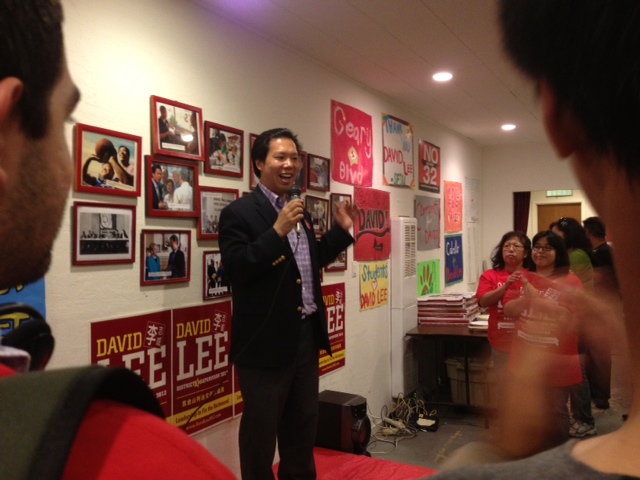
The barrage of mailers put out by the Coalition for Sensible Government, which campaign manager Thomas Lee described as more a source of frustration than anything else, don’t seem to be helping David Lee, who is currently behind incumbent, Eric Mar in his race for District 1 supervisor.
In an address to the group of students and volunteers at the small campaign headquarters Lee stated that, “Regardless of what happens I will be here in the community working to make this district thrive.”
He thanked the volunteers, the police and fire departments for their endorsements, and more donors from the district than in any other campaign, though no mention of who those donors are or what political leaning they may represent.
The emphasis on neglect in Lee’s campaign rhetoric, like bringing business back to the “85 empty storefronts in the district and dealing with potholes that need to be filled,” seemed to be reflected in the opinions of community members present who were upset with Mar’s lack of presence in the district.
Most members of the group were insistent on it’s being a strongly grassroots effort, walking bus routes in the morning and hosting house parties and coffees to meet the community. Though with tens of thousands of dollars from private donors, and a blitz of advertising sponsored by real estate interests, compared to Mar with his small donation based fundraising and aid of Public Financing, this version of Lee’s attempts seemed mildly insincere.
At a party at the Brick and Mortar club in the Mission — a combined celebration for David Campos, Matt Haney, and Steve Ngo — school board nominee Matt Haney currently stands at 13.29% of the vote, enough to get him on the board. And he was jumping up and down with delight when he saw the numbers were turning in his favor.
After he calmed down (a bit) he talked to us about the teachers union boycotting endorsements for sitting members of the board. “For me, it was never a negative dynamic. I got along with everyone on the board, and I respect the teachers union and what they do.
“They just want better education here in San Francisco, and I’m going to try my best to help with that.”
I talked to David Campos about Measure C, the affordable housing trust fund proposal. “I’m very excited, I always knew that we needed a secure source for affordable housing. It’s not fully what we need, but it’s going in the right direction.”
He went on to say that we shouldn’t settle for less and when it comes to these measures, “the devil is in the details.”
Campos was also happy for Haney: “Matt ran a strong campaign, and I personally think his voice is needed on the board.”
Haney said about winning, “I’m very excited. I have a job where I am responsible to the youth and students. I couldn’t wish for a more humbling position.”
he said about his campaign, “It was tough today, because a lot of people didn’t make their decision until the end, so it’s hard to assess where you stand. But we had a grassroots campaign that went door to door, and that may have been the difference.”
Steve Ngo, who was the top finisher in his reelection to the City College of San Francisco Board of Trustees, talked to us about his priority, now that he’s serving again: “To save City College. To do that we have to stick to the plan we put together in September. To reassure the opportunities for our students.”
San Franciscans were bummed when, this summer, it looked for a second like we’d lose our only community college. And we weren’t the only ones who would have been affected — City College of San Francisco isn’t just the biggest school in the city, it’s the biggest school in the entire state, providing vital job training, family development classes, continuing education, and a springboard into four-year university for undergrads.
The folks at Mission Mini-Comix sent us this comic stating the case for Prop A, which would ensure that CCSF gets the funds it needs to keep educating us. (You can check it out in its full glory on their website, or snag one of the free mini-books they’ve been handing out around town.
>>PRINT OUT OUR QUICK ‘N’ GUIDE TO THE CITY, STATE, AND NATIONAL RACES
>>READ UP ON THE FULL GUARDIAN ENDORSEMENTS
Here’s the skinny on the panels, from Mini-Comix artist Rio Roth-Barreiro (who won an all-ages Guardian comics contest when he was younger — says mom Robin Roth the recognition “got him started on this path!”):
So, this is another comic that attempts to tackle local San Francisco issues. We do tend to do this every couple years or so, with mixed results, but we’re normally drawing a comic against whatever legislation is being voted on. In this case, we’re happy to do a comic supporting Proposition A and City College of San Francisco.
City College is a very personal issue for me. Not only are my mom and god-cousin teachers there, but I got my AA degree and most of my job skills training there which did end up setting me up well with a career in the tech industry (newsflash, cartooning doesn’t really pay the bills) and I’d like to see every young person in this city, county and larger bay area have access to the same opportunity and resources I did. This goes to the larger issue of where our priorities are in this country, with trillions being spent on our military, foreign wars and tax cuts for the rich while schools at home are literally falling apart (both physically and financially). Even in the liberal “hotbed” of San Francisco, we’re seeing the same tired arguments that are being trotted out all over the country to justify the systematic dismantling of public education.
“Teacher’s are getting paid too much!” “It’s all the Teacher’s Unions’ fault!” I see this sentiment getting echoed with infuriating regularlity in the Chronicle and in online news sources such as SFGate, but it doesn’t really mesh with the actual facts of life for City’s teachers, who have seen their classes double in size (twice the work) with many not having seen a raise in 5+ years. Having California cut money to education every year isn’t helping things. CCSF is being starved for funds and then the fact that they can’t meet their budget is being used as an excuse to take away their accreditation and/or close them down. Teachers are being painted as being greedy when every year they are getting less and having to work more.
Meanwhile, crushing education is going to have long term negative impact on local and national economies as our schools prepare less kids with the skills they need for technical and skilled jobs. People getting paid less means there will be even less government income to pay for things in the next budget and having a less skilled workforce will only lead to more jobs getting outsourced to India and China. It’s a vicious cycle pulling our economy down the drain, but some can’t see beyond the latest budget or the need to invest in our (and our children’s) future.
Proposition A on the San Francisco ballot and Proposition 30 on California’s ballot both seek to raise funds and prioritize education and I hope y’all be voting for them. And if you aren’t registered to vote yet, go get yourself registered, son! California now has online registration so you can be ready to stand by our schools and CCSF’s mission statement for a affordable and high quality education to be available for all. Registration deadline is October 22nd and voting is on November 6th
Oh yeah, I almost forgot our own accreditations, but this comic was written by me with a lot of help and input from Robin Roth, Leslie Simon and Amber Straus (and my wife Beth came up with the subtitle) and was drawn by me, Mike, Audrey and Justin.

steve@sfbg.com
This year’s supervisorial race in District 5 — representing the Haight, Panhandle, and Western Addition, some of the most reliably progressive precincts in the city — has been frustrating for local leftists. But as the long and turbulent campaign enters its final week, some are speculating that John Rizzo, whose politics are solid and campaign lackluster, could be well-positioned to capitalize on this strange political moment.
Appointed incumbent Sup. Christina Olague has been a disappointment to some of her longtime progressive allies, although she’s now enjoying a resurgence of support on the left in the wake of her vote to reinstate Sheriff Ross Mirkarimi. Now two allies of the mayor — tech titan Ron Conway and landlord Thomas Coates — are funding a $120,000 last-minute attack on Olague.
The campaign of one-time left favorite Julian Davis lost most of its progressive supporters following his recent mishandling of accusations of bad behavior toward women (see “Julian Davis should drop out,” 10/16).
The biggest fear among progressive leaders is that London Breed, a well-funded moderate candidate being strongly supported by real estate and other powerful interests, will win the race and tip the Board of Supervisors to the right. The final leg of the campaign could be nasty battle between Breed and Olague and their supporters, who tend to see it as a two-person race at this point.
But in a divisive political climate fed by the Mirkarimi and Davis scandals and the unprecedented flood of hundreds of thousands of dollars in real estate and tech money, it’s hard to say what D5 voters will do, particularly given the unpredictably of how they will use ranked-choice voting to sort through this mess.
Running just behind these three tarnished and targeted candidates in terms of money and endorsements are Rizzo and small business person Thea Selby, who described their candidacies as “the grown-ups in the room, so there’s an opportunity there and I’m hopeful.”
Selby hasn’t held elective office and doesn’t have same name-recognition and progressive history as Rizzo, although she has one of the Guardian’s endorsements. It probably didn’t help win progressive confidence when the downtown-backed Alliance for Jobs and Sustainable Growth recently did an independent expenditure on behalf of both Selby and Breed.
And then there’s Rizzo, who has been like the tortoise in this race, quietly spending his days on the streets meeting voters. Between fundraising and public financing, Rizzo collected about $65,000 as of Oct. 20 (compared to Breed’s nearly $250,000), but he’s been smart and frugal with it and has almost $20,000 in the bank for the final stretch, more than either Olague or Davis.
But perhaps more important than money or retail politics, if indeed D5 voters continue their strongly progressive voting trends, are two key facts: Rizzo is the most clear and consistent longtime progressive activist in the race — and he’s a nice, dependable guy who lacks the oversized ego of many of this city’s leaders.
“I see consistency there and a lack of drama,” Assembly member Tom Ammiano, an early Rizzo endorser, told us. “He’s looking not like a flip-flopper, not like he owes anyone, and he doesn’t have a storied past.”
Rizzo, who was born in New York City 54 years ago, is downright boring by San Francisco standards, particularly given his long history in a local progressive movement known for producing fiery warriors like Chris Daly, shrewd strategists like Aaron Peskin, colorful commenters like Ammiano, bohemian thinkers like Matt Gonzalez, and flawed idealists like Ross Mirkarimi.
Rizzo is a soft-spoken family man who has lived in the same building on Waller Street in the Haight-Ashbury for the last 27 years. Originally, he and Christine, his wife of 25 years, rented their apartment in a tenancy-in-common building before they bought it in the early 1990s, although he’s quick to add, “In all the years we’ve owned it, we never applied for condoship.”
He supports the city’s limits on condo conversions as important to protecting working-class housing, although he said, “The focus should be on building new affordable housing.” That’s an issue Rizzo has worked on since joining the Sierra Club’s San Francisco Bay Chapter more than 20 years ago, an early advocate for broadening the chapter’s view of environmentalism.
He’s a Muni rider who hasn’t owned a car since 1987.
Michelle Myers, director of the Sierra Club’s San Francisco Bay Chapter, said Rizzo brings a wealth of experience, established relationships, and shrewd judgment to his role as the group’s political chair. “We really rely on John’s ability to weigh what is politically feasible, not just what’s ideal in our minds,” she told us.
Yet that political realism shouldn’t be confused for a lack of willingness to fight for big, important goals. Rizzo has been an advocate for public power in San Francisco for many years, strategizing with then-Sup. Ammiano in 2001 to implement a community choice aggregation program, efforts that led to this year’s historic passage of the CleanPowerSF program (with a key vote of support by Olague) over the objections of Mayor Lee and some business leaders.
“CleanPowerSF was carried by John Rizzo, who has been working on that issue for 10 years,” Myers said.
Rizzo is a technology writer, working for prospering computer magazines in the 1990s “until they all went away with the dot.com bubble,” as well as books (his 14th book, Mountain Lion Server for Dummies, comes out soon).
He sees the “positives and the negatives” of the last tech boom and this one, focusing on solving problems like the Google and Genetech buses blocking traffic or Muni bus stops. “On the one hand, these people aren’t driving, but on the other hand, they’re unregulated and using our bus stops,” he said. “We need to find some solution to accommodate them. Charge them for it, but accommodate them.”
That’s typical of how Rizzo approaches issues, wanting to work with people to find solutions. As president of the City College of San Francisco Board of Trustees, Rizzo suffered the bad timing of the district having its accreditation threatened just as his supervisorial race was getting underway, but he’s steadily worked through the administrative problems that predated his tenure, starting with the criminal antics of former Chancellor Phil Day and continuing with “a management structure still in place, and it had calcified.”
Despite being on the campaign trail, Rizzo called the trustees together six times in August to deal with the accreditation problems. “We now have a plan that shows all the things the district needs to do to keep it afloat. City College is back on track.”
Eileen Hansen — a longtime progressive activist, former D8 supervisorial candidate, and former Ethics Commissioner — gave her early endorsement to Rizzo, who never really seemed to catch fire. “There hasn’t been a lot of flash and I would love for there to be more energy,” she admitted.
So, like many progressive leaders, she later offered her endorsement to Davis, believing he had the energy needed to win the race. But after Davis’ problems, Hansen withdrew that endorsement and sees Rizzo as the antidote to its problems.
“We are in such a mess in D5, and I’m hoping they will say, ‘enough already, let’s find someone who’s just good on the issues, and that’s John,” Hansen said. “As a progressive, if you look at his stands over many years, I’d be hard-pressed to find an issue I don’t agree with him on. He’s a consistent, strong progressive voice, someone you can count on who’s not aligned with some power base.”
Other prominent progressive leaders agree.
“What some people may have viewed as his weak point may end up being his strength,” said former Board President Aaron Peskin, who endorsed Rizzo after the problems surfaced with Davis. “A calm, steady, cool, collected, dispassionate progressive may actually be the right thing for this moment.”
Sup. Malia Cohen, a likable candidate who rose from fourth place on election night to win a heated District 10 supervisorial race two years ago, is a testament to how ranked-choice voting opens up lots of new possibilities.
“Ranked choice voting defies conventional wisdom,” Peskin said. “There may be Julian Davis supporters and Christina Olague supporters and London Breed supporters who all place John Rizzo as their second.”
In fact, during our endorsement interviews and in a number of debates and campaign events, nearly every candidate in the race mentioned Rizzo as a good second choice.
Yet Rizzo doesn’t mince words when he talks about the need for reconstitute the progressive movement after the deceptions and big-money interests that brought Mayor Lee and “his fake age of civility” to power. Lee promised not to seek a full term “and he broke the deal,” Rizzo said. “And it was a public deal he broke, not some backroom deal.”
That betrayal and the money-driven politics that Lee ushered in, combined with the divisive political climate that Lee’s long effort to remove Mirkarimi from office created, has deeply damaged the city’s political system. “I think the climate is very bad It’s bad for progressives, and just bad for politics because it’s turning voters off,” Rizzo said.
He wants to find ways to empower average San Franciscans and get them engaged with helping shape the city’s future.
“We need a new strategy. We need to regroup and think about things long and hard. I think it’s not working here. We’re doing the same things and it’s not working out. The money is winning.” He doesn’t think the answers lie in continued conflict, or with any individual politicians “because people are flawed, everyone is,” Rizzo said.
Yet Rizzo’s main flaw in the rough-and-tumble world of political campaigns may be that he’s too nice, too reluctant to toot his horn or beat his chest. “That kind of style is not me. That aggressive person is not who I am,” Rizzo said. “But I think voters like that. Voters do want someone who is going to focus on policy and not themselves.”
NATIONAL RACES
President: Barack Obama
US Senate: Dianne Feinstein
Congress, District 8: Nancy Pelosi
Congress, District 9: Barbara Lee
Congress, District 12: Jackie Speier
STATE CANDIDATES
Assembly District 13: Tom Ammiano
Assembly District 19: Phil Ting
State Senate District 11: Mark Leno
BART Board District 9: Tom Radulovich
BART Board, District 7: Zachary Mallett
STATE BALLOT MEASURES
Proposition 30: YES
Proposition 31: NO
Proposition 32: NO, NO, NO
Proposition 33: NO
Proposition 34: YES, YES, YES
Proposition 35: NO
Proposition 36: YES
Proposition 37: YES
Proposition 38: YES Proposition 39: YES
Proposition 40: YES
SAN FRANCISCO RACES
Board of Supervisors
District 1: Eric Mar
District 3: David Chiu
District 5: 1. John Rizzo; 2. Thea Selby
District 7: 1. Norman Yee; 2. F.X. Crowley; 3. Joel Engardio
District 9: David Campos
District 11: John Avalos
Community College Board
Chris Jackson
Rafael Mandelman
Steven Ngo
Amy Bacharach
Board of Education
Sandra Fewer
Jill Wynns
Shamann Walton
Matt Haney
SAN FRANCISCO BALLOT MEASURES
Proposition A: YES
Proposition B: YES
Proposition C: YES
Proposition D: YES
Proposition E: Yes
Proposition F: NO, NO, NO
Proposition G: YES
EAST BAY ENDORSEMENTS
Oakland City Attorney: Barbara Parker
Oakland City Council, at-large: Rebecca Kaplan
Berkeley Mayor: Kriss Worthington
ALAMEDA COUNTY BALLOT MEASURES
Measure A1: YES
Measure B1: YES
BERKELEY BALLOT MEASURES
Measure M: YES
Measure N: YES
Measure O: YES
Measure P: YES
Measure Q: YES
Measure R: YES
Measure S: NO, NO, NO
Measure T: NO
Measure U: YES
Measure V: No
OAKLAND BALLOT MEASURES
Measure J: YES
Wealthy interests aligned with Mayor Ed Lee, the real estate industry, big tech companies, and other downtown groups are spending unprecedented sums of money in this election trying to flip the balance of power on the Board of Supervisors, with most of it going to support supervisorial candidates David Lee in D1 and, to a lesser degree, London Breed in D5.
The latest campaign finance statements, which were due yesterday, show Lee benefiting from more than $250,000 in “independent expenditures” from just two groups: the Alliance for Jobs and Sustainable Growth PAC, which got its biggest support from tech titans Mark Benioff and Ron Conway; and the Coalition for Responsible Growth, funded by the San Francisco Association of Realtors.
Lee’s campaign has also directly spent another nearly $250,000 on its race to unseat incumbent Sup. Eric Mar – bringing total expenditures on his behalf to more than $500,000, an unheard-of amount for a district election. Mar has spent $136,000 and has $24,100 in the bank, and he is benefiting from another $125,000 that San Francisco Labor Council unions have raised on his behalf.
Breed has benefited from more than $40,000 in spending on her behalf by the two groups. Her campaign is also leading the fundraising field in her district, spending about $150,000 so far and sitting on more than $93,000 in the bank for a strong final push.
Incumbent D5 Sup. Christina Olague has done well in fundraising, but the reports seem to indicate that her campaign hasn’t managed its resources well and could be in trouble in the final leg. She has just $13,369 in the bank and nearly $70,000 in unpaid campaign debts, mostly to her controversial consultant Enrique Pearce’s firm.
Slow-and-steady D5 candidates John Rizzo and Thea Selby seem to have enough in the bank ($20,000 and $33,000 respectively) for a decent final push, while Selby also got a $10,000 boost from the the Alliance, which could be a mixed blessing in that progressive district. Julian Davis still has more than $18,000 in the bank, defying the progressive groups and politicians who have pulled their endorsements and pledging to finish strong.
In District 7, both FX Crowley and Michael Garcia have posted huge fundraising numbers, each spending around $22,000 this year, but Crowley has the fiscal edge going into the final stretch with $84,443 in the bank compared to Garcia’s less than $34,000. But progressive favorite Norman Yee is right in the thick of the race as well, spending $130,000 this year and having more than $63,000 in the bank.
The following is a detailed look at the numbers (we didn’t do Districts 3, 9, and 11, where the incumbents aren’t facing serious or well-funded challenges) for the biggest races:
Independent Expenditures
Alliance for Jobs and Sustainable Growth PAC
The downtown-oriented group is run by notorious campaign attorney Jim Sutton. It has raised $447,500 this year, including $225,000 in this reporting period (Oct. 1 to Oct. 20).
It has spent $107,808 this period and $342,248 this reporting period. It has $243,599 in the bank and $105,334 in outstanding debt.
Donors include: Salesforce CEO Mark Benioff ($100,000), venture capitalist Ron Conway ($35,000), San Francisco Police Officers Association ($25,000), Healthplus Share Services out of Walnut Creek ($20,000), Committee on Jobs ($47,500), and Operating Engineers Local 3 ($10,000)
The Alliance has spent $143,763 this year, including $16,921 in this reporting period, supporting D1 supervisorial candidate David Lee and attacking his opponent Eric Mar; and $10,205 each in support of D5 candidates Thea Selby and London Breed.
Coalition for Sensible Growth (with major funding by the SF Association of Realtors)
Raised nothing this reporting period but $225,000 this year.
Spent $75,636 this period and $287,569 this year. Has $170,744 in the bank and $152,000 in outstand debts.
It has spent $101,267 supporting D1 candidate David Lee, $26,405 support of David Chiu in D3, $2,739 each supporting FX Crowley and Michael Garcia in D7, $12,837 opposing Norman Yee in D7, $29,357 backing London Breed in D5, and $20,615 promoting Prop. C (the Housing Trust Fund).
The San Francisco Labor Council Labor & Neighbor PAC has raised $84,563 for its various member unions and spent $93,539 this year on general get-out-the-vote efforts.
The Labor Council also supports three Teachers, Nurses and Neighbors groups supporting Eric Mar in D1 (raising $125,000 and spending $85,437), FX Crowley in D7 (raising $50,000 and spending $40,581), and Christina Olague in D5 (raising $15,000 and spending $15,231)
Supervisorial Races:
District 1
Eric Mar
Raised $18,270 this period, $135,923 this year, and got no public finances this period.
He has spend $61,499 this period, $187,409 this year, and has $24,180 in the bank with no debt.
Donors include: Sup. David Chiu ($250), board aides Judson True ($100) and Jeremy Pollock ($100), redevelopment attorney James Morales ($200), developer Jack Hu ($500), engineer Arash Guity ($500), community organizer James Tracy ($200), Lisa Feldstein ($250), Marc Salomon ($125), Petra DeJesus ($300), and Gabriel Haaland ($200).
David Lee
Raised $4,174 this period, $140,305 this year, and no public financing matches this period.
He has spent $245,647 this year and $55,838 this period. He has $5,871 in debts and $26,892 in the bank.
Donors include the building trades union ($500), property manager Andrew Hugh Smith ($500), Wells Fargo manager Alfred Pedrozo ($200), and SPO Advisory Corp. partner William Oberndorf ($500).
District 5
John Rizzo
Raised $5,304 this period (10/1-10/20), $29,860 this year, and $14,248 in public financing
He has $19,813 in the bank
Donors are mostly progressive and environmental activists: attorney Paul Melbostad $500), Hene Kelly ($100), Bernie Choden ($100), Dennis Antenore ($500), Clean Water Action’s Jennifer Clary ($150), Matt Dorsey ($150), Arthur Feinstein ($350), Jane Morrison ($200), and Aaron Peskin ($150).
Julian Davis
Raised $8,383 this period, $38,953 YTD, and got $16,860 in public financing in this period (and $29,510 in the 7/1-9/30 period).
He has $67,530 in YTD expenses, $18,293 in the bank, and $500 in debts.
Some donors: Aaron Peskin ($500), John Dunbar ($500), Heather Box ($100), Jim Siegel ($250), Jeremy Pollock ($200), BayView publisher Willie Ratcliff ($174), and Burning Man board member Marian Goodell ($400). Peskin and Dunbar both say they made those donations early in the campaign, before Davis was accused of groping a woman and lost most of his progressive endorsements.
London Breed
Raised $15,959 this period, $128,009 YTD, got $95,664 in public financing this period.
Total YTD expenditures of $150,596 and has $93,093 in the bank
Donors include: Susie Buell ($500), CCSF Board member Natalie Berg ($250), Miguel Bustos ($500), PG&E spokesperson and DCCC Chair Mary Jung ($250), SF Chamber of Commerce Vice President Jim Lazarus ($100), Realtor Matthew Lombard ($500), real estate investor Susan Lowenberg ($500), Municipal Executives Association of SF ($500), Carmen Policy ($500), SF Apartment Association ($500), SF’s building trades PAC ($500), and Sam Singer ($500).
Christina Olague
Raised $7,339 this period, $123,474 YTD, and got $39,770 in public financing this period.
Has spent $54,558 this period, $199,419 this year, has $13,367 in the bank, and has $69,312 in outstanding debt.
Donors include: former Mayor Art Agnos ($500), California Nurses Association PAC ($500), a NUHW political committee ($500), the operating engineers ($500) and electrical workers ($500) union locals, Tenants Together attorney Dean Preston ($100), The Green Cross owner Kevin Reed ($500), SEIU-UHW PAC ($500), Alex Tourk ($500), United Educators of SF ($500), and United Taxicab Workers ($200).
Some expenses include controversial political consultant Enrique Pearce’s Left Coast Communications ($15,000), which documents show is still owed another $62,899 for literature, consulting, and postage.
Thea Selby
Raised $5,645 this period, $45,651 YTD, and got $6,540 in public financing this period.
Spent $29,402 this period, $67,300 this year, and has $33,519 in the bank.
Donors include:
David Chiu board aide Judson True ($100), One Kings Lane VP Jim Liefer ($500), SF Chamber’s Jim Lazarus ($100), Harrington’s Bar owner Michael Harrington ($200), and Arthur Swanson of Lightner Property Group ($400).
District 7
Norman Yee
Raised $8,270 this period and $85,460 this year and received $65,000 in public financing.
Spent $15,651 this period, $130,005 this year, and has $63,410 in the bank and no debt.
Donors include: Realtor John Whitehurst ($500), Bank of America manager Patti Law ($500), KJ Woods Construction VP Marie Woods ($500), and Iron Work Contractors owner Florence Kong ($500).
FX Crowley
Raised $5,350 this period, $163,108 this year, and another $25,155 through public financing.
He spent $76,528 this period, $218,441 this year, and has $84,443 in the bank and $7,291 in unpaid debt.
Donors include: Alliance for Jobs & Sustainable Growth attorney Vince Courtney ($250), Thomas Creedon ($300) and Mariann Costello ($250) of Scoma’s Restaurant, stagehands Richard Blakely ($100) and Thomas Cleary ($150), Municipal Executives Association of SF ($500), IBEW Local 1245 ($500), and SF Medical Society PAC ($350)
Michael Garcia
Raised $8,429 this period, $121,123 this year, and $18,140 through public financing.
He spent $45,484 this period, $222,580 this year, and has $33,936 in the bank.
Donors include: Coalition for Responsible Growth flak Zohreh Eftekhari ($500), contractor Brendan Fox ($500), consultant Sam Lauter of BMWL ($500), Stephanie Lauter ($500), consultant Sam Riordan ($500), and William Oberndorf ($500)

The Harvey Milk Club has decided not to rescind its endorsement of Julian Davis for supervisor in District 5 — although the vote may say more about the geopolitics of the race than the way the club members feel about Davis.
The club members had two resolutions in front of them Oct. 22, a night that also featured the third presidential debate and the do-or-die Giants game. The first resolution would have withdrawn the club’s support for Davis, who lost most of his progressive endorsements after he was accused of groping a woman at a campaign event six years ago. The second would have given an unranked three-way endorsement to Sup. Christina Olague, John Rizzo, and Thea Selby.
Of course, the second resolution wouldn’t even come up unless two-thirds of the club members voted in favor of the first.
And while a number of club members are as unhappy as the rest of the left about Davis’s behavior, the real drama involved the efforts of other candidates in the race to prevent Olague from getting the nod.
Rizzo, president of the Community College Board, told me he showed up and voted against the first resolution. “I didn’t campaign, I didn’t organize, I just showed up for 15 minutes and voted no,” he said. Rizzo’s not supporting or working with Davis — so why try to protect the guy’s Milk Club endorsement? Well, Rizzo knows that Olague is a much bigger threat to him than Davis, whose campaign is on the ropes. So he voted in his own self-interest.
Rizzo agreed it was “very odd” for him to be in this position, but said he was campaigning to win and didn’t want to see a front-running competitor getting a major club endorsement.
Gabriel Haaland, a longtime Milk Club member who supports Olague, wasn’t happy with that. “In the end, I want a progressive supervisor,” he said. “John and Christina are my top choices, but I don’t want to see London Breed get elected.”
Ah, that’s the subtext here — and it’s a serious one. The left is worried about Breed, who’s the beneficiary of a well-funded independent expenditure campaign by the San Francisco Association of Realtors. That group, which is also pushing hard to oust Eric Mar in District 1, wants to weaken the power of tenants on the Board of Supervisors, and sees Breed as friendly to that agenda.
Breed’s a serious contender — a lot of observers think that she and Olague are in a two-way race, although with ranked-choice voting, Rizzo is also very much in the running, as, potentially, is Thea Selby.
Breed’s supporters didn’t want to see the Milk Club go with Olague, either, and some showed up to vote against rescinding the Davis endorsement. Breed told me she wasn’t actively involved: “I just wanted to stay out of it,” she said. She acknowledged, though, that some of her supporters had told her about the meeting and “there were some people that went there.”
In the end, Club President Glendon Hyde told me, the vote was 53 yes, 42 no — far short of the two-thirds needed to reverse the endorsement.
There were, by all accounts, plenty of Davis supporters in the room. But it’s likely that the combination of Breed supporters and Rizzo supporters was enough to sway the vote and ensure that the Milk Club retained Davis as its only choice.
Both Breed and Rizzo denied working together — but the result was the same: The Milk Club is now about the only significant progressive group in the city still siding with Davis.
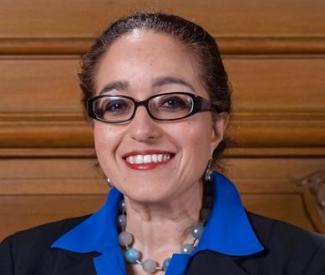
[UPDATED AND CORRECTED] Wild and unsettling political dynamics have rocked the District 5 supervisorial race, with three major candidates having prominent endorsements withdrawn, the most significant being this week’s mass exodus of support from the campaign of Julian Davis following his bad handling of allegations that he has mistreated women.
Those withdrawing their endorsements of Davis since Saturday include Sups. John Avalos, David Campos, and Jane Kim, Assembly member Tom Ammiano, the Bay Guardian, the Examiner, and the League of Pissed-Off Voters. The Harvey Milk LGBT Democratic Club has scheduled a vote for Monday on whether to withdraw its sole endorsement of Davis.
Avalos gave his endorsement to Sup. Christina Olague over the weekend, and she seems to be getting more progressive support in the wake of Davis’ flame-out and her Oct. 9 vote in favor of reinstating Sheriff Ross Mirkarimi. That vote triggered a strong backlash against Olague from Mayor Ed Lee and his allies, with San Francisco Police Officers Association withdrawing its endorsement.
But former Mayor Art Agnos reached out to Olague – who he didn’t know previously – after the Mirkarimi vote and is rumored to be considering offering her his endorsement and support. Agnos didn’t confirm or deny the rumor, but he did tell us, “I was very impressed by her commitment to the progressive issues we share.”
Olague has a long history of progressive activism and was a consistently good vote during her tenure on the Planning Commission, but many progressives were concerned by her early support for Lee, who then appointed her to the District 5 seat vacated by Mirkarimi’s election as sheriff, and by some of her votes and behaviors since then.
But now that she’s been viciously attacked by Lee’s staffers and allies over the Mirkarimi vote – and iced out by Lee himself, who she says won’t return her calls and who bailed out on a planned campaign appearance – Olague seems to have a newfound independence. “At the end of the day, we serve constituents and the city, and that’s who we should answer to,” Olague told us, agreeing that she feels freed up by recent developments, as difficult as they’ve been. “You don’t become an indentured servant.”
She told us that her decision last year to co-chair the “Run, Ed, Run” campaign to convince Lee to break his promise and run for a full term to the office he’d been appointed to was based on her belief that “we’d see an infusion of new energy and some more diversity” of both ideology and demographics in the Mayor’s Office.
“Sadly, I’m not seeing those changes happening really. I didn’t sign up for another four years of Gavin Newsom and those thugs, and I’ve seen a lot of that same behavior,” she said. “People who played prominent roles in the Newsom administration continue to play prominent roles in this administration.”
Olague said the schism with the administration began this summer when she supported Avalos in trying to bring in new revenue as part of the business tax reform measure that became Prop. E, which Lee had insisted be revenue neutral before compromising with progressives. That was when Olague said she got her first nasty message from Tony Winnicker, the former Newsom press secretary who now works for Lee and wrote Olague a text during the Mirkarimi hearing telling her “you disgust me and I will work night and day to defeat you.”
Some prominent progressives privately worried that schism was an election ploy designed to help Olague win the race for this progressive district given that Davis had captured most of the influential progressive endorsements. But with Lee and his allies continuing to be openly livid over the Mirkarimi vote – and with solid progressive John Rizzo running a lackluster campaign that has less than $5,000 in the bank – there is growing progressive support for Olague.
The big fear among many progressives is that London Breed will win the race, a concern that has been exacerbated by the support that Breed has been receiving from real estate and development interests, both directly and in independent expenditures by the Association of Realtors, which has spent more than $225,000 in this election cycle hoping to knock out progressives in Districts 1 and 5 and tip the balance of power on the board.
Breed told us that she doesn’t know the Realtors or why they’re offering such strong support, pledging to be an independent vote. “I’ve never made any promises to anyone that I would help anyone or that I would be this way or that,” she told us. “I’m not here to do anyone’s bidding, whether it’s Aaron Peskin or Willie Brown or anyone else.”
Brown helped launch Breed’s political career by [CORRECTED recommending then-Mayor Gavin Newsom] appoint her to the Redevelopment Commission, where Breed supported Lennar and other big developers, but she had a falling out with him earlier this year and made impolitic comments about him to the Fog City Journal, causing US Sen. Dianne Feinstein to withdraw her endorsement of Breed.
Brown, Lee, and Chinatown power broker Rose Pak helped raise money for Olague, who has received the maximum $500 donation from such powerful inside players as venture capitalist Ron Conway (and his wife, Gayle), Michael Cohen, Victor Makras, Lawrence Nibbi, Mark Mosher, and John Whitehurst.
But that was before the Mirkarimi vote, which Lee’s allies seem to see as a litmus test on Olague’s loyalty to them. As Tenderloin Housing Clinic director Randy Shaw, who helped engineer the progressive split that brought Lee to power, put it on his Beyond Chron blog, “Olague’s vote was an act of profound disloyalty not only to the mayor who appointed her, but also to those who pushed the mayor to do so.”
Olague says she’s disturbed by that viewpoint, and by those so blinded by their efforts to demonize Mirkarimi “and exploit and politicize issues around domestic violence” that they have failed to consider the price he has already paid for his actions or the legal standards for removing an elected official. “On something like this, it’s not a question of loyalty. It’s about principles,” she said.
Breed says that she has seen an increase in support since the Mirkarimi vote and the Davis meltdown, but she said that she doesn’t want to talk about those cases or exploit them politically. “I don’t take pleasure in the misery of someone else,” she said, adding her hope that the furor about Mirkarimi will die down. “The decision has been made and it’s time for the city to come together.”
Progressive leaders have made similar calls, but Mirkarimi’s critics are showing no signs of letting the issue go. San Francisco Democratic County Central Committee members Zoe Dunning and Matt Dorsey have put forward a resolution condemning the reinstatement vote and calling for Mirkarimi’s ouster, which the DCCC will consider on Wednesday evening, Oct. 24.
[CORRECTED At that meeting, the DCCC will also consider a motion] to reopen the D5 endorsement process, hoping to change the DCCC’s previous “no endorsement” vote, and sources tell us there is currently a strong backroom effort to give the endorsement to Breed. That vote will be a big test for progressives, which lost their majority control over the DCCC in the June elections.
Meanwhile, D5 candidate Thea Selby – who snagged one of the three endorsements by both the Guardian and the Examiner – continues to run a strong and well-funded campaign that has avoided the carnage taking place in the other campaigns. “I feel like I’m in the middle watching out for flying beams,” she told us, adding that both she and Rizzo have been “the grown-ups in the room, so there’s an opportunity there and I’m hopeful.”
But unlike Rizzo, who has seems strangely absent and didn’t return Guardian phone calls [see UPDATE below], Selby has plenty of money in the bank – nearly $60,000 as of the last official report two weeks ago – and could benefit from voter disgust with the ugly politics at play. “It’s my experience that is driving this,” says this small-businessperson, “and not my lifelong desire to be a politician, and that may ring some bells.”
How the ranked-choice voting system will play out in this mess is anyone’s guess, and even Davis seems to be hoping that he still has a shot, resisting calls by the Guardian and others to withdraw from the race. Poorly funded candidates Andrew Resignato and Hope Johnson this week announced they were joining forces for the “People’s Ticket” after being excluded from a University of San Francisco candidates forum.
But most political observers seem to think this race will come down to a two-person contest between Breed and Olague – who each have more than $45,000 in the bank with which to make a strong final push – and the distinctions between them are becoming clearer as more progressives get behind Olague and the moderates and monied interests get behind Breed.
Olague said she’s still “willing to work with anybody,” but that, “I’m worried that moderate forces will seize this moment to try to destroy us.”
UPDATE 4:45: Rizzo just got back to us and said he’s been actively campaigning and feeling good about his chances. “We have a great team and we’ll have enough resources to reach voters,” Rizzo said. He said that he’s had a stong fundraising push in the last couple weeks since the last campaign financing statement was released, and he noted his endorsements and active support by influential progressives including Ammiano, Campos, and Carole Migden. “We’re doing a lot of retail campaigning, meeting voters and getting the message out.”
EDITORIAL Kay Vasilyeva, a member of the San Francisco Women’s Political Caucus, has come forward with the allegation that District Five candidate Julian Davis grabbed her and put his hand down her pants at a political bar crawl in 2006. That was six years ago, but it’s still important — and more than the incident itself, the response we’ve seen from Davis is highly disturbing. He’s utterly denying that it ever happened, and retained a lawyer to send Vasilyeva a letter threatening her with legal action if she continues to talk.
While we endorsed Davis for supervisor, we take these charges very, very seriously — particularly coming at a time when relations between men and women in the progressive movement are badly strained.
Since the SF Weekly, which broke the story, suggested that we knew something about Davis’s behavior, we need to state, for the record: When we endorsed Davis, we had heard nothing even remotely close to this type of allegation. Yes, we knew that in his 20s he was a bit of an arrogant ass. We knew that at one point, he actually got into a tugging match with another person over the ridiculous question of who got to hold a campaign sign. We’d heard that, in the past, at somewhat debauched parties, he’d made advances toward women who weren’t interested in his affections.
Those could be the acts of an immature man who has since grown up. And since, on a level of policy, knowledge, and positions, he was by far the best and strongest progressive in the race in District 5, we — along with much of the local progressive leadership — thought he was demonstrating enough maturity that he was worthy of our support.
But this new information, and his response to it, is alarming.
We don’t take last-minute allegations about a front-running candidate lightly; people have been known to dump all sorts of charges into heated races. When we learned about Vasilyeva’s allegations on Oct. 13, we did our own research. We spent two hours with Davis and his supporter and advisor, former D5 Supervisor Matt Gonzalez. We realized that allegations without corroboration are just charges, so we tracked down everyone we could find who might know anything about this incident — and, as we discovered, other similar events. And we have to say: Vasilyeva’s account rings true. Davis’s categorical denial does not.
More than that, we were offended that he in effect threatened with a lawsuit a woman who, at some peril to herself, came forward to tell the public information about someone who is running for elected office. What was the point of that, if not to intimidate her? It’s highly unlikely he’s going to sue (and drag this whole mess into court). He says he was just trying to send a message that he has a legal right to respond to defamation, but this is a political campaign; if he didn’t want to deal publicly with what he must have known were these sorts of potential allegations, he shouldn’t have run for office.
This is a bad time for progressives in San Francisco. The Mirkarimi case has brought to the fore some deep and painful rifts; a lot of women feel that (mostly male) progressive leaders have pushed their issues to the side. For the future of the movement and the city, the left has to come together and try to heal. This situation isn’t helping a bit.
Davis needs to face facts: Supervisors John Avalos and David Campos have withdrawn their endorsements. Assembly member Tom Ammiano is almost certain to do the same. With his inability to handle the very credible charge that he not only groped a woman but lied about it, Davis no longer has a viable campaign in the most progressive district in the city, and we can’t continue to support him.
We have said it many times before: People on the left need to be able to put their own ambitions aside sometimes and do what’s right for the cause. Davis can’t win. He’s embarrassing his former allies. He needs to focus on coming to terms with his past and rebuilding his life. And for the good of the progressive movement, he needs to announce that he’s ending his campaign, withdrawing from the race, and urging his supporters to vote for another candidate.
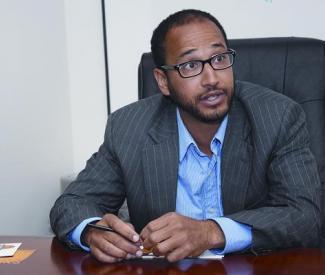
EDITORIAL Kay Vasilyeva, a member of the San Francisco Women’s Political Caucus, has come forward with the allegation that District Five candidate Julian Davis grabbed her and put his hand down her pants at a political bar crawl in 2006. That was six years ago, but it’s still important — and more than the incident itself, the response we’ve seen from Davis is highly disturbing. He’s utterly denying that it ever happened, and retained a lawyer to send Vasilyeva a letter threatening her with legal action if she continues to talk.
While we endorsed Davis for supervisor, we take these charges very, very seriously — particularly coming at a time when relations between men and women in the progressive movement are badly strained.
Since the SF Weekly, which broke the story, suggested that we knew something about Davis’s behavior, we need to state, for the record: When we endorsed Davis, we had heard nothing even remotely close to this type of allegation. Yes, we knew that in his 20s he was a bit of an arrogant ass. We knew that at one point, he actually got into a tugging match with another person over the ridiculous question of who got to hold a campaign sign. We’d heard that, in the past, at somewhat debauched parties, he’d made advances toward women who weren’t interested in his affections.
Those could be the acts of an immature man who has since grown up. And since, on a level of policy, knowledge, and positions, he was by far the best and strongest progressive in the race in District 5, we — along with much of the local progressive leadership — thought he was demonstrating enough maturity that he was worthy of our support.
But this new information, and his response to it, is alarming.
We don’t take last-minute allegations about a front-running candidate lightly; people have been known to dump all sorts of charges into heated races. When we learned about Vasilyeva’s allegations on Oct. 13, we did our own research. We spent two hours with Davis and his supporter and advisor, former D5 Supervisor Matt Gonzalez. We realized that allegations without corroboration are just charges, so we tracked down everyone we could find who might know anything about this incident — and, as we discovered, other similar events. And we have to say: Vasilyeva’s account rings true. Davis’s categorical denial does not.
More than that, we were offended that he in effect threatened with a lawsuit a woman who, at some peril to herself, came forward to tell the public information about someone who is running for elected office. What was the point of that, if not to intimidate her? It’s highly unlikely he’s going to sue (and drag this whole mess into court). He says he was just trying to send a message that he has a legal right to respond to defamation, but this is a political campaign; if he didn’t want to deal publicly with what he must have known were these sorts of potential allegations, he shouldn’t have run for office.
This is a bad time for progressives in San Francisco. The Mirkarimi case has brought to the fore some deep and painful rifts; a lot of women feel that (mostly male) progressive leaders have pushed their issues to the side. For the future of the movement and the city, the left has to come together and try to heal. This situation isn’t helping a bit.
Davis needs to face facts: Supervisors John Avalos and David Campos have withdrawn their endorsements. Assembly member Tom Ammiano is almost certain to do the same. With his inability to handle the very credible charge that he not only groped a woman but lied about it, Davis no longer has a viable campaign in the most progressive district in the city, and we can’t continue to support him.
We have said it many times before: People on the left need to be able to put their own ambitions aside sometimes and do what’s right for the cause. Davis can’t win. He’s embarrassing his former allies. He needs to focus on coming to terms with his past and rebuilding his life. And for the good of the progressive movement, he needs to announce that he’s ending his campaign, withdrawing from the race, and urging his supporters to vote for another candidate.