Conservative

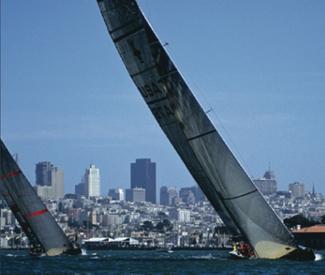
America’s cup: What does Larry get?

8

The development agreement for the America’s Cup comes out next week, although the project is already under way. But there’s some concern that the number of visitors (and thus the revenue to the city) might not be as high as projected.

The project EIR is more conservative about the possible number of visitors than city officials had been at first, and now the Bay Citizen reports that “doubts are growing about the number of spectators who will actually come to the city this year and next.” Apparently the prelims in San Diego have been a bit of a bust — and there aren’t as many teams signing up for the challenge.

So here’s the question: If the city winds up taking in less money than expected, does Larry Ellison take a bath, too?

Of course, it’s not that simple: Ellison’s getting a lot from the city, but it’s not based on any revenue the city will get from the cup; it’s based on the investment he’s putting into the port. He’s getting a sweet deal from San Francisco — way too sweet in my mind. The guy’s the sixth-richest person in the world; he doesn’t need all the goodies the city’s handing over, and I’m not sure I want the arrogant, aggressive CEO of Oracle determining the future of a large part of the San Francisco waterfront. But in theory, since he’s renovating property that’s falling apart, he gets something in return.

And, as Jane Sullivan, the spokesperson for the America’s Cup project at City Hall, points out, the fewer the visitors, the lower the city’s costs.

She also told me that “we don’t think the number of competitors will affect the number of visitors,” which is probably true — people will come for the spectacle, and Oracle will hype it beyond imagination, and nobody knows who any of these other teams are anyway. (The one team that might have gotten some press, aside from Oracle, wasn’t allowed to put in an application.)

But here’s the thing: This entire project, and the motivation to give Larry Ellison a bunch of really valuable city property, was the economic impact the cup is supposed to have on the city. The Mayor’s Office has been throwing around numbers like $1.4 billion in economic impact — that’s new jobs, full hotel rooms, packed restaurants, spillover employment benefits — and, of course, more tax revenue to the city coffers.

What it we give away the store to the Oracle pirates and we wind up getting a lot less money than we were hoping for? Nothing against the Cup; I love boats, and I love a big party (although I try to make sure that when the party’s over, I’m not completely broke). But it seems to me that the city’s the only one taking the risk on the downside. Larry gets everything he wants no matter how this all turns out.

We won’t know all the details until we see the agreement, but am I the only one worried about this?


But doubts are growing about the number of spectators who will actually come to the city this year and next to watch the races of experimental catamarans. Preliminary races held on 45-foot vessels in San Diego and elsewhere are failing to attract expected crowds or sponsors.

Source: The Bay Citizen (http://s.tt/15upW)

Mayor Lee’s call for more hearings gets wary reception

41

Labor and the Left came out strongly against Mayor Ed Lee’s proposed charter amendment to require all city legislation be delayed and subjected to hearings by the Small Business Commission and other commissions if it might cost private sector jobs, putting its prospects of making the ballot in doubt.

 “This legislation is one, unnecessary; two, unbalanced; and three, divisive,” Mike Casey, president of the San Francisco Labor Council – whose executive committee voted unanimously to oppose the legislation – said during today’s Rules Committee hearing on the measure.

He and other labor leaders noted that members of the business community have plenty of opportunities to weigh in on legislation it opposes, but Lee’s proposal would elevate employers’ interests far above those concerning the environment, consumers, public health, or workers. “This legislation gives one stakeholder undue power in the democratic process, which is undemocratic,” said Kate Hegé of La Raza Centro Legal, which represents day laborers and other immigrants.

Teacher Ken Tray of United Educators of San Francisco said, “Often times ‘jobs’ is used as a red herring to divert the city from doing what it needs to do.” It was a common theme, as opponents of the proposal noted that paid sick leave, the local minimum wage, and requiring employee health benefits were all fiercely opposed by the business community. “Anything that raises workers up, we’re told it’s a job killer,” said Larry Bradshaw of SEIU Local 1021.

Small business representatives – a bit sheepishly, given the tenor of the hearing, and without support from their downtown brethren – said they were simply looking for the ability to express their concerns. “We’ve tried to let small business have a voice at the Board of Supervisors,” said longtime small business advocate Scott Hauge, a regular at City Hall.
Keith Goldstein of Potrero Dogpatch Merchants Association said, “We feel we don’t have a say in this process.”

Mayor’s Office board liaison Jason Elliott emphasized that Lee’s charter amendment would create a delay and an extra hearing or two, but that supervisors would still be free to approve the legislation anyway. “This is about public participation and feedback,” Elliott said.

But Sup. David Campos, who led the questioning of Elliott, wasn’t buying it. “What’s the reason behind this? Is there a specific reason the Mayor’s Office has decided to do this now and through a charter amendment?” Campos said, probing for instances in which the Mayor’s Office thought the business community hadn’t been heard.

Elliott continued to say it was about emphasizing jobs and taking more public input, but he couldn’t explain what’s lacking currently or what’s muting employers. Campos thanked the Mayor’s Office for being willing to work with supervisors and accept amendments – including many introduced today, which delayed the vote on the measure until next week.
But Campos questioned the need for the legislation, comparing it to the hollow jobs rhetoric from the current field of Republican presidential candidates. “It’s not just the number of jobs you have, it’s the quality of those jobs,” Campos said.

(Side note: the Mayor’s Office issued a press release today celebrating the first two businesses to take advantage of last year’s controversial mid-Market payroll tax exemption, Zendesk and Pearl’s Deluxe Burgers, which created 56 jobs between them. And to help create those great burger joint jobs, Pearl’s got Redevelopment Agency assistance, a low-interest city loan, and an exemption from the payroll tax. For hiring burger flippers that probably make minimum wage. But I digress…)

Campos said that everyone in City Hall wants to see more good jobs in the city, “but I don’t believe this is a constructive approach.” Sup. Jane Kim echoed the sentiment, saying private sector job creation isn’t the only imperative. “Lowering our minimum wage to $3 or $1 an hour would create plenty of jobs in San Francisco,” she said.

Even the more conservative third committee member, Sup. Mark Farrell, said he tends to agree with his committee colleagues and made the motion to continue the item until next week, when its prospects for passage look weak unless Lee can convince them that there’s more to this measure than just political grandstanding.

How should San Franciscans vote?

36

The Board of Supervisors Rules Committee will consider competing proposals for changing how elections are conducted in San Francisco tomorrow (Thu/26) at 2 p.m., taking public testimony and voting on which ideas should go before voters in June.

Sups. Sean Elsbernd and Mark Farrell propose to end the ranked-choice voting (RCV) system and go back to runoff elections, while Sups. David Campos and John Avalos propose modifying RCV to allow more than three candidates to be ranked and changing the public campaign financing system to make qualifying more difficult and thus thin the electoral herd a bit. They would also consolidate odd-year elections for citywide offices into a single year, a proposal that Sup. Scott Wiener is also offering as a stand-alone measure.

“We believe our current election system fundamentally works. However, we heard concerns from voters during our last election that it was difficult to discern the different ideas and ideologies of the numerous candidates in the race. We are introducing an ordinance today that is designed to address this concern,” Avalos said in a public statement on Jan. 10 when their measure was introduced.

That package came in reaction to the proposal to repeal the RCV system that voters approved in 2002, a campaign that has been strongly promoted for years by political moderates, downtown groups such as the San Francisco Chamber of Commerce, and the San Francisco Chronicle and other mainstream media outlets.

During a forum at the San Francisco Planning and Urban Research Association last week, Elsbernd debated Steven Hill – the author and activist who created the city’s RCV system – on the issue. Much of it came down to differences over how to gauge the will of voters and allow them to make good decisions.

Hill’s argues that runoff elections – which have traditionally been held in December, although the current proposal could create either June/November or September/November elections – tend to have very low turnout of voters (who tend to be more white, rich, and conservative than in general elections). And they are usually dominated by nasty, corporate-funded independent expenditures campaigns designed to sully the more progressive candidate.

“Let’s face it, December was just a terrible time of year for an election,” Hill said, adding that September would be just as bad, June is too early, and both options would also likely have low turnouts.

Hill said that while RCV may have flaws, so does every electoral system, but that RCV is an accurate gauge of voter preference. He displayed charts and statistics showed that the winning candidate in every election since RCV started has won a majority of the continuing ballots, which are those that remain after a voter’s first three choices have been eliminated.

But Elsbernd seized on that idea to say, “Continuing ballots, that’s what this issue is all about.” He made the distinction between continuing ballots and total ballots cast, saying the latter is what’s important and that few winners under RCV receive a majority of total ballots cast.

“Our elected officials should be elected by a majority of the votes cast,” Elsbernd said.

He said that runoff elections offer voters a clear distinction between different candidates and their ideologies, and he even dangled a proposition that might have appealed to progressives in the last mayor’s race: “Wouldn’t we have loved our month of Ed Lee debating John Avalos about the future of San Francisco?”

Elsbernd cited crowded field free-for-all races like the District 10 race of 2010, in which Malia Cohen came from behind to win using RCV, saying they muddy up the contests. “The benefit of the runoff is you get that true one on one,” Elsbernd said, calling for “real discussion, real debates, about what San Franciscans want.”

Yet Hill said the crowded fields of candidates in some recent races wasn’t caused by RCV, a system that promotes real democracy by giving voters more than one choice of candidates rather than being stuck with the lesser of two evils. And rather than showing the problems with RCV, Hill said Cohen’s election (an African-American woman elected to serve a largely African-American district) and that of Mayor Jean Quan in Oakland (who came from behind to beat Don Perata, who many perceived as a corrupt party boss) show how RCV can help elevate minority and outsider candidates.

All those arguments – and many, many more – will likely be made during what’s expected to be a long afternoon of public testimony.

Milk Plaza vote raises public-space issues

1

The supervisors will vote Jan. 31 on new rules for the use of Harvey Milk Plaza and Jane Warner Plaza, rules that could have an impact on the future use of small public parklets. Sup. Scott Wiener introduced the legislation, which has stirred up a lot of opposition — and in the end, the decision will probably come down to how Sup. David Chiu decides to vote. Activists involved in the battle say it’s likely the progressives will oppose the measure, and the supervisors who typically side with the more conservative bloc will support it, and Chiu (and maybe Sup. Malia Cohen) will be the swing votes.


There’s an online petition against the measure; you can sign it here.

Frilly werewolf

1

LIT “When you’ve lived so far like I have,” Christine Beatty’s wry voice came crackling through the phone as she drove to Las Vegas to play the slots, “you sometimes just have to catch your eye in the rearview mirror and laugh. I’ve led such a charmed life, really.”

Some doe-eyed Wisconsinite may have snagged the Miss America crown last week, but in terms of representing this nation’s glorious variousness, that tiara should be tucked neatly into Beatty’s glovebox. A transsexual activist, author, and good-time girl, Beatty just published her memoir, Not Your Average American Girl on her newly christened Glamazon Press (available at Modern Times bookstore in the Mission, www.mtbs.com). In it, she tells her story of growing up and discovering her inner self during a very turbulent time in Northern California, through the stoner 1970s to the economically rocky ’80s to our own time, when trans people have gained an unprecedented visibility yet still find themselves the targets of discrimination from both conservative quarters and other LGBTs.

“I started Glamazon Press because I want transwomen to have another outlet for expression that I think is lacking, ” Beatty said. “I feel that the Internet has brought us more visibility, but we’re still tucked under the wing of the gay movement, and maybe it’s time to move out. I don’t want to divorce the ‘T’ from LGBT, it’s been very politically beneficial in many ways. But we need to develop our own voice. There are situations unique to us — the surgery costs money, and we’re completely vulnerable in the work place from a legal viewpoint, if people employ us at all.”

In her memoir, a significant amount of valuable San Francisco history is unearthed. Not Your Average American Girl’s juiciest bits, for me, recall her life as a trans newbie in the Tenderloin in the ’80s, hanging out at the Spirit Club and embracing sex worker life — a period vividly evoked, the city seething with a grimy energy and sense of family, a lost drama of payphones, sex ads, and backrooms. And then she’s a ’90s rocker with her band Glamazon, the book also nailing the electrifying live scene of the time.

The most resonant parts, all recounted with a kind of surprised honesty, deal with Beatty’s deathly drug habit and recovery, her HIV diagnosis 25 years ago, and her journey into transwomanhood, something she approached with such unrelenting drive that her ex-wife and her mother became two of her biggest supporters, despite initial upset.

http://www.youtube.com/watch?v=mWziz4N6RUY

Even considering Beatty’s storytelling talents, however, it’s a wonder that Not Your Average American Girl exists at all. It meticulously recreates scenes from Beatty’s experiences using entries from the journals that she’s kept all her life. And really, if your mortal coil encompassed typical suburban mama’s boy, stoner hippie, macho soldier, undercover married cross-dresser (or “frilly werewolf”), Tenderloin call girl, recovering heroin addict, pioneering rock musician, and author-publisher, how legible would your diary be?

“When I went to write the book, I looked at these old journals and I was filled with gratitude,” Beatty said. “I was so scared, hopeless, resentful in parts. But I see how far I’ve come and I’m still alive. And I must have known I was going to survive — otherwise why the hell would I write all this down?”

Pay to park

62

The San Francisco Municipal Transportation Agency has hailed the success of its SFpark program — which uses high-tech meters and demand-variable pricing to manage on-street parking — noting that expired meter citations are down and meter revenue is up. The resulting 11 percent net increase in revenue  is all going to improve Muni. So transit improves, drivers get more spots and fewer tickets — everybody wins.

[CLARIFICATION (2/1): The new meters had an 11 percent net revenue increase compared to the old meters, but overall net revenues from citations and meters was still down by 3 percent.]

But the SFMTA has run into a hornet’s nest of opposition with its latest proposal to expand SFpark into the Northeast Mission District, Potrero Hill, Dogpatch, and Mission Bay, largely because the plan involves placing meters on streets where parking is now free. And even those who don’t object to paying for parking say the SFMTA has bungled this process.

The problem isn’t just what critics say are arrogance and dubious outreach efforts by agency officials. It may be that the SFMTA pursued too many goals at once, mixing them in ways that muddled the message. Or it may just be that charging for parking will always anger drivers, no matter how it’s proposed.

The agency wants to discourage driving — particularly cruising for parking, hence SFpark’s “Circle Less, Live More” slogan — to speed up Muni and reduce traffic congestion. But that also means charging for street parking so cars won’t just sit in those spaces, and that involves a complicated balancing act in mixed use neighborhoods.

Residents, many employers, and commuters want all-day street parking, preferably free and easy. But most business owners want enough parking turnover so their customers can find a spot. City policies call for prioritizing residents’ needs, and the SFMTA needs money to fund and expand Muni service.

Meeting all of those needs isn’t easy. But over the last couple of months, the SFMTA’s effort to expand its successful and popular SFpark program have managed to turn thousands of residents angrily against that program, the agency, and the proposition that people shouldn’t expect free parking.


COMMUNITY OUTRAGE

Architect John Lum and artist-designer Miranda Caroligne didn’t know each other a couple months ago, but now they’re helping to lead a movement that is uniting neighborhood groups in the Mission, Dogpatch, and Potrero Hill against the parking meter proposals.

“You have an agency that is not listening at all to the community. That’s fascism!” declares Lum. He’s actually an amiable and soft-spoken young guy who employs 10 people at his architecture firm near 17th and Capp streets, but this issue really gets his blood boiling.

And Lum isn’t alone, as the Jan. 13 public meeting before an SFMTA hearing officer showed. Not only did everyone who streamed to the microphone voice opposition to the proposals, but they usually did so in angry and accusatory ways, saying it would destroy businesses, punish the poor, and result in conditions that are simply unworkable and intolerable. And they said the SFMTA simply doesn’t care.

“If you’re a PDR business,” Caroligne said, referring to the Production, Distribution, and Repair businesses whose last bastion is some of the targeted areas, “you’re never going to get people to work at a place that doesn’t have parking…This proposal will push them out.”

There are myriad ways that the plans are flawed, say their critics: Meters were proposed on some residential streets in initial plans, despite SFMTA policies to the contrary; traffic surveys had too small a sampling and weren’t realistic; residential permit districts would be replaced by meters, or meters would be placed where districts might work better; transit service on Potrero Hill is too bad to expect people to use it; live-work spaces were inappropriately treated like retail outlets; and meters near the 22nd Street Caltrain station could actually discourage the use of public transit.

“There’s not that much disagreement, but where there is, it’s really important,” said Tony Kelly, president of the Potrero Boosters Neighborhood Association. “I’m someone who supports parking management, and I’m frustrated that the MTA is so tone deaf with this. We’ve been through a lot of fake public outreach efforts and this is looking like one of those.”

Janet Carpinelli, president of the Dogpatch Neighborhood Association, said her members feel like the SFMTA is ramming this through without regard for the needs or input of that neighborhood.

“The real issue is it’s a very big inconvenience to the businesses and residents in this neighborhood and it’s not really helping anything. It’s just a revenue grab by the MTA,” she said.

Potrero Hill resident Jim Wilkins was so outraged by the proposal to install meters along Pennsylvania Street outside his home that he started an online petition against the proposals that has so far garnered about 1,300 signatures. “We’re forming an organization to resist these proposals,” he told us.

Lum was already a member of the 17th Street Coalition, which formed in 2010 to oppose the renewal of a liquor license at the local Gas’n’Shop, but more recently organized opposition to the meter proposal. It attracted Caroligne, and now they’ve formed a new group, Northeast Mission Neighbors, which held a joint organizing meeting with the Dogpatch and Potrero groups on Jan. 23. They’re all determined to delay and modify the SFMTA’s proposal, which had been scheduled for adoption by the SFMTA Board of Directors Feb. 7.

Lum said the proposed changes are tough to accept: “I don’t think this is about free parking, it’s about living and working in a community with certain things and now those things are changing.”


CHANGE IS HARD

The biggest target of critics’ ire is Jay Primus, who runs the SFpark program for the SFMTA. He maintains that he’s done extensive outreach and gathered community input that has shaped the plans. “These are still proposals and nothing has been approved yet,” he told us.

For example, Wilkins told us his campaign continued even after the meters in front of his house were eliminated from the proposal last month. Primus also noted the proposed meters allow for all-day parking at just 25 cents an hour in most places, so it isn’t really such an inconvenience or financial hardship. And Primus just announced that the Feb. 7 hearing is being pushed back by at least two weeks to heed more community input.

But most of the opposition to the proposals isn’t surprising, and Primus thinks it comes more from the idea of charging for street parking than with the specifics of the proposal.

“Parking is always an emotional and delicate issue in San Francisco, as it is in most cities,” Primus said, citing protests against charging for parking going back to when the first meters were installed in 1947. “This has happened at every block that has gotten meters.”

But now, there are even more benefits and ease of use with modern meters, which motorists can pay with a credit card or even remotely. Variable pricing is also used to ensure more parking based on demand, although it’s being kept at a very low rate in areas where businesses or residents still need all-day parking.

“If people are opposed to paying 25 cents per hour, the lowest rate in the city, then they are opposed to paying for parking,” Primus said. He said it’s a matter of equity among citizens: “There’s nothing equitable about providing parking for free and asking people to pay $4 for a round trip Muni ride.”

That’s a notion that is echoed by others who say it’s time for motorists to start paying their fair share.

“Everybody wants something for nothing. We all want that. Nobody wants to pay for parking, not even me,” Don Shoup, the UCLA professor who wrote the influential book The High Cost of Free Parking, told us. He later added, “That whining you hear is the sound of change.”

At a time when governments are hurting for revenue to provide basic services — among them, maintaining extensive roadway systems for motorists whose taxes don’t come anywhere near covering their societal impacts — he said it just doesn’t make sense to continue subsidizing the storage of automobiles.

“San Francisco has some of the most valuable land on earth. You have expensive housing for people and free parking for cars. It’s not surprising that San Francisco has homeless people and traffic congestion,” Shoup said. “There was never a city that is so liberal about other people’s affairs and so conservative about its own affairs.”

But Shoup did agree with critics that the real goal of managing parking isn’t to discourage driving, although he applauds the SFpark program for using its increased revenue on public transit, which he thinks makes sense from a social justice perspective.

Jason Henderson, a professor of geography at San Francisco State and author of an upcoming book on the politics of parking and mobility, goes even further than Shoup in saying that San Francisco should use its parking policies to discourage driving. But at the very least, Henderson said it is counterproductive to offer free parking.

“The city is giving away valuable real estate with all of this free and underpriced curbside parking at a time when the city’s transportation infrastructure is crumbling and essential city services for parks, after school programs, and libraries are constantly being cut. And here we have thousands of acres of real estate just being given away,” Henderson told us.

“If anything, it needs to be done citywide so that it’s judicious and level, so that merchants won’t say that people won’t come to their neighborhood because they can go to a different neighborhood where there’s free parking.”

Primus said there is a particularly strong need to manage parking around Mission Bay and the North Mission, where much of the city’s growth is occurring.

“In a way, the SFMTA is catching up with the growth of the city. These are some of the last remaining areas that are residential-commercial mixed use areas with no parking management,” Primus said.

Kelly agrees that time has come, but he doesn’t think the SFMTA has helped its case, particularly given the emotions surrounding the issue and the need to maintain public support for improved transit service.

“They’ve been spending all their waking hours in the last couple years pissing people off over parking meters, do you really think people will then support their revenue proposals?” Kelly questioned.

Lum and Caroligne both said the SFMTA should have been willing to make the fundamental argument to people that the days of free parking are coming to an end.

“That’s where a lot of the anger is coming from, you’re doing this for all these reasons that don’t make sense and treating us like children,” Caroligne said, although she also added, “I agree with you that there would still be some outrage, even if the outreach had been better.”

Film Listings

0

Film listings are edited by Cheryl Eddy. Reviewers are Kimberly Chun, Max Goldberg, Dennis Harvey, Lynn Rapoport, and Matt Sussman. For rep house showtimes, see Rep Clock.

OPENING

Albert Nobbs The titular character in Rodrigo Garcia’s film is a butler of ideal bone-stiff propriety and subservience in a Dublin hotel whose well-to-do clients expect no less from the hired help. Even his fellow workers know almost nothing about middle aged Albert, and he’s so dully harmless they don’t even notice that lack. Yet Albert has a big secret: he is a she, played by Glenn Close, having decided this cross dressing disguise was the only way out of a Victorian pauper’s life many years ago. Chance crosses Albert’s path with housepainter Hubert (Janet McTeer), who turns out to be harboring precisely the same secret, albeit more merrily — “he” has even found happy domesticity with an understanding wife. Albert dreams of finding the same with a comely young housemaid (Mia Wasikowska), though she’s already lost her silly head over a loutish but handsome handyman (Aaron Johnson) much closer to her age. This period piece is more interesting in concept rather than in execution, as the characters stay all too true to mostly one-dimensional types, and the story of minor intrigues and muffled tragedies springs very few surprises. It’s an honorable but not especially rewarding affair that clearly exists mostly as a setting for Close’s impeccable performance — and she knows it, having written the screenplay and produced; she’s also played this part on stage before. Yet even that accomplishment has an airless feel; you never forget you’re watching an actor “transform,” and for all his luckless pathos, Albert is actually a pretty tedious fellow. (1:53) Embarcadero, Shattuck. (Harvey)

*Declaration of War See “The Best Medicine.” (1:40) Lumiere, Shattuck.

The Flowers of War Based on the novel The 13 Women of Nanjing by Geling Yan (Xiu Xiu: The Sent Down Girl), Flowers of War sees director Zhang Yimou probing the still-painful wounds of the Nanjing Massacre. Here, he gets to pull out his customary sensuous fascinations — jewel-tone colors that pop unexpectedly amid gray wartime rubble, reams of floating textiles, and girls, girls, girls — to intriguing if patchy effect. The touch-and-go quality of the production is understandable considering the clash of acting styles generated by our players: crass good-old-boy American-in-China mortician John (Method-ically played by Christian Bale), and the clutch of look-alike Catholic school girls and cadre of call girls, the latter headed up by slyly Veronica Lake-ish vamp Yu Mo (Ni Ni). John has been called to bury a priest at the Nanjing cathedral, smack in the middle of the Japanese invasion, and despite the corpses littering the street, all he seems to care about is getting paid and running off. Somehow the sweet little helpless schoolgirls convert him into a believer, enough to make him don the priest’s garb and try to protect them from crazed Japanese soldiers intent on literally carrying out the Rape of Nanjing. Meanwhile the ladies of the evening, hiding out in the basement against everyone’s wishes, work their wiles to get him to help them escape. Armed with a budget that makes this the most expensive film in Chinese history, Zhang embraces this collision of soldiers, cultures, contemporary Western war movies, and popular Chinese entertainments in the stylized mode of a archetypal Chinese melodrama. Though it’s far from his best work, Flowers still draws you in while imparting the horrors of an ugly war that pulled the most innocent — and beautifully decadent — civilians into its wake. (2:21) Smith Rafael. (Chun)

The Grey Suicidally depressed after losing his spouse, Ottway (Liam Neeson) has to get pro-active about living in a hurry when his plane crashes en route to a oil company site in remotest Alaska. One of a handful of survivors, Ottway is the only one with an idea of the survival skills needed to survive in this subzero wilderness, including knowledge of wolf behavior — which is fortunate, given that the (rapidly dwindling) group of eight men has landed smack in the middle of a pack’s den. Less fortunate is that these hairy, humongous predators are pretty fearless about attacking perceived intruders on their chosen terrain. Director and co-writer Joe Carnahan (2010’s The A-Team, 2006’s Smokin’ Aces) labors to give this thriller some depth via quiet character-based scenes for Neeson and the other actors (including Frank Grillo, Dallas Roberts and Dermot Mulroney) in addition to the expected bloodshed. The intended gravitas doesn’t quite take, leaving The Grey and its imposing widescreen scenery (actually British Columbia) in a competent but unmemorable middle ground between serious, primal, life-or-death drama and a monster movie in wolf’s clothing. (1:57) (Harvey)

Man on a Ledge Sam Worthington plays escaped convict Nick Cassidy, a former cop wrongly accused of stealing a very big diamond from a ruthless real estate mogul (Ed Harris) against the backdrop of 2008’s financial disasters. Having cleared the penitentiary walls, many a man might have headed for the nearest border, but Nick’s fervent desire to prove his innocence leads him to climb out the window of a 21st-floor Manhattan hotel room and spend most of the rest of the movie pacing a tiny strip of concrete and chatting with hung over NYPD crisis negotiator Lydia Mercer (Elizabeth Banks), who’s also nursing some PTSD after a suicide negotiation gone bad. After a while, the establishing shots panning up 21 floors or across the city grid to Nick’s exterior perch begin to feel extraneous — we know there’s a man on a ledge; it says so on our ticket stub. More involving is the balancing act Nick performs while he’s up there — keeping the eyes of the city glued on him while guiding the suspensefully amateur efforts of his brother (Jamie Bell) and his brother’s girlfriend (Genesis Rodriguez) to pull off an unidentified caper in a nearby high-rise. Ed Burns, Anthony Mackie, and Kyra Sedgwick costar. (1:42) (Rapoport)

*Miss Bala You want to look away, but aided and abetted by director-cowriter Gerardo Naranjo’s sober, elegant perspective on the ugly way that innocents get pulled into the Mexican drug wars, you must see it through. That’s the case with Laura Guerrero (Stephanie Sigman), a naive Tijuana beauty contestant who signs up for the Miss Baja pageant with a friend, who almost immediately decides to game the system by partying with the police and DEA agents who could possibly help their chances of winning. Laura instantly falls into the hands of Lino (Noe Hernandez), a mafia boss in the process of crashing the party, and with his gang, killing all assembled. Desperately trying to find her friend, Laura takes a wrong turn that lands her back in the arms of Lino, who vows to help the would-be beauty queen and entangles her in his increasingly closed-in criminal world. Naranjo’s cool-headed, almost stately compositions come as almost blessed relief as he pans slowly from the shadows, where you really don’t want to know what’s going on, to a girl, almost completely out of the frame, desperately wedging herself out a second floor window. His detachment undercuts the horror, while angel-faced, perpetually anguished-looking lead actress Sigman simultaneously compels and frustrates with her fatal errors in judgement as she grows more complicit and is literally caught in the crossfire between the rough gangsters who terrorize her and the government soldiers unafraid mete out punishment. The toughest part is watching Sigman’s infuriatingly passive protagonist be used like a sexual puppet, but this raw and yet refined film — loosely based on the story of 2008’s Miss Sinaloa, Laura Zuniga — doesn’t pull many punches in indicting the pageant machine and the corrupt system that supports it. (1:53) (Chun)

One for the Money Katherine Heigl stars as bounty hunter Stephanie Plum in this adaptation of Janet Evanovich’s best-selling mystery novel. (1:46)

Sing Your Song It’s easy to be cynical about do-gooding celebrities. Like, does superstar X really care about that charity or cause, or is he or she merely doing a public-image polish? This is not a concern with Harry Belafonte, who — when not charming audiences with tunes like “The Banana Boat Song” — has spent most of his 84 years personally battling injustice. If he wasn’t such an American treasure (World War II veteran, courageous challenger of Hollywood racism, vocally pro-labor union amid anti-Commie hysteria, etc.), Sing Your Song might feel as if it were progressing in an almost comedically heroic manner: Harry befriends Martin Luther King, Jr; Harry teaches JFK and RFK about civil rights; Harry champions Nelson Mandela; Harry protests the Vietnam War; Harry devotes himself to Africa (cue “We Are the World”). But it all really happened (with historical footage and photographs to prove it), and most of it at a time when his views were seen as radical by mainstream America. Belafonte’s accomplishments are undeniable, and Sing Your Song is, perhaps unavoidably, a textbook hagiography — even as his children from multiple marriages, one of whom co-produced the film, make vague yet forgiving references to Belafonte’s frequent absentee-dad status. Otherwise, Sing Your Song is solely concerned with singing Belafonte’s praises — admirable, but kinda one-note. (1:44) Roxie. (Eddy)

Sleeping Beauty Australian novelist turned director Julia Leigh’s first feature arrives affixed with a stamp of approval from no less than Jane Campion; though Sleeping Beauty treads in Campion-style edgy feminism, its ideas are not quite fully formed, rendering a film that’s not entirely satisfying. It is gorgeously shot, however, with long (occasionally overly so) shots that coolly observe the life of Lucy (pillow-lipped Emily Browning, star of 2011’s Sucker Punch), a college student struggling to make ends meet with an array of minimum-wage gigs. Her housemates hate her; the only friend she has is a shut-in drug addict. She gets her kicks picking up random men at yuppie bars — until she’s offered a gig working for an exclusive purveyor of kink to elderly clients, first as a lingerie-clad serving girl, and later as a “sleeping beauty:” she’s given knockout drugs and handed over to customers (“no penetration” is the only rule, but yes, it’s still creepy). Sleeping Beauty is too chilly to be titillating, and while Browning is lovely, Lucy is affectless to the point of being, well, pretty boring, even with her clothes off. I read one review that suggested watching the film as if it were intended to be a comedy; lines like “Match your lipstick to the color of your labia” certainly support this thesis. (1:44) SFFS New People Cinema. (Eddy)

Warren Ellis: Captured Ghosts The Roxie screens Patrick Meaney’s latest loving portrait of a comics innovator, following in the footsteps of his 2010 effort, Grant Morrison: Talking With Gods. The film captures Warren Ellis’ career as a writer of tenacious and idiosyncratic futurist sci-fi, but it also tries to get a grasp on his outsized internet persona. Other comics professionals, bloggers, and assorted celebrity friends reflect on his effect on their lives in genial if typically worshipful interviews. Ellis, a self-styled curmudgeon, is painted as the “sweetest person in the world” — the love his friends and followers have for him is genuine. Perhaps not a fitting starting point for anyone completely unfamiliar with his writing (you’d be better off picking up a collection of Planetary or Transmetropolitan), but Captured Ghosts makes a solid case for the Brit’s creative legacy, and looks to his future with optimism, tempered by Ellis’ self-critical humility. (1:30) Roxie. (Sam Stander)

ONGOING

*The Artist With the charisma-oozing agility of Douglas Fairbanks swashbuckling his way past opponents and the supreme confidence of Rudolph Valentino leaning, mid-swoon, into a maiden, French director-writer Michel Hazanavicius hits a sweet spot, or beauty mark of sorts, with his radiant new film The Artist. In a feat worthy of Fairbanks or Errol Flynn, Hazanavicius juggles a marvelously layered love story between a man and a woman, tensions between the silents and the talkies, and a movie buff’s appreciation of the power of film — embodied in particular by early Hollywood’s union of European artistry and American commerce. Dashing silent film star George Valentin (Jean Dujardin, who channels Fairbanks, Flynn, and William Powell — and won this year’s Cannes best actor prize) is at the height of his career, adorable Jack Russell by his side, until the talkies threaten to relegate him to yesterday’s news. The talent nurtured in the thick of the studio system yearns for real power, telling the newspapers, “I’m not a puppet anymore — I’m an artist,” and finances and directs his own melodrama, while his youthful protégé Peppy Miller (Bérénice Béjo) becomes a yakky flapper age’s new It Girl. Both a crowd-pleasing entertainment and a loving précis on early film history, The Artist never checks its brains at the door, remaining self-aware of its own conceit and its forebears, yet unashamed to touch the audience, without an ounce of cynicism. (1:40) California, Embarcadero, Marina, 1000 Van Ness, Piedmont, Sundance Kabuki. (Chun)

Beauty and the Beast 3D (1:24) 1000 Van Ness..

Carnage Nancy (Kate Winslet) and Alan (Christoph Waltz) have arrived in the apartment of Penelope (Jodie Foster) and Michael (John C. Reilly) to discuss proper follow-up to a playground incident in which one of their children went ballistic on another. But this grownup discussion about conduct between children quickly degenerates into a four-way living room sandbox melee, as the couples reveal snobbish disdain toward one another’s presumed values and the cracks in each marriage are duly bared. Roman Polanski’s unnecessary screen translation of Yasmina Reza’s play remains awkwardly rooted to the stage, where its contrivances would have seemed less obvious, or at least apt for the medium. There’s some fun to be had watching these actors play variously self-involved, accusatory Manhattanites who enact a very lite Who’s Afraid of Virginia Woolf? amid way too much single-malt Scotch ingestion. But the text gets crudely farcical after a while, and its critiques of the characters’ shallow materialism, bad parenting, knee-jerk liberal empathy, privileged class indifference, etc. would resonate more if those faults weren’t so cartoonishly drawn. In the end, Carnage‘s high-profile talent obliterates rather than illuminates the material — it’s like aiming a bazooka at a napkin. (1:20) Bridge, Shattuck. (Harvey)

Contraband A relative gem among the dross of January film releases, Contraband works best when it doesn’t take itself too seriously, and flounders when it does. Directed by Baltasar Kormákur, the man behind much of Iceland’s popular filmography (2006’s Jar City, 2002’s The Sea, 2000’s 101 Reykjavik), this no-frills genre picture stars Mark Wahlberg as Chris Farraday, an ex-smuggler-turned-family-man who must give the life of crime another go-round when his wife (Kate Beckinsale) and brother-in-law (Caleb Landry Jones) find themselves in thrall to a nasty, drug-addicted criminal (an especially methy-looking Giovanni Ribisi). If you’ve seen any of these One Last Heist movies, you won’t be surprised that Chris’ operation goes completely awry — in Panama, on a cargo captained by J.K. Simmons, no less. Ribisi is as simpering and gleefully evil a caricature as they come, and as Chris’ best friend, brooding Ben Foster’s unexpected about-face in the film’s last third is pretty watchable. I’m not exactly saying you should go and see it, but I’m not stopping you, either. (1:49) 1000 Van Ness, SF Center. (Ryan Lattanzio)

A Dangerous Method Cool and chatty (unsurprisingly, given its subject matter and the fact that it’s based on a play and a novel), David Cronenberg’s latest begins in 1904 Zurich as a shrieking patient (Keira Knightley) is escorted into the care of psychiatrist Carl Jung (Michael Fassbender). Dr. Jung, an admirer of Sigmund Freud, tests the “talking cure” on the woman, who turns out to be the fiercely intelligent and conveniently beautiful Sabina Spielrein. An attraction, both intellectual and sexual, soon develops, no matter that Jung is Sabina’s doctor, or that he happens to be married to a prim wife whose family wealth keeps him in boats and lake houses. Meanwhile, Jung and Freud (an excellent Viggo Mortensen) begin corresponding, eventually meeting and forming a friendship that’s tested first when Sabina comes between them, and later when Jung expresses a growing interest in fringe pursuits like parapsychology. The scenes between Freud and Jung are A Dangerous Method‘s most intriguing — save those brief few involving Vincent Cassel as a doctor-turned-patient who advises Jung to “never repress anything” — but the film is mostly concerned with Jung’s various Sabina-related dramas. Pity that this is a tightly-wound Fassbender’s least dynamic performance of the year, and that Knightley, way over the top in Sabina’s hysterical scenes, telegraphs “casting mistake” from the get-go. (1:39) Albany, Lumiere. (Eddy)

*The Descendants Like all of Alexander Payne’s films save 1996 debut Citizen Ruth, The Descendants is an adaptation, this time from Kaui Hart Hemmings’ excellent 2007 novel. Matt King (George Clooney) is a Honolulu lawyer burdened by various things, mostly a) being a haole (i.e. white) person nonetheless descended from Hawaiian royalty, rich in real estate most natives figure his kind stole from them; and b) being father to two children by a wife who’s been in a coma since a boating accident three weeks ago. Already having a hard time transitioning from workaholic to hands-on dad, Matt soon finds out this new role is permanent, like it or not — spouse Elizabeth (Patricia Hastie, just briefly seen animate) will not wake up. The Descendants covers the few days in which Matt has to share this news with Elizabeth’s loved ones, mostly notably Shailene Woodley and Amara Miller as disparately rebellious teen and 10-year-old daughters. Plus there’s the unpleasant discovery that the glam, sporty, demanding wife he’d increasingly seemed “not enough” for had indeed been looking elsewhere. When has George Clooney suggested insecurity enough to play a man afraid he’s too small in character for a larger-than-life spouse? But dressed here in oversized shorts and Hawaiian shirts, the usually suave performer looks shrunken and paunchy; his hooded eyes convey the stung joke’s-on-me viewpoint of someone who figures acknowledging depression would be an undeserved indulgence. Payne’s film can’t translate all the book’s rueful hilarity, fit in much marital backstory, or quite get across the evolving weirdness of Miller’s Scottie — though the young actors are all fine — but the film’s reined-in observations of odd yet relatable adult and family lives are all the more satisfying for lack of grandiose ambition. (1:55) California, Piedmont, Presidio, SF Center. (Harvey)

*Drive Such a lovely way to Drive, drunk on the sensual depths of a lush, saturated jewel tone palette and a dreamlike, almost luxurious pacing that gives off the steamy hothouse pop romanticism of ’80s-era Michael Mann and David Lynch — with the bracing, impactful flecks of threat and ultraviolence that might accompany a car chase, a moody noir, or both, as filtered through a first-wave music video. Drive comes dressed in the klassic komforts — from the Steve McQueen-esque stances and perfectly cut jackets of Ryan Gosling as the Driver Who Shall Remain Nameless to the foreboding lingering in the shadows and the wittily static, statuesque strippers that decorate the background. Gosling’s Driver is in line with Mann’s other upstanding working men who hew to an old-school moral code and are excellent at what they do, regardless of what side of the law they’re working: he likes to keep it clear and simple — his services as a wheelman boil down to five minutes, in and out — but matters get messy when he falls for sweet-faced neighbor Irene (Carey Mulligan), who lives down the hall with her small son, and her ex-con husband (Oscar Isaac) is dragged back into the game. Populated by pungent side players like Albert Brooks, Bryan Cranston, Ron Perlman, and Christina Hendricks, and scattered with readily embeddable moments like a life-changing elevator kiss that goes bloodily wrong-right, Drive turns into a real coming-out affair for both Danish director Nicolas Winding Refn (2008’s Bronson), who rises above any crisis of influence or confluence of genre to pick up the po-mo baton that Lynch left behind, and 2011’s MVP Ryan Gosling, who gets to flex his leading-man muscles in a truly cinematic role, an anti-hero and under-the-hood psychopath looking for the real hero within. (1:40) Opera Plaza. (Chun)

Extremely Loud and Incredibly Close Director Stephen Daldry is no stranger to guiding actors to Oscars; his previous two films, 2008’s The Reader and 2002’s The Hours, both earned Best Actress statuettes for their stars. So it’s no surprise that Sandra Bullock’s performance is the best thing about this big-screen take on Jonathan Safran Foer’s 2005 novel, which is otherwise hamstrung by twee, melodramatic elements that (presumably) translated poorly from page to screen. One year after 9/11, a Manhattan mother (Bullock) and her nine-year-old son Oskar (newcomer Thomas Horn, a youth Jeopardy! champ) are, unsurprisingly, still mourning their beloved husband and father (Tom Hanks), who was killed on “the worst day.” But therapy be damned — Oskar takes to the streets, knocking on the doors of strangers, searching for the lock that will fit a mysterious key his dad left behind. Carrying a tambourine. Later befriending an elderly man (Max von Sydow) whose true identity is immediately obvious, despite the fact that he writes pithy notes instead of speaking. In its attempts to explore grief through the eyes of a borderline-autistic kid (“tests were inconclusive,” according to Oskar), Extremely Loud and Incredibly Close is so forced-quirky it makes the works of Wes Anderson look like minimalist manifestos; that it bounces its maudlin, cliché-baiting plot off the biggest tragedy in recent American history is borderline offensive. Actually offensive, however, is the fact that Daldry — who also knows from young thespians, having helmed 2000’s Billy Elliot — positions the green Horn (ahem) in such a complex role. The character of Oskar is, as written, nauseatingly precocious; adding shrill and stridently unsympathetic to the mix renders the entire shebang nigh-unwatchable, despite the best efforts of supporting players like Viola Davis and Jeffrey Wright. Congrats, Kodi Smit-McPhee, child actor who single-handedly dismantled 2009’s The Road — you now have some company at the kid’s table in the literary-adaptation hall of shame. (2:09) 1000 Van Ness, Presidio, SF Center, Shattuck, Sundance Kabuki. (Eddy)

Fullmetal Alchemist: The Sacred Star of Milos There’s probably no reason to venture out to see Fullmetal Alchemist: The Sacred Star of Milos unless you’re already a fan of the Fullmetal Alchemist manga (and/or its many offshoots, including an anime series that’s aired stateside on the Cartoon Network). That’s not to say Milos is a crappy movie; it just depends an awful lot on foreknowledge about its mythical world and main characters, a pair of young brothers named Ed and Al. Their mastery of “alchemy” (a.k.a. Harry Potter-style zapping skills) has earned them government status but also cost them various body parts — Al, whose voice suggests he’s a pre-teen, exists only as a robot-like metal suit attached to the boy’s human soul. Their adventures in steampunk mischief lead them to a country called Milos that’s been repressed by the world’s superpowers; there, they meet a young girl who’s determined to restore her homeland to grandeur using what’s alternately called “the star of fresh blood,” “the stone of immortality,” or “the philosopher’s stone” to either “open the doorway of truth” or “use the alchemy of the holy land.” Or something. Mumbo-jumbo-y plot points aside, Milos is more or less a fast-paced triumph-of-the-underdog story, with pants-wearing giant wolves and other magic-with-a-k flourishes. Fun if you’re into that kind of thing. (1:50) SFFS New People Cinema. (Eddy)

*The Girl With the Dragon Tattoo The meeting of Stieg Larsson’s first “Millennium” book and David Fincher promised fireworks, as he’s a director who can be equally vivid and exacting with just the elements key to the series: procedural detail, obsession, violence, tweaked genre conventions, mind games, haunted protagonists, and expansive story arcs. But perhaps because this possible franchise launch had to be rushed into production to ride the Larsson wave, what should have been a terrific matchup turns out to be just a good one — superior in some stylistic departments (notably Trent Reznor and Atticus Ross’ pulsing score), but overall neither an improvement nor a disappointment in comparison to the uninspired but effective 2009 Swedish film version. Daniel Craig plays Mikael Blomkvist, the muckraking Stockholm journalist whose public disgrace after a failed expose of a suspect corporate tycoon makes him the perfect candidate for an unexpected assignment: staying sequestered in the wealthy, warring Vanger clan’s island home to secretly investigate a teenage girl’s disappearance and presumed murder 40 years ago. His testy helpmate is the singular Lisbeth Salander (Rooney Mara), antisocial hacker, researcher, and ex-mental patient par excellence. Nearly three hours long, the compressed, slightly altered (get over it) storyline nonetheless feels rushed at times; Fincher manages the rare feat of making mostly internet research exciting in filmic terms, yet oddly the book’s more shocking episodes of sex and/or mayhem don’t have the memorable impact one might expect from him. The leads are fine, as is the big support cast of recognizable faces (Christopher Plummer, Stellan Skarsgård, Robin Wright, etc.) But the knockout suspense, atmosphere, and urgency one hoped for isn’t present in this intelligent, not entirely satisfying treatment. On the other hand, maybe those who’ve already read the books and seen the prior films have already had so much exposure to this material that a revelatory experience is no longer possible. (2:38) Marina, 1000 Van Ness, SF Center, Sundance Kabuki. (Harvey)

Le Havre Aki Kaurismäki’s second French-language film (following 1992’s La Vie de Boheme) offers commentary on modern immigration issues wrapped in the gauze of a feel good fairy tale and cozy French provincialism a la Marcel Pagnol. Worried about the health of his hospitalized wife (Kaurismäki regular Kati Outinen), veteran layabout and sometime shoe shiner Marcel (Andre Wilms) gets some welcome distraction in coming to the aid of Idrissa (Blondin Miguel), a young African illegally trying to make way to his mother in London while eluding the gendarmes. Marcel’s whole neighborhood of port-town busybodies and industrious émigrés eventually join in the cause, turning Le Havre into a sort of old-folks caper comedy with an incongruously sunny take on a rising European multiculturalism in which there are no real racist xenophobes, just grumps deserving comeuppance. Incongruous because Kaurismäki is, of course, the king of sardonically funny Finnish miserabilism — and while it’s charmed many on the festival circuit, this combination of his usual poker-faced style and feel-good storytelling formula may strike others as an oil-and-water mismatch. (1:43) Opera Plaza. (Harvey)

*Haywire Female empowerment gets its kung-fu-grip thighs around the beet-red throat of all the old action-heroes. Despite a deflated second half — and director Steven Soderbergh’s determinedly cool-headed yet ultimately exciting-quelling approach to Bourne-free action scenes — Haywire is fully capable of seizing and demanding everyone’s attention, particularly that of the feminists in the darkened theater who have given up looking for an action star that might best Angelina Jolie’s Lara Croft. Former pro mixed martial arts fighter Gina Carano, who plays it as studiedly intense and charismatic as crossover grapplers Lee, Norris, and Seagal before her, is that woman, with convincingly formidable neck and shoulder muscles to distract from her curves. Her Mallory Kane is one of the few women in Haywire‘s pared-down, stylized mise-en-scene — the lone female in a world of men out to get her, starting with the opening diner scene of a watchful Mallory confronted by a man (Channing Tatum) playing at being her boyfriend, fed up with her shit, and preparing to pack her into the car — a scenario that doubtless many rebel girls can relate to until it explodes into an ultraviolent, floor-thrashing fight scene. Turns out Mallory is an ex-Marine and Blackwater-style mercenary, ready to get out of the firm and out of a relationship with her boss, Kenneth (Ewan McGregor), when she learns, the bruising way, that she’s been set up. The diner scene sets the tone for rest of Haywire, an otherwise straightforward (albeit flashback-loaded) feminist whodunit of sorts, limned with subtextual currents of sexualized violence and unfolding over a series of encounters with men who could be suitors — or killers. (1:45) California, Four Star, 1000 Van Ness. (Chun)

The Iron Lady Curiously like Clint Eastwood’s 2011 J. Edgar, this biopic from director Phyllida Lloyd and scenarist Abi Morgan takes on a political life of length, breadth and controversy — yet it mostly skims over the politics in favor of a generally admiring take on a famous narrow-minded megalomaniac’s “gumption” as an underdog who drove herself to the top. Looking back on her career from a senile old age spent in the illusory company of dead spouse Denis (Jim Broadbent), Meryl Streep’s ex-British Prime Minister Margaret Thatcher steamrolls past hurdles of class and gender while ironically re-enforcing the fustiest Tory values. She’s essentially a spluttering Lord in skirts, absolutist in her belief that money and power rule because they ought to, and any protesting rabble don’t represent the “real England.” That’s a mindset that might well have been explored more fruitfully via less flatly literal-minded portraiture, though Lloyd does make a few late, lame efforts at sub-Ken Russell hallucinatory style. Likely to satisfy no one — anywhere on the ideological scale — seriously interested in the motivations and consequences of a major political life, this skin-deep Lady will mostly appeal to those who just want to see another bravura impersonation added to La Streep’s gallery. Yes, it’s a technically impressive performance, but unlikely to be remembered as one of her more depthed ones, let alone among her better vehicles. (1:45) Albany, Four Star, 1000 Van Ness, Presidio, SF Center, Sundance Kabuki. (Harvey)

Hugo Hugo turns on an obviously genius conceit: Martin Scorsese, working with 3D, CGI, and a host of other gimmicky effects, creates a children’s fable that ultimately concerns one of early film’s pioneering special-effects fantasists. That enthusiasm for moviemaking magic, transferred across more than a century of film history, was catching, judging from Scorsese’s fizzy, exhilarating, almost-nauseating vault through an oh-so-faux Parisian train station and his carefully layered vortex of picture planes as Hugo Cabret (Asa Butterfield), an intrepid engineering genius of an urchin, scrambles across catwalk above a buzzing station and a hotheaded station inspector (Sacha Baron Cohen). Despite the special effects fireworks going off all around him, Hugo has it rough: after the passing of his beloved father (Jude Law), he has been stuck with an nasty drunk of a caretaker uncle (Ray Winstone), who leaves his duties of clock upkeep at a Paris train station to his charge. Hugo must steal croissants to survive and mechanical toy parts to work on the elaborate, enigmatic automaton he was repairing with his father, until he’s caught by the fierce toy seller (Ben Kingsley) with a mysterious lousy mood and a cute, bright ward, Isabelle (Chloe Grace Moretz). Although the surprisingly dark-ish Hugo gives Scorsese a chance to dabble a new technological toolbox — and the chance to wax pedantically, if passionately, about the importance of film archival studies — the effort never quite despite transcends its self-conscious dazzle, lagging pacing, diffuse narrative, and simplistic screenplay by John Logan, based on Brian Selznick’s book. Even the actorly heavy lifting provided by assets like Kingsley and Moretz and the backloaded love for the fantastic proponents at the dawn of filmmaking fail to help matters. Scorsese attempts to steal a little of the latters’ zeal, but one can only imagine what those wizards would do with motion-capture animation or a blockbuster-sized server farm. (2:07) 1000 Van Ness, Shattuck. (Chun)

Joyful Noise As heartfelt and anodyne as the singing underdogs at its center, Joyful Noise offers a spirited if ultimately hamstrung spin on a familiar set-up (anyone seen 1993’s Sister Act 2?). Queen Latifah and Dolly Parton (returning to the screen after a two decade hiatus) do most of the heavy lifting as working-class single mother Vi Rose Hill and flashy widow G.G. Sparrow, respectively, who find themselves locking horns as they strategize how to take the small-town Georgia church choir they both sing in to the big-time Gospel competition that gives the film its title. There’s also the matter of G.G.’s city-slicked grandson’s aggressive courting of Vi Rose’s precocious teenage daughter, who, it turns out, like many of the supporting players here, can out-belt most American Idol finalists. Writer-director Todd Graff’s script works in some genial digs at Parton’s fabulous artifice (“Who cares if I’ve had a few little nips and tucks? God didn’t make plastic surgeons so they could starve!” she proudly declares), but Parton’s singing often provides the emotional expressiveness that her face now has trouble conveying. Latifah’s performance is the biggest surprise in a movie that seems all but hatched from a Disney channel writers meeting: Vi Rose radiates both light and heat, tempering Joyful Noise’s steady stream of homespun treacle with some much-needed righteousness and fury. (1:58) 1000 Van Ness. (Sussman)

*Melancholia Lars von Trier is a filmmaker so fond of courting controversy it’s like he does it in spite of himself — his rambling comments about Hitler (“I’m a Nazi”) were enough to get him banned from the Cannes Film Festival earlier this year, where Melancholia had its debut (and star Kirsten Dunst won Best Actress). Oops. Maybe after the (here’s that word again) controversy that accompanied 2009’s Antichrist, von Trier felt like he needed a shocking context for his more mellow latest. Pity that, for Melancholia is one of his strongest, most thoughtful works to date. Split into two parts, the film follows first the opulent, disastrous, never-ending wedding reception of Justine (Dunst) and Michael (Alexander Skarsgard), held at a lavish estate owned by John (Kiefer Sutherland), the tweedy husband of Justine’s sister, Claire (Charlotte Gainsbourg). Amid the turmoil of arguments (John Hurt and Charlotte Rampling as Justine and Claire’s divorced parents), pushy guests (Stellan Skarsgard as Justine’s boss), livid wedding planner (Udo Kier, amazing), and hurt feelings (Michael is the least-wanted groom since Kris Humphries), it’s clear that something is wrong with Justine beyond just marital jitters. The film’s second half begins an unspecified amount of time later, as Claire talks her severely depressed, near-catatonic sister into moving into John’s mansion. As Justine mopes, it’s revealed that a small planet, Melancholia — glimpsed in Melancholia‘s Wagner-scored opening overture — is set to pass perilously close to Earth. John, an amateur astronomer, is thrilled; Claire, fearful for her young son’s future and goaded into high anxiety by internet doomsayers, is convinced the planets will collide, no matter what John says. Since Justine (apparently von Trier’s stand-in for himself) is convinced that the world’s an irredeemably evil place, she takes the news with a shrug. Von Trier’s vision of the apocalypse is somber and surprisingly poetic; Dunst and Gainsbourg do outstanding work as polar-opposite sisters whose very different reactions to impending disaster are equally extreme. (2:15) Lumiere. (Eddy)

Midnight in Paris Owen Wilson plays Gil, a self-confessed “Hollywood hack” visiting the City of Light with his conservative future in-laws and crassly materialistic fiancée Inez (Rachel McAdams). A romantic obviously at odds with their selfish pragmatism (somehow he hasn’t realized that yet), he’s in love with Paris and particularly its fabled artistic past. Walking back to his hotel alone one night, he’s beckoned into an antique vehicle and finds himself transported to the 1920s, at every turn meeting the Fitzgeralds, Gertrude Stein (Kathy Bates), Dali (Adrien Brody), etc. He also meets Adriana (Marion Cotillard), a woman alluring enough to be fought over by Hemingway (Corey Stoll) and Picasso (Marcial di Fonzo Bo) — though she fancies aspiring literary novelist Gil. Woody Allen’s latest is a pleasant trifle, no more, no less. Its toying with a form of magical escapism from the dreary present recalls The Purple Rose of Cairo (1985), albeit without that film’s greater structural ingeniousness and considerable heart. None of the actors are at their best, though Cotillard is indeed beguiling and Wilson dithers charmingly as usual. Still — it’s pleasant. (1:34) Opera Plaza. (Harvey)

Mission Impossible: Ghost Protocol No world landmark (the Kremlin, the Burj Khalifia) is too iconic and/or freaking tall for uber-adrenalized Impossible Missions Force agent Ethan Hunt (Tom Cruise) and his team (Jeremy Renner, Paula Patton, Simon “Comic Relief” Pegg) to infiltrate, climb, assume false identities in, use as a home base for unleashing futuristic spy technology that seems almost plausible (with the help of lots of iPads), race a BMW through, etc. One kind of gets the sense that Cruise and company sat down with a piece of paper and were like, “What stunts haven’t we done before, and how many of them can I do with my shirt off?” Celebrated animation director Brad Bird (2004’s The Incredibles) is right at home with Ghost Protocol as his first live-action effort — the film’s plot (set in the present day, it involves a positively vintage blend of Russians and nukes) and even its unmemorable villain take a back seat to Cruise’s secret-agent shenanigans, most of which take the form of a crazy plan that must be altered at the last minute, resulting in an even crazier plan, which must be implemented despite the sudden appearance of yet another ludicrously daunting obstacle, like, say, a howling sandstorm. For maximum big dumb fun, make sure you catch the IMAX version. A warning, though: any time the movie screeches to a halt to explore emotions or attempt characterization … zzz. (2:13) 1000 Van Ness. (Eddy)

My Week With Marilyn Statuette-clutching odds are high for Michelle Williams, as her impersonation of a famous dead celebrity is “well-rounded” in the sense that we get to see her drunk, disorderly, depressed, and so forth. Her Marilyn Monroe is a conscientious performance. But when the movie isn’t rolling in the expected pathos, it’s having other characters point out how instinctive and “magical” Monroe is onscreen — and Williams doesn’t have that in her. Who could? Williams is remarkable playing figures so ordinary you might look right through them on the street, in Wendy and Lucy (2008), Blue Valentine (2010), etc. But as Monroe, all she can do is play the little-lost girl behind the sizzle. Without the sizzle. Which is, admittedly, exactly what My Week — based on a dubious true story — asks of her. It is true that in 1956 the Hollywood icon traveled to England to co-star with director Sir Laurence Olivier (Kenneth Branagh) in a fluff romance, The Prince and the Showgirl; and that she drove him crazy with her tardiness, mood swings, and crises. It’s debatable whether she really got so chummy with young production gofer Colin Clark, our wistful guide down memory lane. He’s played with simpering wide-eyed adoration by Eddie Redmayne, and his suitably same-aged secondary romantic interest (Emma Watson) is even duller. This conceit could have made for a sly semi-factual comedy of egos, neurosis, and miscommunication. But in a rare big-screen foray, U.K. TV staples director Simon Curtis and scenarist Adrian Hodges play it all with formulaic earnestness — Marilyn is the wounded angel who turns a starstruck boy into a brokenhearted but wiser man as the inevitable atrocious score orders our eyes to mist over. (1:36) Clay, Presidio, Shattuck. (Harvey)

*Pariah A teenage girl stands stock-still in a dark nightclub, gazing with desire and fear at the half-naked female dancers on the stage. Later, riding home on the bus, she slowly removes the layers of butch that held her together in the club, stripping down to some version of the person her parents need to see when she walks in the door. Nearly wordlessly, the opening scenes of Dee Rees’s Pariah poignantly depict the embattled internal life of Alike (Adepero Oduye), a 17-year-old African American girl living in Brooklyn with her family and struggling both to be seen as she is and to determine what that might look like. The battles are being waged externally, too, between Alike’s adoring father (Charles Parnell), living in willful ignorance, and angry, rigid mother (Kim Wayans), desperately enforcing a feminine dress code and steering Alike away from openly butch friend Laura (Pernell Walker). Rees’ script beautifully conveys a household of landmines and chasms, which widen as husband and wife and daughter struggle and fail to communicate, asking the wrong questions, fearfully skirting the truth about Alike’s sexuality and her parents’ crumbling marriage. And the world outside proves full of romantic pitfalls and the tensions of longtime friendship and peer pressure. The poems in which the talented Alike takes solace and makes her way toward a more truthful existence are beautiful, but at a certain point the lyricism overtakes the film, forcing an ending that is tidy but less than satisfying. (1:26) Embarcadero. (Rapoport)

*Pina Watching Pina Bausch’s choreography on film should not have been as absorbing and deeply affecting of an experience as it was. Dance on film tends to disappoint — the camera flattens the body and distorts perspective, and you either see too many or not enough details. However, improved 3D technology gave Wim Wenders (1999’s Buena Vista Social Club; 1987’s Wings of Desire) the additional tools he needed to accomplish what he and fellow German Bausch had talked about for 20 years: collaborating on a documentary about her work. Instead of making a film about the rebel dance maker, Wenders made it for Bausch, who died in June 2009, two days before the start of filming. Pina is an eloquent tribute to a tiny, soft-spoken, mousy-looking artist who turned the conventions of theatrical dance upside down. She was a great artist and true innovator. Wenders’ biggest accomplishment in this beautifully paced and edited document is its ability to elucidate Bausch’s work in a way that words probably cannot. While it’s good to see dance’s physicality and its multi dimensionality on screen, it’s even better that the camera goes inside the dances to touch tiny details and essential qualities in the performers’ every gesture. No proscenium theater can offer that kind of intimacy. Appropriately, intimacy (the eternal desire for it) and loneliness (an existential state of being) were the two contradictory forces that Bausch kept exploring over and over. And by taking fragments of the dances into the environment — both natural and artificial — of Wuppertal, Germany, Wenders places them inside the emotional lives of ordinary people, subjects of all of Bausch’s work. (1:43) Shattuck, Smith Rafael, Sundance Kabuki. (Rita Felciano)

Red Tails History (and the highly-acclaimed 1995 TV film, The Tuskeegee Airmen) tells us that during World War II, African American fighter pilots skillfully dispatched Nazi foes — while battling discrimination within the U.S. military every step of the way. From this inspiring true tale springs Red Tails, an overly earnest and awkwardly broad film which matches lavish special effects (thank you, producer George Lucas) with a flawed script stuffed with trite dialogue (thank you, “story by” George Lucas?), an overabundance of characters, and too many subplots (including a romance and a detour into Hogan’s Heroes). The movie would’ve been much stronger had it streamlined to focus on the friendship between the brash Lightning (David Oyelowo) and the not-as-perfect-as-he-seems Easy (Nate Parker); the head-butting between these two supplies the film’s only genuine moments of tension. Otherwise, there’s not much depth, just surface-to-air heroics. (2:00) 1000 Van Ness. (Eddy)

*A Separation Iran’s first movie to win Berlin’s Golden Bear (as well as all its acting awards), this domestic drama reflecting a larger socio-political backdrop is subtly well-crafted on all levels, but most of all demonstrates the unbeatable virtue of having an intricately balanced, reality-grounded screenplay — director Asghar Farhadi’s own — as bedrock. A sort of confrontational impartiality is introduced immediately, as our protagonists Nader (Peyman Moadi) and Simin (Leila Hatami) face the camera — or rather the court magistrate — to plead their separate cases in her filing for divorce, which he opposes. We gradually learn that their 14-year wedlock isn’t really irreparable, the feelings between them not entirely hostile. The roadblock is that Simin has finally gotten permission to move abroad, a chance she thinks she must seize for the sake of their daughter, Termeh (Sarina Farhadi). But Nader doesn’t want to leave the country, and is not about to let his only child go without him. Farhadi worked in theater before moving into films a decade ago. His close attention to character and performance (developed over several weeks’ pre-production rehearsal) has the acuity sported by contemporary playwrights like Kenneth Lonergan and Theresa Rebeck, fitted to a distinctly cinematic urgency of pace and image. There are moments that risk pushing plot mechanizations too far, by A Separation pulls off something very intricate with deceptive simplicity, offering a sort of integrated Rashomon (1950) in which every participant’s viewpoint as the wronged party is right — yet in conflict with every other. (2:03) Embarcadero. (Harvey)

*Shame It’s been a big 2011 for Michael Fassbender, with Jane Eyre, X-Men: First Class, Shame, and A Dangerous Method raising his profile from art-house standout to legit movie star (of the “movie stars who can also act” variety). Shame may only reach one-zillionth of X-Men‘s audience due to its NC-17 rating, but this re-teaming with Hunger (2008) director Steve McQueen is Fassbender’s highest achievement to date. He plays Brandon, a New Yorker whose life is tightly calibrated to enable a raging sex addiction within an otherwise sterile existence, including an undefined corporate job and a spartan (yet expensive-looking) apartment. When brash, needy, messy younger sister Cissy (Carey Mulligan, speaking of actors having banner years) shows up, yakking her life all over his, chaos results. Shame is a movie that unfolds in subtle details and oversized actions, with artful direction despite its oft-salacious content. If scattered moments seem forced (loopy Cissy’s sudden transformation, for one scene, into a classy jazz singer), the emotions — particularly the titular one — never feel less than real and raw. (1:39) Embarcadero, Shattuck. (Eddy)

Sherlock Holmes: A Game of Shadows Maybe Guy Ritchie should’ve quit while he was ahead. Thanks to strong performances from Robert Downey Jr. and Jude Law, the British director’s first Holmes flick proved surprisingly fun. Two years later, it’s clear that Ritchie’s well of creatitivity has run dry. Sherlock Holmes: A Game of Shadows is cliched and overlong, burying a few good ideas under an avalanche of tired action movie stalwarts gone steampunk. To be fair, the set design and art direction are still sumptuous, creating a hyperbolic, detailed vision of Victorian Europe. New cast additions Jared Harris (as Moriarty, maliciously polite) and Stephen Fry (as Mycroft, eccentric and nude) do well with limited material. Noomi Rapace, playing a helpful gypsy, is superfluous. Downey Jr. and Law are still game for some amusing PG-13 homoeroticism, but it’s the former’s disinterested performance that ensures the movie’s downfall. Forced to make do without witty quips or interesting deductions, the Holmes of A Game of Shadows is part bruiser, part buffoon. The game’s a flop, Watson. (2:09) 1000 Van Ness, SF Center. (Ben Richardson)

The Skin I Live In I’d like to think that Pedro Almodóvar is too far along in his frequently-celebrated career to be having a midlife crisis, but all the classic signs are on display in his flashy, disjointed new thriller. Still mourning the death of his burn victim wife and removed from his psychologically disturbed daughter, brilliant-but-ethically compromised plastic surgeon Robert (played with smoldering creepiness by former Almodóvar heartthrob Antonio Banderas) throws himself into developing a new injury-resistant form of prosthetic skin, testing it on his mysterious live-in guinea pig, Vera (the gorgeous Elena Anaya, whose every curve is on view thanks to an après-ski-ready body suit). Eventually, all hell breaks loose, as does Vera, whose back story, as we find out, owes equally to 1960’s Eyes Without a Face and perhaps one of the Saw films. And that’s not even the half of it — to fully recount every sharp turn, digression, and MacGuffin thrown at us would take the entirety of this review. That’s not news for Almodóvar, though. Much like Rainer Werner Fassbinder before him, Almodóvar’s métier is melodrama, as refracted through a gay cinephile’s recuperative affections. His strength as a filmmaker is to keep us emotionally tethered to the story he’s telling, amidst all the allusions, sex changes and plot twists torn straight from a telenovela. The real shame of The Skin I Live In is that so much happens that you don’t actually have time to care much about any of it. Although its many surfaces are beautiful to behold (thanks largely to cinematographer José Luis Alcaine), The Skin I Live In ultimately lacks a key muscle: a heart. (1:57) Opera Plaza. (Sussman)

*Tinker Tailor Soldier Spy Tomas Alfredson (2008’s Let the Right One In) directs from Bridget O’Connor and Peter Straughan’s sterling adaptation of John le Carré’s classic spy vs. spy tale, with Gary Oldman making the role of George Smiley (famously embodied by Alec Guinness in the 1979 miniseries) completely his own. Your complete attention is demanded, and deserved, by this tale of a Cold War-era, recently retired MI6 agent (Oldman) pressed back into service at “the Circus” to ferret out a Soviet mole. Building off Oldman’s masterful, understated performance, Alfredson layers intrigue and an attention to weird details (a fly buzzing around a car, the sound of toast being scraped with butter) that heighten the film’s deceptively beige 1970s palette. With espionage-movie trappings galore (safe houses, code machines), a returned-to flashback to a surreal office Christmas party, and bang-on supporting performances by John Hurt, Mark Strong, Colin Firth, Toby Jones, and the suddenly ubiquitous Benedict Cumberbatch, Tinker Tailor epitomizes rule one of filmmaking: show me, don’t tell me. A movie that assumes its audience isn’t completely brain-dead is cause for celebration and multiple viewings — not to mention a place among the year’s best. (2:07) 1000 Van Ness, Piedmont, SF Center, Shattuck, Sundance Kabuki. (Eddy)

Underworld Awakening (1:30) 1000 Van Ness.

*War Horse If the idea of watching heroic horses getting slaughtered amid the brutal trench warfare of World War I fills your heart with disgust, then you might want to applaud Steven Spielberg and his relatively sensitive touch with that material in the heartrending War Horse. The PG-13 rating also gives you some idea that the director will be hewing to the movie’s origins as a children’s book. Spielberg paints this tale about loss of innocence, be it in the fields of the farm or the battle, in broad strokes, but here, you might feel a bit less manipulated by his prowess as a crowd-pleasing storyteller, less conscious about the legacy he draws on, and more immersed in a story that stays as close as it can to its animal protagonist’s point of view, short of pulling a Mr. Ed. War Horse opens with Joey’s birth and follows him as he’s sold to a struggling English farm run by traumatized war veteran Ted (Peter Mullan), his spunky wife Rose (Emily Watson), and his animal-loving son Albert (Jeremy Irvine). Circumstance — and an unyielding landlord (David Thewlis) — sends Joey off to the so-called Great War, first into the care of an honorable captain (Tom Hiddleston), later a French girl (Celine Buckens), and worst, into the arms of the German enemy, where he toils as a disposable beast of burden charged with hauling the literal machines of war uphill. Spielberg shields viewers both young and old from the more explicit horrors, though gracefully imparts war’s terrors, sending fresh chills through a viewer when, for instance, a child riding a horse disappears over a ridge and fails to return. No one’s immune from tears, and you have to wonder how much healing is actually possible at War Horse‘s conclusion, despite its stylized, symbolism-laden beauty. Nonetheless cinephiles will glean a certain pleasure from images that clearly nod to the blood-red skies of Gone With the Wind (1939), the ominous deep focus of Orson Wells, and the too-bright Technicolor clarity-slash-artifice of National Velvet (1944). (2:26) Shattuck. (Chun)

*Young Adult We first meet Mavis Gary (Charlize Theron) passed out next to last night’s bar pickup, whose name she won’t remember upon waking. You get the feeling this scenario happens a lot to Mavis — she’s the aging Manhattan model who seems like a trophy until the guy realizes she’s an even bigger asshole than he is. Plus, she’s in Minneapolis, on a house-grade scotch budget, where the denizens of the Midwestern home town she’s long abandoned assume she’s living a relatively glittering existence as swinging single and published author (albeit ghost author, of a petering-out tween fiction franchise). But no, her life is empty. Save your sympathy, however — Mavis might feel she’s missing something, but her consumerist values and incredible selfishness aren’t going to be sacrificed in finding it. After getting a courtesy baby announcement from old boyfriend Buddy (Patrick Wilson), she makes a determination as arbitrary as it is adamant: they were always meant to be together, and she needs to reclaim him so they can re-live their glory as King Jock and Queen Bitch of high school. Never mind that Buddy is quite happy where he is — let alone that new baby, and a wife (Elizabeth Reaser) less glam but cooler than Mavis will ever be. Acting as her confidant on this kamikaze mission is ex-classmate Matt (Patton Oswalt), who wants to reverse time about two decades for very different reasons. This reunion for the Juno (2007) duo of director Jason Reitman and writer Diablo Cody puts the latter’s facile wit to more complex, mature, organic use — though this ruthless yet quiet black character comedy is no uptempo crowd-pleaser. Rather, it’s an insidious, incisive commentary on such entertainments, as well as on juvie fiction like Sweet Valley High, whose adaptation is what Cody was developing before this tangent trumped it. It’s a surprisingly nervy movie, more like a 20-years-later sequel to Heathers (1988) than to Juno. (1:34) Shattuck. (Harvey)

Louis Dunn: Christian conservatives boo Ron Paul’s ‘Golden Rule’

8

Guardian graphic by Louis Dunn

Rep. Ron Paul, in the  Jan. 17th  debate in  Myrtle Beach in the  Bible Belt of  South Carolina,  proposed that American foreign policy adhere to the “Golden Rule.”  The audience booed him.

“My point is if another country does to us what we do others, we’re not going to like it very much,” according to Saul Relatiive in Yahoo News. “So I would say that maybe we ought to consider a golden rule in–in foreign policy. Don’t do to another nation…what we don’t want to have them do to us.” 

Relative continued, “As reasonable as that may sound..and it is a rule taught by every major religion on a personal scale–the audience in South Carolina, made up of mostly white middle-aged evangelicals, were having none of it…How could the thought even be entertained? …This is the state of the modern conservative movement: non-thinking, non-substantive, reactionary, bellicose, exceptionally arrogant, ignorant, and vindictive.”

Read Relative’s report in full: http://news.yahoo.com/christian-conservative-voters-boo-ron-pauls-golden-rule-011800008.html

More on the Mirkarimi case

172

I wrote up the Jan. 19 hearing on the domestic violence charges against Sheriff Ross Mirkarimi, but a few more points are worth thinking about as the embattled sheriff prepares for another court hearing Jan. 23.


For one, the stay-away order that Judge Susan Breall issued doesn’t allow Mirkarimi to have any contact with his two-year-old son for the next 45 days. That seems not only harsh but bad for the kid, who doesn’t understand why he can’t see his daddy and is, not surpisingly, confused and upset. There are no winners in this case (except the folks who would just as soon see Mirkarimi gone and replaced with a more traditional law-enforcement sheriff), but the biggest loser, the one I feel worst about, is the kid. If the judge was really worried about Mirkarimi being a danger to his son (which, frankly, seems like a huge stretch), then she could have authorized supervised visitation. That’s not at all unusual in these kinds of cases, and would at least give the child a chance to have contact and a relationship with his father during the period when all of this is being sorted out in adult court.


There’s not a lot of talk about the inherent conflicts of interest in this case, issues that come about from a sheriff who was once an investigator in the District Attorney’s Office facing criminal charges filed by that same office, which is now run by a former police chief who the sheriff clashed with repeatedly when he was a supervisor. I don’t know the law on this or how it could possibly play out, but there’s an interesting article about it all here.


It’s odd that the conflict piece ran in a publication that makes its living bashing local progressives, but everything about the media in this case is odd (except that fact that it’s become an international zoo). The one writer who has talked seriously about Mirkarimi’s right to be treated as innocent until proven guilty — and the only major voice in the media urging him not to step down — is the Chron’s conservative columnist Debra Saunders


Another interesting media tidbit: I don’t know Mirkarimi will enough to have any insight into his behavior in romantic relationships, but one person who really does — his longtime former girlfriend, journalist Evelyn Nieves — has been quoted only once in the bottom of a New York Times/Bay Citizen story, to wit:


“I was shocked when I read about it,” Evelyn Nieves, a journalist and a past partner of Mr. Mirkarimi’s, said in an e-mail. “Ross and I were together for the better part of a decade — eight years or so — and never once did he even come close to being physical during an argument.”


“It’s just not his way,” Ms. Nieves added. “He was way more prone to proposing that disagreements be talked out. He could talk and talk.”


Again: Doesn’t mean he’s not guilty. Doesn’t mean he hasn’t changed. Just interesting that only one publication has even tried to contact and get a quote from Nieves.


I’m not a lawyer, of course, but it seems to me that the defining moment in this case will not be the trial but the pre-trial hearing in which Mirkarimi’s lawyer tries to get a judge to rule that the videotape of Eliana Lopez talking about her injury and her fear of her husband can’t be used in court. Bob Egelko has an excellent piece here; he points out that if the video isn’t admissible as evidence, the case will collapse. If a judge rules (and the legal arguments seem to support it) that the prosecution can’t introduce the video or show it to the jury, then I suspect the district attorney will have to drop the charges; if Lopez refuses to testify against her husband, there’s nothing else to go on.


But this is a domestic violence case, and judges (no surprise) are political, and how many members of the local bench really want to be the one who ended such a high-profile case (and in effect, let the suspect walk) on what the media will call “a technicality?”


Get Gorey

1

marke@sfbg.com

SUPER EGO Wax up your handlebar mustache, dust off your stripy topcoat, burnish your steampunk petticoats, and oil those wheezy accordions: The Edwardian Ball, that phenomenal annual gathering of exquisitely decked-out freaks, is back for its 12th installment of mannered mayhem. This time it aims to quell any kvetching about crowding by stretching itself over five official local events (and a satellite ball in Los Angeles next month). But the Fri/20 World’s Faire and the Sat/20 Ball itself will still be the main attraction for thousands of Friends of Ed.

Where did it come from, the distinctly San Franciscan style that the Edwardian Ball represents, the curious — and, in some pale lights, socially conservative — amalgamation of circus revivalism, steampunk mechanicals, Wild West gumption, burlesque peekaboo, 1990s anarcho-sincerity, and more than a hint of Burning Man fairy dust? The ball itself, launched in 2000 by Justin Katz of “premiere pagan lounge ensemble” Rosin Coven and Mike Gaines of the neo-cirque Vau de Vire Society, delectably conflates affection for Edwards Gorey, author, and Windsor, British king, producing a turn-of-the-last-century high-brow goth fantasia that’s impossible to resist. There’s more than a hint of Burtonesque Scissorhands-worship in there as well, bringing our Ed count to three. (Check out my revealing interview with founder Katz.)

Like absinthe, the ball’s drink of choice, I savor this native subculture most in small, strong doses — sometimes its sheer mass can overwhelm, and its style seems always in a state of coalescence rather than expansion. (An Edwardian Ball in 2112 would, and probably should, be much like the one this week, hover-bikes notwithstanding.) That’s why the ball’s a perfectly cromulent occasion to check in on the dark-eyed, ruby-red, velvety feast of one of our essential undergrounds. Promenade, anyone?

Fri/20: Edwardian World’s Faire Kinetic Steam Works, Cyclecide, Vau de Vire, games, and more

Sat/21: Edwardian Ball 2012 “The Iron Tonic” with Jill Tracy, The Fossettes, Miz Margo and more

Both at Regency Ballroom, 1300 Van Ness, SF. All ages, see www.edwardianball.com for prices, times, and more events.

BENEFITS FOR DJ TOPH ONE Beloved “wino” Toph One got struck while riding his bike by a hit-and-run driver on Sun/8 and was hospitalized with a broken pelvis and internal bleeding. The DJ, bike activist and annual AIDS Rider, and party promoter (of the incredibly long-running Red Wine Social and Pepper) is OK and in good spirits now. And the great Bay Area nightlife scene is banding together once again to help out a friend in need. There are going to be two big benefits — all proceeds going to Toph’s bills — that are also serving as major bay talent summits. One’s at Public Works (Fri/20, 9 p.m.-3 a.m., $10. 161 Erie, SF. www.publicsf.com) with J-Boogie, Jimmy Love, Matt Haze, Pleasure Maker, E Da Boss, Chris Orr, and many more. The other’s at SOM (Sun/22, 8 p.m., $10–$20 but no one turned away. 2925 16th St., SF. www.som-bar.com) with Billy Jam, Sake One, DJ Pause, Rolo 1-3, Rascue, Jah Warrior Shelter Hi-Fi, and tons more. Get well soon, buddy — and anyone with information on the crime please call the anonymous police tip line at (415) 575-4444 or send a tip by text message to TIP411.


LAURENT GARNIER

One day, I will write an entire book about French techno polymath Laurent Garnier’s seminal 1993 “Acid Eiffel,” a monumental track whose throbbing chords (not quite nabbed from Mr. Fingers), squiggling acid jabs, and cheeky whale-song bass figures pretty much audibly nailed where my rave-fatigue head was at back then. He hasn’t been here in a decade: this time he arrives as part of the trio LBS (Live Booth Sessions) with Garnier DJing and knob-twisting, Benjamin Rippert on keyboards and Scan X on “machines.” They’ll be tearing through a whole host of electronic styles at this installment of the whip-smart As You Like It roaming party (co-produced with Public Works), throwing some brilliant corners on Garnier’s signature ecstatic style. With M3, Rich Korach, Briski, and P-Play.

Thu/19, 9 p.m.-3 a.m., $15–$25. Public Works, 161 Erie, SF. www.publicsf.com


THE QUEEN IS DEAD

Honey, is she ever! There has actually been quite an uptick in Smiths tribute nights (maybe making up for Morrissey’s string of Bay Area concert cancellations?). And this monthly one, celebrating a year on Saturday, is the Frankly Mr. Shanklyest of them, with a wide range of melancholy jangle-pop tunes and DJ Mario Muse on decks. Unhappy birthday!

http://www.youtube.com/watch?v=8oYsQ1Ra1hI

Sat/21, 9 p.m., $5. Milk, 1840 Haight, SF. www.milksf.com


OCTAVE ONE

The classic Detroit techno Burden Brothers whose seminal “I Believe” and “Black Water” will always get me on the dance floor hollering and waving my arms around like the homosexual muppet I am have been touring successfully. Catch them on the swell Club Six sound system.

Fri/20, 9 p.m.-4 a.m., $15. www.clubsix1.com


SOUKI

Kooky-rad monthly queer and friends party Dial Up dials up a special Friday night with Berlin ‘s Souki, whose deep-but-friendly techno prowess is making recent waves. She’ll be performing a live PA, sure to get funky.

Fri/20, 9 p.m.-3:30 a.m., free before 10 p.m., $6 after. Public Works, 161 Erie, SF. www.publicsf.com


DUBSTEP PRODUCER BATTLE FINALE

Some great beats have come out of the rounds leading up to this grand wobble finale — nice to see so much local talent holding forth (and stretching the often narrow dubstep definition.) Come jiggle and support finalists Fivel, Taso, and Kontrol Freqs at the new Fuel Lounge (formerly Etiquette).

Fri/20, 9 p.m., $5 before 10 p.m., $10 after. Fuel, 1108 Market, SF. www.fuelsf.com 


Film Listings

0

Film listings are edited by Cheryl Eddy. Reviewers are Kimberly Chun, Max Goldberg, Dennis Harvey, Lynn Rapoport, and Matt Sussman. For rep house showtimes, see Rep Clock. Due to the Martin Luther King, Jr. Day holiday, theater information was incomplete at presstime.

OPENING

Addiction Incorporated Charles Evans Jr.’s documentary revisits the history of the tobacco industry’s deceptions, machinations, and other nefarious feats of profit-shielding through the story of Victor DeNoble, an industry scientist turned whistle-blower who was hired by Philip Morris in 1980 to help create a “safer” cigarette — i.e., one that didn’t contain nicotine. The material upsides of developing a product not then known to cause 138,000 strokes and heart attacks a year were clear enough — as one scientist puts it, “dead people don’t buy cigarettes.” But when DeNoble and his colleagues, in the course of their research, developed definitive proof that nicotine has “reinforcing” — a.k.a. “addictive” — properties, the company’s executives and legal counsel recognized a risk to the bottom line that far outweighed the benefits. The lab was shut down, DeNoble lost his job, and the literature generated by the project was stifled. These and subsequent events are related by a long, winding parade of talking heads broken up by archival footage; reenactments; a series of animations featuring hybridized rat-human addicts floating on a river of dopamine; and — as we enter the mid-’90s and the tobacco companies become a target of the FDA, the media, Congress, and a mammoth alliance of 51 law firms — footage from press conferences and hearings before the House Subcommittee on Health and the Environment. The film’s narrative has some gaping holes, but given recent legal setbacks to the FDA’s attempts to regulate the industry, it’s a good reminder that the tobacco behemoth can only be corralled through the energetic efforts of a conscientious, vigilant media and political bodies courageous and committed enough to use and hone the regulating tools at their disposal. (1:42) (Rapoport)

*Coriolanus For his film directing debut, Ralph Fiennes has chosen some pretty strong material: a military drama that is among Shakespeare’s least popular works, not that adapting the Bard to the screen has ever been easy. (Look how many times Kenneth Branagh, an even more fabled Shakespearean Brit on stage than Ralph, has managed to fumble that task.) The titular war hero, raised to glory in battle and little else, is undone by political backstabbers and his own contempt for the “common people” when appointed to a governmental role requiring some diplomatic finesse. This turn of events puts him right back in the role he was born for: that of ruthless, furious avenger, no matter that now he aims to conquer the Rome he’d hitherto pledged to defend. The setting of a modern city in crisis (threadbare protesting masses vs. oppressive police state) works just fine, Elizabethan language and all, as does Fiennes’ choice of a gritty contemporary action feel (using cinematographer Barry Ackroyd of 2006’s United 93 and 2008’s The Hurt Locker). He’s got a strong supporting cast — particularly Vanessa Redgrave as Coriolanus’ hawkish mother Volumnia — and an excellent lead in one Ralph Fiennes, who here becomes so warped by bloodthirst he seems to mutate into Lord Voldemort before our eyes, without need of any prosthetics. His crazy eyes under a razored bald pate are a special effect quite alarmingly inhuman enough. (2:03) (Harvey)

Extremely Loud and Incredibly Close Director Stephen Daldry is no stranger to guiding actors to Oscars; his previous two films, 2008’s The Reader and 2002’s The Hours, both earned Best Actress statuettes for their stars. So it’s no surprise that Sandra Bullock’s performance is the best thing about this big-screen take on Jonathan Safran Foer’s 2005 novel, which is otherwise hamstrung by twee, melodramatic elements that (presumably) translated poorly from page to screen. One year after 9/11, a Manhattan mother (Bullock) and her nine-year-old son Oskar (newcomer Thomas Horn, a youth Jeopardy! champ) are, unsurprisingly, still mourning their beloved husband and father (Tom Hanks), who was killed on “the worst day.” But therapy be damned — Oskar takes to the streets, knocking on the doors of strangers, searching for the lock that will fit a mysterious key his dad left behind. Carrying a tambourine. Later befriending an elderly man (Max von Sydow) whose true identity is immediately obvious, despite the fact that he writes pithy notes instead of speaking. In its attempts to explore grief through the eyes of a borderline-autistic kid (“tests were inconclusive,” according to Oskar), Extremely Loud and Incredibly Close is so forced-quirky it makes the works of Wes Anderson look like minimalist manifestos; that it bounces its maudlin, cliché-baiting plot off the biggest tragedy in recent American history is borderline offensive. Actually offensive, however, is the fact that Daldry — who also knows from young thespians, having helmed 2000’s Billy Elliot — positions the green Horn (ahem) in such a complex role. The character of Oskar is, as written, nauseatingly precocious; adding shrill and stridently unsympathetic to the mix renders the entire shebang nigh-unwatchable, despite the best efforts of supporting players like Viola Davis and Jeffrey Wright. Congrats, Kodi Smit-McPhee, child actor who single-handedly dismantled 2009’s The Road — you now have some company at the kid’s table in the literary-adaptation hall of shame. (2:09) (Eddy)

Fullmetal Alchemist: The Sacred Star of Milos There’s probably no reason to venture out to see Fullmetal Alchemist: The Sacred Star of Milos unless you’re already a fan of the Fullmetal Alchemist manga (and/or its many offshoots, including an anime series that’s aired stateside on the Cartoon Network). That’s not to say Milos is a crappy movie; it just depends an awful lot on foreknowledge about its mythical world and main characters, a pair of young brothers named Ed and Al. Their mastery of “alchemy” (a.k.a. Harry Potter-style zapping skills) has earned them government status but also cost them various body parts — Al, whose voice suggests he’s a pre-teen, exists only as a robot-like metal suit attached to the boy’s human soul. Their adventures in steampunk mischief lead them to a country called Milos that’s been repressed by the world’s superpowers; there, they meet a young girl who’s determined to restore her homeland to grandeur using what’s alternately called “the star of fresh blood,” “the stone of immortality,” or “the philosopher’s stone” to either “open the doorway of truth” or “use the alchemy of the holy land.” Or something. Mumbo-jumbo-y plot points aside, Milos is more or less a fast-paced triumph-of-the-underdog story, with pants-wearing giant wolves and other magic-with-a-k flourishes. Fun if you’re into that kind of thing. (1:50) SFFS New People Cinema. (Eddy)

Haywire Mixed martial arts star Gina Carano ascends to action hero status in genre chameleon Steven Soderbergh’s latest. (1:45)

Pina See “In the Realms of the Unreal.” (1:43)

Red Tails History (and the highly-acclaimed 1995 TV film, The Tuskeegee Airmen) tells us that during World War II, African American fighter pilots skillfully dispatched Nazi foes — while battling discrimination within the U.S. military every step of the way. From this inspiring true tale springs Red Tails, an overly earnest and awkwardly broad film which matches lavish special effects (thank you, producer George Lucas) with a flawed script stuffed with trite dialogue (thank you, “story by” George Lucas?), an overabundance of characters, and too many subplots (including a romance and a detour into Hogan’s Heroes). The movie would’ve been much stronger had it streamlined to focus on the friendship between the brash Lightning (David Oyelowo) and the not-as-perfect-as-he-seems Easy (Nate Parker); the head-butting between these two supplies the film’s only genuine moments of tension. Otherwise, there’s not much depth, just surface-to-air heroics. (2:00) (Eddy)

A Separation See “Conflict Revolution.” (2:03)

Underworld Awakening Vampires and werewolves, still goin’ at it. (1:30)

*The Viral Factor Dreamy Taiwanese megastar Jay Chou — last seen playing second banana (as if) to Seth Rogen in 2011’s The Green Hornet — reclaims center stage in Hong Kong director Dante Lam’s latest blockbuster action flick. Chou plays Jon, a supercop tasked with protecting a scientist in possession of a new and deadly smallpox strain, highly sought-after by villains who lust after its possibilities as a chemical weapon. Unbeknownst to Jon, his long-lost older brother, Yeung (dreamy HK megastar Nicholas Tse) is up to his neck on the wrong side of the law; when clean-cut bro meets hipster-mullet-and-tattoo’d bro, screeching car chases and epic fist- and gunfights soon melt away in favor of begrudging family bonding. That doesn’t mean all of the other bad guys (corrupt cops, Jon’s evil ex-partner, an arms dealer, etc.) go soft, of course — The Viral Factor very seldom stops for a breath during its chockablock two hours, what with all the bullets, grenades, and rocket launchers busting up half the globe (Kuala Lumpur gets the worst of it). The fact that Jon has one of those only-in-the-movies ticking-clock head injuries (two weeks to live! Better make it count!) ups The Viral Factor‘s already sky-high stakes; big-name salaries aside, it’s pretty clear most of the film’s $200 million budget went into special effects of the go-boom variety. Can’t argue with that. (2:00) Metreon. (Eddy)

ONGOING

*The Adventures of Tintin Producer Peter Jackson and director Steven Spielberg join forces to adapt the work of Belgian comic creator Hergé, using performance-capture 3D animation (and featuring that new technology’s most prominent performer, Andy Serkis, in a key role). Hergé wrote over 20 volumes following the globe-trotting exploits of intrepid young reporter Tintin (Jamie Bell) and his canine companion, Snowy; The Adventures of Tintin draws from a trio of books dating from the early 1940s, tweaking the tales a bit but retaining the series’ ebullient energy and sharp humor. After he impulsively buys a model ship, Tintin is sucked into a mystery involving a long-lost pirate treasure sought by the sinister Sakharine (Daniel Craig) and, eventually, newfound Tintin ally Captain Haddock (Serkis). Fan favorites Thompson and Thomson (Simon Pegg and Nick Frost — frequent compadre Edgar Wright co-wrote the script) and a certain “Milanese Nightingale” make appearances in a story that careens between exotic locales and high-seas battles, and is packed with epic chase scenes that would leave Indiana Jones breathless. And in case you were worried, Tintin boasts the least creepy, least “uncanny valley” performance-capture animation I’ve seen to date. (1:47) (Eddy)

*The Artist With the charisma-oozing agility of Douglas Fairbanks swashbuckling his way past opponents and the supreme confidence of Rudolph Valentino leaning, mid-swoon, into a maiden, French director-writer Michel Hazanavicius hits a sweet spot, or beauty mark of sorts, with his radiant new film The Artist. In a feat worthy of Fairbanks or Errol Flynn, Hazanavicius juggles a marvelously layered love story between a man and a woman, tensions between the silents and the talkies, and a movie buff’s appreciation of the power of film — embodied in particular by early Hollywood’s union of European artistry and American commerce. Dashing silent film star George Valentin (Jean Dujardin, who channels Fairbanks, Flynn, and William Powell — and won this year’s Cannes best actor prize) is at the height of his career, adorable Jack Russell by his side, until the talkies threaten to relegate him to yesterday’s news. The talent nurtured in the thick of the studio system yearns for real power, telling the newspapers, “I’m not a puppet anymore — I’m an artist,” and finances and directs his own melodrama, while his youthful protégé Peppy Miller (Bérénice Béjo) becomes a yakky flapper age’s new It Girl. Both a crowd-pleasing entertainment and a loving précis on early film history, The Artist never checks its brains at the door, remaining self-aware of its own conceit and its forebears, yet unashamed to touch the audience, without an ounce of cynicism. (1:40) (Chun)

*Battle for Brooklyn Posed as neither a left nor a right issue (though George Will does drift into view at one improbable moment), Michael Galinsky’s powerful documentary does the exhaustive, long-haul work of charting the fight between residents and business owners in Brooklyn’s Prospect Heights as they oppose the condemnation of their property — oh-so-inconveniently in the way of the proposed Atlantic Yards, a mammoth Frank Gehry-designed development involving a basketball arena for the New Jersey Nets and more than a dozen skyscrapers. The scrappy residents and activists, led in part by graphic designer Daniel Goldstein, face seemingly unbeatable forces: developer Forest City Ratner, which looks to Eminent Domain to seize a community’s land, whether it likes it or not; a complicit and corrupt state and city government; and other members of a diverse, divided community who are clamoring for the jobs that Ratner’s PR machine promises. Galinsky imparts the impact of the project — and its devastating effects on the neighborhood, despite alternate proposals and the recent real estate bust — over the course of eight years, with hundreds of hours of footage, time-lapse images, and a fortunate focus on one every-guy hero: Goldstein, who loses a fiancé and finds love at the ramparts, while his home is shorn away, all around him. Along the way, the viewer gets an education on the infuriating ways that these sorts of boondoggles get pushed through all opposition — the corollaries between this struggle and, say, the building of the 49ers stadium in Santa Clara are there for the viewer to draw. (1:33) Roxie. (Chun)

Beauty and the Beast 3D (1:24)

Carnage Nancy (Kate Winslet) and Alan (Christoph Waltz) have arrived in the apartment of Penelope (Jodie Foster) and Michael (John C. Reilly) to discuss proper follow-up to a playground incident in which one of their children went ballistic on another. But this grownup discussion about conduct between children quickly degenerates into a four-way living room sandbox melee, as the couples reveal snobbish disdain toward one another’s presumed values and the cracks in each marriage are duly bared. Roman Polanski’s unnecessary screen translation of Yasmina Reza’s play remains awkwardly rooted to the stage, where its contrivances would have seemed less obvious, or at least apt for the medium. There’s some fun to be had watching these actors play variously self-involved, accusatory Manhattanites who enact a very lite Who’s Afraid of Virginia Woolf? amid way too much single-malt Scotch ingestion. But the text gets crudely farcical after a while, and its critiques of the characters’ shallow materialism, bad parenting, knee-jerk liberal empathy, privileged class indifference, etc. would resonate more if those faults weren’t so cartoonishly drawn. In the end, Carnage‘s high-profile talent obliterates rather than illuminates the material — it’s like aiming a bazooka at a napkin. (1:20) (Harvey)

Contraband A relative gem among the dross of January film releases, Contraband works best when it doesn’t take itself too seriously, and flounders when it does. Directed by Baltasar Kormákur, the man behind much of Iceland’s popular filmography (2006’s Jar City, 2002’s The Sea, 2000’s 101 Reykjavik), this no-frills genre picture stars Mark Wahlberg as Chris Farraday, an ex-smuggler-turned-family-man who must give the life of crime another go-round when his wife (Kate Beckinsale) and brother-in-law (Caleb Landry Jones) find themselves in thrall to a nasty, drug-addicted criminal (an especially methy-looking Giovanni Ribisi). If you’ve seen any of these One Last Heist movies, you won’t be surprised that Chris’ operation goes completely awry — in Panama, on a cargo captained by J.K. Simmons, no less. Ribisi is as simpering and gleefully evil a caricature as they come, and as Chris’ best friend, brooding Ben Foster’s unexpected about-face in the film’s last third is pretty watchable. I’m not exactly saying you should go and see it, but I’m not stopping you, either. (1:49) (Ryan Lattanzio)

A Dangerous Method Cool and chatty (unsurprisingly, given its subject matter and the fact that it’s based on a play and a novel), David Cronenberg’s latest begins in 1904 Zurich as a shrieking patient (Keira Knightley) is escorted into the care of psychiatrist Carl Jung (Michael Fassbender). Dr. Jung, an admirer of Sigmund Freud, tests the “talking cure” on the woman, who turns out to be the fiercely intelligent and conveniently beautiful Sabina Spielrein. An attraction, both intellectual and sexual, soon develops, no matter that Jung is Sabina’s doctor, or that he happens to be married to a prim wife whose family wealth keeps him in boats and lake houses. Meanwhile, Jung and Freud (an excellent Viggo Mortensen) begin corresponding, eventually meeting and forming a friendship that’s tested first when Sabina comes between them, and later when Jung expresses a growing interest in fringe pursuits like parapsychology. The scenes between Freud and Jung are A Dangerous Method‘s most intriguing — save those brief few involving Vincent Cassel as a doctor-turned-patient who advises Jung to “never repress anything” — but the film is mostly concerned with Jung’s various Sabina-related dramas. Pity that this is a tightly-wound Fassbender’s least dynamic performance of the year, and that Knightley, way over the top in Sabina’s hysterical scenes, telegraphs “casting mistake” from the get-go. (1:39) (Eddy)

The Darkest Hour (1:29)

*The Descendants Like all of Alexander Payne’s films save 1996 debut Citizen Ruth, The Descendants is an adaptation, this time from Kaui Hart Hemmings’ excellent 2007 novel. Matt King (George Clooney) is a Honolulu lawyer burdened by various things, mostly a) being a haole (i.e. white) person nonetheless descended from Hawaiian royalty, rich in real estate most natives figure his kind stole from them; and b) being father to two children by a wife who’s been in a coma since a boating accident three weeks ago. Already having a hard time transitioning from workaholic to hands-on dad, Matt soon finds out this new role is permanent, like it or not — spouse Elizabeth (Patricia Hastie, just briefly seen animate) will not wake up. The Descendants covers the few days in which Matt has to share this news with Elizabeth’s loved ones, mostly notably Shailene Woodley and Amara Miller as disparately rebellious teen and 10-year-old daughters. Plus there’s the unpleasant discovery that the glam, sporty, demanding wife he’d increasingly seemed “not enough” for had indeed been looking elsewhere. When has George Clooney suggested insecurity enough to play a man afraid he’s too small in character for a larger-than-life spouse? But dressed here in oversized shorts and Hawaiian shirts, the usually suave performer looks shrunken and paunchy; his hooded eyes convey the stung joke’s-on-me viewpoint of someone who figures acknowledging depression would be an undeserved indulgence. Payne’s film can’t translate all the book’s rueful hilarity, fit in much marital backstory, or quite get across the evolving weirdness of Miller’s Scottie — though the young actors are all fine — but the film’s reined-in observations of odd yet relatable adult and family lives are all the more satisfying for lack of grandiose ambition. (1:55) (Harvey)

The Devil Inside (1:27)

*Drive Such a lovely way to Drive, drunk on the sensual depths of a lush, saturated jewel tone palette and a dreamlike, almost luxurious pacing that gives off the steamy hothouse pop romanticism of ’80s-era Michael Mann and David Lynch — with the bracing, impactful flecks of threat and ultraviolence that might accompany a car chase, a moody noir, or both, as filtered through a first-wave music video. Drive comes dressed in the klassic komforts — from the Steve McQueen-esque stances and perfectly cut jackets of Ryan Gosling as the Driver Who Shall Remain Nameless to the foreboding lingering in the shadows and the wittily static, statuesque strippers that decorate the background. Gosling’s Driver is in line with Mann’s other upstanding working men who hew to an old-school moral code and are excellent at what they do, regardless of what side of the law they’re working: he likes to keep it clear and simple — his services as a wheelman boil down to five minutes, in and out — but matters get messy when he falls for sweet-faced neighbor Irene (Carey Mulligan), who lives down the hall with her small son, and her ex-con husband (Oscar Isaac) is dragged back into the game. Populated by pungent side players like Albert Brooks, Bryan Cranston, Ron Perlman, and Christina Hendricks, and scattered with readily embeddable moments like a life-changing elevator kiss that goes bloodily wrong-right, Drive turns into a real coming-out affair for both Danish director Nicolas Winding Refn (2008’s Bronson), who rises above any crisis of influence or confluence of genre to pick up the po-mo baton that Lynch left behind, and 2011’s MVP Ryan Gosling, who gets to flex his leading-man muscles in a truly cinematic role, an anti-hero and under-the-hood psychopath looking for the real hero within. (1:40) Roxie. (Chun)

*Everyday Sunshine: The Story of Fishbone This doc offers a lively, revealing look at SoCal ska-punk rockers Fishbone, a band that formed circa 1979 in a San Fernando Valley junior high newly filled with bussed-in South Central kids. In its heyday, Fishbone enjoyed cult success with hits like “Party at Ground Zero” and the tune that gives the film its title; Everyday Sunshine speaks to Fishbone’s broad appeal, as famous faces chime in to reminisce (and longtime fan Laurence Fishburne narrates), but it also illuminates some of the reasons its members never became megastars. Codirectors Chris Metzler (a San Francisco resident best-known for 2004’s Plagues and Pleasures on the Salton Sea) and Lev Anderson spent months on the road with the band, capturing the infectious energy of its live shows in addition to behind-the-scenes tension. Past members add their voices, but the main protagonists are bassist-vocalist Norwood Fisher and lead vocalist-saxophone player Angelo Moore. Their intertwining stories offer a poignant portrait of creative soulmates who’ve weathered many storms (personality conflicts, legal and money troubles, an industry that didn’t know how to categorize them) without once giving up on their music. In addition to its compelling story, the film’s quirkier stylistic choices, including animation, lift Everyday Sunshine above the crowded field of traditional music docs. (1:47) Roxie. (Eddy)

*The Girl With the Dragon Tattoo The meeting of Stieg Larsson’s first “Millennium” book and David Fincher promised fireworks, as he’s a director who can be equally vivid and exacting with just the elements key to the series: procedural detail, obsession, violence, tweaked genre conventions, mind games, haunted protagonists, and expansive story arcs. But perhaps because this possible franchise launch had to be rushed into production to ride the Larsson wave, what should have been a terrific matchup turns out to be just a good one — superior in some stylistic departments (notably Trent Reznor and Atticus Ross’ pulsing score), but overall neither an improvement nor a disappointment in comparison to the uninspired but effective 2009 Swedish film version. Daniel Craig plays Mikael Blomkvist, the muckraking Stockholm journalist whose public disgrace after a failed expose of a suspect corporate tycoon makes him the perfect candidate for an unexpected assignment: staying sequestered in the wealthy, warring Vanger clan’s island home to secretly investigate a teenage girl’s disappearance and presumed murder 40 years ago. His testy helpmate is the singular Lisbeth Salander (Rooney Mara), antisocial hacker, researcher, and ex-mental patient par excellence. Nearly three hours long, the compressed, slightly altered (get over it) storyline nonetheless feels rushed at times; Fincher manages the rare feat of making mostly internet research exciting in filmic terms, yet oddly the book’s more shocking episodes of sex and/or mayhem don’t have the memorable impact one might expect from him. The leads are fine, as is the big support cast of recognizable faces (Christopher Plummer, Stellan Skarsgård, Robin Wright, etc.) But the knockout suspense, atmosphere, and urgency one hoped for isn’t present in this intelligent, not entirely satisfying treatment. On the other hand, maybe those who’ve already read the books and seen the prior films have already had so much exposure to this material that a revelatory experience is no longer possible. (2:38) (Harvey)

Le Havre Aki Kaurismäki’s second French-language film (following 1992’s La Vie de Boheme) offers commentary on modern immigration issues wrapped in the gauze of a feel good fairy tale and cozy French provincialism a la Marcel Pagnol. Worried about the health of his hospitalized wife (Kaurismäki regular Kati Outinen), veteran layabout and sometime shoe shiner Marcel (Andre Wilms) gets some welcome distraction in coming to the aid of Idrissa (Blondin Miguel), a young African illegally trying to make way to his mother in London while eluding the gendarmes. Marcel’s whole neighborhood of port-town busybodies and industrious émigrés eventually join in the cause, turning Le Havre into a sort of old-folks caper comedy with an incongruously sunny take on a rising European multiculturalism in which there are no real racist xenophobes, just grumps deserving comeuppance. Incongruous because Kaurismäki is, of course, the king of sardonically funny Finnish miserabilism — and while it’s charmed many on the festival circuit, this combination of his usual poker-faced style and feel-good storytelling formula may strike others as an oil-and-water mismatch. (1:43) (Harvey)

*Hipsters Though it might misleadingly draw a horde of Hipster Bingo look-alikes, the title of this goofy, passionate, generous-hearted Russian musical is fully earned. Director Valery Todorovsky’s let’s-put-on-a-show gumption, twinkly earnestness, and clownish costumes are likely drive today’s too-cool-for-schoolies out the theater, but if they stick around, the razzle-dazzle charm and cinematic flair that the filmmaker applies to this adaptation of Yuri Korotkov’s book, Boogie Bones, should win them over. The dateline is Moscow, 1955, and the scene is a West Side Story-style showdown between the hard-partying, rebellious boogie-woogie stilyagi, or hipsters, in love with American jazz and culture, and the terribly serious, grayed-out Communist hardliners who equate flashy fashion with individualistic decadence. Yet one comrade, Mels (Anton Shagin), finds himself crossing party lines after an encounter with fetching “Good Time” Polly (Oksana Akinshina of 2002’s Lilya 4-Ever) and slowly begins to assemble the look, the moves, the music, and the bad reputation that come with life as a hipster. A few of the film’s plot turns may be a bit tough to swallow, and some details, such as the music, don’t adhere strictly to era, but the affection Todorovsky feels for his characters, their plight, and musicals (particularly Baz Luhrmann’s) gleams through, especially when the director tracks alongside his freedom-loving protagonists as they occupy the streets with their subcultural kin of yesterday and today. (2:05) Smith Rafael. (Chun)

The Iron Lady Curiously like Clint Eastwood’s 2011 J. Edgar, this biopic from director Phyllida Lloyd and scenarist Abi Morgan takes on a political life of length, breadth and controversy — yet it mostly skims over the politics in favor of a generally admiring take on a famous narrow-minded megalomaniac’s “gumption” as an underdog who drove herself to the top. Looking back on her career from a senile old age spent in the illusory company of dead spouse Denis (Jim Broadbent), Meryl Streep’s ex-British Prime Minister Margaret Thatcher steamrolls past hurdles of class and gender while ironically re-enforcing the fustiest Tory values. She’s essentially a spluttering Lord in skirts, absolutist in her belief that money and power rule because they ought to, and any protesting rabble don’t represent the “real England.” That’s a mindset that might well have been explored more fruitfully via less flatly literal-minded portraiture, though Lloyd does make a few late, lame efforts at sub-Ken Russell hallucinatory style. Likely to satisfy no one — anywhere on the ideological scale — seriously interested in the motivations and consequences of a major political life, this skin-deep Lady will mostly appeal to those who just want to see another bravura impersonation added to La Streep’s gallery. Yes, it’s a technically impressive performance, but unlikely to be remembered as one of her more depthed ones, let alone among her better vehicles. (1:45) (Harvey)

Hugo Hugo turns on an obviously genius conceit: Martin Scorsese, working with 3D, CGI, and a host of other gimmicky effects, creates a children’s fable that ultimately concerns one of early film’s pioneering special-effects fantasists. That enthusiasm for moviemaking magic, transferred across more than a century of film history, was catching, judging from Scorsese’s fizzy, exhilarating, almost-nauseating vault through an oh-so-faux Parisian train station and his carefully layered vortex of picture planes as Hugo Cabret (Asa Butterfield), an intrepid engineering genius of an urchin, scrambles across catwalk above a buzzing station and a hotheaded station inspector (Sacha Baron Cohen). Despite the special effects fireworks going off all around him, Hugo has it rough: after the passing of his beloved father (Jude Law), he has been stuck with an nasty drunk of a caretaker uncle (Ray Winstone), who leaves his duties of clock upkeep at a Paris train station to his charge. Hugo must steal croissants to survive and mechanical toy parts to work on the elaborate, enigmatic automaton he was repairing with his father, until he’s caught by the fierce toy seller (Ben Kingsley) with a mysterious lousy mood and a cute, bright ward, Isabelle (Chloe Grace Moretz). Although the surprisingly dark-ish Hugo gives Scorsese a chance to dabble a new technological toolbox — and the chance to wax pedantically, if passionately, about the importance of film archival studies — the effort never quite despite transcends its self-conscious dazzle, lagging pacing, diffuse narrative, and simplistic screenplay by John Logan, based on Brian Selznick’s book. Even the actorly heavy lifting provided by assets like Kingsley and Moretz and the backloaded love for the fantastic proponents at the dawn of filmmaking fail to help matters. Scorsese attempts to steal a little of the latters’ zeal, but one can only imagine what those wizards would do with motion-capture animation or a blockbuster-sized server farm. (2:07) (Chun)

In the Land of Blood and Honey The grudging, occasionally outright hostile tone some critics, culture vultures, and fan types have taken toward In the Land of Blood and Honey points toward a fundamental problem most of them have, though few admit it: the belief that Angelina Jolie is just too damn famous, too much a figure of public speculation and private fantasy, to be taken seriously — let alone to make a movie about rape and genocide during the Balkans Wars. But the fact is, her narrative debut as writer and director would probably be getting reviews in the respectable-to-rave range if created by anyone else. It’s certainly gotten some of those, but you’d be hard-pressed not to glimpse a certain “Who does she think she is?” resentment behind others who see the film as heavy-handed do-gooderism from a chick who should leave cinematic commentary about profoundly tragic historical events to people who are less … er, sexy. Not that Blood and Honey doesn’t have its genuine faults. There’s contrivance in the way that young Muslim painter Ajla (Zana Marjanovic) and Serb cop Danijel (Goran Kostic) have a first date just as the war reaches 1992 Sarajevo, then intersect again when she’s a POW and he’s an officer in the Serbian Army. This allows him to save her from the regular rapes other women prisoners suffer at the hands of guards, and eventually to set her up as his protected mistress, a breach of code that is unwelcome news to the ears of his powerful father General Nobosjsa (Rade Serbedzija), a fanatical “ethnic cleanser.” This premise is typical movie exceptionalism, even if it’s still a good step above the usual device of casting a Western character-star as our guide in unpleasant foreign affairs. While not a great movie, Blood and Honey is a very good one; an honorable achievement, not just a vehicle for honorable intentions. Of course the point is nothing more complicated than “War is hell,” but how often do movies actually punch that across, as opposed to pouting a bit while making war look exciting? (2:07) (Harvey)

J. Edgar The usual polished, sober understatement of Clint Eastwood’s directing style and the highlights-compiling CliffsNotes nature of Dustin Lance Black’s screenplay turn out to be interestingly wrong choices for this biopic about one of the last American century’s most divisive figures. Interesting in that they’re perhaps among the very few who would now dare viewing the late, longtime FBI chief with so much admiration tempered by awareness of his faults — rather than the other way around. After all, Hoover (played by Leonardo DiCaprio) strengthened his bureau in ways that, yes, often protected citizens and state, but at what cost? The D.C. native eventually took to frequently “bending” the law, witch-hunting dubious national enemies (he thought the Civil Rights movement our worst threat since the bomb-planting Bolshevik anarchists of half a century earlier), blackmailing personal ones, weakening individual rights against surveillance, hoarding power (he resented the White House’s superior authority), lying publicly, and doing just about anything to heighten his own fame. A movie that internalized and communicated his rising paranoid megalomania (ironically Hoover died during the presidency of Nixon, his equal in that regard) might have stood some chance of making us understand this contradiction-riddled cipher. But J. Edgar is doggedly neutral, almost colorless (literally so, in near-monochrome visual presentation), its weird appreciation of the subject’s perfectionism and stick-to-it-iveness shutting out almost any penetrating insight. (Plus there’s Eastwood’s own by-now-de rigueur soundtrack of quasi-jazz noodling to make what is vivid here seem more dull and polite.) The love that dare not speak its name — or, evidently, risk more than a rare peck on the cheek — between Hoover and right-hand-man/life companion Clyde Tolson (Armie Hammer, very good if poorly served by his old-age makeup) becomes both the most compelling and borderline-silly thing here, fueled by a nervous discretion that seems equal parts Black’s interest and Eastwood’s discomfort. While you might think the directors polar opposites in many ways, the movie J. Edgar ultimately recalls most is Oliver Stone’s 1995 Nixon: both ambitiously, rather sympathetically grapple with still-warm dead gorgons and lose, filmmaker and lead performance alike laboring admirably to intelligent yet curiously stilted effect. (2:17) (Harvey)

Joyful Noise As heartfelt and anodyne as the singing underdogs at its center, Joyful Noise offers a spirited if ultimately hamstrung spin on a familiar set-up (anyone seen 1993’s Sister Act 2?). Queen Latifah and Dolly Parton (returning to the screen after a two decade hiatus) do most of the heavy lifting as working-class single mother Vi Rose Hill and flashy widow G.G. Sparrow, respectively, who find themselves locking horns as they strategize how to take the small-town Georgia church choir they both sing in to the big-time Gospel competition that gives the film its title. There’s also the matter of G.G.’s city-slicked grandson’s aggressive courting of Vi Rose’s precocious teenage daughter, who, it turns out, like many of the supporting players here, can out-belt most American Idol finalists. Writer-director Todd Graff’s script works in some genial digs at Parton’s fabulous artifice (“Who cares if I’ve had a few little nips and tucks? God didn’t make plastic surgeons so they could starve!” she proudly declares), but Parton’s singing often provides the emotional expressiveness that her face now has trouble conveying. Latifah’s performance is the biggest surprise in a movie that seems all but hatched from a Disney channel writers meeting: Vi Rose radiates both light and heat, tempering Joyful Noise’s steady stream of homespun treacle with some much-needed righteousness and fury. (1:58) (Sussman)

*Melancholia Lars von Trier is a filmmaker so fond of courting controversy it’s like he does it in spite of himself — his rambling comments about Hitler (“I’m a Nazi”) were enough to get him banned from the Cannes Film Festival earlier this year, where Melancholia had its debut (and star Kirsten Dunst won Best Actress). Oops. Maybe after the (here’s that word again) controversy that accompanied 2009’s Antichrist, von Trier felt like he needed a shocking context for his more mellow latest. Pity that, for Melancholia is one of his strongest, most thoughtful works to date. Split into two parts, the film follows first the opulent, disastrous, never-ending wedding reception of Justine (Dunst) and Michael (Alexander Skarsgard), held at a lavish estate owned by John (Kiefer Sutherland), the tweedy husband of Justine’s sister, Claire (Charlotte Gainsbourg). Amid the turmoil of arguments (John Hurt and Charlotte Rampling as Justine and Claire’s divorced parents), pushy guests (Stellan Skarsgard as Justine’s boss), livid wedding planner (Udo Kier, amazing), and hurt feelings (Michael is the least-wanted groom since Kris Humphries), it’s clear that something is wrong with Justine beyond just marital jitters. The film’s second half begins an unspecified amount of time later, as Claire talks her severely depressed, near-catatonic sister into moving into John’s mansion. As Justine mopes, it’s revealed that a small planet, Melancholia — glimpsed in Melancholia‘s Wagner-scored opening overture — is set to pass perilously close to Earth. John, an amateur astronomer, is thrilled; Claire, fearful for her young son’s future and goaded into high anxiety by internet doomsayers, is convinced the planets will collide, no matter what John says. Since Justine (apparently von Trier’s stand-in for himself) is convinced that the world’s an irredeemably evil place, she takes the news with a shrug. Von Trier’s vision of the apocalypse is somber and surprisingly poetic; Dunst and Gainsbourg do outstanding work as polar-opposite sisters whose very different reactions to impending disaster are equally extreme. (2:15) (Eddy)

Midnight in Paris Owen Wilson plays Gil, a self-confessed “Hollywood hack” visiting the City of Light with his conservative future in-laws and crassly materialistic fiancée Inez (Rachel McAdams). A romantic obviously at odds with their selfish pragmatism (somehow he hasn’t realized that yet), he’s in love with Paris and particularly its fabled artistic past. Walking back to his hotel alone one night, he’s beckoned into an antique vehicle and finds himself transported to the 1920s, at every turn meeting the Fitzgeralds, Gertrude Stein (Kathy Bates), Dali (Adrien Brody), etc. He also meets Adriana (Marion Cotillard), a woman alluring enough to be fought over by Hemingway (Corey Stoll) and Picasso (Marcial di Fonzo Bo) — though she fancies aspiring literary novelist Gil. Woody Allen’s latest is a pleasant trifle, no more, no less. Its toying with a form of magical escapism from the dreary present recalls The Purple Rose of Cairo (1985), albeit without that film’s greater structural ingeniousness and considerable heart. None of the actors are at their best, though Cotillard is indeed beguiling and Wilson dithers charmingly as usual. Still — it’s pleasant. (1:34) (Harvey)

Mission Impossible: Ghost Protocol No world landmark (the Kremlin, the Burj Khalifia) is too iconic and/or freaking tall for uber-adrenalized Impossible Missions Force agent Ethan Hunt (Tom Cruise) and his team (Jeremy Renner, Paula Patton, Simon “Comic Relief” Pegg) to infiltrate, climb, assume false identities in, use as a home base for unleashing futuristic spy technology that seems almost plausible (with the help of lots of iPads), race a BMW through, etc. One kind of gets the sense that Cruise and company sat down with a piece of paper and were like, “What stunts haven’t we done before, and how many of them can I do with my shirt off?” Celebrated animation director Brad Bird (2004’s The Incredibles) is right at home with Ghost Protocol as his first live-action effort — the film’s plot (set in the present day, it involves a positively vintage blend of Russians and nukes) and even its unmemorable villain take a back seat to Cruise’s secret-agent shenanigans, most of which take the form of a crazy plan that must be altered at the last minute, resulting in an even crazier plan, which must be implemented despite the sudden appearance of yet another ludicrously daunting obstacle, like, say, a howling sandstorm. For maximum big dumb fun, make sure you catch the IMAX version. A warning, though: any time the movie screeches to a halt to explore emotions or attempt characterization … zzz. (2:13) (Eddy)

My Week With Marilyn Statuette-clutching odds are high for Michelle Williams, as her impersonation of a famous dead celebrity is “well-rounded” in the sense that we get to see her drunk, disorderly, depressed, and so forth. Her Marilyn Monroe is a conscientious performance. But when the movie isn’t rolling in the expected pathos, it’s having other characters point out how instinctive and “magical” Monroe is onscreen — and Williams doesn’t have that in her. Who could? Williams is remarkable playing figures so ordinary you might look right through them on the street, in Wendy and Lucy (2008), Blue Valentine (2010), etc. But as Monroe, all she can do is play the little-lost girl behind the sizzle. Without the sizzle. Which is, admittedly, exactly what My Week — based on a dubious true story — asks of her. It is true that in 1956 the Hollywood icon traveled to England to co-star with director Sir Laurence Olivier (Kenneth Branagh) in a fluff romance, The Prince and the Showgirl; and that she drove him crazy with her tardiness, mood swings, and crises. It’s debatable whether she really got so chummy with young production gofer Colin Clark, our wistful guide down memory lane. He’s played with simpering wide-eyed adoration by Eddie Redmayne, and his suitably same-aged secondary romantic interest (Emma Watson) is even duller. This conceit could have made for a sly semi-factual comedy of egos, neurosis, and miscommunication. But in a rare big-screen foray, U.K. TV staples director Simon Curtis and scenarist Adrian Hodges play it all with formulaic earnestness — Marilyn is the wounded angel who turns a starstruck boy into a brokenhearted but wiser man as the inevitable atrocious score orders our eyes to mist over. (1:36) (Harvey)

*Pariah A teenage girl stands stock-still in a dark nightclub, gazing with desire and fear at the half-naked female dancers on the stage. Later, riding home on the bus, she slowly removes the layers of butch that held her together in the club, stripping down to some version of the person her parents need to see when she walks in the door. Nearly wordlessly, the opening scenes of Dee Rees’s Pariah poignantly depict the embattled internal life of Alike (Adepero Oduye), a 17-year-old African American girl living in Brooklyn with her family and struggling both to be seen as she is and to determine what that might look like. The battles are being waged externally, too, between Alike’s adoring father (Charles Parnell), living in willful ignorance, and angry, rigid mother (Kim Wayans), desperately enforcing a feminine dress code and steering Alike away from openly butch friend Laura (Pernell Walker). Rees’ script beautifully conveys a household of landmines and chasms, which widen as husband and wife and daughter struggle and fail to communicate, asking the wrong questions, fearfully skirting the truth about Alike’s sexuality and her parents’ crumbling marriage. And the world outside proves full of romantic pitfalls and the tensions of longtime friendship and peer pressure. The poems in which the talented Alike takes solace and makes her way toward a more truthful existence are beautiful, but at a certain point the lyricism overtakes the film, forcing an ending that is tidy but less than satisfying. (1:26) (Rapoport)

*Shame It’s been a big 2011 for Michael Fassbender, with Jane Eyre, X-Men: First Class, Shame, and A Dangerous Method raising his profile from art-house standout to legit movie star (of the “movie stars who can also act” variety). Shame may only reach one-zillionth of X-Men‘s audience due to its NC-17 rating, but this re-teaming with Hunger (2008) director Steve McQueen is Fassbender’s highest achievement to date. He plays Brandon, a New Yorker whose life is tightly calibrated to enable a raging sex addiction within an otherwise sterile existence, including an undefined corporate job and a spartan (yet expensive-looking) apartment. When brash, needy, messy younger sister Cissy (Carey Mulligan, speaking of actors having banner years) shows up, yakking her life all over his, chaos results. Shame is a movie that unfolds in subtle details and oversized actions, with artful direction despite its oft-salacious content. If scattered moments seem forced (loopy Cissy’s sudden transformation, for one scene, into a classy jazz singer), the emotions — particularly the titular one — never feel less than real and raw. (1:39) (Eddy)

Sherlock Holmes: A Game of Shadows Maybe Guy Ritchie should’ve quit while he was ahead. Thanks to strong performances from Robert Downey Jr. and Jude Law, the British director’s first Holmes flick proved surprisingly fun. Two years later, it’s clear that Ritchie’s well of creatitivity has run dry. Sherlock Holmes: A Game of Shadows is cliched and overlong, burying a few good ideas under an avalanche of tired action movie stalwarts gone steampunk. To be fair, the set design and art direction are still sumptuous, creating a hyperbolic, detailed vision of Victorian Europe. New cast additions Jared Harris (as Moriarty, maliciously polite) and Stephen Fry (as Mycroft, eccentric and nude) do well with limited material. Noomi Rapace, playing a helpful gypsy, is superfluous. Downey Jr. and Law are still game for some amusing PG-13 homoeroticism, but it’s the former’s disinterested performance that ensures the movie’s downfall. Forced to make do without witty quips or interesting deductions, the Holmes of A Game of Shadows is part bruiser, part buffoon. The game’s a flop, Watson. (2:09) (Ben Richardson)

The Skin I Live In I’d like to think that Pedro Almodóvar is too far along in his frequently-celebrated career to be having a midlife crisis, but all the classic signs are on display in his flashy, disjointed new thriller. Still mourning the death of his burn victim wife and removed from his psychologically disturbed daughter, brilliant-but-ethically compromised plastic surgeon Robert (played with smoldering creepiness by former Almodóvar heartthrob Antonio Banderas) throws himself into developing a new injury-resistant form of prosthetic skin, testing it on his mysterious live-in guinea pig, Vera (the gorgeous Elena Anaya, whose every curve is on view thanks to an après-ski-ready body suit). Eventually, all hell breaks loose, as does Vera, whose back story, as we find out, owes equally to 1960’s Eyes Without a Face and perhaps one of the Saw films. And that’s not even the half of it — to fully recount every sharp turn, digression, and MacGuffin thrown at us would take the entirety of this review. That’s not news for Almodóvar, though. Much like Rainer Werner Fassbinder before him, Almodóvar’s métier is melodrama, as refracted through a gay cinephile’s recuperative affections. His strength as a filmmaker is to keep us emotionally tethered to the story he’s telling, amidst all the allusions, sex changes and plot twists torn straight from a telenovela. The real shame of The Skin I Live In is that so much happens that you don’t actually have time to care much about any of it. Although its many surfaces are beautiful to behold (thanks largely to cinematographer José Luis Alcaine), The Skin I Live In ultimately lacks a key muscle: a heart. (1:57) (Sussman)

*Tinker Tailor Soldier Spy Tomas Alfredson (2008’s Let the Right One In) directs from Bridget O’Connor and Peter Straughan’s sterling adaptation of John le Carré’s classic spy vs. spy tale, with Gary Oldman making the role of George Smiley (famously embodied by Alec Guinness in the 1979 miniseries) completely his own. Your complete attention is demanded, and deserved, by this tale of a Cold War-era, recently retired MI6 agent (Oldman) pressed back into service at “the Circus” to ferret out a Soviet mole. Building off Oldman’s masterful, understated performance, Alfredson layers intrigue and an attention to weird details (a fly buzzing around a car, the sound of toast being scraped with butter) that heighten the film’s deceptively beige 1970s palette. With espionage-movie trappings galore (safe houses, code machines), a returned-to flashback to a surreal office Christmas party, and bang-on supporting performances by John Hurt, Mark Strong, Colin Firth, Toby Jones, and the suddenly ubiquitous Benedict Cumberbatch, Tinker Tailor epitomizes rule one of filmmaking: show me, don’t tell me. A movie that assumes its audience isn’t completely brain-dead is cause for celebration and multiple viewings — not to mention a place among the year’s best. (2:07) (Eddy)

*War Horse If the idea of watching heroic horses getting slaughtered amid the brutal trench warfare of World War I fills your heart with disgust, then you might want to applaud Steven Spielberg and his relatively sensitive touch with that material in the heartrending War Horse. The PG-13 rating also gives you some idea that the director will be hewing to the movie’s origins as a children’s book. Spielberg paints this tale about loss of innocence, be it in the fields of the farm or the battle, in broad strokes, but here, you might feel a bit less manipulated by his prowess as a crowd-pleasing storyteller, less conscious about the legacy he draws on, and more immersed in a story that stays as close as it can to its animal protagonist’s point of view, short of pulling a Mr. Ed. War Horse opens with Joey’s birth and follows him as he’s sold to a struggling English farm run by traumatized war veteran Ted (Peter Mullan), his spunky wife Rose (Emily Watson), and his animal-loving son Albert (Jeremy Irvine). Circumstance — and an unyielding landlord (David Thewlis) — sends Joey off to the so-called Great War, first into the care of an honorable captain (Tom Hiddleston), later a French girl (Celine Buckens), and worst, into the arms of the German enemy, where he toils as a disposable beast of burden charged with hauling the literal machines of war uphill. Spielberg shields viewers both young and old from the more explicit horrors, though gracefully imparts war’s terrors, sending fresh chills through a viewer when, for instance, a child riding a horse disappears over a ridge and fails to return. No one’s immune from tears, and you have to wonder how much healing is actually possible at War Horse‘s conclusion, despite its stylized, symbolism-laden beauty. Nonetheless cinephiles will glean a certain pleasure from images that clearly nod to the blood-red skies of Gone With the Wind (1939), the ominous deep focus of Orson Wells, and the too-bright Technicolor clarity-slash-artifice of National Velvet (1944). (2:26) (Chun)

We Bought A Zoo “If you could choose between animals or humans or animals, which would you choose?” is a standard question among passionate critter lovers, and Cameron Crowe and company go out of their way to outline which side of the divide they stand on. The result won’t please animal-centric fans of, say, Rise of the Planet of the Apes. Reporter Benjamin Mee (Matt Damon) has just lost his beloved wife and is so overwhelmed by all the solo dad time he’s had with his two cute kids, Dylan (Colin Ford) and Rosie (Maggie Elizabeth Jones), that he’s ready to do something rash. Despite the advice of his brother (Thomas Haden Church), he quits his newspaper job and throws his lot in with the ultimate child’s amusement: he buys a ramshackle zoo in the boonies and tries his darnedest to fix it. Coming with the property is the fetching if brusque zookeeper Kelly (Scarlett Johansson, slightly bushier of eyebrow — read: homelier — than usual) and a mixed bag of kooky workers (including Elle Fanning and Crowe fave Patrick Fugit). The challenge for Ben is to get the zoo up to speed, with zero previous experience and limited lucre. Unfortunately Crowe takes the human vs. animal choice to heart and errs on the side of the humanoids: there’s way too few animals here and far too little about the zoo itself. Much like an overbearing zookeeper, the filmmaker protects us from this semi-tame kingdom, when really a viewer wants to know is, when are we going to get more stories about the animals? Can we have a real tour of the grounds? Even the comic efforts of Haden Church and J.B. Smoove as Ben’s realtor aren’t enough to whisk away one’s impatience (or the unsettling feeling that Ben’s affinity for a elderly ailing tiger will end with an SF Zoo-style arm removal) with all these damn people standing between us and the creatures, like a crowd of gawkers hogging the view of the lions. (2:03) (Chun)

*Young Adult We first meet Mavis Gary (Charlize Theron) passed out next to last night’s bar pickup, whose name she won’t remember upon waking. You get the feeling this scenario happens a lot to Mavis — she’s the aging Manhattan model who seems like a trophy until the guy realizes she’s an even bigger asshole than he is. Plus, she’s in Minneapolis, on a house-grade scotch budget, where the denizens of the Midwestern home town she’s long abandoned assume she’s living a relatively glittering existence as swinging single and published author (albeit ghost author, of a petering-out tween fiction franchise). But no, her life is empty. Save your sympathy, however — Mavis might feel she’s missing something, but her consumerist values and incredible selfishness aren’t going to be sacrificed in finding it. After getting a courtesy baby announcement from old boyfriend Buddy (Patrick Wilson), she makes a determination as arbitrary as it is adamant: they were always meant to be together, and she needs to reclaim him so they can re-live their glory as King Jock and Queen Bitch of high school. Never mind that Buddy is quite happy where he is — let alone that new baby, and a wife (Elizabeth Reaser) less glam but cooler than Mavis will ever be. Acting as her confidant on this kamikaze mission is ex-classmate Matt (Patton Oswalt), who wants to reverse time about two decades for very different reasons. This reunion for the Juno (2007) duo of director Jason Reitman and writer Diablo Cody puts the latter’s facile wit to more complex, mature, organic use — though this ruthless yet quiet black character comedy is no uptempo crowd-pleaser. Rather, it’s an insidious, incisive commentary on such entertainments, as well as on juvie fiction like Sweet Valley High, whose adaptation is what Cody was developing before this tangent trumped it. It’s a surprisingly nervy movie, more like a 20-years-later sequel to Heathers (1988) than to Juno. (1:34) (Harvey)

What recession?

0

Also in this issue: Guardian culture editor Caitlin Donohue on Art Basel Miami 2011’s street art scene

VISUAL ART Now in its 10th year, Art Basel Miami Beach (ABMB)— the art world’s annual “spring beak” during which power brokers, status-seekers, and a curious public descend on Miami Beach over the first weekend in December — makes for an easy target, engorging South Beach’s already cartoonish version of “living large” by bringing its own cold strains of entitlement, status, and exclusivity.

Perhaps this is what advertising mogul and mega-collector Charles Saatchi decried (somewhat sanctimoniously) as “the hideousness of the art world” in an op-ed piece for the UK Guardian, conveniently published during the fair’s run. Those who liked to show off certainly did: luxury SUVs continually clogged the viaducts across Biscayne Bay; I counted more blue-chip handbags and heels than in the September issue of Vogue; and there was always buzz of a party or dinner you weren’t on the list for. (Party-crashing is ABMB’s unofficial blood sport).

“I just stopped Tweeting,” remarked a social media manager for a San Francisco museum, as we shared a bleary-eyed ride to the airport on Monday night. “I mean, how many jokes can you make about the money?”

My van-mate’s fatigue was understandable. The fair itself is exhausting, having grown to include some 260 international exhibitors that transform the Miami Beach Convention Center into a warren of aisles and booths, as well as programs of outdoor sculpture, video, and a series of panel discussions and Q&As. And this isn’t even including the aforementioned endless circuit of afterhours soirées.

But his bafflement also pointed towards the way business is done at Art Basel, bringing to mind Marx’s characterization of capital as a kind of magic act. Most of the transactions happened offstage, with a majority of pieces selling before the fair had even opened. As a curator friend jokingly asked, echoing sentiments she has been hearing all weekend from gallery associates: “Where’s the recession?”

There certainly wasn’t much in the way of finger-pointing on the convention center floor. Threats of an Occupy-style protest remained just that. Danish collective Superflex’s giant flags emblazoned with logos of bankrupt banks (at Peter Blum Gallery) attempted to reveal the elephant in the room. They might have been overpowered, however, by the flash of Barbara Kruger’s riotous wall texts at Mary Boone, which proclaimed “Money makes money” and “Plenty should be enough.” The ripest visual metaphor for wasteful abundance was certainly Paulo Nazareth’s “Banana Market/Art Market,” a green Volkswagen van filled with real bananas that spilled out onto the convention floor.

Even though the writing was on the wall, visitors seemed more keen on getting their pictures taken with some of the single-artist installations that were part of the”Ark Kabinett” program. Ai Weiwei’s barren tree made from pieces of dead tree trunks collected in Southern China had almost as long of a queue as Elmgreen and Dragset’s marble sculpture of a neoclassical male nude hooked up to an IV, the centerpiece of Amigos, the un-ambiguously gay duo’s deconstructed bathhouse that took over Galeria Helga de Alvear’s booths.

There were a few welcome surprises: new LA-based artist Melodie Mousset’s mixed-media piece “On Stoning and Unstoning” (at Vielmetter) offered a politically astute and formally bold tonic to the generally conservative, painting-heavy selection, as did older sexually and politically frank pieces by second-wave feminist artists such as Martha Rosler and Joan Semmel.

However, the most exciting art could be found outside the convention center, mainly in the rapidly-gentrifying Wynwood neighborhood which now boasts more than 40 galleries (nearly quadruple the number from eight years ago). Many of Miami’s biggest collectors have followed suit, setting up warehouses in the adjacent Design District where their collections are on view to the public.

“Frames and Documents,” the Ella Fontanalas-Cisneros Collection’s sensitively curated selection of Conceptualist art from the 1960s to the late ’80s— which juxtaposed the work of Central and South American artists with that of their American and European contemporaries — was brimful with lush aesthetic rewards delivered with the barest of means.

I renewed too many loves that afternoon (and found some new ones, as well) to list in full, but another institutional stand-out was the Miami Art Museum’s “American People, Black Light,” a retrospective of Faith Ringgold’s early paintings from the ’60s that capture with unflinching clarity the anguish, ambivalence and rage of the Civil Rights era. Given Ringgold’s profile, it’s shocking that they’ve never been the subject of their own exhibition until now.

Much has been made of the “trickle down” effect ABMB has had on the cultural revitalization of Miami. (Wynwood is the most frequently cited example). The most hopeful and lasting sign I saw of any such change was a few blocks down from the Cisneros collection, at the small gallery Wet Heat Project. For the group show “A Piece of Me” pairs of art students from local high schools had been matched with four mid-career alumni from Miami’s New World School of the Arts. Each student team then conceived, developed, and produced a video installation in response to a piece by their alumni mentor, with both the final video pieces and those works that inspired them on display in the gallery.

What could’ve been a gimmicky set-up resulted in some truly inventive, thoughtful, and original work on the part of the students. Moreover, “A Piece of Me” offers one portable model for bridging the community at large and the art community. As Max Gonzalez, one of the participating students who was on hand, said of his installation, “It was go big or go home for us.”

Next to that vote of confidence, the Miami Beach Convention Center floor — littered with big names and bigger baubles destined for law firm lobbies and penthouse living rooms — seemed that many more miles away.

Matt Sussman writes the Guardian’s biweekly Hairy Eyeball column.

Let him entertain you

0

FILM The most famous and honored Hollywood directors have always been easily identifiable by style, genre, emotional tenor, or all the above. There’s Hitchcock with his wryly misanthropic suspense, and John Ford’s outdoor archetypes of masculinity. Even Steven Spielberg, who’s made just about every kind of narrative, has a telltale penchant for sweep and sentimentality running through everything from Jaws (1975) to The Adventures of Tintin (2011).

But the director probably responsible for more popularly embraced classics than any other during the industry’s golden age remains less familiar by name than many inferior talents, and his was the classic case of a lifetime achievement Oscar offered as thinly veiled apology for being ignored by the Academy over a long, conspicuous career haul. Howard Hawks could be said to bring all this upon himself: while far from modest, he was never much interested in self-promotion, or publicity in general. Nor did his films provide the obvious auteur identification points of a recognizable visual style, or consistent interest in particular genres or story elements.

They’re immaculately crafted, with some thematic similarities one can poke an analytic stick at after extended scrutiny. Yet as much as Hawks fought for creative freedom, often exasperating studio executives with his stubborn independence, he had few pretensions (or tolerance) toward art, pretty much measuring his movies’ value by their box-office performance. As has been noted elsewhere, that wasn’t because he was a bottom-line-focused hack, but because for decades his personal taste really did seem precisely in synch with the majority public’s.

The Pacific Film Archive’s “Howard Hawks: The Measure of Man” offers plenty of opportunity to weigh that discriminating yet popular appeal via a retrospective that’s thorough if not quite exhaustive. It reaches from his earliest extant feature (1926 comedy Fig Leaves) to his penultimate (’67 John Wayne horse opera El Dorado).

Between, there’s an almost staggering array of gems, more than any one life’s work should encompass: the seminal gangster flick (1932’s Scarface); deathless screwball classics Twentieth Century (1934), Bringing Up Baby (1938), His Girl Friday (1940), and Ball of Fire (1941); war epics (1930’s The Dawn Patrol, 1941’s Sergeant York); Western totems Red River (1948) and Rio Bravo (1959); setting the standard for cinematic sexual cool via the invention of Bogart and Bacall (1944’s To Have and Have Not, 1945’s The Big Sleep). Hawks wasn’t particularly attracted to musicals or sci-fi. Yet he made one of the all-time most enduring titles in each category, Gentlemen Prefer Blondes (1953) and The Thing from Another World (1951, with “official” directing credit going to Christian Nyby).

Hawks came from Gentile gentry, which lent him an air of entitlement he didn’t mind using to intimidate the largely Jewish, working-class backgrounded studio chiefs he infuriated by running way over budget and schedule. The motion picture business was an odd, borderline-disreputable choice for his like just post-World War I. Yet its wooliness (not to mention the never-ending wellspring of pretty girls) struck his fancy, and he worked in numerous capacities before getting to direct a first feature in 1923.

Later he’d dismiss his silent-era films as apprenticeship, though the few that survive have their points — 1928’s A Girl in Every Port introduces an ongoing motif of jokily tough-loving male camaraderie and finds a quintessential Hawksian woman in coltish flapper legend Louise Brooks, while the same year’s hunk of “Arab sheik” exotica Fazil has some unusually vivid (for Hawks) depictions of sexual desire.

With sound, however, Hawks was immediately in his element: snappy patter and hardboiled realism (or something like) were more to his liking than the pictorial emotionalism of the silent screen, even if as a director he remained close-lipped toward cast and crew to a “sphinx-like” degree. (The many superficially contradictory comments about his on-set demeanor gleaned from collaborators in Todd McCarthy’s definitive biography Howard Hawks: The Grey Fox of Hollywood reveal a technique that liberated some and frustrated others.)

Scarface, which prompted his first of many censorship battles, came out as the gangster vogue was considered kaput. Yet it was a sensation, and remains the only such film from that era still shockingly violent, sexual, and modern. It’s arguable that the Hawksian template wasn’t fully formed until 1939’s Only Angels Have Wings. Its loose, episodic script suited his essential disinterest in narrative (which would become a problem in the 1960s), allowing all the greater focus on a tight group of wisecracking, poker-faced men in daily peril (as mail-delivering pilots in the remotest tropics), while Jean Arthur’s dogged pursuit of a seemingly disinterested Cary Grant posited women as an infrequently worthy adversary-companion on rare occasions invited into the boys’ club. (In the screwball comedies, however, berserk woman often simply torments man into submission.)

Allergic to mush stuff, Hawks liked slim, sporty, husky-voiced women — ones an ever-decreasing fraction of his age as time passed, both on and off screen. (Though Gentlemen made her, he professed zero understanding of bodacious Marilyn Monroe’s appeal.) Yet as with his three marriages, he seldom stuck with one for long, almost never casting leading ladies twice while working recurrently with Grant, Wayne, Gary Cooper, and numerous behind-the-camera personnel.

After a long, nearly unbroken string of hits, his touch began slipping in the mid-1950s; like many old-school Hollywood greats, he seemed quite out of synch with the times a decade later. By then Hollywood was probably relieved to be rid of a filmmaker who’d always used his success as leverage in getting maximum paydays (though as a compulsive gambler he was forever in debt), as well as against studio interference. He avoided long-term contracts whenever possible, acting like an independent agent long before seismic industry changes essentially dismantled the contract system for everyone. His politics were conservative, but seldom flexed — he had little use for politicking unless it helped him get more freedom (and money).

Hawks could be arrogant personally, yet was nothing if not unpretentious about his art, at one late point insisting “I never made a ‘statement.’ Our job is to make entertainment.” An unproduced screenplay from his twilight years describes central characters in terms one imagines he’d readily apply to himself: “Tough, resourceful, cheerfully ruthless but always within limits, deeply loyal to a friend but never sentimental, equally needing women, adventure, and a spice of danger to make life worth living.”

“HOWARD HAWKS: THE MEASURE OF MAN”

Jan. 13-April 17, $5.50-$9.50

Pacific Film Archive

2757 Bancroft, Berk.

(510) 642-5249

bampfa.berkeley.edu

The new board committes: Not great news

49

Board President David Chiu has released the new committee assignments for 2012, and they aren’t a whole lot different from last year’s — except in a few areas. And they aren’t exactly an indication of progressive power.

The three most conservative supervisors — Mark Farrell, Sean Elsbernd and Carmen Chu — all were named to chair committees. Supervisors Eric Mar and John Avalos also are committee chairs, although David Campos was relegated to the joint City and School District Select Commitee, which is important but takes no votes and has no role in the legislative process.

Word is, however, that Campos may wind up chairing the Transportation Authority.

The Budget and Finance Committee is run by Chu, but Avalos and Jane Kim are also members, giving a majority to the progressives. But during the budget season, that panel expands to five members — and the additional two, Scott Wiener and Malia Cohen, are both decidedly on the moderate side. That means progressives will not have a majority on the panel that plays the central role in setting the city’s budget.

The Rules Committee is improved from last year — Kim is the chair, joined by Campos and Farrell. But Land Use and Economic Development — possibly the second most important committee after Budget and Finance — is dominated by moderates; Mar is the chair but Cohen and Wiener will have a 2-1 majority.

State Assemblymember Tom Ammiano told me he’s concerned that the two openly gay members of the board, Campos and Wiener, aren’t in more prominent roles. “It seems like there are two very hardworking people who were slighted here,” he said.

But Chiu disagrees, saying that the assignments “reflect the diversity of the board and the city.” He added: “Last year (when conservatives were given key posts) everyone thought the sky would fall, and it didn’t.”

The sky falling is pretty dramatic; I suspect it won’t. But there’s a difference between the sky falling and the progressive agenda moving forward.


Redrawing the map

43

tredmond@sfbg.com, steve@sfbg.com

The most important political change of 2012 may not be the appointment of a new District 5 supervisor or the inauguration of a new mayor and sheriff. A process moving slowly through a little-known city task force could wind up profoundly shifting the makeup, and balance of power, on the Board of Supervisors — and hardly anyone is paying attention, yet.

The Redistricting Task Force is in the process of drawing new lines for the supervisorial districts, as mandated every 10 years when new census data is available. The nine-member body is made up of three appointees each by the board, the mayor and the Elections Commission. While mandated to draw equal-sized districts that maintain “communities of interest,” the board has almost unchecked authority to decide which voters are in which districts.

While it’s difficult to draw 11 bad districts in San Francisco, it’s entirely possible to shift the lines to make it more difficult to elect progressives — something many groups out there are anxious to do.

VIEW THE CURRENT WORKING DRAFT MAP HERE


CONSOLIDATING THE LEFT

Downtown and pro-landlord groups are circulating their own draft maps, attempting to influence the outcome. Their goal is hardly a secret: If progressive voters can be concentrated in a small number of districts — say, districts 5, 6, and 9 — it’s more likely that a majority of the board will be moderates and conservatives.

The task force has looked at 10 “visualizations” prepared by a consultant, and each of them had some alarming aspects. For example, the visualizations mostly pushed such conservative areas as Seacliff and Presidio Heights into District 1, which is represented by progressive Sup. Eric Mar.

On Jan. 4, those drafts were replaced by a single working draft map, which is now on the task force’s hard-to-find website (www.sfgov2.org/index.aspx?page=2622) — and it’s not as bad as the earlier versions. The working draft keeps Seacliff and Presidio Terrace in District 2 — which share similar demographics.

“The working families in the Richmond don’t belong in the same community of interest as the millionaires with homes overlooking the ocean,” Mar told us.

But there are other changes that some may find alarming. The more conservative Portola neighborhood, which is now in District 9, would be included in District 11, while D9 would pick up the more liberal north Mission. That would make D9 an even safer progressive district — but make D11 harder for a progressive like the incumbent, John Avalos, to win.

The task force has been holding hearings on each of the districts — but there’s been little discussion about how the new lines will affect the makeup of the board, and the politics and policy of the city, as a whole.


POPULATION CHANGES

The driving force behind the changes in the districts is the rather dramatic population shift on the east side of the city. Most of the districts, census data show, have been relatively stable. But since 2000, 24,591 more people have moved into D6 — a nearly 30 percent increase — while 5,465 have moved into D10 (a 7.5 percent increase) and 5,414 into D11 (8.7 percent). D9 saw the biggest population decrease, losing 7,530 voters or 10.3 percent.

The huge growth in D6 has been the result of a boom in new high-end condos in the Rincon Hill and SoMa neighborhoods, and it’s changed the demographics of that district and forced the city to rethink how all of the surrounding districts are drawn.

No matter what scenario you look at, D6 has to become geographically smaller. Most of the maps circulating around suggest that the north Mission be shifted into D9 and parts of the Tenderloin move into districts 3 and 5. But those moves will make D6 less progressive, and create a challenge: The residents of the Tenderloin don’t have a lot in common with the millionaires in their high-rise condos.

As progressive political consultant David Looman noted, “The question is, how do you accommodate both the interests and concerns of San Francisco’s oldest and poorest population and San Francisco’s youngest, hippest, and very prosperous population?”

The working map is far from final. By law, the population of every district has to be within 1 percent of the median district population, or up to 5 percent if needed to prevent dividing or diluting the voting power of minority groups and/or keeping established neighborhoods together.

Under the current draft, eight of the 11 districts are out of compliance with the 1 percent standard, and District 7 has 5.35 percent more residents than the mean, so it will need to change. But task force Chair Eric McDonnell told the Guardian that he expects the current map to be adopted with only slight modifications following a series of public meetings over the next couple months.

“The tweaks will be about how we satisfy the population equalization, while trying to satisfy communities of interest,” McDonnell said, noting that this balancing act won’t be easy. “I anticipate everyone will be disappointed at some level.”


OUTSIDE INFLUENCES?

Some progressives have been concerned that downtown groups have been trying to influence the final map, noting that the San Francisco Board of Realtors, downtown-oriented political consultants David Latterman and Chris Bowman, and others have all created and submitted their own maps to the task force.

McDonnell said the task force considered solutions proposed by the various maps, but he said, “We won’t adopt wholesale anyone’s maps, but we think about what problem they were trying to solve.”

For example, some progressive analysts told us that many of the proposals from downtown make D9 more progressive, even though it is already a solidly progressive seat, while making D8 more conservative, whereas now it is still a contestable district even though moderates have held it for the last decade.

“It would be nice to see the Mission in one district, but it makes D8 considerably more conservative, so it’s a balancing act,” said Tom Radulovich, a progressive activist who ran for D8 supervisor in 2002.

Latterman told us he has a hard time believing the final map will be substantially similar to the current draft. “Once that gets circulated to the neighborhoods, I find that hard to believe it won’t change,” he said. “A lot of the deviations are big and they will have to change.”

He said that he approached the process of making a map as a statistician trying to solve a puzzle, and that begins with figuring out what to do with D6. “I fall back on my technician skills more than the political,” Latterman, who teaches political science at the University of San Francisco, said. “It’s a big puzzle.”

Latterman also disputed concerns that he or others have tried to diminish progressive voting power, saying that’s difficult to do without a drastic remaking of the map, something that few people are advocating.

“It’s hard to make major political changes with the other constraints we have to meet,” he said. “Unless you’re willing to scrap everything we have, it’ll be hard to make major political changes.”

Once the task force approves a final map in April, there’s little that can be done to change it. The map will go to both the Elections Commission and the Board of Supervisors, but neither can alter the boundaries.

“We are the final say,” McDonnell said. That is, unless it is challenged with a lawsuit, which is entirely possible given the stakes.

Film Listings

0

Film listings are edited by Cheryl Eddy. Reviewers are Kimberly Chun, Max Goldberg, Dennis Harvey, Lynn Rapoport, and Matt Sussman. For rep house showtimes, see Rep Clock.

OPENING

*Battle for Brooklyn Posed as neither a left nor a right issue (though George Will does drift into view at one improbable moment), Michael Galinsky’s powerful documentary does the exhaustive, long-haul work of charting the fight between residents and business owners in Brooklyn’s Prospect Heights as they oppose the condemnation of their property — oh-so-inconveniently in the way of the proposed Atlantic Yards, a mammoth Frank Gehry-designed development involving a basketball arena for the New Jersey Nets and more than a dozen skyscrapers. The scrappy residents and activists, led in part by graphic designer Daniel Goldstein, face seemingly unbeatable forces: developer Forest City Ratner, which looks to Eminent Domain to seize a community’s land, whether it likes it or not; a complicit and corrupt state and city government; and other members of a diverse, divided community who are clamoring for the jobs that Ratner’s PR machine promises. Galinsky imparts the impact of the project — and its devastating effects on the neighborhood, despite alternate proposals and the recent real estate bust — over the course of eight years, with hundreds of hours of footage, time-lapse images, and a fortunate focus on one every-guy hero: Goldstein, who loses a fiancé and finds love at the ramparts, while his home is shorn away, all around him. Along the way, the viewer gets an education on the infuriating ways that these sorts of boondoggles get pushed through all opposition — the corollaries between this struggle and, say, the building of the 49ers stadium in Santa Clara are there for the viewer to draw. (1:33) Roxie. (Chun)

Beauty and the Beast 3D Disney’s “tale as old as time” returns in spiffy 3D form. Dancing candelabra in yo’ face! (1:24)

Carnage Nancy (Kate Winslet) and Alan (Christoph Waltz) have arrived in the apartment of Penelope (Jodie Foster) and Michael (John C. Reilly) to discuss proper follow-up to a playground incident in which one of their children went ballistic on another. But this grownup discussion about conduct between children quickly degenerates into a four-way living room sandbox melee, as the couples reveal snobbish disdain toward one another’s presumed values and the cracks in each marriage are duly bared. Roman Polanski’s unnecessary screen translation of Yasmina Reza’s play remains awkwardly rooted to the stage, where its contrivances would have seemed less obvious, or at least apt for the medium. There’s some fun to be had watching these actors play variously self-involved, accusatory Manhattanites who enact a very lite Who’s Afraid of Virginia Woolf? amid way too much single-malt Scotch ingestion. But the text gets crudely farcical after a while, and its critiques of the characters’ shallow materialism, bad parenting, knee-jerk liberal empathy, privileged class indifference, etc. would resonate more if those faults weren’t so cartoonishly drawn. In the end, Carnage‘s high-profile talent obliterates rather than illuminates the material — it’s like aiming a bazooka at a napkin. (1:20) Balboa, Embarcadero, Shattuck. (Harvey)

Cleanflix See Trash. (1:32) Roxie.

Contraband A former smuggler (Mark Wahlberg) comes out of retirement to chase one last score. Don’t they always? (1:49)

*Hipsters Though it might misleadingly draw a horde of Hipster Bingo look-alikes, the title of this goofy, passionate, generous-hearted Russian musical is fully earned. Director Valery Todorovsky’s let’s-put-on-a-show gumption, twinkly earnestness, and clownish costumes are likely drive today’s too-cool-for-schoolies out the theater, but if they stick around, the razzle-dazzle charm and cinematic flair that the filmmaker applies to this adaptation of Yuri Korotkov’s book, Boogie Bones, should win them over. The dateline is Moscow, 1955, and the scene is a West Side Story-style showdown between the hard-partying, rebellious boogie-woogie stilyagi, or hipsters, in love with American jazz and culture, and the terribly serious, grayed-out Communist hardliners who equate flashy fashion with individualistic decadence. Yet one comrade, Mels (Anton Shagin), finds himself crossing party lines after an encounter with fetching “Good Time” Polly (Oksana Akinshina of 2002’s Lilya 4-Ever) and slowly begins to assemble the look, the moves, the music, and the bad reputation that come with life as a hipster. A few of the film’s plot turns may be a bit tough to swallow, and some details, such as the music, don’t adhere strictly to era, but the affection Todorovsky feels for his characters, their plight, and musicals (particularly Baz Luhrmann’s) gleams through, especially when the director tracks alongside his freedom-loving protagonists as they occupy the streets with their subcultural kin of yesterday and today. (2:05) Lumiere, Shattuck, Smith Rafael. (Chun)

The Iron Lady Curiously like Clint Eastwood’s 2011 J. Edgar, this biopic from director Phyllida Lloyd and scenarist Abi Morgan takes on a political life of length, breadth and controversy — yet it mostly skims over the politics in favor of a generally admiring take on a famous narrow-minded megalomaniac’s “gumption” as an underdog who drove herself to the top. Looking back on her career from a senile old age spent in the illusory company of dead spouse Denis (Jim Broadbent), Meryl Streep’s ex-British Prime Minister Margaret Thatcher steamrolls past hurdles of class and gender while ironically re-enforcing the fustiest Tory values. She’s essentially a spluttering Lord in skirts, absolutist in her belief that money and power rule because they ought to, and any protesting rabble don’t represent the “real England.” That’s a mindset that might well have been explored more fruitfully via less flatly literal-minded portraiture, though Lloyd does make a few late, lame efforts at sub-Ken Russell hallucinatory style. Likely to satisfy no one — anywhere on the ideological scale — seriously interested in the motivations and consequences of a major political life, this skin-deep Lady will mostly appeal to those who just want to see another bravura impersonation added to La Streep’s gallery. Yes, it’s a technically impressive performance, but unlikely to be remembered as one of her more depthed ones, let alone among her better vehicles. (1:45) Albany. (Harvey)

Joyful Noise As heartfelt and anodyne as the singing underdogs at its center, Joyful Noise offers a spirited if ultimately hamstrung spin on a familiar set-up (anyone seen 1993’s Sister Act 2?). Queen Latifah and Dolly Parton (returning to the screen after a two decade hiatus) do most of the heavy lifting as working-class single mother Vi Rose Hill and flashy widow G.G. Sparrow, respectively, who find themselves locking horns as they strategize how to take the small-town Georgia church choir they both sing in to the big-time Gospel competition that gives the film its title. There’s also the matter of G.G.’s city-slicked grandson’s aggressive courting of Vi Rose’s precocious teenage daughter, who, it turns out, like many of the supporting players here, can out-belt most American Idol finalists. Writer-director Todd Graff’s script works in some genial digs at Parton’s fabulous artifice (“Who cares if I’ve had a few little nips and tucks? God didn’t make plastic surgeons so they could starve!” she proudly declares), but Parton’s singing often provides the emotional expressiveness that her face now has trouble conveying. Latifah’s performance is the biggest surprise in a movie that seems all but hatched from a Disney channel writers meeting: Vi Rose radiates both light and heat, tempering Joyful Noise‘s steady stream of homespun treacle with some much-needed righteousness and fury. (1:58) (Sussman)

*Kill All Redneck Pricks: A Documentary About the Band Called KARP An isolated instance of gonzo male adolescent noise in the forest of Beat Happening-type indie twee and riot grrliness that dominated Olympia, Wash.’s fertile early 1990s music scene, KARP (originally known by this documentary’s moniker) was composed of three nerdy middle-school friends from bleak neighboring Tumwater. Granted purpose by the majestic sludge of the Melvins, they dropped out of high school to become primitive sound-alikes, then gradually found their own voice in heavy, aggressive music with some pop chops and silly attitude. (At one point they adopted wrestling superhero personae, including a drag one.) “So dark and so clowny at the same time,” this “really earnest-ridiculous teenage explosion” made a name for itself touring tirelessly and recording occasionally over the decade’s course. In classic rock-doc bio fashion, however, nothing ended happily ever after: Alcoholism, drug addiction, a suicide attempt, and yea greater tragedy in time befell these kids who were pretty much born to play with each other. Even if you’ve never heard (or heard of) KARP before, William Badley’s excellent feature — packed with performance footage and scenester recollections — will make you wistful for the band’s loss. (1:25) Roxie. (Harvey)

ONGOING

*The Adventures of Tintin Producer Peter Jackson and director Steven Spielberg join forces to adapt the work of Belgian comic creator Hergé, using performance-capture 3D animation (and featuring that new technology’s most prominent performer, Andy Serkis, in a key role). Hergé wrote over 20 volumes following the globe-trotting exploits of intrepid young reporter Tintin (Jamie Bell) and his canine companion, Snowy; The Adventures of Tintin draws from a trio of books dating from the early 1940s, tweaking the tales a bit but retaining the series’ ebullient energy and sharp humor. After he impulsively buys a model ship, Tintin is sucked into a mystery involving a long-lost pirate treasure sought by the sinister Sakharine (Daniel Craig) and, eventually, newfound Tintin ally Captain Haddock (Serkis). Fan favorites Thompson and Thomson (Simon Pegg and Nick Frost — frequent compadre Edgar Wright co-wrote the script) and a certain “Milanese Nightingale” make appearances in a story that careens between exotic locales and high-seas battles, and is packed with epic chase scenes that would leave Indiana Jones breathless. And in case you were worried, Tintin boasts the least creepy, least “uncanny valley” performance-capture animation I’ve seen to date. (1:47) 1000 Van Ness, Presidio. (Eddy)

Alvin and the Chipmunks: Chip-wrecked (1:27) 1000 Van Ness.

*The Artist With the charisma-oozing agility of Douglas Fairbanks swashbuckling his way past opponents and the supreme confidence of Rudolph Valentino leaning, mid-swoon, into a maiden, French director-writer Michel Hazanavicius hits a sweet spot, or beauty mark of sorts, with his radiant new film The Artist. In a feat worthy of Fairbanks or Errol Flynn, Hazanavicius juggles a marvelously layered love story between a man and a woman, tensions between the silents and the talkies, and a movie buff’s appreciation of the power of film — embodied in particular by early Hollywood’s union of European artistry and American commerce. Dashing silent film star George Valentin (Jean Dujardin, who channels Fairbanks, Flynn, and William Powell — and won this year’s Cannes best actor prize) is at the height of his career, adorable Jack Russell by his side, until the talkies threaten to relegate him to yesterday’s news. The talent nurtured in the thick of the studio system yearns for real power, telling the newspapers, “I’m not a puppet anymore — I’m an artist,” and finances and directs his own melodrama, while his youthful protégé Peppy Miller (Bérénice Béjo) becomes a yakky flapper age’s new It Girl. Both a crowd-pleasing entertainment and a loving précis on early film history, The Artist never checks its brains at the door, remaining self-aware of its own conceit and its forebears, yet unashamed to touch the audience, without an ounce of cynicism. (1:40) California, Embarcadero, 1000 Van Ness, Piedmont, Sundance Kabuki. (Chun)

The Conquest Yet another entry in the relatively new, burgeoning genre of mostly comic biopics portraying political figures still or at least recently in office, Xavier Durringer’s film chronicles conservative Nicolas Sarkozy’s rise to the French presidency. As cannily impersonated by Denis Podalydès, Sarkozy (a.k.a. the Midget, to his detractors) is a Napoleon complex-afflicted shark whose need for perpetual careerist motion cancels out enjoyment even for his triumphs — save, perhaps, a momentary gloat over enemies left trampled. At the start he’s already neared the top of the government ladder, albeit not nearly near enough. Several years’ further upward scrambling are framed by flash-forwards to 2007, when he’s on the verge of finally becoming president, albeit at the cost of “top advisor” and long-suffering first wife Cécilia (Florence Pernel) jumping ship. Her earlier lament “Our life has become a TV show” has been ignored by a spouse quite happy living an almost entirely public, media-hounded life. (Although as his popularity continues to sink, Sarkozy almost certainly doesn’t feel that way now.) Without depiction of or insight into the main figure’s background, The Conquest becomes an entertaining but superficial, near-farcical enterprise providing little insight into what makes him tick. But then, that’s the problem with instant biographies — it’s a lot easier to grasp a significant figure’s complexities when enough time has passed for hindsight to clear the immediate fog of scandal, spectacle, and grotesquerie. (1:45) Smith Rafael. (Harvey)

A Dangerous Method Cool and chatty (unsurprisingly, given its subject matter and the fact that it’s based on a play and a novel), David Cronenberg’s latest begins in 1904 Zurich as a shrieking patient (Keira Knightley) is escorted into the care of psychiatrist Carl Jung (Michael Fassbender). Dr. Jung, an admirer of Sigmund Freud, tests the “talking cure” on the woman, who turns out to be the fiercely intelligent and conveniently beautiful Sabina Spielrein. An attraction, both intellectual and sexual, soon develops, no matter that Jung is Sabina’s doctor, or that he happens to be married to a prim wife whose family wealth keeps him in boats and lake houses. Meanwhile, Jung and Freud (an excellent Viggo Mortensen) begin corresponding, eventually meeting and forming a friendship that’s tested first when Sabina comes between them, and later when Jung expresses a growing interest in fringe pursuits like parapsychology. The scenes between Freud and Jung are A Dangerous Method‘s most intriguing — save those brief few involving Vincent Cassel as a doctor-turned-patient who advises Jung to “never repress anything” — but the film is mostly concerned with Jung’s various Sabina-related dramas. Pity that this is a tightly-wound Fassbender’s least dynamic performance of the year, and that Knightley, way over the top in Sabina’s hysterical scenes, telegraphs “casting mistake” from the get-go. (1:39) Albany, Embarcadero, Sundance Kabuki. (Eddy)

The Darkest Hour (1:29) 1000 Van Ness.

*The Descendants Like all of Alexander Payne’s films save 1996 debut Citizen Ruth, The Descendants is an adaptation, this time from Kaui Hart Hemmings’ excellent 2007 novel. Matt King (George Clooney) is a Honolulu lawyer burdened by various things, mostly a) being a haole (i.e. white) person nonetheless descended from Hawaiian royalty, rich in real estate most natives figure his kind stole from them; and b) being father to two children by a wife who’s been in a coma since a boating accident three weeks ago. Already having a hard time transitioning from workaholic to hands-on dad, Matt soon finds out this new role is permanent, like it or not — spouse Elizabeth (Patricia Hastie, just briefly seen animate) will not wake up. The Descendants covers the few days in which Matt has to share this news with Elizabeth’s loved ones, mostly notably Shailene Woodley and Amara Miller as disparately rebellious teen and 10-year-old daughters. Plus there’s the unpleasant discovery that the glam, sporty, demanding wife he’d increasingly seemed “not enough” for had indeed been looking elsewhere. When has George Clooney suggested insecurity enough to play a man afraid he’s too small in character for a larger-than-life spouse? But dressed here in oversized shorts and Hawaiian shirts, the usually suave performer looks shrunken and paunchy; his hooded eyes convey the stung joke’s-on-me viewpoint of someone who figures acknowledging depression would be an undeserved indulgence. Payne’s film can’t translate all the book’s rueful hilarity, fit in much marital backstory, or quite get across the evolving weirdness of Miller’s Scottie — though the young actors are all fine — but the film’s reined-in observations of odd yet relatable adult and family lives are all the more satisfying for lack of grandiose ambition. (1:55) California, Piedmont, Presidio, SF Center, Sundance Kabuki. (Harvey)

The Devil Inside (1:27) 1000 Van Ness.

*Drive Such a lovely way to Drive, drunk on the sensual depths of a lush, saturated jewel tone palette and a dreamlike, almost luxurious pacing that gives off the steamy hothouse pop romanticism of ’80s-era Michael Mann and David Lynch — with the bracing, impactful flecks of threat and ultraviolence that might accompany a car chase, a moody noir, or both, as filtered through a first-wave music video. Drive comes dressed in the klassic komforts — from the Steve McQueen-esque stances and perfectly cut jackets of Ryan Gosling as the Driver Who Shall Remain Nameless to the foreboding lingering in the shadows and the wittily static, statuesque strippers that decorate the background. Gosling’s Driver is in line with Mann’s other upstanding working men who hew to an old-school moral code and are excellent at what they do, regardless of what side of the law they’re working: he likes to keep it clear and simple — his services as a wheelman boil down to five minutes, in and out — but matters get messy when he falls for sweet-faced neighbor Irene (Carey Mulligan), who lives down the hall with her small son, and her ex-con husband (Oscar Isaac) is dragged back into the game. Populated by pungent side players like Albert Brooks, Bryan Cranston, Ron Perlman, and Christina Hendricks, and scattered with readily embeddable moments like a life-changing elevator kiss that goes bloodily wrong-right, Drive turns into a real coming-out affair for both Danish director Nicolas Winding Refn (2008’s Bronson), who rises above any crisis of influence or confluence of genre to pick up the po-mo baton that Lynch left behind, and 2011’s MVP Ryan Gosling, who gets to flex his leading-man muscles in a truly cinematic role, an anti-hero and under-the-hood psychopath looking for the real hero within. (1:40) Lumiere. (Chun)

*Everyday Sunshine: The Story of Fishbone This doc offers a lively, revealing look at SoCal ska-punk rockers Fishbone, a band that formed circa 1979 in a San Fernando Valley junior high newly filled with bussed-in South Central kids. In its heyday, Fishbone enjoyed cult success with hits like “Party at Ground Zero” and the tune that gives the film its title; Everyday Sunshine speaks to Fishbone’s broad appeal, as famous faces chime in to reminisce (and longtime fan Laurence Fishburne narrates), but it also illuminates some of the reasons its members never became megastars. Codirectors Chris Metzler (a San Francisco resident best-known for 2004’s Plagues and Pleasures on the Salton Sea) and Lev Anderson spent months on the road with the band, capturing the infectious energy of its live shows in addition to behind-the-scenes tension. Past members add their voices, but the main protagonists are bassist-vocalist Norwood Fisher and lead vocalist-saxophone player Angelo Moore. Their intertwining stories offer a poignant portrait of creative soulmates who’ve weathered many storms (personality conflicts, legal and money troubles, an industry that didn’t know how to categorize them) without once giving up on their music. In addition to its compelling story, the film’s quirkier stylistic choices, including animation, lift Everyday Sunshine above the crowded field of traditional music docs. (1:47) Roxie. (Eddy)

*The Girl With the Dragon Tattoo The meeting of Stieg Larsson’s first “Millennium” book and David Fincher promised fireworks, as he’s a director who can be equally vivid and exacting with just the elements key to the series: procedural detail, obsession, violence, tweaked genre conventions, mind games, haunted protagonists, and expansive story arcs. But perhaps because this possible franchise launch had to be rushed into production to ride the Larsson wave, what should have been a terrific matchup turns out to be just a good one — superior in some stylistic departments (notably Trent Reznor and Atticus Ross’ pulsing score), but overall neither an improvement nor a disappointment in comparison to the uninspired but effective 2009 Swedish film version. Daniel Craig plays Mikael Blomkvist, the muckraking Stockholm journalist whose public disgrace after a failed expose of a suspect corporate tycoon makes him the perfect candidate for an unexpected assignment: staying sequestered in the wealthy, warring Vanger clan’s island home to secretly investigate a teenage girl’s disappearance and presumed murder 40 years ago. His testy helpmate is the singular Lisbeth Salander (Rooney Mara), antisocial hacker, researcher, and ex-mental patient par excellence. Nearly three hours long, the compressed, slightly altered (get over it) storyline nonetheless feels rushed at times; Fincher manages the rare feat of making mostly internet research exciting in filmic terms, yet oddly the book’s more shocking episodes of sex and/or mayhem don’t have the memorable impact one might expect from him. The leads are fine, as is the big support cast of recognizable faces (Christopher Plummer, Stellan Skarsgård, Robin Wright, etc.) But the knockout suspense, atmosphere, and urgency one hoped for isn’t present in this intelligent, not entirely satisfying treatment. On the other hand, maybe those who’ve already read the books and seen the prior films have already had so much exposure to this material that a revelatory experience is no longer possible. (2:38) Four Star, Marina, 1000 Van Ness, Sundance Kabuki, SF Center. (Harvey)

Le Havre Aki Kaurismäki’s second French-language film (following 1992’s La Vie de Boheme) offers commentary on modern immigration issues wrapped in the gauze of a feel good fairy tale and cozy French provincialism a la Marcel Pagnol. Worried about the health of his hospitalized wife (Kaurismäki regular Kati Outinen), veteran layabout and sometime shoe shiner Marcel (Andre Wilms) gets some welcome distraction in coming to the aid of Idrissa (Blondin Miguel), a young African illegally trying to make way to his mother in London while eluding the gendarmes. Marcel’s whole neighborhood of port-town busybodies and industrious émigrés eventually join in the cause, turning Le Havre into a sort of old-folks caper comedy with an incongruously sunny take on a rising European multiculturalism in which there are no real racist xenophobes, just grumps deserving comeuppance. Incongruous because Kaurismäki is, of course, the king of sardonically funny Finnish miserabilism — and while it’s charmed many on the festival circuit, this combination of his usual poker-faced style and feel-good storytelling formula may strike others as an oil-and-water mismatch. (1:43) Opera Plaza. (Harvey)

Hugo Hugo turns on an obviously genius conceit: Martin Scorsese, working with 3D, CGI, and a host of other gimmicky effects, creates a children’s fable that ultimately concerns one of early film’s pioneering special-effects fantasists. That enthusiasm for moviemaking magic, transferred across more than a century of film history, was catching, judging from Scorsese’s fizzy, exhilarating, almost-nauseating vault through an oh-so-faux Parisian train station and his carefully layered vortex of picture planes as Hugo Cabret (Asa Butterfield), an intrepid engineering genius of an urchin, scrambles across catwalk above a buzzing station and a hotheaded station inspector (Sacha Baron Cohen). Despite the special effects fireworks going off all around him, Hugo has it rough: after the passing of his beloved father (Jude Law), he has been stuck with an nasty drunk of a caretaker uncle (Ray Winstone), who leaves his duties of clock upkeep at a Paris train station to his charge. Hugo must steal croissants to survive and mechanical toy parts to work on the elaborate, enigmatic automaton he was repairing with his father, until he’s caught by the fierce toy seller (Ben Kingsley) with a mysterious lousy mood and a cute, bright ward, Isabelle (Chloe Grace Moretz). Although the surprisingly dark-ish Hugo gives Scorsese a chance to dabble a new technological toolbox — and the chance to wax pedantically, if passionately, about the importance of film archival studies — the effort never quite despite transcends its self-conscious dazzle, lagging pacing, diffuse narrative, and simplistic screenplay by John Logan, based on Brian Selznick’s book. Even the actorly heavy lifting provided by assets like Kingsley and Moretz and the backloaded love for the fantastic proponents at the dawn of filmmaking fail to help matters. Scorsese attempts to steal a little of the latters’ zeal, but one can only imagine what those wizards would do with motion-capture animation or a blockbuster-sized server farm. (2:07) 1000 Van Ness, Shattuck, Sundance Kabuki. (Chun)

In the Land of Blood and Honey The grudging, occasionally outright hostile tone some critics, culture vultures, and fan types have taken toward In the Land of Blood and Honey points toward a fundamental problem most of them have, though few admit it: the belief that Angelina Jolie is just too damn famous, too much a figure of public speculation and private fantasy, to be taken seriously — let alone to make a movie about rape and genocide during the Balkans Wars. But the fact is, her narrative debut as writer and director would probably be getting reviews in the respectable-to-rave range if created by anyone else. It’s certainly gotten some of those, but you’d be hard-pressed not to glimpse a certain “Who does she think she is?” resentment behind others who see the film as heavy-handed do-gooderism from a chick who should leave cinematic commentary about profoundly tragic historical events to people who are less … er, sexy. Not that Blood and Honey doesn’t have its genuine faults. There’s contrivance in the way that young Muslim painter Ajla (Zana Marjanovic) and Serb cop Danijel (Goran Kostic) have a first date just as the war reaches 1992 Sarajevo, then intersect again when she’s a POW and he’s an officer in the Serbian Army. This allows him to save her from the regular rapes other women prisoners suffer at the hands of guards, and eventually to set her up as his protected mistress, a breach of code that is unwelcome news to the ears of his powerful father General Nobosjsa (Rade Serbedzija), a fanatical “ethnic cleanser.” This premise is typical movie exceptionalism, even if it’s still a good step above the usual device of casting a Western character-star as our guide in unpleasant foreign affairs. While not a great movie, Blood and Honey is a very good one; an honorable achievement, not just a vehicle for honorable intentions. Of course the point is nothing more complicated than “War is hell,” but how often do movies actually punch that across, as opposed to pouting a bit while making war look exciting? (2:07) Opera Plaza, SF Center. (Harvey)

J. Edgar The usual polished, sober understatement of Clint Eastwood’s directing style and the highlights-compiling CliffsNotes nature of Dustin Lance Black’s screenplay turn out to be interestingly wrong choices for this biopic about one of the last American century’s most divisive figures. Interesting in that they’re perhaps among the very few who would now dare viewing the late, longtime FBI chief with so much admiration tempered by awareness of his faults — rather than the other way around. After all, Hoover (played by Leonardo DiCaprio) strengthened his bureau in ways that, yes, often protected citizens and state, but at what cost? The D.C. native eventually took to frequently “bending” the law, witch-hunting dubious national enemies (he thought the Civil Rights movement our worst threat since the bomb-planting Bolshevik anarchists of half a century earlier), blackmailing personal ones, weakening individual rights against surveillance, hoarding power (he resented the White House’s superior authority), lying publicly, and doing just about anything to heighten his own fame. A movie that internalized and communicated his rising paranoid megalomania (ironically Hoover died during the presidency of Nixon, his equal in that regard) might have stood some chance of making us understand this contradiction-riddled cipher. But J. Edgar is doggedly neutral, almost colorless (literally so, in near-monochrome visual presentation), its weird appreciation of the subject’s perfectionism and stick-to-it-iveness shutting out almost any penetrating insight. (Plus there’s Eastwood’s own by-now-de rigueur soundtrack of quasi-jazz noodling to make what is vivid here seem more dull and polite.) The love that dare not speak its name — or, evidently, risk more than a rare peck on the cheek — between Hoover and right-hand-man/life companion Clyde Tolson (Armie Hammer, very good if poorly served by his old-age makeup) becomes both the most compelling and borderline-silly thing here, fueled by a nervous discretion that seems equal parts Black’s interest and Eastwood’s discomfort. While you might think the directors polar opposites in many ways, the movie J. Edgar ultimately recalls most is Oliver Stone’s 1995 Nixon: both ambitiously, rather sympathetically grapple with still-warm dead gorgons and lose, filmmaker and lead performance alike laboring admirably to intelligent yet curiously stilted effect. (2:17) Opera Plaza, Shattuck. (Harvey)

King of Devil’s Island When teenaged Erling (Benjamin Helstad) arrives at Bastøy Prison — more labor camp than reform school — he’s more worldly than many of the other boys there, especially Olav (Trond Nilssen), though the newcomer and long-time inmate bond over a shared fascination with seafaring life. That’s about the only happy thing that happens in Bastøy; set in 1915, King of Devil’s Island is based on the Norwegian island prison’s troubled past, and a rebellion that erupts when the boys reach the breaking point. Surprisingly, it’s not the exhausting work (hauling rocks and trees as rain and snow whip across gloomy fjords) that leads to unrest — it’s the failure of the camp’s strict-but-not-sadistic overseer (go-to stern Scandinavian Stellan Skarsgård) to remove a “housefather” with rapey tendencies. An overlong running time enables a few too many climaxes (though the big uprising is well-earned, and cathartic), but director Marius Holst avoids melodrama, and powerful performances, particularly by the glowering Helstad, elevate the grim King above typical hell-is-for-children fare. (1:54) SFFS New People Cinema. (Eddy)

*Melancholia Lars von Trier is a filmmaker so fond of courting controversy it’s like he does it in spite of himself — his rambling comments about Hitler (“I’m a Nazi”) were enough to get him banned from the Cannes Film Festival earlier this year, where Melancholia had its debut (and star Kirsten Dunst won Best Actress). Oops. Maybe after the (here’s that word again) controversy that accompanied 2009’s Antichrist, von Trier felt like he needed a shocking context for his more mellow latest. Pity that, for Melancholia is one of his strongest, most thoughtful works to date. Split into two parts, the film follows first the opulent, disastrous, never-ending wedding reception of Justine (Dunst) and Michael (Alexander Skarsgard), held at a lavish estate owned by John (Kiefer Sutherland), the tweedy husband of Justine’s sister, Claire (Charlotte Gainsbourg). Amid the turmoil of arguments (John Hurt and Charlotte Rampling as Justine and Claire’s divorced parents), pushy guests (Stellan Skarsgard as Justine’s boss), livid wedding planner (Udo Kier, amazing), and hurt feelings (Michael is the least-wanted groom since Kris Humphries), it’s clear that something is wrong with Justine beyond just marital jitters. The film’s second half begins an unspecified amount of time later, as Claire talks her severely depressed, near-catatonic sister into moving into John’s mansion. As Justine mopes, it’s revealed that a small planet, Melancholia — glimpsed in Melancholia‘s Wagner-scored opening overture — is set to pass perilously close to Earth. John, an amateur astronomer, is thrilled; Claire, fearful for her young son’s future and goaded into high anxiety by internet doomsayers, is convinced the planets will collide, no matter what John says. Since Justine (apparently von Trier’s stand-in for himself) is convinced that the world’s an irredeemably evil place, she takes the news with a shrug. Von Trier’s vision of the apocalypse is somber and surprisingly poetic; Dunst and Gainsbourg do outstanding work as polar-opposite sisters whose very different reactions to impending disaster are equally extreme. (2:15) Lumiere, Shattuck. (Eddy)

Midnight in Paris Owen Wilson plays Gil, a self-confessed “Hollywood hack” visiting the City of Light with his conservative future in-laws and crassly materialistic fiancée Inez (Rachel McAdams). A romantic obviously at odds with their selfish pragmatism (somehow he hasn’t realized that yet), he’s in love with Paris and particularly its fabled artistic past. Walking back to his hotel alone one night, he’s beckoned into an antique vehicle and finds himself transported to the 1920s, at every turn meeting the Fitzgeralds, Gertrude Stein (Kathy Bates), Dali (Adrien Brody), etc. He also meets Adriana (Marion Cotillard), a woman alluring enough to be fought over by Hemingway (Corey Stoll) and Picasso (Marcial di Fonzo Bo) — though she fancies aspiring literary novelist Gil. Woody Allen’s latest is a pleasant trifle, no more, no less. Its toying with a form of magical escapism from the dreary present recalls The Purple Rose of Cairo (1985), albeit without that film’s greater structural ingeniousness and considerable heart. None of the actors are at their best, though Cotillard is indeed beguiling and Wilson dithers charmingly as usual. Still — it’s pleasant. (1:34) Shattuck. (Harvey)

Mission Impossible: Ghost Protocol No world landmark (the Kremlin, the Burj Khalifia) is too iconic and/or freaking tall for uber-adrenalized Impossible Missions Force agent Ethan Hunt (Tom Cruise) and his team (Jeremy Renner, Paula Patton, Simon “Comic Relief” Pegg) to infiltrate, climb, assume false identities in, use as a home base for unleashing futuristic spy technology that seems almost plausible (with the help of lots of iPads), race a BMW through, etc. One kind of gets the sense that Cruise and company sat down with a piece of paper and were like, “What stunts haven’t we done before, and how many of them can I do with my shirt off?” Celebrated animation director Brad Bird (2004’s The Incredibles) is right at home with Ghost Protocol as his first live-action effort — the film’s plot (set in the present day, it involves a positively vintage blend of Russians and nukes) and even its unmemorable villain take a back seat to Cruise’s secret-agent shenanigans, most of which take the form of a crazy plan that must be altered at the last minute, resulting in an even crazier plan, which must be implemented despite the sudden appearance of yet another ludicrously daunting obstacle, like, say, a howling sandstorm. For maximum big dumb fun, make sure you catch the IMAX version. A warning, though: any time the movie screeches to a halt to explore emotions or attempt characterization … zzz. (2:13) 1000 Van Ness, Presidio. (Eddy)

My Week With Marilyn Statuette-clutching odds are high for Michelle Williams, as her impersonation of a famous dead celebrity is “well-rounded” in the sense that we get to see her drunk, disorderly, depressed, and so forth. Her Marilyn Monroe is a conscientious performance. But when the movie isn’t rolling in the expected pathos, it’s having other characters point out how instinctive and “magical” Monroe is onscreen — and Williams doesn’t have that in her. Who could? Williams is remarkable playing figures so ordinary you might look right through them on the street, in Wendy and Lucy (2008), Blue Valentine (2010), etc. But as Monroe, all she can do is play the little-lost girl behind the sizzle. Without the sizzle. Which is, admittedly, exactly what My Week — based on a dubious true story — asks of her. It is true that in 1956 the Hollywood icon traveled to England to co-star with director Sir Laurence Olivier (Kenneth Branagh) in a fluff romance, The Prince and the Showgirl; and that she drove him crazy with her tardiness, mood swings, and crises. It’s debatable whether she really got so chummy with young production gofer Colin Clark, our wistful guide down memory lane. He’s played with simpering wide-eyed adoration by Eddie Redmayne, and his suitably same-aged secondary romantic interest (Emma Watson) is even duller. This conceit could have made for a sly semi-factual comedy of egos, neurosis, and miscommunication. But in a rare big-screen foray, U.K. TV staples director Simon Curtis and scenarist Adrian Hodges play it all with formulaic earnestness — Marilyn is the wounded angel who turns a starstruck boy into a brokenhearted but wiser man as the inevitable atrocious score orders our eyes to mist over. (1:36) Balboa, Clay, Marina, Shattuck. (Harvey)

*Pariah A teenage girl stands stock-still in a dark nightclub, gazing with desire and fear at the half-naked female dancers on the stage. Later, riding home on the bus, she slowly removes the layers of butch that held her together in the club, stripping down to some version of the person her parents need to see when she walks in the door. Nearly wordlessly, the opening scenes of Dee Rees’s Pariah poignantly depict the embattled internal life of Alike (Adepero Oduye), a 17-year-old African American girl living in Brooklyn with her family and struggling both to be seen as she is and to determine what that might look like. The battles are being waged externally, too, between Alike’s adoring father (Charles Parnell), living in willful ignorance, and angry, rigid mother (Kim Wayans), desperately enforcing a feminine dress code and steering Alike away from openly butch friend Laura (Pernell Walker). Rees’ script beautifully conveys a household of landmines and chasms, which widen as husband and wife and daughter struggle and fail to communicate, asking the wrong questions, fearfully skirting the truth about Alike’s sexuality and her parents’ crumbling marriage. And the world outside proves full of romantic pitfalls and the tensions of longtime friendship and peer pressure. The poems in which the talented Alike takes solace and makes her way toward a more truthful existence are beautiful, but at a certain point the lyricism overtakes the film, forcing an ending that is tidy but less than satisfying. (1:26) Embarcadero. (Rapoport)

*Shame It’s been a big 2011 for Michael Fassbender, with Jane Eyre, X-Men: First Class, Shame, and A Dangerous Method raising his profile from art-house standout to legit movie star (of the “movie stars who can also act” variety). Shame may only reach one-zillionth of X-Men‘s audience due to its NC-17 rating, but this re-teaming with Hunger (2008) director Steve McQueen is Fassbender’s highest achievement to date. He plays Brandon, a New Yorker whose life is tightly calibrated to enable a raging sex addiction within an otherwise sterile existence, including an undefined corporate job and a spartan (yet expensive-looking) apartment. When brash, needy, messy younger sister Cissy (Carey Mulligan, speaking of actors having banner years) shows up, yakking her life all over his, chaos results. Shame is a movie that unfolds in subtle details and oversized actions, with artful direction despite its oft-salacious content. If scattered moments seem forced (loopy Cissy’s sudden transformation, for one scene, into a classy jazz singer), the emotions — particularly the titular one — never feel less than real and raw. (1:39) Bridge, Embarcadero, Shattuck. (Eddy)

Sherlock Holmes: A Game of Shadows Maybe Guy Ritchie should’ve quit while he was ahead. Thanks to strong performances from Robert Downey Jr. and Jude Law, the British director’s first Holmes flick proved surprisingly fun. Two years later, it’s clear that Ritchie’s well of creatitivity has run dry. Sherlock Holmes: A Game of Shadows is cliched and overlong, burying a few good ideas under an avalanche of tired action movie stalwarts gone steampunk. To be fair, the set design and art direction are still sumptuous, creating a hyperbolic, detailed vision of Victorian Europe. New cast additions Jared Harris (as Moriarty, maliciously polite) and Stephen Fry (as Mycroft, eccentric and nude) do well with limited material. Noomi Rapace, playing a helpful gypsy, is superfluous. Downey Jr. and Law are still game for some amusing PG-13 homoeroticism, but it’s the former’s disinterested performance that ensures the movie’s downfall. Forced to make do without witty quips or interesting deductions, the Holmes of A Game of Shadows is part bruiser, part buffoon. The game’s a flop, Watson. (2:09) 1000 Van Ness, SF Center, Sundance Kabuki. (Ben Richardson)

The Skin I Live In I’d like to think that Pedro Almodóvar is too far along in his frequently-celebrated career to be having a midlife crisis, but all the classic signs are on display in his flashy, disjointed new thriller. Still mourning the death of his burn victim wife and removed from his psychologically disturbed daughter, brilliant-but-ethically compromised plastic surgeon Robert (played with smoldering creepiness by former Almodóvar heartthrob Antonio Banderas) throws himself into developing a new injury-resistant form of prosthetic skin, testing it on his mysterious live-in guinea pig, Vera (the gorgeous Elena Anaya, whose every curve is on view thanks to an après-ski-ready body suit). Eventually, all hell breaks loose, as does Vera, whose back story, as we find out, owes equally to 1960’s Eyes Without a Face and perhaps one of the Saw films. And that’s not even the half of it — to fully recount every sharp turn, digression and MacGuffin thrown at us would take the entirety of this review. That’s not news for Almodóvar, though. Much like Rainer Werner Fassbinder before him, Almodóvar’s métier is melodrama, as refracted through a gay cinephile’s recuperative affections. His strength as a filmmaker is to keep us emotionally tethered to the story he’s telling, amidst all the allusions, sex changes and plot twists torn straight from a telenovela. The real shame of The Skin I Live In is that so much happens that you don’t actually have time to care much about any of it. Although its many surfaces are beautiful to behold (thanks largely to cinematographer José Luis Alcaine), The Skin I Live In ultimately lacks a key muscle: a heart. (1:57) Opera Plaza. (Sussman)

*Sutro’s: The Palace at Land’s End Filmmaker Tom Wyrsch (2008’s Watch Horror Films, Keep America Strong and 2009’s Remembering Playland) explores the unique and fascinating history behind San Francisco’s Sutro Baths in his latest project, an enjoyable documentary that covers the stories behind Adolph Sutro, the construction of his swimming pools, and the amazingly diverse, and somewhat strange collection of other attractions that entertained generations of locals that came to Land’s End for amusement. Told through interviews with local historians and residents, the narrative is illustrated with a host of rarely-seen historic photographs, archival film footage, contemporary video, and images of old documents, advertisements and newspapers. The film should appeal not only to older viewers who fondly remember going to Sutro’s as children, and sadly recall it burning down in 1966, but also younger audiences who have wandered through the ruins below the Cliff House and wondered what once stood there. (1:24) Balboa. (Sean McCourt)

*Tinker Tailor Soldier Spy Tomas Alfredson (2008’s Let the Right One In) directs from Bridget O’Connor and Peter Straughan’s sterling adaptation of John le Carré’s classic spy vs. spy tale, with Gary Oldman making the role of George Smiley (famously embodied by Alec Guinness in the 1979 miniseries) completely his own. Your complete attention is demanded, and deserved, by this tale of a Cold War-era, recently retired MI6 agent (Oldman) pressed back into service at “the Circus” to ferret out a Soviet mole. Building off Oldman’s masterful, understated performance, Alfredson layers intrigue and an attention to weird details (a fly buzzing around a car, the sound of toast being scraped with butter) that heighten the film’s deceptively beige 1970s palette. With espionage-movie trappings galore (safe houses, code machines), a returned-to flashback to a surreal office Christmas party, and bang-on supporting performances by John Hurt, Mark Strong, Colin Firth, Toby Jones, and the suddenly ubiquitous Benedict Cumberbatch, Tinker Tailor epitomizes rule one of filmmaking: show me, don’t tell me. A movie that assumes its audience isn’t completely brain-dead is cause for celebration and multiple viewings — not to mention a place among the year’s best. (2:07) 1000 Van Ness, Piedmont, SF Center, Shattuck, Sundance Kabuki. (Eddy)

*War Horse If the idea of watching heroic horses getting slaughtered amid the brutal trench warfare of World War I fills your heart with disgust, then you might want to applaud Steven Spielberg and his relatively sensitive touch with that material in the heartrending War Horse. The PG-13 rating also gives you some idea that the director will be hewing to the movie’s origins as a children’s book. Spielberg paints this tale about loss of innocence, be it in the fields of the farm or the battle, in broad strokes, but here, you might feel a bit less manipulated by his prowess as a crowd-pleasing storyteller, less conscious about the legacy he draws on, and more immersed in a story that stays as close as it can to its animal protagonist’s point of view, short of pulling a Mr. Ed. War Horse opens with Joey’s birth and follows him as he’s sold to a struggling English farm run by traumatized war veteran Ted (Peter Mullan), his spunky wife Rose (Emily Watson), and his animal-loving son Albert (Jeremy Irvine). Circumstance — and an unyielding landlord (David Thewlis) — sends Joey off to the so-called Great War, first into the care of an honorable captain (Tom Hiddleston), later a French girl (Celine Buckens), and worst, into the arms of the German enemy, where he toils as a disposable beast of burden charged with hauling the literal machines of war uphill. Spielberg shields viewers both young and old from the more explicit horrors, though gracefully imparts war’s terrors, sending fresh chills through a viewer when, for instance, a child riding a horse disappears over a ridge and fails to return. No one’s immune from tears, and you have to wonder how much healing is actually possible at War Horse‘s conclusion, despite its stylized, symbolism-laden beauty. Nonetheless cinephiles will glean a certain pleasure from images that clearly nod to the blood-red skies of Gone With the Wind (1939), the ominous deep focus of Orson Wells, and the too-bright Technicolor clarity-slash-artifice of National Velvet (1944). (2:26) 1000 Van Ness, SF Center, Shattuck, Sundance Kabuki. (Chun)

We Bought A Zoo “If you could choose between animals or humans or animals, which would you choose?” is a standard question among passionate critter lovers, and Cameron Crowe and company go out of their way to outline which side of the divide they stand on. The result won’t please animal-centric fans of, say, Rise of the Planet of the Apes. Reporter Benjamin Mee (Matt Damon) has just lost his beloved wife and is so overwhelmed by all the solo dad time he’s had with his two cute kids, Dylan (Colin Ford) and Rosie (Maggie Elizabeth Jones), that he’s ready to do something rash. Despite the advice of his brother (Thomas Haden Church), he quits his newspaper job and throws his lot in with the ultimate child’s amusement: he buys a ramshackle zoo in the boonies and tries his darnedest to fix it. Coming with the property is the fetching if brusque zookeeper Kelly (Scarlett Johansson, slightly bushier of eyebrow — read: homelier — than usual) and a mixed bag of kooky workers (including Elle Fanning and Crowe fave Patrick Fugit). The challenge for Ben is to get the zoo up to speed, with zero previous experience and limited lucre. Unfortunately Crowe takes the human vs. animal choice to heart and errs on the side of the humanoids: there’s way too few animals here and far too little about the zoo itself. Much like an overbearing zookeeper, the filmmaker protects us from this semi-tame kingdom, when really a viewer wants to know is, when are we going to get more stories about the animals? Can we have a real tour of the grounds? Even the comic efforts of Haden Church and J.B. Smoove as Ben’s realtor aren’t enough to whisk away one’s impatience (or the unsettling feeling that Ben’s affinity for a elderly ailing tiger will end with an SF Zoo-style arm removal) with all these damn people standing between us and the creatures, like a crowd of gawkers hogging the view of the lions. (2:03) 1000 Van Ness. (Chun)

*Young Adult We first meet Mavis Gary (Charlize Theron) passed out next to last night’s bar pickup, whose name she won’t remember upon waking. You get the feeling this scenario happens a lot to Mavis — she’s the aging Manhattan model who seems like a trophy until the guy realizes she’s an even bigger asshole than he is. Plus, she’s in Minneapolis, on a house-grade scotch budget, where the denizens of the Midwestern home town she’s long abandoned assume she’s living a relatively glittering existence as swinging single and published author (albeit ghost author, of a petering-out tween fiction franchise). But no, her life is empty. Save your sympathy, however — Mavis might feel she’s missing something, but her consumerist values and incredible selfishness aren’t going to be sacrificed in finding it. After getting a courtesy baby announcement from old boyfriend Buddy (Patrick Wilson), she makes a determination as arbitrary as it is adamant: they were always meant to be together, and she needs to reclaim him so they can re-live their glory as King Jock and Queen Bitch of high school. Never mind that Buddy is quite happy where he is — let alone that new baby, and a wife (Elizabeth Reaser) less glam but cooler than Mavis will ever be. Acting as her confidant on this kamikaze mission is ex-classmate Matt (Patton Oswalt), who wants to reverse time about two decades for very different reasons. This reunion for the Juno (2007) duo of director Jason Reitman and writer Diablo Cody puts the latter’s facile wit to more complex, mature, organic use — though this ruthless yet quiet black character comedy is no uptempo crowd-pleaser. Rather, it’s an insidious, incisive commentary on such entertainments, as well as on juvie fiction like Sweet Valley High, whose adaptation is what Cody was developing before this tangent trumped it. It’s a surprisingly nervy movie, more like a 20-years-later sequel to Heathers (1988) than to Juno. (1:34) California, Four Star, 1000 Van Ness, Presidio, Vogue. (Harvey) *


Stuck in reverse

18

Some days, you wake up, check the news, and wonder just what the hell happened to this country. And I’m not talking about that nutty right-wing view that we’ve strayed from the original vision laid out for us by the authors of the Constitution or the Bible. I have just the opposite view: I’m wondering why those people seem so intent on dragging us back into the bad old days of bygone centuries, when white male property owners ran things as they saw fit.

A dangerously intolerant religious fundamentalist who longs for the Puritan days, Rick Santorum, essentially tied for first place in the Iowa Republican presidential caucuses. And he was part of an entire field of candidates that wants to revoke women’s reproductive and LGBT rights, deny that industrialization has affected the environment and should be addressed, dismantle already decimated government agencies, simply let the strong exploit the weak, and hope that Jesus comes back to save us from ourselves. Their strange reverence for the Constitution apparently stems from wanting to drag us back into the 18th century.

And don’t even get me started on President Barack Obama and his worthless Democratic Party, which is only a bit better than the truly heinous Republicans. At least Obama says some of the right things – like wanting to raise taxes on millionaires, reverse Bush-era attacks on civil liberties, respect states’ medical marijuana laws, and use diplomacy rather than only bellicosity with concerning countries like Iran – even though he acts in contradiction of those statements, over and over again.

It’s no better in the Golden State, where the yestercentury crowd now wants to abandon plans for a high-speed rail system that has already been awarded $3.5 billion in federal transportation funding and for which California voters authorized another $10 billion in bond funding. Why? Because a panel headed by an Orange County douchebag says the business plan isn’t detailed enough and the money for the entire $100 billion buildout isn’t nailed down yet. Well guess what? California also doesn’t have a plan for when its highway and airport systems get overwhelmed by population growth over the next 20 years. And criticizing the viability of high-speed rail – something most other advanced countries figured out how to build decades ago – isn’t exactly going to help secure private equity commitments. It’s a super fast train, folks – not some scary satanic iron horse from the future – people will pay to ride it.

But the situation must be better here in liberal San Francisco, right? Wrong! Mayor Ed Lee, the San Francisco Chronicle, and all their business community allies continue to relentlessly push their belief that the main job of government is to create private sector jobs, even though most economists say a politician’s ability to do so is limited at best.

Lee is pushing for all city legislation to be measured by whether it creates private sector jobs, as if protecting the environment, preserving public sector jobs, or safeguarding the health, welfare, and workers’ rights of citizens weren’t also under the purview of local government. A Chronicle editorial today called Lee the most “realistic city leader in memory. He’s all about creating jobs, repaving streets, sprucing up faded Market Street and fixing Muni’s flaws,” the same goals the paper was focused on a century ago.

But the main trust of the editorial was calling for Lee to also focus on homelessness. Not poverty, mind you, but homelessness. “A decrease in jobless numbers is important, but so are fewer shopping carts pushed along sidewalks and a drop in the numbers of mentally ill in doorways and on park benches,” they wrote. In other words, they just don’t want to see poor people on the streets, because that newspaper and its fiscally conservative editorial writers and base of readers certainly haven’t been calling for a fairer distribution of this city’s wealth, or even higher taxes on the rich that might fund more subsidized housing programs or mental health treatment. I get the feeling they’d be content to just allow shanty towns on our southern border where our low-wage workers can live, just like the Third World cities that they seem to want to emulate.

Ugh, so depressing, so ridiculous, so regressive. I think I’m going back to bed now.

The GOP and class warfare

42

Every political consultant knows that words like “together” and “unite” play well with voters. That’s why you hear them so much on the campaign trail, from races for local office to presidential campaigns. Remember Obama’s signature speech, with his signature line?

Now even as we speak, there are those who are preparing to divide us, the spin masters, the negative ad peddlers who embrace the politics of anything goes. Well, I say to them tonight, there is not a liberal America and a conservative America – there is the United States of America. There is not a Black America and a White America and Latino America and Asian America – there’s the United States of America.

Now the Republicans are claiming that it’s the Obama administration that’s dividing America:

Democrats will “poison the American spirit by pitting one American against another and engaging in class warfare,” Romney said. “I believe in an America that is one nation under God, and I will keep it that way.”

But here’s the thing: Obama actually tried to work with both sides. I wish he hadn’t tried so hard, since the Republicans have no interest in helping him govern, but you can’t say he was a divider. The GOP candidates, on the other hand, can’t possibly succeed without being divisive; as Kos points, that’s all they have:

Their entire schtick is predicated on pitting Americans against Americans. Without such demonization, they would be unable to function as an ongoing concern.

I don’t have to run for office, so I can get away with saying this: I am not a uniter, not in the sense that the politicians are using the word. I want us all to get along and I’m not a fan of violence, but there’s already a war on in this country. There’s a class war — and our side didn’t start it. Americans have already been pitted against each other — not by Obama but by a small group of the very rich and the political toadies who support them, who have systematically dismantled the tax, education and service system that once made at least an attempt at creating a country with a level playing field, a stable middle class and an income and wealth distribution curve that wasn’t grossly distorted.

The one percent has declared war on the rest of us. And we’re supposed to sit here and take it and not fight back?

Or should we attempt to drown corporatocracy in the bathtub?

Film Listings

0

Film listings are edited by Cheryl Eddy. Reviewers are Kimberly Chun, Max Goldberg, Dennis Harvey, Lynn Rapoport, and Matt Sussman. For rep house showtimes, see Rep Clock. Due to the New Year holiday, theater information was incomplete at presstime.

OPENING

The Conquest Yet another entry in the relatively new, burgeoning genre of mostly comic biopics portraying political figures still or at least recently in office, Xavier Durringer’s film chronicles conservative Nicolas Sarkozy’s rise to the French presidency. As cannily impersonated by Denis Podalydès, Sarkozy (a.k.a. the Midget, to his detractors) is a Napoleon complex-afflicted shark whose need for perpetual careerist motion cancels out enjoyment even for his triumphs — save, perhaps, a momentary gloat over enemies left trampled. At the start he’s already neared the top of the government ladder, albeit not nearly near enough. Several years’ further upward scrambling are framed by flash-forwards to 2007, when he’s on the verge of finally becoming president, albeit at the cost of “top advisor” and long-suffering first wife Cécilia (Florence Pernel) jumping ship. Her earlier lament “Our life has become a TV show” has been ignored by a spouse quite happy living an almost entirely public, media-hounded life. (Although as his popularity continues to sink, Sarkozy almost certainly doesn’t feel that way now.) Without depiction of or insight into the main figure’s background, The Conquest becomes an entertaining but superficial, near-farcical enterprise providing little insight into what makes him tick. But then, that’s the problem with instant biographies — it’s a lot easier to grasp a significant figure’s complexities when enough time has passed for hindsight to clear the immediate fog of scandal, spectacle, and grotesquerie. (1:45) (Harvey) The Devil Inside Another year, another CG-heavy exorcism movie. (1:27)

*Everyday Sunshine: The Story of Fishbone This doc offers a lively, revealing look at SoCal ska-punk rockers Fishbone, a band that formed circa 1979 in a San Fernando Valley junior high newly filled with bussed-in South Central kids. In its heyday, Fishbone enjoyed cult success with hits like “Party at Ground Zero” and the tune that gives the film its title; Everyday Sunshine speaks to Fishbone’s broad appeal, as famous faces chime in to reminisce (and longtime fan Laurence Fishburne narrates), but it also illuminates some of the reasons its members never became megastars. Codirectors Chris Metzler (a San Francisco resident best-known for 2004’s Plagues and Pleasures on the Salton Sea) and Lev Anderson spent months on the road with the band, capturing the infectious energy of its live shows in addition to behind-the-scenes tension. Past members add their voices, but the main protagonists are bassist-vocalist Norwood Fisher and lead vocalist-saxophone player Angelo Moore. Their intertwining stories offer a poignant portrait of creative soulmates who’ve weathered many storms (personality conflicts, legal and money troubles, an industry that didn’t know how to categorize them) without once giving up on their music. In addition to its compelling story, the film’s quirkier stylistic choices, including animation, lift Everyday Sunshine above the crowded field of traditional music docs. The filmmakers will be on hand for Q&As on opening weekend, with the band in person (and performing short sets) at Fri/6 shows. (1:47) Roxie. (Eddy)

In the Land of Blood and Honey See “Lights, Jolie, Action.” (2:07)

It Came from Detroit See Trash. (1:27) Roxie.

King of Devil’s Island When teenaged Erling (Benjamin Helstad) arrives at Bastøy Prison — more labor camp than reform school — he’s more worldly than many of the other boys there, especially Olav (Trond Nilssen), though the newcomer and long-time inmate bond over a shared fascination with seafaring life. That’s about the only happy thing that happens in Bastøy; set in 1915, King of Devil’s Island is based on the Norwegian island prison’s troubled past, and a rebellion that erupts when the boys reach the breaking point. Surprisingly, it’s not the exhausting work (hauling rocks and trees as rain and snow whip across gloomy fjords) that leads to unrest — it’s the failure of the camp’s strict-but-not-sadistic overseer (go-to stern Scandinavian Stellan Skarsgård) to remove a “housefather” with rapey tendencies. An overlong running time enables a few too many climaxes (though the big uprising is well-earned, and cathartic), but director Marius Holst avoids melodrama, and powerful performances, particularly by the glowering Helstad, elevate the grim King above typical hell-is-for-children fare. (1:54) SFFS New People Cinema. (Eddy)

ONGOING

*The Adventures of Tintin Producer Peter Jackson and director Steven Spielberg join forces to adapt the work of Belgian comic creator Hergé, using performance-capture 3D animation (and featuring that new technology’s most prominent performer, Andy Serkis, in a key role). Hergé wrote over 20 volumes following the globe-trotting exploits of intrepid young reporter Tintin (Jamie Bell) and his canine companion, Snowy; The Adventures of Tintin draws from a trio of books dating from the early 1940s, tweaking the tales a bit but retaining the series’ ebullient energy and sharp humor. After he impulsively buys a model ship, Tintin is sucked into a mystery involving a long-lost pirate treasure sought by the sinister Sakharine (Daniel Craig) and, eventually, newfound Tintin ally Captain Haddock (Serkis). Fan favorites Thompson and Thomson (Simon Pegg and Nick Frost — frequent compadre Edgar Wright co-wrote the script) and a certain “Milanese Nightingale” make appearances in a story that careens between exotic locales and high-seas battles, and is packed with epic chase scenes that would leave Indiana Jones breathless. And in case you were worried, Tintin boasts the least creepy, least “uncanny valley” performance-capture animation I’ve seen to date. (1:47) (Eddy)

Alvin and the Chipmunks: Chip-wrecked (1:27)

*The Artist With the charisma-oozing agility of Douglas Fairbanks swashbuckling his way past opponents and the supreme confidence of Rudolph Valentino leaning, mid-swoon, into a maiden, French director-writer Michel Hazanavicius hits a sweet spot, or beauty mark of sorts, with his radiant new film The Artist. In a feat worthy of Fairbanks or Errol Flynn, Hazanavicius juggles a marvelously layered love story between a man and a woman, tensions between the silents and the talkies, and a movie buff’s appreciation of the power of film — embodied in particular by early Hollywood’s union of European artistry and American commerce. Dashing silent film star George Valentin (Jean Dujardin, who channels Fairbanks, Flynn, and William Powell — and won this year’s Cannes best actor prize) is at the height of his career, adorable Jack Russell by his side, until the talkies threaten to relegate him to yesterday’s news. The talent nurtured in the thick of the studio system yearns for real power, telling the newspapers, “I’m not a puppet anymore — I’m an artist,” and finances and directs his own melodrama, while his youthful protégé Peppy Miller (Bérénice Béjo) becomes a yakky flapper age’s new It Girl. Both a crowd-pleasing entertainment and a loving précis on early film history, The Artist never checks its brains at the door, remaining self-aware of its own conceit and its forebears, yet unashamed to touch the audience, without an ounce of cynicism. (1:40) (Chun)

Being Elmo: A Puppeteer’s Journey (1:25)

A Dangerous Method Cool and chatty (unsurprisingly, given its subject matter and the fact that it’s based on a play and a novel), David Cronenberg’s latest begins in 1904 Zurich as a shrieking patient (Keira Knightley) is escorted into the care of psychiatrist Carl Jung (Michael Fassbender). Dr. Jung, an admirer of Sigmund Freud, tests the “talking cure” on the woman, who turns out to be the fiercely intelligent and conveniently beautiful Sabina Spielrein. An attraction, both intellectual and sexual, soon develops, no matter that Jung is Sabina’s doctor, or that he happens to be married to a prim wife whose family wealth keeps him in boats and lake houses. Meanwhile, Jung and Freud (an excellent Viggo Mortensen) begin corresponding, eventually meeting and forming a friendship that’s tested first when Sabina comes between them, and later when Jung expresses a growing interest in fringe pursuits like parapsychology. The scenes between Freud and Jung are A Dangerous Method‘s most intriguing — save those brief few involving Vincent Cassel as a doctor-turned-patient who advises Jung to “never repress anything” — but the film is mostly concerned with Jung’s various Sabina-related dramas. Pity that this is a tightly-wound Fassbender’s least dynamic performance of the year, and that Knightley, way over the top in Sabina’s hysterical scenes, telegraphs “casting mistake” from the get-go. (1:39) (Eddy)

The Darkest Hour (1:29)

*The Descendants Like all of Alexander Payne’s films save 1996 debut Citizen Ruth, The Descendants is an adaptation, this time from Kaui Hart Hemmings’ excellent 2007 novel. Matt King (George Clooney) is a Honolulu lawyer burdened by various things, mostly a) being a haole (i.e. white) person nonetheless descended from Hawaiian royalty, rich in real estate most natives figure his kind stole from them; and b) being father to two children by a wife who’s been in a coma since a boating accident three weeks ago. Already having a hard time transitioning from workaholic to hands-on dad, Matt soon finds out this new role is permanent, like it or not — spouse Elizabeth (Patricia Hastie, just briefly seen animate) will not wake up. The Descendants covers the few days in which Matt has to share this news with Elizabeth’s loved ones, mostly notably Shailene Woodley and Amara Miller as disparately rebellious teen and 10-year-old daughters. Plus there’s the unpleasant discovery that the glam, sporty, demanding wife he’d increasingly seemed “not enough” for had indeed been looking elsewhere. When has George Clooney suggested insecurity enough to play a man afraid he’s too small in character for a larger-than-life spouse? But dressed here in oversized shorts and Hawaiian shirts, the usually suave performer looks shrunken and paunchy; his hooded eyes convey the stung joke’s-on-me viewpoint of someone who figures acknowledging depression would be an undeserved indulgence. Payne’s film can’t translate all the book’s rueful hilarity, fit in much marital backstory, or quite get across the evolving weirdness of Miller’s Scottie — though the young actors are all fine — but the film’s reined-in observations of odd yet relatable adult and family lives are all the more satisfying for lack of grandiose ambition. (1:55) (Harvey)

*Drive Such a lovely way to Drive, drunk on the sensual depths of a lush, saturated jewel tone palette and a dreamlike, almost luxurious pacing that gives off the steamy hothouse pop romanticism of ’80s-era Michael Mann and David Lynch — with the bracing, impactful flecks of threat and ultraviolence that might accompany a car chase, a moody noir, or both, as filtered through a first-wave music video. Drive comes dressed in the klassic komforts — from the Steve McQueen-esque stances and perfectly cut jackets of Ryan Gosling as the Driver Who Shall Remain Nameless to the foreboding lingering in the shadows and the wittily static, statuesque strippers that decorate the background. Gosling’s Driver is in line with Mann’s other upstanding working men who hew to an old-school moral code and are excellent at what they do, regardless of what side of the law they’re working: he likes to keep it clear and simple — his services as a wheelman boil down to five minutes, in and out — but matters get messy when he falls for sweet-faced neighbor Irene (Carey Mulligan), who lives down the hall with her small son, and her ex-con husband (Oscar Isaac) is dragged back into the game. Populated by pungent side players like Albert Brooks, Bryan Cranston, Ron Perlman, and Christina Hendricks, and scattered with readily embeddable moments like a life-changing elevator kiss that goes bloodily wrong-right, Drive turns into a real coming-out affair for both Danish director Nicolas Winding Refn (2008’s Bronson), who rises above any crisis of influence or confluence of genre to pick up the po-mo baton that Lynch left behind, and 2011’s MVP Ryan Gosling, who gets to flex his leading-man muscles in a truly cinematic role, an anti-hero and under-the-hood psychopath looking for the real hero within. (1:40) (Chun)

The Flowers of War (2:21)

*The Girl With the Dragon Tattoo The meeting of Stieg Larsson’s first “Millennium” book and David Fincher promised fireworks, as he’s a director who can be equally vivid and exacting with just the elements key to the series: procedural detail, obsession, violence, tweaked genre conventions, mind games, haunted protagonists, and expansive story arcs. But perhaps because this possible franchise launch had to be rushed into production to ride the Larsson wave, what should have been a terrific matchup turns out to be just a good one — superior in some stylistic departments (notably Trent Reznor and Atticus Ross’ pulsing score), but overall neither an improvement nor a disappointment in comparison to the uninspired but effective 2009 Swedish film version. Daniel Craig plays Mikael Blomkvist, the muckraking Stockholm journalist whose public disgrace after a failed expose of a suspect corporate tycoon makes him the perfect candidate for an unexpected assignment: staying sequestered in the wealthy, warring Vanger clan’s island home to secretly investigate a teenage girl’s disappearance and presumed murder 40 years ago. His testy helpmate is the singular Lisbeth Salander (Rooney Mara), antisocial hacker, researcher, and ex-mental patient par excellence. Nearly three hours long, the compressed, slightly altered (get over it) storyline nonetheless feels rushed at times; Fincher manages the rare feat of making mostly internet research exciting in filmic terms, yet oddly the book’s more shocking episodes of sex and/or mayhem don’t have the memorable impact one might expect from him. The leads are fine, as is the big support cast of recognizable faces (Christopher Plummer, Stellan Skarsgård, Robin Wright, etc.) But the knockout suspense, atmosphere, and urgency one hoped for isn’t present in this intelligent, not entirely satisfying treatment. On the other hand, maybe those who’ve already read the books and seen the prior films have already had so much exposure to this material that a revelatory experience is no longer possible. (2:38) (Harvey)

Le Havre Aki Kaurismäki’s second French-language film (following 1992’s La Vie de Boheme) offers commentary on modern immigration issues wrapped in the gauze of a feel good fairy tale and cozy French provincialism a la Marcel Pagnol. Worried about the health of his hospitalized wife (Kaurismäki regular Kati Outinen), veteran layabout and sometime shoe shiner Marcel (Andre Wilms) gets some welcome distraction in coming to the aid of Idrissa (Blondin Miguel), a young African illegally trying to make way to his mother in London while eluding the gendarmes. Marcel’s whole neighborhood of port-town busybodies and industrious émigrés eventually join in the cause, turning Le Havre into a sort of old-folks caper comedy with an incongruously sunny take on a rising European multiculturalism in which there are no real racist xenophobes, just grumps deserving comeuppance. Incongruous because Kaurismäki is, of course, the king of sardonically funny Finnish miserabilism — and while it’s charmed many on the festival circuit, this combination of his usual poker-faced style and feel-good storytelling formula may strike others as an oil-and-water mismatch. (1:43) (Harvey)

Hugo Hugo turns on an obviously genius conceit: Martin Scorsese, working with 3D, CGI, and a host of other gimmicky effects, creates a children’s fable that ultimately concerns one of early film’s pioneering special-effects fantasists. That enthusiasm for moviemaking magic, transferred across more than a century of film history, was catching, judging from Scorsese’s fizzy, exhilarating, almost-nauseating vault through an oh-so-faux Parisian train station and his carefully layered vortex of picture planes as Hugo Cabret (Asa Butterfield), an intrepid engineering genius of an urchin, scrambles across catwalk above a buzzing station and a hotheaded station inspector (Sacha Baron Cohen). Despite the special effects fireworks going off all around him, Hugo has it rough: after the passing of his beloved father (Jude Law), he has been stuck with an nasty drunk of a caretaker uncle (Ray Winstone), who leaves his duties of clock upkeep at a Paris train station to his charge. Hugo must steal croissants to survive and mechanical toy parts to work on the elaborate, enigmatic automaton he was repairing with his father, until he’s caught by the fierce toy seller (Ben Kingsley) with a mysterious lousy mood and a cute, bright ward, Isabelle (Chloe Grace Moretz). Although the surprisingly dark-ish Hugo gives Scorsese a chance to dabble a new technological toolbox — and the chance to wax pedantically, if passionately, about the importance of film archival studies — the effort never quite despite transcends its self-conscious dazzle, lagging pacing, diffuse narrative, and simplistic screenplay by John Logan, based on Brian Selznick’s book. Even the actorly heavy lifting provided by assets like Kingsley and Moretz and the backloaded love for the fantastic proponents at the dawn of filmmaking fail to help matters. Scorsese attempts to steal a little of the latters’ zeal, but one can only imagine what those wizards would do with motion-capture animation or a blockbuster-sized server farm. (2:07) (Chun)

I Melt With You A lamentation frequently heard is that men don’t know how to express their feelings. At least not the theoretically less “manly” ones of vulnerability, self-doubt, weepiness, affection, “do these board shorts make me look fat?,” etc. Every once in a while, however, there comes an entertainment that makes you think: better to keep those feelings unexpressed, bud. “Entertainment” is a term pretty loosely applied to I Melt With You, which careens drunkenly between the obnoxious, embarrassing, and unintentionally hilarious before really jumping off a cliff of unearned, fatal self importance. Richard (Thomas Jane) is a once-promising novelist whose printed output stalled short of the sophomore slump, and who’s now reduced to teaching actual sophomores. Jonathan (Rob Lowe) has blown his marriage, child custody, and Hippocratic Oath playing Dr. Feelgood to prescription-addicted socialites. Ron (Jeremy Piven) is a symptom of high-flying Wall Street corruption whose lush life is about to collapse under a hailstorm of federal fraud investigation. Tim (Christian McKay) is depressed — hey, somebody has to be fourth-billed and most expendable plot-wise. They’re gathering at shared age 44 — the horror — for their annual week long bacchanal at an impressive cliffside Monterey manse. Faced with the unbearable triteness of their being, these quixotically arrogant self-loathers implode in terms just as meaningful as you’d expect from four reasonably privileged grown white men whose primary source of angst is the fact that life didn’t turn out to be as easy or fun as imagined in their freshman dorm. Credit is due to director Mark Pellington (1999’s Arlington Road) and first-time (possibly last-time) scenarist Glenn Porter for their resolute belief that such crybaby bathos merits tragic grandeur. They take the term “epic fail” seriously, making I Melt the Götterdämmerung of male menopause movies. (1:47) (Harvey)

J. Edgar The usual polished, sober understatement of Clint Eastwood’s directing style and the highlights-compiling CliffsNotes nature of Dustin Lance Black’s screenplay turn out to be interestingly wrong choices for this biopic about one of the last American century’s most divisive figures. Interesting in that they’re perhaps among the very few who would now dare viewing the late, longtime FBI chief with so much admiration tempered by awareness of his faults — rather than the other way around. After all, Hoover (played by Leonardo DiCaprio) strengthened his bureau in ways that, yes, often protected citizens and state, but at what cost? The D.C. native eventually took to frequently “bending” the law, witch-hunting dubious national enemies (he thought the Civil Rights movement our worst threat since the bomb-planting Bolshevik anarchists of half a century earlier), blackmailing personal ones, weakening individual rights against surveillance, hoarding power (he resented the White House’s superior authority), lying publicly, and doing just about anything to heighten his own fame. A movie that internalized and communicated his rising paranoid megalomania (ironically Hoover died during the presidency of Nixon, his equal in that regard) might have stood some chance of making us understand this contradiction-riddled cipher. But J. Edgar is doggedly neutral, almost colorless (literally so, in near-monochrome visual presentation), its weird appreciation of the subject’s perfectionism and stick-to-it-iveness shutting out almost any penetrating insight. (Plus there’s Eastwood’s own by-now-de rigueur soundtrack of quasi-jazz noodling to make what is vivid here seem more dull and polite.) The love that dare not speak its name — or, evidently, risk more than a rare peck on the cheek — between Hoover and right-hand-man/life companion Clyde Tolson (Armie Hammer, very good if poorly served by his old-age makeup) becomes both the most compelling and borderline-silly thing here, fueled by a nervous discretion that seems equal parts Black’s interest and Eastwood’s discomfort. While you might think the directors polar opposites in many ways, the movie J. Edgar ultimately recalls most is Oliver Stone’s 1995 Nixon: both ambitiously, rather sympathetically grapple with still-warm dead gorgons and lose, filmmaker and lead performance alike laboring admirably to intelligent yet curiously stilted effect. (2:17) (Harvey)

*Melancholia Lars von Trier is a filmmaker so fond of courting controversy it’s like he does it in spite of himself — his rambling comments about Hitler (“I’m a Nazi”) were enough to get him banned from the Cannes Film Festival earlier this year, where Melancholia had its debut (and star Kirsten Dunst won Best Actress). Oops. Maybe after the (here’s that word again) controversy that accompanied 2009’s Antichrist, von Trier felt like he needed a shocking context for his more mellow latest. Pity that, for Melancholia is one of his strongest, most thoughtful works to date. Split into two parts, the film follows first the opulent, disastrous, never-ending wedding reception of Justine (Dunst) and Michael (Alexander Skarsgard), held at a lavish estate owned by John (Kiefer Sutherland), the tweedy husband of Justine’s sister, Claire (Charlotte Gainsbourg). Amid the turmoil of arguments (John Hurt and Charlotte Rampling as Justine and Claire’s divorced parents), pushy guests (Stellan Skarsgard as Justine’s boss), livid wedding planner (Udo Kier, amazing), and hurt feelings (Michael is the least-wanted groom since Kris Humphries), it’s clear that something is wrong with Justine beyond just marital jitters. The film’s second half begins an unspecified amount of time later, as Claire talks her severely depressed, near-catatonic sister into moving into John’s mansion. As Justine mopes, it’s revealed that a small planet, Melancholia — glimpsed in Melancholia‘s Wagner-scored opening overture — is set to pass perilously close to Earth. John, an amateur astronomer, is thrilled; Claire, fearful for her young son’s future and goaded into high anxiety by internet doomsayers, is convinced the planets will collide, no matter what John says. Since Justine (apparently von Trier’s stand-in for himself) is convinced that the world’s an irredeemably evil place, she takes the news with a shrug. Von Trier’s vision of the apocalypse is somber and surprisingly poetic; Dunst and Gainsbourg do outstanding work as polar-opposite sisters whose very different reactions to impending disaster are equally extreme. (2:15) (Eddy)

Midnight in Paris Owen Wilson plays Gil, a self-confessed “Hollywood hack” visiting the City of Light with his conservative future in-laws and crassly materialistic fiancée Inez (Rachel McAdams). A romantic obviously at odds with their selfish pragmatism (somehow he hasn’t realized that yet), he’s in love with Paris and particularly its fabled artistic past. Walking back to his hotel alone one night, he’s beckoned into an antique vehicle and finds himself transported to the 1920s, at every turn meeting the Fitzgeralds, Gertrude Stein (Kathy Bates), Dali (Adrien Brody), etc. He also meets Adriana (Marion Cotillard), a woman alluring enough to be fought over by Hemingway (Corey Stoll) and Picasso (Marcial di Fonzo Bo) — though she fancies aspiring literary novelist Gil. Woody Allen’s latest is a pleasant trifle, no more, no less. Its toying with a form of magical escapism from the dreary present recalls The Purple Rose of Cairo (1985), albeit without that film’s greater structural ingeniousness and considerable heart. None of the actors are at their best, though Cotillard is indeed beguiling and Wilson dithers charmingly as usual. Still — it’s pleasant. (1:34) (Harvey)

Mission Impossible: Ghost Protocol No world landmark (the Kremlin, the Burj Khalifia) is too iconic and/or freaking tall for uber-adrenalized Impossible Missions Force agent Ethan Hunt (Tom Cruise) and his team (Jeremy Renner, Paula Patton, Simon “Comic Relief” Pegg) to infiltrate, climb, assume false identities in, use as a home base for unleashing futuristic spy technology that seems almost plausible (with the help of lots of iPads), race a BMW through, etc. One kind of gets the sense that Cruise and company sat down with a piece of paper and were like, “What stunts haven’t we done before, and how many of them can I do with my shirt off?” Celebrated animation director Brad Bird (2004’s The Incredibles) is right at home with Ghost Protocol as his first live-action effort — the film’s plot (set in the present day, it involves a positively vintage blend of Russians and nukes) and even its unmemorable villain take a back seat to Cruise’s secret-agent shenanigans, most of which take the form of a crazy plan that must be altered at the last minute, resulting in an even crazier plan, which must be implemented despite the sudden appearance of yet another ludicrously daunting obstacle, like, say, a howling sandstorm. For maximum big dumb fun, make sure you catch the IMAX version. A warning, though: any time the movie screeches to a halt to explore emotions or attempt characterization … zzz. (2:13) (Eddy)

The Muppets Of course The Muppets is a movie appropriate for small fry, with a furry cast (supplemented by human co-stars Jason Segel and Amy Adams) cracking wise and conveying broad themes about the importance of friendship, self-confidence, and keeping dreams alive despite sabotage attempts by sleazy oil tycoons (Chris Cooper, comically evil in the grand Muppet-villain tradition). But the true target seems to be adults who grew up watching The Muppet Show and the earliest Muppet movies (1999’s Muppets from Space doesn’t count); the “getting the gang back together” sequence takes up much of the film’s first half, followed by a familiar rendition of “let’s put on a show” in the second. Interwoven are constant reminders of how the Muppets’ brand of humor — including Fozzie Bear’s corny stand-up bits — is a comforting throwback to simpler times, even with a barrage of celeb cameos and contemporary gags (chickens clucking a Cee-Lo Green tune — I think you can guess which one). Co-writer Segal pays appropriate homage to the late Jim Henson’s merry creations, but it remains to be seen if The Muppets will usher in a new generation of fans, or simply serve as nostalgia fodder for grown-ups like, uh, me, who may or may not totally still own a copy of Miss Piggy’s Guide to Life. (1:38) (Eddy)

My Week With Marilyn Statuette-clutching odds are high for Michelle Williams, as her impersonation of a famous dead celebrity is “well-rounded” in the sense that we get to see her drunk, disorderly, depressed, and so forth. Her Marilyn Monroe is a conscientious performance. But when the movie isn’t rolling in the expected pathos, it’s having other characters point out how instinctive and “magical” Monroe is onscreen — and Williams doesn’t have that in her. Who could? Williams is remarkable playing figures so ordinary you might look right through them on the street, in Wendy and Lucy (2008), Blue Valentine (2010), etc. But as Monroe, all she can do is play the little-lost girl behind the sizzle. Without the sizzle. Which is, admittedly, exactly what My Week — based on a dubious true story — asks of her. It is true that in 1956 the Hollywood icon traveled to England to co-star with director Sir Laurence Olivier (Kenneth Branagh) in a fluff romance, The Prince and the Showgirl; and that she drove him crazy with her tardiness, mood swings, and crises. It’s debatable whether she really got so chummy with young production gofer Colin Clark, our wistful guide down memory lane. He’s played with simpering wide-eyed adoration by Eddie Redmayne, and his suitably same-aged secondary romantic interest (Emma Watson) is even duller. This conceit could have made for a sly semi-factual comedy of egos, neurosis, and miscommunication. But in a rare big-screen foray, U.K. TV staples director Simon Curtis and scenarist Adrian Hodges play it all with formulaic earnestness — Marilyn is the wounded angel who turns a starstruck boy into a brokenhearted but wiser man as the inevitable atrocious score orders our eyes to mist over. (1:36) (Harvey)

New Year’s Eve (1:58)

*Pariah A teenage girl stands stock-still in a dark nightclub, gazing with desire and fear at the half-naked female dancers on the stage. Later, riding home on the bus, she slowly removes the layers of butch that held her together in the club, stripping down to some version of the person her parents need to see when she walks in the door. Nearly wordlessly, the opening scenes of Dee Rees’s Pariah poignantly depict the embattled internal life of Alike (Adepero Oduye), a 17-year-old African American girl living in Brooklyn with her family and struggling both to be seen as she is and to determine what that might look like. The battles are being waged externally, too, between Alike’s adoring father (Charles Parnell), living in willful ignorance, and angry, rigid mother (Kim Wayans), desperately enforcing a feminine dress code and steering Alike away from openly butch friend Laura (Pernell Walker). Rees’ script beautifully conveys a household of landmines and chasms, which widen as husband and wife and daughter struggle and fail to communicate, asking the wrong questions, fearfully skirting the truth about Alike’s sexuality and her parents’ crumbling marriage. And the world outside proves full of romantic pitfalls and the tensions of longtime friendship and peer pressure. The poems in which the talented Alike takes solace and makes her way toward a more truthful existence are beautiful, but at a certain point the lyricism overtakes the film, forcing an ending that is tidy but less than satisfying. (1:26) (Rapoport)

*Shame It’s been a big 2011 for Michael Fassbender, with Jane Eyre, X-Men: First Class, Shame, and A Dangerous Method raising his profile from art-house standout to legit movie star (of the “movie stars who can also act” variety). Shame may only reach one-zillionth of X-Men‘s audience due to its NC-17 rating, but this re-teaming with Hunger (2008) director Steve McQueen is Fassbender’s highest achievement to date. He plays Brandon, a New Yorker whose life is tightly calibrated to enable a raging sex addiction within an otherwise sterile existence, including an undefined corporate job and a spartan (yet expensive-looking) apartment. When brash, needy, messy younger sister Cissy (Carey Mulligan, speaking of actors having banner years) shows up, yakking her life all over his, chaos results. Shame is a movie that unfolds in subtle details and oversized actions, with artful direction despite its oft-salacious content. If scattered moments seem forced (loopy Cissy’s sudden transformation, for one scene, into a classy jazz singer), the emotions — particularly the titular one — never feel less than real and raw. (1:39) (Eddy)

Sherlock Holmes: A Game of Shadows Maybe Guy Ritchie should’ve quit while he was ahead. Thanks to strong performances from Robert Downey Jr. and Jude Law, the British director’s first Holmes flick proved surprisingly fun. Two years later, it’s clear that Ritchie’s well of creatitivity has run dry. Sherlock Holmes: A Game of Shadows is cliched and overlong, burying a few good ideas under an avalanche of tired action movie stalwarts gone steampunk. To be fair, the set design and art direction are still sumptuous, creating a hyperbolic, detailed vision of Victorian Europe. New cast additions Jared Harris (as Moriarty, maliciously polite) and Stephen Fry (as Mycroft, eccentric and nude) do well with limited material. Noomi Rapace, playing a helpful gypsy, is superfluous. Downey Jr. and Law are still game for some amusing PG-13 homoeroticism, but it’s the former’s disinterested performance that ensures the movie’s downfall. Forced to make do without witty quips or interesting deductions, the Holmes of A Game of Shadows is part bruiser, part buffoon. The game’s a flop, Watson. (2:09) (Ben Richardson)

The Sitter Which lovable schlub do you identify with more — Zach Galifianakis or Jonah Hill? Galiafiankias was already a full-blown standup-of-sorts talent before he broke into the cineplexes, but Hill — son of Richard Feldstein, account to rockers such as Metallica — seems like a natural talent of the kind that wasn’t buffed and bruised onstage, but embodies a kind of Apatow-like organic funniness untied to one-liners and conventional shtick. In a way that musicians like his father’s clients might appreciate, he riffs well, and that talent serves him pretty well in The Sitter, which the actor has described as a mash-up of Adventures in Babysitting (1987) and After Hours (1985), only more punk rock. It’s actually more hip-hop pop, as filtered through a hapless but smartypants college drop-out and pitched to his 20-something peer group rather than the rug rats, but who’s sweatin’? As our tale opens, Noah (Hill) is not-so-busy failing to launch, living with his lovelorn mom, when he gets roped into sitting her pal’s kids as a good deed. The little monsters (Max Records, Landry Bender, and Kevin Hernandez) need a dose of harsh reality, and surprise, Noah is prepared to give it to them, when he goes on a drug run for his bad girlfriend (Ari Graynor). Hill does well with what he’s got to work with, as do such sketched-out figures like Sam Rockwell’s oddball gay dealer, who seems clearly derived from Alfred Molina’s character in Boogie Nights (1997), and though this effort never quite transcends its obvious sound-bite inspirations (and makes sure everyone feels far too good at the end), it delivers some cute-crass pleasure for just a brief sitting. (1:21) (Chun)

The Skin I Live In I’d like to think that Pedro Almodóvar is too far along in his frequently-celebrated career to be having a midlife crisis, but all the classic signs are on display in his flashy, disjointed new thriller. Still mourning the death of his burn victim wife and removed from his psychologically disturbed daughter, brilliant-but-ethically compromised plastic surgeon Robert (played with smoldering creepiness by former Almodóvar heartthrob Antonio Banderas) throws himself into developing a new injury-resistant form of prosthetic skin, testing it on his mysterious live-in guinea pig, Vera (the gorgeous Elena Anaya, whose every curve is on view thanks to an après-ski-ready body suit). Eventually, all hell breaks loose, as does Vera, whose back story, as we find out, owes equally to 1960’s Eyes Without a Face and perhaps one of the Saw films. And that’s not even the half of it — to fully recount every sharp turn, digression and MacGuffin thrown at us would take the entirety of this review. That’s not news for Almodóvar, though. Much like Rainer Werner Fassbinder before him, Almodóvar’s métier is melodrama, as refracted through a gay cinephile’s recuperative affections. His strength as a filmmaker is to keep us emotionally tethered to the story he’s telling, amidst all the allusions, sex changes and plot twists torn straight from a telenovela. The real shame of The Skin I Live In is that so much happens that you don’t actually have time to care much about any of it. Although its many surfaces are beautiful to behold (thanks largely to cinematographer José Luis Alcaine), The Skin I Live In ultimately lacks a key muscle: a heart. (1:57) (Sussman)

*Tinker Tailor Soldier Spy Tomas Alfredson (2008’s Let the Right One In) directs from Bridget O’Connor and Peter Straughan’s sterling adaptation of John le Carré’s classic spy vs. spy tale, with Gary Oldman making the role of George Smiley (famously embodied by Alec Guinness in the 1979 miniseries) completely his own. Your complete attention is demanded, and deserved, by this tale of a Cold War-era, recently retired MI6 agent (Oldman) pressed back into service at “the Circus” to ferret out a Soviet mole. Building off Oldman’s masterful, understated performance, Alfredson layers intrigue and an attention to weird details (a fly buzzing around a car, the sound of toast being scraped with butter) that heighten the film’s deceptively beige 1970s palette. With espionage-movie trappings galore (safe houses, code machines), a returned-to flashback to a surreal office Christmas party, and bang-on supporting performances by John Hurt, Mark Strong, Colin Firth, Toby Jones, and the suddenly ubiquitous Benedict Cumberbatch, Tinker Tailor epitomizes rule one of filmmaking: show me, don’t tell me. A movie that assumes its audience isn’t completely brain-dead is cause for celebration and multiple viewings — not to mention a place among the year’s best. (2:07) (Eddy)

*Tomboy In her second feature, French filmmaker Céline Sciamma (2007’s Water Lilies) depicts the brave and possibly perilous gender experimentations of a 10-year-old girl. Laure (Zoé Héran) moves with her family to a new town, falls in with the neighborhood gang during the summer vacation, and takes the stranger-comes-to-town opportunity to adopt a new, male persona, Mikael, a leap of faith we see her consider for a moment before jumping, eyes open. Watching Mikael quietly observe and then pick up the rough mannerisms and posturing of his new peers, while negotiating a shy romance with Lisa (Jeanne Disson), the sole female member of the gang, is to shift from amazement to amusement to anxiety and back again. As the children play games in the woods and roughhouse on a raft in the water and use a round of Truth or Dare to inspect their relationships to one another, all far from the eyes of the adults on the film’s periphery, Mikael takes greater and greater risks to inhabit an identity that he is constructing as he goes, and that is doomed to be demolished sooner, via accidental discovery, or later, when fall comes and the children march off to school together. All of this is superbly handled by Sciamma, who gently guides her largely nonprofessional young cast through the material without forcing them into a single precocious situation or speech. The result is a sweet, delicate story with a steady undercurrent of dread, as we wait for summer’s end and hope for the best and imagine the worst. (1:22) (Rapoport)

Twilight Saga: Breaking Dawn — Part One Some may have found Robert Pattinson’s stalker-suitor Edward Cullen sufficiently creepy (fits of overprotective rage, flirtatious comments about his new girlfriend’s lip-smackingly narcotic blood) in 2008’s first installment of the Twilight franchise. And nothing much in 2009’s New Moon (suicide attempt) or 2010’s Eclipse (jealous fits, poor communication) strongly suggested he was LTR material, to say nothing of marriage for all eternity. But Twilight 3.5 is where things in the land of near-constant cloud cover and perpetually shirtless adolescent werewolves go seriously off the rails — starting with the post-graduation teen nuptials of bloodsucker Edward and his tasty-smelling human bride, Bella Swan (Kristen Stewart), and ramping up considerably when it turns out that Edward’s undead sperm are, inexplicably, still viable for baby-making. One of the film’s only sensible lines is uttered at the wedding by high school frenemy Jessica (Anna Kendrick), who snidely wonders whether Bella is starting to show. Of course not, in this Mormon-made tale, directed by Bill Condon (1998’s Gods and Monsters, 2004’s Kinsey). And while Bella’s dad, Charlie (Billy Burke), seems slightly more disgruntled than usual, no one other than lovesick werewolf Jacob Black (Taylor Lautner) seems to question the wisdom of this shotgun-free leap from high school to honeymoon. The latter, however, after a few awkward allusions to rough sex, is soon over, and Bella does indeed start showing. Suffice it to say, it’s not one of those pregnancies that make your skin glow and your hair more lustrous. What follows is like a PSA warning against vampire-bleeder cohabitation, and one wonders if even the staunchest members of Team Edward will flinch, or adjust their stance of dewy-eyed appreciation. (1:57) (Rapoport)

*War Horse If the idea of watching heroic horses getting slaughtered amid the brutal trench warfare of World War I fills your heart with disgust, then you might want to applaud Steven Spielberg and his relatively sensitive touch with that material in the heartrending War Horse. The PG-13 rating also gives you some idea that the director will be hewing to the movie’s origins as a children’s book. Spielberg paints this tale about loss of innocence, be it in the fields of the farm or the battle, in broad strokes, but here, you might feel a bit less manipulated by his prowess as a crowd-pleasing storyteller, less conscious about the legacy he draws on, and more immersed in a story that stays as close as it can to its animal protagonist’s point of view, short of pulling a Mr. Ed. War Horse opens with Joey’s birth and follows him as he’s sold to a struggling English farm run by traumatized war veteran Ted (Peter Mullan), his spunky wife Rose (Emily Watson), and his animal-loving son Albert (Jeremy Irvine). Circumstance — and an unyielding landlord (David Thewlis) — sends Joey off to the so-called Great War, first into the care of an honorable captain (Tom Hiddleston), later a French girl (Celine Buckens), and worst, into the arms of the German enemy, where he toils as a disposable beast of burden charged with hauling the literal machines of war uphill. Spielberg shields viewers both young and old from the more explicit horrors, though gracefully imparts war’s terrors, sending fresh chills through a viewer when, for instance, a child riding a horse disappears over a ridge and fails to return. No one’s immune from tears, and you have to wonder how much healing is actually possible at War Horse‘s conclusion, despite its stylized, symbolism-laden beauty. Nonetheless cinephiles will glean a certain pleasure from images that clearly nod to the blood-red skies of Gone With the Wind (1939), the ominous deep focus of Orson Wells, and the too-bright Technicolor clarity-slash-artifice of National Velvet (1944). (2:26) (Chun)

We Bought A Zoo “If you could choose between animals or humans or animals, which would you choose?” is a standard question among passionate critter lovers, and Cameron Crowe and company go out of their way to outline which side of the divide they stand on. The result won’t please animal-centric fans of, say, Rise of the Planet of the Apes. Reporter Benjamin Mee (Matt Damon) has just lost his beloved wife and is so overwhelmed by all the solo dad time he’s had with his two cute kids, Dylan (Colin Ford) and Rosie (Maggie Elizabeth Jones), that he’s ready to do something rash. Despite the advice of his brother (Thomas Haden Church), he quits his newspaper job and throws his lot in with the ultimate child’s amusement: he buys a ramshackle zoo in the boonies and tries his darnedest to fix it. Coming with the property is the fetching if brusque zookeeper Kelly (Scarlett Johansson, slightly bushier of eyebrow — read: homelier — than usual) and a mixed bag of kooky workers (including Elle Fanning and Crowe fave Patrick Fugit). The challenge for Ben is to get the zoo up to speed, with zero previous experience and limited lucre. Unfortunately Crowe takes the human vs. animal choice to heart and errs on the side of the humanoids: there’s way too few animals here and far too little about the zoo itself. Much like an overbearing zookeeper, the filmmaker protects us from this semi-tame kingdom, when really a viewer wants to know is, when are we going to get more stories about the animals? Can we have a real tour of the grounds? Even the comic efforts of Haden Church and J.B. Smoove as Ben’s realtor aren’t enough to whisk away one’s impatience (or the unsettling feeling that Ben’s affinity for a elderly ailing tiger will end with an SF Zoo-style arm removal) with all these damn people standing between us and the creatures, like a crowd of gawkers hogging the view of the lions. (2:03) (Chun)

*Young Adult We first meet Mavis Gary (Charlize Theron) passed out next to last night’s bar pickup, whose name she won’t remember upon waking. You get the feeling this scenario happens a lot to Mavis — she’s the aging Manhattan model who seems like a trophy until the guy realizes she’s an even bigger asshole than he is. Plus, she’s in Minneapolis, on a house-grade scotch budget, where the denizens of the Midwestern home town she’s long abandoned assume she’s living a relatively glittering existence as swinging single and published author (albeit ghost author, of a petering-out tween fiction franchise). But no, her life is empty. Save your sympathy, however — Mavis might feel she’s missing something, but her consumerist values and incredible selfishness aren’t going to be sacrificed in finding it. After getting a courtesy baby announcement from old boyfriend Buddy (Patrick Wilson), she makes a determination as arbitrary as it is adamant: they were always meant to be together, and she needs to reclaim him so they can re-live their glory as King Jock and Queen Bitch of high school. Never mind that Buddy is quite happy where he is — let alone that new baby, and a wife (Elizabeth Reaser) less glam but cooler than Mavis will ever be. Acting as her confidant on this kamikaze mission is ex-classmate Matt (Patton Oswalt), who wants to reverse time about two decades for very different reasons. This reunion for the Juno (2007) duo of director Jason Reitman and writer Diablo Cody puts the latter’s facile wit to more complex, mature, organic use — though this ruthless yet quiet black character comedy is no uptempo crowd-pleaser. Rather, it’s an insidious, incisive commentary on such entertainments, as well as on juvie fiction like Sweet Valley High, whose adaptation is what Cody was developing before this tangent trumped it. It’s a surprisingly nervy movie, more like a 20-years-later sequel to Heathers (1988) than to Juno. (1:34) (Harvey)

The unlikely sheriff

1

Michael Hennessey has served as San Francisco’s sheriff for half of his life, the longest such career in California history — and by all accounts the most progressive. Since taking office in 1980, Hennessey has been an island of liberal enlightenment in a political climate and law enforcement culture where tough-talking conservatism has been ascendant.

Yet in that era, Hennessey pioneered the creation of innovative programs to compassionately deal with drug abuse, violence, recidivism, and lack of education among jail inmates. He proactively brought unprecedented numbers of minorities, women, LGBT employees, and ex-convicts onto his staff. And he sometimes resisted carrying out evictions or honoring federal immigration hold orders, bold and risky social-justice stands.

His stances drew scorn from the local law enforcement community, which never endorsed him in contested elections, and criticism from political moderates and national media outlets. But San Francisco voters reelected him again and again, until he finally decided to retire as his current term ends next month.

He credits his success and longevity to the people of San Francisco, who have also bucked the harsh national attitude toward criminals and the poor. “San Francisco is still largely a liberal voting town,” he told us in his well-worn office at City Hall, “and not many liberals run for sheriff.”

That logic held up in this year’s election when progressive Sup. Ross Mirkarimi — Hennessey’s hand-picked successor — was elected to the post. Mirkarimi, who led a tribute to Hennessey at the Dec. 13 Board of Supervisors meeting, said he’s honored to be able to continue the legacy of someone he called “the most innovative sheriff in the United States.”


LONG RECORD

Hennessey was a 32-year-old Prisoner Legal Services attorney for the Sheriff’s Department in 1979 as he watched then-Sheriff Eugene Brown letting go of reform-minded staffers and ending his predecessor Dick Hongisto’s early experiment with a school in the jail. So Hennessey quit his job and focused on running for the office.

“I said to myself that I’m not sure if I’ll be a good sheriff or not, but I know I’m better than anyone else running,” he told us, later adding, “I certainly never expected to be sheriff for 32 years.”

Rank-and-file deputies — with whom Hennessey has periodically clashed throughout his career — always preferred one of their own in the job. “As seen in this election, they would like to see someone coming from their ranks,” said Hennessey, even though he notes that at this point, he has hired all but three of the department’s nearly 1,000 employees.

But Hennessey’s outsider status allowed him to deal with the inmate population in a way that the average San Franciscan appreciated, even if the average cop didn’t. “When you’re in law enforcement, all you see are criminals, victims, and people in law enforcement. But I would talk to all kinds of people in the community,” Hennessey said, noting that his experience as a jailhouse attorney gave him a holistic view of his job. “I worked in the jail and I got to know prisoners as people.”

They were people who had certain needs and problems, such as substance abuse, a common problem among criminals. And they were people who would be returning to society at some point, as Hennessey constantly reminded those who expected prisoners to be treated harshly or simply warehoused.

So he broke down the wall between the jail and the community, bringing the city’s social service providers and educators to work programs in the jails, and developing anti-recidivism and vocational programs that allowed ex-offenders to re-engage with the local community.

“Take the bold step of inviting the public in, not all the public, but those who can provide services and help address people’s problems,” Hennessey said. “Then we took the same concept and applied it to violent offenders, which is a little riskier.”

But it was a risk that has paid off as recidivism rates among jail inmates has dropped, and it’s been without any serious cases of inmates harming outsiders. Hennessey is particularly proud of the high school he created in the jail, which will graduate its next class on Jan. 3.

He said the school can truly transform those who end up behind bars. “It gives them a leg up and it’s like a booster shot,” Hennessey said. “They’re at the lowest point in their lives when the come to jail, and then they’re given an opportunity to accomplish something they haven’t been able to on the outside.”

One of many controversial moves during Hennessey’s storied career was his decision to allow female inmates to leave the jails and perform in theaters around San Francisco with the Medea Project, which was created by Rhodessa Jones and the Culture Odyssey art collective to turn the stories of female inmates into plays.

“Rhodessa is a very persuasive person who talked me into letting these women out of jail to perform,” Hennessey said, smiling at the memory. “It was very controversial.”


HIRING REFORMERS

Hennessey’s mentor in the Sheriff’s Department — the man who hired him, ran his first campaign, and then became his longtime chief-of-staff — was the late Ray Towbis, a tough activist whose social justice stands on behalf of tenants, prisoners, and other marginalized members of society would sometimes put Hennessey into difficult positions.

“Ray caused me aggravation many times,” said Hennessey, who nonetheless kept a life-sized cutout photo of Towbis in his office long after he was gone, a reminder to fight for the values he believed in.

There was the time when Towbis angrily flipped over a table and cursed at a panel of parole commissioners after failing to win the release of a model inmate, triggering a demand from the presiding judge that Hennessey fire Towbis, which the sheriff ignored.

Later, Towbis adopted a compassionate approach to the evictions that sheriff’s deputies are forced to perform, allowing deputies to spare tenants who were disabled or elderly and personally calling journalists to help publicize cases in which the parties bringing the eviction action might back off. That sensitivity stays with Hennessey today.

“That’s one of the tough spots I’m in is doing these foreclosure evictions,” Hennessey said, clearly troubled by his duty but also aware that it is one that he is required to perform, despite pressure from progressive groups urging him to refuse to carry them out.

As a lawyer, Hennessey said he must respect court orders and avoid being held in contempt of court, as Hongisto was in the mid-1970s for refusing to carry out evictions against tenants in the International Hotel.

Hennessey and his staff have always been willing to help tenants resist eviction. His office has an eviction assistance program, and Towbis would sometimes tip off the media to publicize certain unjust evictions. One time, Hennessey said Towbis even called hotel magnate Leona Helmsley and talked her out of allowing her company to evict an elderly ParkMerced resident. Instead, Helmsley allowed the woman to live rent-free for the rest of her life, an unlikely gesture of kindness from the “queen of mean” that Towbis helped publicize.

Hennessey draws the line at outright refusal to carry out a judge’s eviction order. “The sheriff shouldn’t be a law-breaker,” he says. Yet Hennessey’s lawyerly approach to complex issues also resulted in his recent policy of not honoring federal detention holds on undocumented immigrants in the jail, after discovering that the holds are administrative — different than arrest warrants — so defying them isn’t a crime.

The policy Hennessey created last year was to ignore ICE requests for prisoners who aren’t charged with felonies or domestic violence charges, noting that the latter charges are often brought but eventually dropped against people who are the victims of domestic violence.

Hennessey tapped federal and foundation grant money to fund his new treatment and educational programs, hiring an ex-convict to write his grant proposals, something that particularly irked many of his deputies.

But Hennessey believed that ex-offenders had something to offer the department so he didn’t back down in hiring them, going so far as to elevate Michael Marcum, who had gone to prison for killing his own abusive father, to the top position of undersheriff in 1993.

Police groups were outraged, but Hennessey said he had known Marcum for many years and valued his counsel and perspective on the criminal justice system. “It wasn’t hard because I knew him and I know of his integrity and loyalty,” Hennessey said.

Hennessy also irked conservative cop culture for aggressive efforts to make the department more diverse. “We wanted more minorities, we wanted more women, and we wanted gay people,” said Hennessey, who initiated outreach efforts to each of those communities.

In 1984, when he approved of an outreach event in Chaps, a gay leather bar in the Castro — complete with flyers around the Castro publicizing the event — it generated a furor that made headlines not just locally in the San Francisco Chronicle, but the National Enquirer tabloid as well.

Yet Hennessey was able to ride out each of the controversies, many of which happened to fall years away from his next reelection campaign. “Those are good times to make dramatic changes,” Hennessey said.

And because he also saw to some neglected basics in the Sheriff’s Department — such as improving training and the jails’ physical structures to prevent escapes and instituting policies to reduce violence between inmates and guards — Hennessey endured and became a beloved sheriff.


VICTORY OF PERSISTENCE

“I’ve always felt somewhat isolated in these beliefs,” said Hennessey, who said that the biggest failure of his career was not proselytizing those beliefs to a statewide and national audience more aggressively. Instead, he has focused on San Francisco, quietly turning the city into a national model for a different kind of policing.

Despite his progressive record, Hennessey has won plaudits and respect from across the political spectrum. In the last election, even the cops who sought to replace him and to undermine his endorsement of Mirkarimi — Chris Cunnie, Paul Miyamoto, and David Wong — all praised Hennessey and promised to continue his programs.

During the Dec. 13 board meeting, Sup. Mark Farrell — consistently one of the most conservative votes on the board — said he has known Hennessey almost his entire life (the sheriff and Farrell’s dad were law school classmates). “I cannot think of anyone with more integrity, a more trustworthy and honest person, than I’ve ever know in my life,” Farrell said.

Sup. David Campos said the immigrant community owes Hennessey a tremendous debt of gratitude. “You have been a tremendous champion for civil rights,” Campos said. “For that, history will judge you very kindly.”

It is a history that Mirkarimi pledges to continue. “Who’s going to fill his shoes? It’s impossible,” Mirkarimi said at the board meeting. “But we certainly have an incredible standard to try to live up to.”

As for Hennessey, he has a fairly clear idea of what he plans to do now that his long and unlikely run as one of the city’s top cops is over: “I’m going to goof around.” *

Editor’s notes

2

steve@sfbg.com

Hugely influential political figures died in the last week: Czech playwright-turned-president Vaclav Havel, North Korea’s “dear leader” Kim Jong-Il, and writer Christopher Hitchens, who shaped perceptions of war and religion. But it was the death of investment banker Warren Hellman that has most affected me and the rest of San Francisco.

It wasn’t just because I knew and greatly respected the man, but it was how I came to know Warren and the unique role that he played in this polarized city. Up until 2007, I saw Hellman as just another wealthy Republican power broker pumping money into conservative campaigns that the Bay Guardian and progressives were constantly fighting.

Even before Occupy coined that new paradigm, I saw him as part of the one percent working to keep the 99 percent down, and I bitterly resented what the very rich were doing to San Francisco. But increasingly, Hellman began to break with his downtown allies, partnering with bicyclists, burners, and music lovers on various pursuits. So I decided to do an in-depth profile of this courageously independent man (see “Out of downtown,” 5/19/07) and that evolved into an ongoing relationship.

Like everyone else, I appreciate what Warren has done for San Francisco, particularly his creation of the Hardly Strictly Bluegrass Festival, the Bay Citizen, the San Francisco Foundation, and other important institutions. He felt an obligation to use his wealth for the common good.

But even more striking was his humble and cooperative approach. He believed luck matters more than ability in people’s socioeconomic status. So Warren brought goodwill and real curiosity to all his interactions — he wanted to learn from San Franciscans of all kinds, to let them shape him and this city. I can think of no better example to follow during this holiday season and the fraught political year that follows.

End war, bring that money home — a controversial proposition, even in SF?

9

A substantial majority of Americans support ending the war in Afghanistan, decreasing the military budget, and redirecting that money to domestic needs, a position held even more strongly in liberal San Francisco. Yet three members of the Board of Supervisors this week still opposed a resolution in support of that position, a resolution that was mocked on the cover of today’s San Francisco Examiner.

So-called political “moderates” here love to deride progressives and label them out-of-touch with the rest of the country or with what they consider the “real world.” But how sensible and fiscally responsible is it to continue spending more than half of the federal budget on the military, a dollar amount that has more than doubled since Bill Clinton left the White House, when domestic conditions are so bad that tens of thousands of people across the country have been willing to spend months occupying their town squares?

The resolution approved Tuesday on a 8-3 vote – with Sups. Sean Elsbernd, Mark Farrell, and Carmen Chu, consistently the board’s most conservative members, in dissent – was similar to resolutions approved in dozens of jurisdictions across the country, most recently in Los Angeles and Pittsburgh, Penn. In May, a similar resolution was also approved by the U.S. Conference of Mayors, the first such action since the Vietnam War.

The resolution calls for members of Congress to “reduce the military budget, end the wars in Iraq and Afghanistan, and redirect the savings to domestic needs.” In support of that position, it notes that we’re spending almost $1 trillion per year on the military and war debt, more than 50,000 U.S. troops have been killed or injured in the two conflicts, and that everything from schools to public services to the country’s infrastructure needs are severely underfunded.

“It’s a way to signal to the federal government – in this case, particularly [Reps.] Nancy Pelosi and Jackie Speier – that people are fed up with their local economies being plundered to support war,” Janet Weil, who works on resolution like this as part of Code Pink’s Bring Our War Dollars Home campaign, told us. San Francisco’s resolution was developed by the New Priorities Campaign, a nationwide coalition that includes Code Pink.

But during this week’s approval of the measure – which included no discussion and lasted less than a minute – Elsbernd rolled his eyes as the measure came up and then voted against it. Afterward, I asked him why, and he gave a two-pronged answer. He generally opposes local resolutions on international issues, and on this one, he said that pulling all troops out of Afghanistan is an unrealistic position that is out of the national mainstream.

“Is this the appropriate forum to discuss how many troops we should have in Afghanistan? Probably not,” he said.

Yet most people clearly see the connection between lack of resources at home and trying to fight two simultaneous wars and maintain a military presence in 63 countries, something that Weil said has fed the Occupy movement around the country, where signs and public statements have repeatedly made that connection.

“I visited OccupySF and I saw very eloquent anti-war messages on dozens of signs, and that had nothing to do with organizing by Code Pink or other anti-war groups,” Weil said. “For a lot of people, it’s such a no-brainer that people don’t even bring it up.”

Yet she said that many politicians and mainstream media outlets have been out-of-touch with that reality. For example, while there has been some popular outcry over this week’s approval of a provision in the latest defense authorization bill that allows for indefinite military detentions of suspected terrorists captured on U.S. soil, the fact that the bill principally authorizes a whooping $662 billion in new military expenditures has gotten less attention.

“But the Occupy movement has pulsed energy and people into the anti-war movement across the country,” Weil said, predicting that the connection between domestic needs and wasteful military spending will put increasing pressure on the federal government to address the issue.

As for whether local resolutions will help with that process, even moderate political consultant Jim Ross – who mocked this week’s anti-war resolution in the Examiner article – correctly noted that San Francisco helped lead the international effort to boycott South Africa and end its apartheid regime, a movement that began with a resolution approved by the San Francisco Board of Supervisors.

Or, to put it in the bumper sticker mentality that conservatives seem to appreciate: think globally, act locally.

Film Listings

0

Film listings are edited by Cheryl Eddy. Reviewers are Kimberly Chun, Max Goldberg, Dennis Harvey, Lynn Rapoport, and Matt Sussman. For rep house showtimes, see Rep Clock.

OPENING

Alvin and the Chipmunks: Chip-wrecked Yep, another one. (1:27)

Being Elmo: A Puppeteer’s Journey Documentary about puppeteer Kevin Clash, currently living his lifelong dream as the man behind one of the most popular Sesame Street characters. (1:25) Opera Plaza, Shattuck.

A Dangerous Method Cool and chatty (unsurprisingly, given its subject matter and the fact that it’s based on a play and a novel), David Cronenberg’s latest begins in 1904 Zurich as a shrieking patient (Keira Knightley) is escorted into the care of psychiatrist Carl Jung (Michael Fassbender). Dr. Jung, an admirer of Sigmund Freud, tests the “talking cure” on the woman, who turns out to be the fiercely intelligent and conveniently beautiful Sabina Spielrein. An attraction, both intellectual and sexual, soon develops, no matter that Jung is Sabina’s doctor, or that he happens to be married to a prim wife whose family wealth keeps him in boats and lake houses. Meanwhile, Jung and Freud (an excellent Viggo Mortensen) begin corresponding, eventually meeting and forming a friendship that’s tested first when Sabina comes between them, and later when Jung expresses a growing interest in fringe pursuits like parapsychology. The scenes between Freud and Jung are A Dangerous Method‘s most intriguing — save those brief few involving Vincent Cassel as a doctor-turned-patient who advises Jung to “never repress anything” — but the film is mostly concerned with Jung’s various Sabina-related dramas. Pity that this is a tightly-wound Fassbender’s least dynamic performance of the year, and that Knightley, way over the top in Sabina’s hysterical scenes, telegraphs “casting mistake” from the get-go. (1:39) Embarcadero. (Eddy)

Footprints The title of this low-budget show biz fable refers to the imprints (aren’t they mostly hand prints, though?) left in front of Grauman’s Chinese Theatre by stars past, present, and sometimes forgotten. Daisy (Sybil Temtchine) wakes up on Doris Day’s piece of sidewalk, unsure of who she is or how she got there. A cast of Hollywood Boulevard denizens, all of whom are suspiciously friendly and non-creepy, pitch in to help the plaintive gal remember her identity: the chick who plays Catwoman for photo-snapping tourists, the Scientology recruiter (really!), the kindly old gentleman who directs her to a memorabilia shop (where yet another nice guy works), a pair of wisecracking tour guides, the helpful real-estate broker, the sweet former B-movie goddess. The only sinister presence is a stern-looking guy who appears at random to, uh, look stern; his role in this Twilight Zone-lite tale, as well as Daisy’s purpose, is cleared up by the end of the film’s slender 80 minutes. Distinguished by the attention it pays to old Hollywood landmarks that still lurk beneath the Boulevard’s newly shiny exterior — and a WTF scene where Daisy is mistaken for Mira Sorvino — Footprints is otherwise forgettable. Mulholland Drive (2001) this is not. (1:20) Roxie. (Eddy)

Paul McCartney: The Love We Make It’s easy to dismiss this fairly mundane Albert Maysles documentary following Paul McCartney as he organizes his all-star post-9/11 benefit, the Concert for New York City, in October 2001 — on one level, it comes off as a cheesy glad-hander aspiring to a kind of historic, old-school razzle-dazzle. Just how many celebs and famous faces can pass through the scene, grip and grin, then tug their forelocks in the direction of the king of all rock stars? You might want to make a drinking game of it. But if you stave off the eyeball-glazing boredom that sets in watching McCartney make the rounds at Howard Stern, 60 Minutes, etc., you might find the telling little character nuances that come out in Maysles’ edit intriguing and appreciate the weird balancing act McCartney undertakes — as both the “nice Beatle” and a musician trying put across his music — even as he’s besieged by teary-eyed aging Beatlemaniacs and crazed street folk alike. There’s an edge, a been-there, seen-it-all flicker in those wide, sloping eyes, much as there is in our own peepers, as McCartney makes baseball small talk with his driver, waits on a tardy Dan Rather, and even must listen to Bill Clinton deliver the same self-servicing wisecrack twice, in this mildly interesting glimpse into the continuing, blandly surreal journey of a rock ‘n’ roll survivor. (1:34) Roxie. (Chun)

Sherlock Holmes: A Game of Shadows The game is afoot (again) when Holmes (Robert Downey Jr.) and Watson (Jude Law) face arch nemesis Professor Moriarty (Jared Harris). (2:09) Four Star, Marina.

*Tinker Tailor Soldier Spy Tomas Alfredson (2008’s Let the Right One In) directs from Bridget O’Connor and Peter Straughan’s sterling adaptation of John le Carré’s classic spy vs. spy tale, with Gary Oldman making the role of George Smiley (famously embodied by Alec Guinness in the 1979 miniseries) completely his own. Your complete attention is demanded, and deserved, by this tale of a Cold War-era, recently retired MI6 agent (Oldman) pressed back into service at “the Circus” to ferret out a Soviet mole. Building off Oldman’s masterful, understated performance, Alfredson layers intrigue and an attention to weird details (a fly buzzing around a car, the sound of toast being scraped with butter) that heighten the film’s deceptively beige 1970s palette. With espionage-movie trappings galore (safe houses, code machines), a returned-to flashback to a surreal office Christmas party, and bang-on supporting performances by John Hurt, Mark Strong, Colin Firth, Toby Jones, and the suddenly ubiquitous Benedict Cumberbatch, Tinker Tailor epitomizes rule one of filmmaking: show me, don’t tell me. A movie that assumes its audience isn’t completely brain-dead is cause for celebration and multiple viewings — not to mention a place among the year’s best. (2:07) (Eddy)

ONGOING

Arthur Christmas (1:37) 1000 Van Ness.

*The Artist With the charisma-oozing agility of Douglas Fairbanks swashbuckling his way past opponents and the supreme confidence of Rudolph Valentino leaning, mid-swoon, into a maiden, French director-writer Michel Hazanavicius hits a sweet spot, or beauty mark of sorts, with his radiant new film The Artist. In a feat worthy of Fairbanks or Errol Flynn, Hazanavicius juggles a marvelously layered love story between a man and a woman, tensions between the silents and the talkies, and a movie buff’s appreciation of the power of film — embodied in particular by early Hollywood’s union of European artistry and American commerce. Dashing silent film star George Valentin (Jean Dujardin, who channels Fairbanks, Flynn, and William Powell — and won this year’s Cannes best actor prize) is at the height of his career, adorable Jack Russell by his side, until the talkies threaten to relegate him to yesterday’s news. The talent nurtured in the thick of the studio system yearns for real power, telling the newspapers, “I’m not a puppet anymore — I’m an artist,” and finances and directs his own melodrama, while his youthful protégé Peppy Miller (Bérénice Béjo) becomes a yakky flapper age’s new It Girl. Both a crowd-pleasing entertainment and a loving précis on early film history, The Artist never checks its brains at the door, remaining self-aware of its own conceit and its forebears, yet unashamed to touch the audience, without an ounce of cynicism. (1:40) Embarcadero, Smith Rafael. (Chun)

*The Descendants Like all of Alexander Payne’s films save 1996 debut Citizen Ruth, The Descendants is an adaptation, this time from Kaui Hart Hemmings’ excellent 2007 novel. Matt King (George Clooney) is a Honolulu lawyer burdened by various things, mostly a) being a haole (i.e. white) person nonetheless descended from Hawaiian royalty, rich in real estate most natives figure his kind stole from them; and b) being father to two children by a wife who’s been in a coma since a boating accident three weeks ago. Already having a hard time transitioning from workaholic to hands-on dad, Matt soon finds out this new role is permanent, like it or not — spouse Elizabeth (Patricia Hastie, just briefly seen animate) will not wake up. The Descendants covers the few days in which Matt has to share this news with Elizabeth’s loved ones, mostly notably Shailene Woodley and Amara Miller as disparately rebellious teen and 10-year-old daughters. Plus there’s the unpleasant discovery that the glam, sporty, demanding wife he’d increasingly seemed “not enough” for had indeed been looking elsewhere. When has George Clooney suggested insecurity enough to play a man afraid he’s too small in character for a larger-than-life spouse? But dressed here in oversized shorts and Hawaiian shirts, the usually suave performer looks shrunken and paunchy; his hooded eyes convey the stung joke’s-on-me viewpoint of someone who figures acknowledging depression would be an undeserved indulgence. Payne’s film can’t translate all the book’s rueful hilarity, fit in much marital backstory, or quite get across the evolving weirdness of Miller’s Scottie — though the young actors are all fine — but the film’s reined-in observations of odd yet relatable adult and family lives are all the more satisfying for lack of grandiose ambition. (1:55) California, Marina, 1000 Van Ness, Piedmont, SF Center, Sundance Kabuki. (Harvey)

*Drive Such a lovely way to Drive, drunk on the sensual depths of a lush, saturated jewel tone palette and a dreamlike, almost luxurious pacing that gives off the steamy hothouse pop romanticism of ’80s-era Michael Mann and David Lynch — with the bracing, impactful flecks of threat and ultraviolence that might accompany a car chase, a moody noir, or both, as filtered through a first-wave music video. Drive comes dressed in the klassic komforts — from the Steve McQueen-esque stances and perfectly cut jackets of Ryan Gosling as the Driver Who Shall Remain Nameless to the foreboding lingering in the shadows and the wittily static, statuesque strippers that decorate the background. Gosling’s Driver is in line with Mann’s other upstanding working men who hew to an old-school moral code and are excellent at what they do, regardless of what side of the law they’re working: he likes to keep it clear and simple — his services as a wheelman boil down to five minutes, in and out — but matters get messy when he falls for sweet-faced neighbor Irene (Carey Mulligan), who lives down the hall with her small son, and her ex-con husband (Oscar Isaac) is dragged back into the game. Populated by pungent side players like Albert Brooks, Bryan Cranston, Ron Perlman, and Christina Hendricks, and scattered with readily embeddable moments like a life-changing elevator kiss that goes bloodily wrong-right, Drive turns into a real coming-out affair for both Danish director Nicolas Winding Refn (2008’s Bronson), who rises above any crisis of influence or confluence of genre to pick up the po-mo baton that Lynch left behind, and 2011’s MVP Ryan Gosling, who gets to flex his leading-man muscles in a truly cinematic role, an anti-hero and under-the-hood psychopath looking for the real hero within. (1:40) Lumiere. (Chun)

*Eames: The Architect and the Painter Mad Men would boast considerably fewer sublime lines without the design impact of postwar masters Charles and Ray Eames. Touching on only the edges of the wide net cast by the couple and the talented designers at their Venice, Calif., studio, Eames attempts to sum up the genius behind the mid-century modern objets that brought a sophisticated new breed of beauty and glamour to an American middle class. Narrated by James Franco and chock-full of interviews with everyone from grandson Eames Demetrios to director Paul Schrader, this debut feature documentary by Jason Cohn opens on the then-married would-be architect Charles and sidetracked painter Ray meeting and swooning at the Cranbook Academy of Art in Michigan, all while working with Eero Saarinen on a prize-winning molded-wood chair for a MOMA competition. Their personal and design lives would remain intertwined forever more — through their landmark furniture designs (who doesn’t drool for that iconic Eames lounge and ottoman, one of many pieces still in production today); their whimsical, curious, and at-times-brilliant films; their exuberant propaganda for the US government and assorted corporations; and even those Mad Men-like indiscretions by the handsome Charles (Cohn drops one bombshell of an interview with a girlfriend). Throughout, in a way that faintly reflects the industrial design work at Apple today, the Eameses made selling out look good — even fun. One only wishes Cohn, who seems to get lost in the output, delved further into the specific furniture designs and films themselves (only 1968’s Powers of Ten is given adequate play), but perhaps that’s all fated to be sketched out for a sequel on the powers of two. (1:24) Balboa. (Chun)

Golf in the Kingdom Golfers, apparently, worship Michael Murphy’s 1971 best-seller Golf in the Kingdom for its explorations of the sport’s more mystical qualities (for context, Murphy also co-founded Big Sur’s Esalen Institute). It’s unlikely there’ll be any new converts via director Susan Streitfeld’s low-budget attempt to translate the cult novel to the big screen — supply your own “sand trap” joke here, but this movie is a mess: murky night scenes, strange editing choices, and pretentious new age dialogue (“Keep asking questions. The best ones don’t have answers!”) that might’ve felt deep on the page, but is hilariously woo woo when spoken aloud. In fact, if you pretend Golf in the Kingdom — the tale of a young American golfer who encounters a meditating, is-it-wisdom-or-is-it-bullshit-spouting teacher during a stopover in Scotland — is a comedy, you’ll be better off. Not as well off as if you just watched Caddyshack (1980) instead, though. (1:26) Roxie, Smith Rafael. (Eddy)

Le Havre Aki Kaurismäki’s second French-language film (following 1992’s La Vie de Boheme) offers commentary on modern immigration issues wrapped in the gauze of a feel good fairy tale and cozy French provincialism a la Marcel Pagnol. Worried about the health of his hospitalized wife (Kaurismäki regular Kati Outinen), veteran layabout and sometime shoe shiner Marcel (Andre Wilms) gets some welcome distraction in coming to the aid of Idrissa (Blondin Miguel), a young African illegally trying to make way to his mother in London while eluding the gendarmes. Marcel’s whole neighborhood of port-town busybodies and industrious émigrés eventually join in the cause, turning Le Havre into a sort of old-folks caper comedy with an incongruously sunny take on a rising European multiculturalism in which there are no real racist xenophobes, just grumps deserving comeuppance. Incongruous because Kaurismäki is, of course, the king of sardonically funny Finnish miserabilism — and while it’s charmed many on the festival circuit, this combination of his usual poker-faced style and feel-good storytelling formula may strike others as an oil-and-water mismatch. (1:43) Opera Plaza. (Harvey)

Hugo Hugo turns on an obviously genius conceit: Martin Scorsese, working with 3D, CGI, and a host of other gimmicky effects, creates a children’s fable that ultimately concerns one of early film’s pioneering special-effects fantasists. That enthusiasm for moviemaking magic, transferred across more than a century of film history, was catching, judging from Scorsese’s fizzy, exhilarating, almost-nauseating vault through an oh-so-faux Parisian train station and his carefully layered vortex of picture planes as Hugo Cabret (Asa Butterfield), an intrepid engineering genius of an urchin, scrambles across catwalk above a buzzing station and a hotheaded station inspector (Sacha Baron Cohen). Despite the special effects fireworks going off all around him, Hugo has it rough: after the passing of his beloved father (Jude Law), he has been stuck with an nasty drunk of a caretaker uncle (Ray Winstone), who leaves his duties of clock upkeep at a Paris train station to his charge. Hugo must steal croissants to survive and mechanical toy parts to work on the elaborate, enigmatic automaton he was repairing with his father, until he’s caught by the fierce toy seller (Ben Kingsley) with a mysterious lousy mood and a cute, bright ward, Isabelle (Chloe Grace Moretz). Although the surprisingly dark-ish Hugo gives Scorsese a chance to dabble a new technological toolbox — and the chance to wax pedantically, if passionately, about the importance of film archival studies — the effort never quite despite transcends its self-conscious dazzle, lagging pacing, diffuse narrative, and simplistic screenplay by John Logan, based on Brian Selznick’s book. Even the actorly heavy lifting provided by assets like Kingsley and Moretz and the backloaded love for the fantastic proponents at the dawn of filmmaking fail to help matters. Scorsese attempts to steal a little of the latters’ zeal, but one can only imagine what those wizards would do with motion-capture animation or a blockbuster-sized server farm. (2:07) 1000 Van Ness, Presidio, Shattuck, Sundance Kabuki. (Chun)

The Ides of March Battling it out in the Ohio primaries are two leading Democratic presidential candidates. Filling the role of idealistic upstart new to the national stage — even his poster looks like you-know-who’s Hope one — is Governor Mike Morris (George Clooney), who’s running neck-and-neck in the polls with his rival thanks to veteran campaign manager (Philip Seymour Hoffman) and ambitious young press secretary Steven (Ryan Gosling). The latter is so tipped for success that he’s wooed to switch teams by a rival politico’s campaign chief (Paul Giamatti). While he declines, even meeting with a representative from the opposing camp is a dangerous move for Steven, who’s already juggling complex loyalties to various folk including New York Times reporter Ida (Marisa Tomei) and campaign intern Molly (Evan Rachel Wood), who happens to be the daughter of the Democratic National Party chairman. Adapted from Beau Willimon’s acclaimed play Farragut North, Clooney’s fourth directorial feature is assured, expertly played, and full of sharp insider dialogue. (Willimon worked on Howard Dean’s 2004 run for the White House.) It’s all thoroughly engaging — yet what evolves into a thriller of sorts involving blackmail and revenge ultimately seems rather beside the point, as it turns upon an old-school personal morals quandary rather than diving seriously into the corporate, religious, and other special interests that really determine (or at least spin) the issues in today’s political landscape. Though stuffed with up-to-the-moment references, Ides already feels curiously dated. (1:51) SF Center. (Harvey)

Immortals Arrow time (comin’ at ya, in 3D), blood lust, fascinating fascinators, and endless seemingly-CGI-chiseled chests mark this rework of the Theseus myth. Tarsem Singh flattens out the original tale of crazy-busy hero who founded Athens yet seems determined to outdo the Lord of the Rings series with his striking art direction (so chic that at times you feel like you’re in a perfume ad rather than King Hyperion’s torture chamber). As you might expect from the man who made the dreamy, horse-slicing Cell (2000), Immortals is all sensation rather than sense. The proto-superhero here is a peasant (Henry Cavill), trained in secret by Zeus (John Hurt and Luke Evans) and toting a titanic chip on his shoulder when he runs into the power-mad Cretan King Hyperion (Mickey Rourke, struggling to gnash the sleek scenery beneath fleshy bulk and Red Lobster headgear). Hyperion aims to obtain the Epirus Bow — a bit like a magical, preindustrial rocket launcher — to free the Titans, set off a war between the gods, and destroy humanity (contrary to mythology, Hyperion is not a Titan — just another heavyweight grudge holder). To capture the bow, he must find the virgin oracle Phaedra (Freida Pinto), massacring his way through Theseus’ village and setting his worst weapon, the Beast, a.k.a. the Minotaur, on the hero. Saving graces amid the gory bluster, which still pays clear tribute to 1963’s Jason and the Argonauts, is the vein-bulging passion that Singh invests in the ordinarily perfunctory kill scenes, the avant-garde headdresses and costumes by Eiko Ishioka, and the occasional edits that turn on visual rhymes, such as the moment when the intricate mask of a felled minion melts into a seagoing vessel, which are liable to make the audience gasp, or laugh, out loud. (1:50) 1000 Van Ness. (Chun)

In Time Justin Timberlake moves from romantic comedy to social commentary to play Will Salas, a young man from the ghetto living one day at a time. Many 12-steppers may make this claim, but Salas literally is, because in his world, time actually is money and people pay, say, four minutes for a cup of coffee, a couple hours for a bus ride home from work, and years to travel into a time zone where people don’t run from place to place to stay ahead of death. In writer-director Andrew Niccol’s latest piece of speculative cinema, humans are born with a digitized timepiece installed in their forearm and a default sell-by date of 25 years, with one to grow on — though most end up selling theirs off fairly quickly while struggling to pay rent and put food on the table. Time zones have replaced area codes in defining social stature and signaling material wealth, alongside those pesky devices that give the phrase “internal clock” an ominous literality. Niccol also wrote and directed Gattaca (1997) and wrote The Truman Show (1998), two other films in which technological advances have facilitated a merciless, menacing brand of social engineering. In all three, what is most alarming is the through line between a dystopian society and our own, and what is most hopeful is the embattled protagonist’s promises that we don’t have to go down that road. Amanda Seyfried proves convincible as a bored heiress to eons, her father (Vincent Kartheiser) less amenable to Robin Hood-style time banditry. (1:55) Four Star. (Rapoport)

*Into the Abyss: A Tale of Death, a Tale of Life How remarkable is it that, some 50-plus features along, filmmaker Werner Herzog would become the closest thing to a cinema’s conscience? This time the abyss is much closer to home than the Amazon rainforest or the Kuwaiti oil fields — it lies in the heart of Rick Perry country. What begins as an examination of capital punishment, introduced with an interview with Reverend Richard Lopez, who has accompanied Texas death row inmates to their end, becomes a seeming labyrinth of human tragedy. Coming into focus is the execution of Michael Perry, convicted as a teenager of the murder of a Conroe, Tex., woman, her son, and his friend — all for sake of a red Camaro. Herzog obtains an insightful interview with the inmate, just days before his execution, as well as his cohort Jason Burkett, police, an executioner, and the victims’ family members, in this haunting examination of crime, punishment, and a small town in Texas where so many appear to have gone wrong. So wrong that one might see Into the Abyss as more related to 1977’s Stroszek and its critical albeit compassionate take on American life, than Herzog’s last tone poem about the mysterious artists of 2010’s Cave of Forgotten Dreams (and it’s also obviously directly connected to next year’s TV documentary, Death Row). The layered tragedies and the strata of destroyed lives stays with you, as do the documentary’s difficult questions, Herzog’s gentle humanity as an interviewer, and the fascinating characters that don’t quite fit into a more traditional narrative — the Conroe bystander once stabbed with a screwdriver who learned to read in prison, and the dreamy woman impregnated by a killer whose entire doomed family appears to be incarcerated. (1:46) Opera Plaza. (Chun)

J. Edgar The usual polished, sober understatement of Clint Eastwood’s directing style and the highlights-compiling CliffsNotes nature of Dustin Lance Black’s screenplay turn out to be interestingly wrong choices for this biopic about one of the last American century’s most divisive figures. Interesting in that they’re perhaps among the very few who would now dare viewing the late, longtime FBI chief with so much admiration tempered by awareness of his faults — rather than the other way around. After all, Hoover (played by Leonardo DiCaprio) strengthened his bureau in ways that, yes, often protected citizens and state, but at what cost? The D.C. native eventually took to frequently “bending” the law, witch-hunting dubious national enemies (he thought the Civil Rights movement our worst threat since the bomb-planting Bolshevik anarchists of half a century earlier), blackmailing personal ones, weakening individual rights against surveillance, hoarding power (he resented the White House’s superior authority), lying publicly, and doing just about anything to heighten his own fame. A movie that internalized and communicated his rising paranoid megalomania (ironically Hoover died during the presidency of Nixon, his equal in that regard) might have stood some chance of making us understand this contradiction-riddled cipher. But J. Edgar is doggedly neutral, almost colorless (literally so, in near-monochrome visual presentation), its weird appreciation of the subject’s perfectionism and stick-to-it-iveness shutting out almost any penetrating insight. (Plus there’s Eastwood’s own by-now-de rigueur soundtrack of quasi-jazz noodling to make what is vivid here seem more dull and polite.) The love that dare not speak its name — or, evidently, risk more than a rare peck on the cheek — between Hoover and right-hand-man/life companion Clyde Tolson (Armie Hammer, very good if poorly served by his old-age makeup) becomes both the most compelling and borderline-silly thing here, fueled by a nervous discretion that seems equal parts Black’s interest and Eastwood’s discomfort. While you might think the directors polar opposites in many ways, the movie J. Edgar ultimately recalls most is Oliver Stone’s 1995 Nixon: both ambitiously, rather sympathetically grapple with still-warm dead gorgons and lose, filmmaker and lead performance alike laboring admirably to intelligent yet curiously stilted effect. (2:17) 1000 Van Ness, SF Center, Sundance Kabuki. (Harvey)

*Like Crazy Jacob (Anton Yelchin) and Anna (Felicity Jones) meet near the end of college; after a magical date, they’re ferociously hooked on each other. Trouble is, she’s in Los Angeles on a soon-to-expire student visa — and when she impulsively overstays, then jets home to London for a visit months later, her re-entry to America is stopped cold at LAX. (True love’s no match for homeland security.) An on-and-off long-distance romance ensues, and becomes increasingly strained, even as their respective careers (he makes furniture, she’s a magazine staffer) flourish. Director and co-writer Drake Doremus (2010’s Douchebag) achieves a rare midpoint between gritty mumblecore and shiny Hollywood romance; the characters feel very real and the script ably captures the frustration that settles in when idealized fantasies give way to the messy workings of everyday life. There are some contrivances here — Anna’s love-token gift from Jacob, a bracelet engraved “Patience,” breaks when she’s with another guy — but for the most part, Like Crazy offers an honest portrait of heartbreak. (1:29) Piedmont, SF Center, Shattuck, Sundance Kabuki. (Eddy)

*Love Crime Early this year came the announcement that Brian De Palma was hot to do an English remake of Alain Corneau’s Love Crime. The results, should they come to fruition, may well prove a landmark in the annals of lurid guilty-pleasure trash. But with the original Love Crime finally making it to local theaters, it’s an opportune moment to be appalled in advance about what sleazy things could potentially be done to this neat, dry, fully clothed model of a modern Hitchcockian thriller. No doubt in France Love Crime looks pretty mainstream. But here its soon-to be-despoiled virtues of narrative intricacy and restraint are upscale pleasures. Ludivine Sagnier plays assistant to high-powered corporate executive Christine (Kristin Scott Thomas). The boss enjoys molding protégée Isabelle to her own image, making them a double team of carefully planned guile unafraid to use sex appeal as a business strategy. But Isabelle is expected to know her place — even when that place robs her of credit for her own ideas — and when she stages a small rebellion, Christine’s revenge is cruelly out of scale, a high-heeled boot brought down to squash an ant. Halfway through an act of vengeance occurs that is shocking and satisfying, even if it leaves the remainder of Corneau and Nathalie Carter’s clever screenplay deprived of the very thing that had made it such a sardonic delight so far. Though it’s no masterpiece, Love Crime closes the book on his Corneau’s career Corneau (he died at age 67 last August) not with a bang but with a crisp, satisfying snap. (1:46) Four Star. (Harvey)

*Margin Call Think of Margin Call as a Mamet-like, fictitious insider jab at the financial crisis, a novelistic rejoinder to Oscar-winning doc Inside Job (2010). First-time feature director and writer J.C. Chandor shows a deft hand with complex, writerly material, creating a darting dance of smart dialogue and well-etched characters as he sidesteps the hazards of overtheatricality, a.k.a. the crushing, overbearing proscenium. The film opens on a familiar Great Recession scene: lay-off day at an investment bank, marked by HR functionaries calling workers one by one into fishbowl conference rooms. The first victim is the most critical — Eric Dale (Stanley Tucci), a risk-management staffer who has stumbled on an investment miscalculation that could potentially trigger a Wall Street collapse. On his way out, he passes a drive with his findings to one of his young protégés, Peter (Zachary Quinto), setting off a flash storm over the next 24 hours that will entangle his boss Sam (Kevin Spacey), who’s agonizing over his dying dog while putting up a go-big-or-go-home front; cynical trading manager Will (Paul Bettany); and the firm’s intimidating head (Jeremy Irons), who gets to utter the lines, “Explain to me as you would to a child. Or a Golden Retriever.” Such top-notch players get to really flex their skills here, equipped with Chandor’s spot-on script, which manages to convey the big issues, infuse the numbers with drama and the money managers with humanity, and never talk down to the audience. (1:45) Four Star, Presidio. (Chun)

*Melancholia Lars von Trier is a filmmaker so fond of courting controversy it’s like he does it in spite of himself — his rambling comments about Hitler (“I’m a Nazi”) were enough to get him banned from the Cannes Film Festival earlier this year, where Melancholia had its debut (and star Kirsten Dunst won Best Actress). Oops. Maybe after the (here’s that word again) controversy that accompanied 2009’s Antichrist, von Trier felt like he needed a shocking context for his more mellow latest. Pity that, for Melancholia is one of his strongest, most thoughtful works to date. Split into two parts, the film follows first the opulent, disastrous, never-ending wedding reception of Justine (Dunst) and Michael (Alexander Skarsgard), held at a lavish estate owned by John (Kiefer Sutherland), the tweedy husband of Justine’s sister, Claire (Charlotte Gainsbourg). Amid the turmoil of arguments (John Hurt and Charlotte Rampling as Justine and Claire’s divorced parents), pushy guests (Stellan Skarsgard as Justine’s boss), livid wedding planner (Udo Kier, amazing), and hurt feelings (Michael is the least-wanted groom since Kris Humphries), it’s clear that something is wrong with Justine beyond just marital jitters. The film’s second half begins an unspecified amount of time later, as Claire talks her severely depressed, near-catatonic sister into moving into John’s mansion. As Justine mopes, it’s revealed that a small planet, Melancholia — glimpsed in Melancholia‘s Wagner-scored opening overture — is set to pass perilously close to Earth. John, an amateur astronomer, is thrilled; Claire, fearful for her young son’s future and goaded into high anxiety by internet doomsayers, is convinced the planets will collide, no matter what John says. Since Justine (apparently von Trier’s stand-in for himself) is convinced that the world’s an irredeemably evil place, she takes the news with a shrug. Von Trier’s vision of the apocalypse is somber and surprisingly poetic; Dunst and Gainsbourg do outstanding work as polar-opposite sisters whose very different reactions to impending disaster are equally extreme. (2:15) Albany, Bridge. (Eddy)

Midnight in Paris Owen Wilson plays Gil, a self-confessed “Hollywood hack” visiting the City of Light with his conservative future in-laws and crassly materialistic fiancée Inez (Rachel McAdams). A romantic obviously at odds with their selfish pragmatism (somehow he hasn’t realized that yet), he’s in love with Paris and particularly its fabled artistic past. Walking back to his hotel alone one night, he’s beckoned into an antique vehicle and finds himself transported to the 1920s, at every turn meeting the Fitzgeralds, Gertrude Stein (Kathy Bates), Dali (Adrien Brody), etc. He also meets Adriana (Marion Cotillard), a woman alluring enough to be fought over by Hemingway (Corey Stoll) and Picasso (Marcial di Fonzo Bo) — though she fancies aspiring literary novelist Gil. Woody Allen’s latest is a pleasant trifle, no more, no less. Its toying with a form of magical escapism from the dreary present recalls The Purple Rose of Cairo (1985), albeit without that film’s greater structural ingeniousness and considerable heart. None of the actors are at their best, though Cotillard is indeed beguiling and Wilson dithers charmingly as usual. Still — it’s pleasant. (1:34) Opera Plaza, SF Center, Shattuck. (Harvey)

Moneyball As fun as it is to watch Brad Pitt listen to the radio, work out, hang out with his cute kid, and drive down I-80 over and over again, it doesn’t quite translate into compelling cinema for the casual baseball fan. A wholesale buy-in to the cult of personality — be it A’s manager Billy Beane or the actor who plays him — is at the center of Moneyball‘s issues. Beane (Pitt) is facing the sad, inevitable fate of having to replace his star players, Jason Giambi and Johnny Damon, once they command the cash from the more-moneyed teams. He’s gotta think outside of the corporate box, and he finds a few key answers in Peter Brand (a.k.a. Paul DePodesta, played by Jonah Hill), who’s working with the sabermetric ideas of Bill James: scout the undervalued players that get on base to work against better-funded big-hitters. Similarly, against popular thought, Moneyball works best when director Bennett Miller (2005’s Capote) strays from the slightly flattening sunniness of its lead actor and plunges into the number crunching — attempting to visualize the abstract and tapping into the David Fincher network, as it were (in a related note, Aaron Sorkin co-wrote Moneyball‘s screenplay) — though the funny anti-chemistry between Pitt and Hill is at times capable of pulling Moneyball out of its slump. (2:13) SF Center. (Chun)

The Muppets Of course The Muppets is a movie appropriate for small fry, with a furry cast (supplemented by human co-stars Jason Segel and Amy Adams) cracking wise and conveying broad themes about the importance of friendship, self-confidence, and keeping dreams alive despite sabotage attempts by sleazy oil tycoons (Chris Cooper, comically evil in the grand Muppet-villain tradition). But the true target seems to be adults who grew up watching The Muppet Show and the earliest Muppet movies (1999’s Muppets from Space doesn’t count); the “getting the gang back together” sequence takes up much of the film’s first half, followed by a familiar rendition of “let’s put on a show” in the second. Interwoven are constant reminders of how the Muppets’ brand of humor — including Fozzie Bear’s corny stand-up bits — is a comforting throwback to simpler times, even with a barrage of celeb cameos and contemporary gags (chickens clucking a Cee-Lo Green tune — I think you can guess which one). Co-writer Segal pays appropriate homage to the late Jim Henson’s merry creations, but it remains to be seen if The Muppets will usher in a new generation of fans, or simply serve as nostalgia fodder for grown-ups like, uh, me, who may or may not totally still own a copy of Miss Piggy’s Guide to Life. (1:38) Balboa, 1000 Van Ness, Presidio. (Eddy)

My Week With Marilyn Statuette-clutching odds are high for Michelle Williams, as her impersonation of a famous dead celebrity is “well-rounded” in the sense that we get to see her drunk, disorderly, depressed, and so forth. Her Marilyn Monroe is a conscientious performance. But when the movie isn’t rolling in the expected pathos, it’s having other characters point out how instinctive and “magical” Monroe is onscreen — and Williams doesn’t have that in her. Who could? Williams is remarkable playing figures so ordinary you might look right through them on the street, in Wendy and Lucy (2008), Blue Valentine (2010), etc. But as Monroe, all she can do is play the little-lost girl behind the sizzle. Without the sizzle. Which is, admittedly, exactly what My Week — based on a dubious true story — asks of her. It is true that in 1956 the Hollywood icon traveled to England to co-star with director Sir Laurence Olivier (Kenneth Branagh) in a fluff romance, The Prince and the Showgirl; and that she drove him crazy with her tardiness, mood swings, and crises. It’s debatable whether she really got so chummy with young production gofer Colin Clark, our wistful guide down memory lane. He’s played with simpering wide-eyed adoration by Eddie Redmayne, and his suitably same-aged secondary romantic interest (Emma Watson) is even duller. This conceit could have made for a sly semi-factual comedy of egos, neurosis, and miscommunication. But in a rare big-screen foray, U.K. TV staples director Simon Curtis and scenarist Adrian Hodges play it all with formulaic earnestness — Marilyn is the wounded angel who turns a starstruck boy into a brokenhearted but wiser man as the inevitable atrocious score orders our eyes to mist over. (1:36) Albany, Clay, 1000 Van Ness, Piedmont. (Harvey)

New Year’s Eve (1:58) 1000 Van Ness, Presidio, Sundance Kabuki.

*Outrage The title definitely works: not only is this the most violent Takeshi Kitano film in a stretch, but the shameless, strangely off-key caricatures, especially that of a corrupt African diplomat, veer into offensiveness. Then again, what isn’t offensive, broadly sketched-out, and nasty about this yakuza crime drama-cum-jet-black comedy concerning a particularly code-less, amoral band of modern-day ronin? Chaos reigns, sucking even the beautiful and the charismatic into its quicksand. Kitano here is stony-faced Otomo, the chief bully for boss Kato (Miura Tomokazu) and underboss Ikemoto (Kunimura Jun). Kato is being screwed with by his own godfather, and must distance himself from ex-con brethren, or “brother,” Murase (Renji Ishibashi), then offend him, and finally do much worse. Otomo and his own crew of tough guys, headed up by the wickedly handsome Mizuno (Kippei Shiina) are charged with enacting the twisted plan, which is nihilistically comical in its Byzantine politics and back-stabbing switchbacks — the U.S. Congress will see much that’s familiar in Outrage‘s gaming of an already-decaying system. The shameless caricature of the mob’s African gambling cohort, which succeeds in making him the only vaguely sympathetic character of the lot, only demonstrates how irredeemable and decadent the so-called system — one filled with criminals obsessed with hierarchy and equally preoccupied with wrecking disorder within a very rotten order — has become, especially in the context of the interracial crime-brethren bonding of Kitano’s Brother (2000), the director’s last yakuza flick. Using Japan’s mafia as a cruel funhouse mirror through which to peer at his culture, Kitano finds much wanting with this, his 15th film, and much like Takashi Miike and his recent 13 Assassins, the filmmaker questions the core Japanese notions of duty, conformity, and loyalty and finds that, much like trickle-down economics, power corrupts from the top down. (1:49) Lumiere, Shattuck. (Chun)

Puss in Boots (1:45) 1000 Van Ness.

*Shame It’s been a big 2011 for Michael Fassbender, with Jane Eyre, X-Men: First Class, Shame, and A Dangerous Method raising his profile from art-house standout to legit movie star (of the “movie stars who can also act” variety). Shame may only reach one-zillionth of X-Men‘s audience due to its NC-17 rating, but this re-teaming with Hunger (2008) director Steve McQueen is Fassbender’s highest achievement to date. He plays Brandon, a New Yorker whose life is tightly calibrated to enable a raging sex addiction within an otherwise sterile existence, including an undefined corporate job and a spartan (yet expensive-looking) apartment. When brash, needy, messy younger sister Cissy (Carey Mulligan, speaking of actors having banner years) shows up, yakking her life all over his, chaos results. Shame is a movie that unfolds in subtle details and oversized actions, with artful direction despite its oft-salacious content. If scattered moments seem forced (loopy Cissy’s sudden transformation, for one scene, into a classy jazz singer), the emotions — particularly the titular one — never feel less than real and raw. (1:39) Embarcadero, Shattuck, Sundance Kabuki. (Eddy)

The Sitter Which lovable schlub do you identify with more — Zach Galifianakis or Jonah Hill? Galiafiankias was already a full-blown standup-of-sorts talent before he broke into the cineplexes, but Hill — son of Richard Feldstein, account to rockers such as Metallica — seems like a natural talent of the kind that wasn’t buffed and bruised onstage, but embodies a kind of Apatow-like organic funniness untied to one-liners and conventional shtick. In a way that musicians like his father’s clients might appreciate, he riffs well, and that talent serves him pretty well in The Sitter, which the actor has described as a mash-up of Adventures in Babysitting (1987) and After Hours (1985), only more punk rock. It’s actually more hip-hop pop, as filtered through a hapless but smartypants college drop-out and pitched to his 20-something peer group rather than the rug rats, but who’s sweatin’? As our tale opens, Noah (Hill) is not-so-busy failing to launch, living with his lovelorn mom, when he gets roped into sitting her pal’s kids as a good deed. The little monsters (Max Records, Landry Bender, and Kevin Hernandez) need a dose of harsh reality, and surprise, Noah is prepared to give it to them, when he goes on a drug run for his bad girlfriend (Ari Graynor). Hill does well with what he’s got to work with, as do such sketched-out figures like Sam Rockwell’s oddball gay dealer, who seems clearly derived from Alfred Molina’s character in Boogie Nights (1997), and though this effort never quite transcends its obvious sound-bite inspirations (and makes sure everyone feels far too good at the end), it delivers some cute-crass pleasure for just a brief sitting. (1:21) 1000 Van Ness, Shattuck. (Chun)

The Skin I Live In I’d like to think that Pedro Almodóvar is too far along in his frequently-celebrated career to be having a midlife crisis, but all the classic signs are on display in his flashy, disjointed new thriller. Still mourning the death of his burn victim wife and removed from his psychologically disturbed daughter, brilliant-but-ethically compromised plastic surgeon Robert (played with smoldering creepiness by former Almodóvar heartthrob Antonio Banderas) throws himself into developing a new injury-resistant form of prosthetic skin, testing it on his mysterious live-in guinea pig, Vera (the gorgeous Elena Anaya, whose every curve is on view thanks to an après-ski-ready body suit). Eventually, all hell breaks loose, as does Vera, whose back story, as we find out, owes equally to 1960’s Eyes Without a Face and perhaps one of the Saw films. And that’s not even the half of it — to fully recount every sharp turn, digression and MacGuffin thrown at us would take the entirety of this review. That’s not news for Almodóvar, though. Much like Rainer Werner Fassbinder before him, Almodóvar’s métier is melodrama, as refracted through a gay cinephile’s recuperative affections. His strength as a filmmaker is to keep us emotionally tethered to the story he’s telling, amidst all the allusions, sex changes and plot twists torn straight from a telenovela. The real shame of The Skin I Live In is that so much happens that you don’t actually have time to care much about any of it. Although its many surfaces are beautiful to behold (thanks largely to cinematographer José Luis Alcaine), The Skin I Live In ultimately lacks a key muscle: a heart. (1:57) Lumiere, Shattuck. (Sussman)

*Sutro’s: The Palace at Land’s End Filmmaker Tom Wyrsch (2008’s Watch Horror Films, Keep America Strong and 2009’s Remembering Playland) explores the unique and fascinating history behind San Francisco’s Sutro Baths in his latest project, an enjoyable documentary that covers the stories behind Adolph Sutro, the construction of his swimming pools, and the amazingly diverse, and somewhat strange collection of other attractions that entertained generations of locals that came to Land’s End for amusement. Told through interviews with local historians and residents, the narrative is illustrated with a host of rarely-seen historic photographs, archival film footage, contemporary video, and images of old documents, advertisements and newspapers. The film should appeal not only to older viewers who fondly remember going to Sutro’s as children, and sadly recall it burning down in 1966, but also younger audiences who have wandered through the ruins below the Cliff House and wondered what once stood there. (1:24) Balboa. (Sean McCourt)

*Tomboy In her second feature, French filmmaker Céline Sciamma (2007’s Water Lilies) depicts the brave and possibly perilous gender experimentations of a 10-year-old girl. Laure (Zoé Héran) moves with her family to a new town, falls in with the neighborhood gang during the summer vacation, and takes the stranger-comes-to-town opportunity to adopt a new, male persona, Mikael, a leap of faith we see her consider for a moment before jumping, eyes open. Watching Mikael quietly observe and then pick up the rough mannerisms and posturing of his new peers, while negotiating a shy romance with Lisa (Jeanne Disson), the sole female member of the gang, is to shift from amazement to amusement to anxiety and back again. As the children play games in the woods and roughhouse on a raft in the water and use a round of Truth or Dare to inspect their relationships to one another, all far from the eyes of the adults on the film’s periphery, Mikael takes greater and greater risks to inhabit an identity that he is constructing as he goes, and that is doomed to be demolished sooner, via accidental discovery, or later, when fall comes and the children march off to school together. All of this is superbly handled by Sciamma, who gently guides her largely nonprofessional young cast through the material without forcing them into a single precocious situation or speech. The result is a sweet, delicate story with a steady undercurrent of dread, as we wait for summer’s end and hope for the best and imagine the worst. (1:22) Opera Plaza, Shattuck. (Rapoport)

Tower Heist The mildest of mysteries drift around the edges of Tower Heist — like, how plausible is Ben Stiller as the blue-collar manager of a tony uptown NYC residence? How is that Eddie Murphy’s face has grown smoother and more seamless with age? And how much heavy lifting goes into an audience member’s suspension of disbelief concerning a certain key theft, dangling umpteen floors above Thanksgiving parade, in the finale? Yet those questions might not to deter those eager to escape into this determinedly undemanding, faintly entertaining Robin Hood-style comedy-thriller. Josh Kovacs (Stiller) is the wildly competent manager of an upscale residence — toadying smoothly and making life run perfectly for his entitled employers — till Bernie Madoff-like penthouse dweller Arthur Shaw (Alan Alda) is arrested for big-time financial fraud, catching the pension fund of Josh’s staffers in his vortex. After a showy standoff gets the upstanding Josh fired, he assembles a crew of ex-employees Enrique (Michael Peña) and Charlie (Casey Affleck), maid Odessa (Gabourey Sidibe), and foreclosed former resident Mr. Fitzhugh (Matthew Broderick), as well as childhood friend, neighbor, and thief Slide (Murphy). Murphy gets to slink effortlessly through supposed comeback role — is he vital here? Not really. Nevertheless, a few twists and a good-hearted feel for the working-class 99 percent who got screwed by the financial sector make this likely the most likable movie Brett Ratner has made since 2006’s X-Men: The Last Stand — provided you can get over those dangles over the yawning gaps in logic. (1:45) 1000 Van Ness. (Chun)

The Tree of Life Mainstream American films are so rarely adventuresome that overreactive gratitude frequently greets those rare, self-conscious, usually Oscar-baiting stabs at profundity. Terrence Malick has made those gestures so sparingly over four decades that his scarcity is widely taken for genius. Now there’s The Tree of Life, at once astonishingly ambitious — insofar as general addressing the origin/meaning of life goes — and a small domestic narrative artificially inflated to a maximally pretentious pressure-point. The thesis here is a conflict between “nature” (the way of striving, dissatisfied, angry humanity) and “grace” (the way of love, femininity, and God). After a while Tree settles into a fairly conventional narrative groove, dissecting — albeit in meandering fashion — the travails of a middle-class Texas household whose patriarch (a solid Brad Pitt) is sternly demanding of his three young sons. As a modern-day survivor of that household, Malick’s career-reviving ally Sean Penn has little to do but look angst-ridden while wandering about various alien landscapes. Set in Waco but also shot in Rome, at Versailles, and in Saturn’s orbit (trust me), The Tree of Life is so astonishingly self-important while so undernourished on some basic levels that it would be easy to dismiss as lofty bullshit. Its Cannes premiere audience booed and cheered — both factions right, to an extent. (2:18) Balboa. (Harvey)

Twilight Saga: Breaking Dawn — Part One Some may have found Robert Pattinson’s stalker-suitor Edward Cullen sufficiently creepy (fits of overprotective rage, flirtatious comments about his new girlfriend’s lip-smackingly narcotic blood) in 2008’s first installment of the Twilight franchise. And nothing much in 2009’s New Moon (suicide attempt) or 2010’s Eclipse (jealous fits, poor communication) strongly suggested he was LTR material, to say nothing of marriage for all eternity. But Twilight 3.5 is where things in the land of near-constant cloud cover and perpetually shirtless adolescent werewolves go seriously off the rails — starting with the post-graduation teen nuptials of bloodsucker Edward and his tasty-smelling human bride, Bella Swan (Kristen Stewart), and ramping up considerably when it turns out that Edward’s undead sperm are, inexplicably, still viable for baby-making. One of the film’s only sensible lines is uttered at the wedding by high school frenemy Jessica (Anna Kendrick), who snidely wonders whether Bella is starting to show. Of course not, in this Mormon-made tale, directed by Bill Condon (1998’s Gods and Monsters, 2004’s Kinsey). And while Bella’s dad, Charlie (Billy Burke), seems slightly more disgruntled than usual, no one other than lovesick werewolf Jacob Black (Taylor Lautner) seems to question the wisdom of this shotgun-free leap from high school to honeymoon. The latter, however, after a few awkward allusions to rough sex, is soon over, and Bella does indeed start showing. Suffice it to say, it’s not one of those pregnancies that make your skin glow and your hair more lustrous. What follows is like a PSA warning against vampire-bleeder cohabitation, and one wonders if even the staunchest members of Team Edward will flinch, or adjust their stance of dewy-eyed appreciation. (1:57) 1000 Van Ness, SF Center, Sundance Kabuki. (Rapoport)

*Young Adult We first meet Mavis Gary (Charlize Theron) passed out next to last night’s bar pickup, whose name she won’t remember upon waking. You get the feeling this scenario happens a lot to Mavis — she’s the aging Manhattan model who seems like a trophy until the guy realizes she’s an even bigger asshole than he is. Plus, she’s in Minneapolis, on a house-grade scotch budget, where the denizens of the Midwestern home town she’s long abandoned assume she’s living a relatively glittering existence as swinging single and published author (albeit ghost author, of a petering-out tween fiction franchise). But no, her life is empty. Save your sympathy, however — Mavis might feel she’s missing something, but her consumerist values and incredible selfishness aren’t going to be sacrificed in finding it. After getting a courtesy baby announcement from old boyfriend Buddy (Patrick Wilson), she makes a determination as arbitrary as it is adamant: they were always meant to be together, and she needs to reclaim him so they can re-live their glory as King Jock and Queen Bitch of high school. Never mind that Buddy is quite happy where he is — let alone that new baby, and a wife (Elizabeth Reaser) less glam but cooler than Mavis will ever be. Acting as her confidant on this kamikaze mission is ex-classmate Matt (Patton Oswalt), who wants to reverse time about two decades for very different reasons. This reunion for the Juno (2007) duo of director Jason Reitman and writer Diablo Cody puts the latter’s facile wit to more complex, mature, organic use — though this ruthless yet quiet black character comedy is no uptempo crowd-pleaser. Rather, it’s an insidious, incisive commentary on such entertainments, as well as on juvie fiction like Sweet Valley High, whose adaptation is what Cody was developing before this tangent trumped it. It’s a surprisingly nervy movie, more like a 20-years-later sequel to Heathers (1988) than to Juno. (1:34) California, Metreon. (Harvey)