Coffee

Perjury charges don’t look so good for the mayor

65

The Chron doesn’t think it’s important, but there’s some serious evidence in today’s Ex that the mayor wasn’t entirely forthcoming when he testified before the Ethics Commission. The declarations from Debra Walker and Aaron Peskin are attached at the end of the story; they’re worth reading.

Walker is very straightforward: She says she’s friends with Sheriff Ross Mirkarimi and his wife, Eliana Lopez. She’s also been close friends with Sup. Christina Olague:

Ms. Olague and I often got together for coffee or movies, and we talked often about land-use issues. I wrote a letter of support for Ms. Olague to Mayor Lee, asking him to appoint her as supervisor. At her request, I loaned her a painting to hang in her office when she took office.

All of that is consistent with what I’ve heard about their friendship, and it doesn’t sound like Walker was ever out to get Olague or to put her in a bad situation.

Then Walker  explains that during the week of March 6, she was talking to Olague and complained about the Mirkarimi case. “She said the mayor had asked her about the case when they were talking about other issues, and had asked her for her thoughts.”

The declaration goes on a bit, with plenty of backup to the idea that Olague and Lee had discussed how to deal with the sheriff. Which doesn’t surprise me — I have heard from other prominent people in the city that Lee reached out to them for advice on whether to suspend Mirkarimi.

But it’s a problem for two reasons. One is that Olague, sitting as a judge in this case, isn’t supposed to have talked to anyone else about it — certainly not the prosecuting authority, the mayor.

The other is that Lee denied under oath that he had talked to any of the supervisors about the case.

Debra Walker isn’t a fan of Ed Lee, but she would have had to go to considerable lengths to create this level of fiction. It rings honest to me, particularly when she notes that “on June 29, 2012, at 2:10 pm, I received a phone message from Supervisor Olague saying ‘Debra, the converstaion never happened.'”

Look: This is a sworn statement, made under penalty of perjury. So either Walker’s lying and guilty of perjury, or the mayor is. Which seems more likely?

Ditto for the Peskin declaration, which includes dates, times, places, and specific messages. Again: Did Peskin go out of his way to perjury himself — or did the mayor fail to tell the truth on the stand?

This is now part of the case, like it or not: The credibility of the mayor is one of the issues at hand — and more important, if Lee talked to Olague he probably talked to others. Who would then have to recuse themselves.

Haight Street coffeshop plans to Slay at its upcoming Mission location

0

Stanza Coffee is expanding past its Haight Street, hole-in-the-wall roots and into the competitive SF coffee scene, with a badass, Bay Area exclusive espresso machine and a new location in the caffeinated-cool Mission district opening next month.

Part-owner and general manager of Stanza, young Aaron Caddel approached the vacant Haight Street building almost a year ago. Stanza Coffee opened in April, serving Redlands-based roaster Augie’s Coffee to a less-than-frenzied reception. A new coffee place in San Francisco isn’t exactly anything to write home about, after all. However, the quickly increasing business developments indicates good news for the little coffee bar that could. 

While the shop’s decor has a unique dose of rustic glam more akin to a wine bar, featuring heavy red curtains, burnt red walls, wood floors, and a series of wine barrel cafe tables positioned next to the window, Caddel envisions a battalion of interior, exterior, and branding changes for a more comfortable environment. He foresees a lighter, more cohesive color scheme for the dark walls, tables that are more conducive to laptop work, a brighter outside sign, window art with Stanza’s new logo, and maybe even some couches for meandering coffee shop chit-chat. 

Perhaps the most dramatic of developments is Stanza’s upcoming addition of a new, Mission district location at 3126 16th Street by early October. While Stanza’s Haight location stocks both roasts and a wine tasting room, Caddel assures me that the store is really “a coffee shop, not a wine bar.” Indeed, it seems that the rack of locally-sourced MJ Lord’s wines lining the back wall of the shop is merely a pleasant afterthought. The coffee bar menu, including a steaming cup of Ethiopian pour-over accompanied by a Mission Beach Cafe golden raisin-stuffed, vegan bran muffin, or the sweet, slow-drip-cold-brew iced coffee is enough. Luckily for self-proclaimed “coffee purist” Caddel, the Mission front will be more concentrated on the caffeine.

In fact, the Stanza team recently purchased the sole Bay Area distribution rights to the infamous Slayer espresso machine, a hulking, expensive, and wholly badass piece of coffee instrumentation manufactured in Seattle. Caddel tells me this new location will be much more focused on hosting a comfortable (think couches and a back patio) and community-oriented environment: while Haight Ashbury’s combination of hippie-punks and tourists make for a fairly transient customer base, the excited manager can barely contain his enthusiasm when describing the steady clientele he anticipates at the new location. 

Caddel recently closed down a potentially lucrative Union Square pop-up cart due to the fast-paced business’ quick turnover time and ensuing lack in presentation and quality, a product degradation that he says simply “hurt [his] soul.” The vision for the new storefront focuses equally on product and presentation in order to give coffee the contemplation and appreciation the Stanza team believes it’s due. 

Stanza Coffee and Wine Bar

Open Mon.-Fri 6:30am-9pm; Sat.-Sun. 7:30am-9pm

1673 Haight, SF

(415) 529-1592


On the Cheap Listings

0

Submit items for the listings at listings@sfbg.com. For further information on how to submit items for the listings, see Picks.

WEDNESDAY 19

Meet the artist: “Photographs From Lebanon” SF Main Library, 100 Larkin, SF. www.sfpl.org. 6pm, free. Najib Joe Hakim went back to his hometown Beirut to capture the culture that survived after Israel bombed the country. Coffee, candles, fishermen repairing nets — the resulting photo exhibit is a testament to resiliency, check it out today with the artist as your guide.

Elizabeth Rosner reads Grace Paley Pegasus Books, 1885 Solano, Berk. (510) 525-6888, www.pegasusbookstore.com. 7:30pm, free. The award-winning bookstore and Berkeley establishment Pegasus Books is starting up a brand-new reading series showcasing local writers opining on and dissecting the works of other writers. The first writer’s words to be in the spotlight will be activist Grace Paley, whose three feminist short stories will be interpreted by novelist Elizabeth Rosner.

24th Street Listening Project Brava Theater, 2781 24th St., SF. (415) 641-7657, www.brava.org. 5pm-9pm, free. In this project, artists Lynn Marie Kirby and Alexis Petty double as your tour guides as they take you on a vibrant five-block excursion complete with colorful meditation and reverberating echoes and concludes with the creation of a collective pigment poem. After the walk there will be a presentation at the Brava that will include mapping videos, local music, and story-telling.

THURSDAY 20

California history third Thursdays Society of California Pioneers, 300 Fourth St., SF. (415) 957-1849, www.californiapioneers.org. 4-7pm, free. Full of California pride, but uninformed on California history? The Society of California Pioneers will gladly school you on the history of our great state with their “Third Thursday” bargain book sale. Visitors and amateur California historians will also have the chance to check out the current exhibit “Singing the Golden State,” which showcases a collection of late 18th and early 19th century songs that pay homage to our fair state.

“Art Making in the 21st Century: Social and Subversive Practices” Yerba Buena Community Benefit District, UC Berkeley Extension, 95 Third St., (415) 644-0728, www.artsindialogue.org. 7pm, free. Reactionary artists Anthony Discenza, Dawn Weleski, and Ray Beldner will convene to tackle issues surrounding community-based art-making on a panel sponsored by the Yerba Buena Community Benefit District. These artists whose work involves re-appropriating common items of normal will be discussing interactive media, guerrilla interventions, and more.

SATURDAY 22

LOTR roundtable discussion Books Inc., 601 Van Ness, SF. www.booksinc.net. 7pm, free. In honor of the 75th anniversary of The Hobbit, this bookstore hosts an open panel discussion on the books. Guinness for the grown-ups will be provided, plus birthday cake for all ages.

Tour de Fat Lindley Meadow, Golden Gate Park, SF. www.newbelgium.com. 11am-5pm, parade registration 10am, free admission, $5 parade admission. A bike-beer carnival par excellence, featuring live bands, a costumed bike parade, and an elaborate ritual in which a lucky automobilist trades in their car for a fly new cycle.

North Beach Art Walk North Beach neighborhood, SF. www.artwalk.thd.org. Also Sun/23, 11am-6pm, free. The fifth annual NB art walk visits a plethora of cafes, galleries, and studios. Snag a map from Live Worms Gallery (1345 Grant, SF), and discover the northern neighborhood’s founts of creativity.

Roadworks: A Steamroller Printing Festival Rhode Island between 16th and 17th Sts., SF. www.sfcb.org. Noon-5pm, free. San Francisco Center for the Book celebrates the art of printed matter with this street fair, which features a three-ton construction steamroller that will put the finishing touches on 3-foot square linoleum block prints.

Superhero Street Fair Cesar Chavez and Indiana, SF. www.superherosf.com. 2pm-midnight, $10 in costume, $20 otherwise. Flip those undies outside your tights and soar down to Bayview for this open-air weirdo-fest in honor of caped crusaders. Climbing walls, jousts, floating pontoon boats — plenty of trouble to get into, while sound camps like Pink Mammoth, Opel, and Dancetronauts provide beats.

Precita Eyes 35th anniversary gala Meridien Gallery, 535 Powell, SF. www.precitaeyes.org. 5:30pm, VIP cocktail reception; 7pm, gala, $35-100. Is there a single arts organization that has done more to beautify the city of San Francisco? Debatable. Tonight, the transcendent community arts program that sponsors murals by established artists and schoolchildren alike takes a moment to reflect on its achievements. Bay graff cornerstone Estria Miyashiro will be honored for his epic contributions to the culture, and Susan Cervantes gets her due for 45 years of wall painting.

SUNDAY 23

Teacher supplies swap Fontana Room, 1050 North Point, SF. www.educycle.com/party. 3-6pm, free. Maestros, bring your old classroom accoutrements and trade up with your peers. There will be wine, snacks, chances to share back to school war stories.

Yerba Buena family day Yerba Buena Gardens, Mission and Fourth St., SF. www.ybfamilyday.org. 11am-4pm, free. Grab the fam for cost-free entry at the SFMOMA, Children’s Creativity Museum, Contemporary Jewish Museum, and Museum of the African Diaspora. When the troops tire of the museum track, head to the YB Gardens for free performances by Latin jazz great Eddie Palmieri, Red Panda Acrobats, Afro-Puerto Rican group Los Pleneros de la 21, and much more.

MONDAY 24

“20 Years of Critical Mass Art” 518 Valencia, SF. www.sfcriticalmass.org. Opening reception: 6pm, free. The 20th anniversary of SF’s world-famous monthly bike parade-protest kicks off its celebrations with this show of posters, t-shirts, graphics, and more from the last two decades.


Torture, for real

3

OPINION Last week I walked into my favorite café in SoMa and noticed the barista wearing a t-shirt emblazoned with the black and orange word “torture.”

I froze. I knew I was holding up the line but I didn’t care. I had to ask about that shirt.

“Oh, it’s to promote the San Francisco Giants,” he said. He continued speaking, not noticing my umbrage. “So do you want your coffee hot or cold today?”

I wanted to keep talking about that shirt, but I didn’t know what to say. “I will have my coffee cold please,” I told him.

For the past ten years, torture has never been far from me. When I worked at Amnesty International, it was two doors down in the person of my colleague Kumar, who was tortured in Sri Lanka for advocating for Tamil rights. When I was on Capitol Hill as a foreign policy aide in the House of Representatives, I saw lawmakers justify President Obama’s lackadaisical attitude towards US torture.

One of the first things I learned at Amnesty International is the power and the responsibility of words. Human-rights work is about finding and verifying stories and then giving those stories names: war crime, rape, genocide … torture. It’s in the naming that our action begins. When we use the word torture it carries weight—and can heal wounds—because for so many people, their torture is denied, rationalized, or trivialized.

When I see the word torture on a t-shirt I do more than cringe: I mourn how far we are as a nation from a serious discussion of the use of torture by our own government.

Just last week Attorney General Eric Holder announced that the Justice Department was closing the last two cases examining harsh CIA interrogation tactics during the Bush administration.

According to the ACLU, “(CIA) Interrogators were told they could use, among other tactics, extended sleep deprivation; ‘stress positions’ such as forced-standing, handcuffing in painful crouched positions and shackling people to the ceiling, usually for hours or even days; confining prisoners to small, coffin-like boxes with air and light cut off; extended forced nudity; sensory bombardment; extreme temperatures; hooding; and physical beatings, including slamming prisoners into walls.”

I can understand and I can attest that watching your team blow a lead in the bottom of the ninth is painful, excruciating even. It might cause you to drink or curse or smoke more. But it’s not torture. It doesn’t violate the core of your being. It doesn’t terrorize your nights.

Standing in line at the café that day, I thought of my friend Firoze who was tortured so badly he can no longer have sex. I wonder what he would say if were staring at the Barista with the “torture” t-shirt.

He would probably laugh and say it’s just a game. And then he might say what he told me each time we met: “People have no idea.”

Zahir Janmohamed recently completed a fellowship at the San Francisco Writers’ Grotto and is writing a book about Juhapura, the largest ghetto of Muslims in India

.

All in the game

0

arts@sfbg.com

FILM How might filmmaker Nicholas Jarecki measure the success of Arbitrage, his debut feature about a hedge fund honcho’s attempt to sell his way out of desperate circumstances? Perhaps a gauge can be found in the response the writer-director received at a recent East Hampton screening for a roomful of magnates such as John Paulson, figures who provided some of the initial inspiration for Arbitrage.

"I think the net worth of the room was somewhere around $20 or $30 billion," recalls Jarecki on recent visit to San Francisco. "They came up to me after the screening and said, ‘You know, we really liked the film and we just have to tell you — it made us uneasy from beginning to end. Really, what you put up there is our nightmare.’ I said, ‘Well, thank you.’"

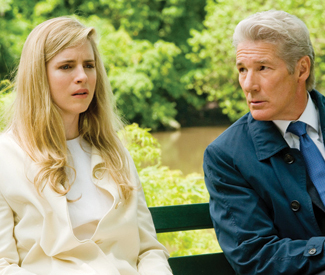
The boyish Jarecki looks as pleased as a high-roller who has just bought low and sold high; he’s crafted a capitalist all-American horror story of sorts, for billionaires as well as the fascinated and repulsed 99 percent. As Arbitrage opens, its slick protagonist, Robert Miller (Richard Gere), is trying to close the sale of his life, on his 60th birthday: the purchase of his company by a banking goliath. The trick is completing the deal before his fraud, involving hundreds of millions of dollars, is uncovered, though the whip-smart daughter who works for him (Brit Marling) might soon be onto him.

Meanwhile, Miller’s gaming his personal affairs as well, juggling time between a model wife (Susan Sarandon) and a Gallic gallerist mistress (Laetitia Casta), when sudden-death circumstances threaten to destroy everything, and the power broker’s livelihood — and very existence — ends up in the hands of a young man (Nate Parker) with ambitions of his own.

It’s a realm that Jarecki is all too familiar with. Though like brothers Andrew (2003’s Capturing the Friedmans) and Eugene (2005’s Why We Fight), Jarecki’s first love is documentaries (his first film, 2006’s The Outsider, covered auteur James Toback), his family is steeped in the business world. Both his parents were commodities traders, and Jarecki, who describes himself as a "computer geek in my youth," once owned his own web development firm and internet access provider, among other ventures. Nonetheless, the filmmaker —who graduated from New York University film school at 19, served as a technical adviser on the 1995 film Hackers, and co-wrote the script 2008’s The Informers — continued to hear the siren call of feature film.

"I had knowledge of venture capital and the markets, but at the same time it was, what’s a credit default? What is this?" he remembers of the time he started writing Arbitrage‘s script in 2008. Bernard Madoff interested him less than "someone who was a good guy but who became corrupted along the way and started to believe in his own invincibility and his own press releases."

Jarecki found his "King Lear-esque" nouveau robber baron in Richard Gere, after convincing the actor to take a chance on a first-time director. He ended up digging in deep with Gere and the rest of the cast during a month of rehearsals, research, and rewrites. "I was doing my own mad arbitrage and putting the film together — the voluminous amounts of documents they make you sign, and I borrowed many millions of dollars from a major bank," Jarecki explains. "So it was rehearsing in one room and calling the wire desk on the other."

As a result, the moviemaker found himself understanding Miller’s part only too well: "When I was writing and the characters had to do something, the person I modeled the decision on was myself. What would I do? And the more surprising and frightening the answers, the more I felt I was onto something."

There’s a memorable moment when Miller’s daughter confronts him on his transgressions and he explains, in a moment of startling, almost lamely ineffectual self-consciousness, that he’s a patriarch simply playing his part. Still, Miller doesn’t believe it’s the end of days for those men gathering in East Hampton screening rooms.

"There was a joke I had with the distributor, ‘Will this still be relevant when it comes out?’" he muses. "Yet every week there’s a new revelation of a new fraud: MF Global losing billions of dollars in customer funds in unauthorized trading. A Knight Financial computer glitch and they lose $420 million — I think that’s the exact number lost in the movie — and it just happened two weeks ago. And now it’s, ‘Where’s my morning coffee?’"


ARBITRAGE opens Fri/14 in Bay Area theaters.

On the Cheap Listings

0

Submit items for the listings at listings@sfbg.com. For further information on how to submit items for the listings, see Picks.

WEDNESDAY 12

"Birth of Suns" astrophysics presentation Revolution Books, 2425 Channing, Berk. (510) 848-1196, www.revolutionbooks.org. 7pm, free. Walls closing in around you? For a little perspective, attend this lecture by UC Santa Cruz professor Mark Krumholz, whose expertise lies in star formation. He’ll be discussing how a celestial being is born, which involves so much mass, space, and distance that your roommate problems will fade into the distance on the power of his words.

SoMa B.A.G. (Bad Art Gallery) Satellite 66 Gallery, 66 Sixth St., SF. www.sfindie.com. Art show is open Wed/12-Fri/14, Sept. 19-21, and Sept. 26. Film screenings every Wednesday in September, 8pm, free. Perhaps a description of a work included in this SF IndieFest exhibition will suffice for this listing: "The artist created this work during his controversial Paint By Numbers period of the late 1980s and early ’90s. A raccoon engages the viewer with his coal black eyes, caught in the act of posing for a painting." Also, the gallery is screening Patrick Swayze movies on Wednesdays. Tonight is Point Break.

"(re)collection: Family Photos Swept by the East Japan Tsunami" Intersection for the Arts, 925 Mission, SF. www.theintersection.org. Through Oct. 27. Opening reception: 7-9pm, free. Without being told to do so, rescue workers in the town of Yamamoto, Japan began to collect photos from the houses damaged and destroyed by the 2011 tsunami. This art exhibit assembles just a few of these partially-obscured images, reminders of the human cost of that catastrophic event.

THURSDAY 13

Belcampo Meat Co. job fair Food Craft Institute, 65 Webster, SF. www.foodcraftinsitute.org. 8am-noon, 4-7pm, free. Ever wanted to work with artisan animal products? Head over to Belcampo’s job fair, where you can learn about career opportunities at its NorCal farm, meat counters in Marin and SF, plus jam and cheese-making classes. Snack provided, bring your resume.

Projector Magazine screening Roxie Theater, 3117 16th St., SF. www.roxie.com. 8pm, $5. Movie geeks and freaks will thrill to this live reading of the magazine that dissects films creatively (no snarky film reviewers here, folks). Tonight, screenings and readings collide as writers read their Projector pieces after a clip from the film that inspired them plays on the Roxie’s big screen.

FRIDAY 14

SF Society for the Prevention of Cruelty to Animals Homecoming Adoptathon SFSPCA, 201 Alabama, SF. www.sfspca.org. Through Sun/16. Fri/14, 1-8pm; Sat/15 and Sun/16, 10am-6pm; free. Kick-off party: Fri/14, 5-9pm, free. The friend of the furry and feathered couldn’t be making it any easier for you to go home with a companion of your own. The SFSPCA is hosting a party with free cocktails, free wine, free beer, with the opportunity for a free adoption to boot! The adoption special last throughout the weekend, so take home a kitty, puppy, bird, beast just as soon as you’re ready.

"From One Thing To Another: The Art of Recycle" Gray Loft Gallery, 2889 Ford, third floor, Oakl. grayloftgallery.blogspot.com. Through Nov. 9. Opening reception: 6-9pm, free. Have you been to Jingletown? So has this developing arts area in Oakland been recently dubbed. Check out the pleasures of the neighborhood by starting at this group show of art made from recycled, reclaimed, and upcycled materials.

Armenian Bazaar and Food Festival Khachaturian Armenian Community Center, 825 Brotherhood Way, SF. (415) 751-9140, www.stgregorysf.org. Through Sun/16. Fri/14, 7pm-midnight; Sat/15, noon-midnight; Sun/16, noon-6pm; free. For over 50 years, St. Gregory’s has hosted this superb opportunity to sample sarma and sou-beoreg (stuffed grape leaves and a cheese-parsley dish), check out the "highly anticipated" Sunday backgammon tournament, and watch live folk dancing. This year is the first for the fest’s beer and wine garden, which surely will only up its appeal.

"The Shirt" photography by Matt Sharkey Pretty Pretty Collective, 3290 22nd St., SF. www.mattsharkeyphotography.com. Opening reception: 8pm-midnight, free. Do you like photography? How about naked women? Photographer Sharkey took shots of 30 in the same old t-shirt, and most will be in attendance tonight as he celebrates the release of his new book of said shots, appropriately titled This Shirt.

"Oakland Under $100" Actual Cafe, 6334 San Pablo, Oakl. (510) 653-8386, www.actualcafe.com. Through Oct. 11. Opening reception: 6-10pm, free. Oakland artist Emily Coker shows her works (all retailing for under $100, natch) at this art opening, which also features live art-making, a silk-screening station, photobooth, and live music by Starmachine and DJs Ladybyrd and Who Killed Laura.

SATURDAY 15

Kiddo Disco Bollyhood Cafe, 3372 19th St., SF. www.kiddodisco.com. 11am-3pm, $5 per person, $20 maximum per family. You’ll be able to see over everyone’s heads at this club, and no need to save your monies for the late night burrito afterwards – snacks here are free, and anyways the thing will be over by 3pm. This is the fourth annual Kiddo Disco, where families can bring their future clubbers for a taste of the future while DJ Matt Haze spins. DIY face painting, bubbles, and a quiet area for reading and coloring will be supplied. Why aren’t all parties more like this one?

Coastal cleanup day Martin Luther King Jr. Shoreline Park, Doolittle Drive and Swan Way, Oakl. www.savesfbay.org. 9am-noon, free. Bring your own bucket (there will be a contest to determine the prettiest one) to this cleanup day, which aims to provide safe space for trees to thrive, birds to birth, and people to gaze out over the beauty of nature. And keep your eyes out for weird: Save the Bay will be giving prizes for the most bizarre piece of detritus recovered.

"Folsom Exposed!" photography by Mark I. Chester Wicked Grounds, 289 Eighth St., SF. www.wickedgrounds.com. Through Nov. 30. Opening reception: 7-10pm, free. Gear up for high leather season with photographer Chester’s shots of SF’s sex culture underbelly. Images going as far back as the late 1970s are in included in this show at SF’s kinky coffee shop. Come early (on time, at 7pm) for special slideshow discussion by the pervy photog himself.

Dance Discourse Project de Young Museum, 50 Hagiwara Tea Garden Drive, Golden Gate Park, SF. www.counterpulse.org; www.dancersgroup.org. 2-4pm, free. Performer Monique "Fauxnique" Jenkinson, SFMOMA associate curator Frank Smigiel, and others form a panel that will discuss the intersection of dance and visual arts – what happens when movement enters a building designed for housing paintings and the like?

SUNDAY 16

Mexican Museum free family day Mexican Museum, Fort Mason Center Building D, SF. www.mexicanmuseum.org. Noon-3pm, free. Celebrate Mexico’s Independence Day with this open invitation to families during Hispanic Heritage Month (which, oddly enough, runs Sept. 15-Oct. 15). The museum’s special portraiture and contemporary art exhibits will be open, and kids will have an opportunity to make creative masterpieces of their own.

Beer for dinner

0

virginia@sfbg.com

BEER + WINE Craft beers are in their heyday, alongside craft everything else — it only makes sense that they would begin to take prominence on local menus next to intricately prepared and finely sourced dishes. San Francisco beer luminary Dave McLean has been brewing Magnolia beers, among my favorites anywhere, at his Upper Haight brewpub for nearly 15 years, now expanding to a new Dogpatch location. Like Magnolia, modern classic Monk’s Kettle in the Mission has focused since its 2007 opening on serving food to match its beer offerings, and new Maven in Lower Haight is innovative in its extensive beer-food pairings menu. (And we haven’t forgotten more casual beer-and-sausage options like Gestalt and Toronado-Rosamunde.) Now, two new restaurants arrive where food is equally important to beverage, with exciting beer slants.


ST. VINCENT

Opened in May with great wine world buzz, St. Vincent is owned by sommelier David Lynch, known for his impeccable wine list at Quince. Accordingly, the wine list at St. Vincent (named not for the popular indie musician but for a third-century Spanish deacon known as the patron saint of winemakers) is global and excellent, with many bottles in the $30–$50 range, plus affordable by-the-glass pours like a crisp, floral 2011 Domaine de Guillemarine Picpoul de Pinet.

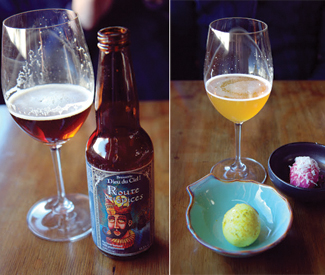
Wisely, Lynch brought on beer director (and certified cicerone) Sayre Piotrkowski, whose brings his beer knowledge and keen eye for the unusual from his former position at Monk’s Kettle. Piotrkowski has made spot-on drink recommendations on every visit, and the friendly staff are well-versed on the menu. I’ve tasted many of the eight rotating beers on draft, like those from Oakland’s Linden Street and Dying Vines breweries, or delightful beers from tiny Pasadena micro-brewery Craftsman Brewing Co., including a Triple White Sage Belgian-Style Tripel or a 1903 Lager, pre-Prohibition style. Splurge for a $22 bottle of fascinating Birrificio del Ducato’s Verdi Russian Imperial Stout, spicy with hot chile from Parma, Italy. ($11 if you can find it at liquor store extraordinaire Healthy Spirits, btw.)

New Jersey native Chef Bill Niles (most recently of Bar Tartine) exhibits a strong dose of New Southern in his California cooking. Although dishes like she-crab soup ($14), utilizing sea urchin, sugar snap peas and Carolina gold rice in a corn-lobster chowder, or rabbit burgoo ($24), a mélange of white turnips, baby green okra, white corn grits, and rabbit loin sausage with unusual lamb’s quarter herb, are nothing like the she-crab soups I’ve loved in South Carolina or the burgoo stews I’ve dined on in Kentucky, Niles has reinterpreted the regional dishes with care — and a distinctly West Coast ethos.

Beet-horseradish or curry pickled eggs ($3 each) are a predictably a good time, while a hand-rolled pretzel with mustard and butter ($5) is a bit small and forlorn. I searched for the listed clothbound cheddar in the baked Vidalia onion soup ($9), where even onions didn’t impart the hoped-for flavor intensity. Rarely-seen, ultra-salty Welsh laverbread ($18) is a hunk of Tartine wheat bread lathered in Pacific sea laver (seaweed), Manila clams, and hen of the woods mushrooms, ideal with beer. Entrees like roasted duck leg ($22), surrounded by buttered rye berries, griddled stonefruit, celery, and pickled mustard are heartier, but, unexpectedly, I preferred a vegetarian entree: an herb-laden spring succotash ($18) of butter beans, white corn, and dandelion, perfected with padron peppers.

Though St. Vincent’s food voice feels like it’s still finding itself, I appreciate that it is not the same iteration of gastropub food we’ve seen a thousand times over.

1270 Valencia, SF. 415-285-1200, www.stvincentsf.com


THE ABBOT’S CELLAR

Abbot’s Cellar opened in July and is Monk’s Kettle sister restaurant. The Lundberg Design (Moss Room, Quince, Slanted Door) space immediately impresses with 24-foot ceilings illuminated by skylights, and a long, 3000-square-foot dining room marked by reclaimed woods for a rustic, urban barn feel. A two-story stone cellar houses beer at proper temperatures, listed in a book that pulls out from the side of each table.

The volume lists more than 120 rotating beers — curated by co-owner and cellarmaster Christian Albertson with co-beer director Mike Reis — grouped by style (sours, saisons, etc.), with two pages dedicated to drafts. There’s a wall of glassware suited to every type of beer served, whether Jolly Pumpkin’s Madrugada Obscura Sour Stout from Dexter, MI, or Italian 2004 Xyauyu Etichetta Rame. A pricey ($14.50 for a six-ounce pour) Belgian Brouwerij De Landtsheer Malheur Brut is a dry, elegant Champagne-style beer served on the stem, one of ten offerings in a by-the-glass selection from large beer bottles rarely available by the pour.

As a temple dedicated to beer, the Cellar succeeds immediately. The bar and chef’s counter are ideal perches from which to sip, accompanied by hand-pump cask engines (sample Firestone Walker’s Unfiltered Double Barrel Ale from these classic pumps), and a reading shelf lined with Dulye’s collection of cookbooks.

Chef, co-owner, and experienced craft beer restaurateur Adam Dulye explores flavors optimal to brews. Dishes — a la carte options or tasting menus: three course $45, $60 with pairing; 5 course $65, $90 with pairing — are well-crafted and artful. As at St. Vincent, some dishes stand well above others, although there’s generally promising possibility. A coon-striped shrimp salad ($11) makes a dramatic presentation but, similar to crawfish, you’ll struggle to pull a tiny bite of meat from the shrimp. Cumin-roasted heirloom carrots ($11), elegantly displayed with quinoa, oyster mushrooms and sprouts, lack distinctive flavor.

Alternately, braised rabbit on tender handkerchief pasta ($23), dotted with English peas and hen of the woods mushrooms, is heartwarming, particularly with beer. “Wow factor” is in play with a unique beef bone marrow ($12) dish. The bone is topped with crispy house pastrami, alongside spicy greens, more pastrami, pickled mustard seeds, and rye croutons — one of the more exciting of countless bone marrow dishes I’ve had. While roast pheasant ($24) with lacinato kale and non-existent (but listed) cauliflower puree was too dry, a generous pork chop ($25) is insanely juicy and satisfying over chewy caraway spaetzle, topped with grilled peaches. A dessert of warm, roasted parsnip cake ($9), co-mingling with whipped cream cheese and a ginger molasses cookie, is a homey highlight, lovely with the coffee-almond malt of Great Divide’s Yeti Imperial Stout.

742 Valencia, SF. 415-626-8700, www.abbotscellar.com


UPCIDER: SF’S FIRST CIDER BAR

Ever since savoring a fantastic New England cider pairing with each course of a fall dinner at NYC’s Gramercy Tavern years ago, I’ve wondered when we might witness the arrival of urban cider bars. SF’s new Upcider and Bushwhacker in Portland are it thus far.

Two aspects of Upcider jump out immediately: Ozgun (Ozzie) Gundogdu and his sister’s warm welcome — Ozzie opened the bar with former roommate and co-worker Omer Cengiz — and a second story upstairs space with floor to ceiling windows overlooking Polk Street. One can sit at the windows, gazing below at a busy street scene, enveloped by low-ceilings and a cozy glow, transported to a European bar or maybe even one in Turkey, Ozzie and Omer’s homeland.

The bar, lined with rustic, reclaimed wood, houses a range of bottled ciders — 19 producers, 40 varieties of cider (and growing) at $5–$26 a bottle, the most expensive being a 750ml of Etienne Dupont Brut De Normandie from Victot-Pontfol, France. You’ll find big brands like Magners or ones we’ve seen often in SF like Fox Barrel, Crispin, and Two Rivers. But you’ll also discover three ciders from Wandering Aengus Ciderworks in Salem, OR, or J.K. Scrumpy Organic, a sweeter cider from Flushing, MI. On the dry side (there’s also a medium-dry option), I liked Hogan’s Cider from Worcestershire, England. A new discovery was Julian Hard Cider from Julian, CA, a small Gold Rush town inland from Escondido and San Diego.

Its tart, dry Cherry Bomb ($11 for 22 oz. bottle) is a fascinating cider with a funky finish. There are Basque ciders, mead, wines, and beers, and bar food from chef Tony Carracci (Cha Cha Cha). For the time being there are no ciders on tap, but that is due to the intensive plumbing rebuild necessary to meet city requirements. Hopefully, there will be a way to provide draft ciders in the future.

Whiling away summer evenings in Upcider feels like traveling. I noticed the neighborhood’s Middle Eastern community gathering below for friendly banter, a refreshing alternative side of a street lined with raucous partiers and bar-hoppers.

1160 Polk, SF. 415-931-1797, www.upcidersf.com

Subscribe to Virgina’s twice-monthly newsletter, The Perfect Spot, www.theperfectspotsf.com

The Performant: PortlanD.I.Y.

2

The Performant puts a bird on it

There’re a lot of ways to while away 72 hours in Portland, Oregon, so I shrewdly place myself in the hands of a capable buddy who knows the ropes and we embark on a whirlwind bicycling tour of the five quadrants, from Sellwood to St Johns (yes, there are five quadrants, not four, go figure). We don’t really have a focus, and you could easily spend 72 hours just crawling from coffeeshop to bookstore to food cart to brewpub. While there’s plenty of all of the above on our itinerary, the theme that soon reveals itself during our pedal-powered perambulations is Portland’s obvious fervor for the DIY life, extending even to their entertainment options. Here’re a few of my favorite examples.


1) Marry-it-Yourself at the 24 Hour Church of Elvis. Although this dilapidated window display and coin-operated wedding ceremony has seen brighter days in other locations over the years, this quirky art installation will still pronounce a simple set of vows via an ancient Commodore 64 over any couple lucky enough to have a quarter on them. Apparently about to undergo a facelift of sorts, the 24 Hour Church of Elvis may be upgrading its technology, but one hopes it won’t lose its cluttered, junkyard charm or old-school video arcade aesthetic. 408 NW Couch, Portland, OR. www.24hourchurchofelvis.com

2) Eat-a-Bug-Yourself at the Peculiarium. Anyone excited about insectavorism will want to make a trek over to The Peculiarium, where in addition to a staggering selection of novelty packaged bug treats (tequila lollipops with worms, etc), they offer two very exclusive toppings for their ice cream sundaes and hot dogs: freeze-dried meal worms and scorpions. Customers who survive their culinary adventure get their photo taken and exclusive membership in the “Insectarian Club,” and even non-bug-eaters will get a kick out of the Fortean ephemera, gag gifts, and B-movie props that constitute much of the Peculiarium’s inventory and decor. 2234 NW Thurman St, Portland, OR. www.peculiarium.com

3) Homestead-It-Yourself at Portland Homestead Supply Company. This homey, welcoming, artfully-curated store leaves no possible outlet for creative homesteading energy unrepresented, with essential supplies for every kind of project from soap-making to chicken incubating, pickling to cider pressing, seed starting to grain grinding. Where else can you grab a one-pound slab of pure beeswax, a packet of kefir starter, the pasta maker of your dreams, and a 25-pound sack of worm castings and take a workshop on coffee roasting or candle-making in the same trip? Truly worth a pilgrimage, even for the most dedicated urbanite. 8012 SE 13th Avenue
, Portland, OR. www.homesteadsupplyco.com

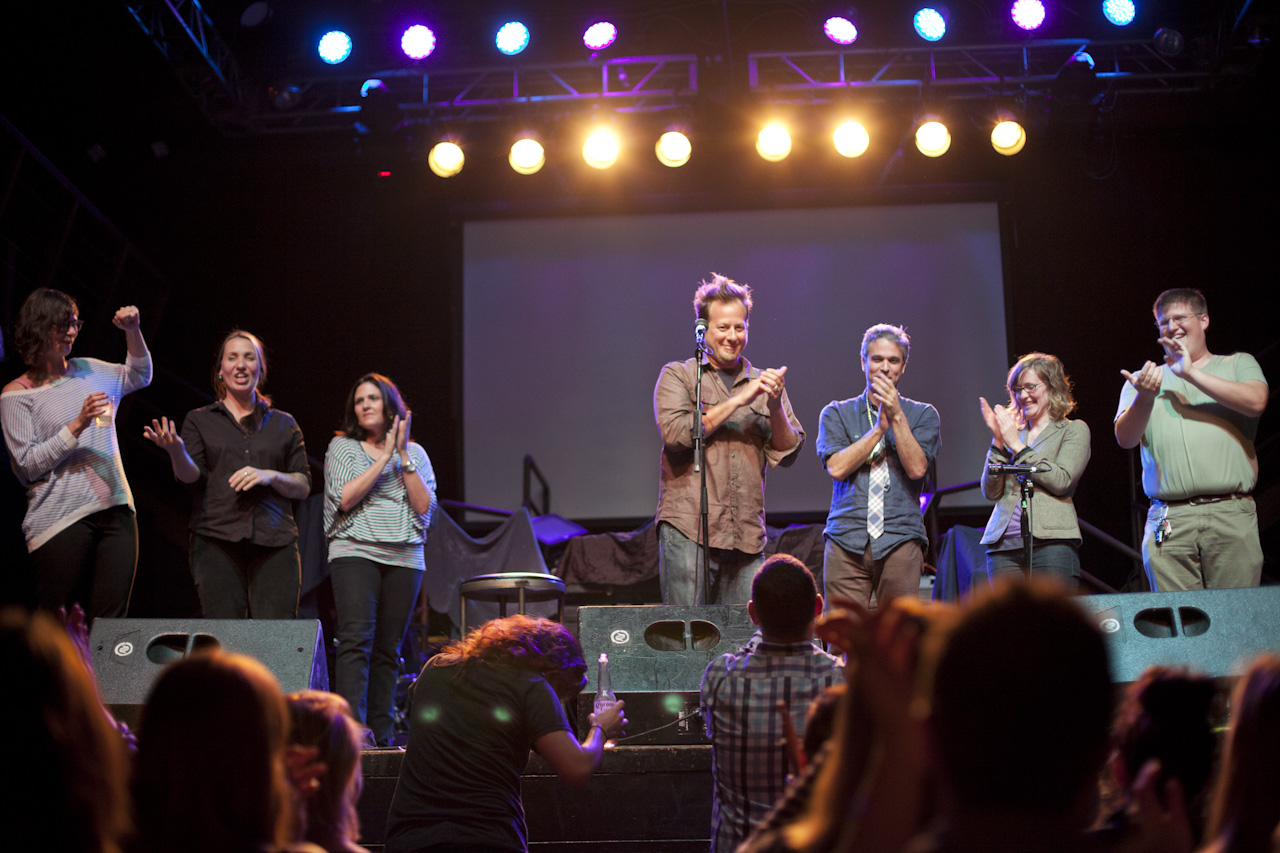
4) Act-it-Yourself at Shakespeare Surprise Party. For times when even the redoubtable SF Theater Pub barroom shows feel over-produced, Surprise Party Theatre steps in with an even more audacious free-for-all concept, one that recruits roughly half the of its attendees onto the stage to perform, rehearsal-free. I see a rowdy adaptation of *As You Like It* in the basement confines of the Jack London Bar which lasts a good 40 minutes longer than it has a right to, but certainly doesn’t lack in sheer spunk and off-the-cuff inventiveness. A hilarious wrestling match between pre-cast Orlando (Joel Durham) and Charles (Matt Haynes), goofy improvisation by Jesse Graff as Touchstone, live music by musical duo Sound Semantics performing as Amiens, and plenty of dance breaks for all, infuse the Shakespearean comedy, to say nothing of the Jack London Bar, with lusty life. surprisepartytheatre.tumblr.com

Tasty reads

2

virginia@sfbg.com

LIT A harvest of cookbooks, some set for release in the fall, some ready for your shelf, cupboard, or bar hot off the press.

THE BLUE BOTTLE CRAFT OF COFFEE: GROWING, ROASTING, AND DRINKING, WITH RECIPES

By James Freeman, Caitlin Freeman, and Tara Duggan

Ten Speed Press

240 pp, paper $24.95

Since its first kiosk opened in January 2005, Blue Bottle has been my first choice in coffee, from ethos (served immediately, individually brewed, beans sold fresh after roasting) to taste. Musician James Freeman dove into coffee after being laid off from a corporate job post-9/11: the inspiring story of how he began is detailed in this book. Written with his wife, Caitlin, and James Beard-nominated food writer Tara Duggan, with photography by Clay McLachlan, Craft contains sections on global growing regions, roasting, cupping, pour-over, siphon, espresso machines, and multiple techniques. Caitlin, resident Blue Bottle pastry chef and former owner of Miette, contributes more than 75 pages of recipes — not so much utilizing coffee itself, but including breakfast recipes to go with morning coffee from Blue Bottle cafés, desserts and treats for dunking, and recipes from chef friends like Stuart Brioza of State Bird Provisions’ tuna melt with piquillo peppers. Although Blue Bottle has now gone nationwide with New York locations, these pages allow one to wax nostalgic over this Bay Area success story bringing us all better coffee. To be released October 9.

DESTINATION COCKTAILS: THE TRAVELER’S GUIDE TO SUPERIOR LIBATIONS

By James Teitelbaum

Santa Monica Press

408 pp, paper $19.99

Chicago resident James Teitelbaum wrote the kind of book I would happily pen, the first I’ve seen to detail the world’s best craft cocktail bars. Destination Cocktails (www.destinationcocktails.com) is a cocktail aficionado’s trusty guide to destinations both obvious (NYC and SF) and overlooked (Reno and Cleveland). As for the international scene, the book runs the gamut from Wellington to Edinburgh. While there are a few missing great drinks and bartenders — and info can change so quickly, even since Destination‘s September 1 release date — Teitelbaum’s book offers a comprehensive collection that would set any budding or well-traveled cocktailian on the right path. From London (Worship St. Whistling Shop, 69 Colebrooke Row) to Denver (Williams & Graham), many of my global tops are highlighted, alongside cities and bars I’ve been hankering visit (ah, Tokyo!)

SPQR: MODERN ITALIAN FOOD AND WINE

By Shelley Lindgren and Matthew Accarrino with Kate Leahy

Ten Speed Press

304 pp, hardcover $35

A beautiful, visual tribute to Italy, local restaurant SPQR releases a book by its wine director, Shelley Lindgren (also of A16), and executive chef Matthew Accarrino with Kate Leahy. The book features eight regions of Italy, each influencing creative recipes from SPQR’s kitchen and from which Lindgren chooses wines. Her essays explore lesser-known producers and varietals succinctly but with depth. Accarrino’s artful skill with Italian cuisine may not appear easy for most of us, but there are tips and photo breakdowns of recipes, small animal butchery, and pasta-making. Photos by Sara Remington inspire with a romantic eye tempered by realism. To be released October 16.

FORAGED FLAVOR: FINDING FABULOUS INGREDIENTS IN YOUR BACKYARD OR FARMER’S MARKET

By Tama Matsuoka Wong with Eddy Leroux

Clarkson Potter

224 pp, hardcover $25

At a recent intimate gathering at Coi, I was privileged to spend time with Tama Matsuoka Wong, forager for Daniel restaurant in NYC (Daniel Boulud wrote this book’s forward), sampling bites made with ingredients she’d foraged with Coi staff while visiting the Bay Area. We celebrated Foraged Flavor, released earlier this summer. I learned of her career change from lawyer to forager in New Jersey (my former stomping grounds), where her three daughters are involved in her foraging and cooking lifestyle. The book’s clean, classic layout includes botany-style plant diagrams, seasonal groupings, and approachable gourmet recipes like dandelion leaves with poached eggs and bacon. There are foraging and growth tips and info on key characteristics of each wild plant.

COOKING OFF THE CLOCK: RECIPES FROM MY DOWNTIME

By Elizabeth Falkner

Ten Speed Press

224 pp, hardcover $29.99

Longtime local favorite and Top Chef Master star Elizabeth Falkner recently moved to NYC and released her second book August 28. As a James Beard-nominated pastry chef, her first book, Demolition Desserts, focused on the sweet side, while new Cooking Off the Clock is a volume of everyday, accessible recipe favorites. There are sections on condiments (kimchee, tahini sauce), flavorful salads, playful snacks (three types of hot wings: Moroccan, Tabasco-honey, black bean-sesame-ginger), a few of her beloved desserts (two versions of cherry pie), and pizzas, including her amazing pastrami version — like a Reuben pie, with Russian dressing, shredded cabbage, and thinly-sliced pastrami — which I never forgot from her restaurant Orson.

DAILY DECADENCE: THE ART OF SENSUAL LIVING

By Sherri Dobay

Flying Archer Press

231 pp, paper $14.99

Sherri Dobay feels like a kindred spirit… although young, her romantic, sensual verbiage communicates that “old soul,” the kind of view with which I’ve seen the world since girlhood. Food, wine, art, nature, horses (she’s a rider) are her subject, and she is as inspiring as she is comforting. More memoir than cookbook — and published in a format that’s hard to open while working in the kitchen — the book’s draw is its tone, not its recipes. Sections are grouped around themes of decadence (Divine Decadence, Decadent Simplicity, Decadence of the Seasons, Decadence of Letting Go), and wine recommendations are explored from a right-brain perspective rather than thorough analytical tasting notes. Reading bits of the book at a time is like a sip of crisp, refreshing wine.

Subscribe to Virgina’s twice-monthly newsletter, The Perfect Spot, www.theperfectspotsf.com

Mission sandwiched

0

virginia@sfbg.com

APPETITE Two unusual, new Mission sandwich options: one of the city’s best restaurants launches lunch with Scandinavian influence (part of the Nordic culinary wave finally reaching the West Coast that includes new restaurant Pläj) , and a low-key panini shop opens, refreshingly real with Middle Eastern touches.

SMØRREBRØD AND LANGOS AT BAR TARTINE

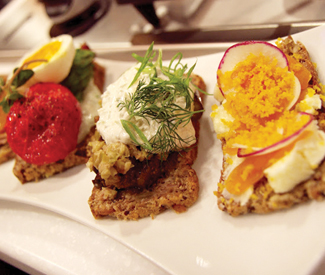
Nick Balla’s forward-thinking, Eastern European menu at Bar Tartine offers some of the most exciting food in the city right now, so new daytime hours (Wed-Sun, 10:30am-2:30pm) are a gain. Smørrebrød is Danish for “bread and butter”: these open-faced sandwiches (one for $6; three for $15) lead the way on the new menu, though heartier sandwiches are on offer, too, such as beef tongue ($12) generously laden with sauerkraut, onion, and that Hungarian staple, paprika. Or on the vegetarian side, slab bread filled with lentil croquettes, yogurt, cucumber, padron peppers.

On rustic rye bread, smørrebrød toppings evolve. I find two enough, three for those with a bigger appetite. My favorite is bacon, egg, avocado, dill and roasted tomato in a blue cheese sauce blessedly garlic-heavy. Creamy chicken liver pate is a gourmand’s option, although such a generous scoop of pate overwhelms accompanying apricot jam. Another toast is topped with smoked eggplant, white beans, olive, roasted tomato, while a sweeter side is expressed in hazelnut butter and rhubarb compote.

They’re calling it a sandwich counter and you can certainly take out, but Bar Tartine’s rustic tables and expanded space welcome: they’re ideal for lingering with Four Barrel coffee and that divine Hungarian fried bread, langos ($9), you’ve heard me talk about often — it’s on the lunch menu. Now it’s amped up with toppings like lamb, horseradish cream, summer squash, and tomato, or blackberries, peaches, and cream. Langos with fried egg, hollandaise and bacon is a breakfast dish of my dreams.

In the spirit of meggyleves, Balla’s Hungarian sour cherry soup that wowed me last summer, there’s chilled apricot soup ($9) — not as sweet as suspected — smoked almonds, and sour cream adding texture to the savory-fruity broth. Jars of pickled treats line the walls, available in the menu’s snacks section (pickled curried green beans!), refreshing contrasted with a kefir-ginger-strawberry shake ($5).

561 Valencia, SF. 415-487-1600, www.bartartine.com

ZA-ATAR AND HALLOUMI AT HOT PRESS

With a friendly Middle Eastern welcome, the guys at the new Hot Press welcome customers into their humble Mission shop for panini, Caffe Trieste coffee, and Three Twins ice cream by the scoop, waffle cone, or sundae. While American sandwiches like pastrami-loaded Staten Island ($7.75) with Emmentaler cheese, house Dijonaise, cabbage slaw, and sliced pickles are delicious, the Lebanese touches and vegetarian offerings that skew unusual. Dream Cream ($6.50) is soft-yet-crusty ciabatta bread slathered in light cream cheese, sauteed peppers, caramelized walnuts, and cucumbers, za’atar spices perking up the mild, comforting panini. On a French baguette, another vegetarian sandwich with Middle Eastern leanings is Ayia Napa ($6.99), likewise comforting with melted halloumi (a traditional Cypriot cheese from the island of Cyprus), mint leaves, tomatoes and a douse of olive oil. Pollo de la Mission ($7.75) is a neighborhood tribute of free range chicken on ciabatta in creamy chipotle sauce, pressed with peppers, grilled onions, Colby Jack cheese, and corn.

Sides ($2.25 half pint; $4.25 pint) range from coleslaw to a salad of spinach leaves, goat cheese and strawberries, while three bean salad — cannellini, kidney and garbanzo beans tossed with onion, parsley, lemon, olive oil — comes in mini-tasting cups with each sandwich. Local ingredients go beyond ice cream and coffee to sandwich bread from Bordenave’s in San Rafael, with neighborhood goodwill in the form of a kids menu and dessert sandwiches like Peanut Butter & Better ($4.99): creamy or crunchy PB, sliced bananas, lavender honey, or grape jelly.

The space is nondescript in a refreshing way, with sidewalk seating and Middle Eastern music videos playing on a flat screen. Thankfully, not every new opening in the Mission is a hipster, trendy affair.

2966 Mission, SF. (415) 814-3814, www.hotpresssf.com

Subscribe to Virgina’s twice-monthly newsletter, The Perfect Spot, www.theperfectspotsf.com


Guardian voices: Finally, rights for domestic workers

7

The national domestic workers’ movement is on the cusp of making history in California. Any day now, the state’s Domestic Bill of Rights (AB 899) – only the second such piece of legislation in the country – could be passed on the Senate floor, finally bringing respect and recognition to 200,000 workers who have been systematically excluded from labor laws for 74 years.

In what could be the final hours of this hard-fought, multi-year campaign, grassroots domestic worker leaders are counting on a rising tide of public support to finally bring victory. Earlier in the month, the New York Times endorsed the bill (sponsored by our own Assemblyman Tom Ammiano), and last week’s video of support from “Rec & Park” actress Amy Poehler has led to a new surge in national support. You can learn about the group’s work and weigh in here, today.

I’ve been inspired by the National Domestic Workers Alliance since its founding in 2007, and have been carefully watching its cutting-edge approach to women’s leadership, grassroots organizing, worker rights, and movement-building. But it was not until last week, when I talked at length with one of the movement’s grassroots leaders, that the politics of this struggle became personal.

On Aug. 21, I spoke to Emiliana Acopio, a caregiver with a gentle but strong voice, fiercely proud of the love and care she provides to elderly people and a determined leader of the CA Domestic Worker Bill of Rights campaign. She was on her way to Sacramento with hundreds of domestic workers and their supporters, for possibly the 12th time (she’s lost count), to educate legislators about domestic workers’ need for basic rights like a minimum wage, overtime, and the right to at least one day of rest each week. And in the process, she educated me.

I don’t think of myself as someone who depends on a domestic worker. But Acopio helped me to recognize that my 94 year-old grandfather’s mind, body, and spirit are all in such amazing shape in no small measure because of the devoted daily care of a remarkable woman named Sandra. I love my Grandpa Lee like a second father, but the home he treasures is in Delaware and my home is here, 3,000 away. He is famously sharp for 94, still able to tell hilarious and detailed coming-of-age stories from more than 70 years ago. He still sings in the church choir every Sunday. But the reality is that every day, he needs help.

Sandra arrives every morning at the same time. Grandpa is already sitting in his favorite chair, awaiting her arrival. She asks about Grandpa’s night, how he’s feeling today. She makes his coffee, with just the right amount of the same sugar and creamer he’s been using for decades.  She puts ice in his cereal, just the way he likes it. At the kitchen counter, she carefully counts out his many medications and pounds them into a little paste. She pauses in front of all those bottles, making note of which refills are needed. She mixes her perfect little paste with applesauce and gently sets the bowl and spoon in front of him. His day begins.

Sandra is not a biological relative, but the care and compassion she shows to my Grandpa Lee far exceeds what some of my own kin are capable of. She tell us that she does it as a labor of love — but the reality is that she is a caregiver worker, and like Acopio and 2.5 million other domestic workers in the nation, she does not have the labor protections that most US workers take for granted. Her wages and working conditions are completely dependent on my family’s sense of fairness. Should we fail or forget to pay her wages, she has little recourse. Should we lose our minds and begin demanding much more work for no more pay, what could she do? She is not a wealthy woman, and her family needs the income just as much as my Grandfather needs her support.

Acopio knows about the fundamental vulnerability of domestic workers – working behind closed doors, under-valued and exploited in the privacy of other people’s homes:

They hired me to take care of their elderly parents but then expected me to cook, clean, and care for the entire family. And they were very disrespectful to me. I did all I could to make sure their needs were met, and it was important to me that their aging family members felt loved and respected. But it hurt me, especially as a Filipina taking care of a Filipino family, that I was not given that same basic respect. That’s what this is all about. Our work makes all other work possible; we need the Domestic Workers Bill of Rights because we deserve respect, recognition, and dignity.

Acopio shared with me the challenges of organizing domestic workers, the need to share personal stories and organizing victories to break through the immobilizing fear so many women – mostly immigrant women of color – face.  We were talking on the phone with the help of a translator, and it wasn’t until the interview was over that her translator explained to me that Acopio – grassroots leader, fighter for worker rights, and a longtime caregiver for the elderly – was elderly herself. At 79, she continues to work to help provide for her family back home in the Philippines.

It’s been 74 years since federal labor law finally gave most US workers rights like the eight-hour day, overtime, and breaks. But farmworkers and domestic workers were intentionally excluded from that law. The legacy of white supremacy and slavery meant that at the time, fully 65 percent of all Black workers labored in one of those two occupations, and there was a white elite interested in keeping it that way. Black domestic workers and civil rights leaders lobbied against this clearly racist exclusion, but that legacy of racism remains with us to this day.

Despite the organized efforts of Black domestic workers and other women of color – like the groundbreaking campaigns of the National Domestic Workers Union founded by Black domestic worker Dorothy Bolden in 1968 – it wasn’t until the National Domestic Worker Alliance consolidated more than 30 domestic worker organizations and won the groundbreaking NY Domestic Worker Bill of Rights in 2010  that hundreds of thousands of women of color workers finally have basic labor protections.

While the historic role of Black women as domestic workers – as exploited workers, courageous organizers, and even as the critical foot soldiers of the victorious Mongtomery Bus Boycott — is unfortunately ignored or misrepresented in the media, history books, and even sometimes in multi-racial settings, it is never, ever too late to fight the legacy of racism in the United States. The modern-day domestic worker’s movement is largely led by Asian and Latina immigrant women, and their fierce, creative, multi-generational and holistic approach to building this movement has lessons for everyone who cares about justice.

Time Magazine named NDWA director Ai-Jen Poo as one of the world’s most influential people back in April of this year. It was incredible, and provided an entirely new level of national attention to campaigns like the CA Domestic Worker Bill of Rights. But media attention is not the victory that 2.5 million workers want – it’s protection under the law.

What my grandfather’s caregiver receives in wages could not ever properly compensate her for her labor of love. All domestic workers – caregivers, childcare providers and housekeepers– do their work with care and compassion. They also have the right to basic respect, recognition and rights in the workplace. The thousands of stories of wage theft, failure to provide time for rest for live-in workers, and never-ending vulnerability to other acts of exploitation are simply unacceptable.

Stand with me, thousands of organized domestic workers, hundreds of domestic worker employers, the AFL-CIO, the state NAACP and more than 14,000 petition-signers; support the CA Domestic Worker Bill of Rights today. Call your Senator or Governor Jerry Brown today at (916), 445-2841. Go here for more information and help make history.

Tradition

2

virginia@sfbg.com

APPETITE Despite its Future Bars group provenance, Tradition is not Bourbon and Branch part two. Although I continue to bring visitors and locals who’ve never been to the still-magical, speakeasy-like B and B, Tradition is a more relaxed entrant in the Future line-up, which also includes Wilson and Wilson, Rickhouse, Swig, and Local Edition.

I’ve been to Tradition multiple times since its June opening. Part of me misses the divey fun (and cheesy movie nights — Top Gun! Tony Scott, RIP) of the former Mr. Lew’s Win-Win Bar and Grand Sazerac Emporium. The location is unrecognizable from those days. Yet I’m a fan of the dramatically altered, high-ceilinged space with numerous areas to enjoy a drink: small upstairs bar overlooking the action (dedicated to house blends and barrel-aged spirits), giant, rectangular center bar where you can sit or stand, in a cozy back nook reminiscent of an English pub, or in one of eight “snugs,” which are essentially booths (reserve ahead). Each booth varies in size, seating two to eight, themed along with a visually striking artistic menu: New Orleans, Prohibition, Tiki, American dive bar, English, Irish, Scottish, and Grand Hotel. Themes are established with vintage ads, signs, and barware in each booth.

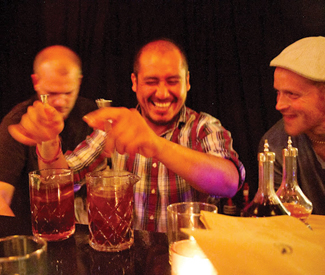
Impressively, owner Brian Sheehy and beverage director Ian Scalzo created an extensive house-blended and barrel-aged spirits program. They are storing and experimenting with countless barrels, grouped by spirits from gin to whiskey. Options imaginatively run the gamut, while menu tasting notes appeal to spirits geeks or help narrow down options served neat or on the rocks. One could sip Four Roses bourbon finished in Pinot Noir wine casks or Four Roses Single Barrel in apple brandy casks. Russell’s Rye in a Green Chartreuse cask thoroughly intrigued me though I didn’t get as much herbal emphasis as I was hoping for from the Chartreuse.

My beloved Redbreast 12-year Irish Whiskey (cask strength) is poured from a barrel washed with Guinness. Flor de Cana rum is finished in a sweet vermouth barrel, an “Autumn Blend” of bourbon and apple brandy in an Arabica coffee cask, Auchentoshan 12-year Scotch in a puer tea cask — combinations are fascinating. I have not seen the likes of this in any city… yet. There are likely to be many imitators forthcoming.

Each themed cocktail menu also includes a couple beers in keeping with categories from English to Irish, all of it generally unfussy. With so many cocktails and barrel-aged spirits, some fare better than others. Pitchers and volcano bowls are ideal for groups, although those craving more intricate sips might steer clear, as these either get watered down quickly or aren’t as nuanced as individual drinks.

After sampling more than 30 drinks in my visits, my barrel favorite is Espolon Reposado tequila finished in an arabica coffee cask. Coffee and tequila impart a chocolate-orange spirit with notes of cedar, slate, citrus — a fascinating tipple. On the cocktail side, I’m most smitten with Kona Kope ($9) in the exotic-Tiki category. Diplomatico Reserva Exclusiva and barrel-aged spiced rums intermingle with coffee syrup, a touch of coconut cream, and barrel-aged Angostura for a lively bit of elegance, bracing with coffee and whispers of the tropics.

Multiple Sazerac variations on the New Orleans or Speakeasy menus haven’t quite gripped me. I prefer the chicory coffee sour from the former (do you see a coffee theme developing?) or a classic Hanky Panky from the latter. On the Scottish menu, Hebrides Flip ($9) is a savory finish for those who like flips (i.e. whole egg): Black Bottle scotch, Dry Sack sherry, gomme syrup, whole egg, and a little Cynar for bitter roundness.

At Bourbon and Branch, patrons of the otherwise enchanting Library Bar in the back are limited to an abbreviated cocktail list (a downside, in my book), compared to a full menu in the front room. Similarly, walk-ins to the left side of the bar at Tradition are also offered a limited list, while those seated at the right or in snugs get the full book of options. It’s therefore a good idea to make reservations — although I haven’t had trouble securing a seat on weeknights without one.

Tradition adds to the excellent little cocktail district developing near Union Square, which includes Jasper’s Corner Tap, Bourbon and Branch, Wilson and Wilson, and Rye), and provides a convenient Tenderloin meet-up spot with a little something for everyone, from cocktail geek to British pub fan. despite many gems, it doesn’t serve the most exquisite cocktails in town — but its unique barrel program and relaxed vibe certainly make it a downtown destination.

TRADITION

441 Jones, SF.

(415) 474-2284

www.tradbar.com

Subscribe to Virgina’s twice-monthly newsletter, The Perfect Spot, www.theperfectspotsf.com


Appetite: Delicious new cuisine and cocktail reads

0

Fermentation and distillation, hot plats and sugar cones, sweet creams and brokeasses … These eight books were released this spring, and are among the best of what has landed on my desk this year:

TRADITIONAL DISTILLATION: ART AND PASSION
by Huber Germain-Robin

Anyone who knows US craft distilling knows Hubert Germain-Robin, one of the pioneers in the American craft distilling movement. He was making world class, French-style brandies (he is French, after all) since the early ’80s right here in Northern California at Germain-Robin, which he co-founded, an example to generations after him of what true, elegant brandies should be. As he states in the introduction, “When I came to California in 1981, I realized the unbelievable potential of the New World, with such diversity in grape varietals, microclimates, and less demanding restrictions than there are in France.”

He just released his first book, Traditional Distillation, and, as the inside cover states, it’s an ode to the “passion, art and poetry” behind distillation. I’ve seen a few (there’s really not many) technical distillation books that get into still types or cutting the “heads and tails” of a distillation batch. Germain-Robin’s book (the first in a series of books on brandy production) is a thoughtful essay, covering the technical but doing so in an artistic, poetic way. The book boasts an Old World, classic look, delving into the philosophy behind distillation as much as process. A romantic sensibility pervades this book and passion speaks from the pages – there is even poetry and classic art included, doing justice to the reason people like myself (one who rarely had a drink in younger years), fell in love with the artisan craft and history behind distillation. It’s a short, succinct book, but a unique one. Hubert captures the beauty of the craft, giving concrete advice for would-be distillers everywhere, ensuring that his incredible knowledge and legacy is shared with many more.

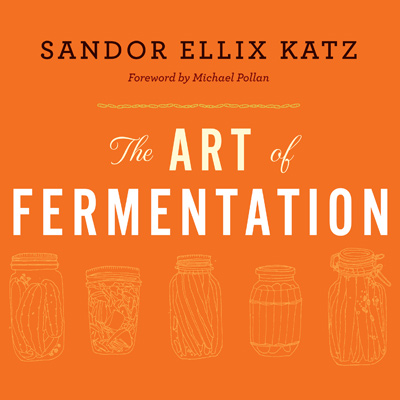
THE ART OF FERMENTATION by Sandor Ellix Katz

Just released June 12, The Art of Fermentation (with forward by none other than Michael Pollan) is sure to be the gold standard on fermentation. Katz published Wild Fermentation in 2003, at the time dubbed the “fermenting bible” by Newsweek. As the press release states for his new, elegantly understated book, he now has an additional decade of experimentation behind this one. The first book of its kind, it contains recipes, yes, but ultimately is a 400+ page textbook on all things fermentation, its history and processes, and DIY steps in a range of categories from meads, wines and ciders to meat, fish and eggs. There’s plenty of study material for food and drink folk alike, whether an extensive section on sour tonic beverages (from kombucha to kvass) or details on fermenting beans, seeds and nuts. Katz’ book makes me want to start fermenting my own potato beer immediately.

TAKE AWAY by Jean-Francois Mallet

Take Away is a lovely photo book. Released in the US in April (first released in France in 2009), this beauty of a book is a virtual escape around the world, immersing the reader in street foodscapes and dishes from Shanghai to the Ukraine. Be warned: perusing this book is difficult on an empty stomach. And for those of us who thrive on travel and exploring every nook and cranny of a city or region, Mallet’s approachable, street savvy photography also induces travel lust.

CINDY’S SUPPER CLUB: Meals from Around the World to Share with Family and Friends by Cindy Pawlcyn

Cindy Pawlcyn is one of California’s trailblazing chefs, aiding Napa in becoming a dining destination when opening Mustard’s Grill nearly 30 years ago along with subsequent restaurants, like Cindy’s Backstreet Kitchen. She’s written a few cookbooks, but I particularly enjoy her newest, out this May: Cindy’s Supper Club. A book based on favorite international recipes prepared in her supper clubs with friends, the recipes span the globe from Russia and Hungary to Lebanon, Peru, Korea. Cindy’s intros to each selected country and recipe feel comfortable, like a chef chatting about their travels and technique as you sit with them in their kitchen. Though recipes tend toward the heartwarming, soulful kind, many list more than ten ingredients and aren’t exactly simple. But for cooks ready to try something new yet not fussy, adventure lies within these pages, whether Flemish meatloaf in spicy tomato gravy or white gazpacho (made of white bread, milk, almonds, garlic, olive oil, sherry vinegar) with peeled white grapes.

PLATS DU JOUR: the girl and the fig’s Journey Through the Seasons in Wine Country by Sondra Bernstein

Just see if you don’t long to move to Sonoma after spending time with Plats du Jour, a large, photographic book capturing Sonoma’s vibrancy. With a range of recipes from Sondra Bernstein’s beloved girl and the fig duo and Italian restaurant, Estate, the book journeys well beyond recipes. Sectioned by seasons, there’s highlights on wine, cheese, and produce, pairing possibilities, origins of foods, cocktail hour menus, and seasonal menus to recreate at home. Interspersed throughout are drink recipes, such as the perennially popular lavender mojito from girl and the fig http://www.platsdujour.net/#!home/mainPage. Photos and stories of trailblazing Sonoma farmers keep the reader rooted to a sense of place. Though the variety of info might initially seem disparate, it weaves into an inspiring whole urging one to seek out ingredients from their own farmers markets and entertain or cook inspired by the invigorating spirit behind Bernstein’s book and the artisans of Sonoma.

SWEET CREAM AND SUGAR CONES
by Kris Hoogerhyde, Anne Walker, and Dabney Gough

Bi-Rite’s ice cream essentially needs no introduction. For those in San Francisco, it’s already an institution. For foodies nationally, the beloved market’s ice cream has been written up in most national food magazines, among the best ice creameries in the country. Thankfully this spring, founders Anne Walker and Kris Hoogerhyde, along with writer Dabney Gough, have released a book, Sweet Cream and Sugar Cones, sharing many of Bi-Rite’s lauded recipes (yes, their legendary salted caramel ice cream, which spawned dozens of imitations around the nation, is included), and many more besides, including sweets far beyond ice cream, from cookies to pie. The book is grouped in ingredient-themed sections like chocolate, coffee, vanilla, citrus or nuts. I take to the herbs and spices section with recipes like basil or peach leaf ice cream, picante galia melon pops, and my favorite Bi-Rite flavor of recent years, Ricanelas (cinnamon and Snickerdoodles). Having already tried a couple of the recipes, they are easy to follow, and, of course, delicious.

SUNSET EDIBLE GARDEN COOKBOOK

Sunset has cornered DIY gardening and cooking for decades in their magazine and cookbooks, with recipes and step-by-step gardening instructions. Their latest book, Edible Garden Cookbook, just out this spring, is another winner with accessible recipes, growing-harvesting-storage-cooking tips and varietal lists on a wealth of vegetables (from peas to cucumbers), herbs (mint to thyme), and fruits (melons to stone fruit). Creative recipe twists enliven everyday dishes like an icebox salad layered in a casserole dish or kabocha squash filled with Arabic lamb stew.

THE BROKEASS GOURMET COOKBOOK by Gabi Moskowitz
(Review by Andi Berlin)

Chasing the elusive paycheck is a tiresome routine, but at least it’ll taste good with the new BrokeAss Gourmet cookbook from San Franciscan Gabi Moskowitz (not to be confused with Broke-Ass Stuart.) The former kindergarten teacher-turned-caterer-turned-Internet-celebrity founded the website BrokeAss Gourmet after seeing friends laid off from tech jobs and eating junk. Taking a conversational, gal-pal tone, Gabi guides us through the essentials of running an eclectic kitchen – from stocking a full pantry to boosting cheap proteins with flavorful sauces. Recipes like vegetable lasagna with wonton wrappers demonstrate her craftiness. The book is high on kitsch: rather than photographs, illustrations of animals stand beside cheeky anecdotes (“Because bacon really does make everything better.”) Moskowitz paints a vivid Bay Area landscape, adapting several recipes from ethnic joints and buzzy spots like Bakesale Betty. And if she relies too heavily on sriracha sauce, forgive her. When you’ve got to shove off to work early morning after morning, it’s often the call of the rooster that gets you going.

Subscribe to Virgina’s twice-monthly newsletter, The Perfect Spot, www.theperfectspotsf.com

Why?

44

steve@sfbg.com

Just a couple years ago, it seemed like the golden age of marijuana in San Francisco, the birthplace of the movement to legalize medical pot and a national leader in creating an effective regulatory framework to govern an industry that had become a legitimate, respected member of the business community.

More than two dozen patient cooperatives jumped through a variety of bureaucratic hoops to become licensed dispensaries, most of them opening storefront businesses that were often the most attractive, clean, and secure retail outlets on their blocks, sometimes in gritty stretches of SoMa, the Tenderloin, or the Mission.

“Pretty much everyone involved agrees that San Francisco’s system for distributing marijuana to those with a doctor’s recommendation for it is working well: the patients, growers, dispensary operators, doctors, politicians, police, and regulators with the planning and public health departments,” I wrote in “Marijuana goes mainstream” (1/28/10).

Since then, San Francisco’s medical marijuana industry has only become more established and professional, complying with new city regulations (such as changing how edibles are packaged to avoid tempting children), paying taxes and fees — and making very few waves. According to city officials, there have been almost no complaints from anyone about the dispensaries — and in San Francisco, people complain about everything.

But in the last six months, the full force of the federal government has brought the hammer down hard on this budding business sector, forcing the closure of eight brick-and-mortar dispensaries and instilling paranoia and insecurity in those that remain.

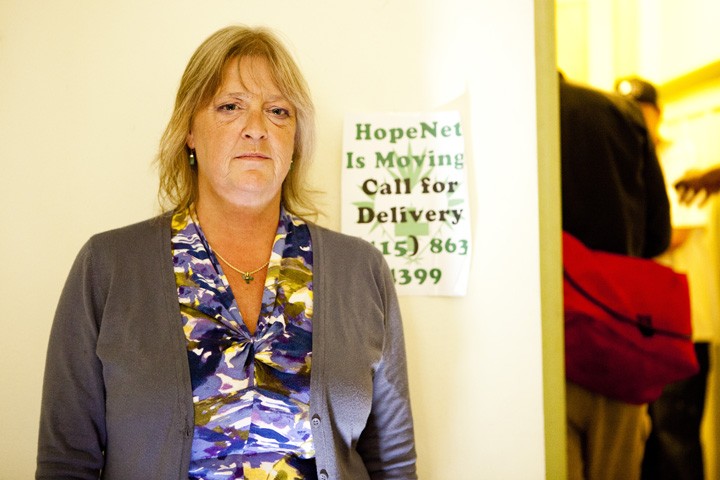
In just the past few weeks, two of the city’s oldest and most respected dispensaries –- HopeNet and the Vapor Room -– were forced to close their doors.

There’s been little rhyme or reason to which clubs get those dreaded letters warning operators and landlords to shut it down or be subject to asset forfeiture and prison time — and the officials involved have refused to explain their actions, except with moralistic anti-drug statements or unsupported accusations.

“These are people who played by the rules and paid their taxes, and now they’re being punished for it,” said Assembly member Tom Ammiano, a leader in creating a state regulatory framework to govern the distribution of medical marijuana, which California voters legalized in 1996. “This is pure thuggery. They are ignoring due process out of blind prejudice and ambition.”

Ammiano met with Melinda Haag, the US Attorney for the Northern District of California, who has coordinated the local crackdown from her 11th floor office in the Federal Building near City Hall, shortly after she announced her intentions to go after medical marijuana. He said she was like a throwback to a less enlightened era.

“In talking to Haag, not only is she a bit of a bully, but she’s totally uneducated about the issue,” Ammiano told us. When she told him that her office has received many complaints about the dispensaries, he asked to see them -– even making a formal Freedom of Information Act document request –- but she has yet to produce them. “Her duplicity is very moralistic, it’s like going back 100 years.”

Neither Haag nor anyone from the White House or Justice Department would grant an interview to the Guardian to discuss the reasons for and implications of the crackdown, or to answer the list of written questions her office asked us to submit. Instead, Haag gave the Guardian this statement and refused to respond to our follow-up questions:

“Although all marijuana stores are illegal under federal law, I decided to use our limited resources to address those that are in close proximity to schools, parks and playgrounds and operations so large that they constitute marijuana superstores. I hope that those who believe marijuana stores should be left to operate without restriction can step back for a moment and understand that not everyone shares their point of view, and that my office has received many phone calls, letters and emails from people who are deeply troubled by the tremendous growth of the marijuana industry in California and its influence on their communities.”

But in San Francisco, where more than 80 percent of residents consistently support medical marijuana in polls and at the ballot box, most people don’t share Haag’s point of view. And city officials contest many of her claims, from saying the dispensaries are “left to operate without restriction” to her implication that they promote crime or endanger children to the haphazard way she has targeted dispensaries to the characterization that many people are “deeply troubled by the tremendous growth of the marijuana industry.”

In fact, to talk to city officials, virtually nothing Haag says is true.

“We’re not getting nuisance complaints [about the dispensaries],” Dr. Rajiv Bhatia, the city’s medical director who oversees regulation of the dispensaries by the Department of Public Health, told the Guardian. “We’ve had very few complaints over the years and good cooperation with the storefront part of the regulations.”

Almost across the board, city officials and club operators praise one another and the cooperative relationship they’ve established over the last four years. Some of San Francisco’s biggest dispensaries have somehow avoided Haag’s wrath, but their once-open operators are now afraid to speak publicly, warily checking the mailbox each day. A thriving industry eager to pay its taxes and submit to regulation is being driven back underground, with all the uncertainty and hazards that creates.

“The question everyone is asking: Why here, why now, why these businesses? Nobody knows the answer,” Bhatia said. “We’re left to speculate and guess about motives.”

MULTI-AGENCY ATTACK

The federal crackdown has been stunning in both its speed and breadth, with various federal agencies coordinating their attacks. The IRS is auditing the biggest clubs and denying write-offs for routine business expenses, the DEA is threatening asset forfeiture efforts, and Haag and the DOJ are threatening prison time and court injunctions.

Underlying all of that is President Barack Obama, who pledged not to use federal resources to go after those in compliance with state law in the 17 states where medical marijuana is legal. Then, last year, Attorney General Eric Holder suddenly announced a new policy: “It will not be a priority to use federal resources to prosecute patients with serious illnesses or their caregivers who are complying with state laws on medical marijuana, but we will not tolerate drug traffickers who hide behind claims of compliance with state law to mask activities that are clearly illegal.”

When we sought an explanation and clarification from the White House Communications Office about why well-established medical marijuana collectives carefully operating under California law were suddenly deemed “drug traffickers” that wouldn’t be tolerated, they refused to answer and referred us to a statement Obama made to Rolling Stone magazine.

“What I specifically said was that we were not going to prioritize prosecutions of persons who are using medical marijuana. I never made a commitment that somehow we were going to give carte blanche to large-scale producers and operators of marijuana -— and the reason is, because it’s against federal law. I can’t nullify congressional law,” Obama told the magazine.

That simplistic explanation – which conveniently ignores how people are supposed to get this medicine – has infuriated local growers and patients. It’s particularly galling for those who supported Obama and took him at his word in the last election, and who don’t understand why he is suddenly escalating the federal war on drugs, ignoring local laws and values, and re-criminalizing their communities.

FUNERAL PROCESSION

Hundreds of medical marijuana supporters gathered on Aug. 1 for a New Orleans-style funeral procession at the Lower Haight intersection near where Vapor Room had operated -– without incident and with praise as a model business from three successive district supervisors –- from 2004 until the previous day.

The mood was festive and defiant on that sunny afternoon, where advocates from both sides of the bay gathered to express solidarity with the closed clubs and resolve to battle through the recent setbacks.

“I’m feeling the fight,” Steve DeAngelo, star of the reality television show Weed Wars and head of Oakland’s Harborside Health Center, which received Haag’s shut-down-or-else letter last month, told the Guardian. “I don’t think we can allow taking a few hits to break our spirit….We started this struggle to win it and we’re not going to stop until we do.”

Local politicians and business leaders also came to offer their support.

“As president of the Lower Haight Merchants Association, I’m upset that Vapor Room had to shut down,” Thea Selby, who is also running for the District 5 supervisorial seat, told us. “The Vapor Room did a lot of good for this neighborhood and was a great business.”

Marchers, most clad in black, carried “Cannabis is Medicine: Let States Regulate” and other signs -– as well as a makeshift coffin and massive puppet depicting a scowling Haag -– and danced down the middle of the street as Brass Mafia horns belted out lively jazz tunes. By the time the procession reached Haag’s office at the Federal Building, a chill fog had darkened the skies and the mood.

DeAngelo took the bullhorn first and called out Obama directly: “Either you were lying, sir, or your employees are out of step with your policies.” Steph Sherer, executive director of the DC-based Americans for Safe Access, told the crowd, “We need to tell Obama to lose Haag or lose California.”

Ammiano and the other mostly Democratic Party politicians who spoke tried to avoid putting Obama directly into the crosshairs of the angry activists, although he did say those executing this crackdown “are harming Obama’s chances of winning.” He also urged activists to put the pressure on politicians in Sacramento and Washington DC: “We need to be a voice in reshaping what’s happened in these last few months.”

Ammiano said the crackdown “empowers the cartels and the people who use violence,” contrasting that with San Francisco’s civilized approach to regulating marijuana.

“We in San Francisco have been a model for how to regulate this industry and we have been successful. We are not going to let the federal government interfere with our rights in this city,” Sup. David Campos told the crowd.

Cathy Smith, the founder of HopeNet, who was still reeling from watching her club gutted and shuttered the day before, also sounded an angry and defiant tone, urging supporters to make their voices heard by Haag and others.

“Everybody that’s here needs to go up to this evil woman’s office tomorrow and tell them what we think,” Smith said.

The general feeling was that if the feds can target model clubs like HopeNet and Vapor Room –- which had deep community roots and generous compassionate care programs for low-income patients -– then all clubs are in danger.

“I’m very upset that we’re losing two great medical marijuana dispensaries where patients could medicate on site,” said David Goldman, a local ASA activist and member of the city’s Medical Cannabis Task Force, noting how important that is for patients who live in apartments that ban smoking.

HopeNet and Vapor Room were some of the only dispensaries in town where smoking was allowed on site, because they were more than 1,000 feet from schools, playgrounds, or day care facilities, the city’s standard. Bhatia said that’s a very strict standard in a city as dense as San Francisco, which is why only four clubs ever met it.

Yet the feds saw things differently, ostensibly targeting HopeNet because a small private school opened two blocks away last year, and the Vapor Room because the feds didn’t use the city’s standard of being more than 1,000 feet from the playground at Duboce Park, instead deciding the dispensary was a community menace because it was a little under 1,000 feet from that dog-friendly park’s nearest patch of grass.

LAST DAYS

Vapor Room founder Martin Olive was a bundle of complicated emotions on the club’s last day in business (it will still operates as delivery-only, just like HopeNet, Medithrive, and a few other shuttered clubs have done). Initially, he didn’t want to talk to us: “I’m trying to keep a lower profile because it’s scary out there now.”

But he slowly opened up and tried to describe the feeling of watching his proudest accomplishment so rapidly undone by the one-two punch of a letter from the merchant services company cutting off credit card access (just like every dispensary in the city, returning pot sales to a cash-only status) followed days later by Haag’s shut-down letter.

“It’s complicated emotions that I’m feeling -– let down, confused. At the end of the day, I don’t understand why this is happening,” Olive said. “It’s a community tragedy, it really is.”

Vapor Room was a welcoming gathering place for its members and a supporter of a variety of community events and causes.

“I’ve always treated this as if it were just a nice coffee house. I’m not an outlaw,” Olive said. “I almost forgot I was breaking federal law. It was so normal, so legitimate.”

In fact, some club owners say their establishments helped clean up rough streets. “We took care of the entire block. Before us, it was all dealers, so there’s a safety issue,” HopeNet’s Smith told me as the once-welcoming club on 9th Street near Howard was reduced to bare walls.

Patients were also feeling the pain, including a 48-year-old ex-con who said he was paroled two years ago after serving 25 years in prison for attempted murder. “I have anger issues, big time. The only thing that keeps me calm and quiet and not blowing up is medical marijuana,” he told us, seething, before praising HopeNet’s “homelike environment” and supportive community. “It’s important to sit and relax in an environment that is comfortable and safe. All this is doing is pushing us into the streets.”

DRIVEN UNDERGROUND

Before going through his latest official misconduct battles and fighting to return to his job as the elected sheriff, Ross Mirkarimi was the District 5 supervisor who sponsored the creation of the city’s medical marijuana regulatory system, the product of a long and arduous legislative process.

“We developed the system out of stark necessity because neither local government nor state government gave a roadmap to the dispensaries,” Mirkarimi said. “Prop. 215 legalized medical marijuana, but there were no rules around it.”

After an intensely collaborative process that lasted more than a year, the city in 2005 adopted a process for licensing dispensaries that balanced the needs of this nascent industry with concerns by police, patients, disability rights activists, neighborhood groups, and health officials. Mirkarimi said that maybe it’s time for city officials to consider an idea he floated a few years ago of having the city itself directly distribute medical marijuana through General Hospital.

“I still think that’s a good idea, particularly if the feds are going to force medical marijuana dispensaries back into the dark ages.” For all his praise of the city’s dispensaries, Dr. Bhatia will admit that the industry still needed better oversight -– dealing with issues such as standards for growing and transporting cannabis, fiscal transparency, and potency and dosage standards –- but the federal crackdown has scuttled his efforts to expand the city’s regulatory system.

“This DEA action stops us from making progress on the regulation of clubs that we need to make,” Bhatia said. “There are lots of issues, but we had just finished getting the clubs into their housing.” Now the industry is being driven back underground.

Ironically, Haag and other federal officials have accused dispensary operators of profiteering, which they’ll certainly be more free to do now that local officials have lost their leverage to begin regulating the finances of the supposedly nonprofit patient collectives that officially operate each dispensary.

“That was one of the areas that we never developed the tools or capacity to look at,” said Bhatia, who proposed more transparent record-keeping by dispensaries last year, only to have the operators express concern about how the feds might use that information, which turned out to be an understandable fear.

Oh no they didn’t! Hilarious horror stories at Mortified

6

Why is it that I like myself most when looking back on my years as a college freshman, drunkenly spooning peanut butter into my mouth amid the squalor of my dirty kitchen? Why is it that I appreciate a boyfriend most when I see his elementary school photos and realize he used to look like a well-fed lizard in glasses?

I’m going to wager that it isn’t my own affinity for the less-than-socially acceptable and is actually a testament to the fact that humans often love that which is most, well, human. And humanity has the tendency to do some painfully embarrassing stuff.
 
This is the concept that drives Mortified, a collection of short readings and performances of the sometimes brilliant, sometimes artistic, sometimes sad, and always humiliating personal musings its performers created as children and teens. The brainchild of creators and producers Dave Nadelberg and Neil Katcher, Mortified has a constantly changing cast, mainly consisting of adults who have, fortunately, left most of their adolescent angst behind — but still have plenty of stories to tell about it.

The DNA Lounge is surprisingly conducive to theater, with its upper balcony offering unobscured views of the performers. On Aug. 10, the night’s first performance was by Orlando, Fla. native Jessica Wassil, reading from her teenage diaries. There isn’t much to do in Orlando, the edgy-looking brunette explained in her introduction, and thus her 14-year-old self saw no other alternative to the cultural void than to eat Butterfingers by the truckload and obsess over football players who didn’t know she existed.
 
Wassil’s excerpts treaded not-so-lightly on the line between funny and cringe-inducing, with her bellowing laments of insecurity and unrequited love making the audience members guffaw, but also tempting them to crawl under their seats. Her powerhouse opening excerpt, describing what indeed seemed to be the “worst Valentine’s day ever” (eating Snickers for breakfast and then soiling herself at school) had tears of ambiguous varieties streaming from the audience’s eyes.
 
But it’s okay, because now she’s totally cute. And kind of a hipster. And probably pretty awesome, given her confidence to stand alone on a stage and read almost grotesque confessions from her youth.
 
However, Heather Aronson’s accounts of a being an underage metalhead were anything but sad. Her diary entries read more like an epistolary novel addressed to the guitarist of Def Leppard, to whom a young Aronson’s commitment resembled a nun’s devotion to God. Kinda freaky. And such was the collective opinion of Aronson’s classmates in her first year at a new high school.
 
And yet, the admittedly girly but nonetheless badass actions of the head-banging teen were wholly awesome. She backed boys into corners, scored concert tickets, got drunk, made at least one friend, and — as the piece’s climax and finale went — cussed out the haughty girls at her school, kicked in her science classroom’s door, and ends her high school year of hell in appropriately metal fashion.
 
The “Worst Teen Poetry Slam,” for which Mortified creator Dave Nadelberg traveled from Los Angeles to San Francisco, offered some variety in the evening. The first contestant was businesswoman Lisa Ratner, who read adolescent love poetry directed toward one particular (and, it seemed, totally undeserving) young man.

Imagine any lovesick and slightly pathetic tween’s poetry, then add in a strong penchant for metaphors about kings, queens, stardust, and chariots, and you’ve got the general aesthetic of Ratner’s collection. Nadelberg was the night’s second contestant, and eventual winner, thanks to some awkwardly erotic poetry about “world music” just bizarre enough to offer a refreshing reminder that teens aren’t only pitiful … they’re also weird as hell.

“What’s in the bag, Mr. Pips?” began Nadelberg’s ode to bagpipes. He had me at that.
 
Lily Sloane’s confessions of a boy-crazy, coffee-shop working, rock’n’roll loving, and prematurely cynical teen girl were perhaps an unspoken dedication to all those 15-year-old girls who know they’re cool but, goddamn it, why doesn’t anyone else realize it? Covering her insecurities with swearwords yet always admitting to her own faults and adorably neurotic self-awareness, Sloane shared oodles of unwittingly fantastic one liners. (“That little fucker better call me” ended one entry about the boyfriend for whom she incessantly pined.)
 
Her piece, however, was best punctuated by the live performance of her fifth and sixth grade musical stylings, with which she angrily serenaded her parents: “I have to be cute when we have guests/I don’t want to wear my little pink dress.”
 
San Francisco show producers Scott Lifton and Heather Van Atta programmed wisely by choosing to end the night’s series of confessionals with Ezra Horne. His diary of an overweight, closeted Mormon boy read like a Daniel Pinkwater coming-of-age novel, with daily accounts of the number of times he looked at porn (which he coded as “P”) or masturbated (creatively delineated by the letter “M”).
 
He thought he was a fat, lazy, slob. He was jealous of his friends. He made secretly-self hating speeches at church. He knew he would never get into the celestial kingdom. And yet, by the end, there was some hope in Horne’s brash yet somehow whimsical musings. He ended his piece with an epilogue: his eventual coming-out was a well-supported, smooth transition by his family and community. Currently happy and in love, Horne said: “I was always hoping God would fix me. But God can’t fix me because I’m not broken.”
 
And that could be the moral for all the of night’s performers: despite horror-story, silly-stupid childhoods, they’d all moved on nicely.
 
Mortified officially began in 2002, and this is by no means the first Mortified SF installation. Speaking with audience members, it’s evident that every show is different. According to the unnamed gentleman on my right, this show “wasn’t even as funny” as the last.
 
And that may prove my thesis: the concept behind Mortified is brilliant to the point where I’m not quite sure where any Mortified show could go wrong, with its ability to lovingly yet bluntly look at personal and painful topics.
 
The series returns to the DNA Lounge Sept. 14; the group will also make a special performance at the SF Improv Festival Sat/18.

Appetite: Under the stars in Guerneville

0

Amid towering redwoods, summer heat, and parties along the Russian River is the small town of Guerneville, one of Sonoma’s most unique towns, with its vibrant gay community, laid back river culture, and haunting redwood state park. On a recent idyllic summer weekend, barbecues and live, twanging bands added color to the bustling main street.

Foodies have a destination cafe-restaurant in Guerneville’s Big Bottom Market, which was opened last summer by co-owners Michael Volpatt and Crista Luedtke (the latter owns neighboring boon hotel + spa and boon eat + drink restaurant). Big Bottom draws crowds for breakfasts, lunch, and for anytime cups of my favorite Sonoma County coffee, Flying Goat‘s special blend for the cafe. The cafe’s breakfast biscuits ($3-9) are stuffed with a changing array of goodies like bananas, peanut butter, strawberries and white chocolate, or ham, Swiss, and dill pickle (loved the mustard in the latter but lamentably had to hunt for the ham.) Offerings change daily, but the day’s special is easily ascertained — each biscuit is adorned with a bit of its filling.

Big Bottom Cafe’s superlatively-stuffed biscuits. Guardian photo by Virginia Miller

My recent weekend in Guerneville coincided with the launch of Big Bottom’s dinner service (Thursdays-Saturdays only, 5-9pm). Executive chef Tricia Brown cooked at one of my all-time favorite restaurants, Gramercy Tavern in NYC, moving from Brooklyn to Sonoma for a lifestyle change. With that pedigree, it’s no surprise that she’s cooking an elevated style of cafe food. In the rustic, touch-of-farmhouse shop lined with wood floors and wine and gourmet food items for purchase, dinner means comfort food, like a Moroccan chicken tagine ($18), or apricot-studded couscous laden with Castelvetrano olives and toasted almonds, or green-chile-cheddar turkey meatloaf ($17) over chipotle mashed sweet potatoes.

Unexpectedly, sandwiches ruled: pinot pulled pork covered in spicy BBQ sauce ($16) and garlic aioli smeared on a toasted brioche, both with sides of bourbon-bacon baked beans and cilantro-lime coleslaw ($4 individually or 3 for $11.) There was also a sandwich special of wild salmon that was softly pink, almost medium-rare, topped with slaw on buttery brioche. Both were made with care, blessedly robust in flavors and texture. Chilled cucumber soup spiked with mint and yogurt ($6) was a refreshing summer starter. Only a large pile of dry crostini felt out of place on a mezze platter ($9) of roasted red pepper hummus, lentil walnut pate, cucumber red onion yogurt salad, and olives.

Small, local winemakers are featured on the wine menu, including a few of my go-tos like Thomas George Estates and Unti. It also features different winemakers like Sonoma’s Paul Mathew Vineyards, whose vintages are made by winemaker Mat Gustafson. I sampled all three of Gustafon’s featured wines, like a mineral 2010 Weeks Vineyard Chardonnay that held slight citrus notes from its stainless steel aging, rounded out by a hint of oak. I found the 2011 Knight’s Valley Valdigue most interesting (and the most affordable at $7 glass/$33 bottle.) It’s a chilled wine more akin to a Lambrusco or other chilled red with dry, strawberry notes, earthy yet bright.

Certainly when in Guerneville, one can enjoy the retreat-like (though dated) Applewood Inn, but Big Bottom Market hits at a lower price point, though its obviously more casual. For a sleepy small town in the redwoods, nestled between vineyards and ocean, the Market’s casual-gourmet approach feels appropriate.

End the night at Rio Nido Roadhouse dancing under the stars out back to live music (blues, classic rock, etc.) Were it not for the redwoods and that clean, crisp Sonoma air, the crusty older cowboys, families, and dive bar setting would be enough to convince you you’re in a small Texas town, embracing the warm summer night.

Big Bottom Market

16228 Main St., Guerneville

(707) 604-7295

Subscribe to Virgina’s twice-monthly newsletter, The Perfect Spot, www.theperfectspotsf.com


Poppin’ off

1

TRASH The late, beloved Werepad begat the Vortex Room, the former closing when co-founder Jacques Boyreau moved from SF to Portland, Ore. But ties between those concerned with both venues remain tight, and August is a big month for them all. Firstly, it sees the release of Boyreau’s latest coffee table tome, Sexytime: The Post-Porn Rise of the Pornoisseur (Fantagraphics, 96pp., $29.95). Really, you might ask, does there need to be a book devoted to full color reproductions of posters from the “golden age” (circa 1971-82) of XXX features?

Ohhhh yes. These hundred pages excavate a retro wonderland of film-shot sleaze with the usual tasteless ad lines (Finishing School: “She took a cram course in pleasure”) and graphics variably dime-novel crude, psychedelic, and disco-era slick. There are titles topically trendy (CB-themed Breaker Beauties; Erotic Aerobics; Patty Hearst-inspired Tanya) and parodic (Blazing Zippers; One Million Years AC/DC; Flash Pants). There’s even cautionary sexploitation, as the sheet for 1976’s Female Chauvinists warns “DO YOU KNOW: Women libbers are planning to take over the world? That they have recruiting camps in every corner of this planet?” So that’s where Rush learned about feminism.

Meanwhile back at the Vortex, the venue’s fifth anniversary is being celebrated through the month’s end with a Pop art-themed series of Thursday night double bills. It doesn’t get any more Pop, or Op, than incredible and inexplicable The Touchables, which despite its obscurity today was actually a mainstream 20th Century Fox release in 1968. Ah, the Sixties. This was just a simple tale of four Swinging London model types who, after stealing a Michael Caine dummy from Madame Tussauds, decide to be more ambitious and kidnap a live male pop star. They then take him to their giant-inflatable-plastic-dome country hideaway, torture him with sex play and go-go dancing, and unknowingly await the arrival of gangsters hired by a gay wrestler who also covets the abducted lad.

You know, that old story. Keen minds thought up this insanity: Robert Freeman, the Beatles’ “official” photographer making his directorial debut, cooked up the screenplay with Ian La Frenais (future Tracey Ullmann collaborator) and Donald Cammell (soon to be responsible for 1970’s Performance and 1977’s Demon Seed). The Touchables‘ co-feature is the almost equally daft Deadly Sweet (1967), another Swinging London artifact, albeit one directed by Italian Tinto Brass, who had yet to meet Caligula or his true calling as ass-man equivalent to Russ Meyer’s boobaholic in the softcore sexploitation hall of fame.

Next week things settle down a bit with Streets of Fire, Walter Hill’s fetishistically stylized 1984 music-video fable, and 1971’s Captain Apache, a weak Euro Western enlivened by a trip sequence and Carroll Baker’s apparent belief that she’s acting in a farce.

Then the weirdness level rises dangerously again August 23, with two lysergically bent missives from the “turbulent” decade. From 1969, Cult of the Damned (a.k.a. Angel, Angel, Down We Go) is the least-known of American International Picture’s psych flicks, and no wonder — compared to giddy The Trip (1967), Psych-Out (1968), and Wild in the Streets (1968), it’s a twisted downer. Future feminist singer-songwriter icon Holly Near plays the plump, unhappy only child of a jaded Hollywood couple whose household is seduced whole by rock singer Bogart (Jordan Christopher) and his entourage. Advertised with “If You’re Over 30 This Is A Horror Story,” Robert Thorn’s only directorial feature is rancid, baroque, and bizarre to no end, offering the opportunity to hear Roddy McDowell say “Baby man, I am just sexual. Like sometimes I can just stare at a carrot and baby man, that carrot can turn me on,” as well as Jennifer Jones (as mom) brag “I made 30 stag films and never faked an orgasm.” (It should be noted that shortly after completing her role, Jones had a nervous breakdown.) Cult‘s co-feature is 1962 sci-fi oddity Creation of the Humanoids, which was purportedly Andy Warhol’s favorite movie — that should be recommendation enough.

The series’ final bill moves upmarket to showcase two expensive early 1970s flops. You may search in vain for defenders of 1972’s Bluebeard, which features Richard Burton as the famed ladykiller and an array of Eurobabes as his victims — alas, not including American lounge-act extraordinaire Joey Heatherton, whose final wife is by far the most annoying but lives to tell. For a movie that features Raquel Welch as a nun, it’s pretty slow going, despite some imaginative production design and hints of a satirical zest that old-school Hollywood director Edward Dmytryk just couldn’t grok.

A more rewarding curio is 1974’s 99 and 44/100% Dead, a gangster spoof that supposedly represented a career nadir for director John Frankenheimer. (Actually, his nadir came the prior year with Story of a Love Story, one of those movies so interesting in concept and cast you can’t imagine it’s worthless — until you see it.) What can you say about a film that features Chuck Connors as a thug who screws different lethal weapons into his severed arm socket? Plus a rare appearance by the mysterious Zooey Hall of I Dismember Mama (1972) and Fortune and Men’s Eyes (1971)? That it can’t be all bad, and in fact it isn’t.

POP GOES THE VORTEX

Thursdays through Aug. 30, 9pm, $7

Vortex Room

1082 Howard, SF

Facebook: The Vortex Room


Cocktales

0

virginia@sfbg.com

FOOD AND DRINK It was another humid, sweltering year at Tales of the Cocktail in New Orleans. The world’s biggest cocktail event drew thousands of attendees July 25-29 for a week of nonstop tastings, seminars, and parties in the great queen of the South.

Any reason to be in Nola is a good one and with the city overrun with some of the world’s best bartenders, brand ambassadors, writers, and distillers, it was as usual, one long party. Here’s a few highlights — read the rest online at sfbg.com.

SF REPRESENTS

Though Tales’ Spirited Awards continue to be dominated by winners from Europe and New York , particularly London, this year San Francisco made a dent that still only hinted at our long-established cocktail culture. At Thursday night’s Bar Room Brawl, bars from six US cities fielded teams that served up special drink menus as brass bands blew. The winner of this showdown, and by extension, the tile of best cocktail bar in America? Our own Beretta. Ryan Fitzgerald, Jennifer Colliau, Enrique Sanchez, and a hard-working crew of SF bartenders ecstatically accepted a giant trophy.

Scott Baird, Josh Harris, Alex Straus of the Bon Vivants deservedly won the John Lermeyer award for good behavior at the Spirited Awards. It was a joy watching them be acknowledged for their humanitarian work. In addition to painting over 30 New Orleans charter school classrooms with a team of volunteers, the group threw its third annual Pig and Punch school fundraiser on Saturday in Washington Square Park. With delicious barbecue (whole hog, y’all), Don Julio and George Dickel punches, and a crowd of over 800 people, it raised over $21000, a shining example of how to have fun and give back at the same time.

With two of the four nominees for Spirited Awards’ best restaurant bar award being from SF (the other was the wonderful Bar Agricole), it was a delight to see the ever-talented Erik Adkins win for the Slanted Door. He’s done equally impressive work behind Heaven’s Dog. I wish more US bars would win awards at Tales — and that the list of those honored would be a little more up to date. Often, places are nominated that were great or established years ago. Though I adore the town and have been to all the bars that were nominated from London, I can’t help but notice that the US isn’t represented at its Cocktail Week. Why shouldn’t we reserve a platform to more specifically acknowledge the fantastic bars right here in the States?

JAPANESE WHISKEY HAVEN

Thank you to Suntory for what was my top highlight of Tales: an intimate, invite-only tasting room in a warehouse district loft. Down a candlelit hall stood a white room punctuated by glowing bar, decorative kimono on loan from a Paris museum, and mini-tables lined with vials of single barrel whiskies from the Suntory line for us to mix and pour over hand-cut ice.

Michael Mina corporate chefs Lincoln Carson and Gary Lamorte flew out to cook four exceptional bites. I’m still dreaming of the 76-degree sous vide egg strained through a siphon, so creamy served over vanilla brioche and bacon. Cool banana mochi on top of golden raisin puree elicited a long sigh of delight. The space’s zen-like peace and the camaraderie I found there with my fellow whiskey aficionados were spectacular, and the afternoon was made a landmark event by a bar stocked with Hakushu 25-year, Yamazaki 1984, Hibiki 30-year, and other extremely rare, unavailable in the US Japanese whiskies. While I would be hard pressed to chose a favorite, Yamazaki ’84 lingered on my palate long after I returned to the blinding heat outside.

FIRST TASTES OF UNRELEASED SPIRITS

Meeting with distillers and previewing unreleased spirits are key reasons I go to Tales, even if there wasn’t an overwhelming amount of new offerings in 2012. This year, I spent time with WhistlePig master distiller Dave Pickerell, who was also a Maker’s Mark master distiller for 14 years. Pickerell told me I was the very first to try his upcoming October Whistlepig release, TripleOne. This is a 111 proof rye versus the standard 100, aged 11 years in place of the typical 10. The bracing TripleOne doesn’t boast quite as long a finish as Whistlepig’s flagship rye, but it’s even more complex, surprisingly akin to applejack or Calvados at first sip, opening up into spicy rye body with citrus and chocolate notes. American whiskey fans, watch for this one.

AMARO/AMARI 

You say amaros, but I say amari (short grammar lesson about the plural for amaro). The bottom line is amaro (Italian for “bitter”), the wide range of herbal liqueurs commonly sipped as after-dinner digestifs in Italy, has been hot for the past few years and only continues to get hotter. Though there are still countless amari not yet imported from Europe, big names like Fernet and Cynar have ushered bitter liqueurs into the mainstream. Amari popped up all over Tales, most notably in the fortified and aromatized wines tasting room highlighting port, sherry, etc. Not to mention some of the US’ best vermouths like SF’s Sutton Cellars and Imbue in Portland. The highlight of the tasting was Neil Kopplin pouring Imbue’s debut of brand new Petal & Thorn, a gorgeously bitter gentian liqueur using homegrown beets for color, alongside cinnamon and menthol.

On the Italian front, The Spirit of Italy threw a two-morning brunch hosted by Francesco Lafranconi and featuring seven producers: Amaro Lucano, Luxardo, Moccia, Nardini, Pallini, Toschi and Varnelli. Lafranconi’s cocktails stole the show, there was an addictive Amaro Lucano-bourbon milk punch and Zabov NOLA coffee. Zabov is essentially zabaglione (the Italian dessert of whipped egg yolks, sugar, sweet wine) in a bottle. It was a little sweet on its own but fascinating in texture and in the coffee cocktail. On the other end of the spectrum, Varnelli’s expensive ($52), uber-bitter Amaro Sibilla is a complex delight, unfolding with chestnuts, coffee, honey, and intense bitter notes. This one is not for the novice amaro drinker.

INDIE SPIRITS ROCK

Kudos to Dave Schmier for Indie Spirits That Rock, a version of his Indy Spirits Expo here in San Francisco. Crowds thronged around small, independent spirits — methinks they need a bigger tasting room next year. I even discovered a few new spirits I had not tasted before, including West Virginia’s Smooth Ambler Spirits‘ (I’d had their Old Scout bourbon before) fascinating Barrel-Aged Gin, aromatic with orange marmalade, bitter subtleties, pine, cinnamon, and their Very Old Scout bourbon, earthy with oak, nuts, toast and butter. Few Spirits (from Evanston, IL) also offered an intriguing rye and bourbon, the former spicy, sweet, bracing, the latter smooth but not lacking in character. I look forward to revisiting each of these.

FRANCIS FORD COPPOLA’s NOLA HOME

Besides Suntory’s sacred den of Japanese whiskey, the other haven from Tales madness and New Orleans’ Summer heat was Francis Ford Coppola’s French Quarter home. By invite only, we were merely given an address, entering a candlelit walkway into a classic New Orleans courtyard and hundred years’ old home with exposed brick walls, fireplaces, grand piano and jazz duo serenading us as we sipped Krug and Inglenook wines. I stopped in more than once, grateful for a peaceful gathering on comfy couches where I ran into friends from New York to Ireland.

HOUSE SPIRITS’ MORNING COFFEE BAR

Thanks to Portland’s House Spirits for the brilliant idea of a coffee bar — with booze, of course —  every morning at an art gallery across the street from the Tales’ home base of the Hotel Monteleone. Iced Stumptown Coffee perked us up on those slugglishly hot, post-party mornings. And if one must add House Spirits’ coffee liqueur or aquavit to the coffee, so be it.

Subscribe to Virgina’s twice-monthly newsletter, The Perfect Spot, www.theperfectspotsf.com


2012 TALES of the COCKTAIL Spirited Award Winners

Winners in bold


The John Lermeyer Award for Good Behavior

The Bon Vivants 


American Bartender of the Year

Eric Alperin

Charles Joly

Jeffrey Morganthaler

Joaquin Simo


Best American Brand Ambassador

Erick Castro

Elayne Duke

Jamie Gordon

Jim Ryan


Best American Cocktail Bar

Anvil Bar & Refuge – Houston, Texas

Clover Club – Brooklyn, New York

Columbia Room – Washington, District of Columbia

The Varnish – Los Angeles, California


Best Bar Mentor

Bridget Albert

Wayne Collins

Francesco Lafranconi

Steve Olson


Best High Volume Cocktail Bar

Beretta – San Francisco, California

Clover Club – Brooklyn, New York

Eastern Standard – Boston, Massachusetts

La Descarga – Los Angeles, California


Best Cocktail Writing, Non-Book

BarLifeUK

Liquor.com

ShakeStir.com

Time Out NY


Best Cocktail Writing

Gary Regan

Robert Simonson

David Wondrich

Naren Young


Best International Brand Ambassador

Jacob Briars

Ian Burrell

Claire Smith

Angus Winchester


Best New Cocktail/Bartending Book

The American Cocktail by the Editors of Imbibe

Bitters: A Spirited History of a Classic Cure-all

Gaz Regan’s Annual Manual for Bartenders 2011

PDT Cocktail Book


Best New Product

Chairman’s Reserve Spiced Rum

Cognac Pierre Ferrand 1840 Formula

Lillet Rose

Perlini System


Best Restaurant Bar

Bar Agricole – San Francisco, California

Rivera – Los Angeles, California

Saxon + Parole – New York, New York

Slanted Door – San Francisco, California


International Bartender of the Year

Zdenek Kastanek

Alex Kratena

Sam Ross

Dushan Zaric


World’s Best Cocktail Bar

69 Colebrooke Row – London, United Kingdom

Black Pearl – Melbourne, Australia

The Connaught Bar – London, United Kingdom

The Varnish – Los Angeles, California


World’s Best Cocktail Menu

Black Pearl – Melbourne, Australia

Callooh Callay – London, United Kingdom

Clover Club – Brooklyn, New York

Mayahuel – Manhattan, New York


World’s Best Drinks Selection

Artesian Bar at The Langham – London, United Kingdom

Death & Co. – Manhattan, New York

Eau de Vie – Sydney, Australia

Salvatore Calabrese at The Playboy – London, United Kingdom


World’s Best Hotel Bar

Artesian Bar at The Langham – London, United Kingdom

Clive’s Classic Lounge – Victoria, British Columbia

Clyde Common – Portland, Oregon

The Zetter Townhouse – London, United Kingdom


World’s Best New Cocktail Bar

Aviary – Chicago, Illinois

Candelaria – Paris, France

Canon – Seattle, Washington

The Zetter Townhouse – London, United Kingdom


Helen David Lifetime Achievement Award

Gaz Regan 


Seattle’s best record store is Starbucks?

4

“This is a joke right?” “BARFING FOREVER.” “You should be embarrassed that you even thought this was acceptable.” Just few choice responses to the news up north: Seattle Weekly posted its Best of Seattle issue this week, and the winner for Best CD/Record Store? That would be Starbucks.

Granted, the massive coffee chain (yes coffee, not music) did technically start in the city, so I suppose it’s sort of local there. Sort of. But regardless, those few recorded offerings by the register are meant as an after-thought to your supersweet morning scone. Starbucks will never offer deep cuts, rare vinyl, or non-signed local bands to the public. And calling it “Best CD/Record Store” does a disservice to the great people of that city.

As Seattle Weekly posts on the subject, “Hey, why the hell not! They stock all the records you love. They’ve got the Fleet Foxes, the Spoon, the Fiona Apple, and the Jack White.” Um, what about the bands that actually won in their poll, such as Best Hip-Hop Artist THEESatisfaction, or Best Pop Band Deep Sea Diver?

For reference, Seattle does of course have actual record shops, including Sonic Boom, Jive Time Records, Easy Street, and more.

(And in case you were wondering, Amoeba Music won Best Record Store here in the Guardian’s Best of the Bay issue)

Two of SF’s most venerable cannabis dispensaries get shut down

7

Sadness, anger, and confusion hung thick in the fragrant, smoky air of two of San Francisco’s oldest and most prominent medical marijuana dispensaries – HopeNet in SoMa and Vapor Room in Lower Haight – during their last day in business yesterday, the latest victims of an aggressive federal government crackdown on the industry.

Throughout the day, vendors, patients, neighbors, and well-wishers stopped in to say goodbye and commiserate over a trend that just doesn’t make sense to them, or to the local politicians and city officials that have spent years setting up a regulatory structure that had legitimized the cannabis industry, which thrived as the rest of the economy suffered through the recent recession.

“I’ve always treated this as if it were just a nice coffee house. I’m not an outlaw,” said Martin Olive, whose Vapor Room was a friendly community gathering place and active member of the local business community that gave away free bags of vaporized marijuana to low-income patients on a daily basis. “I almost forgot I was breaking federal law. It was so normal, so legitimate.”

Despite previous promises to respect state laws legalizing medical marijuana, President Barack Obama and federal agencies under his control did a sudden about-face last year, with the Drug Enforcement Agency threatening landlords with property seizure, the Justice Department threatening prison sentences, and the Internal Revenue Service doing audits and refusing to allow routine business expenses.

The result has been the forced closure of eight of San Francisco’s 24 licensed dispensaries in the last seven months, with more closures likely in the coming months. Almost all of the remaining clubs have been forced to deal only in cash after the feds threatened their bankers and credit card companies. The industry that grows and sells California’s biggest cash crop is essentially being driven back underground, hurting patients and the sometimes gritty neighborhoods that dispensaries had improved with security systems and a flow of customers that put more eyes on the streets and cash in the pockets of nearby stores and restaurants.

“The people that live here are afraid the neighborhood is going to come back in here. We took care of the entire block. Before us, it was all dealers, so there’s a safety issue,” HopeNet founder Cathy Smith told me as the once-welcoming club on 9th Street near Howard was reduced to bare walls, noting that the owner of the Starbucks on the corner told her he expects his business to drop by 15 percent.

Olive shared the concerns expressed at HopeNet, which he considers “a sister dispensary,” one that also had a generous compassion program for giving cannabis to low-income patients and offering other free services like yoga.

“I’m curious to see what this neighborhood looks like in six months. I know what it was like six months before we got here,” Olive said of his club’s opening in 2004.

But for now, it’s over. Vapor Room continued to do business for most of the day yesterday, but HopeNet was already stripped bare and essentially shut down, and by 3:30pm they removed the cash register and their pot stock. “The signs are down, we’re no longer a pot club, break out the beer,” announced Smith’s son, Bill, a member of the cooperative, referring to one of the many tight restrictions of what the city allowed in clubs. “I’m the only one making light of things today, as a coping mechanism. I laugh so we don’t cry.”

Like the patients, vendors, and local officials we spoke to – who you’ll hear from in an upcoming Guardian cover story looking the end of medical marijuana’s golden age – Olive and Smith are grappling with a federal crackdown they say has myriad downsides and no benefits to anyone but federal agencies that profit from drug-related seizures and the criminal syndicates that now have less competition.

Both Olive and Smith say they voted for Obama in 2008, they believed his statements that he wouldn’t go after businesses that complied with state and local law, and now they feel betrayed.

“I feel fucked by it, betrayed is too easy a word,” Howard said.

“It’s complicated emotions that I’m feeling – let down, confused – at the end of the day, I don’t understand why this is happening,” Olive said. “It’s a community tragedy, it really is.”

Like MediThrive and other recently shuttered clubs, both Vapor Room and HopeNet will still be operating as delivery-only services, but the future seems less certain now that their direct, brick-and-mortar connection to their community has been severed.

They urge those concerned about the crackdown to contact their political representatives, and to turn out today (Wed/1) at 4pm for a funeral march that starts at Haight and Steiner streets near the now-shuttered Vapor Room and goes to the Federal Building on Golden Gate Avenue, where there will be a rally and speeches starting at 5pm.

Appetite: Southern taste adventures in Louisville, KY

0

Kentucky: land of bourbon, the Derby and Mint Juleps. I’m ever delighted to return to the South, although I’m connected to some areas more than others (ah, New Orleans, my love). I recently spent a week in Louisville, on the judging panel for ADI’s (American Distilling Institute) annual awards. It was an honor to judge with key spirits and cocktail industry folk, spending days tasting (blind, of course) through the latest in a broad range of small US craft spirits – winners here.

In my off time, I roamed Louisville, from downtown to Bardstown Road. Louisville is a small city, not exactly visually beautiful or dense like other US cities, but its distinctly Kentuckian treasures do unfold. The historic Brown Hotel was my home base, its player piano welcoming me with strains of Gershwin and old world elegance in the beautiful lobby.

I’m an American whiskey girl at heart (although I love all spirits), being in bourbon and rye’s epicenter is invigorating, even if I can find the region’s most rare, small batch spirits in my own city. A unique preview came in an early peek at Distilled Spirits Epicenter, shortly before it opened, essentially a distillery “for rent,” where would-be distillers have their visions crafted, try out test batches, or take classes to learn more about distilling. It was founded by David Defoe of Flavorman, a scientific flavor lab that creates sodas, juices and beverage products for numerous companies. My favorite feature is the upstairs apartment which they offer to guests using their facilities as they create a product: it’s an open, brick-walled apartment upstairs in the Flavorman building.

Here are highlights from my travels in food, cocktails, whiskey and unexpectedly the most incredible beer collection I’ve ever seen.

SERGIO’s WORLD OF BEERS
If you can find Sergio’s World of Beers (no, it’s not the dive bar next door), you will walk into an unmarked space and could wait 10 minutes for someone to even come out. I was immediately impressed by the selection of beers lining the dingy front room packed with boxes and glasses. Beer aficionados will freak out over the options available on tap. Numerous rotating beers range from Italian sours to a bourbon barrel rarity made by a guy down the street.

Sergio Ribenboim himself is an avid beer collector (read Imbibe magazine’s article about him last year). With one of the most exhaustive collections in the world, he leads tours of breweries around the globe. After the joys of the front room are uncovered, one realizes they haven’t seen anything. Stocking the halls and back rooms (not to mention Sergio’s home) are over 1000 beers for purchase from every region of the globe, including first editions of cult favorites and rarities, such as a Belgian beer, Smisje Calva Reserva, aged in Calvados barrels.

The humble shop is a beer lovers paradise, every unassuming foot of it. The Renaissance Man – the avid beer fan in my home – and I planned to stop in for 30 minutes but ended up staying over 3 hours. We chatted with Sergio and obsessed beer lovers who dropped in from all over the country, those who, like us, will make Sergio’s a must-stop whenever we’re in Kentucky.

HARVEST
To date, Harvest is my favorite Louisville restaurant. It’s the usual farm-to-table concept, long the standard where I live and more common in recent years around the country. The walls are covered with large black and white photos of Kentucky farmers who supply Harvest’s ingredients.

Here the concept invigorates local classics like the Hot Brown (see Brown Hotel’s English Grill below) in a Hot Brown pizza ($14), a brilliant twist on a local classic. Or burgoo ($16), a Southern stew laden with rabbit, pork and chicken, fresh with snow pea sprouts. Its one flaw was being far too salty so that the heartwarming bowl started to feel “one note” after a few bites.

After a starter of a pretzel bun dipped in addictive amber ale beer cheese sauce ($7) and solid cocktails utilizing house bitters, syrups and tinctures, not to mention engaging service and a manager walking the floor ensuring all of us were satisfied, I found Harvest a “whole package” kind of dining destination. No wonder they were nominated for a James Beard award this year for Best New Restaurant.

BROWN HOTEL’S ENGLISH GRILL
The Hot Brown ($22) is one of Kentucky’s signature dishes, created in 1926 at the Brown Hotel’s English Grill by chef Fred Schmidt. When bored with traditional ham and eggs, he opted for roasted turkey breast over toast points topped with bacon and tomatoes, then slathered it all in Mornay sauce (butter, milk, Parmesan, egg, cream). If that weren’t enough, it’s baked golden brown in Parmesan cheese. Brilliant. Eaten in its home base, the old world elegance of the English Grill, it’s every bit as decadent, gooey, rich, meaty and fabulous as it sounds.

MEAT
Hands-down, the best bar of my visit to Louisville was Meat – and Jared was the best bartender. We lingered for hours, till 3am, watching thunderstorms pass, filling paper bags with their revolving turntable of free snacks, a genius addition of unending servings, including Trader Joe’s favorites from mustard pretzels to peanut butter stuffed pretzels.

Jared joked and flirted with customers from the oval bar at the center of a brick-walled space tucked away upstairs in the back of a building that once housed a butchery in the trendy Butchertown neighborhood. Butcher tools and meats hang in the entrance, while the dim, glowing room is a romantic space filled with couches and comfy nooks.

The menu states, “We love the Prohibition-era cocktail movement. We love Louisville.” Instead of exactly copying big city bars, their mission is to “serve authentic and inventive beverages with a distinctly Louisvillian sense of place.” They list recipes from favorite bartenders around the world alongside house creations (all $10), while Jared whips up some off-menu beauties, including an effervescent mix of Del Maguey mezcal with Moet Imperial champagne.

One of the most delightfully unique menu offerings is a Viking 75. The Nordic twist on a French 75 uses Taffel aquavit, Cynar, house sour mix, demarara syrup and lingonberry jam with Bott Geyl Cremant d’Alsace. Upscale tacky plays well in The Queen’s Tea: Pimm’s, Hendrick’s gin, Campari, Dewar’s Scotch, Chartreuse, lemon, and, yes, 7-Up.

Puerto Rican Wingman was another favorite: Ron Zacapa Solera and Bacardi rums blend with orange curacao and lime into a bright whole where house falernum adds nutty texture, coffee bitters an earthy kick, Abita root beer a punchy finish. Another winner? Hit the smoky side with The Smoke Monster: Ardbeg 10yr Scotch, Vya sweet vermouth, Grand Marnier, orange juice, grenadine, celery seed bitters.

Whatever you order, don’t miss Meat.

HILLBILLY TEA
Hillbilly Tea is a funky, hipster version of Appalachia circa turn-of-the-century. In a gorgeous restored building, two levels of brick walls, rustic wood floors, ’70s rocking chairs, 1800s sewing machines, picnic tables and quilts set a comfortable tone for rounds of tea served on slices of a tree trunk. We sipped aromatic, herbal, mint-inflected Snap green tea ($3.75) and Sweet Smokey Mountain chai boiled with milk and sugar ($4.75) – a little sweet for me (we’re in the South, after all, where “sweet tea” means sweet). I found Twig ($3.75) most soothing: a nutty, toasted green tea.

Brunch is a fun affair, whether a skillet pancake ($8) lathered in Smokey Mountain chai butter and sorghum syrup, or white bean and sage fritters ($5). I particularly enjoyed pork and pone ($8), a mound of BBQ pulled pork on corn pone with garlic mayo, red cabbage chow chow, and choice of side – I opted for healthy braised greens. They serve a tasty biscuit ($3), even better with local honey and a dreamy house-cured bacon ($5). In the locally sourced foods vein with young, hip servers, Hillbilly Tea delivers substance alongside style.

DOC CROW’S

Spacious, extensive Doc Crow’s is a historic, 1880′s downtown Louisville space, particularly charming in the cozy, middle booth section or open back room with wood floors and fireplaces. The menu is a fun range of some of my Southern favorites, heavy on BBQ and oysters, also offering Po Boys, fried green tomatoes, mac n’ cheese, fried catfish and gumbo. Not all of it is the best version possible, but cornmeal fried catfish with hush puppies ($9), for example is generously portioned and satisfying, as are slow-smoked, baby back ribs ($12 1/2 rib, $22 full rib).

Key Lime Pie ($6) is not as tart as my favorite renditions (still remembering Uncle Bubba’s outside Charleston), while seasoned pork rinds ($4) taste great with a boozy lemonade but aren’t comparable to SF’s own cult classic – the best chicharrones I’ve ever had from the South to Mexico – 4505 Meats‘ chicharrones. Overall, Doc Crow’s is a fine downtown choice for value, with large portions, heartwarming food, and a welcoming, all-day space.

GARAGE ON MARKET
The building alone draws one into Garage on Market: a restored gas station with two cars melded together on the front drive, and a picnic table area with astro turf-covered seating under strung white lights. Serving brick oven-cooked pizzas, like the Monte Cristo ($14 – smoked chicken, gouda, egg, sorghum, preserves) or on the sweet side, Nutella Pie ($12 – nutella, banana, cinnamon sugar, butter, syrup), the Garage offers a playful, casual menu and regional country hams.

Brunch is the likes of beignets, poached eggs and ham, with drinks like a Red Hot Bitter ($7): local Red Hot Roasters espresso, chocolate milk, Kahlua, Bailey’s, and chocolate bitters. The cocktail menu in general appeals to cocktail fans while keeping that same approachable, unfussy tone.

PROOF ON MAIN

When it comes to Louisville, the restaurant and bar that almost always comes up is Proof on Main. Inside the 21c Hotel one is immediately impressed by its modern art museum. The dining room makes a statement with dramatic artwork and upholstered seats. But despite how long I’ve heard raves, disappointment set in immediately at the bar with a diffident, seemingly bored bartender who stood off to the side of the bar mixing drinks, only talking to servers vs. interacting with customers – and this was at the mellow hour of 5:30pm with a half empty bar.

The bartender acted as if he was doing us a favor serving an ok round of cocktails from a menu that in the end felt typical. For those of us who travel the world in search of the best food and drink, cocktails should stand on their own, yes, but service sets apart a menu that reads well from a destination-worthy bar. Ordering whiskey pours was the best way to go (we opted for Woodford Reserve’s rye duo), but in terms of the hundreds of top notch bars I’ve visited around the world, I wouldn’t return to Proof.

Once we moved to the dining room, service was friendly and gratifying, redeeming the experience. The food menu is a stimulating mix of modern creativity with Southern ingredients, but at high prices (starters are $8-21, entrees $18-34) I was disappointed in more than one dish, starting with a dry charred octopus ($15) with bagna cauda and lime.

Striped mullet ($27) sounded like a fishy/meaty melange of mussels, fennel, country ham, rutabaga, almonds, and smoked grapefruit but ultimately felt disjointed. The beloved Proof bison burger ($17), which more than half the restaurant seemed to order, piled high with Tillamook cheddar, smoked bacon, Jezebel sauce (a wonderful Southern mix of pineapple preserves, apple jelly, horseradish, mustard, black pepper), was cooked more medium than my medium rare request. I couldn’t help but recall the countless delectable gourmet burgers (whether bison or beef) I’ve had for under $15.

A standout dish was Bison marrow bones ($12), fatty and delectable, smartly paired with apple butter and frisee on toast. For cost to value/taste ratio, I’d recommend visiting the hotel’s museum, then heading on to Harvest or another locale for dinner and drinks.

CELLAR DOOR CHOCOLATES

A local chocolatier, Cellar Door Chocolates, produces crave-worthy sea salt peanut butter dark chocolate cups available at shops like The Wine Market http://www.thewinemarket.net/ on Bardstown Road. Buying a four-pack to sample, I promptly finished each one.

RYE BAR

Rye had just opened in February when I was in Louisville on a hip stretch of Market Street. Young bartenders in a sleek space were looking up recipes in Jim Meehan’s PDT Cocktail Book, slowly crafting drinks requested by guests or on menu. At the time, they seemed not quote yet ready for “prime time”, but served decent standards like a Mezcal Mule or Dark & Stormy (with Ron Zacapa 23 rum), or tongue-in-cheek drinks like The Shit ($9): Plymouth gin, chile-lime syrup, Prosecco.

One of my drinking companions, a well-known distiller, requested a Whiskey Sour with egg white and Whistlepig 10 year Rye (which they pour at $19 a glass) – it was easily the best drink I had here, bright and refreshing. Just mentioned in Food & Wine, this bar should get progressively better as the staff gain a more seamless knowledge of the menu and what they want to offer to customers.

SEELBACH BAR
The Seelbach is a piece of Louisville history dating back nearly 100 years. A dated respite of a bar inside a hotel, it offers an impressive range of bourbons and ryes, including a couple you won’t find outside of Kentucky, like a special Seelbach bottling from 1983 of Rathskeller Rye: a true treat, vibrant and boozy at cask strength. 

JOCKEY SILKS
With over 120 whiskies, Jockey Silks is a hotel bar offering a quiet, dated bar (think lots of wood and red, circa 1970’s) in which to sip a range of bourbons, from “deluxe” pours at $10, premium at $9, or most glasses at $8. It’s affordable and relaxing, a classic Louisville bourbon respite.

THE WINE MARKET OF LOUISVILLE AND OLD TOWN WINE AND SPIRITS
The Wine Market is a small but well-curated selection of wines from Alsace to Bordeaux with friendly staff in a funky, cool building with appealing wording (“weird, independent, proud”) covering the exterior wall. It seems to be Bardstown Road’s finest wine shop. Stronger on the spirits and beer front with a badass drive-through window is Old Town Wine and Spirits – they offer an affordable, wide-ranging selection.

QUILLS COFFEE
I felt right back at home with third wave coffee, excellently roasted beans and proper foam on my cappuccino at Quills Coffee (with two Louisville locations), which appears to be Louisville’s best artisan coffee.

As has long been commonplace on the West Coast and only gained traction in recent years in NY and places East, this hipster coffee haven is full of artists and students on laptops, with chemex and locally roasted beans hailing from Africa to South America.

Subscribe to Virgina’s twice-monthly newsletter, The Perfect Spot, www.theperfectspotsf.com