Classes

5 Things: March 4, 2011

0

Each day, our staff picks five (or so) things we think might interest you

>>MONKEY MAN We can count on one hand the email newsletters we get that are an actual thrill to see sitting unopened in our inbox, and Kirk Lombard‘s is one of them. Lombard knows every. Thing. There is to know about Bay Area fishes (he’s a world champion monkeyface eel fisherman and runs urban angling classes outta ForageSF that are an absolute gas to attend): identifying them, catching them sustainably, eating them, respecting their majesty. He’s got a dope blog, but his recent March newsletter clued us into these aquatic happenings: the spirinchus starski is jumpin’, California halibut season is starting (rent a kayak, Lombard says, for optimal fishing of these guys), and a list of items you might not guess would make servicible monkeyface eel fishing poles: a paint-roller extender or golf course flag.

Guanajuato: let the tequila take you

>>DEJA THAT AGAVE If you’ve harbored a mad hankering for Guanajuatan food — washed down with well over 150 tequilas — then head to Tres, formerly known as Tres Agaves, which reopened March 3. The joint’s been redone to make it a little cozier for diners, who used to jostle with drinkers. The menu’s getting a remodel, too — chef Kelvin Ott is expanding beyond Jalisco, to explore the cuisines of Michoacan, Guanajuato, Nayarit and Tamaulipas. Bonus: Happy hour prices are running at all hours of operation through Tues/8: $5 fresh lime margaritas, $3 Mexican draft beers, and $2 chicken, pork al pastor, or rajas tacos. Did we mention tequila?

>>PILLOW TALK Last chance to snuggle up to needlepoint pillows depicting JFK’s assassination and convenience store holdups, on view at Jack Fischer Gallery through Sat/5. Are they more inappropriate than the dirty pillows by Kevin L. Muth or Ethan Maxx  — “The extra X means fun!” — in the window of Chi Chi LaRue’s West Hollywood vanity shop? You decide.

>>HELLA BOOKS, HELLA CHEAP That’s what they’re calling it, and it says it all. Get hella books hella cheap at the Adobe Books sidewalk sale, Sat/5, 11am-2pm. There will be snacks, and records will be played. Score some fresh spring reading — hopefully fresher than “hella.”

>>NO BONES ABOUT IT Back in 2007, we talked about contemporary art and pop culture’s love of skulls, and the cranial passion has carried on, thanks to the likes of Technicolor Skull, Kenneth Anger’s band (!) with Brian Butler, featuring the octogenarian filmmaker on theremin. Instead of a Technicolor skull, the cover art for the debut album by Swedish noise attackers Black Bug — created by San Francisco musician and designer Nathan Berlinguette  — presents a Necco-tinted one. Sweet!

The dance of motherhood as … a dance

1

From Amy Chua’s “Tiger Mother” rules to Ayelet Waldman’s “Bad Mother” guilt, the stories about motherhood are not only filling bookshelves and mommy blogs, they’re being danced on stage.

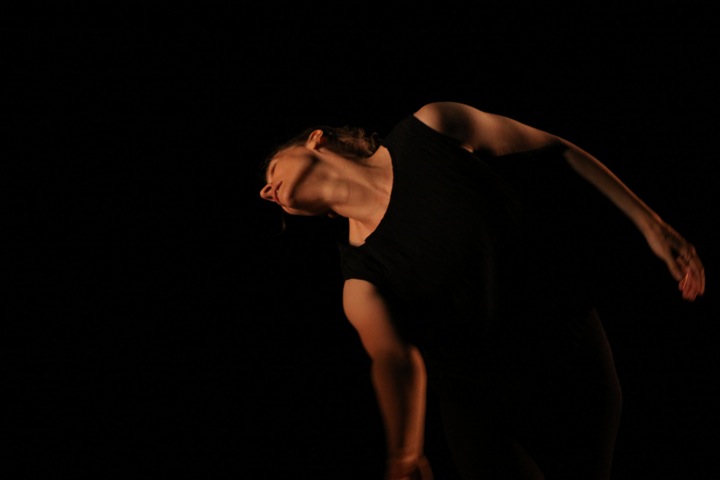
Sat/26, Ellis Wood, choreographer and mother of three, performs the world premiere of Mom, an evening-length solo, at Fort Mason’s Southside Theater. Speaking about the angle of the work, Wood said, “Motherhood is not the prettiest thing in the world. There are so many sides to it and so many things you didn’t know you were getting into, and so many leaps you have to take, and so many crashes you have to deal with, and the piece addresses that. It’s not a stereotypically pretty picture of mom. Hopefully it’s a more thought-provoking look into a layered experience.”

At 46 with children ages 7, 5, and 2, Wood never really stopped dancing. “There were times when I performed when I was eight months pregnant and that was a lot of fun. If I just had the baby that was harder … but usually I performed.” said Wood. Ideas for Mom emerged when Wood was dancing in Japan just weeks before giving birth to her youngest. She considers the intimate nature of the Southside Theater well-matched for this raw and personal solo, a mix of dance and video.

Wood comes from a dance family. Her parents, Marni and David Wood, performed with the Martha Graham Dance Company when she was growing up. “We used to take classes from them when we were kids, little Graham classes here and there. We used to travel with the Graham company when we were really little, when they would go on tour, and there were always people like Merce Cunningham and John Cage and Carolyn Brown, and it was just normal to have all those people around. I didn’t know then but I think of it now as a special thing … being around people like Martha and [Isamu] Noguchi … I got a lot of info pretty young about the dance world and that did affect my whole path.” said Wood.

Visiting the Bay Area holds special significance for Wood. She has returned every year for about a decade, performing in the city and usually teaching at UC Berkeley, where her parents started the dance program. “My parents built the studio. There was no dance department and they helped sand the floors,” she said. “They literally built the studio, so it has so much nostalgia for me. My dad picked the building on campus that he wanted to be the dance studio. They had a different building chosen for him and he saw this church on the corner of Bancroft and Dana with these beautiful stained glass windows and he said ‘I’ll take this, I want the space.’ He and my mom built the whole dance department there.”

With Mom, Wood refocuses herself, returning to solo work, which is how she started 15 years ago with her solo Canary. Through the years her work has always addressed women either politically or energetically, and at the upcoming performance, audience members will have the opportunity to say a few words about motherhood, which will be filmed and shared at the end of the performance. 

“I had just finished [Ayelet Waldman’s] book Bad Mother,” said Wood. “It’s very provoking and maybe even controversial, but it is interesting and brings up a lot of issues that are taboo and I like that.  So whether I agree or not, it brings up things that a lot of people don’t want to talk about, and hopefully, not in a way that pushes people away, but in a way that draws people.  My goal is to do that too.”

Mom

Sat/26, 8 p.m., $20

Southside Theater           

Fort Mason Center

Marina at Laguna, SF

(415) 345-7575

www.fortmason.org

Hoop dreams

2

culture@sfbg.com

RENEW Christabel Zamor moves like a snake — eyes fixed, lithe body writhing, hips rippling back and forth — which isn’t really surprising, considering the number of times she’s shed her skin.

Zamor is a hoopdancer — one of those sylph-like sirens who show up at parties and raves and on the playa in order to make the men drool and the women vow to do sit-ups. She credits hooping as the secret to her sensuous shape — but if you’re thinking of getting out your snake charmer’s flute, let’s get one thing straight: in this case, it’s the sexy serpent who’s charming you.

Zamor is magnetic and incredibly talented, but what sets her apart from other Bay Area hoopers is her avid following, cultivated by Hooping! The Book!, an array of instructional DVDs and 72-hour teacher training program that has certified 570 instructors in 16 countries. Zamor is HoopGirl® — a persona that not only has allowed her to whittle her waist and tone her tummy but to explode into a fitness franchise.

An erstwhile doctoral student and one-time “heavy-set, shy academic,” Zamor says she transformed her life — and her body — through hooping’s calorie-burning workouts and confidence-building powers. She now travels the world as a fitness trainer and empowerment coach, teaching people that they can do the same thing.

“I wasn’t really looking for hooping,” she says. At 27, Zamor was a UC Santa Barbara PhD student struggling to find academic support for her interest in ethnomusicology and drumming. Frustrated, she dropped out from her program after receiving a master’s degree, traveled to Senegal to study djembe, returned to the States, enrolled in Pacifica Graduate Institute’s master’s program in mythology and depth psychology, and began working as a personal assistant. Amid the confusion, she says she didn’t have the power to envision a life outside her studies. “I wanted to be a healer but didn’t know it,” she says.

But a simple circle changed all that. At a Gathering of the Tribes conference in Los Angeles, Zamor fortuitously picked up her first hoop — and HoopGirl was set in motion.

Zamor claims she never had a hula hoop as a child, but from the first instant she picked up the plastic ring and it clattered uncooperatively to the ground, she was hooked. Despite the initial “experience of not succeeding,” she was captivated by the hoopers around her — “beautiful nymphs undulating gorgeously” — and she was determined to become one.

“I got a hoop and started practicing in the park, in rhythm with high-energy trance or electronic music,” she says, and crowds “just started gathering.” When a newspaper reporter wrote a story on her weekly spin sessions, “100 people showed up wanting to hoop.”

Hooping has provided Zamor with a means of transformation, for her physical body as well as her spiritual self. She describes hooping as the portal that awakened her to underground subcultures like the circus-arts scene and artistic communities like Burning Man.

Zamor found that she could hoop for six hours at a time and that it catalyzed a level of physical and spiritual presence she describes as a “quickening” of the body. She interprets the orbital motion of the hoop as “intrinsically about coming back to your center,” a practice that stills mental chatter.

Hooping also began to fill in for the cultural activity that Zamor had so desperately wanted to study at UCSB. She had sought to understand how tribal rituals played a role in society, but she realized that dissecting a cultural form appropriated from the third world brought up questions of co-optation that she didn’t want to wrestle with. Hooping provided the same rhythmic, percussive, ritualistic aspects and counted as an indigenous rite in California in the early aughts, when its popularity was exploding. Burning Man was where Zamor tapped into hooping as a “sacred, transcendent experience,” one that she ultimately felt empowered to interpret for a national audience.

Now 10 years later, Zamor has performed at events for Warner Bros., Universal Pictures, and Cirque du Soleil. She has been hired to represent fitness brands and health club chains. She is licensing HoopGirl® Workout teachers across Canada, England, Australia, and the United States, where her hoop regimen has been certified by the Aerobics and Fitness Association of America.

At 38, she is a fitness guru and the leader of a profitable exercise business. In her books and DVDs, she maintains a bubbly exuberance in describing her physical transformation. “My unwanted extra fat just disappeared and was replaced by gorgeous muscle,” she crows, describing her journey. But she leaves out transcendence at Burning Man in favor of the elation of calories burned.

Zamor admits that she has had to be a chameleon to market herself and her hooping. Unlike other elite hoopers who began to develop the art form around the same time or even earlier, Zamor hasn’t been content to limit herself to a part of the San Francisco subculture. She hopes to bring legitimacy to hooping, which sometimes means talking abs and aerobics. “To spread hooping, I have to be able to spread the lingo. I gain respect by speaking a language that people respect.”

But when she is training HoopGirl dancers, she says she still refers to hooping as a spiritual practice. Her mantra — hooping is sexy! — is as much about a sense of self-worth as a satisfying session in the sack. The once “introverted loner” has been able to use hooping to help shed her old self, literally — and she’s eager to show us that results are replicable at home.

“The hoop adheres better to bare skin,” she explains, “so I started wearing less clothing. Showing my arms, showing my legs — it’s like the hoop was asking me to take those things off. I started to feel like I didn’t have to hide who I was.”

Flipping through pages of toned hotties in her book, or watching the bootie-shorted babes in her DVDs, it might be difficult to believe that the sexiness of hooping isn’t about, well, sex. But Zamor says there is something deeply and inherently feminine about the hoop — and it’s not just that the ladies look better shakin’ it.

After two surgeries for endometriosis, Zamor is convinced that the “soothing gyrations” of the hoop against her pelvis have helped heal her. “Hooping provided the insight I needed to slow down and focus on my body,” she says, explaining that it’s also a way to strengthen her core and reproductive organs, bringing fresh blood to the pelvic region and awakening her libido. Now, six years since her last surgery, she emphasizes that her doctor was amazed at how quickly she healed by hooping through the ordeal.

Next up, Zamor will be working on bringing that whole-body healing to women who may not be willing to step inside the hoop. She has expanded her business to include empowerment classes that honor the “divine, delicious feminine” and that will help women become a more supple, radiant, and luminous version of themselves, she says.

These classes in “hooping outside the hoop” are geared toward helping others uncover the empowerment and sense of self-worth that Zamor has found through HoopGirl. Of course, unless Zamor is planning on turning out hundreds of successful fitness revolutionaries with profitable book deals of their own, it’s hard to say whether her personal transformation will be replicable. But with one irresistible smile from Zamor, it’s easy to see that the hoop has worked for her — and difficult to resist the urge to run out and buy one for oneself.

Renew yourself

2

culture@sfbg.com

So 2011 is a couple months in, and already your new year’s resolution list reads like so many dreams deferred? Chuck it in the flames — not all rebirths neatly coincide with the Gregorian calendar. This spring, rejuvenate your inner and outer workings with some of these excellent opportunities to renew everything from your chi, to your core strength, to the sweetness of your swagger.


HEAR THE CRY OF THE MIDNIGHT DOWN-DOG

Tripped the light cataclysmic a time too many? The toxic Fernet fumes ooze from your pores, and you’ve left not only your debit, but your credit, library, and frequent bagel-buyer card in various watering holes about time? Time to purge. Take a night off from tippling and toddle to Laughing Lotus, where Friday night’s midnight yoga class (each week from 10 p.m.-midnight) soothes abused chakras — and livers, need be. Each week even features a different live musician: Fri/25’s class will be home to the didgeridoo and sound-healing savasana of Amber Field.

Laughing Lotus, 3271 16th St., SF. (415) 355-1600, www.laughinglotus.com


PARTICIPATE IN A GROUP POKING

What’s community acupuncture, you ask? Small groups of patients are treated in recliners in a quiet, calm room. During the hour-long sessions, those waiting for their pokes receive staggered personalized care (needles are inserted into one’s limbs, face, and head: no disrobing necessary) from a licensed acupuncturist. Learned how to share in kindergarten? Perfect, because the cooperative method means that a single session will only run you $25–$45, including the initial visit’s paperwork fee. Circle Community Acupuncture, 1351 Harrison, SF. (415) 864-1070, www.circleca.com


ALKALINIZE!

Fasting, ugh. It has its place, but not eating anything is a bitter pill in the land of street tacos and gourmet coffee grounds. If you’re asking our opinion, a day of cleanse is best accessorized with Lydia’s raw green soup, a tangy elixir of kale, cucumber, dulse seaweed, avocado, ginger, and other green delicious majicks. Lydia’s sells neatly packaged soup servings, resplendent kale chips, and other yummy raw treats are favorites at the city’s crunchiest festivals, and you can pick them up at health food stores too.

Available at various SF grocery stores, www.lydiaslovinfoods.com


SWEAT IT OUT

Hidden behind hippie-wear emporium P-Kok is a small green garden and a sauna where tired city souls retreat for the store’s patchouli-heavy full moon ceremonies, complete with vibrational sauna singing. Starting in March, the hidden space will go holistic and become Tall Tree Tambo Wholeness Center. Monthly memberships (to encourage the use of the space as a healthy community hub) will be available for $100–$125 including coed and single-sex sauna access, healing events facilitated by other members, and the center’s four on-site healing arts practitioners, small-group classes in spiritual alignment, yoga, and the ever-popular full moon rites.

776 Haight, SF. (415) 430-8285, www.talltreetambo.org


TAKE INSPIRATION FROM A FEMALE FIGHTER

Forget Rocky. For true Bay Area boxing spirit, you couldn’t do better than checking out the super bantamweight championship boxing match of Ana “the Hurricane” Julaton vs. Franchesca “the Chosen One” Alcanter on Fri/25. Julaton, a Daly City and Bayview raised Filipina American, is looking to regain her standing in the pro world after a disappointing loss last year. Regardless of who walks with the belt, the ring’s high-powered punching — and rock hard musculature — is worth checking out if you’re in need of some gym motivation.

Fri/25 6 p.m., $35–$360. Craneway Pavilion, 1414 Harbour, Richmond. www.brownpapertickets.com


SWEAT TO BOLLYWOOD BREAKS

Of course, you could saddle up your most comfortable heels and get your werqout in the club. Should you try this tactic, you could hardly do better than the rum-tum-tum stylings of Non-Stop Bhangra, a night that’s been teaching San Franciscans how to circle wrists and move hips in pure Punjabi mode since 2004. Nights begin with a hour-long class on Bollywood-style dance, continues with ample time to practice to beats by resident DJs and guest scratchers, and now attract a diverse following of races, ages, and ahem, physical aptitudes. Calorie burn and culture learn at the same time, perfect.

Next show: March 19 9 p.m., $10–$20. Rickshaw Stop, 155 Fell, SF. (415) 861-2011, www.nonstopbhangra.com


READ ABOUT OTHER, HEALTHIER PEOPLE

Maria Arellano was gunning for a healthier lifestyle, so she decided to blog about it. “Accountability,” the chipper office manager e-mailed us when we asked her about Oh Healthy Day‘s providence. “Posting your workouts and healthy eating habits with others is a great way to stay motivated.” Her short, addicting posts and sunny photos of her ongoing journey to fitness are also great ways to hold us accountable — how are you going to down that family-sized bag of corn chips after reading Arellano’s upbeat prose about her delicious protein and veggie dinners or inspiring Crossfit workout? Answer: you’re not.

www.ohhealthyday.com


REACH FOR THE SKY

While the spectacularly cool House of Air has added a valuable component to San Francisco’s kid’s-activity-starved landscape (little ones can’t help but explode with glee at the very sight of the humongous “Bounce House”), there’s trampin’ for adults as well. Specifically, the Air Conditioning workout is a 50-minute fly-through that promises to “leave your cheeks just as sore as your quads from smiling so much.” At $16 for a 50-minute session, it’s not a huge leap to “yes.”

926 Mason, SF. (415) 345-9675, www.houseofairsf.com


BUFF YOUR BRAINPOWER

Feel the burn all you want in your thighs, but no fitness program would be complete without a stretching your mind. At vibrantBrains, you’ll exercise that flabby cerebellum in what amounts to a workout for your brain. Improve your memory, tackle abstractions, and fast-track your alertness, literacy, and comprehension skills with programs like “Neurobics,” “Mind Evolve,” “NeoCORTA,” and “Posit Science Cortex with InSight.” Each program concentrates on a different area of mental agility using a combination of cutting edge techniques and personal attention. Even reading about the various vibrantBrains offerings makes us feel smarter.

3235 Sacramento, SF. (415) 775-1138, www.vibrantbrains.com


IMMERSE YOURSELF IN EGGHEAD

Holy smarty-pants, Batman, there’s a ton of intellectually stimulating stuff going down at the Mechanics’ Institute. Any given day you might enjoy a screwball comedy from the 1940s, a talk by a famous fantasist-cartographer, a book club discussion centering on the Harlem Renaissance, a class in beginner Excel, or intensive chess instruction at any level. It’s also a library! The 1854 Mechanics’ Institute building is a mind-blow in itself — but with a wide-ranging and welcoming program of creatively exhilarating (and very inexpensive) events, you may not even notice your intriguing surroundings.

57 Post. # 415, SF. (415) 393-0110, www.milibrary.org


STROKE SOME FUR

Next time you’re about to calculate your checkbook in your head or cry because your (ex-)drummer stole your boyfriend, head over to the Little Farm petting zoo in Berkeley’s Tilden Regional Park. This fully-loaded snuggle gang of cows, goats, rabbits, chickens, and pigs will have you back to your cute self — because petting zoos are restorative for small, whiny children, but they also work for midsized, whiny adults.

Little Farm petting zoo, Tilden Regional Park, Central Park Drive, Berk. (510) 525-2233, www.ebparks.org


MEDITATE STUPA-SIDE

If you want to change your outlook, pay a visit to the Peace Pagoda in Japan Center, an underrated San Francisco landmark. Designed by artist and architect Yoshiro Taniguchi, the pagoda and its subtly Op Art-tinged interpretation of a Buddhist stupa made their debut in the year of the Summer of Love. Walk around and even step inside Taniguchi’s 100-foot-high, five-tiered, many-passaged structure to meditate from an infinite variety of angles. Or better yet, play a quick game of hide and seek with someone you love. 24-7.

1704 Post, SF. (415) 775-1817, www.sfjapantown.org


LET YOUR SPIRIT WANDER

Sometimes the best way to refresh yourself is to get a little lost. When things begin to spiral out of control, let the ancient spiritual meditative paths of the three Bay Area labyrinths lead you to a calmer place. Take a natural journey to the mysterious Eagle Point Labyrinth (Lands End, Sutro Heights Park, SF.). Experience transcendence — and a spectacular quiet zone — with the Labyrinth at Grace Cathedral (1100 California, SF. www.gracecathedral.org). Or amble with playful tots along the colorful circle of the Scott Street Labyrinth near Duboce Park (Scott between Duboce and Waller, SF).


MULTITASK YOUR RETRO BEAUTY FIX

If you want to feel new, sometimes there’s only one thing to do: get a fresh hairdo at Down at Lulu’s. The bass is thumpin’, the clothes are cheap and sexy, and the pop culture treasures and creative energy are abundant at this self-described “hair salon-vintage clothing-record store-junk shop” co-owned by Tina Lucchesi and Seth Bogart, where you can get hot highlights, cuckoo color jobs, and perms with panache.

6603 Telegraph, Oakl. (510) 601-0964, www.downatlulus.com.


PUT CUTE AT YOUR FINGERTIPS

You’ll break your lease in the land of not-so-fresh after an introduction to wonders of kawaii nail art. Let Trang Bui, the manager of Crystal Nail, facilitate your escape from the days of dull French manicures with her signature collage talons of glitter, jewels, and — so popular you should book and specify you want them well in advance — Hello Kitty 3-D art. Don’t be shocked at the price tag — a full acrylic set with designs and tip will run around $65. Worth it for such blingy digits, no? Next challenge: learning to type with horizontal fingers.

2347 Clement, SF. (415) 752-4425


STICK A FEATHER IN YOUR COIF

Still rocking the all-natural look? Shame that — freshen up your do with some feather hair extensions, slim bursts of hue that’ll set you apart from the other land-locked long hairs, but don’t involve the same commitment as a jar of Manic Panic (though they can last for months). You can get a natural or neon-colored bundle of up to four feathers for $30 or single plumes for $10 each at the Mission’s Pretty Parlor. Move fast — once these hit Dolores Park, the trend’s gonna blow up.

Pretty Parlor. 3150 18th St., SF. (415) 556-2883, www.prettyparlorsf.com

Wisconsin, unions, and defunding the left

21

Mother Jones mag this month has a GREAT story about the battle in Wisconsin, the history of unions and the Democratic Party, and the real aim of the move to bust public-sector unions. Writer Kevin Drum notes:

In the past, after all, liberal politicians did make it their business to advocate for the working and middle classes, and they worked that advocacy through the Democratic Party. But they largely stopped doing this in the ’70s, leaving the interests of corporations and the wealthy nearly unopposed. The story of how this happened is the key to understanding why the Obama era lasted less than two years.

He describes the history of the post-War era and the rise of the New Left, explains how the rift between big labor and the hippie/radical/antiwar folks culminated in the AFL-CIO refusing to endorse George McGovern in 1972, the decline of private-sector union membership and power and thed shift rightward of the Democratic Party.

At one point, he explains, unions were the only organized force with the resources to act as a counterforce to corporate America in political campaigns. Once that went away, the Dems had no choice:

In the real world, political parties need an institutional base. Parties need money. And parties need organizational muscle. The Republican Party gets the former from corporate sponsors and the latter from highly organized church-based groups. The Democratic Party, conversely, relied heavily on organized labor for both in the postwar era. So as unions increasingly withered beginning in the ’70s, the Democratic Party turned to the only other source of money and influence available in large-enough quantities to replace big labor: the business community.

You can blame the Sixties radicals for not understanding the importance of labor (and you’d be right). you can blame George Meany and the AFL-CIO folks for not realizing that those acid-abortion-gay rights folks were their real allies (and you’d be right). But in the end, the bad guys took advantage of the split, and of sweeping changes in the economy, and now we live in the most economically unequal society in the Western world. (Remember: Unions bring up wages and improve working conditions not just for their own members but for everyone else, too.)

So now the only major sector where organized labor is healthy and growing is the public sector — and that’s why the Republicans want to get rid of public-sector unions. In San Francisco, it’s often the case that the city employee unions (excluding police and fire) are the major donors to progressive causes — and are often the only institutional base with the kind of money to counter the Chamber of Commerce/Committee on JOBS/downtown developer bloc. Bust that up and you get corporate hegemony.


The children

0

Robert Moses may not know it, but he is a pied piper. The ability to hold the attention of 200 hormone-packed middle school students at 9 a.m. on a Wednesday in early February must qualify as some kind of superhuman ability.

But Moses, choreographer and artistic director of Robert Moses’ Kin, defers to his own pied piper, the one on stage who immortalized the German city of Hamelin. As the fabled character, Dexandro “D” Montalvo twitches, churns, and first commands the rats; then, with beckoning index fingers, he mesmerizes the “children” to follow him who knows where.

The Sunset District students may not have known the story of the Pied Piper of Hamelin, who was cheated out of his justly earned wages and took awesome revenge. But they surely recognized the popping moves Montalvo so skillfully threaded into his character. One way or another, the kids were hooked. For close to an hour, they sat quietly and took in what Moses and his dancers had to show them from their upcoming world premiere, Fable and Faith.

As a kid, I was terrified by the Pied Piper story. No good grades or cleverness — usually assigned to boys anyway in fairy tales — were going to get me out of this scenario. No prince was coming, and there was no happy ending. I was going to be locked in that mountain. The adults had royally messed up. My mother assured me that “it’s just a story.” Well, mom, you were wrong.

Myths, fables, and fairy tales tell us about the way the world works. “Actions”, Moses explains after the performance, “have consequences. The stories talk about life, adversity and perseverance through hard times.” He admits that some of them can be problematic. Stepmothers, for instance, get a “major bum rap.”

Perhaps that’s what initially drew Moses to last year’s The Cinderella Project, which will be performed with the new Fable and Faith before going on tour later in the spring. Cinderella Project, his first collaboration with writer/actor Anne Galjour, who also wrote and performs the text for Fable and Faith, was informed by interviews with contemporary constructed families rooted in love, not blood. “Still, tough as it was,” Moses notes, “Cinderella stuck to who she was and it turned out alright.”

In the 1950s, there was a move underfoot to clean up some of these old tales; the thinking was that children’s psyches would be damaged by so much darkness and uncertainty. Fortunately, the stories have survived, though it’s good to know that Rapunzel no longer gets locked up in the tower because she was pregnant — it was just the evil deed of a jealous witch.

Moses takes a common sense, “age-appropriate” approach when he reads to his own two children, ages five and three. It was this fatherly task of sharing an imaginary world — everything from Dr. Seuss and the Brothers Grimm to African American folktales and Greek mythology — that got him to think about the contemporary resonance of some of these once-upon-a-time tales.

“Think of it,” he says. “Children are being abducted. Or today we talk about ‘the wolf at the door.’ ” In Fable and Faith, the wolf (Montalvo) goes to see a psychiatrist (Katherine Wells) to find out why he is behaving the way he does. The back-and-forth exchange in words and movement ends on a note of real poignancy.

Formally, Moses and Galjour decided on a structure “in which stories clash into each other.” The setting, they felt, had to be a village. “It’s where life happens,” Moses says. Elaine Buckholtz, who started lighting with Contraband and who has become a magician of visual installation, will do the honors on Fable and Faith. To keep a child’s presence at the forefront of these adult dances, Moses is partnering with the San Francisco Boys Chorus. They will perform, among other selections, the “Lacrimosa” from Mozart’s Requiem.

As the students were leaving for their classes, a teacher turned to me and whispered, “We have been very lucky this morning.”

FABLE AND FAITH

Fri.18-Sun./20, 2 p.m.; $25–$35

Yerba Buena Center for the Arts, Novellus Theater

701 Mission, SF

(415) 978-2700

www.ybca.org

Eye dance: Eonnagata and the heroics of being seen

1

Consider the need to be seen. The dance world is consumed by this challenge. Dancers repeatedly put ourselves in situations where we have optimal visibility via auditions, performances, and even day-to-day classes. Choreographers market themselves to be presented through grants and venues. But is this need, this desire to interest and engage and ultimately compel people to watch us, heroic, or simply pathetic? Suppose for a second not the plight of a common dancer trying to be seen, but of a very high profile dancer or choreographer, who for better or worse is seen, has been seen, and who people clamor to see. Would the work err more toward heroic because it is practically their duty to be seen?

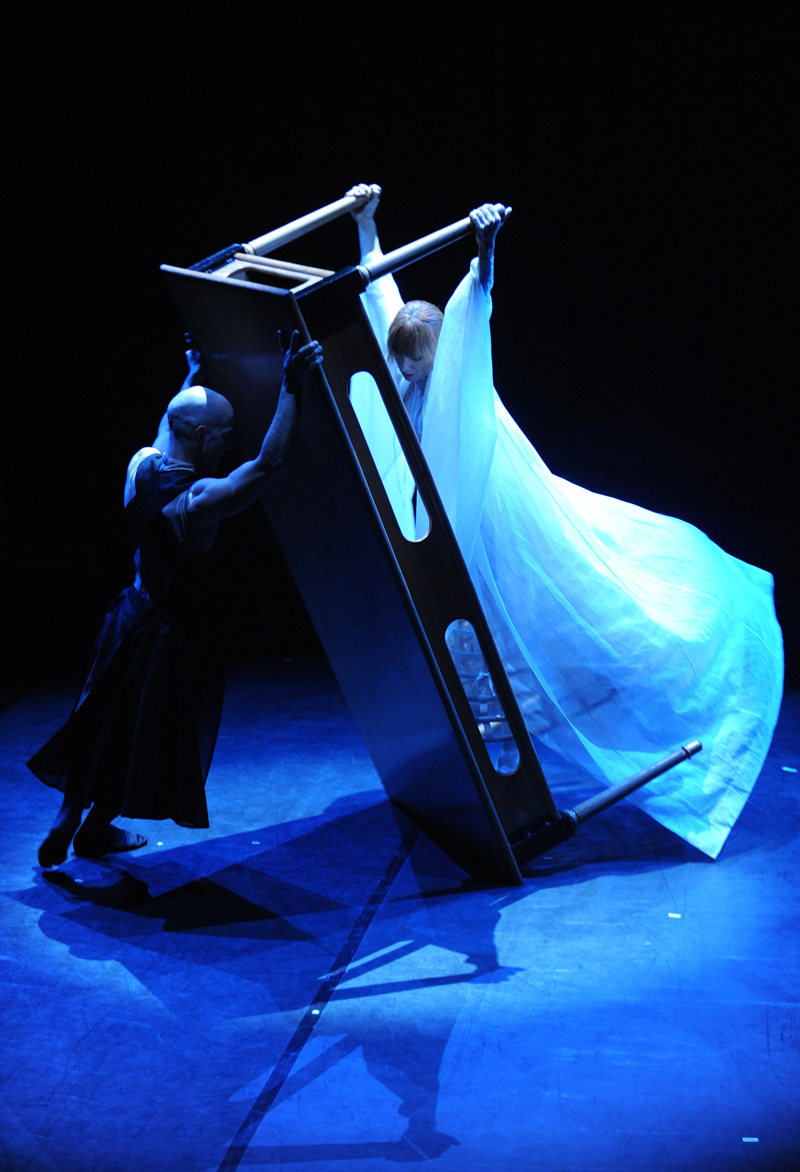
On February 9-10, Cal Performances presented Eonnagata, a dance-theater work created and performed by Sylvie Guillem, Russell Maliphant, and Robert Lepage. Dancers everywhere are familiar with legendary French ballerina Guillem, and her focus of-late on the contemporary realm has turned many a classicist onto different kinds of dance. French-Canadian Lepage is a playwright, actor, film director, and stage director known for his versatility in nearly every form of theater craft. Maliphant is a British choreographer noted for merging ballet with contact improvisation, yoga, and martial arts. Together, with lighting designed by Michael Hulls, and costumes designed by the celebrated Alexander McQueen, they collaborated to create Eonnagata, a fusion of Japanese Kabuki theater, martial arts, and contemporary dance chronicling the life of Charles de Beaumont, Chevalier d’ Éon, a French diplomat and spy of the 17th century known for cross-dressing tendencies that eventually led to his gender being completely obscured.

While I enjoyed Eonnagata tremendously, for me the larger question beyond whether or not the piece was likeable was what the piece aimed to accomplish artistically. Eonnagata sought to ignite a discussion on gender while also capturing the essence of a truly eccentric life. Engaging in that particular work allowed Guillem, Lepage and Maliphant to send a message through their high profile status that this was the kind of work important to them. Is that where dance bridges from pathetic to heroic, when the point is no longer simply to be seen but to actually say something as well?

The high status of the artists involved in Eonnagata lent an air of legitimacy to the work and an abundance of resources were made available to them that they might not have enjoyed if they were under the popular radar. However, when I ask myself if Eonnagata would still have been heroic, or for that matter even worthwhile, had they not been superstars, the answer is a resounding yes. So it is not the product or the acclaim but the endeavor itself that is heroic.

But back to the need to be seen: if a dance is not seen is it still worthwhile? There’s a part of me that says yes. Had Guillem, Maliphant, and Lepage come together in a studio every day for a year and never shown anyone results, the effort would still have been a valid endeavor, seeing as most artistic processes don’t use all of the choreography generated in the final performance product. But at the same time, there is a sense of responsibility, especially for dance celebrities, to share their art because they can reach a larger audience and thus expose dance to people who might not otherwise seek it out. Perhaps with certain status one goes from needing to be seen to being obligated to be seen.

As a dancer, I feel an immense need to be seen. However, it is not just a narcissistic hope for admiration, but also a hope that I may articulate something meaningful. After all, I still need to see dance as well.

Noise Pop 2011 highlights

0

MUSIC The 2011 edition of Noise Pop finds the festival stretching the definition of noise pop ever further outward in order to swallow excellent sounds. Back in 1993, when Noise Pop originated, muted My Bloody Valentine-derivative bands with lowercase names evocative of junior-high lunch were the norm. This year, the fest taps into the recent, more sharp-edged shoegaze revival and the current California garage rock zeitgeist, while also making room for hip-hop, freak folk, and deep funk. It’s safe to say that, unlike the character assassinated in Steely Dan’s “Hey 19,” Noise Pop at 19 knows about the queen of soul. Here’s our guide to some of the event’s best lineups.

>>Read more of our Noise Pop 2011 picks here


PEANUT BUTTER WOLF AND DÂM-FUNK: THE DISCOVERERS

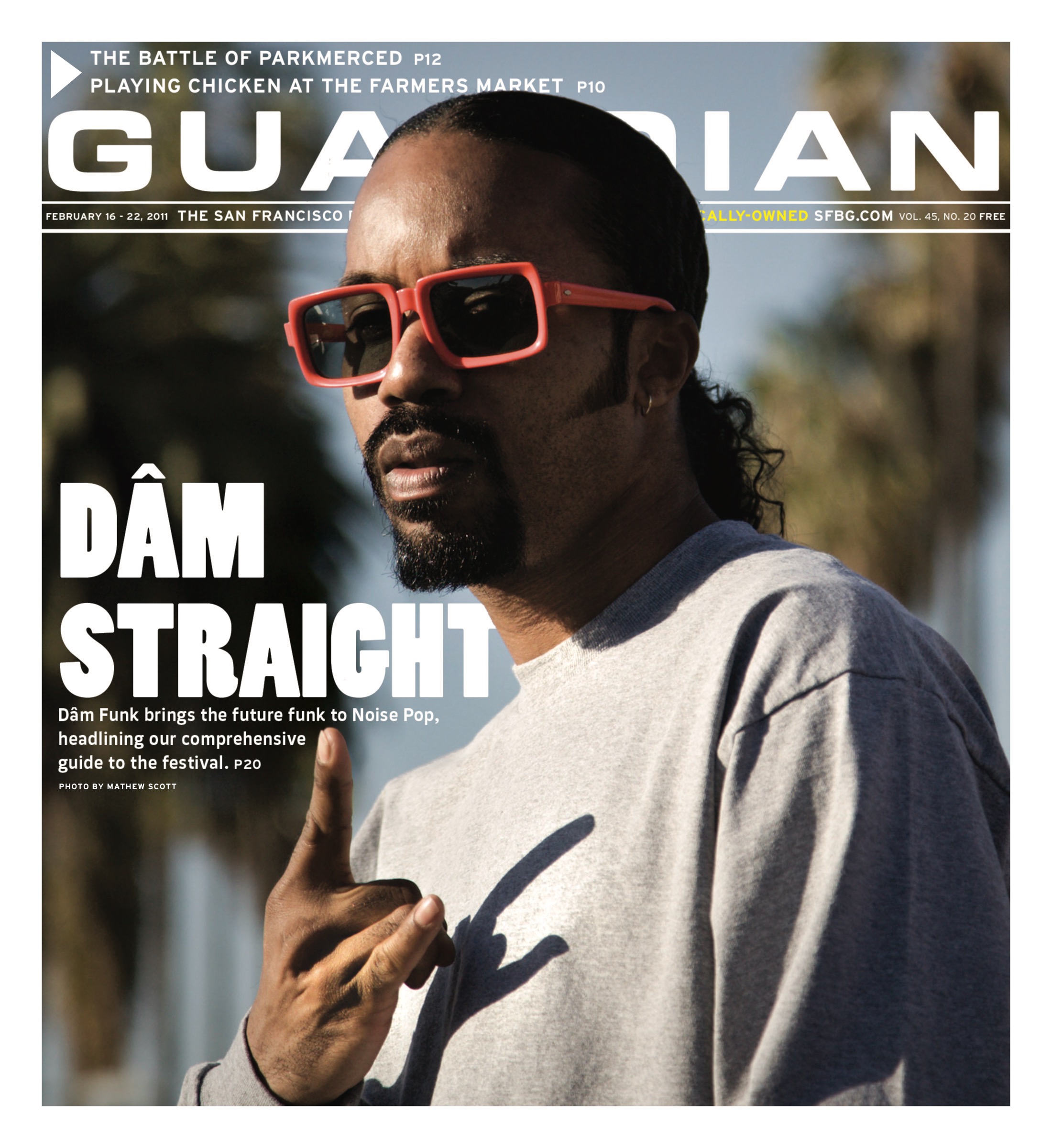
It’s the midnight hour on Valentine’s Day in Portugal when I reach Dâm-Funk, a.k.a. Damon Riddick, on the phone. He’s just outside of Lisbon, his surroundings are “phenomenal,” and he’s ready to wax enthusiastic about his longtime partner in funk Peanut Butter Wolf. “Me and Chris [Manak, a.k.a. Peanut Butter Wolf] connect on that sound because we remember and we revere,” he says, when I ask about their shared love of soul, hip-hop, and funk. “We knew what it was like before cable television and the Internet existed, we remember everything from those early VHS tapes to the way the sun set.”

As the sun is still rising on Valentine’s Day, in L.A., the man Dâm-Funk calls “Wolf” for short shows similar brotherly love. “When Dâm met me, we had a mutual respect,” says Manak. “He saw my record collection and vice-versa. When we discover songs, we’ll say, ‘Check this out.'” In turn, this shared enthusiasm, and the positive response to Dâm-Funk’s albums Toeachizown and Adolescent Funk — both released on Manak’s label, Stones Throw – has recharged funk sounds in Los Angeles and SF, and led to new discoveries of soulful and funky treasures from the recent past.

One such gem is Jeff Phelps’ 1985 Magnetic Eyes, a Tascam Portastudio 244 bedroom recording with sensational vocals by Antoinette Marie Pugh, who stars in a terrific no-budget video for the album’s “Hear My Heart” currently up on YouTube. “That album is something I’ve known about for a long time,” Dâm-Funk says, when I mention Magnetic Eyes and its hand-drawn yet futuristic cover art. “It’s a great project.”

Another great project is Tony Cook’s Back to Reality (Stones Throw), a collection of mid-1980s recordings by a musician who got his start as James Brown’s drummer. Taking on the role of executive producer, Manak has added some extra pop to the already formidable strut of Cook songs such as “Heartbreaker,” even drafting in Dâm-Funk to contribute new vocals to one track, “What’s On Your Mind.” “You’d think they were 24-track recordings, but he [Cook] only worked on an 8-track,” marvels Manak. “He was a good musician and producer – when you’re bouncing tracks, you have to know what you’re doing. In those days it was hard to achieve a full sound like that.”

These days, both Dâm-Funk and Peanut Butter Wolf know what they’re doing — and that’s a damn lot. Reflecting his Gemini nature, Dâm is planning to explore the dark side on an EP with that title before venturing into the light on his next LP. He’s also remixed Nite Jewel and is collaborating with her on a project, Nite Funk. He’s producing music by Steve Arrington for Stones Throw, and he wants to put out another chapter of his archival venture Adolescent Funk, with him choosing the tracks instead of Manak. As for the man Dâm calls “Wolf,” he’s got Stones Throw’s 15th anniversary on his hands, including a 7-inch box set, and a series of live-to-vinyl performances by the label’s artists in L.A. These guys are busy, but — fortunately for Noise Pop, and for SF — that doesn’t mean they don’t have time to throw a 45 party. (Johnny Ray Huston)

PEANUT BUTTER WOLF, DAM-FUNK

With Guillermo (Sweater Funk), Hakobo (Fresco)

Sat./26, 9 p.m., $15 (21+)

Public Works

161 Erie, SF

(415) 932-0955

www.publicsf.com


DOMINANT LEGS: LOST IN LOVE

Whether he’s raging in the streets alongside fellow Giants maniacs or musically lost between the sheets, Dominant Legs’ Ryan Lynch sounds like he’s sweet to the core—and even more. “I didn’t have anything to do with setting the mattress on fire, but I was there,” says the SF musician of SF’s impromptu World Series throw-downs. “But I wasn’t stopping anybody from celebrating.”

Lynch also rolls with the love when it comes to music. “I don’t really listen to much music that would be characterized as aggressive,” he continues, on one of those sunny Bay afternoons that make it easy to float away on blue skies and daydreams. “I listen to pop music and, honestly, mostly KISS FM.” His favorite song on this crisp, creamy day is R. Kelly’s “Lost in Your Love.” “It’s all about him wanting to bring love songs back to the radio,'” Lynch adds. “And that’s sort of what I also aspire to—not that we get any radio play!”

But, oh, a girl — or a boy who once was a Girl (until recently, Lynch was Girls’ touring guitarist) — can dream. And dreams have been coming true for Lynch, a longtime Giants follower who recently contributed “Finally Champions” to a digital-only benefit comp of Giants tribute songs released by True Panther. Meanwhile Dominant Legs continues to pick up steam—and members.

Once the repository of Ryan’s solo singer-songwriter imaginings away from longtime band Magic Bullets, Dominant Legs found favor when the Redwood City-bred musician was laid off from his job as mail clerk-receptionist at a law firm. He didn’t sink his sparse funds into job retraining classes or the like; instead he bought a cheap Casio keyboard and drum machine. “I shouldn’t have been spending any money,” he recalls now. “But the direction of the music really took off after acquiring those pieces of musical equipment.” Friend Hannah Hunt, who had just graduated from college, offered to help out at a 2009 show at Amnesia and ended up sticking around.

“She brought a softness, and delicacy, which made the songs more delicate since her voice is so different from mine,” he observes. “I think her voice is easier on the ear than mine.” For Noise Pop, the two have acquired a few more legs to help them on their way: drummer Rene Solomon, bassist Andrew Connors, and guitarist Garrett Godard, the latter once the drummer for Girls.

They’ll be filling out the already intoxicating pop bounding off Dominant Legs’ 2010 EP, Young at Love and Life (Lefse), which has inspired music bloggers to go wild, tossing out scattershot, albeit flattering allusions to Orange Juice and Belle and Sebastian, Kelley Polar and Arthur Russell—and even Dave Matthews. Feeling lost again? Just listen to the earnestly lovelorn, gently bopping, synth-popping tunes like the title track and “Clawing Out at the Walls,” with its curious admixture of sweetness and self-doubt. Kindred spirits and modern lovers such as Jeremy Jay and Camera Obscura, also given to such exquisitely anxious reveries, would understand. “The only thing I’ve heard is that [the EP] is too heavily influenced by the ’80s,” says Lynch. “But I don’t see that as a problem.” (Kimberly Chun)

DOMINANT LEGS

With How to Dress Well, Shlohmo, Chelsea Wolfe

Sat./26, 8 p.m., $12–$14

Café Du Nord

2170 Market, SF

(415) 861-5016

www.cafedunord.com


ADMIRAL RADLEY: LIFE AFTER GRANDADDY

Jason Lytle has never been shy in revealing the frustrations leading up to Grandaddy’s demise. Exhaustion from middling success, a love/hate relationship with his lifelong home of Modesto, and a diminished interest in making music with others resulted in a move to Montana to focus on a solo career in 2006. Enter Admiral Radley, a collaboration with members of indie-pop group Earlimart and Grandaddy drummer Aaron Burtch that has him not only playing in a band again, but touring Japan and singing about his former home on songs such as the sarcastic “I Heart California.” Lytle took some time out from a snowy day of magazine shopping at Borders in his new hometown of Bozeman to talk about the project.

SFBG Rumors of a collaboration between you and Earlimart date back to the Grandaddy days. What led to you guys finally working together?

Jason Lytle It was really an excuse to hang out at [Aaron Espinoza’s] studio and just have people coming in and playing parts. We set aside a week as a fun little project. Maybe somebody else had other plans for it, but at the time, I was convinced it was just gonna be a cool opportunity to make a record and be done with it.

SFBG Were you guys surprised by the amount of excitement surrounding the project?

JL Yeah. Then it turned into, alright, we gotta name this record something, and give the band a name, and pretty soon it was this real entity. The Japan thing started off as a joke, and then became more of, “Let’s give this a go, and if it winds up getting us to Japan, we can call it good” — and the whole thing was worth it.

SFBG And how were the Japan shows?

JL They were really scrappy. The places were just dumps. I kept joking with Aaron, saying, “If we weren’t in Japan right now, and if these weren’t exceptional circumstances, there’s no way I’d be putting up with this.”

SFBG You’d expressed some skepticism about playing in bands again after Grandaddy split. Has this experience changed your opinion?

JL My place in Admiral Radley is totally different from what my situation was with Grandaddy. I’m getting off easy. Aaron is a great organizer and knows that a big appeal for me joining the band was not dealing with a lot of the day-to-day crap I used to deal with. I feel like I’m a piece of a puzzle with this band, which after all these years is something I’ve never really experienced. So it’s been kind of neat.

SFBG Both you and Aaron like being hands-on with production in your work. How was the collaborative process on this album?

JL That part was pretty effortless. Aaron and I share a lot of the same philosophies on production and making albums sound a certain way. I definitely sat in on some of the mixing, but there was a lot of it where I was just able to trust what he was going to do, knowing that it probably wouldn’t be too far off from what I’d do myself.

SFBG Was it strange writing lyrics about California now that you’ve been gone for almost five years?

JL I’ve definitely had a renewed perspective. Every time I visit or I’m there doing some work, I’m thrust right into the shit. Like right into L.A. or SF, rather than adjusting or letting it sink in slowly. So, usually it’s pretty jarring for me just because the pace is a lot more relaxed and different here. Having a bit of that outside perspective now allows me to look at things a bit differently. (Landon Moblad)

ADMIRAL RADLEY

With Typhoon, Social Studies, Fake Your own Death

Wed./23, 8 p.m., $12 (21+)

Bottom of the Hill

1233 17th St., SF

(415) 621-4455

www.bottomofthehill.com


GEOGRAPHER: EARTH PEOPLE

The dress code doesn’t include a finely-pressed lab coat, and the toolbox isn’t filled with fragile beakers, but a geographer is indeed a scientist, one who pours himself into the earth and bleeds across its surfaces to observe and categorize its residents. I haven’t asked the members of the San Francisco synth-pop trio Geographer if this occupation has had any inspiration on its sound, but there’s reason to believe the answer may be a humble yes.

Geographer has discovered new ground in the electronic realm. Its unique ménage a trois of music-making contraptions — drums, synth and cello — produces audible scenery that simultaneously calms and energizes the senses. Luscious forests of synth share habitats with rushing bass and guitar. The cello adds a sneaky-smooth layer that easily melts between or melds the more jagged sounds.

Behind the sweet scenery resides a less than pretty picture. Themes of loss and inevitable change creep through their sun-stained melodies, pulling at the roots of the band’s core. In 2005, Michael Deni fled his home in New Jersey, after the unexpected deaths of two family members. He landed in SF, and his instruments became a source of comfort and release while he wandered the new, unfamiliar territory. After a period of searching and surveying, Deni met and began collaborating with Nathan Blaz and Brian Ostreicher. In 2008, Geographer self-released its debut full-length, Innocent Ghosts, a far more relaxed collection that showcases Deni’s round, patient voice.

The landscapes on 2010’s Animal Shapes (Tricycle) are majestic, but far more celebratory. Things are tighter spun, beats kick harder and there’s a cohesive exploratory factor. Specifically fabulous: “Kites,” a track that strikes gold with a lustrous synth party. Deni’s sincere vocals float high above the mountainous bass vibrations, but mingle ever so courteously with the shrill, twinkling electronic additions. Enter the romantic cello and the song is a straight-up gem.

Now is a good time to button up your favorite white jacket and take some notes on the current environment in which you reside. Whether you’re into earth science or not, Geographer is a swell listen that goes well with salty pretzels and an adventure around your own neighborhood. Animal Shapes on repeat will keep you in step with eyes and ears open. And listen carefully: there’s good word on the street about these Geographer guys in the live form. (Amber Schadewald)

GEOGRAPHER

With Butterly Bones, K Flay, Funeral Party

Wed./23, 8 p.m., $13–$15

The Independent

628 Divisadero, SF

(415) 771-1421

www.theindependentsf.com


PSYCHIC FRIEND: PIANO POWER

Will Schwartz and the piano go way back, to when he was nine. “I’ve been attracted to the C chord and to A minor since I was a kid,” he says from L.A., where he’s living in Los Feliz. “I learned to play piano by ear, and it was always based on [starting with] a C major and going from there.”

You could say Schwartz played his first gigs on the instrument. “We had this two-story living room in our house in New Jersey with a little balcony, and the piano was up on the balcony,” he says with a laugh. “I would imagine I was playing for people down below. I would put on shows for the living room furniture.”

In his new band Psychic Friend, Schwartz updates California chamber or piano pop for today’s era, with contributions by Hole drummer Patty Schemel and instrumentalist-producer Bo Boddie. The result is a fresh chapter in Schwartz’s musical story, one that has ranged from the guitar-rock of Imperial Teen to the D.I.Y. choreographed pop of Hey Willpower, which involved contributions from videomaker Justin Kelly, DJ Chelsea Starr, and musician Tomo Yasuda.

Crisp and clean, in a way Psychic Friend sounds like the moment Schwartz has found his voice, or unknown heights or depths of it. The pounding “Once a Servant” revives the spirit of Jobriath. “Water Sign” has a Serge Gainsbourg undercurrent. “Shouldn’t Have Tried Again”‘s rendering of the repeat failure of a relationship matches the plaintive sunshine-y yearning of Harry Nilsson’s sublime covers of Randy Newman.

You could say Psychic Friend is new Californian pop. The piano-based melodic immediacy of the group’s sound has a kinship to Carole King’s solo work, or Burt Bacharach and some of his hits for psychic and other friends, yet both the sound and the lyrical content is very contemporary, not retro. It also isn’t Rufus Wainwright showboating — tracks like “We Do Not Belong” allow Schwartz’s voice a freedom and resonance it hasn’t had before, but he doesn’t run away with himself. “The nature of playing a piano and writing melodic songs, it almost brings you back to ’70s songwriting,” Schwartz observes.

“I just found this place in my voice that feels very connected, actually, that comes from playing the piano, and it feels good,” he adds, simply.

Schemel’s powerful drumming and Boddie’s hit-making skills have a role in this shift. “It’s like an Eddie and the Cruisers feeling,” Schwartz says, “where you start to play something, and by the end it sounds like a finished song.” (Huston)

PSYCHIC FRIEND

With The Concretes, Birds and Batteries, Magic Bullets

Fri./25, 8:30 p.m., $13–$15

Rickshaw Stop

155 Fell, SF

(415) 861-2011

www.rickshawstop.com

A jaundiced proposal

0

news@sfbg.com

An ordinance to ban unsolicited print Yellow Pages across San Francisco, proposed Feb. 1 by Board of Supervisors President David Chiu, seeks to reduce waste and save money.

“Phone books are a 20th-century tool that doesn’t meet the business and environmental needs of the 21st century,” Chiu said as he introduced the measure in board chambers.

The ordinance would establish a three-year pilot program starting Oct. 1 in which the city would reduce the mass distribution of phone books, making them available only at distribution centers or to residents or businesses that request them.

A rally in support of the ban before the meeting included Rainforest Action Network’s founder Randall Hayes and California Sen. Leland Yee (D-San Mateo), who proposed legislation that failed to gain steam last year for making it easier for Californians to opt out of receiving phone books.

But the Yellow Pages Association refuses to be thrown out with the rest of yesterday’s trash. YPA Vice President of Public Policy and Sustainability Amy Healy said her group opposes the proposal but that she was encouraged that Chiu and his staff say they are open to working with the association.


BY THE NUMBERS

Chiu introduced the ordinance, which is cosponsored by Sup. Scott Wiener, because of the potential effect it could have on reducing city waste, both in the city’s garbage bins and its treasury.

According to Chiu’s office, San Francisco receives about 1.5 million phone books a year. At an average weight of 4.33 pounds per book, the current distribution system creates about 7 million pounds of waste. If the production were cut in half for the city, it would save nearly 6,180 metric tons of carbon dioxide emissions a year from polluting the air.

But it isn’t just the environmental cost that is wearing on the city.

Phone books are tough to recycle. With plastic inserts, bulky design, and low-grade paper, the books have to be presorted and recycled manually. It costs Recology, the company contracted with the city for waste disposal, $300 per ton to dispose of the city’s unused phone books, which in turn costs taxpayers about $1 million a year for their disposal.


OPT IN VS. OPT OUT

The YPA has been sensitive to the environmental concerns, recently launching a website that allows a person to opt out of receiving a phone book.

But it is also suing the Seattle City Council over its Feb. 1 approval of a plan to charge Yellow Pages a 14-cent publisher’s fee per book and create an opt out system for the city, arguing the Seattle ordinance violates the First Amendment’s free speech protections.

According to a statement by YPA President Neg Norton, the association believes that “if don’t want a phone book, you shouldn’t have to get one.”

But YPA opposes the ban on unsolicited books, citing the jobs it would cost, the business community’s desire to “generate leads and revenue from ready-to-buy consumers,” and claiming the First Amendment “prohibits government from licensing or exercising advance approval of the press and from directing publishers what to publish and to whom they may communicate.”

Wiener has a different take on the matter, a stand he said he has already received lots of criticism for, including from some constituents who compared it to the board vote to ban Happy Meals last year. But he said this issue is very different.

“An enormous number of books dumped all over the city is a bad thing, and we should do something to address the issue,” he told the Guardian, noting that the ability to opt out isn’t good enough. “It’s not like the do-not-call list where it is directly annoying and people are more likely to take action … Stacks sit in apartment lobbies, and people don’t decide to opt-out.”

But YPA is also citing the public’s apathy as a reason the ban is unfair. “People don’t take the time to respond to e-mails,” Healy said. “It’s an unreasonable barrier to have a stranger knock on your door and ask you to take something.” The YPA claims that “seven in 10 adults in California use print Yellow Pages, so we do not believe a system that puts a burden on the majority of people to opt in is the best path for choice.”


ARE THEY USEFUL?

Do people still value the Yellow Pages?

Healy believes they do, stating that advertising with the Yellow Pages gives businesses a “high return on their investment.” We asked some city businesses that still advertise in the Yellow Pages what they thought about the potential ban.

Barbara Barrish, manager of Barrish Bail Bonds, doesn’t see her customers using the Yellow Pages anymore. “We used to swear by the Yellow Pages. Now young people use the computers, or their Blackberries and phones.”

Although she has an ad in the print edition, Barrish said she wouldn’t advertise with the directory again and only did so this time because it slashed its prices. “It used to cost a lot more, but it cut its advertising costs by a third,” she said. “They gave me a good deal.”

When asked if she would request a copy if the ban goes through, she said she probably would. “I might grab a phone book if the computer is down.”

Daniel Richardson, an immigration attorney who advertised in the Yellow Pages until 2008, predicted the business community would kill or water down the ordinance. “You are talking about going up against AT&T and other major businesses,” he told the Guardian with a chuckle.

Richardson said he stopped advertising in the Yellow Pages because he didn’t get enough business. He believes people look to the Yellow Pages for criminal or personal injury lawyers, but not immigration attorneys.

Even pizza places, a staple of advertising in the Yellow Pages, are ho-hum about the usefulness of the Yellow Pages. Junior Reyes, who is in charge of advertising for Go Getter Pizza on Gough Street, believes the restaurant gets most of its customers from online. “We do a lot of advertising with other places and online,” he said. “The Yellow Pages isn’t our main source.”

But what about people who do use the Yellow Pages, particularly groups that are not big Internet users. Would they miss it?

David Bolt is the dean for academic affairs at Expression College for Digital Arts in Emeryville and producer of the PBS series The Digital Divide. He believes that banning the Yellow Pages may be a problem for certain groups, including the elderly, recent immigrants, and the poor — groups with the least access to Internet, particularly in urban centers.

“We should err on the side of giving as much information to the greatest numbers of people, especially to groups that may not be technologically literate,” he said. “Society should think about how groups could be impacted by this decision.”

But Barbara Blong, executive director of the Senior Action Network, said older people are becoming more tech savvy. She said computer classes and other resources have put many of the city’s seniors online. She questioned the concept that seniors are one of the largest groups affected by the digital divide, noting that seniors oppose wastefulness as much as anyone.

“We are against having a lot of Yellow Pages laying around,” she said. Blong also mentioned that seniors who do not use the Internet for contacts can use the public library or senior centers that have phone books on hand. “I don’t see it as a ban, but moving on so we don’t have a great deal of waste,” she said.

The ordinance also exempts foreign language phone directories, further diluting the divide argument. The legislation wouldn’t ban the Chinese Yellow Pages or Momento (Spanish Yellow Pages) because they are distributed through community centers, not residences.

The ordinance is expected to have its first public hearing around the end of the month. The YPA will continue to tout its opt out website to the board in hopes it might be enough to persuade the city to forgo the opt in system. The group also hasn’t ruled out a lawsuit.

But YPA’s Healy said he hopes the coming dialogue will be productive. “We share the same goal — we don’t want to print directories that are unwanted.”

Leno forces GOP hand

5

For whatever tactical reason (or other inexplicable Jerry Brown rationale), the governor has refused to tell Californians what he would cut if he can’t get his tax extensions approved. And the Republicans refuse to say what they would cut instead of letting the taxes continue.


So Sen. Mark Leno did it for them. Leno asked the Legislative Analyst to explain what $13 billion in budget cuts — the “no-new-taxes” budget the GOP wants — might look like.


It’s really, really scary.


For starters, take $4.5 billion away from K-12 education. That means the end to class-size limits for K-3. It’s a huge deal: The Gray Davis measure that limited those classes to 20 students probably did more than anything in decades to save public education in California. You want 40 kids in a kindergarten class with one teacher? You think any of them will be learning to read? Oh, and the state could save $700 million by delaying kindergarten for kids; guess who that impacts? Those kids are going to spend more time in pre-school which either (a) is subsidized by the taxpayers or (b) comes out of the hides of working parents.


Oh, and we’d eliminate food stamps for noncitizens. So people won’t be able to feed their kids. You think crime might become more of a problem? But wait: No room in the prisons.


Then we put college out of the financial reach of middle-class kids and expect to build a 21st century economy. And that’s just the beginning.


Leno deserves thanks for putting this list out; it ought to be in the ballot handbook along with the proposal to continue (not RAISE, just continue) some taxes. And we should all be asking every Republican in Sacramento: Is this what you want? If not, give us an alternative. 


Hounds and haunches: an evening at the pitbull burlesque

0

I’ve been to some militant burlesque shows, but Saturday night’s was probably one of the most radical. Lucky 13 was packed from the bar to the retro popcorn popper, temperatures were rising as high as the wooden balconies above us and onstage a diminutive man and his hound refused to be parted in the eyes of the law. “No more breed-specific legislation!” the speaker thundered. It was the burlesque community’s benefit for Pinups for Pitbulls and Chako, splendidly named the Valentine’s Day Pitty Party, and tonight it was all about the pitbulls. And naked women. But mostly pitbulls.  

Power to the pitbulls! Pitbulls at the door, pitbulls patiently attending their owners’ smoke breaks, pitbulls by the merch table. There is nothing more satisfying than petting a barrel-headed canine whilst you wait for retro-ready striptease. The short guy was Shorty Rossi, who has a show on Animal Planet about his pitbull rescue group, the season highlight trailer of which makes him look like a more benevolent and sharper dressed Dog the Bounty Hunter. 

Rossi was fresh off of a protest in Denver against the city’s ban on pitbulls within city limits. He had his pit Hercules up there on stage with him, who also appears on the show, occasionally combating pitbull racism from Hollywood casting directors. Herc’s even got his own IMDb page, for chrissakes.

And the naked ladies! These were pro tassel-twirlers, a little un-used to Lucky 13’s lack-thereof-of a raised stage platform, but made do with the newfound intimacy the venue afforded with the heaving masses that had come to see them lip sync, dance, in some cases sing for real. There was that and the shitty sound system, which kept cutting out and leaving the performers to really, really earn those doggies a home. But honestly no one stopped dancing, there was enough to look at to keep the crowds appeased, and everyone seemed to enjoy themselves besides the bitchy girls that were standing behind me commenting on how saggy everyone’s boobs were. Note to those girls: no one’s boobs were saggy, and if you’ve got something better to why don’t you hop up onstage and get to it?

My personal favorites were the Jellyfish Burlesque sword-fighters from Sebastopol and the blonde-beautiful Honey Penny, whose hair and general turned-out demeanor I would be lucky to recreate given a personal makeup artist, a Dollhouse Bettie residency, and a gift certificate for etiquette classes (do they do those anymore?). Honey Lawless turned in a great, tired businesswoman-into-harlot routine as well.

And I learned about pit bulls. BSL no, I say! And my boyfriend now thinks I have the power to create Valentine’s Day events tailored specifically to his needs and wants (they were serving, besides boobs and dog-petting time, special drafts from Ninkasi and Speakeasy). If you have a similarly-minded sweetheart on this black, heart-shaped rainstorm of a day, you might take them to Hubba Hubba’s weekly gig at the Uptown in Oakland tonight, although there will be no puppies, there will be plenty of excuses to “celebrate” a holiday that we all, ostensibly, think is for the dogs.


Hubba Hubba Revue

Mon/14 10:15 p.m., $5  

The Uptown 

1928 Telegraph, Oakl.

www.uptownnightclub.com


Appetite: 1 Bourbon, 1 Scotch, 1 Beer

0

We San Franciscans are lucky to have a place like the Boothby Center for the Beverage Arts. Debuting last year at SF Cocktail Week as home base for the Barbary Coast Conservancy of the American Cocktail, this year sees the launch of Boothby classes, tastings and events on all things drink.

Naturally, there’s cocktails and spirits heavily represented. But there’s also going to be coffee classes from many of our local favorites on everything from brewing to roasting. There will also be tea and wine seminars, and founder H. Joseph Ehrmann’s Mixology 101 series (with three levels of advancement) for budding and experienced bartenders. 

Price ranges will vary but at this week’s cognac class, a mere $20 provided over an hour and a half of cognac education from New York experts, a side-by-side sampling of four cognacs, and three well-made cocktails from classics to modern inventions. The room was a mix of bartending industry folk and curious tasters, all with a hunger to learn (and imbibe).

Watch for Boothby Center parties during big drink weeks like a whisky-themed event around Whiskies of the World next month. This week clear your calender on Saturday night for 1 Bourbon, 1 Scotch, 1 Beer, a special SF Beer Week tasting where you’ll sample 15 beers and 15 whiskies (from rye to white dog) for the mere sake of discovering their complimenting flavors. Oh, and because they taste good.

1 Bourbon, 1 Scotch, 1 Beer
Sat/19, 6:30-9:30pm
$45 ticket
1161 Mission Street, Suite 120
bourbonscotchbeer-eorg.eventbrite.com 
www.sfcocktailweek.com

–Subscribe to Virgina’s twice monthly newsletter, The Perfect Spot: www.theperfectspotsf.com

The Free University of San Francisco kicks off teaching — to a lot of white people

71

“A piece of blank paper means anything you want can happen,” SF beat poet laureate Diane Di Prima was imparting a rare free lecture on shamanic poetry, the marquee event of this weekend’s popular first Free University of San Francisco teach-in at Viracocha. She had a packed the antique store-community center’s first floor showroom, encouraging in regards to the FUSF collective’s run at making free education available to all. But if the Free University wants to teach the world, why are the vast majority of its students – let’s not parse words here – white?

“Diversity outreach, that is absolutely one of our top priorities,” says FUSF organizer Alan Kaufman when the point was brought up in a phone interview with the Guardian yesterday. “We’re one of the most racially polarized cities, even in the progressive community. It’s something that needs to be explored and discussed.” Kaufman said that as the collective that runs the university moves forward, FUSF is actively working to involve minority community members – especially undocumented immigrants, one of SF’s populations who surely are among the least-served by the town’s would-be progressive creative institutions. 

It does seem like FUSF has the capacity to be a source of radical academia and community in the city. This weekend’s teach-in (which continues through tonight, Tues/8) attracted capacity crowds to many of its popular hour-and-a-half long courses: Di Prima’s “19th Century Visionary Poetry,” Kaufman’s “Jack Kerouac, Thelonius Monk and Jackson Pollack,” and David Cobb’s “Abolishing Corporate Personhood to Create Authentic Democracy” among them. Though FUSF’s plan for six to eight week classes in the future and another teach-in may be a stretch to replace the value of an actual university degree for students, the success of its initial weekend course schedule does say that some people in the city are ready to rethink the way we view teaching. After all, as Kaufman reminded us, the cost of a four year degree at Stanford is now pegged at a quarter of a million dollars. “That can’t last.” 

But if it’s going to be SF’s new center of alternative, cost-free education, FUSF has to appeal to more than just the aging hippies and earnest intellectual young people who attended this weekend’s teach-in. 

How? Well, that’s the question, really – one that many creative institutions in San Francisco have yet to resolve, if they’ve tackled it at all. “We’re going to need to come up with new answers because the new answers are not working.” Kaufman mentioned that he is particularly impressed by the way SF’s queer community has celebrated its diversity.

“I feel like there are reasons why different groups don’t get involved in the beginning of these things.” Writer Maisha Johnson is one of the only African Americans who has been involved with the Free University planning meetings since she heard about its first get-togethers through her involvement in literary events like Quiet Lightening. “For me, living in San Francisco, it’s hard to find out where the black community gathers. A lot of the time, the assumption is you go to Oakland for acitivities with people of color.” 

“If you’re looking at organizational power in San Francisco, it usually runs along lines of whiteness, maleness, and straightness. The only way to break down those social divisions is for people that don’t feel like they’re that similar to collaborate,” says Mumbles, a spoken word poet who is helping to organize an artist resource center called Merchants of Reality. 

Mumbles says that the goal of Merchants of Reality – which plans to operate out of SoMa’s Anon Gallery and Climate Theater — will be “to help artists commercialize themselves so that others don’t do it for them.” Its a pragmatic mission, one that will even involve what Mumbles refers to as the “realty community” in order to help artists find studio space in the abandoned buildings that dot the SF landscape. The center will also include darkroom facilities, digital video setup, screen-printing equipment, help finding studio space, and a possible performance venue, all for use by artists who normally don’t have the opportunity to use professional-grade equipment and materials, presumably many non-white artists and performers. 

Kaufman and Mumbles think that Merchants of Reality and the Free University can benefit from each other. “Space sharing is one way community can be developed,” says Kaufman, who told us the two groups are looking at ways to overlap each others’ missions in the hope of broadening the community of both organizations. 

Of course, its about more than organizational partners. “It requires more of an explicit effort to reach out to other communities,” says Johnson who will be a part of FUSF’s outreach committee and, adding that she’s heartened by the university’s chances to diversify itself. “Right now it’s really open to people to come in and work on their own vision.” Kaufman agreed that expanding FUSF’s audience means working towards a curriculum that everyone finds useful and illuminating, incorporating classes and promotional materials in different languages, and connecting those typically excluded from professorships in the United States teaching positions. “There’s whole areas of education that others might know about that we might not consider,” he said.

“I believe our university will become famous among universities – come to be known as the ‘Zorro’ of universities,” said Kaufman in an address to the university community. (Printed copies of his four addresses were available by the class sign-in sheets at this weekend’s teach-in.) High hopes — but if the school is meant to make a real difference in progressive education, it’ll have to find a way to bring its message to everyone.  


Free University of San Francisco’s first teach-in

(Started Feb. 5)

Tues/8 classes:

6-7:50 p.m.: “Critical Thinking (Introduction to Logic)”

w/ Jordan Bohall and Elena Granik

8-10 p.m.: “Introduction to Nietzsche”

w/ Evan Karp and Andrew Paul Nelson

Viracocha

998 Valencia, SF

fusf.wordpress.com


Our Weekly Picks: February 2-8

0

WEDNESDAY 2

MUSIC

Billy and Dolly

Have you noticed? Like clockwork, the buds on the ornamental plum trees are starting to power pop their thin pink petals, making sidewalks more poetic all across the city. Ephemeral yet impressive, the changing season awakens melodies of Billy and Dolly, the local singing and songwriting duo formerly of the Monolith. The guy-girl combo is backed by the Tell-Tale Hearts, a sonic unity of 20 Minute Loop’s rockin’ guitar-bass team and the Monolith’s drummer. The harmonies are deliciously poppy and achingly bittersweet, reminiscent of Elliott Smith, were he not so chronically bummed and had a lovely lady voice as a complement. Beware: between the trees and the tunes, it’s all so pretty, it just might hurt your heart. (Kat Renz)

With Tristen and the Corner Laughers

8 p.m., $10

Rickshaw Stop

155 Fell, SF

(415) 861-2011

www.rickshawstop.com


MUSIC

Hymn For Her

You think living in a studio apartment with two roommates is cozy? Well, think again. ‘Cause you’ve got nothing on Lucy Tight and Wayne Waxing, of Americana duo Hymn For Her that live, record, and tour in their 16-foot, 1961 Bambi Airstream trailer — along with a baby and dog. And they somehow manage to fit a three-stringed, broom-handle cigar box, banjo, dobro, bass drum, hi-hat, and harp in there, too. In true Hymn For Her fashion, its newest release, the cleverly spelled Lucy and Wayne and the Amairican Stream, was recorded at various campgrounds and friends’ driveways while on tour. Better catch them before they pack up Bambi and hit the road. (Jen Verzosa)

With Tippy Canoe

Wed/2, 7 p.m., free

Mama Buzz Café

2138 Telegraph, Oakl.

(510) 465-4073

www.mamabuzzcafe.com

With That Ghost

Thurs/3, 9 p.m., call for price

Amnesia

853 Valencia, SF

(415) 970-0012

www.amnesiathebar.com

Sun/6, 9 p.m., $6

Hemlock Tavern

1131 Polk, SF

www.hemlocktavern.com


THURSDAY 3

DANCE

Jess Curtis/Gravity

Jess Curtis/Gravity is a company that lives up to, and defies, the connotations in that noun attached to the name of its artistic director. Choreographer-performer Curtis and his eclectic collaborators display an alternately cool and passionate, always irreverent intelligence, wholly immersed in the unfathomable ocean of the human body. They’re the Jacques Cousteaus of this deep: its champions and endlessly curious, enthralled students. For audiences, that means a good time, a weird time, a heavy-breathing and emotionally up-heaving time, and a time to question things we thought we knew. The company’s latest voyage, Dances for Non/Fictional Bodies, is a sprawling work whose central event — a subjectivity-shifting convergence of “nontraditional” dancer-bodies — sets sail this weekend. (Robert Avila)

Thurs/3–Sat/6, 8 p.m., $25

Yerba Buena Center for the Arts

701 Mission, SF

(415) 978-2787

www.ybca.org


MUSIC

Ozzy Osbourne

Though he’s backed by a new lead guitarist (Greek virtuoso Gus G.) and brandishing a new album, Ozzy Osbourne isn’t likely to conquer much new territory on his 2011 Scream tour. Nor does anyone want him to. The Prince of Fucking Darkness is still revered by a healthy portion of the headbanging public, a polity that will undoubtedly spend the show demanding a hearty helping of songs from his ant-snorting, dove-decapitating, “Crazy Train”-riding salad days. Whatever your opinion on the world’s most incomprehensible celebrity, his charisma can still get an arena rocking. Whether that’s because of — or in spite of — his infallible propensity for mooning the audience, no one can say. But as the Blizzard of Ozz would no doubt put it: “who fucking cares?” (Ben Richardson)

With Slash featuring Myles Kennedy

7:30 p.m., $44–$92

H.P. Pavilion

525 West Santa Clara, San Jose

(408) 287-7070

www.hppsj.com


FRIDAY 4

EVENT

“San Francisco Bike Party February 2011 Ride: Love Your Bike”

It’s prettiest much the buzziest thing on SF bikes since American-made handlebar beer can — uh, cup — holders: the SF Bike Party, spawned from the San Jose Bike Party and a member of the same family as the East Bay Bike Party. Sources say the mass bike ride, which makes complete stops for traffic lights and the occasional drink-and-mingle sidewalk party, marks a logical evolution for the city bike activism. Despite what the comments on SF Gate say, cycles in the city are no longer the purview of a handful of iron-calved fixie followers — there’s room for a little softness among the two-wheeled, which explains this month’s V-Day-ready ride theme: “love your bike.” A map of the route will be available on the group’s website closer to push-off. (Caitlin Donohue)

7:30 p.m., free

www.sfbikeparty.wordpress.com


MUSIC

Madlib

Titles are de rigueur in hip-hop. O.D.B. once attended a debutante ball that ended before his introduction finished. (His date was devastated.) Otis Jackson Jr., best known as Madlib and other variations (Madvillain with fellow schizo MF Doom, Jaylib with late sobriquet champion J Dilla) has racked up numerous names over the last two decades. For Madlib, the aliases are appropriate given the diverse projects he tackles as DJ, producer, MC, and uber stoner (expect at least a contact high.) His latest release, Madlib Medicine Show, is a gargantuan monthly series of 12 albums that attempt to fill in the blanks on your understanding of hip-hop. (Ryan Prendiville)

With Robot Koch, Change the Beat, and more

10 p.m., $15

103 Harriet, SF

(415) 431-1200

www.1015.com


DANCE

“Rotunda Dance Series: Leung’s White Crane Chinese Lion Dancing”

Just a day after Chinese new year begins, the blaring drums, clashing cymbals, soaring lions, and dancing dragons of Leung’s White Crane Chinese Lion Dancing appear in San Francisco City Hall, bringing the colorful ancient tradition to the free lunchtime Rotunda Dance Series, copresented by Dancers’ Group and World Arts West. The three Leung brothers — Kuen, Kwan and Allen — moved to SF in the 1970s, carrying the Lion Dancing teachings of their master Kwong Boon Fu from Hong Kong. Performing internationally and teaching in Chinatown for more than 35 years, they are treasured for their larger-than-life performances in the city’s Chinese New Year Parade. (Julie Potter)

Noon, free

San Francisco City Hall

One Dr. Carlton B. Goodlett Place, SF

(415) 720-8830

www.dancersgroup.org


SATURDAY 5

EVENT

“Free University of San Francisco Teach-in”

An idea this crazy just might work! Sick of the gouge-y tuition hikes in our public and private education systems, a band of merry SF radicals have decided to launch an ambitious campaign to free learnin’. After a surprisingly light number of planning meetings, this is the first of the Free University’s offerings: a weekend of classes to inspire and hopefully serve as a community-builder for those who think our current university system is broken. On the lectern: beat poet Diane di Prima on 19th century visionary poetry, revolutionary poet Bobby Coleman on SF labor history, classes on criminal procedure, paganism, Kerouac, and more. (Donohue)

Sat/5, 9:30 a.m.–4 p.m.;

Sun/6, 9 a.m.–4 p.m., free

Viracocha

998 Valencia, SF

www.fusf.wordpress.com


SUNDAY 6

FILM

Every Man for Himself

Forever the enfant terrible of cinema, Jean-Luc Godard is skipping the lifetime achievement lineup at this year’s Oscars. This has stirred up a predictably dumb controversy in the American press over bullshit claims that Godard is anti-Semitic. Never mind the philistines — we’re still awaiting a local screening of the maestro’s 2010 Film Socialism. In the meantime, a 35mm restoration of 1980’s Every Man for Himself at the Red Vic does nicely. Godard called this lyrical examination of art and commerce intertwined his second first film, and its formal ingenuities and philosophical knots remain refreshing. Support the Red Vic by ponying up for extra popcorn! (Max Goldberg)

Sun/6–Mon/7, 7:15 and 9:15 p.m.

Also Sun/6, 2 and 4 p.m., $6–$9

Red Vic Movie House

1727 Haight, SF

(415) 668-3994

www.redvicmoviehouse.com


MONDAY 7

EVENT

Replikaaa Silent Happening: A Multimedia Performance Art Event”

Sometimes you just don’t have much to say. Or perhaps your ears are ringing from all those noisy bars. To exercise the other senses visit this chic silent cocktail party where guests practice the art of nonverbal communication, watching and connecting without words. The unusual and participatory social experience presented by Al’Myra Communications includes a preview screening of Tayeb Al-Hafez’s silent film Replikaaa, a mysterious and futuristic work about five DNA and organ traffickers, to be followed by local artist performances. Reserve a free ticket online and then shut your mouth. Whether you wink, gesticulate, or show some funky dance moves is up to you. Chatty Cathys discouraged. (Potter)

7 p.m., free

Z Space

450 Florida, SF

(415) 891-9544

www.replikaaathemovie.com


TUESDAY 8

MUSIC

Sebadoh

In the vein of Guided By Voices and Pavement, Sebadoh has been dubbed “the quintessential indie rock band of the 1990s” — and like that decade’s flannel-shirt trend, they’re back. After getting the heave-ho in 1988 as bassist of alt-rock band Dinosaur Jr. (he rejoined in 2005), multi-instrumentalist Lou Barlow focused on the DIY project he had started with Eric Gaffney. Sebadoh soon became infamous for its bipolar swings from lo-fi, touchy-feely folk to experimental noise rock. With the addition of bassist Jason Loewenstein, the three-piece became a hit among the hip. Eventually Gaffney jumped ship (he rejoined in 2007) and was replaced by drummer Bob Fay. This lineup recorded the band’s most accessible albums, 1994’s Bakesale and 1996’s Harmacy, both of which are being re-released by Sub Pop Records this year and are the reason for the current tour. (Verzosa)

With Quasi

7 p.m., $20

Great American Music Hall

859 O’Farrell, SF

www.gamh.com


FILM

The Ipcress File

Move over, Christopher Walken: there’s a new star du jour for celebrity imitation freaks. You can’t help but try your hand at Michael Caine’s Cockney accent after watching the hilarious clip from the BBC show The Trip of comedians Steve Coogan and Rob Brydon engaging in a rousing round of dueling Caine-jos. (Search “This is how Michael Caine speaks” on YouTube. You’re welcome.) Polish your early-period Caine impersonation by checking out a rare screening of 1965 secret-agent thriller The Ipcress File, which showcases the legendary actor in his first starring role. The film plays as part of four nights of highlights from the “Mostly British Film Festival,” with other entries hailing from New Zealand and Australia. (Cheryl Eddy)

7 p.m., $10.25

Christopher B. Smith Rafael Film Center

1118 Fourth St., San Rafael

(415) 454-1222

www.cafilm.org


The Guardian listings deadline is two weeks prior to our Wednesday publication date. To submit an item for consideration, please include the title of the event, a brief description of the event, date and time, venue name, street address (listing cross streets only isn’t sufficient), city, telephone number readers can call for more information, telephone number for media, and admission costs. Send information to Listings, the Guardian Building, 135 Mississippi St., SF, CA 94107; fax to (415) 487-2506; or e-mail (paste press release into e-mail body — no text attachments, please) to listings@sfbg.com. Digital photos may be submitted in jpeg format; the image must be at least 240 dpi and four inches by six inches in size. We regret we cannot accept listings over the phone.

Aerial revolution

0

Consider the rise of the extreme athlete: generations of youngsters (and increasingly, brave older folks) competing to see who could pull the sweetest stunts and survive. Ever wonder how is it that a person can make the transition from earthbound and bipedal to gravity-be-damned dare-devilry? When exactly is the moment that a skater, skier, or snowboarder just lets go and trusts their body to take them up, over, around, and (hopefully) gracefully down to the ground?

Last Tuesday, I attended a press event at House of Air – the newest member of Crissy Field’s collection of renovated airplane hangars in San Francisco’s historic Presidio – where I was treated to a glimpse of how such a transformation might become reality. Not to mention a new way that a public sports facility can play with its community.

Given the Presidio’s military history, you may have been tempted to think the newly opened space at 926 Mason is home to helicopters and jets. But the pilots in House of Air aren’t crew-cutted cadets, and the only high-tech equipment in the corrugated steel hangar is an impressive array of custom-made trampolines. Every day in this house-of-bounce, tomorrow’s extreme sportsters are earning their wings – and there isn’t a major commander in sight.

House of Air is the brainchild of Dave Schaeffer and Paul McGeehan, two extreme sports aficionados who trained together on the Lake Tahoe snowboarding circuit. Their concept was helped off the ground (so to speak) by former Olympic skier Jonny Moseley. All three use trampolines to perfect their aerial artistry, and could commiserate over the difficulty of finding a facility where they could train with their respective equipment. According to Moseley, who raised eyebrows as a youth by flipping over his skis in a gymnastics studio, trampolines were few and far-between and most were used for coaching gymnasts and tumblers.

Large-scale trampolines provide the air time necessary for an athlete to teach his body to do tricks like corkscrews and 360s, serving as crucial incubators before a pro takes to the water, pavement, or snow with a new trick. But until House of Air, the idea of a dedicated facility for extreme athletes was unheard of. Now, the studio fills the void with over 2,000 square feet of trampoline space where serious athletes can perfect their skills in a safe (and soft) environment – and where, I was thrilled to find, even the not-so-extreme can have a blast.

House of Air provides lessons to beginners and more serious students of all ages. Instructors with backgrounds in everything from professional snowboarding to circus acrobatics use a specially designed high-performance trampoline deck to teach techniques to budding athletes. The center’s growing team also supervises two segmented jumping arenas, each about the size of a regulation basketball court, complete with angled trampoline enclosures that extend the bounce factor right up the walls. The facility also includes a kiddy bounce house for the younger set, special event rooms, lockers, and showers.

An average person arriving on the scene would begin their foray into the art of flight by checking out a pair of special House of Air shoes – modified wrestling shoes that provide ankle support. They would then have the option of renting some basic bounce time, participating in an organized game (think P.E. classics gone crazy: dodgeball or volleyball are both served up with a side of spring), or taking a class on the foundations of flying, which is where I wound up bouncing on my visit.

I was a bit apprehensive (read: terrified) as Moseley ushered me up to the trampoline deck and demonstrated a few tricks. He flopped through some sick twists, turns, and flips without missing a beat in our conversation. Then it was my turn.


Our intrepid reporter takes to the air at SF’s bounce palace. Photo courtesy of Jonny Moseley

I started with the aptly named “butt-drop”: a move in which the trampolinist replaces a single bounce with a fall on their bum and then – this is the crucial part – returns to her feet without missing a beat. After that, I moved onto “swivel-hips,” wherein the butt-drop is supplemented by a 180 degree revolution on the up-swing. For my final trick, I tried my hand at the sequence that leads up to a front flip: a jump, a fall to all fours, and then a forward rotation that landed me flat on my back. All in all, I wasn’t quite ready for the X Games, but it was killer on the knees and had my quads burning. I had new respect for the little groms busting board-grabs and aerials — and for the brave adults who come to House of Air for the “air conditioning” classes and company team-building sessions. Trampoline dodgeball: a fantastic way to build office camaraderie, or at the very least a good excuse to pummel that passive-aggressive co-worker with a deluge of flying foam rubber.  

Final impressions from the House of Air? Besides the sore thighs, of course? The center seems to be re-thinking the role of the public sports facility, from its boardrooms for the business set to its specially-manufactured props that emulate sports equipment for practicing athletes, like lightweight foam snowboards and a tow rope akin to what a wakeboarder would utilize on the waves. Even the layout of the building itself, which makes use of those large hangar doors to provide jumpers with such an excellent view of the bay one gets the feeling that with one wild leap one might land in the waves, helps to make House of Air a unique resource for the SF community.  

Given the chance to train in a facility like this one as a child, Moseley says he would have been thrilled – and possibly less banged-up in the bargain. “This is the way kids learn to be professionals — without getting hurt.”


House of Air, 926 Mason, SF. (415) 345-9675, www.houseofairsf.com


Set the oven to blaze

0

caitlin@sfbg.com

CANNABIS Used to be when you wanted to eat your weed, you half-listened to that “more-stoner-than-you” friend, scrawled down a couple of vague butter-to-swag ratios, and got to messing up your kitchen with a box of store-bought Duncan Hines brownie mix and quarter bags. But here’s a news flash: stop doing that. You have no excuse for dorm-room shenanigans with the new crop of wholesome marijuana cookbooks, which will teach you the proper way to add buzz to your lemon bars, chicken wings, and Thanksgiving turkey.

Such are some sample offerings from a new cookbook by the Bay’s preeminent voice on weed cooking: Sandy Moriarty. Moriarty is a graduate of Oaksterdam University who felt that the school could benefit from her 20-plus years of experience in the kush kitchen. After doffing her cap and gown, she cooked up a batch of her high-potency weed treats for Oaksterdam staffers and was rewarded with her own cooking courses on the syllabus. “They said ‘wow! This lady’s got something going on,’ ” Moriarty recalled in a phone interview with the Guardian. She now hawks her much-lauded lemon bars in the school’s Blue Sky Cafe and recently released an anthology of her best-loved bud recipes, Aunt Sandy’s Medical Marijuana Cookbook (Quick American Publishing, 96 pages, $18.95).

The secret to pot cuisine, Moriarty says, is in the lipids. “My butter-making process is superior over all,” she told us. So enthusiastic was she on the subject of medicinal marijuana cooking that she launched from one kitchen triumph to the next — the Super Bowl party when she plied guests with THC-laced hot wings and hot sauce, the Thanksgiving when she treated a houseful of happy loved ones to bud-inflected stuffing and a turkey whose skin she had lubed with that fine butter of hers.

So why, when her Oaksterdam classes are regularly packed and her snacks fly off the cafe shelves quicker than you can say “tetrahydrocannabinol,” would Moriarty want to share the secrets of her skills with a wider, cookbook-reading audience? First of all, she’s not giving up the whole goat, or shall we say, gram. When it comes to her famous lemon bars, Moriarty tweaked the recipe in the final publication — the bars in the book won’t knock you on your ass quite as hard as the specimens you’ll find at Blue Sky.

But Aunt Sandy’s has enough of the doyenne’s secrets to get you started in the kitchen. For example: grade AA butter is a must-have and titrating, or eating your weed at intervals to avoid the dreaded edible pass-out (or freak-out), is a must for the budding pot chef. Which brings us to another reason that you’ll want to check out these cookbooks: screw up the flour or salt measurements on a standard apple pie, and you may have to trash it. Screw up your marijuana-laced apple pie, and you’ll just wind up trashed.

STONERS’ DELIGHT: SPACE CAKES, POT BROWNIES, AND OTHER TASTY CANNABIS CREATION

By Spruce, 64 pages, $9.99, Spruce Books

A lovely little guide to medicinal desserts, this book promises sweet satisfaction with a minimum of the kind of jokes only a stoner could delight in.

BAKED: 35 MARIJUANA MUNCHIES TO MAKE AND BAKE

By Chris Stone, 128 pages $12.99, Ten Speed Press

A silly-yet-instructive paperback that lets you take the easy way (e.g., store-bought puff pastry) or the hard way (make the dough your own damn self) with your THC treats.

Working to dance, dancing to live

5

arts@sfbg.com

DANCE When people ask what I do, I tell them I dance. I don’t tell them I work as a receptionist part time, or that I work events in a restaurant. I tell them I dance because, although it’s more glorious-sounding than my odd jobs, it’s also more important. These side jobs exist merely to facilitate the dance. They are expendable; dancing is not. But while dance fuels me physically and emotionally, it fails me financially. For better or worse, there is a whole community of dancers and choreographers in the Bay Area who share this same conundrum to lesser or greater degrees.

So what do Pilates instructors, nannies, dog walkers, waitresses, and personal assistants have in common? They are all jobs with variability in work scheduling, and they are just a handful of the flexible jobs employing Bay Area freelance dancers. Over the past month I’ve interviewed about 20 of my fellow dancers and have been heartened at the abounding courage found in the local dance community to pursue alternate lifestyles to continue dancing.

Daria Kaufman has an MFA in Dance from Mills College. She teaches Gyrotonic, works as a receptionist at a yoga studio, and does administrative work for the Subterranean Art House. “One of the major challenges for dancers and choreographers is money — how to afford classes, rehearsal space, and theater rentals, to name a few,” Kaufman says. “I’ve done a lot of work-study over the years to combat the issue of affording dance classes. Most studios have a work-study program — clean for an hour and a half, get a free class, that sort of thing. Some studios offer a similar deal for renting out rehearsal space.”

Adaptability is necessary. Schedules vary day to day and month to month according to who’s teaching which classes, who’s working on what project, and what jobs will work around those opportunities. Often the most flexible jobs can be found in the food industry. Evening shifts allow dancers and choreographers to take morning classes and rehearse through the day, while variability in shifts provides flexibility when it comes to evening performances.

Angela Mazziotta, a dancer with Cali & Co., works at Squat and Gobble Cafe and Crepery in the Marina. “Although I don’t work enough to be considered full time, I make enough to pay rent, eat, and dance,” Mazziotta says. “There are days that I long to have a ‘big girl’ job for security, insurance, and more financial cushion. The reality is that those full-time jobs don’t offer a lot in terms of flexibility, and the hours of operation coincide with dance classes and rehearsals.”

The downside of the restaurant business is the relentless fatigue it piles on a body. Foundry dancer Joy Prendergast discovered that a café job was too taxing and now primarily teaches dance and baby-sits. Project Thrust choreographer Malinda LaVelle also found the strain to be too much. “I stopped working restaurants because the physical aches and pains of dancing were compounded by the strain of standing on my feet until 2 a.m. and then getting up the next morning and dancing again.” After working five nights a week, LaVell quit the restaurant scene to walk dogs and pursue receptionist work.

Fitness-related instruction jobs are another popular money-making source. Many dancers are certified in Pilates, Gyrotonic, or yoga as a way to subsidize their income. “Teaching’s a great way to make consistent money,” says Gyrotonic instructor Andi Clegg. “I’ve been able to constantly shift my teaching schedule around shows or other dance-related work I am involved in.” SF Conservatory of Dance student Emily Jones finds Pilates adaptable to her lifestyle: “I sometimes wish that I had a job where I could just turn off my brain and go on autopilot. But then I think about all the people I know who have café jobs and how they wish they could do something a little less numbing.”

Perhaps the most obvious way for a dancer to make money is to teach dance. Gretchen Garnett, director and choreographer of Gretchen Garnett and Dancers, taught dance 25 hours a week at three different studios around the Bay Area when she first moved here. Since getting married, she has been able to teach a more reasonable 14 hours a week at two dance studios and dedicate more time to her company. Whitney Stevenson, who moved to SF within the past year to dance, enjoys teaching gymnastics to children because she gets to be active.

Although an active job like teaching classes or working in a restaurant might seem perfect for someone physically inclined, many dancers find it essential to sit down and rest their bodies while working. Gabby Zucker does transcription and reads drafts for author and music critic Jeff Chang. “It may sound silly, but I prefer desk jobs to waiting tables or working retail because I feel it’s important to rest my body when I’m not dancing,” Zucker says.

A more common sedentary line of work for dancers is administration. Maggie Stack works as the administrative assistant for the San Francisco Conservatory of Dance, and for her, the support and promotion of dance goes hand-in-hand with the medium. But for Julia Hollas, dancer and administrator for Dandelion Dance Theater, the realm of arts administration also became a bane. “There is always too much work, not enough funding, and the incredibly good people who stay in the field consistently take on more than they can comfortably handle,” says Hollas, who is currently seeking Pilates certification. “There is something quite noble about that fact, and I will always feel admiration for anyone who works as an administrator in the dance world. But what I was beginning to see in myself was a consistent state of burnout that took away from the inspiration I needed to pursue my art as I wanted.”

There are also those who take on jobs that are out of the ordinary. Darya Chernova moved here from Russia and was amazed by all the dance opportunities and classes available. Luckily, she found a job to facilitate that interest. “I have been working at the farmers market for an apple orchard farm for five years,” Chernova says. “Farmers market work is great but tiring. It can be very physical and socially exhausting. But I love fruit and being outside.”

Kaitlin Parks, who worked as an EMT before the job became too overwhelming, is another example. “Lights, sirens, and the glory of helping fellow humans are great, but the 10-hour shifts and the physical and emotional demands were dipping into my energy and attention for dance,” she says. “I currently dance with Alyce Finwall Dance Theater, the courage group, baby-sit for six different families, teach young children’s dance classes, and teach both EMT skills and CPR.”

When it comes down to it, making a life in dance is often an act of creativity in itself. Rachel Dichter helps organize people’s closets. Tyson Miller works room service at the Mandarin Oriental. Ri Molnar models for art classes, gardens, and assists people with disabilities. Paul Laurey lives in a theater basement with low rent to redirect time and financial resources to dance. While some may respond to his living situation with pity or concern, for him the luxury of pursuing dance outweighs any sacrifice in creature comforts.

Of course, pursuing dance becomes a whole different story when a family is involved. InkBoat dancer Dana Iova-Koga found that having a life in dance took on new meaning with a daughter. “Now that I am a mother, I’ve had to get more intentional with dancing,” Iova-Koga says. “It’s much harder to find the time to do it, and it has to be very planned out. But now, when I get to perform, it feels more essential and I appreciate being there in a whole new way.”

“Until recently, the key to making dance possible in my life was seeking out alternative lifestyles that allowed me to step aside from the money equation for the most part,” she continued. “This was much simpler to do as a single person, before becoming a family. We are still figuring out how we can keep the dance growing and maintain a sense of stability for our daughter.”

Although it’s a difficult balance to maintain, Bay Area dancers are more than up to the challenge of cultivating a life around a physically demanding art form with few monetary payoffs. Though it may demand fortitude, creativity, and a willingness to diverge from a more conventional lifestyle, the personal rewards of a life filled with inspiration and love-filled work are indeed great.

Cannabis Club Guide

8

CANNABIS CLUB GUIDE 2012 When we first created our detailed local Cannabis Club Guide two years ago — which you can find at www.sfbg.com/cannabisguide — it seemed as if the marijuana business had entered a golden age of openness and professionalism in San Francisco. But with a federal crackdown shuttering at least a half-dozen dispensaries in the Bay Area (Market Street Collective, Sanctuary, Mr. Nice Guy, Medithrive, Divinity Tree, Marin Alliance for Medical Marijuana) things have changed. Luckily for needy patients and stoners alike, San Francisco has always been a resourceful city, so those meddling feds have actually done very little to disrupt the free flow of the world’s best marijuana.

Even before the cannabis industry moved above ground and into brick-and-mortar storefronts, there were always pot delivery services here. Now they’re really proliferating, so we thought it was high time to add them to our guide. And once we delved into this realm, we found that it was every bit as civilized and professional as a visit to our friendly neighborhood dispensary — and perhaps even more convenient and cost-effective.

The process seems just as secure and legally compliant as it is at the clubs, with most reputable delivery services requiring that you become a member before accessing their products. That means sending them copies of your doctor’s recommendation and California ID, which can be even done from a photo on your smart phone. After the services verify you, you’re good to go.

We’re starting the guide with just a trio of the most high-profile delivery services, as well as a couple more dispensaries, but we’ll be adding to the online guide throughout the year, so check back frequently for more updates.

DELIVERIES

THE GREEN CROSS

This is one of San Francisco’s premier cannabis clubs, setting the standard for everyone else in terms of quality, professionalism, and advocacy for the industry. My sources had long been telling me that the Green Cross carries the best weed in the city — information validated by the long string of awards it accumulates at cannabis competitions. And founder Kevin Reed has been a passionate, high-profile leader in the community for years.

But I became even more impressed once I actually used the service. Its great website features the best descriptions of its nearly two dozen strains of lab-tested marijuana, including where and how it was grown, as well as products ranging from inexpensive pipes to eye drops. I settled on a $40 eighth of Blue Deliah, a sativa-dominant hybrid that looked both cheap and good.

Within about 30 minutes, the friendly delivery guy showed up at my apartment, handed me a white paper bag full of goodies, and charged me $35 with my new customer discount. Inside the bag, there was a grinder, a cool jar, rolling papers, a lighter and other Green Cross swag, a pot cookie, non-medicated munchies, an information packet, a receipt stuck to the inside of the bag — and a baggie of beautifully trimmed buds.

www.thegreencross.org

(415) 648-4420

Opened in 2004

Price: Low to average

Selection: Huge and high-quality

Delivery time: Super fast

Sketch factor: Very low

Access: Secure but easy to use


MEDITHRIVE

When Medithrive opened as a dispensary in my Mission District neighborhood, it became one of my favorite clubs, so I was disappointed to see it shut down by threats from the federal government late last year. But it immediately reinvented itself as a delivery-only club, and it still retains the friendly service and large selection that first endeared me to it.

“It’s definitely been a change for us, but if patients can handle the delivery thing, it ends up being better for everyone,” said the employee who took my order: the Apocalypse Medi-Mix, a mix of high-quality small buds (better for vaporizers) for $40 for four grams. And because I was a newbie to its delivery service, they threw in a free joint.

I called at 3 p.m. and was told to expect delivery between 4:15 p.m.-4:45 p.m. — and it actually showed up at 4 p.m. It wasn’t a problem because I was working at home all afternoon, but I can imagine such a long arrival window wouldn’t be ideal for some. And frankly, the buds were pretty dry, perhaps the result of not moving as much inventory as Medithrive is used to.

But on the whole, it’s still a solid dispensary and a very friendly staff that’s still worth using.

www.medithrive.com

(415) 562-MEDI

Opened in 2010

Price: Average with good deals

Selection: Large

Delivery time: Fast but uncertain

Sketch factor: Low

Access: Secure but easy to use


FOGGY DAZE DELIVERY

This place pops up prominently when people Google marijuana delivery services in San Francisco, but other parts of its operation don’t seem quite as tight as its search engine savvy. Even its readily available website, I learned while trying to order, has an outdated menu of available items. For what it actually offers, customers need to visit www.weedmaps.com, where the guy said the menu would quickly appear when I typed in “foggydaze,” but it didn’t.

Finally, I just asked him to recommend a good sativa strain, and he mentioned just two that they had in stock: Headband and Cheezle. Shooting in the dark, I went with an eighth of Cheezle for $45, and he offered me a new member gift of a joint or sample of equal or lesser priced weed. I opted for the joint because it just seemed easier at that point, particularly since my initial call went to voicemail and then I had to wait 45 minutes to get my information verified. An hour later (he said it would be 45 minutes), I had my weed.

Compared to the bad old days of ordering whatever my underground drug dealer had and jumping through whatever hoops he required, Foggy Daze is much better. But in the modern marijuana scene in this highly evolved city, Foggy Daze doesn’t quite measure up as is.

www.foggydazedelivery.com

(415) 200-7451

Price: Average

Selection: Small

Delivery time: OK, but slow on verification

Sketch factor: Medium

Access: Pretty good


DISPENSARIES

APOTHECARIUM

It was only a matter of time before someone had the idea to really emphasize excellent personal service with high-end products in an elegant environment — but the folks at Apothecarium have done it in a way that really sets them apart from the rest of the pack. This place is an experience more than just a place to score weed, much the same way adventurous bars like Alembic aren’t just about getting tipsy but appreciating just what a cocktail can become in the right hands.

Visitors to the Apothecarium are warmly greeted and seated in front of an extensive (and well-designed) menu, which an knowledgeable staffer patiently and enticingly walks you through, focusing exclusively on you and your needs. Once you finally find what you want, a large jar of your chosen buds emerge, and the employee uses long silver tweezers to place the prettiest ones on a display tray in front of you to inspect while he weighs out your choice of small or large buds with an air of showmanship.

2095 Market, SF

(415) 500-2620

www.apothecariumsf.com

Buds weighed on purchase

Opened in 2011

Price: High to low (“compassionately priced” strains available)

Selection: Large, extremely informative menu available

Ambiance: Looks like a fancy hair salon, hardwood floors and patterned wallpaper

Smoke on site: No

Sketch factor: Low

Access/security: Secure but easy access


1944 OCEAN COLLECTIVE

Despite a somewhat forbidding waiting room, this neighborhood dispensary on a mellow stretch of Ingleside’s Ocean Avenue has a real family feel once you step onto the salesfloor.

I was in the market for edibles when I went to 1944, and chatted with the jocular sales staff about which available edible wouldn’t give me couch lock or paranoia — a fully-functioning treat, as it were. My budtender pointed me towards a sativa-based peanut butter cookie with high potency, and then made me feel OK about our difficulty making a decision. “We’re all stoners here,” he laughed.

Once you make your selection among the edibles, flowers, and tinctures on offer, head to the back of the low-glitz, comfortably appointed room to give your money at the cash register. Head back to the bud counter to pick up your selection — if you’re lucky you can grab a brownie bite, cup of tea, or apple from the buffet to assuage your munchies. There’s even a sign that announces the dispensary’s job counseling and resume writing classes. A somewhat cold exterior sure, but it belies a warm heart. (Reviewed by Caitlin Donohue)

1944 Ocean, SF.

(415) 239-4766

Buds weighed on purchase

Opened in 2004

Price: From cheap to high

Selection: Large

Ambiance: Comfortable seating, jovial staff, family feel

Smoke on site: No

Sketch factor: Forbidding waiting room, friendly inside

Access/security: Tight 


2011 REVIEWS

SPARC

The San Francisco Patient and Resource Center, or SPARC (1256 Mission, SF) immediately set a new standard for dispensaries when it opened last August, combining a stunningly beautiful facility with deep connections to the medical marijuana community and a strong commitment to taking care of patients and moving the movement forward.

Even the casual observer can see what a unique place this is. A selection of almost three dozen bud varietals is presented in the style of a Chinese apothecary, each strain laboratory-tested for strength and purity and labeled with THC and CBD levels. The facility was lovingly designed from scratch with state-of-the-art humidors and security systems, creating an environment that is warm, friendly, and secure, with more employees per customer than other clubs.

Below the surface, SPARC is also setting a standard. Founder Erich Pearson and others involved with the club have been movement leaders for many years and they have deep connections with growers, patient groups, and the progressive political community. So they offer everything from free acupuncture and other services to generous compassionate giving programs to strong support for all aspects of the vertically-integrated collective.

But it is the experience of visiting that is most striking. Get expert advice on choosing from a huge range on indoor and outdoor strains and then settle into one of the tables, load a bowl into the high-end Volcano vaporizer, and taste the fruits of SPARC’s expertise.

There are always lots of great deals to choose from, from one-pound bags for baking for $300 to eighths of the finest outdoor weed for as low as $28.

SPARC is truly an industry leader, setting a high bar for what dispensaries can be.

Prepackaged buds

Opened in 2010

Price: Wide range

Selection: Huge!

Ambiance: Warm, comfortable, hip

Smoke on site: Vaporizing only

Sketch factor: Low

Access/security: Tight but welcoming

———–

IGZACTLY HEALTH CENTER

Opening in late 2010, Igzactly (527 Howard, SF) is the new kid of the block — but it’s already establishing itself as one of the best cannabis clubs around. With a rotating supply of almost 40 varieties of buds to choose from at a full range of prices, it has the biggest selection in town. I asked the bud tender how the club is able to offer such a wide array of high-quality buds, and he said it’s because they’re using a different model than most clubs. Rather than buying the buds from growers, Igzactly uses a consignment system, splitting the proceeds with the growers.

Complementing the huge stock of dried buds, Igzactly also has a large selection of cannabis-infused edibles, concentrates, tinctures, ointments, and just about anything you can get weed into. On top of that, Igzactly has a comfortable lounge and is one of just a handful of clubs that allows vaporizing on site, giving clients a choice of using the top-end Volcano or the Zephyr (my personal favorite) vaporizer models. They even offer complimentary teas and coffee.

The staff there is friendly and customer-oriented. For example, when the club opened, it offered prepackaged buds like most clubs, but it heeded customer input and quickly switched to displaying all their buds in huge jars and weighing them out on purchase, which many patients prefer. And he said the club plans to expand the lounge soon and to add on-site laboratory services by year’s end.

If Igzactly is a sign of where the industry’s headed, the future looks bright and verdant.

Buds weighed on purchase

Opened in 2010

Price: From cheap to average

Selection: Huge!

Ambiance: Green, friendly, inviting

Smoke on site: Vaporizing only

Sketch factor: Low

Access/security: Secure but easy access

———–

SHAMBHALA

I visited Shambhala (2441 Mission, SF) on its second day open, when the smell of paint was stronger than that of weed, so it’s hard to judge it fairly. Check-in for new patients was maddening slow to an almost comical degree, they weren’t yet taking credit cards and had no ATM on site, and they offered a bigger selection of rolling papers than bud varieties.

But I still liked this place, the only one in that stretch of Mission Street. The staff is very friendly and they seem to really know their products. Unlike many clubs that offer a few good deals, the only cheap weed here was Afgoo for $25 per eighth, less than half the price of most of the 13 varieties they offered. When I asked why it was so much cheaper, the bud tender explained that the buds weren’t as tight or well-trimmed as the dispensary expects, although it still proved to be plenty strong and tasty.

Beyond the buds, Shambhala is also part head shop, selling lots of nice glass bongs, a display case filled with pipes, and rolling papers of all shapes and flavors. And while its selection of edibles is small, they do feature all of Auntie Dolores’ yummy cookies and savory snacks, even displaying the pretzels, chili-lime peanuts, and caramel corn in large glass jars on the counter.

Once Shambhala finds its groove, it will be a solid addition to the city’s dispensary network.

Prepackaged buds

Open since 2011

Price: Moderate

Selection: Limited buds, lots of paraphernalia

Ambiance: Clean, open, friendly

Smoke on site: No

Sketch factor: Low

Access/security: Tight

———-

MARKET STREET COOPERATIVE

It’s easy to overlook this place (1884 Market, SF), as I did last year when I first began to compile this guide. Nestled into the back of a wide sidewalk courtyard where Market meets Laguna just up the street from the LGBT Center, Market Street Cooperative has low-key signage and doesn’t seem to do much advertising or outreach, particularly compared to marketing-savvy clubs such as the Vapor Room, Medithrive, and SPARC.

But the operators clearly know what they’re doing, offering a wide product selection in a quiet, clean, no-nonsense environment. They offer a choice of buds for every taste and use, from the best high-end buds at a good price down to eighths for a dirt-cheap $18 and three different grades of shake, which many vaporizer users prefer over the tight buds that they need to grind themselves.

Access is limited to members, and the club insists on being able to verify the recommendation of users in a phone call to their doctors, a stricter standard that most clubs use and one that can get users turned away if their visit is after normal business hours (as they unapologetically did to my friend, the first time a club had denied him entry).

But once you’re in, you’re in, and this long-running club will take good care of you. 

Prepackaged buds

Opened in 1999

Price: Moderate with lots of good deals

Selection: High

Ambiance: Low-key and business-like

Smoke on site: No

Sketch factor: Very low

Access/security: Tight 


RE-LEAF HERBAL CENTER

I wasn’t terribly impressed by ReLeaf (1284 Mission, SF) when I first reviewed the club in 2010, so at their owner’s request I returned recently to give them another look. They have definitely improved in both the feel of the club and its customer service, but it still suffers from some of the same shortcomings I noticed last year.

While they allow smoking on site, which is great, they don’t have any vaporizers or bongs on hand for patients to use, making it seem a little sketchy. The selection of buds is also fairly limited, with about a dozen varieties divided into two pricing tiers (although only a couple selections on each tier really looked and smelled great), and the clones they had on sale during my visit looked scraggly and sickly.

But the employees there are very nice and helpful, and the atmosphere in the club has become more inviting. There carry a large stock of edibles not available in other clubs, including smoothies and other refrigerated snacks that require a special permit from the city to sell. And the customer appreciation barbecue events they offer are a nice touch.

For a small storefront operation, Releaf does a fine job and it’s worth a visit. But with the way in which the bar has been raised for dispensaries in this city, I wouldn’t put Releaf in the top tier. Sorry guys, maybe next year.


Buds weighed on purchase

Open since 2007 ( with three years at previous SF location)

Price: Moderate

Selection: Limited

Ambiance: A loud head shop that also has some weed

Smoke On Site: Yes

Sketch factor: Low

Access/Security: Moderate

—————

2010 REVIEWS

DIVINITY TREE

While the reviews on Yelp rave about Divinity Tree (958 Geary St.), giving it five stars, I found it a little intimidating and transactional (although it was the first club I visited, so that might be a factor). But if you’re looking to just do your business in a no-frills environment and get out, this could be your place.

The staff and most of the clientele were young men, some a bit thuggish. One worker wore a “Stop Snitching” T-shirt and another had “Free the SF8.” But they behaved professionally and were knowledgeable and easy to talk to. When I asked for a strain that would ease my anxiety but still allow me enough focus to write, my guy (patients wait along a bench until called to the counter) seemed to thoughtfully ponder the question for a moment, then said I wanted a “sativa-dominant hybrid” and recommended Neville’s Haze.

I bought 1/16 for $25 and when I asked for a receipt, it seemed as though they don’t get that question very often. But without missing a beat he said, “Sure, I’ll give you a receipt,” and gave me a hand-written one for “Meds.”

Buds weighed on purchase

Open for: four years

Price: Fairly low

Selection: Moderate

Ambiance: A transactional hole in the wall

Smoke On Site: No

Sketch factor: Moderate

Access/Security: Easy. Membership available but not required

————-

GRASS ROOTS

Located at 1077 Post St. right next to Fire Station #3, Grass Roots has the feel of a busy saloon. Indeed, as a worker named Justin told me, many of the employees are former bartenders who know and value customer service. With music, great lighting, and nice décor, this place feels comfortable and totally legit. Whereas most clubs are cash-only, Grass Roots allows credit card transactions and has an ATM on site.

The steady stream of customers are asked to wait along the back wall, perusing the menus (one for buds and another with pictures for a huge selection of edibles) until called to the bar. When asked, my guy gave me a knowledgeable breakdown of the difference between sativa and indica, but then Justin came over to relieve him for a lunch break with the BBQ they had ordered in and ate in the back.

Justin answered my writing-while-high inquiry by recommending Blue Dream ($17 for a 1.2-gram), and when I asked about edibles, he said he really likes the indica instant hot chocolate ($6), advising me to use milk rather than water because it bonds better with the cannabinoids to improve the high. Then he gave me a free pot brownie because I was a new customer. I was tempted to tip him, but we just said a warm goodbye instead.

Buds weighed on purchase

Open for: six years

Price: Moderate

Selection: High

Ambiance: A warm and welcoming weed bar

Smoke On Site: No

Sketch factor: Low

Access/Security: Easy

————–

HOPENET

Hopenet (223 Ninth St.) is one of the few places in the city where you can smoke on site, in a comfortable, homey style, as if you’re visiting a friend’s apartment. In addition to the loveseat, two chairs, and large bong, there is a small patio area for smoking cigarettes or playing a guitar, as someone was doing during my visit.

Although the small staff is definitely knowledgeable, they all seemed stoned. And when I asked about the right weed for my writing problem, a gruff older woman impatiently dismissed any indica vs. sativa distinctions and walked away. But I learned a lot about how they made the wide variety of concentrates from the young, slow-talking guy who remained.

He weighed out a heavy gram of White Grapes for $15, the same price for Blue Dream, and $2 cheaper than I had just paid at Grass Roots. That was in the back room, the big middle area was for hanging out, and the front area was check-in and retail, with a case for pipes and wide variety of stoner T-shirts on the walls.

Buds weighed on purchase

Open for: eight years

Price: Low

Selection: Moderate

Ambiance: Like a converted home with retail up front

Smoke On Site: Yes!

Sketch factor: Low

Access/Security: Easy

————

VAPOR ROOM

Vapor Room (607A Haight, www.vaporroom.com) is San Francisco’s best pot club, at least in terms of feeling like an actual club and having strong connections to its community of patients. It’s a large room where customers can smoke on site, giving this collective a warm, communal vibe that facilitates social interaction and fosters a real sense of inclusiveness.

Each of the four large tables has a high-end Volcano vaporizer on it, there’s a big-screen TV, elegant décor, and large aquarium. There’s a nice mix of young heads and older patients, the latter seeming to know each other well. But, lest members feel a little too at home, a sign on the wall indicates a two-hour time limit for hanging out.

Its early days in the spot next door were a bit grungier, but the new place is bright and elegant. It has a low-key façade and professional feel, and it strongly caters to patients’ needs. Low-income patients are regularly offered free medicine, such as bags full of vapor prepared by staff. Mirkarimi said the Vapor Room is very involved in the Lower Haight community and called it a “model club.”

But they’re still all about the weed, and they have a huge selection that you can easily examine (with a handy magnifying glass) and smell, knowledgeable staff, lots of edibles and concentrates, a tea bar (medicated and regular), and fairly low standardized pot prices: $15 per gram, $25 per 1/16th, $50 per eighth. And once you got your stuff, grab a bong off the shelf and settle into a table — but don’t forget to give them your card at the front desk to check out a bowl for your bong. As the guy told me, “It’s like a library.”

Buds weighed on purchase

Open for: seven years

Price: Moderate

Selection: High

Ambiance: Warm, communal hangout

Smoke On Site: Yes!

Sketch factor: Low

Access/Security: Easy, but membership required

————-

MEDITHRIVE

The newest cannabis club in town, MediThrive (1933 Mission, www.medithrive.com) has a bright, fresh, artsy feel to it, with elegantly frosted windows and a welcoming reception area as you enter. This nonprofit coop takes your photo and requires free membership, and already had almost 3,000 members when I signed up a couple weeks ago. Tiana, the good-looking young receptionist, said the club recently won a reader’s choice Cannabis Cup award and noted that all the art on the walls was a rotating collection by local patients: “We’re all about supporting local art.”

The decorators seemed to have fun with the cannabis concept, with a frosted window with a pot leaf photo separating the reception area from the main room, while the walls alternated wood planks with bright green fake moss that looked like the whole place was bursting with marijuana. There’s a flat-screen TV on the wall, at low volume.

The large staff is very friendly and seemed fairly knowledgeable, and the huge selection of pot strains were arranged on a spectrum with the heaviest indica varieties on the left to the pure sativas on the right. Lots of edibles and drinkables, too. The cheapest bud was a cool steel tin with a gram of Mission Kush for $14 (new members get a free sample), while the high rollers could buy some super-concentrated OG Kush Gold Dust ($50) or Ear Wax ($45) to sprinkle over their bowls.

Prepackaged buds

Open for: one year

Price: Moderate

Selection: High

Ambiance: Professional, like an artsy doctor’s office

Smoke On Site: No

Sketch factor: Very low

Access/Security: Easy, but membership required

————

KETAMA COLLECTIVE

At 14 Valencia St., Ketama is a testament to how silly it is that clubs within 1,000 feet of schools aren’t permitted to allow smoking on site. This former café has a large, comfortable seating area and full kitchen, both of which have had little use since a school opened way down the street last year, causing city officials to ban smoking at Ketama.

Pity, because it seems like a great place to just hang out. Yet now it just seemed underutilized and slow. The staff is small (one door guy and a woman hired last summer doing sales), and we were the only customers during the 20 minutes I was there (except for the weird old guy drinking beer from a can in a bag who kept popping in and out).

But it still had jars of good green bud, several flavors of weed-laced drinks and edibles, and a pretty good selection of hash and kief at different prices, and the woman spoke knowledgeably about the different processes by which they were created. To counteract the slow business, Ketama has a neon sign out front that explicitly announces its business — another indication the industry has gone legit.

Buds weighed on purchase

Open for: six years

Price: Low

Selection: Limited

Ambiance: Hippie hangout, but with nobody there

Smoke On Site: No

Sketch factor: Low

Access/Security: Easy, but free membership required

————

MR. NICE GUY

Belying its name, Mr. Nice Guy (174 Valencia St.) thrilled and scared me, but not necessarily in a bad way. Located across the street from Zeitgeist, the thug factor here was high and so was the security, allowing no human interaction that wasn’t mediated by thick Plexiglass, presumably bulletproof.

After initially being told by a disembodied voice to come back in five minutes, I submitted my doctor’s recommendation and ID into the slot of a teller’s window, darkened to hide whoever I was dealing with. Quickly approved, I was buzzed into a small, strange room with three doors.

I paused, confused, until the disembodied voice again told me, “Keep going,” and I was buzzed through another door into a hallway that led to a large room, its walls completely covered in brilliant murals, expertly painted in hip-hop style. Along the front walls, a lighted menu broke down the prices of about 20 cannabis varieties.

Then finally, I saw people: two impossibly hot, young female employees, lounging nonchalantly in their weed box, like strippers waiting to start their routines. The only other customer, a young B-boy, chatted them up though the glass, seemingly more interested in these striking women than their products.

I finally decided to go with the special, an ounce of Fever, normally $17, for just $10. I opened a small door in the glass, set down my cash, and watched the tall, milk chocolate-skinned beauty trade my money for Fever, leaving me feeling flushed. It was the best dime-bag I ever bought.

Prepackaged buds

Price: Moderate, with cheap specials

Selection: High

Ambiance: Hip hop strip club

Smoke On Site: No

Sketch factor: High

Access/Security: High security but low scrutiny

————-

BERNAL HEIGHTS COLLECTIVE

Bernal Collective (33 29th St. at Mission) seemed both more casual and more strict than any of the other clubs in town — and it also turned out to be one of my favorites.

After refusing to buy pot for a guy out front who had just been turned away, I entered the club and faced more scrutiny than I had at any other club. It was the only club to ask for my doctor’s license number and my referral number, and when I tried to check an incoming text message, I was told cell phone use wasn’t allowed for “security reasons.” On the wall, they had a blown-up copy of their 2007 legal notice announcing their opening.

But beyond this by-the-book façade, this club proved warm and welcoming, like a comfortable clubhouse. People can smoke on site, and there’s even a daily happy hour from 4:20–5:20 p.m., with $1 off joints and edibles, both in abundant supply. Normal-sized prerolled joints are $5, but they also offer a massive bomber joint with a full eighth of weed for $50.

The staff of a half-dozen young men were knowledgeable about the 20 varieties they had on hand and offered excellent customer service, even washing down the bong with an alcohol-wipe before letting a customer take a rip from the XXX, a strong, sticky bud that was just $15 for a gram.

Buds weighed at purchase

Open for: six years

Price: Fairly low

Selection: High

Ambiance: A clubhouse for young stoners

Smoke On Site: Yes

Sketch factor: Low

Access/Security: Fairly tight

————-

LOVE SHACK

This longtime club (502 14th St.) has had its ups and downs, the downs coming mostly because of its location on a fairly residential block. After taking complaints from neighbors, the city required Love Shack to cap its membership, although that seems to be changing because the club let me in, albeit with a warning that next time I would need to have a state ID card. It was the only club I visited to have such a requirement.

Once inside this tiny club, I could see why people might have been backed up onto the street at times. But the staff was friendly and seemed to have a great rapport with the regulars, who seemed be everyone except me. The knowledgeable manager walked me through their 20-plus varieties, most costing the standard street price of $50 per eighth, or more for stronger stuff like Romulan.

On the more affordable end of the spectrum was the $10 special for Jack Herrer Hash, named for the longtime legalization advocate who wrote The Emperor Wears No Clothes, a classic book on the history of the movement.

Buds weighed at purchase

Open for: nine years

Price: Moderate

Selection: High

Ambiance: Small, like a converted apartment

Smoke On Site: No

Sketch factor: Moderate

Access/Security: Tight

————-

COFFEE SHOP BLUE SKY

Blue Sky (377 17th St., Oakland)is based on the Amsterdam model of combining marijuana dispensaries with coffee shops, although it suffers a bit from Oakland’s ban on smoking. Still, it’s a cool concept and one that Richard Lee sees as the future of marijuana-related businesses because of the synergy between smoking and grabbing a bite or some coffee.

Most of Blue Sky is a small coffee shop and smoothie bar, but there’s a little room in back for buying weed. “We’ve got the best prices around,” said the guy who checked my ID, and indeed, $44 eighths and $10 “puppy bags” were pretty cheap. Customers can also sign up to do volunteer political advocacy work for free weed.

The only downside is the limited selection, only four varieties when I was there, although the woman at the counter said the varieties rotate over the course of the day based on the club’s purchases from growers.

Prepackaged buds

Open for: 15 years

Price: Low

Selection: Very limited

Ambiance: A fragrant little room behind a coffee shop

Smoke On Site: No

Sketch factor: Low

Access/Security: Easy

————–

HARBORSIDE HEALTH CENTER

I have seen the future of legitimized medical marijuana businesses, and it’s Harborside (1840 Embarcadero, Oakland). With its motto of “Out of the shadows, into the light,” this place is like the Costco of pot — a huge, airy facility with a dizzying number of selections and even a “rewards card” program.

All new members are given a tour, starting with sign-up sheets for daily free services that include yoga, chiropractic, acupuncture, reiki, consultations with herbalists, and classes on growing. Then we moved to a section with the clones of dozens of pot plant varieties available for purchase (limit of 72 plants per visit), along with a potted marijuana plant the size of a tree.

Harborside is also blazing the trail on laboratory services, testing all of its pot for contaminants and THC content, labeling it on the packaging just like the alcohol industry does. Some of the smaller clubs don’t like how over-the-top Harborside is, and they complain that its prices are high. But those profits seem to be poured back into the services at this unique facility.

Prepackaged buds

Open for: four years

Price: High

Selection: Huge

Ambiance: A big, open shopping emporium

Smoke On Site: No

Sketch factor: Low

Access/Security: Tight

————-

SANCTUARY

The people who run Sanctuary (669 O’Farrell St.), the first club to fully comply with the new city regulations and get its permanent license, have been active in the political push for normalizing medical marijuana, as a wall full of awards and letters from politicians attests. Owner Michael Welch was commended for his work by the Harvey Milk LGBT Democratic Club, where Sanctuary employee Tim Durning has been an active longtime member and former elected officer.

Sanctuary has a generous compassionate giving program and caters to lots of poor residents of the Tenderloin neighborhood. While the club is prohibited from allowing smoking, they fudge the restriction with a Volcano vaporizer. “A lot of patients are on fixed income and live in the SROs, where they can’t smoke, so we let them vaporize here whether they buy from us or not,” Durning told us.

Those who do buy from them find a huge selection — including 20 different kinds of hash and 17 varieties of buds — at a wide price range. Staffers know their products well and take their business seriously, giving a regular spiel to new members about responsible use, which includes maintaining neighborhood relations by not smoking near the business.

Buds weighed on purchase

Open for: six years

Price: Low to moderate

Selection: High

Ambiance: Campaign headquarters for the marijuana movement

Smoke On Site: No, but vaporizing OK

Sketch factor: Low

Access/Security: Easy

————–

GREEN DOOR

If low prices or a huge selection of edibles are what you seek, Green Door (843 Howard St., www.greendoorsf.com) could be the club for you.

Eighths of good green buds start at a ridiculously low $25 and go up to just $50 (the cheapest price for eighths at many clubs and also the standard black market price). If that’s not low enough, super-broke users can buy a quarter-ounce bag of high-grade shake for $40.

If you didn’t already have the munchies going in, you’ll get them perusing the huge menu of edibles: from weed-laced knockoffs of Snickers bars and Reese’s Peanut Butter Cups for just $5 to cupcakes, ice cream, or Chex party mix. They have lots of hash and other concentrates as well.

Somehow, the club also manages to have a strong compassionate giving program and contibutes to local civic organizations that include the Black Rock Arts Foundation, Maitri AIDS Hospice, and Friends of the Urban Forest.

The club itself is a little sterile and transactional, with an institutional feel and employees stuck behind teller windows. But even though that and the steady flow of tough-looking young male customers raise its thug factor a bit, the employees all seemed friendly and helpful, giving free edibles to first-time customers.

Prepackage buds

Open for: nine years (five here, four in Oakland)

Price: Cheap

Selection: High for edibles, moderate for weed

Ambiance: Like a community bank of cheap weed

Smoke On Site: No

Sketch factor: Moderate

Access/Security: Easy access, high security

————–

 

Not your guru’s asana

1

Why put 12 year-old aged balsamic vinegar from Modena, Italy into a chocolate truffle?  Well, because it tastes surprisingly great, for one thing. But also, according to Dave Romanelli, one of the presenters at last weekend’s flexibly diverse San Francisco Yoga Journal Conference, because it can heighten your yoga practice. Enlightenment through chocolate? We’ll take it.

New York-based Romanelli taught a class called “Yoga  and Chocolate,” and like many of the conference’s fifty presenters, he brought a yogic flavor to the conference influenced as much by his personal path to the mat as ancient teachings. In other words, fundamentalist ayurveda this was not.

Referred to as “Yeah Dave” by his friends (as in, “yeah, Dave, whatever…”), Romanelli has penchant for stoner-esque musings that eventually left him with the radical idea that to flourish in today’s fast-paced society, yoga should be made accessible to a broad audience. 

In the ’90s, Romanelli and a partner started At One, a chain of trendy yoga studios in Phoenix that Romanelli says in an interview with SFBG were meant to “bust through the stereotypes” that yoga is pretentious and unconnected to daily life. In 2009 he published a book called Yeah Dave’s Guide to Livin’ in the Moment, an irreverent manual to enjoying life in the here and now. These days, he travels the country leading workshops that seek to initiate people into a yogic lifestyle through careful attention to the senses – which he engages with the help of wine and exotically-flavored chocolate provided by Yoga and Chocolate co-founder and master chocolatier Katrina Markoff.  

“Yoga and Chocolate” was one of over a hundred classes, guest lectures, all-day intensive workshops, and special events that filled the San Francisco Hyatt over the MLK Day weekend, ranging from fiery asana practices to contemplative journeys through yogic philosophy.  The scads of famous yogis in attendance included teachers like Ana Forrest, creator of the healing-based Forrest Yoga approach, Seane Corn, an internationally celebrated yoga teacher, activist and humanitarian, and San Francisco’s own Baron Baptiste, whose parents opened the city’s first yoga center in 1955 and who has shared his empowering vinyasa yoga with classes around the world.

With so many presenters — and with nearly half of conference attendees yoga teachers in their own right — the expo left the downtown hotel rife with pairs of groovy tie-dyed pants and hundreds of bare feet riding up and down the Hyatt’s escalators. In a city like San Francisco, it’s not surprising that the traditional Indian practice could draw such a huge audience – but the sight of so many modernized classes begged the question: Patanjali compiled the yoga sutras no later than 150 BC, and we’ve been mulling them over ever since. How much is really left to learn?

The answer is “a lot” if this year’s offerings were to be believed. Joining “Yoga and Chocolate” was MC Yogi’s “Ganesh is Fresh,” a hip-hop inspired retelling of the story of the elephant-headed deity Ganesh, remover of obstacles. (Fyi, if you’re a harmonious hip-hop head, it’s also the name of a track on MC Yogi’s 2008 album “Elephant Power.”) Another high-energy choice was “Bollywood Vinyasa,” a cardio-heavy yogic workout set to bright rhythms of bhangra and Bollywood music. 

“I never intended to be a yoga teacher,” said Hemalayaa, the class’ teacher and the Canadian-born daughter of Indian parents. “I started practicing as a way to guide myself, be a leader for myself,” she announced to the students before her. The seed of “Bollywood Vinyasa” was planted during darker days in Hemalayaa’s 20s, when she would come home and blast Bollywood music as a way of shaking out her troubles. After having grown to the lively beats, she was able to incorporate them into her study of yoga. “Now I teach as a way to continue my study. Being a leader to others helps me stay true to myself.”

Romanelli agrees on the importance of applying traditional yogic teachings in a way that’s applicable to our own life stories. He has no problem using his own life experiences – like having man-boobs and wearing too much cologne on prom night in pursuit of after-party action – to draw laughs and convince his students that self-reflection can be fun.  

His style is a definite departure from traditional yogic teaching (ashtanga yogis advocate pratyahara, withdrawal of the senses from external objects, as a means of attending to the inner self). But, in Yeah Dave’s opinion, sensual experience can be the first step toward getting people to pay attention and eventually journey inward.  

“In today’s society, how realistic is closing off the senses?” he asks. “People are afraid to be alone with themselves on a three by six mat.” He admits that people often need help to make the first step. “And if it has to be chocolate, then so be it,” he grins.

For information on next year’s Yoga Journal Conference stretch out to www.yjevents.com/sf