City Hall

Time to enforce the law

83

EDITORIAL The new tech companies that are making waves in San Francisco — Airbnb in the short-term rental business and Lyft and Uber in the taxi industry — may describe themselves as innovative and disruptive, and they may be appealing to investors.

But there’s a more accurate word that describes their relationship to the city:

Cheaters.

The way these companies are luring customers isn’t really about high-tech applications or brilliant business models. They’ve just found a way to get around the rules that everyone else has to obey.

Some city officials are talking about hearings and new legislation, all of which is fine. But in the rest of the business community, when someone flagrantly, openly violates the regulations, the City Attorney’s Office cracks down. That’s what needs to happen here, and soon.

Airbnb has a slick and appealing promise: You can rent out your house or apartment on the Internet to someone who wants to stay in the city for a few days, but is looking for an alternative to a traditional hotel. The homeowner or tenant gets some extra bucks; the visitor gets to stay in a cool neighborhood at a bargain price. What’s not to like?

Well, for one thing, most leases in San Francisco bar unauthorized sublets, so renters who offer their places on Airbnb face problems with their landlords, including possibly eviction. City laws also bar the use of residential property for commercial purposes. And, as we’ve pointed out repeatedly, Airbnb isn’t collecting the transient occupancy tax that every other hotel operator in the city has to pay. The total tab: At least $1.8 million a year.

Lyft and Uber say they’re using creative apps to offer an alternative to the screwed-up taxi system. Drivers offer rides to people who can “volunteer” to pay at the end — but if nobody pays, the whole business model fails and the venture capitalists who put up the money lose. So everyone knows that these are pay-for-hire taxis.

Except that San Francisco requires every taxi driver to have a permit, called a medallion — and drivers have to go through training, background checks, and carry extensive insurance. If a driver overcharges or refuses a fare, a customer can complain to the city, and get recourse. The startups don’t follow the same rules.

There are reasons the city regulates cabs and charges hotel taxes. Cab drivers are ferrying people, some of them vulnerable; it’s only a matter of time before a rogue driver who sneaks into the new unregulated startups winds up in a horrible crash or criminally preying on riders.

Driving a cab without a medallion is illegal. Failing to pay city taxes is, too. City Hall can debate and dither and try to avoid offending the mayor (who, unfortunately, is trying to help Airbnb slide). But this is a clear-cut case of businesses flouting city law. Herrera needs to put an end to it.


Dirty war over clean power

10

tredmond@sfbg.com

It was supposed to be part of Ed Harrington’s legacy, and the chief of the city’s Public Utilities Commission delayed his retirement to make sure it happened.

But six months after the Board of Supervisors voted 8-3 to move forward with CleanPowerSF, the plan is under attack from all sides. Pacific Gas & Electric Company’s house union is spending big chunks of money to shoot it down. The press is loaded with accounts of how expensive it’s going to be for customers. Advocates on the left are blasting it as too limited.

Critics say Harrington’s replacement, Harlan Kelly, is far less interested in making a program work that clearly lacks the support of a PG&E-friendly mayor.

That’s left Sup. David Campos, City Hall’s chief proponent for CleanPowerSF, trying to move forward with a program that, for all its flaws, is the city’s best chance to put a crack in PG&E’s monopoly.

CleanPowerSF will offer San Franciscans a greener alternative to PG&E power, most of which comes from nonrenewable sources. The city will buy renewable power in bulk, through Shell Energy, and distribute it to customers along PG&E’s lines.

A similar system is working well in Marin County, and communities all over the state are looking to see if a city the size of San Francisco — where PG&E has kept out any hint of competition for a century — can pull it off.

Clean power is more expensive right now, and that’s one sticking point: City officials recognize that not all San Franciscans will be willing to pay a premium (of perhaps $10 to $20 a month) for the option. An SFPUC survey released March 25 showed that about 45 percent of the city’s customers would pay extra for clean power and stick with the new program. Earlier studies suggested that 90,000 customers will remain with CleanPowerSF — enough to make the system financially viable.

(Interestingly, the areas most likely to pay extra to avoid fossil fuels are not the wealthiest parts of town. Most of the customers would be on the Eastside, in communities like the Mission, Potrero Hill, the Haight, and Noe Valley.)

The bigger problem with the current debate is that advocates and city officials can’t agree how much money the city ought to spend, on what schedule, to build its own renewable generation system, which would eventually replace much of the power purchased by Shell.

“In the past we would have figures and claims from all sides, and Ed Harrington would look at the numbers and figure it all out, and everybody trusted him,” Campos said. “But we don’t have Ed any more, and Kelly doesn’t seem to be as strongly behind this.”

Building a green-power infrastructure was always a critical part of the CleanPowerSF plan. And once the city has a system up and running, it can use the revenue stream to float bonds to pay for building solar, wind, and cogeneration facilities.

Over time, the locally generated power would be far cheaper than what anyone can offer today, meaning rates would come down.

“We agreed to move the sales agreement forward to get the system started, then keep working on the build-out,” Campos explained.

But a campaign by International Brotherhood of Electrical Workers Local 1245, which represents PG&E employees and is historically allied with the company’s political goals, is trying to scare customers away with claims of high rates. And in fact, the first rate proposals were above what Campos and others were hoping for.

So the Local Agency Formation Commission, which oversees CleanPowerSF for the supervisors, and the SFPUC, have send staff back to try to find ways to cut rates.

Meanwhile, Kelly wants to de-couple the public build-out from the Shell agreement, in essence launching the program with the most expensive elements in place — and potentially undermining the future of a publicly owned energy infrastructure.

That has some clean-energy advocates furious — and they’ve threatened to withdraw their support for the program.

“Ever since Harlan Kelly took over, the PUC staff has been less supportive of a robust build-out,” Eric Brooks, who works with Our City has been a longtime supporter of CleanPowerSF, told us. “We’re not saying the city should stop moving forward with the Shell deal, but the city has to continue the planning work for the build-out. It can’t be a piecemeal thing.”

The SFPUC hired a Marin-based outfit called Local Power, led by longtime clean-energy advocate Paul Fenn, to do some preliminary work on how a build-out could proceed. Fenn’s conclusion: The city could create 1,500 to 3,000 jobs and build enough renewable energy to power much of the city, over a seven-year period — at a cost of about $1 billion.

That’s a huge tab — and almost certainly more ambitious than this SFPUC and Board of Supervisors could accept.

Fenn told us that his economic analysis, presented to the SFPUC’s Rate Fairness Board Feb. 18, indicates that the city’s cash flow from CleanPowerSF with a renewable build-out would more than cover the payments on the bonds. But he also agreed that he’s suggesting the best possible alternative — and he expects the city would go for a much smaller piece.

“The Board of Supervisors hasn’t made the decision to spend that kind of money,” he said.

Fenn’s contract expired April 1, and the SFPUC hasn’t renewed it. Instead, another consultant will review Local Power’s work, Campos said.

Part of the political challenge is that Local Power has proposed that much of the build-out include what’s known as “distributed generation” — small-scale solar, wind, and cogen projects on private houses and buildings.

Those installations would be “behind the meter” — that is, they would allow households and businesses to generate their own power without buying it through PG&E’s distribution system.

The build-out proposals that the SFPUC staff have discussed are primarily larger solar arrays, some on land the city owns in the East Bay.

“That’s the most expensive way to do this, and it allows PG&E to still control the transmission and distribution,” Brooks said.

[TK-SFPUC comment Monday.]

Meanwhile, PG&E is preparing to roll out its own competing “green energy” plan — while IBEW ramps up it assault on CleanPowerSF.

The IBEW campaign includes robo-calls, mailers, and advertising, all aimed at convincing customers to opt out of the city program.

And now, with advocates from the Sierra Club to Our City criticizing the program on the left, and IBEW trying to undermine it before it gets going, there’s a real chance that a plan more than 10 years in the making could be in trouble.

That concerns Campos. “All I’m hearing from the advocates is negative,” he said. “I want more build-out, too, but unless we move forward with the program, we won’t be able to do that.”

In fact, he said, “you could wind up killing it and have nothing to show for it at all.”

That, of course, would be PG&E’s preferred alternative.

Lyft to take on Muni routes

37

In an announcement that could transform transportation policy in San Francisco, the startup company Lyft is prepared to take over some of the most crowded and dysfunctional Muni routes in San Francisco.

Mayor Ed Lee and the Municipal Transportation Agency have approved a plan that would turn the 38 Geary, 30 Stockton, and 14 Mission over to the tech startup, City Hall sources told us. The plan is still tentative and the Mayor’s Office is trying to keep it tightly under wraps until the financial details are complete.

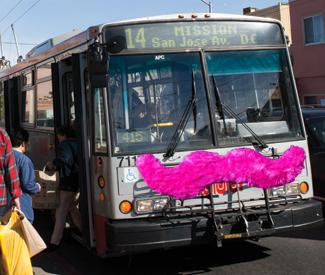
However, documents provided to the Guardian show that Lyft would buy at least 68 buses, including 12 articulated vehicles, at a price still to be negotiated. In exchange, the city would give the company – known for its pink mustaches on illegal taxi cabs – exclusive rights to operate on the heavily-used lines.

Lyft is developing an  app that would allow customers not only to view approaching buses but to book specific seats for an additional  price. Sensors in the bus seats will emit an electronic buzz to alert passengers that their seats had been purchased by someone else, warning them to vacate by the next stop. If the passengers remain, they will feel a sharp electric shock.

Lee’s office said the plan is similar to the market-based parking-meter program that raises the price of a space in times of heavy demand.

“The free market solves so many problems,” Christine Falvey, spokesperson for Lee, told us. “And it’s pretty clear that too many people who don’t really need to sit down or who are perfectly capable of waiting for a later conveyance are taking up space on the most crowded buses.”

Ron Conway, the venture capitalist who is Lee’s closest ally in the business community, will invest as much as $40 million in the new venture, Silicon Valley sources say.  If the trial public-private partnership works, he’s prepared to raise money to buy out Muni and turn the city’s bus system into a private operation.

“You’ve got a captive market, and demand-based pricing is what’s happening these days,” Falvey said.  “It’s just the next step.”

Mayor Lee’s mysterious breakfast companions [UPDATED]

See an update to this story below. San Francisco Mayor Ed Lee has been having breakfast with CEOs to seek millions in funding for the America’s Cup, but the identities of those CEOs remain a mystery.

At a City Hall hearing two weeks ago, America’s Cup Organizing Committee chief Kyri McClellan told supervisors that Lee has been “putting an incredible amount of energy” into fundraising to cover city costs for the America’s Cup. As the yacht race draws closer, pressure is building around an anticipated funding shortfall that could deal a blow to city coffers.

McClellan told supervisors that Lee was “holding breakfasts with CEOs” to raise money. Encouragingly, she added, “people are responding.”

So, who are the CEOs? And how much have they agreed to contribute? So far, nobody has disclosed that information.

Shortly after the hearing, the Guardian submitted a public records request to Lee’s office seeking documentation on the fundraising breakfasts and records showing the names and affiliations of the CEOs.

In response, we received several pages from the mayor’s calendar. Entries show that Lee held half a dozen meetings concerning “economic development,” with no mention of the America’s Cup. The mayor had a meeting at Waterbar, a restaurant on the Embarcadero overlooking the Bay Bridge, on the morning of Jan. 25; he had another meeting there Feb. 1; he met at the Hotel Vitale on Feb. 22; met at City Hall on Feb. 28; had breakfast at the St. Regis Hotel on March 1, and had lunch with someone at Original Joe’s on March 4. But there was no information disclosing whom he met with.

After receiving the documents, the Guardian left multiple voicemails with the mayor’s press office asking for the identities of the CEOs. So far, nobody has responded.

The request also yielded a fundraising form that asks prospective donors to “join the 2013 America’s Cup San Francisco Host Committee.”

Donors could opt to become a “Legacy Benefactor” for committing to give or raise $5 million; a “Legacy Partner” for $2.5 million; a “Strategic Partner” for $1 million, a “Civic Champion” for $500,000, or a mere “Member” for $250,000. Donors with questions or who wished “to connect with Mayor Lee” could call Stephanie Roumeliotes, the form noted. 

Roumeliotes is a prominent fundraiser and political strategist who provided financial consulting for the re-election campaigns of Senators Dianne Feinstein and Barbara Boxer. She was appointed to serve on the Golden Gate Concourse Authority, a part of the Recreation and Parks Department, by former Mayor Gavin Newsom.

A call to the number listed went to SGR Consulting, Roumeliotes’ firm. The receptionist declined to comment or to connect the Guardian with Roumeliotes, saying, “All press inquiries should be directed to the Mayor’s Office.”

UPDATE: We just received a voicemail from Christine Falvey, Mayor Lee’s press secretary, who told us “I don’t have a list of the attendees for those breakfasts. They were hosted by the America’s Cup Organizing Committee.” Which raises more questions, but in any case we placed a call to race organizers and will update again when we know more.

No golden years for LGBT seniors

139

According to studies, queer seniors are poorer than their straight counterparts. They’re half as likely to have health insurance, and two-thirds as likely to live alone. Not to mention facing discrimination in medical and social services, retirement homes, and nursing care facilities. So much for the “golden years.”
Here in San Francisco, LGBT seniors face another grave threat: evictions. Many of our elderly live in rent-controlled apartments that are targeted by real-estate speculators and investors out to make big bucks turning them into tenancies-in-common.

With median rents close to $3,000 a month and vacancy rates low, the odds are pretty good that an evicted senior won’t find an affordable place in the city. For a senior with AIDS, an eviction is especially threatening since our city offers the best treatment and services. Studies show that people with AIDS who lose their apartments tend to die sooner, especially if they become homeless. 

The only LGBT organization that actually addresses the housing needs of queer seniors is Open House. Its 110 units at 55 Laguna will be the first affordable queer senior housing development in the city. I hope it’s not the last. As for seniors with AIDS, there’s only one AIDS organization in the vast list of groups and services — the AIDS Housing Alliance — that actually finds housing for its clients. It was started by Brian Basinger, a gay man with AIDS, after he was evicted and his apartment was sold as a TIC.

No one knows how many LGBT seniors have been, and are being, evicted. Ditto for how many seniors with AIDS end up on the streets. We also don’t have stats on how many transgender seniors are victims of real estate greed or live in absolute terror of losing their homes. 

The Rent Board doesn’t break down its eviction stats by sexual orientation or even age. The city’s homeless count doesn’t mention if someone’s queer or transgender. There is no way to determine how many LGBT seniors live in SROs or with life-threatening conditions such as mold or lack of heat. Or how many live in homes that have been — or are being — foreclosed.

That’s why the housing subcommittee of the city’s LGBT Aging Policy Task Force is holding a hearing into the housing needs and concerns of queer seniors. Information is power.

All LGBT seniors — housed and homeless — are invited to come testify about their housing issues. Whether they live in an SRO or a home that they own, whether they sleep in a shelter or a rent-controlled apartment, whether they’re in a subsidized unit or an illegal in-law, the subcommittee wants to hear from them about their concerns and needs.

The subcommittee will ultimately be making recommendations that will be included in a task force report on what the city can do to address LGBT issues.
LGBT seniors deserve their golden years.

The hearing is Monday, April 1, 9am to 12 noon, room 416, City Hall. Written testimony accepted. For more info, call Tommi at 415-703-8634.
Tommi Avicolli Mecca is a longtime queer and tenants rights/affordable housing activist who works for Housing Rights Committee. He is a member of the LGBT Aging Policy Task Force.

Rally and vigils for marriage equality in S.F. this week

The U.S. Supreme Court will hold back-to-back hearings this week as justices consider Prop 8 and the Defense of Marriage Act (DOMA), setting the stage for historic discussions concerning LGBT civil rights. Tonight, hundreds are expected to gather at Castro and Market streets for a 6:30 p.m. rally, followed by a march to City Hall. Prop 8, a state constitutional amendment banning same-sex marriage, passed in California with 52 percent of the vote in November of 2008. Challenges to the discriminatory law have been working through the court system ever since.

LGBT activists also plan to mark Tuesday and Wednesday evenings with vigils outside the California Supreme Court building. The vigils will coincide with about 150 events scheduled throughout the country, organized to demonstrate support for marriage equality.

Shortly after longtime gay rights activists Cleve Jones and David Mixner put out the call to local activists that the Supreme Court would be hearing arguments on Prop 8 and DOMA, Patrick Connors started helping to organize the rally, march and vigils in tandem with activists Greg Chasin, Billy Bradford, Aaron Baldwin and others, Connors said. Over the past several weeks, they’ve been posting fliers, Tweeting to get the word out and urging support for marriage equality as the historic twin hearings get underway in D.C. 

“We’re cautiously optimistic that there will be hundreds of people in the Castro” for the Monday night rally, Connors told the Guardian. About 200 have also signalled interest in attending the vigils March 26 and 27.

San Francisco has been at the epicenter in the battle for marriage equality. Just after Prop 8 passed, it was immediately challenged in parallel court proceedings by same-sex couples and the city of San Francisco, with City Attorney Dennis Herrera leading the charge with support from other California municipalities.

Connors and his husband, Robert Dekoch, were initially married in February of 2004, but their marriage was invalidated after the California Supreme Court held that city officials lacked the authority to issue marriage licenses to same-sex couples. Following a subsequent court victory that opened the gates for same-sex couples to be married in San Francisco City Hall once again, Connors and Dekoch returned and were re-married in August of 2008.

Although Prop. 8 passed the following November, banning same-sex marriage, “our marriage, along with 18,000 others, is recognized by the state of California,” Connors explained. Yet their marriage still isn’t recognized at the federal level, so “there’s the potential of what could happen” during out-of-state travel, he said.

In May of 2009, Connors was arrested along with some 200 protesters who took to the streets following a California Supreme Court decision upholding Prop 8. “A whole bunch of us sat in the middle of Van Ness,” he recounted, “And blocked traffic for hours until the paddy wagons came.”    

On the Cheap listings

0

Submit items for the listings at listings@sfbg.com. For further information on how to submit items for the listings, see Picks.

WEDNESDAY 20

1960’s Go-Go Groove Make-out Room, 3225 22nd St., SF. www.1960sgo-go.com. 7pm, free. Bust out those white go-go boots and learn some standard ’60s dance moves like the twist, jerk, pony, watusi, hully gully — even the tighten up! If you’re in need of some liquid courage before you shake it, head over to the Make-out Room at 6pm for some sweet happy hour deals.

THURSDAY 21

“Bold Local NightLife” California Academy of Sciences, 55 Music Concourse, SF. www.calacademy.org. 6-10pm, $12. Art and science converge as the Bold Italic website takes over this week’s Nightlife at the Academy of Sciences. Meet the local merchants, designers, artists, and producers from the ‘hoods we know and love. Folks from Misdirections Magic Shop, bakery co-op Arizmendi, wine delivery service Rewinery, and more will all have tables alongside the alligators, jellyfish, and penguins.

“Growing Pains, The Business of Cannabis in San Francisco” San Francisco Planning and Urban Research Association, 654 Mission, second floor, SF. www.visityerbabuena.org/events 6:30-7:30pm, free. RSVP suggested. SF Appeal editor Eve Batey and writers Heather Donahue and Chris Roberts will explore the state of marijuana in SF, and possible impacts of proposed cannabis legislative reforms. If you have a specific topic or question you would like addressed, email growingpains@sfappeal.com before tonight’s talk.

FRIDAY 22

“Dance Anywhere” Various locations throughout the Bay Area. www.danceanywhere.org. Noon, free. Why wait until tonight to get your groove on? In this global event — offshoots are taking place in major cities around the globe — participants are encouraged to stop whatever they’re doing when the clock strikes 12, and bust a move. Performances by professional dancers will take place at the SFMOMA, City Hall, and Yerba Buena Center.

“PhotographsPlus” Dogpatch Café and Art Gallery, 2295 Third St., SF. www.dogpatchcafe.com. Through May 10. Opening reception 6-8pm, free. This exhibit features local artist Shawn Ray Harris includes three distinct series of works created over the last 15 years. Endowed with a whimsical charm, Harris’ work offers a look into urban landscapes and the creatures that inhabit them.

“Game On” 1AM Gallery, 1000 Howard, SF. www.1amsf.com. Through April 20. Opening reception: 6:30-9:30pm, free. We need not remind you that nerds are the new cool kids. Instead, we’ll let the new show at street art-centric 1AM Gallery lend more evidence to prove the point. Its new group show highlights videogame characters rendered in vinyl doll and canvas by graf artists like Vogue TDK, Estria, and Mike “Bam” Tyau.

SATURDAY 23

Easter egg hunt for dogs Golden Gate Park, Marx Meadow, SF. www.waghotels.com. Noon-2pm, $15. Purchase tickets online. Help your pup sniff out some of the 2,000-plus plastic eggs containing treats and prizes at dog and cat resort, Wag Hotel’s fourth annual fundraiser benefiting local animal rescue organizations. Attendees will also enjoy complimentary hor d’oeuvres and beverages, have a chance to see how their doggie bud feels about the Easter Bunny.

Art Explosion spring open studio Art Explosion Studios, 2425 17th St., SF. www.artexplosionstudios.com. 7-11pm, free. Also Sun/24, noon-5pm. One of San Francisco’s largest art collectives will be holding its 13th annual spring open studio this weekend. Check out work from over 140 artist, painters, photographers, fashion designers, jewelers, and textile designers from around the city.

SUNDAY 24

Backyard Foraging book signing Omnivore Books, 3885A Cesar Chavez, SF. www.omnivorebooks.com. 3-4pm, free. You don’t need to trek into the forest to forage edible plants. Ideal for first-time foragers, Backyard Foraging: 65 Familiar Plants You Didn’t Know You Could Eat by Ellen Zachos features 70 edible weeds, flowers, mushrooms, and ornamental plants typically found in urban or suburban neighborhoods. Head over to Omnivore Books today to meet Zachos, listen to her speak about her book, and get a signed copy.

SF Mixtape Society exchange The Make-Out Room, 3225 22nd St., SF. www.sfmixtapesociety.com. 4-6pm, free. The San Francisco Mixtape Society is dedicated to the art of making and exchanging music mixes. Attendees are invited to assemble a mix according to the theme (this month is “anchors and sails”) in cassette, CD, or USB form. Come ready for newness: a magically random raffle will send you home with someone else’s mix at the end of the night. Record yours in cassette form and score yourself a free drink.

MONDAY 25

Izzies Awards Ceremony Z Space, 450 Florida, SF. www.zspace.org. 6-8pm, free. The Oscars may be over but award season has not come to a close just yet. The 27th Annual Izzies awards will take place tonight, honoring outstanding achievements in dance across the Bay Area. Hosting the ceremony is AileyCamp director David McCauley, and CounterPULSE executive and artistic director Jessica Robinson. After the ceremony, mingle with some dance big shots over dessert and coffee.

TUESDAY 26

French cinema class Alliance Française, 1345 Bush, SF. alliance-francaise-sf.weebly.com. 6:45pm, $5. To help non-French speakers discover French cinema, the Alliance Française of San Francisco is offering this weekly Tuesday night class, which includes a French film screening followed by a discussion. The class will take place in the Alliance Française’s intimate theatre where free wine, refreshments, popcorn (and English subtitles) will be provided.

“Remnants of San Francisco: Pieces of the Bygone City” St. Philip’s Catholic Church, 725 Diamond, SF. www.sanfranciscohistory.org. 7:30pm, $5. San Francisco’s architecture is decorative, meticulous, and often begs the question of passers-by: “what is the story here?” Get that tale tonight as historian Christopher Pollock will present before and after photos of significant architecture around the city, explaining the buildings’ significance and why they were built the way they were.


Editor’s notes

5

EDITOR’S NOTES Way back in the early 1980s, when I had a lot more hair and it wasn’t so grey, I got a tip that the San Francisco school district had a serious problem with asbestos contamination. My colleague Jim Balderston and I checked it out, and yes indeed — the toxic stuff was in so many classrooms that thousands of students were at risk.

After we broke that news, and the district started scrambling to clean up the mess, we asked ourselves: How were things allowed to get to that point? Who screwed up? Who let it happen?

We knew there was a paper trail, and we were all set to put together a detailed request under the Public Records Act, which would have taken months to process. But first we met with the recently hired school superintendent, Ray Cortines, and asked him how much he knew about the past few years of school maintenance.

“Very little,” he said. “But I know where you can find out.”

He took us to a huge room, filled with maybe 50 filing cabinets. “All of the building history and maintenance records are in here,” he said. “If you need to use the copy machine, just let me know.”

And that was that. No scrutiny from a district lawyer, no redactions, no documents withheld for shadowy reasons … just two reporters with full access to public records. He literally told us to turn out the lights whenever we were done.

We got some amazing stories. I’d like to think we hastened a lagging asbestos abatement program and revealed who was at fault .. but nothing bad happened. I guarantee that the district could have found a way, maybe even an arguably legal way, to keep us from seeing half the records we reviewed — but as Cortines saw it, what would have been the point?

And guess what? It was 1987. There wasn’t any fancy software program or nifty, expensive app. Just an open door.

That’s how a public agency should think about public records.

Now its 2013, and San Francisco is the epicenter of the Information Revolution. And as we note in this issue, it’s harder than ever to get the folks at City Hall — who love the tech world and all it offers — to turn over basic information about how they’re running the city.

That’s about as crazy as it gets.

CCSF board approves report to accreditors amid heavy criticism

164

Windsong, a 21-year-old City College student, held a sign that read “I love CCSF” while standing along Ocean Avenue last evening, as cars rolled by honking their support for the embattled school.

“I love learning while not being bound by the four-year school structure,” she said. She’s an artist in residence at a local elementary school, and was protesting to make sure City College of San Francisco could give her students the same opportunities she had.

“This place is in my heart,” she said. And she wasn’t alone.

Nearly 200 protesters lined the building outside of City College’s board of trustees meeting last night as the CCSF Board of Trustees approved the school’s “Show Cause” report, which is a 220-page document detailing what the college has done to meet its accreditation requirements — accreditation is required for a college degree to have worth, and for a school to receive state funding.

In short, it’s a document arguing what the college has done to improve since it was hit with sanctions last October, and why it should stay open and accredited. The report is due to the accreditation commission on March 15.

The Accrediting Commission of Community and Junior Colleges hit City College with a “show cause” sanction, citing a lack of progress in six problem areas the school was supposed to address since its last accreditation review six years before. When the accrediting commission came back to check on the school, it concluded City College had yet to address key areas, including measuring Student Learning Outcomes, and adequately funding their reserve, a “rainy day fund” the college leans on in hard times.

City College said that it has now met the challenge of those key problem areas. “We were deferring maintenance, and deferring (upgrading) technology,” said board president John Rizzo. “We’re required to spend money, and this gives us a plan going forward.”

But the shouting protesters outside the meeting and the angry students inside disagreed with some points of the plan. Proposition A was a parcel tax measure approved by voters in November that would raise somewhere between $14-16 million City College annually, which the board wanted to use to beef up the college’s reserve fund, one of the key areas where they were knocked by the accrediting commission.

California Federation of Teachers president Joshua Pechthalt implored the board to use Prop A funds for current teachers. “The men and women who work in this college spent many hours taking money out of their pockets to pass Prop A,” Pechthalt said in public comment to the board. The audience of about a hundred or so faculty and students cheered. “I would ask you to work closely with faculty and staff, that you work collaboratively with them.”

Pechthalt was there at the behest of Alisa Messer, the president of City College’s American Federation of Teachers Local 2121. Teachers at City College have had wage freezes for years, and most recently had an 8.8 percent wage reduction just this past month.

Part-time teachers were hit too, as nearly 40 of them were “not rehired” for the current semester, as well as 18 counselors and 30 members of the college’s staff..

Student Martin Madrigal, a 29-year-old mathematics major at CCSF, said he also supported using the Prop A funding to prevent layoffs and wage reductions.

“I missed class to come to this fight,” Madrigal said to the board. “But if I didn’t come here there wouldn’t be a class to miss.”

One by one, faculty and students implored the board to use Prop A funds to buffer the college’s wage reductions and layoffs. At one point, student Eric Blanc, a member of the protest group Save CCSF, came to the podium to speak in public comment and was cut off by the board. Ten or so other students and faculty had yet to speak, and were told there was no longer time.

Blanc then demanded of the board his time to speak. The campus police chief, Andre Barnes, and an officer approached Blanc and tried to remove him from the room. The tension in the room mounted as the audience started chanting “let him speak, let him speak!”

Trustee Rafael Mandelman diffused the situation, asking for silence and calmly explaining that the board needed time to conduct its business. Tensions rose again though as the topic of the college’s reserve fund came up — the reserve is now at $4 million, but the school is planning to boost it to $13 million by 2014, and $18 million by 2019.

It’s a needed safety net, the trustees argued, for a school with a budget hovering at more than $200 million a year and an economy that’s in the tank.

“Tomorrow the sequestration will begin, and it will impact California spending and our communities,” Trustee Steve Ngo said. “This [money] is going to faculty and staff, but in the future. Faculty and staff would not have to take cuts in wages, if we had funded the reserve.”

Ultimately, the board voted to approve its long term reserve fund plan, using Prop A funds to help buffer the reserve for the future. Blanc told the trustees that they had denied themselves other options, like suing the accreditation commission, or asking for emergency funding from City Hall.

“I think behind the rhetoric of this are thousands of people being shut out,” he said.

Vice Chancellor Peter Goldstein, who handles college finance, said that some of the claims of the protesters were inaccurate.

“I keep hearing people talking about cutting classes,but that’s not our plan for [fiscal year] 13-14,” he said. “In fact, this college is putting together a budget for next year that will have more classes than this year.”

The college may not be cutting classes, but it is asking everyone to do more with less. Teachers to teach with less salary, students to fit into larger classrooms, and for classes soon to fit into fewer campuses.

Whether those are improvements or dire straits depends on who you ask.

Video by Joe Fitzgerald:

http://www.youtube.com/embed/pMXeECCvVTs

http://www.youtube.com/embed/L5To6k2uU60


Save CCSF plans to march to City Hall to demand aid to CCSF and to protest austerity cuts at the college on March 14. For more information visit http://www.saveccsf.org/.

Click here to read City College’s 220 page “Show Cause” report: http://www.ccsf.edu/ACC/Preliminary_Final_Draft_Show_Cause_Report_Feb_26.doc.

Stage Listings

0

Stage listings are compiled by Guardian staff. Performance times may change; call venues to confirm. Reviewers are Robert Avila, Rita Felciano, and Nicole Gluckstern. Submit items for the listings at listings@sfbg.com. For further information on how to submit items for the listings, see Picks.

THEATER

OPENING

Assistance NOHspace, 2840 Mariposa, SF; www.opentabproductions.com. $20. Opens Sat/2, 8pm. Runs Thu-Sat, 8pm; Sun, 6pm. Through March 30. Leslye Headland’s comedy about assistants is loosely based on her experiences working for Harvey Weinstein.

Inevitable SF Playhouse, 533 Sutter, SF; www.sfplayhouse.org. $20. Previews Thu/27-Fri/1, 8pm. Opens Sat/2, 8pm. Runs Thu-Sat, 8pm. Through March 23. SF Playhouse’s "Sandbox Series," enabling new and established playwrights to stage new works, kicks off its third season with Jordan Puckett’s drama about a woman trying to make sense of her life.

Just One More Game Exit Theatre, 156 Eddy, SF; www.tripleshotprodutions.org. $25. Opens Fri/1, 8pm. Runs Thu-Sat, 8pm; March 10 and 17, 2pm. Through March 30. Triple Shot Productions presents Dan Wilson’s video game-themed romantic comedy.

Pageant: The Musical! Victoria Theatre, 2961 16th St, SF; www.brownpapertickets.com. $25. Opens Thu/28, 8pm. Runs Thu-Sat, 8pm. Through March 9. Robbie Wayne Productions presents this "drag-tastic adventure through the hilarious world of beauty contests."

The Voice: One Man’s Journey Into Sex Addition and Recovery Stage Werx Theater, 446 Valencia, SF; thevoice.brownpapertickets.com. $10-18. Previews Sun/3, 7pm. Opens Tue/5, 8pm. Runs Fri-Sat, 8pm. Through April 6. Ticket sales for David Kleinberg’s autobiographical solo show benefit 12-step sex addiction recovery programs and other non-profits.

ONGOING

Foodies! The Musical Shelton Theater, 533 Sutter, SF; www.foodiesthemusical.com. $30-34. Fri-Sat, 8pm. Open-ended. AWAT Productions presents Morris Bobrow’s musical comedy revue all about food.

God of Carnage Shelton Theater, 533 Sutter, SF; www.sheltontheater.org. $38. Thu-Sat, 8pm. Through March 30. Shelton Theater presents Yasmina Reza’s Tony-winning comedy about upper-middle-class parents clashing over an act of playground violence between their children.

Hedwig and the Angry Inch Boxcar Playhouse, 505 Natoma, SF; www.boxcartheatre.org. $25-40. Wed/27-Sat/2, 8pm (also Sat/2, 5pm). Hold onto your hairpiece, Boxcar Theatre is reprising their all-too short summer run of Hedwig and the Angry Inch, and just in case you think you saw it already, be forewarned — you ain’t seen nothing yet. Recast, redesigned, and re-vamped, this outcast-rock musical familiarly follows the misadventures of one Hedwig Robinson (né Hansel Schmidt) with glam, guts, and glitter. But unlike the movie version penned by and starring John Cameron Mitchell as the titular chanteuse, or other staged versions, director Nick A. Olivero splits the larger-than-life, would-be rock sensation into eight different characters, who are each given a solo turn as well as plenty of ensemble harmonizing during the course of the two hour-plus performance. The effect is often electric, and just as frequently hilarious, as when the four female actors playing the role stomp across the stage swinging imaginary dicks in the air to the lyric "six inches forward and five inches back, I got a, I got an angry inch!" Supported by a tight quartet of rock musicians led by Rachel Robinson, and the phenomenal Amy Lizardo as Hedwig’s beleaguered "man Friday" Yitzhak, Hedwig keeps on extending for what appears to be an indefinite run, employing the time-honored Thrillpeddlers’ tradition of rotating cast members and comeback performances, which means you could theoretically go multiple times and never see quite the same show twice. I certainly plan to. (Gluckstern)

Jurassic Ark Exit Theatre, 156 Eddy, SF; www.theexit.org. $15-25. Fri-Sat, 8pm. Through March 16. Writer-performer David Caggiano’s zany, well-executed solo play centers on a Christian televangelist who is unwaveringly bent on making a big-budget movie about a cowboy-like Biblical Noah, his Ark, and the largely lovable dinosaurs callously left out of the story — a project he sees delivering a decisive blow to the Darwinians, while turning cineplexes across the land into celluloid cathedrals. Brother Dallas and his proselytizing pitch eventually find receptive ears in a trinity of movie-industry heavies, whose collective business acumen demands a few changes to the script. Meanwhile, the intoxicating power of it all leads to a lapse in Brother Dallas’s righteousness and a scandal reminiscent of Hugh Grant’s career. Dallas rebounds from this bout with the Devil and sees his movie made — but surely only he is unaware that the Devil keeps a Hollywood address. Smartly directed by Mark Kenward, this low-frills production relies almost exclusively on Caggiano’s sturdy ability with quick-change characterizations (couched in Dylan West’s modest lighting design and a suggestive soundscape by sound editor–musician John Mazzei). The fitful satire trades in pretty orthodox caricature and, in Brother Dallas, lacks a very compelling or sympathetic central figure; but it unfolds with a very cinematic imagination that, while formulaic, is itself one hell of a movie pitch. (Avila)

The Lisbon Traviata New Conservatory Theatre Center, 25 Van Ness, SF; www.nctcsf.org. $25. Wed-Sat, 8pm; Sun, 2pm. Through March 24. New Conservatory Theatre Center performs Terrence McNally’s play, a mix of comedy and tragedy, about the relationship between two opera fanatics.

The Motherfucker with the Hat San Francisco Playhouse, 450 Post, SF; www.sfplayhouse.org. $30-70. Tue-Thu, 7pm; Fri-Sat, 8pm (also Sat, 3pm). Through March 16. A fine cast makes the most of Stephen Adly Guirgis’s deceptively coarse, often amusing little play, The Motherfucker with the Hat, which receives its local premiere in a sure and rowdy production from SF Playhouse. Director and designer Bill English’s striking two-tier set almost belies the intimate nature of the quirky story, which concerns a hapless parolee and recovering alcoholic named Jackie (a winningly frazzled, bumptious Gabriel Marin) who retreats to his AA sponsor’s apartment to pine and plot revenge after he discovers a stranger’s hat in the bedroom of his longtime Puerto Rican girlfriend, Veronica (played vividly by an at once edgy and vulnerable Isabelle Ortega). But Ralph, his suave and persuasive sponsor (played with unctuous charm gilded by just a hint of ineptitude by an excellent Carl Lumbly), may not be the guy he wants in his corner. Not that Jackie can see that — he’s got a man-crush on Ralph that dwarfs his already ambivalent affection for much put-upon but stalwart cousin Julio (a sharply funny Rudy Guerrero) and blinds him to the warning signals from Ralph’s own disgruntled wife (a coolly disgusted Margo Hall). Throughout, these working-class New York borough dwellers display their wit and shield their soft underbellies with a rapid-fire barrage of creative swearing. English and cast display a real comfort with this kind of material (this is SF Playhouse’s fourth Girguis play), which drapes its soft heart in the intimations of violence more than the real thing. If the heat and imaginative cursing also seem to cover up for a play with little dramatic purpose beyond a gentle and somewhat pat exploration of loyalty, maturity, and trust, there’s pleasure to be had in the unfolding. (Avila)

Sex and the City: LIVE! Rebel, 1760 Market, SF; trannyshack.com/sexandthecity. $25. Wed, 7 and 9pm. Open-ended. It seems a no-brainer. Not just the HBO series itself — that’s definitely missing some gray matter — but putting it onstage as a drag show. Mais naturellement! Why was Sex and the City not conceived of as a drag show in the first place? Making the sordid not exactly palatable but somehow, I don’t know, friendlier (and the canned a little cannier), Velvet Rage Productions mounts two verbatim episodes from the widely adored cable show, with Trannyshack’s Heklina in a smashing portrayal of SJP’s Carrie; D’Arcy Drollinger stealing much of the show as ever-randy Samantha; Lady Bear as an endearingly out-to-lunch Miranda; and ever assured, quick-witted Trixxie Carr as pent-up Charlotte. There’s also a solid and enjoyable supporting cast courtesy of Cookie Dough, Jordan Wheeler, and Leigh Crow (as Mr. Big). That’s some heavyweight talent trodding the straining boards of bar Rebel’s tiny stage. The show’s still two-dimensional, even in 3D, but noticeably bigger than your 50" plasma flat panel. (Avila)

Steve Seabrook: Better Than You Marsh San Francisco, 1062 Valencia, SF; www.themarsh.org. $15-50. Fri, 8pm; Sat, 8:30pm. Through March 22. Kurt Bodden’s San Francisco Best of Fringe-winning show takes a satirical look at motivational speakers.

The Waiting Period Marsh San Francisco, 1062 Valencia, SF; www.themarsh.org. $25-50. Fri, 8pm; Sat, 5pm. Through March 30. Brian Copeland (comedian, TV and radio personality, and creator-performer of the long-running solo play Not a Genuine Black Man) returns to the Marsh with a new solo, this one based on more recent and messier events` in Copeland’s life. The play concerns an episode of severe depression in which he considered suicide, going so far as to purchase a handgun — the title coming from the legally mandatory 10-day period between purchasing and picking up the weapon, which leaves time for reflections and circumstances that ultimately prevent Copeland from pulling the trigger. A grim subject, but Copeland (with co-developer and director David Ford) ensures there’s plenty of humor as well as frank sentiment along the way. The actor peoples the opening scene in the gun store with a comically if somewhat stereotypically rugged representative of the Second Amendment, for instance, as well as an equally familiar "doood" dude at the service counter. Afterward, we follow Copeland, a just barely coping dad, home to the house recently abandoned by his wife, and through the ordinary routines that become unbearable to the clinically depressed. Copeland also recreates interviews he’s made with other survivors of suicidal depression. Telling someone about such things is vital to preventing their worst outcomes, says Copeland, and telling his own story is meant to encourage others. It’s a worthy aim but only a fitfully engaging piece, since as drama it remains thin, standing at perhaps too respectful a distance from the convoluted torment and alienation at its center. Note: review from an earlier run of the same production. (Avila)

The World’s Funniest Bubble Show Marsh San Francisco, 1062 Valencia, SF; www.themarsh.org. $8-50. Sun, 11am. Extended through March 17. The Amazing Bubble Man (a.k.a. Louis Pearl) continues his family-friendly bubble extravaganza.

BAY AREA

Dostoevsky’s The Grand Inquisitor Berkeley City Club, 2315 Durant, Berk; www.centralworks.org. $15-28. Thu-Sat, 8pm; Sun, 5pm. Through March 31. Central Works performs Gary Graves’ adaptation of the story-within-a-story from The Brothers Karamazov.

The Fourth Messenger Ashby Stage, 1901 Ashby, Berk; www.thefourthmessenger.com. $23-40. Wed-Thu, 7pm; Fri-Sat, 8pm; Sun, 2pm. Through March 10. It’s been some time since a work by local playwright Tanya Shaffer last graced our stages, not since 2005 to be precise, and in keeping with her penchant for multicultural themes, her latest piece, The Fourth Messenger, is a reimagining of the Siddhartha story, written as a musical in collaboration with composer Vienna Teng. Raina (Anna Ishida), a "hungry" journalism intern with a secret agenda, pitches her first scoop — the debunking of a beatific guru named Mama Sid (Annemaria Rajala) — and embeds herself in a meditation retreat where she can get close to the famously private teacher and uncover her past. Neither as humorous or as merciless as Jesus Christ Superstar or as exuberant as Godspell (though the excellent song "Monkey Mind" crackles with wit and trenchant observation, and the tender "Human Experience" genuinely uplifts), Messenger does offer a fairly solid primer to the path of spiritual enlightenment including its all-too-human fallout and sacrifices. The white-on-wood set design by Joe Ragey frames the action in a deceptively delicate layer of gauze and mystery, and the capable ensemble inhabit their multiple roles with ease — from jaded newsies to loyal disciples. Which makes it doubly unfortunate that the jazzy, piano-driven score seems pitched just outside of most of the actor’s ranges, even those of the notably skilled Ishida and Rajala, an admitted distraction for the monkey-minded, which is to say most of us. (Gluckstern)

My Recollect Time South Berkeley Community Church, 1802 Fairview, Berk; (510) 788-6415. $12-25. Thu/28, Sat/2, March 7, and 9, 8pm; Fri/1, March 8, 9pm; Sun/3, 5pm. Through March 9. Inferno Theater performs Jamie Greenblatt’s play about the life of former slave Mary Fields.

Our Practical Heaven Aurora Theatre, 2081 Addison, Berk; www.auroratheatre.org. $32-60. Wed/27-Sat/2, 8pm; Sun/3, 2 and 7pm. Anthony Clarvoe’s new play receives its world premiere as a 2011 prizewinner in Aurora’s Global Age Project (GAP), which cultivates new work addressing life in the 21st century. In the case of this labored and dull effort, the young century and its anxious outlook come refracted through three generations of women who gather for holidays at a seaside home whose own future is threatened by, first, financial and, ultimately, climatic conditions. Neurotic, self-absorbed Sasha (Anne Darragh) and capable businesswoman Willa (Julia Brothers) are middle-aged best friends forever who grew up in the home of Sasha’s mother (Joy Carlin) and late father. Joining Sasha’s two daughters by separate husbands, Suze (Blythe Foster) and Leez (Adrienne Walters), is Willa’s daughter, Magz (Lauren Spencer), who suffers from a debilitating disease. Despite many personal and generational differences — and a rising conflict over the house — all six women share in a traditional bout of bird watching in this fragile nature "refuge" for bird and human alike. While bird watching supplies the play’s operative metaphors, however, it does little to actually bring these characters together in any compelling or convincing way. In fact, respective backstories are pretty sketchy in general, dialogue strained and broadcasting, and performances correspondingly patchy. The three stage veterans in director Allen McKelvey’s cast — Brothers, Carlin, and Darragh — go furthest toward making Clarvoe’s leaden exposition somewhat buoyant, but the momentary pleasure they provide can’t stem the overall tide. (Avila)

PERFORMANCE/DANCE

"Cabaret Showcase Showdown, Year #4: Best Singer/Songwriter" Martini’s, 4 Valencia, SF; (415) 241-0205. Sun/3, 7pm. $5. Contestants compete in front of a panel of judges, including Katy Stephan (who also performs).

"Hand to Mouth Comedy" Dark Room Theater, 2263 Mission, SF; www.handtomouthcomedy.com. Fri/1, 10pm. $8. With stand-up comedians Trevor Hill, James Fluty, Lydia Popovich, Cameron Vannini, Kelly Anneken, and more.

"Mike Tyson: Undisputed Truth" Orpheum Theatre, 1192 Market, SF; www.shnsf.com. Thu/28-Sat/2, 8pm. $50-310. The controversial former boxer performs his Spike Lee-directed solo show.

"The News with Fembot and Friends" SOMArts Cultural Center, 934 Brannan, SF; somarts.org/thenews. Tue/5, 7:30pm. $5. New and experimental queer performance.

Elaine Page Venetian Room, Fairmont San Francisco, 950 Mason, SF; www.bayareacabaret.org. Fri/1, 8pm. $47. The musical theater icon performs.

"Pamtastic’s Comedy Clubhouse Presents: A Comedy Showcase" Mutiny Radio, 2781 21st St, SF; www.mutinyradio.org. Fri/1, 9pm. $5-20. Live podcast recording with Zorba Jevon, Glamis Rory, Luna Malbroux, and more, hosted by DJ Eddie Winters.

"Rotunda Dance Series: ODC/Dance" City Hall, Van Ness at McAllister, SF; www.dancersgroup.org. Fri/1, noon. Free. Dancers’ Group and World Arts West host a monthly free dance performance under City Hall’s rotunda. This month: KT Nelson’s Transit.

"San Francisco Magic Parlor" Chancellor Hotel Union Square, 433 Powell, SF; www.sfmagicparlor.com. Thu-Sat, 8pm. Ongoing. $40. Magic vignettes with conjurer and storyteller Walt Anthony.

BAY AREA

"The Buddy Club Children’s Shows" JCC of the East Bay Theater, 1414 Walnut, Berk; www.thebuddyclub.com. Sun/3, 1pm. $8. Daniel DaVinci, "the Juggling Genius," performs. Also Sun/3, 1pm, $8, Kanbar Center for the Performing Arts, 200 North San Pedro, San Rafael. Juggler and physical comedian Unique Derique performs.

"I Like Everything About You (Yes I Do!)" Taoist Center, 3824 MacArthur, Oakl; ww.crosspulse.com. Sat/2, 10:30am, $5-10 (family, $25). Also Sun/3, 4pm, $6-12, Dance Palace, 503 B St, Point Reyes. Celebrate body music with this kid-friendly show that’s "part international drill team, part polycultural rhythm section."

"One-Off Wednesdays (or sometimes Two-Off)" Marsh Berkeley, 2120 Allston, Berk; www.themarsh.org. Wed/27 and March 6, 8pm. $15-50. This week: Roy Zimmerman in Wake Up Call.

"PoRazone Love Project" Musically Minded Academy, 5776 Broadway, Oakl; www.musicallyminded.com. Sun/3, 3pm. $12-15. Raz Kennedy and Pollyanna Bush present original song, storytelling, theater, video, and dance.

Wiener’s dance mix: more DJs mixed with fines for “bad actors”

7

DJs could proliferate in San Francisco’s bars, restaurants, coffee shops, and plazas under legislation that Sup. Scott Wiener introduced today to include DJs under the city’s limited live music permits, but the legislation also includes new enforcement powers to crackdown on underground parties and other unpermitted events.

Limited live music permits – which are far cheaper and easier to obtain than the city’s full-blown Place of Entertainment permits ($385 compared to around $2,000 for the POE permits) – were created in 2011 by legislation sponsored by then-Sup. Ross Mirkarimi, allowing amplified performances until a 10pm curfew. But DJs were left out, despite their prevalence in San Francisco, something Wiener is now trying to correct.

“Entertainment and nightlife are an essential part of San Francisco’s cultural and economic vibrancy,” Wiener said today in a press release announcing the proposal. “This legislation fosters live entertainment while also heightening our ability to monitor and regulate bad actors.”

It’s that last part that doesn’t sit well with everyone, particularly given San Francisco’s pervasive culture of throwing underground parties, which are key fundraising tools for grassroots efforts such as Burning Man camps but which are the targets of periodic crackdowns by the SFPD and other agencies. It seems that when it comes to nightlife, we always have to take some medicine whenever City Hall offers a spoonful of sugar.

The legislation would give the Entertainment Commission the authority to levy $100 fines to those involved with unpermitted parties, either in established clubs or underground warehouses, whereas now the commission only has the authority to punish those who have permits for violating them.

“Punishing a DJ playing at a party in which the promoter didn’t get the proper permits (perhaps unbeknownst to the DJ), would be unfair and inappropriate, in my opinion,” was how DJ/Promoter Syd Gris from Opel Productions and Opulent Temple reacted to the legislation.

But Entertainment Commission Executive Director Jocelyn Kane told us she doesn’t expect to fine an DJs. While she asked Wiener for those enforcement powers, they are simply a way of encouraging promoters and business owners to get permits. “We’re not into punishment, we’re into compliance,” she said, adding that this is simply seeking authority to do administratively what the SFPD and California Alcoholic Beverage Control Administration can now to criminally and civilly.

Tom Temprano, president of the Harvey Milk LGBT Democratic Club and a DJ/promoter at the popular Hard French parties, told us “where I really want clarification is on the new enforcement powers for the commission,” although he agreed with Kane that the commission generally works cooperatively with the nightlife community, far more than either the SFPD or ABC.

“All in all, it’s a really good step in the right direction,” Temprano said of the Wiener legislation. “It seems really positive. As a DJ, allowing DJs to be used for limited live performances is just common sense.”

Kane said the legislation will allow music to flourish in the city, from outdoor plazas to small venues, many of which have used DJs illegally. “We’ll be able to legalize that and bring them into the fold,” she said. “There always have been places that use a DJ like a jukebox.”

In addition to the relatively cheap application cost compared to POE permits, limited live music perhaps are quick and easy to obtain and don’t necessarily require city inspections paid for by the applicant.

In his press release, Wiener praised the importance of nightlife to the city economy and cited a city study he commissioned last year which found that nightlife has a $4.2 billion impact on San Francisco, employing 48,000 people and furnishing the City with $55 million in tax revenue annually.

“We need to encourage a flourishing nightlife that not only marks San Francisco as a cultural capital, but also creates jobs and brings in revenue for essential City services,” Wiener said. “These amendments are part of that broader strategy.”

Activists to government: SF should be more like LA

9

What sets San Francisco apart from Los Angeles? When it comes to city agencies that are supposed to keep politicians, lobbyists and campaign financiers honest, there are evidently some key differences.

Last year, San Francisco’s Budget & Legislative Analyst, Harvey Rose, drafted a report at the behest of Sup. David Campos comparing the San Francisco Ethics Commission to that of LA. It was meant as a precursor for moving forward with a package of tougher Ethics regulations governing areas like campaign finance, but so far little has happened on that front.

Some of Rose’s findings are intriguing. For example, the report notes that in LA, investigations into possible ethics violations result in more findings of merit and, ultimately, significantly higher fines on average. Whereas the LA Ethics Commission dismisses just 19 percent of its cases, the vast majority of ethical investigations here in San Francisco – 76 percent – die off with findings of no merit, or “case dismissed.”

Do San Franciscans have a tendency to file more complaints lacking in substance, or does this reflect the modus operandi of the Ethics Commission – an agency that has long been painted as a sleeping watchdog by good-government wonks?

“I think that could be a fascinating figure to get more detail about,” says Eileen Hansen, a former member of the San Francisco Ethics Commission who served for six years. “LA heard more [cases], but we dismissed more,” she added.

Hansen is part of an ad hoc group, Friends of Ethics, that’s gearing up for an informational hearing scheduled for tomorrow, Feb. 27, to take a deeper look at the Rose report and consider what lessons San Francisco’s Ethics Commission might learn from its counterpart in LA, where government accountability rules are regarded by lawyers and government transparency activists as a gold standard. Those who attend the “interested persons” meeting will enjoy a rare perk: The ability to address a commission without having to adhere to the two-minute time limit normally imposed at public hearings.

“Those who are on the commission’s list – consultants, political treasurers, political lawyers, all the usual suspects – are the ones who have weighed in so far,” an email circulated by Friends of Ethics points out. “For ten years the rules have been written by those special interests, and we are insisting that they be written for the public interest.”

What’s LA got that San Francisco doesn’t? For one thing, the city bans political contributions from registered lobbyists. This means, for instance, that if a registered lobbyist is trying to sway an elected official who’s up for reelection on, say, a major development project, that lobbyist is legally barred from writing a big fat juicy check to support said politician’s campaign. In San Francisco, there is no such rule.

Hansen says there are other measures that could improve government accountability in San Francisco. “We ban contributions from city contractors, but we have a huge loophole,” she explains, “of not including people seeking development projects. That’s 90 percent. Development drives politics in this town,” she added, noting that closing the loophole could be a possible reform.

“LA is doing some great things. Our hope is that we get the public to take the Rose report seriously,” Hansen said. “It could inform the beginning of a reform package that we would love to see the Ethics Commission take seriously.”

The Ethics Commission hearing will be held on Feb. 27 at 3 p.m. in San Francisco City Hall, Room 400.

Supervisors consider Western SoMa Plan, lots of new condos, and “the purple building”

129

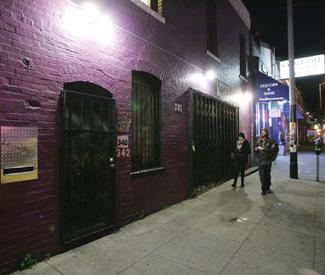
The fate of the “purple building” – which has become caught up in the clash between nightlife and residential interests on the clubgoer-saturated 300-block of 11th Street – remains undecided as the Western SoMa Community Plan heads into its first hearing before the Board of Supervisors Land Use and Economic Development Committee on Monday.

As we reported in this week’s paper, a unique citizen-based task force has spent the last eight years developing the plan, which will allow thousands of units of new housing – most of it along Folsom Street – to move forward once the plan gets final approval from the board. But the California Music & Culture Association and other nightlife advocates successfully amended the plan to ban new housing on that 11th Street block as the Planning Commission approved it in December.

Yet the commission also decided to grandfather in a 24-home project at 340 11th Street, the so-called purple building, which nightlife advocates say would put those new residents on a collision course with Slim’s, DNA Lounge, and other big nightclubs on that busy block. As we went to press, both sides and District 6 Sup. Jane Kim were all hopeful that a compromise was imminent, likely involving switching from residential to office.

But with just days to go before that hearing, building owner Tony Lo still hasn’t decided whether to make the change or fight it out in front of the supervisors. His architect John Goldman – whose residential design for the site was placed on hold by the city since shortly after he submitted it in 2005 – had hoped to hear by now but he’s still waiting for Lo to make the call.

“Based on my analysis, it looks feasible to change to offices if you want to do it, and I mean feasible financially and architecturally and planning-wise,” Goldman today told the Guardian, referring to what he told Lo.

Meanwhile, Western SoMa Task Force Chair Jim Meko – who has not been supportive of tweaking the plan after all the work he oversaw – yesterday sent out an email blast to stakeholders and supporters urging them to attend Monday’s hearing and show support for the plan.

“You don’t often get a chance to participate in making decisions about your own neighborhood from start to finish. Some special interest groups are expected to come out of the woodwork to take pot shots at the Plan so the hundreds of participants in this process need to make their voices heard. Your testimony at the hearing next week will make all the difference,” Meko wrote.

The hearing starts at 10am in board chambers in City Hall. This item might have been heard later in the day considering the agenda opens with a continuation of the controversial condo lottery bypass legislation, on which Board President David Chiu and others have been trying to forge a compromise between tenant advocates and homeowner groups. But committee Chair Scott Wiener just told us that item “will be continued. No compromise yet.”

Plan C, and the C stands for Condo conversions

229

No politically savvy San Franciscan has ever really bought the rhetoric espoused by the so-called “moderate” political action group Plan C that it’s all about finding middle ground between what its website calls “a ‘downtown’ machine, and a far-left, dogmatic, so-called ‘progressive’ machine.” As if that unbalanced labeling wasn’t enough of a indicator, the fact that its funding comes from all the biggest cogs in the downtown machine should be.

But now, as the group’s members aggressively work to open the flood gates on converting San Francisco’s rent-controlled apartments into privately controlled condominiums, it’s become more clear than ever that the C stands for Condo and that the financially motivated group is moving the agenda of the real-estate and investment interests that dominate its Board of Directors.

City Hall sources connected to the ongoing meetings that Sups. David Chiu and Mark Farrell have been holding with stakeholders on the controversial condo lottery bypass legislation sponsored by Farrell and Sup. Scott Wiener say there were indications of possible compromise that came out of the first mediation meeting.

That one primarily involved the tenant advocates who have led the charge against the legislation and the representatives for tenancy-in-common owners seeking to buy a bypass to the city’s condo conversion lottery that only allows 200 new condos per year. There were whispers that came from that meeting of a compromise that would allow a one-time bypass in exchange for shutting down the lottery for several years, or indexing it to the construction of new housing for low-income San Franciscans.

Since then, the sources say, Plan C and their partners in the real-estate industry have dominated the meetings with their dogmatic advocacy for indefinitely allowing the maximum number of condo conversions. Despite public statements by Farrell and Wiener that they just want to clear out some backlog without encouraging more landlords to convert apartments to TICs in the future, Plan C just wants to feed more affordable apartments into the expensive real estate market.

Some basic research on the group and its Board of Directors seems to show that this position is about financial self-interest rather than values or ideology.

Plan C Co-Chair Steve Adams is a regional manager for Sterling Bank & Trust, which has consistently been one of the city’s top TIC lenders and which recently sponsored a forum encouraging more conversion of apartments, promising to increase its loan volume, and painting a rosy picture of the TIC financing market that belies Wiener’s claims that TIC owners can’t get financial relief and need the city’s intervention.

One of the key presenters at that symposium was TIC attorney Lyssa Paul, who is also a Plan C board member and someone who makes her living creating more TICs. Other members of the 12-member board who make their living in the real estate industry and benefit directly for TICs conversions are Amanda Jones and Brian Hecktman. Other bankers or investment managers on the board that benefit from the TIC business are Ashley Lyon and Bob Gain.

Co-Chair Mike Sullivan is a venture capital attorney who created Plan C in 2001 and used it to help then-Sup. Gavin Newsom sell his Care Not Cash homelessness plan and run for mayor. Randy Brasche is in software marketing and got involved in the issue being frustrated with the condo lottery and [[CORRECTION/DELETION: last year]] forming the San Francisco TIC Coalition.

Board member David Fix is [[CORRECTION/ADDITION: the former]] president of the Small Property Owners of San Francisco, so it’s possible that his interest is as much ideological as financial, particularly given his past public statements against rent control. That may also be the case with Baha Hariri, a principal at A&F Properties and the former political director of the downtown-funded-and-created Committee on Jobs.

Among the downtown players that fund Plan C, which was sitting on $73,872 in the bank as of the start of this year, are the Committee on Jobs, the San Francisco Association of Realtors, PG&E, San Francisco Apartment Association, Small Property Owners of San Francisco, Shorenstein Realty, the San Francisco Chamber of Commerce, and venture capitalist Ron Conway.

So Plan C appears to be little more than Plan A’s deceptive effort to push Plan Condo. BTW, I’ve been waiting more than 24 hours now to get a call back from the Plan C board, after leaving a message with its only paid administrator, Richard Magary, who told me Sullivan and his colleagues are all quite busy now. But I’ll be happy to update this post if and when I hear back.

2/22 UPDATE: Still no call back from Plan C, but Fix made a comment requesting the two minor corrections above. C’mon, Plan C, gimme a call, what are you so afraid of?

Look for a quick decision on D4 appointment

44

A Democratic Party resolution calling on Ed Lee to appoint a mother to the Board of Supervisors may have driven the slow-moving mayor to fill the seat of departing Sup. Carmen Chu quickly, perhaps as soon as today (Feb. 21), City Hall sources are saying.

Lee appointed Chu to fill the post of Assessor-Recorder vacated when Phil Ting moved to the state Assembly. But he’s been dragging his feet on naming Chu’s replacement.

Alix Rosenthal, a member of the Democratic County Central Committee, has put a resolution on the agenda for the group’s Feb. 27 meeting urging the mayor to name a woman with a family. Her argument:

Political office is often beyond the reach of mothers, because balancing a political life with family and work is often an insurmountable challenge.  Appointing a mother to fill the District 4 seat will demonstrate the Mayor’s commitment to stemming the tide of families leaving San Francisco, and it may serve to inspire women with children to be politically engaged, and to run for office themselves in the future.

That, of course, could put the mayor’s allies on the DCCC in a tough situation. Will they vote to urge the mayor to do something he doesn’t want to — or will they vote against, you know, motherhood?

Of course, if the mayor makes an appointment before Feb. 27, the resolution becomes moot.

Rosenthal and some other politically active women are supporting Suzy Loftus, a member of the Police Commission and a mom. But D4 is more than half Asian, and has always had an Asian supervisor, so it’s unlikely the mayor would appoint a non-Asian to the job.

One obvious candidate: Katy Tang, who is now Chu’s legislative aide.

The mayor will want someone he can count on as loyal — and who he’s pretty sure can win an election. His last two appointees to elective office, Christina Olague and Rodrigo Santos, were both defeated the first time they faced the voters.

But at this point, Lee isn’t saying anything. Look for an announcement soon.


Why do cops use hollow-point bullets?

100

A Board of Supervisors committee will tomorrow (Thu/21) consider a pair of proposals to regulate the sale of ammunition in San Francisco. And while the legislation is all but certain to pass – gun control is always popular in San Francisco, even when it has minimal impact – one of the measures raises some interesting questions about our understanding of the purpose of deadly weapons.

Sponsoring Sup. Malia Cohen and Mayor Ed Lee held a press conference in December, shortly after the horrific shootings in Newtown, Connecticut, announcing proposals to require notification of the San Francisco Police Department when someone buys 500 round or more of ammunition and banning “the possession or sale of law enforcement or military ammunition.”

The latter measure concerns the sale of hollow-point bullets that are designed to expand after entering the bodies of their targets, which General Hospital Dr. Andre Campbell told those assembled at the press conference “create absolute devastation in the victims. When they strike a victim it’s like a bomb going off.”

So why do we let police officers use them? After all, while officers are instructed to shoot-to-kill when firing their guns, do we really need to make extra sure that those hit by police bullets die? I’m sure the families of the long list of people shot by police who are at most guilty of less than a capital offense — let alone innocent victims of overexuberant policing — might disagree with that approach.

Well, one reason that law enforcement sources cite for their use of hollow-point bullets is that they tend to stay in their targets, thereby reducing collateral damage from bullets exiting a victim and hitting someone else. Fine, but doesn’t that same logic also apply to criminals shooting at rivals in the street? Isn’t it better for their intended target to suffer more damage if it might save other innocent bystanders?

Incidentally, the use of hollow-point bullets was once recognized as a war crime, banned under the Hague Convention of 1899, precisely because of the extra damage they inflicted on human bodies. But now, San Francisco seeks to protect them for cops but ban them for citizens, which certainly seems to violate the spirit of the Second Amendment and intent of allowed an armed citizenry to stand against police state tyranny.

The board’s City Operations and Neighborhood Services Committee takes up the measure starting 10am in City Hall Room 263.

Love for women flows through the streets of San Francisco

0

Can you feel the love, San Francisco? Cuz it’s flowing through the streets right now, taking many forms on this unusually busy and politically active Valentine’s Day, with a strong theme of protecting the interests of women.

As I write these words, hundreds of SEIU Local 1021 members – many clad in Cupid-inspired costumes – are rallying outside the San Francisco Department of Human Resources office at 1 South Van Ness. They’re calling for the city not to slash the salaries of 43 different city job classifications that are disproportionately staffed by women and minorities (check my story in this week’s paper for details on that issue).

Meanwhile, over in Dolores Park, members of the Mission Rising collective are massing up amid live bands and other festivities and preparing to dance their way through way through the Mission this afternoon en route to join us with the One Billion Rising movement protesting violence against women and girls in all its many forms. Check the One Billion Rising website for live feeds from about 200 events around the world.

The biggest local manifestation of that global event will start at 4pm outside of City Hall, with speakers and a massive flash mob dance party at 5:30pm (as the Guardian’s Rebecca Bowe reported yesterday, the One Billion Rising event will even include a flash mob dance party within San Francisco County Jail, as well as an event at 3pm in Union Square focused on migrant women).

Or if you prefer your flash mob madness to be politics-free, there’s always the annual Valentine’s Day Pillow fight in Justin Herman Plaza at 5:30pm, which is always a feather-filled good time. However you choose to spend your day, do it with love.

Time out by the Bay

5

OPINION Pretend that you and your best friends are entrusted — temporarily — with responsibility to run a big city. The energy of its people, the diversity of its residential neighborhoods, and its natural beauty have made this a successful city. The centerpiece of its natural beauty is its front yard, a body of sparking water called “The Bay.” You are entrusted with keeping the Bay accessible and visible to the people — all of whom own it.

One day developers come along and say that they want to build an entertainment complex on public property, right on this Bay. It will be a big, 14-story structure. It will bring in some 2 million patrons for more than 200 entertainment events each year. And, the developers go on, it will be in the middle of a residential community, mess up traffic and block physical and visual access to the Bay. Furthermore they tell you, we will need you to violate all the controls you have painfully placed on building heights and uses on the waterfront. And, by the way, they will need a subsidy of $120 million in public money.

Lastly they tell you, they will play 41 professional basketball games in the building. This will double or triple the value of their franchise — but unfortunately requires that they significantly increase the ticket price for their fans.

As a good manager you might ask what the landlord, the Port — which holds the land as a public trust — will get in return for its $120 million subsidy and for the use of public property. You are astonished to learn that, for the next many decades, the Port receives not a penny. Knowing the environmental damages, the impact on transportation in your city and being concerned about maintaining livable neighborhoods, you might then say: “Hold on — this is a bad deal. Is there not a better, less costly, less destructive, less divisive location in our city?”

You might say that — but SF’s city management has not. There has been no effort whatsoever to find a more appropriate location, one less destructive to San Francisco’s environmental values, that would require less than a $120 million subsidy.

And time has virtually run out to ask the basic question of whether the proposed site on Pier 30/32 is an appropriate site for this entertainment complex. The city is rushing headlong into making this deal. The Board of Supervisors does have final authority, but when it gets there, so much time and effort will have been spent that the likelihood of it being stopped is virtually zero.

You, the pretend manager, would surely call a time out. You would put together city officials and representatives of the city’s neighborhoods with the developer and require that they, together, come up with a site that all could gladly support. That might be what you’d do -– but it is not what is happening in the real world of City Hall.

It’s time for people like you, and others like you, to demand that the real city officials call a temporary halt to their juggernaut and provide a process that would first answer the basic question of whether Pier 30/32 is an appropriate site for this entertainment complex or whether alternative sites would not better serve the city and its Bay.

Rudy Nothenberg has held senior positions in the administrations of six San Francisco mayors.

City College forum questions new reforms as deadline looms

11

More than 300 of City College of San Francisco’s students and faculty piled into a meeting hall at the school’s Mission campus last night, Feb.7, all waiting to hear the answer to one question: What can we do to save City College?

CCSF failed to meet a list of six requirements to improve the school that the Accrediting Commission of Community and Junior Colleges gave it to complete in 2006, notably in measuring student learning outcomes and in managing its finances. Failing to meet those deadlines, the ACCJC told City College last June that it had until March 15, 2013 to fix their school, or it would face losing its accreditation — which means the college would lose state funding, and the degrees it offered from that point on would be almost worthless.

Concerned for the future of their college, a coalition of students, faculty and community members started “Save CCSF,” the group that organized the teach-in at Mission campus.

Students occupied every chair, standing shoulder-to-shoulder in the back of the hall. The meeting was about education, the first speaker announced, meant to inform students about the crisis. How did CCSF come under threat of closure? Who is the accreditation body that posed the threat? The answers were complicated, and filled with accusations against the ACCJC, and the school’s own Board of Trustees.

We do accept there are deficiencies at City College,” student Inder Grewal, 20, said to the crowd. “But the administration is making change at a pace that is hurting faculty and students at our school.”

Notable speakers came out to show their support for the diverse students at City College. Wisconsin State Senator Spencer Coggs, one of the “Wisconsin 14” who fled the state to deny Governor Scott Walker quorum in the senate over his union-busting legislation, spoke in his support of City College’s labor force.

We believe in justice for workers rights, correct?” he said to the crowd, to cheers. “You in California supported us in Wisconsin, we in Wisconsin support you in California.”

State Assemblyman Tom Ammiano, who represents San Francisco, sent a representative to show his support for the Save CCSF coalition. “We have been working on this issue,” Kimberly Alvarenga, Ammiano’s district director, said to the coalition supporters. “Last week we had a meeting with Assemblymember Ting, labor, and a rep from the [California Community College] state chancellor’s office to get a conversation started. We’re in solidarity with you.”

Just today, Ting held a press conference to support City College. Notably, CCSF faculty union leader Alisa Messer, staff union head Athena Steff, and SF Labor Council head Tim Paulson spoke as well, perhaps signaling Ting’s support of labor at the college.

At the press conference, college spokesperson Larry Kamer acknowledged the disagreements within the college, and offered to find middle ground.

There’s a lot we don’t agree on,” he said. “But one thing we do agree on is we want City College to remain accredited, we want people to recognize the work that’s been done, we want them to appreciate what we still have to do. But the headline today is we want people to enroll.”

Above, video of the press conference courtesy of The Guardsman, the newspaper of City College of San Francisco

The makeup of the crowd of currently enrolled students at the coalition meeting last night was a good indicator of exactly who stands to lose in City College’s shakeup. Easily half the room was filled with Latino students of every age and stripe, and many of them answered that they were English as Second Language students worried about their future.

I was a dishwasher, a janitor, everything,” said a man who wanted to be identified only as Jose because he is an undocumented student. Jose emigrated from El Salvador 10 years ago, and decided to take ESL classes at City College so he could get a new lease on life. He hasn’t decided on his major yet, maybe natural sciences, creative writing, or social science. The world is open to him, he said, because of his ESL classes.

If I hadn’t taken classes at City College, I couldn’t be talking to you now.”

He and other students were there for answers, and the answers they got were alarming.

Changes for the worse

The Save CCSF coalition urged the hundreds of students and faculty in attendance to bring anyone they could to rally at City Hall on March 14 — the day before City College is set to deliver its “show cause report” to the ACCJC. The report is a detailed report of the progress the college has made to address the ACCJC’s requirements for change. You can read the draft here.

In order to meet the ACCJC’s requirements, the board of trustees and administration have been making stark changes to the college, ones that the people in the meeting that night said were harming students.

Who’s been to the Bayview district?” Shanell Williams, associated students president, asked the crowd. Easily 30 hands went up. “There was a van students were using to get to their campus without getting shot, that the college cut out of the budget. It’s about access.”

The college is cutting funds wherever it can, and the private bus that shuttled students across gang lines in the Bayview was only the first of many changes. The Save CCSF coalition also told the crowd that they were fighting to restore the jobs of the over 30 classified staff and 50 faculty that weren’t rehired for this school year — essentially let go.

Use the Proposition A funds as promised,” Tarik Farrar, chair of African American studies said. He was referring to the language in Prop. A that went before San Francisco voters last November saying the $14 million parcel tax would be used to stop faculty layoffs at City College. “It’s explicit, not vague. The interim chancellor and special trustee does not have the right to use the money as they choose.”

Protecting labor isn’t strictly about protecting teachers because ultimately, the loss of faculty shrinks class offerings and class sizes.

Farrar was especially concerned that the belt tightening at the school would shrink the population it sets out to serve, something the college has already put into writing, by rewriting its mission statement.

“If you turn CCSF into a school of 20,000 students it will not be accessible,” he said. “The students that will be hurt disproportionately by this school will be the students I teach, people who look like this room, mostly.”

It is important to note that City College is still open, and is still accredited. The school is currently under-enrolled to the tune of about 3,000 students. The loss of that many students could possibly result in the state withdrawing funds for the school to the tune of at least $5 million, according to school officials in public meetings.

For further reading on the City College crisis from the students themselves, check out the following:

Can City College students transfer to SF State if the college closes
?

25 percent of community colleges in California are under sanction

Milk’s real legacy

11

OPINION Ever since Supervisor David Campos announced his proposal to add Harvey Milk’s name to SFO, there’s been an unending string of criticism — mostly from one source — that has an eerily familiar ring to it.

We heard it years ago when we tried to change the name of Douglas School in the Castro to Harvey Milk Civil Rights Academy. Believe it or not, it took seven years before the School Board finally voted for the name change — and there was still bitterness. This was a school in Harvey’s neighborhood that Harvey personally helped when he was alive.

And of course Harvey heard it himself, when he was constantly told not to rock the boat, not to make waves, not to be so out about being gay. Why? Because it would be divisive, alarm our friends, empower the gay community’s enemies, and set the movement back. And forty years later, people are still saying that.

It’s not just Harvey Milk. When we went to change the name of Army Street to Cesar Chavez, the same cast of characters voiced the same empty complaints, and it wasn’t until a vote of the people that it was finally settled.

Now we come to Campos’s courageous proposal to add Harvey’s name to San Francisco International Airport. For the city that wildly celebrated gay marriages at City Hall (another event that naysayers were quick to criticize), the city that is the emotional heart of the gay civil rights movement, and the city in which Harvey Milk lived, rose to prominence, and died — this should be a no-brainer. People say this is divisive? In fact, it should be an issue that unites us.

Yes, it will cost the airport some money to change its signage. But this can be done over time, through attrition, and can be far less than the estimates. (Which still only amount to one-half of one percent of the airport’s annual budget.)

But by far the most pernicious charge against the proposal is that it would tarnish Harvey’s legacy if it loses. Let me tell you — a little adversity never scared off Harvey Milk. He knew how to take a punch. And he knew how to move the civil rights agenda forward through provocative proposals.

For example, did you know before this that 80 airports in the United States are named after individuals, and not one is gay? How long are we going to be second-class citizens?

I commend Supervisor Campos for having the guts to put this proposal forward. That’s the real legacy of Harvey Milk: a city with openly gay elected officials who are willing to put their own careers on the line to challenge the status quo. Harvey would be proud.

And, as the powers that be sanctimoniously intone that we shouldn’t name the airport after any individual, our great city itself is named after St. Francis.

If being named after an inspiring individual is good enough for our city, it’s good enough for our airport.

Assemblymember Tom Ammiano represents the 17th District.


Out of place

414

news@sfbg.com 

In his State of the City address last week, Mayor Ed Lee cheerfully characterized San Francisco as “the new gravitational center of Silicon Valley.” He touted tech-sector job creation. “We have truly become the innovation capital of the world,” Lee said, “home to 1,800 tech companies with more than 42,000 employees — and growing every day.”

From a purely economic standpoint, San Francisco is on a steady climb. But not all residents share the mayor’s rosy outlook. Shortly after Lee’s speech, renowned local author Rebecca Solnit published her own view of San Francisco’s condition in the London Review of Books. Zeroing in on the Google Bus as a symbol of the city’s housing affordability crisis, she linked the influx of high-salaried tech workers to soaring housing costs. With rents trending skyward, she pointed out, the dearth of affordable housing is escalating a shift in the city’s cultural fabric.

“All this is changing the character of what was once a great city of refuge for dissidents, queers, pacifists and experimentalists,” Solnit wrote. “It has become increasingly unaffordable over the past quarter-century, but still has a host of writers, artists, activists, environmentalists, eccentrics and others who don’t work sixty-hour weeks for corporations — though we may be a relic population.”

LIMITED OPTIONS

The issue of housing in San Francisco is highly emotional, and there is perhaps no greater flashpoint in the charged debate than Ellis Act evictions.

When the housing market bounces upward, Ellis Act evictions tend to hit long-term tenants whose monthly payments, protected by rent control, are a comparative bargain. Even if they’ve submitted every payment on time and upheld every lease obligation for 20 years, these renters can find themselves in the bind of being forced out.

And they don’t just lose their homes; often they lose their community. San Francisco has become so expensive that many Ellis Act victims are tossed out of this city for good.

Enacted in 1986, the state law allows a landlord to stop renting units, evict all tenants, and sell the building for another purpose. Originally construed as a way for landlords to “go out of business” and move into their properties, the Ellis Act instead gained notoriety as a driving force behind a wave of evictions that slammed San Francisco during the tech boom of the late 90s. Between 1986 and 1995, just 29 Ellis evictions were filed with the San Francisco Rent Board; in the 1999-2000 fiscal year alone, that number ballooned to a staggering 440.

Under the current tech heyday, there are indications that Ellis Act evictions are gaining fresh momentum. The San Francisco Rent Board recorded 81 this past fiscal year, more than double that of the previous year, and there appears to be an upward trend.

TIC CONTROVERSY

Buildings cleared via the Ellis Act are typically repackaged as tenancies-in-common (TIC), where several buyers jointly purchase a multi-unit residence and each occupy one unit. Realtors often market TICs as a path to homeownership for moderate-income individuals, creating an incentive for buyers to enter into risky, high-interest shared mortgages in hopes of later converting to condos with more attractive financing.

The divide between TIC owners and renters came into sharp focus at a contentious Jan. 28 hearing, when a Board of Supervisors committee met to consider legislation that would allow some 2,000 TIC units to immediately convert to condos without having to wait their turn in a requisite lottery system.

One TIC owner said he was financially burdened, but had only entered into the arrangement because “I wanted to stay here and raise my family, but we couldn’t afford a single family home.” Yet tenants brought their own set of concerns to the table, saying the temptation to create TICs was putting a major dent in the city’s finite stock of rent-controlled units — the single greatest source of affordable housing in San Francisco.

“My feeling is, let’s stop doing TICs,” Tommi Avicolli Mecca, a tenants right activist with the Housing Rights Committee, told the Guardian following the hearing. “The city has to just start making sure that the condos that are built are the kind of thing [TIC buyers] can afford. Instead, we cannibalize our rental stock? That’s a reasonable way? You evict one group of people to house another: How does that make sense?”

The grueling five-hour hearing illustrated the sad fact that San Franciscans in a slightly better economic position were being pitted against economically disadvantaged renters. The two groups were bitterly divided, and all seemed weary, furious, and frustrated by their housing situations.

The condo-conversion legislation, co-sponsored by Sups. Scott Wiener and Mark Farrell, did not move forward that day. Instead, Board President David Chiu made a motion to table the discussion until Feb. 25, to provide time for “an intensive negotiation process.” Chiu, who rents his home, added: “While I myself would like to become a homeowner someday … I do not support the legislation in its current form.”

Sup. Jane Kim sought to appeal to the tenants as well as the TIC owners. “It’s very tragic that we have set up a situation where [TICs and renters] are pitted against one another,” she said. She hinted at what a possible alternative to might look like. “We should be looking at a ban of scale,” she said. “If we allow 1,800 potential units to go thru this year, are we willing to do a freeze for the next 8 to 10 years?”

It’s unclear what will happen in the next few weeks, but if this legislation makes it back to the full board in some form, the swing votes are expected to be Sups. London Breed, Malia Cohen and Norman Yee.

CASH OR EVICTION?

New protections were enacted following the late-90s frenzy to discourage real-estate speculators from using the Ellis Act to turn a profit on the backs of vulnerable seniors or disabled tenants. Yet a new wave of investors has discovered they can persuade tenants to leave voluntarily, simply by offering buyouts while simultaneously wielding the threat of an Ellis Act eviction. “The process got more sophisticated,” explains San Francisco Rent Board Deputy Director Robert Collins.

Once a tenant has accepted a check in lieu of eviction, rent-controlled units can be converted to market rate, or refurbished and sold as pricey condos, without the legal hindrances of an eviction blemish. Buyouts aren’t recorded with the Rent Board, and the agency has no real guidance for residents faced with this particular dilemma. “We don’t have the true number on buyouts,” says Mecca. “We don’t know how many people have left due to intimidation.”

Identity-wise, renters impacted by the Ellis Act defy categorization. A contingent of monolingual Chinese residents rallied outside City Hall recently to oppose legislation they believed would give rise to evictions; in the Mission, many targeted tenants are Latinos who primarily speak Spanish. From working immigrants, to aging queer activists, to disabled seniors, to idealists banding together in collective houses, the affected tenants do have one thing in common. When landlords or real-estate speculators perceive that their homes are more valuable unoccupied, their lives are susceptible to being upended by forces beyond their control.

The upshot of San Francisco’s affordability crisis is a cultural blow for a city traditionally regarded as tolerant, forward thinking, and progressive. In the words of Rose Eger, a musician who faces an Ellis Act eviction from her apartment of 19 years, “it changes the face of who San Francisco is.

Out of the Castro

By Tim Redmond

You can’t get much more Castro than Jeremy Mykaels. The 62-year old moved to the neighborhood in the early 1970s, fleeing raids at gay bars in Denver. He played in a rock band, worked at the old Jaguar Books, watched the rise of Harvey Milk, saw the neighborhood transform and made it his home.

He’s lived in a modest apartment on Noe Street for 17 years, and for the past 11 has been living with AIDS. Rent control has made it possible for Mykaels, who survives on disability payments, to remain in this city, in his community, close to the doctors at Davis Hospital who, he believes, have saved his life.

And now he’s going to have to leave.

In the spring of 2011, his longtime landlords sold the building to a real-estate investment group based in Union City — and the new owners immediately sought to get rid of all the tenants. Two renters fled, knowing what was coming; Mykaels stuck around. In September of 2012, he was served with an eviction notice, filed under the state’s Ellis Act.

He’s a senior, he’s disabled, his friends are mostly dead and his life is in his community — but none of that matters. The Ellis Act has no exceptions.

Mykaels spent a fair amount of his life savings fixing up his place. The walls are beige, decorated with nice art. Dickens the cat, who is chocolate brown but looks black, wanders in and out of the small bedroom. Mykaels has been happy there and never wanted to leave; “this,” he told me, “is where I thought I would live the rest of my life.”

There’s no place in the Castro, or even the rest of the city, where he can afford to move. Small studios start at $2,500 a month, which would eat up all of his income. There is, quite literally, nowhere left for him to go.

“A lot of my friends have died, or moved to Palm Springs,” he said. “But this is where my doctors are and where I’m comfortable. I’m not going to find a support system like this anywhere else in the world.”

Mykaels is the face of San Francisco, 2013, a resident who is not part of the mayor’s grand vision for bringing development and high-paying jobs into the city. As far as City Hall is concerned, he’s collateral damage, someone whose life will have to be upended in the name of progress.

But Mykaels isn’t going easily. The former web designer has created a site — ellishurtsseniors.org — that lists not only his address (460 Noe) and the names of the new owners (Cuong Mai, William H. Young and John H. Du) but the addresses of dozens of other properties that are facing Ellis Act evictions. His message to potential buyers: Boycott.

“Do not buy properties where seniors or the disabled have been evicted for profit by real estate speculators using the Ellis Act,” the website states.

Mykaels is a demon researcher — his site is a guide to 31 properties with 94 units where seniors or disabled people are being evicted under the Ellis Act. In some cases, individuals or couples are filing the eviction papers, but at least 14 properties are owned by corporations or trusts.

Mai told me that he knew a disabled senior was living in the building when he and his two partners bought it, but he said his plan all along was to evict all the tenants and turn the three-unit place into a single-family house. He said he hasn’t decided yet whether to sell building; “I might decide to live there myself.” (Of course, if he wanted to live there himself, he wouldn’t need the Ellis Act.)

Mai said he “felt bad about the whole situation,” and he had offered to buy Mykaels out. The offer, however, wouldn’t have covered more than a few months of market rent anyplace else in the Castro.

By law, Mykaels can stay in his apartment until September. If he can’t stave off the eviction by then, San Francisco will lose another longtime member of the city community.


Dark days in the Inner Sunset

By Rebecca Bowe

The living room in Rose and Willie Eger’s Inner Sunset apartment is where Rose composes her songs and Willie unwinds after playing baseball in Golden Gate Park. Faded Beatles memorabilia and 45 records adorn the walls, and a prominently displayed poster of Jimi Hendrix looms above a row of guitar cases and an expansive record collection.

It’s a little worn and drafty, but the couple has called this 10th Ave. apartment home for 19 years. Now their lives are about to change. On Jan. 5, all the tenants in their eight-unit building received notice that an Ellis Act eviction proceeding had been filed against them.

“The music that I do is about social and political things,” explains Rose, dressed from head-to-toe in hot pink with a gray braid swinging down her back. Determined to derive inspiration from this whole eviction nightmare, she’s composing a song that plays with the phrase “tenants-in-common.”

Cindy Huff, the Egers’ upstairs neighbor, says she began worrying about the prospect of eviction when the property changed hands last summer. Realtor Elba Borgen, described as a “serial evictor” in online news stories because she’s used the Ellis Act to clear several other properties, purchased the apartment building last August, through a limited liability corporation. The notice of eviction landed in the mailbox less than six months later. (Borgen did not return Guardian calls seeking comment.)

“With the [average] rent being three times what most of us pay, there’s no way we can stay in the city,” Huff says. “The only option we would have is to move out of San Francisco.” She retired last year following a 33-year stint with UCSF’s human resources department. Now, facing the prospect of moving when she and her partner are on fixed incomes, she’s scouring job listings for part-time work.

The initial notice stated that every tenant had to vacate within 120 days, but several residents are working with advocates from the Housing Rights Committee in hopes of qualifying for extensions. Huff and the Egers are all in their fifties, but some tenants are seniors—including a 90-year-old Cuban woman who lives with her daughter, and has Alzheimer’s disease.

Willie works two days a week, and Rose is doing her best to get by with earnings from musical gigs. Both originally from New York City, they’ve lived in the city 35 years. When they first moved to the Sunset, it resembled something more like a working-class neighborhood, where families could raise kids. The recent tech boom has ushered in a transformation, one that Rose believes “changes the face of who San Francisco is.” Willie doesn’t mince words about the mess this eviction has landed them in. “I call it ‘Scam-Francisco,'” he says.

The trio recently joined tenant advocates in visiting Sup. Norman Yee, their district supervisor, to tell their stories. Yee, who is expected to be one of the swing votes on an upcoming debate about condo-conversion legislation vehemently opposed by tenant activists, reportedly listened politely but didn’t say much.

As for what the next few months have in store for the Egers? “I can’t really visualize the outcome,” Rose says. “I can only visualize the day-to-day fight. And that’s scary.”


Fighting for a home in the Mission

By Tim Redmond

Eleven years ago, Olga Pizarro fell in love with Ocean Beach. A native of Peru who was living in Canada, she visited the Bay Area, saw the water and decided she would never leave.

Fast forward to today and she’s built a home in the Mission, renting a small room in a basement flat on Folsom Street. The 55-year-old has lived in the building for eight years; polio has left her wearing a leg brace and she can’t climb stairs very well, but she still rides her bike to work at the Golden Gate Regional Center. She’s a sociologist by training; the walls in her room are lined with bookshelves, with hundreds of books in Spanish and English.

The place isn’t fancy, and it needs work, but it’s hard to find a ground-floor apartment in the Mission that’s affordable on a nonprofit worker’s salary. Since 2011, when she moved in, she and her three housemates have been protected by rent control. And Pizarro’s been happy; “I love the neighborhood,” she told me.

The letter warning of a pending eviction arrived Jan. 16. A new owner of the building wants to turn the place into tenancies in common and is prepared to throw everyone out under the Ellis Act. There’s no place else in town for Pizarro to go.

“I’ve looked and looked,” she said. “The cheapest places are $2,500 a month or more. Maybe I’ll have to move out of the city.”

Pizarro’s building is owned by Wai Ahead, LLC, a San Francisco partnership registered to Carol Wai and Sean Lundy. I couldn’t reach Wai or Lundy, but their attorney, Robert Sheppard, had plenty to say. “San Francisco is going the way of New York,” he told me. “Manhattan is full of co-ops that used to be rentals, and lower-income people are moving to Brooklyn and Queens. That’s happening here with Oakland and further out.” He argued that TICs, like co-ops, provide home-ownership opportunities for former renters.

Sheppard, who for years represented tenants in eviction cases, said the Ellis Act is law, and America is a capitalist country, and “as long as there is a private housing market, there will be shifts of people as the housing market shifts.” He agreed that it’s not good for lower-income people to lose their homes, but “the poor will always be hurt by a changing economy. It’s called evolution.”

Pizarro told me she’s shocked at how expensive housing has become in the Mission. “It’s gotten so gentrified,” she said. “People show up in their BMWs. It’s starting to feel very isolated.”

She’s fighting the eviction. “I didn’t intend it to be this way,” she explained. “I just want to live here.” Lacking any family in the area, the Mission has become her community — “and I’m frustrated by the violence of how expensive it is.”


Affordability goes out of style

By Rebecca Bowe

Hester Michael is a fashion designer, and her home doubles as a project space for creating patterns, sewing custom clothing, weaving cloth, and painting. She’s lived in her Outer Sunset two-bedroom unit for almost two decades, but now she faces an Ellis Act eviction. Michael says she initially received notice last June. The timing was awful -– that same month, her husband passed away after a long battle with terminal illness.

“I’ve been here 25 years. My friends are here, and my business. I don’t know where else to go, or what else to do,” she says. “I just couldn’t picture myself anywhere else.”

Michael rents the upstairs unit of a split single-family home, a kind of residence that normally isn’t protected by rent control. Yet she leased the property in 1994, getting in under the wire before that exemption took effect. Since she pays below-market-rate rent in a home that could be sold vacant for top dollar, a target was essentially inscribed on her back when the property changed hands in 2004. That’s about when her long battle with the landlords began, she says.

From the get-go, her landlords indicated that she should look for a new place, Michael says, yet she chose to remain. The years that followed brought things falling into disrepair, she says, and a string of events that caused her feel intimidated and to fear eviction. Finally, she consulted with tenant advocates and hired an attorney. A complaint filed in superior court alleges that the property owners “harassed and retaliated [Michael] when she complained about the defective and dangerous conditions …telling [her] to move out of the property if she did not like the dangerous conditions thereat … repeatedly making improper entries into [the] property, and wrongfully accusing [her] of causing problems.”

Records show that Angela Ng serves as attorney in fact for the property owner, Ringo Chung Wai Lee. Steven Adair MacDonald, an attorney who represents both landlords and tenants in San Francisco housing disputes, represents the owners. “An owner of a single family home where the rent is controlled and a fraction of market has virtually no other choice but to terminate the tenancy,” MacDonald said when the Guardian reached him by phone. “They’ve got to empty it, and the only way to empty it is the Ellis Act.”

While Michael received an extension that allows her to remain until June 5, she fears her custom sewing business, Hester’s Designs, will suffer if she has to move. There’s the issue of space. “I have so much stuff in this house,” she says. And most of her clients are currently located close by, so she doesn’t know where her business would come from if she had to relocate. “A lot of my clients don’t have cars,” she says, “so if I live in some suburb in the East Bay, forget it. I’ll lose my business.”

The prospect of eviction has created a major dilemma for Michael, who first moved to San Francisco in 1987. While moving to the East Bay seems untenable, she says renting in San Francisco feels out of reach. “People are renting out small, tiny bedrooms for the same price as I pay here,” she says. With a wry laugh, she adds: “I don’t think there’s any vacant apartments in San Francisco -– unless you’re a tech dude and make seven grand a month.”

City considers making building owners do seismic upgrades

84

City Hall sources have confirmed the basic details of a San Francisco Public Press report from Friday afternoon that the Board of Supervisors will consider requiring the owners of soft-story buildings of three stories or more to seismically retrofit them by 2020 – at the expense of building owners, something sure to rouse controversy.

The legislation was developed and introduced by the Mayor’s Office and it’s being sponsored by the board’s two most prolific and effective supervisors, Board President David Chiu and Sup. Scott Wiener, which is probably a signal that city officials know this one is going to be “challenging,” as one source told us.

Details are still being hammered out before the measure is introduced at tomorrow’s board meeting, including some of the financing options that would be open to property owners. But after voters in 2010 narrowly rejected Measure A, a bond that would have provided low-cost loans for the seismic retrofits, property owners could be forced to dig deep to ensure their buildings don’t collapse in an earthquake.

Wiener confirmed that the legislation would be mandate on building owners without public money attached: “It would be a mandate that they within a certain time frame do an earthquake retrofit,” Wiener told the Guardian.

As the Public Press reported, the legislation would apply to all wood-framed buildings of three stories or more built before 1978, with smaller buildings and single-family homes exempted. In the most recent print edition of the Public Press, extensive coverage of the city’s earthquake vulnerabilities estimated that about 58,000 San Franciscans live in the nearly 3,000 soft-story buildings deemed dangerous places to be when the next big earthquake hits.

Wiener said city officials have been deeply involved with negotiations with various effected groups, including building owners and their tenants, who could face displacement as the work is done or higher rents if landlords pass through those costs. Wiener said the legislation is bound to evolve as talks and hearings continue: “There are a lot of variables and the introduction is really just a preliminary step.”