California

Battle hymns

0

MUSIC On the winding beach roads of Central California, in the cool coastal stillness of midnight, I remembered what the music hive mind spewed forth when it came to recently released record (and previous albums) from Philadelphia’s the War on Drugs: road trip music.

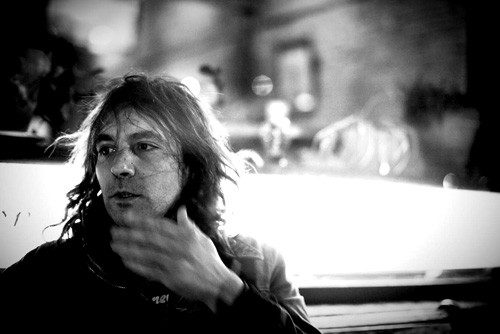
I pushed play on Slave Ambient (Secretly Canadian) — the band’s first full-length since the departure of Kurt Vile — and was greeted by Tom Petty. Well, not actually Petty, but the milieu in which an album of his might exist. It was the War on Drug’s charismatic leader Adam Granduciel, a vocalist, guitarist, and harmonica playing samplerphile, and friends, pouring out of the speakers, wooing me with layer upon layer of crunchy rock.

The next week, I spoke with Granduciel while he cleaned dirty dishes in preparation for another tour away from his home base in Philadelphia.

San Francisco Bay Guardian You used to live in the East Bay.

Adam Granduciel I had a friend who was living there [in 2001], and I was like ‘maybe I’ll go see what California is all about.’ I actually had never been there so I flew out with a bag and my guitars. I loved living there. It’s just, I was so young and so restless that I stayed for two years…then moved back to the East Coast via train. I’d like to hopefully one day go back up there.

SFBG Tell me about making Slave Ambient.

AG Eighty-five percent of it started at my house. We had informal sessions where we would record, maybe just drums — or two drummers at once — and I’d record everything to tape and then spend days dubbing it out, sampling, resampling, then I’d transfer all the tapes at my friend Jeff Zeigler’s studio.

We also did some stuff in Dallas, Texas for a week…in December 2009. A lot of people say that stuff was scrapped — it was really never scrapped, I would keep like, a vocal chorus, or some guitar or drums.

[Zeigler’s] got a great collection of synthesizers, effects, and mics. A lot of the crazy sounds are just myself at home off the tape machine. I think the record is the journey in my growth as someone who is constantly recording at home and learning new ways to do things. Like all the stuff that’s under “Come to the City,” without that beat in the background — the electronic pulse — that song would be super straight-forward. I wasn’t always working on a song, I was working on a tone. It was about a year of doing that, then finally I was like, ‘alright, I’m now ready to focus on the record.’

SFBG Sounds like a lengthy process.

AG There are 12 songs on the record, I probably had ideas for 30 and they all ended up being thrown in through various ways to songs on the record. Like, “Baby Missiles” we worked on for almost three years, just trying to get the right feel. I mixed it like, 50 times.

SFBG What’s your take on the whole road trip/driving music thing?

AG I think it’s cool. I’m definitely sometimes just like, ‘really?’ But I think it’s cool because when you’re driving and a great song comes on you’re like, ‘this is the fucking life.’ But at the same time, driving music sometimes means that it’s music you don’t have to think about, you just cruise like “Boys of Summer” or “Take it Easy” — I guess those are both Don Henley — but I think maybe it’s just that freedom or spirit in the songs that people relate to. Or it’s just something people write without having experienced it.

SFBG I’d read it enough times that I made a point to listen to it on a road trip.

AG I think maybe the other thing too is that I spent a lot of time on the sequence of songs — on the all the records — the sequences have always really flowed. You can just put it in and you don’t have to press fast forward, you can just cruise on [Highway] 1 — so I can see it.

THE WAR ON DRUGS

With Purling Hiss, and Carter Tanton

Sun/23, 8 p.m., $12–<\d>$14

Independent

628 Divisadero, SF

(415) 771-1421

www.theindependentsf.com

Film Listings

0

Film listings are edited by Cheryl Eddy. Reviewers are Kimberly Chun, Max Goldberg, Dennis Harvey, Lynn Rapoport, and Matt Sussman. For rep house showtimes, see Rep Clock.

SAN FRANCISCO DOCUMENTARY FILM FESTIVAL

The 10th San Francisco DocFest runs through Oct. 27 at the Roxie, 3117 16th St, SF, and the Shattuck Theatre, 2230 Shattuck, Berk. Tickets ($11) and complete schedule available at www.sfindie.com.

OPENING

*”ATA Film and Video Festival” Paul Clipson’s Caridea and Icthyes is an abstract feast of color, light and water, complemented by a space like ambience, and interspersed with shots of sea life. Zooming in and out of the abstract, it feels as though the viewer is pushing through water (like a fish) until the abstraction becomes clearly defined as oncoming car traffic. That contrast is surprising, however ambiguous. Dream-like, Clipson’s film can feel hypnotic, like an unsettling tranquility. Watching it is like being pushed under an ocean’s wave and kept from going back up for air – like a euphoric drowning where time has slowed down to the point of almost not being there at all. The music by Jefre Cantu-Ledesma heightens this feeling with vague, otherworldly tinkling sounds and echos. The film, though, doesn’t progress forward toward any particular point or idea. It ends where it begins. In David Baumflek’s Earthrise, the filmmaker’s father looks back on personal life-changing events that took place in the year 1968, including his own father’s death, and coming to know the woman who he’d later marry. “1968 seemed to be the most important year of my life,” he states in the beginning. As his his story reluctantly unfolds (the recording stops and starts several times), video filmed in 1968 by astronauts circling the moon is shown, subsequently drawing connections between the man’s life and larger events in the world. A moving and honest short, Baumflek makes these broad connections between the mysteriousness of life and fate, and the mysteriousness of the universe, and in way that feels natural. The connections never feel forced or exaggerated, and, more importantly, they are revealing. The film places a personal life in the larger context of cosmic events, and you watch the film with equal astonishment at both. For more ATA fest reviews, visit the Pixel Vision blog at www.sfbg.com. Artists’ Television Access. (James H. Miller)

*Hell and Back Again This emotionally jagged documentary mingles footage from the war and home fronts to rather nightmarishly evoke one soldier’s very stressful experiences on both. Marine Sgt. Nathan Harris is seen in combat, patrolling Afghan terrain, communicating — sometimes earnestly, sometimes exasperatedly — with skeptical local villagers who are themselves wedged between foreign forces and the Taliban. After surviving a serious injury during his third tour, he has a rough time re-adjusting to civilian life in North Carolina — undergoing physical therapy, often in pain or zonked on prescription drugs, his anger straining relations with wife Ashley. Seldom articulate, forever creepily playing with his handgun, Nathan doesn’t automatically win sympathy. That lends Danfung Dennis’ film a certain extra veracity: with all his foibles (and all the blanks left in his biography), the protagonist here is probably a more typical representation of today’s U.S. fighting forces than most similar recent docs have offered. The director’s soundtrack and editorial strategies further intensify a movie that tries to get inside the unsettled mind within an (at least temporarily) broken body, and to a discomfiting extent succeeds. (1:28) Lumiere, Shattuck. (Harvey)

Image of the Beast and Devil Dog: The Hound from Hell This “Special Rapture Edition” of the Vortex’s six-week Satanic-themed series offers doses of both salvation and demonic possession. First up is Image of the Beast (1980), third in early indie Christian filmmaker David W. Thompson’s Left Behind-anticipating quartet of features about a very American Biblical apocalypse. The devil has turned the U.S. into a military police state where all legal worship has been reduced to “one big sin-infested body, the World Church.” Stubborn Jesus-loving holdouts are executed by guillotine, and computers are the new “golden calf.” There’s a lot of Revelations-warping explanatory yakkety yak and not much action (though there’s one decent living room car crash stunt). But sincerity counts — as does the eccentricity that goes with it — in this precursor to today’s “faith-based entertainment” industry. Lacking any authentic impulse whatsoever is 1978’s strictly Mammon-worshipping Devil Dog: The Hound From Hell, in which a So. Cal. suburban family unknowingly adopts … well, you know. It promptly possesses mom Yvette Mimieux (she turns bitchy ‘n’ slutty) and the kids (Real Housewife Kim Richards and Ike Eisenmann, both of 1975’s Escape from Witch Mountain, become school bullies ruthlessly rigging Student Council elections). Meanwhile Richard Crenna’s Satan-resisting dad tries not to let Fido’s glowing eyes force his hands into lawn mower blades. An early casualty, the Mexican maid, warns “There ees a feeeling of eeeveel!” just before the puppy sets her on fire. You might think any movie that starts with the suggested witch-coven rape of a German Shepherd would be the height (or nadir) of outrageousness, but Devil Dog‘s clock-punching direction, disjointed script and bad performances by decent performers prove otherwise. A TV movie fit to make Satan’s School for Girls (1973) look like The Autobiography of Miss Jane Pittman (1974), it can be explained only as definitive proof that a whole lotta cocaine was impairing a whole lot of judgment in mid-late 70s Hollywood. Vortex Room. (Harvey)

Johnny English Reborn Rowan Atkinson returns at the comedic super-spy. (1:41)

*Margin Call Think of Margin Call as a Mamet-like, fictitious insider jab at the financial crisis, a novelistic rejoinder to Oscar-winning doc Inside Job (2010). First-time feature director and writer J.C. Chandor shows a deft hand with complex, writerly material, creating a darting dance of smart dialogue and well-etched characters as he sidesteps the hazards of overtheatricality, a.k.a. the crushing, overbearing proscenium. The film opens on a familiar Great Recession scene: lay-off day at an investment bank, marked by HR functionaries calling workers one by one into fishbowl conference rooms. The first victim is the most critical — Eric Dale (Stanley Tucci), a risk-management staffer who has stumbled on an investment miscalculation that could potentially trigger a Wall Street collapse. On his way out, he passes a drive with his findings to one of his young protégés, Peter (Zachary Quinto), setting off a flash storm over the next 24 hours that will entangle his boss Sam (Kevin Spacey), who’s agonizing over his dying dog while putting up a go-big-or-go-home front; cynical trading manager Will (Paul Bettany); and the firm’s intimidating head (Jeremy Irons), who gets to utter the lines, “Explain to me as you would to a child. Or a Golden Retriever.” Such top-notch players get to really flex their skills here, equipped with Chandor’s spot-on script, which manages to convey the big issues, infuse the numbers with drama and the money managers with humanity, and never talk down to the audience. (1:45) Shattuck. (Chun)

The Mighty Macs I can’t be the first reviewer to dub The Mighty MacsSister Act 2 meets Hoosiers,” but it can’t be avoided — that’s exactly what this movie is. It’s 1971 at Immaculata College, a tiny school in financial trouble staffed by nuns and populated by female students who made it through the 1960s seemingly untouched by any rebellious spirit. Into this uptight milieu strides Sister Mary Clarence, er, Cathy Rush (Carla Gugino), an ambitious young basketball coach determined to make winners out of a team so undervalued they practice in a basement and play games wearing outdated, skirted uniforms. Based on a pretty incredible true story, The Mighty Macs is a completely clichéd sports movie, with locker-room pep talks, a disapproving authority figure (a be-wimpled Ellen Burstyn), last-minute free throws deciding crucial games, etc. But it also offers a gentle lesson about the early days of feminism, not to mention a scene featuring an elderly nun yelling “Watch out for the pick and roll!” from the sidelines. (1:38) (Eddy)

Paranormal Activity 3 Who you gonna call? (1:24) California.

The Skin I Live In I’d like to think that Pedro Almodóvar is too far along in his frequently-celebrated career to be having a midlife crisis, but all the classic signs are on display in his flashy, disjointed new thriller. Still mourning the death of his burn victim wife and removed from his psychologically disturbed daughter, brilliant-but-ethically compromised plastic surgeon Robert (played with smoldering creepiness by former Almodóvar heartthrob Antonio Banderas) throws himself into developing a new injury-resistant form of prosthetic skin, testing it on his mysterious live-in guinea pig, Vera (the gorgeous Elena Anaya, whose every curve is on view thanks to an après-ski-ready body suit). Eventually, all hell breaks loose, as does Vera, whose back story, as we find out, owes equally to 1960’s Eyes Without a Face and perhaps one of the Saw films. And that’s not even the half of it — to fully recount every sharp turn, digression and MacGuffin thrown at us would take the entirety of this review. That’s not news for Almodóvar, though. Much like Rainer Werner Fassbinder before him, Almodóvar’s métier is melodrama, as refracted through a gay cinephile’s recuperative affections. His strength as a filmmaker is to keep us emotionally tethered to the story he’s telling, amidst all the allusions, sex changes and plot twists torn straight from a telenovela. The real shame of The Skin I Live In is that so much happens that you don’t actually have time to care much about any of it. Although its many surfaces are beautiful to behold (thanks largely to cinematographer José Luis Alcaine), The Skin I Live In ultimately lacks a key muscle: a heart. (1:57) Embarcadero. (Sussman)

The Three Musketeers 3D All for one and one for all. Again. (1:50)

The Way Emilio Estevez directs his pop, Martin Sheen, in this drama about a man on a modern-day odyssey. (1:55)

The Woman on the Sixth Floor There is a particular strain of populist European comedy in which stuffy northerners are loosened up by liberating exposure to those sensual, passionate, loud, all-embracing simple folk from the sunny south. The line between multicultural inclusion and condescension is a thin one these movies not infrequently cross. Set in 1960, Philippe Le Guay’s film has a bourgeoisie Paris couple hiring a new maid in the person of attractive young Maria (Natalia Verbeke). She joins a large group of Spanish women toiling for snobbish French gentry in the same building. Her presence has a leavening effect on investment counselor employer Jean-Louis (Fabrice Luchini), to the point where he actually troubles to improve the poorly housed maids’ lot. (Hitherto no one has cared that their shared toilet is broken.) But he also takes an inappropriate and (initially) unwanted romantic interest in this woman, lending a creepy edge to what’s intended as a feel-good romp. (For the record, Verbeke is about a quarter-century younger than Luchini — a difference one can’t imagine the film would ignore so completely if the genders were reversed.) Le Guay’s screenplay trades in easy stereotypes — the Spanish “help” are all big-hearted lovers of life, the Gallic upper-crusters (including Sandrine Kiberlain as J-L’s shallow, insecure wife) emotionally constipated, xenophobic boors — predictable conflicts and pat resolutions. As formulaic crowd-pleasers go, it could be worse. But don’t be fooled — if this were in English, there’d be no fawning mainstream reviews. In fact, it has been in English, more or less. And that ugly moment in cinematic history was called Spanglish (2004). (1:44) Albany, Clay. (Harvey)

ONGOING

The Big Year The weird, kind of wonderful world of bird watching has to be the most unlikely subject to get the mainstream Hollywood movie treatment this year, yet to director David Frankel and his cast’s credit, this project based on the book by Mark Obmascik takes flight with seemingly feather-light effortlessness. The Big Year entwines itself around three birding obsessives: the cocky Kenny (Owen Wilson), the record holder of the most birds sighted in one year, an achievement known as a Big Year; Stu (Steve Martin), a captain of industry who has eschewed corporate life in his pursuit of choice avian specimens; and Brad (Jack Black), the every guy determined to max out his, and his parents’, credit cards to take a stab at Kenny’s record. Frankel winningly seeds his yarn with playful visual devices (scribbling on the screen, say, to point out the sites of key sightings) but in the end, the human back stories of his absurdly driven characters provide the real foundation for The Big Year, while actors Black, Martin, and Wilson — all fully capable of tumbling into too-cute or too-hammy quagmires — respond with empathy to the story’s delicate handling. (1:30) 1000 Van Ness, SF Center, Sundance Kabuki. (Chun)

*Blackthorn This low-key neo-Western imagines what would’ve happened if Butch Cassidy had survived that shootout in 1908 Bolivia and retreated into anonymity as a rural rancher. Sam Shepard stars as the outlaw turned grizzled gringo (in flashbacks to the Sundance Kid days, he’s played by Game of Thrones‘ Nikolaj Coster-Waldau). Butch, now known as James Blackthorn, longs to return to America, so he empties his bank account and sells off his horses. His plan runs afoul when he loses his cash stash, thanks to a series of unfortunate events set into motion by gentleman bandit Eduardo (Eduardo Noriega), who’s just ripped off a nearby mine but is ill-suited for survival in the harsh backcountry. Determined to recoup his losses, Butch reluctantly teams up with Eduardo; there are shoot-outs and escapes on horseback and a nice series of scenes with Stephen Rea as an aging, frequently soused Pinkerton detective. Director Mateo Gil (writer of 1997’s Open Your Eyes, which starred Noriega) delivers an unpretentious spin on a legend highlighted by gorgeous landscapes and, of course, Shepard’s true-gritty performance. (1:38) Lumiere, Shattuck. (Eddy)

*Contagion Tasked with such panic-inducing material, one has to appreciate director Steven Soderbergh’s cool head and hand with Contagion. Some might even dub this epic thriller (of sorts) cold, clinical, and completely lacking in bedside manner. Still, for those who’d rather be in the hands of a doctor who refuses to talk down to the patient, Contagion comes on like a refreshingly smart, somewhat melodrama-free clean room, a clear-eyed response to a messy, terrifying subject. A deadly virus is spreading swiftly — sans cure, vaccine, or sense — starting with a few unlikely suspects: globe-trotting corporate exec Beth (Gwyneth Paltrow), a waiter, a European tourist, and a Japanese businessman. The chase is on to track the disease’s genesis and find a way to combat it, from the halls of the San Francisco Chronicle and blog posts of citizen activist-journalist Alan (Jude Law), to the emergency hospital in the Midwest set up by intrepid Dr. Mears (Kate Winslet), to a tiny village in China with a World Health investigator (Marion Cotillard). Soderbergh’s brisk, businesslike storytelling approach nicely counterpoints the hysteria going off on the ground, as looting and anarchy breaks out around Beth’s immune widower Mitch (Matt Damon), and draws you in — though the tact of making this disease’s Typhoid Mary a sexually profligate woman is unsettling and borderline offensive, as is the predictable blame-it-on-the-Chinese origin coda. (1:42) California, 1000 Van Ness, Sundance Kabuki. (Chun)

The Debt On paper, The Debt has a lot going for it: captivating history-based plot, “it” actor Jessica Chastain, Helen Mirren vs. Nazis. And while the latest from John Madden (1998’s Shakespeare in Love) is fairly entertaining, the film is ultimately forgettable. Chastain plays Rachel, a member of an Israeli team tasked with capturing a Nazi war criminal and bringing him to justice. Mirren is the older Rachel, who is haunted by the long-withheld true story of the mission. Although The Debt traffics in spy secrets, it’s actually rather predictable: the big reveal is shrug-worthy, and the shocking conclusion is expected. So while the entire cast — which also includes Tom Wilkinson, Sam Worthington, and Ciaran Hinds — turn in admirable performances, the script is lacking what it needs to make The Debt an effective drama or thriller. Like 2008’s overrated The Reader, the film tries to hide its inadequacies under heavy themes and the dread with which we remember the Holocaust. (1:54) Piedmont. (Louis Peitzman)

Detective Dee and the Mystery of the Phantom Flame (2:02) Lumiere.

Dolphin Tale (1:53) 1000 Van Ness, SF Center.

Dream House (1:33) SF Center.

*Drive Such a lovely way to Drive, drunk on the sensual depths of a lush, saturated jewel tone palette and a dreamlike, almost luxurious pacing that gives off the steamy hothouse pop romanticism of ’80s-era Michael Mann and David Lynch — with the bracing, impactful flecks of threat and ultraviolence that might accompany a car chase, a moody noir, or both, as filtered through a first-wave music video. Drive comes dressed in the klassic komforts — from the Steve McQueen-esque stances and perfectly cut jackets of Ryan Gosling as the Driver Who Shall Remain Nameless to the foreboding lingering in the shadows and the wittily static, statuesque strippers that decorate the background. Gosling’s Driver is in line with Mann’s other upstanding working men who hew to an old-school moral code and are excellent at what they do, regardless of what side of the law they’re working: he likes to keep it clear and simple — his services as a wheelman boil down to five minutes, in and out — but matters get messy when he falls for sweet-faced neighbor Irene (Carey Mulligan), who lives down the hall with her small son, and her ex-con husband (Oscar Isaac) is dragged back into the game. Populated by pungent side players like Albert Brooks, Bryan Cranston, Ron Perlman, and Christina Hendricks, and scattered with readily embeddable moments like a life-changing elevator kiss that goes bloodily wrong-right, Drive turns into a real coming-out affair for both Danish director Nicolas Winding Refn (2008’s Bronson), who rises above any crisis of influence or confluence of genre to pick up the po-mo baton that Lynch left behind, and 2011’s MVP Ryan Gosling, who gets to flex his leading-man muscles in a truly cinematic role, an anti-hero and under-the-hood psychopath looking for the real hero within. (1:40) 1000 Van Ness, SF Center, Sundance Kabuki. (Chun)

50/50 This is nothing but a mainstream rom-com-dramedy wrapped in indie sheep’s clothes. When Adam (Joseph Gordon-Levitt) learns he has cancer, he undergoes the requisite denial, anger, bargaining, depression, and acceptance like a formality. Aided by his bird-brained but lovable best friend Kyle (Seth Rogan), lovable klutz of a counselor Katherine (Anna Kendrick), and panicky mother (Anjelica Huston), Adam gets a new lease on life. This comes in the form of one-night-stands, furious revelations in parked cars, and a prescribed dose of wacky tobaccy. If 50/50 all sounds like the setup for a pseudo-insightful, kooky feel-goodery, it is. The film doesn’t have the brains or spleen to get down to the bone of cancer. Instead, director Jonathan Levine (2008’s The Wackness) and screenwriter Will Reiser favor highfalutin’ monologues, wooden characters, and a Hollywood ending (with just the right amount of ambiguity). Still, Gordon-Levitt is the most gorgeous cancer patient you will ever see, bald head and all. (1:40) 1000 Van Ness, SF Center, Sundance Kabuki. (Ryan Lattanzio)

Finding Joe Think of Finding Joe as a noob’s every-hero introduction to mythologist Joseph Campbell’s The Hero With a Thousand Faces. Director Patrick Takaya Solomon assembles a diverse group of Campbell experts and acolytes such as Joseph Campbell Foundation president Robert Walter, author Deepak Chopra, tai chi master Chungliang Al Huang, A Beautiful Mind (2001) screenwriter Akiva Goldsman, and skater Tony Hawk, who expound on every aspect of the hero’s journey, from experiencing spiritual death to finding bliss to summoning the courage to slay dragons. Somewhat predictable clips from Star Wars (1977) and other cinematic sources bring home the ways that pop culture has incorporated and been read through the filter of Campbell’s ideas. All of which makes for an accessible survey of our bro Joe’s work — though despite the inclusion of a few token female talking heads like actress Rashida Jones and Twilight (2008) director Catherine Hardwicke, Solomon’s past shooting action sports and commercials gives the doc a distinctly macho cast. (1:23) Opera Plaza, Shattuck. (Chun)

Fireflies in the Garden Don’t let the A-list cast (Willem Dafoe, Ryan Reynolds, Emily Watson, Julie Roberts) fool you: this is a minor-key melodrama that would be just as unmemorable with a cast of unknowns. Writer-director Dennis Lee tosses a co-writing credit to Robert Frost, whose poem lends the film its title and plays a part in a pivotal scene. Scarred by a childhood made miserable by his cruel father (Dafoe) — who, as onscreen dads go, really isn’t that terrible (see The Woman, below) — a successful writer (Reynolds) returns home for a family celebration that turns (wait for it) tragic. This is the kind of movie that attempts to hit big emotional notes without actually earning them; if the lure of Reynolds as a hunky sad sack is too great to resist, prepare to feel either completely unmoved or totally manipulated. Not sure which is worse. (1:39) Embarcadero. (Eddy)

Footloose Another unnecessary remake joins the queue at the box office, aiming for the pockets of ’80s-era nostalgics and fans of dance movies and naked opportunism. A recap for those (if there are those) who never saw the 1984 original: city boy Ren McCormack moves to a Middle American speck-on-the-map called Bomont and riles the town’s inhabitants with his rock ‘n’ roll ways — rock ‘n’ roll, and the lewd acts of physicality it inspires, i.e., dancing, having been criminalized by the town council to preserve the souls and bodies of Bomont’s young people. Ren falls for wayward preacher’s daughter Ariel Moore — whose father has sponsored this oversolicitous piece of legislation — and vows to fight city hall on the civil rights issue of a senior prom. Ren McCormack 2.0 is one Kenny Wormald (prepped for the gig by his tenure in the straight-to-cable dance-movie sequel Center Stage: Turn It Up), who forgoes the ass-grabbing blue jeans that Kevin Bacon once angry-danced through a flour mill in. Otherwise, the 2011 version, directed and cowritten by Craig Brewer (2005’s Hustle & Flow), regurgitates much of the original, hoping to leverage classic lines, familiar scenes, and that Dance Your Ass Off T-shirt of Ariel’s. It doesn’t work. Ren and Ariel (Dancing with the Stars‘ Julianne Hough) are blandly unsympathetic and have the chemistry of two wet paper towels, the adult supporting cast should have known better, and the entire film comes off as a tired, tuneless echo. (1:53) 1000 Van Ness. (Rapoport)

*Happy, Happy Sigve (Henrik Rafaelsen) and Elisabeth (Maibritt Saerens) seem like very exciting new neighbors to Kaja (Agnes Kittelsen) — she’s almost hysterical with welcoming enthusiasm, perhaps overcompensating for the frigidity of her union to dour Eirik (Joachim Rafaelsen). But it soon emerges that the urban, urbane newcomers to this snowy country community also have more than their share of domestic woes. When those unpleasant facts tumble out over a rather disastrous dinner party, the revelation somehow throws Kaja and Sigve together as not just the injured parties in their respective marriages, but potential soulmates. This first feature for both director Anne Sewitzky and scenarist Ragnhild Tronvoll nearly passed unnoticed at Sundance this January — being so good-natured and, well, Norwegian — but dang if it wasn’t just too much of a genuine (as opposed to contrived) crowdpleaser to go ignored. The characters behave badly (as well as irresponsibly, since there are children involved), yet their fates develop real rooting interest through a number of clever, complex, sometimes hilarious narrative developments. It would be a delight even without the slam-dunk inspiration of an unlikely Greek chorus: four vanilla gents singing African-American spirituals a cappella as incongruous yet strangely perfect external commentary on our protagonists’ hapless entanglements. (1:28) Lumiere. (Harvey)

The Help It’s tough to stitch ‘n’ bitch ‘n’ moan in the face of such heart-felt female bonding, even after you brush away the tears away and wonder why the so-called help’s stories needed to be cobbled with those of the creamy-skinned daughters of privilege that employed them. The Help purports to be the tale of the 1960s African American maids hired by a bourgie segment of Southern womanhood — resourceful hard-workers like Aibileen (Viola Davis) and Minny (Octavia Spencer) raise their employers’ daughters, filling them with pride and strength if they do their job well, while missing out on their own kids’ childhood. Then those daughters turn around and hurt their caretakers, often treating them little better than the slaves their families once owned. Hinging on a self-hatred that devalues the nurturing, housekeeping skills that were considered women’s birthright, this unending ugly, heartbreaking story of the everyday injustices spells separate-and-unequal bathrooms for the family and their help when it comes to certain sniping queen bees like Hilly (Bryce Dallas Howard). But the times they are a-changing, and the help get an assist from ugly duckling of a writer Skeeter (Emma Stone, playing against type, sort of, with fizzy hair), who risks social ostracism to get the housekeepers’ experiences down on paper, amid the Junior League gossip girls and the seismic shifts coming in the civil rights-era South. Based on the best-seller by Kathryn Stockett, The Help hitches the fortunes of two forces together — the African American women who are trying to survive and find respect, and the white women who have to define themselves as more than dependent breeders — under the banner of a feel-good weepie, though not without its guilty shadings, from the way the pale-faced ladies already have a jump, in so many ways, on their African American sisters to the Keane-eyed meekness of Davis’ Aibileen to The Help‘s most memorable performances, which are also tellingly throwback (Howard’s stinging hornet of a Southern belle and Jessica Chastain’s white-trash bimbo-with-a-heart-of-gold). (2:17) SF Center, Shattuck. (Chun)

The Ides of March Battling it out in the Ohio primaries are two leading Democratic presidential candidates. Filling the role of idealistic upstart new to the national stage — even his poster looks like you-know-who’s Hope one — is Governor Mike Morris (George Clooney), who’s running neck-and-neck in the polls with his rival thanks to veteran campaign manager (Philip Seymour Hoffman) and ambitious young press secretary Steven (Ryan Gosling). The latter is so tipped for success that he’s wooed to switch teams by a rival politico’s campaign chief (Paul Giamatti). While he declines, even meeting with a representative from the opposing camp is a dangerous move for Steven, who’s already juggling complex loyalties to various folk including New York Times reporter Ida (Marisa Tomei) and campaign intern Molly (Evan Rachel Wood), who happens to be the daughter of the Democratic National Party chairman. Adapted from Beau Willimon’s acclaimed play Farragut North, Clooney’s fourth directorial feature is assured, expertly played, and full of sharp insider dialogue. (Willimon worked on Howard Dean’s 2004 run for the White House.) It’s all thoroughly engaging — yet what evolves into a thriller of sorts involving blackmail and revenge ultimately seems rather beside the point, as it turns upon an old-school personal morals quandary rather than diving seriously into the corporate, religious, and other special interests that really determine (or at least spin) the issues in today’s political landscape. Though stuffed with up-to-the-moment references, Ides already feels curiously dated. (1:51) California, 1000 Van Ness, Piedmont, Sundance Kabuki. (Harvey)

The Lion King 3D (1:29) 1000 Van Ness, SF Center.

*Love Crime Early this year came the announcement that Brian De Palma was hot to do an English remake of Alain Corneau’s Love Crime. The results, should they come to fruition, may well prove a landmark in the annals of lurid guilty-pleasure trash. But with the original Love Crime finally making it to local theaters, it’s an opportune moment to be appalled in advance about what sleazy things could potentially be done to this neat, dry, fully clothed model of a modern Hitchcockian thriller. No doubt in France Love Crime looks pretty mainstream. But here its soon-to be-despoiled virtues of narrative intricacy and restraint are upscale pleasures. Ludivine Sagnier plays assistant to high-powered corporate executive Christine (Kristin Scott Thomas). The boss enjoys molding protégée Isabelle to her own image, making them a double team of carefully planned guile unafraid to use sex appeal as a business strategy. But Isabelle is expected to know her place — even when that place robs her of credit for her own ideas — and when she stages a small rebellion, Christine’s revenge is cruelly out of scale, a high-heeled boot brought down to squash an ant. Halfway through an act of vengeance occurs that is shocking and satisfying, even if it leaves the remainder of Corneau and Nathalie Carter’s clever screenplay deprived of the very thing that had made it such a sardonic delight so far. Though it’s no masterpiece, Love Crime closes the book on his Corneau’s career Corneau (he died at age 67 last August) not with a bang but with a crisp, satisfying snap. (1:46) Bridge. (Harvey)

Midnight in Paris Owen Wilson plays Gil, a self-confessed “Hollywood hack” visiting the City of Light with his conservative future in-laws and crassly materialistic fiancée Inez (Rachel McAdams). A romantic obviously at odds with their selfish pragmatism (somehow he hasn’t realized that yet), he’s in love with Paris and particularly its fabled artistic past. Walking back to his hotel alone one night, he’s beckoned into an antique vehicle and finds himself transported to the 1920s, at every turn meeting the Fitzgeralds, Gertrude Stein (Kathy Bates), Dali (Adrien Brody), etc. He also meets Adriana (Marion Cotillard), a woman alluring enough to be fought over by Hemingway (Corey Stoll) and Picasso (Marcial di Fonzo Bo) — though she fancies aspiring literary novelist Gil. Woody Allen’s latest is a pleasant trifle, no more, no less. Its toying with a form of magical escapism from the dreary present recalls The Purple Rose of Cairo (1985), albeit without that film’s greater structural ingeniousness and considerable heart. None of the actors are at their best, though Cotillard is indeed beguiling and Wilson dithers charmingly as usual. Still — it’s pleasant. (1:34) Albany, Embarcadero. (Harvey)

*The Mill and the Cross One of the clichés often told about art is that it is supposed to speak to us. Polish director Lech Majewski’s gorgeous experiment in bringing Flemish Renaissance painter Peter Bruegel’s sprawling 1564 canvas The Procession to Calvary to life attempts to do just that. Majeswki both re-stages Bruegel’s painting –which draws parallels between its depiction of Christ en route to his crucifixion and the persecution of Flemish citizens by the Spanish inquisition’s militia — in stunning tableaux vivant that combine bluescreen technology and stage backdrops, and gives back stories to a dozen or so of its 500 figures. Periodically, Bruegel himself (Rutger Hauer) addresses the camera mid-sketch to dolefully explain the allegorical nature of his work, but these pedantic asides speak less forcefully than Majeswki’s beautifully lit vignettes of the small joys and many hardships that comprised everyday life in the 16th century. Beguiling yet wholly absorbing. (1:37) Opera Plaza. (Sussman)

Moneyball As fun as it is to watch Brad Pitt listen to the radio, work out, hang out with his cute kid, and drive down I-80 over and over again, it doesn’t quite translate into compelling cinema for the casual baseball fan. A wholesale buy-in to the cult of personality — be it A’s manager Billy Beane or the actor who plays him — is at the center of Moneyball‘s issues. Beane (Pitt) is facing the sad, inevitable fate of having to replace his star players, Jason Giambi and Johnny Damon, once they command the cash from the more-moneyed teams. He’s gotta think outside of the corporate box, and he finds a few key answers in Peter Brand (a.k.a. Paul DePodesta, played by Jonah Hill), who’s working with the sabermetric ideas of Bill James: scout the undervalued players that get on base to work against better-funded big-hitters. Similarly, against popular thought, Moneyball works best when director Bennett Miller (2005’s Capote) strays from the slightly flattening sunniness of its lead actor and plunges into the number crunching — attempting to visualize the abstract and tapping into the David Fincher network, as it were (in a related note, Aaron Sorkin co-wrote Moneyball‘s screenplay) — though the funny anti-chemistry between Pitt and Hill is at times capable of pulling Moneyball out of its slump. (2:13) 1000 Van Ness, Sundance Kabuki. (Chun)

Mozart’s Sister Pity the talented sister of a world-shaking prodigy. Maria Anna “Nannerl” Mozart, who may have had just as much promise as a composer as her younger brother, according to Rene Féret’s Mozart’s Sister. A scant five years older, enlisted in the traveling family band led by father-teacher Leopold (Marc Barbe), yet forced to hide her music, being female and forbidden to play violin and compose, Nannerl (Marie Féret, the filmmaker’s daughter) tours the courts of Europe and is acclaimed as a keyboardist and vocalist but is expected to share little of her brother’s brilliant future. Following a chance carriage breakdown near a French monastery, Nannerl befriends one of its precious inhabitants, a daughter of Louis XV (Lisa Féret, another offspring), which leads her to Versailles, into a cross-dressing guise of a boy, and puts her into the sights of the Dauphin (Clovis Fouin, who could easily find a spot in the Cullen vampire clan). He’s seduced by her music and likewise charms Nannerl with his power and feline good looks — what’s a humble court minstrel to do? The conceit of casting one’s daughters in a narrative hinging on unjustly neglected female progeny — shades of Sofia Coppola in The Godfather: Part III (1990)! — almost capsizes this otherwise thoughtful re-imagination of Maria Anna’s thwarted life; despite the fact Féret has inserted his children in his films in the past, both girls offer little emotional depth to their roles. Nevertheless, as a feminist rediscovery pic akin to Camille Claudel (1988), Mozart’s Sister instructs on yet another tragically quashed woman artist and might inspire some righteous indignation. (2:00) Opera Plaza. (Chun)

*My Afternoons with Margueritte There’s just one moment in this tender French dramedy that touches on star Gerard Depardieu’s real life: his quasi-literate salt-of-the-earth character, Germain, rushes to save his depressed friend from possible suicide only to have his pretentious pal pee on the ground in front of him. Perhaps Depardieu’s recent urinary run-in, on the floor of an airline cabin, was an inspired reference to this moment. In any case, My Afternoons With Margueritte offers a hope of the most humanist sort, for all those bumblers and sad cases that are usually shuttled to the side in the desperate ’00s, as Depardieu demonstrates that he’s fully capable of carrying a film with sheer life force, rotund gut and straw-mop ‘do and all. In fact he’s almost daring you to hate on his aging, bumptious current incarnation: Germain is the 50-something who never quite grew up or left home. The vegetable farmer is treated poorly by his doddering tramp of a mother and is widely considered the village idiot, the butt of all the jokes down at the cafe, though contrary to most assumptions, he manages to score a beautiful, bus-driving girlfriend (Sophie Guillemin). However the true love of his life might be the empathetic, intelligent older woman, Margueritte (Gisele Casadesus), that he meets in the park while counting pigeons. There’s a wee bit of Maude to Germain’s Harold, though Jean Becker’s chaste love story is content to remain within the wholesome confines of small-town life — not a bad thing when it comes to looking for grace in a rough world. (1:22) Opera Plaza. (Chun)

*Point Blank Not for nothing did Hollywood remake French filmmaker Fred Cavaye’s last film, Anything for Her (2008) as The Next Three Days (2010) — Cavaye’s latest, tauter-than-taut thriller almost screams out for a similar rework, with its Bourne-like handheld camera work, high-impact immediacy, and noirish narrative economy. Point Blank — not to be confused with the 1967 Lee Marvin vehicle —kicks off with a literal slam: a mystery man (Roschdy Zem) crashing into a metal barrier, on the run from two menacing figures until he is cornered and then taken out of the action by fate. His mind mainly on the welfare of his very pregnant wife Nadia (Elena Anaya), nursing assistant Samuel (Gilles Lellouche) has the bad luck to stumble on a faux doctor attempting to make sure that the injured man never rises from his hospital bed. As police wrangle over whose case this exactly is — the murder of an industrialist seems to have expanded the powers of the stony-faced, monolithic Commandant Werner (Gerard Lanvin) — Samuel gets sucked into the mystery man’s lot, a conspiracy that allows them to trust no one, and seemingly impossibly odds against getting out of the mess alive. Cavaye never quite stops applying the pressure in this clever, unrelenting cat-and-mouse and mouse-and-his-spouse game, topping it with a nerve-jangling search through a messily chaotic police station. (1:24) Opera Plaza. (Chun)

Real Steel Everybody knows what this movie about rocking, socking robots should have been called. Had the producers secured the rights to the name, we’d all be sitting down to Over The Top II: Child Endangerment. Absentee father Charlie Kenton (Hugh Jackman) and his much-too-young son Max (Dakota Goyo) haul their remote-controlled pugilists in a big old truck from one underground competition to the next. Along the way Charlie learns what it means to be a loving father while still routinely managing to leave cherubic Max alone in scenarios of astonishing peril. Seriously, there are displays of parental neglect in this movie that strain credulity well beyond any of its Rock ‘Em Sock ‘Em elements. Fortunately the filmmakers had the good sense to make those elements awesome. The robots look great and the ring action can be surprisingly stirring in spite of the paper-thin human story it depends on. And as adept as the script proves to be at skirting the question of robot sentience, we’re no less compelled to root for our scrappy contender. Recommended if you love finely wrought spectacle but hate strong characterization and children. (2:07) 1000 Van Ness. (Jason Shamai)

The Sleeping Beauty Fairytales are endemically Freudian; perhaps it has something to with their use of subconscious fantasy to mourn — and breathlessly anticipate — the looming loss of childhood. French provocateuse Catherine Breillat’s feminist re-imagining of The Sleeping Beauty carries her hyper-sexualized signature, but now she also has free reign to throw in bizarre and beastly metaphors for feminine and masculine desire in the form of boil-covered, dungeon-dwelling ogres, albino teenage princes, and icy-beautiful snow queens. The story follows Anastasia, a poor little aristocrat, who longs to be a boy (she calls herself “Sir Vladimir”). When her hand is pricked with a yew spindle (more of a phallic impalement, really), Anastasia falls into a 100-year adventurous slumber, eventually awakening as a sexually ripe 16-year-old. It all plays like an anchorless, Brothers Grimm version of Sally Potter’s 1992 Orlando. And while it’s definitely not for the kiddies, it’s hard to believe that many adults would find its overt symbolism and plodding narrative any more than a sporadically entertaining exercise in preciousness. Your own dreams will undoubtedly be more interesting — perhaps you can catch a few zzz’s in a theater screening this movie. (1:42) SFFS New People Cinema. (Michelle Devereaux)

*Take Shelter Jeff Nichols directed Michael Shannon in 2007’s Shotgun Stories, released right around the time the actor’s decade-plus prior career broke huge with an Oscar nom for 2008’s Revolutionary Road. Their second collaboration, Take Shelter, is a subtle drama that succeeds mostly because of Shannon’s strong star turn, with an assist from Jessica Chastain (suddenly ubiquitous after The Help, The Debt, and Tree of Life). Curtis (Shannon) and Samantha (Chastain) live paycheck to paycheck in a small Midwestern town; the health insurance associated with his construction job is the only reason they’ll be able to afford a cochlear implant for their deaf daughter. When Curtis starts having horrible nightmares, he can’t shake the feeling that his dreams prophesize an actual disaster to come — or are an indicator that Curtis, like his mother before him, is slowly losing touch with reality. Curtis does seek professional help, but he also starts ripping up his backyard, making expensive improvements to the family’s tornado shelter. You know, just in case. Domestic turmoil, troubles at work, and social ostracization inevitably follow. Where will it all lead? Won’t spoil it for you, but Take Shelter‘s conclusion isn’t nearly as gripping as Shannon’s performance, an skillfully balanced mix of confusion, anger, regret, and white-hot terror. (2:00) Embarcadero, Shattuck, Sundance Kabuki. (Eddy)

The Thing John Carpenter’s 1982 The Thing is my go-to favorite film (that and 1988’s They Live — I’m a little bit Carpenter-obsessed). So this prequel-which-is-actually-more-like-a-remake is already treading on holy cinematic ground with me. My expectations were low. Pleasantly, first-time director Matthijs van Heijningen Jr. doesn’t deliver a total suckfest (as most remakes of sacred movies do, like the abominable 2003 Texas Chainsaw Massacre); his Thing is rated R, is not in 3D, casts a few actual Norwegians to play the inhabitants of Norway’s Antarctic research lab, etc. It also tries to create continuity with Carpenter’s film by ending exactly where the 1982 film begins. However, all that comes before is basically a weak imitation of Carpenter, whose own film was heavily inspired by 1951 sci-fi classic The Thing from Another World (all three versions list John W. Campbell Jr.’s story “Who Goes There?” as source material). Van Heihningen Jr. offers nothing new except for CG (the 1982 organic FX were creepier, though). Oh, there’s also a “we need a final girl” plot device that shoehorns Mary Elizabeth Winstead into the mix. Both this version and Carpenter’s film build up dread with paranoia. But Carpenter’s was also heavy with the Antarctic-long-haul side effects of cabin fever and extreme isolation. Not really a factor when your main character has just jetted in from New York. (1:43) 1000 Van Ness, Shattuck. (Eddy)

Toast Oh, what a tasty dish Helena Bonham Carter has become, not afraid to look bad, mumsy, frazzled, or even like a fashion icon (as in recent Marc Jacobs ads). Watching her clean, cook, and spar with the young, preternaturally snobbish food writer Nigel Slater (played as a child by Oscar Kennedy, then as a teenager by Freddie Highmore) is the central, entirely edible joy of this changeable, not-quite-cozy journey back to a damp, dour ’60s-era Britain. Swinging London is more than simply a few miles away from Nigel’s sad childhood in this film based on Slater’s memoir: he fantasizes about lavish spreads of food while his aggro dad (Ken Stott) blusters hopelessly and his sickly mum (Victoria Hamilton) cringes at even spaghetti Bolognese and relies on the culinary fallback of toast. The arrival of the blowsy, earthy and, in Nigel’s eyes, unendingly tacky housekeeper, Mrs. Potter (Carter), brings genuinely good food — and welcome comedy — into Nigel’s life while stirring a sense of indignant competition. The way to a dad’s, or rather, a man’s, heart is obviously through a lofty, majestic lemon meringue pie. Too bad young Nigel is such an elitist bitch, making for a repugnant protagonist that’s hard to sympathize with. Likewise Highmore and Kennedy are outclassed when it comes to Bonham Carter, who snatches the entire film away with her undeniable sass, manic scrubbing, and sorrowful looks. (1:36) Opera Plaza, Shattuck. (Chun)

*Weekend In post-World War II Britain, the “Angry Young Man” school excited international interest even as it triggered alarm and disdain from various native bastions of cultural conservatism. Alan Sillitoe’s Saturday Night and Sunday Morning (1958) discomfited many by depicting a young factory grunt who frequently wakes in a married woman’s bed, chases other available tail, lies as naturally as he breathes, and calls neighborhood busybodies “bitches and whores.” Today British movies (at least the ones that get exported) are still more or less divided by a sort of class system. There’s the Masterpiece Theatre school of costumed romance and intrigue on one hand, the pint-mouthed rebel yellers practicing gritty realism on another. Except contemporary examples of the latter now allow that Angry Young Men might be something else beyond the radar once tuned to cocky, white male antiheroes. The “something else” is gay in Weekend, which was shot in some of the same Nottingham locations where Albert Finney kicked against the pricks in the 1960 film version of Saturday Night. The landscape has changed, but is still nondescript; the boozy clubs still loud but with different bad music. It’s at one such that bearded, late-20s Russell (Tom Cullen) wakes up next morning with a hangover next to no married lady but rather Glen (Chris New). It would be unfair to reveal more of Weekend‘s plot, what little there is. Suffice it to say these two lads get to know each other over less than 48 hours, during which it emerges that Russell isn’t really “out,” while Glen is with a vengeance — though the matter of who is more emotionally mature or well adjusted isn’t so simple. Writer-director Andrew Haigh made one prior feature, a semi-interesting, perhaps semi-staged portrait of a male hustler called Greek Pete (2009). It didn’t really prepare one for Weekend, which is the kind of yakkety, bumps and-all romantic brief encounter movies (or any other media) so rarely render this fresh, natural, and un-stagy. (1:36) Embarcadero, Shattuck. (Harvey)

The Woman Writer-director Lucky McKee scored a cult hit with 2002’s May; his latest, The Woman (co-written with novelist Jack Ketchum), arrived in my mailbox packaged in a barf bag, “just in case.” This bit of Herschell Gordon Lewis-style gimmickry had me expecting great things, and indeed, McKee’s love of gore goes to 11, with gnawed-off digits, ripped-out entrails, and other squishy moments aimed squarely at shock-horror enthusiasts. All is not well in the household headed up by cheerful misogynist-sadist Chris (Sean Bridgers of Deadwood): his wife (May‘s Angela Bettis) is a quivering wreck; his older daughter (Lauren Ashley Carter) is concealing a growing secret; and his son (Zach Rand) is a middle-school sociopath. When Chris captures a Nell-by-way-of-Leatherface feral woman (Pollyanna McIntosh) in the woods near his home, he chains her up in a storm shelter and sets about “civilizing” her — which basically means keeping her as his own personal torture puppet. McKee, who never met a slo-mo shot he didn’t like, seems to be aiming for black comedy at least part of the time, but The Woman is so mean-spirited that by the time its inevitable tidal wave of revenge crashes down, it’s hard to feel any kind of satisfaction or release. Revulsion, however: yes. (1:45) Metreon. (Eddy)

When OccupySF occupied my car

13

By David Adler

I began the week a brooding and self-pitying writer, who was spending far too much time sucking on sour grapes until they were bitter raisins.  I even went back and forth via email with an editor who had rejected one of my stories.  This is not a good way to endear yourself with potential future patrons.  But it had been far too long a time since I’d torched a bridge (and, in this case, I’m fairly certain that I burned the fucker to the ground), and in that sort of “I love the smell of napalm in the morning” empty machismo way, well, I still didn’t feel better.  I felt like I do when I yell at the television while watching a Laker game, screaming at Andrew Bynum as if I were sitting courtside next to Jack Nicholson and sneaking out with him for blow during TV timeouts or just when we damn well wanted to.  I was a crazy man.  A loon in sweats and a Cal hoodie. 

Determined to regain a semblance of human dignity, and equally committed to acquiring as little of it as necessary (the stuff is pricey, I don’t care what my therapist says), I got on the BART last Wednesday, October 5th, at the cavernous and exposed Millbrae station, the end of the peninsula line. 

The electric train screeched and squealed and screamed north into the city, where a half hour later I emerged from the Embarcadero station on Market Street.  A motley camp came into view, pitched on the sidewalk in front of the Federal Reserve building.  It was the Occupy San Francisco Financial District camp.  In solidarity with the original Occupy Wall Street movement, and the dozens other others cropping up daily, which defibrillates my long spasming liberal heart into a peaceful rhythm. The 99% in action. Could’ve been 1969.  They had a kitchen, a library/bookstore, it was a little city of dissent, and the forces of everyday people were now gathering, enlarging the camp’s population, in anticipation of the noon march.  The police were mostly in the background, talking with a few suits and ties out for a smoke, or lunch, who observed with amused smiles on their faces as they looked at the Occupy camp and the crowd.  Stupid people, they seemed to be thinking, though I obviously can’t know.  Perhaps they just didn’t get it. But they didn’t have to.  It was getting itself just fine. 

There were old and young, every race and color and creed.  There were hippies in their seventies and students in their teens and twenties, nurses of all ages, punks and patriots of equal concern, workers and laborers and normal folkies of every stripe and sandal.  Yes there was a progressive and lefty and outsider’s insider vibe to the signs and the chants. Banks got BAILED out, we got SOLD out!! Banks got BAILED out, we got SOLD out!!  We ARE the 99 percent!!  We ARE the 99 percent!!  But that’s the whole friggin’ point. There was a tiny dog, a Puggle the owner told me, who was wearing a sign that said “Justice for the Little Guys.”  A woman who looked to be on lunch break held a small sign aloft: “I’m here because I can’t afford a lobbyist.”  End The Fed.  Tax the Rich.  So many more, so varied.  And my favorite, which was a bit longer:

The Amercian Paradox:
Unionized Public Employees
Cracking Down on Those
Seeking to Save Their Jobs & Pensions

Now, I may not agree with everything and everyone in this movement, not even close, but the fetid financial powercore as the center of this mass and evolving dissent?  Bring it on.  My wife works for a good little bank, worked for another one in Southern California that was shut down by regulators and sold off under dubious circumstances, and those kinds of community institutions have been run over by the too-big-too-fail Gods.  I loved it, in other words.  And we marched.  The official count, I read, was 800.  Horseshit.  No way.  I couldn’t give an exact number, but I know it was many more than that paltry figure.  Cabbies were honking at us, but in a rhythm, a beat that said they were with us and not annoyed.  I carried my sign, given by a representative of the nurse’s union, because their cause really resonates with me: Tax Wall Street Transactions – Heal America.  I waved it for a few miles, but my arms never got sore.  The spirit was grand and vital and patriotic and American.  We were engaged in the only thing freedom really means.  The right to say no to the powers that be, to protest without the fear of unjust reprisal.

And there’s the rub.

After marching, I had to hop the train home quickly and pick up my son from school.  I rode south toward Millbrae, while behind me in the city the ruckus remained and grew and settled back into camp for the night. 

The night.

Always the best time for the authorities to do their dirty work. The next morning, after being told by my wife that on the news they reported the police had busted up the Occupy camp, I watched the videos that had already been posted online.  And there they were, those unionized public employees, heading down the street in riot gear toward the Occupy Camp.  The irony is too rich.  And disturbing.  They came in riot gear, apparently, to protect themselves from a bunch of barefoot hippies and thread-thin vegan rebels. The police confiscated a lot of the stuff from camp, ordering the reluctant Department of Public Works employees to carry out the deed, without giving the kids time enough to gather it themselves.  Then the police got rough, nightsticks into ribs and arms and thighs. All of it, needless to say, completely unnecessary.  The only thing freedom means, and that’s what it gets you.  In America.  Didn’t those police want to set a better example, to be better than the police and soldiers we see all over the world stomping on their people’s hopes?  I guess not.  They’ll say it was a safety issue, a private property issue, that it was this or that, but none of it required riot gear and physical violence at all. Disgraceful and depressing.

On Thursday evening, the 6th, on the Occupy SF website I saw that they had put out a call for anyone with a car or truck to help them get their stuff back.  It had been taken to the Department of Public Works yard off Bayshore.  Friday morning, as I sat staring at my computer trying to write, I decided to do something to help these kids out.  I got in my Prius and headed into the city, to the DPW yard.  On the way there, in my idealistic mind (at least I still have one at my age), I envisioned a huge caravan of progressive minded people arriving on the scene in solidarity, ready to help get this stuff back to whom it rightfully belonged. I wished.  But when I got there a little after nine, I was the only one there.  Soon, however, a tiny old Japanese hatchback rumbled past with what I took to be three activists of various ages riding inside.  They had to be Occupy people, I thought. But they drove past, appearing lost, and turned out of sight at the far corner.  Hmm.  In a few seconds, however, they reappeared, the car pulling to a stop at the red curb where I was standing at what looked like the front door to the DPW offices.

“Are you with Occupy?” I asked the bearded young man in the passenger seat, who had a thick mane of wavy dark hair pulled back into a long ponytail.

Yes, they all answered, who are you?  Where do we park?  The driver was in her sixties, clad in black I noticed, with long gray hair.  The passenger in the back seat was a younger gal, heavy, a punk lesbian vibe about her, with her short cropped hair painted red, blonde, and blue.

“I’m just a guy,” I told them.  “Just someone who showed up to help you out.”  The young gal in the back looked at me oddly, with an expression of curious surprise, then pointed at me slowly, like a b-ball teammate acknowledging a sweet assist, as if thinking, “Yes, even the fake hippies in the Adidas gear are with us!”

“And you probably want to park anywhere you can,” I continued. “I just got lucky across the street there.”

Just then we got the attention of a DPW worker inside the glass door.  A big African-American guy in a yellow work vest, he asked if we were from Occupy and looking to get our stuff back.  He gladly directed us where to pull our cars, and he told us he’d instruct someone to meet us back there.  This is when I learned, from the kid with the ponytail, that the DPW workers were not happy about having to obey the police and confiscate the protesters’ stuff, their own union supporting the Occupy movement.  So the courtesy and patience of all these DPW workers was no surprise.

A few minutes later, as the four of us waited on the sidewalk, I realized I’d forgotten their names, or if we’d exchanged them at all.  I thought we had, but I’m terrible with names, which I told the young guy with the beard and ponytail.

“Chris,” he replied to my re-query. “You’re Dave, right?”

I felt guilty that he remembered and I didn’t. 
“I’m Diana,” the younger gal introduced herself, “And I really have to pee.  You think you guys could form a perimeter here for me so I can go in the bushes?”

I suggested she go behind the black van that was completely blocking some bushes about twenty feet away.  She nodded, good idea, and walked over to relieve herself.

“I’m Dagny,” the older woman said as she sat on the curb and lit a cigarette.  “And the name’s not from that useless fucking Ayn Rand book, thank you very much.”  Dagny seemed an experienced San Francisco hellraiser, and I would discover that she had little time for taking any shit or wasting any time. 

Returning from her bathroom bivouac, Diana was hopping mad.  “You’ll have to excuse me, I really got a fire in me today, after what went down last night.  I may be young, but I can get stuff done.  And today we’re going to.”

I told her I understood the fire she had in her.  When I asked how old she was, she replied twenty-two.  Exactly half my age, I told her.  She thought for a second and mouthed forty-four, barely audible enough to be heard.  Just then another DPW worker showed up and told us to follow him in our cars.  He led us through the sprawling yard, crowded with trucks and tankers and service vehicles of every odd variety and size, many in the repair bays, where workers crawled under and around and atop them like Lilliputians upon Gulliver.

We finally made it to a parking area, filled with more trucks, and with a storage area surrounded by a patchwork chain link fence.  The DPW guy unlocked the fence gate and led us in.  There was junk covered in blue tarps on both sides, with a cleared path in between. Everything on the left, he told us, was homeless stuff, which made sense once we saw how many bicycles and shopping carts poked out from under the tarps.  On the right side was the Occupy SF stuff.  It had rained the previous night, so it was a wet mess of backpacks and chairs and tarps and toolboxes, storage containers and tents and camp stoves, furniture and clothes and food. A lot of food.  They’d been living there, after all. Some of it had spoiled, some was still good.  Chris and Diana were kind of overwhelmed at first, but Dagny just laid it down: let’s just get all the food out first, and figure out what’s still good to keep, and what’s not, and we’ll put the good stuff here, and the bad stuff goes in this trash bag.  Wet clothes over there, office stuff here, tarps in a pile, Dagny continued like a former flower-child field general, until we were moving with as swift an organization as possible under the shorthanded circumstances.

A half-hour later my car had been designated as the de-facto catering truck.  It was full of all the canned food, as well as the fresh stuff that hadn’t gone bad.   Bread and bagels that stayed dry, tea and coffee, oats and nuts, produce that included a large crate of oranges and a box full of various types of squash.

We had my Prius packed tight and Dagny’s hatchback full to the brim, with at least several more trips worth ahead of us, if no other vehicles showed up to help with the rest. More importantly, we had no place to go.  Diana made a harried phone call.  Then Chris made another.  There was supposed to be a storage space rented, but no one could seem to figure out who to contact to find out where it was.  It was then that a pickup truck and an SUV showed up.  Cool, now we could at least get the rest of the stuff loaded, those two trucks should be big enough to hold it all.  The truck and SUV, as well, brought four or five other people.  A guy about my age from Marin, who had picked up a gal from the city, and three younger guys in their early twenties (or so I assumed).  These threee were thin and vegan and dressed in clothes that looked like they’d been living outside for a couple of weeks.  When I introduced myself to one of them, he told me that I could call him “Just One.”  After a few moments, I got it.  A leaderless movement.  He was just one. There was something poetic and beautiful about it.  Just One seemed a tad wary of me at first, but by the end of the day was thanking me profusely.

“I really appreciate it, man.  I was worried I was gonna be the only mule out here.”

With more hands to help and more trucks to load, Just One and his friends started to voice their own concerns about how we should be separating the stuff.  They started to disagree among each other while trying to come to a community decision.  Dagny took charge once again, overriding the consensus confusion.

“We’re packing it all up and just taking it to this damn storage space, if anyone can figure out where the hell it is.  Then we’ll deal with it all there.  These people who volunteered their cars and trucks have to get other places, so we need to waste as little of their time as possible.”
Focused by a veteran of many movements, we got the remaining stuff loaded into the trucks, cramming in furniture and containers and everything we could that seemed worth saving. Dagny had decided to take all the wet clothes that looked like they could be salvaged and washed.  She told the kids that she’d bring it clean and dry to camp the next day.  She even told Chris that she was going to lend him her car for the rest of the day, all he needed to do was drop her off and pick her up from a class she teaches.  Lefty teamwork gave us an energizing rush.  Unity flowed like fine, and rare, wine.  On the last sweep of the space, Chris found the handmade red and black OccupySF flag, that had flown at the campsite. It was under a tarp and was still attached to the end of its long bamboo pole, having survived relatively undamaged.

“Yes!” Chris declared, holding it up.  “The flag survived!”  The others shared his small victory enthusiasm.  “We’ll take it with us,” he told me.

Colors ready to fly again, trucks and cars loaded with recovered possessions, we nonetheless continued to wait.  No one, still, could figure out where this storage space was.  A few people made a few more harried phone calls to certain people, not leaders of course, but people in the movement who might know who else in the movement would know where to send us.

“Quite a lovely clusterfuck” Dagny said to me.  “And what the hell am I thinking?  I’m missing prime smoking time here.”

As the guy from Marin, who brought the truck, finally managed to pin down the location of the storage space, I told Diana she could ride over with me, I had a passenger seat free.  She said okay, but didn’t seem too enthused.  As directions to the storage space were given out, Diana hung out next to the passenger door of Dagny’s car.

“I think she’d be more comfortable riding with you,” I said in Dagny’s ear. 

“I think you’re right.  Take Chris and we’ll meet you there.  It’s easy to find, right down 3rd.”

In the Prius and on the way, Chris told me he’d been living at the camp since he got into San Francisco.  He was raised in New Jersey, then he spent some time in Florida, which he hated.  “So I just took off west, ended up here, and I don’t think I’ll ever leave.  I just love the whole spirit here.”  I told him that I’d just moved to the bay area, with my wife and son, from San Diego, and that I’d spent my whole live in Southern California until we moved up here.  When he asked what I did, I talked for a few minutes about being a Hollywood dropout (though I made some good money for a brief time), and that I was now trying to write some fiction.  After I described what made SoCal and NoCal seem like two separate states, Chris repeated his mantra. “I just love it here.”

“Dagny’s a character,” I said after a moment.

“Oh man, she’s hilarious, you shoulda heard the stuff she was saying on the way over here.”

I asked him about Wednesday night, when the police in riot gear had busted up the Occupy camp in front of The Fed.. 

“They were the instigators of the violence, they really were,” he said.  “I mean a couple people yelled some stupid stuff, but we weren’t violent at all, and they just come at you with those batons.  I got nice lump right here on my arm.”

I said I’d heard that some of the police didn’t want anything to do with it.

“Yeah, there were some who wouldn’t even look at you, and you knew they were just torn and didn’t want to be there.  And the female cops, as usual, were fine.”

“Never had a problem with a woman in uniform,” I told him.  “Never even that cop attitude you get if you have the nerve to politely question them.”

He agreed, his eyes looking for the street off Third where we’d find the storage place. 

“Here it is!”

I made a quick sharp right, and I heard several oranges spill out of the crate and juggle down onto the floor.

Pulling into the parking lot, Chris and I realized everyone had made it there before us, even though we’d left pretty much first.  “That’s how you know we haven’t been in the city long,” he smiled, getting out to help unload.

Most of the food packed into my car, it turned out, was headed for a charity called Food Not Bombs.  I was going to drive it over there, a task Dagny had assigned to me, but she couldn’t get Food Not Bombs to pick up their phone, and no one knew where it was.

“They kind of operate under the radar,” Just One told us.  “They really don’t want the authorities to know where they are, so they kind of move around.”

I was stuck with a carload of provisions with no charity to feed.  Damn.  As my time got short, Dagny saved me again and told the kids that they should unload the food from my car, and set it aside with everything else that wasn’t going to stay at the storage space.
“We’ll put it all into one truck, keep it as organized as we can.”
Good call.  I pulled out the bamboo pole with the OccupySF flag on it.  I waved it around for them, and everyone gave a cheer.  “Let it fly, man!” Chris exhorted.  I flew it from the Prius for my last few minutes there.

Chris and I exchanged cell phone digits, and I told him to keep me in mind if they ever needed a car during the week, that mornings and early afternoons are when I’m mostly free.  We shook hands, and he thanked me again, so genuinely, as did everyone else. 

I drove away, got onto 101 south and headed back to Millbrae.  And, in my swelling head, I heard the line from Jack Kerouac’s “October in the Railroad Earth”: …and here’s all these Millbrae and San Carlos neat-necktied producers and commuters of America and Steel civilization rushing by with San Francisco Chronicles and green Call-Bulletins not even enough time to be disdainful…

I cherish those words: …not even enough time to be disdainful. 

So many critics fit that suit perfectly.  It offends them simply to take the time to disdain it.  It bothers them to even bother.  The people, many young, who started this Occupy movement and continue it, deserve much better, as does the entire nation.  These free and peaceful Americans have made the time to do much more than disdain or merely talk. For now, until who knows when, they have made it their lives to act.

The positive vibes from that day must have carried over, because on Sunday I pulled off another online poker miracle.  (I say another because last year I turned thin air, literally nothing but a few bucks won in a free tournament, into more than ten grand in about four months.  All of it ended up in the bank, thankfully.)

This was an equally daunting assignment.  Two thousand and fifty-six players were entered in the tournament on ClubWPT dot com.  It was first place or nothing.

Four hours later, I had beaten them all.

And I had won the grand prize: a $3500 Main Event seat at the World Poker Tour Jacksonville event in November, plus another $1000 in travel money. 

Now what the hell do I do?  I never play live.  And the tournament is at a dog track, of all places.  Greyhound Rescue, condemn me now.

But I could win a bundle.  Or nothing, in which case I’m still on the hook for taxes on this $4500 package.

Wall Street has their casino, albeit a much more rigged one, and I have mine.  Stay tuned.

Medical marijuana protesters gather at City Hall in wake of federal raids

9

Protesters met in front of the San Francisco Federal Building this afternoon to challenge the recent federal crackdown on California’s medical marijuana industry. The rally formed on the heels of yesterday (October 13)’s raid by federal agents on Northstone Organics, a Ukiah medical marijuana cooperative.  

“Our state, our medicine,” protesters chanted. Among those present — about 30 individuals, per Guardian estimates — were medical marijuana patients, patient advocates, dispensary employees, and a representative of the Medical Cannabis Association

“When you’re a part of the medical cannabis movement, you feel personally affected by these raids,” said Shantanae Todd, an advocate and patient herself. Todd suffers from seizures and says she has found relief through her medical cannabis presciption for two years.

“What’s the difference between Democrats and Republicans? I’m not seeing much of a difference here,” cried Shona Gochenaur, executive director of low income medicinal cannabis center Axis of Love and member of the city’s Medical Cannabis Task Force. Gochenaur urged Kamala Harris, California’s Attorney General — who has resisted taking a stand on the federal government’s persecution of medicinal cannabis producers — to lend more vocal support. 

“We need to give everyone a clear message today that patients are not willing to go underground,” said Gochenaur. The protesters plan to meet and rally at noon the day after each and any future large-scale federal raids on California marijuana producers.

The right track

1

DANCE Have you noticed that San Francisco is changing for the better? No, I’m not talking poor and homeless people being given services they need (I wish that were the case) — I’m talking public art.

The concept used to refer to murals, airport exhibits, sculptures in downtown plazas, and those arrows that would periodically pop up on mostly ugly buildings. But dance — unless you count parades and demonstrations as a form of dance — certainly wasn’t part of beautifying the spaces we all live in. But today, dancers are taking to the street and other public arenas, and they look good.

Perhaps it all began in 1995 when Joanna Haigood and her Zaccho Dance Theatre troupers bounced off the Ferry Building’s massive clock, daring it to stop working. Last year they ceremoniously danced down Market Street, memorializing the exodus of middle-class African American residents from San Francisco. Jo Kreiter’s Flyaway Productions has taken to alleys, danced on cranes, and dangled off the mural-covered Women’s Building.

Lovely about this trend is that all these performances were free, and audiences could come upon them almost accidentally. Though still modest in scope, dance is becoming part of our urban environment. “Jewels in the Square” is a weekly dance series in Union Square that runs April through October; the Rotunda Series (first Friday of the month) brings dance into a glorious public space, City Hall. The Mark Foehringer Dance Project curates “Dancing in the Park,” a Golden Gate Park festival during National Dance Week in April, and Mint Plaza seems to have become the latest open-air dance stage for the late-summer Central Market Arts Festival.

But credit for the longest running commitment to taking dance to the people belongs to Kim Epifano’s Epiphany Productions, whose Trolley Dances mark an annual celebration of public transit and public dance. For the eighth year, and for the price of a Muni fare, people can board a streetcar — or “trolley,” as they are called in San Diego, where the event originated — and take a ride to be entertained by some of San Francisco’s finest.

Epifano is an artist with flying hair, unbounded enthusiasm, and a firm belief that if something needs to be done, she can do it. This includes bringing out the creative spark in refugees in Oakland, or developmentally challenged adults in San Francisco, or, for that matter, young dancers whom she set loose in a Mexicali bar. So moving the San Francisco bureaucracy to grant her the various permits needed for this festival is, apparently, child’s play.

The minute Epifano encountered Trolley Dances in Southern California, she knew she wanted to bring it to San Francisco. (“It was fun and it was free,” she remembers.) Over the years, in addition to robust audiences, Trolley Dances has attracted a veritable who’s who of local choreographers — Janice Garrett, Deborah Slater, Joe Goode, Sue-Li Jue, Yannis Adoniou, and Sara Shelton Mann among them.

This weekend, catch a glimpse of Jody Lomask on a seven-foot cube, and Salsamania on the sixth floor of the San Francisco Public Library. KT Nelson will preview a section of Transit: A Vertical Life, in which she celebrates what she calls “urban humanity.” A bike that turns into a bench will be included.

In addition to seeing a panoply of artists — a total of seven this time around — Trolley Dances opens opportunities to visit less-familiar pockets of San Francisco. I had never traveled all the way down the Embarcadero to the Caltrain station until Trolley Dances took me there. This year, Epifano had her own eye-opener. “After all these years of living here, I didn’t even know about West Portal,” she admits — which is where this year’s journey ends.


SAN FRANCISCO TROLLEY DANCES 2011

Sat/15-Sun/16, every 45 minutes from 11 a.m.-2:45 p.m., free with Muni fare ($2)

Tours depart San Francisco Public Library

100 Larkin, SF

(415) 226-1139

www.epiphanydance.org

OccupySF protesters shut down Wells Fargo HQ

30

At 7 a.m. this morning (Wed/12), protesters against corporate greed were poised for one of the most impactful actions since OccupySF began.

About 50 people associated with the Foreclose Wall Street coalition were seated in front of all the entrances to the Wells Fargo corporate headquarters on California and Montgomery streets. Back at the site of the OccupySF camp in front of the Federal Reserve Bank on Market Street, protesters gathered. They held a rally there that included a speech from Sup. John Avalos, the only mayoral candidate to actively support the movement.

When the march started off to join those blockading Wells Fargo, there were about 1,000 protesters present, according to estimates of those present. They stopped off at the Hyatt across the street from the Fed to support Unite Here Local 2 hotel workers who are involved in a boycott against the Hyatt before continuing in the march. Protesters chanted, “make banks pay” and “we are the 99 percent.”

The march reached the Wells Fargo building and began rallying there. The sit-ins in front of entrances were still going strong. There, activist and author Naomi Klein addressed the crowd.

When Wells Fargo employees began to arrive at work. According to Max Bell Alper, one of those involved in the blockade, “a number of bankers were trying to get in and yelling at us.” Then they called the police.

When the police arrived, Alper says, “at first, the people from the march were physically blocking them from arresting us.”

Around 8:30 a.m., 11 were arrested. They were brought to the North Beach/Chinatown police station, were they were cited for trespassing, held for about an hour and then released. When I spoke to Alper, he was back from the police station, chanting and marching with the crowd.

He told me that when his parents’ home was foreclosed this year, they moved in with his uncle, whose home was then foreclosed. Currently his grandmother is facing foreclosure. He listed Chase, Wells Fargo, and Bank of America as the banks involved in his family members’ foreclosures.

“Enough is enough. Banks need to recognize that they need to pay,” said Alper.

Protesters continued to block every entrance besides the employee entrance on Leidesdorff Street with sit-ins, as well as march in picket lines, chant “banks got bailed out, we got sold out”, and cheer as organizers spoke. The bank was unable to open until they chose to leave around noon.

SFPD Lt. Troy Dangerfield said that no more arrests were made because Wells Fargo did not request them- apparently, they preferred to wait it out. Said Dangerfield, “It would make it worse if they had to remove them. It doesn’t look good.”

Dangerfield insisted that he “had no stake whatsoever” in what will result from the Occupy movement throughout the country. He has noticed, “it seems like it’s growing nationwide.”

Activist Lucia Kimble sat helping to block the bank’s California entrance from 7:15 to noon. She says protesters voluntarily left at noon because, “We’ve been out here five hours. We successfully shut down the bank. I think our message has been heard.”

Kimble, 27, is a Bay Area resident and housing counselor with Causa Justa :: Just Cause, a group that works to advocate for housing and tenants rights for low income and African American and Latino communities in San Francisco and Oakland. Kimble said that her group was part of the coalition that put on this event “to give a voice to those most affected by our economic crisis.”

Kimble listed the Foreclose Wall Street West coalition’s demands with this action: an immediate moratorium on foreclosures, fixed annual interest rates, an end to Wells Fargo’s financing of high-interest Pay Day Loans, and that they “pay their fair share – pay taxes and give them to the community.”

Shaw San Liu of the Chinese Progressive Association – which just voted to endorse OccupySF and today joined the movement – was an energetic and inspiring speaker throughout the event. Said Liu: “A lot of folks have been saying there’s no diversity in the Occupy movement…In San Francisco it’s becoming clear the diversity of groups that support this movement. Youth, community groups, anti-war, we’re all coming together”

Liu maintained that the problems she was fighting did not start with the financial collapse in 2008. “In my work in Chinese immigrant communities, I know that even before the recession, we were already suffering from unemployment, low wages, and poor housing. I’m excited to see how the country is waking up to oppose a system that allows 1 percent of the people to control 42 percent of the wealth.”

The California Nurses Association, one of the many labor organizations that have showed support for OccupySF, was present at the protest. Said Pilar Schiavo, 36, a CNA organizer from Oakland, “I’m fed up with social inequity. I’m tired of corporate America buying politicians and passing laws to benefit the rich.”

“Patients are foregoing treatment and losing their healthcare. The nurses are here fighting for everyone,” she said.

Schiavo’s father, Bill, drove from Sonora to be at the protest today. A 65-year-old retired electrician, he says that the medical benefits he felt fortunate to have after retiring from a secure job have become unaffordable. “My medical benefits went up $300 a month this year. Who can afford that? Does anyone get a $300 raise? But Wall Street has benefits galore.”

Schiavo made his opinion clear about the Wall Street crisis and bailouts: “It was unbridled theft. We’re angry.”


Why are Harris, Newsom, and other pols silent on the federal pot crackdown?

24

UPDATED BELOW As I worked on this week’s story about the federal crackdown on California’s marijuana industry, I tried to get a statement from California Attorney General Kamala Harris. After all, it’s her job to defend California’s medical marijuana laws, which she was fairly supportive of as our district attorney. And she was an early Barack Obama backer who could probably get him or U.S. Attorney General Eric Holder on the phone to say, “What the hell are you guys doing? Please, for your own sake and California’s, just back off.”

After all, as I reported, this multi-agency federal crackdown could destroy a thriving industry that is pumping billions of dollars into California’s economy and employing tens of thousands of people – at a cost of many millions of dollars in enforcement costs to simply destroy the state’s top cash crop, ruin the lives of people working in the industry, and strain our already overtaxed court and prison systems.

“It’s a policy with no upsides and all downsides,” Steve DeAngelo of Harborside Health Center correctly told me.

But when I finally got Harris’ Press Secretary Lynda Gledhill on the phone, she said Harris had nothing to say on the issue. “Nothing?” I asked, “Really?” What about off-the-record, I asked, how does she feel about it and might she make some statement in the future. Again, nothing to say, no comment.

So I tried Lieutenant Governor Gavin Newsom, another San Franciscan who as mayor helped oversee the creation of the city’s widely lauded system for regulating the dispensaries, which by all accounts has made it a legitimate and thriving member of the business community. Given Newsom’s current obession with job creation and how hungry he’s been for attention, surely he’d have something to say in defense of the good jobs that this sustainable industry has created in California. Again, nothing. I haven’t even gotten a call back yet from his press secretary, Francisco Castillo.

Also, no public statements have been issued by Mayor Ed Lee, David Chiu, or most other mayoral candidates who have put “jobs” at the center of their agendas – or from the SF Chamber of Commerce or other business groups that regularly deride bad government actions as “job killers – despite this move by the Obama Administration to destroy an important industry in California.

The only major politician from San Francisco (SEE UPDATE BELOW) to come out strongly against the federal crackdown was Assemblymember Tom Ammiano, author of measures to legalize and tax marijuana, who put out the following statement: “I am bitterly disappointed in the Obama Administration for this unwarranted and destructive attack on medical marijuana and patients’ rights to medicine.  Today’s announcement by the Department of Justice means that Obama’s medical marijuana policies are worse than Bush and Clinton.  It’s a tragic return to failed policies that will cost the state millions in tax revenue and harm countless lives. 16 states along with the District of Columbia have passed medical marijuana laws – whatever happened to the promises he made on the campaign trail to not prosecute medical marijuana or the 2009 DOJ memo saying that states with medical marijuana laws would not be prosecuted?  Change we can believe in?  Instead we get more of the same.”

But from most of the politicians who claim to support both jobs and the right of patients to access medical marijuana, we also get more of the same. They pander to people’s economic insecurities in order to give corporations and wealthy what they want – tax cuts, deregulation, union-busting, corporate welfare — but aren’t willing to risk any political capital defending the rest of us.

UPDATE (11/13): San Francisco’s other two representatives in the Legislature have also criticized the crackdown.


Sen. Leland Yee put out a statement saying: “Medical marijuana dispensaries are helping our economy, creating jobs, and most importantly, providing a necessary service for suffering patients. There are real issues and real problems that the US Attorney’s Office should be focused on rather than using their limited resources to prosecute legitimate businesses or newspapers. Like S-Comm, our law enforcement agencies – both state and local – should not assist in this unnecessary action. Shutting down state-authorized dispensaries will cost California billions of dollars and unfairly harm thousands of lives.”

Sen. Mark Leno, another medical marijuana support, also criticized the move. He told the Los Angeles Times, “”The concern here is that the intimidation factor will directly impact safe and affordable access for patients.” And he told Associated Press, “”I don’t understand the politics of it, and certainly if we haven’t learned anything over the past century, it’s that Prohibition does not work.”

A decade of DocFest: more reviews!

0

Check out more coverage of the 10th San Francisco Documentary Film Festival in this week’s Guardian.

Beaverbrook (Matthew Callahan, U.S., 2010) If you attended Camp Beaverbrook, which operated in California’s Lake County from 1961-85, this film is required viewing. It offers an intensely wistful look at an old-fashioned sleepaway camp that thrived in an era before insurance companies started frowning on things like helmet-free kids galloping wildly on horseback. If you don’t have Beaverbrook in your blood, however, watching 1979’s Meatballs will offer a similar overdose of nostalgia, plus the huge added bonus of Bill Murray. Sun/16, 5 p.m. and Oct. 18, 7:15 p.m., Roxie; Fri/14, 7:15 p.m., Shattuck.

Heavy Metal Picnic (Jeff Krulik, U.S., 2010) Everyone’s seen Heavy Metal Parking Lot, the 1986 Jeff Krulik and John Heyn short that became a pre-internet cult classic. Shot amid the beer-y, mullet-y, “party-as-a-verb” shenanigans that transpired before a Judas Priest-Dokken show, Parking Lot is a seminal document for metalheads and anthropologists alike. Twenty-five years later, the prolific Krulik, again with Hayn, returns to the subject matter that made him famous with Heavy Metal Picnic, a 666 … er, 66-minute look at an notorious 1985 concert known as “The Full Moon Jamboree” — described as a “heavy metal Woodstock” by the nervous local press at the time. Basically, this is Parking Lot shifted to the Maryland woods; there’s a concert going on in the background (the bigger acts were Pentagram and the Obsessed, but there’s hardly any footage of them; local boys Asylum and show organizer Billy Gordon of Blue Rockers are prominently featured, however) but the main attraction is, as ever, the fans assembled for raucous raging.

Krulik adds depth to the footage shot that weekend (not by him; from what I can tell, he didn’t actually attend) by tracking down various participants — from the show’s perma-grinning hosts to the members of Asylum to the ne’er-do-wells who patrolled the crowds with a video camera, still a novelty at the time, pouncing on pretty girls and eliciting slurred commentary from the assembled shirtless masses — and interviewing the 21st century versions. The film also traipses back to the spot where the party was held, still intact but now closely surrounded by McMansions. Times have changed, hairlines have receded, cut-off T-shirts are no longer fashionable — but the pursuit of establishment-ranking good times remains irresistible. Essential hesher viewing. Sat/15 and Mon/17, 7:15 p.m., Roxie; Oct. 19, 9:30 p.m., Shattuck.

http://www.youtube.com/watch?v=pBdzQxVWnVU

Peep Culture (Sally Blake, Canada, 2011) Sally Blake’s Peep Culture adds one more layer of media to the journey of one Hal Niedzviecki, following him as he agrees (for the documentary) to have cameras installed in his house so he can join the legions of “lifecasters,” everyday folks who believe sharing every detail of their lives will lead to internet-borne fame and possibly fortune. (His wife, who lives in the house too, along with the couple’s young daughter, is less than thrilled by this.) Though his online profile was previously pretty low, Niedzviecki did build up some expertise on the matter: he’s the author of The Peep Diaries: One Man’s Journey into Self-Exposure, Surveillance, and the Future of Voyeurism. But why read the book when you can actually peep at the guy, as he goes about his everyday life (making lunch, sleeping, peeing) on camera?

Fortunately, there’s more to Peep Culture than pee-pee. Niedzviecki also launches an investigation into the movement he’s recently, somewhat reluctantly, become a part of. He visits a few folks who’ve become “famous” due to their online openness, then travels to Hollywood to attend a boot camp for people desperate to get cast on reality TV shows, then checks out the Fox Reality Channel’s headquarters. That channel has since ceased to be, but reality shows are still going strong: hunting the next great American singer or chef, charting the foibles of Teen Moms and Housewives, exposing hoarders of objects and children, manufacturing lavish Kardashian weddings, etc., feeding the belief that absolutely anyone can be famous. (Which is, of course, the most important thing in life ever, aside from getting gloriously rich off that fame … right?) Though Niedzviecki is not the most compelling film subject ever (probably the biggest reason his online “life” never really takes off — he can’t quite put aside how ridiculous the whole thing is, and never lets totally loose) Peep Culture offers a timely take on the overshare era. Oct. 22 and 26, 7:15 p.m., Roxie; Fri/14, 12:30 p.m., Shattuck.

SAN FRANCISCO DOCUMENTARY FILM FESTIVAL
Oct 14-27, $11
Roxie Theater
3117 16th St, SF
Shattuck Theatre
2230 Shattuck, Berk
www.sfindie.com

Rep Clock

0

Schedules are for Wed/12-Tues/18 except where noted. Director and year are given when available. Double and triple features are marked with a •. All times p.m. unless otherwise specified.

ARTISTS’ TELEVISION ACCESS 992 Valencia, SF; www.atasite.org. $6. “Other Cinema:” “Gerry Fialka’s PXL This 20!,” films made with the Fisher-Price PXL 2000, Sat, 8:30.

CASTRO 429 Castro, SF; (415) 621-6120, www.castrotheatre.com. $7.50-15. •Dinner at Eight (Cukor, 1933), Wed, 2:50, 7, and Libeled Lady (Conway, 1936), Wed, 4:55, 9:05. Arab Film Festival: Egyptian Maidens (Amin, 2010), Thurs, 7:30. For tickets ($25) and complete festival information (festival runs through Oct 23 in SF, San Jose, and Berkeley), visit www.arabfilmfestival.org. •Fright Night (Holland, 1985), Fri, 7:30, and Child’s Play (Holland, 1988), Fri, 9:30. “Marc Huestis Presents:” The Bad Seed (LeRoy, 1956), noon, 7:30, 9. With star Patty McCormack in person at noon and 7:30pm shows; for tickets ($10-35), call (415) 863-0611 or visit www.ticketfly.com. •The Exorcist (Friedkin, 1973), Sun, 2:20, 7, and The Exorcist III (Blatty, 1990), Sun, 4:45, 9:25. Pearl Jam Twenty (Crowe, 2011), Tues, 8. Free screening presented by KQED; for reservations (recommended) visit kqed.org/pearljam.

CHRISTOPHER B. SMITH RAFAEL FILM CENTER 1118 Fourth St, San Rafael; (415) 454-1222, www.cafilm.org. Mill Valley Film Festival, through Sun/16. Tickets (most shows $13.50) and more info at www.mvff.com.

MECHANICS’ INSTITUTE 57 Post, SF; (415) 393-0100, rsvp@milibrary.org. $10 (reservations required as seating is limited). “CinemaLit Film Series: Discovering Myrna Loy:” Penthouse (Van Dyke, 1933), Fri, 6.

OAKLAND METRO OPERA HOUSE 630 Third St, Oakl; www.bloodsweatvinyl.com. $18. Blood, Sweat + Vinyl: DIY in the 21st Century (Thomas), Sat, 6. With performances by Oxbow and Evangelista, two of 20 bands featured in the documentary.

OAKLAND MUSEUM OF CALIFORNIA James Moore Theater, 1000 Oak, SF; www.museumca.org. Free with museum admission ($6-12). “Home Movie Day,” movies submitted by the public as well as from the African American Museum and Library at Oakland, Sat, 1-5.

ODDBALL FILM AND VIDEO 275 Capp, SF; (415) 558-8112, rsvp@oddballfilm.com. $10. “Media Ecology Soul Salon (MESS) with Joey Bishop (aka Ed Holmes),” rare film clips and interview with Holmes by Gerry Fialka, Fri, 8:30.

PACIFIC FILM ARCHIVE 2575 Bancroft, Berk; (510) 642-5249, bampfa.berkeley.edu. $5.50-9.50. “Paul Sharits: An Open Cinema:” “Paul Sharits: Midcareer Work” (1973-76), Wed, 7:30; “Late Work” (1975-82), Thurs, 7:30. “Rainer Werner Fassbender: Two Great Epics:” World on a Wire (1973), Fri, 7; Berlin Alexanderplatz, Parts I-III (1979-80), Sun, 2. “Home Movie Day:” “Amateur Night: Home Movies from American Archives,” Sat, 6:30. “UCLA Festival of Preservation:” Sleep, My Love (Sirk, 1948), Sat, 8:45. “Kino-Eye: The Revolutionary Cinema of Dziga Vertov:” “Kino-Pravda Nos. 9–11, 13 (Yesterday, Today, Tomorrow: A Film Poem Dedicated to the October Celebrations)” (1922), Tues, 7.

PIEDMONT 4186 Piedmont, Oakl; (510) 464-5980, www.landmarktheatres.com. $15. The Room (Wiseau, 2003), Fri-Sat, midnight. Director and star Tommy Wiseau and co-star Greg Sestero in person.

ROXIE 3117 and 3125 16th St, SF; (415) 863-1087, www.roxie.com. $5-9.75. American Teacher (Roth, 2011), Wed-Thurs, 8:45 (also Wed, 6:30). Sleep Furiously (Koppel, 2008), Wed-Thurs, 7, 9. San Francisco Documentary Film Festival, Oct 14-27. For tickets (most shows $11) and more info, visit www.sfindie.com.

SFFS | NEW PEOPLE CINEMA 1746 Post, SF; www.sffs.org. $13. “Taiwan Film Days:” Formosa Mambo (Wang, 2011), Fri, 7; Taivalu (Huang, 2011), Sat, 1:30; Pinoy Sunday (Ho, 2009), Sat, 4 and Sun, 7; You Are the Apple of My Eye (Giddens, 2011), Sat, 6; Honey Pupu (Chen, 2011), Sat, 9; The Coming of Tulku (Cheng), Sun, 1; Bear It (Cheng, 2011), Sun, 4:15; Ranger (Chienn, 2010), Sun, 9. SAN FRANCISCO PUBLIC LIBRARY Koret Auditorium, 100 Larkin, SF; www.sfpl.org. Free. “Thursdays at Noon Film Series: When Women Got the Vote:” Iron-Jawed Angels (von Garnier, 2004), Thurs, noon. SAN FRANCISCO STATE UNIVERSITY Coppola Theater, 1700 Holloway, SF; cinema.sfsu.edu. Free. “SFSU MFA Film Screening,” Thurs, 7:30. VORTEX ROOM 1082 Howard, SF; www.myspace.com/thevortexroom. $5 donation. “The Vortex Incarnate:” •Masque of the Red Death (Corman, 1964), Thurs, 9, and Doctor Faustus (Burton and Coghill, 1967), Thurs, 11. YERBA BUENA CENTER FOR THE ARTS 701 Mission, SF; (415) 978-2787, www.ybca.org. $6-8. “Mexico Rising: The Films of Nicolás Pereda:” Summer of Goliath (2010), Thurs, 7:30 and Sun, 2.

Our Weekly Picks: October 12-18

0

WEDNESDAY 12

EMA

“Fuck California. You made me boring,” South Dakota-born Erika M. Anderson declares defiantly on “California,” the breakout single from her cathartic, crushing first proper release, Past Life Martyred Saints (Souterrain Transmissions, 2011). I find that hard to believe. Not the bit about our fair state — living in LA made me about as interesting as an insurance seminar. But the notion that anything could make the person who created this album boring seems completely implausible. An emotional haymaker of an album, the only thing less tedious than the ex-Gowns singer’s lyrics — dealing with topics like self-mutilation, drug addiction, violence, and sex with stunning, often uncomfortable clarity and candor — is her exceptionally versatile musical palette. Anderson tosses touches of drone, punk, indie, folk, and noise rock into a sonic stew that veers as wildly as her moods. If this is what a boring EMA sounds like, I shutter to think what an engaged one could do. (Dan Alvarez)

With Sister Crayon and Alexis

8 p.m., $12 The Independent 628 Divisadero, SF

(415) 771-1421

www.theindependentsf.com


Mary Roach

There goes Oakland’s Mary Roach, delving into the scientific questions we all ponder (and some we’re not smart enough to think of). In the past, she’s brought readers on her fringe forays into sex, dead bodies, and the afterlife. Her latest book, Packing for Mars, explores the weird, the unsavory, and the absurdity found in astronaut space exploration and on-earth preparation. What are the health risks associated with cramped space shuttles without showers? What does dispelled urine look like in space? In Packing, named the 2011 selection for One City One Book: San Francisco Reads, Roach provides the answers in grisly and entertaining detail.(Kevin Lee)

7:30 p.m., free

Booksmith

1644 Haight, SF

(415) 863-8688

www.booksmith.com


THURSDAY 13

“Flight of Poets”

Does a pinot grigio complement Matthew Zapruder’s charismatic poems, or would a spicy zinfandel? How about Jane Hirshfield’s disciplined lines and forceful resolutions, do they call for a bold merlot? Wine steward Christopher Sawyer puts these questions to rest at “Flight of Poets,” LitQuake’s poetry reading and wine bash, curated by Tess Taylor and Hollie Hardy. Sawyer matches a wine with each of the evening’s poets, including Gabrielle Calvocoressi, Robert Polito, Rachel Richardson, and C. J. Sage in addition to Zapruder (Come On All You Ghosts, 2010) and Hirshfield (Come, Thief). In the words of Charles Baudelaire: “It is time to be drunk!” (James H. Miller)

7 p.m., $15

Hotel Rex

562 Sutter, SF

(415) 440-4177

www.litquake.org


Daniel Francis Doyle

When his band broke up in 2005, Austin, Texas’s Daniel Francis Doyle needed a quick fix for performing live. He began experimenting with guitars duct-taped to amps and quickly evolved into a noisy force to be reckoned with. The one-man music machine uses a loop pedal, drum kit, and headset microphone to make a ruckus that’s frenetic, exhausting, and surprisingly melodic. After developing a respectable body of solo work, he’s come full circle — writing and performing with a backing band as well. Catch him shredding solo and showcasing collaborative work in a single fun-filled evening at Club Paradiso. (Frances Capell)

With Clarissa, and Hazel’s Wart

8 p.m., $5

Club Paradiso

2272 Telegraph, Oakl.

(510) 735-9095

www.disolounge.com


“Doc”

Novelist Paul Auster called him “a ravaged, burnt-out writer who had run aground on the shoals of his own consciousness;” Norman Mailer said he wanted to be “dictator of the world.” At any rate, everyone who knew H.L. “Doc” Humes agreed that he was a genius. Co-founder of The Paris Review, and author of two lauded political novels, Doc was integral to New York’s literary and jazz scenes in the 1950s. However, in the 1960s, Doc plunged into madness and paranoia, started ranting about government conspiracies, and gave up writing altogether. Doc (2008) is the documentary directed by his daughter, Immy. With interviews with Auster, Mailer, Timothy Leary, and others, the film traces the life and times of this eccentric genius. (Miller)

7:30 p.m., $12

Oddball Film+Video

275 Capp, SF

(415) 558-8112

info@oddballfilm.com


Enslaved

Musical evolution can be risky. For every storied success, there’s a fan-alienating failure. Thankfully, Enslaved belongs in the former category. Though begun in 1991 as a traditional Norwegian black metal outfit, the Bergen-based band gradually began introducing textural flourishes, epic, narrative arrangements, and tasteful clean singing. Now they rank among the most fascinating, progressive-inflected extreme metal bands in the business. Headlining a full American run should show off the quintet at its enveloping best — who says songs about Vikings can’t be psychedelic? Haunting, costumed buzz band Ghost had to drop off the bill due to visa issues, but Enslaved’s copious talent should staunch all complaints. (Ben Richardson)

With Alcest, Junius, and the Swizard

7:30 p.m., $17

Slim’s

333 11th St., SF

(415) 255-0333

www.slims-sf.com


FRIDAY 14

Jeffrey Eugenides

It’s been nine long years since the publication of Jeffrey Eugenides’ ambitious, Pulitzer winning epic, Middle Sex (2002), and eighteen years since his stunning debut, The Virgin Suicides (1993), which makes the author’s new novel, The Marriage Plot, without a doubt one of the most anticipated of the decade (by those who have a good memory anyway). The Marriage Plot probes the lives of three Brown University seniors in the 1980s — Mitchell, Leonard, and Madeline — and the love triangle that emerges between them over the course of one year. At this free event at Books Inc., Eugenides (at long last) reads from his new novel. (Miller)

7 p.m., free

Books Inc. Opera Plaza

601 Van Ness, SF

(415)-776-1111

www.litquake.org


Frank Turner & the Sleeping Souls

It comes as no surprise that British folk-punk singer-songwriter Frank Turner is rapidly ascending as a cult hero here in the States. Though he often references geography, you don’t have to be from Winchester to identify with the punk poet’s themes of mortality, self-deprecation, and living life to the fullest. Prior to the release of his fourth album England Keep My Bones (Epitaph), Turner toured North America, completely selling out every date. Now the hardcore singer turned folk-troubadour returns to San Francisco with backing band the Sleeping Souls for a rowdy, beer-soaked night to remember. (Capell)

With Andrew Jackson Jihad and Into It. Over It.

8:30 p.m., $16

Slim’s

333 11th St., SF

(415) 255-0333

www.slims-sf.com


SATURDAY 15

“An Afternoon of Soccer Culture”

Soccer fans — football fans elsewhere in the world — might know Simon Kuper thanks to his Freakonomics-styled best-seller Soccernomics. In his latest, Soccer Men, the veteran sports journalist compiles the profiles he’s written over the past 15 years for papers like the Financial Times and the Times of London. Though the chapter titles are a superstar roll call (Messi, Rooney, Drogba, etc.), there’s no fawning here; instead, Kuper offers thoughtful, witty insights into what makes a particular player (or coach) valuable, distinctive, or well-liked (or hated) by the masses. He hits up local footy hotspot Edinburgh Castle to discuss “the beautiful game” with San Francisco author Alan Black (The Glorious World Cup). Only 970-something-ish days until Brazil 2014! (Cheryl Eddy)

3 p.m., free

Edinburgh Castle Pub

950 Geary, SF

(415) 885-4974

www.castlenews.com


“The Hula Show”

A sort of armchair travel, Na Lei Hulu I Ka Wekiu’s The Hula Show 2011 stops in India, Samoa, Turkey, Spain, and Wai’anae, blending traditional and contemporary forms of hula. The group brings the art back to California with a suite of chants called Hanohano Kapalakiko, which illustrate the bond between Hawaii and San Francisco. Following opening weekend of The Hula Show, performances on Oct. 22 and 23 feature guests from the Golden Gate Men’s Chorus. If you can’t make the trip to Hawaii this month, pick up a one-way ticket to The Hula Show, for a small taste of the culture. (Julie Potter)

8 p.m. also Sun/16, 4 p.m., $35–$45

Palace of Fine Arts Theater

3301 Lyon Street, SF

(415) 392-4400

www.naleihulu.org


SATURDAY 15

JFK of MSTRKRFT

Jesse F. Keeler, perhaps better known as JFK to fans of MSTRKRFT and Dim Mak Records, has not been neglecting his dance floor duties. Even while reuniting with Sebastien Grainger for the highly anticipated Death From Above 1979 reunion tour, JFK has been putting in time on the decks, frequently double slotted at festival dates. DFA 1979 is easily one of the biggest draws of this year’s Treasure Island Music Festival and JFK will follow the band’s sure to be frenzied dance-punk (emphasis on punk) performance on T.I. with a live DJ set back at Mezzanine, which will likely contain some extremely headbanging electro floor stompers. (Ryan Prendiville)

With Chain Gang of 1974, Sticky K, and DJ Morale

9:30 p.m. Doors, $20

Mezzanine

444 Jessie, SF

(415) 625-8880

www.mezzaninesf.com


Never Knows

A Korg-load of brainiacs are still making techno in this town (yay!). But how many of those brainiacs are merely getting in the way of their machines? “There’s something beautifully pure about techno. Too pure. That pristine, precise sound needs to be undermined, soiled and sullied. Electronic dance music usually relates a narrative that is predictably written. The only way I see out of this trap is to be more of a mediator between the machines as they each take turns telling their own side of the story: sometimes harmonious, sometimes revelatory, often conflicted.” That’s Marc Kate (a.k.a. Silence Fiction, a.k.a.Husband), one of SF’s more vital underground fixtures, whose latest, kind of spooky incarnation as Never Knows channels a tasty bank of live equipment as it folds old-school goth atmospheres into sweeping techscapes. Ensorcel much? Strap in for his debut at the essential, experimental monthly O.K. Hole party. (Marke B.)

With Water Borders and Total Accomplishment

9 p.m., $5

Amnesia

853 Valencia, SF.

(415) 970-0012

www.amnesiathebar.com


TUESDAY 18

Opeth

Iconoclastic. Idiosyncratic. Inimitable. Whichever “i”-adjective you prefer, Opeth has long occupied its very own metal subgenre, blending limber, tuneful death metal with progressive excursions and mournful clean singing. Despite melodic accomplishments, the music was often quite heavy, which is why Heritage, the band’s brand-new album, came as a surprise. Largely abandoning distorted guitars, Opeth perplexed critics and fans by releasing a full-fledged 70’s prog album, leaning heavily on organ parts and mastermind Mikael Âkerfeldt’s dulcet vocals. A national tour should help head-scratching headbangers embrace Opeth’s new direction, combining King Crimson-style epics with the band’s blast-beaten back catalogue. (Richardson)

With Katatonia

8 p.m., $27

The Warfield

982 Market, SF

(415) 345-0900

www.thewarfieldtheatre.com


The Guardian listings deadline is two weeks prior to our Wednesday publication date. To submit an item for consideration, please include the title of the event, a brief description of the event, date and time, venue name, street address (listing cross streets only isn’t sufficient), city, telephone number readers can call for more information, telephone number for media, and admission costs. Send information to Listings, the Guardian Building, 135 Mississippi St., SF, CA 94107; fax to (415) 487-2506; or e-mail (paste press release into e-mail body — no text attachments, please) to listings@sfbg.com. Digital photos may be submitted in jpeg format; the image must be at least 240 dpi and four inches by six inches in size. We regret we cannot accept listings over the phone.

Stage Listings

0

Stage listings are compiled by Guardian staff. Performance times may change; call venues to confirm. Reviewers are Robert Avila, Rita Felciano, and Nicole Gluckstern. Submit items for the listings at listings@sfbg.com. For further information on how to submit items for the listings, see Picks.

THEATER

OPENING

“Master Harold” … and the Boys Phoenix Theater, 414 Mason, Ste 601, SF; 1-800-838-3006, www.offbroadwaywest.org. $18-40. Opens Sat/15, 8pm. Runs Thurs-Sat, 8pm. Through Nov 19. Off Broadway West Theatre Company performs Athol Fugard’s South African-set drama.

On the Air Pier 29 on the Embarcadero (at Battery), SF; (415) 438-2668, love.zinzanni.org. $117 and up (includes dinner). Opens Thurs/13, 6pm. Runs Wed-Sat, 6pm; Sun, 5pm. Through Dec 31. Teatro ZinZanni’s final performance at Pier 39 riffs on the company’s own struggles to stay in San Francisco. Geoff Hoyle and Duffy Bishop are the headlining guest stars.

red, black & GREEN: a blues (rbGb) Yerba Buena Center for the Arts, 701 Mission, SF; (415) 978-2787, www.ybca.org. $5-25. Opens Thurs/13, 7:30pm. Runs Thurs-Sat, 7:30pm. Through Oct 22. Marc Bamuthi Joseph’s world premiere is a collaborative, multimedia performance work and installation addressing environmental racism, social ecology, and other topics.

BAY AREA

Inanna’s Descent Codornices Park, 1201 Euclid, Berk; www.raggedwing.org. Free. Opens Sat/15, 1-5pm. Runs Sat-Sun, 1pm. Through Oct 30. Special Halloween show Oct 31, 5-8pm. Ragged Wing Ensemble presents its second annual “outdoor, site-specific, ritual performance event for Halloween.”

ONGOING

“AfroSolo Arts Festival” Various venues, SF; www.afrosolo.org. Free-$100. Through Oct 20. The AfroSolo Theatre Company presents its 18th annual festival celebrating African American artists, musicians, and performers.

Alice Down the Rwong Wrabbit Whole Emerald Tablet, 80 Fresno, SF; (415) 500-2323, www.brownpapertickets.com. $15. Fri/14-Sat/15, 9pm. Karen Light and Edna Barrón perform their new comedy based on Alice in Wonderland.

Almost Nothing, Day of Absence Lorraine Hansberry Theatre, 450 Post, SF; (415) 474-8800, www.lhtsf.org. $43-53. Previews Wed/12-Thurs/13, 8pm. Opens Fri/14, 8pm. Runs Wed-Sat, 8pm (also Sat, 2pm); Sun, 2pm. Through Nov 20. Lorraine Hansberry Theatre performs one-act plays by Marcos Barbosa and Douglas Turner Ward.

Desdemona: A Play About a Handkerchief Boxcar Theatre Playhouse, 505 Natoma, SF; www.boxcartheatre.org. $15-35. Wed-Sat, 8pm; Sun, 3pm. Through Nov 5. Boxcar Theatre performs Pauls Vogel’s dark comedy, inspired by the three female characters from Shakespeare’s Othello.

Honey Brown Eyes SF Playhouse, 533 Sutter, SF; (415) 677-9596, www.sfplayhouse.org. $20-50. Tues-Thurs, 7pm; Fri-Sat, 8pm (also Sat, 3pm). Through Nov 5. Bosnia in 1992 is divided in a horrifying civil war, some characteristics of which play out in parallel circumstances for two members of a single rock band in SF Playhouse’s west coast premiere of Stefanie Zadravec’s new play. In the first act, set in Visegrad, a young Bosnian Muslim woman (Jennifer Stuckert) is held at gunpoint in her kitchen by a jumpy soldier (Nic Grelli) engaged in a mission of murder and dispossession known as ethnic cleansing. The second act moves to Sarajevo and the apartment of an elderly woman (Wanda McCaddon) who gives shelter and a rare meal to an army fugitive (Chad Deverman). He in turn keeps the bereaved if indomitable woman company. Director Susi Damilano and cast are clearly committed to Zadravec’s ambitious if hobbled play, but the action can be too contrived and unrealistic (especially in act one) to be credible while the tone — zigzagging between the horror of atrocity and the offbeat gestures of romantic comedy — comes over as confused indecision rather than a deliberate concoction. (Avila)

The Kipling Hotel: True Misadventures of the Electric Pink ’80s Marsh San Francisco, 1062 Valencia, SF; (415) 282-3055, www.themarsh.org. $15-50. Sat, 8:30pm; Sun, 7pm. Through Nov 13. Acclaimed solo performer Don Reed (East 14th) premieres his new show, based on his post-Oakland years living in Los Angeles.

Making Porn Box Car Theatre Studios, 125A Hyde, SF; www.brownpapertickets.com. $25-50. Thurs, 8pm; Fri-Sun, 7pm (also Fri-Sat, 10pm). Through Oct 29. Ronnie Larsen brings back his crowd-pleasing comedy about the gay porn industry.

Not Getting Any Younger Marsh San Francisco, Studio Theater, 1062 Valencia, SF; (415) 826-5750, www.themarsh.org. $15-50. Thurs-Fri, 8pm; Sat, 8:30pm; Sun, 3pm. Through Oct 23. Marga Gomez is back at the Marsh, a couple of too-brief decades after inaugurating the theater’s new stage with her first solo show — an apt setting, in other words, for the writer-performer’s latest monologue, a reflection on the inevitable process of aging for a Latina lesbian comedian and artist who still hangs at Starbucks and can’t be trusted with the details of her own Wikipedia entry. If the thought of someone as perennially irreverent, insouciant, and appealingly immature as Gomez makes you depressed, the show is, strangely enough, the best antidote. (Avila)

Nymph Errant Eureka Theater, 215 Jackson, SF; (415) 255-8207, www.42ndstmoon.org. $20-50. Wed, 7pm; Thurs-Fri, 8pm; Sat, 6pm; Sun, 3pm. Through Oct 23. 42nd Street Moon performs Cole Porter’s madcap 1933 musical.

*The Odyssey Aboard Alma, Hyde Street Pier, San Francisco Maritime National Historic Park, SF; www.weplayers.org. $160. Oct 28-29, Nov 4-6, 11-12, and 18, 12:30pm. Heralding their hugely ambitious Spring 2012 production of The Odyssey, which will take place all over Angel Island, the WE Players are tackling the work on a slightly smaller scale by staging it on the historic scow schooner Alma, which is part of the Maritime National Historical Park fleet docked at the end of Hyde Street Pier. Using both boat and Bay as setting, the essential chapters of the ten-year voyage — encounters with the Cyclops, Circe, the Underworld, the Sirens, Aeolus, the Laestrygonians, and Calypso — are enacted through an intriguing mash-up of narration, choreography, sea chanteys, salty dog stories (like shaggy dog stories, but more water-logged), breathtaking views, and a few death-defying stunts the likes of which you won’t see on many conventional stages. High points include the casual swapping of roles (every actor gets to play Odysseus, however briefly), Ross Travis’ masked and flatulent Prometheus and sure-footed Hermes, Ava Roy’s hot pants-clad Circe, Charlie Gurke’s steady musical direction and multi-instrumental abilities, and the sail itself, an experiential bonus. Landlubbers beware, so much time facing the back of the boat where much of the action takes place can result in mild quease, even on a calm day. Take advantage of the downtime between scenes to walk around and face forward now and again. You’ll want to anyway. (Gluckstern) *Once in a Lifetime American Conservatory Theater, 415 Geary, SF; (415) 749-2228, www.act-sf.org. $10-85. Wed/12-Sat/15, 8pm (also Wed/12 and Sat/15, 2pm); Sun/16, 2pm. Three enterprising small-time New York theater makers head to Hollywood as voice coaches for silent screen actors fumbling the transition to talkies in American Conservatory Theater’s revival of George S. Kaufman and Moss Hart’s first Broadway collaboration. Originally premiered in 1930, the satirical take on the industry and its corruption of art and more is ever apt if not exactly fresh, and not all the comedy in its hefty three acts still lands where it should. That said, you probably couldn’t ask for a better revival of the piece, which retains much to admire and enjoy. Beautifully designed in grand fashion (including wowing sets by Daniel Ostling and snazzy costuming by Alex Jaeger), director Mark Rucker’s slick and savvy production ensures a perfect pace and wonderfully sharp ensemble acting led by the terrific trio of Julia Coffey, Patrick Lane, and John Wernke — but including some notable turns in multiple roles, including by René Augesen, Margot Hall, and Will LeBow. Rucker inserts some choice period film clips (the mesmerizing moments speaking with perhaps inadvertent force to the power of the celluloid medium and its tensions with theater, a sub-theme of the story), while Alexander V. Nichols’ video design adds further moment to this continent-crossing Hollywood escapade. (Avila)

“San Francisco Olympians Festival” Exit Theater, 156 Eddy, SF; www.sfolympians.com. Thurs-Sat, 8pm. Through Oct 28. No Nude Men Productions presents a festival of 12 new full-length plays written by 14 local writers. Each play focuses on one of the Olympian characters from ancient Greece.

ShEvil Dead Cellspace, 2050 Bryant, SF; www.brownpapertickets.com. $25. Sat/15, Oct 21, and 28-29, 8pm. Primitive Screwheads return with a horror play (in which the audience is literally sprayed with blood, so leave the fancy suit at home!) based on the Evil Dead movies.

“Shocktoberfest 12: Fear Over Frisco” Hypnodrome Theatre, 575 10th St, SF; (415) 377-4202, www.thrillpeddlers.com. $25-35. Thurs-Sat, 8pm. Through Nov 19. In its annual season-scented horror bid, Thrillpeddlers joins forces with SF’s Czar of Noir, writer-director Eddie Muller, for a sharply penned triplet of plays that resurrect lurid San Francisco lore as flesh-and-blood action. In the slightly sluggish but intriguing Grand Inquisitor, a solitary young woman modeling herself on Louise Brooks in Lulu (an alluringly Lulu-like Bonni Suval) believes she has located the Zodiac killer’s widow (a sweet but cagey Mary Gibboney) — a scenario that just can’t end well for somebody, yet manages to defy expectations. An Obvious Explanation turns on an amnesiac (Daniel Bakken) whose brother (Flynn de Marco) explains the female corpse in the rollaway (Zelda Koznofski) before asking bro where he hid a certain pile of money. Enter a brash doctor (Suval) with a new drug and ambitions of her own vis-à-vis the hapless head case. Russell Blackwood directs The Drug, which adapts a Grand Guignol classic to the hoity-toity milieu of the Van Nesses and seedy Chinatown opium dens, where a rough-playing attorney (an ever persuasive Eric Tyson Wertz) determines to turn a gruesome case involving the duplicitous Mrs. Van Ness (an equally sure, sultry Kära Emry) to his own advantage. The evening also offers a blackout spook show and some smoothly atmospheric musical numbers, including Muller’s rousing “Fear Over Frisco” (music composed by Scrumbly Koldewyn; accompaniment by Steve Bolinger and Birdie-Bob Watt) and an aptly low-down Irving Berlin number — both winningly performed by the entire company. (Avila)

Sorya! A Minor Miracle (Part One) NOHSpace, Project Artaud, 2840 Mariposa, SF; www.brownpapertickets.com. $12-18. Sun-Mon, 7pm. Through Oct 24. Each year, NOHspace residents Theatre of Yugen present a program of short Kyogen and Noh pieces, demonstrating the building blocks that define their unique approach. Blending classical Japanese theatrical styles with original and contemporary works, the company’s multi-cultural ensemble has been performing their specialized brand of East-West fusion since 1978. This year’s Sorya! program includes two modern-day works written by Greg Giovanni, a Philadelphia-based playwright and Noh artist, directed by Theatre of Yugen artistic director Jubilith Moore, and one traditional comedy, Boshibari (Tied to a Pole), directed by company founder Yuriko Doi. This piece is by far the strongest of the three, a tale of two servants pulling one over their master, who has tied them up in order to prevent them from breaking into the sake cellar. Lluis Valls and Sheila Berotti as Taro and Jiro execute the highly-ritualized aspects of the Kyogen farce with deft mobility and expressiveness, working together to overcome their captivity just enough to enjoy a few drinks before being discovered by their irate master (Sheila Devitt). The other two pieces, one set in Narnia and the other based on an Irish folk ballad, are less compelling, though no less ambitious, and Stephen Siegel and Karen Marek’s joint performance as a pair of squabbling dwarves is worthy of praise. (Gluckstern)

*Tutor: Enter the Enclave Exit Studio, 156 Eddy, SF; (415) 673-3847, www.darkporchtheatre.com. $15-25. Thurs-Sat, 8pm. Through Oct 22. Dark Porch Theatre performs Martin Schwartz’s play, inspired by an 18th century German drama, about a tutor who realizes the creepy family he works for is not quite what they seem.

BAY AREA

Attempts on Her Life Zellerbach Playhouse, Bancroft at Telegraph, UC Berkeley, Berk; tdps.berkeley.edu. $15. Fri/14-Sat/15, 8pm; Sun/16, 2pm. “Annie” never appears onstage but is the much discussed, indeterminate subject of British playwright Martin Crimp’s dazzling 1997 play, which spins the titular “her” into a postmodern cipher-self coughing up — in a shrewd, caustic, at times hilarious slew of discrete but interrelated scenes — the detritus of an international world/netherworld of consumerism, terrorism, media, and murder. The play, which premiered at the cusp of the millennium (and locally in a memorable 2002 production by foolsFURY), retains perhaps all of its original force in these menacing times, but unfortunately much of it is lost or diluted in director Scott Wallin’s production for UC Berkeley’s Department of Theater, Dance, and Performance Studies. The staging (set within a large initially bare stage with audience members on either side arena-style) holds some effective surprises, but is unhelpfully diffused or static at times, while the performance of the polyglot 10-actor ensemble is generally weak (the monologue “Kinda Funny” is one among a handful of notable exceptions), especially when the cast attempts singing and moving together. The decidedly mixed success here leaves room for another attempt soon on this elusive and stimulating work. (Avila)

Bellwether Marin Theatre Company, 397 Miller, Mill Valley; (415) 388-5208, www.marintheatre.org. $34-55. Tues, Thurs-Sat, 8pm (also Sat/15 and Oct 29, 2pm; Oct 20, 1pm); Wed, 7:30pm; Sun, 2 and 7pm. Through Oct 30. Marin Theatre Company performs Steve Yockey’s spooky fairy tale for adults.

Clementine in the Lower 9 TheatreWorks at the Mountain View Center for the Performing Arts, 500 Castro, Mtn View; (650) 463-1960, www.theatreworks.org. $19-69. Tues-Wed, 7:30pm; Thurs-Sat, 8pm (also Sat, 2pm); Sun, 2 and 7pm. Through Oct 30. TheatreWorks presents the world premiere of Dan Dietz’s post-Katrina New Orleans drama.

*A Delicate Balance Aurora Theatre, 2081 Addison, Berk; (510) 843-4822, www.auroratheatre.org. $10-48. Tues, 7pm; Wed-Sat, 8pm; Sun, 2 and 7pm. Extended through Oct 23. Aurora Theatre performs Edward Albee’s comedy of manners.

*Phaedra Ashby Stage, 1901 Ashby, Berk; (510) 841-6500, www.shotgunplayers.org. $17-26. Wed-Thurs, 7pm; Fri-Sat, 8pm; Sun, 5pm. Through Oct 23. Catherine (Catherine Castellanos) is the loveless matron in the impeccably tidy, upper-class home of middle-aged right-wing judge Antonio (Keith Burkland), secretly infatuated with her stepson (Patrick Alparone), the prodigal returning home from jail and rehab for a new start. Catherine’s cold, obsessively ordered run of the household — with heavy-lifting by her cheerful, steadfast housekeeper (a wonderfully genuine Trish Mulholland) — masks a desolation and chaos inside her, a churning emptiness evoked in the deliberately listless pace of act one and the skudding clouds we can see reflected in the walls of designer Nina Ball’s impressively stolid, icily tasteful living room. Portland Center Stage’s Rose Riordan directs a strong cast (which includes Cindy Im, as the stepson’s rehab partner and sexual interest) in a modern-day adaptation of the Greek myth by Adam Bock (The Shaker Chair, Swimming in the Shallows), in a worthy premiere for Shotgun Players. The drama comes leavened by Bock’s well-developed humor and the dialogue, while inconsistent, can be eloquent. The storm that breaks in the second act, however, feels a bit compressed and, especially after the languid first act, contributes to a somewhat pinched narrative. But whatever its limitations, Catherine’s predicament is palpably dramatic, especially in Castellanos’s deeply moving performance — among her best work to date and alone worth giving Phaedra a chance. (Avila)

*Rita Moreno: Life Without Makeup Berkeley Repertory Theatre, Roda Theatre, 2015 Addison, Berk; (510) 647-2949, www.berkeleyrep.org. $14.50-73. Tues-Sun, showtimes vary. Through Oct 30. The life of stage and screen legend Rita Moreno is a subject that has no trouble filling two swift and varied acts, especially as related in anecdote, song, comedy, and dance by the serene multiple–award-winning performer and Berkeley resident herself. Indeed, that so much material gets covered so succinctly but rarely abruptly is a real achievement of this attractively adorned autobiographical solo show crafted with playwright and Berkeley Rep artistic director Tony Taccone. (Avila)

The Taming of the Shrew Bruns Amphitheater, 100 California Shakespeare Wy, Orinda; (510) 809-3290, www.calshakes.org. $35-66. Wed/12-Thurs/13, 7:30pm; Fri/14-Sat/15, 8pm; Sun/16, 4pm. California Shakespeare Theatre’s last show of the season is a high-fashion, pop-art take on Shakespeare’s battle of the sexes.

The World’s Funniest Bubble Show Marsh Berkeley, TheaterStage, 2120 Allston, Berk; (415) 826-5750, www.themarsh.org. $8-50. Sun, 11am. Through Nov 20. Louis “The Amazing Bubble Man” Pearl returns with this kid-friendly, bubble-tastic comedy.

DANCE/PERFORMANCE

Alonzo King LINES Ballet Novellus Theater, Yerba Buena Center for the Arts, 700 Howard, SF; www.linesballet.org. Fri/14-Sat/15 and Oct 21-22, 8pm; Sun/15 and Oct 23, 5pm; Oct 19-20, 7:30pm. $15-65. The company performs its fall home season, featuring two world premieres.

“Hula Show 2011” Palace of Fine Arts Theatre, 3301 Lyon, SF; (415) 392-4400, www.cityboxoffice.com. Sat/15, Oct 21-22, 8pm; Sun/16, 4pm; Oct 23, noon (family matinee) and 4pm. $10-45. Patrick Makuakane’s Na Lei Hulu I Ka Wekiu performs its annual show mixing traditional and contemporary forms of hula, with special guests Golden Gate Men’s Chorus.

*”PanderFest 2011″ Stage Werx 446, 446 Valencia, SF; www.panderexpress.com. Thurs-Sat, 8pm. Through Oct 29. $20. San Francisco’s Crisis Hopkins and (PianoFight’s S.H.I.T. Show makers) Mission Control join forces for a tag-team evening of sketch and “improv” (quotes kind of necessary this time). Claiming dubiously to fill a need for yet another festival in this city (though at the same time striving for above-average fawning of the public), the show delivers two acts of mostly spot-on comedy by two agreeable ensembles and is thus a fine night out anyway. The program (based rather loosely on online-video–generated audience suggestions, interspersed with the sneezing Panda baby and other YouTube perennials) also inaugurates Stage Werx’s cozy new Mission District venue — the former digs of Intersection for the Arts and a huge improvement over Stage Werx’s old subterranean lair on Sutter Street. Highlights of a ridiculous evening include a two-part Crisis Hopkins sketch detailing a site visit by a ball-wrecking contractor (Christy Daly) to her chary foreman (Sam Shaw) and his withering cherries; and Mission Control’s pointed ’70s TV show homage with a twist, Good Cop, Stab Cop. (Avila)

“San Francisco Trolley Dances 2011” Tours leave from SF Public Library, 100 Larkin, SF; (415) 226-1139, www.epiphanydance.org. Sat/15-Sun/16, every 45 minutes from 11am-2:45pm. Free with Muni fare ($2). Ephiphany Productions presents its eighth annual moving festival of local dance companies performing site-specific, outdoor pieces.

“To Bury a Cat: A Clown Show” NOHspace in Project Artaud, 2840 Mariposa, SF; 1-800-838-3006, www.brownpapertickets.com. Fri-Sat, 8pm; Sun, 2pm. $10. Theatre of Yugen’s ARTburst Program presents this performance by Clowns On a Stick.

“Witches of Wonder” Big Umbrella Studios, 960 Divisadero, SF; www.bigumbrellastudios.com. Fri, 7pm. Free. All all-female cast sends up Halloween, Day of the Dead, and “all things goth” in this performance.

Film Listings

0

Film listings are edited by Cheryl Eddy. Reviewers are Kimberly Chun, Max Goldberg, Dennis Harvey, Lynn Rapoport, and Matt Sussman. For rep house showtimes, see Rep Clock.

SAN FRANCISCO DOCUMENTARY FILM FESTIVAL

The 10th San Francisco DocFest runs Oct 14-27 at the Roxie, 3117 16th St, SF, and the Shattuck Theatre, 2230 Shattuck, Berk. Tickets ($11) and complete schedule available at www.sfindie.com. For commentary, see “A Decade of DocFest.”

OPENING

The Big Year Steve Martin, Jack Black, and Owen Wilson star as bird-watching frenemies in this road-trip comedy. (1:30)

*Blackthorn This low-key neo-Western imagines what would’ve happened if Butch Cassidy had survived that shootout in 1908 Bolivia and retreated into anonymity as a rural rancher. Sam Shepard stars as the outlaw turned grizzled gringo (in flashbacks to the Sundance Kid days, he’s played by Game of Thrones‘ Nikolaj Coster-Waldau). Butch, now known as James Blackthorn, longs to return to America, so he empties his bank account and sells off his horses. His plan runs afoul when he loses his cash stash, thanks to a series of unfortunate events set into motion by gentleman bandit Eduardo (Eduardo Noriega), who’s just ripped off a nearby mine but is ill-suited for survival in the harsh backcountry. Determined to recoup his losses, Butch reluctantly teams up with Eduardo; there are shoot-outs and escapes on horseback and a nice series of scenes with Stephen Rea as an aging, frequently soused Pinkerton detective. Director Mateo Gil (writer of 1997’s Open Your Eyes, which starred Noriega) delivers an unpretentious spin on a legend highlighted by gorgeous landscapes and, of course, Shepard’s true-gritty performance. (1:38) Albany, Bridge. (Eddy)

Finding Joe Think of Finding Joe as a noob’s every-hero introduction to mythologist Joseph Campbell’s The Hero With a Thousand Faces. Director Patrick Takaya Solomon assembles a diverse group of Campbell experts and acolytes such as Joseph Campbell Foundation president Robert Walter, author Deepak Chopra, tai chi master Chungliang Al Huang, A Beautiful Mind (2001) screenwriter Akiva Goldsman, and skater Tony Hawk, who expound on every aspect of the hero’s journey, from experiencing spiritual death to finding bliss to summoning the courage to slay dragons. Somewhat predictable clips from Star Wars (1977) and other cinematic sources bring home the ways that pop culture has incorporated and been read through the filter of Campbell’s ideas. All of which makes for an accessible survey of our bro Joe’s work — though despite the inclusion of a few token female talking heads like actress Rashida Jones and Twilight (2008) director Catherine Hardwicke, Solomon’s past shooting action sports and commercials gives the doc a distinctly macho cast. (1:23) Opera Plaza, Shattuck. (Chun)

Fireflies in the Garden Don’t let the A-list cast (Willem Dafoe, Ryan Reynolds, Emily Watson, Julie Roberts) fool you: this is a minor-key melodrama that would be just as unmemorable with a cast of unknowns. Writer-director Dennis Lee tosses a co-writing credit to Robert Frost, whose poem lends the film its title and plays a part in a pivotal scene. Scarred by a childhood made miserable by his cruel father (Dafoe) — who, as onscreen dads go, really isn’t that terrible (see The Woman, below) — a successful writer (Reynolds) returns home for a family celebration that turns (wait for it) tragic. This is the kind of movie that attempts to hit big emotional notes without actually earning them; if the lure of Reynolds as a hunky sad sack is too great to resist, prepare to feel either completely unmoved or totally manipulated. Not sure which is worse. (1:39) Embarcadero. (Eddy)

Footloose Another unnecessary remake joins the queue at the box office, aiming for the pockets of ’80s-era nostalgics and fans of dance movies and naked opportunism. A recap for those (if there are those) who never saw the 1984 original: city boy Ren McCormack moves to a Middle American speck-on-the-map called Bomont and riles the town’s inhabitants with his rock ‘n’ roll ways — rock ‘n’ roll, and the lewd acts of physicality it inspires, i.e., dancing, having been criminalized by the town council to preserve the souls and bodies of Bomont’s young people. Ren falls for wayward preacher’s daughter Ariel Moore — whose father has sponsored this oversolicitous piece of legislation — and vows to fight city hall on the civil rights issue of a senior prom. Ren McCormack 2.0 is one Kenny Wormald (prepped for the gig by his tenure in the straight-to-cable dance-movie sequel Center Stage: Turn It Up), who forgoes the ass-grabbing blue jeans that Kevin Bacon once angry-danced through a flour mill in. Otherwise, the 2011 version, directed and cowritten by Craig Brewer (2005’s Hustle & Flow), regurgitates much of the original, hoping to leverage classic lines, familiar scenes, and that Dance Your Ass Off T-shirt of Ariel’s. It doesn’t work. Ren and Ariel (Dancing with the Stars‘ Julianne Hough) are blandly unsympathetic and have the chemistry of two wet paper towels, the adult supporting cast should have known better, and the entire film comes off as a tired, tuneless echo. (1:53) Balboa. (Rapoport)

*Happy, Happy Sigve (Henrik Rafaelsen) and Elisabeth (Maibritt Saerens) seem like very exciting new neighbors to Kaja (Agnes Kittelsen) — she’s almost hysterical with welcoming enthusiasm, perhaps overcompensating for the frigidity of her union to dour Eirik (Joachim Rafaelsen). But it soon emerges that the urban, urbane newcomers to this snowy country community also have more than their share of domestic woes. When those unpleasant facts tumble out over a rather disastrous dinner party, the revelation somehow throws Kaja and Sigve together as not just the injured parties in their respective marriages, but potential soulmates. This first feature for both director Anne Sewitzky and scenarist Ragnhild Tronvoll nearly passed unnoticed at Sundance this January — being so good-natured and, well, Norwegian — but dang if it wasn’t just too much of a genuine (as opposed to contrived) crowdpleaser to go ignored. The characters behave badly (as well as irresponsibly, since there are children involved), yet their fates develop real rooting interest through a number of clever, complex, sometimes hilarious narrative developments. It would be a delight even without the slam-dunk inspiration of an unlikely Greek chorus: four vanilla gents singing African-American spirituals a cappella as incongruous yet strangely perfect external commentary on our protagonists’ hapless entanglements. (1:28) Lumiere. (Harvey)

The Sleeping Beauty Fairytales are endemically Freudian; perhaps it has something to with their use of subconscious fantasy to mourn — and breathlessly anticipate — the looming loss of childhood. French provocateuse Catherine Breillat’s feminist re-imagining of The Sleeping Beauty carries her hyper-sexualized signature, but now she also has free reign to throw in bizarre and beastly metaphors for feminine and masculine desire in the form of boil-covered, dungeon-dwelling ogres, albino teenage princes, and icy-beautiful snow queens. The story follows Anastasia, a poor little aristocrat, who longs to be a boy (she calls herself “Sir Vladimir”). When her hand is pricked with a yew spindle (more of a phallic impalement, really), Anastasia falls into a 100-year adventurous slumber, eventually awakening as a sexually ripe 16-year-old. It all plays like an anchorless, Brothers Grimm version of Sally Potter’s 1992 Orlando. And while it’s definitely not for the kiddies, it’s hard to believe that many adults would find its overt symbolism and plodding narrative any more than a sporadically entertaining exercise in preciousness. Your own dreams will undoubtedly be more interesting — perhaps you can catch a few zzz’s in a theater screening this movie. (1:42) SFFS New People Cinema. (Michelle Devereaux)

The Thing A remake of a remake? Or a prequel to a remake? Whatever. Kurt Russell forever! (1:43) Shattuck.

Toast Oh, what a tasty dish Helena Bonham Carter has become, not afraid to look bad, mumsy, frazzled, or even like a fashion icon (as in recent Marc Jacobs ads). Watching her clean, cook, and spar with the young, preternaturally snobbish food writer Nigel Slater (played as a child by Oscar Kennedy, then as a teenager by Freddie Highmore) is the central, entirely edible joy of this changeable, not-quite-cozy journey back to a damp, dour ’60s-era Britain. Swinging London is more than simply a few miles away from Nigel’s sad childhood in this film based on Slater’s memoir: he fantasizes about lavish spreads of food while his aggro dad (Ken Stott) blusters hopelessly and his sickly mum (Victoria Hamilton) cringes at even spaghetti Bolognese and relies on the culinary fallback of toast. The arrival of the blowsy, earthy and, in Nigel’s eyes, unendingly tacky housekeeper, Mrs. Potter (Carter), brings genuinely good food — and welcome comedy — into Nigel’s life while stirring a sense of indignant competition. The way to a dad’s, or rather, a man’s, heart is obviously through a lofty, majestic lemon meringue pie. Too bad young Nigel is such an elitist bitch, making for a repugnant protagonist that’s hard to sympathize with. Likewise Highmore and Kennedy are outclassed when it comes to Bonham Carter, who snatches the entire film away with her undeniable sass, manic scrubbing, and sorrowful looks. (1:36) Opera Plaza, Shattuck. (Chun)

Trespass It’s a shame that director Joel Schumacher has to take the blowtorch of bad taste to this promising if melodramatic and theatrically static home-invasion thriller, especially considering the competence and likeability of the cast; the blood, sweat, and tears they shed; the pots boiled; and the scenery chomped, stomped, and summarily destroyed. Assembled in their set piece of a McMansion like sleek figurines all set to be knocked down, the affluent Miller family already appears to be a fairly dysfunctional lot: dad Kyle (Nicolas Cage) is more interested in cutting deals for his diamonds than paying any attention to his neglected, ineffectual wife, Sarah (Nicole Kidman), and his rebellious daughter, Avery (Liana Liberato). As Avery slips out for a clandestine teen party, in slithers a whole ‘nother screwed-up clan, led by Elias (Ben Mendelsohn) and Jonah (Cam Gigandet). This all-American fortress has been breached, but with little of the gut-level, primal genius of Sam Peckinpah’s Straw Dogs (1971). Broken glass, shattered bones, multiple death threats, and far too many cheesy, curtain-fluttering flashbacks ensue — the type that set you at the edge of your seat, simultaneously wondering what plot twist will materialize next and when the agony will be over, namely the Millers’, who Cage and Kidman invest with admirable bushels of conviction, and your own. (1:31) (Chun)

The Woman Writer-director Lucky McKee scored a cult hit with 2002’s May; his latest, The Woman (co-written with novelist Jack Ketchum), arrived in my mailbox packaged in a barf bag, “just in case.” This bit of Herschell Gordon Lewis-style gimmickry had me expecting great things, and indeed, McKee’s love of gore goes to 11, with gnawed-off digits, ripped-out entrails, and other squishy moments aimed squarely at shock-horror enthusiasts. All is not well in the household headed up by cheerful misogynist-sadist Chris (Sean Bridgers of Deadwood): his wife (May‘s Angela Bettis) is a quivering wreck; his older daughter (Lauren Ashley Carter) is concealing a growing secret; and his son (Zach Rand) is a middle-school sociopath. When Chris captures a Nell-by-way-of-Leatherface feral woman (Pollyanna McIntosh) in the woods near his home, he chains her up in a storm shelter and sets about “civilizing” her — which basically means keeping her as his own personal torture puppet. McKee, who never met a slo-mo shot he didn’t like, seems to be aiming for black comedy at least part of the time, but The Woman is so mean-spirited that by the time its inevitable tidal wave of revenge crashes down, it’s hard to feel any kind of satisfaction or release. Revulsion, however: yes. (1:45) (Eddy)

ONGOING

*American Teacher Public school teachers have one of the most important jobs in America — and most of them are paid very little in proportion to the long, difficult hours they put in (truth, no matter what Tea Partiers say). Vanessa Roth’s American Teacher — narrated by Matt Damon, co-produced by Dave Eggers, and spurred by the nonprofit Teacher Salary Project — examines the current state of the teaching profession, from its many drawbacks (like those mentioned above) to its chief rewards, namely, the feelings of joy that come from helping to expand young minds. As education experts lament the fact that top college grads gravitate toward big-bucks careers in law and medicine instead of teaching, the film profiles four teachers who’re struggling to stay in the career they love (one of them reluctantly quits his job at San Francisco’s Leadership High School in favor of a higher-paying gig with his family’s real-estate business). There’s also the Harvard grad tempted by a magnet school that pays its teachers over $100,000 a year; the pregnant first-grade teacher worried about the intricacies of maternity leave; and the most devastating tale, of a small-town Texas teacher and coach forced to take on a second job to support his family, at the eventual expense of his marriage. It’s likely that American Teacher will play mostly for audiences already sympathetic to its message, but there’s always hope a film like this will inspire an angry Fox News-er to have a change of heart. (1:21) Roxie. (Eddy)

*The Black Power Mixtape 1967-1975 Cinematic crate-diggers have plenty to celebrate, checking the results of The Black Power Mixtape 1967-1975. Swedish documentarian Göran Hugo Olsson had heard whispers for years that Swedish television archives possessed more archival footage of the Black Panthers than anyone in the states — while poring through film for a doc on Philly soul, he discovered the rumors were dead-on. With this lyrical film, coproduced by the Bay Area’s Danny Glover, Olsson has assembled an elegant snapshot of black activists and urban life in America, relying on the vivid, startlingly crisp images of figures such as Stokely Carmichael and Huey P. Newton at their peak, while staying true to the wide-open, refreshingly nonjudgmental lens of the Swedish camera crews. Questlove of the Roots and Om’Mas Keith provide the haunting score for the film, beautifully historicized with shots of Oakland in the 1960s and Harlem in the ’70s. It’s made indelible thanks to footage of proto-Panther school kids singing songs about grabbing their guns, and an unforgettable interview with a fiery Angela Davis talking about the uses of violence, from behind bars and from the place of personally knowing the girls who died in the infamous Birmingham, Ala., church bombing of 1963. (1:36) Shattuck. (Chun)

*Contagion Tasked with such panic-inducing material, one has to appreciate director Steven Soderbergh’s cool head and hand with Contagion. Some might even dub this epic thriller (of sorts) cold, clinical, and completely lacking in bedside manner. Still, for those who’d rather be in the hands of a doctor who refuses to talk down to the patient, Contagion comes on like a refreshingly smart, somewhat melodrama-free clean room, a clear-eyed response to a messy, terrifying subject. A deadly virus is spreading swiftly — sans cure, vaccine, or sense — starting with a few unlikely suspects: globe-trotting corporate exec Beth (Gwyneth Paltrow), a waiter, a European tourist, and a Japanese businessman. The chase is on to track the disease’s genesis and find a way to combat it, from the halls of the San Francisco Chronicle and blog posts of citizen activist-journalist Alan (Jude Law), to the emergency hospital in the Midwest set up by intrepid Dr. Mears (Kate Winslet), to a tiny village in China with a World Health investigator (Marion Cotillard). Soderbergh’s brisk, businesslike storytelling approach nicely counterpoints the hysteria going off on the ground, as looting and anarchy breaks out around Beth’s immune widower Mitch (Matt Damon), and draws you in — though the tact of making this disease’s Typhoid Mary a sexually profligate woman is unsettling and borderline offensive, as is the predictable blame-it-on-the-Chinese origin coda. (1:42) California, 1000 Van Ness, Sundance Kabuki. (Chun)

*The Dead Most zombie movies tell the same basic story, some variation of “survivors on the run.” Sometimes, the repetition is forgivable, as when the special effects are particularly juicy, or there’s totally unique plot twist (2009’s Zombieland set a new gold standard for that one), or there’s some other special thing that makes the film stand out from the brains-gobbling pack. For British directing brothers Howard J. and Jon Ford, that thing is the setting, which is neither backwoods America nor empty London, but West Africa. When The Dead begins, the outbreak (never explained) has already commenced; in an abandoned village, a grizzled American soldier (Rob Freeman) encounters a grim African soldier (Prince David Osei). Since they’re the only two living humans for miles, logic dictates they should team up; much of the film follows the pair on a surreal road trip through a rural landscape populated only by slow-moving, staring, ever-hungry undead. Despite some flaws (uneven acting, plus a few culturally iffy points — isn’t “witch doctor” kind of an outdated turn of phrase?), The Dead delivers where it matters, with moments of genuine suspense and some satisfyingly gross-outs. A+ in the ripped-off limbs department, Ford brothers. (1:45) Metreon. (Eddy)

The Debt On paper, The Debt has a lot going for it: captivating history-based plot, “it” actor Jessica Chastain, Helen Mirren vs. Nazis. And while the latest from John Madden (1998’s Shakespeare in Love) is fairly entertaining, the film is ultimately forgettable. Chastain plays Rachel, a member of an Israeli team tasked with capturing a Nazi war criminal and bringing him to justice. Mirren is the older Rachel, who is haunted by the long-withheld true story of the mission. Although The Debt traffics in spy secrets, it’s actually rather predictable: the big reveal is shrug-worthy, and the shocking conclusion is expected. So while the entire cast — which also includes Tom Wilkinson, Sam Worthington, and Ciaran Hinds — turn in admirable performances, the script is lacking what it needs to make The Debt an effective drama or thriller. Like 2008’s overrated The Reader, the film tries to hide its inadequacies under heavy themes and the dread with which we remember the Holocaust. (1:54) Piedmont. (Louis Peitzman)

Detective Dee and the Mystery of the Phantom Flame (2:02) Lumiere.

Dirty Girl The teenage heroine and hero of Dirty Girl, a self-possessed, unabashed slut and a chubby, diva-loving gay boy, were clearly meant for better things than life in the small-minded town of Norman, Okla., where they seem destined for a succession of beat-downs and shunnings. But as writer-director Abe Sylvia’s sweet-tart 1987-set story opens, Danielle (Juno Temple) and Clarke (Jeremy Dozier) have been wedged by a high school administration ill-equipped to handle square pegs into a remedial-track classroom that resembles the Island of Misfit Toys. There they are paired up for a “life skills” project as unenthusiastic new parents to a five-pound sack of flour (christened Joan after the pair’s respective idols, Jett and Crawford). Parenting missteps loom uncomfortably large in their lives: on Danielle’s home front, an ineffectual mother (Milla Jovovich), feebly deflecting her daughter’s rancor and clinging to her cheery Mormon boyfriend (William H. Macy); on Clarke’s, a homophobic father (Dwight Yoakam) and a recessive mother (Mary Steenburgen) passively witnessing his abuses. With none of the adults seeming up to the task of competently raising these misfit teenagers, it’s something of a relief when they acquire some wheels and Dirty Girl turns into a road movie — destination: Danielle’s mystery birth father, now living in California. With Danielle narrating — and penning diary entries in baby Joan’s name — Sylvia’s skillfully made first feature maps the high and low points of the journey with a comic eye and compassion, depicting a girl and her (flour)baby daddy’s deepening relationship and the complications attending any attempt to draw a family tree from scratch. (1:45) Lumiere, Metreon, Shattuck. (Rapoport)

Dolphin Tale (1:53) 1000 Van Ness, SF Center.

Dream House (1:33) 1000 Van Ness, SF Center.

*Drive Such a lovely way to Drive, drunk on the sensual depths of a lush, saturated jewel tone palette and a dreamlike, almost luxurious pacing that gives off the steamy hothouse pop romanticism of ’80s-era Michael Mann and David Lynch — with the bracing, impactful flecks of threat and ultraviolence that might accompany a car chase, a moody noir, or both, as filtered through a first-wave music video. Drive comes dressed in the klassic komforts — from the Steve McQueen-esque stances and perfectly cut jackets of Ryan Gosling as the Driver Who Shall Remain Nameless to the foreboding lingering in the shadows and the wittily static, statuesque strippers that decorate the background. Gosling’s Driver is in line with Mann’s other upstanding working men who hew to an old-school moral code and are excellent at what they do, regardless of what side of the law they’re working: he likes to keep it clear and simple — his services as a wheelman boil down to five minutes, in and out — but matters get messy when he falls for sweet-faced neighbor Irene (Carey Mulligan), who lives down the hall with her small son, and her ex-con husband (Oscar Isaac) is dragged back into the game. Populated by pungent side players like Albert Brooks, Bryan Cranston, Ron Perlman, and Christina Hendricks, and scattered with readily embeddable moments like a life-changing elevator kiss that goes bloodily wrong-right, Drive turns into a real coming-out affair for both Danish director Nicolas Winding Refn (2008’s Bronson), who rises above any crisis of influence or confluence of genre to pick up the po-mo baton that Lynch left behind, and 2011’s MVP Ryan Gosling, who gets to flex his leading-man muscles in a truly cinematic role, an anti-hero and under-the-hood psychopath looking for the real hero within. (1:40) 1000 Van Ness, SF Center, Sundance Kabuki. (Chun)

50/50 This is nothing but a mainstream rom-com-dramedy wrapped in indie sheep’s clothes. When Adam (Joseph Gordon-Levitt) learns he has cancer, he undergoes the requisite denial, anger, bargaining, depression, and acceptance like a formality. Aided by his bird-brained but lovable best friend Kyle (Seth Rogan), lovable klutz of a counselor Katherine (Anna Kendrick), and panicky mother (Anjelica Huston), Adam gets a new lease on life. This comes in the form of one-night-stands, furious revelations in parked cars, and a prescribed dose of wacky tobaccy. If 50/50 all sounds like the setup for a pseudo-insightful, kooky feel-goodery, it is. The film doesn’t have the brains or spleen to get down to the bone of cancer. Instead, director Jonathan Levine (2008’s The Wackness) and screenwriter Will Reiser favor highfalutin’ monologues, wooden characters, and a Hollywood ending (with just the right amount of ambiguity). Still, Gordon-Levitt is the most gorgeous cancer patient you will ever see, bald head and all. (1:40) 1000 Van Ness, SF Center, Sundance Kabuki. (Ryan Lattanzio)

The Help It’s tough to stitch ‘n’ bitch ‘n’ moan in the face of such heart-felt female bonding, even after you brush away the tears away and wonder why the so-called help’s stories needed to be cobbled with those of the creamy-skinned daughters of privilege that employed them. The Help purports to be the tale of the 1960s African American maids hired by a bourgie segment of Southern womanhood — resourceful hard-workers like Aibileen (Viola Davis) and Minny (Octavia Spencer) raise their employers’ daughters, filling them with pride and strength if they do their job well, while missing out on their own kids’ childhood. Then those daughters turn around and hurt their caretakers, often treating them little better than the slaves their families once owned. Hinging on a self-hatred that devalues the nurturing, housekeeping skills that were considered women’s birthright, this unending ugly, heartbreaking story of the everyday injustices spells separate-and-unequal bathrooms for the family and their help when it comes to certain sniping queen bees like Hilly (Bryce Dallas Howard). But the times they are a-changing, and the help get an assist from ugly duckling of a writer Skeeter (Emma Stone, playing against type, sort of, with fizzy hair), who risks social ostracism to get the housekeepers’ experiences down on paper, amid the Junior League gossip girls and the seismic shifts coming in the civil rights-era South. Based on the best-seller by Kathryn Stockett, The Help hitches the fortunes of two forces together — the African American women who are trying to survive and find respect, and the white women who have to define themselves as more than dependent breeders — under the banner of a feel-good weepie, though not without its guilty shadings, from the way the pale-faced ladies already have a jump, in so many ways, on their African American sisters to the Keane-eyed meekness of Davis’ Aibileen to The Help‘s most memorable performances, which are also tellingly throwback (Howard’s stinging hornet of a Southern belle and Jessica Chastain’s white-trash bimbo-with-a-heart-of-gold). (2:17) 1000 Van Ness, SF Center, Shattuck. (Chun)

The Human Centipede II: Full Sequence (1:28) Bridge, Shattuck.

The Ides of March Battling it out in the Ohio primaries are two leading Democratic presidential candidates. Filling the role of idealistic upstart new to the national stage — even his poster looks like you-know-who’s Hope one — is Governor Mike Morris (George Clooney), who’s running neck-and-neck in the polls with his rival thanks to veteran campaign manager (Philip Seymour Hoffman) and ambitious young press secretary Steven (Ryan Gosling). The latter is so tipped for success that he’s wooed to switch teams by a rival politico’s campaign chief (Paul Giamatti). While he declines, even meeting with a representative from the opposing camp is a dangerous move for Steven, who’s already juggling complex loyalties to various folk including New York Times reporter Ida (Marisa Tomei) and campaign intern Molly (Evan Rachel Wood), who happens to be the daughter of the Democratic National Party chairman. Adapted from Beau Willimon’s acclaimed play Farragut North, Clooney’s fourth directorial feature is assured, expertly played, and full of sharp insider dialogue. (Willimon worked on Howard Dean’s 2004 run for the White House.) It’s all thoroughly engaging — yet what evolves into a thriller of sorts involving blackmail and revenge ultimately seems rather beside the point, as it turns upon an old-school personal morals quandary rather than diving seriously into the corporate, religious, and other special interests that really determine (or at least spin) the issues in today’s political landscape. Though stuffed with up-to-the-moment references, Ides already feels curiously dated. (1:51) Balboa, California, 1000 Van Ness, Piedmont, Sundance Kabuki. (Harvey)

*Killer Elite Jason Statham has a lot going on, in addition to devastatingly attractive male-pattern balding: along with fellow Brit Daniel Craig, he’s one of the most believable action heroes in the cineplex today. This continent-hopping, Bourne-ish exercise, kitted out with piercingly loud sound design, comes chock-full of promise in the form of Statham, Robert De Niro, and Clive Owen, wielding endless firearms and finding new deadly uses for bathroom tile — you don’t want to be caught solo in anger management class with these specialists in cinematic rageaholism. Mercenary assassin Danny (Statham) wants out of the game after a traumatic killing involving way too much eye contact with a small child. Killer coworker Hunter (De Niro) pulled him out of that tight spot, so when the aging gunman is held hostage, Danny must emerge from hiding in rural Australia and take on a seemingly impossible case: avenge the deaths of a dying sheik’s sons, who were gunned down by assorted highly trained British military hotshots, get them to confess, and make it all look like an accident. Oh, yes, and try to make sure his own loved ones aren’t killed in the process. Dancing backwards as fast as he can is those retired Brits’ guardian angel-of-sorts, Spike (Owen), another intense, dangerous fellow with too much time on his hands. Throw in my favorite Oz evil-doer Adewale Akinnuoye-Agbaje as Danny and Hunter’s boss, some welcome been-there twinkle from De Niro, as well as a host of riveting fight scenes (and that ’00s cliché: sudden death by bus/truck/semi), and you have diverting popcorn killer. (1:40) 1000 Van Ness. (Chun)

The Lion King 3D (1:29) 1000 Van Ness, SF Center, Shattuck, Sundance Kabuki.

*Love Crime Early this year came the announcement that Brian De Palma was hot to do an English remake of Alain Corneau’s Love Crime. The results, should they come to fruition, may well prove a landmark in the annals of lurid guilty-pleasure trash. But with the original Love Crime finally making it to local theaters, it’s an opportune moment to be appalled in advance about what sleazy things could potentially be done to this neat, dry, fully clothed model of a modern Hitchcockian thriller. No doubt in France Love Crime looks pretty mainstream. But here its soon-to be-despoiled virtues of narrative intricacy and restraint are upscale pleasures. Ludivine Sagnier plays assistant to high-powered corporate executive Christine (Kristin Scott Thomas). The boss enjoys molding protégée Isabelle to her own image, making them a double team of carefully planned guile unafraid to use sex appeal as a business strategy. But Isabelle is expected to know her place — even when that place robs her of credit for her own ideas — and when she stages a small rebellion, Christine’s revenge is cruelly out of scale, a high-heeled boot brought down to squash an ant. Halfway through an act of vengeance occurs that is shocking and satisfying, even if it leaves the remainder of Corneau and Nathalie Carter’s clever screenplay deprived of the very thing that had made it such a sardonic delight so far. Though it’s no masterpiece, Love Crime closes the book on his Corneau’s career Corneau (he died at age 67 last August) not with a bang but with a crisp, satisfying snap. (1:46) Clay, Shattuck. (Harvey)

Midnight in Paris Owen Wilson plays Gil, a self-confessed “Hollywood hack” visiting the City of Light with his conservative future in-laws and crassly materialistic fiancée Inez (Rachel McAdams). A romantic obviously at odds with their selfish pragmatism (somehow he hasn’t realized that yet), he’s in love with Paris and particularly its fabled artistic past. Walking back to his hotel alone one night, he’s beckoned into an antique vehicle and finds himself transported to the 1920s, at every turn meeting the Fitzgeralds, Gertrude Stein (Kathy Bates), Dali (Adrien Brody), etc. He also meets Adriana (Marion Cotillard), a woman alluring enough to be fought over by Hemingway (Corey Stoll) and Picasso (Marcial di Fonzo Bo) — though she fancies aspiring literary novelist Gil. Woody Allen’s latest is a pleasant trifle, no more, no less. Its toying with a form of magical escapism from the dreary present recalls The Purple Rose of Cairo (1985), albeit without that film’s greater structural ingeniousness and considerable heart. None of the actors are at their best, though Cotillard is indeed beguiling and Wilson dithers charmingly as usual. Still — it’s pleasant. (1:34) Albany, Embarcadero. (Harvey)

*The Mill and the Cross One of the clichés often told about art is that it is supposed to speak to us. Polish director Lech Majewski’s gorgeous experiment in bringing Flemish Renaissance painter Peter Bruegel’s sprawling 1564 canvas The Procession to Calvary to life attempts to do just that. Majeswki both re-stages Bruegel’s painting –which draws parallels between its depiction of Christ en route to his crucifixion and the persecution of Flemish citizens by the Spanish inquisition’s militia — in stunning tableaux vivant that combine bluescreen technology and stage backdrops, and gives back stories to a dozen or so of its 500 figures. Periodically, Bruegel himself (Rutger Hauer) addresses the camera mid-sketch to dolefully explain the allegorical nature of his work, but these pedantic asides speak less forcefully than Majeswki’s beautifully lit vignettes of the small joys and many hardships that comprised everyday life in the 16th century. Beguiling yet wholly absorbing. (1:37) Opera Plaza. (Sussman)

Moneyball As fun as it is to watch Brad Pitt listen to the radio, work out, hang out with his cute kid, and drive down I-80 over and over again, it doesn’t quite translate into compelling cinema for the casual baseball fan. A wholesale buy-in to the cult of personality — be it A’s manager Billy Beane or the actor who plays him — is at the center of Moneyball‘s issues. Beane (Pitt) is facing the sad, inevitable fate of having to replace his star players, Jason Giambi and Johnny Damon, once they command the cash from the more-moneyed teams. He’s gotta think outside of the corporate box, and he finds a few key answers in Peter Brand (a.k.a. Paul DePodesta, played by Jonah Hill), who’s working with the sabermetric ideas of Bill James: scout the undervalued players that get on base to work against better-funded big-hitters. Similarly, against popular thought, Moneyball works best when director Bennett Miller (2005’s Capote) strays from the slightly flattening sunniness of its lead actor and plunges into the number crunching — attempting to visualize the abstract and tapping into the David Fincher network, as it were (in a related note, Aaron Sorkin co-wrote Moneyball‘s screenplay) — though the funny anti-chemistry between Pitt and Hill is at times capable of pulling Moneyball out of its slump. (2:13) 1000 Van Ness, Sundance Kabuki. (Chun)

Mozart’s Sister Pity the talented sister of a world-shaking prodigy. Maria Anna “Nannerl” Mozart, who may have had just as much promise as a composer as her younger brother, according to Rene Féret’s Mozart’s Sister. A scant five years older, enlisted in the traveling family band led by father-teacher Leopold (Marc Barbe), yet forced to hide her music, being female and forbidden to play violin and compose, Nannerl (Marie Féret, the filmmaker’s daughter) tours the courts of Europe and is acclaimed as a keyboardist and vocalist but is expected to share little of her brother’s brilliant future. Following a chance carriage breakdown near a French monastery, Nannerl befriends one of its precious inhabitants, a daughter of Louis XV (Lisa Féret, another offspring), which leads her to Versailles, into a cross-dressing guise of a boy, and puts her into the sights of the Dauphin (Clovis Fouin, who could easily find a spot in the Cullen vampire clan). He’s seduced by her music and likewise charms Nannerl with his power and feline good looks — what’s a humble court minstrel to do? The conceit of casting one’s daughters in a narrative hinging on unjustly neglected female progeny — shades of Sofia Coppola in The Godfather: Part III (1990)! — almost capsizes this otherwise thoughtful re-imagination of Maria Anna’s thwarted life; despite the fact Féret has inserted his children in his films in the past, both girls offer little emotional depth to their roles. Nevertheless, as a feminist rediscovery pic akin to Camille Claudel (1988), Mozart’s Sister instructs on yet another tragically quashed woman artist and might inspire some righteous indignation. (2:00) Embarcadero. (Chun)

*My Afternoons with Margueritte There’s just one moment in this tender French dramedy that touches on star Gerard Depardieu’s real life: his quasi-literate salt-of-the-earth character, Germain, rushes to save his depressed friend from possible suicide only to have his pretentious pal pee on the ground in front of him. Perhaps Depardieu’s recent urinary run-in, on the floor of an airline cabin, was an inspired reference to this moment. In any case, My Afternoons With Margueritte offers a hope of the most humanist sort, for all those bumblers and sad cases that are usually shuttled to the side in the desperate ’00s, as Depardieu demonstrates that he’s fully capable of carrying a film with sheer life force, rotund gut and straw-mop ‘do and all. In fact he’s almost daring you to hate on his aging, bumptious current incarnation: Germain is the 50-something who never quite grew up or left home. The vegetable farmer is treated poorly by his doddering tramp of a mother and is widely considered the village idiot, the butt of all the jokes down at the cafe, though contrary to most assumptions, he manages to score a beautiful, bus-driving girlfriend (Sophie Guillemin). However the true love of his life might be the empathetic, intelligent older woman, Margueritte (Gisele Casadesus), that he meets in the park while counting pigeons. There’s a wee bit of Maude to Germain’s Harold, though Jean Becker’s chaste love story is content to remain within the wholesome confines of small-town life — not a bad thing when it comes to looking for grace in a rough world. (1:22) Opera Plaza. (Chun)

*Point Blank Not for nothing did Hollywood remake French filmmaker Fred Cavaye’s last film, Anything for Her (2008) as The Next Three Days (2010) — Cavaye’s latest, tauter-than-taut thriller almost screams out for a similar rework, with its Bourne-like handheld camera work, high-impact immediacy, and noirish narrative economy. Point Blank — not to be confused with the 1967 Lee Marvin vehicle —kicks off with a literal slam: a mystery man (Roschdy Zem) crashing into a metal barrier, on the run from two menacing figures until he is cornered and then taken out of the action by fate. His mind mainly on the welfare of his very pregnant wife Nadia (Elena Anaya), nursing assistant Samuel (Gilles Lellouche) has the bad luck to stumble on a faux doctor attempting to make sure that the injured man never rises from his hospital bed. As police wrangle over whose case this exactly is — the murder of an industrialist seems to have expanded the powers of the stony-faced, monolithic Commandant Werner (Gerard Lanvin) — Samuel gets sucked into the mystery man’s lot, a conspiracy that allows them to trust no one, and seemingly impossibly odds against getting out of the mess alive. Cavaye never quite stops applying the pressure in this clever, unrelenting cat-and-mouse and mouse-and-his-spouse game, topping it with a nerve-jangling search through a messily chaotic police station. (1:24) Opera Plaza. (Chun)

Real Steel Everybody knows what this movie about rocking, socking robots should have been called. Had the producers secured the rights to the name, we’d all be sitting down to Over The Top II: Child Endangerment. Absentee father Charlie Kenton (Hugh Jackman) and his much-too-young son Max (Dakota Goyo) haul their remote-controlled pugilists in a big old truck from one underground competition to the next. Along the way Charlie learns what it means to be a loving father while still routinely managing to leave cherubic Max alone in scenarios of astonishing peril. Seriously, there are displays of parental neglect in this movie that strain credulity well beyond any of its Rock ‘Em Sock ‘Em elements. Fortunately the filmmakers had the good sense to make those elements awesome. The robots look great and the ring action can be surprisingly stirring in spite of the paper-thin human story it depends on. And as adept as the script proves to be at skirting the question of robot sentience, we’re no less compelled to root for our scrappy contender. Recommended if you love finely wrought spectacle but hate strong characterization and children. (2:07) 1000 Van Ness. (Jason Shamai)

*Sleep Furiously Gideon Koppel’s poetical feature takes a snapshot of an ebbing agricultural hamlet in middle Wales where his parents now live, one near in flavor and geography to Dylan Thomas’ fictive “Llareggub” in Under Milk Wood. Not that any background information is laid out here — this is the kind of documentary that eschews narrative and informational elements for an impressionist approach, little fragments of artfully arranged life adding up to a flavorsome if incomplete whole picture. Koppel is attracted to the way things haven’t changed — we never see a TV on, let alone somebody using a cell phone — yet we soon glean that things in Trefeurig are changing whether he likes it or not. The local residents we meet don’t: a dwindling populace has already shuttered the post office and other basic lifelines, with the schoolhouse scheduled next. What’s at issue here is the extinction of a community, though despite the attempts we see at sustaining local traditions, that may already be a foregone conclusion. Still, life goes on, from livestock birthings and shearings to the rain-or-shine route of John the mobile librarian, whose monthly visits to isolated pensioners provides Sleep‘s closest thing to a connecting thread. Some may be frustrated by the film’s opacity, and Koppel’s directorial choices can be pointlessly mannered. Yet there’s a lovely, lyrical warmth of observation that makes this perversely named (after a Noam Chomsky quote) nonfiction work a real pleasure to watch. It’s also a pleasure to hear, thanks to one exceptional local choir (featured in a rehearsal segment) and an original ambient soundtrack by Aphex Twin. (1:34) Roxie. (Harvey)

*Take Shelter Jeff Nichols directed Michael Shannon in 2007’s Shotgun Stories, released right around the time the actor’s decade-plus prior career broke huge with an Oscar nom for 2008’s Revolutionary Road. Their second collaboration, Take Shelter, is a subtle drama that succeeds mostly because of Shannon’s strong star turn, with an assist from Jessica Chastain (suddenly ubiquitous after The Help, The Debt, and Tree of Life). Curtis (Shannon) and Samantha (Chastain) live paycheck to paycheck in a small Midwestern town; the health insurance associated with his construction job is the only reason they’ll be able to afford a cochlear implant for their deaf daughter. When Curtis starts having horrible nightmares, he can’t shake the feeling that his dreams prophesize an actual disaster to come — or are an indicator that Curtis, like his mother before him, is slowly losing touch with reality. Curtis does seek professional help, but he also starts ripping up his backyard, making expensive improvements to the family’s tornado shelter. You know, just in case. Domestic turmoil, troubles at work, and social ostracization inevitably follow. Where will it all lead? Won’t spoil it for you, but Take Shelter‘s conclusion isn’t nearly as gripping as Shannon’s performance, an skillfully balanced mix of confusion, anger, regret, and white-hot terror. (2:00) Embarcadero, Shattuck, Sundance Kabuki. (Eddy)

*Weekend In post-World War II Britain, the “Angry Young Man” school excited international interest even as it triggered alarm and disdain from various native bastions of cultural conservatism. Alan Sillitoe’s Saturday Night and Sunday Morning (1958) discomfited many by depicting a young factory grunt who frequently wakes in a married woman’s bed, chases other available tail, lies as naturally as he breathes, and calls neighborhood busybodies “bitches and whores.” Today British movies (at least the ones that get exported) are still more or less divided by a sort of class system. There’s the Masterpiece Theatre school of costumed romance and intrigue on one hand, the pint-mouthed rebel yellers practicing gritty realism on another. Except contemporary examples of the latter now allow that Angry Young Men might be something else beyond the radar once tuned to cocky, white male antiheroes. The “something else” is gay in Weekend, which was shot in some of the same Nottingham locations where Albert Finney kicked against the pricks in the 1960 film version of Saturday Night. The landscape has changed, but is still nondescript; the boozy clubs still loud but with different bad music. It’s at one such that bearded, late-20s Russell (Tom Cullen) wakes up next morning with a hangover next to no married lady but rather Glen (Chris New). It would be unfair to reveal more of Weekend‘s plot, what little there is. Suffice it to say these two lads get to know each other over less than 48 hours, during which it emerges that Russell isn’t really “out,” while Glen is with a vengeance — though the matter of who is more emotionally mature or well adjusted isn’t so simple. Writer-director Andrew Haigh made one prior feature, a semi-interesting, perhaps semi-staged portrait of a male hustler called Greek Pete (2009). It didn’t really prepare one for Weekend, which is the kind of yakkety, bumps and-all romantic brief encounter movies (or any other media) so rarely render this fresh, natural, and un-stagy. (1:36) Embarcadero, Shattuck. (Harvey)

What’s Your Number? Following some sage relationship advice from Marie Claire about the perils of a lengthy sexual résumé, Ally (Anna Faris) resolves to cut off her partner roster at 20, too late to avoid getting tagged a slut by her friends but not, she hopes, to secure her soul mate — if she can cast back over a storied career of failed relationships and hook the one who might not have been a total douche after all. Aiding her in this sad, misguided quest is her far sluttier across-the-hall neighbor, Colin (Chris Evans), whose main selling point other than P.I. skills and a well-defined set of obliques seems to be that he’s virtually the only person in the movie who doesn’t think Ally is doomed to solitude for having slept with 20 people. Faris is a charmer, and — no mean feat given the modest claims of the material at hand — she injects a comic exuberance into Ally’s reunions with a succession of impossibles, who are either engaged to be married, still not interested, or a gay politico seeking a beard. For jokes not revealed in the trailer, see: the inexorable progression of Ally and Colin’s friendship (they have plenty of time to hang out, cyber-stalk people, and play games of strip H-O-R-S-E since she’s just been laid off and he has no visible source of income), which leaves Ally with a couple of insights into Colin’s character and motivations and the viewer shrugging, only half-convinced of the merits of bachelor number 21. (1:46) 1000 Van Ness. (Rapoport)


On Guard!

1

news@sfbg.com

ORACLE’S DIRTY SECRET

If wealth trickled down from Oracle’s OpenWorld conference in San Francisco last week, very little of it reached a small group of low-wage laborers hired from out of state to set up for a concert hosted as an event highlight on Treasure Island.

Oracle is a prominent Bay Area tech company helmed by Larry Ellison, the billionaire CEO who worked closely with top city officials to bring the America’s Cup sailing regatta to San Francisco.

The Oct. 5 Oracle OpenWorld concert on Treasure Island featured Sting and Tom Petty as headliners. Registration packages for the weeklong tech conference, which drew some 45,000 attendees to San Francisco, ranged from $1,395 to $2,595.

A member of the carpenters union contacted the San Francisco Office of Labor Standards & Enforcement (OLSE) Sept. 16 to formally complain that a construction crew assembling a large seating structure for the event was being paid less than the city-mandated minimum wage of $9.92 per hour, city documents show.

Josh Pastreich, an OLSE official, went to the worksite to interview crew members. Their names were redacted from public records, but Pastreich described them as monolingual Spanish speakers who travel from city to city building seating arrangements for major events.

“Everyone is being paid $8 an hour (except for the supervisors),” he reported in a city document. “Workers generally started at 6:30 am but there was a little confusion about quitting times.” At least one work day lasted 11 and a half hours, according to a timesheet. The workers were hired by subcontractors brought in by Hartmann Studios, an events management outfit working directly for Oracle.

“We made a phone call, and sent them some emails,” OLSE director Donna Levitt explained. “Nobody said, ‘we intended to pay them the [legal] rate,'” but the subcontractors increased workers’ hourly wages to comply with San Francisco minimum wage ordinance requirements, Levitt said. Since the company adjusted the rate immediately, no fines were issued. There were fewer than 20 workers on the project.

OLSE did not correspond with Oracle directly, but spoke to the subcontractors. One was T & B Equipment, a Virginia-based company. “We were not aware of the minimum wage there, but we fixed it before the payroll was done,” a T & B representative identified only as Mr. Waller told the Guardian. Lewmar, a Florida-based subcontractor, assisted with staffing for the job. Oracle, Hartmann Studios, and Lewmar did not respond to Guardian requests for comment.

Since the enforcement agency intervened, the laborers earned $9.92 per hour instead of $8 — still well below the average Bay Area payscale for similar work. Building bleachers is comparable to raising scaffolding for major construction projects, and the prevailing wage for unionized scaffolding erectors in California is $37.65 per hour, or $62.63 when benefits are factored in.

None of the workers were from San Francisco, which likely spurred the carpenters union complaint — Carpenters Local 22 has faced significant losses in membership since the economic downturn due to high levels of unemployment disproportionately impacting the construction sector. Represenatives from Local 22 did not return calls seeking comment.

Boosters of the America’s Cup have hailed the upcoming sailing event as an engine for local job creation, but Oracle’s use of low-wage, out-of-state laborers at its pricey, high-profile OpenWorld event raises questions. While the tech company is a separate outfit from the America’s Cup organizing team, Ellison holds leadership positions at both.

Ellison was named the world’s sixth wealthiest individual in a Forbes profile in 2010, with a net worth of $28 billion. His total compensation last year was listed as $70,143,075. That’s 3,399 times the amount a person earning $9.92 an hour would make in a year working 40 hours every week — before taxes, of course. (Rebecca Bowe)


LEE’S TELLING VETO

The Board of Supervisors approved legislation to close a gaping loophole in the city’s landmark Health Security Ordinance on Oct. 4, in the process forcing Mayor Ed Lee to promise his first veto and reveal his allegiance to business interests over labor and consumer groups.

Sup. David Campos sponsored legislation that would prevent SF businesses from pocketing money they are required to set aside for employee health care, seizures that totaled about $50 million last year. These health savings accounts are often used by restaurants who charge their customers a 3-5 percent surcharge, ostensibly for employee health care, instead simply keeping most of the money.

Despite aggressive lobbying against the measure by the San Francisco Chamber of Commerce — which went so far as to threaten to withdraw support for Prop. C, the pension reform measure it helped craft with Lee and labor unions — the Board of Supervisors approved the measure on a 6-5 vote on first reading (final approval was expected Oct. 11 after press time).

But then Lee announced that he would veto the measure, claiming it was about “protecting jobs,” a stand that was criticized in an Oct. 5 rally on the steps of City Hall featuring labor unions, consumer advocates, and mayoral candidates John Avalos, Leland Yee, Dennis Herrera, and Phil Ting.

Lee and Board President David Chiu — who voted against the Campos legislation, along with Sups. Sean Elsbernd, Mark Farrell, Carmen Chu, and Scott Wiener — have each offered alternative legislation that lets businesses keep the money but make some minor reforms, such as requiring businesses to notify employees that these funds exist.

Both Lee and Chiu talk about seeking “compromise” and “consensus” on the issue, but Campos and his allies say it’s simply wrong for businesses to take money that belongs to the employees, to gain a competitive advantage over rivals who actually offer health insurance or pay into the city’s Healthy San Francisco program, and to essentially commit fraud against restaurant customers.

“This money belongs to the workers and it’s something that consumers are paying for,” Campos said. “We have a fundamental disagreement.” (Steven T. Jones)


ET TU, DAVID CHIU?

In a press release on Oct. 6, mayoral candidate David Chiu stated his concerns over Mayor Ed Lee’s potentially illegal campaign contributions from employees of the GO Lorrie airport shuttle service. That company benefited from a decision by airport officials in September and then offered to reimburse employees for making $500 contributions to Lee, according to a Bay Citizen report.

“These revelations raise deeply troubling questions that merit a full investigation by state authorities. City Hall cannot be for sale. Pay-to-play politics has no place in San Francisco, and will have no place in a Chiu administration — you can count on that,” he said in the release.

But has Chiu — one of the top fundraisers in the mayoral field — been engaging in a little pay-to-play of his own? That was the question we had after we saw that he had received lots of donations from restaurant owners, whose side he took last week in opposing Sup. David Campos’ legislation to keep them from raiding their employee health care funds.

The Golden Gate Restaurant Association (GGRA) waged unsuccessful legal battles against the Health Care Security Ordinance and lobbied against Campos’ recent reforms of its loophole. And in the latest donation cycle, the GGRA donated the maximum $500 to the Chiu campaign. Other Bay Area food services contributed up to $5,950.

So the question remains, despite Chiu’s posturing against “pay-to play politics”— are these food service companies contributing to Chiu’s campaign because he’s doing their bidding in opposing the Campos measure and sponsoring an alternative that lets them keep most of the money?

When Liane Quan, co-owner of SF’s Lee’s Deli, was asked if the health care legislation was a reason she donated, she said, “Yes, that’s one reason.” She then hesitated to elaborate why. Members of the Quan family associated with Lee’s Deli contributed a total of $1,000 to the campaign.

Maurizio Florese, an Italian-speaking co-owner of Mona Lisa’s Restaurant who contributed $100, didn’t want to talk about his contribution or employee health care. Neither did his wife and co-owner, Filomena Florese, who is also President of Mona Lisa Inc., which manufactures chocolate and pastry products.

In fact, despite leaving messages at seven local restaurants who donated to Chiu, none wanted to talk. But we did finally get ahold of Chiu campaign manager Nicole Derse, who said Chiu has a broad array of supporters and his donations from restaurants had nothing to do with his stance on the Campos legislation.

“There definitely is no correlation at all,” she told us. “Any suggestion to the contrary is ludicrous.” (Christine Deakers)

One last cannabis fest? Despite IRS ruling, medical community soldiers on

1

Last week, the IRS’ two year audit of Harborside Health Center ended poorly for the medical marijuana industry. The federal government agency decided that the dispensary (Oakland’s largest, as the Bay Citizen reported in its coverage of the craziness — check out our story in today’s paper about the additional threats that have been made) couldn’t deduct standard business expenses, a move that left Harborside in the hole for $2 million and the rest of its industry in need of a joint. 

Such was the setting for the West Coast Cannabis and Music Festival this weekend (Fri/7-Sun/9). Things got a little weird. Which is not to say that things weren’t also good. The 215 legal smoking area was ample proof that medical cannabis is alive and thriving, especially in the here and now. How else to explain the booths hawking aphrodisiac cannabis drinks and medicated vanilla chai truffles? Outside, the fresh-faced and strongly-quadricepped carried forth at the Rock the Bike music stage, its live and DJ offerings projected into the Cow Palace parking lot by a woefully shallow pool of volunteers. The muscle mass we pay for music… 

Even the charming gentlemen at the Harborside booth were all kinds of upbeat, eager to talk about their new Discovery Channel reality TV show. They were handing out copies of their dispensary’s newsletter, the Harborside Illuminator. In it, general manager Andrew DeAngelo’s column, which contained a transcript of a conversation he had with the show’s producer, Chuck Braverman:

DeAngelo: Chuck, I really liked the name Cannabis Confidential — why did they go with Weed Wars?

Braverman: Bigger tent

DeAngelo: What do you mean bigger tent?

Braverman: The title Weed Wars will get more people into the tent to watch the show.

DeAngelo: But we don’t call it ‘weed’ and there is no war.

Of course, some would say there is a war on now. It certainly felt like I was being drafted by Sunday afternoon, when California state senator John Vasconsellos’ time to occupy the speaker’s stage was approaching. A barker alternatively sang and cajoled into the microphone, eventually resorting to bribes. “Anyone who sits down over here will receive a free joint. People, you need to hear this!” Ever obliging, we sat and listened to the woman who introduced the senator. She informed us she was filming the talk, although the final destination of the video was unclear to those of us who had just made her acquaintance. 

“Senator,” she trilled. “Look at all these people here who love you!” You and free marijuana, doll. 

Which is a really snarky thing to say, because we had little to say against the senator’s speech, which was 45 minutes of a call to arms to save patients’ right to access their medicine. And truly, we had to agree with the woman who had repurposed an electric green sleep sack as a dress, but not before cutting out the tits, donning a black mesh garment underneath, affixing a fake weed plant to the crotch area, and boldly Sharpie-ing across the front of it all “Obama can you replace our tax revenue?”

She giggled and posed in front of a strangely perfect WCCMF logo-ed wall when asked by (more than one) photographer if they could digi-capture her. Probably because she knew we all agreed with her, which come to think of it is a big part of these festivals: meeting other stoners that share your concerns. 

Like, does that aphrodisiac stuff really work or what?

Feds crack down

8

steve@sfbg.com

HERBWISE Reversing its previous pledge to abide people’s rights to legally obtain medical marijuana in California and the 14 other states that have legalized it, the Obama Administration has launched a crackdown on the industry using several different federal agencies.

During an Oct. 7 press conference in Sacramento, California’s four U.S. attorneys announced their intention to go after the industry with raids on large-scale growing operations and big dispensaries and civil lawsuits targeting the assets of people involved in the cannabis business.

“We want to put to rest the notion that large marijuana businesses can shelter themselves under state law,” Melinda Haag, the U.S. attorney for Northern California, based here in San Francisco, said at the press conference.

That pronouncement is just the latest in a series of federal actions against those involved with the production and distribution of California’s top cash crop, an industry that the California Board of Equalization estimates to be worth about $1.3 billion in tax revenue annually. Sources in the medical marijuana business say the crackdown began quietly this summer.

Hundreds of dispensaries and other medical marijuana operations had their bank accounts shut down after the Treasury Department contacted their banks and warned them of sanctions for doing business with an industry that remains illegal under federal law. The Internal Revenue Service last month also notified many large dispensaries — including Harborside Health Center in Oakland, the largest in Northern California — that they cannot write off normal business expenses and must pay a 35 percent levy on those claims going back for three years.

Harborside’s Steve DeAngelo told us that would put Harborside — or any company with high overhead costs — out of business. “This is not an effort to tax us, it’s an effort to tax us out of existence,” he said, noting that Harborside paid the city of Oakland $1.1 million in taxes this year. In addition, the Department of Justice recently began sending 45-day cease-and-desist letters to hundreds of dispensaries around the state, including at least two in San Francisco, warning the clubs and their landlords that the operations violate federal law and could be subject to federal laws on the seizure of assets from the drug trade.

“It’s a multi-agency federal attack on patients’ access to this medication,” DeAngelo said. “It’s going to drive sick and dying patients back out onto the street to get their medicine.”

Haag claimed the state’s medical marijuana laws, which California voters approved back in 1996, have been “hijacked by profiteers.” Yet both local officials and people in the industry say that characterization is ridiculous, and that the federal government’s new stance will destroy an important industry — one that is very professional and well-regulated in San Francisco — and send legitimate patients back into the black market.

“I think it’s a step in the wrong direction and counter-intuitive to the Obama Administration’s contention that he would respect state’s rights,” said Sup. Ross Mirkarimi, who authored groundbreaking legislation regulating San Francisco’s two dozen dispensaries, a system that he said “is working well…But now the federal government is pulling the rug out from under us.”

Shortly after taking office in 2009, the Obama Administration released the “Ogden memo,” written by Deputy Attorney General David Ogden, stating the federal government would respect the rights of states to legalize and regulate medical marijuana. It was seen by cannabis activists as a sign that Obama was de-escalating the war on drugs, at least as it applied to marijuana.

But in June of this year, the DOJ release the “Cole memo,” by Deputy Attorney General James Cole, which it said “clarifies” the Ogden memo. In fact, it reversed the position, stating unequivocally that federal marijuana prohibition prevails and “state laws or local ordinances are not a defense to civil or criminal enforcement of federal law with respect to such conduct.”

“They’re bringing the hammer down,” said David Goldman, who works for Americans for Safe Access and sits on San Francisco’s medical marijuana task force. “This is not U.S. attorneys doing this on their own, this is coming from the top levels of the DOJ.”

Actually, Goldman and others suspect it goes even higher than that, right to Obama and his political team, who appear to be making a calculation that cracking down on medical marijuana is a good move before an uncertain reelection campaign.

“It’s political. It’s all about Obama appealing to the middle to win reelection,” Goldman said.

“I don’t think there’s any rational basis for what’s going on. It was clearly a political calculation,” DeAngelo said. “Why do they think it’s better for patients to buy their medicine from the black market?”

He said the crackdown will bolster the Mexican drug cartels, destroy a thriving industry that provides jobs and pays taxes, hinder efforts at better quality control and growing conditions (see “Green buds,” Aug. 16), and waste law enforcement resources to seize and destroy a valuable commodity.

“It’s a policy with all downsides and no upsides,” DeAngelo said.

Mirkarimi said that this crackdown could finally force cannabis activists to take on the federal prohibition of marijuana directly: “Bottom line, marijuana is the United States needs to be reformed so it’s not a Schedule 1 drug,” referring the federal government’s conclusion that marijuana is a dangerous drug with no medical applications.

But for now, DeAngelo said the industry will fight back: “We will fight it in the legal system, we will fight it in the court of public opinion, and we will appeal to Congress.”

Brown vetoes bicycle buffer zone

92

Anyone who has ever ridden a bicycle knows how scary and dangerous it is when cars pass too closely at high speed. So the California Bicycle Coalition made its top legislative priority for the year a bill, SB 910, to require drivers to give bicyclists a three-foot buffer or slow down to 15 mph. And even though the Legislature overwhelmingly approved this reasonable traffic safety measure, Gov. Jerry Brown vetoed it on Friday.

“His veto made no sense. We honestly can’t figure out why he vetoed the bill,” said CBC executive director Dave Snyder, a San Francisco resident who used to run the San Francisco Bicycle Coalition and who founded Transportation for a Livable City (now known as Livable City). “It’s not based on logic or public policy, but just based on politics.”

The California Highway Patrol and California Department of Transportation opposed the measure on the grounds that it could impede the flow of automobile traffic, and Brown cited their stand in his veto message. Indeed, keeping cars moving at high speed has long been the central goal of these agencies, even when it has high economic, environmental, or public safety costs.

But Snyder is right that Brown’s veto message is confusing and contradictory. He expresses support for the three-foot buffer, but expresses concern about slowing traffic to 15 mph, seemingly confused about the meaning of the word “or,” meaning drivers can provide the buffer or slow down to a safe passing speed if they’re unable to give bicyclists that much room.

People who don’t ride bikes tend to forget that automobiles are deadly weapons, and that a bicyclist’s brief swerve to avoid a pothole, broken glass, or other hazard can have disastrous consequences if a car is passing too closely. This veto follows another illogical one – Brown’s rejection of Sen. Mark Leno’s local vehicle license fee bill, which would have pumped $75 million into SF’s coffers and was almost universally supported by this year’s mayoral field – that gave undue deference to automobile owners.

Meanwhile, the San Francisco Police Department recently launched a crackdown on bicyclists in the city, issuing dozens of tickets on Market Street for running stop lights and on Townsend for briefly riding on the sidewalk en route to the Caltrain station – and ignoring the nearby cars parked in bike lanes and running those same red lights.

Now, before we get to the commenters’ tirade about scofflaws on bicycles – which come every time we write about bikes – let me note that people break the law on every form of transportation, everyday. Motorists speed, run stop signs and lights, and illegally edge past pedestrians (who themselves jaywalk with great regularity). And every Muni bus has several riders who haven’t paid. None of us are angels, so try not to get too worked up into a sanctimonious rage.

But if you want to truly understand why bicyclists can often be so flagrant in our disregard for the law, consider that we’re using a transportation system and abiding traffic laws that weren’t designed for us. Seriously, just ride a bike and you’ll quickly understand. We don’t need to stop at every stop sign or signal light to have a safe, smooth-flowing transportation system that doesn’t steal the right-of-way from drivers, who we can usually see and hear coming with plenty of time to stop. Idaho and other jurisdictions actually treat bikes differently than cars in this realm, with laws that don’t require cyclists to lose momentum by repeatedly coming to complete stops, and it works well.

The fact is, the bike buffer bill is the very minimum that we need to encourage cycling as a safe and appealing transportation option to more people, which would only help our environment, public health, and dependence on fossil fuels. And the fact that it was vetoed for petty, illogical reasons is incredibly frustrating.

Yet there may be a silver lining to this. Snyder said the CBC, which is just beginning to increase its reach and influence and to prepare a more ambitious agenda on behalf of California cyclists, will use this defeat as a launching pad for future efforts.

“The main benefit of the three-foot bill was the community organizing that we did to get is passed. So now we can leverage that for our next steps,” Snyder said. “California needs a lot more than a three-foot buffer to give people more safe transportation choices.”

Lee’s talking points sound familiar

Interim Mayor Ed Lee released a 17-point jobs plan last week as part of his bid for mayor, prompting City Attorney Dennis Herrera to accuse the interim mayor of “plagiarism” since Herrera, also a contender for mayor, issued a 17-point jobs plan himself earlier this year.

Herrera’s campaign also criticized Lee for ending his plan with Herrera’s signature slogan, “a city that works.”

But Herrera isn’t the only mayoral candidate for whom Lee’s campaign rhetoric rings a bell. Board President David Chiu, who attracted a great deal of attention earlier this year for his statement that supervisors are elected not to take positions but to “get things done,” seems to have served as a muse to the campaign consultants who thought up Lee’s campaign slogan: “Ed Lee Gets it Done.”

(Which — is it just me? — or does having that phrase plastered everywhere bring to mind something more like this?):

http://www.youtube.com/watch?v=OnDO5VTge6w

Lee’s “new era of civility in City Hall,” meanwhile, closely echoes language Chiu has used on the campaign trail. At a campaign stop in June, Chiu told a room of supporters that before civility was restored this year, “City government was frankly pretty dysfunctional.” Politicians from different political factions bickered with one another, he said, and “they literally couldn’t even sit in the same room.”

At an Aug. 11 rally, Lee told supporters, “We have changed the tone in which we run government,” and added, “I still have in my mind the screaming and the yelling” that the city family used to engage in. 

A few more striking similarities, taken from the candidates’ respective campaign websites:

*  David Chiu says he’ll “Prioritize hiring of local residents.”
*  Ed Lee says he’ll “Hire San Franciscans.”

*  David Chiu says he’ll “Invest in community institutions and infrastructure.”
*  Ed Lee says he’ll “Invest in infrastructure jobs.”

*  David Chiu says he’ll “Support the continued growth of the technology sector.”
*  Ed Lee says he’ll “Attract & grow the jobs of the future.”

*  David Chiu says he’ll “[Expand] the impact of SFMade.”
*  Ed Lee says he’ll “Revive local manufacturing – ‘Made in San Francisco.’”

*  David Chiu says he’ll “Fill vacant storefronts.”
*  Ed Lee says he’ll “Improve blighted areas.”

*  David Chiu says he’ll “Reform our broken business tax. San Francisco is the only city in California that levies a tax on businesses exclusively on payroll.”
*  Ed Lee says he’ll “Reform the Payroll tax  … Mayor Lee knows that San Francisco’s current business tax structure punishes job creation when it should reward it.”

Asked to comment on the remarkable similarities in campaign materials, Lee spokesperson Tony Winnicker told the Guardian, “It’s just another baseless attack from Dennis Herrera’s campaign, only this one sounds like he’s in the third grade.

“Mayor Lee has been giving small business loans and recruiting new jobs to San Francisco from his first days as Mayor,” Winnicker continued. “His economic plan builds on the good work and projects underway and includes many genuinely new ideas to create even more jobs for the future.”

Winnicker added, “As for President Chiu, it’s no surprise that he and Mayor Lee would share many views on how to create jobs for our City as they’ve worked together closely on many issues throughout the year. He thinks President Chiu has many good ideas in addition to Mayor Lee’s own new proposals in our 17-point economic plan. Mayor Lee looks forward to continuing to work with Board President Chiu to create jobs for every neighborhood of our City.”

Protesters blast Wall Street and war; support OccupySF

93

Story by Nena Farrell, photos by Ariel Soto-Suver

“We’re mad as hell, and we’re not taking it anymore!” was Tanya Dennis’s cry yesterday (Thurs/6) afternoon at a march and rally that drew from the Occupy San Francisco/Occupy Wall Street and the anti-war movements. It began at the Federal Building at Mission and 7th streets, where protesters will return today at 4:30 pm for a march marking the 10th anniversary of the war against Afghanistan.

Dennis got the crowd to scream the words with her, chanting it. Because it’s true—they’re not taking it anymore. She was one of the many featured speakers at the protest, along with representatives from OccupySF, the California Democratic Party, the American Indian Movement, and so many more. There were also sections of open microphones, where people could stand up to make a proposal, or usually just to make a point.

One of the open speakers proposed we free people. She had the entire gathering call it out with her: “Free people, free people.”

That’s one of the four demands that the 99 percent – the people that the occupiers say they represent – is making. One, to protect the environment. Two, to care for the people. Three, to tax the rich. And four, to end the wars. These are the four demands of the movement. At the protest, these four demands were posted on multiple signs.

The protest was in solidarity with the anti-war action in Washington DC. And from DC, the event had Dick Cheney – or rather, an impersonator of the former vice president – here to open the event. Upon his arrival, he was booed, but Cheney himself seemed fairly pleased with the entire situation. He joked that he brought three virgin hearts with him in case he was shot.

After the speakers, the protest moved to march down to 101 Market Street, where Occupy San Francisco has its movement encampment. The group moved down the blocks, chanting “Banks got bailed out, we got sold out!” Each time they came to a bank along Market Street, the entire group would stop and cry together “Make banks pay” and “Tax the rich.”

It was the speakers, overall, that brought the real power to the event. They described the madness the working class was facing, the entire country and our state, and even the outside countries that we have both declared and undeclared wars on. And not just by the selected featured speakers, but also the ones like Sheila Gun Cushman, a blind woman who spoke up during the open speakers, saying “We have wanted this for years, it’s about bleepin’ time!”

Janet Weil, a Code Pink activist, was moved by the speakers as well: “[The] testimony of people at open mike was very powerful and important.”

SFBG Radio: Abolish the sales tax?

21

Today Johnny offers a remarkable sensible economic proposal: What if California got rid of sales taxes entirely — putting almost 10 percent more money in the pockets of consumers — and replaced that revenue with higher income taxes on the wealthy? Now, why do you suppose this isn’t going to happen? Listen after the break.

AbolishTheSalesTax by endorsements2011

Do North

0

FILM You could drive (or if you have the time, public transport) to the 34th annual Mill Valley Film Festival solely for movies like period drama Albert Nobbs, which is already generating Oscar buzz for Glenn Close. Hot tip, though: anything with the words “Oscar buzz” attached to it, or “critically acclaimed” (including believe-the-hype entries Martha Marcy May Marlene and Like Crazy), will likely arrive in San Francisco over the next few months.

However, Mill Valley also offers a huge schedule of films you haven’t heard of yet, like Bill Couturié’s Thumbs, a zippy doc about swift-fingered teens battling to win the 2010 US National Texting Championships. Before you shake your head in disbelief, Grandpa, note that the top finishers rake in major skrilla (first place: $50,000). Thumbs, which owes much to earlier competition docs like 2002’s Spellbound, has already taken aim at its target demographic by airing on MTV, but it holds up beyond the small screen. Kids will dig the wholesome protagonists: the punky small-town girl who argues with her mother via text; the soft-spoken swim-team standout. But anyone who doesn’t hang with the class of 2014 will find Thumbs an eye-opening (and surprisingly positive) peek at high-school society in the digital age.

Using technology in a completely different way is Granito: How to Nail a Dictator, acclaimed documentarian Pamela Yates’ follow-up to her 1983 doc about the Guatemalan civil war, When the Mountains Tremble. “How does each of us weave our responsibilities into the fabric of history?” Yates wonders in her introspective voice-over. When a human-rights lawyer working to charge Guatemalan military leaders with genocide asks Yates for her Mountains outtakes, the filmmaker scours her archives, digging for evidence and eventually becoming deeply involved in the case. Granito is a legal thriller, but it’s also a personal journey, for Yates and, most potently, survivors still traumatized by Guatemala’s years of repression and violence.

On the lighter side is Smokin’ Fish, a low-key profile of wry businessman Cory Mann (who also co-directs). Born in Juneau, raised in San Diego, the half-white, half-Native American (“For a long time, I thought I was Mexican!”) puts his mail-order company on hold for a few months every year to catch and smoke salmon using traditional methods in rural Alaska. More than a character study, Smokin’ Fish is also a portrait of what it means to be an “authentic Indian” in the 21st century, in a world where you can spend one day tangling with the IRS and the next trading fish for fresh moose meat.

A far less gratifying tradition is the subject of The Forgiveness of Blood, the sophomore effort from Maria Full of Grace (2004) director Joshua Marston. The Los Angeles-born, internationally-minded Marston travels to Albania for this fictional drama about the decades-old conflict between two rival families — and the devastating impact the eye-for-an-eye feud has on the younger generation. Already tapped as Albania’s entry for Best Foreign Language Film at next year’s Oscars, Forgiveness is definitely gonna be one of those MVFF films you’ll be able to see theatrically. Make sure you don’t miss it.

Got no transition here, just another recommendation. Guru: Bhagwan, His Secretary and His Bodyguard, a Swiss documentary about the late Bhagwan Shree Rajneesh — and two of his most devoted followers, bodyguard Hugh Milne and secretary-spokesperson Sheela Birnstiel. “When did it begin to go wrong?” asks Milne early in the film, which utilizes a bounty of archival footage to chart a movement that started in the 1970s, when a charismatic guru first enthralled thousands of spiritual, sexually adventurous hippies. Milne (mournful) and Birnstiel (incredibly, still a believer) reconstruct the confusing, emotionally exhausting years that followed; the subsequent web of culty weirdness culminated with the hostile takeover of a rural Oregon community, and, most famously, an unholy collection of Rolls-Royces.

Mill Valley’s shorts programs are always strong, from the “5@5” selections to the films paired with longer features throughout the fest. Of local interest, the UC Berkeley Graduate School of Journalism presentation Pot Country (part of the “5@5: Circle of Life” program) travels 200 miles north of San Francisco to hang with marijuana farmers. The film interviews both the world’s smarmiest pot lobbyist and a veteran grower prone to poetic, philosophical musings (“We didn’t move here to grow marijuana. It came to us as a gift”). Directors Kate McLean and Mario Furloni are particularly interested in divisive Prop 19 (which would have legalized weed for personal use, but had the potential to squeeze out small farmers), and the fact that, like, everyone grows pot these days. “We came [to Northern California] to be away from the mainstream culture,” remarks the grower. “Now, we’re in it.”

Screening alongside two other shorts in a program dubbed “The Barber, The Brush, and the Baton” is Paige Bierma’s A Brush With the Tenderloin, which follows muralist Mona Caron as she creates her landmark piece at Jones and Golden Gate Streets in San Francisco. Despite the neighborhood’s bad rep, its residents — no matter how intimidating they may look — rally around Caron’s efforts with positivity and pride.

The art theme continues with Library of Dust, screening before William Kurelek’s The Maze. Directed by Ondi Timoner and Robert James, Library draws inspiration from David Maisel’s photography collection of the same name. His subject? Abandoned canisters of human ashes discovered at the Oregon State Hospital. Library recounts how the canisters were found and how Maisel’s haunting artwork came about; it also delves into the troubled history of mental health care. Despite the tragedy of the forgotten ashes — very few have been claimed to date, though the “reunions” captured on camera are poignant — the resulting media storm was enough to convince voters that Oregon was long overdue for new mental health facility. Powerful stuff, all vividly explored in the span of 16 minutes. 

MILL VALLEY FILM FESTIVAL

Oct. 6-16, most shows $13.50

Various North Bay venues

www.mvff.com