California

80 billionaires — and California’s broke?

67

Jerry Brown’s message to educators was framed as bleak — but as I pointed out, there were some bright spots. At least the new gov mentioned that this is a rich state that ought to be able to afford education. Robert Cruickshank at Calitics has a nice post on the point:


A tax increase of about $20 billion would secure our public services for years to come with a very tiny impact on our economic activity. Surely 1% of our GDP can be harnessed to fund the services that we must have for broadly shared prosperity in this state.


Let me take it a step further. I just went through the Forbes 400 list of the richest Americans and started counting, and guess what? A full 80 of the 400 live in California. That’s one out of every five billionaires in America, living right here in a state that can’t afford to educate its kids.


Then I took out my calculator and added up a long row of numbers and got a big one: The total net worth of the billionaires in California is $231.8 billion. Ten percent of that wipes out the budget deficit. And that doesn’t even count the folks worth $900 million or less; they didn’t make the list.


Folks: This is a very, very rich state. A very modest tax increase on a very tiny number of people could solve our budget problems not just today but into the foreseeable future.


This is the message Brown needs to deliver to the people of the state — and if the antitax people (or my trolls) want to argue that all the rich people would leave if we taxed them just a little bit, let me say: That’s ridiculous. David Geffen is going to move out of Malibu because he has to pay a teeny bit more of his income, money he won’t miss, in taxes? Ain’t happening.


That’s it, Jerry. That’s your answer. Now get to work.

ACLU demanding more death-drug documents

0

The ACLU is going back to court to demand that the California Department of Corrections and Rehabilitation quit stalling and hand over the remaining documents showing how the state has scrambled to procure a drug for executions.


The group has been trying since October to get records that would show a full picture of how prison officials wound up obtaining a drug that is not currently made in the United States.


On November 30, a Superior Court judge ordered CDCR to hand over any documents that were used in the procurement of the death drug sodium thiopental.


But of the 989 pages that CDCR sent to the ACLU, about 670 of those pages were redacted. Some pages were redacted  to an even indecipherable extent. The ACLU attorneys were back in court this week  trying to pry the remaining information from the CDCR’s stubborn and iron grip.


The legal documents posted on the ACLU site include declarations from ACLU Death Penalty Project Director Natasha Minsker and Bay Guardian Exective Editor Tim Remond, both arguing that the public ought to know the full story behind the execution drug.


According to the ACLU’s legal filings, much of the redacted information doesn’t even fall under the types of information they are allowed to withhold in the first place.


According to the the legal briefs, “the CDCR acknowledges that it has withheld five categories of information.” However, the statement claims that the CDCR withheld information that was outside the boundaries of these categories, from the identity of the physician who ordered the drug purchased from the CDCR to the drug’s packaging information.


CDCR has a record of delaying the release of information. We send our public records request (similar to the ACLU’s) on Oct. 20th, and have received nothing at all in response. Now if we want the information from November and December, we would have to submit yet another request. At this rate, we will be well into 2012 before we truly get all of the information we want.


According to Minsker, “the judge is now giving the CDCR more time to brief the issues and has asked us and CDCR to confer, to see if we can agree on any of the records.”


She also stated in an e-mail  that the next briefs are due January 6th and the next hearing is on January 10.


Tiny Bones breaks out

41

Elise-Marie Franklin, a.k.a. Tiny Bones, breezes into Four Barrel Coffee in the Mission, turning several heads in her wake, and it’s like, “Wow, dayum, star power!” (She declines a cup of slow-drip because, “I have so much natural energy, I’d probably explode.” I can see that.)

The gorgeous young singer and musician looks destined to be the first pop star graduate of San Francisco’s storied hardcore electro scene, utilizing her various talents to combine underground and mainstream elements into a bewitching and surprisingly unique style. Together with her partner in music, local fameball Topher Lafata, a.k.a. Gold Chains, she’s finally started releasing tracks on their label New California Music (www.newcaliforniamusic.com) after a long gestation period.

“We’ve been working for three years on all of this and have dozens of songs ready to go, but we wanted everything to be just right — the music, the website, the label. It’s fantastic, because now we can do things our own way.”

Tiny Bones spent her childhood in Carmel and France, training from an early age in vocal techniques and multiple instruments. But she came of punk-rock age in the famous pit of Berkeley’s 924 Gilman and, later, the electro-styley, camera-ready world of club Blow Up. Add to all that a music appreciation that runs from the Ronettes to Eazy-E (with stops at Deniece Williams and Depeche Mode), and you’ve got a powerhouse of influences.

“I love so many different kinds of music that for me it’s less about the style than the fact that something’s authentic,” she told me. “I aim for that authenticity with my own music — I put all of myself into my songs and performance, I don’t believe in holding back.”

That perfect lack of restraint comes through in her stage persona, which mixes sexiness (“Sexuality is huge in my life, and I don’t shy away from it”) and smarts (Tiny Bones is a psychology grad student at UC Berkeley). Those two sides meld to humorous-hot effect in the video for her first single, a slow-building, tropical-tinged banger called “Heat.” It starts in a boardroom, with Tiny Bones setting feminist boundaries for her marketing campaign — no bikini-clad sexploitation, no oil, no fans in the hair — and then demolishing those boundaries in a tight gold tube top, owning her hotness and slaying the fanboys.

Tiny Bones has just released her second track, “Parley,” an epic hardcore electro breakup-party ballad that expertly hits an aching sweet spot between build and release around the two-minute mark and holds you there for the rest of the six-minute track. It’s pretty breathtaking in its ballsiness, and the video is a love letter to San Francisco, with guest spots from nightlife stars HOTTUB, the Tenderlions, Monistat, Merkeley???, Richie Panic, and more.

Tiny Bones is going to soon bring that San Fran ballsiness to the world, with a tour in the works, a full album, and a lot more partying (and studying). “This has always been my dream, to be a singer and make people happy and maybe inspire someone. Now I’m ready to go for it.”

Appetite: Holiday spirits

0

culture@sfbg.com

Nothing warms on cold and rainy winter nights like a good bottle of liquor — better yet, one given by (and possibly shared with) a good friend. Allow me to recommend some of my top quality favorites, including a few cocktail mixers, many of which can be found at K&L, the Jug Shop, D&M, John Walker & Company, Cask, and other local stores and suppliers.


FOR THE HIP COCKTAILIAN:


GRAHAM’S 10-YEAR TAWNY PORT ($30)

A port is really just fortified (spirits-enhanced) wine: sometimes sweet, sometimes dry, ideal for after-dinner sipping. For those who might tire of another bottle of wine, this gift travels a slightly different path. Graham’s 10-year Tawny Port is one of the more common ports but packs plenty of flavor for the price, making it a fine intro for the uninitiated. It carries floral, sweet currant, and spiced apple notes, with a whisper of creamy chocolate.


BITTER TRUTH TRAVEL PACK ($20)

For the cocktailian on-the-go, what could be better than a retro travel box of five of the best bitters in existence from German wonder duo, Stephan Berg and Alexander Hauck? The Bitter Truth travel box (www.the-bitter-truth.com) includes three mini-bottles of the gents’ Creole, Orange, Chocolate, Old Time Aromatic, and award-winning Celery Bitters. It’s an affordable, quirky gift that (bonus) showcases your savvy and panache.


SMALL HAND FOODS SYRUPS ($10–$12 EACH)

From local bartender Jennifer Colliau, this line of artisan syrups for cocktails eliminates resorting to crappy, generic grenadine — Colliau’s grenadine remains the best I’ve tasted — or attempting your own gum syrup. Small Hand products (www.smallhandfoods.com) are made with organic cane sugar, gum arabic, and fruits. There’s regular, pineapple, or raspberry gum syrups, for everything from pisco punch to tiki drinks, and an orgeat (almond syrup most commonly known as a Mai Tai ingredient) made with California almonds.


BOLS GENEVER DUTCH COURAGE GIFT SET ($38.99)

Go Dutch by giving the gift of Bols Genever, genever being the original Dutch gin. A bottle normally retails for the price of an entire Dutch Courage set, which includes a bottle and two tulip glasses for the traditional Dutch ritual of kopstootje (pronounced kop-stow-che). Translated as “little head butt,” it’s essentially a glass of beer, traditionally a lager, mixed with a shot of genever. Proost!


FOR THE DRINK AFICIONADO:


PARKER’S HERITAGE WHEATED BOURBON ($80)

I adore legendary distiller Parker Beam, whose Parker’s Heritage Collection remains a thrilling pinnacle of what bourbon can be. Though many will never forget his profound Golden Anniversary bourbon, this year’s release is truly unique. Instead of the corn-dominant notes of typical bourbon, this 10-year aged, cask-strength edition combines winter wheat and corn, bottled at 63.9 percent straight from the barrel. Open it up with a splash of water or sip neat. Either way, whiskey fans will marvel at bracing, rich layers of caramel, maple, and, yes, wheat … but also at the incredible smoothness for a spirit of this proof.


CRAFT DISTILLERS’ LOW GAP WHISKEY ($45) AND LOS NAHUALES MEZCALERO ($65)

You won’t go wrong giving any Craft spirits (www.craftdistillers.com) to an aficionado. If she isn’t already a fan of this incredible Ukiah distillery, she’ll fall in love with Craft’s brilliant brandies and grappas or exquisite bottlings like Crispin’s Rose Liqueur. Consider newer releases such as Low Gap Craft-Method Whiskey made with malted Bavarian hard wheat. Where many white whiskeys are harsh and bracing, at 90 proof, it’s intense yet balanced. Or try the recently acquired Los Nahuales Mezcalero (mezcal fans will know it as the former Los Danzantes). As with all Craft products, small production and artisanal techniques are behind this smoky-but-clean, Oaxacan-grown mezcal.


LAPHROAIG 18-YEAR SINGLE MALT ($99)

For the peat monsters among you … or rather, for those who don’t fancy the standard Laphroaig 10-year, which, like many in the line, hits hard with that peat. Extra aging has mellowed this Islay single malt to a robust but roundly balanced pour. Alongside peat smoke, enter honey, vanilla, hay, anise, and toffee nuttiness, minus the medicinal properties some tell me they get on the nose in other Laphroaig expressions. This one changes the game, and, in my opinion, best exemplifies Laphroaig’s possibilities.


TASTING ROOM SAMPLER KITS ($19.99–$29.99)

New to the market is a sampling experience a California wine fan can enjoy from home: Tasting Room (www.tastingroom.com). Discover new favorites or taste a winery line side by side (all samples are also available as full-sized bottles). Choose from six-pack sets of 50 ml bottles in groupings by winery, region, or type (for example, California cabs). Nicely packaged in a slim black box with winemaker’s tasting notes, consider it a home wine tasting for the cost of tasting at the winery itself.

Let’s get budget priorities straight

0

OPINION Who will pay for California’s budget woes? For the last three years, Californians have put up with cuts to programs that are critical to our state’s future and our social safety net. Public education, HIV and AIDS programs, state universities, and CalWORKs have all come under the knife. The elephant in the room, as state and federal governments try to balance budgets on the backs of the working and middle class, is the billions of dollars we are wasting on a misguided war in Afghanistan.

Fresh evidence that the war in Afghanistan is failing rolls in on a daily basis. While the administration justifies the cost in lives and dollars as necessary to fight Al Qaeda, it also acknowledges that there are only 50 to 100 Al Qaeda fighters in Afghanistan. Every soldier in Afghanistan costs U.S. taxpayers $1 million per year. With 100,000 soldiers on the ground, that means we’re spending as much as $2 billion a year on each Al Qaeda fighter.

Would we dream of spending $2 billion on every needy child in California? Or even $1 million? As U.S. and Afghan casualties rise along with the dollar amounts, with little success to show for it, we need to get our priorities in check.

At Governor-elect Jerry Brown’s budget forum this week, we were staring down a $28.1 billion budget deficit over the next 18 months. Compare that to the $46.4 billion Californians have already spent on the war in Afghanistan — $1.2 billion of that right out of San Franciscans’ pockets.

The Obama administration is conducting a strategy review this month that is expected to rubber stamp an approach that keeps soldiers in harm’s way — when doing so is not likely to make Americans or Afghans safer. At the same time, the president’s deficit commission chairs are also passing down recommendations to save money by cutting benefits for our most vulnerable citizens.

I would like to tell the taxpayers in my district who are shelling out these dollars that there’s a light at the end of the tunnel, but the president is now proposing ending the “combat mission” in 2014, which could mean there will be tens of thousands of troops on the ground even after four more years have passed.

I will continue to fight for our real needs in Sacramento. But it’s time for our representatives in Washington to put an end to this disastrous war and bring our troops home as quickly and responsibly as possible. Our tax dollars should be making life in California sustainable and safe for all. We can’t afford any other way.

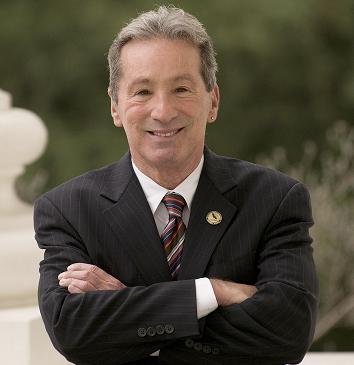
Assemblymember Tom Ammiano represents the 13th District.

Hiring at home

1

sarah@sfbg.com

The lame duck Board of Supervisors made history Dec. 7 when it voted 8-3 to approve mandatory local hire legislation for city-funded construction projects. The measure ends a decade-long effort to reach 50 percent local hiring goals through good-faith efforts.

“That’s a sea change in our local hiring discussion,” said Sup. John Avalos, who launched the legislation in October as part of the LOCAL-SF (Local Opportunities for Communities and Labor) campaign, which seeks to strengthen local hiring, address high unemployment rates, and boost the local economy.

The veto-proof passage of Avalos’ measure comes in the wake of a city-commissioned study indicating that San Francisco has failed to meet good-faith local hiring goals for public works projects even as unemployment levels rise in the local construction industry and several local neighborhoods face concentrated poverty.

Although Cleveland also has a local-hire law, the Avalos measure will be the strongest in the nation. Avalos’ legislative aide Raquel Redondiez told the Guardian that Cleveland’s 2003 legislation requires 20 percent local hire.

“This legislation doesn’t just have a mandated 50 percent goal,” Avalos explained, noting that San Francisco will require that each trade achieve a mandated rate and that 50 percent of apprentices be residents.

“This will ensure that our tax dollars get recycled back into the local economy, and that San Franciscans who are ready to work are provided the opportunity to do so,” Avalos said.

Avalos’ groundbreaking legislation phases in mandatory requirements that a portion of San Francisco public works jobs go to city residents and includes additional targets for hiring disadvantaged workers.


WHO GETS $25 BILLION?

The legislation replaces the city’s First Source program, under which contractors were required only to make good faith efforts to hire 50 percent local residents on publicly-funded projects. But the measure begins slowly by mandating levels some contractors are already reaching. According to a study commissioned by the city’s Office of Employment and Workforce Development and released in October, 20 percent of work hours on publicly-funded construction projects are going to San Francisco residents.

Avalos’ legislation, which is supported by a broad coalition of labor and community groups including PODER, the Filipino Community Center, Southeast Jobs Coalition, Kwan Wo Ironworks Inc., Rubecon, and Chinese for Affirmative Action, comes at a critical moment for the recession-battered construction industry.

Under the city’s capital plan, more than $25 billion will be spent on public works and other construction projects in the next decade — and two-thirds of this money will be spent over the next five years.

The measure has environmental benefits too. Transportation still accounts for more greenhouse gas emissions generated in the Bay Area than any other source, and San Francisco residents are more likely to take transit, walk, or bike to work than residents of other Bay Area counties. “When local citizens are able to work locally, there are fewer cars on the road and less air pollution,” Avalos said.

Sup. Ross Mirkarimi said that Avalos’ legislation is “just a start.”

“People have talked a good game about local hiring,” observed Mirkarimi, whose district includes the high unemployment-affected Western Addition.

“We are going to have to go beyond construction and start thinking about delving into the private sector,” Mirkarimi continued, pointing to the need to build 100,000 housing units over the next 25 years if the city is to keep up with a projected population increase. “Who is going to build that housing?” he asked.

Sup. Eric Mar noted that “the Sierra Club endorsed the measure early on because of the environmental benefits of having people work close to where they live.”

Sup. David Campos, whose district includes the Mission, said the measure was one of the most significant pieces of legislation to emerge from the board in recent years. “In the past, a lot of obstacles got in the way, including some legal challenges,” said Campos, who credited Avalos for navigating a complicated legal structure. “At the end of the day, I think this is going to benefit everyone.”

Mike Theriault, secretary-treasurer for the San Francisco Building Trades Council, told the Guardian he remains opposed to the legislation because the union presers to allocate jobs based on seniority, not residency. But he said the amendments make the measure “less harmful and more survivable in the short-term.”


THE ECONOMIC GAP

Termed-out Sup. Sophie Maxwell, who represents the city’s economically distressed southeast sector, has often noted that the construction industry provides a path to the middle class for people without advanced degrees or facing barriers to employment. She thanked Avalos for pushing legislation that promises to provides opportunities for “growing the middle class instead of importing it.”

“This industry closes the economic gap,” she said.

Board President David Chiu and termed-out Sups. Chris Daly and Bevan Dufty also supported Avalos legislation. But Dufty, who is running in the 2011 mayoral race, cast the eighth vote, which gave the measure a veto-proof majority.

The board’s Dec. 7 vote came a few hours after Bayview-based Aboriginal Blacks United founder James Richards and a score of unemployed local residents rallied at City Hall in the hopes of securing Dufty’s vote.

ABU has recently been protesting at UCSF’s Mission Bay hospital buildings site on 16th and Third streets. Its members also triggered a shut down at the Sunset Reservoir last month after a court ruled that locals promised jobs installing solar panels at the plant be replaced by higher-skilled engineers,

“It’s been too long that we have been protesting and fighting this good faith effort,” Richards told the Guardian. “We need a mandatory policy.”

Dufty is also hoping the Avalos measure could spread to other cities and benefit workers nationwide. “At a certain point I looked at labor and said, ‘Yes, I’m going for this legislation. But not just for San Francisco — you want to take this concept to other cities,’ ” Dufty said, as he made good on his promise to Richards to vote to support Avalos’ law.

Dufty seemed hopeful that Mayor Gavin Newsom would get behind the legislation. “But I respect that there may be a little bit of coming together between now and the second reading.”

Newsom spokesman Tony Winniker told the Guardian that the mayor has 10 days to review Avalos’ legislation after its Dec. 14 second reading. “He supports stronger local hire requirements but does want to review the many amendments that were added before deciding,” Winnicker said.

But will Newsom, who is scheduled to be sworn in as California’s next lieutenant governor Jan. 3, issue a veto on or before Christmas Eve on legislation that has been amended to address the stated concerns of the building trades?

That would be ironic since the amended legislation appears to match recommendations that the Mayor’s Taskforce on African American Outmigration published in 2009. The California Department of Finance projected that San Francisco’s black population would continue to decline from 6.5 percent (according to 2005 census data) to 4.6 percent of the city’s total population by 2050 — in part because of a lack of good jobs.


WILL NEWSOM VETO?

Avalos originally proposed to start at 30 percent and reach 50 percent over three years. But after the building trades complained that these levels were unworkable, Avalos amended the legislation to require an initial mandatory participation level of 20 percent of all project work-hours within each trade performed by local residents, with no less than 10 percent of all project work-hours within each trade to be performed by disadvantaged workers.

He also amended his legislation to require that this mandatory level be increased annually over seven years in 5 percent increments up to 50 percent, with no less than 25 percent within each trade to be performed by disadvantaged workers in the legislation’s sixth year.

A Dec. 1 report from city economist Ted Egan estimated that the local hire legislation would create 350 jobs and cost the city $9 million annually. But Egan clarified for the Guardian that this cost equals only 1 percent of the city’s spending on public works in any given year.

Vincent Pan of Chinese Affirmative Action, which supports Avalos’ local hiring policy, suggested that the mayor “check the temperature.”

“It would be leadership on the part of the mayor not to veto legislation that’s about San Francisco,” Pan said.

And Mindy Kener, an organizing member of the Southeast Jobs Coalition breathed a deep sigh of relief when Dufty’s vote made the law veto-proof. “It’s gonna go across the country,” Kener said. “We just made history.”

Potrero power plant could be shut down in February

0

The Potrero power plant could be shut down entirely by the end of February, the Guardian has learned. According to a report prepared for the Dec. 15 meeting of the California Independent System Operator (Cal-ISO) Board of Governors, an energy regulatory body, the aging power plant will soon be released from a Reliability Must-Run (RMR) contract requiring its continued operation for grid-reliability purposes.

“The ISO will provide an RMR termination notice to Mirant at the end of this month or in early January,” the report states, “which would terminate the RMR agreement by February 28, 2011.”

In August of 2009, San Francisco City Attorney Dennis Herrera reached an accord with Mirant Potrero LLC, the company that owns and operates the Potrero Power Plant, to shut down the plant by Dec. 31, 2010. Although the company agreed to the terms of shuttering the plant by the end of this year, there was a catch — the Cal-ISO would first have to terminate Mirant Potrero’s RMR contract. Apparently, that won’t happen till early next year, but this latest Cal-ISO report marks the first time the agency has committed to a specific date.

The Potrero power plant won’t be a necessary power source for San Francisco now that a new energy transmission line has been installed. The Trans Bay Cable, a 53-mile submarine power line that can transmit 400 megawatts of electricity from a Pittsburg substation to San Francisco, became fully operational on Nov. 23.

“The Trans Bay Cable finished its testing successfully and was put into successful service,” spokesperson P.J. Johnston told the Guardian. Meanwhile, a PG&E re-cabling project deemed important to San Francisco’s electricity reliability was completed Dec. 5.

“Having both of these projects completed and proven operationally reliable were the two key conditions for enabling the ISO to release the entire Potrero power plant from its reliability must-run contract obligation,” the Cal-ISO report notes.

Removing the Potero power plant from service will benefit San Francisco’s air quality, particularly in the city’s southeastern neighborhoods.

Mysteries of the death-drug scramble

0

news@sfbg.com

The California prison system finally released some documents on its efforts to procure the chemicals it needs to execute prisoners, and the 1,000 pages show the desperate lengths state officials have gone to procure the death drugs.

At one point, the California Department of Corrections and Rehabilitation looked at importing drugs from Pakistan. In October, prison officials sent agents on a secret midnight mission to Arizona to acquire sodium thiopental, one of the drugs used in executions, from that state’s supply.

In the end, CDCR wound up buying an extraordinary quantity of the stuff from a supplier in London — potentially putting California in the disturbing position of serving as the death-drug dealer to the rest of the country.

The protocol for lethal injections in California, and 33 other states, calls for three drugs — sodium thiopental to put the condemned inmate in a coma; pancurium bromide to paralyze the muscles; and potassium chloride to stop the heart.

But sodium thiopental, also known as Sodium Pentothal, has been in short supply in this country, in part because the one company that currently makes it, Hospira, has production backlogs. There’s not a whole lot of need for the drug in modern medicine — it’s largely been replaced with other anesthetics — and Hospira has made it clear in repeated press statements that it doesn’t want its product used in executions.

So when the last batch of the stuff in the state’s hands expired in October, California had to put executions on hold while prison officials scrambled to find some more.


HIDING THE TRUTH

The whole process was cloaked in secrecy. Nobody at CDCR would tell us where they were looking for the sodium thiopental, who would be procuring it, or how the supply chain might work. That, of course, is crucial, in a grisly way: If the anesthetic didn’t perform properly (that is, if the state got a bad batch from an unregulated supplier), a prisoner could go through unspeakable agony as the second batch of drugs made it impossible to breathe.

The Guardian filed a request in October under the California Public Records Act seeking details on the purchase attempts, but CDCR stonewalled. The American Civil Liberties Union, also seeking the documents, filed a lawsuit, and a judge ordered the release of a large volume of material.

Those documents, now available at aclunc.org, is heavily redacted, and much of the material we expected to see is missing. But the documents contain some remarkable revelations.

For starters, there’s an internal timeline going back to 2007 showing that CDCR officials knew back then, while the drug protocol was being developed, that there would be problems. The Drug Enforcement Administration will only allow a doctor to order the class III controlled substances. And the federal receiver overseeing the prison system wouldn’t allow any of the three doctors on staff at San Quentin State Prison to sign the order forms, although the documents didn’t say why.

In January 2007, CDCR tried to recruit outside doctors to order the drugs — but physicians in California have traditionally declined to assist in executions. Indeed, the American Medical Association policy bars doctors from participating in capital punishment in any way, including “prescribing or administering tranquilizers.”

It wasn’t until May 2010 that CDCR was able to find doctors willing to order the deadly drugs; the names of those physicians are not in the documents.

The timeline shows that in June 2010, CDCR became aware that there was a shortage of sodium thiopental, but there was no public discussion of the situation. Plans to execute Albert Greenwood Brown, a convicted murderer set to die in September 2010, went forward.

But the courts weren’t rushing the execution — and the last batch of sodium thiopental in CDCR’s possession expired Oct. 1.

As the clock ticked down toward that expiration date, the documents show, CDCR officials — all the way up to Corrections Secretary Matthew Cate — were involved in an all-out scramble to get more of the drug.

At one point, a Sept. 16 e-mail — from an official whose name is blacked out — notes that CDCR had contacted between 80 and 100 hospitals to try to buy some sodium thiopental, but “none of them have a drop.”

The documents note that CDCR officials even suggested that there were supplies of sodium thiopental in Pakistan. An Aug. 17 e-mail from John McAuliffe, a contract worker helping CDCR with executions, says the agency is trying to get federal government approval to import the drug.

One e-mail even suggests that an unnamed CDCR employee was in the area and could make a side trip to Pakistan to pick up the stuff.


THE LONDON CONNECTION

There are, of course, serious issues with importing controlled substances into the United States, and the documents show efforts by CDCR to get the DEA to approve imports. The Pakistan deal apparently went nowhere — but later e-mails show CDCR officials contacting a supplier in London. The name of the supplier is blacked out on all the documents, but CDCR’s deputy press secretary, Terry Thornton, later confirmed that the manufacturer was Archimedes Pharma.

Immediately after the California order for 521 grams of sodium thiopental went through, Britain’s secretary of state for business, Vince Cable, issued an order barring any further exports of the drug for use in executions.

Like most of the civilized world, the United Kingdom does not allow the death penalty.

In the meantime, Scott Kernan, CDCR’s undersecretary for operations, was trying to get enough of the death drug domestically to carry out at least one execution. A series of e-mails show contacts between California and Arizona, which recently had imported its own supply — and there are indications that Gov. Arnold Schwarzenegger was willing to call his counterpart in Arizona to help consummate the deal.

“I’m sure either the secretary or even the governor could make a call,” a Sept. 9 e-mail from Kernan to McAuliffe notes.

Then on Sept. 29, Kernan sent an e-mail to Assistant Secretary Anthony Chaus discussing a “secret and important mission.” Kernan wanted Chaus to send a team to a state prison complex in Florence, Ariz., a desert town about 40 miles southeast of Phoenix, to pick up 12 grams of the death drug.

At midnight Sept. 30, the warden in Florence gave the CDCD agents 24 vials, each containing half a gram of sodium thiopental. The agents drove it to Bakersfield, where another team picked up the vials and drove the rest of the way to San Quentin.

In a stomach-turning e-mail, Kernan sent a note Sept. 29 to an unnamed Arizona official saying “you guys in Arizona are life savers” and offering to “by [sic] you a beer next time I get that way.”

By then, a federal judge had delayed Brown’s execution until 2011.

Among the most startling revelation was the sheer quantity of sodium thiopental California eventually ordered from the firm in London. Even with training supplies and backup, it only takes between six and 12 grams of sodium thiopental to render a prisoner unconscious — meaning that the 521 grams that CDCR purchased for $36,413 are enough to kill between 43 and 86 people. The expiration date on the chemical is 2014.

It’s highly unlikely, given the legal hurdles and time involved in even one execution, that California would schedule more than three over the next three years. What possible use could the state have for so much death drug?

Thornton, CDCR’s press person, wouldn’t respond to our queries. But Natasha Minsker, the director of the ACLU’s Death Penalty Project, said she’s concerned that California will try to become a supplier for other prison systems. “It certainly raises questions,” she told us.

There’s a lot missing from the documents. In many instances, the names of the officials who sent and received e-mails are redacted. And there are obvious pieces of the puzzle missing from the files CDCR has released.

“There’s no e-mail from the DEA or the FDA,” Minsker said, “although CDCR was clearly contacting them. There’s nothing from the governor’s office, although it’s likely they were also involved.”

Overall, Minsker said, the documents “show how sneaky CDCR was trying to be about all of this.”

The ACLU filed another suit Dec. 13 seeking the release of some of the redacted material as well as records of CDCR’s efforts between October and December.

If those documents are ever released, they may address some of the looming questions about the material the state uses to kill people.

Alerts

0

steve@sfbg.com

WEDNESDAY, DEC. 15


Women’s Holiday Party

Come support and celebrate the holidays with San Francisco’s most politically active women. This annual party is thrown by the San Francisco Women’s Political Committee, and this year it’s being cohosted by NARAL Pro-Choice California, Good Ol Girls, Emerge California, and Planned Parenthood Shasta Pacific. The first 100 women to arrive receive a free glass of champagne, and the first 200 people get a free drink ticket.

6–9 p.m., free

Carnelian By The Bay

1 Ferry Plaza, SF

www.sfwpc.org

Jaynry@sfwpc.org


The Green Party party

The San Francisco Green Party is throwing a Green Holiday Hoopla. “Spread the word and come out to support a true progressive alternative to the scandalous, corporate-controlled duopoly that screws us over year after year,” reads the invitation, in true SF Green fashion. Cosmic Selector and other DJs will rock the party, Phantom Power and Ryan Hayes perform live, and speakers Mark Sanchez, John-Marc Chandonia, and Laura Well drop the truth.

7 p.m., free

Public Works

161 Erie, SF

www.sfgreenparty.org


D5 Democratic Club Kickoff

If you want to see who’s lining up to play a lead role in choosing Sup. Ross Mirkarimi’s successor in District 5 (Western Addition and the Haight) — or if you want to be in the group — stop by the District 5 Democratic Club’s Inaugural Fundraiser and Holiday Party. This is a qualifying membership for the newly reactivated D5DC, which only D5 residents may join. Mirkarimi hosts the event.

6:30–9 p.m., $30 (includes one-year membership) or $10 for hardship membership

Café Divis

359 Divisadero, SF

d5demclub@gmail.com


Bay Area Anarchist Salon

The Bay Area Anarchist Salon and Potluck is a monthly facilitated conversation by and for anarchists. This month, it poses the question: “In the spirit of the holiday season, what present-day gift-economy practices by anarchists and others point toward life after capitalism?” Bring a vegetarian item to share. The event is hosted by Station 40 Events Collective, which is trying to raise funds for new video projector.

7–10 p.m. $2–$5

Station 40

3030B 16th St, SF

SATURDAY, DEC. 18


Sidewalks are still for people

In the months leading up to the Nov. 2 election, Sidewalks Are For People held a series of events on sidewalks around San Francisco as part of its campaign against Prop. L, which makes it illegal to sit or stand on the sidewalks of San Francisco. Now that the measure passed, the group is taking to the sidewalks again for a similar event, this time in defiance of the new law. Stop by some of the events scattered around the city or create your own and register it at sidewalksareforpeople.org/december-18th-events/#register.

All day, free

Citywide

www.sidewalksareforpeople.org

Oooh, let’s have a border war

17

If San Francisco tries to enact a congestion management fee, San Mateo officials are going to fight back with their own. How fun; a border war. Since I’ve long suggested that our future may be in city-states, not nations, it strikes me as an interesting political moment.


But on a serious note: what would be wrong with a toll in both directions? What would be wrong with asking California motorists, who enjoy among the lowest gas tax rates in the western world and who for the past few years have had a dramatic reduction in annual registration fees, to pay a little more to local government? What’s wrong with making it cost more to drive your car during commute hours?


Yeah, that means it will cost more for a San Franciscan to go shop at Serramonte Mall (during rush hour; who shops then anyway?). So what? That might encourage San Franciscans to shop locally. Yeah, it will cost more to commute by car, in either direction; maybe more people will ride their bikes or take the bus. (Particularly if the money goes into improving transit.)


I’m not going all Smoot-Hawley here, but congestion-management fees — extra charges for driving in certain areas during certain times of day — are generally a good idea. And if San Mateo wants one, too, excellent.


Cities have been fighting for years over who can cut taxes more for big businesses. This seems a much more reasonable fight. So: Border war? Bring it on.


Brown’s education summit gives me hope

0

Most of what’s going on is just really, really disturbing — Brown is doing a good job of explaining just how bad the economy is, just how awful things are for education — and what that means for students. But he made one comment that struck me as critical (and that might, maybe, make Brown a great governor) came about an hour into the presentation.


Brown was talking about how the nation got into this crisis — about how people were forced to live on borrowing, and when the real estate market collapsed America became de-leveraged — when he took a slight sidetrack to say:


“Income redistribution upward from the middle class is comparable to the 1920s … it’s a societal crisis. We have to exercise discipline, but also fairness.”


A few points on this:


1. The incoming governor of California actually mentioned the words “income redistribution.” That’s a term almost entirely missing from the current debate. And he made it clear that part of the budget problem — part of the reason the state and the nation are in this crisis — is that the rich have gotten a larger and larger share of the pie.


2. Brown seems to think this is actually a problem, a “societal crisis.” Again: Obama doesn’t talk about that. Other than Bernie Sanders, most politicians in Washington are afraid of it. Just talking about wealth and income inequality (particularly in the context of education funding) is a huge step.


3. Brown talked about “fairness and discipline” together. Yes, we have to understand that resources right now are limited; but we also have to understand that part of the budget debate ought to be about the larger social issue of unfair distribution of wealth.


I know none of this seems like such a huge deal — it’s basic reality. But it’s so unusual that it’s refreshing.


Bikes are not cars

39

Okay, first of all, this is ridiculous. California cities are supposed to be encouraging people to ride bikes instead of cars. And bikes aren’t 3,000-pound metal devices propelled forward with internal combustion engines; yes, a bike can hit a pedestrian, but the likelihood of fatal injuries isn’t that high. Certainly not compared to cars.


Besides, and here’s the thing that really gets me: This kid gets a ticket for running a stop sign on his bicycle and “now he has to go to traffic school to keep a moving violation off his driver’s license.”


How is that possible? You don’t need a license to ride a bike. A bike isn’t a car; the skills are entirely different. The risks are entirely different. You can ride a bike before you turn 16. You can ride without proof of citizenship. You don’t have to give up a fingerprint or fill out forms or take a test to ride a bike.


So why should you face a violation on your license to drive a car when you’re not driving a car? Should I get a point on my driver’s license if I sit on the sidewalk, or walk against the light, or block traffic in a political protest? Those things aren’t remotely related to driving a motor vehicle.


I got stopped once by a cop for (allegedly) running a stop sign, and he asked to see my driver’s license, and I (politely) said: Why? I’m not driving a car. I’m happy to provide ID, but I don’t need to present a document from the California Department of MOTOR vehicles when I’m not operating a MOTOR vehicle. Especially when I’m making the world a cleaner, better place with my transportation choice.


Oddly enough, he agreed. We had a pleasant talk about bicycle safety and he let me go. You’d think the UC cops would have better things to do.

SFBG Radio: The death drug, Obama’s failure and more

0

In today’s episode, we talk about California’s strange adventures with the death drug — and why the Obama presidency is at stake in the tax debate. Check it out after the jump.

sfbgradio12920109 by endorsements2010

Elizabeth Edwards, breast cancer and the battle for a cure

2

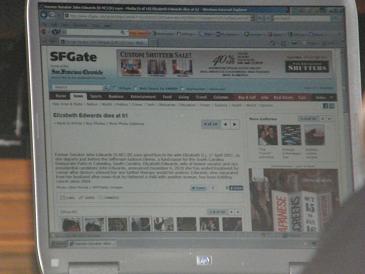
When the news hit that Elizabeth Edwards had died at 61, I was sitting in the press box at San Francisco City Hall listening to the supervisors debate the merits of local hire legislation. In fact, I only became aware that Edwards had passed away, because Sup. Michela Alioto-Pier, who was sitting in front of me, was surfing the Internet on her laptop and I happened to see the headline.

The news immediately reminded me, all too powerfully, of the brave fight that my sister-in-law Leila, 47, lost last year after a six-year battle with the disease. She left behind a husband and two young sons, and I always feel a mix of pride at how hard she fought and desperation at how she still wasn’t able to win, whenever I remember her long slide towards death last fall.

“I have so much to live for,” Leila often told me, reflecting on how much she loved her husband and sons, how she wanted to finish her novel (which she managed to wrap up in the last months of her life) and how she still wanted to visit so many places and people in the world.

An avid advocate for peace, especially in the Middle East, where her father’s family came from, Leila was not one to give up on a cause, once she had it in her crosshairs. She attacked breast cancer with that same dogged determination. She read everything she could on the topic, changing her diet, modifying her lifestyle, going through chemo and the inevitable loss of her beautiful hair, and, at the end, taking a chance with experimental drugs.

I will never forget her telling me, one gut-wrenching afternoon last September, that the doctors had told her there was nothing more they could do. The disease had gone to her liver, and that she was beginning to feel panic and fear. It wasn’t easy to hear that admission, it must have been even harder for her to share it, and it left me hoping that one day, no other woman would ever have to go through this painful battle again.

I wanted Leila to live to see her sons grow up, to enjoy the company of her husband, to write, travel and work for her goal of world peace. But eventually, it became clear that she was not going to make it. When her death finally came, last October, I felt relief that she was no longer suffering, even as I shed tears for her, her family, and all the folks in the world who are going through similar battles.

So, when I got home last night, I immediately went online and wallowed in the huge wave of grief that Edwards’ death evoked as a symbol of the millions of women who live with and die from cancer worldwide.

Some noted that Edwards had not been conducting regular check ups when she found a lump in her breast (an uncomfortable reminder to all of us who haven’t got a check up recently). Others observed that her diagnosis likely fueled her passion for universal health care and helped the passage of Obamacare (a more welcome reminder that despite all the criticisms of Obama, he has pushed through monumental reforms that many will benefit from).

Some wrote about the ever-present fear for survivors that the cancer could come back, and how this awareness had  served to make them more fully appreciate every moment that they do have. Others pointed to the grim reality that even with access to great doctors, advanced treatment options and money, Edwards still could not prevail, because a cure has still not been found.

I’ll end this tribute to Edwards, my sister-in-law, and all the women who have struggled with this terrible disease with a message that landed in my inbox Dec. 7 from California’s First Lady Maria Shriver:

“I was deeply saddened to learn of the passing of my dear friend, Elizabeth Edwards,” Shriver wrote. “My heart goes out to her loving family. Elizabeth was a mighty warrior, and I’ve long admired her courage, her compassion and her personal quest for truth. She was a public servant, a dedicated mother, a tireless advocate and a loyal friend. She showed up to speak at The Women’s Conference every time I asked, and our audience was always moved by the open and honest way she would share the struggles she faced along her journey. I hope her children know their mother was an inspiration to women everywhere — a truly great woman.”

And I’ll add my hope that this nation will intensify its search for a cure for a disease that is the second leading cause of cancer deaths in women today (after lung cancer) and the most common cancer among women, excluding nonmelanoma skin cancers. According to the American Cancer Society, 1.3 million women will be diagnosed with breast cancer annually worldwide, 465,000 will die from the disease, and about 1 in 35 women die from breast cancer in the U.S. Scary? Yes. Curable? Hell, yeah (I hope and pray). Let’s just make sure it remains a national priority.

An astonishing tax ripoff

0

Calitics alterted me to this amazing blog post by David Cay Johnston, one of the foremost tax experts in the country and one of the few reporters who understands and writes honestly about tax law. Turns out that the California Public Utilities Commission wants to allow regulated utilities to collect money from ratepayers for taxes that the utilities never have to pay.


That’s right — the utilities (in this case a gas pipeline company, but the policy could apply just as well to PG&E at some point) charge you for the money they are supposed to pay in corporate income taxes — except that they’re exempt from those taxes. So they just keep your money. Wow.

Class conflict in DC and SF

12

There’s an unmistakable whiff of class warfare in the air this holiday season, most obviously on the national level where President Barack Obama and congressional Republicans are helping the ultra-rich steal hundreds of billions of dollars from future generations and the country’s current needs. But we’re also seeing it right here in San Francisco, subtly playing out around who will be our next mayor.

During yesterday’s scheduled discussion at the Board of Supervisors on choosing a new mayor, members of the public – from African-American mothers of slain youth to representatives of immigrant communities to those representing labor and progressive groups – urged the board to choose a mayor who would finally represent all of San Francisco, not just the wealthy and the business community.

Then the progressive supervisors who represent the city’s working class districts talked about getting the process underway and voiced some of the things they’d like to see in a new mayor, such as compassion and a willingness to work with the board and community groups. It seemed like a good faith effort at having an open public discussion about the city’s needs.

But on the other side of the aisle, the supervisors who represent the city’s wealthiest neighborhoods voted to delay the discussion without offering a reason why. Sup. Chris Daly made good points about how incoming mayors usually have time to prepare for assuming this powerful office at a time of pressing city needs and tricky political dynamics, arguing for making this decision sooner than later.

And from the Establishment representatives: nothing. Not a word. Instead, we have Mayor Gavin Newsom threatening to delay his swearing in as lieutenant governor to thwart the current board from picking a successor, and being overtly urged to do so in a San Francisco Chronicle editorial and in disingenous, sanctimonious ruses from SF Chamber of Commerce officials.

Why? Well, here’s the closest thing the editorial offered to a reason: “It makes all the sense in the world to have the supervisors who will be working with the interim mayor make the selection. They are the ones who will have to find common ground and develop a working relationship with Newsom’s successor.”

But does it really make any sense to have an inexperienced group of new supervisors (as our current cover stories shows, none of the four new supervisors have held municipal office and two are new to politics) pick a mayor on their first day on the job, and then have that person immediately take on the complicated job of running the city with no staff in place? And to do that by flouting the the California Constitution and the City Charter?

That sounds like a recipe for disaster – and an opportunity for downtown power brokers to make mischief and ensure their interests aren’t threatened as part of whatever backroom deal gets cut to choose a new mayor, district attorney, and board president. Why else would they so vehemently oppose a deliberative public process that would lead to a decision by those who know the workings of City Hall better than anyone?

As we saw in the last election, wealthy San Franciscans are scared to death of progressive malcontents like Chris Daly, and they’re doing whatever they can to prevent him from being involved in this decision. They see, probably correctly, that the current political dynamics of the city could lead to perhaps the most progressive mayor since George Moscone, or maybe ever, and they’ll do whatever they can to prevent that from happening.

The rich of this city and this country have overplayed their hands, crippled the public sector, and, as Sen. Bernie Sanders so eloquently said recently on the floor of the US Senate, shown a selfish disregard for the needs and interests of the vast majority of citizens. The only question now is this: are we ready to finally stand up, fight back, and really give them something to fear? Or are we going to take our cues from Obama and treat anti-government conservatives as good faith actors when they have shown only contempt for our most cherished democratic processes and values?

I suppose next week, when this board reconvenes to try to choose a successor mayor, we’ll find out.

Class of 2010: Scott Wiener

3

rebeccab@sfbg.com

Scott Wiener, who is 40, gay, soft-spoken, and remarkably tall, seems to have made an impression on voters with his successful campaign for District 8 (the Castro, Noe Valley) supervisor. On a recent Wednesday afternoon, several patrons of a Market Street café stopped to say hello and congratulate him. “I saw millions of signs about you!” one exclaimed.

A deputy city attorney, Wiener claimed one of the most decisive victories among contenders vying for seats on the San Francisco Board of Supervisors. He’s more fiscally conservative than Rafael Mandelman, who was his progressive opponent in the race, and is more in step politically with Mayor Gavin Newsom than San Francisco progressives. Yet Wiener stressed to the Guardian that he should ultimately be viewed as an independent thinker. “For me, it’s about having mutual respect for everyone,” he said. “Even if you disagree on some issues, and even if you disagree on a lot of issues, you can always find areas of agreement.”

Asked about his priorities in office, Wiener put public transit at the top of the list. Over the next few decades, the population of San Francisco and the Bay Area will dramatically increase, he said. “And at the same time, we’ve been underfunding public transportation, and particularly our roads. It could potentially be a catastrophe if we’re not able to not just keep the system as it is, but actually expand it. That is a really big priority.” To raise money for Muni, he doesn’t support extending parking meter hours, but does support a local vehicle license fee. There’s some question surrounding that prospect since California voters approved Proposition 26, which requires a two-thirds majority vote for fees. But Wiener said he wanted to be involved in efforts to implement a VLF in San Francisco.

Another priority is finding ways to stimulate job growth. He approves of the city’s move to use a tax credit for biotech industry businesses as a means of encouraging job creation, but said that mechanism should be used sparingly since it creates a revenue hole. Instead, Wiener said he was more in favor of looking at payroll-tax reform — but only if it doesn’t result in a tax increase.

Wiener also places importance on supporting the city’s Entertainment Commission and preserving San Francisco’s vibrant nightlife. “That’s an issue that I’ve always worked on and I’ll be speaking at [the California Music and Culture Association] next Friday, which I’m hoping will become a really effective voice for that community,” Wiener noted. “It needs a really unified and strong voice. and I want to make sure that we are really prioritizing having a vibrant nightlife and outdoor festival scene, and that we’re not blaming the entertainment community for societal ills like gun violence.” He also mentioned bolstering the Entertainment Commission’s budget.

But might that pro nightlife stance place him at odds with the San Francisco Police Department? “In some ways, I’m from a public-safety background,” he said in response. “I’ve been involved in a lot of safety issues on a neighborhood level. I’ve worked closely with SFPD and I am supportive of Chief [George] Gascon. In a way, I think that gives me some credibility.”

Speaking of working closely with people, whom does Wiener see himself forming alliances with on the new board? “I definitely have a great relationship with Sean Elsbernd and Carmen Chu, and I will be working closely with them. But I don’t agree with them on everything,” he said. Board President David Chiu and Sup. David Campos were both his classmates at Harvard, he noted, so he feels confident in his ability to work with them even if they don’t always see eye to eye. “One thing I see about this board that I’m optimistic about is that I think it’s going to be a more collegial board,” he added.

On the question on everyone’s mind — who will succeed Mayor Gavin Newsom to serve as the interim mayor? — Wiener said he thinks the best idea is to appoint a caretaker mayor. “Next year’s going to be really hard year,” he said and a caretaker mayor could “help make some really hard choices that need to be made. I may not like all of those choices, but they can do something that someone who’s a brand new mayor seeking reelection may be timid about doing.”

Who might he support if the new board selects the successor mayor? “There are some really solid names that have been bandied about, like [San Francisco Public Utilities Director] Ed Harrington or [Sherriff] Mike Hennessey,” he replied.

Wiener’s going to be mostly a fiscal conservative when it comes to the budget. Any new revenue, he said, “should be very policy-based,” for example transit-oriented instead of raising business taxes.

And he has plenty of cuts in mind, including “the way we contract for nonprofits,” looking at shared overhead, and consolidation. He also said that “we need to continue moving forward with pension and benefit reform [and] aggressively address overtime in all departments.” And what can voters expect from Sup. Scott Wiener that’s different from Sup. Bevan Dufty, a mayoral hopeful who currently represents D8? Wiener didn’t go too far out on a limb on that one. “There have been some tenant issues that Bevan voted against and I supported,” he said. “We’ve had times where he’s been to my left, or I’ve been to his left, but I can’t speculate as to the future. It’s going to be case by case.” *

Rep Clock

0

Schedules are for Wed/8–Tues/14 except where noted. Director and year are given when available. Double and triple features are marked with a •. All times are p.m. unless otherwise specified.

ARTISTS’ TELEVISION ACCESS 992 Valencia, SF; www.atasite.org. $7. “Other Cinema: Dead Media,” innovative works using repurposed material, Sat, 8:30.

BALBOA 3630 Balboa, SF; www.brownpapertickets.com. $10. Pink Smoke Over the Vatican (Hart), Thurs, 7.

BRIDGE 3010 Geary, SF; www.peacheschrist.com. $15. “Midnight Mass:” Christmas Evil (Jackson, 1980), Sat, midnight. With director Lewis Jackson in person.

CASTRO 429 Castro, SF; (415) 621-6120, www.castrotheatre.com. $7.50-12. La Strada (Fellini, 1954), Wed, 2:30, 7. “Holiday Horrors:” Gremlins (Dante, 1984), Thurs, 7; Black Christmas (Clark, 1974), Thurs, 9:05. “Midnites for Maniacs: Push It to the Limit Triple Feature:” •Just One of the Guys (Gottlieb, 1985), Fri, 7:30; Point Break (Bigelow, 1991), Fri, 9:30; Maniac: The Restored Director’s Cut (Lustig, 1980), Fri, midnight. With director William Lustig in person. •Cabaret (Fosse, 1972), Sat, 2:35, 7, and Xanadu (Greenwald, 1980), Sat, 5, 9:30. The Nightmare Before Christmas (Selick, 1993), Sun, 2, 3:45, 5:30, 7:15, 9. “San Francisco Film Society Presents:” Sir Arne’s Treasure (Stiller, 1919), Tues, 8. With live score by the Mountain Goats; tickets for this event ($22.50) at www.sffs.org.

CERRITO 10070 San Pablo, El Cerrito; www.rialtocinemas.com. $7. “Cerrito Classics:” White Christmas (Curtiz, 1954), Thurs, check website for showtime.

CHRISTOPHER B. SMITH RAFAEL FILM CENTER 1118 Fourth St, San Rafael; (415) 454-1222, www.cafilm.org. $6.50-10.25. The Girl Who Kicked the Hornet’s Nest (Alfredson, 2009), call for dates and times. Inside Job (Ferguson, 2010), call for dates and times. Today’s Special (Kaplan, 2009), call for dates and times. “San Francisco Grand Opera Cinema Series:” The Elixir of Love, Thurs, 7 and Sat, 10am. “Buddhist Film Festival Showcase 2010,” Wed-Thurs. These shows, $12. Remembering Playland (Wyrsch, 2010), Sun, 4:15. Director Tom Wyrsch in person.

FORBIDDEN ISLAND TIKI LOUNGE 1304 Lincoln, Alameda; www.forbiddenislandalameda.com. Free. “Forbidden Thrills: Creepy Crazy Christmas Classics!:” •Santa Claus Conquers the Martians (Webster, 1964), and Santa Claus (Cardona, 1959), Mon, 7:30.

HUMANIST HALL 390 27th St, Oakl; www.humanisthall.org. $5. “More Bay Area Culture and Performance Art,” presented by video activist Steve Jacobson, Wed, 7:30.

ITALIAN CULTURAL INSTITUTE 814 Montgomery, SF; (415) 788-7142. $3. “Giallo:” Deadly Sweet (Brass, 1967), Tues, 6:30.

LUMIERE 1572 California, SF; www.landmarkafterdark.com. Free. Thurs, 7. “Anime Club:” “Space and Wolf,” Thurs, 7.

PACIFIC FILM ARCHIVE 2575 Bancroft, Berk; (510) 642-5249, www.bampfa.berkeley.edu. $5.50-9.50. “Days of Glory: Revisiting Italian Neorealism:” Il grido (Antonioni, 1957), Wed, 7; Accattone (Pasolini, 1961), Fri, 8:45; Bandits of Orgosolo (De Seta, 1961), Sun, 3. “Grin, Smile, Smirk: The Films of Burt Lancaster:” Birdman of Alcatraz (Frankenheimer, 1962), Thurs, 7; A Child is Waiting (Cassavetes, 1963), Sat, 6:30; The Swimmer (Perry, 1968), Sat, 8:40. “Carl Theodor Dreyer:” Two People (1944-45), Fri, 7; Gertrud (Dreyer, 1964), Sun, 5.

RED VIC 1727 Haight, SF; (415) 668-3994. $6-10. Saint Misbehavin’: The Wavy Gravy Movie (Esrick, 2009), Wed-Thurs, 7:15, 9:15 (also Wed, 2). Machete (Maniquis and Rodriguez, 2010), Fri-Sat, 7:15, 9:30 (also Sat, 2, 4:15). Breathless (Godard, 1959), Sun-Mon, 7:15, 9:15 (also Sun, 2, 4). The Triplets of Belleville (Chomet, 2003), Dec 14-15, 7:15, 9:15 (also Dec 15, 2).

ROXIE 3117 and 3125 16th St, SF; (415) 863-1087, www.roxie.com. $5-9.75. Howl (Epstein and Friedman, 2010), Wed, 7:15. The Temptation of St. Tony (Ounpuu, 2010), Wed-Thurs, 7, 9. “NorCal FreeFly Film Festival,” Thurs, call for times. Bad Santa (Zwigoff, 2003), Fri, 7:15, 9:15. “An Evening with John Waters,” Sat, 7:30. Fundraiser for the Roxie; tickets $250. Home Alone (Columbus, 1990), Sun, 4. Permanent Vacation (Jarmusch, 1980), Mon, call for times. Stranger Than Paradise (Jarmusch, 1984), Tues, call for times.

SUNDANCE KABUKI 1881 Post, SF; www.eggsploitation.com. $20. Eggsploitation (Lahl), Thurs, 7.

VICTORIA 2961 16th St, SF; www.sfcinema.org. $15-25. “Cinematheque Benefit:” Face (Warhol, 1965) and The Velvet Underground In Boston (Warhol, 1967), Wed, 6:30.

VIZ CINEMA New People, 1746 Post, SF; www.vizcinema.com. $10-12. Cast Me If You Can (Ogata, 2010), Dec 10-19, check website for times. YERBA BUENA CENTER FOR THE ARTS 701 Mission, SF; (415) 978-2787, www.ybca.org. $6-8. “International Buddhist Film Festival Showcase 2010:” Shugendo Now (Abela and McGuire, 2009), Thurs, 7:30; •Dream Window: Reflections on the Japanese Garden (Junkerman, 1991), and Inland Sea (Carra, 1992), Sun, 2. “Luminous Darkness,” transgressive videos focusing on erotic ritual and performance, curated by Daniel McKernan, Fri, 9pm-2am (screening continuously during YBCA’s “Noel Noir” fundraiser; tickets $25). “Go to Hell for the Holidays:” Meat Grinder (Moeithaisong, 2009), Sat, 7:30.<\!s>

Going to a club — or boarding an airplane?

12

news@sfbg.com

The War on Fun — a term coined by the Guardian in 2006 to describe the crackdowns on nightclubs, special events, and urban culture by police, NIMBY neighbors, and moderate politicians — continues to grind on in San Francisco.

The latest attack was launched by Mayor Gavin Newsom and the San Francisco Police Department, which has proposed a series of measures to monitor and regulate individuals who visit bars or entertainment venues, proposals that the embattled Entertainment Commission will consider at its Dec. 14 meeting.

Perhaps most controversial among the dozens of new conditions that the SFPD would require of nightclubs is an Orwellian proposal to require all clubs with an occupancy of 100 persons or more to electronically scan every patron’s identification card and retain that information for 15 days. Civil libertarians and many club owners call this a blatantly unconstitutional invasion of privacy.

Driving the latest calls for a crackdown is a stated concern over isolated incidents of violence outside a few nightclubs in recent years, something Newsom and police blame on the clubs and that they say warrants greater scrutiny by police and city regulators.

But the proposals also come in the wake of overzealous policing of nightclubs and parties — including improper personal property destruction and seizures, wrongful arrests and violence by police, harassment of disfavored club operators, and even dumping booze down the drain — mostly led by SFPD Officer Larry Bertrand and his former partner, Michelle Ott, an agent with the California Department of Alcoholic Beverage Control.

Those actions were documented in back-to-back cover stories by the Guardian (“The New War on Fun,” March 24) and SF Weekly (“Turning the Tables,” March 17), and they are the subject of multiple ongoing lawsuits by nightclub owners, patrons, and employees, including a racketeering lawsuit alleging that officials are criminally conspiring against lawful activities.

Yet rather than atoning for that enforcement overreach, Newsom and SFPD officials seem to be doubling down on their bets that San Franciscans will tolerate a more heavily policed nightlife scene in the hopes of eliminating the possibility of random violence.

A series of nighttime shootings this year has grabbed headlines and prompted calls to action by the Mayor’s Office and Board of Supervisors President David Chiu, whose District 3 includes North Beach. In February, there were shootings at Blue Macaw in the Mission and Club Suede at Fisherman’s Wharf, followed by a shooting at the Pink Saturday fair in June, one outside Jelly’s in SoMa in July, and the high-profile murder of a German tourist near Union Square in August.

Chiu responded with legislation to give the Entertainment Commission greater authority to close down problem nightclubs and, more recently, with legislation to require party promoters to register with the city so that officials can take actions against those who act irresponsibly.

In September, Newsom asked the SFPD for its recommendations and he received a laundry list of proposals now before the Entertainment Commission. That body held a closed session hearing Nov. 30 to discuss a confidential legal opinion by the City Attorney’s Office on whether the identification scan would pass constitutional muster, an opinion that has so far been denied to the Guardian and the public, although officials say it may be discussed in open session during the Dec. 14 hearing.

“Everything is being considered,” Jocelyn Kane, acting executive director of the Entertainment Commission, told the Guardian. Her office already has looked at the different types of scanners that clubs could use and has discussed the idea with several technology companies.

SFPD Inspector Dave Falzon, the department’s liaison to the nightclubs and ABC, told the Guardian that he believes the data gathered from nightclub patrons would allow police to more easily find witnesses and suspects to solve any crimes committed at or near the nightclubs.

“It’s not intended to be exploited,” Falzon said, stressing that the recommendations are a work in progress and part of an ongoing dialogue with the Entertainment Commission — an agency Newsom, SFPD officials, and some media voices have been highly critical of over the last two years.

Along with the proposal for the ID scanners, SFPD proposed many other measures such as increased security personnel (including requiring clubs to hire more so-called 10-B officers, or SFPD officials on overtime wages), metal detectors at club entrances, surveillance cameras at the entrances and exits, and extra lighting on the exterior of the night clubs.

Though this may sound to many like heading down the dystopian rabbit hole with Big Brother potentially watching your every move, Falzon thinks it’s the opposite. “It isn’t that police department is acting as a militant state,” Falzon said. “All we’re trying to do is to make these clubs safer so they can be more fun.”

Yet critics of the proposals don’t think they sound like much fun at all, and fear that employing such overzealous policing tools will hurt one of San Francisco’s most vital economic sectors while doing little to make anyone safer.

Jamie Zawinski is the owner of the DNA Lounge, which recently celebrated its 25th anniversary. He has been a leading voice in pushing back against the War of Fun, including running a blog that chronicles SFPD excesses. He said the proposed regulations go way too far.

“It’s gang violence happening on the street. The nightclubs are being scapegoated. You don’t solve the problem by increased security in the clubs,” Zawinski told us, adding that the lack of proper policing on the streets should be addressed before putting the financial strain on the entertainment industry.

“It’s ridiculously insulting. I will not do that to my customers. It’s not a way to solve any problems,” Zawinski said. “It sets the tone for the evening when you start demanding papers.”

It’s also a gross violation of people’s rights, says Nicole Ozer, the director of Technology and Civil Liberties Policy for the American Civil Liberties Union of Northern California. She said that recording people’s personal information when they enter a public venue raises troubling legal issues.

“There are some real implications of tracking and monitoring personal data. The details of what you visit reveal things about your sexuality and political views,” Ozer said, adding that the ACLU would also have issues with how that information is used and safeguarded.

In response to police crackdowns on nightlife, club owners and advocates earlier this year formed the California Music and Culture Association (CMAC) to advocate for nightlife and offer advice and legal assistance to members. CMAC officials say they are concerned about the latest proposals.

“The rise in violence has to be looked at from a societal point of view,” said Sean Manchester, president of CMAC and owner of the nightclub Mighty. He noted that most of the violence that has been associated with nightclubs took place in alleys and parking lots away from the bars and involved underage perpetrators. “In many instances [the increased security measures] wouldn’t have done anything to stop it,” he said.

While there are plenty of ideas to combat crime at nightclubs, nightlife advocates say the city is going to have to look beyond club venues to address what can be done to combat crime without infringing on any civil liberties or damaging the vibrant nightlife. Or officials can just listens to the cops, act on their fears, and make the experience of seeing live music in San Francisco more like boarding an airplane.

The Entertainment Commission meets Dec. 14 at 6:30 p.m., Room 400, City Hall.

Secrets of the state’s death-drug deal

0

After weeks of grilling the California Department of Corrections and Rehabilitation (CDCR) on the source of their newly acquired sodium thiopental, we are finally getting some answers.

Deputy Press Secretary of the CDCR Terry Thornton verified to the Associated Press yesterday that the state has acquired 521 grams of the lethal injection component from a British manufacturer, Archimedes Phrama.


Thornton said that the state paid $36,415 for the drug, “its chemicals, all legal and processing fees, and shipping and handling.”


So CDCR has finally given the public some information to work with — although many of the details are still sketchy. We filed a formal public records request in October asking for information on the procurement, and the agency still hasn’t turned over the documents.


But at least we know that California has obtained its death drug from overseas. And apparently, British officials aren’t thrilled about it. No European nation has the death penalty, and officials across the pond are dubious about helping other nations kill their own citizens.


Earlier this week, Britain’s secretary of state for business, Vince Cable, issued an order adding sodium thiopental to the list of items that must be licensed for export — effectively banning its sale to institutions that will use it for executions. Although Cable issued the order after Arizona inmate Jeffrey Landrigan’s execution on October 26, the British media commended him for putting an end to the export of the death drug.


According to the UK Guardian, Cable realized that the sodium thiopental “was not being sent there to help save lives, only to take them.”


The London paper also noted that since California uses just 3 grams of the drug to execute each individual— and keeps an additional 3 grams as backup — the state has acquired enough of the stuff to kill 86 people.


California’s executions have been on hold until the state could acquire more of the drug — and the legality of using thiopental in the first place is still a matter of debate. And given the fact that this new batch will expire in 2014, why does the state need so much of the drug for just three years? Does CDCR really expect to kill almost 30 people a year, one every 10 days or so — between now and 2014?


Actually, that’s not even remotely possible — executions involve long legal proceedings, and there are no more than a handful of cases that could possible reach that state in the next 36 months. So will California be reselling this stuff to other states? Will we become the default death-drug dealer for America? Who in Sacramento approved that policy? We couldn’t get an answer from Thornton on that.


Thornton told AP that the state’s fresh shipment is currently on the East Coast waiting to be approved by the FDA, and is already authorized by the DEA to be sent to the prisons.Facing lawsuits from the ACLU, the CDCR must soon release its documents, which include most of the details of the drug’s acquisition.


 “We’ve been as transparent as we can be,” Thornton said.


Well, not exactly.


Mayor? Ammiano says no thanks

4

Assemblymember Tom Ammiano made it official today, Dec. 7th — despite the efforts of Sup. Chris Daly and others to get him to serve as the city’s interim mayor, he’s declining. I just got the official statement:


I sincerely appreciate and understand the recent public efforts asking that I seek the nomination for interim mayor when Mayor Newsom steps down in January to become Lt. Governor but I must respectfully decline any nomination from the Board of Supervisors.


I was sworn in yesterday for my second term in the California State Assembly and I believe that the same strong progressive values that have inspired my twenty years as an elected official are needed now more than ever in the State Capitol.  One of the weaknesses of our current state government is a lack of true investment in the various elected offices due to the revolving door syndrome caused by term limits but I am committed to finishing the work that I have begun in Sacramento, including reforming our antiquated marijuana laws, closing the corporate loopholes in Proposition 13, ensuring adequate funding for the on-going battle against AIDS and continuing the struggle for equal rights for our LGBT community.


Since the board meets this afternoon to start the process of choosing a new mayor, Ammiano clearly wants to be sure that his name isn’t placed into nomination — a move that would force his many allies and supporters on the board either to vote against him (a potential show of disrespect for a man who many see as the father of the modern progressive movement in San Francisco) for vote for him (and push him toward a job he doesn’t want).


I don’t know if Daly will still nominate Ammiano; he was quoted today in the Bay Citizen saying that Ammiano “knows the gravity of the situation … I think if he has to opportunity to let that sink in a bit he might change his mind.” But I do know that Ammiano isn’t happy about being pushed by Daly, and would like to get his name out of the mix and move on.


So with all due respect to the many folks I know who want to encourage Tom (and I personally think he’d be a great mayor), he’s made his decision, and we have to respect that.

Give the gift of fungal growth

2

And yet, and yet… even after this weekend’s Fungus Fair and my ensuing blithe commentary, I am not quite ready to turn my mind to things unrelated to the mushroom. It’s a little like how I was with beards this summer. Luckily, ‘shrooms are multifarious, earthy, adorable, subversive-leaning, and utterly delicious! Or poisonous, sometimes. Below, my four favorite mushroom gift ideas for the season of buying things “for other people.”

Mushroom mini-farm, $19.50 (photo above)

I actually got this for my boyfriend’s birthday and hid it so poorly that he immediately found it. Luckily, as it hadn’t sprouted yet, he thought it was a foul, mold-covered loaf of bread. Perhaps it is testament to our relationship that he didn’t hurl it into the trash bin, but instead set it out on the kitchen counter for my perusal. No, love, it is not bread – but leave it uncovered and soon this pre-germinated lump of … something… will sprout up to one and a half pounds of delicious mushrooms cultivated by the folks at Far West Fungi, Monterey Bay’s primo mushroom farm. Available in shiitake or tree oyster mushroom. 

1 Ferry Building, SF; (415) 989-9090, www.farwestfungi.com

FUNGIfolio calendar, $7-12 sliding scale

Does your baby-baby love mushrooms and need a calendar? “I love mushrooms so I made this calendar,” says Ramona Hopkins, creator of the FUNGIfolio wall calendar. Perfect! Keep in mind that the Bay Area is home to a year-round bounty of fungal growth with this indie score. Bonus: Ramona will be hawking her wares at the sure-to-be-awesome East Bay Alternative Press Expo this weekend (Sat/11) – so if you’re feeling the need to wax mycologically, she’ll love to oblige. 

fungifolio.blogspot.com

Golden shiitake mushroom ring, $40

Gone are the days when the friendly ‘shroom was confined to the mediums of obvious backpack patches and fimo bead necklaces. Now you may announce your affliation to the basidiomycota phylum as befits you – in sheer class. Scope this wood-metal ring from local Bay jeweler J. Fein – a plump shiitake to sit on your daintly uplifted pinky. Sipping tea while conversating with a loved one on voyages taken, perhaps?

Sold in various Bay Area locations, www.etsy.com/people/jfeindesigns  

All That the Rain Promises and More, $17.99

Oh yes. OH YES. You know you’re not supposed to be heading out on your own, picking up any bulbous what’s-it that you find – that’s how you hurt your liver! In fact, you should probably check out one of the area’s beginner’s mushrooming forays before you hit the duff. But for the armchair mushroom hunter, or anyone who’d like a handy guide of the area’s yummy and yucky fungi friends, California crazy man David Arora’s guide to over 200 species should do nicely. Look at this guy on his book’s cover: he’s trucking around with a loose-cannon grin in a tux, a trumpet, and the biggest damn chanterelle you’ve ever seen. Score!

Bay Area bookstores, www.davidarora.com


Chronicle employees told to accept “substandard” contract

1

After some tough talk about resisting a “substandard offer” from San Francisco Chronicle management, the California Media Workers Guild has decided to urge Chronicle workers to approve a new contract offer that is “essentially the same company proposal” that workers resoundingly rejected just last month. The vote is set for Dec. 13.

Guild representative and longtime Chronicle writer Carl Hall told the Guardian last week that “they basically stiff-armed us” and “refused to negotiate any compromise since October” in contract talks. “We see it as insulting, irresponsible corporate behavior given everything staff has done,” Hall told the Guardian last week.

He told us workers planned to rally against the Chronicle and enlist the help of the community, readers, and local labor leaders. “The company is just not listening, so we’re going to have to get a louder voice to achieve that.” The Guild’s campaign included online testimonials from various Chronicle employees, including conservative columnist Debra Saunders, who began her missive by writing, “I am probably the last person Chronicle readers would expect to see standing up for a union.”

But since then, the Guild has essentially capitulated to management’s demand for a status quo contract, arguing that it’s the best they can get for now despite the 106-29 vote against that contract. “Since then, however, the economy has deteriorated even further, and other media companies in the Bay Area have announced fresh concession demands. At the Chronicle, many Guild members said they were ready to fight, but most recognized it would take some months to build up a potent campaign and public support,” the Guild wrote in a statement on its website. “Given those circumstances, the commitee decided it would be better to accept the current proposed changes — and continue mobilizing in advance of the next round of talks.”

Guardian calls to the Chronicle’s Publisher’s Office were not returned.