Budget

Watch out!

0

cheryl@sfbg.com

YEAR IN FILM What the hell am I watching? I muttered that phrase many times in 2013, with interpretations ranging all over the cinematic map. There was a sense of amazed “How did they do that?” during Gravity; feelings of intrigued unease during Upstream Color and The Act of Killing; and a genuine feeling of befuddlement as a book I thoroughly enjoyed, World War Z, was transformed into a puddle of CG mud with Brad Pitt bobbing at its center.

It was a year full of memorable images, for better and worse. I won’t soon forget The Counselor‘s car-fucking sequence; The Conjuring‘s creepy Annabelle doll; or the sight of Jonah Hill becoming possessed by a demon in This is the End (or by a handful of well-aged Quaaludes in The Wolf of Wall Street). On the other hand, I’ve been struggling to remember anything that happened in the number one movie of the year, Iron Man 3.

That’s not Tony Stark’s fault. Mega-budget films like Iron Man 3 make high box-office numbers their top priority. To sell a lot of tickets, you have to appeal to as many different kinds of filmgoers as possible; the avoidance of sharp edges and left-field insanity is to be expected. But there’s hope to be found in films like Alfonso Cuarón’s Gravity, the sixth-biggest moneymaker of the year, which married crowd-pleasing suspense and technical beauty (that 3D!) to a surprisingly stark, profound story about loneliness and loss.

Gravity was among many films this year that lingered on themes of fear, abandonment, and forced self-reliance. The other big example: J.C. Chandor’s All is Lost, which sets a solo sailor — Robert Redford, one of few movie stars with as much built-in audience goodwill as Gravity‘s Sandra Bullock — adrift on a perilously leaky vessel. Unlike Bullock’s Dr. Ryan Stone, Redford’s unnamed salty dog isn’t gasping for oxygen (yet …), and he’s scrambling to survive sudden storms instead of onslaughts of space junk. But Redford’s plight might actually be the tougher one. All is Lost offers neither exposition nor any room for existential reflection. (Hell, it barely offers any dialogue; no wacky Mardi Gras stories from George Clooney here.) We have no idea who Redford’s character is, or why he’s puttering around alone on the Indian Ocean. Compared to Ryan, he remains calm as each new calamity presents itself. But both characters — she, a rookie in space; he, a seemingly experienced seaman — scramble to read instruction manuals when they find gizmos that might help them survive, even for just a few more moments.

The stakes are less dire for the lonely protagonists of Spike Jonze’s Her and the Coen brothers’ Inside Llewyn Davis. And you kinda get the sense that both Her‘s Theodore (Joaquin Phoenix) and Inside‘s Llewyn (Oscar Isaac) have only themselves to blame for their ennui. But unlike Llewyn, who bumbles his way through a 1960s New York folk scene riddled with mistakes he’s only recently begun to regret, mid-21st century Los Angeleno Theodore finds a coping strategy that brings him joy. Even when the “relationship” he’s cultivated with his computer operating system hits the expected snags, Jonze sneaks a little bit of optimism in there. By the film’s end, Theodore’s intimate brush with technology has guided him toward some very human soul-searching — again, unlike Llewyn, whose story finishes exactly where it began.

Gabriela Cowperthwaite’s Blackfish — a documentary investigating the 2010 death of a SeaWorld trainer at the jaws of a male orca named Tilikum — also brought a tale of isolation to the forefront. It’s capped with a lingering shot of the giant animal hovering, motionless, in a solitary-confinement tank. Home sweet home. Thoughtful and provocative, Blackfish avoids sensationalism, adding interviews with killer-whale experts to its slate of ex-SeaWorld employee talking heads. It’s not simply an exposé of a specific attack, though it does contain footage shot just before the Tilikum incident. It’s an indictment of an amusement-park industry that puts profits above the safety of its employees, and tries mightily to turn intelligent, unpredictable animals into goofy attractions.

And greed, as it happens, was another big theme for 2013. It’s a topic that lends itself to high-energy tales of ill-gotten gains and dramatic tumbles, with stakes as meaningless as the designer handbags snatched from Paris Hilton’s closet by Sofia Coppola’s Bling Ring bandits — or as huge as the political careers toppled by the antics of American Hustle‘s con artists and slippery FBI agents. Nowhere was this familiar story arc so gleefully explored than in Martin Scorsese’s The Wolf of Wall Street, which — like Bling and Hustle — was based on a true story. Even better, its tale of 1990s stock-market swindling is based on the book written by the fiend who lived it (Jordan Belfort, played by Leonardo DiCaprio), and shot by Martin Scorsese with top-of-his-game panache.

In a parallel universe, someone might make a film casting Belfort as the villain. Here, he’s the obnoxious, thieving, narcissistic, witty, scheming, drug-gobbling douchebag you hate to love. What the hell am I watching? The birth of an antihero, 2013-style. *


CHERYL EDDY’S TOP 10

1. The Act of Killing (Joshua Oppenheimer, Denmark/Norway/UK)

2. 12 Years a Slave (Steve McQueen, US/UK)

3. Gravity (Alfonso Cuarón, US)

4. American Hustle (David O. Russell, US)

5. Upstream Color (Shane Carruth, US)

6. Museum Hours (Jem Cohen, Austria/US)

7. Spring Breakers (Harmony Korine, US)

8. Frances Ha (Noah Baumbach, US)

9. Computer Chess (Andrew Bujalski, US)

10. Fruitvale Station (Ryan Coogler, US)


HONORABLE MENTIONS


Blackfish (Gabriela Cowperthwaite, US); Blue Is the Warmest Color (Abdellatif Kechiche, France/Belgium/Spain); Drug War (Johnnie To, China/Hong Kong); Nebraska (Alexander Payne, US); The Wolf of Wall Street (Martin Scorsese, US)


FAVORITE MOMENTS


Leonardo DiCaprio vs. the stairs, The Wolf of Wall Street

“Let’s boo-boo.” — The World’s End

Mastodon’s “cameo” in Monsters University

Louis C.K.’s ice-fishing story, American Hustle

Judi Dench explains the plot of Big Momma’s House to Steve Coogan, Philomena

“I wanna rob!” — Emma Watson, The Bling Ring

Sun Honglei’s transformation into “Haha,” Drug War

Jem Cohen’s musings on Bruegel, Museum Hours

“Everytime” musical number, Spring Breakers

John Goodman’s “Santería” speech, Inside Llewyn Davis John C. Reilly’s cameo, Anchorman 2: The Legend Continues

Homeless for the holidays

0

news@sfbg.com

As temperatures dropped in recent weeks, those who care for San Francisco’s homeless snapped into action.

Shelters stopped requiring reservations, making any beds still open after 8pm available to anyone who needed them. General Hospital’s Emergency Room treated the annual uptick of hypothermia cases, working closely with the city’s Homeless Outreach Team. Seven people in the Bay Area died as a result of cold weather in the last month — mercifully, none in San Francisco.

“Just one homeless person passing from being cold is way too many,” Carol Domino, program director at Mother Brown’s Drop-In Center, told the Guardian.

When the cold hit, Mother Brown’s staff could be found scouting encampments near its location in Bayview. Besides a respite from the weather, it offers bathrooms, showers, access to case management services, and other resources, as well as two hot meals a day in its dining room. But there’s one thing it can’t offer: a warm bed.

But that may change. A proposal for a 100-bed homeless shelter next door to Mother Brown’s gained political footing this year, despite controversy and a divided neighborhood.


SHELTER IN BAYVIEW

Behind the shelter effort is Gwendolyn Westbrook, director of the United Council of Human Services. Westbrook says the idea didn’t come from her, but from Barbara J. “Mother” Brown, the local legend who served hot meals out of the back of a Cadillac Seville before founding Bayview Hope Homeless Resource Center and Mother Brown’s Dining Room in 2001.

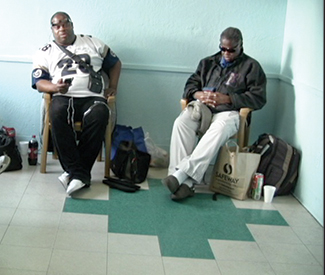
“People have come in here needing a place to sleep for as long as it’s been open,” Westbrook said. Brown’s solution was to set out folding chairs where people could sleep. Nowadays, 80 people rest in the chairs on a typical night.

Before Brown died in 2005, Westbrook remembers, she made it clear to her successor how much she wanted shelter beds where clients could lie down.

Of her clients, Westbrook says, “it’s a lot of people who are from this area, grew up in this area. Some people never leave this district. Their homes might have gone into foreclosure, or somebody died that set them back and triggered something mentally, and now they’re on the street. So this is a safe haven for them. This is a place where they can come and just relax.”

Even as the cost of living soars and the neighborhood changes, Westbrook says, her clients hold on.

“Most of our clients won’t leave the Bayview,” she said. “Some of them have told me, ‘well if I die, just cremate me and put my ashes up on Third Street. Spread them on Third Street.’ That’s how much they love this neighborhood.”

Human Services Agency (HSA) director Trent Rhorer witnessed the chair arrangement during an August 2011 visit to Mother Brown’s. He called the sight “simply not acceptable from a view of humanity.”

When Rhorer learned that a warehouse next door had recently been put up for rent, the shelter idea was born. The HSA applied for a forgivable loan from the state’s Emergency Housing and Assistance Program (EHAP). In January 2012, the project was approved for $978,000.

On Nov. 19, the Board of Supervisors voted to accept the grant, and on Dec. 10, it assigned the next two steps: city adoption of the lease for the property and creation of a special use district. The rezoning process could take six months to a year at the Planning Commission, and if the shelter ultimately goes through, construction is not likely to begin before 2015.

Until then, shelter options in Bayview-Hunters Point will stay slim. There is no single adult shelter with beds in the neighborhood. The closest thing is Providence Baptist Church at 1601 McKinnon. There, staff lay out mats on the gym floor each night.

“In Bayview-Hunters Point, that’s it. Providence is the shelter,” said Nick Kimura, shelter client advocate with the San Francisco Coalition on Homelessness.

In Mayor Ed Lee’s 2013 State of the City address, he said he was “proud to support” efforts to expand services for the homeless in Bayview—specifically “Sup. Cohen’s effort, aided by a federal grant — to build a new 100-bed shelter”

The only problem: that was the first Cohen said she had heard of it.

“My first concern was how the proposal came about,” Cohen told us. “I wasn’t made aware of it until it was announced.”


SHIFTING POLITICS

After Lee’s announcement, there were two community meetings, one in March at the police station and one in April at the YMCA. The idea gained support from the Southeast Community Facility Commission and the San Francisco branch of the NAACP.

A wave of opposition also grew, including the neighborhood organization Bayview Residents Improving Their Environment (BRITE), and a handful of businesses led by David Eisenberg, president of Micro-Tracers, a food testing company next door to Mother Brown’s.

On July 16, Cohen herself came out against the shelter. Cohen said her decision came after “meeting with residents about their concerns and fears.”

Neighborhood residents are a shifting demographic. The African American population has declined by 10 percent since Mother Brown’s was founded in 2001. The Asian population increased slightly in the same time period, and the white population has more than doubled.

Homelessness in the neighborhood has also increased. According to the city’s biannual homeless count, the number hovered around 400 until January 2011, when the number jumped to 1,151. It had 1,278 homeless people in 2013.

After Cohen declared her opposition, the meetings went back behind closed doors. In September, David Curto, director of contracts at the HSA, said that “[city homeless czar] Bevan Dufty and other folks in the Mayor’s Office are trying to revive it.” On Oct. 9, Lee met with a group of neighbors. And on Oct 30, the shelter proposal made its public reappearance.

Sups. John Avalos, Eric Mar, and Mark Farrell of the city’s Budget and Finance Committee heard the issue. They were tasked with voting on whether to accept the EHAP loan, a question that would be put to the Board of Supervisors if it passed.

Out in the gallery, the two sides sat divided down the aisle like squabbling families at a wedding. House left were the shelter’s supporters, a mix of residents and community leaders and staff of Mother Brown’s and their clients, some with their shoes pulled on only half way over feet swollen from sleeping in their chairs. On the right, BRITE members, an ad hoc group called Protect MLK Pool and Playground, Eisenberg, and other community members in opposition.

The shelter became a vehicle for a debate about larger changes in Bayview. BRITE member David Armagnac saw no need for shelter beds in the neighborhood that he has “seen transform and emerge into an ever-increasing vibrant area.” Bayview business owner Carla Eagleton wanted economic and quality of life impact reports on the proposed shelters “as it relates to the city’s only remaining blue collar industrial area, MLK Park, surrounding neighborhoods and the Third Street corridor, which the city of San Francisco has spent billions of dollars to revitalize.”

Meanwhile, resident Sandy Thompson testified that “for you guys to move in and make yourself comfortable,” many of her neighbors have been displaced. “Make the homeless comfortable, just like you guys are making yourself comfortable, because they need a place too,” Thompson said.

A client of Mother Brown’s talked about being homeless in the neighborhood her family had been in for generations. “My grandparents are the ones that migrated from the south, that came up here to work on those shipyards,” she said. “Think about that parent who is working at McDonalds, or working a low, minimum-wage job. They can’t afford the new housing that’s coming in, that’s being developed. Yes, we love it. We love to look at the property that we cannot live in.”

Both sides made passionate pleas, but shelter supporters won over the Budget and Finance Committee.

“It’s very rare that I get moved from hearing public comment. I hear a lot of public comment, and sometimes I feel like my heart is hardened to everything. But not today,” Avalos said.

Farrell agreed: “It’s rare that you get touched here, because we do hear so much public comment all the time. And the personal stories are pretty incredible.”


INSIDE MOTHER BROWN’S

Inside Mother Brown’s cool blue walls, there’s no shortage of incredible personal stories. Lonnel McCall took a break from helping to cook dinner at Mother Brown’s kitchen to describe what the place has meant for him.

“I didn’t have nothing, not even ambitions. I felt I was a loser. I had no self-esteem,” he remembers. “I was smoking crack under the bridge and all that stuff.”

He now has a job as a hotel chef and lives in a HOPE House home. He rolled up his sleeves to reveal cuts and burns, the battle scars of a chef.

“These are my cook wounds,” he said, “instead of dope wounds.”

But for a period, McCall slept in the chairs. “It’s hard. Your ankles swell up,” he said.

Wade Verdun also slept in the chairs and went through HOPE House.

“I’ve got my own place now, got my own car. I’m no longer on drugs. And I’ve got a two-year-old son,” Verdun said. “This place saved my life, to tell you the truth.” Smiling, he patted his belly. “I’ve never been this fat. Trust me.”

If the shelter does get built, Westbrook hopes, it can lead to more happy endings like McCall’s and Verdun’s.There are already too many sad stories.

On Dec. 19, candles lit the dusk on the steps of City Hall in a vigil for the homeless people who have died in San Francisco. The vigil was organized by Night Ministry, a crisis intervention and counseling service that operates in the Tenderloin from 10pm to 4am. Reverend Lyle Beckman, director of Night Ministry, said that he got the names of 22 deceased homeless people from the Department of Public Health, but knew it was low. During the vigil, attendants came forward with the names of more dead, until the number reached 100.

Beckman said the crisis line gets busy this time of year. “We always see more conversations around holiday time,” he said. “When people have memories of it being a family time and then they’re not connected with their family in some way, it can bring isolation and loneliness.”

In a city of chosen families, Mother Brown’s “children” have found a way to heal that kind of loneliness. Perhaps McCall put it best when he described the first time he came back to his native Bayview and found Mother Brown’s after decades of isolation.

“When I came in through the door — this is God’s truth — I felt like I was at home,” he said. Soon, people like McCall may find a bed, too, when they walk through that door. Maybe for Christmas 2015.

The Unconstitutional Truth about the Presidio

4


By John Farrell


OPINION When Congress established the Presidio Trust in 1996, it wanted to ensure its financial stability. Congress believed taxing private tenants impeded the Trust’s financial stability, so it enacted provisions within the Presidio Trust Act to ensure that tenants were tax-exempt. The only problem is that Congress doesn’t have the power to exempt tenants under the US Constitution.

In 1897, the State of California ceded to the United States exclusive jurisdiction on all lands held for military purposes, including the Presidio. Military installations are federal enclaves exempt from state authority. Per legal counsel of the State Board of Equalization, a “federal enclave” is a property over which the federal government holds exclusive jurisdiction.

In 1989, the federal government closed the Presidio as a military base. Since the Presidio is no longer for military use, the federal government transferred jurisdiction to the Golden Gate National Recreation Area (GGNRA) in 1994 for natural, historic, cultural, and recreational purposes.

Did this transfer to GGNRA end its tax-exempt status? Did this transfer negate the concept of “federal enclave” and “exclusive jurisdiction,” since the Presidio is no longer used for military purposes? Could the city now tax private beneficiaries? This issue has never been addressed.

The Presidio Trust was created by Congress in 1996 for a dual purpose: to rehabilitate and repurpose historic buildings and environmental resources, and operate as a vibrant public park independent of annual taxpayer funds.

In establishing the Trust, Congress’s concern was with the city’s potential assessment of property tax. In California, any private party that rents or uses space on government-owned property is subject to property tax.

In order to curtail the possible assessment of property tax, Congress enacted legislation signed into law by President Clinton on November 29, 1999. Public Law 106-113 (HR 3194) includes specific language providing that, “The Trust and all properties administered by the Trust and all interest created under leases, concessions, permits and other agreements associated with the properties shall be exempt from all taxes and special assessments of every kind in the State of California, and its political subdivisions, including the City and County San Francisco.”

Our City Attorney and Congressional representative have the opinion that all third party interests for private benefit under the Presidio Trust’s jurisdiction are exempted from taxes by the Presidio Trust Act.

This language confirms Congress’s intent to exempt private tenants from all forms of state and local property taxes. The only problem is that if Congress enacted the Presidio Trust Act to exempt third party beneficiaries, it did not have the authority per Article 1 Section 8 of the Constitution, which provides the Powers of US Congress. In other words, this part of the legislation was unconstitutional.

Because of this unconstitutional loophole, the city is losing at least $10 million annually in property tax and over $100 million since inception. This amount doesn’t include revenue loss from other taxes such as real estate transfer tax. Further, if the George Lucas plan for a Presidio museum is approved, the city will lose at least $8.1 million annually in property tax.

The city is losing an additional $12.5 million from the recent sale of Lucasfilm’s to Disney in 2012 (based on a 2.5 percent transfer tax on a conservative $500 million assessment). An ownership transfer includes a lease of 35 years or more. Lucasfilm had a 66-year lease at the Presidio transferred to Disney. Per the state Revenue and Taxation Code, this is a legal transfer and there is no rational why there is no transfer tax imposed.

The city has decided to adhere to the legislation by Congress to tax exempt tenants even though it is unconstitutional. But everyone should pay their fair share.  

John Farrell is a Realtor, former city budget analyst, and fifth generation San Franciscan.

Bus stop

85

rebecca@sfbg.com

Each weekday, gleaming white buses operated by Google and other Silicon Valley tech giants roll through congested San Francisco streets and pause for several minutes in public bus stops, picking up passengers bound for sprawling tech campuses.

Using bus zones for private passenger pickup is not legal — but so far, that hasn’t resulted in any kind of systematic enforcement. It did boil over as an issue when it became the focal point of the Dec. 9 Google bus blockade, a Monday morning rush hour episode staged by anti-gentrification activists that went viral thanks to Bay Guardian video coverage, spurring commentary by Wall Street Journal, Fox News, and dozens of other media outlets.


SYMBOLIC ISSUE

The significance of the private buses as a symbol for an economically divided San Francisco, private service that spares a high-salaried class of workers from the delays, crowds, and service breakdowns that can plague Muni, has never been more resonant. The shuttles are frequently mentioned in conjunction with eviction and displacement, since apartment units in proximity to shuttle routes have become more desirable and expensive.

And as more shuttles are sent out to transport passengers, the San Francisco Municipal Transportation Agency has come under increasing pressure to solve the logistical and other problems they create.

“Our policies are catching up to this new transportation mode,” SFMTA spokesperson Paul Rose said in a recent phone call. “The shuttle service has been growing very rapidly.”

Accordingly, SFMTA is working on a pilot program to allow Google and other providers of private shuttle buses to share space in Muni bus zones in an organized fashion. The policy would establish a set of guidelines around boarding and alighting, implement measures to prevent Muni delays, create a formal permitting process, and require the shuttles to display identifying placards.

Although Muni needs funding to improve its aging infrastructure (see “Street Fight”), this plan to accommodate private shuttles would not result in any new revenue collection for the agency. Google and other private shuttle providers would be charged a fee under the program, but it would go only toward cost recovery, allowing the agency to break even.

Leslie Dreyer, one of the masterminds behind the Google bus blockade, calculated that the SFMTA could theoretically collect $1 billion if it aggressively targeted private shuttles for violating the Curb Priority Law, which prohibits vehicles other than Muni from using designated bus zones.

“It’s a ballpark estimate,” Dreyer said, describing her project as more of a thought experiment to illustrate a broader point. “We were trying to get people to think about … the bigger issue of what these things symbolize: evictions, gentrification.”

Dreyer based her findings on a color-coded chart released by SFMTA in July, showing the frequency of shuttle stops at 200 known locations. Paul Rose insisted the $1 billion estimate was too high because the total number of daily private shuttle trips is actually lower. He added that it’s more than just Google that is using the stops: At least 27 institutions and employers provide private shuttles in SF, according to data compiled by SFMTA.

But even based on the information that Rose provided, that same calculation shows that Muni could collect $500-600 million in fines from all the shuttle providers. That’s theoretically enough to augment a sizeable portion of Muni’s annual operating budget, which is around $800 million.

The pilot program for sharing bus zone space with private shuttles is expected to be reviewed by the SFMTA board early next year, and it could be implemented by July of 2014. It does not require approval by the Board of Supervisors.


SCOFFLAW BUSES

In the meantime, given that Google and other private shuttle providers are in rather obvious violation of a law prohibiting them from doing what they do every weekday like clockwork, why doesn’t the SFMTA bother to enforce the law?

Rose offered several answers to this question, but most just pointed to more questions.

The fine for violating the law that prohibits vehicles other than Muni from using bus zones is $271, Rose confirmed. According to a Strategic Analysis Report prepared for the SFMTA in June of 2011, which notes that the Curb Priority Law is part of the City Transportation Code, “enforcement … has been limited.”

“We have only so many resources, and most enforcement is based on complaints,” Rose explained.

But the same strategic analysis report, dating back to 2011, shows that a great number of complaints have flowed in from disgruntled transit riders.

“The frequency of public comment and complaints regarding bus zone conflicts … may indicate a more problematic situation than these limited data imply,” a portion of the 2011 study noted after presenting the results of a field study, in which some analyst was presumably sent out to physically observe the private shuttle buses (illegally) stopping in the bus zones.

Rose’s contention that a lack of complaints was behind the lack of enforcement didn’t really seem to hold up, but he offered another reason, too. “We’d have to ID the bus,” he explained. “There isn’t an identity placard or permit to ID them specifically.”

Establishing an identification system is one of the goals of the pilot program now under consideration, he added. Then again, Google buses have license plates. And if SFMTA has the capability to do anything well, it’s to harness license plate data as a mechanism for collecting fines from offending motorists.

In fact, officers under the parking enforcement division of the SFMTA use an automated system called AutoVu Patroller, made by a tech company called Genetech (not to be confused with Genentech, a pharmaceutical giant that has its own fleet of buses transporting San Francisco employees to its South Bay campus).


EASY TO TRACK

The AutoVu patroller starts automatically when a parking enforcement officer fires up the on-board computer. It works by scanning license plates as the parking vehicles cruise down the street, using plate recognition technology to feed the data into a system that checks the identifying numbers against an existing hotlist.

When a hit occurs, it’s automatically flagged on screen. With the flick of an index finger, an enforcement officer can instantly bring up a vehicle’s model, year, and VIN. If a vehicle lacks a permit, it automatically generates a hit, signaling that enforcement may be needed. Then there’s the obvious point that Google buses and other shuttles are highly visible, and stopping all the time — whether or not an enforcement officer has a license plate scanner or not.

But at the end of the day, the private shuttles are treated differently from other kinds of vehicles that are found to be in violation of the transportation code. No matter what the laws on the books say, it’s difficult to imagine the SFMTA or the SFPD, which also has enforcement power, causing tech employees to be late to work as they roll through the city in climate-controlled coaches with tinted windows.

Far from targeting the shuttles for enforcement, an in-depth conversation has actually been taking place between the shuttle providers and SFMTA for quite some time, with representatives from the Planning Department and other agencies brought to the table as well.

The SFMTA actually regards the shuttles as being somewhat helpful, Rose said, since they get drivers out of their cars and into pooled transportation modes, thereby helping to alleviate congestion.

“We are developing these policies to better utilize the boarding zones for these shuttle providers,” Rose explained. “What we’re trying to do is provide a more efficient transportation network.”

To that end, the city has organized a series of stakeholder meetings in recent years with Google, Apple, Adobe, Genentech, the University of California San Francisco, and other shuttle providers to design a way for Muni buses and private buses to coexist in harmony, in city bus zones. Those conversations were referenced in the 2011 report; three years later, the pilot program is expected to solidify those discussions into a formalized system.

Here and there, some bus zones have already been altered to accommodate the private shuttle buses. “[An] extension of the Muni zone on 8th Street (in the South of Market) appears to be working well; although SFMTA Staff report that shuttle operators using the new zone have balked at the suggestion that they should help pay for the $1,500 improvement,” the 2011 strategic analysis noted.

The plan that’s coming down the pipe will essentially serve to legitimize what the shuttles are already doing. But so far, this deal won’t result in any financial gain for the transportation agency. If it goes forward as planned, the opportunity to make transit improvements by collecting revenue from private companies that use public infrastructure will be passed up.

School gaze

0

cheryl@sfbg.com

FILM At Berkeley, the latest documentary from the great Frederick Wiseman, runs 244 minutes — a time commitment intimidating enough to deter any casual viewer. But viewers intrigued by Wiseman’s long tradition of filming institutions (a small sampling: 1968’s High School; 1973’s Juvenile Court; 1985’s Racetrack; 2011’s Crazy Horse — the latter about a Parisian nude-dancing establishment) with fly-on-the-wall curiosity will want to carve out an afternoon for At Berkeley, as will those interested in 21st century educational issues, California’s financial crisis, and the care and maintenance of UC Berkeley’s free-spirited image, among other topics.

UC Berkeley students and grads also seem like a built-in audience, which means the film’s local screenings are likely to be more populated than they would be elsewhere. Folks who attended while Wiseman was filming (he shot 250 hours of footage over 12 weeks in what appears to be mid- to late-2011) might even catch a glimpse of themselves in crowd scenes and shots of casual moments on campus, which comprise the smallest portion of At Berkeley‘s divided interests. But the local-color moments do much to flesh out what’s not seen in the classroom and administrative-meeting sequences: the fading-hippie glow of Telegraph Avenue; two men with impressive yo-yo skills; a student tussling with his bicycle; a couple napping on a grassy expanse.

http://www.youtube.com/watch?v=3L2_yLBrQsM

We’re also shown what goes into the maintenance of that postcard-perfect campus. Berkeley’s landscaping starts looking especially impressive when — during a retreat of school bigwigs that Wiseman had apparent free rein to shoot — one administrator points out that budget cuts mean the school employs just one person to mow all of its lawns. “Well, he’s doing a good job!” interjects Robert J. Birgeneau, chancellor of the school 2004-2013. At the time of filming, UC Berkeley was weathering a series of painful fee increases, staff furloughs and layoffs, and widespread budget cutbacks, with Birgeneau serving as its pragmatic, stern-yet-sympathetic eye of the storm.

Birgeneau, like everyone else in the film (including probably the most recognizable figure: former Clinton cabinet member Robert Reich, now a Berkeley prof), is never identified by name. At first, this feels disorienting; most docs strive to hook the viewer with first-act exposition, but At Berkeley simply plunges in with a woman (a teacher? a student?) regaling (a class? an extracurricular club?) with a myth about Berkeley’s origins (spoiler alert: it wasn’t founded by gamblers) that leads into a broader rumination on what the school represents. “A sense of imagination, of diversity,” she says. “An ideal.”

Before long, it’s obvious that we don’t need to know the back stories of everyone who appears in the film. This portrait of UC Berkeley — as a complex place, not without unrest, but also not without spontaneous a capella performances — emerges with all of its subjects sharing equal footing, their experiences and points of view presented with equal interest. Some of the most compelling scenes take place in classrooms, with remarkably articulate students (though, yes, Wiseman’s camera does catch a few looking sleepy and bored) discussing subjects as wildly diverse as poverty in America, advancements in robotics, Thoreau, and racism. There are also fascinating snippets of lectures, including an amusing, anecdote-heavy treatise from Reich on the importance of self-evaluation.

“The film has to work on both a literal level and a metaphoric, or abstract, level,” Wiseman writes in his At Berkeley director’s note. Filmgoers grasping for a through line will pick up on the financial stress that permeates every corner of the school. A student who describes herself as middle-class weeps at the financial burden she’s imposing on her parents. A professor advises a pair of eager students that their engineering dreams will require raising funds from government entities. Another professor expresses her concerns that increasing student fees will encourage new grads to seek out big paychecks to pay off their debts, rather than lower-paying jobs that might be more socially conscious.

The unrest percolating throughout the film culminates in coverage of a late-2011 Occupy Cal demonstration, in which the main campus library is overtaken by passionate protestors. The focus shifts away from the chanting students to UC Berkeley’s behind-the-scenes response, or rather, the phone calls and meetings that decide what the response should be (a “generic acknowledgement” is met by jeers from the protestors; a heavy police presence is suggested, but not visually documented).

In the library, a young man grasps the bullhorn and advises his fellow students that they need to organize their guiding principles more efficiently — an observation echoed later by Birgeneau. Unlike the headline-grabbing demonstrations that fill UC Berkeley’s storied past — its rabble-rousing legacy gets surprisingly few mentions here — there’s no underlying philosophy, he points out. A few moments later, we’re in a classroom, listening to students grumble about how the protests disrupted their midterms.

As its fourth hour draws to a close, At Berkeley‘s final sequence leaps from a discussion of one of John Donne’s sexier poems into a science class discussing interplanetary space travel. Sure, it’s possible, the affably geeky instructor says — but the practical concerns (like building a vessel with incredibly robust power sources that could sustain life for generations upon generations) tend to get in the way of one’s brilliant ideas and imagination. Here Wiseman’s affection for metaphor is made abundantly clear. *


AT BERKELEY opens Fri/6 in Bay Area theaters.

Suspending judgment

40

joe@sfbg.com

The Guardian is publishing only the first names of minors and their relatives named in this story, to protect their privacy.

In San Francisco public schools students can be sent home for talking back to a teacher, wearing a hat indoors, or sporting sagging pants. These infractions sound like the daily life of a kid, but the state calls them “willful defiance,” a category of suspensions that are nebulous to define at best.

Like the old saying about pornography, teachers say they know it when they see it, but students and parents alike are now calling foul on the practice.

The suspensions are so abundant in the San Francisco Unified School District that a movement has risen up against it. Sending kids home not only is an ineffective punishment, opponents say, it also can lead youth into the criminal justice system.

Now San Francisco Board of Education Commissioner Matt Haney is proposing a resolution that would ban willful defiance suspensions in San Francisco schools altogether.

“There will still be situations where we need to send a student home, but willful defiance will not be one of those reasons,” he told the Guardian. “Change is hard, complicated, and messy. But we can no longer deal with discipline or interactions with our students in that sort of way.”

He plans to introduce the resolution at the Dec. 10 Board of Education meeting, and if it passes, he said full implementation may take until the next school year.

There’s a fight to ban willful defiance suspensions statewide as well, but so far it’s been stymied. Just last month, Gov. Jerry Brown vetoed Assembly Bill 420, a bill mirroring aspects of Haney’s proposal. Those advocating for such a ban say it’s an issue of racial justice.

San Francisco’s African American and Latino students together suffer 80 percent of willful defiance suspensions, according to SFUSD data. The nonprofit student group Coleman Advocates for Children and Youth decried this statistic as an injustice, supporting the ban.

The San Francisco Board of Education took tentative steps to reduce suspensions as a whole in 2010, voting to introduce a new disciplinary system called Restorative Practices district wide. It’s complex, but basically asks students to talk things out in what are called “restorative circles” that include everyone involved in an incident, like a fight.

It’s also about changing the culture around discipline. It encourages teachers and students to establish a rapport, turning around the way some schools have practiced authority for decades.

At the time, there was hope. Fast forward three years, and that hope has dwindled.

Early evidence shows that Restorative Practices work better than suspensions, and prevent behavioral problems down the road, too. But out of SFUSD’s more than 100 schools, less than half of them started to implement the new reform.

Few schools have fully integrated the change, officials told us. Haney’s resolution addresses this with a mandate: SFUSD must implement Restorative Practices throughout the San Francisco school district.

The program is important, proponents say, because the majority of the 55,000 students a year moving through San Francisco schools still face school discipline that can set them way back in school and later may lead to incarceration. And suspensions can be levied for the smallest of infractions.

Cupcakes and justice

Xochitl is a 15-year-old SFUSD sophomore with long brown hair. She watches the TV show Supernatural (Dean is cuter than Sam) and yearns to one day live with her relatives in Nicaragua. Years ago on her middle school playground, she once faced a hungry child’s ultimate temptation: Free cupcakes.

The baked goods sat in a box on the cement by the playground, unattended. The frosting sat un-licked, the wrappers unwrapped.

She and her friend looked around, searching for a possible pastry owner nearby. Runners circled around the track in the distance, but no one else was around. The cupcakes met a satisfying fate inside Xochitl’s belly. The next morning went decidedly downhill.

As she walked into school, the counselor told her to go home: she was suspended.

“The cupcakes belonged to this girl because it was her birthday,” Xochitl said, something she found out only once she was being punished. “They went straight to suspension, they didn’t even let me speak.”

Restorative practices would have sat her with the birthday girl to explain her mistake and apologize. Maybe she would’ve bought the girl new cupcakes. That wasn’t what happened.

Suspended, Xochitl spent the day at her grandparents’ house. Not every suspended student has a safe place to go. Some turn to the streets.

stats

In October a group of mostly black young students marched to the Board of Education to protest willful defiance suspensions. The group, 100 Percent College Prep Institute, formed in the ashes of violence.

“I drive a school bus for a living, and I had a boy on my bus who was not bad, but not good,” said 100 Percent College Prep Institute co-founder Jackie Cohen, speaking with the Guardian as she marched with her students. “When we got back from Christmas break, he wasn’t back on the bus. Turns out he decided to ‘live that life.’ Three days later, I found he was shot and killed.”

In some communities the jaws of crime and drugs are forever nipping at their children’s heels. A child inside school is safe. Suspensions throw the most vulnerable students into the wild.

“Preventing crime in San Francisco begins with keeping children in the classroom,” SFPD Chief Greg Suhr wrote in a letter to the SF Examiner last year. “Proactive policies, such as the ‘restorative practices’ implemented by the SFUSD, emphasize the importance of building positive relationships while holding kids accountable for their actions.”

Black students make up about 10 percent of SFUSD’s population, but they represented 46 percent of SFUSD’s total suspensions in 2012, according to SFUSD data. Latino students represented about 30 percent of suspensions.

The racial disparity of suspensions mirror the disparity of incarceration. A study by nonprofit group The Advancement Project found that in 2002, African American youths made up 16 percent of the juvenile population but were 43 percent of juvenile arrests.

Xochitl sees that with her own eyes every day.

“Some kids turn to the streets, you know. I’ve seen people younger than me go to jail,” Xochitl said. “I was on Instagram and saw a friend locked up. I knew that girl, she’s in my PE class.”

It’s one of our country’s many shameful open secrets. Nearly half of all adult men in the United States serving life sentences are African Americans, and one in six is Latino, according to data from the nonprofit group the Sentencing Project.

Fathers and sons, mothers and daughters, all trapped in a cycle of poverty to prisons that for some starts at school.

“As a school district, when that’s staring us in the face, we can’t not do something about it,” Haney said.

Sometimes it begins when students are still learning their ABC’s.

Bruises inside and out

Restorative Practices are implemented from kindergarten to high school.

“If [students] don’t have a sense of belonging… that’s going to prevent schools from addressing behavior,” Kerry Berkowitz, the district’s program administrator of Restorative Practices, told us. The seeds of mistrust are planted when students are young.

Desamuel could not yet spell the world “police” when he first met them.

He was five years old, and as kindergartners sometimes do, he threw a temper tantrum. In the school’s desperation to contain him, officials called the SFPD.

“The police only came one time,” Desamuel, now seven, told the Guardian. Sitting in his San Francisco home with his uncle Lionel, Desamuel sounded ashamed. “But I didn’t go to jail because they only put kids in jail for being bad, like kids taking guns to school.”

The memory angers Desamuel’s uncle, who feels restorative practices would have prevented the misunderstanding. His home is a testament to bridge building.

Lionel, his brothers and mother all pitch in to take care of Desamuel while the boy’s father makes what he calls “a transition.” The home is large by San Francisco standards. Drawings of Spiderman and Batman line the wall, equal in number only to the portraits of their family, most of whom live in the city. There’s a lot of care in Desamuel’s life. That hasn’t stopped his tantrums, though.

The family tried to get him therapy, psychological analysis, anything to help. But as any parent can tell you, sometimes a child just needs love.

Lionel struggled with the school’s administration, and asked them to try less punitive ways of handling his nephew. “I told them to just hug the boy. Their response was ‘it’s hard to hug someone swinging at you.'”

The last time Desamuel fought a student he was tackled to the ground by a school security guard. The now-second grader came home with a bruise on his face.

“When I was bad I hurted the children. I wasn’t supposed to get up, and couldn’t get up off the ground. He took me by the arms and legs,” Desamuel said.

The problem with outsize use of suspensions and punitive action, Berkowitz said, is that it breeds a fear of school that shouldn’t exist. Desamuel is no different.

“I got sent to the office and I had to go to the principal’s office and they talked about me being bad,” Desamuel said. “I think because I make too much trouble I have a lot of problems and they don’t want me to be there.”

Cat Reyes is a history teacher who is now a Restorative Practices coach at Mission High School. She said transformation in behavior is the whole point.

She told the Guardian about a student recorded a fight on film. The two fighting teenagers tried to let the incident go, but with the video online for all to see their pride came between them. If the school suspended the girl who recorded the fight there may never have been resolution. The wounds would fester.

But now the girl will join a restorative circle and explain her actions to those involved in the fight, and their parents. That’s far more daunting to kids than simply going home for a day, Reyes said. It doesn’t just stop at the talk though. “On one end she has to say sorry,” Reyes said. “But now she may go to the media center and create a [movie] about it on our closed circuit TV. The consequence fits the crime.”

As students talk out their differences enemies can become friends, she said. After all, the goal is to correct bad behavior and break destructive cycles. Yet less than half of the schools in SFUSD are employing Restorative Practices.

Slowly but surely

One of the biggest critiques of Restorative Practices is that it removes consequences. That’s the wrong way to look at it, Berkowitz said: “When people say consequences, they mean punishment. We want to work with students to find root causes.”

The numbers back her up: 2,700 SFUSD staff members have trained in Restorative Practices, according to data provided by the district. This consequently led to a strong reduction in suspensions, the district says, from more than 3,000 in 2009 to about 1,800 last year.

SFUSD recognized a good thing when it saw it, growing the Restorative Practices budget from $650,000 in 2009 to $900,000 in 2013.

But only about 25 schools started measurable implementation, Berkowitz said. She put it plainly, saying the program is in its infancy. “Are they ‘there’ yet?” she said. “No.”

“Our team is pretty maxed out,” she said. “To really bring this to scale and implement Restorative Practices, there’d need to be a lot of discussions around that.”

Asked how much she’d need to fully fund the program across all schools, she was evasive. Haney was more direct. When asked if his resolution tied funding to the mandate of implementing Restorative Practices district-wide, he admitted that a funding source hadn’t yet been identified.

“Mostly we hear there needs to be more: more support, more social workers, more people in schools to make this functional,” he said. “It’s a longer term challenge.”

That solution may emerge as the resolution goes through the approval process, but the program faces other problems besides funding.

Teachers have depended on suspensions as a tool for years. Money is one thing, but changing educators’ minds about discipline is another.

The “R” word

Martin Luther King Jr. fought for the integration of schools, but in a speech about Vietnam he said something that could apply to the SFUSD today.

“Life and history give eloquent testimony to the fact that conflicts are never resolved without trustful give and take on both sides,” the southern preacher said in one of his last speeches before his death.

There is one issue simmering under this entire debate, festering, unspoken. Why are black and Latino students suspended more than other groups? Is this system inherently racist?

It’s a tough question. Teachers are notoriously underpaid, overworked, under supported, and asked to enforce the newest policies at the drop of a hat. The teachers the Guardian spoke to all described a packed year filled with new methods to learn, all with a common purpose — a love of their profession and a love of their students.

“There’s a hesitancy to talk about race with this,” said Kevin Boggess, civic engagement leader for Coleman Advocates, the group leading the charge for the willful defiance ban.

Nevertheless the question of racism permeates the discussion. Xochitl felt persecuted as one of the few Latinas in a mostly Asian middle school.

In the case of Desamuel, the young black child who had the police called on him at age five, his uncle stressed the need for culturally aware teaching. Lionel said Desamuel was well-behaved when he had an authoritative, elderly black female teacher, but acted up in the hands of substitutes who weren’t black and whom he characterized as “young and new” to teaching. Then again, the principal who called the police to handle Desamuel was herself black.

Norm “Math” Mattox is a former James Lick Middle School math and science teacher, and he said from his perspective as an African American he’s seen the issues Haney’s resolution addresses clear as day.

“My sense is that teachers might be blowing the alarm a little bit too soon as far as their brown and black students are concerned, especially the boys. They don’t know how to manage them,” he said. In his experience, misbehaving children are sent out of the room too soon.

In the short term, suspensions are an expedient tool, but punishment without communication does long lasting damage. “The dynamic between teacher and student did not get resolved inside of the class,” he said.

One SFUSD school tackled the specter of racism head on. Mission High School is at the vanguard of what its principal calls “anti-racist teaching.”

Mission High has a higher African American student college placement rate than many SFUSD schools, a group that struggles to perform elsewhere. And as a designated “newcomer pathway” for new immigrants, the school has 40 percent English language learners.

Mission High’s principal, Eric Guthertz, is energized by the challenge. He revamped the way the school teaches to address race and ethnicity directly.

The geometry teachers use Bayview district planning data to illustrate mathematical lessons, and teachers look at grades by ethnicity and address disparities directly.

Guthertz credited Restorative Practices with lowering the school’s suspensions. SFUSD data shows Mission High’s steady suspension decline, with a 14 percent suspension rate in 2009, before the program started, and down to a 0.4 percent suspension rate by 2012.

missionprincipal

Mission High School Principal Eric Guthertz. Guardian photo by Brittany M. Powell

“We’ve deeply embraced Restorative Practices,” he said.

Next week San Francisco will see if the Board of Education will take the same leap Gutherz did. As he is quick to point out, shifting the culture at Mission High School took years.

The Guardian contacted members of the school board, but did not hear back from them before press time to see how they may vote.

Either way, it’s time for SFUSD to change its ways, Haney said. But no matter what side of the matter you fall on, he said, it’s important to remember one thing.

“Everyone involved in this conversation wants to do better by these students,” he said.

The San Francisco Board of Education will vote on the ban of willful defiance suspensions and full implementation of Restorative Practices at their Dec. 10 meeting.

BART standoff continues as board modifies contract

1

The BART Board of Directors voted 8-1 on Nov. 21, with conservative young Director Zakhary Mallett in dissent, to approve a hard-won contract with its unions, after removing Section 4.8, the paid family leave section that the district says was inserted by mistake.

The motion also directed management to negotiate a settlement over that issue with its unions, which have already approved the contract and now must decide whether they are willing to do so again without that provision or whether the possibility of another BART strike is once again looming.

The next day, BART’s largest unions, SEIU Local 1021 and ATU Local 1555, issued a joint statement: “We consider the Board’s actions to be unprecedented and illegitimate, and we’re considering our next steps, including possible legal action. The BART Board of Directors has disregarded the vote of more than 2,000 BART workers and has chosen to subvert the collective bargaining process, and we take their actions seriously.”

After meeting in closed session for about two hours, Vice President Joel Keller began the open session with a motion to remove Section 4.8 from the contract, approve the rest, and direct management to negotiate with the unions.

Mallett, the 25-year-old newbie who lives in unincorporated West Contra Costa County but whose District 7 includes part of San Francisco, spoke first: “Even before this hiccup, I was not in the position to support this contract. I find it too costly.”

But he was the only one to take that stance, with the rest of the directors calling the underlying contract a fair compromise, even if all said they couldn’t support the paid family leave provision that would add anywhere between $4 million and $44 million to a contract that was already going to cost the district an additional $67 million.

Director Gail Murray noted that the unions had given up raises for years when BART had budget deficits, and now that the district is running surpluses, it’s reasonable to give workers raises that amount to about 2 percent per year for four years.

“Our employees kept the system going…They’re the reason why we keep 40-year-old cars still running,” Murray said, later adding, “To say this contract is not a good contract is wrong.”

The rest of the board agreed, even while acknowledging it is more than they hoped to pay given the district’s capital needs and aggressive expansion plans.

“We’re probably paying more for this than we anticipated we would pay, and labor is probably giving up more than they want to, but that’s the nature of collective bargaining,” Keller said, who also began what turned into a chorus of criticism for how district negotiators signed off on a provision the board never agreed to.

“We ended on a sloppy note and that’s regrettable,” Keller said, pledging that if he’s elected president next month — an ascension that is customary for the vice president — he plans to launch a full investigation into what happened.

“I’m pained that we put ourselves in such adversarial positions with each other and that we lost the lives of two employees,” Director John McPartland said of the protracted labor negotiations and the fatalities that occurred while the unions were on strike Oct. 19. He called the contract “more than fair and equitable.”

Director James Fang, who represents western San Francisco, sounded the strongest criticisms of BART management and negotiators. “Yes, it was a mistake, but nobody has come forward and said ‘there was a mistake and I’m responsible,” Fang said, later adding, “The ones who signed this must be held to account.”

Fang then went further, albeit without specifics, when he said, “Every bit of management advice we’ve received has not worked out to the district’s best interests.”

Director Robert Raburn echoed Fang’s calls for accountability: “I’m still not clear on how that [contract provision] arrived and it hasn’t been accounted for by anyone at the district who said ‘I am responsible.'”

But he also said that the provision was clearly an error and not something arrived at through the negotiations: “Both parties agreed on a $67 million package and we should keep that intact because it’s fair.”

Reached by the Guardian while union leadership was conferring to plan next steps, SEIU Local 1021 Political Director Chris Daly told us, “We are about as up in the air as we’ve ever been.”

He called it “unlikely” that union leadership would simply submit the board-revised contract to an up-or-down vote by union membership, saying that he doesn’t think it would be approved.

And Daly echoed the concerns expressed by several BART directors about how this mistake happened and why nobody has taken responsibility or been held accountable: “If I were on that board, I’d have the general manager’s head, there’s no two ways about it.” (Steven T. Jones)

SF General reduces psych care

A 22-bed psychiatric unit at San Francisco General Hospital will be taken out of service, and reopened only if the facility experiences a high caseload of patients exhibiting the worst signs of psychiatric crisis.

As of Nov. 19, five patients were receiving care in that unit, 7B, according to spokesperson Rachael Kagan. None had symptoms that rose to the level of requiring acute care. Instead, they were classified as sub-acute patients, a distinction that essentially means they didn’t present an immediate threat to themselves or others.

But under a new policy that will take effect after they have been released, all 22 beds in 7B will be closed — unless they are needed for acute patients who do reach that critical threshold. The unit will be staffed only if patients can’t be accommodated in the hospital’s other acute psych unit, which has 21 beds.

The decision was made in response to a changing financial picture under federal health care reform, Kagan explained.

“There is a big push … to ensure hospitals are only providing acute care,” Kagan said, and this trend is driving efforts to reduce sub-acute patients. “It fiscally makes more sense,” she added, because insurers pay higher rates for acute care than for lower levels of treatment.

Yet some hospital staff members are nervous about the implications of this shift, because it means fewer patients will be able to access psychiatric care at SF General unless they represent a danger to themselves and/or the general public — at a time when demand for these services is on the rise.

“To us, it’s a matter of priority for the city,” said Brenda Barros, an employee at SF General who is active with hospital union SEIU 1021. “Do you want to take care of these people, or don’t you?”

Some staff members are doubtful that 7B will reopen. An internal SF General memo issued Nov. 18 informed the 7B staff: “Our census will be gradually reduced until we won’t have any more patients. Then 7B will be closed.” The memo added, “this came from [SF General CEO] Sue Currin due to budgetary constraints.”

However, a second internal memo went out the following day, to “clarify” the first one. In that message, Nursing Director Kathy Ballou wrote: “We are not closing psych beds or any beds.” Instead, beds in 7B would be closed unless “we get acute patients needing that level of care,” she wrote. “As in other hospitals, we are accountable to our operating budget.”

Further complicating matters, said Barros, is that patients can fluctuate rapidly between needing acute care and a lower level of attention. “They absolutely can swing back and forth.” She added that patients initially requiring a lower level of care could experience worsening conditions if they’re unable to secure an appointment in time to get help, and delays are very common.

Kagan emphasized that the unit wasn’t being closed down, but did confirm that sub-acute patients would no longer be able to receive treatment in 7B. Instead, those patients will be placed with various service providers throughout the city, she said. “The goal is to move the patients to their appropriate placement.”

Meanwhile, this shift coincides with an overall rise in citywide demand for psychiatric services. According to a report delivered to the Police Commission earlier this year, SF General had 6,293 patient admissions for psychiatric holds in 2012, a sharp increase from 5,837 in 2009.

While there were deep cuts to the city’s Department of Public Health during the economic downturn, Mayor Ed Lee has recently trumpeted a boost to city coffers thanks to growing economic activity. But if the city’s financial health has improved, it seems odd that its safety-net hospital would be put into the position of reducing psych care due to budgetary pressures when that kind of care is sorely needed.

For Barros, it’s a matter of whether or not city officials will decide to allocate more funding for mental health services. “If they don’t have enough money in Public Health,” she said, “then they need to put more into Public Health.” (Rebecca Bowe)

SF General reduces psychiatric care

A 22-bed psychiatric unit at San Francisco General Hospital will be taken out of service, and re-opened only if the facility experiences a high caseload of patients exhibiting the worst signs of psychiatric crisis, the Bay Guardian has learned.

As of Nov. 19, five patients were receiving care in that unit, 7B, according to spokesperson Rachael Kagan. None had symptoms that rose to the level of requiring acute care. Instead, they were classified as sub-acute patients, a distinction that essentially means they didn’t present an immediate threat to themselves or others.

But under a new policy that will take effect after they have been released, all 22 beds in 7B will be closed – unless they are needed for acute patients who do reach that critical threshold. The unit will be staffed only if patients can’t be accommodated in the hospital’s other acute psych unit, which has 21 beds.

The decision was made in response to a changing financial picture under federal health care reform, Kagan explained.

“There is a big push … to ensure hospitals are only providing acute care,” Kagan said, and this trend is driving efforts to reduce sub-acute patients. “It fiscally makes more sense,” she added, because insurers pay higher rates for acute care than for lower levels of treatment.

Yet some hospital staff members are nervous about the implications of this shift, because it means fewer patients will be able to access psychiatric care at SF General until they represent a danger to themselves and/or the general public – at a time when demand for these services is on the rise.

“To us, it’s a matter of priority for the city,” said Brenda Barros, an employee at SF General who is active with hospital union SEIU 1021. “Do you want to take care of these people, or don’t you?” 

Some staff members are doubtful that 7B will reopen. An internal SF General memo issued Nov. 18 informed 7B staff: “Our census will be gradually reduced until we won’t have any more patients. Then 7B will be closed.” The memo added, “this came from [SF General CEO] Sue Currin due to budgetary constraints.”

However, a second internal memo went out the following day, to “clarify” the first one. In that message, Nursing Director Kathy Ballou wrote: “We are not closing psych beds or any beds.” Instead, beds in 7B would be closed unless “we get acute patients needing that level of care,” she wrote. “As in other hospitals, we are accountable to our operating budget.”

Further complicating matters, said Barros, is that patients can fluctuate rapidly between needing acute care and a lower level of attention. “They absolutely can swing back and forth.” She added that patients initially requiring a lower level of care could experience worsening conditions if they’re unable to secure an appointment in time to get help, and delays are very common.

Kagan emphasized that the unit wasn’t being closed down, but did confirm that sub-acute patients would no longer be able to receive treatment in 7B. Instead, those patients will be placed with various service providers throughout the city, she said. “The goal is to move the patients to their appropriate placement.”

Meanwhile, this shift coincides with an overall rise in citywide demand for psychiatric services. According to a report delivered to the Police Commission earlier this year, SF General had 6,293 patient admissions for psychiatric holds in 2012, a sharp increase from 5,837 in 2009.

While there were deep cuts to the city’s Department of Public Health during the economic downturn, Mayor Ed Lee has recently trumpeted a boost to city coffers thanks to growing economic activity. But if the city’s financial health has improved, it seems odd that its flagship safety-net hospital would be put into the position of reducing psych care due to budgetary pressures when that kind of care is sorely needed.

For Barros, it’s a matter of whether or not city officials will decide to allocate more funding for mental health services. “If they don’t have enough money in Public Health,” she said, “then they need to put more into Public Health.”

BART board approves labor contract, minus the district’s “mistake” UPDATED

36

The BART Board of Directors has voted 8-1, with conservative young Director Zakhary Mallett in dissent, to approve a hard-won contract with its unions, after removing Section 4.8, the paid family leave section that the district says was inserted by mistake. The motion also directed management to negotiate a settlement over that issue with its unions, which have already approved the contracts and now must decide whether they are willing to do so again without that provision or whether the possibility of another BART strikes is once again looming.

Shortly after the meeting, SEIU Local 1021 Executive Director Pete Castelli issued the statement saying, “We’re disappointed that the BART Board of Directors had decided not to fulfill their commitment to the workers and the riders by approving contracts without the provision on family medical leave. The unions have voted on and ratified these contracts in their entirety.”

He accused the district of over-inflating the cost estimates of the family leave provision and said the unions were willing to discuss it, but the district instead chose “to prolong the process and hold the fate of the riders, the workers, and the Bay Area in the balance.”

“Right now we are considering all options, meeting with workers who have ratified this contract, and working to find a way to reach a resolution to BART management’s alleged mistake in the agreement it made with its workers,” he said.

After meeting in closed session for about two hours this morning, the BART board opened the meeting up around 11:45am to discuss and vote on the contract. Vice President Joel Keller opened with a motion to remove Section 4.8 from the contract, approve the rest, and direct management to negotiate with the unions.

Mallett, the 25-year-old newbie who lives in unincorporated West Contra Costa County but whose Dist. 7 includes part of San Francisco, spoke first: “Even before this hiccup, I was not in the position to support this contract. I find it too costly.”

But he was the only one to take that stance, with the rest of the directors calling the underlying contract a fair compromise, even if all said they couldn’t support the paid family leave provision that would add anywhere between $4 million and $44 million to a contract that was already going to cost the district an additional $67 million.

Director Gail Murray even chided Mallett’s certitude given his age and inexperience, noting that the union had given up raises for years when BART had budget deficits, and now that the district is running surpluses, it’s reasonable to give workers raises that amount to about 2 percent per year for four years, particularly given the union also gave on their benefit packages.

“Our employees kept the system going…They’re the reason why we keep 40-year-old cars still running,” Murray said, later adding, “To say this contract is not a good contract is wrong.”

The rest of the board agreed, even why acknowledging it is more than they hoped to pay given the district capital needs and aggressive expansion plans.

“We’re probably paying more for this than we anticipated we would pay, and labor is probably going up more than they want to, but that’s the nature of collective bargaining,” Keller said, who also began what turned into a chorus of criticism for how district negotiators signed off on a provision the board never agreed to.

“We ended on a sloppy note and that’s regretable,” Keller said, pledging that if he’s elected president next month — an ascension that is customary for the vice president — he plans to lauch a full investigation into what happened.

“I’m pained that we put ourselves in such adversarial positions with each other and that we lost the lives of two employees,” Director John McPartland said of the protracted labor negotiations and the fatalities that occurred while the unions were on strike Oct. 19. He called the contract “more than fair and equitible.”

Director James Fang, who represents western San Francisco, sounded the strongest criticisms of BART management and negotiators. “Yes, it was a mistake, but nobody has come forward and said ‘there was a mistake and I’m responsible,” Fang said, later adding, “The ones who signed this must be held to account.”

Fang then went further, albeit without specifics, when he said, “Every bit of management advice we’ve received has not worked out to the district’s best interests.” Given the looming investigations by the California Legislature and National Transportation Safety Board of BART culpability in the Oct. 19 deaths — the result of management preparing to break the strike by training replacement drivers and contesting longstanding demands by state regulators to make safety improvements that likely would have prevented the tragedy — Fang’s comment could ultimately prove to be a huge understatement.

Director Robert Raburn echoed Fang’s calls for accountability: “I’m still not clear on how that [contract provision] arrived and it hasn’t been accounted for by anyone at the district who said ‘I am responsible.’”

But he also said that the provision was clearly an error and not something arrived at through the negotiations: “Both parties agreed on a $67 million package and we should keep that intact because it’s fair.”

Reached by the Guardian this afternoon while union leadership was conferring to plan next steps, SEIU Local 1021 Political Director Chris Daly told us, “We are about as up in the air as we’ll ever been.”

As a first step, he said the unions are consulting with their attorneys on the legality of today’s vote. “We think the action might be an unfair labor practice and illegal under labor law,” Daly said.

He also called it “unlikely” that union leadership would simply submit the board-revised contract to an up-or-down vote by union membership, saying that he doesn’t think it would be approved.

And Daly echoed the concerns expressed by several BART directors about how this mistake happened and why nobody has taken responsibility or been held accountable: “If I were on that board, I’d have the general manager’s head, there’s no two ways about it.”  

UPDATE 11/22: Today BART’s largest unions, SEIU 1021 and ATU 1555, issued the following joint statement on the BART Board’s recent vote regarding whether to ratify the labor contracts:

“We consider the Board’s actions to be unprecedented and illegitimate, and we’re considering our next steps, including possible legal action.

“The BART Board of Directors has disregarded the vote of more than two thousand BART workers and has chosen to subvert the collective bargaining process, and we take their actions seriously.”

Eviction epidemic spurs legislative solutions

3

Tenants, organizers and residents impacted by Ellis Act evictions packed the Board of Supervisors Chambers at San Francisco City Hall Nov. 14 for a hearing on eviction and displacement in San Francisco. As more and more residents face ousters only to be priced out, lawmakers and advocates are floating legislative fixes to try and reverse the trend before it reaches the soaring levels of the displacement epidemic that impacted the city during the first dot-com boom.

“It seems to me that we have a tale of two cities,” Sup. David Campos, who requested the hearing, said at the start of the discussion, held at the Board of Supervisors’ Neighborhood Services and Safety Committee. “We must act urgently to address this crisis, which I believe is a crisis,” he added. “We are fighting, I think, for the soul of San Francisco.”

Fred Brousseau of the San Francisco Budget and Legislative Analyst’s office shared his recent analysis on eviction and displacement trends across the city.

Overall evictions in San Francisco rose from 1,242 to 1,716 over the past three years, he said, reflecting an increase of 38.2 percent. Ellis Act evictions rose by 169.8 percent in that same time frame.

Almost 42 percent of individuals impacted by eviction had some form of disability, Brousseau noted, while 49 percent had incomes at or below the federal poverty level. On the whole, a total of nearly 43 percent of San Francisco households are “rent-burdened,” a term that officially means devoting more than 30 percent of household income toward rent, the study found.

Ted Gullicksen of the San Francisco Tenants Union emphasized that tenant buyouts, frequently offered in lieu of an eviction, are also driving displacement, although those transactions aren’t reflected in city records. “There are about three of them for every Ellis Act eviction,” he said. “When you consider them in combination with Ellis, the numbers are very dramatic.”

Throughout the afternoon, tenants shared their stories and fears about getting frozen out of San Francisco by eviction. “I’m looking at shopping carts, and I’m terrified,” one woman told supervisors during public comment. “You have to do something. It might not be enough for me right now, but you can’t do this to any more people.”

Campos is working with Assembly Member Tom Ammiano on a proposal to grant San Francisco the authority to place a moratorium on Ellis Act evictions. He’s also pursuing legislation that would create a mechanism at the San Francisco Rent Board to allow tenants to register formal complaints about landlord harassment and other kinds of pressure.

“I am eager to introduce a bill in January,” Ammiano noted. “One option might be a law that will allow the local jurisdictions, like San Francisco, to suspend the Ellis Act or establish a moratorium, because of the emergency housing situation. Another possibility is working to make sure that landlords are not skirting Ellis eviction requirements by improperly pressuring tenants to leave. We must do something, but we have to work together to make it successful.”

Meanwhile, Mayor Ed Lee recently announced that he is working with Sen. Mark Leno on legislation to curb Ellis Act evictions by requiring additional permits or hearings before they proceed. They’re also contemplating floating more stringent regulations on the sale and resale of properties where tenants have been evicted under Ellis.

At the end of the day, it’s clear that housing advocates are gaining momentum as the spike in tenant ousters continues in pricey San Francisco, where rents are the highest in the nation.


After Prop 30, What’s Next? Reform Prop 13.

23


By Matt Haney

Proposition 30 was a big deal: It raised over $6 billion a year by increasing taxes on the wealthy, balanced the state budget, and allowed our K-12 and higher education systems to put an end to mass layoffs, exploding class sizes, and ballooning tuition.

But one year later, it’s about time we ask ourselves: What’s next?

Even after Prop 30, the under funding of education and essential services remains, with California still near the bottom nationally in K-12 per pupil funding. Prop 30 was a step forward, but we all knew that we ultimately would have to take on the “Godzilla” of California tax policy: Proposition 13.

Since its passage in 1978, Prop 13 has decimated public education and essential services in our state. Per pupil support in California plummeted from top 10 in the nation to bottom 10, and the tax burden shifted away from businesses and onto individuals. As state investments in services and education went down, poverty went up.

California voters originally passed Prop 13 mainly to protect homeowners. But due to loopholes in the law that prevent regular reassessment of commercial property, large commercial property owners are getting a multi-billion dollar public subsidy. Many commercial property owners are paying taxes at rates that are nearly unchanged from decades ago. Chevron alone is under-taxed by a billion dollars!

Reforming the commercial property tax loophole in Prop 13 could bring in over $7 billion dollars annually, most of which would go directly to education. Despite new funding from Prop 30, our schools desperately need greater investments if we are going to provide a 21st century education for all of our children.

Prop 13 has long been viewed as the “third rail” of California politics. Talk about reforming it, and risk your political career. Yet recent polls show an openness from Californians to reform Prop 13 to ensure more regular value reassessment of commercial property. Demographic change, voter education and registration, and the victory of Prop 30, have shifted the political landscape.

The San Francisco School Board recently joined dozens of School Boards, City Councils, and Board of Supervisors across the state in calling for the reform of Prop 13 through a statewide ballot initiative in 2016 or sooner. The strategy, led by organizations like Evolve California and California Calls, is to ramp up the pressure from the ground up. Cities, schools, and communities are the canaries in the mine. We have experienced Prop 13’s carnage firsthand, and we cannot be silent.

Just as we did with Prop 30, Californians deserve a choice: fully fund education and essential services, or maintain a broken and inequitable tax system. We can’t have both. Next time the stakes will be even higher, so it’s critical that we start preparing for this fight now. Let’s get to work.


SF General will lose much of its federal subsidy under Obamacare

137

As President Obama’s Affordable Care Act is phased in over the next couple years, San Francisco General Hospital will lose at least 25 percent of the $123 million it receives from the federal government to offset costs of caring for the uninsured, but hopefully that will be offset by its expansion of those who will have health insurance.

General Hospital receives those funds for being a so-called “safety-net hospital,” a place where those without insurance can still get quality healthcare. Even though the need for such safety nets is supposed to diminish under Obamacare, SF General will remain a critically important safety-net hospital.

Many San Franciscans – including non-U.S. citizens who won’t qualify for coverage under the Affordable Care Act, as well as homeless individuals – will continue to rely on the hospital when in need of medical care.

Yet here and nationwide, concern is brewing about whether funding for safety-net hospitals could be impacted if enrollment in the new state health exchanges doesn’t reach anticipated levels.

“The financial question every state is asking is: What are the newly eligible patients going to do? What plan will they enroll in? Will they enroll?” Greg Wagner, CFO of the San Francisco Department of Public Health, told the Guardian, referring to the health insurance marketplaces created under the Affordable Care Act.

Most safety-net hospitals in the country are bolstered with federal subsidies, and are especially reliant on funds known as disproportionate share hospital payments, or DSH. However, those subsidies are about to be slashed with machete-like strokes.

All told, as much as $18 billion nationwide could be siphoned away from safety-net hospitals by 2020. Compounding that is another $22 billion that could be cut from Medicare subsidies, depending on the number of insured.

There’s an expectation that the looming safety-net budget cut will be offset by the burgeoning population of insured residents who would flock to state health exchanges. It makes sense: Instead of absorbing the entire cost of an uninsured patient, hospitals would be getting money from newly active insurance policies, and no money would be lost.

The New York Times recently ran a story detailing how low-income patients in Georgia may be put in a precarious position under federal healthcare reform because safety-net hospitals in Georgia might not be able to make up for lost funding once DSH payments evaporate.

California isn’t likely to experience this problem to the same degree, Wagner said, because the state chose to expand Medi-Cal, the state version of Medicaid, to include all low-income residents and not just those who previously qualified under a narrow set of criteria. Georgia had the same option to expand, but chose to keep its Medicaid qualifications in place, like many states led by Republicans looking to tweak President Obama.

As things stand, enrollment in Covered California – the state’s health insurance marketplace under the Affordable Care Act – remains low. Until enrollment closes at the end of March, it’s an open question whether it will reach the necessary levels to make up for pending cutbacks.

So far, 59,000 Californians had completed applications and enrolled in health insurance plans within the new marketplace as of Nov. 13. That’s a drop in the bucket, considering that 2.3 million are eventually expected to enroll. According to state data, 203,904 applications had been started online (reflecting an estimated 370,000 individuals). In addition to those applying for Covered California plans, another 72,000 people were determined eligible for Medi-Cal. 

“SF General operates on a huge amount of federal money,” Wagner explained. “Some comes directly from the federal government, and some comes from DSH.” He said the hospital received $123 million in DSH funds last year, “and not all of that will go away” once cuts go into effect.

“Healthy SF will still be around after March 31,” said Wagner. “We’re still retaining the program for anybody not eligible for Medi-Cal, and through Healthy SF those people can still access primary healthcare.”
He even said that under extreme circumstances, like the delivery of a child, for instance, some undocumented immigrants will have the opportunity to enroll in Medi-Cal. 
And it’s not all gloom-and-doom on the subsidy front, either. There is a safety-valve for the safety-net hospitals: If everyone who is expected to enroll in Covered California actually does so, the funding will be available without the need to rely on federal aid. 
But in order to achieve that idyllic plateau, a serious push is needed on the enrollment level. Granted, those enrollment figures should rise. But what if they don’t? 
“If people don’t enroll in the new programs, it will be a big problem,” said Wagner. “If we have a significantly lower enrollment number than we initially predicted, we will have some major financial issues. There’s still some uncertainty.”

He added, “We’ll still provide care for the uninsured at SF General. The money will decrease, but it won’t disappear. By no means will all of the money go away. The hope is that the newly enrolled will offset the decreasing number of uninsured, then the federal government could take the DSH payment and redirect it to the providers.” 

That being said, “we still have lots of optimism moving forward,” Wagner said. “We think people will enroll.”

[Correction: We corrected the amount of the reduction from 50 percent down to 25 percent].


Hundreds attend hearing to call for action on evictions

Tenants, organizers and residents impacted by Ellis Act evictions packed the Board of Supervisors Chambers at San Francisco City Hall today, Thu/14, for a hearing called by Sup. David Campos on eviction and displacement in San Francisco.

“It seems to me that we have a tale of two cities,” Campos said at the outset of the hearing, which was held by the Board of Supervisors Neighborhood Services and Safety Committee. “The vast majority of individuals are struggling to stay in San Francisco. We must act urgently to address this crisis, which I believe is a crisis.” He added, “We are fighting, I think, for the soul of San Francisco.”

Tony Robles of Senior and Disability Action, who showed up at the hearing wearing a black hooded sweatshirt with pobre (the Spanish word for “poor”) printed across the front, expressed his frustration with the surge of evictions taking place in the booming economic climate. “We have been overlooked – the workers, communities of color … it’s almost as if we are an afterthought,” he said.

Fred Brousseau of the San Francisco Budget and Legislative Analyst’s office delivered a report on his recent analysis of eviction and displacement trends across the city.

Overall evictions in San Francisco rose from 1,242 in 2010 to 1,716 in 2013, reflecting an increase of 38.2 percent, according to San Francisco Rent Board Data highlighted in Brousseau’s report. 

Ellis Act evictions in particular increased by 169.8 percent in that same time frame, he said, with the most recent data showing a total of 162 Ellis Act evictions over the twelve months ending in September 2013. That number reflects units evicted, not how many tenants were impacted.

Ted Gullicksen of the San Francisco Tenants Union emphasized that tenant buyouts, frequently offered in lieu of an eviction, are also driving displacement even though these transactions aren’t reflected in city records.

“We need to get in control of these buyouts,” he said. “There are about three of them for every Ellis Act eviction. When you consider them in combination with Ellis, the numbers are very dramatic.”

Brousseau also showed a slide profiling the people who’ve been impacted by evictions citywide. Almost 42 percent had some form of disability, the data revealed, while 49 percent had incomes at or below the federal poverty level.

On the whole, Brousseau said, a total of nearly 43 percent of San Francisco households are “rent-burdened,” a term that officially means devoting more than 30 percent of household income to monthly rental payments.

Throughout the afternoon, tenants shared their stories and fears about getting frozen out of San Francisco by eviction. “I’m looking at shopping carts, and I’m terrified,” one woman told supervisors during public comment. “You have to do something. It might not be enough for me right now, but you can’t do this to any more people.”

Hene Kelly noted that elderly tenants are being disproportionately impacted by Ellis Act evictions. “They don’t have the reserves, they don’t have the jobs, and they don’t have the money to be able to move if they are evicted,” she said. Referencing landlords and speculators who are driving displacement, she added, “It makes me think of cabaret. Money, money, money, money, money makes the world go round.”

Campos noted that he is working with Assembly Member Tom Ammiano on a proposal to grant San Francisco the authority to place a moratorium on Ellis Act evictions.

He’s also working toward legislation that would create a mechanism at the San Francisco Rent Board allowing tenants to register complaints of harassment or other forms of pressure from landlords seeking to drive them out.

His proposal also envisions doubling the amount of relocation assistance that landlords would have to provide to tenants, in the case of no-fault evictions. He also mentioned the possibility of regulating buyouts, by requiring landlords to record these transactions with the rent board, and possibly prohibiting property owners from charging market-rate rent directly after completing a tenant buyout.

Meanwhile, Mayor Ed Lee recently announced that he is working with Sen. Mark Leno on legislation that is meant to reduce Ellis Act evictions. That proposal would require additional permits or hearings before an Ellis Act eviction could go forward, and place more stringent regulations on the sale and resale of properties where tenants have been evicted under the state law.

Just a couple weeks ago, a coalition of housing advocates proposed a sweeping package to turn the tide on evictions.

At the end of the day, it’s clear that housing advocates are gaining momentum as the spike in tenant ousters continues in pricey San Francisco, where rents are the highest in the nation.

“We’ve never been late on our rent,” noted Beverly Upton, executive director of the San Francisco Domestic Violence Consortium, who is battling an Ellis Act eviction. “We’ve paid for every improvement ever done in 25 years. And now we have to leave.” She appealed for legislators to take action for the sake of the city’s future, asking, “Once the advocates and the organizers and the people who care are gone, who will be left in our city?”

Alerts: November 13 – 19, 2013

0

Thursday 14

Forum: Our children, our city Cesar Chavez Elementary School, 825 Shotwell, SF. ourchildren-ourcity.wikispaces.com. 6-9pm, free. Mayor Ed Lee and San Francisco Unified School District Superintendent Richard Carranza will join with other city leaders for this forum on public education in the city. The Children’s Fund and the Public Education Enrichment Fund, which together provide more than $100 million for young people in the public education system, will soon expire. Are there smarter and more effective ways for parents, educators and city officials to work together? Show up to share your opinions and ideas. Mayor Ed Lee, San Francisco Unified, and senior leaders from the City and SFUSD invite you to share your opinions and ideas.

Watch a film about climate change aboard a famous ship Pier 15, 698 Embarcadero, SF. tinyurl.com/PostcardsofClimateChange. 6-7:30pm or 8-9:30 p.m., free. RSVP required. Join Greenpeace on the deck of their intrepid environmental crusading vessel, the Rainbow Warrior, which is temporarily berthed in the San Francisco Bay. “Postcards from Climate Change,” was inspired by the unprecedented destruction wrought by Hurricane Sandy. Greenpeace began collating climate change stories from the affected region and expanded its reach to the rest of the country.

Friday 15

Social Impact Film Festival The New Parkway Theater, 474 24th St., Oakl. Events.compathos.com. 6-11pm Friday, 5pm-12am Sat/16. Sponsored by the Compathos Foundation, the Relevate! Social Impact Film Forum will bring together community leaders to deepen an understanding of issues relevant to the Bay Area. With the theme New Worlds are Possible, it will include screenings of award-winning documentaries and nonfictional shorts by filmmakers and young, Oakland-based media artists tackling issues such as human rights, immigration, crime and violence, environmental and related heath issues and social injustice. Tickets can be purchased online in advance. Ticket proceeds benefit Compathos’ Youth Media Travel Abroad Program, which facilitates youth media and social justice. Cosponsored by KPFA.

Tuesday 19

Forum on a new county jail First Unitarian Universalist Center, 1187 Franklin, SF. 1-3pm. A debate is underway about a proposal to build a long-term jail, to replace seismically unsound county jails at San Francisco’s Hall of Justice. The planned facility would be smaller than the current jail and incorporate more space for programming and family visitation. But some prison justice advocates question the idea of building a new jail at all. At this forum, representatives from the San Francisco Sheriff’s Department and Californians United for a Responsible Budget, which seeks to reverse mass incarceration, will debate the best way forward for prison and restorative justice.

Keep it reel

2

cheryl@sfbg.com

FILM Central India’s Gulabi Gang, composed of rural women fighting violence and oppression, has become a popular media subject, and it’s not hard to see why: Not only does it offer an inspiring story, it’s visually compelling, since its members dress in matching, hot-pink saris. Pink Saris, in fact, was the title of documentarian Kim Longinotto’s portrait of the group; it played in the 2011 San Francisco International Film Festival. Now, there’s Gulabi Gang, Nishtha Jain’s doc, which screens as part of the San Francisco International South Asian Film Festival, presented by 3rd i. (A Bollywood narrative, Gulaab Gang, is reportedly in production as well.)

Front and center in Jain’s film is formidable leader Sampat Pal, who speaks loudly and carries a big stick she’s perfectly willing to use. Though the Gulabi Gang’s trademark acts of physical retaliation are only discussed anecdotally, we do get to see the activists sharply criticize corrupt village leaders and dismissive cops. We also tag along as the women circulate among communities recruiting new members. The main plot thread follows Pal as she investigates a woman’s suspicious death — likely a murder, and one that’s being shoddily covered up by her husband and his family. (Later, it’s revealed that the wife was just 15 or 16, having been married off at age 11.)

Pal, who founded the group in 2006, is a skilled agitator, speaking for the voiceless and cannily grabbing whatever platform is available. “The video camera is recording it all,” she declares after visiting a crime scene that’s clearly been tampered with. “Your artistry will be shoved up your asses.”

But though Pal is backed up by fellow activists (Gulabi Gang notes that the group has some 150,000 members), Jain is careful to show that a happy ending is impossible amid an epidemic of violence against women. “Only God knows what happened,” the teen bride’s own father remarks with case-closed dismissiveness. Still, the women press on, and there’s hope to be found in their determination, and in the fact that there’s a trend of women’s rights docs coming out of India lately. Another, Invoking Justice — about women in southern India who’ve formed their own “Jamaat” to handle disputes traditionally settled by men according to Islamic Sharia law — screened at the Center for Asian American Media’s 2013 CAAMfest.

There’s a bit of feminist subtext to be found in Beyond All Boundaries, about India’s obsession with the sport of cricket. Er, ‘scuse me: “It’s not a sport — it’s a religion!” according to a first-act interviewee, hyperbole that starts to feel like fact once Boundaries gets rolling. Sushrut Jain’s doc, shot during the lead-up to the 2011 World Cup, follows three young people who’ve found their identities via cricket: homeless megafan Sudhir, who bicycles (sometimes for weeks) to every India match and coats himself with paint to become a living embodiment of team spirit; 12-year-old cricket prodigy Prithvi, whose skills are his golden ticket out of poverty, and (one hopes) a means to escape his sports-Svengali father; and Akshaya, an 18-year-old with a horrific home life who’s dropped out of school to pursue her dreams of playing professionally.

Reaching cricket’s elite level is no easy pursuit, even for a very talented boy — but for a girl, it’s nearly impossible. (Think of it this way: even in big-budget America, pro teams for women are pretty damn scarce.) And even if Akshaya makes it, whatever pay she earns will be laughably low; a coach interviewed in Boundaries is embarrassed to name the salary range on camera. But she has to try, since cricket is the only bright spot in what’s been a trying life. She seems so deserving that it’s hard to blame the filmmakers for stepping in and paying for medical care when an injury threatens an important try-out session.

Though Prithvi’s story contains some worrisome figures — the rich benefactor who’s funding the boy’s early career ominously notes, “If he doesn’t make it as a cricketer, that would be like a curse to me”; the youngster’s father, who jovially admits he “has to” hit his son from time to time — his future prospects seem brighter than Akshaya’s. Most uplifting is the tale of Sudhir, whose devotion to cricket makes him a misfit in his estranged family, but a hero to fellow supporters who admire his dedication.

Boundaries is more character piece than Cricket 101, but even if you don’t know its rules (seriously, why so many runs?), the language of sports fandom is universal. And in this case, it’s political: “Cricket was one way of showing the colonial rulers that we were your equal,” a sports journalist points out, and indeed the race to the World Cup finals, against long-standing rivals like Pakistan, makes for some highly charged matchups.

Elsewhere in the fest — which celebrates “100 Years of Indian Cinema” as well as offering a “Spotlight on Pakistan” — is a must-see for film history buffs: Celluloid Man, a nearly three-hour portrait of 80-year-old P.K. Nair, “the Henri Langolis of India” who founded the country’s National Film Archive. His is described as an “obsessive passion” (hey, for some it’s cricket, for some it’s film), and Shivendra Singh Dungarpur’s doc is an appropriately thorough, affectionate tribute, jammed with clips from movies Nair helped rescue and preserve. *

SF INTERNATIONAL SOUTH ASIAN FILM FESTIVAL: BOLLYWOOD AND BEYOND

Nov 6-16, $10-$125

Various venues, SF and Palo Alto

www.thirdi.org