Books

Events: July 17 – 23, 2013

0


On the Cheap listings are compiled by Guardian staff. Submit items for the listings at listings@sfbg.com. For further information on how to submit items for the listings, see Selector.

WEDNESDAY 17

Kim Deitch Booksmith, 1644 Haight, SF; www.booksmith.com. 7:30pm, free. The graphic novelist presents The Amazing, Enlightening and Absolutely True Adventures of Katherine Whaley, accompanied by a screening of the 1915 silent film The Hypocrites, plus a slide show highlighting Deitch’s underground cartoon work.

Stephanie Lehmann Books Inc, Laurel Village, 3515 California, SF; www.booksinc.net. 7pm, free. Also Thu/18, 6pm, free, Towne Center Books, 555 Main, Pleasanton; www.townecenterbooks.com. The author reads from Astor Place Vintage, a novel set in turn-of-the-20th-century New York City.

THURSDAY 18

“Shipwreck: Competitive Erotic Fanfiction for Literary Perverts” Booksmith, 1644 Haight, SF; www.booksmith.com. 7pm, $10. Six writers “destroy one great book, one great character at a time,” with the end results read aloud in dramatic fashion (and the audience choosing a winning author). Target this go-round is J.R.R. Tolkien’s The Hobbit.

FRIDAY 19

“Friday Nights at the de Young: Sights and Sounds of Mexico” de Young Museum, 50 Hagiwara Tea Garden, Golden Gate Park, SF; deyoung.famsf.org. 5pm, free (access to permanent collections and special exhibits requires admission fee). Jazz and pop fusion with Ilan Bar-Lavi and Sonex, plus a lecture on photographer Rose Mandel. Plus, the de Young’s 144-foot observation tower stays open until 8pm.

“Friday Nights @ OMCA” Oakland Museum of Art, 1000 Oak, Oakl; www.museumca.org. 5-9pm, half-price admission for adults ($6); 18 and under free. This month’s theme is “Indie Rock,” so you can wager a guess as to what type of music will be filling this family-friendly night market. Also: art workshops for kids, food trucks, foodie talks, and more.

SATURDAY 20

“Exploratorium Market Days: Local Motion” Public plaza outside the Exploratorium, Pier 15, SF; www.exploratorium.edu. 11am-3pm, free. The science museum kicks off a monthly series of free outdoor events with “a celebration of the myriad ways people, machines, and animals get around.” On tap: a bionic suit, a personal submarine, a dragon boat, a pedal-powered Ferris wheel, and a chicken foot dissection.

“Pedalfest” Jack London Square, Broadway at Embarcadero, Oakl; www.jacklondonsquare.com. 11am-7pm, free. More than 20,000 bike fans are expected to cycle through this event, which features daredevil and stunt performances, a BMX competition, a children’s bicycle parade, a bike rodeo, live music, “pedal-powered food,” and more.

“San Francisco Waterfront Labor History Walk” Meet at 75 Folsom, SF; www.laborfest.net. 10am, free. Labor historians lead this walking tour that focuses on SF’s maritime industry from 1835-1934, with additional discussion of the 1901 transportation strike.

SUNDAY 21

“Off the Grid SF: Picnic at the Presidio” Main Post Lawn, Presidio, SF; offthegridsf.com/picnic. 11am-4pm, free. Food trucks converge to sell tasty treats (added bonus: gorgeous bay views) from local hotspots like Humphrey Slocomb, Hog and Rocks, Namu Gaji, and more. Pro-tips: bring blankets for seating, and get there early to line up for your favorites — the best stuff tends to sell out well before 4pm.

TUESDAY 23

Nyna Pais Caputi Koret Auditorium, San Francisco Main Library, 100 Larkin, SF; www.sfpl.org. 6:30-7:30pm, free. The director of Petals in the Dust: The Endangered Indian Girls screens a trailer for her film and discusses current efforts by activists to end violence against women in India.

C.W. Gortner BookShop West Portal, 80 West Portal, SF; (415) 564-8080. 7pm, free. The author reads from his second book in the “Elizabeth I Spymaster Chronicles,” The Tudor Conspiracy.

“Slave Labor, Free Labor, and Working People Today” 518 Valencia, SF; www.laborfest.net. 7pm, free. CUNY lecturer Carol Lang charts the links with the fight against slave labor (2013 marks the 150th anniversary of the Emancipation Proclamation) with the fight for workers’ rights around the world today.

“Strange Invaders: Ants, Termites, and Bedbugs” SoMa StrEat Food Park, 428 11th St, SF; www.askascientistsf.com. 7pm, free. Ask a Scientist and Wonderfest co-present this discussion of creepy-yet-common household invaders. Eeek! *


Nothing could be more super duper than ‘So Super Duper’

2

On Saturday evening in the Castro at 7pm, quite possibly one of the gayest things ever will occur, as queer comics artist Brian Andersen debuts his colorful new teen-friendly, straight-friendly, unabashedly queer So Super Duper volume, which stars “a little gay empathic hero (he can read emotions) named Psyche who doesn’t quite know he’s gay yet – even though it’s painfully obvious to everyone around him.”

It is so cute. And gloriously upping the pink quotient at the book launch, nationally televised diva Jason Brock will be hitting some high notes (he basically ruled the Bike Music Festival a few weeks back). Comics, superheroes, man-divas: It’s a gaysplosion.

I asked the infectiously smiley Brian to talk a little about the So Super Duper‘s inspiration, and he had some very interesting things to say about being a proud femme-y gay guy in a world of macho stereotypes. 

SF Bay Guardian Can you tell me a bit about what inspired you to create such a “super duper” gay hero?

Brian Andersen I’m inspired by my love of comic books, an everlasting and unwavering love for the medium since I was a skinny, gawky, goobery eight-year-old boy saving his recycling money to pick up the latest issue of the X-Men. I still live, breath, and love comic books 30 years and 100 pounds later. 

As for the hero, Psyche, himself, there does seem to be a backlash in the gay community on femme guys. So much attention is put on being “masculine” that often I get online trolls attacking me because my lead character is too “stereotypically gay.” Which is ironic because he’s based off myself! I’m a fruity gay. And so what? I don’t try to be; I’m not putting on some affectation or playing a role in an effort to be more “gay” (whatever that means).

I’m just me. If people can tell I’m gay from space I don’t care! I like being me and I don’t feel the need to try to put on a false masculine identity in order for me to “fit in” with what’s considered sexy and hot in my community. I’d rather be a sexy and hot slightly effeminate gay dude with a few extra pounds and a heart of gold! Just like Julia Roberts in ‘Pretty Woman.’ (She was a gay dude in that movie, right?)

SFBG Is this a “steamy” comic?

BA Although most local indie gay comics revolve around the erotic side of the spectrum (a side I fully and literally embrace) “So Super Duper” isn’t a gay comic based on gay sex (which I also fully and literally embrace. Often.). In fact, there is nary a sex scene at all in “So Super Duper.” There be smooches, oh yes, there be smooches, but overall the gayness of my character isn’t tied solely on whom he likes to sleep with.

SFBG Psyche is based on yourself — do you consider yourself a bit of a superhero?

BA Well, I’m actually a wanted felon from the Shi’ar interplanetary space system. OK, I grew up in small three-bedroom home in Northern California, I don’t presently have superpowers but as a boy I kept diving into toxic waste in the hopes it would eventually bear fruition, I went to Brigham Young University – so yes, I’m another one of those gay Mormons that keep popping up in SF. I didn’t come out as full-fledged homo until I was 26 (a lifetime in modern gay years), and I’ve been with the same man – my first boyfriend ever – for 12 years and we’re still not sick of each other. Yet.

SFBG That’s definitely something super duper!

SO SUPER DUPER LAUNCH PARTY

Sat/13, 7pm-8:30pm, free

Whatever Comics

548 Castro, SF.

www.sosuperduper.com


Solomon: Denouncing NSA surveillance isn’t enough–we need the power to stop it!

1

By Norman Solomon

Norman Solomon is co-founder of RootsAction.org and founding director of the Institute for Public Accuracy. His books include “War Made Easy: How Presidents and Pundits Keep Spinning Us to Death.”

For more than a month, outrage has been profuse in response to news about NSA surveillance and other evidence that all three branches of the U.S. government are turning Uncle Sam into Big Brother.

Now what?

Continuing to expose and denounce the assaults on civil liberties is essential. So is supporting Bradley Manning, Edward Snowden and other whistleblowers — past, present and future. But those vital efforts are far from sufficient.

For a moment, walk a mile in the iron-heeled shoes of the military-industrial-digital complex. Its leaders don’t like clarity about what they’re doing, and they certainly don’t like being exposed or denounced — but right now the surveillance state is in no danger of losing what it needs to keep going: power.

The huge digi-tech firms and the government have become mutual tools for gaining humungous profits and tightening political control. The partnerships are deeply enmeshed in military and surveillance realms, whether cruise missiles and drones or vast metadata records and capacities to squirrel away trillions of emails

At the core of the surveillance state is the hollowness of its democratic pretenses. Only with authentic democracy can we save ourselves from devastating evisceration of the First, Fourth and Fifth Amendments.

The enormous corporate leverage over government policies doesn’t change the fact that the nexus of the surveillance state — and the only organization with enough potential torque to reverse its anti-democratic trajectory — is government itself.

The necessity is to subdue the corporate-military forces that have so extensively hijacked the government. To do that, we’ll need to accomplish what progressives are currently ill-positioned for: democratic mobilization to challenge the surveillance state’s hold on power.

These days, progressives are way too deferential and nice to elected Democrats who should be confronted for their active or passive complicity with abysmal policies of the Obama White House. An example is Al Franken, senator from Minnesota, who declared his support for the NSA surveillance program last month: “I can assure you, this is not about spying on the American people.”

The right-wing Tea Party types realized years ago what progressive activists and groups are much less likely to face — that namby-pamby “lobbying” gets much weaker results than identifying crucial issues and making clear a willingness to mount primary challenges.

Progressives should be turning up the heat and building electoral capacities. But right now, many Democrats in Congress are cakewalking toward re-election in progressive districts where they should be on the defensive for their anemic “opposition” to — or outright support for — NSA surveillance.

Meanwhile, such officials with national profiles should encounter progressive pushback wherever they go. A step in that direction will happen just north of the Golden Gate Bridge this weekend, when House Democratic Leader Nancy Pelosi appears as guest of honor to raise money for the party (up to $32,400 per couple) at a Marin County reception. There will also be a different kind of reception that Pelosi hadn’t been counting on — a picket line challenging her steadfast support for NSA surveillance.

In the first days of this week, upwards of 20,000 people responded to a RootsAction.org action alert by sending their senators and representative an email urging an end to the Insider Threat Program — the creepily Orwellian concoction that, as McClatchy news service revealed last month, “requires federal employees to keep closer tabs on their co-workers and exhorts managers to punish those who fail to report their suspicions.”

Messages to Congress members, vocal protests and many other forms of public outcry are important — but they should lay the groundwork for much stronger actions to wrest control of the government away from the military-industrial-digital complex. That may seem impossible, but it’s certainly imperative: if we’re going to prevent the destruction of civil liberties. In the long run, denunciations of the surveillance state will mean little unless we can build the political capacity to end it.

Norman Solomon is co-founder of RootsAction.org and founding director of the Institute for Public Accuracy. His books include “War Made Easy: How Presidents and Pundits Keep Spinning Us to Death.”

(Bruce B. Brugmann, who signs his name B3 in his emails and blogs, writes and edits the Bruce blog at SFBG.com. He is the editor at large of the Bay Guardian and the former editor and the former co-founder and co-publisher  with his wife Jean Dibble, 1966-2012. He can be reached at bruce@sfbg.com.)


Hey, baby

0

culture@sfbg.com

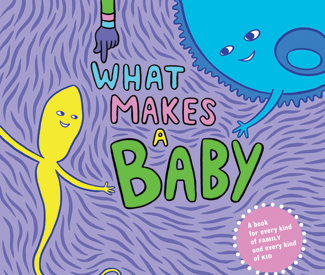
LIT A new children’s book with a social justice, all-inclusive approach to reproduction? To anyone who might question the need for such a thing, look no further than Toronto-based sexual health educator and writer Cory Silverberg‘s enormously successful crowdfunding campaign to get it published: $65,000 in one month. Not too bad to kickstart a picture book, eh?

Silverberg, along with illustrator Fiona Smyth, noticed that the existing resources for parents to explain to preschool-aged children where they came from are by default heterosexual and gender binary-based, thus excluding many families and children. These books also don’t provide much guidance on topics like adoption or alternative fertilization methods. Silverberg’s fundraising campaign gave LGBT parents an opportunity to prove demand for a factual, age-appropriate, children’s book inclusive to all families regardless of how many people were involved, what the orientation, gender identity, or other make up of the family is, or how it came to be that way.

Parents in the Bay Area offered a lot of the support. Dr. Sonja Mackenzie, faculty at the Health Equity Institute and Center for Research and Education on Gender and Sexuality (CREGS) at San Francisco State University is a queer parent of two children, aged three and seven. Dr. Mackenzie started looking for resources about birth and reproduction when her daughter was two and she was pregnant with her second child. She and her partner sought out media providing age-appropriate but real information about reproduction that reflected their two-mom family structure. For years they found nothing.

Which is why when she saw the What Makes A Baby campaign, she pre-ordered copies for their daughter’s first grade class and their son’s preschool class. Dr. Mackenzie said her favorite parts of the book are the questions that ask children to reflect on “who helped bring together the sperm and the egg that made you?” — because of the possibilities for varied family structures that question allows for. That, she says, “is beyond what we have ever seen represented in children’s books.” She also notes the tear-jerker at the close of the book that asks, “Who was waiting for you to be born?” alongside a depiction of many and varied people surrounding a baby.

Bay Area backer Vicki Hudson, parent to two kids aged four and one, also started looking for books when her wife was pregnant with their second child. What Makes A Baby “enables many different types of families to feel represented. Our story was there.” She also appreciated the physiological accuracy of the preschool material. Hudson believes that using accurate reproductive terms empowers children.

Another family structure included in the story’s framework is that of a single parent household. Hilary Brooks of Berkeley is a single mother by choice, whose five-year-old daughter has a known sperm donor. Brooks was excited about the book because she was “ecstatic to see this entry for young children… it’s more accurate, includes everyone, and will not alienate many of the children it needs to reach.” Once she received her copy she was not disappointed, “I love that love is included in this book, and that it is reframed as love for every child from their family — instead of originating in hetero lovemaking, like it was in the sex-ed books I read growing up.” Which is a main premise of Silverberg’s work, to provide a sexual education resource that is straight friendly, but is also for the parents who don’t have anything else right now.

Are mainstream publishers beginning to recognize this demand? There’s still an overwhelming amount of stigma associated with any book related to alternative sexuality. Despite the actual facts of life, books like What Makes A Baby are still too risky for mainstream publishers, it seems. Or maybe it just takes a little pitch in a language they understand. After the outpouring of immediate and public financial support for Silverberg’s book, he was approached by multiple publishing houses, and has signed a three-book deal with Seven Stories Press, beginning with What Makes A Baby. Silverberg’s next volume might well be What Makes a Book Contract.

CORY SILVERBERG: WHAT MAKES A BABY AUTHOR RECEPTION AND “CROWDFUNDING FOR SEX” WORKSHOP

Fri/12, 7:30 reception, free. 8:30 workshop, $10-$50 sliding scale

Center for Sex and Culture

1349 Mission, SF.

(415) 902-2071

www.sexandculture.org

On the Cheap

0

On the Cheap listings are compiled by Guardian staff. Submit items for the listings at listings@sfbg.com.

WEDNESDAY 3

“Fuck the Fourth Sale” AK Press Warehouse, 674-A 23rd St, Oakl; www.akpress.org. 4-8pm, free. Need a little inspiration to face tomorrow’s flag-waving masses? The publisher of anarchist and radical books opens up its warehouse for it annual summer sale: 25 percent off everything, plus a sale table of tomes going for $1-5.

“Salsa in the Square” Union Square between Post, Geary, Powell, and Stockton, SF; www.ybgf.org. 2-4pm, free. Cuban-born, Bay Area-based Fito Reinoso brings the party to Union Square in conjunction with the Yerba Buena Gardens festival and Union Square Live.

THURSDAY 4

Fourth of July at the Berkeley Marina 201 University, Berk; www.anotherbullwinkelshow.com. Noon-10pm, free. Doesn’t get more American than pony rides for kids, but Berkeley throws down the gauntlet with even more fun stuff: performances by the Blue Yonders, the John Brothers Piano Company, juggling and magic acts, and more, plus arts and crafts, dragon boats, and (obviously) fireworks.

Fourth of July at Pier 39 SF; www.pier39.com. Noon, free. If you dare to surf the crowds of tourists, turn up early in the day for kid rockers WJM (noon-2pm) and 1980s cover band Tainted Love (4-7pm). The reason for the season starts booming in the sky around 9:30pm, so get yourself situated at your favorite viewing spot and pray to the weather gods that fog doesn’t hide the whole show.

FRIDAY 5

“Oakland Art Murmur First Friday Gallery Walk” Various venues, Oakl; www.oaklandartmurmur.org. 6-9pm, free. Galleries and mixed-use art spaces in Oakland’s downtown, uptown, and Jack London Square areas open for evening hours; visit the event website for a map of venues.

SATURDAY 6

“Beast Crawl” Various uptown venues, Oakl; beastcrawl.weebly.com. 5-9pm, free. This second annual literary festival boasts the participation of over 140 writers at 26 venues (bars, galleries, cafés, etc.) Plan your crawl (and don’t miss any must-see readings) by picking up a map on “leg one” of the event (5-6pm).

SUNDAY 7

Poetry Unbound Art House Gallery and Cultural Center, 2905 Shattuck, Berk; (510) 472-3170. 5pm (sign-up; reading begins at 5:15pm), $5-10 donation (no one turned away for lack of funds). Wordsmiths John Curl, Clara Hsu, and Eanlai Cronin read, followed by a brief open mic.

TUESDAY 9

“Carol Tarlen Tribute” City Lights Books, 261 Columbus, SF; www.citylights.com. 7pm, free. Laborfest 2013 hosts this celebration of the release of Every Day Is an Act of Resistance: Selected Poems by Carol Tarlen, with Aggie Falk, Jack Hirschman, David Joseph, and others reading work by the late activist, a longtime North Beach resident.

Nina Schuyler Booksmith, 1644 Haight, SF; www.booksmith.com. 7:30pm, free. The NorCal author reads from her latest, The Translator, about a woman who forgets her native language after a head injury and can understand only Japanese.

Our Weekly Picks

0

WEDNESDAY 3

PANTyRAiD

Seven years after meeting in Costa Rica, Martin Folb and Josh Mayer are still doing their thing as seductive bass collaboration PANTyRAiD, even while each has achieved solo success as the Glitch Mob’s Ooah and MartyParty respectively. New album PillowTalk has the right touch of move and groove while keeping an arm’s length from booming, bro-centric dubstep or ear-shattering electro. PANTyRAids like to jump from genre to genre, dropping some trap here and some glitch there, keeping listeners on their toes. Standout track “Just For You” showcases the duo’s slick handling of hip-hop drums, brooding basslines, and melodic synths. Call it mood music for the bass-minded. (Kevin Lee)

10pm, $20-25

1015 Folsom

(415) 431-1200

www.1015.com

Fruition

Upright bass, acoustic guitars, and mandolin (quickly strummed and finger-picked) fill out Fruition’s sound, but don’t clutter its performance. And this show will feature Bridget Law of Elephant Revival, an addition that only upgrades the night. Bluegrass itself requires a lot of emotion and passion to sound right, but Fruition harbors a certain old-back-road, last drop of sunlight through the trees kind of passion. “Make me an angel that flies from Montgomery,” sings the group in gorgeous country harmonies, in its cover of John Prine’s “Angel from Montgomery.” (Hillary Smith)

7pm, free

Brick and Mortar Music Hall

1710 Mission, SF

(415) 371-1631

www.brickandmortarmusic.com


THURSDAY 4

Oil and Water

It just wouldn’t be summer in the Bay Area without the San Francisco Mime Troupe — so thank goodness the veteran company was able to raise enough funds (in part through crowdsourcing, a testament to its loyal supporters) for its 54th season. Though the 2013 musical will still be performed mostly for free, and comes complete with a political theme (corporations vs. environmental activists), the format is different this year. The show is broken into two musical one-acts: Crude Intentions and Deal With the Devil, both written by Pat Moran And Adolfo Mejia. Per tradition, the show opens July 4 in Dolores Park before spreading its jolly satire ’round NorCal parks through Labor Day; check website for additional shows this week in Golden Gate Park and beyond. (Cheryl Eddy)

Through Sept. 2

Thu/4, 2pm, free

Dolores Park

18th St. and Dolores, SF

www.sfmt.org


Giraffage

San Francisco-based futuristic dream R&B producer Charlie Yin has made some big leaps in 2013, with a performance at SXSW along with upcoming gigs at Southern California’s Lightning in a Bottle festival and SF’s Treasure Island Music Festival. His new album Needs on Los Angeles label Alpha Pup Records is a thesis in music manipulation, a comprehensive counterargument to straightforward 4/4. Vocal samples are up-shifted in tempo to lend a playful mood. Tracks are sometimes dipped in sonic mud halfway through, decelerating to a crawl before jumping back to normal time. But Needs never feels jerky, which owes to Yin’s tight transitions and harmonious melodies throughout. The sensual, infectious, shifty third track “Money” sounds like it will be played in lounges in 2050. (Lee)

With Mister Lies, Bobby Browser

9:30pm, $13–$15

Rickshaw Stop

155 Fell

(415) 861-2011

www.rickshawstop.com


FRIDAY 5

“Fiestas Fridas”

There’s a reason this three-day event is subtitled “celebrating the 103rd and 106th birthday of Frida Kahlo:” the iconic Mexican painter was actually born in 1907, but she liked to say she was born in 1910 — the year the Mexican revolution began. The fest kicks off with a gala dinner featuring Kahlo’s own recipes (cooked by Puerto Alegre, Gracias Madre, Mijita, and other restaurants), with proceeds going to Cine + Mas; Saturday brings film screenings and Kahlo-inspired performances. The fest wraps up Sunday with an afternoon and evening of live art, dance, DJs, and more family-friendly fun, like a costume contest with a variety of categories: Best Frida and Diego, Best “Little Frida,” and Best “FriDRAG.” (Eddy)

Opening dinner tonight, 6-11pm, $50

Mission Cultural Center

2868 Mission, SF

Film screening and performance, Sat/6, 5-11pm, $35

Victoria Theater

2961 16th St, SF

Community event, Sun/7, 2-9pm, $10 suggested donation

Women’s Building

3543 18th St, SF

www.fiestasfridassf.com


Johnny Mathis with San Francisco Symphony

Legendary crooner Johnny Mathis’ family moved to San Francisco when he was very young, and it was here in the city that he developed his love for music; while studying at San Francisco State University, he began performing at the Black Hawk nightclub and eventually garnered the attention of some high-profile promoters. In early 1956, Mathis recorded his first album, and he continues to this day. Singing hit songs such as “Chances Are,” “Wonderful! Wonderful!,” “A Certain Smile,” and many more, Mathis has been going strong for nearly 70 years now — don’t miss you chance to see a true icon this weekend, performing with the San Francisco Symphony (Sean McCourt)

Also Sat/6, 8pm, $20–$125

Davies Symphony Hall

201 Van Ness, SF

(415) 864-6000

www.sfsymphony.org


Accidental Bear Queer Summer Tour

What, you thought just because DOMA got overturned and same-sex couples might be getting married again this summer that our work was over? And also that we’re too hungover from Pride to start partying again? Queer mental health issues and suicide risk are still a huge concern in the community, and hyperenergetic SF gay blogger Mike Enders, a.k.a Accidental Bear, is trying to break the stigma and bring awareness — by throwing a big, fun, charitable concert and party, of course. Colorful gay novelty rappers Rica Shay and Big Dipper (let the double entendre zingers fly!), dazzlingly alien outfit Conquistador, local electro heartthrobs Darling Gunsel, and soulful tunesmith Logan Lynn fill the bill, with proceeds going to the Stonewall Project, the Ali Forney Center, and more. (Marke B.)

8pm, $15

Beatbox

314 11th St., SF.

www.accidentalbear.com


SATURDAY 6

Beast Crawl

Now in its second year, Beast Crawl is a free literary festival featuring more than 140 writers in one night. It’s probably pretty hard to go wrong with that many options. Spread out over 26 local galleries, restaurants, bars, and cafes, the annual event offers a place and performance for everyone. Beast Crawl has four legs — the first one beginning at 5pm, and the last one (the after-party) starts at 9pm. Visit the Uptown, have a drink at Telegraph Beer Garden, open your eyes at Awaken Café, all while taking in some of the best Bay Area authors, poets, and even stand-ups. You know how you always hear people say “I went to this rad little poetry reading the other night,” and then wonder where the hell they always are? Well, here’s your chance to finally check out one, or 20. (Smith)

5pm, free

Uptown, Oakland

(415) 706-9128

beastcrawl.weebly.com


Audiobus Mission Creek

Properly executed, music should take you on a mental voyage, a mini musical vacation, if you will. It’s not to remove all thought, but to direct your attention elsewhere momentarily, in the direction the sound dictates. The AudioBus, a mobile venue, will delete the figurative from that jaunt, and take you on a literal trip down a specific San Francisco route. For AudioBus Mission Creek — a Soundwave SonicLAB event — sound artists Jeffy Ray and Jorge Bachmann will sonically guide passengers through the old and new Mission District, narrated by Adobe Books’ Andrew Mckinley. Together, they’ll explore “profound themes of the past, from nostalgia to displacement, and the future ideas of technology and possibility.” The sound-tour will leave the temporary station twice tonight, once for a sunset tour and then again on a starry night ride. A reminder: the bus waits for no one, so don’t miss your stop. (Emily Savage)

8 and 9pm, $16

Bus station: Adobe Books

3130 24th St., SF

www.projectsoundwave.com


Fillmore Jazz Festival

Live jazz music, crafts, and gourmet food, all in one place (and most of it is free to check out). The Fillmore Jazz Festival is the largest of its kind on the West Coast, reportedly luring in a mind-blowing 100,000 visitors over the two-day event. Considering the history and popularity of the neighborhood — and the sheer amount of bands and musicians playing the fest — that number starts to make sense. Sultry local vocalist Kim Nalley will bring her jazzy blues blend to the stage, as will instrumentalist-composer Peter Apfelbaum, Mara Hruby, John Santos Sextet, Beth Custer Ensemble, Crystal Money Hall, Bayonics, and Afrolicious, among many others. Stroll through the 12 blocks, and you’re bound to find some acts that give you a reason to pause. (Smith)

Also Sun/7, 10am-6pm, free

Fillmore Street between Jackson and Eddy, SF (800) 310-6563

www.fillmorejazzfestival.com


Woolfy

I miss Kevin Meenan’s show listings at epicsauce.com. At one time it was a go-to for highlights of small shows going on in the city, filler free, and super reliable for finding a new act to see live. Meenan has since dropped the showlist (perhaps made redundant with the availability of social apps), but is still active with his regular event Push The Feeling. This edition features a DJ set by English born, LA musician, Simon “Woolfy” James, whose eclectic and spacey post-punk dance sensibility first got my attention with the caressingly Balearic “Looking Glass” and the recent James Murphy-esque snappy cut on Permanent Release, “Junior’s Throwin’ Craze.” (Ryan Prendiville)

With Bruse (Live), YR SKULL, and epicsauce DJs

9pm-2am, $6, free before 10 w/ RSVP

Underground SF

424 Haight, SF

www.undergroundsf.com


SUNDAY 7

Cleopatra

The backstory that looms over 1963’s Cleopatra is very nearly as glorious as the film itself, which ain’t no small feat; Joseph L. Mankiewicz’s epic take on the legendary Queen of Egypt ran famously over-budget, but damn if all those dollars aren’t one hundred percent visible, with lavish sets, costumes, and blingy whatnots filling every frame. But really, who cares about overapplied eye make-up and historical inaccuracies when you have the Elizabeth Taylor-Richard Burton romance playing out before your very eyes? There’s no better way to relive the drama — oh, the drama — than in this 50th anniversary restored DCP screening, a one-day-only affair at the Castro. (Eddy)

2 and 7pm, $8.50–$11

Castro Theatre

429 Castro, SF

www.castrotheatre.com


TUESDAY 9

Chef Hubert Keller

Hubert Keller is a culinary celebrity as a multiple James Beard Award winner and the owner and executive chef of trendy restaurants across the country, including the highly-praised San Francisco-based Fleur de Lys. But the classically trained French chef is not all expensive, showy cuisine — during the first season of Top Chef Masters, he earned the respect of broke college kids and amateur foodies everywhere when he resourcefully used a dorm room shower to cool a pot of pasta. Last year, he collaborated with co-author Penolope Wisner to publish Hubert Keller’s Souvenirs: Stories and Recipes from My Life, a memoir-cookbook featuring instructions on 120 dishes. (Lee)

In conversation with Narsai David

6pm, $25 (students, $7)

Commonwealth Club

595 Market, SF

(415) 597-6700 www.commonwealthclub.org

Solomon: David Brooks, Tom Friedman, Bill Keller wish Snowden had just followed orders

27

Norman Solomon is co-founder of RootsAction.org and founding director of the Institute for Public Accuracy. His books include “War Made Easy: How Presidents and Pundits Keep Spinning Us to Death.”

Edward Snowden’s disclosures, the New York Times reported on Sunday, “have renewed a longstanding concern: that young Internet aficionados whose skills the agencies need for counterterrorism and cyberdefense sometimes bring an anti-authority spirit that does not fit the security bureaucracy.

Agencies like the NSA and CIA — and private contractors like Booz Allen — can’t be sure that all employees will obey the rules without interference from their own idealism. This is a basic dilemma for the warfare/surveillance state, which must hire and retain a huge pool of young talent to service the digital innards of a growing Big Brother.

With private firms scrambling to recruit workers for top-secret government contracts, the current situation was foreshadowed by novelist John Hersey in his 1960 book The Child Buyer. When the vice president of a contractor named United Lymphomilloid, “in charge of materials procurement,” goes shopping for a very bright ten-year-old, he explains that “my duties have an extremely high national-defense rating.” And he adds: “When a commodity that you need falls in short supply, you have to get out and hustle. I buy brains.”

That’s what Booz Allen and similar outfits do. They buy brains. And obedience.

But despite the best efforts of those contractors and government agencies, the brains still belong to people. And, as the Times put it, an “anti-authority spirit” might not fit “the security bureaucracy.”

In the long run, Edward Snowden didn’t fit. Neither did Bradley Manning. They both had brains that seemed useful to authority. But they also had principles and decided to act on them.

Like the NSA and its contractors, the U.S. military is in constant need of personnel. “According to his superiors . . . Manning was not working out as a soldier, and they discussed keeping him back when his unit was deployed to Iraq,” biographer Chase Madar writes in The Passion of Bradley Manning. “However, in the fall of 2009, the occupation was desperate for intelligence analysts with computer skills, and Private Bradley Manning, his superiors hurriedly concluded, showed signs of improvement as a workable soldier. This is how, on October 10, 2009, Private First Class Bradley Manning was deployed . . . to Iraq as an intelligence analyst.”

In their own ways, with very different backgrounds and circumstances, Bradley Manning and Edward Snowden have confounded the best-laid plans of the warfare/surveillance state. They worked for “the security bureaucracy,” but as time went on they found a higher calling than just following orders. They leaked information that we all have a right to know.

This month, not only with words but also with actions, Edward Snowden is transcending the moral limits of authority and insisting that we can fully defend the Bill of Rights, emphatically including the Fourth Amendment.

What a contrast with New York Times columnists David Brooks, Thomas Friedman and Bill Keller, who have responded to Snowden’s revelations by siding with the violators of civil liberties at the top of the U.S. government.

Brooks denounced Snowden as “a traitor” during a June 14 appearance on the PBS NewsHour, saying indignantly: “He betrayed his oath, which was given to him and which he took implicitly and explicitly. He betrayed his company, the people who gave him a job, the people who trusted him. . . . He betrayed the democratic process. It’s not up to a lone 29-year-old to decide what’s private and public. We have — actually have procedures for that set down in the Constitution and established by tradition.”

Enthralled with lockstep compliance, Brooks preached the conformist gospel: “When you work for an institution, any institution, a company, a faculty, you don’t get to violate the rules of that institution and decide for your own self what you’re going to do in a unilateral way that no one else can reverse. And that’s exactly what he did. So he betrayed the trust of the institution. He betrayed what creates a government, which is being a civil servant, being a servant to a larger cause, and not going off on some unilateral thing because it makes you feel grandiose.”

In sync with such bombast, Tom Friedman and former Times executive editor Bill Keller have promoted a notably gutless argument for embracing the NSA’s newly revealed surveillance programs. Friedman wrote (on June 12) and Keller agreed (June 17) that our government is correct to curtail privacy rights against surveillance — because if we fully retained those rights and then a big terrorist attack happened, the damage to civil liberties would be worse.

What a contrast between big-name journalists craven enough to toss the Fourth Amendment overboard and whistleblowers courageous enough to risk their lives for civil liberties.

Norman Solomon is co-founder of RootsAction.org and founding director of the Institute for Public Accuracy. His books include “War Made Easy: How Presidents and Pundits Keep Spinning Us to Death.”

Still beating

27

cheryl@sfbg.com

FILM/LIT A few weeks before our scheduled interview, Laura Albert mails me copies of 2000’s Sarah and 2001’s The Heart is Deceitful Above All Things. Inscribed on Heart‘s title page is a note: “Thanks for being available to revelation.” The volumes are signed “Yours, LA and JT” — the latter, of course, referring to JT LeRoy, the identity under which Albert penned both books.

That secret’s been out since late 2005, and has been dissected over and over. It even inspired a Law and Order episode. LeRoy, and his fantastically tragic back story (just out of his teens, he’d survived drugs, homelessness, and prostitution en route to becoming the lit world’s hottest wunderkind), were Albert’s creations. She was the true author behind the best-sellers listed above, plus 2004’s Harold’s End, dozens of magazine articles, an early script for Gus Van Sant’s Elephant (2003), and numerous other works. (Meanwhile, the androgynous “JT” that had been appearing in public was actually the half-sister of Albert’s then-partner; she wrote her own tell-all in 2008.) On Albert’s website, there are tabs marked “Who is Laura Albert?” and “Who is JT LeRoy?” Both link to Albert’s biography.

Years have passed since l’affaire LeRoy, and Albert has moved through the experience in her own way. (Her business card lists her as “literary outlaw.”) Later this summer, Sarah will be reissued as an ebook, with a fairy tale-inspired cover by artist Matt Pipes. Albert also is working on her memoirs (though she doesn’t like to use the word “memoirs”), and tells me there’s a documentary forthcoming from Jeff Feuerzeig, who made 2005’s critically-acclaimed The Devil and Daniel Johnston. This weekend, Asia Argento’s 2004 adaptation of The Heart is Deceitful Above All Things screens as part of the Clay Theatre’s midnight-movie series, with Albert and producer Chris Hanley in person, plus Argento via Skype.

Sitting in her San Francisco kitchen, Albert eyes my tape recorder and admits she’d rather focus on the film, not JT — though it’s a topic that inevitably arises. Argento, Albert says, encountered Heart the way many LeRoy readers did, via word-of-mouth recommendation.

“She read the book and she didn’t know anything about JT. At the same time, a small publisher was putting out the book [in Italy], and they wanted to bring JT over,” Albert recalls. “It was a weird coincidence. They were putting on an event, and they wanted to get someone to read. They had contacted Asia, and she already knew about the book, and she wanted not only to do this event, but to make the movie. It’s funny because I thought Sarah would be the first [to become a film], because it was already optioned by Gus [Van Sant]. But Asia moved really fast. We went over to meet her, and I had turned down a lot of people. My feeling was, it’s my baby and I’m giving it up for adoption, and I saw that this was someone I could give my baby to.”

Argento, the daughter of famed Italian horror director Dario Argento, is best-known stateside as an actor; previous to Heart, her directing experience was limited to short films and 2000’s flamboyant Scarlet Diva. Once she decided to helm the movie, her decision to star as the free-spirited, needy, sometimes-cruel single mother of the story’s young protagonist was an obvious choice.

“I had concerns about that, how much she would take on the role, how much it would become her. It’s ironic, because I had given myself over completely to Jeremy, to JT, to Jeremiah,” Albert says. She pauses. “Did you see that French film, about the guy who assumes different characters?”

Holy Motors?”

“Yeah! It really was transformative to me. There’s a scene where someone asks [the main character], ‘Why are you still doing this?’, and he makes reference to the act of giving yourself over completely. And that was it. I gave myself over completely. I did not break character. You know how, in that movie, he’ll do anything? He’ll kill someone! He’s in it. Most people don’t know what that’s like. And that was it. I will never apologize,” she says, firmly. “We’re talking about art. Nobody was harmed in this, really. I didn’t really scribble that far outside the lines. Everything was labeled ‘fiction.'”

At her mention of an apology, I have to ask: does she feel like people demanded one?

“People like to give themselves a lot of credit for how vanguard they are. I can’t tell you how many people I’ve had tell me, ‘Warhol would have loved it!’ — including people who were close with Warhol,” she says. “I think it revealed more about other people and what they could accommodate, and what they put on the work, than it does about me. If you have a personal relationship with JT, then that’s a conversation between you and me. I put my email [in the books], and I really did have a connection with the fans because I grew up in the punk scene, and I wasn’t into hero worship. The problem was — psychologically — I wasn’t able to do that. It wasn’t like [adopts goofy voice], ‘Gee, how do I burst forth onto the literary scene? I know! I’ll create a little boy!’ No. It wasn’t like that.”

As we talk, Albert makes references to her own troubled youth: surviving abuse, living in a group home, being institutionalized. Amid the tumult of her teenage life, she would “call hotlines — I don’t know what I would talk about, but it was the only time I could feel. I would give myself over to another being, and it was always a boy. So when I hear people say, ‘I’m gonna do what you did,’ it’s like, good luck. For me it was created the way an oyster creates a pearl: out of irritation and suffering. It was an attempt to try to heal something. And it actually worked, and it did so for a lot of other people. The amazing thing is, now I can be available to people.”

We’re delving more into her work (“I didn’t do anything new — writers have always been using combinations of pseudonyms and identities,” she points out) when the doorbell rings; it’s a Comcast technician here to see about Albert’s Internet connection. We move to her office, which features a wall collaged with photos and several filing cabinets full of archives — material she’s letting Feuerzeig use in his documentary.

But it’s not a room completely given over to the past. It’s also where Albert works on her new projects (besides her memoirs, she’s writing screenplays — building off her experiences working on Deadwood with David Milch), and stashes new mementos, including a program from a recent Brazilian rock opera entitled JT, A Punk Rock Fairy Tale.

Before I leave, she gives me a copy of a New York Times article from 2010 entitled “Life, In the Way of Art;” its subjects include Joaquin Phoenix, still smarting from the backlash after his faux breakdown in I’m Still Here. The director of that film, Casey Affleck, cites a line from a Picasso quote that Albert emails to me in full the day after we speak: “We all know that art is not truth. Art is a lie that makes us realize truth, at least the truth that is given us to understand. The artist must know the manner whereby to convince others of the truthfulness of his lies.”

She’s just as frank over email as she is in person. “It’s OK with me if someone doesn’t like my writing. But they shouldn’t try to tell me how I’m obliged to present my work,” she writes. “When I talk about my personal background, I’m not attempting to somehow bestow legitimacy to what I’ve written — anyone should be able to do what I did. My life history doesn’t matter and isn’t being offered as any kind of excuse.”

I think back to something she said in her kitchen — a simple, powerful summation of a story that will never not be complicated. “JT was my lifeboat. You loved him? Well, I loved him more.” 

THE HEART IS DECEITFUL ABOVE ALL THINGS

Fri/28, midnight, $10

Clay

2261 Fillmore, SF

www.landmarktheatres.com


‘A’ for effort?

0

culture@sfbg.com

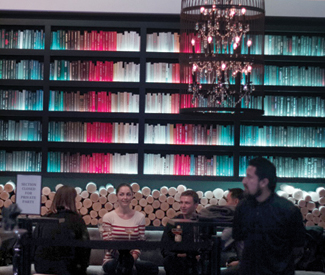
COCKTAILS Novela, the new literary-themed lounge in SoMa, is undoubtedly beautiful: plenty of window light pours in during the evening, highlighting tall black shelves packed full of color-coordinated books. The space, a collaboration between acclaimed bar stars Alex Smith and Kate Bolton, is littered with huge, cozy reading chairs as well as low comfy couches.

But my friend and I just somehow felt out of place.

Perhaps this was a case of misplaced expectations: this wasn’t the bar atmosphere I envisioned at all. With dance music (“Is this MGMT?” my friend asked as we sat down) blaring at around 7pm on a Tuesday, and an all-female service staff dressed in tight black clothing with gold jewelry accents and very high heels, it’s fair to say this place lacked the unshowy intimacy I associate with reading.

Despite our unease in the party environment, we decided to stay and give the libations a try. Novela has several “Cocktails with Character” on its menu, named for famous literary figures (duh). But it prides itself in its punches — six on tap, all made with fresh seasonal ingredients. Since the cognac punch was unavailable, I settled for a glass of the “Tequilla” (as spelled on the menu) punch while my friend, Michelle, tasted the gin one. Both weren’t anything to write home about. Tequilla was just not my cup of tea — the tequila, mezcal, hibiscus, grapefruit, and lime failed to gel — while I don’t remember much about the gin punch. Maybe it had too much rhubarb. Michelle and I pondered the thought of a book-themed bar having a typo on the menu, however deliberate, and realized that it perfectly encapsulated our thoughts of the place so far.

Once the after-work crowd poured out, we settled into some reading chairs near the back of the bar and ordered more drinks. This is when we found ourselves in the middle of a light show — the lights behind the book-filled walls started flashing, as did those along glass and metal liquor shelves. Disco time!

And with that, I suddenly felt like Novela was the one out of place. I can appreciate wanting to expand the notion of the “library bar,” of which our city has many examples, from the library at Bourbon and Branch to Two Sisters in Hayes Valley. But with Novela, I just plain could not see the purpose. San Francisco is a city rich with culture and character, and none of that is reflected here. It felt artificial: all flash and no substance, right down to the cocktail menu (every high school sophomore knows a drink named after Jay Gatsby should be based on gin, not bourbon) and the forced sorority-esque look of the staff.

Back to the drinks: Michelle ordered the Atticus Finch with bourbon, earl grey honey, and bitters — she originally ordered the pisco-based Sherlock Holmes but the birch beer was too overwhelming — while I ordered that Jay Gatsby, with bourbon, scotch, amaretto, calisaya, and nocino. They were both nice but, again, didn’t quite make the grade. In the end, Michelle and I walked out into the night with more questions than answers — a mark of great literature, perhaps, but not of great bars.

NOVELA 662 Mission, SF. (415) 896-6500, www.novelasf.com


Heads Up: 7 must-see concerts this week

0

Pride Week is upon us y’all, and with those excited, proud, rainbow-waving masses, come awesome live acts, DJs, bands, you know the drill by now; there are official shows, tangential nights, and underground events (check out Mykki Blanco at Mezzanine, or Magic Mouth with THEESatisfaction at Hard French Hearts Los Homos). Many more Pride listings will be in the paper this week.

And of course, there’s also some unrelated live rock‘n’roll you should be checking out right now as well, including two doubled-headlined shows of high-quality locals; there’s the Warm Soda/Midnite Snaxxx night at Brick and Mortar, along with the White Barons/Wild Eyes SF shakedown at Bender’s. Plus, Deltron 3030 plays the free summer series at Stern Grove this weekend.

There’s plenty to do and see in San Francisco at the moment, so buckle up. An aside: I’d also recommend Austra at the Independent Wed/26, debuting its new album Olympia; the show is sold out but I know you creative types have ways around this.

Here are your must-see Bay Area concerts this week/end:

Warm Soda and Midnite Snaxxx
This should make for a fizzy summer combo: both local to Oakland and full of vigor, Warm Soda’s glistening ‘80s pop will be matched in this Brick and Mortar lineup to Midnite Snaxxx’s leather-jacket-babe rock‘n’roll bubblegum smash. The results should be explosive, like a shaking up a two-liter bottle of cola and showering those around you with its sticky sweetness. Plus, it’s your last chance to see Warm Soda this summer — the group’s about to head out on its first European tour.
With Primitive Hearts, the Wild Ones
Thu/26, 9pm, $8
Brick and Mortar
1710 Mission, SF
www.brickandmortarmusic.com
http://www.youtube.com/watch?v=OUQQDb4fkmo

Mykki Blanco
The self-described “Acid Punk Rapper” behind debut mixtape Cosmic Angel: The Illuminati Prince/ss brings his global nightlife pulse to San Francisco this week, (once again — when he performed here last year, Marke B. called Blanco a “Dark and fierce queer rapper from the future”). The hyperreal, multifaceted rapper is a supporter of underground arts and a rather busy one; he’s written books, recorded albums, posed as a fashion muse, and served as a nightclub dignitary, once telling Interview mag: “I didn’t plan for it, but everyday in the morning, for extra energy, I drink a raw garlic smoothie with fruit. I have nothing to lose and everything to gain by working hard. To have this be the beginning of my career and receive this much positive support — I cannot waste a fucking minute, and I’d be a fool to waste a minute.”
Thu/27, 9pm, $15
Mezzanine
444 Jessie, SF
www.mezzaninesf.com
http://www.youtube.com/watch?v=w39Fxx10CEI
http://www.youtube.com/watch?v=LSgVZEGpo6U

Y La Bamba
“Indie-folk rocker group Y La Bamba has been steadily building a fan base over the past couple of years, earning high praise from NPR and loaning songs to television programs such as Bones. The Portland-based band’s hauntingly rich and ethereal sound is propelled by singer-songwriter Luzelena Mendoza, whose vocals float and weave tales above Latin-inspired rhythms and unique backing vocals. Its latest full-length album, last year’s Court The Stormwas produced by Los Lobos member Steve Berlin, and an excellent EP, Oh February was released this January.” — Sean McCourt
Fri/28, 9pm, $12–$15
Chapel
777 Valencia, SF
(415) 551-5157
www.thechapelsf.com
http://www.youtube.com/watch?v=sP9U4tm8xJc

The Juan MacLean (DJ Set)
“After years of producing quality electro-disco-club music for DFA Records (home to legendary sometimes-retired LCD Soundsystem), DJ and producer the Juan MacLean (stage name for John Maclean) has leapt head first into a stripped-down, nu-house sound. With vocalist and longtime collaborator Nancy Whang, MacLean released the cool, classy “You Are My Destiny” this March, completing a shift that may have taken root as far back as 2011 with his Peach Melba side project. Transitions are standard practice for the former hardcore guitarist turned electronic music artist, who has collaborated with LCD Soundsystem, !!!, and Holy Ghost! and remixed Yoko Ono and Stevie Nicks. In the midst of a relentless international tour schedule, MacLean signaled his return to dance music prominence earlier this month with a set on BBC Radio 1’s prestigious Essential Mix program.” — Kevin Lee
With Kim Ann Foxman, Blacksheep
Sat/29, 9pm, $10–<\d>$20
Monarch
101 Sixth St., SF
(415) 284-9774
www.monarchsf.com
http://www.youtube.com/watch?v=Nwf31pKvGc4

The White Barons and Wild Eyes SF
Some background: local Southern fried rock group (“by way of Atlanta, Jakarta, and two Midwest podunk towns”) the White Barons includes members of Thee Merry Widows, Winter Teeth, and Whiskey Dick Darryls, and SF’s Wild Eyes recently opened for King Khan and BBQ Show at Slim’s. This Bender’s show is a party for a few things: it’s the birthday of Bender’s doorperson and Subliminal SF booker Mikey Madfes, it’s a split seven-inch release celebration for the White Barons and Wild Eyes, and lastly, there’s a band vs. band chili cook-off (if you buy a record, you’ll get a chili sample). So you know it’s going to be a messy mix of raucous rock’n’roll and tender cooked meats.
Sat/29, 10pm, $5
Bender’s Bar and Grill
806 S. Van Ness, SF
www.bendersbar.com
http://www.youtube.com/watch?v=9UXOSZPocks

Deltron 3030
“If you’ve lived in SF for at least a year, then you probably know about Stern Grove’s awesomely free and diverse ongoing music festival. But if not, this summer-long (June 16-Aug.18) series offers the community a chance to get outside and enjoy nature while picnicking with live musical accompaniment. This Sunday’s lineup features dance hip-hip super group Deltron 3030. Rapping about evil corporate Goliaths and space battles, often alongside an orchestral band, Deltron 3030’s performance is anything but typical.” — Hillary Smith
Sun/30, 2pm, free
Stern Grove
19th Avenue and Sloat, SF
www.sterngrove.org
http://www.youtube.com/watch?v=ijPE7fe4XTg

Magic Mouth
To get a taste of the soulful energy Magic Mouth exudes, check the YouTube video “MAGIC MOUTH LIVE: MISSISSIPPI STUDIOS,” (below); it’s like watching James Brown front a garage-punk band. The lively Portland, Ore. queer soul-punk quartet will play Hard French Hearts Los Homos (an event described by DJ Carnita as “an intergalactic Pride Party for all the gayliens who love to dance in outer space”), opening up for THEESatisfaction.
Sun/30, 4-11pm, $20
Roccapulco
3140 Mission, SF
hardfrenchpride2013.eventbrite.com
http://www.youtube.com/watch?v=otA5i0Y6wlE

Solomon: The pursuit of Edward Snowden: Washington in a rage, striving to run the world

18


By Norman Solomon


Norman Solomon is co-founder of RootsAction.org and founding director of the Institute for Public Accuracy. His books include “War Made Easy: How Presidents and Pundits Keep Spinning Us to Death.”

Rarely has any American provoked such fury in Washington’s high places. So far, Edward Snowden has outsmarted the smartest guys in the echo chamber — and he has proceeded with the kind of moral clarity that U.S. officials seem to find unfathomable.

Bipartisan condemnations of Snowden are escalating from Capitol Hill and the Obama administration. More of the NSA’s massive surveillance program is now visible in the light of day — which is exactly what it can’t stand.

The central issue is our dire shortage of democracy. How can we have real consent of the governed when the government is entrenched with extreme secrecy, surveillance and contempt for privacy?

The same government that continues to expand its invasive dragnet of surveillance, all over the United States and the rest of the world, is now asserting its prerogative to drag Snowden back to the USA from anywhere on the planet. It’s not only about punishing him and discouraging other potential whistleblowers. Top U.S. officials are also determined to — quite literally — silence Snowden’s voice, as Bradley Manning’s voice has been nearly silenced behind prison walls.

The sunshine of information, the beacon of principled risk-takers, the illumination of government actions that can’t stand the light of day — these correctives are anathema to U.S. authorities who insist that really informative whistleblowers belong in solitary confinement. A big problem for those authorities is that so many people crave the sunny beacons of illumination.

On Sunday night, more than 15,000 Americans took action to send a clear message to the White House. The subject line said “Mr. President, hands off Edward Snowden,” and the email message read: “I urge you in the strongest terms to do nothing to interfere with the travels or political asylum process of Edward Snowden. The U.S. government must not engage in abduction or any other form of foul play against Mr. Snowden.”

As the Obama White House weighs its options, the limits are practical and political. Surveillance and military capacities are inseparable, and they’re certainly huge, but constraints may cause major frustration. Sunday on CNN, anchor Don Lemon cited the fabled Navy Seals and said such commandos ought to be able to capture Snowden, pronto.

The state of surveillance and perpetual war are one and the same. The U.S. government’s rationale for pervasive snooping is the “war on terror,” the warfare state under whatever name.

Too rarely mentioned is the combination of nonviolence and idealism that has been integral to the courageous whistleblowing by Edward Snowden and Bradley Manning. Right now, one is on a perilous journey across the globe in search of political asylum, while the other is locked up in a prison and confined to a military trial excluding the human dimensions of the case. At a time of Big Brother and endless war, Snowden and Manning have bravely insisted that a truly better world is possible.

Meanwhile, top policymakers in Washington seem bent on running as much of the world as possible. Their pursuit of Edward Snowden has evolved into a frenzied rage.

Those at the top of the U.S. government insist that Edward Snowden and Bradley Manning have betrayed it. But that’s backward. Putting its money on vast secrecy and military violence instead of democracy, the government has betrayed Snowden and Manning and the rest of us.

Trying to put a stop to all that secrecy and violence, we have no assurance of success. But continuing to try is a prerequisite for realistic hope.

A few months before the invasion of Iraq, looking out at Baghdad from an upper story of a hotel, I thought of something Albert Camus once wrote. “And henceforth, the only honorable course will be to stake everything on a formidable gamble: that words are more powerful than munitions.”

Edward Snowden’s honorable course has led him to this historic moment. The U.S. government is eager to pay him back with retribution and solitary. But many people in the United States and around the world are responding with love and solidarity.
 
Norman Solomon is co-founder of RootsAction.org and founding director of the Institute for Public Accuracy. His books include “War Made Easy: How Presidents and Pundits Keep Spinning Us to Death.”

(Bruce B. Brugmann, who signs his blogs and emails b3, is the editor at large of the Bay Guardian.  He is the former editor and co-founder and co-publisher of the Bay Guardian, 1966-2012. He can be reached at bruce@sfbg.com)

Father’s day

0

arts@sfbg.com

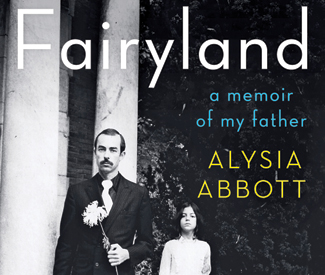
LIT In late-1980s San Francisco, Steve Abbott hosted a gay writer’s workshop at his small apartment at the fabled corner of Haight and Ashbury. One fleeting but reliable occurrence was an appearance by Alysia, the daughter he’d raised since his wife died in a car accident years earlier.

Each week, the teenager stormed about just long enough so we could feel her wrath before slamming the bedroom door. It was funny, but also understandable: at that age, who wants their personal space regularly invaded by strangers? Let alone gay male adults, reinforcing your separation from the heterosexual family norm?

Steve was a significant presence in SF’s literary scene for nearly two decades, publishing his own adventuresome small-press books in various idioms (poems, essays, fiction). He edited small magazines including the influential Poetry Flash; was first to promote such edgy “postmodernist” voices as Kathy Acker and Dennis Cooper; and was an idiosyncratic cultural commentator for local weeklies (including the Bay Guardian). He was unfailingly generous with other fledgling writers, myself included.

He barely kept the rent paid via rote day jobs, while raising a child alone — an awkward match to the carefree gay community he joined upon moving to SF (and coming out) in 1974. As Alysia Abbott writes in her acclaimed new release Fairyland: A Memoir of My Father (W.W. Norton and Company, 352pp., $25.95), there were no role models then for gay single parents. Their very close but turbulent relationship amplified the clash between her often-peevish parental needs and his belated self-discovery in a sexual-artistic bohemia. They found balance as she found her own identity upon leaving for college. But then the AIDS epidemic swept both up in its devastation.

Abbott, now living in Boston with a husband and two children, answered questions in advance of two local appearances this week.

San Francisco Bay Guardian You had an unconventional childhood with an unconventional parent. Has that influenced your own parenting?

Alysia Abbott My father was raised in a strict Catholic household where family members rarely showed affection. He kept his feelings bottled up. By the time he had me, he wanted a completely different family experience, transparent and open. He often shared his romantic and professional woes, sometimes seeking my advice.

I absorbed a lot of my dad’s worry, and sometimes found myself in situations where I had to be more adult than I was ready to be. I want to be my true self with my children. But I also want to protect their innocence to some degree.

SFBG You’re frank about having been an “obnoxious” unhappy teenager. Are there things you or your father could have done differently? Was it a phase you just had to work through?

AA We were trying to create a life with a lot of setbacks, sharing a cramped one-bedroom in the Haight with little money or family help. My father was lonely, and trying to get sober just when I discovered drugs and alternative culture. We did our best under the circumstances. But as often as we clashed, there was a lot of love. This was a period we needed to go through.

SFBG Your father identified so strongly as a writer, but Fairyland doesn’t address how you became one yourself.

AA I’d always wanted to be a writer, or an artist. But after watching him struggle financially, I pursued steady-paycheck work in cushy corporate structures (which I now hate). I also didn’t know if I had his native talent, or could be as intellectually rigorous and pure. I always had our story to tell, but worried I wasn’t worthy of it. The idea of writing Fairyland and having it not meet my own expectations was unbearable. Now I realize perfectionism is the enemy of creativity. To succeed, you have to be willing to fail.

SFBG When Steve was facing mortality, he wrote that you’d probably better appreciate his writing after he’d passed on. What do you think about his literary legacy now?

AA I’m embarrassed to admit I really didn’t read my father’s books until ten years after he died. During his lifetime, the work’s weirdness, its attraction to transgressive figures and ideas threatened me. I accused him of not being a “real writer” because no one had heard of him and he didn’t make any “real money.” What a terrible thing for a daughter to say!

Researching for Fairyland, I came to respect his contributions and integrity. All the writers I know today have to be such master self-promoters. My father was almost embarrassingly naïve in this regard. That may be why few people know his work today. But he was so devoted to writing, and supporting writers that impressed him, even if that effort did nothing for his own career.

I now really love several of his poems and books, especially Lives of the Poets — but some still make me uncomfortable. I’m not sure if it’s because they aren’t good, or still too “out there” for me.

SFBG After so many years, how do you feel about returning to SF? Many of your father’s creative generation are dead. It’s a much yuppie-er burg.

AA San Francisco is very different from the city I knew in 1974, or even 1994. I’ve worried that those who remember the old San Francisco, or appreciate its history, are dwindling — they’ve died or been forced out by Ellis laws. But new residents are attracted by the city’s beauty just as we were. And though much better-heeled, these tech workers and professional types are also trying to reinvent culture, if with much greater odds of profit — and interest in profit.

ALYSIA ABBOTT

Wed/19, 7pm, free

City Lights Books

261 Columbus, SF

www.citylights.com


Thu/20, 6:30pm, free

San Francisco Public Library

100 Larkin, SF

www.sfpl.org

Music Listings

0

Music listings are compiled by Emily Savage. Since club life is unpredictable, it’s a good idea to call ahead or check the venue’s website to confirm bookings and hours. Prices are listed when provided to us. Visit www.sfbg.com/venue-guide for venue information. Submit items for the listings at listings@sfbg.com. For further information on how to submit items for the listings, see Picks.

WEDNESDAY 19

ROCK/BLUES/HIP-HOP

Joseph Arthur Chapel, 777 Valencia, SF; www.thechapelsf.com. 9pm, $20-$25.

Camera Obscura, Photo Ops Regency Ballroom. 8pm, $25.

Dig, Tambo Rays, Low Magic, Sunfighter Café Du Nord. 8:30pm, $10.

Mark Eitzel, Carletta Sue Kay, Will Sprott Brick and Mortar Music Hall. 9pm, $12.

David Ford Hotel Utah. 8pm, $10.

Geto Boys, Phranchyze Yoshi’s SF. 10:30pm, $36.

Gunshy Johnny Foley’s. 10pm, free.

Craig Horton Biscuits and Blues. 8 and 10pm, $15.

Lust for Life, Pharmakon, DJs Omar and Justin Elbo Room. 9pm, $10.

Sam Chase, Gallery, Dogcatcher Bottom of the Hill. 9pm, $8.

Water Liars, Standard Poodle, Houses of Light Hemlock Tavern. 8:30pm, $7.

JAZZ/NEW MUSIC

Fatoumata Diawara Yoshi’s SF. 8pm, $24.

Dink Dink Dink, Gaucho, Eric Garland’s Jazz Session Amnesia. 7pm, free.

Terry Disley Burritt Room, 417 Stockton, SF; www.burrittavern.com. 6-9pm, free.

Big Bones Royal Cuckoo, 3203 Mission, SF; www.royalcuckoo.com. 7:30-10:30pm, free.

Cecile McClorin Salvant SFJazz Center, 201 Franklin, SF; www.sfjazz.org. 8pm, $18-$25. SF Jazz Festival.

Michael Parsons Trio Revolution Café, 3248 22nd St., SF; www.revolutioncafesf.com. 8:30pm, free.

Reuben Rye Rite Spot. 8:30pm, free.

FOLK/WORLD/COUNTRY

Hans Araki and Kathryn Claire Plough and Stars. 9pm.

Aki Kumar Blues Band Tupelo, 1337 Grant, SF; www.tupelosf.com. 9pm.

Timba Dance Party Bissap Baobab, 3372 19th St, SF; www.bissapbaobab.com. 10pm, $5.

DANCE CLUBS

Booty Call Q-Bar, 456 Castro, SF; www.bootycallwednesdays.com. 9pm. Juanita MORE! and Joshua J host this dance party.

Cash IV Gold Double Dutch, 3192 16th St, SF; www.thedoubledutch.com. 9pm, free.

Coo-Yah! Slate Bar, 2925 16th St, SF; www.slate-sf.com. 10pm, free. With Vinyl Ambassador, DJ Silverback, DJs Green B and Daneekah.

Hardcore Humpday Happy Hour RKRL, 52 Sixth St, SF; (415) 658-5506. 6pm, $3.

Martini Lounge John Colins, 138 Minna, SF; www.johncolins.com. 7pm. With DJ Mark Divita.

THURSDAY 20

ROCK/BLUES/HIP-HOP

Jay Ant Brick and Mortar Music Hall. 10:30pm, $15.

Come, Tara Jane O’Neil Independent. 8pm, $15.

Couches, Boys, Burrows Hemlock Tavern. 8:30pm, $7.

D Pryde, Mike-Dash-E, J. Lately Brick and Mortar Music Hall. 6pm, free.

Hey Champ, popscene DJs Rickshaw Stop. 9:30pm, $12-$14.

Hooded Fang, Record Company DNA Lounge. 8pm, $12.

Chris James and Patrick Rynn Band Biscuits and Blues. 8 and 10pm, $15.

Anya Kvitka and the Getdown, Jonny Craig Great American Music Hall. 8pm, $13.

Dave Moreno and Friends Johnny Foley’s. 10pm, free.

Scary Little Friends, TV Mike and the Scarecrows, Indianna Hale Amnesia. 9pm, $7.

Cody Simpson, Ryan Beatty, Before You Exit Warfield. 7pm, $45.

Strange Vine, Before the Brave, Avi Vinocur Metal Experience Bottom of the Hill. 9pm, $10.

Ugly Winner, C’est Dommage, Future, Space and Time, Hanalei Café Du Nord. 8:30pm, $8.

JAZZ/NEW MUSIC

Will Blades Trio SFJazz Center, 201 Franklin, SF; www.sfjazz.org. 8pm, $18-$25. SF Jazz Festival.

Lucy Horton Revolution Café, 3248 22nd St., SF; www.revolutioncafesf.com. 8:30pm, free.

Gregory Porter SFJazz Center, 201 Franklin, SF; www.sfjazz.org. 8pm, $25-$45. SF Jazz Festival.

Chris Siebert Royal Cuckoo, 3203 Mission, SF; www.royalcuckoo.com. 7:30-10:30pm, free.

Dr. L. Subramaniam Global Fusion Yoshi’s SF. 8pm, $36; 10pm, $28.

FOLK/WORLD/COUNTRY

Hot Einstein Tupelo, 1337 Grant, SF; www.tupelosf.com. 9pm.

Pa’lante! Bissap Baobab, 3372 19th St, SF; www.bissapbaobab.com. 10pm, $5.

Kyle Thayer, Anne Kirrane, Gerry Hanley Plough and Stars. 9pm.

DANCE CLUBS

Afrolicious Elbo Room. 9:30pm, $8. With DJ-hosts Pleasuremaker and Senor Oz.

All 80s Thursday Cat Club. 9pm, $6 (free before 9:30pm). The best of ’80s mainstream and underground.

Ritual Temple. 10pm-3am, $5. Two rooms of dubstep, glitch, and trap music.

Tropicana Madrone Art Bar. 9pm, free. Salsa, cumbia, reggaeton, and more with DJs Don Bustamante, Apocolypto Sr. Saen, Santero, and Mr. E.

FRIDAY 21

ROCK/BLUES/HIP-HOP

Body and Soul Johnny Foley’s. 10pm, free.

Chris Cain Biscuits and Blues. 8 and 10pm, $20.

Cigarette Bums, Virgin Hymns, Bad Vibes Thee Parkside. 9pm, $6.

Ex-Cult, Glitz Hemlock Tavern. 9:30pm, $10.

Hands, Be Calm Honcho, Ally Hasche and the Bad Boys Brick and Mortar Music Hall. 9pm, $10.

Jon Langford, Jean Cook, Jim Elkington-Skull Orchard Acoustic Chapel, 777 Valencia, SF; www.thechapelsf.com. 9pm, $20.

New Trust, Creative Adult, Culture Abuse Bottom of the Hill. 9:30pm, $10.

Petty Theft, Beer Drinks and Hell Raisers Slim’s. 8:30pm, $15-$20.

Josh Rouse, Field Report Great American Music Hall. 9pm, $26.

Staves, Musikanto Independent. 9pm, $12.

Steve Miller Band America’s Cup Pavilion, 27-29 San Francisco Pier 33, SF; americascup.com/concert-series. 7:30pm, $52.

Stripmall Architecture, Books on Fate, Return to Mono DNA Lounge. 8pm, $12.

ZAVALAZ, EV Kain Café Du Nord. 9pm, $15-$20.

JAZZ/NEW MUSIC

Pino Daniele SFJazz Center, 201 Franklin, SF; www.sfjazz.org. 8 and 10pm, $25-$65. SF Jazz Festival.

Roberta Donnay and the Prohibition Mob Trio Live Worms Art Gallery, 1345 Grant, SF; www.sflivewormsgallery.com. 8pm, $10-$20.

Emily Ann Band Revolution Café, 3248 22nd St., SF; www.revolutioncafesf.com. 9pm, free.

Hammond Organ Soul Jazz, Blues Party Royal Cuckoo, 3203 Mission, SF; www.royalcuckoo.com. 7:30-10:30pm, free.

La Chatonne Electrique Rickshaw Stop. 9pm, $15. Electro-swing with Bart and Baker, Delachaux, Kitten on the Keys, and more.

Loose Ends feat. Jane Eugene Yoshi’s SF. 8pm, $34; 10pm, $27.

Dmitri Matheny’s Sagebrush Rebellion Old First Concerts, 1751 Sacramento, SF; www.oldfirstconcerts.org. 8pm, $14-$17.

FOLK/WORLD/COUNTRY

Adria Amenti Atlas Café. 8pm, free.

Bluegrass Bonanza Plough and Stars. 9pm.

Lee Vilensky Trio Rite Spot. 9pm, free.

DANCE CLUBS

DJ What’s His Fuck Riptide Tavern. 9pm, free.

5ive DNA Lounge. 9pm, $5-$15. With Ross FM, Frank Nitty, Switchblade, and more.

Joe Lookout, 3600 16th St.,SF; www.lookoutsf.com. 9pm. Eight rotating DJs, shirt-off drink specials.

Old School JAMZ El Rio. 9pm. Fruit Stand DJs spinning old school funk, hip-hop, and R&B.

Paris Dakar Bissap Baobab, 3372 19th St, SF; www.bissapbaobab.com. 10pm, $5.

Thirsty Third Fridays Atmosphere, 447 Broadway, SF; www.a3atmosphere.com. 10pm, $10.

SATURDAY 22

ROCK/BLUES/HIP-HOP

Battlehooch, Major Powers and the Lo-Fi Symphony, Hungry Skinny Slim’s. 9pm, $14.

Big Blu Soul Revue Park Chalet, 1000 Great Hwy, SF; www.bigblusoulrevue.com. 2pm, free.

BLVD, Pink Mammoth Independent. 9pm, $20.

Daisy World, Space Trash, Naw’m Sayin Knockout. 3:30-8pm, $5.

Delgado Brothers Biscuits and Blues. 8 and 10pm, $20.

Doctor Krapula Brick and Mortar Music Hall. 9pm, $25.

Fake Blood, Alex Metric Mezzanine. 9pm, $12.50.

Fusion Johnny Foley’s. 10pm, free.

Hell Fire, Midnight Chaser, My Victim Thee Parkside. 9pm, $6.

Honey Wilders Riptide. 9pm, free.

Noisia, M Machine Regency Ballroom. 9pm, $30.

Rabbles. Strawberry Smog, Unruly Ones Hemlock Tavern. 9pm, $8.

Record Winter, Imperfections, Casey Jones Thee Parkside. 3pm, free.

“Valencia Film Party” Elbo Room. 9pm, $15. With Need, filmmaker-DJs Snow Tiger, NSFW.

Yadokai, Condominium, White Wards, Provos El Rio. 10pm, $8.

Rachel Yamagata, Sanders Bohlke Great American Music Hall. 9pm, $19-$21.

Yassou Benedict, O Presidente, Campbell Apartment Bottom of the Hill. 9:30pm, $10.

JAZZ/NEW MUSIC

Audium 1616 Bush, SF; www.audium.org. 8:30pm, $20. Theater of sound-sculptured space.

“Gospel Brunch: Oakland Interfaith Gospel Choir” SFJazz Center, 201 Franklin, SF; www.sfjazz.org. 11am, $30-$65. SF Jazz Festival.

Low Behold Revolution Café, 3248 22nd St., SF; www.revolutioncafesf.com. 9pm, free.

Chris Mann Yoshi’s SF. 8pm, $33..

Michael McIntosh Rite Spot. 8:30pm, free.

Anton Schwartz Church of the Advent of Chris the King, 261 Fell, SF; www.sfjazz.org. 5pm, $10. SF Jazz Festival.

John Scofield Uberjam Band SFJazz Center, 201 Franklin, SF; www.sfjazz.org. 8pm, $30-$70. SF Jazz Festival.

Lavay Smith Royal Cuckoo, 3203 Mission, SF; www.royalcuckoo.com. 7:30-10:30pm, free.

FOLK/WORLD/COUNTRY

Mark Hummel Tupelo, 1337 Grant, SF; www.tupelosf.com. 9pm.

La Chilanga Banda, Pata de Perro, Zigzagz Balancoire, 2565 Mission, SF; www.balancoiresf.com. 9pm, $10.

Muddy Roses Plough and Stars. 9pm.

North Beach Brass Band Tupelo, 1337 Grant, SF; www.tupelosf.com. 1pm.

DANCE CLUBS

Bootie SF: Monster Show DNA Lounge. 9pm, $10-$15. With Monster Show mashup drag extravaganza, and more.

Club 1994 Rickshaw Stop. 10pm, $10-$20.

Paris Dakar Bissap Baobab, 3372 19th St, SF; www.bissapbaobab.com. 10pm, $5.

Temptation Cat Club. 9:30pm. $5–<\d>$8. Indie, electro, new wave video dance party.

SUNDAY 23

ROCK/BLUES/HIP-HOP

A Wilhelm Scream, Flatliners, Such Gold Thee Parkside. 8pm, $15.

Michael Barrett Johnny Foley’s. 10pm, free.

“Blue Bear School of Music Band Showcases” Café Du Nord. 7:30pm, $12-$20.

Dot Hacker Chapel, 777 Valencia, SF; www.thechapelsf.com. 8pm, $12-$15.

Hans Eberbach Castagnola’s, 286 Jefferson, SF; www.castagnolas.com. 2pm, free.

Patty Griffin, Max Gomez Fillmore. 8pm, $35.

“Metal Meltdown” DNA Lounge. 4:30pm, $12. With Anisoptera, No More Solace, Holy Blowout, Demacia.

Modern Kicks, February Zero, Requiem for the Dead Bottom of the Hill. 9pm, $8.

Monster Rally, Steezy Ray Vibes, Shortcircles, duckyousucker Brick and Mortar Music Hall. 9pm, $10.

Odd Owl 50 Mason Social House, SF; www.50masonsocialhouse.com. 8pm.

Tomihira, Mosaics, Animal Super Species Hemlock Tavern. 8:30pm, $6.

Two Tone Steiny and the Cadillacs Biscuits and Blues. 7 and 9pm, $15.

JAZZ/NEW MUSIC

Ralph Carney Church of the Advent of Christ the King, 261 Fell, SF; www.sfjazz.org. 5pm, $10. SF Jazz Festival.

Gerald Clayton Trio SFJazz Center, 201 Franklin, SF; www.sfjazz.org. 8pm, $18-$25. SF Jazz Festival.

Howell Divine Revolution Café, 3248 22nd St., SF; www.revolutioncafesf.com. 8:30pm, free.

Ramsey Lewis and Dee Dee Bridgewater with Quadron Sigmund Stern Grove, 19th Avenue and Sloat, SF; www.sterngrove.com. 2pm, free.

“Micro-Concert: Matt Clark” SFJazz Center, 201 Franklin, SF; www.sfjazz.org. 4, 5, 6pm, $5. SF Jazz Festival.

FOLK/WORLD/COUNTRY

Brazil and Beyond Bissap Baobab, 3372 19th St, SF; www.bissapbaobab.com. 6:30pm, free.

Famous Thee Parkside. 4pm, free.

Pat O’Donnell, Sean O’Donnell Plough and Stars. 9pm.

DANCE CLUBS

Beats for Brunch Thee Parkside. 11am, free.

Dub Mission Elbo Room. 9pm, $8. With Prince Fatty Soundsystem, DJ Sep.

Jock Lookout, 3600 16th St, SF; www.lookoutsf.com. 3pm, $2.

MONDAY 24

ROCK/BLUES/HIP-HOP

“Blue Bear School of Music Band Showcases” Café Du Nord. 7:30pm, $12-$20.

Damir Johnny Foley’s. 10pm, free.

JAZZ/NEW MUSIC

Classical Revolution Revolution Café, 3248 22nd St., SF; www.revolutioncafesf.com. 8pm, free.


FOLK/WORLD/COUNTRY

Nobody From Alabama Tupelo, 1337 Grant, SF; www.tupelosf.com. 9pm.

Kyle Williams Osteria, 3277 Sacramento, SF; www.osteriasf.com. 7pm, free.

DANCE CLUBS

Crazy Mondays Beauty Bar, 2299 Mission, SF; www.thebeautybar.com. 10pm, free. Hip-hop and other stuff.

Death Guild DNA Lounge. 9:30pm, $3-$5. With Decay, Joe Radio, Melting Girl.

M.O.M. Madrone Art Bar. 6pm, free. DJs Timoteo Gigante, Gordo Cabeza, and Chris Phlek playing all Motown every Monday.

Soul Cafe John Colins Lounge, 138 Minna, SF; www.johncolins.com. 9pm. R&B, Hip-Hop, Neosoul, reggae, dancehall, and more with DJ Jerry Ross.

Vibes’N’Stuff El Amigo Bar, 3355 Mission, SF; (415) 852-0092. 10pm, free. Conscious jazz and hip-hop with DJs Luce Lucy, Vinnie Esparza, and more.

TUESDAY 25

ROCK/BLUES/HIP-HOP

Big Business, Pins of Light, Grayceon Bottom of the Hill. 9pm, $12.

Blood of Kvasir, Mecury’s Antenna Hemlock Tavern. 8:30pm, $6.

“Blue Bear School of Music Band Showcases” Café Du Nord. 7:30pm, $12-$20.

Tyler Bryant and the Shakedown, Girls and Boys Brick and Mortar Music Hall. 9pm, $15.

John Garcia Band Biscuits and Blues. 8 and 10pm, $15.

Geoff Rickly, Vinnie Cauana, Picture Atlantic, Owl Paws Thee Parkside. 8pm, $10.

Glitter Wizard, Terminal Fuzz Terror, Planes of Satori Elbo Room. 9pm, $7.

Harry and the Potters Brick and Mortar Music Hall. 5pm, $10.

Nordeson/Shelton Duo, NAMES, DJ Special Lord B and Phengren Oswald Amnesia. 9:30pm, $5.

So Many Wizards, Local Hero, Kera and Lesbians Rickshaw Stop. 8pm, $10-$12.

Stan Erhart Band Johnny Foley’s. 10pm, free.

JAZZ/NEW MUSIC

Karl Alfonso Evangelista Revolution Café, 3248 22nd St., SF; www.revolutioncafesf.com. 8:30pm, free.

Terry Disley Burritt Room, 417 Stockton, SF; www.burrittavern.com. 6-9pm, free.

FOLK/WORLD/COUNTRY

Toshio Hirano Rite Spot. 8:30pm, free.

Song Session with Cormac Gannon Plough and Stars. 9pm.

Underground Nomads Bissap Baobab, 3372 19th St, SF; www.bissapbaobab.com. 10pm, $5.

DANCE CLUBS

DJ4AM Laszlo, 2526 Mission, SF; www.laszlobar.com. Boom bap hip-hop, beats, and dub.

Hug Life Tuesdaze Laszlo, 2526 Mission, SF; www.laszlobar.com/. 9pm. With DJ4AM.

Stylus John Colins Lounge, 138 Minna, SF; www.johncolins.com. 9pm. Hip-hop, dancehall, and Bay slaps with DJ Left Lane.

Takin’ Back Tuesdays Double Dutch, 3192 16th St,SF; www.thedoubledutch.com. 10pm. Hip-hop from the 1990s.

Know my desktop, know me: The rise of the screen grab confessional

0

A realization reached this morning while Google (or in this case, Froogal) Hanging with Houston rapper’s Fat Tony video for “Hood Party”: A look at someone’s desktop can tell you more about a certain breed of 2013 person than watching them speed hunt-‘n’-peck their way through their inbox on the other bar stool. Small wonder then, that the screen grab confessional is now a thing. Thanks in part goes to local goth-hop promotor Marco de la Vega’s current video installation, viewable IRL through June 30 at Little Paper Planes‘ Owl Cave Books video installation space. Viewing instructions to my Guardianistas: play loud af in your headphones.

Watch the clip above for the real life daytime dealings of a club promotor, including the inner workings of Ticketfly, kitty cuddles, email inbox exposure, and cameos by some real cute videos-within-video: Mykki Blanco’s latest headturner and a compilation of death drops by vogue legend Erica Kane. Disclosing fully: De la Vega is not only a Guardian posterchild, but also a FB chat buddy of mine. Of course, that’ll be obvious to anyone who makes it to the 4:11 mark in the video. You can check out a whole bunch of other hip-to-the-minute clips made for Owl Cave’s video series on its Youtube channel

Scorning smokers

news@sfbg.com

San Francisco officials are attempting to ban the public use of e-cigarettes under the same laws that restrict smoking cigarettes, which are banned in most public places purportedly because secondhand smoke endangers others. However, the alleged lack of toxic emissions from e-cigarette vapor raises questions about the basis for the crackdown.

Has the crusade against smoking in public really been about protecting the innocent, or is the moralistic motivation to try to save people from their own bad choices also driving the trend? And if so, does that undermine the legal basis for restricting an otherwise lawful product?

Since 2011, the San Francisco Department of Public Health has backed legislation to hold e-cigarettes under the same public smoking laws as traditional tobacco products. Currently, San Francisco’s continually expanding smoke-free ordinance bans cigarette consumption in nearly any public place. This consists of Muni stops, festivals, parks, farmers’ markets, non-smoking apartments and, unfortunately for all you nicotine-addicted bingo lovers, the obscure addition of “charity bingo games.”

San Francisco has yet to pass any regulatory laws regarding e-cigarette consumption, or “vaping.” But Nick Pagoulatos, a legislative aide to Sup. Eric Mar, a staunch sponsor of San Francisco’s many anti-smoking policies, says a plan is in the works.

“Currently there is nothing on the books,” Pagoulatos told the Bay Guardian. “But there has been discussion with the health department [which is] working something up and the Mayor’s Office has been talking with them as well. The timing is unclear, but at some point it will happen.”

California Senate Bill 648, approved in May and currently on its way to the California Assembly, would elevate similar e-cigarette regulations to a state level. So why are California and San Francisco pushing so hard to regulate these products?

“The suspicion is that allowing people to vape these things reinforces the culture of smoking,” Pagoulatos said. “It continues in the tradition of making smoking look cool, even if it’s not actual smoke.”

Traditionally, San Francisco’s smoking ordinances have derived from the hazards of secondhand smoke on innocent bystanders, but the regulation of e-cigarettes evokes an entirely new basis for public smoking laws.

California has an active history of anti-smoking legislation beginning in the 1990s when San Luis Obispo became the first city in the world to ban smoking in all public buildings. In 1998, the public smoking ban elevated to the state level, specifically because of the health risks posed to bar and restaurant employees by secondhand smoke. This year, the San Francisco Board of Supervisors voted to extend the already strict non-smoking laws to cover festivals and street fairs and require landlords to designate their building units as smoking or non-smoking. Now, vapers in California face a similar threat.


VAPING ISN’T SMOKING

E-cigarettes contain a battery operated heating device that vaporizes a combination of nicotine and a binding liquid such as propylene glycol, a substance “generally recognized as safe” by the FDA. Since nicotine is not what kills smokers, e-cigarettes have the potential to exist as a safe alternative for smokers who can feed both the physical and mental habit of smoking without the detrimental effects of tar and the plethora of other chemicals found in traditional cigarettes.

However, conflicting studies exist regarding the safety of e-cigarettes for both users and the public. While the FDA has yet to regulate e-cigarettes, a 2009 evaluation reported the finding of numerous chemicals in e-cigarette liquid, such as those found in antifreeze.

Gregory Conley, legislative director for The Consumer Advocates for Smoke-Free Alternatives Association, told us these reports are misleading.

“Essentially, there is absolutely no evidence that e-cigarette vapor poses any significant threat to public health,” said Conley. “The antifreeze chemical was found in one of the 18 cartridges and tested in an amount that was less than 1 percent. Additionally, the amount of the chemical diethylene glycol found by the FDA would take thousands of cartridges to reach a toxic level.”

Conley cites the publication Tobacco Control, a premier tobacco science journal in the US with no tobacco industry ties, as the leading evidence in the case for e-cigarettes. The study, funded by the National Institute of Health, tested 17 different brands of e-cigarettes for chemicals known to cause harm in secondhand smoke.

“These amounts were nearly identical to the amounts in the control product, or the FDA approved nicotine inhaler,” said Conley. “They are trace levels, and anyone who has been in a room with an e-cigarette knows that there is a vast difference in comparison to a normal cigarette.”

A study by the Fraunhofer Wilhelm-Klauditz-Institut in Braunschweig, Germany found similar results, reporting that the release of toxins from e-cigarettes were marginal to non-existent. In fact, researchers attributed many of the low level chemicals detected in the tests, such as formaldehyde and acetone, to the test subjects, since our lungs naturally exhale these chemicals in small amounts.

Conley says e-cigarettes not only provide a safe alternative, but also offer a public promotion of smoking cessation by illustrating the addicting effects of nicotine.

“It’s a walking advertisement to show how addictive cigarettes are,” Conley said. “The fact that you have to buy one of these things to quit smoking, with a battery and everything, it’s ridiculous.


TARGETTING TOBACCO

Equating e-cigarettes and traditional cigarettes does tend to disregard the potential benefits safer nicotine alternatives can have on addicts. The language of the FDA and the DPH appears to dismiss the advantages of e-cigarettes over smoking. While issues certainly arise with the lack of regulation and quality control of e-cigarettes, much of the discussion from these groups pertains to reversing social views on smoking.

“The major concern for us is about social norms,” Derek Smith, a health program coordinator at the Tobacco Free Project, told us. “People get confused about the use of these products in public where they might think tobacco use is allowed. That’s one of the major concerns because there are limits to where people can safely smoke indoors. It’s the idea of a copycat item.”

According to Smith, AT&T Park, San Francisco General Hospital, and the San Francisco Airport Commission have all already banned the use of e-cigarettes on their premises. Some Bay Area cities, such as Petaluma, have already classified vaping under their smoking ordinances. In Canada, the sale of e-cigarettes is entirely prohibited due to a lack of regulation and quality control, while cigarettes remain legal.

FDA regulation could certainly alleviate much of the pressure e-cigarette companies face from the public. However, if a safe e-cigarette is proven to exist via an official FDA evaluation, organizations like the DPH may still not allow public vaping for the sake of remaining strictly against the use of tobacco related products in public places.

Many of the arguments against the use of e-cigarettes are seemingly arbitrary to the discussion of public use since San Francisco’s public policy holds so much blunt hostility toward anything tobacco related (but, of course, anything marijuana related is okay with the city). Oddly, e-cigarettes continue to get flack from the FDA, while other nicotine delivery systems such as patches and gum are FDA approved.

Under what legal grounds could San Francisco’s government have the right to ban e-cigarette usage in public places if they are proved harmless? If the legislation passes, residents of non-smoking apartments would be unable to legally vape a scentless, allegedly toxin free e-cigarette in the privacy of their own home.


FEDS AND E-CIGS

In March the FDA appointed Mitch Zeller as the new director of the Center for Tobacco Products. According to his FDA profile, Zeller, a lifelong proponent of FDA tobacco regulation, has deep-rooted ties to the anti-smoking movement and is currently an executive of a pharmaceutical consulting firm working closely with sellers of FDA approved, nicotine-replacement pharmaceuticals.

But Zeller has openly advocated the idea of harm reduction through nicotine-replacement systems, much more than his predecessor, Dr. Lawrence Deyton. So hope may yet exist for the plight of vapers who don’t want to be lumped in with smokers. So much of the anti-smoking conversation is drenched in black-and-white thinking, promoting a system of total abolition over harm reduction. Unfortunately for smokers, this could impede their transition to a safe nicotine delivery system that they can use virtually anywhere, and one that may consequently help save lives. As of now, public discourse and education may act as the most important catalyst toward a widespread understanding of e-cigarettes.

For anyone who has seen an e-cigarette, the soft glow of the LED light at the end has little resemblance to a traditional cigarette, which is on fire and emitting a cloud of noxious smoke. If an FDA approved, emission-free e-cigarette eventually hits the market, users in San Francisco could still face a loss of freedom solely backed by the ideological social standards of the anti-smoking movement, which would bar them from vaping in public. But for now, San Francisco’s vapers should enjoy their freedom while it lasts.

CORRECTION: This article was corrected to change the chemical name in Conley’s quote from propylene glycol and to clarify that the FDA studied the liquid in e-cigarettes, not their emissions. 

Solomon: Historic challenge to support the moral actions of Edward Snowden

12

Norman Solomon is co-founder of RootsAction.org and founding director of the Institute for Public Accuracy. His books include “War Made Easy: How Presidents and Pundits Keep Spinning Us to Death.”

In Washington, where the state of war and the surveillance state are one and the same, top officials have begun to call for Edward Snowden’s head. His moral action of whistleblowing — a clarion call for democracy — now awaits our responses.

After nearly 12 years of the “war on terror,” the revelations of recent days are a tremendous challenge to the established order: nonstop warfare, intensifying secrecy and dominant power that equate safe governance with Orwellian surveillance.

In the highest places, there is more than a wisp of panic in rarefied air. It’s not just the National Security Agency that stands exposed; it’s the repressive arrogance perched on the pyramid of power.

Back here on the ground, so many people — appalled by Uncle Sam’s continual morph into Big Brother — have been pushing against the walls of anti-democratic secrecy. Those walls rarely budge, and at times they seem to be closing in, even literally for some (as in the case of heroic whistleblower Bradley Manning). But all the collective pushing has cumulative effects.

In recent days, as news exploded about NSA surveillance, a breakthrough came into sight. Current history may not be an immovable wall; it may be on a hinge. And if we push hard enough, together, there’s no telling what might be possible or achieved.

The gratitude that so many of us now feel toward Edward Snowden raises the question: How can we truly express our appreciation?

A first step is to thank him — publicly and emphatically. You can do that by clicking here to sign the “Thank NSA Whistleblower Edward Snowden” petition, which my colleagues at RootsAction.org will send directly to him, including the individual comments.

But of course saying thank-you is just one small step onto a crucial path. As Snowden faces extradition and vengeful prosecution from the U.S. government, active support will be vital — in the weeks, months and years ahead.

Signing the thank-you petition, I ventured some optimism: “What you’ve done will inspire kindred spirits around the world to take moral action despite the risks.” Bravery for principle can be very contagious.

Edward Snowden has taken nonviolent action to help counter the U.S. government’s one-two punch of extreme secrecy and massive violence. The process has summoned the kind of doublespeak that usually accompanies what cannot stand the light of day.

So, when Snowden’s employer Booz Allen put out a statement Sunday night, it was riddled with official indignation, declaring: “News reports that this individual has claimed to have leaked classified information are shocking, and if accurate, this action represents a grave violation of the code of conduct and core values of our firm.”

What are the “code of conduct” and “core values” of this huge NSA contractor? The conduct of stealthy assistance to the U.S. national security state as it methodically violates civil liberties, and the values of doing just about anything to amass vast corporate profits.

The corporate-government warfare state is enraged that Edward Snowden has broken through with conduct and values that are 180 degrees in a different direction. “I’m not going to hide,” he told the Washington Post on Sunday. “Allowing the U.S. government to intimidate its people with threats of retaliation for revealing wrongdoing is contrary to the public interest.”

When a Post reporter asked whether his revelations would change anything, Snowden replied: “I think they already have. Everyone everywhere now understands how bad things have gotten — and they’re talking about it. They have the power to decide for themselves whether they are willing to sacrifice their privacy to the surveillance state.”

And, when the Post asked about threats to “national security,” Snowden offered an assessment light-years ahead of mainline media’s conventional wisdom: “We managed to survive greater threats in our history . . . than a few disorganized terrorist groups and rogue states without resorting to these sorts of programs. It is not that I do not value intelligence, but that I oppose . . . omniscient, automatic, mass surveillance. . . .  That seems to me a greater threat to the institutions of free society than missed intelligence reports, and unworthy of the costs.”

Profoundly, in the early summer of 2013, with his actions and words, Edward Snowden has given aid and comfort to grassroots efforts for democracy. What we do with his brave gift will be our choice.

Norman Solomon is co-founder of RootsAction.org and founding director of the Institute for Public Accuracy. His books include “War Made Easy: How Presidents and Pundits Keep Spinning Us to Death.”

 (Bruce B. Brugmann,  or b3 as he signs his blogs and emails, writes and edits the Bruce blog on the San Francisco Bay Guardian website at sfbg.com. He is the editor at large of the Bay Guardian and editor and co-founder and co-publisher of the Bay Guardian  with his wife Jean Dibble, 1966-2012. He can be reached at bruce@sfbg.com.)

Solomon: An open letter to Sen. Dianne Feinstein, Chair of the Senate Intelligence Committee

15


By Norman Solomon


Norman Solomon is co-founder of RootsAction.org and founding director of the Institute for Public Accuracy. His books include “War Made Easy: How Presidents and Pundits Keep Spinning Us to Death.”

Dear Senator Feinstein:

On Thursday, when you responded to news about massive ongoing surveillance of phone records of people in the United States, you slipped past the meaning of the Fourth Amendment. As the chair of the Senate Intelligence Committee, you seem to be in the habit of treating the Bill of Rights as merely advisory.

The Constitution doesn’t get any better than this: “The right of the people to be secure in their persons, houses, papers, and effects, against unreasonable searches and seizures, shall not be violated, and no Warrants shall issue, but upon probable cause, supported by Oath or affirmation, and particularly describing the place to be searched, and the persons or things to be seized.”

The greatness of the Fourth Amendment explains why so many Americans took it to heart in civics class, and why so many of us treasure it today. But along with other high-ranking members of Congress and the president of the United States, you have continued to chip away at this sacred bedrock of civil liberties.

As The Guardian reported the night before your sudden news conference, the leaked secret court order “shows for the first time that under the Obama administration the communication records of millions of U.S. citizens are being collected indiscriminately and in bulk — regardless of whether they are suspected of any wrongdoing.”

One of the most chilling parts of that just-revealed Surveillance Court order can be found at the bottom of the first page, where it says “Declassify on: 12 April 2038.”

Apparently you thought — or at least hoped — that we, the people of the United States, wouldn’t find out for 25 years. And the fact that we learned about this extreme violation of our rights in 2013 instead of 2038 seems to bother you a lot.

Rather than call for protection of the Fourth Amendment, you want authorities to catch and punish whoever leaked this secret order. You seem to fear that people can actually discover what their own government is doing to them with vast surveillance.

Meanwhile, the Executive Branch is being run by kindred spirits, as hostile to the First Amendment as to the Fourth. On Thursday night, Director of National Intelligence James Clapper issued a statement saying the “unauthorized disclosure of a top secret U.S. court document threatens potentially long-lasting and irreversible harm to our ability to identify and respond to the many threats facing our nation.”

That statement from Clapper is utter and complete hogwash. Whoever leaked the four-page Surveillance Court document to Glenn Greenwald at The Guardian deserves a medal and an honorary parade down Pennsylvania Avenue in the Nation’s Capital. The only “threats” assisted by disclosure of that document are the possibilities of meaningful public discourse and informed consent of the governed.

Let’s be candid about the most clear and present danger to our country’s democratic values. The poisonous danger is spewing from arrogance of power in the highest places. The antidotes depend on transparency of sunlight that only whistleblowers, a free press and an engaged citizenry can bring.

As Greenwald tweeted after your news conference: “The reason there are leakers is precisely because the govt is filled with people like Dianne Feinstein who do horrendous things in secret.” And, he pointed out, “The real story isn’t just the spying itself: it’s that we have this massive, ubiquitous Surveillance State, operating in total secrecy.”

Obviously, you like it that way, and so do most other members of the Senate and House. And so does the president. You’re all playing abhorrent roles, maintaining a destructive siege of precious civil liberties. While building a surveillance state, you are patting citizens on the head and telling them not to worry.

Perhaps you should have a conversation with Al Gore and ask about his statement: “Is it just me, or is secret blanket surveillance obscenely outrageous?” Actually, many millions of Americans understand that the blanket surveillance is obscenely outrageous.

As a constituent, I would like to offer an invitation. A short drive from your mansion overlooking San Francisco Bay, hundreds of us will be meeting June 11 at a public forum on “Disappearing Civil Liberties in the United States.” (You’d be welcome to my time on the panel.) One of the speakers, Pentagon Papers whistleblower Daniel Ellsberg, could explain to you how the assaults on civil liberties and the wars you keep supporting go hand in hand, undermining the Constitution and causing untold misery.

Senator Feinstein, your energetic contempt for the Bill of Rights is serving a bipartisan power structure that threatens to crush our democratic possibilities.

A huge number of people in California and around the country will oppose your efforts for the surveillance state at every turn.

Sincerely,

Norman Solomon

Norman Solomon is co-founder of RootsAction.org and founding director of the Institute for Public Accuracy. His books include “War Made Easy: How Presidents and Pundits Keep Spinning Us to Death.”

(Bruce B. Brugmann, or b3 as he signs his blogs and emails, writes and edits the Bruce blog on the website of the San Francisco Bay Guardian  at sfbg.com. He is the editor at large of the Bay Guardian and former editor and co-founder and co-publisher of the Bay Guardian  with his wife Jean Dibble, 1966-2012.  He can be contacted at bruce@sfbg.com.) b3

Triumph of queer comics: Justin Hall wins Lambda, ‘Adèle’ takes Cannes

0

Two cool, queer graphic surprises, just in time for Pride month. First, local comics hero, Califormia College of the Arts professor, and frequent SFBG contributor (not to mention out-of-the-closet Batman lover) Justin Hall took the 2013 Lambda Award for Best Anthology yesterday with his groundbreaking historical queer comics survey No Straight Lines: Four Decades of Queer Comics (Fantagraphics Books).

This a huge deal, as this is the first time a comics anthology has won. (A graphic novel by Oakland’s Jon Macy, Teleny and Camille, won for Best Erotic Novel in 2011, also a first.)

Hall told me right after his win:

“I’m thrilled that the Lambdas have made such a strong statement recognizing comics as a legitimate literary medium that has told powerful stories of LGBT lives, loves, and identities for the last four decades. This is a validation of a tremendous amount of work, and of an artistic community that truly deserves its time in the spotlight!”

This followed on the heels of the massive success of French movie La Vie d’Adèle, a.k.a. Blue is the Warmest Colour to anglophones, a supposedly very explicit erotic lesbian tale set in the ’90s which won its director Abdellatif Kechiche and two lead actresses Adèle Exarchopoulos and Léa Seydoux the Palme d’Or at Cannes last week.

Blue is based on the sensational graphic novel Le bleu est une couleur chaude (Blue Angel to us, now that it’s being rushed into translation) by Julie Maroh, which took five years to write, and was started when Maroh was 19. It’s an epic sexy heartwrencher, and the film, which is 3 hours long, will probably open here next year. The translated book will come out on small Canadian press Arsenal Publishing very soon, we hope.

http://www.youtube.com/watch?v=q2Afiy5Md5k

http://www.youtube.com/watch?v=t0NGcfesIL4

Burning questions

7

steve@sfbg.com

A documentary called Spark: A Burning Man Story is arriving on the big screen, with dreams of wide distribution, at a pivotal moment for the San Francisco-based corporation that has transformed the annual desert festival into a valuable global brand supported by a growing web of interconnected burner collectives around the world.

Is that a coincidence, or is this interesting and visually spectacular (if slightly hagiographic) film at least partially intended to shore up popular support for the leadership of Burning Man as the founders cash out of Black Rock City LLC and supposedly begin to transfer more control to a new nonprofit entity?

Filmed during last year’s ticket fiasco — in which high demand and a flawed lottery system created temporary scarcity that left many essential veteran burners without tickets during the busy preparation season — both the filmmakers and leaders of Burning Man say they needed to trust one another.

After all, technology-entrepreneur-turned-director Steve Brown was given extensive, exclusive access to the sometimes difficult and painful internal discussions about how to deal with that crisis. And if he was looking to make a film about the flawed and dysfunctional leadership of the event — ala Olivier Bonin’s Dust & Illusions — he certainly had plenty of footage to make that storyline work.

But that wasn’t going to happen, not this time — for a few reasons. One, Brown is a Burning Man true believer and relative newbie who took its leaders at face value and didn’t want to delve into the details or criticisms of how the event is managed or who will chart its future. As he told us, that just wasn’t the story he wanted to tell.

“We got trusted by the founders of Burning Man to do this story,” he told us. “They were in the process of going into a nonprofit and they wanted to get their message out into the world.”

Two, Black Rock City LLC needed to sign off on the film for it to be distributed, given that the corporation controls the use of images from the event. “Could Burning Man have prevented us from distributing this film? Yeah, they probably could have,” Brown told us. And during my own experience writing and promoting a book about Burning Man, I learned that its leaders resent criticism and can make or break efforts to promote books or movies to the larger burner community.

Finally, as is increasingly the case with many documentary films, the filmmakers and their subjects are essentially in a partnership. Brown and the LLC’s leaders reluctantly admitted to us that there is a financial arrangement between the two entities and that the LLC will receive revenues from the film, although they wouldn’t discuss details with us.

Chris Weitz, an executive producer on the film, is also on the board of directors of the new nonprofit, The Burning Man Project, along with his wife, Mercedes Martinez. Both were personally appointed by the six members of the LLC’s board to help guide Burning Man into a new era.

Brown insists that these relationships had no influence on the film and that the LLC neither requested nor received any editorial changes. “I made it clear to them that I’m only going to do a film that is completely independent,” Brown said.

And his co-director, Jessie Deeter, is a respected journalist and veteran documentary filmmaker whose strong reputation lured estranged Burning Man co-founder John Law to participate in the film, offering the only real questioning of the event’s leadership (although it focused on the decisions in the late 1990s to continue growing the event, not on its more recent stewardship and questions of relinquishing some control to the larger community).

“I’m fair and I’m really proud of my reputation as a journalist,” Deeter told us, noting how important she thought it was to have Law’s contrarian voice in the film.

Still, both Deeter and Brown are also clear that they believe in the leadership of the event. “I found their intentions to be honorable and positive as they deal with difficult-to-solve problems,” Brown said, while Deeter later told us, “I believe in their intentions.”

More cynical burner veterans may have a few eye-rolling moments with this film and the portrayals of its selfless leadership. While the discussions of the ticket fiasco raised challenging issues within the LLC, its critics came off as angry and unreasonable, as if the new ticket lottery had nothing to do with the temporary, artificial ticket scarcity (which was alleviated by summer’s end and didn’t occur this year under a new and improved distribution system).

And when the film ends by claiming “the organization is transitioning into a nonprofit to ‘gift’ the event back to the community,” it seems to drift from overly sympathetic into downright deceptive, leaving viewers with the impression that the six board members are selflessly relinquishing the tight control they exercise over the event and the culture it has spawned.

Yet our interview with the LLC leadership shows that just isn’t true. If anything, the public portrayals that founder Larry Harvey made two years ago about how this transition would go have been quietly modified to leave these six people in control of Burning Man for the foreseeable future.

CHANGING FOCUS

As altruistic as Spark makes Burning Man’s transition to nonprofit status sound, Harvey made it clear during the April 1, 2011 speech when he announced it that it was driven by internal divisions that almost tore the LLC board apart, largely over how much money departing board members were entitled to.

The corporation’s bylaws capped each board member’s equity at $20,000, a figure Harvey scoffed at as ridiculously low, saying the six board members would decide on larger payouts as part of the transition and they have refused to disclose how much (Sources in the LLC tell me the payouts have already begun. Incidentally, author Katherine Chen claimed in her book Enabling Creative Chaos that the $20,000 cap was set to quell community concerns about the board accumulating equity from everyone else’s efforts, but Harvey now denies that account).

In that speech, Harvey also said the plan was to turn over operation of the Burning Man event to the nonprofit after three years, and then three years later to transfer control over the Burning Man brand and trademarks and to dissolve the LLC (see “The future of Burning Man,” 8/2/11).

Board member Marian Goodell assured us at the time that the LLC would be doing extensive outreach to gather input on what the future leadership of the event and culture should look like: “We’re going to have a conversation with the community.”

But with just a year to go until the event was scheduled to be turned over to the nonprofit board, there has been no substantive transfer, the details of what the leadership structure will look like are murky — and the six board members of Black Rock LLC still deem themselves indispensable leaders of the event and culture.

The filmmakers say that the transition to the nonprofit was one of the things that drew them to the project, but the ticket fiasco came to steal their focus, mostly because the nonprofit narrative was simply too complex and confusing to easily convey on film.

Deeter said they decided to close the film with Law and his questions of whether the event should have been allowed to grow so large. “We insisted on having John Law at the end to counterbalance that idea” of who would be leading the event.

As she said of the transition to a nonprofit: “You know that transition is a really, really complicated thing.”

TRANSITION TIME

Yes, and it’s something that seems to be made even more complicated by Harvey and Goodell, who offered dizzying answers to our questions about how the event and culture will be led going forward. All we can tell at this point is that it’s still a work in progress.

“We’re pretty much on schedule,” Harvey told me, noting that he still hopes to transfer ownership of the event over to the nonprofit next year. “The nonprofit is going well, and then we have to work out the terms of the relationship between the event and the nonprofit. We want the event to be protected from undue meddling and we want it to be a good fit.”

From our conversations, it appears that a new governance structure seems synonymous with the “meddling” they want to avoid.

“We want to make sure the event production has autonomy, so it can water the roads without board members deciding which roads and the number of tickets and how many volunteers,” Goodell said. “We did look at basically plopping the entire thing into the nonprofit, but if you look at what we’re trying to do out in the world, we don’t have any interest in becoming a big, large government agency.”

It was an analogy they returned to a few times: equating a new governance structure with bureaucratic tyranny. They rejected the notion that the new nonprofit would have “control” over the event, even though they want it to have “ownership” of the event.

“You just said the control of the event would be turned over to the nonprofit,” Goodell said.

“No, the ownership,” Harvey added.

“Yeah, there’s a difference,” Goodell said.

That difference seems to involve whether the six current board members would be giving up their control — which she said they are not.

“All six of us plan to stay around. We’re not going off to China to buy a little house along the Mekong River,” Goodell said.

“We want to make sure the event production company has sufficient autonomy, they can function with creating freedom and do what it does best, which is producing the Burning Man event, without being unduly interfered with by the nonprofit organization,” Harvey said.

“That’s why you heard it one way initially, and you’re hearing it slightly differently now, and it could go back again,” Goodell said. “We don’t think it’s sensible, either philosophically or fiscally, to essentially strip away all these entities and take all these employees and plop them in the middle of The Burning Man Project.”

In other words, Black Rock LLC and its six members will apparently still produce the event — and it’s not clear what, exactly, the nonprofit will do.

“We are giving up LLC-based ownership control, we are not giving up the steerage of the culture,” Goodell said. “That we’re not giving up. We’re more necessary now than ever.”

PLAYA AS BACKDROP

There are burners who see things in much simpler terms. Chicken John Rinaldi, the longtime burner and thorn in the LLC’s side, was interviewed for Spark but not included in the film. [CLARIFICATION: Deeter and Rinaldi had one phone conversation “on background,” she says, and both deny that he was “interviewed,” as Deeter had told us]. Rinaldi, Law, and others have repeatedly questioned why the LLC doesn’t create a more inclusive and community-based leadership structure, something that would seem appropriate for an event whose value is derived almost entirely by the volunteer efforts of burners, who acquire no equity in the event even after years of work.

But these aren’t the issues that Spark explores. In following both the leaders of the LLC and storylines involving two different art projects and a theme camp, the filmmakers say the film isn’t really about Burning Man at all, but what it brings out in people.

“This film is about ordinary people following extraordinary dreams,” Brown said at a press screening at the Roxie last month. “Burning Man is the context, but it’s not necessarily what it’s about.”

When I asked Brown about whether he paid the LLC for access and the right to use footage they filmed on the playa — something I know it has demanded of other film and photo projects — Brown paused for almost a full minute before admitting he did.

“We saw it as location fees. We’re making an investment, they’re making an investment,” he said, refusing to provide details of the agreement. “The arrangement we had with Burning Man is similar to the arrangements anyone else has had out there.”

Goodell said the LLC’s standard agreement calls for all filmmakers to either pay a set site fee or a percentage of the profits. “It’s standard in all of the agreements to pay a site fee,” Goodell said, noting that the LLC recently charged Vogue Magazine $150,000 to do a photo shoot during the event.

But the issue of paying subjects is a controversial one in the documentary film world, according to a couple of veteran Bay Area documentary filmmakers we interviewed (one spoke only on background). For documentaries that present themselves as journalism, documentary filmmaker Chris Metzler told us, “The rule is, you don’t pay a subject because it will corrupt the process and authenticity you’re trying to capture.”

That rule has become more of a guideline in recent years, particularly as technological advances have made it easier to become a documentary filmmaker. And even the guideline is a little squishy when it comes to interviewing consultants or powerful people who expect to be compensated for their time, or with wanting to ensure people of limited means can take part in a film’s promotion.

Metzler also said that a financial arrangement can influence a film less than an ideological or cultural affinity. That can be particularly strong in the Burning Man world, as Weitz told us, conceding that most art done on Burning Man ends up being at least a little hagiographic: “I think it’s inevitable whenever anyone writes about or makes a film about Burning Man, because we love it.”

Metzler said he simply doesn’t pay sources, but he also said the determining factor should be, “Does it change what you have access to and how people behave?”

TWO VIEWS

There are at least a couple ways for burner true believers to look at the event, its culture, and its leadership. One is to see Burning Man as a unique and precious gift that has been bestowed on its attendees by Harvey, its wise and selfless founder, and the leadership team he assembled, which he formalized as an LLC in 1997.

That seems to be the dominant viewpoint, based on reactions that I’ve received to past critical coverage (and which I expect to hear again in reaction to this article), and it is the viewpoint of the makers of this film. “They’ve dedicated their lives to creating this platform that allows people to go out and create art,” Brown said.

Another point-of-view is to see Burning Man as the collective, collaborative effort that it claims to be, a DIY experiment conducted by the voluntary efforts of the tens of thousands of people who create the art and culture of Black Rock City from scratch, year after year.

Yes, we should appreciate Harvey and the leaders of the event, and they should get reasonable retirement packages for their years of effort. But they’ve also had some of the coolest jobs in town for a long time, and they now freely travel the world as sort of countercultural gurus, not really working any harder than most San Franciscans.

Should the gratitude we feel toward them really be so much greater than the gratitude they feel toward us, the people who hold fundraisers and make sacrifices and toil for months on end for no compensation to give Burning Man its artistic, cultural, and financial value?

In that sense, it’s the community that has gifted Burning Man to the people who run it. So, as Spark claims, is the LLC really planning to gift it back? We’ll see. As Weitz told me when we discussed that idea and whether it’s really true, “I think everyone wants to live up to that phrase.”

Brown also told us that final phrase might have been a little wishful thinking, or perhaps a prompt for burners: “I wrote that card for the end of the film expressing the intention we heard from the Burning Man founders, but I also wrote it to show that it is a process that is just beginning, and we do not yet know the outcome. My bet is that the community will hold them to it.”

Guardian City Editor Steven T. Jones is the author of The Tribes of Burning Man: How an Experimental City in the Desert is Shaping the New American Counterculture (2011, CCC Publishing).