Bars

Film Listings

0

OPENING

Dream House Newlyweds Daniel Craig and Rachel Weisz, plus third wheel Naomi Watts, star in this psychological thriller. (1:33)

50/50 This is nothing but a mainstream rom-com-dramedy wrapped in indie sheep’s clothes. When Adam (Joseph Gordon-Levitt) learns he has cancer, he undergoes the requisite denial, anger, bargaining, depression, and acceptance like a formality. Aided by his bird-brained but lovable best friend Kyle (Seth Rogan), lovable klutz of a counselor Katherine (Anna Kendrick), and panicky mother (Anjelica Huston), Adam gets a new lease on life. This comes in the form of one-night-stands, furious revelations in parked cars, and a prescribed dose of wacky tobaccy. If 50/50 all sounds like the setup for a pseudo-insightful, kooky feel-goodery, it is. The film doesn’t have the brains or spleen to get down to the bone of cancer. Instead, director Jonathan Levine (2008’s The Wackness) and screenwriter Will Reiser favor highfalutin’ monologues, wooden characters, and a Hollywood ending (with just the right amount of ambiguity). Still, Gordon-Levitt is the most gorgeous cancer patient you will ever see, bald head and all. (1:40) Presidio. (Ryan Lattanzio)

Machine Gun Preacher The title sounds like a sequel to Hobo with a Shotgun — but there’s nary a speck of tongue-in-cheek, kitschy-koo-koo irony in this passionate rendering of the life of Sam Childers. Childers (Gerard Butler) was a former dealing, thieving biker who found God, built a refuge for Sudanese orphans and former child soldiers, and became their fiercest fight-fire-with-fire defender. As Machine Gun Preacher opens, Childers has just emerged from the pen — he’s still the mean motherfucker he always was, shooting up within hours of release and hooking up with chum Donnie (Michael Shannon) to rob dealers. But a semi-mystical run-in forces him to face the worst and sends him to church, to join wife Lynn (Michelle Monaghan), a former stripper and addict. Childers’ fiery love of the Lord, and his spontaneous visions, lead him to construct his own church for sketched-out recovered sinners like himself and then on to war-torn Sudan, where he discovers even more to fix — and likely more than he ever can. To his credit, director Marc Forster (2001’s Monster’s Ball, 2008’s Quantum of Solace) doesn’t shy away from the visceral violence nor the enraged holy-rolling that’s a clear part of Childers’ life, although the most memorable part of Machine Gun Preacher must be Butler, who gets his righteous wrath on in his meatiest part since 2006’s 300. (2:03) (Chun)

The Mill and the Cross One of the clichés often told about art is that it is supposed to speak to us. Polish director Lech Majewski’s gorgeous experiment in bringing Flemish Renaissance painter Peter Bruegel’s sprawling 1564 canvas The Procession to Calvary to life attempts to do just that. Majeswki both re-stages Bruegel’s painting –which draws parallels between its depiction of Christ en route to his crucifixion and the persecution of Flemish citizens by the Spanish inquisition’s militia — in stunning tableaux vivant that combine bluescreen technology and stage backdrops, and gives back stories to a dozen or so of its 500 figures. Periodically, Bruegel himself (Rutger Hauer) addresses the camera mid-sketch to dolefully explain the allegorical nature of his work, but these pedantic asides speak less forcefully than Majeswki’s beautifully lit vignettes of the small joys and many hardships that comprised everyday life in the 16th century. Beguiling yet wholly absorbing. (1:37) Embarcadero, Shattuck. (Sussman) *Mysteries of Lisbon Though produced for Portuguese television, Raúl Ruiz’s Mysteries of Lisbon won awards and raves on the festival circuit. Suddenly, the aging Ruiz seemed more assured his rightful status as a master. Mysteries of Lisbon has arrived for a rather miraculous theatrical run — but Ruiz is gone. He died in August 2011, having directed many more films than his 70 years. His movies have typically been the province of hardcore cinephiles, but this splendid epic holds wider appeal. It’s difficult to think of another movie that so satisfyingly captures the intricacies and volatilities of the 19th century novel — anyone enthralled by the teeming creations of Balzac and Dickens will find that Mysteries of Lisbon‘s four-and-a-half hours stream by. Ruiz was no stranger to the 19th century — his recent films included Klimt (2006) and the Proustian Time Regained (1999) — but the ornately plotted trio of novellas by Portuguese author Camilo Castelo Branco which supply these mysteries seem specially tailored to the director’s affinity for involved narrations. The story sweeps across dozens of characters and several generations of doomed love, revenge plots, disguised identities, uncertain parentages, and religious vows. We even glimpse the Napoleonic Wars. Ruiz’s narrations are commonly likened to labyrinths, but for Mysteries of Lisbon‘s vigorous expansion I reach for the cosmos: one luminous sphere rotates another which in turn rotates a larger system, the whole of it spreading outwards in all directions at once. (4:26) Embarcadero, Shattuck. (Goldberg)

Passione John Turturro’s lush tribute to the music of Naples, Italy is beamed directly from a strange alternate universe completely devoid of snark — a place where grand emotions and sweeping melodrama are presented at face value. In other words, anyone who can’t stomach a heaping helping of cheese will miss the point of Passione. (If you can stomach a small helping of cheese, the film will suck you in after a few minutes.) Passione is more free-form than docs like Buena Vista Social Club (1999), but it’s in a similar vein: a celebration of the musical traditions and artists from a specific place, and an exploration of what it is about that specific place that inspires such creativity. In Naples, there are centuries-old folk ballads, comedic ditties about the mafia, histrionic romantic duets, slinky laments, opera, and more. Actor-turned-director Turturro — the Brooklyn-born son of Italian immigrant parents — doesn’t really provide a structure so much as simply let the performances, most of which are staged in organic settings, flow. Fans of Italian popular music might recognize some of the singers, but most will be unfamiliar to stateside viewers. The majority of the songs offer subtitles, but even the ones that don’t are so over-the-top that their meanings (usually having to do with anguish, love, or the anguish of love) are easy to decipher. Turturro is scheduled to appear in person at the film’s Mon/3 evening screenings; check www.sffs.org for updates. (1:31) SFFS New People Cinema. (Eddy)

*Tucker and Dale vs. Evil See “Twang On.” (1:28) California, Lumiere.

What’s Your Number? Unlucky-in-love Anna Faris checks back in with all her former conquests in this romantic comedy. (1:46) Presidio.

ONGOING

Abduction (1:46) 1000 Van Ness.

*The Black Power Mixtape 1967-1975 Cinematic crate-diggers have plenty to celebrate, checking the results of The Black Power Mixtape 1967-1975. Swedish documentarian Göran Hugo Olsson had heard whispers for years that Swedish television archives possessed more archival footage of the Black Panthers than anyone in the states — while poring through film for a doc on Philly soul, he discovered the rumors were dead-on. With this lyrical film, coproduced by the Bay Area’s Danny Glover, Olsson has assembled an elegant snapshot of black activists and urban life in America, relying on the vivid, startlingly crisp images of figures such as Stokely Carmichael and Huey P. Newton at their peak, while staying true to the wide-open, refreshingly nonjudgmental lens of the Swedish camera crews. Questlove of the Roots and Om’Mas Keith provide the haunting score for the film, beautifully historicized with shots of Oakland in the 1960s and Harlem in the ’70s. It’s made indelible thanks to footage of proto-Panther school kids singing songs about grabbing their guns, and an unforgettable interview with a fiery Angela Davis talking about the uses of violence, from behind bars and from the place of personally knowing the girls who died in the infamous Birmingham, Ala., church bombing of 1963. (1:36) Embarcadero, Piedmont, Shattuck. (Chun)

Circumstance Thirteen (2003) goes to Tehran? The world of sex, drugs, and underground nightclubs in Iran provides the backdrop for writer-director Maryam Keshavarz’s lusty, dreamy take on the passionate teenagers behind the hijabs. Risking jail and worse are the sassy, privileged Atafeh (Nikohl Boosheri) and the beautiful, orphaned Shireen (Sarah Kazemy), who, much like young women anywhere, just want to be free — to swim, sing, dance, test boundaries, lose, and then find themselves. The difference here is that they’re under constant, unnerving surveillance, in a country where more than 70 percent of the population is less than 30 years old. Nevertheless, within their mansion walls and without, beneath graffitied walls and undulating at intoxicating house parties, the two girls begin to fall in love with each other, as Atafeh’s handsome, albeit creepy older brother Mehran (Palo Alto-bred Reza Sixo Safai) gazes on. The onetime musical talent’s back from rehab, has returned to the mosque with all the zeal of the prodigal, and has hooked up with the Morality Police that enforces the nation’s cultural laws. Filmed underground in Beirut, with layers that permit both pleasure and protest (wait for the hilarious moment when 2008’s Milk is dubbed in Farsi), Circumstance viscerally transmits the realities and fantasies of Iranian young women on the verge. (1:45) Opera Plaza, Shattuck. (Chun)

City of Life and Death There have been a number of recent works about the “rape of Nanking,” but perhaps none tackles the brutal nature of Nanjing’s fall with as much beauty as City of Life and Death. Shot in striking black and white, the film depicts the invasion of China’s capital by Japanese forces from a number of points of view, including that of a Japanese soldier. It can be difficult at times to become emotionally attached to characters within such a restless narrative, but the structure goes a long way toward keeping the proceedings balanced. The stunningly elaborate sets and cinematography alone are worth the price of admission, and it’s amazing that such detail was achieved with a budget of less than $12 million. But it is the unflinching catalog of the some 300,000 murders and rapes that took place between 1937 and 1938 in Nanjing that will remain with you long after watching. (2:13) Four Star. (Peter Galvin)

*Contagion Tasked with such panic-inducing material, one has to appreciate director Steven Soderbergh’s cool head and hand with Contagion. Some might even dub this epic thriller (of sorts) cold, clinical, and completely lacking in bedside manner. Still, for those who’d rather be in the hands of a doctor who refuses to talk down to the patient, Contagion comes on like a refreshingly smart, somewhat melodrama-free clean room, a clear-eyed response to a messy, terrifying subject. A deadly virus is spreading swiftly — sans cure, vaccine, or sense — starting with a few unlikely suspects: globe-trotting corporate exec Beth (Gwyneth Paltrow), a waiter, a European tourist, and a Japanese businessman. The chase is on to track the disease’s genesis and find a way to combat it, from the halls of the San Francisco Chronicle and blog posts of citizen activist-journalist Alan (Jude Law), to the emergency hospital in the Midwest set up by intrepid Dr. Mears (Kate Winslet), to a tiny village in China with a World Health investigator (Marion Cotillard). Soderbergh’s brisk, businesslike storytelling approach nicely counterpoints the hysteria going off on the ground, as looting and anarchy breaks out around Beth’s immune widower Mitch (Matt Damon), and draws you in — though the tact of making this disease’s Typhoid Mary a sexually profligate woman is unsettling and borderline offensive, as is the predictable blame-it-on-the-Chinese origin coda. (1:42) California, 1000 Van Ness, Sundance Kabuki. (Chun)

Crazy, Stupid, Love Keep the poster’s allusion to 1967’s The Graduate to one side: there aren’t many revelations about midlife crises in this cleverly penned yet strangely flat ensemble rom-com, awkwardly pitched at almost every demographic at the cineplex. There’s the middle-aged romance that’s withered at the vine: nice but boring family man Cal (Steve Carell) finds himself at a hopeless loss when wife and onetime teenage sweetheart Emily (Julianne Moore) tells him she wants a divorce and she’s slept with a coworker (Kevin Bacon). He ends up waxing pathetic at a slick nightclub where he catches the eye of the well-dressed, spray-tanned smoothie Jacob (Ryan Gosling), who appears to have taken his ladies man stance from the Clooney playbook. It’s manly makeover time: GQ meets Pretty Woman (1990)! Cut to Cal and Emily’s babysitter Jessica (Analeigh Tipton), who is crushing out on Cal, while the separated couple’s tween Robbie (Jonah Bobo) hankers for Jessica. Somehow Josh Groban worms his way into the mix as the dullard suitor of Hannah (Emma Stone) in a hanging chad of a storyline that must somehow be resolved in this mad, mad, mad, mad — actually, the problem with Crazy, Stupid, Love is that it isn’t really that crazy. It tries far too hard to please everybody in the theater to its detriment, reminding the viewer of a tidy, episodic TV series (albeit a quality effort) like Modern Family more than an actual film. Likewise I yearned for a way to fast-forward through the too-cute Jessica-Robbie scenes in order to get back to the sleazy-smart, punchy complexity of Gosling, playing adeptly off both Carrell and Stone. (1:58) SF Center, Shattuck. (Chun)

The Debt On paper, The Debt has a lot going for it: captivating history-based plot, “it” actor Jessica Chastain, Helen Mirren vs. Nazis. And while the latest from John Madden (1998’s Shakespeare in Love) is fairly entertaining, the film is ultimately forgettable. Chastain plays Rachel, a member of an Israeli team tasked with capturing a Nazi war criminal and bringing him to justice. Mirren is the older Rachel, who is haunted by the long-withheld true story of the mission. Although The Debt traffics in spy secrets, it’s actually rather predictable: the big reveal is shrug-worthy, and the shocking conclusion is expected. So while the entire cast — which also includes Tom Wilkinson, Sam Worthington, and Ciaran Hinds — turn in admirable performances, the script is lacking what it needs to make The Debt an effective drama or thriller. Like 2008’s overrated The Reader, the film tries to hide its inadequacies under heavy themes and the dread with which we remember the Holocaust. (1:54) Four Star, 1000 Van Ness, Presidio, Sundance Kabuki. (Peitzman)

Detective Dee and the Mystery of the Phantom Flame (2:02) Embarcadero, Four Star, Shattuck, Sundance Kabuki.

Dolphin Tale (1:53) 1000 Van Ness, Presidio, SF Center.

*Drive Such a lovely way to Drive, drunk on the sensual depths of a lush, saturated jewel tone palette and a dreamlike, almost luxurious pacing that gives off the steamy hothouse pop romanticism of ’80s-era Michael Mann and David Lynch — with the bracing, impactful flecks of threat and ultraviolence that might accompany a car chase, a moody noir, or both, as filtered through a first-wave music video. Drive comes dressed in the klassic komforts — from the Steve McQueen-esque stances and perfectly cut jackets of Ryan Gosling as the Driver Who Shall Remain Nameless to the foreboding lingering in the shadows and the wittily static, statuesque strippers that decorate the background. Gosling’s Driver is in line with Mann’s other upstanding working men who hew to an old-school moral code and are excellent at what they do, regardless of what side of the law they’re working: he likes to keep it clear and simple — his services as a wheelman boil down to five minutes, in and out — but matters get messy when he falls for sweet-faced neighbor Irene (Carey Mulligan), who lives down the hall with her small son, and her ex-con husband (Oscar Isaac) is dragged back into the game. Populated by pungent side players like Albert Brooks, Bryan Cranston, Ron Perlman, and Christina Hendricks, and scattered with readily embeddable moments like a life-changing elevator kiss that goes bloodily wrong-right, Drive turns into a real coming-out affair for both Danish director Nicolas Winding Refn (2008’s Bronson), who rises above any crisis of influence or confluence of genre to pick up the po-mo baton that Lynch left behind, and 2011’s MVP Ryan Gosling, who gets to flex his leading-man muscles in a truly cinematic role, an anti-hero and under-the-hood psychopath looking for the real hero within. (1:40) Marina, 1000 Van Ness, SF Center, Sundance Kabuki. (Chun)

Farmageddon First-time director Kristin Canty embarked on this documentary after discovering the healing power of raw milk in helping her child’s allergies. And it shows. Farmaggedon really should have been titled A Raw Deal for Raw Milk, considering its primary focus on several small family-operated dairies and the souring treatment they have received from government bureaucrats, spurring Canty’s activist act of making this movie. Larry and Linda Failace of Three Shephard’s Cheese in Vermont (the latter wrote her own book, 2007’s Mad Sheep: The True Story Behind the USDA’s War on a Family Farm) seem to have suffered the most, driven out of business when the sheep they brought over legally, with all the required quarantines, were seized and destroyed by the government agents on the pretext that the animals might spread “mad cow” disease. The sight of Linda Failace breaking into tears reading her daughter’s words about how the sheep were like her brothers and sisters is heart-breaking. Undermining such powerful, outrageous material are Canty’s textbook missteps: the director has major problems organizing her seemingly scattershot, lopsided material into a coherent and, er, organic whole, and lets her many sources drone on without a strong narrative through-line. All of this makes Farmaggedon a bit of a struggle to watch, although the dirt Canty digs up is likely to justifiably raise the hackles of progressive foodies. (1:30) Roxie, Smith Rafael. (Chun)

*The Future Dreams and drawings, cats and fantasies, ambition and aimlessness, and the mild-mannered yet mortifying games people play, all wind their way into Miranda July’s The Future. The future’s a scary place, as many of us fully realize, even if you hide from it well into your 30s, losing yourself in the everyday. But you can’t duck July’s collection of moments, objects, and small gestures transformed into something strangely slanted and enchanted, both weird and terrifying, when viewed through July’s looking glass. Care and commitment — to oneself and others — are two vivid threads running through The Future. Cute couple Sophie (July) and Jason (Hamish Linklater) — unsettling look-alikes with their curly crops — appear at first to be sailing contently, aimlessly toward an undemanding unknown: Jason works from home as a customer-service operator, and Sophie attempts to herd kiddies as a children’s dance instructor. But enormous, frightening demands beckon — namely the oncoming adoption of a special-needs feline named Paw-Paw (voiced by July as if it’s a traumatized, innocent child). Lickety-splitsville, they must be all they can be before Paw-Paw’s arrival. The weirdness of the familiar, and the kindness of strangers, become ways into fantasy and escape when the couple bumps up against the limits of their imagination. This ultra-low-key horror movie of the banal is obviously remote territory for July (2005’s Me and You and Everyone We Know). The Future is her best film to date and finds her tumbling into a kind of magical realism or plastic fantastic, embodied by a talking cat that becomes the conscience of the movie. (1:31) Roxie. (Chun)

The Guard Irish police sergeant Gerry Boyle (Brendan Gleeson) is used to running his small town on his own terms — not in a completely Bad Lieutenant (1992) kind of way, though he’s not afraid to sample drugs and hang with hookers. More like, he’s been running the show for years, and would prefer that big-city cops stay the hell out of his village. Alas, a gang of drug smugglers is doing business in the area, so an officious group of investigators from Dublin (horrors!) and America (in the form of an FBI agent played by Don Cheadle) soon descend. His mother’s dying, his brand-new partner’s missing, and between all the interlopers on both sides of the law, Boyle’s having a hard time having a pint in peace. Good thing he’s not as simple-minded as all who surround him think he is. Writer-director John Michael McDonagh (brother of playwright Martin, who directed 2008’s In Bruges — also starring Gleeson) puts an affable Irish spin on what’s essentially a pretty typical indie comedy, with some pretty typical crime-drama elements layered atop. Boyle’s character is memorably clever, but the film that contains him never quite elevates to his level. (1:36) Lumiere, Shattuck, Sundance Kabuki. (Eddy)

*The Hedgehog You needn’t possess the rough, everyday refinement of the characters of The Hedgehog to appreciate this debut feature by director-screenwriter Mona Achache — just an appreciation for a delicate touch and a tender heart. Eleven-year-old Paloma (the wonderful Garance Le Guillermic) is too smart for her own good, bored, neglected by her parents, and left to fend for herself with only her considerable imagination and a camcorder. She drifts around her fishbowl of privilege, a deluxe art nouveau-style apartment building in Paris, leveling her all-too-wise gaze on its denizens and plotting certain suicide on her 12th birthday — that is until a new resident appears in her viewfinder: a kindly Japanese gentleman Kakuro Ozu (Togo Igawa). He has as much of a connoisseur’s eye as Paloma — the proof is in his unlikely focus of attention, the building’s concierge Renée Michel (Josiane Balasko, resembling a burly Gertrude Stein), who hides her cultured and bookish inclinations behind a gruff, drab exterior. They recognize in each other a reverence for an almost monkish life of the mind, the austere elegance of wabi-sabi, and the transient beauty of rough-hewn imperfection, even in the sleek, well-heeled heart of the City of Light. To the credit of Achache, working with Muriel Barbery’s novel, these unlikely fragile friendships between outsiders take hold in a way that sidesteps preciousness and stays with you long after its pages have turned. (1:40) Smith Rafael. (Chun)

The Help It’s tough to stitch ‘n’ bitch ‘n’ moan in the face of such heart-felt female bonding, even after you brush away the tears away and wonder why the so-called help’s stories needed to be cobbled with those of the creamy-skinned daughters of privilege that employed them. The Help purports to be the tale of the 1960s African American maids hired by a bourgie segment of Southern womanhood — resourceful hard-workers like Aibileen (Viola Davis) and Minny (Octavia Spencer) raise their employers’ daughters, filling them with pride and strength if they do their job well, while missing out on their own kids’ childhood. Then those daughters turn around and hurt their caretakers, often treating them little better than the slaves their families once owned. Hinging on a self-hatred that devalues the nurturing, housekeeping skills that were considered women’s birthright, this unending ugly, heartbreaking story of the everyday injustices spells separate-and-unequal bathrooms for the family and their help when it comes to certain sniping queen bees like Hilly (Bryce Dallas Howard). But the times they are a-changing, and the help get an assist from ugly duckling of a writer Skeeter (Emma Stone, playing against type, sort of, with fizzy hair), who risks social ostracism to get the housekeepers’ experiences down on paper, amid the Junior League gossip girls and the seismic shifts coming in the civil rights-era South. Based on the best-seller by Kathryn Stockett, The Help hitches the fortunes of two forces together — the African American women who are trying to survive and find respect, and the white women who have to define themselves as more than dependent breeders — under the banner of a feel-good weepie, though not without its guilty shadings, from the way the pale-faced ladies already have a jump, in so many ways, on their African American sisters to the Keane-eyed meekness of Davis’ Aibileen to The Help‘s most memorable performances, which are also tellingly throwback (Howard’s stinging hornet of a Southern belle and Jessica Chastain’s white-trash bimbo-with-a-heart-of-gold). (2:17) California, 1000 Van Ness, SF Center, Sundance Kabuki. (Chun)

I Don’t Know How She Does It I don’t know how a likable comedian like Sarah Jessica Parker does it — meaning, such mediocre material as this mom-com. Parker may have parlayed her Sex and the City fame into a fashion, fragrance, and spin-off franchises, but she still hasn’t quite found her stride away from Carrie Bradshaw, though her Lucille Ball-esque physical comedy here — pulling down her skirt in mid-mommy-frazzle in front of her high-powered client — can be cute. Kate (Parker) just might be the busiest mom in the world: she’s juggling two kids, a hubby whose own career is on the rise (Greg Kinnear), and a major fund idea, which she has to sell to an attractive banking bigwig (Pierce Brosnan). Poor, poor privileged mom — in the trenches of the still-unadorable field of banking, with her obviously sizable salary, enviable Boston duplex, flaky-nice nanny, and bubbly single-mom friend (Christina Hendricks)! The biggest assist comes from her careerist aide, played by Olivia Munn, who grabs the biggest laughs with her deadpan delivery. (1:35) 1000 Van Ness. (Chun)

*Killer Elite Jason Statham has a lot going on, in addition to devastatingly attractive male-pattern balding: along with fellow Brit Daniel Craig, he’s one of the most believable action heroes in the cineplex today. This continent-hopping, Bourne-ish exercise, kitted out with piercingly loud sound design, comes chock-full of promise in the form of Statham, Robert De Niro, and Clive Owen, wielding endless firearms and finding new deadly uses for bathroom tile — you don’t want to be caught solo in anger management class with these specialists in cinematic rageaholism. Mercenary assassin Danny (Statham) wants out of the game after a traumatic killing involving way too much eye contact with a small child. Killer coworker Hunter (De Niro) pulled him out of that tight spot, so when the aging gunman is held hostage, Danny must emerge from hiding in rural Australia and take on a seemingly impossible case: avenge the deaths of a dying sheik’s sons, who were gunned down by assorted highly trained British military hotshots, get them to confess, and make it all look like an accident. Oh, yes, and try to make sure his own loved ones aren’t killed in the process. Dancing backwards as fast as he can is those retired Brits’ guardian angel-of-sorts, Spike (Owen), another intense, dangerous fellow with too much time on his hands. Throw in my favorite Oz evil-doer Adewale Akinnuoye-Agbaje as Danny and Hunter’s boss, some welcome been-there twinkle from De Niro, as well as a host of riveting fight scenes (and that ’00s cliché: sudden death by bus/truck/semi), and you have diverting popcorn killer. (1:40) 1000 Van Ness, Presidio. (Chun)

The Lion King 3D (1:29) SF Center, Shattuck, Sundance Kabuki.

*Love Crime Early this year came the announcement that Brian De Palma was hot to do an English remake of Alain Corneau’s Love Crime. The results, should they come to fruition, may well prove a landmark in the annals of lurid guilty-pleasure trash. But with the original Love Crime finally making it to local theaters, it’s an opportune moment to be appalled in advance about what sleazy things could potentially be done to this neat, dry, fully clothed model of a modern Hitchcockian thriller. No doubt in France Love Crime looks pretty mainstream. But here its soon-to be-despoiled virtues of narrative intricacy and restraint are upscale pleasures. Ludivine Sagnier plays assistant to high-powered corporate executive Christine (Kristin Scott Thomas). The boss enjoys molding protégée Isabelle to her own image, making them a double team of carefully planned guile unafraid to use sex appeal as a business strategy. But Isabelle is expected to know her place — even when that place robs her of credit for her own ideas — and when she stages a small rebellion, Christine’s revenge is cruelly out of scale, a high-heeled boot brought down to squash an ant. Halfway through an act of vengeance occurs that is shocking and satisfying, even if it leaves the remainder of Corneau and Nathalie Carter’s clever screenplay deprived of the very thing that had made it such a sardonic delight so far. Though it’s no masterpiece, Love Crime closes the book on his Corneau’s career Corneau (he died at age 67 last August) not with a bang but with a crisp, satisfying snap. (1:46) Albany, Clay, Smith Rafael. (Harvey)

Mary Lou A musical fable for fans of Glee, Hedwig and the Angry Inch (2001), The Adventures of Priscilla, Queen of the Desert (1994), and Bollywood, the latest from Eytan Fox (2002’s Yossi and Jagger) is a drag-flavored dramedy (Israel’s first?) Originally a hit miniseries in its home country, Mary Lou screens at the Castro in one big chunk jammed with singing, dancing, and a dreamy cast. Pouty Ido Rosenberg stars as Meir, a gay boy obsessed with finding the mother who left him when he was 10. After a disastrous graduation party, Meir flees his homophobic high school for the worldly environs of Tel Aviv, where he soon becomes a drag star named Mary Lou, after his mother’s favorite song. Love, loss, friendship, tragedy, joy, coming-of-age, and quite a few elaborate musical numbers soon transpire — the plot is not without clichés, to be sure, but it’s hard to hate on anything possessed of such sparkly energy. Not familiar with Svika Pick, the Israeli legend whose music provides much of the soundtrack? It matters not, especially if you’re a fan of deliriously corny pop tunes. (2:30) Castro. (Eddy)

Midnight in Paris Owen Wilson plays Gil, a self-confessed “Hollywood hack” visiting the City of Light with his conservative future in-laws and crassly materialistic fiancée Inez (Rachel McAdams). A romantic obviously at odds with their selfish pragmatism (somehow he hasn’t realized that yet), he’s in love with Paris and particularly its fabled artistic past. Walking back to his hotel alone one night, he’s beckoned into an antique vehicle and finds himself transported to the 1920s, at every turn meeting the Fitzgeralds, Gertrude Stein (Kathy Bates), Dali (Adrien Brody), etc. He also meets Adriana (Marion Cotillard), a woman alluring enough to be fought over by Hemingway (Corey Stoll) and Picasso (Marcial di Fonzo Bo) — though she fancies aspiring literary novelist Gil. Woody Allen’s latest is a pleasant trifle, no more, no less. Its toying with a form of magical escapism from the dreary present recalls The Purple Rose of Cairo (1985), albeit without that film’s greater structural ingeniousness and considerable heart. None of the actors are at their best, though Cotillard is indeed beguiling and Wilson dithers charmingly as usual. Still — it’s pleasant. (1:34) Albany, Embarcadero, Four Star, Piedmont. (Harvey)

Moneyball As fun as it is to watch Brad Pitt listen to the radio, work out, hang out with his cute kid, and drive down I-80 over and over again, it doesn’t quite translate into compelling cinema for the casual baseball fan. A wholesale buy-in to the cult of personality — be it A’s manager Billy Beane or the actor who plays him — is at the center of Moneyball‘s issues. Beane (Pitt) is facing the sad, inevitable fate of having to replace his star players, Jason Giambi and Johnny Damon, once they command the cash from the more-moneyed teams. He’s gotta think outside of the corporate box, and he finds a few key answers in Peter Brand (a.k.a. Paul DePodesta, played by Jonah Hill), who’s working with the sabermetric ideas of Bill James: scout the undervalued players that get on base to work against better-funded big-hitters. Similarly, against popular thought, Moneyball works best when director Bennett Miller (2005’s Capote) strays from the slightly flattening sunniness of its lead actor and plunges into the number crunching — attempting to visualize the abstract and tapping into the David Fincher network, as it were (in a related note, Aaron Sorkin co-wrote Moneyball‘s screenplay) — though the funny anti-chemistry between Pitt and Hill is at times capable of pulling Moneyball out of its slump. (2:13) Marina, 1000 Van Ness. (Chun)

Mozart’s Sister Pity the talented sister of a world-shaking prodigy. Maria Anna “Nannerl” Mozart, who may have had just as much promise as a composer as her younger brother, according to Rene Féret’s Mozart’s Sister. A scant five years older, enlisted in the traveling family band led by father-teacher Leopold (Marc Barbe), yet forced to hide her music, being female and forbidden to play violin and compose, Nannerl (Marie Féret, the filmmaker’s daughter) tours the courts of Europe and is acclaimed as a keyboardist and vocalist but is expected to share little of her brother’s brilliant future. Following a chance carriage breakdown near a French monastery, Nannerl befriends one of its precious inhabitants, a daughter of Louis XV (Lisa Féret, another offspring), which leads her to Versailles, into a cross-dressing guise of a boy, and puts her into the sights of the Dauphin (Clovis Fouin, who could easily find a spot in the Cullen vampire clan). He’s seduced by her music and likewise charms Nannerl with his power and feline good looks — what’s a humble court minstrel to do? The conceit of casting one’s daughters in a narrative hinging on unjustly neglected female progeny — shades of Sofia Coppola in The Godfather: Part III (1990)! — almost capsizes this otherwise thoughtful re-imagination of Maria Anna’s thwarted life; despite the fact Féret has inserted his children in his films in the past, both girls offer little emotional depth to their roles. Nevertheless, as a feminist rediscovery pic akin to Camille Claudel (1988), Mozart’s Sister instructs on yet another tragically quashed woman artist and might inspire some righteous indignation. (2:00) Bridge, Shattuck, Smith Rafael. (Chun)

*My Afternoons with Margueritte There’s just one moment in this tender French dramedy that touches on star Gerard Depardieu’s real life: his quasi-literate salt-of-the-earth character, Germain, rushes to save his depressed friend from possible suicide only to have his pretentious pal pee on the ground in front of him. Perhaps Depardieu’s recent urinary run-in, on the floor of an airline cabin, was an inspired reference to this moment. In any case, My Afternoons With Margueritte offers a hope of the most humanist sort, for all those bumblers and sad cases that are usually shuttled to the side in the desperate ’00s, as Depardieu demonstrates that he’s fully capable of carrying a film with sheer life force, rotund gut and straw-mop ‘do and all. In fact he’s almost daring you to hate on his aging, bumptious current incarnation: Germain is the 50-something who never quite grew up or left home. The vegetable farmer is treated poorly by his doddering tramp of a mother and is widely considered the village idiot, the butt of all the jokes down at the cafe, though contrary to most assumptions, he manages to score a beautiful, bus-driving girlfriend (Sophie Guillemin). However the true love of his life might be the empathetic, intelligent older woman, Margueritte (Gisele Casadesus), that he meets in the park while counting pigeons. There’s a wee bit of Maude to Germain’s Harold, though Jean Becker’s chaste love story is content to remain within the wholesome confines of small-town life — not a bad thing when it comes to looking for grace in a rough world. (1:22) Embarcadero, Shattuck. (Chun)

*Point Blank Not for nothing did Hollywood remake French filmmaker Fred Cavaye’s last film, Anything for Her (2008) as The Next Three Days (2010) — Cavaye’s latest, tauter-than-taut thriller almost screams out for a similar rework, with its Bourne-like handheld camera work, high-impact immediacy, and noirish narrative economy. Point Blank — not to be confused with the 1967 Lee Marvin vehicle —kicks off with a literal slam: a mystery man (Roschdy Zem) crashing into a metal barrier, on the run from two menacing figures until he is cornered and then taken out of the action by fate. His mind mainly on the welfare of his very pregnant wife Nadia (Elena Anaya), nursing assistant Samuel (Gilles Lellouche) has the bad luck to stumble on a faux doctor attempting to make sure that the injured man never rises from his hospital bed. As police wrangle over whose case this exactly is — the murder of an industrialist seems to have expanded the powers of the stony-faced, monolithic Commandant Werner (Gerard Lanvin) — Samuel gets sucked into the mystery man’s lot, a conspiracy that allows them to trust no one, and seemingly impossibly odds against getting out of the mess alive. Cavaye never quite stops applying the pressure in this clever, unrelenting cat-and-mouse and mouse-and-his-spouse game, topping it with a nerve-jangling search through a messily chaotic police station. (1:24) Opera Plaza. (Chun)

*Rise of the Planet of the Apes “You gotta love a movie where the animals beat up on the humans,” declared my Rise of the Planet of the Apes companion. Indeed, ape must not kill ape, and this Planet of the Apes prequel-cum-remake of Conquest of the Planet of the Apes (1972) takes the long view, back to the days when ape-human relations were still high-minded enough to forbid smart apes from killing those well-armed, not-so-bright humanoids. I was a fan of the original series, but honestly, I approached Rise with trepidation: I dreaded the inevitable scenes of human cruelty meted out to exploited primates — the current wave of chimp-driven films seems focused on holding a scary, shaming mirror up to the two-legged mammalian violence toward their closest living genetic relatives. It’s a contrast to the original series, which provided prisms with which to peer at race relations and generational conflict. But I needn’t have feared this PG-13 “reboot.” There’s little CGI-driven gore, apart from the visceral opening and the showdown, though the heartbreak remains. Scientist Will (James Franco, brow perpetually furrowed with worry) is working to find a medicine designed to supercharge the brain in the wake of Alzheimer’s — a disease that has struck down his father (John Lithgow). When the experimental chimp that responds to his serum becomes violently aggressive, the project is shut down, although the primate leaves behind a surprise: a baby chimp that Will and his father name Caesar and raise like a beloved child in their idyllic Bay Area Victorian. Growing in intelligence as he matures, Caesar finds himself torn by an existential dilemma: is he a pet or a mammal with rights that must be respected? Rise becomes Caesar’s story, rendered in heart-wrenching, exhilarating ways — to director Rupert Wyatt and his team’s credit you don’t miss the performance finesse of Roddy McDowell and Kim Hunter in groundbreaking prosthetic ape face in the original movies — while resolving at least one question about why humans gave up the globe to the primates. One can only imagine the next edition will take care of the lingering question about how even the cleverest of apes will feed themselves in Muir Woods. (1:50) 1000 Van Ness, SF Center. (Chun)

Sarah’s Key (1:42) Opera Plaza.

*Senna When Ayrton Senna died in 1994 at the age of 34, he had already secured his legacy as one of the greatest and most beloved Formula One racers of all time. The three-time world champion was a hero in his native Brazil and a respected and feared opponent on the track. This eponymous documentary by director Asif Kapadia is nearly as dynamic as the man himself, with more than enough revving engines and last minute passes to satisfy your lust for speed and a decent helping Ayrton’s famous personality as well. Senna was a champion, driven to win even as the sometimes-backhanded politics of the racing world stood in his way. A tragic figure, maybe, but a legend nonetheless. You don’t have to be an F1 fan to appreciate this film, but you may wind up one by the time the credits roll. (1:44) Opera Plaza, Smith Rafael. (Cooper Berkmoyer)

*Shaolin There’s a lot to like about Shaolin, from Andy Lau, as a warlord turned passionate monk, to the return of Jackie Chan, as a stir-frying Shaolin, to its overall Buddhistic message (by way of heaps of chopsocky, blood-spitting violence), to its many action scenes, complete with mucho ax-throwing and horsing around with out-of-control carriages. We’re at the dawn of China’s republic, and the warlords are squabbling over the country’s spoils. General Hou Jie (Lau) appears to be the most ruthless of them all, following his second in command Cao Man (Nicholas Tse) into the Shaolin Temple to pursue an enemy with a golden secret and arrogantly leaving his mark on the sanctuary signage. But tragedy turns Hou around and sends him in the temple once more, where he finds real brotherhood with the good-hearted monks. Lau has reteamed here with director Benny Chan, and the results effectively recast the star, sometimes too easily pictured as a villain with his hawkish looks, as a hero once again, all while foregrounding Buddhism and giving it to the white devils at the end — an anti-imperialism message that has become rote in recent years, little wonder considering China’s growing might and the hardening of positions on the front lines of the global economy. (2:11) SFFS New People Cinema. (Chun)

Straw Dogs Never could I have predicted there would be a day when the violent finale of Straw Dogs would be met with raucous cheers. The original 1971 film was produced within a morally ambiguous social climate and remains one of director Sam Peckinpah’s most controversial efforts; contemporary audiences trained to applaud a payoff of blood and gore are likely in the wrong headspace for a film like this. The remake, which sends a good-natured screenwriter (James Marsden) on a retreat in his wife’s (Kate Bosworth) sweaty Southern hometown where they find themselves at odds with a group of good ol’ boys, remains powerful and just as uncomfortable and mean as Peckinpah’s version, but it’s in service of a moral outcome that’s more in line with its commercial placement: ultimately it takes the road of “man becomes protector” over “man becomes monster.” If you have no interest in the original, you will find a fair bit of talent in this remake, but without the cynical attitude it can be hard to separate Straw Dogs from any other horror-movie-of-the-week. (1:50) 1000 Van Ness, SF Center. (Galvin)

*3 The press literature for 3, Tom Tykwer’s latest, throws around references to classic Hollywood screwball comedies, but this romantic drama is far too self-conscious, serious, and almost pretentious to ever completely ape the mercury lightness of that genre. Apart from one slightly jarring fantasy sequence or two, this polyamorous love story is all about contemporary Berlin bohemia, from hero Hanna’s (Sophie Rois) immersion in the worlds of science and art, to her increasingly plastic relationship with partner Simon (Sebastian Schipper). On the edge of their 20th anniversary, the smart, stylish 40-ish bohos are still in love, though a younger, perpetually amused-looking doctor Adam (Devid Striesow) threatens to turn their two-decade itch into something much more involved. Tykwer kicks off his high-minded romp with a pas de trois, sprinkling split-screen interludes into the program as he goes, but such devices fall away — sucking the viewer into its heady, seductive undertow — beneath the sheer eroticism of these sexual empiricists’ couplings, particularly in the humid, Cat People-like scenes set in a Badeschiff pool, which comes to resemble a carnally charged hothouse as envisioned by Olafur Eliasson. (1:59) Sundance Kabuki. (Chun)

The Tree of Life Mainstream American films are so rarely adventuresome that overreactive gratitude frequently greets those rare, self-conscious, usually Oscar-baiting stabs at profundity. Terrence Malick has made those gestures so sparingly over four decades that his scarcity is widely taken for genius. Now there’s The Tree of Life, at once astonishingly ambitious — insofar as general addressing the origin/meaning of life goes — and a small domestic narrative artificially inflated to a maximally pretentious pressure-point. The thesis here is a conflict between “nature” (the way of striving, dissatisfied, angry humanity) and “grace” (the way of love, femininity, and God). After a while Tree settles into a fairly conventional narrative groove, dissecting — albeit in meandering fashion — the travails of a middle-class Texas household whose patriarch (a solid Brad Pitt) is sternly demanding of his three young sons. As a modern-day survivor of that household, Malick’s career-reviving ally Sean Penn has little to do but look angst-ridden while wandering about various alien landscapes. Set in Waco but also shot in Rome, at Versailles, and in Saturn’s orbit (trust me), The Tree of Life is so astonishingly self-important while so undernourished on some basic levels that it would be easy to dismiss as lofty bullshit. Its Cannes premiere audience booed and cheered — both factions right, to an extent. (2:18) Lumiere. (Harvey)

*Warrior Those wondering why the mixed martial arts scene has captured the imagination of so many can finally understand what the fuss is all about, now that it comes filtered through a melodramatic narrative akin to The Fighter (2010). Warrior‘s mis-en-scene is immediately recognizable: a prodigal returns, in the form of Tom Conlon (Tom Hardy). Once a talented teenage wrestler, the now-battered man is the damaged youngest son of alcoholic ex-boxer Paddy Conlon (Nick Nolte). Tom wants his father to train him for a major mixed martial arts tournament with a multimillion-dollar purse, though the two obviously still have a deadly hold on each other — the repentant Paddy is on the wagon and the emotionally bruised Tom harbors secrets he won’t reveal — and battle with cutting comments rather than fists. Tom isn’t the only prodigal in the house: Paddy has lost the trust of Tom’s bro, Brendan (Joel Edgerton), a former fighter and present-day physics high school teacher who’s struggling to make ends meet with an underwater mortgage. Though Warrior is no Raging Bull (1980), it almost outdukes The Fighter in terms of its brutal bouts, conveying the swift, no-holds-barred action of MMA in the ring, while giving actors plenty of drama to wrap their jowls ’round — particularly in Nolte’s case. His tore-up turn as an all-excuses patriarch is as heartbreaking as a solid kick to the jaw. (2:19) SF Center. (Chun)

*We Were Here Reagan isn’t mentioned in David Weissman’s important and moving new documentary about San Francisco’s early response to the AIDS epidemic, We Were Here — although his communications director Pat Buchanan and Moral Majority leader Jerry Falwell get split-second references. We Were Here isn’t a political polemic about the lack of governmental support that greeted the onset of the disease. Nor is it a kind of cinematic And the Band Played On that exhaustively lays out all the historical and medical minutiae of HIV’s dawn. (See PBS Frontline’s engrossing 2006 The Age of AIDS for that.) And you’ll find virtually nothing about the infected world outside the United States. A satisfying 90-minute documentary couldn’t possibly cover all the aspects of AIDS, of course, even the local ones. Instead, Weissman’s film, codirected with Bill Weber, concentrates mostly on AIDS in the 1980s and tells a more personal and, in its way, more controversial story. What happened in San Francisco when gay people started mysteriously wasting away? And how did the epidemic change the people who lived through it? The tales are well told and expertly woven together, as in Weissman’s earlier doc The Cockettes. But where We Were Here really hits home is in its foregrounding of many unspoken or buried truths about AIDS. The film will affect viewers on a deep level, perhaps allowing many to weep openly about what happened for the first time. But it’s a testimony as well to the absolute craziness of life, and the strange places it can take you — if you survive it. (1:30) Castro. (Marke B.)


Film listings are edited by Cheryl Eddy. Reviewers are Kimberly Chun, Michelle Devereaux, Max Goldberg, Dennis Harvey, Louis Peitzman, Lynn Rapoport, Ben Richardson, and Matt Sussman. For rep house showtimes, see Rep Clock. For complete film listings, see www.sfbg.com.

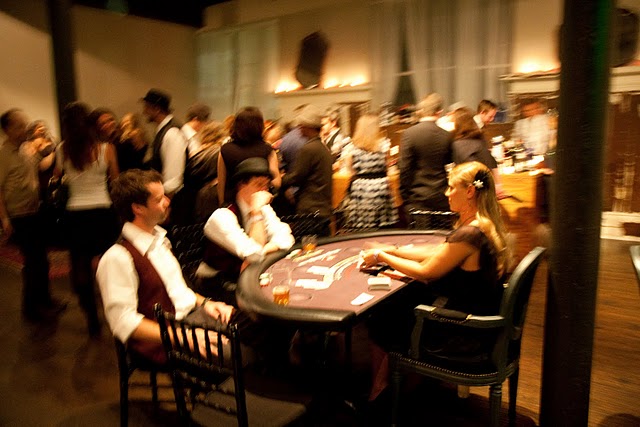
Because Princess says so

3

caitlin@sfbg.com

SEX ISSUE 2011 I saw Donna Dolore for the first time at a Hard French queer soul dance party at El Rio. I remember because she took my drink so authoritatively that I had no choice but to be okay with it. She sipped it, handed it back, and strode away. Can I get a thank you? Throughout the whole, sloppy afternoon, I noticed it was kind of her theme.

But no one seemed to care. Part of it was obvious: Dolore is a Sophia Loren with wider eyes, maybe a little taller, with the same generous tendencies towards sharing glimpses of the bust line. Only — I reflected, shortly before falling back into cheap-beer-and-go-go-dancer melee — that attitude. Who the hell is this woman?

Weeks later, I’m telling her the story in person in the cavernous break room at Kink.com’s headquarters in the San Francisco Armory (everything at the Armory is cavernous). It turns out that Dolore is in fact, a pretty big deal. Just ask her legions of heavy-breathing fans who know her as Princess Donna, the Kink.com director and star queer dominatrix.

“Oh my gosh, I did that?” At the office from where she plans shoots for the three Kink websites she heads, Dolore is a less formidable figure. She’s not wearing any makeup. Her black outfit makes her look like she’s about to take off for a light jog around the Mission.

But she might just be being coy. After all, I’d stalked her up good before our appointment and had come across this gem in a video interview she did a few years back: “I’m pretty true to form — Princess Donna acts a lot like I do.”

Dolore double majored at New York University, perfectly enough, in gender and sexuality studies and photography. She became a stripper while at school, and then on a tip from a coworker, got into professional BDSM shoots. Although she had been to some BDSM play parties, the work was the first time she’d ever been tied up.

“I was immediately into the challenge of being in a really stressful position — being flogged or caned, total sensory overload,” she remembers. “I would leave a shoot feeling really invigorated, a stronger person. It made me want to see what my body was capable of.”

Nowadays, Princess Donna sits — utterly sexily, usually in a short skirt and fuck-me heels — atop the Internet BDSM porn puppy pile.

At Kink she is the mind behind no less than three sites. For “Public Disgrace,” Dolore makes trips around the world to supervise the stripping-down, feeling-up, and penetration of beautiful women in town squares and busy bars. On “Wired Pussy,” she plays with electrical equipment, inducing screaming orgasms in her female partners.

In her latest endeavor, “Bound Gang Bang,” Dolore supervises teams of horny men and one or two women in fantasy-type shoots: high school nerds get their revenge on the bitchy mean girls, a prison warden drops her key and winds up giving head to inmates through a chain link fence. She has guest-starred in many of Kink’s different sites, usually as a top, sometimes as a bottom.

“I get stressed out because we have so much content to produce,” says Dolore, who works on one or two shoots a week. “But it’s a challenge that I enjoy.” One gets the sense that at Kink, Dolore has found a place that can nurture her talent for perversion.

http://www.youtube.com/watch?v=bYkStoeNtuw

Like most of Kink’s offerings, Dolore’s sites are unapologetically brutal. Women are dominated, wind up covered in ejaculate and with bound breasts that are agonizing to look at (well, at least for the BDSM newbie).

This is exactly the kind of stuff that sends shivers — the bad kind — up the spines of anti-porn feminists. But Dolore is a feminist too. As articulate as she is and as prominent she is and as wild as her porns are, she’s often called on to defend BDSM’s treatment and portrayal of women.

“I think the exact opposite of the people that think that BDSM would promote violence against women,” she says. That tired question — “is porn degrading to women?” — is something that Dolore finds degrading. Why, she asks, don’t the anti-porn musketeers ask the same of men in the industry?

“What is going on in our society that we continue to see sex as something that is put on women that they don’t desire? Why can’t we fathom it being a dream job for a woman?”

Kink is doing its part to raise awareness about the sexual pleasure that can be experienced by submissive actors. Before and after each shoot, the man or woman who you’ve watched screaming, a cattle prod or vibrator pressed against their genitals, is interviewed. That familiar dazed after-sex look is all over their faces, and their endorphin-heavy perk is really all you need to know what Dolore says is true: the models at Kink really, really love their job.

Delore contests the notion that only people who have been sexual abused take pleasure in pain, although she says you’ll find abuse victims in porn studios, just like any other workplace.

“Unfortunately, you could look to any profession and say a lot of them were abused as kids. You could look at secretaries and say that. Personally, I wasn’t sexually abused.” She smiles. “I’m just a natural pervert.”

Delore’s a regular on the queer party circuit — this week, you can catch her stealing drinks at Sunday’s “Deviants” Folsom Street Fair closing party. Her exuberance in exploring the outer realms of sexuality haven’t gone unnoticed in the San Francisco sex community. Kelly Lovemonster, editor of the queer quarterly sexuality zine [SSEX BBOX] is a close friend of Dolore, and calls her a “super heroine.”

“Even when she is portraying a submissive bottom, being cattle prodded, nipples clamped down and attached to electric cords, you can tell she is absolutely in control,” says Lovemonster. “She shows us that our dirtiest, scariest, and wildest sexual fantasies can come true through healthy communication and BDSM play. She rescues us all from a world where sexuality is suppressed and made shameful.”

This, according to Dolore, is a big part of why what Kink produces is important. The website puts BDSM urges out there, lets people that get turned on by being slapped across the face know that they’re not the only ones.

For the dis-empowered and isolated BDSM fan, that can be heady stuff. “You can explore your rape fantasy in a way that the woman is in control of what’s happening to their body — it’s a way to relive a situation where you had no control and relive it in a way in which you do have control,” says Dolore.

In a direct repudiation of the claims that abuse victims fall into BDSM for unsavory reasons. Dolore says she’s seen rough sex and power play rehabilitate partners whose sexuality seems terminally fucked. “I’m not a therapist but I feel like I am sometimes.”

But when I ask her if she considers herself an activist, she says no.

“When I think of the word activist, I think of people who are more outspoken than I am. I do my thing on my website, and people can come watch it if they want to.”

Which is not to say that the forward girl at Hard French doesn’t think she’s affecting change. Says the princess: “I’m just happy that I can help people be honest about what they want in bed.” 

DEVIANTS: OFFICIAL FOLSOM STREET FAIR CLOSING PARTY

Sun/25 4 p.m.-3 a.m., $20-30

Public Works

161 Erie, SF

www.publicsf.com


Film Listings

0

OPENING

Abduction A teenager (Taylor Lautner) sets out to find his true identity (duh, dude, everyone knows you’re a werewolf) in John Singleton’s action thriller. (1:46)

*The Black Power Mixtape 1967-1975 Cinematic crate-diggers have plenty to celebrate, checking the results of The Black Power Mixtape 1967-1975. Swedish documentarian Göran Hugo Olsson had heard whispers for years that Swedish television archives possessed more archival footage of the Black Panthers than anyone in the states — while poring through film for a doc on Philly soul, he discovered the rumors were dead-on. With this lyrical film, coproduced by the Bay Area’s Danny Glover, Olsson has assembled an elegant snapshot of black activists and urban life in America, relying on the vivid, startlingly crisp images of figures such as Stokely Carmichael and Huey P. Newton at their peak, while staying true to the wide-open, refreshingly nonjudgmental lens of the Swedish camera crews. Questlove of the Roots and Om’Mas Keith provide the haunting score for the film, beautifully historicized with shots of Oakland in the 1960s and Harlem in the ’70s. It’s made indelible thanks to footage of proto-Panther school kids singing songs about grabbing their guns, and an unforgettable interview with a fiery Angela Davis talking about the uses of violence, from behind bars and from the place of personally knowing the girls who died in the infamous Birmingham, Ala., church bombing of 1963. (1:36) Embarcadero, Piedmont, Shattuck. (Chun)

City of Life and Death There have been a number of recent works about the “rape of Nanking,” but perhaps none tackles the brutal nature of Nanjing’s fall with as much beauty as City of Life and Death. Shot in striking black and white, the film depicts the invasion of China’s capital by Japanese forces from a number of points of view, including that of a Japanese soldier. It can be difficult at times to become emotionally attached to characters within such a restless narrative, but the structure goes a long way toward keeping the proceedings balanced. The stunningly elaborate sets and cinematography alone are worth the price of admission, and it’s amazing that such detail was achieved with a budge of less than $12 million. But it is the unflinching catalog of the some 300,000 murders and rapes that took place between 1937 and 1938 in Nanjing that will remain with you long after watching. (2:13) Opera Plaza. (Peter Galvin)

Dolphin Tale A wayward dolphin with an injured tail is rescued by marine biologists, befriends a little boy and his single mother (Ashley Judd), and somehow Kris Kristofferson and Morgan Freeman are involved. Admit it, you’re weeping already. (1:53) Presidio.

Farmageddon First-time director Kristin Canty embarked on this documentary after discovering the healing power of raw milk in helping her child’s allergies. And it shows. Farmaggedon really should have been titled A Raw Deal for Raw Milk, considering its primary focus on several small family-operated dairies and the souring treatment they have received from government bureaucrats, spurring Canty’s activist act of making this movie. Larry and Linda Failace of Three Shephard’s Cheese in Vermont (the latter wrote her own book, 2007’s Mad Sheep: The True Story Behind the USDA’s War on a Family Farm) seem to have suffered the most, driven out of business when the sheep they brought over legally, with all the required quarantines, were seized and destroyed by the government agents on the pretext that the animals might spread “mad cow” disease. The sight of Linda Failace breaking into tears reading her daughter’s words about how the sheep were like her brothers and sisters is heart-breaking. Undermining such powerful, outrageous material are Canty’s textbook missteps: the director has major problems organizing her seemingly scattershot, lopsided material into a coherent and, er, organic whole, and lets her many sources drone on without a strong narrative through-line. All of this makes Farmaggedon a bit of a struggle to watch, although the dirt Canty digs up is likely to justifiably raise the hackles of progressive foodies. (1:30) Roxie, Smith Rafael. (Chun)

*Killer Elite Jason Statham has a lot going on, in addition to devastatingly attractive male-pattern balding: along with fellow Brit Daniel Craig, he’s one of the most believable action heroes in the cineplex today. This continent-hopping, Bourne-ish exercise, kitted out with piercingly loud sound design, comes chock-full of promise in the form of Statham, Robert De Niro, and Clive Owen, wielding endless firearms and finding new deadly uses for bathroom tile — you don’t want to be caught solo in anger management class with these specialists in cinematic rageaholism. Mercenary assassin Danny (Statham) wants out of the game after a traumatic killing involving way too much eye contact with a small child. Killer coworker Hunter (De Niro) pulled him out of that tight spot, so when the aging gunman is held hostage, Danny must emerge from hiding in rural Australia and take on a seemingly impossible case: avenge the deaths of a dying sheik’s sons, who were gunned down by assorted highly trained British military hotshots, get them to confess, and make it all look like an accident. Oh, yes, and try to make sure his own loved ones aren’t killed in the process. Dancing backwards as fast as he can is those retired Brits’ guardian angel-of-sorts, Spike (Owen), another intense, dangerous fellow with too much time on his hands. Throw in my favorite Oz evil-doer Adewale Akinnuoye-Agbaje as Danny and Hunter’s boss, some welcome been-there twinkle from De Niro, as well as a host of riveting fight scenes (and that ’00s cliché: sudden death by bus/truck/semi), and you have diverting popcorn killer. (1:40) Presidio. (Chun)

Moneyball As fun as it is to watch Brad Pitt listen to the radio, work out, hang out with his cute kid, and drive down I-80 over and over again, it doesn’t quite translate into compelling cinema for the casual baseball fan. A wholesale buy-in to the cult of personality — be it A’s manager Billy Beane or the actor who plays him — is at the center of Moneyball‘s issues. Beane (Pitt) is facing the sad, inevitable fate of having to replace his star players, Jason Giambi and Johnny Damon, once they command the cash from the more-moneyed teams. He’s gotta think outside of the corporate box, and he finds a few key answers in Peter Brand (a.k.a. Paul DePodesta, played by Jonah Hill), who’s working with the sabermetric ideas of Bill James: scout the undervalued players that get on base to work against better-funded big-hitters. Similarly, against popular thought, Moneyball works best when director Bennett Miller (2005’s Capote) strays from the slightly flattening sunniness of its lead actor and plunges into the number crunching — attempting to visualize the abstract and tapping into the David Fincher network, as it were (in a related note, Aaron Sorkin co-wrote Moneyball‘s screenplay) — though the funny anti-chemistry between Pitt and Hill is at times capable of pulling Moneyball out of its slump. (2:13) Marina. (Chun)

*My Afternoons with Margueritte There’s just one moment in this tender French dramedy that touches on star Gerard Depardieu’s real life: his quasi-literate salt-of-the-earth character, Germain, rushes to save his depressed friend from possible suicide only to have his pretentious pal pee on the ground in front of him. Perhaps Depardieu’s recent urinary run-in, on the floor of an airline cabin, was an inspired reference to this moment. In any case, My Afternoons With Margueritte offers a hope of the most humanist sort, for all those bumblers and sad cases that are usually shuttled to the side in the desperate ’00s, as Depardieu demonstrates that he’s fully capable of carrying a film with sheer life force, rotund gut and straw-mop ‘do and all. In fact he’s almost daring you to hate on his aging, bumptious current incarnation: Germain is the 50-something who never quite grew up or left home. The vegetable farmer is treated poorly by his doddering tramp of a mother and is widely considered the village idiot, the butt of all the jokes down at the cafe, though contrary to most assumptions, he manages to score a beautiful, bus-driving girlfriend (Sophie Guillemin). However the true love of his life might be the empathetic, intelligent older woman, Margueritte (Gisele Casadesus), that he meets in the park while counting pigeons. There’s a wee bit of Maude to Germain’s Harold, though Jean Becker’s chaste love story is content to remain within the wholesome confines of small-town life — not a bad thing when it comes to looking for grace in a rough world. (1:22) Embarcadero, Shattuck. (Chun)

Restless See “Twee of Life.” (1:35) Lumiere, Shattuck.

*3 The press literature for 3, Tom Tykwer’s latest, throws around references to classic Hollywood screwball comedies, but this romantic drama is far too self-conscious, serious, and almost pretentious to ever completely ape the mercury lightness of that genre. Apart from one slightly jarring fantasy sequence or two, this polyamorous love story is all about contemporary Berlin bohemia, from hero Hanna’s (Sophie Rois) immersion in the worlds of science and art, to her increasingly plastic relationship with partner Simon (Sebastian Schipper). On the edge of their 20th anniversary, the smart, stylish 40-ish bohos are still in love, though a younger, perpetually amused-looking doctor Adam (Devid Striesow) threatens to turn their two-decade itch into something much more involved. Tykwer kicks off his high-minded romp with a pas de trois, sprinkling split-screen interludes into the program as he goes, but such devices fall away — sucking the viewer into its heady, seductive undertow — beneath the sheer eroticism of these sexual empiricists’ couplings, particularly in the humid, Cat People-like scenes set in a Badeschiff pool, which comes to resemble a carnally charged hothouse as envisioned by Olafur Eliasson. (1:59) Sundance Kabuki. (Chun)

ONGOING

Bucky Larson: Born to Be a Star (1:36) 1000 Van Ness.

Circumstance Thirteen (2003) goes to Tehran? The world of sex, drugs, and underground nightclubs in Iran provides the backdrop for writer-director Maryam Keshavarz’s lusty, dreamy take on the passionate teenagers behind the hijabs. Risking jail and worse are the sassy, privileged Atafeh (Nikohl Boosheri) and the beautiful, orphaned Shireen (Sarah Kazemy), who, much like young women anywhere, just want to be free — to swim, sing, dance, test boundaries, lose, and then find themselves. The difference here is that they’re under constant, unnerving surveillance, in a country where more than 70 percent of the population is less than 30 years old. Nevertheless, within their mansion walls and without, beneath graffitied walls and undulating at intoxicating house parties, the two girls begin to fall in love with each other, as Atafeh’s handsome, albeit creepy older brother Mehran (Palo Alto-bred Reza Sixo Safai) gazes on. The onetime musical talent’s back from rehab, has returned to the mosque with all the zeal of the prodigal, and has hooked up with the Morality Police that enforces the nation’s cultural laws. Filmed underground in Beirut, with layers that permit both pleasure and protest (wait for the hilarious moment when 2008’s Milk is dubbed in Farsi), Circumstance viscerally transmits the realities and fantasies of Iranian young women on the verge. (1:45) Embarcadero, Shattuck. (Chun)

*Cold Fish Did you love (or find yourself baffled by) Sion Sono’s Love Exposure during its Roxie run? Sono’s Cold Fish is similarly occupied with indoctrination, masochism, and extreme behavior. However, it’s also somewhat better able to sustain a tone of hysteria escalating toward dementia. An unhappy family (father Mitsuru Fukikoshi, daughter Hikari Kajiwara, stepmother Megumi Kagurazaka) is yanked into the orbit of a tropical-fish tycoon (Denden) who at first seems a boisterous benefactor providing shock therapy to their depressed lives out of simple altruism. But he and his bombshell wife (Asuka Kurosawa) soon reveal sides not just sinister but psychopathic, ensnaring all three in diabolical doings that encompass murder, rape, grisly corpse disposals, and more. Structured like Love Exposure as one long countdown to a transformative moment, Cold Fish pushes black comedy way beyond the bounds of taste with an oddly neutralizing good cheer. It’s a manic Grand Guignol set to the soothing kitsch strains of retro Hawaiian-flavored lounge music. (2:24) Roxie. (Harvey)

Colombiana (1:47) 1000 Van Ness.

*Connected: An Autoblogography About Love, Death, and Technology Local filmmaker Tiffany Shlain (founder of the Webby Awards) takes a look at 21st century connections, both technological and personal, in this documentary. And the film gets very personal at times; constructed mostly as a video collage (using animation, stock footage, etc.), its few original clips come from Shlain family movies, which become more poignant when it’s revealed that the filmmaker’s beloved father, an author and brain surgeon, is dying of brain cancer. Shlain’s film draws some of its themes from her father’s 1999 book The Alphabet Versus the Goddess, a study of literacy’s effect on male-female dynamics over history, and the film is dedicated to him. But though the Shlain family’s struggles with loss and life (the filmmaker was pregnant when her father died) form Connected‘s thru line, the film’s probing, lively exploration of links (on- and offline) is universally relatable, and ultimately quite thought-provoking. (1:20) Embarcadero, Shattuck. (Eddy)

*Contagion Tasked with such panic-inducing material, one has to appreciate director Steven Soderbergh’s cool head and hand with Contagion. Some might even dub this epic thriller (of sorts) cold, clinical, and completely lacking in bedside manner. Still, for those who’d rather be in the hands of a doctor who refuses to talk down to the patient, Contagion comes on like a refreshingly smart, somewhat melodrama-free clean room, a clear-eyed response to a messy, terrifying subject. A deadly virus is spreading swiftly — sans cure, vaccine, or sense — starting with a few unlikely suspects: globe-trotting corporate exec Beth (Gwyneth Paltrow), a waiter, a European tourist, and a Japanese businessman. The chase is on to track the disease’s genesis and find a way to combat it, from the halls of the San Francisco Chronicle and blog posts of citizen activist-journalist Alan (Jude Law), to the emergency hospital in the Midwest set up by intrepid Dr. Mears (Kate Winslet), to a tiny village in China with a World Health investigator (Marion Cotillard). Soderbergh’s brisk, businesslike storytelling approach nicely counterpoints the hysteria going off on the ground, as looting and anarchy breaks out around Beth’s immune widower Mitch (Matt Damon), and draws you in — though the tact of making this disease’s Typhoid Mary a sexually profligate woman is unsettling and borderline offensive, as is the predictable blame-it-on-the-Chinese origin coda. (1:42) California, Empire, Marina, 1000 Van Ness, Sundance Kabuki. (Chun)

Crazy, Stupid, Love Keep the poster’s allusion to 1967’s The Graduate to one side: there aren’t many revelations about midlife crises in this cleverly penned yet strangely flat ensemble rom-com, awkwardly pitched at almost every demographic at the cineplex. There’s the middle-aged romance that’s withered at the vine: nice but boring family man Cal (Steve Carell) finds himself at a hopeless loss when wife and onetime teenage sweetheart Emily (Julianne Moore) tells him she wants a divorce and she’s slept with a coworker (Kevin Bacon). He ends up waxing pathetic at a slick nightclub where he catches the eye of the well-dressed, spray-tanned smoothie Jacob (Ryan Gosling), who appears to have taken his ladies man stance from the Clooney playbook. It’s manly makeover time: GQ meets Pretty Woman (1990)! Cut to Cal and Emily’s babysitter Jessica (Analeigh Tipton), who is crushing out on Cal, while the separated couple’s tween Robbie (Jonah Bobo) hankers for Jessica. Somehow Josh Groban worms his way into the mix as the dullard suitor of Hannah (Emma Stone) in a hanging chad of a storyline that must somehow be resolved in this mad, mad, mad, mad — actually, the problem with Crazy, Stupid, Love is that it isn’t really that crazy. It tries far too hard to please everybody in the theater to its detriment, reminding the viewer of a tidy, episodic TV series (albeit a quality effort) like Modern Family more than an actual film. Likewise I yearned for a way to fast-forward through the too-cute Jessica-Robbie scenes in order to get back to the sleazy-smart, punchy complexity of Gosling, playing adeptly off both Carrell and Stone. (1:58) SF Center, Shattuck, Sundance Kabuki. (Chun)

The Debt On paper, The Debt has a lot going for it: captivating history-based plot, “it” actor Jessica Chastain, Helen Mirren vs. Nazis. And while the latest from John Madden (1998’s Shakespeare in Love) is fairly entertaining, the film is ultimately forgettable. Chastain plays Rachel, a member of an Israeli team tasked with capturing a Nazi war criminal and bringing him to justice. Mirren is the older Rachel, who is haunted by the long-withheld true story of the mission. Although The Debt traffics in spy secrets, it’s actually rather predictable: the big reveal is shrug-worthy, and the shocking conclusion is expected. So while the entire cast — which also includes Tom Wilkinson, Sam Worthington, and Ciaran Hinds — turn in admirable performances, the script is lacking what it needs to make The Debt an effective drama or thriller. Like 2008’s overrated The Reader, the film tries to hide its inadequacies under heavy themes and the dread with which we remember the Holocaust. (1:54) Four Star, 1000 Van Ness, Sundance Kabuki. (Peitzman)

Detective Dee and the Mystery of the Phantom Flame (2:02) Embarcadero, Shattuck, Sundance Kabuki.

*Drive Such a lovely way to Drive, drunk on the sensual depths of a lush, saturated jewel tone palette and a dreamlike, almost luxurious pacing that gives off the steamy hothouse pop romanticism of ’80s-era Michael Mann and David Lynch — with the bracing, impactful flecks of threat and ultraviolence that might accompany a car chase, a moody noir, or both, as filtered through a first-wave music video. Drive comes dressed in the klassic komforts — from the Steve McQueen-esque stances and perfectly cut jackets of Ryan Gosling as the Driver Who Shall Remain Nameless to the foreboding lingering in the shadows and the wittily static, statuesque strippers that decorate the background. Gosling’s Driver is in line with Mann’s other upstanding working men who hew to an old-school moral code and are excellent at what they do, regardless of what side of the law they’re working: he likes to keep it clear and simple — his services as a wheelman boil down to five minutes, in and out — but matters get messy when he falls for sweet-faced neighbor Irene (Carey Mulligan), who lives down the hall with her small son, and her ex-con husband (Oscar Isaac) is dragged back into the game. Populated by pungent side players like Albert Brooks, Bryan Cranston, Ron Perlman, and Christina Hendricks, and scattered with readily embeddable moments like a life-changing elevator kiss that goes bloodily wrong-right, Drive turns into a real coming-out affair for both Danish director Nicolas Winding Refn (2008’s Bronson), who rises above any crisis of influence or confluence of genre to pick up the po-mo baton that Lynch left behind, and 2011’s MVP Ryan Gosling, who gets to flex his leading-man muscles in a truly cinematic role, an anti-hero and under-the-hood psychopath looking for the real hero within. (1:40) Empire, 1000 Van Ness, Presidio, SF Center, Sundance Kabuki. (Chun)

*The Future Dreams and drawings, cats and fantasies, ambition and aimlessness, and the mild-mannered yet mortifying games people play, all wind their way into Miranda July’s The Future. The future’s a scary place, as many of us fully realize, even if you hide from it well into your 30s, losing yourself in the everyday. But you can’t duck July’s collection of moments, objects, and small gestures transformed into something strangely slanted and enchanted, both weird and terrifying, when viewed through July’s looking glass. Care and commitment — to oneself and others — are two vivid threads running through The Future. Cute couple Sophie (July) and Jason (Hamish Linklater) — unsettling look-alikes with their curly crops — appear at first to be sailing contently, aimlessly toward an undemanding unknown: Jason works from home as a customer-service operator, and Sophie attempts to herd kiddies as a children’s dance instructor. But enormous, frightening demands beckon — namely the oncoming adoption of a special-needs feline named Paw-Paw (voiced by July as if it’s a traumatized, innocent child). Lickety-splitsville, they must be all they can be before Paw-Paw’s arrival. The weirdness of the familiar, and the kindness of strangers, become ways into fantasy and escape when the couple bumps up against the limits of their imagination. This ultra-low-key horror movie of the banal is obviously remote territory for July (2005’s Me and You and Everyone We Know). The Future is her best film to date and finds her tumbling into a kind of magical realism or plastic fantastic, embodied by a talking cat that becomes the conscience of the movie. (1:31) Roxie. (Chun)

The Guard Irish police sergeant Gerry Boyle (Brendan Gleeson) is used to running his small town on his own terms — not in a completely Bad Lieutenant (1992) kind of way, though he’s not afraid to sample drugs and hang with hookers. More like, he’s been running the show for years, and would prefer that big-city cops stay the hell out of his village. Alas, a gang of drug smugglers is doing business in the area, so an officious group of investigators from Dublin (horrors!) and America (in the form of an FBI agent played by Don Cheadle) soon descend. His mother’s dying, his brand-new partner’s missing, and between all the interlopers on both sides of the law, Boyle’s having a hard time having a pint in peace. Good thing he’s not as simple-minded as all who surround him think he is. Writer-director John Michael McDonagh (brother of playwright Martin, who directed 2008’s In Bruges — also starring Gleeson) puts an affable Irish spin on what’s essentially a pretty typical indie comedy, with some pretty typical crime-drama elements layered atop. Boyle’s character is memorably clever, but the film that contains him never quite elevates to his level. (1:36) Lumiere, Shattuck, Sundance Kabuki. (Eddy)

*The Hedgehog You needn’t possess the rough, everyday refinement of the characters of The Hedgehog to appreciate this debut feature by director-screenwriter Mona Achache — just an appreciation for a delicate touch and a tender heart. Eleven-year-old Paloma (the wonderful Garance Le Guillermic) is too smart for her own good, bored, neglected by her parents, and left to fend for herself with only her considerable imagination and a camcorder. She drifts around her fishbowl of privilege, a deluxe art nouveau-style apartment building in Paris, leveling her all-too-wise gaze on its denizens and plotting certain suicide on her 12th birthday — that is until a new resident appears in her viewfinder: a kindly Japanese gentleman Kakuro Ozu (Togo Igawa). He has as much of a connoisseur’s eye as Paloma — the proof is in his unlikely focus of attention, the building’s concierge Renée Michel (Josiane Balasko, resembling a burly Gertrude Stein), who hides her cultured and bookish inclinations behind a gruff, drab exterior. They recognize in each other a reverence for an almost monkish life of the mind, the austere elegance of wabi-sabi, and the transient beauty of rough-hewn imperfection, even in the sleek, well-heeled heart of the City of Light. To the credit of Achache, working with Muriel Barbery’s novel, these unlikely fragile friendships between outsiders take hold in a way that sidesteps preciousness and stays with you long after its pages have turned. (1:40) Smith Rafael. (Chun)

The Help It’s tough to stitch ‘n’ bitch ‘n’ moan in the face of such heart-felt female bonding, even after you brush away the tears away and wonder why the so-called help’s stories needed to be cobbled with those of the creamy-skinned daughters of privilege that employed them. The Help purports to be the tale of the 1960s African American maids hired by a bourgie segment of Southern womanhood — resourceful hard-workers like Aibileen (Viola Davis) and Minny (Octavia Spencer) raise their employers’ daughters, filling them with pride and strength if they do their job well, while missing out on their own kids’ childhood. Then those daughters turn around and hurt their caretakers, often treating them little better than the slaves their families once owned. Hinging on a self-hatred that devalues the nurturing, housekeeping skills that were considered women’s birthright, this unending ugly, heartbreaking story of the everyday injustices spells separate-and-unequal bathrooms for the family and their help when it comes to certain sniping queen bees like Hilly (Bryce Dallas Howard). But the times they are a-changing, and the help get an assist from ugly duckling of a writer Skeeter (Emma Stone, playing against type, sort of, with fizzy hair), who risks social ostracism to get the housekeepers’ experiences down on paper, amid the Junior League gossip girls and the seismic shifts coming in the civil rights-era South. Based on the best-seller by Kathryn Stockett, The Help hitches the fortunes of two forces together — the African American women who are trying to survive and find respect, and the white women who have to define themselves as more than dependent breeders — under the banner of a feel-good weepie, though not without its guilty shadings, from the way the pale-faced ladies already have a jump, in so many ways, on their African American sisters to the Keane-eyed meekness of Davis’ Aibileen to The Help‘s most memorable performances, which are also tellingly throwback (Howard’s stinging hornet of a Southern belle and Jessica Chastain’s white-trash bimbo-with-a-heart-of-gold). (2:17) California, Empire, 1000 Van Ness, Presidio, SF Center, Sundance Kabuki. (Chun)

I Don’t Know How She Does It I don’t know how a likable comedian like Sarah Jessica Parker does it — meaning, such mediocre material as this mom-com. Parker may have parlayed her Sex and the City fame into a fashion, fragrance, and spin-off franchises, but she still hasn’t quite found her stride away from Carrie Bradshaw, though her Lucille Ball-esque physical comedy here — pulling down her skirt in mid-mommy-frazzle in front of her high-powered client — can be cute. Kate (Parker) just might be the busiest mom in the world: she’s juggling two kids, a hubby whose own career is on the rise (Greg Kinnear), and a major fund idea, which she has to sell to an attractive banking bigwig (Pierce Brosnan). Poor, poor privileged mom — in the trenches of the still-unadorable field of banking, with her obviously sizable salary, enviable Boston duplex, flaky-nice nanny, and bubbly single-mom friend (Christina Hendricks)! The biggest assist comes from her careerist aide, played by Olivia Munn, who grabs the biggest laughs with her deadpan delivery. (1:35) 1000 Van Ness. (Chun)

The Lion King 3D (1:29) 1000 Van Ness, SF Center, Shattuck, Sundance Kabuki.

*Love Crime Early this year came the announcement that Brian De Palma was hot to do an English remake of Alain Corneau’s Love Crime. The results, should they come to fruition, may well prove a landmark in the annals of lurid guilty-pleasure trash. But with the original Love Crime finally making it to local theaters, it’s an opportune moment to be appalled in advance about what sleazy things could potentially be done to this neat, dry, fully clothed model of a modern Hitchcockian thriller. No doubt in France Love Crime looks pretty mainstream. But here its soon-to be-despoiled virtues of narrative intricacy and restraint are upscale pleasures. Ludivine Sagnier plays assistant to high-powered corporate executive Christine (Kristin Scott Thomas). The boss enjoys molding protégée Isabelle to her own image, making them a double team of carefully planned guile unafraid to use sex appeal as a business strategy. But Isabelle is expected to know her place — even when that place robs her of credit for her own ideas — and when she stages a small rebellion, Christine’s revenge is cruelly out of scale, a high-heeled boot brought down to squash an ant. Halfway through an act of vengeance occurs that is shocking and satisfying, even if it leaves the remainder of Corneau and Nathalie Carter’s clever screenplay deprived of the very thing that had made it such a sardonic delight so far. Though it’s no masterpiece, Love Crime closes the book on his Corneau’s career Corneau (he died at age 67 last August) not with a bang but with a crisp, satisfying snap. (1:46) Albany, Clay, Smith Rafael. (Harvey)

Mary Lou A musical fable for fans of Glee, Hedwig and the Angry Inch (2001), The Adventures of Priscilla, Queen of the Desert (1994), and Bollywood, the latest from Eytan Fox (2002’s Yossi and Jagger) is a drag-flavored dramedy (Israel’s first?) Originally a hit miniseries in its home country, Mary Lou screens at the Castro in one big chunk jammed with singing, dancing, and a dreamy cast. Pouty Ido Rosenberg stars as Meir, a gay boy obsessed with finding the mother who left him when he was 10. After a disastrous graduation party, Meir flees his homophobic high school for the worldly environs of Tel Aviv, where he soon becomes a drag star named Mary Lou, after his mother’s favorite song. Love, loss, friendship, tragedy, joy, coming-of-age, and quite a few elaborate musical numbers soon transpire — the plot is not without clichés, to be sure, but it’s hard to hate on anything possessed of such sparkly energy. Not familiar with Svika Pick, the Israeli legend whose music provides much of the soundtrack? It matters not, especially if you’re a fan of deliriously corny pop tunes. (2:30) Castro. (Eddy)

Midnight in Paris Owen Wilson plays Gil, a self-confessed “Hollywood hack” visiting the City of Light with his conservative future in-laws and crassly materialistic fiancée Inez (Rachel McAdams). A romantic obviously at odds with their selfish pragmatism (somehow he hasn’t realized that yet), he’s in love with Paris and particularly its fabled artistic past. Walking back to his hotel alone one night, he’s beckoned into an antique vehicle and finds himself transported to the 1920s, at every turn meeting the Fitzgeralds, Gertrude Stein (Kathy Bates), Dali (Adrien Brody), etc. He also meets Adriana (Marion Cotillard), a woman alluring enough to be fought over by Hemingway (Corey Stoll) and Picasso (Marcial di Fonzo Bo) — though she fancies aspiring literary novelist Gil. Woody Allen’s latest is a pleasant trifle, no more, no less. Its toying with a form of magical escapism from the dreary present recalls The Purple Rose of Cairo (1985), albeit without that film’s greater structural ingeniousness and considerable heart. None of the actors are at their best, though Cotillard is indeed beguiling and Wilson dithers charmingly as usual. Still — it’s pleasant. (1:34) Albany, Embarcadero, Piedmont. (Harvey)

Mozart’s Sister Pity the talented sister of a world-shaking prodigy. Maria Anna “Nannerl” Mozart, who may have had just as much promise as a composer as her younger brother, according to Rene Féret’s Mozart’s Sister. A scant five years older, enlisted in the traveling family band led by father-teacher Leopold (Marc Barbe), yet forced to hide her music, being female and forbidden to play violin and compose, Nannerl (Marie Féret, the filmmaker’s daughter) tours the courts of Europe and is acclaimed as a keyboardist and vocalist but is expected to share little of her brother’s brilliant future. Following a chance carriage breakdown near a French monastery, Nannerl befriends one of its precious inhabitants, a daughter of Louis XV (Lisa Féret, another offspring), which leads her to Versailles, into a cross-dressing guise of a boy, and puts her into the sights of the Dauphin (Clovis Fouin, who could easily find a spot in the Cullen vampire clan). He’s seduced by her music and likewise charms Nannerl with his power and feline good looks — what’s a humble court minstrel to do? The conceit of casting one’s daughters in a narrative hinging on unjustly neglected female progeny — shades of Sofia Coppola in The Godfather: Part III (1990)! — almost capsizes this otherwise thoughtful re-imagination of Maria Anna’s thwarted life; despite the fact Féret has inserted his children in his films in the past, both girls offer little emotional depth to their roles. Nevertheless, as a feminist rediscovery pic akin to Camille Claudel (1988), Mozart’s Sister instructs on yet another tragically quashed woman artist and might inspire some righteous indignation. (2:00) Bridge, Shattuck, Smith Rafael. (Chun)

*One Day Why do romantic comedies get such a bad rap? Blame it on the lame set-up, the contrived hurdles artificially buttressed by the obligatory chorus of BFFs, the superficial something-for-every-demographic-with-ADD multinarrative, and the implausible resolutions topped by something as simple as a kiss or as conventional as marriage, but often no deeper, more crafted, or heartfelt than an application of lip gloss. Yet the lite-as-froyo pleasures of the genre don’t daunt Danish director Lone Scherfig, best known for her deft touch with a woman’s story that cuts closer to the bone, with 2009’s An Education. Her new film, One Day, based on the best-selling novel by David Nicholls, flirts with the rom-com form — from the kitsch associations with Same Time, Next Year (1978) to the trailer that hangs its love story on a crush — but musters emotional heft through its accumulation of period details, a latticework of flashbacks, and collection of encounters between its charming protagonists: upper-crusty TV presenter Dexter (Jim Sturgess) and working-class aspiring writer Emma (Anne Hathaway). Their quickie university friendship slowly unfolds, as they meet every St. Swithin’s Day, July 15, over a span of years, into the most important relationship of their lives. Despite the blue-collar female lead and UK backdrop that it shares with An Education, One Day feels like a departure for Scherfig, who first found international attention for her award-winning Dogme 95-affiliated Italian for Beginners (2000). (1:48) 1000 Van Ness, Piedmont. (Chun)

*Our Idiot Brother If you thought 1998’s The Big Lebowski had eked all the humor that it could from the Dude, well, screenwriter (and Vanity Fair contributor) Evgenia Peretz, her not-so-idiotic brother (director Jesse Peretz), and star Paul Rudd would differ. They correctly guessed that there are still laughs to be wrung from a shaggy stoner in floral jams, only this time with less fuuuck-s and more benevolent, idiot-savant good vibrations. Dazed and confused broheim 2.0 (Rudd) is glimpsed through the jaded, harried prism of his three dysfunctional, supposedly normal sisters: frumpadelic mom Liz (Emily Mortimer), queen-bitch Vanity Fair writer Miranda (Elizabeth Banks), and slatternly would-be comedian Natalie (Zooey Deschanel). A good-hearted naïf who’s easily entrapped by a uniformed police officer claiming to need some pity doobage, Ned has just emerged from the joint and is now couch-surfing among his sibs, exposing the hypocrisies of bourgie-hipster Brooklyn, as well as the infidelities and vanities of family, friends, and partners (Steve Coogan, Rashida Jones, Adam Scott, and Hugh Dancy) as he goes, in his own good-natured, aw-shucks way. As innocuous (and desexualized) as Andy Griffith beneath the hippie trappings, this dude-with-a-little-d knows where his real family is — with his dog, Willie Nelson, who loves him just as unconditionally. Beastie besties have never seemed so innocent as they are in this proudly feel-good comedy, and despite a cringe-y, saccharine soundtrack and lackadaisical pacing, Rudd’s charismatic sunny slacker and some pointed jabs at the follies of the cooler-than-thou save this indie-that-could. (1:36) 1000 Van Ness, Sundance Kabuki. (Chun)

*Point Blank Not for nothing did Hollywood remake French filmmaker Fred Cavaye’s last film, Anything for Her (2008) as The Next Three Days (2010) — Cavaye’s latest, tauter-than-taut thriller almost screams out for a similar rework, with its Bourne-like handheld camera work, high-impact immediacy, and noirish narrative economy. Point Blank — not to be confused with the 1967 Lee Marvin vehicle —kicks off with a literal slam: a mystery man (Roschdy Zem) crashing into a metal barrier, on the run from two menacing figures until he is cornered and then taken out of the action by fate. His mind mainly on the welfare of his very pregnant wife Nadia (Elena Anaya), nursing assistant Samuel (Gilles Lellouche) has the bad luck to stumble on a faux doctor attempting to make sure that the injured man never rises from his hospital bed. As police wrangle over whose case this exactly is — the murder of an industrialist seems to have expanded the powers of the stony-faced, monolithic Commandant Werner (Gerard Lanvin) — Samuel gets sucked into the mystery man’s lot, a conspiracy that allows them to trust no one, and seemingly impossibly odds against getting out of the mess alive. Cavaye never quite stops applying the pressure in this clever, unrelenting cat-and-mouse and mouse-and-his-spouse game, topping it with a nerve-jangling search through a messily chaotic police station. (1:24) Opera Plaza. (Chun)

*Rise of the Planet of the Apes “You gotta love a movie where the animals beat up on the humans,” declared my Rise of the Planet of the Apes companion. Indeed, ape must not kill ape, and this Planet of the Apes prequel-cum-remake of Conquest of the Planet of the Apes (1972) takes the long view, back to the days when ape-human relations were still high-minded enough to forbid smart apes from killing those well-armed, not-so-bright humanoids. I was a fan of the original series, but honestly, I approached Rise with trepidation: I dreaded the inevitable scenes of human cruelty meted out to exploited primates — the current wave of chimp-driven films seems focused on holding a scary, shaming mirror up to the two-legged mammalian violence toward their closest living genetic relatives. It’s a contrast to the original series, which provided prisms with which to peer at race relations and generational conflict. But I needn’t have feared this PG-13 “reboot.” There’s little CGI-driven gore, apart from the visceral opening and the showdown, though the heartbreak remains. Scientist Will (James Franco, brow perpetually furrowed with worry) is working to find a medicine designed to supercharge the brain in the wake of Alzheimer’s — a disease that has struck down his father (John Lithgow). When the experimental chimp that responds to his serum becomes violently aggressive, the project is shut down, although the primate leaves behind a surprise: a baby chimp that Will and his father name Caesar and raise like a beloved child in their idyllic Bay Area Victorian. Growing in intelligence as he matures, Caesar finds himself torn by an existential dilemma: is he a pet or a mammal with rights that must be respected? Rise becomes Caesar’s story, rendered in heart-wrenching, exhilarating ways — to director Rupert Wyatt and his team’s credit you don’t miss the performance finesse of Roddy McDowell and Kim Hunter in groundbreaking prosthetic ape face in the original movies — while resolving at least one question about why humans gave up the globe to the primates. One can only imagine the next edition will take care of the lingering question about how even the cleverest of apes will feed themselves in Muir Woods. (1:50) 1000 Van Ness, SF Center. (Chun)

Sarah’s Key (1:42) Four Star, Opera Plaza.

*Senna When Ayrton Senna died in 1994 at the age of 34, he had already secured his legacy as one of the greatest and most beloved Formula One racers of all time. The three-time world champion was a hero in his native Brazil and a respected and feared opponent on the track. This eponymous documentary by director Asif Kapadia is nearly as dynamic as the man himself, with more than enough revving engines and last minute passes to satisfy your lust for speed and a decent helping Ayrton’s famous personality as well. Senna was a champion, driven to win even as the sometimes-backhanded politics of the racing world stood in his way. A tragic figure, maybe, but a legend nonetheless. You don’t have to be an F1 fan to appreciate this film, but you may wind up one by the time the credits roll. (1:44) Opera Plaza, Smith Rafael. (Cooper Berkmoyer)

Straw Dogs Never could I have predicted there would be a day when the violent finale of Straw Dogs would be met with raucous cheers. The original 1971 film was produced within a morally ambiguous social climate and remains one of director Sam Peckinpah’s most controversial efforts; contemporary audiences trained to applaud a payoff of blood and gore are likely in the wrong headspace for a film like this. The remake, which sends a good-natured screenwriter (James Marsden) on a retreat in his wife’s (Kate Bosworth) sweaty Southern hometown where they find themselves at odds with a group of good ol’ boys, remains powerful and just as uncomfortable and mean as Peckinpah’s version, but it’s in service of a moral outcome that’s more in line with its commercial placement: ultimately it takes the road of “man becomes protector” over “man becomes monster.” If you have no interest in the original, you will find a fair bit of talent in this remake, but without the cynical attitude it can be hard to separate Straw Dogs from any other horror-movie-of-the-week. (1:50) 1000 Van Ness, SF Center, Shattuck. (Galvin)

The Tree of Life Mainstream American films are so rarely adventuresome that overreactive gratitude frequently greets those rare, self-conscious, usually Oscar-baiting stabs at profundity. Terrence Malick has made those gestures so sparingly over four decades that his scarcity is widely taken for genius. Now there’s The Tree of Life, at once astonishingly ambitious — insofar as general addressing the origin/meaning of life goes — and a small domestic narrative artificially inflated to a maximally pretentious pressure-point. The thesis here is a conflict between “nature” (the way of striving, dissatisfied, angry humanity) and “grace” (the way of love, femininity, and God). After a while Tree settles into a fairly conventional narrative groove, dissecting — albeit in meandering fashion — the travails of a middle-class Texas household whose patriarch (a solid Brad Pitt) is sternly demanding of his three young sons. As a modern-day survivor of that household, Malick’s career-reviving ally Sean Penn has little to do but look angst-ridden while wandering about various alien landscapes. Set in Waco but also shot in Rome, at Versailles, and in Saturn’s orbit (trust me), The Tree of Life is so astonishingly self-important while so undernourished on some basic levels that it would be easy to dismiss as lofty bullshit. Its Cannes premiere audience booed and cheered — both factions right, to an extent. (2:18) California, Lumiere. (Harvey)

*Warrior Those wondering why the mixed martial arts scene has captured the imagination of so many can finally understand what the fuss is all about, now that it comes filtered through a melodramatic narrative akin to The Fighter (2010). Warrior‘s mis-en-scene is immediately recognizable: a prodigal returns, in the form of Tom Conlon (Tom Hardy). Once a talented teenage wrestler, the now-battered man is the damaged youngest son of alcoholic ex-boxer Paddy Conlon (Nick Nolte). Tom wants his father to train him for a major mixed martial arts tournament with a multimillion-dollar purse, though the two obviously still have a deadly hold on each other — the repentant Paddy is on the wagon and the emotionally bruised Tom harbors secrets he won’t reveal — and battle with cutting comments rather than fists. Tom isn’t the only prodigal in the house: Paddy has lost the trust of Tom’s bro, Brendan (Joel Edgerton), a former fighter and present-day physics high school teacher who’s struggling to make ends meet with an underwater mortgage. Though Warrior is no Raging Bull (1980), it almost outdukes The Fighter in terms of its brutal bouts, conveying the swift, no-holds-barred action of MMA in the ring, while giving actors plenty of drama to wrap their jowls ’round — particularly in Nolte’s case. His tore-up turn as an all-excuses patriarch is as heartbreaking as a solid kick to the jaw. (2:19) California, 1000 Van Ness, SF Center. (Chun)


Film listings are edited by Cheryl Eddy. Reviewers are Kimberly Chun, Michelle Devereaux, Max Goldberg, Dennis Harvey, Louis Peitzman, Lynn Rapoport, Ben Richardson, and Matt Sussman. For rep house showtimes, see Rep Clock.

Film Listings

0

OPENING

Abduction A teenager (Taylor Lautner) sets out to find his true identity (duh, dude, everyone knows you’re a werewolf) in John Singleton’s action thriller. (1:46)

*The Black Power Mixtape 1967-1975 Cinematic crate-diggers have plenty to celebrate, checking the results of The Black Power Mixtape 1967-1975. Swedish documentarian Göran Hugo Olsson had heard whispers for years that Swedish television archives possessed more archival footage of the Black Panthers than anyone in the states — while poring through film for a doc on Philly soul, he discovered the rumors were dead-on. With this lyrical film, coproduced by the Bay Area’s Danny Glover, Olsson has assembled an elegant snapshot of black activists and urban life in America, relying on the vivid, startlingly crisp images of figures such as Stokely Carmichael and Huey P. Newton at their peak, while staying true to the wide-open, refreshingly nonjudgmental lens of the Swedish camera crews. Questlove of the Roots and Om’Mas Keith provide the haunting score for the film, beautifully historicized with shots of Oakland in the 1960s and Harlem in the ’70s. It’s made indelible thanks to footage of proto-Panther school kids singing songs about grabbing their guns, and an unforgettable interview with a fiery Angela Davis talking about the uses of violence, from behind bars and from the place of personally knowing the girls who died in the infamous Birmingham, Ala., church bombing of 1963. (1:36) Embarcadero, Piedmont, Shattuck. (Chun)

City of Life and Death There have been a number of recent works about the “rape of Nanking,” but perhaps none tackles the brutal nature of Nanjing’s fall with as much beauty as City of Life and Death. Shot in striking black and white, the film depicts the invasion of China’s capital by Japanese forces from a number of points of view, including that of a Japanese soldier. It can be difficult at times to become emotionally attached to characters within such a restless narrative, but the structure goes a long way toward keeping the proceedings balanced. The stunningly elaborate sets and cinematography alone are worth the price of admission, and it’s amazing that such detail was achieved with a budge of less than $12 million. But it is the unflinching catalog of the some 300,000 murders and rapes that took place between 1937 and 1938 in Nanjing that will remain with you long after watching. (2:13) Opera Plaza. (Peter Galvin)

Dolphin Tale A wayward dolphin with an injured tail is rescued by marine biologists, befriends a little boy and his single mother (Ashley Judd), and somehow Kris Kristofferson and Morgan Freeman are involved. Admit it, you’re weeping already. (1:53) Presidio.

Farmageddon First-time director Kristin Canty embarked on this documentary after discovering the healing power of raw milk in helping her child’s allergies. And it shows. Farmaggedon really should have been titled A Raw Deal for Raw Milk, considering its primary focus on several small family-operated dairies and the souring treatment they have received from government bureaucrats, spurring Canty’s activist act of making this movie. Larry and Linda Failace of Three Shephard’s Cheese in Vermont (the latter wrote her own book, 2007’s Mad Sheep: The True Story Behind the USDA’s War on a Family Farm) seem to have suffered the most, driven out of business when the sheep they brought over legally, with all the required quarantines, were seized and destroyed by the government agents on the pretext that the animals might spread “mad cow” disease. The sight of Linda Failace breaking into tears reading her daughter’s words about how the sheep were like her brothers and sisters is heart-breaking. Undermining such powerful, outrageous material are Canty’s textbook missteps: the director has major problems organizing her seemingly scattershot, lopsided material into a coherent and, er, organic whole, and lets her many sources drone on without a strong narrative through-line. All of this makes Farmaggedon a bit of a struggle to watch, although the dirt Canty digs up is likely to justifiably raise the hackles of progressive foodies. (1:30) Roxie, Smith Rafael. (Chun)

*Killer Elite Jason Statham has a lot going on, in addition to devastatingly attractive male-pattern balding: along with fellow Brit Daniel Craig, he’s one of the most believable action heroes in the cineplex today. This continent-hopping, Bourne-ish exercise, kitted out with piercingly loud sound design, comes chock-full of promise in the form of Statham, Robert De Niro, and Clive Owen, wielding endless firearms and finding new deadly uses for bathroom tile — you don’t want to be caught solo in anger management class with these specialists in cinematic rageaholism. Mercenary assassin Danny (Statham) wants out of the game after a traumatic killing involving way too much eye contact with a small child. Killer coworker Hunter (De Niro) pulled him out of that tight spot, so when the aging gunman is held hostage, Danny must emerge from hiding in rural Australia and take on a seemingly impossible case: avenge the deaths of a dying sheik’s sons, who were gunned down by assorted highly trained British military hotshots, get them to confess, and make it all look like an accident. Oh, yes, and try to make sure his own loved ones aren’t killed in the process. Dancing backwards as fast as he can is those retired Brits’ guardian angel-of-sorts, Spike (Owen), another intense, dangerous fellow with too much time on his hands. Throw in my favorite Oz evil-doer Adewale Akinnuoye-Agbaje as Danny and Hunter’s boss, some welcome been-there twinkle from De Niro, as well as a host of riveting fight scenes (and that ’00s cliché: sudden death by bus/truck/semi), and you have diverting popcorn killer. (1:40) Presidio. (Chun)

Moneyball As fun as it is to watch Brad Pitt listen to the radio, work out, hang out with his cute kid, and drive down I-80 over and over again, it doesn’t quite translate into compelling cinema for the casual baseball fan. A wholesale buy-in to the cult of personality — be it A’s manager Billy Beane or the actor who plays him — is at the center of Moneyball‘s issues. Beane (Pitt) is facing the sad, inevitable fate of having to replace his star players, Jason Giambi and Johnny Damon, once they command the cash from the more-moneyed teams. He’s gotta think outside of the corporate box, and he finds a few key answers in Peter Brand (a.k.a. Paul DePodesta, played by Jonah Hill), who’s working with the sabermetric ideas of Bill James: scout the undervalued players that get on base to work against better-funded big-hitters. Similarly, against popular thought, Moneyball works best when director Bennett Miller (2005’s Capote) strays from the slightly flattening sunniness of its lead actor and plunges into the number crunching — attempting to visualize the abstract and tapping into the David Fincher network, as it were (in a related note, Aaron Sorkin co-wrote Moneyball‘s screenplay) — though the funny anti-chemistry between Pitt and Hill is at times capable of pulling Moneyball out of its slump. (2:13) Marina. (Chun)

*My Afternoons with Margueritte There’s just one moment in this tender French dramedy that touches on star Gerard Depardieu’s real life: his quasi-literate salt-of-the-earth character, Germain, rushes to save his depressed friend from possible suicide only to have his pretentious pal pee on the ground in front of him. Perhaps Depardieu’s recent urinary run-in, on the floor of an airline cabin, was an inspired reference to this moment. In any case, My Afternoons With Margueritte offers a hope of the most humanist sort, for all those bumblers and sad cases that are usually shuttled to the side in the desperate ’00s, as Depardieu demonstrates that he’s fully capable of carrying a film with sheer life force, rotund gut and straw-mop ‘do and all. In fact he’s almost daring you to hate on his aging, bumptious current incarnation: Germain is the 50-something who never quite grew up or left home. The vegetable farmer is treated poorly by his doddering tramp of a mother and is widely considered the village idiot, the butt of all the jokes down at the cafe, though contrary to most assumptions, he manages to score a beautiful, bus-driving girlfriend (Sophie Guillemin). However the true love of his life might be the empathetic, intelligent older woman, Margueritte (Gisele Casadesus), that he meets in the park while counting pigeons. There’s a wee bit of Maude to Germain’s Harold, though Jean Becker’s chaste love story is content to remain within the wholesome confines of small-town life — not a bad thing when it comes to looking for grace in a rough world. (1:22) Embarcadero, Shattuck. (Chun)

Restless See “Twee of Life.” (1:35) Lumiere, Shattuck.

*3 The press literature for 3, Tom Tykwer’s latest, throws around references to classic Hollywood screwball comedies, but this romantic drama is far too self-conscious, serious, and almost pretentious to ever completely ape the mercury lightness of that genre. Apart from one slightly jarring fantasy sequence or two, this polyamorous love story is all about contemporary Berlin bohemia, from hero Hanna’s (Sophie Rois) immersion in the worlds of science and art, to her increasingly plastic relationship with partner Simon (Sebastian Schipper). On the edge of their 20th anniversary, the smart, stylish 40-ish bohos are still in love, though a younger, perpetually amused-looking doctor Adam (Devid Striesow) threatens to turn their two-decade itch into something much more involved. Tykwer kicks off his high-minded romp with a pas de trois, sprinkling split-screen interludes into the program as he goes, but such devices fall away — sucking the viewer into its heady, seductive undertow — beneath the sheer eroticism of these sexual empiricists’ couplings, particularly in the humid, Cat People-like scenes set in a Badeschiff pool, which comes to resemble a carnally charged hothouse as envisioned by Olafur Eliasson. (1:59) Sundance Kabuki. (Chun)

ONGOING

Bucky Larson: Born to Be a Star (1:36) 1000 Van Ness.

Circumstance (1:45) Embarcadero, Shattuck.

*Cold Fish (2:24) Roxie.

Colombiana (1:47) 1000 Van Ness.

*Connected: An Autoblogography About Love, Death, and Technology Local filmmaker Tiffany Shlain (founder of the Webby Awards) takes a look at 21st century connections, both technological and personal, in this documentary. And the film gets very personal at times; constructed mostly as a video collage (using animation, stock footage, etc.), its few original clips come from Shlain family movies, which become more poignant when it’s revealed that the filmmaker’s beloved father, an author and brain surgeon, is dying of brain cancer. Shlain’s film draws some of its themes from her father’s 1999 book The Alphabet Versus the Goddess, a study of literacy’s effect on male-female dynamics over history, and the film is dedicated to him. But though the Shlain family’s struggles with loss and life (the filmmaker was pregnant when her father died) form Connected‘s thru line, the film’s probing, lively exploration of links (on- and offline) is universally relatable, and ultimately quite thought-provoking. (1:20) Embarcadero, Shattuck. (Eddy)

*Contagion (1:42) California, Empire, Marina, 1000 Van Ness, Sundance Kabuki.

Crazy, Stupid, Love (1:58) SF Center, Shattuck, Sundance Kabuki.

The Debt (1:54) Four Star, 1000 Van Ness, Sundance Kabuki.

Detective Dee and the Mystery of the Phantom Flame (2:02) Embarcadero, Shattuck, Sundance Kabuki.

*Drive Such a lovely way to Drive, drunk on the sensual depths of a lush, saturated jewel tone palette and a dreamlike, almost luxurious pacing that gives off the steamy hothouse pop romanticism of ’80s-era Michael Mann and David Lynch — with the bracing, impactful flecks of threat and ultraviolence that might accompany a car chase, a moody noir, or both, as filtered through a first-wave music video. Drive comes dressed in the klassic komforts — from the Steve McQueen-esque stances and perfectly cut jackets of Ryan Gosling as the Driver Who Shall Remain Nameless to the foreboding lingering in the shadows and the wittily static, statuesque strippers that decorate the background. Gosling’s Driver is in line with Mann’s other upstanding working men who hew to an old-school moral code and are excellent at what they do, regardless of what side of the law they’re working: he likes to keep it clear and simple — his services as a wheelman boil down to five minutes, in and out — but matters get messy when he falls for sweet-faced neighbor Irene (Carey Mulligan), who lives down the hall with her small son, and her ex-con husband (Oscar Isaac) is dragged back into the game. Populated by pungent side players like Albert Brooks, Bryan Cranston, Ron Perlman, and Christina Hendricks, and scattered with readily embeddable moments like a life-changing elevator kiss that goes bloodily wrong-right, Drive turns into a real coming-out affair for both Danish director Nicolas Winding Refn (2008’s Bronson), who rises above any crisis of influence or confluence of genre to pick up the po-mo baton that Lynch left behind, and 2011’s MVP Ryan Gosling, who gets to flex his leading-man muscles in a truly cinematic role, an anti-hero and under-the-hood psychopath looking for the real hero within. (1:40) Empire, 1000 Van Ness, Presidio, SF Center, Sundance Kabuki. (Chun)

*The Future (1:31) Roxie.

The Guard (1:36) Lumiere, Shattuck, Sundance Kabuki.

*The Hedgehog (1:40) Smith Rafael.

The Help (2:17) California, Empire, 1000 Van Ness, Presidio, SF Center, Sundance Kabuki.

I Don’t Know How She Does It I don’t know how a likable comedian like Sarah Jessica Parker does it — meaning, such mediocre material as this mom-com. Parker may have parlayed her Sex and the City fame into a fashion, fragrance, and spin-off franchises, but she still hasn’t quite found her stride away from Carrie Bradshaw, though her Lucille Ball-esque physical comedy here — pulling down her skirt in mid-mommy-frazzle in front of her high-powered client — can be cute. Kate (Parker) just might be the busiest mom in the world: she’s juggling two kids, a hubby whose own career is on the rise (Greg Kinnear), and a major fund idea, which she has to sell to an attractive banking bigwig (Pierce Brosnan). Poor, poor privileged mom — in the trenches of the still-unadorable field of banking, with her obviously sizable salary, enviable Boston duplex, flaky-nice nanny, and bubbly single-mom friend (Christina Hendricks)! The biggest assist comes from her careerist aide, played by Olivia Munn, who grabs the biggest laughs with her deadpan delivery. (1:35) 1000 Van Ness. (Chun)

The Lion King 3D (1:29) 1000 Van Ness, SF Center, Shattuck, Sundance Kabuki.

*Love Crime (1:46) Albany, Clay, Smith Rafael.

Mary Lou A musical fable for fans of Glee, Hedwig and the Angry Inch (2001), The Adventures of Priscilla, Queen of the Desert (1994), and Bollywood, the latest from Eytan Fox (2002’s Yossi and Jagger) is a drag-flavored dramedy (Israel’s first?) Originally a hit miniseries in its home country, Mary Lou screens at the Castro in one big chunk jammed with singing, dancing, and a dreamy cast. Pouty Ido Rosenberg stars as Meir, a gay boy obsessed with finding the mother who left him when he was 10. After a disastrous graduation party, Meir flees his homophobic high school for the worldly environs of Tel Aviv, where he soon becomes a drag star named Mary Lou, after his mother’s favorite song. Love, loss, friendship, tragedy, joy, coming-of-age, and quite a few elaborate musical numbers soon transpire — the plot is not without clichés, to be sure, but it’s hard to hate on anything possessed of such sparkly energy. Not familiar with Svika Pick, the Israeli legend whose music provides much of the soundtrack? It matters not, especially if you’re a fan of deliriously corny pop tunes. (2:30) Castro. (Eddy)

Midnight in Paris (1:34) Albany, Embarcadero, Piedmont.

Mozart’s Sister (2:00) Bridge, Shattuck, Smith Rafael.

*One Day (1:48) 1000 Van Ness, Piedmont.

*Our Idiot Brother (1:36) 1000 Van Ness, Sundance Kabuki.

*Point Blank (1:24) Opera Plaza.

*Rise of the Planet of the Apes (1:50) 1000 Van Ness, SF Center.

Sarah’s Key (1:42) Four Star, Opera Plaza.

*Senna (1:44) Opera Plaza, Smith Rafael.

Straw Dogs Never could I have predicted there would be a day when the violent finale of Straw Dogs would be met with raucous cheers. The original 1971 film was produced within a morally ambiguous social climate and remains one of director Sam Peckinpah’s most controversial efforts; contemporary audiences trained to applaud a payoff of blood and gore are likely in the wrong headspace for a film like this. The remake, which sends a good-natured screenwriter (James Marsden) on a retreat in his wife’s (Kate Bosworth) sweaty Southern hometown where they find themselves at odds with a group of good ol’ boys, remains powerful and just as uncomfortable and mean as Peckinpah’s version, but it’s in service of a moral outcome that’s more in line with its commercial placement: ultimately it takes the road of “man becomes protector” over “man becomes monster.” If you have no interest in the original, you will find a fair bit of talent in this remake, but without the cynical attitude it can be hard to separate Straw Dogs from any other horror-movie-of-the-week. (1:50) 1000 Van Ness, SF Center, Shattuck. (Galvin)

The Tree of Life (2:18) California, Lumiere.

*Warrior (2:19) California, 1000 Van Ness, SF Center.


Film listings are edited by Cheryl Eddy. Reviewers are Kimberly Chun, Michelle Devereaux, Max Goldberg, Dennis Harvey, Louis Peitzman, Lynn Rapoport, Ben Richardson, and Matt Sussman. For rep house showtimes, see Rep Clock.

Localized Appreesh: The 21st Century

0

Localized Appreesh is our weekly thank-you column to the musicians that make the Bay. Each week a band/music-maker with a show, album release, or general good news during those seven days is highlighted and spotlit. To be considered, contact emilysavage@sfbg.com.

Last fall, eclectic new folk act the 21st Century was given the opportunity of a lifetime: a chance to record with legendary producer Stephen Short  (the former owner of Trident Studios who has worked with David Bowie, the Clash, Paul McCartney, Queen, Echo and the Bunnymen et. al.). The Bay Area eight-to-nine piece was thrilled but too broke to cover all the costs of making the album, plus, there were travel commitments (Short is based in Texas).

The forward-thinking futurists harnessed modern technology: they set up a Kickstarter page. With the $10,000+ funding in place (thanks to 187 backers), the band recorded late last  year, and the album will be released in November. Before that release, however, the 21st Century will play a show as part of the ongoing Mission Creek Music and Art Festival.

Year and location of origin: 2010, SAN FRANCISCO/OAKLAND/BERKELEY
Band name origin: The name originates from a few different places. One is ambition. We’re an eight (and occasionally a nine) piece with orchestrated horns and four part harmonies and a couple of kitchen sinks so we wanted to name ourselves in a way that reflected that bold and without limits musical attitude. We also felt that we’d spent much of our lives hearing our times and our generation defined for us in ways that we didn’t relate to so we thought why don’t we take a stab at it and have a say in the matter. Hence THE 21ST CENTURY. Oh and I also remember hearing Elvis Costello saying that he named himself after the two largest acts he could think of — a pretty gutsy move. I thought — now that’s a good idea, but let’s raise him one.
Band motto: Unofficially, it’s probably ‘What would Bruce Springsteen Do?”
Description of sound in 10 words or less: Intricate arrangements, colorful harmonies, brass, lyrical surrealism and off-beat pop sensibility.
Instrumentation: Electric, Acoustic and bass guitars, drums, keys, horns, lots of percussion and lots of singing.
Most recent release: THE CITY, Coming Soon…November 2011.
Best part about life as a Bay Area band: People want to be friends.
Worst part about life as a Bay Area band: The bars and clubs close too early. 2 a.m.? Come on.
First record/cassette tape/or CD ever purchased: The single of “Under Pressure” by David Bowie and Freddy Mercury. I thought I was getting Vanilla Ice.
Most recent record/cassette tape/CD/or Mp3 purchased/borrowed from the Web: Wilco’s The Whole Love & Girls Father, Son, Holy Ghost.
Favorite local eatery and dish: Al Pastor at El Metate–dynamite.And the Cold House Noodles at Yamo.

Mission Creek Music and Art Festival
Ongoing through Sept. 30
Multiple venues through San Francisco and Oakland
www.mcmf.org

The 21st Century
Sept. 28, 9 p.m. $8
The New Parish
579 18th St., Oakl.
Event info

Live at the Starry Plough:

Appetite: What not to miss during SF Cocktail Week 2011

0

For those of you who attended last year’s San Francisco Cocktail Week, you know it was jam-packed with some downright magical events, celebrating our city’s rich cocktail heritage, bar talent and innovation. Monday begins the fifth annual Cocktail Week, bigger than ever, with numerous national and local brands represented, an extensive schedule of seminars, parties, events, and the first ever Legends Awards honoring key contributors in the field.

I’d recommend Cocktail Week certainly for aficionados (cocktail/spirits geeks), but equally for the curious or those who just plain love classy, transporting events.

To name a few, the enchanting Cocktail Carnival Gala and St. George’s Cocktail Cookout last year were unforgettable for all of us lucky enough to attend. We basked in the glow of camaraderie and unparalleled settings like the historic Old Mint (where this year’s Barbary Coast Bazaar will be held) or along the Bay in Alameda. I’m anticipating more memorable events this year.

MAIN EVENTS  include the first ever Legends Awards Gala, showcasing some of our best talent in a multi-course dinner from chef Jen Biesty (of Top Chef fame), cocktails prepared by some of our best bartenders at stations throughout the room, awards announced, with live music and performance interspersed. The list of 5 award winners (including Lifetime Achievement and Renegade awards), along with the all-star bartender line-up, is here.

This is also the first year for an event like Best of the West, where top talent from cities of the West (LA, Victoria, San Diego, Portland, Seattle, Sacramento, Las Vegas) compete with local bartenders, showing off drink style in each of their cities.

SEMINARS are a new addition this year. The line-up is rich with around 15 seminars. Learn how to stock your own home bar, about the science of taste, or the history of cocktails in San Francisco. Seminars are all held at the Boothby Center for the Beverage Arts (1161 Mission St., Suite 120, San Francisco), the non-profit behind Cocktail Week.

DINING EVENTS are being thrown all week by restaurants and bars, with special cocktail guests and multi-course menus, at bar-star restaurants like Bar Agricole, Heaven’s Dog, and Jasper’s Corner Tap.

AFTERPARTIES include the big shindig at the newly revamped Starlight Room atop the Sir Francis Drake hotel following the Legends Awards Gala (afterparty included in Legends Award ticket price).

Tickets and schedule here www.sfcocktailweek.com. See you there!

— Subscribe to Virgina’s twice monthly newsletter, The Perfect Spot

THE 9TH ANNUAL NORTH BEACH BAR RUN

0
Eight years and running, The North Beach Bar Run has grown to be the largest Pub Crawl in San Francisco! Join the CrawlSF Team and 2000 of your new best friends as we take over North Beach on Saturday, September 17th. Expect $2 Premium Beers, $2 Cocktails and $3 Shots at almost 20 great North Beach Bars and Restaurants from 2PM to 6PM. The Crawl Starts at the Northstar Cafe on the corner of Powell and Green at 2PM. Pub Crawl participants can check in and grab their wristbands and maps between 2PM and 4PM.   Purchase tickets here.
Saturday, September 17 at 2PM @ NorthStar Cafe

Cops go after the press

1

EDITORIAL The BART Board and the new general manager, Grace Crunican, have become so clueless it’s almost mind-boggling. For weeks, demonstrators have been taking to the BART stations to complain about a policy that never should have been in place (the shutoff of cell phone service during an earlier demonstration). The response of the BART Police (and, unfortunately, the San Francisco Police Department) has been so heavy handed and out of scale that it’s just making the situation worse.

For starters, BART could have easily avoided most of the trouble if the agency had simply apologized for cutting off phone service and instituted a policy to ensure that it would never happen again. And the new civilian police auditor can go a long way to establishing public credibility by expediting review of the shooting of Charles Hill and releasing a report quickly.

But BART is doing nothing but further agitating the protesters — and the events of Sept. 8 were a case in point.

The BART Police, with the help of the SFPD, began arresting people who were doing nothing but protesting in an area that BART had previously said would be open for demonstrations. The activists were peaceful — loud at times, but peaceful. And the police had nothing to charge them with except an old state statute that bars interference with the operation of a railroad.

The arrests came without warning — as Rebecca Bowe reported on sfbg.com, the police never declared an unlawful assembly, never warned protesters that they would be arrested if they didn’t leave and never followed normal, proper, legal procedures.

Then the cops went after the press. Reporters who were wearing passes issued by the SFPD were told to line up and present their credentials — at which point the San Francisco cops confiscated the press passes. That left reporters in a bind — if they stayed around to continue to cover the events, they would be subject to arrest. If they left, they’d miss the story — which may have been exactly what BART had in mind.

The episode is just the latest evidence that the BART police lack the training and experience to handle difficult situations. Crunican needs to get a handle on this immediately — and the BART Board, which has been far too hands-off when it comes to police abuse, needs to demand tighter procedures and more direct and effective discipline for the subway system cops.

The SFPD brass knows better than this — and while some officers privately say that detaining the press was a mistake, Chief Greg Suhr has been silent on the issue. He needs to speak out, now — apologize to the reporters and announce a policy change that strictly limits the ability of officers to arrest or detail credentialed journalists (and that bars the confiscation of press passes in all but the most unusual circumstances).

Meanwhile, the incident raises again a question the Society of Professional Journalists, and San Francisco officials, ought to be taking up: Why are the cops the ones who issue credentials for reporters?

Editorial: The BART and SFPD cops go after the press!

3

The BART Board and the new general manager, Grace Crunican, have become so clueless it’s almost mind-boggling. For weeks, demonstrators have been taking to the BART stations to complain about a policy that never should have been in place (the shutoff of cell phone service during an earlier demonstration). The response of the BART Police (and, unfortunately, the San Francisco Police Department) has been so heavy handed and out of scale that it’s just making the situation worse.

For starters, BART could have easily avoided most of the trouble if the agency had simply apologized for cutting off phone service and instituted a policy to ensure that it would never happen again. And the new civilian police auditor can go a long way to establishing public credibility by expediting review of the shooting of Charles Hill and releasing a report quickly.

But BART is doing nothing but further agitating the protesters — and the events of Sept. 8 were a case in point.

The BART Police, with the help of the SFPD, began arresting people who were doing nothing but protesting in an area that BART had previously said would be open for demonstrations. The activists were peaceful — loud at times, but peaceful. And the police had nothing to charge them with except an old state statute that bars interference with the operation of a railroad.

The arrests came without warning — as Guardian reporter  Rebecca Bowe reported on sfbg.com, the police never declared an unlawful assembly, never warned protesters that they would be arrested if they didn’t leave and never followed normal, proper, legal procedures.

Then the cops went after the press. Reporters who were wearing passes issued by the SFPD were told to line up and present their credentials — at which point the San Francisco cops confiscated the press passes. That left reporters in a bind — if they stayed around to continue to cover the events, they would be subject to arrest. If they left, they’d miss the story — which may have been exactly what BART had in mind.

The episode is just the latest evidence that the BART police lack the training and experience to handle difficult situations. Crunican needs to get a handle on this immediately — and the BART Board, which has been far too hands-off when it comes to police abuse, needs to demand tighter procedures and more direct and effective discipline for the subway system cops.

The SFPD brass knows better than this — and while some officers privately say that detaining the press was a mistake, Chief Greg Suhr has been silent on the issue. He needs to speak out, now — apologize to the reporters and announce a policy change that strictly limits the ability of officers to arrest or detail credentialed journalists (and that bars the confiscation of press passes in all but the most unusual circumstances).

Meanwhile, the incident raises again a question the Society of Professional Journalists, and San Francisco officials, ought to be taking up: Why are the cops the ones who issue credentials for reporters?


Instant replaya

0

SUPER EGO Dear burners,

I am absolutely NOT BITTER that I couldn’t join you this year. And I certainly DID NOT wrap myself in a hot-pink bedsheet, spin around until I saw Ganesh, puke up 23 packets of Tasty Bites, and throw a fistful of chickpea flour in my roommate’s face, screaming “Rites of passage, bitch!” so that I could virtually burn. And then I didn’t fist-pump to vintage Bassnectar, nor construct a 12-foot flashing Alexander Wang Summer 2011 fun-fur ankle strap high-heeled sandal in our foyer out of wire hangers, chicken bones, old Dell motherboards, and tuck tape.

Does anyone have a couch I could crash on? Preferably one of those big red lips-shaped ones?

In a sort-of pathetic attempt to even things out a bit, here’s what you missed: a gaggle of the hottest nerds in the world cruising Zinefest; the best Bloody Mary ever at my new-old favorite bar, Little Shamrock; Optimo DJs blowing minds at Public Works by dropping one of the first industrial tracks, Liasons Dangereuses’ “Los Niños del Parque”; German frenzy-whipper Matthias Tanzmann slaying with Maxwell-sampling summer smash “Entrance Song” by Eats Everything at Mighty, the supernova heat-explosion of Oakland Pride … and I’m not even on Sunday evening yet. So, you know, nyah.

ARAABMUZIK AND DJ FUNK

Young Rhode Islander Abraham Orellano, a.k.a. Araabmuzik, is actually of Dominican-Guatemalan descent – his crew dubbed him Araab when he was a teen. (Why? Because he’s so fine like the rest of us Arab brothers?) But beyond the Google-gold moniker, Araab’s emblematic of a neat trend right now in our frantic niche-crossover times: he’s a hip-hop beatmaker (Cam’ron, Duke Da God) with a touching love for poppy old dance music, using his genius manual dexterity with big-buttoned, retro-looking Music Production Center devices in his live act to melt dance floors into stunned lumps of woah.

This year’s Electronic Dreams album subtly warps goofball “Night at the Roxbury”-type ’90s dance anthems like Future Breeze’s “Why Don’t You Dance With Me” and Starchaser’s “So High” – and even gabber-house noise-blast “Underground Stream” by Nosferatu – into haunting documents of a young man’s often-lonely street life. Araab’s polishing songs I spent a good part of my life running in terror from into weird mirrors of interiority, fusing futuristic bedroom-producer headspace with retro big-room boom. And the dude’s just getting started.

http://www.youtube.com/watch?v=QeJcUz7nSYk

Also headlining this month’s Lights Down Low party is DJ Funk, a Chicago booty-bass legend who pioneered the “ghetto house” sound that still holds the Midwest underground in its filthy, rump-slapping grip. Funk’ll get the panties wet; up to you to rip ’em off.

Fri/9, 9:30 p.m.-3 a.m., $15. SOM, 2925 16th St., SF. www.som-bar.com

VIRGO FOUR

The word “timeless” sure gets thrown around a lot in this retro-minded era. And I’m fine with that, as long as the hype keeps fuelling comebacks like Virgo Four’s. At the moment, timeless, in techno terms, is almost a spatial distinction – and records like the Chicago duo’s wonderful “Vision” from 1989 really do sound like something that steps swiftly out of the distant past and into tomorrow’s speakers.

Merwyn Sanders and Eric Lewis expertly stroked the house-techno-acid nexis of the time with a series of releases that now serve as a few vinyl collectors’ 401ks. They’ve been relatively silent in the 20-odd years since, but from what I’ve heard on the virtual grapevine, their reunion DJ sets are deep and smoking. Honey Soundsystem and the No Way Back boys are pairing up to present this one, so the party should be mixed-crowd, no-attitude bliss.

Fri/9, 10 p.m.-4 a.m., $15. Public Works, 161 Erie, SF. www.publicsf.com

TRUCK RELAUNCH WITH CHRISTEENE

One of San Francisco’s cutest macho gay bars is having a makeover-do-over, with new co-owner Matt Bearracuda from the West Coast’s insane Bearracuda bear dance parties joining already-owner Paul Miller at the helm. Apparently, a new menu, new parties, new faces are in store (and I bet a lot of those faces will be fuzzy in a good way).

http://www.youtube.com/watch?v=QkL9Fpp1FF4

First up, the actually insane trash drag rapper r&b clown-whore Christeene (www.christeene.org) performs some “opening” numbers. I don’t really “get” her, which just might be an endorsement!

Sat/10, 8 p.m., free. 1900 Folsom, SF. www.trucksf.com

Desolation angels

0

arts@sfbg.com

FILM Wanda (1970) takes a long time to settle into anything resembling a plot, but the wayward scenes at the start of the film have a remarkable exactness to them. In one, the title character (played by director Barbara Loden) walks into a dingy bar looking to end the day early. She’s fresh from divorce court, where she lost her kids, merely acceding to the judgments of her ex-husband and the court. As the bartender puts a bottle of beer and glass on her table, a greasy lump at the bar says he’ll take care of the drink. The unsolicited offer clouds Wanda’s face; she sips her drink resigned to what it means. A rude cut takes us to a spent motel room where Wanda sleeps naked alone in pale afternoon light. The guy from the bar tiptoes around the room to leave, but he makes a noise setting Wanda to hurriedly dress herself, pointlessly calling after him to wait. The plainness of the scene’s despair tells us it’s nothing new for her.

Characterization emerges in the fluidity of situation and behavior, melancholy in an unanchored camera and stark ellipses. Once its protagonist takes up with an amateur thief who radiates nervous energy, Wanda unspools as an inverted Gun Crazy (1950), its unsentimental portrait of a female drifter looking ahead to films like Jeanne Dielman (1975), Vagabond (1985), Safe (1995), and Kelly Reichardt’s River of Grass (1994) and Wendy and Lucy (2008). Wanda screens in a restoration print as part of a bountiful overview at the Pacific Film Archive called “The Outsiders: New Hollywood in the Seventies.”

Drawing inspiration from The Last Great American Picture Show, an excellent anthology edited by Alexander Horwath to accompany an earlier retrospective at the Austrian Film Museum, the PFA series shifts the historical narrative of New Hollywood from movie brats to unnamed margins. Celebrity-driven surveys of the same period (like Peter Biskind’s Easy Riders, Raging Bulls) miss the congruence of by-the-teeth filmmaking and borderline characters that helps to define the PFA series. Ample room is made for those filmmakers whose careers couldn’t hold a straight line (Loden’s career as a director began and ended with Wanda), and familiar landmarks like Mean Streets and Badlands (both 1973) are considered alongside lesser known but no less groundbreaking character studies like Dusty and Sweets McGee (1971), Ice (1970) and The Heartbreak Kid (1972).

The swift scene of Wanda getting picked up at the bar establishes a few leitmotifs for “The Outsiders.” You notice right away that the crummy motel rooms and bars are the real thing, and that an actor’s vanity is never spared a frank look at a character’s worn down body and face. The incidental nature of the camera placement, long duration of scenes, and dispersive spread of sound deepen the melancholy reality of these appearances. A verité-style handheld camera takes single measure of the scene, registering the immediacy of behavior but stopping short of slicing up the conflict into easy points of identification (Wanda cinematographer Nicholas T. Proferes cut his teeth with Robert Drew’s pioneering documentary crew in the early 1960s). Also borrowed from observational documentary is an interest in private, semi-coherent forms of speech; the stories are as much told through gesture and movement. You constantly feel on the precipice of emotions, watching as they form and stagnate in a languid real time that makes a character’s exhaustion palpable in the theater.

Most of these movies are indeed populated by outsiders, though the meaning of the word shifts from film to film. There are plenty of figures of hedonism (memorably, Rip Torn’s hard-driving country western singer in 1972’s Payday), but so too are there close portraits of the lived differences of gender, race, class and age — Wanda, but also Killer of Sheep (1977), Bush Mama (1975), and Over the Edge (1979). Unlike Easy Rider (1969), the film typically cited as launching a hundred New Hollywood productions, these movies don’t valorize the outsider towards an obvious political morality. A film like Killer of Sheep is delicate because it recognizes the social constraints of the central character’s life while at the same time respecting the fullness of his winnowed existence. The same long-take camera style which expresses pessimism is also left open to moments of ragged beauty that escape political allegory.

The exciting vision of radical heroism offered by Sweet Sweetback’s Baadasssss Song (1971) is the exception that makes it easier to imagine how Wanda‘s brittle poetry of despair might have disappointed feminists at the time. Wanda is left alone again at the end of the film, seemingly unable to live with or without a man. There’s a glimmer of hope when another woman invites her inside a raucous roadhouse where mixed company drink and smoke and laugh as a string duo stomp out a joyful sound. But through it all Wanda remains withdrawn, eating and drinking as if someone might at any moment snatch the food out of her hands. The film ends with a freeze frame of her blank face as the music slowly drains away on the soundtrack. The shot holds a mirror up to our desire for her story to mean something, our wish for the succor of tragedy or redemption. Loden’s film instead narrows in on the insoluble nature of the character’s existence, holding the wreckage of her life in view with both pitiless reserve and tender regard.

THE OUTSIDERS: NEW HOLLYWOOD CINEMA IN THE SEVENTIES

Sept. 2-Oct.27, $5.50–<\d>$9.50

Pacific Film Archive

2575 Bancroft, Berk.

(510) 642-5249

bampfa.berkeley.edu

Fist Fam’s “Drinkin” in the Cackalack backwoods

4

There are few hip-hop crews that get so gleefully shitfaced at gigs — in fact, I think cheap domestics actually power Fist Fam’s psychedelic hip-hop pick-up truck. Or maybe the group’s mojo, underlaid with remixed crate gems from DJ Al Lover, comes from the fact the whole posse is family-close, having moved to the Bay from North Carolina pretty much en masse a few years ago. Both factors (Coors Banquet and bro love) are present in the video for the group’s new summer anthem, shot at emcee Philo’s childhood home in what the press release calls “the moonshine mountains of Asheville.” So how drunk was the Fam by the end of a day of “Drinkin”? “I think fools went out to the bars afterwards though, so maybe not drunk enough,” recalls Al Lover, somehow. 

Sweet streets: Gelatin dessert art at this weekend’s Street Food Festival

0

As the foodie masses descend on the Mission for Sat/20’s Street Food Festival, they’ll be met with a diverse representation of what San Francisco eats. In this corner, fancy brick and mortar spots: Slanted Door, 15 Romolo, and Rye are but a few representatives of the eateries that are taking grills and spatulas into the fresh air this weekend. But for sheer culinary comeliness, the big guys have a serious contender when it comes to Sweets Collection arty gelatin creations. 

Graduates of the La Cocina street food incubator program will total a solid 50 percent of the 60 vendors in attendance at the festival. The varying styles of food preparation are meant to express the breadth of eats in San Francisco, but also to reinforce the fact that the huarache you buy at your local farmer’s market has the culinary chops to stand up against many places that take Visa.

According to the website, in a perfect world the festival would “get rid of all the white tents, and just do it block party style, but that’s not so cool with the Health Department, so you will have to imagine it with us.”

Rosa Rodriguez would surely be invited if the fest turned into a block party. She lives in the Mission, and has been creating her Sweets Collection intricate gelatin creations, in which graceful flowers bloom in edible gel, for a year now. We mentioned certain circumstances under which her treats might prove particularly awesome in the paper today, and here’s more on Rodriguez from an email interview we conducted with her last week. (You can also check out food writer Virginia Miller’s adventuresome picks for the fest here.) 

Sweets Collection got its name when Rodriguez realized her treats wouldn’t look amiss in an art gallery

SFBG: Tell us a little about yourself. How did you start Sweets Collection?

RR: My name is Rosa Rodriguez, I have two children, one is 15 years old and named Dayra, and Hasam is eight years old, we are from Durango, Mexico. I’m a single mother. When we are not doing artistic desserts, my children go to school and I take English classes and work on my business. I became unemployed in 2009, and in 2010 I had the idea of starting my own business to cover household expenses and share the art of my greatest passions.


SFBG: Can you tell us a little about gelatin art?

RR: Arte floral en gelatina has become a centerpiece of Mexican culture. Evening parties in Cancun often have intricate gelatin dessert flowers served in glass, personalized gelatin desserts are in demand at corporate events in Mexico, and no birthday is complete without fun gelatin designs on the cake.  


SFBG: Most of your work I’ve seen is of flowers. Do you do any other kinds of designs?

RR: I am fascinated by flowers, but do figures, characters or any design. You can get your favorite hobby, movie, or fantasy adventure in a gelatin dessert.


SFBG: What are you bringing to the Street Food Festival this weekend?

RR: Sweets Collection will participate by offering fanciful jello shots at two bars that will be located on Folsom and 23rd streets. But we also have a booth on that intersection, selling designs that the entire family can enjoy. Last year was my first year, like me, many people were impressed by the art to gelatin and I hope that this year more people came by our Booth , to know and taste the art you can eat.


SFBG: What does it taste like?

RR: This artistic dessert is made with passion. They’re handcrafted and they taste how they look… delicious.


San Francisco Street Food Festival

Sat/20 11 a.m.- 7 p.m., free

Folsom between 22nd and 26th sts. and surrounding area, SF

www.sfstreetfoodfest.com

Munchies

0

HERBWISE There will be things at this weekend’s Street Food Festival that you will want to eat. Oh yes, very much so. And damn if there won’t be things that you will want to look at — and then eat.

One of these things will be Rosa Rodriguez’ Sweets Collection gelatin desserts: small, sweet cups in which three dimensional flowers bloom, taunting you to stick a spoon in them. I will take them over designer cupcakes any day.

Rodriguez, who now lives in the Mission with her two daughters, is from the Mexican state of Durango. There, large gelatin molds traditionally bloom at birthdays, baby showers, and wedding parties; red roses and yellow zinnias made of condensed milk curling prettily around the faces of happy couples and beaming little girls. When I asked her via email about her San Francisco customers’ most common reaction to her wares, she said it is uncertainty. “They ask if they can eat the flower, or if it’s plastic.”

A La Cocina street food incubator program graduate, Rodriguez will be in the heart of the Mission this Saturday, along with the rest of the sweet and savory offerings of the Street Food Festival’s 60-some vendors. She’ll be selling “fanciful jellos shots” at the festival’s bars on 23rd and Folsom streets, and her more family-friendly concoctions at a stand of her own on the same intersection.

Saturday will entail a lot of eating, and a lot of gawking at fanciful jello shots, and for these reasons alone the day will go very well if you are really, really stoned.

But ingesting marijuana before the Street Food Festival is a delicate matter. After all, the third year of the event will be the biggest yet, its girth spanning eight blocks of Folsom Street, plus parts of 23rd, 25th, the Cesar Chavez Elementary School parking lot, and the Parque de los Niños Unidos.

In past years, massive crowds have marred the day for many an avid snacker — the lines, my friend, the lines. This year La Cocina is hopeful that the vast expansion of the event will stem the tide — but nonetheless it would not do to have agoraphobia derail you just as you are reaching the front of the line at the Kasa booth.

Luckily, there are plenty of San Francisco souls that geek out tailor-making THC regimens for situations like these. I placed a call to one such place humans like this congregate: the San Francisco Patient and Resource Center, winningly acronym-ed SPARC. It just received our Best of the Bay reader’s poll award for Best Cannabis Club and it’s well known for having an extensive selection of in-house strains. It seemed like a fine place to start out.

Nick Smilgys, who has served as the club’s marketing director for over a year now, had two words for me: blackberry kush. Then he had some more. The kush — which he says is traditionally cultivated in Pakistan and India, but happens to be one of SPARC’s signature strains — is a deep-green indica that’ll make you hungry as hell, ready to take on all those Indian burritos and handmade huaraches.

Smilgys says the blackberry buds create “good well being” in their ingester, and result in a nice body high. Of course, he cautions, medicines will have differing effects on different patients.

But if you’re not careful with the blackberry, it could keep you from your improbably edible jello flowers. (Smilgys employed the term “couch lock” to describe a potential blackberry kush effect.) If you’re prone to getting paranoid, he counsels medical marijuana patients to look for a sativa-indica hybrid that tilts to the indica side of things for a more tranquil, crowd-ready high.

Be brave friends, eat the flower. *

STREET FOOD FESTIVAL

Sat/20 11 a.m.-7 p.m., free

Folsom between 22nd and 26th sts. and surrounding area, SF

www.sfstreetfoodfest.com


Appetite: A mouthwatering preview of the SF Street Food Festival

0

La Cocina‘s SF Street Food Festival keeps getting bigger each year. Gearing up for this Saturday’s (8/20) third annual street food extravaganza, prepare for a takeover of numerous Mission blocks (free admission, with food for purchase under $8). This year there was an early sneak peek for media and select guests. There will be much to love at this year’s festival. Many food truck and street food favorites return, plus Ferry Plaza stars like Namu. Just a few stand-outs the new-to-this-year front:

Wax moth larvae tacos from Don Bugito – These pretty, little tacos are laden with crispy larvae, garlic, pasilla chiles, and pickled onions. Some popped them in their mouths without realizing what they were, others turned away once they heard… but to taste them is to be converted. No need to fear bugs in the hands of owner, Monica Martinez. Plus, it’s a great conversation starter.

15 Romolo’s jambalini – I’ve been touting 15 Romolo since day one. One of our city’s best bars is also home to some of the best bar food (just try their Challah at ‘Cha Boy, Nutella lathered on challah bread with fried bananas, bacon, and pickles!) The jambalini (jambalaya croquettes) are fried balls in the style of Italian arancini, with a Creole aioli for dipping. This has been a top bite at the bar for years. Thankfully, it’s also at this year’s Street Food Fest.

Rye on the Road’s Lawrenceburg swizzle & spicy paloma – You’d want Rye on the Road at any party. The experts behind beloved bars 15 Romolo and Rye are handling the bars at Street Food Fest. Watch for the snow cone-like fun of a lawrenceburg swizzle: Wild Turkey 101, maple syrup, lemon, Creole bitters, garnished with mint. Or go for a little heat with a spicy paloma: tequila, grapefruit juice, jalapeno syrup, salt.

Azalina’s Malaysian bites
Azalina‘s fills the far too vacant Malaysian food gap with a few Malaysian items, including a creamy, savory coconut chicken curry on green onion buns, perked up with spice, cut with blueberry cucumber pickles.

For the first time, there will also be six mobile vendors from across the country: The Peached Tortilla (Austin), The Arepa Lady (New York), Big-Ass Sandwiches (Portland), Skillet Street Food (Seattle), La Cocina grads Global Soul (Los Angeles), Ingrid’s Lunch Box (Madison).

Passports ($50-$250) offer discounts on food and eliminate cash purchases or you can just stop by for a couple individual bites.

— Subscribe to Virgina’s twice monthly newsletter, The Perfect Spot

Appetite: Plans of attack for SF Chefs

0

SF Chefs year three starts this Monday, an event that has become San Francisco’s biggest food and drink showcase – our “food and wine classic”, if you will — utilizing much of the Bay Area’s best talent. (You can check out my coverage of the event from last year here).  

The event takes over Union Square for a week with events, classes, grand tastings, and nightly parties. There’s something magical about a tented Union Square, especially with the cable cars gliding by and tourists casually wondering what kind of fun is going on. After hours of tastings and music, one can walk to afterparties atop the Westin or other nearby locales, taking in the city lights until the wee hours with dancing and yes, more impeccable food and drink.

But with a week full of events, how does one begin to choose what to attend? I have covered a lot of ground every year I’ve attended and have some specific advice on what to make sure you don’t miss, depending on your preferences. Oh, and don’t forget to allow your stomach some recovery time.

If you’re a cocktail hound or celebrity chef follower

Don’t miss Friday night’s opening celebration and grand tasting (6:30-10 p.m.). Sure, the chef line-up is impressive. Everyone from Michael Mina to Tyler Florence will be there serving creative tastes of their food. There will be more food than you’ll ever be able to fit in one stomach, especially if you attempt to sample from the over 35 chefs who’ll be there.

On the cocktail front, you’ll work double-time to keep up with the amazing bartenders and bars represented as they shake up special event cocktails. There’s fine bartenders at many SF Chefs events, but Friday night particularly showcases a larger number of our city’s best bars in one place.

There’s also plenty of wine, beer, and spirits. You won’t suffer from choices. Chef Joey Altman and the Soul Peppers provide the live blues backdrop. Oh, did I mention that all tastes are unlimited with price of admission? That way you can keep going back for your favorites, if you do happen to pack stomach No. 2. 


If you want all this — and dancing too

Saturday night is another big shindig in “Union Square: Decadence After Dark” (7-10:30pm), again with over 35 chefs plus spirits, wine, beer, cocktails. Again, all unlimited. There will be dancing (if you’re still mobile) along with eats from chefs like David Bazirgan of Fifth Floor and Thomas McNaughton of flour + water.

Save room for the after parties. Friday night’s mayhem happens 10 p.m.-1 a.m. in private rooms at the City Club. With sponsors like Cigar Aficionado and Wente Vineyards, there’s cigars given out and Wente wines flowing along with cocktails, beer, chocolates, coffee, caviar, oysters, and desserts from Pastry Chef Leena Hung (The Restaurant at Wente Vineyards). Best of all, Hubert Keller will be stationed at the turntable. That man does everything.  

Saturday night offers a second afterparty option, this one hosted by Top Chef All-Stars winner Richard Blais and SF-based Skyy Spirits, the latter of whose portfolio includes beloved classics Campari and Wild Turkey, as well as the delightful Espolon Tequila. Chef Blais heads up a team of former Top Chef contestants (Fabio Viviani, Jen Biesty, Marisa Churchill, Mattin Noblia, Ryan Scott) for bites to go with cocktail creations by the Bon Vivants. There’s even more food from Dennis Lee (Namu) and Ryan Farr (4505 Meats) and music from Hot Pocket – a quintet comprised of members of the Best of the Bay winning group Bayonics – and DJ Dojah so you can dance it all off.


If you want demos, classes, and unlimited tastings 

There’s individual classes during the week, but for a full feast included, hit up the grand tasting tent all afternoon Saturday or Sunday. Both days feature food from over 30 big-name chefs like Hubert Keller and Elizabeth Faulkner. But there’s also ongoing demos from chefs like Martin Yan, NY’s Cesare Casella, Fabio Viviani, and Gary Danko, while cocktail experts such as H. Joseph Ehrmann and Charlotte Voisey school you on spirits and cocktails. Watch for a Negroni cart where top bartenders will mix you a classic negroni, a sbagliato (basically a sparkling negroni… with prosecco), or a negroni variation of your choice (even better, Campari is donating $200 per hour the cart is in operation to support USBG’s Bartenders Relief Fund).


If you want to get up close and personal

Choose from an array of classes, demos and meals taking place in the Westin for a more intimate focus than you’ll get in bustling Union Square during the Grand Tasting Tent and evening parties. You could watch Chris Cosentino (Incanto) and Elizabeth Falkner (Citizen Cake & Orson) take on Dominique Crenn (Atelier Crenn) and Russell Jackson (Lafitte) in a chef’s challenge. Maybe you want to attend a demo with Tyler Florence, a bartender’s cocktail breakfast, a Wine Spectator pinot noir panel, “Secrets of the Sommeliers” with Rajat Parr and Jordan Mackay, or a family cooking demo led by chefs Michael Mina, Craig Stoll (Delfina), Gerald Hirigoyen (Piperade), and their kids.

Another winning night last year was Thursday’s ‘Sugar and Spice” party. Smaller than Union Square events, tastes cover palate extremes, while cocktails from key bartenders and local wineries are featured. The line-up is strong (including Hoss Zaré of Zaré at Flytrap and Mourad Lahlou of Aziza), but it’s manageable and memorable in the stunning mezzanine ballroom of the Westin.


SF Chefs

Mon/1-Sun/7, $25-150

Various SF venues

www.sfchefs2011.com


— Subscribe to Virgina’s twice monthly newsletter, The Perfect Spot


Our Weekly Picks: July 27-August 2, 2011

0

THURSDAY 28

FILM

“Marker XC: Three Times Thirty”

Chris Marker is a little older than his nouvelle vague contemporaries, though you wouldn’t know it from his fugitive art. His work is not a career but a universe, one that continues to expand like our own cosmos; at 90, the cat is still grinning. A few minutes of homework on the Internet turns up some of his latest illuminations, but this special birthday tribute focuses on three short films made in years sandwiching 1968, a revolutionary epoch Marker has spent a lifetime observing in quicksilver pasts and futures. Following Marker’s lead, the screening is free. (Max Goldberg)

7:30 p.m., free

McBean Theatre

Exploratorium

3601 Lyon, SF

415-561-0360

www.exploratorium.edu


MUSIC

Fresh Greens

They don’t play Equipto and Mike Marshall’s new booze banger “I Drink Fernet” in SF bars enough. C’mon city — the hook’s stuck in our gray matter all day and when we’re ready to order a beer and a shot of the herbal stuff, we wanna hear our jam. This is not going to be a problem at this week’s installation of Fresh Greens, Showdown’s hip-hop and bass night with DJs Mr. Lucky and Doc Fu. The duo has invited DJ Pause, progenitor of said Fernet anthem, to spin that night — and they’ve coordinated with Fernet Branca to the end that there will be drink giveaways galore. (Caitlin Donohue)

10 p.m.–2 a.m., free

Showdown

10 Sixth St., SF

(415) 503-0684

www.showdownsf.com


FRIDAY 29

MUSIC

Steve Arrington

In one of those head-scratching retro confluences that have been popping up on dance floors lately, two quite different soul-stomping records featuring Steve Arrington — his Wonder-full 1985 “Dancing in the Key of Life” solo release and the 1979 “Just a Touch of Love,” recorded with his classic disco-funk outfit Slave — have become local club hits again. Arrington’s in the air: the smooth-voiced Ohioan is working on a new album with steamy L.A. squelch-funk revivalist Dâm-Funk. And now here he comes live, helping to celebrate the third anniversary of retro-fun and “contemporary boogie” party Sweaterfunk. Sweat or funk? You’ll do both. (Marke B.)

9 p.m.–3 a.m., $15

Som.

2925 16th St., SF

www.stevearringtonsf.eventbrite.com


MUSIC

“Playback: AudioBus”

Every few years, the Soundwave festival inundates the Bay Area with adventurous sonic experiences, like watching tiny solar-powered speakers bloom like flowers on Civic Center trees, or hearing a concrete bunker in Marin reverberate with waves of bass. Missed last year’s Soundwave? The Playback series is giving your experiment-hungry ears another chance. This week, hop aboard the double-decker AudioBus (equipped with state-of-the-art Sennheiser headphones) and explore live music scores “routed to the scenery around you.” Music plus motion equals magic. Bay Area scratch guitarist the Genie guides you audibly through the Mission on Friday; Christopher Willets, who creates “patterns of vibrations with sound and light” takes over Saturday with a trip through Golden Gate Park. (Marke B.)

Fri/29–Sat/30, 7 p.m., $20–$200

Various locations, SF

www.me-di-ate.net


MUSIC

Mean Jeans

“This song is about the economy. It’s called: what the fuck is a 401(k)?!?!” The members of Mean Jeans wax philosophical about lots of things, but mostly they stick to partying and its many and varied intricacies. If you think punk has gotten too cerebral over the years and/or are able to argue with authority and aplomb the ups and downs of the different beers you can buy with pocket change, then Mean Jeans is the band for you. They’re the Ramones on speed, a raging house party manifest as a three piece from Portland, Ore. Pogo to your hearts content, just don’t tell them or the crowd to chill out and take it easy. It’s a punk show, you wimp — have some fun. (Cooper Berkmoyer)

With Black Jaspers, Guantanamo Baywatch, and Teutonics

9 p.m., $10

Thee Parkside

1600 17th St., SF

(415) 252-1330

www.theeparkside.com


PERFORMANCE

“Work MORE!”

Eleven drag queens, 165 costume changes, 60 minutes: put it all together and what do you get? One hell of a rendition of “Bohemian Rhapsody.” Kidding! (Kinda.) You get one of the most ambitious hours of deconstructed gender illusionism you’re likely to see in a while. “Work MORE!,” the brainchild of local firebrand VivvyAnne ForeverMORE!, has been a thrilling series of performances that dramatizes the art of drag by blending performance, storytelling, set design, music, and various challenges reminiscent of It’s a Mad, Mad, Mad, Drag World. This installment, running for two nights, calls on 11 performers to direct each other in interchangeable performance numbers — a kaleidoscope of queens engendering an evening-long mosaic of mimicry. And it might go on tour! (Marke B.)

Fri/29–Sat/30, 8 p.m., $20

CounterPULSE

1319 Mission, SF

(415) 626-2060

www.counterpulse.org


SATURDAY 30

MUSIC

MK at Icee Hot

One of the most astonishing production runs in dance music — or any music, really — occurred when young Detroit producer Marc Kinchen discovered he had a flair for combining cyber-melancholic Detroit techno beats with a soulful New York City garage house vibe. On the strength of his early, driving records, MK soon became one of techno’s first big-time remixers: his genius for chopping up a song’s vocals into completely different, in most cases more appealing, melodies filled floors from 1991-95. Since then, he’s moved on to producing Pitbull and Willow Smith, but he’s back to reap underground propers in the retro-1990’s house craze, DJing with equally famous brother Scott and fellow virtuoso vocal-hacker Todd Edwards at the monthly Icee Hot party. (Marke B.)

With Scottie Deep and Todd Edwards

10 p.m., $10

Public Works

161 Erie, SF

www.publicsf.com


EVENT

“Livin’ La Vida Lambada”

When I first started writing about Burning Man for the Guardian in 2004 — a process that this year culminated in the release of my book The Tribes of Burning Man — the two crews that I most deeply embedded myself with were Opulent Temple and the Flaming Lotus Girls. They each work out of the Box Shop on Hunters Point and were just beginning their meteoric rises to become the event’s premier fire arts collective (FLG) and more enduring large sound camp (OT). Now, as the FLGs work toward completion of its latest ridiculously ambitious project — Tympani Lambada, a representation of the inner ear translated into a massive sculpture of sound, fire, and light — the OT DJs, the burner artists of NIMBY, and others are pitching in to help their hermanas del fuego reach their goal. So come shake your asses and help bring an amazing artwork to life on the playa next month. (Steven T. Jones)

8 p.m.–2 a.m., $20

NIMBY Warehouse

8410 Amelia, Oakl.

www.flaminglotus.com/brownpapertickets


EVENT

Treasure Island Flea Market

Hey, you in the horn-rimmed glasses. You can’t really consider yourself a Bay Area vintage freak without making pilgrimages to all the area’s flea markets — Candlestick, Alameda, Alemany all rev up our barter skills — and as of Memorial Day this year there’s a new kid on the clothing rack-covered asphalt block: the Treasure Island Flea Market, where somewhere among the grassy aisle and hundreds of vendor booths, you are virtually assured of finding something with history and pizzazz. Gadabout spectator shoes, barely-used vintage road bicycles, rusty old bird cages for making garden lanterns — just make sure you can schlep it on the 108 Treasure Island Muni going home. (Donohue)

Through Sun/31

9 a.m.–4 p.m., free

(415) 898-0245

www.treasureislandflea.com


SUNDAY 30

MUSIC

Mattachine Dance Party

Around 2004, when celebrating gay history became all the rage in dance clubs, DJs naturally turned to previously buried disco sounds to accompany the onrush of post-AIDS-era curiosity. But of course gays existed before the 1970s — as recently discovered fossilized size-14 stripper heels and catty hieroglyphics about Top Chef judge selection have proved. Young, queer parties have noticed: our own Hard French reaches back to the 1950s for soul inspiration, while New York City’s Mattachine Dance Party adds 1960s rock and other queer-eared genres to the mix. Now filmmaker and sexual provocateur John Cameron Mitchell is bringing his buoyant Mattachine affair, named for the U.S.’s first gay rights organization, to El Rio for a special daytime installment that will resurrect the hot-pink spirits of yesteryear. (Marke B.)

3–8 p.m., $5

El Rio

3158 Mission, SF

(415) 282-3325

www.elriosf.com


MONDAY 1

COMEDY

Maria Bamford

One-quarter of the dream team Comedians of Comedy tour in 2004 (alongside Patton Oswalt, Zach Galifianakis, and Brian Posehn), Maria Bamford is about as unique a comedic personality as they come. She subscribes to the darker, more surrealist side of stand-up, forgoing traditional punch lines to put all her anxieties and neuroses on full-display through self-deprecation, twisted inner monologues, and a ton of barbed vocal impressions that send up her Minnesota-based family and friends. Yet for all her eccentricities, Bamford never delves into novelty or shtick. Her material is always smart, perfectly nuanced, and balanced with enough of her natural Midwest charm to make even the strangest moments relatable. (Landon Moblad)

With Robert Mac and Nato Green

Through Aug. 3

8 p.m., $22.50

Punch Line Comedy Club

444 Battery, SF

(415) 397-7573

www.punchlinecomedyclub.com


TUESDAY 2

MUSIC

Real Estate

The un-Google-able band name. Is it creative combativeness or audacity in the face of technology’s encroaching hand that led four like-minded musicians from New Jersey to name themselves Real Estate? Search engines aside, Real Estate isn’t an easy band to pin down. Reverb-heavy surf guitar with some folk mixed in begin to paint the picture, but it isn’t simply the sum of its parts. It sounds the way a drive to the beach looks: the stucco strip malls race past in a beige blur and soon recede as the scenery grows increasingly lush. Everyone else in the car is talking, but you’re too busy staring out the open window to notice. Real Estate is surf rock for city folks. (Berkmoyer)

With Dominant Legs and Melted Toys

8 p.m., $15

Independent

628 Divisadero, SF (415) 771-1421 www.theindependentsf.com 


The Guardian listings deadline is two weeks prior to our Wednesday publication date. To submit an item for consideration, please include the title of the event, a brief description of the event, date and time, venue name, street address (listing cross streets only isn’t sufficient), city, telephone number readers can call for more information, telephone number for media, and admission costs. Send information to Listings, the Guardian Building, 135 Mississippi St., SF, CA 94107; fax to (415) 487-2506; or e-mail (paste press release into e-mail body — no text attachments, please) to listings@sfbg.com. Digital photos may be submitted in jpeg format; the image must be at least 240 dpi and four inches by six inches in size. We regret we cannot accept listings over the phone.

Best of the Bay 2011: BEST WORD OF LAW

0

Gone are the days when poetry readings were confined to the dimly lit coffee shops, public libraries and beat bars of urbania. San Francisco being one of the world’s meccas for all things literary, we word-worshipping denizens hardly bat an eyelash when we hear of something like the regular poetry readings at Tony Serra’s law offices on Pier Five. Serra, who has made a career defending and championing society’s outcasts by expressing “the poetry of the law,” has been holding such events for three years, usually with a theme attached and a lively crowd attending. This year included poetry events celebrating Native American culture and the great, lost deserts of America.

506 Broadway, SF. (415) 986-5591, www.pier5law.com/j-tony-serra

Best of the Bay 2011: BEST CLIPSY WHISKEY

0

Meet Salvatore Cimino: barber by day, 1512 Spirits whiskey distiller by night. His unaged but surprisingly balanced Barbershop Rye — of which he makes only 350 bottles per month — makes it clear that this man knows spirits as well as he does scissors. As plainly evidenced from the bottle, which displays a 1923 photo of Cimino’s grandfather in Prohibition-era Potrero Hill, he hails from a long line of distillers. But his eyes are on the future: Cimino hopes to release a classic bourbon and cherry-smoked bourbon to expand 1512’s lineup. Sip these locally-made spirits at bars across the city.

www.1512spirits.com

Appetite: Three appetizing new books

0

Mission Street Food: Recipes and Ideas from an Improbable Restaurant

By Anthony Myint & Karen Leibowitz

Leave it to McSweeney’s to publish a book that is ode to a series of brilliant SF dining concepts, a recent history of cutting-edge food, and a vividly illustrated cookbook. Mission Street Food, the book, makes me nostalgic for those not-so-long-ago early days of Mission Street Food, the experience. Through the book, I reminisced about favorite dishes served in that ultimate pop-up restaurant out of dingy Lung Shan, found my mouth watering for that incomparable Mission Burger out of Duc Loi Supermarket, and appreciated the current day incarnation of Mission Chinese. This book encapsulates it all, sharing many of the best recipes (with step-by-step photo instructions). We are lucky to have Myint and the Mission Street crew’s visions among us… and such a book to capture the experience.


Food Trucks: Dispatches & Recipes from the Best Kitchens on Wheels

By Heather Shouse

Though Food Trucks (released this spring) paints broad strokes of the rise in the phenomenon that is food trucks, it is a worthy snapshot of how this movement has risen nationally as the economy has suffered. It highlights ingenuity and fresh-thinking from chefs across the country who wanted to make food as affordable as it is exciting. It goes region-by-region through the US, listing a handful of trucks in various cities. Only five Bay Area trucks are listed (including Spencer on the Go! and RoliRoti), which is barely scratching the surface. Nonetheless, it’s a peek into a handful of individual stories and recipes of food trucks launched from New Orleans to Hawaii (including some of my favorite Oahu trucks).

America Walks into a Bar

By Christine Sismondo

Though Sismondo is Canadian, she offers a detailed account of US history from the front row seat of its bars, taverns, saloons, speakeasies and grog shops in her new book, America Walks Into A Bar. She posits that the States’ most important movements, from Revolution to Prohibition, were birthed out of the communal gathering places that are our bars. Factual and historical, Sismondo keeps it seamless, though I found some chapters more interesting than others. Stories of tipsy judges ruling court cases out of taverns and women-bar owners indicted during Salem Witch Trials are engaging and worth a look for those curious about just how much drink has factored into our country’s foundation.

— Subscribe to Virgina’s twice monthly newsletter, The Perfect Spot