Art

Music Listings

0

WEDNESDAY 2

ROCK/BLUES/HIP-HOP

Corruptors, Heroine, Vanishing Breed Knockout. 9:30pm, $6.

Generalissimo, Blind Shake, Guitar vs. Gravity Hotel Utah. 9pm, $7.

Bobby Long Café Du Nord. 9:30pm, $15.

*Motorhead, Clutch, Valient Thorr Warfield. 8pm, $38.

Professor Burns and the Lilac Field, Eric Maskol, Maya Dorn Milk. 8:30pm, $5.

Das Racist, Hottub, DJ Vin Soi Independent. 8pm, $15.

Sweet Chariot, Victory and Associates, Calls Elbo Room. 9pm, $6.

Tristen, Billy and Dolly, Corner Laughers Rickshaw Stop. 8pm, $10.

Tunnel, Foolproof Four, Word Bottom of the Hill. 9pm, $8.

Wood Brothers Yoshi’s San Francisco. 8pm, $17.

JAZZ/NEW MUSIC

Dink Dink Dink, Gaucho, Michael Abraham Amnesia. 7pm, free.

Ben Marcato and the Mondo Combo Top of the Mark. 7:30pm, $10.

Michael Parsons Revolution Café, 3248 22nd St, SF; (415) 642-0474. 8:30pm, free.

Paula West and George Mesterhazy Quartet Rrazz Room. 8pm, $35.

DANCE CLUBS

Booty Call Q-Bar, 456 Castro, SF; www.bootycallwednesdays.com. 9pm. Juanita Moore hosts this dance party, featuring DJ Robot Hustle.

Cannonball Beauty Bar. 10pm, free. Rock, indie, and nu-disco with DJ White Mike.

Hands Down! Bar on Church. 9pm, free. With DJs Claksaarb, Mykill, and guests spinning indie, electro, house, and bangers.

Jam Fresh Wednesdays Vessel, 85 Campton, SF; (415) 433-8585. 9:30pm, free. With DJs Slick D, Chris Clouse, Rich Era, Don Lynch, and more spinning top40, mashups, hip hop, and remixes. Mary-Go-Round Lookout, 3600 16th St, SF; (415) 431-0306. 10pm, $5. A weekly drag show with hosts Cookie Dough, Pollo Del Mar, and Suppositori Spelling.

Respect Wednesdays End Up. 10pm, $5. Rotating DJs Daddy Rolo, Young Fyah, Irie Dole, I-Vier, Sake One, Serg, and more spinning reggae, dancehall, roots, lovers rock, and mash ups.

Synchronize Il Pirata, 2007 16th St, SF; (415) 626-2626. 10pm, free. Psychedelic dance music with DJs Helios, Gatto Matto, Psy Lotus, Intergalactoid, and guests.

THURSDAY 3

ROCK/BLUES/HIP-HOP

Ólafur Arnalds Great American Music Hall. 8pm, $17.

Shawn Colvin Yoshi’s San Francisco. 8pm, $34.

Leather Feather, Heart Touch, Dr. Madd Vibe, Sistas in the Pit, Punk Funk Mob Cellspace, 2050 Bryant, SF; www.sfindie.com. 9pm, $10. Part of SF Winter Music Festival.

Limousines, Aaron Axelsen, Miles the DJ Rickshaw Stop. 10pm, $12. Presented by Popscene.

Little Creatures, Casy and Brian El Rio. 10pm, free.

Mangled Bohemians, Lickets, Shores Hemlock Tavern. 9pm, $6.

Mercury Falls Kaleidoscope, 3109 24th St, SF; www.kaleidoscopefreespeechzone.com. 9pm, $8.

Midnight Snackers, Badugi, Late Night Drive Kimo’s. 9pm, $6.

Mofo Party Band Biscuits and Blues. 8 and 10pm, $16.

Nels Cline Singers with Yuka C. Honda, Paul Riola Independent. 8pm, $16.

Social Distortion, Aggrolites, Chuck Ragan Warfield. 9pm, $35.

Tennis, Lord Huron, Air Waves Bottom of the Hill. 9pm, $12.

That Ghost, Hymn for Her Amnesia. 9pm.

Toasters, Inciters Red Devil Lounge. 8pm, $12.

JAZZ/NEW MUSIC

Dastardly Revolution Café, 3248 22nd St, SF; (415) 642-0474. 8:30pm, free.

Stompy Jones Top of the Mark. 7:30pm, $10.

Paula West and George Mesterhazy Quartet Rrazz Room. 8pm, $40.

FOLK/WORLD/COUNTRY

Country Casanovas Atlas Café. 8pm, free.

DANCE CLUBS

Afrolicious Elbo Room. 9:30pm, $10. DJs Pleasuremaker and Señor Oz spin Afrobeat, tropicália, electro, samba, and funk.

Caribbean Connection Little Baobab, 3388 19th St, SF; (415) 643-3558. 10pm, $3. DJ Stevie B and guests spin reggae, soca, zouk, reggaetón, and more.

Club Jammies Edinburgh Castle. 10pm, free. DJs EBERrad and White Mice spinning reggae, punk, dub, and post punk.

Drop the Pressure Underground SF. 6-10pm, free. Electro, house, and datafunk highlight this weekly happy hour.

Electric Feel Lookout, 2600 16th St, SF; www.fringesf.com. 9pm, $2. Indie music video dance party with subOctave, Blondie K, and guest DJ Lifeline.

Good Foot Som., 2925 16th St, SF; (415) 558-8521. 10pm, free. With resident DJs Haylow, A-Ron, Prince Aries, Boogie Brown, Ammbush, plus food carts and community creativity.

Guilty Pleasures Gestalt, 3159 16th St, SF; (415) 560-0137. 9:30pm, free. DJ TophZilla, Rob Metal, DJ Stef, and Disco-D spin punk, metal, electro-funk, and 80s.

Holy Thursday Underground SF. 10pm, $5. Bay Area electronic hip hop producers showcase their cutting edge styles monthly.

JFK of MSTRKRFT, Nisus, Shane King Mighty. 9pm, $15.

Jivin’ Dirty Disco Butter, 354 11th St., SF; (415) 863-5964. 8pm, free. With DJs spinning disco, funk, and classics.

Koko Puffs Koko Cocktails, 1060 Geary, SF; (415) 885-4788. 10pm, free. Dubby roots reggae and Jamaican funk from rotating DJs.

Lacquer Beauty Bar. 10pm-2am, free. DJs Mario Muse and Miss Margo bring the electro.

Mestiza Bollywood Café, 3376 19th St, SF; (415) 970-0362. 10pm, free. Showcasing progressive Latin and global beats with DJ Juan Data.

Peaches Skylark, 10pm, free. With an all female DJ line up featuring Deeandroid, Lady Fingaz, That Girl, and Umami spinning hip hop.

FRIDAY 4

ROCK/BLUES/HIP-HOP

Seth Augustus Revolution Café, 3248 22nd St, SF; (415) 642-0474. 9pm, free.

Les Aus, Huan Hemlock Tavern. 9:30pm, $8.

“Battle of the Bands: Finals” DNA Lounge. 5:30pm, $12. With Handshake, Thy Winter Shadow, Boondock Squad, and more.

Blisses B, Acadia Collective, Ben Keeler Hotel Utah. 9pm, $8.

Ethan Bortnick and His Musical Time Machine Regency Ballroom. 8pm, $29-50-39.50.

Cat Power Fillmore. 9pm, $35.

Church Great American Music Hall. 8pm, $35.

Shawn Colvin Yoshi’s San Francisco. 8pm, $34.

Definite Articles, She Beards, Gems, Bryan McPherson Bottom of the Hill. 9:30pm, $10.

Exrays, Tim Cohen’s Magick Trick, Fiveng, DJ Cyclist Café Du Nord. 9pm, $12.

“14th Annual One Night Stand” Slim’s. 8pm, $13. Local bands perform cover songs.

Frail, Rykarda Parasol, Slpwlkrs Rickshaw Stop. 8pm, $10-15.

Hi-Rhythm Hustlers, Slim Jenkins Verdi Club, 2424 Mariposa, SF; www.oldtimey.net. 9pm, $10.

Claudette King Biscuits and Blues. 8 and 10pm, $20.

Los Shimmy Shakers, Foolproof Four, Taxes, Yoma Band, Shit Outta Luck, Thief, Nervous Energy Cellspace, 2050 Bryant, SF; www.sfindie.com. 8pm, $10. Part of SF Winter Music Festival.

Social Distortion, Lucero, Chuck Ragan Warfield. 9pm, $35.

FOLK/WORLD/COUNTRY

Forro Brazuca, DJ Alfie1Bateria Elbo Room. 10pm, $10.

Valerie Orth and friends Red Poppy Art House. 8pm, $10-15.

JAZZ/NEW MUSIC

Black Market Jazz Orchestra Top of the Mark. 9pm, $10.

Paula West and George Mesterhazy Quartet Rrazz Room. 8pm, $45.

DANCE CLUBS

Braza! Som.10pm, $10. With DJs Vanka, Elan, and Caasi.

Deeper 222 Hyde, 222 Hyde, SF; (415) 345-8222. 9pm, $10. With rotating DJs spinning dubstep and techno.

Dirty Rotten Dance Party Madrone Art Bar. 9pm, $5. With DJs Morale, Kap10 Harris, and Shane King spinning electro, bootybass, crunk, swampy breaks, hyphy, rap, and party classics.

Exhale, Fridays Project One Gallery, 251 Rhode Island, SF; (415) 465-2129. 5pm, $5. Happy hour with art, fine food, and music with Vin Sol, King Most, DJ Centipede, and Shane King.

Fubar Fridays Butter, 354 11th St., SF; (415) 863-5964. 6pm, $5. With DJs spinning retro mashup remixes.

Good Life Fridays Apartment 24, 440 Broadway, SF; (415) 989-3434. 10pm, $10. With DJ Brian spinning hip hop, mashups, and top 40.

Hot Chocolate Milk. 9pm, $5. With DJs Big Fat Frog, Chardmo, DuseRock, and more spinning old and new school funk.

Rockabilly Fridays Jay N Bee Club, 2736 20th St, SF; (415) 824-4190. 9pm, free. With DJs Rockin’ Raul, Oakie Oran, Sergio Iglesias, and Tanoa “Samoa Boy” spinning 50s and 60s Doo Wop, Rockabilly, Bop, Jive, and more.

Some Thing Stud. 10pm, $7. VivvyAnne Forevermore, Glamamore, and DJ Down-E give you fierce drag shows and afterhours dancing.

Strangelove Cat Club. 10pm, $6. Six-year anniversary featuring goth and industrial with DJs Tomas Diablo, Joe Radio, Xander, and Orko.

Vintage Orson, 508 Fourth St, SF; (415) 777-1508. 5:30-11pm, free. DJ TophOne and guest spin jazzy beats for cocktalians.

SATURDAY 5

ROCK/BLUES/HIP-HOP

Communist Kayte, Icekats and the Mengz Thee Parkside. 3pm, free.

Devil’s Brigade, Roger Miret and the Disasters Thee Parkside. 9pm, $12.

*400 Blows, Skinwalker, Longmont Potion Castle El Rio. 10pm, $8.

Tommy Guerrero Café Du Nord. 9:30pm, $12.

Hurry Up Shotgun, X-Ray Press, Third Victim of Abigail Rutledge Hemlock Tavern. 9:30pm, $6.

Lakeside Yoshi’s San Francisco. 8 and 10pm, $25-35.

Led Zeppelin 2 Slim’s. 9pm, $16.

Rod Piazza and the MIghty Flyers Biscuits and Blues. 8 and 10pm, $22.

Pollux, Pine and Battery, Lite Brite, Gentlemen Bottom of the Hill. 9pm, $12.

Grace Potter and the Nocturnals Fillmore. 9pm, $20.

Roy G. Biv and the Mnemonic Devices, Semi Feral, Aaron Lee and the Love Vigilantes, Sorry Mom and Dad Kimo’s 9pm, $8.

JAZZ/NEW MUSIC

Paula West and George Mesterhazy Quartet Rrazz Room. 8pm, $45.

FOLK/WORLD/COUNTRY

Brothers Comatose, Green String Farm Band Amnesia. 9pm, $7.

Rodney Crowell Great American Music Hall. 9pm, $26.

I.R.B. Revolution Café, 3248 22nd St, SF; (415) 642-0474. 9pm, free.

“Khaliji Night” Arab Cultural and Community Center, Two Plaza St., SF; www.arabculturalcenter.org. 7pm, $15. With singer-oud player Naser Musa and percussionist Faisal Zedan.

Mighty Mississippi Café Royale, 800 Post, SF; (415) 641-6033. 8pm, free.

Craig Ventresco and Meredith Axelrod Atlas Café. 4pm, free.

DANCE CLUBS

Bar on Church 9pm. Rotating DJs Foxxee, Joseph Lee, Zhaldee, Mark Andrus, and Nuxx.

Everlasting Bass 330 Ritch. 10pm, $5-10. Bay Area Sistah Sound presents this party, with DJs Zita and Pam the Funkstress spinning hip-hop, soul, funk, reggae, dancehall, and club classics. Foundation Som., 2925 16th St., SF; (415) 558-8521. 10pm.

Gemini Disco Underground SF. 10pm, $5. Disco with DJ Derrick Love and Nicky B. spinning deep disco.

HYP Club Eight, 1151 Folsom, SF; www.eightsf.com. 10pm, free. Gay and lesbian hip-hop party, featuring DJs spinning the newest in the top 40s hip hop and hyphy.

Kontrol Endup. 10pm, $20. With resident DJs Alland Byallo, Craig Kuna, Sammy D, and Nikola Baytala spinning minimal techno and avant house.

Leisure Paradise Lounge. 10pm, $7. DJs Omar, Aaron, and Jet Set James spinning classic britpop, mod, 60s soul, and 90s indie.

New Wave City: New Romantic Night DNA Lounge. 9pm, $7-12. DJs Skip and Shindog spin dreamy 80s.

Rock City Butter, 354 11th St., SF; (415) 863-5964. 6pm, $5 after 10pm. With DJs spinning party rock.

Saturday Night Soul Party Elbo Room. 10pm, $5-10. Sixties soul with DJs Lucky, Phengren Oswald, and Paul Paul.

Sensualite 111 Minna. 8pm, $20. Sexy party with burlesque, cookies, and the authors of Cockfidence: The Extraordinary Lover’s Guide to Being the Man You Want to Be and Driving Women Wild.

Souf Club Six. 9pm, $7. With DJs Jeanine Da Feen, Motive, and Bozak spinning southern crunk, bounce, hip hop, and reggaeton.

Soundscape Vortex Room, 1082 Howard, SF; www.myspace.com/thevortexroom. With DJs C3PLOS, Brighton Russ, and Nick Waterhouse spinning Soul jazz, boogaloo, hammond grooves, and more.

Spirit Fingers Sessions 330 Ritch. 9pm, free. With DJ Morse Code and live guest performances.

Three Kinds of Stupid Dance Party Rickshaw Stop. 9pm, $12. With Sugar and Gold, Yip Deceiver, and DJs BAS, Chris Baty, and Brother Grimm.

Twelves, White Mike, Nisus Mezzanine. 9pm, $16.

SUNDAY 6

ROCK/BLUES/HIP-HOP

Fracas, Kicker!, Bite, FUKM, Sad Boy Sinister Cellspace, 2050 Bryant, SF; www.sfindie.com. 6pm, $10. Part of SF Winter Music Festival.

Hymn for Her Hemlock Tavern. 9pm, $6.

Plain White Ts, Parachute, Miggs Fillmore. 8pm, $22.50.

JAZZ/NEW MUSIC

Jennifer Bryce and Josh Workman Bliss Bar, 4026 24th St, SF; www.blissbarsf.com. 4:30pm, $10.

Joe Warner Trio Revolution Café, 3248 22nd St, SF; (415) 642-0474. 8pm, free.

Paula West and George Mesterhazy Quartet Rrazz Room. 7pm, $40.

FOLK/WORLD/COUNTRY

John Meeks Thee Parkside. 4pm, free.

DANCE CLUBS

Afterglow Nickies, 466 Haight, SF; (415) 255-0300. An evening of mellow electronics with resident DJs Matt Wilder, Mike Perry, Greg Bird, and guests.

Call In Sick Skylark. 9pm, free. DJs Animal and I Will spin danceable hip-hop.

DiscoFunk Mashups Cat Club. 10pm, free. House and 70’s music.

Dub Mission Elbo Room. 9pm, $6. Dub, roots, and classic dancehall with DJs Sep, Vinnie Esparza, and J Boogie.

Gloss Sundays Trigger, 2344 Market, SF; (415) 551-CLUB. 7pm. With DJ Hawthorne spinning house, funk, soul, retro, and disco.

Honey Soundsystem Paradise Lounge. 8pm-2am. “Dance floor for dancers – sound system for lovers.” Got that?

Kick It Bar on Church. 9pm. Hip-hop with DJ Zax.

Religion Bar on Church. 3pm. With DJ Nikita.

Swing Out Sundays Rock-It Room. 7pm, free (dance lessons $15). DJ BeBop Burnie spins 20s through 50s swing, jive, and more.

MONDAY 7

ROCK/BLUES/HIP-HOP

Asada Messiah, Dimesland, Catacomb Creeps Elbo Room. 9pm, $6.

Atomic Tom, Maniac Café Du Nord. 9:30pm, $12.

Guitar Shorty Biscuits and Blues. 8 and 10pm, $20.

JAZZ/NEW MUSIC

Lavay Smith Swinget with Jules Broussard Enrico’s, 504 Broadway, SF; (415) 982-6223. 7pm, free.

Randy Weston Yoshi’s San Francisco. 8pm, $30.

DANCE CLUBS

Death Guild DNA Lounge. 9:30pm, $3-5. Gothic, industrial, and synthpop with Joe Radio, Decay, and Melting Girl.

Krazy Mondays Beauty Bar. 10pm, free. With DJs Ant-1, $ir-Tipp, Ruby Red I, Lo, and Gelo spinning hip hop.

M.O.M. Madrone Art Bar. 6pm, free. With DJ Gordo Cabeza and guests playing all Motown every Monday.

Manic Mondays Bar on Church. 9pm. Drink 80-cent cosmos with Djs Mark Andrus and Dangerous Dan.

Network Mondays Azul Lounge, One Tillman Pl, SF; www.inhousetalent.com. 9pm, $5. Hip-hop, R&B, and spoken word open mic, plus featured performers.

Sausage Party Rosamunde Sausage Grill, 2832 Mission, SF; (415) 970-9015. 6:30-9:30pm, free. DJ Dandy Dixon spins vintage rock, R&B, global beats, funk, and disco at this happy hour sausage-shack gig.

Skylarking Skylark. 10pm, free. With resident DJs I & I Vibration, Beatnok, and Mr. Lucky and weekly guest DJs.

TUESDAY 8

ROCK/BLUES/HIP-HOP

Assateague, Wooly Moon Amnesia. 9pm.

Tina Dico Swedish American Hall (upstairs from Café Du Nord). 8pm, $16.

Lazarus, Michael Beach, Colossal Yes Hemlock Tavern. 9pm, $6.

Dominique Leone, Sit Kitty Sit, Tzigane Society Bottom of the Hill. 9pm, $8.

Tony Lucca, Lauren Shera Café Du Nord. 9:30pm, $12.

Sebadoh, Quasi Great American Music Hall. 8pm, $20.

Guitar Shorty Biscuits and Blues. 8 and 10pm, $20. Lolita Sweet Yoshi’s San Francisco. 8pm, $20. JAZZ/NEW MUSIC Nick Culp Revolution Café, 3248 22nd St, SF; (415) 642-0474. 8:30pm, free. Ricardo Scales Top of the Mark. 6:30pm, $5. DANCE CLUBS Bombshell Betty and Her Burlesqueteers Elbo Room. 9pm, $10. Burlesque and live music with Fromagique. Eclectic Company Skylark, 9pm, free. DJs Tones and Jaybee spin old school hip hop, bass, dub, glitch, and electro. Extra Classic DJ Night Little Baobab, 3388 19th St, SF; www.bissapbaobab.com. 10pm. Dub, roots, rockers, and reggae from the 60s, 70s, and 80s. Share the Love Trigger, 2344 Market, SF; (415) 551-CLUB. 5pm, free. With DJ Pam Hubbuck spinning house. Womanizer Bar on Church. 9pm. With DJ Nuxx.


Music listings are compiled by Cheryl Eddy. Since club life is unpredictable, it’s a good idea to call ahead to confirm bookings and hours. Prices are listed when provided to us. Submit items for the listings at listings@sfbg.com. For further information on how to submit items for the listings, see Picks.
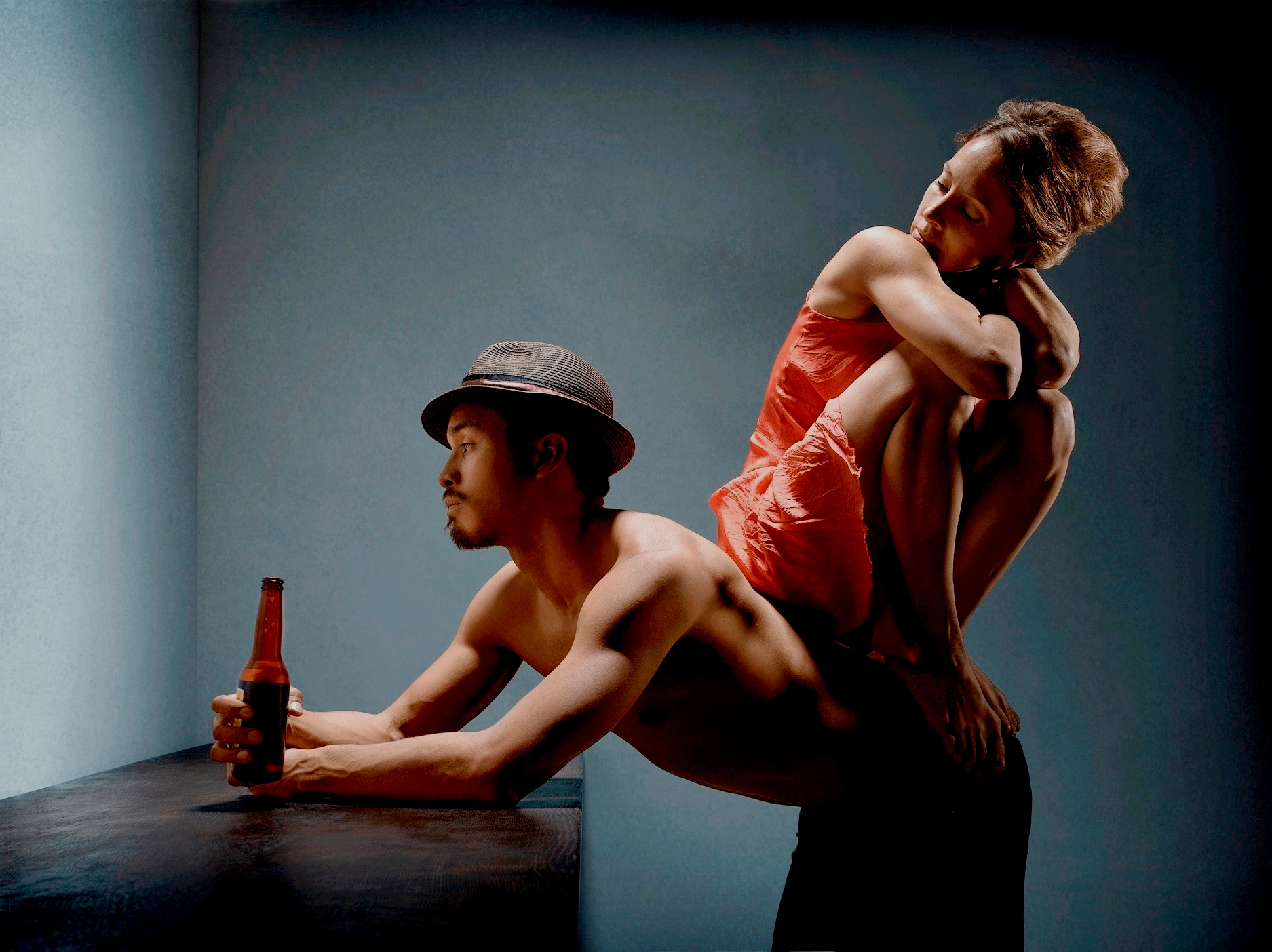
Possibility: “Gush” presents Joe Goode the curator

0

Audiences can thank Raelle Myrick-Hodges, Artistic Director of Brava Theater, for cutting Joe Goode loose in curating “Gush,” Brava’s first dance theater specific series. Rather than defining dance theater, Goode, during his three-weekend series, showed us its possibilities. He served as a tastemaker and also opened minds in choosing a theme to frame and present Ledoh and Salt Farm Productions (a performance collective with roots in Butoh), Axis Dance Company (a contemporary mixed-ability dance company), as well as his own company, Joe Goode Performance Group

While an artist-driven curatorial practice is not necessarily new, Goode addressed the topic in the program, writing “One of the stellar differences between the dance scene here and in other countries (notably South America and Europe) is that, here in the U.S., artists are rarely given the opportunity to champion other artists and to offer the kind of insight and context that we are so perfectly equipped to provide.” Goode utilized his opportunity at Brava to direct attention to two other groups which inspire him. The thematic aspect of the title “Gush” drew attention to their lavish, bold, theatrical impulses.

The East Coast recently experienced a surge in artist-driven curation, with the 2010 inauguration of Danspace’s Platform series, envisioned by Judy Hussie-Taylor, Executive Director of the major downtown dance venue in New York City. For each Platform, a selected artist organizes a series of performances based on a theme, as well as discussions, open rehearsals, screenings, and a catalog. If the components sound like those of a visual arts exhibition, it’s for a reason -– Hussie-Taylor’s career includes years at museums and she is now a faculty member at the Institute for Curatorial Practice in Performance at Wesleyan University, the first program of its kind addressing performing arts curation. Among other topics, the program’s curriculum considers how the curatorial practices of the visual arts can be applied to the performing arts, enhancing context and experience of the work.

On Thursday, Jan. 27, during the last of the “Gush” programs, Goode arrived downstage at the microphone as a charming storyteller, party host, and tour guide. Describing his dance theater as a form of folk art which combines movement, spoken word, song, and visual imagery, he resurfaced onstage throughout the performance to contextualize a mashup of old and new works, including 29 Effeminate Gestures, Wonderboy, small experiments in song and dance, What the Body Knows, and a new collaboration with puppeteer Basil Twist set to premiere at YBCA’s Novellus Theater this June, The Rambler.

Sitting in the center of the stage, Goode elaborated on his process of generating, colliding, and editing material to developing work through “felt experience.” His dancers embodied the phases he described, resulting in a carefully crafted sort of lecture-demonstration. The opportunity to meet Goode in the role of curator and share the lens through which he sees the world was a delight. It revealed gems of dance theater work, and another layer of his artistry.

“I guess I just want other people to solve the Rubik’s cube”

0

This much was clear. A conference room full of middle and high schoolers had been assembled and were now working out math problems. On a Sunday. To someone who wept through stats homework, it seemed like a game of Clue, who done this? At the lectern, a man shared formulas one might find useful in attempting a rapid solution of the Rubik’s cube. A series of x’s and y’s to the nth power flashed before the hushed underage audience.

Were these kids really into what was going on, or was this some well-orchestrated parent plot to shut down a perfectly good weekend? It was Mom in the living room with the bribes and threats about not getting into college! But board game detective I was not. This became apparent when the young man in a hoody sitting on my left picked up a cube offhandedly. Without fanfare, his hands began to blur. He lined up the colors in well under a minute and set the cube back down. Welcome to last weekend’s Julia Robinson Mathematics Festival, where math, it appeared, was not just a problem to be solved.

“If you want to put it in basketball terms.” Festival co-organizer Joshua Zucker is explaining to me the difference between kids doing math “exercises,” which he says comprise the majority of schoolwork these days, and “problem solving.” Please, I encourage him, put it in basketball terms. “Exercises are like dribbling down an empty court. Problem solving, that’s like dribbling down a court with a defender on you. Computers do exercises – we want kids to learn how to think.” To further illustrate his point, he proposes I perform a simple mental game involving twisting my wrists together. Blinded by my fear of math, I fail miserably, and he patiently reiterates what I must do to free myself.

Round tables fill the Pauley Ballroom in UC Berkeley’s Martin Luther King, Jr. student union, at which are seated young students, math professionals, and various UC Berkeley faculty. They do not appear to be worried a whit by the prospect of the boxes and equations before them. Each table houses a few kinds of math challenges: here, kids are constructing a massive fractal cube made from folded bits of paper. There, scholars puzzle over math “magic” tricks and geometry formulas, aided by a female NASA scientist. There’s no clear stop and start time – participants circulate around the room at their own pace, parents in tow or mercifully mingling in the seating area at the room’s fringes.

The festival’s format is constructed to encourage kids to think about why we do math — and we’re not talking about that scholarship to Cal here but instead that little thing about how math helps us figure out the world around us (which I concede, if grudgingly). Accordingly, an instruction sheet written by Zucker greets table leaders at the event’s entrance cautioning them that “you’re welcome to encourage group work when you see good opportunities, or encourage individual work, but don’t encourage too strongly: mostly let the kids decide whether they want to work on their own or with their neighbors.” This looseness is a deliberate departure from the other form of extra-curricular activity for the numbers set (ha!): the math competition, and has much to do with the festival’s namesake, female math pioneer and UC Berkeley professor Julia Robinson, who tackled complex theories in the days before people were fully keen on the concept of female mathematicians.

“We think the non-contest atmosphere is more conducive to girls,” says Zucker, who used to teach math at the girls-only Castilleja School in Palo Alto, comparing the festival’s roughly 60-40 boy-girl ratio with the typical 70-30 that one sees at the higher-pressure math contests. Girls, the assumption goes, aren’t into parading their smarts all over the place.

It’s a theory that’s borne out by what I witness at the festival. For the most part, the boys are quick to acknowledge when they perform a particularly astute calculation. The girls seem more content to listen and work through equations on their own steam, though it must be said that a few are far from retiring. 

California College Preparatory Academy ninth grader Breanna Alleyne drags family friend Aaron Johnson over to the table where I sit, puzzling with the mathemagic tricks. The two plow their way through problems along with the help of Eleanor Long, a San Francisco charter school math teacher who came to observe at the festival but wound up working though problems with the students at her table – a kneejerk reaction, it would seem, of a committed educator encountering the academically earnest. 

“We’ve developed a tradition around the event,” says Breanna’s mom Fatima Alleyne, who I catch up with at her welcome table post, where she is checking in festival attendees. Breanna, I note, approaches the subject lightheartedly at the problem-solving tables, and Fatima, a materials scientist at UC Berkeley who works with resonated devices, says their three years of attendance at the festival has to do with framing math in a light that she feels is missing from traditional classrooms these days. “I don’t think you have to have a developed appreciation of math to really enjoy it in this setting. I just want her to see math in a different way than how she gets it in school.”

I ask Alleyne about how times have changed between her years coming up in school and those of Breanna’s. She remembers her scientific curiosity being sparked by her participation in science fairs and other “enrichment activities” outside of school hours. Alleyne just doesn’t see those same diverse opportunities for learning these days. “The activities that encouraged you to participate in math and science – they’re just no longer in existence.”

This relative dearth in chances outside the classroom to connect with like-minded scholars may be one reason why some kids at Julia Robinson clearly benefit from being around the old pros that help out at the festival. Take sixth grader Kyle Asano, who watched the Rubik’s cube lecture sitting on the other side of Scott Okamura, the Rubik’s whiz who had shocked me in the first place and who turned out to be a freshman at Cal who helps facilitate a free speedcubing course. I ask Okamura why he spends his precious free hours away from his math major instructing others in the art of square. “I guess I just want other people to know how to solve the Rubik’s cube,” he smiles. 

Asano, who estimates his best cube-solving time at a minute and 18 seconds, tells us that he, along with a few school friends at Cupertino Middle School, is really into the cubes. “The center cube decides which color the side’s going to be,” he gracefully informs us before pumping Okamura for more info on his particular cube-solving techniques. Later I spot the two at another table, whizzing through 3-D puzzles that would stump an unseasoned hand (mine). Proof in the Pythagorean, it would seem, that the Julia Robinson Festival does indeed provide a thought provoking math experience – in or out of the box.

Photo, above right: Scott Okamura and Kyle Asano, math aficionados squared. Photo by Caitlin Donohue


Aerial revolution

0

Consider the rise of the extreme athlete: generations of youngsters (and increasingly, brave older folks) competing to see who could pull the sweetest stunts and survive. Ever wonder how is it that a person can make the transition from earthbound and bipedal to gravity-be-damned dare-devilry? When exactly is the moment that a skater, skier, or snowboarder just lets go and trusts their body to take them up, over, around, and (hopefully) gracefully down to the ground?

Last Tuesday, I attended a press event at House of Air – the newest member of Crissy Field’s collection of renovated airplane hangars in San Francisco’s historic Presidio – where I was treated to a glimpse of how such a transformation might become reality. Not to mention a new way that a public sports facility can play with its community.

Given the Presidio’s military history, you may have been tempted to think the newly opened space at 926 Mason is home to helicopters and jets. But the pilots in House of Air aren’t crew-cutted cadets, and the only high-tech equipment in the corrugated steel hangar is an impressive array of custom-made trampolines. Every day in this house-of-bounce, tomorrow’s extreme sportsters are earning their wings – and there isn’t a major commander in sight.

House of Air is the brainchild of Dave Schaeffer and Paul McGeehan, two extreme sports aficionados who trained together on the Lake Tahoe snowboarding circuit. Their concept was helped off the ground (so to speak) by former Olympic skier Jonny Moseley. All three use trampolines to perfect their aerial artistry, and could commiserate over the difficulty of finding a facility where they could train with their respective equipment. According to Moseley, who raised eyebrows as a youth by flipping over his skis in a gymnastics studio, trampolines were few and far-between and most were used for coaching gymnasts and tumblers.

Large-scale trampolines provide the air time necessary for an athlete to teach his body to do tricks like corkscrews and 360s, serving as crucial incubators before a pro takes to the water, pavement, or snow with a new trick. But until House of Air, the idea of a dedicated facility for extreme athletes was unheard of. Now, the studio fills the void with over 2,000 square feet of trampoline space where serious athletes can perfect their skills in a safe (and soft) environment – and where, I was thrilled to find, even the not-so-extreme can have a blast.

House of Air provides lessons to beginners and more serious students of all ages. Instructors with backgrounds in everything from professional snowboarding to circus acrobatics use a specially designed high-performance trampoline deck to teach techniques to budding athletes. The center’s growing team also supervises two segmented jumping arenas, each about the size of a regulation basketball court, complete with angled trampoline enclosures that extend the bounce factor right up the walls. The facility also includes a kiddy bounce house for the younger set, special event rooms, lockers, and showers.

An average person arriving on the scene would begin their foray into the art of flight by checking out a pair of special House of Air shoes – modified wrestling shoes that provide ankle support. They would then have the option of renting some basic bounce time, participating in an organized game (think P.E. classics gone crazy: dodgeball or volleyball are both served up with a side of spring), or taking a class on the foundations of flying, which is where I wound up bouncing on my visit.

I was a bit apprehensive (read: terrified) as Moseley ushered me up to the trampoline deck and demonstrated a few tricks. He flopped through some sick twists, turns, and flips without missing a beat in our conversation. Then it was my turn.


Our intrepid reporter takes to the air at SF’s bounce palace. Photo courtesy of Jonny Moseley

I started with the aptly named “butt-drop”: a move in which the trampolinist replaces a single bounce with a fall on their bum and then – this is the crucial part – returns to her feet without missing a beat. After that, I moved onto “swivel-hips,” wherein the butt-drop is supplemented by a 180 degree revolution on the up-swing. For my final trick, I tried my hand at the sequence that leads up to a front flip: a jump, a fall to all fours, and then a forward rotation that landed me flat on my back. All in all, I wasn’t quite ready for the X Games, but it was killer on the knees and had my quads burning. I had new respect for the little groms busting board-grabs and aerials — and for the brave adults who come to House of Air for the “air conditioning” classes and company team-building sessions. Trampoline dodgeball: a fantastic way to build office camaraderie, or at the very least a good excuse to pummel that passive-aggressive co-worker with a deluge of flying foam rubber.  

Final impressions from the House of Air? Besides the sore thighs, of course? The center seems to be re-thinking the role of the public sports facility, from its boardrooms for the business set to its specially-manufactured props that emulate sports equipment for practicing athletes, like lightweight foam snowboards and a tow rope akin to what a wakeboarder would utilize on the waves. Even the layout of the building itself, which makes use of those large hangar doors to provide jumpers with such an excellent view of the bay one gets the feeling that with one wild leap one might land in the waves, helps to make House of Air a unique resource for the SF community.  

Given the chance to train in a facility like this one as a child, Moseley says he would have been thrilled – and possibly less banged-up in the bargain. “This is the way kids learn to be professionals — without getting hurt.”


House of Air, 926 Mason, SF. (415) 345-9675, www.houseofairsf.com


BART removes anti-Palestinian ad

39

Offensive advertisements promoting a right-wing Zionist viewpoint of the Israeli-Palestinian conflict were removed from all BART stations this week. “They could be commonly interpreted as disparaging or demeaning to Palestinians as a whole,” according to BART spokesperson Jim Allison told us, saying the violated the district’s advertising standards.

The ad featured the words “Stop Palestinian Terrorism” above a picture of a face covered with a traditional Arab scarf, known as a keffiyeh, and the words “Teach Peace” above the picture of children playing soccer. The keffiyeh has evolved into a symbol of Palestinian resistance to occupation after former PLO leader Yasser Arafat began regularly wearing one. StandWithUs, a self-purported pro-Israel advocacy organization, produced and paid for the ad.

Per BART policy, StandWithUs was informed about the decision to remove the ads and asked to provide substitutes, which it did. The organization’s CEO, Roz Rothstein, told us she felt BART’s evaluation of the ad was “unfair…It would only be disparaging if you don’t look at it properly… the Palestinians deserve a future too, that was the message of the ad. Just as it is not disparaging for an Iranian to point a finger at a [Iranian President Mamhoud] Ahmadinejad, it is not disparaging to point a finger at Hamas.”

However, three individual who did find the ad offensive enough that they complained to BART, initiating the reevaluation of the ad’s content, according to Allison. One Palestinian American who thought they were offensive was Miriam Zouzounias who is the membership coordinator for San Francisco’s Arab Resource and Organizing Center.

She said the ad made her feel “sick to her stomach.” The keffiyeh is a common cultural and political item of clothing, she said, and she happened to be wearing one on her backpack when she noticed the ad. “I hate that [the keffiyeh] is being targeted, portrayed as what terrorists wear.” According to Zouzounias’s interpretation, the ad’s message was that Palestinians do not but should start to invest in productive and peaceful activities for their children, a message that was markedly untrue to her. “Kids playing sports…and doing art are the kind of outlets…Palestinian civil society works really hard for,” she said.

In responding to claims the ad might be offensive, San Francisco’s StandWithUs lay leader Mike Harris told us, “I don’t think that claiming [the keffiyeh] is cultural in that instance is really justified…You don’t see many people in their routine, everyday lives, even if they are Arab American, wearing scarves covering their faces.” He agreed the keffiyeh could be considered a cultural symbol if was adorned on someone’s head rather than covering a face because that it is how the scarf is normally worn.

The StandWithUs ad was response to a previous ad by a group with an opposing view of the conflict. That ad by Friends of Sabeel-North America, a organization that supports the Palestinian Christian liberation theology movement, advocated that “peace and justice” requires an “end to U.S. military aid to Israel,” referring to decades-long aid which has transferred more than $100 billion from the United States treasury to the state of Israel.

Harris said, however, that the ad was “very misleading. The website connected to it promoted BDS (Boycott, Divestment, and Sanctions against Israel) and [mentioned] groups that cannot be considered as promoting peace and justice.” Harris said true peace is “peace between Israelis and Palestinians” and not “peace without Israel.”

FOSNA administrative officer Sister Elaine Kelley said the problem with the StandWithUs ad is that it “turns the focus away from the topic of the occupation and toward the unfortunate violence of some Palestinians.”

Daly City Burmese, please

0

We found it only a couple blocks away from the Daly City BART stop on the corner of John Daly Blvd and Mission St: Little Yangon. The Burmese restaurant was almost completely empty when we came in even though it was almost 9 p.m. on a Tuesday. A restaurant with one waitress, my plus one, and I. Here there was no next-door table conversation about non-profits, no street artist bros before me on the waiting list, no hipster babies crying, and no scary lesbians except for me and my dining companion — just deeply satisfying, affordable food.

The life of a Mission kid: it might start as something to brag home about, but living the dream isn’t always as all-fun-all-the-time as it sounds. When I first moved to the neighborhood, I delighted in the variety of cheap, amazing food. Cancun was what brought me here and Sunflower was why I stayed. But two years down the road, the places that once made me joyous have become sources of anxiety and malaise. I find myself making desperate choices, like going to We Be Sushi three nights in a row. And anywhere I go I fear that I will see my ex-girlfriend’s ex-girlfriend’s new boyfriend, a previous employer, someone I spilled beer on the night before, or some combination of the three.

Time for a vacation. And just as the bridge-and-tunnelers feel that they must migrate to my neighborhood on the weekends, making it louder, dumber, and harder to live in, so too must I migrate to new restaurant territory. I ventured south and only a few BART stops away I found unexplored territory in Daly City.

Little Yangon’s dining room was lined with Southeast Asian tapestries, an electronic Buddha shrine with flashing neon lights rotating around its head, the soothing sound of Thai pop music swelling around us as we sipped Coronas and leisurely flipped through the menu. I already felt about a million times better. 

We ordered a feast: fried shrimp salad, prawn curry, biriyani, and the rainbow salad – noodles in a tamarind and yellow pea dressing. Most of the items on the menu are between $6.50 and $11. The rainbow salad arrived first and when I tasted it I knew I’d have to come back. The flavors in Burmese food are totally unique: a combination of citrus meets peanut meets warm spices – a variety that’s indicative of the fact that Burmese cuisine has roots in three different cultures.

Burma is bordered by Tibet, Thailand, Bangladesh, and India – anyone familiar with eating these countries’ different cuisines will be able to note the way that they all come together in Burmese dishes. Our curry and biryani were infused with traditional Indian spices like garam masala, along with a hint of tangy sweetness. 

My fellow gourmand and I agreed that the fried shrimp salad was by far the winning plate. It was the kind of thing you would never be able to replicate, or figure out how to make at home – a magical assortment of fried and whole shrimp, crispy noodles, onions, herbs, and a sweet-spicy dressing drawn from the kitchens of Vietnam, Thailand, and India in one fell swoop.


A rainbow salad, a waitress, and thee: recipe for a mellow evening at Little Yangon. Photo by Alex Fine

Our waitress and a few quiet cooks started closing up shop as my friend and I finished our meal. Does this sound snobby? I care about service. Not in a demanding way, I’m just saying that bad vibes can ruin a meal. But in this arena too, Little Yangon was perfect. The service was mellow, respectful, but attentive nonetheless. For someone used to being either totally ignored by restaurant waitstaff or obliged to engage in way too much overly-friendly chit-chat (and eye contact, shudder), Little Yangon was once again a welcome break.

As we left we thanked one of the cooks, who also turned out to be a sweet Burmese guy named Soe Naing, the owner of Little Yangon who does all the cooking and menu-planning with his wife and sister. Naing started out in the restaurant business immediately after moving to the States, washing dishes in a sushi restaurant. Soon enough, he was learning the art of sushi-making from his boss and moved on to start his own Daly City sushi business called Sunrise Sushi. Little Yangon is Naing’s newest restaurant, and he opened it to cook the food that he grew up eating in Burma. His spontaneous friendliness, kindness, and generosity shined through as he shared his hopes for the future of the business. “We’re getting busier!” he informed us excitedly, before walking us out and thanking us for coming in to eat. Try getting that kind of experience at Sunflower.

Walking back home from 16th and Mission, weaving between people with no pants on and pigeons covered in sludge, I was protected by my full-bellied shield, knowing that I had finally escaped the Mission, even just for one good meal.


Little Yangon

Mon 10 a.m.- 5 p.m.; Tues-Sun10 a.m. – 9 p.m. 

6318 Mission, Daly City

(650) 994-0111

Beer and Wine

MC/V

Moderately noisy

Wheelchair accessible


Getting free

3

rebeccab@sfbg.com

Shane Bauer and Josh Fattal have been held captive in Evin Prison in Tehran for more than 540 days, and their friends and supporters in the Bay Area have been mounting an extraordinary campaign pushing for their release.

On July 31, 2009, Bauer and Fattal were hiking with Sarah Shourd, who is Bauer’s fiancée, through green mountains in Iraqi Kurdistan. The three UC Berkeley graduates had traveled from Damascus for a recreational visit. They were wandering nearby Ahmed Awa, a popular tourist destination where hundreds of people had flocked to camp, to visit a waterfall and enjoy the peace and quiet of the mountains.

They say they didn’t realize how close they were to Iran, which has no diplomatic ties to the United States.

Shourd told the Guardian she’s not sure whether they accidentally traversed the Iranian border, because it was unmarked. “We had no intention of being anywhere near Iran,” she said. “And if we were, we’re very sorry.”

Iranian officials surrounded them, speaking in Farsi, which they couldn’t understand. They were arrested on suspicion of spying and taken into custody. Before being taken to prison, one phoned a friend, Shon MeckFessel — who had been traveling with them but opted not to go on the hike because he wasn’t feeling well — to alert him that something had gone wrong. That would be the last communication any of them would have with close friends or family members for months.

Shourd was finally released on bail Sept. 14, 2010 on humanitarian grounds after spending 410 days in solitary confinement. She was reunited with family and friends — but Bauer and Fattal have remained in detainment ever since.

Since returning to the United States, Shourd has thrown her energy into advocating for their release — and she’s not alone. “Everyone in the family has been working tirelessly for all 18 months,” she said, “which is far, far longer than we ever imagined in our worst nightmares.”


FIGHTING FOR FREEDOM

While Shourd was still in prison, her mother, Nora, gave up her home and job to move in with Bauer’s mother, Cindy Hickey, and work for their release full-time. Fattal’s older brother, Alex, suspended his graduate studies at Harvard to dedicate himself to the campaign. His mother, Laura Fattal, stopped working to devote herself to the campaign.

“That’s just family alone,” Shourd noted. “If you start to look to how many people have contributed to our campaign and how many ways, it just blows your mind.” Soon after her release, Shourd put out a call for people to hang banners proclaiming the innocence of Bauer and Fattal and calling for their release. In response, nearly 60 banners were unfurled in 25 different countries.

Shourd has made countless media appearances since her release, and even put out an MP3 of a song she composed while in solitary confinement, which can be downloaded as a way to support the Free the Hikers campaign. Their story has drawn the interest of prominent figures. On Jan. 19, Noam Chomsky released a video offering to testify on their behalf if a trial is held, saying Bauer and Fattal “have dedicated themselves to advocating for social and environmental justice in Africa and elsewhere, and they truly embody the spirit of humanitarianism.”

Others who have publicly defended the trio include President Barack Obama, who issued a statement in July saying none of the hikers ever worked for the U.S. government, addressing Iranian accusations that they were there to commit espionage. United Nations Secretary General Ban Ki-Moon and the Archbishop Desmond Tutu have called for their release. A documentary has been produced about their plight, and a second one is in the works.

In San Francisco, artists and musicians have responded in droves to a call for support. An art auction that will benefit the campaign is planned for Jan. 29, featuring the work of more than 80 artists, plus live musical performances. As a nod toward Bauer’s work in photojournalism, the event will emphasize photography, and notables such as Mimi Chakrova, Taj Forer, Roberto Bear Guerra, Ken Light, the LUCEO Photo Collective, Susan Meiselas, Lianne Milton, Mark Murrmann, Alec Soth, and others have donated work. Among the artists who donated pieces are Marianne Bland, Mark Brecke, Teresa Camozzi, Andreina Davila, Eric Drooker, and former Board of Supervisors President Matt Gonzalez.

In early February, a music benefit will be held at the Bottom of the Hill to benefit the campaign. Titled “They Sing These Songs In Prison,” the event will feature performances of The Nightwatchman — that’s Tom Morello of Rage Against the Machine — plus Jolie Holland, accordionist Jason Webley, and Ryan Harvey & Lia Rose.

“The funding is to support the campaign to free Shane and Josh, and it goes to a wide array of needs that we have, like translation into Farsi, travel for media, and meeting with some various embassies and governments that are involved in advocating for Shane and Josh’s release,” Shourd explained. “Also, some of the money will probably go toward legal fees, and website fees, and materials for the campaign from flyers to business cards to t-shirts.”


WHO ARE THE HIKERS?

The campaign to advocate for their release has been tagged Free the Hikers, but the identities of the three young people (Bauer and Fattal are both 28, Shourd is 32) go much deeper than that. They’re social-justice advocates, antiwar activists, writers, environmentalists, travelers, and creative thinkers with deep ties to the Bay Area.

Shourd, who lives in Oakland, was teaching English to Iraqi refugees when she was in Syria, as well as practicing some journalism. Fattal, who taught at Aprovecho — an education center in Oregon focused on sustainability and permaculture — had been traveling to India, South Africa, and other places through the International Honors Program to lead workshops on health and sustainable technology before visiting his friends in Syria.

“Josh is an environmentalist, he’s a teacher, he’s an incredible, incredible, generous and selfless man,” Shourd said. “As soon as you meet him, you feel what an extraordinary and unique human being he is. I was friends with him for years before he came to visit us in Damascus, and he decided to travel with us to Northern Iraq to Iraqi Kurdistan to learn about Kurdish culture, to see another diverse aspect of the Middle East.”

Bauer wrote for publications such as The Nation, Mother Jones, and the Christian Science Monitor. A photojournalist who has won multiple awards and had his work published internationally, Bauer has documented everything from tenant conditions in San Francisco SROs to conflict-ridden regions in Africa and the Middle East. Bauer also wrote an article for the Guardian about an Oakland residence that is famous among East Bay anarchists (See “Hellarity burns,” May 27, 2008).

“Shane has an incredible passion for pursuing truth and complicating our ideas about other parts of the world, about conflicts around the world and at home,” Shourd noted. She added that many of his stories serve to highlight “some of the very specific ways that the U.S. presence in Iraq has taken a toll on innocent people.”

Before their ill-fated excursion, Shourd said she’d heard from multiple westerners and her Arabic tutor that Iraqi Kurdistan was a safe and enjoyable place to visit. “It’s often referred to as ‘the other Iraq’ because it’s a semiautonomous region designated as a no-fly zone by the U.S. government,” she explained. “It’s actually a part of the Middle East that has a very positive fingerprint from the U.S. government because they helped protect the Kurdish people from Saddam Hussein. So Northern Iraq is not a dangerous place for Americans or westerners to go, and no American has ever been killed in Northern Iraq, which is just phenomenal after a decade of war and occupation.”

She said Bauer, Fattal, and MeckFessel were all enthusiastic about the trip, and after researching it online, the four felt they had enough information to travel there. “We ordered a special Lonely Planet guide of Northern Iraq, and a friend of ours who went a month before we did borrowed it and lost it, so we didn’t have the Lonely Planet guide,” she noted. “But we still felt we had enough information about it to travel there and really believed we had nothing to fear.”


SOLITARY

Shourd credits her fiancé and her friend with helping her through “every minute of prison,” even though she was alone in her cell for 23 hours a day. At first she wasn’t allowed to see them at all, but after some time had passed, guards allowed her to visit with them in an outdoor courtyard for 30 minutes a day. Later, that brief time together was increased to an hour.

“There’s no way I could have maintained hope and maintained my own sanity and the strength that it took to get through every day of isolation and depravity and uncertainty and fear,” she said. “The emotional strength that that took, and the discipline that it took, really Shane and Josh and I all created together in the little time that we had, through the unconditional support and love we had for each other.”

Since they didn’t speak Farsi and the guards spoke very little English, it was difficult to communicate basic needs, and Shourd described the experience as being surrounded by hostility.

“Whenever I just started to slip away mentally, Shane and Josh would bring me back, and the knowledge that they were going to be there for me was the only thing that got me through 410 days of solitary confinement,” she said. The three thought up activities to give themselves something to look forward to, like marking time with small courtyard celebrations and special food they saved to share together or discussing topics in an organized format. “We had almost like a curriculum that we followed of study, and sort of intellectual exploration,” she explained.

They were only allowed to have pens for one month — that was the easiest month, Shourd said. But the rest of the time, even though they weren’t permitted to write things down, they were allowed to read. “Books were our lifeline. We read the same books in concert, we took turns reading books and passed them back and forth when we saw each other in the courtyard. And we would memorize dates and memorize poetry and recite poetry to each other and test each other on dates,” Shourd said.

“Josh would give me math problems to do in my head because he knew I was trying to get better with algebra. We had a dictionary that we passed back and forth, and we would make stories from words in the dictionary and tell each other these really intricate fantastical stories that we came up with. Anything to keep your mind busy.”

Beginning in her second month in prison, Shourd also passed the time by composing songs. A month went by before she was able to share the first one with Bauer and Fattal, but when she did finally sing it for them, they learned the words and sang it with her. “When we were together in the outdoor courtyard, they would just tell me to sing louder,” Shourd said. “I know they’re singing those songs now.”

The intellectual drills, storytelling, math problems, and singing weren’t merely a remedy for boredom. “You have to really keep your mind strong and busy so that you don’t get sort of swallowed up by the abyss of fear and loneliness that encroaches on you day by day in that kind of situation,” she said.


LOOKING AHEAD

Despite the time, energy, and effort spent on the campaign to free all three, no one can say for sure just when Bauer and Fattal will finally be reunited with family and friends. In November, Iranian authorities said that a trial previously scheduled for that month had been postponed, but the Free the Hikers campaign is calling for them to be released without a trial.

“They don’t deserve to be there one minute longer than I was, and they never deserved to be there in the first place,” Shourd said. “They should be shown the same kind of humanitarianism that they have put into action in their lives, through their work.”

Amnesty International is among many of the groups that have called for the Iranian government to release the two young men. “One year after their arrest, the Iranian authorities’ failure to charge them with illegal entry into Iran or more serious charges, such as espionage, has fueled speculation that the Iranian authorities are holding them as a bargaining chip,” notes a statement released July 2010 by Amnesty International, an international human rights organization.

Meanwhile, Shourd has been contemplating what her experience would have been like if the U.S. and Iran actually maintained diplomatic ties, and she published an opinion piece on CNN International calling for greater communication between the governments.

“I think it’s their responsibility to their people to do that, and I think it’s a tragedy that there’s been 30 years of practically no relationship between Iran and the U.S.,” Shourd said. “It’s a tragedy for countless Iranian Americans in this country who have a hard time visiting their relatives in Iran, sending them money, even just getting information about them or visiting their homeland.”

She began her opinion piece by recounting the time that a prison guard brought her freshly picked roses, an uncommon gesture of kindness during her incarceration. “In the worst of circumstances, the most extraordinary acts of human kindness emerge,” she told the Guardian. “They were rare. The vast majority of my experience was empty and desolate. But the times that the guards were kind to me … will stay with me for the rest of my life.” *

ART AUCTION TO FREE ALL THREE

Saturday, Jan. 29, 7 p.m.

SomArts Cultural Center

934 Brannan, SF

Musical performances by The Ferocious Few, Devon McClive and Sons, Grant Hazard and Lorin Station

www.artforssj.tumblr.com/#about

THEY SING THESE SONGS IN PRISON

Featuring The Nighwatchman, Jolie Holland, Jason Webley, Ryan Harvey & Lia Rose

Thursday, Feb. 10, 8:30 p.m., $12–$18

Bottom of the Hill

1233 17 St., SF

www.bottomofthehill.com

To learn more, visit www.freethehikers.org, www.freeourfriends.eu

Now and then

0

arts@sfbg.com

VISUAL ART “My ideal world [while making art] is to be on a comfortable chair by a sunny window listening to a baseball game,” says Lauren DiCioccio. For DiCioccio, such a setting is possible, because sewing is an integral part of her work, whether she’s hand embroidering The New York Times, creating cotton facsimiles of 35mm film slides and currency, or making organza replicas of plastic bags and bottles.

The new exhibition “Remember the Times” moves DiCioccio’s unique collection of handmade-readymade hybrids from the “wundercabinet” (to use DiCioccio’s term) of Jack Fischer Gallery to Yerba Buena Center for the Arts. On the second floor, she’s arranged a variety of objects on three shelves, adapting the acute vision and evocative perception of still-life painting, vanitas, and memento mori to today’s flurries of consumption and erasure. “Remember the Times” is the only current show at YBCA that can be photographed by visitors, and to be sure, adopting a photographer’s point is an ideal way of appreciating the individuality and interaction of DiCioccio’s pieces, and — especially — her attention to detail. I recently met with her at the museum.

SFBG What drew you to newspaper as a material? The ways in which you use it are unconventional — what are the challenges of working with it?

Lauren DiCioccio All of the work I’m making right now began with the newspaper. For about two years before I was showing my work or thought I could be an artist, I was making paintings. I began painting on newspaper as a material I felt comfortable about using, and that transformed into making sculptures with newspaper. At a certain point with the paintings, I realized I was more interested in the materials.

It hit me after college, when I traveled in Australia, and for six months lived in a town in the outback. It was 12 hours down a dirt road, with a 360-degree view of nothing, and 250 people, mostly aboriginal, lived there. It was a secluded world. We would get our mail twice a week, on Tuesday and Thursday, so we were one step up from the horse and buggy. The days the mail came, they would bring the newspapers, and even though they were two days old, people would just gather around and pore over them.

I became interested in the material as this trusted resource and definition of time and physical embodiment of a day. When I came home and unpacked all my paintings, I realized I was more interested in the way the newspaper itself located me in time and place.

When I moved to the Bay Area in 2004, I began working as the resident manager for the Djerassi Resident Artists Program in Woodside. I lived on site there, on a cattle ranch, pretty much isolated, and getting the newspaper delivered every day. Again, it was a situation where the newspaper was connected to how people would socialize and gather in the morning. People would really welcome it: “A newspaper! Let’s read that!”

I decided that painting wasn’t doing it for me — I wanted to do something more tactile and physical and also approachable. I set out this challenge to make a sculpture out of one newspaper every day for as long as I could. Then I made a quilt out of the newspaper, and that triggered my interest in the craft medium, which has always been a part of my life. It made me realize that craft and the newspaper have the same language, and I started to explore that more through sewing.

SFBG How did you come to select The New York Times as one subject? Also, the tactile emphasis you’re mentioning extends to the “Thank You” bags you’ve made.

LDC They are definitely specific materials — the plastic of a shopping bag, the soft paper of the newspaper are so unique to those objects, and are familiar feels and sounds and experiences for us. They’re disposable in nature, but they’re engrained in our human memory.

SFBG The “Thank You” bags are so commonplace, but they carry a lot of connotations.

LDC When I began making them, it started a divergent path in my work that I think I’m still in the fork of — I’m making these very loving recreations of both types of objects, and they both have disposable or waste aspects. The newspaper is more of a renewable resource, so the work is also about the loss of the form itself. But with the “Thank You” bags, in making them to talk about their obsolescence, I kind of think of them as ghosts of the actual object — I’m hoping for that.

I use bridal organza for the “Thank You” bag sculptures. When I first bought some, I expected it would fray and fall apart and be too delicate to embroider, but it actually stands up well. I just overlay the organza on the beg and draw with a waterproof pen on the surface before I embroider.

With the newspaper, the main series of works actually has a day’s newspaper in it. That introduces a sense of history or time. It’s important to me that the actual paper is in those pieces. It creates all these issues about conservation, and the newspaper not being acid-free, God forbid. The question would be asked, “What if 100 years the newspaper is just crumbly dust inside a bag?” — as if it that were a problem in terms of presenting it as art. But I actually think that it’s the most interesting thing about those pieces, how they’ll age and evolve.

SFBG Artists who work with paper today face those kinds of problems when dealing with those who view art primarily in economic terms.

LDC It’s so hard as an artist when you’re broached with that problem. When someone buys my work, that’s so special to me — I want them to have it as long as they want to have it, looking exactly like how they want it to look. But at the same time, conceptually, anyone who looks at [one of the newspaper pieces] should understand that it’s about decay and the life cycle and the way we all age — though now with plastic surgery, everyone wants to look as scary as possible [laughs].

SFBG How do you choose a particular page to spotlight? Is it the stories, the images, or both?

LDC It’s a combination. It’s an instinctive decision. I look for something that leaps off the page and speaks to me. At first I was only doing people who were communicating — politicians gesturing, or caught mid-speech. But I’ve loosened up the reins on that. I like sports images because they lend themselves to the way trailing thread can show the blur of time.

With all of my work I try to ride this line between precious and pathetic. There’s something somewhat pathetic about even creating these objects in such an obsessive way. It’s excessive, almost an overly tender act to sew this detailed work through functionless media.

SFBG It creates odd keepsakes.

LDC They’re happy and sad. I’m interested in the bittersweet, and nostalgia contains feelings of joy and sadness. With the images, I try to finish them up to the point where it looks like you could pull one of the threads and the whole thing would unravel.

LAUREN DICIOCCIO: REMEMBER THE TIMES

Through March 27, $5–$7

701 Mission, SF

(415) 978-2787

www.ybca.org

Working to dance, dancing to live

5

arts@sfbg.com

DANCE When people ask what I do, I tell them I dance. I don’t tell them I work as a receptionist part time, or that I work events in a restaurant. I tell them I dance because, although it’s more glorious-sounding than my odd jobs, it’s also more important. These side jobs exist merely to facilitate the dance. They are expendable; dancing is not. But while dance fuels me physically and emotionally, it fails me financially. For better or worse, there is a whole community of dancers and choreographers in the Bay Area who share this same conundrum to lesser or greater degrees.

So what do Pilates instructors, nannies, dog walkers, waitresses, and personal assistants have in common? They are all jobs with variability in work scheduling, and they are just a handful of the flexible jobs employing Bay Area freelance dancers. Over the past month I’ve interviewed about 20 of my fellow dancers and have been heartened at the abounding courage found in the local dance community to pursue alternate lifestyles to continue dancing.

Daria Kaufman has an MFA in Dance from Mills College. She teaches Gyrotonic, works as a receptionist at a yoga studio, and does administrative work for the Subterranean Art House. “One of the major challenges for dancers and choreographers is money — how to afford classes, rehearsal space, and theater rentals, to name a few,” Kaufman says. “I’ve done a lot of work-study over the years to combat the issue of affording dance classes. Most studios have a work-study program — clean for an hour and a half, get a free class, that sort of thing. Some studios offer a similar deal for renting out rehearsal space.”

Adaptability is necessary. Schedules vary day to day and month to month according to who’s teaching which classes, who’s working on what project, and what jobs will work around those opportunities. Often the most flexible jobs can be found in the food industry. Evening shifts allow dancers and choreographers to take morning classes and rehearse through the day, while variability in shifts provides flexibility when it comes to evening performances.

Angela Mazziotta, a dancer with Cali & Co., works at Squat and Gobble Cafe and Crepery in the Marina. “Although I don’t work enough to be considered full time, I make enough to pay rent, eat, and dance,” Mazziotta says. “There are days that I long to have a ‘big girl’ job for security, insurance, and more financial cushion. The reality is that those full-time jobs don’t offer a lot in terms of flexibility, and the hours of operation coincide with dance classes and rehearsals.”

The downside of the restaurant business is the relentless fatigue it piles on a body. Foundry dancer Joy Prendergast discovered that a café job was too taxing and now primarily teaches dance and baby-sits. Project Thrust choreographer Malinda LaVelle also found the strain to be too much. “I stopped working restaurants because the physical aches and pains of dancing were compounded by the strain of standing on my feet until 2 a.m. and then getting up the next morning and dancing again.” After working five nights a week, LaVell quit the restaurant scene to walk dogs and pursue receptionist work.

Fitness-related instruction jobs are another popular money-making source. Many dancers are certified in Pilates, Gyrotonic, or yoga as a way to subsidize their income. “Teaching’s a great way to make consistent money,” says Gyrotonic instructor Andi Clegg. “I’ve been able to constantly shift my teaching schedule around shows or other dance-related work I am involved in.” SF Conservatory of Dance student Emily Jones finds Pilates adaptable to her lifestyle: “I sometimes wish that I had a job where I could just turn off my brain and go on autopilot. But then I think about all the people I know who have café jobs and how they wish they could do something a little less numbing.”

Perhaps the most obvious way for a dancer to make money is to teach dance. Gretchen Garnett, director and choreographer of Gretchen Garnett and Dancers, taught dance 25 hours a week at three different studios around the Bay Area when she first moved here. Since getting married, she has been able to teach a more reasonable 14 hours a week at two dance studios and dedicate more time to her company. Whitney Stevenson, who moved to SF within the past year to dance, enjoys teaching gymnastics to children because she gets to be active.

Although an active job like teaching classes or working in a restaurant might seem perfect for someone physically inclined, many dancers find it essential to sit down and rest their bodies while working. Gabby Zucker does transcription and reads drafts for author and music critic Jeff Chang. “It may sound silly, but I prefer desk jobs to waiting tables or working retail because I feel it’s important to rest my body when I’m not dancing,” Zucker says.

A more common sedentary line of work for dancers is administration. Maggie Stack works as the administrative assistant for the San Francisco Conservatory of Dance, and for her, the support and promotion of dance goes hand-in-hand with the medium. But for Julia Hollas, dancer and administrator for Dandelion Dance Theater, the realm of arts administration also became a bane. “There is always too much work, not enough funding, and the incredibly good people who stay in the field consistently take on more than they can comfortably handle,” says Hollas, who is currently seeking Pilates certification. “There is something quite noble about that fact, and I will always feel admiration for anyone who works as an administrator in the dance world. But what I was beginning to see in myself was a consistent state of burnout that took away from the inspiration I needed to pursue my art as I wanted.”

There are also those who take on jobs that are out of the ordinary. Darya Chernova moved here from Russia and was amazed by all the dance opportunities and classes available. Luckily, she found a job to facilitate that interest. “I have been working at the farmers market for an apple orchard farm for five years,” Chernova says. “Farmers market work is great but tiring. It can be very physical and socially exhausting. But I love fruit and being outside.”

Kaitlin Parks, who worked as an EMT before the job became too overwhelming, is another example. “Lights, sirens, and the glory of helping fellow humans are great, but the 10-hour shifts and the physical and emotional demands were dipping into my energy and attention for dance,” she says. “I currently dance with Alyce Finwall Dance Theater, the courage group, baby-sit for six different families, teach young children’s dance classes, and teach both EMT skills and CPR.”

When it comes down to it, making a life in dance is often an act of creativity in itself. Rachel Dichter helps organize people’s closets. Tyson Miller works room service at the Mandarin Oriental. Ri Molnar models for art classes, gardens, and assists people with disabilities. Paul Laurey lives in a theater basement with low rent to redirect time and financial resources to dance. While some may respond to his living situation with pity or concern, for him the luxury of pursuing dance outweighs any sacrifice in creature comforts.

Of course, pursuing dance becomes a whole different story when a family is involved. InkBoat dancer Dana Iova-Koga found that having a life in dance took on new meaning with a daughter. “Now that I am a mother, I’ve had to get more intentional with dancing,” Iova-Koga says. “It’s much harder to find the time to do it, and it has to be very planned out. But now, when I get to perform, it feels more essential and I appreciate being there in a whole new way.”

“Until recently, the key to making dance possible in my life was seeking out alternative lifestyles that allowed me to step aside from the money equation for the most part,” she continued. “This was much simpler to do as a single person, before becoming a family. We are still figuring out how we can keep the dance growing and maintain a sense of stability for our daughter.”

Although it’s a difficult balance to maintain, Bay Area dancers are more than up to the challenge of cultivating a life around a physically demanding art form with few monetary payoffs. Though it may demand fortitude, creativity, and a willingness to diverge from a more conventional lifestyle, the personal rewards of a life filled with inspiration and love-filled work are indeed great.

Que tristeza

0

arts@sfbg.com

FILM Whether or not they planned it from the beginning — though there was certainly grandiosity there at the start — Alejandro González Iñárritu and Guillermo Arriaga have been interesting as probably the first major narrative filmmakers to make post-NAFTA globalization their ongoing subject. The three-part Amores Perros (2000), while set entirely in Mexico City, found within it layers of society as remote from one another (if united in a fatalism, brutality, and one “accidental” twist of fate) as if they were continents apart.

Moving north into Hollywood funding and movie stars, the effortfully bleak 21 Grams (2003) again mixed up chronology, crisscrossing multiple story threads, and with big issues — religion, recovery, mortality — crossing literal and figurative borders. Babel (2006) went whole-hog, leaping from sunny SoCal and merely baked Northern Mexico to frenetic Tokyo and the Moroccan desert, finding or manufacturing crises everywhere, hang-wringing out questions you might boil down to “Can’t we all get along?” Or perhaps, to use the name of onscreen director Joel McCrea’s proposed pretentious magnum opus in Sullivan’s Travels (1941), O Brother, Where Art Thou?

These movies played God way beyond the ken of average auteurism, deus ex machinizing all over the joint to place actors in award-worthy emotional extremis and give us extended doses of that feeling experienced by characters in movies who shake their fists at the unforgiving sky and shout “WHHHHYYYY!?!!!” They were fairly humorless, highly contrived, and eager that you appreciate both qualities. They were also structurally ingenious, and in extended passages — like Rinko Kikuchi’s night on ecstasy and the Mexican wedding in Babel — purely cinematically dazzling. All these films speak to social injustice, the rising desperation that turns problem-solving violent, to connectivity (and disconnectivity) across cultures and economies. But what exactly director Iñárritu and scenarist Arriaga were saying was often much less persuasive, or clear, than the sheer bravado of their ambitions.

It was certainly hard to imagine one — intricately mapped screenplays, showily accomplished filmmaking — without the other. But the two indeed had a falling out after Babel, reportedly in part because Iñárritu (whose films are now “A Film By Iñárritu”) was kinda hogging the glory, downplaying his creative partner’s contribution.

So Arriaga wrote and directed 2008’s The Burning Plain, another elaborate multistory miserabilist exercise, albeit one that critics and audiences were catastrophically cold toward. Now Iñárritu is flying solo with Biutiful — oh, you just know that title is hiding a cruel irony — and it, too, is a problem.

Instead of weaving multiple story arcs in different locations to encapsulate man’s inhumanity to man circa now, he (working as scenarist for the first time, with Nicolás Biacobone and the late Armando Bo credited as cowriters) simply unloads several characters and continents’ worth of woe onto one continuous story. Or rather, one sagging man: Uxbal (Javier Bardem), a wearily hustling dude of all trades who seems to be keeping half of Barcelona’s marginalia afloat, if barely. He mediates between corrupt police who require bribes (then still fuck him over), illegal Chinese immigrant sweatshop workers who make designer purse knockoffs, the illegal African immigrants who sell them, and the bosses who just want him to exploit everybody faster and harder. It’s all falling apart even as he keeps slapping fresh papier-mâché on the teetering gray-market apparatus.

Meanwhile, he’s dad to two adorable young children and failed (but still trying) savior to their mother, who is bipolar with a vengeance. He’s also got a fuckup brother and various other satellites revolving around his warm but ebbing sun. Plus Uxbal can talk to dead people. You heard me. They generally tell him to inform surviving friends and lovers “Don’t worry, be happy,” which incites grateful tears. (Though nobody here is ever, ever happy.) All this and bloody urine too — no wonder our hero, reluctantly consulting a doctor, can’t quite believe the news he gets. Cancer? Terminal? Like, soon?!? As if he doesn’t already have enough on his plate. Now they’re just going to take the plate.

Biutiful dumps all this grief on Bardem’s shoulders and danged if he doesn’t just about hold up the whole movie, refusing to ham, marching through this two-hour Passion of Uxbal with enough wry dignity and palpable exhaustion to almost achieve credibility. Still, he’s a movie star, and that becomes one more way in which Iñárritu turns harsh “realism” into excess. This director is at his best in primarily visual set pieces, but his script here provides few such opportunities: the film flickers alive during an early police chase and a shocking later sweatshop discovery (though we’ve seen it coming). The scenes with Maricel Álvarez as crazy ex-wife Marambra are also effective because her character is complicated in ways that go beyond mere schematic usefulness in the movie’s overall whatsit of suffering piled upon suffering.

Biutiful isn’t a bad movie, but it attempts to mean so much there’s something painful in the degree to which it doesn’t move us as planned. Rather than making a universal statement about humanity at millennial wit’s end — with Bardem as Incredible Shrinking Everyman — Iñárritu has made a high-end soap opera teetering on the verge of empathy porn. He was better with Guillermo Arriaga, and vice versa.

BIUTIFUL opens Fri/28 in Bay Area theaters.

Burn the Bay

0

Self-medicate and simmer? Hardly. A nice big toke deserves (another and) a trip out and about to see some of the Bay Area’s finest sites to be stoned in. Just don’t flash that bong around — we hear that shit’s still illegal (?). Here are the Guardian staff picks for places around town that your buzz will love.


GOOD MANG KOK BAKERY

Post-Mary munchies are no joking matter. Yeah, you laugh when your buddy eats sausages dipped in maple syrup, but when it’s your turn the joke’s on you. Fortunately, Good Mang Kok Bakery in Chinatown is there to get you through those funky hunger spells. It’s got it all: pork buns, shrimp dumplings, egg tarts, mochi, sesame balls, chow mein — more grease and sugar than you can shake a spliff at. The joint (ha!) smells like stoner heaven, but the best part about Good Mang Kok is that it won’t leave a dent in your wallet — three steamed pork buns cost only $1.50 and all the food a stoner can eat won’t ever cost more than a 10 spot. Peep the window sign that says “Dim Sum Nice Food” and you’ll know you’re at the right place.

1039 Stockton, SF. (415) 397-2688


KADAMPA BUDDHIST TEMPLE’S “MEDITATIONS ON WORLD PEACE”

It’s Sunday morning, you’re stoned, and your heart is full of love. Kumbaya friend, mosey down to the Mission’s Kadampa Buddhist Temple for its weekly group meditation on world peace — because we all know that war, violence, and suffering are huge mellow-harshers. Inside the small building you’ll find a meeting room lined with chairs, Buddhist art, and sculpture — take a seat and be on time. Class includes a guided prayer, a spiritual teaching (try not to space, because if you pay attention here you can learn a lot), and refreshments. Every level of experience is welcome and no stoner will be turned away for lack of funds.

Sundays, 10:30 a.m.–noon, $10 donation suggested. 3324 17th St., SF. (415) 503-1187, www.meditationinnortherncalifornia.org


REVOLUTION CAFE

We regard the Revolution Cafe as its own mythic country, one in which bearded men and dashing women from various cosmopolitan European, Latin-American, and African cities epically lounge, smoke from their spliffs still lingering in their leather jackets and hand-woven mountain sweaters. In this convivial company, there is no better vantage point to regard the Mission’s ragtag parade from behind the fog of (medicinal, surely) Humboldt fog, particularly with a glass of house red or cappuccino in hand. Languid inter-table conversation is a mandate on the Revolution porch — retreat inside to giggle at The Awl’s witticisms on your laptop or take in the piano-guitar duo occupying Rev’s tiny corner that is allotted to its live music offerings.

3248 22nd St., SF. (415) 642-0474


ZEUM

Who says you have to be a kid to get a kick out of this museum’s interactive art and technology exhibits? Twist one up and try your hand at photo manipulation, animation, and video-mixing geared toward the mini-mind. And while we’re feeding our heads here, why not go truly techno-psychedelic with the kids’ museum’s Z Dance — dance in front of a green screen and a computer will transfer your image to a trippy backdrop (see Jefferson Airplane’s Smothers Brothers Comedy Hour performance of “White Rabbit” for inspiration). For gizmo gear-heads to blasé Betties, some advice for truly groking the beauty of Zeum: nothing will awaken your childlike wonder like a little William’s Wonder.

221 Fourth St., SF. (415) 820-3320, www.zeum.org


SEWARD STREET SLIDES

In 1966, Seward Street minipark was the site of a neighborhood sit-in that saved the last remaining open space between Seward and Corwin streets from encroaching development. Honor the community protesters’ struggle in true ’60s spirit by lighting up, grabbing a cardboard box, and flying down the polished concrete flumes for freedom (you can also slide at the chutes in Children’s Playground and Bernal Heights). Getting blazed is a good way to mitigate small bruises and the burn of climbing to the top of the remarkably long chute. But if intoxication and high velocity isn’t your favorite mix, there are plenty of places to perch peacefully and watch the action.

Acme between Seward and Corwin, SF


BERKELEY BOWL

This locally-owned grocery chain is a stoner’s dream, whether you alight on the 40,000 square foot megastore or the sleek new western location complete with parking lot: an added convenience for pre-browse hot-boxing. From asparagus to zatar (a Lebanese spice related to mint), the Technicolor aisles tantalize tokers’ taste buds, and are the ideal playscape for customer antics — shopping cart drag races are not unheard of. Feeling peckish? Avoid being “that hippy” shoving patchouli-scented paws in the bulk bins. Try baking among the baked goods at the store café, where you’ll find plenty of fresh soups, sandwiches, and company to ponder universal truths with.

2020 Oregon, Berk. (510) 843-6929; 920 Heinz, Berk. (510) 898-9555, www.berkeleybowl.com


WESTFIELD MALL ESCALATORS

Try to accomplish anything at the Westfield Mall while sober and you will surely end up crying outside of Jamba Juice, then struggling for hours more just to find the first floor exit. A better way of approaching the shiny downtown consumerist behemoth is to get faded and ride the escalators for, like, a really long time. The inter-floor specimens at the Westfield are a sight to behold. Unlike boring linear escalators, these zigzag upward and downward in Escher-esque profundity, caged in the mall’s dome-like interior. Those seeking ascent or descent must navigate a loop of shiny retail spaces just to find their way to the next moving staircase. Keep your wits about you — if you know which way is up, you may just reach Century Theatres!

865 Market, SF. (415) 512-6776, www.westfield.com/sanfrancisco


AUDIUM

Seeing the sights while stoned is all well and good, but you can give your optic nerves the night off and still totally trip off of SF. The wonder that makes it all possible is the Audium, where synapse-stimulating sound sculptures are unleashed on listeners seated in a round auditorium that is darkened to blackness to further heighten the experience. This place was constructed to get you high off auditory fumes. Sayeth Stan Shaff, the composer who co-masterminded the Audium concept back in the 1950s: “As people walk into a work, they become part of its realization. From entrance to exit, Audium is a sound-space continuum.” Somehow we’ve made it through this entire paragraph without using the term “mind-blowing.” Shoulder pat.

Performances Fridays and Saturdays, 8:30 p.m. 1616 Bush, SF. (415) 771-1616, www.audium.org


NORTHERN CALIFORNIA COAST GALLERY AT THE STEINHART AQUARIUM

Look, for those riding the green hornet, buzziness doesn’t get much better done than at the California Academy of Sciences. The Morrison Planetarium sends not just cosmic gas and glistening stars whirling around your dome, but protozoan tendrils and glimmering ambient sounds as well, as part of the current “Life” show. Iridescent butterflies flit unfettered about the Buckyball-like “Rainforests of the World” structure. And of course there’s Claude the preening albino alligator and a clownish troupe of cavorting penguins. But for sheer shivery loveliness, we like to slip into the basement for the Steinhart Aquarium’s gorgeously curated exhibits of regional undersea habitats. The Philippine Coral Reef wastes our retinas with its neon delights and the generalist Water Planet Galleries include infinite otherworldly species. But it’s the Northern California Coast Gallery that keeps us rooted in a meditative pose with its hypnotically undulating anemones and sensuously intertwined towers of opalescent kelp. Think about it. That’s, like, right off Ocean Beach, dude. Your pipe is your snorkel.

55 Music Concourse Dr., Golden Gate Park, www.calacademy.org

List assembled by Emily Appelbaum, Marke B., Caitlin Donohue, and Hannah Tepper.

Gorgeous George

0

TRASH She’s an unstoppable force, that Sherri Frankenstein. As embodied by Linda Martinez in an anything-but-soggy serial by George Kuchar, Sherri is endlessly buffeted by life — shoved, mutilated, or worse by rapacious characters ever-eager to administer injections. She’s prone to oracular gestures so lengthy and dizzyingly impulse-driven that their conclusions directly contradict the reality around her. But whether she’s carousing at a go-go club or distractedly presiding over a Dracula’s castle-turned-home for wayward women, Sherri’s is a spirit that will not be snuffed.

Sherri’s odyssey begins in 2003’s Kiss of Frankenstein, a screen adaptation of a 2003 play’s torrid and torrential vomitous verbiage. Shot in three hours for $500 and post-dubbed in a bathroom, Kiss is an orgy of all that Kuchar in dramatic mode has to offer — a DayGlo video update of the old dark house scenario of his and Curt McDowell’s classic Thundercrack! (1975) with live action-meets-animation interiors that outdo Dario Argento’s Suspiria (1977) in terms of lurid décor. Martinez’s sheer organza negligee is only the raciest fabric in a dance of the 700 veils to rival Kenneth Anger’s Puce Moment (1949). The dreamy-eyed male lead’s hairy chest and right nipple peeks out from a torn pajama top. A maze of maniacal monologues and mythical machinations — listening to Kuchar’s characters rattle off narration, one can’t help but ponder the narcissistic nature of memoir — in the form of a hungry Hungarian “pilgrimage for the palate,” the first chapter in Kuchar’s monstrous equivalent to Wagner’s Ring includes a sudden ax attack rendered in the style of William Castle.

Fresh from an acid facial, Sherri is back and pig-biting mad in 2005’s The Fury of Frau Frankenstein, another of Kuchar’s collaborations with his students at San Francisco Art Institute. Abandoning Kiss‘s monologues for title cards and visual tale-spinning, Fury introduces Sherri’s buxom niece Leticia, whose fate is watched by a Ryan Gosling-like newspaper reporter named Bruce. (In a bit part, young filmmaker Sarah Hagey almost steals the movie while her man is stolen.) Kuchar unleashes a blitz of post-production video effects, placing party scenes within envelopes and sprinkling digital glitter on Sherri’s face. Shot for $100 less than its predecessor, Fury is pure cinematic gluttony on a budget: a stew is stirred with a dismembered hand, a glimmering spider web curtain from the previous movie returns as one character’s cape, and a bat scurries across a floor in a manner that evokes not just the ravenous killer brains of the 1958 British horror flick Fiend Without a Face, but also furry slippers.

Technical difficulties prevented a viewing of the climax of Kuchar’s Frankenstein Cycle, 2008’s Crypt of Frankenstein. But Sherri returns in a sequel to the series, 2010’s Jewel of Jeopardy, whose cast includes an M.D. A little weary and slurry and lost in the length and relentlessness of her monologues, she’s soon helpless — gleefully so — to stop a Dracula who “burns quite easily” as he feasts on the “nubile necks” of her female charges, administering “hellish hickeys.” Here, the prop-mad and pixelated fervor of Kuchar’s meta-montage reaches its apex: digital blood drapes the screen, hairdos morph into spider webs, a character is beaten with his own severed leg, a Santa Claus wall hanging beams green rays from its eyes, Martinez’s flesh is visually rhymed with a Frankenstein mask, and the cast is momentarily lost in a blizzard of animated hearts and stars that would bring a blush to the face of the Lucky Charms leprechaun.

It’ll end in puke, of course, but anyone with a hungry eye should welcome the Roxie’s decision to put three nights of movies by George Kuchar on its menu. Or a hungry heart: the cheerful gastric onslaughts of Kuchar’s Frankenstein cycle are countered by the disarmingly poignant mortal attention to digestion and bodily function in his recent diary films, Vintage Visits, The Nutrient Express, and Dribbles, all from 2010. The time is right to gorge with George. 

BY, FOR, AND ABOUT GEORGE KUCHAR

Fri/28–Sun/30, $6–$10 (Fri/28: The Frankenstein Cycle; Sat/29: It Came From Kuchar plus two Kuchar shorts; Sun/30: new video diaries by George Kuchar)

Roxie Theater

3117 16th St., SF

(415) 863-1087

www.roxie.com

Film Listings

0

Film listings are edited by Cheryl Eddy. Reviewers are Kimberly Chun, Michelle Devereaux, Peter Galvin, Max Goldberg, Dennis Harvey, Johnny Ray Huston, Louis Peitzman, Lynn Rapoport, Ben Richardson, and Matt Sussman. For rep house showtimes, see Rep Clock. For first-run showtimes, see Movie Guide at www.sfbg.com. For complete film listings, see www.sfbg.com.

OPENING

Biutiful See “Que Tristeza.” (2:18) California.

*Ip Man 2: Legend of the Grandmaster There’s an ounce of irony that the Wing Chun master who ended up popularizing martial arts throughout the world by way of his most famous pupil, Bruce Lee, would still be the subject of contention (see dueling biopics like Wong Kar-wai’s forthcoming The Grandmasters) and the center of passionate nationalism. In 2008’s Ip Man, the modest master (Donnie Yen) pit his considerable skills against the karate of the invading Japanese army, and here, in ’50s Hong Kong, he tests his skills against the British colonists’ boxing champion. Imperial villainy is painted in broad strokes, but that’s the only predictable stumble in this otherwise step-above effort, with its handsome, sepia-toned art direction and its martial arts choreography by Sammo Hung. As 2 opens, the noble Ip Man has survived the tribulations of WWII only to find himself tussling with rival martial arts groups in rough-and-tumble HK in his efforts to start a Wing Chun school. His most formidable opponent is the powerful master Hung Chun-nam (Hung, who threatens to steal scenes from an earnest if adept Yen), until the two are finally brought together by shared Chinese family values in the ugly face of colonial injustice. The focus of this sequel, once pegged to Ip Man and Lee’s relationship, shifted when director Wilson Yip and company failed to finalize film rights with the star’s descendants, yet much like its near-saintly subject, Ip Man 2 succeeds despite all obstacles. (1:48) Four Star, Shattuck. (Chun)

*Lemmy: 49% Motherfucker, 51% Son Of A Bitch One thing is certain: Motorhead’s Lemmy Kilmister is a total badass. Greg Olliver and Wes Orshoski’s adoring portrait is strongest when it captures the legend going about his everyday business: rocking out onstage before thousands; obsessing over a video game at his favorite Sunset Strip hangout, the Rainbow; kicking it at his humble, jam-packed, rent-controlled apartment. The seemingly ageless Lemmy (he’s 65!) is a fascinating character, a complete original who does whatever he likes (gambles, collects Nazi memorabilia as an offshoot of his military-history fascination, speed) and doesn’t particularly give a fuck what anyone thinks. This lifestyle works only because he is such an inherently cool cat, with a mystifying ability to put away endless amounts of booze and drugs. As such, he’s worshiped not just by average-human Motorhead fans, but also a huge array of celebrities, many of whom were apparently lining up to appear in this film. Some participants make sense (Ozzy Osbourne), others (Billy Bob Thornton?) just pad the doc’s already overlong running time. Still, despite quite a bit of unnecessary fawning, Lemmy offers an entertaining look at the man behind the myth — and pretty leads one to believe that the myth is, indeed, 100 percent real. (1:57) Roxie. (Eddy)

The Mechanic B-movie bros Jason Statham and Ben Foster play assassins with revenge on the brain. (1:40)

Nenette Veteran French documentarian Nicolas Philibert’s latest spends just over an hour gazing into the infinitely weary visage of its title figure, a Bornean orangutan who’s spent nearly all of her 40 years as a star resident at the zoo within Paris’ Jardin des Plantes. Now very old by the species’ standards, she’s “had three husbands and wore them all out” — as her longest-running attendant says — along with four babies, one of whom still lives with her. As Nenette can’t speak for herself, the director lets humans try to do so while revealing much about themselves, from the institution’s multinational visitors (one child regards the doughy, pendulant-breasted subject and says “She’s almost as big as Mum!”) as well as her professional keepers, who reveal some surprising insights into Nenette’s personality. One of the latter waxes philosophic about the “life in captivity” that has left Nenette so inert and seemingly depressed: “she spends her whole life doing nothing. Everything comes to her. She doesn’t have to fight or resist or come up with ways to deal with things. She’s like a kept woman, a hairy one. A victim of her rarity.” In its wry and modest way, Philibert’s film ponders the relationship between keepers and kept, wondering if in response to an endless parade of spectator curiosity Nenette might simply be thinking “When are they going to leave me alone?” It is preceded by the director’s 11-minute Night Falls on the Menagerie. (1:17) Lumiere, Shattuck. (Harvey)

The Rite Anthony Hopkins plays a priest whose exorcism-y past comes back to haunt him. (1:47) Shattuck.

ONGOING

*Another Year (2:09) Albany, Embarcadero.

Barney’s Version (2:12) Embarcadero, Shattuck, Sundance Kabuki.

Bhutto (1:51) Opera Plaza.

*Black Swan (1:50) California, Empire, 1000 Van Ness, Piedmont, Presidio, Sundance Kabuki.

*Blue Valentine Sometimes a performance stands out and grabs attention for embodying a particular personality type or emotional state that’s instantly familiar yet infrequently explored in much depth at the movies. What’s most striking about Derek Cianfrance’s Blue Valentine is the primary focus it lends Michelle Williams’ role as the more disgruntled half of a marriage that’s on its last legs whether the other half knows that or not. Ryan Gosling has the showier part — his Dean is mercurial, childish, more prone to both anger and delight, a babbler who tries to control situations by motor-mouthing or goofing through them. But Williams’ Cindy has reached the point where all his sound and fury can no longer pass as anything but static that must be tuned out as much as possible so that things get done. Things like parenting, going to work, getting the bills paid, and so forth. It’s taken a few years for Cindy to realize that she’s losing ground in her lifelong battle for self-improvement with every exasperating minute she continues to tolerate him. Williams’ bile-swallowing silences and the involuntary recoil that greets Dean’s attempts to touch Cindy are the film’s central emotional color: that state in which the loyalty, obligation, fear, pity, or whatever has kept you tied to a failing relationship is being whittled away by growing revulsion. Gosling’s excellent stab at an underwritten part is at a disadvantage compared to Williams, who just about burns a hole through the screen. (1:53) 1000 Van Ness, SF Center, Shattuck, Sundance Kabuki. (Harvey)

Casino Jack (1:48) Opera Plaza.

Country Strong (1:51) 1000 Van Ness.

The Dilemma (1:58) 1000 Van Ness, SF Center.

Evangelion 2.0: You Can (Not) Advance (1:52) Viz Cinema.

The Fighter (1:54) Marina, 1000 Van Ness, SF Center, Sundance Kabuki.

*The Girl Who Kicked the Hornet’s Nest (2:28) Opera Plaza.

*The Green Hornet (1:29) 1000 Van Ness, SF Center, Sundance Kabuki.

*I Love You Phillip Morris (1:38) Lumiere.

*The Illusionist (1:20) Clay, Shattuck, Smith Rafael.

Inside Job (2:00) Lumiere, Shattuck.

The King’s Speech (1:58) Albany, Embarcadero, Empire, Marina, 1000 Van Ness, Piedmont, Sundance Kabuki.

No Strings Attached The worst thing about No Strings Attached is its advertising campaign. An eyeroll-worthy tagline — “Can sex friends stay best friends?” distracts from the fact that this is a sharp and satisfying romantic comedy. Perhaps it’s not the most likely follow-up to Black Swan (2010), but Natalie Portman is predictably charming, and Ashton Kutcher proves he’s leading man material after all. They’re aided by an exceptional supporting cast, including indie darlings Greta Gerwig and Olivia Thirlby, and underrated comic actors Lake Bell and Mindy Kaling. No Strings Attached is a welcome return to form from director Ivan Reitman, who gave us classics like Ghostbusters (1984) before tainting his image with Six Days Seven Nights (1998) and My Super Ex-Girlfriend (2006). There are likely going to be many who will dismiss Reitman’s latest out of hand — and with those misleading trailers and posters, it’s hard to blame them. But I advise you to give No Strings Attached a chance: at the very least, it’ll counter the image of Portman tearing at a stubborn hangnail. (1:50) 1000 Van Ness, Presidio. (Peitzman)

*Nuremberg: Its Lesson For Today (1:18) Opera Plaza, Shattuck, Smith Rafael.

127 Hours (1:30) Presidio.

*Rabbit Hole (1:32) Embarcadero.

Season of the Witch (1:38) 1000 Van Ness.

*The Social Network (2:00) Four Star, Shattuck.

Somewhere (1:38) SF Center, Shattuck.

Tangled (1:32) 1000 Van Ness.

Tron: Legacy (2:05) 1000 Van Ness.

*True Grit (1:50) California, Empire, Four Star, 1000 Van Ness, Presidio, SF Center, Sundance Kabuki.

*Two in the Wave Emmanuel Laurent chronicles the hugely influential French nouvelle vague through the lives of its flagship auteurs in Two in the Wave. Raised in hardscrabble poverty, Francois Truffaut made films that reflected an increasingly sentimental yearning for the middle class. Jean-Luc Godard was raised in Swiss bourgeois comfort — yet he gravitated toward a Marxist proletarianism perversely avant-garde in the extreme. Both shared (and fought over) onscreen muse Jean-Pierre Léaud, plucked from Parisian streets to star in Truffaut’s 1959 The 400 Blows. One might reasonably conclude from evidence here that Truffaut, dead from a brain tumor in 1984, was the greater artist — or at least humanitarian. Yet coldly intellectual, ever-more-bilious Godard continues into his 80s, last year’s abstract Film Socialisme restoring him to rarefied critical if not popular favor. This dual portrait reaches an ingratiating zenith toward its end, when we see surviving interviewee Léaud growing up onscreen, anxious to please twin mentors. The Roxie’s weeklong showcase is double-billed with all five films in which the actor played Truffaut alter ego Antoine Doinel, from Blows to 1979’s Love on the Run. (1:33) Roxie. (Harvey)

The Way Back Master director Peter Weir returns to the man-versus-nature-and-each-other canvas of his previous film, 2003’s Master and Commander: The Far Side of the World, for this truth-based tale about a multinational crew of gulag escapees during the early days of World War II. Figuring he’d rather take his chances battling the elements (bitter cold, extreme heat, wolves, bounty-hunting natives, would-be cannibals) than face certain death doing back-breaking work in Siberia, Polish prisoner Janusz (Jim Sturgess from 2007’s Across the Universe) organizes a breakout. Joining him are a ragtag group, most of whom have been incarcerated for minor offenses that nonetheless rankled the ruling Communists. (One exception: Colin Farrell’s heavily tattooed, knife-wielding career criminal.) As the men, including taciturn American Mr. Smith (Ed Harris), slog across treacherous terrain, they lose some of their own numbers, and pick up another fugitive, fragile teenager Irina (Saoirse Ronin). The Way Back is a high-quality production, and certainly one of recent years’ most successful attempts at this kind of survivalist epic. But it throws exactly no curveballs (see: Werner Herzog’s 2006 Rescue Dawn, similar but far less predictable), and like its characters trudges toward a dutifully noble finish. (2:13) Bridge, Shattuck. (Eddy)<\!s>


Rep Clock

0

Schedules are for Wed/26–Tues/1 except where noted. Director and year are given when available. Double and triple features are marked with a •. All times are p.m. unless otherwise specified.

ARTISTS’ TELEVISION ACCESS 992 Valencia, SF; www.atasite.org. $6-10. Broken Windows, Open Doors (Karewicz), Thurs, 8. “ATA Art and Action FUNraiser,” with live music by Grass Widow, an art auction, and more, Sat, 5.

CASTRO 429 Castro, SF; (415) 621-6120, www.castrotheatre.com. $7.50-20. “Noir City 9:” •The Woman on the Beach (Renoir, 1947), Wed, 7:30, and Beware My Lovely (Horner, 1952), Wed, 9; •The Two Mrs. Carrolls (Godfrey, 1947), Thurs, 7:30, and My Name is Julia Ross (Lewis, 1945), Thurs, 9:30; •Crashout (Foster, 1955), Fri, 7:30, and Loophole (Schuster, 1954), Fri, 9:30; •Blind Alley (Vidor, 1939), Sat, 1, 4:30, and Secret Beyond the Door (Lang, 1948), Sat, 2:30; •The Strange Affair of Uncle Harry (Siodmak, 1945), Sat, 7:30, and So Evil My Love (Allen, 1948), Sat, 9:15; •Angel Face (Preminger, 1952), Sun, 1, 5, 9, and The Hunted (Bernhard, 1948), Sun, 3, 7. For complete program information, visit www.noircity.com. “SF Sketchfest Great Collaborators Series: Airplane! Tribute to Jim Abrahams, David Zucker and Jerry Zucker,” Mon, 7; “SF Sketchfest Comedy Writing Award:” Broadcast News (Brooks, 1987), with James L. Brooks in person, Tues, 7. For more info on these events (tickets, $25), visit www.sfsketchfest.com.

CHRISTOPHER B. SMITH RAFAEL FILM CENTER 1118 Fourth St, San Rafael; (415) 454-1222, www.cafilm.org. $6.50-10.25. The Illusionist (Chomet, 2010), Wed-Thurs, call for times. August to June (Valens and Valens, 2010), Thurs, 7. Filmmakers Amy and Tom Valens in person. Nuremberg: Its Lesson for Today (Schulberg, 1948/2010), Jan 28-Feb 3, call for times.

EXPLORATORIUM McBean Theater, 3601 Lyon, SF; www.asifa-sf.org. Free. “Open Screening for Animators,” Fri, 7:30.

MECHANICS’ INSTITUTE 57 Post, SF; (415) 393-0100, rsvp@milibrary.org. $10. “CinemaLit Film Series: New Year’s Revolutions:” Sade (Jacquot, 2000), Fri, 6.

PACIFIC FILM ARCHIVE 2575 Bancroft, Berk; (510) 642-5249, www.bampfa.berkeley.edu. $5.50-9.50. “Film 50: History of Cinema: Fantasy Films and Realms of Enchantment:” The Thief of Baghdad (Powell, Berger, and Whelan, 1940), Wed, 3:10. Free Radicals: A History of Experimental Film (Chodorov, 2010), Wed, 7:30. “African Film Festival 2011:” One Small Step (Vaughan-Richards, 2010) with “Me Broni Ba” (Owusu, 2008), Thurs, 7; Kirikou and the Wild Beasts (Ocelot and Galup, 2005), Sat, 4:30. “Suspicion: The Films of Claude Chabrol and Alfred Hitchcock:” Strangers on a Train (Hitchcock, 1951), Fri, 7; Les Cousins (Chabrol, 1959), Fri, 9; Le Boucher (Chabrol, 1970), Sat, 8:20. “World Cinema Foundation:” Touki Bouki (Djop-Mambéty, 1973), Sat, 6:30. “Radical Light: Alternative Film and Video in the San Francisco Bay Area:” “Punk, Attitudinal: Film and Video, 1977-1987,” Sun, 5:30.

RED VIC 1727 Haight, SF; (415) 668-3994. $6-10; www.redvicmoviehouse.com. Tiny Furniture (Dunham, 2010), Wed-Thurs, 7:15, 9:25 (also Wed, 2). “The Good Old Naughty Days,” vintage porn from the early 1900s, Fri-Sun, 7:15, 9:15 (also Sat-Sun, 2, 4). The Room (Wiseau, 2003), Sat, midnight. Ziggy Stardust and the Spiders from Mars (Pennebaker, 1973), Feb 1-3, 7:15, 9:15 (also Feb 2, 2).

ROXIE 3117 and 3125 16th St, SF; (415) 863-1087, www.roxie.com. $5-9.75. Two in the Wave (Laurent, 2009), Wed-Thurs, 7, 9. “Bringing Up Léaud: The Antoine Doinel Cycle:” Love on the Run (Truffaut, 1979), Wed, 6:45, 8:45. “By, For, and About George Kuchar,” film series, Fri, 7; Sat, 6:45; Sun, 4. Bad Blood: A Cautionary Tale (Ness), Mon, call for time. “SF Film Society Education presents: Herzog in Focus,” Mon, 7. Educational program; visit www.sffs.org for additional info. Lemmy (Olliver and Orshoski, 2010), Feb 1-2, call for times.

SAN FRANCISCO PUBLIC LIBRARY 100 Larkin, SF; www.sfpl.org. Free. A Sea Change: Imagine a World Without Fish (Ettinger, 2009), Wed, 6; Sat, 2.

VIZ CINEMA New People, 1746 Post, SF; www.vizcinema.com. $10-12. Evangelion 2.0: You Can (Not) Advance (Anno, 2011), Wed-Thurs, 5, 7:15.

YERBA BUENA CENTER FOR THE ARTS 701 Mission, SF; (415) 978-2787, www.ybca.org. $6-8. “Volume 14: Middle East,” nine videos focusing on the Middle East compiled by ASPECT: The Chronicle of New Media Art, Jan 13-March 27 (gallery hours Thurs-Sat, noon-8; Sun, noon-6). “British Television Advertising Awards 2010,” Thurs-Sun, 2, 4, 6 (also Thurs-Sat, 8).

Music Listings

0

Music listings are compiled by Cheryl Eddy. Since club life is unpredictable, it’s a good idea to call ahead to confirm bookings and hours. Prices are listed when provided to us. Submit items for the listings at listings@sfbg.com. For further information on how to submit items for the listings, see Picks.

WEDNESDAY 26

ROCK/BLUES/HIP-HOP

Alvon Biscuits and Blues. 8 and 10pm, $15.

Apopka Darkroom, Little Mercury, Brain on Fire Hemlock Tavern. 9pm, $6.

*Blowfly Yoshi’s San Francisco. 8pm, $20.

Domeshots, Kajillion, Ilona Staller Bottom of the Hill. 9pm, $8.

Grand National, Outlier Red Devil Lounge. 8pm, $6.

Handsome Family, Sean Rowe Café Du Nord. 8pm, $15.

Tanya Morgan, Big Pooh, Roc C 330 Ritch. 9pm.

Religious Girls, Actors, Thralls, Spiro Agnew Public Works, 161 Erie, SF; www.publicsf.com. 8pm, $5.

JAZZ/NEW MUSIC

Cat’s Corner with Christine and Nathan Savanna Jazz. 9pm, $10.

Dink Dink Dink, Gaucho, Michael Abraham Amnesia. 7pm, free.

Jazz Guys Revolution Café, 3248 22nd St, SF; (415) 642-0474. 8:30pm, free.

Ben Marcato and the Mondo Combo Top of the Mark. 7:30pm, $10.

Paula West and George Mesterhazy Quartet Rrazz Room. 8pm, $35.

FOLK/WORLD/COUNTRY

Jorge Drexler Mezzanine. 9pm, $32.50.

Victoria George, Tom Luce, Jeremy D’Antonio Hotel Utah. 8pm, $8.

DANCE CLUBS

Audio1 Underground SF. 10pm, $5.

Booty Call Q-Bar, 456 Castro, SF; www.bootycallwednesdays.com. 9pm. Juanita Moore hosts this dance party, featuring DJ Robot Hustle.

Cannonball Beauty Bar. 10pm, free. Rock, indie, and nu-disco with DJ White Mike and guest DJ Eli Glad.

Club Shutter Elbo Room. 10pm, $5. Goth with DJs Nako, Omar, and Justin.

Hands Down! Bar on Church. 9pm, free. With DJs Claksaarb, Mykill, and guests spinning indie, electro, house, and bangers.

Jam Fresh Wednesdays Vessel, 85 Campton, SF; (415) 433-8585. 9:30pm, free. With DJs Slick D, Chris Clouse, Rich Era, Don Lynch, and more spinning top40, mashups, hip hop, and remixes.

Mary-Go-Round Lookout, 3600 16th St, SF; (415) 431-0306. 10pm, $5. A weekly drag show with hosts Cookie Dough, Pollo Del Mar, and Suppositori Spelling.

Respect Wednesdays End Up. 10pm, $5. Rotating DJs Daddy Rolo, Young Fyah, Irie Dole, I-Vier, Sake One, Serg, and more spinning reggae, dancehall, roots, lovers rock, and mash ups.

Synchronize Il Pirata, 2007 16th St, SF; (415) 626-2626. 10pm, free. Psychedelic dance music with DJs Helios, Gatto Matto, Psy Lotus, Intergalactoid, and guests.

THURSDAY 27

ROCK/BLUES/HIP-HOP

George Clinton and Parliament Funkadelic Yoshi’s San Francisco. 8 and 10:30pm, $45.

“Finger Gunsapalooza” Stud. 9:30pm, $3. With Zoo, Moira Scar, Prizehog, Broads, and more.

Free Energy, Postelles, AB and the Sea Independent. 8pm, $14.

Kyro, Ben Fuller Band, Chelsea TK and the Tzigane Society Red Devil Lounge. 8pm, $6.

Phil Manley Amoeba, 1855 Haight, SF; www.amoeba.com. 6pm, free.

Moe. Fillmore. 7pm, $27.50.

JT Nero, Suzanne Vallie Amnesia. 9pm, $5.

*Pansy Division, Minks, Bad Backs Eagle. 9:30pm, $8.

Pebble Theory, Whitney Nichols, Kindness and Lies, Keely Valentino Café Du Nord. 8pm, $10.

Garrett Pierce, Miller Carr with Nico Georis Hemlock Tavern. 9pm, $6.

Suzanne Vega Palace of Fine Arts Theatre, 3301 Lyon, SF; www.palaceoffinearts.org. 8pm, $25-100.

Walking in Sunlight, New Heirlooms, Middle Maki, Hugo Hotel Utah. 7:30pm, $7.

JAZZ/NEW MUSIC

Steve Lucky and the Rhumba Bums Biscuits and Blues. 8 and 10pm, $20.

Savanna Jazz Trio and Jam Session Savanna Jazz. 7:30pm, $5.

Stompy Jones Top of the Mark. 7:30pm, $10.

Paula West and George Mesterhazy Quartet Rrazz Room. 8pm, $40.

FOLK/WORLD/COUNTRY

Bluegrass and Old-Time Jam Atlas Café. 8pm, free.

Elaine Romanelli with Josh Fox Union Room at Biscuits and Blues. 8:30 and 10pm, $10.

DANCE CLUBS

Afrolicious Elbo Room. 9:30pm, $10. DJs Pleasuremaker and Señor Oz spin Afrobeat, tropicália, electro, samba, and funk.

Caribbean Connection Little Baobab, 3388 19th St, SF; (415) 643-3558. 10pm, $3. DJ Stevie B and guests spin reggae, soca, zouk, reggaetón, and more.

Drop the Pressure Underground SF. 6-10pm, free. Electro, house, and datafunk highlight this weekly happy hour.

Gigantic Beauty Bar. 9pm, free. With DJs Eli Glad, Greg J, and White Mike spinning indie, rock, disco, and soul.

Good Foot Som., 2925 16th St, SF; (415) 558-8521. 10pm, free. With resident DJs Haylow, A-Ron, Prince Aries, Boogie Brown, Ammbush, plus food carts and community creativity.

Guilty Pleasures Gestalt, 3159 16th St, SF; (415) 560-0137. 9:30pm, free. DJ TophZilla, Rob Metal, DJ Stef, and Disco-D spin punk, metal, electro-funk, and 80s.

Jivin’ Dirty Disco Butter, 354 11th St., SF; (415) 863-5964. 8pm, free. With DJs spinning disco, funk, and classics.

Koko Puffs Koko Cocktails, 1060 Geary, SF; (415) 885-4788. 10pm, free. Dubby roots reggae and Jamaican funk from rotating DJs.

Mestiza Bollywood Café, 3376 19th St, SF; (415) 970-0362. 10pm, free. Showcasing progressive Latin and global beats with DJ Juan Data.

Peaches Skylark, 10pm, free. With an all female DJ line up featuring Deeandroid, Lady Fingaz, That Girl, and Umami spinning hip hop.

Popscene Loves the Smiths and Joy Division Rickshaw Stop. 10pm, $10. With live sets by This Charming Band and Dead Souls, plus DJs Aaron and Omar.

FRIDAY 28

ROCK/BLUES/HIP-HOP

“Blues at the Crossroads: Robert Johnson Centennial Concert” Regency Ballroom. 8pm, $33-50.50. With Big Head Todd and the Monsters, David “Honeyboy” Edwards, and more.

Con Brio Revolution Café, 3248 22nd St, SF; (415) 642-0474. 8:30pm, free.

Deerhoof, Ben Butler and Mousepad, Nervous Cop Great American Music Hall. 9pm, $16.

Darwin Deez, Fol Chen, Friends Hemlock Tavern. 9:30pm, $12.

Dopecharge, Rat Face, Desperate Hours, Mundo Muerto, Neighborhood Brats Kimo’s. 9:30pm, $7.

Ian Hunter Fillmore. 9pm, $35.

Monotonix, Ty Segall, Nodzzz Rickshaw Stop. 8:30pm, $12.

Robert Randolph and the Family Band Independent. 9pm, $25.

Rx Bandits, Fake Problems, Native Bottom of the Hill. 9pm, $17.

Thingers, Reptiel Make-Out Room. 7:30pm, $7.

Tip of the Top Sheba Lounge, 1419 Fillmore, SF; www.shebalounge.com. 9pm.

21st Century, Sloe, Roosevelt Radio Café Du Nord. 9pm, $12.

Walter Trout Biscuits and Blues. 8 and 10pm, $22.

Wallpaper, K. Flay, Dance Party Slim’s. 9pm, $19.

FOLK/WORLD/COUNTRY

Albino!, DJ Jeremiah Elbo Room. 10pm, $10.

Baxtalo Drom Amnesia. 9pm, $7-10.

Kitka and Milla Milojkovic with the Chicago Tamburasi Croatian American Cultural Center, 60 Onondaga, SF; www.croatianamericanweb.org. 8pm, $20.

Aaron Novik Red Poppy Art House. 8pm, $10-15.

Chuchito Valdes Peña Pachamama, 1630 Powell, SF; (415) 646-0018. 10pm, $25-45.

JAZZ/NEW MUSIC

Black Market Jazz Orchestra Top of the Mark. 9pm, $10.

*Royal Crown Revue Yoshi’s San Francisco. 8pm, $20.

Marlena Teich Savanna Jazz. 7:30pm, $8.

Paula West and George Mesterhazy Quartet Rrazz Room. 8pm, $45.

DANCE CLUBS

DJ Nik Medjool, 2522 Mission, SF; www.medjoolsf.com. 10:30pm, $10.

Duniya Dancehall Blue Macaw, 2565 Mission, SF; (415) 920-0577. 10pm, $10. With live performances by Duniya Drum and Dance Co. and DJs dub Snakr and Juan Data spinning bhangra, bollywood, dancehall, African, and more.

Exhale, Fridays Project One Gallery, 251 Rhode Island, SF; (415) 465-2129. 5pm, $5. Happy hour with art, fine food, and music with Vin Sol, King Most, DJ Centipede, and Shane King.

Fat Stack Fridays Koko Cocktails, 1060 Geary, SF; (415) 885-4788. 10pm, free. With rotating DJs B-Cause, Vinnie Esparza, Mr. Robinson, Toph One, and Slopoke.

Fubar Fridays Butter, 354 11th St., SF; (415) 863-5964. 6pm, $5. With DJs spinning retro mashup remixes.

Good Life Fridays Apartment 24, 440 Broadway, SF; (415) 989-3434. 10pm, $10. With DJ Brian spinning hip hop, mashups, and top 40.

Hot Chocolate Milk. 9pm, $5. With DJs Big Fat Frog, Chardmo, DuseRock, and more spinning old and new school funk.

Lovetech + Slayers Club Two Year Anniversary Party Public Works, 161 Erie, SF; www.publicsf.com. 9pm. With Mochipet, Flying Skulls, Slayers Club, and more.

Meat vs. Death Guild DNA Lounge. 9:30pm, $4-8. Industrial, gothic, and more with Decay, BaconMonkey, Joe Radio, Netik, and Melting Girl.

Psychedelic Radio Club Six. 9pm, $7. With DJs Kial, Tom No Thing, Megalodon, and Zapruderpedro spinning dubstep, reggae, and electro.

Rockabilly Fridays Jay N Bee Club, 2736 20th St, SF; (415) 824-4190. 9pm, free. With DJs Rockin’ Raul, Oakie Oran, Sergio Iglesias, and Tanoa “Samoa Boy” spinning 50s and 60s Doo Wop, Rockabilly, Bop, Jive, and more.

Some Thing Stud. 10pm, $7. VivvyAnne Forevermore, Glamamore, and DJ Down-E give you fierce drag shows and afterhours dancing.

Toxic Avenger, Autoerotique, Girls N Boomboxes Mezzanine. 9pm, $25.

*True Skool 1015 Folsom. 10pm, $30. Celebrating 12 years of true hip-hop music with Black Thought of the Legendary Roots Crew, DJ J. Perios, Zumbi of Zion I with DJ Vinroc, and more.

Vintage Orson, 508 Fourth St, SF; (415) 777-1508. 5:30-11pm, free. DJ TophOne and guest spin jazzy beats for cocktalians.

SATURDAY 29

ROCK/BLUES/HIP-HOP

ALO Fillmore. 9pm, $22.50.

Burnt, Synrgy, Santos Perdidos El Rio. 9pm, $5.

George Clinton and Parliament Funkadelic Yoshi’s San Francisco. 8 and 10:30pm, $45.

Get Up Kids, Steel Train, River City Extension Slim’s. 8:30pm, $25.

Hot Toddies, Attachments, Scrabbel Rickshaw Stop. 8:30pm, $10.

Michael Landau Union Room at Biscuits and Blues. 8:30 and 10:30pm, $5.

Mazer, Hyde Street Band El Rio. 6pm, free.

Robert Randolph and the Family Band Independent. 9pm, $25.

Rx Bandits, Fake Problems, Native Bottom of the Hill. 9pm, $17.

Spanish Bombs, Chuck Prophet and Chris Von Sneidern Great American Music Hall. 9pm, $17.

Weekend, Terry Malts, Speculator Hemlock Tavern. 9:30pm, $10.

JAZZ/NEW MUSIC

Feldman Webern Jones San Francisco Conservatory of Music Concert Hall, 50 Oak, SF; www.sfsound.org. 8pm, $15.

Linda Kost Savanna Jazz. 7:30pm, $8.

Bill Ortiz Biscuits and Blues. 8 and 10pm, $20.

Chuchito Valdes Peña Pachamama, 1630 Powell, SF; (415) 646-0018. 10pm, $25-45.

Paula West and George Mesterhazy Quartet Rrazz Room. 8pm, $45.

Zoyres Revolution Café, 3248 22nd St, SF; (415) 642-0474. 8:45pm, free.

FOLK/WORLD/COUNTRY

La Gente Red Poppy Art House. 8pm, $15.

Craig Ventresco and Meredith Axelrod Atlas Café. 4pm, free.

DANCE CLUBS

Big Top Club Eight, 1151 Folsom, SF; www.eightsf.com. 9pm, $5. Nicki Minaj tribute night with DJs Heklina and Josh Sparber.

Boston Beat Anu, 46 Sixth St, SF; www.anu-bar.com. 10pm, free. House, techno, and trance with Doppelganger, Tari, ndK, and David West.

Dance Party Project One Gallery, 251 Rhode Island, SF; www.p1sf.com. 11pm. With Orange Drink Music’s Chicago house chiptunes and more.

DJ Dtek Medjool, 2522 Mission, SF; www.medjoolsf.com. 10:30pm, $10.

Industry Turns Five! Mighty. 10pm, $30. With DJ Tony Moran, Jamie J. Sanchez, and Luke Johnstone.

120 Minutes Elbo Room. 10pm, $5-8. With Gatekeeper, oOoOO, Whitch, Nako, Robert Disaro, and Sara Toon.

Pop Roxx DNA Lounge. 9pm, $5-10. With a live performance by My First Earthquake, plus DJ sets by KidHack, Aaron, Mitch, and Starr.

Rock City Butter, 354 11th St., SF; (415) 863-5964. 6pm, $5 after 10pm. With DJs spinning party rock.

Spirit Fingers Sessions 330 Ritch. 9pm, free. With DJ Morse Code and live guest performances.

SUNDAY 30

ROCK/BLUES/HIP-HOP

Blows, Sonny and the Sunsets Great American Music Hall. 8pm, $15.

Bonjay, Casy and Brian, Ghosts on Tape, Lurv Rickshaw Stop. 8pm, $7.

Daniel Lanois’ Black Dub Independent. 8pm, $27.

44s Biscuits and Blues. 8 and 10pm, $15.

Get Up Kids, Steel Train, River City Extension Bottom of the Hill. 8pm, $25.

Glitter Weekend, Smoke and Feathers, Lecherous Gaze Hemlock Tavern. 9pm, $6.

Jerry Lawson and Talk of the Town Yoshi’s San Francisco. 7pm, $30.

Underoath, Thursday, A Skylit Drive, Animals as Leaders Regency Ballroom. 7:30pm, $22.

JAZZ/NEW MUSIC

John Santos, Larry Vuckovich Bliss Bar, 4026 24th St, SF; www.blissbarsf.com. 4:30pm, $10.

Savannah Jazz Trio and Jam Session Savanna Jazz. 7:30pm, $5.

Paula West and George Mesterhazy Quartet Rrazz Room. 7pm, $40.

FOLK/WORLD/COUNTRY

Go Van Gogh Revolution Café, 3248 22nd St, SF; (415) 642-0474. 8:45pm, free.

Andre Thierry and Zydeco Magic Knockout. 3pm, $5.

DANCE CLUBS

DiscoFunk Mashups Cat Club. 10pm, free. House and 70’s music.

Dub Mission Elbo Room. 9pm, $6. Dub, roots, and classic dancehall with DJs Sep, Ludachris, and guest DJ Theory.

Gloss Sundays Trigger, 2344 Market, SF; (415) 551-CLUB. 7pm. With DJ Hawthorne spinning house, funk, soul, retro, and disco.

Honey Soundsystem Paradise Lounge. 8pm-2am. “Dance floor for dancers – sound system for lovers.” Got that?

Kick It Bar on Church. 9pm. Hip-hop with DJ Zax.

Religion Bar on Church. 3pm. With DJ Nikita.

Superbad Sundays Koko Cocktails, 1060 Geary, SF; (415) 885-4788. 10pm, free. With DJs Slopoke, Booker D, and guests spinning blues, oldies, southern soul, and funky 45s.

Swing Out Sundays Rock-It Room. 7pm, free (dance lessons $15). DJ BeBop Burnie spins 20s through 50s swing, jive, and more.

MONDAY 31

ROCK/BLUES/HIP-HOP

Against Me!, Cheap Girls, Fences Slim’s. 8pm, $16.

Arctic Flowers, Face the Rail, Livid, Hooray for Everything Knockout. 9:30pm, $6.

Kacey Johansing, Bird by Bird, Sean Smith, Revenge of Light Wilderness Elbo Room. 9pm, $5.

*Tift Merritt and Simone Dinnerstein Yoshi’s San Francisco. 8pm, $30.

JAZZ/NEW MUSIC

Lavay Smith Swinget with Jules Broussard Enrico’s, 504 Broadway, SF; (415) 982-6223. 7pm, free.

DANCE CLUBS

Black Gold Koko Cocktails, 1060 Geary, SF; (415) 885-4788. 10pm-2am, free. Senator Soul spins Detroit soul, Motown, New Orleans R&B, and more — all on 45!

Death Guild DNA Lounge. 9:30pm, $3-5. Gothic, industrial, and synthpop with Joe Radio, Decay, and Melting Girl.

Krazy Mondays Beauty Bar. 10pm, free. With DJs Ant-1, $ir-Tipp, Ruby Red I, Lo, and Gelo spinning hip hop.

M.O.M. Madrone Art Bar. 6pm, free. With DJ Gordo Cabeza and guests playing all Motown every Monday.

Manic Mondays Bar on Church. 9pm. Drink 80-cent cosmos with Djs Mark Andrus and Dangerous Dan.

Network Mondays Azul Lounge, One Tillman Pl, SF; www.inhousetalent.com. 9pm, $5. Hip-hop, R&B, and spoken word open mic, plus featured performers. Skylarking Skylark. 10pm, free. With resident DJs I & I Vibration, Beatnok, and Mr. Lucky and weekly guest DJs. TUESDAY 1 ROCK/BLUES/HIP-HOP Against Me!, Cheap Girls, Fences Slim’s. 8pm, $16. Guverment, Curse of Panties, Broken Cities Elbo Room. 9pm, $6. Lotus Moons, Electric Shepherd, These Hills of Gold Bottom of the Hill. 9pm, $8. Michael Rose, Mysic Roots Band, cvDub Independent. 9pm, $25. Wobbly, Blanketship, Teenage Sweater Hemlock Tavern. 9pm, $7. JAZZ/NEW MUSIC Ricardo Scales Top of the Mark. 6:30pm, $5. DANCE CLUBS Eclectic Company Skylark, 9pm, free. DJs Tones and Jaybee spin old school hip hop, bass, dub, glitch, and electro. Extra Classic DJ Night Little Baobab, 3388 19th St, SF; www.bissapbaobab.com. 10pm. Dub, roots, rockers, and reggae from the 60s, 70s, and 80s. Share the Love Trigger, 2344 Market, SF; (415) 551-CLUB. 5pm, free. With DJ Pam Hubbuck spinning house. Womanizer Bar on Church. 9pm. With DJ Nuxx

Cannabis Club Guide

8

CANNABIS CLUB GUIDE 2012 When we first created our detailed local Cannabis Club Guide two years ago — which you can find at www.sfbg.com/cannabisguide — it seemed as if the marijuana business had entered a golden age of openness and professionalism in San Francisco. But with a federal crackdown shuttering at least a half-dozen dispensaries in the Bay Area (Market Street Collective, Sanctuary, Mr. Nice Guy, Medithrive, Divinity Tree, Marin Alliance for Medical Marijuana) things have changed. Luckily for needy patients and stoners alike, San Francisco has always been a resourceful city, so those meddling feds have actually done very little to disrupt the free flow of the world’s best marijuana.

Even before the cannabis industry moved above ground and into brick-and-mortar storefronts, there were always pot delivery services here. Now they’re really proliferating, so we thought it was high time to add them to our guide. And once we delved into this realm, we found that it was every bit as civilized and professional as a visit to our friendly neighborhood dispensary — and perhaps even more convenient and cost-effective.

The process seems just as secure and legally compliant as it is at the clubs, with most reputable delivery services requiring that you become a member before accessing their products. That means sending them copies of your doctor’s recommendation and California ID, which can be even done from a photo on your smart phone. After the services verify you, you’re good to go.

We’re starting the guide with just a trio of the most high-profile delivery services, as well as a couple more dispensaries, but we’ll be adding to the online guide throughout the year, so check back frequently for more updates.

DELIVERIES

THE GREEN CROSS

This is one of San Francisco’s premier cannabis clubs, setting the standard for everyone else in terms of quality, professionalism, and advocacy for the industry. My sources had long been telling me that the Green Cross carries the best weed in the city — information validated by the long string of awards it accumulates at cannabis competitions. And founder Kevin Reed has been a passionate, high-profile leader in the community for years.

But I became even more impressed once I actually used the service. Its great website features the best descriptions of its nearly two dozen strains of lab-tested marijuana, including where and how it was grown, as well as products ranging from inexpensive pipes to eye drops. I settled on a $40 eighth of Blue Deliah, a sativa-dominant hybrid that looked both cheap and good.

Within about 30 minutes, the friendly delivery guy showed up at my apartment, handed me a white paper bag full of goodies, and charged me $35 with my new customer discount. Inside the bag, there was a grinder, a cool jar, rolling papers, a lighter and other Green Cross swag, a pot cookie, non-medicated munchies, an information packet, a receipt stuck to the inside of the bag — and a baggie of beautifully trimmed buds.

www.thegreencross.org

(415) 648-4420

Opened in 2004

Price: Low to average

Selection: Huge and high-quality

Delivery time: Super fast

Sketch factor: Very low

Access: Secure but easy to use


MEDITHRIVE

When Medithrive opened as a dispensary in my Mission District neighborhood, it became one of my favorite clubs, so I was disappointed to see it shut down by threats from the federal government late last year. But it immediately reinvented itself as a delivery-only club, and it still retains the friendly service and large selection that first endeared me to it.

“It’s definitely been a change for us, but if patients can handle the delivery thing, it ends up being better for everyone,” said the employee who took my order: the Apocalypse Medi-Mix, a mix of high-quality small buds (better for vaporizers) for $40 for four grams. And because I was a newbie to its delivery service, they threw in a free joint.

I called at 3 p.m. and was told to expect delivery between 4:15 p.m.-4:45 p.m. — and it actually showed up at 4 p.m. It wasn’t a problem because I was working at home all afternoon, but I can imagine such a long arrival window wouldn’t be ideal for some. And frankly, the buds were pretty dry, perhaps the result of not moving as much inventory as Medithrive is used to.

But on the whole, it’s still a solid dispensary and a very friendly staff that’s still worth using.

www.medithrive.com

(415) 562-MEDI

Opened in 2010

Price: Average with good deals

Selection: Large

Delivery time: Fast but uncertain

Sketch factor: Low

Access: Secure but easy to use


FOGGY DAZE DELIVERY

This place pops up prominently when people Google marijuana delivery services in San Francisco, but other parts of its operation don’t seem quite as tight as its search engine savvy. Even its readily available website, I learned while trying to order, has an outdated menu of available items. For what it actually offers, customers need to visit www.weedmaps.com, where the guy said the menu would quickly appear when I typed in “foggydaze,” but it didn’t.

Finally, I just asked him to recommend a good sativa strain, and he mentioned just two that they had in stock: Headband and Cheezle. Shooting in the dark, I went with an eighth of Cheezle for $45, and he offered me a new member gift of a joint or sample of equal or lesser priced weed. I opted for the joint because it just seemed easier at that point, particularly since my initial call went to voicemail and then I had to wait 45 minutes to get my information verified. An hour later (he said it would be 45 minutes), I had my weed.

Compared to the bad old days of ordering whatever my underground drug dealer had and jumping through whatever hoops he required, Foggy Daze is much better. But in the modern marijuana scene in this highly evolved city, Foggy Daze doesn’t quite measure up as is.

www.foggydazedelivery.com

(415) 200-7451

Price: Average

Selection: Small

Delivery time: OK, but slow on verification

Sketch factor: Medium

Access: Pretty good


DISPENSARIES

APOTHECARIUM

It was only a matter of time before someone had the idea to really emphasize excellent personal service with high-end products in an elegant environment — but the folks at Apothecarium have done it in a way that really sets them apart from the rest of the pack. This place is an experience more than just a place to score weed, much the same way adventurous bars like Alembic aren’t just about getting tipsy but appreciating just what a cocktail can become in the right hands.

Visitors to the Apothecarium are warmly greeted and seated in front of an extensive (and well-designed) menu, which an knowledgeable staffer patiently and enticingly walks you through, focusing exclusively on you and your needs. Once you finally find what you want, a large jar of your chosen buds emerge, and the employee uses long silver tweezers to place the prettiest ones on a display tray in front of you to inspect while he weighs out your choice of small or large buds with an air of showmanship.

2095 Market, SF

(415) 500-2620

www.apothecariumsf.com

Buds weighed on purchase

Opened in 2011

Price: High to low (“compassionately priced” strains available)

Selection: Large, extremely informative menu available

Ambiance: Looks like a fancy hair salon, hardwood floors and patterned wallpaper

Smoke on site: No

Sketch factor: Low

Access/security: Secure but easy access


1944 OCEAN COLLECTIVE

Despite a somewhat forbidding waiting room, this neighborhood dispensary on a mellow stretch of Ingleside’s Ocean Avenue has a real family feel once you step onto the salesfloor.

I was in the market for edibles when I went to 1944, and chatted with the jocular sales staff about which available edible wouldn’t give me couch lock or paranoia — a fully-functioning treat, as it were. My budtender pointed me towards a sativa-based peanut butter cookie with high potency, and then made me feel OK about our difficulty making a decision. “We’re all stoners here,” he laughed.

Once you make your selection among the edibles, flowers, and tinctures on offer, head to the back of the low-glitz, comfortably appointed room to give your money at the cash register. Head back to the bud counter to pick up your selection — if you’re lucky you can grab a brownie bite, cup of tea, or apple from the buffet to assuage your munchies. There’s even a sign that announces the dispensary’s job counseling and resume writing classes. A somewhat cold exterior sure, but it belies a warm heart. (Reviewed by Caitlin Donohue)

1944 Ocean, SF.

(415) 239-4766

Buds weighed on purchase

Opened in 2004

Price: From cheap to high

Selection: Large

Ambiance: Comfortable seating, jovial staff, family feel

Smoke on site: No

Sketch factor: Forbidding waiting room, friendly inside

Access/security: Tight 


2011 REVIEWS

SPARC

The San Francisco Patient and Resource Center, or SPARC (1256 Mission, SF) immediately set a new standard for dispensaries when it opened last August, combining a stunningly beautiful facility with deep connections to the medical marijuana community and a strong commitment to taking care of patients and moving the movement forward.

Even the casual observer can see what a unique place this is. A selection of almost three dozen bud varietals is presented in the style of a Chinese apothecary, each strain laboratory-tested for strength and purity and labeled with THC and CBD levels. The facility was lovingly designed from scratch with state-of-the-art humidors and security systems, creating an environment that is warm, friendly, and secure, with more employees per customer than other clubs.

Below the surface, SPARC is also setting a standard. Founder Erich Pearson and others involved with the club have been movement leaders for many years and they have deep connections with growers, patient groups, and the progressive political community. So they offer everything from free acupuncture and other services to generous compassionate giving programs to strong support for all aspects of the vertically-integrated collective.

But it is the experience of visiting that is most striking. Get expert advice on choosing from a huge range on indoor and outdoor strains and then settle into one of the tables, load a bowl into the high-end Volcano vaporizer, and taste the fruits of SPARC’s expertise.

There are always lots of great deals to choose from, from one-pound bags for baking for $300 to eighths of the finest outdoor weed for as low as $28.

SPARC is truly an industry leader, setting a high bar for what dispensaries can be.

Prepackaged buds

Opened in 2010

Price: Wide range

Selection: Huge!

Ambiance: Warm, comfortable, hip

Smoke on site: Vaporizing only

Sketch factor: Low

Access/security: Tight but welcoming

———–

IGZACTLY HEALTH CENTER

Opening in late 2010, Igzactly (527 Howard, SF) is the new kid of the block — but it’s already establishing itself as one of the best cannabis clubs around. With a rotating supply of almost 40 varieties of buds to choose from at a full range of prices, it has the biggest selection in town. I asked the bud tender how the club is able to offer such a wide array of high-quality buds, and he said it’s because they’re using a different model than most clubs. Rather than buying the buds from growers, Igzactly uses a consignment system, splitting the proceeds with the growers.

Complementing the huge stock of dried buds, Igzactly also has a large selection of cannabis-infused edibles, concentrates, tinctures, ointments, and just about anything you can get weed into. On top of that, Igzactly has a comfortable lounge and is one of just a handful of clubs that allows vaporizing on site, giving clients a choice of using the top-end Volcano or the Zephyr (my personal favorite) vaporizer models. They even offer complimentary teas and coffee.

The staff there is friendly and customer-oriented. For example, when the club opened, it offered prepackaged buds like most clubs, but it heeded customer input and quickly switched to displaying all their buds in huge jars and weighing them out on purchase, which many patients prefer. And he said the club plans to expand the lounge soon and to add on-site laboratory services by year’s end.

If Igzactly is a sign of where the industry’s headed, the future looks bright and verdant.

Buds weighed on purchase

Opened in 2010

Price: From cheap to average

Selection: Huge!

Ambiance: Green, friendly, inviting

Smoke on site: Vaporizing only

Sketch factor: Low

Access/security: Secure but easy access

———–

SHAMBHALA

I visited Shambhala (2441 Mission, SF) on its second day open, when the smell of paint was stronger than that of weed, so it’s hard to judge it fairly. Check-in for new patients was maddening slow to an almost comical degree, they weren’t yet taking credit cards and had no ATM on site, and they offered a bigger selection of rolling papers than bud varieties.

But I still liked this place, the only one in that stretch of Mission Street. The staff is very friendly and they seem to really know their products. Unlike many clubs that offer a few good deals, the only cheap weed here was Afgoo for $25 per eighth, less than half the price of most of the 13 varieties they offered. When I asked why it was so much cheaper, the bud tender explained that the buds weren’t as tight or well-trimmed as the dispensary expects, although it still proved to be plenty strong and tasty.

Beyond the buds, Shambhala is also part head shop, selling lots of nice glass bongs, a display case filled with pipes, and rolling papers of all shapes and flavors. And while its selection of edibles is small, they do feature all of Auntie Dolores’ yummy cookies and savory snacks, even displaying the pretzels, chili-lime peanuts, and caramel corn in large glass jars on the counter.

Once Shambhala finds its groove, it will be a solid addition to the city’s dispensary network.

Prepackaged buds

Open since 2011

Price: Moderate

Selection: Limited buds, lots of paraphernalia

Ambiance: Clean, open, friendly

Smoke on site: No

Sketch factor: Low

Access/security: Tight

———-

MARKET STREET COOPERATIVE

It’s easy to overlook this place (1884 Market, SF), as I did last year when I first began to compile this guide. Nestled into the back of a wide sidewalk courtyard where Market meets Laguna just up the street from the LGBT Center, Market Street Cooperative has low-key signage and doesn’t seem to do much advertising or outreach, particularly compared to marketing-savvy clubs such as the Vapor Room, Medithrive, and SPARC.

But the operators clearly know what they’re doing, offering a wide product selection in a quiet, clean, no-nonsense environment. They offer a choice of buds for every taste and use, from the best high-end buds at a good price down to eighths for a dirt-cheap $18 and three different grades of shake, which many vaporizer users prefer over the tight buds that they need to grind themselves.

Access is limited to members, and the club insists on being able to verify the recommendation of users in a phone call to their doctors, a stricter standard that most clubs use and one that can get users turned away if their visit is after normal business hours (as they unapologetically did to my friend, the first time a club had denied him entry).

But once you’re in, you’re in, and this long-running club will take good care of you. 

Prepackaged buds

Opened in 1999

Price: Moderate with lots of good deals

Selection: High

Ambiance: Low-key and business-like

Smoke on site: No

Sketch factor: Very low

Access/security: Tight 


RE-LEAF HERBAL CENTER

I wasn’t terribly impressed by ReLeaf (1284 Mission, SF) when I first reviewed the club in 2010, so at their owner’s request I returned recently to give them another look. They have definitely improved in both the feel of the club and its customer service, but it still suffers from some of the same shortcomings I noticed last year.

While they allow smoking on site, which is great, they don’t have any vaporizers or bongs on hand for patients to use, making it seem a little sketchy. The selection of buds is also fairly limited, with about a dozen varieties divided into two pricing tiers (although only a couple selections on each tier really looked and smelled great), and the clones they had on sale during my visit looked scraggly and sickly.

But the employees there are very nice and helpful, and the atmosphere in the club has become more inviting. There carry a large stock of edibles not available in other clubs, including smoothies and other refrigerated snacks that require a special permit from the city to sell. And the customer appreciation barbecue events they offer are a nice touch.

For a small storefront operation, Releaf does a fine job and it’s worth a visit. But with the way in which the bar has been raised for dispensaries in this city, I wouldn’t put Releaf in the top tier. Sorry guys, maybe next year.


Buds weighed on purchase

Open since 2007 ( with three years at previous SF location)

Price: Moderate

Selection: Limited

Ambiance: A loud head shop that also has some weed

Smoke On Site: Yes

Sketch factor: Low

Access/Security: Moderate

—————

2010 REVIEWS

DIVINITY TREE

While the reviews on Yelp rave about Divinity Tree (958 Geary St.), giving it five stars, I found it a little intimidating and transactional (although it was the first club I visited, so that might be a factor). But if you’re looking to just do your business in a no-frills environment and get out, this could be your place.

The staff and most of the clientele were young men, some a bit thuggish. One worker wore a “Stop Snitching” T-shirt and another had “Free the SF8.” But they behaved professionally and were knowledgeable and easy to talk to. When I asked for a strain that would ease my anxiety but still allow me enough focus to write, my guy (patients wait along a bench until called to the counter) seemed to thoughtfully ponder the question for a moment, then said I wanted a “sativa-dominant hybrid” and recommended Neville’s Haze.

I bought 1/16 for $25 and when I asked for a receipt, it seemed as though they don’t get that question very often. But without missing a beat he said, “Sure, I’ll give you a receipt,” and gave me a hand-written one for “Meds.”

Buds weighed on purchase

Open for: four years

Price: Fairly low

Selection: Moderate

Ambiance: A transactional hole in the wall

Smoke On Site: No

Sketch factor: Moderate

Access/Security: Easy. Membership available but not required

————-

GRASS ROOTS

Located at 1077 Post St. right next to Fire Station #3, Grass Roots has the feel of a busy saloon. Indeed, as a worker named Justin told me, many of the employees are former bartenders who know and value customer service. With music, great lighting, and nice décor, this place feels comfortable and totally legit. Whereas most clubs are cash-only, Grass Roots allows credit card transactions and has an ATM on site.

The steady stream of customers are asked to wait along the back wall, perusing the menus (one for buds and another with pictures for a huge selection of edibles) until called to the bar. When asked, my guy gave me a knowledgeable breakdown of the difference between sativa and indica, but then Justin came over to relieve him for a lunch break with the BBQ they had ordered in and ate in the back.

Justin answered my writing-while-high inquiry by recommending Blue Dream ($17 for a 1.2-gram), and when I asked about edibles, he said he really likes the indica instant hot chocolate ($6), advising me to use milk rather than water because it bonds better with the cannabinoids to improve the high. Then he gave me a free pot brownie because I was a new customer. I was tempted to tip him, but we just said a warm goodbye instead.

Buds weighed on purchase

Open for: six years

Price: Moderate

Selection: High

Ambiance: A warm and welcoming weed bar

Smoke On Site: No

Sketch factor: Low

Access/Security: Easy

————–

HOPENET

Hopenet (223 Ninth St.) is one of the few places in the city where you can smoke on site, in a comfortable, homey style, as if you’re visiting a friend’s apartment. In addition to the loveseat, two chairs, and large bong, there is a small patio area for smoking cigarettes or playing a guitar, as someone was doing during my visit.

Although the small staff is definitely knowledgeable, they all seemed stoned. And when I asked about the right weed for my writing problem, a gruff older woman impatiently dismissed any indica vs. sativa distinctions and walked away. But I learned a lot about how they made the wide variety of concentrates from the young, slow-talking guy who remained.

He weighed out a heavy gram of White Grapes for $15, the same price for Blue Dream, and $2 cheaper than I had just paid at Grass Roots. That was in the back room, the big middle area was for hanging out, and the front area was check-in and retail, with a case for pipes and wide variety of stoner T-shirts on the walls.

Buds weighed on purchase

Open for: eight years

Price: Low

Selection: Moderate

Ambiance: Like a converted home with retail up front

Smoke On Site: Yes!

Sketch factor: Low

Access/Security: Easy

————

VAPOR ROOM

Vapor Room (607A Haight, www.vaporroom.com) is San Francisco’s best pot club, at least in terms of feeling like an actual club and having strong connections to its community of patients. It’s a large room where customers can smoke on site, giving this collective a warm, communal vibe that facilitates social interaction and fosters a real sense of inclusiveness.

Each of the four large tables has a high-end Volcano vaporizer on it, there’s a big-screen TV, elegant décor, and large aquarium. There’s a nice mix of young heads and older patients, the latter seeming to know each other well. But, lest members feel a little too at home, a sign on the wall indicates a two-hour time limit for hanging out.

Its early days in the spot next door were a bit grungier, but the new place is bright and elegant. It has a low-key façade and professional feel, and it strongly caters to patients’ needs. Low-income patients are regularly offered free medicine, such as bags full of vapor prepared by staff. Mirkarimi said the Vapor Room is very involved in the Lower Haight community and called it a “model club.”

But they’re still all about the weed, and they have a huge selection that you can easily examine (with a handy magnifying glass) and smell, knowledgeable staff, lots of edibles and concentrates, a tea bar (medicated and regular), and fairly low standardized pot prices: $15 per gram, $25 per 1/16th, $50 per eighth. And once you got your stuff, grab a bong off the shelf and settle into a table — but don’t forget to give them your card at the front desk to check out a bowl for your bong. As the guy told me, “It’s like a library.”

Buds weighed on purchase

Open for: seven years

Price: Moderate

Selection: High

Ambiance: Warm, communal hangout

Smoke On Site: Yes!

Sketch factor: Low

Access/Security: Easy, but membership required

————-

MEDITHRIVE

The newest cannabis club in town, MediThrive (1933 Mission, www.medithrive.com) has a bright, fresh, artsy feel to it, with elegantly frosted windows and a welcoming reception area as you enter. This nonprofit coop takes your photo and requires free membership, and already had almost 3,000 members when I signed up a couple weeks ago. Tiana, the good-looking young receptionist, said the club recently won a reader’s choice Cannabis Cup award and noted that all the art on the walls was a rotating collection by local patients: “We’re all about supporting local art.”

The decorators seemed to have fun with the cannabis concept, with a frosted window with a pot leaf photo separating the reception area from the main room, while the walls alternated wood planks with bright green fake moss that looked like the whole place was bursting with marijuana. There’s a flat-screen TV on the wall, at low volume.

The large staff is very friendly and seemed fairly knowledgeable, and the huge selection of pot strains were arranged on a spectrum with the heaviest indica varieties on the left to the pure sativas on the right. Lots of edibles and drinkables, too. The cheapest bud was a cool steel tin with a gram of Mission Kush for $14 (new members get a free sample), while the high rollers could buy some super-concentrated OG Kush Gold Dust ($50) or Ear Wax ($45) to sprinkle over their bowls.

Prepackaged buds

Open for: one year

Price: Moderate

Selection: High

Ambiance: Professional, like an artsy doctor’s office

Smoke On Site: No

Sketch factor: Very low

Access/Security: Easy, but membership required

————

KETAMA COLLECTIVE

At 14 Valencia St., Ketama is a testament to how silly it is that clubs within 1,000 feet of schools aren’t permitted to allow smoking on site. This former café has a large, comfortable seating area and full kitchen, both of which have had little use since a school opened way down the street last year, causing city officials to ban smoking at Ketama.

Pity, because it seems like a great place to just hang out. Yet now it just seemed underutilized and slow. The staff is small (one door guy and a woman hired last summer doing sales), and we were the only customers during the 20 minutes I was there (except for the weird old guy drinking beer from a can in a bag who kept popping in and out).

But it still had jars of good green bud, several flavors of weed-laced drinks and edibles, and a pretty good selection of hash and kief at different prices, and the woman spoke knowledgeably about the different processes by which they were created. To counteract the slow business, Ketama has a neon sign out front that explicitly announces its business — another indication the industry has gone legit.

Buds weighed on purchase

Open for: six years

Price: Low

Selection: Limited

Ambiance: Hippie hangout, but with nobody there

Smoke On Site: No

Sketch factor: Low

Access/Security: Easy, but free membership required

————

MR. NICE GUY

Belying its name, Mr. Nice Guy (174 Valencia St.) thrilled and scared me, but not necessarily in a bad way. Located across the street from Zeitgeist, the thug factor here was high and so was the security, allowing no human interaction that wasn’t mediated by thick Plexiglass, presumably bulletproof.

After initially being told by a disembodied voice to come back in five minutes, I submitted my doctor’s recommendation and ID into the slot of a teller’s window, darkened to hide whoever I was dealing with. Quickly approved, I was buzzed into a small, strange room with three doors.

I paused, confused, until the disembodied voice again told me, “Keep going,” and I was buzzed through another door into a hallway that led to a large room, its walls completely covered in brilliant murals, expertly painted in hip-hop style. Along the front walls, a lighted menu broke down the prices of about 20 cannabis varieties.

Then finally, I saw people: two impossibly hot, young female employees, lounging nonchalantly in their weed box, like strippers waiting to start their routines. The only other customer, a young B-boy, chatted them up though the glass, seemingly more interested in these striking women than their products.

I finally decided to go with the special, an ounce of Fever, normally $17, for just $10. I opened a small door in the glass, set down my cash, and watched the tall, milk chocolate-skinned beauty trade my money for Fever, leaving me feeling flushed. It was the best dime-bag I ever bought.

Prepackaged buds

Price: Moderate, with cheap specials

Selection: High

Ambiance: Hip hop strip club

Smoke On Site: No

Sketch factor: High

Access/Security: High security but low scrutiny

————-

BERNAL HEIGHTS COLLECTIVE

Bernal Collective (33 29th St. at Mission) seemed both more casual and more strict than any of the other clubs in town — and it also turned out to be one of my favorites.

After refusing to buy pot for a guy out front who had just been turned away, I entered the club and faced more scrutiny than I had at any other club. It was the only club to ask for my doctor’s license number and my referral number, and when I tried to check an incoming text message, I was told cell phone use wasn’t allowed for “security reasons.” On the wall, they had a blown-up copy of their 2007 legal notice announcing their opening.

But beyond this by-the-book façade, this club proved warm and welcoming, like a comfortable clubhouse. People can smoke on site, and there’s even a daily happy hour from 4:20–5:20 p.m., with $1 off joints and edibles, both in abundant supply. Normal-sized prerolled joints are $5, but they also offer a massive bomber joint with a full eighth of weed for $50.

The staff of a half-dozen young men were knowledgeable about the 20 varieties they had on hand and offered excellent customer service, even washing down the bong with an alcohol-wipe before letting a customer take a rip from the XXX, a strong, sticky bud that was just $15 for a gram.

Buds weighed at purchase

Open for: six years

Price: Fairly low

Selection: High

Ambiance: A clubhouse for young stoners

Smoke On Site: Yes

Sketch factor: Low

Access/Security: Fairly tight

————-

LOVE SHACK

This longtime club (502 14th St.) has had its ups and downs, the downs coming mostly because of its location on a fairly residential block. After taking complaints from neighbors, the city required Love Shack to cap its membership, although that seems to be changing because the club let me in, albeit with a warning that next time I would need to have a state ID card. It was the only club I visited to have such a requirement.

Once inside this tiny club, I could see why people might have been backed up onto the street at times. But the staff was friendly and seemed to have a great rapport with the regulars, who seemed be everyone except me. The knowledgeable manager walked me through their 20-plus varieties, most costing the standard street price of $50 per eighth, or more for stronger stuff like Romulan.

On the more affordable end of the spectrum was the $10 special for Jack Herrer Hash, named for the longtime legalization advocate who wrote The Emperor Wears No Clothes, a classic book on the history of the movement.

Buds weighed at purchase

Open for: nine years

Price: Moderate

Selection: High

Ambiance: Small, like a converted apartment

Smoke On Site: No

Sketch factor: Moderate

Access/Security: Tight

————-

COFFEE SHOP BLUE SKY

Blue Sky (377 17th St., Oakland)is based on the Amsterdam model of combining marijuana dispensaries with coffee shops, although it suffers a bit from Oakland’s ban on smoking. Still, it’s a cool concept and one that Richard Lee sees as the future of marijuana-related businesses because of the synergy between smoking and grabbing a bite or some coffee.

Most of Blue Sky is a small coffee shop and smoothie bar, but there’s a little room in back for buying weed. “We’ve got the best prices around,” said the guy who checked my ID, and indeed, $44 eighths and $10 “puppy bags” were pretty cheap. Customers can also sign up to do volunteer political advocacy work for free weed.

The only downside is the limited selection, only four varieties when I was there, although the woman at the counter said the varieties rotate over the course of the day based on the club’s purchases from growers.

Prepackaged buds

Open for: 15 years

Price: Low

Selection: Very limited

Ambiance: A fragrant little room behind a coffee shop

Smoke On Site: No

Sketch factor: Low

Access/Security: Easy

————–

HARBORSIDE HEALTH CENTER

I have seen the future of legitimized medical marijuana businesses, and it’s Harborside (1840 Embarcadero, Oakland). With its motto of “Out of the shadows, into the light,” this place is like the Costco of pot — a huge, airy facility with a dizzying number of selections and even a “rewards card” program.

All new members are given a tour, starting with sign-up sheets for daily free services that include yoga, chiropractic, acupuncture, reiki, consultations with herbalists, and classes on growing. Then we moved to a section with the clones of dozens of pot plant varieties available for purchase (limit of 72 plants per visit), along with a potted marijuana plant the size of a tree.

Harborside is also blazing the trail on laboratory services, testing all of its pot for contaminants and THC content, labeling it on the packaging just like the alcohol industry does. Some of the smaller clubs don’t like how over-the-top Harborside is, and they complain that its prices are high. But those profits seem to be poured back into the services at this unique facility.

Prepackaged buds

Open for: four years

Price: High

Selection: Huge

Ambiance: A big, open shopping emporium

Smoke On Site: No

Sketch factor: Low

Access/Security: Tight

————-

SANCTUARY

The people who run Sanctuary (669 O’Farrell St.), the first club to fully comply with the new city regulations and get its permanent license, have been active in the political push for normalizing medical marijuana, as a wall full of awards and letters from politicians attests. Owner Michael Welch was commended for his work by the Harvey Milk LGBT Democratic Club, where Sanctuary employee Tim Durning has been an active longtime member and former elected officer.

Sanctuary has a generous compassionate giving program and caters to lots of poor residents of the Tenderloin neighborhood. While the club is prohibited from allowing smoking, they fudge the restriction with a Volcano vaporizer. “A lot of patients are on fixed income and live in the SROs, where they can’t smoke, so we let them vaporize here whether they buy from us or not,” Durning told us.

Those who do buy from them find a huge selection — including 20 different kinds of hash and 17 varieties of buds — at a wide price range. Staffers know their products well and take their business seriously, giving a regular spiel to new members about responsible use, which includes maintaining neighborhood relations by not smoking near the business.

Buds weighed on purchase

Open for: six years

Price: Low to moderate

Selection: High

Ambiance: Campaign headquarters for the marijuana movement

Smoke On Site: No, but vaporizing OK

Sketch factor: Low

Access/Security: Easy

————–

GREEN DOOR

If low prices or a huge selection of edibles are what you seek, Green Door (843 Howard St., www.greendoorsf.com) could be the club for you.

Eighths of good green buds start at a ridiculously low $25 and go up to just $50 (the cheapest price for eighths at many clubs and also the standard black market price). If that’s not low enough, super-broke users can buy a quarter-ounce bag of high-grade shake for $40.

If you didn’t already have the munchies going in, you’ll get them perusing the huge menu of edibles: from weed-laced knockoffs of Snickers bars and Reese’s Peanut Butter Cups for just $5 to cupcakes, ice cream, or Chex party mix. They have lots of hash and other concentrates as well.

Somehow, the club also manages to have a strong compassionate giving program and contibutes to local civic organizations that include the Black Rock Arts Foundation, Maitri AIDS Hospice, and Friends of the Urban Forest.

The club itself is a little sterile and transactional, with an institutional feel and employees stuck behind teller windows. But even though that and the steady flow of tough-looking young male customers raise its thug factor a bit, the employees all seemed friendly and helpful, giving free edibles to first-time customers.

Prepackage buds

Open for: nine years (five here, four in Oakland)

Price: Cheap

Selection: High for edibles, moderate for weed

Ambiance: Like a community bank of cheap weed

Smoke On Site: No

Sketch factor: Moderate

Access/Security: Easy access, high security

————–


Live Shots: Circus Center’s New Pickle Circus, JCCSF, 01/22/2011

2

It seems that whenever I go to the circus, I leave the show wanting to join the circus. And I’m not talking about the desire to perfect my juggling skills or become an expert in improvised clowning. My circus ambitions lie in the urge to become a trapeze artist. That should be pretty easy, right?

If you happened to see the Circus Center’s New Pickle Circus this past weekend at the Jewish Community Center, you probably left the show with the same feeling.

What it really comes down to is that these gymnasts make it look so darn easy and downright doable, that it’s impossible not to want to be part of it. I mean, who doesn’t want to do three back flips in a row? Ok, I’ll stop gushing.

There were many other fabulous acts, that were also quite noteworthy. These included the Steve Martin look-a-like bubble man, who at one point actually stuck his hand into one of his soapy weightless spheres, and a pair of goofball clowns, that always seemed to be mopping up some mess on the stage. I also really loved the disco roller skate duo, complete with star-shaped glasses and skintight shiny bell bottoms.

Making its debut in the mid-’70s in San Francisco, the players of Pickle Family Circus are true veterans in the art of laughter and fun. They know how the circus works and you’re guaranteed a good time whenever you go see them. An outing to the circus is always so freeing and it’s never a bad time, unless you’re five and afraid of clowns (that used to be me). So what are you waiting for? Let’s go join the circus.

Appetite: Germanic adventures

0

Though I have more than a few food obsessions, there’s something about authentic food and wine from the Germanic countries that comforts me on a profound level. Maybe it’s my German Miller (or Mueller) family heritage on my Dad’s side or the satisfying straightforwardness of dishes like dumplings or sauerkraut. Either way, there’s not enough food around from that region as far as I’m concerned. So it is with great delight I witness the opening of two unique restaurants.

Here’s two early “sneak-peeks” on North German Gaumenkitzel, debuting this week in Berkeley, and Leopold’s, an Austrian restaurant just opened Friday in Russian Hill (see additional photos of both spaces in my next issue of The Perfect Spot, coming out Feb. 1).  

LEOPOLD’S – With the words Treffen (meet), Trinken (drink), Essen (eat) painted under the name, Leopold’s offers something with no parallel in our city: an Austrian restaurant. It opened quietly this past Friday night in a cheery, bright space on Polk Street housing animal heads, Austrian art, pine wood tables and booths. Here, the relaxed warmth of a neighborhood beer haus (with a number of beers on tap and by the bottle, including Kostritzer Black Lager and St. Bernardus) meets dirndl-clad waitresses, all the while maintaining a refinement that doesn’t cross the line into kitschy.

Brothers Albert and Klaus Rainer, from my favorite Austrian city, Salzberg, run the place with effusive charm. Though they must be working out new-opening kinks, my initial meal was seamless and delicious. Hungarian Goulash (borders of Hungary and Austria changed so often that regional dishes meld) is tender beef in a paprika-rich sauce with buttery, addictive spaetzle and a green salad brightened by lemon zest. Wiener schnitzel is exemplary: prepared traditionally, lightly breaded, pounded flat with a squeeze of lemon, contrasted perfectly with Lingonberry sauce and a warm escarole potato salad. These entrees are quite filling at a mere $12.75 each, while the highest-priced menu item is Choucroute Garni Platter at $17.75.

As in my travels through Austria, Switzerland and Germany, salads are ultra-fresh. Roasted beet salad ($6.75) rests on a light horseradish creme fraiche in a bed of mache and endive, accented by walnuts and radishes. Additional appealing starters include duck crepinettes, vegetable strudel and house-smoked salmon on potato cakes. An off-menu starter of dense German breads made an impression topped with beets on a creamy liptauer cheese spread (http://en.wikipedia.org/wiki/Liptauer) or Black Forest ham with fresh-shaved horseradish. Wines are affordable at $20-34 a bottle, with plenty of glasses and carafes available. I delight seeing mostly wines from Austria, Switzerland and Hungary, with an additional few from Slovenia, California and Oregon. Save room for a slice of apfelstrudel (apple strudel – $5.75) in warm vanilla cream sauce.

This heartwarming haven is one I’m already plotting my return to.

2400 Polk Street (at Union)
415-474-2000
Sunday-Thursday, 5:30-10pm, until midnight Fri-Sat.

GAUMENKITZEL, meaning ‘delight for the taste buds’, opens later this week (if all goes as planned) in an open, sunny space on San Pablo Ave. in Berkeley. Owner Anja Voth brings restaurant and patisserie experience from Hamburg and Berlin. Her husband Kai Flache constructed and designed the restaurant with his local firm. They operate as a gracious, complimentary team.  

A rustic wood ceiling, huge windows and skylight illuminate the yellows, whites, reds and oranges of the clean, modern room. A spare collection of German china and ceramic dolls line the shelves, adding a homey touch. While the main portion of the room is eat-in, one can order take-out or baked goods. A section to the left of the entrance offers stools and countertops for a quick meal.

A pastry chef bakes fresh breads and pastries in-house, including a delicate Linzer torte with red currant jam. Anja operates as chef with assistance from a chef who worked 15 years at Oakland’s now-defunct Citron. I stopped in for a preview lunch, savoring baked goods, beet salad, an addictive caramel custard, and beef roulade with braised red cabbage and creamy mashed potatoes. The beef roulade is Anja’s mother’s recipe, rolled up with pickles and onions, while red cabbage is equal parts apple with a tart, spiced kick.

A breakfast menu lasts all morning with items like German porridge, house-baked rolls, cold cuts, müsli. There’s afternoon tea (2-4:30pm), while lunch and supper entrees cover the gamut from salmon with rhubarb compote to wild mushrooms with spaetzle. They also make their own seasonal jams, like a pleasantly tart/bitter Meyer lemon marmalade I sampled. Menu prices had not yet been finalized on the menus I previewed, but it will be affordable, mid-range.

The joy here is dishes with a predominantly North German focus, a rarity as local offerings are typically of the South German kind. Influences from Anja and Kai’s port city hometown of Hamburg are showcased, like curry (poached fish with curry sauce) and fresh fish (from Monterey Fish Market). Expect authentic German, reliant on local and seasonal ingredients, prepared with care from a couple involved in every aspect of the place.

2121 San Pablo Ave, Berk.
Daily 6am-6:30pm
www.gaumenkitzel.net

–Subscribe to Virgina’s twice monthly newsletter, The Perfect Spot

MUNI gets beastly, in a nice way

0

A horde of salt marsh mice scurry down Market Street. Salmon leap across Divisadero traffic. Blue Mission butterflies cover your #22 Fillmore. If you haven’t been doing any wildlife-spotting recently, keep those binoculars close by. A new MUNI art program seeks to bring endangered species to the forefront of our transit consciousness — making our much-maligned buses prettier to look at, and bringing Bay nature back into our daily lives all in one fell swoop.

Visual artist Todd Gilens and an installation team wrapped four city buses with large-scale images of local endangered wildlife in their natural abodes as part of a project called “Endangered Species.” In a space normally reserved for advertisements for bail bondsmen or the new season of Real Housewives, you can now peep aforementioned mice broods and threatened fish and bugs. Gilens came up with the idea after the publication of a municipal transportation agency’s transit effectiveness project. The report used stats to measure the efficacy of SF public transit, but the visual artist felt that something was missing from the survey’s findings: namely, the community presence of our modes of public transportation. 

“I’m a ‘thing’ guy,” says Gilens. “Objects have lives and tell interesting stories. I wanted to think more about what buses are, beyond their technical character.” In the case of buses, Gilens thought it possible that they could be more than just people containers from here to there. “Endangered Species,” a project that took years for him to research and secure funding for, is his aesthetic reclamation of public space.

He eventually found a partner in The Bay Nature Institute, a Berkeley-based publication and project dedicated to celebrating and conserving nature and wildlife in the Bay Area. The group’s website is now the online home for  “Endangered Species,” and houses a bus tracker application that give fauna fans the current locations of all four Endanger buses.

It would stand to reason that the Endanger buses would have some direct conservationist agenda. But for Gilens, the moving art is only about calling attention to the natural beauty in and around the Bay Area. When asked if the project was meant to engage with the public on an ethical level, he said the Endanger buses purpose was really in the eyes of the beholder. “Art helps us to refine our noticing, and from there we can respond according to our capacities.” 

MUNI gets mousey. Photo by Todd Gilens

But Gilens choice to focus on the Bay’s circumscribed members of the animal kingdom might have another reading, one that strikes close to home for creative types being priced out of the city’s stubbornly sky-high rent prices. He made an interesting connection between art and endangered species: “Art is also not very ‘useful,’ perhaps in a similar way that a unique butterfly species or a marsh mouse is superfluous in their environment — But without them we have a flatter, duller, and certainly less robust world.”

Gilens hopes that seeing Endanger buses amongst the city hustle and bustle, will promote new ways of assessing personal experience – and one’s morning commute. “I hope that the beauty and unexpectedness of the images in different situations will invite playful associations. Perhaps the project will encourage a more connected and creative approach to everyday life,” he says. “Whether it’s allowing oneself to be moved by something beautiful, making room for another stranger on a bus, or becoming curious about even stranger life forms beyond urbanization.” Endangered artist or domesticated office rat, at least San Franciscans can agree that Endanger buses will be a refreshing sight to see amongst the city’s urban forest.

The Endanger buses will be out and about until April on different city lines each day. For more information on them – and how you can participate in MUNI’s bus-spotting game for prizes — go to www.baynature.org/endangerbus