Appetite

Hot sexy events: July 6-12

0

Good news this week’s gang: Femina Potens has found a new brick and mortar gallery! The sex-positive, high-art fetish org will be moving out to Cesar Chavez between Mission and Valencia, high times for those of us in favor of artsy bondage nights and feminist porn-o-rama. We’ll keep you posted as this story progresses… now onto the sex events!


Feelmore510 erotic film night

Didja catch our recent profile of Oakland’s dopest new sex toy store? Certainly worth a trip to downtown Oak-town, so why not make it tonight for owner Nena Joiner’s screening of blue films. Tonight’s theme is vintage – maybe it’ll get you all stoked for next week’s YBCA retro porn festival?

Weds/13 7:30-9 p.m., free

Feelmore510 

1703 Telegraph, SF

(510) 891-0199

www.feelmore510.com


Pink 

Oh man, you’re all dressed up in your marabou finery, you’re at Mission Control, there’s a sexy cat or Dorothy or mermaid sitting across the room giving you the come-hither gaze – and you freeze. Don’t worry, times like these just call for a workshop. You can get that before you hit this week’s Pink play party at the regular pre-party class, which this time around features Martha Baczynski teaching you the fine art of the swinger come-on. Just remember, you gotta bring a “responsible partner” to Pink.

Pre-workshop 9-10:15 p.m.

Play party 10 p.m.-3 a.m., $30 for both, members only

Mission Control 

www.missioncontrolsf.org


Screwup

Guess what trannies, genderqueers, and the like: you now have your very own coffee meet-and-greet! Hie thee hence to Wicked Grounds, where you will find not only a gender-nuetral bathroom, but a roomful of fun, interesting, sexy folks who defy the gender binary that persists in asking: coffee or tea? at SF’s S-M cafe extraordinaire. 

Sat/9 7-9 p.m., free

Wicked Grounds 

289 Eighth St., SF

(415) 503-0405

www.wickedgrounds.com


11th Annual South Bay Kink Ride

Board your choppers and bring your appetite – this South Bay tradition takes you to that most suburban of restaurants, to a small park for singetail slingin’, and then out through the Santa Cruz Mountains – and lunch, of course. Perfect for those who enjoy the feel of fresh air whipping by their sexy loins. And whips, of course. 

Sun/10 9 a.m. breakfast, 10:30 ride, free except for cost of food

Marie Callender’s

18500 Sutter, Morgan Hill

www.soj.org/calendar


Naked Girls Eating

The gang — Lady Monster, Carol Queen, Cherry Galette, Ophelia Coeur de Noir, and Isis Starr from Naked Girls Reading is back — and they’ve brought snacks. This month, the rude nudes will be orating from tales of delectable food porn — and all the while you can feast on their bodacious bods and treats from SF’s own BDSM coffeeshop, Wicked Grounds. Delicious!

Sun/10 8-10 p.m., $15-20

Center for Sex and Culture

1349 Mission, SF

(415) 552-7399

www.sexandculture.org


“Fabulous Fellatio: The Art of Oral Sex” and “Petting the Kitty: Cunnilingus and Female Massage”

Megan Andelloux‘s gotta have a great mouth. The sexpert is teaching not one, but two nights that’ll teach all comers the art of going downtown on their Charlie Brown (and Lucy). Hetero couples: going to one and not the other? Not fun at all, make it a two-fer and everyone goes home happy! 

Fellatio: Mon/11 6:30-8:30 p.m., $20-25

Petting: Tues/12 6:30-8:30 p.m., $20-25

Good Vibrations

1620 Polk, SF

(415) 345-0500

www.goodvibes.com 


Appetite: Breaking bar news — MacGregor joins Jasper’s

1

We’ve been anticipating the opening of Jasper’s Corner Tap & Kitchen (slated for late July/early August) in the former Ponzu space downtown. With news of Chef Adam Carpenter helming the “upscale tavern-inspired” kitchen and none other than Kevin Diedrich as Bar Manager (who you’ve heard me talk about since early Burritt Room days), it’s sure to be an exciting opening all around.

There’s breaking news on the bar side today that ups the ante even further. Brian MacGregor is another bartender who’s long been slaking our thirst with superb imbibements since his Jardiniere days. He’s just signed on with Jasper’s bar team, making it officially an all-star cast. His Locanda gig fell through a couple months ago, which was entirely their loss, but that paved the way for his new role at Jasper’s.

As Jasper’s is part of the Kimpton restaurant group, Kimpton’s Master Mixologist Jacques Bezuidenhout is helping create the cocktail menu, heavy on fresh purees and juices, and, of course, local produce. Both Diedrich and MacGregor have been named Bay Area “Bar Stars” by the San Francisco Chronicle in recent years, and with Bezuidenhout also involved, we can expect a stellar cocktail menu and execution.

Along with 18 international beers on tap and a wine list assembled by Master Sommelier Emily Wines, Chef Carpenter’s menu will offer a line-up of gourmet comfort with the likes of homemade pretzels (accompanied by smoked cheddar and beer fondue), and creative versions of fish n’ chips (with polenta crust) or bangers n’ mash (spicy beer sausage). Open all day, every day, this promises to be not only a welcome downtown dining option, but with all that talent behind the bar, a drinking destination.

— Subscribe to Virgina’s twice monthly newsletter, The Perfect Spot

Appetite: 3 restaurants to watch

0

Here are two new places that just opened, showing a lot of promise… and one that keeps getting better.

Sexy ’70s foodie lounge : CHAMBERS EAT+DRINK

The Phoenix Hotel has long exuded rock star hipness. Its prior restaurant was more bar than food destination… and it really wasn’t memorable on the drink front, though the mid-century motel poolside setting is special. The pool remains, now with cactus wall and bright orange chairs. Drinks, though decent, still aren’t worth a special trip, but the food is.

With chef Trevor Ogden behind brand new Chambers Eat+Drink inside the Phoenix, I had no doubt it would be good. Young and ambitious, he has impressed me from his days at Mission Beach Cafe. With a complete decor revamp, I am delighted to say there’s no atmosphere like it in SF. A sleek 1970s den lined with hundreds of records (yes, LPs), the place is outfitted in leather, plaid couches, quirky lamps, knick-knacks, themes varying between restaurant, lounge and pool.

The food keeps up. Shaved Spring Salad ($8) is a knock-out of asparagus, wild arugula, and sheep’s milk ricotta topped with shaved Summer squash and lightly fried mushrooms. In a saffron tarragon vinaigrette, it nods to the long days of Summer. Smoking Salmon ($12) arrives wrapped like a rose blossom over a mini-hearth, emitting smoke from roasting coals. A bowl of yuzu sake creme fraiche, chive oil and salmon caviar/roe complete the playful presentation.

In a city with no shortage of fine burgers, Ogden makes an utterly satisfying one ($12): Prather Ranch beef is pink and juicy topped with whole grain aioli, butter lettuce, heirloom tomato, and red onion so smoky it feels as if the burger was grilled by campfire. It comes with thyme-dusted Kennebec fries, while add-ons include crispy-braised pork belly ($3) or avocado ($2.50). There are a handful of entrees ranging $18-26, or one could go with a mix of small plates. PB & L.T. ($10) is essentially pork belly in rice paper wrap, layered with butter lettuce, heirloom tomato, house sambal (chili sauce), and champagne aioli. A fun way to eat belly, almost light yet satisfying. Cauliflower soubise soup ($7) was the only misstep for me – too salty: basil, dried olives, and pink peppercorn added nuance, but over-salting left the impression of being one note.

Ogden is also handling the desserts. They read better than they tasted in opening weeks… but there is promise here. A giant Manhattan creme brulee ($8) is rye bourbon creme brulee doused in macerated cherries and blood orange reduction with candied orange peel. To be fair, I’m not a big creme brulee fan so overall it came off too pudding-like, but high marks for the drink-as-dessert concept. Carrot Caraway Cake ($7) hit blessedly savory with caraway, Kaffir lime nectar and candied carrot tops. Dots of creme fraiche frosting didn’t seem enough to balance out the slight dryness of the cake.

I’m pleased to see a new addition with dramatic, unusual environs that is also for the gourmet. We don’t always do it up in the setting department in SF, preferring to (rightly) focus on the food first. But it doesn’t hurt to do both.

CHAMBERS EAT+DRINK 601 Eddy Street at Polk, 415-829-2316, www.chambers-sf.com

Louisiana Authenticity : BOXING ROOM , Hayes Valley (549 Irving Street, between 6th & 7th, 415-592-8174)

The new Boxing Room may not immediately recall Louisiana: exposed wood, modern chandeliers and an open space look like any typical current-day restaurant. But the food coming out of the kitchen from the hands of Chef Justin Simoneaux, a Southern Louisiana native, just begins to assuage my constant hunger for New Orleans.

First off, I can’t tell you how thrilled I was to see Creole cream cheese on his menu. I fill up on that silky, gently sweet goodness whenever I’m in Nola but had yet to see it here. Seems he couldn’t find it either so Simoneaux made his own. He’s currently serving it with a salad ($8) of mixed greens, strawberries, and spiced pecans.

Deep fried alligator with a Creole remoulade ($11) is about the freshest alligator I’ve tasted – even better than what I’ve had in Nola or Florida. He’s taken painstaking efforts to source the best possible ingredients and it shows: this alligator is more tender and flavorful than its fried status would suggest. Crawfish Étouffée ($13 small, $20 large) is a beloved dish served in varying styles, but often reminiscent of gumbo. Simoneaux’s roux base for the Étouffée is subtly sweet and savory. A beauty… but I could have used a little more crawfish.

Stuffed mirliton and eggplant ($17) is a superb vegetarian dish and maybe the most creative entree. Over a sweet, stewed tomato ratatouille, Grana Padano cheese accents a small, stuffed eggplant and larger mirliton, Southern Lousiana’s beloved vegetable (also known as chayote). Crispy Boudin Balls ($5) is delicious Cajun boudin sausage fried into breaded balls. Don’t miss the free starter of crackers with pimento cheese spread. I’ll take more pimento cheese, thanks. Bananas foster cake ($7) is a moist, dense take on one of Nola’s greatest desserts, served with a subtle bourbon ice cream.

There’s also oysters, fried chicken and red beans, beers on draft (a nice list ranging from Belgians to Louisiana beers), wines on tap, and plenty of bottles. Zydeco plays in the background. At least two waiters are from Louisiana – we sure enjoyed chatting ours up about the glories of food from that state. The only thing missing is a Mint Julep.

BOXING ROOM, Hayes Valley 549 Irving Street, between 6th & 7th streets, 415-592-8174, www.boxingroomsf.com

Daily-changing freshness: OUTERLANDS

Outerlands keeps getting better. Since chef Brett Cooper came on board and their liquor license came through, allowing for seasonal cocktails, it’s more of a destination than it was. I always liked the woodsy, narrow interior but found waits at brunch chaotic and the food all-around solid, if not noteworthy. There is now amped-up artistry, particularly in vegetarian dishes, distantly reminiscent of what one might see at Napa’s Ubuntu.

There are roughly only two $10 cocktails a night. Recently, I liked a Smash in a mason jar: Buffalo Trace bourbon, fresh peaches, lemon and rosemary. More refreshing than unforgettable, it was as garden-fresh as dinner was. Co-owner David Muller’s bartending background at places like Slanted Door clearly informs house-made ingredients and knowledgeable mix of ingredients, like an aperitif of Junipero gin, absinthe, Campari, fennel, sparkling wine.

Dinner highlights included baby carrots and leeks ($9) dotted with fennel, nettles and toasted almond breadcrumbs, and a plate of Mixed Beets ($8), juicy in red frill mustard and sherry, accented by dollops of the most divine, creamy house ricotta. Savory bread pudding ($9) is a puffy dream of their house bread baked with caramelized onions, chard, rosemary, crusted with Gruyere cheese.

Dessert ($7 each) was a mason jar filled with strawberry rhubarb parfait, creamy and fresh, but with barely a taste of rhubarb or fennel. More of both would have made for a superior dessert. More exciting, despite its straightforward sound, was a chocolate budino: lush dark chocolate, hazelnuts, graham cracker, toasted meringue, and thankfully plenty of salt to keep it savory.

Outerlands has evolved into something special by the beach, and a win for anyone who lives out that way.

OUTERLANDS, 4001 Judah Street at 45th Ave., 415-661-6140, www.outerlandssf.com

Subscribe to Virgina’s twice monthly newsletter, The Perfect Spot

Appetite: Time for tea

0

Ever a fan of a civilized (and delicious) respite for afternoon tea, here I present to you two divergent ways to raise your pinky in the city.

Kettle Whistle at Burritt Room: A gourmand’s pop-up tea

Currently scheduled to take place on the last Saturday of every month through October, Kettle Whistle launched its inaugural tea this past week in the spacious back room of Burritt Room’s turn-of-the-century-style bar, tucked upstairs in the Crescent Hotel.

The brainchild of pastry chef par excellence William Werner of Tell Tale Preserve Co. and tea mavens Lawrence Lai and Ann Lee of Naivetea, Kettle Whistle is essentially a pop-up high tea, one where ladies (and men) meet over crumpets and scones. But this is no typical tea.

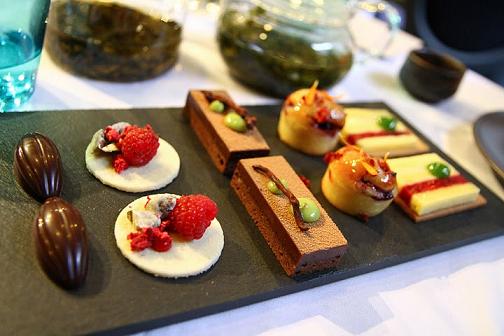
At a pricey $55 per head, it’s even more costly than high tea at the stunning Palace Hotel — but Kettle Whistle has vastly superior food and drinks. Though dishes and tea pairings will rotate, you can be assured of three themed courses: savory bites, followed by scones and crumpets (the passion fruit olive oil curd on this tray will blow your mind — regular old lemon curd might never seem the same), ending with dessert. There’s even a take home bag of tea and a snack (mine came labeled “damn good granola,” a savory-sweet mix).

You’ll be full after three courses because the savory and dessert courses offer four to five different bites, each from Werner’s creative hand. An heirloom tomato sable on a homemade cracker with lemon and a strip of lardo iberico de Bellota was revelatory. Spheres of tomato and pig fat dissolved in my mouth like a dream I wish I could have over and over again. On the dessert platter, a chocolate and salted caramel fondant was silky save for a crispy strip of chocolate on top, enlivened with avocado and lime layers. I’d go back just to see what Werner will serve next.

Naivetea’s Taiwanese teas (a local Bay Area company run by Taiwan natives) are elegant, worthy companions — not overpowering nor overshadowed by any of the courses. My favorite was their award-winning (it recently took home first place at the North American Tea Championship) Dong Ding Oolong, a gentle beauty with backbone, whose toasted rice and caramel notes shine.

Kettle Whistle’s two July 23 seatings are already filling up, so I’d look into reserving a spot now. Dress up, wear a hat, and come hungry.

Through October. 417 Stockton, SF. (415) 400-0500, www.naivetea.com


Rose Tea: Casual tea cafe

Rose Tea, an open, airy new shop, is a peaceful respite off Irving Street that doubles as take-out cafe and flower shop. It’s only been open a few weeks, but my two visits there have been rewarded with herbal teas (I like the Fire on Ice: ginger and lime steeped with fresh mint leaves) served in a bottomless pot with a mini-French almond cake and jam for $6.50.

Sandwiches ($5.95-7.50) are made with care on rye bread with sides of fruit and nuts. I liked the chicken, apple, cream cheese, and raisins version, and the feta, avocado, and walnut with tomato and basil. Plates come finished with house macarons or baklava. With what appears to be Armenian and Greek roots (if the jams for sale are any indication), the cafe also offers Turkish coffee, an espresso bar, and spiced rose chai. It’s a welcome neighborhood spot for a pot of tea and a bite.

549 Irving, SF. (415) 592-8174, www.roseteasf.com


Subscribe to Virgina’s twice monthly newsletter, The Perfect Spot


Appetite: Dining with two European winemakers

0

There’s nothing quite like dining with the person who made the wine you’re drinking — intimate and focused, it gives one a special insight into what’s in one’s glass. Earlier this month, I met with three Napa-Sonoma winemakers. Recently, I had the chance to spend time with two Europeans from the unparalleled regions of Bordeaux and Kamptal. Look for these wines in local wine shops — or ask that your shopkeeper stock them, they’re that good.

LAURENZ V., Austria – The Gruner Veltliners and Rieslings of Laurenz V.’s — whose name is pronounced “Laurenz Five” — hail from one of my favorite wine-making countries. I adore these two varietals when they come from skilled hands, and those of Laurenz Maria Moser V certainly qualify. He comes from five generations of winemaking, and his grandfather was the legendary Professor Dr. Lorenz Moser III, inventor of the Lenz Moser Hocherziehung trellising system that caught on across European vineyards.

Lunch with Moser entailed colorful stories and many a laugh — the man is hilarious. It also meant a line-up of gorgeous Gruners from a terraced landscape in the Kamptal region, north of Vienna. His wines are stainless steel-fermented, a technique which yields a crisp, bright Gruner profile.

We tasted through seven Gruners, from a juicy 2009 Laurenz und Sophie Singing to his Charming line (years 2005-2009). I was partial to the 2005, full and balanced with acidity and apple spice, as well as the 2006 with its clean nose and creamy yet mineral taste. We even sampled a honeyed 1980 (!) Gruner to witness the possibilities of a Gruner aging — contrary to popular opinion, they can mature quite prettily. 

We ended with a lively citrus-apple 2009 Prinz Von Hessen ‘H’ riesling and a lush, grapefruit-touched Johannisberger Klaus Riesling Kabinett Trocken. The two reflected the range of beautiful wines that come out of Austria. 


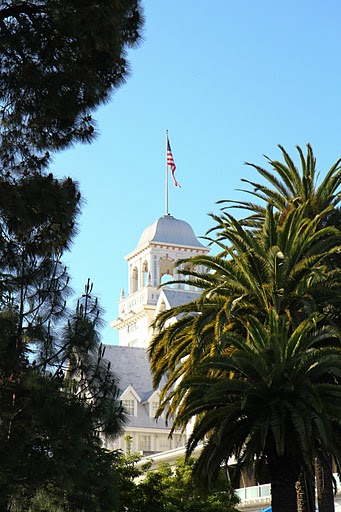
Chateau Palmer, Bordeaux, France – When one is invited to a personal dinner with a winemaker from Bordeaux, France, it’s a requirement to jump at the opportunity. During three plus hours with Bernard de Laage at Berkeley’s Claremont Hotel we tasted twelve Chateau Palmer, de Laage’s blends of equal parts merlot and cabernet sauvignon with just a touch of petit verdot. Comparing vintages side by side, we were able to gain a deeper appreciation of the inflections and strengths brought by each harvest. 

For me, the stand outs were the lush 2000 Palmer, the less aged but still bright 2005 Alter Ego — a robust, young expression of Chateau Palmer — an opulent and exuberant 1999 Palmer, and the musty, full, smoky but acidic 2002 Palmer. I actually couldn’t find a single low point in the 1998-2006 line-up.

The evening, part of Berkeley Wine Festival (check out its site for future dinners), was over the top — spectacular views of the San Francisco Bay from the back room of Claremont Hotel’s Meritage restaurant. Twinkling lights on a warm night made a brilliant partner to rising star chef Josh Thomsen‘s menu. I was duly impressed with all his dishes, and wouldn’t be surprised if we see a lot more from him in coming years. My top dish of the five course dinner was the Maine sea scallops topped with Hudson Valley foie gras. Served over rhubarb-balsamic compote and endive, it was the dining pinnacle of the night. But for sheer satisfaction, I’m giving my points to Thomsen’s succulent Creek Stone beef short rib.

All in all, a happy marriage of wine, food, people, and setting.


— Subscribe to Virgina’s twice monthly newsletter, The Perfect Spot


Appetite: Splendorini’s cocktail creations

0

I’ve got to concur with the Chronicle’s five choices for its 2011 Bar Stars. Between this column and my Perfect Spot newsletter, you’ve heard me talk about drinks made by all five bartenders chosen (like Kevin Diedrich and Alex Smith). Today, I’ll share the hottest concoctions by awardee Carlo Splendorini.

Splendorini made some beautiful drinks during his tenure at Gitane, so it’s no surprise that he’s continuing his tradition of excellence as lead bartender at Michael Mina’s flagship restaurant. Giving each creation Italian charm (and channeling Old Blighty thanks to his time at Nobu London), he’s ably backed by a strong bartending crew that includes Kate Bolton.

My latest visit with Splendorini took place before his Bar Stars honor – and after sampling seven of his cocktails, I was throughly impressed with the range, restraint, and beauty he showed in his selections – always lessons in refinement. He’s inventive, yet manages to leave one with the lingering sensation of balance. His drinks are as impressive, but never gimmicky as the latest cocktail trend.

Using Zucca, a bittersweet Italian amaro-aperitif, as the base of his Fraggle Cup ($11) was genius. It was particularly refreshing on the rocks with fresh tangerine wedges and a mini-forest of ginger stalks standing tall in the large glass in which it was served. I recommend this drink to anyone: especially for the exposure it provides to the range possible in amaro-based drinks.

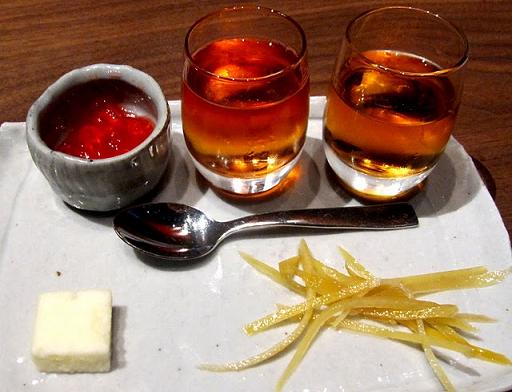
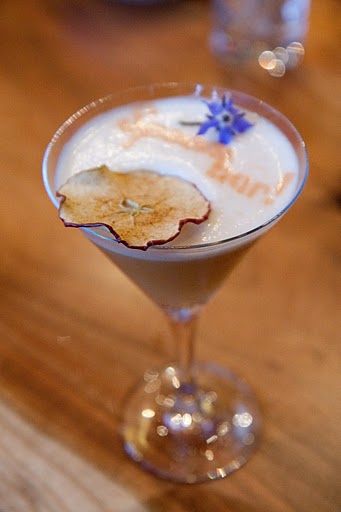
A self-serve sazerac ($10) is as fun as it sounds: deconstructed, and waiting for you to ingest any way you find desirable – either which the ingredients mixed together or taken separately. A shot of Rittenhouse 100 rye was paired with an absinthe marshmallow, lemon zest, and a truly inspired Peychaud’s bitters jelly. Balanced layers were achieved in Splendorini’s gorgeous Schiedam Blossom (photo on right, $12 – part of the Nolet Gin cocktail competition open through July 15). Nolet Gin and sake melded with a fennel-ginger cordial, silky with egg white.

I could go on, but instead, I urge you to sit down at the bar with a few orders of Mina’s impeccable food, and let Splendorini and crew work their magic on you.


— Subscribe to Virgina’s twice monthly newsletter, The Perfect Spot


Appetite: Sustainable seafood with Gaston Acurio

5

The average American still doesn’t know enough about sustainable fish. Most of us eat whatever is on the menu with little to regard to where it’s sourced, its health properties (or lack thereof) — totally unaware if the creature we’re eating is endangered or close to it. Consider this Appetite your 101 on the latest happenings in sustainable fish — and a primer on how to make sure your seafood dinner is safe for the waters of the world. 

I was privileged to attend a recent intimate round-table discussion with Peru’s leading chef Gaston Acurio and management from Monterey Bay Aquarium, the number one seafood source in the nation on what is or isn’t safe to eat at any given time.

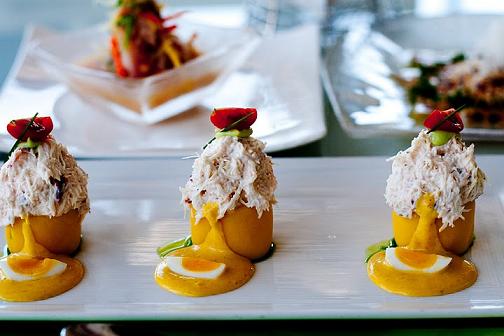
Naturally, we met in the offices of La Mar Cebicheria, Acurio’s first stateside restaurant and my top spot in SF for Peruvian (New York is also about to get its first La Mar outpost). As San Francisco’s breezy, bayside location of La Mar just went fully sustainable, it was an ideal time to discuss the necessity of planet-minded dining.

(Bait and) tackle these apps at Ki without fear of deprieving your grandkids of maritime meals

Acurio says chefs, cooks, and kitchen staff in general, are “the best weapons” in the struggle to change America’s fish-eating habits. While many say consumers should educate themselves, Acurio rightly pinpoints a need for education among restaurant staff. He shared a story of a Peruvian restaurant relaying to diners that their children would not know what their beloved local river shrimp tasted like if over-fishing in the area continued. With this kind of schooling, consumers themselves began asking every restaurant they dined at not to serve the shrimp. Locals changed habits – and may have saved the shrimp based on information learned on a night out.

The Peruvian’s commitment to sustainability is apparent. Acurio is working to take the message he’s spread throughout his home country worldwide. “Restaurants are instruments for sharing our culture with the world,” he says. He prefers to train his staff by inspiration, getting them involved in a mission — not just teaching them to perform a predetermined role.

Here are three things that restaurant staff and individual consumers can do to support sustainable seafood consumption, thus preserving the over-fished seafood we are at risk of losing like tuna and mahi mahi. (And remember, downloadable guides of what to eat and what to avoid avoid are available on the Monterey Aquarium website.)

1. Support local fisherman. Locally, buy sustainable fish at places like Royal Hawaiian in Potrero Hill or in the Ferry Plaza Building at San Francisco Fish Co.

2. Eat “down” the food chain – smaller fish need less time to mature, and make more sustainable catches. Try clams, anchovies, sardines, mussels, etc. 

3. Avoid aquaculture, farmed fish raised in controlled conditions.

Acurio believes more creativity happens when one cooks with what is fresh and available on a day-to-day basis. Rather than being limited by the diner who’s going to be upset that you didn’t serve tuna tartare, he challenges his chefs to “dream big”: to create dishes that will win customers over to a new way of looking at fish dinner. 

A few local restaurants serving only sustainable seafood:

1. Tataki and Tataki South, Pacific Heights and Noe Valley – The first fully-sustainable sushi restaurant in the US was Tataki, right here in our own backyard.

2. Ki, SoMa – Part of the funky, spacious “Zen Compound” that includes Temple Nightclub and a rooftop garden. Ki is an artsy new izakaya-sushi-drinks lounge.

3. Hecho, FiDi – Sustainable sushi sources called out by name – with tequila to accompany.

4. Pacific Catch, Marina – has elected June to be its sustainable shrimp month – it will be serving safe shrimp from various parts of the world.

And a little homework for those who’d like to learn more about keeping your sea meals safe for the ocean environment: don’t miss local resident Casson Trenor’s book, Sustainable Sushi (Trenor helped launch both Tataki and Ki). Also, the fabulous 18 Reasons is throwing a “Good Fish” event (cooking demo and lecture, $25-35) Sunday afternoon, June 12, sure to help you navigate the confusing terms that are involved in selecting a more sustainable fish.

— Subscribe to Virginia’s twice-monthly newsletter The Perfect Spot


Appetite: Island bites, part five

0

Kauai: dreamy island respite, painfully beautiful, truly relaxing (other than east side traffic!) Last time, I covered restaurants and cheap eats, and killer cocktails on the island. This time, the final post in the series, I’ll focus on the best places to stay, and more on libations from coffee to rum.


HOTELS

Grand Hyatt Kauai, Poipu Beach:

Do yourself a favor and stay at Grand Hyatt Kauai. A resort in the full sense of the word, it is its own world unto itself. From lava rock waterways and multiple levels of pools (including a salt water-sand pool), to its world class spa, Anara, and open air couples cabanas, you leave here feeling as if you’ve truly had a vacation.

Dinner at Tidepools, features pina coladas sipped poolside, taking in the sunset from the deck of your room with a bottle of wine, conversing with the parrots in the massive open air atrium, live bands, and a scotch in Stevenson’s Library. It’s all unforgettable. Yes, it will cost you, but service is impeccable and the experience ranks up there with (or above) the best I’ve had, anywhere – and that includes the Ritz Carlton and the Four Seasons. The unreal setting, balmy by day, lit by tiki torches at night, is unbeatable.


Outrigger Waipoli Beach Resort, Kapaa:

My initial take on Outrigger Waipouli wasn’t strong. On a busy, strip mall-lined stretch of East Kauai in the town of Kapaa, its appears fairly generic from the outside, while kids swarm the lovely pool area (modeled loosely after Grand Hyatt’s incredible pools and waterways). At the time, the one spa for adults was overtaken by eight children.

But from a non-descript hallway, the door to our room opened onto what felt like our own private beach house. Two bedrooms, three bathrooms, a spacious living room and kitchen; each room had sliding doors opening onto the lawn than ran right down to the beach. Breezes flowed through the space, which felt private and removed from any of the hotel’s structure. Dishware, wine glasses, coffeemaker, everything we needed was in the kitchen, making it feel like a home away from home. It was the one part of the trip where we could cook and watch movies (Blue Hawaii, thank you very much) on flat screens in each room.

Though the location is not near as idyllic or removed as Grand Hyatt on Poipu Beach (it’s certainly more affordable), inside our room we felt secluded, rested and as if we could settle in for weeks.


DRINKS

Kauai Coffee Plantation, Eleele: 

The coast from the caffeinated climes of Kauai Coffee

Originally McBryde Sugar Plantation back in the 1880s, Kauai Coffee is Kauai’s one and only coffee plantation, encompassing over 3,000 acres set right on the ocean. A more striking setting I could hardly envision. A half day personal tour with its amazing sales manager, Marty Amaro, was a highlight in Kauai. We off-roaded in his truck over red dirt roads, through coffee fields, and next to ocean rocks where we watched sea turtles lolling.


Coffee plant at Kauai Coffee

They do everything locally themselves. I toured the factory, climbed atop a coffee harvesting tractor, witnessed bean roasting and bagging on a vertical form-fill-and-seal machine, and of course, sipped Kauai coffee. Amaro makes a mean iced mocha, let me tell you. I was envisioning a sweet, chocolate-y drink but it’s a bracing, coffee lover’s delight, refreshing and cool on a hot island day.

Kauai Coffee grows farm varietals of Arabic coffee: yellow catuai, red catuai (both with high levels of acidity for medium-bodied coffee), typica (medium acidity for medium-bodied coffee), Kauai Blue Mountain (medium acidity and full-bodied), and Mundo Novo (low acidity but full-bodied).

Coffee beans roasting

They run the largest drip-irrigated coffee estate in the world, sourcing waters from a nearby dam in the foothills, roasting over 600,000 pounds of coffee a year: an amazing feat when you see the size of the room it all happens in. Similar to wine, harvesting happens annually, around September through November, when staff double in size to get it all processed.

You can join the coffee club for a reasonable $15.25 to receive one 10 oz. bag, or $29 for two. Besides some of the elegant estate coffees, I find the newer Big Braddah a real representation of Kauai spirit: casual, familial, playful. I’m definitely not a flavored coffee type, but I am pleasantly embarrassed to admit I was taken with the Hawaiian coconut caramel crunch coffee. Each batch is painstakingly hand-flavored and the result is not so much sweet as integrated and nutty.

Kauai Coffee should be a stop on any visit to Kauai.


Koloa Rum, Lihue: 

I found Koloa Rum to be a bit of a mixed bag. The setting is memorably Hawaiian: a traditional sugar plantation-style tasting room on the grounds of the delightful Kilohana Plantation (a former sugar plantation preserved since its 1930s heyday). The distillery’s elegant packaging makes for a strong first impression.

Staff are gracious and aim to please. But complex Hawaii liquor laws are such that tastes remain exceptionally tiny, cannot be shared, and though they have created a mai tai mix, it’s illegal for them to mix alcohol – you won’t find cocktails of any kind here.

Using a 1,210 gallon copper pot still originally used for Kentucky bourbons post World War II, white, gold, and dark rums work best as entry points to the pleasures of rum. I know some who find them flat or not as nuanced as other rums, yet each one has won bronze or silver medals at esteemed rum tasting competitions like the Miami Rum Renaissance Festival.

I expected to find the gold ($30.95) and dark ($32.95) rums too sweet, given their somewhat unnatural coloring, which comes from crystallized sugar and molasses. But they were more balanced than I expected. But I’d be most inclined to drink the white ($29.95): clean and light, appropriate for cocktails. Another recent launch is the spiced rum.

If you’re in the area, it is a worthy stop: a local venture using the last of the little sugarcane left from the island, and pure mountain rainwater of nearby Mt. Wai’ale’ale.


Java Kai, Kapaa: 

The best coffee I had in Kauai, the bracing coffee at Java Kai is a local favorite for a strong cappuccino or espresso. It doesn’t have the friendliest staff (which is unusual in Hawaii), but that’s no matter when coffee is being prepared right. It was my regular morning stop on this side of the island (P.s. – it’s ideal iced, next door at Mermaids Cafe.


Kalaheo Cafe, Kalaheo: 

On the south shore of Kauai, this casual cafe would be at home in any hip, small town. Kalaheo Cafe has a healthy, locals vibe and is packed for breakfast. Eat-in or take-out, stand-outs include straight-from-the-oven baked goods (apple coffee cake is one). Using local coffees like Kauai Coffee, they serve robust espressos and cappuccinos. There may be no third wave, artful foam atop that capp, but rest assured it will wake you up. For one picky about coffee and how it is prepared, I didn’t feel like I had to suffer for good coffee on the sleepy island of Kauai.


— Subscribe to Virgina’s twice monthly newsletter, The Perfect Spot


The secret life of Michael Peevey

11

rebeccab@sfbg.com

Inside a legislative hearing room at the state capitol, things were beginning to get uncomfortable. Roughly five weeks had passed since a Pacific Gas & Electric Co. pipeline explosion killed eight and leveled an entire San Bruno neighborhood, and this California Senate committee hearing was an early attempt to get answers.

San Bruno residents who lost loved ones in the deadly explosion huddled in the front row, their eyes fixed on company representatives and agency bureaucrats as they spoke. At the back of the room, a band of immaculately dressed PG&E executives and utility lawyers sat clustered together.

Richard Clark, director of the consumer protection and safety division of the California Public Utilities Commission (CPUC), fielded questions from visibly frustrated state legislators. Sen. Dean Florez (D-Shafter) wanted know why the CPUC hadn’t done anything when PG&E ignored an impaired section of the ruptured pipeline even after it was granted $5 million to fix it.

“Did the PUC do any accounting when you gave them $5 million?” Florez demanded. “Do we just give them money and cross our fingers and hope they fix it? Is that what we do? Until some terrible tragedy occurs?”

Sen. Mark Leno (D-San Francisco) said the CPUC needed to step it up and start practicing serious hands-on oversight. He recalled a tragedy that occurred in 2008 when a gas leak in Rancho Cordova triggered a pipeline explosion, killing one person and injuring several others. Although an investigation determined that PG&E was at fault, the CPUC hadn’t yet gotten around to fining the company.

“We’ve got a pattern here,” Leno said. “And we’re not doing anything differently.”

Less than three weeks after CPUC staff members were grilled in Sacramento, Michael Peevey — president of the CPUC and the top energy official in the state — boarded an airplane for Madrid. He was embarking on a 12-day travel-study excursion, with stops in Sevilla and Barcelona, sponsored by the California Foundation on the Environment and the Economy (CFEE).

Peevey’s wife, California Sen. Carol Liu (D-Glendale), was along for the trip. So were two other state senators, several members of the state Assembly, CPUC commissioner Nancy Ryan, and a host of representatives from the energy industry. The group included executives from Chevron, Mirant (now GenOn, the owner of the Potrero power plant), Covanta Energy Corporation, Shell Energy North America, and engineering giant AECOM. High-ranking executives of the state’s investor-owned utilities also participated, including Fong Wan, the senior vice president of energy procurement for PG&E.

Although strict rules normally govern commissioners’ interactions with parties that have a financial stake in the outcomes of commission rulings, there wasn’t anything especially unusual about Peevey traveling internationally with a group that included representatives from the same companies his regulatory commission oversees. CFEE trips happen every year. The nonprofit has footed the bill to fly groups of regulators, legislators, and utility executives to prime vacation destinations like Italy, Brazil, and South Africa in recent years, excursions organizers say are critical for educating top-level stakeholders about worldwide best practices for sustainable systems. However, groups such as The Utility Reform Network (TURN) have decried CFEE trips as “lobbying junkets.”

As PG&E and the CPUC both work to win back the public’s confidence after their latest deadly failure, it’s worth analyzing whether their relationship — shaped by vacations together at exotic locales — has grown too cozy.


THE BUDDY SYSTEM

CFEE isn’t the only nonprofit that regularly flies Peevey overseas for green travel tours with high-ranking utility executives, and the 12 days he spent in Spain wasn’t the only time he spent away from official duties and in the company of the corporations his commission regulates.

These controversial getaways are just a small part of Peevey’s involvement with private-sector interests. He also chairs the board of a nonprofit investment fund created as part of a $30 million settlement agreement with PG&E. Called the California Clean Energy Fund, it funnels money into private venture-capital funds that invest in green start-ups, plus a few companies in the fossil-fuel sector.

While legislators have voiced frustration that lax CPUC oversight of PG&E on pipeline-safety issues opened the door to disaster in San Bruno, inside observers are critical of the outright favors Peevey has granted utilities, such as guaranteeing an unprecedented, higher-than-ever profit margin for PG&E as part of the company’s 2004 bankruptcy settlement.

The CPUC is set up to perform as a watchdog agency, yet social and professional ties running deep within California’s insular energy community mean regulators sometimes run in the same circles as the executives who answer to them, making for cozier relationships than the general public might anticipate. It’s an old-fashioned insider game that one longtime observer wryly characterizes as “the buddy system.” But the buddy system can bring consequences.

As the public face of the CPUC, Peevey repeatedly has been thrust into the spotlight. He has absorbed advocates’ concerns about pipeline safety, rising electricity rates, SmartMeters, missed targets for energy efficiency, and municipalities’ David-vs.-Goliath battles with PG&E to implement community choice aggregation (CCA), to name a few. He’s a magnet for public scrutiny while occupying the center seat at commission meetings, but Peevey’s behind-the-scenes engagements with private-sector organizations bent on shaping statewide energy policy demonstrate how power is wielded in California’s energy world, a system in which regulators seem to be partnering with utilities rather than policing them.

Based at Pier 35 in San Francisco, CFEE’s board of directors is composed of a small group of officers, plus a long list of members who hail from some of the most prominent businesses nationwide. Shell, Chevron, J.P. Morgan, Goldman Sachs, AT&T, and PG&E all hold positions on CFEE’s membership board, and each entity chips in to fund the foundation’s activities and travel excursions.

The group also includes representatives from labor organizations like the International Brotherhood of Electrical Workers and mainstream environmental groups such as the Natural Resources Defense Council. Among the emeritus members of CFEE’s governing board are some high-ranking figures, such as CIA director-turned-Pentagon boss Leon Panetta. CFEE received $45,000 in donations from PG&E in 2009 (the most recent year available) and was granted similar amounts in prior years.

CFEE spokesperson P.J. Johnston, the son of former state senator and CFEE officer Patrick Johnston and the press secretary under former Mayor Willie Brown, described the trips as valuable opportunities for top-level stakeholders to gain insight on best practices and engage in noncombative dialogue on key issues.

“The idea for us was that it made sense to have someplace where it was nonconfrontational to engage in policy, work-type discussions,” Johnston explained. He added that the trips are “all about policy, on the 30,000-foot level,” and emphasized that discussions aren’t about specific decisions pending before the CPUC.

Loretta Lynch, a former president of the CPUC who brought a reformist spirit to the agency and was never shy about rebuking utilities, is skeptical of CFEE’s stated program goals. When she was first appointed to the commission, Lynch said, CFEE contacted her to ask where she wanted to travel. If the trips are arranged to fly regulators to destinations they’ve been itching to visit, she reasoned, must-see green innovations probably aren’t dictating the itineraries. “To me,” Lynch said, “they don’t have anything to study in mind.”


“PARTYING WITH THE JUDGE”

The CFEE trip to Spain included a briefing on developing wind energy from AES, a company working on wind and solar development in California that also operates polluting, gas-fired power plants in Huntington Beach, Long Beach, and Redondo Beach. There was a round table on solar energy featuring a presentation from the Independent Energy Producers Association, a trade group that regularly files petitions and comments on CPUC proceedings. The trip included a tour of a desalination plant, a talk from the president of the Madrid Chamber of Commerce, and discussions about California’s energy market. Scheduled activities ended by midafternoon on some days, and the itinerary left a Friday afternoon, Saturday, and Sunday in Sevilla wide open.

Asked to comment on concerns about inappropriate lobbying, Johnston said: “We’re not guarding against anyone’s potential behavior any more than we would be on the streets of Sacramento. We’re not setting ourselves up as the guardians. We’re not facilitating that, per se, either.” He added, “I realize there are critics of any kind of travel and any kind of commingling. But it is wise for us not to close our eyes to the rest of the world, and there’s not a great appetite for spending taxpayer money on these trips.”

Yet Lynch countered that there is an important distinction between the roles of Sacramento legislators and that of utility commissioners. “Regulators are not legislators,” Lynch said. “They’re more like judges. Their decisions have the power of a judge’s decision.” By inviting commissioners along on these lavish getaways, she said, “it’s as if you’re partying with the judge.”

Mindy Spatt, a spokesperson for TURN, echoed Lynch’s concerns. “These ostensibly educational trips are essentially lobbying junkets, where utilities … wine and dine legislators,” Spatt said. TURN raised the issue several years ago, she said, when Peevey joined a CFEE trip attended by a representative of Southern California Edison “just coincidentally at the exact same time that he was penning an alternate decision in Edison’s rate case.” She added: “In TURN’s perspective, the commissioners need to be more in touch with what actual utility customers are experiencing, rather than in touch with the top restaurants in Brazil.”

While Peevey is only one of a host of officials who attend CFEE trips, he has more than just a casual tie to the nonprofit. From 1973 to 1983, he served as president of the California Coalition for Environment and Economic Balance (CCEEB), an organization CFEE grew out of and whose membership shares some overlap with CFEE.

Based in San Francisco, CCEEB was founded by Edmund G. “Pat” Brown (Gov. Jerry Brown’s father) in 1973. CCEEB backed a late-1970s proposal to construct a series of nuclear power plants along the California coastline. More recently, the group honored BP with a 2009 award for environmental education — shortly before the company and lax federal regulators were responsible for the worst oil spill in U.S. history.


A YEAR IN THE LIFE

Spain wasn’t the only country Peevey jetted off to with complimentary airfare in 2010. According to a Form 700 filing with the Fair Political Practices Commission, he also traveled to Germany from Aug. 1–5 for a sustainable energy study tour organized by the Energy Coalition. Joining that trip were representatives from investor-owned utilities PG&E, Southern California Edison, and Sempra, plus various city officials and energy experts from the Swedish Energy Agency.

The group stayed at the Radisson Blu Berlin Hotel, which is famous for its AquaDom. “Standing at 25 meters high, it is the world’s largest cylindrical aquarium containing 1 million liters of saltwater,” according to the hotel website. All Radisson Blu Berlin guests have free access to “the hotel’s well-being area,” called Splash, which features a pool, sauna, steam bath, and fitness room.

Based in Irvine, the Energy Coalition’s Board of Directors is chaired by Warren Mitchell, a retired chair of the Southern California Gas Co. and San Diego Gas & Electric Co.. Another director is a utility lawyer who also sits on the board of directors of the Northeast Gas Association, a consortium of natural gas companies in the northeastern U.S.

Founded in the late 1970s by John Phillips to get large businesses to reduce energy consumption in partnership with utilities, the Energy Coalition has arranged excursions for years to bring energy regulators, city officials, and utility executives to Sweden (where Phillips’ wife was born) to exchange ideas on energy issues. The nonprofit organizes an annual summit called the Aspen Accord, “an energy policy forum where cities, utilities, regulators, and end-users collaborate to identify problems and propose solutions to our most pressing energy issues,” according to a 2009 tax filing. While it used to be held in Aspen, Colo., the most recent Aspen Accord was held at San Francisco’s Westin St. Francis. Peevey gave introductory remarks, and the conference featured talks from PG&E, among others.

Craig Perkins, executive director, told the Guardian that the Aspen Accord and study trips are designed to create a venue for major stakeholders to arrive at outside-the-box solutions. “What we try to do is get everybody out of their comfort zone, if you will — that’s the best way to support more creative thinking,” he said. Official regulatory proceedings are “so rigidly legalistic and bureaucratic that it almost prevents any creative thought from happening,” he added. “We’re not in San Francisco, we’re not in Sacramento, we’re not in corporate offices — let’s just talk about these really big issues, and really big challenges.”

The Germany tour included meetings with the Berlin Energy Agency, talks about climate policy, and a tour of an eco-community in Freiburg. Perkins said utility companies must to pay their own way on the trips, but costs are covered for governmental officials.

An Energy Coalition tax filing reveals that board members receive a monthly retainer of $1,000, quarterly meeting fees of $1,000, plus $500 for each board committee meeting. Teleconferences also result in $500 meeting fees.

Several years ago, the Energy Coalition partnered with PG&E to create the Business Energy Coalition, which paid businesses including Bank of America and the Westin St. Francis $50 per KW of energy savings for banding together to reduce energy during peak load hours. According to a tax filing, total annual Energy Coalition revenue dropped from $10.7 million in 2008 to $3.75 million in 2009 “due to large revenue receipts for participant incentives” for the Business Energy Coalition program, as “revenues were used for direct pass-through payments to program participants and contractors.” In 2006, according to a CPUC filing, PG&E paid the Energy Coalition $227,373 for unspecified consulting services.

In addition to the $8,880 trip to Spain (comped), and the $6,583 trip to Germany last year (comped), Peevey’s 2010 disclosure form shows that he also went to Australia May 14-19 to participate in a conference hosted by the Sydney-based Total Environment Center called “Smart Metering to Empower the Smart Grid” ($12,577, comped). And while it doesn’t show up on his FPPC filing, an agenda for CFEE’s Energy Roundtable Summit from Dec. 9-10 at the Carneros Inn in Napa lists Peevey as a participant. A glance through past filings suggests that 2010 was no anomaly; it’s a typical year in the life of a jet-setting utilities regulator.


GREEN CAPITALISM

Peevey once served as president of the Southern California Edison, an investor-owned utility, and was president of NewEnergy, Inc., an electricity company that later was sold to Williams Energy. Yet his professional image is that of a forward-thinker on climate change. According to a bio on the CPUC website, he’s received awards for achievements on green and sustainable energy from various organizations throughout California.

In 2005, speaking in Berkeley at an annual conference for the California Climate Action Registry, Peevey touted a list of his accomplishments on sustainable energy. My final example of PUC actions on climate change is related to PG&Es bankruptcy, he said. When they emerged from bankruptcy last year, one of many conditions of our support for their reorganization plan was that they create a $30 million Clean Energy Fund, devoted to investing in California businesses developing and producing clean technologies.

What Peevey didnt mention is that he chairs the board of directors of that fund. As a nonprofit venture capital fund, the obscure, San Francisco-based CalCEF sounds like an oxymoron. Based on the terms of the PG&E bankruptcy settlement, its governed by a nine-member board consisting of three CPUC appointees, three PG&E appointees, and the rest selected jointly by the CPUC and PG&E appointees. Other board members include past PG&E executives, a former member of the California Energy Commission, and a former chair of the board of governors of the California Independent System Operator (Cal-ISO), the body that ensures statewide grid reliability and blocked the closure of the Mirant Potrero Power Plant for years.

The nonprofit’s stated mission is to catalyze clean energy investment to aid in the state’s transition away from fossil fuels. CalCEF president Dan Adler described it as a sort of seasoned guide for fledgling green companies that might otherwise fail to navigate the murky, complicated clean-energy sector. CalCEF is in a position to usher start-ups toward success with a combination of funding, networking, and insider wisdom on state energy policy.

Among the challenges that the clean-energy sector faces, Adler said, are the utilities themselves. “They are effectively monopoly, or oligopoly, controllers of the energy industry,” he said. “And they don’t like outside innovation coming and disrupting their work process or their relationship with their customers.”

CalCEF aims to guide the finance community “to be partners with what public policy is doing around clean tech and clean energy,” Adler went on. “There’s a tremendous amount of money to be made, but there’s also a lot of opportunity for money to be wasted. If you don’t have a private-sector investment community that understands these rules and can put their money alongside these rules in a collaborative framework, we’re very unlikely to achieve the really aggressive energy targets that California has set.”

Yet as one skeptical energy insider noted, “there are 15 to 20 other funds, with 10 times as much money, an hour south in the same field,” referring to the burgeoning clean-tech hub in Silicon Valley. It’s questionable whether the CPUC is actually fulfilling some dire need with CalCEF, this person said.

Lynch, not surprisingly, takes a dim view of CalCEF. The former CPUC president questions what business the CPUC has creating a private foundation to guide venture capital investment. “It is a fundamental distortion of the PUC’s authority,” she charged, “all in service of Peevey’s ambitions.”

Peevey’s economic disclosure showed that he holds more than $1 million in a private family trust, without disclosing whether private investments contributed to that fund.

Adler stressed that there is arms-length relationship between CalCEF board members and the companies that benefit from the fund’s investments. “Because we are a nonprofit, and because we have on our board members of the regulatory community, we recognized quickly that we can’t be making direct investments into companies,” said Adler, a former CPUC staff member who was highly regarded even by the critics of CalCEF. “So … we’ve picked the venture-capital funds that we wanted to partner with.”

CalCEF funnels its capital into three different for-profit investment firms, which in turn select the companies that will be included in CalCEF’s investment portfolio. Several directors of the partnering investment firms also sit on the boards of directors of the companies they invest in. The startups run the gamut, from carbon-offset outfits, to energy-efficient lighting manufacturers to solar and wind companies, to biofuels startups to various kinds of technology firms related to the smart grid.

But CalCEF has also poured money into companies that bolster the fossil-fuel industry. One of its first investments was CoalTek, a company developing technology for so-called “clean coal.” Asked to explain why, Adler told the Guardian, “We don’t have veto power on every deal that goes down.”

Adler said he personally believes that “there’s no such thing as clean coal,” but tempered this by adding, “there are some very smart people in our community who will tell you that there’s no future … without coal.”

Another CalCEF investment, DynaPump, is developing technology to make it more energy efficient to pump oil and gas. Asked about this decision, Adler responded: “I will say that when we were approached with this investment by the venture partner that ultimately undertook it, we had our misgivings. If you can save energy in the production of oil and gas, then you’re definitely making a contribution to overall energy efficiency.”


TAX-EXEMPT TESLA

There appear to be some closer-than-arms-length links between CalCEF board members and the investment fund’s beneficiaries. A bio for CalCEF director Nancy Pfund, for example, notes that in her capacity as manager of an outside investment fund, she had “worked closely” with Tesla Motors, a CalCEF investment. Tesla provided CalCEF’s first investment return earlier this year after Tesla went public. A principal of one of the investment firms that works with CalCEF, Stephen Jurvetson of Draper Fisher Jurvetson, holds Tesla shares in a personal trust, according to a filing with the U.S. Securities and Exchange Commission.

Tesla manufactures sleek, electric, zero-emission sports cars with prices in the six-figures, and it’s gearing up to roll out a model that will cost somewhere closer to $50,000. The company’s success was helped by a sales-and-use-tax exclusion granted by the state of California last year. Peevey had a hand in that, too. Few Californians may have heard of the California Alternative Energy and Advanced Transportation Financing Authority (CAEATFA), a state body within the Office of the Treasurer, which has the power to authorize sales-tax exclusions for companies that are developing alternative energy technologies. Peevey has a seat on it.

In October 2009, according to a CAEATFA document, Tesla was granted a sales tax exclusion from that financing authority. The sports car manufacturer had received a tax break of $3.3 million as of December 2010, and stands to gain a tax break as large as $29.1 million, depending on its property purchases. As a CAEATFA member, Peevey approved the deal by proxy.

A central question is whether the CalCEF dollars that benefited Tesla and other CalCEF portfolio investments were originally derived from PG&E shareholder profits or ratepayer funds. Adler was careful to note that the initial $30 million came from company shareholders, not PG&E customers. But Lynch pointed out that every dime in PG&E coffers originates with the millions of customers who pay utility bills.

Lynch noted another provision of the bankruptcy settlement agreement, which guarantees PG&E a minimum annual profit of 11.2 percent, catapulting it forever into a higher rate of return than the 8 percent to 11 percent profit traditionally granted by the CPUC in prior decades. “They’re manipulating how big this bucket is to siphon off funds into programs like CalCEF,” Lynch said. “It’s all to give Peevey and his friends access — and to greenwash what was a very stinky deal for the ratepayer.”


ELUSIVE CLEAN ENERGY FUTURE

In California, a national leader in addressing climate change, the stakes are high in the energy sector. The CPUC is tasked not only with shoring up transmission-pipeline safety to prevent another San Bruno disaster, but helping to chart a course away from reliance on fossil fuel-powered energy sources.

CFEE, the Energy Coalition, and CalCEF share a common thread — their missions relate to advancing the cause of a clean energy future in California. And while utility funding and partnership is evident in all three operations, the overarching goal is understood to be green.

But as Adler observed, the utilities themselves present one of the greatest obstacles to progress on a clean-energy transition. While California has increased renewable energy sources, it’s done a poor job at supplanting fossil fuel generation with green alternatives, in part because the CPUC has allowed for increasing fossil fuel power generation even as renewable energy expands. According to a listing on the California Energy Commission website, nine natural gas power plants have won approval statewide and are moving toward construction, while six new ones are under review.

The CalCEF approach to addressing climate change, rather than aggressively targeting polluting industries, is to encourage the fledgling green industry in hopes of facilitating success in partnership with the financial sector. In many cases, the backers of the clean-tech companies are the same players behind the big energy giants.

Environmental advocates are critical. “If anyone thinks the CPUC is set up to serve public interests, forget that,” says Al Weinrub, executive director of the Local Clean Energy Alliance, a group that organized against PG&E’s ill-fated Proposition 16 last year. “They never have and they never will.”

Weinrub said he viewed proponents of green energy as falling into two camps: Moneyed interests motivated by a growing new market sector, and activists motivated by environmental and social justice causes. Major green investment firms “want to de-carbonize capitalism,” he observed. “But everything else stays the same.”

Peevey is considered a major driver behind the state’s climate change legislation, and he’s highly regarded for his dedication to green energy. Yet as long as the interlocking dynamic between energy regulators and California’s largest utilities goes unchallenged, change will only come in a way that’s as comfortable, profitable, and manageable for the state’s top polluters as they wish. And in a state with an aging energy infrastructure that’s vulnerable to the impacts of climate change, that pace isn’t nearly quick enough. 



Appetite: Napa’s affordable eats and surprising treats

10

After countless weekends in Napa over the years, I’m flush with recommendations for worthy restaurants and hotels. It’s not always the most affordable area, but my recent visits north have revealed a number of delightfully reasonable options within the bounds of Napa and Yountville, both new and established. 

They’ve also uncovered a few unexpected dishes – and in the case of one restaurant with a new chef, a whole range of them.

Napa Valley Marriott: Sleep… and a superior burger 

Breakfast, lunch, or dinner — don’t check your watch, just order the Knife and Fork burger at the Marriott

For those familiar with the hotel before its two years of multi-million dollar renovations, Napa Valley Marriott is a whole new ballgame. It now sports a warm, modern look with a soothing spa, an ultra-cool poolside patio with couches and firepits, and a new restaurant-bar. Though you may not be able to tell from the street outside, it’s really a dramatic revamp.

In the high season summer months, make a weekend of it with rooms in the low $200-300 range (or mid $200 range on weeknights). Rooms have also been completely redecorated with gentle colors and artwork, plasma screens, and comfy beds. The ones facing the courtyard are particularly tranquil. The only thing lacking? Free wi-fi. It’ll run you $4.95 a day.

Chef Brian Whitmer’s garden restaurant is a revelation. I’ve seen Napa restaurants with their own gardens, but nothing as lush as his. Spring peas are crispy and sweet right off the vine, and leafy greens make for abundant salads. Whether you stay in the hotel or not, it’s worth a detour to check out.

Cozy up in a chic booth, or a grab a stool at the curved bar and order the spicy Knife and Fork burger ($12) for breakfast, lunch, or dinner. It doesn’t matter when, just order it. This burger is made of Caggiano chorizo, which is savory and spicy, yet also delicate, melt-in-your-mouth, on a Model Bakery brioche. Layered with aged cheddar, watercress, the restaurant’s secret sauce, and a fried egg, it’s one of the better things I’ve eaten in Napa in awhile — an utterly unique burger. You won’t regret making a stop for this one.

3425 Solano, Napa. (707) 253-7433, www.napavalleymariott.com


Ubuntu: Vegetarian perfection

Chef Jeremy Fox brought nationwide fame to this eatery, often named among the best vegetarian restaurants in the country by publications like the New York Times. I’ve always enjoyed my previous visits.

But I’ll tell you now, with young chef Aaron London at the helm, it’s better than ever. The food has moved from winning vegetarian cuisine to work-of-art vegetarian cuisine. It’s gone from high quality to superb. As a non-vegetarian, I would say it has become possibly the best vegetarian restaurant I’ve been to anywhere and one of the best dining experiences in Napa.

What’s interesting about chef London is that he’s been at Ubuntu since the beginning, working as Fox’s sous chef. I hear he influenced a number of dishes in those lauded early days, though we did not hear much about him. Nominated for Rising Star Chef at this year’s James Beard Awards, we should be hearing a lot more about him.

He’s revamped the menu in such a way that each $10-19 dish is far more than the sum of its parts. You read of roasted and raw asparagus ($16) with burratta cheese coated in potato chip crumbs, but you really have no idea what you’re in for. A garden-fresh dish comes out, smeared with earthy potato skin puree, lavished with pine nut and currant soffrito, dotted with frisee, greens, and edible flowers. It’s an art piece that not only stuns visually but tantalizes the tongue with its range of flavors.

The two key words I’d use to describe London’s cooking outside of artistic? Texture and contrast. Every single dish of the six I recently had the pleasure of dining on were a study in layers and texture. Sweet complimented savory. Earthy and bright co-mingled. Crunchy partnered with creamy. Surprises came in every dish. Not a one was lackluster.
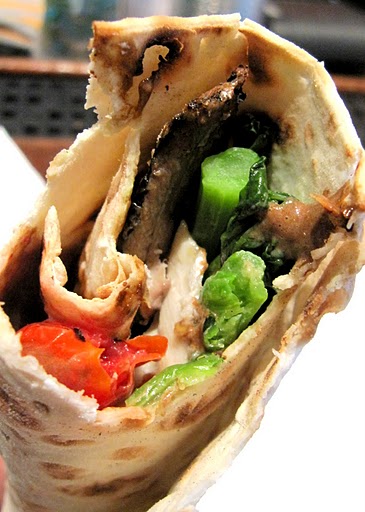
I could wax eloquent about the merits of each — some served on stone labs that kept them warm – but the menu changes frequently and this article would grow tedious. So I will simply say: go, and be prepared to be blown away.

1140 Main, Napa. (707) 251-5656, www.ubuntunapa.com


Bistro Sabor: Funky, fun Latin

Bistro Sabor‘s menu initially appears Mexican, but it’s really a mix of Latino cuisines in the new downtown Napa. The space is hip with brightly-painted, graffiti-bedecked walls, and the staff couldn’t be more helpful, particularly considering its order-at-the-counter casualness. 

On a Saturday night, tables were cleared for 10 p.m. salsa dancing, a hit with the local Latino community. Beer and wine keep it festive (wish they had a hard liquor license to serve tequila). The food? Fresh, satisfying, and all under $15. A two taco special of grilled sea bass ($11) is impeccably flaky, topped with scallion-cilantro slaw and a pineapple habanero salsa. Even accompanying rice and black beans are a notch above the rest. A rock crab quesadilla ($10) is less creative but still warm and cheesy, while pupusas, pozole, blood orange avocado salad, and lomo saltado exhibit a range from El Salvador to Peru. It’s playful Latin street food with quality ingredients. A win for Napa and cheap eats.

1126 First St., Napa. (707) 252-0555, www.bistrosabor.com


Dim Sum Charlie’s: Dim sum with a side of magic

I’ll tell you right now: you can get better, cheaper dim sum at dozens of places in SF. In fact, for the nearly $7 Dim Sum Charlie’s charges for a mere four dumplings, I can get at least twelve, and buns, at my favorite city spots. Why go? First off, there’s not much dim sum in Napa and Charlie’s is decent, though far from memorable. Warning: some have commented on menu listings that could be perceived as racist (“ten dolla make you holla”?).

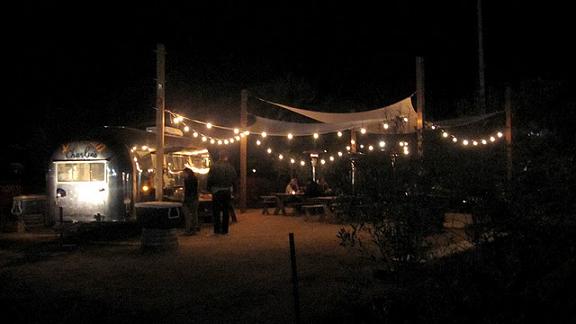
But the setting is still a reason to go. Dim sum and noodles are served out of a classic Airstream trailer. Sure I’ve seen it before, but lover of all things retro that I am, I still find it charming. And what’s different about this trailer setting is its canopy of lights and dirt lot strewn with picnic tables and a campfire. Rollicking tunes make it feel like a backyard party — a bit like camping in retro-kitsch style. With dim sum.

It doesn’t really matter what you order. Bring friends. Pull up to a picnic table or fireside with hot sauce and chopsticks, and sing along to the Beastie Boys as you slurp noodles and fill up on pork buns.

728 First St., Napa. (707) 815-2355, www.dimsumcharlies.com (look for the Airstream trailer)


Yountville Coffee Caboose: Coffee lovers

You’ll not go wrong with coffee and pastries at the original Bouchon Bakery across the street. But when that line is unbearable (or even if it isn’t), I’m delighted to hit up a locals coffee go-to: Yountville Coffee Caboose. Yes, it’s actually in a train caboose off Washington Street. It often features Bay Area coffees like Ritual, brewed strong, robust and with proper crema.

6523 Washington, Yountville


Grace’s Table: Local’s breakfast 

Grace’s Table has its minor missteps: its raved about skillet cornbread with lavender butter ($6) was dry and rather flavorless. And $10-18 entrees for breakfast pushes a little high for a casual neighborhood restaurant. But as an open air, corner space with sweet waitstaff and soothing decor, it’s a welcome brunch stop.

Quiche of the day ($12 with salad or soup – can also be had a la carte) was the stand-out, fluffy and light. The crust almost reminded me of Tartine in its buttery flakiness. Mini bagels with house-cured salmon and cream cheese ($10) are playful approach to morning food, though the bagels are not exceptional (but isn’t that ever the case outside of New York?) Grace’s is a pleasant place to start your day with coffee and a newspaper. 

1400 Second St., Napa. (707) 226-6200, www.gracestable.net


C Casa Taqueria: Breakfast to go 

C Casa, a worthy newer addition to Oxbow Public Market, works for a cheap breakfast. With grass-fed beef, free range chicken, sustainable fish, and local produce, it’s a forward-thinking taqueria, yet it maintains authenticity of flavor. A breakfast taco brimming with over-medium egg and chorizo ($4.50), is meaty and satisfying first thing in the morning. Also stuffed in there? Black beans, avocado, pico de gallo, garlic aioli, and cilantro.

Located within Oxbow Public Market, 610 First St., Napa. (707) 226-7700, www.myccasa.com


Ad Hoc: Ok, one splurge

Ad Hoc’s Liberty Farm duck breast: more than a mouthful

At $52 per person without anything to drink (its another $39 for wine pairings), Ad Hoc is quite expensive, even if it is the one and only Thomas Keller’s “casual” venture. Watch where you sit: I’d be annoyed eating inside where too many kids (at this price?) and a noisy din make make for a less than appealing ambiance. The few tables outside on the tiny patio, however, are idyllic. 

As is the food in the four-course dinner. One appetizer, a main, a cheese course, and dessert, all served family-style and impeccably prepared with ingredients from their cheery garden behind the restaurant. No substitutes — you eat whatever is on the daily menu. 

And that’s alright when you get a salad as a beautiful as a recent mix of lettuces, pickled haricots verts (green beans), toasted pine nuts, red radishes, and shaved asparagus. Dotted with green garlic buttermilk dressing and king trumpet mushrooms, it was far more gratifying than those ingredients may sound on paper. Ditto the added course of ivory salmon ($15 supplement) baked in phyllo pastry, drizzled with porcini cream, and accented with fresh, white corn. Liberty Farm duck breast was actually a little too much for two people, but deftly prepared and served with a bowl of chickpea stew gentle with curry. We finished with strawberry shortcake on biscuits, slathered in lemon curd.

At roughly $34 per person, the Sunday brunch is the way to do Ad Hoc from a slightly more affordable, angle.

6476 Washington, Yountville. (707) 944-2487, www.adhocrestaurant.com


— Subscribe to Virgina’s twice monthly newsletter, The Perfect Spot


Appetite: Island bites, part four

0

I spent some brilliant days — and the first three of five installations in my Hawaiian series — exploring Oahu. But based on what every traveler I’d ever met had told me, I knew it could only get better with Kauai. This time around, let’s talk the restaurant scene on Kauai – next time, I’ll feature its hotels and drink. 

But first, the ugly: traffic jams are jarring shocks on the island’s east side near Lihue, particularly in Kapaa. One-lane roads at a dead stop along stetches of strip malls are downright irritating. I almost missed my flight home when it took one hour to go 10 miles from Kapaa to Lihue Airport (the day before the same route took 10 minutes).

But on the South and North shores there was little to no traffic. Even in Lihue, where the main airport is based, mountains and fields surround the tiny town. Kauai is imminently more laid back than the already relaxed Oahu — a distinction I savored, even if Honolulu is clearly the leader in food and dining.

A helicopter ride over the famed Napali Coast and around the entirety of Kauai is nothing short of magical. Though you will spend roughly $350 per person, it’s worth it. It cost $250 when we payed in cash at Inter-island Helicopters – whose friendly, fun staff and pilot gave us a wonderful, hour-long tour, just take note: those shiny, red copters on the website are not the ones we rode, ours was more like an old army helicopters, with open air, no doors — terrifying to take off in, but one quickly acclimates to the feeling.

You’ll need a helicopter ride to take in the Napali Coast, sans blisters

I can honestly say this was one of the best travel adventures of my life, and I’ve traveled to five continents. Views are breathtaking, yes, but getting up close and personal is the real thrill.

On a less windy day, our pilot flew close into craters and mountain niches, through the gorgeous Waimea Canyon, over blowholes and coffee plantations, and along the coastline. We covered the entire island, smelled rain from the highest peaks, and took in the pristine blue of the ocean.

Whatever you do on Kauai, do this. Next time I will try an ocean boat ride, the only other way to actually see the Napali Coast without hiking it (an arduous journey meant for the hardcore and even then, limited paths mean you can’t hike it in its entirety). I’m sure a boat ride can be full of thrills, but it can’t give the all-encompassing view of the entire island you can see via air.

But no matter how you see it, see Kauai at least once in your life. It’s incredible how a tiny island can enchant. Even for a big city girl like myself, Kauai had a way of wrapping my days up in its mellow spell.


CHEAP EATS

Mark’s Place, Lihue:

Mark’s Place musubi, for those who like their Hawaiian snacks authentic

My favorite plate lunch of the trip, Mark’s Place is a true local’s gem. It’s a clean hole-in-the-wall with creative daily specials and desserts and salads on top of traditional loco moco, beef stew, and chicken katsu.

Specials were not just ultra-fresh, they were gourmet. I loved a dish of blackened mahi mahi ($8.95) gently drizzled in a lilikoi (passion fruit) mustard sauce, served over quinoa and sauteed spinach. A green salad in papaya seed dressing accompanied the fish.

At that price, the dish was a steal, and you’d expect it to shine in any restaurant setting – only you order it as take-out in an industrial neighborhood frequented by blue collar workers, with whom you’ll be sharing one outdoor picnic table. Mark’s Place’s simple, fresh musubi ($2.25), particularly the teriyaki beef variety, makes a fine snack.


Kountry Kitchen, Kapaa: 

Kountry Kitchen was my top breakfast on Kauai. Packed with locals, my eyes widened at the sight of what must have been the most massive pancakes I’ve seen (and I’ve had some gigantic ones). Good thing I saw them before ordering two — it’s a mere $6-8 for two pancakes, which could feed a few tourist between them.

Macadamia nut pancakes are a popular pick at Kountry Kitchen, but I couldn’t resist the day’s special: Elvis pancakes. Yes, this means peanut butter and bananas, the King’s beloved combo. Accompanied with awesome housemade coconut syrup, they were perfection.


Shrimp Station, Waimea:

If you’re going to Waimea, don’t miss this classic shrimp window with outdoor picnic tables, reminiscent of the shrimp trucks and window fronts on Oahu’s North Shore. Shrimp Station serves killer coconut shrimp, plus beer-battered, garlic, or sweet chili garlic.

A basket of coconut shrimp was juicy and savory with ginger-papaya tartar sauce. Our pace was slow while we lingered at the picnic tables in this sleepy little town. Quintessential southern Kauai.


Koloa Fish Market, Koloa: 

An authentic, plate lunch take-out only shop, Koloa Fish Market is beloved in southern Kauai. It serves heaps of Kalua pork, lau lau (shredded pork wrapped in a taro leaf), and all kinds of poke, from raw ahi to octopus. Ordering food and taking it back to our Grand Hyatt porch with a bottle of wine was a pleasure.

Though cheap and plentiful, I found Koloa’s flavors not particularly impressive. I’m crazy about fish (raw, cooked, any which way), but this is no pristine poke experience. Fresh as it is, I find eating at similar hole-in-the-walls around Hawaii, authenticity seems to mean hunks of seafood drowning in oil — well-prepared but lacking that ultra-fresh, of-the-sea taste. I find plenty to love in local Hawaiian cooking, but personally find more flavor and finesse with raw fish in other culinary styles.

Salty, fall-apart pork (in lau lau or Kalua styles) was better than the seafood but not as satisfying for me as pulled pork barbecue from the South. 


Papalani Gelato, Koloa: 

It’s no Italian gelato or San Francisco ice cream (à la Humphry or Bi-Rite), but Papalani Gelato is organic, with straightforward island flavors like lilikoi, mango, papaya, and macadamia nut. It’s the go-to local ice cream shop (as opposed to sugary, lower quality cream at the shop a couple doors down – I tried both).


Mermaids Cafe, Kapaa:

Mermaids Cafe is about one thing: ahi nori wraps ($9.45). Basically a giant burrito made with a green tortilla with a layer of nori, or seawood, they come stuffed with seared ahi tuna tossed in wasabi cream, pickled ginger, and rice.

This hippie-spirited walk-up counter isn’t quite what I’d call gourmet – there is something slightly amateur about the food (are things cooked in burnt oil?) But the cafe does bring fresh, vegetarian-oriented food and hippie clientele to the island — and those factors hardly mask its Hawaiian spirit. Plus, you can fill up for $10.


MID-RANGE

22 North, Lihue: 

Maybe the best meal I had in Kauai, and certainly the most creative, 22 North is on the grounds of Kilohana Plantation. Kilohana, if you squint past the touristy jewelry shops and such, is among the last remaining glimpses of the sugar glory days of Hawaii. The 1930s spirit prevails, lazy breezes blowing through the original house (where a few rooms still showcase ’30s decor), while whiffs of whole pig roasting underground in expectation of a luau intoxicate.

Tourist trappings aside, I enjoyed an hour and a half ride on the plantation’s 1939 Whitcomb diesel engine train, taking in 50 varieties of fruits and vegetables growing alongside the tracks that ran through the working farm. The best part was stopping to feed bread to a herd of pigs.

Afterwards, I sat in the courtyard of the plantation house for a meal at 22 North. Farm fresh is no exaggeration here — many ingredients come straight from the surrounding fields. 

The playful, contemporary hand given to many a dish is reason enough to dine here. But 22 North’s cocktails were the best I had on Kauai. Intriguingly, one was unlike any other I’ve had before – a rare occurrence for me anywhere, much less in a region not known for cocktails. Blue Rhum ($8) impressed me with its light rum, home-grown Kilohana pineapple, lime, and a stunning frond of African blue basil – it was aromatic and sophisticated. 

The rest were a mixed bag. The Paloma Fresca ($8) was unable to find a harmony between its tequila and grapefruit, but it benefited from local citrus and Kiawe honey. Fried Green Tomatoes ($11) gave a nod to the Southern United States with tomatoes from the farm encrusted in cornmeal, served with a romaine salad in a Maui onion buttermilk chive dressing.

22 North’s burger ($11) was satisfyingly juicy, made with local meat (rotates between beef, lamb, and veal). The cubano sandwich ($9) was pulled pork and house-cured ham laden with homemade pickles and mustard. The restaurant serve gougères ($5) made with fennel honey butter, baccala fritters ($7) with macadamia nut romesco, and sesame-crusted tuna ($28) poached in carrot, ginger, and white wine with a “forbidden rice cake.”

Dessert (all $8) is another highlight here. Local fruit pie benefits from even more home-grown produce, served warm, enclosed in a surprisingly French pie crust that was flaky and buttery, and topped with a scoop of Kauai’s own Lappert’s vanilla ice cream.

22 North has four different “adult floats” ($12) all made with ice cream and beer or spirits — oddly delightful. Though I’ve had beer floats before, I’ve never had one with the refreshing tang of the coconut porter float made with Maui Brewing Co. coconut porter and toasted coconut.

All around, this meal was the most uniquely satisfying of my Kauai visit, and the one that best represents local bounty.


EXPENSIVE

Tidepools, Koloa:

Tidepools at the otherworldly Grand Hyatt captures the magic of its setting in a Disneyland-esque way. It almost feels fake: tiki torches light up a lagoon as you dine under open-air, thatched-roof huts listening to frogs croak. Idyllic.

Certainly the menu reads old school – and there is a dated air about the place, but there are culinary surprises that hold the spell of the setting. It’s $32-55 for entrees and a more reasonable $9-15 for appetizers. You’re right: in the scheme of fine restaurants, it’s not worth that high price tag. But you’re in Kauai and this is one of the best meals you’ll have there, in an environment that helps that cost go down more easily.

Salads (like $9 Manoa lettuce with a creamy Maui onion-garlic dressing and shaved manchego cheese) and sashimi starters (like $15 ahi with Hawaiian hearts of palm and shiso leaf) are fresh and pleasing. Brandt Farms organic prime NY strip steak ($48) is shockingly juicy when cooked medium-rare, and packed with flavor. The other surprise is the crowd-pleasing macadamia nut mahi mahi ($32): lightly encrusted in nuts over coconut jasmine rice in a tropical rum buerre blanc. It tastes of Hawaii: redolent of the sea, gently sweet, with a nutty goodness.


— Subscribe to Virgina’s twice monthly newsletter, The Perfect Spot


Appetite: Our picks from Dry Creek

1

Last year’s Passport to Dry Creek festival (April 30-May 1) was quite the weekend of hops between wineries in Dry Creek Valley. How was it different than any of the dozens of events in wine country at any given time, you might ask?

Unlike barrel tasting weekends mobbed with drunken carousers and not-yet-mature wines, or smaller events where you gain merely a handful of tastes, Passport includes the majority of wineries in the Dry Creek valley and keeps the crowds regulated enough to be enjoyable. Each winery serves unlimited food and wine, often with live music and engrossing themes.

With a Passport ticket in hand, it’s like you’re invited to a private party at each winery. Some of the wines triumphed over the others, but then, many of the vineyard settings bested the rest during the weekend’s typically brilliant weather. After visiting 24 wineries, here’s my take on this year’s Passport highlights in the categories of ambiance, food, and of course, wine.


AMBIANCE

Bella Vineyards: 

Just like last year, Bella‘s African safari theme and moody, cool caves were a highlight of the entire weekend. Lingering here with a crisp rose is a joy every time.

Truett Hurst Vineyards:

Your drinking buddies at Truett Hurst

Another top spot from last year, Truett Hurst has a memorable zinfandel rose ($15) best enjoyed in the spot’s red Adirondack chairs alongside the river running through its property – after you’ve visited the goats and sheep on the back of the property. A dreamy respite, I always leave this winery relaxed.

Family Wineries: 

I don’t go to Family for the wine, nor for the cluster of non-descript tasting rooms situated off the parking lot, but I stop in annually here to spend a happy hour watching the California Cowboys play. A truly an awesome country band that keeps it real with tunes any classic country fan will love (from Waylon Jennings to Roger Miller), plus a few newer favorites. Vocals, musicianship, the Cowboys are top-notch.

Seghesio Family Vineyards:

A bowlful of steamin’ zydeco at Seghesio

With a raucous New Orleans theme based on the winery family’s NoLa roots, Seghesio boasted one of the top bands of the weekend: Andre Thierry & Zydeco Magic. Grilling Cajun ribs and spooning up bowlfuls of seafood gumbo, the spirit was festive and familial here, like one big backyard party.


FOOD

Frick Winery: 

I’m impressed every year by Frick‘s complicated bite-sized snacks offered by chef John Mitzewich and Michele Manfredi, a husband and wife dynamic duo. Chef John is known for his site Food Wishes (last year’s Saveur winner for best food video blog, nominated again this year).

Manfredi created SFQ sauce, our fair city’s first native BBQ sauce (try it if you haven’t!). Its East-meets-West flair appeared at this year’s Passport in their duck a la SFQ: duck confit in SFQ sauce on a cocoa corn chip, garnished with duck crackling remolata. Yum. 

My two favorites? Main line Philly cheesesteak: mini-baguettes topped with Snake River Farms Kobe-style steak over truffled “cheese whiz” (you read right — chef John is on the money with this one. I’ll take a jar?) Dotted with peppadew peppers and jalapeños, its perfection.

One of the ‘simplest’ bites was the best: the sausage luxe, Boccalone‘s sweet Italian sausage dusted with fennel pollen and skewered with a Luxardo maraschino cherry. Seductive and lush.


WINE

Quivara Vineyards: 

Quivara‘s high quality relies on hand-picked grapes and biodynamic farming methods. Its wines reflect care and attention, whether you’re sipping its 2008 grenache ($26) or 2008 mourvedre ($32).

Frick Winery: 

Frick is a Dry Creek favorite – from grenache blanc to C3 and C2 (Rhone blends), Bill Frick produces sophisticated wines that maintain Old World balance. This year, I’m really taking to his cinsaut and grenache.

Seghesio Family Vineyards: 

Seghesio‘s home ranch zinfandel has been an at-home go-to for a balanced zin, reflecting dark berries and the clay soil it’s grown in. At Passport, we tasted pre-releases of 2009 Home Ranch Zin ($38), a highlight of the 10 Seghesio wines sampled.

Unti Vineyards:

I’ve enjoyed Unti‘s wines the last couple years, and was reminded again last weekend that its 2007 grenache is a standout with blackberry, pepper, and even licorice notes.

Stephen & Walker: 

Besides appreciating their female winemaker, Nancy Walker, who I had the pleasure of meeting during Passport, there was a number of drinkable wines from Stephen & Walker‘s line-up of 10. The most celebrated is Walker’s 2006 Howell Mountain cabernet sauvignon ($65). Winner of multiple awards and the vineyard’s benchmark wine, it’s a fine showcase of the region’s cabs.

— Subscribe to Virgina’s twice monthly newsletter, The Perfect Spot


Ride the lightning

0

arts@sfbg.com

Since grunge broke, who hasn’t been fascinated by those unwashed, straggly-haired, flannel-clad legions who somehow were recast as Kurt Cobain’s minions? In reality they lurked on the sidelines of school functions and adolescent gatherings long before Nevermind, butt hanging from lips, back set to slouch, and coolly assessing everything against some maddeningly precise internal bullshit meter. If you thought all the entertainment was up onstage, you’ve got another thing comin’.

But whatever you called them — skids, stoners, dirtbags, headbangers, or heshers, according to the Urban Dictionary definition (“Reebok-wearing, mulleted person in acid-washed jeans and a Judas Priest T-shirt who, at the age of 28, still lives in his/her parents’ basement”) — these figures always seemed like the stuff of grimy, suburban legend because, unlike everyone at a certain tender age, they didn’t give a rat’s ass about what anyone thought of them.

That’s why Hesher director and cowriter Spencer Susser loosely modeled his title character after late Metallica bassist Cliff Burton. “He was someone who didn’t worry about what people thought of him,” says Susser by phone recently. “He wore bell-bottoms in the early ’80s, way after they were considered cool, and he got a lot of grief about it, but he was like, ‘Screw you.’ I think [the character of] Hesher is very much like that. [Burton] was never interested in being a rock star. He just wanted to make music — he was very pure in a way.”

Susser and cowriter David Michod (2010’s Animal Kingdom) have a feel for that independent-minded spirit — probably one reason Metallica allowed more than one of its songs to be used in Susser’s first feature film. Hesher itself also likely had something to do with it — if the intrigue with heavy-metal-parking-lot culture doesn’t do donuts in your cul-de-sac, then the sobering story, seen through the eyes of a 13-year-old boy, might.

TJ (Devin Brochu) has lost his mom, and her shockingly sudden, traumatic passing has sent his entire family into a tailspin: his father (Rainn Wilson) can barely rouse himself from his heavily medicated stupor to attend their family grief counseling meetings, while his lonely grandmother (Piper Laurie) is left to care for the wrecked menfolk as best she can. All TJ can do is try to desperately hang onto the smashed car that has been sold to the used car salesman and then the junkyard, even if it means riding his bike into traffic and incurring the wrath of a neighborhood kid (Brendan Hill) who gets between him and the crushed metal.

So it almost seems like a dream when he stumbles on and catches the attention of an aloof, threatening metalhead named Hesher (a typecast-squashing, perfectly on-point Joseph Gordon-Levitt), squatting in an empty suburban model home. Hesher threatens to kill him, then gets TJ into trouble with his pint-sized archenemy, and finally moves in, becoming his so-called “friend” and brand-new, unwanted shadow.

What’s a grieving family lost in its own tragic inertia supposed to do with a home invasion staged by an angry, dangerous malevolent spirit — one giant raised middle finger etched into his back and a stick figure shooting itself in the head on his chest? The man is a walking fail tattoo — with a supernatural talent for arson, an appetite for grandma’s home cooking and down-home nurturing, and an attraction to TJ’s awkward friend Nicole (Natalie Portman, who also produced the film).

Coming to terms with Hesher’s presence becomes a lot like going through Elisabeth Kübler-Ross’ five stages of grief: there’s the denial that he’s taken over the living-room TV and rejiggered the cable to get a free porn channel; the anger that he’s set fire to your enemy’s hot rod and left you at the scene of the crime; and finally the acceptance that there’s no good, right, or unmessy way to say goodbye — even if farewell means a beer-soaked, profanity-laced eulogy and walking the coffin past the strip mall. 

HESHER opens Fri/13 in Bay Area theaters.


Appetite: Source’s vegetarian victories

4

Yes, I’m a meat eater. I want animals treated humanely and have loving care and long lives. But I don’t feel I could possibly be a full-fledged food writer and not eat virtually everything. Food prejudices are not allowed. My motto: if any culture of the world eats it, I can too (followed by: if I don’t like something, I keep eating it until I do).

But leave it to two New York brothers to make a vegetarian meal that’s surprisingly hearty, satisfying, and inventive. In Potrero Hill’s design district, a non-descript warehouse holds Source (there’s even parking out front – take note!). The recently-opened space is modern and peaceful (though it stops short of a Zen or hippie feel) with a wall of running water and filtered air circulating through the dining room and open kitchen. A dramatic, gas-fired Mugnaini brick oven reads as a gaping dragon’s mouth. It certainly stands out, another one-of-a-kind feature that makes you curious as to what the restaurant is all about.

Water comes to your table triple filtered, ionized, and energized ($3.55 a carafe). Executive chef Mitchell Fox and his brother and co-owner, Andrew Fox, have thought through every detail of the atmosphere, menu, and experience. As Andrew says: “Source is more than an eating establishment. It is a place for people to be nurtured — their body, their mind, their soul.”

I dive into the vegetarian-vegan menu of sandwiches, salads, dosas, and pizzas prepared to eat fresh ingredients but still wondering what the level of flavor and satisfaction will be. But Source had me at the avocado, oink bits, and mozzarella burger ($8.95). Ok, it’s not really a burger, but a veggie patty made of black beans, beets, celery, carrots, wild rice, and onions inside a pita. 

I’m a burger fanatic and nothing can replace a perfect beef burger. But Source’s version stands on its own. The patty retains a smoky, grilled essence, black beans give it heft, and each ingredient adds nuance. It’s fresh yet savory — an exciting vegetarian offering that even a meat eater could love.

Tacos to da Bronx: Source’s perfect pies

Moving on to pizzas. The Fox brothers grew up in the Bronx and my old high school stomping grounds of New Jersey, places where you are legally required to know about pizza. But I was still shocked at how good these pies are. The dough, a special recipe 25 years in the making, is reminiscent of Una Pizza Napoletana. (Yeah, I said it.) It’s warm, doughy texture is addictive. The taco version ($13.95) comes loaded with salad, cheddar, salsa, guacamole, and soy sour cream. But I’d go straight for Da Bronx ($9.95) to savor the purity of the dough, sweet-savory tomato sauce, EVOO and homemade mozzarella. 

Though the pizza and burger are reasons enough to cross town, there are many pleasures here. The fries ($3.95) are fun, particularly with their accompanying range of salt choices and delightful dipping sauces like Caribbean banana ketchup, jalapeno jam, and Gilroy garlic aioli. Meat substitute entrees are surprisingly tasty, like the Jamaican jerk cluck (a chicken subsitute that clocks in at $13.95). Baked goods are another house specialty (vegan and gluten free options available), from whoopie pies to raw food rocky road cheesecake.

Doctor’s orders

Another pleasure is Source’s elixir bar, created in consultation with an herbalist and alternative doctor. Non-alcoholic sips include fermented elixirs, house sodas, teas, herbal blends, and smoothies with cashew milk. They even do their versions of a New York egg cream and creamsicle. The three drinks I tried were all worthwhile, even elegant.

With a casual order at the counter set-up and an über friendly staff, this is a welcoming place to eat in or take-out. And as far as I’m concerned, it’s already among the best vegetarian restaurants in San Francisco.


— Subscribe to Virgina’s twice monthly newsletter, The Perfect Spot


Appetite: Upcoming contests, from Napa cocktails to the ultimate sausage recipe

0

It’s a privilege to be part of a food and drink judging panel. One witnesses wild creativity from up-and-coming stars as well as established greats in the field. Competitions are where food geniuses take risks, and step out further than the bounds of set menus sometimes allow. 

Here are two upcoming contests I’ll be judging: one for cocktails up in Napa (wine country bartenders, please apply!) and one in SF showcasing five local chefs creating gourmet sausage recipes.

2nd Annual Wine Country Cocktail Competition 

Head to Calistoga’s Solage Resort on a Monday night to support your favorite wine country bartender. The mixologists will compete for best cocktail using two winning products: Charbay’s exceptional spirits and Perfect Purée of Napa Valley’s purees and concentrates. Top three winners get cash prizes, while first place gets to participate in a drink photo shoot at Perfect Purée’s headquarters. Bartenders work with ingredients like Perfect Purée’s yuzu luxe sour and carmelized pineapple concentrate, and are allowed to use any base spirit from Charbay’s portfolio, from vodkas to rum (with the exception of its Whiskey Release II, Nostalgie, and brandy). 

The last Charbay-Perfect Purée contest I judged at Rye delivered many memorable beauties. Wine country in the spring is already worth an excursion north, and if you attend the contest you can experience a growing cocktail scene in a region traditionally dominated by wine  – not to mention a showcase of two of the area’s best local products.

Monday, May 16, 6-8 p.m., free

The Solage Resort 

755 Silverado Trail, Calistoga

www.charbay.com 

www.perfectpuree.com


Tailgate Throwdown

Mark your calendars for what will be one of the most fun competitions of the summer. Tres Restaurant is the setting, and $10 is an oh-so-right price to sample five unique recipes featuring Saag’s Sausage. Here’s the meat of the competition: five popular Bay Area chefs will vie for best tailgating sausage recipe. You’ll get to sample each entry, along with classic game day sides like potato salad and coleslaw, then vote on who you think is top dog of the night. You’ll take home a swag bag stuffed with sausage samples, recipes, and more — the winning chef gets $250. Best of all, all ticket proceeds benefit Food Runners of San Francisco

Monday, June 20, 6:30-8:30 p.m., $10

Tres Restaurant 

130 Townsend, SF

(415) 227-0500

www.tailgatethrowdown.eventbrite.com 


–Subscribe to Virgina’s twice monthly newsletter, The Perfect Spot


Appetite: Juhu’s Beach Club

0

What’s for lunch? Top Chef fans will remember Preeti Mistry from season six of the series. That will surely be one draw to her new pop-up, Juhu Beach Club. But real food lovers will go for other reasons — namely, her creative Indian street food and home-style cooking.

I was delighted to receive word in mid-March about the opening of Juhu. I’m always longing for more unusual or local Indian dishes beyond the curry houses I love so well. And after a couple visits to the spot, I have not been disappointed.

Mistry’s eatery resides inside a humble liquor store, Garage Cafe, where you can chat with the chef as she cooks up your meal. Start with seasonal chaat ($4), puri-like snacks in tamarind sauce. Portions are generous for the price and the ingredients fresh.

Preeti has fun with sandwiches like the Sloppy Lil’ P ($7), a vegetarian twist on the sloppy joe. On a buttery Acme bun, the patty is made of potatoes, onions, cauliflowers, peas, and carrots. It’s a comforting, warm mash laced with spices. The BOM Egg Salad Sandwich via LHR to SFO ($6) may be too long a moniker, but it’s a fine sandwich of Straus yogurt-based egg salad laced with garam masala spices, topped with watercress and English cucumber. 

For meat lovers, there’s the Holy Slow Braised Cow ($9): tender, smoky black cardamom short ribs in a bun with cucumber raita. Pickled sides of chilies, beets, and garlic cloves make for worthy sandwich accents.

The Sassy Lassi ($3) is – thankfully — a salty (but refreshing) lassi, reminiscent of more traditional versions I’ve had. The drink is balanced with mango, lime, and toasted cumin, pleasing to the savory tooth like myself.

Best of all, Mistry just returned from a food and booze-filled trip to New Orleans she took for culinary inspiration. Creatively enthused, she’s now adding NoLa influences into Juhu’s mix, offering varying specials with a Big Easy stamp. Her “Shrimp Po’Bhai” includes BBQ shrimp laced with curry leaves and ginger.

I suggest you go sooner rather than later – this is already one of the more gratifying take-out, and creative Indian, spots in all of SF.


Juhu Beach Club 

Open weekdays 11:30-2:30 p.m.

Inside the Garage Cafe 

320 11th St., SF

(415) 298-0471

Facebook: Juhu Beach Club


–Subscribe to Virgina’s twice-monthly newsletter, The Perfect Spot


Truth and Reconciliation is the only chance for Hope and Change

2

Like most Americans, I’ve been fascinated by the news of Osama bin Laden’s death, although my reaction has been a strange mix of relief (at the fact that this monster is gone) and revulsion (that murdering our enemies has become so widely accepted). And after processing it for a couple days, I think that we as a country need to go back to the point where things went so horribly wrong and to try to figure out whether there’s a better path that we might take.

I realize that President Obama has demonstrated no appetite for such an undertaking, which could be done through a Truth and Reconciliation Commission like the ones used so effectively in South Africa, Chile, Argentina, Columbia, Peru, East Timor, and other countries looking to heal themselves after deep political strife that led to gross human rights abuses, and to engage with the world about the best way forward.

Particularly now that he’s riding so high as a decisive commander-in-chief, Obama isn’t likely to don Jimmy Carter’s old peacemaker garb. But he should, because we all know where this perilous path we’re on ends, right? With more terrorist attacks to avenge bin Laden’s death, followed by more U.S. commando and Predator drone strikes, while Afghanistan, Pakistan, Iraq, Libya, and Iran just get worse, and then pretty soon we get drawn into Yemen, Somalia, Syria, or some of other countries filled with Muslims who are filled with righteous hatred of the Great Satan. And on and on it goes, never stopping, as the Israel-Palestinian conflict demonstrates.

Meanwhile, domestically, the hawks and the doves get ever more divided and resentful of each other, and the tough-talking, corporate-sponsored politicians play them off against each other, with their angry clips endlessly churned by the media maw until the most sensitive souls each go postal or just tune out. “Victory,” whatever that means anymore, just isn’t possible in this context.

The Bay Area chapter of the anti-war group World Can’t Wait is sponsoring two upcoming protests against Bush Administration war criminals: outside a Condoleezza Rice speech in Room 290 of Stanford University Law School on May 6 at 3 pm and against John Yoo at the UC Berkley School of Law graduation ceremony at Boalt Hall on May 13 at 9 am.

As the protesters have said, the decisions by these two individuals and other top Bush Administration officials have caused more death and human rights violations than Al Qaeda, but I can no longer work up any more anger at these two than I could against bin Laden. They just seem like two sides of the same cruel coin, the twin jets that have propelled this country down a disastrous path.

And at this point, I’d sacrifice my sense of vengeance to change course as a country. As much as I’d like to see Rice, Yoo, Bush, Cheney, and Rumsfield hauled into the Haig and tried for what they’ve done – which would perhaps give me the same sense of satisfaction that many feel now over the death of bin Laden – I would rather give them all complete immunity from prosecution to let them testify truthfully about what’s happened in these last 10 years so that we can begin to atone for it and move on.

If Obama could bring that about, he’d go down in history as a truly great man. Instead, he’ll probably just choose to ride this current wave into a safe reelection campaign, nothing will change, and hope will die.

FEAST: 9 meat-free marvels

0

culture@sfbg.com

The sandwich, like the wheel, is an timeless invention that keeps us rolling. But if you be a vegetable lover, or just someone who fantasizes about two pieces of bread cradling things other than animal carcass, you must plan ahead — or risk finding yourself stuck with a woefully dull cheese and lettuce number. Lucky for us, here in the Bay we celebrate all sandwich orientations — some with brassy beets, others laced with sweet and spicy barbeque sauce, all ample reasons to raise our veggie flags high as we chow down.


RHEA’S DELI

Best. Sandwich. This Mission District locale constructs an incomparable veggie BBQ sandwich. Somewhere in this combination of spicy, moist, toasty tastes full of coleslaw and some mysterious sort of thrillingly breaded veggie “chicken” is an addictive chemical. I’m not willing to rule out crack. I love this sandwich. The end.

800 Valencia, SF (415) 282-5255


MISSOURI LOUNGE BAR

The veggie hoagie sandwich here is well worth the longish wait that can ensue after ordering at the tent-covered backyard grill. This monster mouth-filler is boldly served with multiple small Morningstar veggie patties. But fear not the brand-name base — the Lounge stakes a proprietary note on this sandwich with its own pesto mayo, sautéed mushrooms, and degree of toasted perfection. The two beers you’ll drink while waiting will not make this hoagie any less delicious.

2600 San Pablo, Berkeley. (510) 548-2080 www.missourilounge.com


SAIGON SANDWICH

I challenge you to find someone in this city without a sworn affection for banh mi — with snazzy purveyors of the Vietnamese sandwich nuggets opening up on the swanky section of Fillmore Street, they’re all the rage these days. But the Tenderloin’s Saigon Sandwich makes a down-to-earth yet killer tofu chay banh mi. Crunchy, sweet, and spicy, it’ll leave first-timers and experienced banh mi handlers sparkling — but the best thing reason to twinkle? The price — $3.25!?!

560 Larkin, SF. (415) 474-5698


JAY’S CHEESESTEAK

Don’t be fooled by the name — Jay’s is not your everyday cheesesteak dealer. The Mission and Western Addition locations carry a variety of seitan sandwiches that will dazzle your palate no matter how you (mis)pronounce the meat substitute therein. Those unfamiliar with seitan might be interested to note that this wheat gluten-based product has the meat-like qualities of chewiness and savoriness — all without the killing animal guilt. Jay’s is saucy, so prepare with napkins along with your appetite.

3285 21st St., SF. (415) 285-5200; 553 Divisadero, SF. (415) 771-5104, www.jayscheesesteak.com


CAFÉ MATTINA

Hummus is like the Benjamin Franklin of vegetarian sandwich ingredients. It has humble chickpea roots, yet it’s prolific and given to illustrious ideas and inventions. Of these, let us focus on Cafe Mattina (formerly Cafe Intermezzo)’s hummus sandwich. If you can get past the flocks of university-style chaos on Telegraph Avenue, this very Berkeley sandwich will be waiting for you in all its honey-wheat-and-sprouts glory, the respected founders of meat-free sandwiches.

2442 Telegraph, Berk. (510) 849-4592, www.cafemattina.com


ESTELA’S SANDWICHES

Sun-dried tomato pesto, artichoke spread, fresh basil, lettuce, tomato, red onion, carrots, cucumber, and pea sprouts, all drizzled with lemon-oregano vinaigrette on telera bread. Estela, we thank you for your veggie muffelatta.

250 Fillmore, SF. (415) 864-1850


JB’S PLACE

This unassuming Potrero Hill joint makes its own amazing falafel — crunchy and crisp on the outside with a soft herbaceous center. Folded into JB’s warm pita wrap, the falafel balls are supported by the tang and crunch of tahini and lettuce. This Middle Eastern lunch is big enough to satisfy even the hungriest of veggie-sauri.

1435 17th St., SF. (415) 626-7973


BETTE’S DINER

You can find a lot of great food here. Eggs, hashes, and good old diner fare are among the specialties, but Bette’s simple veggie sandwich hits the mark with its simplicity and freshness. With avocado, roasted red bell peppers, marinated cucumbers, baby greens, and vinaigrette on a baguette, you’ll be enchanted by this no-frills knockout.

1807 Fourth St., Berk. (510) 644-3230


THE PLANT CAFÉ

There are times when even I, an ardent vegetarian, mourn the loss of ruebens. Chewy, hearty, a gut punch of protein and sauce — thank Gaia, then, for Plant Cafe’s veggie rueben. Who cares what it’s made of — the zinger is smothered in sauerkraut, Swiss cheese, and that creamy cure-all: thousand island dressing.

Various locations, SF. www.theplantcafe.com


THE ATLAS CAFÉ

The super-healthy beet sandwich here will tolerate no beet phobia. Accented by kale and vinaigrette on chunky whole wheat bread, its heft and fuchsia weight promise health and happiness. But you have to go to great lengths to procure one: namely, braving the Atlas Cafe’s roomful of smarmy hipster-people staring at laptops (maybe you — quit spilling beets on your shirt, dammit).

3049 20th St., SF. (415) 648-1047, www.atlascafe.net


Appetite: Island bites, part three

0

After a dreamy week in Hawaii, I have a slew of recommendations to share with you in a multi-part series. In part one, I covered farmers market street food in Oahu. In part two, Honolulu’s cocktail scene. Now we dine in Honolulu, on the hunt for the best. (Next up, Kauai.)


THE SPENDY

Sushi Sasabune:

Starting off with a bang, the first course was Canadian albacore sashimi in miso. All photos by Virginia Miller

Though Honolulu’s Sasabune is related to the restaurant by the same name in LA, I had a superior experience here in Hawaii – probably due to the fact that I went whole hog here and ordered the 13 course omakase menu. It’s around $120 per person at lunch and costs over $200 for the same menu at dinner.

Lunch is peaceful – only the hardcore patronize Sasbune during the daytime hours. The restaurant’s decor is humble and pleasant with classic jazz playing.

13 courses really means over 20 varied bites as many courses include two different pieces of nigiri. You can spend less by stopping before your 13 courses have been brought out – just give the sushi chefs a few minutes’ warning, they prep a course or two ahead. 

Though I was stuffed around course nine, I couldn’t bring myself to tell them to stop, such was my desire to see what they would serve me next. Everything was impeccably fresh and expertly prepared — one of the best sushi meals of my life.


The Royal Hawaiian Hotel’s Azure:

Azure’s butter-poached filet of Wagyu beef

Island spirit and urban sophistication reign at Azure, one of the newer, hotter restaurants in Waikiki. It’s dinner companion is the magical Mai Tai Bar, which sits just outside its front door. 

I sat at a cabana-covered area on the sand amid ocean breezes, sipping from the well-chosen wine list. The a la carte menu is pricey ($12-29 for appetizers, $35-60 for entrees), making the ‘steal’ the five-course, $69 tasting menu – it only costs an additional $20 for wine pairings.

My tasting menu included a sashimi starter of Hawaiian yellowtail ahi and Japanese hamachi over an avocado and watermelon radish salad. Ginger syrup and a hint of lemongrass enhance the dish’s Asian spirit. A 2009 Crios de Susana Balbo malbec rose made for a refreshing pairing.

The second course was the strongest: the ocean cappuccino, a creamy bouillabaisse with chunks of Dungeness crab, black tiger shrimp, and potato, accented by Thai basil. Another highlight was an intermezzo between third and fourth courses, a lemon basil sorbet infused with pop rocks.

Third course was the Kona lobster tail risotto. Though I adore lobster tail, the risotto was not on par with the silky texture I expect from a Italian risotto.

Fourth course was butter-poached filet of Wagyu beef. The sweetness of Madeira and brandy played off the earthiness of taro and black truffle in the sauces. The presentation of the dish was striking: crowned with a fried duck egg, it came out under glass cover, smoke swirling inside.

For dessert we had local Kula strawberries and fior di latte cheese ice cream drizzled in balsamic and cinnamon syrup. A clean, straightforward finish.


Hiroshi:

Luxurious miso butterfish at Hiroshi

Our experience turned out to be a mixed bag at Hiroshi: despite the sweetest hosts at the door, our waiter was lackluster and disinterested. No explanation of dishes were offered until we asked for them. The other downside? A corporate, bland decor that lacks warmth or even casual sophistication. 

I’m keeping it on my recommendation list for one reason alone: chef Hiroshi Fukui’s creative food. A fish fanatic, he catches some of the menu’s offerings himself.

Fukui’s foie gras sushi ($10.50) was as decadent as it sounds: two nigiri pieces topped with lush foie gras and drizzled with a teriyaki-shiso glaze. Portuguese sausage potstickers ($9) came surrounded by sweet corn and tatsoi (rosette bok choy) with a kimchee foam that I wish had tasted more like kimchee.

Another stand-out was the miso yaki butterfish ($14.50). The small serving of butterfish melts and lingers like a luxurious dream, brightened with lemon ume gelee. Chef Hiroshi shows off his deft hand with a crispy skin New Zealand snapper ($24.95). The fish flakes beautifully in a tomato-hijiki (brown sea vegetable) broth. Tofu, fennel, edamame, and local Kahuku corn round out the platter. Try to ignore the service as you savor some of the more imaginative dishes and impeccable fish preparation in Honolulu.


THE MID-RANGE

Side Street Inn:

Prepare ye for gigantic plates of family-style Hawaiian food. Side Street Inn has two locations and both are packed with locals gorging on mountains of meat. Given the size of the plates ($11-15 for your average dish, $17-26 for steak/beef and pork entrees), eating here can be a steal. Beware of over-ordering. 

You’ll leave happy after traditional dishes like fresh ahi poke tossed with Maui onions, signature pan-fried island pork chops ($22), or lilikoi-glazed baby back ribs ($17). 

The two most satisfying dishes out of the eight I tried? One was the straightforward, utterly comforting kim chee fried rice ($13), a mountain of rice laced with everything from Portuguese sausage to peas. Number two was the catch of the day, the opakapaka (Hawaiian pink snapper), a giant whole fish grilled in citrus and oil. Flaky and delicious, this was the more elegant of the otherwise hearty platters, and a fine example of local fish specialties. It’s easy to see why this is a local classic. But whatever you do, come starving.


Alan Wong’s Pineapple Room: 

The Pineapple Room’s superb Loco Moco

As my schedule sadly did not afford time for dinner at Alan Wong‘s signature restaurant, I made do with what I would knew would be a distant second, lunch at his more casual Pineapple Room inside the Macy’s at the Ala Moana Center.

The Pineapple Room threw me off with its mall setting and Denny’s-style diner place settings. They would have been fine if they fit the decor, but it was a discordant mix of vintage Hawaiian plantation with dated 70’s tableware. But casual is great as long as the food is good, and here the food is playful and generously-portioned, one dish often enough for two.

$15.75 is a lot for a rueben, but Wong’s is a big one. Too bad the reuben didn’t hold up to exemplary versions elsewhere, although the addition of kimchee is conceptually brilliant. The sandwich was dry and the pastrami decent but lackluster — a side of wasabi potato salad fared much better.

The popular stir-fried soybeans ($8.50) were likewise disappointing: a pile of beans soaked in sesame oil, garlic, and chilies. They sounded better than they tasted, missing the crisp snap and heat that could have made the dish addictive.

The dish that got me, however, was Wong’s updated version of classic Loco Moco ($18.50). Using quality Kuahiwi Ranch natural beef for the hamburger patty, it rested on fried rice in a veal jus, topped with two Peterson Farm fried eggs. This was a blue collar dish elevated to culinary heights.

Skip the cocktails – the passionfruit “mojito” ($12) sounded good, made with cachaca, basil, tarragon, and mint, but I could not taste any cachaca. Better to go with Wong’s house-made fountain sodas. At $6 a pop, they hold a lot more flavor. I loved the intense tart of the yuzu soda.


THE CHEAP

Char Hung Sut: 

Making manapua at Char Hung Sut

Dingy Char Hung Sut was among the best food of my entire Hawaiian trip. Chinese women and men rolled dough for pork buns and formed dumplings as friendly staff chatted me up while I ordered just about everything on the menu. For less than $5, I walked out with a bag full of dim sum from this humble, take-out only storefront. 

The sticky sweet half moon dumpling contrasted nicely with the savory manapua (local term for pork bun): among THE best pork buns I’ve ever tasted. Completely unique to traditional Chinese versions, these are Hawaiian-style pork buns. The filling’s dark pink color comes from marinating the pork with just a bit of saltpeter (stone salt) prior to slow roasting. Dumplings were equally exemplary. Order everything. You’ll leave happy.


Liliha Bakery:

Liliha Bakery is a dated bakeshop serving what is now legendary in Honolulu: Liliha Bakery’s Coco Puffs. I can’t say I get the craze exactly. Chocolate pudding filled mini-cream puffs aren’t exactly melt-in-your-mouth. The pastry is a little dry and thick pudding filling is decidedly old school. But more power to ’em.

Where they got me was with lilikoi (passion fruit) or haupia (coconut cream)-filled malasadas. These sugar-crusted, Portuguese donut-like pastries are perfection filled with either. I have been craving them ever since I left the islands.

–Subscribe to Virgina’s twice monthly newsletter, The Perfect Spot


Appetite: Lunch with Hoss Vare’s inventive Persian-Middle Eastern menu

1

Chef Hoss Vare’s hugs are famous, as is his warm, inclusive greeting that makes dining at his restaurant Zare at Fly Trap such a pleasure. Plus, there’s just no one quite doing what he’s doing with Persian, Iranian and Mediterranean foods.

I visited during opening week of his just-launched, casual, weekday lunches served within Flytrap, a project Zare calls Zare’s Grill and Grain. Lucky are they who work nearby and can grab to-go meals. But it’s worth going out of your way for lunch here (just as it is for a more formal dinner or cocktails at the bar).

In keeping with his recent health scare (he’s doing wonderfully and looks great, post-heart attack) Hoss made his lunch menu as healthy as it is flavorful. You’ll find lots of whole grains, fish, lean meats, and wraps. As one who has been known to sacrifice ‘healthy’ if it translates to flavorless or uninteresting, I found a couple items on the inventive menu downright exciting.

The red awning means you’ve come to the right place. Photo by Virginia Miller

Two words: sardine wrap. There are many wraps at Grill and Grain, from a crispy bulgur to a lamb ($10-12), all enveloped in lavash bread or whole wheat pita. But the sardine wrap ($10) has no equal. It’s hands down one of the best things I’ve eaten this year. Loaded with grilled Monterey sardines and white anchovies, the wrap is meaty and not too fishy. Fresh and bright with grilled cherry tomato, broccoli rabe, walnuts, and spicy bread crumbs providing a bit of crunch — and the winning piece that ties it altogether: creamy black garlic spread. I reminded me of days on the Mediterranean coast, an elevated, elegant ‘fast’ food, a genius menu addition.

Salmon lentil salad: tender, buttery — all that you need in a lunch date. Photo by Virginia Miller

You won’t go wrong with generous plates like the salmon lentil salad ($12), a heaping black pearl lentil salad dotted with fennel, braised endive, and roasted bell pepper. Lemon, thyme, and tumeric lend the dish dimension, while a balsamic vinaigrette pulls together the various tastes. The salmon is tender, even buttery, with a gentle crisp on the outside and topped with a dollop of salsa verde. It felt good to be eating such a balanced plate – one that thankfully does not lack in the flavor department.

Hoss has long done soups and stews right (I still recall his chili from last year’s Persian Pub Grub). He continues the tradition with pomegranate soup ($9), a beautiful tart-savory balance with green split peas, French lentils, basmati rice, and mini duck meatballs in the middle.

Rare is the lunch that is this affordable and unusual. Order at the counter and eat in with self-serve utensils and a condiment station, or take it to go.


Zare’s Grill and Grain

Lunch: Mon.-Fri. 11 a.m.- 2 p.m.

606 Folsom, SF

(415) 243-0580

www.zareflytrap.com


–Subscribe to Virgina’s twice monthly newsletter, The Perfect Spot


Appetite: Island bites, part two

0

After a dreamy week in Hawaii, I have a slew of food and drink recommendations to share. Part one of these covered farmers market and street food in Honolulu and snacks from the North Shore of Oahu. This time, we sleep and drink in Honolulu. In part three, we’ll talk Honolulu restaurants.

Though I arrived islandside with a head full of romantic, slightly improbable Blue Hawaii dreams — me wearing a vintage bathing suit, lei, and a mai tai being serenaded by Elvis — my vacation reality was no letdown. No doubt the touristy scourge of chain shops, restaurants, and photo-snapping throngs do indeed exist in Waikiki, but contrary to what some told me, Hawaii’s largest city can be clean and relaxed. Though you truly find “island time” on Kauai and quieter locales, Honolulu is by no means hectic (if you ignore the traffic). It is that island city where you can while away hours at the beach, explore hole-in-the-wall eats, or listen to live music as the sun sets.

Hotel Renew, Waikiki Beach: 

With Asian-modern, Zen-like decor, clean lines and big city chic, these rooms are a welcome respite from the all-day party of Waikiki surfers and sunbathers. No pool or beachfront property here, though upper rooms on the south side have views of the beach. After long walks and lots of sun, I was grateful to enter the heavy front doors of Renew and be welcomed by the tinkle of the lobby’s water fountain. I’d grab a glass of water laced with fresh oranges and head up to my room with ultra-comfy bed and an ocean view.

The winning points of Hotel Renew, which is located on the eastern end of Waikiki, is affordability and peace. Plus, you can always take their complimentary boogie boards and towels a block away to the beach. But the best part? As overpriced as Waikiki can be, here you can get a room on a busy weekend for $180 to $225 a night. 


COCKTAILS

The cocktail renaissance is finally hitting Hawaii. Here’s a handful of places and bartenders forging the way.

Lobby Bar at The Waikiki Edition:

Although it is to be found by pushing aside a bookshelf in a hotel lobby, the Lobby Bar is no speakeasy — it’s a white, urban bar with muted lighting and long couches with a semi-exclusive, yet unpretentious air in The Edition, a hot hotel perfect for ultra-cool poolside lounging.

Bar manager Sam Treadway hails direct from Boston’s best-known cocktail bar, Drink and he’s clearly loving the warm island breezes, playing off of the canon of island classics, like the deconstructed mai tai ($11). Treadway has toned down the drink’s characteristic sweetness, amping up the rum (Pyrat XO) and orgeat (almond syrup) and topping it off with mai tai foam and a shiso leaf. He served me a lovely rum manhattan made with Montecristo 12 year rum, and he’s also handy with mezcal. The Agony and the Ecstasy ($11 – nice literary reference) is a winning mix of Del Maguey’s Mezcal Vida, St. Germain, and fresh grapefruit juice, topped with a house ginger beer. Spicy, smoky, gently sweet.

The cherry on top? Treadway combines Mezcal Vida, Campari, and soda to create, yes, a mezcal negroni. I long for the day when I can get one here, in my own negroni-obsessed city.

Town:

Another of the city’s great bartenders is Town‘s Dave Power. Located in Kaimuki, just a few minutes drive from Waikiki, Town feels like I’m back home in San Francisco. Local, organic foods served with with rustic, Italian technique, all-American heart, gourmet animal parts, and classic cocktails (all $10).

Power executes cocktails simply but with a beautifully, even literary, bent. His tequila negroni is a revelation. He explains that his inspiration is M.F.K. Fisher‘s love of equal parts gin, vermouth, and bitters in her cocktail. His version adds an equal part of Don Julio Reposado and a Campari infused with local Hawaiian Kiawe wood chips for a gentle smoky taste.

He also makes a Very Very Good Martini (this being how it’s listed on the menu) and my beloved Death’s Door — something you don’t see much in these parts — and a white manhattan with moonshine (white whiskey) and Dolin Blanc vermouth.

I’d recommend eating as well as drinking here. It’s a special place that evokes other big cities, but uses Hawaiian ingredients and laid-back charm.

Mai Tai Bar:

I am in love with the Royal Hawaiian Hotel. A pink, playful beacon that jumps out of the town’s blanket of highrises, it is the one hotel that evokes the history of old Waikiki. Built in 1927 and dubbed the Pink Palace of the Pacific, this is the classic Hawaii I dreamed of.

I’ll stay there one day. But in the meantime, one can always head through its grove of trees laden with hanging lights, past torches, through the lobby, and out to the back lawn where the Mai Tai Bar looks out over the beach. Live music at sunset and my own private cabana on the beach made this scene one of the most magical I spent in Honolulu.

This is not the place for refined cocktails but the bar has a history of providing tropical oceanside drinks. Manager Mike Swerdloff is a wine lover himself, but keeps up on the national cocktail scene and is passionate about great service, food and drink.

As for cocktails, there are various versions of the mai tai here — all too sweet for me, but they’re destined to be crowd-pleasers, and are greatly enhanced by the paradisical surroundings. Were I to really go for sweetness here, I’d prefer the Chi ($13), made from coconut and Maui’s organic Ocean Vodka and perked up with fresh pineapple and basil; or Pina Rocks ($10): Bacardi 8 year, coconut cream, pineapple, and a lemon-thyme float.

We had a lot of fun with our Smoking Gun mai tai, a winner in last year’s Mai Tai Festival on Kona. A glass of Whaler’s dark rum, Bacardi White, and a housemade velvet falernum was torched with smoke, then topped with a brown sugar-torched pineapple wedge. The presentation was quite dramatic — smoke even spilled out from the glass — but I could still taste the propane when I sipped the drink. That aside, the Smoking Gun yielded a delightfully sweet, smoky island imbibement that evoked roasting marshmallows over a campfire.

Lewers Lounge:

Inside the gorgeous Halekulani Hotel hides a classic New York hotel bar, rich with history and flush with jazz. And the music really is the reason to come. Nightly live jazz sets the classy, upscale tone of Lewers — don’t you dare wear shorts or flip-flops because this elegance is maintained with a strict dress code. You’ll also need a reservation on many nights.

Despite the legendary stamp of Dale DeGroff on the menu (he created it), drinks are of the sweet, fruity variety, like the refreshing ginger lychee caipirissima ($12). More ambitious efforts like the Amante Picante ($12) — tequila with cucumber, cilantro, green tabasco — have the right idea but lack balance. All in the execution?

What is impressive is the bar’s dessert menu. The ever-popular Halekulani coconut cake ($9) is ordered for weddings all over the islands, even from as far as LA. Adult gourmet versions of popsicles and ice cream sandwiches on ice are also available. One can always order from the spirits and wine lists and enjoy a sip of brandy and a slice of cake while taking in Tennyson Stephens and Rocky Holmes’ delightful jazz duo.

La Mariana:

No, I am not recommending La Mariana Sailing Club for the drinks — this write-up is a nod to the historical appeal and charm of a rundown but well-loved space. One of the last remaining kitschy tiki bars from the 1950′s, it can be an adventure just getting here.

Located way out on a harbor, you won’t be sure you’ve found it even when you’ve arrived at the right spot. Park on the street near the “sailing club” sign, then walk around to the right side of the building and enter through the back along the water. Tiki decor and thatched roofs abound in a multi-room layout with open air patio.

The day after the Japanese tsunami hit Hawaii’s shores, I sat here with a pina colada watching boat owners pull their damaged sailboats out of the water. Crusty, sun-scorched sailors sipped mai tais and beers around me, comparing damage done to their boats.

If you go, be sure to read the story of owner Annette Nahinu on the menu. She’s the sort of local character that will make you fall in love with Honolulu and its colorful international history.

Note: I tried to make it to a new Honolulu hotspot that local bartenders recommended, Apartment 3, but couldn’t make it there on a day when Kyle was bartending (Friday nights at the moment). I hear he’s a whiskey lover like myself, and I was sure he’d be another envelope-pushing bartender on this list.

–Subscribe to Virgina’s twice monthly newsletter, The Perfect Spot


Hey Nikki! Sixx heads to SF to sign his new book, “This Is Gonna Hurt”

0

Known not only for his fiery stage presence and key songwriting contributions as bassist for Mötley Crüe, Nikki Sixx gained a notorious reputation for his off-stage antics as well, particularly his legendary appetite for drugs and debauchery. Sober now for several years, Sixx detailed many of these early escapades and horrors in his 2007 book The Heroin Diaries.

He returns — just in time before a major summer tour featuring Mötley Crüe, Poison, and the New York Dolls, which hits San Francisco June 15 — with the follow up, This Is Gonna Hurt: Music, Photography and Life Through The Distorted Lens of Nikki Sixx (William Morrow), a look at his post-addiction life that finds him a successful author, radio host, and of course, still rocking the stage as a member of the Crüe and Sixx: A.M.

The new book, which Sixx signs tonight (Thurs/14) at Book Passage in the Ferry Building, is a strikingly designed collection of attention grabbing and thought-provoking photos and essays, a body of work that covers a wide variety of subjects. When he came up with his first draft of the project, Sixx says that it wound up being 500 pages long — his passions for the book and subjects inspiring a flurry of writing that he eventually streamlined into the 200 page tome that was released earlier this week.

“I had this body of work from the last ten years as a photographer, and once I started talking about photography, it was really like peeling an onion; I started looking at a lot of social issues, a lot of issues of my own, where I came from, where I’m at and where I’m going,” says Sixx.

“It took a lot of trimming down and finding that thread — when I write I kind of just do this stream of consciousness writing, I’m really influenced by Beat Generation writers. I can really get lost in words, and sometimes that’s hard for a reader to follow, so it really took an editor to help me figure out the best way to deliver the message.”

That main message, which Sixx touches on throughout the book, is that he hopes to show people a different way of looking at life, that where mainstream society sees freaks and deformities, he sees through to the inner beauty.

Some of the images he captured while travelling the world on tour with Mötley Crüe; there are pictures of the band included, but the collection mainly focuses on his adventures offstage: exploring brothels in Germany, drug-infested alleys in Vancouver, gothic churches in St. Petersburg, Russia. Several images featured in the book were shot in his private photography studio, with models running the gamut from women who could be called obese to men with a variety of birth defects to a double amputee.

“For me, it’s all about seeing something and going for it, I wanted to push myself to the next level as a photographer,” says Sixx, who says that after working with the models, he often felt that they were the type of person that he — and others — should aspire to be.

In one passage of the book, he relates a story of visiting San Francisco a few years ago; while walking down by the waterfront and piers, he was approached by a large, African American homeless man, who said, “Hey Tattoo Man…you have any money?”

Sixx replied, “I’ll do you a favor if you do me one…don’t judge me by the color of my skin, ok?”

The man apologized, Sixx smiled and told him “It’s ok, happens all the time.”

The man’s response: “Yeah, me too.”

“That fit with what the overall message of This Is Gonna Hurt is all about, it really is in a nutshell what we do to each other as people, and this man who has been judged is whole life is judging another man. And I’m guilty of it too, it’s something I have to work on,” says Sixx.

With several book signings in the near future, the release of the book’s companion CD from Sixx: A.M., the summer Mötley Crüe tour, his radio show and new clothing line, Sixx certainly has his plate full; he admits to being a workaholic in the book, but it clearly brings him satisfaction and inspiration.

“I’m just so excited to get out there and see what kind of reaction that it raises in people,” says Sixx, who hopes that the book will inspire his fans to do something creative and fulfilling in their own lives. “Music will always be there, along with other creative outlets, whether its clothing design, or photography, or writing. For me, creativity is something anybody can do at any age — not have, do. Some people say, ‘Well I’m not a creative person’ — that’s not true. If you want to be creative you can be, you can pick up a guitar or a pen or whatever, and it’s sort of like being a magician — you just make stuff appear, it can come out of thin air. It’s amazing.”

Thurs/14
6 p.m., purchase of book ($29.99) is required for admission.
Book Passage
1 Ferry Building, SF
(415) 835-1020
www.bookpassage.com

Appetite: 3 reasons why SF Jewish food has arrived

1

Head to the Mission where Wise Sons Deli takes over Jackie’s Café every Saturday. Rolling since January, the young guys behind this pop-up deli have a hit on their hands — lines form out the door for Evan Bloom and Leo Beckerman’s Jewish food with heart. The menu changes often, and they’re preparing a killer-sounding Passover menu next week to be enjoyed at Coffee Bar and for take-out.

The fact of the matter is, we don’t have enough Jewish food in this town. And these guys don’t just make Jewish nosh, they do it excellently. Case in point: I found that multiple menu items fell into my  must order category, rare enough at a restaurant, much less at a small pop-up with a limited menu.

We eagerly await the day they will have their own storefront. Until then, here are three items you’d do well to head to the Mission for from their delightful menu (given that you have a few spare moments on a Saturday, those lines can be killer!):

1. Bialy or bagel with smoked salmon

Whether the day’s menu is featuring a bagel or bialy (Polish kuchen similar to a bagel but baked, not boiled), be sure you snag one. For $8 (or $11 open-faced), bread is laden with house-smoked salmon, red onion, capers, and pickled veggies on the side. Homesick New Yorkers and bagel-lovers among us may have finally found a little something to assuage that bagel-shaped hole that appears whenever we’re away from NYC.

2. Babka

A sweet yeast cake with Eastern European roots, Wise Sons makes their babka sing with earthy swirls of Guittard dark chocolate weaving a pretty pattern through each slice. Whether you order this brioche-like bread by the slice ($3.50), half-loaf ($11), full loaf ($20), or as French toast with fluffy whipped cream ($6 for one; $9 for two), you know a craving has begun. Complicate things further with the chocolate caramel babka ($3.75), made with Clairesquares‘ divine caramel.

Da rueben. Photo by Virginia Miller

3. Pastrami or Corned Beef

Watch a massive side of beef being sliced on the sideboard and try not to order a plate. Or better yet, get a sandwich ($12) of either cut of beef on double-baked rye bread, or as a reuben ($13.50), the supreme queen of all beef sandwiches. Potato salad or coleslaw plus garlic dill pickles accompany, as do meaty dreams of home and all that is good in this world.


Wise Sons Deli

Every Saturday, 9 a.m.-2 p.m. 

Inside Jackie’s Café

105 Valencia Street

(415) 787-5534

www.wisesonsdeli.com 


–Subscribe to Virgina’s twice monthly newsletter, The Perfect Spot