2012

Cops on campus

0

Historic new protections are now in place for children facing police action in the San Francisco Unified School District.

Reforms include having a parent present when police question a child, tracking police presence in schools, and using a more lenient approach than simply dragging kids off to the police station or juvenile hall. All of these may be strengthened by a new memorandum of understanding (MOU) between the SFUSD and SFPD.

The MOU, passed by the Board of Education at its Feb. 25 meeting, places new restraints on police officers when they come into schools, with specific outlines for when schools should call police, board President Sandra Lee Fewer told the Guardian.

“It’s about changing student behavior, versus punishment,” she said. The agreement dovetails with the district’s new restorative practices initiative aimed to decrease reliance on suspensions to correct behavioral problems (see “Suspending judgment,” 12/3/13).

All sides say the MOU is strong, but one section was weakened shortly before it was voted on. In the final hour before the MOU was brought before the Board of Education, the police revised the language of the agreement.

One important word was changed in a section describing how police are to respond to student crime on school grounds: a “shall” became a “should.” Critics say that change transforms the contract from a legally binding agreement signed in goodwill to a mere suggestion of cooperation from the police.

“To a civilian, those are everyday words. To a police officer, they’re the difference between always and never,” Police Chief Greg Suhr told the Guardian.

At a Jan. 14 Board of Education meeting, members of Coleman Advocates for Children and Youth told the board that this contract was no mere suggestion: It is vital to the safety of children.

Kevine Boggess of Coleman Advocates worked on the agreement for over two years, explaining to the board why “shall” was so important: “We feel like this is something that’s necessary for this document to really stand true, to make sure students are treated with respect and not introduced to the criminal justice system.”

Boggess said cops need stringent rules. But to see why those rules are necessary, we need to revisit a dark day in San Francisco history, when police discretion turned a school brawl into a riot.


MELEE PROMPTS REFORMS

To those who remember, that day in 2002 is known as 10/11. Board of Education member Kim-Shree Maufus remembers that day well.

Maufus was sitting at work when her friend, a teacher, emailed her alarming news: Maufus’ daughter was in danger. She was a sophomore at Thurgood Marshall High School, and the entire school was under attack.

Barriers blockaded the streets around Thurgood Marshall and helicopters swarmed the skies. At least 100 armored officers stormed the school, weapons at the ready.

“They were beating them. When my daughter got on the phone, I couldn’t understand her. It wasn’t English. Later, I understood it was a nervous breakdown,” Maufus told the Guardian.

The book Lockdown High recounted the incident in which Maufus’ daughter and dozens of other students, as well as teacher Anthony Peebles, were batoned by police and injured.

The San Francisco Bay View’s article on the incident quoted a student who saw the violence escalate: “‘We were coming out of the office as the fight was going on, and an officer took his gun out at one of the students and told him, ‘Don’t make me use this,’ said Ely Guolio, a student. ‘I was shocked.'”

The police allege they responded to a riot, and although four students and a teacher were arrested, all charges were later dropped, according to a San Francisco Chronicle report from 2003.

In the incident’s wake, Coleman Advocates and other groups called for change. Proposition H was passed by San Francisco voters in 2003, reforming the Police Commission to provide better civilian oversight of the SFPD.

But negotiations around an MOU between the police and the school district stalled for years. The tensions between the two bodies were high.

“Police would come to schools and arrest students, saying the students were re-igniting incidents from Thurgood Marshall,” Maufus told us. “The Thurgood Marshall melee was absolutely the catalyst to get the conversation started on how to structure police on school property.”

In 2005, an MOU was crafted, but many viewed it as ineffectual. Although this new agreement between the SFPD and SFUSD has many strong new rules, one rule was weakened that pertains to the violence of 10/11.

The section in question reads: “Subject to the exception described below, when SFPD officers make a school based arrest they should (emphasis ours) use the graduated response system outlined below.”

The graduated response system sets rules for police officers when they enter a school to make arrests for low-level offenses. It’s a “three strikes” rule: the first offense warrants admonishment or counseling, the second offense asks for the same or a diversionary program, and the third recommends a juvenile be placed in probation or a community counseling program.

“It’s definitely less binding,” Fewer told the Guardian. “But the police chief would not sign it with more binding language.”

Suhr said he doesn’t want his officers restricted in an emergency. “You can’t take all discretion away from a police officer, and expect that officer to assume liability (for the situation),” Suhr said.

Some said the SFPD of today is easier on students than 12 years ago. Juvenile arrests are down, with just over 600 felony juvenile arrests in 2012 compared to 1,100 in 2003, according to SFUSD data.


COOPERATIVE APPROACH

Implementing a restorative justice model and new standards for police in the schools isn’t just a matter for the SFPD, but for individual school administrators as well, with Fewer noting that the SFUSD sometimes calls the police for routine disciplinary matters.

The Guardian profiled one such student in “Suspending Judgment,” telling the story of a school official who called on the police to discipline a kindergartner throwing a tantrum. Suhr agreed, “You can’t have police officers enforcing school discipline.”

The MOU now seeks to address that problem in a section directing school administrators to only call the police for public safety concerns and crimes. And though the MOU is not as ironclad as advocates may have wished, there are still many wins for reformers.

One of the authors of the agreement, Public Counsel’s Statewide Education Rights Director Laura Faer, said the new mandate for data collection is one of the key sections of this MOU. Now, the SFPD will report how many times officers have entered school grounds to arrest students.

“There will be a regular dialogue with the community about arrests,” she said. “It’s extraordinary.”

The agreement also has mandates for training with the SFPD on school policies. And, as Fewer reminded the Guardian, this is a living document. All parties now have new promises to live up to.

“This is the beginning,” Faer said, “this is not the end.”

Sexual assault survivors seek reform at the University of California

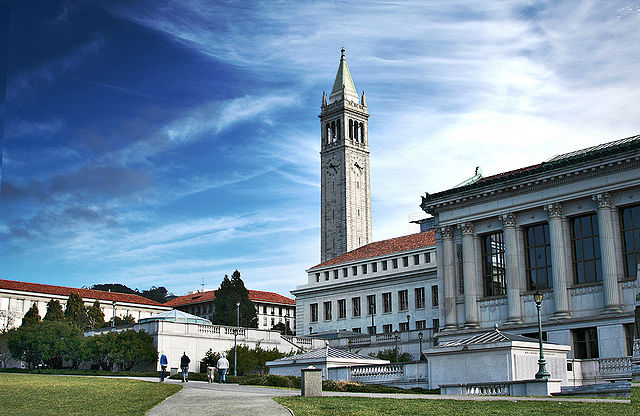
University of California Berkeley graduate Nicoletta Commins was 20 when she was sexually assaulted, in early 2012. She’d been taking a Taekwondo class, and said her teammate assaulted her when they were in her apartment.

He was “just an acquaintance,” she said in a phone interview. “We were sort of flirty, but not close friends.”

Following the incident, she had a pervasive sense of fear. “He was on campus for a month or a little more, after this happened. I was really depressed. They let me take a reduced workload, but it was hard to keep up with school,” she said. “I took windy ways to school to avoid him. I saw him on campus and it was a terrifying experience. There was one time I saw him walking by, and I hid behind a car.”

Adding to that stress was the difficulty Commins says she encountered after formally reporting the assault and awaiting a response from campus officials.

Late last month, 31 women who currently or formerly attended UC Berkeley filed formal complaints with the federal Department of Education, alleging that the university had mishandled sexual assault investigations through repeated failure to adequately address reports of these incidents.

Universities are bound to comply with Title IX, a federal civil rights law that requires postsecondary institutions to take measures to protect sexual assault victims. They must also adhere to the Clery Act, which requires reporting of crime statistics and for security policies to be in accordance with federal guidelines.

In their complaint, sexual assault survivors charged that UC Berkeley had violated their rights under Title IX and the Clery Act by failing to meet the complaints with adequate investigation and response. This was the second formal complaint to be lodged along these lines: Last May, nine women who had attended UC Berkeley came forward with an Office of Civil Rights complaint charging the same. This most recent filing was an updated complaint with accounts from more survivors.

After the sexual violence she experienced, Commons said she immediately sought medical care and reported what had happened. Initially, campus staff was responsive, she said. She met with a representative from the Office of Student Conduct, followed by a meeting with a campus coordinator tasked with Title IX compliance.

“People reached out to me. People told me their burden of evidence is lower at the school than the court,” she recounted. “They said people will see disciplinary action in the school that they won’t see from law enforcement.”

But time went on, and she heard nothing. “No one would tell me anything or respond to emails. All of a sudden everyone left me in the dark. They told me there’d be a hearing to participate in. Then nothing. For months.”

Getting nowhere through campus channels, she decided to go to the police, prompting the Alameda County District Attorney to become involved in her case.

After a year and a half had gone by, a settlement was finally reached. “Part of it included him not coming back to school for a few years before I left the campus,” she explained. “He had to get counseling. He was excluded from school functions, and [was barred] from contacting me.”

But she believes UC’s hand was forced by her decision to involve law enforcement. “If I had not reported to the police and the DA had not come to agreement with the lawyers, [the settlement] would not have happened,” she said. “It was an agreement between the DA’s office and the school.”

Following the initial OCR complaint last May, the California Legislature ordered the State Auditor to conduct an audit of UC Berkeley and three other universities, to assess outcomes of sexual violence complaints on a broad scale and to investigate whether the universities’ policies are in compliance with federal guidelines.

“Sexual violence is the elephant in the room that nobody wants to talk about, particularly in an educational environment,” Assemblymember Anthony Rendon wrote in a letter calling for the audit.

“I am particularly concerned with the recent allegations made by the nine women from UC Berkeley stating that their cases were simply not taken seriously by campus officials and not reported properly. Campus officials discouraged them from reporting their cases to police and did not provide these victims with adequate support services … These women are broken down physically and emotionally. The lack of support they received from the officials on campus is attributable to this.”

Margarita Fernández, spokesperson for the State Auditor, said the audit was a work in progress and that findings could be released in June.

“The U.S. Department of Education’s Office of Civil Rights received a complaint that alleges discrimination on the basis of sex, sexual violence, race and disability at the University of California-Berkeley,” a spokesperson from that agency wrote in a statement to the Bay Guardian. “The Department is evaluating the complaint allegations to determine whether they are appropriate for a civil rights investigation.”

In the interim, the UC system has taken some steps in the wake of the federal complaints. According to a March 7 announcement, the school released a new policy against sexual violence and harassment that provides for expanded training and education, increased reporting requirements, and broader protections for victims, according to a recent announcement from the office of UC President Janet Napolitano.

UC Berkeley has also issued a formal response, with Chancellor Nicholas Dirks issuing a Feb. 25 letter to announce efforts to streamline campus policies around responding to sexual violence.

Addressing the sexual assault victims who came forward, Dirks said, “I have been deeply moved by your courage and conviction, and offer my full support for your efforts.”   

We sought to contact representatives from the campus’ Gender Equity Resource center, which provides assistance to sexual assault victims, but received a statement from campus spokesperson Janet Gilmore instead.

“We are committed to taking a close look at what we can do to better serve students and incorporate their concerns as we seek to address these issues,” Gilmore wrote. “That process remains underway.”

‘Budapest,’ ‘Mars,’ and more: CAAMFest + new movies!

1

Last night heralded the opening of the Center for Asian American Media’s CAAMFest; it runs through March 23 at the Castro Theatre, 429 Castro, SF; Great Star Theater, 636 Jackson, SF; New Parkway Theater, 474 24th St, Oakl; New People Cinema, 1746 Post, SF; Pacific Film Archive, 2575 Bancroft, Berk; and Sundance Kabuki Cinemas, 1881 Post, SF. For tickets (most shows $12) and complete schedule, visit www.caamedia.org. For commentary, see “The Art of Martial Arts,” “Telling Tales, ” and “Women With Movie Cameras.”

New movies after the jump.

Better Living Through Chemistry Sam Rockwell, Olivia Wilde, and Michelle Monaghan star in this dark comedy about a mild-mannered pharmacist whose life is upended when he meets a pill-addicted trophy wife. (1:31) 

Elaine Stritch: Shoot Me See “Shooting Straight.” (1:21)

The Face of Love Five years after her husband, Garrett (Ed Harris), drowns while on vacation for their 30th anniversary, Nikki (Annette Bening) chances upon his exact double, Tom (Harris again). She pretends to be a divorcée and hides all photographic evidence that would out her reason for pursing Tom, an easygoing art professor and painter who actually is divorced (he’s buddies with his ex, a low-key Amy Brennemen). To her delight, he reciprocates her interest — but as their relationship grows, it becomes harder to conceal the, uh, doppelgänger situation from Nikki’s adult daughter (Jess Weixler) and neighbor (Robin Williams), a widower who’s jealous of Nikki’s new love. Harris and especially Bening are great — and they’re great together — but The Face of Love, from director and co-writer Arie Posin (2005’s The Chumscrubber), is the romantic melodrama equivalent of a one-joke comedy (with at least one Vertigo-inspired scene, and a drippy score that underlines every emotional story beat). The end to Nikki’s agonizing charade, and the end of the movie, can’t come soon enough. (1:32) (Cheryl Eddy)

Generation War German import Generation War was originally called Our Mothers, Our Fathers, to underline the relevancy of the discussion it’s presumably trying to stir at home — even if for many viewers the war generation would have been their grandparents’. Directed by Philipp Kadelbach and written by Stefan Kolditz, it starts out in dismayingly hackneyed fashion as we’re introduced to our youthful protagonists. Celebrating a birthday in 1941 near the war’s start, when Axis victory seems assured, they pose for a photo you know damn well is going to be the heart-tugging emblem of innocence horribly lost for the next 270 minutes. Fast-paced yet never achieving the psychological depth of similarly scaled historical epics, Generation War grows most interesting in its late going, when for all practical purposes the Allies have already won the war, but Germany continues to self-destruct. Imminent peace provides no relief for protagonists who’ve survived only to find themselves fucked no matter what side they stay on, or surrender to. That moral and situational complexity is too often missing in a narrative that aims for sympathy via simplicity. The underrated recent film version of The Book Thief (2013) was criticized for soft-pedaling the era, but it was about (and from the viewpoint of) somewhat sheltered Aryan children living in a civilian wartime. Generation War’s characters are of exactly the age to be fully indoctrinated young zealots, yet none of them seems touched by National Socialist dogma. Of course such naiveté is designed to maximize their later disillusionment. But War doesn’t even try to approach the serious analysis of national character in something like Ursula Hegi’s great novel Stones from the River, in which we come to understand how time, propaganda, and preyed-upon weaknesses can turn a town of perfectly nice Germans into fascists capable of turning a blind eye toward the Final Solution. Note: longer review here(4:30) (Dennis Harvey)

The Grand Budapest Hotel Is this the first Wes Anderson movie to feature a shootout? It’s definitely the first Anderson flick to include a severed head. That’s not to say The Grand Budapest Hotel, “inspired by” the works of Austrian novelist Stefan Zweig, represents too much of a shift for the director — his intricate approach to art direction is still very much in place, as are the deadpan line deliveries and a cast stuffed with Anderson regulars. But there’s a slightly more serious vibe here, a welcome change from 2012’s tooth-achingly twee Moonrise Kingdom. Thank Ralph Fiennes’ performance as liberally perfumed concierge extraordinare M. Gustave, which mixes a shot of melancholy into the whimsy, and newcomer Tony Revolori as Zero, his loyal lobby boy, who provides gravitas despite only being a teenager. (Being played by F. Murray Abraham as an older adult probably helps in that department.) Hotel‘s early 20th century Europe setting proves an ideal canvas for Anderson’s love of detail — the titular creation rivals Stanley Kubrick’s rendering of the Overlook Hotel — and his supporting cast, as always, looks to be enjoying the hell out of being a part of Anderson’s universe, with Willem Dafoe, Jeff Goldblum, and Adrien Brody having particularly oversized fun. Is this the best Wes Anderson movie since 2001’s The Royal Tenenbaums? Yes. (1:40) (Cheryl Eddy)

Love and Demons A man (Chris Pfleuger) in the midst of a midlife crisis, a woman (Lucia Frangione) starting to realize she’s completely dissatisfied with her life — does this relationship have a chance? Enter each partner’s personal demon, eager to have a hand in shaping events in what turns into a not-so-friendly competition. At first, the intervention seems helpful; the male demon encourages the man, a wannabe screenwriter, to get a better job, clean up the apartment, and blurt out feel-good-isms like “I want to build something together.” But what’s this about murder? Meanwhile, the female demon (Arnica Skulstad Brown) appears to be the ultimate gal pal, stroking the woman’s ego by telling her she could do so much better, going on shopping sprees with her, and sharing her stay-skinny coke stash. Temptations ahoy! Written, directed by, and costarring local filmmaker JP Allen (as the male demon, he’s the cast’s cigarette-smoking, smirking high point) this intriguing look at modern love earns bonus points for its excellent use of SF locations — and creative editing that helps break up the film’s many voice-overs and fourth-wall-breaking moments. (1:24) (Cheryl Eddy)

Need for Speed Breaking Bad‘s Aaron Paul stars in this tale of a breakneck cross-country car race, an adaptation of the popular video game. (2:10)

Particle Fever “We are hearing nature talk to us,” a physicist remarks in awe near the end of Particle Fever, Mark Levinson’s intriguing doc about the 2012 discovery of the Higgs boson particle. Earlier, another scientist says, “I’ve never heard of a moment like this in [science] history, where an entire field is hinging on a single event.” The event, of course, is the launch of the Large Hardon Collider, the enormous machine that enabled the discovery. Though some interest in physics is probably necessary to enjoy Particle Fever, extensive knowledge of quarks and such is not, since the film uses elegant animation to refresh the basics for anyone whose eyes glazed over during high-school science. But though he offers plenty of context, Levinson wisely focuses his film on a handful of genial eggheads who are involved in the project, either hands-on at the European Organization for Nuclear Research (CERN), or watching from afar as the mighty LHC comes to life. Their excitement brings a welcome warmth to the proceedings — and their “fever” becomes contagious. (1:39) (Cheryl Eddy)

Veronica Mars Since the cult fave TV show Veronica Mars went off the air in 2007, fans of the series, about a smart, cynical teenager who solves mysteries and battles her high school’s one percenters — a sort of adolescent noir minus the ex nihilo patois of Rian Johnson’s 2005 Brick — have had their hopes raised and dashed several times regarding the possibility of a big-screen coda. While that sort of scenario usually involves a few of the five stages of grief, this one has a twist happy ending: a full-length film, directed by show creator Rob Thomas and cowritten by Thomas and show producer-writer Diane Ruggiero (with a budget aided by a crowdfunding campaign), that doesn’t suck. It’s been a decade since graduation, and Veronica Mars (Kristen Bell) has put a continent between herself and her creepy, class war–torn hometown of Neptune, Calif. — leaving behind her P.I. vocation and a track record of exposing lies, corruption, and the dark side of the human soul in favor of a Columbia law degree and a career of covering up same. But when Logan Echolls (Jason Dohring), her brooding, troubled ex, gets charged with the murder of his pop star girlfriend and asks Veronica for help, she can’t resist the pull of what she admits is a pathological impulse. Plus, it’s her 10-year reunion. And indeed, pretty much anyone who had a character arc during the show’s three seasons makes an appearance — plus (naturally) James Franco, Dax Shepard (Bell’s husband), and (oddly) Ira Glass. It could have been a cameo fusillade, but the writing here is as smart, tight, funny, and involving as it was on the TV series, and Thomas and Ruggiero for the most part manage to thread everyone in, taking pressure off a murder mystery that falls a little flat, updating the story to reflect current states of web surveillance and pop cultural mayhem, and keeping the focus on the joy of seeing Veronica back where she belongs. (1:43) (Lynn Rapoport)

The miraculous and mysterious, disappearing, reappearing Clean Power SF data

38

The fight for clean power in San Francisco just got a whole lot dirtier.

In an update to the City’s Climate Action Strategy report, a prominent section discussing goals to use renewable energy featured CleanPowerSF — and then suddenly it didn’t.

For those not in the know, CleanPowerSF is a renewable energy initiative meant to give San Franciscans 100 percent renewable energy, while making us a hell of a lot less reliant on the local monopoly: PG&E. The initiative, pushed by Supervisors John Avalos, David Campos and other progressive allies, faced long-time blowback from Mayor Ed Lee.

As the Guardian has reported before, it’s a central city policy to reduce emissions by 25 percent below 1990 levels by 2017, and 80 percent below those levels by 2050.

To reach those goals many feel we need CleanPowerSF, but the mayor seems to have scrubbed it out of his environmental report without so much as a how-you-do.

The change was made apparent by a prominent blank white space on page 17 of the Climate Action Strategy report, and was discovered by Supervisor John Avalos’ office. When you highlight the blank space with your cursor, copy the section, then paste it into a document, you can see the goals of CleanPowerSF laid out plain as day.

CleanPowerSF by the Residential

and Commercial Sectors

Sector               2012   2017   2020   2025   2030

Commercial   0%       5%       10%     45%     80%

Residential     0%       16%     19%     60%     100%

The scrubbed information shows CleanPowerSF helping the city reach its renewable energy goals. The numbers are hidden in the Climate Action Strategy report, like a message in a bottle, or a painted egg hidden under a bush on Easter. 

It’s as if someone didn’t want to delete the CleanPowerSF entry entirely, and instead turned the text white in order to signal that the text used to be there. Perhaps the preparer of this report was foiled by the technological wonder known as cut-and-paste. Or more intriguingly, perhaps this was the first-ever case of activist report writing (in which case: Dear subversive report writer, please send us documents through BayLeaks).

Whether the information was left in accidentally or on purpose, it’s now clear that the mayor is dead set on scrubbing CleanPowerSF from city records, even at the expense of the city’s environmental goals. 

Above is the report. Check it out for yourself, page 17 (in the report’s numbering, not the digital numbering).

At the mayor’s Question Time today, where supervisors ask pre-planned and pre-announced questions of the mayor, Supervisor Avalos pinned Mayor Lee down on the document scrub-out.

“In your letter of introduction to the 2013 CAS you wrote the need for action has never been more evident,” Avalos said. “The Climate Action Strategy goes on to state that moving onto 100 percent renewable energy is the biggest single step the city can take to reduce greenhouse gas emissions. And yet there was an attempt to scrub CleanPowerSF… from the Climate Action Strategy.”

The version of the Climate Action Strategy included a whited out table on CleanPower SF… that table was unceremoniously removed in a new version posted two days later,” he said.

The mayor’s answer was filled with some equivocations and some fabrications. 

“We should not move forward with a program that contracts with a fossil fuel company in Texas, it doesn’t produce enough local jobs or environmental benefits,” he said. “Supervisor, I’m glad you mentioned the Climate Action Strategy.” 

Retired San Francisco Public Utilities Commission Executive Director Ed Harrington told  Guardian Editor Steven T. Jones exactly why CleanPowerSF was needed, in a story of his back in 2012: “This program before you has the only chance of reaching those goals. There’s nothing else.” 

Asking Mayor Ed Lee to explain the disappearance of the information from the report.

After question time, this reporter and a few others questioned the mayor as he walked back to his office.

What was behind the scrubbing of the CleanPowerSF data? Why did it suddenly vanish from the report?

“I don’t think I have a real answer for that,” the mayor said.

Rep Clock: March 12 -18, 2014

0

Schedules are for Wed/12-Tue/18 except where noted. Director and year are given when available. Double and triple features marked with a •. All times pm unless otherwise specified.

ARTISTS’ TELEVISION ACCESS 992 Valencia, SF; www.atasite.org. $7-10. “Matters of Water: Fluid Dynamics + Aqueous Abstractions,” Thu, 8. Film and video program curated by Molly Hankwitz. Druid Underground Film Festival, “avant-weird” short films from around the world, Fri, 8. Other Cinema: Pasolini’s Last Words (Crane, 2012), plus tributes to William S. Burroughs, Sat, 8:30.

BERKELEY FELLOWSHIP OF UNITARIAN UNIVERSALISTS 1924 Cedar, Berk; www.bfuu.org. $5-10. Terms and Conditions May Apply (Hoback, 2013), Thu, 7.

CASTRO 429 Castro, SF; (415) 621-6120, www.castrotheatre.com. $8.50-11. “Philip Seymour Hoffman (1967-2014):” •Flawless (Schumacher, 1999), Wed, 7, and Boogie Nights (Anderson, 1997), Wed, 9:05. CAAMfest 2014, Thu and Sun. Full schedule at caamfest.com/2014. •The World’s End (Wright, 2013), Fri, 7, and This Is the End (Goldberg and Rogen, 2013), Fri, 9:10. “Putting on the Ritz: A Celebration of Tony, Grammy, Emmy, and Oscar Winner Rita Moreno:” West Side Story (Wise, 1961), presented sing-along style and introduced by Moreno, Sat, 1; The Ritz (Lester, 1976), gala event with Moreno interviewed onstage, Sat, 8. For advance tickets $12.50-60) visit www.ticketfly.com. •Gravity (Cuarón, 2013), Mon, 7, and Silent Running (Trumbull, 1972), Mon, 8:35. Free to Play Tue, 8.

CHRISTOPHER B. SMITH RAFAEL FILM CENTER 1118 Fourth St, San Rafael; (415) 454-1222, www.cafilm.org. $6.50-$10.75. times. The Rocket (Mordaunt, 2013), call for dates and times. The Lunchbox (Batra, 2013), March 14-20, call for times.

CLAY 2261 Fillmore, SF; www.landmarktheatres.com. $10. “Midnight Movies:” Bottle Rocket (Anderson, 1996), Fri-Sat, midnight.

EXPLORATORIUM Pier 15, SF; www.exploratorium.edu. Free with museum admission ($19-25). “Off the Screen: Let Your Light Shine with Jodie Mack,” Thu, 7 (18+ program) and Sat, 1 (all-ages program). With Jodie Mack in person; co-presented by the SF Cinematheque.

FIRST UNITARIAN CHURCH OF BERKELEY 1 Lawson, Kensington; www.orphanwisdom.com. $10-20. Griefwalker (Wilson, 2008), Fri, 7.

GOETHE-INSTITUT SAN FRANCISCO 530 Bush, SF; goethe.de/ins/us/saf/enindex.htm. $5. The Blind Flyers (Sahling, 2004), Wed, 6:30.

JCCSF Kanbar Hall, 3200 California, SF; jccsf.org/arts. $18. Grease (Kleiser, 1978), presented sing-along style, Sat, 2 and 7:30.

MECHANICS’ INSTITUTE 57 Post, SF; milibrary.org/events. $10. “CinemaLit Film Series: Mystique of the City: Films Shot in San Francisco:” Experiment in Terror (Edwards, 1962), Fri, 6.

PACIFIC FILM ARCHIVE 2575 Bancroft, Berk; (510) 642-5249, bampfa.berkeley.edu. $5.50-9.50. “Film 50: History of Cinema:” Umberto D. (De Sica, 1952), with lecture by Emily Carpenter, Wed, 3:10. “Jokers Wild: American Comedy, 1960-1989:” Watermelon Man (Van Peebles, 1970), Wed, 7. “Jean-Luc Godard: Expect Everything from Cinema:” Made in USA (1966), Thu, 7. CAAMfest 2014, March 14-21. Full schedule at caamfest.com/2014.

ROXIE 3117 and 3125 16th St, SF; (415) 863-1087, www.roxie.com. $6.50-11. “Wes Anderson in 35mm:” Fantastic Mr. Fox (2009), Wed, 7. 12 O’Clock Boys (Nathan, 2013), Wed-Thu, 9:30. Awful Nice (Sklar, 2013), Wed-Thu, 7, 9. 7 Boxes (Maneglia, 2014), Thu, 7.

SHATTUCK 2230 Shattuck, Berk; www.thewisdomtreefilm.com. $12. The Wisdom Tree (Shah, 2013), Thu, 7.

YERBA BUENA CENTER FOR THE ARTS 701 Mission, SF; www.ybca.org. $8-10. “Design and Architecture Films Showcase:” •Fallingwater: Frank Lloyd Wright’s Masterwork (Love, 1994/2011), and The Oyler House: Richard Neutra’s Desert Retreat (Dorsey, 2012), Thu, 7 and Sun, 4; Kiss the Water (Steel, 2013), Sun, 2.. *


Film Listings: March 12 – 18, 2014

0

Film listings are edited by Cheryl Eddy. Reviewers are Kimberly Chun, Dennis Harvey, Lynn Rapoport, Sam Stander, and Sara Maria Vizcarrondo. For rep house showtimes, see Rep Clock.

CAAMFEST

The Center for Asian American Media’s CAAMFest runs March 13-23. Major venues include the Castro Theatre, 429 Castro, SF; Great Star Theater, 636 Jackson, SF; New Parkway Theater, 474 24th St, Oakl; New People Cinema, 1746 Post, SF; Pacific Film Archive, 2575 Bancroft, Berk; and Sundance Kabuki Cinemas, 1881 Post, SF. For tickets (most shows $12) and complete schedule, visit www.caamedia.org. For commentary, see “The Art of Martial Arts,” “Telling Tales, ” and “Woman With a Movie Camera.”

OPENING

Better Living Through Chemistry Sam Rockwell, Olivia Wilde, and Michelle Monaghan star in this dark comedy about a mild-mannered pharmacist whose life is upended when he meets a pill-addicted trophy wife. (1:31) Balboa.

Elaine Stritch: Shoot Me See “Shooting Straight.” (1:21) Opera Plaza, Shattuck.

The Face of Love Five years after her husband, Garrett (Ed Harris), drowns while on vacation for their 30th anniversary, Nikki (Annette Bening) chances upon his exact double, Tom (Harris again). She pretends to be a divorcée and hides all photographic evidence that would out her reason for pursing Tom, an easygoing art professor and painter who actually is divorced (he’s buddies with his ex, a low-key Amy Brennemen). To her delight, he reciprocates her interest — but as their relationship grows, it becomes harder to conceal the, uh, doppelgänger situation from Nikki’s adult daughter (Jess Weixler) and neighbor (Robin Williams), a widower who’s jealous of Nikki’s new love. Harris and especially Bening are great — and they’re great together — but The Face of Love, from director and co-writer Arie Posin (2005’s The Chumscrubber), is the romantic melodrama equivalent of a one-joke comedy, with at least one Vertigo-inspired scene, and a drippy score that underlines every emotional story beat. (1:32) Embarcadero. (Eddy)

Generation War German import Generation War was originally called Our Mothers, Our Fathers, to underline the relevancy of the discussion it’s presumably trying to stir at home — even if for many viewers the war generation would have been their grandparents’. Directed by Philipp Kadelbach and written by Stefan Kolditz, it starts out in dismayingly hackneyed fashion as we’re introduced to our youthful protagonists. Celebrating a birthday in 1941 near the war’s start, when Axis victory seems assured, they pose for a photo you know damn well is going to be the heart-tugging emblem of innocence horribly lost for the next 270 minutes. Fast-paced yet never achieving the psychological depth of similarly scaled historical epics, Generation War grows most interesting in its late going, when for all practical purposes the Allies have already won the war, but Germany continues to self-destruct. Imminent peace provides no relief for protagonists who’ve survived only to find themselves fucked no matter what side they stay on, or surrender to. That moral and situational complexity is too often missing in a narrative that aims for sympathy via simplicity. The underrated recent film version of The Book Thief (2013) was criticized for soft-pedaling the era, but it was about (and from the viewpoint of) somewhat sheltered Aryan children living in a civilian wartime. Generation War‘s characters are of exactly the age to be fully indoctrinated young zealots, yet none of them seems touched by National Socialist dogma. Of course such naiveté is designed to maximize their later disillusionment. But War doesn’t even try to approach the serious analysis of national character in something like Ursula Hegi’s great novel Stones from the River, in which we come to understand how time, propaganda, and preyed-upon weaknesses can turn a town of perfectly nice Germans into fascists capable of turning a blind eye toward the Final Solution. (4:30) Embarcadero, Opera Plaza. (Harvey)

The Grand Budapest Hotel Is this the first Wes Anderson movie to feature a shootout? It’s definitely the first Anderson flick to include a severed head. That’s not to say The Grand Budapest Hotel, “inspired by” the works of Austrian novelist Stefan Zweig, represents too much of a shift for the director — his intricate approach to art direction is still very much in place, as are the deadpan line deliveries and a cast stuffed with Anderson regulars. But there’s a slightly more serious vibe here, a welcome change from 2012’s tooth-achingly twee Moonrise Kingdom. Thank Ralph Fiennes’ performance as liberally perfumed concierge extraordinaire M. Gustave, which mixes a shot of melancholy into the whimsy, and newcomer Tony Revolori as Zero, his loyal lobby boy, who provides gravitas despite only being a teenager. (Being played by F. Murray Abraham as an older adult probably helps in that department.) Hotel‘s early 20th century Europe setting proves an ideal canvas for Anderson’s love of detail — the titular creation rivals Stanley Kubrick’s rendering of the Overlook Hotel — and his supporting cast, as always, looks to be enjoying the hell out of being a part of Anderson’s universe, with Willem Dafoe, Jeff Goldblum, and Adrien Brody having particularly oversized fun. Is this the best Wes Anderson movie since 2001’s The Royal Tenenbaums? Yes. (1:40) California. (Eddy)

Love and Demons A man (Chris Pfleuger) in the midst of a midlife crisis, a woman (Lucia Frangione) starting to realize she’s completely dissatisfied with her life — does this relationship have a chance? Enter each partner’s personal demon, eager to have a hand in shaping events in what turns into a not-so-friendly competition. At first, the intervention seems helpful; the male demon encourages the man, a wannabe screenwriter, to get a better job, clean up the apartment, and blurt out feel-good-isms like “I want to build something together.” But what’s this about murder? Meanwhile, the female demon (Arnica Skulstad Brown) appears to be the ultimate gal pal, stroking the woman’s ego by telling her she could do so much better, going on shopping sprees with her, and sharing her stay-skinny coke stash. Temptations ahoy! Written, directed by, and costarring local filmmaker JP Allen (as the male demon, he’s the cast’s cigarette-smoking, smirking high point) this intriguing look at modern love earns bonus points for its excellent use of SF locations — and creative editing that helps break up the film’s many voice-overs and fourth-wall-breaking moments. (1:24) Opera Plaza. (Eddy)

Need for Speed Breaking Bad‘s Aaron Paul stars in this tale of a breakneck cross-country car race, an adaptation of the popular video game. (2:10)

Particle Fever “We are hearing nature talk to us,” a physicist remarks in awe near the end of Particle Fever, Mark Levinson’s intriguing doc about the 2012 discovery of the Higgs boson particle. Earlier, another scientist says, “I’ve never heard of a moment like this in [science] history, where an entire field is hinging on a single event.” The event, of course, is the launch of the Large Hardon Collider, the enormous machine that enabled the discovery. Though some interest in physics is probably necessary to enjoy Particle Fever, extensive knowledge of quarks and such is not, since the film uses elegant animation to refresh the basics for anyone whose eyes glazed over during high-school science. But though he offers plenty of context, Levinson wisely focuses his film on a handful of genial eggheads who are involved in the project, either hands-on at the European Organization for Nuclear Research (CERN), or watching from afar as the mighty LHC comes to life. Their excitement brings a welcome warmth to the proceedings — and their “fever” becomes contagious. (1:39) Embarcadero, Shattuck. (Eddy)

Veronica Mars The cult-beloved TV show hits the big screen, with Kristen Bell reprising her breakout role as the titular sleuth. (1:43)

ONGOING

About Last Night (1:40) Metreon.

American Hustle David O. Russell’s American Hustle is like a lot of things you’ve seen before — put in a blender, so the results are too smooth to feel blatantly derivative, though here and there you taste a little Boogie Nights (1997), Goodfellas (1990), or whatever. Loosely based on the Abscam FBI sting-scandal of the late 1970s and early ’80s (an opening title snarks “Some of this actually happened”), Hustle is a screwball crime caper almost entirely populated by petty schemers with big ideas almost certain to blow up in their faces. It’s love, or something, at first sight for Irving Rosenfeld (Christian Bale) and Sydney Prosser (Amy Adams), who meet at a Long Island party circa 1977 and instantly fall for each other — or rather for the idealized selves they’ve both strained to concoct. He’s a none-too-classy but savvy operator who’s built up a mini-empire of variably legal businesses; she’s a nobody from nowhere who crawled upward and gave herself a bombshell makeover. The hiccup in this slightly tacky yet perfect match is Irving’s neglected, crazy wife Rosalyn (Jennifer Lawrence), who’s not about to let him go. She’s their main problem until they meet Richie DiMaso (Bradley Cooper), an ambitious FBI agent who entraps the two while posing as a client. Their only way out of a long prison haul, he says, is to cooperate in an elaborate Atlantic City redevelopment scheme he’s concocted to bring down a slew of Mafioso and presumably corrupt politicians, hustling a beloved Jersey mayor (Jeremy Renner) in the process. Russell’s filmmaking is at a peak of populist confidence it would have been hard to imagine before 2010’s The Fighter, and the casting here is perfect down to the smallest roles. But beyond all clever plotting, amusing period trappings, and general high energy, the film’s ace is its four leads, who ingeniously juggle the caricatured surfaces and pathetic depths of self-identified “winners” primarily driven by profound insecurity. (2:17) Metreon, 1000 Van Ness, Piedmont, Shattuck, Sundance Kabuki. (Harvey)

Beijing Love Story Writer-director-star Chen Sicheng adapts his 2012 Chinese TV series, adding movie stars Carina Lau and Tony Leung Ka-fai to the cast to up the big-screen wattage. The film follows an array of couples, starting with Chen and real-life wife Shen Yan as a young couple forced to make some hard choices after an unplanned pregnancy. “What’s love? It’s like a ghost. Everyone’s heard of it, nobody’s seen it,” the reluctant father-to-be’s cynical friend tells him. Said friend has been hitched for years; the film’s next storyline follows what happens when his wife finds out he’s been cheating (as it turns out, she has some secrets of her own). At one point, the action shifts from Beijing to Greece (for the Lau-Leung segment), before returning to the city for a teenage love story involving a cello prodigy who wants to compete on TV, and a boy who can “see auras,” among other fanciful talents. Finally, an elderly man embarks on a series of blind dates, looking for a second chance at love, with a twist that’s obvious to anyone who’s ever seen a rom-com before. By the time this flowery Valentine’s card of a movie reaches its melodramatic conclusion, it’s abundantly clear that Chen knows his target audience — see: the film’s multiple Titanic (1997) references — and that he’s a huge fan of the romance genre himself. (2:02) Metreon. (Eddy)

Bethlehem Teenaged Sanfur (Shadi Mar’i) is the younger brother of Ibrahim (Hisham Suliman), a leader in Palestinian militant group al-Aqsa Martyrs’ Brigades. When the latter claims responsibility for a suicide bombing in the center of Jerusalem, the Israelis want Ibrahim dead or in custody, immediately. That ought to be easy enough, since Sanfur is not just a potential freedom fighter himself but also, contrarily, an informant to Israeli Secret Service officer Razi (Tsahi Halevy). Their relationship is complex, to say the least, with an aspect of genuine paternal bonding even as Razi’s superiors pressure him to treat the youth as an expendable asset; Sanfur in turn resents the position he’s been cornered into. Just how he got there isn’t revealed until near the end of this taut thriller, co-written by Palestinian Ali Waked and Israeli director Yuval Adler, and acted with considerable power by non professional leads. Bethlehem isn’t quite as strikingly accomplished or ingeniously plotted as the concurrent, similarly themed Omar. But it delivers its own cumulative punch as characters likewise cross ethical and political lines in increasingly desperate efforts at self-preservation that can only end one bleak, bitter way. (1:39) Opera Plaza. (Harvey)

Dallas Buyers Club Dallas Buyers Club is the first all-US feature from Jean-Marc Vallée. He first made a splash in 2005 with C.R.A.Z.Y., which seemed an archetype of the flashy, coming-of-age themed debut feature. Vallée has evolved beyond flashiness, or maybe since C.R.A.Z.Y. he just hasn’t had a subject that seemed to call for it. Which is not to say Dallas is entirely sober — its characters partake from the gamut of altering substances, over-the-counter and otherwise. But this is a movie about AIDS, so the purely recreational good times must eventually crash to an end. Which they do pretty quickly. We first meet Ron Woodroof (Matthew McConaughey) in 1986, a Texas good ol’ boy endlessly chasing skirts and partying nonstop. Not feeling quite right, he visits a doctor, who informs him that he is HIV-positive. His response is “I ain’t no faggot, motherfucker” — and increased partying that he barely survives. Afterward, he pulls himself together enough to research his options, and bribes a hospital attendant into raiding its trial supply of AZT for him. But Ron also discovers the hard way what many first-generation AIDS patients did — that AZT is itself toxic. He ends up in a Mexican clinic run by a disgraced American physician (Griffin Dunne) who recommends a regime consisting mostly of vitamins and herbal treatments. Ron realizes a commercial opportunity, and finds a business partner in willowy cross-dresser Rayon (Jared Leto). When the authorities keep cracking down on their trade, savvy Ron takes a cue from gay activists in Manhattan and creates a law evading “buyers club” in which members pay monthly dues rather than paying directly for pharmaceutical goods. It’s a tale that the scenarists (Craig Borten and Melisa Wallack) and director steep in deep Texan atmospherics, and while it takes itself seriously when and where it ought, Dallas Buyers Club is a movie whose frequent, entertaining jauntiness is based in that most American value: get-rich-quick entrepreneurship. (1:58) Embarcadero, Presidio, Shattuck, Sundance Kabuki. (Harvey)

Frozen (1:48) Metreon, 1000 Van Ness, Shattuck.

Gloria The titular figure in Sebastian Lelio’s film is a Santiago divorcee and white collar worker (Paulina Garcia) pushing 60, living alone in a condo apartment — well, almost alone, since like Inside Llewyn Davis, this movie involves the frequent, unwanted company of somebody else’s cat. (That somebody is an upstairs neighbor whose solo wailings against cruel fate disturb her sleep.) Her two children are grown up and preoccupied with their adult lives. Not quite ready for the glue factory yet, Gloria often goes to a disco for the “older crowd,” dancing by herself if she has to, but still hoping for some romantic prospects. She gets them in the form of Rodolfo (Sergio Hernandez), who’s more recently divorced but gratifyingly infatuated with her. Unfortunately, he’s also let his daughters and ex-wife remain ominously dependent on him, not just financially but in every emotional crisis that affects their apparently crisis-filled lives. The extent to which Gloria lets him into her life is not reciprocated, and she becomes increasingly aware how distant her second-place priority status is whenever Rodolfo’s other loved ones snap their fingers. There’s not a lot of plot but plenty of incident and insight to this character study, a portrait of a “spinster” that neither slathers on the sentimental uplift or piles on melodramatic victimizations. Instead, Gloria is memorably, satisfyingly just right. (1:50) Opera Plaza. (Harvey)

Gravity “Life in space is impossible,” begins Gravity, the latest from Alfonso Cuarón (2006’s Children of Men). Egghead Dr. Ryan Stone (Sandra Bullock) is well aware of her precarious situation after a mangled satellite slams into her ship, then proceeds to demolition-derby everything (including the International Space Station) in its path. It’s not long before she’s utterly, terrifyingly alone, and forced to unearth near-superhuman reserves of physical and mental strength to survive. Bullock’s performance would be enough to recommend Gravity, but there’s more to praise, like the film’s tense pacing, spare-yet-layered script (Cuarón co-wrote with his son, Jonás), and spectacular 3D photography — not to mention George Clooney’s warm supporting turn as a career astronaut who loves country music almost as much as he loves telling stories about his misadventures. (1:31) Castro, Metreon, 1000 Van Ness, Presidio. (Eddy)

The Great Beauty The latest from Paolo Sorrentino (2008’s Il Divo) arrives as a high-profile contender for the Best Foreign Language Film Oscar, already annointed a masterpiece in some quarters, and duly announcing itself as such in nearly every grandiose, aesthetically engorged moment. Yes, it seems to say, you are in the presence of this auteur’s masterpiece. But it’s somebody else’s, too. The problem isn’t just that Fellini got there first, but that there’s room for doubt whether Sorrentino’s homage actually builds on or simply imitates its model. La Dolce Vita (1960) and 8 1/2 (1963) are themselves swaying, jerry-built monuments, exhileratingly messy and debatably profound. But nothing quite like them had been seen before, and they did define a time of cultural upheaval — when traditional ways of life were being plowed under by a loud, moneyed, heedless modernity that for a while chose Rome as its global capital. Sorrentino announces his intention to out-Fellini Fellini in an opening sequence so strenuously flamboyant it’s like a never-ending pirouette performed by a prima dancer with a hernia. There’s statuary, a women’s choral ensemble, an on-screen audience applauding the director’s baffled muse Toni Servillo, standing in for Marcello Mastroianni — all this and more in manic tracking shots and frantic intercutting, as if sheer speed alone could supply contemporary relevancy. Eventually The Great Beauty calms down a bit, but still its reason for being remains vague behind the heavy curtain of “style.” (2:22) Opera Plaza. (Harvey)

Her Morose and lonely after a failed marriage, Theodore (Joaquin Phoenix) drifts through an appealingly futuristic Los Angeles (more skyscrapers, less smog) to his job at a place so hipster-twee it probably will exist someday: beautifulhandwrittenletters.com, where he dictates flowery missives to a computer program that scrawls them onto paper for paying customers. Theodore’s scripting of dialogue between happy couples, as most of his clients seem to be, only enhances his sadness, though he’s got friends who care about him (in particular, Amy Adams as Amy, a frumpy college chum) and he appears to have zero money woes, since his letter-writing gig funds a fancy apartment equipped with a sweet video-game system. Anyway, women are what gives Theodore trouble — and maybe by extension, writer-director Spike Jonze? — so he seeks out the ultimate gal pal: Samantha, an operating system voiced by Scarlett Johansson in the year’s best disembodied performance. Thus begins a most unusual relationship, but not so unusual; Theodore’s friends don’t take any issue with the fact that his new love is a machine. Hey, in Her‘s world, everyone’s deeply involved with their chatty, helpful, caring, always-available OS — why wouldn’t Theo take it to the next level? Inevitably, of course, complications arise. If Her‘s romantic arc feels rather predictable, the film acquits itself in other ways, including boundlessly clever production-design touches that imagine a world with technology that’s (mostly) believably evolved from what exists today. Also, the pants they wear in the future? Must be seen to be believed. (2:00) 1000 Van Ness, SF Center, Shattuck, Sundance Kabuki. (Eddy)

The Lego Movie (1:41) 1000 Van Ness, Presidio, SF Center.

The Lunchbox Ila (Nimrat Kaur) is a self-possessed housewife and a great cook, whose husband confuses her for another piece of furniture. She tries to arouse his affections with elaborate lunches she makes and sends through the city’s lunchbox delivery service. Like marriage in India, lunchbox delivery has a failure rate of zero, which is what makes aberrations seem like magical occurrences. So when widow Saajan (Irrfan Khan) receives her adoring food, he humbly receives the magical lunches like a revival of the senses. Once Ila realizes her lunchbox is feeding the wrong man she writes a note and Saajan replies — tersely, like a man who hasn’t held a conversation in a decade — and the impossible circumstances lend their exchanges a romance that challenges her emotional fidelity and his retreat from society. She confides her husband is cheating. He confides his sympathy for men of lower castes. It’s a May/December affair if it’s an affair at all — but the chemistry we expect the actors to have in the same room is what fuels our urge to see it; that’s a rare and haunting dynamic. Newcomer Kaur is perfect as Ila, a beauty unmarked by her rigorous distaff; her soft features and exhausted expression lend a richness to the troubles she can’t share with her similarly stoic mother (Lillete Dubey). Everyone is sacrificing something and poverty seeps into every crack, every life, without exception — their inner lives are their richness. (1:44) Albany, Clay. (Vizcarrondo)

The Monuments Men The phrase “never judge a book by its cover” goes both ways. On paper, The Monuments Men — inspired by the men who recovered art stolen by the Nazis during World War II, and directed by George Clooney, who co-wrote and stars alongside a sparkling ensemble cast (Cate Blanchett, Matt Damon, John Goodman, Jean Dujardin, Bob Balaban, Hugh “Earl of Grantham” Bonneville, and Bill Fucking Murray) — rules. Onscreen, not so much. After they’re recruited to join the cause, the characters fan out across France and Germany following various leads, a structural choice that results in the film’s number one problem: it can’t settle on a tone. Men can’t decide if it wants to be a sentimental war movie (as in an overlong sequence in which Murray’s character weeps at the sound of his daughter’s recorded voice singing “White Christmas”); a tragic war movie (some of those marquee names die, y’all); a suspenseful war movie (as the men sneak into dangerous territory with Michelangelo on their minds); or a slapstick war comedy (look out for that land mine!) The only consistent element is that the villains are all one-note — and didn’t Inglourious Basterds (2009) teach us that nothing elevates a 21st century-made World War II flick like an eccentric bad guy? There’s one perfectly executed scene, when reluctant partners Balaban and Murray discover a trove of priceless paintings hidden in plain sight. One scene, out of a two-hour movie, that really works. The rest is a stitched-together pile of earnest intentions that suggests a complete lack of coherent vision. Still love you, Clooney, but you can do better — and this incredible true story deserved way better. (1:58) 1000 Van Ness, Piedmont, SF Center, Shattuck, Sundance Kabuki. (Eddy)

Mr. Peabody and Sherman Mr. P. (voiced by Ty Burrell) is a Nobel Prize-winning genius dog, Sherman (Max Charles) his adopted human son. When the latter attends his first day of school, his extremely precocious knowledge of history attracts jealous interest from bratty classmate Penny (Ariel Winter), with the eventual result that all three end up being transported in Peabody’s WABAC time machine to various fabled moments — involving Marie Antoinette, King Tut, the Trojan Horse, etc. — where Penny invariably gets them in deep trouble. Rob Minkoff’s first all-animation feature since The Lion King 20 years ago is spun off from the same-named segments in Jay Ward’s TV Rocky and Bullwinkle Show some decades earlier. It’s a very busy (sometimes to the brink of clutter), often witty, imaginatively constructed, visually impressive, and for the most part highly enjoyable comic adventure. The only minuses are some perfunctory “It’s about family”-type sentimentality — and scenarist Craig Wright’s determination to draw from history the “lesson” that nearly all women are pains in the ass who create problems they must then be rescued from. (1:30) Four Star, 1000 Van Ness, Presidio, SF Center. (Harvey)

Non-Stop You don’t want to get between Liam Neeson and his human shield duties. The Taken franchise has restyled the once-gentle acting giant into the type of weather-beaten, all-business action hero that Harrison Ford once had a lock on. Throw in a bit of the flying-while-addled antihero high jinks last seen in Flight (2012) and that pressured, packed-sardine anxiety that we all suffer during long-distance air travel, and we have a somewhat ludicrous but nonetheless entertaining hybrid that may have you believing that those salty snacks and the seat-kicking kids are the least of your troubles. Neeson’s Bill Marks signals the level of his freestyle alcoholism by giving his booze a stir with a toothbrush shortly before putting on his big-boy air marshal pants and boarding his fateful flight. Marks is soon contacted by a psycho who promises, via text, to kill one person at a time on the flight unless $150 million is deposited into a bank account that — surprise — is under the bad-good air marshal’s name. The twists and turns — and questions of who to trust, whether it’s Marks’ vaguely likeable seatmate (Julianne Moore) or his business class flight attendant (Michelle Dockery) — keep the audience on edge and busily guessing, though director Jaume Collet-Serra doesn’t quite dispel all the questions that arise as the diabolical scheme plays out and ultimately taxes believability. The fun is all in the getting there, even if the denouement on the tarmac deflates. (1:50) 1000 Van Ness, Presidio, SF Center, Shattuck. (Chun)

Omar Palestine’s contender for Best Foreign Language Film is a mighty strong one, with a top-notch script and direction by previous nominee Hany Abu-Assad (2006’s Paradise Now). After he’s captured following the shooting of an Israeli soldier, the titular freedom fighter (a compelling Adam Bakri) is given an unsavory choice by his handler (Waleed F. Zuaiter): rot in jail for 90 years, or become an informant (or “collaborator”) and rat out his co-conspirators. The situation is further complicated by the fact that Omar is in love with Nadia (Leem Lubany, blessed with a thousand-watt smile), the younger sister of his lifelong friend, Tarek (Iyad Hoorani), who planned the attack. Betrayals are imminent, but who will come out ahead, and at what price? Shot with gritty urgency — our hero is constantly on the run, ducking down alleys, scaling walls, scrambling across rooftops, sliding down drainpipes, etc. — Omar brings authenticity to its embattled characters and setting. A true thriller, right up until the last shot. (1:38) Shattuck, Smith Rafael. (Eddy)

Philomena Judi Dench gives this twist on a real-life scandal heart, soul, and a nuanced, everyday heft. Her ideal, ironic foil is Steve Coogan, playing an upper-crusty irreverent snob of an investigative journalist. Judging by her tidy exterior, Dench’s title character is a perfectly ordinary Irish working-class senior, but she’s haunted by the past, which comes tumbling out one day to her daughter: As an unwed teenager, she gave birth to a son at a convent. She was forced to work there, unpaid; as supposed penance, the baby was essentially sold to a rich American couple against her consent. Her yarn reaches disgraced reporter Martin Sixsmith (Coogan), who initially turns his nose up at the tale’s piddling “human interest” angle, but slowly gets drawn in by the unexpected twists and turns of the story — and likely the possibility of taking down some evil nuns — as well as seemingly naive Philomena herself, with her delight in trash culture, frank talk about sex, and simple desire to see her son and know that he thought, once in a while, of her. It turns out Philomena’s own sad narrative has as many improbable turnarounds as one of the cheesy romance novels she favors, and though this unexpected twosome’s quest for the truth is strenuously reworked to conform to the contours of buddy movie-road trip arc that we’re all too familiar with, director Stephen Frears’ warm, light-handed take on the gentle class struggles going on between the writer and his subject about who’s in control of the story makes up for Philomena‘s determined quest for mass appeal. (1:35) Albany. (Chun)

Pompeii There’s not a single original idea in Resident Evil series prolonger Paul W.S. Anderson’s take on the legendary volcanic eruption, but what did you expect? Among its cast, only Kiefer Sutherland (as a lasciviously evil Roman senator) seems to be enjoying himself, camping it up alongside deeply serious young leads Emily Browning and Kit Harington. The mop-topped Game of Thrones stud doesn’t expand his brooding act beyond what we’ve seen him do in Westeros — though it’s likely he expanded his workout routine, what with all the muscular emoting he gets to do in the gladiator ring. The tissue-thin plot involves forbidden romance, revenge, a couple of swipes at big-city corruption, and male bonding ‘twixt Harington and Lost‘s Adewale Akinnuoye-Agbaje, who brings a certain amount of gravitas to his one-dimensional slave character. But the film’s most interesting player is giant Mount Vesuvius, which grumbles in the background as it readies for its big scene — reassuring the audience that deadly chunks will eventually spew all over this mediocre movie and hasten its necessary conclusion. (1:45) Metreon, 1000 Van Ness. (Eddy)

The Rocket When a terrible accident befalls a Laotian family already in a bad situation — they’re being displaced from their home thanks to a massive dam-building project — 10-year-old Ahlo (Sitthiphon Disamoe) is blamed, with particular malice coming from his superstitious grandmother, who believes the boy has been cursed since birth. In the squalid relocation camp, Ahlo finds a buddy in Kia (adorbs Loungnam Kaosainam), who lives with her James Brown-obsessed uncle (Thep Phongam), who provides drunken comic relief — but not without a certain sadness, since he’s a former soldier still suffering, like Laos itself, from the aftereffects of war. Ahlo may be unlucky, but he’s also crafty and fearless, and when he hears about a rocket-building competition offering a much-needed cash prize, he seizes the chance to prove to his family that he’s no bad penny. Though The Rocket was made in Laos, it’s from Australian writer-director Kim Mordaunt, who frames his simple story with gorgeous photography and an admirable lack of sentimentality. He’s also found a winner in first-time actor Disamoe, who’s a natural. (1:36) Shattuck, Smith Rafael. (Eddy)

RoboCop Truly, there was no need to remake 1987’s RoboCop, Paul Verhoeven’s smart, biting sci-fi classic that deploys heaps of stealth satire beneath its ultraviolent imagery. But the inevitable do-over is here, and while it doesn’t improve on what came before, it’s not a total lost cause, either. Thank Brazilian filmmaker José Padilha, whose thrilling Elite Squad films touch on similar themes of corruption (within police, political, and media realms), and some inspired casting, including Samuel L. Jackson as the uber-conservative host of a futuristic talk show. Though the suit that restores life to fallen Detroit cop Alex Murphy is, naturally, a CG wonder, the guy inside the armor — played by The Killing‘s Joel Kinnaman — is less dynamic. In fact, none of the characters, even those portrayed by actors far more lively than Kinnaman (Michael Keaton, Gary Oldman, Jackie Earle Haley), are developed beyond the bare minimum required to serve RoboCop‘s plot, a mixed-message glob of dirty cops, money-grubbing corporations, the military-industrial complex, and a few too many “Is he a man…or a machine?” moments. But in its favor: Though it’s PG-13 (boo), it’s also shot in 2D (yay). (1:50) Metreon, 1000 Van Ness. (Eddy)

7 Boxes If Paraguayan cinema can make such a splash with wheelbarrow chases, one wonders what Outer Mongolia can do with dolly races. Despite its determinedly lo-fi look and feel — US reality TV looks downright slick in comparison — and some very camp acting, 7 Boxes demands respect, like the scruffy street urchins it champions, for its will to cobble together movie magic out of gritty, street-level material. The scene is Asunción’s municipal marketplace. Fascinated by the pirated DVD crime dramas playing out on the screens around him, wheelbarrow delivery boy Victor (Celso Franco) is determined to get a camera of his own — attached, of course, to a way-too-expensive phone. It seems far out of reach, until butchers offer him a US $100 bill to cart seven mysterious boxes away until the coast is clear. The meat purveyors’ regular cart-pusher Nelson (Victor Sosa Traverzi) is desperate to get those boxes — and get paid — instead, and Victor has to depend on his mouthy, spunky friend Liz (Lali Gonzalez) to help him out, as they grapple with cops and robbers, attempt to collect, and uncover the boxes’ nasty secrets. Like charismatic leads Ferreira and Gonzalez, 7 Boxes is full of promise. Directors Juan Carlos Maneglia and Tana Schembori pour considerable energy into 7 Boxes‘ somewhat absurd wheelbarrow high jinks and attempt to humanize their characters while capturing some of the multicultural, screen-laden complexity of anarchic 21st-century urban life in Paraguay. Detracting from the cause are some of the more OTT, unintentionally laughable performances, gratuitous narrative twists, and the alternately jerky and fluid video work — which, appropriately enough, looks to be shot from a phone and, in spite of the moviemakers’ moments of bravura editing and inventive swings in and out of the marketplace labyrinth, never manages to rise above the unlovely. (1:45) Roxie. (Chun)

Stalingrad Behold, Russia’s highest-grossing blockbuster of all time, which presents (in 3D IMAX) a very small story contained within the enormous titular World War II battle, previously dramatized by the West in 2001’s Enemy at the Gates. Stalingrad begins in the aftermath of the 2011 Japanese earthquake, in which an aid worker tells stories to a group of trapped German tourists as they await rescue. Seems the man’s mother, a Russian teenager during the Battle of Stalingrad, met five Red Army soldiers who bonded while fighting the invading Nazis, and helped her survive while all kinda, sorta, falling for her at the same time. There are plenty of lavish battle scenes for war-movie buffs — likely the only people who will seek out this film during its limited US run, and it is interesting to see a WW2 tale with zero American perspective or involvement — but the film is earnest to a fault, with plot holes that may or may not be a result of cultural and language barriers. And speaking of the plot: isn’t the bloody, epic tale of Stalingrad compelling enough without awkward romance(s) shoehorned in? Eliminate that, and you eliminate the need for that ham-fisted frame story, too. (2:15) Metreon. (Eddy)

3 Days to Kill (1:40) Metreon, 1000 Van Ness.

300: Rise of An Empire We pick up the 300 franchise right where director Zack Snyder left off in 2006, with this prequel-sequel, which spins off an as-yet-unreleased Frank Miller graphic novel. In the hands of director Noam Murro, with Snyder still in the house as writer, 300: Rise of an Empire contorts itself, flipping back and forth in time, in an attempt to explain the making of Persian evil prince stereotype Xerxes (Rodrigo Santoro) —all purring androgyny, fashionable piercings, and Iran-baiting, Bush-era malevolence — before following through on avenging 300‘s romantically outnumbered, chesty Spartans. As told by the angry, mourning Spartan Queen Gorgo (Lena Headey of Game of Thrones), the whole mess apparently began during the Battle of Marathon, when Athenian General Themistokles (Sullivan Stapleton) killed Xerxes’s royal father with a well-aimed miracle arrow. That act ushers in Xerxes’s transformation into a “God King” bent on vengeance, aided and encouraged by his equally vengeful, elegantly mega-goth naval commander Artemisia (Eva Green), a Greek-hating Greek who likes to up the perversity quotient by making out with decapitated heads. In case you didn’t get it: know that vengeance is a prime mover for almost all the parties (except perhaps high-minded hottie Themistokles). Very loosely tethered to history and supplied with plenty of shirtless Greeks, taut thighs, wildly splintering ships, and even proto-suicide bombers, Rise skews toward a more naturalistic, less digitally waxy look than 300, as dust motes and fire sparks perpetually telegraph depth of field, shrieking, “See your 3D dollars hard at work!” Also working hard and making all that wrath look diabolically effortless is Green, who as the pitch-black counterpart to Gorga, turns out to be the real hero of the franchise, saving it from being yet another by-the-book sword-and-sandal war-game exercise populated by wholesome-looking, buff, blond jock-soldiers. Green’s feline line readings and languid camp attitude have a way of cutting through the sausage fest of the Greek pec-ing order, even during the Battle of, seriously, Salamis. (1:43) Balboa, Marina, Metreon, 1000 Van Ness, Sundance Kabuki. (Chun)

Tim’s Vermeer “I’m not a painter,” admits Tim Jenison at the start of Tim’s Vermeer. He is, however, an inventor, a technology whiz specializing in video engineering, a self-made multimillionaire, and possessed of astonishing amounts of determination and focus. Add a bone-dry sense of humor and he’s the perfect documentary subject for magicians and noted skeptics Penn & Teller, who capture his multi-year quest to “paint a Vermeer.” Inspired by artist David Hockney’s book Secret Knowledge: Rediscovering the Lost Techniques of the Old Masters, Jenison became interested in the theory that 17th century painters used lenses and mirrors, or a camera obscura, to help create their remarkably realistic works. He was especially taken with Vermeer, feeling a “geek kinship” with someone who was able to apply paint to canvas and make it look like a video image. It took some trial-and-error, but Jenison soon figured out a way that would allow him — someone who barely knew how to hold a brush — to transform an old photograph into a strikingly Vermeer-like oil painting. He decides to recreate The Music Lesson (1662-65), using only materials Vermeer would have had access to, and working from an exact replica of the room in Vermeer’s house where the painting was made. A few slow moments aside (“This project is a lot like watching paint dry,” Jenison jokes), Tim’s Vermeer is otherwise briskly propelled by the insatiable curiosity of the man at its center. And Jenison’s finished work offers a clear challenge to anyone who subscribes to the modern notion that “art and technology should never meet.” Why shouldn’t they, when the end results are so sublime? (1:20) Balboa. (Eddy)

12 Years a Slave Pop culture’s engagement with slavery has always been uneasy. Landmark 1977 miniseries Roots set ratings records, but the prestigious production capped off a decade that had seen some more questionable endeavors, including 1975 exploitation flick Mandingo — often cited by Quentin Tarantino as one of his favorite films; it was a clear influence on his 2012 revenge fantasy Django Unchained, which approached its subject matter in a manner that paid homage to the Westerns it riffed on: with guns blazing. By contrast, Steve McQueen’s 12 Years a Slave is nuanced and steeped in realism. Though it does contain scenes of violence (deliberately captured in long takes by regular McQueen collaborator Sean Bobbitt, whose cinematography is one of the film’s many stylistic achievements), the film emphasizes the horrors of “the peculiar institution” by repeatedly showing how accepted and ingrained it was. Slave is based on the true story of Solomon Northup, an African American man who was sold into slavery in 1841 and survived to pen a wrenching account of his experiences. He’s portrayed here by the powerful Chiwetel Ejiofor. Other standout performances come courtesy of McQueen favorite Michael Fassbender (as Epps, a plantation owner who exacerbates what’s clearly an unwell mind with copious amounts of booze) and newcomer Lupita Nyong’o, as a slave who attracts Epps’ cruel attentions. (2:14) Embarcadero, Four Star, Marina, 1000 Van Ness, Shattuck, Sundance Kabuki. (Eddy)

The Wind Rises Hayao Miyazaki announced that Oscar nominee The Wind Rises would be his final film before retiring — though he later amended that declaration, as he’s fond of doing, so who knows. At any rate, it’d be a shame if this was the Japanese animation master’s final film before retirement; not only does it lack the whimsy of his signature efforts (2001’s Spirited Away, 1997’s Princess Mononoke), it’s been overshadowed by controversy — not entirely surprising, since it’s about the life of Jiro Horikoshi, who designed war planes (built by slave labor) in World War II-era Japan. Surprisingly, a pacifist message is established early on; as a young boy, his mother tells him, “Fighting is never justified,” and in a dream, Italian engineer Giovanni Caproni assures him “Airplanes are not tools for war.” But that statement doesn’t last long; Caproni visits Jiro in his dreams as his career takes him from Japan to Germany, where he warns the owlish young designer that “aircraft are destined to become tools for slaughter and destruction.” You don’t say. A melodramatic romantic subplot injects itself into all the plane-talk on occasion, but — despite all that political hullabaloo — The Wind Rises is more tedious than anything else. (2:06) California, Embarcadero, Sundance Kabuki. (Eddy)

The Wolf of Wall Street Three hours long and breathless from start to finish, Martin Scorsese’s tale of greed, stock-market fraud, and epic drug consumption has a lot going on — and the whole thing hinges on a bravado, breakneck performance by latter-day Scorsese muse Leonardo DiCaprio. As real-life sleaze Jordan Belfort (upon whose memoir the film is based), he distills all of his golden DiCaprio-ness into a loathsome yet maddeningly likable character who figures out early in his career that being rich is way better than being poor, and that being fucked-up is, likewise, much preferable to being sober. The film also boasts keen supporting turns from Jonah Hill (as Belfort’s crass, corrupt second-in-command), Matthew McConaughey (who has what amounts to a cameo — albeit a supremely memorable one — as Belfort’s coke-worshiping mentor), Jean Dujardin (as a slick Swiss banker), and newcomer Margot Robbie (as Belfort’s cunning trophy wife). But this is primarily the Leo and Marty Show, and is easily their most entertaining episode to date. Still, don’t look for an Oscar sweep: Scorsese just hauled huge for 2011’s Hugo, and DiCaprio’s flashy turn will likely be passed over by voters more keen on honoring subtler work in a shorter film. (2:59) Marina, 1000 Van Ness, Sundance Kabuki. (Eddy) *


All disquiet

1

marke@sfbg.com

SUPER EGO “There is no previous book to this book. There is no Selected Ambient Works Volume I book, just as there is no record by the musician Aphex Twin bearing the title Selected Ambient Works Volume I. There is, however, a Selected Ambient Works Volume II album, released by the British record label Warp in 1994, and this is a book about that album.”

So begins the latest entry in the great, ongoing 33 1/3 book series from Bloomsbury Press, which unleashes one notable writer on one seminal album and prints the often-poetic results. In this case, the “extravagantly opaque, willfully vaporous” chillout room masterpieces of electronic composer Richard D. James, aka Aphex Twin — basically what everyone in the 1990s listened to as they swept up/came down after the rave — get the business from incisive SF writer and archivist Marc Weidenbaum. And really, the pairing couldn’t be any more delicious.

Since 1996, Weidenbaum’s been quietly documenting from the Richmond District all manner of experimental and electronic sounds on his incredible Disquiet.com site. (Some have referenced the site as one of the earliest blogs.) It’s one of our great sonic secrets: Pretty much once a day for the past 18 years he’s been opening ears to everything from random satellite-based sound sculptures and square wave coding antics to looped Sumerian myths and compressed Fugazi-discography experiments.

ego1Named after mysterious early 20th century Portuguese poet Fernando Pessoa’s “factless autobiography” The Book of Disquiet, Disquiet.com itself had a disquieting beginning. “When I founded Disquiet, I had quit a job I’d had for seven years,” Weidenbaum told me by email. He’d started at Tower Record’s Pulse! Magazine as an editor, then went on to launch its classical magazine and found its first digital publication. “I’d joined Tower because I wanted to work for a magazine that covered all music, which back then was quite an unusual thing. But in time I realized that my seemingly disparate listening had a core thread: that which I first thought of as electronically mediated sound, but eventually I recognized as ‘technologically’ mediated sound.

“Aphex Twin was part of a new generation of musicians who helped focus my ears. Wagon Christ. Shinjuku Thief. DJ Krush. Skylab. Oval. Spring Heel Jack. DJ Olive. Grassy Knoll. They were layered on top of the earlier generations of electronic experimenters, who I was already fond of: Brian Eno, Gavin Bryars, Pauline Oliveros, Laurie Anderson, Robert Fripp, Nicolas Collins, Ikue Mori…. Recognizing that technological focus gave me the comfort to move on.”

And now he’s written a book channeling his feelings for the technological mediation that Aphex Twin brought to the fore. The tricky thing, of course, is that Aphex Twin — who’s recently reemerged to perform with and produce insane South African zef-rave act Die Antwoord — is known not just for ethereal, era-framing atmospheric ambience, but satanic electronic audiovisual combustions like “Windowlicker” and “Come to Daddy” as well.

“It’s difficult to name direct descendents of Aphex Twins’ work, because his is a difficult template to fill: that mix of conflicting sounds, both unnerving and soothing; a steady retreat from the public eye, despite obvious extrovert tendencies; moving from a hidden subculture to broad awareness. It’s hard to figure out what past figure he was himself a contemporary version of. But so many musicians bridge the worlds of club and art music these days” — Weidenbaum mentions SF-founded duo Matmos and local composer Mason Bates — “and part of the reason is because of the ground that Aphex Twin broke.”

Fitting therefore, that the release party at City Lights bookstore on March 20 will also be a showcase of contemporary electronic music. “I’ve run an online music-making group since the start of 2012, called the Disquiet Junto, and that’s put me in touch with a lot of musicians,” Weidenbaum said. “So I’ve been inviting musicians, many though not all from that association, to perform new, original works informed by the Aphex Twin record, and by my book’s take on the record. Specifically, they’ll be doing electronic work derived from the wind chime, which I single out as an early ‘generative’ instrument. I’ll read from my book, and they’ll play live. At City Lights it will be the incredibly talented Marielle Jakobsons, Jared Smith, and subnaught, all of whom live in the Bay Area.”

EXPLORING THEMES FROM APHEX TWIN WITH MARC WEIDENBAUM AND FRIENDS

Thursday, March 20, 7pm, free

City Lights

261 Columbus, SF.

www.citylights.com


SHADOW CHILD

Some smooth house from this UK rising star — his cute remix of AlunaGeorge’s “Best Be Believing” got him places — and a nice Thursday knees up with the Lights Down Low crew.

Thu/13, 10pm, free with some YPlan app download business. Mezzanine, 444 jessie, SF. www.mezzaninesf.com


GUI BORRATO

Revered Sao Paulo techno playboy is back to support protégé act Wish, shooting some sunny vibes all over our last winter weekend.

Fri/14, 9pm, $20. Mezzanine, 444 Jessie, SF. www.mezzaninesf.com


MARTYN

Ethereal UK bass master Martyn joins house hottie Midland and an insane home team lineup including Ghosts on Tape, Bells & Whistles, Kenneth Scott, and the whole As You Like It crew for a top-notch overload.

Fri/14, 9pm-4:30am, $20. Mighty, 119 Utah, SF. www.mighty119.com


OSUNLADE

One of my favorite not-so-secret pleasures, Yoruban mystic DJ Osunlade takes listeners on a journey deeper than deep. Straight-up spiritual vibes — and he’s playing with deep LA genius Marques Wyatt, too.

Fri/14, 9:30-3:30am, $15–$20. Public Works, 161 Erie, SF. www.publicsf.com


MODULAR ANNIVERSARY

The seriously good Modular deep house crew has been throwing its ace parties for a year now, filling some conspicuous holes in the scene — bu mostly making us dance the right way. This party showcases theGerman Stil Vor Talent label, with founder Oliver Koletzki, Sascha Braemer, and Nicone.

Sat/15, 10pm, $10-$20. Harlot, 46 Minna, SF. www.modularnights.com


PORTABLE AKA BODYCODE

Fantastic, complex-yet-totally-jackable electronic music a la mode from this UK underground favorite, who’ll be bringing his live show to the latest Honey Soundsystem shebang.

Sat/15, 9pm-4am, $10–$20. F8, 1192 Folsom, SF. www.feightsf.com


RITA MORENO

The first gay-themed movie I saw was 1976’s infamous The Ritz starring the unconquerable Rita Moreno as “Googie” — I grew up thinking all gay men hung out in kooky bathhouses making hilarious jokes and having hilarious sex. Thank goddess! Moreno’s in town for a special Castro showing of the camp milestone with towel-clad go-go dancers and a tap-dance tribute.

Sat/15, doors 7:15, show at 8pm, $38. Castro Theatre, 429 Castro, SF. www.tinyurl.com/RitaRitz


MIGHTY REAL

The fantastic deep house monthly showcases essential Bay Area label Moulton Music, with classic NYC DJ Mr. V and our own gorgeous David Harness moving the crowd into the light.

Sat/15, 10pm-late, $10–$20. Mighty, 119 Utah, SF. www.mighty119.com


Glimmers of sunshine

3

rebecca@sfbg.com

For 29 years, San Francisco Bay Area journalists have gathered in mid-March — around the birthday of founding father and free-press advocate James Madison — to recognize reporters, attorneys, citizens, and others who fight to shake or keep information free.

The act of standing up to defend the principle of freedom of information can be rather unglamorous, sometimes leading to grueling lawsuits. It’s grown even more complicated with the rise of the Internet, the decline of traditional newspapers, and the dawn of an Information Age that delivers instantaneous material that is at once more slippery and abundant than ever.

And yet, the digital realm has opened up a whole new battlefield in the fight for open access to relevant information the public needs to know. This year, the Northern California chapter of the Society of Professional Journalists’ Freedom of Information Committee took the rare step of granting a posthumous Public Service James Madison Award to Internet activist Aaron Swartz.

As a leader in the digital rights movement, Swartz, who died at the age of 26 by taking his own life, was on the forefront of a movement that fought to uphold open access to information in the face of a corporate power grab that threatened to result in online censorship.

The fight against SOPA (the Stop Online Piracy Act) and PIPA (the Protect Intellectual Property Act) in early 2012 marked just one of Swartz’s accomplishments as he fought for free and open access to information. Among his other contributions was RECAP, an online listing of court materials that allowed free access to documents held in the federal, paywall-protected court filing system called PACER.

To commemorate Swartz’s work, the Bay Guardian presents in this issue an illustrated history of his activism. While recipients of James Madison Awards have typically been individuals who took on government bureaucracies to wrest information out of the shadows and into the public eye, Swartz’s battle revolved around freeing information that is locked up by private interests, or protected by copyright.

“We need to take information, wherever it is stored, make our copies and share them with the world,” he wrote in a 2008 essay titled “Guerilla Open Access Manifesto.” “We need to take stuff that’s out of copyright and add it to the archive. We need to buy secret databases and put them on the Web. We need to download scientific journals and upload them to file sharing networks.”

But first, here are a few updates on the fight for open access to information in San Francisco and beyond.


NO SHINING EXAMPLE

In 1999, San Francisco voters enacted a law to strengthen citizens’ access to government records and public meetings. To ensure that the open-access law was properly upheld, it also created a local body called the Sunshine Ordinance Task Force.

At each meeting, San Franciscans frustrated by their inability to get the information they sought from city bureaucracies appear before the board to air their grievances, in the hopes that the decisions to withhold documents will be reversed. Typically, citizens lodge around 100 complaints per year, according to task force clerk Victor Young.

But the Sunshine Ordinance Task Force has not been going at full speed for some time now. There’s a backlog of 62 cases, in part because the body could not legally meet for five months in 2012 because it did not have a member who was physically disabled, in accordance with the law establishing criteria for who can serve. (The previous member to meet the criteria, Bruce Wolfe, was denied reappointment. In an op-ed published in political blog Fog City Journal, task force member Rick Knee links this and the Board of Supervisors’ general foot-dragging on Sunshine with a political skirmish dating back to 2011, when the task force found the Board of Supervisors to be in violation of the Sunshine Ordinance.)

There have been two vacant seats on the task force for around two years, as well as two holdover members whose terms have technically expired. Applicants have sought out those seats, but the Board of Supervisors Rules Committee hasn’t gotten around to appointing new members; the most recent appointment was made in October of 2012, according to Alisa Miller, Rules Committee clerk.

Come April 27, meanwhile, all of the current task force members’ terms will expire. Miller said she expects the Board of Supervisors to revisit nominations before the end of April. There are a grand total of 10 applications for all 11 seats. Given all of this, plus a lawsuit revolving around the city’s refusal disclose how the City Attorney’s Office advises agencies on Sunshine Ordinance interpretations, San Francisco is going through some dark days for open government.


NAVIGATING FOIA

Anyone who’s ever tried to request public documents from government officials under the Freedom of Information Act knows that it feels more like a bureaucratic nightmare than a federal right. But a new project from the Center for Investigative Reporting is hoping to streamline the entire process into a (relatively) painless procedure.

FOIA Machine (foiamachine.org) is a website to request public documents at the federal, state, or local level, and is described by its creators as the “TurboTax for government records.”

“We wanted to make the FOIA experience better for journalists,” said Shane Shifflett, a data reporter at The Huffington Post who helped build the tool. “We built up a prototype and applied for grants. Then we put it on Kickstarter and it went crazy. That gave us a lot of confidence to see it through to the end.”

On Kickstarter, FOIA Machine raised over $53,000 from more than 2,000 backers, more than triple its goal.

FOIA Machine allows registered users to prepare requests, search a database of contacts, track the status of a request, and work with a community of fellow users.

Shifflett considers the community aspect to be the site’s strongest feature. “It’s crowdsourcing, so as people create requests, they can add contacts into the database. Now there will be a history of who worked with who, and it makes the process of figuring out where to send requests so much simpler.”

The site is still in development, and users who try to register promptly receive an email asking them to “stay tuned” for information in the coming weeks and months. Shifflett said that the group hopes for FOIA Machine to be up and running by June.


LEAK US YOUR DOCUMENTS

From time to time, sources have told us at the Bay Guardian that they would love to share sensitive information for news articles, but fear they would be retaliated against or even terminated from employment if they were to do so.

We have found a way around that.

Sources who wish to retain their anonymity while sharing information they believe the public has a right to know now have the option of using an encrypted submission system to anonymously send documents to our news team.

Created by Bay Area technologists in partnership with the San Francisco Bay Guardian, BayLeaks uses the latest cryptography software to protect the identities of our sources. This is a secure, anonymous way for concerned citizens to communicate with journalists to release information.

Our system uses SecureDrop, a whistleblowing platform managed by the Freedom of the Press Foundation, and Tor, an online anonymity network that has gained the trust of Internet users around the world.

To learn more, visit sfbg.com/bayleaks-intro


MONEY IN POLITICS

It’s not really a secret that big money has a colossal influence on politics, but the groups and individuals that write those hefty checks to lawmakers often prefer to stay secret themselves. And while political donations aren’t illegal, most voters would like to know exactly who is funding a piece of legislation or a political campaign, and where that money is coming from.

Fortunately for us in California, we already have a resource to easily find that information.

“There’s a collective influence of money in our political system,” said Pamela Behrsin, spokesperson for MapLight, a nonpartisan research organization based in Berkeley that tracks the influence of money in politics. “Our founders said, ‘Look at all this money, and how this legislator voted on this bill. Do you think the money had any influence on how the legislator voted?'”

Through the website, users can also search by bill or proposition to find, for example, that big companies such as Philip Morris spent nearly $48 million to defeat Prop. 29, a proposed cigarette tax in California, on the June 2012 ballot. Supporters of the tax, such as the American Cancer Society and Lance Armstrong Foundation, could only muster a quarter of that amount.

“There’s a whole breadth of people wanting to understand the problem of money and politics,” Behrsin said. “This is one of the largest issues in our democracy right now. People are starting to stand up and say unless we get money out of our system, it’s going to be that much more difficult to fix.”

Lee must pay for his promises

19

EDITORIAL

Mayor Ed Lee has made a lot of promises to San Franciscans, but he has been unwilling to pay for them with money from the city or his wealthy backers, transforming these statements in hollow political platitudes — or, less charitably, calculated lies meant to mask the true state of the city.

Lee pledged to build 30,000 units of new housing — a third of it affordable to those with moderate incomes and below — by 2020. By that same year, Lee set the goal of increasing bicycling to 20 percent of all vehicle trips in the City. Lee also directed city departments to develop strategies for reducing pedestrian deaths by 50 percent by 2021. And so Muni’s aging fleet can keep up with population growth, Lee’s SF2030 Transportation Task Force said the transportation system needs a $10 billion capital investment over the next 15 years, a target Lee endorsed.

These were all admirable goals, and in each case, city agencies studied the problems and developed detailed strategies for getting there. And in each case, Mayor Lee chose to fund just small fractions of what the city would need to make his promises come true.

Actually, the housing problem is still being studied, but nobody thinks this goal will be met — as even the pro-development San Francisco Business Times said in a recent editorial — particularly given how the Mayor’s Office structured the business tax reform and Affordable Housing Fund ballot measures in 2012, with giveaways to developers and favored economic sectors, such as tech.

Lee’s WalkFirst program would need $240 million to meet his modest goals — far more to actually realize the VisionZero goal of eliminating all pedestrian deaths, which Lee said he supports — and the Mayor’s Office has only pledged $17 million in funding. The cycling goals would take more than $500 million, not the $30 million currently pledged. Even with approval of the two transportation ballot measure proposed for this fall, and those planned for future years, that only gets the city about a third of the way to meeting San Francisco’s future transportation needs.

Meanwhile, a downtown SF congestion pricing charge that has been studied using federal funds — which would reduce traffic and pedestrian deaths while raising $80 million annually — is being ignored by Lee, as is the once-promising idea of downtown transit assessment districts. Lee is refusing to seek the city’s share of the tremendous wealth now be generated in this city.

As a result, Lee is making promises that he knows he won’t deliver on. And last week, in the five-year budget projection his office is required to issue, we all saw the results of Lee’s economic policies: growing budget deficits for this booming city. Next year’s $67 million deficit is projected to balloon to $340 million by 2017-18. Mr. Mayor, “getting things done” requires more than just words, it requires the political courage to make your promises comes true.

Watchdogs in action

1

news@sfbg.com

The Society of Professional Journalists, Northern California, will honor the following James Madison Freedom of Information Award winners during a March 20 banquet. Details on their work and the dinner are available at www.spjnorcal.org.


VOICE FOR PRISONERS

Throughout his 29-year journalism career, Peter Sussman, a retired San Francisco Chronicle editor, advocated for greater media access to prisoners and fought to uphold the rights of inmate journalists. In the 1980s, federal prison officials cracked down on inmate Dannie “Red Hog” Martin for writing to Sussman to share what life was like behind bars.

The retaliation spurred an epic battle over free speech within prison walls, and Sussman responded by publishing Martin’s regular writings about prison life, and later co-authoring a book with him titled Committing Journalism: The Prison Writings of Red Hog.

In the mid-’90s, Sussman fought state prison officials’ restrictions on media interviews with prisoners. He also helped write and sponsor statewide legislation to overturn limits restricting media access to prisons. Sussman will receive the Norwin S. Yoffie Award for Career Achievement.


GUIDING ASPIRING JOURNALISTS

Beverly Kees Educator Award winner Rob Gunnison is a former instructor and administrator at UC Berkeley’s Graduate School of Journalism, where he arrived after spending 15 years covering government and politics in Sacramento for the San Francisco Chronicle.

As a longtime instructor of a course called “Reporting and Writing the News,” Gunnison has continued to educate hungry young journalists on how to seek public records and carry out investigative reporting projects.


EXPOSING ATROCITIES

Peter Buxton will be honored with the FOI Whistleblower/Source Award. In 1972, Buxton played a key role in alerting the press to the ongoing operation of the Tuskegee syphilis experiments, where African American sharecroppers were intentionally exposed to the disease, without treatment or their knowledge, so researchers could study its progression.

By the time the story was related to the press, 28 men had died of syphilis, and 100 others had died of related complications. That leak helped spur Congressional hearings on the practice beginning in 1973, ultimately spurring a complete overhaul of federal regulations. A class-action lawsuit was filed, resulting in a $10 million settlement.


EXPOSING BART’S SCHEME

Reporter Tom Vacar of KTVU pushed for records determining whether replacement drivers that BART was training to help break last year’s labor strike were qualified to safely operate the trains, eventually finding that they had been simply rubber-stamped by the California Public Utilities Commission.

Those findings proved gravely significant on Oct. 21 when two workers on the tracks were killed by a BART train operated at the time by an uncertified trainee, an accident still being investigated by the National Transportation Safety Board.


STANDING FOR SUNSHINE

California Sen. Leland Yee is once again being honored by SPJ Norcal for his work on sunshine issues, including last year criticizing Gov. Jerry Brown and other fellow Democrats who had sought to weaken the California Public Records Act, instead seeking to strengthen the ability of the courts to enforce the law.


FIGHTING THE CITY

Freelance journalist Richard Knee’s Distinguished Service Award caps a 12-year fight for open government in a city eager to stash its skeletons securely in closets.

Knee is a longtime member of the San Francisco’s Sunshine Ordinance Task Force, created in 1994 to safeguard the city’s Sunshine Ordinance, and he has fought to maintain its power and relevance.

Over the years, many city agencies have fought against the task force, from the City Attorney’s Office to a group of four supervisors who claimed the task force was wasting public money, a struggle that is still ongoing.


BADGES AND ACCOUNTABILITY

The Lake County News and its co-founders Elizabeth Larson and John Jensen will received a News Media Award for a protracted legal battle with local law enforcement for a simple journalistic right: interview access.

The scrappy local paper detailed allegations that Lake County Sheriff Frank Rivero and his deputies wrongfully detained suspects on trumped up charges, made threats, conducted warrantless home searches, and violated suspects’ civil rights.

Rivero’s office responded by blacklisting the paper from interviews, a fundamental building block of news coverage. The paper sued the Lake County Sheriff’s Department, eventually winning its battle to obtain the right to keep asking the sheriff the tough questions.


PROTECTING THEIR SOURCES

When Saratoga High School student Audrie Potts committed suicide in September 2012, her parents alleged she was pushed over the edge by cyber bullying over photos of Potts at a party. High school journalists Samuel Liu, Sabrina Chen, and Cristina Curcelli of The Saratoga Falcon scooped the sensational national media outlets that descended on the story, but they were subpoenaed by the Potts family to reveal their sources.

They refused, citing California’s shield law in a successful legal defense that strengthened the rights of student journalists. As Liu said, “We are not willing to destroy our journalistic integrity by giving up our confidential sources, we got this information on the condition of anonymity, from people that trusted us.”


BUYING FRIENDS AT CITY HALL

Bay Guardian News Editor Rebecca Bowe and Reporter Joe Fitzgerald Rodriguez are being honored with a Journalist Award for “Friends in the Shadows,” (10/8/13) our investigation of the shady ways that developers and other powerful players buy influence at City Hall.

“Their detailed and thorough account explored a trail of money through myriad city agencies and departments,” the awards committee wrote, noting how the paper “used public records, interviews and independent research to probe how developers, corporations and city contractors use indirect gifts to city agencies to buy influence.”


NEWS FROM INSIDE

For accomplishing “extraordinary journalism under extraordinary circumstances,” The San Quentin News is being honored with a News Media Award. It is California’s only inmate-produced newspaper, and one of the few in existence worldwide.

The San Quentin News publishes about 20 pages monthly, and has a press run of 11,500 for inmates, correctional officers, staff, and community members. It’s distributed to 17 other prisons throughout California.

Under the scrutiny of prison authorities, the inmate journalists and volunteers wound up covering a historic prison hunger strike, the overcrowding of the prison population, and the denial of compassionate release for a dying inmate, an octogenarian with a terminal illness.


EXPOSING TORTURERS

The Western Hemisphere Institute for Security Cooperation (WHINSEC), better known as the name it held prior to 2001, the School of the Americas, is a combat training school for Latin American soldiers and commanders, with many graduates going on to commit human rights atrocities.

School of the Americas Watch founder Judith Litesky, a former nun, and Theresa Cameranesi, filed a lawsuit in federal court in San Francisco seeking the list of those who had gone though courses that include counter insurgency techniques, sniper training, psychological warfare, military intelligence and interrogation tactics.

Last year, the pair won a significant victory when a federal judge in Oakland ruled that the government could not cite national security reasons in withholding the names. Although the case is ongoing, they are being honored with a Citizen Award.


FIGHTING CORPORATE SNOOPS

In 2008, journalists from The New York Times and BusinessWeek looked to Terry Gross of Gross Belsky Alonso for legal counsel in a case against Hewlett-Packard. In a staggering display of corporate snooping, the tech giant had illegally obtained private telephone records of the journalists, in an attempt to gain access to the identities of their sources.

Gross has also defended journalists against police in cases regarding media access for breaking-news events, and he’s helped to expand the rights of online journalists. This year, Gross will receive the FOI Legal Counsel Award.


BAD BRIDGE, GOOD JOURNALIST

Sacramento Bee Senior Investigative Reporter Charles Piller will be honored with a Journalist Award for exposing corrosion problems in the long delayed, cost-plagued eastern span of the San Francisco-Oakland Bay Bridge. His breaking story and subsequent follow-ups revealed Caltrans’ inadequate corrosion testing, as well as inadequate responses to bridge inspectors who for more than two years warned Caltrans of water leaks and corrosion — only to go unheeded.


SUNSHINE COLUMNIST

Editorial and Commentary Award winner Daniel Borenstein, who writes for the Bay Area News Group, issued a strong response to a legislative attack on California’s Public Records Act last year, ultimately helping to defeat proposed changes that would have gutted the law.

“Without the state Public Records Act, we would never know about the Oakley City Manager’s $366,500 taxpayer-funded mortgage scheme, the Washington Township hospital CEO’s $800,000-plus annual compensation or the retired San Ramon Valley fire chief’s $310,000 yearly pension,” Borenstein wrote in one of his columns. “We would be ignorant of broken bolts on the Bay Bridge, the cover-up of Moraga teachers sexually abusing students, a BART train operator who collected salary and benefits totaling $193,407, the former BART general manager who received $420,000 the year after she was fired or the Port of Oakland executives who spent $4,500 one night at a Texas strip club.”

All of the fucks that we should be giving: An evening with Ani DiFranco

6

By Kelly McFarling

When I was 13, I was a late-blooming tomboy, watching, confused, as everyone around me grew up and started acting different.

In school, we were writing “conflict stories.” Mine was about losing all my friends to puberty (theirs, not mine). My teacher sat me down on a particularly rough day and said, “Here. This is for you. Don’t tell your parents.” She handed me a copy of Ani Difranco’s Dilate, complete with the parental advisory label shining through the jewel case.

In hindsight, this may have been one of the more amazing gifts I’ve ever received, if not for its origin (what teacher does that?), then for the seismic brain/heart shattering that can only happen to a 13-year-old girl listening to Ani Difranco for the first time. I was floored. My emotions were obviously in desperate need of translation, and DiFranco’s poetry and emotional delivery was something I had never experienced. It’s alright, everything is uncomfortable, everything is changing. It’s cool, this woman is talking about things, and she’s angry and she’s sad, and she’s happy, and she has dreadlocks and boots and says “Fuck you.” Maybe you can be whatever you want/are?! I was a fan from that moment on, and although a lot has changed since then, the feeling that happens when I see her play her songs live is pretty similar to that first listen back in 1996.

Although thus far I’ve discovered that writing a review of an Ani DiFranco show is apparently like writing in your diary, I will attempt to review the things that actually happened on Friday [3/7] at the Fillmore.

Opening the show was Jenny Scheinman, an artist on DiFranco’s own Righteous Babe label. Scheinman, a prolific artist, composer and arranger in her own right, started the night off with a haunting fiddle tune that resulted in a well-deserved hush from the crowd. Plucking her fiddle, she sang a set of lyrically lovely Appalachian-style songs based on reflections of her Northern California hailing grounds. The Fillmore was full and quiet, with only the occasional anxious shoves from folks trying to claim precious real estate.

jenny
Jenny Scheinman

When DiFranco walked out there was wave of both excitement and relief. The power, charisma, and authenticity DiFranco delivers at her live shows has earned her incredibly loyal fans who line up, city after city, to be shaken back into something, or shaken out of something else. They show up to be moved, and Friday night, they sensed that motion was about to occur. Necks craned, squeals of excitement were released, and the beam of light that radiates from DiFranco’s wide grin took the stage. DiFranco was accompanied by Todd Sickafoose, her longtime upright bass player, and New Orleans’s Terence Higgens on drums, who, turns out, can also rip surprise kazoo solos. These two provide a pocket deep enough for DiFranco to roam through each sonic peak and valley. The trio is a well-oiled machine, and Sickafooose and Higgens add a lot to these songs, a testament to their sensitivity and chops. They support and compliment DiFranco’s distinctive guitar playing — which is is wild and lucid, both careful and careening. She rips, righteously, and they are right there with her.  

Now, I know that DiFranco probably cannot actually see into my soul and choose her setlist according to what’s happening in my life, but I can’t be completely sure. She pulled from many different parts of her rich catalog, including five new songs that hit me in all the places that needed hitting. (How does she know? Why so magic?) I know I’m not alone in this, but her confessional lyrics and clever poetry are so personal, it’s difficult not to feel a sense of ownership over these songs, to remember who you were when you first heard them. Somehow her relevance feels both intimate and universal.

ani
Todd Sickafoos, DiFranco, Terence Higgens

She played some newer ecological crisis songs (“Some call it conservation, some call it common sense”), touching on environmental awareness and self-awareness (shouldn’t these be connected?) and the dangerous complacency we have lulled ourselves into. Revelations continued throughout the night as she delved into older songs dealing with love, the problem of monogamy, the trauma of history, the irreversible damage that words can do, and even perspectives from a Caribbean church. Somehow, all things felt covered. Lines stood out that needed to stand out. DiFranco delivered a beautifully open window into a human being who is steadfastly paying attention to the world, her place in it, and calling them both out. It’s good to know that DiFranco is still fighting the good fight, and reminding us to do the same.

I have heard it said that the reason DiFranco is so powerful is because she doesn’t give a fuck. But on Friday night, it occurred to me that it’s not that she doesn’t give a fuck, but that the rest of us sometimes lose touch with all the fucks that we should be giving. For me, DiFranco is a refreshing and necessary voice of realness. Honesty without agenda, from so many different angles. So there you have it. I go forth into the world shaken, stirred, and reminded.

Set List

“Dilate” – Dilate (1996)
“Splinter” – Which Side are You On? (2012)
“Not a Pretty Girl” – Not a Pretty Girl (1995)
“J” – Which Side are you On? (2012)
“Happy All the Time” (New)
“Napoleon” – Dilate (1996)
“School Night” – Educated Guess (2004)
“Welcome To” – Evolve (2003)
“Allergic” (New)
“Careless Words” (New)
“Harder Than It Needs to Be” (New)
“Genie” (New)
“The Whole Night” – Not So Soft (1991)
“Everest “- Up Up Up Up Up Up Up (1999)
“Fuel” – Little Plastic Castle – (1998)
“Joyful Girl” – Dilate (1996)
“Shameless” – Dilate (1996)
(Encore)
“Both Hands” – Ani DiFranco (1990)
“Overlap” – Out of Range (1994)

Bleached brings the sunshine at the Rickshaw Stop

3

It’s no question that Bleached has come into success within the past year with the release of its debut album, Ride Your Heart, on record label Dead Oceans. But how does the band gauge its success? By a younger man sneaking into their green room, which apparently didn’t happen the last time Bleached played San Francisco.

This time Bleached brought along power-punks Terry Malts, psych rockers Mystic Braves and dark psych band Tropical Popsicle for a packed Noise Pop show at the Rickshaw Stop.

Initially seeing the name “Tropical Popsicle” on the bill, I tossed the band off as another kitschy garage-rock creation. But I was wrong. Despite it’s name that evokes visions of summer and dessert, Tropical Popsicle veers to the darker side of things.

As the band started its set on a dimly lit stage, a post-punk synth tune reminiscent of New Order played. As the set wore on, Tropical Popsicle picked up the pace slightly with spooky and moody psych tunes.

tropical popsicle
Tropical Popsicle

Then Mystic Braves walked on the stage, some members clad in floppy sun hats that could have graced the heads of many grandmothers in the ‘70s. Going for a contemporary psych-rock vibe, the band is in the same vein as Allah-Las and Froth. Mystic Braves showed great musical prowess, playing intricate and fuzzed-out riffs amongst shallow, subdued vocals.

Next up was Terry Malts, the only band boasting Bay Area “citizenship” on the bill. Playing what they call “chainsaw pop,” the Berkeley based band plays distorted, up-tempo power-punk with deadpan vocals.

Just like the speed of its music, Terry Malts barreled through its set. Vocalist and bassist Phil Benson was reluctant to play “I Do,” off the band’s 2012 effort, Killing Time. He was caught saying, “Well, I guess we’re playing this song” in an exasperated and apathetic-sounding voice. But that could very well be Benson’s normal voice.

terry malts
Terry Malts

As Bleached finally went on stage, the front of the room was packed, leaving very little space for breathing.

Before I delve into the exacts of the show, here’s a little background information on Bleached. The band is well known for having sisters Jennifer and Jessica Clavin in the mix. But before Bleached was even a glint in Clavin sisters eye(s), they were in a Los Angeles post-punk band, Mika Miko. Though Mika Miko may be gone and a thing of the past, the sisters Clavin have regrouped to form Bleached — a band decidedly more wholesome, hook-filled and poppy than its predecessor.

Playing a slew of songs that share common themes of having fun, boys, and causing a ruckus, Bleached whipped the audience into a frenzy in record time. It was only a few songs into the set before people started in with stage dives.

bleached
Bleached, from above

Clear-cut crowd favorites, such as “No Friend of Mine” and “Think of You”, were played. The band also lended it’s way in performing a few sonic treats, such as a cover of the Misfits’ “Hybrid Moments” and previously unreleased song “For the Feel.”

With three-quarters of the bands on the bill based in Los Angeles, sunny Southern California was brought to a dreary and rainy San Francisco, if only for a night. And boy, was it good.

@erindage

Norman Solomon: The problem with Obama denouncing a breach of international law in Ukraine

5

International law is suddenly very popular in Washington. President Obama responded to Russian military intervention in the Crimea by accusing Russia of a “breach of international law.” Secretary of State John Kerry followed up by declaring that Russia is “in direct, overt violation of international law.”

Unfortunately, during the last five years, no world leader has done more to undermine international law than Barack Obama. He treats it with rhetorical adulation and behavioral contempt, helping to further normalize a might-makes-right approach to global affairs that is the antithesis of international law.

Fifty years ago, another former law professor, Senator Wayne Morse, condemned such arrogance of power. “I don’t know why we think, just because we’re mighty, that we have the right to try to substitute might for right,” Morse said on national TV in 1964. “And that’s the American policy in Southeast Asia — just as unsound when we do it as when Russia does it.”

Today, Uncle Sam continues to preen as the globe’s big sheriff on the side of international law even while functioning as the world’s biggest outlaw.

Rather than striving for an evenhanded assessment of how “international law” has become so much coin of the hypocrisy realm, mainline U.S. media are now transfixed with Kremlin villainy.

On Sunday night, the top of the New York Times home page reported: “Russian President Vladimir V. Putin has pursued his strategy with subterfuge, propaganda and brazen military threat, taking aim as much at the United States and Europe as Ukraine itself.” That was news coverage.

Following close behind, a Times editorial appeared in print Monday morning, headlined “Russia’s Aggression,” condemning “Putin’s cynical and outrageous exploitation of the Ukrainian crisis to seize control of Crimea.” The liberal newspaper’s editorial board said that the United States and the European Union “must make clear to him that he has stepped far outside the bounds of civilized behavior.”

Such demands are righteous — but lack integrity and credibility when the same standards are not applied to President Obama, whose continuation of the Bush “war on terror” under revamped rhetoric has bypassed international law as well as “civilized behavior.”

In these circumstances, major U.S. media coverage rarely extends to delving into deviational irony or spotlighting White House hypocrisy. Yet it’s not as if large media outlets have entirely excluded key information and tough criticism.

For instance, last October the McClatchy news service reported that “the Obama administration violated international law with top-secret targeted-killing operations that claimed dozens of civilian lives in Yemen and Pakistan,” according to reports released by Amnesty International and Human Rights Watch.

Last week, just before Obama leapt to high dudgeon with condemnation of Putin for his “breach of international law,” the Los Angeles Times published an op-ed piecethat provided illuminating context for such presidential righteousness.

“Despite the president’s insistence on placing limits on war, and on the defense budget, his brand of warfare has helped lay the basis for a permanent state of global warfare via ‘low footprint’ drone campaigns and special forces operations aimed at an ever-morphing enemy usually identified as some form of Al Qaeda,” wrote Karen J. Greenberg, director of the Center on National Security at Fordham University’s law school.

Greenberg went on to indicate the scope of the U.S. government’s ongoing contempt for international law: “According to Senator Lindsey Graham (R-S.C.), the Obama administration has killed 4,700 individuals in numerous countries, including Pakistan, Yemen and Somalia. Obama has successfully embedded the process of drone killings into the executive branch in such a way that any future president will inherit it, along with the White House ‘kill list’ and its ‘terror Tuesday’ meetings. Unbounded global war is now part of what it means to be president.”

But especially in times of crisis, as with the current Ukraine situation, such inconvenient contradictions go out the mass-media window. What remains is an Orwellian baseline, melding conformist ideology and nationalism into red-white-and-blue doublethink.

Norman Solomon is co-founder of RootsAction.org and founding director of the Institute for Public Accuracy. His books include “War Made Easy: How Presidents and Pundits Keep Spinning Us to Death.” Information about the documentary based on the book is at www.WarMadeEasyTheMovie.org

(The Bruce blog is written and edited by Bruce B. Brugnann, editor at large of the Bay Guardian.  He is the former editor and co-founder and co-publisher of the Bay Guardian with his wife Jean Dibble, 1966-2012. B3) 

I always believed that the right song at the right moment could change history.  Pete Seeger, folksinger, 1919-2014

Yesterday, today, and Tomorrow

5

cheryl@sfbg.com

VISUAL ART Tom Tomorrow’s real name is Dan Perkins. This is important information if you ever happen to call him up, because you will have to squelch the urge to blurt out “Hi, Tom!” when he answers the phone.

“It happens! That’s what I get for coming up with a pen name,” the editorial cartoonist laughs from his home in Connecticut. “When I was starting out, I was in San Francisco running in a little anti-corporate ‘zine called Processed World. A lot of the contributors used pen names, because there was always a sense that you might get blacklisted or boycotted or something if you were associated with it. So I started using this pen name, which was a misremembered version of an old cartoon character. I didn’t quite realize that I was going to have this 25-year career, and would be stuck with this thing!”

He chuckles before adding, “I would also say, even more than the anonymity in the early days, I thought it would be a mnemonic [device]. The cartoon was called This Modern World. It wasn’t about politics so much in those days, it was riffing on technology and consumerism, and ‘Tom Tomorrow’ seemed appropriate to this kind of retro-futurist thing I was doing.”

Longtime Guardian readers need no introduction to Perkins’ work. This Modern World — which satirizes current events with wry humor and laser-sharp intelligence — has appeared weekly in these pages for nearly 20 years; it’s also syndicated in other papers across America. In addition, he’s authored a children’s book and several cartoon anthologies, including 2012’s The World of Tomorrow, which features an introduction by rocker Eddie Vedder (Perkins drew the album art for Pearl Jam’s 2009 Backspacer, which elevated him to a level of fame he never expected: “There are people who have tattooed [my art] on their flesh!”) Last year, he added the prestigious Herblock Prize to his list of cartooning and journalistic accolades. Though he’s East Coast-based these days, he’ll be heading to California next week for events at the Cartoon Art Museum in San Francisco and the Charles M. Schulz Museum in Santa Rosa.

Long before he made his name with This Modern World, Perkins says he was “always drawing little comics and cartoons, as far back as I can remember. I’ve been putting together a new PowerPoint show for this Cartoon Art Museum event, and I’ve actually dug up some of these old cartoons. I have this political cartoon that I drew at the age of 14! It’s terrible [laughs], but it’s kind of funny to show it. It’s about Jimmy Carter! Because when I was 14, Jimmy Carter had just given an interview to Playboy magazine, and was being widely mocked for saying that he had lusted after women in his heart. So here I am at 14, drawing a cartoon about that, which is very funny to me in retrospect.”

As he got older (“like every young cartoonist in the 1980s, I went through a phase of trying to do a Gary Larson rip-off, because The Far Side was at the height of its popularity”), he began combining collage with cartooning “in order to riff on advertising culture and technology and so on,” before circling back to politics.

“I’m just doing this one cartoon — it’s not a comprehensive news source — so each week has to be some mixture of something I’m really interested in; something that maybe, hopefully has a news hook; and something that I have something interesting to say about,” he says. “Something that I can be funny about. It may not always show, but I really don’t want to waste the reader’s time.”

Though he admits George W. Bush was an easier politician to make fun of, the Obama administration has also supplied him with plenty of material. “I have a recurring character named ‘Droney’ — the friendly surveillance drone. I do a lot of stuff on the NSA, and the fact that Guantanamo has not been closed, and so on.”

A veteran of the alt-weekly publishing world, Perkins has a unique perspective on how the industry has changed over the years. “I think the short answer is, alt-weekly cartoonists — and there’s maybe a dozen of us working right now — are truly an endangered species. We came into a certain ecosystem and set our own rhythms around that ecosystem,” he says. “Obviously, between the financial crash in 2008, and the ongoing influence of the Internet, that’s been a more tenuous ground. I’m profoundly grateful to the papers that still run cartoons like mine, but it’s an era of entropy. We’re all kind of just hanging on. I’m not the only content creator ever to point out the fact that it’s tricky to figure out how to make a living online. It’s ironic, because [thanks to the Internet], my reach as a cartoonist has never been greater.” (His semi-joking advice to young cartoonists: “Marry someone with tenure.”)

For his Cartoon Art Museum gig, he’ll be sharing the spotlight with a special guest: one of San Francisco’s famed Doggie Diner heads. “To me, the Doggie Diner heads represent my San Francisco. They represent the San Francisco of artists and pranksters. I have a real affection for them. Sometimes, when I have a dream sequence and I need to convey something strange and surreal, I’ll have a Doggie Diner head say a few words, floating in the background.” *

THE WORLD OF TOMORROW: AN EVENING WITH TOM TOMORROW

Tue/11, 7-9pm, $5

Cartoon Art Museum

655 Mission, SF

www.cartoonart.org

March 15, 2pm, free with admission ($5-$10)

Charles M. Schulz Museum

2301 Hardies, Santa Rosa

www.schulzmuseum.org

www.thismodernworld.com


This Week’s Picks: March 5 -11, 2014

0

WEDNESDAY 5

San Francisco International Ocean Film Festival

Between Jaws (1975), Shark Week, and last year’s campy hit Sharknado, pop culture’s fascination with sharks is nearly as mighty as the predators themselves. Expand your knowledge beyond fact, fiction, and science fiction at the 11th San Francisco International Ocean Film Festival, which devotes an entire program (Sat/8) to our toothy friends, with a shorts program capped by hourlong doc Extinction Soup, about efforts to ban shark fin soup, followed by a panel of filmmakers and marine experts discussing “Shark Sanctuaries and Ecotourism.” Elsewhere in the fest, you’ll also find films about whales, surfing, and diving, as well as a spotlight on youth filmmakers. (Cheryl Eddy)

Through Sun/9, most programs $8-$15

Bay Theater

Pier 39, SF

www.oceanfilmfest.org


“Castro Theatre Remembers Philip Seymour Hoffman (1967-2014)”

In a time when nobody can agree on anything, a single event in recent weeks united us all: grief over the sudden, shocking loss of Philip Seymour Hoffman, one of the most universally beloved

actors of our time. He commanded respect (while also seeming like a cool, regular dude) by making interesting choices and fully committing himself to every role, even in sillier movies like Twister — which is, alas, not part of the Castro Theatre’s tribute. What is, however: his Oscar winning turn in Capote (2005), as well as The Master (2012), Boogie Nights (1997), Doubt (2008), Happiness (1998), and several others, all offering indelible performances. (Cheryl Eddy)

Wednesdays through March 26, plus March 28

Tonight, Capote, 7pm; The Master, 9:30pm, $8.50-$11

Castro Theatre

429 Castro, SF

www.castrotheatre.com


Personal & the Pizzas or The Pizza Underground (feat. Macaulay Culkin)

The “Pizza War” shows have grabbed San Francisco headlines like an appetite with the munchies does a Little Caesar’s “Hot-N-Ready.” It’s funny how local punk band Personal and the Pizzas had been laying low for a bit, but the recent news of former-child actor, one-time MJ playmate Macaulay Culkin forming a Velvet Underground-Lou Reed cover band seems to have awakened a sleeping giant. Everybody loves a good turf battle and high-profile beef. On March 5, SF has an opportunity to either swear allegiance to local favorites — or they can take a walk on the wild side and see how Hollywood does. (Andre Torrez)

The Pizza Underground

With Windham Flat and Toby Goodshank

Early show 6pm, $12

Neck of The Woods

406 Clement, SF

www.neckofthewoodssf.com

Personal & The Pizzas

9pm, free

Hemlock Tavern

1131 Polk, SF

www.hemlocktavern.com


THURSDAY 6

Glasvegas

Glasgow’s Glasvegas is Europe’s best-kept secret. The doo-wop tinged indie rockers have had albums chart at number two in the UK, number two in Sweden, have a platinum and a gold record under their belt, and are in total obscurity here in the colonies (despite spending half a year living on the best coast in 2010). Thank God they remain beautifully under-the-radar stateside, because who doesn’t want to see a band this good in a venue as small as the Rickshaw Stop? Old-school melody and new wave melancholy dominate the foursome’s body of work, perfect for slow dancing or single tears. If you’re not already sold, take into consideration the delicious thickness of James Allan’s brogue and the importance of supporting totally rad female drummers (Jonna Löfgren is a total badass). (Haley Zaremba)

With Popscene DJs

10pm, $17

Rickshaw Stop

155 Fell, SF

(415) 861-2011

www.rickshawstop.com


Midday Veil, White Cloud, 3 Leafs

A show can benefit greatly from atmospheric conditions. Lights, visuals, and sound are all conducive elements to what could enable the perfect night out. Seattle’s Midday Veil have played SF before and despite a name that might suggests a laid-back tone, it’s actually a slow burn that warms up to an incendiary frenzy that will get your attention. Expect visuals, experimental mind-melting noise and a solid bill of opening bands to bring the energy. (Torrez)

With White Cloud and 3 Leafs

9:30pm, $6

Knockout

3223 Mission, SF

www.theknockoutsf.com


“Meditations on Silk” Opening Reception

The ancient discipline of silk painting goes back thousands of years in Tibet. Silk painting, also known as “thangka” served as important teaching tools in Buddhism and the path to enlightenment. Ellen Brook has been creating silk designs in California for over 15 years. Focusing on the art form’s long tradition of enlightenment, the SF-based artist has created a collection of colorful abstract paintings on silk canvas, on display at the Hilliard Architects Gallery. Through her explorations with meditation, Brook discovered the parallels between painting and consciousness, and the vibrant hues and refined abstract composition pay homage to her meditative approach to art. The contemporary designs are a direct result of “getting out of the way” and “letting it flow,” as the artist puts it. “It’s a truly enlightening experience.” (Laura B. Childs)

5pm – 7pm, free

Hilliard Architects & Gallery

251 Post, Suite 620, SF

www.ellen-brook.com


FRIDAY 7

Ani DiFranco

When Ani DiFranco hit the scene in 1990 with a shaved head and a battered acoustic guitar, singing raw and emotive folk songs in noisy bars, she was easily and quickly pigeonholed as radical-lesbian-angry-women-with-guitars-man-hater music. Twenty years and nearly as many albums later, DiFranco is still oft-dismissed for the same small-minded reasons, but to this I say: Good. Because a) I love me some angry womanist music and b) any concert that repels people who have a problem with angry womanist music sounds like a great concert to me. DiFranco’s DIY ethic and career-long resistance to major labels is an inspiration. Her fierce autonomy, social activism, and brutally honest storytelling have inspired an uncountable number of artists and fans over several decades. Now in her forties, DiFranco is more of a Righteous Babe than ever. This show is not to be missed. (Zaremba)

With Jenny Scheinman

9pm, $33.50

The Fillmore

1805 Geary, SF

(415) 346-3000

www.thefillmore.com


Pump & Dump: A Parentally Incorrect Comedy Show

Postpartum depression be damned! Shayna Ferm and MC Doula are two new mothers who don’t take motherhood too seriously. Together, the comedian duo has created “Pump & Dump,” a two-hour “parentally incorrect” show filled with comedy, inappropriate music, drinking, swearing and commiseration. Through standup and song, they maintain that you don’t have to give up your life BC — before children. It’s not therapy per se, but the comedy show will prove to be quite cathartic. With segments including “Never Have I Ever – Parents Edition” and “Fucked up Things Your Kids Did This Week,” the live comedy event is designed to celebrate motherhood in all its throw up-filled glory. Don’t take parenthood too seriously: these MILFs embrace the insanity of motherhood with a musical set including songs like “Eat Your Fucking Food” and “I Wanna Come Back as a Dad.” “I’ve got a baby on my nip almost 24 hours a day. Sometimes I just wanna take a sip of my husband’s Tanqueray,” sings Ferm in the show’s theme song. “So I pump and dump, I’m not trying to get my baby drunk.” Go ahead mama, order another drink. (Laura B. Childs)

8pm, $20

Verdi Club

424 Mariposa, SF

www.verdiclub.net


SATURDAY 8

Nick Waterhouse

In this digital age, when many of us are scouring Spotify or Soundcloud to learn about artists and music, Nick Waterhouse credits Lower Haight’s cherished Rooky Ricardo’s Records as his primary source for inspiration and education. “I got my Master’s and my Ph.D in American music there,” Waterhouse told Seattle’s KEXP-FM in 2012. “All I wanted to do was hang out there and listen to records.” The troubadour’s dissertation, 2012’s “Time’s All Gone” (Innovative Leisure), embraces listeners with a soulful blend of R&B, blues and rock along with its warm, analog production. Waterhouse manages to evoke the electric rock style of Jim Morrison and the vocal power of James Brown, all while summoning a sound that is fresh and all his own. (Kevin Lee)

With Boogaloo Assassins, DJ Donnell

9 pm, $21

Great American Music Hall

859 O’Farrell, SF

(415) 885-0750

www.slimspresents.com


Midnite Snaxxx, The Shanghais, Quaaludes, No Bone, Bestfriend Grrlfriend

The Deli Magazine and The Process Records have come together to pack SUB/Mission with the Bay Area’s best grrl power punk rock. Headed by Oakland-based punk trio Midnite Snaxxx, this show is an opportunity not only to support the current local scene but to ensure the presence of female-fronted rock in the future. Proceeds from the show will go to the Bay Area Girls Rock Camp, an Oakland nonprofit organization striving to create a safe space where students can build confidence and learn to creatively collaborate with one another while challenging gender stereotypes. Spend 7 bucks on a show that passes the Bechdel test so that more young girls can get the opportunity to take stages and break boundaries. What could be a better cause than that? (Kirstie Haruta)

8pm, $7

SUB/Mission

2183 Mission, SF

(415) 255-7227

www.sf-submission.com


SUNDAY 9

Scarlett Fever

Calling all greasers, punks, hot rodders or anyone who just wants to have a blast while supporting a good cause — check out Scarlett Fever 2014 this afternoon and evening, a benefit for Miss Scarlett James, who suffers from Rett Syndrome, a childhood neurodevelopmental disorder. The annual benefits help pay for her care and for research into the disease, and this year’s outstanding lineup includes live music from The Chop Tops, Memphis Murder Men, Stigma 13 and more, along with burlesque, art shows, car clubs in attendance and raffle prizes from several TV shows and even Scarlett’s godfather Mike Ness’ band Social Distortion. (Sean McCourt)

1-9pm, $15

DNA Lounge

375 11th St, SF

(415) 626-1409

www.dnalounge.com


Richie Ramone

Though he was in the Ramones for only five years, Richie Ramone’s contributions to the iconic punk band have had a lasting impression on their legacy—in fact, the late Joey Ramone once said that he felt that the drummer had saved the group in the early 1980s. First hitting the skins on Too Tough To Die, Richie also wrote several songs that are now considered classics during his brief but important tenure, including “Somebody Put Something In My Drink.” He released his first solo record—Entitled—late last year—here’s your chance to hear the new material, and joyously sing along with some old favorites as well. (Sean McCourt)

8pm, $12-$15

Brick and Mortar Music Hall

1710 Mission, SF

(415) 800-8782

www.brickandmortarmusic.com


TUESDAY 11

Litquake Presents: Scott O’Connor and Eddie Muller at the Epicenter

Set in Cold War-era San Francisco, Half World, the new novel from LA-based writer Scott O’Connor was inspired by a program that sounds like the work of a conspiracy theorist but did, in fact, exist: Project MKULTRA, a CIA-run series of mind-control experiments on Americans that lasted for two decades. O’Connor’s literary thriller takes readers into one agent’s tug-of-war between duty and conscience, then transports us to 20 years later, when, against the backdrop of the Vietnam War, another troubled government worker risks everything to uncover the crimes and secrets of the past. Eddie Muller, filmmaker and director of the Noir City Film Festival will interview the author. (Emma Silvers)

7pm, $5-$15 suggested donation

Glass Door Gallery

245 Columbus #B, SF

www.litquake.org


The Guardian listings deadline is two weeks prior to our Wednesday publication date. To submit an item for consideration, please include the title of the event, a brief description of the event, date and time, venue name, street address (listing cross streets only isn’t sufficient), city, telephone number readers can call for more information, telephone number for media, and admission costs. Send information to Listings, the Guardian, 225 Bush, 17th Flr., SF, CA 94105; or email (paste press release into email body — no attachments, please) to listings@sfbg,com. Digital photos may be submitted in jpeg format; the image must be at least 240 dpi and four inches by six inches in size. We regret we cannot accept listings over the phone.

Rep Clock: March 5 -11, 2014

0

Schedules are for Wed/5-Tue/11 except where noted. Director and year are given when available. Double and triple features marked with a •. All times pm unless otherwise specified.

ARTISTS’ TELEVISION ACCESS 992 Valencia, SF; www.atasite.org. $5-10. “OpenScreening,” Thu, 8. “Mission Eye and Ear,” new music/sound and film collaborations curated by Lisa Mezzacappa and ATA, Fri, 8. Other Cinema: Pussy Riot: A Punk Prayer (Pozdorovkin and Lerner, 2013), Sat, 8:30.

BALBOA THEATRE 3630 Balboa, SF; cinemasf.com/balboa. $7.50-10. “Popcorn Palace:” Labyrinth (Henson, 1986), Sat, 10am. Matinee for kids.

BAY THEATER Pier 39, SF; www.oceanfilmfest.org. Most programs $8-15. San Francisco Ocean Film Festival, ocean-themed films from over 17 countries, plus discussions and special events, Wed-Sun.

BERKELEY CITY COLLEGE 2050 Center, Berk; www.mecaforpeace.org. $5-10. Middle East Children’s Alliance presents: A World Not Ours (Fleifel, 2012), Wed, 7.

CASTRO 429 Castro, SF; (415) 621-6120, www.castrotheatre.com. $8.50-11. “Philip Seymour Hoffman (1967-2014):” •Capote (Miller, 2005), Wed, 7, and The Master (Anderson, 2012), Wed, 9:10. American Hustle (Russell, 2013), Thu-Fri, 2:30, 5:30, 8:30. Call for Sat-Tue shows and times.

CHRISTOPHER B. SMITH RAFAEL FILM CENTER 1118 Fourth St, San Rafael; (415) 454-1222, www.cafilm.org. $6.50-$10.75. times. Omar (Abu-Assad, 2013), call for dates and times. America the Beautiful 3: The Sexualization of Our Youth (Roberts, 2014), Wed, 6:15. Benefit for Beyond Hunger; advance tickets ($25-50) at www.beyondhunger.org. Femme: Women Healing the World (Itier, 2013), Thu. 7. The Rocket (Mordaunt, 2013), March 7-13, call for times.

“EAST BAY INTERNATIONAL JEWISH FILM FESTIVAL” Various venues in Pleasant Hill, Livermore, and Orinda; www.eastbayjewishfilm.org. Most programs $8-11. Featuring more than 40 international movies.

EXPLORATORIUM Pier 15, SF; www.exploratorium.edu. Free with museum admission ($19-25). “After Dark: Extended Cinema,” Thu, 6-10.

GOETHE-INSTITUT SAN FRANCISCO 530 Bush, SF; goethe.de/ins/us/saf/enindex.htm. $5. 11 Freundinnen (Cho, 2013), Wed, 6:30.

KANBAR HALL JCCSF, 3200 California, SF; www.jccsf.org. $12-25. SF Jewish Film Festival presents: “Hummus, Falafel, and Brisket — Oh, My!”: Make Hummus Not War (Graham, 2012), Sun, 1; Meat Hooked! (Wasserman, 2012), Sun, 2:30; Falafel! Give Peas a Chanse (Cohen, 2012), Sun, 3:45.

MECHANICS’ INSTITUTE 57 Post, SF; milibrary.org/events. $10. “CinemaLit Film Series: Mystique of the City: Films Shot in San Francisco:” After the Thin Man (Van Dyke II, 1936), Fri, 6.

OSHER MARIN JCC 200 N. San Pedro, San Rafael; www.marinjcc.org. $10. “Best of the San Francisco Jewish Film Festival:” American Jerusalem: Jews and the Making of San Francisco (Shaffer, 2013), Tue, 7.

PACIFIC FILM ARCHIVE 2575 Bancroft, Berk; (510) 642-5249, bampfa.berkeley.edu. $5.50-9.50. “Film 50: History of Cinema:” Early Summer (Ozu, 1951), with lecture by Emily Carpenter, Wed, 3:10. “Jokers Wild: American Comedy, 1960-1989:” What’s New Pussycat? (Donner, 1965), Wed, 7; The Producers (Brooks, 1967), Fri, 7; Take the Money and Run (Allen, 1969), Fri, 8:50. “The Brilliance of Satyajit Ray:” Kanchenjungha (1962), Thu, 7; Charulata (1964), Sat, 6; The Hero (1965), Sun, 3. “Jean-Luc Godard: Expect Everything from Cinema:” Masculine Feminine (1966), Sat, 8:30; Pierrot le fou (1965), Sun, 5:30. “Inside the BAM/PFA Film Collection,” recently acquired short films, Mon, 7:30. “Documentary Voices:” Body of War (Spiro and Donahue, 2007), Tue, 7.

ROXIE 3117 and 3125 16th St, SF; (415) 863-1087, www.roxie.com. $6.50-11. The Men’s Story Project: Out Loud! (Lehrer, 2013), Wed, 7. 7 Boxes (Maneglia, 2014), Wed-Thu, 7, 9. Stranger by the Lake (Guiraudie, 2013), Wed, 9:30; Thu, 9:15. Groove Move (Coleman, 2014), Thu, 7. “Teenage Mutant Ninja Turtles All-You-Can-Eat Pizza Party:” •Teenage Mutant Ninja Turtles (Barron, 1990), Sat, 8, and Teenage Mutant Ninja Turtles II: The Secret of the Ooze (Pressman, 1991), Sat, 9:45. Tickets ($25) include hella pizza (including vegan options).

“SAN FRANCISCO INTERNATIONAL WOMEN’S FILM FESTIVAL” New Parkway, 474 24th St, Oakl; www.sfiwff.com. Free. “First Friday Shorts,” short films by local female filmmakers, Fri, 6. Also March 29, awards reception (1pm) and global shorts program

UNITY IN MARIN 600 Palm, Hamilton Center, Novato; www.unityinmarin.org. $10. Rebels With a Cause (Kelly, 2013), Fri, 7.

YERBA BUENA CENTER FOR THE ARTS 701 Mission, SF; www.ybca.org. $8-10. “Design and Architecture Films Showcase:” 16 Acres (Hankin, 2012), Thu and Sat, 7:30; Lost Rivers (Bacle, 2013), Sun, 2. *


Film Listings: March 5 – 11, 2014

0

Film listings are edited by Cheryl Eddy. Reviewers are Kimberly Chun, Dennis Harvey, Lynn Rapoport, Sam Stander, and Sara Maria Vizcarrondo. For rep house showtimes, see Rep Clock.

OPENING

Bethlehem Teenaged Sanfur (Shadi Mar’i) is the younger brother of Ibrahim (Hisham Suliman), a leader in Palestinian militant group al-Aqsa Martyrs’ Brigades. When the latter claims responsibility for a suicide bombing in the center of Jerusalem, the Israelis want Ibrahim dead or in custody, immediately. That ought to be easy enough, since Sanfur is not just a potential freedom fighter himself but also, contrarily, an informant to Israeli Secret Service officer Razi (Tsahi Halevy). Their relationship is complex, to say the least, with an aspect of genuine paternal bonding even as Razi’s superiors pressure him to treat the youth as an expendable asset; Sanfur in turn resents the position he’s been cornered into. Just how he got there isn’t revealed until near the end of this taut thriller, co-written by Palestinian Ali Waked and Israeli director Yuval Adler, and acted with considerable power by non professional leads. Bethlehem isn’t quite as strikingly accomplished or ingeniously plotted as the concurrent, similarly themed Omar. But it delivers its own cumulative punch as characters likewise cross ethical and political lines in increasingly desperate efforts at self-preservation that can only end one bleak, bitter way. (1:39) Embarcadero. (Harvey)

The Lunchbox Ila (Nimrat Kaur) is a self-possessed housewife and a great cook, whose husband confuses her for another piece of furniture. She tries to arouse his affections with elaborate lunches she makes and sends through the city’s lunchbox delivery service. Like marriage in India, lunchbox delivery has a failure rate of zero, which is what makes aberrations seem like magical occurrences. So when widow Saajan (Irrfan Khan) receives her adoring food, he humbly receives the magical lunches like a revival of the senses. Once Ila realizes her lunchbox is feeding the wrong man she writes a note and Saajan replies — tersely, like a man who hasn’t held a conversation in a decade — and the impossible circumstances lend their exchanges a romance that challenges her emotional fidelity and his retreat from society. She confides her husband is cheating. He confides his sympathy for men of lower castes. It’s a May/December affair if it’s an affair at all — but the chemistry we expect the actors to have in the same room is what fuels our urge to see it; that’s a rare and haunting dynamic. Newcomer Kaur is perfect as Ila, a beauty unmarked by her rigorous distaff; her soft features and exhausted expression lend a richness to the troubles she can’t share with her similarly stoic mother (Lillete Dubey). Everyone is sacrificing something and poverty seeps into every crack, every life, without exception — their inner lives are their richness. (1:44) Clay. (Vizcarrondo)

Mr. Peabody and Sherman The time-traveling characters from the 1960s animated Rocky and Bullwinkle Show finally get their own feature film, with voices by Modern Family co-stars Ty Burrell and Ariel Winter. (1:30) Four Star, Presidio.

The Rocket When a terrible accident befalls a Laotian family already in a bad situation — they’re being displaced from their home thanks to a massive dam-building project — 10-year-old Ahlo (Sitthiphon Disamoe) is blamed, with particular malice coming from his superstitious grandmother, who believes the boy has been cursed since birth. In the squalid relocation camp, Ahlo finds a buddy in Kia (adorbs Loungnam Kaosainam), who lives with her James Brown-obsessed uncle (Thep Phongam), who provides drunken comic relief — but not without a certain sadness, since he’s a former soldier still suffering, like Laos itself, from the aftereffects of war. Ahlo may be unlucky, but he’s also crafty and fearless, and when he hears about a rocket-building competition offering a much-needed cash prize, he seizes the chance to prove to his family that he’s no bad penny. Though The Rocket was made in Laos, it’s from Australian writer-director Kim Mordaunt, who frames his simple story with gorgeous photography and an admirable lack of sentimentality. He’s also found a winner in first-time actor Disamoe, who’s a natural. (1:36) Opera Plaza, Shattuck, Smith Rafael. (Eddy)

Run & Jump San Francisco-born director Steph Green’s first feature is a likable seriocomedy about an Irish family trying to adjust to some drastic, unforeseen changes. After suffering a stroke and coming out of a coma, Conor Casey (Edward MacLiam) is a changed man — uncommunicative, sometimes volatile, seldom at all like the beloved husband and father he was. As wife Venetia (Maxine Peake) and their two kids tiptoe around him, they get a houseguest in the form of American neurologist Ted (Will Forte), who’s here to study Conor’s recovery (or lack thereof) with clinical detachment. The reserved, emotionally withdrawn Yank finds himself drawn into the Caseys’ shared warmth, particularly in its current need for a fill-in adult male — opening up to the children and, more riskily, striking romantic sparks with the Mrs. A bit formulaic but a crowd-pleaser nonetheless, the film is perhaps most notable for its winning dramatic turn by Saturday Night Live alum Forte, after another excellent showing in last year’s Nebraska. (1:42) Vogue. (Harvey)

300: Rise of An Empire Sequel to the 2006 action fantasy, because yelling “Spartaaaa!” never gets old. (1:43) Balboa, Marina.

Visitors Godfrey Reggio, the man behind the Qatsi Trilogy (1982’s Koyaanisqatsi, 1988’s Powaqqatsi, 2002’s Naqoyqatsi), delivers a new feature-length serving of chicken soup for the soul — this time aimed at a more scopophillic society. A procession of viewers (watching what, it’s never revealed) get patient close-ups, giving us time to observe the observers as their expressions change from elation to disappointment, rapture to ennui. The first observer is Triska, the famous gorilla on loan from the Bronx zoo, whose expressions are like a familiar foreign language conveyed by another species. Interpreting Triska begins a process that director Godfrey Reggio renews with every new take, and demands a degree of audience involvement that’s not to everyone’s taste — the Phillip Glass score throughout is a draw but is another factor for acquired tastes. Discretely we transition to a hollowed out building, an abandoned amusement park, the surface of the moon; in black and white the images have a coolness that undermines their grandeur. A slow moving camera circumnavigates an Louisiana swamp, and in the slits between the cypress roots you see new views of the distant terrain as if through a zoetrope, and the most mundane, ancient landscape is somehow new again. In an ocean of media, how often does a movie do that? (1:27) Embarcadero, Shattuck. (Vizcarrondo)

ONGOING

About Last Night (1:40) Metreon, 1000 Van Ness.

American Hustle David O. Russell’s American Hustle is like a lot of things you’ve seen before — put in a blender, so the results are too smooth to feel blatantly derivative, though here and there you taste a little Boogie Nights (1997), Goodfellas (1990), or whatever. Loosely based on the Abscam FBI sting-scandal of the late 1970s and early ’80s (an opening title snarks “Some of this actually happened”), Hustle is a screwball crime caper almost entirely populated by petty schemers with big ideas almost certain to blow up in their faces. It’s love, or something, at first sight for Irving Rosenfeld (Christian Bale) and Sydney Prosser (Amy Adams), who meet at a Long Island party circa 1977 and instantly fall for each other — or rather for the idealized selves they’ve both strained to concoct. He’s a none-too-classy but savvy operator who’s built up a mini-empire of variably legal businesses; she’s a nobody from nowhere who crawled upward and gave herself a bombshell makeover. The hiccup in this slightly tacky yet perfect match is Irving’s neglected, crazy wife Rosalyn (Jennifer Lawrence), who’s not about to let him go. She’s their main problem until they meet Richie DiMaso (Bradley Cooper), an ambitious FBI agent who entraps the two while posing as a client. Their only way out of a long prison haul, he says, is to cooperate in an elaborate Atlantic City redevelopment scheme he’s concocted to bring down a slew of Mafioso and presumably corrupt politicians, hustling a beloved Jersey mayor (Jeremy Renner) in the process. Russell’s filmmaking is at a peak of populist confidence it would have been hard to imagine before 2010’s The Fighter, and the casting here is perfect down to the smallest roles. But beyond all clever plotting, amusing period trappings, and general high energy, the film’s ace is its four leads, who ingeniously juggle the caricatured surfaces and pathetic depths of self-identified “winners” primarily driven by profound insecurity. (2:17) Castro, Metreon, 1000 Van Ness, Sundance Kabuki. (Harvey)

Beijing Love Story Writer-director-star Chen Sicheng adapts his 2012 Chinese TV series, adding movie stars Carina Lau and Tony Leung Ka-fai to the cast to up the big-screen wattage. The film follows an array of couples, starting with Chen and real-life wife Shen Yan as a young couple forced to make some hard choices after an unplanned pregnancy. “What’s love? It’s like a ghost. Everyone’s heard of it, nobody’s seen it,” the reluctant father-to-be’s cynical friend tells him. Said friend has been hitched for years; the film’s next storyline follows what happens when his wife finds out he’s been cheating (as it turns out, she has some secrets of her own). At one point, the action shifts from Beijing to Greece (for the Lau-Leung segment), before returning to the city for a teenage love story involving a cello prodigy who wants to compete on TV, and a boy who can “see auras,” among other fanciful talents. Finally, an elderly man embarks on a series of blind dates, looking for a second chance at love, with a twist that’s obvious to anyone who’s ever seen a rom-com before. By the time this flowery Valentine’s card of a movie reaches its melodramatic conclusion, it’s abundantly clear that Chen knows his target audience — see: the film’s multiple Titanic (1997) references — and that he’s a huge fan of the romance genre himself. (2:02) Metreon. (Eddy)

Dallas Buyers Club Dallas Buyers Club is the first all-US feature from Jean-Marc Vallée. He first made a splash in 2005 with C.R.A.Z.Y., which seemed an archetype of the flashy, coming-of-age themed debut feature. Vallée has evolved beyond flashiness, or maybe since C.R.A.Z.Y. he just hasn’t had a subject that seemed to call for it. Which is not to say Dallas is entirely sober — its characters partake from the gamut of altering substances, over-the-counter and otherwise. But this is a movie about AIDS, so the purely recreational good times must eventually crash to an end. Which they do pretty quickly. We first meet Ron Woodroof (Matthew McConaughey) in 1986, a Texas good ol’ boy endlessly chasing skirts and partying nonstop. Not feeling quite right, he visits a doctor, who informs him that he is HIV-positive. His response is “I ain’t no faggot, motherfucker” — and increased partying that he barely survives. Afterward, he pulls himself together enough to research his options, and bribes a hospital attendant into raiding its trial supply of AZT for him. But Ron also discovers the hard way what many first-generation AIDS patients did — that AZT is itself toxic. He ends up in a Mexican clinic run by a disgraced American physician (Griffin Dunne) who recommends a regime consisting mostly of vitamins and herbal treatments. Ron realizes a commercial opportunity, and finds a business partner in willowy cross-dresser Rayon (Jared Leto). When the authorities keep cracking down on their trade, savvy Ron takes a cue from gay activists in Manhattan and creates a law evading “buyers club” in which members pay monthly dues rather than paying directly for pharmaceutical goods. It’s a tale that the scenarists (Craig Borten and Melisa Wallack) and director steep in deep Texan atmospherics, and while it takes itself seriously when and where it ought, Dallas Buyers Club is a movie whose frequent, entertaining jauntiness is based in that most American value: get-rich-quick entrepreneurship. (1:58) Embarcadero, Presidio, Sundance Kabuki. (Harvey)

Endless Love Just about everything about this very, very loose rework of the 1981 Franco Zeffirelli schmaltzathon-slash-cinematic stab at Scott Spencer’s well-regarded novel — apart from Alex Pettyfer’s infallible chest — is endlessly laughable. The Zeffirelli effort was dedicated to the nation’s sexualization of all things Brooke Shields, with an added Reagan-era rebuff of perceived loosey-goosey boomer mores. Mixed messages, certainly, but that was a different time and place, and instead of viewing youthful sexual obsession-cum-romance as an almost-anarchic force of nature, threatening life, limb, and everything we hold dear, this venture defuses much of that dangerous passion and turns it all into a fairly weak broth of watered-down Romeo and Juliet. Here, Jade (Gabriella Wilde) is the privileged, golden-girl bookworm who has no social life — her family, headed by control-freak doctor dad (Bruce Greenwood), has been preoccupied with the care and finally passing of her beloved, cancer-striken brother. Enter hunky po’ boy David (Pettyfer), who finds a way into a lonely girl’s heart, with, natch, his social savvy and fulsome pecs. Standing in the way of endless love? A great medical internship for Jade and a bossy pants father who worked very hard to get that internship for her. Pfft. Love finds its work-around amid those low stakes, and we’re all left marveling at Wilde’s posh, coltishly thin limbs and Pettyfer’s depthless dimples. (1:44) Metreon. (Chun)

Frozen (1:48) Metreon, 1000 Van Ness, Shattuck.

Gloria The titular figure in Sebastian Lelio’s film is a Santiago divorcee and white collar worker (Paulina Garcia) pushing 60, living alone in a condo apartment — well, almost alone, since like Inside Llewyn Davis, this movie involves the frequent, unwanted company of somebody else’s cat. (That somebody is an upstairs neighbor whose solo wailings against cruel fate disturb her sleep.) Her two children are grown up and preoccupied with their adult lives. Not quite ready for the glue factory yet, Gloria often goes to a disco for the “older crowd,” dancing by herself if she has to, but still hoping for some romantic prospects. She gets them in the form of Rodolfo (Sergio Hernandez), who’s more recently divorced but gratifyingly infatuated with her. Unfortunately, he’s also let his daughters and ex-wife remain ominously dependent on him, not just financially but in every emotional crisis that affects their apparently crisis-filled lives. The extent to which Gloria lets him into her life is not reciprocated, and she becomes increasingly aware how distant her second-place priority status is whenever Rodolfo’s other loved ones snap their fingers. There’s not a lot of plot but plenty of incident and insight to this character study, a portrait of a “spinster” that neither slathers on the sentimental uplift or piles on melodramatic victimizations. Instead, Gloria is memorably, satisfyingly just right. (1:50) Opera Plaza. (Harvey)

Gravity “Life in space is impossible,” begins Gravity, the latest from Alfonso Cuarón (2006’s Children of Men). Egghead Dr. Ryan Stone (Sandra Bullock) is well aware of her precarious situation after a mangled satellite slams into her ship, then proceeds to demolition-derby everything (including the International Space Station) in its path. It’s not long before she’s utterly, terrifyingly alone, and forced to unearth near-superhuman reserves of physical and mental strength to survive. Bullock’s performance would be enough to recommend Gravity, but there’s more to praise, like the film’s tense pacing, spare-yet-layered script (Cuarón co-wrote with his son, Jonás), and spectacular 3D photography — not to mention George Clooney’s warm supporting turn as a career astronaut who loves country music almost as much as he loves telling stories about his misadventures. (1:31) Metreon, 1000 Van Ness, Presidio. (Eddy)

The Great Beauty The latest from Paolo Sorrentino (2008’s Il Divo) arrives as a high-profile contender for the Best Foreign Language Film Oscar, already annointed a masterpiece in some quarters, and duly announcing itself as such in nearly every grandiose, aesthetically engorged moment. Yes, it seems to say, you are in the presence of this auteur’s masterpiece. But it’s somebody else’s, too. The problem isn’t just that Fellini got there first, but that there’s room for doubt whether Sorrentino’s homage actually builds on or simply imitates its model. La Dolce Vita (1960) and 8 1/2 (1963) are themselves swaying, jerry-built monuments, exhileratingly messy and debatably profound. But nothing quite like them had been seen before, and they did define a time of cultural upheaval — when traditional ways of life were being plowed under by a loud, moneyed, heedless modernity that for a while chose Rome as its global capital. Sorrentino announces his intention to out-Fellini Fellini in an opening sequence so strenuously flamboyant it’s like a never-ending pirouette performed by a prima dancer with a hernia. There’s statuary, a women’s choral ensemble, an on-screen audience applauding the director’s baffled muse Toni Servillo, standing in for Marcello Mastroianni — all this and more in manic tracking shots and frantic intercutting, as if sheer speed alone could supply contemporary relevancy. Eventually The Great Beauty calms down a bit, but still its reason for being remains vague behind the heavy curtain of “style.” (2:22) Opera Plaza. (Harvey)

Her Morose and lonely after a failed marriage, Theodore (Joaquin Phoenix) drifts through an appealingly futuristic Los Angeles (more skyscrapers, less smog) to his job at a place so hipster-twee it probably will exist someday: beautifulhandwrittenletters.com, where he dictates flowery missives to a computer program that scrawls them onto paper for paying customers. Theodore’s scripting of dialogue between happy couples, as most of his clients seem to be, only enhances his sadness, though he’s got friends who care about him (in particular, Amy Adams as Amy, a frumpy college chum) and he appears to have zero money woes, since his letter-writing gig funds a fancy apartment equipped with a sweet video-game system. Anyway, women are what gives Theodore trouble — and maybe by extension, writer-director Spike Jonze? — so he seeks out the ultimate gal pal: Samantha, an operating system voiced by Scarlett Johansson in the year’s best disembodied performance. Thus begins a most unusual relationship, but not so unusual; Theodore’s friends don’t take any issue with the fact that his new love is a machine. Hey, in Her‘s world, everyone’s deeply involved with their chatty, helpful, caring, always-available OS — why wouldn’t Theo take it to the next level? Inevitably, of course, complications arise. If Her‘s romantic arc feels rather predictable, the film acquits itself in other ways, including boundlessly clever production-design touches that imagine a world with technology that’s (mostly) believably evolved from what exists today. Also, the pants they wear in the future? Must be seen to be believed. (2:00) 1000 Van Ness, SF Center, Sundance Kabuki. (Eddy)

In Secret Zola’s much-adapted 1867 novel Thérèse Raquin is the source for this rather tepid period melodrama with Elizabeth Olsen as that character, dumped by the seafaring father she never sees again on the doorstep of a joyless aunt (Jessica Lange). The latter pretty much forces Thérèse to eventually marry her own son, sickly Camille (Tom Felton), and even a move to Paris does little to brighten our heroine’s dreary existence. Until, that is, she meets Camille’s contrastingly virile office coworker Laurent (Oscar Isaac), with whom she’s soon more-or-less graphically doing all the sweaty sexy thangs Zola could only hint at. When their passion becomes more than they can bear maintaining “in secret,” they find themselves considering murder as one way out. The original author’s clever plot mechanizations create some suspense in the late going. But despite good performances around her, Olsen doesn’t make her heroine very interesting, and director-adaptor Charlie Stratton is all too faithful to the depressing nature of this classic tale — visually the film too often seems to be crouching beneath a heavy, damp cloak, proud to be saving on candle wax. (1:47) Metreon. (Harvey)

The Lego Movie (1:41) 1000 Van Ness, Presidio, SF Center.

The Monuments Men The phrase “never judge a book by its cover” goes both ways. On paper, The Monuments Men — inspired by the men who recovered art stolen by the Nazis during World War II, and directed by George Clooney, who co-wrote and stars alongside a sparkling ensemble cast (Cate Blanchett, Matt Damon, John Goodman, Jean Dujardin, Bob Balaban, Hugh “Earl of Grantham” Bonneville, and Bill Fucking Murray) — rules. Onscreen, not so much. After they’re recruited to join the cause, the characters fan out across France and Germany following various leads, a structural choice that results in the film’s number one problem: it can’t settle on a tone. Men can’t decide if it wants to be a sentimental war movie (as in an overlong sequence in which Murray’s character weeps at the sound of his daughter’s recorded voice singing “White Christmas”); a tragic war movie (some of those marquee names die, y’all); a suspenseful war movie (as the men sneak into dangerous territory with Michelangelo on their minds); or a slapstick war comedy (look out for that land mine!) The only consistent element is that the villains are all one-note — and didn’t Inglourious Basterds (2009) teach us that nothing elevates a 21st century-made World War II flick like an eccentric bad guy? There’s one perfectly executed scene, when reluctant partners Balaban and Murray discover a trove of priceless paintings hidden in plain sight. One scene, out of a two-hour movie, that really works. The rest is a stitched-together pile of earnest intentions that suggests a complete lack of coherent vision. Still love you, Clooney, but you can do better — and this incredible true story deserved way better. (1:58) 1000 Van Ness, SF Center, Sundance Kabuki. (Eddy)

Non-Stop You don’t want to get between Liam Neeson and his human shield duties. The Taken franchise has restyled the once-gentle acting giant into the type of weather-beaten, all-business action hero that Harrison Ford once had a lock on. Throw in a bit of the flying-while-addled antihero high jinks last seen in Flight (2012) and that pressured, packed-sardine anxiety that we all suffer during long-distance air travel, and we have a somewhat ludicrous but nonetheless entertaining hybrid that may have you believing that those salty snacks and the seat-kicking kids are the least of your troubles. Neeson’s Bill Marks signals the level of his freestyle alcoholism by giving his booze a stir with a toothbrush shortly before putting on his big-boy air marshal pants and boarding his fateful flight. Marks is soon contacted by a psycho who promises, via text, to kill one person at a time on the flight unless $150 million is deposited into a bank account that — surprise — is under the bad-good air marshal’s name. The twists and turns — and questions of who to trust, whether it’s Marks’ vaguely likeable seatmate (Julianne Moore) or his business class flight attendant (Michelle Dockery) — keep the audience on edge and busily guessing, though director Jaume Collet-Serra doesn’t quite dispel all the questions that arise as the diabolical scheme plays out and ultimately taxes believability. The fun is all in the getting there, even if the denouement on the tarmac deflates. (1:50) 1000 Van Ness, Presidio, SF Center. (Chun)

Omar Palestine’s contender for Best Foreign Language Film is a mighty strong one, with a top-notch script and direction by previous nominee Hany Abu-Assad (2006’s Paradise Now). After he’s captured following the shooting of an Israeli soldier, the titular freedom fighter (a compelling Adam Bakri) is given an unsavory choice by his handler (Waleed F. Zuaiter): rot in jail for 90 years, or become an informant (or “collaborator”) and rat out his co-conspirators. The situation is further complicated by the fact that Omar is in love with Nadia (Leem Lubany, blessed with a thousand-watt smile), the younger sister of his lifelong friend, Tarek (Iyad Hoorani), who planned the attack. Betrayals are imminent, but who will come out ahead, and at what price? Shot with gritty urgency — our hero is constantly on the run, ducking down alleys, scaling walls, scrambling across rooftops, sliding down drainpipes, etc. — Omar brings authenticity to its embattled characters and setting. A true thriller, right up until the last shot. (1:38) Opera Plaza, Smith Rafael. (Eddy)

“Oscar Nominated Short Films 2014: Animated” Five nominees — plus a trio of “highly commended” additional selections — fill this program. If you saw Frozen in the theater, you’ve seen Get a Horse!, starring old-timey Mickey Mouse and some very modern moviemaking techniques. There’s also Room on the Broom, based on a children’s book about a kindly witch who’s a little too generous when it comes to befriending outcast animals (much to the annoyance of her original companion, a persnickety cat). Simon Pegg narrates, and Gillian Anderson voices the red-headed witch; listen also for Mike Leigh regulars Sally Hawkins and Timothy Spall. Japanese Possessions is based on even older source material: a spooky legend that discarded household objects can gain the power to cause mischief. A good-natured fix-it man ducks into an abandoned house during a rainstorm, only to be confronted with playful parasols, cackling kimono fabric, and a dragon constructed out of kitchen junk. The most artistically striking nominee is Feral, a dialogue-free, impressionistic tale of a foundling who resists attempts to civilize him. But my top pick is another dialogue-free entry: Mr. Hublot, the steampunky tale of an inventor whose regimented life is thrown into disarray when he adopts a stray robot dog, which soon grows into a comically enormous companion. It’s cute without being cloying, and the universe it creates around its characters is cleverly detailed, right down to the pictures on Hublot’s walls. Embarcadero. (Eddy)

“Oscar Nominated Short Films 2014: Live Action” With the exception of one entry — wryly comedic The Voorman Problem, starring Sherlock‘s Martin Freeman as a prison doctor who has a most unsettling encounter with an inmate who believes he’s a god — children are a unifying theme among this year’s live-action nominees. Finnish Do I Have to Take Care of Everything?, the shortest in the bunch, follows a cheerfully sloppy family’s frantic morning as they scramble to get themselves to a wedding. Danish Helium skews a little sentimental in its tale of a hospital janitor who makes up stories about a fanciful afterlife (way more fun than heaven) for the benefit of a sickly young patient. Spanish That Wasn’t Me focuses on a different kind of youth entirely: a child soldier in an unnamed African nation, whose brutal encounter with a pair of European doctors leads him down an unexpected path. Though it feels more like a sequence lifted from a longer film rather than a self-contained short, French Just Before Losing Everything is the probably the strongest contender here. The tale of a woman (Léa Drucker) who decides to take her two children and leave her dangerously abusive husband, it unfolds with real-time suspense as she visits her supermarket job one last time to deal with mundane stuff (collecting her last paycheck, turning in her uniform) before the trio can flee to safety. If they gave out Oscars for short-film acting, Drucker would be tough to beat; her performance balances steely determination and extreme fear in equally hefty doses. Embarcadero. (Eddy).

Philomena Judi Dench gives this twist on a real-life scandal heart, soul, and a nuanced, everyday heft. Her ideal, ironic foil is Steve Coogan, playing an upper-crusty irreverent snob of an investigative journalist. Judging by her tidy exterior, Dench’s title character is a perfectly ordinary Irish working-class senior, but she’s haunted by the past, which comes tumbling out one day to her daughter: As an unwed teenager, she gave birth to a son at a convent. She was forced to work there, unpaid; as supposed penance, the baby was essentially sold to a rich American couple against her consent. Her yarn reaches disgraced reporter Martin Sixsmith (Coogan), who initially turns his nose up at the tale’s piddling “human interest” angle, but slowly gets drawn in by the unexpected twists and turns of the story — and likely the possibility of taking down some evil nuns — as well as seemingly naive Philomena herself, with her delight in trash culture, frank talk about sex, and simple desire to see her son and know that he thought, once in a while, of her. It turns out Philomena’s own sad narrative has as many improbable turnarounds as one of the cheesy romance novels she favors, and though this unexpected twosome’s quest for the truth is strenuously reworked to conform to the contours of buddy movie-road trip arc that we’re all too familiar with, director Stephen Frears’ warm, light-handed take on the gentle class struggles going on between the writer and his subject about who’s in control of the story makes up for Philomena‘s determined quest for mass appeal. (1:35) Embarcadero, Sundance Kabuki. (Chun)

Pompeii There’s not a single original idea in Resident Evil series prolonger Paul W.S. Anderson’s take on the legendary volcanic eruption, but what did you expect? Among its cast, only Kiefer Sutherland (as a lasciviously evil Roman senator) seems to be enjoying himself, camping it up alongside deeply serious young leads Emily Browning and Kit Harington. The mop-topped Game of Thrones stud doesn’t expand his brooding act beyond what we’ve seen him do in Westeros — though it’s likely he expanded his workout routine, what with all the muscular emoting he gets to do in the gladiator ring. The tissue-thin plot involves forbidden romance, revenge, a couple of swipes at big-city corruption, and male bonding ‘twixt Harington and Lost‘s Adewale Akinnuoye-Agbaje, who brings a certain amount of gravitas to his one-dimensional slave character. But the film’s most interesting player is giant Mount Vesuvius, which grumbles in the background as it readies for its big scene — reassuring the audience that deadly chunks will eventually spew all over this mediocre movie and hasten its necessary conclusion. (1:45) 1000 Van Ness, SF Center. (Eddy)

Ride Along By sheer dint of his ability to push his verbosity and non-threatening physicality into that nerd zone between smart and clueless, intelligent and irritating, Kevin Hart may be poised to become Hollywood’s new comedy MVP. In the case of Ride Along, it helps that Ice Cube has comic talents, too — proven in the Friday movies as well as in 2012’s 21 Jump Street — as the straight man who can actually scowl and smile at the same time. Together, in Ride Along, they bring the featherweight pleasures of Rush Hour-style odd-couple chortles. Hart is Ben, a gamer geek and school security guard shooting to become the most wrinkly student at the police academy. He looks up to hardened, street-smart cop James (Cube), brother of his new fiancée, Angela (Tika Sumpter). Naturally, instead of simply blessing the nuptials, the tough guy decides to haze the shut-in, disabusing him of any illusions he might have of being his equal. More-than-equal talents like Laurence Fishburne and John Leguizamo are pretty much wasted here — apart from Fishburne’s ultra lite impression of Matrix man Morpheus — but if you don’t expect much more than the chuckles eked out of Ride Along‘s commercials, you won’t be too disappointed by this nontaxing journey. (1:40) Metreon. (Chun)

RoboCop Truly, there was no need to remake 1987’s RoboCop, Paul Verhoeven’s smart, biting sci-fi classic that deploys heaps of stealth satire beneath its ultraviolent imagery. But the inevitable do-over is here, and while it doesn’t improve on what came before, it’s not a total lost cause, either. Thank Brazilian filmmaker José Padilha, whose thrilling Elite Squad films touch on similar themes of corruption (within police, political, and media realms), and some inspired casting, including Samuel L. Jackson as the uber-conservative host of a futuristic talk show. Though the suit that restores life to fallen Detroit cop Alex Murphy is, naturally, a CG wonder, the guy inside the armor — played by The Killing‘s Joel Kinnaman — is less dynamic. In fact, none of the characters, even those portrayed by actors far more lively than Kinnaman (Michael Keaton, Gary Oldman, Jackie Earle Haley), are developed beyond the bare minimum required to serve RoboCop‘s plot, a mixed-message glob of dirty cops, money-grubbing corporations, the military-industrial complex, and a few too many “Is he a man…or a machine?” moments. But in its favor: Though it’s PG-13 (boo), it’s also shot in 2D (yay). (1:50) Metreon, 1000 Van Ness. (Eddy)

7 Boxes If Paraguayan cinema can make such a splash with wheelbarrow chases, one wonders what Outer Mongolia can do with dolly races. Despite its determinedly lo-fi look and feel — US reality TV looks downright slick in comparison — and some very camp acting, 7 Boxes demands respect, like the scruffy street urchins it champions, for its will to cobble together movie magic out of gritty, street-level material. The scene is Asunción’s municipal marketplace. Fascinated by the pirated DVD crime dramas playing out on the screens around him, wheelbarrow delivery boy Victor (Celso Franco) is determined to get a camera of his own — attached, of course, to a way-too-expensive phone. It seems far out of reach, until butchers offer him a US $100 bill to cart seven mysterious boxes away until the coast is clear. The meat purveyors’ regular cart-pusher Nelson (Victor Sosa Traverzi) is desperate to get those boxes — and get paid — instead, and Victor has to depend on his mouthy, spunky friend Liz (Lali Gonzalez) to help him out, as they grapple with cops and robbers, attempt to collect, and uncover the boxes’ nasty secrets. Like charismatic leads Ferreira and Gonzalez, 7 Boxes is full of promise. Directors Juan Carlos Maneglia and Tana Schembori pour considerable energy into 7 Boxes‘ somewhat absurd wheelbarrow high jinks and attempt to humanize their characters while capturing some of the multicultural, screen-laden complexity of anarchic 21st-century urban life in Paraguay. Detracting from the cause are some of the more OTT, unintentionally laughable performances, gratuitous narrative twists, and the alternately jerky and fluid video work — which, appropriately enough, looks to be shot from a phone and, in spite of the moviemakers’ moments of bravura editing and inventive swings in and out of the marketplace labyrinth, never manages to rise above the unlovely. (1:45) Roxie. (Chun)

Stalingrad Behold, Russia’s highest-grossing blockbuster of all time, which presents (in 3D IMAX) a very small story contained within the enormous titular World War II battle, previously dramatized by the West in 2001’s Enemy at the Gates. Stalingrad begins in the aftermath of the 2011 Japanese earthquake, in which an aid worker tells stories to a group of trapped German tourists as they await rescue. Seems the man’s mother, a Russian teenager during the Battle of Stalingrad, met five Red Army soldiers who bonded while fighting the invading Nazis, and helped her survive while all kinda, sorta, falling for her at the same time. There are plenty of lavish battle scenes for war-movie buffs — likely the only people who will seek out this film during its limited US run, and it is interesting to see a WW2 tale with zero American perspective or involvement — but the film is earnest to a fault, with plot holes that may or may not be a result of cultural and language barriers. And speaking of the plot: isn’t the bloody, epic tale of Stalingrad compelling enough without awkward romance(s) shoehorned in? Eliminate that, and you eliminate the need for that ham-fisted frame story, too. (2:15) Metreon. (Eddy)

Stranger by the Lake Franck (Pierre Deladonchamps) is an attractive young French guy spending his summer days hanging at the local gay beach, where he strikes up a platonic friendship with chunky older loner Henri (Patrick d’Assumcao). Still, the latter is obviously hurt when Franck practically gets whiplash neck swiveling at the sight of Michel (Christophe Paou), an old-school gay fantasy figure — think Sam Elliott in 1976’s Lifeguard, complete with Marlboro Man ‘stache and twinkling baby blues. No one else seems to be paying attention when Franck sees his lust object frolicking in the surf with an apparent boyfriend, one that doesn’t surface again after some playful “dunking” gets rather less playful. Eventually the police come around in the form of Inspector Damroder (Jerome Chappatte), but Franck stays mum — he isn’t sure what exactly he saw. Or maybe it’s that he’s quite sure he’s happy how things turned out, now that sex-on-wheels Michel is his sorta kinda boyfriend. You have to suspend considerable disbelief to accept that our protagonist would risk potentially serious danger for what seems pretty much a glorified fuck-buddy situation. But Alain Guiraudie’s meticulously schematic thriller- which limits all action to the terrain between parking lot and shore, keeping us almost wholly ignorant of the characters’ regular lives — repays that leap with an absorbing, ingenious structural rigor. Stranger is Hitchcockian, all right, even if the “Master of Suspense” might applaud its technique while blushing at its blunt homoeroticism. (1:37) Roxie. (Harvey)

3 Days to Kill (1:40) 1000 Van Ness, SF Center.

Tim’s Vermeer “I’m not a painter,” admits Tim Jenison at the start of Tim’s Vermeer. He is, however, an inventor, a technology whiz specializing in video engineering, a self-made multimillionaire, and possessed of astonishing amounts of determination and focus. Add a bone-dry sense of humor and he’s the perfect documentary subject for magicians and noted skeptics Penn & Teller, who capture his multi-year quest to “paint a Vermeer.” Inspired by artist David Hockney’s book Secret Knowledge: Rediscovering the Lost Techniques of the Old Masters, Jenison became interested in the theory that 17th century painters used lenses and mirrors, or a camera obscura, to help create their remarkably realistic works. He was especially taken with Vermeer, feeling a “geek kinship” with someone who was able to apply paint to canvas and make it look like a video image. It took some trial-and-error, but Jenison soon figured out a way that would allow him — someone who barely knew how to hold a brush — to transform an old photograph into a strikingly Vermeer-like oil painting. He decides to recreate The Music Lesson (1662-65), using only materials Vermeer would have had access to, and working from an exact replica of the room in Vermeer’s house where the painting was made. A few slow moments aside (“This project is a lot like watching paint dry,” Jenison jokes), Tim’s Vermeer is otherwise briskly propelled by the insatiable curiosity of the man at its center. And Jenison’s finished work offers a clear challenge to anyone who subscribes to the modern notion that “art and technology should never meet.” Why shouldn’t they, when the end results are so sublime? (1:20) Balboa, Embarcadero, Sundance Kabuki. (Eddy)

12 Years a Slave Pop culture’s engagement with slavery has always been uneasy. Landmark 1977 miniseries Roots set ratings records, but the prestigious production capped off a decade that had seen some more questionable endeavors, including 1975 exploitation flick Mandingo — often cited by Quentin Tarantino as one of his favorite films; it was a clear influence on his 2012 revenge fantasy Django Unchained, which approached its subject matter in a manner that paid homage to the Westerns it riffed on: with guns blazing. By contrast, Steve McQueen’s 12 Years a Slave is nuanced and steeped in realism. Though it does contain scenes of violence (deliberately captured in long takes by regular McQueen collaborator Sean Bobbitt, whose cinematography is one of the film’s many stylistic achievements), the film emphasizes the horrors of “the peculiar institution” by repeatedly showing how accepted and ingrained it was. Slave is based on the true story of Solomon Northup, an African American man who was sold into slavery in 1841 and survived to pen a wrenching account of his experiences. He’s portrayed here by the powerful Chiwetel Ejiofor. Other standout performances come courtesy of McQueen favorite Michael Fassbender (as Epps, a plantation owner who exacerbates what’s clearly an unwell mind with copious amounts of booze) and newcomer Lupita Nyong’o, as a slave who attracts Epps’ cruel attentions. (2:14) Embarcadero, Four Star, Marina, Vogue. (Eddy)

The Wind Rises Hayao Miyazaki announced that Oscar nominee The Wind Rises would be his final film before retiring — though he later amended that declaration, as he’s fond of doing, so who knows. At any rate, it’d be a shame if this was the Japanese animation master’s final film before retirement; not only does it lack the whimsy of his signature efforts (2001’s Spirited Away, 1997’s Princess Mononoke), it’s been overshadowed by controversy — not entirely surprising, since it’s about the life of Jiro Horikoshi, who designed war planes (built by slave labor) in World War II-era Japan. Surprisingly, a pacifist message is established early on; as a young boy, his mother tells him, “Fighting is never justified,” and in a dream, Italian engineer Giovanni Caproni assures him “Airplanes are not tools for war.” But that statement doesn’t last long; Caproni visits Jiro in his dreams as his career takes him from Japan to Germany, where he warns the owlish young designer that “aircraft are destined to become tools for slaughter and destruction.” You don’t say. A melodramatic romantic subplot injects itself into all the plane-talk on occasion, but — despite all that political hullabaloo — The Wind Rises is more tedious than anything else. (2:06) Embarcadero, Sundance Kabuki. (Eddy)

The Wolf of Wall Street Three hours long and breathless from start to finish, Martin Scorsese’s tale of greed, stock-market fraud, and epic drug consumption has a lot going on — and the whole thing hinges on a bravado, breakneck performance by latter-day Scorsese muse Leonardo DiCaprio. As real-life sleaze Jordan Belfort (upon whose memoir the film is based), he distills all of his golden DiCaprio-ness into a loathsome yet maddeningly likable character who figures out early in his career that being rich is way better than being poor, and that being fucked-up is, likewise, much preferable to being sober. The film also boasts keen supporting turns from Jonah Hill (as Belfort’s crass, corrupt second-in-command), Matthew McConaughey (who has what amounts to a cameo — albeit a supremely memorable one — as Belfort’s coke-worshiping mentor), Jean Dujardin (as a slick Swiss banker), and newcomer Margot Robbie (as Belfort’s cunning trophy wife). But this is primarily the Leo and Marty Show, and is easily their most entertaining episode to date. Still, don’t look for an Oscar sweep: Scorsese just hauled huge for 2011’s Hugo, and DiCaprio’s flashy turn will likely be passed over by voters more keen on honoring subtler work in a shorter film. (2:59) 1000 Van Ness, SF Center, Sundance Kabuki. (Eddy) *


Staying alive

3

By all accounts, Tez Anderson shouldn’t be alive today. When he contracted HIV in 1981, doctors gave him only two years to live. Somehow, he managed to outlast that prognosis by three decades.

“People ask me how I’m still here, and honestly, I don’t know,” he told the Guardian during an interview in his small office above Harvey’s Restaurant in the Castro. “I would get these little reprieves — two more years here and there — and I just got used to living like that.”

Muscular and energetic, Anderson has a surprisingly light-hearted demeanor for someone who has lived with death for his entire adult life, but there’s no denying that he has been through a severe and sustained trauma.

By 1992, AIDS had killed more residents of San Francisco than all four major wars of the 20th century combined. As a result, Anderson watched an entire generation of his friends — people whom he cared for and loved — succumb to the virus.

The loss has taken its toll. For years, Anderson suffered from severe anxiety, deep depression, and rage. At times he even considered suicide. While driving the windy hills of San Francisco, Anderson would occasionally imagine letting go of his steering wheel, sending his car careening down the hill.

“I was planning it out so that it would look like an accident,” he said. “I didn’t want people to be hurt by the fact that I killed myself.”

Like Anderson, many AIDS survivors suffer emotional ailments akin to post-traumatic stress disorder or survivor’s guilt. Walt Odets, a Berkeley-based psychologist who has worked with hundreds of gay men who lived through the AIDS epidemic, is convinced that a mental health crisis is unfolding among long-term HIV survivors.

“There’s an inability to live with vitality, to live with richness, to get up in the morning and feel like you have a future, if only for the day,” he told us. “We’re losing a lot of vital lives over this.”

Anderson believes that many AIDS survivors have a definable psychological syndrome. Last January he decided to give it a name: AIDS Survivor Syndrome, or ASS for short (the acronym was intentional). He and two friends, Michael Siever and Matt Sharp, have since formed the group Let’s Kick ASS.

Every Tuesday, they host a meditation class, and on Saturdays they convene at the Church Street Café for coffee and conversation. On the third Wednesday of each month, the group puts on large workshops and forums.

Just like during the 1980s and 1990s, when HIV-positive people built a social movement around AIDS, Let’s Kick ASS is trying to unite the community in the face of hardship.

“There’s nothing that will take away or fully heal this wound,” said Gregg Cassin, who has had HIV since the 1980s and works closely with Let’s Kick ASS. “But as we learned from the early days of the epidemic, coming together as a community is where the healing takes place.”


COMING TOGETHER

On a warm evening last September, Anderson hustled to set up tables and chairs in a large event space at the LGBT center on the outskirts of the Castro. It was the first town hall meeting for Let’s Kick ASS, and he had no idea what to expect. At most, he thought that 50 people would show up.

At around 6:30pm the first guests started to arrive. Then a few more people trickled into the room. By 7pm, every seat in the house was taken, and people were wedging into any available nook and cranny. Some of the attendees hadn’t seen each other in years and were hugging each other.

“I was blown away by how many people wanted to hear about the group,” Anderson recalled. “It felt like a class reunion.”

In the end about 200 people — almost all HIV-positive men over the age of 50 — came to the town hall. People shared stories from the past and discussed how to support each other in the future. Siever noted that many of those who came to the meeting had lost touch with the broader gay community.

“We opened up a space for them to come together that needed to be opened up, but wasn’t there anymore,” he said. “It was, and still is, amazing.”

It may seem odd that only now, more than 30 years after the Center for Disease Control first reported HIV in the United States, survivors are showing symptoms of severe emotional trauma. But such a delay isn’t uncommon; it wasn’t, for example, until the mid-1960s that psychologists first noticed “survivor guilt” among those who lived through the Holocaust.

“Many people believe that after a huge disaster, whether it’s AIDS or something else, it takes about two decades for people to finally get to a place where they’re ready to process and heal,” said Robert Grant, who has studied AIDS since 1982 and is now a researcher at UCSF’s Gladstone Institute. “People are just now starting to figure out what happened to them.”

Processing such a massive loss can cause a host of psychological ailments. Last year the San Francisco AIDS Foundation started a group for aging gay men called the 50-Plus Network. When asked what their “biggest issue” was, an overwhelming majority of the participants said social isolation.

“If you have strong connections with people and they keep dying, pretty soon you pull back,” said Jeff Liephart, senior director of programs and services at the SF AIDS Foundation. “The unconscious sense is, ‘if I create a new relationship, they’re just going to die too’.”

Along with feelings of isolation, Liephart said many AIDS survivors are bewildered by the fact that they survived the epidemic. Being HIV-positive during the crisis years was like knowing you had a time bomb inside of you that could go off at any moment.

“If you’re in a life-threatening situation like that you can’t process stuff,” he explained. “Your brain just won’t let you do it.”


STILL HERE

Anderson has spent over three decades fighting HIV. In 1993 — just prior to being diagnosed with AIDS — he had his first opportunistic infection and came down with pneumocystis pneumonia. Several years later his T-cell count dropped to 12, a dangerously low level. Today, Anderson suffers from severe neuropathy in his hands and feet and is technically disabled.

Still, he has the virus more-or-less under control, and in 2005 he decided that AIDS wasn’t going to kill him in the immediate future. This seemingly positive insight triggered a full-blown psychological crisis.

While working on a movie production with an ex-boyfriend (Anderson co-wrote the screenplay for the 2006 movie The Night Listener starring Robin Williams) he became noticeably agitated and was quick to get into verbal altercations. Within a year he had pushed away most of his friends.

Anderson partially attributes his self-destructive behavior to the realization that he might live into old age, a thought he never considered during his entire adult life.

“I spent so many years planning my own funeral, preparing everyone around me for my death, and I never planned for my future,” he explained. Being so intimate with death does something to your head. It makes you unable to make long term plans.”

Only now, at age 53, is Anderson getting ready to live a full life. When asked about retirement, he let out a chuckle. He has no 401(K), Roth IRA, or contingency plan. Many of his HIV-positive friends over 50 are in a similar predicament, but he’s optimistic that if they come together, they’ll be able to figure out a solution.

Over half of the people with AIDS in San Francisco are older than 50. As a result, AIDS service providers in the city have started paying much more attention to the mental and physical health ailments unique to long-term survivors. In 2012 UCSF started the Silver Project, which offers medical and social services to older people with HIV. The AIDS Foundation runs the 50-Plus Network, and the Alliance Health Project has been running a support group for gay men over 50 for the past five years.

These organizations all do similar work to Let’s Kick ASS, but Anderson believes his group is different in one fundamental way: It’s a nonhierarchical grassroots effort focused on peer-to-peer support. This philosophy was apparent at a recent Let’s Kick ASS town hall meeting, where a group of about two dozen men — mostly older, gay, and white — sat in a circle and shared why they had come to the event.

“I’ve put all of my experiences into a box, and I’m here to open up that box,” one man said. “I’m here to find my community again,” another added. Anderson was quiet throughout most of the meeting, but he chimed in a few times. At one point, he reminded everyone in the room that the space belonged to them.

“We have 20 years until the real curtains fall,” he said, “and we have a chance to make those next 20 years amazing.”

After Anderson made his comments, he sat down, crossed his arms, and listened closely as the group continued sharing its stories. The man, who had recently contemplated suicide, now has a new appetite for life.

“I read Joseph Campbell a while ago, and I remember him saying, ‘follow your bliss’, find that thing that you’re passionate about and do it whatever it takes,” he said. “I’ve found my passion, and now I’m not angry, I’m not depressed, I’m not anxious, I have a happy home life. I’ve found my passion, and I have a community again.”  

On March 15, Lets Kick ASS is hosting a benefit at the Castro Theatre, where actress Rita Moreno will be interviewed on stage after the screening of her film, Putting on the Ritz. The group is also planning the first National HIV/AIDS Long-Term Survivors Awareness Day on June 5.

Film Listings: February 26 – March 4, 2014

0

Film listings are edited by Cheryl Eddy. Reviewers are Kimberly Chun, Dennis Harvey, Lynn Rapoport, Sam Stander, and Sara Maria Vizcarrondo. For rep house showtimes, see Rep Clock.

OPENING

HUMP! Tour This new touring program pulls together a best-of collection from the first eight years of the annual Seattle-Portland amateur porn festival founded, curated and hosted by Savage Love columnist and queer pundit Dan Savage. “Amateur” is a slippery term here, as the general quality has improved greatly since HUMP! started in 2005 — maybe the truer distinction to make is that these movies are made by mostly anonymous (presumed) non-pros for shared amusement rather than profit. Or, frequently, arousal: Shorts like the mockumentary Mythical Proportions: Centaur Love in Contemporary America (“My fantasy often takes place in a meadow, and he emerges from a mist … his cum tastes like mountain spring water”) or hilarious time-travel fantasy Go Fuck Yourself are just comedies, period, with no real sexual content. On the other hand, humor and actual sexy-making match up in the likes of self-explanatory Dungeons & Dragons Orgy, as well as more straightforward porn mini-scenarios like Hot N’ Saucy Pizza Boy (yes, he makes a large delivery). Highlights in terms of both filmmaking and content include the genuinely erotic Edged (about a conditional blind date with restraints), Ouroboroughs (a hookup rewound from climax to first eye contact), the stop-motion fun of Magic Luv 2000, and Krutch (a woman demonstrates some private uses for the cane she needs to walk publicly). In the fetish realm, an eye-opener is Fun With Fire, whose happily hyperventilating thrill seeker at one point rationalizes “It’s just a fireball on my cunt, that’s all, no big deal.” Other shorts are just one-joke prospects, some clever, some not. But there’s a so-what-we’re-just-goofing-anyway esprit even to the dumbest among them that makes this a pleasant 75 minutes or so. Since SF is already the capital of “alternative” porn, HUMP! may not seem so transgressive here as it plays up north. Still, should inspiration strike, you have plenty of time yet to craft your own entry for the 2014 edition in November. Roxie. (Harvey)

If You Build It See “Constructing Change.” (1:25) Opera Plaza, Shattuck, Smith Rafael.

Non-Stop An air marshal (Liam Neeson) battles to save a plane full of passengers when a texting terrorist (textorrist?) starts issuing high-stakes demands. (1:50) Presidio, Shattuck.

Stalingrad Behold, Russia’s highest-grossing blockbuster of all time, which presents (in 3D IMAX) a very small story contained within the enormous titular World War II battle, previously dramatized by the West in 2001’s Enemy at the Gates. Stalingrad begins in the aftermath of the 2011 Japanese earthquake, in which an aid worker tells stories to a group of trapped German tourists as they await rescue. Seems the man’s mother, a Russian teenager during the Battle of Stalingrad, met five Red Army soldiers who bonded while fighting the invading Nazis, and helped her survive while all kinda, sorta, falling for her at the same time. There are plenty of lavish battle scenes for war-movie buffs — likely the only people who will seek out this film during its limited US run, and it is interesting to see a WW2 tale with zero American perspective or involvement — but the film is earnest to a fault, with plot holes that may or may not be a result of cultural and language barriers. And speaking of the plot: isn’t the bloody, epic tale of Stalingrad compelling enough without awkward romance(s) shoehorned in? Eliminate that, and you eliminate the need for that ham-fisted frame story, too. (2:15) 1000 Van Ness. (Eddy)

7 Boxes If Paraguayan cinema can make such a splash with wheelbarrow chases, one wonders what Outer Mongolia can do with dolly races. Despite its determinedly lo-fi look and feel — US reality TV looks downright slick in comparison — and some very camp acting, 7 Boxes demands respect, like the scruffy street urchins it champions, for its will to cobble together movie magic out of gritty, street-level material. The scene is Asunción’s municipal marketplace. Fascinated by the pirated DVD crime dramas playing out on the screens around him, wheelbarrow delivery boy Victor (Celso Franco) is determined to get a camera of his own — attached, of course, to a way-too-expensive phone. It seems far out of reach, until butchers offer him a US $100 bill to cart seven mysterious boxes away until the coast is clear. The meat purveyors’ regular cart-pusher Nelson (Victor Sosa Traverzi) is desperate to get those boxes — and get paid — instead, and Victor has to depend on his mouthy, spunky friend Liz (Lali Gonzalez) to help him out, as they grapple with cops and robbers, attempt to collect, and uncover the boxes’ nasty secrets. Like charismatic leads Ferreira and Gonzalez, 7 Boxes is full of promise. Directors Juan Carlos Maneglia and Tana Schembori pour considerable energy into 7 Boxes‘ somewhat absurd wheelbarrow high jinks and attempt to humanize their characters while capturing some of the multicultural, screen-laden complexity of anarchic 21st-century urban life in Paraguay. Detracting from the cause are some of the more OTT, unintentionally laughable performances, gratuitous narrative twists, and the alternately jerky and fluid video work — which, appropriately enough, looks to be shot from a phone and, in spite of the moviemakers’ moments of bravura editing and inventive swings in and out of the marketplace labyrinth, never manages to rise above the unlovely. (1:45) Roxie. (Chun)

ONGOING

About Last Night (1:40) Metreon, 1000 Van Ness.

American Hustle David O. Russell’s American Hustle is like a lot of things you’ve seen before — put in a blender, so the results are too smooth to feel blatantly derivative, though here and there you taste a little Boogie Nights (1997), Goodfellas (1990), or whatever. Loosely based on the Abscam FBI sting-scandal of the late 1970s and early ’80s (an opening title snarks “Some of this actually happened”), Hustle is a screwball crime caper almost entirely populated by petty schemers with big ideas almost certain to blow up in their faces. It’s love, or something, at first sight for Irving Rosenfeld (Christian Bale) and Sydney Prosser (Amy Adams), who meet at a Long Island party circa 1977 and instantly fall for each other — or rather for the idealized selves they’ve both strained to concoct. He’s a none-too-classy but savvy operator who’s built up a mini-empire of variably legal businesses; she’s a nobody from nowhere who crawled upward and gave herself a bombshell makeover. The hiccup in this slightly tacky yet perfect match is Irving’s neglected, crazy wife Rosalyn (Jennifer Lawrence), who’s not about to let him go. She’s their main problem until they meet Richie DiMaso (Bradley Cooper), an ambitious FBI agent who entraps the two while posing as a client. Their only way out of a long prison haul, he says, is to cooperate in an elaborate Atlantic City redevelopment scheme he’s concocted to bring down a slew of Mafioso and presumably corrupt politicians, hustling a beloved Jersey mayor (Jeremy Renner) in the process. Russell’s filmmaking is at a peak of populist confidence it would have been hard to imagine before 2010’s The Fighter, and the casting here is perfect down to the smallest roles. But beyond all clever plotting, amusing period trappings, and general high energy, the film’s ace is its four leads, who ingeniously juggle the caricatured surfaces and pathetic depths of self-identified “winners” primarily driven by profound insecurity. (2:17) Metreon, 1000 Van Ness, Piedmont, Presidio, Shattuck, Sundance Kabuki. (Harvey)

August: Osage County Considering the relative infrequency of theater-to-film translations today, it’s a bit of a surprise that Tracy Letts had two movies made from his plays before he even got to Broadway. Bug and Killer Joe proved a snug fit for director William Friedkin (in 2006 and 2011, respectively), but both plays were too outré for the kind of mainstream success accorded 2007’s August: Osage County, which won the Pulitzer, ran 18 months on Broadway, and toured the nation. As a result, August was destined — perhaps doomed — to be a big movie, the kind that shoehorns a distracting array of stars into an ensemble piece, playing jes’ plain folk. But what seemed bracingly rude as well as somewhat traditional under the proscenium lights just looks like a lot of reheated Country Gothic hash, and the possibility of profundity you might’ve been willing to consider before is now completely off the menu. If you haven’t seen August before (or even if you have), there may be sufficient fun watching stellar actors chew the scenery with varying degrees of panache — Meryl Streep (who else) as gorgon matriarch Violet Weston; Sam Shepard as her long-suffering spouse; Julia Roberts as pissed-off prodigal daughter Barbara (Julia Roberts), etc. You know the beats: Late-night confessions, drunken hijinks, disastrous dinners, secrets (infidelity, etc.) spilling out everywhere like loose change from moth-eaten trousers. The film’s success story, I suppose, is Roberts: She seems very comfortable with her character’s bitter anger, and the four-letter words tumble past those jumbo lips like familiar friends. On the downside, there’s Streep, who’s a wizard and a wonder as usual yet also in that mode supporting the naysayers’ view that such conspicuous technique prevents our getting lost in her characters. If Streep can do anything, then logic decrees that includes being miscast. (2:10) Four Star, Shattuck, Sundance Kabuki. (Harvey)

Beijing Love Story Writer-director-star Chen Sicheng adapts his 2012 Chinese TV series, adding movie stars Carina Lau and Tony Leung Ka-fai to the cast to up the big-screen wattage. The film follows an array of couples, starting with Chen and real-life wife Shen Yan as a young couple forced to make some hard choices after an unplanned pregnancy. “What’s love? It’s like a ghost. Everyone’s heard of it, nobody’s seen it,” the reluctant father-to-be’s cynical friend tells him. Said friend has been hitched for years; the film’s next storyline follows what happens when his wife finds out he’s been cheating (as it turns out, she has some secrets of her own). At one point, the action shifts from Beijing to Greece (for the Lau-Leung segment), before returning to the city for a teenage love story involving a cello prodigy who wants to compete on TV, and a boy who can “see auras,” among other fanciful talents. Finally, an elderly man embarks on a series of blind dates, looking for a second chance at love, with a twist that’s obvious to anyone who’s ever seen a rom-com before. By the time this flowery Valentine’s card of a movie reaches its melodramatic conclusion, it’s abundantly clear that Chen knows his target audience — see: the film’s multiple Titanic (1997) references — and that he’s a huge fan of the romance genre himself. (2:02) Metreon. (Eddy)

Dallas Buyers Club Dallas Buyers Club is the first all-US feature from Jean-Marc Vallée. He first made a splash in 2005 with C.R.A.Z.Y., which seemed an archetype of the flashy, coming-of-age themed debut feature. Vallée has evolved beyond flashiness, or maybe since C.R.A.Z.Y. he just hasn’t had a subject that seemed to call for it. Which is not to say Dallas is entirely sober — its characters partake from the gamut of altering substances, over-the-counter and otherwise. But this is a movie about AIDS, so the purely recreational good times must eventually crash to an end. Which they do pretty quickly. We first meet Ron Woodroof (Matthew McConaughey) in 1986, a Texas good ol’ boy endlessly chasing skirts and partying nonstop. Not feeling quite right, he visits a doctor, who informs him that he is HIV-positive. His response is “I ain’t no faggot, motherfucker” — and increased partying that he barely survives. Afterward, he pulls himself together enough to research his options, and bribes a hospital attendant into raiding its trial supply of AZT for him. But Ron also discovers the hard way what many first-generation AIDS patients did — that AZT is itself toxic. He ends up in a Mexican clinic run by a disgraced American physician (Griffin Dunne) who recommends a regime consisting mostly of vitamins and herbal treatments. Ron realizes a commercial opportunity, and finds a business partner in willowy cross-dresser Rayon (Jared Leto). When the authorities keep cracking down on their trade, savvy Ron takes a cue from gay activists in Manhattan and creates a law evading “buyers club” in which members pay monthly dues rather than paying directly for pharmaceutical goods. It’s a tale that the scenarists (Craig Borten and Melisa Wallack) and director steep in deep Texan atmospherics, and while it takes itself seriously when and where it ought, Dallas Buyers Club is a movie whose frequent, entertaining jauntiness is based in that most American value: get-rich-quick entrepreneurship. (1:58) California, Embarcadero. (Harvey)

Endless Love Just about everything about this very, very loose rework of the 1981 Franco Zeffirelli schmaltzathon-slash-cinematic stab at Scott Spencer’s well-regarded novel — apart from Alex Pettyfer’s infallible chest — is endlessly laughable. The Zeffirelli effort was dedicated to the nation’s sexualization of all things Brooke Shields, with an added Reagan-era rebuff of perceived loosey-goosey boomer mores. Mixed messages, certainly, but that was a different time and place, and instead of viewing youthful sexual obsession-cum-romance as an almost-anarchic force of nature, threatening life, limb, and everything we hold dear, this venture defuses much of that dangerous passion and turns it all into a fairly weak broth of watered-down Romeo and Juliet. Here, Jade (Gabriella Wilde) is the privileged, golden-girl bookworm who has no social life — her family, headed by control-freak doctor dad (Bruce Greenwood), has been preoccupied with the care and finally passing of her beloved, cancer-striken brother. Enter hunky po’ boy David (Pettyfer), who finds a way into a lonely girl’s heart, with, natch, his social savvy and fulsome pecs. Standing in the way of endless love? A great medical internship for Jade and a bossy pants father who worked very hard to get that internship for her. Pfft. Love finds its work-around amid those low stakes, and we’re all left marveling at Wilde’s posh, coltishly thin limbs and Pettyfer’s depthless dimples. (1:44) Metreon, 1000 Van Ness. (Chun)

Frozen (1:48) Metreon, 1000 Van Ness, Shattuck.

Gloria The titular figure in Sebastian Lelio’s film is a Santiago divorcee and white collar worker (Paulina Garcia) pushing 60, living alone in a condo apartment — well, almost alone, since like Inside Llewyn Davis, this movie involves the frequent, unwanted company of somebody else’s cat. (That somebody is an upstairs neighbor whose solo wailings against cruel fate disturb her sleep.) Her two children are grown up and preoccupied with their adult lives. Not quite ready for the glue factory yet, Gloria often goes to a disco for the “older crowd,” dancing by herself if she has to, but still hoping for some romantic prospects. She gets them in the form of Rodolfo (Sergio Hernandez), who’s more recently divorced but gratifyingly infatuated with her. Unfortunately, he’s also let his daughters and ex-wife remain ominously dependent on him, not just financially but in every emotional crisis that affects their apparently crisis-filled lives. The extent to which Gloria lets him into her life is not reciprocated, and she becomes increasingly aware how distant her second-place priority status is whenever Rodolfo’s other loved ones snap their fingers. There’s not a lot of plot but plenty of incident and insight to this character study, a portrait of a “spinster” that neither slathers on the sentimental uplift or piles on melodramatic victimizations. Instead, Gloria is memorably, satisfyingly just right. (1:50) Embarcadero, Smith Rafael. (Harvey)

Gravity “Life in space is impossible,” begins Gravity, the latest from Alfonso Cuarón (2006’s Children of Men). Egghead Dr. Ryan Stone (Sandra Bullock) is well aware of her precarious situation after a mangled satellite slams into her ship, then proceeds to demolition-derby everything (including the International Space Station) in its path. It’s not long before she’s utterly, terrifyingly alone, and forced to unearth near-superhuman reserves of physical and mental strength to survive. Bullock’s performance would be enough to recommend Gravity, but there’s more to praise, like the film’s tense pacing, spare-yet-layered script (Cuarón co-wrote with his son, Jonás), and spectacular 3D photography — not to mention George Clooney’s warm supporting turn as a career astronaut who loves country music almost as much as he loves telling stories about his misadventures. (1:31) Metreon, Presidio. (Eddy)

The Great Beauty The latest from Paolo Sorrentino (2008’s Il Divo) arrives as a high-profile contender for the Best Foreign Language Film Oscar, already annointed a masterpiece in some quarters, and duly announcing itself as such in nearly every grandiose, aesthetically engorged moment. Yes, it seems to say, you are in the presence of this auteur’s masterpiece. But it’s somebody else’s, too. The problem isn’t just that Fellini got there first, but that there’s room for doubt whether Sorrentino’s homage actually builds on or simply imitates its model. La Dolce Vita (1960) and 8 1/2 (1963) are themselves swaying, jerry-built monuments, exhileratingly messy and debatably profound. But nothing quite like them had been seen before, and they did define a time of cultural upheaval — when traditional ways of life were being plowed under by a loud, moneyed, heedless modernity that for a while chose Rome as its global capital. Sorrentino announces his intention to out-Fellini Fellini in an opening sequence so strenuously flamboyant it’s like a never-ending pirouette performed by a prima dancer with a hernia. There’s statuary, a women’s choral ensemble, an on-screen audience applauding the director’s baffled muse Toni Servillo, standing in for Marcello Mastroianni — all this and more in manic tracking shots and frantic intercutting, as if sheer speed alone could supply contemporary relevancy. Eventually The Great Beauty calms down a bit, but still its reason for being remains vague behind the heavy curtain of “style.” (2:22) Opera Plaza. (Harvey)

Her Morose and lonely after a failed marriage, Theodore (Joaquin Phoenix) drifts through an appealingly futuristic Los Angeles (more skyscrapers, less smog) to his job at a place so hipster-twee it probably will exist someday: beautifulhandwrittenletters.com, where he dictates flowery missives to a computer program that scrawls them onto paper for paying customers. Theodore’s scripting of dialogue between happy couples, as most of his clients seem to be, only enhances his sadness, though he’s got friends who care about him (in particular, Amy Adams as Amy, a frumpy college chum) and he appears to have zero money woes, since his letter-writing gig funds a fancy apartment equipped with a sweet video-game system. Anyway, women are what gives Theodore trouble — and maybe by extension, writer-director Spike Jonze? — so he seeks out the ultimate gal pal: Samantha, an operating system voiced by Scarlett Johansson in the year’s best disembodied performance. Thus begins a most unusual relationship, but not so unusual; Theodore’s friends don’t take any issue with the fact that his new love is a machine. Hey, in Her‘s world, everyone’s deeply involved with their chatty, helpful, caring, always-available OS — why wouldn’t Theo take it to the next level? Inevitably, of course, complications arise. If Her‘s romantic arc feels rather predictable, the film acquits itself in other ways, including boundlessly clever production-design touches that imagine a world with technology that’s (mostly) believably evolved from what exists today. Also, the pants they wear in the future? Must be seen to be believed. (2:00) Four Star, 1000 Van Ness, Piedmont, SF Center, Shattuck, Sundance Kabuki. (Eddy)

In Secret Zola’s much-adapted 1867 novel Thérèse Raquin is the source for this rather tepid period melodrama with Elizabeth Olsen as that character, dumped by the seafaring father she never sees again on the doorstep of a joyless aunt (Jessica Lange). The latter pretty much forces Thérèse to eventually marry her own son, sickly Camille (Tom Felton), and even a move to Paris does little to brighten our heroine’s dreary existence. Until, that is, she meets Camille’s contrastingly virile office coworker Laurent (Oscar Isaac), with whom she’s soon more-or-less graphically doing all the sweaty sexy thangs Zola could only hint at. When their passion becomes more than they can bear maintaining “in secret,” they find themselves considering murder as one way out. The original author’s clever plot mechanizations create some suspense in the late going. But despite good performances around her, Olsen doesn’t make her heroine very interesting, and director-adaptor Charlie Stratton is all too faithful to the depressing nature of this classic tale — visually the film too often seems to be crouching beneath a heavy, damp cloak, proud to be saving on candle wax. (1:47) Shattuck, Sundance Kabuki. (Harvey)

The Lego Movie (1:41) Metreon, 1000 Van Ness, Presidio, SF Center.

Like Father, Like Son A yuppie Tokyo couple are raising their only child in workaholic dad’s image, applying the pressure to excel at an early age. Imagine their distress when the hospital phones with some unpleasant news: It has only just been learned that a nurse mixed up their baby with another, with the result that both families have been raising the “wrong” children these six years. Polite, forced interaction with the other clan — a larger nuclear unit as warm, disorganized, and financially hapless as the first is formal, regimented and upwardly mobile — reveals that both sides have something to learn about parenting. This latest from Japanese master Hirokazu Koreeda (1998’s After Life, 2004’s Nobody Knows, 2008’s Still Walking) is, as usual, low-key, beautifully observed, and in the end deeply moving. (2:01) Shattuck. (Harvey)

The Monuments Men The phrase “never judge a book by its cover” goes both ways. On paper, The Monuments Men — inspired by the men who recovered art stolen by the Nazis during World War II, and directed by George Clooney, who co-wrote and stars alongside a sparkling ensemble cast (Cate Blanchett, Matt Damon, John Goodman, Jean Dujardin, Bob Balaban, Hugh “Earl of Grantham” Bonneville, and Bill Fucking Murray) — rules. Onscreen, not so much. After they’re recruited to join the cause, the characters fan out across France and Germany following various leads, a structural choice that results in the film’s number one problem: it can’t settle on a tone. Men can’t decide if it wants to be a sentimental war movie (as in an overlong sequence in which Murray’s character weeps at the sound of his daughter’s recorded voice singing “White Christmas”); a tragic war movie (some of those marquee names die, y’all); a suspenseful war movie (as the men sneak into dangerous territory with Michelangelo on their minds); or a slapstick war comedy (look out for that land mine!) The only consistent element is that the villains are all one-note — and didn’t Inglourious Basterds (2009) teach us that nothing elevates a 21st century-made World War II flick like an eccentric bad guy? There’s one perfectly executed scene, when reluctant partners Balaban and Murray discover a trove of priceless paintings hidden in plain sight. One scene, out of a two-hour movie, that really works. The rest is a stitched-together pile of earnest intentions that suggests a complete lack of coherent vision. Still love you, Clooney, but you can do better — and this incredible true story deserved way better. (1:58) California, Marina, 1000 Van Ness, Piedmont, SF Center, Sundance Kabuki. (Eddy)

Nebraska Alexander Payne may be unique at this point in that he’s in a position of being able to make nothing but small, human, and humorous films with major-studio money on his own terms. It’s hazardous to make too much of a movie like Nebraska, because it is small — despite the wide Great Plains landscapes shot in a wide screen format — and shouldn’t be entered into with overinflated or otherwise wrong-headed expectations. Still, a certain gratitude is called for. Nebraska marks the first time Payne and his writing partner Jim Taylor weren’t involved in the script, and the first one since their 1996 Citizen Ruth that isn’t based on someone else’s novel. (Hitherto little-known Bob Nelson’s original screenplay apparently first came to Payne’s notice a decade ago, but getting put off in favor of other projects.) It could easily have been a novel, though, as the things it does very well (internal thought, sense of place, character nuance) and the things it doesn’t much bother with (plot, action, dialogue) are more in line with literary fiction than commercial cinema. Elderly Woody T. Grant (Bruce Dern) keeps being found grimly trudging through snow and whatnot on the outskirts of Billings, Mont., bound for Lincoln, Neb. Brain fuzzed by age and booze, he’s convinced he’s won a million dollars and needs to collect it him there, though eventually it’s clear that something bigger than reality — or senility, even — is compelling him to make this trek. Long-suffering younger son David (Will Forte) agrees to drive him in order to simply put the matter to rest. This fool’s mission acquires a whole extended family-full of other fools when father and son detour to the former’s podunk farming hometown. Nebraska has no moments so funny or dramatic they’d look outstanding in excerpt; low-key as they were, 2009’s Sideways and 2011’s The Descendants had bigger set pieces and narrative stakes. But like those movies, this one just ambles along until you realize you’re completely hooked, all positive emotional responses on full alert. (1:55) Opera Plaza, Piedmont, Shattuck. (Harvey)

Omar Palestine’s contender for Best Foreign Language Film is a mighty strong one, with a top-notch script and direction by previous nominee Hany Abu-Assad (2006’s Paradise Now). After he’s captured following the shooting of an Israeli soldier, the titular freedom fighter (a compelling Adam Bakri) is given an unsavory choice by his handler (Waleed F. Zuaiter): rot in jail for 90 years, or become an informant (or “collaborator”) and rat out his co-conspirators. The situation is further complicated by the fact that Omar is in love with Nadia (Leem Lubany, blessed with a thousand-watt smile), the younger sister of his lifelong friend, Tarek (Iyad Hoorani), who planned the attack. Betrayals are imminent, but who will come out ahead, and at what price? Shot with gritty urgency — our hero is constantly on the run, ducking down alleys, scaling walls, scrambling across rooftops, sliding down drainpipes, etc. — Omar brings authenticity to its embattled characters and setting. A true thriller, right up until the last shot. (1:38) Clay, Shattuck. (Eddy)

“Oscar Nominated Short Films 2014: Animated” Five nominees — plus a trio of “highly commended” additional selections — fill this program. If you saw Frozen in the theater, you’ve seen Get a Horse!, starring old-timey Mickey Mouse and some very modern moviemaking techniques. There’s also Room on the Broom, based on a children’s book about a kindly witch who’s a little too generous when it comes to befriending outcast animals (much to the annoyance of her original companion, a persnickety cat). Simon Pegg narrates, and Gillian Anderson voices the red-headed witch; listen also for Mike Leigh regulars Sally Hawkins and Timothy Spall. Japanese Possessions is based on even older source material: a spooky legend that discarded household objects can gain the power to cause mischief. A good-natured fix-it man ducks into an abandoned house during a rainstorm, only to be confronted with playful parasols, cackling kimono fabric, and a dragon constructed out of kitchen junk. The most artistically striking nominee is Feral, a dialogue-free, impressionistic tale of a foundling who resists attempts to civilize him. But my top pick is another dialogue-free entry: Mr. Hublot, the steampunky tale of an inventor whose regimented life is thrown into disarray when he adopts a stray robot dog, which soon grows into a comically enormous companion. It’s cute without being cloying, and the universe it creates around its characters is cleverly detailed, right down to the pictures on Hublot’s walls. Embarcadero, Shattuck. (Eddy)

“Oscar Nominated Short Films 2014: Live Action” With the exception of one entry — wryly comedic The Voorman Problem, starring Sherlock‘s Martin Freeman as a prison doctor who has a most unsettling encounter with an inmate who believes he’s a god — children are a unifying theme among this year’s live-action nominees. Finnish Do I Have to Take Care of Everything?, the shortest in the bunch, follows a cheerfully sloppy family’s frantic morning as they scramble to get themselves to a wedding. Danish Helium skews a little sentimental in its tale of a hospital janitor who makes up stories about a fanciful afterlife (way more fun than heaven) for the benefit of a sickly young patient. Spanish That Wasn’t Me focuses on a different kind of youth entirely: a child soldier in an unnamed African nation, whose brutal encounter with a pair of European doctors leads him down an unexpected path. Though it feels more like a sequence lifted from a longer film rather than a self-contained short, French Just Before Losing Everything is the probably the strongest contender here. The tale of a woman (Léa Drucker) who decides to take her two children and leave her dangerously abusive husband, it unfolds with real-time suspense as she visits her supermarket job one last time to deal with mundane stuff (collecting her last paycheck, turning in her uniform) before the trio can flee to safety. If they gave out Oscars for short-film acting, Drucker would be tough to beat; her performance balances steely determination and extreme fear in equally hefty doses. Embarcadero, Shattuck. (Eddy)

“Oscar Nominated Short Films 2014: Documentary (presented in two separata programs)” Opera Plaza.

The Past Splits in country, culture, and a harder-to-pinpoint sense of morality mark The Past, the latest film by Asghar Farhadi, the first Iranian moviemaker to win an Oscar (for 2011’s A Separation.) At the center of The Past‘s onion layers is a seemingly simple divorce of a binational couple, but that act becomes more complicated — and startlingly compelling — in Farhadi’s capable, caring hands. Ahmad (Ali Mosaffa) has returned to Paris from Tehran, where he’s been living for the past four years, at the request of French wife Marie (Bérénice Bejo of 2011’s The Artist). She wants to legalize their estrangement so she can marry her current boyfriend, Samir (Tahar Rahim of 2009’s A Prophet), whose wife is in a coma. But she isn’t beyond giving out mixed messages by urging Ahmad to stay with her, and her daughters by various fathers, rather than at a hotel — and begging him to talk to teen Lucie (Pauline Burlet), who seems to despise Samir. The warm, nurturing Ahmad falls into his old routine in Marie’s far-from-picturesque neighborhood, visiting a café owned by fellow Iranian immigrants and easily taking over childcare duties for the overwhelmed Marie, as he tries to find out what’s happening with Lucie, who’s holding onto a secret that could threaten Marie’s efforts to move on. The players here are all wonderful, in particular the sad-faced, humane Mosaffa. We never really find out what severed his relationship with Marie, but in the end, it doesn’t really matter. We care about, and end up fearing for, all of Farhadi’s everyday characters, who are observed with a tender and unsentimental understanding that US filmmakers could learn from. The effect, when he finally racks focus on the forgotten member of this triangle (or quadrilateral?), is heartbreaking. (2:10) Albany. (Chun)

Philomena Judi Dench gives this twist on a real-life scandal heart, soul, and a nuanced, everyday heft. Her ideal, ironic foil is Steve Coogan, playing an upper-crusty irreverent snob of an investigative journalist. Judging by her tidy exterior, Dench’s title character is a perfectly ordinary Irish working-class senior, but she’s haunted by the past, which comes tumbling out one day to her daughter: As an unwed teenager, she gave birth to a son at a convent. She was forced to work there, unpaid; as supposed penance, the baby was essentially sold to a rich American couple against her consent. Her yarn reaches disgraced reporter Martin Sixsmith (Coogan), who initially turns his nose up at the tale’s piddling “human interest” angle, but slowly gets drawn in by the unexpected twists and turns of the story — and likely the possibility of taking down some evil nuns — as well as seemingly naive Philomena herself, with her delight in trash culture, frank talk about sex, and simple desire to see her son and know that he thought, once in a while, of her. It turns out Philomena’s own sad narrative has as many improbable turnarounds as one of the cheesy romance novels she favors, and though this unexpected twosome’s quest for the truth is strenuously reworked to conform to the contours of buddy movie-road trip arc that we’re all too familiar with, director Stephen Frears’ warm, light-handed take on the gentle class struggles going on between the writer and his subject about who’s in control of the story makes up for Philomena‘s determined quest for mass appeal. (1:35) Albany, Embarcadero, Sundance Kabuki. (Chun)

Pompeii There’s not a single original idea in Resident Evil series prolonger Paul W.S. Anderson’s take on the legendary volcanic eruption, but what did you expect? Among its cast, only Kiefer Sutherland (as a lasciviously evil Roman senator) seems to be enjoying himself, camping it up alongside deeply serious young leads Emily Browning and Kit Harington. The mop-topped Game of Thrones stud doesn’t expand his brooding act beyond what we’ve seen him do in Westeros — though it’s likely he expanded his workout routine, what with all the muscular emoting he gets to do in the gladiator ring. The tissue-thin plot involves forbidden romance, revenge, a couple of swipes at big-city corruption, and male bonding ‘twixt Harington and Lost‘s Adewale Akinnuoye-Agbaje, who brings a certain amount of gravitas to his one-dimensional slave character. But the film’s most interesting player is giant Mount Vesuvius, which grumbles in the background as it readies for its big scene — reassuring the audience that deadly chunks will eventually spew all over this mediocre movie and hasten its necessary conclusion. (1:45) 1000 Van Ness, SF Center. (Eddy)

The Pretty One Examined from a certain remove, the premise of writer-director Jenée LaMarque’s first feature is a pretty bizarre exercise in wish fulfillment. Zoe Kazan plays a pair of identical twins who, if you swirled their DNA together, would make up one pretty decent manic pixie dream girl, but separate out into perfectly drawn foils: awkward, stay-at-home oddball Laurel and LA professional hipster Audrey — aka the pretty one, who left their small hometown while Laurel hung back to look after their father in the long wake of their mother’s death. Laurel is clearly stuck. But it’s unfortunate that it takes a fiery car wreck that kills Audrey and leaves her body burned beyond recognition, while flinging Laurel to safety, to get her to move forward — which she does by letting everyone believe that she died and taking on Audrey’s identity, as well as her job, her BFF, the mortgage payments on her two-unit bungalow in L.A., and her tenant, scruffy charmer Basel (New Girl‘s Jake Johnson). Turning these circumstances into romantic comedy gold doesn’t sound likely. But in LaMarque’s sweet, funny, slightly off-center film, the oddity of the situation begins to give way, or rather to make some room for an odd girl to fumble around in. The glare of the artifice dims a bit, revealing a peculiar, affecting manifestation of grief and loss. And while LaMarque cuts a few corners in steering her protagonist toward a life of her own, Laurel and Basel’s engaging, comic rapport, as they begin keeping company, is pleasurable to watch. (1:30) Metreon. (Rapoport)

Ride Along By sheer dint of his ability to push his verbosity and non-threatening physicality into that nerd zone between smart and clueless, intelligent and irritating, Kevin Hart may be poised to become Hollywood’s new comedy MVP. In the case of Ride Along, it helps that Ice Cube has comic talents, too — proven in the Friday movies as well as in 2012’s 21 Jump Street — as the straight man who can actually scowl and smile at the same time. Together, in Ride Along, they bring the featherweight pleasures of Rush Hour-style odd-couple chortles. Hart is Ben, a gamer geek and school security guard shooting to become the most wrinkly student at the police academy. He looks up to hardened, street-smart cop James (Cube), brother of his new fiancée, Angela (Tika Sumpter). Naturally, instead of simply blessing the nuptials, the tough guy decides to haze the shut-in, disabusing him of any illusions he might have of being his equal. More-than-equal talents like Laurence Fishburne and John Leguizamo are pretty much wasted here — apart from Fishburne’s ultra lite impression of Matrix man Morpheus — but if you don’t expect much more than the chuckles eked out of Ride Along‘s commercials, you won’t be too disappointed by this nontaxing journey. (1:40) Metreon. (Chun)

RoboCop Truly, there was no need to remake 1987’s RoboCop, Paul Verhoeven’s smart, biting sci-fi classic that deploys heaps of stealth satire beneath its ultraviolent imagery. But the inevitable do-over is here, and while it doesn’t improve on what came before, it’s not a total lost cause, either. Thank Brazilian filmmaker José Padilha, whose thrilling Elite Squad films touch on similar themes of corruption (within police, political, and media realms), and some inspired casting, including Samuel L. Jackson as the uber-conservative host of a futuristic talk show. Though the suit that restores life to fallen Detroit cop Alex Murphy is, naturally, a CG wonder, the guy inside the armor — played by The Killing‘s Joel Kinnaman — is less dynamic. In fact, none of the characters, even those portrayed by actors far more lively than Kinnaman (Michael Keaton, Gary Oldman, Jackie Earle Haley), are developed beyond the bare minimum required to serve RoboCop‘s plot, a mixed-message glob of dirty cops, money-grubbing corporations, the military-industrial complex, and a few too many “Is he a man…or a machine?” moments. But in its favor: Though it’s PG-13 (boo), it’s also shot in 2D (yay). (1:50) Metreon, 1000 Van Ness. (Eddy)

Stranger by the Lake Franck (Pierre Deladonchamps) is an attractive young French guy spending his summer days hanging at the local gay beach, where he strikes up a platonic friendship with chunky older loner Henri (Patrick d’Assumcao). Still, the latter is obviously hurt when Franck practically gets whiplash neck swiveling at the sight of Michel (Christophe Paou), an old-school gay fantasy figure — think Sam Elliott in 1976’s Lifeguard, complete with Marlboro Man ‘stache and twinkling baby blues. No one else seems to be paying attention when Franck sees his lust object frolicking in the surf with an apparent boyfriend, one that doesn’t surface again after some playful “dunking” gets rather less playful. Eventually the police come around in the form of Inspector Damroder (Jerome Chappatte), but Franck stays mum — he isn’t sure what exactly he saw. Or maybe it’s that he’s quite sure he’s happy how things turned out, now that sex-on-wheels Michel is his sorta kinda boyfriend. You have to suspend considerable disbelief to accept that our protagonist would risk potentially serious danger for what seems pretty much a glorified fuck-buddy situation. But Alain Guiraudie’s meticulously schematic thriller- which limits all action to the terrain between parking lot and shore, keeping us almost wholly ignorant of the characters’ regular lives — repays that leap with an absorbing, ingenious structural rigor. Stranger is Hitchcockian, all right, even if the “Master of Suspense” might applaud its technique while blushing at its blunt homoeroticism. (1:37) Four Star. (Harvey)

That Awkward Moment When these bro-mancers call each other “idiots,” which they do repeatedly, it’s awkward all right, because that descriptor hits all too close to home. Jason (Zac Efron) and Daniel (Miles Teller) are douchey book-marketing boy geniuses, with all the ego and fratty attitude needed to dispense bad advice and push doctor friend Mikey (Michael B. Jordan), whose wife recently broke it off after an affair with her lawyer, into an agreement to play the field — no serious dating allowed. The pretext: Anything to avoid, yup, that awkward moment when the lady has the temerity to ask, “So — where is this going?” How fortuitous that Jason should run into the smartest, cutest author in NYC (Imogen Poots), all sharp-tongued charisma and sparkling Emma Stone-y cat eyes; that Daniel would get embroiled with his Charlotte Rampling-like wing woman (Mackenzie Davis); and Mikey would edge back into bed with his ex. That’s the worst — or best — these tepid lotharios can muster. The education of these numbskulls when it comes to love and lust aspires to the much-edgier self-criticism of Girls — but despite the presence of Fruitvale Station (2013) breakout Jordan and the likable Poots, first-time director Tom Gormican’s screenplay lets them down. (1:34) 1000 Van Ness. (Chun)

3 Days to Kill (1:40) Marina, 1000 Van Ness, SF Center.

Tim’s Vermeer “I’m not a painter,” admits Tim Jenison at the start of Tim’s Vermeer. He is, however, an inventor, a technology whiz specializing in video engineering, a self-made multimillionaire, and possessed of astonishing amounts of determination and focus. Add a bone-dry sense of humor and he’s the perfect documentary subject for magicians and noted skeptics Penn & Teller, who capture his multi-year quest to “paint a Vermeer.” Inspired by artist David Hockney’s book Secret Knowledge: Rediscovering the Lost Techniques of the Old Masters, Jenison became interested in the theory that 17th century painters used lenses and mirrors, or a camera obscura, to help create their remarkably realistic works. He was especially taken with Vermeer, feeling a “geek kinship” with someone who was able to apply paint to canvas and make it look like a video image. It took some trial-and-error, but Jenison soon figured out a way that would allow him — someone who barely knew how to hold a brush — to transform an old photograph into a strikingly Vermeer-like oil painting. He decides to recreate The Music Lesson (1662-65), using only materials Vermeer would have had access to, and working from an exact replica of the room in Vermeer’s house where the painting was made. A few slow moments aside (“This project is a lot like watching paint dry,” Jenison jokes), Tim’s Vermeer is otherwise briskly propelled by the insatiable curiosity of the man at its center. And Jenison’s finished work offers a clear challenge to anyone who subscribes to the modern notion that “art and technology should never meet.” Why shouldn’t they, when the end results are so sublime? (1:20) Embarcadero. (Eddy)

12 Years a Slave Pop culture’s engagement with slavery has always been uneasy. Landmark 1977 miniseries Roots set ratings records, but the prestigious production capped off a decade that had seen some more questionable endeavors, including 1975 exploitation flick Mandingo — often cited by Quentin Tarantino as one of his favorite films; it was a clear influence on his 2012 revenge fantasy Django Unchained, which approached its subject matter in a manner that paid homage to the Westerns it riffed on: with guns blazing. By contrast, Steve McQueen’s 12 Years a Slave is nuanced and steeped in realism. Though it does contain scenes of violence (deliberately captured in long takes by regular McQueen collaborator Sean Bobbitt, whose cinematography is one of the film’s many stylistic achievements), the film emphasizes the horrors of “the peculiar institution” by repeatedly showing how accepted and ingrained it was. Slave is based on the true story of Solomon Northup, an African American man who was sold into slavery in 1841 and survived to pen a wrenching account of his experiences. He’s portrayed here by the powerful Chiwetel Ejiofor. Other standout performances come courtesy of McQueen favorite Michael Fassbender (as Epps, a plantation owner who exacerbates what’s clearly an unwell mind with copious amounts of booze) and newcomer Lupita Nyong’o, as a slave who attracts Epps’ cruel attentions. (2:14) Embarcadero, Four Star, Presidio, Shattuck. (Eddy)

The Wind Rises Hayao Miyazaki announced that Oscar nominee The Wind Rises would be his final film before retiring — though he later amended that declaration, as he’s fond of doing, so who knows. At any rate, it’d be a shame if this was the Japanese animation master’s final film before retirement; not only does it lack the whimsy of his signature efforts (2001’s Spirited Away, 1997’s Princess Mononoke), it’s been overshadowed by controversy — not entirely surprising, since it’s about the life of Jiro Horikoshi, who designed war planes (built by slave labor) in World War II-era Japan. Surprisingly, a pacifist message is established early on; as a young boy, his mother tells him, “Fighting is never justified,” and in a dream, Italian engineer Giovanni Caproni assures him “Airplanes are not tools for war.” But that statement doesn’t last long; Caproni visits Jiro in his dreams as his career takes him from Japan to Germany, where he warns the owlish young designer that “aircraft are destined to become tools for slaughter and destruction.” You don’t say. A melodramatic romantic subplot injects itself into all the plane-talk on occasion, but — despite all that political hullabaloo — The Wind Rises is more tedious than anything else. (2:06) California, Embarcadero, Sundance Kabuki. (Eddy)

Winter’s Tale Adapted from Mark Helprin’s fantastical 1983 novel of the same name, but with most of the sense and all of the wonder drained from it, Winter’s Tale follows the fortunes of Peter Lake (Colin Farrell), a mechanic turned expert thief on the run from evil incarnate in early-19th-century New York City. Having incurred the wrath of one Pearly Soames (Russell Crowe) — presiding boss of the five boroughs and dedicated minion of Lucifer (Will Smith) — Peter Lake scrapes acquaintance with a magical white horse and then, while burglarizing her mansion home, with a lovely, doomed young consumptive named Beverly (Downton Abbey‘s Jessica Brown Findlay), with whom he falls in love. A marvelous destiny is much hinted at, and something about the balance of good and evil in the world, but it’s hard to connect these exalted bits, or a series of daffy voice-overs by the ethereal Beverly about light and stars and angels’ wings, with the tortured plotline. First-time feature director Akiva Goldsman, whose writing and producing credits include A Beautiful Mind (2001), I Am Legend (2007), and the TV show Fringe, has written a screenplay that attempts to rein in Helprin’s sprawling, complicated epic — and in doing so, simplifies his tale to the point of nonsensicality. The metaphysics are fuzzy, while the miraculous is so insistently heralded that when we see it, it doesn’t leave much of an impression.(1:58) 1000 Van Ness, SF Center. (Rapoport)

The Wolf of Wall Street Three hours long and breathless from start to finish, Martin Scorsese’s tale of greed, stock-market fraud, and epic drug consumption has a lot going on — and the whole thing hinges on a bravado, breakneck performance by latter-day Scorsese muse Leonardo DiCaprio. As real-life sleaze Jordan Belfort (upon whose memoir the film is based), he distills all of his golden DiCaprio-ness into a loathsome yet maddeningly likable character who figures out early in his career that being rich is way better than being poor, and that being fucked-up is, likewise, much preferable to being sober. The film also boasts keen supporting turns from Jonah Hill (as Belfort’s crass, corrupt second-in-command), Matthew McConaughey (who has what amounts to a cameo — albeit a supremely memorable one — as Belfort’s coke-worshiping mentor), Jean Dujardin (as a slick Swiss banker), and newcomer Margot Robbie (as Belfort’s cunning trophy wife). But this is primarily the Leo and Marty Show, and is easily their most entertaining episode to date. Still, don’t look for an Oscar sweep: Scorsese just hauled huge for 2011’s Hugo, and DiCaprio’s flashy turn will likely be passed over by voters more keen on honoring subtler work in a shorter film. (2:59) 1000 Van Ness, SF Center, Shattuck, Sundance Kabuki. (Eddy) *


 

Find some poetry

0

arts@sfbg.com

In a world populated by all too many singer-songwriters, where guitar ballads seem to have exhausted all their possibilities, Mark Kozelek continues to confound and disarm audiences. From his harmonically rich open-tunings, to his spacious, deeply resonant vocals, there’s a lush quality to Kozelek’s recorded output that’s rarely found in such unadorned, acoustically driven music. It’s no wonder, then, that his formative recordings with Red House Painters in the ’90s made room for a singer-songwriter’s approach on the 4AD label, defined by its densely-layered, heavily electronic atmospherics.

Kozelek’s subsequent recordings as Sun Kil Moon have gradually pared the layers down further. Ghosts of the Great Highway (2003) traded the dreamy, slowcore tendencies of the Red House Painters’ discography for a more physical, earthbound approach, reflected in its overarching theme of boxers throughout history. Its 14-minute opus, “Duk Koo Kim” remains Kozelek’s most full-bodied, musically vibrant work to date. April (2008) leaned more heavily on extended compositions, maintaining the luminous, shimmering quality of his previous work, despite its starker instrumentation. With the introduction of his own label, Caldo Verde Records, Kozelek — who’ll be performing at Noise Pop March 1 — was given the leeway to pursue other avenues, from full albums of AC/DC and Modest Mouse covers to a collection of live releases that continues to grow with jam band-worthy prolificacy.

The release of Admiral Fell Promises (2010) marked a significant turning point in Kozelek’s career, with a nylon-string acoustic guitar providing its sole instrumentation, while 2012’s Among the Leaves announced a jarring shift in his lyrical style, finding inspiration in an off-the-cuff, stream-of-consciousness approach, a focus on the mundane, and a tendency towards blunt honesty: most infamously, deriding his audience as a bunch of “guys in tennis shoes.” These past couple records have found Kozelek in a transitional period, grasping for something slightly beyond his reach and, as a result, they weren’t as deeply satisfying or rewarding as his best work.

With the release of this year’s Benji, however, all is forgiven. Here, the desolate instrumentation and frank lyricism of his recent output is instilled with a greater sense of purpose. It’s Kozelek’s most autobiographical work to date, as well as his saddest. Death looms over each song. Good people die in freak accidents before their time, while criminals die of old age. Despite his determination to “find some poetry to make some sense of this, and give some deeper meaning,” as stated on the record’s opening track “Carissa,” the banalities found on Among the Leaves continue to show themselves. Panera Bread is mentioned at least twice, while a trip to Berkeley’s Greek Theatre can’t be recounted without a reference to the back pain-inducing walk up that steep hill.

This thematic balance between tragedy, profundity, and the utterly mundane brings the listener into Kozelek’s thought process in the rawest, most unrefined way imaginable. His lyrical style here is jarringly straightforward, approaching character studies with blunt language, and little need for metaphor. Bruce Springsteen’s Nebraska is an obvious comparison, in its bleakly worded yet ultimately dignified portrayals of humanity at its messiest and most desperate.

“Richard Ramirez Died Today of Natural Causes” tells the story of the California serial killer dying on his own terms, while “Pray for Newtown” eulogizes shooting victims who met their ends too soon. “Dogs” explores the dark side of young love, in all its humiliation and emotional turmoil, with startling intimacy and brutal honesty. The boomer-rock of “I Love My Dad” mercifully, yet briefly, lightens the mood, while the record’s 10-minute centerpiece, “I Saw the Film the Song Remains the Same” strikes a gorgeous balance between the central themes of brooding meditations on death, and casual observations of life.

https://www.youtube.com/watch?v=UgaquGird4w

“The way this song drifts in and out of different realities and memories is a lot like the movies,” Kozelek wrote in a recent piece for the New York Times, “weaving documentary, imagination and memory throughout, always coming back to the music.”

“I loved the thunder of John Bonham’s drums,” Kozelek sings, describing his experience watching Led Zeppelin’s The Song Remains the Same at the theater as a teenager, “but even more I liked ‘No Quarter”s low Fender Rhodes hum.” In reflecting upon his preference for Zeppelin’s balladry over its rock pyrotechnics, he draws a connection to the melancholy that has defined his life from a young age. From the deaths of relatives and mere acquaintances that continue to haunt him, to his first record deal, with the similarly downcast 4AD label that helped reinforce his identity, Kozelek expands on one small anecdote to encompass the profundities of life, with a deftness of prose that his entire career has seemingly been working toward.

In spite of occasional contributions from singer-songwriter Will Oldham, former Sonic Youth drummer Steve Shelley, and Advance Base keyboardist Owen Ashworth, Kozelek’s nylon-string fingerpicking remains squarely at the heart of this record, along with the ever-increasing rasp of his voice. More than any album in Kozelek’s deep catalog, Benji lends itself intuitively to his solo live strategy, making this coming Saturday’s Noise Pop appearance at the Great American Music Hall absolutely essential to understanding the inspiration and motivation behind one of the Bay Area’s finest living songwriters.

Noise Pop: An Evening with Mark Kozelek of Sun Kil Moon & Red House Painters

Sat/1, 8pm, $28

Great American Music Hall

859 O’Farrell, SF

415-885-0750

www.slimspresents.com