I was paging through my neon-orange-and-yellow copy of Tristan Taormino’s Feminist Porn Bookand generally feeling good about International Women’s Day when I discovered that gah! I totally spaced and missed out on a really important porn happening that is sweeping the country: handsome wackjob Craig Gross’ “Porn Kills” tour!
The comely Gross has been motoring about visiting the country’s third tier cities in — yes! — a hearse, enlisting pro-Jesus spoken word poets and Christian video artists who love frosted flakes to spread the word that porn is threatening the collapse of our families. In a hip way, with skulls and stuff.
As amusing as it would have been to read about my adventures at Gross’ March 10 Bakersfield gig, he didn’t send me the press release and I missed it. Rude. Let’s attempt to heal with this week’s sex events:
“Nudes”
Guerrero Gallery’s celebrating its third birthday with a bunch of naked hotties — “Nudes” is a group exhibition of 18 artists’ depictions of the human form. Our sneak peek favorite has to be Erin Riley’s sensual handwoven tapestries which show scenes of lovers embracing, and one woman really indulging her attraction to Budweiser beer.
Through April 6. Opening reception: Sat/9, 7-11pm, free. Guerrero Gallery, 2700 19th St., SF. www.guerrerogallery.com
Fan Dancing with Balla Fire
Worry not if your closet doesn’t hide a pair of Dita Von Teese-style, body-sized feather fans — Sin Sisters Burlesque’s Balla Fire says most any flat surfaces will do for this fluttery seminar. And while trash can lids or three-ring binders may not inspire the most sultry of moods, worry not: Ms. Fire, a veteran of the burlesque scene since 2005, has curvy aplomb to spare and enviable teaching skills.
Sun/10, 7-9pm, $30. Center for Sex and Culture, 1349 Mission, SF. www.sexandculture.org
“Titti Trifecta”
That which stokes one’s creative fire is unique to each of us. The shape that reanimates Lee Miltier and Maria Yates’ embers is that of a dildo — a handcrafted, artfully whorled dildo at that. The duo’s Fucking Sculptures are on display all month at this all-female art show in Oakland and as part of the exhibition, Yates will teach a workshop today on how to craft one’s own sex toy.
Through March 29. DIY sex toy workshop: Sun/10, 3-5pm, $5-10 donation suggested. Moco Gallery, 371 17th St., Oakl. facebook.com/mocosoart
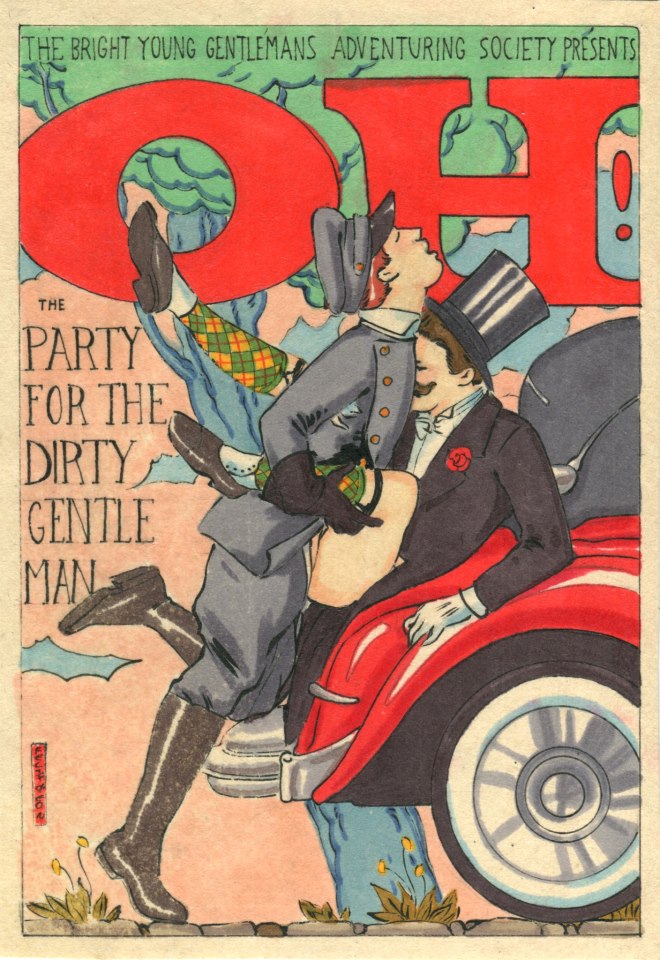
Three years of Oh!
Watch this video:
Tell me you don’t want to be at the third annivesary (so many of those this week!) of host Danimal’s twice-monthly party. Darling DJ Robin Simmons will give you something to listen to beyond the slaps and moans, mmkay?
Wed/13, 10pm-2am, $3. Powerhouse, 1347 Folsom, SF. Facebook event
We’ve been hearing a lot about the Night Light thanks to its hosting of quality local shows; in the past year there have been performances by Warm Soda, Burnt Ones, Religious Girls, Jaberi and Deutsch, and the like. This Saturday, to celebrate 12 months of life, the bar-venue is hosting a free party, and there’ll be eight bands, seven DJs, and three comedians to check out throughout the night. Yes, all free.
First off, a little background. The Night Light is split-level Jack London Square area building with a bar on the bottom level, and a show venue up top. I’ll let the flowery press release give you the rest: “The decor is influenced by Speakeasy era bars, with flocked velvet wall paper, leather couches, and a darkly stained interior. The alcohol inventory focuses heavily on providing a wide selection of whiskies, and the cocktail menu offers new twists on Prohibition fare.” Doesn’t that cozy?
http://www.youtube.com/watch?v=BS3i-YkeXLI
Here’s the good stuff: to celebrate the one-year anniversary, owners Doug Kinsey and Johnny “Scobey” Nackley (see interview above) are offering all-night happy hour, and a complimentary midnight champagne toast – might as well be New Years.
The performances: DJs Delgado and Odiaka from Fresh Jamz and Miggy Stardust will spin downstairs, beginning at 7pm. In the venue section upstairs, there’ll be sets by live bands Clipd Beaks, Spaceburn, Mahgeetah, Bam! Bam!, Old and Gray, Frankie and the Aztecs, Lessons, and Tastyville; DJs Protoghost, Inti Inti, and Rick Moranis (aw, nice to see that name again, even it’s in a different context), along with live comedy by Clark O’Kane, Joey Devine, and Sean Keane.
[UPDATED BELOW] Negotiations between tenant advocates and real estate interests (including the political advocacy group Plan C) over the controversial condo lottery bypass legislation haven’t gone well or found common ground. But sources tell the Guardian that Sup. Jane Kim and Board President David Chiu, who has been mediating the dispute, are preparing to introduce compromise amendments that have the support of the San Francisco Tenants Union and other tenant advocates if a deal can’t be worked out with real estate interests.
Details are still being hammered out with advocates and the City Attorney’s Office, so the hearing scheduled for this Monday at the Land Use and Economic Development Committee will likely be postponed until March 25. But the basic deal is to allow the roughly 2,000 tenancies-in-common now seeking to convert into condos to do so in exchange for a long moratorium on new condo conversions, possibly indexed to construction of new affordable housing for the renters who comprise nearly two-thirds of San Franciscans.
The original legislation by Sups. Mark Farrell and Scott Wiener is being strongly backed by both current TIC owners who want the ability to refinance and Plan C and other real estate interests that want to continue converting ever more rent-controlled apartments into condos, rather than abiding the city’s current limit of 200 per year, awarded through a lottery system. The SFTU has strenuously resisted opening up those flood gates, but it’s open to clearing out the backlog in exchange to shutting the gates for awhile (see my story in this week’s Guardian for more on the political dynamics surrounding this issue).
“We’re hopeful that a majority of the board will support amendments which will significantly protect tenants and which will allow a version of the Wiener-Farrell legislation to be approved,” SFTU head Ted Gullicksen told us.
Progressives on the board oppose the legislation as currently written, and the swing votes are thought to be Sups. London Breed (which Plan C supported in the last election in exchange for what it says was her promise to support more condo conversions, an assurance she denies making), Norman Yee (who was brought into the Chiu-mediated negotiations), and Malia Cohen, with just one of them needed to force changes to the legislation.
But the real estate interests – including Plan C, the Association of Realtors (whose government affairs director we left a message for and are waiting to hear back from, and we’ll update below if/when we do), San Francisco Apartment Association, and other downtown-based groups – who are pushing for more condo conversions are likely to strongly resist the amendments. They simply want more rent-controlled apartments turned into condos they can sell, period.
Their perspective is reflected in SF Apartment Magazine, put out by the San Francisco Apartment Association, which every month offers advice to real estate investors and apartment building owners on various ways to buy apartment buildings, evict tenants or increase their rents, and convert the buildings to TICs or condos.
It runs a regular column called “TIC Corner” with the latest tricks for financing acquisitions and getting rid of those pesky tenants. In the November 2012 issue, for example, attorney D. Andrew Sirkin wrote excitedly about a new Securities and Exchange Commission rule that will now allow owners to advertise the sale of apartment buildings as TIC/condo investments, which he said “will dramatically ease the regulatory burden for real estate entrepreneurs wishing to raise money for apartment acquisitions and make it much easier to find investors.”
Another feature story in the magazine, “The ABCs of OMIs,” teaches these investors all the tricks for evicting tenants from their buildings, while “Roommate Roulette” offers advice to owners of rent-controlled buildings for keeping new roommates of existing tenants off the lease so they can charge market rate rents as soon as possible.
And, of course, the magazine is filled with ads for San Francisco apartment buildings that are for sale and just waiting to be cleared of tenants and turned into amazing real estate investment opportunities. Gullicksen says it is this mentality, applied to what even Mayor Ed Lee has called the city’s “precious few rent-controlled apartments,” that has animated the opposition to the Wiener-Farrell legislation. SFTU had planned a rally for Monday called “Stop Rent Control Attack,” which has now been postponed until March 25.
UPDATE 3/11: Sup. Wiener got back to us and said, “I hope we can move to a compromise and I don’t want to prejudge that compromise.” Asked about the concept of approving TICs in the pipeline in exchange for halting on all condo conversions for some number of years, he said, “It’s definitely something to explore, a pause in the lottery, and I’m open to that. But the devil is in the details.”
In 1963 a publicist, an art collector, an actor, a newspaper publisher, and a dentist joined forces to form San Francisco’s Chinese Historical Society of America. The group’s mission was simple: to preserve and document Chinese culture in the US. Now celebrating its 50th anniversary this year, it has the same goal it always has had with one major difference: a museum to house the fruits of its labor.
The CHSA moved into its Chinatown digs 12 years ago. The building was built in 1932 by funds raised by a group of Chinese women who traveled up and down the Pacific Coast visiting various Chinese communities to raise funds to construct a small gym and women’s dormitory in Chinatown. In the midst of the Great Depression they somewho drummed up $25,000 for the cause, and the gym provided athletic space to its urban community until it was struck by the 1989 earthquake.
As the CHSA’s executive director Sue Lee takes me on a tour she speaks with almost an encyclopedia-like knowledge of Chinese history on the West Coast. Her animated descriptions of each and every exhibit make it clear that the enthusiasm for preserving Chinese culture that drove the Historical Society’s original founders hasn’t been lost over the generations.
In the CHSA’s early days, the founders’ sense of urgency stemmed from the immigration restrictions put in place during the Cold War due to the Chinese’s association with the Soviet Union, which were resulting in a withering Asian population.
Lee explains, “[the founders] thought, ‘this is all we’ve got’.Lee explains. “They were visiting dying Chinese communities up and down the west coast, collecting stuff, interviewing old timers, and picking up stories, and artifacts.”
That drive to preserve has been augmented by new goals for the Historical Society in the modern era. “We also want to engage local artists to use our history and to be inspired by Chinese-American history for their artistic endeavors,” says Lee.
One direct way the CHSA is putting that plan in action is through its “Creative Spaces” program. Currently in its second year, “Creative Spaces” invites artists, designers, curators, and educators to propose concepts for interpreting and presenting history in the museum. This year Leland Wong, an artist and Chinatown native, has been chosen as one of the featured artists.
A stage inside the museum has been transformed into a working studio for Wong. Visitors can peek in whether Woing is working or not.
A playful collection of intricate Qing Dynasty children’s hats temporarily donated by collector Leslie Selcow in memory of Jade Snow Wong, a Chinese-American ceramic artist and author, fills another exhibition space. In another area, a small suitcase contains the sparse belongings Chinese immigrants commonly brought with them when traveling to America: a notebook, a few pieces of clothing, an umbrella. Visitors are invited to write which items they’d bring on paper luggage tags and attach them to the trunk. History’s tidal changes are visible in the tags that I glimpse on my visit — everything from video games to iPods to the maybe-not-so-portable family cat is scribbled on the tags.
Lee tells me that the lessons learned at the CHSA are certainly not confined to Chinatown residents, or even to Chinese Americans. “Our challenge is always to reach out to our own community as well as to educate the greater community.” Last year, the Historical Society partnered with the Israeli consulate to honor Dr. Feng Shan Ho, a Chinese diplomat who saved thousands of Jews in Vienna from being deported to Nazi concentration camps during World War II.
In the over-informed, distracting era we live in, making people care about history is a constant challenge, but it seems clear that Lee and her crew are up for the challenge. “We’re trying to be more active,” she says. “We can’t be a mausoleum, we have to be engaged. We have to try to inspire people.”
Literally something for everyone this week: pregnant women, environmentalists, Mumia supporters, World War II buffs, Latin American history buffs, Abbas Kiarostami fan club members, German and French-film devotees, and anyone who’s ever dreamed of going over the rainbow (in 3D). I hope you don’t sleep much because this weekend is jammed up with new flicks.
BarbaraThe titular figure (Nina Hoss) looks the very picture of blonde Teutonic ice princess when she arrives — exiled from better prospects by some unspecified, politically ill-advised conduct — in at a rural 1980 East German hospital far from East Berlin’s relative glamour. She’s a pill, too, stiffly formal in dealings with curious locals and fellow staff including the disarmingly rumpled, gently amorous chief physician Andre (Ronald Zehrfeld). Yet her stern prowess as a pediatric doctor is softened by atypically protective behavior toward teen Stella (Jasna Fritzi Bauer), a frequent escapee from prison-like juvenile care facilities. Barbara has secrets, however, and her juggling personal, ethical, and Stasi-fearing priorities will force some uncomfortable choices. It is evidently the moment for German writer-director Christian Petzold to get international recognition after nearly 20 years of equally fine, terse, revealing work in both big-screen and broadcast media (much with Hoss as his prime on-screen collaborator). This intelligent, dispassionate, eventually moving character study isn’t necessarily his best. But it is a compelling introduction. (1:45) (Dennis Harvey)
http://www.youtube.com/watch?v=doXpyxbSZFs
Birth Story: Ina May Gaskin and the Farm MidwivesWhen Ina May Gaskin had her first child, the hospital doctor used forceps (against her wishes) and her baby was sequestered for 24 hours immediately after birth. “When they brought her to me, I thought she was someone else’s,” Gaskin recalls in Sara Lamm and Mary Wigmore’s documentary. Gaskin was understandably flummoxed that her first experience with the most natural act a female body can endure was as inhuman as the subject of an Eric Schlosser exposé. A few years later, she met Stephen Gaskin, a professor who became her second husband, and the man who’d go on to co-found the Farm, America’s largest intentional community, in 1971. On the Farm, women had children, and in those confines, far from the iron fist of insurance companies, Gaskin discovered midwifery as her calling. She recruited others, and dedicated herself to preserving an art that dwindles as the medical industry strives to treat women’s bodies like profit machines. Her message is intended for a larger audience than granola-eating moms-to-be: we’re losing touch with our bodies. Lamm and Wigmore bravely cram a handful of live births into the film; footage of a breech birth implies this doc could go on to be a useful teaching tool for others interested in midwifery. (1:33) Roxie.(Sara Maria Vizcarrondo)
Dead Man Down Noomi Rapace reunites with her Girl With the Dragon Tattoo (2009) director, Niels Arden Oplev, for this crime thriller co-starring Colin Farrell. (1:50)
http://www.youtube.com/watch?v=4Htr2B1EBj4
EmperorThis ponderously old-fashioned historical drama focuses on the negotiations around Japan’s surrender after the bombings of Hiroshima and Nagasaki. While many on the Allied side want the nation’s “Supreme Commander” Emperor Hirohito to pay for war crimes with his life, experts like bilingual Gen. Bonners Fellers (Matthew Fox) argue that the transition to peace can be achieved not by punishing but using this “living god” to wean the population off its ideological fanaticism. Fellers must ultimately sway gruff General MacArthur (Tommy Lee Jones) to the wisdom of this approach, while personally preoccupied with finding the onetime exchange-student love (Kaori Momoi) denied him by cultural divisions and escalating war rhetoric. Covering (albeit from the U.S. side) more or less the same events as Aleksandr Sokurov’s 2005 The Sun, Peter Webber’s movie is very different from that flawed effort, but also a lot worse. The corny Romeo and Juliet romance, the simplistic approach to explaining Japan’s “ancient warrior tradition” and anything else (via dialogue routinely as flat as “Things in Japan are not black and white!”), plus Alex Heffes’ bombastic old-school orchestral score, are all as banal as can be. Even the reliable Jones offers little more than conventional crustiness — as opposed to the inspired kind he does in Lincoln. (1:46) (Dennis Harvey)
Greedy Lying Bastards Longtime activist Craig Rosebraugh (a former spokesperson for radical groups the Animal Liberation Front and the Earth Liberation Front) makes his directorial debut with Greedy Lying Bastards, a doc that examines the climate-change denial movement. The briskly-paced film — narrated in first person by Rosebraugh, and jam-packed with interviews — begins with stories from homeowners devastated by recent Colorado wildfires, and visits a tribal community perched on Alaska’s eroding shores. But while it touches on global warming’s causes, and the phenomenon’s inevitable outcome (see also: 2006’s An Inconvenient Truth), the film’s particular focus is lobbyists who’ve built careers off distorting the facts, leading Tea Party rallies, and chuckling condescendingly at environmentalists on Fox News — and the fat cats who’re pulling the strings: the dreaded Koch brothers, ExxonMobil execs, and others. Rosebraugh owes a hefty stylistic debt to Michael Moore — right down to his film’s attention-grabbing title — and, like Moore’s films, Greedy Lying Bastards seems destined to reach audiences who already agree with its message. Still, it’s undeniably provocative. (1:30) (Cheryl Eddy)
Harvest of Empire This feature spin-off from Juan Gonzalez’s classic nonfiction tome aims to temper anti-immigration hysteria with evidence that the primarily Latino populations conservatives are so afraid of were largely invited or driven here by exploitative US policies toward Latin America. Dutifully marching through countries on a case-by-case basis, Peter Getzels and Eduardo Lopez’s documentary covers our annexing much of a neighboring country (Mexico) and using its citizens as a “reserve labor force;” encouraging mainland immigration elsewhere to strengthen a colonial bond (Puerto Rico); covertly funding overthrow of progressive governments and/or supporting repressive ones, creating floods of political asylum-seekers (Guatemala, Cuba, Nicaragua, El Salvador); and so on and so forth. Our government’s policies were often justified in the name of “fighting the spread of Communism,” but usually had a more pragmatic basis in protecting US business interests. The movie also touches on NAFTA’s disastrous trickle-up effect on local economies (especially agricultural ones), and interviews a number of high achievers from immigrant families (ACLU chief Anthony Romero, Geraldo Rivera) as well as various activists and experts, including Nobel Peace Prize winner Rigoberta Menchu, while sampling recent years’ inflammatory anti-immigrant rhetoric. There’s a lot of important information here, though one might wish it were packaged in a documentary with a less primitive, classroom-ready episodic structure and less informercial-y style. (1:30) (Dennis Harvey)
Like Someone in Love A student apparently moonlighting as an escort, Akiko (Rin Takanashi) doesn’t seem to like her night job, and likes even less the fact that she’s forced into seeing a client while the doting, oblivious grandmother she’s been avoiding waits for her at the train station. But upon arriving at the apartment of the john, she finds sociology professor Takashi (Tadashi Okuno) courtly and distracted, uninterested in getting her in bed even when she climbs into it of her own volition. Their “date” extends into the next day, introducing him to the possessive, suspicious boyfriend she’s having problems with (Ryo Kase), who mistakes the prof for her grandfather. As with Abbas Kiarostami’s first feature to be shot outside his native Iran — the extraordinary European coproduction Certified Copy (2010) — this Japan set second lets its protagonists first play at being having different identities, then teases us with the notion that they are, in fact, those other people. It’s also another talk fest that might seem a little too nothing-happening, too idle-intellectual gamesmanship at a casual first glance, but could also grow increasingly fascinating and profound with repeat viewings. (1:49) (Dennis Harvey)
Long Distance Revolutionary: A Journey with Mumia Abu-JamalOr, almost everything you ever wanted to know about the guy who inspired all those “Free Mumia” rallies, though Abu-Jamal’s status as a cause célèbre has become somewhat less urgent since his death sentence — for killing a Philadelphia police officer in 1981 — was commuted to life without parole in 2012. Stephen Vittoria’s doc assembles an array of heavy hitters (Alice Walker, Giancarlo Esposito, Cornel West, Angela Davis, Emory Douglas) to discuss Abu-Jamal’s life, from his childhood in Philly’s housing projects, to his teenage political awakening with the Black Panthers, to his career as a popular radio journalist — aided equally by his passion for reporting and his mellifluous voice. Now, of course, he’s best-known for the influential, eloquent books he’s penned since his 1982 incarceration, and for the worldwide activists who’re either convinced of his innocence or believe he didn’t receive a fair trial (or both). All worthy of further investigation, but Long Distance Revolutionary is overlong, fawning, and relentlessly one-sided — ultimately, a tiresome combination. Director Vittoria in person at the film’s two screenings, Fri/8 at 6:30pm and Sat/9 at 3:30pm. (2:00) New Parkway. (Cheryl Eddy)
Oz: The Great and PowerfulProviding a backstory for the man behind the curtain, director Sam Raimi gives us a prequel of sorts to 1939’s The Wizard of Oz. Herein we follow the adventures of a Depression-era Kansas circus magician named Oscar (James Franco) — Oz to his friends — as he cons, philanders, bickers with his behind-the-scenes assistant Frank (Zach Braff), and eventually sails away in a twister, bound for a Technicolor land of massively proportioned flora, talking fauna, and witches ranging from dazzlingly good to treacherously wicked. From one of them, Theodora (Mila Kunis), he learns that his arrival — in Oz, just to clarify — has set in motion the fulfillment of a prophecy: that a great wizard, also named Oz, will bring about the downfall of a malevolent witch (Rachel Weisz), saving the kingdom and its cheery, goodhearted inhabitants. Unfortunately for this deserving populace, Oz spent his last pre-twister moments with the Baum Bros. Circus (the name a tribute to L. Frank Baum, writer of the Oz children’s books) demonstrating a banged-up moral compass and an undependable streak and proclaiming that he would rather be a great man than a good man. Unfortunately for the rest of us, this theme is revisited ad nauseam as Oz and the oppressively beneficent witch Glinda (Michelle Williams) — whose magic appears to consist mainly of nice soft things like bubbles and fog — stand around debating whether he’s the right man for the task. When the fog clears, though, the view is undeniably pretty. While en route to and from the Emerald City, Oz and his companions — among them a non-evil flying monkey (voiced by Braff) and a rather adorable china doll (Joey King) — wander through a deliriously arresting, Fantasia-esque landscape whose intricate, inventive construction helps distract from the plodding, saccharine rhetoric and unappealing story line. (2:07) (Lynn Rapoport)
I teach a weekly employee yoga class at a hospital where my students are all women. Every week, a young man peers curiously into the classroom. I asked him once if he’d like to join us, and he said, “Yes, but what would my friends say? Yoga is for girls.”
This odd societal notion that yoga is an emasculating, status-reducing activity is bad enough. But to make matters worse, people like William J. Broad, the so-called New York Times science writer, have publically espoused that yoga is actually harmful to men. Why? Because, he says, men have a tendency to push themselves too hard, and their bigger muscles are more injury prone.
Wait … what?
Here’s the truth: The majority of the yoga poses that we do in the studio today were developed by men, not women. In fact, women had to fight for the right to take part in this practice in the first place. And I could spend days discussing the fallacies of Broad’s arguments (which are based on poor science and don’t at all credit men with the ability to take care of themselves), but we all have better things to do. The point is: When did yoga get deemed wussifying or, worse, a threat to one’s health?
I don’t live in a man’s body, but I do teach yoga to a lot of strong, masculine, and intelligent men, and I can tell you from what I see that yoga is every bit as beneficial to men as it is to women. It does not seem to have negatively affected anyone’s testosterone levels, nor do my male students get injured any more than my female students — if they practice intelligently. (If one practices unintelligently, regardless of gender, one will get injured.) In fact, despite the obvious anatomical disparities, I see very little difference between the male and female practitioners I know in terms of commitment to practice, injury rate, and advancement. The largest challenge for men is the message in Western society that yoga was not made for them.
As a response to the dearth of dudes in yoga class, an interesting movement to promote male-only yoga classes has come about. The national Broga program is one example of this trend, though it hasn’t yet caught on locally. While I love that this movement is encouraging more men into the classroom, the segregation aspect feels weird to me. This is yoga, not football. I’d prefer to see all of us — men, women, and trans folk — practicing in the same room, side by side. Together.
As a society, both men and women have suffered from countless years of gender segregation. The yoga room can be a place for us to be in community together. Sure, we have different bodies, but we’re all there for the same reason: to improve ourselves and develop a deeper sense of inner intelligence. I understand that there’s a comfort in being around people who look like you, and avoiding environments where the other gender dominates. But if women had let that fear deter us, we wouldn’t have gained the right to attend college, vote, or have our own bank accounts. Besides, yoga is actually about moving out of your comfort zone, and confronting the fears and insecurities that imprison you. What better place to push your boundaries?
I’m a fan of anything that gets more guys, straight or gay, into the yoga room — even boys-onlyyoga. But the beautiful thing about bringing the genders together in general, and particularly in the yoga room, is that we balance one another energetically. We can learn from, support, and better understand one another. I think the time is ripe now for us to come together in mindful community — in fact, I think our evolution as a species depends on it.
And a little secret for those men who’ve yet to take a yoga class because they think the women don’t want them there: We do.
Karen Macklin is a writer and yoga teacher in San Francisco — her On the Om Front column appears biweekly here on sfbg.com.
Naked Men’s Yoga Check out these weekly classes for men that are aimed at offering community and more freedom for expression and movement. Clothing is not optional. Days and times and locations vary.
Therapeutics Workshop with John Friend After a long hiatus from the yoga world, the founder of Anusara yoga is back in town. In this workshop, he will focus on common issues and injuries in the body, and how to overcome them using therapeutic postures based on principles of alignment. Sat/9, 6:30-8:30pm, $50, Urban Flow Yoga, 1543 Mission, SF
Yoga Grad School Laughing Lotus is offering several weekend workshops between now and the end of June on topics ranging from teaching yoga to at-risk youth to hands-on assisting. The workshops are appropriate for dedicated practitioners looking to deepen their practice as well as for those interested in earning credit toward advanced teacher certification. Price varies based on number of workshops taken. Next up: Lotus Fly: Advanced Asana and Sequencing with Sheri Celentano March 16-17, 1-6pm, $199 Laughing Lotus, 3271 16th Street, SF
Yoga and Dance with Wendy Faith Link two forms of movement in one in this workshop combining yoga and dance. Dance forms visited include Afro-Brazilian, salsa, tribal bellydance, Bhangra, West African and hip-hop. March 17, 1-3:30pm, $35 Aha Yoga, 1892 Union, SF
The San Francisco Quilters Guild’s biennial show is back and ready to prove needle arts are alive and kicking – and not just in grandma’s eyes. The exhibit will cozy up the Concourse Exhibition Center this Sat/9 and Sun/10 with a display of over 400 quilts.
Twenty quilts made by members of the Israel Quilters Association comprise a special exhibition dealing in the symbolism of daily life in Israeli society through textile. Former film costumer and seasoned quilter Eleanor Dugan will be showing off the elaborate dot motifs characteristic of her work. Pieces by this year’s two featured artists Laura Lee Fritz, and Roberta Walker will also be on display exhibiting a fresh spin on classic techniques.
The show will also include a special exhibit on wearable art as well as two quilting challenges, a SFQG tradition that goes out to members prior to the biennial so that completed challenge quilts can be on display through the weekend. For this year’s challenges, the guild gang designed 20-inch square quilt based on the theme “chocolate.” Others crafted from two required fabrics designated by the challenge committee, creating pieces that celebrate the guild’s 30th anniversary.
Roberta Walker is a longtime member of the SFQG, but this is the first year she has been selected as a QUILT San Francisco featured artist – and she has a pretty good idea what has helped earn her spotlight.
“What I do as a quilter that’s different from other quilters is, I am very involved in the Japanese stitchery called sashiko,” she tells the Guardian. Sashiko is a big running stitch that can be seen in Walker’s pieces made from Japanese fabric as well as in her quilts crafted from more conventional materials – the combination of which is Walker’s own adaptation of the technique.
“I think that’s why people really like my quilts,” Walker explains. “I’ve put a different spin on them by doing that stitching. That has sort of been my specialty. In fact, people go to quilt shows and they say they don’t even have to look at the name to see whose quilt it is, they know [it’s mine].”
Twenty of Walker’s pieces will be on display this weekend. Featured artists will conduct twice-daily walkthroughs of their quilts.
The Quilters Guild biennial requires almost a year of planning. In other words: prepare your eyes.
“People walk into our show and they sort of gasp,” Walker says. “When you see that many quilts hanging, it’s overwhelming.”
We were disheartened when, after submitting some fairly innocuous questions to the Mayor’s Chief Innovation Officer, Jay Nath, we received zero answers. By the time the Guardian’s annual Freedom of Information issue hit stands yesterday, we were still out in the cold. (Shameless plug: Pick up a print edition of this week’s paper for our flow chart on how to file Sunshine requests, designed by our illustrious Art Director Brooke Robertson.)
Nath, who helped start the city’s Open Data program, responded to our emails and tweets (apologetically) by saying he was awaiting the green light from the Mayor’s Office of Communications. Which begs the question: In a city so outwardly committed to transparency, why can’t the Mayor’s Office of Communications entrust a program expert to share information about information-sharing software?
Anyway, the day after we ran our story, Nath did respond in an email. The first objective of Open Data is to “increase transparency,” he told us.
Other goals are to “drive economic development” and “foster the creation of new services and analysis by our community.” The inspiration behind it came from President Barack Obama, who on his first day in office “issued a memo on open government that heralded their open data program Data.gov,” Nath explained. “With this precedent, the city recognized an opportunity to share local data with the public.”
Head over to the city’s Open Data Portal and you can poke around for info on everything from real-estate development, to restaurant health inspection scores, to city salary ranges by job classification.
As Nath pointed out, there are also over 30 datasets around campaign finance. That’s a good thing – but there’s still room for improvement. Last year, after attending a city hackathon where transparency advocates hoped to spur creation of an app to track lobbying, campaign contributions and real-estate development, Adriel Hampton of the San Francisco Technology Democrats noted that this was impossible due to a lack of information. “Despite millions in spending on … online transparency measures, access to data in these areas is woefully lacking,” Hampton wrote.
Nath said the annual cost is $40,000 per year for software. He also shared his vision for future expansion. “In terms of new services, I see applications that mash up data from multiple public and private sources to create a seamless experience,” he said. “For example, imagine a tourism app that helps you navigate the city via public transit, taxis, car / bike sharing, biking, walking, etc.”
So how does Open Data affect public records requests under the San Francisco Sunshine Ordinance? “Government can use open data to reduce costs by pro-actively providing information that is often requested through FOIA,” Nath told us, referring to the Freedom of Information Act. “For example, by releasing real-time transit data, transit riders have dozens of ways to know when their next bus is coming. This new and immediate access to information has resulted in 21.7% fewer SF 311 calls – and at $2 per call – that yielded a savings of over $1 million a year.”
An interesting thing about data is that it can be totally neutral until it’s harnessed for a particular purpose, with clever visualization and presentation. Just ask the producer of this video on wealth distribution, which has been making the rounds.
If history is a tale written by the victors, one wonders who San Francisco’s victors are. A chimeral concept as much as a destination, represented by a Phoenix rising from its own destruction, San Francisco has been lauded as a land of opportunity and “the city that knows how,” and detracted as “ingrown (and) self-obsessed,” a “golden handcuff,” and a “Babylon-by-the-Bay” ever since it surfaced in the national consciousness. A city where eccentrics are celebrated, “family values” extend beyond heteronormativity, and the very real threat of natural disaster colors the mundane with an idealized wash of importance.
This past weekend, the San Francisco Museum and Historical Society’s SF History Expo offered a gateway to the various and colliding stories of San Francisco for people interested in delving into what lies below the surface of the present day, assembling around forty exhibitors and presenters in once spot, to confab, to network, to recruit, and to educate.
Held in San Francisco’s Old Mint, built in 1874 and a rare survivor of the 1906 earthquake, just wandering around the building is a rare treat. The lower level is a veritable warren of small rooms, former vaults with ominously heavy doors, slippery stone floors, old graffiti, and no ventilation, situated off a long brick corridor lined with gas lamps.
Upstairs the rooms are larger, airier, with high ceilings and plenty of light streaming in through large windows, encircling a rather bleak courtyard like a prison exercise yard with high sandstone walls. Crowded with exhibitors, the smallish rooms overflowed with maps, pamphlets, sepia-toned photographs, and glass cases of ephemera,
In a central room, folks from Actions Past in period dress gave demonstrations of Victorian parlor arts, while down the hall the volunteers from the San Francisco Maritime National Historical Park encouraged people to hoist the mainsail on a scale model of historic scow schooner the Alma. At one end of the hall, four neighborhood historical societies from Portrero, Bernal, Visitacion Valley, and the “Western Neighborhoods” (including the faraway lands of the Sunset and the Outer Richmond) shared one room, while on the opposite end the “Guardians of the City,” a historical society dedicated to the Police and Fire departments, rubbed elbows with proponents of “alternative” histories, Shaping San Francisco/FoundSF and Thinkwalks.
Despite this welcome nod to the stories of the typically underrepresented, it did highlight the fact that of all the neighborhood and community historians in attendance, there was hardly a radical element to be found. To be fair, organizations such as the Chinese Historical Society and the GLBT Historical Society did have tables, so the event wasn’t completely devoid of more-than-geographic diversity, but it still could have used a few more nods to the Tenderloin, the Bayview, the Fillmore—or even just a single Sister of Perpetual Indulgence in Victorian drag.
Still, the value of assembling so many various stories under one roof shouldn’t be underestimated. If we consider history not as a static and one-sided document, but a constantly evolving perspective, then the opportunity to compare and contrast a variety of viewpoints has to start somewhere, and who better to spearhead the conversation than a roomful of enthusiasts each advocating the awareness and preservation of a different one?
Most important and interesting to the conversation was probably the attendance of so many amateur historians who gathered around each exhibit to share their personal perspectives on the overviews being offered. One hopes that their contributions to the collective chronicle will not go uncollected, so that future voices will not go unheard.
Ahead of the American Israel Public Affairs Committee’s three-day policy conference in Washington DC, Oakland-based Jewish Voice for Peace and Avaaz.org blanketed the DC Metro with provocative anti-AIPAC posters. The $100,000 marketing campaign features images of young Jews with the words: “AIPAC does not speak for me. Most Jewish Americans are pro-peace. AIPAC is not.” The posters, which are part of a larger campaign to counteract AIPAC’s strong and hawkish influence on American foreign policy, will run for two-weeks in the DC Metro.
The March 5-7 AIPAC conference attracts pro-Israel activists from around the country and this year features an address by Vice President Joe Biden. AIPAC spends nearly $3 million a year lobbying Congress and enjoys widespread support from both major political parties. But according to JVP Executive Director Rebecca Vilkomerson, Jewish-American frustration with AIPAC is mounting.
JVP’s high-profile ad campaign is designed to appeal to more liberal American Jews who are uncomfortable with AIPAC’s continued support for conservative US foreign policy priorities. “AIPAC is the NRA of foreign policy lobbies, it pushes a right-wing agenda that in no way represents the majority of Jewish Americans,” JVP Spokesperson Sydney Levy told the Guardian.
JVP endorses the controversial Boycott, Divestment, and Sanction (BDS) movement which seeks to isolate Israel internationally through a sustained divestment from Israeli institutions. This position has drawn criticism from other local Bay Area Jewish organizations and Levy said JVP has been barred from using space at the San Francisco Jewish Community Relations Council.
During the ongoing conference, AIPAC is expected to launch a campaign to convince Congress to exempt Israel aid from the sequestration budget cuts. But JVP is calling on its grassroots network of more than 35 local chapters to oppose the campaign. “In the era of sequestration, where every item is on the table – from Medicare to Head Start – why isn’t aid to Israel on the table?” asks Levy.
AIPAC did not responded to requests for comment, but we’ll update this post if it does.
So the Association of Bay Area Governments, which plays an outsized role in local planning by making all sorts of projections, based on whatever economists and demographers use to make projections, that are supposed to guide how cities in the region make land-use decisions, says San Francisco should be prepared to see its population grow to 964,000 people by 2035.If you figure that’s only an estimate, and probably off by at least five percent, we could be talking about a million people in this city just 20 years down the road.
Now: Some of those people will be coming here for jobs that are being created. Many will be coming here as immigrants from other countries. Many more will be coming because, well, California is growing, and, as the official motto of the old Redevelopment Agency put it, “Omnes Volunt Habitare in Urbe San Francisco.” Everybody wants to live in the city of San Francisco.
ABAG says we’re going to need to build homes and create jobs for all of those people, and the Chron talks about the new private-sector development that’s going on, and the zoning plans the city has adopted to increase density, particularly on the Eastern and Southeastern side of town. (Yes, it’s crazy, but John Rahaim, the planning director, freely admits that 80 percent of all new development is going into 20 percent of the city.)
Before we decide that this is our fate and our future, though, it’s worth considering a few points.
1. San Francisco is already one of the densest urban areas in the US. Last time I check the data, this city was number three on the list, behind Manhattan and Union City, New Jersey. Clearly, urban areas are going to have to get more dense as population increases in this state; the only other option is suburban sprawl, which works for nobody. But I wonder: Should San Francisco take this much more density when Berkeley (for example) doesn’t want it and won’t take it? Should it all go on the East Side when the more suburban-style areas on the West Side don’t want it?
Is there a way to do density that looks more like North Beach — one of the densest neighborhoods in town, and a really great place to live, work, and visit — and less like the highrise forests of Soma, which are unappealing at ground level, discourage neighborhood interaction, and are lacking in human scale?
I don’t want to live in Manhattan. I don’t want Soma to turn into Manhattan. Downtown is bad enough.
2. Nowhere in the Chron article, or in the comments attributed to Rahaim, is there any mention of affordable housing. That’s crazy. The urban planning train wreck that we’re heading for is all about the balance between jobs and the cost of housing. The vast majority of the jobs in San Francisco today do not pay enough to cover the cost of renting or buying a market-rate home. That’s not going to change radically; tourism and government are, and will be, the city’s major industries, even as tech, which pays better, increases. If the housing that gets built is not in synch with the needs of the workforce, then the workers will be forced to live futher and further away, which leads to exactly the kind of sprawl and transportation problems that this “infill” and increased density is supposed to prevent.In other words: Affordable housing for the workforce prevents sprawl. Market-rate housing for people who live here and commute to work on the Peninsula is not environmentally sound.
3. Density — both in housing and in commercial development — has huge impacts on existing populations, particularly low-income communities. That’s not part of the planning discussion at all, and it really ought to be the starting point.
I know my trolls — I know you well — and I know you’re all going to say that growth and change is inevitable. Sure. But I think of a city first and foremost as a community, as a place where a diverse group of people live. Protecting that is just as important as giving developers and businesses a chance to make money.
Oh, and Rahaim’s comment — “This (growth) is going to happen whether we plan for it or not” — is wrong. If we don’t build office space and room for new jobs, if we don’t build housing, the growth isn’t going to happen. San Francisco gets to decide what happens on land in San Francisco. Not saying we want to stop (all) growth, but Rahaim is a planner, and he should know: Growth happens when you encourage it and allow it. Growth doesn’t happen in places where you don’t allow it.
There is no growth in Bolinas, because the people who live there don’t want it. There’s less growth in Berkeley, because the people who live there want less. Again: Not the model I want to use. I don’t want to live in Bolinas any more than I want to live in Manhattan. But San Francisco does control our own fate, and we should never forget that.
So this is pretty much perfect. It’s been 10 years since the Postal Service released its mega indie hit album, Give Up. Go way back to the band’s original “auditions” in this new clip.
Also, the band, which of course features Death Cab for Cutie’s Ben Gibbard on lead vocals, just announced a second Bay Area date later this year (the first one quickly sold out). The Postal Service will play Berkeley’s Greek Theater July 26 (sold out) and July 27 (not yet sold out). Tickets and additional info on those here. Specifically, get tickets to the July 27 show here.
And now, on top of all those outrageous indignities … they’re killing people!
Well, maybe Ellison and his crew aren’t actually committing murder. But during last weekend’s venerable Escape from Alcatraz triathlon – which was moved up from the warm-ish summer months to the frigid winter because the yachts are apparently unable to share the bay for a few hours one morning – one man died of a heart attack and 150 participants had to be rescued (three times the normal number) because the water was so dangerously cold.
Just one more example of how overentitled rich people, with the active complicity of the Mayor’s Office, are having their way with San Francisco, heedless of the consequences.
Oh, gawd. Another movie awards show? Ain’t we done with the tired old titles of 2012? MTV’s just announced its nominees for the 2013 MTV Movie Awards, an all-style-and-no-substance annual event that, HOLD UP, may actually be worth watching this year (airdate is April 14).
Reason being: host Rebel Wilson, an inspired choice who happens to be up for Best Female Performance as well as Best Breakthrough Performance for Pitch Perfect. Tumblr agrees … Rebel is awesome.
http://www.youtube.com/watch?v=eUdM9vrCbow
Complete list of nominees on MTV’s site here, with categories like Movie of the Year (spoiler alert: Amour is not on the list); Best Shirtless Performance (why are there people on this list who weren’t in Magic Mike?); crowd favorites Best Kiss and Best Fight; and my personal favorite, Best WTF Moment — because aren’t those the moments we really remember when the lights go up? My pick for pure, over-the-top violence and lavish WTF-ness, full of dialogue I don’t dare repeat here: “Jamie Foxx and Samuel L. Jackson, Candieland Gets Smoked, in Django Unchained.”
When I went to see YACHT, a couple years ago during the Treasure Island Music Festival, it was playing outdoors in the afternoon, and it seemed like the wrong time and place. Last year at the Fox, the conceptual electropop band seemed stifled by the combination of the large venue and sparse crowd, and also mired by the same lackluster audio conditions that made headliner Hot Chip sound like it was playing underwater. But Saturday at Slim’s, on my last night of Noise Pop, it seemed just…
Fuck, I’ve wandered into the Goldilocks cliché.
Anyway, YACHT likes to keep it personal. Personable? The duo of Jona Bechtolt and Claire L. Evans (bolstered by other band members on tour) affect a borderline cultish air — utopian ideals were all over its last album Shangri-La and lead track, um, “Utopia” — that plays better when the audience is kept close, in a intimate venue.
“Ahhh, your hair is so long!” a woman in the sold out crowd screamed, when singer Evans first appeared on stage during the sound check, dark roots showing under what was previously close cropped and bleached blonde. It struck me as the kind of thing you say to a close friend you haven’t seen in a while. (“She’s much better looking than the last time I saw her,” someone else near me judged later in the show.)
This friendly rapport makes a lot of sense, given how much effort the group makes towards fostering it. Hopping off stage and tangling the crowd up in a mic cord has basically become a rock party trick at this point (probably because it’s an almost foolproof way to charm the crowd). Evans employed it as a starter, but went on to continually flatter fans and solicit questions, indulging in requests for hugs and spare beers. Throughout this course of events, singer, multi-instrumentalist, and YACHT founder Bechtolt competed for the larger cult of personality with a hopped-up glee.
Somewhat listless at the Fox performance, YACHT was nothing but efficient on Saturday. Maybe it was limited on time to begin with, but the set clicked by, highlighted by high-energy renditions of “I Walked Along” and “Utopia” — better than any I’ve heard.
An obvious encore followed (right after Bechtolt assured someone — probably the guy up front waving a sticker sheet and Sharpie since the sound check —that he’d sign anything five minutes after the show was over) with “Ring the Bell,” a super snappy version of shout-along “Psychic City,” and “Second Summer.” It was all done with an intentionality that could be either super endearing to a fan or off-putting viewed as an outsider, but I’m increasingly finding myself group with the former.
Openers
Shock: “We only have two minutes left and our songs are like seven minutes,” singer and bassist Terri Loewenthal of Shock said, after playing three tracks of slinky synth funk with slow vocals and lots of glissando. Five or so minutes later, the ground finished its set and she added, “So that was the short version.” Which was pretty satisfying.
Future Twin: Future Twin was precociously San Francisco, noting that one song was about trying to find affordable housing and cracking dead on delivery jokes about the nudity ban only applying out on the streets. But with dynamic singer and guitarist Jean Yaste — whose voice recalls equally parts Corin Tucker and Exene Cervenka — and drummer Antonio Roman-Alcala, this band can get away with saying whatever it wants during mic breaks. Its upcoming benefit for the Roxie at the Verdi Club with Thee Oh Sees and Sonny and the Sunsets has it in good company.
Tussle: It’s been three years since I last saw Tussle at Milk Bar, and given the recordings the group released since then I had high expectations to see it much improved. But trouble with setting up a ton of equipment and subsequent delays really hobbled its start, and the group never seemed to quite overcome it. Unintentional tempo shifts seemed common, the double drummers never quite seemed to sync, and the generally structureless songs seemed to only end when every member came to the sudden realization that someone else was cuing them to wrap it up.
The Bay is blessed with street artists who take seriously the responsibility that comes with painting on a surface thousands of people will see every day on their way to work and school. See: the Estria Foundation, which was started by graff legend Estria Miyashiro and just released this video of the group’s latest trip to Bogotá, Colombia as part of its #WaterWrites mural program.
Stop by Bissap Baobab on Thu/7 for a dinner presentation on the group’s trip to Bogotá and recent voyage to Cape Town, where it completed another mural that examined the issue of water rights.
You can check out more photos of the project on the collective’s Flickr page. Here’s what the Estria foundation sent us about the making of the Bogotá mural:
Our Executive Director, Erin Yoshi, recently returned from working on the #WaterWrites Mural Project in Bogota, Colombia. The 2000 square foot mural was created in collaboration with the APC Crew, one of the largest graff crews in the nation. It was painted next to a community center that hosts music and arts workshops for youth.
The mural is dedicated to raising awareness about the current water conditions in Colombia. It portrays nature and humanity joining forces to evict water polluters and exploiters of natural resources. Nature is painted as a character, surrounded by trees, flowers, life, and water. Animals, insects, and people are housed in the hair and along the body. The left arm directs the attention towards a barge in the river containing the impact of resource extracting industries; mining, fishing, logging, and plantation farming. Graffiti on the sides of the ship attest to the history of resistance it has met everywhere it has traveled.
An ideologically diverse trio of supervisors, a community-minded mediator, and a deliberate negotiations process (one that that involved local stakeholders and verified corporate claims) has managed to do what the Mayor’s Office couldn’t: reach an agreement that seems to be a good deal for the city and has broad political support for California Pacific Medical Center to build two new full-service hospitals in town.
It differs from the disastrous dealannounced by Mayor Ed Lee last year in key ways. St. Luke’s Hospital – a staple of care for low-income San Franciscans that must to rebuilt to meet new state earthquake safety standards – will be about 50 percent larger than previously proposed, while the new luxury hospital that CPMC has been trying to build on Cathedral Hill will be about 50 percent smaller.
That simple flip alleviated much of the Cathedral Hill project’s impact on traffic and affordable housing – which CPMC will still pay $14 million and $36.5 million respectively to mitigate, more than in the previous agreement and part of a roughly $80 million payment to the city – and overcame community concerns about the company’s commitment to St. Luke’s.
The new deal also has stronger local hiring requirements and more stringent guarantees that CPMC will serve MediCal patients and provide more charity care to the poor, regardless of the company’s financial situation, while maintaining contributions to community-based organizations at the same level as under the previous agreement.
In many ways, the agreement repudiates the deal cut last year by Mayor Ed Lee, which CPMC refused to significantly modify or even support with verifiable financial claims even as it fell apart in spectacular fashion under scrutiny last year by the Board of Supervisors, particularly during hearings at the Land Use Committee chaired by Sup. Eric Mar.
That flawed deal was rushed to completion just as the Saleforce headquarters expansion that had been trumpeted by Lee and the America’s Cup real estate deal both fell apart, which sources tell the Guardian put pressure on Lee to quickly deliver something to the business community and building trades (read tomorrow’s Guardian for more on Lee’s approach to tough negotiations and its implications).
But today’s press conference to announce the new deal at St. Luke’s was a forward-looking celebration of what was universally lauded as a big victory for the community. And most of the credit seems to go to mediator Lou Giraudo, who owns Boudin Bakery, and Sups. David Campos, David Chiu, and Mark Farrell, who all stepped up late last summer to salvage the project.
“There are two stories: the deal itself and the process,” Giraudo told the crowd. He said that he had some trepidation going in and that all he knew of the supervisors was what he read in the newspapers, and that the three represented the left (Campos), right (Farrell), and center (Chiu). Giraudo said they were the keys to making this deal happen.
“I have never been so impressed by politicians to come together as one,” Giraudo said, praising the trio for working hard, bringing in outside expertise to verify CPMC’s financial claims, and working with their constituencies. “We depoliticized together and then we built trust.”
Farrell also praised both the deal – “It ensures we have access to quality health care for years to come in San Francisco.” – and the process, in which the three supervisors worked well together. “I think about the future of the Board of Supervisors and us working together as colleagues,” he said. “None of us have spent more time on anything than we have CPMC.”
Campos echoed the point. “I really cannot be more proud of the work that we as the Board of Supervisors did here,” Campos said, noting how they had all committed to work together for the good of the city, demonstrating “how we, as the Board of Supervisors, can work on even the most difficult issues and resolve them.”
He also praised his constituents in the community coalition of labor, housing, and social justice advocates – including San Franciscans for Healthcare, Housing, Jobs, and Justice – who had pushed for a better deal for San Francisco. “This is a victory for them at the end of the day,” Campos said, singling out their consultant Paul Kumar for helping shape a deal that ensures that, “St. Luke’s plays a large role in the CPMC system.”
Kumar, a consultant with the National Union of Healthcare Workers who wasn’t at the event, later told the Guardian, “This is a victory for democratic planning.” He noted that CPMC and its parent company, Sutter Health, are notoriously hard-nosed negotiators and that he’s hoping this agreement represents a turning point in their relationship with the community and their employees.
“The question is if we can parlay this into a better and more responsible relationship between Sutter and the city,” Kumar said.
Chiu – who has been at the center of several difficult city negotiations in recent years, and who helped lead the board’s charge against CPMC last year – told the conference, “When we started this process, I was not hugely optimistic we would get here,” calling the supervisors “an unlikely trio.” But he praised all parties involved for working to get a deal with strong local hiring and charity care provisions.
“This is a comprehensive project,” Chiu said.
When Lee spoke, he praised the deal and the crucial role played by the three supervisors. “This project would not have gotten done without their direct involvement,” said Lee, who didn’t attend any of the dozens of negotiating sessions, although Ken Rich from the Mayor’s Office was involved. Yet the unusually grim-faced mayor also seemed to bring up the only doubts expressed about the deal, saying “The job is never done, this is an announcement about where we are today” and vaguely warning that, “It’s sensitive, people do have trepidation about what this will mean to them going forward.”
Afterward, Lee took reporters’ questions while walking steadily to his car, without pausing to get into what he was alluded to or why this deal seems so much better than the one he cut, except to say that the “health care landscape has changed.” Later, a mayoral staffer who would only speak on background, said one key to this deal was that CPMC had decided that demand for hospital beds would drop in the future and that they needed fewer in San Francisco.
CPMC CEO Dr. Warren Browner, who had some tough clashes with supervisors last year, didn’t go into the reasons behind the sweetened deal during his presentation (except to contest Giraudo’s comment that he had fought through “deal fatigue and was weary at times” by saying that he actually had a lingering case of “walking pneumonia” that he thanked CPMC’s medical staff for helping to cure.).
After comparing the negotiations to the legend of Sisyphus repeatedly pushing a boulder uphill, Browner said, “We are looking forward to going through the process and putting shovels in the ground, hopefully in 2013.”
Terms of the deal, which were formally introduced at today’s Board of Supervisors meeting, include:
Permits for a 120-bed St. Luke’s Hospital, 274-bed Cathedral Hill Hospital (or an additional 30 beds if St. Luke’s operates at 75 percent capacity), medical office buildings at both hospitals, a parking garage with up to 990 spaces (limited to CPMC staff and patients only) on Cathedral Hill, and a new Neurosciences Institute at Davies Medical Center.
St. Luke’s Hospital will have a number of specified services – including acute care, senior and community health care, labor and delivery, intensive care, cancer treatment, mental health services, and outpatient care – to ensure it remains a full-service hospital.
CPMC caring for 30,000 charity care and 5,400 Medi-Cal managed care patients per year, limits on healthcare cost increases to city employees, and CPMC endowing a new $9 million Healthcare Innovation Fund to increase capacity at local clinics.
CPMC contributing $36.5 million to the city’s affordable housing fund and paying $4.1 million to replace the homes it displaces on Cathedral Hill.
At least 30 percent of construction job and 40 percent of the permanent entry-level positions in the new facilities will be San Franciscans, and CPMC will contribute $4 million to job training.
To offset transportation impacts at Cathedral Hill, CPMC will give $14 million to the SFMTA and “institute a robust transportation demand management program,” as well as spending $13 million on pedestrian safety and streetscape improvements at all its San Francisco facilities.
Tonight, March 5, the western span of the Bay Bridge will be illuminated in the much-anticipated Bay Lights installation, created by internationally acclaimed artist Leo Villareal.
The project will incorporate an “intelligent lighting” system, powered by 25,000 individually programmable LEDs that will be illuminated according to “abstract sequences inspired by the kinetic activity around the bridge,” Villareal explained at a press conference at the San Francisco Ferry Building this afternoon. “It’s not a light show,” the artist noted, and added that he preferred to think of it more as “the equivalent of a digital campfire.”
Villareal, who has worked in software in addition to being an artist, emphasized that the lighting system is highly efficient, using only enough power to cost about $15 per night.
The project has been in the works for two and a half years and under construction for the last six months. Private funders have raised $6 million of the total $8 million needed. The presenting organization is Illuminate the Arts, a nonprofit organization.
San Francisco Mayor Ed Lee, speaking at the press conference, emphasized an economic projection finding that the installation could result in $97 million in local economic activity. He expressed support for it as an important project for generating private support for public art. “This project has unleashed incredible generosity,” showing funders that “art is something exciting, and cool to get behind as a sponsor,” Lee said. “I think it will release even more generosity” for art in San Francisco, he added.
When the Guardian took the opportunity to ask Lee what could be done to help make San Francisco more affordable for artists in general, he responded, “I am very sensitive to that,” and said he was making an extra effort to work with the arts community, particularly those who “want to create art homes and art locations in mid-Market.” Lee added that even tech employees have expressed to him that they value living in a city where arts are thriving, so “we have to make sure there’s the right balance for that.”
Cuddle porn, banned in Oz? The Australian Classification Board took exception with auteur Travis Mathews’ tender look at life and love among gay men in San Francisco — which included explicit sex scenes. Film fanatics at the Melbourne Queer Film Festival, Sydney’s Queer Screen, and the Brisbane Queer Film Festival will be missing out on Mathew’s work — I Want Your Love was scheduled to screen at all three this year.
Look, James Franco is sad too. “This seems really silly,” the actor says, wearing an absolutely interestingly patterned t-shirt and blonde head of hair in the video statement below. “I don’t think we’d be having this conversation if he’d made a very violent film.” Franco and Mathews recently collaborated on the film Interior. Leather Bar., inspired by the 40 minutes of S&M footage excised from the 1980 Al Pacino film Cruising:
Just as it did in 2010 with Bruce LaBruce’s gay bloodbath LA Zombie, the Classification Board deemed I Want Your Love‘s sexual content “gratuitous.” The term struck a chord with I Want Your Love‘s supporters, who may fail to see the connection between their film’s depictions of real-life gay sex and LaBruce’s necrophiliac plotline/erect zombie prosthetics.
“This is movie about gay life and relationships,” wrote the president of local gay porn company Naked Sword, Tim Valenti, in an editorial for Huffington Post that will be posted later today (we are sneaky/his press person sent us the op-ed text early-like.) Naked Sword produced I Want Your Love. “If we wanted to just sell sex, we could have made another porno,” Valenti writes. “But where’s the challenge in that?”
I Want Your Love (Travis Mathews, US, 2011) Local director Travis Mathews’ first full-length feature — produced by porn impresario Jack Shamama and the good, pervy folks at Naked Sword — is so beautifully shot, edited, paced, and true to life for a certain young, scruffy, artsy fag demographic (not to mention brimming with explicit sex scenes) that you probably won’t notice that hardly anything happens plotwise. A cute performance artist named Jesse, played by one of our top performance artists also named Jesse, is getting ready to move back to Ohio due to those all-too-familiar San Franciscan money woes, but maybe also to forge some deeper connection to life. That’s about it. The true joy here is seeing most of the Bay Area’s gay underground arts scene nailing peripheral roles: Brontez Purnell hilariously steals the movie, cute naked gay boys abound, and the whole thing really does come off as a lovely West Coast boho version of last year’s UK indie hit Weekend, with more fog and condoms.
This coming Friday marks International Women’s Day, an event geared toward promoting gender equality across the globe. As women seek greater representation in politics, media, tech and other professional realms, controversies around gender equality issues continue to arise – even in San Francisco, a city nationally recognized for its progressive commitment to equality.
A few weeks before that, San Francisco blogger and programmer Shanley Kane shook things up with a widely circulated essay blasting Silicon Valley’s “toxic lies about culture,” in which she paints the start-up world as limiting for women despite oft-expressed ideals of inclusivity:
“What your culture might actually be saying is … We have a team of primarily women supporting the eating, drinking, management and social functions of a primarily male workforce whose output is considered more valuable. We struggle to hire women in non-administrative positions and most gender diversity in our company is centralized in social and admin work.”
And when we dropped by the RSA Security Conference last week at San Francisco’s Moscone Center out of sheer curiosity to hear what the founder of Wikipedia had to say, we learned that even people who strive for an internationally inclusive open-source encyclopedia project are experiencing lopsided gender representation, and struggling to address it.
Jimmy Wales, who started Wikipedia about 12 years ago, asked his audience to “imagine a world in which every single person on the planet is given free access to the sum of human knowledge” as the foundational goal of the global endeavor, which is headquartered in San Francisco. But despite this lofty objective of global inclusivity, he admitted that Wikipedia is struggling to attract more female participation when it comes to the people who are writing articles for it.
As things stand, the people who contribute entries to Wikipedia are 87 percent male, he said. “We’re not happy about that number,” Wales said, noting that it is reflective of the gender imbalance in the tech community in general. “This is a really important goal for us: To improve female participation,” he added.
Dishearteningly, it seems to follow a broader trend of a lack of female representation in traditional media. A report released a couple weeks ago by the Women’s Media Center included some eye-opening stats:
At the current pace, it will take until 2085 for women to reach parity with men in leadership roles in government/politics, business, entrepreneurship and nonprofits.
By a nearly 3 to 1 margin, male front-page bylines at top newspapers outnumbered female bylines in coverage of the 2012 presidential election. Men were also far more likely to be quoted than women in newspapers, television and public radio. That’s also the case in coverage of abortion, birth control, Planned Parenthood and women’s rights.
Forty-seven percent of gamers are women, but 88 percent of video game developers are male.
The percentage of women who are television news directors edged up from the previous year, reaching 30 percent for the first time.
This may not sound like a lot to celebrate, but come Friday, the ongoing struggle for gender equality might just give you the inspiration to check out some local activities commemorating International Women’s Day, Women’s History Month or just some remarkable female-driven projects in the Bay Area.
Pick up a copy of the Guardian tomorrow and check out our special Women’s History Month event listings, where we’ll highlight everything from a gathering honoring female media professionals, to meet-ups for female coders, to murals painted by women, courtesy of Guardian Culture Editor Caitlin Donohue.
The beloved tearoom Crown and Crumpet Tea Room – which closed down its previous Ghirardelli Square location nine months ago – reopened in the first floor lobby of Japanatown’s New People entertainment hub and shopping center.
After deciding not to renew the lease on their waterfront space, Crown and Crumpet owners, husband and wife team Amy and Chris Dean were asked to open up a Japantown location by the folks behind New People. To the Deans the neighborhood seemed like a natural fit.
“We partner with the J-Pop festival and have a lot of fans like Lolita girls who love Crown and Crumpet and Japantown as well,” Amy Dean tells me on my trip to the shop on its first day up and running. “Because we collaborate with them a lot they asked if we would open up a Crown and Crumpet here.”
The new space is significantly smaller than its old location, which is why it has appropriately enough, been packaged a “tea stop café” as opposed to a tearoom. Dean explains, “we wanted to make it a little different so that people would know it is a casual, quicker version of our old shop. It’s a quicker experience but you still get afternoon tea.”
Crown and Crumpet is currently working to create cinema snacks and bento boxes for the movie theater in New People’s basement. The casual vibe is reflected in the shop’s prominent positioning of its to-go service, and it’s on the way to selling Blue Bottle coffee. (As of right now, Amy and Chris are working to get their degree from Blue Bottle’s training program before they can start brewing).
But though the small space might not allow for as much lingering as the Ghirardelli Square location, but that doesn’t mean vistors won’t want to stick around. From the giant teacup clock hanging on the wall to trademark floral-and-polka-dot tablecloths to the staff’s coordinating aprons, Crown and Crumpet’s a sweet sight.
The three-tiered afternoon tea was the standard order among customers on the afternoon I visited. Amy Dean personally explained each item on the plates as she simultaneously ran around working out some standard opening day kinks. The service was stacked: petit fours on top, crumpets and a scone in the middle, and sandwiches on the bottom level of the tray.
I opted to try out their signature stardust black tea, which was delightfully sweet but more importantly, sparkled! The blend has tiny silver shimmering specks in it.
Crown and Crumpet is still working to open up a bigger location, similar to its former site. The Deans aim to open that up before Christmas in the Union Square neighborhood. “We tentatively have a space where we hope to include a library area for the men as well as a party room,” Dean says.
There is no denying Crown and Crumpet’s Tea Stop Café offers a different experience compared to the old shop. But with 110 reservations on the books for its second day of service, and 62 visitors by the time I visited on Friday, it would seem customers still have a sweet spot for the place. “It’s really amazing that we have so many people that love us,” says Dean. “There are other tearooms in San Francisco but we really pay attention to details, the charm, and whimsicalness of it all.”
Our beloved kings and queen of trash rock and doo-wop hybrid Shannon and the Clams released “Rip Van Winkle,” the first single off their upcoming Hardly Art release, Dreams in Rat House (coming May 21).
The song, which features back-up by Magic Trick’s Noelle Cahill, is again the perfect blend of garage pop and beachy surf punk a la the Trashwomen, and has that cool hiccuping guitar effect kicking off the hip-shaking, foot-stomping, hand-clappy new track. As expected, chainsaw vocalist-bassist Shannon Shaw’s distinctive pipes stand out above all else. This all just serves to further excite us for the release of Dreams in Rat House.
Shaw, vocalist-bassist Cody Blanchard (King Lollipop), and drummer Ian Amberson also this week announced a tour with fellow Bay Area favorite, Mikal Cronin, which takes the bands through SXSW and back. Unfortunately that schedule does not yet include a local show upon return, though that can’t be far behind, right? (Alas, Shannon and the Clams plays its SXSW kickoff last night at Elbo Room.)
https://www.youtube.com/watch?v=S0PBWuqRrpg
While the new album has yet to produce an official video, this seems like a good time revisit the Shannon and the Clams mini movies we’ve loved since the beginning (many directed by Shaw’s brother, Dan), way back when we just knew of Shaw as of Hunx’s Punkettes, and after the devotion solidified with 2010’s glorious Ruin Christmas EP and 2011’s Sleep Talk LP (1-2-3-4 Go!):
This Saturday, there is a mindblowing dark electro underground happening called PSYCHIC DIMENSIONS. Profligate is one of the many artists scheduled to appear. Slightly NSFW.
Sina Khanifar, a San Francisco entrepreneur, started this whole movement, and it’s picked up steam quickly. Now, with the Obama administration on board, he just needs a member of Congress to introduce a bill overruling the Library of Congress and freeing the cell phones.
Rep. Pelosi, who represents San Francisco, would be an excellent choice to carry the legislation, no?