SFBG Blogs

Noise Pop 2013: Califone, ‘Scene Unseen,’ and DIIV

0

Will 2013 be the year that Noise Pop began downsizing? Or, is the festival simply adjusting its focus towards smaller, rising acts? Either way, this year’s lineup was surprising from the get-go, eschewing the name-brand, Flaming Lips-y headliners in favor of rising, blog-friendly outfits like Toro Y Moi and DIIV. Sadly, I couldn’t occupy nine venues at a time, so here’s a rundown of the Noise Pop shows I did see this past weekend.

CALIFONE
Having listened to Califone‘s records for over a decade, yet never seen it live, I was curious about the band’s strategy in translating its studio material to the stage. From its introductory statement, Roomsound (2001), to the extended freakout-jams of Heron King Blues (2004), to last year’s Sometimes Good Weather Follows Bad People, Califone’s sound has always been production-oriented, augmenting the rustic twang of blues and roots music with an equally faded, rusted, precarious palette of electronic sound. No one merges the old and the new quite like Califone in the studio; the band’s records are visionary, but sadly, its live show didn’t quite measure up.

My first impression: no electronics. Frontperson Tim Rutili’s four-piece band consisted simply of two guitars, bass, and drums, leaving behind a significant part of the Califone identity. While this stripped-down approach isn’t necessarily a bad move, it requires a batch of songs strong enough to resonate after being whittled down to their skeletal forms.

While certain pieces thrived under the minimal treatment (“The Orchids,” “Electric Fence,” “Bottles and Bones”) others began spinning their wheels after a while (“Ape-Like,” “All Tied,” by Rutili’s side project Red Red Meat), without electronic ornamentation to keep the dynamics compelling. Yet, whenever the instrumentation was lacking, Rutili’s raspy voice and slide guitar came to the rescue, and picked up most of the slack.

While I would’ve liked to see them approach their studio material with more ambition and imagination, Rutili and Co. certainly made the trip to Cafe Du Nord worthwhile.

SCENE UNSEEN
After Califone, I headed to 1015 Folsom to catch the last two sets of Scene Unseen, the club’s attempt to piece together the remnants of the “chillwave” scene of summer 2010. NYC’s Washed Out and recent Bay-Area transplant Toro Y Moi played DJ sets, one after the other, both of which seemed to amount to little more than standing in front of a MacBook, and pushing play. So, those seeking a “performance” were likely disappointed. However, both musicians put on competent, engaging sets, showing a deft understanding of flow and dynamics, and putting the crowd into a well-controlled frenzy.

Washed Out‘s crowd-pleasing-est moment was likely Todd Terje’s “Inspector Norse,” the space-disco extravaganza that every critic seemed to embrace in 2012. The best thing I heard for the first time was “Holding On” by Classixx, a house anthem that played like a poor-man’s “Digital Love” by Daft Punk, yet trounced most of the competition.

Toro Y Moi’s set was more diverse, and less reliant on four-on-the-floor percussion than Washed Out’s. Jumping from a Larry Levan remix of Positive Force’s “We Got the Funk,” to Daphni, Purity Ring, Mariah Carey, and most memorably, Ginuwine’s “Pony,” the lack of genre-specificity was reminiscent of Anything in Return, Toro Y Moi’s new LP that rejects the notion of chillwave for something warmer, more personable, and harder to classify.

It seems that Washed Out and Toro Y Moi have differing priorities at this point, with one staying comfortably within the confines of chillwave, and the other exploring beyond its boundaries. As a result, there wasn’t much of a unifying scene to be found at Scene Unseen, but it was a treat to see both artists, in a one-two punch.

DIIV
One of the most promising groups within the current revival of shimmery, glassy dream-pop, NYC’s DIIV put on a truly impressive show for a one-album band. While it simply doesn’t have enough material at this point for an all-killer-no-filler, hour-long set, the band showed a great ability to adapt its recordings for the stage. Upping the tempos on a handful of songs, and veering into some extended jams, it managed to subvert expectations constantly, however slightly, making for a way more compelling show than a note-for-note playthrough of its 2012 debut Oshin would have been.

“Air Conditioning” was a big highlight, rejecting the laid-back swagger of the studio version, for a fast, propulsive, borderline-motorik groove that recalled the Velvet Underground and Ride. “Wait” and “How Long Have You Known?” were similarly impressive, rounding out the slam-dunk middle section of Oshin. The big surprise of the night came with a cover of Stereolab’s “Blue Milk,” (Bradford Cox’ favorite song, perhaps), a number that fit in seamlessly with the band’s glassy, shiny guitar sound, yet pushed its penchant for droney, chugging dynamics to a new extreme.

However, the elephant in the room: a lot of DIIV’s material sounds the same. Tracks like “Past Lives,” “Earthboy,” and “Sometime,” feature slight variations on the same guitar melody, and I’m still not sure how that makes me feel.

Whether its music is modular, lazy, or just underdeveloped this early in the game, there’s no doubt the band has a lot of room for refinement. Despite that, it was pretty thrilling to witness DIIV at (hopefully) the start of its lifespan, hungry to put its potential on display.

Tonight at the Castro: the most beautiful/depressing movie about global warming ever

0

Greedy Lying Bastards, a film about climate change, opens this Friday (look for my review in tomorrow’s paper); it takes a confrontational approach to the subject. But here’s the thing: you can argue with a politician or a lobbyist, but a melting iceberg will simply respond with a cold, cold stare.

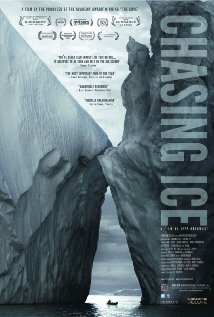
Tonight and tomorrow at the Castro, check out 2012’s similarly-themed but far more meditative Chasing Ice. You may have caught a glimpse of its striking glaciar photography on the Oscar telecast, since that song I didn’t like in my review (below) was one of the unlucky tunes shoved into a quick “Here’s Best Song nominees that weren’t sung by Adele, Hugh Jackman, or Norah Jones, therefore they don’t matter” montage. (Needless to say, it didn’t win, but it did expose this powerful film to the billion watching, so there’s that.)

Chasing Ice Even wild-eyed neocons might reconsider their declarations that global warming is a hoax after seeing the work of photographer James Balog, whose images of shrinking glaciers offer startling proof that our planet is indeed being ravaged by climate change (and it’s getting exponentially worse). Jeff Orlowski’s doc follows Balog and his Extreme Ice Survey team as they brave cruel elements in Iceland, Greenland, and Alaska, using time-lapse cameras to record glacier activity, some of it quite dramatic, over months and years. Balog is an affable subject, doggedly pursuing his work even after multiple knee surgeries make him a less-than-agile hiker, but it’s the photographs — as hauntingly beautiful as they are alarming — that make Chasing Ice so powerful. Could’ve done without Scarlett Johansson crooning over the end credits, though. (1:15) Castro. (Cheryl Eddy)

Calvin Trillin: The sip heard round the world

0

He sought to trash the Democrats.

He’d rough then up for sure, but first he

Just had to have a drink.

Poor Rubio was dry and thirsty.


Though pundits say his future’s bright,

Whatever life to him may bring,

HIs sobriquet will always be

The senator from Poland Spring.

Calvin Trillin: Deadline Poet: (The Nation 3/11/2013)


Just ignore the Chamber of Commerce

35

The Chronicle made a big deal of the fact that the Chamber of Commerce has a “21-point advocacy agenda” that “could weaken” the city’s “boundry pushing legislation and pro-labor policies.”

But really, nobody should even care.

The Chamber’s been pretty irrelevant to local politics for years now, and there’s no way six members of the Board of Supervisors are going to take the backward-thinking group up on its efforts to contract out city services and slow down cutting-edge proposals.

Actually, most of the “21-point agenda” is pretty tame. The Chamber, for example, wants to “Work with city government and advocacy groups to improve the ability of residents and visitors to move efficiently around the City by car, transit, bike and taxis.” And it hopes to “Continue to promote San Francisco’s small businesses through formulating favorable public policies and providing ample networking opportunities.” Wow. Hold the front page.

As for the things that might actually matter, forget it. Contracting out comes up almost every year at budget time; every year, a unified labor community shoots it down. This year will be the same. And nobody’s going to get City Attorney Dennis Herrera to release a public analysis of every piece of legislation before it’s approved.

Herrera’s better than his predecessors, by far, but he’s a lawyer, and lawyers don’t like to share with anyone the advice they give their clients. I often wish Herrera’s office would release more than it does, but unless the supervisors declare that they no longer want confidential advice from their attorney (which has its charm, to be sure, but also some real downsides) then the current policy will continue. Herrera will privately tell board members that there might be legal risks to some of their bills; the elected supervisors will decide whether to take those risks or not.

While I’m always an advocate of open government, the city attorney is not the Supreme Court. In the really bad old days, a city attorney named George Agnost used to routinely shut down progressive legislation by announcing that it was unconstitutional, leaving even conservative members of the board to denounce him. When the supes pass something, it’s a presumptively valid law. If you don’t like it, you can sue. The courts — not the city attorney — decide what’s legal and what isn’t.

And I have no idea where the Chamber’s Jim Lazarus came up with this:

But prior to Herrera and his predecessor, Louise Renne, city attorneys regularly issued public opinions, said Lazarus, a deputy city attorney in the 1970s who lost to Herrera in the 2001 election.

That’s completely untrue. I know; when Agnost was city attorney (in the 1970s and early 1980s) I tried constantly to get copies of his legal opinions. The vast majority were never released. That office was so secretive the city attorney wouldn’t even tell you his name if it wasn’t written on the door. When I pushed the issue, Agnost told me that copies of every non-confidential opinion he’d ever written were available at the public library. I went there. There were exactly three opinions on file, all of them noncontroversial and unrelated to any pending legislation.

Look, we all know that Gavin Newsom pushed the boundries of law when he approved same-sex marriages. But the California Supreme Court, faced with San Francisco’s civic disobedience, changed the law and said marriage was a basic right. And the US Supreme Court is about to do the same thing. Is the Chamber arguing that Newsom was wrong?

The Chamber is yesterday’s news. I don’t even know why we pay attention any more.


Attorney who conducted whistleblower cops’ deposition says questions remain

The Guardian broke the story last week about an Oakland school police officer, Sgt. Jonathan Bellusa, who came forward as a “whistleblower” in sworn testimony. The day after a group of Oakland-based police-accountability activists leaked an uncertified draft of the officer’s deposition to the media, NBC Bay Area aired an interview with Bellusa, who was involved in the January 2011 fatal shooting of a 20-year-old African American man, Raheim Brown.

Bellusa, who is now on leave from employment, alleges that there was a cover-up in the investigation of the shooting incident by the Oakland School Police Department, which operates independently from the Oakland Police Department as a division of the school district. Shortly after posting the story, the Guardian received a call back from attorney Adante Pointer, who conducted Bellusa’s deposition. Pointer said he didn’t know how the activist group, Against Hired Guns, got a copy of the document but he did point out that all witnesses get a copy of their deposition transcripts.

“I’ve taken a number of depositions over the course of my career, but this is the first time I’ve ever had a police officer admit that their employer was putting pressure on them to give testimony in a particular way,” said Pointer, who works for the Law Offices of John Burris, which is representing Brown’s family in a civil suit against the school police department. “It’s very eye-opening,” he added, particularly if Bellusa’s allegations ring true and “public funds and public resources are being used to cover up this death.”

But Pointer added that some of the things Bellusa stated about the facts of the shooting did not add up with the stories given by Sgt. Barhin Bhatt, who fired the weapon, or witness Tamisha Stewart, Brown’s friend who was seated in a vehicle next to him when he was shot. Bellusa “held firm to this idea that he had been stabbed three to four times with this screwdriver,” Pointer said, referencing a part in the deposition when Bellusa testified he had been hit with the butt end of a screwdriver and feared he would be stabbed in the throat.

But that doesn’t jive with the account of Stewart, who stated in her sworn testimony that the screwdriver stayed in the car ignition during the whole encounter, Pointer told the Guardian. Stewart was held in jail following the shooting for several weeks, and during that time she discussed what had happened with family and friends in telephone conversations, Pointer told the Guardian. What Stewart did not know was that her phone calls, placed from a phone provided by the jail, were being surreptitiously recorded. Pointer said his firm had been provided with tapes of the calls.

In those recorded conversations, “She was candid about everything else,” according to Pointer. “And she said she never saw Raheim try to stab [Bellusa].” Bhatt, meanwhile, told Pointer in his own deposition that he started firing because he saw Brown make a move toward the gear shifter, Pointer said, which also doesn’t add up with Bellusa’s account.

All of which goes to show that, whistleblower cop or no, questions continue to surround the fatal shooting of Brown.

Noise Pop 2013: The Crystal Ark at the Mezzanine

0

“Dude, a satchel? That’s the gayest shit I’ve ever seen.”
“What?” I asked.
“Your purse,” he said, pointing to my camera bag, as his apparent girlfriend giggled and tried to cover his mouth. “That’s so fucking gay. Are you from America?”
“Thank you,” I said, as I finished putting in my ear plugs, mostly disinterested but half curious what he made of the two guys making out 10 feet across the dance floor.

Given that the last time I was in this situation, at Mezzanine to see NYC’s disco band the Crystal Ark supported by “San Francisco’s coveted queer DJ collective” Honey Soundsystem, was during Pride weekend, this was an odd encounter. But I’d already expected the crowd to be a little off, given that it was seemingly a late addition to the Noise Pop Festival and had to compete with packed, sold-out events in the vicinity.

Maybe the couple came out for the free Toro y Moi/Washed Out club night/email farm going on over at 1015 Folsom, and got turned off by the massive line. Maybe they were just visiting from out of town, and Mezzanine was close to their hotel. In any case, a short time into the band’s set, I couldn’t see them around, and presumed they left early.

Whatever. The Crystal Ark would be pretty central in a Venn diagram of my musical tastes. Gavin Russom is easily the fifth most significant member of now-defunct LCD Soundsystem, which doesn’t mean much except for obsessives (guilty.) With The Crystal Ark, he combines his synth expertise with Latin percussion and a trio of female singers in a way that recalls both ESG and Fania All-Stars. Plus, an additional utopian/spacey theme that suckers me.

http://www.youtube.com/watch?v=P3X2NAqqUCM

Still, to be honest, the first time I saw the band I was a little disappointed. Mainly because it seemed to take at least a half an hour before it livened up and built into the kind of fluid groove you want from a group like that. Friday, the Crystal Ark seemed much improved. Coming to the stage with the slight awkwardness that comes with being the headlining band with no real opener, Russom proceeded with introductions, saying that they were glad to be back at Mezzanine, noting that “This is a wild city. I’ve only been two blocks, but I’ve seen a lot of wild shit.” (Presumably arriving via Sixth Street rather than Mint Plaza.)

But a few minutes into their new single “Rain,” the band seemed ready to go, with the chorus “C’mon, and show me what’s the best you got,” being an obvious challenge to the small crowd.

This time around the band was also smaller, consisting of Russom, a single percussionist and a group of singers-dancers led by Viva Ruiz. But the performance and connection to the audience was improved.

Throughout the night Ruiz would alternate between English and Spanish, at one point dedicating what I’d failed to realized was a pro-immigration song, “We Came To (Work)” to her father and “We the fucking people.”

Despite the smaller size, the sound was bigger and more synchronized. After finishing with the appropriate “Ascension” and the refrain “the time has come,” it was a little disappointing seeing the club shut down – opposed to last time where the Pride crowd and Honey Soundsystem kept things going – and Russom was packing up his gear. When I complimented him on the show, he attributed it to having released their album and having more time to focus on performing. Now they just have to find the right crowd.

Noise Pop 2013: The Thermals and Dirty Ghosts at Rickshaw Stop, Bender’s happy hour

0

I first learned of the Thermals in 2005 from the DVD series, Burn to Shine, in which bands play a house that’s set to be demolished. In an unlucky Portland, Oreg. home, the pop punk trio – by then together for just under three years – bounding with energy, played exclusive single “Welcome to the Planet.” That particular Burn to Shine installment also featured live, untouched performances by Sleater-Kinney, Mirah, the Decemberists, and the Gossip. A basic slice of life in Portland that year, all under one soon-to-be-gone roof.

Friday’s Noise Pop show at the Rickshaw Stop celebrated the 10th anniversary of the Thermals’ very first album, More Parts Per Million (2003, Sub Pop). And while it’s now all these years later, and the band has since released a decade’s worth of records building to 2013’s Desperate Ground, the Thermals have maintained a joyful, power-pop exuberance and nasally shine. The Rickshaw crowd pogo’d off its feet to every song, nearly in unison, matching the excitement of the band on stage, even causing a brief kerfuffle near the end.

“This week is the 10th anniversary of our first record,” said lead singer-guitarist Hutch Harris, “I hope you like it because we’re going to play most of it.”

http://www.youtube.com/watch?v=uWjeAnnckKs

And the sold-out room did enjoy it. Despite the band’s relative longevity, the audience seemed mostly on the younger side; I’d guess at least half were under 21, and spotted those inked giant Xs on many a pumping fist (maybe they were just straight-edge? Do kids still do that?). That could also be due to the fact that the show was 18 and over, and the Rickshaw generally attracts a younger set.

The show opened with experimental San Francisco pop trio Ev Kain, which had a confusing, dense sound peppered with echoing duel vocal harmonies, expert, off-time drumming, angular guitars, and upbeat ska melodies. At different points, it was reminiscent of the early aughts math-rock and dance punk explosions, a welcome change from standard SF garage acts, at other moments the roaring lead vocals were distracting from the drumming (though I always am drawn to a drummer who sings). I overheard comparisons to both Radio 4 and Fishbone thrown out among the attendees up on balcony. See? Confusing.

All-teenage, all-girl beach pop group the She’s (ahem, our recent cover stars for the On the Rise issue) followed and impressed with those breezy harmonies and technical skills. The quartet opened with “Picture of Houses,” in which three of the four harmonize, “picture of houses in my life/grey skies and warm sand/it’s al-ri-ght” – that last “it’s alright” being repeated in a dreamy Beach Boys ode.

Pretty much everyone around me was smiling during the She’s set, especially when lead singer-guitarist Hannah Valente dedicated a song to her dad, saying “Happy birthday, dad!” before launching into a brand new track.

Next up, Dirty Ghosts brought out the Flying “V” guitars and classic, hard-hitting rock’n’roll. The band, another trio from San Francisco, seems to be getting tighter and brighter every year – perhaps it has just been too long since I’ve seen them live. They blew my mind like it was the first time.

http://www.youtube.com/watch?v=4Lu9ydAkXzY

Led by the hair-shaking guitarist Allyson Baker and bassist Erin McDermott (who sported a beer tap strap and a Faith No More shirt), Dirty Ghosts played songs off last year’s Metal Moon, and seven-inch “Katana Rock/Eyes of a Stranger” (2012). They killed with “Eyes of a Stranger,” which, as they noted, is in the classic 1980s film, Valley Girl (a.k.a my all-time favorite movie), and also with gritty single “Ropes that Way,” during which Baker and McDermott walked toward each other and did that noodling rock star move they’re so good at.

An audience interaction I dug during the set: whenever Baker mentioned Canada, or talked at all really, a smaller cluster of ladies near me screamed, whooped, danced, and repeatedly called back to the stage banter (old friends from Baker’s native land of Toronto?). Either way, they were feeling it, and it was contagious.

The next day, I stopped by Noise Pop’s free happy hour show at Bender’s and caught the awesomely hard, deep-fried Southern ’70s rock’n’roll act Wild Eyes SF  (with electric singer-tambourine shaker Janiece Gonzalez wearing an American flag denim vest, naturally, and drummer Ben Richardson, who, full disclosure, is a sometimes Guardian contributer), along with “[Black] Sabbath-worshiping” rock band Owl, and some delicious deep-fried tater tots dipped in ketchup. The greasy daytime show, packed with tall dudes with long hair and black shirts, was the perfect antidote to the poppy preceding night, and ended my Noise Pop 2013 week with a bang and a belly ache.

http://www.youtube.com/watch?v=P25oXVQPqYM
(Video shot by Guardian arts editor Cheryl Eddy)

CCSF board approves report to accreditors amid heavy criticism

164

Windsong, a 21-year-old City College student, held a sign that read “I love CCSF” while standing along Ocean Avenue last evening, as cars rolled by honking their support for the embattled school.

“I love learning while not being bound by the four-year school structure,” she said. She’s an artist in residence at a local elementary school, and was protesting to make sure City College of San Francisco could give her students the same opportunities she had.

“This place is in my heart,” she said. And she wasn’t alone.

Nearly 200 protesters lined the building outside of City College’s board of trustees meeting last night as the CCSF Board of Trustees approved the school’s “Show Cause” report, which is a 220-page document detailing what the college has done to meet its accreditation requirements — accreditation is required for a college degree to have worth, and for a school to receive state funding.

In short, it’s a document arguing what the college has done to improve since it was hit with sanctions last October, and why it should stay open and accredited. The report is due to the accreditation commission on March 15.

The Accrediting Commission of Community and Junior Colleges hit City College with a “show cause” sanction, citing a lack of progress in six problem areas the school was supposed to address since its last accreditation review six years before. When the accrediting commission came back to check on the school, it concluded City College had yet to address key areas, including measuring Student Learning Outcomes, and adequately funding their reserve, a “rainy day fund” the college leans on in hard times.

City College said that it has now met the challenge of those key problem areas. “We were deferring maintenance, and deferring (upgrading) technology,” said board president John Rizzo. “We’re required to spend money, and this gives us a plan going forward.”

But the shouting protesters outside the meeting and the angry students inside disagreed with some points of the plan. Proposition A was a parcel tax measure approved by voters in November that would raise somewhere between $14-16 million City College annually, which the board wanted to use to beef up the college’s reserve fund, one of the key areas where they were knocked by the accrediting commission.

California Federation of Teachers president Joshua Pechthalt implored the board to use Prop A funds for current teachers. “The men and women who work in this college spent many hours taking money out of their pockets to pass Prop A,” Pechthalt said in public comment to the board. The audience of about a hundred or so faculty and students cheered. “I would ask you to work closely with faculty and staff, that you work collaboratively with them.”

Pechthalt was there at the behest of Alisa Messer, the president of City College’s American Federation of Teachers Local 2121. Teachers at City College have had wage freezes for years, and most recently had an 8.8 percent wage reduction just this past month.

Part-time teachers were hit too, as nearly 40 of them were “not rehired” for the current semester, as well as 18 counselors and 30 members of the college’s staff..

Student Martin Madrigal, a 29-year-old mathematics major at CCSF, said he also supported using the Prop A funding to prevent layoffs and wage reductions.

“I missed class to come to this fight,” Madrigal said to the board. “But if I didn’t come here there wouldn’t be a class to miss.”

One by one, faculty and students implored the board to use Prop A funds to buffer the college’s wage reductions and layoffs. At one point, student Eric Blanc, a member of the protest group Save CCSF, came to the podium to speak in public comment and was cut off by the board. Ten or so other students and faculty had yet to speak, and were told there was no longer time.

Blanc then demanded of the board his time to speak. The campus police chief, Andre Barnes, and an officer approached Blanc and tried to remove him from the room. The tension in the room mounted as the audience started chanting “let him speak, let him speak!”

Trustee Rafael Mandelman diffused the situation, asking for silence and calmly explaining that the board needed time to conduct its business. Tensions rose again though as the topic of the college’s reserve fund came up — the reserve is now at $4 million, but the school is planning to boost it to $13 million by 2014, and $18 million by 2019.

It’s a needed safety net, the trustees argued, for a school with a budget hovering at more than $200 million a year and an economy that’s in the tank.

“Tomorrow the sequestration will begin, and it will impact California spending and our communities,” Trustee Steve Ngo said. “This [money] is going to faculty and staff, but in the future. Faculty and staff would not have to take cuts in wages, if we had funded the reserve.”

Ultimately, the board voted to approve its long term reserve fund plan, using Prop A funds to help buffer the reserve for the future. Blanc told the trustees that they had denied themselves other options, like suing the accreditation commission, or asking for emergency funding from City Hall.

“I think behind the rhetoric of this are thousands of people being shut out,” he said.

Vice Chancellor Peter Goldstein, who handles college finance, said that some of the claims of the protesters were inaccurate.

“I keep hearing people talking about cutting classes,but that’s not our plan for [fiscal year] 13-14,” he said. “In fact, this college is putting together a budget for next year that will have more classes than this year.”

The college may not be cutting classes, but it is asking everyone to do more with less. Teachers to teach with less salary, students to fit into larger classrooms, and for classes soon to fit into fewer campuses.

Whether those are improvements or dire straits depends on who you ask.

Video by Joe Fitzgerald:

http://www.youtube.com/embed/pMXeECCvVTs

http://www.youtube.com/embed/L5To6k2uU60


Save CCSF plans to march to City Hall to demand aid to CCSF and to protest austerity cuts at the college on March 14. For more information visit http://www.saveccsf.org/.

Click here to read City College’s 220 page “Show Cause” report: http://www.ccsf.edu/ACC/Preliminary_Final_Draft_Show_Cause_Report_Feb_26.doc.

Family of teen shot in Alice Griffith still waiting for Housing Authority help

14

Aireez Taylor, a 15-year-old Mission High School student and a resident of the Alice Griffith public housing project in Bayview, was shot seven times on Dec. 29.

It happened around 6:30 p.m. She was with several friends at a house just a few blocks from her home in Alice Griffith, also known as Double Rock. They were standing on the porch talking, her mother, Marissa, told the Guardian. Then two men armed with guns hopped out of a parked car. One of Aireez’s friends, a 17-year-old boy who lived at the house with his family, saw them coming. He ran for the door and was shot once in the foot. Aireez, fleeing after him, was shot seven times.


Residents of Alice Griffith interviewed by the Guardian described an intensification in the violent crime at and around their community in recent months. Several attributed the violence to a conflict between African American and Samoan gang members. Whatever the cause, the shooting of a 15-year-old girl stands as evidence of the ongoing danger in San Francisco’s public housing developments. Aireez’s father, Roger Blalark, said that his daughter wasn’t the intended target of the shooting. She was in the wrong place at the wrong time, he said.

But for Aireez, who survived the attack, the wrong place at the wrong time is her home in Alice Griffith. Her parents have applied for emergency relocation with the San Francisco Housing Authority, but after two months—and amid the recent scandal surrounding Director Henry Alvarez and federal reports that have rated the agency as one of the worst in California—they are still waiting for the agency to locate and repair a unit in a new housing development. In the meantime, Roger and Marissa continue to fear for their daughter’s life. “What if they find the guy and ask her to testify?” asked Roger.

Aireez made a steady recovery from the gunshot wounds inflicted upon her in the December attack. But the trauma of the event has not been as easily healed. She spent three weeks at San Francisco General Hospital. During that time, an unknown intruder tried to snap a photo of her as she lay in her hospital bed, Roger said. Later, a man claiming to be her father came to inquire about her, while Roger himself was at her bedside.

A police officer met with Roger and Marissa on the Monday following the attack. Aireez reportedly had not seen the shooters. An investigation is underway, though no arrests have been made and the police have no suspects, according to SFPD spokesperson Gordon Shyy.

The journey home from the hospital was a return to the place where she had nearly been killed, a community where the shooters presumably were still at large. “She gets shakes, every time she comes home,” said Roger. “She has to come by the corner where she got shot.”

SFPD Bayview District Captain Robert O’Sullivan said that relocation is an important part of protecting the victims of violent crimes. Ultimately, the choice to relocate a tenant rests with the Housing Authority. “There needs to be an assessment done when something like a shooting occurs in public housing,” said O’Sullivan. Alice Griffith, he pointed out, has a significant number of people in a relatively small space.

“It’s always something that is in the front of people’s mind, anyone that has a stake in this, in investigating or assisting—is this going to be a risk for this person or their family in continuing to stay here?” O’Sullivan said.

Marissa and Roger applied for an emergency transfer on Jan. 2. There was paperwork to fill out, then the Housing Authority had to search for a vacant unit that could accommodate a family of their size. Housing Authority spokesperson Rose Marie Dennis said that she could not give out confidential information regarding specific tenants, but confirmed that the majority of the Housing Authority’s holdings are studios, one-, or two-bedroom apartments.

Roger and Marissa needed something bigger. A unit that could accommodate their family was finally located in another housing development by the third week of January. Marissa was initially told that the unit would be ready in two weeks. But two weeks turned into five, and now six, and Marissa still doesn’t know the status of the unit or when it will be ready for move in.

Dennis told us the Housing Authority tries to accommodate all requests for relocation, and prioritizes tenants with emergencies. Victims of a violent crime that request a transfer are moved as soon as possible, she said. But the process of relocating a victim is often hindered by a variety of factors, including Housing Authority’s ability to allocate resources toward fixing up vacant units. The length of the wait is a matter of resources and cooperation between all the parties involved in preparing the new unit. Once a suitable place has been found, teams of custodians and craftsmen and women must work to clear, clean, and repair the unit. Preparing a unit for move in costs on average $12,000, she said.

The problem is not that there aren’t empty units. According to Dennis, vacant housing stock is in a constant state of flux, with the current occupancy rate estimated to be 96.3 percent. Since the Housing Authority manages a total of 6,476 units over 45 development projects, that would indicate that as many as 240 units now lie empty. Dennis said that some units are kept vacant by the Housing Authority for a variety of reasons, while many others are only made available as the agency finishes the repairs and renovations necessary to make the units livable by the U.S. Department of Housing and Urban Development’s (HUD) strict standards.

Roger and Marissa’s experiences would appear to dovetail with recent media scrutiny that suggests the Housing Authority has reached a critical state of dysfunction. The agency made the U.S. Department of Housing and Urban Development’s list of troubled agencies after it received a 54 out of 100 on their latest evaluation. Scandal has dogged the agency’s leadership—three lawsuits alleging discrimination and retaliation were recently filed against Alvarez, who was also accused in a lawsuit of steering contracts to political allies. And it’s long-term capital outlook is looking increasingly bleak, as buildings accumulate decades of wear and tear and infrastructure becomes obsolescent. Stuck with a federal budget that remains constant, the Housing Authority is put in the position of maintaining outdated infrastructure that would, in the long run, be more cost effective to replace, said Dennis.

But Dennis nevertheless assured the Guardian that the agency addresses emergencies as quickly as possible—irrespective of larger, structural financial deficits. “We get bogged down in anecdotes that aren’t reflective of what’s ahead of us,” said Dennis. “We don’t have time for politics, that really doesn’t add up to positive change.”

So what is positive change for the residents of San Francisco’s public housing? With Alvarez on leave, Mayor Ed Lee has stated his intention to revamp the agency’s leadership and has appointed five new commissioners to oversee the city’s public housing.  “Being on a constant treadmill of troubled lists and repair backlogs that are structurally underfunded is not working for our residents or our City,” Lee said in a press release.

Lee spoke of a “better model” through HOPE SF, a massive redevelopment plan that began under former Mayor Gavin Newsom and which hinges on public-private partnerships. Alice Griffith is one among several sites that is being rebuilt as part of HOPE SF, with construction scheduled to begin in 2014. The plan is to create mixed-income neighborhoods where 256 new affordable rental units are interspersed in a larger community of market-rate homes.

But in the meantime, the day-to-day reality of the violence and dysfunction faced by tenants continues. “It’s not about tearing down the projects, you got to revitalize what’s already here,” said Roger.  

Roger knows that a relocation won’t necessarily solve their problems. He worries about the persisting presence of gang members at the new housing development, about the fact that he will be trying to protect his family in a community that he is much less familiar with. At Alice Griffith, Roger has connections within the community. He helps direct the Run, Ball & Learn Program, which provides basketball and tutoring programs for community youth. So they wait.

“They’re gonna have their own process,” says Marissa. “In the meantime we’re still sitting here.”

Sunday Streets hits the Embarcadero March 10

0

We love the ocean breezes of Sunday Streets Great Highway, the jampacked activities of Sunday Streets Mission, the general feeling of being on the main thoroughfare of a neighborhood you don’t usually hang out on with thousands of your city neighbors. Once again, the car-free family day is taking over the Embarcadero for its March 10 season opener.

More centrally located than the beach, more of a novelty than the at-times Mission version — this could be a good one, and it’s high time to re-acquaint yourself with the strip in these last days before America’s Cup swoops in, anyway. Here’s five ways to spend your SS Embarcadero:

– Chances are good that you’ll spend most of your time at the Exploratorium On the Move fest. They’ll have live music going on all day — the last set, El Radio Fantastique, goes on at 9pm — which may end up playing a supporting role to the joys of aquatic cars, motorized Mission Pony horses (see below), a mechanized Burning Man octopus, and the San Francisco Lowrider Council, among other Exploratorium offerings like cow eye and heart dissections. Eek! 

“Mom, Dad, you look foolish.”

– Pay a visit to Capt’n Jack Spareribs‘ noon, 1:20pm, and 2:40pm shows at Pier 39’s “Sunday Streets Treasure Hunt” — pirate festivities like arrrr. 

This =/= Johnny Depp (Capt’n Jack Spareribs!)

– Check out the yoga, hip-hop classes, rock climbing wall, roller disco, and ditch-the-training-wheels lessons that Sunday Streets is orchestrating like Michael Tilson Thomas.  

– Lounge in the 60 degree weather. 

– Grab dinner and stick around to check out “Bay Lights”, the Bay Bridge’s ludicrously elaborate new light installation, which will be illuminated for the first time on March 5. 

Sunday Streets Embarcadero

March 10, 11am-4pm, free

Embarcadero between Fisherman’s Wharf and Pier 52, SF

www.sundaystreetssf.com

Noise Pop 2013: !!!, White Arrows, the Mallard at Great American Music Hall

0

It’s hard to be Nic Offer. Not because he’s a tortured artist struggling with celebrity or some other cliche, but because he busts it on stage in a way that’s difficult to match. A couple songs into !!!/Chk Chk Chk‘s Noise Pop show at the Great American Music Hall last night, the lead singer and number one dancer hustled along the row of tables between the crowd and the stage. “I need my catwalk,” he said, picking up all the glasses, water cups, and beer bottles along the way.

Anyone who has seen a !!! show knows that Offer is hyperkinetic. (He comes prepared to dance, dressed in a t-shirt and short shorts, a combination that reminds me of drummer Pat Mahoney, who would be similarly attired for endurance pushing set with LCD Soundsystem.)

This time around, Offer seemed especially energized, probably because the band was debuting material from the upcoming album Thr!!!er, including “One Girl / One Boy” and “Except Death.” The funky, acid-house infused “Slyd” was supposedly played by the band for the first time in a live setting, and Offer and company seemed pleased to pull off the sample-heavy track.

The singer made a big deal of it, but it was just one of many things he made look relatively easy. Perhaps a little too easy: near the end of !!!’s performance, the hyped up bass player from White Arrows hopped on stage. As the cocktail table toppled, the stage dive became a corgy flop.

Openers:
White Arrows – its pseudo psychedelic pop is getting better all the time, although the band no longer seems to be coordinating thrift store Hawaiian shirts. The drummer has a nice predilection for irregular, semi-tribal beats, and the keyboardist’s falsetto sounded nice harmonizing with the singer’s drawl near the end of the set.

The Mallard – “hell of a screeching, bass-pumping build for an opener” is what I initially wrote down, seconds after the San Francisco band got going. Then it built and built, with lead singer Greer McGettrick seemingly telling a story in a way reminiscent of “The Gift.” The mix was off in a way that lost the narrative, but sonically it was interesting, complete with a kind of drone I’d never heard before via a live horn.

It was also assaultive; next to the speaker it felt like the back of my throat was full of Rice Crispies and Pop Rocks. By the end, stretching across the Mallard’s whole set, I started to pick up more of the lyrics – 911 calls and sirens – as McGettrick started eerily circling the crowd, intoning “There’s been a muhmuhmuhmuhmuh-murdah.” More Noise than Pop, it was the kind of opening that makes you super excited to hear the second song, and desperately hoping it doesn’t sound like the first. Which was probably why the trio camped out next to the stage with their fingers in their ears looked relieved when it turned out to be the band’s only one for the night. [Ed. note: apparently the Mallard was doing an extended cover of Throbbing Gristle last night]

The Yellow Dogs – the band looked like the Iranian Strokes, sounded like a speedier version of the Rapture crossed with a little Mars Volta, and sang wildly like the B-52s. They supposedly drove four days to get to the show, only to break down an hour away. They said it was worth it to perform with their favorite band, and the way the singer moved, I believe it.

The Oscars are over … time for some new movies!

0

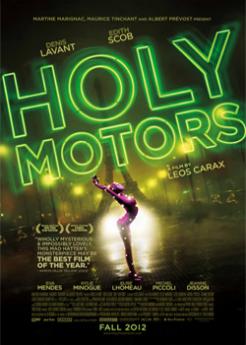
The Oscars are over! You may now openly admit that Silver Linings Playbook offered just a slightly edgier twist on a pretty predictable rom-com, with one great lead performance (duly rewarded) and a De Niro crying scene. Time to revisit the should-have-won-everything Holy Motors (which came out on Blu-ray this week) and cheer that theaters will finally begin phasing out all the awards hopefuls and bringing in fresh new movies.

This week: Cinequest continues in San Jose, the Roxie screens both a gleefully nasty pre-Code fest (Dennis Harvey’s appreciative article here) and a Jeffrey Dahmer doc (my review here). Hollywood trots out yet another fairytale-inspired CG spectacle, Jack the Giant Slayer; a submarine drama with Ed Harris and David Duchovny, Phantom; and a PG-13 horror sequel, The Last Exorcism Part II.

More reviews, including the Oscar-nominated Chilean import No and an informative doc about hunger in America, A Place at the Table, after the jump.

http://www.youtube.com/watch?v=hPBCwDR8giI

Lore Set in Germany amid the violent, chaotic aftermath of World War II, Lore levels some brutally frank lessons on its young protagonist. Pretty, smart 14-year-old Lore (Saskia Rosendahl) is tasked with caring for her twin brothers, sister, and infant brother when her SS officer father (Hans-Jochen Wagner) and true-believer mother (Ursina Lardi) depart. Her seemingly hopeless mission is to get what’s left of her family across a topsy-turvy countryside to her grandmother’s house, a journey that’s less a fairy tale than a kind of inverted nightmare — yet another dystopic vision — as seen by children who must beg, barter, and scrounge to survive when they aren’t singing songs in praise of the Third Reich. Enter magnetic mystery man Thomas (Kai Malina), who offers Lore life lessons about the assumed enemy. Tarrying briefly to savor the sensual pleasure of a river bath or the beauty of a spring landscape, albeit one riddled with bodies, director and co-writer Cate Shortland rarely averts her eyes from the sexual and psychological dangers of her charges’ circumstances, making us not only care for her players but also imparting the dark magic of a world destroyed then born anew. (1:48) (Kimberly Chun)

http://www.youtube.com/watch?v=lOeiw_BJPas

No Long before the Arab Spring, a people’s revolution went down in Chile when a 1988 referendum toppled the country’s dictator, Augusto Pinochet, thanks in part to an ad exec who dared to sell the dream to his countrymen and women — using the relentlessly upbeat, cheesy language of a Pepsi Generation. In No‘s dramatization of this true story, ad man Rene Saavedra (Gael Garcia Bernal) is approached by the opposition to Pinochet’s regime to help them on their campaign to encourage Chile’s people to vote “no” to eight more years under the brutal strongman. Rene’s well-aware of the horrors of the dictatorship; not only are the disappeared common knowledge, his activist ex (Antonia Zegers) has been beaten and jailed with seeming regularity. Going up against his boss (Alfredo Castro), who’s overseeing the Pinochet campaign, Rene takes the brilliant tact in the opposition’s TV programs of selling hope — sound familiar? — promising “Chile, happiness is coming!” amid corny mimes, dancers, and the like. Director-producer Pablo Larrain turns out to be just as genius, shooting with a grainy U-matic ‘80s video camera to match his footage with 1988 archival imagery, including the original TV spots, in this invigorating spiritual kin of both 2012’s Argo and 1997’s Wag the Dog. (1:50) (Kimberly Chun)

http://www.youtube.com/watch?v=cgxxT4xpVNI

A Place at the Table Obesity gets all the concern-trolling headlines, but America’s hunger crisis is also very real — and the two are closely related to each other, as Kristi Jacobson and Lori Silverbush’s sobering, informative documentary investigates. A Place at the Table assembles a mix of talking-head experts, celebrities (actor and longtime hunger activist Jeff Bridges; celebrity chef Tom Colicchio, who’s married to Silverbush), and (most compellingly) average folks dealing with “food insecurity:” a Philadelphia single mom who joins the Witnesses to Hunger advocacy project; a pastor in small-town Colorado who oversees his struggling community’s crucial food bank; the Mississippi elementary-school teacher who uses her own struggles with diabetes to educate her students about nutrition. The film digs into the problem’s root causes (one being a government that prefers to subsidize mega-farming corporations that produce ingredients used in processed food), and conveys its message with authentic urgency. (1:24) (Cheryl Eddy)

http://www.youtube.com/watch?v=EaNAtkzaKe4

The Sweeney Based on the 1970s British TV series, Nick Love’s action drama is bolstered enormously by Ray Winstone’s snarling-bulldog lead performance. He plays skull-cracking cop Regan, head of an elite unit that has relied upon freely violent, rule-bending methods to bust many an in-progress armed robbery. As his worried boss (Homeland‘s Damian Lewis) warns, internal affairs has taken an interest in Regan’s activites, and the situation isn’t helped by the fact that Regan is having an affair with a comely co-worker (Hayley Atwell) who is married to IA’s prick-in-chief (Steven Mackintosh). When a Serbian assassin enters the picture and monkey-wrenches Regan’s career, love life, and tenuously calibrated moral compass, all hell predictably breaks loose. Shot in moody, London-appropriate gray and blue monochrome, and featuring bravura set pieces (a shootout in Trafalgar Square) and a supporting cast that includes Ben Drew (a.k.a. rapper Plan B) and Downtown Abbey‘s Allen Leech, The Sweeney doesn’t surprise much with its beat-by-beat plot. But it’s enjoyable — maybe not enough to travel to Antioch (its only local theatrical opening) to see it, but worth a look on its simultaneous VOD release. (1:52) (Cheryl Eddy)

Big waterfront projects prompt study of new transportation ideas

18

The massive development projects being proposed along San Francisco’s central waterfront – from the proposed Warriors Arena at Pier 30 through the Giants’ housing/retail project at Pier 48 down to Forest City’s sprawling proposal around Pier 70 – will create huge challenges for the city’s already overtaxed transportation system.

Nobody is more aware of that issue than Warriors President Rick Welts as he seeks approval to build a 17,500-seat arena with just a smattering of parking spaces. “We’re investing a billion dollars in this property, and if people aren’t comfortable getting to it and leaving it, we have a problem,” Welts told a gathering of the California Music and Culture Association on Tuesday night, responding to a local resident who raised the concern. “We have to get that right, it’s at the top of our list.”

With Muni and BART already at capacity during peak hours, and thousands of new housing units being built in the coming years both along the waterfront and from nearby SoMa down through the Eastern Neighborhoods Plan area, city transportation planners are trying to get ahead of potential problems created by the development boom.

“We’re now taking a step back and looking at the long-term needs from the Exploratorium down to Pier 70,” says San Francisco Municipal Transportation Agency planner Peter Albert, who is leading a comprehensive waterfront transportation study that will inform the environmental studies done for each of these projects. “What we get is an environmental review that is much smarter because we have all this advanced planning….EIRs are important, but they aren’t really planning.”

Albert is looking at everything from working with various transportation agencies to beef up bus, train, and ferry services to the area; using these projects to complete the ambitious but underfunded and long-stalled Blue-Greenway bicycle path along the waterfront; accelerating capital projects that are already in the SFMTA’s queue; and exploring a dozen or so new ideas.

“What’s also coming out of this are new ideas we’re coming up with, things we weren’t even thinking of that may make sense,” Albert told us, noting that he’ll be doing his first presentation of some of these ideas to the SFMTA Board of Directors on March 5.

They include extending new streetcar service along the Embarcadero to the Caltrain station at 4th and King or possibly all the way out to the Anchor Steam Brewing-anchored project at Pier 48 (which would probably involve construction of new streetcar turn-arounds); better integrating the Central Subway project into Mission Bay and the Embarcadero with new bus and rail connections around 20th and 3rd streets; and expansion of the Embarcadero BART station to increase its peak capacity.

Welts said BART will be an important connector to the new Warriors Arena, noting that the walking distance from Pier 30 to the Embarcadero station is actually about the same distance as the Coliseum BART station is from the entrance to the Warriors’ current arena. He said that he’s excited about Albert’s work and wants to cooperate with helping the city meet its transportation needs: “We have a lot of process to go through and we’re embracing that process.”

Funding the needed improvements will be a challenge, particularly because new development projects generally don’t pay for their full impacts to the transportation system, as SFMTA head Ed Reiskin and Sup. Scott Wiener have told the Guardian. On Monday, Wiener amended the Western SoMa Community Plan to increase how much developers would pay in transportation impact fees.

Albert said funding for the needed improvements to the area’s transportation system would come from a combination of mitigation fees from the developers, reprioritizing the SFMTA’s existing capital budget, and securing state and federal transportation grants by developing impactful projects that are shovel-ready, thanks to this advanced planning effort.

These three waterfront development projects alone could have huge impacts. The Warriors Arena would host more than 200 concerts and sporting events per year, drawing anywhere from a few thousand to more than 17,500 people. The Giants’ Pier 48 proposal involves 27 acres of new development, including retail, office, Anchor Brewing, and about 1,500 homes. And Forest City’s proposal for Pier 70 involves about 1,000 homes, 2.2 million square feet of office space, and 275,000 square feet of retail and light manufacturing.

Addressing the waterfront’s transportation challenges, Board of Supervisors President David Chiu told the Guardian, “It is possibly the most difficult and important question surrounding the Warriors project, and I’ve encouraged all parties to make sure they get it right.”

The day in gay sports — very cool and very ugly

19

Three remarkable news stories today show the beautiful and the ugly side of LGBT issues in sports, and suggest that, despite the remaining bigotry, there’s hope.

We’ll start with the inspirational: The Chron reports on Gabrielle Ludwig, a 51-year-old trans woman who has fought her way to acceptance as a player on the Mission College women’s basketball team. She’s endured the sort of rotten, painful slurs that Jackie Robinson put up with as the first black player in Major League Baseball, but she’s won over her teammates and sent an important message to young people all over the world:

Since I decided to go out to the media, there’s been a larger purpose – to help the LGBT community and all those people who have lost children because they struggle with, ‘God, am I gay, am I straight, am I transgender? F- it, let’s put a rope around my neck and hang myself in the garage,’ ” Ludwig said. “If I can be a role model, and just let go of some of that burden, then what I do out here and the beating that I take from people in the stands … it’s worth it.”

Go Gabrielle.

And then we go to the NFL, where team execs at the “combine” — where scouts and coaches check out college players headed for the draft — are asking not-at-all-subtle questions about sexual orientation.

In a normal workplace (and the NFL isn’t remotely normal, as a workplace or anything else) asking a job applicant if he “likes girls” would be blatantly illegal. In pro football, it’s apparently tolerated, because the top brass in the NFL still can’t come to terms with their responsibility to prevent homophobia.

Everyone knows there are gay NFL players. And it’s only a matter of time before someone comes out. When that happens, the league has a repsonsibility to prevent the kind of shit that Gabrielle Ludwig is going through.So far, not so good.

Now for the hope: While everyone’s talking about the Obama administration’s amicus brief on same-sex marriage, an equally interesting brief has gotten lost. Two NFL players — yes, two players in the same league that is asking people if they like girls — have filed their own amicus brief, arguing that, as professional sports figures, they have a responsibility to stand up for the rights of all people to marry:

Under all the bad behavior that makes the news, male professional sports for far too long have harbored bigotry, intolerance, and prejudice—with respect to both race and sexual orientation,” the brief reads. “We are just beginning to see progress with regard to the issue of sexual orientation.

They say exactly what Ludwig says:

If a Pro Bowler treats a teammate as being an equal who is worthy of his friendship and respect because that other person is a good friend who places the team before himself, then high schoolers in Texas, Georgia, Illinois, Florida, Ohio, Pennsylvania,California, and Minnesota will not—cannot—miss that example. If that Pro Bowler speaks out publicly and kindly, kids will hear it and feel it. Kids who are already dealing with everything youth throws at them will know they can treat others as friends and equals, and those others will know they are equal and that, without question, it is better to be themselves than to be hurt.

So a handful of NFL players are supporting marriage equality and speaking out. They’ve opened the last closet door a crack. And, like the debate over same-sex marraige, this is only going in one direction.


Oakland school cop comes forward as a whistleblower

Two years after his involvement in a police shooting that took the life of a 20-year-old African American man, an Oakland School Police Department officer has come forward as a “whistleblower” in sworn testimony, making allegations of unethical behavior within a department that is already under the scrutiny of federal investigators.

In a deposition delivered earlier this month as part of a civil suit, police Sergeant Jonathan Bellusa gave a detailed account of what transpired just before his patrol partner, Sgt. Barhin Bhatt, fired several rounds and killed Raheim Brown as the youth was positioned in the passenger’s seat of a car outside a high school dance in January of 2011.

Bellusa gave testimony that in the months that followed, he came under retaliatory pressure from within the department and was “uncomfortable” with various aspects of how the investigation unfolded.

An unedited, uncertified transcript of Bellusa’s deposition, which contains some grammatical and punctuation errors because it was transcribed by an automated system, was made public Feb. 28 by a group of activists organized under a project called “Against Hired Guns.” The group sent a detailed summary and analysis of the deposition, as well as the unedited transcript, to reporters. The activists also posted the contents on a website, againsthiredguns.wordpress.com.

Asked who is behind Against Hired Guns, spokesperson Cat Brooks said they are Oakland activists “who have been doing this work either together on campaigns, or separately inside of our own groups, that see strength in numbers rather than apart. We in general are tired of having flashpoint reactions to police corruption or violence, and are interested in bringing as many people or groups together as possible to have a sustained campaign that is focused on eradicating police violence.”

Bellusa is currently on leave from employment at the Oakland school police department, and the Guardian was unable to reach him by phone on the number listed on the OUSD website. “He’s been gone for quite awhile,” OUSD spokesperson Troy Flint told the Guardian when reached by phone. Asked to comment on the myriad allegations raised in Bellusa’s testimony, Flint said, “We’re going to refrain from comment until we’ve seen the actual suit.”

The deposition was conducted by Attorney Adante Pointer of the Law Offices of John Burris, in connection with a civil rights suit that is being filed against OUSD by Brown’s mother, Lori Davis. Reached by phone, Pointer confirmed that he had taken Bellusa’s deposition several weeks ago, and was surprised that its contents had been made public, since it “is not complete yet.” He added, “I’m thinking to myself, who put that out there?” As of press time, Pointer had not returned a follow up phone call.

Brooks declined to answer questions about how the activists obtained a copy of the uncertified transcript.

Allegations of retaliation for whistleblowing

Roughly a month after the shooting incident, Bellusa said in his deposition, former OUSD Police Chief Pete Sarna let out “a boisterous yell with his [fist] up in the air” and seemed “excited” that “we as a department don’t have to worry about anything.” According to Bellusa’s testimony, Sarna had just received word that his “friend” Pete Peterson had “agreed to do the investigation” of the fatal shooting of Brown.

Asked if he felt pressured by supervisors to make statements consistent with Bhatt’s account of the shooting incident, Bellusa stated, “I have felt that if I gave statements that went against the district that I would be thrown in jail for perjury.”

In the months after the shooting, Bellusa testified that he filed a formal complaint alleging that Sarna drunkenly made racist remarks to an African American sergeant in July of 2011. Sarna resigned the following month.

Bellusa also testified that on an August morning in 2011, after he’d filed the complaint against Sarna for allegedly making racial slurs, he overheard a conversation between OUSD General Counsel Jacqueline Minor and Superintendent Tony Smith. “I over heard Jackie Minor… say they were not going to let John get away with this,” he stated.

In another incident, Bellusa testified that a different OUSD officer informed him that “Chief Sarna’s assistant, Jenny Wong, told a bunch of officers something like: ‘Don’t worry, Sarna is going to beat this case. He’s going to fire John [Bellusa].’”

After Sarna stepped down, Bhatt was briefly appointed interim police chief, unleashing an outcry from OUSD parents outraged that an officer would be promoted to the top post after shooting and killing Brown just months before. Alameda County prosecutors had since cleared Bhatt of any wrongdoing in the shooting that resulted in Brown’s death.

In response to the backlash, Bhatt was removed and replaced with Police Chief James Williams in September of 2011. The shooting of Brown, coupled with Sarna’s alleged use of racial slurs, prompted a federal grand jury investigation into the OUSD police force last year. Bellusa noted in his testimony that he had described his experience to federal investigators.

Taken as a whole, Bellusa’s testimony renders a disturbing internal portrait of the Oakland School Police Department, which consists of about a dozen officers and operates independently of the Oakland Police Department as a division of the school district.

The alarming account raises serious questions about internal operations of the department, particularly since it is an independent force operated by the school district at a time when funding cuts have placed the public school system under tremendous budgetary pressure, resulting in recent school closures.

Allegations of corruption

A detailed summary of the transcript provided by Against Hired Guns highlights more disturbing allegations made by Bellusa in the course of his testimony. Among them:

  • Bellusa asserted that he witnessed Bhatt pour Wild Turkey into a glass while he was on duty. He also said he felt concerned about Bhatt after observing him “clean his firearm for a long period of time.”                                                                      
  • Bellusa testified that he “found out” that Sarna and Lou Silva, a former OUSD officer and current district-wide Campus Security and Safety Manager, were “sending their personal cars down to a shop on 16th Avenue… [and] were overcharging the police cars,” apparently in order to have their personal cars repaired for free or at a deep discount.
  • Bellusa testified, “I found out that he [Sarna] called another officer [and] told him [not to report] what had happened in front of the African American who is a witness to the … racial slurs.”

Officer-involved shooting

Brown was shot and killed outside a dance at Oakland’s Skyline High School on Jan. 22, 2011. He was sitting in the passenger’s seat of a Honda with a friend, Tamisha Stewart, who was in the driver’s seat. Bellusa and Bhatt pulled up behind them in an unmarked patrol car after noticing the lights of the Honda were flashing. Bhatt made his way to the driver’s window, Bellusa testified, while he flanked the rear passenger’s side of the car.

As Bhatt began a verbal exchange with Stewart, Bellusa testified that he noticed Brown was “fidgety” rather than cooperative, which he interpreted as a “red flag.” He opened the passenger door, crouched into what he described as a “catcher’s stance,” and initiated a verbal exchange with Brown. Shortly after opening the door, Bellusa said he made observations that led him to conclude that the car had been stolen.

When Pointer asked him where his hands were at that point, Bellusa stated, “They were on his lap,” according to the transcript. “Were they holding anything?” Pointer asked. “No,” Bellusa responded. “And so did you ask him to step out of the car when you’re having this conversation with him?” Pointer asked. “Not at that time,” Bellusa answered. 

Bellusa said Brown then grabbed a screwdriver and stuck into the ignition of the vehicle, directing Stewart to drive. This prompted a struggle between Brown and Bellusa. According to a summary of the transcript written by the group of activists:

“Bellusa lunged into the car, grabbing [Brown] from behind as Brown was leaned over toward the ignition. …Bellusa tried to hold Brown, and then grabbed him, pulling Brown’s shirt and ripping it. Bhatt, leaning in through the driver’s window, hit Brown with his flashlight. … Brown had not yet made any aggressive move toward anyone, according to Bellusa’s description of events.”

A struggle ensued, and Bellusa testified that at one point Brown bit Bellusa’s wrist, prompting Bellusa to pull his hand away and use his “hammer fist” to strike him. Brown then grabbed the screwdriver from the car’s ignition, and “I believe that the backside of the screwdriver [was what] he used at that point to strike me in the chest,” Bellusa testified.

“As the struggle ensued and neither fighter gave in,” activists wrote, “[Brown] turned the screwdriver around and tried to make contact with Bellusa.”

According to Bellusa’s sworn testimony, “I was afraid that I was going to get stabbed in the throat clear as day.” He told his partner to shoot Brown: “I just screamed shoot him, shoot him,” he testified.

The Against Hired Guns summary describes what happened next. “As Bellusa pulled himself out of the car, two shots were quickly fired through the driver’s open window … by Bhatt before his gun jammed. Raheim Brown, Jr. had two bullets lodged in his body. It took Sergeant Bhatt five to ten seconds to clear the chamber of his gun, during which time he said loudly: ‘Fuck! Fuck!’ By this time, Bellusa was out of the car and at a safe distance, he said in his deposition. When asked whether he thought Brown was still a risk after the first two shots, Bellusa replied plainly: ‘No,’ and said that by this point, he had his own gun out. When asked why he didn’t pull his trigger, he replied: ‘Just like I said my statement with OPD, I didn’t see a threat.’

‘Tell me … about the gun’ 

Bellusa explained in his deposition that he’d noticed a gun sitting in the side pocket of the vehicle during the incident, but did not alert Bhatt that the gun was there until after the shooting had occurred. When Pointer asked, “And prior to you screaming ‘shoot him, shoot him’ you hadn’t said anything related to the gun?” Bellusa responded: “No.”

Shortly after the shooting, Bellusa testified he had an interaction with Sarna, then-OUSD chief, and Smith, the OUSD superintendent. According to details included in the deposition, this conversation took place at Oakland Police Department (OPD) headquarters, after Bhatt and Bellusa had been separated, prior to any formal interview with OPD regarding the shooting.

According to Bellusa’s testimony, Smith questioned him directly. “He said specifically ‘John, tell me where the gun was. Tell me everything you can remember about the gun and what it looked like.’”

Penetrating the Thin Blue Line

An introductory statement from Against Hired Guns notes that Bellusa “will likely be considered a ‘good’ cop” for publicly airing these allegations and making an unusual break from the code of silence that typically binds police departments.

Yet the activists aren’t willing to let the sergeant off the hook so easily. Asked why they took steps to preempt release of this information, Brooks, the spokesperson for Against Hired Guns, told the Guardian, “We thought that it was important so that the debate could be framed as part of the larger context of police and violence in Oakland, as opposed to this cop has now done something good, which makes him a good cop. … He was still present the night Raheim was murdered.”

Against Hired Guns wrote in an analysis included in press materials, “It has now been over two years since Raheim’s family lost him to the violence of policing.  They have relentlessly searched for justice and still do not know exactly what happened to him. At the very least, Bellusa or any of the people or agencies he spoke with, could have explained the context of Raheim’s killing to his family members, who continue to grieve and struggle with the loss of their son, father and lover.” 

The activists’ summary frames the issue in this way: “Sergeant Bellusa has now penetrated the ‘thin blue line’ that shields corrupt, abusive, violent police officers and departments. We are releasing this information as part of … a series that places the statements of Bellusa’s testimony in the larger overall context of policing in our society [and] the ‘thin blue line’ that protects officers from any consequences.”


Noise Pop 2013: R. Stevie Moore is cool, plays Bottom of the Hill

1

R. Stevie Moore is cool. When was the last time you saw a 60-odd-year-old* man standing on stage shouting “where my bitches at” and repeated calls of “swag”? That kind of thing never happens.** (Though it did last night at the Noise Pop show at Bottom of the Hill with Moore, Fresh and Onlys, Plateaus, and Burnt Ones).

Whenever anyone not born prior to 1990 tries to even pronounce that word it comes out all wrong, and the best anyone else can guess is that they’ve got some bad weed, are mentioning their recent trade convention experience, or most likely misquoting a 20-year-old SNL sketch, that last one being a closer reference for the age group.

Which is just to point out that while the rest of us seem to inevitably suffer from mental stasis at a certain age, struggling with increasing brain plasticity and self-inflicted memory loss, Moore was doing a pitch perfect Tyler the Creator last night, as he continues to function as a weird pop culture sponge.***

I don’t even know if OFWGKTA is still around or if people say swag unironically at this point without checking Google Trends. And I guess that’s kind of the point, because as the powder-blue-bearded Moore worked through a small part of his extensive catalog (“He covers a lot of ground,” someone in the crowd observed in the understatement of the night), it became clear that one thing the man is isn’t hip, but he is cool.

Fashion becomes passé, quotes become tired, sic transit fucking gloria, but Moore, the consummate outsider, proves that it’s hard to go out of style when you’ve never truly been in, even as a new wave of hipper musicians like Ariel Pink follow in his footsteps.****

While Moore sang that he “likes to stay home” last night as a closer, I couldn’t help but think how little he seems to have changed since the music video*****, and be glad that he’s still out on occasion. Pretty cool.

http://www.youtube.com/watch?v=v1MfeLx6Uds

*emphasis on “odd.”
**outside the world of recent fun.-loving Taco Bell commercials.
***or vampire, which would explain his longevity.
****and have become his collaborators.
*****compared to other iterations.

Public broadband works; why not here?

42

There’s a fascinating new map that the Institute for Local Self Reliance has put together that shows how 342 communities around the United States are now offering publicly owned, cheap, reliable broadband and cable service to local residents and businesses. Check it out here. Then check out why the fastest networks in the nation are built by local governments:

“It may surprise people that these cities in Virginia, Tennessee, and Louisiana have faster and lower cost access to the Internet than anyone in San Francisco, Seattle, or any other major city,” says Christopher Mitchell, Director of ILSR’s Telecommunications as Commons Initiative. “These publicly owned networks have each created hundreds of jobs and saved millions of dollars.”

Then sit back and ask yourself why you’re paying so much money every month for the rotten service you get from Comcast and AT&T. Ask your friends, ask around work; is anyone really happy with their broadband service? Do you think you’re getting a good deal for the price?

When I saw the map I called Mitchell, and he told me that every one of the cities and towns on his map has been successful with public ownership. “Within five years, everyone is either making money for the general fund or breaking even and offering really low rates,” he said. “The real benefit is lower prices, which leaves residents with more money in their pockets, which tends to get spent in their communities where it helps local business.”

Most of the cities that have muni broadband (and cable TV!) also have municipal electric power systems, which makes the whole thing easier. But Santa Monica did it bit by bit, installing fiber every time one of the streets was torn up for plumbing, sewers, etc. and gradually building out a network that so far only connects businesses but can be expanded as the money comes in. San Francisco streets are torn up all the time, and will be torn up regularly as water and sewer lines are replaced. The biggest expense of laying cable is cutting open and repaving streets; the cable itself is fairly cheap.

In some states, the big private telecoms have pushed through state legislation banning muni broadband — but not in California. San Francisco has every legal right to get into this business.

So why aren’t we doing it already? “What’s missing,” Mitchell said, “is the political will to really piss off Comcast and AT&T.”

I was just looking at the map when I got an email alerting me to this lovely discussion between Mayor Ed Lee and the head of PG&E, talking about the private utility’s plans to invest $1.2 billion in local infrastructure (more on that in a future blog post). That’s going to involve a lot of digging up streets. So what does Mayor Lee say? Maybe we could allow PRIVATE companies to lay fiber at the same time.

I want to throw up.


More on what consent means for BDSM porn: A performer speaks out

0

Having sex for money can change the dimensions of the kinds of acts you’re willing to explore. That’s a fact in a porno landscape that rewards greater physical punishment with greater paychecks (as it should.) But if BDSM porn performers aren’t doing it all purely for their own sexual gratification, how do we define consent? Where does pushing boundaries become abuse? The question seems really important, especially for those who would defend the existence of BDSM porn to dissenters of all stripes

My article in this week’s paper that explored the question of the definition of consent for for-profit BDSM porn (although really, the arguments are the same for all kinds of sex work) was too short. Hey, save trees and all that. But performer Maxine Holloway pushed beyond the limited ink I could give to her comments to expand on her thoughts in an essay posted to her blog last night.

It reads, in part (paragraph breaks my own): 

As models we want to perform well, we want to push our boundaries, we want to look sexy and desirable on film, we want to get paid, and we want to be hired again and again.

As a director you have deadlines, budgets, employees and profits that you are responsible for. Each party has their own pressures.

But it is important to recognize who has more power in the situation. You can be responsible with power and you can also abuse it. In a working environment the boss has more power.

This does not mean that models have no power, it just means that they have less. The boss has the funding, the ability to rehire you, give a good or bad reference, further your career and money making ability. And they often have a slew of other models that would love to take your place.

It is a models responsibility to learn about our boundaries and capabilities, to communicate our needs and use a safe word.

And is the production company/director’s responsibility to communicate expectations clearly and to create an environment where the models truly feel comfortable changing something, slowing down or saying no. 

And it goes. Definitely worth a read.

I would be remiss if I failed to point out this amazing poem by Bay Area sexworker and sometime Kink.com performer Coral Aorta, excerpted by Holloway at the end of her post (and double-excerpted here):

the priceless one

who is always

worth their price

Pies at the ready: Seniors prep for this weekend’s Black Cuisine Festival

2

“This is the hippest, hottest senior center in the city,” said a volunteer as she shredded chicken. Dr. George W. Davis Senior Center was in full cooking mode, preparing for Sat/2’s Black Cuisine Festival. There were sweet potato pies baking in the oven, fresh-battered catfish sizzling in oil, and pans of corn bead cooling on tables, waiting to be crumbled into a chicken dressing. The smells were intoxicating.

This community knows how to put on a food festival. Saturday will mark the 33rd year of the center’s food festival, and I was excited to get a sneak peek of Saturday’s dishes. So were the volunteers. I’ve never seen a group of octogenarians jump up and rush a table as fast as they did. These old-timers know good soul food — and how to ensure it tastes just as good as their parents’ cooking.

This weekend’s event will be packed with things to do, see, hear, and eat with two music stages, a kid’s area, a marketplace selling locally made goods, VIP lounge, cook-off contest with prizes, and of course, plenty of classic black cuisine, dished up by Big Mama’s Kitchen. For those squeemish about the idea of eating traditional black cuisine, be assured: Big Mama’s Light also offers vegan and low-fat options.

Reverand Hall gave us a tour of the senior center before frying us up some of his fabulous catfish, giving me a chance to meet some of the people that the Senior Center provides for. Sitting down with a group of women making dolls to sell at the fair, I learned how they come to the Center every day to visit friends, take classes, use the computers, share in daily meals, go on field trips, and play bingo (of course). Going to the festival is their annual ritual, and, for so many reasons, they told me I just had to go.  

Listen to your elders and come out this Saturday, have a plate, and support Bay View Hunters Point Multipurpose Senior Services. Bon appetit!

Black Cuisine 2013

Sat/2, 11am-7pm, $25

Dr. George W. Davis Senior Center

1706 Yosemite, SF

www.bhpmss.org

Noise Pop 2013: Cruel Summer, Lake, and the Blank Tapes at Hemlock

0

It’s a low-key kind of Noise Pop year compared to the past three or four, without the huge, attention-grabbing headliners of yore  (looking at you, Flaming Lips at Bimbo’s), but Wednesday’s show at the Hemlock Tavern could have been nuzzled in nicely in any very early NP lineups, which is what made it feel authentically true to the inherent spirit of the festival.

No pomp or glitz, no big names or sold-out, packed-to-the-gills chaos. I initially went to see Olympia, Wash.’s Lake, a twee, lo-fi indie pop quartet with great hooks, but found much enjoyment out of the two bands that sandwiched that act (Cruel Summer and Blank Tapes), perhaps even more so?

I arrived early in Cruel Summer‘s set; I’m told the jangly San Francisco act had only played a few songs to the neatly packed in Hemlock crowd. There were casually smiling faces stretching from the front of the stage back to the sound guy, however there wasn’t that trademark Hemlock hot stink just yet. You could stretch your legs out without knocking into a sweaty mess. Though I detected a wafting hippie scent. 

Cruel Summer, which consists of two hard-rocking ladies out front (bespectacled lead singer-guitarist Thea Chacamaty and bassist Chani Hawthorn), along with guitarist Josh Yule and bassist Sean Mosley, created a rolling wave of reverb and noise  – so loud it drowned out the vocals – in a “dreamy gazey noisey hazy wavey gravy” way, as the band is wont to describe it. During the loud-sound-wave a few heads in the audience bopped and jerked hard, meeting each thundering drum hit with a nod of approval. Cruel Summer’s been around since 2011, but could easily fit in with ’80s shoegaze scenes or ’90s K Records stock.

The latter goes for second band Lake as well. Actually, Lake is currently on the K roster. And it fits right in. An aside: when I was first learning there was music being made beyond pop radio (‘sup KIIS-FM?) in my early, impressionable tweens, I had a friend with an older sister who was of the super cool girl alternative guild. She and her friends were in to riot grrrl, and twee, and K, and Kill Rock Stars, and the like. They wore cardigans, boat stripes, short skirts with nubby tights, and thick-framed glasses, and had glittery Fenders and drum kits. I feel like the older sis and her crew would’ve dug both Cruel Summer and Lake.

http://www.youtube.com/watch?v=wO4ZA7ezlEg&feature=youtu.be

Anyway, Lake played mostly new songs last night, some that had sexy Bossa nova bass lines – the bass was noticeable after Lake asked the crowd if anything needed to be turned up louder. Some got so funky a few people noodled along to the beat. The four band members switched instruments a few times during the set, and three traded off covering male/female lead vocals, including Eli Moore and his wife, the sweet-voiced Ashley Eriksson, who also played keyboards.

Next up was the Blank Tapes; the trio also traded off male/female harmonies and pop hooks, but with a garage-rooted rock’n’roll edge – that was also due in part to standing drummer Pearl Charles smacking just two drums, a floor tom and a snare, often with a mighty thwack. This is also when the scent changed from hippie to pizza, as someone brought in a delicious-smelling pie, and I got jealous.

The dynamic between Charles and Blank Tapes pied-piper/multi-instrumentalist Matt Adams reminded one of my show-going companions of the famed Lee Hazlewood-Nancy Sinatra collaboration. Though on looks alone, it could’ve been Lindsay Weir and Ginger Baker. The band – which has the advantage of a rotating lineup and addresses in both LA and SF – sounded great, alive and full of energy, pumping up an already pleased crowd with crackling beach garage songs like bubbly “Coast to Coast” (a new single on Oakland’s Antenna Farm Records), a song I feel like must be called “Beach Party,” and tracks off 2012’s Sun’s Too Bright (Burger Records) tape. Live, the songs seemed far less relaxed than recorded versions.

It’s the way I imagine Noise Pop began, 21 years back, with talented, eclectic, lo-fi, noise-pop-genre-specific acts from up and down the West Coast huddled in a favorite little local venue, beating the shit out of their instruments. No fuss, no muss.

“Listen to the water drops, a little bit of microdot …”

0

Longtime acid crunk pusher an-ten-nae has a hit on his hands with super-trippy “Raindrops on Roses,” featuring the appropriately named Alice D. on vocals. Here’s the rabbit-hole sparkle-pony rave-to-grave video.