Clear your calendars everybody, Oakland’s own untelevised late-night talk show has returned from a wintry hibernation and found itself some indoor digs, all the better to display their charmingly populist showcase.
The brainchild of art teacher and science nerd Julie Crossman, and sound artist Jeremy Dalmas, Oakland Nights…LIVE! is a giddy mashup of brief lectures/guest speakers, interviews, contests, music, and general goofing around, loosely adhering to a pre-determined theme. Newly located in the recently outfitted hackerspace, the Sudo Room (it used to play in Dalmas’ backyard, and once, memorably, on BART), ONL’s spartan “set” resembles a picked-over yard sale in the late afternoon: a few mis-matched chairs, a desktop crowded with knickknacks, a rotary telephone, a pile of seemingly random toys, including an old fashioned porcelain doll named Spooky Lucy, a basket of (vegan) cookies for participants. A video screen hovers behind the stage, primed for live-cam action, and a winningly upbeat house band, the Hats, stand at the ready.
After an opening monologue about hemorrhoids and hot doctors delivered by Channing Tatum (just kidding, it was Oakland comedian Channing Kennedy who also provides most of the onscreen visuals) the show begins in earnest. There were cue cards (applause, maniacal laughter, awkward cough), and the first oddience competition of the evening “Who’s New?” — the highlight of which was a video of baby goats at the Oakland Zoo, because the highlight of just about everything in this cruel world is a video of baby goats.
The theme of the evening was “The Human Body,” so the first guest lecturer was a dermatologist, Ingrid Roseborough. First thing I learned over the course of the evening from the opening monologue is that there are four kinds of hemorrhoids (lovely). The second, during Roseborough’s Q&A, was about the lines of Blaschko, invisible stripes on the human body that become visible only in conjunction with certain skin conditions. Education and entertainment. It doesn’t get much better.
Except that it does. Among the guests wrangled by the impossibly buoyant Crossman and her laid-back co-conspirator Dalmas are Exploratorium Explainer Raha Behman who dissects a cow eye on the live-cam to predictable gasps and giggles, a duo of intensely-focused dancers, Christine Bonansea and Justin Morrison, whose aggressively industrial soundtrack would fit right in on a Throbbing Gristle album, swallowing expert Lauren Scheiner, who leads the room in a series of tongue exercises, and comedian David Cohen whose stated goal is to uncover what constitutes the perfect smooch.
He raises some hackles with his San Francisco-based safari video, the popular sentiment being that Oakland should be the representative demographic at ONL, a stance that comes off sounding somewhat defensive to my own San Francisco-dwelling perspective (relax, guys, we all know you’re awesome!), but is enthusiastically supported by the general majority.
Cohen promises an Oakland edition, and the crowd settles back down just in time for the grand finale sing-along “Oakland, We’re For You,” a perfect tongue-in-cheek ending to the evening’s many shenanigans. Best of all, ONL’s quirky good fun is scheduled to continue indefinitely on each first Saturday, so plan to tune in, turn it up, and drop by soon.
Tensions flared over the America’s Cup last week as critics called for billionaire yacht owner Larry Ellison to cover the looming city deficit out of his own deep pockets.
The language in the petition, started by former Sup. Aaron Peskin, cuts straight to the point: “Your net worth is $43 billion,” it states. “Covering the America’s Cup debt would be equivalent to a person who has $40,000 donating $13.95. Is that too much to ask?”
At a hearing March 13, Sup. John Avalos asked why the city’s General Fund was on the hook to help cover costs for the yachting event, despite earlier assurances that the city would be reimbursed for tournament-related expenses.
The prestigious international yacht race will be held on the San Francisco Bay starting in July. A host and venue agreement hashed out between the city and race organizers provided that the America’s Cup Organizing Committee, the tournament’s fundraising arm, would “endeavor” to solicit donations from private donors to reimburse the city for expenses incurred, originally pegged at $32 million. Total city costs are now estimated to hover around $22 million, but so far ACOC has sent less than $7 million in reimbursement, city agency representatives reported at the hearing.
The fundraising committee has mostly come up dry on the rest — and now Avalos is irked because the city agency that negotiated the deal appears to be “moving the buoys,” as he characterized it, by counting a projected tax revenue boost instead of actual reimbursement dollars as adequate compensation for city spending.
Mike Martin, tasked with leading the city’s involvement in the America’s Cup under the Office of Economic and Workforce Development, showed a slide at the hearing suggesting that ACOC’s “remaining fundraising need” was just $2.6 million, since a projected $13 million in increased tax revenues would bring the city to a break-even point. That projection was based on expected increases in sales, payroll and hotel taxes during the yachting event.
The presentation seemed to reframe the premise that the city would be made whole for tournament-related expenditures, as well as reap the benefits of a tax boost, in exchange for agreeing to host the sailing events. Yet Martin called this notion a “mischaracterization” in a phone interview.
“I don’t disagree that there are people who think that this is not what they understood to be the deal,” Martin said, clearly reacting to Avalos. But “this was part of the policy dialogue at all steps of the conversation.”
Reached by phone after the hearing, Avalos did not sound satisfied with the responses he’d heard. “It seems that the commitments that were made to the Board in 2010 … are not being taken seriously,” he said. “Now that they’re coming up short on fundraising efforts, they’re trying to say the General Fund should be subsidizing the cost of the race.”
Martin pointed to a report prepared by Budget and Legislative Analyst Harvey Rose in December of 2010, before the contract between the city and race organizers was finalized. The report included a break-even analysis that factored in tax revenues, and Martin stressed that this consideration had been part of the dialogue since the outset.
But that same report also contained a key recommendation: Rose advised the supervisors to amend the proposed agreement to “require that the America’s Cup Organizing Committee pay the City and County of San Francisco $32 million, or final estimated city costs.”
No such ironclad requirement was ever included; instead, the fine print in the final agreement wound up containing watered-down language: “The Authority and the City acknowledge and agree that they are not relying in any manner on any current or future commitment … or any statements, representation, or actions of, any … agent of [ACOC].”
Nick Magel, who works for Causes.com, told us that Peskin’s online petition calling on Ellison to cover the fundraising shortfall was gaining more momentum than most online campaigns taken up via the website. “The campaign is performing well, considering it’s less than a day old,” he said March 15. “The most impressive indicator is that over 95 percent of the signatories are from the Bay Area. Seems the campaign is striking a chord with local residents.”
A Pretty sure the politically astute Bay Area comedian, writer, and director went on to fame in TV land as host of FX’s Totally Biased with W. Kamau Bell.*
*True, but he’s back this weekend for two late-night sets at Stage Werx.
The shows are benefit performances for the scrappy venue that served as an early home for many a Bell project, including The W. Kamau Bell Curve: Ending Racism in About an Hour. By request of the performer, most tickets are just $15. But all proceeds from the shows go to Stage Werx, so no one will be turned away for excess of funds.
Apparently, the one San Francisco Police Department sergeant tasked with investigating officer-involved shootings has been busy. Yesterday morning, the Guardian received an email from SFPD Media Relations officer Albie Esparza, who apologized for taking almost a month to respond to a Guardian request for information.
“It’s simply been very busy with the multiple officer involved shootings we’ve been having in SF recently,” Esparza explained. “The ONE Sergeant who works in the Internal Affairs Officer Involved Shooting unit is aware of your questions and is trying to research that, as well as investigate the three OIS incidents we’ve had recently.”
Reached by phone, Esparza said he actually meant to say there were four officer-involved shooting investigations; one involves a Daly City officer who fired upon a person in San Francisco city limits in early March. And whoops, as of yesterday, make that five – an officer shot and killed a pit-bull yesterday in Golden Gate Park.
The three shootings Esparza initally referred to include a March 15 officer-involved shooting in the Richmond District; another one on March 5 in Bayview Hunters Point, and a third one on Feb. 15 in the Tenderloin. Only the March 5 shooting resulted in an individual being struck; he wasn’t killed. Police later held a town hall meeting about that incident, which transpired after a high-speed chase that ended in a cul-de-sac. The suspect drove into two police cars and hit an officer, according to the police department’s account, before officers shot at him. Esparza said he did not have information about whether the incident involving the Daly City officer resulted in a fatal gunshot wound.
The Guardian’s original questions, meanwhile, remain unanswered. We submitted a query regarding a fatal officer-involved shooting that killed Pralith Pralourng last July. The 32-year-old Oakland resident had a history of mental illness, and was killed outside a chocolate factory in San Francisco after brandishing a box cutter. Police Chief Greg Suhr has pointed to this case as a prime example for why police ought to be equipped with Tasers. But the SFPD launched a specialized crisis intervention training (CIT) program over the last several years specifically to help officers better respond to calls involving mentally ill individuals. Local advocates weighing in at recent public hearings convened by SFPD said they feared the department could lose sight of CIT de-escalation tactics if the Tasers plan moves forward.
The Guardian submitted questions to SFPD in late February asking whether the officer who shot and killed Pralourng had been trained under CIT; if any CIT officers were dispatched to the scene, since the call involved a mentally ill individual; and whether CIT de-escalation techniques were attempted prior to the shooting.
After nearly a month, Esparza finally sent a response from SFPD internal affairs. “We were told that because it’s open and active, the file is exempt from disclosure,” he said. Basically, we hit a dead end and were told to try again later. When things aren’t so busy.
Last year was a momentous one for San Francisco band Girls. Still riding the high from their critically fawned-over and publicly adored sophomore full-length album Father, Son, Holy Ghost, the duo was at the height of its career, playing sold-out shows and reveling in buzz-band glory. Then in July, frontperson Christopher Owens announced via Twitter that he was leaving the band, leaving press and fans alike slack-jawed with surprise.
Owens wasted no time moving into his new career as a solo artist – putting to bed any hopes that Girls’ disbandment was a temporary misstep. This January he released Lysandre, a tight-knight album of autobiographical material from his first tour with a band. It’s a story full of first loves: girls, boys, fellow musicians, and far-off places. He’ll perform songs off the album this Sat/23 at the Palace of Fine Arts.
Lyrically, the material is very similar to Girls’ music — it’s hyper personal, extremely relatable, and endearingly vulnerable. The band’s retro-pop vibe is also still intact, but with a twist. Lysandre is a mixed bag of genres, jumping from lounge jazz to ‘60s folk to renaissance-style flute, but the album sounds like one unified piece, with each song blending into the next, all in the same key.
I caught up with Owens to ask him a few questions about life, love, and San Francisco:
San Francisco Bay GuardianYou’ve said that the autobiographical story on this album benefited from a retrospective viewpoint. Has the experience of writing and touring with this story forced you to spend time rehashing old memories? Has it helped you gain closure?
Christopher Owens It’s not really something I needed closure on, closure was something I had already found. It’s just a story that I enjoy telling because it was a very meaningful time for me. I learned a lot about myself and a lot about life during [that first] tour. I think maybe just listening to [Lysandre] would give all the insight one would need.
SFBG As you’ve gained more experience as a musician and as a performer, have the feelings of excitement and fear — which you articulate beautifully in Lysandre — faded at all?
CO Those are feelings that don’t really ever go away, at least for me. Of course I’ve gained a little more confidence…But with each new thing I release I try to give a little more of myself, so I continue to put myself in a open place and that keeps it fresh and interesting for both me and the listener. I don’t really want to find myself in a place where the music is boring or old news. I like the fact that I’m talking about things in my songs that make me feel a little exposed. I think it just means I’m giving something of value.
SFBGAre you still in contact with Lysandre? Has she heard the album?
CO Yes, and yes. We’ve always been friends and she heard the album before anyone else… besides those of us that recorded it. I believe it’s something special to her.
SFBGNot only is ‘Lysandre’ one interconnected narrative, in a way it’s also one big song that never deviates from the key of A. Did you find this freeing or limiting? Do you think that in your future work you’ll do more concept albums?
CO It was just a structure for me musically; it certainly wasn’t limiting. There is a lot of variety within the music… It just ties the songs together a bit. I haven’t written anything else like this so I think it’s a pretty unique project for me. I obviously don’t know what the future holds. I enjoyed making this album a lot, so it’s possible I could do other conceptual albums, but as of now I don’t have any plans for any others.
SFBG‘Lysandre’ is a love story about many things. Obviously it’s about a girl, but it’s also about places. How much does your relationship with San Francisco influence your music and your style as an artist?
CO I don’t know, people have been asking me that for years. It’s no secret that I love San Francisco and feel very at home here, but, music is inspired by other music, and by very personal feelings and things that happen in my life. I don’t know if it would sound any different if I lived some place else. I just know that I’m happy here, so, I’m sure that helps.
SFBGWhat does it feel like to be a part of such a vibrant music scene? Is there a sense of camaraderie with other San Francisco musicians?
CO My work is something I do alone. I do have a lot of friends here who are in great bands, but we all play very different types of music. There’s not much getting together to play songs or record or talk about music…I would like that, but it’s just not something that’s happened much lately. I think we all love and support each other, but it feels like music is something that we work on very separately, and even privately. Hanging out is more of a time to just have fun and talk to each other about other things. That could also be different for others…I’m a bit of a loner, to be honest.
SFBGWhat are some of your favorite SF hangouts? Where do you take visitors to give them a sense of the city?
CO I honestly never have visitors, ha! My family doesn’t come here and my friends are mostly from here. I love the parks though— Golden Gate Park is my favorite. I spend a lot of time walking around aimlessly. I love North Beach and the Castro, I love to just walk around alone, to think, look at this beautiful city and enjoy it. I lived in Glen Park for a year when I first moved here and I love to go back there. I love it all. This is my favorite place in the world, and it’s just my home, that’s all. I feel at home here, at peace.
I was listening to Democracy Now this morning, and the introduction to a segment on the tenth anniversary of the Iraq War started out with such an honest, accurate, straightforward statement that I didn’t even think about it until later:
It was 10 years ago today that the U.S. invaded Iraq on the false pretext that Saddam Hussein was hiding weapons of mass destruction. The attack came despite worldwide protest and a lack of authorization from the U.N. Security Council.
Those are facts. That’s about as clean and well-documented a lead as you can put on a news story. It took me a while to realize that a show I listen to because of it’s outfront progressive politics was simply saying what should have been on the front page of the New York Times and every other “objective” news media outlet in the country.
Let’s just parse those 40 words for a second.
Yes, it was 10 years ago. Yes, the U.S. invaded Iraq. Yes, Bush knew that Saddam had no weapons of mass destruction, making that claim by definition a “false pretext.” Yes, there was well-documented worldwide protest. Yes, the U.N. Security Council refused to sanction the invasion.
That’s not liberal bias. It’s demonstrable historical fact.
Ten years ago this week, on March 20, 2003, the United States invaded Iraq.
Also true — but inaccurate. Inaccurate because it’s incomplete. And that matters, a lot.
I go to Paul Krugman, the NYT columnist who (unlike his bosses) was right about the war from the start. Here’s his lead:
Ten years ago, America invaded Iraq; somehow, our political class decided that we should respond to a terrorist attack by making war on a regime that, however vile, had nothing to do with that attack.
That’s 100 percent accurate and a lot more complete than the “news stories.” He continues:
There were, it turned out, no weapons of mass destruction; it was obvious in retrospect that the Bush administration deliberately misled the nation into war. And the war — having cost thousands of American lives and scores of thousands of Iraqi lives, having imposed financial costs vastly higher than the war’s boosters predicted — left America weaker, not stronger, and ended up creating an Iraqi regime that is closer to Tehran than it is to Washington.So did our political elite and our news media learn from this experience? It sure doesn’t look like it.
And here’s why it matters: We’re doing the same thing again, in a different forum, with the discussion of budget deficits and the need for cuts in spending:
What we should have learned from the Iraq debacle was that you should always be skeptical and that you should never rely on supposed authority. If you hear that “everyone” supports a policy, whether it’s a war of choice or fiscal austerity, you should ask whether “everyone” has been defined to exclude anyone expressing a different opinion
Here’s my lead for the next story on the “sequester:”
House Republicans and the Obama administration met again this week to discuss a problem that doesn’t exist, offer solutions that won’t work, and drive the nation further into poverty, inequality, and debt.
Accurate. Complete. Factual. I can’t wait to see it on the front page of the Times.
UPDATE: Kershner has added this addendum to the piece
Some people seem to have misunderstood my point. Mays presented himself to adults far differently than to his friends. I used a TV character many people would remember to illustrate the insincerity of his text to the victim’s father. The string of text messages linked below amply demonstrates how abominably he acted toward the victim, who deserves everyone’s support.
Unfortunately, the use of that character as reference is entirely in keeping with the rest of the media’s apparent tendency to recast the rapes as youthful indiscretions. What was Eddie Haskell’s most egregious crime? Anyway, poor choice of metaphor, blog post stands.
——-
I’ll tell you how not to start your morning: like I did. I crushed my soul catching up on the Steubenville rape case. While still in bed. Really dumb.
Seriously, do not read the text message transcripts of all the lol’s and bragging-lying flip-flopping that happened during and after the atrocity commited against the 16 year old woman before you’ve hugged your loved ones. Most definitely do not watch the video that helped kick off scrutiny of the incident when KnightSec leaked it.
And I guess, don’t go to the biggest website for daily news in town, because you’re going to get kicked in the gut there, too.
This is how the Chron’s Vlae Kershner — the news director and sometimes sportswriter (UPDATE: I guess he writes about all kinds of stuff, oh current media climate!) who has been covering the case on SFGate — starts out today’s “Hot Topics” column on yesterday’s sentencing of Trent Mays and Ma’Lik Richmond.
Fans of classic TV will remember Eddie Haskell from “Leave It To Beaver”. Making mischief, getting his friends in trouble, sucking up to their parents as if he were the nicest boy who ever lived.
As a Guardian writer I am generally required by profession to digress with what the Chronicle writes in most, if not all circumstances, but this is beyond. The fucking. Pale.
How do you make young women who have been molested look like they are the aberrations? Starting off with the most innocuous sitcom in, oh, television history is a really good stab at it. Eddie Haskell? Did Eddie Haskell rape anybody? The next line of Kershner’s column is this:
If the writers had cast Eddie as the bad guy in a crime show instead of a sitcom, he might have resembled Trent Mays.
TRENT MAYS IS THE CUTEST CRIMINAL OF ALL TIME.
It goes from there. You can read the rest if you’re interested in the pathos of retro musings that’ll embarasss their author for years to come. As yesterday’s similar debacle of the fawning CNN reporters proved, we have a serious problem here.
That serious problem is not that a bunch of football players in Steubenville, Ohio are sexual predators (they are.) Those boys didn’t build a society that is built on treating women like chattel when they’re in vulnerable situations. But they are a fucked up iteration of it and no single person should feel bad for them being sentenced to years in jail.
We should feel bad that their coach, parents, small town, media, world taught them that putting it in a girl’s ass when she’s unconscious, taking photos of it, and bragging about it is what a man does in this brave new Internet era.
The problem is that people get raped all the time. According to the Rape, Abuse, and Incest National Network, rapes happen every two minutes in this country. And 97 percent of those rapists never spend a single day in prison.
So maybe society needs a trigger warning.
Maybe it made Kershner feel better to tell himself that Mays’ and Richmond’s behavior is just boys being boys, or boys being boys in a new weird way that 1950s TV couldn’t have predicted. Duh, boys aren’t bad! Society isn’t based on oppression, men don’t need to examine their actions, and women don’t need to adjust to the fact that they live in a society where one in six of us report having been (which is different from having been) raped.
How should we be writing and talking about this stuff? How about education? How soon is too soon to start counteracting the messages that little boys and girls get every day, all around them on buses and late-night talk shows, and in presidential debates?
I think the important thing, too, is to hear less from the people who hear “Steubenville” and think “Leave It To Beaver” and more from the people who hear “Stuebenville” and it makes their world end, albeit briefly (like this hella brave blogger who came in with the Twitter screengrab on those assholes.) That feeling is not coming out in the media, and I think if the former group is going to learn a damn thing from this episode it’s going to take the latter group stating their feelings uncompromisingly.
I bet you didn’t think this was going to end in shameless self-promotion, but surprise! The Guardian (in conjuncture with Renaissance Entrepreneurship Center and Artists’ Television Access) has been planning a Women’s History Month screening on Monday, March 25 of Pulitzer Prize-winning journalist Nicholas Kristof’s global look at violence against females and other women’s issues. The discussion that follows the screening will be a great opportunity to talk about what to do in a post-Steubenville world — or what to do about making it a post-Steubenville world. Please come, there will be adult beverages if you’re into that kind of thing.
Ten years ago, during my second week working here at the Guardian, San Franciscans rose up to protest the Iraq War and shut down the city. Five years ago, I revisited that moment and its impact on people’s sense of democratic empowerment, writing this Maggie-award-winning essay. Today, on the anniversary of the start of that long war, it’s hard to imagine a critical mass of San Franciscans being so organized and engaged with a cause larger than ourselves.
Listening to the segment about the anniversary on KQED’s Forum this morning was sad and dispiriting, with disillusioned soldiers, bitter activists, and the survivors of the fallen still trying to make sense of the official lies that created such pointless death and destruction, and why nobody in power was ever called to account for their crimes.
Even as drone strikes continue to kill in our names with little oversight or meaningful review, we powerlessly twitter our days away. The latest technology boom has provided ever more tools to connect us, and yet it increasingly feels like we all live in bubbles of our creation, able to filter out anything that disturbs or displeases us. The mass media seems to be devolving into an endless array of echo chambers adorned with celebrity gossip and pet photos.
Could we rise up again today, over anything, the way we did after the bombing began on March 19, 2003? Do the people still have the power to shut the city down if we choose, with the nearly 2,000 arrests on the first full day of war barely putting a dent in a crowd in the streets approaching 100,000 committed souls?
And if the answer is no, then what kind of system are we now living under?
It’s the 1960s, nuclear war is a real possibility, and nuclear-family war is an absolute certainty, at least in the London house occupied by Ginger (Elle Fanning), her emotionally wounded mother (Mad Men‘s Christina Hendricks), and her narcissistic-intellectual father (Alessandro Nivola).
In Ginger and Rosa, a downbeat coming-of-age tale from Sally Potter (1992’s Orlando), Ginger’s teenage rebellion quickly morphs into angst when her BFF Rosa (Beautiful Creatures‘ Alice Englert, daughter of Aussie director Jane Campion) wedges her sexed-up neediness between Ginger’s parents. Hendricks (playing the accordion — just like Joan!) and Annette Bening (as an American activist who encourages Ginger’s political-protest leanings) are strong, but Fanning’s powerhouse performance is the main focus — though even she’s occasionally overshadowed by her artificially scarlet hair.
Ahead of the film’s release Fri/22, I spoke with Potter about teen drama, redheads, and more.
San Francisco Bay Guardian Many, many films tell coming-of-age stories and tales of female friendship. What sets Ginger and Rosa apart from the rest?
http://www.youtube.com/watch?v=47yoVmZeff0
Sally Potter I think what makes it different is that it links the transition in the personal life of two girls with the transition in the world outside. A global crisis as well as a personal crisis. So it’s not really just about going through the baptism of fire of a learning experience. It’s really shatteringly transformative, as the girls try to grapple with the big questions as well as the smaller questions in their lives.
SFBG The film is set in the 1960s, another favorite era for filmmakers. How do you go about creating a period film that avoids the clichés viewers have come to expect?
SP Research. Research into memory, research photographically, research cinematically. I think clichés come from lack of knowledge. I can remember 1962 — I grew up in London, I was 12 at the time, but I remember the city, how it looked and how it felt. This milieu that the story takes place, this social setting if you like, is one that’s very rarely shown onscreen anyway: not much money, but cultured in a certain way. It’s a stark, bare aesthetic, with idealistic views about the world.
SFBG Are there autobiographical elements to the story, as there are with the setting?
SP There’s some. I mined in my own memory and observation of other peoples’ lives as I was growing up, to try and make sure that the story was authentic and as real as possible. But it’s a fictional story. I was on the “Ban the Bomb” marches as a young child and a very young teen, and I do remember the Cuban missile crisis very vividly — the feeling that the world might come to an end.
SFBG The film depends heavily on the casting of leads Elle Fanning and Alice Englert, neither of whom are actually British. Was that a challenge, and how do you guide two young actors (who’ve just met while working on the film) into portraying a lifelong friendship?
SP I had real rehearsal time. I think that’s the key to everything. It was a short shoot, five weeks. We were moving very rapidly through the story, though we did try to shoot [in order] as much as possible. But it totally depended on preparation time, where in the privacy of my studio we could really go deeply into the characters, their lives, and what they felt about each other but were not saying — in a way, exploring the silences between the words.
I did lots of preparing with both [actors], one-on-one and together, and Elle and Alice bonded very quickly through this deep and vigorous work we were doing together. And we had a lot of fun as well. There was a lot of laughter in between [scenes], and hugging, and so on. It was a very warm atmosphere in rehearsal and on the set.
SFBG I’m assuming you’re a Mad Men fan…
SP Of course!
SFBG It was nice to see Christina Hendricks playing a completely different kind of role here.
SP Absolutely. Showing a whole other part of her range, something that’s much more subtle, and much less depending on her appearance, although of course she always looks beautiful, but it’s not so much about the outside. It’s much more about the hidden world of the character that she’s grappling with.
SFBG I maybe shouldn’t follow that up with an appearance-related question, but as a redhead (and the daughter of a redhead) myself, I have to ask: why did you choose to have two redheaded characters, and what does red hair mean to you?
SP There’s a lot of reasons for having red hair in a film. One is that it photographs absolutely brilliantly, and sort of inflames literally all the colors around it. So if you have red hair against a blue sky or a gray wall, it does something amazing to the retina of the eye, to your experience of the color. Then, there’s the fact that redheads are a recessive gene, so it really is a minority. Some redheads, when they’re children, are teased for being red. But visually it already kind of sets somebody apart as being slightly different.
I have to say — there is an autobiographical element because I grew up a redhead myself, with a redheaded brother also. So I remember the feeling of what that meant, this sort of funny mixture of special but also teased for this standout red hair.
A San Francisco judge has dismissed a defamation lawsuit against Sheriff Ross Mirkarimi and his wife, Eliana Lopez, which is likely to be the last step in an ugly and protracted political, legal, and administrative battle stemming from Mirkarimi grabbing Lopez’s arm during an argument on Dec. 31, 2011.
The couple’s neighbors, attorney Abraham Mertens and his wife, Ivory Madison, reported the grabbing incident to police over the objections of Lopez, who had sought advice from Madison and allowed her to film a short but emotional video displaying a bruise on her arm, which became the main evidence against Mirkarimi.
That exploded into a high-profile drama in which Mirkarimi was vilified by the media, charged with domestic violence and witness dissuasion, pleaded guilty to misdemeanor false imprisonment, suspended without pay for six months by Mayor Ed Lee, and finally reinstated to office by the Board of Supervisors in October.
Along the way, the two couples – who are still neighbors, despite Mirkarimi’s efforts to sell his house and move – became increasingly bitter public rivals. Lopez consistently denied being abused and implied to reporters that Mertens and Madison had political motives for breaking her confidence and reporting the incident to police. Mertens and Madison maintained that Mirkarimi tried to dissuade their cooperation with police – an allegation that the long investigation failed to substantiate – and blasted Mirkarimi and Lopez in a San Francisco Chronicle op-ed.
Other than that, Madison and Mertens refused to talk to the press as the saga unfolded – a stance they maintained today, with a man who answered the phone at the Red Room website business they run immediately telling us, “They’re not interested in talking.”
But Madison, who went to law school before becoming a fantasy writer, did let loose in June when she submitted a wild, incredible 22-page declaration to the Ethics Commission as part of the city’s effort to permanently remove Mirkarimi on official misconduct charges, purporting to describe the tyrannical way the Mirkarimi ran the household, as Madison claimed she was told by Lopez (which she disputes).
The commission criticized and gutted the declaration, finding that it was prejudicial and contained little usable evidence. Commissioner Paul Renne even dressed down the deputy city attorneys for submitting it, calling it “clearly hearsay, clearly having the intention of poisoning the well of this hearing,” causing Deputy City Attorney Peter Keith to apologize and explain they had little to do with the declaration because Madison had hired a private attorney who helped her prepare it.
The couple and their attorney have threatened to sue Mirkarimi and Lopez for more than a year, and they finally filed the defamation case in January, and it has now been quickly dismissed. Domestic violence advocates and allies of Mayor Lee also threatened a recall election against Mirkarimi, but that also seemed to wither late last year – meaning this is probably the last we’ll hear about this case, at least until Mirkarimi runs for reelection in two years, if he decides to do so.
Asked to comment on the lawsuit’s dismissal, Mirkarimi told the Guardian, “My family and I are very happy and have moved forward, and I hope they are too.” His attorney, David Waggoner, told us, “Hopefully, the dismissal represents the end of what has been a long and painful experience for everyone involved.”
Well, this is intriguing. According to an event announcement for an upcoming talk this Wednesday, there are some bizarre new developments on the “innovation in San Francisco” front. “New plans are being launched to help entrepreneurs launch their dreams,” the San Francisco Technology Democrats informs us, “from mobile apps to making pizza delivery drones available.”
In any case, the talk aims to give curious techies, policy wonks, activists and others an opportunity to pose questions to Board of Supervisors President David Chiu and Chief Innovation Officer Jay Nath concerning San Francisco’s Open Data Portal, proposed revisions to Open Data laws, and similar topics of interest. It will be held Wed/20 from 6:30 to 9:30 p.m. at the Marine’s Memorial Club Fireplace Room, 609 Sutter, in San Francisco.
What is going on with Michelle Shocked? The Texas alt-folk singer-songwriter, formerly known as a leftist-feminist relic of the late 1980s/early ’90s, apparently went on a homophobic rant at one of her two Yoshi’s shows this past Sunday in San Francisco.
As the Bay Area Reporter notes, Shocked, who seems to have found religion in the past decade, told the Yoshi’s crowd: “When they stop Prop 8 and force priests at gunpoint to marry gays, it will be the downfall of civilization and Jesus will come back.”
As Queerty.com reports, “The singer has been open about being a born-again Christian, but was still active in progressive politics. (She was arrested at an Occupy LA event in 2011).”
Here’s more from the Bay Area Reporter on the incident this weekend: One woman shouted: “Don’t say that shit in San Francisco.”
Shocked replied, “Where do I go to say it?”
In response to audience reaction, Shocked offered a Spanish prayer that “God loves you. God loves us. God loves us all everywhere.” Later, in English, she said: “God bless us everyone.”
Many fans questioned the singer out loud: “What are you saying?”
With a broad smile, Shocked said. “You are going to leave here and tell people ‘Michelle Shocked said God hates faggots.'”
By that point, much of the audience had walked out in disgust, and Yoshi’s management later cut the mics and turned on the lights, as Shocked continued to perform.
The story blew up on Twitter, as audience members tweeted confused reactions to the singer’s offensive comments.
Yoshi’s SF director of marketing and public relations Lisa Bautista answered my call this morning and said she was not there when the incident happened, but she did get a phone call from Yoshi’s artistic director Derek Hunter after Shocked’s show. Hunter confirmed they did indeed stop the show. Bautista also got additional comments from people who were present.
In his official statement to Bautista, Hunter said, “This was Michelle Shock’s third visit to Yoshi’s San Francisco; her first was March 2009. She has never given any indication that she is anti-gay or racist in her previous plays. She obviously has some serious issues and unfortunately chose our venue to vent them.”
Added Bautista to me, “[Shocked] won’t be back.” Bautista also had venues nationwide calling this morning to verify if Shocked made such remarks.
Novato’s Hopmonk Tavern sent out a release this afternoon canceling Shocked’s scheduled show: “Due to comments made by Michelle Shocked at Yoshi’s in San Francisco last night, March 17, we have decided to cancel our show with Michelle on March 29. Refunds can be made at place of purchase.”
Truly, an upsetting incident for all those involved, especially ticket-holders and former fans of the singer.
**UPDATE:@yoshisSF_OAK tweeted this at 1:40PM today: “WE AT YOSHI’S SF DO NOT & WILL NOT EVER TOLERATE THE TYPE OF BIGOTRY & HATRED EXHIBITED LAST NIGHT BY @MShocked SHE WILL NEVER BE BACK.”
**UPDATE 2: An anonymous audience member was recording the incident and sent us the file, which you can listen to below:
A report in the New York Times this past weekend highlighted troubles at the Fine Arts Museums of San Francisco (FAMSF), which were also outlined in twinreports in the Guardian two weeks ago. On the heels of that critical news story, reports are surfacing that the museums may be poised to announce the appointment of a new director after a 15-month gap in leadership.
The New York Times piece highlighted internal museum tensions, which staff members say have persisted since former director John Buchanan passed away at the end of 2011:
“For 15 months, since the death of John Buchanan, their last director, the museums have been without a leader. Longtime staff members have been ousted. Unhappy employees have leaked internal e-mails to embarrass management … Several trustees, major donors, former board members and staff members blame the powerful board president, Diane B. Wilsey, an art collector, philanthropist and a hub of San Francisco society, for creating some of the problems.”
This last point was underscored with a quote from trustee Denise B. Fitch, who told the New York Times “one person is in control.”
In a new twist, the museums may now be on the verge of naming a new director. Journalist and cultural commentator Lee Rosenbaum issued this report in a March 17 blog post:
“Someone with strong ties to the Fine Arts Museums of San Francisco told me today that he had it on good authority that Colin Bailey, who is deputy director and curator at the Frick Collection, New York, is soon to be officially named as director of the Fine Arts Museums of San Francisco. I have tonight confirmed this with an unimpeachably reliable art professional (not from the Frick or FAMSF), who has knowledge of the imminent appointment. As you may remember, I had been told last month by an inside source at FAMSF that the museum was then in negotiations with its leading candidate. It is now thought to be on the verge of making that announcement.”
Ken Garcia, spokesperson for the museums, could not immediately be reached by phone. The Guardian left a voice message with Bailey seeking comment, and soon heard back from a representative of the Frick Collection press office, who said she had no information about it.
The New York Times piece also included an interview with Wilsey herself. (The San Francisco philanthropist did not respond to Guardian requests for comment.)
“No one person has authority to do anything,” Wilsey told the New York Times. “I serve at the will of the board, and all decisions are made through the staff. We are a public institution and we are totally transparent.” She added: “I almost have to give 72 hours of public notice if I want to gain weight.”
Former SF resident Dee Simon wrote a very funny, very raunchy book of short stories about his experiences spinning tunes at local strip clubs; it’s called Play Something Dancy. Clearly I had to talk to him and get the inside scoop.
San Francisco Bay Guardian Standard first question: how did you become a strip club DJ?
Dee Simon I moved to SF in 2000 to pursue a career in broadcasting. Unable to land a paying radio job, I started hosting Rampage Radio at KUSF 90.3FM and eventually found a job in production at The Industry Standard magazine. The Standard was very successful for about a year and then folded once the crash happened. I was unemployed for about eight months until that fateful day I ran into my weed dealer who hooked me up with an audition at a club on Broadway, which launched my illustrious five-year career as a DJ at clubs across the city.
SFBG When you lived in San Francisco, I used to see you at punk and metal shows all the time. Did you ever get to sneak that kind of music into your playlist?
DS When I first started working as a DJ, I mistakenly assumed that all strippers danced to Motley Crue or Guns n’ Roses. Those bands had loads of strippers in their videos. In reality, they don’t dance to hair metal. There might be a few exceptions but most tend to prefer hip-hop and R&B. In the story “Run to the Hills” I talk about how all strip club DJs reserve a special cache of music for girls who choose not to tip. If a girl tipped me, I would play her anything she wanted. But if she didn’t tip, she’d dance to the music I liked — Iron Maiden, Slayer, Gwar, W.A.S.P., Motorhead, the Dwarves — till she realized it was in her best interest to take care of the DJ.
SFBG What constitutes a good versus bad song for stripper utilization?
DS The managers invariably want the DJ to keep the music uptempo. However, there are a variety of factors involved in selecting a song for a dancer. If it’s a Friday night and the club is packed, you don’t want to play a slower song like Portishead or R. Kelly that will decimate the energy in the room. You’ll risk losing the crowd and invoking the wrath of your manager. But at the same time, the DJ also wants to satisfy the dancer, especially if she’s a good tipper.
I would base my decision on the crowd. If the crowd seemed to be really tipping the dancers on stage during rock songs, then I’d persuade her to dance to Aerosmith or Led Zeppelin or AC/DC because she’ll make a lot of money. Conversely, if the crowd was more into hip-hop, I’d choose something old school like Notorious BIG’s “Hypnotize” or Tupac’s “How Do U Want it.” Both songs are recognizable classics and upbeat.
http://www.youtube.com/watch?v=glEiPXAYE-U
SFBG What was your most-hated song to play? Also, please explain how Weird Al became part of your playlist.
DS I despised the song “Hot In Herre” by Nelly. Try listening to that wretched song 12 times a night, four nights a week, and then see how many times you contemplate suicide. It’s been years and I still cringe when I hear it. Weird Al was only bought out in extreme circumstances when a non-tipping stripper was undaunted by the heavy metal and punk music that I was playing for her. In that case, I had no choice but to play some fine Weird Al tunes such as “Dare To Be Stupid,” “Yoda,” or “Amish Paradise.” Most dancers would usually tip after dancing to “Amish Paradise” two or three times in a night.
SFBG Were you writing down the crazy stories that happened to you all along, or did you compile them later? What inspired you to write a book, and how true to life are the stories?
DS Over the five years I worked at the clubs, I kept a journal to chronicle my mishaps and shenanigans. I had several notebooks filled with amusing stories but never really did anything with them. It wasn’t until two years ago when I moved to Los Angeles and was unpacking some boxes, I found my journals and decided to officially write some of the stories down in book form. Sadly, all of the stories in the book are quite true; however, in order to protect myself from criminal prosecution and civil liability, names, locations, and identifying characteristics had to be changed.
SFBG Strip clubs are often fodder for films (Showgirls, The Wrestler, etc.) In your opinion, which is the most accurate portrayal of what goes on behind the scenes? Which is the worst, and why?
http://www.youtube.com/watch?v=CRbUSIRV6i4
DS I think The Wrestler offered a very accurate portrayal of the depressing reality of a strip club and we got to see Marisa Tomei’s ta-tas. I also thought that Tarantino did an excellent job of showing how much of an asshole strip club owners can be in Kill Bill Vol 2.
I know it’s not a film but The Sopranos delivered a realistic portrayal of strip club life with the Bada Bing! club.
Critically, it might be one of the worst films ever made but Showgirls is a hilarious cult classic that has stood the test of time, and it would be blasphemy to criticize it. In my opinion, the worst strip club movie has to be Striptease with Demi Moore and Burt Reynolds. The name of the strip club where Demi Moore worked was called the Eager Beaver and that’s all I really need to say about that.
SFBG You DIY’d the publication of the book, and are doing your own publicity. How has that process been? How do you get the word out and what has the reaction been?
DS Like the music industry, publishing has radically changed and authors are no longer beholden to literary agents and the “Big 6” publishers to produce their book. Now all an author needs to do is find an editor and a digital conversion tool and he or she can make their own digital book and publish it on Amazon or iTunes.
Instead of spending months collecting rejection letters, an author can put his or her own work out there and see who wants to read it. I’ve found that the most difficult part of self-publishing is publicity and promotion. Since I cannot afford to hire a professional publicist nor purchase ads in the New York Times, I rely on social media, blog posts, podcast interviews, and book reviews to spread the word. From what I can tell, people seem to dig the book. I’ve received a lot of positive feedback and good ratings on Amazon and iTunes, which definitely helps with exposure.
SFBG Have any of the people who figure into your stories read the book and given you feedback? Which story do people respond to the most?
DS Thankfully, none of the people I have written about have recognized themselves in the book, hunted me down, and physically harmed me. I’m rather afraid of one character in particular named Pepper. He was a frightening individual but he didn’t strike me as the type of person who would bother reading a book that didn’t have any titty pics so I’ll probably be all right.
I’ve received the biggest response from the opening story “Lexi” and the final story “Kashmir.” In fact, several people mentioned that after reading “Kashmir,” they have been unable to listen to that Led Zeppelin song again without feeling nauseous.
http://www.youtube.com/watch?v=dwisLnjsOCA
SFBG What do you think of Tucker Max comparisons? Personally I think you are a better writer than he is, but some of the … racier subject matter might speak to similarities between you two.
DS Though I’m not a fan, Tucker Max is a bestselling author who has legions of devoted readers. I’d love to replicate that success. I suppose the subject matter of our books is comparable but the theme is vastly different. Rather than boast about my various sexual exploits and deviant acts, I regret having had to endure them.
A lot of the stories in the book are humiliating and some involve venereal disease and diarrhea. There’s a definite reason the full title of the book is Play Something Dancy: The Tragic Tales of a Strip Club DJ.
SFBG What are you up to these days? What is the Sick and Wrong podcast all about?
DS I live in Los Angeles now and am writing a follow up to Play Something Dancy. I host a weekly comedy podcast called Sick and Wrong where my cohost and I ridicule inept criminals, dish out horrible advice to callers, and interview some colorful guests. At seven years, Sick and Wrong is one of the longest-running podcasts and ranked among the top 100 comedy podcasts on iTunes. I also just started a new vidcast called the Obscenesters, which is recorded at Tradiov.com/LA.
SFBG Bonus question — what’s the best rock show you’ve seen lately?
DS My favorite recent show was Graveyard. Their new record, “Lights Out” is fantastic. I highly recommend it.
Dee Simon’s book Play Something Dancy is available on Amazon.com, iTunes Bookstore, and barnesandnoble.com.Learn more about Simon and his other ventures at his website.
Norman Solomon is co-founder of RootsAction.org and founding director of the Institute for Public Accuracy. His books include “War Made Easy: How Presidents and Pundits Keep Spinning Us to Death.” He writes the Political Culture 2013 column.
On a plane circling Baghdad in gray dawn light, a little Iraqi girl quietly sang to herself in the next row. “When I start to wonder why I’m making this trip,” Sean Penn murmured to me, “I see that child and I remember what it’s about.”
After the plane landed at Saddam International Airport, we waited in a small entry room until an Iraqi official showed up and ushered us through customs. Soon we checked into the Al-Rashid Hotel. Back in Washington the sponsor of our trip, the Institute for Public Accuracy, put out a news release announcing the three-day visit and quoting Sean: “As a father, an actor, a filmmaker and a patriot, my visit to Iraq is for me a natural extension of my obligation (at least attempt) to find my own voice on matters of conscience.”
With U.S. war drums at feverish pitch, Sean Penn’s sudden appearance in Baghdad set off a firestorm of vilification in American media. Headlines called him “Baghdad Sean”; pundits on cable news channels called him a stooge for Saddam.
But as the U.S. media attacks got underway, our focus was Baghdad. At the Al-Mansour Children’s Hospital, youngsters lay on threadbare mattresses with haunting dark eyes, mournful mothers sometimes seated next to their tiny beds. As we left, Sean said to me: “You don’t even want someone to slam a door too loud around these children, let alone imagine a bomb exploding in the neighborhood.”
There were meetings with Iraqi officials, including Tariq Aziz, who — with his well-cut suit and smooth talk — epitomized the urbanity of evil. But most of all, we kept seeing children and wondering what would happen to them. The threat of war overshadowed everything.
UNICEF took us to schools in the city, and improvements were striking in the ones being helped by the agency. Sean and I visited the office of UNICEF’s Iraq director, a Dutchman who talked about prospects for aiding the country’s emaciated kids. But what if an invasion happens, we asked. Suddenly, there was silence.
On our last morning in Baghdad, across a breakfast table of pita bread and hummus, I watched Sean write out a statement on a pad. Later in the day, speaking at a huge news conference, he said: “I feel, both as an American and as a human being, the obligation to accept some level of personal accountability for the policies of my government, both those I support and any that I may not. Simply put, if there is a war or continued sanctions against Iraq, the blood of Americans and Iraqis alike will be on our hands.”
That was 123 months ago, in mid-December 2002. The invasion of Iraq came a hundred days later.
The resulting tragedies have been so horrific and large-scale that the overall reporting by U.S. mass media scarcely provides a clue. In real time and in retrospect, the dominant cliches about this war have stayed in circular motion, self-referential, within American bubbles.
Occasional, usually dimmed, strobe lights flicker on the real suffering of American soldiers and their loved ones. Numerically much larger, the Iraqi suffering gets short shrift, barely discernible in the shadows of U.S. media and politics.
A just-released report, “Iraq War Among World’s Worst Events,” provides a cogent summary of devastation so extensive and terrible that readers will be challenged to not turn away. In the report, David Swanson offers a 10-year overview of human consequences of moral turpitude for which no American official or propagandist has been held accountable.
Ten years after the invasion of Iraq, don’t expect the vast numbers of media hotshots and U.S. officials who propelled that catastrophe to utter a word of regret. Many are busy with another project: assisting the push for war on Iran.
Days ago, speaking of possible actions against Iran, President Obama told an Israeli TV reporter: “I continue to keep all options on the table.” Earlier this month, Vice President Biden told AIPAC’s annual conference that the president “is not bluffing.” Biden said “all options, including military force, are on the table.” Those statements are similar to the threats from President Bush and Vice President Cheney before the invasion of Iraq.
Norman Solomon is co-founder of RootsAction.org and founding director of the Institute for Public Accuracy. His books include “War Made Easy: How Presidents and Pundits Keep Spinning Us to Death.” He writes the Political Culture 2013 column.
State Sen. Mark Leno is introducing a bill that would allow (not require, allow) cities to designate areas where bars could stay open and serve alcohol until 4 am. It’s not going to lead to a rampage of all-night drinking — the bill calls for a three-stage approval system that would allow public input at every step. But it might allow a handful of clubs in the city to stay open later — something that works just fine in a lot of other places, including most of New York State.
I grew up in a small town north of New York City (it was called North Tarrytown then, Sleepy Hollow now) and all the bars were open until 4. No big deal; even the hard-core people usually left well before that.
Then I went to college in Middletown, Connecticut, where people think it’s still 18th Century Puritan New England and all bars have to close at 1 am. At about 12:30, everyone would hear last call, chug as much as they could, and spill out onto the streets, and the cops never had an easy time of it.
That’s why, when Seattle considered this, the police department was all in favor.
But already, there’s opposition, some of it from people who just think everyone should drink less — and some of it from Bruce Lee Livingston at Alcohol Justice, whoi usually spends his time trying to tax drinks to pay for the costs of treating alcohol problems.
I didn’t get why Livingston was fighting this, so I called him up — and after we talked about whether the later hours at a small number of clubs in a few parts of the city will lead to more drinking and more problems (he thinks so, citing this; I disagree), he started talking about how dense San Francisco has become and how late-night clubs could harm residents who live near them. “San Francisco is becoming a daytime city,” he said. Sunday Streets, hiking, healthy lifestyles … all of those things conflict for Livingston with the notion of late-night drinking. Between 2 am and 4 am, he said, people “are trying to get some rest.”
Which is an argument against having active nightlife in an area where there are also residences, a major battle for years in San Francisco. But I have to say: The clubs in Soma moved into that area long before there was much of any residential use, and the condos came later — and I’m sorry, but when you move into a place next to a nightclub, you can’t expect silence at night.
I think with all of the tech workers who work unusual and long hours, this is becoming MORE of a late-night town. I hope so. We’ll see.
Even though the Board of Supervisors unanimously approved the term sheet for the California Pacific Medical Center’s hospital deal this week, comments from the supervisors and the general public indicated there are still a few outstanding issues before the project returns to the board for final approval, probably in July.
As the Guardian recently reported, CPMC’s longstanding contract impasse with the California Nurses Association remains the biggest sticking point even for many labor-community coalition members who helped hammer out the deal that was announced last week. James Tracy of the Community Housing Partnership told the supervisors that he was almost ready to uncork the champagne and celebrate, “but I’m holding off until there is labor peace with the nurses.”
New District 5 Sup. London Breed went on extended tirade ripping into the hard-won compromise plan, voicing support for the nurses, wanting more specifics on how affordable housing money will be used, calling for more money for job training to support the plan’s local hiring standards (“I need to know how this is going to transfer into support for Western Addition residents,” and concluding that she’s generally supportive of the deal but “I will reserve final judgment.”
Calvin Welch of the Council of Community Housing Organizations echoed Breed’s concern that the $36.5 million in affordable housing funds will be paid into the Mayor’s Office of Housing’s general pot rather than be set aside for specific projects. “We are very concerned with how this multi-faceted program will unfold,” Welch said, asking that COCHO be included in decisions about how the money from CPMC gets used.
Sup. Scott Wiener decried how the new deal’s $14 million in transportation impact fees is 30 percent less than the ill-fated previous deal – the result of a significantly smaller footprint of the Cathedral Hill Hospital – saying, “Once again transit comes out on the short end.”
The change called for by more supervisors than any other is an increase in job training funds to support the guarantee that 30 percent of construction jobs and 40 percent of permanent entry level jobs go to San Franciscans. Even though job training funds were doubled to $4 million under the new agreement, some supervisors and activists say that’s not enough.
“That’s a big improvement, but it’s still not enough, given the type of training needed for low-income San Franciscans to be able to work in the hospitals,” Gordon Mar of San Franciscans For Healthcare, Housing, Jobs and Justice told the Guardian.
Yet even with all these gripes and picking of nits, which will play out as the development agreement is prepared and goes through the Planning Commission approval process starting in May, the consensus across the ideological spectrum seems to be that this is a good deal for the city that is likely to be approved if CPMC can reach a contract with CNA
And all hailed it as a vast improvement over the deal CPMC cut last year with the Mayor’s Office, offering a lesson for city officials who are now negotiating other big deals, such as the Warriors Arena proposal. As Sup. John Avalos said at the hearing, “I remember a statement form the Mayor’s Office last year that this is the best we can get. I think we always need to challenge that.”
MUNI switchbacks may be on the decline overall, but when you zero in on who bears the brunt of these annoying service disruptions, it becomes clear that not all transit passengers are created equal. In fact, the vast majority of these annoying service disruptions were concentrated in just three locations this past January, according to San Francisco Municipal Transportation Agency (SFMTA) data.
A “switchback” is SFMTA jargon for ejecting passengers from a train before their destination, leaving them with little choice but to sit tight until the next one arrives. The trains are then rerouted to provide service elsewhere. Switchbacks can happen in foul weather, and at night. They can impact elderly transit riders with few other transportation options. For weary MUNI customers headed to the outskirts of the city after a long workday, a switchback can be the proverbial last straw.
The top three affected stations in January were the T Third stop at Third Street and Carroll Avenue; the N Judah stop at Judah Street and Sunset Boulevard; and the J Church stop at Glen Park Station, in that order. While the January data provides only a snapshot, annual figures show an average of 36 switchbacks on the T and J lines per month since February of 2012, and an average of 49 per month on the N.
For more information, click on the stations plotted below, created by the Guardian using Google Maps.
The SFMTA data was included in a February memo to Sup. Carmen Chu, predecessor to newly minted District 4 Sup. Katy Tang, who has taken up switchbacks as a cause. Tang did not return Guardian calls seeking comment.
Whether passengers are bound for the Outer Sunset, Glen Park, or the Bayview, the passengers disproportionately impacted by these disruptions are those traveling furthest from the city’s urban hubs.
Some regard switchbacks as a social justice issue. In the case of riders traveling to the end of the T line in the Bayview, the disruptions disproportionately affect riders who face longer trips to begin with – it takes 40 minutes to get from Van Ness Station to the end of the T line during normal weekday hours, compared with 28 minutes to the end of the N line and 26 minutes to the end of the J line. And those traveling to the city’s lower income, southeastern neighborhoods are less likely to have alternative means of transportation.
The 39 switchbacks that left southbound passengers waiting at the T Third Carroll stop, near Armstrong Ave, accounted for almost a third of all switchbacks recorded in January. Since they’re concentrated during “off-peak” hours, passengers are more likely to be left standing out on the platforms at night, when there are longer gaps between train arrivals. Police Department data accessed on San Francisco’s Open Data Portal shows multiple car break-ins, a robbery with force, and a meth possession charge all occurring nearby that train station in the past three months, suggesting that there could be safety concerns as well.
According to the SFMTA memo, “Vehicle maintenance issues and automatic train control system issues accounted for most delays in which switchbacks were used to rebalance and restore scheduled service.” There were more service disruptions on the K/T and N lines, Transit Director John Haley wrote, because they are “longer than the other lines and, as a result, have more opportunity to fall behind schedule.” The memo added that upgrades are underway to improve reliability and reduce breakdowns.
“SFMTA needs to prioritize providing reliable transit service to all San Franciscans,” Sup. Malia Cohen, who represents the Bayview, told the Guardian. “While I understand that systems need to be flexible to adjust to accidents or other issues, the data tells us that there is a pattern of these switchbacks in our outer neighborhoods in District 10 and District 4, disproportionately impacting low income transit riders, seniors and families. I will be working with Supervisor Tang and SFMTA to develop strategies to limit these switchbacks so we can provide reliable transit service to all corners of our city.”
San Francisco’s Transit First policy, which appears in the City Charter, states: “The primary objective of the transportation system must be the safe and efficient movement of people and goods.” SFMTA data shows switchbacks disrupt travel for three specific groups of passengers, even though they have the farthest to go. They’re left out on the platforms, sometimes after dark, when there are longer wait times. Does anyone actually believe this practice is safe and efficient?
The surrealists employed a method of drawing called the exquisite corpse, where an artist would create an image on a section of paper, fold it back to conceal the image, and then pass on the paper for another artist’s contribution. The beautiful monstrosity wasn’t revealed until everyone was finished and the paper unfolded.
Walking down South Congress Street during SXSW 2013 yesterday felt like the musical version of an exquisite corpse. Nearly every block had its own outdoor stage, with an alternative country performance across the street from a hard rock band, indie pop music next to honky-tonk, and street musicians in between. It was sonic mayhem.
While some find it enjoyable to be able to sing along along to a familiar band, there is unequaled pleasure and pride in “discovering” a new one – the more obscure, the better. We left our frustratingly fathomless festival handbook at the hotel, letting fortune be our guide, and made for S. Congress. The street is aptly named because it seems that everything comes together there, and has the gentrified, bohemian feel of Valencia Street, with vintage shops, craft fairs, and a good ice cream parlor.
While musicians are turned away at larger venues downtown, it’s virtually open mike in SoCo. That’s not to imply that the music is worse. On the contrary. It is here that we stumbled upon a standout band called Residual Kid, from Austin, with Max Redman (12-years-old), Ben Redman (14), and Deven Ivy (14). Teen/tween angst doesn’t get better than this.
At the Music by the Slice stage, Telekinesis lead singer Michael Lerner sat front and center, singing over the cymbals of his drumset to hipsters holding pizzas. Young Galaxy, from Canada, also performed, it with a ’80s synth-heavy sound, snappy beats, and open-throated vocals.
Moseying down to the St. Vincent De Paul parking lot, Canadian country music band Corb Lund played to a crowd lounging on overstuffed sofas, reminiscent of an impromptu porch concert. Singing straight country with a storytelling bent, he twanged about speeding on the highway with a foot “heavy with redemption” and a “bible on the dash.”
Down another block, adorable duo, Kelly Willis and Bruce Robison, got folks dancing at the South by San Jose stage with romantic country ballads.
While the music may be eclectic, the food is less so, despite the ubiquity of food trucks. While most restaurants serve any combination of Tex Mex (fried burrito anyone?) and BBQ (Austin’s staple food is shredded pork in a white bun), it is possible to find some fresh greens. At the non-profit, Casa de Luz, we sat down to a hippie-cafeteria style prix fixe lunch, piled high with kale and homemade kraut.
But the siren smell of smoked meats is too alluring, and we couldn’t help but splurge on an artery-clogging, three meat BBQ sandwich from the food truck, La Barbecue. Delicious. There was also an offshoot show behind the BBQ parking lot, called the SX704 Showcase, with hip-hop performances by SL Jones from Atlanta, and Rich Kidd from Toronto.
As we walked over the Congress Avenue Bridge in the evening, the famous bats started to leave their hiding places beneath, swarming in search of their sunset meal. They made thousands of shotgun holes in the sky, and moved in tandem like a starling murmuration, adding just one more sight to the wonderful weirdness this town has to offer.
Navigating the wild landscape of music, parties, and food at SXSW is exhausting, but in the end, we’re rewarded with great memories. And it’s a good thing we took photos too, because our eardrums are shot.
Internet flame wars, naked people in Berkeley, fativism, shamrock-spangled stripper heels. Oh yep, that’s this week in sex events.
Hot and Heavy reading
I’ve made no bones about the fact that I love Virgie Tovar’s. That’s why I’m starting this week’s list with a shout-out to her reading that’s going on in, oh, 1.5 hours — I have that much faith that her anthology’s tales of fat sensuality and sexuality will rock you. Hot and Heavy’s contributors include an A-list of BBW’s, so feel free to cop a copy while you’re over there (and check out my René Magritte-inspired vibrator art, part of this month’s “Bling Your Vibe” art contest.)
Thu/14, 6:30-7:30pm, free. Good Vibrations, 1620 Polk, SF. www.goodvibes.com
“Incarnating for an Evening with the X-plicit Players”
YES we know that body freedom isn’t necessarily a sexual thing (checkout the Crocs evident at any public nudity rally in SF and ask yourself if those activists are trying to get laid.) But it is connected to sexual freedom — trust that our fear of the naked body has a lot to do with the push to keep sexuality out of the conversation. Anyway, tonight’s film screening about the ninth annual Nude and Breast Freedom Parade in Berkeley should be entertaining. It was put together by the X-Plicit Players, a performance group that does educational production in the buff.
Fri/15, 8pm, $8-15. East Bay Media Center Performance Space, 1939 Addison, Berk. www.xplicitplayers.com
“Anarchism, Pornography, and Being an Ally: Conflict and Collaboration in the Past, Present, and Future”
Perhaps you caught wind of the controversy kicked up by Native scholar and longtime feminist Roxanne Dunbar Ortiz when she pulled out of her speaking gig at this year’s Bay Area Anarchist Book Fair over concerns about the venue this year: the hangar that Kink.com rents out for events in its Armory location. Though no other presenter or vendor pulled out over BDSM, the Facebook debate that followed was acrimonious, important, and veered on disrespectful among members of both sides (really, there were about 1,000 sides) of the BDSM/Kink.com debate.
Hopefully this will be an opportunity for healing. Held off-site so as not to offend anyone uncomfortable with the Armory, the program for this discussion includes a look at the history of pornography and feminism, words from pre-selected speakers on healthy debate and sex worker support, then a moderated public discussion on same.
We have this fantasy that this St. Patty’s Day extravaganza at our fave SoMa strip club will be less douche-y than other green downtown festivities. Maybe it has to do with the dashing security? At any rate, there will be snacks: in addition to the famous free lunch buffet ($5 if you count the cover to get into the club) that the Gold Club usually has Monday through Friday, it will be serving up a breakfast free-for-all 8-10am, and strippers, and an Irish piping band, and riverdancers, and happy hour prices at the bar all day. May your $1 bill be plentiful, and may you tip the dancer $20.
“Thinking Outside Your Box: Creative Adult Marketing”
Social networking may be the key to spreading your word about your adult business, but not if you’re shitty at it. M. Christian teaches about selling your writing and basic bondage skills, an interesting background to bring into this seminar on how sex workers can get the word out about their services.
Tues/19, 7-10pm, check website for price. Center for Sex and Culture, 1349 Mission, SF. www.sexandculture.org
A federal judge will decide March 15 whether to dismiss a lawsuit by the ACLU and the Bay Guardian seeking access to FBI records showing the agency’s involvement with the Occupy movement.
As if often the case, the FBI’s legal motions tell an interesting story that sheds light on what some of the still-unreleased documents might show. The filings make it clear that the FBI was not only spying on the Occupy movement but was sharing data with local law-enforcement agencies — and at some point may have classified some part of the Occupy movement as international terrorists.
The Guardian and the ACLU have been fighting for more than a year to get the agency to release its complete files on Occupy. After a March 8, 2012 Freedom of Information Act request yielded only a few pages, and the FBI claimed it had no more documents, the ACLU filed suit.
In a declaration dated March 15, 2013, David M. Hardy, chief of the FBI’s Information Section, confirms that the agency was sharing information on Occupy with other police agencies. He states that “The mention of the FBI sharing intelligence with another agency doesn’t mean that the document becomes and intelligence or planning document. It is simply documenting that information was shared.”
Among the documents that the feds did release is a Nov. 2, 2011 memo discussing the FBI’s contact with the Port of Stockton Police Department to “share intelligence about Occupy protesters targetting the Port of Oakland.”
And of course, the fact that the FBI is sharing intelligence means that it was gathering intelligence as well.
By law, the FBI can only investigate when there are federal crimes or federal statutes involved, and the vast majority, if not all, of the Occupy actions in cities all over the country were local in nature. Occupy was a famously diverse group of community-based organizations that had no national structure or leadership. In the few instances were Occupy protesters were charged with crimes — mostly in cases of civil disobedience or minor vandalism — there were no federal laws even remotely involved.
In his declaration, however, Hardy defends the FBI’s refusal to release some documents by saying that “the FBI’s general investigative authority … and its general authority to collect records …. provides the statutory basis for the FBI’s role in providing services and support to state and local law enforcement agencies in investigating crimes and terrorism related to the enforcement of federal laws. The FBI is also assigned the lead role in investigating terrorism and in the collection of terrorism threat information within the United States.”
[UPDATE: The two sides reportedly reached a tenative agreement over the weekend]. Service Employees International Union Local 1021, which represents most city employees in San Francisco, continues to fight both internal and external challenges, with its own staff employees overwhelmingly authorizing a strike just as the union battles the city over pay equity issues.
As we reported last month, SEIU Local 1021 organizers, researchers, negotiators, and other professional staff, represented by Communication Workers of America Local 9404, have been without a contract since last fall and they’re resisting concessions to their pensions and health care benefits that President Roxanne Sanchez and her leadership team are seeking.
After several cancelled negotiating sessions between the two sides (which haven’t met since our story was published), CWA last week called for a strike authorization vote that was approved by 94 percent of voting members. CWA Area Director Libby Sayre and Nick Peraino, a CWA shop steward at Local 1021, say the vote repudiates Sanchez’s characterization that it is a small but vocal group that is unhappy with management.
“We’re very much united in our position and our willingness to do what it takes to get a decent contract,” Peraino told us. Sayre told the Guardian, “There is widespread sentiment they’re being low-balled by management.”
The two sides are scheduled to meet tomorrow (Fri/15), and Sayre told us the likelihood of a strike “depends on what management’s attitude is tomorrow.”
Sanchez and her core leadership team, including Vice President of Politics Alysabeth Alexander (both she and Sanchez are on leave from their jobs at Tenderloin Housing Clinic) and Larry Bradshaw, the vice president for the San Francisco region, last week won decisive re-election victories, indicating they have strong support from members.
Sanchez didn’t return a phone call seeking comment, but Local 1021 Political Director Chris Daly told us that he expects the dispute with employees to be resolved without a strike. “We have reason to believe it’s a tactic before they come to settle,” he said. He also questioned how many people voted in the election, and Sayre hasn’t returned our call with that follow-up question.
Meanwhile, Sup. John Avalos last week held a hearing before the Land Use and Economic Development Committee on Local 1021’s dispute with the city over a proposal by the Department of Human Resources to unilaterally lower the salaries on new hires in 43 job categories. Such changes were allowed in hard-won contract that the union negotiated with the city last year.
City officials say the salaries are too high based on a survey of similar positions in other Bay Area cities and counties, but the union has cast it as a pay equity issue, noting that the jobs are disproportionally held by women and minorities and they were deliberately increased in the ’80s and ’90s to offset historical institutional sexism and racism.
But pay equity provisions were removed from the City Charter during its 1997 revision, and Avalos has indicated he may sponsor legislation to address the issue. But in the meantime, Daly said appeals to Mayor Ed Lee to weigh in have been ignored and DHR officially submitted its pay reduction proposal to the arbitrator in the dispute on Monday.
So stay tuned, folks, San Francisco’s biggest labor union has a lot of the table right now and we’ll let you know how it turns out.
Immersing oneself in the SXSW 2013 musical experience feels akin to getting deep fried in a small tub of hot oil, crammed with sundry other dancing meats. The sizzle we hear are our eardrums giving their last scream from last night’s who-knows-where-we-are dance party. Austin is hot with things to do and people to do it with.
To try to cool off in the afternoon, we took a stroll along Lady Bird Lake (a beautiful, dammed section of the Colorado River threading through Austin); however, as hard as it may be to get into a show, one can never really escape the festival either. Floating on the water like giant square speakers, cruise ships blare beats and host bacchanals. Even under the water, the party rocks on. Gazing on with a group of varyingly enthused, bewildered, and disgusted bystanders, we watched (what we think were) two huge turtles get it on. Talk about hardcore. It’s clear, Energizer picked the wrong mascot for endurance.
Multiple venues abut the lake, including the outdoor World Stage, featuring the bubble pop sensation Won Fu, from Taiwan. It could have stepped out of a ’60s children’s show with its wholesome good looks, zany sense of humor, and tight retro outfits. The group has the optimism that comes from playing to audiences packed with kids, and the wry wit that comes from playing to too many audiences packed with kids. Its melodies are short, catchy, and pepped with sugar-high beats. Its lyrics are obsessively constrained to myopic motifs, like short skirts and BBQ. With two foxy ladies backing up the lead singer in his squire cut mop, one can’t help but smile when he advises us to “have a nice day, have a nice year, have a nice life, yaaaa!!!”
World music sometimes just seems synonymous for random. Following this gigglingly cute act, was Daria, from Angers, France, bringing a whopping fist of furious metal rock.
The Seattle indie radio station, KEXP, hosted a party at Lance Armstrong’s bike shop, Mellow Johnny’s. We caught a set by Unknown Mortal Orchestra, where the audience packed the floor, listening with quiet appreciation. It’s easy to imagine oneself coasting on a cloudy day over the 520 bridge into Seattle with UMO’s echoey guitars on the radio before stopping on Capitol Hill for a micro-brew with friends.
The highlight of our night was catching the band, Family of the Year, at the Moody Theater. Its music wraps one with the remembered, condoling comfort of a childhood blankie, and would make the perfect soundtrack to a heartbreaking Sundance film. The band performs like a tight family might, and for the first few songs, it shared the musical load so equally it would have been hard to tell who was the lead singer. This sense of togetherness is one quality that makes its music tender such emotional solace. The build-up of each song is transportive, and after the set, we felt the kind of drained satisfaction that comes after a long cry.
Also at the Moody was Lord Huron, a folk band that parachutes its melodies into vast, open soundscapes, leaving them to explore their way back home.
Many fans also came to hear Natalie Maines, of Dixie Chicks fame, showcase songs from her new album, Mother. Her outspoken directness of yesteryear has found perhaps new stylistic orientation toward introspective candor. Maines performance, though reserved, was solid, featuring a melancholic cover of Pink Floyd’s political anthem, “Mother.”
People in the Mission continue to get more and more angry with the private tech-company buses clogging streets and filling up Muni stops; here’s a great photo of two of the behemoths forcing Muni passengers to walk out into the street to catch the bus that is supposed to be at the stop.
There’s a way to put an end to this, of course. Any other outfit that blocked Muni stops that regularly, with that much of an impact, would not only get repeated $250 tickets (as if Google cares about $250) but would eventually get a cease-and-desist order from the city. I know it’s not an earth-shattering problem, but it drives a lot of us nuts — and at some point, the city attorney needs to make it clear that violating city bus zones on a daily basis is not acceptable.


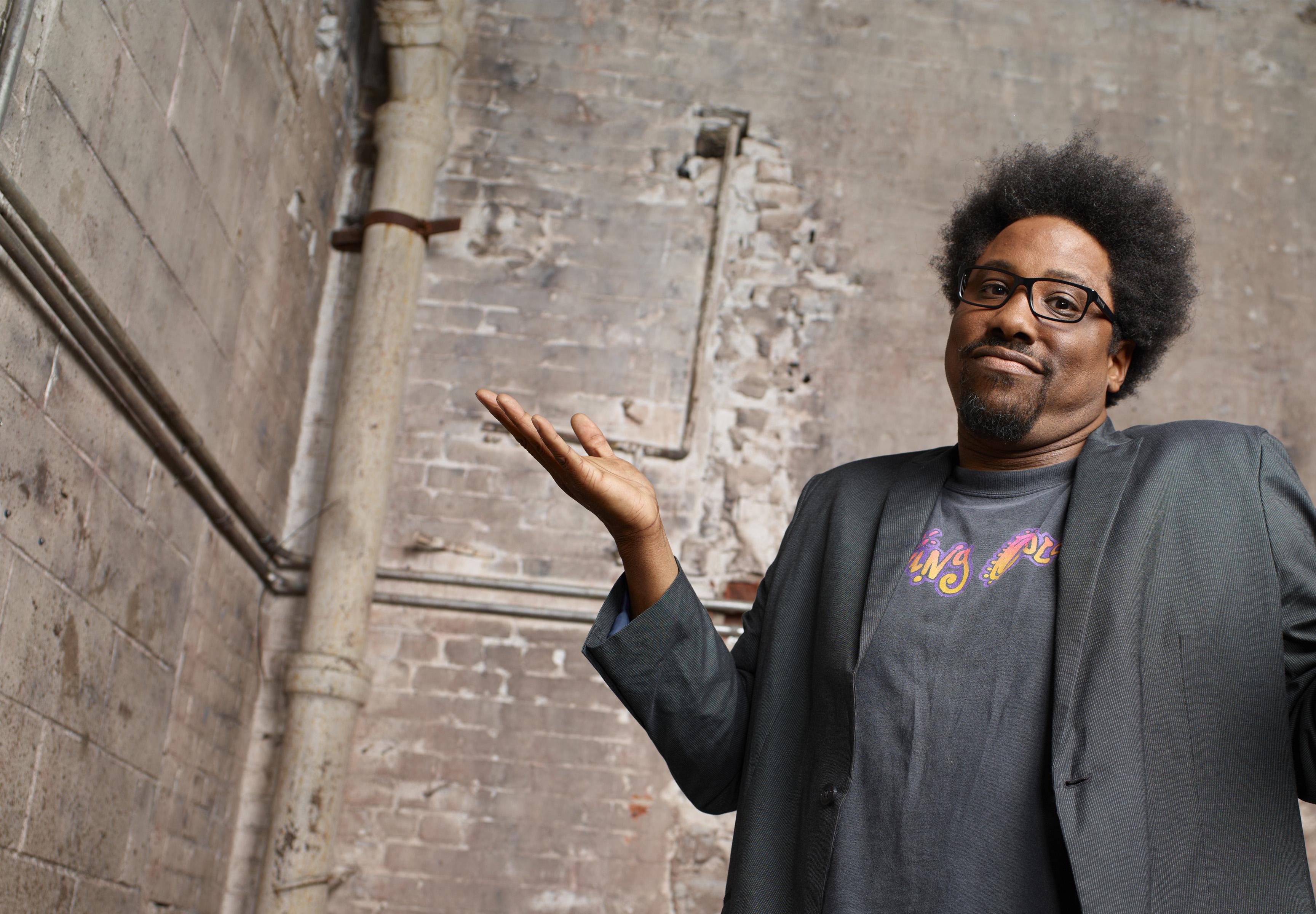


![There was no rape episode on ‘Leave It To Beaver’ [UPDATED]](https://sfbgarchive.48hills.org/wp-content/uploads/sites/2/rape.jpg "There was no rape episode on ‘Leave It To Beaver’ [UPDATED]")