SFBG Blogs

The clue master takes it down to Chinatown

2

It was a casual question to end a brief interview with SF Treasure Hunts clue master Jayson Wechter. “What’s something about San Francisco’s history that most people who live in the city don’t know about?” “Hmm, let’s see,” Wechter begins, whose Chinese New Year hunt this weekend (Sat/27) is his mostly highly attended event of the year. Before I can apologize for putting him on the spot, he starts reeling off the following:

1. The CIA used a house on Telegraph Hill in the 1950s to perform unauthorized LSD trials on men they hired prostitutes to bring home from bars.

2. The bay used to come all the way up to Montgomery Street on the east side of the city before it was filled in. Land being in such short supply back then, dud ships were converted to hotels, saloons and warehouse space.

3. William Tecumseh Sherman was a banker in SF before the Civil War.

4. In 1845, newspaper man and devote Mormon, Sam Brannan chartered a boat to take him and his Latter Day Saint brethren from the east coast to San Francisco (still part of Mexico when their journey began). They eventually migrated away from the city, but not before good old Sam had a street downtown named after him. “Had they stayed,” concluded Wechter solemnly “the SF sound would not have been Jefferson Airplane or the Grateful Dead but the Mormon Tabernacle Choir.”

Clearly, this man trivias.

Gleening post-collegiate inspiration from Keroauc’s On the Road, Wechter moved to San Francisco to work as a freelance journalist, taxi driver and eventually, private investigator. But a quick mind and a knack for knowing “a little bit about everything” had led Wechter to creating treasure hunts for his friends from the time he was 11 years old. He began in earnest with the SF hunts 20 years ago, to the delight of history/culture knick-knackery aficionados. Nowadays, the games attract clue hunters from all over the country, none more so than for the annual Chinese New Year hunt.

“There’s a great sense of joy in discovering something new… It’s a team activity for people that don’t have any athletic prowess,” he says of the events’ popularity today. Just make sure you’re ready to take the ‘me’ out of ‘team.’ Many of the groups at the fast paced, high pressure event are made of friends and couples- at least, before the competition starts. “Let’s just say the treasure hunts accentuate the ‘dynamics’ of a relationship,” chuckles Wechter.

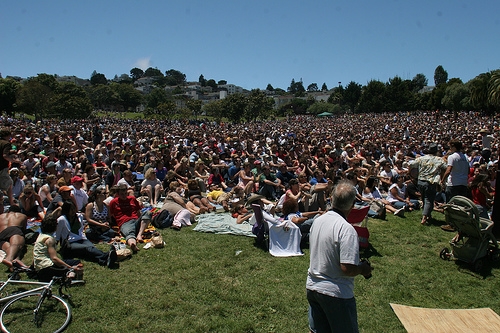
Saturday’s Chinese New Year hunt will involve participants in a sort of noir mystery of their own making, racing in and out of parade routes, answering questions on the city’s landmarks, cultural history and general knowledge to win the competition’s big pay-off. “People have the ability to see things they normally wouldn’t [during Chinese New Year celebrations], says Wechter. “It’s a pedestrian focused event and has a festival, carnival like atmosphere- like Mardi Gras without the alcohol!”

The competition is broken into four levels of play; beginner, regular, master’s and “thinks faster than runs” for the competition’s less mobile participants. Already, 1,500 players are signed up for this weekend’s event.

So pop quiz: do you have what it takes to match wits with Jayson Wechter?

Sat/27 4:30 p.m., $35 pre order, $40 at event

Justin Herman Plaza

1 Market, SF

(925) 866-9599

www.sftreasurehunts.com

The progressive communist conspiracy

5

This city’s seen such heated discussions about what the word “progressive” means, it’s fun to watch Glenn Beck proclaim that progressives are a disease facing America, really just Communists who don’t have guns.

Jon Stewart had a lot of fun with this on his show the other night. And it’s worth watching, just to remember what the progressives have done over the years.

Live Shots: K.Flay, Bottom of the Hill, 02/21/2010

4

After braving crummy weather and the odd timing of her Sunday night show, I finally got to see my new favorite female rapper K.Flay live. To be honest, K.Flay a San Franciscan by way of Illinois, is way more than just a rapper. She makes her own beats, mash-ups, and plays guitar, in addition to rocking a mic and a party.


I originally stumbled across her mixtape “Mashed Potatoes,” a 12 song mash-up album in which she tweaked some classics for exciting results. Put it in your CD player while driving across the Bay Bridge and you’ll discover that a Red Hot Chili Peppers’ classic was ripe for K.Flay’s interpetation in “On the Bridge.” She also flips Eminem’s “Crack a Bottle,” as a dedication to her favorite drink, Vanilla Coke (in a bottle not a can).

The show had a pretty good turnout for a rainy Sunday night. While I showed up a little late, K.Flay already had the crowd jumping around by switching off between rapping, making live beats, and playing guitar. Despite a few technical difficulties, she moved the show along, held the crowd’s attention, and kept her cool at the same time. Go, K.Flay.

“The State of Black SF”

2

By Adrian Castañeda

To support those living in public housing, the Osiris Coalition is hosting an event called The State of Black SF this Sunday (Feb. 28) at the Main Library’s Koret Auditorium from 2-4:30 pm. It will feature a short film and a panel discussion on the plight of the city’s African American population, a topic discussed in this week’s Guardian cover story.

One of the items the panel is sure to discuss is the mayor’s Hope SF initiative to renovate eight public housing projects around the city. City officials, residents, and developers agree that housing projects like Hunter’s View and Alice Griffith are dilapidated. But while plans have been made for revitalization and rebuilding, some community groups are worried that current residents, an already marginalized population, will be overlooked.

With this in mind, the Housing Rights Committee of San Francisco is drafting The Right to Remain Act that aims to assign accountability and protect current tenants during the construction process.

If passed by the Board of Supervisors, the ordinance would provide for the establishment of a monitoring committee comprised of residents and community leaders to approve plans and keep the public informed.  The aim, says Julian Davis of the San Francisco Housing Development Corporation, is to guarantee that current residents benefit from revitalization and will be allowed to remain in their neighborhoods. “They’re all just stated policy goals at this point,” he said of the effort to provide stronger guarantees.

Under the ordinance, existing provisions in the Hope SF plan would be enforced by limiting city funding for future projects until appropriate conditions for relocation and construction are met. The current Hope SF plan includes specific one-to-one placement and phased development provisions, where residents will be moved to on-site housing if possible.

However, there is no guarantee the developers will abide by these plans, so the Right to Remain Act will fill in gaps in federal and state housing laws and hold the Hope SF plan to its goals by ensuring every resident will receive a contract for their home and can sue if their rights are not upheld. Sara Shortt of the HRCSF told us, “No matter what kind of rhetoric is thrown around by officials during all of this, there’s something real on paper that can be enforced.” Shortt, who served on the mayor’s Hope SF task force, says there is a long history of broken promises in communities like Hunter’s View and tenant’s fear being pushed out of their homes.

Many city officials, including District 10 supervisor Sophie Maxwell and those in the Mayor’s Office of Housing, are receptive to the general idea behind the act but few have assured their support. “I don’t think the mayor’s office is particularly keen on it,” Davis said of the proposed residential committee. Shortt said, “It’s not just about logistical issues. We believe you can’t guarantee that without having accountability and oversight.” She adds that the act should be “in the spotlight,” for the November District 10 elections, “so all the candidates are aware this is something that they’re going to have to take a position on.”

The act is still being drafted, but the relocation of residents at the Hunter’s View projects has already begun. The pre-existing surplus of hundreds of empty units has made the on-site relocation simple, and Jack Gardner of the John Stewart Company says demolition will begin in March. While the Right to Remain Act would not retroactively cover current projects, it will protect residents in future redevelopment plans.

“Wouldn’t it be great to have it happen like Hunter’s View at the other sites?” says Davis.

Local CEO arrested in bribery sting

0

By Nima Maghame

San Francisco-based High Com Security owner Yochanan Cohen was one of 22 CEOs and presidents of security companies that make everything from bullets to bullet-proof vests who were arrested by the Federal Bureau of Investigation under the Foreign Corrupt Practices Act for illegally bribing foreign officials to win weapon defense contracts.

“This ongoing investigation is the first large-scale use of undercover law enforcement techniques to uncover FCPA violations and the largest action ever undertaken by the Justice Department against individuals for FCPA violations,” said Assistant Attorney General Lanny A. Breuer. All except one of the 22 heads of companies from across the country were arrested together on Jan. 19 when they met in Las Vegas for the 2010 Shooting, Outdoors Trade Show convention. The remaining CEO was apprehended the same day in Miami.

The undercover operation was designed by the FBI, which set up a sales agent representing the defense ministry of an undisclosed African nation. The agent was set up to inquire about purchasing arms for the presidential guard with the intention of being bribed. Once both sides met, the agent invited the CEOs and presidents to the country’s capital city.

Reportedly, the agreement was that the companies would pay a 20 percent commission for a slice of a  $15 million dollar venture that the African nation would use to outfit the presidential guard. Then, 10 percent of the commission was to go to sales agent with the other 10 percent going to the African nation’s defense ministry. The sales agent wined and dined the private business owners who then emailed the agent overpriced quotes for M4 carbines, body armor, and illegal purchasing agreements according to the indictment, and wired the bribe money to his overseas bank account. Dealings went so far that crates of weapons and armor were showing up in the African country.

In a FBI press release that came out shortly after the arrest, the bureau reported they had set up the operation after several undercover agents in the field had made allegations that foreign ministries were being bribed by the law enforcement products industry. 

“Corrupt payments to foreign officials to obtain or retain business erode public confidence in our free market system and threaten to undermine foreign governments,” said U.S. Attorney Channing Phillips. “These indictments set forth serious allegations and reflect the Department’s commitment to aggressively investigate and prosecute those who try to advance their businesses through foreign bribery.”

So far none of the indicted have any set trial date but the dependents will be heard by the federal court in Washington D.C.


Gascon’s remarks at press conference are stunning

4

By Brady Welch

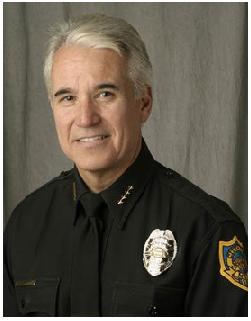
Police Chief George Gascon held a press conference Feb 25th to discuss his desire to arm his officers with Conducted Energy Devices (known to you and me as Tasers or stun guns) — and his comments demonstrated that the chief still doesn’t get it.

Gascon is arguing that Tasers could prevent some deadly police shootings. But there’s a much larger issue that he seems to be ignoring.

On December 28, 2009, the federal Ninth Circuit Court of Appeals right here in San Francisco affirmed the decision of a lower court that an unarmed man shot with a Taser can sue the city of Coronado, just outside San Diego. The zapping caused Carl Bryan to fall face first into the pavement, thus knocking out his four front teeth. To add insult to injury, one of the Taser probes lodged in the man’s flesh, requiring a doctor’s scalpel to remove it.
And what was this citizen’s crime? Getting upset with himself for being pulled over twice in the same day for routine traffic infractions. According to court records, the 21-year-old Bryan was driving home on a Sunday morning after a long night with friends and got pulled over for speeding. Later that same morning, he got stopped again, this time for not wearing a seat belt (which he forgot to put back on after initially getting stopped).

Bryan pulled to the curb and started punching the steering wheel, shouting expletives at himself for being so careless. He then got out of the car “yelling gibberish and hitting his thighs,” the court decision reports. The officer yelled at Bryan to get back in the car, but Bryan apparently didn’t hear him. Then the cop, without warning, shot the kid with his Taser gun.
Bryan didn’t die. He also wasn’t on drugs (Tasers are particularly dangerous to people under the influence of stimulants). But he was hurt — and at least according to the court files, there’s good grounds to argue that he should never have been zapped in the first place.

Gascon acknowledged that Tasers can be dangerous, although he offered a somewhat morbid justification of taser-implicated deaths—loosely paraphrased, he suggested that if you ask a crackhead to run around the block, that person would probably suffer cardiac arrest anyway. And he talked about special training to avoid police Tasing of drug-addled and mentally ill people.

But what he’s missing — and what has a lot of community activists concerned — is the situation in Coronado: The Taser shooting of someone who should never have been shot with anything. Two police commissioners, Petra DeJesus and Vincent Pan, have expressed concerns over whether people can trust a San Francisco police department armed with semi-lethal weapons that officers might feel inclined to used in decidedly less than semi-lethal situations. The Ninth Circuit’s opinion is only the most recent and ballyhooed case.

What was particularly galling during the chief’s press conference was when Taser-supporting commissioners Tom Mazzucco and Jim Hammer came forward to plead the case for using Tasers on the mentally ill — as opposed to real bullets — almost as if to say, Certainly, we can all agree on this.

Well, maybe not. Here’s what the Ninth Circuit had to say:

A mentally ill individual is in need of a doctor, not a jail cell, and in the usual case—where such an individual is neither a threat to himself nor to anyone else—the government’s interests in deploying force to detain him is not as substantial as its interest in deploying that force to apprehend a dangerous criminal. Moreover, the purpose of detaining a mentally ill individual is not to punish him, but to help him. The government has an important interest in providing assistance to a person in need of psychiatric care; thus, the use of force that may be justified by that interest necessarily differs both in degree and in kind from the use of force that would be justified against a person who has committed a crime or who poses a threat to the community.

In other words: Cops shouldn’t be shooting mentally ill people anyway, with Tasers or with pistols.

And if you give the cops Tasers, it’s almost certain that they’ll zap a whole lot of people who were, as one critic put it, “guilty of nothing more than mouthing off to a cop on the bus.”

BTW, there’s an interesting Amnesty International report on Tasers here


(Lack of) grace at EpiscoDisco

0

It was bound to happen. Some girl in a white coat tagged Grace Cathedral.

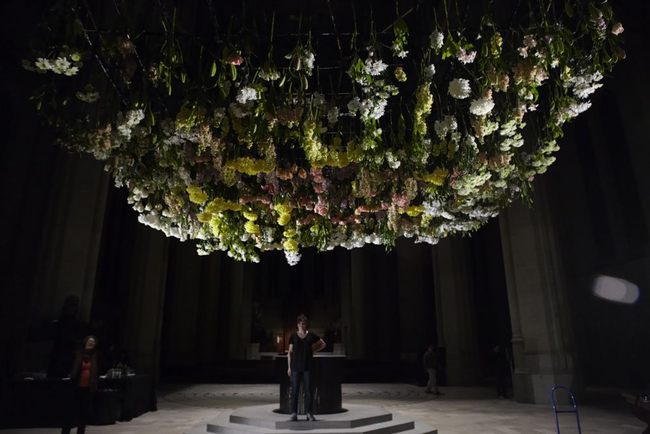
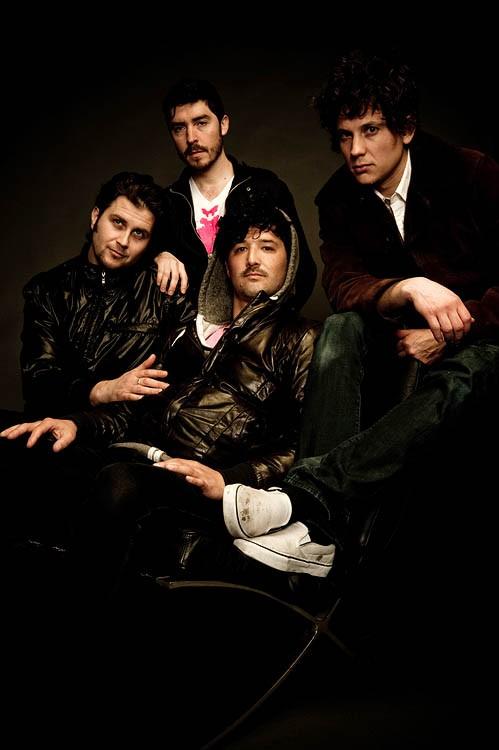
One thousand flowers were suspended from above as an art installation while I watched Nodzzz run through a collection of songs. The band described the outing as the first time they had ever held a microphone in church. I took that as confirmation they weren’t pastors or priests in their previous line of work. As soon as their set was done someone, maybe the event’s organizer, got on the microphone and had a startling announcement to make. He informed us that this may have been the final installment of EpiscoDisco because the woman in white, who he accused of “probably tripping on acid,” had vandalized the church. The man on the mic rhetorically told us that in the event’s one-year history, no such disrespect had ever occurred up until now, and that the future of the monthly get-together was now in doubt, as the church’s leadership would likely frown upon that night’s incident. He described what she had done and what she was wearing. To be honest, I sort of feared for the girl, because it sounded as if this guy was hoping for a lynch mob or at least some sort of immediate repercussions for her actions. He seemed pretty pissed, and if he was to be held responsible, I’d say rightfully so.

The church is one of those buildings a San Francisco resident is likely to take for granted. Grace’s occupation would normally be limited to parishioners or tourists, but its gothic majesty opens engraved chamber-like doors once a month on Saturday evenings, allowing a curious bunch of unlikely visitors to roam freely, seemingly unsupervised. Maybe it’s my Catholic upbringing, but something about the whole thing just seems so backwards. Disco scenesters mix it up with the garage rock crowd with drinks in their hands and stained glass windows in the background? Same-sex couples sharing intimate secrets littered among long rows of pews? Hipsters dressed (in their Sunday best?) ogling a giant crimson version of the holy bible all within the Episcopalian version of the house of the lord? It was madness. It seemed so wrong. Really, what would Jesus do?

Who could blame the girl? Before the culprit’s act was publicly announced, I myself was tempted to do something drastic in iconoclastic fashion. In fact, I did voice my fantasy out loud to my friend, saying I wanted to tag or at least tip something over. I’m sure some of those feelings were just residual teenage angst from the aforementioned upbringing of religion’s expectations of conformity and control. However, whereas I was a talker, the woman in white was a walker. Without inhibition she let loose in the form of either spray paint or maybe one of those Magnum markers. One friend thought she smelled something funny, but figured someone had light up a cig indoors. I never saw (nor smelled) her work of attempted ecclesiastical immortalization, but her sacrilegious act made her instantly notorious and got her bounced. We could only wonder what compelled her to do it. What did she have to say? My guess was “666,” even if it is a bit cliché, while another friend suggested she graffiti-ed “This church rulz.” In any event and quite unceremoniously, she attempted to re-enter the place of worship, but to no avail.

People filtered out of the cathedral slowly, just as they had been asked, while flamboyantl men with interesting haircuts decked out in leopard-print ensembles continued to berate the alleged vandal on their way out. As far as they were concerned, their EpiscoDisco was to suffer an uncertain future. So much for the church’s youth outreach program, but it was nice while it lasted. I guess we’ll just have to stay tuned.

Hot sex events: Feb 24-March 2

0

It’s all bondage, bodies, and polys in the Bay this week.

————-

Get Your Kink On – BDSM 101
Selina Raven, voted Best Dang Dominatrix in our 2007 Best of the Bay issue, hosts this workshop on everything you need to know about BDSM, including common kinky desires and activities, BDSM anatomy, and basics about introducing kink into relationships.

Wed/24, 8pm
$25-$30
Good Vibrations Valencia
603 Valencia, SF

www.goodvibes.com

————-

Relationship Mapping/Poly 101
Shanna Katz presents a basic training on the types of relationships people have, how we can map them, and what we can get out of these maps. Katz will talk about polyamory and its various facets, including how to make it work, and how negotiation can play a huge role in creating sustaining healthy relationships.

Thurs/25, 6pm
$10-$20
Culture for Sex and Culture
1519 Mission, SF
sexandculture.org

————-

Love Your Body Now!
Join Catherine Toyooka for a thought-provoking, interactive workshop meant to allow participants to explore the root of their body issues and how that’s prevented them from fully embracing their sexuality. The session also will explore the reality of genital shame.

Thurs/25, 7:30pm
$20-$30
Culture for Sex and Culture
1519 Mission, SF
sexandculture.org

————-

Red Hots Burlesque

Trauma Flintstone hosts and performs at a special edition of this weekly burlesque review, alongside Bunny Pistol, sASSy Hotbuns, Dottie Lux, The Empress, and Honey Lawless (who’s performing a brand new number).

Fri/26, 7:30pm
$5-$10
El Rio
3158 Mission, SF
www.redhotsburlesque.com

————-

Vaginal Fisting for One and All!
Learn what fisting is, how to introduce it into your relationships, and how to do it safely with this workshop by Shanna Katz, which includes a live-action, hands-in demo.


Fri/26, 7pm
$20-$30
Culture for Sex and Culture
1519 Mission, SF
sexandculture.org

————-

Sizzle
Femina Potens’ award-winning literary erotica series features Essin Em, Rita Seagrave, and Patrick Califia for a night of readings exploring sexuality as it concerns people who are differently abled.

Sat/27, 8pm
$10
Femina Potens
2199 Market, SF
www.feminapotens.org

————-

BDSM 101 Workshop
Perfect for the beginner, this workshop with Essin Em will help the curious find their way into the local scene, or simply into a spicier homelife.

Sat/27, 2pm
$5-$10
Femina Potens
2199 Market, SF
www.feminapotens.org

————-

Sexability Workshop
Following her 2 p.m. beginners’ class, Essin Em hosts this part workshop/part support group geared towards people who are differently abled and their partners. Participants are encouraged to share suggestions and trade ideas.

Sat/27, 4pm
$5-$10
Femina Potens
2199 Market, SF
www.feminapotens.org

————-

Eyes Wide Open
Club Exotica presents a night of interactive, participatory, sexy discovery and exploration inside Kink’s Armory. Explore respectful touch, sensual or sexy play, pushing boundaries, and exhibitionism in a luxurious Edwardian Room (which will be filmed until 2 a.m.) or lounge room while enjoying drinks, snacks, DJs, performances, and special permissive slaves. To be involved, you must RSVP/apply and sign a model release, and be willing to come dressed to impress in Edwardian, Victorian, burlesque, steam punk, cocktail, or fetish costume.

Sat/27
The Armory
1800 Mission, SF
For info and to RSVP, click here

————-

Lap Dancing 101
Rita Seagrave teaches the moves youneed to feel confident seducing a new lover or rekindling lust with a longtime partner. This participatory course is open to people of all sizes, genders, and sexual orientations. No partner necessary.

Sun/28, 1pm
$20
Femina Potens
2199 Market, SF
www.feminapotens.org

————-

Exotic Dance Smorgasbord: Intro to Pole-Lap-Floor and More
Explore the ways our body naturally loves to move and demystify exotic dance concepts throug a series of exercises, demonstrations, and practice time.

Sun/28, 12-6pm
$149
Culture for Sex and Culture
1519 Mission, SF
sexandculture.org

————-

Hubba Hubba @ Uptown
Kingfish and Eddie kick off a new month with Sugar La Vie, Desiree DuBois, Teresa Camp, Kiss Me Kate, Zip the What-Is-It?!, and a special full-set performance by Onkel Woland and The Black Forest Menagerie.

Mon/1, 9pm
$5
Uptown Club
1928 Telegraph, Oakl
www.hubbahubbarevue.com

————-

Reconnect with Pleasure: A Physical Therapist’s Approach to Overcoming Pelvic Pain
Painful intercourse is more common that most people think. Elizabeth McBride, MSPT, explains how the pelvic floor muscles can cause pain during sex, erectile dysfunction, pain with orgasm, and more.

Tues/2, 8-10pm
$25-$30
Good Vibrations Polk
1620 Polk, SF
www.goodvibes.com

————-

Snap Sounds: Kammerflimmer Kollektief

0

KAMMERFLIMMER KOLLEKTIEF

Wildling

(Staubgold, released March 2)

At first sonic glimmer, Germany’s Kammerflimmer Kollektief wax too softly, too New Agedly to stir many passions apart from recollections of browsing self-help bookstores and listening a mite too closely to the soundtrack of a massage.
But this gently unfolding, boldly meditative recording by Thomas Weber, Heike Aumuller, and Johannes Frisch (Weber’s initial bedroom-recording project, which later morphed into a sixpiece collective, has found its latest, likely most efficient incarnation as a threesome) manages to harness a quiet power — consolidated with mere piano, double bass, synthesizer, guitar, electronics, and harmonium — in service of something far much more insinuating than most music that purports to rock. Numbers like “There’s a Crack in Everything” build with a cunning care that seems designed to explode into some sort of shattered noise free-fall, yet that never quite happens in Kammerflimmer Kollektief’s universe — and Wildling is all the better for its makers’ lack of artifice. 

http://www.youtube.com/watch?v=7tOW1FMnsYc

On Feb. 26, the cab industry changes, radically

16

The San Francisco taxi industry will undergo a major change starting Feb. 26, when the Municipal Transportation Agency is expected to adopt a complete transformation of how cab medallions — the permits needed to operate a taxi in the city — are allocated. You can read the proposal here. In essence, it would allow cab medallions — which are now allocated to individual drivers on the basis of seniority on a waiting list — to be sold on the open market.

It’s a tricky proposition. But the mayor appoints the MTA board, and the mayor wants this — both to help with the city’s budget problems and because, well, he’s always supported privatization of some public assets, and that’s what this proposal amounts to.

And here’s a little stinker that’s part of the deal: The MTA currently has 30 of the valuable medallions just sitting around in a desk. Those are permits that could be issued to the top 30 drivers on the waiting list — many of whom have been driving for 15 years or so while they slowly rose to the top of the list.

Instead, if the proposal passes, those medallions — or at least some of them — will be sold off, over the counter, at prices that could reach $400,000.

Judson True, the MTA’s spokesperson, confirmed that there were 30 unallocated permits on hand right now and that at least half would likely be sold at market rate. The MTA is budgeting $15 million for direct permit sales.

So if you’re, say, number 16 on the waiting list, and 15 people ahead of you get permits that are currently available — and the next 15 are sold, and you can’t afford it — you’re SOL. Until someone else dies and another permit comes up — unless that permit is sold, too.


Illin’ for Illiad

0

A preternatural rooting of the vengeful Bush legacy (and Obama continuance) into neo-classical sonic aesthetics? Another uncanny contemporary slice (in slo-mo) of the Illiad? A Shriekback? Sea breeze, sea breeze… These New Puritans‘ “We Want War” from the awesome and challenging new Hidden (Domino) complexifies their post-punk revival ways to put the sinew in Stravinsky, the killer in Achilles.

Appetite: Don’t forget to remember

0

In the wake of a number of January closings, including some long-timers I’d rather not see go (like Vivande Porta Via), I’ve been reflecting on those neighborhood spots or classic restaurants we often forget are there but don’t want to lose. From time to time, I’d like to share reviews of places we’d do well to re-visit… or get to for the first time. They might be receiving a fresh infusion of flavor from recent chef or menu changes, or are good enough to remain noteworthy, despite the flood of new openings and (over)hyped hot spots. The Grand Cafe is one of them.


Elegant but relaxed, Grand Cafe is easy to overlook. For starters, it’s in a hotel (Hotel Monaco) which gives it the tourist stigma. It’s been there for years and is so centrally located right next to Union Square and ACT theaters, that locals often forget about it. It’s long been a solid place for a meal, but with new Lyon chef de cuisine, Sophiane Benaouda, at the helm, there’s new life being infused into every corner… whether you have a martini lunch in the grand dining room or wine and appetizers in the cafe/tavern area. Benauouda comes from France’s three-star Michelin restaurant, L’Auberge de L’Eridan, and was trained at none other than Paul Bocuse’s Chateau du Vivier.

His energy is infectious, amping up classic Provençal dishes as well as fresh takes on specials like dark, pink, medium-rare buffalo with artistically-arranged scalloped potatoes. Benauouda’s scallops are seared perfectly, and a glass of champagne with garlicky escargots de Bourgogne is a fine respite all by itself. Maybe you add in a round of oysters or king crab legs. Or it’s an espresso and dessert break with a Lemon Meringue Tart (ask about pastry chef, Jessica Miller’s chocolates, particularly the buttery sea salt truffle). Whatever way you use the cafe, as a quick stop or a full meal, it’s truly a downtown asset and one of those touristy locations locals can appreciate.

501 Geary Street
in Hotel Monaco
415-292-0101
www.grandcafe-sf.com

A look back at the 2010 Sundance Film Festival (part three: docs!)

2

Check out Jesse’s two-part take on Sundance’s narrative side here and here.

Sporting the revamped tagline “This is the renewed rebellion. This Sundance, reminded,” the festival’s always-stellar documentary selections most often live up to their astonishing subject matter. This year was no different. First up for me was the controversial 8: The Mormon Proposition by Reed Cowan and Steven Greenstreet. The film explores the Mormon Church’s involvement (and sneaky double-dealings) in the pro-Prop 8 campaign in California, as well as exploring how many Mormon leaders use God’s will as a manipulation tatic towards preventing (or in this case, taking away) civil rights. The film’s most jaw-dropping revelation, which draws a connection between the persecution of a follower of Mormon Church founder Joseph Smith and today’s struggle for same-sex marriage, will chill your bones with irony.

But while the audience at 8‘s world premiere gave the film a five-minute standing ovation (the crowd included everyone from Dustin Lance Black, Oscar-winning screenwriter of 2008’s Milk, to San Francisco mayor Gavin Newsom), the filmmakers make a major misstep by undercutting an otherwise powerful and damning interview from a Mormon leader with gurgling, demon-like sounds and a backdrop cartoon of the man as the devil. This Michael Moore-esque technique of falling prey to “emotional ranting” not only contradicts Sundance director John Cooper’s catalog description of the film, but helps shuts down the “conversation” (which both filmmakers stressed numerous times during the Q&A) with people who voted for Prop 8. Unfortunately, this cheap shot lowers the film’s credibility and when questioned by an audience member (who had voted for Prop 8) why they had used such tactics as “altering the [Morman man’s] voice,” the filmmakers quickly became defensive, shouting, “We didn’t alter anything!” and “Listen to the words!” When re-questioned, they stated, without a doubt, that they “stood by” how they had presented the information. Where was that conversation again?

Expanding on a six-minute short co-directed by Alfonso Cuaron (2008’s Children of Men), The Shock Doctrine (an adaptation of Naomi Klein’s book about economist Milton Friedman’s “Free Market” idea), is a 79-minute whirlwind of film. Directors Michael Winterbottom and Matt Whitecross disturbingly deconstruct this “marginalized backwater economic theory” and expose it as the main philosophy applied towards many of the U.S. and U.K’s current international (mis)handlings. While it may be a simplification in many areas (and filled with George W. Bush and conservative bashing), this doc sheds light on deregulated trading between countries, and how it has had devastating aftereffects on the rest of the world.

Also expanding on a previous short film (2006’s A Conversation with Basquiat), Tamra Davis’ Jean-Michel Basquiat: The Radiant Child is a tightly woven overview of his life combined with poignant interviews with friends and ex-lovers, topped off with very personal footage that Davis herself conducted in the early 1980s. With an outstanding soundtrack of early 80s no-wave tracks as well as classic hip-hop tunes, this tribute is a genuine crowdpleaser for fans and the uninitiated alike.

Leon Gast’s Smash His Camera uncovers villified 1970s paparazzo Ron Galella in a deliciously contradictory manner. Exploring the constant battles revolving around privacy rights (claimed by both Galella and his subjects), freedom of the press, and obsession with fame, the film asks viewers to question our own fascination with stars. It raises the revolutionary, contemporary question as to how legit Galella actually might be as an artist. With priceless moments signed and delivered by Galella himself, you may find yourself walking out of the film wanting to scapegoat and demonize an individual for showing us exactly what we are captivated by and are constantly seeking out.

The latest doc from Stanley Nelson’ (2006’s Jonestown: The Life and Death of the Peoples Temple), Freedom Riders, delivers the type of archival footage that we’ve forgotten history is made of. Beginning in 1961, if follows a few groups of devoted individuals who were brave enough to take buses into the deepest of the segregated South, with hopes of ending racial discrimination. Nelson’s film is a genuine tribute to the audacious and non-violent struggle by protestors who even Martin Luther King Jr, John F. Kennedy, and Robert Kennedy didn’t know how to support. With the current civil rights struggles in the United States, Freedom Riders strikes more than a few heartbreaking chords, making it a must-see.

Yael Hersonski’s A Film Unfinished deconstructs an infamous Nazi-produced documentary about the Warsaw ghetto, incorporating a newly-discovered reel of outtakes and contradictory footage. What was meant to be a document of how happy the Jewish people supposedly were in the ghetto is overwhelmingly exposed as nothing but reenactments and revisionism. The importance of A Film Unfinished goes beyond the subject matter, for it not only examines the misrepresentation of certain historical documents and the long-standing destructive side effects of doing so, but also directly correlates to so many dilemmas we currently have with the delivery of information through cinema, TV, and online media. The film picked up Sundance’s World Cinema Documentary Editing Award.

Tim Hetherington and Sebastian Junger’s Restrepo, which won the festival’s Documentary Grand Jury Prize, chronicles the deployment of a platoon of U.S. soldiers in Afghanistan’s Korengal Valley. The visceral footage is quiet, haunting, and surprisingly non-judgemental. Interspersed with interviews with the soldiers after they’ve returned home from their 15-month outing, the audience gets to experience not just individual journeys, but also the contrasting after effects on the group, post-tour of duty. As Hetherington and Junger spoke after the screening, the revelation of how close they become with the battalion (during the ten trips they made with the soldiers) brought up a valid question about the filmmaker’s impartiality. These soldiers saw and did things in Afghanistan they don’t seem to understand and I left the theater with the same confusion. Since seeing Restrepo, I haven’t been able to stop thinking it.

Christian Frei’s Space Tourists follows the spectacular quest of 40-year-old Anousheh Ansari, an Iranian-American millionaire whose dreams of becoming a space traveler came true. The film does not use narration, allowing its images to connect with the audience as opposed to telling them what and how to feel. This filmmaking choice (reminiscent of documentarian Frederick Wiseman) is risky business nowadays (more than two thirds of the audience filed out of the theater mid-film), but has the possibilty of achieving a transcendental feeling if you stick with it. Watching Ansari live out her fantasies (at a cost of $20 million) in real life, in slow motion on board the space shuttle is truly mesmerizing. But makes Frei’s film so profound is his attention to the world below, focusing on people like a gang of junk collectors who survive by scavenging the hills, retrieving the shuttle’s segmented remains. How rare that a film can provide so much insight to the world’s dichotomies while at the same time exploring (wo)man’s final frontier.

Heidi Ewing and Rachel Grady’s follow-up to their Oscar-nominated Jesus Camp (2006), finds them on a corner in Florida: 12th & Delaware. This intersection has a pro-choice abortion clinic on one side of the street — and on the other, a pro-life pregnancy care center. Using the same techniques as their previous documentary (no narration, very few statistics, and no talking head interviews), Ewing and Grady get astoundingly up close and personal with both centers’ employees and clients. Unbiased, respectful, and remarkably candid, 12th & Delaware offers insight and clarity into both sides’ passion. While most will leave the theater with the same belief system as they had before going in (though I have to say that I sure believe the other side’s dedication a whole lot better now), there’s no doubting that this is genuine journalistic cinema at its best.

And finally: Waiting For Superman, Davis Guggenheim’s follow-up to his Oscar-winning An Inconvenient Truth (2006), deftly explores the American education system in grueling detail, from the horrifying statistics of “academic sinkholes” and “drop-out factories” that plague our nation to the specific children, parents, and teachers that are caught in the middle. The incredible amount of research, follow-through, and devastating footage that Guggenheim has skillfully combined  is enough to open anyone’s eyes. The film suggests that while we all are waiting for a Superman figure to come and magically fix it all, every one of us is somehow involved with and affected by this nightmare. Along the way, this apolitical film becomes inspired, accountable, and motivational cinema. Rightfully, it won Sundance’s Audience Award for Best Documentary Feature.

Funkin’ and flashin’ in Sebastopol

0

So you’re in wine country on your way to (or more likely, from) a bubbly tasting at Korbell when suddenly you realize something startling; you’re not feeling so effervescent yourself. The answer to your frump? Well, I’m guessing a wine colored tutu or red corduroy cowboy pants embroidered with sequined cacti wouldn’t hurt. Enter Funk & Flash, to my knowledge the best secondhand clothing store in the North Bay. Carnival/Sgt. Pepper/Mexicali fun time, here you come!

“Wild pants and marching band jackets really turn me on,” says the funkster-flasher himself, owner Shane Sterling on his store’s website. “Expressing yourself through clothing builds confidence, promotes self-love and makes life more fun.” I dig. If you can’t feel fly in ruffled retro tap pants and a St. Patrick’s themed stretch belt, you maybe just can’t feel fly.

Sterling has assembled a surprising collection in his recently opened little storefront on Sebastopol’s quiet main drag. Combat boots, darling tennis cardigans, old school green tortoise shell shades you’d pay top dollar for in the city pack the small, well edited space- no hours of shuffling through racks of clunkers here. Rumor has it, he culls the items from opera sales and other used clothing outlets, relying on the efforts of a vast supporting cast for their ‘fit spotting aptitudes. The team must be putting in their hours in, because some of the items at Funk & Flash are unlike anything I’ve ever seen at SF thrift/vintage stores- and I take these things seriously. The collection is packed with pieces that kiss at being costumey, but are old enough to look classic- if that’s what you’re going for (fyi, Burners, you’ve found your mecca- don’t wait til this summer to make the trip out to stock up).

But fashionistas, move fast- this hidden gem is bound to be good and dug up sooner or later. An employee of the store tells me that Sebastopol is fast becoming a destination for city dwellers cruising for retro threads like they were a chemical addiction. I got my fix with a totally legit $14 1982 Bay To Breakers tee… but I’ll be back out there soon enough. After all, you can’t fake the funk.

Sequin rack? Oh, baby. Check.

Rock this Funk & Flash jumpsuit this spring time strut season. Do it!


Funk & Flash

Open 11 a.m.- 6 p.m. everyday

228 S. Main, Sebastopol

(707) 829-1142

www.funkandflash.com

Noise Pop: A last-minute slacker’s guide

0

An exhausting week of show after show has arrived, and it’s hard to say no to such a thick lineup of interesting indie. That is, if you had a choice. If you’ve already got your tickets, my mother would be proud. If you are among the league of last-minute fools, be forewarned — you are officially SOL (insert Debbie Downer “whaw whaw” here). Lots of shows are sold out, including almost everything I had my eye on: Edward Sharpe and the Magnetic Zones, Loquat, Best Coast, Zee Avi, Atlas Sound, Four Tet, Mirah… So, if you’re like me and staggering to find your place in Noise Pop, here’s a guide to what’s best of what’s left.

WED/24

The Ghost of a Saber Toothed Tiger (Sean Lennon, Charlotte Kemp Muhl w/Cornelus)

Sean Lennon has always put me to sleep — not because he’s boring, but because his voice is pure lullaby. When he’s not helping out his mom, Yoko Ono, or playing sweet songs on his own, Lennon has put his heart into singing with his sweetie, hottie model Charlotte Kemp Muhl. The members of Cornelius will join the lovebirds on stage for pure ambient, twinkling folk everyone should eat with a spoon. 7pm, $20, The Independent

Foreign Born

Four guys and lots of galloping, hustling, clanking percussion, all kept up with audible aptitude. Foreign Born is low key, lyrical indie that knows when to tap into its intimate side and explore the more subtle jems. Think Vampire Weekend with a dash of folk rock. With The Fresh and Onlys. 8pm, $14, all ages, Rickshaw Stop
 
Film: P-Star Rising

Priscilla is nine years old, totally adorable, and totally badass. The tiny MC grabs the mic with no fear, rapping about her single dad, dead-beat mom and the joys of being a rap star before puberty. From kid to underage celeb status, the family struggles to keep it real while chasin’ the dream. 9:15pm, $10, all ages, Roxie Theater


THU/25

Film: The Heart is a Drum Machine

Nearly everyone is at least semi-obsessed with music and this feature documentary attempts to discover what it is about notes and tones that feel so good. The film has quite an impressive stack of celebrities and scientists, all offering their opinions and personal love affairs with the art form, including Elijah Wood, Jason Schwartzman, and crazy woman Juliette Lewis. 9:30pm, $10, all ages, Viz Cinema


FRI/26

Nurses

A Portland trio of whistles and wonderful sounds, Nurses craft songs with the leaves and sticks and stones they find in every corner. Looping and sampling these oddities, they make beautiful and inquisitive melodies that remind one of owls and environmentally friendly attitudes. With John Vanderslice, Honeycomb, Conspiracy of Venus. 7pm, $15, Swedish American Hall
 
The Art of Noise, Soiree featuring Shlomo

Heavy bass means weighty pours, right? The Art of Noise will surely light up your Friday night, with deep dance sounds and nods of hip hop. Shlomo is California based and full of genre bending material, poorly categorized as experimental, with full on low tones, synth kicks and lazer bites. 5pm, free, Project One


SAT/27

Pop ‘n’ Shop

Gotta look hot for the rest of Noise Pop weekend! More than 40 local designers, snacks and booze for all your perusing. 12pm-5pm, free, all ages, The Verdi Club

Music For Animals

They’re local and totally weird in a good way. Music for Animals is slightly funny and yet remains to be musically sound with sparky guitars and pop-friendly choruses. The quartet loves keeping it cool with their SF musical comrades and love to please their Bay fans. With Nico Vega, The Soundtrack of Our Lives, and Imaad Wasif. 7pm, $16, The Independent
 
!!! and My First Earthquake

It doesn’t matter if you’re not sure how to pronounce the band’s punctuation happy name (chk-chk-chk), they’re damn good and full of electronic, relentless energy. Bring a bandana for that embarrassing sweat dripping down your nose and you’ll be a happy dancer. San Francisco band My First Earthquake is equally stellar synth-pop, sewn with catchy lyrics and a perfectly feisty front-woman. With Maus Haus and Sugar and Gold. 7pm, $20, Mezzanine

alt.sex: Don’t be a dick

0

Dear Andrea:

I’m not your average 20-something male. I love sex, but not unless its part of a relationship. I guess I think too highly of myself to tag random chicks meaninglessly. I do have a high sex drive and a great deal of experience, but the women I go for are usually highly-educated, professional, librarian types.

From a female’s point of view, what is the best way to ask about a girl’s libido and kinkiness during the dating process without seeming like a creep or actually trying her out? Remember, I don’t date your average slut with a tongue ring and a Playboy Bunny tattooed on her ass, and I’m sick of playing T-ball when I’m a pro.

Love,

Classy Pro

Dear Pro:

From this female’s point of view, the best way to avoid coming off like a creep is not to be a creep in the first place, which unfortunately leaves you out. I mean what, exactly, do you hope to accomplish by dividing women into “librarians” and “tongue-ring-wearing sluts”? Moreover, have you ever actually seen a “tongue ring?” In this female’s experience, one pierces the tongue with a barbell, not a ring, and some of the finest sluts I know are librarians. I fear that you are not the sophisticate with discriminating taste in women you imagine you’re seeing when you gaze (too long, no doubt) in the mirror every morning, but really a sort of combo prig, prat, and snob, and I will be sure to tell my librarian friends not to go out with you.

If you are interested in a particular woman (and have, presumably, already examined both her tongue and her tattoo, if any, to be sure they meet with your approval before you waste your precious time or bodily fluids on someone who turns out to be just another average slut), it is permissible to bring up areas of interest, which can include vaguely sexual events or racy reading material.

The kind of woman you claim to seek, however, will not be impressed by your presenting her with a questionnaire (“How kinky are you?” “Would you rate your libido high, average, or low?”) before you’re willing to spring for a frappuccino. Neither, come to think of it, is such an approach likely to work on Tongue-Ring (sic) girl. Unless you meet your librarian love through the personals (not a bad idea) or at an S-M club or similar prescreened venue (which can certainly be done), there is no shortcut to intimate knowledge.

However much classier you may be than the average schmo, you’re going to have to put up with the inconvenience of actually getting to know someone. Take care to assure her upfront that you are a “pro,” have tons of experience, and only date “classy” women. That should take care of some of the screening for you right there. If she looks appalled, scoots her chair back, and leaves without a backward glance, she was probably just some slut anyway.

Love,

Andrea

Got a question? Write to Andrea at andrea@mail.altsexcolumn.com. See Andrea’s other column at carnalnation.com.


“Sha-Boo-Lee” — Brontez shakes it

1

Reasons to watch the Younger Lovers‘ “Sha-Boo-Lee,” directed by Irwin Swirnoff: hula hoops; cotton candy; Vespas; Mission Adult Superstore; pay phones, Fag School; naked sunbathing; dance instructor Brontez shaking it; sounds like if Henry’s Dress were on Stax.

Is Chevron lying about its crude plans?

1

By Adam Lesser

William Rostov, the Earthjustice lawyer who represents three Bay Area environmental groups, broke it down: “The question is: will it be heavier and will that result in more pollution?” He was speaking about crude oil refining at Chevron’s Richmond refinery as he addressed California’s First Appellate Court in San Francisco this morning. Heavier crude oil is usually less expensive for oil companies to purchase but generates more pollution during the refining process.

Environmentalists, labor unions, lawyers and Chevron representatives packed the courtroom to hear opposing counsel spar over the project’s environmental impact report, which was invalidated by a Contra Costa Superior Court judge last June. The ruling stopped the refinery expansion that Richmond has approved.

Chevron attorney Ronald Van Buskirk hammered the point that “the project didn’t propose a crude switch.” When pressed on why Chevron declined to disclose the data behind the conclusion that there would be no switch to heavier grade crude, Van Buskirk countered that the data constituted “trade secrets” that are protected under law.

Rostov argued that “refinery experts showed this project allows the use of heavier crude” and that Chevron “misled the public” in its EIR. A key component of the environmentalists’ argument rests on the 2007 Chevron annual report to the U.S. Securities and Exchange Commission, which specifies that “design and engineering for a project to increase the flexibility to process lower API-gravity crude oils at the company’s Richmond, California, refinery continued in 2007.” API gravity is a measure of how heavy or light petroleum is. Lower API gravity corresponds to a heavier crude oil. But Van Buskirk countered that the plaintiff’s evidence amounted to “one sentence in a 10K report.”

Justice Patricia Sepulveda questioned Van Buskirk about whether the $61 million Community Benefits Agreement that Chevron offered to contribute to the city of Richmond gave the city “bias to approve the project.” But Van Buskirk said, “It wasn’t a quid pro quo, if that’s what you’re suggesting,” before ultimately conceding that it was fair suggest to that the gift had played a role in the approval.

Judge Ignacio Ruvolo presided over Chevron’s appeal. At the end of oral arguments, he spoke to the efforts the court has taken to expedite the case, pressing attorneys on whether there was any chance of a settlement.

“The parties are still very far apart,” said Van Buskirk, and Rostov nodded the same. For the first time all morning, everyone was in agreement.

The court will rule within 90 days.

Editorial: No more silence on PG&E’s statewide power grab

1

Every single elected official, candidate for office, and political group in the state that isn’t entirely bought off by PG&E needs to loudly oppose Prop. 16 – now

EDITORIAL Pacific Gas and Electric Co. has found few allies in its effort to halt the spread of public power in California. The Sacramento Bee has come out strongly against PG&E’s initiative, Proposition 16 on the June ballot. Los Angeles Times columnists have denounced it. Six Democratic leaders in the California Senate have called for the company to withdraw the measure. Even the California Association of Realtors, hardly a radical environmental group, has come out strongly against the measure, in part because it’s so badly worded that it could halt residential and commercial development in large parts of the state.

But PG&E has already set aside $30 million to try to pass this thing – and since the cities and counties that would be hit hardest can’t use public money to defeat it, elected officials across the state need to be using every opportunity they have to speak out against it.

Prop. 16 is about the most anti-democratic measure you can imagine. It mandates that any local agency that wants to sell retail electricity to customers first get the approval of two-thirds of the local electorate. The two-thirds majority has been the cause of the debilitating budget gridlock in Sacramento, and it will almost certainly end efforts to expand public power or create community choice aggregation (CCA) co-ops in the state.

It actually states that no existing public power agency can add new customers or expand its delivery service without a two-thirds vote — which means, according to former California Energy Commissioner John Geesman, that no new residential or commercial development in the 48 California communities that have public power could be given electricity hook-ups.

It also, of course, eliminates the possibility of competition in the electricity business, making PG&E the only entity legally allowed to sell power in much of Northern California. That’s a radically anti-consumer position that most residents of the state would reject – if they understood it.

And there’s the problem. With PG&E spending $30 million (of our ratepayer money) promoting this, using misleading language and a campaign based on lies, and with very little money available for a counter-campaign, it’s going to be hard to get the message out.

That’s why every single elected official, candidate for office, and political group in the state that isn’t entirely bought off by PG&E needs to loudly oppose it, now.

And there’s still a lot of silence out there.

State Sen. Mark Leno and Assembly Member Tom Ammiano, to their credit, are not only opposing Prop. 16, they are helping lead the campaign against it. Sup. Ross Mirkarimi has helped build the coalition that’s running the No on 16 effort. The San Francisco Board of Supervisors has passed a resolution opposing the initiative. Sup. Bevan Dufty, who is running for mayor, is a public opponent. State Sen. Leland Yee’s office told us he opposes it (although he hasn’t made much of a big public issue of the measure). Same for City Attorney Dennis Herrera.

But where is Mayor Gavin Newsom? Where is District Attorney Kamala Harris, who is running for attorney general? Where’s Rep. Nancy Pelosi and Sens. Dianne Feinstein and Barbara Boxer? Where’s the City Hall press conference with the mayor and every other elected official in town denouncing Prop. 16 and urging San Franciscans to vote against it?

The silence is a disgrace, and amounts to a tacit endorsements of PG&E’s efforts.

And it’s happening at the same time that the supervisors are pushing against a tight deadline to get the city’s Community Choice Aggregation program up and running.

San Francisco is the only city in the United States with a federal mandate to sell public power, and the city is moving rapidly to set up a CCA system. This is a monumental threat to the city – and everyone either in office or seeking office needs to recognize that and speak out. Prop. 16 and CCA ought to be a factor in every local organization’s endorsements for Democratic County Central Committee and supervisor this year, and any candidate who can’t stand up to PG&E has no business seeking office in San Francisco.

The attack on the SF left

20

If I were a political consultant hired by the San Francisco Chamber of Commerce and the big developers and the landlords and Mayor Newsom, and my job was to launch an effective attack on the progressive movement in the city and undermine progressive control of the Board of Supervisors, here’s what I’d do:


1. I’d attack district elections. See, every time the downtown folks have tried to run candidates in swing districts under the existing system, they’ve lost. That’s in part because the business types can’t seem to find decent candidates, and part because money doesn’t rule in districts, so progressives who can mobilize at the grassroots level have a better chance.


So when you can’t win the game you try to change the rules. You can’t do it too directly, because the polls show that people like having district supervisors, so I’d come up with a “hybrid” plan — say, seven districts and four at-large supervisors. Since anyone who runs at large in this city needs gobs of campaign cash, that would pretty much guarantee that four board members would be accountable to downtown. Then draw the districts to create two moderate-conservative seats, and the progressives have lost control.


I’d launch this by planting stories in the San Francisco Chronicle about a “growing movement” to change the way the supervisors are elected — even thought there is no real grassroots movement.


But that creates the appearance that’s needed to begin raising money and preparing for a ballot initiative. It’s not hard to get the Chron to bit on something like this; C.W. Nevius, the local columnist who lives in the East Bay suburbs, never liked district elections, so he’ll play along and the Chron’s corporate ownership, which is close to the Chamber folks, never liked the system either. You can expect an editorial from the Chronicle Feb. 28th calling for a partial repeal of district elections.


The argument won’t have anything to do with the fact that the Chron doesn’t like the policies this particular board has passed; it will be all about the need for a “citywide perspective.” Now, that’s just horseshit, since the district boards have done an immense amount of work on citywide issues (like mininum wage and health care) that the at-large boards would never do.


But “citywide perspective” is a term that’s been focus-group tested and sounds good.


2. I’d look for a nice wedge issue for the November elections — something that could be used against progressives in swing districts. When Newsom ran for mayor the first time, he used “care Not Cash” — a well-funded attack on homeless people.


And gee, guess what? There’s another nice anti-homeless measure that’s recently been floating around, and it comes from the media-savvy police chief, George Gascon. It’s called a “sit-lie” law — legislation that would criminize the act of sitting on the sidewalk. It’s got a lot of populist zing to is, particularly since Gascon is talking about the need to clean up Haight Street, where some ill-behaved young people have been bothering the merchants and shoppers.


A November ballot initiative on a sit-lie law would allow downtown to raise a lot of money — and attack people like Rafael Mandelman and Debra Walker, candidates for supervisor in districts where a simplistic attack on the homeless might play. 


3. I’d try to split the city’s labor movement and drive labor away from the progressives. The obvious tactic: Construction jobs. I’d get every construction trade union member to campaign in District 10 for a supervisor who will support Lennar Corp.’s redevelopment project, and I’d attack any supervisor or candidate who supports limits on, say, buildings that shadow the parks and call them anti-jobs.


4. I’d launch a quiet effort to raise a big chunk of money to push pro-downtown candidates for the Democratic County Central Committee. The DCCC used to be something of a political backwater, but under progressive control, it’s become a significant force in local elections. The DCCC controls the local Democratic Party endorsements and money — which can be a big factor in district supervisorial races.


Now: I have no evidence that any individual consultant has created any such plan — but it’s sure an interesting coincidence, isn’t it?


What I see right now is a coordinated, orchestrated attack on the left — and I’m getting a little nervous that our current leadership on the Board of Supervisors isn’t doing enough about it.


A look back at the 2010 Sundance Film Festival (part two)

0

For part one of Jesse’s Sundance report, click here.

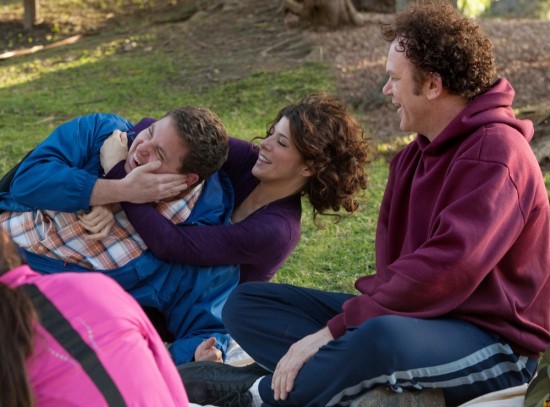
Rounding out the mumblecore minions was Cyrus from the genre-defining Duplass Brothers. Even while having name actors (John C. Reilly, Marisa Tomei, Catherine Keener, and Jonah Hill) as well as a seven million dollar budget to play around with (by comparison, their first film, 2005’s The Puffy Chair, cost $15,000), the siblings have not lost one iota of their charm or sincere humor. And most importantly, these characters and situations (no matter how complicated things get) are explored with depth and honesty. Jonah Hill is still the Jonah Hill from Judd Apatow films, but here he’s finally been allowed to explore his creepy-sad side, enabling a viewer to truly relate to his character, a son who’s a little too overprotective of his single mom. During what was one of Sundance’s greatest 9 a.m. Q&As, the hung-over directors and cast laughed about how they have no clue how to market this film. My suggestion: don’t miss Cyrus, sure to be one of the funniest, and most unexpectedly poignant, films of 2010. Derek Cianfrance’s Blue Valentine features a John Cassavetes-esque relationship that places a couple in the defining moments of their six-year marriage, including flashbacks to their initial meeting. The near-bipolar fluctuations that occur during fights are perfectly captured in this entirely improvised accomplishment. In a New York Times article about the film, star Ryan Gosling said, “It was really important to [Cianfrance] that we build an archive of home video of actual memories, and that we not really discuss or rehearse the scenes. We had fighting days where we just fought all day, and then we’d have to go have family fun day, and just pretend like we hadn’t been fighting all day, trying to have a good time.” Brooklyn folk-rockers Grizzly Bear provide a pitch-perfect soundtrack to the film. Make all efforts to experience Gosling and co-star Michelle Williams at the top of their games, allowed the freedom to dig down deep. Just be prepared for the experience to pull some serious hurt from your heart.

Debra Granik’s Winter Bone is a jaw-dropping study of backwoods meth-makers in the Ozark Mountains (between Southern Missouri and Northern Arkansas). The film has the feel of the Dardenne Brothers (2005’s L’enfant): a young girl attempts to locate her missing father, while her (literally) extended family seem to be hiding something much darker than their meth labs. Genuinely gripping, Winter Bone offered more suspense than I’ve felt in years. I didn’t want this film to end. No wonder it won the Grand Jury Prize and screenwriting award (with co-writer Anne Rosellini), furthering the trend of female filmmakers being recognized for their work (see also: Kathryn Bigelow). The film is an astounding way to kick off a new decade of American independant cinema.

Nothing can prepare you for the ADD insanity of Daddy Longlegs, directed by another team of brothers, fraternal twins Benny and Josh Safdie. This hyper clusterfuck contains an array of randoms, from Abel Ferrara to the children of Sonic Youth guitarist Lee Ranaldo. The film follows a NYC father who’s taking care of his kids for two weeks. Ronnie Bronstein (who directed the equally obsessive and uncomfortable 2007 triumph Frownland) encapsulates everything that our contemporary psychotic and distracted nervous systems are experiencing these days. I can’t think of a more disturbing film that also made me laugh so hard. 

When I heard Juan Carlos Valdivia’s Southern District being compared to the work of Argentinian master Lucretia Martel (2008’s The Headless Woman), I rearranged my entire schedule to see it — most thankfully, as it turned out to be the best film of Sundance 2010. This quiet study of an upper-class Bolivian family and their day-to-day interactions with their butler is captured gorgeously by a hypnotic rotating camera. While making some audience members dizzy (indeed, the film is not for everyone; walkouts ensued), Valdivia and cameraman Paul de Lumen’s brilliance allows the viewer to feel as if they are actually living in the house, feeling the minutes and hours slip by. How they were able to construct such complex camerawork, working within a house filled with so many reflective surfaces, combined with all of the actors improvising, is beyond comprehension. Winner of Sundance’s awards for excellence in world cinema for dramatic directing and screenwriting, Southern District may well be this year’s minimalist cinematic treasure..

And, for good measure, some honorable mentions (and misses):

Spencer Susser’s Hesher was one of the festival’s most-anticipated films. Joseph Gordon-Levitt delivers a performance so memorable that it may kick start a whole new generation of headbangers. His surprisingly crass dialogue sent many older audiences heading for the snowy outdoors, while that only made things all the more intriguing for those who stayed. The film does have some awkward shifts in tone from one scene to the next; at times, Hesher feels like it’s caught in between a pissed-off teenager and the baffled parent who’s trying to teach him a lesson.

Diane Bell’s Obselidia won not only Sundance’s award for best cinematography (for lensman Zak Mulligan), but also the Alfred P. Sloan award, which goes to films that focus on themes of science or technology. Previous awards have gone to Werner Herzog’s Grizzly Man (2005) and Shane Carruth’s Primer (2004). The film explores our ever-changing realtionship with “stuff.” As we throw out perfectly good items for whatever the newest model or invention is, what will happen to these old things that not only are still working but may even be better in quality and usefulness, like LPs, rotary phones, VHS videos, pens and paper? Ironically the film is shot using a Red Camera system which brings a level of High Definition so striking that you may have already thrown away your Canon GL-2 miniDV cameras and Sony HDCAMs to get one. This quirk-fest poses wonderful questions on the turn of a new decade, but unfortunately, the film slips into that dreaded, curmudgeony-elitist blabber (“Kids today just don’t understand Robert Bresson!”) that often comes from older generations who cling to ye olden times — as if their “walking uphill both ways” methods are somehow better than anything new.   

Adam Green’s low-budget Frozen hypnotized midnight audiences. The horror film strands three snowboarders on a ski lift and forces the audience to watch them die slowly. The truly screamworthy surprises balance out the awkward mistakes of discontinuity, including some irregular frozen-face ice (and the the lack of seeing the characters’ breath throughout the film). In any case, Green has proven he can freak an audience out. Can’t wait to see what comes next from him.
And lastly, Danny Perez’s hourlong music video for psych-folksters Animal Collective, Oddsac, felt like an amalgamation of images that play behind the band while they play live. As it happens, Perez is the tour manager for Black Dice and has gone on tour as the image designer for Animal Collective’s tours.

Stay tuned for Jesse Hawthorne Ficks’ take on Sundance 2010’s documentaries, coming soon!

John Yoo’s torturous book tour

1

By Adrian Castaneda and Steven T. Jones

John Yoo – the infamous author of legal memos justifying torture for the Bush Administration and a controversial UC Berkeley law professor – continued his surreal book tour yesterday, stopping in San Francisco yesterday to appear on KQED’s forum.

And while host Michael Krasny did little to challenge Yoo’s tortured logic, including the ludicrous assertion that tactics like waterboarding are legal because they weren’t specifically outlawed by Congress, two callers who are lawyers correctly noted that the U.S. is bound by several treaties that bar torture, as well as inhumane or degrading treatment of prisoners, which the U.S. clearly engaged in based on Yoo’s legal advice that only pushing a prisoner to the brink of death or major organ failure constitutes impermissible torture.

One of those callers specifically asked Yoo why his memo to the White House – written in the wake of 9/11, which Yoo considers an “unprecedented” event that conveyed great new powers to the president – didn’t cite the U.S. constitutional provision that makes Congressional-approved treaties the “supreme law of the land,” comparable to any other laws Congress approves.

Yoo never answered that question, and Krasny quickly dropped the issue to quote an e-mail that was supportive of Yoo, the only such comment during the hour-long show. It’s a shame that Krasny was far easier on this locally infamous figure than the Daily Show’s Jon Stewart, whose interview with Yoo last month was far tougher and more revealing.

That’s particularly galling given that is was just last week that the Department of Justice issued its final report criticizing Yoo’s “flawed legal reasoning” even though it stopped short of finding professional misconduct that would warrant criminal sanctions or disbarment. That final report by David Margolis of the Justice Department overruled a preliminary report by the Office of Professional Standards that did find professional misconduct based on the fact that Yoo “knowingly provided incomplete and one-sided advice” to justify the Bush Administration’s desire to torture detainees that it dubbed “enemy combatants.”

Protesters with World Can’t Wait and other groups have been hounding Yoo on his tour to promote his new book, “Crisis and Command: A history of executive power from George Washington to George W. Bush,” calling him and Jay Bybee (another Bush Administration lawyer who approved torture and is now a judge on the Ninth Circuit Court of Appeals in San Francisco) to be tried for their role in facilitating war crimes.

“These are men covered with the blood of countless victims of unspeakably cruel torture, rendition, and imprisonment without any recourse to trial in hell hole dungeons across the planet,” reads a World Can’t Wait missive.

For his part, Yoo is unrepentant and dismissive of critics, repeatedly citing unnamed polls that he says indicate most Americans support the so-called “enhanced interrogation methods” and believe they have prevented terrorist attacks. “I don’t think the majority of the American people think we went too far,” Yoo told Stewart.

On Forum, Yoo criticized the Office of Professional Responsibility’s finding as “shoddy,” saying that the investigators did not take into account the pressure and national urgency of the months just after the 9/11 attacks. Yoo placed blame for the torture scandals not on the one-sided misinformation in his legal briefs but on the fact that Congress didn’t create specific laws to define torture technique after adopting international torture treaties into American law. Yoo also blamed Congress for its inability or unwillingness to reign in the President’s broad wartime powers. “Congress still has enormous authority over national security matters when it chooses to use them,” he said.

Congress also has the power to subpoena Yoo and hold public hearings on the latest Justice Department report, which critics say whitewashed what many consider to be blatantly illegal activities by Yoo and other Bush Administration officials – or to formally support the indictment of Yoo and others by a Spanish judge investigating U.S.-approved torture — if it chooses to do so.

Sunday parking in the Mission

15

I’m not surprised that merchants in the Mission want to retain free parking on Sundays. Times are tough for neighborhood businesses, and anything that would seem to discourage customers is frightening.


Of course, if the city doesn’t expand parking meter hours, it’s going to have to make even further cuts in Muni, which could impact the merchants even more.


But the thing that always kills me about this discussion is all the illegal parking that goes on every Sunday all over the Mission. The entire center of Valencia Street is a big parking lot — and nobody ever gets a ticket. That’s because the cops have an unwritten, uncodified, long-standing policy of letting people park in the middle of the street if they’re going to church.


If we’re going to turn the streets into parking lots, fine: Let’s allow people to park there and go to breakfast at a local restaurant, or go shopping at a local store, or go to yoga at a local studio. Ofrelse — much better, in my mind — let’s start charging the churchgoers for the right to clog up the streets. Then maybe we won’t have to extend meter hours.


Nothing against churchgoers, of course. But if they don’t want to pay for parking, they can ride the bus to services. It’s far more holy to take the bus, anyway.


Now, let’s see: Which San Francisco supervisor wants to take on THAT political nightmare?