SFBG Blogs

Breakfast with a hot Guerrilla

9

By Robyn Johnson

My social media tuning fork started vibrating with reports of a new street food vendor making ground in Oakland. My unmitigated Oaktown pride compelled me to investigate.

Guerrilla Grub has indeed set up shop at the prime commuter hub of the MacArthur BART stop, serving breakfast burritos out of a pushcart adorned with its evocative fist-gripping-a-fork logo for early morning riders. Besides the hot dog guy, I have never seen a street food vendor at MacArthur. In fact, outside of Fruitvale taco trucks and the odd ambitious cupcakers at Art Murmur, I haven’t seen a street food vendor anywhere in the East Bay. Could a true revolution be at hand?

Guerrilla Grub is not a bad start by any means.

Although there’s nothing that you wouldn’t find outside of a “traditional” breakfast burrito — flour tortilla, scrambled eggs, potatoes, sautéed onions, salsa, cheddar cheese, and a chorizo option — it’s put together with a competency that makes one darn savory (yet not overwhelmingly heavy) morning meal.

I went with the chorizo version to maximize my pleasure. At three bucks, it was well worth it. The chorizo did not perspire grease, as it is apt to do, and the red potato pieces added a nice, solid texture. The spiciness was enough to keep it exciting but not too overloaded for the typical norteno palate… my lips were tingly and my nose was running, but I loved every minute of it. Upon first try, it wins for flavor, non-sogginess, balance of flavors, and for perfect portion size. I usually feel like I’ve OD’d on carbs after a burrito, but Guerrilla Grub’s fare is the right size to energize commuters just beginning their day.

All in all, the revolution gets my fist pump of approval. Hopefully, Oakland will see more carts in the future.

Live Shots: De La Soul, Yoshi’s Fillmore, 02/12/2010

1

By Chhavi Nanda

Word came that De La Soul’s flight was delayed, but they’d still make it. Anticipation levels rose to a fever pitch in the crowd. Fumes from the blunt smoke hazed the faces of the eager fans. Then finally, they made their entrance on to stage chanting “De La” with the audience responding with a unison scream “Soul!”

Hip-hop legends and creators of one of the greatest albums ever (1989’s 3 Feet High and Rising), De La Soul put on a gonzo show at Yoshi’s in the Fillmore. As soon as I arrived, I got on to the dance floor and scurried to the front. I was standing next to two men, one of whom told me, “We’ve been waiting for this shit for 10 years.” They came ready to wave their hands in the air, and were well-equipped with all the necessary paraphernalia for a De La Soul gig. The man next to me had a pair of De La Soul Nikes in his bag, never worn, and a silver sharpie, which the band members used to autograph them.  He was accompanied by his cousin with an old cassette of Buhloone Mindstate, De La Soul’s third full-length, produced by Prince Paul, which was also signed.

De La Soul worked the nostalgia hard, summoning the golden age of hip-hop with its characteristic innovative wordplay and almost hallucinogenic diversity of metaphor.The crowd was reminded how far back (and ahead) we all were from Gucci Mane.

The V.I.P.’s may have revelled in their loft seats, but the heart and soul of the show was on the dance floor. De La Soul set a reminiscent feeling through everyone’s bodies, singing and flowing joints we hadn’t heard in years. Tracks from 2009 mixtape Are you In: Nike + Original Run, produced by Flosstradamus, fit seamlessly into the flow and got the crowd crazy. The effect was timeless — and sweat-drenched.

Gung Hay Fat Choy!

0

If 2010 wasn’t enough new year for you, fret not — for Chinese New Year is upon us in all its glory. The holiday season (which actually started on Valentine’s Day) culminates this weekend with a firecracker explosion of Asian culture and showmanship. San Francisco does the new year big, bigger than any city outside of Asia, in fact. We suggest you get out your red clothes, mandarin oranges, and yusheng raw fish salad (all believed to bring good fortune for your next 365 days) and hit up some of the following events. This is one of those weekends that make our city great.

Miss Chinatown U.S.A. Coronation Ball

The story goes that after they fought in WWII, Chinese-American servicemen wanted some pin-up girls of their own, forming the Miss Chinatown pageant so they could watch lovely young ladies of SF strut their stuff — misogynist or proud of their ethnic community? Either way, last year’s winner, Miss Cindy Wu of Houston enjoyed dancing, volleyball, reading, and bowling. What new Renaissance woman will take home the crown this year? Drop the dough for the spendy tickets and you can find out for yourself, no-host bar and dinner spread included!

Fri/26 6 p.m., $120

San Francisco Hilton & Towers

333 O’Farrell, SF

(415) 982-3000

www.chineseparade.com


Southwest Airlines Chinese New Year Parade

Counted as one of the top parades in the world, the Southwest Airlines bash has become San Francisco’s top celebration of Asian culture, featuring Gum Lung, the famous SF dragon who dances hundreds of feet long, school dance and music groups, and wild feats of float-making. Snag your curb seating early for the illuminated magic — downtown gets packed.  

Sat/27 5:15 p.m., free (bleacher seats $30)

parade route (below) starts @ Market & 2nd St., SF

www.chineseparade.com


Spring Festival Celebration

One of our favorite parts of CNY when we were kids was receiving red envelopes full of chocolate coins for good fortune in the new year — and, if you had luck on your side you got some cash in there, too. Answer three riddles correctly at the Chinese Cultural Center’s fair and you’ll cash in with a crimson satchel of your own. Be sure and check out the celebration’s daily lion dance at noon, get your fortune told and try not to hurt yourself at the Chinese paper cutting demonstrations.

Sat/27 & Sun/28 11 a.m.-4 p.m., free

Chinese Cultural Center

750 Kearny, SF

(415) 986-1822

www.c-c-c.org


Chinatown community street fair

Sure, now it’s the first stop your out-of-towner relatives want to make when they come to visit, but Chinatown means much more than affordable back scratchers and vacuum-sealed squid snacks. The hood’s been a balm to Chinese-Americans since the 1850’s. Its where they weathered the storms of nativism, erecting their now-famous pagoda buildings to burnish their “foreigner” image. This weekend the streets come alive with vendors, a petting zoo, and exhibitions of acrobatics, martial arts, calligraphy and craft making.

Sat/27 10 a.m.- 4:30 p.m., Sun/28 9 a.m.- 5 p.m., free

middle of fair @ Grant & Pacific, SF

www.chineseparade.com

Just what we need: Guns in the park

23

Okay, here’s some excellent news: You can now carry a concealed weapon in a national park. So when I’m hiking in Muir Woods or the GGNRA, I can look forward to running into a gun toter. I hope my dog doesn’t pee on his leg.


Hey Matier & Ross — PG&E is no security blanket

8

Today’s San Francisco Chronicle piece by Phillip Matier and Andrew Ross brought to mind a Pacific Gas & Electric Co.-sponsored Web site that was set up to undermine the city’s fledgling Community Choice Aggregation (CCA) program.

That’s because one of the key points in the story was that San Francisco’s CCA could result in higher customer bills. According to the Chronicle:

“A 2007 city controller’s report concluded that a typical residential utility bill under this type of plan could go up by 24 percent if only half the purchased energy is green. The cost would almost certainly go even higher if the city went totally green, the report said.”

This city controller’s report is referenced on the PG&E-funded Web site, too, and this supposed 24 percent increase was splashed prominently across colorful outsized postcards that the PG&E-sponsored “Common Sense Coalition” sent to businesses and residences throughout the city last December. However, San Francisco’s Local Agency Formation Commission (LAFCo), a city commission responsible for setting CCA in motion, maintains that the claim is misleading.

Why?

The controller’s was drafted in 2007, making it an outdated and unreliable source for an economic-impact projection at this time, according to LAFCo Senior Program Officer Jason Fried.

“PG&E is trying to confuse people now … because they know that in a month or two more, we’ll have a contract” with actual figures to go by, Fried told the Guardian. The city is still in negotiations with Power Choice LLC, the firm selected to handle power purchases, and so it has yet to determine a long-term pricing plan. Fried also pointed out that the 24-percent increase noted in the controller’s report only pertains to electricity generation charges, and not the entire customer bill.

While the report did caution against a potential increase in prices, it also made it clear that the figures were preliminary. Here’s an excerpt:

“San Francisco’s CCA process has not yet advanced to the stage where any definitive economic impact statement can be made. A detailed economic impact assessment will not be possible until the RFP process is complete, a structured long-term rate plan has been submitted, and an opt-out penalty has been set. [NOTE: As of February 2010, the RFP process is complete, but the other two steps haven’t been definitively nailed down yet.]

The proposed implementation of CCA could lead to greater competition in the City’s electricity markets, lower rates for consumers, and a greater reliance on local sources of renewable energy and conservation. Such an outcome would benefit the San Francisco economy and the global environment.”

Since this PG&E-sponsored propaganda campaign got underway, a figure unearthed from this three-year-old report is popping up everywhere, including in the Chronicle.

More importantly, the focus on a potential rate increase under CCA ignores an important question: Is the status quo any better?

Even if CCA did drive up prices, it seems that sticking with PG&E as the region’s sole electricity provider might not be any cheaper in the long run. For example, the following appeared a Feb. 19 article in the Wall Street Journal:

“In December, [PG&E] asked state regulators for permission to raise customer rates 19% or $1 billion in 2011, with additional rate hikes of about $550 million from 2012-13. … The outlook for the increases is unclear, as consumer advocates have vowed to fight them, citing PG&E’s already higher-than-average utility rates, California’s relatively high 12.4% unemployment rate and the state’s ailing economy.”

There are other factors to think about, too, like the dynamic environment we live in and how the cost of a finite energy resource will fluctuate in the long run. The Chronicle piece quotes Severin Borenstein, co-director of the Energy Institute at UC Berkeley’s Haas School of Business, as saying San Francisco’s CCA is “fraught with danger.” This statement seems to ignore what environmentalists have been saying for years, which is that the status quo itself is a treacherous path to go down.

A key difference between San Francisco’s CCA and PG&E’s energy mix is that CCA would rely more heavily on green energy sources, with a goal of offering 51 percent of its energy from renewable resources by 2017 with the plan to transition eventually to 100 percent renewable power. Meanwhile, PG&E is making snail-like progress toward a 33 percent renewable-energy standard by 2020 that is mandated by state law.

In the long run, many experts tell us that energy derived from fossil fuels will be more susceptible to price volatility than wind and solar — especially with added environmental pressures that scientists predict will result from climate change. A future characterized by less rainfall threatens to drive up energy prices, according to the Union of Concerned Scientists, because California gets about 20 percent of its electricity from hydropower, and could be forced to purchase from an outside provider in years of extreme drought. Hotter summers are also expected, which could lead to a higher demand for electricity when everyone is running air conditioners.

Energy analyst Laura Wisland of the California office of the Union of Concerned Scientists put it this way: “We can’t afford not to take advantage of the renewable-energy resources in our own backyard. We will save money, because we will become less dependent on fuels that have more volatile prices.

“We know that we have an exhaustible supply of fossil fuels,” Wisland added. “We know that we have an inexhaustible supply of wind and sun. In the long term, we see renewable energy as investing in … more price certainty and cleaner air — and that can benefit all Californians.”

Snap Sounds: Elephant9

0

ELEPHANT9

Walk the Nile

(Rune Grammofon)

Norwegian power trio Elephant9 lays on the acid-laced, “wildly cavorting in fields of fusion” prog — light on the kraut and pop, more in tune with the jazz — on their second long-player, Walk the Nile.

The focus here is the Hammond organ, rising above the group’s furious improvisations and unpredictable tonal shifts. Keyboardist Stale Storlokken (Supersilent), drummer Torstein Lofthus (Shining), and bassist Nikolai Eilertsen (National Bank) rove through such varied jams as the manic, Melt Banana-eesh “Hardcore Orientale” and the more ruminative, slow-building “Habanera Rocket,” like it’s the most natural thing in their wild kingdom. Long may these Scandinavian powers roam.

Why taxes need to be on SF’s budget table

18

San Francisco missed an opportunity last fall. While communities around the Bay Area were approving new revenue plans, addressing devastating budget cuts in part by raising their own taxes, San Francisco’s mayor and supervisors were sitting on their hands, bewailing the fact that passing tax measures is tough.

But this year’s budget is even worse than last year’s, and the cuts are going to be even more brutal (particularly when you realize that the cuts will come on top of several years of previous cuts). And still, nobody at City Hall seems to be putting forward any plans to mount a campaign for new revenues in the fall.

It’s not that hard a sell, really. Brian Leubitz has an excellent report on Calitics about a new poll showing how people in California feel about pressing issues. Budget cuts are a serious concern; so is employment and the economy. Taxes don’t even rate.

In other words, even across California, where the population is far more conservative than it is in San Francisco, people worry more about budget cuts than about taxes.

If the supervisors and the mayor made even a half-serious effort to get the message out — you can raise these taxes or you can accept these cuts — I think more than half the voters (all you would need this November) would go for the new revenue, easy.

At this point in the budget cycle, this ought to be not only on the table but front and center. We should have half a dozen different revenue plans in the works; legislation should be floating around, the Budget and Finance Committee should be holding hearing, the Controller’s Office should be studying the impacts and issuing reports, and the supervisors should be preparing to include the potential revenue from a November ballot measure in their 2010-2011 budget calculations.

Why isn’t this happening? It’s almost March, and the mayor will be delivering a budget in less than three months, and at that point the supervisors will have a short few weeks to deal with devastating cuts. And it will be too late at that point to start the debate over new revenue sources.

This is the year, folks. Let’s get on the stick.  

This is what you get, Gavin

0

For hiring a scorched-earth guy like Garry South, who will turn on you in a second.

Timothy Leary: now for cats

0

Olympic ice dancing had me in its graceful, creepy thrall last night — until this freaky Friskies psychedelic ash-id trip took all that gliding glitter to a whole nutha level. Yes, The Awl has live-blogged it.

A look back at the 2010 Sundance Film Festival (part one)

0

Over the years, the Sundance Film Festival has become known for its superior documentary selections, exciting experimental programs, mumblecore masterpieces, a few foreign delights, and buzz-worthy indie flicks that eventually become the year’s most under or overrated. The 2010 festival was no exception. Make sure to mark down any of these movies that sound interesting for the upcoming year — for some reason, post-Sundance film releases seem to be shorter, smaller, and becoming even non-existent. (Johan Renck’s decade-defining Downloading Nancy, which screened at Sundance in 2008, was finally released straight to DVD this past month.) Read on for the first in a series of posts detailing my top picks at this year’s fest.

Drake Doremus’ aptly titled Douchebag achieved the festival’s greatest achievement: I heard the word “douchebag” being used in every Utah restaurant, shop and theatre. Luckily the film also does a bang up job as it follows a beardo older brother (on the verge of his wedding) who takes a wild road-trip to find his younger brother’s fifth grade girlfriend. Not only will it cause you to mutter the word douchebag multiple times, the film perfectly captures the dominating and destructive characteristics of certain family members. Even the couple sitting next to me who said they “hated mumblecore films” loved Douchebag. David Dickler’s debut performance as the titular d-bag older brother should have been recognized when awards night came around.

Dickler also edited the film, a fact which brought attention to his quiet career in the medium. He edited Me and You and Everyone We Know (2005), Borat (2006), and Anvil! The Story of Anvil (2008). And at a compressed running time of 81 minutes, Douchebag is the most fun you’ll have hating a character this year.

One of Sundance’s hottest ticket was for Lisa Cholodenko’s The Kids Are Alright. Cholodenko won Sundance’s screenwriting award for her first film, High Art (1998); her latest is a pitch-perfect family drama for the Y2teens. Two kids who were raised by two different type of mothers (Annette Bening and Julianne Moore) track down their surrogate father (Mark Ruffalo) and find him to be a progressive, free-wheeling lone wolf. The film’s progression is presented with such confidence and sensitivity that the film transcends its sign of the times vibe, giving the viewer the feeling that it’s predicting the future.

Coincidentally, John Waters’ new film, Fruitcake, starring Johnny Knoxville and Parker Posey, also follows a boy (who runs away from home after his parents are busted for stealing meat at the grocery store) who meets up a with a girl who was raised by lesbian parents and who is looking for her surrogate father.

Pipiloti Rist’s Pepperminta is an inspired, unofficial remake of Czech New Wave director Vera Chytilova’s Daisies (1966). Its psychadelic set and color design felt like an episode of Pee Wee’s Playhouse wrapped up in feature-length Skittles commercial. Many audience members were overwhelmed by the film’s aesthetic, but those who finished it were rewarded with a killer quest through anarchy, feminism, and fearlessness. For anyone who’s been inspired by the music of Kate Bush and Björk, or the children’s books starring Madeline and Pippi Longstocking (after whom the director was nicknamed), this is the movie for you. Rist brings an excitement and inventiveness not only to the screen (and her wardrobe, showcased during the movie’s Q&A), but also to the multimedia exhibit that she also created to compliment the film. Don’t miss seeing Pepperminta in a theater.

Following his previous features I Stand Alone (1998) and Irreversible (2002), enfant terrible Gaspar Noe has now taken the digital revolution to a psychedelic hell with Enter the Void. The warning signs to epileptics upon entering the theater that a strobe effect was used throughout the film kicked things into overdrive right off the bat. Utilizing first person digicam, Noe takes the audience into strobing sexual scenes, deafening drug benders, and all-around supernatural swirly stuff … for two hours and 41 minutes! The film will eventually be released in two versions: a director’s cut and a commercial cut, which will run one reel shorter (by 20 minutes).  Pondering if this epic journey was made to watch while you are on drugs or instead of doing drugs is almost as debatable as the final moment of the voyage (it truly is worth it to make it all the way through to the end!)

Zeina Durra’s The Imperialists Are Still Alive explores a group of Manhattan socialites who by day, talk and make self-righteous Post-Modern art, but by night, wander the city looking for late night parties and showing off their audacious new dresses. Asya (played with a perfect balance of ignorance and irony by Elodie Bouchez) is not only participating in this scene, she’s also worrying herself sick about a kidnapped friend in Lebanon (the film takes place during the 2006 Israel-Hezbollah conflict). While Variety pointed out that the film’s title is taken from Jean-Luc Godard’s La Chinoise (1967), it’s the consistent ironic undertone that feels truly Godardian; no doubt it’ll  put off many audiences (more than half of the audience in the press screening left early.) The director was slammed after her introduction for being too pretentious and proud of her work. But that is exactly what rings so true to me about this mini-masterpiece, that reflection of our current contradiction that many of us living in big cities find ourselves in: We know and “care” so much about world events, yet seconds later we’re arguing about the Academy Award nominations. Irony is alive and well.

Coming tomorrow: Jesse Hawthorne Ficks’ top five picks and honorable mentions from the 2010 Sundance Film Festival.

SF Weekly mangles Mexican politics

1

The SF Weekly, in its continuing effort to make everything the progressives in San Francisco do look stupid, just stepped in a major turd. A piece by Matt Smith seeks to trash the supes for passing a resolution supporting Mexican electricity workers against an effort by the Mexican government to privatize the nation’s electricity system.

He notes:

However, the government of Mexico felt this one to be so egregious as to warrant fact-checking. As it happens there was no privatization. The government transferred Luz y Fuerza del Centro to a much larger power utility called the Comision Federal de Electricidad — which is, you guessed it, also government-run.

 His single source for that information? The (utterly unbiased, of course) Mexican consulate.

Well, John Ross, our Mexico City correspondent, who has lived there more more than 25 years, has written several books on Mexican politics and is nationally known an expert in the area, has written about this issue extensively. I just sent him Smith’s blog post, and here’s how he responded:

Consul general Carlos Felix Corona’s response to the Board of Supervisors resolution re Felipe Calderon’s efforts to break the mexican electricity workers union (SME) is disingenuous. The Luz y Fuerza Company was forced to buy electricity from the federal electicity commission (CFE) at an exorbitant price, with the costs then passed along to the consumer by presidential fiat. The CFE itself now buys a third of the electricity it generates from private corporations — in violation of the Mexican Constitutionl, which ascribes electricity generation as a state function, thus privatizing electricity generation in Mexico City and five other states in the center of the country. According to the SME, whose workers were forced out of the generating plants and which the Mexican Labor Commission has now stripped of its authority to represent the workers, Luz y Fuerza lines will now be sold off to W Communications, a Madrid-based transnational represented in Mexico by two ex-energy secretaries (Calderon himself is an ex energy secretary). W Communications is expected to install fiber optic cables on the old Luz y Fuerza lines. The Calderon administration will no doubt wait several months to seal this deal until the clamor about priviatization recedes. But the contracts have been signed, so don’t be fooled by the consul’s disingenuous response that Luz y Fuerza has not yet been privatized. Now that US unions and the SF Board of Supes have expressed their solidarity with the electricity workers, Felix Corona, a shill for calderon, seeks to bamboozle San Franciscans that all is honky dory South of the border and that protest marches that regularly turn out a quarter of a million Mexicans are just the work of a few malcontents  

So there’s another side to this story, Matt, and the consulate is hardly a trustworthy source.


Philosophy, get hip: “The Examined Life” comes to the Herbst

0

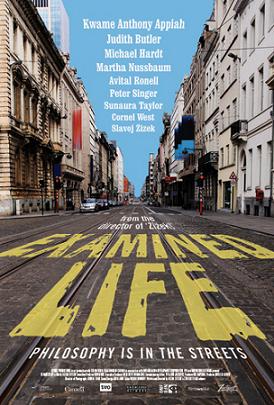
In new documentary The Examined Life, eight of the most famous minds in contemporary philosophy — Cornel West, Avital Ronell, Peter Singer, Kwame Anthony Appiah, Martha Nussbaum, Michael Hardt, Judith Butler, and Slavoj Zizek — seem almost unintimidating. Detached from the props of intellectual life and presented in public setting away from rapt crowds, miked podiums, and the protective custody of academia, these philosophers appear comfortingly average, for entire milliseconds. For instance, on a sunny afternoon, post-structuralist scholar Judith Butler could almost be any other leather-jacketed San Francisco Missionite with a cool haircut ambling down Clarion Alley, perhaps en route to Thrift Town for some more leather jackets. That is, until she begins to discuss, in a slow and deliberate manner with eyes fixed intently into the middle distance, the body’s morphologies as experienced by the subject. Cover blown.

Examined Life director Astra Taylor will be appearing — along with philosopher Judith Butler and activist-artist Sunaura Taylor (who appears with Butler during the segment filmed in Clarion Alley) — at a screening of her film at the Herbst Theater on Thu/25, at 7:30 PM. The three women will participate in a discussion and Q&A session following the screening.


In the last few years, Astra Taylor has become known for her documentaries about philosophy. Previously, she directed the film Zizek!. I hold Zizek! partly responsible for introducing American hipsters to the Slovenian Lacanian-Marxist with saliva glands as hyperactive as his intellect who so rapidly became for youngish creativeish urbanites a sort of Mitteleuropean Moses to Marx’s Abraham.

As a documentary filmmaker, Taylor is no neutral observer; she openly reveres her subjects. Though it has been criticized (A. O. Scott of the New York Times said the film was “too glamorized by its brainy stars to engage them critically”), Taylor’s reverence is fine by me. These eight philosophers are inspiring people who make it their business to think their way through some of life’s most difficult questions. Furthermore, I prefer to keep my philosophers on a pedestal, even when they’re rambling about jazz in the back of someone’s Volvo (ahem, Cornel West).

http://www.youtube.com/watch?v=1zwmum5_ofU

To be fair, Cornel West could talk about his favorite lunch foods and I would find it interesting. ‘Cerebrities’ opining about anything, literally anything, makes for entertainment. In this film, the entertainment value is heightened by some particularly bathetic physical settings. Taylor aims to represent her philosophers outside of the stereotypical realm of academe, and she attempts this by filming them in public places that are both neutral to the philosophers’ private lives and exist outside outside the structured environment of the workplace. In The Examined Life, Appiah is interviewed while waiting around at the Toronto airport. Hardt is filmed rowing a wooden boat, with some difficultly, on a lake in Central Park that is congested with loud, unseemly geese. And, not to be outdone, Zizek requested his segment be filmed at the dump.

But, funny public settings notwithstanding, there is a discernible soapbox in each section of The Examined Life, one all eight philosophers in the film are given time to use carte blanche. Each thinker is provided an open forum to deliver decontextualized soliloquies as if at an imaginary podium in front of some metaphysical audience, and the camera eyes this dotingly. Pretentious? Yes, but forgivably so. With their contributions to their disciplines, these eight thinkers have the right to believe they have important things to say. Watching them, I am inspired to think more critically and rigorously, perhaps from a contact high off the glaring epistemological glow.

In the middle of all this talking, the philosophers do experience occasional challenges in presenting their ideas in a way that make sense to listeners. This is to be expected; even if you limit the scope of the discussion, it is impossible to unpack an ‘examined life’ in the time it takes to watch a movie. I commend these philosophers for trying at all. I also commend them for managing to not be dull, even when in their labyrinthine monologues they’ve lost me completely.

For those interested, I encourage you to attend the screening at the Herbst Theater. If philosophy is the enormous pharmacy we raid to cure ourselves of an unexamined existence, and if an actual philosophy class would be akin to the smallpox vaccine, then The Examined Life is the equivalent a mild herbal supplement. While this film won’t heal anyone of a painfully unexamined existence, a dose of it has its benefits. Think of it as a gateway drug. A documentary may proffer only a minute, highly mediated glimpse into how a philosopher thinks, but it does have the power to ask an non-philosophizing audience to think more philosophically.

Herbst Theater
Thu/25, 7:30PM, $25
401 Van Ness, SF.
(415) 621-6600
www.cityboxoffice.com

Live Shots: Erykah Badu with Dave Chapelle and Goapele, Fox Theater, 02/19/2010

1

It’s 1998 and I’m on a trans-Pacific flight to Japan with my mom to visit my “Japanese grandma” Kiyo. I’ve just received my first mix tape from my super-cool older “sister” Leenie, with cuts on it that range from the Runaway Bride soundtrack to Sash!’s Encore Une Fois. And then there’s one of the last tracks, “On and On” by Erykah Badu. I blast this tape on my walkman for almost the whole 17-hour flight and play it throughout the trip, from bullet train rides through lush fields of tea plants to visually overstimulating jaunts in the neon-saturated neighborhood of Shinjuku in Tokyo.


So when Erykah Badu performed on Friday night at the Fox Theater, to a sold-out audience, nostalgia was running through me at full force — and probably not just for me, but also for a few others in the audience. Dressed in an excessive amount of layers, Badu took the stage with poise and energy, after a surprise introduction by Dave Chapelle. With her fifth album coming out in March, titled New Amerykah Part Two (Return of the Ankh), Badu had a confidence on stage that can only come after years of performing in front of adoring audiences. She also seemed to be having a lot fun with her music, introducing the eerie sound of the theremin into her pieces.

http://www.youtube.com/watch?v=-CPCs7vVz6s

Goapele, hailing from Oakland, opened for Badu and got the evening started with some cool R&B tunes, including songs from her new album Milk and Honey, which comes out this spring. Goapele not only had a blast on stage, but her outfit was beyond sexy and her hat was an art piece unto itself.

Badu sang On and On at Friday’s concert and there I was, totally 14 again, running around Japan. So now I must ask: Where does Badu take you?

Newsom’s getting closer

19

There are really only two obstacles to Newsom’s jumping into the Lt. Gov.’s race. One is the possibility that he might lose, but he would be the instant front runner. The other is the supposed fear of leaving the city in the hands of whatever mayor the Board of Supervisors chose.

And according to the Chron’s politics blog, he’s gotten over the second hurdle:

“It’s no surprise I’m looking at running for another office,” he continued. “I’m out of here. I’m termed out anyway…I do take my job seriously, but I’m capable of doing a lot of things at one time. By definition, it’s a skill set I must have.”

He added that if people are so concerned about one of the supervisors becoming mayor for the year before the next scheduled mayoral election, maybe they shouldn’t have elected them to the board in the first place.

“If it’s just concern with me leaving, maybe they should look at who they elected,” he said.


Clean money campaign launches in SF

0

The campaign for Prop. 15, the California Fair Elections Act, kicks off in San Francisco this Sunday afternoon. It’s an appropriate city to launch this effort, given San Francisco’s leadership on electoral reform, from our pioneering ranked choice voting system to our low political contribution limits to the public financing available in the races for mayor and the Board of Supervisors.

As I discussed in an article this week’s paper, the measure would create a pilot public financing program in the 2014 and 2018 races for the Secretary of State, funded by a $350 annual fee on lobbyists and their employers. It was placed on the ballot by legislation pushed primarily by Bay Area legislators Loni Hancock, Mark Leno, and Tom Ammiano.

Those legislators, along with Sup. Ross Mirkarimi, campaign chair Trent Lange, and California Nurses Association president Deborah Burger, are scheduled to speak at the event, with takes place at 1 p.m. outside the Main Library, 100 Larkin Street.

Feeling Nice’s analog Avatar chic

0

Just in time for spring (and a Primal Scream revival) comes the promo for local design collective Nice‘s spring 2010 “The Gathering” line — complete with psychedelic military projections.

Berkeley’s mayor pushes anti-PG&E protester

3

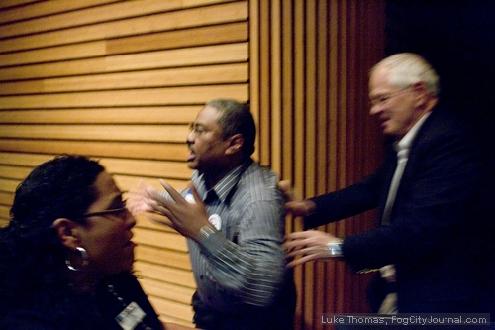
At least, that’s what Luke Thomas is reporting in Fog City Journal. He’s got photos, too.


The way the story goes, Bates was speaking at a PG&E-sponored forum, and Mark Toney, director of The Utility Refrom Network (TURN) came up uninvited to speak out against Prop. 16.  So the mayor of Berkeley physically pushed him out of the way.


Now, why Tom Bates was speaking at a PG&E-sponored forum (and saying nice things about the company) at a time like this is beyond me. And typically mayors don’t take it upon themselves to eject protesters from meetings.


I’ve got a call into Bates for comment, but his staff hasn’t gotten back to me.


State by state, unions matter

0

Dick Meister, former labor editor of the SF Chronicle and KQED-TV Newsroom, has covered labor and politics for a half-century. Contact him through his website, www.dickmeister.com, which includes more than 250 of his recent columns.

Union members invariably have better pay and benefits than non-union workers. But, as a new study shows, the number of workers who’ve joined unions varies widely from state to state.

Even in some states with a relatively high number of union members, the number is only a small percentage of the state’s overall workforce, according to the study by the Center for Economic and Policy Research.

For example: Texas , the country’s second largest state, has the eighth highest number of union members — 615,000. But that’s only 6 percent of the Texas workforce. It is, in fact, the country’s fourth lowest rate of unionization and less than half the national average of 13.6 percent.

It’s no coincidence that Texas is a so-called right-to-work state that prohibits unions from negotiating contracts that include union shop provisions which require workers to join the union that represents them in dealing with employers. So why should workers in those states join the union when they can get the union’s services and the pay and benefits it negotiates without even paying dues?

Twenty-one other states have right-to-work laws, most in the South, Southwest and Midwest. They include North and South Carolina, where the percentage of workers in unions is at a national low of less than five percent.  It’s at a national high of more than 25 percent in New York and Hawaii.

California, the nation’s largest state, has the most union members — 2.6 million or 18 percent of its workers.  At the other end of the national scale, the numbers drop way down to Wyoming’s total of less than 20,000 unionized workers, only 9 percent of that right-to-work state’s workforce.

Public employees, who make up 10 to 20 percent of the states’ workforces, have unionization rates ranging from below 30 percent to more than 60 percent.
But what, specifically, do they and the 17 million other U.S. workers who’ve unionized get that other workers don’t get?

 The Center’s study found that union members’ pay is generally about 15 percent higher than that of non-union workers — roughly $2.50 or 15 percent more an hour for an average hourly rate of $6.25.  Union members also typically get benefits that many, if not most, non-union workers lack, such as employer-financed health insurance and pensions.

The conclusion should be obvious. The study’ s author, John Schmitt, noted that the findings show clearly that “unions substantially improved the pay and benefits of workers in every state.”

Beyond that, unionized workers have a greater say, not only about their working conditions, but also in political affairs and community activities, given organized labor’s prominence in such matters.

A large part of the reason many workers nevertheless remain outside of unions is the notoriously lax enforcement of the laws that were designed to guarantee working Americans the unfettered right to unionization. 

His findings, said Schmitt, “strongly suggest that better protection of workers right to unionize would have a substantial positive impact on the pay and benefits of workers in every state.”

The Employee Free Choice Act that’s long been stalled in Congress would provide the needed protection by cracking down on the widespread violation of labor laws. Many employers illegally interfere in unionization drives by disciplining, firing or otherwise intimidating union organizers and supporters.  Even those employers who recognize a union as their employees’ representative often refuse to bargain with the union and discipline employees who protest.

Until the Free Choice Act or something much like it is enacted, the growth of unions in California and every other state will be stunted.
                                         
Dick Meister, former labor editor of the SF Chronicle and KQED-TV Newsroom, has covered labor and politics for a half-century. Contact him through his website, www.dickmeister.com, which includes more than 250 of his recent columns.

Robert Skidelsky: The big bank fix

4

If reformers are to win, they must be prepared to fight the world/s most powerful vested interest

By Robert Skidelsky 

Robert Skidelsky, a member of the British House of Lords, is Professor emeritus of political economy at Warwick University, author of a prize-winning biography of the economist John Maynard Keynes, and a board member of the Moscow School of Political Studies.

LONDON – Two alternative approaches dominate current discussions about banking reform: break-up and regulation. The debate goes back to the early days of US President Franklin D. Roosevelt’s “New Deal,” which pitted “trust-busters” against regulators. 


In banking, the trust-busters won the day with the Glass-Steagall Act of 1933, which divorced commercial banking from investment banking and guaranteed bank deposits. With the gradual dismantling of Glass-Steagall, and its final repeal in 1999, bankers triumphed over both the busters and the regulators, while maintaining deposit insurance for the commercial banks. It was this largely unregulated system that came crashing down in 2008, with global repercussions.

At the core of preventing another banking crash is solving the problem of moral hazard – the likelihood that a risk-taker who is insured against loss will take more risks. In most countries, if a bank in which I place my money goes bust, the government, not the bank, compensates me. Additionally, the central bank acts as “lender of last resort” to commercial banks considered “too big to fail.” As a result, banks enjoying deposit insurance and access to central bank funds are free to gamble with their depositors’ money; they are “banks with casinos attached to them” in the words of John Kay.

The danger unleashed by sweeping away the Glass-Steagall barrier to moral hazard became clear after Lehman Brothers was allowed to fail in September 2008. Bail-out facilities were then extended ad hoc to investment banks, mortgage providers, and big insurers like AIG, protecting managers, creditors, and stock-holders against loss. (Goldman Sachs became eligible for subsidized Fed loans by turning itself into a holding company). The main part of the banking system was able to take risks without having to foot the bill for failure. Public anger apart, such a system is untenable.

Premature rejection of bank nationalization has left us with the same two alternatives as in 1933: break-up or regulation. Taking his cue from Paul Volcker, a former chairman of the US Federal Reserve, President Barack Obama has proposed a modern form of Glass-Steagall.

Under the Obama-Volcker proposals, commercial banks would be forbidden to engage in proprietary trading – trading on their own account – and from owning hedge funds and private-equity firms. Moreover, they would be limited in their holding of derivative instruments, and Obama has suggested that no commercial bank should hold more than 10% of national deposits. The main idea is to reduce the risks that can be taken by any financial institution that is backed by the federal government.

The alternative regulatory approach, promoted by Nobel Laureate Paul Krugman and the chairman of Britain’s Financial Service Authority, Adair Turner, seeks to use regulation to limit risk-taking without changing the structure of the banking system. A new portfolio of regulations would increase banks’ capital requirements, limit the debt that they could take on, and establish a Consumer Financial Protection Agency to protect naïve borrowers against predatory lending.

This is not an either-or matter. In testimony to the Senate Banking Committee in early February, MIT’s Simon Johnson endorsed the Volcker approach, but also favored strengthening commercial banks’ capital ratios “dramatically” – from about 7% to 25% – and improving bankruptcy procedures through a “living will,” which would freeze some assets, but not others.

Many details of the Obama package are unlikely to survive (if, indeed, the plan itself does). But there are powerful arguments against the principles of his approach. Critics point out that “plain old bad lending” by the commercial banks accounted for 90% of banks’ losses. The classic case is Britain’s Royal Bank of Scotland, which is not an investment bank.

The commercial banks’ main losses were incurred in the residential and commercial housing market. The remedy here is not to break up the banks, but to limit bank loans to this sector – say, by forcing them to hold a certain proportion of mortgages on their books, and by increasing the capital that needs to be held against loans for commercial real estate.

Moreover, many countries with integrated banking systems did not have to bail out any of their financial institutions. Canada’s banks were not too big to fail – just too boring to fail. There is nothing in Canada to rival the power of Wall Street or the City of London.  This enabled the government to swim against the tide of financial innovation and de-regulation. It is countries like the US and Britain, with politically dominant financial sectors competing to take over financial leadership of the world, that suffered the heaviest losses.

This is the point that the well-intentioned regulators miss. At root, the battle between the two approaches is a question of power, not of technical financial economics. As Johnson pointed out in his Congressional testimony, “solutions that depend on smarter, better regulatory supervision and corrective action ignore the political constraint on regulation and the political power of big banks.”

Such proposed solutions assume that regulators will be able to identify excess risks, prevent banks from manipulating the regulations, resist political pressure to leave the banks alone, and impose controversial corrective measures “that will be too complicated to defend in public.” They also assume that governments will have to the courage to back them as their opponents accuse them of socialism and crimes against freedom, innovation, dynamism, and so on. In fact, this chorus of abuse has already started, led by Goldman Sachs Chairman Lloyd Blankfein.

There is another interesting parallel with the New Deal. Roosevelt got the Glass-Steagall Act through Congress within a hundred days of his inauguration. Obama has waited over a year to suggest his bank reform, and it is unlikely to pass. This is not just because the banking crisis in 1933 was greater than today’s crisis; it is because much more powerful financial lobbies now stand between pen and policy. If reformers are to win, they must be prepared to fight the world’s most powerful vested interest.

Robert Skidelsky, a member of the British House of Lords, is Professor emeritus of political economy at Warwick University, author of a prize-winning biography of the economist John Maynard Keynes, and a board member of the Moscow School of Political Studies.

Copyright: Project Syndicate, 2010.
www.project-syndicate.org

Snap Sounds: The Bundles

0

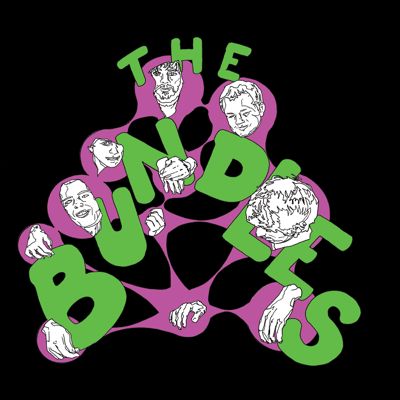
THE BUNDLES

The Bundles

(K, March 9 release)

“Don’t forget about your friends!” pleads Kimya Dawson from the thick of her new down-low supergroup of anti-folk pals and other rough ‘n’ ready types.

Raw rhymes and undercutting quips are the order of the day for Dawson, Jeffrey Lewis, Jack Lewis, and Anders Griffen when they gathered at the Dub Narcotic Studios in Olympia, Wash., last year under the watchful, playful eye of Karl Blau, who ended up joining in for the fun. “The cowboys and the punkers,” howls Dawson, “the fuckers that I conquered!” — all are welcome for these humble and hummable, rambunctious sing-alongs, which evoke both primitive skiffle and rockabilly combos as well as kindred K DIY-ers. The witty lyrics are the real joy here, though when the mellotron begins to wail and the tambourine, snare, and guitar starts to swirl, as they do on “Pirates Declare War,” you can see a long and fruitful coagulation, beyond easy quips and facile joke songs, ahead for the Bundles.

Poll: Voters give $11 billion water bond thumbs down

3

By Rebecca Bowe

There is very weak support across political and geographic boundaries in California for a proposed $11 billion water bond that will go on the November ballot, according to the results of a poll released yesterday.

Just 34 percent of respondents said they would vote yes on the proposed $11 billion bond, while 55 percent said they would vote no. A more detailed breakdown revealed that 32 percent of likely voters indicated that they would definitely vote no, while only 12 percent said they would definitely vote yes.

“This bond is in deep trouble,” said Ben Tulchin of Tulchin Research, the firm that conducted the poll. “No bond has ever won statewide that started with a majority against it. It faces a real uphill battle.” Tulchin Research conducted the poll at the request of groups opposing the bond. The poll surveyed 600 likely voters across California, asking respondents to share their opinions after reading them the title and summary.

Tulchin, who has conducted polls for bonds and ballot initiatives throughout California, said support for proposals typically start at a high point and then decline as the election date nears. “In this case, the bond is starting at a low point,” he said. “In general, you want to see support around 60 percent” to win on a proposal, he said. “This is nothing near that.”

The proposed bond would include funding for a variety of water-infrastructure projects including new dams and reservoirs. Its primary backers include Gov. Arnold Schwarzenegger, who last year said he would reject any water bill that didn’t include a plan to fund new water-storage projects, and major agricultural interests who are concerned about secure water availability for irrigation purposes.

Mark Schlosberg, of San Francisco-based Food & Water Watch, opposes the bond.

“It’s the wrong bond, at the wrong time, and it does the wrong thing,” Schlosberg told the Guardian. He described it as a measure that could result in giveaways to corporate interests, such as developers of major desalination facilities. Some $1 billion of the bond is earmarked to go toward water recycling or desalination projects.

Schlosberg said he expects big agriculture and other backers to spend “tens of millions” in support of the proposed bond. But in the face of high unemployment and cuts to education, public safety and other services, “We can’t afford to spend $11 billion on this boondoggle,” he said.

Meanwhile, Congressional representatives have been airing concerns regarding water policy too. According to this post on Calitics, four members of the house recently sent a letter to Sen. Diane Feinstein blasting her plan to introduce legislation to speed pumping out of the Delta.

The war on suburbs? Huh?

10

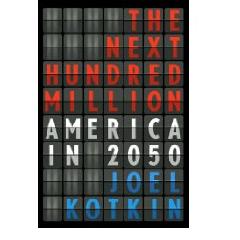
Joel Kotkin, the author and urban scholar, was on KQED’s Forum this morning talking about what he called “the war on the suburbs.” He’s got a new book out, called The Next Hundred Million: America in 2050, and he’s arguing, among other things, that the election of Scott Brown in Massachusetts signals that the Democratic Party and progressives in America have lost touch with the suburbs and are being mean to the poor suburbanites.


He talked, for example, about Tracy, California, and noted that a suburbanite living in Tracy doesn’t want to pay taxes because he doesn’t see what he’s getting for his money. Kotkin sugggestes that the state ought to go back to the Pat Brown era, and focus on spending money on infrastructure, instead of on “state employee pensions.”


Never mind that when Pat Brown was governor, the population of California was less than half what it is today — and the state was far less diverse, had far fewer immigrants, far fewer residents whose primary language is not English and, frankly, was a lot more tolerant of poverty.


That was also before the passage of Prop. 13, so the state didn’t have to spend money on schools and local government; local property taxes covered those things.


In fact, I think what’s going on is just the opposite of what Kotkin is talking about. (He, by the way, says that suburbs are going to be more and more sustainable as more jobs relocate and we start using natural gas in our cars.) I realize that suburban voters can easily shift to the Republican party if the Democrats aren’t careful, but I also think that what’s happening in the United States today is not a war on suburbs but a war on cities.


The state and federal governments have systematically defunded urban America for more than 30 years now, and we’re paying the price. The hypothetical suburbanite in Tracy may think he’s not getting his money’s worth, but the truth is just the opposite; the suburbs — typically, not always but typically — have better-funded schools, better maintained streets, better sewage systems, less crime … and less of an income gap among residents.


Cities are, and will remain, America’s future, and we ignore that at our peril.  


Notes from the Sierra Club’s gala dinner

0

While I focused on Jerry Brown’s disappointing speech to the Sierra Club San Francisco Bay Chapter’s gala dinner on Wednesday night, there are a few more notable nuggets in my notebook worth posting here, starting with what appears to be the collapse of plans for a California Constitutional Convention.

The Guardian recently reported on the difficulties that the campaign was having, but consultant Clint Reilly told me that the effort is basically over, with fundraising shortfalls being the final nail in the coffin. That’s one more reason why “hope” seems to be in such short supply on the political landscape.

The event was held in the Merchant Exchange, a building owned by Reilly, who helped underwrite the gathering. So it was no surprise that the evening was MCed by his wife, Janet Reilly, who is running a strong campaign to replace Michela Alioto-Pier on the Board of Supervisors.

There were lots of political luminaries at the event (list to follow), but there was one particularly notable attendee and particularly notable absence. Los Angeles City Council member Janice Hahn was one of the few politicos from down south, making the rounds in support of her run for lieutenant governor. But Mayor Gavin Newsom, who is considering challenging her, didn’t show up.

Also a no-show was U.S. Sen. Barbara Boxer, who appeared by video to address the gathering and express appreciation for being the recipient of the Sierra Club’s first Phillip Burton Badge of Courage Award for environmental stewardship. Accepting the award on her behalf was California Democratic Party chair John Burton, who was his usual salty self, taking a dig at the San Francisco Chronicle by referring to someone who wrote “for the Chronicle back when that was a newspaper,” and describing the award’s namesake thusly: “My brother was an outstanding environmentalist who didn’t like the outdoors much.”

He also made this funny, self-effacing crack at the start of his speech: “I think a third of the people in this room would like to see the accelerator stuck on the rug of my Prius.” I was not among that third.

There was a strong turnout of local political leaders, but tellingly, only from the left side of the political spectrum. The members of the Board of Supervisors who turned out were David Chiu, Chris Daly, Ross Mirkarimi, Eric Mar, and John Avalos. Other political luminaries on hand included City Attorney Dennis Herrera, Sen. Leland Yee (Yee and Herrera are each running for mayor) City College trustee John Rizzo (who introduced Brown), Senator-turned-Oakland mayoral candidate Don Perata, District Attorney Kamala Harris, Rep. Jerry McNerney, and Sen. Loni Hancock.