SFBG Blogs

This is embarassing

2

Come on, folks.


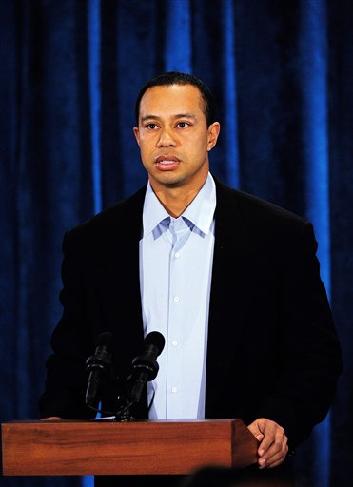
Tiger woods just made international news with a 15-minute press conference in which he … apologized to his wife. Oh dear me, I’m so bad, I’ve let the whole world down, won’t you ever forgive me, I need more treatement, I need more therapy, please oh please I’m an awful human being but I’m trying to win back your respect …


Ladies and Gentlemen of the press: Tiger Woods didn’t kill anyone. He didn’t run over a child, or beat up a nun, or stab someone to death in a drunken bar fight. He didn’t steal money, or bankrupt the United States financial system. His dick just isn’t that important.


And Tiger, dude, get a grip: You cheated on your wife. You had affairs. I’m not condoning it, but Jesus: If every prominent person in the world who was unfaithful to his or her spouse had to take six months off, go into seclusion and act like a little spoiled baby, the world would come to a halt and nothing would ever get done.


Man up, Mr. Woods. The Masters starts in a month and a half. Quit whining and get back to work.


Go directly to “Superjail!”

0

By Peter Galvin

From the studio that produced the terrifically-offensive animated sequences from MTV’s Wonder Showzen, Superjail! is an 11-minute cartoon series about a prison located inside a volcano, which is itself located inside a larger volcano.

http://www.youtube.com/watch?v=Ty6M7c3rZiQ

In typical Adult Swim fashion, this acid trip of an animated series is mostly non-sequiturs and abrupt tonal shifts, but Superjail! easily skates by on its ruthless depictions of violence and throwback animation style. Like a skillful rendition of “Free Bird,” each episode starts out slow and builds to a manic crescendo of all-out slaughter. With the promise of a second season, this first season set is being released with little in the way of extras or special features, but the real gift is just having all the insanity on one disc. As an exercise in wringing comedy from excess, you could say Superjail! is like all Adult Swim shows: it really shouldn’t work, but it does.

Superjail!: Season One comes out on DVD Tues/23.

Why I love snowboarder girls

1

II mean, they’re really hot, of course, almost by definition.


But that’s not why I love the snowboarder girls. Here’s the thing (and it goes for the men, too; I just happened to be watching the women last night):


Every Olympics, every major competition, the boarders push the limits, try to do something they might not be able to pull off, and half of them fall, crash and burn, wipe out — and when they take off their helmet and goggles, they’re smiling.


It’s as if they love what they’re doing so much that it hardly matters if they just lost a shot at an Olympic gold medal.


It’s like, “dude — fuck the hardware. Did you see that sick move I almost landed? Whoa, I was like 20 feet above the pipe, man.”


For the snowboarders, it’s about the sport, not the winning. Sure, they’re intense competitors, but they also cheer each other on, and never play it cautious and just go out there and have a blast.


Compare that to the figure skaters, who are, of course, astonishing athletes and beautiful to watch — but they do their pre-scripted routines and seek perfection in planning and execution … and if they miss a jump or fall, it’s  as if the world has ended. They try to smile through the obvious pain and you almost don’t want to watch.


The boarders, though, they’re into the real Olympic spirit. Swifter, higher, stronger, dude! Party on.


Boogie Bird will save us all

0

Health care bickering amongst our elected leaders, new wars on the horizon, the rising prominence of American Apparel — it’s no secret, San Fran: we need a hero. Enter Boogie Bird, a “curious creature” brought to us by spray paint artist Chor Boogie, who is displaying his tiny winged friends as part of his first post-stabbing gallery show.

The pocket sized birds are a much more simplistic design compared with Chor’s standard graffiti-inspired works, which are typically riotous parties of cobble stone shapes and half seen human forms. Boogie paints them with unusual spray paint techniques — one involves using low pressure to create more defined patterns. Murals form the core of his work, which includes “The Perception of Color Theory,” an all-seeing hurricane of form on Market Street. Chor completed the piece after he was physically assaulted mid-paint at the Tenderloin site- and after he subsequently picked up a kindly paraplegic as a guardian angel, from the looks of the vid below.

https://youtube.com/watch?v=FHPN-j6PUdg%26hl

The Boogie Birds have picked a roost at Air Castle gallery, an intimate showroom/artist’s studio in the crease between lower Pac Heights and Fillmore. Check ’em out, but be quick- I hear they’re fast little fellers.

“Boogie Birds”: The Art of Chor Boogie

through Feb. 28 noon – 8 p.m., Thurs-Sun

Air Castle

1706 Steiner, SF

(415) 328-2160

www.aircastlegallery.com

Action alert: Stop the banks!

0


Let’s have a show of hands.

To those of you in small business: have you noticed the banks getting tough with you on credit?  To customers of banks: have you noticed all the funny business with higher fees and shorter grace periods with credit cards? Does it annoy you that the big banks and Wall street get bailed out with little oversight or accountability,  and the rest of us on Main Street and the neighborhoods of San Francisco and beyond suffer with no relief in sight?

Here’s one thing you can do.  Sign a petition from the Consumer Watchdog, a militant warrior for consumer rights in Washington, D.C., demanding that Sen. Dodd, a heavily bank-financed Democrat from Connecticut,  support an independent Consumer Financial Protection Agency.  Carmen Balber, Consumer Watchdog’s DC director, supplies the details on the petition and  Dodd’s dancing and waffling. Balber writes in her email alert:

The Senate’s Wall Street reform bill will be public any day now but its author, Senate Banking Committee Chairman Chris Dodd, still won’t say where he stands on consumer protection.

Sign your name to our petition today. Demand that Senator Dodd stand up for consumers, not Wall Street, by supporting an independent Consumer Financial Protection Agency with full power to write, oversee and enforce new rules of the road to hold the big banks accountable.

In November, Dodd released a reform bill with a strong consumer protection agency. But news reports in January said he might abandon it, in February that it was back on track, and just last week that the consumer regulator was in doubt once again.

What’s the real story?

Tell Senator Dodd it’s time to make his choice. Will he stand with Wall Street or Main Street?

Sign the petition demanding Senator Dodd stand up for an independent Consumer Financial Protection Agency.

Thanks for signing,

Carmen Balber
Consumer Watchdog’s DC Director

Consumer Watchdog is a nonprofit, nonpartisan consumer protection organization.
To support their work, please make a tax-deductible contribution here.

Tuareg rebel rock, the Tinariwen way

0

The awesome group of hypnotic rockers known as Tinariwen — from “Kel Tinariwen,” or “desert boys” — dress in traditional costume for performances, have one of the most amazing political and social backstories of any band, and write songs that seek to convey the sorrows, longing, and occasional joys of living in exile. (They’ll be performing Sun/21 at the Palace of Fine Arts as part of the SF Jazz Festival.) That backstory story begins:

In 1963, an uprising of the nomadic Tuareg people began in the Adrar des Iforas desert region against the new independent government of Mali. During the revolt, a mason and trader by the name of Alhabib Ag Sidi was executed for aiding the rebels. The army then destroyed his herd of camels, cattle, and goats while his four-year old son Ibrahim watched. Ibrahim and his family travelled into exile in Algeria with his family and their one remaining cow.

It goes on to incorporate a number of rebellions, several diasoporas, Muammar Gaddafi, and founding member Ibrahim Ag Alhabib’s love for American blues. 

But there’s something even more compelling going on about Tinariwen than any gonzo global-folk narrative, however remarkable, suggests.

These savvy Saharans, whose numbers encompass two generations of musicians (lIbrahim Ag Alhabib will make a rare appearance at the SF date), have a multi-tentacled Web presence that just won’t quit, enthusiastically embrace the psychedelic indie-god status bestowed upon them by Pitchfork and the Uncut Music Awards, and aren’t afraid to defy exotic expectations by dressing down a bit.

Those are the kinds of things that can still shock Westerners when it comes to “world music” — we like our Putumayo heroes to stay in their Starbucks-ready niche — but Tinariwen plays it cool, walking a deliciously fine line between cutting-edge musicality and encapsulation of the past. (Perhaps the pitch-perfect duality of their image is what’s prevented their releases from being subjected to dance remixes — a requirement for almost every other “world musician” to increase Western accessibility. Or maybe we’re just finally getting over all that.)

Enough image analysis — what about the music? We’re dealing with several bluesy electric guitars (no bass), some lovely and innovative percussion, a single woman’s voice that can sometimes sound like several, and a throaty main vocal by Ibrahim Ag Alhabib that chant-croons and sometimes soars. Grooves are shuffled into slowly, and then amped up to dynamic effect, although noisy catharsis is saved only for key moments. It’s a heady, jam-band-sounding combination that often enraptures, and even without the backstory trappings (live, the group sometimes greets audiences with “Welcome to the desert”) still tells a story rarely heard, one of a new, unselfconscious fusion of global styles.

For the group’s fourth album, Imidiwan: Companions (World Village, 2009), Tinariwen took a break from all the world travelling and got back to its roots, recording in its hometown of Tessalit in Mali and attempting to channel the desert blues on a more intimate scale. The result is communal and virtuosic, and although a bit less visceral than past releases, it exudes a sense of relief — to be home, to have seen the world, perhaps to have reaped so much acclaim. Opener “Imidiwan Afrik Temdam” is a chuffing sway that Neil Young could easily cover, and shoulder-shaker “Tahult In” is an earworm that could serve as an authentic riposte to Sade’s desert-chic “Soldier of Love.” “Tenhert” is a handclapping dose of Tuareg rap.  

Tinariwen’s vast-yet-intimate sound translates equally well to venues as huge as the Glastonbury Festival and as cozy(ish) as Yoshi’s and the Palace of Fine Arts, where they’ve performed several times before. Whether you’re there to expand your sonic horizons, take some technical notes from riff-pros, or just whirl about to great tunes, you’ll probably be surprised at how many parts of you the music takes hold of and transports, no anthropology course required.

Tinariwen

Sun/21, 7 p.m., $25-$65

Palace of Fine Arts Theater

3301 Lyon, SF.

www.palaceoffinearts.org

Click here for more details and tickets

Check out Kandia Crazy Horse’s article for the Guardian on Tinariwen

And speaking of pot…

3

Just minutes after my last post on medical marijuana, Assembly member Tom Ammiano announced that he has reintroduced state legislation that would legalize and tax marijuana. Assembly Bill 2254 follows an earlier bill by Ammiano, AB 390, which made history in January by clearing the Assembly Public Safety Committee, only to die from failing to clear a second committee before the legislative deadline.

“Just look at what is happening in our state and it’s obvious that the existing model of prohibition has been a tragic failure. Our prisons are overflowing and it’s easier now for teenagers to get marijuana than alcohol. But yet we continue to spend our limited resources on a failed war on drugs instead of education, health care or job training. With this bill, California can finally have a policy towards marijuana that reflects reality,” Ammiano said in a prepared statement. “We simply cannot afford to continue keeping our heads in the sand and pretend that everything is fine.  It’s time for California to regain control of this issue by taxing and regulating marijuana.”

Marijuana really is medicine

5

Just in time for Medical Marijuana Week comes word that the first U.S. clinical trials on marijuana in more than 20 years has found that it is effective in relieving pain and treating multiple sclerosis and other ailments, potentially opening the way for the federal government to revisit its longstanding claim that pot has no medicinal value.

Most significant are findings that even low levels of marijuana offer significant pain relief with minimal health consequences. Unfortunately, the San Francisco Chronicle also reports that the UC San Diego researchers have almost run out of funding before all its planned tests have been completed.

San Francisco has long been a leader in the medical marijuana movement, both with its proactive approach to regulating cannabis clubs, and with the sponsorship of efforts to decriminalize pot by state legislators Tom Ammiano and Mark Leno. Oakland’s pot-cultivation school Oaksterdam University also bankrolled an initiative aimed for the November ballot that would legalize weed for even recreational use.

California healthcare workers spar over medical facility rallies

4

By Rebecca Bowe

Service Employees International Union-United Healthcare Workers West (SEIU-UHW) is holding a series of rallies today at eight different Bay Area medical facilities to “mark the approval of their new contract and organize to enforce it; and throw out an outside organization that is trying to undermine their progress,” according to a press release.

The “outside organization” refers to the National Union of Healthcare Workers (NUHW), a young union formed early last year in the wake of a deep rift created when SEIU brought UHW workers under its representation through a trusteeship. NUHW later decried the move as a “hostile takeover.”

Workers at the hospitals, which include five medical centers in the Daughters of Charity Health System, are expected to vote soon on whether they would rather remain under the SEIU-UHW umbrella or break away to join NUHW. The eight medical centers employ roughly 3,500 SEIU-UHW members. SEIU-UHW also plans to deliver an open letter to NUHW tomorrow, Feb. 19, at NUHW’s offices in Emeryville.

In conversations with the Guardian about the events, representatives from SEIU-UHW and NUHW each charged that the other side was engaged in spreading lies.

Richard Gutierrez, a member of SEIU-UHW who has been working as a physical therapy aid at the Seton Coastside facility in Moss Beach for a little more than two years, said the rallies were meant to signal to management and NUHW “that we are a united front … united to work against management.”

Gutierrez said he’d been involved in contract negotiations for 18 months, but worried that the newly secured contract would be undermined by pending votes on union representation. “It’s not as strong, because management can drag their tail, and say that right now we’re not going to deal with it,” he said.

Kathleen Blocher, a union member who has worked in the radiology division at Seton Medical Facility in Daly City for more than 30 years, said she didn’t think much of SEIU-UHW’s rallies. “I don’t understand why we’re spending money on a picket when we already have a contract,” she said. “They’re picketing against NUHW, which is not the union of record — yet.” Blocher believes there is strong support for NUHW, in part because she said it is more member-driven than SEIU.

Blocher also took a dim view of the contract secured by SEIU-UHW, because she said certain provisions that were previously in place had been given up.

“To hear that is a slap in the face,” Gutierrez said when we shared this viewpoint. “97 percent of our membership voted to ratify the contract.” He said he believed the contract was strong, pointing to a provision that grants part-time workers eligibility for healthcare benefits, a rare perk in this economy and job market.

According to Gutierrez and Adriana Surfas, who handles communications for SEIU-UHW, NUHW has been trying to delay the vote on union representation because they fear a lack of support for transitioning to NUHW. “I hope it’s done soon,” Gutierrez said. “The sooner it is, the sooner it shows that we are actually SEIU-UHW.”

Blocher dismissed this charge as completely false. “That makes absolutely no freaking sense to me,” she said. “We should’ve had our vote more than a year ago. And SEIU has put up roadblocks the whole way.”

For more on local labor shakeups, read this week’s report.

Rambling Jerry Brown speech raises fear among Dems

22

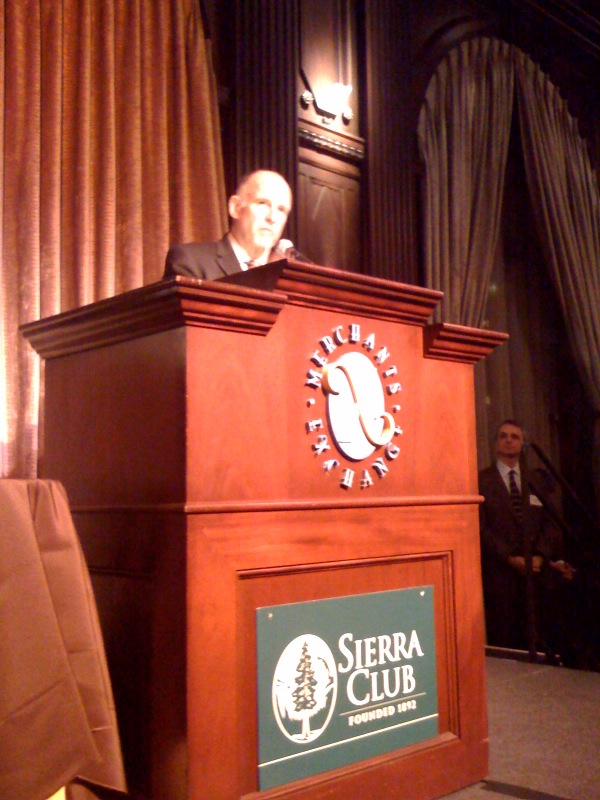
If Jerry Brown’s keynote speech last night to a gala environmentalist dinner is any indication, the Democratic Party faces an uphill battle to win this year’s governor’s race. The rambling, alternately vague and academic, and often pointless address did little to inspire or excite a large, sympathetic crowd that was loaded with top Democrats. In fact, some party luminaries were openly aghast at the poor performance, with one making this succinct (if off-the-record) assessment: “We’re fucked.”

Brown has never been a dynamic speaker, but the unscripted, half-hour speech – given at the Sierra Club San Francisco Bay Chapter’s David Brower Dinner in San Francisco, a $250 per head affair that drew top Bay Area Democrats – illustrates the danger of letting a primary be decided by legend and money rather than political persuasion.

Brown’s fundraising prowess and strong poll numbers chased Gavin Newsom and other potential rivals out of the Democratic Party gubernatorial primary, even though Brown hasn’t really outlined his political vision for California, given many extended speeches since being discussed as a candidate for governor, or even officially declared his candidacy (he and others have until March 12 to do so).

“This thing is really daunting,” Brown said of the governor’s race toward the end of the speech, seemingly unsure that he was ready to run, but saying he would make an announcement sometime in the next couple weeks.

Brown started his speech by telling the crowd that he didn’t know what he was going to talk about, so when he arrived (late) for the speech, he asked San Francisco Democratic Party chair Aaron Peskin what he should say, and Peskin told him to talk about how there were more salmon in the streams and better overall environmental health back when Brown was governor in the ‘70s.

But rather than taking that advice and giving a forceful call to strengthen environmental regulation or conjure up California’s better days, Brown meandered around and mused on that and other topics, feeding fears that the 71-year-old candidate might come off as a nostalgic, slightly senile former-Governor Moonbeam rather than an effective agent of needed change.

“During that period when I was governor, I’m not going to call it the golden age because some people think I’m in the golden age, so I don’t want to get people confused. That’s why I don’t want to talk about way back then, because there are a number of people I can see weren’t even born then, so it gets a little embarrassing and I like to pretend it was just yesterday. But in that period, California created almost twice as many jobs as the nation did. We created jobs at about 24 percent over eight years and the nation grew jobs at 13 percent, so almost twice as much. And then Deukmejian did pretty good, he had about the same, maybe half a percent more,” Brown rambled, ticking off statistics, hedging his point by noting how little governors can really do to create jobs, before working up to a decent line that was flatly delivered: “It was a time when the environment got its biggest boost, as far as public policy.”

Nobody applauded, so he continued. “I was thinking tonight, I was trying to figure out that if I did announce, what the hell would I say? And so I decided to go back and read my first announcement, January 24, 1974. I was 35 then, it was another time, I’m now a little older than that. But I talked about clean air, I talked about the energy crisis and getting new sources of energy. I talked about statewide land use planning” – that last item drawing some applause – “and I talked about jobs. And I was thinking, wow, we still got a jobs problem, we got an energy problem, we have a land use problem that feeds into the energy problem, and while the air is cleaner in many respects, it’s not clean enough, or it isn’t healthy enough.”

On substance, Brown had his moments. But even on the need for better statewide land use planning, he went off on a tangent, saying he didn’t even know what that meant when he filled out a Sierra Club questionnaire back in the ‘70s, and he’s not sure how to accomplish it now. 

“You have to make it easier to live closer to where you work,” Brown said in what of his few lines of the night that drew applause, although he didn’t begin to explain how he might achieve this goal. And on a controversial subject that is easily attacked by the right – big government wants more control over private property – Brown’s lackadaisical discussion of the issue was disconcerting.

He even rankled a few Sierra Club members by vaguely criticizing East Bay growth controls designed to reduce sprawl, which the Attorney General’s Office is seeking to overturn: “Pleasanton wants to create 50,000 jobs, but they have a housing cap – for all I know, Sierra Club probably supported that housing cap, so I want to just rub your nose in the housing cap for just a minute – the trouble with the housing cap is they want to create all these jobs.”

Brown tried to argue that allowing more housing in Pleasanton is a strategy for combating global warming because there are jobs there and it would reduce commutes, but he’s going to need to be more on his game than he is right now to win that argument. Instead, we get his fairly dismissive summary of this important issue: “Land use is a big deal, it’s difficult, lots to do on that.”

Against businesswoman Meg Whitman, the Republican gubernatorial primary frontrunner, there is real potential in Brown’s basic belief that markets need to be regulated and that running the government isn’t just like running a business. And somehow, Brown will need to find a way to better distill and deliver that message to counter the right’s pro-business sound bites. 

“There are people saying business knows best,” Brown said, meandering off about companies and widgets for a minute before continuing his point. “But when you look at what we really have to deal with, it’s not just about economics and the market. It’s also about ecology and morality, and morality is about customs, it’s about traditions, it’s about our deepest patterns of how we all relate to one another and that can’t just be assimilated into market incentives. The market assumes honesty, you meet your promises, and also assumes there’s a framework, because things can just run off the cliff and that’s exactly what’s happening. As you add more people, you have more cars, and when you have more cars, they burn fossil fuel and what’s happening in California is you have cars reproducing faster than people…That’s the real challenge here, that we’re trying to get the idea out that we’re trying to save the future.”

Loose in Obamalandia: Dead man walking through CA

1

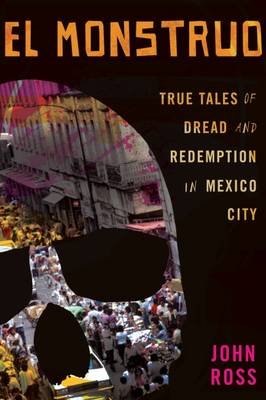
I am on a low-rent book tour with my new cult classic El Monstruo – Dread & Redemption In Mexico City.  For the next three months, I will stumble across this land from sea to stinking sea probing the underbelly of Obama’s America.  The findings will be posted on these pages.

1.
First stop was the near north woods, Humboldt County USA, to wheedle the medicos into granting me a clean bill of health before I hit the road.  A year ago this February, my doctor who has poked and probed my old broken cadaver for nearly 20 years, pronounced me dead. “Liver Cancer” he parsed gravely — but I am still alive and kicking. The class enemy be warned: I am not dead yet.

Humboldt had just been wracked by a 6.5 earthquake that cut a swath through Oldtown Eureka’s antique shops but was not quite Haiti.  Nonetheless, the shake-up worked its usual bad mojo and implanted the seeds of fear and loathing in every soul.  On January 22nd, three separate police agencies shut down the north end of Arcata and evacuated hundreds of residents after a scruffy hippie-type tried to fed ex a suspicious package to Berkeley that leaked, according to the clerk at Kinko’s, “a chemical odor.” The offending package was blown up in a back alley.

The next day, the local rag commonly known as the Times-Slander conceded in front-page headlines that the “bomb” was “Actually a brake light.” The paranoia was symptomatic.  A commercial jetliner to Kentucky was forced down by air force jet fighters after an orthodox Jewish kid pulled out his Tefillin to pray and, in a spasm of extreme religious irony, the panicked stewardess took him for some Muslim terrorist and confused the leather straps and little prayer boxes with bomb components that would blow the paying customers to kingdom come. 

Nine years ago, just weeks after 9/11, I got on the road to preach Zapatismo to the North Americanos. Flags flew from every home, a sort of Talisman against the terrorist devils.  It was not a healthy ambiance for spreading revolution and resistance in Amerikkka.  Prospects for the Monster Tour suddenly turned ominous.

2.  
San Francisco’s Mission District gets shabbier day by day as the “Great Recession” (read “Depression”) gallops towards economic Armageddon. The Miracle Mile is lined with empty storefronts and 98 Cent Stores (marked down from 99.)  The homeless sleep under their shopping carts – the Mission Local reports that 40 homeless families are living in 16th Street Single Room Occupancy hotels, twice the occupancy rate of a year ago.  In this Sanctuary City for the rich, the yuppie Mayor, who now aspires to be nothing more than a yuppie clerk in a yuppie wine store, is deporting undocumented teenagers convicted of no crime and the class divide seems more brutal than ever.

We posted up on Market Street in front of the Commonwealth Club, where torture enabler John Yoo was hawking his new book to the City’s elite. Financial District drones en route back to the ‘burbs asked Yoo Who?
I checked my watch.  It was time to hit the rails.

3.
The Central Valley was the first stop on the Monster Tour, the most deadly stretch of soil in North American California. The water plumes are all poisoned by agrochemicals and when one turns on the faucet on the west side of the valley, deformed babies pop out. 

This cesspool of chemical effluvia is populated by perhaps the most ethnically diverse crazyquilt in all of Obama’s America.  Anglo bigwigs and white Armenians rule the roost but down below Mixteco is spoken on the radio, communicating the bad news to the out-of-work Oaxacans who once toiled in the fields and packing sheds. The humongous Hmung community is up in arms over the FBI’s harassment of their spiritual leader, General Vang Pau who authorities accuse of conspiring to overthrow the doctrinaire Communist government of Laos.  Unemployed Palestinians and Pakistanis, Filipinos, white trash, and historic enclaves of Blacks, survive in this fulminating chemical stew by their wits. On every street corner, the down-at-the-heels don shabby green gowns and sagging Styrofoam Statue-of-Liberty crowns, holding up cardboard arrows pointing towards strip mall tax return scammers.

I stepped out into Catherine Campbell’s unplanted garden.  Police helicopters hovered overhead, searching out suspected gangbangers. Catherine is a veteran prison rights attorney who pays particular attention to what goes on behind bars at Corcoran and Chowchilla, two of the cruelest his & her lock-ups in the state. Recently, she put her know-how to work defending anarchists who had been beaten into the sidewalk by the Fresno pigs for handing out graphic leaflets depicting the torture of elephants during Ringling Brothers Barnum & Bailey’s annual visit to town, and she and a gaggle of advocates have been trying to keep the cops off a venerable homeless encampment. Now the City Council is seeking to felonize panhandling on Fresno’s median strips as a “safety hazard.” 

The Fresno gendarmes are particularly keen on persecuting young adults of color for alleged gang activities. An article in the Morning Bee reported on the so-called “Bulldog Gang” (the bulldog is the icon of the Fresno State football team so gang colors are readily available) whose members were accused of smashing windows and barking at the cops over on the decrepit west side.  Catherine says the bulldogs’ bark is more a growl.  Such are the sounds of hope in the second year of Obama’s lacerated reign.

Sam Stoker is a child of the Valley. One night last summer, I bought him a beer at the counter of my beloved Café La Blanca back home in the Centro Historico of Mexico City.  Sam, an acculturated Chicano, had journeyed to Mexico to connect with his family in Tamaulipas and bum around, sniffing out what was left of the 2006 rebellion in Oaxaca. When he went home to Winton near Merced, he spoke enough Spanish to delight his grandma. 

Sam is also an anarchist and a budding journalist who has been up to his neck in the struggle for justice for Oscar Grant in Oakland. Now he had come to the Valley to spread the virus of anarchism. Rebellion in the fields could bring California to its knees, he confided. I was only too happy to help out. 

Anarchism has a beachhead in Fresno at the Infoshop where 70 folks turned out to hear me preach revolution. Not all of the fellow workers were young punks. One gentleman in attendance told me he had been an organizer for Cuauhtemoc Cardenas’s foiled presidential campaign in 1988 in Sinaloa and fled Mexico when dozens of his companeros were gunned down by the mal gobierno.  He was still here, still waiting for the revolution. 

Over in Merced, I shouted out my poems in a long dark bar, The Partisan, on Superbowl Sunday.  A “digital remix” of Guy Debord’s “Society of The Spectacle ” preceded my incendiary words.  Maybe Sam Stoker’s pipedream is not as wacky as it sounds.

4.
So it was goodbye to Fresno and hello to Hollywood. I accessed the City of Fallen Angels over the Grapevine with a pit stop at Bob Hope airport and a bar in Santa Monica to watch the Lakers kick booty. My gigs were spread out all over this pedestrian unfriendly megalopolis and the signs of hard times were hard to avoid.  On the beach in Santa Monica, excruciatingly gaunt old men jogged against debilitating cancers and aging hippies scoured the sands with metal detectors for spare change.

Even out in ritzy Claremont, where I hobnobbed with a Palestinian restaurateur about the Nakba, Obama’s America seemed out of synch.  A student at Pomona College where I spieled had just been handcuffed and interrogated by transit security cops in Philadelphia for transporting 200 Arabic-English flashcards across state lines and some cad ripped off my cane down at the train station.  The Inland Empire, which abuts this restricted enclave, has the fifth highest mortgage foreclosure rates in the nation.

In Hollywood, where I spent a night on my favorite sofa, the glitz was tempered by the homeless with all their possessions piled high atop their shopping carts around the new Metro station. How many of them were out-of-work script doctors is not yet known.

Down in South Central, where anger is endemic, I spoke to a handful of Afro-Americans at Eso Won, an admirable black bookstore. The proprietor sported a prototypical pork pie hat and told me that when he sees the Mexicans coming over the border, he sees black people. We talked animatedly for a few hours about Afro-Mexicans who were a third of the population of Mexico at liberation from Spain in 1810 and whose history has been pointedly ignored south of the border.             

L.A. is gearing up for the trial of killer BART cop Johannes Mehserle, Oscar Grant’s assassin, that will be held in the same court house where O.J. won acquittal — if it’s not moved to Ensenada, taking a cue from outgoing Governor Terminator’s plan to build California prisons south of the border.

Students at Cal State L.A., the most Chicano university in Califas, honed in attentively when I expounded on the revolution that is brewing down south.  1810-1910-2010 – every hundred years on the tenth year of the century, Mexico explodes in violent social upheaval and even the Wall Street Journal is worried (see WSJ front pager January 15th.)

Looking at Obamalandia through the eyes of students is a useful handle for understanding what comes next.  Classes and services have been bludgeoned by budget cuts and the profs at Cal State furlough one day a week to make ends meet in this damaged economy that the President lies is booming again because only a half a million workers filed first time unemployment claims last month.  The light at the end of the tunnel is a bullet train pointed straight at the heart of the people.

All of this bad news is healthy for fightback.  The day I hit El Ley, Muslim students at U.C.-Irvine rose up against the Israeli consul ten times in a single speech until the university president sicced the campus cops on them. The next day a whole coast away, kids at Georgetown shouted down General Betrayus. Throw in the cutbacks and the furloughs and the hopelessness and it could be a long, hot spring semester and it won’t be just because of global warming.  I will do my best to fan the flames as I stumble front one campus to the next in the coming months.

On my last days in the late great golden state, I slept in a yoga house under a colorful banner of Ganesh, the elephant guy who gets fat eating others’ obstacles.  Lets hope he’s on my side. A year ago I was sentenced to death and although I’m still kicking, the future is laced with sharpened punji sticks, not the least of which incubates on my liver.

Talking truth to power is still the best medicine to beat back Nuestra Senora Santa Muerte.

John Ross and The Monstruo will be visiting the Narciso Martinez Cultural Center in the heart of the Rio Grande Valley Sat. Feb 20th. The Monster Tour plays El Paso, Las Cruces, and Albuquerque from Feb. 21st-28th.  Consult the Nation Books page for details or write johnross@igc.org

Taser trouble

6

You can say this for Police Chief George Gascon: He’s not shy. He’s pushing so many things, on so many fronts, that it’s hard to keep track, and some of them are real problems. One example: The Feb. 17th Police Commission meeting, where Gascon paraded a bunch of experts to talk about how great it would be if the SF cops had tasers.

I’m not against tasers per se; I’d rather the cops were shooting people with less-lethal weapons than with pistols. Quite a few people might be alive today if the more trigger-happy among Gascon’s force pulled a trigger that didn’t send a deadly bullet into a suspect’s body.

But you have to remember that a taser can be a lethal weapon, too; people die from taser blasts.

And when I talked to the folks in the SFPD public affairs office recently, they told me that the chief was drafting guidelines on the use of tasers, and that the taser would fall somewhere in between the use of a baton (non-lethal in all but the most exceptional cases) and a gun (lethal). That’s the wrong approach — and it’s what’s missing from Gascon’s argument.

A cop is only allowed to pull a gun in a situation where lethal force is justified; that is, when the officer’s life of the life of another person is in imminent danger. Same rules should go for the taser. That’s where the commission has to come in, because I don’t think Gascon is going to make that policy.

In fact, I’m getting the impression that the chief doesn’t like anyone else to make policy for him. That’s why he’s got an oped in the Chronicle today that goes after two proposals from Sup. Ross Mirkarimi. Gascon:

The San Francisco Board of Supervisors has proposed two pieces of legislation that would directly impact my ability as chief to provide effective and efficient public safety. One of these pieces, which would establish a community-based foot-beat patrol program, directs subordinates under my command to establish staffing levels absent my direction or control. The second, which seeks to require the police department to itemize the cost of dignitary protection, would jeopardize the safety of public officials who receive valid threats against themselves or their loved ones. These legislative proposals directly circumvent my ability to lead this department effectively. This ultimately makes the goal of making San Francisco the safest large city in America more difficult to achieve.

Translation: I don’t like the San Francisco supervisors setting law-enforcement policy. But actually, that’s the board’s job — to set the rules for how all city departments, including the SFPD, operate.

I can’t figure out why Gascon is fighting this foot-patrol legislation. He admits that foot patrols are a good idea and would solve a lot of crime problems. He just says he doesn’t have the budget. So take that to Mirkarimi and the other board members; tell them you’ll do foot patrols if they’ll fund it. Discuss the police budget in open session with the Budget and Finance Committe (which Mirkarimi sits on) and look for ways to make it work.
That’s how things get done in this city.

Bay Area faith leaders gather to call for immigration reform

2


By Rebecca Bowe

An event will be held this evening (2/18) at the Mission Dolores Basilica to urge Sens. Barbara Boxer and Diane Feinstein to push for nationwide immigration reform. The gathering of people from the immigrant community and faith-based organizations, which is being put together by the San Francisco Organizing Project, will be held in conjunction with the national Reform Immigration for America campaign.

Pat Bregant of SFOP told the Guardian that a turnout of around 1,000 is expected. Several families whose lives have been turned upside down by deportations will share their stories.

More than 35 clergy members from throughout the Bay Area will attend, including Bishop William Justice, Archdiocese of San Francisco. Others who are expected include Jim Molinari, state director for the office of Sen. Diane Feinstein, and San Francisco Supervisors David Chiu and David Campos.

Myrna Godinez, who came to the United States from war-torn El Salvador 26 years ago, said immigrants face steep challenges such as accessing health care and obtaining education. “They come here to work,” she said, “and to live in peace.” She said she faced many challenges trying to build a life here, but in her case, coming to the United States also meant being able “to go outside without being afraid of getting killed.”
The Mission Dolores Basilica is located at 3321 16th Street in San Francisco.

The event will be held from 7 to 8:30 p.m. and is free and open to the public.

Sushi Raw: a fine place to drink twice as much as you usually would

0

Ah, Sushi Raw. Although I would ding you for continuing to post your Grand Opening sign months after first rolling out your extravagantly plated Fuji Mountain rolls, you certainly have kept that working hard to please attitude. It is difficult to be mad at a place where the entire staff drops their duties to yell something cheery in Japanese every time anyone walks through the door (“Welcome?” “You look thin?”). And all pleasantries aside, you had me at the two for one beer and sake special.

That’s right, two for one big beers (Asahi and Sapporo on the menu) and large sake bottles, the bottles procurable for a scant five bucks. I’ve never seen the restaurant open without the sandwich board that announces the special outside. The lure of cheap booze pulled a pre-sated group of friends and I in after dinner at Axum the other day, and we received the same exuberant greeting and table service- despite the fact that only one gluttonous member of our party was still down for raw fishes and the rest of us were doing dessert.

So yes, the fish: fresh and creative, often stacked in towering spires of baked/drizzled artistry or arranged in a flower shape on your plate. Desserts: crap shoot. Avoid the glutinous green tea cheesecake but dive wholeheartedly into chocolate moshi. Booze: superlative. Again, two large bottles of sake for $5. Ambience: they played the same John Legend song three times while we were in there, but it was a song I like so I was pleased. The walls of the restaurant are more covered than art than your average bear/sushi joint- it makes for good eye candy should you get tired of John Legend or your dinner companions.

Domo arigato, Sushi Raw. But fellow pescaterians, please remember your identification if you plan to imbibe. The bf forgot his “big brother card” and wasn’t afforded even a sip of sake thanks to a waitress vigilant enough to defeat even the foxiest undercover ABC agent. Sushi Raw: nobody’s fool.


Sushi Raw

(three locations throughout Bay Area)

682 Haight, SF

(415) 863-6888

www.sushirawsf.com

Beer/wine

AE/MC/V

Not noisy

Wheelchair accessible

Appetite: Forecast — a downpour of delicious varietals and gourmet bites

0

It’s been a stunning week of sunny weather… We may get a little rain on Saturday, but no problem if we can spend the afternoon indoors sipping delicious wine, right? On Sat/20, the largest competition of American wines in the world takes place in Fort Mason’s Festival Pavilion.

The San Francisco Chronicle Wine Competition features literally thousands of our country’s best with gourmet bites along the way. Maybe it’s Sonoma Artisan Foie Gras or A Perfect Pear‘s delicious jams. Or you can sample what the CCA students are cooking up.

The event started in 1983 as an annual fundraiser for the Santa Rosa Junior College Wine Studies Program & Culinary Arts Program (now that’s a mouthful), and was then known as the humble Cloverdale Citrus Fair wine competition — eventually growing to the point where it moved to SF. More than 4800 nationwide wines are judged in January by 60 industry judges. The gold medal wines are offered to you — that’s a lot of wine tasting!

You’ll taste wines of many a varietal and within a wide price range, like a Norton from Missouri, Rieslings from both coasts, or a Chambourcin from the Finger Lakes. Fort Mason is yours to roam: sipping, nibbling, taking in views of Golden Gate Bridge. Rainy or not, that sounds like a sweet Saturday.

San Francisco Chronicle Wine Competition
Sat/20; 2-5pm, $60 advance/ $80 at the door
Fort Mason Center Festival Pavillion, 38 Fort Mason 11
www.winejudging.com
twitter.com/sfcwinecomp

Check out Virginia’s culinary itinerary site www.theperfectspotsf.com for more food news and views.

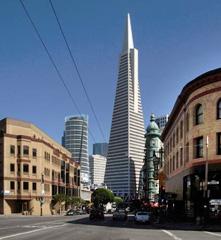
Transamerica condos: the mystery continues

5


I’m not going to actually suggest that anyone watch all four hours-plus of the Planning Commission hearing last week on the highrise condo tower at 555 Washington. But if you’ve got the time, it’s a fascinating video.


And here’s what’s most interesting: A lot of the discussion revolved around what Commissioner Michael Antonini said was a need to continue the item to a later date. That’s because three of the commissioners — the ones appointed by the Board of Supervisors — were dubious about the project’s environmental impact report, so it would take all four of the mayoral appointees to let the project go forward. But Commissioner Gwyneth Borden couldn’t make the meeting. Antonini went ballistic at one point, and stormed out of the room, saying that it was disrespectful to Borden not to grant a continuance.
 
That struck Commission Vice-President Christina Olague as kind of odd. “I was taken aback by the accusations that we were somehow being insensitive,” she told me. “To my knowledge, Commissioner Borden never made any request for a continuance. There was nothing in writing and she never communicated it to me.”


But then the strangeness started to happen. Commissioner Hisashi Sugaya moved not to certify the environmental impact report on the project. That motion was defeated, 3-2, with Antonini off in a huff somewhere and Borden absent.


Now, normally, in these situations, the president looks for a substitute motion. In this case, a motion to approve the DEIR could have been made, and that, too, would have been defeated. Once the motion to approve went down, the DEIR would be scuttled and the developer would have to start again.


But instead, the commission secretary simply announced that the matter would be continued to March 18. And a week later, I’m still trying to figure out how that was possible.


After all, the commission had decided — openly, in public — NOT to accept a continuance. Then all of a sudden, without a vote of the body, Antonini got his way. The DEIR will be heard again, presumably with the mayor’s fourth vote present.


This is a major project, and I’m not going to argue that it’s fate should hang on an issue of procedure. But nobody has been able to explain to me how a matter gets continued without a vote to continue. The best I can figure is that without any motion on the floor, and no action pending, the secretary had no choice but to continue the matter.


“It all happened so fast,” Olague said. “I want to go back and review everything to see exactly what ocurred.”


Attorney Sue Hestor, who opposes the project, told me that after the lengthy list of serious flaws with the DEIR, which were presented in great detail at the hearing, it will be hard for the commissioners to certify the document. But the pressure from the Mayor’s Office is intense — Michael Yarne, the mayor’s Economic and Workforce Development advisor, was at the meeting, cornering commissioners outside. And four of the members serve at the mayor’s pleasure.


Yoko Moments: “Why”

0

In honor of Kimberly Chun’s cover story this week on Yoko Ono, the time is right to post some Yoko moments here and there when the time is right. What better place to start than “Why,” a 1970 Yoko Ono/Plastic Ono Band track that has been hugely influential, both instrumentally and vocally. (A good game: name the people and bands it has influenced, and times it has been sampled.) It still sounds futuristic today.

That’s probably part of the reason why YouTube responses to it can be so hateful. Yoko does her thing. Thank god — I can’t tell you how many times I’ve felt exactly like what she sings here. It must have been brutally exhausting to wail like this. Try for even a few seconds and you feel like your vocal cords have been shredded. Very primal scream therapy-era, with no bad Werner Erhard aftertaste.


The “Newsom wins” merry-go-round: What fun

10

Gavin Newsom still hasn’t said for sure that he’s in the race for lt. governor, although just about everyone in town now thinks he’s going for it.

But the very prospect of the mayor leaving office before his term is up has the political classes speculating: Who gets that job? And how does it happen?

It’s actually pretty interesting.

Under the City Charter, the president of the Board of Supervisors becomes acting mayor in the event that the mayor leaves office before the end of his or her term. Then the supervisors, by a six-vote majority, can appoint someone else to the job.

Melissa Griffin lays out one piece of the scenario, which is that the board could appoint a new mayor in advance, without anyone serving as acting mayor.

But there’s much more to the story.

According to a fascinating city attorney’s opinion issued in 1978 (PDF), when George Moscone and Harvey Milk were killed and Dianne Feinstein was board president, no supervisor is allowed to vote on his or her own appointment. Which would mean that if, say, Board President David Chiu wanted the job, he’d need six votes not including his own.

Now the plot thickens. Suppose nobody can round up six votes — that is, a majority of the supervisors can’t agree on a new mayor? Well, Chiu, as board president, would be acting mayor — potentially for the entire duration of Newsom’s term, roughly a year. He’d also remain as board president. It’s the same as if the mayor goes out of the state and names an acting mayor in his place; that person is still a supervisor. So Chiu would have all the powers of both the mayor and the board president — and immense amout of clout for one person at City Hall.

But wait, there’s more: Chiu is board president only until the board elected in November of this year takes office, which would be about five days after Newsom would become lite guv. So unless the current board can choose a new mayor, with six votes (not including the vote of any supervisor being nominated), the new board would elect a new board president — who would instantly become acting mayor at the same time.

And since supervisors are allowed to vote for themselves for board president, any member would be allowed to vote for him- or herself for acting mayor.

Confused yet? Clearly, the folks who wrote the City Charter never actually envisioned this scenario (or didn’t think about it very much).

Of course, what that means that with the current board split the way it is, with exactly six solid progressive votes, someone who isn’t currently on the board (say, Aaron Peskin — or Tom Ammiano, or Mark Leno, or whoever) would have a better chance of getting a majority than a current member, who would need at least one of the moderate bloc votes.

And if Newsom runs, it will make the fall supervisorial elections even more important, because potentially those newly elected supes will be choosing not only a board president but a mayor.

Here’s another fun twist: If District Attorney Kamala Harris is elected attorney general, the mayor gets to appoint a new D.A. But suppose Newsom also wins and is sworn in a few minutes before Harris. Presumably acting mayor David Chiu (a former prosecutor who rumor has it might like to be D.A. himself someday) would choose the new D.A. — and suppose Chiu knows he doesn’t have six votes to be mayor. There’s no reason why he couldn’t appoint himself D.A., leaving a vacancy on the board and a vacancy for board president, which would be filled by anyone who could get six votes, who would then be acting mayor and could appoint a new supervisor to Chiu’s seat. Who could then be the deciding vote on who gets to be mayor.

Whoa. I can’t wait. Run, Gavin, Run.

Budget looks: Buy it, bejewel it, fix it, wear it, do it

6

By Chhavi Nanda

The dismal economy may be prompting us to keep our wallets shut, but it can’t curb our fashion obsession. Widespread job losses, declines in personal income, declines in real GDP — we’re still managing to look fabulous and sharp. The only difference now? We’re on a budget. Here are three ways to spruce up your look without breaking that cute little piggy bank. (Hint: find a way to wear it.)


Task #1: We have to get an outfit together for less than $20, all items collected from a thrift store. I headed to Thrift Town (2101 Mission, SF. 415-861-1132, www.thrifttown.com), in the Mission.
Dress: $5.99
Shoes: $3.00
Vest: $3.99
Belt: $1.50
Grand Total: $14.48


Task #2:   I was approached with the issue,  ” I have so many accessories, but nothing to wear them with. I only have $5.00. Help!” My response was, ” Of course.” Again, we headed to Thrift Town, picked out a dress that was perfect for the client’s body type, personal style, and wallet.
Dress: $2.99
add your own accessories


Task #3:  You may have found that almost-perfect dress with a great print and fit, but there’s just something off about it. It’s easy to nonprofessionally alter a dress to achieve the fit and shape you desire. Once again at Thrift Town, I found this dress, but there was something awkward about the shape of it. All we did was tie it around the client’s body, as if it were a wrap dress, and voila! The makeover is complete, for a recession friendly bargain of $5.99.
Dress: $5.99
Get creative!

Awkward!

So much better!

Ammiano reviving Prop. 13 reform

13

Assemblymember Tom Ammiano is trying to put property-tax reform back on the California agenda. He’s introducing a measure that would call for taxing commercial and residential property at different rates — which would involve a significant change to Prop. 13. It’s been tried before, and big business interests have always managed to shoot it down, but as Ammiano puts it, these are different times:

“For over thirty years, Proposition 13 has allowed corporate landowners to benefit from tax loopholes while shifting the real tax burden to individual homeowners and reducing California’s tax base. “We cannot continue to cut funding from our schools, our parks and our vital human services without addressing the need for new revenue and an equitable tax system.  Reforming Proposition 13 will not solve all of the state’s budget problems but it’s a crucial step in the right direction.”

 It’s not exactly clear at this point what form the legislation will take; it might be a resolution followed by a Constitutional amendment. And I don’t think even Ammiano believes that both houses of the Legislature will happily vote to make big commercial property owners pay their fair share of the state’s tax burden. But it’s worth talking about, worth pushing, worth reminding people that one of the reasons the state is so broke is that the property tax system is frozen in time, a legacy of a very different era in California.For over thirty years, Proposition 13 has allowed corporate landowners to benefit from tax loopholes while shifting the real tax burden to individual homeowners and reducing California‘s tax base.  We cannot continue to cut funding from our schools, our parks and our vital human services without addressing the need for new revenue and an equitable tax system.  Reforming Proposition 13 will not solve all of the state’s budget problems but it’s a crucial step in the right direction.”


And a split roll is probably the only way to amend Prop. 13 at this point, since so many homeowners are so happy with it.


Comment wonkiness

0

Hey y’all, we realize everyone’s having a little difficulty posting comments — please bear with us while we work on it, thanks so much 

Uproot: Playing with the new Food Environment Atlas

0

By Robyn Johnson

The USDA’s freshly released Food Environment Atlas has been getting some buzz the last few days, coinciding with Michelle Obama’s recent vow to tackle childhood obesity and food accessibility issues and a lot of dialogue and ranting going on in the media about big bad Agribusiness and the hyper-idealism and hypocrisy of the locavore movement. (Mrs. Obama herself has drawn some fire — critics have taken aim at her overstatement of the severity of the rise of obesity and its possible fallout, the “inappropriateness” of mentioning her own daughters’ brush with chubbiness, and her dodginess about important societal causes of childhood obesity. Oh, the pitfalls of a crusading First Lady!)


The atlas interactively charts 90 indicators of the food environment, like availability of fresh produce, fast food restaurants, and grocery stores, amount of physical activity evidenced in the population, and food costs and taxes. Users can generate maps showing variations countywide, regionally, or by state, depending on the data available. Users can also make advance searches for multiple factors, like poverty prevalence plus number of farmers markets available, if you want to carefully dance the line between correlation and causation. Other features include percentages of low-income homes over a mile away from grocery stores, types and quantities of foods eaten at home, food insecurity, obesity rates, farm to school programs, and a slew of other statistical information. (For a real horror show search for low-income preschool obesity rates).

This map shows the availability of farmers markets (or lack thereof) throughout the country.

I can’t say for certain since the highly trafficked link has been breaking throughout the day, but the atlas seems to work best at giving a broader comparative perspective of the food-related socioeconomic issues of the US. When trying to identify the relative culinary desert commonly known as West Oakland, the entire Bay Area portion of the map stayed the same minty green that denotes a high access to grocery stores — clearly not the case. That being said, some interesting disparities crop up. Colorado is among the highest of the states for fast food spending per person, but also has one of the least obese populations — Coloradoans also drink the least amount of soda and rank in the highest category for exercise. Play around and see what you can find, but you may not want to jump to any conclusions ….

Snap your fingers for our new poet laureate

0

“The only war that matters is the war against the imagination.” Diane di Prima, San Francisco’s new poet laureate as of last year, should be an expert on imagination’s primacy. Her work in such volumes as The Revolutionary Letters (1971) helped to shine a light on the role women played in Bohemia- not always the most well-lit arena. On Fri/19, the Mission Cultural Center for Latino Arts holds a reception to laud the most well known female voice of the Beat movement, and celebrate her turn as our city’s bard.

Here’s the bio-in-a-nutshell; born Italian-American in Brooklyn, Di Prima was a precocious writer, corresponding with Ezra Pound by the age of 19. After attending Swarthmore she starting gettin’ wierd with in with the Beats in Manhattan, in 1966 spending time on Timothy Leary’s Millbrook psychedelic community. She’s worked closely with Amiri Baraka, and the two co-founded the New York Poet’s Theatre. She became a connective figure between the Beats and hippies, moving to California permanently in the ’60s where got in with the radical improv group, the Diggers, and started studying world religions. She’s written over 48 books. 48 books! Would that we all could have a paragraph like that written on our lives.

And the poetry? The words often often personal, serving to widen Di Prima’s scope beyond an individual life to constancies in the human condition. But rather than stretch my capacity as a poetry critic, let us just revel in the glory of the words themselves. Below, “Revolutionary Letter #1” from Revolutionary Letters.


I have just realized the stakes are myself

I have no other

ransom money, nothing to break or barter but my life

my spirit measured out, in bits, spread over

the roulette table, I recoup what I can

nothing else to shove under the nose of the maȋtre de jeu

nothing to thrust out the window, no white flag

this flesh all I have to offer, to make the play with

this immediate head, what it comes up with, my move

as we slither over this go board, stepping always

(we hope) between the lines


The poet laureate honor was first bestowed on Lawrence Ferlinghetti by Willie Brown in 1998. MCCLA’s event will also feature past honorees Devorah Major, Jack Hirschman and Janice Mirikitani, amongst other members of the rhymey profession.

Celebrate Diana di Prima

Fri/19 7:30 p.m., free

Mission Cultural Center for Latino Arts

2868 Mission, SF

(415) 821-1155

www.missionculturalcenter.org

Snap Sounds: Myles Cooper (and High Fantasy)

0

MYLES COOPER

“Gonna Find Boyfriends Today”

(demo; www.myspace.com/mylescooper)


Yeah, 2010 needs some anthems, so thank Mr. Cooper for bringing one, dedicated to all those who want to “find guys to buy us drinks / And tell us that we’re young and funny.” The whimsical reggaeton touch, the yearning keyboard lines, Cooper’s friendly and understated vocal, and most of all the backing choir send this one over. It’s a shame the Passionistas aren’t releasing music, but if this and California Sunshine are what we get instead, it’s all good (and it’s ready to inspire fab YouTube vids). Gimme gimme more.

PS:

If you want to go out on a Tuesday night, you can’t do much better than High Fantasy, the new night Cooper puts on with Alexis Penney at Aunt Charlie’s. Rumor has it that a blitz of Boy George is on the agenda of this week’s edition.


HIGH FANTASY

Tuesdays, 9:30 p.m.

133 Turk, SF

www.auntcharlieslounge.com