SFBG Blogs

Honor Joe Lynn’s life and work

0

Friends and allies of Joe Lynn – perhaps the most diligent and public-spirited citizen ever associated with the San Francisco Ethics Commission, an agency he pushed hard to fulfill its campaign finance watchdog role – will celebrate his life Saturday, Feb. 20, during memorial services from 3-5:30 p.m. at the LGBT Center, 1800 Market Street.

Lynn died Dec. 9 after a long battle with leukemia and HIV-related ailments. As an Ethics Commission staffer and then an appointed commissioner, Lynn took seriously the mandate to root out and expose political corruption of all kinds, often defying powerful interests to do so. Much of his work was laid out in the pages of the Guardian, which regularly celebrated Lynn’s courage, insights, and hard work, as well of those of the protégés that he trained, Kevin De Liban and Oliver Luby (who is still with Ethics and carrying on Lynn’s work in the face of regular threats and sanctions from his bosses).

In fact, to mark what Lynn’s supporters see as the woefully lax and occasionally corrupt operations of the Ethics Commission under director John St. Croix and his chief deputy Mabel Ng (who, in 2004, ordered the destruction of documents implicated the Newsom for Mayor campaign in a money-laundering scheme), attendees will march on the Ethics Commission following the service.

For more on Lynn, see this obituary published in the Fog City Journal.

Editorial: How to create jobs in San Francisco

3

If Newsom decides to solve the city’s $520 million deficit with cuts alone, he will be taking more than $1 billion out of the local gross domestic product

EDITORIAL If Mayor Gavin Newsom is serious about stimulating the San Francisco economy, he ought to start with a basic number that the city’s own economist, Ted Egan, passed along to us this week. The number is 2.11 — and Egan says that’s the multiplier effect of cuts in local public spending.
In other words, every dollar Newsom cuts from the city budget has a ripple effect of taking $2.11 out of the San Francisco economy. Which means that if the mayor decides to solve the city’s $520 million deficit with cuts alone, he’ll be taking more than $1 billion out of the local gross domestic product.
And that, in a nutshell, is the problem with the mayor’s economic stimulus package: it’s entirely aimed at the private sector, with no regard for how it will hit public spending.
A dose of reality here — public-sector jobs are also jobs. People who work in the public sector pay rent and mortgages and buy clothes and food for their kids and go shopping in local stores and go to local clubs and restaurants and pay taxes — and have the same economic impacts on the economy as private-sector workers. If you lay off nurses and recreation directors, those people stop spending money in town, and you continue the vicious cycle that has made this recession so deep and painful.
And if your entire economic stimulus program is aimed at cutting private sector taxes, it’s going to lead to public sector job losses. And those losses will undermine much of the impact of any gains you might get from private sector job growth.
Egan predicts that Newsom’s program of eliminating the payroll tax for new hires would create 4,330 new jobs in the city. We find that something of a stretch — it’s hard to imagine how any struggling small business would find eliminating a small tax enough reason to hire a new worker, and small businesses provide the vast majority of the private-sector jobs in San Francisco. But even if it’s accurate, it’s a fairly tiny gain. The city’s lost more than 35,000 jobs since 2007, and when the economy rebounds in the next two years, Egan predicts about 20,000 new jobs in the city even without the stimulus.
Egan also acknowledged to us last year that “the consensus among economists is that most of the time government spending stimulates the economy more” [than tax cuts].”
That’s particularly true in a city where the largest employers are all in the public sector (see opinion piece this page).
If the mayor and the supervisors actually want to create jobs in San Francisco, there are plenty of things they can do — starting with finding ways to close as much of the budget gap as possible without layoffs. Here are some possible approaches.
• Put a major revenue measure on the November ballot that saves city jobs without costing private sector jobs. There are several ways to do this, but all of them start with the well-demonstrated concept that transferring wealth from the rich to the poor and middle-class — that is, giving money to people most likely to spend it — is good for job creation. One option: shift the payroll tax to a gross receipts tax and charge bigger companies a higher rate. Another: a commuter tax on income earned above $50,000 a year would charge wealthier people who use city services and don’t pay for them.
• Issue infrastructure bonds. The notion that cities can’t borrow money the way the federal government does to fund economic stimulus programs is just wrong. San Francisco can sell bonds for a wide range of projects, from affordable housing to alternative energy projects to public works programs that are badly needed and could put San Franciscans directly to work. But it can’t be small-time projects; to make a difference, direct stimulus needs to be big, perhaps $1 billion. San Francisco’s property owners, who ultimately are on the hook for the bonds, are by and large (thanks to Prop. 13) entirely able to handle more payments.
• Lend more money to small businesses. The biggest obstacle to small business hiring isn’t taxes but a lack of credit. The $73 million Newsom is going to spend on tax cuts would create far more jobs as part of a city-sponsored microloan fund. Newsom’s efforts on that front are still very small scale.
There’s so much more the city can do — but cutting taxes and losing city jobs is the wrong way to turn around the economy.

Gavin watch: The Lt. Gov. rumors

14

The rumors that Newsom is going to announce imminently that he’s running for Lt. Governor turned out to be a bit premature.

But I am still hearing from very solid sources that he’s seriously considering jumping into the race — and while the San Francisco left didn’t back his run for governor, this would be a very different campaign. The Lt. Gov. isn’t really in charge of anything, but has a certain amount of power, not just from the platform and the ability to issue press statements (one of Newsom’s favorite hobbies), but because that person gets a seat on the state Lands Commission (offshore oil drilling) and the U.C. Regents (education cuts). Newsom would most likely be fine on both issues.

And the truth is, we all know Newsom doesn’t really want to be a wine clerk.

And lieutenant governors are often well positioned to move on to higher offices it worked for John Kerry, for example (and for Gray Davis, if you call that working). I think Newsom would love to position himself to run for U.S. Senate when Dianne Feinstein, who will be 79 when her current term expires in 2012, decides to retire.

And, of course, from the perspective of progressives infuriated with what he’s done as mayor, it would get him out of town a year early, and let this district-elected board appoint a new chief executive.

That’s got all sorts of talk started, with the typical Chronicle-style “Oh My God Aaron Peskin could be mayor” stuff (and let’s be serious — Peskin would be a way better mayor than the current occupant of Room 200) to serious discussion about how this will affect the 2011 mayor’s race.

If any of the current contenders could round up six votes, it would be a major boost; that person could then run as an incumbent.

I don’t think this board would ever choose state Sen. Leland Yee, who is positioning himself for the run. City Attorney Dennis Herrera? Maybe — but given how pissed some of the progressives are about the Sanctuary Ordiance, it would be a stretch.

Sfist is running a poll, and right now it looks like the readers like Ross Mirkarimi but think Peskin or David Chiu is a more likely winner.

And trust me, even the thought of Gavin leading town has that scramble already heating up.


MTA works on deep Muni service cuts

0

By Nima Maghame

San Francisco Municipal Transportation Agency, which operates Muni, has pushed back a City Hall meeting (originally set for today) to make a decision on budget-related plans for cutting transit services by 10 percent across the city and raising prices on monthly passes, setting it for Friday 26th at 9 a.m. instead.

The proposal seeks “a savings of 313,000 annual service hours, which would result in $4.8 million in savings for the fiscal year 2010. The annual savings would be $28.5 million.”

At the Feb. 8 meeting, where the MTA formally announced its new plans, representatives from disability and senior citizen communities voiced their frustrations with the monthly pass price increase. Both groups not only rely on public transportation to get around the city, but many are members of organizations that subsidize passes for those in need. Many of these organizations can’t budget the new price hikes, which could mean that people who depend on these hand-outs may not get them.

“The people of San Francisco need transit. We were there to stop the MTA — 99 percent of the people at the meeting were there to say don’t cut services, don’t cut rates, there are other ways,” Forrest Schmidt, an organizer for the ANSWER Coalition, told us.

The 10 percent cut in service would hit the residents of Treasure Island hard because many rely on buses to get on and off the island. Several came to the meeting to voice their Muni needs and point out that the 108 bus is the only alternative to driving a car. They criticized MTA calculations that determine the appropriate amount of service that can be cut without causing too many problems for commuters.

“Alternative means don’t exist when you live on Treasure Island. They have to acknowledge that we have unique factors,” Treasure Island resident and art student Drew Williams said at the meeting.

The MTA board heard the plea, MTA spokesperson Judson True told us: “The board has decided to reevaluate their plans for the 108 line.” It was one of several factors that has caused the MTA board of delay its budget decisions.

Critics are infuriated at the MTA for not taking a proactive approach at dealing with its fiscal challenges. “It’s a damn shame it came to this. The severity was not predictable but the deficit was predictable,” said longtime transportation activist Dave Snyder, who recently formed a new transit riders union to advocate on behalf of Muni riders. “The revenue panel met a couple of years ago and the MTA declined all their recommendations.”


The Gavin and Leah Show

0

With rampant rumors that Mayor Gavin Newsom will announce his candidacy for lieutenant governor as soon as today – and with San Francisco Bicycle Coalition executive director Leah Shahum today announcing a leave of absence – it’s interesting to see the two paired up in Newsom’s latest You Tube video.

While Newsom has been a terrible mayor in many ways – from his frustrating fiscal conservatism to his petulant approach to politics and working with progressive supervisors – he’s actually not too bad on some of the greening initiatives he discusses in this video (which was the subject of our Nov. 18 cover story, “Seizing space”).

Bike Coalition chief takes a leave

1

Leah Shahum, longtime director of the San Francisco Bicycle Coalition, will be taking an eight-month leave of absence to live with her partner, Ted Strawser, in Amsterdam, which is widely considered one of the world’s most bike-friendly cities.

“As committed to bicycle advocacy as I am, the idea of living in Amsterdam is like a dream come true, so there’s no way I couldn’t do it,” Shahum said of the opportunity created when Strawser, an accountant for Dolby Laboratories, was transferred to Amsterdam for a year.

Under Shahum, the Bike Coalition has grown to become San Francisco’s largest grassroots advocacy organization, boasting more than 11,000 members. Shahum leaves in May and will be temporarily replaced by Renee Rivera, who served for several years on the SFBC board.

Shahum said the current strength of SFBC should allow for a fairly seamless transition: “We have such a strong organization that they can afford to have me gone.”   

Live Shots: Huun Huur Tu, Cowell Theater, 02/11/2010

0

Sometimes music is so powerful that it can transport you to another world. Huun Huur Tu, a throat-singing group from the Russian Republic of Tuva, create melodies that make you think you’re riding a horse through some ancient, windblown prairie.

The four-man band performed Thursday night at the Cowell Theater, bringing with them a variety of ancient and modern instruments, including the igil, a long two-stringed guitar-like instrument made of pine trees, that is held tightly between the knees while played. The igil is decorated with a carved horse’s head at the top of the instrument’s neck. There was even an instrument made of two real horse hooves, that were clapped together to create the sound of horses galloping. Many of Huun Huur Tu’s pieces used throat singing, a type of singing where two or more pitches can be heard at the same time from a single voice.

The songs Huun Huur Tu performed were about riding, nature, or the power of community. These voices made a wild, almost hypnotic mix of melodies, that for me were space-agey and futuristic — odd because this technique of singing is an ancient form of Tuvan folk music. I left the theater feeling calmed by the meditative quality of the music, and yet exhilarated by the novelty of the experience. My fiance came with me, and inspired by the performance, he’s been trying to recreate the sounds of the Tuvan throat-singing all morning, ha, but somehow it doesn’t compare.

Oakland to be soaked in Moregasms

0

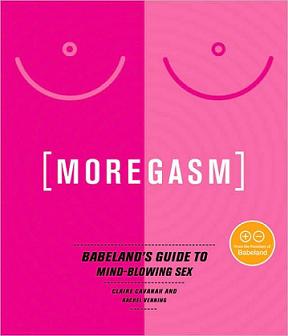
Heads up, fans of informative playfulness: Babeland co-founder Rachel Venning will be at Diesel Books in Oakland on Tues/16 to read from and sign copies of her latest book Moregasm, a guide to getting more from our sexual forays.

The majority of mainstream sex guides currently available follow a formula I’ve never understood, which is to feature real people in the cover photo and then nowhere else in the book. These ludicrous covers, mostly featuring underwear-clad models in suggestively prone positions, are a source of embarrassment at the cash register, but a worse offense is found inside. Upon opening the book the reader discovers, rather than any useful or instructional photos, a slew of black and white diagrams in stick-figure detail accompanied by text that is generally inscrutable. The sexual acts are described in ways that are alternately clinical and deliberately vague, peppered with medical terms like “vasocongestive arousal” along with meaningless Cosmopolitan-isms about revving engines or raising temperatures or similar banalities with which we are all familiar.

Taking this convention into consideration, Moregasm happily does the opposite.

From the outset, Moregasm is non-intimidating and neutral, with a cover that, instead of revealing body parts that might cause certain readers discomfort, finds clever use for the fermata. Not having to hide a book under the bed: always a plus! The inside of the book, conversely, is far from demure. Venning makes sure to feature actual photos of real people in compromising positions, which readers are sure to find, shall we say, insightful. The text is simple when it needs to be, and when a more detailed explanation is required, the descriptions are thorough but clear enough to be understood at all experience levels.

Venning has ad hoc access to an enormous pool of people from which to extract sexual-anthropological data: her customer base at Babeland. Babeland is a popular Seattle-based adult toy store that Venning founded in 1993 with Clare Cavanah (co-author of Moregasm, along with Jessica Vitkus) that has since expanded to New York City and Brooklyn. It is perhaps most famous for its online presence, which can be accessed anywhere. As an author and, for lack of a better word, sexpert, Venning certainly has the requisite experience. She also knows, from the looks of Moregasm, what isn’t working with mainstream sex guides. Sex writing often feels like verbal rehash, but Venning’s book includes updates that help it read like new.

Tue/16, 7pm, free
Diesel Bookstore
5433 College Ave., Oakl.
www.dieselbookstore.com

SF Indiefest drops by the Corner Store

0

“We were looking for a working class hero story,” said Katherine Bruens, creator of feature film documentary Corner Store at its SF Indiefest preview this weekend. They found it. Corner Store (to be shown again on March 27) widens to include more, however- becoming a portrait of what it is to be an immigrant in this country, on missing home and personal conflict. On what it means to sleep in the back of the convenience store you work in 16 hours a day. The film joined a stellar lineup of shorts and features at the festival, a film geek’s delight which continues through Thur/18 around town.

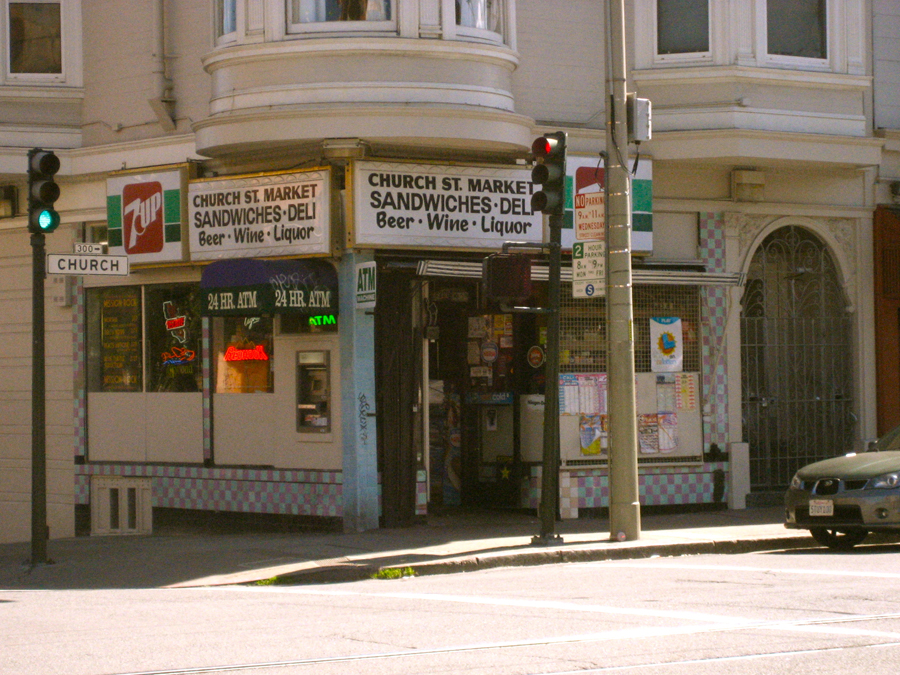
The producers followed their protagonist, Yousef Elhaj, for 14 months, during which they say he was “too polite not to have a documentary made about him.” Elhaj hadn’t seen his family for the 10 years he’d spent funding a life for them at his Castro/Mission (“Mistro,” as an interview with some neighbors memorably dubs it) convenience store, where the majority of Corner Store takes place.

It’s a claustrophobic existence to say the least, marked by small talk with customers he’s seen year after year, and only occasional forays into the outside world. It would seem like the stuff of boring visuals, but Corner Store’s meticulous record of Yousef’s daily tasks around his space, straightening wine bottles and replacing his deli case, is fascinating. Corner stores are a fact of life in the city, but rarely does one stop to think about the dedication and perseverance that goes into maintaining a well run beer and grocery stop.

At long last, the green card process is achieved and Yousef heads back to Palestine to see his fam. Here, he’s surprised to initially feel like an outsider in his birthplace, and the scope widens. Does the family want to stay in their homeland or join Yousef in the New World? Yousef’s family lives in Bethlehem and has to pass through checkpoints to visit a town 10 miles away. The walls that run through their neighborhood become one of the film’s most evocative symbols — they are a touchstone for many of the world’s premier graffiti artists, and Banksy’s piece of a dove wearing a bullet proof vest seems to evoke Yousef’s journey to find the best life for his family.

Bruens seemed to shy from overtly political questions at the Indiefest post film question and answer session. The film, in its creators’ eyes, is far more about how a man’s life is affected by the Israeli-Palestine conflict than the conflict itself. How successful at convincing audiences of this fact remains to be seen, but I wish them the best. Corner Store is a remarkable achievement of documentary filmmaking; immortalizing the everyday to express a facet of human life.


Next showing w/ Q&A feat. Yousef Elhaj and Katherine Bruens

& Arab Film Festival executive director Michel Shehadeh

March 27th 3, 7 pm, $12-$25

Victoria Theater

2961 16th St., SF

 www.thecornerstoredocumentary.org

Snap Sounds: Scene of Action

0

SCENE OF ACTION

20 Minute Hourglass

(PopSmear)

San Francisco needs its own Stone Temple Pilots, no? One with a good dose of Killers sprightliness?

Scene of Action may satisfy. The second EP by the local group with a dullsville name shows off highly polished alt-rock replete with big guitars, boffo NIN-style beats, and loud orchestrations designed for major Evanescence-esque drama. The occasional tender harmony even surfaces on “What’s a Boy to Do.” Commercial, yes — with a dash of eccentricity that just might get them noticed beyond the 20-minute showcase set.

http://www.youtube.com/watch?v=WpPSnlsVDwc


Lip-smacking kalbi burrito action at John’s Snacks and Deli

1

You didn’t even know you needed a kimchi taco till you began to hear about those trucks down in LA, didja? Sure, Namu at the Ferry Building delivers the Korea-Mex goods on Thursdays, but what about every other day of the week?

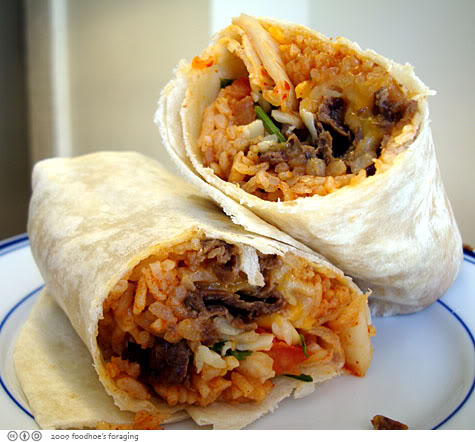
There’s absolutely no place to sit at John’s: it’s essentially a bodega with the teeny behind-the-counter operation that makes Yamo look like a kitchen stadium. Still, you can get all kinds of delectable pan-Korean specials to go. I haven’t tried the kimchi bulgogi hot dog or the soon doobu tofu stew or the japchae noodle yet, but I have dug the kimchi soft taco with bulgogi beef and sauteed kimchi and its messy, saucy goodness. The kalbi burrito comes with a deep pocket of fresh lettuce and salsa, crunchy and crisp amid the kimchi-flavored rice and savory hunks of short rib.

So is it authentic? Well, is a burrito real Mexican cuisine, hombre? I’ll leave those worries to the purists and instead concentrate on these getting the maximum amount of kimchi from my foil-wrapped snack into my waiting maw.

John’s Snack and Deli
40 Battery, SF
(415) 434-4634
www.snackanddeli.com

Nerdcore rising: Mc Frontalot represents

5

By Nima Maghame

They say hip-hop is about who you represent. Gangster rap glorifies cheap women and expensive cars. But rapper MC Frontalot, who performs Mon/15 at Cafe du Nord, represents an entirely different group of people who are more into computer software and Internet jokes then cash and hoes.

Originally from San Francisco, the former software programmer has been carving his own niche of rap with a movement he dubs “nerdcore.” And he’s not alone when it comes to spitting rhymes about geek life. Over the past decade, nerdcore has been rising; MC Chris, MC Lars and Ytcracker (who will be performing on Feb 21st at Bottom of the Hill), Jesse Dangerously, Futuristic Sex Robots and a host of other nerd lyricists have posted mp3s of songs with topics ranging from Star Wars characters to role-playing games.

While the Internet has embraced the artists, mainstream audiences are finding it hard to relate. Swinging back and forth from depicting geek fantasies to humorous self-deprecation, rappers like MC Frontalot speak to a generation plugged-in. His corky flow bounces up and down to instrumentals that sample sounds from all over the musical map. The upbeat music moves naturally with the MC’s thesaurus-filled rhymes. Fans understand the meaning to words like Fap, MMPOG and Mud cards, but Frontalot has been persistent in getting nerdcore heard by new ears. He is releasing his fourth album, Zero Day, in April. The first single “Your Friend Wil” — about Star Trek star and Just a Geek author Wil Wheaton — is already available for download.

“I really felt like coming back to nerdcore-as-a-movement on this one, which I feel I’ve gone away from in past albums,” says Frontalot, who includes a slew of featured nerd rappers on Zero Day.

San Francisco is one stop on a countrywide tour for Frontalot, and he has a documentary out, Nerdcore Rising, which chronicles his first album release. Time will tell if that title stays true.


MC FRONT A LOT

8 p.m., $10

Cafe du Nord

2174 Market, SF

(415) 861-5016

www.cafedunord.com


MC LARS, YTCRACKER

With k. flay

Sun/21, 10 p.m., $10-12

Bottom of the Hill

1233 17th, SF

(415) 626-4455

www.bottomofthehill.com

Snap Sounds: Blitz the Ambassador

3

BLITZ THE AMBASSADOR

Stereotype

(Embassy MVMT)

Loving the string-drenched, ecstatically brassy, flamenco-guitar-and-handclap flourishes of production on this Ghanaian rapper’s debut. (He’ll be performing Mon/15 at the Elbo Room.)

Inevitable comparisons to early Mos Def (the voice) and current Roots (the music) will follow — and he made me miss Guru‘s Jazzmatazz a bit — but the Brooklyn-based, Accra-born Blitz carves out a niche of his own between buoyant celebration and sharp-eyed narrative. Opener “Something to Believe” should be a peak-set dance floor staple, “Ghetto Plantation” shows a vision that takes in contemporary slavery worldwide, and the funk undertow never quits all the way through. And although Blitz is definitely on the politically outspoken tip on many of his songs, there’s nary a wince-worthy rhyme here and many fresh observations. This is some complex, soulful music — it should be really interesting to see if he can keep up his rapid-fire flow live (with a six-piece band, indeed). Check it out below:

Blitz the Ambassador

w/ The Park and Martin Luther

Mon/15, 9 p.m., $8/$10

Elbo Room

647 Valencia, SF

www.elbo.com

A union that made black history

0

The Brotherhood of Sleeping Car Porters was a pioneering union that led the battle from the l930s to l950s against racial discrimination that laid the groundwork for the civil rights movement of the l960s. 

Few of the groups that we should honor during Black History Month are more deserving than the Brotherhood of Sleeping Car Porters, a pioneering union that played a key role in the winning of equal rights by African Americans. The union, the first to be founded by African Americans, was involved as much in political as in economic activity, joining with the NAACP to serve as the major political vehicle of African Americans from the late 1930s through the 1950s. It led the drives in those years against racial discrimination in employment, housing, education and other areas that laid the groundwork for the civil rights movement of the 1960s.

The need for a porters’ union was distressingly obvious. Porters commonly worked 12 or more hours a day, six or even seven days a week, on the Pullman Company’s luxurious sleeping car coaches for a mere $72.50 a month. And out of that, they had to pay for their meals, uniforms, even the polish they used to shine passengers’ shoes. They got no fringe benefits, although they could ride the trains for half-fare on their days off – providing they were among the very few with the time and money to do so. And providing they didn’t ride a Pullman coach. Pay was so low porters often had to draw on the equally meager earnings of their wives, almost invariably employed as domestics, to pay the rent at month’s end. It was a marginal and humiliating experience.

Porters were rightly proud of their work, a pride that showed in their smiling, dignified bearing. But they knew that no matter how well they performed, they would never be promoted. They could never be conductors. Those jobs were reserved for white men. Porters knew most of all that their white passengers and white employers controlled everything. It was they alone who decided what the porters must do and what they’d get for doing it. No point in arguing. No point in even correcting the many passengers who called all porters “George” — as in George Pullman, their boss — whatever their actual names, just as slaves had been called by their masters’ given names. When a passenger pulled the bell cord, porters were to answer swiftly and cheerfully. Just do what the passengers asked – or demanded. Shine their shoes, fetch them drinks, make their beds, empty their cuspidors. No questions, no complaints, no protests. No rights. Nothing better epitomized the huge distance between black and white in American society. Hundreds of porters who challenged the status quo by daring to engage in union activity or other concerted action were fired.

But finally, the administration of President Franklin D. Roosevelt granted workers, black and white, the legal right to unionize, and finally, in 1937, the Brotherhood of Sleeping Car Porters won a union contract from Pullman. The contract was signed precisely 12 years after union founder and president A. Philip Randolph had called the union’s first organizing meeting in New York City. But the long struggle was well worth it. The contract pulled the porters out of poverty. It brought them pay at least equal to that of unionized workers in many other fields, a standard work week, full range of fringe benefits and, most important, the right to continue to bargain collectively with Pullman on those and other vital matters. Union President Randolph and Vice President C.L. Dellums, who succeeded him in 1968, led the drive that pressured President Roosevelt into creating a Fair Employment Practices Commission aimed at combating discrimination in housing as well as employment. FDR agreed to set up the commission — a model for several state commissions – only after Randolph and Dellums threatened to lead a march on Washington by more than 100,000 black workers and others who were demanding federal action against discrimination.

Dellums and Randolph struggled as hard against discrimination inside the labor movement, particularly against the practice of unions setting up segregated locals, one for white members, one for black members. Randolph, elected in 1957 as the AFL-CIO’s first black vice president, long was known as the civil rights conscience of the labor movement, often prodding federation President George Meany and other conservative AFL-CIO leaders to take stands against racial discrimination.

The sleeping car coaches that once were the height of travel luxury have long since disappeared, and there are very few sleeping car porters in this era of less-than-luxurious train travel. The Brotherhood of Sleeping Car Porters is gone, too. But before the union disappeared, it had reached goals as important as any ever sought by an American union – or any other organization. Dick Meister, formerly labor editor of the SF Chronicle and KQED-TV Newsroom, has covered labor and politics for a half-century. Contact him through his website, www.dickmeister.com, which includes more than 250 of his recent columns.

(Dick Meister, formerly labor editor of the SF Chronicle and KQED-TV Newsroom, has covered labor and politics for a half-century.)


Live Shots: Best Coast and Vivian Girls, Bottom of the Hill, 02/09/2010

0

The vintage starburst lights were tinted red and Bottom of the Hill was packed with hipsters toting hand-me-down apparel: ratty old sweaters, torn hats and grandma’s old prescription glasses. Best Coast’s Bethany Cosentino let out the first words to “When I’m With You,” and the crowd anxiously listened to each note echo through the mic, paired with her slow, distorted guitar strums.

I couldn’t help but wonder if anyone else in the room felt like we had just stepped into a time machine and shot straight back to a 1960’s dive bar on the beach. A little bit Beach Boys and part Ronnettes, the antique sounds were innocent and as gold as Cosentino’s sandy locks.
The L.A. duo was so calm, Cosentino strumming and singing with her pink lips parted as wide as a Charlie Brown caroler. “Love, of Love” she cried in perfect harmony, closing her eyes and showing her light brown eye shadow. Guitarist Bobby Bruno was a true shoegazer, his long black hair hanging over his strings and glowing with shades of pink from the stage lights above.

Playing through their EP Something in the Way (RCRD LBL), they made each song float over the crowd in waves, heads and bodies bobbing up and down like buoys in a tide. This show was Best Coast’s first in San Francisco and Cosentino said she was a little worried that people wouldn’t show up until after 10, thereby missing a part of their set.

“Did anybody watch Lost?,” she asked the crowd. “We were joking that people wouldn’t come in until after the show, but you guys are troopers — here, right at the beginning.”

Ali Koehler of Vivian Girls (who had earlier shared their iPod playlists with me) stepped in as the drummer for Best Coast’s set and the trio played two new songs, both of which were more upbeat, with lots of cymbal action and heavy bass drum solos. Cosentino promised we would find them on the new album soon.  At the end of the set, Bruno threw on a black sweatshirt, complete with cat ears affixed to the hood.

Vivian Girls took over at 10:45, hitting it hard and urging the crowd for a little more action. “You guys should dance more,” bassist Kickball Katy said with a grin, the same of which stayed glued to her face throughout the entirety of their show. The crowd happily responded with a small, male mosh pit in front of the stage.

Cassie Romone’s lips were bright red to match her red blouse, skirt and the carpet on the stage. Mid-show Koehler approached the mic and pointed out her and Romone’s nearly identical ruffly, red shirts. Apparently this happens a lot.

Costentino joined the trio of Brooklyn ladies for a song, creating a stage billowing with womanpower. Totally normal girls rockin’ hard, Vivian Girls put out some stellar garage songs for the packed house, but my absolute favorite was their A cappella rendition of “He’s Gone”, which they dedicated to the opening band, “The bananas.” Their voices quietly squeaked and peaked, totally exposed in a not-so-perfect harmony but all together delivered an incredible gem that only live shows like that can offer.

Film Pick: “Terribly Happy”

0

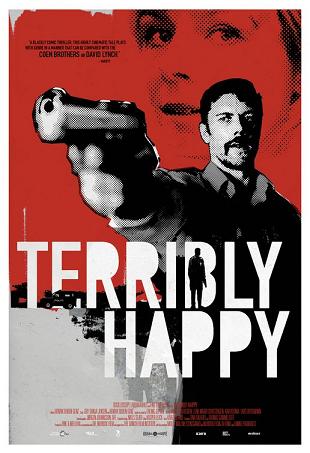
The Coen Brothers’ Blood Simple (1984) is the obvious corollary for this coolly humorous Danish import, though director/co-writer Henrik Ruben Genz’s firmly dampened-down thriller of sorts is also touched by David Lynch’s parochial surrealism and Aki Kaurismäki’s backwater puckishness.

Happy isn’t quite the word for handsome, seemingly upstanding cop Jakob (Robert Hansen), reassigned from the big city of Copenhagen to a tiny village in South Jutland. There he slowly learns that the insular and self-sufficient locals are accustomed to fixing problems on their own and that cows, trucks, and other troubles have a way of conveniently disappearing into the bog. When buxom blonde Ingerlise (Lene Maria Christensen) whispers to him that her husband Jørgen (Kim Bodnia) beats her, Jakob begins to find his moral ground slipping away from him — while his own dark secrets turn out to be not so secret after all. More of a winkingly paranoid, black-hearted comedy about the quicksand nature of provincial community and small-town complicity than a genuine murder mystery, Terribly Happy wears its inspirations on its sleeve, but that doesn’t stop this attractively-shot production from amusing from start to finish, never tarrying too long to make a point that it gets mired in the bog that swallows all else.

Bonus Danish poster:

A brief meditation on erotic comics (slightly NSFW)

0

The Kinky Comic Carnival was held at S&M cafe Wicked Grounds a couple Saturdays ago. Comic book fanatics, stimulated by both caffeine and visual erotica, swarmed in unexpected numbers to meet local creative talents that included Ted Naifeh (Courtney Crumren), Justin Hall (Glamzonia, the Uncanny Super Tranny), Serena Valentino (Gloom Cookie), Greta Christina (Best Erotic Comics), Tristan Crane (How Loathesome), and Storm (Princess Witch Boy). The crowd was a mix of committed comicphiles, local kink enthusiasts, passerbys intrigued by the fuss, and confused SOMA-ites who just wanted their coffee.

The eroticism of a comic book is a rather ambivalent one. First, to eroticize a comic book character requires a leap of imagination that most people cannot take; I blame it on the lack of a third dimension. Second, at face value, comics just don’t seem that sexual in the age of gonzo porn. The Victorians liked their quaint pornographic drawings, but then came the moving picture and the drawings became antiquated collector’s items, ancient history. Finally, we are warned that those who read comics after a certain age invariably morph into basement-dwelling creeps. The belief persists that comics block production of potent growth hormones and can prolong an adolescence like nothing else. (They should market that.)

Fans of the genre couldn’t disagree more. For them, the syncretism of X-rated adult content with G-rated comic form represents an appealing erotic alternative to the constraints of real life. Comic book fans like comic books because they represent an escape from mundane 3-D reality. Because their fantasies exist outside the literal world, comic book porn — the exaggerated drawings, crazy sound effects (in a Justin Hall comic, fellatio is accompanied the onomatopoetic “BAM!”), and benevolent deux ex machina who always gets the good guy/gal laid — could not be further from everyday sex. Unharnessing the Id? You don’t have to be a comic book collector to acknowledge the tantalizing possibilities.

Newsom’s gonna run? That’s what we’re hearing

2

Gavin Newsom’s going to announce his campaign for Lt. Governor in a few days.

That’s what inside sources are telling us, anyway. (And the rumor’s been circulating for a bit.) The mayor has been making a lot of phone calls in the past few days, checking in with supporters and lining up allies. And he’s ready to make the leap.

(Other sources say just the opposite, but such is San Francisco politics.)

The move makes a lot of sense from Newsom’s point of view; he’ll be termed out of office in two years, with nothing much to do on the horizion. And for a politician with heavy ambitions, that’s a bad place to be.

In the Lite Gov’s spot, he can keep a high profile, push education issues (the Lt. Gv. is a member of the UC Regents), make a bunch of speeches — and have no responsibility at all for actual follow through, which was never his strong suit.

And he’ll be positioned to run for an office like U.S. Senate should Dianne Feinstein decide to retire.

The issue has always been the local impact: If Newsom wins — and he would enter the race as the odds-on favorite — then he’d have to resign his job as mayor with a year left, and the supervisors would pick an new mayor, who could then run for re-election as an incumbent. Newsom’s money guys have never been happy with the prospect of leaving the city in the hands of a mayor appointed by a progressive majority on a district-elected board, but Newsom’s over that, our sources say. He’s thinking of his own future, and it looks like Sacramento.

So no confirmation, this is still at the rumor stage, but I’m betting he goes for it.

Day laborers protest U-haul and police crackdown

6

Every day, on my bike ride to work, I see the day laborers lined up along Alameda Street across from the U-haul office, hoping to get work. It’s a great little community, full of friendly people (mostly Latino men, but sometimes a couple young African-Americans as well), and they wave, smile, and try to get me to jingle my bell or honk my horn at them as I pass, which I always oblige.

But a couple months ago, the scene changed. Police officers now show up more often to hassle the day laborers, often demanding they clear the street. So they linger on adjacent streets, still trying to make themselves available for work, but clearly intimidated and wary of getting busted.

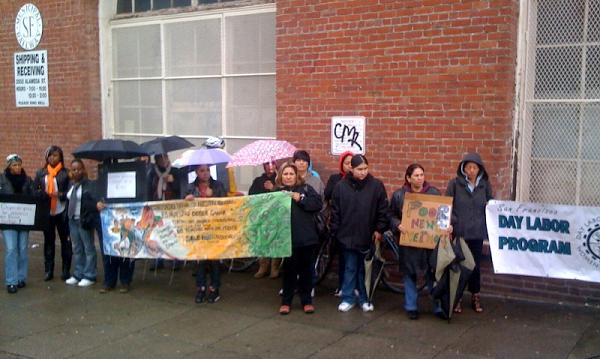
Well today, the workers pushed back, with the help of La Raza Centro Legal’s Day Laborer Program and nearly 100 supporters, who came to chant and protest a new U-Haul manager who they say constantly harasses them and calls the police three times a day. That manager, who was chatting with two cops at the scene, refused to identify himself or speak with me, referring me to their corporate flak (who hasn’t returned my call).

Anecdotally, we’ve heard that day laborers around the city have been rousted by police far more often in recent months, just one more of the SFPD crackdowns under new Police Chief George Gascon, which include raids on pot growers in the Sunset, mass arrests in the Tenderloin, regular raids of underground parties in SoMa, and lots more citations for drinking in Dolores Park and other parks.

Blow your mind on this lecture, man

5

It was a convergence that may have been responsible for the rise of psychedelic drugs, yoga, vegetarianism, and the new age spiritual movement in the western world. And it happened at Harvard University? Don Lattin’s talk on his book The Harvard Psychedelic Club (Harper Collins) next week (Thur/18) narrates one of history’s most momentous groups of college buddies and how their scientific studies on the effects of tripping balls changed American culture in the 1960s.


Sure, we all expanded horizons in college — but these guys set the gold standard. LSD and psilocybin had yet to be codified by the man in 1960, when Timothy O’Leary and Richard Alpert began the Harvard Psilocybin Project, in between trips to Mexico where they dabbled in the indigenous folks’ teonanácatl. The project tested, among other things, the effects of psilocybin on the anti-social behavior of prisoners and facilitation of religious ecstasy in divinity students. They also administered LSD to over 300 students and faculty members. It was during these studies that Leary and Alpert fell in with Andrew Weil and Huston Smith. A quartet of intellects was formed and the rest, as the hippies would say, is history.


Basically, they all got fired from traditional academia, the drugs got banned for use by law abiding citizens, and each “club” member became a leader in a different aspect of counter culture- Smith in world religions, Alpert in guruism, Weil in promoting integrative medicine within traditional psychology and Leary to… well we all know what Leary got up to.


But first they kicked it at Harvard, and their ensuing escapades are also the subject of Lattin’s lecture- which apparently included some total buzzkill “backstabbing, jealousy, and outright betrayal,” according to the event’s press release. E tu, Ram Dass? The lecture is but one mind expanding night brought to us by the California Institute of Integral Studies, who is also sponsoring a talk on “The Way of the Shaman (Fri/12 through Sat/13) and a performance by the Soweto Gospel Choir (March 27) this spring.


“The Harvard Psychedelic Club” with Don Lattin


Thur/18 7 p.m., $15


CIIS Main Building


1453 Mission, SF


(415) 575-6100


www.ciis.edu

Here, finally, is that skateboarding parakeet thing the Internet promised us so long ago

0

Our friends at the awesome Pawesome (including former Guardian editor Sarah Han) have rounded up some feathery ollies and beakin’ 180s — sk8 or fly, baby 

The only gift for your Valentine

0

I would make a joke about heterosexuals here, but I just ordered one on rush-delivery for my BF

5 Things: Fat Angel butters

1

Five flavors of butter you can order at fab new Fillmore bistro Fat Angel:

1) lemon caper sage

2) garlic chili

3) maple bacon

4) chocolate cinnamon

5) orange blossom honey

Snap Sounds: Lord Newborn and the Magic Skulls

0

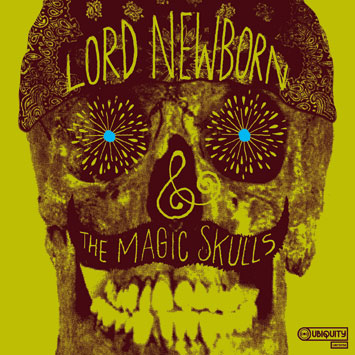
LORD NEWBORN AND THE MAGIC SKULLS

Lord Newborn and the Magic Skulls

(Ubiquity)

What sort of magical concoction do you get when you mix SF skater and musicmaker Tommy Guerrero with LA keyboard jock and Beastie Boys player Money Mark?

The extravagantly named Lord Newborn and the Magic Skulls, which gets an equal assist from Shawn Lee of Clutchy Hopkins. Sweet soul-dappled psychedelia is at the root of Lord Newborn’s fresh sound, awash with juicy jets of foggy prog and low-rider funk. No stupor-group they — I dug the moody meanderings chugging out of this disc long before I actually got a gander at the credits. Consider this the best album from all concerned of late — or just ignore the names and pretend this is a down-low, late-‘60s Latin rock-soul-jazz gem dug from grammy’s crate.

Check out the video for “A Phase Shifter I’m Going Through”

which is a bit of a slacker parody of Kutiman‘s still-mindbending “The Mother of All Funk Chords”