SFBG Blogs

The cheeseman can

0

The subtitle of Rainbow Grocery cheesemonger Gordon “Zola” Edgar’s new memoir (supertitled Cheesemonger, appropriately enough) would be enough for me to count the book a success; “Life on the wedge.” Ha! See, right there, he had me ready to head out to his Omnivore Books reading (Sat/3) fangirl style, washed rind Taleggio in hand, hounding for an autograph. Luckily, the rest of his book is pretty good too. 

Where Cheesemonger triumphs is its accessibility. Edgar covers a lot of ground within its pages — Bay area agricultural/urban history, the ins and outs and importance of worker collectives, food justice, and of course, the art and science that is cheese. But it is all tied together with that rare liberal ethos that is both positive, and commonsensical. 

A word about those first three topics. Edgar’s tome ties how we eat to how we live to how our world works, coherently and colorfully enough that it stays interesting even to the casual reader. Cheesemakers, unlike produce farmers or vintners, have yet to really have their day in the sustainable food mania’s sun. Here in Cheesemonger, we get a clear picture of how factory produced cheese differs from that which is made from the milk of grass-fed cows and handcrafted by sustainable methodologies- and an explanation of why many dairy farmers have been forced to turn to mass production methods. Edgar utilizes his middle-man status at Rainbow’s worker collective in the book to neatly connect the latter with the stomachs and wallets of SF’s working Joes. Michael Pollan’s Omnivore’s Dillemma functions similarly — but Pollan’s got nothing on Edgar’s encyclopedic knowledge of the most delicious of all foods. 

Ah, cheese. On my journalist’s salary, most of the cheese I’m eating these days ranges between the gold standard “block” cheddar and whatever brie I can swipe off of art reception buffet tables, so this book’s vivid descriptions of handcrafted Telemes and Sainte-Maure de Touraines were awe inspiring. I now have a grocery list the length of one of my legs, full of fancy cheeses to try (thanks for that, Gordon).

I kid, because Edgar does a great job of acknowledging how fine cheese’s price tag can keep out of the mouths of most Americans. “When American foodies mock other Americans for not appreciating fine cheese, they should remember that the US equivalent to French Bried is a forty-pound block of commodity Cheddar,” he writes.

So milk thistle coagulated Serra de Estrela doesn’t often make it’s oozy, pungent way into your grocery basket- Cheesemonger still makes for great food porn. Edgar breaks down how cheeses are made, gives helpful information on basic categories, explains what makes a rind and why the hell cheese is aged in caves, and perhaps most importantly, what to look out for when you do decide to splurge on a wedge (tip: stay away from rBGH hormone). I learned things about how the dairy industry works that every milk-and-cheese consumer should know — particularly about our government’s regulations and how ridiculous allocations of subsidies affect the food that’s available on our shelves. As a self-identified “cheese punk,” Edgar convinces you that to try the raw milk, the stinky, the smaller portions of local, expensive stuff- when you can afford it, of course, is to fight the man’s influence over the standardization and control of our larders.

Now that is tasty radicalism. And now, pass the Roquefort.

Gordon Edgar

Sat/3 3 p.m., free

Omnivore Books

3885A Cesar Chavez, SF

(415) 282-4712

www.omnivorebooks.com


Workers rally against Newsom’s layoff scheme

8

By Jobert Poblete

Dozens of workers at San Francisco General Hospital rallied March 25 to protest layoffs there and throughout the city as ordered by Mayor Gavin Newsom. More than 17,000 city workers received layoff notices in the last few weeks, including hundreds at the hospital. The protest was organized by SEIU Local 1021, which represents around 12,000 city employees, 9,000 of whom have received pink slips. 

Many of these workers are expected to be re-hired as part-time employees, working 37.5 hours a week or less. The move is expected to shave $50 million from a more than $500 million budget deficit. The Mayor’s Office is calling this a “reorganization” that will minimize the impact on services and maintain employment. But the plan, which was proposed by Newsom last month without first consulting with the city’s unions, has met fierce resistance from employees and their labor representatives and is now the subject of negotiations between the mayor and 41 city employee unions.

SEIU acknowledged the city’s fiscal troubles but is upset about what it calls a unilateral change in its members’ wages and benefits. “Essentially what they’re doing is unilaterally cutting wages and benefits without negotiating it,” SEIU organizer Gabriel Haaland told us. “It’s not a question of whether we’re willing to sacrifice, but that choice has been taken away.”

Hospital workers, carrying signs that read “Patient Care is Not Part Time,” also raised concerns about the layoff-rehire scheme’s potential effects on the quality of services at the hospital. “It can’t work in the emergency room and it can’t work in the rest of the hospital,” said Ed Kinchley, a social worker who works in the hospital’s emergency room.

Shari Zinn, an X-ray technician in the hospital, said her department already runs below minimum staffing levels, forcing patients to wait two to four hours for X-rays. Since X-ray technicians are hard to retain, she is not being laid off, but clerks and aids in her department are. “If there isn’t a clerk or aid,” Zinn said, “then an X-ray tech has to stop what they’re doing. Fewer patients can be served.”

Hospital officials would not comment on the layoffs.

At the rally, speakers called on the city to come up with revenue measures and other ways to balance the budget. “The city has really pushed us too far,” Sin Yee Poon, SEIU’s chief elected officer, told the assembled workers. “They’re balancing they’re budget on us, just us.”

Judicial candidate interviews: Michael Nava

0

There are two contested races for judge in San Francisco — one open seat, and one incumbent who’s facing a direct challenge. We’ll be interviewing the candidates over the next few weeks, and posting the interview tapes so you can listen in. The first interview: Michael Nava, who’s running for Seat 15, challenging incumbent Judge Richard Ulmer. Daniel Dean is also in that race. We asked Nava to explain why he’s challenging a sitting judge (not a common practice, although Nava thinks perhaps it should be more common) and how his background as an openly gay Latino man would bring a different perspective to the bench.

Taking with Nava were Tim Redmond, Bruce Brugmann and Steven T. Jones.

You can listen to the interview here:

Michael Nava for judge endorsement interview by SFBG

Video game review: “Yakuza 3”

0

By Peter Galvin

Yakuza 3
(CS1 Team, Sega)
PS3

Yakuza 3 is a Japanese import title that recalls a time when our game consoles were dominated by similarly wacky culture-clash experiences instead of the American-made games that dominate the charts today. In the late 90s, it seemed every other game released was from Japan, and the bumping and grinding of East meets West was a large part of the enjoyment of these games. A game from this era that springs to mind is 1999’s Shenmue, the story of a Japanese boy setting out to avenge his father’s death. It was largely story-centric, free-roaming and often criticized for encouraging players to bask in the mundanities of modern Japanese life.

Well if you weren’t a Shenmue fan, steer clear of Yakuza 3, because the game offers another chance to experience an incredibly foreign culture by engaging in such daily Japanese life-activities as batting practice, blogging, mahjong and beating the crap out of Tokyo gangsters. You play as Kazuma Kiryu, ex-Yakuza who now tends to a group of orphans in Okinawa, and who is thrust back into the lifestyle when a Yakuza land deal threatens to destroy his orphanage. With more twists, betrayals and “are they or aren’t they dead”s than a weekday soap, the story could have sagged under the pressure but instead remains surprisingly complex. It’s Yakuza 3’s strongest feature.

However, Yakuza 3 is also reminiscent of Sega’s past action titles in its gameplay department: clunky movement, lots of loading, and fight sequences that more than anything recall 1991’s Streets of Rage. It also has a knack for interrupting the seat-of-your-pants thrills that make the story so compelling by forcing you to spend nearly as much time bandaging boo-boos at the Okinawa orphanage as you do kicking butt. If it weren’t for its thoroughly cinematic feel and a perspective that is wildly different from anything else on the market right now, I’m not sure Yakuza 3 could hang with triple-A games like Grand Theft Auto or Mass Effect, but in this instance the well-written story and sheer amount of stuff to do make it a worthwhile package.

A great sit-lie debate

24

KPFA’s morning show had a great debate this morning around the sit-lie law, featuring Gabriel Haaland, a longtime Haight resident, and Ted Lowenberg, president of the Haight Ashbury Improvement Association. You can listen to it here.


In the discussion — nicely moderated by Brian Edwards-Tiekert — you could see the essential problem with the law emerging.


Haaland pointed out that blocking or obstructing the sidewalk is already illegal; so is aggressive panhandling, assault and all of the other behaviors Lowenberg complained about. Lowenberg’s response: Yes, that’s true, but it’s hard to arrest someone on those charges; you have to fill out paperwork. What we need is to give the police more discretion to use their judgment to make arrests when they think that’s what’s needed.


“The police need the immediate ability to respond without paperwork,” he said.


And that’s precisely what bothers a lot of us about this law.


The San Francisco police have a long history of abusing their “judgment” in cases involving marginalized populations. A lot of us don’t believe that arrests will be limited to violent bad actors — and we have many, many years of evidence to back us up.


Haaland pointed out that the last time a sit-lie law was enforced, in the 1970s when the cops wanted to crack down on the hippies on Haight Street, it wound up being used against gay men in the Castro. This time, it could be any of a wide range of people who wind up sitting on the sidewalks, for a lot of reasons.


Lowenberg kept talking about “street thugs” and complaining that the district attorney hasn’t prosecuted them when they’ve attacked people — in one case, gouging someone’s eyes and biting him. But attacking someone on the street is already illegal; does anyone really think that the D.A., and the law-enforcement model, will be any more effective with the new law in place?


It won’t — but that’s not the point. I think what Lowenberg and his allies want is to give the police more power, to let them “clean up the streets” as they see fit. It’s not about courts and prosecution; it’s about curbside justice. And that’s never worked well in San Francisco.


For Jim: Jim Marshall, 1936-2010

2

Legendary Bay-based rock photographer Jim Marshall, who was featured in a Guardian cover story on March 3, 2010, passed away in his sleep Tuesday night in New York at the age of 74. The people who worked with him on the cover story, Johnny Ray Huston and Mirissa Neff, remember him.

Johnny Ray Huston, writer: When someone dies it’s impossible not to think of the last time you saw them. With Jim Marshall, I wish that last time had been different. Jim had called me in the morning to see if I wanted to meet him at his favorite dinner spot. That night, I arrived about 15 minutes late, finding him alone at a table in the center of the place with a glass of wine. It was noisy, and I had to shout more than usual for Jim to hear what I said. I showed him some crummy digital shots I’d taken of a few Bay Area musicians I’d daydreamed about him really photographing, but he seemed distracted, quieter than usual. When we said goodbye later on the corner by his apartment, I assumed his mind was on the future. He was about to leave on a trip, first going to Texas for the monster that is South by Southwest, and then to New York, for a gallery show of his photography and the release of Match Prints, his latest book, a collaboration with Timothy White.

Jim was unfailingly generous. On the day the article I’d written about him was published, he called to say he wanted to give me a print, any print, from his body of work. This kind of offering was second nature for him, but overwhelming for me to contemplate considering the breadth of his vision. At a time when music photography is consumed and tamed by style, all one has to do is look to Jim’s photos for their untamed depth. When my boyfriend Cedar recently interviewed Nancy Wilson, he was amazed to hear her say she had always styled herself for album cover photos. Jim’s peak photos are of true musical artists who had been styling themselves for years. They stepped in front of Jim’s camera without some trite go-between in the way, and with a trust forged by their relationship to him and respect for what he did.

One night after some whiskey at my apartment, I coerced Jim to go to a birthday party for one of my friends, even though it was a Chinese restaurant and Jim hated Chinese food. Jim’s matter-of-fact profanity or vulgarity could be hilarious, as when crab rangoon was placed on the table in front of him and he suspiciously grabbed some, muttering under his breath, “This better not make me puke.” Jim took the tab, even though he had only met the birthday host an hour before. Jim always took the tab.

Jim loved Cadillacs. It was a pleasure to ride with him because of how well he knew his cars. In his newest model, it could also be funny — he didn’t wear a seat belt, so a drive with him meant listening to the incessant ringing of the seat belt alarm coupled with the instructive but useless voice of the GPS. He was blissfully oblivious to both, thanks to deafening encounters with the likes of Jimi Hendrix.

My best friend Corina works at the place where Jim most loved to eat, and while I’m forever grateful to Tim Redmond for encouraging me to meet Jim, I’d first heard about him from her. One Sunday Corina texted me that Jim was at the restaurant and wanted me to come over for drinks after dinner. Corina, Cedar, Corina’s boyfriend Nathan and I all wound up at Jim’s place, as well as a young woman visiting from another country who Jim was romancing when I first got to the restaurant. She had been eating at a different table, but he’d soon gotten her to sit with him. Back at Jim’s apartment, as we talked and drank, the woman put on a CD. It turned out she was a musician, and she wanted us to hear her band. They weren’t bad in an avant-folk 12-piece way, but Jim’s critique of their off-kilter noise was merciless and entertaining. (And it didn’t stop him from getting a kiss from her later.)

When Jim – “Jaguar Jim” back in the Beat era’s heyday – found out that Cedar was a poet with a book due from City Lights, he gave him some rare volumes, including one by David Meltzer. I remember standing on Jim’s front steps that night talking with Nathan about how great the young year was, and how glad I was to be getting to know Jim. At that moment, partly through Corina’s affection for him, I found myself alone with my boyfriend and two best friends in the city, something that wasn’t happening often enough.

Jim had lived in his apartment in the Castro for decades, and he liked to joke that they’d have to wheel him out of it, so it’s one of those deep ironies of life and death that he left this world in New York City. To have met Jim so late in his life is something I can’t fully understand right now. There are so many people I wanted Jim to meet and get to know. But he knew plenty, and many of the best, perhaps better than they could know him. Because of how well he saw them. I feel lucky to have met him, and am grateful he showed me the scrapbook he kept when he was first dreaming about owning a camera. More attention is going to be paid to Jim’s work in the coming months and years. He had a lot of famous admirers, but his day-to-day life in San Francisco was buoyed by people like his friend and assistant Amelia Davis, and Corina and the people at La Med. I can still hear Jim’s pirate-y laugh, and that craggy, lively voice that Corina and I loved to imitate. I can still see his photos.

Mirissa Neff, art director: I met Jim Marshall just a few weeks ago. Our senior arts editor Johnny Ray Huston was interviewing him for the cover story and thought I should meet Jim to go over images, saying “he’d love you.” We all met at his Castro apartment and then walked around the corner to his regular lunch spot, La Mediterranee. For a little guy of 74 Jim had an outsized personality, a gruff demeanor, and a nose that showed signs of his old coke addiction (he was happy to complain to anyone who’d listen that his doctor had made him quit a few years back).

Yet Jim remained completely endearing. As Johnny and I flipped through hundreds of Jim’s stellar portraits, attempting to choose a few images to run (which was no easy task), Jim centered the conversation around an art opening he wanted to attend that night. After describing the event he looked at me and said, “So I’ll pick you up in my Cadillac around 7?” It was less of a question than a directive. I couldn’t make it… which of course I now regret. But being in his presence for that afternoon was a gift.

Obama nominates Melinda Haag

0

President Obama has nominated veteran attorney Melinda Haag to serve as the U.S. Attorney for the Northern District of California, which stretches from the Monterey Coast to California’s northern border with Oregon and from the Pacific Ocean nearly to Sacramento, an area that more than 7.3 million people call home. Obama also nominated Jerry E. Martin as U.S Attorney for the Middle District of Tennessee, and James A. Lewis as U.S. Attorney for Central District of Illinois.

“I am so pleased the President has nominated veteran attorney Melinda Haag to serve as the top federal prosecutor in San Francisco,” said U.S. Sen. Barbara Boxer, who recommended Haag for the post. “She is well respected in the California legal community and will bring more than two decades of experience handling white collar crime cases to the U.S. Attorney’s Office.”

Boxer likely isn’t the only one pleased by this nomination: San Francisco’s embattled immigrant community has been hoping that Obama would replace the current top federal prosecutor Joseph Russoniello, an ardent opponent of sanctuary legislation.

According to a press release issued by Boxer’s office, Haag has been a partner since 2003 at San Francisco-based Orrick, Herrington & Sutcliffe in the white collar criminal defense and corporate investigations group, which handles cases involving fraud, antitrust violations, environmental crimes, health care fraud and other corporate matters. 

Before that, former U.S. Attorney and current FBI Director Robert Mueller recruited Haag to serve in the San Francisco U.S. Attorney’s Office, where she headed the White Collar Crime Unit and was the deputy chief of the General Crimes Unit. Haag also has experience as a prosecutor in the Los Angeles U.S. Attorney’s Office.

Haag received her bachelor’s degree from the University of California San Diego and she earned her law degree at UC Berkeley.

Japanese avant-garde, Tropicalismo, and North Korean ideology — onscreen at SxSW

0

Just as Downtown 81 is worth watching for its live DNA footage, the Japanese avant-garde music documentary We don’t care about music anyway… is worth a look for the five minutes of two-piece noise rock band Umi No Yeah!. The boy/girl duo jams on a trash-filled beach in Tokyo- — he bent over an old Casio and drum machine and her flailing in a silver body suit while thrashing on a blown-out guitar. The song begins in a swell of noise and ends with an intoxicating dance groove and the girl shed to a polka-dot bikini bottom. The rest of Cédric Dupire’s and Gaspard Kuentz’s documentary intersperses the John Cage-like practice of various male musicians with Koyaanisqatsi-like clips of Tokyo’s industrialized megapolis. Interesting reinterpretations of instruments are revealed — a human heart gets used as a signal and the cello is reclaimed from the bourgeois — but it’s the bikini that distorts the dryness usually associated with avant-garde music.

Beyond Impanema will be fun for anyone who’s still naive to Tropicalia music. Guto Barra’s film has a rich blend of live footage and interviews with the originators from the late-1960’s movement, but for those already convinced and obsessed, it provides little more than a Wikipedia-type history gloss with cool YouTube-like clips. Your enjoyment depends on how difficult it is to find those clips — the ones of Carmen Miranda and Os Mutantes being some of the best — and how much you’re interested in hearing about the import of Tropicalia to America via David Byrne and Arto Lindsay. I could have done with a little more rigor and a little less CSS, Bonde Do Role, and MIA, but because of the great Tom Zé interview three-quarters through, I can’t complain.

North Korea is disturbing. Everyone from CNN to Vice Magazine has revealed this fact with video coverage from inside the Hermit Kingdom. In Red Chapel, Danish journalist and film director Mads Brüger takes this realization a step further by exposing the ideological insides through comedy. Accompanied by two Danish-Koreans — one disabled, the other sumo-wrestler fat — Brüger convinces the DPRK to not only let them into their country but also welcome and embrace them with an open, breast-filled hug that only a desperate, lonely mother could provide. The result is both terrifying and beautiful: blinding naïveté and endearing sincerity get exposed via irony and socio-political concern. Red Chapel goes beyond the pointed-finger approach of “OMG, look at those N. Korean crazies and their anti-US terrorist campaign” and into a genuine, individualized concern that offers a priveleged glimpse into the contradictions of both Cold War-retained communism and post-modern democratic capitalism.

Think About Life and dance real hard

0

A quality, happy-wild dance band like Think About Life—playing Fri/26 at Bottom of the Hill— is a gem to be treasured, or as the band themselves might say, “a pearl in my heart” or “the golden seashell in my dreams.” No matter how you quantify your sacred jewels, you had better put them deep in your fifth-pocket or that shit’s gonna fly out when the beat starts– arms and legs automatically doing half-cartwheels on the dance floor. 

Hailing from Montreal, Think About Life is a four-some of adorable nerds who don’t just come out of their shells onstage, they bust out, sending bits of energy and bedazzled hearts into the crowd for a set that will melt any and all dance-related inhibitions. Their latest album, Family [Alien8 Records, 2009] is jammed with front-man Martin Cesar’s bright vocals, hard bass beats and catchy melodies that race, skip rope, and double-dutch. 


I particularly enjoy the track “Sweet Sixteen” and its super geeky video. Pay close attention to bassist/vocalist Caila Thompson-Hannant’s sexy dance moves— looks quite similar to the show my aunt recently put on at a family wedding. Hotttie! 

<\p>


Think About Life

w/The Heavenly States and Kill Moi

Fri/26, 8:30pm, $10

Bottom of the Hill

1233 17th Street, SF

www.bottomofthehill.com


Haushcka that’s good for the ear, not skin

0

Classical music fans might see the instrumental piano pieces by Germany’s Hauschka and the American Dustin O’Halloran — both performing Thurs/25 at Swedish American Hall — as simplistic. Most of the notes they play are consonant, even if partly obscured by the objects wedged between the strings and hammers of Hauschka’s prepared piano. Instead of seeing this music in terms of two entrenched classical music camps — the John Cage-following avant-gardists on one side and the populists on the other — it’s more telling to see them as nonpartisans, aware of the past but not bound by it. Assisted by guns-for-hire Magik*Magik String Quintet, these two artists create magically wistful, emotionally resonant classical-lite that won’t be lost on those who didn’t grow up listening to Brahms.

HAUSCHKA AND DUSTIN O’HALLORAN
With Magik*Magik String Quartet
Thurs/25, 7:30pm, $16
Swedish American Hall
2170 Market, SF
(415) 861-5016
www.cafedunord.com

Sit, lie, stand and fight

14

A version of the following op-ed by Ben Rosenfeld ran in this week’s Guardian, edited for space reasons, and it’s generating quite a lively discussion here. He has asked us to post this extended dance mix of his piece, which offers more political context and gets into some of the issues raised in this weeks’ cover story, which is also generating heated debate. So here it is:

            This is a call out to creative, fun-loving San Franciscans: The mayor, the police chief, and their downtown cronies have declared war on our grassroots arts culture, and they are coming for your actual and conceptual space next. All that stands between the town you love and their vision of San Francisco as one big mercantile zone is a single vote progressive majority on the Board of Supervisors. But come November, they see the chance to take that away. The future they promise is already manifest in their many recent attacks on public and private gatherings, and their efforts to wrest the commons from the commoners.

            On Halloween 2009, the San Francisco Police, under their new chief, Los Angeles transplant George Gascón, shut down the Take Back Halloween Flashdance in front of the Ferry Building before DJ Amandeep “Deep” Jawa even arrived. Then they shut down several smaller street parties. (SFBG, 11/2/09) Their official reason—that organizers lacked permits—is what Bill Clinton famously termed an explanation, but not an excuse. The SFPD has a long history not only of tolerating unpermitted gatherings, but of re-routing traffic around and even escorting them. They are fully empowered to grant the equivalent of on-the-fly permits, a concept recognized in federal parks regulations. Applying for an actual permit is cumbersome, costly, anti-spontaneous, and reinforces the government’s view of itself as censor.

            Since Halloween, Chief Gascón’s force has been striking a mighty blow against crime by writing scores of open container citations to revelers in Dolores Park; fining or forcing the closure of SOMA clubs and bars for failing to conform to every fickle letter of the law; and sending undercover officers into warehouse and studio parties to bust them from within, sometimes violently, and without warrants. Their alpha party-crasher is a twitchy undercover cop named Larry Bertrand. He reportedly makes a habit of gratuitously attacking partygoers and vandalizing property, especially DJ equipment. One DJ wrote on a confidential email list: “I have been telling every DJ I know to run with their gear when your party gets busted [by Bertrand].” Not only has the chief failed to rein in Bertrand, but he wants to put a Taser in his hand, and in the hands of a rotten core of approximately 100 other officers whom the Chron found in 2006 are responsible for most citizen complaints, but whom the Department and this chief have systematically failed to discipline.

            Perhaps the most un-San Franciscan of all of Gascón’s initiatives is his demand for an anti-sit/lie ordinance, which would literally criminalize the very act of sitting or lying on certain public sidewalks at certain times. Never mind the fact that most violent crime is committed by people standing up and in striking range. Gascón appears to share the mayor’s philosophy that homelessness is just an aesthetic problem the rest of us should hose off our sidewalks. Not only is the idea just plain mean, it is anathema to San Francisco’s culture of compassion and broadmindedness, and its affirmative celebration of vibrant street culture. The danger is not that the police will arrest everyone who dares to take a load off or sit and sip a Snapple against the side of a building, but that they will enforce the law selectively according to their own purity tests, while robbing the rest of us of a diverse street scene that makes us all richer.

            To be sure, essential San Francisco has reasserted itself in the teeth of earlier culture wars, if in ever wealthier iterations. When Willie Brown stood in front of Critical Mass in 1997 and declared it illegal, riders blew by him like he was a grand prix flagman, and ridership surged from one or two thousand to five to seven thousand. What’s different this time are the demographics. San Francisco is richer than ever before, even at the height of the dot.com boom. Rents are through the roof. Everywhere, industrial warehouses and studios are drying up and concept industrial restaurants and bars are sprouting up. A new wave of young, hip residents has arrived seeking Dionysus, but they want no part of the political machinations under his robe. They are liberal, but they are not active. At least not yet. The mayor, the chief, and the norm core they serve are counting on our collective non-engagement. If we don’t band together—hipsters, activists, artists, and fun-loving folk all—we will watch the San Francisco we cherish slip away.

            On March 27, reclaim public space. Sit and lie on the public sidewalk. March and sing in the public street. Picnic on the pavement. Pop open a beer in Dolores Park. Do it without a permit. The Constitution is your permit. San Francisco’s heritage of artistic experimentation is your permit. Hell, the people telling you to get a permit flocked here because people like you marched around them in the first place and made this City a model of art and innovation for the world. Do it for them too. This is a defining moment. They are playing for keeps and so must we. Let’s bask in San Francisco’s ongoing heyday, not in quaint stories of the good times that used to be.

Pentamiligrams: Pentagram deliver the wrong dosage of rock

3

Between the pre-salers and the at-the-door buyers, Pentagram fans shelled out around $20 each for the DNA Lounge show Wed/24. Though the complications of the band’s discography could fill the pages of a sizable book, suffice to say that they are not promoting a new album — the concert-goers in attendance were universally excited for a healthy portion of Pentagram classics (especially those diehards who saw July 2009’s command performance, also at the DNA).

The set that followed was a sham. It started auspiciously with “Forever My Queen” and “Review Your Choices” — two of the favorites that everyone expected. Then singer Bobby Liebling, 56-year-old butt poured into turquoise skinny jeans, reached for his harmonica.

What followed could hardly be called a “song,” and would be more appropriately and unfortunately be called a “jam.” It was the most ham-handed attempt at concert filler I’ve ever witnessed. Despite a half-hearted attempt to evoke ZZ Top’s “La Grange” somewhere around the middle of its bloated, 20-minute run time, it was largely an exercise in poorly-rehearsed, poorly-performed 12-bar-blues, packed start-to-finish with Liebling’s unsettling attempts at being “sexy” onstage (read: lots of cunnilingus-style tongue waggling and Robert Plant crotch diddling). After two more songs (the well-received “Sign of the Wolf” and “20 Buck Spin”), Pentagram bugged the fuck out, without playing an encore.

Turns out the band’s long-time lead guitarist, Russ Strahan, quit under mysterious circumstances right before the current tour was about to start. According to a statement posted on his MySpace page, Strahan felt he had to walk away “Due to communication breakdowns and inner band issues,” refusing to “compromise [his] values and love of playing music.” He cryptically concluded: “True fans of Pentagram … will understand the ongoing internal turmoil that has haunted this band from its inception & I refuse to air dirty laundry to the public.”

As tempting as it is to speculate, the exact nature of the stains on the band’s “dirty laundry” is likely to remain unknown. It is telling, nevertheless, that Liebling is the sole constant in a band that lists no fewer than 23 “former members” on Wikipedia. The singer is notoriously difficult to get along with, though, to his credit, he has recently kicked a long-running and devastating drug habit, thanks in large part to his relationship with 23-year-old wife Hallie, a fresh-faced, fashion-forward blonde who ironically blogs and twitters under the name “Halcoholic.”

In order to continue with their current tour, the band recruited axeman Johnny Wretched (formerly of under-appreciated Mid-Atlantic doomsters Unorthodox) to fill in for Strahan. Though a competent guitarist, he was apparently unable to learn a sufficient amount of Pentagram material in the short time frame available, leading to the debacle that transpired onstage at the DNA Lounge last night. It would certainly behoove the band to be more forthright (one pre-set apology aside) with their short-changed fans in the future. More importantly, those intending to attend one of the shows later in the tour should “Be Forewarned.”

For further reading, check out this fascinating interview with Liebling on metal blog The Obelisk.

Hammers of fortune!

0

Big news on the local metal scene: San Francisco prog-shredders Hammers of Misfortune have just signed to Metal Blade Records. Hot off the Metal Blade press-release telegraph:

“Metal Blade Records is pleased to announce the signing of San Francisco’s progressive metal outfit HAMMERS OF MISFORTUNE. Metal Blade Records will release four of the band’s previous releases in late summer 2010 with a new studio album expected in 2011.”

According to the release, the band (conceived as “break-up proof” by band founder John Cobbett) will continue to produce their own albums. Along with Cobbett (who’s also in Ludicra) on guitar, Hammers’ regular members include Chewy Marzolo on drums (also a member of swingin’ side project King City), multi-instrumentalist (keyboards, flute, and haunting vocals) Sigrid Sheie, and bassist Max Barnett (of Old Grandad fame). News to me, thanks to Metal Blade’s PR, is that guitarist-vocalist Leila Abdul-Rauf (whose previous band, solid black-metal outfit Saros, is on “indefinite hiatus,” according to their Myspace page) has joined the Hammers line-up.

http://www.youtube.com/watch?v=DwPZ3lqg19g

Frankly, I’m stoked — in a world where far too many shitty, quasi-metal bands get record contracts, this is great news for one of San Francisco’s most innovative, talented, hardworking, and (lest we forget) awesomely furious bands. Horns up, Hammers!

Read Josh Wilson’s 2007 profile of the band in the Guardian here; check out the full press release on Metal Blade’s site here.

Hungry hippos get their munch on with new delivery service

0

It’s 3 a.m. and you’ve been up all night at the best sleepover imaginable— but unfortunately you’re not seven and your mom didn’t stock the fridge with juice packs and frozen treats in case you got hungry…or stoned. Capri Sun, curly fries and wings; the folks at Munchy Munchy Hippos have your back and your kid-inspired snack pack all set for late night emergencies. 

The best part about the menu? Its three categories: I’m Hungry, I’m Thirsty and I’m Broke. For the parched, Hippo’s got a sweet line-up of fructose-happy drinks that used to consistently show up in my middle school lunch box, like strawberry-kiwi Capri Sun and grape Kool-Aid pouches. Don’t you just love jammin’ those little straws in the bag of faux-fruit juice? 


grlchese0310

Rumbling tums will appreciate the list of fatty-delish foods, including, but not limited to burgers, baby back ribs, popcorn chicken, “We Sell Seashells” cheese-stuffed pasta, and the “Ghetto Dog”, a bacon-wrapped fat-ass wiener. 


And for those with only a few jingling coins to spare, the “I’m Broke” menu keeps costs to a max of two bones! Talk about a new contender for Joe’s “Two-Buck-Chuck.” Hashbrown? One dollar. Grilled cheese and ham? Two. Juices galore? Only seventy-five cents.


The delivery region is stuck in the North Bay and currently confined to Berkeley, Emeryville and Albany, with delivery charges (a.k.a. gas money) from $1.50-$3.00, depending on location. 


Not only is Hippo recession friendly, but this late-night delivery offers some fun flash-backs to your childhood eating habits, maybe ones that shouldn’t become adult habits, and still, an occasional solution for sobering up mid-morning. So cash in your marbles, kids and the first one to gobble up the most jalapeno poppers wins! Or maybe that’s just the game I’d have to play…


Check the complete Munchy Munchy Hippos menu at http://www.munchymunchyhippos.com/


Appetite: Dreaming of the islands …

1

This weekend affords the last of a series of Hawaiian escapes here in San Francisco, especially Aloha Fridays at Gordon Biersch, which would be especially idyllic in the Spring gorgeousness we’ve been experiencing. 


But it’s also a time to dream of stealing away to the islands not just for drinks but for food. A recent event at Burlingame’s striking Sub-Zero & Wolf Showroom highlighted the locavore, farm-fresh movements infusing Hawaii’s culinary scene with new life.


It was a February night of island breezes and mai tais with three of Hawaii’s biggest chefs, Roy Yamaguchi (yes, that Roy of Roy’s restaurants), Alan Wong and D.K. Kodama, plus a mixologist, winemaker, Hawaiian products (like sweet and spicy Kilauea hot sauce), transforming Sub Zero’s kitchens into a Hawaiian luau.


Roy Yamaguchi serves us his latest


Fresh-flower leis were draped over our necks as we were handed shiso, ginger, and elderflower soju-based cocktails, then escorted to a three-course tasting in a back room before other guests joined us in the main areas. The table was laden with flowers and artistic fish dishes from all three chefs. I was pleasantly surprised at the range and quality of tastes. Proud of Hawaii’s recent resurgence in locally grown produce and sustainable, local seafood and animals (they’re even raising Maine lobsters on the islands), everyone from chefs to farm owners (brought together by Hawaii’s Visitors Bureau) talked of Hawaiian grass-fed cows and a new iPhone app, What Chefs Eat, which gives Hawaiian chefs’ recommends for the best in non-touristy food joints. Keep up with Hawaiian food news at Share Your Table, and head to Gordon Biersch this Saturday, transported to Hawaii via the Bay. 


La guerra de los Jarritos

4

In the mid-Pacific Mexican state of Jalisco, jarritos, small earthenware pots, are used for many things– drinking and decoration of homes, primarily. But multi national corporation Novamex has claimed the word for itself — and is forcing small businesses, like Los Jarritos Restaurant on South Van Ness Avenue, to change their longheld names to accommodate that fact.

Dolores Reyes opened her family run Mission District restaurant in 1988, about the same year that Novamex began importing their popular fruit sodas into the United States. Though the Reyes initially stocked the drink, the decision to name their restaurant ‘Los Jarritos’ was based on their family’s heritage down south. Los Jarritos became a neighborhood fixture, famous for their breakfast chilaquiles.

“Jarritos are an important cultural item in Jalisco,” says Roy Gordet, the Reyes’ attorney. “By naming her restaurant after them, Dolores felt more connected to her family back in Mexico.” 

She could have hardly expected that, 15 years later, she’d be fighting her soda supplier over use of this cultural invocation. And they weren’t the only ones. Novamex targeted restaurants and taquerias with the name all over the country with legal action — approximately 30 by Gordet’s count.

“In my situation, I think they brought the lawyer because they move by money, not by anything else,” says Edith Marisol-Rivera. Marisol-Rivera’s own Los Jarritos taqueria in Eugene, Oregon, had been open for seven years when she received news from Novamex that she would have to change her businesses’ name- or else.

No one’s drinking soda with their late afternoon lunch at Los Jarritos Restaurant

“They were suing us for more than $50,000 if we didn’t change our name,” she says. “We are a small business, and we don’t have a lot of money, so I didn’t think there was a good reason to fight them.” Edith, whose mother had brought hundreds of jarritos when she moved from El Salvador, still decorates her taqueria with the jars- but the sign over the door now read El Jarro Azul. “We thought if they’re located in Texas, they should let people have their own name. But I guess not,” she gives a rueful laugh. “They’re thinking we’re going to steal their name and start making sodas or something like that.”

In contrast, Reyes decided to stand her ground. “We claimed some of their trademark registrations were invalid,” says Gordet. Reyes filed counter claims against Novamex’s, hoping to show that the restaurant had committed no legal infringement on the name Jarritos. The corporation’s case was thrown out by federal judge Jeffery White, but then reinstated by the Ninth Circuit Court. It had been a lengthy legal battle.

Dolores’ struggle resonated with other small business owners. “I talked to Dolores and she said she had the business for 18 years. I told her if she has the money she should fight,” says Marisol-Rivera. “It’s hard to fight these big companies, they’re everywhere now. I gave up because it was a lot of stress for me, but I was glad Senora Dolores kept doing it.”

But eventually, the wearing court battle was too much for Reyes. “The case has now been dismissed by the court,” says Gordet. According to the dismissal filed with the court, all claims have been dropped and the restaurant will change its name. “They didn’t expect Dolores Reyes to fight as valiantly as she did,” says Gordet. “But now everybody is going to move on. Generally, that’s considered a good thing.” Novamex refused to comment on the case for this article, saying they were under a confidentiality agreement to remain silent.

Times va cambiando for Los Jarritos Restaurant

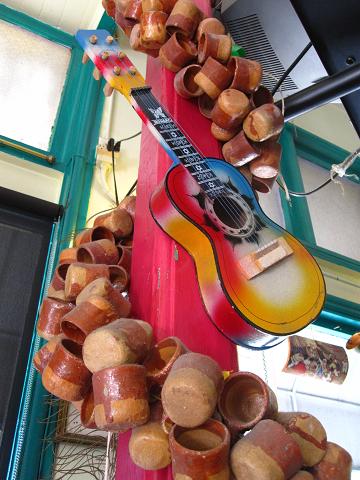
On a recent sunny afternoon, a diverse crowd sat in Los Jarritos, enjoying a late lunch. Construction workers, Latino and White, sat at the lunch counter with plates of food and a beer (not surprising, the restaurant stopped carrying the Jarritos soda five or six years ago- around the time the legal battle began). Families lounged at tables, enjoying the sunny atmosphere imparted by the dining room’s colorful decorations- shelves upon shelves of traditional pottery, and strings of small jarritos looped around pillars.

But stuck to the front door, there is a bilingual sign that invokes Novamex’s legal challenge. “Los Jarritos restaurant will be changing its name… but we will be run by the same family members and owners. Thank you for understanding.”

Los Jarritos Restaurant (for now)

901 South Van Ness, SF

(415) 648-8383

www.losjarritos.com


Oh Baby, Neon Indian was made in the ’80s

0

Miniature scrunchies, neon-colored jumpers and babysitters who insisted the tube stay tuned to MTV— awwwww, weren’t ‘80s babies the coolest? I may be partial, due to the fact that I was born in said decade, but so was Alan Palomo, a.k.a. the synth-wizard behind Neon Indian— playing Fri/26 at Mezzanine— and he’s an ’88 boy whose cheeks and beats I always wanna squeeze. 

Fuzzy, freaky and so videogame-esque, Neon Indian is Palomo’s solo project, following the rapid success of his other electro gig, VEGA. The debut album, Psychic Chasms [Lefse 2009], is a charming mix of steady beats with whirling lasers and wired hiccups. “Should Have Taken Acid With You” is genius— Palomo’s baby-smooth vocals romping around the electronic rattles and laser toys. 


I called up Palomo on a Sunday afternoon while he was in Austin, laying low before the SXSW storm that would take over the following day. Even through his use of big, fancy words, I thoroughly enjoyed being distracted with the thought of his full head of baby curls blowing in the Texas breeze (slightly creepy, yes).


SFBG- How would you describe Neon Indian’s sound using verbs?

Palomo– Reactive. Warped. Like solving a sudoku. And this is going to sound like a L’Oreal commercial, but translucent and shimmering. Klodisesphocick?


SFBG- Ok, now you’re just making up cool words…

Palomo–  How about pastel-nauseating?


SFBG- Tell me about another art form that has influenced your music?

Palomo– I’ve been renting a lot of movies and they seem to be following a pattern: meandering characters, though well intentioned. Like Vagabond (1985)– a French film about a female hobo traveling through various towns.  


(Palomo stops to admire an old couple cruising around him on a tandem bike).


SFBG- Sometimes your lyrics seem pretty obscure, or maybe I just get distracted by the lasers— what do you like to write songs about?

Palomo– Nothing makes for better art than relationships. Yikes. They’re fascinating. My music comes off as effervescent, people describe it as happy, but I have to have a little ambivalence in there, too. 


SFBG- So when you make music, it’s in your bedroom and it’s just you. How does this transfer to a live show?

Palomo- We’ve done a lot of recontextualizing. I’ve had to sacrifice a little bit here and there so people have something to look at. It’s alienating if not— go to a live show, get a drink and look at your watch. So we’ve really worked on making it palpable. 


(The tandem goes by again—followed by an obnoxiously loud motorcycle). 


Palomo- Wow that guy’s motorcycle is ridiculous. Really? Those machines don’t bring pleasure to anyone but yourself, sir. 


SFBG- Have people been dancing at your shows?

Palomo– At first they have quixotic looks on their faces, but then three or four songs in they realize this requires some physical movement, like ok, I’m not on the couch, wearing headphones and my Snuggie. And then yes. They dance— in a Peyote-dazed way.


SFBG- So ‘80s baby, what are some ‘80s elements have weaseled their way into your music? Favorite culture-tid bits from that era?

Palomo- Definitely Sega Genesis, Sonic (The Hedgehog) 3. All that rushing music in the underwater level. Brings about such a primitive mechanism in my brain. I really liked the Sega soundcard. It’s like a crappy sampler, condensed, crunchy, weird— a great, low quality sampler. 


SFBG- What are you going to do the rest of afternoon?

Palomo– Some some weed and watch Kids in the Hall. 


SFBG- Ah, I hate that show. 

Palomo– What? (He says with complete shock). I used to take sick days in middle school so I could stay home and watch it. 


Neon Indian

Fri/26, 9pm, $15

444 Jessie, SF

www.mezzaninesf.com


Harry Bridges: Working class hero

0

He died 20 years ago this month, but I can still see him, a tall, wiry, gray-haired, hawk-nosed man. I can hear him.

I see him pacing restlessly back and forth behind the podium at union meetings, nervously twirling a gavel, puffing incessantly on a cigarette. I hear him calling on members, white, black, Asian, Latino, in the broad accent of his native Australia, actually encouraging debate and dissent.

He died in San Francisco at the age of 88 — Harry Bridges, co-founder and for 40 years president of one of the most influential organizations in this or any other country, the International Longshore and Warehouse Union.

Bridges often was irritating to the ILWU’s friends and foes alike. He was irascible and obstinate. But he was unquestionably one of the past century’s greatest leaders.

Bridges was not in it for money. His salary as union president was far less than he would have made had he remained a working longshoreman. Bridges was in it because of his unswerving belief in “the rank-and-file,” as he once told me, a naive and inquisitive young Chronicle reporter — “the working stiff, that’s who! Can you understand that?”

I understood, eventually. And though I and others sometimes harshly questioned Bridges’ specific notions of what was needed by working people, none could legitimately question his incredible commitment, skill and integrity.

“The basic thing about this lousy capitalist system,” Bridges declared, “is that the workers create the wealth, but those who own it, the rich, keep getting richer and the poor get poorer.”

Harry Bridges’ lifelong task, then, was to shift wealth from those who owned it to those who created it – a task he began in 1934, when he led his fellow longshoremen in a strike aimed at winning true collective bargaining rights from West Coast shipowners.

As Bridges’ biographer Charles Larrowe recalled, “The shipowners said ‘no,’ said it with tear gas vigilantes and billy clubs wielded by cops who thought they were in the front lines against a communist takeover. Up and down the coast, the waterfront was turned into a battlefield.”

Police bullets killed 10 men during the three-month-long strike that also prompted a four-day general strike in San Francisco. But the longshoremen ultimately got what they had demanded, most importantly, an end to the notorious system of job allocation known as the “shape-up. “

Previously, jobs were parceled out by hiring bosses in exchange for kickbacks from the longshoremen who lined up on the docks every morning clamoring for work. But after the strike, job assignments were made by an elected union dispatcher at a union-controlled hiring hall, using a rotation system that spread the work evenly among longshoremen. The victory was downright revolutionary, and had a profound impact on workers and employers nationwide.

Within two years, Bridges joined with Lou Goldblatt, the brilliant young leader of the warehousemen who worked closely with longshoremen on the docks. They brought the two groups together into a single powerful union. the ILWU, under the banner of the newly established Congress of Industrial Organizations — the CIO.

The union ultimately extended its jurisdiction to virtually all waterfront workers on the Pacific coasts of the United States and Canada and to workers in a wide variety of occupations in Hawaii.

Bridges and Goldblatt used their potent base to help lead drives by other CIO unions that spread unionization from the waterfront to many other industries throughout the West at a time when employers treated workers as chattel, giving them little choice but to accept near-starvation wages and whatever else the employers demanded.

For the ILWU, Bridges and Goldblatt drafted a union constitution that still is unique in the control it grants members. Many union constitutions give members very little beyond the right of paying dues in exchange for the services provided them by the union’s securely entrenched bureaucrats. But the ILWU constitution guarantees that nothing of importance can be done without direct vote of the rank-and-file.

No one can take ILWU office except through a vote of the entire membership; no agreement with employers can be approved except by a vote of all members; the union cannot take a position on anything without membership approval.

The ILWU helped set important precedents that enhanced the civil liberties of everyone through its strong opposition to those who tried to deny constitutional rights to Bridges and others by labeling them Communists. The union’s efforts included an eight-year-battle against attempts to deport Bridges to Australia that ended with a Supreme Court ruling that enabled him to become a U.S. citizen in 1945.

The ILWU under Bridges was an outspoken foe of U.S. involvement in Vietnam, even at a time when most other unions enthusiastically supported involvement. And members backed their opposition to oppressive regimes abroad by refusing to handle cargo bound for or coming from their countries.

Thanks in large part to Bridges, the ILWU also was one of the first unions to be thoroughly integrated racially, and otherwise has always been probably the country’s most socially conscious union. And its members, now including women, have long been among the most highly compensated workers in any field, while at the same time benefitting from labor-saving equipment that makes their work easier. The new equipment and methods on the docks have brought employers higher profits, which union negotiators have made certain they share with dock workers.
The ILWU used its employer-provided pension funds to finance construction of low-rent apartments in San Francisco’s St. Francis Square, an extremely rare example of what the union calls “cooperative, affordable, integrated working-class housing.”

Harry Bridges led the way to that and much more which benefited the working stiffs to whom he devoted his life — and many, many others. As a newspaper that once reviled him as a dangerous radical said on his death, “He sought the best of all possible worlds. This one is much better due to his efforts.” Boy, is it.

Dick Meister, formerly labor editor of the SF Chronicle and KQED-TV Newsroom, has covered labor and politics for a half-century. Contact him through his website, www.dickmeister.com, which includes more than 250 of his recent columns.

Bay Bridge’s new S-bend gets fence. Finally.

1

Ever since the driver of a truck laden with Asian pears flew off the Bay Bridge’s new S-curve and plummeted to his death last November, the California Highway Patrol has been policing the speed limit and Caltrans has added striping, signs, rumble strips and other features. Those efforts have helped reduce the curve’s initially high accident rate.

And yesterday, I noticed that Caltrans has installed a fence (visible in this clip that I posted, at risk of the usual snipes about my radio-listening and car- driving choices, though I work at the bike-hugging Guardian) along that fatal section.

I’m not sure the fence is intended to stop vehicles that have gone airborne. But it sure helps alert folks to the fact that there is nothing between them and the deep blue sea, if they have the misfortune to plunge over this concrete edge.  (And that’s before we even get to the possibility that Yerba Island, where the pear truck landed, is haunted by the spirits of native people whose graves were disturbed.) But I can’t help wondering why it took until March to install this fence.

SCENE: NonStop Bhangra brings the dance

0

From Scene: The Guardian Guide to Bay Area Nightlife and Glamour — on stands now in the Guardian

You’ve always been the, shall we say, expressive one in your group. Eye-fluttering comes naturally to you. Your hands have been known to fly to your face at the slightest appearance of everyday anguish. You enjoy flouncing. So go east, young thang — straight to dramatic Bollywood.

Can’t quite swing the flight to Mumbai? You’re in luck, because since 2004, Vicki Virk and Suman Raj of the dholrhythms dance troupe, along with DJ Jimmy Love and others, have been holding monthly NonStop Bhangra club nights (www.nonstopbhangra.com) that turn the Rickshaw Stop into handclapping, bangle-clanging, whirling celebrations of bhangra, the dance music that drives Indian cinema. They spend the night’s first hour schooling audiences to bhangra basics, leaving each diva free to bob and spin for the rest of the night to the tunes of an ever more impressive lineup of dub, hip-hop, and electronica DJs and musicians. We caught up with Virk to chat about how she’s made this unconventional club night a multicultural institution in the Bay for the past six years.

SFBG How did you first come into contact with bhangra music?

VICKI VIRK I grew up in Punjab, India, and moved to the United States when I was around 12. My family’s culture has always involved bhangra music. Suman learned about Punjabi culture when she married my cousin and we became close soon after. We talked a bunch about doing something that was community-oriented, would bring a lot of people together, and was positive.

NonStop Bhangra all started accidentally — I never thought this is what I’d be doing! We started off by hosting a free dance class. I started dating DJ Jimmy Love, and when we wanted to celebrate our class anniversary, he suggested we host a party where all our students could practice their dance. We invited our family and friends and people really loved it, so we did another show a couple of months later. Then we approached the Rickshaw Stop, and it just turned into what it is now. It’s grown so much. We’re hosting our 65th party this month.

SFBG Has the night’s experience evolved since those beginnings as a bhangra showcase?

VV It has changed a lot, but the base of it has stayed the same. We now have a live element: hip hop and electronica DJs and drummers, and we’ve added lights. It’s a ritual now. We open the doors at nine, start the lesson, and the whole audience does it together. It’s better than a regular club night because participants get to learn it, watch it, and then do it. Bhangra’s easier to learn and has a happier vibe than other types of dancing. All kinds of people can dance to it regardless of ethnicity. Most of our crew is not Indian — we have white people, Koreans, Filipinos. The audience sees an eclectic group onstage and it reminds them that music is universal and full of passion.

SFBG How do the other genres mix with the bhangra sound?

VV Bhangra has a heavy bass, a four-four drum beat. It’s a really down-to-earth kind of music, and if you have good DJs, it goes really well with hip-hop and reggae. I explain it to people as the hip-hop of India. It’s what plays in all the clubs there regardless of the region.

SFBG Are people from India surprised to see bhangra performed in this all-inclusive way?

VV We did a show in front of the Contemporary Jewish Museum when one of our MC’s cousins was visiting from India — and the cousin was shocked at the diverse crowd. He was taking pictures, calling his friends back home. Bhangra is such a cultural dance. It hasn’t been taught that often outside the Punjabi community. And sometimes that community is concerned about the shows, they think maybe bhangra will be taken advantage of. But then they learn about what we are doing, and they love it. Now people bring their parents. We’ll have an older woman dancing next to a hipster kid! *

NON STOP BHANGRA

Third Saturdays, 9 p.m., $15–$20

Rickshaw Stop

155 Fell, SF

www.nonstopbhangra.com

SCENE: Jazz Mafia Keeps it in the family

1

Written by Lilan Kane. From Scene: The Guardian Guide to Bay Area Nightlife and Glamour — on stands now in the Guardian

Jazz in its most fashionable and handsome form found itself around a table at Coda recently. I had the pleasure of meeting with dapper Jazz Mafia members Adam Theis, Joe Bagale, and Dublin to gain some insight into their music and experiences as members of one of the Bay’s most youthful jazz ensembles.

The Mafia (www.jazzmafia.com), as one might expect, is a collective that incorporates several smaller groups containing dozens of members into a large and tuneful family. The first of these groups, Realistic Orchestra, was established about 10 years ago when various jazz forces of the Bay Area started to intertwine and jam together. (Other branches of the family include Brass Mafia, Spaceheater, and the Shotgun Wedding Quintet.)

Main Mafia figures Theis (trombonist, arranger, and bandleader) and Dublin (emcee, vocalist, rapper) are still at the forefront of Realistic Orchestra. They’ve held a Tuesday night residency at Coda for several years, rotating various Jazz Mafia acts. The night I interviewed them, singer and multi-instrumentalist Joe Bagale was taking the stage, with Theis manning the bass.

Before moving to the elegantly appointed Coda, the Mafia had a raucous six-year run at Bruno’s, racking up several awards and introducing jazz to a new generation of night-lifers. The sharpshooters have played with Lyrics Born, Santana, Bobby McFerrin, Sly and the Family Stone drummer Gregg Errico, and many more. A highlight: recently Joe was closing a Saturday night show with Donny Hathaway’s version of John Lennon’s song “Jealous Guy.” He was lost in the moment of it with his eyes closed and his heart pouring out into the microphone. He opened his eyes to find Stevie Wonder in front of him. Wonder got onstage and the band prompted him to revisit an old B-side cut, “All Day Sucker.” Suffice to say, the house was rocked and shocked.

But Mafia members’ interests aren’t limited to revamping standards with star power. In 2008, Theis won the prestigious Gerbode-Hewlett Foundation’s Emerging Composers Grant, which he used to fund his latest project, “Brass Bows and Beats,” a 50-minute innovative suite with strings, vocals, horns, a DJ, and even a didgeridoo. When Theis took the group to the Playboy Jazz Festival last year, host Bill Cosby called Bagale to the stage, facetiously suggested that the variety of genres in the piece would sound like skimming through all the channels of satellite radio really fast. Admittedly, this concept — infusing hip-hop, jazz, classical, soul, electronic, and more — is ambitious. But Brass Bows and Beats debuted with a sold-out performance at the Palace of Fine Arts in San Francisco last April and was deemed an artistic success. (Theis will also be jazzing up the San Francisco Symphony’s performance of Shostakovich’s Symphony 8 in April.)

Dublin, the MC of the group, adds a hip-hop element to the mix — and a connection to younger fans. He recently paired with producer Elon to release a solo record, Ease The Pain (Jazz Mafia Recordings), featuring singers Emily Schmidt and Forrest Day. And Bagale, although able to call up the deepest soul and sharpest wit in his vocal stylings, enjoys taking a background role as head vocal arranger. “One of the coolest experiences for me is to be able to write and arrange for other singers and not be the focal point,” he said.

About those arrangements — it’s in its orchestral distribution of sounds that the Mafia really shines. Its talented members have the capacity hear and highlight a dazzling array of instrumental lines, often numbering up to 45. Then the group’s arrangers write them out instrument by instrument, voice by voice, line by line. “To do one three-minute or so tune, I usually put in 50 to 100 hours,” Theis said.

In an attempt to reach more young jazz enthusiasts, the Mafia is planning a summer tour across Canada, New York, and New England, the first major tour it has undertaken. These young men and women are trying to expand the palette of the live scene, one arrangement at a time.

JAZZ MAFIA TUESDAYS

Tuesdays, 9 p.m., $7

Coda Lounge

1710 Mission, SF

www.codalive.com

ADAM THEIS AND ALL-STAR JAZZ MAFIA ENSEMBLE WITH SF SYMPHONY

April 2, 8 p.m., $15–$130

Davies Symphony Hall

201 Van Ness, SF

www.sfsymphony.org

JAZZ MAFIA TOUR FUNDRAISER FEATURING BRASS, BOWS, AND BEATS

April 25, 3 p.m. and 7 p.m., $25–$75

Yoshi’s SF 1330 Fillmore, SF

www.yoshis.com

Street Threads: Look of the Day

0

Today’s Look: Jay, Van Ness and Broadway

Tell us about your look: “I got this sweater at Dillard’s.”

Can Newsom save SF parties?

11

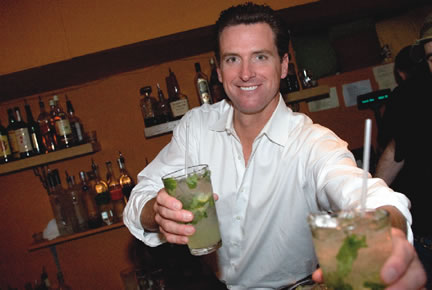
Why won’t Mayor Gavin Newsom save San Francisco’s nightlife and culture? That question was raised toward the end of this week’s cover story on party-crashing cops, but it’s worth highlighting here because Newsom seem uniquely suited to the task of mediating this damaging dispute.

Newsom owned a restaurant and bar before being elected mayor with the strong support of the San Francisco Police Officers Association. The business community is one of his key constituencies, and he constantly talking about the need to promote tourism, which relies on our cultural vitality. He’s the most natural, logical bridge for this divide.

That’s why attorney Mark Webb, who represents several clubs and individuals who have been harassed by SFPD Officer Larry Bertrand, has explicitly been calling for Newsom to get involved.

“I really believe his involvement could help us get to a place of calm,” Webb said. “We have to stop this petty infighting and we have to embrace the cause, which is to make San Francisco’s nightlife an inviting environment.”

DNA Lounge, which is not part of Webb’s lawsuit but has been fighting against harassment by Bertrand and the ABC, also wants to see Newsom broker some peace talks. 

“Absolutely, Gavin certainly has the juice to deal with this problem and we would welcome his involvement,” DNA general manager Barry Synoground told us. “We don’t know why there is such vehemence against nightlife and entertainment…What kills me is we have a large group of responsible purveyors, but we’re not being treated as such. We’re being treated like criminals.”

But Newsom has resisted the call, with his press secretary Tony Winnicker telling us, “I wouldn’t rule it out, but the mayor has department heads for that reason,” saying he preferred for Police Chief George Gascon to tell with it. But the problem is this isn’t a police issue, it’s a political one.

DNA Lounge (which has reguarly blogged the crackdown) has highlighted how SFPD Commander James Dudley sees nightlife in the city: as a nuisance to be abated, rather than an important culture to be embraced and celebrated. Winnicker claims that Newsom understands this: “The mayor understands the importance of a vibrant nightlife.”

But that understanding hasn’t translated into official city policy. Attorney Mark Rennie, who handles permitting and compliance issues for about 40 nightlife and culture clients, said that San Francisco has become notorious for making life difficult for club owners and other purveyors of fun. 

“The city has always had this love-hate relationship with nightclubs. But it’s really bad now,” Rennie said, noting how welcoming other local cities are toward nightclubs, which are important economic drivers. “Berkeley gets it. Oakland gets it. I don’t know why San Francisco doesn’t get it.”

Which is strange because, of all people, Newsom should get it. He should understand the natural tension between certain elements of both the police and nightlife communities and, valuing them both, try to find a way to solve this problem. So whatdaya say, Gavin? After you’re done try to clean up the mess you created with the labor unions, how about stepping in to address a problem that is closer to your sweet spot?


Image by Luke Thomas/Fog City Journal

When do we get to vote on PG&E’s latest rate hike?

The Chronicle’s David Baker reported today that Pacific Gas & Electric Co. has proposed a new fee structure that would raise the average residential customer bill by $10.73 more each month, bringing it to a total of $88.13.

This new rate-hike proposal comes as the utility prepares to spend $35 million on Proposition 16, a ballot initiative that would essentially lock in its monopoly against competition by requiring a two-thirds vote before local governments could set up alternative power providers. John Geesman, former executive director of the California Energy Commission, called PG&E’s current rates “excessive” when he blasted Prop 16 before a joint hearing of the California Legislature. Geesman commented that the California Public Utilities Commission (CPUC) doesn’t set rates “at a level calculated to provide a $35 million slush fund for sole-sponsored political adventurism.”

“PG&E says it will spend up to $35 million, and insists all of that money will come from its shareholders,” he noted. “You and I know that every nickel that passes through PG&E’s books comes from its captive customers — its regulated utility is the only business PG&E has!  It ought to be illegal to take ratepayer money and use it politically against ratepayer interests.  If PG&E’s making an excessive return, it ought to give the money back.”

PG&E has sent out mailers claiming that San Francisco’s own community choice aggregation effort would drive up the cost of monthly utility bills. Yet the track record for existing municipal utilities shows that historically, PG&E rates have been higher.

Dan Berman, an energy expert who has worked as an analyst for the CPUC, highlighted this point when speaking before the CPUC March 17. In 2008, PG&E charged an average of 13.6 cents per kilowatt-hour, while the Sacramento Municipal Utility District (SMUD) charged 10.7 cents, he noted. “That means PG&E charged 27.3 percent more than SMUD, the largest publicly owned utility in Northern California,” Berman said.

On March 20, the San Jose Mercury News published an editorial shooting down Prop 16. Here’s an excerpt:

“If [PG&E CEO Peter Darbee] is looking for a cheaper way to hold onto his customers, here’s a suggestion: Instead of spending tens of millions of ratepayer dollars on political campaigns, PG&E could use that money to lower rates and find more sources of renewable energy — the main reasons cities consider breaking away in the first place.

“But don’t hold your breath. And don’t miss the opportunity to send PG&E an unequivocal message by ignoring the barrage of misleading advertising and voting no on Proposition 16. The constitution of the state of California should not be for sale.”