Mayor Gavin Newsom and his business community allies often accuse progressive members of the Board of Supervisors of being too “ideological” in their proposals, particularly when they involve revenue or regulations. But a looming battle over reforming the city’s business tax – one of three new revenues set for a special Budget & Finance Committee meeting tomorrow (7/9) at 11:30 am – shows that an ideological aversion to taxes of any kind drive Newsom and the business community more than their stated concern for “jobs” and the “economy.”
Board of Supervisors President David Chiu crafted his measure – which creates a progressive structure for the currently flat payroll taxes and uses small commercial rent tax to spread the tax burden among more businesses (only 10 percent of which now pay the payroll tax) — specifically to decrease the business tax burden on small businesses and protect private sector jobs while also bringing in about $35 million more into the city, which will save some city jobs and thus help the local economy.
City Economist Ted Egan and the Office of Economic Analysis confirmed that Chiu’s carefully crafted measure does just that, noting that it was based on recommendations made last month in a report by his office and two private accounting firms that was jointly commissioned by both Chiu and Newsom.
“The proposed legislation modifies the Progressive Payroll option in the Controller’s report, to achieve greater revenue growth while minimizing private sector job growth,” concludes Egan’s analysis. And that’s the idea of this legislation, to save some city jobs and services without hurting the private sector. Egan found this tax reform would on balance have no impact on private sector jobs.
But the Small Business Commission, driven by anti-government zealots in their community, wants even greater concessions and to minimize government revenues, demands that Chiu is now considering giving in to, with sources close to the negotiations saying they will amend the plan to exempt more small businesses and lower the revenue projection to more like $28 million.
“There are members of the small business community that are averse to any taxes,” Regina Dick-Endrizzi, director of the city’s Office of Small Business (which staffs the commission), told us.
She said the commission isn’t opposing or supporting the measure, and while she said the business community isn’t ideologically opposed to government, she did admit that “they are just not sensitive to keeping city workers employed.”
And that’s a terribly selfish and self-defeating attitude that hurts the local economy and the services we all depend on. The problem is the small business community — which is supported by the Bay Guardian and beloved by all as a key job creator — is being used by conservative ideologues and large corporations and lured into joining their anti-government crusade. This has to change, and this legislation is a good opportunity to talk about the real ideological barriers that are hindering common sense solutions to this city’s problems.
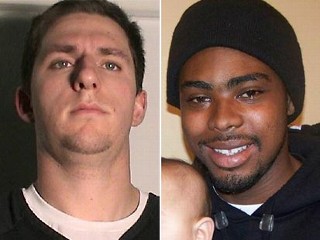
The jury has reached an involuntary manslaughter verdict in the murder trial of Johannes Merserle, the former BART cop who shot and killed Oscar Grant, and Oakland City Hall has been evacuated in anticipation of the response. The judge has announced that the jury rejected the two more severe verdicts — 2nd degree murder and voluntary manslaughter — which could prompt an angry response from some protesters.
As the photos above by Ben Hopfer show, many businesses in downtown Oakland have been boarded up in anticipation of riots, while others have posted tributes to Grant and other statements of sympathy for the demonstrators that are soon expected to fill the streets of Oakland, as well as messages urging nonviolence.
The coalition that organized protests in Oakland criticizing Mehserle’s conduct has issued a statement calling for people to gather in protest at 6 p.m. at the intersection of Broadway and 14th, voicing opposition to the verdict by writing, “This is a huge dissapointment after 18 months of organizing for justice in this historic case. Once again America has told black and brown communities that their lives are of little value in this society.”
“This fight is far from over,” said Rachel Jackson of the New Years Movement for Justice for Oscar Grant. “The Department of Justice now needs to take immediate action and try Johannes Mehserle, Tony Pirone and Marisol Dominice for hate crimes and violations of Oscar’s civil rights.”
Attorney John Burris, who represents the Grant family, also expressed disappointment in the verdict in speaking with reporters outside the Los Angeles courthouse, but he did note that it is significant for a police officer to be convicted of a murder charge, something that has never happened in the 30 other similar cases he’s worked on. “So in that sense, it’s a small victory,” Burris said. He plans to file a civil lawsuit in the case and to urge the judge to issue the maximum sentence when the court reconvenes for sentencing on Aug. 6.
Update at 8:38: Our reporters in the field say the crowd in Oakland has begun to turn violent, with the Foot Locker on Broadway near Telegraph getting its windows smashed and looters currently making off with merchandise. A Subway on Broadway also had its windows broken. About an hour ago, the Oakland Police — which had been steadily moving in the barricades around the main crowd — made at least one arrest after a confrontation with two protesters who weren’t moving back. And a couple hours ago, a woman was run over by an unmarked police car that had ended up in the middle of the action and was being threatened by the crowd, but she seemed uninjured afterward. More as it develops…
Update at 8:54: Hundreds of police officers in riot gear are massing at 14th Street off Broadway, ordering the crown to disperse or face arrest. Troy on Twitter is also reporting the Far East National Bank is being looted.
Update at 9:41: Most of the crowd has been dispersed, with just a couple hundred left, many of them young anarchists wearing black hoodies. This may be our final post of the evening, but ABC7 has had good live coverage.
Update at 10:10: The crowd has turned violent again, smashing windows in about 10 stores along Broadway and lighting trash cans on fire.
Who do you drink to? I guess it really depends on what you’re drinking. Moonshine: The Devil Makes Three. Thug Passion: Tupac. Shot of a Patron, beer back: Very Be Careful. And hell no I’m not getting mom on you — that’s the vallenato five-piece from Los Angeles that’s ready to party with you next week at The Rickshaw Stop (Thurs/15). VBC, formed by brothers Ricardo (accordian) and Arturo (bass) Guzman, sticks pretty close to the sounds that originated in their hard-partying parents’ homeland in the sun-soaked Colombian Caribbean coast. Their music sticks close to the tunes from down south, but something in that onstage swagger – that’s all Californian. I interviewed the two the other day over the phone, and I must say, I like the cut of their jib. Anyone whose professed purpose in life is to play about getting “the most out of life and love” while everyone boozes and lights up the dancefloor is very okay con esta chica.
San Francisco Bay Guardian:Your shows are meant to be real, real fun. What are the key ingredients to a good party?
Arturo Guzman: Dancing and drinking is always fun.
SFBG: Well, yeah. What do you like to drink?
Ricardo Guzman: You mean during the show or during the day? I like Sapporo, that’s my favorite beer. At the show, it’s Patron with a beer back. We go through phases. And about your last question, I think at the shows, people enjoy our enthusiasm, and we really enjoy theirs.
SFBG:Who writes your songs?
RG: My mom writes a good number of our songs, and I write the lyrics for many. The band itself writes the music … I don’t even know how, Sometimes at the show.
SFBG: Wait, your mom writes your songs?
RG: Her name’s Daisy Guzman. She was inspired by us playing this music and she said songs started coming to her, so she’d pass them on to me. Some of our best songs are by her. She’d write songs about her experiences and imagination – she has quite a few now, she really enjoys them.
SFBG: Does the music come to her? Just the lyrics?
RG: She’ll sing [what she’s come up with] sometimes and I’ll work with that. It’s awesome. Everybody loves those songs, they’re special to us.
SFBG:Very Be Careful has been around for awhile, what’s your secret of longevity?
RG: We started in ’97, so [we’ve been together for] 12 years I believe. But those are secrets that we can’t really reveal. We’re like a family, you know what I mean? I would say that’s one of the biggest things that keeps us together. Like a family you have your ups and down. There’s no weird, deep things going on. Well I guess there is, we’re like a family. It’s like a survival thing
VBC also enjoys props. And sunsets.
SFBG:What do you see in the future of Very Be Careful?
AG: We’ve already seen it. It looks great!
SFBG:Where are you getting your musical influences from?
RG: the music comes from Colombia, a town called Valledupar in Northern Colombia. It’s spread through the coastal town — and through the world. It started with accordian, guacharaca — a scratching instrument typical to Colombia – and the caja. That’s the drum. That’s of course our main influence, but there’s a lot of influences that maybe people don’t see in our music, but maybe they will in our performance. We all like hip hop, rock, jazz music.
SFBG:What draws you to vallenato, besides your cultural heritage?
RG: I think it was luck. We started hearing records, and it kind of fell in our laps in a way. I was drawn to it because a lot of the accordion music I heard when we were younger I didn’t like. But now I see, wow, this is really up my alley.
AG: It’s local, village sort of music that is a part of other styles of music that we like. It’s music of the working class. What its like to be poor, but still get the most out of life and love.
RG: When we first started playing it we noticed the reaction people had to it from all walks of life, I was astonished – I had found what I want to do in life.
SFBG: What’s the message that people are going to take away from a Very Be Careful show?
RG: I want people to remember as much as possible the next day. And to remember that they’ve had a great time, and hopefully their feet are tired from dancing.
AG: Yeah, but I don’t know how anyone’s gonna remember. The thing about the live show we do, everyone surrenders to it. We work together on this abandoning and surrendering. It’s an in-the-moment thing, all you can say to people is, this is amazing. And besides that, we just want people to look into the roots of this music. It’s not really into the radio, even on the Internet. And, you might also meet someone nice on the dance floor.
SFBG:Any other words for your San Francisco audience?
RG: We hope that since our time up there is limited that everyone comes out and support Very Be Careful.
AG: Don’t worry about working on Friday. That should be the least of your worries. Take the day off. Whatever you need to do, get your groove on. We might not even make it to Friday.
Very Be Careful
feat. Franco Nero and Intl Freakout Djs Special Lord B, Ben Bracken, and Phengren Oswald
With King of the Beach, Nathan Williams, Billy Hayes, and Stephen Pope have finally stopped adding “v”s to their name. After Wavves (2008) and Wavvves (2009) of unpolished lo-fi, these San Diego-based upstarts have elevated to a dreamier, more whimsical sound (re: “When Will You Come”). Yet Wavves also hearkens back to Blink-182, Sum 41, and the bygone days of summer in the ’90s. The new album’s delightful pastiche is thanks, in part, to Dennis Herring, who’s produced the likes of Counting Crows, Elvis Costello, Modest Mouse, and the Hives. Goodbye dissonant noise; hello pop punk! Williams has been Pitchforked to on- or maybe even above-the-radar status, and the media frenzy brought to cold, hard light his alleged substance abuse issues. Druggy themes are present within the music (or at least the song titles), especially “Post Acid,” whose nasally croon and carbonated licks quite literally scream DeLonge, Hoppus, and Barker. “Green Eyes” displays a similar harum-scarum musical attitude, where Williams doesn’t care how derivative he sounds. The freewheeling “Convertible Balloon,” with its effervescent chorus and prickly percussive textures that just stick to you – as any fizzy-lifting-thing does – is pure PG-rated fun.
A reference to a Nintendo game in “Linus Spacehead” makes the heart grow even fonder for the ’90s. There’s an esoteric boyishness at large that makes King of the Beach, strangely, more precious than the band’s previous releases. The tinges of melancholy and nostalgia in a song like “Mickey Mouse,” along with some chilling vocal reverbs, reflect a band that’s still young, still having fun, and yet starting to grow up. Even if at the end of the beach, Wavves crash on an overproduced note (“Baby Say Goodbye”), Williams is among the least pretentious of a current breed of rockers who can be found on the corner of Indie and Internet.
More bloodthirsty coverage of the San Francisco IndieFest’s horror-fest offshoot, Another Hole in the Head, in this week’s Guardian.
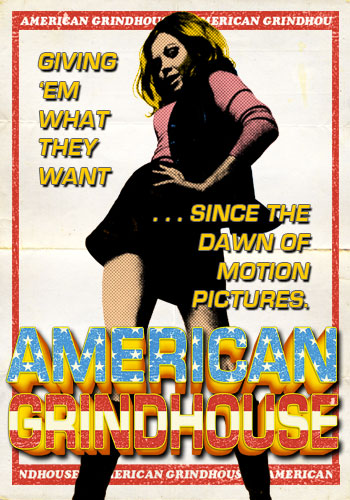
Another Hole in the Head’s two documentary offerings concern themselves with the distinctly American roots of two related strains of genre filmmaking. Elijah Drenner’s American Grindhouse traces the history of exploitation film, with a particular focus on the grindhouse theater as a cultural institution. Narrator Robert Forster recounts the tendency of even the earliest films to cater to prurient interests, and how the establishment and eventual dissolution of the Motion Picture Production Code stimulated the development of exploitation subgenres. The featured film clips are impeccably selected, mixing titillation and shock with a healthy sense of humor about the over-the-top absurdity of films like Ilsa: She Wolf of the SS (1975). Surprisingly candid interviews with gore luminary Herschell Gordon Lewis and blaxploitation director Larry Cohen prevent the film from taking on a too-self-important tone — these folks knew they were making b-pictures, and were damn proud of it. One of the most charming aspects of the documentary is the juxtaposition of different attitudes, wherein one interviewee will sing the praises of a classic, followed in quick succession by another talking head declaring it to be trash. It feels like John Landis gets the most screen time of any subject, but his charisma as well as the breadth of his oeuvre make it seem appropriate.
Nightmares in Red, White, and Blue, on the other hand, focuses specifically on horror, and director Andrew Monument in turn delivers a harsher, more self-serious take on shocking cinema. Some interviewees cross over, but standouts here include John Carpenter and modern torture porn auteur Darren Lynn Bousman. The editing here is less edifying and more irritating, though since we’re dealing with horror films, sometimes the heavy-handedness works — case in point, a lengthy montage of nudity and sex from slasher films effectively communicates both the puerile interests and blunt moralizing of much of the genre. Nightmares is also more explicitly concerned with how horror films relate to America, with many interview subjects noting how each decade’s horror trends mirrored its political issues, hence the title’s direct allusion to the perversion of the American dream.
Both films provide a historical framework for films that, as Grindhouse insists, have become part of our modern mythology and mindset. Grindhouse is more watchable, but both are worth seeing for anyone who didn’t live through the long history of genre madness and brilliance.
More bloodthirsty coverage of the San Francisco IndieFest’s horror-fest offshoot, Another Hole in the Head, in this week’s Guardian.
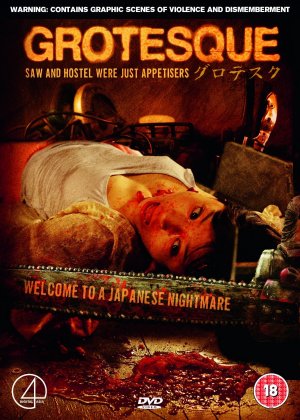
Grotesque (Koji Shiraishi, Japan, 2009) When did gorno stop being sick and start becoming sad? In Koji Shiraishi’s Gurotesuku, or Grotesque – banned in the UK – a chainsaw is brought to chests, arms, legs, and fingers when really it should be brought down on this celluloid garbage. Shiraishi presents a film that is sloppy, badly written, badly acted, and is above all things, deeply unentertaining. The plot is as thin and drawn-out as one of the protagonist’s intestines: While on a date, two dumbfucks get picked up by a craaaaaazy doctor (at least I think he’s a doctor – and I think he’s lost his board certification) who proceeds to do sick but unoriginal things to them (sawing off a girl’s fingers and stringing them on a necklace for her BF? C’MON!). There are some brief moments of respite, albeit painfully acted and ridiculous respite, but the torture tries not to let up its chokehold on the audience. Unfortunately, it just ends up being a chokehold on our time. Fri/16, 5 p.m. and Sun/18, 7 p.m., Roxie.
Ticked-Off Trannies With Knives (Israel Luna, USA, 2010) Trannies should get ticked-off more often. In a mock-exploitation fest like this one – which has the candid crudeness of a John Waters film – the tranny is the ultimate hero because she embodies the street smarts and agility of a woman, and the muscles and thirst for vengeance of a man. After an aggressive brush-up with some nasty bros (and what’s worse than a weapon-wielding homophobe?) the titular trannies in Ticked-Off set out to put the ol’ Hammurabi’s Code to the test – and with results both hilarious and flat-out gross. The cheeseball aesthetics and maudlin acting are surprisingly funny and self-conscious rather than self-effacing – yet in dealing with something like a hate crime, how else can you approach the material? July 22, 5 p.m., Roxie and July 23, 9 p.m., Viz.
Doctor S Battles the Sex Crazed Reefer Zombies (Bryan Ortiz, USA, 2008) Apparently, Reefer Madness (1936) and the public health warnings like it were right: weed does turn you into a monster. But in this underachieving student film, the message arrives a little too late. Doctor S has a promising start: some hilarious faux-film reel ads, and many a nod to cult horror films. In stark black-and-white, it’s as if Candace Hilligoss were running from stoners in Carnival of Souls (1962). But once the PhD of the title teams up with a cheerleader, saved from her post-puff zombified boyfriend at Make Out Hill, the film quickly devolves into amateurism. The thrills are cheap – too cheap – and the laughs are forced. Not to mention the title is way cooler than the movie itself. July 23, 7 p.m and July 26, 9 p.m., Viz.
I know this is political heresy, but I was encouraged by the results of the Field poll on Boxer and Fiorina. I remember back in 1982, when Milton Marks, then a liberal Republican state senator, challenged incumbent Congressmember Phil Burton — the legendary Democratic leader — with an anti-incumbent message fairly similar to what Fiorina is throwing at Boxer. “The arrogance of power” was the slogan, and while Marks didn’t try to say that Burton was too liberal (this was, after all, a San Francisco seat) the basic push was that an entrenched incumbent had grown stale and was unpopular. And in fact, the early polls showed Burton losing.
But a campaign consultant who was there at the early Burton strategy meetings told me a few years ago what the mood was like when the numbers came in: “We saw that he was down ten points, and we all breathed a sigh of relief. Because we knew we could make that up.”
Some thing when Silicon Valley whiz kid Ed Zschau took on incumbent senator Alan Cranston in 1986. Cranston, the polls showed, had been around too long, was old and boring, an entrenched incumbent … all the same messaging. Zschau was young, exciting, a moderate Republican who everyone thought was a shoo-in to unseat the incumbent. And Cranston ran a great campaign and beat him.
Boxer’s negatives are too high, but she hasn’t really reminded Californians yet of what she’s been doing in Washington and who she really is. And she hasn’t even begun to remind voters that Fiorina is anti-choice — a position that really, really doesn’t play in California.
Jerry Brown also has some good news from the Field poll, but he’s not the campaigner that Boxer is. And he’s got more trouble with younger voters. Frankly, he’s worse off right now than she is. In fact, if I were in Boxer’s camp right now, I’d be heaving a sigh of relief: She can turn this around.
It would appear they got in under the radar. After all, the Mission Mission blog post on the Levi’s pop-up store on Valencia didn’t hit until today, stirring up an American Apparel-sized storm of anti-capitalist harrumphs and hurrahs. There was even a press embargo on mentioning details about the space until yesterday.
But here it was, and here I was getting a tour of the store with various superlatively attractive employees, who were quick to remind me that the space is “not just a multi-national corporation opening up a store in a community.”
This according to Josh Katz, whose official title at Levi’s is Head of Collaborations, Partnerships, and Creative Concepts. I prefer to refer to him more succinctly as “hot man with shockingly blue eyes in striped cardigan and tie made of interesting material who had the controversial idea of opening up a corporate entity in the thick of indie-rama Valencia land.”
But where the devil were the clothes? Katz chuckles, adorably. “It’s a good question – we make clothes, don’t we?” Yes. But apparently that’s not all that sets Levi’s heart aflame. “Whether it’s providing products or not, it’s important to create physical manifestations of the brand,” says Katz.
The company is pushing its association with American hard work – its 1900s Valencia Street denim factory, after all, was one of the first sites of workclothes manufacturing. Riffing on this image of industrial creativity, its stocked the 17th and Valencia storefront with all manners of vintage letterpresses and printers. Although there’s a rack of work clothes up for sale, the space is not meant so much as a point of purchase as much as a branded community art “hub.” Every Sunday, budding local artists can screenprint on free cardstock, churn out a zine on the cheerfully supplied Xerox machine, even cobble together a rack of words that a friendly staffer (some of them straight from their day gigs at the Center for the Book) will stick through the ancient letterpress on hand. As part of a tie-in with its Go Forth ad campaign, the company’s planning another photography based pop up space in New York, due to open Sept 18.
You’d be hard pressed (ha!) to find a more attractive print shop staff
“This allows us to sustain an engagement with the community. We’ve maintained strong relationships with every aspect of San Francisco,” Katz tells me. Knee jerk reaction: scoff scoff scoff. But it gets “tricky,” as Mission Mission’s Ariel Dovas puts it, when you consider that the “printshop” is providing the Mission use of some pretty serious art equipment and space free of charge, and that those are both hot commodities in this neck of the woods. Plus, Katz and the company have scheduled workshops and other partnerships with a shockingly legitimate lineup of Bay area creative types, from Aaron Rose (who as far as I can tell is not really a Bay Area creative type, but I suppose that’s getting hung up on semantics) and Alice Waters to Craig Newmark, the most famous list maker in the world, and a slew of nonprofits who you wouldn’t think would throw in their lot with an evil company set to commodify and pablumize the Mission.
Right? I called Courtney Fink, who is the executive director of Southern Exposure, and whose community art-funding organization is one of the three to benefit from the proceeds generated at 580 Valencia (the other two are Plaza Adelante and the Women’s Building). I asked her if she was surprised that Levi’s sought out such locally rooted groups as partners for this venture. “I guess I’m not surprised,” she told me. “I feel like it’s a strategy that a lot of big companies are taking, forming these creative partnerships to support what they’re doing.” Fink said that Levi’s was backing Southern Exposure’s new postcard guide to the 45 art venues in the neighborhood, which they had been unsure where to find funding for. “As long as we can maintain our integrity, we’ll do what we can,” she said, pragmatically. Fink also noted that Levi’s had refurbished a building that otherwise might have sat empty, though she could see how there’d be numerous different opinions on their presence in the neighborhood.
Of course, not everyone’s stoked. I got an email from one Elle Ko, who is launching a guerrilla assault on this corporate infiltration. Quoth she: “that evening i decided to graffiti the storefront. i wrote ‘SCAM’, ‘BUY USED’, and other similar wording on the storefront. the graffiti was promptly removed the next morning. the following evening i wrote ‘UNEMPLOYED? KEEP SHOPPING’ on the pavement in front of the entrance of the building, also ‘LOCAL FARTISTS’ [author’s note: double ha!], ‘PLAGUE’ and a large red X across the door. i then dumped a pile of old clothes and rags in front of the entrance.” She says her actions led to the installation of a round-the-clock security guard at the site.
“Levi’s has been on Valencia for over 100 years,” Katz told me as we moseyed about his new to-do, bustling with a whole team of fresh-faced creative-type staffers. The company maintained a presence at Valencia and Brosnan (now the site of the SF Friends School) up until 2002. But to its assertion that they’ve maintained relationships with the area, I offer a hearty, resounding, whatever. Levi Strauss moved those jobs to countries with cheaper labor forces awhile ago. They haven’t had a single factory in the US, in fact, since 2003. But their corporate offices are still in the city…
Let’s go printin’ now, everyone is learnin’ how
I’m hollering at you though, Elle — all that talk about “American workmanship” and “community values” is a little problematic coming from a company that moved all their production not only out of the neighborhood and metro area, but our entire country, seven years ago. But hell, who am I to harsh on a good time? Not to mention a powerful benefactor for organizations that kick ass in our neighborhoods. So if you’re down, go and try out the toys, check out the admittedly cool workshops they’ve got coming. You might as well get some enjoyment out of it. It’s like digging the aesthetics of a cool-looking national ad campaign. Oh wait, that’s what it is.
Levi’s Workshop
public events and Sunday studio hours through Aug 28, free
But I think there’s some good news for Jerry Brown here. Whitman has spent more than $90 million so far, and the voters like her less than they did six months ago. After all that money, some of which has gone for blistering attacks on Brown, Whitman is still not ahead. And it’s hard to see what she can do now to move the needle.
Moreover, it looks like the attack ads on Whitman by Brown’s labor allies — including California Working Families 2010 — have had their intended effect: to increase Whitman’s negatives and keep her from pulling away from Brown during the summer, before he can afford to put his own ads on TV.
Meanwhile, Brown’s favorability is only marginally changed from March. It’s 42-40% favorable today, compared to 41-37% favorable before. (Of course, Brown’s favorable was 50-25% back in March of 2009, but that was when he was just the new Attorney General and not a candidate for governor with rivals.)
At some point, Jerry’s got to start seriously campaigning, and he’s got a lot of work to do. He has to define himself to younger voters, who know a lot more about Ebay than about Brown’s tenure as governor, which was generally pretty good. He has to remind Latinos of how awful Whitman is on immigration. He’s got to spend some money.
But at this point, there’s hardly a voter in California (at least, not one with a TV set) who hasn’t seen multiple Whitman ads, defining her as a successful business person and attacking Brown as a failed politician. Those are powerful messages. The ads have been well produced, well targeted and should have been effective. And they haven’t gotten her over the halfway point yet — even against an opponent who is vulnerable to attack and hasn’t campaigned much at all.
Both candidates seem to be holding the party loyalists — the vast majority of the Republicans like Meg, the vast majority of the Democrats like Jerry. And there are more Democrats than Republicans. The independents aren’t breaking Meg’s way, either — she’s only slightly ahead, not enough to make up the difference.
Now if Brown can just get his people to care enough to go to the polls. …
In today’s installment, Johnny and Tim talk about the governor’s attempts to cut state employee pay to the federal minimum wage level — and how that will affect the fall election. You can listen after the jump.
Shalt thou wander to the wicked queen’s lair? Shalt thou venture amongst the bacchanal of the satyrs? The options for this sexy venture into wonderland are vast and storied. Kinky Salon is hosting a midsummer night’s dream of a sex party, where petticoats are welcome, even if they’re gonna be a bitch to take off when you find the nymph(o) of your wet dreams. Boylesque and Ophelia Couer de Noir provide the additional visuals for the Fairytale Masquerade costume ball (Sat/10) — like you’re even gonna need it with all the corsetry and top hats flying around the room.
Bondage A Go-Go
Every Wednesday night for as long as time has existed (1993), Bondage A Go-Go has been supplying you what you need. And they’re not about to tell you what that is. If your Hump Day requires ass shaking, hit the dance floor. A blackout is desired? Bar for you my friend. Upstairs, a Stefanos-hosted dungeon for all the libertines in the room.
Swing your partner round and round – hopefully it’s cold in the club so you’ve got something to hang onto. Leather bar Powerhouse’s monthly shirts-off, hands-on touch and grab returns this week. And they’re trying to get your clothes off, you young stud, you. Free coat check, $1 drafts, shot specials and no cover? Looks like your Wednesday night just got booked.
For the day when your birthday party counts as a sex event, right? I don’t think Dr. Carol Queen ever sleeps – half of the hot sexiness in the column comes straight out of her brainstem, and I happen to know on good authority that she looks pretty good in a leather corset and not much else. Oh, and she’s a great sex educator who is celebrating her special day with readings and to-dos by writers like Stephen Elliott and Scott Upper.
How about we play at kings and queens? With a cozy dancefloor, artsy performances by local lustfuls to set the mood, and many chambers (with cushy horizontal bowers) available for journeying into your own sexual fictions, we’re pretty sure you’ll find your happy ending somewhere at this Kinky Salon sex party.
Ever be sitting in therapy pondering how much better you’d be able to ditch your residual childhood anxiety and hangups if only your therapist was buck ass naked? Perhaps this furtive curiosity led to the latest incarnation of Naked Girls Reading, “Psychiatric Help.” Ask a naked lady ’bout all your psychic aches and pains? Don’t mind if I do!
Hold on baby, I’m interested in what you’re saying but my hand is otherwise engaged. Okay go on. Oh shit, I dropped the lube. Sometimes cybersex doesn’t cut it. That’s when you head to Eros for the SF Gay Men’s Community Initiative-sponsored tounge wag – kind of an X rated version of their weekly Wilde talks for queer men they hold at the Sweet Inspiration bakery every Saturday. At Eros’ version, you might find a more eager audience for the tale of parking the Chevy with Kevin last week. But you won’t get any cake in the deal. Probably.
2nd Tues of the month (next: Tues/13) 6:30-8:30 p.m., $22 day pass
The mayor also attacked Adachi’s pension plan, arguing that the public defender never discussed it with the employee unions, city officials or others affected by the measure and that it could have “unintended consequences” for the city.
And while I think it’s a bit of a stretch to say that the Adachi measure “could reshape national politics,” Randy Shaw makes a good point:
Adachi’s measure would join with Sean Elsbernd MUNI charter amendment to create a one-two punch against public employees on San Francisco’s November ballot. The national media will have a field day with the prospect of “liberal” San Francisco, and Nancy Pelosi’s home turf, voting to cut public employee compensation.
While this is not the message Adachi wants to send, it will likely be the one that is heard. It emerges at a time when the entire Republican Party and corporate Democrats are in a full-fledged media campaign to redirect public anger over the fiscal crisis toward excessively compensated public employees, and away from banks, oil companies, hedge fund managers, and an under taxed and poorly regulated private sector.
Shaw also says that the campaign will “bitterly divide progressives,” and I’m not sure it has to turn out that way. There’s always the danger that liberal voters who work in the private sector, and are struggling to keep their jobs and health insurance, will be seduced by the notion that public-sector employees are too well paid already. And the donwtown folks, who will soon be fully on board with the Adachi measure, will seek to divide the nonprofit sector and labor by arguing that nonprofit workers don’t get the same benefits as city employees — and city funding for nonprofits is threatened by the budget deficit. Both those things are true, but it’s also true that there’s a growing movement to challenge that approach. This battle will be a test for the city’s progressive movement, but I think the overwhleming majority of progressive leaders, activists and nonprofits will stick together and oppose Adachi.
The more important political impact will be felt in the tightly contested district-election contests, where city-employee pensions could join the sit-lie measure as wedge issues that the moderates will use against progressives. When Adachi came down to see us, I asked him if he was worried about that; he didn’t really seem to think it was important.
But there’s a reason we talk about a “progressive movement” (and don’t start on the “machine” stuff again, we had that debate over here). We all ought to be concerned about how one campaign affects the larger goal of building a better and more sustainable city. And while I hate to say it, I have to agree with Gavin Newsom: This thing could have “unintended consequences.”
If you’ve ever stepped outside the BART/MUNI Powell Street Station, or passed by the three-story Forever 21, you’ve probably seen the group of street dancers between Market Street and the cable car turnaround. They make spinning on their sneakers look deceptively easy. They form right angles with their arms behind their backs. And most impressively, they flaunt fast-paced hand gestures and optically illusory movements with a crisp, clean swagger. The dancers, a dozen or so boys (with personas like Sir, Fracture, J-Tro, and Inspector Gadget) and two girls (Charmika and Vernita) all share a distinct dance style. It’s called turfing. TURF, an acronym for Taking Up Room on the Floor, incorporates elements from various dance styles like breakdancing, popping, and gliding, but has a much smoother, free -flowing look than its popping and locking counterparts.
With roots that reach back to the Bay Area’s hyphy movement and beyond, turfing is a specifically local dance form. Some of today’s freestyle turf groups — Get Wet Ent., Best Alive, and Turf Feinz, to name a few — host and participate in battles where the best turf dancers come out to strut their stuff.
A few dancers at Powell Street spoke of original turf dancers and older styles, suggesting that turfing is an evolving art form shaped by different generations of dancers. While different dancers come out to Powell Street each day, there is a core group of regulars who all know and support each other.
The Powell Street turf dancers are aware of their place within a larger group and also more than capable of holding their own on the dance floor. Moreover, these relatively young dancers, ranging in ages from 16 to 25, possess a level of maturity and confidence akin to professional dance artists. With believe-it-or-not moves, they certainly know how to work a crowd.
KISSES “People Can Do the Most Amazing Things” (This Is Music)
Kisses has become a Snap Sounds stalwart before even releasing a debut album, because the upcoming album’s songcraft is terrific.This follow-up single to “Bermuda” starts like a startling homage to Arthur Russell’s “The Platform On the Ocean” and improves from there. Jesse Kivel’s voice is in fine form and the guitar sound is superb. Lots of groups pay homage to ’80s pop romanticism, but to my ears, only Kisses manage to match or trump it.
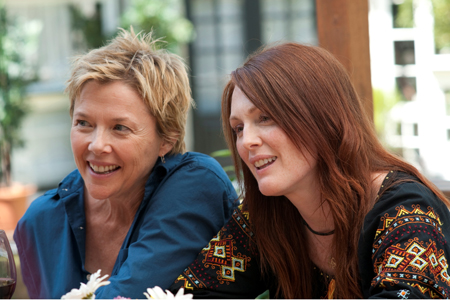
Writer-director Lisa Cholodenko earned attention with critically acclaimed features like High Art (1998) and Laurel Canyon (2002). Her latest movie, The Kids Are All Right, is a “personal film” about a lesbian couple raising teenagers. I spoke to Cholodenko about queer politics, explicit content, and keeping things lighthearted.
San Francisco Bay Guardian: Recently, there was a lot of controversy surrounding a Newsweek article, in which the author wrote about the difficulty of queer actors playing straight roles. I was wondering about your take on that, and on the opposite — straight actors playing queer roles. Is that something you even considered when casting?
Lisa Cholodenko: I’ll be honest, I was just told about this article and I didn’t read it. You know, I think it’s kind of weird thing to even discuss in a way, to me. Chiefly because I think actors’ personal lives — I just think people should have a private life, not that they should be in the closet, but that there should be a separation between professional life and personal life. And if a director feels like so-and-so, whether they’re gay or straight, would be good for a role, give them the role. What does it matter? As it turns out, I think gay people have more of an affect, whether they’re lesbians or gay men, that’s harder to camouflage in straight roles. Why that is, I mean, you could talk about that. I think it’s easier to go the other way. That’s just what it is. I say that without a value judgment. It is what it is.
SFBG: The Kids Are All Right has a same-sex relationship, of course, but it also has a fair amount of graphic sex and even a snippet of hardcore gay porn. Do you think it will shock a mainstream audience? Are they ready for it, and does that matter?
LC: I think it’s shocking in a sense that it’s portrayed in such a real way, that it’s not super arch, or it’s not like The L Word. This stuff has been on TV and in films. In a way, I’m not inventing the wheel at all. But I think the package that it’s coming in is going to be disarming to people. I think we tried and I think we were somewhat successful in making it so that you don’t realize exactly what you’re watching, the subversiveness of what you’re seeing. You can settle into watching it without that kind of discomfort of being super aware of, “This is something I’m not. I’m other and this is not my thing.” I think we figured out a way for people to enter it, and that was really important for us.
SFBG: I ask because I do feel like this shouldn’t be a big deal, that people should be able to handle it. And yet, the night before I saw your movie, I saw Sex and the City 2, in which there was a gay wedding. And as soon as the two men kissed, the camera cut away. There’s a lot of intimacy between Nic and Jules in the movie, so I was wondering particularly about that. Are people outside of San Francisco going to be apprehensive?
LC: Yeah. You know, I think we didn’t really know. I think we tried to write it and I tried to direct it in a way that the humor would be disarming enough, and the images themselves, if you really deconstruct it, would be tame enough. So it was more the suggestion of it. That would be the kind of twist. The people in the know would get it more than the people that were not in the know, maybe. I think we hoped that it would have a mainstream appeal to it, and that we could get beyond the people who would be apprehensive. There were questions about the gay porn and about how much sexuality we were showing, but we felt like, this is the fun of the film. It’s not going to be Spider-man 12 or something. It’s not going to be a multiplex film. But we hope it’s not going to be super rarefied art house film. So in terms of the Sex and the City thing, I think that they’re looking to go as wide as humanly possible, to every grandmother to every neck of whatever, so you can only take it so far.
SFBG: I want to touch on the humor that you mentioned, because I think it’s one of the movie’s real strong points. It’s so funny. What was your approach when you were co-writing to keeping the drama of the story but still making it fun?
LC: It was like a process, it was a real evolution. We had sort of a plot, a conceit for how the plot comes together, which was this thing about the kind of doofus friend wanting to watch the DVDs, and finding the porn, and blah, blah, blah, blah. So that all was funny, and then the kind of awkward conversation about trying to tiptoe around trying to figure out if their kid was gay, and that they would even care that the kid is gay, and how ironic that two gay moms are going to care that there kid is gay. And all that stuff. So it made us laugh, but there was a lot of other stuff in there that we took a lot more seriously and played a lot more seriously. I think as we went deeper into the drafts and moved along in the evolution of getting the film done, I really, really, really pushed for us to take whatever was potentially funny in there and just kick it up a notch. Stuart [Blumberg, who co-wrote the film] is a really funny guy — we have a similar sensibility. The same kind of stuff makes us laugh. So we knew if we were sitting there writing it and laughing, it was good. We had kind of gotten there.
SFBG: I think a lot of the humor comes from the fact that the film is so real and grounded. You have Laser, a 15-year-old boy, who talks like a 15-year-old boy, and that’s something we don’t always see in movies. And so it’s not stereotypical or preachy—it feels more organic than that.
LC: Yeah, we were really passionate about making it not politically correct and not sanctimonious and not super earnest and just hoping that there would be heart in it, simply because these were sympathetic and three-dimensional characters in a difficult situation.
SFBG: I wanted to ask about the character of Nic [played by Annette Bening], who could have been played very typically butch, because she has a masculine name and short hair and these traditionally “male” qualities. In terms of the writing and the directing, how did you make sure there was more complexity there?
LC: You know, I think that wasn’t super overdetermined. It’s really just kind of my worldview. I don’t live in a world where people are super stratified. I don’t feel like my partner and I are super — I kind of see the butch and femme in every lesbian I know. I know that there are lesbians who really kind of identify with that, and that’s there thing in the world, and that’s good. But it’s a personal film, so it’s written from my worldview. So there’s that, and then there’s also, you get Annette Bening and you get Julianne Moore, and they come with their own essence and personality. Julianne Moore has some butch in her and Annette Bening has some femme in her. They are who they are.
SFBG: There’s a great conversation early on in the film about the spectrum of sexuality and how it’s not so easily defined, which ties into Jules sleeping with a man. Were you concerned about an audience’s reaction to a lesbian having sex with a straight guy?
LC: I mean, it was a concern for me, but I felt like, you know what, oh well. I might be nailing the coffin. It might just be a bad choice. But in essence, the whole plot of the film revolves around that, so it was either, ditch the film or run with it and try to make it feel earned and interesting and viable and what not. In the early drafts I would show people — and when I started getting feedback in the early drafts, and “This is good,” I stopped being so uptight about that and just let myself kind of take it to the next place.
SFBG: It wasn’t an issue for me, but I think for a lot of people, they expect more rigid definitions. We don’t see a lot of queer characters on screen, and so when we do, many want them to be perfect: the queer voice, the lesbian, the gay man. And when they step outside those boundaries, suddenly it becomes an issue, politically.
LC: The calculated thing was that, I thought, a) I identify with this. This is something that I feel like, that makes sense to me. That makes sense to people I know. That makes sense to whatever. So it didn’t feel like some weird kind of conceit that I came up with that was like, that never happens. All lesbians are rigidly this and don’t go over that boundary. Because we know that’s not true. So there was that, and then I thought, I like this set-up and I like this plot, and also I feel like, it’s kind of an interesting intermingling of straight and gay. I felt like, if I really want this to be a mainstream film, that’s good. This is really inclusive of gay and straight, and I like that. I like that personally and I like that for this film. I was much more interested in reaching out to the male population than I was concerned about alienating a sector of the lesbian population.
SFBG: I wanted to talk about the title, The Kids Are All Right, and that focus on the children. How did the title come about? How do you feel about the role the kids play, and why is that central to the film?
LC: The film is about, you know, these women and their experience making a family. The family. The man who comes in and wants to be part of the family. Really when you’re talking about the family, it’s about the life of the kids. So it’s sort of an ironic title, in the sense that the kids are kind of doing better than the moms, in a way. And it’s also a kind of a wink to the notion that gay people can’t raise healthy, psychologically healthy children. Like, the kids are fine. Don’t worry about them. They’re just right.
SFBG: You talked a bit about what Annette Bening and Julianne Moore brought to the film, but I was wondering if you could elaborate on casting.
LC: Julianne was someone I had probably 10 years ago, just at some function somewhere. We had spoken about wanting to work together at some point. She was a fan of the first film that I made, High Art, and I was always a fan of hers, particularly in Boogie Nights (1997). So when Stuart and I wrote this, we asked ourselves several times, could Julianne play this part or that part? We were sort of on the fence. We thought she could play either part. So I sent it to her and I said, “Which part would you like to play?” And she picked Jules. Which, we weren’t surprised. We knew she’d want to play that part, but I thought I’d offer her the other one if she wanted it. And that was great.
Then finding her counterpart, the Nic character, was more difficult. It was kind of vexing. I just didn’t know what actor in that age group who had great acting chops, who was funny and dramatic and sexy, could be a good match for her. But when I stumbled on the idea of Annette Bening, I kind of got rabid about it. OK, this is it, this is the only person who can do it. So come hell or high water, she’s gonna do it.
SFBG: And then in terms of the younger actors — you don’t always see teenagers who actually look like teenagers.
LC: Well, they’re pretty close to the ages they’re supposed to play. Mia [Wasikowska] was like 19 at the time, and Josh [Hutcherson] was maybe 16, going on 17. So they were pretty close. Mia was someone that I had seen on an HBO series called In Treatment and thought she was interesting. I liked that she was Australian, not a typical American young actor, from LA or New York and wouldn’t have that baggage or affect that you might find in a lot of young actors from here. And he — I didn’t know his work, but I knew that he had done a lot of work. I was told he was an up-and-coming actor, so I was open to meeting him as well as other people, but when he came in and did the scene, it was just one of those things where you go like, “Oh, yeah.” I thought maybe Laser would be more of a Paul Dano-type kid, a little bit more twee, but when I saw him, I thought, oh, that’s good. He should be more boyish and more kind of robust, and just like a dude. I like that.
SFBG: There’s a lot of subtlety in The Kids Are All Right. I liked Nic’s drinking, which was fairly underplayed but came up several times. What was the thought process behind that? Does she have a drinking problem, or is that just the manifestation of the turmoil going on in her family?
LC: I think we felt like, oh, you know what? She’s kind of borderline. She’s a little bit of a lush. She’s kind of leaning on the wine too much, and this has become a thing and the other partner is now noticing. She’s drinking too much and she’s a stress case and she’s not dealing with it very well. She doesn’t have a good off valve. I think we tried to design it in a way that it felt like, this is something that’s coming to a head in their relationship. One partner’s seeing a behavior that’s making her concerned and the other one doesn’t want to deal with it yet, and she’s boozing it up.
SFBG: It’s also interesting because it’s easy to label Nic the control freak. But here’s Nic, who can’t control her drinking, and Jules, the free spirit, trying to get her to keep it in line.
LC: Right, right, right. Well, I felt like everybody has their ironies and contradictions and stuff. It’s endemic, I think, in all long-term relationships.
SFBG: There was another relationship that interested me, which was the relationship between Paul [Mark Ruffalo] and Tanya [Yaya DaCosta]. I was wondering if it was significant that it was an interracial relationship. In the sense that, 40 years ago, audiences might have been shocked by an interracial relationship, but now it plays naturally — and hopefully, the same will be true of same-sex relationships. Was that intentional, or am I reading into things too much?
LC: You know, I think it wasn’t totally consciously mediated, but at a certain point when I was thinking about casting, I had Erykah Badu in my mind for that role. I felt like, who’s the kind of person who Paul would be with? It seems like he’s the kind of guy who would be running after the most exotic person. That character to me was sort of gorgeous and exotic and whatever. And then, to go from that to Jules, who is totally exotic in her own way, because she’s who she is and she’s older and she’s beautiful and she’s a lesbian. It was this kind of motif of like, what’s exotic? The Tanya character, the black character, is clearly in love with him and would be devoted to him in a heartbeat. And the white character, who’s a lesbian and completely inaccessible, is not available at all.
I guess the second part to that question is, at a certain point when we were putting this together was, it’s not only that, in terms of the psychology of the character, but I think this is good to mix it up. You know, he’s screwing this black woman, and OK, compare that to the lesbians watching gay male porn. This is what people do in life. It’s not just white people and straight people. It’s mixed up.
Keyboard and organ player Dave Faulkner didn’t have to think too hard about the most golden moments of this year’s High Sierra music festival (although he did say that the Black Crowes “nailed it” at their Saturday evening main stage performance). “I love it when you’re just walking around, and you see a random jam that’s totally rocking. I think High Sierra attracts a lot of musicians – it’s like a sample platter of bands.”
But not like one of those intestinal spiderwebs of fried appetizer nuggets you get at T.G.I. Friday’s. Were I to liken the 4th of July weekend’s four day Tahoe-area campout to a culinary adventure, it’d probably take on the form of a potluck dinner amongst good, if disparate friends. Everybody — from Fela’s Afro-disco son Femi Kuti, to the late night burlesque acrobatics of March Fourth Marching Band, Trombone Shorty‘s New Orleans-inflected prodigy, and the awe-inspiring spoken word consumerism take downs of Al Lesser — brought it (most on multiple consecutive days), and the result was fly. And unexpected. Even though South Carolina native Zach Deputy played a taxing total of three scheduled shows throughout the weekend, I still happened across the red-bearded friendly giant in Saturday’s blazing sunshine getting crazy with the guitar for a throng that had assembled in the pathway to watch him play on top of an RV. The metal top bounced merrily along to his enthusiastic strums, clearly only a nerve-wracking sight to those who had not worked their way into the High Sierra mellow yet.
In a only a slightly more whimsical mood was the Banana Slug String Band, the absolute be-all end-all for itty-bitty Northern Cali music fans. The group plays a kid’s version of the Grateful Dead shows that they spent their own younger days following. Their songs touched on such epic themes as getting to know your watershed and the astonishing physical strength of certain insect communities, and I’ll tell you what, on day four of partying balls there’s nothing quite like jumping into a congo line of festival rugrats while you all pound the air shouting “ants!” to make you never want to leave the Kidzone stage. Not to mention the table where you could make egg carton eye goggles. Super score.
Faulkner was playing the keyboard for the Slugs at that show, marking his sixth year onstage at the festival, where he’s also tickled the jam band ivories with his Dead cover band, Shady Groove (who plays Moe’s Alley in Santa Cruz Aug. 13th if you’re down for a coastal highway road trip). “One of my favorite parts of High Sierra is that a lot of the artists camp in the festival,” he tells me in our post-party phone rehash. “I think the fact that it’s in such a remote location, the ticket price, the selection of bands — it makes it a real niche festival. The support is amazing, people are just there to watch music and get down.”
He weren’t foolin’. Faulkner had clearly prepped for a lot more than just straight concert watching with the 460 Ford V8-powered Winnebago that he mainly uses as festival finder — he used it to transport five of his buddies up from their home in Santa Cruz to High Sierra, and has rocked the Burning Man playa in the same LED-lit, subwoofer-equipped vehicle for the past three years.
Like most everyone else in the High Sierra groove, Camp Millennium found the time in between concerts to roll a beach cruiser to one of the scheduled yoga classes at Shady Grove, buy organic produce from the dude at food court shakedown alley that was hawking on the cheap the last day of the festival, nap in a hammock, catch a Javanese puppet show, test out their festie stamina in preparation for August’s week-long Burning Man, and of course, cover themselves in glitter and facepaint on top of the MF as the sun set, a lone guitarist kicked out fine tunes, and the 8,500 (an early estimate by festival staffers) souls who’d made the drive up into the piney flush of the Plumas County mountains took a breather before the chaos of late night concerts and carousing.
By 11 p.m. on Sunday, most everybody had seen the bands they’d come to see, and the camp (plus extended family) had made it back to the RV for a kind of ridiculously lovey dance fantastic amidst the empty whiskey bottles and tousled bins of the clothes they’d packed to wear. No one was exactly comparing notes on the bands they’d caught, how the sets they’d seen measured up to the last time they’d caught the same bands in San Jose, or Portland, or New York City — which kinda makes you think this festival thing plays more tunes than the ones that rocket out of the bandshell mega-amps. “To love is to live,” Zach Deputy said when he was asked to sum up the weekend in a single sentence. Man I’ll tell ya, when it comes to how to spend your long summer weekends, those hippies might have been on to something after all.
Do Good Lab Join the Do Good Lab to raise money for The Champions, a primary school for orphans and vulnerable children who lack access to state provided education. Baobab Restaurant will donate 20% of their proceeds to the project. 6 p.m., donations encouraged Baobab Restaurant 2323 Mission, SF www.do-good-lab.org
IFCO Pastors for Peace Cuba Caravan Attend this sendoff and benefit for the 21st annual Cuba Caravan carrying 100 tons of humanitarian aid to the blockade-starved people of Cube featuring a potluck dinner at 6pm, speakers from the caravan, two short films, music by Dave Welsh, salsa dancing lessons, and more. 6:30 p.m., $10-$15 suggested donation Berkeley Fellowship Unitarian Universalists Fellowship Hall 1924 Cedar, Berk. (510) 495-5132
Saturday, July 10
“Land, Villains, and Revolutionaries” Take a walking tour across 200 years of the social movements of San Fransico history and help raise funds for Revolution Books’ ongoing program, Put Revolution on the Map. 1 p.m., $15 Meet at Cable Car turnaround Powell and Market, SF www.thecommonsSF.org
Sunday, July 11
ArtSeed Apprenticeships Join Surfpulse for a benefit party and surf board raffle for ArtSeed’s Apprenticeships Program, which brings long term artist mentors into the lives of children. Featuring food, music, raffles, and surf flicks. 6 p.m., free Joxer Daily’s 46 West Portal, SF www.artseed.org
Berkeley East Bay Humane Society Help raise funds for the Berkeley East Bay Humane Society, which suffered a tragic fire that destroyed most of the building and help get their adoption offices and hospital open again at this fundraiser featuring performances by over a dozen singer-songwriters. 2 p.m., $10 suggested donation Starry Plough Pub 3101 Shattuck, Berk. www.starryploughpub.com
Oakland and San Francisco police and city officials are nervously awaiting the verdict in the murder trial of Johannes Mehserle, the former BART police officer who shot and killed Oscar Grant on a train platform last year, although the latest word is that verdict won’t come today (July 6), and probably not tomorrow, because of the absences of two jurors.
After demonstrations against Mehserle in Oakland last year turned into destructive riots, officials fear another outbreak of violence, particularly given the racial undertones to the crime, but they are urging calm and saying they will facilitate peaceful demonstrations in reaction to however the Los Angeles jury rules.
“We anticipate that regardless of the verdict reached by the jury, demonstrations will occur in downtown Oakland, and possibly throughout the city. The City of Oakland is committed to facilitating peaceful expression and demonstrations. The City of Oakland is also prepared to deal with the situation if it turns violent. Our goal is to protect public safety and property by minimizing the vandalism and violence,” reads a memo the Mayor’s Office distributed to Oakland city employees.
Of particular concern to Oakland officials is the area around Oakland City Hall, which they want evacuated before the demonstrations begin. As the memo said, “We learned from the January 2009 BART demonstrations that 14th & Broadway and the City Hall Complex are target areas and there is some indication that history may repeat itself. City management is concerned about the safety of our employees and it may be necessary to release some city staff earlier than normal. Similar planning efforts are being considered by the State and Federal buildings as well as private employers in the surrounding area.”
In fact, witnesses say that many Oakland business owners in the area have already started to board up their storefronts in anticipation of civil unrest. Police in both Oakland and San Francisco have been placed on alert and SFPD Officer Samson Chan said all officers, even plainclothed investigators, will be in uniform from now until the verdict.
SFPD Chief George Gascon held a press conference with African-American church leaders this afternoon urging calm and announcing that community centers throughout the city will be opened to give people peaceful opportunities to express their frustrations. “They all urged people to react to the verdict in a peaceful way,” Chan said.
In a public statement accompanying the internal memo, Mayor Ron Dellums expressed sympathy with the frustrations that people may feel if Mehserle is seen as getting a lenient verdict – “We understand that the community is grieving, and we are in this together. We will get through this together.” – but he ended the message by saying, “We are asking for the community to come together, look out for one another, and stay safe. We will not tolerate destruction or violence. We live here, and we love Oakland.”
Newsom needs to decide whether he’s serious when he says he wants to work with the supervisors on a budget
EDITORIAL The San Francisco supervisors took a huge step with the city budget this year: they essentially told the mayor that his approach was unacceptable, and that they were going to do it themselves.
The result — the document that the board’s Budget Committee approved and sent back to Mayor Gavin Newsom — isn’t perfect. But the members of that panel saved $40 million worth of programs from the mayor’s budget ax and got rid of two particularly bad plans: privatizing health care at the county jails and allowing more condominium conversions.
The board members are also looking seriously at putting as much as $100 million in new taxes — progressive taxes — on the November ballot. Current plans include a modest increase in the hotel tax, an increase in the real-estate transfer tax on high-end properties, and a tax on commercial rents of more than $200,000 a year, which would be paired with a reduction in the payroll tax for small businesses.
Now Newsom, who is busy running for lieutenant governor, needs to decide whether he’s serious when he says he wants to work with the supervisors on a budget everyone can accept.
On one level, the mayor doesn’t have a lot of choice — if he vetoes the proposal the board sent him, there’s a good chance the supervisors will override the veto. What he’s more likely to do is simply refuse to spend the additional money the board wants to allocate — allowing his cuts to take effect, allowing critical services to die and community-based nonprofits to close, while that money just sits in a reserve fund (or gets allocated to the mayor’s other priorities).
That would be a terrible statement for someone who claims he can be a positive force in Sacramento and who clearly wants to run for governor some day. The board has presented a budget that’s still fairly moderate — the tax hikes aren’t included in the spending plan, and most of what Newsom asked for is. It’s the kind of plan that a Democrat who wants to run California some day ought to be embracing. Unfortunately, Newsom insists on running on the Republican platform of cuts only, no new taxes. (Although he’s stuck a lot of hidden taxes, called fees, on small businesses.)
The mayor also has tried to use the budget process to kill some several ballot measures he doesn’t like. He wants the supervisors to get rid of proposals that would give the board shared appointments to the Rent Board and the Recreation and Park Commission along with a plan mandating community policing. In essence, he’s asked the supervisors to abandon other good-government reform policies in exchange for saving critical public services. That’s apparently not illegal (although offering to trade votes is). At the very least, however, it’s unseemly, and the board needs to make clear that it won’t accept this sort of hostage-taking.
It the mayor wants to have any kind of a productive year — and show that he can actually work with legislators — he needs to sign the budget the board sends to him and agree to spend the money the way it’s earmarked. Otherwise he’ll be acting like the governor of California — and that politician’s approval rating is about the lowest on record.
Literary readings, book tours, and talks this week
“RADAR Reading Series”, “Why there are words,” naked ladies, the poetics of resistance, Alison Arngrim, “Monthly Rumpus”, and more. Wednesday, July 7
A Poetics of Resistance Author Jeff Conant will read and discuss his new book, A Poetics of Resistance: The Revolutionary Public Relations of the Zapatista Insurgency, an engaging study for organizers to understand how to develop their messages of bottom-up revolution. 7 p.m., free Modern Times Bookstore 888 Valencia, SF www.mtbs.com
Breast Strokes Authors Cathy Edgett and Jane Flint present their inspiring story about two friends who help each other through the diagnosis of breast cancer. 7 p.m., free Books Inc. Berkeley 1760 4th St., Berk. (510) 525-7777 Intergenerational Writers Lab A unique literary workshop for emerging writers featuring readings and performances by Lorna Dee Cervantes, Ben Fong-Torres, Leticia Hernandez, Genny Lim, and the 2010 IWL participants: C. Adán Cabrera, Emilie Coulson, Lyndsey Ellis, Marisa Gedney, Bill Gong, Meldy Hernandez, Nancy Larson, Page McBee, Ruby Rain and Natalia Vigil. 7 p.m., $5-$20 sliding scale Intersection for the Arts 446 Valencia, SF www.theintersection.org
“RADAR Reading Series” Attend this showcase of underground and emerging artists and writers featuring Ryka Aoki de la Cruz, Diane di Prima, Mica Sigourney, and Tony Tulathimutte. Hosted by Michelle Tea. 6 p.m., free San Francisco Pubic Library Main Branch 100 Larkin, SF www.radarproductions.org
Thursday, July 8
California Rocks Join Katherine Baylor for a reading and discussion of her new book, California Rocks: A Guide to Geologic Sites in the Golden State. 6 p.m., free University Press Books 2430 Bancroft, Berk. (510) 548-0585
Flood Earth Species extinction expert Peter Ward describes what the world will look like in 2050 and beyond. Books Inc. Marina 2251 Chestnut, SF (415) 931-3633
Sometimes Too Hot the Eye of Heaven Shines Attend this reading and release party for Ryka Aoki’s new book, with readings by Ali Liebegott, Jusin Chin, and Ryka Aoki. 7 p.m., free Modern Times Bookstore 888 Valencia, SF www.mtbs.com
To Have Not Author Frances Lefkowitz shares and reflects on her own life of poverty. 7 p.m., free Books Inc. Berkeley 1760 4th St., Berk. (510) 525-7777
Unlikely Allies Author Joel Richard Paul weaves together a fascinating account of three people who, each for his own reasons, connived, betrayed, and spied to help win the revolution for the Americas. 6 p.m., $12 Mechanics’ Institute 57 Post, SF (415) 393-0100
“Why There Are Words” This installment of the “Why There Are Words” literary series asks authors to weigh in on what the word “accident” means to them. Featuring Elissa Bassist, editor and essayist from The Rumpus, Glen David Gold, author of the bestselling novel Carter Beats the Devil, Joshua Mohr, author of the novel Some Things that Meant the World to Me, Anne Raeff, author of Two Serious Ladies and Clara Mondschein’s Melancholia, Jason Roberts, author of A Sense of the World: How a Blind Man Became History’s Greatest Traveler, and Tatjana Soli, author of The Lotus Eaters. 7 p.m., $5 Studio 333 333 Caledonia, Sausalito (415) 331-8272
Friday, July 9
“Poets and Writers on the Depression Era” Part of LaborFest 2010, hear poets and writers speak on the struggle of working people to survive in this desperate world. 7 p.m., free Kaleidoscope Gallery 3104 24th St., SF www.laborfest.net
Saturday, July 10
The Butterfly Mosque Hear the first American Muslim woman to become a professional comic book writer, G. Willow Wilson, discuss her new book, The Butterfly Mosque: A Young Woman’s Journey to Love and Islam. 6 p.m., $7 ICCNC 1433 Madison, Oakl. (510) 219-2431
Confessions of a Prairie Bitch Star of the hit TV show Little House on the Prairie, author Alison Arngrim presents her comic memoir of growing up as one of television’s most memorable characters. 3 p.m., free Borders 400 Post, SF (415) 399-1633
Sunday, July 11
Last Dog on the Hill At this benefit for Hopalong rescue, author Steve Duno presents his new book. 6 p.m., free Books Inc. Berkeley 1760 4th St., Berk. (510) 525-7777
“Naked Girls Reading” Get tips, advice and how-to’s from a naked girl at this latest installment of the “Naked Girls Reading” series featuring Carol Queen, Dottie Lux, Lady Monster, Isis Starr, Kimberlee Cline and Hollie Stevens providing their favorite words of advice. 7 p.m., $15-$20 Center for Sex and Culture 1519 Mission, SF www.nakedgirlsreading.net
Monday, July 12
Awaken Your Strongest Self Author Neil Fiore talks about his four-step program for breaking self-destructive habits, increasing productivity, and performing at your best. 7 p.m., free Books Inc. Berkeley 1760 4th St., Berk. (510) 525-7777
“Monthly Rumpus” Enjoy this reading with authors Justine Sharrock, Matt Stewart, Eli Horowitz, Mac Barnett, Lauren Wheeler, and Matthew L. Mosely featuring a performance by Richard Porter, music by Ember Shrag, and comedy by Janine Brito. There will also be food, raffles, and more. 7 p.m., $10 Make-Out Room 3225 22nd St., SF www.therumpus.net
Presumed Dead Crime reporter for the San Francisco Chronicle and author Henry Lee discussed his new book titled, Presumed Dead: A True Life Murder Mystery. 7:30 p.m., free The Booksmith 1644 Haight, SF (415) 863-8688
Tuesday, July 13
An Intimate Ecology Author Julia Whitty talks about her new book filled with gripping adventure, cutting-edge science, and an intimate understanding of our deep blue home. 7 p.m., free Books Inc. Berkeley 1760 4th St., Berk. (510) 525-7777
Golden Gate Librarian, professor and author Kevin Starr discusses his new book titled, Golden Gate: The Life and Times of America’s Greatest Bridge. 7 p.m., free BookShop West Portal 80 West Portal, SF (415) 564-8080
Dick Meister, former labor editor of the SF Chronicle and KQED-TV Newsroom, has covered labor and politics for a half-century. Contact him through his website, www.dickmeister.com, which includes more than 250 of his recent columns.
Although the wage gap between white and African-American workers remains wide, it has been shrinking. But that’s not so for the more significant black and white wealth gap.
A new study by researchers at Brandeis University shows that the wealth gap has been growing steadily, leaving African-American families with increasingly fewer resources than white families to cope with serious economic problems such as many families face today.
The Brandeis study found that in the quarter-century from 1984 to 2007, the African-American and white wealth gap more than quadrupled, from $20,000 to $95,000.
Middle-income white households had $74,000 in financial assets by 2007. That was far higher than even the average high income African-American family, which had only $18,000 in assets. At least 25 percent of the black families had no assets at all – no wealth, that is.
The study notes that wealth – “what you own minus what you owe” – is what “allows people to start a business, buy a home, send children to college, and ensure an economically secure retirement. Without wealth, families and communities cannot become and remain economically secure . . . The gap is opportunity denied and assures racial inequality for the next generation.”
The main reasons cited by the researchers for the four-fold increase in the African-American and white wealth gap are unfortunately not surprising: Racial discrimination and tax policies that favor the rich, who are disproportionately white.
The study noted the advantages given the wealthy through tax cuts on investment income and inheritances, retirement accounts, home mortgages and college savings. In contrast, African-American families typically face disadvantages – the disadvantages of “persistent discrimination.”
For example: During the period beginning in 1984, African Americans “were at least twice as likely to receive high cost home mortgages as whites with similar incomes. These high-cost loans unnecessarily impeded wealth building in minority communities and triggered the foreclosure crisis that is wiping out the largest source of wealth for minorities.”
Lacking sufficient assets, African Americans in general have had no choice but to rely heavily on expensive credit. The total amount of their debt just about doubled between 1984 and 2007 to at least $3,600 each.
To make it worse, African Americans, like other non-white credit users, generally have to pay more than white borrowers in interest payments and other charges. Many have no choice but to borrow from predatory lenders who charge exorbitant interest rates.
The study suggests several remedies, including creation of a Consumer Financial Protection Agency designed to ensure fairness for all in their financial dealings. That would include helping “equalize and regularize the terms on which cash-strapped families are borrowing to make ends meet.”
Efforts to help low and moderate income families increase their assets so as to gain economic stability and mobility have been increasing. But the study shows the efforts must be intensified, for they are “not yet strong enough or at a scale to make a significant difference in people’s lives.”
The study shows as well that the wealth gap between African Americans and whites persists even among African Americans who hold well-paying jobs. Thus “wealth opportunities must be targeted to families of color whose lives are made even more precarious by not having enough assets to make ends meet when economic challenges arise.”
True enough, there are public policies now in place “that provide incentives and subsidies for asset building.” But reforms are needed to make certain that the policies benefit all Americans equally – reforms that might at last close the wealth gap between African-American and white workers and their families.
The Brandeis study has it right: “Public policies have played and continue to play a major role in creating and sustaining the racial wealth gap, and they must play a major role in closing it.”
Dick Meister, former labor editor of the SF Chronicle and KQED-TV Newsroom, has covered labor and politics for a half-century. Contact him through his website, www.dickmeister.com, which includes more than 250 of his recent columns.
The deadline for submitting enough valid signatures to quality local initiatives for the November ballot is today (July 6) at 5 p.m., which made for a busy holiday weekend for two San Francisco ballot measures that will be close calls: labor’s effort to increase the city’s hotel tax by 2 percent and the pension reform measure pushed by Public Defender Jeff Adachi.
“It’s going to be really close,” Adachi told the Guardian on Friday, referring to a measure to increase how much city employees contribute to their pensions and health care costs, which the labor movement is bitterly opposing.
But labor leaders say they have enough signatures for their Hotel Fairness Initiative after an all-hands-on-deck weekend of gathering and counting signatures, and they plan to hold a rally on the steps of City Hall at 1:45 pm on their way to turn the signatures in to the basement Elections Department. That initiative needed at least 7,168 valid signatures and officials say they turned in about 17,000.
Adachi says he’s also cleared the 44,799 signature threshold for qualifying a charter amendment and plans to turn them in at 4 p.m. He has yet to formally support the hotel tax increase (which could bring in about $30 million per year) or any of the other proposed revenue measures being considered by the Board of Supervisors, which still has a few more weeks to place measures on the ballot.
“It doesn’t deal with the train wreck that we’re in,” Adachi said of the proposed revenue measures, noting that they don’t come close to reaching the $167 million per year that he says his employee benefits reform measure would bring into the city, which labor leaders say will come directly out of the pockets of city employees and hurt the local economy.
But Adachi counters by telling us, “My message is there’s not going to be a city to run in a few years if we don’t do something.”
Meanwhile, Sup. Sean Elsbernd last week turned in about 76,000 signatures to remove Muni workers’ pay guarantees from the city charter, which would appear to easily qualify. The Board of Supervisors is working on a competing ballot measure that would also remove that guarantee, but include a more comprehensive reform that includes governance and oversight changes and new revenue.