SFBG Blogs

The Performant: Shrouds Illuminated at the LAB and Garage

1

Nicole Gluckstern reports on the Bay Area arts and culture scene

It sounds a little strange, but I’ve been thinking about shrouds. Not in a morbid way, just in the practical sense. Mostly I wonder what kind of material gets used. Movie mummy shrouds always seem to be made of cheesecloth, but that strikes me as a little flimsy for a swaddled delivery into the afterlife. Actually, speaking of swaddling, doesn’t it seem a little curious that babies and corpses should be wrapped so similarly — at least in the days before they invented the Tickle-Me-Elmo onesie?

But back to the shrouds. I’m sure they’re on my mind because of the Illuminated Forest exhibit at The LAB, part of this summer’s Soundwave festival. I walked in and these great swaths of white tulle were draped, floor to ceiling in front of the entryway and all around the exhibit hall, separating each small nook from the next cranny, and providing screenage for video projections of forest color and form. Occasionally someone would get lost in the layers and have to flail their way out again. But the ghostly silhouettes of gallery-goers flowed smoothly, for the most part, like physical embodiments of the trickling water field recordings provided by Ben Bracken and Agnes Szelag.

Hiding behind one curtain/shroud/swaddle – a parade of turtle-like sculptures with rippling clam-shell bodies (Vaughn Bell); behind another –a Dr. Seuss-ian grove of calico trees and cuddly corduroy stones (Suzanne Husky). Oh to curl up on this forest floor and take a nap! Behind another curtain, some people were sneaking in, if not naps, then at least a bit of down time, watching a film clip of body as landscape while a nearby video installation shrouded within a hand-crafted nest screened the intrepid adventures of a burrowing mole (San Easterson).

Saturday, the theme remained intact. I walked into the Garage for Dark Porch Theatre’s “Comedy Ballet,” and a white curtain was hanging across the stage. While the curtain didn’t last long, death remained an almost constant presence onstage, as the assembled company riffed on Dia de Los Muertos, crematory ashes, Mesoamerican mythology, human sacrifice, and a journey to the underworld, as well as job insecurity, betrayal, bizarre sex fetishes, and other trauma
topics.

Margery Fairchild’s dance choreography, more comedy than ballet, brought a welcome leavening of slapstick to the action, and in particular to the menacing trio of “intrepid gentlemen” (Anjeli Jana, Matthew von MeeZee, Bryce Charley). Nathan Tucker’s out-of-work, off-his-nut, alcohol-soaked Foreplay embodied the term “blowhard” in the most bombastic sense of the word. And a deadpan Amy Seimetz as an increasingly frazzled interviewer for some unnamed project or research facility kept the metaphysical conundrums from over-powering the fun.

Slated for a November run at the EXIT Theatre, it’s easy to see this quirky square peg of a show fitting more smoothly into the traditional Halloween-tide niche, but the attentive crowd at the Garage didn’t seem to mind the head start. As for me, I’m sorry to report that despite the abundance of funereal themes, not a single shroud was featured in “Comedy Ballet”—but some fetching silver lame swaddling is, which pretty much made up for it.
 

Illuminated Forest at the LAB through August 7
Wed-Sat, 1 p.m.-6 p.m.
2948 16th St, SF
(415) 864-8855
www.thelab.org
 
“Comedy Ballet” at the Garage through July 18
8 p.m.
975 Howard, SF
(415) 518-1517
www.975howard.com

Street Threads: Look of the Day

0

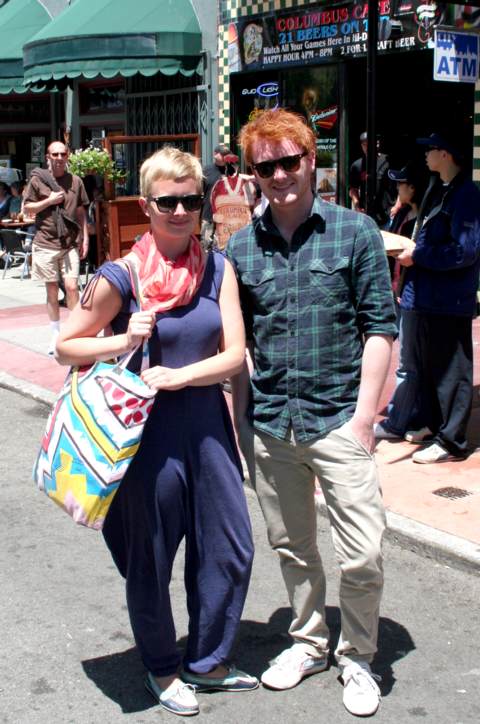
Today’s Look: Katrin and Kristoffer, Bannan and Green

Tell us about your look: “We’re from Denmark.”

Up Mission Creek with Mark Matos and Os Beaches

0

 I had a “hold me closer, Tony Danza,” moment when I first heard the hyper-localized anthem “High Priest of the Mission,” on Mark Matos and Os Beaches’ 2009 Porto Franco release Words of the Knife. I thought Matos sang “the high priest of omission,” then I suspected that maybe he was singing “the high priest of submission,” which gave the song an entirely different slant.
Either way, the rollicking tempo of the organ and solid, driving rhythm section infuse Matos’ tongue-in-cheek ode to a hipster-haven with very unhip earnestness. The album’s next track, “The Moving,” a downbeat duet with fellow Porto Franco compatriot Kacey Johansing, plays out like a classic Camper Van Beethoven composition minus the signature strings. The down-home, plaintive tone of Matos’ voice eerily conjures Dave Lowery’s isolated Santa Cruz croon, as does the subtle poetry of the lyric: “You never said you were unhappy/You never said you’d rather be/somewhere in Montana….I just kind of felt you/moving away from me.”

The psychedelic swirl of “The Warrior and the Thief” creeps up like a tab of orange sunshine, mellifluous layers of cello, guitar, and a Hammond B3 following the “rise rise rise” of the warrior’s path, and the slow, meandering line of the end of the road. Words of the Knife‘s final track, the tumbleweed-lonely “I Come Broken,” manages to tie together all the songs’ themes, referencing the brown eyes of “High Priest,” the seashore of “The Moving,” and the self-reliance of “The Warrior and the Thief”. When Matos sings “I’m broken but I’m free,” he sounds like he means it.

MARK MATOS AND OS BEACHES: MISSION CREEK MUSIC FESTIVAL OPENING NIGHT
with Rykarda Parasol, Kevin Junior, Dolly Rocker Movement
Wed/14, 9:30 p.m., $12-14
Café Du Nord
2174 Market, SF
(415) 861-5016
www.cafedunord.com

Half-remembered kaleidescopes: the Jewish Film Festival’s youngest storytellers

0

Could the past be a kaleidescope, a pattern of images that shift with each disturbance of a sudden breeze… and if the shift is everywhere, how would we know?

-Alan Lightman

If heritage remains constant, what changes is the inheritors. In a project that will live in interactive kiosks at the Jewish Film Festival (Sat/24), as well as in our own Internet devices, young artists are using websites to tell tales that only last year would have taken the shape of a movie. Modernity, man. Their theme? “Half Remembered Stories,” subject matter that lends itself to the nebulous, fragmentary nature of our online lives.

Zoe Pollak’s multimedia project “Memory Paths,” (which makes use of the above quote from Einstein’s Dreams (2004), explores this fluctuating notion of memory. Pollak set 12 videos from her tow-headed childhood to three different sounds ‘o thought – quotes from Einstein and other Jewish thinkers, nocturnes by Chopin, heady intellectual musings all of it – on a site that centers around the image of a clock. Her inspiration came from the sense of pending mortality that strikes most recent high school grads. 

“I’ve been getting nostalgic as it’s getting to be time for me to leave for college,” Pollak told me in a phone interview. “For my project, I wanted to look at individual memories I have, like the first day of preschool, and look at how my relationship to that memory has changed over time. Sometimes when I look back at that event, like when I have a lot of homework, I might be very nostalgic, but if I’m reading a very interesting article, I might notice how now I have the ability to process more complicated ideas.”

The project was organized through the New Jewish Filmmaking Project, which hosts documentary producers from Citizen Film helping 11 young digital bards to focus on gaps in recall. It segueways nicely with the panorama of stories invoked in the film festival as a whole, even if the divergent format seems to crown the young storytellers as the new generation.

Although the project did yield one bad ass reflection on the notion of zombie takedown, family history seems to have been a natural choice for many of the participants; a young uncle’s overseas death from Hepatitis C is explored, a grandfather’s gambling addiction, a great-grandmother that had refused to emigrate to the U.S. if it meant leaving her young lover. 

The latter was the vision of a NJFP participant from year’s past, Klaira Markenzon, who in 2004 directed a movie about her family’s prolonged stay in their native Ukraine, Leap of Fate. “Half Remembered Stories” sees Markenzon develop that film into an online choose your own adventure book. “I wanted it to be about how every decision can change the rest of your life,” says Markenzon. Elect to have Grandma take that long steerage boat ride to America in Markezon’s “game,” and players can find themselves sick, rejected at the gate of Ellis Island and forced to return to the Ukraine, or perhaps Palestine. Immense historical research went into the making of the project. 

“This format is outside of the tradition of beginning, middle, and end,” says Sophie Canstantinou, one of the project’s facilitators and co founder of Citizen Film. Her cohort, Sam Ball, told me that the new format of story not only gave young people the opportunity to create their own vision (in place of the collective product of years past), but that it also reflected the gyrations of information culture today. “What’s new this year is everything that’s going on in this online media, and that the population we’re working with spends so much on time engaging in stories – we wanted to see if we could harness that.”

But do the stories pack the same punch on our computer screens as they would have screened in a dark theater? Hard to say, really – but Ball is confident that they are indeed harbingers of a new kind of cultural experience. “Eighty years ago,” he told me “the only way you could see a movie was having a shared, communal experience in a theater. In this new medium you’re back to having a communal experience, but its a different one. It’s people sitting in environments of their own making, being able to communicate.” Perhaps the past is indeed a kaleidescope: one that calls up a different jewel tone image with each generation’s shake of it’s mirrors.


The New Jewish Filmmaking Project’s “Half Remembered Stories” 

Launch party Sat/24 (through Aug 9) 12:30 p.m., $12 (includes 1:30 p.m. screening of Te Extraño

Castro Theatre

429 Castro, SF

www.njfp.org


Whitman criticized for opposing high-speed rail

10

By Brittany Baguio

Although Republican gubernatorial Meg Whitman claims job creation is one of her top priorities, she recently stated that she opposes the plan to build a high-speed rail system in California – a project that is being eagerly anticipated in San Francisco, its northern terminus.

Whitman says the state does not have enough money to fund the project because of the state’s current budget deficit, but labor, environmental, and other groups say it will be a boon to the state’s economy and environment. Voters approved Proposition 1A in November 2008, supporting the construction of a high-speed rail system with an initial investment of $9.95 billion in bond money.

Proponents say the project will alleviate freeway and airport congestion and provide a green transportation option that has both short- and long-term economic benefits. According to the California High-Speed Authority website, the project would create 160,000 constructed-related jobs as well as 450,000 more jobs by 2035. The construction of the rail system would also improve the movement of people, goods, and services throughout California and ultimately raise more than $1 billion in surplus revenue a year.

“We are eager to thoroughly brief whoever the next governor is on this project and work with him or her to make California’s high-speed rail system a reality,” California High-Speed Rail Authority representative Rachel Wall told the Guardian.

Supporters of the bullet train disagree with Whitman’s analysis and contend that the construction of a bullet train would create revenue and jobs. In a press release, California Labor Federation Executive Secretary-Treasurer Art Pulaski said, “In her glossy TV ads, Whitman says she understands the daily hardships facing our state’s unemployed, but it’s clear that’s just more campaign rhetoric. In opposing high-speed rail, she’s shown her true colors on jobs. It’s shocking that a candidate for Governor could be so detached from the economic hardships facing our state’s families. With one in eight Californians out of work, how can we afford not to invest in the creation of hundreds of thousands of permanent, good new jobs?”

Communications director of the California Labor Federation, Steve Smith, believed that Whitman’s opposition exhibited her political inexperience and uninformed decisions. “She’s out there talking a big game about job creation, but no specifics about how she would create jobs,” Smith told us. “Her proposals would be devastating to California and would lead to higher unemployment in California. She says that California can’t afford the project, but what we can’t afford is not to take advantage of improving our economy and environment.”

Whitman isn’t the only one opposing the project. Bay Area cities of Menlo Park, Palo Alto, Burlingame, Belmont, and Atherton have all voiced concerns about the project and the impact of trains move rapidly through those communities, filing a lawsuit seeking to halt the project.

The bullet train project was awarded $2.25 billion from the American Recovery and Reinvestment Act last January and is currently undergoing supplemental environmental reviews. Construction is scheduled to begin in 2012, with improvements such as rail electrification expected to improve rail service on the San Francisco peninsula even before the high-speed trains start running around 2020.

Assuming the public-private project isn’t derailed politically and can raise the estimated $40 billion total cost, the trains will travel at speeds of up to 220 mph and take passengers from the LA Union Station to San Francisco’s Transbay Terminal in less than 2 hours and 40 minutes.

Fix the BART police force – or disband it

4

18 months after a BART cop shot Oscar Grant, the transit agency still doesn’t have effective police oversight

EDITORIAL Who murdered Oscar Grant? Part of the equation is the years of neglect of the BART Police. — Assembly Member Tom Ammiano

We’re angry, too.

Angry that a police officer who shot and killed an unarmed man could wind up with little or no prison time. Angry that the news media whipped up such a fervor over the potential for a riot in Oakland that it almost guaranteed someone would show up and break a few windows. Angry that the jury who decided this case was 400 miles away and included no African Americans.

But mostly we’re angry that 18 months after a BART cop shot Oscar Grant, the transit agency still doesn’t have effective police oversight. And until the BART board recognizes that it still has 200 poorly trained, poorly supervised,* armed officers on the streets — and that this shooting wasn’t an anomaly, it was simply the latest in a series of criminal acts by BART police officers that led to the deaths of innocent people — and until the BART Board starts treating this like the emergency that it is, the problems are going to continue.

There are elements of this case that are historic — and very positive. This is the first time we can remember that a police officer in California has faced murder charges for an on-duty shooting. That alone sends a powerful message — and the Alameda County District Attorney deserves immense credit for taking the case to trial. And let’s not forget: Johannes Mehserle was, in fact, convicted. With the additional penalties for using a handgun, he could wind up with a sentence of more than 10 years.

Much of that is now in the hands of Los Angeles County Superior Court Judge Robert Perry, who will sentence Mehserle later this summer. The judge in an involuntary manslaughter case has considerable discretion; he could, conceivably, sentence Mehserle to probation, and the killer of an unarmed man could walk away with no jail time at all. Perry could sentence him to five years (of which the former officer would probably serve no more than three). He could also go as high as 14 years, which seems more reasonable.

Most of the protesters in Oakland were peaceful; most recognized that the verdict was mixed, that at least Mehserle was convicted, and that there’s still a chance justice will be done. It’s hard to imagine that the patience of the community will last long in the wake of an unacceptably short sentence.

But even if Perry issues a sentence that reflects the crime, there’s still the problem of the BART Police. This isn’t the first time a BART cop has killed an unarmed person; twice before, the subway system’s finest have committed crimes just as heinous as the one that put Johannes Mehserle in the dock. The difference is that the previous shootings — which we covered in depth and the mainstream media ignored — were never caught on video. BART never took either killing seriously, never changed police oversight procedures — and shouldn’t be surprised that nothing changed.

Now the agency, with much reluctance and gnashing of teeth, has created a modest civilian oversight program. But it’s not enough — and the reason is simple: The BART directors don’t want to spend the time it takes to monitor and control an armed police force. They’ve always happily delegated that job to someone else — a general manager, an assistant general manager, a police chief — and never done the job they were elected to do.

Now time’s up. The BART directors need to take direct control of the police, including holding hearings on disciplinary action and quickly acting on complaints against problem officers. Or they need to recognize that they can’t run a police force, disband the BART police, and let a professional law enforcement agency from one or more of the BART counties take over.

Board votes on Candlestick-Shipyard project EIR appeal today

3

All images by Luke Thomas

The Chronicle’s suggestion that the city’s massive Candlestick-shipyard project may be facing smoother sailing seems like wishful thinking to those who attended a July 12 noontime rally that was organized by POWER (People Organized to Win Employment Rights) and featured two Louisiana-based advocates who protested the project’s EIR and shared many of the longstanding concerns about project cleanup, infrastructure and financing.

The Chronicle was of course referring to five amendments to the city’s massive redevelopment proposal that Board President David Chiu introduced during yesterday’s July 12 meeting of the Board’s Land Use committee. The Chron interpreted these amendments as a sign that Chiu plans to approve the project’s environmental impact report, which comes before the Board today, after several groups appealed the final EIR that the Planning Commission approved last month.

But while city officials fear the developer will walk, if the Board does not approve the final EIR, some environmental advocates hope a better plan could be reached.

At POWER’s July 12 rally, nationally acclaimed environmental scientist Wilma Subra called on the District Attorney’s environmental justice department to “step up.” Subra claimed that the project’s final EIR “failed to evaluate and assess the cumulative impacts of exposure to children, adults and the environment as a result of exposure to all of the chemicals at the site.”

Monique Harden, co-director and attorney for Advocates for Environmental Health Rights (AEHR) of New Orleans, Louisiana, pointed to “deep flaws in the environmental regulation system,” as a reason why low-income communities of color should be concerned about the proposed plan.
“Why in the middle of an environmental crisis caused by BP in the Gulf am I coming to San Francisco?” Harden asked. “Because San Francisco is providing unequal environmental protection to its residents. As a resident of New Orleans, I’m concerned that San Francisco is careening towards making a decision that can crush the future of Bayview Hunters Point,”

But as local Bayview resident Jose Luis Pavon began talking about seeing gentrification occur in his lifetime within San Francisco, he and others got shouted down by a group of yellow and green-shirted project supporters, who were led by a guy calling himself Bradley Bradley and Alice Griffith public housing resident Stormy Henry.
“This is the devil’s trick in the last hour,” Henry said of the POWER rally.

Henry shared her heartfelt belief that if the Board approves the project’s final EIR, she and other Alice Griffith residents will get desperately needed new housing units. even if it takes some years to build them. Others in her group were unable to answer media questions: they had difficulty speaking in English, but were clutching neatly written statements in support of the project that they later read aloud at the Board’s Land Use Committee hearing.

As these project supporters prepared to move inside to attend the Land Use Committee meeting and lobby supervisors for their suppor, D. 10 candidate Tony Kelly shared his concerns that the Navy has a demonstrated history of finding nasty things at the shipyard years after they say everything’s clean, and that this pattern could jeopardize the plan.

“This happened at Parcel A,” Kelly said, referring to the first and only parcel of land that the Navy transferred to the city for development in 2004. “Since then, Parcel A has gotten smaller and as they found stuff on sites they then renamed as new parcels, like UC-3, which has radiological contamination in a sewer line that goes into the Bayview. So, that means the contamination is now in the Bayview.”

Kelly is concerned that the city is trying push through EIR certification before the Navy completes an environmental impact statement (EIS) related to shipyard cleanup activities. “The EIS is supposed to go before the EIR, as far as I know,” Kelly said

At the Land Use Committee meeting, Sup. Sophie Maxwell, whose district includes Candlestick and the Shipyard,said, the project was about “revitalization and opportunity.”

She noted that the certification of the project’s final EIR has been appealed to full Board’s July 13 meeting. She further noted that she intends to introduce legislation next week to address concerns that Ohlone groups have expressed.

The next two hours were full of testimony from a bevy of city officials, beginning with Michael Cohen, Mayor Gavin Newsom’s top economic advisor in the Office of Workforce and Economic Development.

“Every single element [of this project] has been discussed and debated at countless meetings,” Cohen claimed, as he sought to quell fears that the community had not been properly consulted with over the plan. “As we get closer to a vote, all of a sudden pieces of paper start circulating, criticizing project and suggesting that community involvement just began,” he continued. ” That’s factually untrue.”

He also sought to reassure the supervisors that the Board will have a say-so as to whether the city accepts early transfer of shipyard parcels from the Navy.
“Neither the city nor the developer have any specific authority over the cleanup,” Cohen said, noting that the cleanup is governed by specific rules set out in CERCLA [Comprehensice Environmental Response, Compensation and Liability Act, aka Superfund].

“Regardless of what we do, CERCLA will continue to be the regulatory tool,” Cohen said. ” I urge you not to be confused by CEQA and CERCLA.”

So, how can the city implement Prop. P, which voters overwhelmingly supported in 2000, urging the Navy to clean up the shipyard to highest attainable standards.
“Prior to any transfer, US EPA and DTSR have to concur in writing that the shipyard is safe,” Cohen explained, noting that, thanks to Speaker of the House Nancy Pelosi, the Navy has already spent over $700 million on shipyard cleanup efforts.

“We have 250 artists at the shipyard….but not a shred of scientific evidence to say that the shipyard is not safe,” Cohen claimed. “It’s safe to develop the shipyard in precisely the manner we are proposing.”

When Sup. Eric Mar raised the question of radiological contamination on Parcel UC-3, Cohen downplayed Mar’s concerns.
“The exposure levels are lower than watching TV,” Cohen claimed. “The primary source is very low level radiation from glow-in-the-dark dials.”
Indicating a map that showed a network of old sewers (in blue) and old fuel lines (in red) under the entire development area, Cohen said, “The radiological contamination that has and will be addressed at the shipyard is quite low level. You have radiation, you get nervous. We asked EPA to come out and do a scan to deal with the issue.”

IBI Group’s David Thom, the lead architect and planner for the project said the plan is designed “to connect new development back into the Bayview.”
“And this plan connects the Bayview through to the water.”

Tiffany Bohee, Cohen’s deputy in the Mayor’s Office of Economic and Workforce Development, insisted that project’s proposed bridge is better than Arc Ecology’s proposed alternative route, which would not involve constructing a bridge over an environmentally sensitive slough.
“The non-bridge route increases the number of intersections,” Bohee said, seeking to turn an environmental question (the impact of bridge on wildlife and nature experience) into a public safety issue.”
She claimed the BRT route over bridge was 5-10 minutes faster than Arc’s proposed alternative, “because there are fewer turns, it can go at higher speeds.” But Arc’s studies suggest the BRT route over the bridge is only a minute faster, and would cost over $100 million.

Bohee noted that $50 million from the sale of 23 acres of parkland for condos at the Candlestick Point State Recreation Area (CPSRA) will be “set aside for the state, and won’t be able to be raided by the city,” with $40 million going to improvements, and $10 million to ongoing operation and maintenance costs.

She also cited additional benefits that the project would bring to the community, including thousands of construction job opportunities.

“We are working with City Build to make sure they are for local residents,” Bohee said.“And there is absolutely no displacement for the rebuild,” Bohee continued referring to proposal to place current Alice Griffith public housing iresidents n new units, on a 1-1 basis

Eric Mar said he was impressed by many elements of the plan, but continued to express reservations.
“I’m still concerned that is seems to serve newcomers as proposed to existing residents,” he said. “And I’m still not convinced that the bridge is the best for existing residents.”

Rhonda Simmons, who works in Cohen’s Office of Economic and Workforce Development,  tried to flesh out details of the project’s job creation promises.
“The most immediate workforce is related to the construction site, and as you know, this project goes over a 15-20 year span,” Simmons said, pointing to green tech and retail as job opportunities that will exist once the project is built.

Mar expressed concern that the jobs may not be at the level of D.10 residents
“How is this gonna bring their skill level up?” he asked.
“The idea is that training gives first level entry at a variety of building trades,” Simmons said, pointing to the project’s large solar component.

“What about women?” Sup. Maxwell asked
Simmons pointed to retail opportunities,
“The idea of the training is to give folks job readiness skills, like getting there and showing up on time,” she said

Mar wanted to know who would have oversight of monitoring and compliance.
“In the city we have a tapestry of folks who do contract compliance,” she said. “The oversight will come from a variety of places.”

After Kurt Fuchs of the Controller’s Office listed the estimated economic benefits of the project, Board President David Chiu observed that the city is “at a crossroads.”

“I do not plan to prejudge,” Chiu continued, as he introduced his five amendments to regulate the Parcel E-2 cleanup, the size of a proposed bridge over the Yosemite Slough, expand healthcare access in the Bayview, create a workforce development fund and lay the groundwork for bringing public power to the project.

During public comment, Bayview resident Fred Naranjo pleaded for project support.  

“Please don’t let the train leave the station,” Naranjo said. “If Lennar leaves, the Bayview will never be developed.”

And Tim Paulson, executive director of the San Francisco Labor Council expressed hope that an agreement was getting closer.
“There really is a path to getting this done,” Paulson said. “This really is a model project in many ways for the rest of the United States.”
But D. 10 resident Linda Shaffer with the Yerba Buena chapter of the California Native Plant society indicated the huge pressure exerted on folks to support the project
“I do not want to be classified as an opponent, but we have concerns,” Shaffer said, noting that her group has filed an appeal of the project’s final EIR.

And while the Sierra Club’s Arthur Feinstein thanked Chiu for proposing to reduce the size of the bridge, he pointed out that Chiu’s amendment wasn’t really a compromise.
“That’s because it’s still a bridge,” Feinstein said, as he explained how noisy the area surrounding the slough will become as traffic whizzes by.

Connie Ford of the Labor Council accused some project critics of being “disrespectful.”
Ford took particular issue with claims that the project will gentrify the area
“The neighborhood is changing,” she said. “Since 1990, African American families have been leaving the Bayview in huge numbers. I encourage you to see this project as a good plan.”

Gabe Metcalfe of SPUR expressed his unconditional support for the plan,
“This plan is being asked to fix a huge number of problems,” he said.
Noting that the bridge continues to be a sticking point, Metcalfe said he sees opposition to every transportation project these days.
“We seem to be in a moment when you can’t build anything without it being opposed.”

But other speakers from the Sierra Club reiterated their stance that there are better and viable options to the bridge, noting that it is too costly, and that the surrounding community and wildlife would be better off without it.”

All these competing viewpoints suggest that whatever decision the Board makes today, it will take some time and create plenty of uproar. So, here’s hoping the Board votes in a way that will truly benefit the D. 10 community, not career politicians, city officials and out-of-state developers. It’s about time.

Oakland considers limiting and licensing marijuana growers

7

Updated info below

The medical marijuana community – everyone from small growers to Harborside Health Center, the biggest dispensary in Oakland – are reacting strongly against an ordinance proposed by Oakland City Council members Rebecca Kaplan and Larry Reid to limit and license marijuana cultivation, a proposal that will be heard tonight (7/13) at 6 p.m. by the council’s Public Safety Committee.

They say the measure is an affront to medical marijuana patients and the small growing operations that have been at the forefront of the long struggle to legalize pot for medical uses. While the measure stems from concern about growing weed in residential areas – it would allow only a few large growing operations exclusively in industrial areas – critics characterize it as an attack on patients that violates Prop. 215, the 1996 measure that legalized medical marijuana and explicitly allows patients to grow their own medicine.

“It’s a disturbing turn of events for the usually forward thinking Oakland City Council,” medical marijuana consultant Gaynell Rogers, who works with Harborside, the city’s premier dispensary, wrote in a press release. It went on to quote Harborisde executive director Steve DeAngelo as saying, “This ordinance would deprive hundreds of patient-farmers of their livelihood. It seems a very unfair way to repay them for the years during which they courageously stood up to the federal government, and faithfully supplied patients with the medicine they could not get anywhere else…I’d rather see Harborside’s own opportunity to produce on a centralized efficient-scale basis reduced, than to see the small patient-farmers who are the backbone of this movement driven to extinction.”

Kaplan did not immediately return a Guardian call seeking comment, and neither did Oakland City Attorney John Russo, who is one of the few active law enforcement officers and elected officials to come out in support of Prop. 19, the fall ballot measure that would legalize marijuana for even recreational use by adults.

In addition to regulating growers for the first time, the proposed legislation would also increase the number of licensed dispensaries from four to six. San Francisco, a trailblazer in regulating medical marijuana, currently has more than 22 licensed dispensaries and no licensing program for growers, although Sup. Ross Mirkarimi has said there is a need to better protect growers from prosecution and even to explore having the city grow medical marijuana.

While medical marijuana advocates welcome regulations as a necessary step toward legitimizing the industry, they generally oppose anything limits a patient’s rights to grow their own weed. “We support local regulation but not when it’s at the expense of patients,” Mike Meno, a spokesperson for the DC-based Marijuana Policy Project, told the Guardian.

The hearing will be held in council chambers, with this item last on the agenda for a meeting that begins at 6 p.m.

Update: Kaplan has been in a closed session on Oakland Police Department issues all day, but her staffers just got back to me and clarified that the measure allows small grows of up to 96 square feet or 72 plants (Oakland’s standard for the needs of three patients) to continue unlicensed, although they say the intention is to eventually set standards and a legal framework for all medical marijuana growers.

Policy analyst Ada Chan said Kaplan is concerned about commercial grows in residential areas and its related crime and fire risks and “she feels we need to move it out of residential areas.” She said Harborside and other medical marijuana players were consulted in drafting the legislation, which she said would likely be subject to more staff work before being approved: “This is just the first step.”

But Harborside attorney James Anthony told us that he had not seen language or specifics on the legislation until it was publicly released last week, he’s still concerned that small growing operations will be hurt by the measure because of ambiguity in the legislation, and he fears the council intends to move quickly on an unworkable policy: “This thing is on track to go to the full City Council next week and pass.”

Street Threads: Look of the Day

0

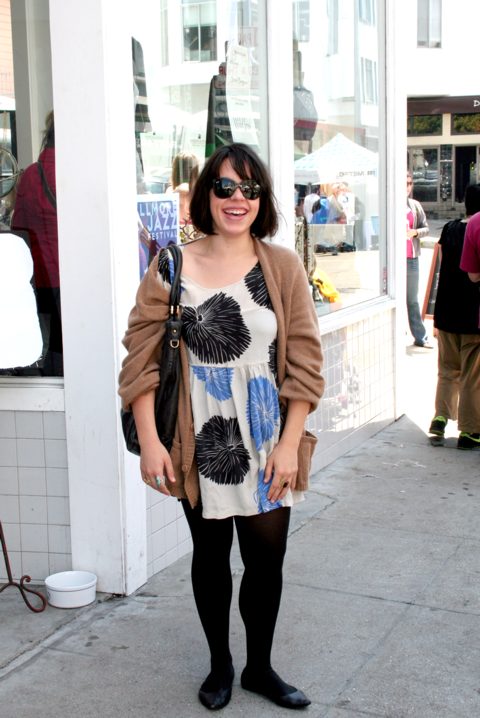
Today’s Look: Katelyn, Grant and Green

Tell us about your look: “This is my favorite dress. I’ve had it for six years.”

Buyer beware of Candlestick-Shipyard project

0

Board President David Chiu has introduced five amendments to the city’s Candlestick Point-Hunters Point Shipyard redevelopment proposal. All five are a good start, but longtime observers question if they are too little, too late, in the face of intense lobbying by a city and a developer intent on getting project approvals before a new Board and possibly a new mayor occupy City Hall in January 2011.

Chiu’s amendments address key concerns with the city’s proposed redevelopment plan, and they come as the Board prepares for its July 13 hearing into three separate appeals of the project’s final EIR certification, as well as amendments to the Bayview Hunters Point and Shipyard redevelopment plans.

Two of Chiu’s amendments seek to address concerns about the clean-up of radiologically impacted waste at Parcel E-2 on the shipyard, and environmental impacts of a proposed bridge over Yosemite Slough.

Chiu’s other three amendments seek to finance the expansion of the Southeast Health Center, create a workforce development fund and analyze the feasibility of providing public power, including natural gas at the site.

But while all five amendments are welcome, some observers worry they do not fully address concerns about the project’s sustainability, financing and infrastructure.  But before we get to those concerns, let’s review Chiu’s five amendments in greater detail:

1. The Parcel E-2 amendment.
This amendment declares that the Board’s adoption of CEQA findings for the project “shall not in any way imply support of a cap for Parcel E-2.” 

As such, this amendment is a critical step towards insisting that the parcel get completely cleaned up, not just capped, as the Navy is currently proposing. On the other hand, it’s not a watertight demand to excavate and haul away all contamination from this parcel, which is the cleanup alternative that many in the community would prefer..

Instead, Chiu’s Parcel E-2 amendment declares that the U.S. EPA, California EPA and the Navy, “should pursue the highest practicable level of cleanup for Parcel E-2.”
And that the San Francisco Redevelopment Agency “should not accept the property unless and until that cleanup is satisfied.”

It also establishes that the Board shall conduct a hearing regarding final cleanup strategies for Parcel E-2 before a final remedy is selected, urges the U.S. EPA, California EPA and the Navy to participate in such a hearing, and further establishes that the Board shall conduct a separate hearing prior to any transfer of Parcel E-2 to Redevelopment.”

(There was some question as to why the Board was saying “should” in some parts of this amendment, and “shall” in others. The reason I heard was, you can’t force the Navy to do anything, but you can urge them, and you certainly can refuse to accept the property, if it is not cleaned up a city’s requirements.But this needs to be clarified.)

2. The Yosemite Slough Bridge amendment
Chiu notes that the city’s EIR for the project analyzed a non-49ers-stadium alternative that “includes an approximately 41 ft. wide bridge spanning the Yosemite Slough which is limited to bike, pedestrian and transit use.”
“However, in the event the San Francisco 49ers elect to build a new stadium on the shipyard site, the project will include a bridge spanning Yosemite Slough that is wider than 41 ft. across to accommodate game-day traffic,” Chiu’s amendment states.
(So, Chiu’s amendment doesn’t throw the bridge entirely out with the 49ers’ stadium, and that leaves environmental groups uneasy, afraid that the anticipated 25,000 new residents in the proposed development will subsequently push for legislation to allow for a wider, car-accessible bridge.)

3. The Southeast Health Center amendment
Chiu’s Southeast Health Center amendment demands that the developer contribute $250,000 to the Redevelopment Agency for a needs assessment study regarding the need to expand the center and the ongoing health needs of local residents, and, to the extent such expansion is needed, to help pay for predevelopment expenses associated with this expansion.
The capital costs for expanding the center would be funded through a combination of  tax increment dollars, a $2 million Wellness Contribution paid by the developer, and the City’s ability to finance savings that would accrue to the Department of Public Health by moving from leased space into owned space at the expanded center.

4. The Workforce Development Fund amendment
Chiu’s amendment would modify language in the current community benefits agreement to require the developer to contribute $8,925,000 to a workforce development fund to be used for programs “designed to create a gateway to career development, fiirst for residents of District 10 and secondly for “at-risk job applicants.”
(A member of the public suggested that veterans be specified as “at-risk job applicants,” an idea D. 10 Sup. Sophie Maxwell seemed to support during yesterday’s July 12 Land Use Committee hearing, which was where Chiu introduced his five proposed amendments.)

 5. The Public Power amendment 
Chiu’s public power amendment notes that the SFPUC confirmed the feasibility of providing electric service to the shipyard sire, but requires the agency to update this study and include the Candlestick site and include “an analysis of the feasibility of providing natural gas to the project site.”

But will these steps be enough to ensure that the development actually delivers on its promises of thousands of jobs, and hundreds of affordable housing units,? And is a bridge really necessary across Yosemite Slough, if the 49ers go to Santa Clara as planned?

Long-term observers of the project point to the first phase of the project, which began on the shipyard’s Parcel A, as a warning of where things might end up.

“We approved the fast-tracking of Parcel A based on a bevy of assurances and enthusiastic endorsements from the best and brightest this administration has to offer,” said a source who wishes to remain anonymous. “But what has happened since then, and what are we to learn from this experimental test case?”

This source noted that recent maps of the shipyard show that Parcel A, which the Navy conveyed to the city in 2004, has since been carved up into several new pieces.

“How did Parcel A get divided into two areas that don’t even border one another?” my source asked.

The answer appears to be that sections of the shipyard, including Parcel A,  have since been renamed as new and separate parcels, after it was discovered that shipyard sewers on those parcels contained radiologically contaminated material.

One of these sewer lines, as indicated on recent project maps, leads from a site now known as Parcel UC-3, into the Bayview. In other words, it appears to lead off the shipyard site and into the surrounding community. If so, this raises concerns that shipyard contamination is no longer limited to the shipyard in the Bayview, and could be impacting residents and businesses that are not covered by the Navy’s clean-up commitments.

Either way, it seems that the Board could use an update on what happened on Parcel A, since it was conveyed, what’s the deal with UC-3, and other recently renamed parcels, before they consider an early transfer of the rest of the shipyard.

“How can we start Phase 2 of the project, when we haven’t completed Phase 1?” my source asked.

And since the Navy is still tasked with cleaning up the rest of the shipyard parcels, it would be helpful if the Navy updated the Board on what the Navy is proposing in its Records of Decisions for each of these parcels, including UC-3, before the Board votes on Phase 2 of the project.

My source also noted that since the project plans to use 100 percent recycled water at the site, it would be helpful to have an update as to how issues with sewer contamination and groundwater concerns might impact the project’s sustainability plans.

“These issues touch on half of the documents that make up the EIR, but are now obsolete, because of the issue of radioactive contamination on UC-3,” my source claimed.

And then there’s the question of fproject financing and who the developer for the project actually is, these days.

“The city’s exclusive negotiating agreement (ENA) was with Lennar, so who is CP Development and why do we have an ENA with them?” my source asked.”What happened to Lennar? And why would we be obligated to negotiate solely with this CP Development group?”

Now, hopefully the Board has greatly reassuring answers to all these questions, so that the community can rest assured that the supervisors really do understand the ramifications of a project that they are being asked to approve in what appears to be an awful hurry.

Yes, there are plenty of project supporters who keep on urging “no delays.” I understand their concerns. They want jobs, housing, parks and other promised community benefits. And I don’t blame them.

But it’s up to the Board to ensure that it doesn’t get rushed into approving a project that perhaps doesn’t guarantee any or all of these things. So, let’s keep asking questions so the Board of Supervisors doesn’t end up with buyer’s remorse, but instead can truly claim to having secured a deal that really helps all the folks who currently live and work in the city’s southeast sector. Stay tuned.


T


SFBG Radio: Should SF ban pet sales?

4

In today’s episode, Johnny argues that San Francisco should ban all pets in the city. Tim says his dog has a great life. Plus: The latests on the Mehserle verdict. You can listen after the jump.

sfbgradio7/12/2010 by jangel

Tax cuts, unemployment and the deficit

10

Fifty-five thousand people a day are losing their unemployment insurance because Congress won’t extend benefits. Why? Well, gee, any federal spending will increase the deficit — and like Herbert Hoover, everyone in Washington is talking about cutting deficits.


But check out this handy chart from the Commitee on Budget and Policy Priorities (thanks, Calitics). The overwhelming factors in the current budget deficit are left over from the Bush administration: Two wars, massive tax cuts for the rich, and an economic meltdown. Unemployment insurance barely even counts.


So the obvious solution to the deficit problem is to get the hell out of Iraq and Afghanistan, cut the size of the military and end the tax cuts. Funny: The deficit hawks aren’t talking about any of those things. 


Live Shots: World Cup Final watching party, Civic Center, 07/11/2010

0

Paul was right! Will Spaniards give up eating octopus? Will the Dutch avenge their loss with grimmer graphic design and tinier eyewear? In any case, yesterday’s Civic Center scene was one of friendly competition and colorful exuberance. (Check out the entire ON SIDES: San Francisco Watches the World Cup photo series here.)

Street Threads: Look of the Day

0

Today’s Look: Masaki, 17th Street and Mission

Tell us about your look: “I got this dress used from a store in Tokyo about 5 years ago.”

Trash Lit: Nellie Bly meets old-school hacker in “The Alchemy of Murder”

0

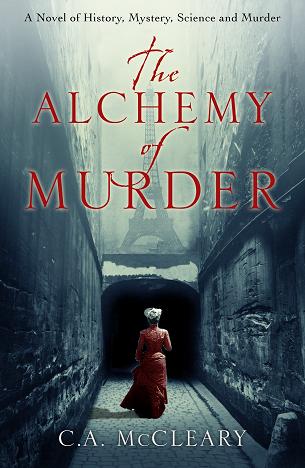
The Alchemy of Murder
Carol McCleary
Forge, 365 pp. $24.99

Nice effort for a first novel. A fun premise, fairly well executed. Nellie Bly, the famous (for real) investigative reporter for Joseph Pulitzer’s New York World, goes to Paris in 1898, just as the World’s Fair is attracting throngs of tourists, to catch a brutal murderer.

The guy’s apparently a doctor, and has been hacking up girls and taking away parts of their bodies. Now he’s going about his nasty business in a city that’s not only overwhelmed with the fair (and trying to hush up the killings to avoid bad publicity) but in the throes of an epidemic of something called Black Fever.

The authorities think the fever is spread by miasma rising from the sewers. The anarchists, who control the Montmarte section of the city, think it’s a plot by the rich to kill the poor. And of course, as McClearly points out about Montmarte, “the immorality and depravity of its bohemian inhabitants is a scandal known throughout the world.” Bly runs into Louis Pasteur, Jules Verne (who she eventually sleeps with), Oscar Wilde, Louise Michel and a host of other characters from late 19th century Paris as she chases around, putting herself forward as bait for the killer.

McCleary isn’t terribly kind to the anarchists, but there’s a lot of (relatively) accurate historical description of the politics of the time, with ample references to Kropotkin, Bakunin, and Haymarket Square. And the scenes in Montmart, the Pasteur Institute and the Parisian sewers are worth the price of admission – even if the eventual plot twist, involving an anarchist attempt at biowarfare with anthrax, plague and cholera – is a bit of a stretch.

Lesbian sex in a café with ample absinthe. Blow jobs in another café. A bladder filled with plumbers acid that gets sprayed on a bad guy’s dick. Sex with Jules Verne. Lectures by the radical Ms. Michel. I wouldn’t sell it as a history book, but as an entertaining mystery, it actually works.

Sunday Streets creates public benefits from private labors

2

By Kristen Peters

San Francisco locals will take to the streets this weekend as main roads in the Mission neighborhood are closed to automobiles for the sixth installment of Sunday Streets. On July 11, a three-mile route from 17th and Valencia to Dolores Park to Potrero Avenue will be car-free from 10 am until 3pm.

Taken from Bogota’s weekly ciclovía, in which nearly 100 miles of city streets are reserved for pedestrians and other recreationalists, Sunday Streets began in San Francisco almost two years ago. Since then, the tradition has made its way to other California cities including Los Angeles and Oakland.

“In San Francisco we have our own unique style,” event coordinator Susan King, who works for the nonprofit group Livable City, said. “We have different routes and we hit different neighborhoods year after year. In each neighborhood, the featured events have their own flair.”

This Sunday, revelers can look forward to performances by Grupo Azteca as well as capoeira and salsa dancing lessons, not to mention the countless restaurants in the area opening their doors early to the public. While the event has some support from the city and its San Francisco Municipal Transportation Agency, mostly in the form of permit fee waivers, it is run by Livable City and funded from corporate donations.

“Our corporate sponsors provide everything from durable goods, in-kind donations and cold, hard cash,” King said.

City officials have even curtailed helping with hanging “no parking” signs, leaving that task to volunteers from the SF Bicycle Coalition. That job was usually designated to the San Francisco Department of Parking and Traffic, but they have now stopped providing that service to an event that Mayor Gavin Newsom trumpets as something he’s bringing to the people. But King still calls Sunday Streets a good example of a public-private partnership.

“Everybody brings something to the table,” King said. “It’s a real cooperative entity with everyone pulling together to produce something really special.”

According to King, the benefits are widespread. Not only is it refreshing for the public to ditch their cars for a few hours, but it also reinvigorates the local economy. “It’s a real boom for the city,” King said. “Lots of people on the street means lots of eating. It’s good for business and good for the community.”

Acting executive director for the SF Bicycle Coalition Renee Rivera said that the Mission in particular has benefited from the crowds at Sunday Streets. “Everyone is enjoying the outdoor activities the event has to offer but, at the same time, are going to get ice cream, stopping for tacos or getting to enjoy all the merchants on 24th and Valencia,” Rivera said.

There are three more Sunday Street events following the Mission neighborhood closure. The Great Highway and areas of Golden Gate Park will be closed on August 22 followed by the Western Addition on September 19. The series will conclude on October 24 with the closure of the Civic Center and Tenderloin areas.

Protests turn to riots in wake of Mehserle verdict (VIDEO)

In the hours following the announcement of that Johannes Mehserle had been found guilty of involuntary manslaughter for fatally shooting Oscar Grant in the back on a BART platform on New Year’s Eve 2009, downtown Oakland became a drama-filled scene that changed minute by minute.

In the early hours, rallies were held, with community leaders speaking out against the killing of Oscar Grant and police brutality in general. At least 1,000 protesters gathered peacefully at the intersection of 14th and Broadway streets to hear a series of speakers venting anger. Representatives from the nonprofit Youth UpRising and other groups tried to discourage violence, but anger and frustration erupted into acts of vandalism once the rally came to a close and the night set in. Around the same time, police strapped on gas masks, readied clubs, and issued a dispersal order.

Around 8:30 bottles started flying among shouts of “fuck the police,” and “no justice, no peace.” A window was smashed at a Foot Locker near 14th and Broadway, and another window came down at the Far East National Bank, across the street. Looting followed, as did graffiti tagging, and trash cans lit ablaze.

By 10 p.m., things descended into further disarray as smaller crowds advanced north on Broadway and Telegraph, with just a few hundred continuing to smash windows at Whole Foods, Sears, Starbucks, and several other locations. The Guardian was on the scene and caught much of the early activity and some of the later rioting on film. The videos are presented below in chronological order. The Guardian left a crowd of less than 50 rioters near Whole Foods at Bay Place and Vernon Street, around 10:30.

http://www.youtube.com/watch?v=O_t8w7-_bVc
Shortly after the verdict was announced, Oscar Grant’s sister-in-law, Yolanda Mesa, tearfully addressed a small crowd outside Oakland City Hall. Video by Wendi Jonassen

http://www.youtube.com/watch?v=V1qclrgIOtE
A rally being held in the middle of the intersection at 14th and Broadway in downtown Oakland dissolved into chaos when police in riot gear approached and announced through a megaphone, “We are here to assist you in your peaceful protest.” Video by Rebecca Bowe

http://www.youtube.com/watch?v=Si0sH_v0oq8
As a marching band played in the background, activists hoisted a sign onto a lamppost over the intersection of 14th and Broadway in downtown Oakland. Video by Rebecca Bowe

http://www.youtube.com/watch?v=Y9S144Tptbg
A protester challenging police in the midst of demonstrations in downtown Oakland was tackled by officers in riot gear. Video by Alex Emslie

http://www.youtube.com/watch?v=V4veyVC204E
Oakland City Council member Rebecca Kaplan gave an interview at the line between demonstrators and police as she linked arms with others at 12th Street and Broadway. Council member Jean Quan stood nearby. Video by Alex Emslie

http://www.youtube.com/watch?v=EiV2-kp5Gc8
Police declared the protest to be an unlawful assembly and issued an order to disperse just before 9 p.m. The police charged, and this reporter got caught in the fray. Video by Alex Emslie

http://www.youtube.com/watch?v=NBwMMiFEe-o
Rioters ignited a trash can and dragged it down 15th Street toward the police line at around 9:30 p.m. Video by Alex Emslie

http://www.youtube.com/watch?v=z2eIW9YTwzQ
The riots took a noticeable turn just before 10 p.m. Even as the crowds diminished, more fires were ignited and store front windows were broken between 15th and 17th streets on Broadway as and rioters began to move further North. Video by Alex Emslie


Oliver Stone hits the spin cycle with South of the Border

3

Gosh I love a good bite of propaganda. But maybe instead of “good” I should demur to “appealing”; it’s probably a bit redundant to say that I don’t brook with the smug-mongering on FOX, and even if it’s couched in concern for the personal safety of Americans, the advisories that our government puts out on the countries of our brothers and sisters in South American scared the dickens out of my mom when I decided to do Carnaval in Colombia.

Point being, we’re surrounded by propaganda. And I know Oliver Stone thinks so too. The fact appears to be the motivation behind his new movie South of the Border (opens Fri/16 in Bay area theaters), in which he travels down there to meet with Hugo Chavez and seven other leaders of what he believes to be the new Bolivarian movement. “I think that there has been so much unbalance [in American coverage of Latin America] that we are definitely a counter to that,” the director told the New York Times.

And like any good propaganda, the movie’s raised a tidy amount of hullabaloo. Maria Conchita Alonso is raising a stink at Stone appearances, and Larry Rohter wrote a scathing piece on the film’s inaccuracies for the NYT (see the film’s rebuttal to his points here). Even that astute analyzer of Western Hemisphere policy, Perez Hilton “weighed in.”

So why then did our friendly neighborhood center for Latino arts care to show such a piece of inflammatory rhetoric? I hollered at Jason Wallach, who was the evil mastermind behind a recent showing of South of the Border at the Mission Cultural Center for Latino Arts. Jason, you crazy commie red, what gives?

“It’s like this,” said Wallach, cheerfully disregarding my hate speak. “The cultural center for many years has taken it upon itself to be the outlet for news and critical analysis in Latin America, and helping the community stay up to date on development.” Wallach told me that the Latino activist community has taken issue with Washington’s trade policies, which “are only there so that the U.S. can have access to new markets and have nothing to do with those countries. We never hear that in the U.S.”

Somewhere between Evo Morales supplying Oliver Stone with amphetamines and what happens next in this scene with Hugo and some kid’s bike lies the genius of South of the Border. Photo by Jose Ibanez

Wallach noted that although MCCLA does not endorse everything said in the film, and that even though the left also has its concerns about Chavez (see in particular his sorry record on freedom of the press) “our job is to create a space for open debate.”

And so it came to be that the other night I turned off Hannity and Colmes for a moment, and had the pleasure of watching the Bay area premiere of the film at the Mission Cultural Center for Latino Arts, where it was screened for an assemblage of political activists and alternative press (meaning for once I was the most mainstream journalist in the room, ha!). 

It was a highly amenable audience. In one Stone-Chavez interview scene, the two discuss the aftermath of the 2002 attempted coup on the president (that many have found similar to CIA interventionist operations in the past). Chavez described his version of non-violence, the art of being “pacífico, pero armado” (peaceful, but armed). Seated behind me, a man breathed a sigh of relief. “Exacto,” he whispered. Like I said, every once in awhile we all need a shot of the propaganda that tastes good to us. 

South of the Border opens Fri/16 at the Sundance Kabuki (1881 Post, SF. (415) 929-4650, www.sundancecinemas.com) and Rialto Cinemas Elmwood (2966 College, Berk. (510) 433-9730, www.rialtocinemas.com) )


SFBG Radio: The Mehserle verdict — and beyond

0

Today, Johnny and Tim talk about the Mehserle verdict, the riots, and what comes next. You can listen after the break.

sfbgradio7/9/2010 by jangel

Meg, Jerry and the Latino vote

0

It’s easy for political analysts to talk about “the Latino vote” as if 15 million people in California all shared exactly the same views and cared about exactly the same issues. Which is nuts: Latino voters are a diverse group.


On the other hand, it’s safe to say that over the past 15 years or so, as the California Republican party has become more and more viciously anti-immigrant, Latinos have been rejecting GOP candidates. When Pete Wilson pushed Proposition 187 — which would have prevented undocumented Californians from receiving public health services and would have kicked their kids out of public schools — he wrote off an entire generation of Latino voters.


And Jerry Brown has a strong history of supporting causes that resonate with a lot of Latinos.


So in general, recognizing that not all Latinos remember Brown’s support for Cesar Chavez or cae about the creation of the Agricultural Labor Relations Board, it ought to be a good assumption that Brown will win the Latino vote by a pretty wide margin. The fact that Whitman is narrowing his lead among Latinos is, I think, a sign that Brown is resting too much on history and hasn’t offered much in the way of ideas about jobs, education, or any of the other crucial issues that middle-class voters of all ethnic groups care about.


Still, the Spanish language billboards were really dumb. For a campaign that’s been as disciplined and message driven as the Whitman effort, it’s kind of a surprise. All Meg has done is give Brown a nice weapon, a reason to talk about an area where she’s very weak. And the more he can keep playing on that — the more he can point out how far to the right she and her advisors really are on immigration — the more it hurts her.

Newsom’s ambitions trump local needs

1

I guess that’s nothing new, and I could have written the same headline dozens of times over the past couple of years. But in this case, the Bay Citizen has a nice scoop — Newsom personally scuttled a deal that would have created a $50 million annual stream of affordable housing money because he didn’t want to be on record supporting any new taxes.


The Bay Citizen story, which also ran in the New YorkTimes, doesn’t go quite as far as to say that the tax issue scuttle the whole thing, but I think it’s pretty clear that’s what happened. The deal — a highly unusual agreement between warring parties — involved an increase in the real-estate transfer tax on high-end buildings. The private developers agreed to support it — if the housing advocates would allow some of the money to be used to subsidize the requirement that developers build affordable housing along with market-rate units.


I’m no so into subsidizing private housing developers, but the money would be coming from people who sell high-end properties. At any rate, whether it was a good deal in the end or not, Newsom’s own staff was involved in making it happen — and the mayor only killed it for one reason.


He doesn’t want his Republican opponent this fall to accuse him of raising taxes.


That’s a hell of a way to run a city. 

Street Threads: Look of the Day

0

Today’s Look: Melissa, Union Square

Tell us about your look: “I got this outfit at a store called P-Kok in Lower Haight.”

Snap Sounds: Björk and Dirty Projectors

1

BJÖRK AND DIRTY PROJECTORS
Mount Wittenberg Orca

Mount Wittenberg Orca is neither the first nor last time Björk sings about oceans, mothers, and plant life (re: “Oceania”). But now, she has the genius of the Dirty Projectors ­– in particular, producer and Dirty frontman David Longstreth – looking at Mother Nature, too.

On Orca – and I don’t mean Bitte Orca, the Dirty Projectors’ 2009 indie instant-classic  – the Icelandic songstress and Longstreth have teamed up to produce an album for charity. This is a 20-minute, seven track release – short, but oh how sweet ­– whose proceeds all go to the National Geographic Society. It’s the first time we’ve been able to hear studio recordings of these tracks since Dirty/Björk played a benefit concert last year at Housing Works in New York.

Perhaps the titular mountain is our very own, in Marin. Either that or, judging by the album art, it’s some Middle Earthian alternate world. The eponymous orca – a killer whale – holds especially pertinent ground for Björk since, back in the Aughts, she developed some kind of maritime obsession on Medulla and the Drawing Restraint 9 soundtrack. It’s also interesting to note that, back in 2005, Björk’s hubby Matthew Barney gave ambergris, aka whale shit ­– one of his many fetishized materials – a starring role in Drawing Restraint 9. If you want to connect the dots even more, Barney was born in San Francisco.

Reminisicent of Medulla, Orca is like an epic chamber piece: harmony-heavy, flippantly sliding up and down scales, often ending up in a round of disparate melodies. Both Björk and the Dirty Projectors foreground imaginative vocal arrangements, and thus, the vocals here are strong and full of nuance.

The opening track, aptly titled “Ocean,” features some frightening feedback and disquieting vocals that wouldn’t be out of place in Krzysztof Penderecki’s scariest nightmares. Later, the bouncy “Sharing Orb” showcases the Dirty girls’ piquant “eh eh eh”s to match Björk’s Yoko-like, banshee-wailing “waaaaw.” “How do you say ‘love’?” she asks. Well, I know how I say it, Björk, and it’s definitely not the same way you do (“laaaaaave”). But as on the rest of her canon, her Neanderthalic cadence is totally successful in the context of the album’s conceit: A return to nature and the elements, a vision of an a priori universe of sound, to create modern, tightly woven aural textures.

“No Embrace” sounds like typical Dirty Projectors fare: spooky, yet wistful. Longstreth and his leading ladies – Angel Deradoorian, Hayley Dekle, and Amber Coffman – never clash with Björk’s typically dominant voice. The two work well in concert (both in the literal and figurative sense if you’ve seen the performances) yet you can still tell who’s singing and when.

The best song is “All We Are,” the final track and also the Björkiest. It almost sounds like a b-side from Medulla or the separated Siamese twin of “Sonnets/Unrealities XI.” The choir-like incantations, offering plenty in the way of falsetto, wax ethereal beneath Longstreth’s romantic lyricism. But like the best of Bjork’s Icelandic-to-English words, beauty is met by danger, and emotions are met with undermining qualifications (“I looked out for you/But looking never meant less”).

Mount Wittenberg is a pleasant, lovely climb, both brisk and a breath of fresh air. It’s enough to satisfy fans of either Bjork or Dirty Projectors, and you’ll most likely freak out if you’re a follower of both like myself. Yet at 20 minutes, it still leaves you wanting more. You can purchase the mp3s at mountwittenbergorca.com for pretty cheap, or you can stream the album on YouTube.

Taming finance in an age of austerity

1

By Joseph E. Stiglitz

NEW YORK – It was not long ago that we could say, “We are all Keynesians now.” The financial sector and its free-market ideology had brought the world to the brink of ruin. Markets clearly were not self-correcting. Deregulation had proven to be a dismal failure.

The “innovations” unleashed by modern finance did not lead to higher long-term efficiency, faster growth, or more prosperity for all. Instead, they were designed to circumvent accounting standards and to evade and avoid taxes that are required to finance the public investments in infrastructure and technology – like the Internet – that underlie real growth, not the phantom growth promoted by the financial sector.

The financial sector pontificated not only about how to create a dynamic economy, but also about what to do in the event of a recession (which, according to their ideology, could be caused only by a failure of government, not of markets). Whenever an economy enters recession, revenues fall, and expenditures – say, for unemployment benefits – increase. So deficits grow.

Financial-sector deficit hawks said that governments should focus on eliminating deficits, preferably by cutting back on expenditures. The reduced deficits would restore confidence, which would restore investment – and thus growth. But, as plausible as this line of reasoning may sound, the historical evidence repeatedly refutes it.

When US President Herbert Hoover tried that recipe, it helped transform the 1929 stock-market crash into the Great Depression. When the International Monetary Fund tried the same formula in East Asia in 1997, downturns became recessions, and recessions became depressions.

The reasoning behind such episodes is based on a flawed analogy. A household that owes more money than it can easily repay needs to cut back on spending. But when a government does that, output and incomes decline, unemployment increases, and the ability to repay may actually decrease. What is true for a family is not true for a country.

More sophisticated advocates warn that government spending will drive up interest rates, thus “crowding out” private investment. When the economy is at full employment, this is a legitimate concern. But not now: given extraordinarily low long-term interest rates, no serious economist raises the “crowding out” issue nowadays.

In Europe, especially Germany, and in some quarters in the US, as government deficits and debt grow, so, too, do calls for increased austerity. If heeded, as appears to be the case in many countries, the results will be disastrous, especially given the fragility of the recovery. Growth will slow, with Europe and/or America possibly even slipping back into recession.

Stimulus spending, the deficit hawks’ favorite bogeyman, did not cause most of the increased deficits and debt, which are the result of “automatic stabilizers” – the tax cuts and spending increases that automatically accompany economic fluctuations. So, as austerity undermines growth, debt reduction will be marginal at best.

Keynesian economics worked: if not for stimulus measures and automatic stabilizers, the recession would have been far deeper and longer, and unemployment much higher. This does not mean that we should ignore the level of debt. But what matters is long-term debt.

There is a simple Keynesian recipe: First, shift spending away from unproductive uses – such as wars in Afghanistan and Iraq, or unconditional bank bailouts that do not revive lending – toward high-return investments. Second, encourage spending and promote equity and efficiency by raising taxes on corporations that don’t reinvest, for example, and lowering them on those that do, or by raising taxes on speculative capital gains (say, in real estate) and on carbon- and pollution-intensive energy, while cutting taxes for lower-income payers.

There are other measures that might help. For example, governments should help banks that lend to small- and medium-size enterprises, which are the main source of job creation – or establish new financial institutions that would do so – rather than supporting big banks that make their money from derivatives and abusive credit card practices.

Financial markets have worked hard to create a system that enforces their views: with free and open capital markets, a small country can be flooded with funds one moment, only to be charged high interest rates – or cut off completely – soon thereafter. In such circumstances, small countries seemingly have no choice: financial markets’ diktat on austerity, lest they be punished by withdrawal of financing.

But financial markets are a harsh and fickle taskmaster. The day after Spain announced its austerity package, its bonds were downgraded. The problem was not a lack of confidence that the Spanish government would fulfill its promises, but too much confidence that it would, and that this would reduce growth and increase unemployment from its already intolerable level of 20%. In short, having gotten the world into its current economic mess, financial markets are now saying to countries like Greece and Spain: damned if you don’t cut back on spending, but damned if you do as well.

Finance is a means to an end, not an end in itself. It is supposed to serve the interests of the rest of society, not the other way around. Taming financial markets will not be easy, but it can and must be done, through a combination of taxation and regulation – and, if necessary, government stepping in to fill some of the breaches (as it already does in the case of lending to small- and medium-size enterprises.)

Unsurprisingly, financial markets do not want to be tamed. They like the way things have been working, and why shouldn’t they? In countries with corrupt and imperfect democracies, they have the wherewithal to resist change. Fortunately, citizens in Europe and America have lost patience. The process of tempering and taming has begun. But there is far more yet to do.

Joseph E. Stiglitz is University Professor at Columbia University and a Nobel laureate in Economics. His latest book, Freefall: Free Markets and the Sinking of the Global Economy, is now available in French, German, Japanese, and Spanish.

Copyright: Project Syndicate, 2010.
www.project-syndicate.org
For a podcast of this commentary in English, please use this link:
http://media.blubrry.com/ps/media.libsyn.com/media/ps/stiglitz127.mp3