SFBG Blogs

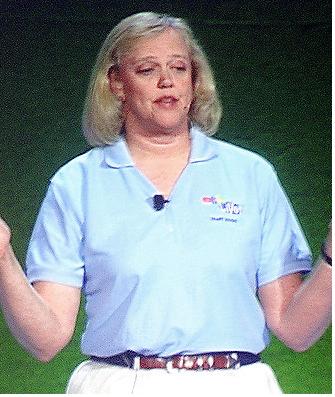
Meg wants to stop paying taxes

16

The rich are not like you and I — a lot of the money they make comes from something other than working. I don’t begrudge Meg Whitman the billion bucks she made at EBay (well, I do, really, but never mind). But when you sit on a pile of money, hire someone to manage it for you, and reap major windfalls on the interest, well, you’re basically making money for doing nothing.


And you ought to at least pay taxes on it.


But Whitman thinks she and other rich people are so special that she wants to exempt them from taxes on capital gains. That means the rest of us — the poor fools who actually get up every monring and go to work — will have to pick up the slack.


Oh, but won’t this “create jobs?” Chris Kelly in Huff Po:


For example, if a billionaire didn’t have to pay taxes, he could hire you to express his dog’s anal glands. And you could pay taxes.


Pardon me for thinking this is about the dumbest tax idea I’ve heard since Ronald Reagan decided to tax the unemployed.


Congress is acting stupidly

1

Dick Meister, former labor editor of the SF Chronicle and KQED-TV Newsroom, has covered labor and politics for a half-century. Contact him through his website, www.dickmeister.com, which includes more than 250 of his recent columns.


AFL-CIO President Rich Trumka has it right. It’s not the heat in Washington, D.C., that’s bothering him and many other advocates of working people. It’s the stupidity – the economic stupidity of Congress refusing to give financial aid to states that badly need help in order t o save the jobs of some 300,000 teachers, nurses, firefighters, police and other public service workers who are facing layoffs because of budget deficits.

The possible remedy is at hand – a pending $100 billion jobs bill.  Most of the money would go to states for quickly creating or saving up to one million jobs in public and private employment, restoring government services that have been cut, and averting other planned cuts, mostly in education, public safety and job training.

Republican opposition has kept the jobs bill from passage. The GOP also opposes a companion bill that deals with another bit of economic stupidity in Washington – the stupidity of Congress’ refusal to extend the unemployment insurance benefits of the 1.4 million Americans who will run out of benefits by the end of July, and the 325,000 who already have run out of benefits.

By year’s end, more than eight million workers will have exhausted their benefits. Their regular benefits, averaging $300 a week, ran out after 26 weeks and have not been extended as they usually have been during periods of heavy unemployment. The House voted for extension, and President Obama urged extension. But the Senate has refused to act.

The AFL-CIO’s Trumka calls the situation tragic, as well he should. He notes that almost 15 million Americans are currently unemployed, a number that’s been growing by about 250,000 workers per week.

So, 15 million people who need jobs – many who desperately need jobs – are unable to find them. About one million have been jobless for more than a year.

Overall, the jobless make up about 10 percent of the workforce. They’ve been out of work an average of 35 weeks. Another 11 million Americans are underemployed, including temporary and part-time workers and others who are underutilized and underpaid.

Nearly half of all the jobless have been out of work for more than six months.  As Trumka says, “Families are stretched to the limit and state budgets are under incredible strain, putting hundreds of thousands more jobs in danger. Yet the Republicans in Congress repeatedly have blocked efforts to take action, create jobs and rebuild our battered economy.” Although it’s mainly Republicans who’ve opposed extension of benefits, some conservative Democrats have also opposed extension.

Trumka, noting that many politicians, including every member of the House, will be on the ballot in the coming mid-term elections, urges union members to demand that the office seekers take concrete action to “rebuild our economy and create jobs now.” If they don’t take action, Trumka warns, “they may not be elected officials anymore.”

New York Times’ columnist Paul Krugman blames Congress’ failure to provide relief to the jobless on “a coalition of the heartless, the clueless and the confused.”

Krugman defines the heartless as “Republicans who have made the cynical calculation that blocking anything President Obama tries to do – especially anything that  might ease the country’s economic problems – improves their chances in the midterm elections.

And the clueless? Try Sharron Angle, the Republican candidate for senator from Nevada. She’s repeatedly claimed that the unemployed are deliberately choosing to stay jobless so they can keep collecting the benefits of a few hundred dollars a week.

The confused include politicians and others who apparently are too confused to understand the obvious – that the unemployed need money, and will quickly spend whatever they get in the way of extended benefits, thus boosting consumer spending, helping create jobs quickly and otherwise expanding the economy.

Except to the heartless, clueless and confused, saving money at the expense of the unemployed by denying them benefits is, as Paul Krugman says, “cruel as well as misguided.”

Dick Meister, former labor editor of the SF Chronicle and KQED-TV Newsroom, has covered labor and politics for a half-century. Contact him through his website, www.dickmeister.com, which includes more than 250 of his recent columns.
Street Threads: Look of the Day

0

Today’s Look: Nicole, Green and Grant

Tell us about your look: “Wear something alive that has a nature item in it. I also have a fashion blog called Fashion Forestry.”

Live Shots: Die Antwoord, Rickshaw Stop, 07/16/2010

0

Zef!? I may not understand it, but I got a crash course after sweating, watching, and surviving a Die Antwoord show. If a hot and packed house crammed with drunks is zef, the Rickshaw Stop was so fokken zef. The duo of Ninja and Yo-Landi (DJ Hi-Tek was absent?) plowed through their debut album $o$ with fury and madness. Luckily I got one of the few vantage points to take these shots surviving most of it. After the jump, a video sent to us by Big Up Magazine

Live Shots: Michael Franti and Spearhead, Greek Theater, 7/16/2010

2

Michael Franti‘s  music has the incredible ability to create instantaneous community and love wherever he’s performing.

His music is brimming with inspiring lyrics and powerful messages, along with infectious beats and rhythms that make it impossible to not start dancing. It’s rare for a musical artist to be so talented at singing and performing while simultaneously working as a strong social activist for world peace. Beside traveling to the Middle East to perform for soldiers, Franti is constantly working in the name of peace, bringing together artists and activists from around the globe to our very own Golden Gate Park each September for the annual Power to the Peaceful concert. If you haven’t been to this festival, you must go. It’s amazing.

As was the concert this weekend at the Greek Theater, which included lots of audience participation as Franti swam his way through the packed crowd. Franti and Spearhead have a new album coming out in September titled The Sounds of Sunshine and after hearing a few tracks at the show this weekend, it’s bound to be a smash hit.

http://www.youtube.com/watch?v=L7QepB4ZXX0

Huffing Internet: an indifferent review

0

“Kelly, parents really need to listen up on this one,” says the somewhat stiff-jawed newscaster on News 9 Oklahoma City. Oh good, I hadn’t heard another blatant attempt to scare the bejeesus out of parents in a while. They’re talking about “I doser” videos, videos that cause Mountain Dew swilling adolescent nerds to approximate what they think drunk people do. But wait… free drugs? Can grownups play? Ever attentive to our readers’ needs, I have sifted through the rubble. Conclusions to follow.


Bad: Most of them are. Very bad, indeed. Apparently, the young childs largely equate hallucinogenic trips to Satan, terrible headaches, broken ear drums, and boredom. And strobe. Lots of strobe. I had to stop watching one because I was getting bad Power Ranger flashbacks. Go to hell in particular “Gates of Hades,” one of the most infamous of the free I doses, which felt a lot like tying my head to an amp experiencing persistent feedback problems. 


Good: Not much. But I found the “less I dosey” visual trips to a bit more entertaining, particularly when they involved dancing penguins. Actually, some super swirly clips made my eyes pleasantly wonky for a few seconds after. Giggles and compulsive link forwarding ensued.


Conclusion: Persuasive tools in keeping children away from actual drugs for all eternity. Buy your kid a Magic Eye book. They’ve got higher production values, and will distract them from huffing Internet for at least the length of a “Gossip Girl” episode. Of course, I didn’t shell out the big bucks for George Torrez’s mood-enhancing Binaural Beats. Any patrons out there?


Adachi and the real politics of pension reform

71

While downtown-oriented politicos and out-of-touch corporate columnists tout the political potential of targeting public employee unions with pay reductions and pension plan take-aways – and say the Public Defender Jeff Adachi may be mayoral material for doing so – they forget that electoral success requires coalitions, particularly in savvy San Francisco.

Unlike his cheerleaders, Adachi seems to understand this, downplaying the personal political upside when he talked to the Guardian and other media outlets. Sure, he might just be sandbagging, as his boosters hope he is, but there’s good reason to believe that this move could hurt Adachi’s chances of becoming mayor more than it helps it.

Much has been written and said about how Adachi’s move alienated labor unions and much of the progressive movement. “They urged me not to do it,” Adachi told the Guardian in the final days of his successful signature-gathering effort for a measure that would save the city about $167 million per year by taking that amount out of employees’ paychecks.

It’s not that pension reform isn’t needed. Indeed, San Francisco voters just approved a measure in June to increase the pension contributions for all new city employees, and politicians ranging from Sups. John Avalos and David Campos on the left to Sup. Sean Elsbernd and Mayor Gavin Newsom on the right all agree that more needs to be done, pledging to work with unions on the issue. And given the surly mood of the electorate, Adachi’s measure will probably pass.

But that still doesn’t make him mayoral material. Unlike Newsom, whose Care Not Cash initiative to take money from poor people helped propel him into Room 200, Adachi doesn’t have a strong constituency behind him, unlike the full strength of downtown and the Willie Brown machine that Newsom had behind him.

Downtown will never get behind a mayoral campaign for Adachi, a heavily tattooed defender of criminals who has a strong independent streak, even if they like the fact that he’s socking it to the public employee unions, an effort they helped fund. And progressives will now have a hard time ever trusting Adachi to work with them, seeing him now as someone hostile to political process and coalition-building, much like Newsom.

And even Newsom has come out against Adachi and his proposal, even though he loves the pension reform issue and shares some stylistic similarities with Adachi, including a certain political petulance. “Mayor Newsom has been clear that effective, long-term pension reform will come by doing it with our public employee unions, in partnership, not to and against them, in contrast to the Adachi measure,” Newsom Press Secretary Tony Winnicker wrote to the Guardian this week. It was a laughingly hypocritical statement from a mayor who has repeatedly demonized unions and refused to work cooperatively with them, but it’s a true statement nonetheless.

Finally, while socking it to public employees may be in vogue right now, during this moment of real economic uncertainty and political myopia, this sort of divisive politics might come to be seen more as opportunistic than courageous. And it’s hard to see how the approach that Adachi has taken will somehow add up to an effective political coalition capable of stealing the Mayor’s Office from wily politicians like Mark Leno, Leland Yee, or Aaron Peskin.

Consider the fact that even the Police Officers Association – the most conservative, downtown-oriented employee union in San Francisco – also opposes the Adachi measure and other efforts to blame the city’s fiscal problems on employees, rather than the large financial institutions that don’t even pay any kind of business tax to the city.

So I leave you with the words of POA President Gary Delagnes, writing in the May issue of the POA Journal, sounding a bit like a Guardian editorial writer on this politically sensitive issue: “Even more problematic is the rapidly developing notion that public employee pensions serve as the root of all evil, and are almost solely to blame for all of our economic woes.

“Opportunistic Wall Street insiders, politicians, and robber baron CEOs have manipulated and pilfered our country’s financial well-being. They have unconscionably – if not also illegally – lined their deep pockets with the hard-earned savings and pensions of the middle class working man and woman. Accountants from coast to coast have coached multi-millionaires on the art of avoiding paying their true tax obligations. Millions of people were allowed to qualify for mortgage loans by greedy bankers and mortgage brokers that led to trillions of dollars in bailout money. The result is a public incensed about fat cats taking advantage of them. Now, the backlash has set up public pensions and the unions that negotiated them as the scapegoats for his anger.

“Those of use who long ago made the decision to forgo large salaries in exchange for a life of public service, are now being portrayed as greedy and self-centered, taking unwarranted pensions and benefits after 30 years of service as firefighters, police officers, teachers, and nurses. These are shameful accusations, and utterly without merit.”

We couldn’t have said it better ourselves, but unlike one of our editorials, this is the perspective of cops and other unions and progressive constituencies that will shape their actions in elections to come.

The martyrdom of Mooney and Billings

0

Dick Meister , former labor editor of the SF Chronicle and KQED-TV Newsroom, has covered labor and politics for a half-century. Contact him through his website, www.dickmeister.com, which includes more than 250 of his recent columns.

It was an unusually hot July day in San Francisco.   There was a parade on that day in 1916 – a “Preparedness Day” parade organized by local Republican businessmen. It was intended to drum up support for U.S. entry into World War I and embarrass Democratic President Woodrow Wilson, who was running for re-election on a platform that stressed,  “He kept us out of war!”

A lot of people supported neither the war nor the parade, however. The opponents particularly included the union organizers who were the radicals of that period – “reds” who were trying to establish the right of unionization in the face of often violent opposition from the business interests who controlled the city and who most assuredly supported the war.

Many thousands of spectators, as many as 100,000 by some accounts, lined the parade route down Market Street, cheering and enthusiastically waving American flags. At precisely 2:06, less than a half-hour after the parade of more than 25,000 marchers had begun, just as contingents from the Grand Army of the Republic and Sons of the American Revolution were passing the crowded corner of Steuart and Market  streets. . . Boom!

It was the thunderous blast of a bomb that had either been thrown into the crowd or planted there.  The horrific explosion killed 10 bystanders and seriously wounded 40 others.

Within a few hours, the authorities had their culprits. Not surprisingly, all of those arrested as suspects were union organizers. Among them were two men who were especially despised by the city’s virulently anti-labor business establishment — Tom Mooney, 34, a burly Irish-American organizer for the International Molders Union who was one of San Francisco’s most prominent labor activists, and his close friend, slim, short, boyish Warren Billings, a 23-year-old shoe factory worker.

Mooney and Billings were San Francisco’s “most notorious reds,” declared the SF Chamber of Commerce in one of its typically frenzied assessments of those who dared challenge the status quo in which workers were treated as mere chattel.

The others who were arrested were soon freed, but Mooney and Billings were put on trial and eventually found guilty. Mooney was sentenced to death by hanging, Billings to life imprisonment.

There’s absolutely no doubt Mooney and Billings were framed. Federal investigators, investigative newspaper reporters and others proved that beyond any doubt.  The city’s famously corrupt district attorney, Charles Frickert, was found to have suppressed evidence that proved the pair’s innocence, joining with corrupt policemen to fabricate evidence that supposedly proved their guilt, and failing to call witnesses who, as he knew, had solid evidence that they were not guilty. Frickert hired other witnesses and coached them to give perjured testimony implicating Mooney and Billings.

Eventually, every major witness confessed to lying to the juries at both the Mooney and Billings trials. Some of them claimed to have seen the men plant the bomb on the day of the explosion, although it turned out the supposed eye-witnesses hadn’t even been in the city at the time.

Some gave their perjured testimony in exchange for such favors as the parole of relatives who were serving prison sentences, others for the pay District Attorney Frickert offered them. All were after the $17,500 reward posted for evidence leading to the conviction of Mooney and Billings.

 The judge who presided over Mooney’s trial told California’s governor he had determined through personal investigation that “every single witness who testified against Mooney had lied.” Mooney’s lawyer declared them “the weirdest collection of God-damned liars” he’d ever seen.

 A federal fact-finding commission concluded that “there was never any scientific attempt made by either the police or the prosecution to discover the perpetrators of the crime. The investigation was in reality turned over to a private detective, who used his position to cause the arrest of the defendants.” 

Fremont Older, the crusading editor of the San Francisco Bulletin, concluded that the authorities “conspired to murder a man with the instruments that the people have provided for bringing about justice. There isn’t a scrap of testimony that wasn’t perjured.”

The cases quickly drew widespread national attention, right up to the White House. President Wilson argued against Mooney’s hanging on grounds that there wasn’t a shred of evidence to support his guilt.

It was obvious that the Chamber of Commerce’s so-called Law and Order Committee had played a major role in framing Mooney and Billings as part of the chamber’s drive to change San Francisco’s status as one of the country’s most heavily unionized cities. 

Mooney and Billings, of course, had been attempting to enhance that status, in part by helping wage major organizing drives among the city’s vital transit workers and the equally vital employees of the company that supplied the city’s gas and electricity. Which was a very good reason the utility company – Pacific Gas & Electric – hired the private detective cited by federal fact-finders to help District Attorney Frickert and the police fabricate evidence against Mooney and Billings.  Not incidentally, Frickert was backed financially by Pacific Gas & Electric in his election campaigns for district attorney.

 The convictions prompted protests across the United States and worldwide, much like those raised five years later in behalf of two other union radicals, Nicola Sacco and Bartolomeo Vinzetti, who were executed in Massachusetts for a murder they clearly did not commit.

The Mooney and Billings case was dubbed internationally as “America’s Dreyfus Case,” a comparison to the famous French case that also drew worldwide protests. The protests stemmed from the rigged conviction of Jewish French Army Captain Alfred Dreyfus in 1894 for allegedly attempting to turn over secret military documents to the German government. Although the “Dreyfus Affair,” as it was called, was based on another issue – anti-Semitism – it similarly involved the use of false evidence against an innocent man by powerful authorities.

 Protestors in the United States and abroad quickly formed a network of defense committees in behalf of Mooney and Billings, and mounted rallies and other noisy and highly visible public demonstrations. 

 Freeing the two men became labor’s cause célèbre. Unions everywhere voiced loud and frequent protests, as did all other segments of the left, ranging from liberal to Communist. Eventually, they helped force California authorities to reduce Mooney’s death sentence to life imprisonment, ironically on the basis of evidence that should have freed him.

 President Wilson’s request that Mooney be spared was probably the main reason his sentence was commutated, but the heavy pressures of the Mooney-Billings defense committees and the American Federation of Labor, which Wilson most certainly felt, also had much to do with it.
   
Mooney finally was freed in 1939, twenty-one years later. Culbert Olson, California’s first Democratic governor in 44 years, granted him a full and unconditional pardon. Mooney, said Gov. Olson, was “wholly innocent,” and his conviction  “wholly based on perjured testimony.” 

Mooney’s release sparked great celebration among his supporters, who had fought so long for his freedom. Thousands paraded up Market Street behind Mooney shortly after his release, the street cleared for them by police, past the site of the explosion 23 years earlier that had sent Mooney to prison.

The next day, Mooney joined a picket line of striking department store employees on Market Street and donated to their cause half of the $10 the state had given him on his release from San Quentin Prison. Mooney sent the other half to Newspaper Guild members who were waging a major strike in Chicago.

Tom Mooney hadn’t much time to enjoy his freedom. His health had been broken in prison and he soon was hospitalized with a serious stomach ailment. He remained in a hospital bed until his death at age 60, less than two years later.

Billings got his freedom a few months after Mooney left San Quentin. Gov. Olson commutated his life sentence to time served – 23 years for a crime that no one really believed he or Mooney had committed.  Finally, in 1961, Gov. Edmund G. Brown granted Billings a full pardon. But, as Billings complained, it was granted on grounds that he had been “rehabilitated” rather than because he was innocent.

After leaving prison, Billings married and settled down in San Mateo, working in  San Francisco as a watch repairman, a trade he had learned in prison, and later set up his own repair business at home.  Billings quickly resumed his labor activism, as a member of the Watchmakers Union executive board and delegate to the San Mateo Labor Council. He was active as well in the anti-Vietnam War movement and various other political, economic and social causes. 

I interviewed Billings just before his death in 1972 at age 79. I expected to encounter a bitter, angry old man. Yes, he was old, but his spritely manner belied that basic fact of his life, and he showed absolutely no bitterness over the great injustice that had been done him – none! He talked instead of injustices that were being done to others, and of joining in efforts to help overcome them.

“I don’t have anything against anybody about anything,” Billings told me. “The people who testified against me were after that reward, but it all went to the police who arrested me. I’ve never felt any bitterness, but the fact that the witnesses against me didn’t get any of the reward money should make them bitter.”

Warren K. Billings was a great inspiration to me and others who knew him, and to many who just knew of him. He was a man possessing a spirit that could not be broken by circumstances far more severe than most of us have ever had to endure.  A man who would not even raise his voice in anger or bitterness against the terrible injustice that was done him. A man who maintained his convictions through it all. A strong and courageous man, but kind and gentle, and possessed of an incredible measure of tolerance and understanding.

The Preparedness Day bombing has never been solved.

NOTE: For more on the Mooney-Billings case, See “Frame-up” by Curt Gentry, an extraordinary work of investigative journalism book covering all aspects
of the case.

Dick Meister , former labor editor of the SF Chronicle and KQED-TV Newsroom, has covered labor and politics for a half-century. Contact him through his website, www.dickmeister.com, which includes more than 250 of his recent columns.
Street Threads: Look of the Day

0

Today’s Look: Micki, Jasper and Union

Tell us about your look: “I got my coat at a food market in Paris.”

Shayna Steele embraces her soul passion

0

By Lilan Kane

Jazzy, sultry, soulful, and smooth, Shayna Steele — performing at Coda on Sat/17 — has a voice and style that is causing quite the buzz. With a background in Broadway (she starred in Rent and Hairspray) and influence from the jazz greats, she had a major break with her vocal feature on Moby’s number one dance hit “Disco Lies.” On her latest record I’ll Be Anything (Highyella Lowbrown), she truly shows that she can sing anything.

Opening the record, “Alright” is driven by funky guitar riffs, “Wishing” is more R&B and even tinged with latin rhythms and percussion, and closes with an elegant jazz ballad “We’ve Already Been Here Before.” Shayna should be considered one of the most promising and versatile up and coming R&B singers, right up there with Rachelle Ferrell and Ledisi. I got a chance to interview her over email aboiut Broadway, Billboard, and the Jazz Mafia.

Shayna Steele with the Jazz Mafia All-Stars
Sat/17, 10pm, $10
Coda
1710 Mission, SF
(415) 551-2632
www.codalive.com

SFBG: How would you describe the Shayna Steele sound?

Shayna Steele: New York subway grit, covered in a buttery and rich jazz gravy with a pinch of Mississippi soul.

SFBG:Tell me about your new album, I’ll Be Anything. What was the writing process?

Steele: I’ll Be Anything covers many styles, musically and vocally, as far as how I interpret the music. My voice changes with how the song makes me feel. My writing process changes with each song…but mostly I write on the subway, in bars and restaurants when I’m alone and when I’m listening to music, mostly jazz. Jazz inspires me most… Miles, Coltrane, Herbie Hancock. The truth.

SFBG: You started on Broadway performing in Rent, Hairspray, and Jesus Christ Superstar. Do you miss the theatre?

Steele: My connections and my professional stage experience started on Broadway with Rent. It certainly opened a ton of doors for me in music, because Rent, at the time and still today has such a profound impact on theatre. It was a historical moment and I was so grateful to be a part of it. The people in the Broadway community will always be family, but for the record, I don’t miss it when I’m doing my own music. It was certainly more constant and stable, but my heart and gut never ached with such passion for theatre as it does for jazz and soul music. My music runs through my veins now. It is part of me and you can see that when I perform live. The Broadway community, I’m certainly very much involved with charity work and live performances through my Broadway connections, such as Broadway Impact (I’m running the NYC marathon on their behalf) and the Broadway Inspirational Voices.

SFBG: When did you know that you wanted to move on from Broadway to your solo career?

Steele: When I did my first gig in 2003 with my band. It changed everything for me. I had a lot of support when I decided to leave and some people were confused as to why I was walking away. I walked away, because I have mucho respect for theatre, therefore I believe in not taking a place that does not belong to me. The “Broadway actress,” position needed to be opened up for someone who craves it, like I crave music.

SFBG: You sang on Moby’s hit song “Disco Lies” in 2008 that went #1 in the U.S. Billboard Dance charts.  Would you ever consider recording another dance song like that?

Steele: If the opportunity came up, absolutely. It’s not something I sought out.  It kinda found me.

SFBG: What can people expect to see at your show at Coda this Saturday?

Steele: Passion! A killin’ band (The Jazz Mafia All-Stars) and strong vocals. I try and surround myself with amazing musicians who love their instrument and dig my music. I’m here to tell a story. It’s an experience. I mean, that’s what people say about me.

Daly highlights a decade in his district

50

Over the last decade, Sup. Chris Daly has been both a stalwart leader of the progressive movement in San Francisco and a political lightning rod – both for his aggressive advocacy of controversial policies and his combative personal style. But as he prepares to leave office, Daly is trying to highlight the role his District 6 constituents have played in pushing progressive reforms, starting with an event this Saturday morning at Herbst Theater.

Entitled “10 Years of District 6,” the event will feature significant players and movements from the last decade, including dot.com era land use fights over tenant eviction and the use of live-work lofts and other tactics to circumvent city housing policies, including formation of the Mission Anti-Displacement Coalition; the struggle to save SRO units for the poor; the successful campaign to save rent-controlled units during the Trinity Plaza rebuild; efforts to squeeze funding for community improvements out of developers; campaigns for progressive budget priorities; and a look at what’s next by Daly himself.

“Over the last decade in San Francisco’s District 6, the more honest analysis is that our many victories– on the ballot, at City Hall and in the neighborhoods– have not been about Chris Daly,” he writes. “Rather, our success has grown from the strength of our grassroots community and a true partnership between those in the trenches and those of us they elevated into the halls of power.” The event runs from 10:30 am to noon. It should be an interesting discussion of the district’s past and future, led by a termed out supervisor who has yet to announce who he’s endorsing to succeed him among the crowded field of candidates running for that seat.

Seasick cinema

0

An inspired idea for a film series if ever there was one — the SF Maritime National Historical Park is showing nautically themed films onboard the ferryboat Eureka at Hyde Street Pier. They began last month with 2003’s Pirates of the Carribean: The Curse of the Black Pearl, and they’re picking up Thurs/15 with Lifeboat (1944), Alfred Hitchcock’s production of a John Steinbeck story, starring Tallulah Bankhead. Next month, step aboard the Eureka for Jaws (1975) — that is, if they don’t end up needing a bigger boat. Teasers and show info after the jump:

http://www.youtube.com/watch?v=BMtiqQEc85Q
http://www.youtube.com/watch?v=0zkYRD51I34

FLOATING FILMS
8 p.m., $5 donation
Eureka
Hyde Street Pier
Hyde & Jefferson, SF
(415) 561-6662
www.maritime.org


SFBG Radio: Why’s the stock market strong and the economy weak?

1

Today, Johny talks to economist and day trader Johnny Venom about why the stock market seems strong when unemployment is high and the economy is weak. You can listen after the jump.


sfbgradio7/15/2010 by jangel

Falling in love with the Foundry’s Please Love Me

0

After the SF-based dance company the Foundry (founded by Alex Ketley and Christian Burns in 1998) performed their most recent project, Please Love Me, July 7 at Theater Artaud, I overheard a woman ask her friend: “Well, what did you think?” After a minute of searching for just the right words, her friend replied, “I feel like I just had really intense, emotional sex. I need a second to process it.” While Please Love Me isn’t about sex, the woman’s answer seems fitting. Combining dance with original music and video projection by former Ballet Frankfurt media artist Les Stuck, Please Love Me is intense, beautiful and emotionally poignant.

The piece starts with dancer Malinda Lavelle slowly moving through a series of gestures and shapes as the Foundry’s four other dancers (Burns, Andrea Basile, Kara Davis and Joy Prendergast) sit in a line of chairs behind her. Our attention is immediately drawn to the relationship between performer and audience as we watch not only Lavelle, but also the other dancers watching Lavelle. In addition to this “audience” of four dancers, chairs occupied by regular audience members line both sides of the stage and add an element of up-close-and-personal intimacy to Theater Artaud while blurring the line between performer and observer.

Ketley’s interest in that blurry line, so to speak, is key to his innovative choreography. As Basile and Davis dance together in one of the pieces’ fast-paced duets, their movements build in speed and momentum to the point where it becomes difficult to tell whether their powerful intensity conveys a sense of fighting or loving. It is exactly these kinds of dichotomies (love and frustration, connection and disconnection, performer and observer) that Ketley captures so eloquently.

Later in the piece, Burns and Davis dance together as they voice stream-of-consciousness dialogue. Phrases like “all I ever do is this,” “more sex, more couples,” “movie rentals,” “a policeman shoots himself the neighbors’ backyard,” “I saw you twice, briefly, but never again,” and finally, “in the end, please love me” add a sense of loaded meaning to each action. While following no specific storyline, each piece of movement and phrase is relatable and random enough for open interpretation by the audience.

In their duet, Davis and Burns maintain a constant awareness of each other even when moving independently. We see this same awareness in a roantic duet between Burns and Basile. Always in the present movement and moment, they own each step with a sense of life-or-death urgency that gives the piece its characteristic realness and honesty.

It’s hard to pinpoint or describe what makes the Foundry dancers so amazing. Surely, they all have breathtaking technique, yet they also bring something more. They each possess a unique quality that refuses to be pinned down. My eye kept being drawn again and again to subtle nuances: the way Lavelle suggests a world of meaning and emotion through a single small gesture; the way Prendergast moves through a flurry of guttural movement and sound before striking a classical ballet arabesque; the way Davis walks away from Andrea Basile at the end of their duet, and then the way she returns. The way Basile leans her head on Burns’ chest during their duet. All these instances drew me in and left me feeling connected to the dancers in a profoundly moving, yet inexplicable way.

Kara Davis and Christian Burns dancing in Please Love Me:


National Lawyers Guild pushes back against OPD

Shortly after filming a protester being arrested by police in riot gear near 12th street and Broadway in Oakland, the Guardian caught up with Dan Siegel, a legal observer for the National Lawyers Guild, who had also witnessed the incident. The protester, who is at this time unidentified, was featured on the cover of this week’s San Francisco Bay Guardian, squaring off with an officer in the police line shortly before being arrested.

Siegel described excessively forceful tactics employed by police officers that created more confrontation with protesters than was necessary in the hours of largely peaceful protests that gave way to shattering glass and trashcan fires when the sun went down. The unidentified protester was arrested at least an hour before police declared the assembly to be unlawful and ordered the crowd to disperse.

http://www.youtube.com/watch?v=FvMvi7mqdl8

The San Francisco Bay Area chapter of the National Lawyers Guild has publicly condemned police conduct at the scene of the July 8 protests that turned to riots, and the organization is considering legal action against the Oakland Police Department, according to a news release posted on the guild’s website yesterday.

Carlos Villarreal, executive director of the National Lawyers Guild SF Bay Area Chapter, told the Guardian that possible legal action against the OPD was in very early stages, but NLG attorneys have met with many of the people who were arrested or otherwise detained or hurt by law enforcement. Villarreal confirmed that NLG attorneys have met with the unidentified protester in the video.

“If someone is in the streets, and they’ve been ordered to disperse, the method to get them to disperse is not to hit them in the head or the back with batons,” Villarreal said. “Law enforcement potentially has a role to play if there are unlawful assemblies that become violent, but it shouldn’t be the kind of involvement that deters people from completely lawful protest and assembly, which I believe by and large was what was going on.”

Playing safe at the Fire Cabaret

1

This from Michael Sturtz, creative director of the berth of the Bay’s fire community, the Crucible. This weekend (Fri/16 and Sat/17), HEAT: the Fire Cabaret, rises up like a sultry phoenix, an onstage imagining of a flame speakeasy during fire Prohibition at whose “height, lighters and matches were confiscated.” Involved in the production:


1 flaming entryway

4 large fire sculptures

30 fire safety staff each night

60 security staff (“for crowd management, and to make sure no photographers cross any lines”)

30-40 onstage fire sources

100 isolated fire sources in all

150 fire extinguishers (“maybe upwards of a few hundred, it’s hard to tell”)


“It’s kind of like our own fire department,” Sturtz told me this morning, still a little groggy from the Cabaret’s first and only dress rehearsal last night. But it’s not all about flames and iron. 

Last night at the run-through, which was the first time performers and live music had taken the stage together, I saw evidence enough that the production is hot to handle. The stage (made entirely of re-purposed steel crafted into an apocalyptic distillery by what Sturtz affectionately termed “the Crucible community”) was birthing speakeasy scenes that swerved between sexy and… well I guess I should get over calling what the circus folks do dangerous, it’s just a little nerve-wracking for us momma-type squares. Tracy Piper, straight out of an R. Crumb cartoon in denim Daisy Dukes and scuffed black playa boots, mixed acrobatic archings and seductive glass blowing, while performers Scarlett and Axelrod, Fleeky Flanco, and Jennings and Xiaohong hornily stalked around her in the first act, guiding ray guns of fire blasts, balancing on wooden blocks, seducing each other wildly. Corsets, fishnets, flame retardant costumes go! 

Off stage — there’s more? Damn, there’s more! The Crucible staff has cooked up all manner of sparks to light your fire between on stage acts. The usuals; torch wielding burlesque, dance welders, vintage cars, booze. Of the performer’s crossover between the technical and artistic, Sturtz was comfortably matter of fact, very apropos of the mind that founded the organization itself back in 1999; “It’s easier to teach a singer how to weld than a welder how to sing.”

Dig. See you there – in 1920s flapper wear, please. Just be careful with that fringe.


HEAT: A Fire Cabaret

Fri/16 and Sat/17 7 p.m., $43-48

The Crucible 

1260 7th St., Oak.

(510) 444-0919

www.thecrucible.org

Street Threads: Look of the Day

0

Today’s Look: Kristina, Union Square

Tell us about your look: “This is a ‘going to meet the boyfriend’s family for the first time’ outfit.”

SF’s sexy yoga cult of yore

0

Sometimes a great yoga class can be a relief. Like, that kind of relief. A pelvic floor loosening, an unwinding, a drowsily loving feeling that usually comes after a pleasurable close (naked) encounter with a certain sexy someone. But I little imagined that American yoga got its limber legs in an elite tantric love nest — that is, until I read Robert Love’s The Great Oom: The Improbable Birth of Yoga in America. The book tells the story of the revered and reviled Dr. Pierre Bernard, who actually started the debaucherous deep breathing in that Sodom of the early 20th century – the city by the Bay.

I called up Robert – Bob to his friends – to get the inside scoop. “It was the great cosmopolitan center of the west,” Love told me of SF’s appeal to the young yogi. “The east was physically coming to the west; the swamis from India would land on the west coast, if not directly in San Francisco. It was a welcoming city to new ideas.” Those new ideas would eventually land Dr. Bernard, aka “the omnipotent Oom,” on the wrong side of the law, and secure for yoga a safe berth in the, admittedly expansive at that time, corrupting-to-young-ladies category in the minds of most Americans.

So yeah, new ideas indeed. Bernard (nee: Perry Baker), came from a poor family in Iowa and had already been studying with Sylvais Hamati, a “Vedic philosopher,” for many years before his triumphant arrival in San Francisco. The city was holding it’s Golden Jubilee, which marked the 50th anniversary of the Gold Rush, when Bernard staged a performance of the “Kali mudra.” Basically, he put himself in a trance that allowed assistants to run needles through his face, lips, and tongue. And the crowd goes wild!

No, truly, they did. That kind of deep meditation had rarely been seen before in the U.S. — and certainly Bernard’s performance was the first time that such Hindu learning had been exhibited by a honky. Impressed, a lot of the young richies decided to throw their lots in with Bernard to learn his lady-pleasing feats. The “tantrics,” as they were called, moved into penthouse (for “a little more privacy and unobstructed views of the night sky,” those devils) apartments on Ellis, Golden Gate, Pine and Jones Streets, where they had, like, the best life ever, studying yoga sometimes and holding mysterious rites always, which may or may not have — but according to Love’s research, probably did — include casual sex with other tantrics.

Love, who is quick to point out that he’s not himself a philosophy scholar and but a casual practicioner of yoga, told me “hatha yoga has a Tantric underpinning philosophically, which is really — what’s the word — welcoming in terms of bodily function. Its not Victorian. Sexuality is part of life, part of the Tantric philosophy in that it has the potential to be sacred. There’s a strong connection between the yoga that we practice today and the Tantric philosophy in India. Its not unlikely that [sexual rites] would come into play.”

Sweet! I mean, immoral! The powers-that-be didn’t dig their youngster tripping quite that light fantastic, so they scooted Bernard off and away, as in they ran him out of town real good. He and his eventually alit in Manhattan, where they again commenced wooing the handsome, supple, and financially well endowed, and where they were to get into even bigger trouble for the supposed abduction and pillage of unsuspecting young ladies. Love’s research turns up an interesting mix of intense devotion to Hindu principles and signs of careerism and profiteering on the part of Bernard and his inner circle. Plus, they always wore really form-fitting outfits to yoga class. Those heathens!

I predict yoga yuppies love this book. Really, when was the last time their favorite exercise class was considered subversive? And where, oh where, are these yoga love cults nowadays? Enquiring minds… 

The topic fell to Love in a rather occult manner itself. He had just moved into a cottage in South Nyack, New York, when he found mystical symbols engraved into his new home’s bones. An Egyptian ankh over the front door, a brass bell with Kali, the goddess of time and change, reclining erected on a wall of the abode. It turns out, he was living down the road from Bernard’s old “country club,” the pastoral setting where the troupe had wound up after being ejected from their more cosmopolitan digs on either coast. 

The writer found himself entranced by the connection, although even yesterday he still couldn’t give me an unequivocal answer on whether Love was playing it straight when it came to principled yoga teaching. He answers the “genius or fraud” question of Bernard’s legacy (one, in fact, posed by the book’s final chapter title) with “a resounding yes. [Bernard] was an American go-getter with a spiritual bent who thought that there was nothing wrong with being successful and enjoying life. You can’t really call somebody a fraud if they were teaching and standing up for something for 15 years in front of the slings and arrows of society. I think he put his flag in the ground for yoga, and stood by it. That’s a dopey phrase, I’m sure you’ll clean it up.”

Which should resonate with all you downward facing dog deviants out there; persevere in your eccentricity long enough, gang, and it’s bound to rub off on someone. And sorry Mr. Love, I’m no good at cleaning.


The Great Oom: The Improbable Birth of Yoga in America

Viking Press. 402 pages. $27.95

Hot sexy events July 14-20

0

Brooke Magnanti didn’t always appreciate the transformative power of writing about sex. As “the most famous call girl in the world,” she wrote an infamous blog in the UK about her life and times as a prostitute. She got famous – although she kept her true identity concealed – and a hit TV show was made of her life. Her frank sex talk kept everyone intrigued, titillated, and humanized sex workers for an online audience. And then the tabloids found out who she was. 

And she was poked, prodded, harassed via email, her parents were interrogated, her ex boyfriend started getting all threaten-y. Her other career as a research scientist was called into question. Sucks. But she’s better now, happy she voiced her sexual reality, and as found her relationships deepen on account of it. She’s looking to teach you how to seize the power of the pen (and Ipad) for the same means this weekend, in a talk (Sat/17) and writing workshop (Sun/18) at Femina Potens gallery. She’s ex-hooker, hear her roar. 


Cock Rings

Dr. Charles Glickman wants you to squeeze the very most out of your cock collar – what a nice feller! He’ll be breaking down the anatomical mysticalism behind base camp, make sure you’re being safe, and, of course, talk ’bout fun new tricks to spice things up between you and your ringbearer. You doooo.

Wed/14 6:30-7:30 p.m., free

Good Vibrations

2504 San Pablo, Berk.

(510) 841-8987

www.goodvibes.com


Novice Night

Part expert panel discussion, part hands-on play time, this class is perfect for the new comer to the BDSM scene. Canes, clips, hoods, and needles? You can find it all here. Women only, please.

Fri/16 8-10 p.m., $4 members, $10 non-members

Women’s Building

3543 18th St., SF

www.theexiles.org


Great America Takeover

The SF Citadel wants you to arrive early at the castle, unload all your toys there, then head out for a day of thrill-seeking – on the rides at Great America. Say what? No, really. Wear your tourist clothes, and if you get a terrible sunburn all the better. Rosy cheeks knocks $5 off your admission for the Citadel dungeon play party upon the group’s return to the city.

Sat/17 meet at SF Citadel 10 a.m. for carpools to amusement park, $54.99 park admission

SF Citadel 

1277 Mission, SF

(415) 626-1746

www.sfcitadel.org


Writing Workshop with Belle De Jour

There is a blogger out there even sexier than I. UK digital dime, Belle De Jour (aka, Brooke Magnanti) shares her secrets for getting allll of you all on paper, or digital page, in this writing workshop not to be missed.

Sun/18 3 p.m., $15-20

Femina Potens

2199 Market, SF

(415) 864-1558

www.feminapotens.org


Fabulous Fellatio/Petting the Kitty

Gotta love that give and take. And should you and your sweetie want a refresher course on all ways to put the puff back into each other’s privates (sorry, I don’t know where I was going with that one), Good Vibes is supplying you with not one, but two evenings of education with sex educator Megan Andelloux. Go the first night for a crash course on phallus lovin’, the second for a crash course of cunnilingus. Study hard, kids.

FF: Mon/19 6-8 p.m., $25-30

PtK: Tues/20 6-8 p.m., $25-30

1620 Polk, SF

(415) 345-0400

www.goodvibes.com


Beginning Strip Class

Burlesque beauty Alotta Boutté brings her considerable, ahem, skills to the stripper pole in the dungeon basement of the Big Pink House. Wear clothing that’s comfortable — but not so comfortable you’ll mind leaving it on the floor.

Tues/20 7:30-9:30 p.m., $5

Big Pink House (contact for address)

(415) 292-3222

www.soj.org


Newsom’s one bright spot (and even it’s a bit dingy)

8

Covering Mayor Gavin Newsom’s devious exploits for this story last week, watching as the ever-ambitious Newsom sacrificed the city’s fiscal future on the altar of political expediency and his increasingly rigid anti-tax ideology, it seemed as if there was nothing remotely redeeming about this callow, self-serving man. But then he does this, appointing Cheryl Brinkman – a strong and respected advocate for promoting alternatives to the automobile – to the Municipal Transportation Agency Board of Directors.

I’m not saying this one act redeems Newsom, not even close. In fact, some have speculated that he’s trying to coopt a qualified progressive or burnish his green credentials, an echo of the responses to when he appointed San Francisco Bicycle Coalition director Leah Shahum to the MTA board a couple years ago, a tenure Newsom ended prematurely after they clashed over creating more car-free spaces. Or maybe he’s trying to head off support for a ballot measure being considered by the Board of Supervisors to split appointments to the MTA. Who knows with this guy?

Yet it’s also true that being open to democratizing the streets of San Francisco has been a bright spot in Newsom’s otherwise dismal record as mayor. And I think that’s because the cost of admission to this movement is so low. He’s embraced temporary car-free spaces, supported more bicycling, and moved forward other green initiatives – all of which have little to no cost involved and no real political downside. So it’s been easy for Newsom to strike green poses when he chooses, just as it was easy for him to make the supposedly “courageous” decision to legalize same-sex marriage, which involved no heavy lifting and greatly improved Newsom’s political prospects.

But we’re reaching a moment of truth for San Francisco, a point at which the easy answers are evaporating and the bill is coming due – just as Newsom prepares to leave San Francisco for Sacramento. After doubling Muni fares since he became mayor and reaching a level where they really can’t go up anymore without diminishing returns and serious political consequences, Newsom and his appointees have run out of easy options for maintaining Muni in an era of declining state and federal support.

Now, the choices aren’t as easy: charge motorists more for parking, permits, or driving in the most congested times or places; cut Muni service or raise rates more; find ever more ways to nickle-and-dime everyone with various fee increases; or find more general tax revenue, which Newsom has been steadfastly unwilling to do, even though the big banks and financial services companies that caused the Great Recession are exempt from city business taxes.

Brinkman, who tells us that the Mayor’s Office placed no conditions on the appointment, now has a tough job, as do all of this city’s elected and appointed officials. But this is the moment when they must have the courage to make the tough choices about what’s best for San Francisco, choices that Newsom has been unwilling to make.

Will the Thrill says good-bye (kinda) to movies — and hello to “Mermaid”

0

I received an email the other day with the terribly alarming subject line “FINAL. THRILLVILLES. EVER. No fooling.” Could Will “The Thrill” Viharo, a veteran host of cult movie nights around the Bay Area, be hanging up his fez and smoking jacket for good?

Well, not exactly. Fans already know he’s been scaling back his “Thrillville” events since the Parkway Theater closed and the Cerrito Theater changed ownership in 2009 (both East Bay venues, operated by Speakeasy Theaters, had hosted Viharo’s regularly-scheduled B-movie extravaganzas). Over the past year, Viharo’s taken his show — which includes his wife and assistant, Monica Tiki Goddess, and usually a pre-movie band or performing group — on the road, sprinkling a bit of sleaze, gore, trash, and monster mayhem on an assortment of Bay Area theaters.

Now, he explains in his (sorta) sign-off email, “I am giving up the Thrillville road show concept and sticking exclusively to my new home base at Forbidden Island in Alameda, where I’ll be hosting my mellower movie series ‘Forbidden Thrills’ one Monday a month, for as long as people show up. It’s a stripped down version of Thrillville — (mostly) public domain cult classics, cocktail specials, prizes, no cover, [and] free popcorn.” In other words, you can take the Thrill off the B-movie road, but you can’t take him out of the tiki bar. Or something.

Fear not, Viharo devotees: you have some excellent upcoming chances to support all he’s done for fans of obscure cult cinema over the years. First, he’s got two more movie-theater gigs in the works: “Thrillville’s Tribute to Bob Wilkins,” paying homage to the Creature Features legend with another legend, John Stanley, in person — that’s tonight at San Jose’s Camera 3 Cinema. The event also features a screening of The Creature Walks Among Us, the 1956 second sequel to The Creature From the Black Lagoon (1954).

Then next week, Viharo will show ’em how it’s done at the Another Hole in the Head Film Festival, presenting a Luchadore-sploitation double feature of 2007’s Mil Mascaras vs. The Aztec Mummy (did ever a more Thrillville-esque title exist?) and 2008’s Academy of Doom, both at San Francisco’s Roxie. Viharo dares to suggest that this event will be the last-ever appearance of the prize-giving Magic Tiki, so unless you’re a total square, or you happen to be Vincent Price in the Brady Bunch Hawaii episode, you should probably be there.

So with this phasing-out of larger-scale movie events, what’s next for the Thrill? Seems all this time he was programming movies, Viharo was also an author in disguise. His latest novel is entitled A Mermaid Drowns in the Midnight Lounge.

“When Speakeasy Theaters suddenly crashed and burned in mid-2009, my 12 year career as programmer-publicist suddenly ended as well, and my future, which I’d been taking for granted, was suddenly a big blank,” Viharo explains. “I kept my Thrillville show going as a road show, but I felt it too had run its course. For most of the general public, diehard fans aside, Thrillville in its ‘cult movie cabaret’ incarnation effectively died with Speakeasy, and I was determined to carve out a niche for myself unattached to that debacle. The show was no longer giving me any creative satisfaction and I never thought of myself as primarily a live entertainer, anyway.”

Being a writer was, it seems, a natural progression. “I’d seemingly shown every B movie ever made, except the one I really wanted to see: Mermaid is like the ultimate Thrillville movie as directed by David Lynch, but in literary form,” he says of his new book. “It is a sexy, stylized smorgasbord of hardcore exploitation elements — crime, horror, zombies, Elvis, and lots of gratuitous sex, which you don’t see enough of in cinema of any kind these days (though violence is not a taboo, which I find odd). Along with this you’ll find my characters musing on universal mysteries like loneliness, love, death and all that jazz as they’re swept away in this cross-dimensional whirlwind.”

As it turns out, Viharo began writing Mermaid soon after he started his Parkway gig (fun fact: Thrillville was originally called “The Midnight Lounge.”) He became so busy that he set Mermaid aside — but he always intended it to be a temporary break.

“Thrillville was a fun ride, but I’m happy to have returned to my original dream of being a novelist,” he says. “I feel like I was coasting on my lounge lizard laurels for too long, waiting for Christian Slater to finally make good on his perpetual optioning of my detective novel Love Stories Are Violent For Me, originally published by Wild Card Press back in 1996. It was time for me to get back to work.”

After giving it some thought, Viharo decided he’d release Mermaid himself. “As for why I decided to self-publish (via Lulu): I won’t mention names but I have several prominent author friends who privately expressed disgust and contempt for the current state of the publishing industry, which, in its desperation, is increasingly mid-listing or simply dropping established, professional novelists in search of that elusive mass-market commodity,” he explains. “I’ve always known my stuff would have “cult appeal” at best — more Harvey Pekar than Stephen King — so when I finished Mermaid, and suffered from the usual ‘post-novel depression,’ I thought to myself: why waste any more of my life and dreams awaiting mainstream acceptance and recognition, especially when I can’t relate to most popular media nowadays myself?”

Fortunately, as he points out, 21st century (if retro-leaning) hep cats have all the tools to get their work out to the public, the Man be damned.

“Unlike when I first began writing fiction over 30 years ago, I now have a platform and online resources that didn’t exist back then, enabling me to bypass corporate compromising or mainstream middlemen and take my stuff straight to the people,” he says. “Nobody but me really ‘gets’ my work, so who better than me to promote it, especially since PR has been my professional racket for the past dozen or so years? I am simply pooling my resources and re-channeling my promo skills into my literary ambitions. Mermaid is the first of many novels, past and future, I plan to roll out of ‘Thrillville Press’ in the months and years to come. I may not make a living at it, but the creative freedom and fulfillment it’s giving me already is priceless.”

Appropriately enough, Viharo’s having his book release party at Forbidden Island, in tandem with his Forbidden Thrills series. Even more appropriately, the double-feature deals in magical sea creatures: the Dennis Hopper-starring Night Tide (1961) and Mermaids of Tiburon (1962). Though the book itself may not be available by July 19, Viharo hopes to have copies of the book’s “soundtrack” (by Actual Rafiq) and, you know, just get people jazzed about his latest project. Mermaids? Zombies? Sex? Elvis? As Viharo himself likes to say, cheers!

“Thrillville’s Tribute to Bob Wilkins”
Wed/14, 8 p.m., $10
Camera 3 Cinema
288 S. Second St, San Jose
www.thrillville.net

A Mermaid Drowns in the Midnight Lounge release party
With screenings of Night Tide and Mermaids of Tiburon
Mon/19, 7:30 p.m., free
Forbidden Island Tiki Lounge
1304 Lincoln, Alameda
www.forbiddenislandalameda.com

Mil Mascaras vs. The Aztec Mummy and Academy of Doom
Thurs/22, 9 p.m., $15
Roxie, 3117 16th St, SF
www.sfindie.com

Hotel Fairness Initiative qualifies for fall ballot

10

By Brittany Baguio

The Department of Elections has announced that the Hotel Fairness Initiative was approved for the November ballot. Labor and community groups last week turned in 10,544 signatures, a little more than the required 7,168 signatures needed to put an initiative on the ballot. The Department of Elections did a sample of 500 signatures to check the validity and reported that 478 of the 500 signatures sampled were valid, resulting in a 95.6 percent accuracy rate.

The Hotel Fairness Initiative would increase revenue by imposing a 2 percent hotel tax on San Francisco hotel rooms temporarily for 4 years, with an average surcharge of $3 per hotel room per night, and close loopholes that let some visitors avoid paying the hotel tax. The hotel tax is currently 14 percent. According to the Controller’s Office, if the Hotel Fairness Initiative passes, it is expected to raise $25 million a year in revenue.

The hotel tax is one of five measures proposed to help close the budget deficit, which we discuss in more detail in this week’s paper. Mayor Gavin Newsom has also placed a measure of the ballot to also close the loopholes that lets airline employees and those who book hotels online avoid paying hotel taxes, as the Hotel Fairness Initiative would also do, but it includes a provision that would invalidate the hotel tax if his measure gets more votes.

Supporters of the Hotel Fairness Initiative claim that online booking companies and airline companies have been using corporate loopholes that have cost the city about $6 million per year. In total, online booking companies have escaped paying $70 million in hotel taxes through its loophole of taking the hotel tax out of a portion of the money the hotel receives, rather than the total amount the customer pays.

For example, Internet booking companies would charge customers $200 for a room and then pay the hotel $170. Internet booking companies argue that the hotel tax comes from a portion of $170, instead of $200. Similarly, airlines have avoided paying hotel taxes by renting blocks of rooms for its flight crews and claiming that airline companies are protected by the Permanent Resident Exclusion law. This law was originally intended to help the homeless and states that individuals who occupy a room for at least 30 days are tax exempted. However, airlines have been taking advantage of this law by moving different flight crews in and out of their hotel rooms rather than an individual person occupying the room for 30 consecutive days that is implied by the law.

Opponents of the Hotel Fairness Initiative, such as the San Francisco Chamber of Commerce and the Hotel Council, contend that the hotel tax would hurt tourism to San Francisco as well as cause job cuts. In a press release, Steve Falk, President & CEO of the San Francisco Chamber of Commerce said, “This misguided effort will discourage travel to San Francisco, hurt our city’s largest industry, and eliminate many of the union jobs the Labor Council seeks to protect. Raising city revenue at the expense of hotels and hospitality workers is not the answer to the city’s fiscal problems.”

A Hotel Council press release states that “the Hotel Fairness Initiative will lead to 7.3 jobs lost for every million dollars in revenue gained.” If this is true, about 182 jobs could be lost as a result of this initiative, offset by the city being able to save many public sector jobs and services with the revenue. The hotel industry already fluctuates in the number of positions available as a result of the market. According to California Labor Market Info’s latest data, the average amount of hotel jobs lost per month in 2009 was 143 jobs.

Although the Hotel Council and the Chamber of Commerce claim that the initiative would eliminate jobs, one of the biggest supporters of the hotel tax is UNITE HERE LOCAL 2, a union of hotel workers. UNITE HERE representative Ian Lewis emphasized that opponents of the issue are conveniently ignoring the lack of fairness in current hotel booking practices. “Hotel workers live in San Francisco,” Lewis told the Guardian, “We’re taxpayers like everyone else. We are in a severe budget crisis and everyone needs to carry their fair share.”

Community groups, retirees, and hospital workers all volunteered their time to collect signatures supporting the Hotel Fairness Initiative. Community groups such as UNITE HERE collected 1700 signatures, Keep the Arboretum Free collected 1000, and a collection of nonprofit groups collected more than 4000. With the efforts of these community groups, the coalition was able to collect an estimated 15,000 signatures.

Family health advocate for the Tenderloin Housing Clinic, Bobbi Lopez, said she found that those who signed the petition saw the hotel tax as a necessary step in closing the budget deficit, “They understood that the necessity of fighting the cuts, particularly the cuts to MUNI, to parks, and to hospitals,” Lopez told us, “I think that they were getting the idea that in desperate budget times, we need a temporary solution and long term solution and that’s exactly what the Hotel Fairness Initiative is.”

Community groups remain optimistic that this grass roots effort will pass. Brenda Barrows, a health care provider at San Francisco General Hospital, told the Guardian, “My hope is that in November it passes and the city’s financial situation gets better so that people who live in the city don’t have to suffer and also people who work for the city don’t have to suffer.”

Lopez told us she thinks that the initiative will pass if there is an ongoing effort on the issue. “We want to remind folks that this is just the beginning and now we have to embark on a long term campaign,” Lopez told us, “so it’s really about sustaining the energy that we had on June 1 when we kicked off and reminding folks that its going to necessitate all the same volunteers to work together and make it reality.”


Board accepts EIR, but vows to amend Candlestick-Shipyard plan

14

Text by Sarah Phelan, images by Luke Thomas


At the end of a ten-hour hearing to appeal the final environmental impact report  for the city and Lennar’s massive Candlestick-Shipyard redevelopment project, the Board voted 8-3 to accept the FEIR, with only Sups. John Avalos, Chris Daly and Eric Mar voting to reverse certification of what they said was a flawed document.


But the vote does not mean the Board has voted to accept the city and the developer’s final redevelopment plan. That plan will come before the Board on July 27, and the supervisors are expected to introduce a slew of amendments, in addition to  five amendments that Board President David Chiu introduced earlier this week.


These amendments are intended to address longstanding concerns about toxins at the shipyard, limited liability on the part of the developer, the questionable need for a bridge over Yosemite Slough, the reality that Bayview residents may be cut out of any upcoming jobs, and the desire to nail down efforts to use public power at the site


“We can’t do the amendments here, we are frozen out, all we can do is an up and down vote on the EIR for now,” Sup. Ross Mirkarimi told the Guardian last night. 
Mirkarimi anticipates that the Board will seek additional mitigations, such as requiring liquidated damages to shore up a community benefits agreement that Labor entered into with Lennar in May 2008.


Mirkarimi said the Board would also seek to increase workforce development benefits.
“Thirty percent of the target workforce population are ex-offenders, so while they might get training, currently they won’t get jobs other than construction,” Mirkarimi observed.


Mirkarimi was proud of the Public Power amendment that Chiu has already lintroduced, pointing to an ordinance that he and then Sup. Gerardo Sandoval introduced and Mayor Gavin Newsom signed into law, in March 2006. This public power ordinance established that “where feasible, the City shall be the electricity provider for new City developments, including military bases and development projects.”


“PG& E was ripped when we pushed that through,” Mirkarimi said.


During yesterday’s marathon hearing, the supervisors grilled city staff on issues that have proved to be key sticking points, as the city seeks to win final project approvals, even though they cannot address these issues with amendments until the July 27 meeting.


The Board questioned the wisdom of moving forward with development on the Shipyard, as the Navy continues to clean up radiological contamination and other toxins at the site, including Parcel E-2, which contains some of the nastiest pollution at the yard.


“Why not just wait until the CERCLA process is completed?” Sup. Campos asked, referring to the fact that the Navy is responsible for shipyard clean up, under CERCLA, which is also known as the Superfund Act.


Campos question came after acclaimed environmental scientist Wilma Subra and national environmental human rights lawyer Monique Harden, challenged the sanity of having the Navy digging out toxins while a developer simultaneously installs infrastructure at the same site.


Subra, who works in Superfund sites throughout the U.S, warned the Board that it’s very common to find contamination at these sites after they have been declared clean.


“So, the number of samples isn’t the magic answer,” Subra said, referring to the city’s constant refrain that the Navy has taken thousands of samples at the site. Subra also warned that it is not uncommon for a contractor to dig into an area that has been capped, thereby potentially exposing workers and the community to contamination and resulting in legal stand-offs, as various parties argue as to who has responsibility to fix the resulting mess.


Harden, who is based in New Orleans but also has an office in D.C., expressed concern over the plan to begin construction on some shipyard parcels, even as the Navy continues to remove radiologically contaminated sewers and other deep infrastructure at the site.
“That’s like a person jumping up and down on a bed that another person is trying to make up,” Harden said


But Michael Cohen, Mayor Gavin Newsom’s chief economic advisor countered that there was no scientific evidence to support Subra or Harden’s concerns.


“It’s a very common situation, especially on brownfields,” Cohen said, (though the Shipyard is a Superfund site that’s been contaminated with radiological waste that was sandblasted off ships returning from a Bikini Atoll atomic testing experiment gone awry.)


“It’s the basis for shipyard artists and the police being on the site for many years,” Cohen continued. “It’s safe based on an extraordinary amount of data.”


But Cohen did agree that language in Chiu’s Parcel E-2 amendment should be changed from “should” to “shall” to indicate that city oversight is a requirement, not a request, when it comes to final decisions over the transfer of this particular parcel.


Mark Ripperda of U.S. EPA assured the Board that his agency is not going to permit transfer of parcels for development until cleanup is completed.
“We are not going to allow any transfer until we are convinced it’s safe,” Ripperda said.


Sup. Eric Mar chastised the EIR for its apparent failure to adequately discuss the impacts of the proposed development on schools in the surrounding area.


“There is less discussion of the impacts on schools than there is of the A-Bomb, which was held at the Shipyard for 1 to 2 days,” Mar said. “The analysis seems very weak.”


And Daly expressed frustration that the Board was being asked to take a decision when it lacked sufficient information about and understanding of the project.


“How do we know it’s safe? ” Daly asked, noting that, “Money talks, bullshit walks.”
(His point resonated as City staff scrambled to find key information within the 7,000 pages of comments and responses in the massive FEIR documents, and Amy Brownell of the city’s Public Health Department rattled off a series of measurements and schedules that few on the Board seemed to understand.)


“The risks are acceptable,” Brownell said. “And the only people allowed on the property [during the development] will be the ones doing the work.”


The Board also challenged the need for a bridge over the environmentally sensitive Yosemite Slough, especially in the wake of the June 2010 election in which Santa Clara voters approved building a new stadium for the 49ers near Great America.


“One reason I’ve been given for [the need for the bridge] is the financial viability of this project,” Campos said.


Cohen replied that if the city does not to build the bridge, “it elevates the financial risk.”


“Parcel C [on the shipyard] has been zoned for green tech, and for major employers, having that direct connectedness to BART and the T-Third is very important.”


Cohen also indicated that, thanks to the project’s huge reliance on tax increment financing, the loss of the bridge would translate into lost property tax revenues.


“Some of the repayment comes from generation of tax increment financing, so the failure to have a bridge here, degrades the potential of property tax revenues, and so you get much less tax increment,” Cohen stated.


The Board also expressed concerned that under the current terms of the deal they are now set to consider July 27, the developer has limited liability—an arrangement that has got supervisors worried that the city, and Bayview residents whose increased property taxes will help pay for the development, could end up on the wrong end of the financial hook.


Campos pointed to the disposition and development agreement (DDA) that the city drew up with Lennar.
“I’m specifically worried about a provision that on the face of it limits the developer’s liability,” Campos said, pointing to language that seems to say that “monetary damages are inappropriate”—conditions that Campos deemed, “Very unusual.


Cohen responded that the deal reflects the reality that, “the Navy, not Lennar is responsible for the cleanup.”
He added that the city retains the legal ability to sue, various remedies and, ultimately, “the right of reverter” (which folks call the “nuclear option” since it involves kicking out the developer, but losing everything in the process.)


“This is an incredibly frontloaded project,  in which we have the ability to terminate the developer at the cost of millions of dollars,” Cohen said.


But while the city and the developer ultimately affirm EIR certification, the decision left the Bayview community deeply divided, with many concerned that the FEIR failed to address their concerns, while others rejoiced, believing that they will benefit from jobs that will be created during the development’s 10-15 year build out and beyond. Only time will tell how it all plays out, but stay tuned as the Board prepares to try and make the plan the best it can in face of all these competing concerns.