

Today’s Look: Leanna, Cortland and Bonview
Tell us about your look: “I got this shirt somewhere on Valencia.”
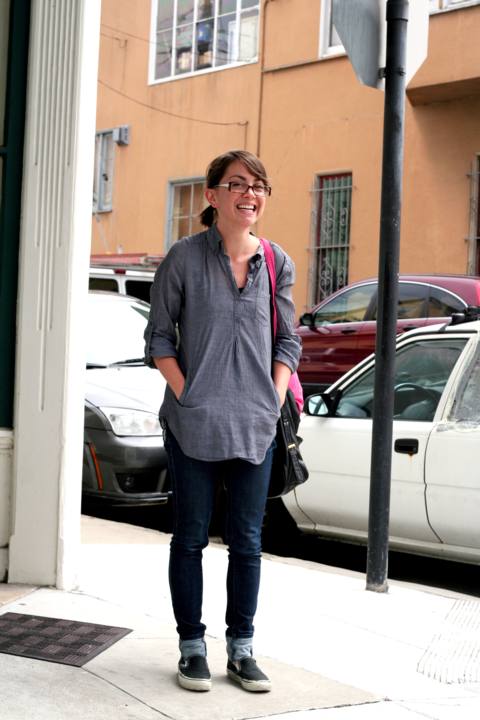
Today’s Look: Leanna, Cortland and Bonview
Tell us about your look: “I got this shirt somewhere on Valencia.”
Members of the Board of Supervisors, their legislative aides, and other City Hall regulars were all looking a bit sleep-deprived as they darted from office to office at City Hall July 1 after ongoing budget negotiations kept everyone up late the night before. Just as an agreement on the city budget seemed within reach on June 30, Mayor Gavin Newsom and his chief of staff, Steve Kawa, had expressed strong opposition to several initiatives that progressive members of the Board of Supervisors sought to place on the November ballot.
The mayor’s last-minute move was described by some as a quid pro quo that withheld support for an amended budget — which included about $40 million in restorations to community programs that are high priorities for members of the board — unless four different proposals were struck from the ballot. Three were proposed charter amendments dealing with commission appointments that would distribute power more evenly between the board and the mayor, and the fourth was a proposal put forth by Sup. Ross Mirkarimi that would have required the San Francisco Police Department to adopt a community-policing model and engage in neighborhood foot patrols, initially cast as an enlightened alternative to Newsom’s proposed law banning sitting or lying down on the sidewalk.
“In so many words, he had expressed clear dissent, and that was made relative to our budget proceedings,” Mirkarimi said, noting that the mayor didn’t phrase it in a way that would have run afoul of a law prohibiting that kind of bargaining over legislation. Newsom Press Secretary Tony Winnicker dodged repeated Guardian questions about whether Newsom was demanding conditions unrelated to the budget, coming closest to a direct answer when he said, “Before discussions of vetoing would even come up there would have to be something at the full Board to consider or veto, and there’s not, so NO.”
Technically legal or not, Newsom’s move was enough to prompt members of the Coalition on Homelessness, an advocacy group, to decry it as “a hostage situation.” As if negotiators ping-ponging back and forth across City Hall weren’t jarred enough already, the Coalition on Homelessness and Budget Justice Coalition members opted to underscore their point by blasting heavy metal music outside the mayor’s office windows in order to “push the standoff to a close, and release the needed funds to safety.”
“The package of add-backs and cuts would have preserved the essential services San Francisco families rely on to survive the recession,” the Coalition wrote in a press statement that was released as budget negotiations wore on. “In order to leverage political gain on unrelated issues, the Mayor chose to hold hostage the package of restorations to vital senior health services, youth violence prevention programs, mental health treatment and cuts to waste.”
The heavy metal stunt only lasted about two minutes before deputy sherriffs put the kibosh on it, but “hostage negotiators” Patrick Flanagan (shown in the video wearing sunglasses), James Chionsini, Que Newbill, Lorraine Deguzman, Bob Offer-Westort, and Jennifer Friedenbach managed to make their way into the reception area of the mayor’s office. Mike Farrah, director of the Mayor’s Office of Neighborhood Services, was sent out for a bargaining session with the pizza-bearing crew. We caught the whole tense situation on film, and here’s how it went:
The “hostage negotiations” session took place around 4 p.m. Around the same time, various members of the board were going in to meet with the mayor on what several described as “parallel conversations” regarding the charter amendments, and the roster of programs that supervisors wanted to see restored after Newsom proposed slashing them in his June 1 budget proposal.
As the Budget & Finance Committee prepared to meet around 6:30 p.m., the worst fears of the Budget Justice Coalition did not seem to be realized. City Controller Ben Rosenfield arrived to the board chambers with freshly printed copies of an add-back list that included most of the programs that were high priorities for progressive supervisors and community advocates. However, Newsom had not given that list his stamp of approval, so a final budget agreement between both parties remained elusive. Winnicker cast those add-backs as contrary to Newsom’s wishes: “Don’t for a second even try to suggest that it’s improper to raise concerns about the fiscal impact of a new $40 million setaside in the context of a discussion of the budget.”
As for the discussion about the charter amenments, Mirkarimi characterized it as “ongoing.” Avalos called the preliminary amended budget “a work in progress,” but members of the Budget & Finance Committee still voiced a round of thank-yous to one another and all of the community groups who were there to assist with the process.
The Budget & Finance Committee forwarded the budget, including the restoration package, to the full board. Using a variety of sources, supervisors were able to restore $32,941,541 in funding for programs ranging from homeless services, to mental health care programs, to programs that aid and assist impoverished single-room-occupancy hotel residents, and others. An additional $7.4 million meant to cover a variety of youth and senior programs will depend on a supplemental appropriation that won the committee’s preliminary approval. Sup. Sean Elsbernd dissented on both counts, but still made a point of thanking the other committee members for their work.

Party prince Richie Panic likes to pile it on in a good way. Although he’s been a keen-eared staple of the SF scene for years, he really blew up with the Blow Up party, blasting the table-wrecking new-electro bangers and always eliciting a Panic-specific “oh sh*t!” from the crowd Now he helms two weekly clubs, Wanted (Mondays at Q Bar) and the Boner Party (Wednesdays at Beauty Bar), and his style has morphed a bit into slightly more nuanced territory. It’s still shiny-shiny, with plenty of gold-teeth bite, but now he’s a master craftsman, giving his mixes some thoughtful sheen and a clearer dancefloor narrative.
In this new Wanted Weekend Warrior Mixtape — not an actual mixtape but Richie should rap it’d be Brazilian melons — he rides a summer jam-wave, giving us a few clever twists. Listen, especially for the orgasmic drop at 19:22 as the Burns remix of Heavy Cross by the Gossip starts to sag a bit … then bam! Richie splices in part of the Tim Green 2010 remix of 1999 Cassius classic “99,” which glides from a loopy overload into bonafide floor-thump funk. Wooden claves alert! And then straight into the post-disco glory of Alex Metric’s “Stylo” total rework, what? Afterwards, Bjork gets nu-cumbia’d. It all winds up with homeboy Topher, a.k.a. Gold Chains, the creator of one of my favorite pre-mixtape tracks of all time, teaming up with the delish Tiny Bones for a “Heat” sendoff – into the hot summer nights ahead.
A WANTED WEEKEND WARRIOR MIXTAPE BY RICHIE PANIC by richiepanic

Today, Johnny and Tim talk about why private power companies don’t want to see more solar and wind generation, and why San Francisco’s public-school admission lottery isn’t really as bad as its critics say.
sfbgradio7/2/2010 by jangel(Note: In July of 1972, when the Guardian was short a Fourth of July story, I sat down and cranked out this one for the front page on my trusty Royal Typewriter. I now reprint it each year on the Bruce blog, with some San Francisco updates and postscripts.)
Back where I come from, a small town beneath a tall standpipe in northwestern Iowa, the Fourth of July was the best day of a long, hot summer.
The Fourth came after YMCA camp and Scout camp and church camp, but before the older boys had to worry about getting into shape for football. It was welcome relief from the scalding, 100-degree heat in a town without a swimming pool and whose swimming holes at Scout Island were usually dried up by early July. But best of all, it had the kind of excitement that began building weeks in advance.
The calm of the summer dawn and the cooing of the mourning doves on the telephone wires would be broken early on July Fourth: The Creglow boys would be up by 7 a.m. and out on the lawn shooting off their arsenal of firecrackers. They were older and had somehow sent their agents by car across the state line and into South Dakota where, not far above the highway curves of Larchwood, you could legally buy fireworks at roadside stands.
Ted Fisch, Jim Ramsey, Wiener Winters, the Cook boys, Hermie Casjens, Jerry Prahl, and the rest of the neighborhood would race out of their houses to catch the action. Some had cajoled firecrackers from their parents or bartered from the older boys in the neighborhood: some torpedoes (the kind you smashed against the sidewalk); lots of 2 and 3-inchers, occasionally the granddaddy of them all, the cherry bomb (the really explosive firecracker, stubby, cherry red, with a wick sticking up menacingly from its middle; the kind of firecracker you’d gladly trade away your best set of Submariner comics for).
Ah, the cherry bomb. It was a microcosm of excitement and mischief and good fun. Bob Creglow, the most resourceful of the Creglow boys, would take a cherry bomb, set it beneath a tin can on a porch, light the fuse, then head for the lilac bushes behind the barn.
“The trick,” he would say, imparting wisdom of the highest order, “is to place the can on a wood porch with a wood roof. Then it will hit the top of the porch, bang, then the bottom of the porch, bang. That’s how you get the biggest clatter.”
So I trudged off to the Linkenheil house, the nearest front porch suitable for cherry bombing, to try my hand at small-town demolition. Bang went the firecracker. Bang went the can on the roof. Bang went the can on the floor. Bang went the screen door as Karl Linkenheil roared out in a sweat, and I lit out for the lilacs behind the barn with my dog, Oscar.
It was glorious stuff – not to be outdone for years, I found out later, until the Halloween eve in high school when Dave Dietz, Ted Fisch, Ken Roach, Bob Babl, and rest of the Hermie Casjens gang and I made the big time and twice pushed a boxcar loaded with lumber across Main Street and blocked it for hours. But that’s another story in my Halloween blog of last year.
Shooting off fireworks was, of course, illegal in Rock Rapids, but Chief of Police Del Woodburn and later Elmer “Shinny” Sheneberger used to lay low on the Fourth. I don’t recall ever seeing them about in our neighborhood and I don’t think they ever arrested anybody, although each year the Rock Rapids Reporter would carry vague warnings about everybody cooperating to have “a safe and sane Fourth of July.”
Perhaps it was just too dangerous for them to start making firecracker arrests on the Fourth – on the same principle, I guess, that it was dangerous to do too much about the swashbuckling on Halloween or start running down dogs without leashes (Mayor Earl Fisher used to run on the platform that, as long as he was in office, no dog in town would have to be leashed. The neighborhood consensus was that Fisher’s dog, a big, boisterous boxer, was one of the few that ought to be leashed).
We handled the cherry bombs and other fireworks in our possession with extreme care and cultivation; I can’t remember a single mishap. Yet, even then, the handwriting was on the wall. There was talk of cutting off the fireworks supply in South Dakota because it was dangerous for young boys. Pretty soon, they did cut off the cherry bomb traffic and about all that was left, when I came back from college and the Roger boys had replaced the Creglow boys next door, was little stuff appropriately called ladyfingers.
Fireworks are dangerous, our parents would say, and each year they would dust off the old chestnut about the drugstore in Spencer that had a big stock of fireworks and they caught fire one night and much of the downtown went up in a spectacular shower of roman candles and sparkling fountains.
The story was hard to pin down, and seemed to get more gruesome every year – but, we were told, this was why Iowa banned fireworks years before, why they were so dangerous and why little boys shouldn’t be setting them off. The story, of course, never made quite the intended impression; we just wished we’d been on the scene My grandfather was the town druggist (Brugmann’s Drugstore, “where drugs and gold are fairly sold, since 1902″) and he said he knew the Spencer druggist personally. Fireworks put him out of business and into the poorhouse, he’d say, and walk away shaking his head.
In any event, firecrackers weren’t much of an issue past noon – the Fourth celebration at the fairgrounds was getting underway and there was too much else to do. Appropriately, the celebration was sponsored by the Rex Strait post of the American Legion (Strait, so the story went, was the first boy from Rock Rapids to die on foreign soil during World War I); the legionnaires were a bunch of good guys from the cleaners and the feed store and the bank who sponsored the American Legion baseball team each summer.
There was always a big carnival, with a ferris wheel somewhere in the center for the kids, a bingo stand for the elders, a booth where the ladies from the Methodist Church sold homemade baked goods, sometimes a hootchy dancer or two, and a couple of dank watering holes beneath the grandstand where the VFW and the Legion sold Grainbelt and Hamms at 30¢ a bottle to anybody who looked of age.
Later on, when the farmboys came in from George and Alvord, there was lots of pushing and shoving, and a fist fight or two.
In front of the grandstand, out in the dust and the sun, would come a succession of shows that made the summer rounds of the little towns. One year it would be Joey Chitwood and his daredevil drivers. (The announcer always fascinated me: “Here he comes, folks, rounding the far turn…he is doing a great job out there tonight…let’s give him a big, big hand as he pulls up in front on the grandstand…”)
Another year it would be harness racing and Mr. Hardy, our local trainer from Doon, would be in his moment of glory. Another year it was tag team wrestling and a couple of barrel-chested goons from Omaha, playing the mean heavies and rabbit-punching their opponents from the back, would provoke roars of disgust from the grandstand. ( The biggest barrel-chest would lean back on the ropes, looking menacingly at the crowd and yell, “ Aw, you dumb farmers. What the hell do you know anyway?” And the grandstand would roar back in glee.)
One year, Cedric Adams, the Herb Caen of Minneapolis and the Star-Tribune, would tour the provinces as the emcee of a variety show. “It’s great to be in Rock Rapids,” he would say expansively, “because it’s always been known as the ‘Gateway to Magnolia.” (Magnolia, he didn’t need to say, was a little town just over the state line in Minnesota which was known throughout the territory for its liquor-by-the-drink roadhouses. It was also Cedric Adams’ hometown: his “Sackamenna.”) Adams kissed each girl (soundly) who came on the platform to perform and, at the end, hushed the crowd for his radio broadcast to the big city “direct from the stage of the Lyon County Fairgrounds in Rock Rapids, Iowa.”
For a couple of years, when Rock Rapids had a “town team,” and a couple of imported left-handed pitchers named Peewee Wenger and Karl Kletschke, we would have some rousing baseball games with the best semi-pro team around, Larchwood and its gang of Snyder brothers: Barney the eldest at shortstop, Jimmy the youngest at third base, John in center field, Paul in left field, another Snyder behind the plate and a couple on the bench. They were as tough as they came in Iowa baseball.
I can remember it as if it were yesterday at Candlestick, the 1948 game with the Snyders of Larchwood. Peewee Wenger, a gawky, 17-year-old kid right off a high school team, was pitching for Rock Rapids and holding down the Snyder artillery in splendid fashion. Inning after inning he went on, nursing a small lead, mastering one tough Larchwood batter after another, with a blistering fastball and a curve that sliced wickedly into the bat handles of the right-handed Larchwood line-up.
Then the cagey Barney Snyder laid a slow bunt down the third base line. Wenger stumbled, lurched, almost fell getting to the ball, then toppled off balance again, stood helplessly holding the ball. He couldn’t make the throw to first. Barney was safe, cocky and firing insults like machine gun bullets at Peewee from first base.
Peewee, visibly shaken, went back to the mound. He pitched, the next Larchwood batter bunted, this time down the first base line. Peewee lurched for the ball, but couldn’t come up with it. A couple more bunts, a shot through the pitcher’s mound, more bunts and Peewee was out. He could pitch, but, alas, he was too clumsy to field. In came Bill Jammer, now in his late 30’s, but in his day the man who beat the University of Iowa while pitching at a small college called Simpson.
Now he was pitching on guts and beer, a combination good enough for many teams and on good days even to take on the Snyders. Jammer did well for a couple of innings, then he let two men on base, then came a close call at the plate. Jammer got mad. Both teams were off the bench and onto the field and, as Fred Roach wrote in the Rock Rapids Reporter, “fisticuffs erupted at home plate.” When the dust cleared, Jammer has a broken jaw, and for the next two weeks had to drink his soup through a straw at the Joy Lunch. John Snyder, it was said later, came all the way in from center field to throw the punch, but nobody knew for sure and he stayed in the game. I can’t remember the score or who won the game, but I remember it as the best Fourth ever.
At dusk, the people moved out on their porches or put up folding chairs on the lawn. Those who didn’t have a good view drove out to the New Addition or parked out near Mark Curtis’ place or along the river roads that snaked out to the five-mile bridge and Virgil Hasche’s place.
A hush came over the town. Fireflies started flickering in the river bottom and, along about 8:30, the first puff of smoke rose above the fairgrounds and an aerial bomb whistled into the heavens. BOOM! And the town shook as if hit by a clap of thunder.
Then the three-tiered sky bombs – pink, yellow, white, puff, puff, puff. The Niagara Falls and a gush of white sparks.
Then, in sudden fury, a dazzling display of sizzling comets and aerial bombs and star clusters that arched high, hung for a full breath and descended in a cascade of sparks that floated harmlessly over the meadows and cornfields. At the end, the flag – red, white and blue – would burst forth on the ground as the All-American finale in the darkest of the dark summer nights. On cue, the cheers rolled out from the grandstand and the cars honked from the high ground and the people trundled up their lawn chairs and everybody headed for home.
Well, I live in San Francisco now, and I drive to Daly City with my son, Danny, to buy some anemic stuff in gaudy yellow and blue wrapping and I try unsuccessfully each year to get through the fog or the traffic to see the fireworks at Candlestick. But I feel better knowing that, back where I come from, everybody in town will be on their porches and on the backroads on the evening of the Fourth to watch the fireworks and that, somewhere in town, a little boy will put a big firecracker under a tin can on a wood porch, then light out for the lilacs behind the barn.
P.S. Our family moved in l965 from Daly City to a house in the West Portal area of San Francisco. There are, I assure you, few visible fireworks in that neighborhood. However, down where we work at the Guardian building at the bottom of Potrero Hill, the professional and amateur action is spectacular.
From the roof of the Guardian building at 135 Mississippi, and from any Potrero Hill height, you can see the fireworks in several directions: the waterfront fireworks in the city, fireworks on the Marin side of the Golden Gate bridge, fireworks at several points in the East Bay, fireworks along the Peninsula coast line.
And for the amateur action, parents with kids, kids of all ages, spectators in cars and on foot, congregate after dusk along Terry Francois Boulevard in San Francisco along the shoreline between the Giants ballpark and Kellys Mission Rock restaurant.
The action is informal but fiery and furious: cherry bombs, clusters, spinning wheels, high flying arcs, whizzers of all shapes and sizes. The cops are quite civilized and patrol the perimeter but don’t bother anybody. I go every year. I think it’s the best show in town. B3.

Today’s Look: Guillean, Mission and Cortland
Tell us about your look: “I got this dress at Forever 21.”
The message came into City Editor Steve Jones’ voicemail box, but we all figured I should probably follow up on it. Sex conference! Well, kind of. We’re looking for webmasters for sex sites! said the excited publicist on the phone. I thought you might be interested in this exciting event! he said (please note; no quote marks. I do not take good notes on publicists’ voicemails). Well hell yes publicist, I said. Get it girl. I trusted in this so-called Cybernet Expo – which, incidentally, starts Thurs/8 – to yield visions of nerds chasing tail, gettin’ cray-zay, gettin’ jobs. You know, happy, hearty pastimes.
Tell me, oh iconoclastic publicist (tech convention publicists rarely contact us for help for promotion, go fig), who can best illustrate this fabulous phenomenon of randy code writers? Well Caitlin, he says, he says to me, let me track you down someone! A colorful interview, publicist friend of mine? Clearly, he says to me. Have you heard, Caitlin, about Saturday night’s convention-capping Armory party? My god, I had not! Well there’s that, says he the publicist. And you are invited. Well let’s get crazy! I thought contentedly, to myself.
Which is how we come to the part where I made the telephonic acquaintance of a one Terry Mundell, business development manager. Of Kink.com! Gotta be an oversexed, whip-cracking dervish of a man, right? How do you usually find webmasters, Mundell – set up a laptop in the dungeon, see who bites?
“We use Craig’s List, newspaper listings, referrals, conferences,” sayeth the man, who may or may not have been wondering about why he was talking to me about this. Are your techies… sexy techies? Sorry, sorry — sex positive techies? “Typically yes. For the people in production,” Bundell allows me. Well yeah, I’d guess that, because porn directors and cameramen tend to like watching sex. But “for web people, we do stuff in Java. We’ve always just been a dot com, because we’re a technology company,” Bundell sums up.

Not sure how to caption this one from Cybernet Expo 2009 — hey look like they’re having a successful networking event? Fill in blank, shanks. Photo by J.Kedvessy
Wait, so – but things get wacky at Cybernet Expo, riiight? “There may be some models around, but I don’t think it will be a sexual atmosphere.” K. But the Armory party! You’re having a party at the Armory for the convention! Don’t tell me – “I’m organizing the party. Oh yeah, its going to be a fun. Drinks, appetizers, DJs, local area webmasters will be there, representatives from Hustler and Playboy.”
So here’s the thing. Well, two things. First, I am an ignorant sensationalist. Second, Cybernet Expo is a job fair more or less like any other. There will be speed networking events, many seminars for learnin’ stuff entitled with things like “Wordpress: Not Just for Blogs” and the (probably?) deceptively titled “Adult Traffic: Where to Get It.”
No, no wait! “Representatives from Hustler and Playboy,” he said; what the hell is that? Money’s on a bunch of naked chicks who will do naughty things if you can code the html on their Myspace pages. Oh, and their keynote speaker is the semi-sleazy – I mean facilitator of the sex positivity of 18-year old women — Steve Lightspeed. Party on, computer guys and gals!
Cybernet Expo
Thurs/8-Sat/10, $149-$199
Golden Gateway Hotel
1500 Van Ness, SF
Recently, I spent some time talking with D. 10 candidates DeWitt Lacy and Tony Kelly about Lennar’s redevelopment plan for the shipyard and Candlestick Point. I also attended a Progressive Planners forum that addressed the massive development proposal. Those conversations and the issues they raised seem timely in light of the city’s crazily tight schedule for trying to ram final approvals for the project past government agencies this summer. And in light of three appeals that have been filed against the city’s recently certified final environmental impact report for the plan, raising concerns that the city will get bogged down in expensive and time-consuming litigation if it doesn’t get the plan right, while it still can.
(Lest other D. 10 candidates complain that they weren’t interviewed, too, I’d like to clarify that I’ll be covering the race between now and November, and I look forward to hearing what they all think at the Board’s July 13 meeting to hear appeals of the city’s final environmental impact report (FEIR) for the project. )
Both Lacy and Kelly are critics of Lennar’s plan, but not in a knee-jerk obstructionist way. Instead, they bring considered and informed critiques to the table at a time when the community desperately needs good advice and a workable strategy, if residents are to get needed amendments and concessions, before the developer get the green light, or before the Board puts a moratorium on the project until the city’s FEIR flaws are ironed out.
Lacy is a bright and earnest candidate who learned lessons from the school of life, while growing up in San Jose in a working class family. Lacy says his father worked in an Adidas warehouse until he was injured on the job, and his mother worked as a secretary in Atari’s corporate office, but was laid off after two years.
Lacy recalls how his parents opened their own janitorial business, in the hope of making a better life for their six children. He says that it was while cleaning homes alongside his mother, that he began to recognize the need for working class improvement and growth.
In 1995, Lacy moved to San Francisco, where he has worked in the District Attorney’s office and formed his own law practice—experience that could serve District 10 well, since it’s home to many working-class residents and will be ground zero in the battle for construction-related contracts and environmental and economic justice, if Lennar’s massive redevelopment plan goes ahead,
“I know how to craft legislation for social justice,” Lacy said.
Lacy observes how Michael Cohen, Gavin Newsom’s top economic advisor in the Mayor’s Office of Economic and Workforce Development, has repeatedly told folks that land transferred to Lennar will be subject to a “right of reverter.”
This means the Redevelopment Agency may re-take ownership of the land, if the developer fails to substantially complete the infrastructure in the time frame set forth in the city’s development and disposition agreement (the DDA)
But Lacy observes that this “nuclear option” isn’t likely to happen with so much riding on the Lennar deal, and he stresses that additional controls are needed, if the city is to ensure that the deal remains in the best interest of San Francisco, not just the developer.
Lacy’s probably right about that. (Remember how hard the community had to fight to just get an extra 15 days to read and comment on the project’s six volume draft EIR over the winter holidays?)
And how much political pressure was exerted to ram the city’s EIR for this project across the certification line on June 3, five days before Santa Clara voters decided to support a stadium for the 49ers near Great America.
“What’s needed is an impartial arbiter,” Lacy said. “The city needs regulatory controls and the capacity to fine Lennar if it breaks promises to build affordable housing, create jobs and hire locals. You’re not going to be able to hold their feet to the fire without that.”
“I’m not saying that we should be obstructionists, critics who are trying to prevent stuff for the sake of a political battle,” Lacy added. “But we need new blood. The benefit of my campaign is that I’m not downtown’s candidate. I’m a civil rights attorney, who can help the district by figuring out what battles we need to be fighting and which battles are winnable. And I want to make sure there are jobs and business opportunities for working-class folks in San Francisco. You shouldn’t have to be a doctor or lawyer to afford to live here.”
Lacy believes the Navy should remove the radiologically impacted landfill on the shipyard’s Parcel E2.
“That ground has to be taken out of there,” Lacy said. “I would hope the City Attorney’s Office would get involved and advocate for the people. But leadership is about taking a stance when no one else is.”
With the city suggesting that it can still win back the 49ers, Lacy said that he too, would love it if the 49ers decided to stay.
“But not at the cost of our health and safety,” Lacy said, referring to the city’s repeated claim that it needed to rush certification of the final EIR for Lennar’s project, if there was to be any hope of winning back the team.
“ I don’t think the solution is the rush,” Lacy said. “I say, let’s make sure we clean up the shipyard properly—and bring back the Warriors [a professional basketball team that relocated to San Francisco in 1962, until 1971, when it moved to Oakland].”
I also hung out with D. 10 candidate Tony Kelly, at an event that POWER hosted as part of a Progressive Planners Forum, the day after Lacy and I unsuccessfully tried to access the shipyard, and the same day that POWER was also blocked from the yard.
Kelly has been tracking issues in and around District 10 for years, and, much like Lacy, he’s not afraid to speak his mind on the issues.
For instance, Kelly is incensed by the city’s attempt to ram through approval of the final EIR for Lennar’s development, when the Navy has yet to complete an environmental impact statement related to its proposed clean up activities at the shipyard..
“Is the EIS ever a trailer to the EIR?” Kelly asked. “It’s like planning on Mars.”
Kelly has also expressed concern over the developer’s plan to build two peaker plants in the community.
And he is worried about the consequences of the city’s plan to turn the entire Bayview into a project survey area for Lennar’s Candlestick/Shipyard plan.
“How do you pay for any other improvements in the Bayview, when the shipyard redevelopment plan sucks all the air out of the room?” Kelly said
But Kelly’s biggest concern right now is that once Lennar gets its final approvals this summer, “the developer will never talk directly to the community again.”
At the Progressive Planners Forum that Kelly attended, speakers also voiced measured criticisms of Lennar’s plan.
“The plan has some important elements, especially in the job areas, but I think it adds up to gentrification, which is disruptive to the surrounding community, families and the last bastion of the black community in San Francisco,” said Chester Hartman, who has authored over 18 books on race and urban planning, including the acclaimed City For Sale: The Transformation of San Francisco.
“There is a need for a response in terms of an alternative approach,” Hartman advised.
“It doesn’t have to be a detailed, but it should include a basic philosophy and goals, and retain good parts of the original plan.”
Peter Marcuse, Professor of Urban Planning at Colombia University, said the situation at the shipyard reminded him of the ongoing oil disaster in the Gulf.
“Cap the land sounds like cap the spill,” Marcuse said, noting that in both cases the community is fighting to get folks who dumped toxins to clean them up.
Marcuse criticized the privatization of the planning process, as illustrated by the City’s claim that it has entered into a “public-private” partnership with Lennar, and the community’s experience that the city and the developer keep ignoring or dismissing the public’s feedback and opinions.
“There should have been a range of alternatives open for discussion,” Marcuse said. “Instead, there is a sense, of this mega project’s inevitability. And once the developer has title to the land, the city has to negotiate what should be a public matter.”
Marcuse critiqued the use of tax increment financing, which will use increased taxes on property throughout the Bayview to finance improvements in one relatively small area, the 770 acres of land that, as Marcuse put it, “got sold to Lennar for $1.”
“This is a form of government subsidy,” Marcuse warned.
“There have been some negotiations,” Marcuse continued. He pointed to the community-led Prop. F, which in the spring of 2008 sought to establish 50 percent affordable housing in the development. And the community benefits agreement (CBA) that the San Francisco Labor Council hammered out at in May 2008, in an attempt to nail down benefits for the community in exchange for the Council’s support for the Lennar-financed Prop. G in June 2008.
“But these negotiations with Lennar start on basis that Lennar’s interests have to be protected equally with those of the City and its residents,” Marcuse commented. “It ought to be a public responsibility to show the community what the alternates to Lennar’s vision are.”
Marcuse concluded by suggesting a moratorium on Lennar’s plan to allow for a community-based visioning process, in which residents could express their desire for housing, diversity, open space and protection against environmental hazards
‘The City should then come up with an alternative to Lennar’s plan—and listen to Lennar,” he said. “But this is a public responsibility, rather than a private negotiation with a corporation that has been a beneficiary of a huge subsidy and starts to make a huge profit, the minute its housing units begin to sell.”
Miriam Chion, who works for the Association of Bay Area Governments (ABAG), also expressed concerns with Lennar’s massive plan, which proposes to build thousands of mostly luxury condos at Candlestick Point, with a smaller number on the shipyard.
“We are in the 21st century, how can we continue to use same mechanisms of displacement?” Chion said. “And how can we do that to the African American community, which we have displaced over and over, and which has managed to build a community here, in spite of everything?”
According to Lennar’s plan, 68 percent of its proposed 10,000 units will be built at market rate. Of the remaining 32 percent of units, only 15 percent will be built at truly affordable rates, with an additional 15 percent geared towards the working middle-class income levels, such as those enjoyed by police, fire fighters, nurses and teachers.
But two Bayview residents who attended POWER’s progressive planners’ forum expressed frustration at what they perceived as outsiders trying to tell locals what’s best.
“If you haven’t lived here, you don’t know about the Bayview,” one resident said. “If they are going to do what they are going to do, they should do it all the way, and change things for the better. I’m tired of seeing kids under 12, playing outside at 11 p.m. So, if you are not from here, you can’t come on my ground and pass judgment. If you’d been and lived here, I don’t think you’d see this negatively.”
“$700 million has been spent on cleaning up shipyard, and producing highly technical reports on it,” another local resident said. “Highly intellectual discussions are not helping, we need some action today.”
“No one here is against development,” countered long-term Bayview resident Espanola Jackson, while a Bayview resident named Nyese resurrected longstanding concerns that the developer fatally broke community trust when it failed to control asbestos dust at the site, when it began grading the shipyard’s Parcel A .
“Four years ago, I found out that they were sending home workers at the shipyard, without informing the surrounding community,” Nyese recalled. “My son was having excessive nosebleeds, so it was phenomenally insulting that they didn’t not notify us.”
“Lennar is just a name, a conglomeration of shareholders,” Nyese further noted. “We need development. But we don’t need it on chemically toxic land.”
These competing concerns indicate that all the candidates in the D. 10 race are going to have to be asking critical questions as they track the progress of Lennar, the city and the Navy’s plans this summer. Failure to do so will cost them credibility within the community—and possibly the supervisor’s race this fall, though downtown money will pour in to support whichever candidate is deemed most likely to rubberstamp present and future development and contracting plans. Stay tuned. It’s going to be a (politically) hot July.
Even though the U.S. Navy abandoned the Hunters Point Shipyard in 1974, the military has continued to control access to the shipyard that helped launch the A-Bomb. That’s because the Navy still owns most parcels of land on the shipyard and remains on the hook for cleaning up pollutants on these sites, including a radiologically impacted dump on Parcel E2, which has been deemed to be the dirtiest land on the site.
Currently, the Navy is proposing to cap, not excavate this landfill, despite repeated requests from the local community, and a citywide vote in support of Proposition P in 2000, which urged the Navy to clean up the land to the best extent possible, which would mean excavating the Parcel E2 landfill and replacing it with clean uncontaminated soil. And oddly, the City appears to want government agencies and officials to sign off on its final EIR for Lennar’s massive 770-acre redevelopment plan for the shipyard and Candlestick Point, even though the Navy has not yet completed an environmental impact statement (EIS) related to its proposed shipyard cleanup activities.
Currently, the Navy controls access to the facility beyond a couple of trailers that the city’s Redevelopment Agency has set up just within the yard’s main gate. And to gain access to the shipyard these days, you need to call or visit Redevelopment’s trailer and get a pass. Or, alternatively, if you know any of the artists who continue to rent studios at shipyard, you can call them to try and get the city to give you a pass.
Underlying these limits to accessing the shipyard are some legitimate safety concerns related to equipment and excavations on what is now an active clean up and construction site, along with fears that untoward characters could break into the abandoned buildings or bother the artists who still have studios in operation at the shipyard. But has an additional political litmus test been put in place when it comes to critics of Lennar’s redevelopment plan, who want to access to the yard? If so, does it mirror the tap dancing that the local community has had to undergo to get its voices heard as Lennar pushes to get final approval for its shipyard/ Candlestick Point redevelopment plan.
Those questions resurfaced last week when a private security guard manning the shipyard’s front gate denied access to D. 10 supervisor candidate DeWitt Lacy, who had dropped by hoping to take this reporter around the yard as part of an ongoing conversation about Parcel E2, which Lacy believes needs to be excavated completely, and how best to hold the Navy accountable for cleaning up a mess it created decades ago. The security guard told Lacy that folks who want to visit must get a pass at the Redevelopment Agency trailer.
At the Redevelopment trailer, Micah Fobbs, administrative assistant for W.B. Kennedy and Associates, which has a contract with Redevelopment’s Citizen’s Advisory Committee. told Lacy that without a preauthorized pass, he couldn’t let us onto the site. Fobbs added that he would be happy to take us on a tour himself, but he could not leave the trailer unmanned, since he was the only staff member there at the time. Fair enough. Though the rebuff gave us the feel that the City doesn’t want pesky investigative reporters that have been critical of the development running around the site. “And if they found out I was a civil rights attorney, they probably wouldn’t want me out here, either,” Lacy joked.
But the next day, I encountered what sounded like overt hostility to other critics of Lennar’s plan, when I tried to ride along on what had been billed as a “Toxic Tour of the Navy Shipyard” by POWER (People Organizing to Win Employment Rights). POWER had advertised its tour in an email which said it would involve 23 expert urban planners, who happened to be in the Bay Area for a Progressive Planning Forum. The tour was billed as happening on the morning of June 17, before an afternoon discussion at POWER’s Third Street office in the Bayview, which was to focus “on alternative approaches to the city’s current plan for development at the Shipyard/ Candlestick Point.”
Caught in traffic, I didn’t arrive at the Boys and Girls Club on Kiska Road in Bayview Hunters Point in time to join POWER’s kick-off get together. So, I headed direct to the shipyard, a move that meant I arrived alone and ahead of the school bus that POWER had rented for the occasion. At the gate, I was told by the security guard that I couldn’t get in, that another guard lost his job for letting unauthorized individuals onto the site, that POWER didn’t have a pass and that they’d been warned to watch for POWER “because they want to stop the development.”
“If you are not authorized with badges, you are not let through,” the guard said, giving me the telephone number of the Hunters Point Duty police officer, who in turn said I needed to call the San Francisco Redevelopment Agency, which in turn told me to call the folks at the Redevelopment Agency’s shipyard trailer. And so I called Fobbs again, who confirmed that the Navy still controls all the property, except Parcel A which has already been conveyed to the City which in turn has granted developer Lennar the right to develop thousands of condos on that particular parcel.
“As far as viewing the rest of the property, you have to put in a request, and no photography or videography is allowed,” Fobbs said. This stated ban on photography came as a surprise, given recent photos of the shipyard that ran in a New York Times article about Lennar and the city’s vision for the 770-acre property.
And the sudden difficulties in gaining media access seemed odd, given that Lennar’s PR firm, Sitrick and Company, offered to take the media on a tour on the morning of June 3—the day the Redevelopment and Planning Commissions subsequently approved the final EIR for Lennar’s plan to redevelop the rest of the shipyard, plus Candlestick Point, a FEIR that has now been appealed to the Board, on the grounds that it was rushed for political reasons, leading to fatal flaws in the final document.
“Well, if folks come here through Redevelopment or the Mayor’s Office, then they have been able to take photographs,” Fobbs said. “But we have had people trying to climb fences and get through doors of some of the buildings.” (Fobbs last comment was a reference to a recent climbing of the fence that the Nation of Islam’s Leon Muhammad engaged in, in an effort to determine if air quality monitoring devices near the Nation’s school and Oakdale public housing site were operating. (After Muhammad scaled the fence and reported that he’d found an empty bin where monitoring equipment was supposed to be, a kafuffle ensued, with the US EPA saying Muhammad was looking in the wrong place for the monitors which, it claimed, were in operation.)
Ultimately, Fobbs told me to call Redevelopment’s Audrey Kay if I wanted a tour, and several shipyard artists told me they would be happy to arrange a day pass so I can visit their studios and hear concerns that they will be required to move from a couple of shipyard buildings before replacement studios have been completed–an arrangement that would amount to a breach of promise that Lennar and the city previously made to the shipyard artists.
Shortly after I was turned away for a second time, POWER’s bus arrived at the gate, only to be blocked–a denial of access that meant 23 progressive planners were forced to view the shipyard from various remote viewing spots atop the hills that surround the site.
Together these episodes left me wondering what kind of political litmus test could end up being enforced at the site, if Lennar’s mega project gets the green light this summer, and what will happen if the Board decides to kick the plan back to the drawing board until the Navy completes a environmental impact statement and all of the community’s ongoing environmental and economic justice concerns are addressed.
So stay tuned, and don’t forget to mark July 13 on your calendar when the full Board of Supervisors is tentatively to hear appeals of the project’s final EIR, which the Planning and Redevelopment Commissions rubberstamped June 3. And, as always, it will be revealing to see which candidates in the hotly contested race for D. 10 supervisor, show up and speak truth to power.
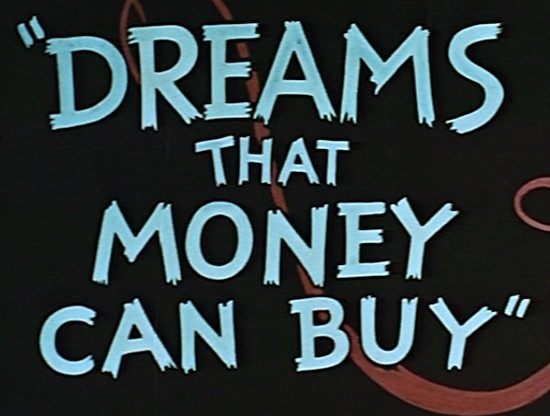
This week SFMOMA inaugurates a film series called “A Portrait of the Artist, or Fisher-Inspired Films” with Dreams That Money Can Buy (1946), a surrealist collaboration directed by Hans Richter and featuring contributions by Max Ernst, Man Ray, and others. The series is constructed around the collection of Doris and Donald Fisher, featuring cinematic work by artists including Andy Warhol and Agnes Martin.
Here’s an excerpt from the Alexander Calder portion of Dreams That Money Can Buy:
http://www.youtube.com/watch?v=CdjbJsWNEdA
Next week, Chelsea Girls (1965):
http://www.youtube.com/watch?v=KvOnRdMi4OM
A PORTRAIT OF THE ARTIST, OR FISHER-INSPIRED FILMS
Through August 26
Dreams That Money Can Buy: Thurs/1, 7 p.m., free-$5
SFMOMA
151 Third St, SF
(415) 357-4000
www.sfmoma.org
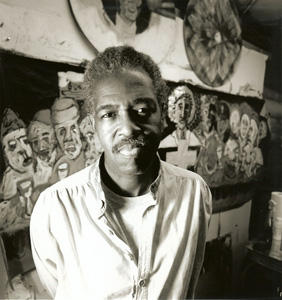
Since recording debut album Monster Movie with seminal Krautrock band Can back in 1969, vocalist and visual artist Malcolm Mooney has mostly made his home in the States. More recently, he has recorded with San Francisco-based band Tenth Planet, with whom he takes the stage Thurs/1 at Bottom of the Hill.
Mooney is up there in years (though the Internet fails to provide me with his actual age), and in some ways a relic of a very odd moment in musical history — the birth of Can — but his broad artistic pursuits suggest he’ll have something new and different to offer.
http://www.youtube.com/watch?v=hWl7qSXEuV4
http://www.youtube.com/watch?v=8BP-RU2Ckuk
MALCOLM MOONEY AND TENTH PLANET
With Stephen Kent, Extra!
9 p.m., $10
Bottom of the Hill
1233 17th St, SF
(415) 621-4455
www.bottomofthehill.com
During the District 6 supervisorial candidate debate that San Francisco Young Democrats held last week, a two-question exchange between two of the leading candidates – progressive Debra Walker and downtown-backed Theresa Sparks – offered a revealing look at their starkly different worldviews and priorities, which is more important in this race than people’s machine politics conspiracy theories.
During the second portion of the event, candidates were allowed to ask a question of another candidate, and Walker and Sparks focused on one another with pointed questions (this occurred at around the 30-minute mark, although the video doesn’t seem to allow users to forward to that point, forcing you to endure the often insipid commentary).
Walker went first, asking Sparks why, during her more than four-year tenure on the Police Commission – a body in charge of disciplining police officers accused of serious misconduct after citizen complaints are investigated and found valid by the Office of Citizen Complaints, with each case assigned to a particular commissioner – Sparks didn’t hold any hearings or act to punish any officers.
Sparks said the accusation wasn’t true, and that she did hold one hearing during that time, and then said that the Police Commission is prohibited by the city charter from intervening in the internal workings of the Police Department, implying that the body isn’t actually in charge of disciplining officers. Walker said Sparks was wrong and tried to ask a follow-up question and was cut off by moderator Melissa Griffin.
So this week, I called both candidates to try to get to the bottom of the dispute. “She indicated it’s not the commission’s job to focus on these things, and that’s absolutely not the case,” Walker said. “She was incorrect saying it wasn’t the job of commissioners to do this.”
And when I talked to Sparks, she didn’t dispute that fact, but conveyed how complicated the process was when officers are accused of serious misconduct (minor misconduct just goes to the chief), with lawyers seeking stipulated settlements and whatnot, and repeatedly emphasizing “it’s a bad system.” One reason it’s so bad is her own lack of qualifications: “You can’t have people like me, whose only legal background is watching Law and Order, trying to handle these cases.”
Sparks was appointed by Mayor Gavin Newsom, who is backing her supervisorial bid, which is also expected to have strong support from the San Francisco Police Officers Association. She wouldn’t say how many cases she was assigned during her tenure, but OCC records show more than 300 cases assigned to the commission during her tenure and the long backlog left in her wake has been the subject of criticism by everyone from Police Chief George Gascon to new Police Commission Jim Hammer.
Rather than supporting this civilian oversight of problem officers, Sparks wants to turn those duties over to Gascon’s office, telling us, “We need to give this chief more authority to fire officers rather than going through this ridiculous process.”
At the debate, after seeming stung by a question she jokingly called a “softball,” Sparks fired back by asking Walker whether she supported the proposed tax measures now being considered by the Board of Supervisors to help close the city’s large budget deficit, framing the question by saying they would hurt small business.
Walker answered by voicing her support for small business, but noting how essential city services such as public health programs were being deeply cut and that the city needed new revenue to deal with its structural budget deficit, although she said that she had yet to decide which of the tax measures she supported considering none have been approved for the ballot yet.
This week, Moody’s Investor Services lowered the citys’ credit rating precisely because Newsom’s budgets have not addressed that structural budget deficit, and even the Controller’s Office has ordered more than a $100 million placed on reserve because of doubts about the mayor’s revenue assumptions.
So for Sparks to characterize the need for new revenue as an unfair attack on small business indicates a short-sighted, right-wing approach to municipal finances, an approach Walker rejects, telling us, “I think we need to be responsible and do the right thing in dealing with the city’s needs…It’s going to cost us and the people who come after us more and more because of these cuts.”
When I spoke with Sparks, noting the Moody’s report, she seemed to back away from how she was trying the characterize the revenue measures at the debate. “I do think the city needs new revenue, but I don’t think that taxing small business is the way to go,” she said, referring to a proposal by Sup. David Chiu to tax commercial rents, which would be paid by the landlords.
So I asked Sparks whether she supported any of the proposals or if she was advocating any other revenues measures, and she said, “Quite honestly, I need to think about that because I do think we need more revenue.”
Which is pretty much the same answer Walker gave in a far more honest and direct way in that debate, without trying to pander to the fears of small businesspeople. The bottom line is that the downtown corporations who are backing Sparks have done nothing to help the city during this prolonged recession, while demanding even greater police responses to deal with poor people sitting on sidewalks and other perceived problems, and that hypocrisy should be front and center in this election.

I’m not surprised that there’s an initiative in circulation that would set this as city policy:
The proximity of a student’s home to the assigned school should be the highest priority in San Francisco Unified School District’s student assignment system.
Liza: is there nothing she can’t do? The ever-amazing Rich at FourFour watched all two hours of Liza Minelli’s Home Shopping Network extravaganza. And of course he made a highlight reel. Give that man a Z!

The high-water mark in the unsuccessful 2008 campaign to pass Proposition H, the Clean Energy Act – a partial public power measure that Pacific Gas & Electric buried with a deceptive, $10 million propaganda blitz – was arguably when the hit band Cake played a benefit concert for the measure at The Independent.
Tonight (July 1), the ever eco-conscious Cake returns to that venue with a similar mission, this time dubbed Climatepalooza 2010, with the goal of building a solar roof at the Telegraph Hill Community Center, honoring a request by Telegraph Hill political powerhouse and San Francisco Democratic Party chair Aaron Peskin and Prop. H campaign manager Julian Davis, who has a personal relationship with some band members.
“Climatepalooza 2010 promises to be a wonderful event. It give folks a chance to hear some great music and do the right thing for the environment, and it also supports Tel-Hi, a vitally important neighborhood institution,” Peskin said in a statement released by the nonprofit group One Atmosphere, which has also been involved in organizing the event.
That group, which has worked Al Gore, Nancy Pelosi, and other party bigwigs also got a quote from Mayor Gavin Newsom (who opposed Prop. H): “It’s great to see San Francisco putting together events like Climatepalooza. It combines the best of San Francisco – caring for your neighbors, doing something positive for the environment, and having a great time. Everyone needs to help in the fight against global warming. This is a terrific way for people to get involved.”
Apparently Cake and the power of the sun can create unlikely bedfellows.
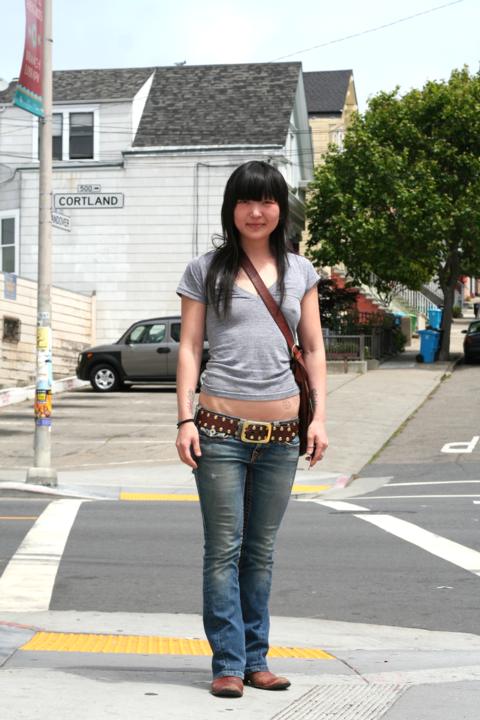
Today’s Look: Sayaka, Cortland and Andover
Tell us about your look: “I work with metal, so I wear any clothes I can get dirty in.”
At a recent sunny day preview of The Bowls Project at YBCA, I was very confused. I had spoken with Jewlia Eisenberg of the group Charming Hostess a few days earlier on the phone, and she had given me the impression her new sound installation at the gallery was about ancient Babylonian incantation bowls used to summon demons for help in the domestic arena. “I refer to it as apocalyptic intimate,” she told me, “they’re things from the home, but they have angels and demons, things you have to deal with.” She read to me from wild inscriptions she’s found through research on these bowls, which serve as some of our only records of female voices from the era. They include curses against gossips that their “tongue should cling to the roof of their mouths,” calls for Anwar next door to become “inflamed, heated” for the commissioner of the bowl – even an ode to the overthrow of the heavens. It was rad. But there I was, at the YBCA, listening to the description of — a sustainable architecture project?
Michael Ramage is a muscular, clean cut man in an orange Cambridge University sweatshirt. He looks roughly approximate to his profession, which is teacher of architecture and structural engineering at aforementioned school. How he and Jewlia Eisenberg, who is the theatric, charismatic creator of an experimental music ensemble, came together is perhaps testament to the mesmerizing pull of the past.
The two met at MIT, where Ramage was studying the construction of masonry domes using traditional methods and non traditional materials. Eisenberg was taking part in an artist residency program at the university, and had just discovered the bowls’ existence in a “fusty dissertation from 1972.” She wanted to recreate the bowls’ magic for a modern day audience – how amazing would it be to stage the exhibit in a bowl-like space on which actual inscriptions could be etched? She says she “told [Ramage] about the project, and four years later we’re doing it.”
Many art installations involve some sort of structure to stage the work within, but none I’ve ever seen can match the forethought, and fortitude of The Bowl Projects’ domes. Ramage specializes in a style of building called Catalan vaulting, a school of building perfected thousands of years ago in ancient Egypt, and used well into the approximate modern day by architects like Rafael Guastavino and Gaudi. It requires little by way of materials; the bricks in Catalan vaulting are held up largely by the pressure they exert on each other.

Charming Hostess (Jewlia Eisenberg second from right) is laying down the welcome mat at the Bowls Project. Photo by Robin Hultgren Esprite Photographie
Of course, that was a bit difficult to describe to the Department of Building Inspection, who allowed the structure to be built on two conditions; it be reinforced, somehow, and it be earthquake ready. These seem to have been but piddling roadblocks for Ramage – the architect hit upon a light, sustainably produced mesh to reinforce the air bubble filled concrete bricks, and set the structure atop a remarkable system of bowls (natch) and ball bearings so that, should the big one hit, the whole thing will just roll around and surf the tremors out. The two connected domes form an elegant mix of low-tech, lightweight, and environmentally sound; nearly all the energy expended on the project was powered by human muscle. Prince Charles, Eisenberg told me, wants Ramage to build one like it in the Prince of Wales’ own garden.
Which is all really cool. But what exactly will be happening inside this fabulously produced space (which is for sale after The Bowl Project is packed up in August for what one of the project’s engineers pinned at “a low, low price of we’ll talk about it.” Incidentally, he thought it’d make a great winery tasting room – any takers?) once it opens to the public? Bring it back to the demon bowls. Much as women back in the day would endow the amulets with their domestic secrets, Eisenberg is currently collecting hidden truths from the public on her website and hotline. These will be projected as a 360 degree sound experience within the domes.
But that’s not all. The bowls represent “that ecstatic exploration of sex and magic,” says Eisenberg, and to that end, she hopes they’ll be used for self-reflection and celebration by the community. She’s planned a full slate of musical performances, art workshops, meditation days, and public rituals by such local holy people as the Sisters of Perpetual Indulgence for the space.
So, all kinds of cool stuff. But the truly amazing thing about the Bowl Project may just be that it was made at all. Architects, engineers, union masonry workers who have been contributing their labor pro bono, museum folk; a new band of partners-in-crime for this concept musician. “The collaboration has been intense, and amazing, and I’ve learned a ton,” says Eisenberg. A sentiment which begs for a bowl inscription of its own.
The Bowls Project
Opening night ceremony:
Tues/6 6-8 p.m., free
(through Aug 22, $7 YBCA gallery admission)
Yerba Buena Center for the Arts Sculpture Court
700-701 Mission, SF
(415) 978-2787
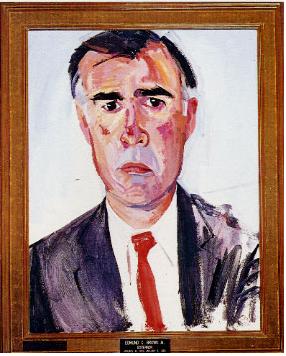
I’m starting to feel as if Jerry Brown is that strange old uncle who comes over for dinner and says things that make you cringe — and you can’t really tell if he’s just a loveable old character, a bright guy with a weird sense of humor, or someone who’s completely losing his marbles.
Check this out: First he makes a very valid, even insightful statement that’s right on target:
“Were I a CEO and someone said, ‘You know what, I’ve never been in this company, I never saw the product and I want to be a boss,’ I’d say, ‘Hey, why don’t you start at the bottom and work your way up,’ ” he said. “That’s the same way with government — you can’t wake up one morning and say, ‘Gee, I’ve got a billion dollars and I want to be governor.’ You got to learn something because those people up in Sacramento are sharks.”
Then he goes completely off the deep end:
Brown discussed his implementation of Prop. 13 despite his earlier opposition to it, as well as support for the 2nd Amendment and same-sex marriage. He said he opposed efforts to legalize marijuana, which will be on the November ballot.
“We got to compete with China, and if everybody’s stoned, how the hell are we going to make it?” he said.
Jerry, pal, I’ve got news for you: The people who are the most successfully competing with China, the brilliant high-tech visionaries you love so much? They’re already stoned. All we can do now is get some tax money out of it.
Besides, China can’t compete with this:
By Jeffrey Sachs
(Jeffrey D. Sachs is Professor of Economics and Director of the Earth Institute at Columbia University. He is also Special Adviser to United Nations Secretary-General on the Millennium Development Goals.)
NEW YORK – In hosting the 2010 G-8 summit of major economies (Canada, France, Germany, Italy, Japan, Russia, the United Kingdom, and the United States), Canadian Prime Minister Stephen Harper called for an “accountability summit,” to hold the G-8 responsible for the promises that it made over the years. So let’s make our own account of how the G-8 did. The answer, alas, is a failing grade. The G-8 this year illustrates the difference between photo-ops and serious global governance.
Of all of the G-8’s promises over the years, the most important was made to the world’s poorest people at the 2005 G-8 Gleneagles Summit in Scotland. The G-8 promised that, by this year, it would increase annual development assistance to the world’s poor by $50 billion relative to 2004. Half of the increase, or $25 billion per year, would go to Africa.
The G-8 fell far short of this goal, especially with respect to Africa. Total aid went up by around $40 billion rather than $50 billion, and aid to Africa rose by $10-$15 billion per year rather than $25 billion. The properly measured shortfall is even greater, because the promises that were made in 2005 should be adjusted for inflation. Re-stating those commitments in real terms, total aid should have risen by around $60 billion, and aid to Africa should have risen by around $30 billion.
In effect, the G-8 fulfilled only half of its promise to Africa – roughly $15 billion in increased aid rather than $30 billion. Much of the overall G-8 increase in aid went to Iraq and Afghanistan, as part of the US-led war effort, rather than to Africa. Among G-8 countries, only the UK is making a bold effort to increase its overall aid budget and direct a significant portion to Africa.
Since the G-8 was off track in its aid commitments for many years, I long wondered what the G-8 would say in 2010, when the commitments actually fell due. In fact, the G-8 displayed two approaches. First, in an “accountability report” issued before the summit, the G-8 stated the 2005 commitments in current dollars rather than in inflation-adjusted dollars, in order to minimize the size of the reported shortfall.
Second, the G-8 Summit communiqué simply did not mention the unmet commitments at all. In other words, the G-8 accountability principle became: if the G-8 fails to meet an important target, stop mentioning the target – a cynical stance, especially at a summit heralded for “accountability.”
The G-8 did not fail because of the current financial crisis. Even before the crisis, the G-8 countries were not taking serious steps to meet their pledges to Africa. This year, despite a massive budget crisis, the UK government has heroically honored its aid commitments, showing that other countries could have done so if they had tried.
But isn’t this what politicians like to do – smile for the cameras, and then fail to honor their promises? I would say that the situation is far more serious than that.
First, the Gleneagles commitments might be mere words to politicians in the rich world, but they are matters of life and death for the world’s poor. If Africa had another $15-$20 billion per year in development aid in 2010, as promised, with the amounts rising over future years (also as promised), millions of children would be spared an agonizing death from preventable diseases, and tens of millions of children would be able to get an education.
Second, the emptiness of G-8 leaders’ words puts the world at risk. The G-8 leaders promised last year to fight hunger with $22 billion in new funds, but so far they are not delivering. They promised to fight climate change with $30 billion of new emergency funds, but so far they are not delivering. My own country, the US, shows the largest gap between promises and reality.
Hosting this year’s G-8 summit reportedly cost Canada a fortune, despite the absence of any significant results. The estimated cost of hosting the G-8 leaders for 1.5 days, followed by the G-20 leaders for 1.5 days, reportedly came to more than $1 billion. This is essentially the same amount that the G-8 leaders pledged to give each year to the world’s poorest countries to support maternal and child health.
It is absurd and troubling to spend $1 billion on three days of meetings under any circumstances (since there are much cheaper ways to have such meetings and much better uses for the money). But it is tragic to spend so much money and then accomplish next to nothing in terms of concrete results and honest accountability.
There are three lessons to be drawn from this sorry episode. First, the G-8 as a group should be brought to an end. The G-20, which includes developing countries as well as rich countries, should take over.
Second, any future promises made by the G-20 should be accompanied by a clear and transparent accounting of what each country will do, and when. The world needs true accountability, not empty words about accountability. Every G-20 promise should spell out the specific actions and commitments of each country, as well as the overall promise of the group.
Third, the world’s leaders should recognize that commitments to fight poverty, hunger, disease, and climate change are life-and-death issues that require professional management for serious implementation.
The G-20 meets later this year in South Korea, a country that has emerged from poverty and hunger over the past 50 years. South Korea understands the utter seriousness of the global development agenda, and the poorest countries’ needs. Our best hope is that South Korea will succeed as the next host country, picking up where Canada has fallen far short.
Jeffrey D. Sachs is Professor of Economics and Director of the Earth Institute at Columbia University. He is also Special Adviser to United Nations Secretary-General on the Millennium Development Goals.
Copyright: Project Syndicate, 2010.
www.project-syndicate.org
For a podcast of this commentary in English, please use this link:
http://media.blubrry.com/ps/media.libsyn.com/media/ps/sachs167.mp3
There’s some interesting discussion going on about Jane Kim, Willie Brown, Gavin Newsom, and political machines here. Check it out if you haven’t read it already.
I’m going to venture a thought that may prove controversial, but it bears saying. San Francisco is not a crafter’s wonderland. Now, certainly it is fertile ground for artistic genius. But craft? Such a small, persnickety pastime thrives better in towns with worse weather, or less going on, or in ones with an idyllic beach or field where no one asks you if you’d like a weed infused peanut butter and jelly sandwich every god damn twenty minutes. Perhaps this explains the widespread popularity of Workshop, a crafting social space where you can zone out for an evening of PBRs and careful make-time.
Workshop co-founder Kelly Malone grew up with a functional notion of craft. Her dad’s a carpenter and her mom a part time seamstress. The couple would sit in the garage and sewing room, respectively, “and I was like, well that’s kind of lame,” Malone tells me one morning at Workshop, after we have gotten coffee across the street at Matching Half Cafe and I had managed to spill it on my dress, twice. Malone’s mom would try to teach her stitches back then, but “I’d get all goth on her, and tell her to piss off with the sewing.” It wasn’t until college that Malone got into crafting, after which she nabbed New York creative gigs for Victoria’s Secret and Betsy Johnson before moving to San Francisco.
Once here, she assembled her crafty friends in her backyard for Indie Mart, a hip DIY craft fair where Malone would cram in 25 vendors, stick a DJ in the bushes and was the funnest thing ever until the bathroom line got too long. So they moved it out to larger venues like the blocks outside Thee Parkside bar, and The Independent (it’s still going strong). Malone battled ovarian cancer (three rounds of chemo, but in remission as of last month), and decided that she wanted a permanent spot to capitalize on the SF craft mania that Indie Mart seemed to tap into.
So she sold nearly everything she owned, and got a Western Addition space that had lived previously as a T-shirt company, and as a dry cleaner for thirty years previous. Her vision paid off. Nowadays, she can’t post the one-off classes to the website quick enough – they sell out, nearly every one of the 13 the center usually offers a week. When Workshop opened, Malone had expected to teach no more than four a week.
“I didn’t realize that home ec doesn’t exist anymore – no one knows how to sew,” she tells me. “We all used to make things, but now we don’t create our own things anymore. I don’t nerd out on the politics of it too much, but I like seeing people make their own commerce.”
Workshop classes do seem to attract their fair share of aspiring professionals eager to beat their cyclical unemployment. A recent screen-printing course I took played host to a girl in a homemade dress that seemed intent on learning the functionality of making prints, even though we shared the space that night with a sweethearted pack of leftover Pride tourists that came for the good times that Malone’s affable instructors provide. Some students have become Indie Mart vendors, even gone on to sell their wares to stores, and an Indie Business class at Workshop has found an eager audience.
But crafting is still clearly the source of much amusement here. My screen-printing instructor, Nicole Schwieterman, seemed equally concerned with the amount of fun students were having as their grasp of the technical skills involved. “It’s supposed to look like that, right?” she smiled when I sheepishly showed her the excessive mess my paint slops had made. Most people left with a finished product, of sorts, but I’m guessing only half will ever avail themselves to Workshop’s open studio hours.

The Workshop team’s votives of their space’s patron saints. Holla, Mr. Wizard, Martha Stewart, Bob Vila, and Shepard Fairey! Photo by Caitlin Donohue
Popular classes include glass terrarium making and rock ‘n roll sewing (for beginners), from which participants walk away with a homemade beer cozie. Examples of these lovely floral and/or screen-printing specimens lie piled in a basket in a corner of Workshop’s front room in accordance with a house rule that all drinks must be drunk thusly, well insulated. It’s good times — I liked the teacher ladies so much that when the three hour class had finished, I wanted to crack another beer, nest into the lounge area by the front door, and suck in more of the fun-productive ambience.
I can’t decide which of my three visits to Workshop I enjoyed most. The first was my initial stumble-upon when I caught their Divisadero Art Walk party. The same room I learned to screen-print in was packed with alterna-looking young people, and a girl headed up a punk band whose instruments were hooked up to more amps than seemed strictly necessary for a space so small. “We have our fair share of social events,” Kelly told me when I came back to chat with her on my second trip to figure out how this place came to be. And of course, there was the third time, making owl print T-shirts and killing beers with my roommate and a bunch of nice strangers.
I take it back, I’m obviously going with the third time. You can hear a cute little indie band any day of the week, and hanging with successful creatives is cool, but a night on the town just making stuff? Totally San Francisco — or at least now we can pretend that it is.
Workshop
1798 McAllister, SF
(415) 874-9186

Today, Johnny and Tim talk about why Meg Whitman is ducking debates, why Gavin Newsom has money invested in oil company stocks — and why a corporate CEO can buy an $8 million resort property the same week he lays off 8,000 workers. You can listen after the jump.
sfbgradio6/30/2010 by bgedit
There’s a lot of lovely local summer mixes being tossed into my inbox lately, so I thought I’d share a few through regular Summer Wavelengths postings.
Let’s kick things off with something energetically breezy, a post-electro yet still gonzo poppy mix from Shane King and local duo White Girl Lust of the Solid Bump label. (There’s even a little bit of can-can kiki house near the end during WGL’s addictive “Oui.”) This one’s to promote their upcoming party, Fri/2 at Mezzanine, with Carte Blanche, a superstar DJ duo composed of Mehdi from France and the UK’s Riton. All the tracks are either composed or remixed by the aforementioned gentlemen.
As for the party itself, Shane tells me: “It’s going into some 909 Chicago house-influenced craziness (and we just got some professional back up dancers to do a Chicago house routine).” If they can pull that off it’ll be a doozy. And I bet they can.
Listen after the jump.
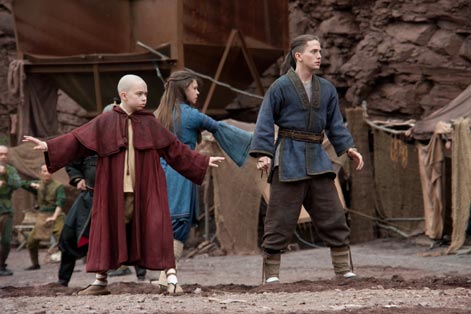
While Twihards know Jackson Rathbone from his portrayal of Jasper Hale in the first three Twilights films, Nicola Peltz is a relative newcomer. But both are sure to get a burst of fame with their starring roles in M. Night Shyamalan’s The Last Airbender, an epic live-action adaptation (out Fri/2) of the animated Nickelodeon series. Rathbone and Peltz play siblings Sokka and Katara, refugees of the water tribe who join forces with Aang (that’d be the last airbender) to save the world. In talking to the actors about their filming experiences, it’s clear they’ve got the sibling rivalry thing down pat: their snarky back-and-forth dominated the conversation.
San Francisco Bay Guardian: I’ve got to start by asking you guys the obvious question, which is if you were familiar with the series Avatar: The Last Airbender before you signed on to the movie.
Nicola Peltz: Yes, I was. I actually have six brothers and a sister, and two of my younger brothers that are seven, we watch the cartoon all the time together. And when I got the role, they literally didn’t believe me. They were like, “You’re lying!” “No, I’m really not!” They’re really excited for me.
Jackson Rathbone: I knew of it, too. I hadn’t seen the entire series, but a lot of my really good friends had, so I told them I was going out for the role, and they were extremely impressed. It was nice to have my friends behind me on this one.
SFBG: How would you say the movie is different from the series, and do you think it’ll still appeal to those fans?
JR: I think it definitely will still appeal to all the hardcore fans, because the filmmakers were fans of the series themselves. [M.] Night [Shyamalan] really wanted to make the film for his daughters, who loved the series.
NP: Yeah, it was actually his daughter’s idea to make the film, because she fell in love with the series so much, and she loved the characters. And I think this movie’s so interesting because it is for all ages. It’s not like just a kids’ movie. A lot of grown-ups were into the cartoon as well.
SFBG: How are Last Airbender fans different from, say, Twilight fans?
NP: Jackson?
JR: [laughs] I think with Twilight fans, there’s definitely a larger female fanbase, just based off the first two films. I think Eclipse is going to probably bring a lot more guys in. But for The Last Airbender, I find that it’s across the board. I mean, like Nikki’s just said, it’s kind of an all ages thing.
NP: It’s a family movie. You know, like some Friday nights, people go to them. It’s like the perfect movie, because everyone’s gonna love it. It’s not like the parents are going to be bored watching a kids’ movie.
JR: Yeah, it’s like the first Shrek. It’s a family film, except this is an action film so it’s going to be a lot more entertaining for everyone, because it’s really exciting. There’s all this martial arts, there’s all this special bending. It’s gorgeous.
SFBG: As a fan of the series myself, my main concern was if Appa [a “sky bison”] and Momo [a “winged lemur”] were involved in the movie. [Both appear in CG form.]
NP: Yes! Of course. It wouldn’t be a movie without Appa and Momo.
JR: You’ve gotta have those characters. They’re so much fun. My only regret is that I didn’t get to work with Momo as much.
NP: Yeah, same here. Actually, one of those scenes, I got to feed him a little peach. That was the only thing, but it was really cute.
SFBG: You’ve talked about how it’s a pretty intense action movie. How much stuntwork was involved?
NP: Yeah, there was a lot. I learned kung-fu and tai chi. I started in October last year, and then we went through the end of the movie, but we all went in February, moved to Philly and we did boot camp. We did hours and hours and hours a day, and it was so much fun. We got to do — did you do wire work? You did, right?
JR: I didn’t do wire work, because I don’t have special bending abilities. No, I just did mainly kung-fu, like hand-to-hand kind of kung-fu, and then they taught me wrestling and grappling moves. Because they wanted Sokka to be more like a young warrior, who doesn’t necessarily have the technical ability but he definitely has the heart. And a boomerang. And a really sharp wit.
NP: Oh, do you want to tell him what happened when you first tried to use your boomerang?
JR: …No.
SFBG: Well, now I have to hear.
JR: OK, well, the boomerang’s a little bit different than the boomerang that you think of from Australia or whatever. But the shape is actually of a common, real boomerang. And so when I went to go throw it—
NP: He hit the only rock in Greenland! The only big stone in Greenland.
JR: Greenland is all rocks and ice! It’s everywhere. But I was throwing it up in an incline, it went straight up, and—
NP: It never came back.
JR: It went straight. It broke.
SFBG: But I assume your skills improved?
JR: Yeah, definitely, definitely. However, I did break like four boomerangs and three spears.
NP: Yeah, he had like six boomerangs throughout the movie.
JR: Well, that’s because I was learning to do tricks with them. I would like flip it behind my back and catch it and try to just make it as cool as possible.
NP: He would attempt, but…
SFBG: You guys definitely have this rapport down — you do seem like siblings. How did you develop that on set?
JR: Well, basically, the first day of filming, I picked Nicola up and I dunked her in a snowbank, to really get the brother and sister thing going. That’s the only reason.
NP: Oh, yeah, he was getting into character, as he tells everybody. But at the Kids’ Choice Awards, I got to slime him.
JR: Yeah, that’s called payback.
SFBG: That’s awesome. Although getting slimed is kind of a good thing. I would love to get slimed.
NP: Actually, it was fun. I tasted it.
SFBG: How was that?
NP: It was slimy.
JR: I had no choice but to taste it. So thank you.
SFBG: With all this back-and-forth, I feel like a fight is inevitable. If Sokka and Katara threw down, who would win?
JR: Katara.
NP: Come on!
JR: There’s no way Sokka would ever raise a fist to his little sister.
NP: OK, well, even if he did, I would win. Obviously. I’m a water bender! Please. He has a boomerang.
SFBG: Can you talk about what it was like working with M. Night Shyamalan?
JR: It was incredible. Being young actors, it’s one of those things, you get to work with somebody that you’ve respected and admired. He’s just an incredible artist and a really awesome, down-to-earth family guy.
NP: Yeah, he’s a really great guy. When I saw The Sixth Sense, I was like — it’s one of my favorite movies ever. And now I get to work with him, which is so much fun. Family and morals and values are really important to him, and it definitely shines in the movie. You can definitely tell. But he was so much fun to work with.
SFBG: He’s known for having a very particular mark. Does that carry over to The Last Airbender? Because this does seem very different from his past projects.
NP: Yeah, it is different. He did a lot of scary movies and this is a movie for all ages.
JR: It’s a family film. He did thrillers. With The Happening, he did his first R-rated film. And here with The Last Airbender, he’s doing his first family film. It’s an action, epic, fantasy adventure — there’s a lot of CGI. ILM did the CGI.
NP: We also went to Greenland, though. So a lot of it was real, which was really cool.
SFBG: Now you’ve probably been asked this before, but if you had to pick one bending power, what would you choose?
NP: Water! And I’m not just saying that because I’m a water bender in the movie. But water’s so interesting because it can harm you but it can also save you. It does heal people, but at the same time, there are tsunamis, which harm things. I think it’s the most interesting element.
JR: Oh, yeah, definitely. I’ve always been a big fan of Bruce Lee, and in his book, Artist of Life, he talks about how to be like water and what that means. You kind of go with the flow. Water can become strong and become like ice, and in it’s flowing form even, in hundreds of years, it’ll carve the Grand Canyon. Water’s a very powerful element.
The Last Airbender opens Fri/2 in Bay Area theaters.