SFBG Blogs

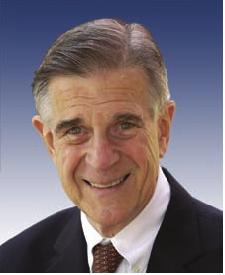
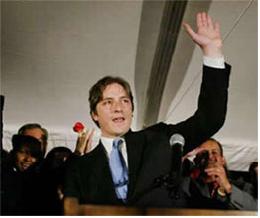
Another reason we love Pete Stark

0

He’s the only openly atheist member of Congress. He refused to apolgize after announcing that he had “no respect for” the commander in chief, George W. Bush or the generals who were sending young people to Iraq “to get their heads blown off for the presidents amusement.” He called one of his colleagues a “whore for the insurance industry.” The mainstream press refers to these statements as “gaffes.” But really, foul-mouthed as he can be, much of what he says is true.


And now he’s finally called out the anti-immigration nuts. They don’t make congressmembers like this any more.


An online defense of print—and a plug for the Public Press’ first print edition

2

I spent my lunch hour yesterday indulging in what media critics say could soon be a lost experience: reading the first print issue of a newspaper.

As I turned the pages of a pilot print edition of the San Francisco Public Press, which has been in existence online since March 2009, I was surrounded by folks who were tapping out messages on plastic coated cell phones or sitting scrunched at table trying to read stuff on laptops.

And I began to wonder, will there be a print renaissance in my life time as upcoming generations begin to feel the impacts of too much screen and keyboard time? And begin to realize the benefits of having a print presence in this increasingly digital world? Or is print really going to go the way of the dinosaurs?

Maybe it’s because I’m old school, but I actually believe there’s a future for print journalism, though it may be a limited one. To my mind you can’t beat the sensation that comes from leafing through a newspaper, while sipping morning coffee, or the welcome relief of reading the news in hard copy, after staring at computer screens all day. And then there’s the fact that I’m never going to get mugged, or have my car broken into, because someone wants to steal a newspaper–something that can’t be said if you leave your Kindle or Blackberry or fancy laptop around.

Yeah, I never have to worry about sand at the beach, or water in the bath, when I read a print newspaper. And I can rest assured that when I am done with my paper, and leave it in a coffee shop, someone else can read it, or recycle it in their blue bin or reuse it as the proverbial bird cage liner or fish wrap.

Now, what’s especially interesting about the San Francisco Public Press—and distinguishes it from most other print newspapers currently available—is that it’s free of advertisements. Or, as the folks at the Public Press like to say, it’s “ad-free news in the public interest.”

    “Why no ads?” the Public Press asks. “As the newspaper advertising market has drained to Internet competitors, we need to search for other sources of income to support quality journalism. Advertising has also warped the content of the newsroom, both explicitly and subtly, encouraging newspapers to shift their coverage to topics of interest to businesses and wealthy readers—the target of ads. Noncommercial news, while often less lucrative, has the luxury of independence.”

The Public Press also devotes some wordage to explaining why they have turned to ink:
    “Newspapers help bridge the digital divide,” they state, noting that San Francisco’s 2009 City Survey showed that more than 34 percent of households with income under $50,000 cannot access the Internet at home via personal computers.
    “Newspapers serve as communal touchstones,” they continue, observing how isolating digital widgets can be, compared to reading a print newspaper in public.
    “We want to pay our hardworking staff for the work they do,” they add, reminding us that folks buy 50 million newspapers everyday in the US, but are still averse to paying for news online.
    “People use paper and electronic devices differently,” they conclude. “There are times and places when even the most tech-savvy Bay Area digerati enjoy some screen relief.”

I got my hands on a copy of the San Francisco Public Press’ first print edition, because Lila Lahood, SFPP’s director of operations, and SFPP contributor Christopher D. Cook, who wrote a timely piece about Lennar using federal taxpayer funds to balance its books, stopped by the Guardian with a stack of papers.

And while they were in newspaper delivery mode, Lahood and Cook also shared their thoughts on “Lessons Learned” from their first foray into print.

“We missed our deadline,” Lahood admitted, observing how, in future, the Public Press plans to focus less on breaking news and more on timely features to avoid deadline stress. The plan going forward, Lahood said, is to publish a print edition on a quarterly basis, with the hope of becoming a monthly print publication at some point next year.

“Some of us we stayed up the whole night, filings our full package at 6 in the morning,” Lahood added, tipping her hat to the “strong and committed core” of Public Press workers that made this first print edition possible.

‘Though most of us are journalists, we worked for publications that were already in existence before we arrived,” Lahood continued, acknowledging that the team had much to learn about putting out a print edition from start to finish this first time around.

‘But we showed it could be done,” Cook added.  “There is a solid professional publication now in the public sphere, making a dent in the San Francisco community.”

Available in 35 bookstores and newsstands in the Bay Area, the Public Press’ print edition is also available on the street for $2 a pop—an exercise in sales that isn’t as easy as the guys who peddle the Street Sheet (a monthly tabloid written primarily by homeless and formerly homeless people) make it look.

“It’s hard to sell newspapers on the street,” Cook acknowledged. “We knew it was going to be challenging. When you are out there, standing on the corner in the urban crunch, no one has an interest, but the minute you connect to folks, on an individual level, it changes.”

On June 22, the Public Press’s first pilot newspaper hit the streets. At 28 pages long, it includes two sections, three investigative reports, a full-page graphic novel and 50 articles from staff members and a broad spectrum of public media and civic groups, including KALW, KQED, Commonwealth Club, World Affairs Council, California Watch and Consumers Union.

I found the Public Press’ special section on Treasure Island intriguing and informative—the kind of in-depth investigation that’s hard for one journalist to pull off, but is crucial if the city of San Francisco and all its many residents are going to make informed planning and development decisions.

I appreciated the wide-range of articles in the Public Press’ main section, including items on the ongoing battle over the future of the open-air sewage digesters that have been stinking up the Bayview for decades now.

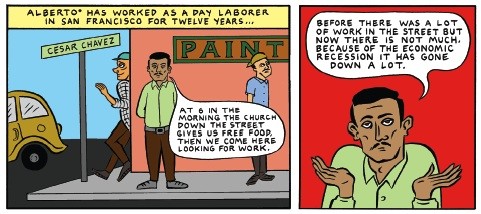
I loved the “Sit, Lie, Get Deported” comic strip that merges photos with hand-drawn illustrations and uses the actual words of politicians, city officials, activists and gadflies to help illustrate its point.

And I’m still trying to finish the crossword. In fact,  I plan to read the SFPP’s first printedition from front to back over the July 4 holiday weekend, when I’ll have the time to really absorb and enjoy it.

“Ideally, news will appear in print first, then online, so there’s interest in seeking out the print edition,” Lahood told me, noting that the Public Press’ first edition amounts to about 70,000 words. “So, it a novel, in length,” Lahood laughed. “People are, if not starving, at least very hungry for news analysis and investigative reporting. There are a lot of online sites that aggregate other publications content, and then there’s the corporate model of the Chronicle, but while there is some good reporting in town, there are fewer reporters.”

No kidding. All the more reason for this reporter to write an online defense of print, in the hope that you rush out to secure your copy of the Public Press’s first print edition and evaluate this new model of journalism. I think you’ll be glad you did.


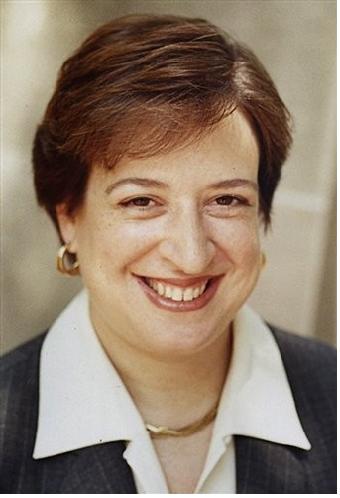
Why can’t Kagan talk?

0

Everyone knows that Elena Kagan’s going to get confirmed by the Democratic majority in the Senate, so it’s too bad that she won’t answer anyone’s questions. I listened to the hearings for a while this morning, and she ducked every single serious issue, hiding behind the notion that she can’t discuss current issues, the court itself, or any issue that might come before the court.


Kagan’s not the only guilty party here; this game’s been going on for years. Remember when Clarence Thomas said he had no opinion on Roe v. Wade?


I’m sure Kagan will be fine on the court — not great, not inspiring, but perfectly adequate in that centrist I’m-really-a-liberal-but-embarassed-to-show-it way. She’s also, clearly, a very intelligent person who has spent years studying and thinking about Constitutional law. It’s crazy that she couldn’t have an honest discussion with the Senate Judiciary Committee. We all could have learned a lot from it.

Hot sexy events June 30-July 6

0

Thank god for this column, which allows me a great forum to come out of the closet. Some people may judge, but fuck em, right? I’m totally, one hundred percent Team Jacob. Yup. I just saw Twilight: Eclipse (the third installation in the “saga”) and I’m gonna go with the NYT on this one, werewolf is the new vampire. Who will the wan protagonist choose, her perma-shirtless Native American werewolf childhood best friend (played by 18-year old eek hottie yay Taylor Lautner), or the near-omnipotent, beyond the grave love of her alabaster vampire betrothed? I’m hella going for Jacob the werewolf, if only on the basis that he is a. alive, b. connected with the earth (all Native Americans are, right?) and c. smoking hot.

Literally! When Bella was freezing to death waiting in her alpine tent, Edward the cold fish vampire could only look on in horror as Jacob the werewolf climbed into her sleeping bag for body temp restoring snuggle time. That being said, if in the next chapter it behooves Edward to get in that sack too… but now we’re talking hypotheticals. Better to get onto this week’s sex events, shall we?


Twilight: Eclipse

Why do we make fun of all the Twi-fan teenage girls in the world? There are perhaps less empowering mass marketed fantasies they could obsess over than a young woman teasing two supernatural hotties along at the same time. For example: any of the Britney Spears videos. Sorry, girl. Anyways, get hot and bothered at this innuendo-y bubblegum good time.

Starts Wed/30 in Bay area theaters


Beginner’s Dungeon Class

Just getting into the BDSM scene? This is the 101. Learn how to dress, what you’ll see, how to stay safe, and just what the hell all that leathery code word action could possible mean. Trust me, you don’t want to be caught holding your whip wrong. Que faux pas!

Thurs/1 7:30-10:30 p.m., $10-20

SF Citadel

1277 Mission, SF

www.edukink.org 


How to Choose a Vibrator

Gosh, there’s just so many options. Pearls, shapes, sizes, cost levels, which animal you want your vibrator to look like. Eek! So! Instruct your clitoris’ well being to a doctor. That’s what Good Vibes wants you to do at their “Ask a Doc” free class series. No proof of insurance required!

Thurs/1 6:30-7:30 p.m., free

Good Vibrations 

603 Valencia, SF

(415) 522-5460

www.goodvibes.com


Locker Room

Locker Room is abandoning its Wednesday shift, so that’s the bad news. The good news is, that it’s moving to Thursday night – and, if you check your clothes at the door save your jockstrap, your entry in is on the house! So get on someone in the house – and make up for those not-so-fun days of gym class with a sexy, sexy evening.

Thurs/1 9 p.m., free when you strip to your jock

Chaps Bar

1225 Folsom, SF

(415) 225-CHAP

www.chapsbarsanfrancisco.com


Threshold 

Getting a little bit rougher than most Mission Control sex parties, but still focusing on the softer side of BDSM, Threshold will feature the tie-me-up, tie-me-down talents of Stefano, Chey, and Nefarious1. Enjoy Mission Control’s various horizontal play structures – maybe even put that stripper pole to use as  a hitching post.

Fri/2 9 p.m.-2 a.m., $20

Mission Control

www.missioncontrolsf.org


Trailer Trash

You know when the hosts suggest you look at www.peopleofwalmart.com for costume suggestions, you’re heading out to a different kind of BDSM bash. What kind of scene will you concoct? A BBQ gone bad? Naughtiness in the camps on NASCAR weekend? Hey wait, I’m not trying to give away all my ideas… 

Sat/3 8 p.m.-1 a.m., $25

SF Citadel

1277 Mission, SF

(415) 626-1746

www.sfcitadel.org

Stories highlight Newsom’s hypocrisy

4

A pair of interesting stories in today’s Chronicle paint Mayor Gavin Newsom as a self-serving hypocrite, highlighting how his cuts-only budget proposals ignore the city’s long-term needs and have led Moody’s to lower the city’s credit rating, and how his green rhetoric is belied by his oil industry investments, including in the company responsible for the ongoing oil leak in the Gulf.

The Guardian has long noted how fiscally irresponsible Newsom’s budgets have been, with our latest editorial calling for Newsom to finally offer support for some of the revenue measures now being explored by the Board of Supervisors, which will need strong support from everyone in City Hall to have a chance of winning voter approval.

The Controller’s Office and now Moody’s have confirmed that Newsom’s reckless and gimmicky budget leaves a long-term budget hole even as it does short-term damage to the city’s social safety net and public health programs. But instead of acknowledging that reality, Newsom flak Tony Winnicker is still offering snide, Republican-style put-downs of the supervisors who are actually working hard to improve the city’s fiscal health while Newsom is out running for state office, afraid he will be criticized for supporting the tax revenue this city desperately needs.

As for Newsom’s oil industry investments, well, they speak for themselves. His whole political career, and even the restaurant and bar career before that, was built on a foundation of oil money heaped upon him by the Gettys. And even after he found there was political gold to be mined from green rhetoric, he has continued to financially support and profit from the oil industry.

Many Guardian readers have long said that we should just give up on Newsom, calling him a shameless and self-serving politician of the very worst sort. Maybe they’re right. But if Newsom wants to earn our support in his race for lieutenant governor – whose most important responsibilities are his key votes in deciding whether to support new offshore oil drilling in California and whether to continue pushing myopic cuts-only budgets for the public university systems – then now is the time for him to show some political courage by disinvesting from the oil industry and supporting a responsible city budget that includes new revenue measures for which he should actively campaign this fall.

All hail the big red noses, honk honk

0

Just in time for summer, it’s circus week on SFBG. Caitlin Donohue visited Circus Bella in this week’s issue, and now we take an indepth and colorful look inside the San Francisco Clown School and Circus Finelli. Allez-oop!

Street Threads: Look of the Day

0

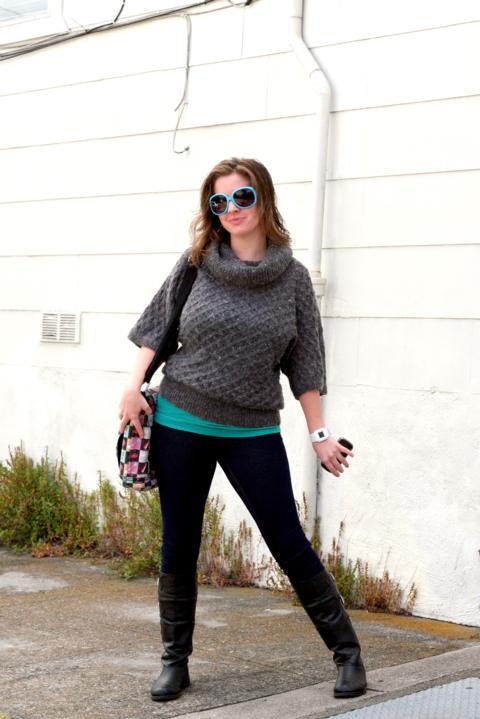
Today’s Look: Mary, Prospect and Cortland

Tell us about your look: “Have fun!”

Hear the call for East Oakland community paparazzi

0

When Oacia5804 (her screen name) was asked on the Our Oakland website to contribute an image that told a story about her East Oakland home, she didn’t rip her shot off of the TV news. The mother of two sent in an amazing shot of her kids pointing up at a rainbow looping perfectly over a neighborhood street. “Even tho [sic] the streets of East Oakland seem dark at times, There is Always a ray of light that will shine and inspire Greatness,” writes the photographer in the shot’s caption. That’s exactly the kind of alternative narrative that Our Oakland, a non profit that is gathering stories for incorporation into a public arts project, hopes to publicize. They’re calling for submissions for a photo contest (submissions accepted until Thurs/8) that want to challenge our perceptions of what East Oakland looks like. 

 “Each contest photo reshapes the image of East Oakland,” states Rene Yung in the press release for the competition. And it does need a certain amount of retooling, that image. What do you think about when you think East Oakland? Unfortunately, we’ve been somewhat programed with a negative answer. It’s detrimental to the reasoning skills of people who have to listen to an endless reel of news about drug deals and prostitution outside of the neighborhood, but what does that negative imaging mean to the people that live on those streets that are so often pictured behind yellow caution tape, or gone “wild” with gang activity?

Yung created the website as part of a project she’s doing for the East Oakland Community Library, in which she’s integrating art with community voice. The finished product will include a digital archive of stories about the neighborhood as told by residents, and a 64-foot bank of etched glass windows that are meant to invoke the interconnectedness of the community. At the moment, the website includes user generated written narrative — but the photo contest is Our Oakland’s big deal at the moment. “Each photographer is taking charge of what the public gets to see and hear about the community, and, in the process, is changing the conversation about East Oakland,” says Yung.

To build awareness about the  photo contest (and the prizes, natch — whooo wants some schmancy electronics?), Our Oakland has been staging a series of events that focus on building story telling skills and technological expertise in taking photos. It’s spread the news about the project at Lao Family Community Development, an organization that promotes social self-sufficiency in Southeastern Asian families, Our Oakland’s booth encouraged kids and families to write down and illustrate their stories on big, fun pieces of construction paper. Our Oakland has also conducted photo workshops for the kids at the Allendale Recreational Camp and the Tassafaronga Recreation Center.

But shooting’s open to all, so tell your mamma, tell a friend, get those photos in. We can widen that running commentary we all have to hear about East Oakland — and maybe even change some minds on what a strong community looks like.

For more information on the My East Oakland photo contest, go here. Entries are due by Thurs/8.

Kaiser workers seek election between rival unions

34

Thousands of Kaiser Permanente workers have filed petitions to change unions in what could be the biggest battle yet between Service Employees International Union and its upstart rival National Union of Healthcare Workers. If called by federal regulators, the election would involve more than 45,000 workers, the biggest private sector organization since Ford Motors employees joined United Auto Workers in 1941.

“This is the election everyone has been anticipating for the last year and a half,” NUHW spokesperson Sadie Crabtree told us.

That was when Sal Rosselli and other former leaders of the Oakland-based United Healthcare Workers were ousted by former SEIU President Andy Stern and other leaders of their parent union, SEIU, and formed NUHW. Since then, the two unions have clashed bitterly and regularly, in various workplaces, through the media, in leadership battles, and in a San Francisco court case that ended in April.

“The NUHW petition, if the National Labor Relations Board agrees it was filed appropriately, could force an election between SEIU-UHW and NUHW at Kaiser. Voting for NUHW would risk all the gains SEIU-UHW members made in a hard-fought four-month contract campaign against takeaways by Kaiser,” was how an SEIU-UHW press release cast today’s action.

NUHW opted for a nod to the Fourth of July in its release: “Thousands of Kaiser healthcare workers fired the first shot today in a long-anticipated battle for independence that will determine the future of California’s largest union, SEIU. They filed a petition that will trigger elections for 45,000 SEIU members to choose between the troubled incumbent and the state’s fastest-growing union, the new National Union of Healthcare Workers.”

About 2300 Kaiser workers – representing three of the seven bargaining units – already voted in January to join NUHW, but the petitions now being turned in by the remaining four unions represent the most significant segment of Kaisier workers, including the 44,000-member service, technical, and clerical unit.

Federal law calls for elections when at least 30 percent of a union’s members ask for one, and Crabtree told us, “We have more than we need.” Now, the NLRB must verify the petitions and schedule the election.

Live Shots: Goldfrapp, Fox Theater, 06/26/2010

0

Shiny, sparkling, blinged-out: Slick electro-pop and disco revivalists Goldfrapp absolutely bedazzled us on Saturday. Talk about the perfect mix of wind machines and ’70s sexiness. With new album Head First, the duo clearly hasn’t lost its melodic luster or surreal grooves. The packed Fox was ready to dance, and Goldfrapp delivered. Did I mention the high levels of shiny spandex? Yea, that was hella hot.

REELing against the tide

0

In a world of relative cinema-watching convenience, with Netflix and Blockbuster By Mail, the quirky neighborhood video rental store is going the way of the record store and the dodo. However, the East Bay still houses at least one fantastic holdout, REEL Video, located on Shattuck Ave. in Berkeley. But perhaps not for long — despite REEL’s unique stock and organization, it is in fact owned by Hollywood Video, which recently filed for bankruptcy and announced the liquidation of all its stores. Over the past few weeks, REEL was suddenly plastered with fliers addressing frequently-asked questions about the store’s imminent closure, and calling for customer input on the store’s uncertain future.


Thanks to its impressive Netflix-besting selection (a VHS copy of 1965’s Chimes at Midnight!) and its invitingly idiosyncratic shelving categories (e.g. “Your Mom,”” “So Bad It’s Half Off,” “One Man Army,” “British Television,” “Werner Herzog,” “Bromance”), REEL is a staple of the Berkeley film-buff/geek/cultist community. With a section devoted specifically to the beloved Criterion Collection, and a broad array of international cinema, it’s a great resource for UC Berkeley students studying film or just looking for a crazy popcorn movie on a Friday night (Black Gestapo, anyone?).

The latest press release from REEL details a proposed future for the store, wherein it would become “ a community movie education and gathering place in addition to its on-going video rental business.” REEL’s employees and other champions are seeking “angel investors” to help purchase the video collection and lease the store grounds, in preparation for their newly conceived “potentially non-profit” status.

On or around Wednesday, June 23, REEL launched www.savereelvideo.com; they’ve also set up SaveReelVideo@gmail.com for interested customers to communicate with the store’s management.

Get on this, people! A genuine outpost of cultural weirdness and passion is about to be subsumed by the tide. It seems these are slowly dissipating, at least in the non-virtual world, so we have to save what we can.

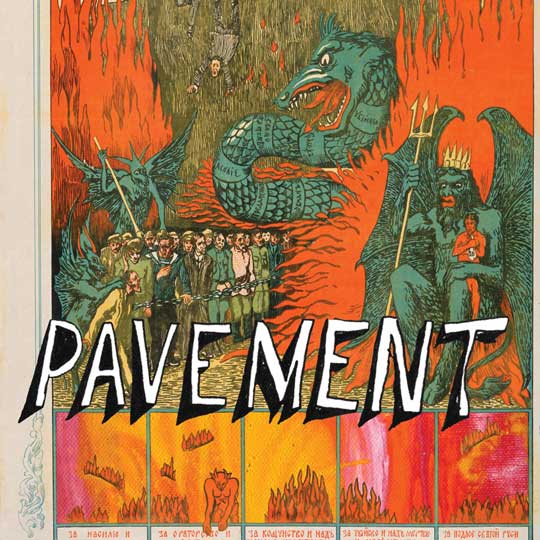
Should we just keep chasing Pavement? Yes.

4

“I’ve always seen Berkeley as an extension of Stockton”, quipped Pavement‘s Stephen Malkmus, his limp, grey-brown hair dyed a shimmering red by the Greek’s stage lights, and his guitar clutched high and tight to his chest like a mandolin.

The crowd laughed indulgently at this stroke of wit, but there was no mistaking its growing restlessness, because the ratio of talk to rock had become increasingly lopsided. This was probably the biggest surprise of the night — the Pavement front man is one hell of a chatterbox. His stage patter is a lot like his songs: wry, nonchalant, and frequently bizarre. Over the course of the Friday, June 25 show, he held forth on Stockton, Cal football, and the history of the Greek Theatre. He also poked dry fun at his bandmates, who for their part gave as good as they got.

Quality banter is always welcome from a band leader, so it was good to see that Malkmus could play the sardonic frontman with as much ease and dexterity as he demonstrated on the Fenders that passed through his hands over the course of the evening. This was still, though, a rock show, meaning that Pavement’s sole function at the Greek was as a mechanism for the delivery of rock. All the wit in the world couldn’t have saved them if they had failed in that charge.

Thankfully, there was no such problem on Friday night. When Malkmus cracked wise, it was entertaining. When he actually shut up and played, it was glorious. Pavement’s set list was a satisfying mixture of deep cuts and tried-and-true crowd pleasers, full of improvisational riffage, experimental phrasing, and charmingly sloppy false starts. At one point, Malkmus balanced a guitar on his open palm for an impressive ten seconds, while shaggy-haired drummer Gary Young shambled dazedly across the stage like a bear just emerging from hibernation.

Just as impressive as the set lists’ content was its arrangement — in a particularly smart move, the band preempted requests by opening with the addictively melodic fan favorite “Cut Your Hair” while the irony-drenched mope-anthem “Here” made for a tonally perfect coda to the evening’s revels. Throughout the night, aging hipsters pogoed alongside their college-aged counterparts, the scent of cannabis perfumed the air, and everyone left the Greek ready to once again swear fealty to Pavement, the returned crown princes of indie rock.

http://www.youtube.com/watch?v=dU-WRDdGyOM

Scraper bikes rock the block

0

There’s a truly inspiring movement going on in Oakland. Scraper bikes — brightly colored, their spokes woven with foil and often decorated with subverted corporate logos — are weaving through the streets.

Started by the young and motivated Tyrone Stevenson Jr., a.k.a. Baybe Champ, the Scraper Bike King, the Original Scraper Bike Team aims to, in Tyrone’s words, “make a change in young people’s lives, ’cause it’s getting them away from the negative things that Oakland has to offer: gangs, drugs, and violence. Youth that’s involved with the Scraper Bike Movement are dedicated and passionate about rebuilding our community by fixing and riding our bikes.”

Tyrone requires that Scraper Bike Team members maintain a 3.0 grade point average, reside in Oakland, and always ride single file. After videos of Tyrone’s work started popping up a couple years ago on YouTube, “more and more kids in my community wanted a Scraper Bike. I had all the kids come to my house and work on bikes,” he told us. He’s currently working toward starting up a shop. “We need a location in our neighborhood so we can come and fix on our bikes and build the Scraper Bike Team.”

Check out the Original Scraper Bike Movement at originalscraperbikes.blogspot.com.

All photos by Matthew Reamer.

Editorial: Put new taxes in the budget

5

Mayor Gavin Newsom still wants to balance this year’s municipal budget with no new taxes (although he’s happy to raise the fees to use city facilities). The supervisors are looking at a different approach: John Avalos, chair of the budget committee, told us he’d like to see $100 million in new revenue on the table.

Some of that might come from a fee on liquor sales. There’s a hotel tax measure being circulated, and the supervisors are also looking at a raising the real estate transfer tax on high-end properties and imposing a commercial rent tax. All but the liquor fee would require a majority vote on the November ballot.

So far, Newsom hasn’t given any indication that he’ll support any new taxes — and that’s due in significant part to his campaign for lieutenant governor. The mayor doesn’t want to get hit by his Republican opponent as a tax-and-spend liberal, so he’s holding the line, cutting essential services instead of looking for progressive ways to bring in new revenue.

But voters up and down the state have shown their willingness to approve new taxes to save essential services, and it’s likely that San Franciscans will do the same — particularly if the folks at City Hall are united in their support.

So here’s an idea for the supervisors: why not include that new revenue as part of this year’s budget?

There’s no legal reason the budget can’t be balanced in part on the assumption of new income. November is almost halfway through the fiscal year, but more than $50 million of that revenue would be available for the 2010-11 budget.

There are distinct advantages to including that money in the budget, starting with fewer budget cuts and layoffs now. There’s also a clear political advantage: if the voters realize what’s at stake — that the money has already been earmarked and that voting it down would mean immediate reduction in vital services — the message of the importance of approving the tax measures would be even stronger.

Equally important, it would force the mayor to show his hand. Newsom would almost certainly prefer to duck the issue, to take a neutral stand on the tax measures (“let the voters decide”). He might wind up opposing all of them. But if the money’s already in the budget, what can he do? Without that tax money, the budget won’t be legally balanced. Without his support, that tax money might not come through.

It’s a risky move. If the voters reject the tax hikes, the supervisors and the mayor would be forced to make painful midyear cuts. But they’ll have to make those cuts anyway, either now or in November. And once you shut down services or eliminate nonprofit contracts, it’s much harder and more expensive to start them up again.

So this might be the year to take the calculated gamble: assume that money’s going to be there. Then everyone, including the mayor, can help make sure that it actually is.

Raising revenues on the backs of the East Bay/working class

32

If you are one of the many thousands of people who commute the Bay Bridge each day, then you already know that the  toll is going to increase on Thursday, July 1 to $6 during commute hours, and that the car pool is going to stop being free and start costing $2:50 (and you’ll need a Fastrak pass to use it). Tolls will also rise to $5 on Antioch, Benicia-Martinez, Carquinez, Dumbarton, Richmond-San Rafael and San Mateo-Hayward bridges. What you may not know is that San Francisco is also planning to start charging fees this summer to  “out-of-towners” to access certain facilities.

http://www.youtube.com/watch?v=pCivf4OMuqY

As an East Bay resident and a member of San Francisco’s workforce, I understand the logic behind all these toll and fee increases: raise tolls to get cars off roads, people onto public transit, and spare the air in the process. And raise entrance fees for tourists, so as to generate revenue for cash-strapped city departments.

And yet, it feels like working-class folks who can’t afford to raise their families in San Francisco keep getting stuck with the bill for the excesses of the city’s real estate market, while the folks who made money gaming the real estate market in the ’90s and the Noughties keep leading the “no new taxes, lots of new fees” mantra.

That extra $2 a day to get to work is going to cost working folks about $500 more a year, at a time when wages are either stagnant or being cut. So, don’t be surprised if we stop spending any money on buying food in the city, to make ends meet. But should we also plan to stop visiting fee-charging city facilities?

I ask because a recent article in the Chronicle pointed out that “Out-of-town visitors will have to start paying an admission fee to San Francisco’s tranquil and well-tended Botanical Garden in Golden Gate Park, now that the Board of Supervisors signed off on the proposal after months of heated public debate.”

San Francisco residents will continue to get free entry, the article reported, but other adults will have to pay $7 to get into the Botanical Garden, starting in late July or early August. (Discounts will be offered to seniors and youth.)

“The total price for a family will be capped at $15,” the Chron reported, ” and the money-making initiative is expected to generate $250,000 a year for the city’s strapped Recreation and Park Department, officials say.”

It’s not clear from that report whether the city’s commuters who now account for more than 50 percent of the city’s workforce) are classified as “out-of-towners?” And if it turns out that we are not, I’ll post an update here in short order. But I suspect we are, since we don’t actually live here, (even if we do spend half our lives working in a building within city limits).

Update: Lisa Van Cleef, public spokesperson for the Botanical Gardens (a former SFBG worker, when the Guardian was still on York Street) confirmed that Mayor Gavin Newsom is expected to sign the Botanical Gardens fee hike legislation by the end of this week.

“All San Francisco residents have free admission,” Van Cleef emailed. “Non-residents including those who work in SF, will pay the $7.00.”

In her email, Van Cleef made a great case for visiting the Botanical Gardens.

“It is very different than a park,” she wrote. “With 26 distinct gardens and collections, our visitors can experience incredible rarities from  Asia, Australia, New Zealand, Central and South America, and South Africa, plus our award-winning California Native Plant Garden 
complete with a century-old redwood forest. Hundreds of our plants are rare and/or endangered in the wild.Right now, the Passionflowers, Chilean, Australian and Perennial gardens are looking exceptionally great with lots in bloom.”

So, I guess I’ll be tempted to visit, fee or no, even as I wish for a more equitable way to generate new city revenues, in future.

Now, it’s easy to demonize folks who drive to work from the East Bay, as being irresponsible climate change inducing air polluters. But I can’t help noticing that many folks on the road alongside me each morning are driving beat-up pick-ups full of work tools and cars full of infant seats and toys. These are working class family-oriented folks who definitely pay their “entrance fee” into the city each day. (And then there’s the fact that we are paying to cross a bridge that no longer feels entirely safe to drive across, but that’s a whole other story.)

But when out-of-town commuters use public transit, it can take several hours each way–between bad connections and cut services–unless we live and work close to BART. And those hours spent waiting for the T-Third or changing buses adds up to precious time we don’t spend with our families, and costs a lot in child care.

That’s why I’m getting sick of the  “cyclists v drivers” debate in San Francisco. Because it’s a divisive, misleading debate. There are saints and sinners on both sides of that debate’s equation, but when it comes to actually getting folks off the road and onto public transit, the real issue continues to be the cost of housing and the lack of a truly comprehensive public transit system in San Francisco. And I’m not seeing the kind of planning in the pipeline that would allow working-class families to move back into town and/or make traveling to and from the East Bay less of a nightmare.

Instead, there are plans to build thousands and thousands of condos where a couple could possibly raise one child–until the crying and the constant bits of Lego underfoot in the condo’s swag carpetting get them fleeing to the Oakland hills, and beyond.

So, go ahead and bite me and the rest of the working class commuters with more fees, both at the toll booths and at the entrance gate to  the Botanical Gardens. We don’t have much choice but to pay them, if we want to keep our jobs in the city, and enjoy ourselves in our downtime before making the return commute. But milking us is not going to solve the underlying problem in a city that sold out to the highest bidder a long time ago. Yes, this is a bit of a “whine” piece, and it’s coming from someone who enjoys navigating her “London Taxi” as I like to call my anonomobile, through the roughest of city streets. But seriously folks, when is someone going to have the balls to raise taxes on the rich in this richest of cities and stop sticking it to the poor?

Street Threads: Look of the Day

0

Today’s Look: Bill, Cortland and Andover

Tell us about your look: “This is what I wear.”

The D6 progressive primary is defunct

1

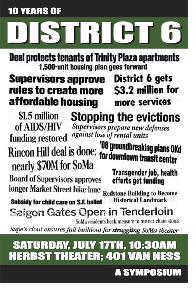
Luke Thomas at Fog City Journal had it first: Sup Chris Daly’s progressive primary for district six didn’t work out. But there will be a District Six Symposium at the same place, at the same time. Daly told me that the primary hadn’t exactly morphed into the symposium: “I’ve been planning to do a symposium anyway, and I scheduled it for that day because, well, I had the day free.”


He had the day free because his call for a primary among the progressive candidates in the district pretty much collapsed when most of them said they weren’t interested. I never quite saw this as working out, but I give Daly credit for trying to do something to prevent the competing progressives from fighting (and wounding) each other and allowing a more moderate candidate to win his seat. In the end, he said, “I’m just one guy, and I didn’t have to power to prevent a train wreck.”


Of course, a primary battle could have had the opposite effect, stirring up competing negative campaigns. And that’s what we simply have to avoid this fall. With ranked-choice voting, Debra Walker, Jane Kim and Jim Meko don’t have to run the kinds of campaigns that would cost the district its progressive representation. But if things get nasty, that could easily happen.


In District Five in 2004, the progressive candidates (and lord, there were a lot of them) pretty much all agreed to keep it positive and civil, and it worked. If the D6 symposium can lead to some discussion of how the candidates can work together, it will be worthwhile.


In the end, I supposed it’s too much to ask people who have decided they really want to be supervisors to think about the progressive movement first, and their own ambitions second. But they could try.

“No new taxes,” but fees and restrictions may apply

The agenda for the June 29 Board of Supervisors meeting reads like the fine print of a credit card statement, with fees piled upon more fees.  Mayor Gavin Newsom is proposing a slew of increases to sums that must be forked over for a wide array of city services or permits as a way to bridge a gaping budget gap. With major cuts to critical services in the face of a dramatic revenue shortfall, it’s not surprising that the city is tightening its squeeze to make up for some of the damage.

Some of the proposals make a certain amount of sense. There are higher fees proposed for an underground parking lot at Golden Gate Park, which could potentially help dissuade motorists and promote more environmentally friendly transportation options. There are higher fees for tow truck operators, which most anyone who’s ever involuntarily had their car towed could get behind. And the fee for discharging a cannon may go up from $400 to $636. While we’re pretty sure that last one is more likely to irk people who attend military ceremonies, we nonetheless take delight in imagining a rambunctious crew of pirates spilling into the board chambers to oppose it.

But this roster of Newsom’s new hidden fees begs an important question: Why is a mayor so adamantly against raising taxes bent on vacuuming more money out of the pockets of small business owners with higher fees? After all, many of these proposed increases will squeeze struggling, Mom-and-Pop businesses just a little tighter. City permits for auto wreckers, billiard parlors, junk dealers, and massage establishments may go up significantly. The fee for taking an EMT course may get higher. Permits for selling food on the street, driving a pedicab, dealing in second-hand auto parts, or operating a shooting gallery could also increase. Even the annual permit fee for street artists (several of whom we wrote about in our Streets Issue) is getting more expensive.
 
The list of fee hikes is on the agenda for Tuesday’s meeting, and was referred to the full board by the Budget & Finance Subcommittee. Supervisors recently proposed a number of new revenue generating measures including a nickel-per-drink tax on alcoholic beverages, an increase to the hotel tax, and a restructuring of the business payroll tax.

“There are no new taxes in this budget,” Newsom declared during a June 1 announcement in which he unveiled his 2010-2011 budget. “I know some folks just prefer tax increases. I don’t.”

But why reject taxes outright and then quietly propose a bunch of fees that will place a higher burden on the individuals they impact?

“No new taxes” may sound like music to the ears of a public awash in financial woes, but Newsom’s hidden fees are not unlike taxes. Under this philosophy, it’s not desirable to ask everyone to pitch in an extra nickel the next time they buy a cocktail, but there’s no problem with asking the bar to fork over hundreds more annually for a health inspection. That doesn’t seem to be as simple as a campaign-ready “no new taxes” slogan, but then again, there’s a reason credit card companies bury their hidden fees in the fine print.

SF Human Services Agency occupied

7

“Human Services Agency occupied” was one of the premier tweets on the streets of San Francisco this afternoon, as members of Direct Action to Stop the Cuts DASC) occupied 170 Otis Street to pressure the city to find an adequate place to house sixty homeless people displaced by the closure of the night shelter at 150 Otis.

Folks with DASC reportedly say they applaud the fact that this shelter is slated to be converted into permanent housing for homeless veterans in 2012, but condemn that nearly five dozen people are being pushed onto the streets tonight. Stay tuned.

SFBG Radio: Should the Pride Parade boycott California?

2

Today at SFBG Radio, Johnny argues that all pride celebrations should be cancelled in California until the state recognizes same-sex marraiges. Tim begs to disagree. You can listen after the jump.

sfbgradio6/28/2010 by bgedit

Bill Clinton suggests Navy blow up BP well

5

Holy smokes! Clinton wants Navy to bomb B.P.’s well. He’s not talking nuclear. Yet. Guess fireworks won’t be the only thing going off July 4.

Mirkarimi wants state franchise fee change

1

Sup. Ross Mirkarimi has introduced a resolution calling on the state Legislature to reform the law that allows Pacific Gas and Electric Company to pay a miniscule fee, in perpetuity, for the right to run its lines, poles and cables on and below the city streets.


The franchise fee was signed in 1939, and requires PG&E to pay just one half of one percent of its revenue to the city. Berkeley charges ten times that much. But since the deal has no expiration date, the supervisors can’t renegotiate it.


If San Francisco raised its fee to 5 percent for both electricity and gas the city would pick up an extra $50 million a year.


Both state Sen. Mark Leno and Assemblymember Tom Ammiano have told us they’re looking at ways the state Legislature could end perpetual franchise deals.


Live Shots: San Francisco Pride Parade and Celebration, 06/27/2010

0

Who could have asked for a more delicious day than this Sunday to celebrate Pride? The amazing weather was perfect for parasols, skimpy speedos, and a few buckets of body glitter. The parade, celebrating it’s 40th year, drew hordes of spectators who sandwiched themselves up and down Market Street for miles. It was exciting to see such a diverse audience and also a variety of groups participating in the parade, from politicians and coalitions to drag queens and gigantic human cupcakes.