SFBG Blogs

D8 debate: “Filling Harvey’s Shoes”

0

Editors note: I ran out of space for opinion pieces this week (endorsements just ran too long) so I’m posting this timely oped here.

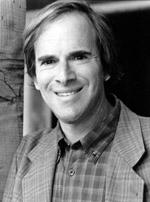
By Jeff Sheehy

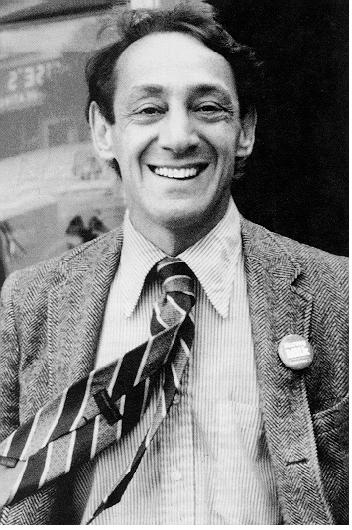
Harvey Milk Civil Rights Academy, a public elementary school in the heart of the Castro, is hosting a debate between the four candidates for District 8 Supervisor on Friday, October 8 at 7 pm.   The school, formerly Douglass Elementary, was named for Milk in 1996. 

The community that comprises the school has adopted an unique mission to honor Milk’s life: to empower student learning by teaching tolerance and non-violence, celebrating our diversity, achieving academic excellence, and fostering strong family-school-community connections.
 
The theme of the debate—“Filling Harvey’s Shoes”— centers on the values inspired by Harvey Milk’s life that have now been enshrined in the mission of the school named after him. Cynthia Laird, the editor of the Bay Area Reporter, and Christina Velasco, principal of Harvey Milk Civil Rights Academy, will moderate, asking questions themselves, taking questions from the audience and reading questions submitted by Harvey Milk students.

One of the candidates was quoted in this paper a couple of weeks ago saying about the race: “It’s a definitional fight about what the queer community is about in 2010.”  This debate offers the candidates the opportunity to directly address this “definitional” question.

In many ways, the LGBT community is at a crossroads. For those with good jobs and good incomes and the means to rent or own a house in District 8, much of the struggle for LGBT civil rights in San Francisco must feel more like history than a critically important issue for someone who seeks election in his former district.

However, I wonder if Harvey’s oft-referenced kid from Altoona hopping a bus to San Francisco in search of freedom would feel the same way. The kids arriving here are much more likely to be kids of color, transgender or undocumented. To what degree does District 8 or even San Francisco offer a place to live or real economic opportunity? Is Harvey’s legacy a gentrified Oz, great for those who can afford it, but little solace to those desperately seeking haven?

Plus, what is Harvey’s larger legacy?  Harvey Milk Civil Rights Academy defines one vision. Kids from under-resourced areas and under-represented communities are actively recruited to the school as part of its commitment to teaching tolerance and diversity. The LGBT experience is presented as one among the many struggles that communities of color, women, the undocumented and working people have fought in America to create a more just and tolerant society. Consciousness of shared struggle and the necessity of creating community amongst the disenfranchised and marginalized are crucial values inculcated at the school. The school’s pledge sums up this vision of Harvey’s legacy:  “I pledge allegiance to the world, to cherish every living thing, to care for earth and sea and air with peace and freedom everywhere.”

My husband and I thought deeply about community and values when we were deciding where to send our daughter to school. We felt that our daughter should begin to understand the world and how to act in it in the context of struggles for civil rights and social justice.  

I hope others in the LGBT community will take a moment and think about their values, hopefully attend the debate on Friday, and recognize that the election for this seat is about the future direction of the community.

Indeed, next May would have been Harvey’s 80th birthday and one wonders which candidate he would have endorsed and in what direction he would have advised the LGBT community to take had he lived.

Sheehy is the parent of a kindergartener at Harvey Milk Civil Rights Academy 

The debate will be held in the auditorium at Harvey Milk Civil Rights Academy at the corner of 19th and Collingwood, in the Castro.

Torture: The new national pastime

2

SAN FRANCISCO (Oct. 6th)  — The return of liver cancer has afforded me an unexpected opportunity to contemplate the National Pastime. 


As I emerged from a bout of chemotherapy in late September, the San Francisco Giants were locked in a neck-and-neck drawdown with the San Diego Padres for a post-season play-off spot and Baghdad-by-the-Bay was abuzz with pennant fever. 


The Padres, who had dominated the National League West since the early days of the 2010 season, had suddenly plummeted into an unprecedented funk, at one point losing ten straight games in a row.  Bare percentage points separated the two teams as they entered the final weekend of the pennant race with the local heroes only having to win one out of three games here at home. 


They, of course, lost the first two and die-hards cringed that déjà vu was about to drop all over again.  I have been a Giants fan since the day when the Polo Grounds, a misshapen stadium in upper Manhattan, was their chosen field of battle, and the scenario is an achingly familiar one for me. 


Suddenly, the wind had been sucked out of the Giants’ pennant hopes.  The orange “rally rags” that management distributes free of charge to the aficionados (it’s good for business) stopped twirling, altering wind currents over AT&T park.  Those idiotic panda hats issued during the pre-season to hype the disappointing exploits of third baseman Pablo Sandoval AKA “Kung Fu Panda,” lay dormant splayed upon the scalps of the fanaticos.  No one “Feared the Beards,” the fake whiskers that transform mild-mannered fans into facsimile Mad Bombers and remind the opposition that ace reliever Brian Wilson would soon be on the mound to rescue the locals.  No kind of mumbo jumbo seemed to snap the Giants out of their trance.


I saw the first hand-scrawled signs during the late innings of the Friday night series opener.  As usual, the Giants had been unable to put two hits together and were deep in the hole in yet another nail-biter with the Padres. Two young people of indeterminate sex squatted down by the first base boxes to display their homemade handiwork.  The wording, as best as I can remember, underscored that it was “torture” to be a Giants’ fan these days. 


“Did you see that?” I turned aghast to my fellow couch surfer, the notorious peoples’ lawyer Dennis Cunningham.  Dennis, who of late has been trying to prevent the feds from destroying fragments from the bomb that blew up Judi Bari and her Earth First! comrade Daryl Cheney in 1990, reasoning that that the threatened disappearance of the evidence would absolve the FBI of complicity in the matter, was similarly provoked.


Let me delineate the reasons for our dismay.  Torture, in my dictionary, means the egregious and prolonged physical abuse governments inflict upon those they suspect of harboring information detrimental to their interests.  When I speak of torture, I mean Abu Ghraib, Bagram, Guantanamo, CIO “black sites” — not an afternoon outing at Pac Bell Park. 


When I speak out against torture, I mean waterboarding, having your fingernails pulled out one by one and your scrotum sliced by a razor, electrical currents shoved up your anus, extreme sensory deprivation — not having to endure a close shave out at the old ballgame. 


When I speak out against torture, I think of the unending agony the Israelis inflict upon the Palestinian people, the castration of those who marched with Monsignor Romero, Victor Jara’s skull being shattered on the soccer stadium steps in Santiago — not Buster Posey and the “tools of ignorance.”


As the weekend progressed and the Giants continued to lose impossibly low-scoring games, the “Torture” syndrome gained increasing currency. Legions of Giants fans were now showing up to wave signs spotlighting the torture motif.  Now the offending word was spelled out in Giants’ colors and decorated with hearts and care bears.  Both the Chronicle and the Examiner (free — and worth every penny of it) were running the T-word in their leads. 


The kicker was a phone call from an old friend who has marched through this city for years decrying torture, injustice, and imperialist occupations.  “It’s torture to be a Giants fan,” she chirped merrily.  I just about did a Mike Tyson and bit her ear off to reciprocate. 


The mindless drumbeat mounted last weekend at AT&T Park trivializes torture, transforming horrendous crimes against humanity into a sports slogan to be inserted somewhere between the Stars Spangled Banner and God Bless America and further converting professional sports into a willing shill for U.S. domination of the Planet Earth.  First and foremost, baseball is a business and I expect torture will soon be deployed to sell everything from beer and sushi to seasons’ tickets.  The possibilities are depressingly endless.


“FANS JUMP ON THE TORTURE BANDWAGON,” the Morning Chron, about the poorest excuse for a daily newspaper in this benighted land, headlines this morning (Weds. Oct. 6th), guaranteeing that torture will be a part of the Giants’ sales pitch as they enter the second round of the play-offs.   Perhaps my illness has magnified the malaise but this past weekend’s low-jinks seem to underscore the premise with which I launched this screed: Torture is indeed the new national pastime.  


John Ross, author of “El Monstruo – Dread & Redemption in Mexico City,” will be covering the new national pastime while recuperating from chemotherapy.

The Performant: Dies Arses have it

0

Local Arts: Arse Elektronika weekend and arses up at Dodgyfest III

Couldn’t make it out to the “Oscars of computer art” at the Ars Electronica Center in Linz, Austria? Me neither, but thanks to Viennese techno-prankster collective monochrom, I could stay in San Francisco and experience a slightly more warped version at the 4th annual Arse Elektronika instead. An exploration of sex, tech, and space — inner and outer — Friday evening’s lineup of lectures and presentations turned the Center for Sex and Culture into a grown-up game of show-and-tell.

First up was “Spaceman” Sam Coniglio of the Space Tourism Society presenting on one of his favorite topics: “Sex in Space”. Unfortunately, as Coniglio notes, this is not NASA’s first priority as a research topic and the jury is out on whether or not anyone has ever successfully joined the 217-mile club or not. (If so, “they’re not telling.”) But such lack of information hasn’t stopped the hopeful from designing prototypes of gear that might assist in future feats of space sex. With the help of volunteers, Coniglio showed off his own favorite, a plushy “snuggle tunnel”—like a giant slinky covered in velveteen.

Jason Brown’s extremely entertaining talk, “The Endosymbiotic Cha-Cha” took the concept of sex in space from the outside in, beginning with the premise that humans may fantasize about boinking a reasonably attractive, bipedal extraterrestrial race, but in reality, scale might be the real barrier. Perhaps alien life forms already live among us (or in us!) at a microscopic level. Are multiplying viruses getting it on while we suffer the side effects of their fevered touch? Wrapping up the evening was Heather Kelley, aka moboid, presenting an iPhone app she designed called Body Heat which allows the user to manipulate the speeds of a vibrator using a touchscreen. She showed off its incidental percussive potential along with Jordan Gray, or starPause, who accompanied her with electronic blips and sampled bits.

Such sexoterica was good food for thought, but I was feeling the need to get down and dirty. Luckily, Dodgyfest III was there for me. Ostensibly a birthday celebration for prolific rock photographer Mr Dodgy (Neil Motteram), Dodgyfest featured cake, t-shirts, and hi-octane rocking. Girls with Guns! Meat Sluts! La Plebe! It’s pretty hard to think of a feistier lineup, but just for kicks, Neil threw in a few extra tunes as frontman for the (very) occasional Bloody Hells. Taking a tongue-in-cheek page out of the Ramones’ rock-and-roll high school primer, the pseudononymous Meat Sluts (SFBG-recognized “Sluttiest Rockers”)  bear monikers best suited for the bbq stand (Scarlet Spamchop anyone?) and their set list was equal parts carnivorous and lascivious — man-meat featuring large in the lyrics. Turning up the heat was the ever-smokin’ La Plebe, who rather wholesomely avoid overtly sexual themes in their lyrics, though they always throw in “Dirty Old Town” for the punters. But their overriding message of personal liberty is always an aphrodisiac to the spirit, and their skintight ska-inflected riffs would make Buzz Aldrin wanna mosh. Space-sex fetishists take heed, sometimes the most fun you can have is with your clothes on after all.

Street Threads: Look of the Day

0

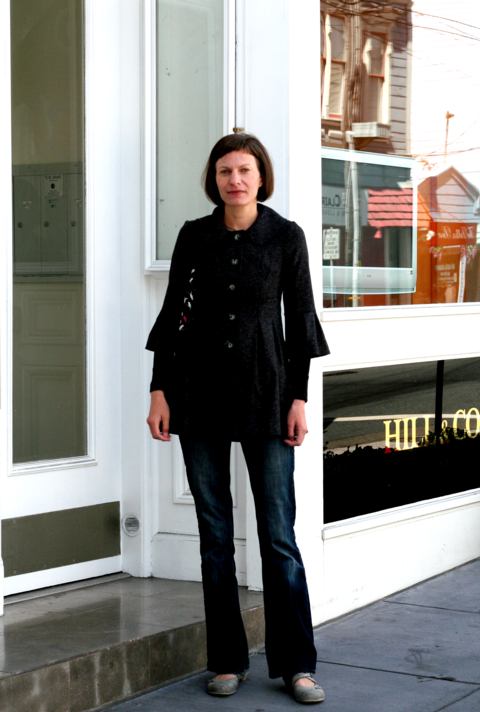
Today’s Look: Izzy, 24th Street and Sanchez

Tell us about your look: “I’m a mom so I like to wear what’s comfortable and practical.”

Chron drops the “i” bomb, again

2

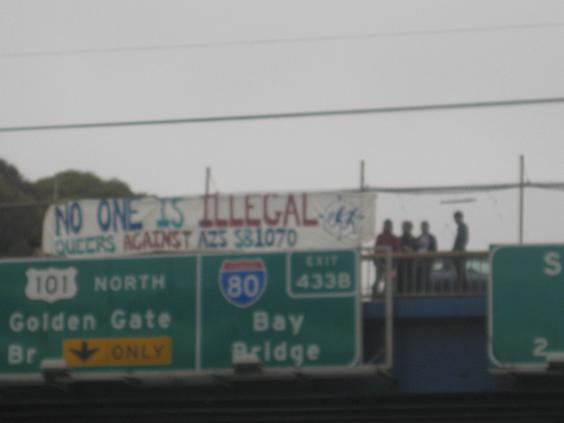
Today’s article on the front page of the Chronicle’s Bay Area section doesn’t use  “illegals” in its actual story about undocumented students and in-state college fees.

But it does use it in its headline.

This headline-text disconnect suggests that Chron reporter Bob Egelko wasn’t part of the decision to run today’s “Tuition break for illegals targeted” headline.

That’s the good news. The bad news is that it’s 2010, but some folks still don’t get what’s offensive about using the “i” word when referring to immigrants without paperwork—a situation that doesn’t make them “illegal,” no matter what right wing fear-mongers say.

As the National Association of Hispanic Journalists points out, in its guidelines for covering immigration, being here without paperwork is a civil violation, not a crime.

In an article published in September 2009, NAHJ said it was troubled with a growing trend in the news media to use the word “illegals” as shorthand for “illegal aliens”.

“Using the word in this way is grammatically incorrect and crosses the line by criminalizing the person, not the action they are purported to have committed,” NAHJ stated, as it called on the media to never use “illegals” in headlines.

“Shortening the term in this way also stereotypes undocumented people who are in the United States as having committed a crime. Under current U.S. immigration law, being an undocumented immigrant is not a crime, it is a civil violation,” NAHJ continued. “Furthermore, an estimated 40 percent of all undocumented people living in the U.S. are visa overstayers, meaning they did not illegally cross the U.S. border. In addition, the association has always denounced the use of the degrading terms ‘alien’ and ‘illegal alien’ to describe undocumented immigrants because it casts them as adverse, strange beings, inhuman outsiders who come to the U.S. with questionable motivations. Aliens is a bureaucratic term that should be avoided unless used in a quote.”

I’m pretty sure there’d be an uproar if the Chron used the “n” word to describe black people or the “f” word to describe gays—unless they were quoting racists or homophobes. So, please, guys, get a clue and stop dropping the “i” word, even if it takes up less room in your headlines.


Get a clue, Randy Shaw

29

I read BeyondChron every day, and Randy Shaw, who operates the site, and Paul Hogarth, his managing editor, often have interesting commentary. But I’m constantly annoyed by people who run what by any stretch is a journalistic operation, but don’t follow the basic rules of (even alternative, activist) journalism: When you’re going to say something nasty about somebody, you call that person for comment.


Randy never called me, or Steve Jones, or Bruce Brugmann, before he launched an attack on the Guardian as part of a political machine. If he had — or if he’d done any reporting work and called around town — he might have learned something.


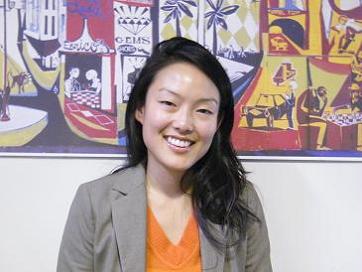
Randy’s argument is that the “machine” — including the Bay Guardian — is trying to block Jane Kim’s election as D6 supervisor. Let’s examine that for a minute.


There are plenty of people in San Francisco who would love to have a political machine. But it’s just not happening. The very fact that Jane Kim has the support of so many progressives — including the Board president, David Chiu, and Supervisors Eric Mar and John Avalos (all part of what Shaw calls the “machine”) suggests that nobody has to clout — not even me — to tell a candidate whether she can run for office, to control (or cut off) campaign contributions, or to wire an election.


In the days when Willie Brown ran San Francisco, the machine really did keep people from running for office. It really did close off avenues to political advancement. And if the machine was against you, it was really hard to raise money. If Brown were still the boss, and he didn’t want Kim to run, she would have been frozen out of much of the support and money she has today. Instead, Brown was at her campaign kickoff — and nobody’s manged to intimidate her many supporters and campaign contributors.


And guess what? The Guardian — the axis of the machine evil trying to freeze out Kim — endorsed her as our second choice.


I stand by what I said months ago — there’s nobody in San Francisco today — and no cadre or group — with the clout to operate as a political machine.


Nobody can line up six automatic votes on the Board of Supervisors. Even the progressives on the Democratic County Central Committee can’t always seem to get it together (note that Aaron Peskin, the chair and supposed machine honco, supported Tony Kelly for supervisor, and the DCCC didn’t put Kelly on its slate).


Right now, power in this city is fairly diffuse. That’s both a good and a bad thing. Good because machines are exclusionary, bad because it means the progressives can’t always function on a level that gets the right candidates elected and the right legislation through. Good because the left in this city is aggressively, almost happily disorganized and politically diverse, full of characters, voices, interest groups, candidates and elected officials who don’t always agree with each other and take orders from nobody. Bad because when we’re disorganized, we tend to lose.


Jane Kim didn’t get the DCCC endorsement. Nobody talked to me about that; I’m not on the panel and none of the members called to ask my advice. I would have said what the Guardian said in our endorsement package: There are exactly two progressive candidates who are qualified to be the next D6 supervisor, and their names are Debra Walker and Jane Kim. I still don’t understand why Kim entered the race against an established candidate with whom she has no substantial policy disagreements; I think that, before Kim moved to the district and entered the race, Walker was the clear consensus candidate of progressives, and as a matter of strategy, since Kim and Walker are both on the same side on the key issues, it might have made more sense for the left to unite behind one candidate.


But that’s not the issue anymore; Kim had every right to run, and now any cogent, honest ranked-choice voting strategy includes both her and Walker.


That statement alone makes clear that the Guardian’s not exactly in synch with the DCCC or any of Shaw’s other “machine” operations. The DCCC decided that the top candidate in D10 should be DeWitt Lacy, and left Tony Kelly off the slate entirely. We endorsed Tony Kelly as our first choice. The labor activists on the DCCC (and in the “machine”) are dead set against Margaret Brodkin winning a seat on the Board of Education; we endorsed her.


I would have explained our positions to Randy Shaw if he’d called or emailed me; I’m really easy to reach. And slapping people around without talking to them is bad journalism and bad progressive politics. Randy and I have disagreements, but I don’t consider him the enemy; we’re both part of a larger progressive community, and while I love (and thrive on) disputes in that community, we ought to be civil about it.


(I always contact Randy before I write about him. I did that yesterday, and asked him a series of questions, including why he never called me for comment. His non-response: “I write 3-4 articles a week and have published three books. You are free to quote from anything I have written without asking me about it.”)


Herb Caen used to say (somewhat in jest) that if you “check an item, you lose it.” In other words, once you start talking to everyone involved in an issue, you sometimes find out that the story isn’t at all the way you heard it.


That’s what should have happened with Shaw’s completely inaccurate claim about Steve Jones.


BeyondChron says that Jones was trying to get Kim to challenge Carmen Chu in D4 because they’re both Asian-American, ” in effect saying that as an Asian-American Jane should run among ‘her people,’ implying that demographics prevailed over issues and political stands.”


I talked to Steve about it; he did, indeed, talk to Jane Kim when Kim was shopping around for a district to run in. What he told her — and would have told Randy Shaw — was that it would be great for Kim, a school board member with citywide name recognition, to knock off Carmen Chu and expand the progressive majority rather than going after a strong progressive candidate in a solidly progressive seat. Race had nothing to do with it.


In fact, just about everything we’ve written about Kim comes down to the same argument: Sometimes, you have to think about the larger progressive movement, not just about yourself.


I sometimes wish the all the people who say the Bay Guardian is part of a powerful Peskin Machine were right: I’d love to pass a city income tax, hit the wealthy up for about half a billion dollars a year, eliminate the budget deficit without cutting services, municipalize PG&E (and have municipal cable TV and broadband), ban cars on a lot of streets, create 25,000 units of affordable housing … I’ve got a great agenda. And the Guardian’s so powerful that none of it ever happens.


Randy Shaw and I were both around for the tail end of the Burton Machine, and I think he gives the brothers Phil and John Burton too much credit. They were great on national issues, progressive champions in Congress. But they weren’t progressive leaders on local issues.


The Burton Machine was nowhere on the fights against overdevelopment and downtown power. Phil Burton rarely used his clout to support progressive causes and candidates at home. The machine got Harvey Milk fired from a commission appointment when he announced he was going to run for state Assembly against Art Agnos. The machine came together to make sure that Nancy Pelosi, an unknown who had never held office, got elected to Congress instead of Harry Britt, the most progressive elected official in the city at the time. The machine never helped out on public power, the numerous anti-highrise initiatives, rent control, or much of anything else that challenged the real estate interests like Walter Shorenstein, who gave vast sums of money to the Democratic Party.


Yes, George Moscone, a Burton ally, supported district elections, but once he got elected he stopped challenging downtown power.


And, of course, when Willie Brown emerged as heir to the machine throne, he was a disaster for progressives. He also at one point controlled an unshakable majority on the Board of Supervisors; he could call up votes whenever he needed.


The progressives in San Francisco today share an ideology on local issues — tough local issues that involve powerful economic forces at home.


And honestly, Randy: It’s not all about Jane Kim.


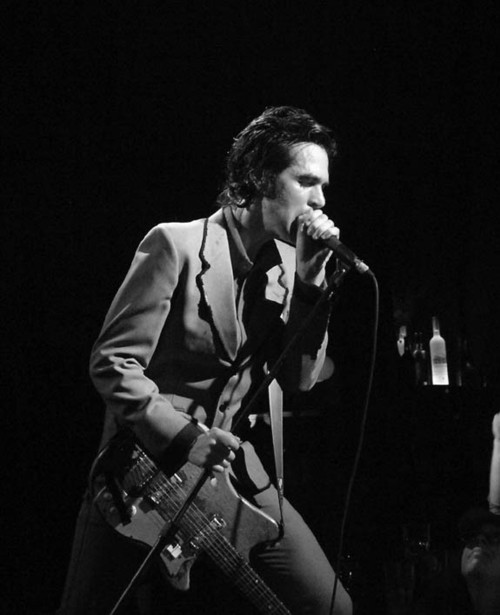
Live Review: Jon Spencer Blues Explosion detonates at Bimbo’s, 9/29/10

0

Walking up to Bimbo’s and seeing “Jon Spencer Blues Explosion” sprawled across the marquee in big, bold font, I kept thinking how crazy it was that the group hadn’t performed in SF in over eight years. Though just coming off a five-year hiatus, JSBX has been spewing their sweaty mix of punk, blues, and good old-fashioned rock and roll for nearly two decades. With all three members of the New York trio well on their way into middle age, last Wednesday (9/29/10) was a reminder that these guys were doing their thing long before groups like the White Stripes or the Black Keys were even blips on the radar. And beyond that, it proved they haven’t lost a single step.

San Francisco’s Thee Oh Sees opened the evening with a solid set of psych-rock tunes. Sounding like a Nuggets compilation jam-packed along side-squeals of distortion and reverb-drenched vocals, the band set the table nicely for the evening’s headliners. Frontman John Dwyer led the charge, despite dealing with some mic and guitar technical issues. When the band allowed themselves to stretch their legs, like on a tension-building groove late in the set, their attention to dynamics and song structure really came to the foreground. I kept thinking how much better they’d probably sound while bursting eardrums at a dank basement party, but the more posh confines of the Bimbo’s stage still allowed them to get their point across.

Throughout a nearly two-hour set, Jon Spencer Blues Explosion struck a perfect balance between the fragmented, lo-fi blues-rock deconstruction of its early material and the more accessibly polished version found on later albums. As Spencer and Judah Bauer traded off beefy guitar riffs, it became clear why these guys have never needed a bassist. Spencer’s voice sounded just as awesome as on record, and came complete with his trademark rockabilly-style slapback effect on the mic. Drummer Russell Simins was an animal behind the kit, keeping clockwork-perfect time while maintaining patterns as hard-hitting as they were tactful and funky.

My favorite aspect of the show, however, was the way the set was structured. The band went from song to song with a sense of reckless abandon, one song starting immediately after — or segueing into — another. Only Spencer’s pauses to yell “Blues Explosion!!!” (I swear he must’ve uttered those words 75 times) into the mic broke up the flow now and then. At times, a whole song wasn’t even played to completion before the band would suddenly change gears and start playing something different altogether. It all hung together wonderfully — especially during a particularly memorable transition from “Wail” into 2002’s Plastic Fang highlight “She Said” — and brought across a sense of JSBX’s early reputation for wild spontaneity. Other highlights included early hit “Afro” and Bauer taking over vocal duties for “Fuck Shit Up.”

After blowing through close to around two-dozen songs, the set unfortunately lost some momentum during a 30-minute encore. But with eight years between San Francisco sets, it’s tough to blame JSBX for wanting to get their kicks in as long as they could.


Getting out the in-jail vote

1

Sheriff’s Department spokesperson Eileen Hirst reminded me today that 75-80 percent of the people behind bars at the San Francisco County Jail are still in the pre-trial stage. Hirst first shared that stastic with me earlier this year, when the jail got dumped from the list of buildings that will be earthquake retrofitted, if voters approve Proposition A this fall.

And today the percentage resurfaced in the context of efforts to get out the vote. Because if your case is pre-trial, this means that you have not yet been found guilty and so are still eligible to vote—provided that you are not on parole for a felony conviction. And with several races and measures still in play on the ballot, this means that in-jail voters could be of pivotal importance this November. 

Either way, Hirst tells me that the Department of Elections and the Sheriff’s Department are  working hard to educate inmates about their voting rights.

“We have an office called Prisoners Legal Services, where they do voter education and facilitate applications for absentee ballots,” Hirst said. “We work closely with the Department of Elections to make sure prisoners are aware of their rights, and we carry applications and absentee ballots back and forth, between Elections and the jail.”

According to the Department of Elections’ Voting Guide for Ex-Offenders, a person who has been convicted of a felony can still register and vote if they have completed their prison term for a felony, including any period of parole or supervised release.

are on federal or state probation; and/or are incarcerated in county jail as a condition of felony probation or as a result of a misdemeanor sentence.

“If you have been convicted of a misdemeanor, you can register and vote, even while on probation, supervised release, or incarcerated in county jail,” the Elections Department brochure states.

“To restore your right to vote if you have been convicted of a felony, you only need to complete and return a voter registration form,” the brochure continues. “No other documentation is required.”

Hirst estimated that on any given day, there are 1800-1825 prisoners at the county jail, but she did not have up-to-date information on which districts these prisoners are from.

“Years and years ago, we did a pin map by hand, and we found that they came from every district in town, but were concentrated in the Bayview, the Western Addition and the Mission,” Hirst recalled.

She noted that the county jail population is 50-55 percent African American, 25-30 percent Latino, and the remainder is “white, Asians and other”—statistics that suggest that the D10 and D6 races will likely be the most impacted by the in-prison vote.

She also noted that C.L.A.E.R. executive director Sharen Hewitt has been one of the leading figures in San Francisco in terms of getting out the in-jail vote.

“Sharen really made it a priority and educated a lot of prisoners,” Hirst said.


Opinion: For Democratic unity

6

We ran out of space in today’s print edition and couldn’t publish either of the two opeds I wanted to run, so I’m posting them here. The first one is by the chairman of the SF Democratic Party.

By  Aaron Peskin

As one of the most Democratic cities in California, San Francisco has a special responsibility to make sure we help elect a Democratic ticket on November 2nd.  We always take that responsibility seriously – but this year we will have the pleasure of helping elect our own to statewide office: Gavin Newsom as Lt. Governor, Kamala Harris as Attorney General and even native son Jerry Brown as California’s next Governor.

Because so many of our nominees are from San Francisco – and because San Francisco is so Democratic – and because so many of the statewide elections are so, so close – what we do to turn out the vote here in San Francisco could very well be the difference between victory and defeat for many statewide candidates. 

A quick look at the numbers shows just how important San Francisco could be in this year’s statewide races. In November of 2008, a total of 388,112 San Franciscans cast ballots. In November of 2006, the last gubernatorial contest, just 253,719 San Franciscans voted. That is a difference of 134,393 votes.

Local Democratic Party leaders agree a coordinated campaign could turn out at least 20% of these “occasional” voters and probably many more.  That means we could add a minimum of more than 25,000 votes from this Democratic base to the statewide total.

In a year in which the polls show razor-thin margins separating the winners from the losers, a 25,000 vote margin could make the difference between Democratic policies like support for schools, investing in green jobs and protecting a woman’s right to choose and the Republican reaction supported by Meg Whitman, Carly Fiorina, Steve Cooley and Able Maldonado.
Considering how important Democratic unity is to our city and our state – we need to pay it more than lip service. And that’s what our local party is trying to do.

It is certainly true that there are important local issues upon which we disagree. For example, I certainly take issue with some of Mayor Newsom’s positions – such as his so-called Sit/Lie ordinance. I know that he takes issue with many of my positions.

There are many in our party unhappy with Newsom for putting an attack on the ballot on the elected members of the local party in this crucial election.  Again, I know Mayor Newsom has expressed his displeasure with the local party for not supporting some of his candidates and positions.

But these local disagreements are small in comparison to what is at stake for Californians. They are actually small compared to what is at stake for San Franciscans – a city that relies on state aid to support our schools and colleges, much of our local health services and many other important programs.

That’s why unity is the only sensible policy in this crucial 4-weeks of voting until the November 2nd election. And that’s why I have a simple and genuine invitation to Mayor Newsom and the other statewide candidates.

Come help us help you.

We are gathering every day at our headquarters at 1261 Howard Street to knock on doors, register voters and make phone calls to get out the vote.  Come show with your presence that turning out the vote is so important that we will turn aside both petty differences and legitimate policy disagreements on local concerns.

Across California our opponents are attacking “San Francisco” Values. Come show that a core value of San Francisco Democrats is uniting to support the greater good.

The family Yañez and their evolving altars

0

To hear father and son artistic team Rene and Rio Yañez talk about San Francisco’s Day of the Dead celebration is to realize how much the holiday has taken on its own light here in the city. “It’s about personal experience, but also politics,” Rene says. The duo have crafted another year of homage to the dead around us — and in so doing also reflect a shifting scene in San Francisco art.

No art event in the city reflects evolving tradition more than the Yañezs’ yearly exhibit of Dia de los Muertos altars at SOMArts Cultural Center (opening Fri/8). As the three of us sit in Rene’s office at SOMArts next to the cow brain in a mason jar on top of which the elder Yañez — the center’s director of special projects — has stacked a pair of headphones and a plush Taco Bell chihuahua, Rene tells his son and myself about the first public Day of the Dead celebration in San Francisco.

Rene, a seminal figure in the Mission art scene, held the first year of the altar installations in the early ’70s at his neighborhood community art hub from that time, Galería de la Raza. In an area full of Central and South American activists who had lost their home due to oppressive regimes and political exile, he and other artists figured it was time to start acknowledging the Mexican holiday of death, parody, and remembrance in their new community. 

In Mexico, Dia de los Muertos is celebrated by the gathering of family, of processions to the cemetery to mark loved ones’ graves with ofrendas of marigolds, sugar skulls, and refreshments. In the Mission, that feeling of community and import was to be replicated with a distinctly San Franciscan twist. “We talked about creating a ritual, ceremonial exhibit,” Rene says.

In those early days, it was mainly the Latinos that lived in the neighborhood that came to see the altars that Yañez and fellow artists created in the Galería. But soon, word of the popular exhibit spread, and it became a teaching moment for those outside the culture. School groups would come by for a field trip, occasions for which the Galeria printed out Day of the Dead lesson plans. 

Still, not every one immediately understood the holiday’s significance. “It’s not really a morbid holiday,” Rene tells me. “People use it to make fun of death, some people make political statements, some people use humor.” That approach “made some people preoccupied,” Rene says, a smile flickering over his face. “They were seeing skulls and things like that.” “It’s about celebrating death as a part of life,” Rio supplies.

Of course, things have changed over the last forty years. Nowadays, the esoteric procession that began in the Mission in the ’80s to mark the holiday has grown into a 15,000 person yearly event, and has been jokingly termed “Day of the Dead Gringos” and “Gringos Gone Wild” by some local blogs for the Burning Man-style theatrical costumes, stilting, and concept artwork contributed by those with nary a drop of Latino blood in their body.

Which, Rio Yañez says, is just fine. Rio – who dad Rene jokingly calls “a cholo hipster” – was born and raised in the Mission, watching his family stave off eviction notices during the dot com boom and beyond during times when rent prices in his neighborhood have soared. Unlike many of his childhood friends, he has chosen to remain in the Mission, and having graduated from CalArts, now partners with his father at SOMArts. 

In the Day of the Dead celebration’s cultural inclusivity, Rio finds a positive benefit for the city’s diverse tribes. “It’s a way of sharing culture – even with all the drunk hipsters just having a good time marching there’s still a community spirit.” When I ask him whether the Mission Latino community can still claim ownership of the procession, he replies diplomatically. “The neighborhood has changed so much — the parade is a reflection of that.”

Rene concurs. “I haven’t experienced a neighborhood that hasn’t changed,” he tells me.

That kind of cultural shift is reflected in the Yañez-curated SOMArts exhibition. Past years’ exhibits have paid homage to deceased family members, to the victims of disasters like Hurricane Katrina, and even to the artists themselves – last year one contributor passed away during the altar’s run at SOMArts, and her installation was augmented by fellow mourners to reflect the snuffing of a creative life. Although the papel picado and traditional iconography remain a part of the vast labyrinth of artists’ contributions at SOMArts, the things mourned and celebrated ring universal, hurts and hopes accessible to everyone present in the melting pot of the city.

This year, the Day of the Dead artists come from all over, and hail from all age groups. Some, like CJ Grossman, Susan Matthews, and Jos Sances have been working with Rene on the exhibit since the late ’80s. Others, like photographer Amanda Lopez, have been brought in by Rio, who is aiding in the transition to online culture, contributing his own photographic skills to the effort, and scouts talent from the younger artistic circles he runs in.

Which isn’t to say that Rene hasn’t taken advantage of some of today’s most cutting edge art technologies, including the Avatar-inspired mania for 3D. Before I leave SOMArts, he produces a sheaf of 3D renderings he’s created on the computer and a flashy pair of red and blue-lensed glasses – far more impressive than anything that I’ve been handed en route to Toy Story 3

I put them on, and a galaxy of Mexican masked wrestlers, women, and designs pop up at varying levels in front of my eyes. The images, Rene tells me, will be projected on the walls of the Day of the Dead exhibit to create a saturated visual experience. More evidence of tradition – and the family Yañez – gathering no moss in the name of art. 


Dia de los Muertos Exhibition: Honoring Revolution With Visions of Healing

(through Nov. 6)

Opening reception: Fri/8 6- 9 p.m., $5-10 sliding scale

SOMArts Cultural Center

934 Brannan, SF

(415) 863-1414

www.somarts.org


Quick Lit: Oct. 6-Oct. 12

0

Literary readings, book tours, and talks this week

Litquake 2010 goes out with a bang featuring novelists, scientists, poets, comedians, sexy storytellers, and more, culminating in this year’s not-to-be-missed Lit Crawl.


Wednesday, Oct. 6

“The Art of Narrative Nonfiction”
Much is said about how to write fiction, but what about non-fiction? This panel moderated by best-selling author David Ewing Duncan will discuss the techniques for turning a biography into a National Book Award Winner. Featuring Tamim Ansary, Frances Dinkelspiel, Richard Rhodes, and T.J. Stiles.
6 p.m., free
San Francisco Main Library
100 Larkin, SF
www.litquake.org

Bawdy Storytelling
Hear real people sharing their bona fide sexual exploits in ten minutes or less. Storytellers are an eclectic mix of authors, poets, comedians, actors, and regular people, including Tim Barsky, Stephen Elliot, Johnny Funcheap, Jow Klocek, Joe Kukura, and Morgan.
7 p.m., $10
Blue Macaw
2565 Mission, SF
www.litquake.org

“The Complex Societies of Ants and Honeybees”
Join Litquake and the California Academy of Sciences for a discussion led by two leading experts, Mark W. Moffett and Dr. Thomas D. Seeley, on our planet’s smallest and most complex social organizations. Co-sponsored by KQED, and moderated by KQED’s QUEST TV series producer Amy Miller.
7 p.m., $15
Morrison Planetarium
California Academy of Sciences
55 Music Concourse
Golden Gate Park, SF
www.litquake.org


“Dance, Intergenerational Trauma, and the Diaspora”
Learn about the Katherine Dunham Technique at this lecture featuring Eyla Moore, teacher at ODC, Dance Commons, Hip Line, and Dance Fitness Studio, and Aliyah Dunn Salahuddin, dancer and tutor in City College of San Francisco’s African American Scholastic Program.
3 p.m., free
City College of San Francisco
Ocean Campus
Rosenberg Library, Room 305
50 Phelan, SF
(415) 239-3854

Flight of Poets
Internationally renowned sommelier Christopher Sawyer pairs six talented local poets with six great wines carefully selected to illuminate their work. Featuring Camille T. Dungy, Robin Ekiss, Paul Hoover, Ada Limón, Zachary Mason, Christopher Sawyer, and Matthew Siegel.
7 p.m., $15 includes wine flight 
Hotel Rex
562 Sutter, SF
www.litquake.org

The Funny Side of Sex
Join Daily Show correspondent Kristen Schaal as she celebrates her first book, The Sexy Book of Sexy Sex, along with Scott Jacobson, co-author of the new book Sex: Our Bodies Our Junk, illustrator Michael Kupperman, and actor and writer Ted Travelstead. This evening of live and uncensored sex-humor unfolds at San Francisco’s legendary Cobb’s Comedy Club. Co-sponsored by Chronicle Books.
8 p.m., $15
Cobbs Comedy Club
915 Columbus, SF
www.litquake.org

Lit on the Lake
Celebrate East Bay writers at this litquake event featuring acclaimed novelists including Melanie Abrams, Elaine Beale Lucy Jane Bledsoe, Jacqueline Luckett, Lisa Braver Moss, and Kristin McCloy.
6 p.m., $5-$10 donation
Gondola Room
Lake Chalet
1520 Lakeside, Oakl.
www.litquake.org

100th Literary Death Match
Celebrate the kickoff of a worldwide Literary Death Match tour where judges, W. Kamau Bell, Mark Fiore, and Jane Smiley, will pass centurial judgment on a must-see lineup featuring readers Jason Bayani, David Corbett, Kari Kiernan, and Joel Selvin. Hosted by Todd Zuniga, Elissa Bassist, Alia Volz, and M.G. Martin.
7 p.m., $15
Elbo Room
647 Valencia, SF
www.litquake.org

Radar Reading Series: Litquake Edition
This monthly literary series brings in first-time novelists, playwrights, shoplifting poets, and riot girl historians for readings, followed by a Q&A session hosted by Michelle Tea. Featuring Chinaka Hodge, Tao Lin, Sara Marcus, and Beth Pickens.
6 p.m., free
Latino Reading Room
San Francisco Main Library
100 Larkin, SF
www.litquake.org

Thursday, Oct. 7

Booksmith Bookswap
Bring a book you passionately love but can part with and learn about dozens of new, fantastic books. Ticket price includes two drinks, appetizers, and a 20% discount card to purchase books after the event.
6:30 p.m., $25
Booksmith
1644 Haight, SF
www.litquake.org

Feminine Wiles
Hear witty women read from their most recent books, featuring Elif Batuman, Marisa Crawford, Katie Crouch, Thaisa Frank, Joyce Maynard, Kaya Oakes, and Shawna Yang Ryan.
7 p.m., free
Noe Valley Recreational Center
295 Day, SF
www.litquake.org

The International Homosexual Conspiracy
Author Larry-bob Roberts offers humorous insights into the absurdities of modern life and queer culture, from contemporary topics like mistaken first impressions, to sustainable yet unaffordable pants, and critiques of bourgeois mindsets.
7 p.m., free
Modern Times Bookstore
888 Valencia, SF
www.mtbs.com

Litquake Bites
Local food and books, two of San Francisco’s favorite pastimes, converge at this delicious and informative lunchtime event featuring presentations and tastings by four innovative food purveyors and authors including Sarah Billingsley, Gordon Edgar, Steve Sando, and Amy Treadwell.
Noon, free
Book Passage
1 Ferry Building, SF
www.litquake.org


Stories on the Stage
Hear short fiction stories about love lost, love never found, and love perpetually out of touch with authors Daniel Handler, Daniel Alarcón, and Yiyun Li. Directed by Sean San José, co-founder of Campo Santo, the award-winning resident theater company of San Francisco’s Intersection for the Arts.
7:30 p.m., $25
Roda Theater
Berkeley Repertory Theatre
2025 Addison, Berk.
www.litquake.org

Friday, Oct. 8

All-Memoir Women’s Night
From finding love in foreign lands to struggling with poverty, from being in the sandwich generation to making the perfect brownie, women are fearless when it comes to exploring life and its myriad joys and challenges. Hear authors Zoe Fitzgerald Carter, Katherine Ellison, Laura Fraser, Frances Lefkowitz, Meredith Maran, Kate Moses, Janice Cooke Newman turn inward to provide us with stories that delight, dismay, and entertain. Emceed by Litquake co-director Jane Ganahl.
6:30 p.m., $5-$10 donation
Paris Ballroom
501 Geary, SF
www.litquake.org


“How to Write and Sell Erotica”

Join a panel of editors, anthologists, and published authors as they offer practical tips and personal insights about how to write and sell all forms of erotica. Find out what magazines, websites, anthologies, and book publishers you can sell your work to, as well as  tips on how to write more marketable erotica.
7:30 p.m., $5-$15 donation
Center for Sex and Culture
1519 Mission, SF
www.sexandculture.org

“It’s All Over But the Crying”
Enjoy a night of author talks on the world of sports, from the infinite variations of major-league baseball to the international phenomenon of the World Cup, with Alan Black, Howard Bryant, Dan Epstein, Dan Fost, David Henry Sterry, Jason Turbow, and Michael Zagaris. Special multimedia presentation by Bay Area sports photographer Michael “Z Man” Zagaris. Emceed by Litquake co-director Jack Boulware.
7 p.m., $10
Hemlock Tavern
1131 Polk, SF
www.litquake.org

Jonathan Lethem
Novelist, essayist, and short story writer Jonathan Lethem will discuss his latest novel, Chronic City. Co-presented by Litquake and San Francisco’s Jewish Community Center.
11 a.m., $20
Jewish Community Center of San Francisco
3200 California, SF
www.litquake.org


Litquake at the Bikestore

In the late 19th century, an accountant named Frank Lenz quit his job to cycle around the world. Two years later he mysteriously disappeared during the final leg of the journey. Hear author David V. Herlihy discuss this mystery and his new book The Lost Cyclist. In conjunction with Green Apple Books.
7 p.m., free
Public Bikes
123 South Park, SF
www.litquake.org

Saturday, Oct. 9

Lit Crawl
Get your fill of literary entertainment at galleries and bars across the Mission, where each phase offers crawlers a choice of attending readings happening simultaneously at over a dozen venues. With best-selling authors, poets, professors, bawdy story-tellers, amateurs, and professionals, it’ll be tough to choose three.
Phase I 6pm-7pm, Phase II 7:15pm-8:15pm, Phase III 8:30pm-9:30pm; free
Various venues along the Valencia Street Corridor
Mission District, SF
www.litquake.org

Sunday, Oct. 10

Social Justice with Claudette Colvin
Attend this social justice event featuring a conversation between Enid Lee and Civil Rights legend Claudette Colvin, who refused to give up her seat to a white person on a Montgomery bus in 1955 and was the star witness in the federal case Browder v. Gayle, which desegregated the Montgomery buses. Also featuring a performance piece by Awele Makeba and a performance by poet, activist, and spoken word artist Bryonn Bain.
1:30 p.m., free
San Francisco Main Library
100 Larkin, SF
www.litquake.org

Tuesday, Oct. 12

Bill Bryson
Hear the author of At Home in conversation with Roy Eisenhardt.
8 p.m., $20
Herbst Theater
401 Van Ness, SF
www.cityboxoffice.com

Left in the Dark
Authors R.A. McBride and Julie Lindow celebrate twentieth century movie theatres and movie going in this book titled, Left in the Dark: Portraits of San Francisco Movie Theatres, a collection of personal essays and fine art photographs that casts the theatres as characters within the city’s cultural landscape.
7 p.m., free
City Lights Bookstore
261 Columbus, SF
www.litquake.org

Joseph O’ Neill
The award-winning novelist of Netherland will be discussing his new family memoir, Blood-Dark Track.
7 p.m., $20
Jewish Community Center of San Francisco
3200 California, SF
(415) 292-1200


The D6 Ranked Choice debacle

10

I must admit, I was pretty astonished when I read that Jane Kim had endorsed two other candidates in District 6, and Debra Walker wasn’t among them.


I understand that there’s bad blood here — Walker’s supporters are pissed that Kim moved into the district and entered a race that Walker had been working on for years. She effectively challenged another progressive with whom she has no substantive policy disagreements, and it looked a lot like personal ambition trumping progressive strategy. And the Walker team managed to keep Kim off the Democratic County Central Committee slate.


But please, folks: The real issue here is Theresa Sparks — and the possibility that we’ll lose D6 to a downtown candidate. And there are only two people in the race capable of beating Sparks, and they’re Walker and Kim. I’ve been wrong before, but I don’t think I’m wrong here — this is a three-person race at this point. And two of those people are qualified progressives.


It took me a while to reach Jane Kim, but I finally talked to her today, and I had one basic question: Does she really think her candidates would be better supervisors than Debra Walker? Well, she said her endorsement strategy was only to support people who were also doing ranked-choice endorsements, and Walker had declined to do that. (Correct: I called Walker, who told me she’s not endorsing anyone for the second and third slots).


But come on: If you want to be a progressive leader, you have to be responsible not just to yourself but to the movement — and the only way we’re going to save D6 is if Walker or Kim wins the election. And the best way to help Theresa Sparks is for Kim to snub Walker and urge her supporters to vote for someone who isn’t likely to win.


I’m one of the people who has publicly questioned whether Kim should have entered this race, and I’ve argued — to Kim, and to anyone else willing to listen — that while she had every right to run for supervisor, and is by any account a qualified progessive candidate, she risked splitting progressive resources and energy and, purely from the perspective of a larger progressive movement, running against Walker might not have been the smartest strategy. Kim’s response: Well, that’s why we have ranked-choice voting, so nobody becomes the spoiler.


Again: True. And that’s why when you use ranked-choice voting, you don’t play the spoiler.


Kim told me that if Walker would also do ranked-choice, she’d reconsider her endorsements. (That’s tough, too — what, is she going to un-endorse someone?) And honestly, it’s better for Walker to do no endorsements than to endorse two candidates and leave Kim off. But at this point, with big money pouring into the district for Sparks, everyone’s got to take the high road and work on the real issue. 

Street Threads: Look of the Day

0

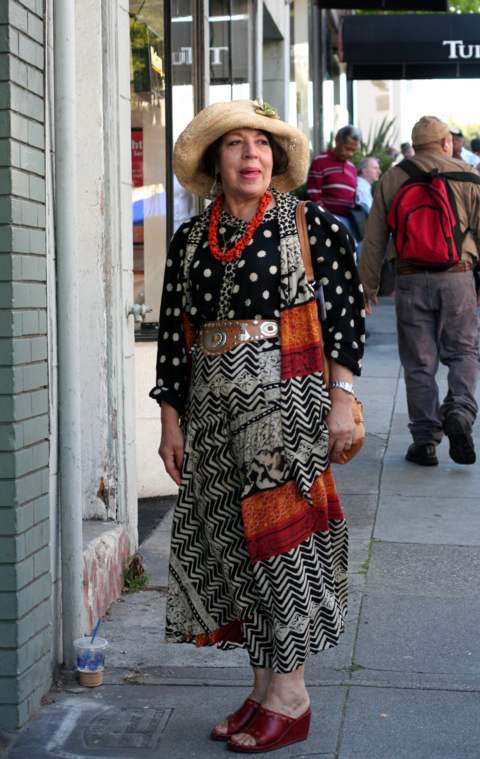
Today’s Look: Lydia, Fillmore and Jackson

Tell us about your look: “”This is an outfit I like to take out and wear for summer fairs. I feel like a gypsy in it.””


The strangest election ever

2

It’s getting really wierd out there. There’s a campaign video featuring the white face of a dark-haired politician emerging from an all-black background and proclaiming:


“I am not a witch.”


And she’s a serious (more or less) candidate for the United States Senate. Check out the strangest campaign ad of the year after the jump.Huffington Post interviewed a Wiccan, who complained about the demonizing of witches; Wicca is an ancient religion that, typically, doesn’t involve blood sacrifices on altars.


But I have to say, Christine O’Donnell’s plea reminds me of the last time I remember someone saying “I’m not a witch.”


Hotel plan revives old question: Can the Presidio Trust be trusted?

2

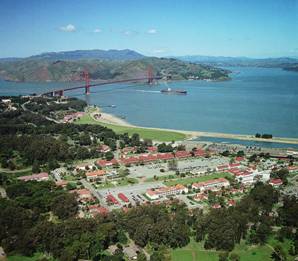
In San Francisco’s Presidio, one of the few national parks that is mandated to pay for its operations with the proceeds from development, historic preservation is often undermined by commercial concerns. And critics contend the proposal for a big new hotel at the Main Post is a prime example of that model’s shortcomings.

The Presidio Trust, a seven-member board that presides over the historically significant park, is considering a proposal by the Larkspur Hotel Group to build an 88,000-square-foot luxury hotel complex of 12 new buildings and another two current and historic buildings that would be remodeled as part of the project. Opponents say the project runs counter to the Trust’s mandate of protecting the historical and environmental character of the Presidio’s Main Post.

Originally, the Trust set out a management plan that allows for only minor construction projects at the Main Post, but the body is now seeking to amend the plan to include the massive new hotel development. When it announced its plans at a recent public meeting, it was met with overwhelming opposition from neighborhood and local preservation groups

Gary Widman, president of the Presidio Historical Association, sees the move to amend the plan as emblematic of the Trust’s refusal to work collaboratively with the community. “People are frustrated by what they see as the Trust trying to put this amendment into place in a ‘stealth’ move. The Trust is not holding hearings explicitly on its proposed amendments,” he said.

Widman was also concerned with the impact that the hotel and the changes to the Presidio would have on the environment, calling the changes “consumptive, anti-sustainable and not in line with them claiming to be a green organization.”

Another opponent of the plans for the hotel is Boyd de Larios, a representative of Descendants of the Anza and Portola Expeditions (DAPE), who expressed concerns about local heritage being lost forever if the trust went ahead with its plans.

“Presidio doesn’t need a hotel. People aren’t looking for another Coney Island,” he said. “They do some wonderful things but no one trusts the trust anymore.”

After the base closure in 1994, the Trust was set up to make the park self sustainable by 2013 through the use of real estate leasing and renovations to the post buildings to make the park more desirable for the private sector. Among the projects added to the park in recent years is the Walt Disney Family Museum.

Trust officials did not responded to repeated Guardian calls for comment on the issue and any additional future plans. Similarly, others have been unable to get the answers they are searching for from the trust. One community member, Richard Hanlin has been questioning the future of the Presidio for years but has still not found answers to his questions. Hanlon said he worries about the Presidio’s future.

“As it stands [the Trust] is in a very weak position,” Hanlin said, focusing on the ability of the trust to maintain and protect its valuable assets. Hanlin went on to predict the barracks buildings will be ensconced by fences and without any renovations by the end of 2013 when the federal subsidies of the Trust runs out. The lack of renovation and preservation of the old barracks buildings are particularly troubling to Hanlon, especially since they represent the roots of the Presidio as a strategically important military installation.

“History matters,” Hanlin said. “Lots of young men spent their last night there and never came back.”


Ebony Hillbillies string along Hardly Strictly’s biggest year yet

1

Nine hundred thousand people and over 70 bands braved the drifting fog banks for this weekend’s 10th annual Hardly Strictly Bluegrass Festival. With a crowd that size, you have to think logistics. So at my interview with HSB bankroller-birthday boy Warren Hellman well before the madness, I asked who were the up and comers to look out for. I chicken-danced our way through Speedway Meadows accordingly.

“The Ebony Hillbillies,” Hellman told me, chuckling over lead singer – and as the band’s press kit explains, “bones” of the group — Gloria Gassaway’s penchant for abrupt audience interaction. The HSB performance would be its first in the Bay Area, and Hellman was happy to have been its means of infiltration, particularly for Gassaway’s no-nonsense stage presence. “She’s quite a woman,” he said.

Quite a woman indeed. the Hillbillies, hailing from Jamaica, Queens, are helping to sustain the tradition of African-American string bands that started with the genre’s inception in the Appalachians in the 1920s. Black pioneers in the music can seem ironic now, particularly at events like Hardly Strictly where the audience is majority white. 

But so it goes — and some of the weekend’s most exciting shows flew from the fiddles, banjos, and diddly bows of black groups like the Hillbillies and Carolina Chocolate Drops, firmly establishing that bluegrass (and neo-bluegrass, and string bands, and jazz, blues, rockabilly, country, rock ‘n’ roll, everything else that falls under “hardly) doesn’t have to be just for the honkies.

“I love making the audience have a good time. You come to see the show, you want to be entertained, but you also want to enjoy yourself,” Gassaway tells me when we catch up with her after the group’s set on Friday. 

Sporting matching moccasins with fiddle player Henrique Prince, and with purple feathers threaded into her hair, the ebullient Gassaway exchanged my compliment on her flair with an insight into her cultural heritage. Although they were born with blood from the Catawba tribe of the South and North Carolina borderland, Gassaway’s father instructed Gassaway and her siblings never to reveal the secret of their Native-American-ness to teachers at school so that they could avoid possible discrimination. 

“He told us, tell them you’re from Mexico, or African-American, or something – just not Native,” she says. She says she held onto that learned denial until a trip to Europe, during which she realized the beauty of her background. Now Gassaway sports turquoise jewelry onstage while playing the string music that her Black and Native ancestors must have heard almost a hundred years ago. “I’m Native, and I wear my heritage proudly,” she tells me.

Although the Hillbillies’ current configuration experienced its debut in San Francisco this weekend, it was by no means the first time individual band members had played in the City by the Bay. Bass player William Saltner recalled his last time here in the early ’60s. Saltner, a two-time Grammy winner for songwriting – he wrote “Where is the Love?” and co-wrote “Just the Two of Us” – was working with Miriam Makeba, who at the time was exiled from her home in apartheid South Africa. 

“We don’t play bluegrass, we play old tyme music,” Saltner clarifies backstage. “But we claim bluegrass in this crowd,” he continues with a sly smile.

That kind of genre-bending, always evident at HSB, continued throughout the three days of 2010’s festival. MC Hammer kicked off the weekend at his yearly performance at the middle-schooler’s show on Friday morning. Randy Newman, a newly bluegrass-friendly Elvis Costello, Robert Earl Keen, the Avett Brothers, Joan Baez, and Patti Smith all turned in stellar sets that could hardly fall into the “strictly” category. The diversity was reflected in the varying age demographics of the crowd, who for the most part eschewed the sanctity of the blanket that had reigned in years past – those faithful early risers that spread their tarps in front of stages in the small hours of the morning saw their space quickly infiltrated by standing room-only, stage-switching attendees. 

Temperatures in the high 60s did nothing to stem the tide of music fans that flooded the peaks and valleys of Golden Gate Park for the free festival, but they did threaten the Hillbillies’ chances of starting up a dance party with their stomp-ready old tyme strings with their opening act at the Banjo Stage on Friday. “Are you cold?” Gassaway inquired from her seat on stage. “Because I sure am!”

The cold weather seemed to make it difficult to keep strings in shape – the action stopped a few times so that a stoic Norris Bennett could tune his diddley bow, and then later his banjo to perfection. But the challenge seemed to energize the group’s firestarter. Of course, it doesn’t hurt when you can pull Hellman onstage for a little unscheduled entertainment, which Gassaway managed to accomplish in a moment when she spotted the man enjoying the show from the stage’s sidelines.

Perhaps he had it coming for hyping Gassaway’s sass. Hellman did his best to represent the honkies though, bowing out his legs and wagging his elbows in a “broke-legged chicken” dance on her command. But for all his obedience, he’s got a ways to go as far as Gassaway is concerned. A fact which she let him (and us now) know in the intro of a song entitled “Big Fat Men,” an ode to the joys of obese lovers.

Which the wiry Hellman could hardly be described as. Yet. But he’s got a good coach. “I’ve been feeding him cheesecake,” Gassaway tells me. Blow out the candle first, Warren – number ten was a good year for Hardly Strictly.


SFBG Radio: Is the Republican Party a cult?

4

In today’s epidsode, Johnny and Tim talk about the showdown in Fresno, the Dream Act — and whether the Republican Party has become a cult. Listen after the jump.

sfbgradio1042010 by endorsements2010

Street Threads: Look of the Day

0

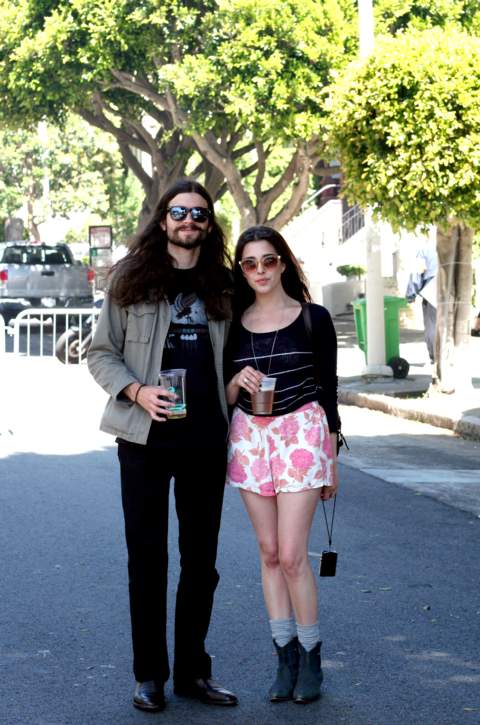
Today’s Look: Lisa and Evan, Washington and Fillmore

Tell us about your look: 

Lisa: “I like to mix vintage and new indie designers.”

Hotel Frank fires key union organizer

6

Managers at Hotel Frank, who have been sparring with their employees since taking over the financially troubled hotel following a bank foreclosure earlier this year, last week fired an outspoken union organizer on the day after the hotel was targeted by a boisterous picket line. But the employee, longtime bellman Marc Norton, said this transparent effort to intimidate the workers won’t work.

“They think if they get rid of me their problems will go away, but it’s closer to the opposite that’s true,” Norton, a longtime local progressive activist, told the Guardian. “They think they got rid of me, but now they’ve turned me into a full-time organizer.”

Norton and his union, Unite-Here Local 2, will fight back starting tomorrow (Tues/5) with another protest in front of the hotel, 386 Geary Street, starting at 4:15 pm. Hotel Frank, which was named after notorious landlord Frank Lembi, is one of 10 local hotels on the boycott list of Local 2, whose workers have been agitating for a new contract since theirs expired last year.

The Hotel Frank and its sister Hotel Metropolis in May were taken over by Wells Fargo, which turned over management to the Portland, Ore-based Provenance Hotels, whose local managers unilaterally increased workloads and slashed employee benefits at the unionized hotels, according the employees and their union. Provenance officials refused to comment for my last story and did not return another phone call today on the firing of Norton and another union organizer.

In addition to the protests, Norton has filed a complaint with the National Labor Relations Board alleging that his dismissive was illegal retaliation for legally protected union organizing, a complaint that Norton believes will be decided in his favor: “It’ll happen, it’s just a matter of when.”

Downtown money hits district races

42

Downtown cash is pouring into the district supervisorial races.

Ethics Department filings show that an alliance backed by the Chamber of Commerce, the SF Police Officers Association and United Health Care Workers West is dropping major money on Steve Moss in D10, Scott Wiener in D8 and Theresa Sparks in D6. 

Called the “Alliance for Jobs and Sustainable Growth,” the coalition supports the building of a mega-hospital on Cathedral Hill.

The independent expenditure alliance puts UHW, part of the Service Employees International Union, in the odd position of using membership money to attack progressive politics in San Francisco – potentially undermining years of work by another SEIU affiliate, Local 1021.

Campaign disclosure forms show that the Chamber-Police-UHW alliance has spent $20,000 on bilingual (English/Chinese) door hangers for Moss that feature photos of Chamber of Commerce President Steve Falk and United Healthcare Workers political director Leon Chow.

These same interests also spent $20,000 on robo-calls for Moss, with a heavy focus on Visitacion Valley in an effort to secure the Asian vote in the crowded D10, where there is a strong likelihood that the race will be decided by second and third place votes

Word on the street in the Bayview is that former Mayor Willie Brown is pissed off that the Chamber is backing Moss, instead of African American candidate Lynette Sweet, and that termed out D10 Sup. Sophie Maxwell is angry that big corporations are trying to buy an election in the poorest and most ethnically diverse district in town.

But unlike the rumor mill, the money trail doesn’t lie. And from that perspective this is looking like a replay of the June 2008 election, when big businesses bought support for Lennar’s Candlestick Point/shipyard development by claiming it would create thousands of jobs building condos that most workers can’t afford—jobs that have yet to materialize.

This time the battle cry is for jobs building a massive hospital, even though few workers will likely get service from this hospital, which is designed to serve as a regional center for high-end health care.

So far, the same alliance of police and corporate money has plunked down $17,000 for bilingual (English and Chinese) door hangers in support of Theresa Sparks in D6 and another $17,000 for bilingual robo-calls in support of Sparks.

And so far, Scott Wiener has gotten the relatively short end of the corporate money stick: the Alliance has only spent $15,000 on a door hanger in support of Wiener.

This means that the alliance spent $90,000 in a two-week period in September. The numbers lend credence to DCCC Chair Aaron Peskin’s belief that the alliance has a war chest of $800,000, which it intends to use to put pro-downtown candidates into power.

Asked about the support of this alliance, Sparks, Wiener and Moss gave markedly different replies that reveal as much about each candidate as the money behind them.

D6 candidate Theresa Sparks suggested that the Alliance was spending more on her and Moss’ D10 campaign, because it felt Wiener was further ahead in the D8 race than she is in D6 or Moss is in D10.

And Sparks was openly supportive of the Cathedral Hill hospital project. “I’ve been very supportive of that project,” Sparks told us.

Sparks also observed that it was logical that the Chamber would support her.

“D6 has one of the largest numbers of small businesses and one of my biggest platforms has been economic growth, and I think the Chamber has been very supportive of job creation,” Sparks said.

By comparison, Scott Wiener told the Guardian that he has not taken a position on CPMC’s proposed mega hospital on Cathedral Hill.

“Those kind of issues could come before the Board, in terms of CEQA issues, and so I could be conflicted out,” Wiener said.

When the Guardian noted that the Alliance has so far not spent any money on phone banking for Wiener in D8, Wiener said, “I have volunteers doing phone banking.”

As for Moss, he told the Guardian that said he doesn’t have a position on the mega-hospital.

“I haven’t seen the plan,” Moss said. “But I understand that there seems to be an agreement that would maintain St. Luke’s with about 300 beds, but that there is a deep suspicion among the nurses that it’s not economically viable. And there seems to be a much greater need for a hospital in the southeast.”

Moss, however, is with downtown on other key issues: He supports the sit-lie legislation on the November ballot. He also reiterated that he likes the rabidly anti-tenant Small Property Owners Association, whose endorsement he called a “mistake” during a previous interview with the Guardian.

“Landlords feel that they are responsible for maintaining costly older buildings and that they are not provided with ways to upgrade their units in ways that share costs with tenants,” Moss, who sold a condo on Potrero Hill in 2007 for the same price that he paid for the entire building in 2001, and owns a 4-floor rent-controlled apartment building in D8, near Dolores Park, that he bought for $1.6 million in 2007, and where he lived from December 2007 to February 2010.

Moss refused to provide a copy of the lease on his current rental at Vermont and 18th St—something that the Guardian requested in light of an email from his wife that indicated that the family intended to move back to Dolores Park of Moss loses the race.
‘That’s private information,” Moss said, claiming that he does not plan to move back into his apartment building in D8, if he loses in November.

Moss claimed that UHW endorsed him because his position on politicians and unions.
“I agreed that politicians should get not involved in union politics,” Moss said. “The United Healthcare Workers seem to be a worthy group,” he added. “All they said was that they wanted to make sure that they had access.”

All this campaign money drama is playing out against the backdrop of a punishing battle between United Healthcare Workers West and the rest of SEIU. And as these recent filings show, UHW is spending a huge amount of its membership dues to undermine the city’s progressive infrastructure by trying to elect candidates who are not progressive, even though its progressive sister union has endorsed Rafael Mandelman in D8.

SEIU 1021 member Ed Kinchley, who works in the Emergency Room at SF General Hospital, is furious that UHW is pouring all its money into downtown candidates like Moss, Sparks and Wiener and trying to undermine everything that its progressive sister union is trying to do.

“UHW basically isn’t participating in the Labor Council, it’s just doing its own thing,” Kinchley said.

Kinchley noted that UHW is currently in trusteeship, and is being controlled by its International, and not its local membership, thus explaining why it’s doing this dance with forces like the Chamber and the Building Owners and Managers Association, which have long been the enemy of labor.

“Sutter wants a monopoly on private healthcare, and people like Rafael Mandelman in and Debra Walker have been strong supporters of public healthcare,” Kinchley said, Kinchley also noted that he wants supervisors who are willing to state their support for public health care, rather than dodging the issue and hedging their bets, right now.

“I want someone who can straight-up say, here’s what’s important for families in San Francisco, especially something as important as healthcare,” Kinchley said. “but it sounds like UHW is teaming up with the Chamber and supporting people who are not progressive.”

“And it’s not OK for somebody in D10 to say they haven’t seen CPMC’s plans, when people from D10 use St. Luke’s all the time for healthcare, because it sounds like Sutter wants to change St. Luke’s into an out-patient clinic for paying customers,” he continued.

SEIU 1021 activist Gabriel Haaland accused the Chamber, the Building Owners and Managers Association, UHW and the Police Officers Association of putting together a massive political action committee, “to try and steal the election through corporate spending.”

All this leaves the Guardian wondering how Leon Chow, the political director of UHW, who has done good work in the past on health care issues, is feeling about seeing his photograph spreads all over town alongside that of Chamber of Commerce President Steve Falk on door hangers in support of Sparks, Wiener and Moss.
 
As of press time, Chow had not returned our calls, but if he does, we’ll update this post.

Quick Lit: Oct. 1-Oct. 5

0

Literary readings, book tours, and talks this week

Litquake is back from Oct. 1-9 with more than 550 authors and events. Find out how to catch some this week after the jump.

Friday, Oct. 1

Litquake 2010 kickoff
Grab you litquake program and enjoy music by “Diva Deluxe” Suzy Williams and Brad Kay as they perform songs based on the work of well-known authors Kurt Vonnegut, Raymond Chandler, and more. You can also sip cocktails while browsing the gallery’s latest exhibit “Everyday,” showcasing new works by California tattoo artists. Litquake programming through Oct. 9.
5 p.m., free
111 Minna Gallery
111 Minna, SF
www.litquake.org

Saturday, Oct. 2

Off the Richter Scale
From poetry to comics to dad lit, this Litquake opening weekend event will feature literary tweeters, bloggers, illustrators, mystery writers, fathers, poets, historians, and more.
Noon – 4 p.m., free
Variety Preview Room Theatre
582 Market, SF
www.litquake.org

 
Watershed Environmental Poetry Festival
Enjoy a stellar line-up of poets and environmental writers including Brenda Hillman, Robert Haas, Allison Hawthorne Deming, Al Young, David Meltzer, Camille T. Dungy, and more. Also featuring a poem installation by Arthur Okamura, live music, environmental updates and information, and more.
Noon-4:30 p.m., free
Civic Center Park
Martin Luther King, Jr. at Center, Berk.
www.poetryflash.org

Sunday, Oct. 3

Barely Published Authors
Readings by up-and-coming masters of prose from the Bay Area including Jeremy Hatch, Mimi Lok, Caitlin Myer, Andre Perry, Paul Spinrad, Ian Tuttle, Alia Volz, and Olga Zilberbourg. Emceed by Ransom Stephens.
7 p.m., free
Make-Out Room
3225 22nd St., SF
www.litquake.org

“CLA All-Stars: 25 Years of San Jose’s Center for Literary Arts”
Join best-selling authors Maxine Hong Kingston (The Woman Warrior, Tripmaster Monkey), Mary Roach (Packing for Mars, Stiff, Spook, Bonk), Daniel Alarcon (Lost City Radio), and Andrew Sean Greer (The Story of a Marriage) as they read from their latest works. This program was developed in collaboration with the San Jose Center for Literary Arts and Litquake.
6:30 p.m., $10
The California Historical Society Museum
678 Mission, SF
(415) 357-1848

Ein Zweigabend: A Zweig Evening
Enjoy this literary and musical eveing dedicated to the works and memory of Austrian writer Stefan Zweig, featuring violinist Gregory Sykes, pianist Ian Scarfe, and vocalist Patrick Marks playing some of Zweig’s favorite music. Wine, champagne, and hors d’oeuvres.
7 p.m., $20 suggested donation
Green Arcade
1680 Market, SF
(415) 431-6800

North Beach Literary Tour
Learn more about the literary tradition of North Beach, from the Gold Rush, to the Beats, and into the modern era. The one mile tour concludes at Focus Gallery on 1534 Grant with readings by political satirists, socially savvy novelists, outlaw poets, and cultural historians Phil Bronstein, Will Durst, Ben Fong-Torres, Alan Kaufman, Ellen Sussman, and Jody Weiner.
5:30 p.m., free
Meet at The Beat Museum
540 Broadway, SF
www.litquake.org

Off the Richter Scale, Day Two
Day Two of Off the Richter Scale features panel discussions on alternative publishing and literature in translation and readings by Hedgebrook Alums and writers on California and San Francisco.
Noon – 4 p.m., free
Variety Preview Room Theatre
582 Market, SF
www.litquake.org

Monday, Oct. 4

Final Flight
Join author Peter Stekel for a reading and discussion of his new book, Final Flight: The Mystery of a WWII Plane Crash and the Frozen Airmen in the High Sierra.
6 p.m., free
University Press Books
2430 Bancroft, Berk.
(510) 548-0585


Tao Lin

Tao Lin takes his trademark minimalism in a different direction as he ponders the meaning of illicit sex for a generation with no rules in his new book, Richard Yates, named after the real-life writer. In Richard Yates, Lin narrates a tale about a young man dealing with the consequences of an affair with an underage, self-destructive girl.
7:30 p.m., free
The Booksmith
1644 Haight, SF
(415) 863-8688

“Original Shorts: Bottom’s Up”
Join this year’s esteemed scribblers as they reveal their original takes on the theme “Bottoms Up,” with Dodie Bellamy, Elizabeth Bernstein, Joshua Braff, Anne Finger, Shanthi Sekaran, Namwali Serpell, and James Warner.
7 p.m., free
Heart Wine Bar
1270 Valencia, SF
www.litquake.org

“Words and Waves”
A night of surf lit with Krista Comer and Elizabeth Pepin, Doug Dorst, Daniel Duane, Thomas Farber, Steven Kotler, emcee Mark Massara, Michael Scott Moore, Matt Warshaw, and Jaimal Yogis.
6:30 p.m., $5-$10 donation entitles you to order of the happy hour menu all night
Park Chalet
1000 Great Hwy, SF
www.litquake.org


Tuesday, Oct. 5


“Dave Cooper Gets Bent”

Award-winning cartoonist and illustrator Dave Cooper will sign his new book, Bent, and discuss his career in comics.
7 p.m., $5
Cartoon Art Museum
655 Mission, SF
www.cartoonart.org

I Live in the Future and Here’s How It Works
Hear New York Times technology writer Nick Bilton explain why social networks, the openness of the Internet, and all the handy new gadgets are becoming the foundation for “anchoring communities” that tame information overload and help us to determine what is important at this reading of his new book, I Live in the Future and Here’s How It Works: Why Your World, Work, and Brain are Being Creatively Disrupted. Part of Litquake.
7:30 p.m., free
The Booksmith
1644 Haight, SF
www.booksmith.com

“Tales of Hollywood Hell”
Litquake and Porchlight Storytelling collaborate for a special one-night show of true stories from inside the world’s entertainment machine. Book options, screenplays, adaptations, celebrity, and just plain Hollywood weirdness, explained without notes or memorization, featuring Exene Cervenka, Michael Tolkin, Martin Cruz Smith, Kristen Tracy, Jack Boulware, Joyce Maynard, and Jill Soloway. Hosted by Porchlight’s Arline Klatte and Beth Lisick.
8 p.m., $15
Herbst Theater
401 Van Ness, SF
www.litquake.org

“Virtual Reality: The Effect of Fiction on Your Mind”
Attend this Litquake panel discussion that looks into the readers’ interaction with the characters they meet in works of fiction, whether or not it’s healthy to visit imaginary worlds, and how well the authors themselves know their own characters. Featuring Robert Burton, M.D., former Chief of Neurology, Mt. Zion-UCSF Hospital, Elaine Petrocelli, President of Book Passage, Michelle Richmond, author of The Year of Fog and No One You Know, Blakey Vermeule, Ph.D., Associate Professor of English, Stanford University, and Mark Vonnegut, M.D., pediatrician, memoirist, and son of the late Kurt Vonnegut.
6:30 p.m., $12
Mechanic’s Institute
57 Post, SF
(415) 393-0100

SFBG Radio: Whitman’s immigration problem

14

Today Johnny and Tim talk about why Meg Whitman won’t recover from her immigration problems — and whether the roomate who drove a gay college student to suicide should wind up in prison. Listen up after the break.

sfbgradio1012010 by endorsements2010

The Governator: Fighting oil villains or making life easier for them?

Today’s San Francisco Chronicle contains an opinion piece by David Horsey commending Gov. Arnold Schwarzenegger, a Republican, for taking Texas oil companies Tesoro and Valero to task for attempting to subvert California’s landmark global warming legislation, AB 32.

Titled “The Governator battles villains with ‘black oil hearts,’” the piece casts Schwarzenegger as an environmental superhero facing off against a band of greedy cowboys. Tesoro and Valero have sunk millions into Proposition 23, the deceptively titled “California Jobs Initiative,” which would suspend implementation of the greenhouse-gas reduction law until unemployment drops to 5.5 percent for four consecutive quarters. Prospects are dim for such a market condition anytime soon.

“It is electrifying to hear a Republican politician expose the big corporations that relentlessly subvert public policy and the national interest,” Horsey notes. “Arnold Schwarzenegger might be leaving office with a mixed record of accomplishment, but when it comes to challenging these modern-day bandits of industry, he could be the boldest action hero we’ve got.”

Schwarzenegger deserves credit for taking a stand against oil-industry giants on this particular issue, but he’s no environmental action hero. On Sept. 30, The Governator vetoed legislation that would have improved the state’s capability to respond to oil spills.

AB 234, authored by Assembly Member Jared Huffman, would have required large vessels to deploy oil containment booms prior to fuel transfers. The Dubai Star oil spill occurred during a fuel transfer, and the precautionary measure could have lessened the impact.

Additionally, the bill would have increased existing oil fees to bolster funding for the state’s oil spill prevention and response efforts. And it would have required the State Lands Commission to report on safeguards for offshore oil drilling and response plans in the event of the failure of an oil rig’s blowout preventer. The BP oil spill demonstrated how dire the consequences can be if such a failure occurs.

“With his veto of AB 234, Governor Schwarzenegger failed miserably when it came to protecting California’s environment, public health, seabirds, and our coastal waters from oil spills,” said Marcie Keever, Oceans & Vessels Campaign Director at Friends of the Earth, which sponsored the bill along with Pacific Environment.  “Assembly Member Huffman and the Legislature worked extremely hard this year to craft AB 234 to protect the people and resources of the state of California — and with a few strokes of his pen the Governor struck a significant blow to public health and our environment.”

Schwarzenegger may have publicly reprimanded the Texas oil cowboys for bankrolling Prop. 23, but he’s no Captain Planet.