SFBG Blogs

Why it has to be Green Bay

1

I mean, not if the 49ers were playing. And I have this ancient loyalty to my old hometown Jets, who won Super Bowl III against Baltimore when I was 11 years old. (I still remember Joe Namath sitting by the pool the day before, sipping a drink and proclaiming that his 21-point underdog team was so certain of victory he could “guarantee it.” And Joe was cool. A jerk, but cool. And Emerson Boozer was a great name for a running back.)

I was a bit of a Steelers fan, too, during the days of Terry Bradshaw and Franco Harris and Mean Joe Green (before the Coca Cola ad, barf).

But in the end, you have to root for the Packers. And not just because Aaron Rodgers went to Cal and got picked 24th (when the Niners could have had him but took Alex Smith instead, look how well that worked out) and had to wait patiently for Brett Favre to move on. I’ve always supported Green Bay because it’s the only publicly owned team in professional sports.

Okay, not exactly publicly owned: The city of Green Bay doesn’t hold the title deed. But it’s pretty close — there are 112,158 shareholders, most of them part of the Green Bay community in one way or another. There’s no majority owner — and it’s a functioning nonprofit. None of the shareholders get dividends; all the money is put back into the team. The Packers can’t leave town and can’t be sold.

The model so freaks out the NFL that the league passed a rule a few years ago barring any more teams from using it; now, there can be no more than 30 shareholders of any team and one must hold 30 percent of more and be the principal owner.

If all the teams were like Green Bay, there’d be no lockout, no Baltimore Colts splitting town in the middle of the night, no Al Davis jacking up Oakland. Go Packers.


Possibility: “Gush” presents Joe Goode the curator

0

Audiences can thank Raelle Myrick-Hodges, Artistic Director of Brava Theater, for cutting Joe Goode loose in curating “Gush,” Brava’s first dance theater specific series. Rather than defining dance theater, Goode, during his three-weekend series, showed us its possibilities. He served as a tastemaker and also opened minds in choosing a theme to frame and present Ledoh and Salt Farm Productions (a performance collective with roots in Butoh), Axis Dance Company (a contemporary mixed-ability dance company), as well as his own company, Joe Goode Performance Group

While an artist-driven curatorial practice is not necessarily new, Goode addressed the topic in the program, writing “One of the stellar differences between the dance scene here and in other countries (notably South America and Europe) is that, here in the U.S., artists are rarely given the opportunity to champion other artists and to offer the kind of insight and context that we are so perfectly equipped to provide.” Goode utilized his opportunity at Brava to direct attention to two other groups which inspire him. The thematic aspect of the title “Gush” drew attention to their lavish, bold, theatrical impulses.

The East Coast recently experienced a surge in artist-driven curation, with the 2010 inauguration of Danspace’s Platform series, envisioned by Judy Hussie-Taylor, Executive Director of the major downtown dance venue in New York City. For each Platform, a selected artist organizes a series of performances based on a theme, as well as discussions, open rehearsals, screenings, and a catalog. If the components sound like those of a visual arts exhibition, it’s for a reason -– Hussie-Taylor’s career includes years at museums and she is now a faculty member at the Institute for Curatorial Practice in Performance at Wesleyan University, the first program of its kind addressing performing arts curation. Among other topics, the program’s curriculum considers how the curatorial practices of the visual arts can be applied to the performing arts, enhancing context and experience of the work.

On Thursday, Jan. 27, during the last of the “Gush” programs, Goode arrived downstage at the microphone as a charming storyteller, party host, and tour guide. Describing his dance theater as a form of folk art which combines movement, spoken word, song, and visual imagery, he resurfaced onstage throughout the performance to contextualize a mashup of old and new works, including 29 Effeminate Gestures, Wonderboy, small experiments in song and dance, What the Body Knows, and a new collaboration with puppeteer Basil Twist set to premiere at YBCA’s Novellus Theater this June, The Rambler.

Sitting in the center of the stage, Goode elaborated on his process of generating, colliding, and editing material to developing work through “felt experience.” His dancers embodied the phases he described, resulting in a carefully crafted sort of lecture-demonstration. The opportunity to meet Goode in the role of curator and share the lens through which he sees the world was a delight. It revealed gems of dance theater work, and another layer of his artistry.

Wiener proposes economic study on nightlife

5

While the basic ideological makeup of the new Board of Supervisors didn’t change much, there are a few notable differences between the newbies and their predecessors. Much has been made of Sup. Jane Kim’s greater willingness than Chris Daly to vote against her progressive colleagues (we have a story in tomorrow’s paper about that), but another significant one is Sup. Scott Wiener’s support for nightlife and concerns about what we’ve called the Death of Fun.

His office has announced that at today’s board meeting, Wiener will call for a study of the economic impacts of entertainment and nightlife in the city. “It’s important that we understand the size and reach of this industry as we consider regulating it,” Wiener in a press release.  “Without this information, it’s difficult to make informed decisions and to enact effective policies concerning entertainment and nightlife, which are a key part of San Francisco’s cultural identity.  Particularly as we attract more young people to San Francisco, as the biotech and other new economy industries grow here, we need to ensure that we are providing them with entertainment opportunities.  Understanding the size and scope of entertainment and nightlife in the City will help us achieve that goal and help us remain a world-class city that attracts people here.”

Contrast that with Wiener’s predecessor, Bevan Dufty, who led the effort to cancel Halloween in the Castro (enforced with hordes of police and water trucks) and presided over the city’s efforts to demonize the nightlife industry, give the cops greater authority to crackdown on clubs, and opposed efforts to create and support street fairs.

Longtime Entertainment Commission member Terrence Alan was an enthusiastic supporter of Wiener’s supervisorial campaign, breaking with many of his progressive allies who were backing Rafael Mandelman. And now, with this study, Wiener seems to be trying to show how valuable this industry really is to San Francisco in the hopes of stopping future crackdowns.

“I guess I just want other people to solve the Rubik’s cube”

0

This much was clear. A conference room full of middle and high schoolers had been assembled and were now working out math problems. On a Sunday. To someone who wept through stats homework, it seemed like a game of Clue, who done this? At the lectern, a man shared formulas one might find useful in attempting a rapid solution of the Rubik’s cube. A series of x’s and y’s to the nth power flashed before the hushed underage audience.

Were these kids really into what was going on, or was this some well-orchestrated parent plot to shut down a perfectly good weekend? It was Mom in the living room with the bribes and threats about not getting into college! But board game detective I was not. This became apparent when the young man in a hoody sitting on my left picked up a cube offhandedly. Without fanfare, his hands began to blur. He lined up the colors in well under a minute and set the cube back down. Welcome to last weekend’s Julia Robinson Mathematics Festival, where math, it appeared, was not just a problem to be solved.

“If you want to put it in basketball terms.” Festival co-organizer Joshua Zucker is explaining to me the difference between kids doing math “exercises,” which he says comprise the majority of schoolwork these days, and “problem solving.” Please, I encourage him, put it in basketball terms. “Exercises are like dribbling down an empty court. Problem solving, that’s like dribbling down a court with a defender on you. Computers do exercises – we want kids to learn how to think.” To further illustrate his point, he proposes I perform a simple mental game involving twisting my wrists together. Blinded by my fear of math, I fail miserably, and he patiently reiterates what I must do to free myself.

Round tables fill the Pauley Ballroom in UC Berkeley’s Martin Luther King, Jr. student union, at which are seated young students, math professionals, and various UC Berkeley faculty. They do not appear to be worried a whit by the prospect of the boxes and equations before them. Each table houses a few kinds of math challenges: here, kids are constructing a massive fractal cube made from folded bits of paper. There, scholars puzzle over math “magic” tricks and geometry formulas, aided by a female NASA scientist. There’s no clear stop and start time – participants circulate around the room at their own pace, parents in tow or mercifully mingling in the seating area at the room’s fringes.

The festival’s format is constructed to encourage kids to think about why we do math — and we’re not talking about that scholarship to Cal here but instead that little thing about how math helps us figure out the world around us (which I concede, if grudgingly). Accordingly, an instruction sheet written by Zucker greets table leaders at the event’s entrance cautioning them that “you’re welcome to encourage group work when you see good opportunities, or encourage individual work, but don’t encourage too strongly: mostly let the kids decide whether they want to work on their own or with their neighbors.” This looseness is a deliberate departure from the other form of extra-curricular activity for the numbers set (ha!): the math competition, and has much to do with the festival’s namesake, female math pioneer and UC Berkeley professor Julia Robinson, who tackled complex theories in the days before people were fully keen on the concept of female mathematicians.

“We think the non-contest atmosphere is more conducive to girls,” says Zucker, who used to teach math at the girls-only Castilleja School in Palo Alto, comparing the festival’s roughly 60-40 boy-girl ratio with the typical 70-30 that one sees at the higher-pressure math contests. Girls, the assumption goes, aren’t into parading their smarts all over the place.

It’s a theory that’s borne out by what I witness at the festival. For the most part, the boys are quick to acknowledge when they perform a particularly astute calculation. The girls seem more content to listen and work through equations on their own steam, though it must be said that a few are far from retiring. 

California College Preparatory Academy ninth grader Breanna Alleyne drags family friend Aaron Johnson over to the table where I sit, puzzling with the mathemagic tricks. The two plow their way through problems along with the help of Eleanor Long, a San Francisco charter school math teacher who came to observe at the festival but wound up working though problems with the students at her table – a kneejerk reaction, it would seem, of a committed educator encountering the academically earnest. 

“We’ve developed a tradition around the event,” says Breanna’s mom Fatima Alleyne, who I catch up with at her welcome table post, where she is checking in festival attendees. Breanna, I note, approaches the subject lightheartedly at the problem-solving tables, and Fatima, a materials scientist at UC Berkeley who works with resonated devices, says their three years of attendance at the festival has to do with framing math in a light that she feels is missing from traditional classrooms these days. “I don’t think you have to have a developed appreciation of math to really enjoy it in this setting. I just want her to see math in a different way than how she gets it in school.”

I ask Alleyne about how times have changed between her years coming up in school and those of Breanna’s. She remembers her scientific curiosity being sparked by her participation in science fairs and other “enrichment activities” outside of school hours. Alleyne just doesn’t see those same diverse opportunities for learning these days. “The activities that encouraged you to participate in math and science – they’re just no longer in existence.”

This relative dearth in chances outside the classroom to connect with like-minded scholars may be one reason why some kids at Julia Robinson clearly benefit from being around the old pros that help out at the festival. Take sixth grader Kyle Asano, who watched the Rubik’s cube lecture sitting on the other side of Scott Okamura, the Rubik’s whiz who had shocked me in the first place and who turned out to be a freshman at Cal who helps facilitate a free speedcubing course. I ask Okamura why he spends his precious free hours away from his math major instructing others in the art of square. “I guess I just want other people to know how to solve the Rubik’s cube,” he smiles. 

Asano, who estimates his best cube-solving time at a minute and 18 seconds, tells us that he, along with a few school friends at Cupertino Middle School, is really into the cubes. “The center cube decides which color the side’s going to be,” he gracefully informs us before pumping Okamura for more info on his particular cube-solving techniques. Later I spot the two at another table, whizzing through 3-D puzzles that would stump an unseasoned hand (mine). Proof in the Pythagorean, it would seem, that the Julia Robinson Festival does indeed provide a thought provoking math experience – in or out of the box.

Photo, above right: Scott Okamura and Kyle Asano, math aficionados squared. Photo by Caitlin Donohue


5 things you didn’t know about cable cars

6

Get it out of the way now: roll those eyes. The cable cars are something no native San Franciscan would ever bring up in polite (that is, local) company, let alone write about in a blog post. But fact is, there’s a reason why these things are iconic. Those cars have as speckled and quirky a history as the City by the Bay. 

San Franciscans steeped in facts and figures about the tourist-movers probably know that ours is the last operating cable car system in the world and that its design hasn’t changed much since Andrew Hallidie devised it upon seeing an overloaded horse-car slip down a hill in the rain. Perhaps you’ve heard that the four remaining lines each rely on a continuous loop of cable running under your feet at a constant 9.5 miles per hour, powered by electrical motors and a system of pulleys and huge wheels. If you’ve ever visited the Cable Car Museum (c’mon folks, it’s free) you’ve seen the sheaves pulling the cable along, and you’ve learned that the cars operate by grabbing the cable with giant pliers that reach through the floor and into a slot in the street where the cable runs. 

Bored yet? Stifle that yawn, we’re just getting started. Read on for five things you haven’t heard about those postcard pretties.


I know why the caged bird . . . rings?

The famous author, poet, and social activist Maya Angelou dropped out of Mission High School at 15 to work the cable cars. “The thought of sailing up and down the hills of San Francisco in a dark-blue uniform, with a money changer at my belt, caught my fancy,” she later recalled in 1969’s I Know Why the Caged Bird Sings. Angelou won the job as San Francisco’s first African American (and female) cable car conductor by heckling reluctant company managers until they caved and she was hired to ring the cars’ bells and swing “on the back of the rackety trolley, smiling sweetly and persuading [her] charges to ‘step forward in the car, please.’”

Smokin’ tracks

Ever noticed a certain funk riding in a cable car? It wasn’t the guy next to you. It’s caused by two materials that play a critical role in starting and stopping the car: the pine resin that greases the cable and the wooden brake shoes, made from Douglas fir, that press against the tracks to stop the car. Friction causes the wooden brakes to smoke, meaning they must be replaced every three days with new ones milled locally at a shop on 22nd Street and Indiana. Friction from the pliers-like grip grabbing the cable likewise melts and then vaporizes the pine tar. This results in a smooth, lubricated start-up, but is also responsible for the burning and odor. (And if that sounds a bit too familiar, perhaps you should call your doctor…) Like the wooden brakes, the grip that grabs the cable must be replaced every three days for wear.

The cable car: the Imelda Marcos of public transportation. (Stack of brake shoes at the Cable Car Museum). Photo by Emily Appelbaum

Move over, men

Working as a grip operator requires incredible dexterity and also the nuanced ability to feel the cable, picking it up slowly to ease the car to full speed. Though well over half of trainees drop from the teaching program each year, the required combination of subtlety and strength make gripping the perfect job for powerful women like Fannie Mae Barnes, who became the city’s first female grip in 1997. 

“A lot of guys will try to muscle the grip, but it’s really more a finesse thing – you have to leverage it with your body weight,” Barnes told the Guardian in an interview last fall. Barnes retired in 2007, but when San Francisco’s second female grip, Willa Johnson, took the post last April, Barnes presented her with a pair of custom-made pink leather grip gloves, emblazoned with her name.

Beyond the bells

The Slot Blades, named for the cars’ emergency braking system, is a band composed entirely of SF Muni workers who conduct and grip the city’s cable cars. Their moniker is a tongue of metal that, when deployed, wedges itself so tightly against the tracks it must be removed with a torch. The cable-proud band gets together for practices and jam sessions in addition to playing at Muni and cable car-related events like the annual Cable Car Bell Ringing Contest – now in its 49th year.

Falling cars and free love

Forget stranded cables and smashed cars: San Francisco’s most infamous cable car victim may be Gloria Sykes, who claimed that a 1964 accident left her with a black eye, bruises, and an unquenchable sex drive.

When a mechanical failure caused the car she was riding to slide backwards down a hill, Sykes – later dubbed the “cable car nymphomaniac” by the daily newspapers — sued the City of San Francisco for a half million dollars. Her lawyers argued that the sexual abuse she suffered as a child combined with the stress of the accident caused her to seek the company of up to 50 sexual partners a week. After listening to 44 taped transcripts of an electrically hypnotized Sykes, the jury awarded the insatiable (ha) plaintiff $50,000 in damages. Sykes’ case is cited as one of the earliest court-recognized examples of post-traumatic stress disorder.


San Francisco Cable Car Wheelhouse from Emily Appelbaum on Vimeo.

Check out the inner wheelings and dealings of the SF Cable Car Museum. Here, the whirling electric motors that power the cars. Video by Emily Appelbaum


Brown goes nonpartisan while Obama stays the course

6

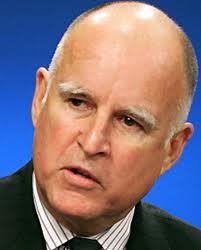
Gov. Jerry Brown gave a brilliant State of the State speech this evening, validating those who hoped that he would have the wisdom, courage, and candor to properly frame this difficult political moment. And it was great because he abandoned tired calls for bipartisanship and opted to go straight to the people, even citing Egypt and Tunisia as cautionary examples of the peril and potential of real democracy.
Contrast that with President Barack Obama, whose White House today indicated it would plow forward with a health care reform package – crafted entirely by politicians and corporate lobbyists – that nobody really likes even after another federal judge ruled its central tenet unconstitutional and House Republicans have threatened jihad over.

Liberals never did buy into this reform after Obama abandoned single payer and even the public option compromise, and its seems conservatives and teabaggers have been whipped up into a froth over its real and imagined provisions. So Obama has some pretty thin backing to fight through the fairly reasonable ruling that the federal government can’t make it a crime not to want to be health insurance company customers.

Both Brown and Obama correctly gauge that “something is profoundly wrong,” as Brown put it. “They see that their leaders are divided when they should be decisive and acting with clear purpose.”

Obama’s solution is bipartisanship, even though Republicans seem incapable of dealing with him or the public in good faith these days. So he makes attempts at bland compromises that please nobody – from escalating war in Afghanistan with a fake exit strategy to extending jobless benefits and billionaire tax cuts – feeding the public perception that both major parties are hopelessly corrupt and ineffective.
Brown is taking a different tact: nonpartisanship. He’s crafted a bold effort at compromise that neither political party likes, but one that will probably prove reasonable to most people if sold properly (unless we are indeed incapable of self-governance at this point, a possibility the I allow and which would require solutions like breaking California up into multiple states or accepting anarchy). And hopefully creative progressive legislators will even give multiple options to the people, including increasing taxes on the richest individuals and corporations to lessen the cuts even more, as long as we’re placing our faith in the people. Hell, I don’t even mind putting a conservative package of deep cuts to government on the ballot as well, just so we can show them how unpopular the right-wing stance really is in California.
Brown doesn’t preclude the future possibilities of bipartisanship, but he also correctly says that the political gridlock is just too strong in Sacramento right now. After punting the budget to the people, maybe they can start doing old-fashioned governance again.

“But let’s not forget that Job Number 1 – make no mistake about it – is fixing our state budget and getting our spending in line with our revenue. Once we do that, the rest will be easy—at least easier because we will have learned to work together and earned back the respect and trust of the people we serve,” he closed. “I look forward to working with all of you.”

Medi-Cal and cell phones: The ugly truth

3

There’s a chilling comment from political consultant Dan Schnur in the Los Angeles Times. In a fascinating story by Tony York, Schnur talks about the difference between image and reality in California’s budget wars:


“Cut $1 billion out of Medi-Cal and most voters won’t notice. Take away some cellphones and make legislators sit on a picnic bench, and they pay attention,” he said.


Yep: Jerry Brown is saving the state a few million dollars by cutting cell phones for state workers and replacing a fancy conference table in his office with a cheap one. And that’s gotten a lot of press — as Jerry, the old master, knew that it would. We still live in a state, and a nation, where symbolism matters more than substance.


Republicans still get away with saying that the governor needs to cut state employee pay and benefits — although you could fire (that is, cut all pay and benefits) for every one of the state’s 240,000 employees and you wouldn’t be close to balancing the budget. (What nobody says is that the majority of state spending in California goes for local programs — what legislator wants to call on the governor to cut funding for his or her district? Not even the Republicans do that.) Little cuts like Brown’s mean nothing, and are easily wiped up by the daily, unpredictable ebb and flow of tax receipts.


And yet, Brown has to send a message that he’s being frugal, so he gets rid of his conference table (did he sell it? For how much?) And it works.


And, of course, nobody ever talks about how much the state wastes in corporate tax breaks; it’s much easier to take away some Caltrans worker’s phone.


I wish Brown could really tell the truth in his State of the State speech — that the stuff people get agitated about is chump change, that a huge cut to Medi-Cal means people dying (but not today, and you can’t prove the link, and poor people die all the time and the press never notices), that cuts to education mean more poverty (and crime, and public expense) in the future, that we’ve already cut (or pupt off with gimmicks) about $30 billion in spending, and that the state has a serious revenue problem.


But he knows he can’t do that. People won’t vote for his tax plan unless he looks like he’s somehow punishing state workers and flagellating himself. Good thing the Jesuits trained him.


SFBG Radio: From Cairo to here

11

In today’s episode, Johnny points out that the protests in Egypt have been driven by young people — and that youth unemployment in the United States is at alarmingly high levels. So why aren’t young people out in the streets here? Check out the discussion after the jump.

sfbgradio1/30/2011 by endorsements2010

Free Muni for kids

19

Sup. David Campos is talking about offering free Muni rides for some of San Francisco’s youth, and he’d like free passes for all school kids next year. That’s a great way for the city to work with SFUSD; the school district spends a huge amount of money on buses. In fact, transportation is the second biggest item in the district’s budget (after salaries). There ought to be a way for kids (above a certain age; maybe fifth grade) who now take SFUSD buses to get on Muni instead.


And let me tell you all a little secret: Most of the middle-school kids who ride Muni never pay anyway. They all pile on the bus after school and some have passes and some don’t and the driver can’t possibly keep up with who’s got what when 50 young people are climbing aboard all at once.


So if we can let them all ride free we can save money for the schools, which can go into the classrooms, and make life easier on the drivers and kids who can avoid the crazy scramble.


And if we can’t do that, or if the city wants some sort of reimbursement, there’s an easy solution: Sell Muni passes in the schools. Not to get too bureaucratic, but SFUSD already keeps track of family income levels (that’s how they do the free lunches) and it wouldn’t be that hard to issue Clipper cards that allow low-income kids to ride free. Kids who can afford it would get a card at the beginning of the year and their parents could put money on it at the Clipper web site (or the kids could do it themselves with a machine in the school office.)


I know it sounds complicated, but it’s way more complicated now; you have to take your kid in person to buy a youth pass and present a birth certificate. Way easier to do it at the schools, where that data is already in the system. A good deal for all: SFUSD agrees to devote one staffer at each middle and high school to the (part-time) job of issuing bus cards, and in exchange SFUSD students get to ride Muni free or cheap — and SFUSD gets to cut its transportation budget.


Why is this not a no-brainer?  


Aerial revolution

0

Consider the rise of the extreme athlete: generations of youngsters (and increasingly, brave older folks) competing to see who could pull the sweetest stunts and survive. Ever wonder how is it that a person can make the transition from earthbound and bipedal to gravity-be-damned dare-devilry? When exactly is the moment that a skater, skier, or snowboarder just lets go and trusts their body to take them up, over, around, and (hopefully) gracefully down to the ground?

Last Tuesday, I attended a press event at House of Air – the newest member of Crissy Field’s collection of renovated airplane hangars in San Francisco’s historic Presidio – where I was treated to a glimpse of how such a transformation might become reality. Not to mention a new way that a public sports facility can play with its community.

Given the Presidio’s military history, you may have been tempted to think the newly opened space at 926 Mason is home to helicopters and jets. But the pilots in House of Air aren’t crew-cutted cadets, and the only high-tech equipment in the corrugated steel hangar is an impressive array of custom-made trampolines. Every day in this house-of-bounce, tomorrow’s extreme sportsters are earning their wings – and there isn’t a major commander in sight.

House of Air is the brainchild of Dave Schaeffer and Paul McGeehan, two extreme sports aficionados who trained together on the Lake Tahoe snowboarding circuit. Their concept was helped off the ground (so to speak) by former Olympic skier Jonny Moseley. All three use trampolines to perfect their aerial artistry, and could commiserate over the difficulty of finding a facility where they could train with their respective equipment. According to Moseley, who raised eyebrows as a youth by flipping over his skis in a gymnastics studio, trampolines were few and far-between and most were used for coaching gymnasts and tumblers.

Large-scale trampolines provide the air time necessary for an athlete to teach his body to do tricks like corkscrews and 360s, serving as crucial incubators before a pro takes to the water, pavement, or snow with a new trick. But until House of Air, the idea of a dedicated facility for extreme athletes was unheard of. Now, the studio fills the void with over 2,000 square feet of trampoline space where serious athletes can perfect their skills in a safe (and soft) environment – and where, I was thrilled to find, even the not-so-extreme can have a blast.

House of Air provides lessons to beginners and more serious students of all ages. Instructors with backgrounds in everything from professional snowboarding to circus acrobatics use a specially designed high-performance trampoline deck to teach techniques to budding athletes. The center’s growing team also supervises two segmented jumping arenas, each about the size of a regulation basketball court, complete with angled trampoline enclosures that extend the bounce factor right up the walls. The facility also includes a kiddy bounce house for the younger set, special event rooms, lockers, and showers.

An average person arriving on the scene would begin their foray into the art of flight by checking out a pair of special House of Air shoes – modified wrestling shoes that provide ankle support. They would then have the option of renting some basic bounce time, participating in an organized game (think P.E. classics gone crazy: dodgeball or volleyball are both served up with a side of spring), or taking a class on the foundations of flying, which is where I wound up bouncing on my visit.

I was a bit apprehensive (read: terrified) as Moseley ushered me up to the trampoline deck and demonstrated a few tricks. He flopped through some sick twists, turns, and flips without missing a beat in our conversation. Then it was my turn.


Our intrepid reporter takes to the air at SF’s bounce palace. Photo courtesy of Jonny Moseley

I started with the aptly named “butt-drop”: a move in which the trampolinist replaces a single bounce with a fall on their bum and then – this is the crucial part – returns to her feet without missing a beat. After that, I moved onto “swivel-hips,” wherein the butt-drop is supplemented by a 180 degree revolution on the up-swing. For my final trick, I tried my hand at the sequence that leads up to a front flip: a jump, a fall to all fours, and then a forward rotation that landed me flat on my back. All in all, I wasn’t quite ready for the X Games, but it was killer on the knees and had my quads burning. I had new respect for the little groms busting board-grabs and aerials — and for the brave adults who come to House of Air for the “air conditioning” classes and company team-building sessions. Trampoline dodgeball: a fantastic way to build office camaraderie, or at the very least a good excuse to pummel that passive-aggressive co-worker with a deluge of flying foam rubber.  

Final impressions from the House of Air? Besides the sore thighs, of course? The center seems to be re-thinking the role of the public sports facility, from its boardrooms for the business set to its specially-manufactured props that emulate sports equipment for practicing athletes, like lightweight foam snowboards and a tow rope akin to what a wakeboarder would utilize on the waves. Even the layout of the building itself, which makes use of those large hangar doors to provide jumpers with such an excellent view of the bay one gets the feeling that with one wild leap one might land in the waves, helps to make House of Air a unique resource for the SF community.  

Given the chance to train in a facility like this one as a child, Moseley says he would have been thrilled – and possibly less banged-up in the bargain. “This is the way kids learn to be professionals — without getting hurt.”


House of Air, 926 Mason, SF. (415) 345-9675, www.houseofairsf.com


Street Threads: Look of the Day

0

Today’s Look: Nicole, Hill and Valencia

Tell us about your look: “I never throw anything out and I love to recycle.”

Danny Glover, DCCC stand up for HANC

The Haight Ashbury Neighborhood Council (HANC) Recycling Center has gained some powerful allies in its ongoing fight against eviction.

A YouTube video posted over the weekend shows actor Danny Glover, a resident of the Haight, sitting in his car at the recycling center. If it were shut down, “I would be dismayed,” Glover tells a staff member. He also says, “It would be a tragedy. It would be a great loss to this city.” (Scroll down to watch.)

On Jan. 26, the Democratic County Central Committee (DCCC) voted in favor of a resolution calling for the HANC recycling center to stay at its location behind the Kezar Stadium in Golden Gate Park. The statement noted that “San Francisco is notoriously underserved by recycling centers,” adding that “people want to receive their California Redemption Value deposit, especially in this depressed economy, which can only be done at recycling centers.”
 
In recent weeks, Sup. Eric Mar told the Guardian he was strongly supportive of the recycling center’s continued operation in the park. He added that he planned to encourage Mayor Ed Lee to overturn the eviction.

The San Francisco Recreation & Park Commission voted in December 2010 to evict the recycling center from a paved lot in Golden Gate Park, where it has been operating for more than three decades. Since the center was originally on a quarterly lease, it was given 90 days notice — but HANC’s lawyer contends that it could legally occupy the property till June.

The eviction, supported by former Mayor Gavin Newsom and a commission composed of his appointees, was widely viewed by recycling center supporters as a form of political payback. HANC, a progressive organization that was at odds with the Newsom administration on a variety of issues, was particularly outspoken against the sit/lie ordinance, which Newsom placed on the ballot.

A neighborhood group, the Inner Sunset Park Neighbors, also supported the ouster of HANC, citing quality-of-life issues such as aggressive panhandling and public safety concerns that the group believes to be linked to recycling center patrons. Rec & Park plans to use the lot for a community garden, at a cost of $250,000.

http://www.youtube.com/watch?v=l09tUCChOiA

Protest in solidarity with Egypt and Tunisia uprising

30

As President Barack Obama insists that governments must maintain power “through consent and not coercion” organizers have announced a protest this Saturday, January 29, in San Francisco, in solidarity with people in Egypt, Tunisia, and other countries struggling against 30 years of dictatorship, poverty, unemployment and torture–and are condemning what they call Obama’s “refusal to condemn the Mubarak regime.”

In a press release, Mohammed Talat, an Egyptian organizer of Saturday’s protest commented that “Despite the extreme Egyptian government repression of its citizens on the streets, mass police violence, killings, and arrests, the blocking of internet and cell phone communication, the US government is still refusing to condemn the Mubarak regime.  As individuals in the US, we protest this inaction and express support for our brothers and sisters in Egypt.”

The protest begins noon, Saturday, at Montgomery BART, followed by a march to the UN Plaza.

Activists and former prisoner call for Obama to close Guantánamo

0

The second anniversary of President Obama’s promise to close the Guantánamo Bay detention center was recognized this week at an event about torture and human rights abuse that continue to take place there.

“There doesn’t seem to be an end in sight…as far as we can tell the [Obama] administration has no intention to close it at this point.,” Rini Chakraborty, Western Regional Director of Amnesty International USA, said at a panel discussion about Guantánamo Bay human rights abuses Wednesday at UC Berkeley.

That conclusion contradicts the assertion by White House spokesperson Adam Abrams that closing Guantánamo is still a “national security imperative.” While the White House says President Obama remains unwavering in his commitment to eventually close the center, more than a hundred detainees remain locked up for years without so much as charges brought against them, according to Chakraborty.

Among those featured at the Amnesty International event was former detainee Omar Deghayes who spoke via video conference from the United Kingdom, where he is a citizen. He spent six years at Guantánamo and was released in what even United States officials eventually considered a case of mistaken identity. He was living in Pakistan in 2002 when one night he was abducted from his home by Pakistani security personnel and later taken into American custody.

“They didn’t know anything about us, ” he said, recalling his first interrogations by Americans at the U.S detention center in Bagram, Afghanistan. “They never accused us of anything…then every year they alleged something and then realized it is completely false…then the next year they would make something up that was more believable.”

What led to Deghayes’ release was a deal with the United Kingdom, where his family conducted a wide campaign to pressure British politicians into action. President Obama has made two recent statements about Guantánamo, stressing the importance of and difficulties inherent in closing Guantánamo Bay, but neither statement gave any indication of when the closure would happen.

“[We need to close it] to make sure that we’re also living up to our values and our ideals and our principles. And that’s what closing Guantánamo is about — not because I think that the people who are running Guantánamo are doing a bad job, but rather because it’s become a symbol,” Obama said in a Dec. 22 news conference.

He failed to specify what Guantánamo might symbolize. It is fair to assume President Obama was referring to widespread allegations of torture and human rights abuse that take place in Guantánamo and U.S. facilities all over the world.

Deghayes shared horrid details of his treatment at the hand of U.S. prison guards. He lost vision in one eye in a beating and had his nose, finger and ribs broken in other instances of abuse. “There were physical beatings, interrogations, chains…we were not allowed to speak to anyone for days and months,” he said.

He also said other cases were worse than his. “Some died under torture, some were sexually abused, they were raped.”

Chakraborty said that Guantánamo’s closing would not spell an end to torture and abuses because there is an unknown number of overseas and secret U.S. interrogation and detention facilities. But she called closing Guantánamo “one very important first step,” adding that it would “show we have the kind good political will to ensure justice for detainees.”

Currently, Deghayes works with lawyers and activists to fight for accountability. “We want help from lawyers in the United States to bring cases [to trial] and help accountability…not just damages to rebuild shattered lives of [former prisoners],” he said.

Next month, the Berkeley City Council will vote on a resolution to welcome Guantánamo detainees who have been released and cleared as not posing a threat. Many such detainees have no country to be released to because of political circumstances. So far, the United States has refused to let these former detainees live in the United States and so a vote in favor of the resolution would have only symbolic value.

GOP is wrong: Most Californians want taxes

50

The Public Policy Institute of California generally has some of the most reliable polls in the state. It’s not a partisan group or part of anyone’s campaign, and the questions tend to be framed in a fair manner. So I take the results of the PPIC polls as a decent indicator of where the state is going.


And where it’s going right now could not be more clear: A vast majority of Californians in the latest PPIC poll want to see a June ballot measure to address the state budget, and they support higher taxes, particularly to save education. And 60 percent think the state should raise taxes on corporations.


It’s going to be tricky: Gov. Brown will need two Republicans in each house to go along if he wants to get a tax measure on the ballot. And the GOP is holding out for changes in the state pension system, which is a complex issue and will be hard to nail down in the short time that remains before the Legislature would have to vote on a June ballot measure. But Brown has the support of the public — even the support of most Republican voters — so it’s possible.


“I’m crossing my fingers,” Assembly member Tom Ammiano told me. “But I think we can get there.”

Can they shut off the Internet?

20

Proverbs for paranoids: If they can catch you asking the wrong questions, they don’t have to worry about answers.


— T. Pynchon


Indulge me here while I get a little paranoid and venture into a realm where it’s easy to get dismissed as a nutcase. And I’ll say this upfront: I really don’t know how much I ought to worry about this.


But: The Egyptian government just tried to decapitate the protests in the streets by shutting down the Internet, and it was relatively easy; four ISPs threw the switches at government command, and bingo — no more email or websites talking about how to toss the bums out. John Weber at the Bay Citizen (who is neither a nutcase nor a paranoid) says this is a first (although China and other countries have censored internet traffic and limited use, this is different; it’s a total sudden shutdown of what was an open service).


So it’s worth asking, anyway: Could that happen in other countries, including ours?


Well, you don’t have to be way out in loony land to be worried about the Lieberman Protecting Cyberspace as a National Asset Act. Yes, I realize all the talk of an Internet Kill Switch sounds batty. We talked about this today on sfbg radio, and Johnny told me I was way wacko: the Internet is so essential to commerce in this country that the corporate powers that be would never allow it to be throttled. Tens of billions of dollars would be lost in moments; the stock market and the banking system couldn’t function.


But the scary thing is that it wouldn’t be all the difficult. All you’d have to do is cut off the domain name servers and nobody could find anything. (Yeah, you can bypass that with website numbers — IP addresses — but most people don’t have those handy.) And one company, Sprint (I think) owns most of the switches that direct all the traffic in this country; shut them off and every city would be isolated.


The web was designed to be redundant; a natural (or unnatural) disaster in New York or Chicago wouldn’t cripple Internet traffic around the country. And I’m not saying that Obama (or his successors) would ever actually try to squelch protest in the U.S. by taking such a drastic step.


But the fact remains that technically, it wouldn’t be that hard to do what Egypt did, and shut things down for a while. And since so much of our political communication in this country is based on the web, it seems somehow that our ability to talk to each other in times of crisis is a wee bit fragile.


Or am I out of my mind here? It wouldn’t be the first time.


More John Ross poems

2

Thanks to some of the many John Ross fans out there, I’ve begun to collect a treasure trove of his poetry, much of it either unpublished or published in limited-circulation chapbooks. Even John didn’t have all of his work when he died, and there’s no central collection. So I’m going to post a couple more of my favorites here — and at somepoint, we have to figure out a way to publish the whole collection.


Here’s one from Running Out of Coast Lines (1985) called “Ohio.”


The snow is sooted


with the scrapings of burnt toast


and the crumbs of industry.


There are citizens asleep beneath it,


buried alive inside dark cocoons,


out of work and under the quilts


alarm clocks left unwound


to roll back the boozy winter,


just a deep snooze in February


the drifted fields and streets,


unscuffed, untraveled,


unhitched trailers,


going nowhere, no one


can find their car in Toledo anymore.


Snow is stasis, it sticks in Cleveland,


it freezes the veins of venom


inside the Cayahuga, gases


are suspended until further notice.


A man who once turned tractor tires


big as a house both of them


rolls over in the white bed


in Sandusky and tries to dream


only of the good parts.


Here’s “Kansas City” from The Daily Planet (1981)


Just when we absolutely had to split


she stepped up


like she owned a piece of history


and meant to lease it to us


right there on the spot.


I never knew Charlie Parker she said


slipping Bish the pic


in which she looked so slick


in a tophat and tuxedo


but I danced in the line


with June Williams


at the Jockey Club


before she run crazy in the streets


buckass naked up 18th


my she had a beautiful figure


June Williams


she said standing alone


in the doorway of the peeling porch


in the spring thundershower


pelting the helpless shrubbery outside.


O I toedance and play the vibes


and I can dance on tabletops too


only isn’t no work in Kansas City


since they merged the unions


the black union and the white one.


She wore a red beret and talked slow


loke she’d been slipping sweet-toothed wine


or else jamming skag, one.


Nope no work here in Kansas City


the machines play all the music now


they got a clique down at the union hall


things ain’t what


they used to be.


And one of my all time favorites, from The Daily Planet, is called “Wanted.”


 She is wanted


Catherine Louise Como


also known as


Kathleen May Wright


Manon Minette


Catherine Ann James


Manon James


Cathy Wright


Minon Manette


She is wanted


also known as


Catherine Share


Catherine Louise Share


Janice Thompson


Betty Cox


Darleen Cook


also known as


Suzanne Bronson


Donna Todd


Mary Thomas


Janet Gross


Betty Bowers


Jessica Daniels


also known as


Gypsy


she is wanted


born Xmas ’42


France a tough war


a known Caucasian


she is wanted.


She is wanted


and she has


brown eyes, brown hair


and small bullet wound scars


on her right sholder


and her right hip.


In two of the mug shots


taken several years ago


Sacramento Calif


her hair is pulled too taut


atop her ears


and her swollen lower lip


curls defiantly


at the police photographer.


In the third, taken months later,


the unbraided hawsers of her hair


tumble wantonly to her shoulders


and she looks like she wants to bite


the arresting officer


on the fat white folds


of his throat.


There are two sets of


small dangerous fingerprints,


checkforging fingerprints,


mail fraud fingerprints,


tilltapping fingerprints.


She is wanted by the FBI


she is wanted by the federal marshalls,


she is wanted in the U.S. Mails,


she is wanted in California, Oregon, Nevada,


and 47 other states.


She is wanted


and she is armed


and considered to be dangerous


and that small I think crescent-shaped scar


on her smooth white hip


drives me 74 way bananas


every time


I try to buy


a 20-cent stamp.


SFBG Radio: Egypt and the Internet

11

Protests erupting all over Egypt as democracy comes to life in North Africa — and the government’s response is to shut off the internet. Could that happen here? Johnny thinks Tim is just a delusional conspiracy nut. Check it out after the jump.

sfbgradio1282010 by endorsements2010

Obama addresses DREAMer Steve Li’s video

0

Earlier this week, I posted a video clip that Community College nursing student Steve Li, who narrowly avoided deportation from San Francisco to Peru last year, submitted to the White House in answer to Obama’s groundbreaking online State of the Union outreach effort. And yesterday, Obama addressed Li’s video (featured at 33.10 minutes into a Jan. 27 interview that YouTube’s Steve Grove moderated) as he answered questions on a wide range of issues submitted by and voted on by YouTube users.

Li is a supporter of the DREAM Act, which would allow undocumented youth who attend college and/or serve in the military to apply for citizenship. And while the DREAM Act failed to get the necessary votes last year, advocates like Li have vowed to keep up the pressure until it becomes law. And Obama indicated yesterday that he believes expelling undocumented youth who are ready to serve in the military or at college makes no sense.

“Let’s stop expelling talented, responsible young people who can staff our research labs, start new businesses and further enrich this nation,” Obama said

DREAMers like LI and their allies will doubtless take Obama’s words and try to get the president to back them up with concrete actions, so stay tuned as the seemingly endless fight to reform the federal immigration system in a humane way continues.

Don’t nobody give a damn: day 3

1

Unemployed construction workers protested outside UC Mission Bay’s Hospital building for the third day straight—but by early afternoon seemed to have got some clarification from UC officials over upcoming job opportunties at the site.


At issue is the tension between UCSF’s stated desire to be a good neighbor and put local residents to work, and the reality that while unemployment remains high throughout the construction industry, the communities immediately neighboring UC’s Mission Bay campus have been hard hit.


.“I want them to set up a system where we have a referral mechanism that includes CityBuild, and for UC to discontinue using DPR’s subcontractor Cambridge and other consultants,” James Richards, President of Aboriginal Blackmen United (ABU), said shortly before he met with UC officials. “Because if you don’t have a community-based organization helping UC make good on its commitment to be a good neighbor, then you are going to see stuff like UC’s voluntary local hire system. The idea that you can have a voluntary system without someone like ABU, which organizes folks from the community, is why this system is going to fail. And it’s why we only see token folks on the site. Because if you don’t work with the community, you won’t get the community to work. Really it’s an easy proposition: you have unemployed union workers at the gate. So put them to work.”

Just then Dwayne Jones, who worked in the Mayor’s Office when Gavin Newsom occupied Room 200, stopped by to chat with Richards and the ABU crew. 
Jones, who is now with Platinum Advisors, told the Guardian that he works as consultant for DPR Construction, UC’s prime contractor at Mission Bay. Fortune recently ranked DPR number 22 in its list of Top 100 companies to work for in the U. S.


Jones noted that his work with DPR had nothing to do with ABU’s local hire protest. “I’m only involved because I have worked with all these folks in the past and know all the players,” Jones said. “So, I’m helping these folks. At the end of the day, DPR’s concerns and mine are the same: I want to facilitate a process that maximizes opportunities for local folks.”

“These are all great people,” Jones continued. “I’ve worked for them for 15 years.”

Asked what the city can do to get the state-owned UC to hire more folks from economically disadvantaged communities on a project that isn’t financed by city funds, Jones said, “I agree that there is little leverage that the city has, given the constraints of the contract, so people need to be creative.”

Jones said he was not aware that Dr.Arelious Walker and the San Francisco Workforce Collaborative has issued a flier stating that they were gathering lists of names to be submitted to UC for jobs, amove that angered ABU members since they have been protesting for jobs at the site for over a year


“I was not aware of this group but there are a multitude of organizations trying to do good work,” Jones said. “And frankly this [multitude] was one of the things that led to the end of the lead agency methodology, because it caused so much division in the community. I hope we build a really strong coalition in the community that leverages its strengths.”

Jones gave UCSF credit for trying to move the local hire process forward
“I’m glad that they accepted the initial recommendation to do whatever they can to mirror the city’s local hire legislation,” he said. “Because although it’s voluntary, if it’s part of your culture and you embrace it, it’ll get done. And these are the people who have been out here for a year.”

Last December, the Board approved local hire legislation for city-funded projects. Mayor Gavin Newsom did not sign the legislation, which met stiff opposition from the building trades, and it’s fallen to Mayor Ed Lee to mplement this new law, which does not apply to state agencies,but had led to a parallel dialogue with UC.


“Much like any policy, implementation is the biggest challenge,” Jones observed. And until we do some inventory of which organizations, contractors, individuals and groups can do each piece of the work, it’s going to be a struggle. What I’m praying for is that local hire legislation allows us to get a bigger table. What I’m interested in doing is creating a pipeline of qualified workers, so that whenever something like this happens, I don’t have to hear the excuse that folks aren’t ready to work.”

Then Richards took off for a meeting with UC Vice Chancellor Barbara French that lasted two hours during which time rumors started circulated that Mayor Ed Lee had called French to try and help move the conversation along, as ABU members continued their protest and shared stories with reporters of how they came to be standing on a picket line in Mission Bay.

One worker, who preferred to remain anonymous, said he was frustrated by UCSF’s plea for workers to remain patient because jobs are coming soon. “We’ve been out here for one and a half years, so since before they did their demolition, and they have been playing games with us,” he said. “ Folks with ABU were promised jobs. But then they didn’t get anything. That’s what UC does. They try to pacify you and tell you stories, then the money gets taken out of the community, and another year goes by. So, if anybody says, why aren’t you more patient, the answer is that the whole area has been built with only a handful of people from our community. Especially now, when no one has jobs, and everybody wants to work here. We are not going into other communities and trying to steal their jobs. We just want to work here. But we could be protesting every day, until this whole stuff has been built. It’s a city within a city. Just look around you. We was patient. And all this stuff has been built and we got no jobs.”

Michelle Carrington, 58, a flagger and an operating engineer from the Bayview, said Dwayne Jones helped her graduate from Young Community Developers. “He got me in tears, he dropped me in the mud at 5 in the morning and made me do push ups, but I fought and kept on and graduated at the top of my class out of three women and 15 men,” she said. “But now we got people going behind the gate, folks who used to work for Dwayne Jones, like Dr. Arelious Walker, who are trying to say that they are the ones who have got the sign-up list for jobs here. But you ain’t been here marching, or down at City Hall fighting for local hire. And I saw Rodney Hampton Jr. on the number 54 bus, and I let him have it. I said, what’s this I heard about you and Walker? And he said he went to UCSF and tried to get a bid but was told ABU had it. So the only way to get in was for him and Marcellus Prentice to go to God’s house.  But Walker’s not out here. Meanwhile, we see folks coming from Hayward, Sacramento and Vallejo and working on this yard. Why is it such a hard decision to try and put us to work? It’s easy. Just take 5 or 10 of us, put us to work, and we will go away. Work smarter, not harder.

Laborer Sharon Brewer, who was born and raised in the Bayview and has been out of work for two years. She helped her granddaughter, Akira Armstrong, hold a protest sign and talked about losing her apartment because she lost her job.
“I had to move back in with my daughter because nobody lets you live for free,” she said. “I used to work for UCSF as a patient coordinator for physical therapy but I got laid off. Now I have to dummy down my resume to try and get a job making $8 an hour selling coffee and donuts .”

Jesse Holford said he had reached the fourth level of his apprenticeship as a Carpenter.
‘There are eight levels between an apprentice and a journeyman,” he said.

Jason Young and Alonzo McClanahan said they were unemployed laborers from  Bayview Hunters Point resident. Robert English, a carpenter journeyman from the Bayview, had been out of work 6 months. Tina Howards, a carpenter’s apprentice from the Bayview with four kids,  had been out of work for a year. And Keith Williams, a carpenter from the Bayview, had been out of work for nine months.


Fred Green, who has lived in the Bayview for 50 years and has five kids, said protesters were trying to remain as peaceful as possible.


“But an empty belly makes you do strange things,” Green said. “If there’s enough work for everybody, why should we be stuck at home while someone comes into my community and takes food out of my kids’ mouths. I got five kids and they all go hungry.”

Bayview resident Carlos Rodriguez has three kids and has been out of work for two years.
“They called me to work before Christmas but never hired me, “ he said.


Bayview resident Truenetta Webb has two kids and has been out of work for four months.
‘Some guys called me and took my information, but there’s been no work,” she said.

Troy Moor, who has lived in the Bayview for 47 years and has two kids, worked in January on Lennar’s shipyard development for 17 days.


“Two weeks ago, UC said they were going to hire four folks on ABU’s list, but they didn’t,” he said. “We don’t want it to get ugly out here. All we want to do is feed our families.”

Moor said he believes Mayor Ed Lee will ensure local hire is implemented on city-funded projects. “Ed don’t want no problem, we know him personally, we used to work for him when he was at DPW (the city’s Department of Public Works),” he said. “He’s a decent guy, as long as you keep the pressure on him.”

Moor speculated that if ABU blocked both gates to the UC Mission Bay hospital project, it would cost UC thousands of dollars.“Here at the front gates, we are visible, but we figure that if by next week, nothing is happening, we’ll start making them lose money,” he said.

Ed Albert, a retired painter and a Bayview resident for 57 years, said he was protesting for folks in his community.
“I grew up in the Bayview, I’m a servant of the Bayview,” he said. “I went from paperboy to contractor. I was a painter for Redevelopment and the San Francisco Housing Authority. But I don’t want a job. Who’d hire a 67-year-old guy with one eye? But I want to see my people get a job.”

James Amerson, a laborer with Local 261, said he worked on the Transbay Terminal in July, then got transferred to Pier 17.
“But when that was over, they didn’t bring me back to the Transbay, so I’ve been out of work since the end of December,” Amerson said. “They sent me to the Transbay as a flagger, and I rode by the other day, and saw they had an apprentice operator doing flagging.”


“When we are not working, we always come back to James [Richards]’s church at Double Rock,” he continued. “We meet at 9 a.m., Monday through Thursday. James is sick with diabetes. But he ain’t asking for anything. He’s here for the people, coming out here, buying food every day. We feed everybody. Yesterday he was feeding the police officers.”

Finally, Richards emerged from his meeting with UC officials. After he crossed 16th Street slowly, Richards was encouraged take a swig of orange juice from the back of ABU’s flatbed truck before giving folks an update.


“When DPR needs someone for a job, they’re gonna call Dwayne Jones, and then Dwayne will let us know,” Richards finally said. “There’s enough work for everybody. There’s hundreds of jobs, but I don’t know if they are in every trade. So, I feel good. But not so good that I can say that ten carpenters will be hired tomorrow. There’s not enough need for that, right now. But the work that’s there, when they call, you’re going to know it. Laborers, there are going to be no others going first. You guys are going first. So, I suppose next week, more laborers should be going, then more carpenters.”

Asked if ABU was going to continue its protest, Richards ‘said he thought folks needed to regroup.


“I think we got enough to not have to come out here tomorrow again. So, we’ll come back to church on Monday and let everyone know what happened. Then we’ll make a decision about what we are going to do. If the majority says, fuck this man, make ‘em hire 10 or 20 more folks, then that’s what we’ll do. But for now, we gotta regroup.”

Reached by phone, as ABU members prepared to pack up for the day, Cindy Lima, executive director of UC Mission Bay Hospitals Project, said she felt UC’s meeting with Richards was positive


“We clarified some misunderstandings and made some progress,” Lima said. “Our goal is still to create jobs for San Francisco residents and make this project happen. So, we are continuing to try and match people who need to go to work with available job opportunities. The bottom line is that there are a lot of people in this city who are out of work and a lot of groups with different intentions in mind and we get tangled in that process. So, maybe we need to have more dialogue about when jobs will become available. And we have made a commitment to talk more.”










The Performant: Stalking the voice of young America

0

Listening in at SF Sketchfest and Live Evil

Is it just me, or do you also catch yourself wondering on occasion, “I wonder what the sound of young America is today?” Where is it lurking, and how will I recognize it when I find it? Well one pretty obvious solution is to just Google “the sound of young America” — the first hit will be Bay Area native Jesse Thorn’s podcast/radio show webpage on Maximum Fun. Delightful, irreverent, not unintelligible, and better yet, not unintelligent, “The Sound of Young America” is both talk show and time capsule. I mean, podcasts? How 2007!

But with comedy, it still works. A good joke is timeless, and a good comedian, whose primary tool is language, can generally carry off being funny, with or without additional visuals. And at the special SF Sketchfest edition of TSOYA, recorded at the Eureka Theatre  to a small but spirited afternoon crowd, funny people were in plentiful supply. LA stand-up comic Baron Vaughn, SF’s finest absurdist sketch troupe Kasper Hauser, creator of animated series “The Life and Times of Tim” Steve Dildarian. But as for the sound of “young” America, it was actually the comfortingly middle-aged “Bobcat” Goldthwait, no longer the mercurial situationist he was in his twenties, who stole the show with his affable demeanor and his relatively grounded philosophy of artistic fulfillment over monetary reward or “the usual trappings”.

Walking into Noh Space Saturday night was a little like walking into a high school Drama Club party, or Heavy Metal Karaoke in the Lower East Side, with everyone dressed up in their very best rock concert t-shirts, mullet wigs, and fingerless gloves: and that was just the oddience!

Onstage was Laurent Martini in a nerdy cardigan and his “younger self—‘Little Evil’” (Max Hartman), eagerly reenacting every past embarrassment of Laurent’s coming-of-age as an upper middle class fat kid from the Marina, with a desperate yearning to get laid, write rock songs, and be Nikki Sixx. These scenes were interspersed with “Don’t make me look too psychotic” vignettes from Martini’s now-defunct married life with desperate housewife Missy (Sara Faith Alterman) who spent a good portion of the show either bitching about Laurent’s uncool passion for hair metal, or getting frisky with “extra-curricular” construction workers, surfer dudes, and drug dealers.

Humiliation is central to the plot of “Live Evil”: it debuted appropriately enough as a share-and-tell at the Mortified story-telling series before it was written down in play form, and five years later still feels, in many ways, like a perpetually adolescent work. But actually, that’s the over-arching secret to its success. Because back when the sound of young America was “Pour Some Sugar on Me” every day was awkward embarrassment, and every desire over-wrought. And we’ve all been there—maybe not penning lyrics like “I’m gonna fuck my way across this great big land” — but certainly harboring impossible dreams of our own. And watching even a small slice of an impossible dream come true for a fellow romanticist, whether still the voice of “young” America or not-so-much, totally rocks.

Snap Sounds: Bill Orcutt

0

BILL ORCUTT
A New Way to Pay Old Debts
(Editions Mego)

Recorded at 24th and York in SF in the early summer months of 2009, these 14 songs are characteristically live enough to give the impression of hanging out in the same room as Orcutt, or an adjacent one, rather than hearing him filtered through a studio. The approach suits the furious storms of broken-neck blues — literally: Orcutt plays a repaired acoustic Kay guitar with two strings removed — that are unleashed from start to finish. Along with the Berkeley Guitar compilations and recent solo albums by Ava Mendoza and Sean Smith, A New Way to Pay Old Debts is a sure way to prove the Bay Area is a guitar nexus. Check out a track from the album after the jump.

Bill Orcutt, “My Reckless Parts” (from A New Way to Pay Old Debts):

http://www.youtube.com/watch?v=C0cHfjiyCtE

BART removes anti-Palestinian ad

39

Offensive advertisements promoting a right-wing Zionist viewpoint of the Israeli-Palestinian conflict were removed from all BART stations this week. “They could be commonly interpreted as disparaging or demeaning to Palestinians as a whole,” according to BART spokesperson Jim Allison told us, saying the violated the district’s advertising standards.

The ad featured the words “Stop Palestinian Terrorism” above a picture of a face covered with a traditional Arab scarf, known as a keffiyeh, and the words “Teach Peace” above the picture of children playing soccer. The keffiyeh has evolved into a symbol of Palestinian resistance to occupation after former PLO leader Yasser Arafat began regularly wearing one. StandWithUs, a self-purported pro-Israel advocacy organization, produced and paid for the ad.

Per BART policy, StandWithUs was informed about the decision to remove the ads and asked to provide substitutes, which it did. The organization’s CEO, Roz Rothstein, told us she felt BART’s evaluation of the ad was “unfair…It would only be disparaging if you don’t look at it properly… the Palestinians deserve a future too, that was the message of the ad. Just as it is not disparaging for an Iranian to point a finger at a [Iranian President Mamhoud] Ahmadinejad, it is not disparaging to point a finger at Hamas.”

However, three individual who did find the ad offensive enough that they complained to BART, initiating the reevaluation of the ad’s content, according to Allison. One Palestinian American who thought they were offensive was Miriam Zouzounias who is the membership coordinator for San Francisco’s Arab Resource and Organizing Center.

She said the ad made her feel “sick to her stomach.” The keffiyeh is a common cultural and political item of clothing, she said, and she happened to be wearing one on her backpack when she noticed the ad. “I hate that [the keffiyeh] is being targeted, portrayed as what terrorists wear.” According to Zouzounias’s interpretation, the ad’s message was that Palestinians do not but should start to invest in productive and peaceful activities for their children, a message that was markedly untrue to her. “Kids playing sports…and doing art are the kind of outlets…Palestinian civil society works really hard for,” she said.

In responding to claims the ad might be offensive, San Francisco’s StandWithUs lay leader Mike Harris told us, “I don’t think that claiming [the keffiyeh] is cultural in that instance is really justified…You don’t see many people in their routine, everyday lives, even if they are Arab American, wearing scarves covering their faces.” He agreed the keffiyeh could be considered a cultural symbol if was adorned on someone’s head rather than covering a face because that it is how the scarf is normally worn.

The StandWithUs ad was response to a previous ad by a group with an opposing view of the conflict. That ad by Friends of Sabeel-North America, a organization that supports the Palestinian Christian liberation theology movement, advocated that “peace and justice” requires an “end to U.S. military aid to Israel,” referring to decades-long aid which has transferred more than $100 billion from the United States treasury to the state of Israel.

Harris said, however, that the ad was “very misleading. The website connected to it promoted BDS (Boycott, Divestment, and Sanctions against Israel) and [mentioned] groups that cannot be considered as promoting peace and justice.” Harris said true peace is “peace between Israelis and Palestinians” and not “peace without Israel.”

FOSNA administrative officer Sister Elaine Kelley said the problem with the StandWithUs ad is that it “turns the focus away from the topic of the occupation and toward the unfortunate violence of some Palestinians.”