SFBG Blogs

Snap Sounds: Charanjit Singh

0

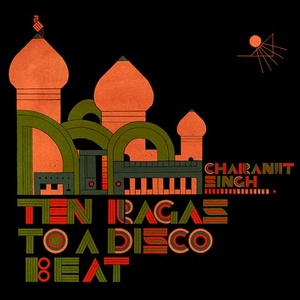
CHARANJIT SINGH
10 Ragas to a Disco Beat
(Bombay Connection)

Pure zaniness: acid house from 1982 — up to four years before the genre was invented — that demonstrates Bollywood composer Singh’s intuitive and innovative proficiency with the genre’s prototypical Roland keyboards and drum machines. This reissue removes the word synthesizing from the beginning of the album’s initial title, to downplay the kitsch factor, I guess. The mix of repetition and raga variation runs from meditative to maddening and is sometimes outright revelatory. One of a kind. After the jump, check out a comic and informative short movie from last year in which an enthusiast seeks out and meets Singh, and a few tracks from the album. As one online commentator suggests, it’s time to put a bindi on the acid smiley.


Charanjit Singh: 2010 (short film):

Charanjit Singh, “Raga Bhairav” (from 10 Ragas to a Disco Beat):

Charanjit Singh,  “Raga Megh Malkar” (from 10 Ragas to a Disco Beat):


Snap Sounds: James Blake

0

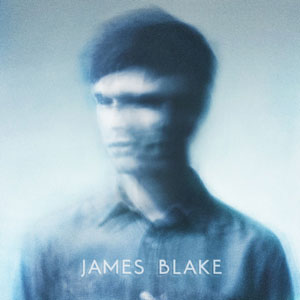
JAMES BLAKE
James Blake
(Atlas)

This is probably the most-anticipated album of 2011, thanks to the promise of Blake’s lavishly praised EPs, which have conjured the ghost of Aaliyah (“CMYK” draws brilliantly from “Are You That Somebody?”) while deploying a innovative sense of dubstep’s space and silence. (See the starts and stops and teasing not-there quality of “I Only Know (What I Know Now)” for an example.) Here, Blake adopts a more traditional pop vocal songwriting approach akin to his cover of Feist’s “Limit to Your Love,” which is included. The result teeters between Kid A-era Radiohead angst and something a lot more interesting and unique — a singular interplay between the possibilities of composition and production.
Whereas most recording artists are at best producers or composers, Blake fuses the two, wielding textural shifts like chord changes. The studio version of “Wilhelm Scream” isn’t as revelatory as the one from his recent BBC session, but other tracks on James Blake share that songs’ effective foregrounding of a simple, endlessly reworked, three-or-four-line lyrical mantra. The offhand conversational honesty of “I Never Learnt to Share” — entire lyric: “My brother and my sister don’t speak to me / And I don’t blame them” — goes from confessional solitude to Stevie Wonder-like funky freedom, remaining compellingly unhinged from start to finish. Where he goes from here will be interesting to see — and hear.

James Blake, “The Wilhelm Scream” (Live BBC Session):

http://www.youtube.com/watch?v=yCeKI4ck0sg

James Blake, James Blake album sampler:

The Free University of San Francisco kicks off teaching — to a lot of white people

71

“A piece of blank paper means anything you want can happen,” SF beat poet laureate Diane Di Prima was imparting a rare free lecture on shamanic poetry, the marquee event of this weekend’s popular first Free University of San Francisco teach-in at Viracocha. She had a packed the antique store-community center’s first floor showroom, encouraging in regards to the FUSF collective’s run at making free education available to all. But if the Free University wants to teach the world, why are the vast majority of its students – let’s not parse words here – white?

“Diversity outreach, that is absolutely one of our top priorities,” says FUSF organizer Alan Kaufman when the point was brought up in a phone interview with the Guardian yesterday. “We’re one of the most racially polarized cities, even in the progressive community. It’s something that needs to be explored and discussed.” Kaufman said that as the collective that runs the university moves forward, FUSF is actively working to involve minority community members – especially undocumented immigrants, one of SF’s populations who surely are among the least-served by the town’s would-be progressive creative institutions. 

It does seem like FUSF has the capacity to be a source of radical academia and community in the city. This weekend’s teach-in (which continues through tonight, Tues/8) attracted capacity crowds to many of its popular hour-and-a-half long courses: Di Prima’s “19th Century Visionary Poetry,” Kaufman’s “Jack Kerouac, Thelonius Monk and Jackson Pollack,” and David Cobb’s “Abolishing Corporate Personhood to Create Authentic Democracy” among them. Though FUSF’s plan for six to eight week classes in the future and another teach-in may be a stretch to replace the value of an actual university degree for students, the success of its initial weekend course schedule does say that some people in the city are ready to rethink the way we view teaching. After all, as Kaufman reminded us, the cost of a four year degree at Stanford is now pegged at a quarter of a million dollars. “That can’t last.” 

But if it’s going to be SF’s new center of alternative, cost-free education, FUSF has to appeal to more than just the aging hippies and earnest intellectual young people who attended this weekend’s teach-in. 

How? Well, that’s the question, really – one that many creative institutions in San Francisco have yet to resolve, if they’ve tackled it at all. “We’re going to need to come up with new answers because the new answers are not working.” Kaufman mentioned that he is particularly impressed by the way SF’s queer community has celebrated its diversity.

“I feel like there are reasons why different groups don’t get involved in the beginning of these things.” Writer Maisha Johnson is one of the only African Americans who has been involved with the Free University planning meetings since she heard about its first get-togethers through her involvement in literary events like Quiet Lightening. “For me, living in San Francisco, it’s hard to find out where the black community gathers. A lot of the time, the assumption is you go to Oakland for acitivities with people of color.” 

“If you’re looking at organizational power in San Francisco, it usually runs along lines of whiteness, maleness, and straightness. The only way to break down those social divisions is for people that don’t feel like they’re that similar to collaborate,” says Mumbles, a spoken word poet who is helping to organize an artist resource center called Merchants of Reality. 

Mumbles says that the goal of Merchants of Reality – which plans to operate out of SoMa’s Anon Gallery and Climate Theater — will be “to help artists commercialize themselves so that others don’t do it for them.” Its a pragmatic mission, one that will even involve what Mumbles refers to as the “realty community” in order to help artists find studio space in the abandoned buildings that dot the SF landscape. The center will also include darkroom facilities, digital video setup, screen-printing equipment, help finding studio space, and a possible performance venue, all for use by artists who normally don’t have the opportunity to use professional-grade equipment and materials, presumably many non-white artists and performers. 

Kaufman and Mumbles think that Merchants of Reality and the Free University can benefit from each other. “Space sharing is one way community can be developed,” says Kaufman, who told us the two groups are looking at ways to overlap each others’ missions in the hope of broadening the community of both organizations. 

Of course, its about more than organizational partners. “It requires more of an explicit effort to reach out to other communities,” says Johnson who will be a part of FUSF’s outreach committee and, adding that she’s heartened by the university’s chances to diversify itself. “Right now it’s really open to people to come in and work on their own vision.” Kaufman agreed that expanding FUSF’s audience means working towards a curriculum that everyone finds useful and illuminating, incorporating classes and promotional materials in different languages, and connecting those typically excluded from professorships in the United States teaching positions. “There’s whole areas of education that others might know about that we might not consider,” he said.

“I believe our university will become famous among universities – come to be known as the ‘Zorro’ of universities,” said Kaufman in an address to the university community. (Printed copies of his four addresses were available by the class sign-in sheets at this weekend’s teach-in.) High hopes — but if the school is meant to make a real difference in progressive education, it’ll have to find a way to bring its message to everyone.  


Free University of San Francisco’s first teach-in

(Started Feb. 5)

Tues/8 classes:

6-7:50 p.m.: “Critical Thinking (Introduction to Logic)”

w/ Jordan Bohall and Elena Granik

8-10 p.m.: “Introduction to Nietzsche”

w/ Evan Karp and Andrew Paul Nelson

Viracocha

998 Valencia, SF

fusf.wordpress.com


Deconstructing Cinderella, deconstructing La Llorona

1

They say you shouldn’t judge a person until you’ve walked a mile in their shoes. Ana Teresa Fernandez, the featured artist in Galería de la Raza’s upcoming video exhibition “La Llarona Unfabled,” (opening Sat/12) has obliged in regards to that feminist foil, Cinderella. For her video installation, Fernandez spent hours standing wearing a melting pair of “glass slippers” made of ice on a dirty West Oakland street. The experience, she feels, left her more than qualified to criticize the social constructs embodied by fairy tale’s scullery maid-cum-princess.

Originally conceived by Galería’s executive director Carolina Ponce de León, “La Llorona Unfabled” will include work from four other artists: Monica Enriquez-Enriquez, Geraldine Lozano, Rosario Sotelo, and Tanya Vlach. The five will respond to issues of gender, class, identity, and migration in an effort to re-craft cultural narratives into feminist and Latina perspectives.

Which is not to say the exhibition won’t speak to all women. “It isn’t about brown, white, rich, poor,” Fernandez affirms. “It is about the self, learning to find your true voice and talents and making that voice the thing which sustains you in life.”

In her art, Fernandez uses lessons from her own life to challenge feminine mythologies — from the Mexican folktale of La Llorona, the weeping woman, to the story of Cinderella –  to “show little girls that they can be the protagonists of their own stories,” she says. Born in Tampico, Mexico, Fernandez was recruited by San Francisco Art Institute with a full scholarship – an opportunity that she met with amazement, and which enabled her to do the art she loves for a living. But Fernandez didn’t have a Prince Charming to make her dreams come true, or a fairy godmother for that matter. For that, she had to rely on talent, hard work and a passion for subverting the macho norms of classic art.

Growing up, the artist experienced very clear ideas about where women belonged. Her mother, a runner, was chastised for wearing short-shorts and sneaking out of the house to race with men. Ana, also an athlete, broke four national swimming records by the time she was eight. “They had to train me with the boys,” she recalls. Now 29, the artist has traveled the world but still feels that by supporting herself through painting, she is swimming against the current.  

Like many children in Mexico, Fernandez grew up hearing the story of La Llorona, the colonial-era fable of a beautiful peasant girl who is abandoned by her noble (read: white) husband.  She drowns her two children, and then herself in the river and is condemned to forever wander its banks, wailing for her lost sons. To Fernandez, the story was a clear message that a woman need to rescued by a man or else face a life of desperation. “What’s that game?” she asks, snapping her fingers. “Old Maid. If you’re not chosen, you’re nobody.” 

Even as the child of educated parents from a big city, Fernandez feels she has to fight the story’s notions of class and race, isolation and empowerment. “There is something to be said about changing the incredible enlaid guilt of how you must act or what you must do as a woman where I grew up – which sounds so incredibly old-fashioned.” 

Inspired by the “strong, elegant women” of her childhood, Fernandez’s paintings – the body of her artistic work up til now – balance the sensuality of the female body with the constrictions that work and fashion place upon it. In “Siren’s Shadow,” a woman swims in a cocktail dress and heels, literally dragged down by those conventional symbols of femininity. In the “La Llorona”  show, these same themes are explored through video and performance art, with water taking on additional meaning as a symbol of La Llorona, weeping endlessly into the river.

“Siren’s Shadow” by Ana Teresa Fernandez 

With the added dimension of time that video brings to Fernandez’s work, its dismantling of the ideals of femininity encoded in myth and art is shown more dynamically. As she stands over sewage in her ice shoes cast from the exaggerated stilettos worn by exotic dancers, waiting for her prince to come, Fernandez’s “glass slippers” and the mythology they imply literally melt away. 

Fernandez is reluctant to align herself with the tradition of Chicana painters working in San Francisco. Her paintings are a far cry from the bold, primary colors of Mujeres Muralistas, the Mission’s famous group of female street artists who lit up Balmy Alley. While she says the Mission feels like her “home away from home,” with its pockets of Mexican culture, Fernandez admits that her work relates more to the European masters and is “much more influenced by male painters.”

Which seems a little incongruous, given her subject material, but Fernandez argues that the virtuosic style of her painting is in itself a subversion, given that the role of the virtuoso painter wasn’t always available to women. Many female artists, especially Latina artists, committed “rebellious acts” against virtuosic tradition in order to get noticed, creating Kahlo-like fantasy worlds rather than create art in the patriarchal classical vein. 

By contrast, Fernandez’s figures, richly constructed out of layers of oil on canvas, glow with heat and realism. “Michelangelo and Botticelli and Brunelleschi were all men that fascinated me,” she says. 

In fact, to someone not paying attention, the muscled, sculptural bodies in Fernandez’s work may not seem so different from the sexualized objects they are meant to replace. But “hyper-sensuality is not the same as sexuality – it oozes, rather than blurts out,” she explains. “It’s quieter, it lingers longer. That’s what I try to play with.” 

She hopes to balance the tradition by adding a female voice without compromising the work’s aesthetic qualities. “In painting women have always been interpreted by men.” As in her life, in her art Fernandez chooses not to retreat into the realm assigned to her by men. She would rather beat them at their own game.


“La Llorona Unfabled: Stories to (Re)Tell to Little Girls”

Artist Talk Sat/12, 2-4 p.m., free

Opening Reception Sat/12, 7:30 p.m., free

Through April 16

La Galería de la Raza

2857 24th St., SF

(415) 826-8009

www.galeriadelaraza.org


SFBG Radio: Why the HuffPo deal sucks

7

Arianna Huffington just sold the Huffington Post to AOL for $352 million. Johnny and Tim talk about why it’s a bad deal for everyone except Arianna and her investors. Check it out after the jump.

sfbgradio272011 by endorsements2010

Richard Johns is closer to developers than preservationists

2

The controversial mayoral appointment of attorney Richard Johns to historian’s seat on the Historic Preservation Commission is being challenged in court by Gertrude Platt and a group of local preservationists calling itself The Prop. J Committee. They are asking the judge to remove Johns from his post.

“Voters approved Proposition J creating the Historic Preservation Commission for the clear and distinct purpose of protecting San Francisco’s historic resources. To erode the voter-mandated qualifications and expertise on the Commission undermines the will of the voters and the intent of the law,” Platt, a 14-year member of the city’s Landmarks Preservation Advisory Board (which 2008’s Prop. J replaced with the commission), said last week in a prepared statement.

The group’s press release noted that “Johns is a business attorney and husband to Eleanor Johns, former Mayor Willie Brown’s longtime senior staffer and confidante dating back to his tenure as Speaker of the California Assembly. Mr. Johns is not an historian….No testimony or material was presented to the Board of Supervisors to establish otherwise.”

In fact, Johns’ resume and comments to the Guardian two weeks ago (when he dismissed concerns about his connections to Brown as “lame” and “silly”) indicate that his only experience in historic preservation has been working for almost 20 years to preserve the Old Mint, by serving on the San Francisco Museum and Historical Society Board of Directors. But a review of that body doesn’t inspire much confidence that he’ll stand for historic preservation in the face of pressure from developers.

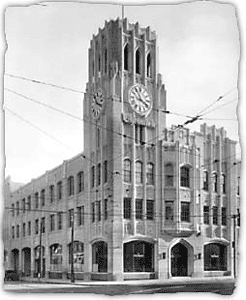
The president of the board is Jim Lazarus, who is the senior vice president for public policy at the San Francisco Chamber of Commerce and a regular advocate for greater development of the city. There are other real estate and corporate representatives on that board as well, most notably Martin Cepkauskas, director of real estate for the Western Properties Division of Hearst Corporation, which is the middle of seeking city permits and approval to redevelop its historically significant Chronicle Building, where the paper has been since 1924, adjacent to Mint Plaza.

So we asked Lazarus, Johns, and Cepkauskas about what would seem to be a conflict of interests between board members who are pushing for development and John’s new role as a guardian of historically significant buildings. After I e-mailed the trio, Lazarus responded to the group “I will respond to this guy,” to which Johns wrote “good” and refused to answer further Guardian inquiries.

In a phone interview, Lazarus said there was no conflict because “nobody has any financial interest in the Mint Project. It’s a pure nonprofit board.” He also made the distinction that “we’re concerned with preserving San Francisco history, not buildings.” But in the name preserving history, the society helped create Mint Plaza, a welcoming plaza across from the Chronicle Building that is ringed by restaurants, retail, and office space.

Lazarus personally bought Cepkauskas onto the society’s board last year because the Hearst project “will have to do community mitigation and I want the Mint to be the beneficiary of that mitigation.” Yet he denies that there is a conflict between the interests of his board and the Hearst project and that of historic preservation and the public interest.

Lazarus also said “I assume Richard would like to stay on our board,” and Lazarus sees no reason why Johns should resign even though the Hearst project is likely to come before the commission later this year.

I solved the state’s budget problem

41

And you can, too! The Sacramento Bee has a handy tool to evaluate options for closing the budget gap — and unlike some of the other versions of this I’ve seen, it actually offers a wide range of revenue options. I cleared up the $26 billion shortfall without cutting anything at all (except prisons; I checked the box for letting out low-level offenders early. I’d go even further, and repeal three strikes and the death penalty, but those options weren’t on the table at the Bee).


But you can see from this that the state doesn’t have to be broke, failing, in collapse. All we have to do is fix the revenue problem (and yeah, the state does have a revenue problem) and bingo — problem solved. In fact, I managed to get the state a billion-dollar surplus.


Go ahead, check it out.

SFBG Radio: Is the recession over?

2

Is the recession really ending? The government says so — but what do small businesses need to make that prediction real? Johnny and Tim discuss after the jump.

sfbgradio242011 by endorsements2010

Dick Meister: Black Porters Led the Way

0

Dick Meister, formerly labor editor of the SF Chronicle and KQED-TV Newsroom, has covered labor, politics and other matters for a half-century.


February is Black History Month, a good time to honor the Brotherhood of Sleeping Car Porters, one of the most important yet too often overlooked leaders in the long struggle for racial equality.

The union, the first to be founded by African Americans, was involved deeply in political as well as economic activity. It joined with the NAACP to serve as the major political vehicle of African Americans from the late 1930s through the 1950s.

Together, the two organizations led the drives in those years against racial discrimination in employment, housing, education and other areas, and in doing so, laid the groundwork for the civil rights movement of the 1960s.

The need for a porters’ union was painfully obvious. Porters commonly worked 12 or more hours a day on the Pullman Company’s sleeping car coaches for less than $100 a month. And out of that, they had to pay for their meals, uniforms, even the polish they used to shine passengers’ shoes. They got no fringe benefits, although they could ride the trains for half-fare on their days off – providing they were among the very few with the time and money to do so. And providing they didn’t ride a Pullman coach.

In order to meet their basic living expenses, porters had to draw on the equally meager earnings of their wives, who were almost invariably employed as domestics.
 
It was a marginal and humiliating experience for porters. They were rightly proud of their work, a pride that showed in their smiling, dignified bearing. But porters knew that no matter how well they performed, they would never be promoted to higher-paying conductors’ jobs. Those jobs were reserved for white men.

Porters knew most of all that their white passengers and white employers controlled everything. It was they alone who decided what the porters must do and what they’d get for doing it.

When a passenger pulled the bell cord, porters were to answer swiftly and cheerfully. Just do what the passengers asked – or demanded. Shine their shoes, fetch them drinks, make their beds, empty their cuspidors. And more. No questions, no complaints, no protests. No rights. Nothing better epitomized the vast distance between black and white in American society.

Hundreds of porters who challenged the status quo by daring to engage in union activity or other concerted action were fired. But finally, the administration of President Franklin D. Roosevelt granted workers, black and white, the legal right to unionize. And finally, in 1937, the Brotherhood of Sleeping Car Porters won a union contract from Pullman.

The contract was signed exactly 12 years after union president and founder A. Philip Randolph had called the union’s first organizing meeting in New York City. It was a long arduous struggle, but it brought the porters out of poverty. It won them pay at least equal to that of unionized workers in many other fields , a standard workweek, and full range of fringe benefits. Most important, porters won the right to continue to bargain collectively with Pullman on those and other vital matters.

Union President Randolph and Vice President C.L. Dellums, who succeeded Randolph in 1968, led the drive that pressured President Roosevelt into several important actions against discrimination, including the creation of a Fair Employment Practices Commission in housing as well as employment. FDR agreed to set up the commission – a model for several state commissions – and take other anti-discrimination steps only after Randolph and Dellums threatened to lead a march on Washington by more than 100,000 black workers  and others who were demanding federal action against discrimination.

Dellums and Randolph struggled as hard against discrimination inside the labor movement, particularly against the practice of unions setting up segregated locals, one for white members, one for black members.

Randolph, elected in 1957 as the AFL-CIO’s first African-American vice president, long was known as the civil rights conscience of the labor movement, often prodding federation President George Meany and other conservative AFL-CIO leaders to take stands against racial discrimination.

The sleeping car coaches that once were the height of travel luxury have long since disappeared, and there are very few sleeping car porters in this era of less-than-luxurious train travel. The Brotherhood of Sleeping Car Porters is gone, too. But before the union disappeared, it had reached goals as important as any ever sought by an American union – or by any other organization anywhere.

Dick Meister, former labor editor of the SF Chronicle and KQED-TV Newsroom, has covered labor and politics for a half-century. Contact him through his website, www.dickmeister.com, which includes more than 250 of his columns.

Sound and environment: Moving beyond tropical bass with Chief Boima

0

A couple weeks ago I shot a long-winded email to former Bay Area DJ and producer Chief Boima. I had just finished speaking to Dun Dun of the Los Rakas crew for what eventually became this article, and he mentioned an upcoming EP with former Bay Area DJ and producer Boima. Now, if you don’t know about Boima, you need to get acquainted with the Banana Clipz digital funk on Ghetto Bassquake (for free download, too). It’s a joint instrumental album between Boima and Oro 11 of Bersa Discos that merges electronic architectonics with rhythms, melodies, and sound bits from the African diaspora.
Enough of that, though — Boima withstood my long-windedness, and after a couple exchanges, he did all the explaining.

SFBG Dun said that you do with instrumentals what Los Rakas does with lyrics. Do you see similarities in your respective styles? Your backgrounds and influences?
Chief Boima Well, when I first came across Los Rakas I had just come back from Panama, and I was on this high from hearing all the big carnaval tunes and the mix of sounds that reflected my musical and cultural background, but in a Spanish-speaking world. I grew up on the stuff that a lot of Panamanians grew up on, zouk, dancehall, soca, etc. So I was at the SF Carnaval and I heard Panamanian reggae but with this Bay Area flavor to it. (Check my initial reaction here, and I had been posting stuff like this.) I identified with what they were doing immediately.
Also, my father is from Sierra Leone, and I grew up with West African cultural influences, so I try to incorporate that musically into my electronic and hip-hop beats. I feel like Los Rakas do the same thing with Panama, and what Dun said is a great compliment.

SFBG Dun also mentioned a future EP coming up. What’s your process working with Los Rakas? What are some of your thoughts on this upcoming EP?
CB Well I linked up with Rico and Dun after not seeing them for maybe a year. I had given Rico some instrumentals and I never had gotten the chance to record on them. At that point I had a little studio set up in my spot in Oakland, so I invited them down to work on stuff. I think it was a real natural collaboration because we knocked out a lot of different stuff in like 6 months. They would come over and just freestyle or write. A lot of songs came out through different processes. Like one song they gave me an acapella and I constructed a beat around it. Other songs, I played them the beat and they’d just start writing to it, and we’d record. This would all happen after work and on weekends, so it was cool because the sessions were real compact but productive. I’m real excited about the EP. I think the material is strong and unique, so I can’t wait to see the reception.

SFBG “Tropical” or “tropical bass” seems to be the new term which has emerged to cover the range of new electronic music informed by both American and Afro-Latin styles of music, and their many convergences and hybrids. Do you see yourself as part of this tropical movement? Would you trace its form or define it differently?
CB I get the name tropical bass, but I see it akin to a label like world music that’s just kind of vague. I think the styles that are included under the genre are diverse musically, but they share similarities in the production process that is informed by increased access to technology and information across the world. It’s also really related to urban environments, like hip-hop and house were in their beginning stages. So I see all this music as a kind of continuum of hip-hop and electronic music from Detroit and Chicago. I see myself as part of that production process, more than a musical genre.
The genres I enjoy and work with are informed by their local environments and have names like hip-hop, dancehall, coupe decale, house, soca, and kuduro. They come out of specific regions, and their environments inform the music. A lot of the most popular rhythms are related to Africa and its diaspora, people who are generally scattered around the tropics. So that’s why people use tropical, but I wouldn’t necessarily describe myself or anyone else that way. It doesn’t really work anymore when you get [sounds like] Balani in Mali, or UK Funky, which are not tropical [in setting], but are still informed by the same aesthetics and production processes.

SFBG Do you try to digitize or transfer Afro-Latin/Caribbean folk sounds, genres, or ideas into electronic form?
CB Yes, but I don’t explicitly set that as a goal. I add in all my influences, which are informed by growing up in the Midwest and spending time on the West Coast as much as “folk” music. I was into hip-hop and electronic music growing up, and my older relatives would get down to music that was recorded by live instruments. I love those older tunes, they make me nostalgic, and make me feel connected to my culture, so I wanted to bring the feelings that I have when I hear them to a contemporary club space.

SFBG Our sense of place is now more amorphous than it was maybe thirty years ago. The Internet has in many ways uprooted us, and with regards to music, given us access to all sorts of folk genres, sonic forms of indigenous culture, traditional sounds and instruments, beforehand only accessible perhaps by being there or coming into contact with someone who was indeed there. To what extent do you think the open source availability of the Internet influences the way you channel folk forms of music and older sonic traditions in your production? In what way does place or region (whether the Bay, Cuba, NY, or online places, even the temperate range of tropical) inform your music?
CB I think the Internet has facilitated interactions and dialogue, but you can’t overlook things like increased immigration and traveling. A New York Times article recently said that New York is as diverse as it’s ever been. It claims that NY has more people born in other countries living there than ever before. The whole United States is changing. Europe is changing. The feedback loop to global centers of production in the “South” is super influential. International travel is becoming cheaper, so it’s easier to see the whole world. I think we’re going to reach an energy crisis in the near future where all that will be curbed a little, and the Internet will keep those interactions going, but we’re really living at the apex of an empire, just like the Romans, and the Ottomans, and the Greeks were super diverse civilizations informed by cultures from all over the world. So the Internet is just our current means of achieving those interactions. It takes the place of the role that sailors and desert caravans and conquerors had before. It’s just faster, and totalizing across the globe.
I travel a lot, and I have a diverse cultural background with multiple influences. That puts me in a certain position of influence because of my experience, but someone who has never traveled can have the same influences because I post about it on the Internet. But that doesn’t mean that it’s a new thing. Cotton and sugar comes from India. Potatoes come from Peru. Coffee comes from Ethiopia. These are things that are fundamental to our cultural identity today, but we don’t necessarily think about them as coming from other places. I feel like these things seep into everyday life, and they become a part of wherever they end up whether NY, London, Rio, Kampala, etc. But when they get to those places I think they change. In other words, environment’s influence is fundamental and if you listen hard you can tell the difference.

Black history, local hire, living color

31

City Hall kicked off its annual Black History month celebrations with a talk by Los Angeles philanthropist and former Xerox Corp. VP Bernard Kinsey about the importance of debunking myths about the absence of blacks in American history. And Mayor Ed Lee, who had just met with five dozen unemployed black construction workers from the Bayview, revealed how, when he was growing up in the projects in Seattle, his neighbors were black, and an African American named Darnell was one of the most loyal patrons of the restaurant that Lee’s father was trying to make succeed.


“And when my dad suddenly died of a heart attack, Darnell was the first person to offer my brother a job at his gas station,” Lee said. “So, this is not just about recognizing African American history, but recognizing what they did for us, and  making sure that no there are jobs and we protect the family structure. I know what it is to be helped by the African American culture.”


Lee’s recollections of Darnell came less than an hour after he met with Aboriginal Blackmen United, a group that represents unemployed construction workers in the Bayview, to discuss how its members can get hired at UCSF’s $1.5 billion hospital complex at Mission Bay and other local building sites.


At that meeting, ABU President James Richards thanked Lee for getting UC to clarify the details of its voluntary local hire plan at the Mission Bay hospitals.
But he warned that the fight is just starting. “We’ve got the unions to deal with,” Richards told Lee, referring to the reality that the unions also want their members to get work at the UCSF site.


Lee said he’d do his best to help.
“The African American community in San Francisco has not got its fair share,” he said. “I can’t say that everyone in the room is going to get a job, but I’ll open up doors and do my best.”


And then Lee confirmed that local hire is one of his top five priorities.
“My top priorities are the budget, pension reform, the America’s Cup, finding a good police chief and local hire,” he said. “I said that directly to every union leader yesterday. Some unions will be there, others will resist.”


ABU’s Richards said the need to have a G.E.D. to get into the city’s ob training programs is a barrier to employment for many in the Bayview.
“We have a lot of people, who are not able to get into CityBuild because they don’t take folks anymore who don’t have their G.E.D,” he said.


And he warned that the city’s black community is in crisis.
“I know there is a budget crisis, but this is a life crisis,” Richards said. “Young people are dying and it’s not even newsworthy any more.”


Lee suggested ABU work with the City to avoid the need to hold protests at construction sites in future,
“Let’s plan together, so you don’t have to go to all the sites,” Lee said. “I am for people getting their GED. But if someone has evidence that they are making an attempt to get their GED, we need to reward that with jobs. So that the GED is not a barrier, it’s a hope.”


And then Lee was off to attend his next round of meetings, which included the city’s Black History month event, where speakers noted that during Bernard Kinsey’s career with Xerox, he helped increase the hiring of blacks, Latinos and women,


Kinsey told the audience that he and Shirley Kinsey, his wife of 44 years, share a passion for African-American history and art. And that their world-famous Kinsey Collection, which contains art, books and manuscripts documenting African American triumphs and struggles from 1632 to the present, is currently on display at the National Museum of American History in Washington D.C, and a number of pieces are at the San Francisco African American Historical and Cultural Society. He noted that the posters of African Americans in the Civil War were reproductions of some of the art in those exhibits. 


Sup. Malia Cohen noted that about 200,000 African Americans participated in that war. Sup. Ross Mirkarimi, who represents the city’s Western Addition, where redevelopment triggered massive displacement of the black community in the 1960s, noted that eight members of the current Board of Supervisors, who selected Lee as the city’s first Chinese American mayor, are people of color.


“This is true representation,” Mirkarimi said, noting that the fact that the city’s African American population continues to drop (reportedly down from 6 percent to 3.9 percent, according to the 2010 Census) to “is a reminder that even the most forward-thinking cities have a lot of work to do.”


And Kinsey urged African Americans to start describing their ancestors as “enslaved.”


‘It will change how you look at your ancestors,” he said, “You don’t have a clue about what they sacrificed to get you to where you are today. We don’t tell you the ‘ain’t-it-awful’ story about slavery. We tell you the story of how we overcame.”


“You need three things for a successful life,” Kinsey added “Something to do. Someone to love. And something to look forward to.”


Kinsey said he and his wife have espoused two life principles, ‘To whom much is given much is required” and live “A life of no regrets.” And then he told a story about an eagle who was raised by a chicken.


The eagle ended up ashamed of his feathers, because the chickens never told him he was an eagle because they were afraid he’d end up ruling the barnyard.“He even grew up ashamed of his daughters,” Kinsey said.


Eventually, the eagle met another eagle, who told him the truth. “You ain’t no chicken,” the other eagle said.


“And this is the message,” Kinsey said. “Don’t think chicken thoughts, or dream chicken dreams. Think like an eagle.”


He warned the audience to be careful of buying into myths that would have them believe that African Americans played no role in building the U.S.
“There are stories that made America and stories that America made up,” Kinsey said. “And too often, the myth becomes the choice.”


And then he concluded by expounding on “the myth of absence.”
‘”African Americans are not seen, not because of their absence, but because of the presence of a myth that prepares and requires their absence,” Kinsey said. “And the manipulation of the myth changes the color of the past. It’s no accident that the dominate images from the past are white. And many of us have swallowed the pill.”


Travels in a strange sushi

0

Tanuki Restaurant on California and Sixth Avenue was my first taste of the Richmond and my millionth of raw fish. On a quiet block in unfamiliar territory far from Mother Mission, I saw her “Open Sushi” neon sign and walked towards the light. But before I go on, I should admit that my heart belongs to another: We Be Sushi on 16th and Valencia. Theirs is simple, clean, casual, and delicious fish. But as every baby bird must one day leave its nest, so must I leave my small, insular universe to discover nourishment in new land.

The Richmond – what are you? I took the #33 past Golden Gate Park and – I know I am a ridiculous Mission idiot – entered the Twilight Zone. Where were all the people? Why are the streets so wide? Why is the sky so big? I guess there were some inhabitants, but they all seemed eerily calm, mustache-less. And there was so much space between them. There I was: a stranger in a strange land trying to get a spicy tuna roll.

The disconnect was heightened upon entering Tanuki, where my friend and I were faced with that awkward bad thing where you try to give the other tables space, but your server forces you to sit next to them anyway. I comforted myself with the thought that cultural immersion really is the best way of getting to know a place.


Counter attack. Photo by Alex Fine

And what a place! We were in a 1970s ski lodge. Well not literally, you’d have to ignore the long white counter and glassed-in fish with industrious chef behind — but with the low ceilings, suspicious wood paneling, and ESPN playing on the TV that hung over the small center dining room I caught a fresh-faced, schussing vibe. There were a few other tables near us: two hetero single lady couples complaining about men, one deliriously happy Midwestern-looking middle-aged duo, and a table of dudes desperately trying to make it known that they were a band. Everyone was white. But enough about the vibes, you crunchy Mission-ite. How was the food?

I am but a casual fisherperson. Virtually all I know about sushi is based on subtle inclination, hunch, and rumor that I can’t remember the origin of. I don’t think I’m alone there. But whether or not sushi is an ancient Japanese art or a conspiracy created by the US government, most of us can agree that it’s lovable fare (even when it’s not from We Be). 

But as far as I’m concerned, there are two kinds of sushi. One, a simple, minimal kind that allows you to fully taste its one or two ingredients. Two, the kind where the rolls are named things like Kamikaze and Oompa Loompa Sex Party and contain a million varieties of mayonnaise, teriyaki sauce, and what basically amounts to ketchup. 

I enjoy both — and I’m not making any sort of heady, stuck-up judgment about which is better (see my knowledge-of-sushi caveat above). But what I am saying is that Tanuki was inching towards the latter kind. And it was a little expensive — most menu items were between $10 and $20. 

On that menu: hot hamachi, oyster shooters, carpaccio, and clams in miso soup, to name but a few offerings. Everyone around us was ordering one oyster shooter after another – delicacies I still can’t categorically define, but “shooter” anything and I start to have my doubts. 

We started with a large green salad and a seaweed salad. The seaweed salad was good, but seaweed salad is hard to screw up. The green salad was huge and semi-warm with mushy tomatoes and watered-down miso dressing. It grossed me out, but you couldn’t tell from the way I wolfed it down. My friend got a huge bowl of shrimp tempura in udon noodle soup. Halfway through she exclaimed, “I want a beer and a peanut butter Snickers.” I tried it and thought the udon noodles were fun and chewy, the broth satisfying. But I agreed that Snickers might be in order. 

I had a house roll: crab, salmon, tuna, and avocado in a moat of spicy mayo and teriyaki sauce. It was great because it was huge, and spicy, and I was starving. I didn’t pay much attention to the fish — how could I? It was covered in creamy sauce. There’s nothing wrong with that, but it does seem rather base to smother something expensive in sriracha mayo. 

I’m not whining. Much. I’m just saying that, as I finished the last droopy bites of my pal’s udon, the servers throwing me shade nearby, and the sound of show tune instrumentals playing softly overhead, it dawned on me that sometimes; it’s ok to stick with We Be Sushi.


Tanuki Restaurant

Mon- Sun 11 a.m.–10 p.m.

4419 California, SF

(415) 752-5740

Beer and Wine

MC/V

Moderately Noisy

Wheelchair Accessible


Why aren’t Brown and Pak registered lobbyists?

13

Powerful business interests constantly put pressure on City Hall to do their bidding rather than act in the public interest. Theoretically, they’re supposed to report who they’re lobbying, on whose behalf, and how much they’re being paid, but that doesn’t always happen. Instead, some of this city’s most powerful players operate with little public scrutiny.

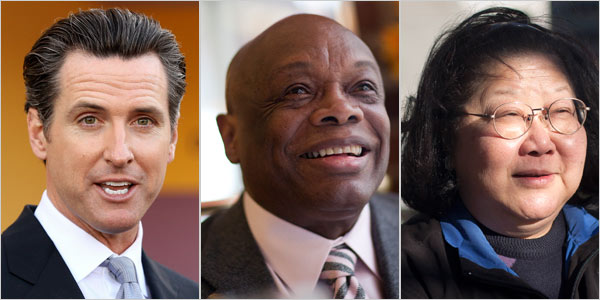
Consider former Mayor Willie Brown – a corporate attorney and Chronicle columnist – and his close ally, Chinatown Chamber of Commerce head Rose Pak. Much was made, from the New York Times to local blogs, of how they engineered the selection of Ed Lee as interim mayor. More recently, there were questions about whether they influenced the narrow and controversial appointment of Richard Johns to the Historic Preservation Commission.

But neither Brown nor Pak is on the long list of lobbyists registered with the city. Neither is Rob Black, who lobbies City Hall on behalf of the San Francisco Chamber of Commerce and is a regular fixture at Board of Supervisors meetings. Why? I don’t know because none of the three would return my calls asking that question [see UPDATE below for Black’s comments].

So I asked John St. Croix, who runs the Ethics Commission, the regulatory agency that oversees lobbying and other activities by which wealth influences government. But he didn’t know the answer either. “If someone is paid specifically to lobby government, they should register,” St. Croix told us.

But his underfunded agency is mostly complaint-driven in its enforcement actions, and even though I complained, he didn’t seem inclined to act against these powerful local players. Hell, his agency hasn’t even done anything about the blatantly illegal collusion between a Brown-funded independent expenditure and the campaign of Jane Kim, despite reports in both the Guardian and the Bay Citizen (the local arm of the New York Times) back in October.

And so it goes in this supposedly progressive city.

UPDATE ON 2/4: Black just got back to me after being out sick with the flu. He said the Chamber used to be considered a “registered lobby entity” that was required to report all contacts with public officials and the issue involved. But the Board of Supervisors changed that law last year, requiring lobbyist registration only from individuals who are paid at least $3,000 per quarter for lobbying. And the definition of lobbying doesn’t include attending or speaking at public hearings or writing letters. So while the SF Chamber’s Black, Steve Falk, and Jim Lazarus all lobby city officials, Black said, none of them have exceeded that threshold. “If we hit the monetary threshold, we’ll start filing individually,” he said.

Hot sexy events: February 2-8

0

Why do most alien encounter stories involve sexual liaison? Leaving aside the non-believers’ theory that the yarns are the result of pervy souls in need of some quality time with a loved one, one must come to the conclusion that for the aliens, sex is part of some higher purpose. (Just kidding — how much higher can you get?) The folks at Bent, the Bay’s party for kinky youth, have this figgered, of course. This month, when many events are turning pink and heart-shaped, the costumed kinkfest pays homage to the greys, the greens, the purples, and the scaled. It’s an alien get-down, and we’re all invited! Just be sure and brush up on your E.T. anatomy before you go. You don’t wanna be “that girl” that gets freaked out by an extra orifice or three.


Bent: Close Encounters

Take me to your penis! The young persons’ kink party goes extraterrestrial with a full program of alien delights: a staged abduction, a bellydance by an enslaved human, a static wand striptease (go with it), and all manners of UFOs to beam down to the dungeon once you’re ready to play rough. 

Fri/4 9 p.m. – 2 a.m., $20

SF Citadel

1277 Mission, SF

(415) 626-2746

www.sfcitadel.org


Nude Aid

There are few things sexier than the sight and feel of paintbrush on bare skin. Though body painting has been the victim of co-option by Pink Floyd (and by extension, every coed’s dorm room wall, ever. Honestly, who’s gonna be the first to make a coffee table book of the most cliched college posters?), true artistry exists in the form of colorized folds and follicles. Test that theory out for yourself at this benefit for the Center for Sex and Culture, at which naked and fetish-clad models will be rendered masterpieces – all in the name of art, mind you.  

Fri/4 3-8 p.m., $20

Center for Sex and Culture

1519 Mission, SF

(415) 552-7399

www.sexandculture.org


Essence

The first edition of Mission Control’s new pansexual, erotic-spiritual play party promises to reinvigorate your chi – the night will be populated by shamans, Aphrodite, shrines, services, and attempts to recalibrate sexually. Yessir – sex is rite tonight, so if you’re down for the spiritual-sensual woo-woo then my friend, you have found your Saturday jump-off. 

Sat/5 9 p.m. – late, $30-35 members only

Mission Control 

www.missioncontrolsf.org


Burlesque ‘n’ Brass

So you love burlesque, but simply cannot leave yourself open to the prospect of another Ke$ha or Metallica-soundtracked stripdown? Hie thee hence to Cafe Van Kleef, where the lovely ladies are accompanied by a live jazz band that would never, ever launch into “Oops I Did It Again.” Nothing but class for the wondrous women performers of Hot Pink Feathers – and your side of gin martini.

Sat/5 9:30 p.m., $10

Cafe Van Kleef

1621 Telegraph, SF

(510) 763-7711

www.cafevankleef.com


Introduction to Red Tantra

Progress from tantric yoga to light touch and energy work, along with discussions of amrita (the female ejaculation), the multi-orgasmic state, and delayed ejaculation for men. This couples-only workshop is non-explicit, so it’s perfect for the twosome that wants to expand their practice, but not their audience. 

Tues/8 6-8 p.m., $45-50 per couple

Good Vibrations

1620 Polk, SF

(415) 345-0500

www.goodvibes.com


Gay Mystery 101

Nancy Drew was never this sexy. Mystery novels have progressed since your grade school days, as authors Paul Faraday and Haley Walsh can surely attest. The two will be reading excerpts from their novels (Straight Shooter and Foxe Tail, respectively) that star hot gay protagonists getting to the bottom of sinister happenings in Southern California. Bathhouses, vodka martinis, and Antonio Banderas lookalikes promise to figure mightily. 

Tues/8 7:30 p.m., free

A Different Light Bookstore

489 Castro, SF

(415) 431-0891

www.adlbooks.com


SFBGRadio: Kids, God and lies

19

A little bit of a break from our usual political ranting: Johnny talks about telling his kids about death and we discuss why it’s so easy to sugarcoat it (and talk about God and an afterlife) but in a secular household, it’s better to tell your kids the truth about everything, from death to sex and drugs. Agree? No? Listen and argue with us after the jump.

sfbgradio222011 by endorsements2010

Speed Reading: Matt Furie’s Hot Topik and boy’s club 4

0

I got an orange Pepe T-shirt at Needles and Pens’ release party for Matt Furie‘s new comic Hot Topik. What better way to also celebrate the fourth and latest issue of Furie’s boy’s club, in which Pepe and pals Andy, Brett, and Landwolf are joined by two new characters, Whitey (a zit), and Bird-Dog? Somewhat reminisicent of a stoned Big Bird, Bird-Dog lectures Pepe on the history of weed in one of the comic’s highlights, though I’m also fond of the episode in which a Vaporizer turns Landwolf into a viper with a craving for pepperoni pizza. Here are some of the characters in Hot Topik, as well as a few pieces by Furie on the walls of Needles and Pens.

California is an even richer state

15

Jerry Brown pointed out in his State of the State address that California is a rich state; I’m not sure Jerry saw the latest from Vanity Fair, but I think his estimates of increased personal income might be a bit low. VF loves to dig into the lives (and fortunes) of Hollywood types, and the latest list of the highest-paid people in the film industry is interesting.


James Cameron made $257 million last year. Guess what? He lives in Malibu. That’s Malibu, California. Guess what? If we raised his taxes a little he’d still live in Malibu. In fact, he wouldn’t even notice.


Johnny Depp made $100 million, but he lives in France these days. But Steven Spielberg, who made $80 million without even working, lives in Los Angeles. So does Christopher Nolan $71.5 million) and Leo DeCaprio ($62 million). Kristen Stewart ($28.5 million lives in L.A. too, though I hear she wants to move to Australia; income taxes there are higher than the U.S., though, so she won’t be fleeing the taxman.


Got that? Four people, $477.5 million, last year alone. Yes, my friends, we can afford public education. 

I’m not Das Racist, but…

0

Social construct-questioning rap duo (trio if you count the group’s hypeman, we should) Das Racist is coming to the Independent tonight – but don’t worry white people, the show’s already sold out, which means that rather than sit through a scene like this, you can read the following blog post and still be able to participate in discussions of the group’s artistic merit and stainless steel balls with your friends at brunch this weekend. 

Here we have assembled an Interwebs dossier on the three Wesleyan boys that would call racism on oh-so-many things in our modern day society. Who would have ever thought, back in those halcyon “Combination Pizza Hut and Taco Bell” days that we’d be calling them astute lyricists. Which we are. And to say they’re self-important, well that would be like saying it about Kanye West: a waste of time. Anyways, here’s your Das Racist 101.

This is the song the group got famous on. Everyone was really surprised when it’s subsequent offerings weren’t as surface-stupid. But those guys rap real good. Here’s one of my favorites, you can read it and then when you click on a phrase you don’t understand the website explains it for you! 

At times, writers are inspired by the group’s insistent riffs on social mores that serve to unfairly regulate our society. So much so, in fact, that they will write an article in which all capital letters are eschewed. That’s called “subverting hierarchy.”   

Writers loove to write about Das Racist (sup!) A New York Times Magazine writer made fun of Das Racist, but the group also made fun of a New York Times Magazine writer. At the same time. It was like a mobius strip of ill-concealed unease and disregard.  

Das Racist actually makes fun of many attempts to write about it, that is when they’re not systematically eviscerating socio-cultural commentary on their contribution to hip-hop. But Das Racist will offer unsolicited feedback about one music site’s reviews on another music site “in order” to educate future journalists. Don’t say they never gave you nothin’, stinky writers. 

Das Racist gets banned from bars, is given a second chance, and then gets banned from the bar again. They also took drugs in college to get over feeling weird about being there. That’s Wesleyan for ya.

Das Racist has the ability to make Katy Perry sound hallucinogenically more interesting than she normally does. Das Racist also makes a super hot mixtape, granted you like the word “fuck.” Who doesn’t, really? And the group makes a great music video.  

Here’s the concert deets, but like I said – no mas tickets available. Just read about them on the Internet, that’s what everyone else is doing. I’ll leave you with a haiku that Himanshu Suri wrote for that Flavorwire article I linked to in paragraph six.


Hip-hop dies each year.

How many lives hip-hop got?

Is hip-hop a cat?  


Das Racist 

Feat. HOTTUB and DJ Vin Sol

Weds/2 8 p.m., $15

The Independent

628 Divisadero, SF

(415) 771-1421

www.theindependentsf.com


Live Shots: Stag Dining “Speakeasy” Clandestine Dinner, 01/29/2011

0

These days, it’s hip to be in the know of well-kept secrets. OK, maybe that’s confusing, but what I’m trying to say is there’s an ever-growing list of underground events going on in San Francisco, but if you don’t know about them, well, than you better start getting on it. Now. I’ll give you a hint. Secret restaurants are popping up everywhere and it’s the kind of eating experience you don’t want to miss out on.

Case in point: this past weekend, Stag Dining Group hosted a clandestine dinner at a mysterious locale, which included a myriad interesting dishes, from Japanese lobster custard to skewered duck hearts in mole sauce.

The chefs, Ted Fleury and Jordan Grosser, were bustling in the kitchen to get six courses out to almost eighty people at the same time, while Cocktail Lab was busy concocting a new libation for every course, filled with everything from chili peppers to flaming cinnamon sticks. And boy, my drinking habits are not up to snuff these days … I could not keep up!

The food was tasty and carefully crafted, and I especially loved dessert, a thick creamy chocolate mousse, topped with a see-through thin olive-oily piece of cinnamon toast. My only crit note was the lack of carbs in the meal. I definitely felt the need for one dish that might be considered “hearty.”

Stag Dining is comprised of a bunch of affable dude-bros who have been friends for years and decided to collaborate to create a supper club. Beyond the delectable delights, I also loved that they did a spiel about their values, right down to their handmade recycled menus and to the fact that eating sustainably is really becoming a must. Sometimes people overlook the “spiel” — but I’m one of those people who is constantly giving them and feel that it’s so important to educate whenever possible. (My broken record spiels include: “Check your bathroom products … they might contain parabens!” “Non-organic strawberries taste like crap … and can kill you!” “Did you know that health care in other countries is way better than in America? Write a letter!” It’s something people still do!)

So folks, now you’re a little in the know for something well worth being in the know about, start exploring some of these hidden edible treasures, which are sure to tantalize and tickle your taste buds.

Happy Lamb’s Milk Day

0

According to my trusty old Farmer’s Almanac, the Celts knew Feb. 1 as “Imbolc,” or Lamb’s Milk Day,  because it signaled the beginning of the lambing season. And though I didn’t see any lambs today, I did encounter a rambunctious herd of City Grazing’s goats nibbling on mallow plants in the pasture between the SF Bay Railroad and the cement recycling plan. And City Grazing founder David Gavrich and a goat called Petunia were happy to give me a fine impromptu demonstration of how to control weeds in industrial areas in an environmentally friendly way, while some of the rest of the herd got a little, shall we say, frisky. And that’s a sure sign that spring is on the way (even if it felt like it was already summer, two weeks ago), no matter what the Groundhog says tomorrow, Feb. 2, when he is scheduled to pop out of his burrow and, if it’s sunny and he sees his shadow, indicate that we are in for six more weeks of winter.
 
“Celts also knew Feb. 1 as Brigantia, [who became St. Brigid in Christian traditions] named for their female deity of light and in recognition of their Sun being halfway between the winter solstice and the spring equinox,” my Farmer’s Almanac states. “A sunny day betokened unwelcome snow and frost until Lady Day [March 25]. Clouds portended warmth and rain that would thaw out the fields and have them ready for planting. Our Groundhog Day is a remote survivor of this belief.”

In the Bay Area, Groundhog Day seems even more meaningless than Lamb’s Milk Day, given that our temperatures are positively balmy right now, especially compared to the East Coast, where folks are dealing with freezing rain and facing more snow in the coming weeks. So, perhaps it’s worth focusing on the fact that it’s also a new moon tomorrow (Feb. 2). This means you won’t be able to see the moon for a couple of days. And that the goats won’t have any moonshine to help them in any frisky noctural adventures. But when the moon becomes visible again, it should look like a thin silvery smile at twilight. And, if you’re lucky, you may be able to see the dark portion of the new crescent moon glow, as part of a phenomenon known as earthshine.

“This occurs because 38 percent of the sunlight that strikes Earth bounces back into space; some of this earthlight bathes the lunar surface,” my almanac states. “About 10 percent of that light bounces off the lunar surface (which is not very reflective) to create the visible glow (earthshine) on the Moon’s dark side.”

Either way, Feb. 1 will have daylight for 10 hours and 20 minutes. This means we are midway between the winter solstice, when days were only 9 ½ hours long, and the spring equinox, when the days will last for over 12 hours. If you were a farmer—or a goatherd that would be significant. And the folks at City Grazing told me the only reason there have no baby goats this year is they got the billy goats fixed after last year’s bumper crop of 32 goat kids! But if you’re not into goats or earthshine, Feb. 2- 18 is one of the best sets of fishing days for 2011, again, because the moon will be between new and full. Enjoy.

California is a rich state

9

My favorite part of the State of the State speech (full text here) was a bit of perspective that almost everyone has ignored. It went like this:


We are still a very rich society. In two years alone, Californians will have added more than $100 billion to their personal income. Yet, our State’s credit rating is the lowest of the 50 states, unemployment is higher than the national average and some journalists are calling California a “failed state.”


In two years, Californians will have added more than $100 billion to their personal income. And given that 20 percent of all income eanred in the U.S. goes to the top 1 percent of Americans. $20 billion of that new income will go to the very richest Californians. More than 60 percent of all income earned goes to the richest 20 percent, which would mean $60 billion in income to people who are already richer than four of five Californians.


Brown gets this, clearly. And he’s no fool; I think he can do simple math. Which would lead you to conclude that an increase in the state income tax for the top brackets could bring in a huge chunk of change — without harming the economic recovery. (And don’t give me that trickle down shit; facts are facts, and the top 1 percent of income earners are far less likely to spend their marginal dollar, creating jobs. They sock it away, creating wealth for future generations.)


I know the idea of talking about higher income taxes is political death, but when we talk about frugality and tightening our belts, let’s remember: California is still a very rich state. We can afford things like public education. Even the governor says so.