SFBG Blogs

The problem with the yellow pages

5


Editors note: We ran an opinion piece this week opposing Sup. David Chiu’s proposal to limit delivery of yellow pages phone books. It’s gotten a lot of comments. Chiu asked if his supporters could respond.


By Michelle Myers and Janet Pomeroy
 
Tired of getting stacks of yellow pages books delivered to your front steps every year when you didn’t ask for them? Most people are.
 
Phone companies distribute 1.6 million phone book directories in San Francisco every year, which is two for every man, woman and child – producing 3,600 tons of waste annually, and costing residents as much as $1 million dollars a year. There are approximately 350,000 residential units in San Francisco and 80,000 businesses. If we had a single phone book in every home and office we would only need a third of what is currently being produced. That doesn’t even take into account the fact that many individuals no longer use the yellow pages to get information, and non-English language speakers don’t use the English print directory.
 
Does anyone in San Francisco need two five-pound yellow pages phone books delivered every year? No. So why does the industry do this? According to the Green Chamber of Commerce and independent research, the companies do it to pump up ad sales, which are based on inflated circulation numbers.
 
San Francisco’s attempt to restrict the mass over distribution of yellow pages, and to force an honest look at the industry, marks some of the most important environmental legislation of the last several years.
 
Supervisor David Chiu’s Yellow Pages legislation is supported by the Sierra Club, Rain Forest Action Network, The Green Chamber of Commerce, the Product Stewardship
Institute, Californians Against Waste, Senior Action Network, numerous small businesses, the San Francisco Small Business Commission, homeowners, tenants, and landlords.
 
The San Francisco city economist did an independent economic impact analysis of the legislation and found that this pilot program was good for business, good for the environment and would create 111 jobs while pumping $12 million dollars back into the local economy. The legislation is considered a no-brainer by serious economists, climate change experts and environmentalists who have examined it.
 
If you oppose this simple legislation, you are inviting a major corporation to come in, dump garbage on our front steps, and then volunteer to pay for the clean up. The financial loss of cleaning up over produced yellow pages is passed down to the residents and businesses of the city. And since the yellow pages are not produced locally the majority of the economic benefit of this industry accrues elsewhere.
 
The legislation will create a three year pilot program to reduce the waste of unwanted yellow page phone books. Under this legislation, anyone who wants a yellow page book can get one — but those who don’t want one won’t be responsible for the disposal of the books. Because this innovative and historic legislation is being set up as a test pilot for the nation, if San Franciscans see any negative impact we can adjust the program or end it altogether.
 
The paper industry is a massive polluter. It is the single largest consumer of water, has a toxic by-product, destroys trees we need to absorb carbon, and is the fourth largest manufacturing source of carbon dioxide in the United States. If we only distributed half as many yellow pages in San Francisco – to the people who actually need and want them — we would save 6,180 metric tons of carbon dioxide emissions each year.
 
Rather than being a good steward of the environment, the yellow page industry is producing far beyond the demand for their product. The companies do this as a way of inflating the amount they charge to the businesses that advertise with them. Today, this business model is wasteful and unnecessary. It is time to demand that these paper directories are only distributed to the people that want and need them.


Michelle Myers is with the Sierra Club and Janet Pomeroy is with the Green Chamber of Commerce.

SFBG Radio: Is San Francisco un-American?

3

The last car dealership selling U.S.-made vehicles has closed in San Francisco, and Johnny wonders: Is this yet another reason for people to think San Francisco is unAmerican? (I don’t think so. Although I do hate America right now. Listen to me tell him why after the jump).

SFhatesAmerica by endorsements2010

The case for local taxes

8

When state Sen. Darrell Steinberg introduced SB 653, a bill that would allow cities to impose an income tax, a car tax and excise taxes, I called his press office and asked if the senator was serious. Me, I thought this was one of the best ideas I’d ever heard of out of Sacramento, but I couldn’t believe Steinberg was actually going to push it.


After all, Steinberg has been in heated discussions with the Republicans over the state budget, and they’ve been refusing to bend, even an inch, on new revenue. And the Democrats can’t pass a budget alone; the two-thirds requirement for new taxes means at least four members of the recalictrant GOP have to go along.


But if Steinberg could threaten the jerks with a bill that requires only a majority vote but would open the door to all kinds of new taxes up and down the state, maybe they’d start to come around. That seemed like the theory.


But his staff told me that he was entirely serious — and to my astonishment (and perhaps his) the bill is moving forward. We did an editorial endorsing it two weeks ago, and all of a sudden, it’s getting a lot of attention. And it’s exposed a fascinating political debate in the state and raised a lot of questions that ought to be part of the political conversation.


Jerry Brown’s been talking for months about “realignment” — sending more state services back to local government. It’s part of the populist side of the guv, and it flies in the face of 50 years of liberal thought. The federal government used to be our friend — the feds enforced civil rights laws in the racist South. The feds put money into inner cities. The state of California enforced equality, too — the famous Serrano v. Priest decision, in state court, guaranteed that public schools in all areas, not just rich ones, had the resources to provide a quality education to all. “State’s rights” was the cry of segregationists; rich people in conservative communities wanted school funding to be a local decision.


But things are different now, and the political stars are realigned. The most important civil rights moves are coming from cities (see: San Francisco, same-sex marriage) and progressive communities are defying the feds on issues from immigration to medical pot. (The flip side is also happening, see: Arizona and SB 1070).


Right now, today, the single most important issue in the United States (with the possible exception of stupid foreign wars) is the wealth gap and taxation. So much flows from that — the collapse of social services, the cost of health care, unemployment, the crisis in state budgets, the decline in public education … name an issue, and it has at least some roots in the way the nation handles money. And two things have happened in the last 15 years or so, at least at the national level:


1. The Republican Party has been taken over by the far right.


2. The Democratic Party has been taken over by Wall Street.


So nothing good’s going to happen in Washington. And in California, thanks to our two-thirds rule, nothing good’s going to happen in Sacramento as long as a tiny minority of really bad Republicans can hold the state hostage.


Which means that the only hope for progressive economic policy is going to come from local government — and the best thing the Democrats can do in the state Legislature is to stand back and allow it to happen. Which is exactly what the Steinberg bill would do.


Now, the San Francisco Chronicle has come out against the Steinberg bill, saying it would


mark a regrettable retreat from the notion that Californians of many lifestyles and cultures – city dwellers, beach-goers, farmers, ranchers, techies, loggers, entrepreneurs – share a common bond. The delegation of a greater tax burden and government duties to 58 counties and hundreds of cities would only compound the disparities that make this state nirvana for some and Appalachia for others.


The problem is, that notion — that romantic vision of One California — is already gone. California isn’t one state any more; it’s too big to be a state, and it ought to be at least three states. The Democrats control both houses of the Legislature and the governor’s office — and it’s almost impossible even to pass a state budget. There’s nothing resembling a political consensus in California, and we might as well admit it.

I understand the problem of economic disparity — but you can’t address it under the current system. There are, indeed, a few counties that have very little tax base, and that will need substantial state aid; I’m good with that. I’m happy to have my tax money go to the poorest counties. But I’m not seeing the Steinberg bill as a reason to cut state spending; I think we ought to increase state spending. I just think that what comes out of Sacramento should be a floor, not a ceiling. If people in San Francisco want to spend more on their public schools — and do it in a progressive way — what’s wrong with that?

The problem with local taxes is that the most progressive, fair revenue solutions aren’t available to cities. Income taxes are far better than sales taxes; ad valorem property taxes are better than parcel taxes. But cities can’t impose traditional income taxes, and are hobbled by Prop. 13 on property taxes. So when cities DO try to impose their own taxes, the results aren’t fair — the poor pay more than the rich.

Interestingly, Dan Walters of the SacBee, who is by no means considered a liberal, likes the Steinberg bill:

California’s experiment in centralized budgeting, the unintended consequence of Propostition 13’s approval in 1978, has been an abject failure. California is simply too diverse for one-size-fits-all decision making from Sacramento, especially when the Capitol can’t even decide what that size should be.

And City Attorney Dennis Herrera, who is running for mayor, likes the idea, too:


California communities that view government as a needless intrusion into people’s lives are morally entitled to limit their local government, and to pay less for fewer services.   Conversely, California communities that see government’s potential to improve the lives of their residents deserve to fully realize the benefits of the public services they’re paying for.


But the notion that we must bind the fate of 37 million Californians to the governance of lowest common denominator is absurd. 


Steinberg’s bill isn’t perfect — it doesn’t include corporate income taxes. But it’s a lot better than what we have now.

I realize that we’re in tricky territory here — should counties where 80 percent of the voters want mandatory prayer in schools and a curriculum that says God doesn’t like homosexuality have the right to overrule state and federal law and ignore the Constitution in the name of local control? Of course not.

But I think you can argue that local government, after meeting the basic federal and state requirements, has the right to go a step further in the pursuit of civil and Constitutional rights. Just as cities, after receiving their minimum allotment of stae money, have the right to raise more. And do it in a fair way.

At the very least, the bill creates a discussion that we all ought to be having. Cuz the way we’re running the state right now isn’t working.

SFBG Radio: The politics of the debt ceiling

0

Today, Johnny and Johnny talk about the economics and politics of the debt ceiling — and what happens if the Republicans get their way and Congress refuses to raise it. Listen after the jump.

DebtAgain by endorsements2010

Supervisors and activists decry businesses that deny wages to low-income workers

13

For one of this country’s first government hearings regarding wage theft yesterday (Thurs/12), San Francisco activists, public employees, and politicians alike were determined to find ways to address issues surrounding low-income workers who are paid below minimum wage or otherwise deprived of money they’re entitled to.

Wage theft may involve a number of different violations including payment below the minimum wage, obligation to work off the clock, and denial of overtime and sick pay. Low-income jobs such as construction work, hospitality and domestic care are the most cited types of employment for wage theft and wage theft disproportionately affects communities of color and those with language barriers.

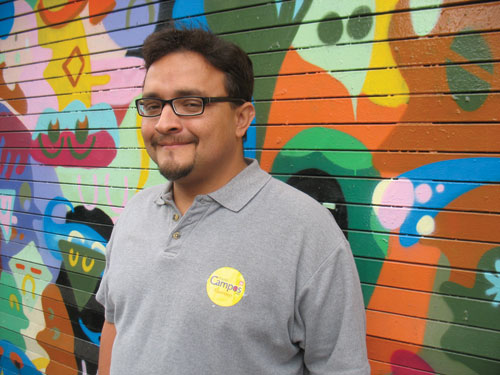
“We are not going to allow any worker in San Francisco to be exploited,” said Sup. David Campos said on the steps of City Hall, later presiding over the Government Audit and Oversight Committee hearing on the issue. “Wage theft affects the lowest wage workers and their ability to make a living and survive in these tough economic times.”

The pre-hearing protest and the meeting was comprised of workers with emotional stories of poverty and injustice. Other speakers included Donna Levitt, the director of the Office of Labor Standards Enforcement, the agency in charge of overseeing claims of employers withholding wages, and Rajiv Bhatia, the director of Occupational and Environmental Health at the San Francisco Department of Public Health.

Levitt said that 500 claims of wage theft have been addressed by the OLSE since the minimum wage law’s inception in 2003. Dan Goncher of Harvey M. Rose Associates, which does budget analysis for the city, cited data showing that the OLSE takes significantly longer to go through the hearing process for back wages than other agencies. However, Levitt mentioned that 97 percent of cases are settled and never go to the City Attorney’s Office for a hearing.

“Very little thought from our policymakers was made on how this was going to be enforced,” Levitt said of the current minimum wage law.

The coalition of community organizations including Young Workers United, Filipino Community Center, Chinese Progressive Association, San Francisco Tenants Association, Unite Here Local 2, Mujeres Unidas y Activas, and others joined together for the protest in order to raise awareness of some proposed amendments to the current minimum wage enforcement law.

Co-sponsored by Campos and Sup. Eric Mar, the amendments would add additional penalties such as raising the fine for employers from $500 to $1,000 for retaliating against workers exercising rights under the current law, the ability to interview employees and inspect payroll records at places of business, the requirement of notifying employees when an employer is being investigated, and to posting of a public notice when an employer fails to comply with a settlement agreement.

“We want to see the city taking a stronger commitment to addressing the issue of wage theft,” said lead organizer of the Chinese Progressive Association Shaw San Liu. “We don’t want this to be a one-day publicity stunt.”

One of the workers, who spoke about his experience of wage theft, recalled working long hours without the assurance of payment. “We would wait for hours for them to come back pay us but they never came,” Jose Cruz, a day laborer and client of La Raza Centro Legal, said about one of his jobs.

Bhatia explained to the supervisors and crowded audience in the committee hearing room that in the last week, 26 percent of the nation’s low wage workers were paid less than minimum wage. He also outlined different steps such as tracking chronic violators and training health inspectors to make referrals to local enforcement agencies in cases of non-compliance, so the SFDPH could support the community efforts in decreasing wage theft.

In addition, both Campos and Board President David Chiu made a point of speaking about how wage theft also detrimentally affects businesses.

“Most businesses play by the rules and those businesses are at a disadvantage when we allow businesses to not follow the rules,” said Campos.

“This is not about workers versus businesses,” Chiu said. “The issue of wage theft effects workers and workers’ families across the city.”

Peabody coal company threatens to sue over getting punked

Change.org, the website that allows users to create petitions for social change, received a legal threat from Peabody Energy after Coal Kills Kids (CKK) — a group that partnered with the Yes Men to unveil a faux Peabody charity initiative earlier this week — continued the hoax with a mock petition.

The petition was titled, “Stop Peabody Coal’s Outrageous Coal Cares campaign,” in mock outrage over the Coal Cares website that CKK developed in tandem with the Yes Men. The website claimed that Peabody had created a charity to “make asthma cool” by giving away free designer inhalers with themes like My Little Pony and The Bieber.

Peabody’s lawyers contacted Change.org on May 12 and threatened to file suit if the fake petition against the fake website wasn’t removed within 24 hours. “The lawyers seem as serious as an asthma attack,” said Ben Rattray, founder of Change.org. The website agreed to remove the petition in order to avoid legal entanglement.

“I think Peabody probably made a mistake doing this,” noted Change.org spokseperson Brain Purchia. “Because now it’s drawing more attention to the problems that coal-burning power plants are causing.”

The Yes Men and Coal Kills Kids received their own legal threat from Peabody, and they issued a response early this morning.

Here’s what they wrote:

Dear Andrew Baum, Foley Lardner LLP, and Peabody Energy,

Thank you for your thoughtful letter demanding that we remove Peabody’s name from www.coalcares.org and cease falsely suggesting that Peabody cares about kids made sick by coal.

Your threat, although entirely baseless (see … the EFF’s blog post), did make us realize one thing: that Peabody, despite being our country’s largest coal producer, and one of the largest lobbyists  against common-sense policy, accounts for a mere 17 percent of U.S. coal production. The remaining 83 percent comes from 28 other companies, who are, every bit as much as Peabody, giving kids asthma attacks and other illnesses.

As even you may agree, the root of the problem is not Peabody, but rather our system of subsidies, regulations, and lobbying that lets your whole industry continue its lethal work. To make this clear, we have changed every instance of the word “Peabody” on www.coalcares.org to a rotating selection of the names of other large U.S. coal producers who, like Peabody, also need to be stopped from killing kids.

Very truly yours,
Coal is Killing Kids and the Yes Lab

Idol: We hate America

5

Agghh! Gakk! Sputter! Those howls you hear (and the tears in the background) are the Redmond household at 8:55, when Ryan Seacrest announced that James Durbin had been voted off and was going home. James was a wreck; he didn’t expect this, and neither did anyone else. Certainly not our readers.


What the fuck? How could the most talented person on the show — and one of the most talented ever to appear on Idol — get kicked off in favor of two half-rate singers and a guy who can’t get beyond country? I mean, Lauren and Haley aren’t anywhere near up to the level of previous Idol finalists. I love Scotty, but he’s really a one-trick pony.


James? James is the bomb. James can sing anything. He’s got stage presence to die for. He takes risks, he generates energy … he’s the rightful American Idol, 2011.


The only thing I can think of (and it makes me sick) is that he’s just too, well, un-American for Idol. Scotty did an atrocious song this week about Jesus (I don’t know anything about Iraq, but I know Jesus … Jesus. So we celebrate religious morons?) But the Jesus thing seems to work. And Lauren talked about the floods in the south. And somebody must like the bubblegum-teeny-torch-song-I’m-smiling-till-my-face-breaks shit that is Haley.


Even Vivian, who generally only likes girl singers, was shocked when it happened. “America has spoken,” says Seacrest, and Viv looks over at me and says, “I hate America.”


I think I’m done. I don’t think I’m going to watch any more. What a stupid show. What a stupid country.


5 Things: May 12, 2011

0

>>SCOBY SNACKS Lest you think that only barbarians and Bear Grylls eat their food alive, consider the case of fermentation. Sauerkraut, kombucha, bleu cheese, and kim chee are all living foods whose microbial make-ups diversify the tiny critters that live inside you (and we all know diversity is a good thing!) If we didn’t just freak you out, this week is an optimal time to learn more about making and snarfing fermented foods. House Kombucha, Omnivore Books, Cafe Gratitude, and Happy Girl Kitchen are all hosting workshops to teach you the power of a biodiverse kitchen. But the kicker is the Ferment Change festival (May 14-22), a full week of East Bay bike tours to homebrewing abodes, cocktail parties, culture swaps, and appearances by the anointed god of Planet Fermenation, Sandor “Sandorkraut” Katz himself.

>>WHO’S IN CHARGE? We’re big-time boosters of Ride Your Bike to Work Day, so once again we rode, we schmoozed, we accumulated swag — most of it aimed at luring more of us onto the streets with the promise of bigger, better, safer, kinder, gentler bike lanes. Which is why we had to wonder at the cover of the Connecting the City pamphlet, a happy-talk scenario showing a smiling woman and two darling kiddies riding along a reimagined bike lane on Market Street. Sweet — until you notice that the woman (the mother?) isn’t wearing a helmet. And neither is the woman staring off into stage-left space behind her. And that group of huddled people in black hoodies — are they supposed to be chess players? With big plastic bags of garbage at their feet? And what about that guy who appears to be rifling through the garbage? Why do we feel like the sell just got harder.

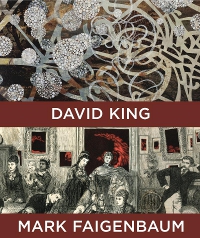
>>ASSEMBLAGE Collage artist David King was awarded a grant from the Pollock-Krasner Foundation last year, and he’ll be showing new work later this month at the Visual Aid booth at the San Francisco Fine Art Fair, one of three different art showcases taking place in SF during the third weekend of May. He’s also showing work, along with Mark Faigenbaum, at Inclusions Gallery from Saturday, May 14 through June 19. The opening reception is this Saturday from 6 to 8 p.m.

>>CHUCK IT We are all well aware that our days are numbered, and that they are going to be pretty well filled up doing more loads of laundry, cleaning the cat box, working, etc. What we really don’t have time for are any more bucket lists taunting us with 100 more things we have to do, see, eat, and ponder before the old dust to dust thing takes place. That’s why we were disheartened to see that there’s a new bucket list just for Giants fans: Bill Chastain’s 100 Things … . We have nothing against Chastain, but we do wish his publisher had come up with a better marketing scheme than this tired, gimmicky genre. Besides, with post World Series prices what they are, we can barely even afford to cross off item 39, “Attend a Game at AT&T Park,” let alone item 40, “Attend a Spring Training Game in Scottsdale.”

>>THE OUT-OF-TOWNERS If there’s one thing that separates the rubes from the natives, it’s pronunciation. Only a rube-and-proud-of-it would risk the derisive sniggering of Manhattanites by asking directions to Houston Street, pronounced like that city in Texas, or the rolled eyeballs of Show-Me Staters by rhyming the last syllable of their great state with “misery.” That’s why we are mystified that Muni hired such a collection of rubes (who may even be robotic rubes) to announce pending stops on its bus lines. Who approved “Di-VEYE-sa-dero”? And who signed off on “Valen-CHA”? Yo, Muni, you never heard the phrase “hire local”?

Live Shots: TV on the Radio, The Independent, 5/10/11

0

Playing small quarters for their immeasurably large sound, TV on the Radio enthralled a sold out Independent audience for the second of two nights on Tuesday, May 10. Hard to define and even harder to resist, the band dipped heavily into the material from their latest release Nine Types of Light, while also letting loose with stirring versions of old favorites such as “Satellite,” “The Wrong Way,” and “Staring at the Sun.”


Setlist:

Halfway Home

Caffeinated Consciousness

The Wrong Way

Blues From Down Here

Will Do

Province

Red Dress

Crying

Young Liars

Staring at the Sun

Repetition

Wolf Like Me


Encore:

Forgotten

A Method

DLZ

Satellite


Small Business Awards Ceremony wrap-up

2

The Bay Guardian’s annual Small Business Awards party packed the upper room at Public Works May 11, with the winners and assorted friends and allies (including Sup. Ross Mirkarimi) enjoying the celebration of entrepreneurship and community. The hit of the night was Virginia Ramos, the Tamale Lady, winner of the Spirit of the Streets Award, who had the room spellbound as she talked of her life and her love for San Francisco. And it was clear that the diverse group of individuals and businesses all shared a strong belief that small, locally owned businesses make San Francisco great.

A Weekend homecoming

0

San Francisco’s Weekend is scheduled to hit up The Independent next Thurs/19, after a spell touring with the legendary post-punk band Wire. With fuzzed-out reverb-laden guitars, pounding rhythms, haunting vocals, and bass melodies that would make Peter Hook blush, this band has been all over the indie radar, drawing praises from every corner of the blogosphere. Pitchfork rated the trio’s 2010 Slumberland release Sports an 8.2/10, to which friends the Young Prisms twatted — excuse me, tweeted — in response, “Weekend was robbed. Should’ve been an 18.2.” Can we get an Amen?

Here’s a little taste of what’s in store for your eardrums:

http://www.youtube.com/watch?v=HNNdOPOTndI

http://www.youtube.com/watch?v=VJk41jsE_YQ

WEEKEND

With Clipd Beaks and Jealousy
Thurs./19 8 p.m., $12
Independent
2170 Market, SF
(415) 771-1421
www.independentsf.com


City officials pedal and praise on Bike to Work Day

6

photos by Luke Thomas/Fog City Journal

Almost every top city official pedaled up to City Hall this morning for the 17th annual Bike to Work Day, all pledging their support for expanding safe cycling opportunities in San Francisco and declaring the bike to be a vital part of the city’s transportation infrastructure that will only grow in importance in the coming years.

“We should all feel proud that we have more to celebrate than ever in the history of Bike to Work Day,” said Leah Shahum, executive director of the San Francisco Bicycle Coalition, which sponsored the event and facilitated the rides by city officials, including riding Sups. Jane Kim and Carmen Chu to work on tandem bikes. Shahum praised the city for rapidly expanding the network of bike lanes and facilities over the last year.

Shahum accompanied Mayor Ed Lee on a ride along JFK Drive in Golden Gate Park (which Lee announced will soon get the city’s next separated green bikeway), along car-clogged Fell and Oak streets, through the Wiggle, and along Market Street toward City Hall.

Lee told us, “I feel good, exhilarated,” as he neared City Hall, where he and officials gave speeches praising bikes and calling for improvements to the system. “I want to experiment with ways to have detached bike lanes on Fell and Oak,” Lee said to the applause of cyclists familiar with competing with cars on those fast-moving streets.

Lee also declared his support for the goals of SFBC’s Connecting the City initiative, which calls for a system of safe, crosstown bikeways, connecting the bay to the ocean and the northern waterfront to the south side of the city. He also called for continuing the green bike lanes on Market Street all the way to the Ferry Building and said, “I’m dedicated to it.”

Board President David Chiu, who sponsored the legislation that set the goal of achieving 20 percent of all vehicle trips by bicycle by the year 2020, said he was proud to see so many bikes on the streets today. “Thank you for showing the world how we roll,” he told the crowd, also voicing his support for the crosstown bike route plan. “We have to imagine safe enough conditions for 8- and 80-year-olds to bike.”

“It makes us a healthier, happier, and more vibrant city when we bike together,” Sup. Eric Mar told the gathering.

Sup. Sean Elsbernd was the only member of the board not to bike today, but his fellow fiscal conservative Sup. Mark Farrell biked in from District 2 and told the gathering that improving the city’s bicycling infrastructure “is critical to our future.”

Chu doesn’t ride a bike, but she hoped on a tandem bike with SFBC board member Amandeep Jawa and told him, “Thanks for helping me see San Francisco in a new way,” noting her new appreciation for the sights, smells, and small details that opened up along a route to work that she usually drives.

Sup. Ross Mirkarimi called his District 5 the “epicenter” for cycling in the city and declared, “It’s time that we take back Masonic Boulevard…to make sure it’s safe for bicyclists and pedestrians.”

Sup. Jane Kim told the crowd, “I grew up a city girl and I never learned how to ride a bike,” but said that former SFBC director Dave Snyder and others have been trying to teach her recently. In her ride in on the back of a tandem bike, “I got to feel how unsafe it is to have cars and buses jostle around you.”

Sup. Scott Wiener told the gathering, “This was my first Bike to Work Day and it’s not going to be my last.”

Sup. David Campos told us he really enjoyed his ride up Valencia Street, where the stoplights are timed to the pace of bicyclists. “It’s the best ride in the city. If we can make more streets like Valencia we’d be in better shape,” Campos told us.

In his speech, Campos said, “We have so much happening around bicycling, bu we also have a long way to go.”

Sup. Malia Cohen said she biked the longest way in to City Hall, all the way from 3rd Street and Thomas, and that she was happy about both the bike infrastructure improvements and carfree events like Sunday Streets. “I want to encourage you all to come out to the Bayview for Sunday Streets [on June 12],” she said.

For all the celebration and improvements to the system, Sup. John Avalos said it’s important to continue establishing respect on the roads for bicyclists. “We have to change many minds about biking in San Francisco,” he said.

To illustrate the increasingly important role that bicycling is playing in San Francisco, SFMTA Commissioner Cheryl Brinkman cited city studies showing a 58 percent increasing in the number of cyclists on the streets of San Francisco over the last four years, noting a comparable increase in Muni ridership or in motorists on the roads would have resulted in gridlock in those systems.

“It’s a good lesson for us,” Brinkman said, voicing support for the goal to creating 100 miles of dedicated bikeways throughout the city in order to promote safe cycling.

American Idol poll: Who goes home May 12?

6

Four people left. All of them good. mostly solid performances. Very odd to say Lady Gaga, full-out costume and makeup, sitting backstage “mentoring” the final four. Funny to see her grab James’ ass and try to make him shake it like Elvis.


I missed the early part of the show, but Vivian was taking excellent notes, to wit:


James does “Don’t Stop Believing” (the Journey version, not the Giants version) and even reminds Randy that he knows that song (easy to forget that Randy once played bass for Journey). Second song is “Love Potion Number 9,” a great oldie, and he rocked it. Strong renditions, he’s solid for the final. Haley’s first act (“Earthsong”) is pretty weak, but she comes back strongly with “I Who Have Nothing.” Scotty plays guitar, which is unusual, and sings “Where Were You, which is predictable Scotty, as is his “Young blood.” Lauren talks about the fllods and does “Anyway,” nice vocals, and “Trouble” impresses the judges.


Other than Haley’s first, nobody had a bad night. It’s going to be tough, America; how you votin?


Free polls from Go2poll.com

Let ’em know, Vieux Farka Touré

0

Sunny, fresh spring days like these make me want to grab my Nishiki and ride out to — screw work — dappled country roads. For this kind of idyllic impetuousity, one could ask for no better soundtrack than the thoroughly African, thoroughly rock ‘n’ roll riffs of Vieux Farka Touré, heir apparent to the dad Ali Farka Touré’s indigo Malian blues throne.

To mark the release of The Secret, a recent relase featuring traditional African instruments like the n’goni and vocal stylings by — Dave Matthews? (He is — South — African, after all, and Touré calls his voice “diabolical,” which we hope is a good thing.) Touré is making a much-anticipated voyage to the Bay Area that will kick off this weekend with a concert at the Independent (Sun/15). But perhaps most exciting of all, he’ll be teaching an African blues guitar master class the next day at St. Cyprian’s Church. Crib some of his skills and you can be on the guest list for my next backroads cruise (does your six string fit in your pannier?). 

We caught him via electronic mail for a chat about teaching, and having a kickass dad. 

San Francisco Bay Guardian: I’m interested in this guitar class you’re giving next week. What can you really teach someone in a single day about playing an instrument?  

Vieux Farka Touré: Of course I can’t teach more than the basic idioms of playing Malian blues. But I can show some basic styles and methods that open up the guitar to African style improvisation. There are several differences, technical and mental, between playing African music and Western music. So we’ll explore those difference and I’ll offer a few “secrets.”   


SFBG: Have you taught many other classes? Why do you spend time teaching?  

VFT: I have students in Mali a lot, including Americans. In life, one must always be a student and a teacher. It does good for humanity.   


SFBG: Was your dad your teacher growing up? What was that like learning from a musical legend? 

VFT: I was not aware of my father’s international fame until I traveled with him to France when I was a teenager. Of course, I knew how he was respected in Mali. But anyways, I didnt really learn guitar from him (though I learned so many other lessons about life from him). It was my uncle Afel Bocoum who brought me into music in niafunke when I was young, and then I studied at the Arts Institute in Bamako. Then both Toumani Diabate and my father began teaching me things. I am very lucky to have had these mentors. They hold wisdom of hundreds of years in their fingers.   


SFBG: At this point in your career, what are you still learning about on the guitar? 

VFT: I am always learning. I’m learning different styles, different scales and modes, and above all control. You can never have 100 percent control of your instrument, but you can also get closer to 100 percent.   


SFBG: You’re getting the chance to share your music all over the world — and learn from the rest of the world in return. How is that opportunity affecting your music? 

VFT: I think you can hear that in my albums and in my live show. There is a consistent base, like the base of a soup, but thrown in are rock, funk, reggae, Arabic styles, even hip-hop sometimes. All together they make my personal sound and make me a new branch on the tree of Malian music.


Guitar master class with Vieux Farka Touré

Mon/16 7 p.m., $40

St. Cyprian’s Church

2097 Turk, SF

(415) 259-1658

www.brownpapertickets.com/event/171012


Upcoming concerts:  

Sun/15 8 p.m., $15

The Independent

628 Divisadero, SF

(415) 771-1421

www.theindependentsf.com


Tues/17 8 p.m., $21

Mystic Theatre

23 Petaluma Blvd. North, Petaluma

(707) 765-9211

www.mystictheatre.com

City’s local power program will be greener, but not so local, at first

The San Francisco Public Utilities Commission (SFPUC) is in negotiations with Shell Energy North America to purchase power for a new version the city’s community-choice aggregation (CCA) program that will be smaller — but greener — than what city officials had originally envisioned.

While the forward momentum and the prospect of offering 100 percent renewable energy seems to have ushered in a rare moment of harmony among the players in City Hall who are crafting the program, not all the grassroots advocates were fully sold on the idea, saying they were still waiting to see how committed the city was to moving ahead with a plan to build municipal green energy facilities which could ultimately bolster the local economy and create jobs.

The new plan for CleanPower SF was unveiled by the SFPUC at a May 6 meeting of the Local Agency Formation Commission (LAFCo), which has been working with the city’s utility commission for half a decade to implement CleanPower SF. Emerging after a false start last year, the new plan would target 75,000 electricity customers at the outset – far less than under the original idea of enrolling all of San Francisco’s Pacific Gas & Electric Co. customers while providing the chance to opt out.

The CCA would offer 100 percent renewable power right off the bat, instead of the 51 percent renewable target that was previously envisioned. That fully green product offering is possible because the city would hire a contractor, most likely Shell, to purchase the green energy on the open market. The energy mix could be derived from sources within California or out of state.

“We’re having productive discussions,” noted Mike Campbell, who directs the CCA program for the SFPUC, but noted that it would be awhile yet before all the terms of the deal were cemented. Shell also contracts with the Marin Energy Authority for its CCA program, which San Francisco is looking to as a model.

The new scheme abandons a prior goal of meeting or beating PG&E electricity rates, but the SFPUC justified this switch by pointing to market research suggesting that the higher price would not necessarily subvert the program’s success.

Campbell said the new model came to fruition after poll results identified a core segment of San Franciscans who would be willing to stick with the green power program even if the price was slightly higher. “There’s such a strong segment of folks who are eager to do something about global climate change,” he said.

Campbell added that estimated generation fees could climb from around 7 cents to 13.5 cents per kilowatt-hour, amounting to a roughly $10 monthly utility bill increase on average. Since PG&E is expected to increase rates for customers who use less energy, “it’s going to help make it more attractive,” Campbell noted.

The new plan seemed to sit well with Ross Mirkarimi, a longtime advocate for community choice who chairs the Local Agency Formation Commission, which is tasked with overseeing the SFPUC’s implementation of the program. “The new program has great potential and goes where PG&E can’t or won’t,” Mirkarimi told the Guardian. “Carving out a customer niche that delivers a true green load is strategically more beneficial to the longevity of CCA in San Francisco. Once we establish an economic foundation for CCA, we then are positioned to build a renewable energy infrastructure as originally envisioned.”

Mirkarimi noted that the forward momentum had changed the dynamic in a historically fractious process, since, after years of being at loggerheads, the SFPUC and LAFCo finally seemed to be on the same page.

Both Campbell and Mirkarimi acknowledged that they expected PG&E to put up a fight, as it did when Marin County rolled out its CCA using a similar model to the one San Fransico now plans to adopt. Since PG&E will still be in charge of customer billing, it could employ tactics such as artificial spikes as it did in Marin to try and scare off CCA customers. “We do expect PG&E to do everything it can think of to try and encourage customers not to participate,” Campbell said.

Meanwhile, organizers from the San Francisco Green Party and the Local Clean Energy Alliance, who have closely tracked the process and held meetings with the SFPUC, say they’re supportive of the general concept but are still waiting to see whether the city is fully dedicated to laying the groundwork for building city-owned energy generating facilities.

Over time, this aspect of the program — which has been part of the plan all along — could supply green energy locally, gradually replacing the energy supply that Shell would be purchasing from elsewhere. San Francisco Green Party organizer Eric Brooks also pointed out that over time, city-owned generating facilities and local energy-efficiency upgrades could enable the SFPUC to bring down the cost of the green power to make it competitive with PG&E.

Campbell noted that the city would move ahead with the build-out, but “it certainly won’t be in the first year.”

Unless the build-out aspect of CCA moves ahead with a strong level of commitment, said Al Weinrub of the Local Clean Energy Alliance, the social-justice goals of creating new jobs and bringing generation costs down to make green power accessible to everyone may not be realized.

“We have a commitment from staff that they will pursue studies” to move ahead with the build-out, noted Weinrub. “The problem … is that they’re really dragging their feet.” He added, “We’ll have a lot of trouble supporting CleanPower SF is there’s no local build-out.”

Organizers also voiced concerns that without moving forward with this second element, the CCA could end up catering exclusively to an upper-middle class, predominately white customer base.

At the LAFCo meeting, the SFPUC delivered a presentation explaining the results of the poll that had been conducted to determine who would purchase green electricity from CleanPower SF. A longer version of that presentation, delivered to grassroots advocates in a separate meeting and provided to the Guardian by Brooks, showed that on average, CleanPower SF customers were expected to have higher levels of education and higher income levels — individuals making more than $100,000 per year had the greatest enthusiasm for the program. Those results also showed that 67 percent of survey respondents representing African American, Asian / Pacific Islander, or other communities of color indicated that they would not be interested in enrolling in CCA when they were given information about the program and the estimated rates.

Weinrub said this demographic profile of the initial CCA customer base would be problematic if it represented the only customers who would ever subscribe, because the whole notion of CCA from the start had been to create an accessible, community-owned power source that benefited San Franciscans across the board and offered an alternative to PG&E. But he said he believed the program could have more widespread appeal and grow its customer base if there was a sound strategy to bring down rates over time by employing local energy generation and energy-efficiency projects. “Our whole pitch is, what about everybody else?” he said. “We feel pretty strongly that with a well designed build-out program, you can offer very competitive services.”

From the bike lane to the bed, ride like a messenger

5

Bulging thighs pump, shiny parts glimmer and sweaty bodies pedal between the loins of the city. Is Bike To Work Day getting you all hot and bothered, too? Steer the excitement of the bike lane straight into the bedroom and take style notes from the ultimate ride professionals: bike messengers. 

Not all bike messengers are the same, but one thing remains true for any and all that claim the profession: these people are sex on two wheels. Average bikers are hot, too, but messengers are the porn stars of bike culture. Badass, fast, and cocky seem like fair stereotypes, perfect characteristics for tending to spring urges. Hop on the saddle and get ready to romp and ride with messenger mentality. 

Be brave: Biking in San Francisco can be terrifying. Muni tracks, lazy drivers, and mean taxis are real threats, but bike messengers puff up their chests and let adrenaline take the reins. Get adventurous in the sack and shake your fears of the unknown. If you’ve got a pre-planned route, veer off and take a backroad. Try role playing the part of a sleazy bike mechanic and service your lover’s bod. Remember: the customer is always right!


mess1

San Francisco Bicycle Messenger Series at www.BerylFine.com


Be assertive: Messengers make decisions on the fly. If you second guess your instincts, you may end up with road rash or an awkward stall in play. Read the signs and listen for your partner’s directions.

Be healthy: Biking is real good for the body. All those miles keep your heart in great shape and keep blood flowing to all the right spots. They make drink a lot of beer, but messengers work it all off on their route. Talk about stamina. Get some exercise to make sure your organs are up to speed and can perform at their full potential. 

Be hard: That ass! Those thighs! Bike bods rock; their extra-toned areas are prime for spanking, grabbing, cupping, riding, and thrusting. Get your own in gear.


mess_2


Be eco-sexy: Dependency on fossil fuels isn’t hot. Do as the messengers do and pedal instead of drive. Take a romantic ride or race to a secluded spot with your fuck buddy for a naked picnic. 

Be dirty: Sweat and grime is a consequence of the job. Don’t be afraid to get rough and smelly under the sheets. Who cares. Lick it up. 

Be safe: Some messengers probably think they’re too cool for helmets, but no penis is too cool for a condom. Unless you really know the road, it’s always better to be cautious and avoid running your tires through a muddy pothole or STD.


mess_3


And finally…

Be prepared: Messenger bags are big for a reason: you can fit all kinds of fun party favors in there. Booze, toys, lube, Advil, kneepads, clean underwear, and anything you could ever need can fit into one of those back sacks. Stock up your stash at home, in the car, the office, your purse, and wherever else you might want some spontaneous spunk. 


Will SF follow Portland on FBI spy concerns?

1

The Human Rights Commission and the Police Commission will hold a May 18 joint hearing at City Hall to discuss a recently released memo between the SFPD and the FBI that suggests that SFPD officers assigned to the FBI’s Joint Terrorism Task Force are under the control & rules of the FBI. The concern is that the memo allows SFPD officers to circumvent local intelligence-gathering policies, departmental orders and California privacy laws that prevent spying on people without any evidence of a crime. And the hearing comes a few weeks after Portland’s City Council unanimously approved a resolution that Portland Mayor Sam Adams introduced to clarify that Portland and FBI have decided not to enter into a Memorandum of Understanding (MOU) for the JTTF, but that the City will be cooperating with the JTTF according to the terms of Adams’ resolution.

During Portland’s public hearing, the American Civil Liberties Union (ACLU) of Oregon testified in support of the resolution, while raising concerns about the current and past practices of the FBI and the need to ensure that City personnel comply with Oregon laws.

“The Mayor’s proposal represents a thoughtful framework that should meet the City’s and the FBI’s needs to keep our community safe while also ensuring that Portland police stay within the confines of the Oregon Constitution and Oregon Charge of such violations, and a public annual report on the work the Portland Police Bureau does with the FBI JTTF,” ACLU Legislative Director Andrea Meyer stated.

“It is not a question of if but when, our officers will be asked to engage in investigative activities in violation of Oregon law,” Meyer testified. “To guard against this, we expect that there will be appropriate training of PPB personnel not just on Oregon law but on the FBI guidelines and the minimal criteria necessary for them to be able to engage in assessments and preliminary inquiries so that our PPB officers will be equipped to ask the right questions and refuse to participate and report this to the Chief and, in turn, the Commissioner-in-Charge.”
 
During Portland’s hearing, Mayor Adams stressed that the FBI’s standard JTTF MOU (which is similar to the agreement SFPD officers have operated under since March 2007) —is neither clear nor adequate in terms of addressing local civil rights concerns. And that’s why he sought and won federal consent for a non-MOU arrangement with Portland participating on a limited basis, on its own terms, with local civilian oversight and involvement from the City Attorney.  

“The question pending in SF is whether local officials — from the Police Commission, to City Attorney, to Mayor, will eventually insist on a similarly protective arrangement here, “John Crew of the ACLU of Northern California told the Guardian. “Right now, Portland shows what’s possible, and what the federal government will accommodate. I don’t know why Bay Area cities would not insist on at least something this strong.”

San Francisco’s joint hearing takes place May 18, 5:30 p.m. – 8:30 p.m. in Room 250 at City Hall.

California: The old, the rich and the poor

4

California is getting older and poorer. That’s what the new census data shows. And everyone knows the combination is a troubling mix:


“We have a longevity revolution happening, and in San Francisco we’re calling it ‘the silver tsunami,’ ” said Valorie Villela, director of the 30th Street Senior Center. “It’s hitting hard, and once again our society is not prepared.”


She said her research shows that by 2025 in San Francisco, 1 in 5 people will be older than 65 and the number of people older than 85 will have doubled. That trend is coming at a time when the state has been running huge deficits year after year, forcing cuts to services such as adult day care and Medi-Cal.


It’s particularly intriguing since one out of every five billionaires in America lives in California. So we don’t have enough money to take care of our seniors, and things are just going to get worse — but there’s a vast amount of wealth in the state. You wonder.


If the state had four million people between the ages of 18 and 25 who had no money, no prospects, not enough to eat and no place to live while a handful of billionaires were living fat and happy and controlling an outsized portion of the state’s wealth, that would be a recipe for, well, fighting in the streets.


Seniors tend to vote more than kids, but they don’t, so far, tend to march and riot and break things and threaten the security of the wealthy (and the politicians who cater to them). But the next wave of seniors is different; the baby boomers know all about taking it to the streets. And they’re living longer and healthier. Your average 65 year old today can carry a torch and a pitchfork just fine. Some of them can even throw rocks and bottles and shout “Eat the Rich!” (Hey, they’ve been there and done that already. Still got the notes.)


So I think it’s safe to say that this current trend ain’t sustainable. And even the Republicans up in Sacramento ought to get that. Nothing is worse for plutocracy than a crowd of hungry, angry seniors who spent their college years in the SDS.

Draft Kucinich to run against Pelosi

20

Bay Area progressives are constantly searching for a solid candidate to run against Rep. Nancy Pelosi, an Establishment figure who has helped lead this country down a disastrously unsustainable path, but nobody has ever been able to mount a serious challenge to this powerful incumbent. So here’s an idea: how about recruiting Dennis Kucinich, the representative from Ohio whose principled politics have made him a hero to progressives.

As Kucinich himself confirmed today in an email blast to supporters, there’s an effort underway in Ohio right now to carve up his district through reapportionment and he is actively looking from a new base of operations should that come to pass. While he’s rumored to be considering a move to Washington state, which will get another seat in Congress, I can’t imagine a better ideological fit for Kucinich than San Francisco.

So what do you say, comrades, is it time to launch a campaign to lure Kucinich to the Bay Area?

His message — entitled “My next move?” — follows:

You may have heard some rumors over the past week, so I wanted to set the record straight with you: While I’m committed to representing the 10th District of Ohio, I will not rule out a run elsewhere should my district be eliminated or radically altered through redistricting.

From Afghanistan to workers rights, Libya to climate change, there’s simply too much at stake for our voice to be eliminated. We cannot let a group of downstate politicians silence me and our movement – they would like nothing more than to stop hearing our calls for peace over violence and the people’s interests over corporate handouts.

So, no, we’re not going to quietly fade away, and let the corporate interests and status quo have its way. Instead, we’re gearing up for a long and difficult campaign in 2012 – wherever that may be. I know it’s worth it, and I know we can prevail. But I’ll need your help. Can you donate $25, $50, or $100 dollars today?

http://kucinich.us/contribute

I’ve been approached by supporters across the country – from Washington to Maine – to explore options outside Ohio should redistricting force me out of my current district. It has been truly humbling to see the support that has been expressed for me to continue my work in Congress. Right now, my efforts and focus remain on representing my constituents in the 10th District and fighting for peace and justice, but as we plan for our movement’s future, I will consider all of these ideas to keep our voice in Congress.

And I say the same to you right now. Do you have a comment or idea I should consider? Is there a option you would like me to explore? If so, let me know by clicking here: options@kucinich.us

Thanks for being with me.

With respect,

Dennis Kucinich

How bad are Sacto Republicans?

5

Pretty darn bad. They’ve gone so far over the edge that they don’t even listen to the people who they claim they want to support — business leaders who are worried about keeping California competitive.


That’s right — the big business types are practically begging the GOP legislators to get off their asses and pass a budget that includes temporary tax extensions. They’re also in favor of pension reform and a bunch of other things that Democrats don’t love — but Jerry Brown and the Dems have already agreed to put all those things on the table. The sticking point is this no-tax pledge — and for once, the big business community thinks that’s ridiculous.


Does it even matter? Do the Republicans even listen to the Chamber of Commerce any more? Or do they only care about the Grover Norquist types and a couple of L.A. talk show hosts?


Behind the scenes on this week’s Guardian cover

0

Regular SF Bay Guardian photo contributor Matt Reamer pulled a fast one for this week’s cover. Though the image seems to have been taken on any random sunny day in Dolores Park, it was actually shot in Reamer’s studio. You can see the behind the scenes action and further explanation on his blog.


Is Steven Tyler a corporate sellout?

3

Steven Tyler’s gone from bad-boy rocker (of sorts) to hair band frontman … and now to American Idol judge. He’s got an autobiography. He’s on the cover of Rolling Stone and People. And his albums are selling again. Is he yet another example of a rock star selling out in his golden years? Is that inevitable? Johnny and Tim discuss after the jump.

sfbgradio5/11/2011 by endorsements2010

Ghosts of sit-lie past

5

Is sit-lie a case of not learning from our mistakes?

An interesting bit of history that for the most part failed to enter the debate over the ordinance is that San Francisco enacted a similar ban on sitting and lying  in public spaces in the late 1960’s (PDF).

Inspired 40 years later by the same neighborhood, the current sit-lie law is a legislative throwback. Back then, Haight Street was a center of controversy as hippies began to arrive in droves – hanging out, singing, dancing and generally occupying the sidewalks. Some business and property owners were apprehensive over the rapid changes to the neighborhood.

The Board of Supervisor enacted the ordinance, which made it a crime to “willfully sit, lie or sleep in or upon any street, sidewalk or other public place,” with a unanimous vote in 1968. Violation carried a fine of up to $500 and a maximum jail sentence of six months.

Then-Mayor Joseph L. Alioto, who signed the ban into law, told the San Francisco Chronicle the ordinance “will not be used to discriminate against any group or person.” His promise echoes the claims of contemporary proponents of sit-lie.

But police used the law to target not only hippies but also gay men in the Castro. The predictable reality of selective enforcement galvanized popular resistance.

Over the next decade, the ACLU sued and managed to overturn parts of the law. “[The original laws] were being used unjustly by the police against people who were considered undesirable,” said Alan Schlosser, legal director of the ACLU, who has been working for the organization since 1976. They were used against Hippies in the Haight, they were used in the Castro and the Tenderloin against the prostitutes.”

Political pressure from a wide coalition, which included Harvey Milk, convinced the board to rescind the ordinance in 1979. In fact, one of Milk’s signature campaign issues was stopping police harassment of gay people.

The current law does avoid some of the pitfalls of the old one. The ban only applies to sitting and lying down; the sixties-era law referred to the obstruction of public space. Police are now required to issue a warning, and the punishment for violation is significantly lower. Neither distinction, however, alters the fundamental problem of sit-lie.

The ordinance criminalizes an extremely common behavior, which is in itself harmless. The most vulnerable members of our society depend on public space and are inevitably the most susceptible to getting in trouble into the crosshairs sit-lie enforcement.

Queer activists are once again leading the effort against unfair and unwise regulation of public space. We reported April 11th that self-proclaimed “angry queers” installed handmade benches on city streets as a form of protest art. Likewise, this upcoming May 22nd, which is Milk’s birthday, Queers for Economic Equality Now (QUEEN) will be coordinating sidewalk events against sit-lie in San Francisco and Berkeley.

Tommi Avicolli Mecca who organizes with QUEEN, said “for me it is so thrilling to see two cities doing something against sit-lie and invoking Harvey’s name.”