SFBG Blogs

Summertime Fernet-drinking just got its video anthem

5

There was a time when ordering a shot of Fernet Branca was weird, when your friends would screw up their faces (if they actually knew what the stuff is) and waft a glass of Cuervo under your nose: “now this is a shot!”

Oh hold up, that’s actually still how it is – but at least now you have a dope song featuring a legit San Francisco soul legend to bawl back at the haters when they’re questioning your libation election.

I’m (half) joking – Fernet has long been the officially official “we’re in San Francisco!” weirdo drink for weirdos — who run this town, of course. We’ve been drinking it since Italian immigrants lugged it through Angel Island in their suitcases – straight on through Prohibition in fact. Branca ducked the judging gaze of teetotalers by being sold in pharmacies as medicinal elixir. 

But the modern day craze, well that’s something else. I was recently down in Buenos Aires, where they drink even more than we do (mixed with Coca Cola, in their case) – but even the porteños knew that San Francisco drinks hella Fernet Branca – we take down a quarter of the entire country’s total consumption, by some counts. 

If you’re going to point fingers anywhere for the current renaissance, you may as well jab them at DJs Doc Fu and Pause of the Red Wine crew.

Aaron “Pause” Vaughn says he was first introduced to Fernet back in 1995 by Hobson’s Choice bartender Chris Dickerson. Back then, it was the after hours drink of choice for the service industry set. Red Wine started drinking it paired with pints of Guinness at all its gigs, and members haven’t looked back. 

“I know the Red Wine crew and affiliated converts like it because it settles your stomach after a Mission burrito or a harrowing bike ride through the City,” Pause tells me in an interview over the Internets. “The Red Wine DJs have been notorious for drinking and pilfering bottles of the stuff at gigs for years.”

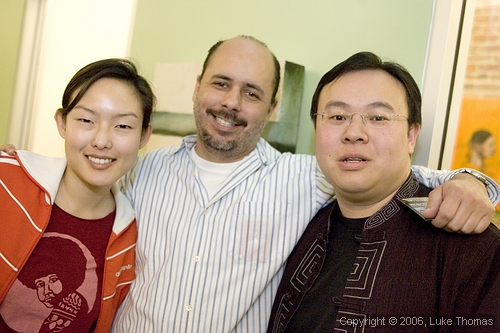
“We’ve been drinking it since we were kids in the club,” says Bruce O’Leary, who spins hip hop, soul, and eclectic booty-shakers throughout the city under the moniker of Doc Fu. “It wasn’t a thing. The bartenders we worked with were like ‘we’ve got this stuff in.’ And I was like ‘I’ll drink it.’ It was like a secret handshake.” 

But what started as an after hours drink for the cool kids started become the all hours drink for the cool kids – at least for Doc Fu, who started to “go to the bar and be like ‘yo, I need a shot of Fernet and Guinness like, right now.’”

And just like that, it wasn’t just the industry set anymore. “The other night I saw a guy on a ten speed with a sipper [of Fernet] in his back pocket,” says Doc Fu. 

High time the brew (comprised of a million ingredients culled from sources on multiple continents, reputably suitable for defeating hangovers, assuaging menstrual pains, or bonding with your Argentinian buddies) had an anthem.

And one night, gathering together drinking supplies from Safeway for a gig opening for Mistah F.A.B., the Red Wine boys hit upon it: “I Drink Fernet.” 

“You know how in Safeway they play random shit?” remembers Doc Fu. A mellow ’80s jam came over the tinny loudspeakers as the Red Wine crew was dealing with a store clerk who kept trying to sell them champagne instead of their desired bottle of Italian bitters. They started subbing out the lyrics to ones that were more appropriate for the situation at hand.

The result was too good to leave in the grocery aisle. Pause recorded the song with Equipto a few years ago, and even got Michael Marshall to do the hook. Marshall was part of the ’80s Berkeley group Timex Social Club and will forever go down in history for singing the hook for the Luniz’ “I Got Five On It.” Recently he’s been popping up all over, including in Equipto’s must-bump for SF summer 2011.  “Pause got Mike Marshall on the phone. I was like, the San Francisco soul legend? Why don’t you just call up Deangelo,” Doc Fu remembers. 

The crew recently released a video for “I Drink Fernet”, which they filmed at Haight Street bar Nickie’s with a little help from the amiable publicity reps at Fernet Branca. “Fernet showed up to the video shoot with four or five magnums. They’re incredibly nice folks by the way. It was a pretty fun night,” says Doc Fu. Pause phrases the night a little differently: “during the video shoot everyone got sloppy on Fernet.”

The videos making the rounds through SF drinkers now, which has Doc Fu joking about what the next round’s gonna be. “We should do a whole EP about liquor song, a song about Jameson, a song about pony kegs. Everyone loves liquor songs. Somebody today is having their first drink.”

And that’s what makes this city great. Perfect, now I’m thirsty. Pass that weird shit they only drink in San Francisco, and turn up my song. 


Mehserle’s free, but some protesters could still face jail time

 Johannes Mehserle, the former BART police officer who shot and killed Oscar Grant while he was lying face down on the Fruitvale station train platform on New Year’s Day 2009, was released from a Los Angeles jail June 13 after serving a total of 365 days for his involuntary manslaughter conviction. He was sentenced to two years behind bars, but Judge Robert Perry granted him an early release due to credit for time served and good behavior.

The same date of his release, the National Lawyers Guild filed a class-action lawsuit on behalf of 150 protesters who were mass-arrested during the Nov. 5, 2010 demonstration in Oakland in the wake of Mehersle’s sentencing. Meanwhile, a handful of individuals who engaged in the Jan. 14, 2009 and July 8, 2010 protests launched by Grant supporters — which morphed into riots after community rallies came to an end — are still battling court cases.

Two of the protesters arrested last July initially faced serious felony arson charges for igniting a trash can, which could have led to incarceration for a longer duration than Mehserle served for fatally shooting Grant.

“There were several felony arrests last July, and people were facing charges that could lead to more than a year, no question about that,” noted attorney Dan Siegel of the Oakland-based firm Siegel & Yee. Siegel is currently representing Todd Lister and Adrian Wilson, the two defendants who were accused of arson. The codefendants now face attempted arson charges, carrying a minimum penalty of eight months, with a midterm of one year. “Theoretically, that’s what they’re still facing,” Siegel said, but added that he was confident the as-yet unresolved case would result in a more lenient outcome.

Meanwhile, some of the burglary charges stemming from the looting that occurred in Oakland last July could potentially lead to multi-year sentences, Siegel added, leading to more time in jail than Mehserle served.

Some of the hundreds arrested over the course of the three protests who had prior criminal convictions had their probation or parole immediately revoked as a consequence, said Rachel Jackson, a member of the Coalition for Justice for Oscar Grant and one of the organizers of the Nov. 5 community rally in downtown Oakland’s Frank Ogawa Plaza.

Of the hundreds of arrests made in Oakland during waves of protests launched by Grant supporters, just a small number were on serious charges such as burglary or arson. The mass arrest of 150 individuals last November was initially made on charges of unlawful assembly, yet nearly all of the arrestees were cited and released after spending up to 24 hours in jail, and all had their charges dropped.

In that instance, Oakland police corralled 150 demonstrators who had been participating in a lawful march through the streets into a residential block in East Oakland. Once they were surrounded, Oakland police — who were aided in the streets by 32 other law-enforcement agencies that night, according to National Lawyers Guild attorney Rachel Lederman — placed them all under arrest. No dispersal order was issued prior to making the arrests, and it would have been impossible to comply if one had been issued.

In a class-action lawsuit, the National Lawyers Guild argues that the Nov. 5 protester roundup and mass arrest was a violation of the Oakland Police Department’s crowd control policy, and that it constituted a violation of protesters’ rights to freedom of speech and freedom of assembly. “Even legal observers and a few people who happened to live in the neighborhood were swept up,” Lederman said.

“The policy is clear, and the constitution is clear,” she went on. “You must have probable cause to believe an individual is committing a crime. But in this case, the whole crowd was herded onto a residential street, blocked in, and held on the street for hours. There was never a dispersal order, and all exits were sealed off.”

The Oakland Police Department did not respond to a request for comment.

Arrestees were held handcuffed in vans, in some cases for hours, without access to a bathroom, Lederman noted. All of the women were subjected to pregnancy tests upon being booked into jail, “which made no sense and was abusive in this particular case,” Lederman maintains, because the short time they spent there didn’t justify the excuse that the test would have been necessary to determine whether anyone needed prenatal care. Several men, meanwhile, were subjected to DNA swabs, which is “only supposed to happen if you’re arrested for a violent felony,” according to Lederman. 

Jackson, who was also arrested that night, said she believed police conduct was “incredibly intimidating, and it has a chilling effect on free speech.”

The mayoral poll: No surprises

18

The David Chiu campaign has released a poll that isn’t really all that surprising. It shows that the two candidates who have run citywide races — State Sen. Leland Yee and City Attorney Dennis Herrera — are a little tiny bit ahead, and Chiu is a little tiny bit behind, but all of them are well within the margin of error of a poll sample of only 500 people. Yee is out in front at 17 percent (I’m actually surprised he’s not further ahead at this point, since so much of this is name recognition and he’s been elected so many times, to so many jobs, over so many years that he has by far the best name rec in the race). Chiu and Herrera are tied at 13 and 12 percent (but with a plus-or-minus five percent MOE, all three are statistically in a dead heat).


I would have thought John Avalos would be closer to the top at this point, since he’s doing a good job consolidating the left, but he’s never run citywide, and the campaigns have barely started. Again: It’s name recognition right now.


The bottom line: There is no front runner (with the possible exception of Yee). There may never be a front-runner among the three men bunched in the center of the pack. It’s all going to come down to who gets the second- and third-place votes — which is why ranked-choice voting is so valuable in a race like this. In a traditional race, two candidates who combined might have 35 percent of the vote would be in a runoff, and a candidate who missed the cut by half a percentage point would be out of the running.


One thing we do know: This poll is going to drive Rose Pak and Willie Brown nuts, and increase dramatically the pressure on Ed Lee to run. the more powerful Yee appears, the more likely it is that the center of power in the Asian community will shift away from Pak’s Chinatown operations. Yee’s base is west side, not Chinatown; always has been. Pak despises him (and the feeling is no doubt at least somewhat mutual).


The other fact that weighs in Yee’s favor: He’s doing a better job than anyone of expanding his base. He’s racking up leftside endorsements (unions, the Sierra Club) and aiming hard at the Avalos Number Twos.


As for the questions about what people want in a mayor? Again, these are poll-tested platitudes that we hear every year, and we’re going to hear more of them. “Together.” “Shared values.” “Making the city work.” If it weren’t such a beautiful day, I’d want to puke out my window.

Enjoy the Strawberry full moon

0

The moon looked pretty full last night, but according to my Farmer’s Almanac, it’s officially full tonight. It’s also the Strawberry full moon, so-called because the relatively short season for harvesting strawberries each year happens in June.

Daly: SFBG profiled the wrong guy

88

When I interviewed Chris Daly for this week’s cover story on David Chiu and the political realignment at City Hall, Daly said we were putting the wrong guy on the cover.

“If the story is about political realignment, it’s about David Ho,” Daly told me of the political consultant who once worked on his and other progressive campaigns, but who helped engineer a split in the progressive movement with the help of consultant Enrique Pearce and District 3 Sup. Jane Kim, whose campaign they worked on together last year, beating early progressive favorite Debra Walker.

Daly said the political realignment that has taken place at City Hall has more to do with Kim and Ho – in collusion with former Mayor Willie Brown, Chinatown Chamber head Rose Pak, and Tenderloin power broker Randy Shaw – than it does with Chiu, who Daly considers simply a pawn in someone else’s game. Ho is seeking to be Pak’s successor as Chinatown political boss, and he and Pearce have been out there doing the ground work Pak’s effort to convince Lee to remain mayor.

“Any realignment that exists is about David Ho and I think it has more to do with the District 6 race than the District 3 race,” Daly said. “As far as David Chiu and realignment, they are separate things.”

While Ho and Pearce have traditionally worked on progressive campaigns – particularly in high-profile contests like this year’s mayor’s race, where John Avalos is the clear progressive favorite – they are now some of the strongest behind-the-scenes backers of the campaign to convince Ed Lee to run. Neither Ho nor Pearce returned our calls for comment.

“That’s the whole realignment,” Daly said, explaining that it was the peeling of entities like Chinatown Community Development Corporation and the Tenderloin Housing Clinic away from the progressive coalition of the last decade that has cast progressive supervisors into the wilderness and empowered Chiu and Kim, who in turn brought Lee to power.

“It’s not a seismic realignment, it’s a minor realignment, it just happens to be who’s in power,” Daly said. “It was a minor political shift that caused a big change at City Hall.”

Power has now consolidated around Mayor Lee, as well as those who convinced Chiu to put him there, including the powerful players who helped elect Kim. “These people, as far I can tell, have disowned Chiu,” Daly said. “He did what they wanted but he failed the loyalty test in the process.”

Chiu has so quickly fallen from favor that even Planning Commission President Christina Olague, who spoke at Chiu’s campaign launch event on the steps of City Hall just two months ago, is now one of the co-chairs of a committee pushing Lee to run, along with others connected to CCDC and the Pak/Brown power center.

Kim has also notably withheld her mayoral endorsement. She tells us that she’s waiting until after budget season, but the real reason is likely to wait and see whether Lee gets into the race. Daly said this new political power center has been playing the long game, starting with supporting Chiu back in 2008.

“Peskin kind of brought him up, and then I – tactically or a strategic blunder – I made the mistake of not bringing someone up,” Daly said, insisting that he’s always questioned Chiu’s political loyalties. “I had doubts from the beginning. Ultimately, it was Jane Kim and David Ho who tag teamed me and got me on board.”

Daly said Chui’s last-minute move to cross his progressive colleagues and back Lee for mayor “irreparably harmed him with progressives,” while doing little to win over a new political base. “He miscalculated the damage it would do to him,” Daly said.

Chiu’s dependability was also called into question when he was openly considering a deal with Gavin Newsom to be named district attorney, which would have allowed Newsom to appoint his replacement in D3, a move that he didn’t check with Pak.

“He gave control of his political base to someone else,” Avalos told us, offering that if Chiu was going to be so narrowly ambitious then he should have taken Newsom’s offer to become district attorney.

Even those around Chiu have emphasized his independence from Pak, who has desperately been looking for someone she could count on to back and prevent Leland Yee from winning the mayor’s office. And if Lee doesn’t run, sources say she’s likely to back another political veteran such as Dennis Herrera or Michela Alioto-Pier.

But given how deftly Ho and his allies have grabbed power at City Hall, I’d say they have a pretty good chance of convincing Lee to run, despite the mayor’s resistance. And if Lee runs, Daly, USF Professor Corey Cook, and others we interviewed say he would probably win.

A dreamy combo: Puro Instinct and John Maus

0

When the wind picks up in San Francisco, it’s easy to wish that your limbs could transform into glorious wings.You could float, soar, and glide over the city without worry and turn a pesky gust into an ariel springboard. Until the magic bird spell becomes available, us ground-bound humans are left to simulate the free-floating sensation. Dreamy pop seems to be the closest alternative and Saturday’s combination of Puro Instinct and John Maus are sure to sweep you right off those tired feet.

While the two acts offer different degrees of whimsical imagery, LA’s Puro Instinct and Minnesota-grown John Maus both incorporate fanatic amounts of melodic synth and levitation inspiration. The evening will feel like clouds, especially if your pre-show includes some mediation and a few medicinal puffs. You’ll dance a little and nod a lot, and even if you don’t quite make it to bird status, you’ll enjoy the limbo between. 


Sisters Piper and Skylar used to be known as Pearl Harbor, but as of 2011, they’ve gone PC with the name Puro Instinct. The duo has since expanded into a six-piece, but their music remains ironically eerie–like antique baby dolls with scratched-up glass eyes. Distrust and hesitation lingers behind the layers of sweet lace and it’s just enough spunk to keep the melodies mysteriously minor. The addition of more ambient drums, surf-city guitars, and continued advice from their friend Ariel Pink, leaves their sound rounder and glossier than ever. 


John Maus is working towards his PhD in political science and as boring as that sounds, his music-making hobby is full of curious fun. His deep voice burrows beneath layers of reverb, only just loud enough to break the surface of ’80s guitars and boisterous keyboard concoctions. His love for punk, appreciation of Baroque, and susceptibility to gush over movie soundtracks has somehow accumulated into one big, awesome mess. Tracks from his new album, We Must Become The Pitiless Censors Of Ourselves, (due June 28 onRibbon Music), are simultaneously tender and mean, feisty and introspective. 

Puro Instinct is best for the sensitive seagulls. Adventurous hawks will be delighted by Maus. Pick your flight. 


PURO INSTINCT AND JOHN MAUS

Sat/18, 8 p.m., $7-10

Brick and Mortar Music Hall

1710 Mission St, SF

www.BrickandMortarMusic.com


CA Senate committee approves TRUST Act in face of rising “S-Comm” concerns

2

The California Senate Public Safety Committee approved Assemblymember Tom Ammiano’s TRUST Act, (AB 1081) today in a 5-2 vote, in face of rising concerns about a troubled federal fingerprinting and deportation program known as Secure Communities (S-Comm). The TRUST Act would reform California’s participation in S-Comm, which has increasingly come under fire for undermining public safety and operating without transparency or local oversight. Ammiano’s AB 1081 assures that local governments have the ability to opt out of the program and it sets basic standards for jurisdictions that choose to participate. The bill now heads to the Senate Appropriations Committee for consideration.

San Francisco Police Commissioner Angela Chan, a staff attorney with the Asian Law Caucus, says  that immigrants rights activists are calling on California Gov. Jerry Brown and Attorney General Kamala Harris to suspend S-Comm entirely, for now. These calls come in the wake of New York decision to suspend the troubled program, Illinois’s decision to terminate the program, Massachusetts’ decision to refuse to sign the Department of Homeland Security’s proposed S-Comm agreement, and the Inspector General’s announcement that it plans to investigate S-Comm allegations this summer.
“But if S-Comm eventually becomes unsuspended, that’s where the TRUST Act would come into place,” Chan said.

At today’s hearing in Sacramento, retired Sacramento Police Chief Arturo Venegas testified in support of the TRUST Act, calling S-Comm a “Trojan horse,” thanks to Immigration and Customs Enforcement (ICE’s) alleged misrepresentation of S-Comm to law enforcement. And community leader Renee Saucedo read the testimony of Norma, a domestic violence victim whose calls for help landed her in deportation proceedings thanks to S-Comm.

Tuesday’s vote comes on the heels of a growing firestorm of congressional criticism of the program, which reportedly has an annual budget of $200 million. And the latest statistics from ICE show that of all the states, California has deported the most immigrants under S-Comm. As of April 2011, California had deported 41, 833 individuals since it began phasing in its participation in S-Comm in May 2009. These figures include 12,133 folks (30 percent of deportees) who did not have a criminal record. And if you add those with low-level offenses to the non-criminal category, the percentage grows to 70 percent. Texas was in second place after California, with 27,000 S-Comm deportations.

Quickies: Short Frameline reviews

0

Below are some reviews of films that intrigued us from the upcoming Frameline Film Festival. Check out more of our coverage here.

Codependent Lesbian Space Alien Seeks Same (Madeleine Olnek, U.S., 2011) Who can’t identify with that title? Metaphorically speaking, that is. Although Madeleine Olnek’s B&W feature insists on etaking it quite literally, to pretty hilarious results. Lonely stationery-store clerk Jane (Lisa Haas) tells her shrink she dreamed a close encounter in which a space ship dropped a note her way that read “What are you doing later?” Shortly thereafter, she finds herself the object of amorous pursuit by Zoinx (Susan Ziegler), one of several bald-pated, high Peter Pan-collared exiles from planet Zotz who’ve been dumped in Manhattan to seek “hot Earthling action” and get their hearts broken — because it is believed back home that “big feelings” of love are destroying the ozone. Ergo, guilty citizens must be rendered “numb and apathetic” by off-shore interspecies romance before safely returning. Meanwhile two badly mismatched government operatives (Dennis Davis, Alex Karpovsky) are spying upon the intergalactic love intrigue. Go Fish (1994) meets Plan 9 From Outer Space (1959), at last! June 25, 3:30 p.m., Castro. (Dennis Harvey)

The Evening Dress (Myriam Aziza, France, 2009) Everybody’s crushed on a teacher at some point, and indeed everybody in Helene Solenska’s (Lio) sixth grade French grammar class seems to have a crush on her. Why not: she’s attractive, wears sexy clothing (by classroom standards at least), and addresses the occasional sass with challenging provocation rather than simple discipline. But shy, studious Juliette (Alba Gaia Bellugi) has a crush bordering on obsession, particularly once she misinterprets teach’s attentions toward outgoing male student Antoine (Léo Legrand). You’re never too young to have a nervous breakdown, and our heroine’s increasingly reckless actions threaten to make her a pariah. Myriam Aziza’s feature is in that My Life as a Dog (1985) realm of movies about unpleasant childhoods that aren’t exploitative but at times grow truly discomfiting — it’s a worst case-scenario of pubescent imagination run amuck amid the usual teasing and bullying of peers. It’s a very good film if not an especially pleasant one. June 22, 4 p.m., Castro. (Harvey)

A Few Days of Respite (Amor Hakkar, Algeria and France, 2010) Quiet, bespectacled Moshen and his younger lover Hassan have fled Iran in the hopes of starting a new life together in Paris. They have only each other, and yet, because they lack visas, they must keep their distance while traveling to avoid arousing suspicion. While on a train in southern France, Moshen befriends Yolande, an older widow hungry for companionship who offers him a quick job painting her flat in a nearby small town. He agrees, forcing Hassan to continue hiding out, first in plain sight, and later, unknown to Yolande, in her attic, until tragedy drags everything out into the open. Algerian writer-director Amor Hakkar, who also plays Moshen, has crafted a sparse, intimate drama — emotionally enriched by its muted performances and minimal dialogue — about the lengths we are willing to go for love and the price we must pay in the process. Mon/20, 9:30 p.m., Elmwood; June 22, 9:30 p.m., Castro. (Matt Sussman)

How Are You? (Jannik Splidboel, Denmark, 2011) In the past few years Michael Elmgreen and Ingar Dragset, a Berlin-based artistic duo and romantic couple, have become international art world darlings known for their ambitious, playful, and critical large-scale installations, such as turning an exhibition space into a life-size replica of a New York City subway station or building a Prada pop-up shop in the Southwestern art mecca Marfa, Texas. At only 70 minutes, How Are You? can’t help but be a whirlwind tour, air kissing the bigger issues (commodity fetishism, identity politics, commercialism, and the vexed relationship the art world has to all three) Elmgreen and Dragset’s projects touch on while tracing the duo’s career trajectory all the way to their victory lap at the 2009 Venice Biennale. Brief but solid. Sun/19, 6:30 p.m., Roxie. (Sussman)

L.A. Zombie (Bruce LaBruce, Germany/U.S./France, 2010) If you’re going to see one Bruce LaBruce gay zombie erotic film, don’t make it L.A. Zombie. Alas, the latest from the queer Canadian auteur doesn’t hold up alongside its thematic predecessor, 2008’s Otto; or Up With Dead People. Lacking any of Otto‘s subtlety, L.A. Zombie is all sex, no substance. Sometimes that works: LaBruce’s The Raspberry Reich (2004) doesn’t go light on the porn, and that’s surely one of his best. But L.A. Zombie is lacking on all fronts. It stars noted gay porn actor Francois Sagat as a possible zombie (as in Otto, this is never made clear) who makes it his mission to fuck dead men back to life. Insert endless scenes of the zombie sticking his weird alien cock into gaping wounds and ejaculating blood onto corpses. If you can stomach that sentence, you can handle the film, but what’s the point? LaBruce’s past efforts have all the full-frontal male nudity without sacrificing the humor or cultural commentary. June 23, 9:30 p.m., Victoria. (Louis Peitzman)

Miwa: A Japanese Icon (Pascal-Alex Vincent, France, 2011) Chanteuse, star of stage and screen, outspoken champion of gay rights, drag queen: Akihiro Miwa has worn these many titles on her taxi-yellow, hair-like tiaras since she first rose to prominence as an androgynous torch singer at Tokyo jazz clubs in the 1950s. But it wasn’t until her dazzling star turn as the titular jewel thief in the camp classic Black Lizard (1968) that Miwa became a household name throughout Japan. Despite its clear admiration of its subject, Pascal Alex-Vincent’s documentary gives Miwa the Wikipedia treatment, resulting in a film that shares the unfortunate distinction of being both heartfelt and dull. Even his interviews with the lady herself come off as lusterless. Do yourself a favor, and track down a copy of Black Lizard instead. Mon/20, 1:30 p.m., Castro. (Sussman)

The Mouth of the Wolf (Pietro Marcello, Italy, 2009) This experimental narrative is a mix of archival footage and dramatic vignettes depicting the great love between two unlikely entwined souls who met in prison: ex-hood/longtime jailbird Enzo, a.k.a. Vincenzo Motta), and sometimes drug-addicted transsexual Mary Monaco (who died last year after filming). It’s also a lyrical appreciation of Genoa, the fabled northern Italian seaport that’s experienced tumultuous changes for over two millennia. Pietro Marcello’s unpinnable “docu-fiction” — Motta and Monaco apparently play themselves, a highlight being a 12-minute, nearly unbroken-shot dual interview — is frequently gorgeous cinematic poetry. If you seek the more conventional rewards of prose, you’ll probably be bored. However: anybody looking for Daddy should be informed that Enzo is pretty much the last word in unreconstructed macho-manliness. June 22, 9:30 p.m., Elmwood; June 24, 11 a.m., Castro. (Harvey)

Smut Capital of America (Michael Stabile, U.S., 2010) San Francisco. It’s smutty! You already know that, but do you know how deep-down and dirty it really is, in a historical sense? Basically we invented hardcore pornography in the 1960s (OMG, pubic hair!) and this lively local short, soon to expand to full-length, tells that story through fascinating archival footage, no-punch-pulled interviews with folks like John Waters and pornologist John Karr, and titillating naughty bits. Throughout there’s a feeling that a vital part of the story of sexual liberation, gay and straight, is being unearthed. And the raunchy tales of Polk Street hustlers, sticky-floored cinemas, and buck-wild hippie girls throwing open their golden gates will flood you with San Francisco pride. The short plays as part of the “Only in San Francisco” program with Running in Heels: The Glendon ‘Anna Conda’ Hyde Story and Making Christmas: The View From the Tom and Jerry Christmas Tree. Sun/19, 11 a.m., Victoria. (Marke B.)

Weekend (Andrew Haigh, U.K., 2011) The mumblecore-y movie many of us who lived through the 1990s wish was made back then: all that’s missing is the purposefully retro Cure soundtrack. Two scruffy, hipsterish, actually attractive Brit boys enjoy an ideal weekend fling. There is a fixie involved. Commitment-phobes each — one because he isn’t quite into the gay scene, one because he’s too full-on liberated for relationship gibberish — they gradually and adorably deal with their emotional attraction. By no means is this My Beautiful Launderette, and the melancholy self-regard might come a bit thick (Weekend was a big hit at the SXSW film fest, so … ), but it’s a well-acted, lovely film that examines the state of cute white skinny young bearded gay blokes today. Fri/17, 4:15, Castro. (Marke B.)

Without (Mark Jackson, U.S., 2011) This first feature by Seattle’s Mark Jackson (not to be confused with the Bay Area theater talent) is a stark reading of the psyche of 19-year-old Joslyn (Joslyn Jensen), newly arrived as temporarily caretaker to nearly-vegetative, wheelchair-bound Frank (Ron Carrier) while his kids and grandkids are on vacation. Left with this almost completely helpless charge — requiring butt-wiping, wheelchair-to-bed lifting, and regular transfusions of the Fishing Channel as stimulant — Joslyn seems to wallow in rather than escape her problems. Which appear to consist largely of a lesbian relationship whose gasping breaths we witness in occasional flashback. Isolated by no Internet or cellphone reception, not to mention her own powers of repression, Joslyn gradually looses grip as Jackson’s narrative grows more disturbing and ambiguous. Sat/18, 6:30 p.m., Victoria. (Harvey)

Frameline 35: San Francisco International LGBT Film Festival

June 16–26, most films $9–$15

Castro Theatre, 429 Castro, SF

Rialto Cinemas Elmwood, 2966 College, Berk.

Roxie Theater, 3117 16th St., SF

Victoria Theatre, 2961 16th St., SF

www.frameline.org

 

Play the game, preserve the wetlands for your grandkids

0

Things we like: halting environmentally harmful development projects, healthy waterways, online timesucks, and free booze. So Save The Bay, thanks bunches for your new fundraising Internet game — but in the future, thanksmuch for staying out of our heads, regardless of the potential benefits of whatever mind reading technology you’ve got your benevolent little mitts on.

At the risk of revealing the pathway to our sasstivist hearts, meet Battle for the Bay. It’s Save The Bay’s newest gizmo, giving water-loving point-and-clickers the chance to journey from the 1960s (when the bay advocacy group was founded) to present day times, all the while besting historically accurate environmental menaces to our local lands, from David Rockefeller’s 1970s bid to level the San Bruno Mountains and create a Manhattanized version of the San Mateo County shoreline, to the Costco Busan spill, to Cargill’s current ploy to transform 1,436 acres of Redwood City salt ponds to suit its freaky agribusiness needs. (Coincidentally, Save The Bay is not in favor of this plan.)

You’ll never get your stubby fingers on Bair Island, 1980s Mobil man! 

And it’s not just an opportunity to crusade against cartoonized powers that be! Trivia questions give you a chance to brush up on your ephemeral wisdom of the Bay Area (from brothel main drags to historical transportation lines), and there are prizes: the Bay city with the most players will win a free happy hour at a watering hole in their ‘hood. 

Genius. “We worked with Free Range Studios to design the game,” says Cara Longpre, online communications manager at Save the Bay. “We heart them.” (You’ll heart them too after watching The Meatrix, the company’s viral video hit from 2003). 

Other people Longpre hearts: George A. Miller and Janet McKinley, two longtime Save The Bay members who’ve agreed to front up to $10,000 in $1 increments each time you (you!) click over to the site to defeat the evil Pete Wilson beast. 

So quick, go! We’ve already lost 90 percent of our tidal marsh to development. And we want our free happy hour, dammit. Longpre told us not to count our chickens before we hatch on that one, but hey, we know some people in the media. 


SFBG Radio: Does Washington matter any more?

1

As the California state government remains paralyzed by Republicans, and the U.S. government seems unable to get anything of substance done to help the economy, Johnny and Tim talk about the power and poilcy shift to local agencies and ask: Is the era of national and even state government as an effective force for progressive change coming to an end? Listen after the jump.

NoMoreDCSacto by endorsements2010

Editorial: CPMC’s stunning arrogance

3

The San Francisco City Planning Commission hearing June 9 on California Pacific Medical Center’s expansion plans was remarkable — both in the comments that the commissioners had and in the mind-boggling arrogance of the giant hospital chain.

CPMC wants to build a massive new hospital and medical office building on Van Ness Avenue and rebuild St. Luke’s Hospital in the Mission. The plans aren’t even close to complying with city planning codes — the Sutter Health affiliate will need city approval to exceed height limits on Van Ness (by more than 100 feet); a modification of the housing construction requirement for new offices; permission to demolish existing housing units; permission to take over a part of San Jose Avenue — and a lot more. In other words, CPMC is asking a lot from the city.

And since this nonprofit controls four major hospitals in the city, its future development decisions need to be considered in the context of San Francisco’s overall health care needs.

It’s entirely reasonable that the city ask CPMC for a development agreement that provides benefits to city residents. Mayor Ed Lee has made it clear that the approval of this project will depend on whether CPMC can address affordable housing, healthcare access for low-income people, a secure future for St. Luke’s, workforce development, and transportation impacts. Lee’s proposals are more than reasonable: he’s asking that CPMC pay the standard fee for affordable housing required of any major commercial developer; increase its level of charity care (now an abysmal 0.99 percent) to the average of other regional hospitals (2.3 percent); increase its Medical acceptance rate; and maintain St. Luke’s as an acute care facility with an emergency room. Union nurses are asking that Sutter deal with them in good faith.

But Dr. Warren Browner, CEO of CPMC, showed little interest in working with the city. The demands are way too high, he told the commissioners, insisting that it was unreasonable to ask the hospital to contribute that much to affordable housing. He acted as if CMPC was somehow entitled to move forward — at its own proposed schedule — and that all of these city demands were nonsense.

That’s not going to work.

A clear majority of the commissioners got the point. As Ron Miguel pointed out, Sutter is a nonprofit — and its tax-exempt status mandates a certain level of social responsibility. Every big commercial developer has to pay for housing and transit impacts. Gwyneth Borden and Bill Sugaya noted that hospital officials knew full well what the planning rules were when they bought the Van Ness site.

This is a $2.5 billion project. Community benefits need to be a significant part of the final plan. If anything, Lee’s proposals are too limited (Sutter should agree to protect St. Luke’s for 50 years, not 20). The planning commissioners should stick to their positions — this project is out of control, and if Browner wants to see it built, he needs to come back with a new set of numbers, and a new attitude.


Ten good bills for 2011

2

The news in Sacramento is mostly bad — Jerry Brown still can’t find the Republicans he needs to pass a budget, although maybe the redistricting process will help him. But it’s not all bad. Some important bills passed their houses of origin in the past week, and with Democrats controlling both the Senate and the Assembly and a Democratic governor, there’s actually a chance they could become law.


At the top of my list is the measure by Darrel Steinberg that could allow counties and school districts to raise a wide range of taxes. It is, as Sen. Mark Leno notes, a “game changer.” And it only requires a simple majority of both houses. (I wonder: Could the San Francisco supervisors put a tax measure on the ballot in November on the assumption that the Steinberg bill will be in effect by then?) If the GOP won’t budge on the budget, the Dems need to at least give local government the chance to find the resources to keep essential services running.


Assemblymember Tom Ammiano got AB 9, also known as Seth’s Law, approved on the Assembly floor. The measure, named in memory of Seth Walsh, a 13-year-old gay student from Tehachipi who suffered years of harassment and abuse, gives school districts the tools (and the mandate) to address bullying.


The Assembly also approved Ammiano’s AB 889, the Domestic Workers Bill of Rights, which gives domestic workers the same basic labor-law protections as other California workers, and AB 1081, the TRUST Act, which would allow California counties to opt out of S-Comm, the awful federal law that seeks to force local cops to become ICE agents.


Over at the state Senate, Mark Leno won approval for 11 bills, including SB 914, which would mandate that police get a warrant before searching the data on a person’s cell phone. It’s crazy that SB 914 is even necessary, but the state Supreme Court has ruled that, while you need a warrant to search a personal computer, you don’t need one to search a cell phone. SB 790 makes it easier for local agencies to form Community Choice Aggregation systems. SB 819 would give the state more authority to take firearms away from people who have committed felonies or have been institutionalized for mental illness. (The NRA’s going to hate this bill — felons have the right to guns, too …) SB 233 — another one I really like — gives local government the right to impose vehicle license fees.


Sen. Leland Yee won overwhelming support for SB 8, which mandates that foundations affiliated with the University of California, Cal State or community college campuses abide by the same public records laws as the schools themselves. (The Sarah Palin speaking fees bill.) SB 364, which requires corporations that get tax breaks for job creation to prove they’ve actually created jobs. SB 9 — another one that ought to be a no-brainer — ends the practice of giving juvenile offenders sentences of life without parole.


Seems likely all of these will emerge from the remaining house — and then we’ll see whether Brown is willing to sign progressive legislation.


Guardian poll: Should the garbage contract be put out to bid?

18

Since 1932, the company now known as Recology has, in some form or another, controlled the contract to pick up San Francisco’s garbage. Now some people are saying it ought to be put out to bid. The local company, which has an employee stock ownership plan, says it’s doing a heck of a job — and that a bid might open the door for a bad out-of-state conglomerate. On the other hand, 80 years is a long time for a contract — and a bidding process might help San Francisco get some more money out of what is by all accounts a very lucrative deal. Let us know what you think after the jump.


Free polls from Go2poll.com

Chor Boogie’s curatorial vision… officially

0

The San Francisco spray art community loves a good collaboration. From the “Four Squared” aerosol collage, to our superlative mural alley collectives, to Otter’s 2010 tagfest over Banksy – creations can gain dimension with the addition of new cooks to the kitchen.

Maybe that’s the inspiration behind Chor Boogie’s first curatorial role in SF: “Art Official Truth,” which opens at Project One gallery on Fri/17. The SF muralist, whose stencil-defying spray-only pieces loop hypnotically across many of the city’s most photographed wall spaces, has selected over 25 artists in a variety of mediums whose works fit his vision of creativity.

Without getting hung up on the method to the madness, Friday’s reception is a chance to snag a sangria from Project One’s beautiful people-bartenders, shake around to DJ sets by Sake, and occupy a room filled with visuals pertaining to what one of the city’s most influential street artists thinks truly, officially, constitutes art these days. When you consider the midway that Boogie currently occupies between ecstatic street art love and major art world kudos, it’s interesting stuff indeed. 

You know how we love to get hung up on the analytics, and to make matters worse, we’re having a hard time waiting for the weekend, so in the pursuit of being nosy and over-literal, we hit Boogie up today for an email interview on what to expect from “Art Official Truth…” You’ll find the results below: a true-to-form blast of information-metaphor mix. Serves us right for trying to quantify so damn much.


San Francisco Bay Guardian: Is this the first show you’ve curated? 

Chor Boogie: Not really – I curated a show for the Museum of Contemporary Art of San Diego about street-spray paint art back in 2005 called “WriterzBlok on the Wall.” But it’s officially my first [time involving] many different mediums under one roof. 


SFBG: How did that concept come to be?

CB: The concept of curating basically came about [so I could] explore new avenues of the art world. The show is at Project One gallery, [and owner] Brooke Waterhouse asked me to do a solo show again. I felt I had [already done a] few shows of my own there, so why not give some other artists [whose] work I appreciate some shine? So I decided to curate. [It] has been a long journey to produce this show…

Faces of “Art Official Truth…”: works by Akira Beard, Chor Boogie, Aaron Nagel

SFBG: Once you decided you were going to give it a shot, how’d you make sense of the curating process? What’s the “Art Official” message — did it come from your grey matter, or was it inspired by a general zeitgeist?

CB: It took some time a few months to really decide on what I wanted to do. At first I was going to collaborate with each and every artist, but due to my schedule it could not possibly work out – but [it was] still a good idea, so during my artistic voyages across the great planes I compiled artists I met or was introduced to by others [whose work I was] really feeling. I asked all of them if they would like to do this show called the “Art Official Truth…” Originally it came from the concept of whether art is official, if it’s the truth. The title itself is an artistic creation, same with the flier for which I painted the snails, lol. There is significance with that as well: the snails represent artists and the long road on this “Art Official Truth…” to where we can live comfortably. Bringing all these truths-mediums under one roof is, officially, “art.” 


SFBG: How’d you select the artists that would be in the show with you?

CB: I was really connected to a lot of people whose work is in the show. I also had some help from some close art friends who told me ‘you need to see these artists work, they may be a good fit for your show.’ Once I saw those people, there was nothing but good feelings about their work. The main factor here was trusting what the artists create, rather than giving them a direction. Basically giving them their creative freedom. 

Mexico’s Alfredo “Libre” Guitierrez lends his party oxen to the affair

SFBG: Choose one piece from the show and tell me how it reflects your vision.

CB: That’s impossible. Every piece in the show reflects its own purpose and its own vision ..it’s ART, it’s OFFICIAL…it’s TRUTH.


SFBG: Can we get an update on the Berlin Wall piece? Are you totally sick of talking about that?

CB: Yes I am. Let’s just say a lot of balanced things happened in Berlin.  


SFBG: Are you looking for interns? I know some people who’d be interested…

CB: Possibly… soon enough. Building a dynasty is hard work, lots of dedication and discipline. 


“Art Official Truth…”

Through Aug. 6

Opening reception: Fri/17 7 p.m.-late, free

Project One gallery

251 Rhode Island, SF

(415) 938-7173

www.p1sf.com


High levels of strontium at Fukushima

6

More bad news for Japan and its stricken fishing industry: Tokyo Electric Power Company says radioactive strontium up to 240 times the legal concentration limit has been detected in seawater samples near an intake at the crippled Fukushima Daiichi nuclear plant.

According to Japan Times, the utility said the substance was also found in groundwater near the plant’s Nos. 1 and 2 reactors. And Japan’s Nuclear and Industrial Safety Agency said it is the first time that the substance has been found in groundwater—and that is necessary to carefully monitor the possible effects of the strontium on fishery products near the plant. Strontium tends to accumulate in bones and is believed to cause bone cancer and leukemia.

Strontium is a chemical element with the symbol Sr and the atomic number 38. An alkaline earth metal, strontium is a soft silver-white or yellowish metallic element that is highly reactive chemically. The metal turns yellow when exposed to air. It occurs naturally in the minerals celestine and strontianite. Strontium-90, an isotope of strontium, is present in radioactive fallout and has a half-life of 28.90 years. Both strontium and strontianite are named after Strontian, a village in Scotland near which the mineral was first discovered.

Appetite: Sustainable seafood with Gaston Acurio

5

The average American still doesn’t know enough about sustainable fish. Most of us eat whatever is on the menu with little to regard to where it’s sourced, its health properties (or lack thereof) — totally unaware if the creature we’re eating is endangered or close to it. Consider this Appetite your 101 on the latest happenings in sustainable fish — and a primer on how to make sure your seafood dinner is safe for the waters of the world. 

I was privileged to attend a recent intimate round-table discussion with Peru’s leading chef Gaston Acurio and management from Monterey Bay Aquarium, the number one seafood source in the nation on what is or isn’t safe to eat at any given time.

Naturally, we met in the offices of La Mar Cebicheria, Acurio’s first stateside restaurant and my top spot in SF for Peruvian (New York is also about to get its first La Mar outpost). As San Francisco’s breezy, bayside location of La Mar just went fully sustainable, it was an ideal time to discuss the necessity of planet-minded dining.

(Bait and) tackle these apps at Ki without fear of deprieving your grandkids of maritime meals

Acurio says chefs, cooks, and kitchen staff in general, are “the best weapons” in the struggle to change America’s fish-eating habits. While many say consumers should educate themselves, Acurio rightly pinpoints a need for education among restaurant staff. He shared a story of a Peruvian restaurant relaying to diners that their children would not know what their beloved local river shrimp tasted like if over-fishing in the area continued. With this kind of schooling, consumers themselves began asking every restaurant they dined at not to serve the shrimp. Locals changed habits – and may have saved the shrimp based on information learned on a night out.

The Peruvian’s commitment to sustainability is apparent. Acurio is working to take the message he’s spread throughout his home country worldwide. “Restaurants are instruments for sharing our culture with the world,” he says. He prefers to train his staff by inspiration, getting them involved in a mission — not just teaching them to perform a predetermined role.

Here are three things that restaurant staff and individual consumers can do to support sustainable seafood consumption, thus preserving the over-fished seafood we are at risk of losing like tuna and mahi mahi. (And remember, downloadable guides of what to eat and what to avoid avoid are available on the Monterey Aquarium website.)

1. Support local fisherman. Locally, buy sustainable fish at places like Royal Hawaiian in Potrero Hill or in the Ferry Plaza Building at San Francisco Fish Co.

2. Eat “down” the food chain – smaller fish need less time to mature, and make more sustainable catches. Try clams, anchovies, sardines, mussels, etc. 

3. Avoid aquaculture, farmed fish raised in controlled conditions.

Acurio believes more creativity happens when one cooks with what is fresh and available on a day-to-day basis. Rather than being limited by the diner who’s going to be upset that you didn’t serve tuna tartare, he challenges his chefs to “dream big”: to create dishes that will win customers over to a new way of looking at fish dinner. 

A few local restaurants serving only sustainable seafood:

1. Tataki and Tataki South, Pacific Heights and Noe Valley – The first fully-sustainable sushi restaurant in the US was Tataki, right here in our own backyard.

2. Ki, SoMa – Part of the funky, spacious “Zen Compound” that includes Temple Nightclub and a rooftop garden. Ki is an artsy new izakaya-sushi-drinks lounge.

3. Hecho, FiDi – Sustainable sushi sources called out by name – with tequila to accompany.

4. Pacific Catch, Marina – has elected June to be its sustainable shrimp month – it will be serving safe shrimp from various parts of the world.

And a little homework for those who’d like to learn more about keeping your sea meals safe for the ocean environment: don’t miss local resident Casson Trenor’s book, Sustainable Sushi (Trenor helped launch both Tataki and Ki). Also, the fabulous 18 Reasons is throwing a “Good Fish” event (cooking demo and lecture, $25-35) Sunday afternoon, June 12, sure to help you navigate the confusing terms that are involved in selecting a more sustainable fish.

— Subscribe to Virginia’s twice-monthly newsletter The Perfect Spot


Florence and the Machine at the Greek Theatre, 6/12/11

0

Ace Guardian shutterbug Charles Russo reveled in the otherworldly Miss Florence Welch at Berkeley’s al fresco amphitheatre last night. Sheathed in a drape-y chartreuse toga, the lead singer of Florence and the Machine filled the classic venue with her goddess light. For proof, check this slideshow.  

Dick Meister: The battle of our generation

0


President Bob King of the United Auto Workers union is proving again that he’s one of our most astute labor leaders, a worthy occupant of the position once held by the legendary Walter Reuther.

King’s latest column in Solidarity, the UAW’s official magazine, certainly proves that. King writes about the severe weakening of the union rights that are supposedly guaranteed all working people – the right to organize. King calls that “the first amendment for workers.”

That basic and essential right was granted U.S. workers by the National Labor Relations Act – the NLRA – that was enacted in 1935 as part of President Franklin D. Roosevelt’s New Deal measures that were designed in part to pull the country out of the Great Depression.

But now, says UAW President King, the NLRA’s basic process for determining whether workers want to organize – having them vote for or against unionization – is “fatally flawed.” King says the National Labor Relations Board ­–­ the NLRB – which is charged with enforcing the NLRA, does not do that – “does not protect workers’ right to organize.”

Workers’ lack of adequate legal protection is not a new development, as King notes. It’s been a serious problem for several decades. Since the 1970s, employers have been allowed to hire anti-union consultants “to design sophisticated ways to intimidate workers trying to organize.”

Boy, have they. Supervisors are trained to put pressure on individual workers to vote against unionizing. Workers are forced to attend meetings where they are warned of the dire consequences they’ll face if they vote for unionizing. Employers threaten to close down if their employees vote for a union. Union supporters are commonly disciplined, sometimes fired. And employer lawyers “find thousands of excuses for delaying elections. “

King needn’t look beyond his own union for examples of the NLRB’s ineffectiveness against the dictatorial actions of employers against unions. He could cite hundreds of cases involving the UAW.

For instance, last August, six years after the UAW lost a union election by just three votes at a facility in North Carolina, the NLRB finally ordered a new election “because the employer violated the law in more than a dozen ways.” The violations included threatening to do away with the jobs held by union supporters, spying on workers’ meetings and interrogating workers about union activity.

By now, however, all 25 members of the union’s organizing committee have left for other jobs, most union supporters have been fired, laid off or quit. And the new election still hasn’t been scheduled.

Another example involves a California facility. Seventy percent of the workers there signed union membership cards, but were so intimidated by management that only 19 workers out of 161 dared vote for UAW representation.

King says the union is “returning to its roots of direct action on behalf of workers rights.” Which is no small matter, given the UAW’s influential position within the labor movement.

The union is demanding that “all corporations, whether American or foreign-owned, allow their workers to freely decide whether to organize.”

King calls that “the battle of our generation,” as it surely is. He says “the battle for the First Amendment right to organize will determine the survival of the labor movement. It is the mission of our generation of trade unionists to secure these rights for future generations. We must win this fight for our children and grandchildren.”

King and other UAW officers are going to “call upon each and every member to give some time – perhaps two hours a week – to participate in public demonstrations for the First Amendment.”

The union also will be seeking the support of workers and their unions in other countries, since the UAW is dealing with companies whose owners are in Japan, Korea and Germany and whose products are sold worldwide. The UAW will in turn support the struggles of foreign workers for union rights in their countries, as part of “the global fight to force corporations to respect workers’ right to organize.”

It’s important to remember the UAW’s crucial role in helping establish a true middle class in this country through its organizing of the auto industry. That led workers in other industries to also demand – and get – decent wages, benefits and working conditions.

UAW President King thinks his union can lead the way again, this time to reforms that will protect and expand the union rights that the autoworkers and others won seven decades ago. Those are the rights that had so much to do with the rise of a true middle class, whose standing is now endangered by the anti-union onslaughts of employers and their government allies.


Dick Meister, former labor editor of the SF Chronicle and KQED-TV Newsroom, has covered labor and politics for more than a half-century. Contact him through his website, www.dickmeister.com, which includes more than 300 of his columns.


The creepy circumcision comics

92

I’m not the sort to cry racism, or sexism, or anti-thisorthat-ism every time something offends me. There’s stuff that’s intentionally offensive and still funny, stuff that’s unintentionally offensive and harmless and all sorts of other stuff that might be in poor taste but doesn’t rise to the “ism” level. But I have to say: The comics that the anti-circumcision folks are putting out are just creepy.  

The Chron story on this was a classic of its kind, with quotes from both “sides” and an academic interlude. But it all becomes a bit more clear with this comparison of the circumcision comics and some classic graphics from Nazi Germany (thanks to Sen. Mark Leno, who passed these along to me).

I’m not going to claim the authors of the comics were motivated by anti-Semitism; I don’t even know them. But folks, get a clue — this is beyond offensive. Anyone with any sense at all should know better.

Broke-Ass Stuart has a TV show!

0

Young, Broke & Beautiful (debuting June 24) plays like an odd hybrid of those cable reality shows best saved for long airplane flights: its jerky cinematography and self-satisfaction bring back memories of MTV Cribs, its title seems fit for an Oxygen drama, and it strives for the attitude of other irreverent travel shows like Insomniac
with Dave Attel
.

IFC’s new travel show chases writer Stuart Schuffman, a.k.a. “Broke-Ass Stuart,” around American cities (first up: San Diego; the episode provided for review was New Orleans; and future shows focus on Baltimore, Boston, Detroit, and Memphis) as he decrees certain things “broke-ass” ($32 swamp airboat-rides) and others “totally not” broke-ass (a $10,000 Jaguar pelt in a vintage shop). There isn’t a scene which doesn’t see Broke-Ass Stuart (a sometimes local who penned cult favorite Broke-Ass Stuart’s Guide to Living Cheaply in San Francisco, among others) branding a spot with some variation on the term “authentic local hangout,” and then promptly tagging a wall, bus pole, or even child’s face with his signature Young, Broke & Beautiful bumper sticker.

If you can get past the fingerless gloves and those moments when our host points at the camera and yells something about being a “bad mamajama,” his show does yield some interesting moments with city-dwellers that fulfill YBB’s mission statement of “uncovering hidden, cheap and carefully guarded gems.” It’s amusing to watch Broke-Ass Stuart roll up for drive-through daiquiris and then stop for a brief interview with New Orleans musicians Irma Thomas and George Porter, Jr. These conversations are the highlights of the show, though they’re packed so tightly together that none last longer than a few minutes.

Young, Broke & Beautiful is a whirlwind with a “throw everything at the wall and see what sticks” approach. As the credits roll and Broke-Ass Stuart is safely plain-old Stuart Schuffman again, it’s hard to ignore the feeling that a good number of the haunts showcased were worth vicarious attendance.

Young, Broke & Beautiful (pegged by its network as “a travel show for explorers and wanderers with a desire to celebrate everything weird and unique”) premieres Friday, June 24 at 11 p.m. on IFC.

Chauncey Bailey project: Bey found guilty

0

I’m not going to say that Jusef Bey IV would have walked if the Chauncey Bailey project hadn’t come together to investigate the murder. But it’s certainly possible. There’s no question that the Okland cops were ignoring key evidence. And his conviction on first degree murder charges for planning the assassination is a tribute to what can happen when journalists who normally compete with each other get together for this sort of project. We were proud to be involved in the Chauncey Bailey Project, and I think thoue outcome speaks for itself.

Pelosi says S-Comm is a waste of taxpayer dollars

19

House Democratic leader Nancy Pelosi called the fed’s troubled “Secure Communities” program a waste of money, as members of Congress held a press conference in Los Angeles to call for a suspension of the program. Illinois, New York and Massachusetts have already announced their withdrawal from S-Comm, following numerous reports that the program has led to non-criminal immigrants and even victims of domestic violence being caught up in the fed’s deportation dragnet, resulting in a chilling effect on community-police relations. And then there are the accusations that the feds engaged in systematic lying and dishonesty when it came to the question of whether states and municipalities can opt-out of the program. So, today Gov. Jerry Brown is being asked to end California’s participation, too.

Or as Pablo Alvarado, director of the National Day Laborer Organizing Network, put it, “What started as an effort to uncover the truth about S-Comm has evolved into a consensus view that the program should be scrapped all together. S-Comm has come to symbolize the President’s broken promises on immigration reform. The fact is that it has not yet been frozen is now being viewed as a betrayal and places the urgent need to end the program on the desk of our local officials. Our local officials were misled into the program and now is the time to lead us out. The tide is turning on the dangerous and dishonest ‘Secure Communities’ program. ICE has gotten into the snake oil business. It sold S-Comm to the American public under false pretenses.  It makes communities less safe, it imperils civil rights, and it is poisoning political efforts to reform unjust immigration laws.  Today, Rep. Becerra and the other Congresspeople said very clearly that this program has no place in California or anywhere in our democracy. We must prevent the Arizonification of our community whether it comes in the form of SB 1070 or S-Comm. There is an urgent need for California to do better for its residents and to suspend S-Comm immediately.”

The Performant: A pox upon’t

0


The Coen Brothers meet The Bard in Much Ado About Lebrowski

The best parodies are born from admiration for the targeted subject, be they the tortured plot twists of Spaceballs, the foppish mop-tops of The Rutles, or the beleaguered hero’s quest of Monty Python’s The Holy Grail. In a swoop guaranteed to appeal to worshippers of high and low culture alike, the Primitive Screwheads’ remount of last year’s hit mash-up Much Ado About Lebrowski manages to pay homage to one of the most-produced playwrights in the English language (ye olde Billy Shakespeare) and a pair of our most intriguing modern filmmakers (the Coen Brothers) in one borderline-blasphemous production, with enough in jokes and innuendo from both to keep aficionados of either on their toes. 

Lines from plays such as The Taming of the Shrew and Macbeth pepper the tortured syntax of the SoCal-meets-soliloquy text while characters from Raising Arizona and songs from Oh Brother, Where Art Thou mix effortlessly in with the endless “drinks of Russia White” and nihilist antics. 

Admittedly more closely calibrated to the many ludicrous tropes of the Coen Brothers’ film than those of Much Ado About Nothing, the Screwheads’ version begins with the appearance of three minstrels (John Carr, Paul Trask, and Sam Chase) who lead the room in a rousing rendition of “Ring of Fire” before launching into “Tumbling Tumbleweeds”, straight from the movie soundtrack. A fetching chorus line (Tara Navarro, Sarah Leight, Audra Wolfmann, and Suzanne Taylor) briefly set the scene before the Dude, henceforth dubbed “the Knave,” Geoffrey Lebowski (Alfred Muller) is hauled to the stage by two thugs (Karl Schackne and Omeid Far) who dunk his head in the commode — strategically located in the lap of a guy in the front row. From that point, no-one in the oddience is safe, the invasion of “space personal” a tried-and-true Primitive Screwheads tradition. 

Without a budget for much in the way of special effects (or props, or set…) the show very much relies on the merits of its actors, most of whom ably play multiple roles in the confused comedy of errors that transpires. Muller portrays “the Knave” with just the right blend of apathy and outrage, and his bowling buddies Sir Walter and Sir Daniel are hilariously inhabited by Steve Bologna and Omied Far (“Shut the firk up, Daniel!”). 

Inflatable beach balls rolled down the center aisle serving as the makeshift bowling lane, and a gigantic wooden sword as Sir Willaim’s weapon of choice. Dream sequences of giant bowling pins, Viking helmets, and an inexplicable pink unicorn are perhaps less visually psychedelic but no less hilarious than the ones from the movie, and the obvious willingness of the oddience to suspend disbelief and play along, partly assisted by rounds from the inexpensive bar, makes The Big Lebrowski as much a participatory event as spectator sport. And while “a knave by any other name would abide just as well,” you’d be hard-pressed to find any as up to the challenge as those who call the Primitive Screwheads family. Of course that’s just, forsooth, my opinion, man. 


Through June 25

 Fri-Sun 8 p.m., $20-25

Cellspace

2050 Bryant, SF

(415) 648-7562

www.primitivescrewheads.com/2011