SFBG Blogs

Appetite: Three appetizing new books

0

Mission Street Food: Recipes and Ideas from an Improbable Restaurant

By Anthony Myint & Karen Leibowitz

Leave it to McSweeney’s to publish a book that is ode to a series of brilliant SF dining concepts, a recent history of cutting-edge food, and a vividly illustrated cookbook. Mission Street Food, the book, makes me nostalgic for those not-so-long-ago early days of Mission Street Food, the experience. Through the book, I reminisced about favorite dishes served in that ultimate pop-up restaurant out of dingy Lung Shan, found my mouth watering for that incomparable Mission Burger out of Duc Loi Supermarket, and appreciated the current day incarnation of Mission Chinese. This book encapsulates it all, sharing many of the best recipes (with step-by-step photo instructions). We are lucky to have Myint and the Mission Street crew’s visions among us… and such a book to capture the experience.


Food Trucks: Dispatches & Recipes from the Best Kitchens on Wheels

By Heather Shouse

Though Food Trucks (released this spring) paints broad strokes of the rise in the phenomenon that is food trucks, it is a worthy snapshot of how this movement has risen nationally as the economy has suffered. It highlights ingenuity and fresh-thinking from chefs across the country who wanted to make food as affordable as it is exciting. It goes region-by-region through the US, listing a handful of trucks in various cities. Only five Bay Area trucks are listed (including Spencer on the Go! and RoliRoti), which is barely scratching the surface. Nonetheless, it’s a peek into a handful of individual stories and recipes of food trucks launched from New Orleans to Hawaii (including some of my favorite Oahu trucks).

America Walks into a Bar

By Christine Sismondo

Though Sismondo is Canadian, she offers a detailed account of US history from the front row seat of its bars, taverns, saloons, speakeasies and grog shops in her new book, America Walks Into A Bar. She posits that the States’ most important movements, from Revolution to Prohibition, were birthed out of the communal gathering places that are our bars. Factual and historical, Sismondo keeps it seamless, though I found some chapters more interesting than others. Stories of tipsy judges ruling court cases out of taverns and women-bar owners indicted during Salem Witch Trials are engaging and worth a look for those curious about just how much drink has factored into our country’s foundation.

— Subscribe to Virgina’s twice monthly newsletter, The Perfect Spot

Mayor Lee meets with Bayview community leaders about officer-involved shooting

Mayor Ed Lee and officials from the San Francisco Police Department met with Bayview community leaders in City Hall July 19 to discuss the police investigation surrounding a July 16 officer-involved shooting that has prompted intense community anger and protests. While city officials indicated that the meeting was called to provide information and updates for the community, frustrated community members emerging from the City Hall conference room dismissed it as “more of a lecture,” saying city officials weren’t open to hearing broader community concerns that have intensified in the wake of this tragic event.

Reporters were not allowed in the room while the meeting was held because “it’s more of a community meeting,” according to mayoral communications staff member Francis Tsang. Attendees included Bayview community leaders Chris Jackson, Geoffrea Morris, Mike Brown, Charlie Walker, Ed Donaldson, and the Rev. Amos Brown. District 10 Sup. Malia Cohen also issued invitations to the meeting, which was scheduled at the same time as the full Board of Supervisors meeting, and sent a representative.


The shooting victim was Kenneth Harding Jr., 19, from Washington. Police say he fired one round at officers before police fired nine rounds, killing him. However, some witnesses initially reported that they did not see Harding fire a gun, and a firearm wasn’t immediately recovered from the scene. Police initially tried to detain Harding on the station platform of the Oakdale / Palou stop on the T-Third line on suspected fare evasion. After Harding was killed, it came to light that he had a criminal history and had been named as a person of interest in the fatal shooting of a 19-year-old pregnant woman from Washington. The incident, which occurred in broad daylight and was captured on film and witnessed by people who were out on the street, proved to be a traumatizing event for a low-income, predominantly African American community where tensions already run high between police and residents.

Lee indicated to the Guardian that the July 19 meeting had been called primarily to clear up misinformation. “There have been a lot of stories spreading about what did and didn’t occur, and we felt it was necessary to get the community updated as quickly as possible,” Lee said. “Any time there is a death in any community we’re very concerned … this one in particular has been represented in many different ways, and a lot of it has been very inflammatory in terms of what people have said occurred. We’ve heard points like there was no gun, when in fact now we’ve found a gun through police investigation. That there was no shot made at officers when … the officers have at least some evidence through the ShotSpotter program that there was an initial shot made by the suspect.”

Lee added that MUNI staff had reported people relaying “all kinds of stories” while riding the buses. “These are very hard, hard feelings,” he said. “So I felt it necessary that we confront this head on with community leaders. We met with some yesterday, we’re meeting with some today, [Police Chief Greg Suhr] is hosting a town-hall meeting in the Bayview tomorrow to yet again find every opportunity to fully explain what they have uncovered as the evidence, and to make sure people base their views on the facts.” A larger community meeting is scheduled for July 20 at 6 p.m. at the Bayview Opera House.

Meanwhile, Bayview community leaders Chris Jackson and Geoffrea Morris were not pleased when they emerged from the conference room. “The mayor left without hearing one public comment,” Morris said. “It was just a lecture. It wasn’t addressing the police, and how they deal with fare evasion, and harass people along the T train. It was not that. It was just, the mayor said his little thing, did not say goodbye, and ran out.”

Morris went on, “We don’t have grief counselors out there. We don’t have the police saying that they’ll stay off the T-Train platform until the investigation is done. We thought this meeting was going to be for them to go, ‘where do we go from here?’ And the thing that people are missing … whatever demon that boy had, that was a human life.” Concerns are still swirling about how long it took for an ambulance to arrive after the shooting, Morris said, and about how police arrived at the scene with high-powered weapons which they kept drawn even as Harding writhed in a pool of blood on the sidewalk.

Morris and Jackson said that during the meeting, officials showed a Channel 7 TV news broadcast clip and played an audio of gunshots being fired to demonstrate that the suspect had fired an initial shot before police opened fire. “We all have Internet, smart phones, and all the footage as well,” Morris said. “I was there on the site.”

Shortly after the meeting, the San Francisco Police Department issued a statement to announce that gunshot residue had been detected on Harding’s right hand during an investigation. “The presence of gunshot residue on Harding’s right hand supports statements from witnesses that Harding held the gun in his right hand as he fired at the police officers,” the press release stated. It went on to note that the presence of gunshot residue on an individual’s hand could indicate that the individual fired a gun, or was in close proximity to a gun when it was fired, or touched something that was coated with gunshot residue.

Morris and Jackson also voiced concerns that went beyond the details of this particular case. “The response really needs to be a policy shift,” Jackson said. “We need a better approach in terms of violence prevention. We cannot address this with more cops on the T line.”

Jackson, who ran for District 10 supervisor in 2010, also questioned why police officers had been tasked with fare evasion enforcement on the T-Third line in the first place. MUNI also employs fare inspectors, he pointed out, and the city has a specialized program, called the ambassadors program, which was created last year in the wake of violence along the T-Third line directed at members of the Asian community. “Where was the public conversation about putting cops on MUNI trains?” Jackson wanted to know. “Who came up with that idea?”

Asked about this, Lee told the Guardian that he had specifically requested a higher police presence in areas where higher levels of crime were anticipated – and the July 16 shooting occurred in just such an area.

“I actually asked the chief to pay more attention to areas that had a history of gun violence and shootings and other kinds of violence … and it just so happens that this particular area, Third and Palou, is a place where there’s a lot of violence,” Lee said. “So we had more uniformed officers on that specifically at not only my request, but with the understanding of the police chief, too. He’s trying to do his best to keep everybody safe. And that in the summer, with all of the evidence that we have about where the shootings are and where they’re occurring, we naturally focus on areas where we think there’s going to be more violence to have more presence. So circumstances occurred where an individual was stopped because of a fare evasion, and I believe police were there to begin to detain him, and ask him to provide some evidence of who he is and why he did what he did, and that turned out to be a chase. A chase is one thing, but a chase with an opening of a firearm is a completely different thing.”

Meanwhile, Bayview community residents who ride the T-Third line experienced delays in recent days because MUNI operations staff decided to stop running light rail trains into the Bayview, instead dropping people off partway through the route and then directing them to wait for shuttle buses.

On July 18, a little before dark, a T-Third driver stopped at the Marin Street stop and announced that all passengers would have to wait for a shuttle bus. When passengers demanded to know why, she responded, “They’re acting up on Third Street, and our bosses don’t want us in the middle of it.”

According to SFMTA spokesperson Kristen Holland, operations staff began receiving reports around 6:30 or 7 p.m. July 18 that “there were upwards of 50 people walking on the right-of-way for the trains. As a safety precaution, our operations folks deployed buses for that portion of the line. We were told that they started at the southern terminus, and were walking north.”

This Guardian reporter hopped onto a shuttle bus with a notebook in hand after hearing that people were “acting up,” but by the time the bus made its way into the heart of the Bayview, the streets were calm. A MUNI employee who asked not to be named said he’d heard that someone had kicked in a window on one of the T-Third cars, and that was why the trains weren’t going through.

Meanwhile, the unexpected transfer left passengers weary, since for many waiting for the shuttle marked a second or third transfer on public transportation to get home. “People’s kind of frustrated. You go a few blocks, and they say it’s the end of the line. You go a couple blocks and they tell you the same thing,” said Darwin Green.

Another passenger, a youth who was with a friend and seemed concerned about the unfamiliar route the shuttle bus was taking, said, “I think it’s bullshit that they’re issuing citations. And there’s no need to shoot somebody because they didn’t have change for the bus fare.”
 
Another passenger was also disgruntled about the delays. Asked what he thought about everything that had been going on in recent days, he said, “It seems like they spend an awful lot of money in wages chasing down $2 fares.”


Digging into the juicy details of Recology’s proposed landfill disposal and facilitation agreements

1

Last weekend, I tried to review online the details of the landfill disposal and facilitation agreements with Recology that the Board’s Budget & Finance committee votes on Wednesday, July 20, (assuming Waste Management’s petition for a writ of mandate doesn’t throw a monkey wrench into the committee’s scheduled vote on those agreements. And when I finally got to view the agreements in person, they raised a number of questions.

(WM has asked the Superior Court to issue a temporary, preliminary and permanent injunction, immediately enjoining the City and Recology from conducting any further action in connection with those agreements, including finally awarding them to Recology, and requiring the City to set aside and vacate the agreements, based on the grounds that they were not procured in accordance with the City’s competitive procurement laws. But as of press time, the City Attorney’s office had not issued any statement leading me to conclude that the hearing will proceed as planned.)

As it happens, my online research was thwarted by the fact that not all of the details in the proposed agreement with Recology are available electronically. So, on Monday I headed to City Hall. And I spent most of the day in the Clerk of the Board’s office, where I reviewed a) the contract language, b) the history of how the Recology was tentatively awarded the 10-year landfill disposal contract by the Department of the Environment, c) how Waste Management has been complaining ever since about what it perceives to be the unfair process whereby Recology was also awarded the city’s facilitation agreement, which governs how San Francisco’s waste would be hauled to the landfill, and d) why the Budget and Legislative Analyst recommended that the Board consider submitting a proposition to the voters to repeal the city’s 1932 refuse ordinance so future refuse collection and transportation services would be awarded under the city’s normal competitive bidding process, and require that refuse collection rates for residential and commercial services be henceforth subject to Board approval.

Heading into tomorrow’s hearing at 10 a.m, the Board has still not submitted any such ordinance (So, here are some of the questions that came up as a result of my research that I would like to learn more about before the committee takes its vote.

1. Why pay $10 million to build a rail spur in Yuba County if San Francisco’s goal is to have zero waste by 2020?

The landfill disposal agreement grants the city the right to deposit at Recology’s Ostrom Road landfill in Wheatland, Yuba County, all solid waste collected in San Francisco until Dec. 31, 2025, or until 5 million tons has been deposited. But according to the landfill disposal agreement’s Appendix B, which cites the city’s landfill disposal targets, San Francisco is projected to produce 2.4 million tons of trash between now and 2019, with zero waste projected for 2020. That got me wondering why get San Francisco ratepayers paying $10 million for the construction of a rail spur in Yuba County that would only get a few years heavy use, if these estimates are indeed accurate?

2. Just how green is my city?

According to the landfill agreement, the commencement date, when all or substantially all of the city’s solid waste is first accepted, may not be later than January 1, 2019. But according to the agreement’s Appendix B, San Francisco has an annual disposal target of 36, 614 tons in 2019, and zero waste in 2020. So are those figures just pie in the sky? And if so, is San Francisco’s claim to be the “greenest city in the U.S.” a tad overblown? Or is an independent agency like Cal ReCycle auditing these claims?

3. Oops. Are we about to authorize a $10-million annual slush fund?

Last year, the city held a hearing to consider plans to reallocate 1.3 percent of its ratepayers’ overall refuse rates that previously went to a special reserve fund that then contained $28 million, and that was initially created as a result of the city’s 1987 facilitation agreement to cover extraordinary costs associated with WM’s Altamont landfill and hazardous waste control and disposal.

There are still several years to go at Altamont (see number 1), but last fall, the Rate Board, which consisted of then City Administrator (and now mayor) Ed Lee, Deputy City Controller Monique Zmuda and SFPUC director Ed Harrington, voted 3-0 to authorize the Director of Public Works to reallocate the 1.3 percent billing surcharge to an impound account to offset DPW’s recycling and waste management costs for the period of July 1, 2010 to September 30, 2011.

“The change will not affect the monthly rate charged for residential collection service and the reallocation will be reviewed as part of the public process to review and update refuse rates, expected to take place in 2011 or 2012,” DPW’s website stated. “The city is proposing these changes to help meet San Francisco’s goal of diverting 75 percent of its waste from landfills by 2010 and to achieve zero waste by 2020.” (See number 2 in my list.)

The city also noted the need for a public hearing to discuss the special reserve fund and its uses, before September 30, 2011 (which is 10 weeks away). But to date, there appears not to have been any such hearing. Meanwhile, the city’s proposed amended facilitation agreement with Recology mentions establishing another special reserve fund, for no less than $10 million, this time funded from a one percent surcharge on all waste delivered to Recology’s transfer station, landfill and back-up landfill.

And the agreement stipulates that Recology may draw upon the reserve fund “from time to time” to reimburse costs that have or will be incurred by Recology, but have not yet been fully reimbursed, (“e.g. because a corresponding adjustment in rates has not yet taken effect, or has taken effect but has not yet been fully reimbursed.”) Such costs include all fees and penalties, including the $10 million cost of constructing a new rail spur and facility in Yuba County that Recology could become liable for if the city breaches the landfill disposal contract, or there is a delay in the contract’s commencement date.

So, does this mean that Recology will potentially have access to an additional $10 million a year for a decade, in addition to its guaranteed $200 million-a-year from the rest of the city’s collection, consolidation, transfer and composting non-biddable agreements? And does that inflate the worth of Recology’s landfill disposal and facilitation agreements by an additional $100 million?

4. Why isn’t the business related to San Francisco’s mandatory composting ordinance put out to bid, since our organics appear to be processed in Vacaville?

In the city’s master file on the disposal and facilitation agreements, I came across the following figures related to the carbon footprint of the city’s proposed rail tranportation plan: in 2008, an estimated 471, 551 tons of San Francisco material were trucked to Waste Management’s Altamont landfill. And 140,213 tons were hauled to the Hay Road landfill in Vacaville of which 105,704 tons were composted, and the remaining 34,509 tons were used as alternative daily cover.

Moving forward, the proposed plan is to rail transport the city’s annual tonnage to Recology’s Ostrom Road landfill for disposal, organics processing and alternative daily cover, and transport some of the organics for digestion by the East Bay Municipal Utility District. What’s less clear is the value of the city’s mandatory composting ordinance from a business perspective, how it came to fall under Recology’s monopoly, given that it’s being processed outside city limits, and whether the organics hauling was factored into DoE’s “green” equation, when evaluating landfill disposal proposals, and Recology’s facilitation agreement?

5. Has WM actually acquired a temporary writ and if so, what does this mean for any vote that the Board subcommittee takes on the proposed agreements? Neither the City Attorney’s Office nor WM’s attorneys got back to me with an answer to this question, as of press time, but it would be good to clear this question up before the voting begins tomorrow.

I have more questions which I hope Sups. Carmen Chu, Jane Kim and Ross Mirkarimi, who sit on the Board’s Budget & Finance sub-Committee, will drill into tomorrow, but either way, stay tuned as we approach what promises to be an educational vote tomorrow, one way or another….

Deep court cuts favor landlords over tenants

37

When I read about the latest manifestation of California’s voluntary descent toward Third World status – in this case, the defunding of San Francisco’s civil court system thanks to the deep state budget cuts caused by Republicans – in this morning’s SF Chronicle, I tried to fight through my despair and search for a silver lining.

“With a few exceptions, only criminal cases will go to trial,” the article said, listing those exceptions as mostly family law cases, such as child abuse and neglect and domestic violence.

Hmmm, I thought, is there a way for the average San Franciscan to somehow benefit from this virtual shutdown of our justice system? Then, we at the Guardian had an idea: in a city where two-thirds of residents are renters, perhaps a civil court system that will now take years to get a hearing would be a boon to those contesting eviction proceedings.

Yay, we thought, free rent! And given that it’s mostly the property-owning class that has caused this decimation of basic government services, people who have benefited mightily by having Prop. 13 keep their property taxes artificially low but still block other efforts to increase tax revenues, there seemed to be a certain poetic justice in the possibility that the courts would stop helping them evict their tenants.

So I called San Francisco Tenants Union Director Ted Gullicksen to run our idea past him and find out if we were onto something, but he doused the idea with a bucket of ice-cold reality. It turns out that evictions will continue to move rapidly through the otherwise gutted civil court system (as I would have learned from the Bay Citizen article on the issue).

“Unfortunately, tenants and criminals are being fast tracked,” he told us. And it gets even worse than that because while landlords will still be able to demand action on their evictions within five days, tenants will find years-long delays when they seek justice from landlords acting illegally or unfairly. “While they will move quickly on evictions, they will move slowly on wrongful eviction lawsuits,” Gullicksen said.

Ann Donlan, spokesperson for the San Francisco Superior Court, told us that eviction proceedings will still move quickly because “it’s a statutory requirement.” But, I asked her, as a matter of fairness and equity, why the courts will still delay wrongful eviction suits for years, even though they often deal with the same set of facts as the eviction cases? Doesn’t that bias the courts toward landlords? She told me to please submit my question in writing and she’ll try to get me an answer.

But there really aren’t any good answers to the gross inequities that these deep cuts will cause in the court system, with a 40 percent overall cut being disproportionately focused on the civil side of the equation.

“This is pretty heavy duty,” attorney Stephen Sommers, who handles wrongful termination, civil rights, and other cases on behalf of the little guy. He said many businesses in San Francisco already wantonly disregard their employees’ rights. “They feel like they can get away with murder and now they’ll be highly incentivized to continue that.”

Attorneys facing five-year waits for a trial will be less likely to handle cases on contingent for poor plaintiffs, he said, and people in positions of power of all kind will be more likely to abuse their authority in myriad ways, knowing that their victims will have far less recourse in the courts.

“It’s going to be the wild west out there,” he said. “I wonder, if people can’t turn to the courts, whether they’ll take matters into their own hands and the crime rate will go up.”

But if there is any silver lining for the powerless at all, Gullicksen said the powerful will also find less recourse in an overwhelmed court system. So he suggested, “It might be a good time for a citywide rent strike because they don’t have many resources in the court system anymore.”

Trash (summer) lit: Shut Your Eyes Tight

0

Shut Your Eyes Tight
By John Verdon
Crown, 509 pp, $24


Ever since Thomas Harris created Hannibal Lecter and James Patterson devised the twisted psychokillers who populate the Alex Cross novels, there’s been something of a drive in thriller lit to top even the worst, most grusome stuff imaginable. It’s the Pulp Fiction Syndrome in trash lit — and although Shut Your Eyes Tight is hardly the worst of the recent offerings, I was only about a third of the way through the book when I took out my notepad and wrote:


“This is some sick fucking shit.”


Yep: Ritual machete decapitations (including the bride at a society wedding). Headless body in a rich man’s freezer (below a hundred chickens and some broccoli). Doll equivalent of a horse’s head in a bed. Sexual sadists taking advantage of kids at a reform school for juvie sex offenders.


Oh, and our hero gets a roofie in his drink and gets blackmailed by a fake art patron with no real vowels in his name over (possible) unconsious underage sex. And the Sicilian mob is involved. And an obscure-Elizabethan-literary-reference murderer who cites the works of  Thomas (why should this not surpise me) Kyd.


Naturally, Dave Gurney, the reluctant former homicide detective caught in the middle of all of this, is having tortured relationship problems. It’s sort of a bloody Green Acres: His wife wants to live a nice peaceful life in the country, and he can’t stop himself from getting dragged into dangerous and horrifying crime investigations. In fact, for all the gore, the scenes with the wife are some of the most painful stuff in the book.


In this case, Gurney is called to help solve the wedding-day homicide, which the husband (a truly weird psychiatrist) wants to blame on the household help, in this case a young man who — according to the police — might have been having an affair with the late lamented, or might have been mad at her husband, or might just be a crazed killer who conveniently split town and can’t be found. But the facts don’t quite add up — and Gurney has to piss off not only all of the direct players but a crew of state cops who have bungled the preliminary investigation.


He follows the threads through a bizarre world of crooks, fashion models, child molesters, billionaires, and assorted upstate New York characters until he runs into the grisly world he retired to avoid. You can imagine how his wife feels.


Somehow, it all works as a perfectly adequate (if a bit too lenghty) beach book for the lovers of batshit psychos and the cops who chase them. It’s on my recommended list.

Short takes on the 2011 San Francisco Jewish Film Festival

0

Eichmann’s End: Love, Betrayal, Death (Raymond Lay, Germany/Israel, 2010) Many documentaries rely heavily on historical reenactments to flesh out real-life events not caught on camera. Sometimes this effect can be corny, but in Eichmann’s End, the powerful reenactments make the film. Interviews with actual eyewitnesses guide the acted-out tale of Nazi Adolph Eichmann’s post-World War II life; despite his grim contributions to the Holocaust, he managed to escape to Buenos Aires, eventually settling down to a normal-seeming life with his wife and sons. Though he lived under an assumed name, his true identity was known by many, including a Dutch journalist who conducted a series of interviews with Eichmann in the late 1950s.

Transcripts from these chats are performed nearly verbatim, tellingly revealing Eichmann’s lack of guilt, remorse, or any feelings whatsoever (except regret that he wasn’t able to exterminate all the Jews before the war ended). When by chance his teenage son became smitten with the pretty daughter of a Jewish Nazi hunter who’d survived a concentration camp in the 1930s, events were set in motion that lead to his dramatic capture and highly public trial in Israel. (For what happened next, see The Hangman, below). Eichmann’s End occasionally betrays its made-for-TV roots (as with its intrusive, unnecessarily “tense” score), but it’s chilling nonetheless. Mon/25, 5 p.m., Castro; Mon/1, 4:25 p.m., Roda; Aug. 7, 2:10 p.m., Oshman. (Cheryl Eddy)

The Hangman (Netalie Braun, Israel, 2010) Sephardic Jew Shalom Nagar would already be a pretty compelling subject for a short documentary — for starters, he’s a ritual butcher by trade — but the film’s title reveals his most prominent contribution to history: he was the jailer turned executioner of Adolph Eichmann. Though he calls the man evil (and, chuckling, recalls that the captured Nazi literally thought his shit didn’t stink) he admits he “grew attached” after six months of close contact; his task was not so much preventing Eichmann’s escape, but preventing his death before his trial, to the point of taste-testing all his food to make sure it wasn’t poisoned. When lots were drawn and a hesitant Nagar was selected to “press the button,” the experience affected him so deeply that he became devoutly religious. The rest of his life story, including a stint working at a jail in Hebron after the Six-Day War (where he advocated for prisoners’ rights), is no less remarkable, and reveals a remarkable man who views his fellow humans without any shred of prejudice. July 31, 4:45 p.m., JCCSF; Aug. 2, 4:40 p.m., Roda; Aug. 6, 4:30 p.m., Oshman. (Eddy)

In Heaven Underground: The Weissensee Jewish Cemetery (Britta Wauer, Germany, 2011) In Heaven Underground charts the history of the Weissensee Jewish Cemetery in Berlin, the second-largest Jewish cemetery in Europe, and an important piece of Jewish-German culture that somehow managed to escape desecration at the hands of the Nazis. Surprisingly perhaps, In Heaven Underground is a joyous film, showcasing Weissensee not as a place of death, but as a site for the enduring vibrancy of life. From the Pobbig-Shulz family who live on its premises to the goshawk enthusiasts who conduct research in its lush deciduous environs, Jews and gentiles alike reveal Weissensee cemetery’s resilient personality and its contributions to the people of Berlin both in the past and present. As Harry Kindermann, who worked there as a teenager, notes: “Jewish children could laugh in 1942. But only in the cemetery, because nobody there forbade it.” Sun/24, Castro, 11 a.m.; Aug. 6, 4:40 p.m., Roda. (Cooper Berkmoyer)

Polish Bar (Ben Berkowitz, U.S., 2010) The “good Jewish boy:” does he really exist? In Polish Bar, director-writer Ben Berkowitz tells the story of Rueben (Vincent Piazza) as he grapples with his roots and does whatever it takes to realize his dream of DJ stardom. Although employed by his uncle Sol (Judd Hirsch), Reuben moonlights at a strip club, honing his turntable skills and scoring cash on the side with more illicit trade. Along with stripper Ebony (Golden Brooks) and bouncer Tommy (James Badge Dale), he walks a razor’s edge between his aspirations and utter obliteration. Piazza does a great job of toeing the line; Reuben never comes off as malicious, just lost and caught in a vicious game. As Reuben sinks ever deeper into a sordid world of drugs and sex (and a weird plot tangent or two) he is forced to confront his tenuous relationship with his Jewish upbringing and face the repercussions of his actions. Sat/23, 9:15 p.m., Castro; July 30, 9:30 p.m., Roda; Aug. 2, 8:45 p.m., Oshman; Aug. 6, 8:55 p.m., Rafael. (Berkmoyer)

Skate of Mind (Karin Kainer, Israel, 2010) Ostensibly a documentary about skateboarding in Tel Aviv, Skate of Mind is more poignantly a story of youth in Israel. Mohammed Kahil (a.k.a. Juice) is an Arab-Israeli teenager with an unquenchable thirst for skating, dashing his father’s hopes that Mohammed help out with the family grocery store. Ever the rebellious son, he leaves home to move in with his Jewish girlfriend, Alina Fine. Although there are plenty of opportunities for Mohammed to showcase his considerable talent and talk endlessly about skateboarding, his relationship with Alina is the most intriguing part of Skate of Mind. Both their fathers disapprove, and having to get by on their own wears on their youthful, bordering-on-naïve love. In the end, despair and hope meet side by side as two young Israelis are forced to confront reality and look to the future. July 31, 8:50 p.m., JCCSF; Aug. 4, 2:30 p.m., Roda. (Berkmoyer)

San Francisco Jewish Film Festival
July 21-Aug 8, most shows $12
Castro Theater
429 Castro, SF
Christopher B. Smith Rafael Film Center
1119 Fourth St., San Rafael
Jewish Community Center of San Francisco
3200 California, SF
Oshman Jewish Community Center
3921 Fabian Way, Palo Alto
Roda Theatre at Berkeley Rep
2025 Addison, Berk.
(415) 621-0523
www.sfjff.org

Murdoch meltdown could have ripple effect

0

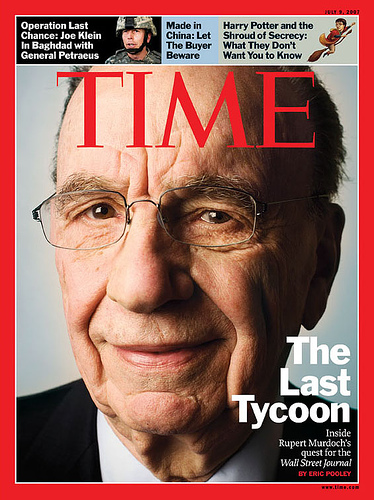
Listening to media baron Rupert Murdoch denying responsibility for the phone-hacking scandal that has Brits in paroxysms, reminded me of former US Attorney General Alberto Gonzales 2007 testimony before the Senate Judiciary Committee in which he couldn’t seem to remember anything:  Murdoch is either losing his mind, or is a so-so actor with good legal advisers. But either way, it was hard to buy into his claims that he didn’t know what was going on.

And I can’t help wondering if the ever-widening scandal will get folks starting to demand more scrutiny of Murdoch’s tactics on this side of the pond, and whether this could represent the beginning of a sea change in the way outfits like Murdoch’s Fox News operate?

Youth Speaks finds its Brave New Voices at this week’s international poetry slam

0

Bay Area, meet your home team. Their names are Joshua Merchant, Noah St. John, E.J. Walls, Gretchen Carvajal, Cassanda Euphrat Weston, and Jade Cho – spoken word poets, representatives of their cities in an international competition that has been the subject, even, of an HBO reality series, and all under the age of 18. Do you know about Brave New Voices?

A performance from BNW 2010 on everyone’s (least) favorite sustenance diet

 The international youth spoken word competition has been shocking senses and giving young people a way to spit the most difficult and important aspects of their lives since 1998 (go here for our recent post on Youth Speaks, the SF organization that was instrumental in making this slam royale happen and coordinates the Bay’s BNV representatives). What happens is teams of high school poets, usually selected through city-wide slams in their own areas, hit the stage during three rounds, reciting poems in tandem and solo that they’ve been revising and perfecting for months. Offstage, the kids get to meet fellow poets from around the world, ciphering and practicing their performances into the night.

We’re stoked at the Guardian for our Bay beatniks, and we somehow hooked two of them for an email interview in the middle of their preparations for the competition, which starts tomorrow, Wed/20, and culminates in the final slam Sat/23 at the SF Opera. Like Youth Speaks executive director James Kass says, here’s your “unadulterated, uncensored kids.”

San Francisco Bay Guardian: Introduce yourself to the city — how old you are, how long you’ve been involved with Youth Speaks, what do you like about spoken word?

Cassandra Euphrat Weston: I’m 18, I’ve been involved with Youth Speaks for about a year. I love the directness and honesty that spoken word demands of me as a writer. There is only one chance to connect with the audience; there’s no leisurely re-reading spoken word poems, and that immediacy creates an extremely powerful connection.

Gretchen Carvajal: I’m 17, I’ve been involved with Youth Speaks for almost three years now, and I love the entire spoken word community, the freeing environment [of] integrity and vulnerability coexisting.  All in all, spoken word is dope.


SFBG: You guys are less than a week out from Brave New Voices, how are you feeling?

GC: It feels surreal, we’ve been working at this for so long and it’s finally coming down to the wire, it’s Judgment Day. For real. Make it or break it. Think of every cliché used to describe this eye of the tiger moment, that’s what it is, times a million.


SFBG: What’s been the most challenging part about training for an international competition like this?

GC: Traveling from Newark to Oakland and Berkeley and San Francisco, it’s a lot of money to drop on BART. Also, several edits on the same poem can get a little repetitive, but it’s all for making the pieces stronger. 


SFBG: What are you most looking forward to about BNV? What do you think is going to be happening there when a country full of young spoken word artists meet?

CEW: I can’t wait to meet poets from all over the country and hear their work. I don’t know exactly what will happen, but I know the experience will be absolutely phenomenal.


SFBG: Tell me something that you’re proud of about your San Francisco team.

CEW: I love how different we all are, and how close we’ve become over the course of the past few months. Everybody has pushed themselves into the most difficult conversations and poems. This effort definitely shows.

GC: I’m proud of the mix we have in our team, and how we coincide. Our team has so many different styles and we can contribute to each other’s style, making everyone diverse within themselves. I just love my team.


Brave New Voices International Youth Poetry Festival

Wed/20-Sat/23, $6-100

Various Bay Area venues

www.bravenewvoices.org


The Chron says “Ed, Don’t Run”

8

Interesting, the politics of the media and the mayor’s race. While the Chron is typically the downtown/conservative paper, and some of those same folks are pushing Mayor Ed Lee to run for another term, the Chron’s big editorial July 17th made the case against Run Ed Run. Why? Well, mostly because the mayor promised:


But there is an even more important reason Ed Lee should not run: He said he would not. … He also said he took the job with a “clear, basic understanding” that he would run the city for the final year of Gavin Newsom’s term with “no distractions.”


The Chron clearly likes Ed Lee, and projects that as a candidate, he would lose the good will he’s created as mayor:


One of the reasons the atmosphere at City Hall this year has been so calm – and the results so impressive – it that the self-effacing occupant of Room 200 has gone out of his way to be collaborative, and the good feeling has been reciprocated.


That dynamic would change in an instant if Lee joined nine very ambitious politicians in the race for mayor. He would be widely regarded as the front-runner and thus would become the No. 1 target of the other nine.


His opponents would include two key members of the Board of Supervisors: President David Chiu and progressive stalwart John Avalos. The chances of anything meaningful emerging out of City Hall for the remainder of the year would plummet.


I’m not sure that’s true, not with ranked-choice voting. Nobody would want to anger Lee or his supporters; they’d all be going for the Number Two votes. (All except Leland Yee. Lee’s biggest backers in Chinatown despise Yee; it would be hard to keep that one civil.) And I don’t think Lee’s personality would suddenly change the minute he entered the race.


It would mean that David Chiu and Dennis Herrera would start to drop in the polls, since at least some of their core supporters would move to Lee. The race would be defined (with some reason) at Yee v. Lee.


But I don’t think it’s going to happen. As long as the mayoral candidates agree to let Lee have his job back (and Yee would be crazy not to make that promise — the thought of Mayor Yee AND Lee having no job might be the kicker that would push Lee into the race), I think the caretaker mayor would be just as happy to bow out. And the more times he says he won’t do it, and the more times players like the Chron urge him not to (and make it about civility and honoring his word) the harder it will be to jump in at the last minute.


(Before all the trolls attack me: I’m not telling Lee not to run. I’ve said all along: I hated the idea of a “caretaker” mayor, and I think Lee has been a great improvement over Gavin Newsom. I just think if he wants to run, he shouldn’t wait until the last minute. And the last minute is getting closer all the time.)


Waste Management sues SF over garbage contract

2

The already intense fight between Recology (formerly NorCal Waste) and Waste Management over SF’s next landfill contract just got more intense: today Waste Management of Alameda County announced that it is filing a lawsuit in San Francisco Superior Court to prevent the final award of a new long-term solid waste transportation agreement and landfill disposal contract to Recology on the grounds that awarding the contract would violate SF’s “competitive bidding ordinances.”

Now, Recology boosters will likely seek to frame this legal challenge as sour grapes over the city’s $11 million-a-year landfill contract. But WMAC’s suit represents a fundamental challenge to how SF’s $225-million-a-year solid waste stream is controlled: the suit requests a judicial declaration regarding the scope of the city’s 1932 Refuse Collection and Disposal Ordinance as it pertains to the transportation of residual wastes to a designated landfill outside city limits.


“The Department of the Environment [DoE] inappropriately and unlawfully expanded the scope of its 2009 ‘Request for Proposal for Landfill Disposal Capacity’ and, therefore, violated the City’s competitive procurement laws,” WMAC alleges.

WMAC has long held that DoE inappropriately issued a tentative contract award for both the transportation and disposal of solid waste to Recology on September 10, 2009, without soliciting any other transportation bids and in violation of longstanding City ordinances. Thanks to the 1932 ordinance, Recology has ended up with a monopoly over collecting and transporting waste through the streets of San Francisco. But that ordinance clearly does not apply to waste transported outside city limits, so folks have been asking if it would be greener to barge the city’s waste to nearby landfills. And they have been questioning whether ratepayers would benefit from lower rates if all of San Francisco’s garbage services, and not just the landfill contract, were put out to competitive bid.


Meanwhile, DoE, which sees $7 million of its own annual operating expenses for recycling, green building, and environmental justice programs and long-term planning for waste disposal incorporated into the garbage rates that Recology’s residential and business customers pay, ruled last year that WMAC’s objections were “without merit.”

So, now WMAC is taking its concerns to the Superior Court, asking that the court require DoE to scrap its tentative contract award to Recology for both waste disposal and waste transportation, and issue a new request for proposal to comply with existing competitive bidding requirements.

“WMAC is resolute in its commitment to providing the City and County of San Francisco with superior disposal services and responding to a Request for Proposal that is fairly administered,” WMAC’s Area President Barry Skolnick stated in a July 18 letter to the SF Board of Supervisors.

The move comes two days before the Board’s Budget and Finance subcommittee was scheduled to vote on approving a 10-year landfill disposal and facilitation agreement with Recology.

 The Board scheduled the vote last week, after it became clear that an initiative to require competitive bidding and franchise fees from waste management companies that seek to collect garbage in San Francisco, would not qualify in time for the November ballot. (Proponents of that initiative say they have enough signatures to qualify it for the June 2012 ballot. And they believe the question of whether candidates support competitive bidding on the city’s lucrative municipal solid waste collection, recycling, and disposal business continue to be a defining issue during the 2011 election.)


The landfill disposal and facilitation vote had already been delayed several months this year, following a Budget and Legislative analyst report that threw a curveball at the DoE’s plan by recommending that the Board consider submitting a proposition to the voters to a) repeal the city’s existing 1932 refuse ordinance such that future collection and transportation services be put to bid, and b) that future residential and commercial refuse collection rates be subject to Board approval. But so far, no supervisors have placed such a charter amendment on the November election.


The landfill disposal contract that the Budget and Finance sub-committee was to consider July 20 authorizes 5 million tons of solid waste disposal, or ten years, at Recology’s Ostrom Road landfill in Yuba County. It is worth in excess of $120 million, if the maximum of 5 million tons is reached, with all associated fees and costs to be passed onto, and  paid for by, refuse rate payers, not city funds. It allows for the Hays Road landfill in Vacaville to be used as a “back-up landfill.” And would allow Recology to pass on up to $10 million in rail hauler penalties, should the Ostrom Road landfill rail spur not be completed on time.


The facilitation agreement that the Board was also set to consider July 20, which governs how San Francisco’s waste is transported to its designated landfill, includes an additional rail transportation fee of $563 per rail container in future residential rate application increases that the Director of the Department of Public Works approves. (Unless there is an appeal, in which case it goes to the Rate Board, which is composed of the City Administrator (the post Ed Lee held before he was named mayor, and to which he wants to return,) the SF Public Utilities Commission director, and the Controller. And. in the event the cit

CCSF paid Recology $6.2 million to dispose of solid waste from city-owned facilities in FY 2010-11, and those costs are expected to increase by three percent to $6.4 million, according to the language of the ordinance that the Board’s budget and finance committee was set to consider this week.

As of press time, the Guardian was unable to reach anyone at City Hall to see if the city is seeking injunctive relief from WMAC’s filing, which provides a summary of San Francisco’s existing ordinances, a chronology of the events leading up to the DoE’s tentative award of the transportation and disposal contract to Recology and the subsequent bid protest filed by WMAC. {We’ll be sure to provide an update as the city’s response to the suit becomes available.)

“WMAC has exhausted all available and/or required administrative remedies,” WMAC states, noting that its filing also documents conflicting positions by DoE regarding the scope of the city’s Refuse Collection and Disposal Ordinance that San Francisco voters approved almost 80 years ago.

According to WMAC, DoE’s May 8 2008 Request for Qualifications stated that “the 1932 Refuse Collection and Disposal Ordinance …. does not address consolidating materials, processing for material recovery or transporting them to other facilities.”

According to WMAC, DoE re-stated this position in its Feb. 9, 2009 Request for Proposals.

“Yet in response to WMAC’s bid protest on (date) the Department stated there was no need to competitively bid transportation services outside the City limits since Recology was the only entity permitted under the 1932 ordinance to transport wastes from the in-city transfer station to an out-of-city landfill. “

As a result, WMAC is requesting the Court to rule on the scope of the 1932 Ordinance.

WMAC also notes that the Board of Supervisors designated the Altamont Landfill as the disposal site for all refuse collected within the City from November 1, 1998 through October 31, 2053, or until the City deposits 15 million tons. And that the 15 million ton has yet to be reached.

“There is ample time for the Department to issue a new RFP,” WMAC claims.

Will politicians get veto power over the voters?

14

Political interest groups of all stripes generally hold the “will of the voters” to be sacrosanct and not something that should be arbitrarily trifled with by mere politicians. Right or wrong, it’s commonly accepted that if voters do something, only they should be able to undo or modify it. And certainly, if that standard is going to be changed, someone ought to put forward a pretty damn good reason for doing so.

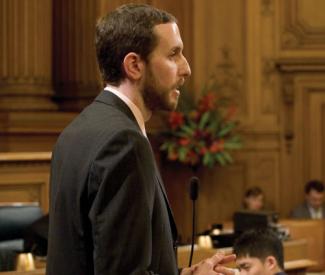
Which is why we and other City Hall watchers have been perplexed over these last few months as Sup. Scott Wiener has pushed a ballot measure that would give the Board of Supervisors the power to alter voter-approved measures after three years, which will go before the board tomorrow (Tues/19) for possible placement on the November ballot.

Aside for a general desire to clean up unspecified minor clutter from the city codes, Wiener hasn’t really offered much of a rationale for this big change, or said what laws he has in his sights. That’s caused groups on both the left and the right to view it with great suspicion, for good reason. It’s been amended many times to address the understandable panic about the bedrock principles that it could alter, changing its effective date and going back-and-forth on whether it should apply to voter-initiated measures, finally settling on restricting it to just measures introduced by the board or mayor and taking effect after January 2012.

But as indicated by comments Sup. Sean Elsbernd made at the Rules Committee hearing and with an editorial supporting Wiener’s measure in Friday’s San Francisco Chronicle (which is often a sign of funny business being cooked up downtown), at least some of the rationale is to overturn a trio of progressive fall ballot measures that they don’t like, even before voters have said whether they want them. And that’s not a good sign, no matter how you feel about those measures.

As much as we would all love to empower legislators to go after voter-approved measures that we don’t like – for example, our state would be in much better fiscal shape if the Democrat-controlled Legislature would tweak Prop. 13 – that’s just not how things are done in a democracy. And if undoing every significant progressive reform that voters have approved over the years was suddenly a possibility on any given Tuesday, Wiener will have seriously raised the stakes at City Hall.

With campaign finance laws under attack by conservative judges and rich corporations and individuals wielding ever more power over our elections, the prospect that decades worth of reforms would suddenly be on the table in each district supervisorial race is truly scary. And we’re going to open up this can of worms based simply on the small bureaucratic nips and tucks that Wiener is citing? That just doesn’t make sense. Yup, there’s definitely some funny business going on here.

Chiu blocks health-care bill (for now)

22

Sup. David Chiu has blocked a health-care reform bill from advancing to the full Board of Supervisors. And it’s particularly ironic since he’s a cosponsor of the measure.


The bill, by Sup. David Campos, is a key labor priority this year. It modifies the Healthy San Francisco program, which requires businesses with more than 20 employees to either offer health insurance, pay about $1.09 an hour into a fund for the city’s own health-care system, or set aside money to reimburse workers for health-care expenses. The last option is the least effective; asthe Chron points out


Part of the problem, said Matt Goldberg of the city’s labor office, is that some individual employers tailor their plans so restrictively that it’s difficult for workers to tap into their accounts. At some businesses, he said, employees can’t get reimbursed for such expenses as dental work and health insurance premiums.


The other part of the problem: Employers set aside the money, and at the end of the year, if the workers haven’t used it, they simply take it back. The payments (which, frankly, are an alternative to benefits that an employee would consider part of his or her compensation) don’t roll over to the next year. Campos wants to change that (and in the process, perhaps, discourage businesses from using the benefits-account option, which doesn’t work very well for employees). The bill would require businesses to make the money they put aside in one year available for the next year.


The Chamber of Commerce hates it, of course, but Campos had six co-sponsors. Until July 14.


At the Government Audit and Oversight Committee, Campos — the committtee chair — sought to get the bill approved and sent on to the full board. Committee member Mark Farrell, of course, opposes it, so the swing vote was the third committee member, Chiu — who, to the surprise of Campos, insisted on holding it in committee.


Chiu told me that he still supports the idea of the legislation, but thinks it needs a little more work, and that it’s better to amend bills in committee than send them on to the full board with changes pending. His main concern, he said, was potential job loss.


The city’s economist, Ted Egan, concluded that there could be job loss — but not really. What he said was that the city could expect 20,000 new jobs next year, and 15,000 the year after — but this legislation might mean a loss of as many as 400. So instead of 20,000 new jobs, SF might wind up with 19,600. Since the 20,000 is clearly an estimate, the actual impact seems pretty minor. Chiu told me that 400 jobs lost out of 700 businesses wasn’t minor — but the reality is that this isn’t a huge economic deal for the businesses. Just for the employees.


Campos said he thinks Chiu “wants to water it down.”


Henoted: “from a public policy standpoint, the Health Care Security law was designed to relieve the burden on the taxpayers of coveirng the costs of uninsured employees, who wind up at the public hospital emergency room.” He noted that the health care accounts, which can amount to about $4,000 a year, are of only limited use for a lot of people — “that doesn’t even cover one night in the hospital.” (Tell me about it — when I broke my hand, I wasn’t even in the hospital overnight, but I had two surgeries, one to put pins in the bone and one to take them out, and the cost, before my insurance payments, was close to $20,000. I’d still be typing with one hand if I didn’t have real insurance.)


“I don’t know what the hesitation is,” Campos said. “That money is for the workers, it belongs to the workers, and in some restaurants, customers are being asked to pay extra fees to cover the cost of healthcare that isn’t being provided. The businesses that play by the rules are at a competitive disadvantage.”


It takes four votes to pull a measure out of committee and bring it to the board. Campos so far has three — himself, John Avalos and Eric Mar. I’ll keep you posted. 


Tribute: A force of nature and Force of Habit

5

When my big brother, David Devereaux, owner of Mission haunt Force of Habit Records, passed away suddenly at the untimely age of 41 this past July 4, it left a hole in the city’s punk and vinyl scene almost the equivalent of the hole it left in my heart.

I eventually became a movie journalist, but David’s musical tastes had a profound influence on my own — he cut his teeth on AC/DC at 12, and I followed suit at the same age; he discovered the Ramones at 14, and I attended my first Ramones show at 16. It would have been hard for them not to. Except for a brief stint playing alto sax in junior band, my brother was never a musician. But that certainly didn’t stop him from devoting his life to music.

While he came to embrace all kinds of bands and performers — from fellow Montreal native Leonard Cohen to the Pogues and Tom Waits — punk rock remained his one enduring passion. He even gave his son, Jaxon, the middle name Joey, a tribute to his earliest and greatest punk influence, Joey Ramone.

Somehow my brother managed to embody the anarchic enthusiasm and ear-splitting debauchery of his favorite musical style just by being himself. When he wasn’t attending live shows (favorite local bands included Teenage Harlets and Fracas), listening to his beloved vinyl collection, deejaying under his nom de guerre “Brain Dead Dave,” or promoting local bands in landmark dives like the Knockout, he provided his own soundtrack of fuzzed-out feedback from his seemingly perpetually flapping gums. Just like punk rock, he could be difficult for some people to take, yet he always made an impression. Let’s just say he was a force of nature.

When David told me he was opening his own record store a little less than a decade ago, I balked. All that overhead seemed like a recipe for financial disaster, and he was already doing well enough selling vinyl online. No doubt, the store was something of a money pit, but from the moment I first saw it, I understood: this was to be a place of and for community. These days, when even big box music stores are closing their doors, it seems like a small miracle that Force of Habit was able to stay open as long as it did; it’s a testament to the passion and commitment of my brother and the tight knit band of local vinyl buffs.

Force of Habit opened quite possibly for the very last time on July 11 so that community could say goodbye to the store and its colorful, unforgettable owner. The turnout was fantastic, with the party raging into the wee hours. One of David’s musical heroes, Jello Biafra, even showed up, finally leaving (after trying to weasel some free records) with a colossal stack of vinyl at closing. While friends of my brother have expressed interest in reopening the store, for the foreseeable future this punk rock community center remains shuttered.

My brother and I were one and the same in many ways. We could both be described as stubborn and combative. While I’ve devoted my life to studying and writing about movies, my brother lived music. We were both professional fans, so to speak. We butted heads constantly, but I’ll never love anyone more. I don’t really know how to adequately say goodbye, so I’ll leave my parting words to someone who helped shaped David’s life profoundly, and who was also gone too soon:

“Hangin’ out all by myself/I don’t wanna be with anybody else/I just want to be with you/I just wanna have somethin’ to do/Tonight/Tonight/Tonight.”

I couldn’t have said it better than Joey Ramone. Rest in peace, brother.

Republicans raise taxes

24

Nice piece in the Chron pointing out what a lot of us have been saying for years: The Republicans who hate taxes (on the rich) have actually forced state and local government to raise taxes (on the poor). How? By Calling those taxes “fees.”


When you hike Muni fares, you’re raising taxes on transit riders. When you hike tuition at UC and CSU, you’re raising taxes on college students and their families. And all of those are regressive taxes, hittin harder on the poor and middle class:


“In a crazy place like California, you look for strange and wonderful places to raise revenues – like higher fees for UC students and entrance fees for parks,” said John Ellwood, a professor of public policy at UC Berkeley’s Goldman School of Public Policy.


“We’re nickel-and-diming people because they’re unwilling to pay taxes,” Ellwood said, adding that Republicans are “claiming victory because they hate government.”


Yes, the size of the state government has been cut by 20 percent. But much of that was state funding that would have gone to counties — so now counties are raising taxes (on the poor and middle class) to keep the lights on. So we’re still paying — we’re just paying in a less efficient and less fair way.

By the way: A bill that would potentially change all that and allow counties to raise progressive taxes has passed the state Senate. But the author, Darrell Steinberg, hasn’t sent it over to the Assembly yet; it was caught in the budget limbo. But it’s crucial that local government gets this sort of authority. If you agree with me, you can call Steinberg’s office at (916) 651-4006. The bill is now known as SBX1 23.


Lit review: “Ambient Parking Lot”

0

Ambient Parking Lot (Kenning Editions, $14.95) is a 187-page book about one band’s quest to capture the world’s most perfect ambient noise in a parking lot. Wait, don’t go away! It’s great … I swear. Author Pamela Lu’s novel follows the Ambient Parkers, a fictional collective of musicians and artists, as they rise to heights of fame or alternately cower under the weight of their shortcomings.

Their peaks and valleys shape a familiar refrain if you’ve ever been in a band; Lu uses the Ambient Parkers (they are otherwise anonymous) as a foil by which she is able to draw the whole business of the so-called underground art establishment under her perceptive and witty lens. The performance artist who joins the Ambient Parkers for a night of experimental dance, the respected radio DJ who rebukes their creative advances, and perhaps most impressively of all, us, the fickle and demanding public: these are just a handful of the cogs in a not-at-all-well-oiled (and certainly well worn) machine.

In short, Ambient Parking Lot is Lu’s love song to the independent artist and the scene that he or she is a part of. He has no patron, no propulsion other than a curious drive to produce, to create. He is filled with doubt, wracked by neurotic compulsion. Grand success eludes him, but small victories are hard fought and well earned. Financial stability is not a goal but a hurdle, nagging at him from the periphery. He is the suburban anti-hero of the 2000s, driven but erratically so. Basking in the afternoon sun between empty factories and foreclosed homes, he has learned to love his blighted environment and revel in its hidden beauty.

And so, for all the humor in Ambient Parking Lot, for the subtle mocking jabs at the artists’ egos, there is an equally strong current of admiration. The Ambient Parkers are sincere, almost naively so, unwilling to “play the game” … but willing to try it out. They are somehow self-important and self-deprecating at the same time. They are every independent band as they confront the specter of commercial and critical success, as they grapple with their image and then grapple with consciously grappling with their image. It’s dizzying, really, and hilarious.

Lu succeeds tremendously in capturing the tribulations of the artist with tenderness and a ‘get-real’ attitude that keeps Ambient Parking Lot from turning into propaganda for the underground and reminds us that everyone is human, even the people we admire (or loathe) on stage, or lurk in the corner at an after party.

Post:Ballet aims to refresh dance at the Herbst

0

Like “okra” or “golf,” the word “ballet” can elicit a very strong reaction. Either its two syllables make you giddy, the same way a perfectly sauteed pan of okra can make you salivate, or make you instantly nod off, like the thought of 18 holes of golf. (No offense to golf lovers … I personally just don’t really get it). Fortunately for everyone on both sides of the ballet divide, there’s Post:Ballet, a relatively young dance company that is breathing new life into the dance form — and which brings something that almost anyone will find quite likable indeed.

This coming Fri/15 and Sat/16, the company is performing at Herbst Theater, to present their new program titled “Seconds.” The show incorporates video projections with eerily beautiful music, along with the dancers’ fluid and graceful movements, to create an incredibly engaging and dramatic performance. The dance company definitely has strong roots in ballet, but it is able to meld  tradition with fresh ideas, making for a ballet performance that everyone, including golf-loving okra freaks, won’t want to miss. I caught the company in rehearsals for its big show.

Post:Ballet, “Seconds”
Fri/15 and Sat/16, 8pm. $20-$25
Herbst Theater
401 Van Ness, SF.
www.postballet.org

Chris Cunnie running for sheriff?

65

It appears that the race for San Francisco sheriff is about to get more competitive: Chris Cunnie, the former Police Officers Association president, the former undersheriff and chief district attorney investigator is getting close to deciding to run, numerous sources tell me.


I haven’t been able to reach Cunnie directly, but he’s been calling around to local political types and talking about the race, and several people close to him say he’s about ready to make the jump.


Cunnie was widely expected to run when incument Mike Hennessey appointed him as undersheriff more than a year ago, but Cunnie left that job for personal reasons and appeared to have no interest in trying for the top position.


But he’s apparently changed his mind, and he would be the third candidate in the race and likely to get more traction than Paul Miyamoto, a captain in the Sheriff”s Department who has no prior political experience.


At this point, however, Hennessey has already endorsed Ross Mirkarimi, who is by any account the front-runner. He’s the only candidate with any electoral experience and he’ll have the progressives united behind his campaign. Cunnie’s time as the POA boss will hurt him on the left.


It’s not clear why Cunnie has decided to enter the race, but I think it’s safe to say that a lot of powerful people in this town are worried that Mirkarimi — a stalwart progressive who happens to have been very involved in law-enforcement issues — could wind up in a citywide office from which he might at some point seek to run for mayor. Cunnie would make it much safer for the more conservative types.


Tech blogger takes on Silicon Valley

0

Critiquing the tech industry has to be one of San Francisco’s favorite events in the armchair Olympics – but usually the harangues are coming from my friend that can’t seem to hold onto his personal chef gigs. Incisive commentary about the social merits of Silicon Valley from within the tech community are hard to come by (maybe because they are all fully employed). 

Perhaps that’s why a critical blog post that tech news site The Next Web ran this week by normally ebullient reporter Hermione Way (who covers the start-up entrepreneur beat) set off so many alarms among her techie cohorts. Way, who I kind of think is a genius at being immersed in, and taking the piss from the tech industry, moved to Bay six months ago from the UK to interview start-up masterminds (we caught her before she’d even hopped the pond to learn about the life of a pro social networker), called out Silicon Valley on being motivated for all the wrong reasons:

I’ve heard pitch after pitch of the same technology and keep wondering why all these highly intelligent, well educated youngsters, many of whom have been educated in the best universities in the world (Stanford, Yale and Harvard) are not putting their brains to good use by solving real-world problems. Instead they’re building technology to solve trivial issues – like apps that show where to spot your nearest tofu cupcake and share it with your friends.

It’s an obvious critique that’s been levied by many people that haven’t met a fraction of the Internet entrepreneurs that Way has, but the post stirred up it’s fair share of wrath. 

Robert Scoble, who found initial fame as a Microsoft blogger and has been called a “technical evangelist”, pointed to financier Cynthia Ringo and Kevin Surace of Serious Material as exemplars of conscious technology movers. 

Over at Y Combinator, a start-up seed firm that operates news forums on its Hacker News website, some commenters thought the problem is that Way simply doesn’t understand what Silicon Valley is:

There isn’t a ‘problem’ with Silicon Valley, it simply exists like a beaker sitting over a bunsen burner. Over time different chemicals are available in the beaker and sometimes something magical happens, and sometime noxious fumes come out, but the place is an engine.

Of course, geographic locations don’t themselves create new techologies, socially-minded ones or otherwise — the people that live in them do. But to say that there is no culture of Silicon Valley – or hey, any place – is remarkably un-self aware. What is worked on, funded, and valued are trends that is agreed on by any community, even if, like Scoble, you can find exceptions to the rule. Here’s hoping that Way’s words will make techsters take a break from the coding-networking-developing grind to look at what they’re working towards.

The Perfomant: The future’s so bright

0

Rejecting planned obsolescence with chiptunes and Front Line Theatre

This week, The Performant turns one, so please excuse me a moment while I stick a candle in my Molotov cocktail, tie it to this big red balloon, and send it soaring. In the oft-imagined dystopian future, this may well be how all our landmark dates will be celebrated, not with a whimper but a bang. We’ll all get drunk on a rare flask of artesian well water, and play pin the tail to the Womprat. As for the party music, it’s tough to predict what we’ll be listening to in the 22nd century, but it’s a good bet that electronics are going to figure heavily into the equation—if only as a way to use up all the obsolete 21st century e-waste sure to be still piled around.
 
Take chip music, for example.

This hardy little strain of underground electronica, also known as chiptune and 8-bit, has been pulsating away for over a decade in its own little corner of the dance floor, creating a sound that is both futuristic and retro. Walking into the DNALounge for the West Coast edition of Pulsewave, New York’s premiere, monthly chip music event, was akin to walking into an 80’s-era video arcade. Primitive, 8-bit graphics loomed large on the projection screen (courtesy of VJ Max Capacity), and the blip and zoom of familiar video-game sounds wedded to danceable beats were being DJed by Doctor Popular. Anybody who’s ever felt compelled to dance along to the theme music of The Super Mario Brothers would feel right at home at a chip music event, where much-cherished Game Boys serve as instruments, a lo-fi medium for creating hi-tech ambiance.
 
Of course, not every chip musician is limited to just 8-bits. San Francisco’s The Glowing Stars featured Lizzie Cuevas on guitar, and Matt Payne on baby blue drums (and canary yellow key-tar), who doubled up on the Game Boy, tweaking the output of their “traditional” instruments with the bloopety-bloop of that iconic device. Morgan Tucker, or Crashfaster , added ominous, vocoder-distorted vocals over dark-edged, almost gothic layers of chiptune before inviting East Bay hip-hop ensemble Spirits in the Basement to rap along. And headliner Bit Shifter, who’s been creating chip music for over a decade, blew the top off with an eminently danceable set of hard yet chirpy, post-EBM deftly coaxed out of his modified Game Boy box. Watch for more chip music marathons in the future as Pulsewave SF goes monthly. It definitely beats dancing alone at the video arcade.   
 
Meanwhile, Front Line Theatre, presenting their “verse-and-movement comedy, ‘Rare Earth’” at CounterPULSE, created an entire world from abandoned electronics. Called Unland, this desolate island was poisoned by chemical landfill leachings and decorated by enigmatic sculptures made of empty consoles, motherboards, and chicken wire (designed by Honey McMoney). An unexpected “Tempest”-style shipwreck brought a wayward Unlander home, and a thinly-plotted revenge scheme emerged from the rusty rubble. Combining modern-day slang, future dilemmas, and age-old conflicts, “Rare Earth” provided a view of the future not too fantastic to accept, but disquieting enough to want to stave off for as long as possible. Finding a use for all those outdated electronics would be a good first step. Someone get Bit Shifter on the phone.

Repulsed by Recology’s tactics, Kopp strikes name from Adachi initiative

36

Who knew that a bunch of garbage could get a taxpayer watchdog like former supe/state senator/judge Quentin Kopp threatening not to endorse Public Defender Jeff Adachi’s pension reform initiative? But that’s what happened according to Kopp, who adds that he was “personally insulted’ by a signature gatherer outside the West Portal post office last week, after he struck his name from a petition he had signed in support of Public Defender Jeff Adachi’s pension reform measure.

Adachi, who has reportedly been paying up to $5 per signature, also came under fire this week from opponents of his measure, who are threatening legal action after an undercover video showed four signature gatherers for Adachi’s measure soliciting signatures while making misleading statements about the proposal.

But this misbehavior had not been made public when Kopp encountered a signature gatherer last Friday, who asked if he would sign the Adachi petition. “I wrote my name and has just started to print it, when he said, how do you feel about Recology?” recalled Kopp, who is backing a ballot initiative that would require competitive bidding and hundreds of millions of dollars in franchise fees from firms who seek to win San Francisco’s garbage collection and recycling contract.

As such, Kopp’s initiative threatens to up-end the terms of an 80-year old charter amendment that resulted in Recology (formerly Norcal Waste Systems) gaining a contractless monopoly on San Francisco’s $226 million-a-year garbage and recycling stream. 

When Kopp asked the signature gatherer, who identified himself as Tim McArdle, why he was asking about Recology, McArdle said he had another petition on hand, which referred to the allegedly satisfactory service that Recology is providing.

At which point, Kopp began to strike his name from Adachi’s $5-a pop petition. McArdle allegedly interrupted, saying, “No, that’s not the same petition as Recology’s.” And when Kopp kept scratching out his name, McArdle allegedly began swearing at him, even allegedly employing the time-honored F-word. “A woman walked by and was shocked,” Kopp said.(So far the Guardian has been unable to locate McArdle, but when we do, we’ll be sure to update this post.)


When McArdle grabbed back his clipboard, Kopp said he was able to see that on its backside was what Kopp describes as ‘Recology’s phony petition.”

So, why is Kopp so repulsed by Recology? According to Kopp. Recology recently signed up the city’s top signature-gathering firms to work on their petition thereby preventing Kopp and his associates from hiring these firms to collect signatures for his competitive bidding initiative. “And they are doing so from our rates, the money we pay, its legalized misappropriation of our money,” Kopp claimed

So far, it seems as if Recology’s strategy is paying off, at least in the short term. This week, sponsors of the competitive bidding initiative announced that they will turn in their signatures by December 11 to qualify their measure for the June 2012 ballot—and not their original target of November 2011.

Their decision followed less than three weeks of signature-gathering, a tight squeeze that occured, in part, because the City Attorney’s Office  took the full 15 days allowed by law to review the language of the Kopp initiative, which was first submitted June 3.

Even so, and despite an extensive Recology-financed media campaign that included push polls and network and cable TV ads against competitive bidding,  proponents and volunteers with Kopp’s campaign managed to gather the 7,168 signatures they needed to qualify his initiative by the city’s July 11 deadline for submitting petitions for the November election. But some signatures could prove invalid, hence the decision to delay the competitive bidding initiative until June.

And the Guardian learned today that the Board’s Budget and Finance Committee has scheduled a July 20 hearing on whether to award Recology the city’s $11 million-a-year landfill disposal contract, with the full Board set to vote on the issue on July 26 and August 2. In other words, the Board is rushing to make a decision on the landfill, which would further consolidate Recology’s monopoly on the city’s waste stream, before the Board’s summer recess.

The Guardian has also learned that the Budget and Finance Committee will hear a resolution July 20 concerning Recology’s existing agreement with the city over garbage. Rumors are swirling that this hearing will allow Sup. Ross Mirkarimi, who sits on the committee, is running for sheriff and has allegedly been meeting with Mayor Ed Lee and Recology president and CEO Mike Sangiacomo behind closed doors, to insert a clause to allow for the payment of a $4 million franchise fee. But insiders assure the Guardian that Mirkarimi has no such plans, although Mirkarimi himself could not be reached.


Either way, as Kopp points out, the alleged proposed $4 million fee would only amount to 2 percent of Recology’s annual revenue from San Francisco ratepayers. ‘That’s almost an insult,” Kopp said, noting that Oakland, whose population is 340,000, (42 percent of San Francisco’s daytime population) gets a franchise fee of $30 million.

Now, in a recent report to the Board’s LAFCO committee, Recology claimed it provides $18 million annually in “free services” to the city. But the report did not include an independent analysis of Recology’s estimates, and therefore these claims raised the hackles of Kopp, Kelly and other competitive bidding proponents.

Kopp predicts a $4 million franchise fee would allow city leaders who oppose his measure to claim that one of the two objectives of his proposed initiative have been addressed.

In an interview with the Guardian earlier this year, Mayor Ed Lee said he felt that Recology “has justified its privilege to be the permit holder in San Francisco because of the things that it has been willing to do with us.”

Kopp said Lee repeated this position in June, and that Board President David Chiu recently said that he is opposed to monopolies in concept, but felt that any effort to allow competitive bidding on garbage services would tear the city apart.

“Chiu spoke in such draconian terms I thought I was in Iraq or Afghanistan,” Kopp said.

But these latest developments have strengthened Kopp and Kelly’s resolve to push ahead with their effort to give local residents a chance to decide whether competitive bidding would be better for San Francisco rate payers. As they point out, such a vote doesn’t mean Recology would be ousted from the city because they stand an excellent chance of winning any competitive bid. But it could mean that Recology is ousted from its current cost-plus arrangement with the city that allows them to make an estimated 10-20 percent profit.

And whatever happens, the upcoming battle threatens to shed light on Recology’s business model, which is based on vertical expansion into other counties and states, and the knowledge that, unlike the competitive bids it submits everywhere else in California, it has a guaranteed annual revenue of $225 million in San Francisco. In its 1996 filings with the Securities Exchange Commission, NorCal Waste and its 45 subsidiaries (now known as Recology) reported that San Francisco accounts for 50 percent of its annual revenue. And while those public filings are 15 years old, it’s clear Recology continues to rely on San Francisco for a large and guaranteed chunk of its income.

Or as one insider put it, “When you have a cost-plus contract, you can start buying things—like the Pier 96 development, and the recycling facility. And you can move profits to a different part of the company. You’re not competitively bidding the composting. And you can shift your profits out of San Francisco. And with a cost-plus contract, you put everything in the rates. For instance, the city says it wants composting. Ok, here’s the cost, here’s the bill. But you take the profit from the composting and invest it in San Jose, or San Bernardino, and use it to advance your other objectives, like buying two large landfills in Nevada and financing political campaigns.”

Meanwhile, Kopp says he plans to take Adachi to task for hiring the same signature gathering firm that is trying to undermine his petition.


“And I’m not planning to sign his petition now, and I might not endorse it,” Kopp said.


Opening up the [SSEX BBOX]

0

What turns you on? Why do you use a condom? How do you define your gender? From Spain to Germany, Brazil and the US, the documentary series [SSEX BBOX] poses honest questions about sex and sexuality and asks for blunt, no-fuss answers in return. The culmination of these stories is a refreshing challenge to the pre-disposed definitions around sexuality. [SSEX BBOX]’s short videos and new magazine are tearing open binary-ridden boxes and letting real life spill out.

[SSEX BBOX] began as a social justice film project two years ago to create awareness and accessibility around sexuality issues worldwide. The project’s odd spelling is a play on the four cities being explored: San Francisco, Sao Paulo, Barcelona and Berlin, which were primarily chosen due to the locations of project leaders, but also for their unique cultural perspectives. Brazilian director Priscilla Bertucci says exposing the differences between the sex-positive cities is one of her favorite aspects of the project, noting the challenge of sexism present in Latin counties and the inherent gendering in the Latin languages, in which every noun is assigned to be either male or female. Bertucci loves that [SSEX BBOX] will facilitate discussions between these countries and hopes the information trade will help make positive changes in all cities.

 ssexbbox5


A gem from the must-see-twice [SSEX BBOX] photo collection

Film crews in all locations have been interviewing everyone from sex educators, kinks and queers, to anyone interested in sharing their opinions on topics like relationships, sexual orientation, anal, sex work, and polyamory. The mission of the project is to explore sex without shame, fear, or hesitation. A voice in one video asks, “What would a sexually healthy society look like? Are you sexually satisfied?” San Franciscans may raise their hands and cheer but it’s easy to forget that these questions may not fare so well outside of our sex-friendly Bay; all the more reason we should be asking. 

ssexbbox1

[SSEX BBOX] is still in the filming stages, but a preliminary collection of videos are already on their site as a precursor to what will become a full-on 15-episode series beginning in January 2012. In the mean time, the project has decided put out a series of pocket-sized zines, the first of which is themed, “Genderly Phrased” and is meant to explore the vast world of gender definitions beyond the all-too standard masculine and feminine.

ssexbbox_mag


The freshly published [SSEX BBOX] magazine

“Maybe you exude androgyny, or pull from seahorse energy, or a series of colors,” says Bertucci, explaining that gender is meant to be subjective and personal.

It’s a steamy read (if you can tear yourself away from the stunning cover) with lots more bonus visuals and personal essays from people around the world confidently exploring outside the lines. Another issue is expected to print in October and it’s not too late to submit your own story, or your mother’s. 


[SSEX BBOX] [CRUSH] ZINE-RELEASE PARTY

Thurs/14, 8 p.m., $7

El Rio

3158 Mission, SF

www.elriosf.com


Eco-funny: Kristina Wong goes green

0

When things go wrong for performance artist Kristina Wong, you know it’s going to be a spectacular mess. A person with that much verve just wouldn’t be able to fail only halfway. So when she decided to “go green” the universe thanked her by almost blowing her up on the LA freeway in her bright pink, bio-fueled Mercedes. Now car-free in a city widely thought to be completely non-navigable without a motorized vehicle, this San Francisco-born “patronmartyr of carbon-free living,” is taking her new show on the road, to preach the good earth word with her signature madcap style.

Kristina’s multimedia productions, such as the nationally-recognized Wong Flew Over the Cuckoo’s Nest, are high-energy pastiches of autobiographical material, research stats, contrarian wisdom, and fearless deviations from any pigeonhole you might try to stuff her into. During Going Green the Wong Way, her fifth solo show, she’ll take you through the intricacies of the LA Public transportation system, appoint herself a “missionary of recycling,” mourn with “mother earth,” who is frankly getting a little fed up with our mess, and engage in a good old-fashioned plastic bag fight, during this limited homecoming run of five shows only, starting tonight (Thurs/14).

A tireless performer with a penchant for subversion, credits under Wong’s formidable belt include hanging out with the Billionaires for Bush campaign, a stint with award-winning sketch comedy troupe OPM, writing for the CBS Sketch Comedy Showcase (and Playgirl magazine!), going underground as a “Miss Chinatown” candidate, creating her own spoof mail-order bride service, and criss-crossing the country with the controlled chaos of her charmingly unpredictable solo shows. There are hundreds of ways to go wrong when attempting to go green, but going Wong can only ever be right.

http://www.youtube.com/watch?v=M7TYz7qm_Ec
 
Thurs/14-Sat/16, 8 p.m.; Sat/16-Sun/17, 3 p.m., $12-$15
Jewish Theatre
470 Florida, SF
(415) 522-0786
www.tjt-sf.org

Where does Gavin Newsom vote?

23

Now that it’s pretty clear Gavin Newsom no longer has a residence in San Francisco, when is he going to change his voter registration? According to the San Francisco Department of Elections, there’s no statutory deadline; he can stay registered in San Francisco as long as he wants.

But he can’t vote here if he doesn’t live here — which means that if he wants to vote in the November election, he’s going to have to either (a) rent an apartment or buy another house in San Francisco that he can claim is his primary residence or (b) re-register as a resident of Marin County. As it is now, with no fixed place of abode in this city, he can’t come back and vote for the next mayor or sheriff or vote against the measure to change Care Not Cash. Because that would be voter fraud. And the lieutenant governor of California would never want to break the law.

SFBG Radio: Secession planning

0

Today we talk about whether it’s crazy for the southern part of the state to secede — and assorded other topics including the nation’s debt limit. Check it out after the jump. 


Heavyshit by endorsements2010