SFBG Blogs

Couscous with Al Qaeda part 2

0

TRUE TRAVEL TALES: This is part two of Marke B.’s culinary journey through the Arab Spring. You can read part one — spicy! — here.

Before we left Tunis, the lovely people and open vibe of which which we’d rapidly fallen in love with, we ate at a mind-blowing West African lunch off a small street near the African Development Agency building, El Khalifa. Heaping plates of sauce-covered, deeply flavored attiéké poulet brasse (a creamy, manioc-based specialty of Côte d’Ivoire) and choucouya de poulet au cancancan, smothered with onions over berberé-spiked rice, were served cafeteria-style to a bustling room of suits talking international affairs in a head-swimming number of languages.

All the development-speak in the air got us scheming about how to bring more tourists back to this great city, with its intense cosmopolitan air, historical riches, and perfectly enchanting old city section — although we’d already witnessed one option in play: activist tourism

In the medina (old city) of Tunis

Fortunately or unfortunately, our hotel (the majestic, insanely reasonable Grand Hôtel de France, go stay there) had played host to a coterie of trendy-anarchisty Western student-types, perpetual cigarette smoke wreathing their immaculately styled dreadlocks. They had come, like us, to see the after-effects of the revolution and make contact with some of the people behind it. But they also wanted a piece of the action, joining demonstrations and breathlessly relating tales of being chased by police — before heading out for a day at the beach. Part of a loose organization called the Knowledge Liberation Front, they had gathered from all parts of Europe, hoping to formulate new models of resistance to the austerity measures sweeping the Union. (The fact that there were so many Italians there, raging against Berlusconi, was kind of encouraging.) They were cute! If, of course, deadly serious. Whatever Tunisian group that had facilitated their “revolution experience” certainly had a great thing started in terms of possible revenue streams.  

But now we were on our way south via Tunisia’s main railroad line, hoping to reach the Grand Erg Oriental, a rippling sea of sand in the Sahara that looks like the pictures in your head when you hear “Sahara.” From there, our ultimate destination would be El Ghriba on the island of Djerba, the oldest synagogue in North Africa, and its huge annual Lag B’Omer festival, which draws tens of thousands of Jews from around the world in a celebrated pilgrimage.   

The third-century Roman-style amphitheater at El Djem 

On the way, we stopped in El Djem, a neat little town that just so happens to contain a humungous, remarkably intact Roman coliseum-like amphitheatre, a 35,000-seat wonder built in the 3rd century (with ancient graffiti carved into its stone!), which we had practically to ourselves. It also has a well-designed museum of ravishing mosaics, including some depicting the martyrdom-by-wild-beasts that the amphitheatre (actually more like a killing factory, really) showcased. Innumerable christians and animals – including now-extinct species of elephants, tigers, even giraffes — were sacrificed horribly for the crowd’s entertainment.

We had the most extraordinary lunch. At Cafe Le Bonheur, a traditional central Tunisian feast with several salads and a main course of tender rabbit stewed in saffron, served in casual French style by a hip young waiter for cheap. Score! Some balmy afternoon time in cafes over cafe filter (coffee served in a glass) confirmed that El Djem is one of those magical little places you could sink into for a while.

The only other tourists in El Djem belonged to a random British family. Hang in there, Tunisia!

Then it was on to Gabes at the end of the train line, an unremarkable oil town (with attendant pollution — but also plentiful alcohol and solid business-traveler restaurants), where we planned to rent a car and drive to the desert. As soon as we got to Gabes, though, we saw our plans would be interrupted. The barbed-wire around the city square was not an encouraging sign. We were now officially in the south, where the revolution had started and which, with its large and impoverished Berber population, had always been restive. 

Now that the Libyan revolution had begun, and tens of thousands of refugees were flooding into Tunisia (which, wonderfully, had welcomed them with open arms, providing housing and resources), the situation had grown more complicated. According to the press and the government, some of the Libyans were bringing weapons into the country with them — weapons stashes had been found in nearby caves. And, alas, on the route to the Grand Erg from Gabes, an Al Qaeda plot had been foiled, with more evidence of Al Qaeda presence being found in the region. (Both Tunisia and Morocco had remained almost Al Qaeda-free until recently, this was all sad news, although it still seemed divorced from the citizen’s everyday reality. Tunisians, especially, seemed casually or privately religious on the whole.)

We realized that it might not be the best thing to drive through the desert countryside, already a tricky operation, without a guide. So we switched plans and headed to tourist center Douz, where once busloads of tourists unloaded to ride camels and 4x4s into the scrubby surroundings, but which was now slowly but valiantly weathering the almost complete lack of tourist traffic since the revolution.

Livestock market at Douz

(First, it’s kind of gross that thousands of package tours cancelled now that there was no dictator, although people on package tours seem like the most vulnerable to feelings of uncertainty. Secondly, it was pretty inspiring to see people who were slowly slipping into poverty due to lack of income hold their heads up because they had won freedom — and remain positive that once things had settled down, people would come back. We heard that again and again.)   

So, swallowing my environmental eeks, we chartered a 4×4 to drive us over the dunes (after we had passed any cryptobiotic hotspots) to the hot springs oasis of Ksar Ghilane in the Grand Erg Oriental sand sea, which I probably don’t need to mention was aaaaah-mazing.

We rode camels named Caramel and Ghaniya (“pretty girl”) through a halcyon sunset into a full moon. And then it rained! In the freakin’ Sahara! Awesome.

We were, as usual, the only tourists there (and devoured delectable chicken tagine in an empty, cavernous mess hall right out of The Shining: camel-riding makes you ravenous!). As we were as well at our next stop, mountainous Matmata, the famous “trogolodyte” Sand People/ Mos Eisley Cantina town from Star Wars. I think that’s right — don’t kill me Star Wars nerds. There things, however, took another unexpectedly sinister turn.

Matmata is one of the biggest tourist draws in Southern Tunisia, thanks to the whole Skywalker connection. We rode in bumpily aboard a louage, the shared minivan taxis that are the main means of transport in these remote regions. But as we approached we saw smoke — and a tour bus, the only one of that week we later heard, rapidly retreating. As we entered the town center, the smoke grew overwhelming. A large group of men were burning tires in front of the government outpost. We were told that a govenment official was supposed to arrive from the capital that morning with news of a jobs program, but he never materialized. Out here the unemployment rate is around 70-80 percent, so this was a big deal (even though driving away the few tourists seemed like a bad idea.)

In the morning, after the tire fire

We managed to stay the night in one of the sunken, white-washed, fantasy-come-true underground trogolodyte dwellings, mingle with the locals, and stuff ourselves with kousksi bil djaj (chicken couscous), shakshouka (eggs poached with tomatoes, peppers, and tumeric) and makrouth — sweet, date-filled pastries native to the city of Kairoun.

The next morning, though, protesters had blocked the highway and were burning more tires. 

With no means of transportation, we started hiking the 12 kilometers to the next biggest city — luckily the day was overcast, this was still the Sahara after all! A nice man in a truck with government plates stopped to give us a ride, but as we rounded a large curve we hit another roadblock. A gang of young men from a nearby mountain town were standing ominously behind rocks piled on the road, makeshift weapons of former highway signs in their hands. As we slowly approached, they silently surrounded the truck.

“Uh oh,” I telegraphed to Hunky Beau, “I’ve seen this movie, and it doesn’t end well.” And then, “Well, at least a couple of them are hot.”

The guy giving us a ride backed slowly out and we retreated while he made a few calls. We went back to Matmata, our hearts sinking because the situation was getting heavier there as well. We waited a couple of stomach-wrenching hours on a bend outside of town, wondering what to do, at least enjoying the clifftop views. Lo and behold, our guardian angel in the truck returned with two hardcore, seasoned military men aboard (one of them a thick-faced number who looked like he saw a lot of torture under the old regime — and he wasn’t on the receiving end). We quickly squeezed in. As soon as we got back to the roadblock, the army dudes leapt out of the truck and charged the gang, bellowing and waving their arms.

“That’s the way to do it,” I thought, watching through laced fingers. “Barge the fuck right in.” There was a scuffle, one of the kids tried to grab an officer’s gun, weapons were hectically raised, but the kids eventually backed off after getting to vent a bit, and we charged through. Government escort? I’d never been so happy to have one. And all to help two complete strangers make it to their next vacation stop. Tunisia, I love ya.

But yeah, frustration out there is growing. When we eventually made it back to Douz, we had one of the best meals of my life. Finally, we found a great bowl of Ojja, the egg stew cooked with merguez sausages, served by the wonderful women who run Restaurant Chez Magic —  it really was a house of sausage stew magic!

Ojja at last. Crappy iPhone photo by Marke B.

Final destination: Djerba island, the legendary “Land of the Lotus Eaters.” Probably beautiful in its normal, sunny, sparkling blue Mediterranean state. Racked by magnificent storms when we were there. No Tunisian martinis at the beach for me.

No problem, though — there was plenty to enjoy, including one of Tunisia’s most bewitching specialties: brik. I know that there was a lot of other stuff involved, but if ol’ Odysseus and his Greek crew had trouble leaving this isle behind on their quest to return home, I’m pretty sure brik was involved.

Brik at Bric

Imagine, if you will, a thin-skinned pastry, stuffed with mashed potatoes, tuna, capers, parsley, olives, chopped onion, and harissa folded into a triangle and lightly deep-fried. But wait! Before the pastry is folded, and egg is gently broken into it, so that when your fork pierces the pastry skin, the yolk gently breaks and oozes out like a swoosh of golden flavor. I am sorry my vegan friends! Magnificent, and the place to get them is called Bric Belgacem in Houmt Souk, the capital, on January 14, 2011 Street (named after the date of the dictator Ben Ali stepped down). Gaaah, I want one.    

We had come to Djerba, like supposedly tens of thousands of other pilgrims, for the huge annual Lag B’Omer festival at the ancient synagogue of El Ghriba, in one of Northern Africa’s last remaining Jewish communities. Yep, on this small island, Jew and Muslim live side by side in peace — we’d unfortunately seen a dismaying share of anti-Semitism (not just anti-Israelism) on our journey in the form of graffiti, alas. We felt bouyant to be a part of this giant celebration.

And sure, in 2002 Al Qaeda had tried to blow up El Ghriba, which holds possibly the world’s oldest Torah (paraded through the streets during the festival). A truck bomb had killed 21. But that was long enough ago not to frighten people away, right?

El Ghriba synagogue

Not really. Spooked by the revolution and the turmoil just a few kilometers away in Libya (a flood of Libyan refugees was engulfing the island: there were more Libyan license plates than Tunisian ones), so many tourists had cancelled their pilgrimage that the celebration itself was cancelled. And boy, was it cancelled. When we showed up at the ornately-decorated, marvelously Moorish-style synagogue, there were just five old men praying, a father-daughter pair from Kansas (who had just crossed dangerous Southern Algeria for the heck of it) and the effervescent Zoey, a middle-aged Englishwoman who was receiving text messages from God. Let’s let her finish out this account:

“I woke up one day at my home in Norwich one day and I heard God telling me to drive to Israel.” She looked me in the eyes, completely calmly. “So I loaded up my camper and began to drive, trusting him to provide — and he has, oh how has. I made it to Libya and I asked God how was I going to get in. And you know what? He opened the borders for me, just opened them right up so I could drive through. As I was driving toward the border post, the rebels captured it, peacefully, and in the confusion I just drove. I met the rebels and slept in the mountains with them, until it was time to go. I drove on to Benghazi” — she was in a station wagon towing a trailer with a Jesus fish on the bumper — “where God taught me to accept my fear of being bombed, as bombs rained down all around me. I can tell you that was something.

“Checkpoint after checkpoint opened up before me. Sometimes they would search my car, but I had a Koran, and when they saw I had the Word of God with me they let me through. Once when danger approached, I received a text to avoid a certain area. Then finally, I was stopped and they ransacked my trailer. They tried to ransack me as well, but God put a stop to that! I was blindfolded and sent to a prison in Tripoli for a week. They ended up deporting me, and so I’m waiting here at the border until God tells me to try again. Really, you just need to trust sometimes. I can see that you’ll be hearing from him today, just by coming here.

“Sometimes,” she continued, “we have to do whatever crazy thing our heart tells us we should do, and call it belief.”

And with that, she went to drop a harboiled egg in an ancient well, which is the tradition at such occasions.


The energy of Arab Spring uprisings soon spread to Spain, although with a very different effect: you can read my report here.


Daly blasts HuffPo SF’s choice of bloggers

30

In an open letter to Huffington Post former Sup. Chris Daly lays out why he thinks former Sup. Michela Alioto-Pier, mayoral candidate Joanna Rees and (perhaps not so interim) Mayor Ed Lee aren’t the best of choices to blog about San Francisco politics.

“Thank you for asking me to write for Huffington Post San Francisco,” Daly wrote. “However, I feel as if I must register a significant level of disappointment in who you rolled out today as your featured bloggers from the world of SF politics. It seems as if am the only one from San Francisco’s significant progressive elected political community.”

“Featuring Michela Alioto-Pier on the pages of Huffington Post only gives additional ammunition to those on the left who have become increasingly critical of Huffington Post since AOL’s acquisition,” Daly continued. “Alioto-Pier may seem kind of ‘liberal’ by skewed national standards, but she is decidedly conservative in San Francisco– opposing just about every progressive initiative in the last decade, from protecting rent control to checking reckless development to mitigating the negative influence of special interest money in elections. As an unabashed progressive, I was embarrassed to serve on the same Board as her and am now embarrassed to appear on the same web page with her bashing progressive homeless policy. Simply put, San Francisco’s very own Michele Bachmann now writes for the Huffington Post!”

Next, Daly laid into mayoral candidate Joanna Rees, Sup. Malia Cohen and Mayor Lee. “Rees, Cohen, and Lee may not have quite the same conservative credentials, but Lee and Cohen just green-lighted the largest demolition of rent controlled housing in SF history,” Daly observed. “So it probably shouldn’t surprise anyone that Ed Lee’s initial HuffPo blog is generally based on the Scott Walker political philosophy of blaming unions for current economic/budget woes, when the rest of us know that large corporations, financial institutions, and government deregulators are really to blame. While trying to make public sector workers pay to balance our budget, Lee has left Corporate San Francisco off the hook, with no progressive taxation proposal even on the table for consideration. Meanwhile, Rees can hardly veil her neo-liberal agenda for San Francisco government.”

Daly concluded by suggesting that HuffPo needs to  work harder to incorporate more truly progressive political voices. “If not, you’ll just become a rehash of SFGate, without their more significant rooting in our City,” he warns.

But he didn’t overtly mention HuffPo’s failure to pay its bloggers—a sore point that got a bunch of unpaid bloggers slapping HuffPo and aol.com with a $105 million class action suit earlier this year, after Arianna Huffington sold her website to aol.com for $315 million.

Asked if HuffPo was paying him for his posts, Daly replied, “Nope, I can’t recall ever getting paid for my writing.”

He also noted that Board President David Chiu, mayoral candidate and Sup. John Avalos and Rep. Nancy Pelosi have been invited to write for the online publication, though they don’t have any blog posts up yet. So stay tuned. 

In an emailed reply to Daly, HuffPo SF editor Carly Schwartz claimed that she “completely understands” the former bad-boy-on-the-Board’s concerns.

“But Huffington Post’s mission is to go ‘beyond left and right,’ and as such, we wanted to reflect a wide array of political philosophies in our blogger lineup. (As someone who identifies as a progressive personally, I was quite pleased to feature you second from the top!),” Schwartz wrote. “You’ll notice our national bloggers come from across the spectrum as well — we have everyone from Howard Dean to Andrew Breitbart. Our goal is to bring the voices of the city to life, whether they be progressive, conservative, controversial, or just middle of the road — we want to get our residents talking. Which we have successfully done, given your response!”

“You’ll also notice we have more featured bloggers to roll out from the political community in the coming days, from Dennis Herrera to John Avalos to David Chiu to Nancy Pelosi…we simply didn’t have room for everyone on our launch day,” Schwartz continued (potentially upsetting the mayoral candidate applecart with her decision to feature Daly before folks who are currently in office AND running for office this fall).

“As someone who very much identifies with the progressive community, I would be so thrilled if you could suggest some more progressive political personalities for our page,” Schwartz concluded. Oh, and she suggested that Daly fold his concerns into his next blog post…

Human rights for felons

57

Matier and Ross have a way with making any story into something the national news media will use to say “only in San Francisco.” And here it is again; check out hte first paragraph of the July 13 item:


Ex-convicts may soon become a “protected class” in San Francisco – joining African Americans, Latinos, gays, transgender people, pregnant women and the disabled.


Right there in one sentence, everything Fox news loves to report: That crazy city that loves gays and trannies now wants to protect criminals.

And this is going to play out as an issue in the sheriff’s race, since Supervisor (and sheriff candidate) Ross Mirkarimi is the one carrying the legislation. You know, that crazy liberal — the guy who whant to give civil rights to ex-cons. I can see the ads now — if any of the other candidates decide to go negative on something that actually makes a lot of law-enforcement sense.

See, if people returning from prison can’t get a place to live or a job, they’re going to be homeless and back to a life of crime. Pretty basic math. And thanks to the governor’s realignment plan, a lot more prisoners are coming to San Francisco, and the next sheriff is going to have to make anti-recidivism programs a top priority. That’s really what this is.

And the fact that the district attorney and former police chief supports it was buried in the story.


Michael Irvin and gay professional athletes

3

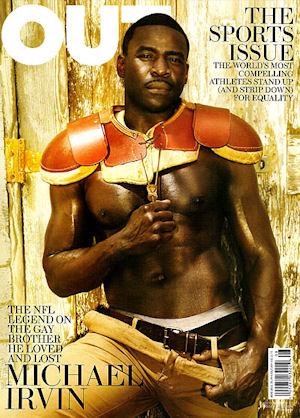
I must admit, I wouldn’t have expected it out of a Dallas Cowboys player, but let’s have a hand for Michael Irvin, who has announced (in Out Magazine, with a shirtless cover) his full support for marriage equality:


“I don’t see how any African-American, with any inkling of history, can say that you don’t have the right to live your life how you want to live your life,” he said, according to the magazine. “No one should be telling you who you should love, no one should be telling you who you should be spending the rest of your life with. When we start talking about equality, and everybody being treated equally, I don’t want to know an African-American who will say everybody doesn’t deserve equality.”


Irvin says that he believes this work matters more than his football career and would embrace any athlete who chose to come out. He thinks the team that won three Super Bowls could have integrated an openly gay teammate as well as any team. “We had a bunch of different characters on that team,” Irvin said. “Deoin [Sanders] and Emmitt [Smith]. I believe that team would have handled it well.”


It’s only a matter of time, I hope not too much time, before a professional male athlete from one of the four major sports comes out — and think what that will do for the “It Gets Better” campaign. I’ve spent some time speculating on which sport it will be; baseball’s the obvious choice, in part because of its history of breaking barriers but also because there’s, well, a lot more tolerance in general in baseball, certainly in San Francisco.


Not hockey — I mean, things are better now (and Candians have embraced same-sex marriage) but I went to hockey camp in Canada as a kid, and it was by far the most homophobic group of jocks I’ve ever met.


Basketball? Maybe. But honestly, I’m thinking the NFL. We know there are plenty of gay NFL players, and Irvin has already opened the door a little tiny crack … I don’t know. I can see it.

In defense of tabloid journalism

3

Okay, I’ll admit it — I’m sad that Rupert Murdoch shut down News of the World. A lot of journalists are now out of work in the U.K. — and why? Because Murdoch hoped to buy a satellite network, which he didn’t get anyway. And now the authorities in both London and Washington are launching investigations, and there will be more calls for press regulation (harder to do in this country, but still — they’ll try).


I can’t defend what the Murdoch crew did, and I’m not going to try. But I like the piece in Gawker, which notes:


So what do you “regulate”? Voicemail hacking? It’s already illegal. Snooping into bank accounts? Likewise. A clue for the sort of restrictions Coogan has in mind could be found in his exasperated response to McMullan’s specious attempt to justify the phone snooping: “This guy sat outside my house! It’s just a risible, deplorable profession.” Well, yes: Listening in your voicemails is indeed risible and deplorable. But sitting outside your house? That doesn’t quite cry out for regulation.


And Phil Bronstein (in another somewhat convoluted column) notes:


“A criminal enterprise inside a newsroom!” Foreman teased on CNN. The spicier newsrooms always felt a little that way. I remember when the best bookies in San Francisco were Chronicle/Examiner back shop page-layout people, and we loved them for it (and placed our bets).


Fuller said on CNN last week that, for tabs, there is a limit, and it is that they ought to “obey the law.” But even the best reporters potentially break laws all the time. How many journalists have gone to jail for doing their job?


But let’s put aside the finger-wagging and somber intonations about decaying morals and taste, which can be hypocritical. Rupert Murdoch’s most luridly effervescent news property actually played an important role in our rollercoaster, adrenal-fatigue culture as a barometer of just how far we were willing to push the envelope.


Let’s remember: Some of the biggest, most important stories of the last half-century have come from some sort of lawbreaking. The Pentagon Papers were stolen property, received by the New York Times. Wikileaks puts out illegally obtained information all the time. And in this electronic era, secrets don’t last very well anyway.


I’m not for hacking into phones and most of us in this biz don’t pay sources for information. (Buy them drinks, maybe, but I suppose that doesn’t count. Or does it?) I’m not going to defend any of those tactics. Nor am I going to defend Murdoch’s politics (or his scathing attacks on politicians who disagreed with him). But until recently, most of his targets were public figures — wealthy and powerful ones.  


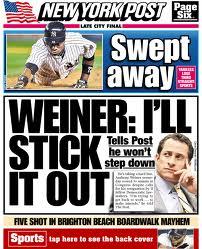
And the crazy tabs have a place in this world. I love the New York Post (who else would come up with the headline “PREMATURE EVACUATION” when Rep. Weiner resigned)? I guess I’m biased by the fact that I’ve never believed a lot of what I read, so I don’t take this stuff too seriously — and I worry about the people who do. But the world of journalism is a little smaller and a little less colorful after the death of News of the World.


Obama 2012 raises $86 million in small donations

3

The Obama 2012 campaign files its first financial report with the Federal Election Commission on Friday July 15. In an email to Obama supporters, the campaign noted that, “the Washington chatter around the report we’re releasing has focused on one number: the sum total we’ve raised.”

That number, as it turns out,  is more than $86 million, with 98 percent of the contributions coming in at $250 or less, with the average donation being $69, according to the Obama campaign.

”But other numbers that the pundits often ignore — like how many field offices we and the DNC have open, how many one-on-one conversations we’ve had with potential supporters, and how many people have already decided to own a piece of this campaign — tell the real story of our campaign,” Jim Messina, campaign manager for Obama for America, observed in an emailed statement.

According to a video the Obama campaign released today, they’ve had 31, 000 face-to-face conversations and 290,000 phone conversations with supporters. And they have already held 650 grassroots planning meetings and signed up 1,500 full-time volunteers.

”All those numbers are in the video, and they’re the ones you should be proud of today. Watch it now,” the Obama campaign suggests.

The campaign concludes by noting that, “our opponents won’t have hundreds of thousands of people giving whatever they can afford — so they’ll be relying heavily on money from two sources to fund an unprecedented barrage.”

These two sources, the campaign claims, are “Washington lobbyists and special interests whose explicit aim is to influence the federal government in any way they can,” and, “outside groups that don’t have to disclose a word about what they’ve raised or who they’ve raised it from, like one of Karl Rove’s political organizations. His groups have set an astounding $120 million fundraising goal in their campaign to tear down President Obama.”

The specter of Rove (aka the “boy genius” or “Turd Blossom” depending on your point of view) rising from the ashes like Harry Potter’s nemesis Voldemort isn’t exactly comforting (unless you believe that American politics are on a parallel track to the outcome of the Harry Potter 7: Part 2 movie, which opens this Friday.)

As the Obama campaign notes, “The threat to our success from these determined groups — acting solely in their own interest, not the public interest — is real, and it’s growing. And it’s going to take serious commitment and vigilance from all of us to withstand their attacks while still building the grassroots campaign we’ll need to win.”

Now I know plenty of people who are pissed off at Obama, because, yes we did kill Osama, and yes we didn’t withdraw all the troops from Afghanistan, etc. etc. But it feels as if the moment is already here in which regular folks need to remind themselves what life under a Republican administration with Rove’s hands on the wheel  was truly like. Unless, of course, you truly believe that life under Obama is just as bad. In which case, let’s hear about the realistic alternatives…

Bastille Day at Sous Beurre? Oui, oui!

0

I’m sure all the travel stories in this week’s issue are making you jealous, especially when it’s raining fog outside and acting rather un-summery. But I have a secret to tell you. One of the best things about traveling is the food, and if you can find a restaurant here in San Francisco with authentic enough dishes in their kitchen, eating out can be almost as good as getting a new stamp in your passport. Here is one of them.


My husband and I just got back from our honeymoon in France a few weeks ago. It was not your typical French honeymoon, strolling around Paris. We spent it mostly in the country, hiking more than 100 miles, from tiny village to tiny village — and then in the evening, gorging ourselves on decadent three or four course meals, made with more butter than anything else. The other night, back home and back to the grind, I did a Yelp search for a French restaurants, thinking I could take my hubby on a buttery date, and a place called Sous Beurre Kitchen popped up, with one, five-star review (it now has two). Somehow, a tiny French restaurant has just appeared inside Sugarlump Cafe on 24th street and based on that one review, I knew we had to go there.

Sous Beurre’s name means “in butter,” which sounds incredibly true to the French way of cooking. We found the chef, Michael Mauschbaugh, behind the counter, in a new tiny kitchen that he built all on his own. Everything on the menu is made from scratch (except for the dairy items) and Mauschbaugh told me that he’s a big fan of making his own sausages and liver pates. Homemade pate? That was one of our favorite discoveries in France, the way they scooped it out of gigantic ceramic bowls, wrapped it in paper, and then sent you on your way to slather it on warm baguettes while picnicking along a river. Just the mention of pate made us drool.

But then it came out, slathered on crispy pieces of toast and topped with balsamic roasted figs and we knew that, yes, reliving our French foodie fantasies was not such a far off dream. It was delicious. And so was the hearty cassoulet with home-made juniper berry sausage, the perfect antidote to the chilly evening outside. Not only is the food perfectly French, it’s also local, organic whenever possible, and always served with a big smile. And for something even more fun, Mauschbaugh has created a special prix fixe menu for Bastille Day ($26), that will not only add a little culture to your life, but might even make you feel like you’ve traveled to that beautiful far off country where butter is truly king.

Bastille Day Dinner
Thu/14, 5pm-10pm, $26
Sous Beurre Kitchen
inside Sugarlump Cafe
2862 24th Street
San Francisco
www.sousbeurrekitchen.com

Zero tolerance for BART cop killings

27

I understand how frustrated some commuters were when protesters shut down the Civic Center BART station. And you can make the argument that the protest might have alienated fewer people if it had been outside the station, or whatever. But the fact is, a man is dead because a BART cop shot him — and quite a few other people are dead because BART cops shot them, and in at least three of those cases, the shooting was unjustifiable. And the BART Board sat on its hands for almost 20 years and did nothing (until the Oscar Grant shooting was captured on video).


So I’m with the protesters on this one. It was important to make a statement, to disrupt business as usual, and to tell BART that, frankly, we’re all sick of this shit.


And now BART says it’s going to enforce a “zero tolerance” policy for protests. BART’s Linton Johnson says:


“That delay goes to the protesters. That mess, those fringe groups own it.”


I have a couple of questions: That “mess” of a police shooting — who owns that? Why are people angry (for good reason) about the BART Police suddenly “fringe groups?”


And when do we get a “zero tolerance” policy for dubious police shootings?

Live Shots: Eddie Vedder and Glen Hansard, Paramount Theatre, 7/11/11

0

He sat surrounded by dozens of instruments, all of which were lovingly named in the playbill for the show. As Eddie Vedder made his way through an extensive repertoire of new and old songs, a fresh ukulele or guitar was switched out with each piece, giving the whole evening an ever changing sound and flavor.

Vedder, whose latest album Ukulele Songs, came out earlier this year, has embraced the tiny Hawaiian contraption, mashing it up with his strong, experienced voice, to create something you might call “aloha with kick.” The audience was in complete awe throughout the whole performance, shrieking at unexpected moments and shouting out requests, which were often surprisingly obliged to, including when someone asked to be sung a special wedding song.

And then there were those guitars. Both Vedder and his opener, the talented Irishmen, Glen Hansard, had wild musical moments on stage, where their guitar and singing made it sound like they were playing with a whole band, drums and other singers included. I don’t really know how to explain it, but only that there was so much music coming out of them, that it seemed like the stage was jam packed with musicians, when in reality it was just some dudes with their guitars.

Pretty awesome. But then again, the whole show had a very intimate feeling, like were were all around a bonfire, on some beach in Hawaii, wasting away the evening to some beautifully poetic ukulele songs.

Guardian forum: Tenants, housing and land use

18

Should be a great forum July 14. We’ve got a panel on tenants, housing and land-use issues, some of the key stuff for the future of the city. Great group of speakers — and, as always, we’ll be looking for ideas and input from the audience. This isn’t a mayoral debate (that comes later); it’s a chance for progressives to talk about the issues that the next mayor needs to address and come up with a platform.

Speakers:

FEATURING:
Sara Shortt, Housing Rights Committee
Ted Gullickson, SF Tenants Union
Nick Pagoulatos, Dolores St Community Services
Sue Hestor, Land Use Attorney

We may have some more suprise guests, too.

Lots of time for discussion afterward.

It’s at 6 pm (until 8 pm) at the City College Mission Campus, 1125 Valencia. More details here. See you there.


Government services but no government?

1

There’s a fascinating study summarized on boingboing that shows that nearly half the people who are collecting social security say they have “not used a government program.” And 43 percent of people on unemployment insurance say the same thing.


You can laugh at it — but it’s actually a frightening (if unsurprising) study. Because it shows just how far the right-wing anti-government dogma has infiltrated this country.


Thanks to decades of careful, well-orchestrated attacks, more Americans than ever believe that “Government” — not just this government, but Government in general — is a bad thing. And they’ve forgotten what the public sector actually means to them.


This, by the way, is the main reason the far right would like to get rid of social security. Getting a government check every month might remind people that the government is actually helping them.


Will Amazon be the next PG&E?

0

The giant retailer is pulling a Prop. 16, seeking to get the voters to overturn a measure forcing online retailers to collect sales tax. Of course, the law simply levels the playing field for smaller businesses and brick-and-mortar stores — but Amazon’s got plenty of cash, and anyone with enough cash can put anything on the California ballot.


Brian at Calitics points out that Amazon can campaign by asking people to vote against taxes — always a good strategy in this strange state where a majority of the populace seems to believe it can have it all for free:


Beating back such a referendum will be a very tough fight on some uphill terrain.  That isn’t to say that there won’t be those who will try.  Some of the biggest backers of the Amazon legislation in the first place have some pretty big pockets, like, um, Walmart, Barnes & Noble, and Best Buy.  And it is true that the legislation benefits big box stores, but it also benefits the few remaining small retailers. And while the big box stores are (very, very) far (extremely far) from perfect, at least they do provide jobs to local communities.


So we may have a campaign that puts some big, awful corporations on the side of every small business in California — all of them supporting a tax increase. I wonder where the California Chamber of Commerce will go on this one.


At any rate, it’s going to be a huge, expensive, bloody battle, one that will get national attention. And that may not be the best thing for Amazon. PG&E got hammered when it tried to do a blatant self-interested campaign. Amazon could get hammered, too. And there will be plenty of legislators in other cash-hungry states watching the result very carefully.

BART service disruptions as protesters call for transit police to be disbanded (video)

Rush hour on the BART system in downtown San Francisco was royally screwed up for several hours July 11, and for protesters who paced along station platforms chanting “No justice, no peace!” and engaging in verbal clashes with transit cops, that was the point. The group, after all, is called No Justice, No BART, and they were there to pressure the agency in the wake of a BART police shooting.

The protesters were there to call attention to the fatal July 3 shooting of Charles Hill, a man who had no permanent address. The BART passenger was gunned down roughly a minute after two transit officers responded to a call from a station agent.

Things started heating up at around 5 p.m., when protesters who had gathered at Civic Center Station, the place where the shooting occurred, moved in a procession up and down the platform, chanting. According to fliers handed out to all the participants, the plan was for groups to board and exit the train cars together.

“None of this is really a question of public opinion — nobody here is in favor of people being shot down,” an organizer said into a megaphone at the beginning of the protest. “The question is, what is it going to take to make it stop?” To cheers and applause, he said, “We’re here today to take action to stop the BART police from killing. We don’t think the BART police should exist. There’s a mobilized angry public that isn’t going to take this shit anymore.”

Here’s what happened when the group tried boarding the first train:

http://www.youtube.com/watch?v=6axP9OO3sCc

The video was captured by Josh Wolf.

BART Deputy Police Chief Daniel Hartwig was in the thick of it all. The chaos prompted police to shut down Civic Center Station and order everyone to leave. Once a dispersal order was issued, protesters and media exited the station, and passed by a line of officers from the San Francisco Police Department that had formed on the street.

The march then proceeded down Market Street to Powell station, and many activists boarded a train there, then exited at the 16th and Mission Street Station. With police and media still trailing behind, they proceeded back downtown on foot.

A second standoff occurred around 7 p.m. at the cable car turnaround, just outside Powell Street Station, much to the bewilderment of shoppers who gathered outside The Gap and Forever 21, clutching their shopping bags. Wearing helmets and holding nightsticks ready, police stood in a line to block off Powell street, facing protesters who were congregating in the plaza.

Tensions ran high as chanting continued and people shouted at police. At one point, a young mother who held her three-year old son started shrieking at police, enraged. She said that an officer had taunted her by saying, “Bang, bang, we’ll come.”

No one was arrested while the crowd remained in the plaza, but after mostly everyone else had left, a man who had joined in the protest was taken into custody and charged with being intoxicated in public.

Earlier in the afternoon, at Civic Center Station, Laura Wolterstorff held a photograph of Hill that she had found online. “This happens often in our city, not only with BART police, but with the SFPD as well,” she said, adding that she works with people who are struggling with homelessness and mental health issues. In the case of transit cops, “Is it necessary to have a police force that carries guns?” she asked.

Another woman who joined the protest at Civic Center, who gave her name as Miriam, said flatly, “I think if he was wearing a suit, he wouldn’t have been killed.”

Details about why transit police fired at Hill three times about a minute after arriving on the scene are sketchy. While the police have justified the shooting by saying he was brandishing a knife, the agency has yet to release a surveillance video of the incident.

The Fillmore’s clip, cut, and snip: Reggie Pettus of New Chicago Barbershop No. 3 speaks

0

35 years ago, if you were to step through the doors of New Chicago Barbershop No. 3 you’d probably find Reginald “Reggie” Pettus standing behind his classic barber’s chair. Today, Pettus can still be found in the shop on Fillmore Street, an area that has seen seismic changes in its community. Pettus and the shop are a part of the Fillmore’s African American past, but he wants people to know that the shop is part of the present, too.

Born in Mobile, Alabama, the now seventy-one year old Pettus came to the Fillmore District in 1958, when he enrolled at City College of San Francisco. “Half of my family was in Mobile, Alabama, the other half was in San Francisco, so when I graduated from high school I wanted to come out here to go to school, so that’s what I did,” said Pettus in a Guardian interview one summer afternoon at his shop.

Known for its doo-wop beginnings and its present day rhythmic hot spots, the Fillmore District is the place to be when it comes to absorbing San Francisco’s jazz culture. Home to the historic Fillmore theater, and popular jazz club Yoshi’s San Francisco, the Fillmore District brings in people of all ages and colors to enjoy its good times. But if you’re looking to get a handle on some parts of Fillmore history, you won’t find it in the clubs. 

1551 Fillmore: The place to be for a beard trim, haircut, and some neighborhood history

Pettus has been working in The New Chicago Barbershop No. 3, a business originally opened on Ellis Street by his uncle James “Mack” McMillan in 1968, for thirty five years. Another branch (Chicago Barbershop No. 2), is located on Divisadero Street.

Pettus said that he’s been a professional barber for thirty seven years, but has been cutting hair since he was a young adult, including the time when he served in the Air Force from 1960 to 1964. “I’ve always been [a barber]. When I was in high school I cut hair, when I was in the service I cut hair. So when I got out of the service and came to California, my uncle, he had a barbershop so I went to school and became a barber, a legal barber that is.”

This year marks the forty-forth year of business for the barbershop, a success that Pettus credits to the staff’s welcoming customer service. “We open on time; we treat all the customers the same way, whether they’re Willie Brown or somebody that has come off the street. The way we treat people. That’s why we’re still here.”

Nevertheless, the barbershop has faced tougher times as the years have progressed. Pettus described the current business flow to be “fair”. “It’s holding on, put it that way.” He was adamant about the reasons for the ongoing decrease in clientele for the shop. He said that during the mid ‘70s, redevelopment came in and tore down most of the buildings around the Fillmore (the neighborhood had been slated for redevelopment since 1948 by the San Francisco Redevelopment Agency and by 1956, 60 blocks were included in this designated blighted area). As a result, most of the middle-class African American population had moved out of the Fillmore by the ’70s, resulting in a drop in business for the barbershop. “When they moved down, our business moved down,” said Pettus.

After the redevelopment, Pettus said that the makeup of the neighborhood had shifted. “Way back in the day it used to be mostly Afro Americans, Italians, and Asians. Now, after they tore all the buildings, then brought everything back, you got quite a few Koreans and Caucasians in comparison to Afro Americans.” 

“We’re the only Afro Americans on this block,” Pettus said. He takes pride in the fact that the shop has stuck around, but at the same time Pettus knows that it’s evidence of the lack of representation of African American businesses in the Fillmore District.

When asked what he’d change if he could tackle one aspect of the Fillmore’s future, Pettus responded “I would put more emphasis on having more Afro American people come back into the area, and let them know that we are still here too.”

Through the hardships that the New Chicago Barbershop No. 3 has faced, it has always been able to fall back on what it does best — cut hair. One of Pettus’s fonder memories was when Willie Brown came to the shop during his time as mayor. Over the years the shop has served as barbers to local stars, visiting celebrities – and the everyday residents of the Fillmore.

As many of the shop’s neighbors come and go, the New Chicago Barbershop No. 3 carries on as the Fillmore District’s spot for a cut, clip, or snip. But its owner is humble about its importance in the neighborhood. When asked about what separates the barbershop from other businesses on Fillmore Street, Pettus jokingly answered, “We’ve been here the longest.” 

Now retired, Pettus, who continues to live in the Fillmore,  and still makes frequent stops to the shop on 1551 Fillmore Street. 

Said Pettus, “I still do the same thing; I still deal with mostly the same people, and I enjoy it, I enjoy it.”


New Chicago Barbershop No. 3

1551 Fillmore, SF

(415) 563-9793

www.newchicagobarbershop.net


Editorial: End the BART coverup

4

Ten days have passed since a BART police officer shot and killed a man at the Civic Center station — and the public still knows almost nothing about what happened. BART will only say that an officer (unnamed) shot a man who was “aggressive” and “holding a bottle and a knife.” One witness told the Bay Citizen that the man “looked like a drunk hippie” and wasn’t running or lunging toward the two officers on duty. The coroner has identified the victim as Charles Blair Hill, 45; he had no known address.

And that’s about it. BART is investigating and so is the San Francisco Police Department, but neither agency has released a single police report or any further information. BART is still withholding a security video from the station that shows part of the incident. All that either police department will say at this point is that the investigation is under way — but nobody will offer any time frame for its completion.For an agency still reeling from the last police shooting and still trying to win some kind of public confidence in its ability to run a law-enforcement operation, this kind of stonewalling is a big mistake.

We understand that the surveillance video might influence potential witnesses and perhaps should be kept under wraps until everyone on the scene has made a statement. But how long can that take? Two weeks? Three? At a certain point, the cops will have found all the witnesses they’re going to find — and the public needs to know that there will be a reasonable time limit after which the video will be made public.

The same goes for police reports on the incident, including the statements of other witnesses — and the names of the officers involved.

BART’s spokesperson, Linton Johnson, told us he can’t release the names of the officers because state law forbids it. He says he will release the video footage as soon as the investigation is complete. When will that be? Nobody’s giving so much as a hint. Johnson says he doesn’t know because the San Francisco Police Department is the lead agency; SFPD public affairs says the only person authorized to talk about the case is Johnson at BART.

SFPD has no business giving BART the final says on this — San Francisco ought to release the information from its incident reports immediately.

We’d be more patient about this if BART didn’t have such a long, disgraceful history of cover-ups, obfuscation, and lies about police shootings. Since 1992, when the agency completely fabricated a story to justify the shooting of an 19-year-old Jerrold Hall (BART said Hall was struggling for control of the cop’s gun; evidence showed he was actually shot in the back, from a considerable distance) it’s been hard to trust anything the transit system says.

A BART cop shot and killed a naked, mentally ill man in 2001 (and tried to cover up the scandal). And of course, the 2009 Oscar Grant shooting was marked by misinformation and cover-ups.

So BART has a particular responsibility to handle this case with the greatest amount of sunshine possible. For starters, the basic police reports — the officers’ own accounts and the reports of the initial response team — ought to be public (even if the names of the officers and witnesses are redacted). And if there’s a legal issue, the BART board ought to take the initiative to ask a judge to authorize the release of at least some relevant information.

If the officer who fired on Charles Blair Hill acted properly, then there’s nothing to hide. If the officer shot too quickly, then the public needs to know that BART is aware of the problem and is going to act on it — before anyone else gets killed.

Live Shots: Gillian Welch and David Rawlings at the Warfield, 7/7/11

0

Call it soul music for soulless times: Gillian Welch and David Rawlings dazzled a devoted crowd on Thursday July 7 with a beautiful bluegrass showcase carried out with hefty Nashville flair. With songs of love and loss, murder and redemption, the duo created evocative atmosphere in the Warfield Theater despite their minimalist setup at center stage.

Playing two sets of about a dozen songs each, Welch and Rawlings made it through their entire new album, The Harrow & the Harvest. Yes, the songs from the duo’s 2001 album, Time (The Revelator) were all stellar, just as other crowd pleasers like “Miss Ohio” and “I’ll Fly Away” were well-received by the audience. But it was the new material that proved the most compelling and even claimed some of the biggest ovations of the night; mostly noticeably “Six White Horses,” for which Welch played percussion on her thigh and then performed a barn dance jig while Rawlings drove it all along on banjo and harmonica.

With their deft ability to conjure up heavy moods through their music, Welch and Rawlings took the atmosphere in the theater from the Southern glory of the Grand Ole Opry to the whiskey-fueled knife fights of a Barbary Coast saloon. It’s what the duo does best, shaking out a timeless sort of salt-of-the-earth Americana through their music – soulful harmonies matched by stirring melodies.

Having explored a wide range of their catalogue and worked through three encores, the duo sent the audience off with the heavy morphine drip waltz of The Harrow and the Harvest’s final track, singing  – “that’s the way the corn bread crumbles/that’s the way the whole thing end.”

One month to read a 1,600-page DEIR on the America’s Cup: Ready, set, go!

Members of the public will have a chance to offer feedback on the massive draft environmental impact report (DEIR) for the America’s Cup at the Planning Commision on August 11 — one month from the date of the DEIR release, July 11. Anyone interested in weighing in on far-reaching plans for the Northern Waterfront during the world-famous sailing matches in 2012, 2013, and beyond ought to download the report now and start diving in. To absorb the whole thing, you’d have to read 53 pages a day.

Representatives from the Port of San Francisco, the Office of Economic and Workforce Development, and America’s Cup Race Management gathered in San Francisco City Hall July 11 for a briefing on the landmark document. Race organizers are aiming to wrap up the environmental review process by the end of the year.

Iain Murray, CEO of America’s Cup Race Management, spoke about the history of the regatta, the sailing events planned around the globe from now until the 2013 match, and the challenges even the world’s most skilled sailors will encounter while learning to pilot the specialized America’s Cup vessels.

Brad Benson of the Port of San Francisco explained that Pier 27 would serve as a primary public viewing area during the event and a focal point for city activities during the match, complete with spectator vessels. He also noted that preparations for the race would involve dredging and sub-structure improvements at Piers 30-32, which would house cranes for lifting the giant boats in and out of the water.

Yet none of the speakers spoke directly about the findings of the DEIR.

“What we’d like to do is let the document speak for itself,” said Michael Martin, America’s Cup Project Director, after a reporter asked him to provide a summary. Martin also noted that a number of locations were being studied as areas where members of the public could congregate during the races, including Crissy Field, Aquatic Park, and Fort Mason. Alcatraz would likely be used for private events, he added.

The DEIR is a hefty document which we’ve barely begun to peek at. It encompasses plans not only for the America’s Cup, but a two-story, 91,000-square foot cruise terminal at Pier 27 that would serve ships carrying as many as 4,000 passengers. (The green shoreside power hookup there, as we reported last week, will be temporarily disabled, negatively impacting air quality.)

If the proposal is approved as written, the core and shell of the cruise terminal would be built to house the America’s Cup operations as part of the America’s Cup Village at Piers 27-29. After the 2013 events, the rest of the facility would be completed.

Meanwhile, a coalition of environmental organizations that have been involved in the planning process released a statement expressing “guarded optimism” about the DEIR. Made up of representatives from San Francisco Baykeeper, San Francisco Tomorrow, and the Turtle Island Restoration Network, the groups signalled that they would be keeping a close eye on issues such as traffic congestion, the impacts of crowding near sensitive habitats in the Presidio and other viewing areas, carbon-reduction plans, and impacts to Bay water quality and marine life.

“Our organizations are committed to a green and carbon negative event and this is just the first step in ensuring that we get that,” said Teri Shore, Program Director of Turtle Island Restoration Network. “We need to have a thorough understanding of the impacts of the event, how they will be mitigated, and who will pay.” 

The taxi strike

4

It’s notoriously hard to organize cab drivers to do anything. They’re all independent sorts, and they’re split among 34 different companies. Some are permit holders, which makes them the landed gentry of the business; some are serfs who have to pay high fees to lease permits. All of them get paid only for days that they work; there is no vacation time or sick pay in the industry. So the idea that there will actually be a citywide tax strike Aug. 2 seems a bit farfetched.


On the other hand, if enough of the drivers got together, and if even 3 or 4 out of every 10 cabs sat idle, it would make a huge statement. For better or for worse, taxis are a key part of the city’s transportation infrastructure. It’s not Manhattan, which would come to a grinding halt without cabs, but San Francisco — particularly the tourist trade — still depends fairly heavily on a functioning taxi system.


And the drivers are absolutely right to be angry. The “gate” fees — the amount the drivers pay to lease a cab for a shift — go up faster than the fares they collect. Drivers pay for their own gas — and when prices go up, they don’t get to raise the rates. Over the past couple of years, the drivers have been getting squeezed tighter and tighter; it’s no wonder some of them drive at 80 miles an hour to and from the airport. It’s the only way to get enough fares in a shift to make a living.


Now the cabs are required to accept credit cards — and the companies get to charge the drivers a five percent fee on every transaction.


And is anyone surprised that they drivers don’t like having an electronic tracking system follow them around?


Part of what’s going on — let’s be honest — is that the industry is shifting away from cash. When drivers earn only cash, and there’s no way to track how much they’ve driven or how many fares they’ve collected, it’s easier for them to be a little more, shall we say, creative about what they report to the IRS. (The IRS, of course, likes to crack down on cab drivers, waiters and freelance writers, who generally make very little money, while allowing General Electric to pay no taxes at all.)


But if you take away the cash, charge credit-card fees and don’t account for the price of gas, you’re going to get an industry with fewer experienced drivers (nobody can do it for very long), more reckless driving and more scams.


Sometimes I wonder if anyone who works for the MTA has ever driven a cab. Might be an enlightening experience. 


Guns and necessity

4

The Public Defender’s Office is getting a lot of press for its trial victory in the case of Johnny Stone. And as a big fan of the Public Defender’s Office (although not always of Jeff Adachi’s outside political ventures), I have to say: Congratulations. Arial Boyce-Smith came up with an effective strategy to keep Stone out of jail on a gun charge. I’m generally happy when the defense wins; I think our criminal justice system is so screwed up, and our prison system is a costly, brutal, inhuman and ineffective way to handle offenders. A few high-profile cases aside, the times when prosecutors put innocent people (or people who don’t deserve prison time) behind bars far exceeds the number of times when a truly guilty bad actor gets away.


So good for the PD. From the facts in this case, I see no reason why Mr. Stone should have been convicted.


But I also have to say: I’m glad this was just a trial court case and doesn’t set any precedent. Because the idea that a person can carry a concealed firearm around any time he or she can claim to be afraid of crime is a pretty dangerous idea.


I know all the gun nuts will be on my case here, but I’ve never been big on handguns, and never believed guns are a terribly good means of self-defense. And while Stone was in fact in a situation that could have made him fearful for his life, I wonder: Was he really going to point the gun and shoot somebody? Would another gun battle in front of the Sunnydale Housing Project be good for anyone?


And how scared do you have to be? I know plenty of people who worry about crime in the Mission — and I wouldn’t want any of them walking around with concealed handguns.


I appreciate the excellent trial work here. But let’s not try that too often.

SoCal secede? Why is this bad?

48

I’ve been talking for years now about how Californians would be better off if we split up the state. Why should those of us who want to live in a civilized society be held hostage to a small cadre of right-wing nuts who have paralyzed the Legislature and are interested only in destroying the public sector?


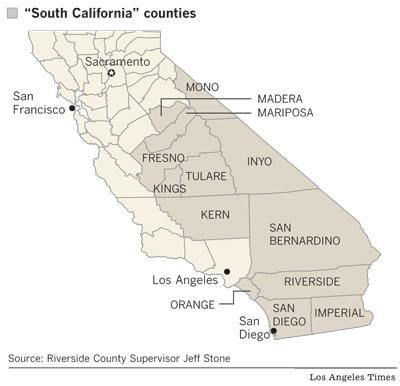
And now, one of those wingnuts seems to agree with me. A Riverside County supervisor named Jeff Stone wants to take 13 conservative counties from the south and the inland empire and create a new state of South California. I say: Why not?


Those counties vote for Republicans who vow to cut taxes and spending — and, of course, those counties also get more in state money than they contribute in taxes. That is, San Franciscans and people in Los Angeles are subsidizing with our tax dollars counties that elect people who don’t want taxes.


Fine. Leave us. Without those counties, California would have a two-thirds Democratic majority in both houses, easy. The state would be able to raise taxes to balance the budget. California’s credit rating would improve and the cost of bonds would drop. A Democrat could run for governor without pandering to the conservatives. Maybe we could even get rid of the death penalty.


South California would be an economic basket case — but it would still be part of America, so the Democrats and sane people who are stuck living there would be able to move north without worrying about ICE. I’d even propose setting aside a state fund (maybe equal to some percentage of what California now spends subsidizing the tax haters) to help pay relocation expenses for low-income liberal refugees.


Seriously: They want to leave, we don’t want them here … why not make everybody happy and let South California go?  

CPMC’s hospital dilemma

4

After summarily rejecting the city’s proposals for a community benefits agreement, Sutter Health, which owns the California Pacific Medical Center, is threatening to abandon its plans for a giant hospital on Van Ness. Randy Shaw at Beyond Chron thinks the nonprofit that acts like a robber baron corporation might be ready to pull the plug. The arrogant CEO, Warren Browner, is certainly acting that way.


But that would put CPMC is a tricky situation. State law mandates that hospitals complete seismic upgrades by 2013 — and while the deadline has been delayed in the past, time is eventually going to run out. Which means at some point CPMC is going to have to spend a lot of money renovating and bringing up to modern standards a hospital on California St. that it doesn’t want to use as a hospital any more. The plan calls for that building to become an administrative headquarters — which means it won’t have to meet the higher state seismic standards.


If Sutter walks away from the Cathedral Hill project, it’s going to have to spend hundreds of millions of dollars fixing up the California St. facility — and probably won’t get the same financial return.


The only really bad thing the health care outfit could do (and it would be really bad) is to shut down St. Luke’s in the Mission, saying that the seismic upgrade is too costly. But the city has made it very, very clear that shutting down the only hospital in that part of town would put so much pressure on SF General that it would be pretty close to unacceptable — and the end of CPMC’s ability ever to so much as install a flowerbox in this town.


So I think the city can hold firm here. It’s entirely in CPMC’s interest to do the Cathedral Hill deal. I think Shaw is absolutely right that the company doesn’t want to set the precedent of offering a city a decent benefits package — but in the end, the folks in the green eye shades are going to realize they have no choice.


So I think the city can just hold firm here — Sutter has to come back to the table.


During America’s Cup, clean-air program takes a step backward

A $5 million clean-air program along the San Francisco waterfront will be temporarily halted to accommodate the America’s Cup, prompting criticism from environmental advocates.

In October of 2010, representatives from the Port of San Francisco joined former Mayor Gavin Newsom and Princess Cruises to unveil a shoreside power installation at San Francisco’s Pier 27 for cruise ships transporting tourists to the city. The fourth system of its kind ever installed, the shoreside power hookup was touted as a way to improve local air quality by supplying passenger vessels with municipal power, making it unecessary for ships to run large diesel generators while at dock.

The U.S. Environmental Protection Agency provided $1 million to finance the emissions-reduction project. Additional financing came from the San Francisco Public Utilities Commission, the Bay Area Air Quality Management District, and Port capital funds.

Modern cruise ships use between 6 and 12 megawatts of power. The Port estimated that 19.7 tons of carbon dioxide would be reduced for every 10-hour ship call, while harmful air pollutants such as particulate matter, nitrogen oxides, and sulfur oxides would be cleared while diesel generators were shut down. The shoreside power was fed by San Francisco’s gravity-based Hetch Hetchy Water System, a relatively green energy source.

The environmental gains from shoreside power could be temporarily lost, however, when America’s Cup racing teams take over Pier 27 in 2012 and 2013 during the high-profile sailing events.

“With just one stroke of a pen, it’s gone,” said Teri Shore, program director at the Turtle Island Restoration Network (TIRN), based in Marin County. While the shoreside power hookup is disabled, “The ships will be coming in and parking, and running their diesel engines” at other waterfront piers.

The Port had already anticipated temporarily halting the shoreside power for a year during construction of a Pier 27 cruise terminal, Brad Benson of the Port of San Francisco told the Guardian. “Assuming there were no America’s Cup, it would already not be in operation … for approximately one year,” he explained. After a year of construction that will mark the first phase of the cruise terminal project, the America’s Cup will move onto the site, he said. “As a result of the America’s Cup, shoreside power is not going to be available for one year.”

By 2014, when cruise ships will be required by state law to have the ability to plug in at the shore rather than run polluting generators, the shoreside power will be in operation again, Benson added. The America’s Cup Event Authority — the primary race organizing team — has agreed to finance a $2 million relocation cost.

Shore, who is working with a coalition of environmental advocates that’s closely watching America’s Cup plans, said she hopes to see the city find some way to offset the impacts from the lost air-quality improvements. As long as ships’ generators are running, “there’s an exposure level,” she pointed out.

Benson said the port is starting to look at how it could offset the impacts, saying there might be ways of reducing carbon outputs during the event in order to make up for the lost emissions reductions. “I can’t tell you whether we could achieve the same level of emissions reductions that shoreside power would provide,” he said. “It’s very effective.”

On Monday, July 11, the city is expected to release a draft environmental impact review for the America’s Cup project.

SFBG Poll: Abolishing the death penalty

0

State Sen. Loni Hancock is moving to abolish the death penalty. It’s something others, including Sen. Mark Leno, have pushed in the past, but it’s a tough political scrap — the move would require a statewide vote, and it’s not clear that the money or organizational effort is there for this fall. Of course, the governor could solve the problem with a stroke of his pen, by simply commuting all death sentences to life without parole — but I don’t think he’s going to do that. The best move might well be a coordinated campaign in the fall of 2012, putting together the growing number of law enforcement types who don’t like the current system, the traditional death penalty foes, and the more conservative people who just think it’s too much of a waste of money.


Is it time to get rid of the death penalty? When and how? Vote after the jump.


Free polls from Go2poll.com