

There are few hip-hop crews that get so gleefully shitfaced at gigs — in fact, I think cheap domestics actually power Fist Fam’s psychedelic hip-hop pick-up truck. Or maybe the group’s mojo, underlaid with remixed crate gems from DJ Al Lover, comes from the fact the whole posse is family-close, having moved to the Bay from North Carolina pretty much en masse a few years ago. Both factors (Coors Banquet and bro love) are present in the video for the group’s new summer anthem, shot at emcee Philo’s childhood home in what the press release calls “the moonshine mountains of Asheville.” So how drunk was the Fam by the end of a day of “Drinkin”? “I think fools went out to the bars afterwards though, so maybe not drunk enough,” recalls Al Lover, somehow.
SFBG Blogs
Will progressives prevail at DCCC? — UPDATED

UPDATE: The DCCC endorsed Ross Mirkarimi for sheriff; John Avalos in first place for mayor and Dennis Herrera in second place; and David Onek in first place for DA and Sharmin Bock in second place.
There’s been a flurry of negotiations, backroom deal-making, and wild conspiracy theories leading up to tonight’s (Wed/17) San Francisco Democratic County Central Committee meeting, where the big item on the agenda is endorsements for this fall’s citywide elections, endorsements that are among the most influential in this one-party town.
Depending on one’s definition of the label, progressives still hold a majority of seats on the 32-member elected body, so solidly progressive candidates Ross Mirkarimi, who is running for sheriff, and John Avalos, who is running for mayor, have a decided advantage going into the vote.
Nothing is certain given the crowded fields in both races, although we’re hearing Mirkarimi getting the first place – and probably the only – endorsement in that race is the only prediction those involved are willing to make. Everything else is up in the air.
“How it goes down, only tonight will tell,” DCCC Chair Aaron Peskin told us. “Anything can happen. It is real democracy, with a lowercase D.”
We’ve spoken to other current and former DCCC members on background and gotten a sense of how things are shaping up, although new plays have been popping up all the time. Avalos seems to be close to the 17 votes that he needs to get the endorsement, with the second largest block of votes being supporters of Dennis Herrera, including savvy and influential players such as Carole Migden who will try to leverage at least a second place endorsement for him.
Mayor Ed Lee also has some support on the DCCC, probably not enough to get on the slate without some serious deal-cutting, but maybe enough to gum up the works and threaten to prevent a mayoral endorsement and neutralize the DCCC. Leland Yee also has some support, but it would still be a surprise if he or Lee ends up on the slate, even in third place.
In the District Attorney’s race, it seems to be coming down to a contest between David Onek and Sharmin Bock, who has gained significant ground on the committee in the last couple months to pull almost even with Onek, although neither appears to have the 17 votes they need (or 16 is someone abstains). While the very few George Gascon and Bill Fazio supporters on the DCCC may try to make mischief and deny anyone the DA’s endorsement, a more likely scenario is the Onek and Bock camps will cut a deal to give them the endorsements, probably with Onek first and Bock second.
DCCC rules don’t allow for dual endorsements – they must be ranked – it’s also possible that in either the DA or mayor’s races that there will be a movement to postpone the vote and change that rule to allow a dual endorsement. But again, things are still in such flux that anything can happen, so stop by the 6 pm meeting in the basement of the state building at 455 Golden Gate Avenue, if you’re into that sort of thing.
The Performant New York Edition: Forever Fringe
I’ve been flying all week and boy are my arms tired! But at last I’ve landed, soft in the lap of Brooklyn, from where I’ve been commuting to the 15th annual New York Fringe Festival (say that five times fast).
Perhaps the largest multi-arts festival in the US, the New York Fringe hosts close to 1200 performances from 194 companies, spread out in 18 venues all over the Lower East Side. Fringers pack the sidewalks and the black box venues from Bleecker Street to the Bowery — just minutes away from Broadway, but light years apart in terms of budget, content, daring.
Hailing from as close to home as Downtown Manhattan to as far away as Australia, each company serves as an ambassador for the theatre scene in their region. Once again, the Bay Area is well represented, not to mention Tennessee (“The Disorientation of Butterflies”), Massachusetts (“Dancing in the Garden”), Kentucky (“Civilian”), Texas (“A.Chekov’s The Darling”), and Seattle (“Virtual Solitaire”), among others.
The possibilities for connecting with performances from around the world, not to mention from our own backyards, are practically endless, just one reason why fringe festivals have grown into the international phenomenon they have, having spread from Edinburgh, Scotland to every continent save Antarctica — and I wouldn’t rule that out as a future possibility.
Just a few days in and I’ve already been a silent witness to one woman’s eating disorder (Craving), been converted to Islam (All Atheists are Muslim), gotten an eyeful at not one, but two boob-related shows (Mama Juggs, The Booby Prize), cheered Rosaline on in Romeo and Juliet: Choose Your Own Ending, checked out a Zombie Wedding, dropped by a poetry reading given by way-underground poetess and public school security guard Molly “Equality” Dykeman (portrayed by Andrea Alton), and witnessed the birth of a preemptive celebrity biography in Mark Sam Rosenthal’s I Light up my Life.
I’ve seen a washed-up and forgotten opera singer struggle with her past balanced against the future in The Unsung Diva, a stream-of-consciousness-spouting, post-existential “rabbi,” Moshe Feldstein, whose name has been lovingly smeared in excrement by one of his faithful followers (an act detailed in the “fan” mail he reads onstage), a trio of funny females being funny in Lipshtick, and a very funny, very crude, third-wave existentialist rant from Romania called Nils’ Fucked up Day.
This last piece to me is an epitome of the possibilities of fringe. Where else can “Romania’s most obscene play” find not just a foothold but some real acclaim without spending a fortune in venue rental, publicity, special visas, and all the rest? And where but at Fringe could your average, broke-ass arts lover get a chance to see “Romania’s most obscene play” for a ticket price roughly equivalent to a tepid Hollywood blockbuster with a tub of greasy popcorn on the side? Everybody wins at the Fringe in some way; even the foul-mouthed losers portrayed in Nils (except maybe the guy who is beaten to death with a baseball bat).
Street Threads: Downtown Edition

Today’s Look: Taylor and Laura, Geary and Mason
Tell us about your look:
Taylor: “Sporty yet fashionable”
Laura: “Katherine Hepburn”
BART officer information hacked and released
UPDATE: See below for text of a conversation with an anonymous hacker who takes credit for hacking the BART police site.
Someone has hacked into a database of BART police officers held on bartpoa.com and released names, addresses, emails, and passwords for 102 BART officers.
On a Twitter feed for user @AnonyOps, which was used by the international hacking group Anonymous over the past several days to deliver an almost minute-by-minute account of the Aug. 15 downtown San Francisco BART protests, a post went up at 10:55 a.m. Aug. 17 which read, “The bartpoa.com database was just hacked and released.”
NBC Bay Area news is reporting that Anonymous was responsible for breaking into the police officer database, and that the FBI is looking into the matter. A recent report included this statement from BART:
We condemn this latest attack on the working men and women of BART. We are deeply concerned about the safety and security of our employees and their families. We stand behind them and our customers who were the subject of an earlier attack. We are deeply troubled by these actions.
However, Anonymous is not taking credit for this hack.
At 11:15 a.m., another post went up on the same feed, which read, “FYI, No one claimed responsibility for the hack. Some random joe joined a channel and released the data to the press.”
Another message was posted at 11:18: “The thing about anonymity is, you can can claim allegiance to any cause. Even if your intent is to hurt that cause. Who can prove otherwise?”
Then, at 11:21: “The leak today of BART officer data could be the work sanctioned by those who truly support anonymous, or agent provocateurs. Stay skeptical.”
UPDATE: A private chat has been posted to the website Pastebin under the title “Anonymous is not Unanimous.” One online chat occurred around 11:20 a.m. on Aug. 17 between a user identified as Lamaline_5mg, who takes credit for hacking the BART police officer’s website, and another user, n0pants, who says, “It is very important to me in all of the different work that I do not to put people at risk.” Here’s the raw text of that conversation, with dates and times:
[08/17/11 11:18] <Lamaline_5mg> I don’t want the media to know anything about the hackers.
[08/17/11 11:19] <n0pants> in what sense?
[08/17/11 11:19] <Lamaline_5mg> I am not a hacker. This is my first attack.
[08/17/11 11:19] <n0pants> ohwow
[08/17/11 11:19] <n0pants> that’s pretty newsworthy too
[08/17/11 11:19] <Lamaline_5mg> I just got pissed about what bart did and learned a lot about Microsoft SQLi.
[08/17/11 11:19] <n0pants> u cover yr ass?
[08/17/11 11:20] <Lamaline_5mg> Sure I do.
[08/17/11 11:20] <Lamaline_5mg> So, what. Is this an interview? XD
[08/17/11 11:20] <n0pants> heh
[08/17/11 11:20] <n0pants> It is very important to me in all of the different work that I do not to put people at risk
can I share that this is yr 1st attack?
[08/17/11 11:21] <Lamaline_5mg> Yet. Of course. Also, say that I encourage anybody to do the same.
[08/17/11 11:23] <n0pants> you got it. anything else you want to add?
[08/17/11 11:24] <Lamaline_5mg> This really was the easyest thing. The had 0 security.
In an earlier conversation taking place around 10:30 a.m., when Lamaline_5mg links to the file containing the police officer information, the hacker encounters resistance from users who are identified by the person who posts it as being part of the Anonymous team that carried out #opBART. “We are not interested in any thing like that,” someone with the user name OpNoPro says. “Please refrain from dropping anybody’s private information anywhere on anonymous’s behalf… not interested in breaching somebody’s privacy… they have a right to it as much as you do.” The same user notes, “Keep the operations separate.”
After ordering phones censored, BART spokesperson took vacation during protest
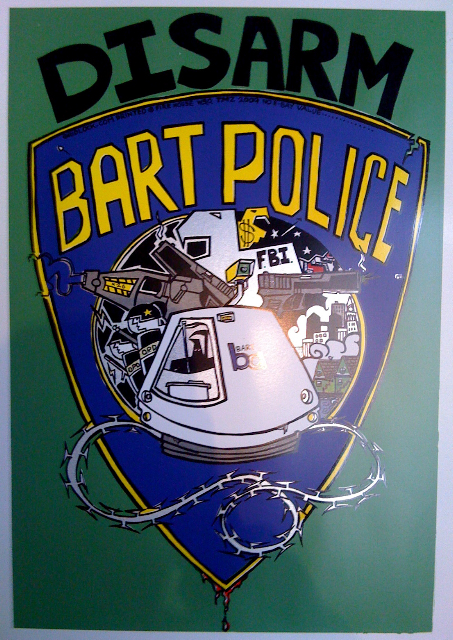
On August 16, one day after a transit system disruption caused by protests over BART’s unprecedented decision to temporary cut cellular phone during a previous protest, BART Chief Communications Officer Linton Johnson acknowledged to the press that the idea to cut service had been his from the start.
Johnson defended his decision telling the San Francisco Chronicle, “A 1969 U.S. Supreme Court decision, in the Brandenburg v. Ohio case, allows public agencies to put public safety before free speech when there is an imminent danger to the public.”
But was there an imminent danger?
What Johnson failed to acknowledge was that after his idea to order a unprecedented disruption of cellular service to thwart the protest anticipated on August 11 was vetted by BART police, Johnson went on vacation and wasn’t around to help determine what kind of danger the protest – which didn’t end of happening – may have posed. NOTE THE UPDATE BELOW. JOHNSON CLAIMS HE WAS MONITORING THE STATIONS.
In fact, Johnson left on vacation on August 11, the same day the fizzled protest that started a national controversy occurred. So with BART’s plan in motion, and Johnson apparently not on hand, nothing of note happened. No indication was reported by BART or by the media of any trouble at all breaking out on the platforms or paid areas of BART stations on August 11. BART may have been left holding the bag.
An automatically generated e-mail response to the Guardian’s request to interview Johnson read “I will be out of the office starting 08/11/2011 and will not return until 08/16/2011. Please contact Deputy Chief Communications Officer Jim Allison while I am gone.”
On August 15, Johnson’s voicemail message indicated he had returned from vacation early, and would do his best to field phone interview requests within 20 minutes of receiving them.
August 15 happened to be the day that fallout from his plan lead to evening rush hour transit disruptions by protesters with swarms of national and international news representatives on hand. Though interviewed by the nation’s press corp, Johnson chose not to acknowledge the primacy of his decision making role in the censorship until the following day.
Comparing the “imminent danger,” declared by BART, and the #opBART protest called by international hacker group Anonymous on August 15 that caused all Downtown San Francisco BART stations to close for the evening rush, questions arise over what, if any, criteria Johnson used in deciding to pull or not pull the plug on BART cell service.
The Federal Communications Commissions has launched an investigation into BART’s actions, responding to a call by California State Senator Leland Yee.
“We are continuing to collect information about BART’s actions,” stated FCC spokesperson Neil Grace in a statement issued by the agency. “(We) will be taking steps to hear from stakeholders about the important issues those actions raised, including protecting public safety and ensuring the availability of communications networks.”
UPDATE: Johnson finally got back to us by email and wrote, “I offered up the idea on Thursday morning. BART PD took it to the Interim GM. The GM approved it then let the Board of Directors know what was to happen that night. I was on scene in case the protest broke out. I left downtown SF around 8pm – I was on a plane that night, which left at 11:50pm.”
Sweet streets: Gelatin dessert art at this weekend’s Street Food Festival

As the foodie masses descend on the Mission for Sat/20’s Street Food Festival, they’ll be met with a diverse representation of what San Francisco eats. In this corner, fancy brick and mortar spots: Slanted Door, 15 Romolo, and Rye are but a few representatives of the eateries that are taking grills and spatulas into the fresh air this weekend. But for sheer culinary comeliness, the big guys have a serious contender when it comes to Sweets Collection arty gelatin creations.
Graduates of the La Cocina street food incubator program will total a solid 50 percent of the 60 vendors in attendance at the festival. The varying styles of food preparation are meant to express the breadth of eats in San Francisco, but also to reinforce the fact that the huarache you buy at your local farmer’s market has the culinary chops to stand up against many places that take Visa.
According to the website, in a perfect world the festival would “get rid of all the white tents, and just do it block party style, but that’s not so cool with the Health Department, so you will have to imagine it with us.”
Rosa Rodriguez would surely be invited if the fest turned into a block party. She lives in the Mission, and has been creating her Sweets Collection intricate gelatin creations, in which graceful flowers bloom in edible gel, for a year now. We mentioned certain circumstances under which her treats might prove particularly awesome in the paper today, and here’s more on Rodriguez from an email interview we conducted with her last week. (You can also check out food writer Virginia Miller’s adventuresome picks for the fest here.)

Sweets Collection got its name when Rodriguez realized her treats wouldn’t look amiss in an art gallery
SFBG: Tell us a little about yourself. How did you start Sweets Collection?
RR: My name is Rosa Rodriguez, I have two children, one is 15 years old and named Dayra, and Hasam is eight years old, we are from Durango, Mexico. I’m a single mother. When we are not doing artistic desserts, my children go to school and I take English classes and work on my business. I became unemployed in 2009, and in 2010 I had the idea of starting my own business to cover household expenses and share the art of my greatest passions.
SFBG: Can you tell us a little about gelatin art?
RR: Arte floral en gelatina has become a centerpiece of Mexican culture. Evening parties in Cancun often have intricate gelatin dessert flowers served in glass, personalized gelatin desserts are in demand at corporate events in Mexico, and no birthday is complete without fun gelatin designs on the cake.
SFBG: Most of your work I’ve seen is of flowers. Do you do any other kinds of designs?
RR: I am fascinated by flowers, but do figures, characters or any design. You can get your favorite hobby, movie, or fantasy adventure in a gelatin dessert.
SFBG: What are you bringing to the Street Food Festival this weekend?
RR: Sweets Collection will participate by offering fanciful jello shots at two bars that will be located on Folsom and 23rd streets. But we also have a booth on that intersection, selling designs that the entire family can enjoy. Last year was my first year, like me, many people were impressed by the art to gelatin and I hope that this year more people came by our Booth , to know and taste the art you can eat.
SFBG: What does it taste like?
RR: This artistic dessert is made with passion. They’re handcrafted and they taste how they look… delicious.
San Francisco Street Food Festival
Sat/20 11 a.m.- 7 p.m., free
Folsom between 22nd and 26th sts. and surrounding area, SF
Advocates aim to change youth sentencing of life without parole

Christian Bracamontes was 16 years old and had never been in trouble with the law when he made a decision that landed him in a California prison, serving out a sentence of life without parole.
He was part of a tagging crew, and he and a friend had gone down to a wash to hang out and do graffiti. When his friend showed him that he had a gun in his bag, he was surprised. A group of kids came down to the wash and offered to sell them weed, but they refused. Then his friend got an idea.
“He said to me, do you want to rob them? I said, ‘I don’t care,'” Bracamontes told an interviewer with Human Rights Watch years later. He trailed behind his friend as he approached the kid who’d offered to sell them drugs, but things did not go as planned: The victim threatened to kill them. Bracamontes figured the bluff had been called, and he turned to get his bike so they could leave. But then his friend fired the gun.
Bracamontes was found guilty of first degree murder and sentenced to life without parole. The prosecutor offered a lower sentence of 16-to-life if he accepted a plea deal, but he refused, since he could not fathom how he could possibly be found guilty when he wasn’t the one who pulled the trigger.
His story was one of many profiles included in a Human Rights Watch report titled, “When I Die, They’ll Send Me Home,” an in-depth analysis of California youth serving life sentences without parole. According to that 2008 study, an estimated 45 percent of youth offenders serving that sentence were convicted of murder, but didn’t physically pull the trigger. The convictions reflect a California law that holds youth responsible for a murder that occurs when they were part of a felony, even if they didn’t plan for it to happen. In nearly 70 percent of the cases surveyed by Human Rights Watch, youth didn’t act alone in their crimes, and at least one codefendant was an adult.
A broad statewide coalition of youth advocates and human rights organizations is now pushing for legislation that they hope will give youth in these circumstances a second chance to turn their lives around. Senate Bill 9, dubbed California Fair Sentencing for Youth, would make it possible for youth serving life without parole to petition for a court to review their case and determine whether to impose a lower sentence.
The legislation would permit up to three hearings after 15, 20, and 25 years of incarceration, and the minimum time that someone would have to serve before they could be granted parole is 25 years. Only inmates who exhibit signs of rehabilitation and remorse would be able to submit a petition for a case review. If resentenced, the offenders would still have to go before a parole board to prove that they deserve to be placed on parole.
According to Human Rights Watch, international human rights law prohibits life without parole for youth — and the United States is the only country that imposes this sentence in practice, though other countries have laws on the books permitting it.
“All of the organizations and literally thousands of individuals come to this with the idea that this extreme sentence is not a sentence we should be imposing on people who are under the age of 18,” Elizabeth Calvin of Human Rights Watch told the Guardian. Since Human Rights Watch released its national and statewide studies of the issue in 2005 and 2008, she said, “There’s more awareness nationally that our juvenile justice policies of lock them up and throw away the key are failing. It really is worthwhile to give young people a second chance.” Dozens of human rights, civil liberties, and faith-based organizations have pushed to pass the bill, with efforts beginning several years ago.
In California, roughly 300 people who were sentenced when they were minors are serving sentences of life without parole, representing around 12 percent of the estimated 2,500 incarerated individuals in the nation who serving out the same sentence.
Calvin described the bill as legislation that “balances the needs and interests of victim family members who believe that there are some cases that deserve life without parole.” She noted that the bill faced strong opposition from law enforcement and groups of victim family members, though certain individuals in those same communities have voiced support for SB 9. “We’re hopeful, but it’s definitely an uphill battle,” she said.
The Assembly Appropriations Committee will vote on SB 9 on Aug. 17, and if it clears that hurdle, it will go onto the full Assembly. The bill was authored by Sen. Leland Yee, with principal coauthors Darrell Steinberg (D-Sacramento) and Juan Vargas (D-Chula Vista), and co-authors Assemblymembers Felipe Fuentes (D-Arleta) and Bonnie Lowenthal (D-Long Beach).
“SB 9 is not a get-out-of-jail-free card; it is an incredibly modest proposal that respects victims, international law, and the fact that children have a greater capacity for rehabilitation than adults,” said Yee, who is also a child psychologist and a candidate for mayor. Research has shown that brain maturation continues throughout adolescence, so young people’s abilities to plan, make decisions, and think critically are not yet fully developed.
“It’s a pretty modest bill,” says Sue Burrell, a staff attorney with the San Francisco-based Youth Law Center. “It’s a pretty intense process even to get a hearing, and to be in a position where you could be released.”
She added that her organization has been engaged in similar work for years. “We’ve been very concerned about the adultification of kids,” she said. “You can’t decide when someone’s so young that … they could never move beyond this phase of their lives.” Many of the cases that land youth in prison without parole are similar, Burell said. “The classic scenario is, they’ll go out and do some low-level thing … but then it turns out that one of the buddies has a knife or a gun. And the rest is history.”
Big Boi, big deal: Outside Lands 2011 pics
All photos by Erik Anderson Imagery and Caitlin Donohue
I’m just going to go ahead and say it because I’ve had a few days to think about it: that was the best year of Outside Lands yet. Not just because of the weather — even though my singed epidermis is ample proof that the sun was out and about in Speedway Meadows this weekend — but because after four years of hype, the sold-out festival is finally justified in its claim that it’s among the top five biggest and best in the country.
So who cares if Big Boi didn’t show up (at least we got beach ball humor from Dave Chappelle, who seems to be showing his face more around these parts lately) — a bonus appearance from M.I.A. during Deadmau5 evens it all out in the cosmic sense of things. And who could be mad at Sir Lucious when Bay hip-hop repped as hard as it did with K. Flay and Latryx featuring Jazz Mafia? Not to mention local turns by show-stoppers tUnE-yArDs, who are not rappers but proved on Sunday afternoon that the group might have enough swagger to qualify. Oh — and yeah, the headliners. Arcade Fire, you really did deserve all the buzz.
Like I’ve said in the past, some of the best parts of this festival took place off of any stage (and I’m not talking about the Loyd Family Players’ impromptu shows in the transition areas of the fest). The half-moon of Eco Lands stalls gave the three-day affair a little purpose beyond entertainment — everyone from Wavy Gravy’s Seva Foundation to the Wigg Party was there, the latter doling out chalkboard necklaces so that fest attendees could have a forum to share their thoughts with the guy standing behind them at Beirut. (“Free hugs” was a common refrain.)
The trippy little path from the main entrance out to the Twin Peaks Stage provided a welcome respite from the crowds, a nice improvement on the at-times-gridlocked inter-set migrations of past years. Plus, festival organizers stuffed it with sideshows — a dessert food court, a lackluster Mexican food court regrettably dubbed “the Mission,” and a phenomenal art installation by Monica Canilao and other local creatives: a fabric-parachute hinterland that fluttered soothingly in the breezes that whipped in from park’s edge Ocean Beach (bummer that a lot of it got ripped down by last-day rowdies). Coupled with a windchime swing and a wacky, remant-built castle, the OL consciousness-expanders finally had a place to breathe deep and reflect.
Anyway, good job everyone on staying hydrated. See ya next year.
Lee appointment of Nuru darkens the ethical cloud over Room 200
City Attorney Dennis Herrera deserves credit for being the one mayoral candidate willing to bring a full-throated denunciation of the sleazy and corrupt politics now flowing from Mayor Ed Lee, who yesterday appointed discredited political fixer Mohammed Nuru to head the Department of Public Works, compounding a series of ethically questionable actions by Lee and his supporters.
While it was inexplicably buried by editors at the bottom of Section C, the Chronicle’s City Insider today had a pair of good stories on Lee’s mounting political problems. The first was about how the U.S. Attorney’s Office has reportedly launched a probe of Progress for All and its “Run, Ed, Run” campaign, for which Lee ally Rose Pak illegally sought support from executives at Recology, the garbage company that had just been awarded a huge city contract, largely because then-City Administrator Lee had given the company far higher ratings than the other two supposedly impartial bid judges.
The second story was about Herrera slamming Lee’s choice of Nuru. On his campaign website, Herrera reminded voters about the scandals that have surrounded Nuru – like Lee, someone who has always taken his cues from former Mayor Willie Brown – who illegally diverted city funds and workers into campaigning for Brown in 1999 and Gavin Newsom in 2003. Brown now writes for the Chronicle and is even allowed to comment on the mayor’s race.
The scandal – first broken by the Chronicle in 2004, furthered by reporting in the Guardian, and then investigated by Herrera’s office – involved Nuru steering city funds to his nonprofit San Francisco League of Urban Gardeners and then requiring its employees to illegally do campaign work during work hours. Nuru then went to work for Lee at the DPW while continuing to illegally use SLUG’s funds and employees for political purposes.
Herrera said the appointment smacks of “cronyism, politics, and poor judgment.” Previously, Herrera had the best line about Lee as he jumped into race, telling a mayoral forum: “To my mind, Ed Lee’s biggest problem isn’t that he’s a dishonest man – it’s that he’s not his own man,” Herrera said. “The fact is, if Ed Lee is elected mayor, powerful people will continue to insist on things.”
Topping that list of the powerful people who have clearly been pulling Lee’s strings throughout his career are Pak and Brown, both of whom are consultants who regularly get paid by corporations that do big business with the city and need support from the Mayor’s Office. And their actions are often blatant and shameless, just like Nuru’s history, and even exposure of the misdeeds doesn’t correct the problem.
For example, as I reported last week, Brown’s administration helped Pak buy a Rincon Hill condo for half-price through a city affordable housing program in 2002, even though her disclosure forms showed she had $73,414 in her checking account, some of which probably included the $12,000 consulting fee she reported on her tax return from Emerald Fund – the politically connected developer of the project, employees of which are barred from buying such below-market rate units – and $10,000 from Chiang CM Construction, which helped fund Progress for All.
Most of this information was prominently reported in 2003 by the Examiner, but nothing was ever done. Pak got to keep her taxpayer-subsidized condo. Same thing with Nuru, who remained at DPW even after the City Attorney’s Office and Controller’s Office concluded his actions were corrupt. And Lee was appointed interim mayor even after being tied to several corrupt Brown scams, including overriding city workers to give contracts to fraudulent companies at Brown’s behest.
And now, Lee has placed Nuru in charge of a city department with a $129 million city budget and 1,200 employees, despite Nuru’s proven history of directing his subordinates to illegally campaign for his mayoral benefactors. You couldn’t even make this stuff up, and even Examiner columnist Melissa Griffin flatly calls the move “stupid.”
But I think it’s more than just stupid. And the appointment of Nuru is more than just a setback from DPW that good government activists had been fearing for a long-dysfunctional department that had gotten much better in recent years. It looks like flat-out corruption of the sort that ought to knock Lee out of the frontrunner position and hopefully land him in front of a grand jury at some point.
Tim Carr is a “Fame Whore” (maybe)
We were tickled earlier this year by local songsmith Tim Carr’s clever “Shake Your Caboose” video — now comes a Gaga-ripping, kiddy-hip clip for “Fame Whore” from his forthcoming album The Shadows, due out in December. How many infantilized SF club kids can you spot?
Litquake welcomes Chelsea Handler to the reading list
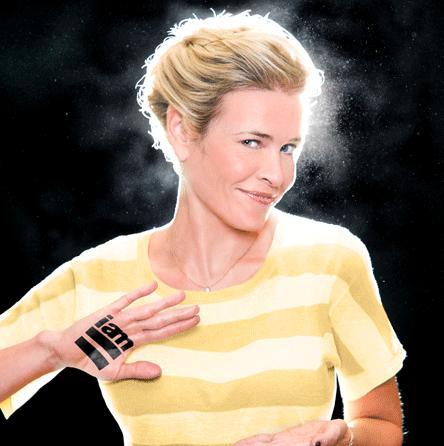
There is no better evidence of the fact that we Americans like to be put in our place than the popularity of Chelsea Handler. The comedian tears through the guests on her talk show Chelsea Lately, penalizing those who’d knee jerk-lump a beautiful blonde into the airhead category.
And hey masochists, she’s coming to Litquake on October 13.
It’s true, our little lit fest that could — which has exported the Valencia Street LitCrawl tradition to Austin and New York — is growing like the in-process Mission Bay skyscrapers. Only it doesn’t threaten to block our offices’ view of the Bay!
Lately (check out her SFBG interview from last year here, by the way) will be sitting down for a chat with LitQuake co-founder Jane Ganahl to discuss authordom, vodka, and male groupies. Perhaps Handler seems like an odd choice for the fest given scribeful line-up mates like Jeff Chang, Karen Russell, Jefferey Eugenides, and Deepak Chopra, but the facts remain: the woman runs the best-seller lists, balances writing with a thriving TV career, and recently scored her own publishing imprint from Hachette Books. This, anemic bloggers and thoughtful bards, is what one brand of successful writing looks like.
Can’t wait for the author talks and hawking of books? Our own City Editor Steven T. Jones will be pumping his Burning Man book at tomorrow (Wed/17)’s Litquake Epicenter event at Intersection 5M.
“Are You There Litquake? It’s Me, Chelsea”
October 13, 8 p.m., $40-45
Z Space
450 Florida, SF
The post-labor world

The engineers at Intel are thinking about the future, and they’ve hired sci-fi writers to help them imagine what the next few generations of chips will need to do. We’re talking about cars that drive themselves and space stations with AI — and, of course, about a future where robots do most of the work:
In one of the stories in “The Tomorrow Project,” a couple dash from Paris to the south coast of France to provide an injured relative with a blood transfusion. They travel in a car that navigates and drives itself. Medical information is wirelessly beamed to the vehicle’s dashboard and into mobile-phone-like ear studs. In another story, robotic automation has rendered jobs a thing of the past, and one human ponders what to do with his free time.
What to do with your free time. Imagine that.
Got me thinking about Player Piano, the first Vonnegut novel (and the first one I read, back in high school). In Vonnegut’s world, there are rich, educated people who control the machines — and then there’s everyone else, poor and frustrated and marginalized because there’s no meaningful work to do.
Seem familiar? Sound a little tiny bit like our jobless recovery?
Let me suggest something radical, something that a few futuristic writers have discussed but that’s no longer part of our national political consciousness. We may soon be heading for an economic system that involves massive structural unemployment. There may not be a need for as many human beings to do as much labor, particularly manual labor, as there has been in all of the history of civilization. That’s not necessarily a bad thing — but it will require us as a society to be willing, at a certain level, to divorce labor from income.
In other words, we’ll have to accept that the productive wealth of society will have to be distributed in part on the basis of need, not just on work. I know that sounds awful Marxist, but it’s also the only way a post-labor world can actually work. It’s that or massive starvation and global warfare.
This stuff wasn’t all that crazy a generation ago. In 1973, with Nixon in the White House, Daniel Patrick Moynihan wrote “The Politics of a Guaranteed National Income,” and he wasn’t remotely a commie. But with the “end of welfare as we know it” and the Reagan-Bush II tax cuts and the worship of wealth that passes for civil discourse in the United States today, it seems hard to imagine how anyone can talk seriously about giving people money — for the long term, for life — even if they aren’t employed in compensated labor as we know it today.
The dystopian novels like “Player Piano” assume that there’s some inherent value in labor — that people who can’t find meaningful work that requires skill and pride and offers the rewards of craftsmanship — will become morose and depressed. That’s only true if you assume that work and pay are connected in a 2011-style model. There’s plenty of good work to do in the world; shit, I could put 200 people to work today, researching and writing articles and reports that would add to the base of civic knowledge and do at least some good for the world. I just can’t afford to pay them. There’s so much else that the world needs — work that can only be done by humans and that will enrich us all, but that has no “value” in the modern economic paradigm. That is, it’s good work — and nobody will pay anyone to do it.
I’ll give you a good example: San Francisco alone could probably use 500 full-time people to take care of seniors. I don’t mean people with medical training; I mean people who can cook and clean — and, more important, sit around and talk to lonely single seniors, give them company, make their lives more full. There’s absolutely no economic model for that work right now — the seniors who need it can’t afford to pay for it, there’s nowhere near enough government money (thank you, tax cuts) and no conceivable private-sector role. Good, meaningful work that needs to be done. Lots of qualified people around with no jobs. No functional way to pair them.
Now, you ask me, we raise taxes profoundly on the wealthy and big business and create government jobs to do all the work that needs to be done. Redistribute enough wealth and create enough public-sector employment and we’ll be able to keep modern capitalism going for a while longer.
But we also need to start thinking about the post-labor world, about whether we want people to “ponder what to do with their free time” (which isn’t such an awful thing) and then think about good uses for that free time (acknowleging that there will always be some freeloaders who get money and don’t do jack shit for anyone) — or whether we want large number of people to starve in the streets because there’s no paying work.
When robots do the labor, who gets the paycheck? If it’s the small class of people who own all the robots, we’re looking at a pretty damn ugly future.
An unresponsive landlord could mean the end of Sixth Street’s DA Arts
All photos by Allison Ekevara / The Aperturist
“When I was growing up, the space was empty the whole time.” And as it stands, Sixth Street resident and photographer Reynaldo Ruetas Cayetano Jr. will be seeing the storefront gallery where his collective Inks of Truth created a community art project stand empty once again.
“No one’s even been back in to turn off the lights,” he told the Guardian when he stopped by our offices last week. On August 6, Inks of Truth was holding a release party for its new zine – until the owner of 135 Sixth Street (which also houses the Sunshine Hotel, an SRO) stopped by to kick everyone out.
Cayetano grew up across the street from the DA Arts building, which occupies a central space on Sixth and Minna streets. It was once a liaison office for the city’s district attorney, filled with file cabinets. But the space became a creative hub in 2006 when Tenderloin Housing Clinic started leasing it to display art by local residents.
Years of gallery shows culminated in THC turning artistic control of the space over to Ujima Artists, a group that hosted four to five shows before, THC artistic director Patrick Flanagan remembers, members began squatting in the small space, which faces onto Sixth Street and has massive windows.
“It was a total party scene,” says Flanagan, who told the Guardian he ignored the misuse until he found crack vials in the gallery. Ujima Artists were kicked out, but the PR damage done to the gallery may have been too late to correct.
But Cayetano was ready for his crack at DA Arts. He contacted Flanagan, and within a month Inks of Truth had cleaned out the space. Mikio “Ears” Rose airbrushed galaxy designs across the walls, and on April 1 of this year, the group held a block party that attracted young artists, older Sixth Street residents, and everyone in between. On the gallery walls: black-and-white photos of the neighbors that rendered Sixth Street in all its grittiness, but also showed all the striving and community on the block.
“Not everyone can just go in there and have this community event. Knowing how my neighborhood is, I wanted [the people that live on Sixth Street] to be comfortable,” says Cayetano.
Inks of Truth made a concerted effort to include everyone – not just artists and conventional art lovers, but the low-income elderly folk and those dealing with addiction. The gallery became a space for those who’d never shown an interest in art before, passers-by excited by their likenesses on the wall asking collective members where they could get a camera of their own.
Cayetano says his events rendered the neighborhood become a more inclusive place. “Basically, every time we had a show at DA Arts we all had a hood pass.”
But was the gallery’s owner impressed by the changes taking place on his ground floor?
Apparently not. When Flanagan, Cayetano, and Inks of Truth member Chris Beale attempted to set up a meeting with the owner of DA Arts and the Sunshine Hotel about extending THC’s lease on the place past May 28, Surajnaben Indrasinh Solanki was less than enthusiastic. In fact, he would hardly get back to them at all.
“The guy’s not saying anything. He’s not even giving us an offer,” says Flanagan, who along with the Inks of Truth members left phone numbers and messages for Solanki at the Sunshine Hotel’s front desk to little avail. (The Guardian had a similar experience – Sunshine Hotel staff would hang up on us when we called to speak with Solanki, and leaving contact information in person at the front desk didn’t yield a call back).
Eventually, the three managed to set up a meeting with Solanki on August 1. When the day came, he stood them up.
“It reflects his style of overseeing that space,” says Cayetano.
Later that week Flanagan (who lives across Minna Street at the Rose Hotel and flips the lights on at DA Arts every evening to illuminate the corner and the art inside the gallery) ran into Solanki. “He told me not to go into the space, that we weren’t supposed to be in there, and that’d he call the police.”
Which Flanagan could have done – but he didn’t. “The ball’s was in his court,” he told the Guardian, frustrated that Solanki wouldn’t communicate with the Inks of Truth team about the future of the building. “So I said, let’s keep putting on shows.”
When asked why he thought Solanki didn’t express any interest in the young people holding their events at DA Arts, Flanagan had two theories: that the owner is reluctant to get involved in any more leases because he’d like to be able to sell the building (which is in a SF Redevelopment Agency project area), or maybe because he was wary of Flanagan’s history as a tenant organizer.
At any rate, Flanagan told Cayetano to go along with the previously-scheduled zine release party.
So they did – and for a few hours, Inks of Truth and the rest of Sixth Street got to see their images published and bound (you can too – go here for a copy of Sixth Sense). That’s when Solanki finally showed up, yelling for everyone to get out.
The collective grabbed everything from the gallery – framed photography, boxes of zines, the bottles of red wine that were being shared, everything but the Best of the Bay award they’d won the week before – and migrated across the street to Rancho Parnassus, a cafe that’s hosted Inks of Truth shows in the past.
There, they rearranged the photos on the cafe tables and regrouped. Cayetano hyped the group up for October’s Sixth Street art walk, and reassured everyone that Inks of Truth would still have a presence on Sixth Street, with or without DA Arts.
Reflecting on the tribulations the collective has undergone, Cayetano’s not ready to let go of his dream of bringing pride to his neighborhood. “We’re not here just to have a show and disappear,” he says. “Sixth Street is the heart for me.”
Live Shots: GAPA Runway 23, 08/13/2011
Fantasy Land was out in full force on the Herbst Theater stage this past weekend, for the 23rd annual Gay Asian Pacific Alliance (GAPA) Runway show and 2011 Mr. & Miss GAPA pageant. The contestants were dressed to impress and pulled out all the stops (and pulled off a few pairs of pants too), in hopes of winning over a panel of judges that included everyone from socialites like Holy McGrail and politician Fiona Ma. Everyone was bedazzled, especially by the host Tita Aida.
Working with a cold and a pesky iPad, Tita held the whole event together with elegance and poise, and enough inappropriate jokes to keep everyone laughing and wetting their panties for the entire four hours of the show. I hope to one day call Tita a BFF. Tita is my heroine, not only for her amazing style, but also for her never ending list of Daly City jokes.
And then there were all the sexy Gaysian fantasies on the runway, dressed in fairytales of Snow White and genies, who really gave their all. One of my personal favorites was an evocative and devastating performance by Jezebel Patel of the Dying Swan, feathers spewing in every direction after each perfectly performed pirouette. She was a runner up for Miss Gapa, but the gigantic trophies at the end of the night went to two wonderful talents, Lychee Minelli and Mike Nguyen, who stole the show with their school-girl good looks and baton twirling triumphs.
I’ve been to a pretty solid sampling of drag shows in my day, but I have to say, GAPA Runway was magical in so many ways and one that I hope to make a yearly tradition.
Warren Buffet’s money

Just about everyone I know has been emailing and posting and talking about the Warren Buffett New York Times oped piece on the mega-rich (and I’m not alone — it’s the single most emailed piece on nytimes.com today). I appreciate what Buffett has to say; I’m glad he’s willing to point out that the “shared sacrifice” we’re hearing about from Washington doesn’t include any sacrifices at all from the people who can most afford to give up a little. But that’s not my favorite line; here’s the real crucial argument:
Back in the 1980s and 1990s, tax rates for the rich were far higher, and my percentage rate was in the middle of the pack. According to a theory I sometimes hear, I should have thrown a fit and refused to invest because of the elevated tax rates on capital gains and dividends.
I didn’t refuse, nor did others. I have worked with investors for 60 years and I have yet to see anyone — not even when capital gains rates were 39.9 percent in 1976-77 — shy away from a sensible investment because of the tax rate on the potential gain. People invest to make money, and potential taxes have never scared them off. And to those who argue that higher rates hurt job creation, I would note that a net of nearly 40 million jobs were added between 1980 and 2000. You know what’s happened since then: lower tax rates and far lower job creation.
Get it? Raising tax rates on investments and on the income of the very rich doesn’t impede job creation. RIch people don’t stop working or investing when they have to pay higher taxes. (And local business taxes don’t have a measurable impact on job creation or preservation in San Francisco.)
Here’s where Buffett’s argument bothers me: The guy’s got more money than he can ever spend. He’s going to give most of it away. If he really believes in what he wrote, why doesn’t he use some of that vast wealth to fund a campaign to educate American voters about the truth about taxes and jobs? Imagine what a billion dollars — a modest fraction of his wealth — could do to change the political dynamic in this country. Imagine a concerted advertising and PR campaign, similar to what the right wing has used over the years to promote its pro-corporate agenda, making the case that higher taxes on the rich are good for the economy, that government spending on job creation is a positive thing and that the central dynamic that dominates discussion in both parties is entirely wrong?
Warren: You can do it. I know there are plenty of great charities out there that can use your money, but that won’t change the world. This might.
Music for hackers: Nebakaneza’s “Ascending into Madness” mix
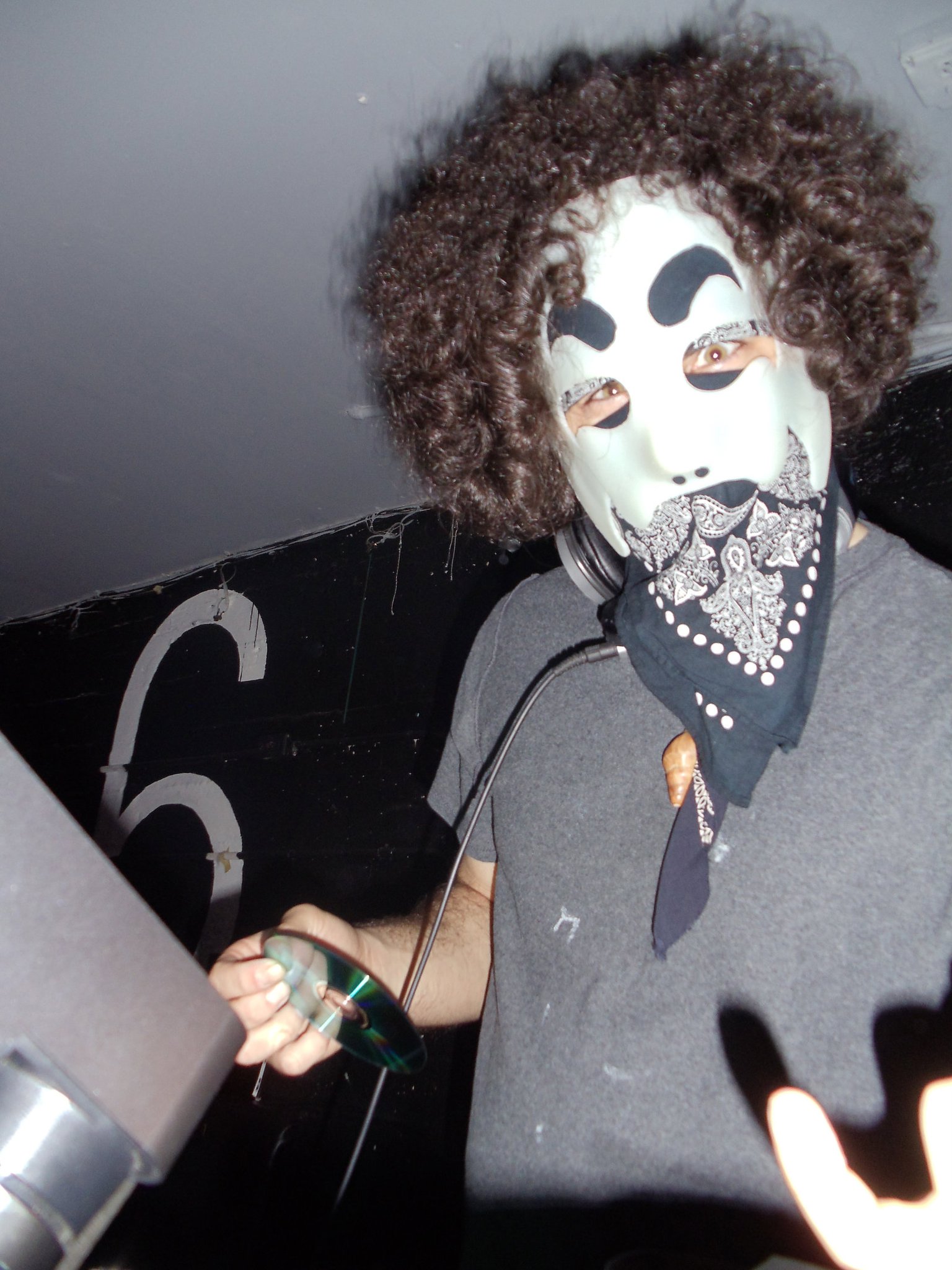
While we await the latest apocalyptic intimations from the Anonymous v. BART showdown, let us merrily pull up our virtual balaclavas, gather around ye olde Soundcloud, and rev it to this wicked mix by SF’s own V for Vendetta-masked turntable master. Eternally anonymous DJ Nebakaneza, basshacker extraordinaire of the massive Ritual Dubstep weekly, every Thursday at Temple, just dropped the sublime “Ascending into Madness,” a “new mix of some darker stuff I’m into.” It’s a perfect soundtrack for those conflicts underground, hey no cells allowed:
City workers union backs Yee — and Avalos
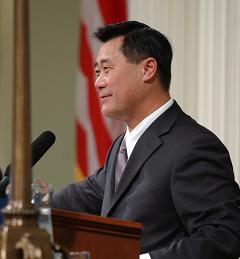
The press release I got from Leland Yee’s campaign made it sound as if Yee had won a major victory over progressive supervisor John Avalos:
SAN FRANCISCO – Senator Leland Yee has landed the first choice endorsement of the largest organization of city workers – Service Employees International Union (SEIU 1021) – in his campaign for San Francisco Mayor. The move by the 54,000 member union is a complete rejection of the city’s top official, interim Mayor Ed Lee.
The endorsement comes after Yee has landed virtually every major labor endorsement in the race, including the California Nurses Association, California School Employees Association, International Brotherhood of Electrical Workers, San Francisco Building and Construction Trades Council, Laborers International Union, United Brotherhood of Carpenters, Communication Workers of America, and the American Federation of State, County, and Municipal Employees, among others.
Yee has also been endorsed by the major environmental groups, including the Sierra Club and San Francisco Tomorrow.
“I am proud to be the labor candidate in this race and honored to receive the endorsement from SEIU 1021 and our city’s workforce, who run our city and provide us essential services,” said Yee. “SEIU 1021 represents some of our lowest paid and hardest working employees, including healthcare workers, nurses, and janitors. Together, we have fought to ensure greater transparency and accountability at City Hall and within state government. I look forward to working with SEIU as we move San Francisco forward.”
Local 1021 is among the most progressive unions in the city — and when it comes to local politics, one of the most effective. Candidates backed by 1021 get the union’s volunteer work and wealth of political organizing skill, and it can make a huge difference.
Avalos, the leading progressive in the race, would seem a natural for the SEIU nod, and at first glance, it appeared that one of labor’s best friends at City Hall had been stiffed. You don’t learn until the end of the Yee release what really happened:
SEIU 1021 also endorsed John Avalos as a first or second choice and Bevan Dufty as a third choice.
Yep — Yee didn’t win the endorsement outright. Local 1021 was split between Yee supporters and Avalos supporters, and wound up doing a dual endorsement. Here’s what the official 1021 statement says:
The delegates were in support of both Supervisor John Avalos and State Senator Leland Yee, both progressives with strong labor credentials and records, both having been in SEIU at one time, and both friends. The delegates reasoned that with so many candidates in the race, neither could win without the others second votes, so they made a dual endorsement of them, asking members and supporters to vote their choice of first or second between them.
Dufty came in third in part because he did (and does) really well in these kinds of interviews. Watch the candidates on the trail — Dufty is funny, relaxed, personable … the kind of guy you want to go have a beer with. The others often come off as stiff and scripted. That doesn’t mean I’m necessarily voting for Dufty, who has been on the wrong side of too many issues. But in a crowded field, his personality stands out.
What does this mean? It means that SEIU members can and will work for both Yee and Avalos, which is good news for Avalos and probably better news for Yee. The senator has been working hard to get as many Avalos/Yee dual endorsements or 1-2 endorsements as he can, since any apparent connection between the two helps Yee with the progressive vote. And while I understand and appreciate the rights of candidates to promote themselves and hype every endorsement they get in the best terms possible, this one was a bit misleading.
Outside Lands, day three
Ah, Golden Gate Park on a crisp, sunny Sunday morning. Well, afternoon. There’s nothing else like it. When I finally made my way out to Outside Lands, the highly recognizable vocal stylings of tUnE-yArDs were piping through the brush and bramble. Sweaty, shirtless men – fried to a near-crisp – rain danced far back from the Sutro Stage. And those free-jazzing saxophonists that I mentioned in the pre-festival rundown were indeed beside Merrill Garbus.
Next up, I high-tailed it to foodlands, where I shared gourmet tator tots from Q and later, a falafel snow cone – not as odd as it sounds – from Straw. As we munched, I caught a few songs by the legendary Mavis Staples, but apparently missed it when Arcade Fire singer Winn Butler came out to join Staples in a cover of “The Weight.”
I then hit the Twin Peaks stage for !!!, a dance-punk band I’ve had ongoing mixed feelings about, but I have to say: they put on a good live show yesterday. Nic Offer, wearing teensy jean shorts, sprang across stage, arms open wide, shaking his hips and calling on the crowd to get moving. On route to the set, I overheard a girl yell, “Is that how you say that? ‘Chick, chick, chick’?!”
I’m glad I ran out of !!! during the last couple of songs, so I could be front and center for local garage rocker Ty Segall, working it in the unrelenting (read: not that hot) San Francisco sun. Segall opened with a new song then headbanged his way through older favorites. It was a small stage, but Segall’s show was highly attended. He asked if the crowd would circle pit, then took it back and recommended they just pogo. A few crowd-surfed, at least one lost a shoe.
Major Lazer was a whole otherworldly affair. While dapper Diplo and Switch stood behind a table of mixed electronics and laptops, a hypeman hopped around stage whipping a towel while a woman in a bright tropical onesie and neon pink slotted shades ran back and forth, bending into contortionist-yoga poses.
I watched a few John Fogerty songs – all CCR – and thought how proud my father would be if he knew my proximity to Mr. Fortunate Son. I wanted to get prime viewing distance to Beirut so I made my way back to the Sutro Stage. With a mighty three-horn brass section (when Zach Condon wasn’t playing his ukulele) and a particularly lovely accordion, Beirut played songs off 2006’s Gulag Orkestar and 2007’s the Flying Club Cup, along with at least one track off upcoming release the Ripe Tide.
The exhilaration was palpable for Arcade Fire over at the Polo Fields/Lands End main stage. Thunderous screams rang out as each musician appeared on stage. Behind the band there was a marquee movie screen showing fuzzy, nostalgic images of tree-lined streets, warm sunsets, and cars on open roads – fitting in nicely with themes of its most recent album, the Suburbs. I’ll admit it, I got a little choked up. In the other direction, there was a sea of people, shrouded in the purple-blue lights of the stage, with lit-up booths lined up past them, and the dark tops of trees out in the park beyond those.