SFBG Blogs

Like the Oscars, only sluttier: the Guardian reports from the AVN Awards red carpet

10

All Guardian photos by Caitlin Donohue unless otherwise noted

“We gotta get 500 girls through here in two hours.” 

Pre porn star-strutting, the faces on the red carpet before the AVN Awards 2012 were grim. Vegas raged around us journalists, the Hard Rock Hotel – site of the awards ceremony, countless before-during-after-parties, and annual fan expo – awash in men trying to appear nonchalant and tired women in heels. We had many rivers to cross and many starlets to question before the awards ceremony would begin.

The Guardian team was stationed between Howard Stern’s ex-security guard (sample question from the gent, who was wildly popular with the more silicon-ed of the starlets who roamed the runway: “What is the strangest thing you’ve ever put in your asshole?”) and a dapper Frenchman from his country’s first porno channel XXL. 

We’d been chatting up porn stars for days (most significantly, Courtney Trouble’s queer porn posse and the lesbian beauties from Jincey Lumpkin’s Juicy Pink Box about the growth of queer adult films – read about those interviews in the Feb. 8 print edition) – but this was different, red carpet-different. 

For one thing, Dave Navarro was there, escorting two women in sequin thigh-high boots and highly customized steampunk-y ballgowns, both of their skirts’ significantly missing a front section. Robin Leach had ducked out on his anticipated appearance, but an under-done Chyna of WWF fame – also winner in the Best Celebrity Sex Tape category for Backdoor to Chyna – was there, as was a sloppy Dave Attell, manic in the hours leading up to his awards host gig. Creator of “Girls Gone Wild” Joe Francis lurked through en route to presenting a lifetime achievement award, longingly gazing in our direction for an interview that was not forthcoming. 

And of course those 500 porn stars (they weren’t all women), who lined up at the mouth of the red carpet area like so many shiny cattle. Popular looks for the evening included shattered mirror Gaga-inspired bodices, drop-back, crack-baring harem dresses. The self-proclaimed “Valley’s goldstar lesbian” Lily Cade and legendary sex goddess Nina Hartley were notable exceptions to the cleavage-baring carnival at hand — they wore suits. “I’m a fucking professional, so I’m going to dress like a professional,” Cade told us that day at the Expo as she gamely sold her all-girl titles from a booth unfortunately stationed next to a man hawking bargain basement adult DVDs.

Princess Donna found a last-minute date in Bobbi Starr (good choice, Starr took the honors for Female Performer of the Year), porn educatress-onscreen legend Nina Hartley gamely chatted ass acessories with Howard Stern’s buddy and waxed thoughtful on the current state of queer porn with the Guardian. We met porn stars excited about their budding hip-hop careers, porn stars excited about the new Fleshlight modeled after their various orifices, porn stars who were just plain excited. 

Our favorite line of red carpet questioning was as follows:

– What are you up for tonight?

– What was your favorite scene from last year?

– What do you think of the new condom regulations in LA? Is this going to dramatically affect the industry? Cue fallen smiles and synaptic struggles. For the record, talent was divided between the “I’m sexy and people are going to watch me regardless and the “get your laws off my genitals” camps – no one really thought the anti-AIDS measure was a positive thing.

And then it was the awards ceremony, we which will sum up like so.

BIG WINNERS

Portrait of a Call Girl – This drama is reportedly awesome if you like your porn with lots of crying in it. Kudos to lead Jessie Andrews, who was also the most calm actor that made her way across the red carpet. It won Best Feature, Best Director – Feature, and Andrews took Best Actress.

Asa Akira – The woman, thanks in large part to her work in Asa Akira is Insatiable 2, walked with no less than seven awards this year. Though her outburst after winning for Best All-Sex Release was memorable (“my ex boyfriend broke up with me over this movie, so fuck yeah!”), she is indelibly etched in my mind by her acceptance speech for Best Anal Scene, an honor she also took home in 2011. To whit: “Thank you to my asshole for putting up with all my shenanigans.” Akira’s partner for said award-winning anal shenanigans was named Nacho Vidal, which we will now be bestowing on my most swarthy future male child. Vidal was nominated twice in the Anal category – making him and Akira a powerhouse couple not to be denied. 

Good Vibrations – The SF-based chain walked with the Best Boutique award, and since it’s our Bay-Bay that makes us happy. (But does it still qualify as a boutique? Read our interview with the chain’s leaders last week and decide for yourself.)

Too Short — Perfomed a song to close out the show entitled “I Need a Porno Bitch.” He got them — about twenty game female actors swarmed the stage as he happily name-checked many of them in his lyrics. 


BIG LOSERS

Whoever was responsible for the Joint’s A/V and technical performance – Truly, everything that could have possibly gone wrong here, did. We’re talking no clips for the Best Actress nominees, people walking off into exits with no outlet onstage (okay, maybe that was the presenters’ fault). The ceremony’s fail screen – a static shot of a galaxy of stars – played so often we became accustomed to it, like a running joke you can’t get your friend to stop telling.

Two-time Female Performer of the Year Tori Black, who was arrested on charges of domestic battery along with her five-month-old son’s father at the Hard Rock in the wee hours of Friday morning. Black says she hadn’t drank in awhile (baby) and stirred up a scene after hitting the town Saturday night. Nothing to see here folks!

Anyone requiring more than four hours of sleep per night, or that enjoys daylight and monogamy.

For a full list of this year’s AVN winners, you should definitely, definitely go here because of winning titles like Mission Asspossible and Internal Damnation 4

The Performant: Discord fever

0

San Francisco Tape Music Festival unwinds at ODC

The fact that it’s raining makes it an unexpectedly perfect night to attend the San Francisco Tape Music Festival. The water rushing through pipes and sweeping across the rooftop of the ODC Theatre adds an extra layer of ambience to the cacophonic tones emitting from a modest bank of speakers, squatting on the stage like forbidding monoliths. The here-and-now intrusion of the rainfall ties even the most outré compositions of the evening together in an entirely unanticipated manner, from the oldest (dated 1857) to those created this still-young year by members of the current incarnation of the San Francisco Tape Music Collective and sfSound.


Snugly protected from the bluster of the elements, we sit in patient anticipation as the lights dim to as near a full blackout as can be achieved with glowing EXIT signs and lighted soundboard. The darkness forces focus on the content of the composition, not the conduit, freeing the senses from the unconscious tyranny of vision. And a certain amount of focus does come in handy for an evening spent listening to the trajectories of polyphonic dissonance whizzing through the room at reckless speeds. Field recordings, samples of radio-age music scores, spoken murmurings of French, English, Greek, percussive clatterings, static-y white noise, and a host of sonic curiosities stack up on top of each other like the building blocks of childhood, leaning precariously, threatening to topple. “Purposeless play,” John Cage once described it, though of course such purposelessness contains a purpose all its own.

Maggi Payne, SF Tape Music Fest, SFBG.com

Composer Maggi Payne

A 16-minute Matthew Barnard composition entitled The Piano Makers sweeps the oddience into the Kemble piano factory, where Barnard made a series of field recordings of piano manufacturing: all clatter of machinery, zing of taut strings and tuning forks, and pounding of keys. John Cage’s Williams Mix kicks off a centennial celebration of Cage’s birth with a frenetic mélange of classic cartoon scores, old jazz standards, church hymns, radio announcements, and a lonesome foghorn. One of the evening’s most distinctive aural pleasures comes courtesy of noted theatrical sound-designer Cliff Caruthers, whose eerie, affecting Underneath would serve perfectly as the ambient score of some great, underwater epic — Gilgamesh perhaps — all creaking boards, and groaning depths, punctuated by the primal bellow of some unfathomable creature and a twinkle of silvery fish. Maggi Payne’s Glassy Metals rounds out the first half with a textural layering of metallic sounds manipulated to mimic the wet gurgle of a deep forest brook and rush of dry desert winds.

Ma++ Ingalls, SF Tape Music Fest, SFBG.com

Performer Ma++ Ingalls. Photo by Lenny Gonzalez

Two of the highlights of the second half include the second John Cage piece of the night, Imaginary Landscape No. 5. Composed on a block graph designating eight tracks and 42 separate sound clips, the realization of this version was created collaboratively by the Tape Music Collective, and performed by Ma++ Ingalls. Sterfos, by Orestis Karamanlis, also performed by Ingalls, transports the listener to a fishing village on the edge of the Aegean Sea. Bucolic village sounds such as the somber clang of church bells, footsteps crunching on gravel, the lapping of waves, dogs barking, children playing, and an elderly man with the oratory tone of a storyteller, all layered over with the urgent textural tones of aggressive modernity. More than any other piece of the evening, Sterfos embodies the cinematic quality of the music, a clearly defined story arc winding through the village entire. Only a minor technical glitch halfway through the piece mars the otherwise seamless meander along the shoreline of a strangely familiar sea.


Guardian editorial: Plazas are public space

1

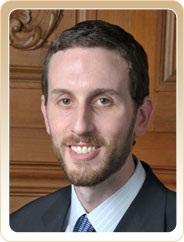
EDITORIAL The attack on public space has been underway for years now in San Francisco. Parks and recreation centers have been turned into pay-to-enter facilities rented out to private organizations. The sit-lie law restricts the use of public sidewalks. Occupy protesters have been evicted from a public plaza. And now, Supervisor Scott Wiener wants to put new restrictions on the mini-parks and plazas that have been a rare bright spot in the battle to reclaim the streets.

Wiener has introduced legislation that would ban camping, cooking, four-wheeled shopping carts, and the sale of merchandise in Harvey Milk Plaza and Jane Warner Plaza, near Market and Castro. He argues that the two parklets — one reclaimed from what had been roadway — are in legal limbo: They aren’t parks, so the city’s park codes don’t apply, and they aren’t sidewalks, so rules like the sit-lie law don’t apply, either.

But there are serious problems with the Wiener legislation. For one thing, it’s clearly directed at homeless people — the ban on shopping carts makes no sense at all except for the fact that a lot of homeless people carry their possessions in those carts. And the ban on camping (which isn’t a problem right now in the two plazas) could be used to prevent an Occupy-style action in the Castro.

The ACLU says there are serious constitutional issues with the bill. In a Jan. 21 letter, ACLU staff attorney Linda Lye notes that the ban on the sale of merchandise without a permit could “burden expressive activity.” And she explains that the shopping cart rules have exceptions for bicycles, strollers, and two-wheeled carts, but “it is wholly unclear why some but not other wheeled conveyances are singled out for prohibition, other than to restrict the activities of an unpopular group.”

A letter signed by 21 members of the Harvey Milk Club, including co-founders Harry Britt and Cleve Jones, Assemblymember Tom Ammiano, and eight past club presidents, points out that “the interests of the LGBT community have always been united with the interests of public space. As a community that is forced—far too often and for far too long—to spend much of our collective lives ‘in the closet,’ the ability to be free in public spaces has been tremendously liberating. Harvey Milk knew that liberation was only possible if we escaped the shadows of anonymity and invisibility. When we restrict these spaces—even when those restrictions are meant, initially, to be applied to another group of people—we damage ourselves.”

The issue goes far beyond the Castro. There are a growing number of small plazas in the city, part of the popular and successful Pavement to Parks Program — and the last thing the city should be doing is putting undue restrictions on their use.

Wiener, to his credit, has been in touch with the ACLU, and amended his original proposal to exempt the sale of newspapers and other printed material. But that doesn’t solve the First Amendment issues — for example, would the sale of T-Shirts with political slogans be banned? Could the city decide which political candidates or causes could get a permit and which couldn’t?

The whole thing seems like a solution in search of a problem. The plazas, like most of the city’s parklets, are for the most part clean and well-maintained community gathering spots that don’t need new rules or restrictions. The supervisors should reject the Wiener legislation.


Mirkarimi’s not going anywhere

107

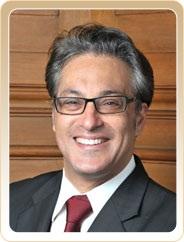
Sheriff Ross Mirkarimi may be guilty of domestic violence, and if he is — as I’ve said repeatedly — it’s a serious crime and he should be held accountable. It will be very hard for him to remain in office with a DV conviction, even if it’s just a misdemeanor.


But right now, the charges are just that — charges. In the eyes of the law, he’s innocent until proven guilty. So I don’t see how Mayor Ed Lee can suspend him.


Lee’s under a lot of pressure, and under the City Charter, he has the sole authority to suspend an office holder for “official misconduct,” which is defined as “wrongful behavior by a public officer in relation to the duties of his or her office.” If there’s a suspension, the Ethics Commission and the Board of Supervisors would both have to vote to remove Mirkarimi permanently.


But here’s the thing: Lee has no evidence of official misconduct — not unless the district attorney decides to turn over to the mayor all of the files in the criminal case, at which point Ethics and the supes would be holding mini trials of their own on evidence that hasn’t been adjudicated in court (and a court may rule some of it inadmissable).


That doesn’t seem likely (and it would be very odd for the D.A. to join the mayor in what would amount to a second prosecution).


And all of this would be going on at a time when the actual criminal trial is only four weeks away.


The courts have interpreted “official misconduct” fairly narrowly. If Mirkarimi is convicted, then the city attorney can get into the argument over whether domestic violence has any “relation to the duties” of the Sheriff’s Office, and since he’s a law-enforcement officer, that might not be too hard to argue. Certainly the charge of influencing a witness would be subject to that interpretation. So after a conviction, Lee would be in a position to think seriously about suspension — if Mirkarmi didn’t step down on his own.


But right now, there’s no conviction. In terms of the court system (that would have to get involved) Mirkarimi isn’t guilty of anything yet.


Mirkarimi could decide to take a leave of absence, although he doesn’t seem inclined to do that. But whatever the merits of the case, and whatever the political arguments about whether the sheriff can do his job in the middle of this media circus, I — admittedly as a nonlawyer — can’t see how Lee could possibly invoke the suspension provisions of the Charter.


Maybe I’m missing something. 

Big changes to the DCCC?

14

Half the city probably doesn’t realize there is such a thing as the Democratic County Central Committee, and most of the other half doesn’t realize how powerful it is. The daily papers never cover the DCCC meetings and rarely write about the elections that choose the members of an organization that runs the local Democratic Party — and controls local party endorsements. But it’s a serious factor in local politics — the party slate in a Democratic town is one of the most influential endorsements around. And a lot of the city’s current elected leaders started off as members of the DCCC.


For the past few years, progressives have held a majority on the DCCC, but it’s always up in the air, particularly since every elected state and federal Democrat who lives in SF is automatically an ex-officio voting member. So Senator Dianne Feinstein, Rep. Nancy Pelosi both get to vote (actually, the never show up; they send proxies). Gavin Newsom had a vote until he moved to Marin. You get the picture.


And now, with reapportionment, the part has to change its rules. Under the current system, 12 members are elected from each of the city’s two Assembly districts — but under the new lines, Tom Ammiano’s Assembly district will expand beyond the eastern side of town and he’ll now represent 61 percent of the Democratic voters in the city. Fiona Ma’s district moves south into San Mateo, and she’ll only represent 39 percent of the Democrats.


So now the state has to reapportion the DCCC. Three LGBT members describe the process in a B.A.R. piece here. It seems to me that the easiest thing to do is to add five more members on the east side of town. Good for getting more San Franciscans involved in local politics. Good for the diversity of the DCCC. And good because the more directly elected members you have, the less the ex officios influence the committee.


Seems like a fair easy fix. 

Will Obama bring the populist fire in tonight’s speech?

13

President Barack Obama has a choice for how he uses his State of the Union speech this evening. He could follow the advice of Blue Dog Democrats like Mark Penn, who wrote in The Hill today that Obama should avoid “rhetoric that could be interpreted as class warfare.” Or he can find his inner populist and give the speech that the 99 percent needs to hear by announcing that the rich and the Right have already declared that war, and now he intends to win it on behalf of the people.

I’m rooting for the latter, but fearful that Obama is no William Jennings Bryant – or either of the Presidents Roosevelt – and that he is just not up for seizing this moment and going to war with the powerful plutocrats who are ruining this country.

But there are signs that Obama is at least prepared to “double down on taxing the rich,” as the Christian Science Monitor put it today. Certainly, all signs indicate that he will at least raise the economic inequity issue again tonight, and it’s a positive sign that the invited audience will include Debbie Bosanek, the secretary to billionaire investor Warren Buffet that he famously complained shouldn’t be paying his same tax rate. Certainly, Obama intends to push for his “Buffet rule” that would tax investment returns as income rather than at lower capital gains rates.

But those sorts of reasonable arguments aren’t enough. Obama has been calling for higher taxes on the rich throughout his presidency, albeit never as forcefully as he did on the presidential campaign trail in 2008. And since then, he’s repeatedly betrayed that pledge in cutting deals with Republicans in Congress, exacerbating historically high concentrations of wealth and betraying his own stated principles.

The Occupy movement and most of the left – and even segments of the Tea Party right that complain about the economic elites – no longer trust Obama and the Democrats to fight for the interests of the commoner. We’ve become cynical about putting any hopes in a president poised to shatter campaign fundraising records this year.

Yet as Obama prepares to run for reelection against either a vulture capitalist or hypocritical moralist – both of whom will be openly shilling for the 1 percent – he should realize that it’s both good policy and good politics to capitalize on the opportunity that the Occupy movement has opened up, join the class war, and help us finally win it and seize the resources we need to deal with this country’s myriad problems.

Today’s Chronicle includes a front page story about Rep. Nancy Pelosi’s hopes that Democrats will pick up the 25 seats needed to retake the House of Representatives this year – along with analysts poo-pooing that possibility. The only hope they offered for Pelosi’s plan is a meltdown by the Republican presidential nominee.

But that sort of clear contrast between Democrats and Republicans won’t simply happen on its own, it is something that Obama and the Democrats will need to force by finally relying more on populist ire than using campaign contributions from the wealthy to tarnish their opponents. Simply winning the presidential election won’t help Obama break this country’s political gridlock, he needs to make this race about the undue power of the rich and the Right and win it on those terms.

Pelosi acknowledged that her best hopes for gaining a substantial number of Congressional seats are in California, but they don’t seem to realize that the real potential here is with changing the political dialogue and tapping the 58 percent of California voters who said in a November Field Poll that they agree with the economic critiques that sparked the Occupy movement (and even higher percentages have supported taxing millionaires). Even those who didn’t join the Occupy movement agree with its basic analysis that the few are exploiting the many.

There is a simmering populist discontent that will play out in unpredictable ways this year. And it’s possible that many of the left will never trust Obama until his deeds finally match his words. But there is no larger mainstream political podium in this country than the State of the Union speech, and if Obama misses this opportunity to declare his allegiance with the 99 percent – and his willingness to fight for us – then we may all just be in for the nastiest yet most meaningless presidential election in modern history.

Ben Gibbard pops up at Cobb’s, plays the theme from “Mannequin”

0

It was well past midnight when a surprise musical guest was announced Saturday night at Cobb’s. “Jon,” the host of the Delocated Witness Protection Program Variety Show, which swung through SF Sketchfest last weekend (and airs on Adult Swim as simply Delocated), came back out to the stage after the last of a thrilling round of comedians – Eugene Mirman, David Cross, Paul Rudd. Approaching the modified mic in a ski mask, baby pink 49ers jersey, and gold lamé bootie shorts, “Jon” introduced (and I’m totally paraphrasing here, because I can’t recall his exact joke) “Sven Jibberd of Meth Cat for Tootie.”

Out came Ben Gibbard of Death Cab for Cutie in a yellow makeshift ski mask and his traditional collared shirt and jeans. With modded mic still buzzing, Gibbard picked up an acoustic guitar and played his Postal Service hit, “Such Great Heights.” Why was Gibbard there? I know he was one of the noted musical guests at SF Sketchfest this year, but I still just wonder what drew him here? Or at least, why he keeps popping up unannounced at additional shows. Perhaps to mend his ailing Deschanel heart? Or most likely, he’s just an entertaining guy who wanted to play a few smaller clubs in San Francisco for fun and hang out with some friends.

Even despite the jokey nature of the set-up, with the the ski mask and the weird Witness Protection Program augmented deep voice, “Such Great Height” still sent nostalgic chills down my spine. It was the closest I’ve ever come to seeing him live. And while he had all that comedic accoutrement, he performed with the same profoundness as his usual gig, he still squeezed his eyes shut and hollered out the lyrics of lasting lovers. It was still Gibbard, just encased in a makeshift comedic costume.

But then things got even weirder, by which I mean better. He next announced he’d be playing the theme from the 1980s flick Mannequin – you know, the one where Kim Cattrall  comes to life and there’s a great sidekick named Hollywood – and he launched into an inspired version of Jefferson Starship’s “Nothing’s Gonna Stop Us Now.” During this Delocated’s “Jon” was miming sensual acts on a molded plastic woman. She quick-changed into a real live person as in the aforementioned film, this time played wordlessly on the Cobb’s stage by Maria Thayer, a.k.a Tammi Littlenut or “Copperhead” from Strangers With Candy. But “Jon” preferred the mannequin. Gibbard kept playing through this entire scene and by the end of it all, my stomach hurt from laughing. Where else but SF Sketchfest?

http://www.youtube.com/watch?v=NRZ1fzGWQz4

Incidentally, Jefferson Starship kicks off a five-day long residency at the Rrazz Room tomorrow. Though I doubt it’ll play that particular hit as only a few members of the band actually played on it. Best to stick to “Wild Again” from Cocktail (thanks Wikipedia!).

SF Sketchfest
Through Feb. 4, various times and prices
sfsketchfest.com

Jefferson Starship
Wed/25-Sun/29, 8 p.m., $45
Rrazz Room
222 Mason, SF
(415) 394-1189
therrazzroom.com

Live Shots: The old-timey escapades of the Edwardian Ball

1

The Edwardian Ball, thrown by Rosin Coven and the Vau de Vire Society, never fails to amaze — and absinthe-addled though we were, we managed to take in all the sights, from petticoats a-plenty to splendid corsetry to handsome haberdashery from an era gone by.

Despite the fact that stunning vintage apparel has come to be expected, the Edward Gorey-inspired event — now in its 12th year — is anything but old hat.

Between the World’s Faire, the Vendor Bazaar, and the ball itself, organizers of the old-timey escapade had plenty to add: midway games, an artist lineup that included a neo-Victorian hip-hop time-traveler and his dancing gorilla, a carousel of bikes by Cyclicide, Gorey-themed puppetry, plus freakshow performers with tricks that were anything but same-old. Forget slipping doller bills into your sideshow gal’s panties, and think staple-gunning fivers to her tongue. Strictly period? Not exactly. But lots of fun — for the audience, at least.


Local musicians reinterpret Nick Drake’s “Pink Moon” at the Rickshaw Stop

4

Had you been skeptical about the “UnderCover Presents: Nick Drake’s Pink Moon” event Sunday night at the Rickshaw Stop you wouldn’t have been alone. It had the potential to be disastrous. Coordinating the sound alone must have posed a considerable challenge. How do you get 11 eclectic local bands — 50 performers each with specific sound needs — to play one song from one album without frazzling intervals between each performance and each set up? And then of course there’s the album to consider, Nick Drake’s Pink Moon. How can the bands perform the covers without butchering the album?
 
In the case of coordination and sound, it was a flawlessly organized UnderCover event, co-produced by Faultline Studios. Band set ups were seamless, the sound was first-rate, and the visuals by Joe Case that projected behind the stage were diverting. There were also pre-recorded interviews with band members shown before each performance, which made for an altogether different concert experience. With regards to Pink Moon, if you had hoped to hear covers that faithfully honored the songwriter’s final album, the event was likely a let down, but not a catastrophe.
 
Pink Moon is an odd choice for this kind of an event. For one, it’s terse — with only 11 songs, it clocks in at 28 minutes, and so each band is on stage for only a moment. It’s essentially a bleak piece of songwriting as well, recorded with only guitar and vocals, aside from the light piano on the title track. As John Wood, who produced Pink Moon said in a 1979 radio interview, “[Drake] was very determined to make this very stark, bare record and he definitely wanted it to be him more than anything.” However, the event’s music director Darren Johnston saw this as an invitation. He in fact chose the album because of its sparseness and the endless ways to approach it. “It’s not even my favorite Nick Drake album,” he said in one of the pre-recorded interviews.
 
It’s worth noting that many of the bands did not seem to be Drake aficionados, nor did they pretend to be. A series of pre-recorded interviews showed that they were unaware that a “pink moon” or “bloody moon” represents imminent disaster in other cultures, and that Drake was possibly foretelling his antidepressant overdose, which happened two years after the album was released.
 
Needless to say then, the bands tweaked and reinvented the songs on Pink Moon. If the result wasn’t sensitive tributes to Nick Drake, it was still seasoned musicians putting on compelling performances. Music Director Darren Johnston’s own band, Brass Menažeri, started the night off with the title track, “Pink Moon” which was a rumpus of snorting tubas, trumpets, and French horns. It was followed by the Oakland pop band Kapowski who managed to churn out a memorable piano take on “Place to Be.” The Real Vocal Quartet turned some heads with their cover of “Road,” sticking to the song in the beginning, then veering into a blasting collage of strings before coming back up, rather reluctantly, for another verse.
 
The performance that best embodied Pink Moon was the saxophone player David Boyce’s rendition of — interestingly enough— the only instrumental on the album, a song called “Horn.” With an array of effect pedals, Boyce withdrew from with the original song, but managed to embody the whole album with it. He puffed away and evoked its desolation, adding layer upon layer of drifting, sometimes ear-splitting sounds that encapsulated something like panic and nausea.
 
In many ways, you wanted to hear these bands doing their own material and performing longer sets. It was a shame that we only got a taste of the Billie Holiday inspired voice of singer Kally Price, for instance, who was spell-binding in the very, very brief amount of time she was up on stage.

Brass Menažeri (“Pink Moon”)
Kapowski! (“Place to Be”)
Real Vocal String Quartet (“Road”)
Kally Price (“Which Will”)
David Boyce (“Horn”)
Pocket Full of Rye (“Things Behind the Sun”)
Broken Shadows Family Band (“Know”)
Freddi Price (“Parasite”)
Ramon and Jessica (“Free Ride”)
Aaron Novik (“Harvest Breed”)
Jazz Mafia (“From the Morning”)

All photos by Jessica Trimmer

Louis Dunn: Christian conservatives boo Ron Paul’s ‘Golden Rule’

8

Guardian graphic by Louis Dunn

Rep. Ron Paul, in the  Jan. 17th  debate in  Myrtle Beach in the  Bible Belt of  South Carolina,  proposed that American foreign policy adhere to the “Golden Rule.”  The audience booed him.

“My point is if another country does to us what we do others, we’re not going to like it very much,” according to Saul Relatiive in Yahoo News. “So I would say that maybe we ought to consider a golden rule in–in foreign policy. Don’t do to another nation…what we don’t want to have them do to us.” 

Relative continued, “As reasonable as that may sound..and it is a rule taught by every major religion on a personal scale–the audience in South Carolina, made up of mostly white middle-aged evangelicals, were having none of it…How could the thought even be entertained? …This is the state of the modern conservative movement: non-thinking, non-substantive, reactionary, bellicose, exceptionally arrogant, ignorant, and vindictive.”

Read Relative’s report in full: http://news.yahoo.com/christian-conservative-voters-boo-ron-pauls-golden-rule-011800008.html

Strong opposition to Wiener plaza plan

17

More than 20 prominent LGBT activists, including eight former presidents of the Harvey Milk Club, have signed a letter opposing legislation by Sup. Scott Wiener that would put some restrictions on the use of the two plazas near Castro and Market.

Harvey Milk Plaza and Jane Warner Plaza are both in an odd legal situation — they aren’t city parks, and they aren’t city streets or sidewalks, so they don’t fit under any existing codes. The park code, for example, bars camping; the sit-lie law applies to sidewalks, but not to these plazas.

So Wiener is seeking some clarity — but his proposal has drawn the ire of the Coalition on Homelessness and the ACLU — and now a group of people who trace their political roots back to Milk, and who say that restricting the use of a plaza with his name is a terrible idea: Here’s their letter:

We, the undersigned members of the Harvey Milk Club, write in opposition to the proposed new regulations for Harvey Milk and Jane Warner Plazas.

We are writing because Harvey Milk’s name is attached to one of the two plazas for which this legislation was written and is a historic space that for decades has been a site of free speech. In the 1970s, Harvey Milk fought against that era’s sit/lie law—a law that had been written to target the hippies of the Haight-Ashbury, but was, in Milk’s day, used as an excuse to attempt to drive gay men out of the Castro. Those of us who have been around long enough, or who are at all in touch with our community’s history, are familiar with the image of Harvey Milk and his megaphone at the plaza which was eventually given his name. To propose to prohibit sitting in that very plaza is not just ironic, it disrespects our community’s legacy.

The interests of the LGBT community have always been united with the interests of public space. As a community that is forced—far too often and for far too long—to spend much of our collective lives “in the closet,” the ability to be free in public spaces has been tremendously liberating. Harvey Milk knew that liberation was only possible if we escaped the shadows of anonymity and invisibility. When we restrict these spaces—even when those restrictions are meant, initially, to be applied to another group of people—we damage ourselves.

We must also recognize that this law does not apply, in any very meaningful way, to another group of people: It applies to us. A great many—perhaps the majority—of homeless people who spend time in the Castro are LGBT San Franciscans, who came from somewhere else, but who came here seeking community and safety. This is most especially notable for the youth of LYRIC. Cuts to the City budget have reduced LYRIC’s drop-in hours to only a few every week. During the other hours, homeless LGBT youth are faced with the choice of either heading to drop-in services in the Mission or Tenderloin—services that are already so overburdened that they must turn clients away, and which likely feel to most youth to be outside of their own communities—or using open spaces in the Castro. With Collingwood Park fenced in, Harvey Milk and Jane Warner Plazas are the last open community spaces in the neighborhood. They are the last places in our community where our community’s most marginalized youth can be.

We have read and share the grave concerns expressed by the ACLU.  Much of the law infringes on important constitutional freedoms, and as they noted, cannot be cured.  We respectfully ask the Board of Supervisors to vote no.

Sincerely,

Tom Ammiano, Assembly member
Harry Britt, Co-Founder, Harvey Milk Club,  Former Supervisor who replaced Harvey Milk on the Board of Supervisors
Cleve Jones, Co-Founder, Harvey Milk Club, Human Rights and AIDS activist, Co-founder of SF AIDS Foundation and AIDS Memorial Quilt
The Harvey Milk LGBT Democratic Club
Stephany Joy Ashley, President, Harvey Milk Club
Gabriel Haaland, Former President, Harvey Milk Club, Former Commissioner
Laura Thomas, Harvey Milk Club member, AIDS activist
Anna Glendon Conda Hyde, Harvey Milk Club member, Commissioner
Esperanza Macias, Former Vice-President, Harvey Milk Club
Eileen Hansen, Harvey Milk Club member, Former Commissioner
Rafael Mandelman, Former President, Harvey Milk Club, Former Commissioner
Gwenn Craig, Former President, Harvey Milk Club, Former Commissioner
David Waggoner, Former President, Harvey Milk Club
Nate Albee, Former President, Harvey Milk Club
Tamara Ching, Harvey Milk Club member
Lisa Feldstein, Harvey Milk Club member, Former Commissioner
Suzanne Rueker, Harvey Milk Club officer
Carol Stuart, Vice-President, Harvey Milk Club
Kim-Shree Maufus, Vice President, Harvey Milk Club, Commissioner
Matt Dorsey, Harvey Milk Club member, SFDCCC
Brian Bassinger, Former President, Harvey Milk Club
Debra Walker, Former President, Harvey Milk Club, Former Commissioner

Dim the lights: sad news for local film fans

0

It’s been a sad few weeks for the local film community. First came the news that film critic Rossiter Drake — who wrote for the SF Examiner and 7×7 among other publications, and was a fellow member of the San Francisco Film Critics Circle — passed away in his Alameda home. He was only 34. SFFCC peer Omar Moore wrote a moving tribute to Drake, touching on not just his love of movies (and Boston sports teams), but also what a good-hearted person he was. Check out Drake’s top ten films of 2011, topped by War Horse, here.

Today, even more tragic news, with the announcement that the newly-appointed San Francisco Film Society Executive Director Bingham Ray died following a stroke he suffered while attending the Sundance Film Festival in Park City, Utah. (Read his impressive bio as part of SFFS’ official press release here.) Only on the job since November, Ray came to San Francisco after the previous Executive Director, Graham Leggat, died after a battle with cancer in August.

As the 55th San Francisco International Film Festival approaches (opening night is April 19), SFFS year-round programming continues at the SF Film Society Cinema in Japantown, and Hollywood ramps up its annual Oscar frenzy, the show goes on — but short a pair of passionate film fans, who turned their love of movies into their respective careers, and will be missed.

The bad kind of pain: Kitty Stryker talks sexual abuse in the BDSM community

35

In a culture where pain equates to pleasure and sexual power is deliberately manipulated for ecstatic highs, how far is too far? Kitty Stryker and Maggie Mayhem are two local activists who are confronting rape and abuse within the BDSM community. The two are gearing up to take a workshop they’ve prepared on the subject called “Safe/Ward” on the road. You can support their educational tour at a Center for Sex and Culture fundraising event on Tue/24.

Stryker and Mayhem have been spreading word about their efforts through blogs and online confessionals, which — Stryker was proud to tell the Guardian in recent interview — has helped to open up a dialouge about these issues in the sex-positive community. The workshop Kitty and Maggie hosted locally in August was a huge success, and the duo have been invited to present their project at Momentum, a feminist sexuality conference taking place March 30 through April 1 in Washington, D.C. 

On Tuesday, the sextivists will be hosting a mini-workshop-party to help raise funds for the big journey. They promise nothing short of titillating raffles, awesome art and performances, tasty drinks — there’s even rumors of a kissing-spanking booth. Read on to learn more about what inspired the “Consent Culture” tour, and what it’s like to bring up these issues in the sex-positive community.


San Francisco Bay Guardian: What is “Safe/Ward” and inspired this project? 

Kitty Stryker: “Safe/Ward” is a workshop that Maggie Mayhem and I put together. The purpose is to talk about consent culture. Basically, we realized that we have had very similar negative experiences in the BDSM scene. When we started talking about these abusive situations more, we realized this was more of a widespread problem. It wasn’t just us. So we started a workshop talking about consent and abuse in the BDSM community and how to promote a more consensual environment. 


SFBG: What goes on in these workshops? 

KS: We generally like to ask the people who come to talk about their experiences.  We also watch a lot of videos regarding consent and we discuss how abuse is generally never seriously confronted. For example, consent — especially in regards to kinky sex — is joked about and made a punch line. These jokes about safe-wording have a darker undercurrent since essentially we are laughing about the lack of consent. We like to talk about why this is problematic. And one of the main issues we’ve noticed is that many people don’t feel comfortable going to their community leader or dungeon monitors about their sexual assaults. In the workshop, we provide some actual steps that party hosts can make to make their space safer.


SFBG: What is a major issue that you find important to address?

KS: The concept of safe-wording. I wrote a piece called “I Never Called it Rape,” and the responses were very intense. There’s this “victim blaming attitude” people like to take. Many people responded saying that maybe if I safe-worded, I wouldn’t have been abused. But there’s not always a definite time to safe-word sometimes, because such unexpected and out of the ordinary situations come up. And who really is going to safe-word in a culture where the person who safe-words is called a wimp?  Sex is supposed to be fun. It’s not a competition. And there’s this attitude that if you are a submissive who safe-words, you’re a difficult submissive. When it should be that you are a better submissive because you are communicating. It’s kind of surreal that people are being so defensive about it. 


SFBG: What is one crucial aspect of consent culture that “Safe/Ward” encourages people to become aware of from the workshop? 

KS: That BDSM is not about who is the most able to withstand torture. It’s about consent and respect. We talk about consent all the time, but it’s a little bit more nuanced within the BDSM community. We’re playing with sex and power, and neglecting the possibility of rape and abuse is symptomatic of our unwillingness to talk about consent and the reality that it’s not always there. 


“Consent Culture” fundraiser 

Tue/24 7-10 p.m., donation suggested

Center for Sex and Culture

1349 Market, SF

(415) 902-2071

www.sexandculture.org

Calvin Trillin: Newt lays into Mitt

0

It’s “pious baloney.” Yes, pious baloney.

What Mitt speaks, Newt says, is remarkably phony:

His citizen pose is all hooey;

He’s hungered for office like Thomas E. Dewey.

And what he was doing those years spent at Bain

Was not create jobs but cause working stiffs pain.

While Newt covers Mitt’s smooth exterior with blotches,

Obama’s campaign staff just carefully watches.

Calvin Trillin: Deadline poet (The Nation 1/30/2012)

Protesters “occupy” vacant building

38

After a long day of protest that began at 6 a.m., 1200 joined a march affiliatiated with Occupy SF  last night. The march aimed to “liberate the commons”; organizers said they succeeded when they were able to enter a vacant building, the former Cathedral Hill Hotel at 1101 Van Ness.

The march left from Justin Herman Plaza just after 5 p.m. and arrived at the former hotel around 7 p.m. after rallying at several sites along the way.

There, protesters were greeted by a police line and barricades protecting the buildings.

SFPD Officer Carlos Manfredi reports that protesters tried to remove barricades with the hooks of their umbrellas, and then threw “rocks, bottle and bricks” at police. Police responded by pepper spraying a dozen protesters.

Many eyewitness reports confirm manipulation of barricades, but deny that anything was thrown at police, instead attributing the pepper spray usage to anti-police slogans chanted by the crowd.

After the confrontation, the march turned down Van Ness. Some protesters broke windows at a Bentley dealership at 999 Van Ness.

The march soon turned back around, and protesters regrouped near the building’s back entrance on Franklin between Geary and Post.

There, the crowd looked up to see figures on the roof unfurl a banner reading “Liberate the Commons.” The back door was then opened from the inside by activists, largely from Homes Not Jails, who had broken into the building.

Soon after, demonstrators began streaming into the building.

Police arrived around 8 p.m. and redirected traffic, blocking Geary between Van Ness and Franklin, while a mass of several hundred protesters continued to block Franklin street between Post and Geary.

At 8:30, Manfredi said that police had no plans to rush into the “occupied” building.

“RIght now officer safety is our number one priority so we’re not going to go in there and rush into this event. Obviously Van Ness and Geary is a very busy street…We’re monitoring the situation, we’re talking with the owner, and we’re going to come up with a game plan…We’re going to see if we can open up some line of communication and speak to them, and see if we can come to some form of resolution,” Said Manfredi.

Manfredi also discussed the difficulties police find in communicating with Occupy SF protesters, noting that “a lot of times with these protesters, there’s not one single person responsible for leading the pack. So it’s very difficult, when you talk to one person they may not agree with the other ten. So that’s where the problem comes in.”

This “leaderless” quality, as well as privileging immediate human needs like shelter and food over some aspects of capitalism such as property rights, has been a running theme in the Occupy movement. Homeless advocacy was a large part of the Occupy SF focus in past months, as the encampment at Justin Herman Plaza created a community of homeless and housed activists.

Homes Not Jails, an organization that has been working with Occupy SF, was crucial in planning the “liberate the commons” protest. The group insists that the 30,000 vacant housing units in San Francisco should be used to shelter the city’s homeless, which they estimate at 10,000. San Francisco’s Human Services Agency reports the number of homeless at 6,455.

The cold rain pouring down throughout the night’s events increased the urgency many felt to find shelter for homeless colleagues. Said one demonstrator, “if we can prevent just one homeless person from dying of exposure in the rain tonight, the building takeover was worth it.”

The former Cathedral Hill Hotel, which has been vacant since it closed in 2009, is now owned by Sutter Health and California Pacific Medical Center, with plans to open a hospital at the site in 2015.

The project has been a target of several protests campaigns, including opposition from SEIU-United Healthcare Workers West, UNITE HERE Local 2, and the California Nurses Association (CNA). They also say the hospital will not cater to patients with medicare and medicaid.

At a press conferenece Jan. 18, CNA member Pilar Schiavo announced a protest at the site for the afternoon of Jan. 20.

Said Schiavo, “A huge hospital is being planned which is being likened by Sutter to a five-star hotel. At the same time, Sutter is gutting St. Lukes Hospital, which is essential to providing health care for residents in the Mission, the Excelsior and Bayview-Hunter’s Point. We know that the five-star hospital’s not aimed at serving the 99 percent, and we must hold Sutter accountable to all communities, not just those fortunate enough to have private insurance.”

Police cleared the street of protesters and entered the building around 9:30. Those who wished to were allowed to leave; several did, while about 15 remained. Protesters discussed plans to continue the building occupation through the night.

But most protesters providing support from the outsid had left by midnight, and those inside decided to leave voluntarily, according to organizer Craig Rouskey.

This post has been updated.

Boxer, Feinstein both supported SOPA/PIPA

18

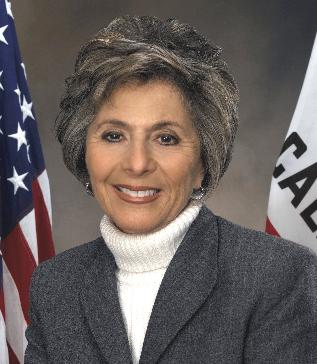
The grassroots and corporate tech rebellion against two Internet censorship bills was, by all accounts, a stunning success and a demonstration of the clout of online politics and web organizing — and the emergence of Big Tech as a potential counterbalance to Big Entertainment. But it’s worth noting as the dust settles that two of the biggest supporters of SOPA and PIPA were the senators from California, Barbara Boxer and Diane Feinstein.


Raw Story points out that Boxer was a major recipeint of Hollywood money:


Far and away, the top beneficiary in the Senate from interest groups that support PIPA is Sen. Barbara Boxer (D-CA), who’s taken in just short of a million dollars from those groups, according to data from OpenSecrets.org. She’s also the most recent Senator to co-sponsor PIPA, adding her name to the list on Dec. 12.


Most of the Bay Area delegation opposed the bill. S.F.’s Nancy Pelosi was against it early on, as was Barbara Lee of Oakland. Jackie Speier of San Mateo and the South Bay’s Pete Stark were also both opposed. If Lynn Woolsey, the retiring rep. from Marin, has taken a position, it’s not clear what it is; she’s listed by most of the anti-censorship groups as undecided.


But for the two senators, both from Northern California, the SoCal position carried the day.

More on the Mirkarimi case

172

I wrote up the Jan. 19 hearing on the domestic violence charges against Sheriff Ross Mirkarimi, but a few more points are worth thinking about as the embattled sheriff prepares for another court hearing Jan. 23.


For one, the stay-away order that Judge Susan Breall issued doesn’t allow Mirkarimi to have any contact with his two-year-old son for the next 45 days. That seems not only harsh but bad for the kid, who doesn’t understand why he can’t see his daddy and is, not surpisingly, confused and upset. There are no winners in this case (except the folks who would just as soon see Mirkarimi gone and replaced with a more traditional law-enforcement sheriff), but the biggest loser, the one I feel worst about, is the kid. If the judge was really worried about Mirkarimi being a danger to his son (which, frankly, seems like a huge stretch), then she could have authorized supervised visitation. That’s not at all unusual in these kinds of cases, and would at least give the child a chance to have contact and a relationship with his father during the period when all of this is being sorted out in adult court.


There’s not a lot of talk about the inherent conflicts of interest in this case, issues that come about from a sheriff who was once an investigator in the District Attorney’s Office facing criminal charges filed by that same office, which is now run by a former police chief who the sheriff clashed with repeatedly when he was a supervisor. I don’t know the law on this or how it could possibly play out, but there’s an interesting article about it all here.


It’s odd that the conflict piece ran in a publication that makes its living bashing local progressives, but everything about the media in this case is odd (except that fact that it’s become an international zoo). The one writer who has talked seriously about Mirkarimi’s right to be treated as innocent until proven guilty — and the only major voice in the media urging him not to step down — is the Chron’s conservative columnist Debra Saunders


Another interesting media tidbit: I don’t know Mirkarimi will enough to have any insight into his behavior in romantic relationships, but one person who really does — his longtime former girlfriend, journalist Evelyn Nieves — has been quoted only once in the bottom of a New York Times/Bay Citizen story, to wit:


“I was shocked when I read about it,” Evelyn Nieves, a journalist and a past partner of Mr. Mirkarimi’s, said in an e-mail. “Ross and I were together for the better part of a decade — eight years or so — and never once did he even come close to being physical during an argument.”


“It’s just not his way,” Ms. Nieves added. “He was way more prone to proposing that disagreements be talked out. He could talk and talk.”


Again: Doesn’t mean he’s not guilty. Doesn’t mean he hasn’t changed. Just interesting that only one publication has even tried to contact and get a quote from Nieves.


I’m not a lawyer, of course, but it seems to me that the defining moment in this case will not be the trial but the pre-trial hearing in which Mirkarimi’s lawyer tries to get a judge to rule that the videotape of Eliana Lopez talking about her injury and her fear of her husband can’t be used in court. Bob Egelko has an excellent piece here; he points out that if the video isn’t admissible as evidence, the case will collapse. If a judge rules (and the legal arguments seem to support it) that the prosecution can’t introduce the video or show it to the jury, then I suspect the district attorney will have to drop the charges; if Lopez refuses to testify against her husband, there’s nothing else to go on.


But this is a domestic violence case, and judges (no surprise) are political, and how many members of the local bench really want to be the one who ended such a high-profile case (and in effect, let the suspect walk) on what the media will call “a technicality?”


The GOP primary: Enjoy the show

6

The 49ers game isn’t until Sunday, but in the meantime, I hope everyone’s enjoying the spectacle that is the Republican primary in South Carolina. First off, we have John King asking His Newtness about allegations that he wanted an “open marriage” and setting off a classic Newtron bomb. Then we have all the discussion on CNN about Mitt Romney’s (allegedly) huge penis. And of course, the SuperPac ads accusing Romney of being a serial killer (“Mitt the Ripper.”) Oh, and by the way: Did anybody actually win the Iowa Caucuses? Does anybody actually care?


Party on, Repubs. You’re doing better every day.

There’s no crying in football…

0

It was the crying jag seen round the world. With seconds left in last Saturday’s divisional playoff game 49ers tight end (and Guardian cover model) Vernon Davis caught the game-winning touchdown, kept the Niners’ Super Bowl hopes alive, and ran headlong into the arms of coach Jim Harbaugh while bawling his eyes out.

While the touchdown incited hysteria at Candlestick, Vernon’s “man tears” left many a couch quarterback verklempt (or at least with something “stuck” in their eye). This fan video captured the drama at the stadium:

This isn’t the first time that Vernon’s cried openly on the field. And he’s far from the first 49er to do so… check out this eerily similar last-second playoff TD followed by Terrell Owens’ teary display back in 1998:

But there was something different about this particular jag. Something that spoke to a feeling of destiny about this season, and the sense that disappointment need not reign supreme at The Stick. Maybe, just maybe things could be different this time around. 

The season’s 13 wins never seemed to be enough to override the pundits’ doubts about the Niners. And on Saturday, as the Saints erased their lead in last minutes of the game it seemed the naysayers were about to be proven right.

Yet once Vernon shed those tears it was clear the 49ers had truly arrived. And with this Sunday’s game against the NY Giants they have the chance to lay to rest any doubt of their elite status. As a native New Yawker I’ll be happy with either team going to the Super Bowl… but on behalf of the SF Bay Guardian staff: GO NINERS!


Plenty of drama at the Mirkarimi hearing

69

I’m glad I got to the courtroom early; by the time Judge Susan Breall called the case of People v. Ross Mirkarimi, there wasn’t a single seat available, and Her Honor wasn’t allowing standing room.

What followed was a quick “not guilty” plea to three misdemeanor charges – and then a session that lasted more than two hours, with a long interruption, as the prosecution and defense argued over whether Mirkarimi was such a threat to his wife and two-year-old son that he should be forced to stay away from them and avoid any form of contact until after what is expected to be an early March trial.

In the process, Mirkarimi’s wife, Eliana Lopez, made a passionate plea against the restraining order and Deputy District Attorney Elizabeth Aguilar-Tarchi introduced new evidence to support her claims that the newly elected Sheriff is not only guilty of domestic violence but too dangerous to allow into his own home.

In the end, Breall – who once worked as a prosecutor in domestic violence cases – issued the order forbidding the sheriff from any contact with his wife and child, and told Mirkarimi and his attorney, Robert Waggener, to return to court Jan. 23 to set a trial date.

Breall angered Lopez – and some courtroom observers – by saying she was concerned that the 36-year-old Venezuelan soap opera star was new to the country and lacked fluency in English and a family support system. Waggener noted that the length of time Lopez had lived in the United States and her language skills weren’t part of the evidence in the case and had nothing to do with the need for a protective order. He later told me that it was unusual for a judge to mention or consider that sort of information in a restraining order.

In fact, Breall noted that she had learned about Lopez’ background from reading the newspapers, leading Waggener to insist that the judge stick to the facts before her and not rely on news accounts that the attorney said were inaccurate.

At times, the proceedings turned bizarre: After Lopez had been identified by her full name and discussed at some length, her attorney noted that the last name and address of a domestic violence victim should not be in the public record. Breall agreed, and from then on referred to her only as “Eliana L.”

A little late for that, of course: The local news media have put her picture and full name on the front pages and the airwaves repeatedly in the past week.

Early in the proceedings, Breall asked if Lopez had seen a victim advocate in the District Attorney’s Office, noting that such a visit was part of standard procedure in these kinds of cases. Shortly afterward, Lopez left the courtroom; we later learned she had walked down the hall to the D.A.’s Office and met with the advocate.

Waggener asked repeatedly during the afternoon that statements from Lopez be taken in a closed courtroom, citing her privacy rights. Breall declined, and refused to put any documents under court seal.

After delaying the case for roughly an hour while Lopez had her meeting and Waggener read over the documents that had already been published in local newspapers but had only that day been provided to him, the judge came back and heard arguments on the stay-away order – and we learned more about the evidence that the D.A. will be presenting in the case.

Waggener noted that after reading the documents he had received, he saw nothing that would justify barring Mirkarimi from seeing his family. Aguilar-Tarchi started to discuss what the now-famous videotape that neighbor Ivory Madison made of Lopez showing a bruise and discussing a confrontation with her husband, but Lopez’s lawyer interrupted with an interesting new claim: She said that when Lopez had met with Madison, who is a lawyer, she believed that everything she said would be protected by attorney-client privilege and thus shouldn’t be admitted as evidence.

That will no doubt come up later – but for now, Breall wasn’t interested.

Then Lopez took the stand.

Speaking in English – relatively fluent English – she first chided the judge for the comments about her language skills and her residency in the U.S. “This idea that I’m a poor little immigrant is insulting,” she said. “It’s a little racist.”

She said that, rather than being adrift without a support system, she was someone who had been living on her own for 16 years, had her own career and her own apartment in Venezuela (one larger and nicer than her home in San Francisco). She said she’s spent time in Los Angeles and New York and had traveled in Mexico, London, Tibet, Europe and all over Latin America.

“I don’t need the support of my (extended) family,” she said. “I support my family.”

She also said that the press coverage, while unfair, was nothing she couldn’t handle: “I’ve been working in TV for 15 years,” she noted. “Check out the press in Venezuela. This is nothing.”

Then she got into her point: She saw no need for a protective order, didn’t fear her husband and found the whole idea abhorrent. “The violence against me is that I don’t have my family together,” she said. “This country is trying to pull my family apart, and that is the real violence.”

Aguilar-Tarchi wasn’t done, though. After Lopez finished, she repeated some of the allegations in the video, but then described text messages that Lopez had allegedly sent to Madison. “She told a neighbor that she was afraid,” the prosecutor said. “She asked if she could change the locks on the door. She asked if she would have to go to the police or if the police would come to her.”
The text messages also stated, Aguilar-Tarchi said, that Mirkarimi was scared and didn’t want the story to come out and that he had taken Lopez and their son, Theo, on a vacation to Monterey in an effort to prove that everything was fine. “My little Theo is so confused,” one of the messages allegedly said.

Waggener argued that the case wasn’t yet on trial and that much of the evidence was hearsay. And, he said, “in terms of what this court sees all the time, broken bones etc., this is on the low end.” He explained that the couple had been together from the day of the incident – New Year’s Eve – until the day the original protective order was issued, “with no complaints or evidence of violence.” He called the description of the videotape (which hasn’t been shown in court) “highly distorted.”

Breall said some nice (if somewhat condescending) things about Lopez, who she called “charming,” but wasn’t swayed. “I am going to treat this case like any other case,” she said, issuing the order that would keep Mirkarimi away from his wife and child until the end of the trial. Waggener later said he would come back to Breall to seek a modification in that order next week. Breall said the trial would start no later than March 5.

(In an interesting side note, the prosecution demanded that Mirkarimi give up the three guns in his possession. I never knew he kept guns in his house. At any rate, they’ve already been turned over to the authorities.)

I walked out thinking: This is just awful. There’s really nothing positive you can say about it.

I’ve known Ross Mirkarimi for years; I’ve never seen any hint of violence in his behavior. Of course, I’m not that close to him, and I don’t know anything about his marriage. Still, somebody who has been part of the progressive community for a long time has been accused of something really terrible, and it has a lot of us shaking our heads and, frankly, wondering what to think. You want to stand by a friend who’s in trouble (and lord knows, I have plenty of friends who’ve been arrested and charged with all manner of crimes, and some of them were guilty as sin, and they’re still my friends).

But I’ve also helped a close friend through episodes of domestic violence, and I can tell you it isn’t a minor deal, or a private family affair (as Mirkarimi foolishly and inappropriately stated). It’s a serious crime, and for many years, the cops and the courts didn’t treat it that way. And because it used to be really hard for women to get stay-away orders (and in some areas, it still is), women have been badly hurt and sometimes killed.

It’s only because progressive political leaders (the same progressives my blog trolls love trash at the slightest provocation) demanded changes in the law that the rules now allow for prosecution even if the alleged victim doesn’t cooperate. It’s only because of progressive reforms that a case like this is even in court.

And I agree with those reforms. As I’ve said before, there’s no excuse for intentionally injuring anyone – and there’s less than no excuse for injuring your spouse. If that’s what Mirkarimi did, he should be held accountable. It doesn’t matter what side of the political divide he’s on. If he’s guilty of domestic violence, I’m not going to make excuses for him.

More than a misdemeanor charge is on the line. All Mirkarimi has done professionally is progressive politics and law-enforcement, and by most accounts, neither one has much room for someone who has a DV rap. (Although I have to say – there are an awful lot of cops who have DV allegations against them and are still on duty.)

If Mirkarimi weren’t the elected sheriff, this case might well have been handled a lot differently. He could have accepted a misdemeanor plea, taken DV courses, gone into therapy, tried to put his marriage back together. That’s pretty standard in first-offense cases. But to do that would be to admit something he can’t easily admit to and remain in office.

So Mirkarimi knows his only real chance is to win a “not guilty” verdict and then try to rebuild his reputation. Given the stakes, I can’t imagine that he would so much as raise his voice half an octave against Lopez over the next few weeks; one more allegation it would be the end of everything. But Breall must be worried (as any modern judge would be in any prominent DV case) that if she refused to issue the restraining order and something bad did happen, her ass would be very much on the line. So she did the obvious thing.

And the media circus continues.

The only possible bright side (and I always look for a bright side) is that a lot of people who weren’t talking about domestic violence are now discussing it, on the front pages. They’re talking about how a lot of women are trapped by batterers, how they’re afraid to testify and can’t (or don’t want to) leave, how all of us, particularly the police and the courts, are responsible for protecting victims who can’t find a way to escape. And that’s a whole lot of women.

All of that said, we have to remember that Mirkarimi is still innocent until proven guilty. The mayor has no business removing him from office at this point; he hasn’t been convicted of anything. It’s only a few weeks until his trial (Mirkarimi has made it clear he wants this over as quickly as possible, so by law he has to face a jury within 45 days). After that, if he’s guilty, the mayor and the supervisors can worry about whether to vacate the Sheriff’s Office – unless Mirkarimi makes that decision himself.

SF defends cops who killed an unarmed innocent

3

San Francisco is denying responsibility and aggressively defending the police officers who shot an unarmed man in the darkened attic of a Parkmerced home they entered without a warrant and where no crime had been committed. But the Ninth Circuit Court of Appeals this week rejected arguments that they were immune from responsibility and allowed the family’s civil lawsuit over the 2006 incident to move forward.

Compounding the fact that the city is pushing hard in the courts in what seems to be a tragic and obviously wrongful shooting is the fact that the officers who did it are still on the streets, with their guns on active patrols, even though one of them was also later indicted for stealing cash from a police evidence locker.

The shooting of 25-year-old Asa Sullivan by Officers Michelle Alvis and John Keesor has been covered extensively by the Guardian, from the early days when police refused to explain why they busted into the home where Sullivan lived to later coverage of communications in which Alvis and Keesor were told to back off by SFPD colleagues but didn’t, instead cornering Sullivan in a dark attic and shooting him 16 times because they say they mistakenly thought he had a gun.

We also covered the criminal indictment of Alvis two years later on charges of stealing $2,000 from a police evidence locker. A San Francisco jury later deadlocked on the case and it was dropped by the DA’s office. SFPD spokesperson Sgt. Michael Andraychak said he can’t comment on any internal discipline actions against the pair or on the current court case, but he did confirm that they are currently assign to Operations, which includes patrol and investigations.

Deputy City Attorney Peter Keith disputed the notion that the city is defending an inexcusable shooting. “We don’t think the shooting was wrongful, we think it was lawful,” he told us. Police were responding to a trespassing call from a security guard in the condo complex when they entered Sullivan’s home, and Keith said that seeing a shirt with blood on it gave them the right to enter the home, where they say Sullivan refused to surrender and threatened police.

But attorneys for Sullivan’s family dispute the police version of events and their story that the dead man threatened the cops that had cornered him, saying that the officers had no right to enter the house and that they attacked aggressively and didn’t heed the recommendation of fellow officers that they back off and de-escalate the situation.

And the court seemed to agree. As Judge Procter Hug wrote in the majority opinion: “Sullivan had not been accused of any crime. He was not a threat to the public and could not escape. He had not initially caused this situation. He had not brandished a weapon, spoken of a weapon or threatened to use a weapon.”

But as the Chronicle reported, the San Francisco Police Officers Association and other police groups fear the ruling will make officers liable for mistakes made during split second decisions. Well guess what, guys: It’s a tough job, for which you’re very well paid, and there need to be consequences when you murder innocent, unarmed civilians. And frankly, I think this precedent is just great because it will hopefully make cops think twice before they err on the side of just opening fire when things get tense.

“Occupy Wall Street West” hopes to see massive protest

14

A coalition from across San Francisco is hoping to make tomorrow – Friday, Jan. 20 – a monumental day in the history of Bay Area activism, the Occupy movement, and the fight against home foreclosures and other manifestations of corporate greed.Organizers call the day of protests, marches, street theater, pickets, and more “Occupy Wall Street West.”

Those that urged Occupy protesters to focus in on a list of demands should be pleased, as the day includes a list of demands on banks, including a moratorium on foreclosures and an end to predatory and speculative loans.


Organizers note that Occupy SF Housing, the coalition that planned the day, is separate from OccupySF. In fact, a subset of the group known best for its months-long tent city at Justin Herman Plaza was only one part of a substantial coalition that planned this day of action. Among others, the coalition includes the SF Housing Rights Committee, Homes Not Jails, Alliance of Californians for Community Empowerment (ACCE), and Occupy Bernal, a neighborhood-focused Occupy group specifically aimed at preventing evictions and foreclosures.

Justin Herman Plaza – or Bradley Manning Plaza, as many in OccupySF like to refer to the park just across from the Ferry Building – will be a crucial meeting point. A press spokesperson said that “down at Bradley Manning Plaza at 6 a.m.,12 p.m., and 5 p.m., we’re going to be launching various segments of the protests, and there will be information desks and education all for those who are interested.”

Organizers hope to culminate the day with a mass march at 5 p.m. A map of the planned actions can also be found here.

Many of the groups in the coalition have focused on specific cases of homeowners and tenants facing eviction and foreclosure; tomorrow, they bring their power to the Financial District.

Vivian Richardson, a member of the coalition who has also worked with ACCE and the newer Foreclosure Fighters group in Bayview, says that she remains in her home after being threatened with foreclosure due to community support.

“On my own, I tried everything to get out of this bad loan… I fought for two years on my own, only to have my home foreclosed on and taken away,” Richardson said at a press conference held yesterday.

“With the help of my community, unions, and ACCE members throughout the state, we generated over 1,400 emails and a few hundred calls to the CEO of [lender] Aurora Bank, and within one hour they called me to reopen my case,” she said. “As of today, the bank has voided the sale of my home and rescinded the foreclosure.”

Groups hoping to prevent foreclosures have had many success stories like Richardson’s. But tomorrow, they will put pressure on large corporate banks.

As SF Housing Rights Committee Executive Director Sarah Shortt said at the rally, “What we’re trying to do here is draw connections between some of those issues and the banking industry… I think that’s one of the most important pieces of the Occupy movement: starting to educate ourselves and each other about how ubiquitous the toll that’s been taken on cities, neighborhoods, communities by banking industry and the one percent.”

The focus is on housing, but in typical Occupy fashion, protesters will draw connections between all kinds of concerns that they see as abuses by banks and corporations.

According to OccupySF member Lisa Guide, the day is about “war profiteering, unjust foreclosures and evictions for profits by the big banks, exploitation of labor and union workers, and liberation of the commons for public good, among many other [issues].”

Guide also mentioned that Jan. 20 is “the eve of the Citizens United Supreme Court case, the court case that gave corporations the power to buy our government.” Simultaneous actions are planned to protest Citizens United, including an Occupy the Courts action at the Ninth District Court of Appeals at noon, to coincide with a national call to “Occupy the Courts

More than 55 organizations are involved in the day of action, and their focuses go beyond housing rights. These include students from Occupy SF State, Occupy Modesto Junior College, and other campus Occupy groups; anti-war organizations such as Iraq Veterans Against the War; environmental organizations such as the Rainforest Action Network; several unions, including UNITE HERE Local 2 and the California Nurses Association; the Chinese Progressive Alliance; and the Interfaith Allies of Occupy, which will be hosting an all-day “respite area” at Saint Patrick’s Roman Catholic Church at 756 Mission.

The array of events planned for Friday is overwhelming. There are demonstrations, pickets, and occupations planned at dozens of banks and corporations throughout the Financial District. Street theater is planned in several places, including an adaptation of A Christmas Carol by the San Francisco Mime Troupe at Justin Herman Plaza at noon and a show from Iraq Veterans Against the War that, according to IVAW member Jason Matherne, a Navy veteran who served in Qatar, “is called Operation First Casualty, because the first casualty of war is the truth.”

Matherne said, “corporations are profiting off the war at the expense of the 99 percent. Specifically, the Bechtel Corporation is using–misusing–billions of dollars to rebuild the infrastructure in Iraq.”

Tomorrow should be big. In a press release, organizers claim that “this is predicted to be the largest street protest of the Financial District since anti-war protests in 2003.”

Whatever the turnout, the Saint Patrick’s “respite” should be a boon, as weather reports indicate rain for tomorrow. Luckily, as Vicki Gray, a Deacon in the Episcopal Diocese of California, Occupy supporter and Interfaith Organizer, said of the sanctuary: “All are welcome. It will be warm, it will be quiet, and you will be loved.”