SFBG Blogs

Occupy brings the noise to the Canadian consulate for Quebec students

8

Activists with Occupy San Francisco, Occupy Education Northern California and other groups staged a small demonstration outside the building that houses the Canadian consulate to express solidarity with student strikes in Quebec.

Protesters brought pots and pans to the building at 580 California, banging them in tribute to the casserole marches that have characterized the Quebec strikes.

Students in Quebec province have been on strike since February. School has let out for the summer, but the uprising shows no sign of stopping- in a massive demonstration June 22, some reports showed 100,000 marching in the streets of Montreal, and recently teachers have pledged to join students. 

“Last Friday, they had 100,000 people in the streets,” cried Stephan Georgiou, a former CCSF and UC Berkeley student. “The students of Quebec have continued to take to the streets despite Bill 78.”

Bill 78, passed as an emergency measure May 18 by the National Assembly of Quebec, forbids protests on or near school grounds, requires that march organizers submit their route to police in advance of demonstrations, and attempts insure that all classes resume in late summer.

Security guards allowed two protesters into the building and representatives from the consulate came to the lobby to receive a list of demands written by the group, which included the release and dismissal of charges against imprisoned students, the repeal of Bill 78, and “the end of all austerity measures for students, because education is a human right.”

Protests in Quebec began over proposed tuition hikes, and at yesterday’s rally, students from area high school and colleges told stories of their student loan debt during the rally.

“I was a senior in high school in the 2011/2012 school year. I applied to SF State,” said Hannah Stutz, 17. “My parents are currently in debt, so I needed to apply for financial aid.”

With a loan offered by FAFSA, Stutz said, “I was awarded $70 if I take out a $30,000 loan.”

“I’m a single father, I have yet to graduate college, and I’m $60,000 in debt,” said another protester.

Last March, US total student loan debt surpassed $1 trillion.

“It’s approaching the amount of the bank bail outs,” said one protester. “They should have just bailed out all the student debt. The money would have gone to the banks anyway.”

Indeed, activists and polticians have thrown around the idea of widespread student loan debt forgiveness, as well as a debt strike– simply refusing to pay.

“The average debt people graduate with is now $25,000,” said Beezer de Martelly, a graduate student at UC Berkeley, “and we all know how quickly these prices are escalating.”

“On November 9, we were beaten in exchange for trying to keep dept down for future generations,” she said, recalling Occupy Cal protests against tuition hikes during which students were notoriously beaten by police.

“There is a large group of students here in California planning on forming our own student union,” said Georgiou.

After leaving the building’s lobby, satisfied with proof that the consulate had faxed the group’s demands to Canadian Premier Jean Charest, Occupy CCSF organizer Janice Suess thanked the crowd for coming out.

“Not only are we in solidarity with the students in Quebec,” said Suess, “but we’re building our own movement here.”

Guardian voices: The labor agreement that changed SF

18

This year marks the 53rd anniversary of the beginnings of  negotiations between the International Longshoreman’s and Warehouseman’s Union and the Pacific Maritime Association over what came to be known as the “Mechanization and Modernization Agreement.”  Signed in October, 1960, after months of talks,  the “M and M agreement” transformed San Francisco’s economy forever, moving its founding industry — shipping and trans shipping — to the East Bay, opening up the land once devoted to maritime uses to real estate development, and setting off the modern political era of San Francisco.

The agreement allowed containerization to come into the San Francisco Bay, making obsolete  the finger piers along San Francisco’s waterfront and the ILWU’s “gangs” that worked on them, hand-loading “break bulk” cargo into the holds of cargo ships. The new technology of shipping cargo in a single  container that could be transported by truck, train, and ship without unloading  transformed maritime trade.

During World War II, shipbuilding and shipping were  fundamental in the effort to move billions of tons of supplies and millions of troops across the global battlefield. In both cases the  San Francisco Bay was ground zero in that in that effort.

Kaiser and Bechtel, two Bay Area-based construction companies, wildly successful in undertaking huge construction projects during the New Deal, were urged to build ships during the war. Kaiser in Richmond and Bechtel in Sausalito constructed  huge shipyards that  built cargo ships by the hundreds, bringing tens of thousands of workers to the Bay Area and changing the demographics of the region for ever. These huge industrial centers didn’t last after the war, and while they transformed who lived in the region, they didn’t really have a lasting economic impact.

But wartime changes in cargo handling did.

For as long as San Francisco had been a city, it depended on its port as the base of its economy. The Gold Rush happened here in part because we had a port and the world rushed in on ships. The enduring fortunes were made during that period by merchants and shipping companies were totally dependent on shipping and cargo handling.

At the heart of the maritime economy was the longshoreman who, by hand, loaded and unloaded ships’ holds. The demand for speed during WWII saw the then-revolutionary introduction of the fork lift truck on the piers of San Francisco, replacing hands with a machine for the first time in the history of the San Francisco waterfront.

But that was only the beginning. New ship designs and new shipping techniques were invented to meet the needs of global war. Since most of the Pacific islands that were the military objectives of the war had no ports or piers, ships were designed that could land directly on a beach and unload preloaded trucks.  Preloaded containers were simply stacked on the decks of Liberty ships, avoiding the need to load the cargo below decks.  By the Korean War these containers were in such regular use by the Army that ships were modified to carry only them, replacing below-deck cargo entirely.

Since ports and piers had been major targets during the war and required extensive rebuilding in both Europe and Asia,  new cargo handling techniques were built into these new facilities, making US ports, undamaged by the war, outmoded and old fashioned.  If US ports were to keep up they had to be modernized.  But who would pay for these new facilities: the shipping business or the government?

San Francisco was still governed by an unbroken line of Republican Mayors during this key period: the anti-New Deal, pro-Mussolini Angelo Rossi; the shipping line owner and anti- ILWU leader Roger Lapham; the pro-real-estate development Elmer Robinson; and finally, the last Republican Mayor of San Francisco, the pro-urban-renewal stalwart George Christopher. These four had no desire to rebuild the waterfront and make the ILWU even stronger. Indeed, Robinson and his successor Christopher had a vision of the waterfront as prime real estate, not working waterfront.

And so, with no commitment to the maritime industry from the city’s leadership and with technological change making the status quo impossible to maintain, Harry Bridges and the leadership of the ILWU cut the best deal they could for their existing members: the 1960 M and M agreement, which gave all existing longshore workers lifetime jobs and very good pay — but sealed the fate of San Francisco waterfront.

By 1962 the Port of Oakland had built its first container facility, and that same year, the first containership, the S.S. Elizabethport, docked and begin loading. By the mid 1970’s, the ILWU was no longer a force in the San Francesco labor movement, its leadership taken by the Building Trades unions  whose  numbers increased as the development boom, fueled by land made vacant by the loss of the maritime industry, grew.

For the rest of the Bay Area, it was San Francisco’s model of waterfront as real estate development that was followed, not Oakland’s investment in cargo shipping. By 1965, development of the Bay was so intense that the McAteer-Petris Act was passed, creating the Bay Conservation and Development Commission, a regional body aimed at limiting the powers of local governments (like San Francisco) in filling and over-developing the Bay.

The 8 Washington battle, the struggle over the Hunters Point shipyard, and the looming battle over the use of a port pier for the Warriors arena all have their history deeply rooted in the 1960 M and M agreement.

In this second decade of the 21st century, our greatest challenge is creating and sustaining meaningful employment. Would our prospects be better if we had somehow been able to keep some maritime uses at the port? Would families in Bay View-Hunters Point be more able to buy homes in their own neighborhood if the same kinds of jobs that allowed their grandparents to buy theirs still existed? Would the boom-or-bust cycle of our real-estate dependent local economy been so disruptive if we had a more steady state base of a maritime sector — which kept the Great Depression from being so devastating in San Francisco in the1930s?

These questions are real — and should show that the shape of our economy is made by us and the decisions we make, locally, not solely by techological change, global trends or the far-too-palsied invisible hand of the free market.

Live Shots: The Mountain Goats at Swedish American Hall

2

“Oh god, I’m not remembering the third verse,” John Darnielle of the Mountain Goats said Wednesday at the Swedish American Hall, and continued to play familiar chords as someone from the second row shouted out the next line. His memory jogged, the singer finished “Isaiah 45:23” from 2009’s The Life of the World to Come and asked the woman he apparently recognized, “was that you?” She nodded, and he smiled, saying how great it was when someone who has been a fan from the beginning knows the words to one of the newer songs.

Are there casual fans of the Mountain Goats? “The odds that 149 of the 150 people in this room have heard this story are high,” Darnielle said, as he introduced a song. “Tell it anyway!” someone yelled. However much the singer may ramble and repeat himself at shows, the rapport he has with his audience allows it. Which is a good thing, since as much as I’d be hard pressed to say whether more time was spent talking or playing music, I couldn’t say which I enjoyed more.

Darnielle clearly loves the performance – at times he’ll hit a certain line and step away from the mic, struck with a huge grin on his face – but also takes a lot of pleasure in relating the back-stories and concepts of his songs, whether buying a desk with his father, character actor Lon Chaney Jr. losing his voice, or how Mario’s quest makes him better than Jesus. (“There you are, grabbing resurrections left and right.”)

The set for the night – the first of two at the Swedish American – came from all over the catalog, and included new song “Night Light” from a forthcoming album which Darnielle said was (like much of his oeuvre) “about mental illness, in big scare quotes, a useless term that’s used to exclude people.”

As a treat for the San Francisco audience, which Darnielle said has always treated The Mountain Goats well, he partially ad-libbed “Song for Greg Valentine,” about a wrestler who always fell back on a simple plan: “break legs, break legs, break legs.”

There was an encore in which Darnielle played “You Were Cool” – a “very special song” he intends never to release on record – and then the lights went up. Out in the street, a woman said to her friend, “He knows we’ll all be back tomorrow.”

-Pure Milk
-Dinu Lipatti’s Bones
-Stars Around Her
-Cotton
-Rotten Stinking Mouthpiece
-Ox Baker Triumphant
-Night Light
-Isaiah 45:23
-Alpha Gelida
-San Bernadino
-Black Pear Tree
-Thank You Mario, But Our Princess is in Another Castle
-Dilaudid
-Grendel’s Mother
-The Hot Garden Stomp
Encore
-Surrounded
-Mole
-You Were Cool
-Alpha Incipiens

Opener:
In contrast to the Mountain Goats, guitarist Dustin Wong was tight lipped, only opening his mouth briefly to sing without words (and to thank the room at the beginning and end of his set, wide-mouthed with beaming gratitude.) Best known for his work with Ponytail, Wong is in league with Merrill Garbus, Reggie Watts, and Owen Pallett, using looping pedals and technological tweaks to create a sound bigger than one person.

For most of the show, Wong was seated, using both feet to manipulate the pedals in a way that was often more reminiscent of a drummer than a traditional guitarist. The individual sounds were sometimes minimalist, slowly strumming a chord to its limit, or plucking on the bottom end to create tabla percussions, but as he built the music up, brick by brick, it grew into an impressive wall of sound. (Like an Eric Johnson made out of legos.)

Against a swirl of feedback Wong would occasion a few big, bassy parts, showing that individual notes still mattered. Tracklisting? Forget about it. From 2010’s seamless Infinite Love or the recent Dreams Say, View, Create, Shadow Leads? Can’t tell you if it was “Tea Tree Leaves Retreat” or “Triangle Train Stop.” The transitions consisted of adding or subtracting a layer, until Wong would shut everything off leaving the one piece he was currently playing, showing that he was still behind the controls.  

Mayor and Mirkarimi testify in Ethics probe before dramatic disruption

261

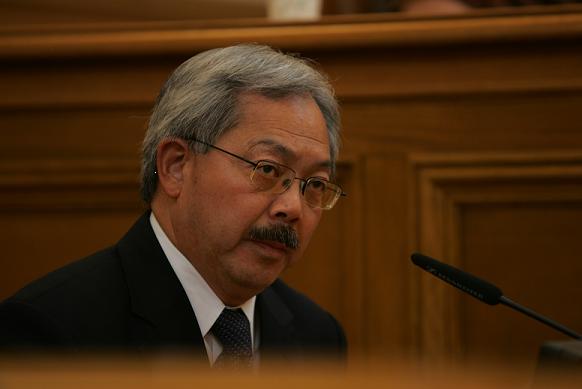
After Sheriff Ross Mirkarimi endured about four hours of questioning in his official misconduct proceedings, mostly from Deputy City Attorney Peter Keith, Mayor Ed Lee took the stand a little after 1pm. But just as Mirkarimi attorney Shepherd Kopp was beginning to pin Lee down on the selective manner in which he decided to launch these unprecedented proceedings, the commission suddenly announced the hearing was being suspended and the room would need to be cleared immediately.

There is speculation that there was a bomb threat or other security emergency, but officials have so far offered no explanation for the dramatic development or whether the hearing would reconvene today. Yet the room is still half-filled with journalists and audience members, some speculating that that the clearing of the room was simply an effort to get the unusually grim-faced Lee off the hot seat.

Kopp’s questioning included pointed questions about whether he consulted any members of the Board of Supervisors before deciding to bring official misconduct charges against Mirkarimi in March. The city’s objection was overruled after Kopp noted that the supervisors will ultimately decide Mirkarimi’s fate. Forced to answer under oath, Lee said no, he didn’t speak to any supervisors before filing charges.

But progressive activist Debra Walker says Sup. Christina Olague — women who are close political allies and speak regularly — has repeatedly told her that Mayor Lee asked her opinion before filing the charges. If true, that would mean Mayor Lee committed perjury, which is a felony. Yet as reporters confronted Olague outside her office, she denied ever speaking with Lee about the case and then barricaded herself in her office.

When the reporters lingered and persisted, she finally emerged, reiterated her denial, refused to speculate about why her friend Walker would make that claim, and said, “We’re not allowed to discuss this matter with anyone before it comes to the board…I may have to recuse myself from voting on this.”

It was unclear why she thought recusal might be necessary, but if she does that would hurt Lee’s effort to get the nine votes on the board needed to remove Mirkarimi.

We’ll have complete analysis of the testimony and other developments in next week’s Guardian.


Abs! Abs! Abs! And a few other new movies…

0

As a nation reacts with faux-surprise to the news of TomKat’s demise, one question remains: what movie to see this weekend to ease the faux-pain? You could ogle Magic Mike‘s ludicrously luscious abs (review below); guffaw in spite of yourself at Family Guy creator Seth MacFarlane’s big-screen leap, Ted; or suffer through Woody Allen’s latest, To Rome With Love (a big reason I won’t be seeing it: Dennis Harvey’s review).

You could get in line for The Amazing Spider-Man, which I have seen but am not allowed to whisper a word about until its opening Tuesday, July 3. Ahem.

Or, you could hit up the Roxie, which is opening both a strange nugget of sci-fi-ish weirdness and a Beat-gen classic (and while you’re there, pick up tickets for the theater’s July 6 kung-fu double feature). Also of note: Canadian Léa Pool’s eye-opening documentary about “breast cancer culture.” Reviews below.

OR, you could get a jump start on the holiday by watching the most patriotic movie of all time, probably screening on a basic cable channel as you read this. Welcome to Earth!

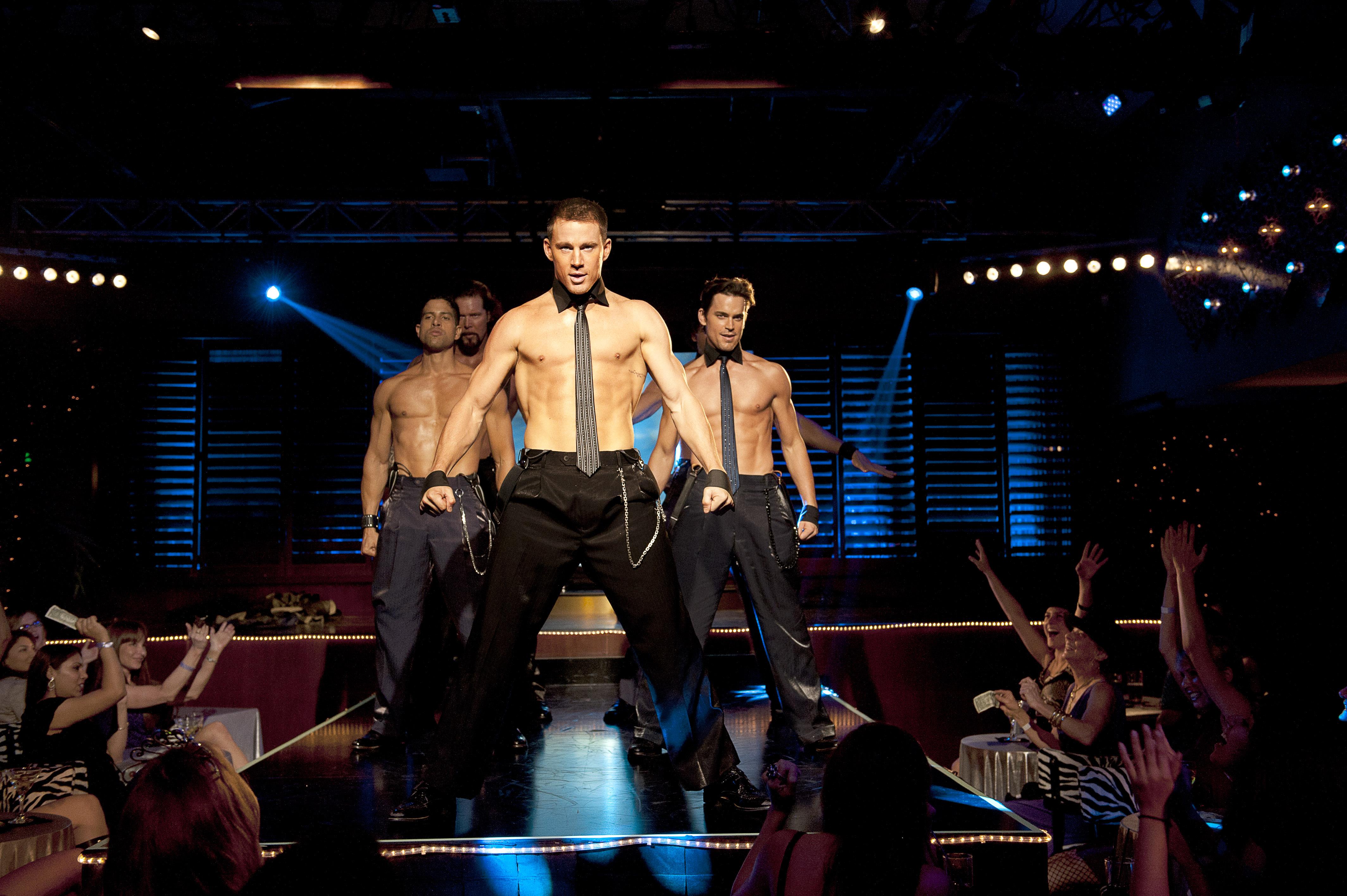
Magic Mike With conservatives continuing to hammer away at the reproductive rights that we all took for granted, just so they can reset the time machine for the Eisenhower age, it speaks volumes that red-blooded American women are so excited about this movie. Their desire-slash-gaze continues to be marginalized, while throwback pinups and chesty manscapers continue to shoot come-hither looks to the dudes, both straight and gay. That might be why director Steven Soderbergh harks directly to the then-new freedoms of the ‘70s with the opening shot of his male stripper opus: the boxy old Warner Bros. logo, which evokes the gritty, sexualized days of Burt Reynolds, Raquel Welch, and Joe Namath posing in pantyhose. Was that really the last time women, en masse, were welcome to ogle to their heart’s content, pre-AIDS, pre-teen abstinence? That might be the case considering the outburst of applause when a nude Channing Tatum rises after a hard night in a threesome, in Magic Mike’s first five minutes.

Ever the savvy film historian, Soderbergh toys with the conventions of the era, from the grimy quasi-redneck realism of Reynolds’ ‘70s movies to the hidebound framework of the period’s gay porn, almost for his own amusement, though the viewer might be initially confused about exactly what year they’re in. Veteran star stripper Mike (Tatum) is working construction, stripping to the approval of many raucous ladies and their stuffable dollar bills, and jumping in the sack with psych student Joanna (Olivia Munn). He decides to take college-dropout blank-slate hottie Adam (Alex Pettyfer) under his wing and ropes him into the strip club, owned by Dallas (Matthew McConaughey, whose formidable abs look waxily preserved) and show him the ropes of stripping and having a good time, much to the disapproval of Adam’s more straight-laced sister Brooke (Cody Horn, daughter of Warner Bros. president Alan Horn). Really, though, all Mike wants to do is become a furniture designer.

Boasting Foreigner’s “Feels like the First Time” as its theme of sorts and spot-on, hot choreography by Alison Faulk (who’s worked with Madonna and Britney Spears), Magic Mike takes off and can’t help but please the crowd when it turns to the stage, with Tatum and McConaughey filling out the none-too-challenging narrative and their sparsely sketched characters where they can. Unfortunately the dour, chemistry-free budding romance between Mike and Brooke sucks the air out of the proceedings every time it comes into view, which is way too often. The ladies in the audience will also be frustrated that this wasn’t, say, a male version of Frederick Wiseman’s, ahem, penetrating 2011 Crazy Horse and certainly less of the thrill ride they might have been promised. (1:50) (Kimberly Chun)

Beyond the Black Rainbow Sci-fi in feel and striking look even though it’s set in the past (1983, with a flashback to 1966), Canadian writer-director Cosmatos’ first feature defies any precise categorization — let alone attempts to make sense of its plot (such as there is). Arboria is a corporate “commune”-slash laboratory where customers are promised what everyone wants — happiness — even as “the world is in chaos.” Just how that is achieved, via chemicals or whatnot, goes unexplained. In any case, the process certainly doesn’t seem to be working on Elena (Eva Allan), a near-catatonic young woman who seems to be the prisoner as much as the patient of sinister Dr. Nyle (Michael Rogers). The barely-there narrative is so enigmatic at Arboria that when the film finally breaks out into the external world and briefly becomes a slasher flick, you can only shrug — if it had suddenly become a musical, that would have been just as (il-)logical. Black Rainbow is sure to frustrate some viewers, but it is visually arresting, and some with a taste for ambiguous, metaphysical inner-space sci-fi à la Solaris (1972) have found it mesmerizing and profound. As they are wont to remind us, half of its original audience found 1968’s 2001: A Space Odyssey boring, pointless and walk out-worthy, too. (1:50) Roxie. (Dennis Harvey)

http://www.youtube.com/watch?v=l5TDkXnycrk

The Connection The first re-release in a project to restore all of quintessential 1960s American independent director Shirley Clarke‘s features, this 1961 vérité-style drama was adapted from a controversial off-Broadway play by Jack Gelber. Set exclusively in a dingy Greenwich Village crash pad, it captures a little time in the lives of several junkies there — many off-duty jazz musicians — listlessly waiting for the return of their dealer, Cowboy. To mimic the stage version’s breaking of the fourth wall between actors and spectators, Clarke added the device of two fictive filmmakers who are trying to record this “shocking” junkie scene, yet grow frustrated at their subjects’ levels of cooperation and resistance. With actors often speaking directly to the camera, and all polished stage language and acting preserved, The Connection offers a curious, artificial realm that is nonetheless finally quite effective and striking. A prize-winner at Cannes, it nonetheless had a very hard time getting around the censors and into theaters back home. Hard-won achievement followed by frustration would be a frequent occurrence for the late Clarke, who would only complete one more feature (a documentary about Ornette Coleman) after 1964’s Cool World and 1967’s Portrait of Jason, before her 1997 demise. She was a pioneering female indie director — and her difficulty finding projects unfortunately also set a mold for many talented women to come. (1:50) Roxie. (Dennis Harvey)

Pink Ribbons, Inc. This enraging yet very entertaining documentary by Canadian Léa Pool, who’s better known for her fiction features (1986’s Anne Trister, etc.), takes an excoriating look at “breast cancer culture” — in particular the huge industry of charitable events whose funds raised often do very little to fight the cease, and whose corporate sponsors in more than a few cases actually manufacture carcinogenic products. It’s called “cause marketing,” the tactic of using alleged do gooderism to sell products to consumers who then feel good about themselves purchasing them. Even if said product and manufacturer is frequently doing less than jack-all to “fight for the cure.” The entertainment value here is in seeing the ludicrous range to which this hucksterism has been applied, selling everything from lingerie and makeup to wine and guns; meanwhile the march, walk, and “fun run” for breast cancer has extended to activities as extreme (and pricey) as sky-diving. Pool lets her experts and survivors critique misleading the official language of cancer, the vast sums raised that wind up funding very little prevention or cure research (as opposed to, say, lucrative new pharmaceuticals with only slight benefits), and the products shilled that themselves may well cause cancer. It’s a shocking picture of the dirt hidden behind “pink-washing,” whose siren call nonetheless continues to draw thousands and thousands of exuberant women to events each year. They’re always so happy to be doing something for the sisterhood’s good — although you might be doing something better (if a little painful) by dragging friends inclined toward such deeds to see this film, and in the future question more closely just whether the charity they sweat for is actually all that charitable, or is instead selling “comforting lies.” (1:38) (Dennis Harvey)

Appetite: Spring weekend in Los Angeles yields intriguing tastes

0

I recently returned to my old SoCal stomping grounds for yet another long weekend. This time I stayed at funky, restored motel, The Farmer’s Daughter, gazing over a pool filled with giant rubber duckies, the hotel’s birds greeting me each morning in the lobby. Colorful and quirky, the hotel (with welcoming, engaging staff) is a worthwhile home base, ideally located across the street from the original LA Farmers Market. You won’t find farmers here, rather, it’s a permanent, open air mall of food purveyors.

Though not always gourmet, a few newcomers add foodie cred to the market. However, I hope to never see the demise of old school diners, pie shops and vendors selling unnaturally bright red popcorn and the like – it’s a charming slice of LA history.


On the newer side of things, Short Cake is one of the top Farmers Market destinations. I spent every morning there, happily downing shakeratos ($5 – four shots of espresso shaken with ice and simple syrup) and cappuccinos from one of my favorites, Verve Coffee of Santa Cruz. SF local TCHO chocolate shows up in Short Cake’s mochas, while Amy Pressman’s baked goods are among the best in all of LA.

She trained at Spago with friend and partner Nancy Silverton (Mozza, Pizzeria Mozza). At Short Cake she crafts ridiculously good eats like a curry raisin scones or bacon-cheddar-three chili croissant bread pudding. I rarely repeat places, but this one was worth returning to for breakfast three days in a row.

Another pleasing return this trip? A sunny, playful lunch at Roy Choi’s A-Frame, which I reviewed soon after it opened last year and still find an affordable winner.

BIERBEISL, Beverly Hills

I’m a sucker for cuisines done well, particularly the less commonly seen like Scandinavian, Eastern European or Burmese. I don’t get enough Austrian food. The new BierBeisl, just off Rodeo Drive in Beverly Hills (though not at all like Rodeo Drive – instead, it’s casual, spare and cozy), is one of the better Austrian restaurants around.

Starting with a cool BierBeisl carpaccio, thinly sliced pork roast is delicately doused in a Styrian Gold (Austrian pumpkin seed oil) vinaigrette – a unique, elegant starter. Assorted Austrian charcuterie ($18) and cheeses (add $10) are a brilliant example of the best to come out of the country, vivid with house spreads and rustic rye and pretzel breads.

There’s modern, fresh dishes like seared lamb loin with goat cheese polenta (the most expensive dish, a pricey $36), but I veer towards the traditional, like Vienna Schnitzel ($19-25 for pork, turkey or veal) garnished with lemon and lingonberries plus choice of side: potato salad, roasted parsley potatoes, fries, mixed green salad. House sausages from their sausage menu are a highlight, particularly a Swiss cheese-infused Käsekrainer ($10), lightly peppery and similar to a Polish sausage, while a traditional bratwurst with sauerkraut ($9) likewise satisfies.

Sausages come with a slice of rustic bread and dollops of tarragon mustard and fresh horseradish. The bratwurst is particularly zippy with the Radler Grapefruit: half Stiegl Goldbräu beer, half all-natural grapefruit soda ($6 for 10 oz.; $8 for 16.9 oz.)

Something unusual behind the bar? Reisetbauer Austrian Whisky. Yes, Austrian whisky – distilled in copper pot stills from malted barley, aged in Chardonnay and Trockenbeerenauslese oak wine casks. I appreciated the rogue, hearty spirit of this whisky, lively with chocolate, caramel, hazelnut, bread.

FORMOSA, West Hollywood

Formosa is a Hollywood classic bar/restaurant since 1925 with a storied past. There’s John Wayne’s regular booth which was extended a few feet to hold his long frame when he’d crash after a few drinks. Stars like Bette Davis or Dean Martin would take a cocktail break in between filming at the studios next door (once Pickford-Fairbanks Studio and now The Lot), connected to Formosa by underground walkways. Heavy on history and ghost stories of famed patrons whose photographs line the walls, Formosa has not been known for quality food or drink for years.

But this is not your mama’s Formosa. Though still slowly undergoing its transformation (including mischievous new menu offerings like a fried, spicy peanut butter sandwich), visiting the bar a few times in April I witnessed new bar manager Kate Grutman (previously at Sotto) refreshing the menu and bottle selection – not with fussy cocktails but with well-crafted, playful turns on the likes of a banana daiquiri, aka John Cazale ($10), the secret ingredient being a Fernet rinse, adding a minty, herbal layer. Her Bloody Mary twist is brilliant. Duck Down ($11) is Akvinta Vodka washed with duck confit, mixed with Vince’s original Formosa Bloody Mary mix, lime, Siracha hot sauce, and — wait for it — pickled gobo root (crisp, sweet, and earthy, it’s a member of the burdock root family). I tasted the washed vodka on its own: savory confit imparts a meaty, lush, joyously decadent spirit. It makes for a superior Bloody Mary.

Grutman upgrades dive bar favorites with quality ingredients, as with the Formosa Sour ($9), essentially an improved Midori Sour made from her house Midori liqueur: French honeydew, sugar, orange flower water and lychees with a hint of green food coloring to maintain the neon spirit of the junk food liqueur. Start with an aperitif of The Seven Year Itch ($10), referencing Marilyn Monroe’s potato chips and champagne scene in the film – they go one step further serving housemade chips with a cocktail of bubbles, Cynar, sugar, cherry liqueur and lemon. A perfect finish is Joan Crawford’s Chained ($9), essentially a Sherry Flip with Harvey’s Bristol Cream, Punt e Mes sweet vermouth, garnished with cinnamon. Creamy and savory, it’s dessert.

Grutman is clearly having fun with this menu – and drinking it is likewise a pleasure. Her grandfather was once a Formosa regular so she clearly maintains respect for the unique history of the place, studying old menus, celebrity clientele and films they made at the studios next door, which she’s naming cocktails after. Though there are minor updates happening throughout the building, the place retains its musty, classic Hollywood charm with dim lighting, red booths, rooftop bar, and circa 1930’s Chinese decor. You could still call it a dive but one where you don’t have to check taste at the door. I love witnessing one of the remnants of Old Hollywood reinvent itself while retaining its rich character, ready for more decades ahead.

LUKSHON by Sang Yoon, Culver City

Friends and fellow reviewers have found Lukshon http://www.lukshon.com/read uneven. In my experience, there were a couple brilliant dishes intermingled with a couple disappointments, though my overall meal was strong. I’d return.

The outdoor patio is a mellow alternative to a chic but cacophonous dining room. On a gorgeous LA night, the patio, fronted by a modern rock fireplace, becomes an urban respite.

Attentive, relaxed service made me immediately a fan of Lukshon, while a menu of single origin teas (from San Francisco’s special Red Blossom Tea Co.) and expertly-prepared cocktails confirm the restaurant’s “whole package” status. Asian twists on classic cocktails work, like a vividly tart Lukshon Sour ($11 – Michter’s Rye, lemon, tamarind, palm sugar, kumquats), a smoky Fujian Cure ($11 – Isle of Skye 8yr Scotch, lemon, galangal root, lapsang souchong black tea), or the savory, martini-spirited Formosa ($11): Ethereal gin, Lillet Blanc, atomized mizhiu tou (Taiwanese rice wine), and ginger pearl onions.

Green papaya salad ($9) was a less-than-pleasing version of the classic Thai salad, tasting oddly funky though ingredients were fresh. Chiang Mai curry noodles ($13) read as an enticing list of ingredients (coconut, chile, tumeric, lemongrass, chicken, prawn, yu choy, rice noodles), but came off a tad bland though still satisfying.

The kitchen excelled, however, with fantastic sweetbreads fried “orange chicken” style ($11) in a sweet-sour orange sauce, tender and tossed in scallion, ginger, and pickled lettuce. I’m dreaming of returning just for this dish. A side of yu choy ($7 – a Chinese vegetable), cooked in shaoxing wine and garlic with savory, aged ham is quite a pleasurable way to eat your greens. Short rib rendang ($17) is like the ultimate meatloaf, one cooked in malay spices, red chile lemongrass rempah (a spice paste), drizzled with coconut cream. Sigh.

A simple dessert of flan-like palm sugar caramel custard layered with rice krispies is a delicate finish, with a side of candy cap mushroom ice cream. Lukshon is trendy, yes, but talented chef Sang Yoon hints at the joys of California dining, where our dense Asian cultures and year-round, unparalleled produce combine with classic European cooking technique in inventive dishes.

ink.sack, West Hollywood

Top Chef star Michael Voltaggio smartly opened a sandwich shop half block from his casually hip fine dining restaurant ink., cheekily named ink.sack. Sandwiches come on the mini side at a cheap $4-7, though big enough that I’m unable to finish two. I wish all sandwich shops offered mini versions to vary tastes – and had staff as friendly as ink.sack’s.

Miso-cured albacore tuna is dubbed “spicy tuna” though I could have used more Sriracha mayo to make the sandwich actually spicy and offset a bit of dryness to the tuna. I delighted in sandwiches like The Jose Andres, aka “The Spanish Godfather”, a tribute to the man himself (of The Bazaar, one of my top LA restaurants), filled with Serrano ham, chorizo, and Manchego cheese. But my favorite is a twist on a Reuben with thinly shaved corned beef tongue, Swiss, sauerkraut, and Russian dressing.

EVELEIGH, West Hollywood

True: Eveleigh is the moneyed hipster’s hangout, from a bone marrow, charcuterie-heavy food menu to craft cocktails. But it stands out with a gorgeous setting off a trendy stretch of Sunset Boulevard and quality food and drink. You first pass through the front patio, green with trees and astro turf, into an open dining room with a center bar and ubiquitous fireplace, animal heads and book-lined, gastropub décor. The back of the restaurant is a huge patio covered in plastic with LA views. The space enchants, while my perch at the bar interfaced with busy, disengaged (but still professional, mannered) bartenders.

Though I’ve seen the like of these dishes countless times over the years, each one was well-executed and gratifying, whether bright crushed peas, mint, almonds, Arbequina olive oil and burrata cheese ($12) or a juicy, medium-rare Eveleigh burger (expensive at $19) topped with fontina cheese, pickles and tomato-chorizo relish.

Cocktails ($12) likewise are vivid, balanced and worth a stop on their own. Though, like a thousand cocktailian bars these days, they craft fine, spirituous classics, I’m most pleased with the farm fresh, seasonal side of the menu where they shine with fresh California ingredients and drinks like a Lucky Louie: rhum argicole, kumquats, star anise, ginger, fresh lime.

CURRYWURST, Mid-City West

I “heart” currywurst, that Berlin specialty of grilled dogs doused in German curry. Add chips (fries) if you wish. Currywurst, a few steps from my Farmers Daughter hotel base, is an affordable winner in the currywurst realm (like Berlin Currywurst in Silver Lake). With housemade sausages (my tops is the Hungarian pork) topped with satisfying curry (red German curry is akin to an amped-up, curry laden ketchup), friendly staff and cheap prices make this an ideal snack or lunch.

POUR VOUS, Mid-Wilshire

My bar disappointment this visit was Pour Vous, a sexy, French-influenced den with gorgeous décor, particularly a sunken, circular section with fireside seating. I thrilled to a French-heavy spirit menu highlighting Calvados, absinthe, Armagnac, Cognac. In theory, this could be a dream bar – an underdone concept I’d be thrilled to see well-executed. Maybe it is better early on a weeknight or depending on the bartender?

But on a Friday near midnight, it’s cacophonous, mobbed and irritating. The elegant space is dominated by well-dressed, middle-aged guys with young, blonde girlfriends (sporting breast implants, of course) with a pick-up scene of well-heeled 20-40-somethings on the prowl.

Though such a scene is always irritating (that cliché LA, Vegas, Miami feel), the clash of this crowd in such a romantic setting would be slightly lessened if drinks were excellent. At $14-15 a pop for many cocktails, they should be stellar.

Though it sounded amazing, a medicinally sweet, cloying Le Samourai ($14 – Armagnac, framboise, rhubarb, “umami”) was virtually undrinkable, while a Vadouvan Lassi ($15) could have been brilliant with rhum agricole, lime, coconut, falernum, Vadouvan curry and bitters, but ended up tasting like bland, minimally spiced milk on ice, the curry and the agricole lost in the milk. Tasting my friends’ drinks didn’t get me much further, while disengaged bartenders and a costly bill confirmed just how unsatisfying the entire experience was. I left convinced this is not so much a cocktail-spirits aficionado’s destination as a meat market dressed in pretty clothes.

Subscribe to Virgina’s twice-monthly newsletter, The Perfect Spot, www.theperfectspotsf.com

Art breakthroughs and country music with Sonny Smith

0

Sonny Smith’s dedicated yet freewhelin’ attitude towards life and art have brought him to his ninth record release this week, Longtime Companion (Polyvinyl Records), with his band the Sonny & the Sunsets. Yes, amid traveling to Central America, undertaking the sprawling “100 Records” art project, writing and performing monologues, and providing scripts for theater and film, Smith found the time to record yet another album.

A longtime San Francisco music scene fixture, Smith is now giving the North Bay a try, specifically San Rafael, with his 8-year-old son. That said, Smith is nowhere near slowing down on his prolific cycle of creativity. His new record has a diverse, country edge. The title track from Longtime Companion features enough flute-work to feel reminiscent of Nick Drake, while the track “Year of the Cock” has a straight-up Johnny Cash vibe.

I spoke to Smith over the phone about his album release, songs as comics, and how having a family has changed his outlook as an artist. Sonny & the Sunsets play Amoeba Music San Francisco tonight:

SFBG How did your time in Central America affect your songwriting and creative influences?

Sonny Smith It was the first time I had my own breakthrough. I wrote a screenplay. I was sitting around playing guitar, trying out songs, and the screenplays became songs. I began writing songs that were linear stories with characters and plots and that stuck with me for years – it started there.

http://www.youtube.com/watch?v=WV70ZV0bX1w

SFBG I read in an interview that after your “100 Records” project ended, you were interested in undertaking another huge project called “Record Plant” – are you still planning to get back to that?

SS Yes I have been thinking about that but it’s morphed into a project called “Protest Factory.” People would come make protest signs, like posters, and musicians would make songs to go with the signs. I would like the poster-making to be open to the public, not just artist friends such as musicians.

SFBG Do you visualize your songs in images, like the record covers musicians made for your project? Or is storytelling your main focus?

SS They go together: sometimes I draw comic panels first for a song idea, like a storyboard. It is like making a little mini movie, I draw it out and fit it all together. Sometimes in the end I discover it’s actually not a song, it’s a visual thing. It is a strange, weird process.

SFBG Did the recording process of the new album feel like a breeze compared to the “100 Records” project?

SS It was very casual, with a couple of friends, when we had time. Actually the “100 Records” project was pretty spread out, so it was fairly casual as well. This time around it was definitely beer cans and afternoons, no uptight studios and all that shit.

SFBG Do you make a point of creating theme albums or does a vibe just strike you as you write?

SS It’s organic. I don’t set out to make a themed record, but songs do come in groupings. It’s natural that you write a few songs and they all share a kind of theme. After around five or six songs, you start to see what it is, and that can inform the rest of the record a little bit.

I didn’t set out to make a country record, but since three or four country songs came out, once I had enough, I said ‘Oh yeah, this is definitely a country record.’ Then I decided to work on more country songs because then I knew I had a record. It was not preconceived – it’s midway through that you start to notice a theme.

SFBG How do you decide what will become a script, and what will become a song?

SS You embark on something, and at some point it reveals itself as what it really is and should be – a lot of things change midstream. For example, recently I started out trying to make a novel, and then I realized it just wasn’t meant to be a book; at some point I couldn’t force it, I could see that is what it is.

I did a play-monologue type thing this year. At first it began as comic books, but at some point I realized it was more of a monologue. I try not to deny it too much, and instead let it be what wants to be. My work does change a lot – if a song does not work for whatever reason, for example, then often I realize it is meant to be a poem. On the other hand, if a poem does not translate into a song, then I let it be what it is.

SFBG How did you end up working with Miranda July?

SS I met her when she was making her first movie [Me, You and Everyone We Know] and she read this cool story over music for a project I was working on. We only worked together for an afternoon and sent a few emails back and forth. You can’t really say you know someone or that it was much of an experience from that amount of interaction – well except we did go to Africa together for a brief love affair. [laughs]

SFBG Any other artists you’d love to work with?

SS One person I was thinking of recently is basically an intangible goal: when I was watching Moonrise Kingdom I was thinking that if I met Wes Anderson, I would see if he wanted to make a sci-fi movie with me. It’s unlikely, but you never know!

SFBG What is one really memorable moment of inspiration or just something that really stands out over your career so far?

SS There are great moments where you feel like you have broken through something – a personal breakthrough, where you did something you had in mind. If I happen to be with other people when that happens, it is exciting. When I was in Central America it was a pivotal moment where I said ‘What is being made here? This is really cool!’

The “100 Records” project came about because the visual artists – that ended up making the record covers –  were making covers that were going to be sketches inside a book. Then the art eclipsed the book idea. It was scary, I thought ‘Oh man, I have to do this?!’ Exciting too. I think it’s good to get in over your head, so you have to hike out, as long as it’s not too hard.

http://www.youtube.com/watch?v=gTxChvAp47U

SFBG Do you have a particular place where you’ve enjoyed performing most out of all your travels thus far?

SS
The Make-Out Room feels like home. [Also,] we have played at a grocery store in Portland, right next to the broccoli. There was no sound system or stage, I just know the manager and we enjoyed playing there.

SFBG What made you choose San Francisco as your home base, and what’s your take on the current Bay Area music scene?

SS I was born here and left for a while – but when I came back, it was more like coming home. I don’t know if I would be staying for as long if it wasn’t for my 8-year-old girl. I try not to think about it too much. It’s an exciting music scene – but I think it has always been exciting and always will be, some years it just gets more attention than others.

SFBG
How has having a family changed your approach to making art?

SS In the earlier years before they go to school, you have to exploit the little bit of time you have to yourself. It can help in a way, because once you have obstacles it actually makes your brain synapses work – you create solutions. If I was rich and lived in some pad and could sleep in until noon every day and lounge around a pool, that would not be conducive to being creative. Maybe that’s why often when people make that much money, they’re not as creative anymore. You need a balance. Kids are creative and much more free, so if you let that rub off on you at all then you’ll be effective.

Sonny & the Sunsets
Fri/29, 6pm, free
Amoeba Music SF
1855 Haight St.
(415) 831-1200
www.amoeba.com

Ed Lee gets frisky

33

I knew Mayor Ed Lee was going to be more friendly to developers that I would have liked, and I knew he’d be a tough sell on new taxes, but I didn’t expect to see him talking about a program that has racial profiling and civil liberties issues written all over it.

Yeah, we could find some weapons if we simply gave up all rights to privacy. Yeah, if we put a metal detector on Market Street and strip-searched everyone who passed by we’d find some contraband. But seriously — I don’t think even my crazy trolls think this is a good idea.


Is the Obamacare ruling good news?

33

Chief Justice John Robert’s atypical alignment with the left of the bench today led the Supreme Court to uphold most of the Affordable Care Act—a move generally lauded by liberals. But we spoke with a number of progressives who see Obamacare’s victory as solely a victory for the corrupt health insurance industry, and just another step off the path to a successful single-payer solution.

“This bill was written by and for the health insurance industry,” Clark Newhall,a physician and lawyer who is executive director of Utah’s Health Justice, told us. “It’s always been a bailout. It creates a huge new market of people who are forced to buy a shoddy product from a smarmy industry.”

Newhall said insurance industry execs constantly get $200,000 bonuses while health insurance premiums increase two or threefold. The industry found “accomplices in Obama and the Democratic Congress to do its bidding. It creates a government subsidy for these people so in essence this is simply a transfer of government money to the private insurance industry, similar to the bank bailout,” he said.

Many left-of-center Democrats, in fact, called on the Court to strike down the individual mandate that requires all Americans to either have health insurance or pay a penalty—the penalty the Court determined to be a tax, and thus Constitutional.

“Obama said this is the only way to cover everyone,” Russell Mokhiber, the founder of Single Payer Action who joined with 50 doctors to file an amicus brief with the Court rejecting the individual mandate’s constitutionality based on the Commerce Clause. “There are Constitutional ways to cover everyone. Single-payer already exists in Medicare for those over 65 and Medicaid for poor people. There’s a simple fix, which most of the western industrialized world has. The only way to control costs and cover everyone is single-payer,” he said.

According to Mokhiber, millions of people will still be left lacking insurance. He pointed to his electrician, a 63-year-old postponing a major operation until he can get Medicare in two years. “One hundred and twenty Americans die every day from lack of insurance,” he said.

Twenty-six million people in the country are currently uninsured, and the number is expected to grow even with the upholding of individual mandate, physician and congressional fellow Margaret Flowers told us. Although the ACA includes federal subsidies for some low-income people, many don’t make the cut. For example, employers with more than 49 employees are required to provide affordable care — but only for individuals and not their family members. In turn, the family members are no longer eligible for government subsidies, because a member of their household receives insurance from his or her place of work.

The SCOTUS’s rejection of the portion of Obamacare that took federal funds away from states that refused to expand Medicaid further places a burden on low-income Americans. “Upholding the requirement that individuals buy private insurance while allowing states to opt out of Medicaid expansion is the worst possible outcome,” author Gwendolyn Mink told the Institute for Pubic Accuracy today. “Achieving universal coverage by compelling low income Americans to purchase private insurance may beef up health industry profits but at the expense of people most in need of health care for all.”

Over at the Daily Kos, blogger Armando says the nature of the Roberts opinion could have more long-term detrimental effects on federal power in the future. In fact, he said, it’s “a shot across the bow to the Supreme Court’s New Deal jurisprudence that underpins our modern national government.” Rather than simply explain why the individual mandate qualifies as a tax, Roberts additionally took care to describe why it does not fall under the Necessary and Proper Clause or the Commerce Clause.

“Such a conception of the Necessary and Proper Clause would work a substantial expansion of federal authority,” warned Roberts, causing Justice Ruth Bader Ginsburg to question why he should “strive so mightily to hem in Congress’ capacity to meet the new problems arising constantly in our ever developing modern economy.”

The many lives of Baby Dee

0

Ohio bred singer-songwriter Baby Dee’s biography reads like a collage of about five people’s lives — five very different people. In her 59 years, she has been, among other things: a street musician, Coney Island sideshow act, tree surgeon, church organist, Gregorian chant enthusiast, and touring harpist for fellow transgender musician Antony Heggarty of the Bay Area’s Antony and the Johnsons. Now Baby Dee is living back in Cleveland and has significantly slowed her job-turnover rate, but not to worry — her big personality and sharp wit haven’t suffered for it.

In preparation for her show at Brick and Mortar Music Hall with Carletta Sue Kay this Friday, I caught up with Baby Dee to chat about her favorite SF tourist spots, Tony Bennett, and her upcoming projects:

San Francisco Bay Guardian
Happy Pride Month! Have you done anything to celebrate?
 
Baby Dee Hooray! Well, lets see… I’ve been playing the harp all dolled up in a fluffy red dress and big hair and make-up and singing songs about kinky grizzly bears in Mormon underwear. How’s that for a start?
 
SFBG Will you be doing any tourist activities while you’re in town?
 
BD I’ve always wanted to go to Alcatraz. Do they still do that?

http://www.youtube.com/watch?v=VRJIbvKy-1g
 
SFBG It’s been more than a year since your last album was released. Do you have anything new in the works?
 
BD I just did an album with Little Annie that comes out in October.
 
Also, I’ve started a band called The Big Bumble Bees. Remember the name. The Big Bumble Bees are going to be bigger than the Beatles. We’ve got big plans. We’re hoping to get Tony Bennett to roadie for us. We’ve already started composing a letter to him. We’ve got a good beginning but first impressions are everything and we want to win him over to the idea so we’re taking our time to make the letter perfect. It’s going to start like this.
 
“Dear Mr Bennett,
 
You don’t know us but..”
 
Pretty cool, huh? So far so good. We thought we might tell him that we got Barry Manilow lined up for the job  as well and that if he wants to do it he’ll have to compete with Barry in a fight to the death with Bowie knives. Can you imagine the publicity this would generate? I think it would be a real shot in the arm for both of them.
 
Our only worry is that while having Barry or Tony for our roady would greatly enhance our own prestige, we don’t want them to think it will diminish theirs. That’s why we haven’t finished the letter to Tony yet. We want to put it to him in the very best light. Perhaps your readership could help us with suggestions about how to win him over to the idea.
 
San Francisco is so close to Tony’s heart.
 
SFBG If there’s one thing readers should know before going to your show on Friday, what is it?
 
BD Lots of love songs.
 
SFBG Have you given up street performance for good or can we expect to run into you in a park sometime soon?
 
BD Well, it’s not like I didn’t have heaps of fun out there. The streets of San Francisco were really good to me. But I’m a big girl now and I’ve put away the things of childhood — no more Shirley Temple dresses and 12-foot-tall tricycles for me. Besides, I couldn’t take the hills anymore.

Baby Dee
With Carletta Sue Kay
Fri/29, 8pm, $15
Brick and Mortar Music Hall
1710 Mission, SF
(415) 800-8782
www.brickandmortarmusic.com

Lakeview sit-in supporters protest school board meeting

6

Supporters of a sit-in at Lakeview elementary school and others protesting cuts from the Oakland Board of Education protested at the board’s meeting June 27 and held a “People’s Board of Education Meeting” discussing their vision for Oakland schools.

Much of the protest focused on cuts to the district’s budget for special education students. The cuts came as the school board faces statewide cuts to public education, the end of a bout of federal stimulus money, and a last-minute budget shortfall.

After passionate public comment, the board reversed their their previous decision to approve $1.7 million in special ed staffing cuts.

The cuts would have eliminated some Program Specialist positions. $2 million in cuts in transportation for special ed students still stand.

This comes weeks after special ed teachers and parents were surprised to learn of proposed cuts to special ed to make up for a budget an accounting error that the board discovered just weeks before the budget deadline.

“The timing of these proposals, the lack of staff and community input and the ever-changing information about the relevant budget numbers make these proposals especially troubling,” Cintya Molina, chair of the Community Advisory Committee for special education and mother of a special-needs second grader, said as part of the meeting’s public comment period.

Special education funding advocates partnered with organizers at the Lakeview School sit-in to show up in force at the board meeting, demonstrating a coalition of Oakland parents and teachers opposed to the cuts to schools in the 2012/2013 budgets.

Lakeview is one of five elementary schools that the board voted to close last fall.

A sit-in protesting Lakeview’s closure began June 15. Parents and teachers have organized a free summer program, the Peoples School for Public Education, on the school grounds. Some parents and teachers also sleep in a handful of tents each night to assure that the sit-in continues.

The decision to engage in civil disobedience came after months of work on the part of a coalition of concerned parents and teachers under the banner Save Oakland Schools.

“I probably spent 20 hours a week meeting, talking, emailing, researching, sending it, forwarding, board meetings,” recalls Joel Velasquez, one of the main parent organizers of the sit-in. “This is something that has been ongoing.”

But at a town hall meeting towards the end of the school year when parents had grown desperate, Velasquez said, the plan for a sit-in began to materialize.

“There was a moment where we went around and introduced ourselves and talked about what we were going to do. And I got really emotional; it was a tough moment for me.  And I said you know what, I don’t know what everybody else is going to do. And I’m not telling you what to do. But this is what I’m going to do. On the last day of school, I’m not going to leave. And I hope that people join me,” said Velasquez.

The Peoples School for Public Education teaches an average of 20 kids per day.

Julia Fernandez, a high school math teacher who taught at Castlemont High last year, has enrolled her 2- and 4-year-olds in the camp, as well tabling outside the school and helping with organization.

She says her children are too young for elementary school, but she’s worried about providing an education for them when they reach school-age.

“The public schools are working worse and worse,” Fernandez said, “because we’re moving all these resources from them. I think that affects the school where my kids would go. It’s likely that it’s going to probably be closed or turned into a charter school.”

One of the school’s slated for closure, Lazear elementary, will instead be turned into a charter school.

“I really have a passion about teaching students to learn skills that they’re going to be able to use to be productive people for our community. And to see how that’s been taken away, its very upsetting to me. I want to put a lot of energy into fighting against it,” Fernandez said.

Protesters at Lakeview plan to continue the sit-in indefinitely.

CPMC’s new numbers threaten St. Luke’s and the mayor’s deal

9

Can San Franciscans trust California Pacific Medical Center (CPMC) not to shutter St. Luke’s Hospital once the company gets what it wants from the city? And has the Mayor’s Office, in its desire to please the business community and building trades, accepted and promoted a bad deal that doesn’t adequately protect the city’s interests?

Those are some of the questions that arose Monday during a hearing on CPMC’s $2.5 billion, multi-hospital development proposal before the Board of Supervisors Land Use Committee when officials from the Mayor’s Office revealed that the development agreement they negotiated with CPMC might not be good enough to keep St. Luke’s open.

As we’ve reported, CPMC (a subsidiary of Sutter Health, a not-for-profit corporation that nonetheless has a well-earned reputation for profiteering and other bad corporate behavior) is seeking to build a 550-bed regional luxury hospital atop Cathedral Hill. In exchange, the development deal requires CPMC to rebuild St. Luke’s, a seismically unsafe hospital in the Mission District that is relied on by many low-income San Franciscans (as well as the city, which would otherwise have to shoulder more of that burden at General Hospital).

After years of stalled negotiations between CPMC and two consecutive mayors, Mayor Ed Lee announced a deal in March that would have CPMC build a smaller version of St. Luke’s (with just 80 beds) and agree to keep it open for at least 20 years as long as CPMC’s operating margins didn’t dip below 1 percent in two consecutive years.

Activists had criticized the deal as too small, too short, and without enough guarantees, but Mayor’s Office officials have consistently said they were confident it was enough to keep St. Luke’s from being shuttered. But now, based on new revenue projections offered by CPMC, even those officials have lost confidence in the deal and say it needs to be renegotiated.

“These new 2012 projections, while still showing CPMC will not breach the 1 percent margin, do not offer the same comfort level we previously had,” Ken Rich of the Mayor’s Office of Economic and Workforce Development told the committee.

The news hit like a bombshell, shaking the confidence of even supervisors who strongly supported the deal, such as Sup. Scott Wiener, who called it a “surprising, critical piece of information” and said, “It’s very, very important that this issue is quickly resolved.”

For supervisors who were already skeptical of the deal and CPMC – such as Sup. David Campos, whose District 9 includes St. Luke’s – it was further evidence that this was a bad deal that needed more work before being brought to the board. The Planning Commission has already approved the project and the full board was scheduled to consider it in just a few weeks.

“What does that say about the way the negotiation was done?” Campos told us. “How half-baked can something be? What have we done to verify the numbers that CPMC gave us? And what does this say about CPMC?…If the numbers on St. Luke’s aren’t accurate, how can we trust the rest of what they’re telling us?”

Yet during the hearing, when Campos tried to get reassurances from CPMC officials and requested that the board be allowed to review the company’s financial records, he was rebuffed and belittled by CPMC attorney Pam Duffy – who later tersely apologized for her comments after Committee Chair Eric Mar criticized them as “insulting to the board.”

Campos had questioned Rich about why the city was relying on CPMC rather than independently assessing the numbers. “Maybe if you had done an audit, you wouldn’t be in this position of being surprised by the numbers that were given to you,” Campos told Rich.

But Rich said “projections are guesses, we can’t ever guarantee that they are right,” noting that CPMC had revised its revenue estimates downward for the years after St. Luke’s would open (when it would be absorbing the high costs of construction), making its profit margin slimmer. “CPMC took a more conservative approach to forecasting the rate of increase in hospital charges as well as patient volumes in light of the greater uncertainty in health care finance,” Rich said.

So Campos asked whether the supervisors could review CPMC’s data. Rich, who has reviewed it, replied, “The conditions under which we were shown CPMC’s projections is that those are confidential.”

Campos noted that it is the board’s job to review and approval this deal to determine whether it’s in the city’s best interests, which shouldn’t simply involve trusting CPMC. “Why should the executive branch of the government see those numbers but not the legislative branch?” he asked.
“It’s really not our call,” said Rich, noting that he had no objections to the request.

But when Campos asked CPMC’s Duffy, she offered a legalistic refusal, and when Campos tried to explain his reasoning, she said, “I heard your speech a moment ago” and added, “this isn’t really a game of gotcha.”

When Campos said the board was simply exercising its due diligence over an important project. she said “nothing unusual or untoward has occurred here, and the suggestion that might be the case, I think it unfair.”

But Campos wasn’t alone in wanting more reassurance from CPMC, who supervisors, labor leaders, and community activists have criticized for its secrecy and bad faith negotiating tactics with both the city and its employee unions.

“This announcement is shocking, on a number of levels,” Board President David Chiu said at the hearing, noting that he had met with CPMC officials just days earlier and they hadn’t mentioned the new developments, instead assuring him that their operating margins were high and the deal protected St. Luke’s. “It’s not a great way to build the trust we’ll need to move this forward.”

Rich said he had learned of the new numbers 12 days earlier, drawing a rebuke from Campos and others who said the supervisors should have been notified earlier. But Rich said that he was hoping that the problem would be solved through negotiations with CPMC before the hearing, but that talks over the issue have so far been fruitless.

“We would have vastly preferred to have an agreement in hand,” Rich told the committee, reassuring the supervisors that the Mayor’s Office will not support the project until the St. Luke’s issue is resolved to its satisfaction.

But Sup. Malia Cohen criticized CPMC as an untrustworthy negotiating partner. “CPMC has an interesting corporate culture,” she said, noting that the company has repeatedly misled supervisors and community leaders, accusing it of being “disingenuous in its negotiations.”

Chiu emphasized that this is a make-or-break issue: “This is an escape clause that could allow St. Luke’s – and what St. Luke’s means to the city – to not be operational. So this is an incredibly important question.”

Campos said this latest episode only added to his suspicion that CPMC will play games with its finances to shutter St. Luke’s – whose construction must be completed before CPMC can build Cathedral Hill Hospital – once it gets the lucrative regional medical center that it really wants.

“How do we know they aren’t transferring money out of CPMC into Sutter in order to shut down St. Luke’s?” Campos said, adding that he wants to see a clear guarantee that St. Luke’s will remain open as a full-service hospital. “This deal, as far as I’m concerned, is not ready for prime time.”

Localized Appreesh: First Church of the Sacred Silversexual

0

Localized Appreesh is our weekly thank-you column to the musicians that make the Bay. To be considered, contact emilysavage@sfbg.com.

More than just a band, and beyond a tribute act, self-described local “cover cult” First Church of the Sacred Silversexual takes early David Bowie relics and shoots them out of a glitter-packed cannon. Essentially, they provide flamboyant DIY musical theater in an ode to the Thin White Duke and the shiny space cadet in us all.

Led by The Reverent Father Lysol Tony-Romeo, the sacrilegious Bowie church includes sermons and campy sing-along musical performances with choirs of freaky chanters performing cuts from the classic Space Oddity, along with Ziggy Stardustian tracks and far beyond, deep into the catalogue. For San Francisco, it’s part of a long and storied tradition of theatrical antics, performance art, and metaphoric drag. Oh no love, you’re not alone.

Year and location of origin: 2010, Suffragette City Transfer Station, Mission District.

Band name origin: The advanced enlightened state of attraction that transcends gender and centers upon sparkle alone.

Band motto: Wham Bam Thank You Ma’am!

Description of sound in 10 words or less: 12-person worship band delivering blasphemous sermons exalting David Bowie.

Instrumentation: Father Lysol Tony-Romeo (Lysol Tony-Romeo): vocals; Major Tom (Michael Carney): vocals; Uncle Sally (Jillian Dahhling):  vocals; Fancy Nancy (Aoife Davis):  vocals; Careless Cadence (Bryn Laux):  vocals; Alabaster Superior (Alison Niedbalksi):  keys, vocals; Hazy Deranged (Adam Dragland):  guitar, vocals; Akimbo Botswani (Jason Yeatman):  guitar; Lloyd (Ben Chambers):  bass; Raymond T. Gunn (Greg Maximov):  drums; Foxy Frankie Scandal (Teddy Raven):  saxophone

Most recent release: Bowie on Broadway!  The First Church talks Fame.

Best part about life as a Bay Area band: All the young dudes.

Worst part about life as a Bay Area band: All the young dudes.

First album ever purchased: The Rise and Fall of Ziggy Stardust and the Spiders from Mars.

Most recent album purchased/downloaded:  Ha.

Favorite local eatery and dish: The band only ingests cocaine, milk and white peppers, so anywhere that serves that

First Church of the Sacred Silversexual
Fri/29, 8pm, $10
Broadway Studios
435 Broadway, SF
Fecbook: Bowie On Broadway

A queerness in Harlem, finely revived

0

Visual alchemy, fabulous feminist story-telling, and something deemed “hyper-literate busking” abound at 2012’s Queer Rebels of the Harlem Renaissance fesitval, three nights of art and performance (Thu/28-Sat/30) by 21 LGBTQ African Americans.

Part of the 15th National Queer Arts Festival, Queer Rebels of the Harlem Renaissance continues the legacy of the droves of artists, performers, and activists who questioned stale societal standards in a myriad ways during the heyday of the New York City neighborhood’s 1920s and 30s creative blossoming: from sensual lyrics of Bessie Smith to the pointed poetics of Langston Hughes, the artists of the Harlem Renaissance continue to testify to the assertion that social causes are rarely separate and constantly progressing.

“The explosion of artistic, intellectual, and sexual freedom during the Harlem Renaissance created new possibilities,” explains Celeste Chan over the phone. She co-directs the performance series with Kali Boyce — together they’re known as the Queer Rebels. “We think that dialogue on race, gender, and sexuality grew naturally during the Harlem Renaissance because these were people’s real experiences, and what they wanted to create art about. We’re thankful for the elders and the artists who paved the way for us, whose shoulders we stand on.”

Queer Rebels of the Harlem Renaissance reinforces the idea that it is necessary to understand a past in order to create a future. Thus, paying proper homage to the Harlem Renaissance artists who opened the possibility for social change and activist dialogue, the performance schedule for Queer Rebels consists largely of dance, story-telling and readings, and music. Earl Thomas, Sista Monica, and “Drag King of the Blues” TuffNStuff operate within the jazz and blues traditions — however, the show also expands to mediums of artistic expression not so common in 1920’s America, such as political film,  contemporary music, and visual alchemy with appearances from the likes of short-filmmaker Crystal Mason, punk rock dancer Brontez Purnell, and visual artist Adee Roberson. 
(Check out the incredible-sounding lineup here.)

“Artists and queers are up against a lot, and have always been society’s outsiders, the ones who have and will lead the way,” says Chan, “Today, we are able to live unapologetically queer lives and create our own spaces because of the work that the Harlem Renaissance artists did.”

QUEER REBELS OF THE HARLEM RENAISSANCE

Thu/28.-Sat/30, 8pm, $15-$25

African American Art and Culture Complex

762 Fulton, SF.

www.queerrebels.com

Tickets:  www.brownpapertickets.com/event/246312


THEESatisfaction communicates its boldly cosmic agenda at the Independent

1

Amid the reign of Kanye, it can be easy to overlook the humble beginnings of hip-hop: a populist genre designed to be executed with minimal resources. Seattle duo THEESatisfaction’s reverence for this history was on full display at the Independent last Friday night, as they “turned off the swag” to deliver a remarkably unadorned performance, in support of the acclaimed awE naturalE, released earlier this year. Two microphones and a MacBook were all Catherine Harris-White and Stasia Irons needed to communicate their boldly cosmic agenda.

Taking the stage in matching leopard-print, Stas and Cat opened with the frenetic, Billy Cobham-esque “naturalE”, before easing into an expertly paced set, indebted to countless strains of black vanguard music: the astral thrust of Sun Ra and George Clinton; the buttery neo-soul of Erykah Badu; the political integrity of Last Poets; the loop-based hypnosis of J Dilla.

Musicians this boldly enterprising are notorious for massaging their egos, but conversely, Stas and Cat turned in an endearingly casual performance, devoid of hipster posturing and showbiz schtick. Everything, down to the synchronized dance moves, was imparted with the laid-back spirit of two best friends (or, in Stas and Cat’s case, lovers) goofing off in their living room.

Despite the relaxed vibe, the duo’s stage presence was incredibly refined, starting with their beautifully interlocking vocal techniques. Cat’s jazz-based vocal inflections provided the perfect foil to Stas’ rap verses, like the splash of milk in a cup of tea. “Deeper” was a highlight in this sense; revolving mainly around Stas’ rapping, Cat added subtle ornamentation, echoing syllables and completing phrases to create a swirling, intoxicating tremolo effect.

In a pleasant surprise, “Deeper” ended with a newly written, a capella outro, before transitioning seamlessly into the grooving, yet subdued, “Needs.” While the (predominantly female) audience went wild, nothing could’ve prepared them for the hedonistic centerpiece of awE naturalE, “QueenS”. A much needed, diversionary moment on a record abound with blistering social criticism, it entitled Cat to her Donna Summer moment of the night. The crowd reacted ecstatically, singing along to her chants of, “sweat in your cardigan!” while doing exactly that.

The remainder of THEESatisfaction’s set balanced material from awE naturalE, with cuts from their self-released That’s Weird (2008) and Snow Motion (2009). Clocking in at roughly an hour, it left the audience mostly satisfied, craving just a little more: an ideal balance that’s rarely achieved.

The “laptop set,” much like a solo singer-songwriter performance, is a difficult art to master. It takes a compelling personality to keep things interesting in such a minimal environment. On Friday night, THEESatisfaction showed a total command of their craft, never allowing their austere presentation to overshadow the richness of their creative vision.

Resisting the police state: Berkeley activists demand local control

17

Editor’s Note: This article supplements this week’s cover story on FBI surveillance

By Sasha Hippard

As the federal government battles presumed threats to national security in this post-9/11 world, once-important distinctions between local and national police agencies have been blurred. But as local officers get drawn into federal counterterrorism operations and immigration crackdowns, and as their departments beef up with tanks and other military hardware, citizens and civil libertarians are pushing back on the creeping police state.

In the last year, San Francisco, Portland, Ore., and other cities have set limits on the participation by local officers in FBI’s surveillance operations of law-abiding citizens. San Jose has refused to honor federal immigration holds, creating a model for other sanctuary cities. And in Berkeley, citizens and politicians have taken a deliberate approach to limit their police department’s cooperation with the feds on several fronts.

“I don’t think most people understand just how dramatically the balance between government power and individual liberties has shifted in the last 10 years,” says Shahid Buttar, executive director of the Bill of Rights Defense Committee, a Washington DC-based nonprofit that has worked with Berkeley, San Francisco, and other cities on the issue.

Local activist group Coalition for a Safe Berkeley, the city’s Peace and Justice Commission, and the ACLU of Northern California have asked the Berkeley City Council to bring police practices in line with local values and state constitutional standards.

They held a special town hall meeting on June 9 to discuss ways to limit the Berkeley Police Department’s cooperation with the larger police state, the latest step in a methodical political process that began last year (see “Policing the police,” 12/12/11).

Concerned citizens were joined by representatives from the Northern California Regional Intelligence Center (NCRIC), Berkeley Police Department, and the Berkeley Police Review Commission. The workshop highlighted how federal partnerships with local law enforcement take the power from the hands of the city and place it under the control of the federal government.

Activists urged the city to terminate its relationship with the NCRIC, a so-called “fusion center” that culls information gathered by local, state, and federal agencies in ways they believe violates the right to privacy that is enshrined in the California Constitution, at least until limits on the gathering and use of that information can be clearly established.

Like all fusion centers, NICRIC’s primary goal is to promote information-sharing between state and local government and various federal agencies such as the FBI, CIA, and Department of Homeland Security. Of particular concern are reports NICRIC issues about people who have caught the attention of authorities for one reason or another.

Suspicious Activity Reports, or SARs, serve as the primary source of information gathering for fusion centers, which ask law enforcement agents and civilians to report activity based on whether or not it would “rouse suspicion in a reasonable person.” NCRIC’s Mike Sean listed off a number of possible report-worthy actions that ranged from cyber attacks and theft to photographing a building and “questioning personnel beyond a level of curiosity.” SARs rely on the vague “reasonable suspicion standard” to determine whether or not there is criminal intent behind activities.

Buttar said many citizens assume that the federal police state excesses of old — such as the FBI’s notorious COINTELPRO program, which spied on and sabotaged people who were critical of the government — are no longer happening. But with technology making it easier to gather ever-more information about private citizens, “there’s even more reason to be concerned by this government surveillance now.”

State and local privacy protections, as well as court rulings interpreting them, generally require an “articulable criminal predicate” — or reasonable suspicion that the target is doing something illegal — before police agencies can conduct surveillance on people. 

But SARs flood local authorities with potentially false reports of criminal activity, opening the door to racial profiling and unwarranted surveillance and potentially pitting groups of citizens against one another, with implications that can last for years.

“What happens if my neighbor who really doesn’t like me makes a report and it makes it to the level of filing?” Berkeley City Council member Linda Maio asked at the meeting,  “How does that effect my future interactions with law enforcement?”

Civil libertarians say the answers to those questions are as unsettling as they are unclear, deliberately so, despite efforts to seek a fuller understanding on how the police state gathers and processes information.

“[The ACLU] has concerns about the plethora of information gathered by NICRIC” Julia Mass, an ACLU staff attorney, said at the hearing. She said police should be looking at reports of “reasonable suspicion of criminal activity, not reasonable suspicion of suspicious activity.”

The counterterrorism tactics taken on by local police forces are not limited to policy change. In Berkeley, a grant of $200,000 by the Department of Homeland Security’s Urban Areas Security Initiative (UASI) allowed the Berkeley Police Department to purchase a military-grade armored vehicle. This purchase went unnoticed by the City Council.

Berkeley Cop Watch, an all-volunteer organization that monitors police action, only discovered information about the purchase through a public records request. The police department’s request for the grant was a one-time cash request and therefore not presented to the council for approval.

While Police Chief Michael Meehan insisted the vehicle has “only defensive not offensive capabilities,” there is no difference between the tank in Berkeley and the tanks used by the military except that the weapons have been removed. As one audience member proclaimed during the meeting: “If they’ve got it, they’ll use it.”

The police chief went on to say that the decision to buy this vehicle was based on the “need to protect our officers” and an agreement between the city police and UC Berkeley Police Department has been made to store the tank on a campus with a history of clashes between police and peaceful protesters.

The purchase of the tank raises concerns not only about the increasing militarization of local police forces, but the lack of transparency in regards to agreements between federal agencies and local law enforcement. Sharon Adams of the Coalition for a Safe Berkeley said she feels “a level of betrayal that the police were doing this the whole time and we only found out through Cop Watch.”

The coalition seeks to terminate the relationship between Berkeley Police Department and UASI, which also funds NICRIC fusion centers. The increasingly close relationship between local police and federal agencies has had a particularly significant impact on immigration reform.

Through the Secure Communities database the federal government uses to track and hold detainees in local jails across the country, the Immigration and Customs Enforcement (ICE) essentially coopts local police to act as federal immigration agents.   works with local police authorities to target and detain suspected undocumented immigrants. The Department of Homeland Security has recently made ICE a requirement for all jurisdictions in the nation, but the increase in non-crime related deportations that have occurred have caused many communities in the Bay Area to resist the partnership.

In response, Assembly memeber Tom Ammiano has been pushing for the approval of the state-wide TRUST Act, which would allow communities to op-out of Secure Communities, undoing what Mass calls “the lynch pin between local law enforcement and federal immigration officials.”

The city is not reimbursed for the holding fees by the federal government and it unfairly targets individuals who are not be involved in any criminal activity. While the Coalition and ACLU recommend the Berkeley Police Department not enforce civil immigration detainers under any circumstances, the Police Review Commission suggests instead that enforcement would only occur where an arrestee has been charged with a serious or violent felony offense in the last five years.

Although the work session was intended to present Council members with enough information to vote on various motions of revision to the Berkeley Police Department’s mutual aid memoranda of understanding with federal agencies, no decisions were made during the later City Council meeting. All proposals will be revisited in September.

Appetite: Going Big at another menu-less bar

3

This week in the paper, Virginia Miller reviewed menu-less wonderbar Rio Grande. Below, her review of a second custom drink haven.

Big‘s name is somewhat of an oxymoron. This cozy space from the crew behind Jones is a mere few seats and when the bar is full at around 20-25 people, be prepared to wait at the door until space clears (they will text you when it does). After multiple visits, I continue to find the bar staffed by the talented Brian Felley (previously at Fleur de Lys and Garcon), a barback and one other bartender, Mo, who is recently here from burgeoning cocktail town Denver, having worked at the Squeaky Bean. Similar to the aforementioned Library Bar, there’s a small herb and produce spread here, while both bartenders are quite  adept at assessing preferences, taking time to craft you “just the thing.”

Vintage glassware makes sipping a pleasure, the bar lined with a thoughtful selection of spirits and bitter beauties I adore like Bittermens Amère Sauvage, even one I wasn’t familiar with: Salers Gentiane Apéritif. One warm night, fresh beet juice was radiant with Hirsch corn whiskey, habanero shrub for a gentle heat-vinegar accent, lemon, half a rim of paprika, salt, and black pepper. A real stunner of a cocktail utilized their tart, lively rhubarb syrup, mixing it with Plymouth gin, Aperol, Bitter Truth Creole bitters, Vya Whisper Dry Vermouth and a hint of fresh fennel juice. Refreshing as it was, the best part of the cocktail was that its layers unfold with one sip: tart, bitter, spice, floral, etc… Each as pleasing and subtle as the last.

During another visit they concocted a bright mix of Fidencio mezcal, reposado tequila, grapefruit, lime, dry vermouth and a fascinating mirepoix (celery, onions, carrot) syrup. I’d just tried the syrup earlier in the week as Felley’s first experimental batch, the onion hitting too strong (though I’m crazy about savory, funky cocktails), while a few nights later Mo added it to the aforementioned cocktail for delicate savory notes. I value their experimentation, hunting for the right match for each ingredient.

I’d been on the elusive hunt for their sweet corn fizzes which they recently tweeted about but are only available when sweet corn is in the house. My third visit was the charm. Mo mixed the subtle sweet corn (fresh off the stalk, blended into a liquid) with essentially a Cognac fortified wine, apple, lemon, a dreamy basil milk, a touch of  Lebanese liqueur Arak Razzouk and Zirbenz pine liqueur, shaken with egg whites and topped with Peychaud’s bitters. Soft and frothy, this refreshing imbibement hits subtly with sweet corn, then whispers of pine forest and anise from the Arak. Thankfully here I know I can expect something unique, complex, rewarding but without attitude or fussiness. Naturally, it takes a few minutes to craft each drink, and be prepared for cash only and $13 per cocktail, which adds up quickly.

They’ve only recently expanded from being open merely Thursdays through Saturdays to adding on Tuesdays and Wednesdays (opening at 6pm). If you are a cocktail aficionado, this bar offers a special experience. If you are not, don’t visit Big to try the same old thing (there’s plenty of nearby bars for that – please leave the minimal seats to the rest of us) – rather, be open and ready to have your whim of the moment met with fresh style. Big is just the sort of bar I fall in love with: romantic, welcoming, intimate, mellow – one where I can converse comfortably with bartenders and my companions while sipping a beautiful custom drink.

Big 

761 Post, SF

www.big-san-francisco.com

Subscribe to Virgina’s twice-monthly newsletter, The Perfect Spot, www.theperfectspotsf.com

No more fast food: Slow Sex Symposium proposes a love beyond capitalism

0

After a hectic Pride weekend, it’s about time to slow down. A Sat/30 performance-workshop (part of this week’s stellar This Is What I Want performance art fest — read Guardian theater critic Robert Avila’s enlightening interview with artistic director Tessa Wills here) should fit the bill nicely. Introducing “Slow Sex Symposia” and its curator, internationally-acclaimed writer and dancer Doran George. George is planning an afternoon exploration into alternative sexual practices, lifestyles, and unique relationships. Slow sex is a term the artist coined to serve as counterpoint to today’s fast-paced, commercialized notions of sex. Last week, George and I spoke about what it was like to work with a blockbuster lineup of artist, “the economics of queer desire,” and a childhood solo of  “Yankee Doodle.”

San Francisco Bay Guardian: Tell us about the slow sex movement. What makes it important?

Doran George: Slow sex is not a movement as far as I know. It’s a term that I coined for the symposium because I like the idea that communities of alternative sexual practice are engaged in the long-term process of cultivating a culture of sex that takes time, in contrast with the immediacy of practicing conventional ideas about sex. 

Setting up a good SM scene, negotiating non-monogamy, negotiating racist ideas about the sexuality of non-white bodies while still claiming the space for pleasure, these all take time. There is also a parallel [between slow sex and] the slow food movement, in the sense that I believe the radical pleasure community provides a model of sexual practice that is more nourishing, [similar to how] slow food is better than its fast equivalent. 

>>FOR MORE ON THE FESTIVAL, READ “ECONOMIES OF DESIRE”: ROBERT AVILA’S INTERVIEW WITH THIS IS WHAT I WANT‘S ARTISTIC DIRECTOR

SFBG: In your artist statement you reference accessibility to touch, conceptualizing new models of relationships, and the complexities of race in the sex industry. Can the slow sex movement move into mainstream and can queer forms of thought (around sex) be integrated into popular culture?

DG: There are many examples of alternative sexual practice entering mainstream culture. Unfortunately most of them are bitterly disappointing. Mainstream culture constantly needs new images and ideas to make it seem exciting, but at the same time it is usually committed to sustaining convention. Take Madonna’s use of SM imagery in the late 20th century as an example. Although some of the aesthetics were tantalizing, the bodies and constructions of gender were incredibly conservative. There were no sexy butch leather dykes on Madonna’s stage or in her videos. 

I think this is partly because the real power of alternative sexual culture is located in the fact that it is something you have learn and practice — it often entails carefully unpicking and rethinking relationships.. All of this takes careful work that is difficult for the fast consumer culture to contend with. In this sense I’m not sure that existing structures for the production and distribution of mainstream culture are very well designed for alternative sexual culture because radical sex depends upon local economy rather than global corporations. 

SFBG:  You are working with a blockbuster cast of queer artists, sex educators, and performers. What was it like working alongside all these influential queer people?

DG: I first heard about radical sex culture when I was in the fourth year of my dance training, nearly 20 years ago. Rachel Kaplan came to my dance academy and gave me a copy of More Out than In which was writing that came out of 848 space about the intersection between art, sex and community. 

A few years later I came to San Francisco from London with an artist’s grant to research diverse sexual cultures. It was 1999 and I was refusing to use gendered pronouns and regularly getting harassed on those big red buses for looking like a freak. When I first arrived in the Bay Area I felt like a queen. Susan Stryker showed me the hot-spots of transgender history and bought me my first\-ever burrito in the Mission. Pat (now Patrick) Califia and Matt Rice took me out for sushi. Annie Sprinkle gave me a pin badge that said “metamorphosexual” on it, and I met with Carol Queen and a host of other San Francisco folk. 

I was overwhelmed by the culture that had emerged in this city, the ideas and practices that people had pioneered, and the history that was being recorded. Returning to the UK I carried on making my own dance works that were influenced by the knowledge I had gleaned from people in the Bay. Being able to create a symposium that looks at how the unique sex culture of San Francisco has informed and been informed by the practice of art is therefore my own way of honoring the people and the gifts I was given as a young queer artists. 

SFBG: What does the term “the economics of queer desire” mean for you?

DG: I’m interested in how conventional economies of desire are queered, or how the queer dimensions of economies of desire become visible. Someone said to me recently that the extra-marital affair is the straight way to play. It made me laugh and struck me as a beautiful queering of heterosexuality, although Carol Queen’s Bend Over Boyfriend is still my all time favorite queering of straight sex.

SFBG: Where does art, desire, and sex intersect in your opinion?

DG: I don’t think that art, desire, and sex ever don’t intersect. Artistic practice has been involved in representing ideals of gender, desire and sex for centuries, and they inform the way that we practice sex. The symposium provides two different frames in which to think, one of them is

performance, and the other is sexual practice, but in reality these things are not separate. Having two frames is useful because it helps to start a conversation by giving us two different ideas to talk about: Performers make their work to represent or express something, and sex radicals do their practice to connect with people erotically (in all the different dimensions that the erotic can exist).

SFBG: How should attendees of the Slow Sex Symposia expect to walk away feeling? 

DG: I hope that attendees will walk away thinking about their feelings, and feeling about their thinking! I also hope their thinking and feeling moves in lots of different directions. My desire for the symposium is that it will provide a space for discourse about sexual and artistic practice to proliferate. A strong culture is one that can contend with diverse opinions being voiced.

SFBG: I enjoyed reading your bio on the This is What I Want website. You are quite an accomplished artist and scholar. Can you tell us something about yourself most people don’t know?

DG: My first major stage performance was a solo rendition of “Yankee Doodle” at the age of nine in the scout gangshow at the amateur dramatic theatre in a working class hosiery town in the British midlands. I don’t think the audience or I ever really recovered! 

Slow Sex Symposia 

Sat/30 noon-4pm, free with reservation

Center for Sex and Culture

1349 Mission, SF

www.theoffcenter.org

Conservative attitudes cost California, but the kids are on the case

57

I hope you’ll all indulge me a proud papa moment, because it’s one that also has important public policy implications for California as state officials and voters wrestle with serious budget problems and a severely overcrowded prison system against the backdrop of conservative interests wielding more political and fiscal power than their numbers should indicate.

My oldest daughter, Breanna Jones, last week graduated with honors from Stanford University with a degree in public policy. At the ceremony, she received an award for her honors thesis – “California’s Tragedy of the Commons: How a Few Voters Disproportionately Influence County Use of State Prisons” – which I’m attaching as a PDF.

“California’s prison system has overrun maximum capacity, causing a public health conundrum, constitutional violations, and hemorrhaging finances. Even the public – which overwhelmingly endorsed past ‘tough-on-crime’ policies – has expressed its outrage about this waste of tax dollars. Recently, new research revealed that some California counties incarcerate more prisoners than the crime rate should dictate. That ‘surplus incarceration’ disproportionately contributes to the prison problem and thereby poses a significant tax burden on the state,” her report’s abstract begins.

Her research isolated a multitude of variables to show how it is the decisions that district attorneys in conservative counties make in how they charge crimes – with those prosecutors becoming especially aggressive after closely contested district attorneys races – that has the biggest impact on these high incarceration rates.

In other words, conservative attitudes toward crime and criminals are causing these usually small counties to have big impacts on the state’s prison budget – not to mention being unfair to those being sent to prison – something that ought to concern all of us.

Couple this with other studies showing that conservative counties also tend to use a disproportionate share of other state resources – and with the requirement of a two-thirds vote in the Legislature to raise taxes, which Democrats fall just a couple votes short of – and it becomes clear that these right-wing political attitudes aren’t benign. Indeed, we’re all suffering from the outsized influence of a vocal minority of state residents.

Luckily, voters will have some opportunities to correct this imbalance in November when there will be revenue measures that need only a simply minority to be approved, as well as measures that would repeal the death penalty and reform the Three Strikes You’re Out law, approval of which would begin to undo some of the damage done by these tight-fisted hypocrites.

California has lost its way and its balance. Luckily, the younger generation understands the situation and is willing to help us clean up the messes we’ve created for ourselves. It is the only thing that gives me hope for the future.

Video premiere: Tim Carr is 3-D in space (and catchy, too)

0

Fans of local hottie chanteur Tim Carr, rejoice — the new video for “Give Me the Light” offers emo aliens, a nice Placebo-esque rave-up, and the hunky Mr. Carr himself in a bathrobe. (Also: Cheerios?) Funky glasses and/or visual cortex creativity required, but you can view in earthly 2-D as well.

Lady in red: What this year’s Pride leather marshal wore

0

Typically, the afterparty is the thing for Sunday Pride fashion. But if you weren’t at the big parade this year, you might have missed out on one of the more striking ensembles of the weekend. Leather co-marshal Leland Carina sent us photos of her eye-popping latex gown — not to mention what it was like to wear the thing on one of the more hectic days in San Francisco.

Carina — one-time president of SF girls of Leather and correspondent for Leatherati, among about a thousand other roles she plays in the kink community — was sporting a floor-length red-and-black number by Lust Designs. Lust is a San Francisco company run by local kinksters Penny and Blaine McClish that does ready-to-wear and custom design pieces, which are apparently surprisingly wearable (except for the hobbling effect, but that has more to do with it being a bondage garment.) Says Carina: 

Wearing latex is, for me, a fetish in and of itself. It feels nothing like more common fabrics, but rather like a sensation-enhancing apparatus that completely encases my entire body. For optimal presentation, it requires that I am rubbed down multiple times a day with silicone lube. This enhances not only the shine, but also the color. When people come into contact with the dress, it amplifies their touch for my skin. This particular dress also included an element of bondage, as I was only able to wiggle forward, taking very small steps throughout the entire afternoon.

Highlights of wearing it among so many people (beyond the staggering amount of flattering comments) include the variety of questions I was asked. Contrary to what many think, I was actually quite comfortable in the sun. The parasol helped for sure, but I also find latex to be a lot less hot than leather, for instance. Every time a breeze went by my entire body was chilled. 

Did she mention she was being pulled along the route by human ponies? She was. Check out Carina’s back story in last week’s Guardian interview with her and co-marshal and leather community lynchpin Race Bannon. And if you just can’t get enough latex fashion, you could do a lot worse than check out Kelly Lovemonster’s talk with Mr. S’s Seven Mitchell, also from last week.