SFBG Blogs

Artificial turf project appealed as opponents decry use of kids as lobbyists

14

As opponents of a controversial plan to install artificial turf soccer fields in Golden Gate Park appealed the project’s approval to the Board of Supervisors – with a hearing set for July 10 – they criticized how a soccer coach inappropriately used children to lobby for the project and raised hopes that a new alternative plan would be supported by supervisors.

Responding to the recently approved plan threatening to pave over seven acres of natural grass playing fields in Golden Gate Park, the main organizing opposition, SF Ocean’s Edge, and its attorney, Richard Drury, submitted the 300-page appeal to the board on June 12. The appeal challenges the environmental impact report, citing many of its inadequacies, including the renovation’s aesthetic and environmental inconsistencies with that of the Golden Gate Master Plan and its failure to consider other possibly better alternatives.

The Beach Chalet Athletic Fields Renovation was approved by the Planning Commission and Parks and Recreation on May 24 after a joint hearing that lasted more than six hours. During the hearing, opponents criticized many of the project’s features, but an especially outrageous concern came weeks afterward when a letter from an upset parent began circulating. In the letter, an angry father accuses a Vikings League soccer coach of using his unknowing son as a political pawn to support the renovation project.

“I was shocked and angered to learn that our eleven-year-old son was taken by his soccer coach, without our knowledge or consent, to attend the joint committee meeting in support of converting the Beach Chalet soccer fields to artificial turf.  He was one of the dozens of kids in team uniforms,” said the letter.

The parent said his son was picked up from school and was already dressed in uniform ready for practice but instead was taken to City Hall.

“It is really an outrage,” said Katherine Howard, SF Ocean’s Edge organizer, “to use children to further one’s own agenda instead of having an open and honest discussion.”

Renovation supporters argue that replacing the fields with artificial turf and bright lighting will allow children greater access and contribute to a growing need for more athletic fields throughout the City.

The letter accused the Vikings League of appointing itself speaker for San Francisco’s youth when not every parent or child agrees. And in this case, the boy was said to be in tears after the hearing.

“If my children were brought before a hearing for political purposes,” said Drury, “I would be livid.”

Drury and others maintained the park should be kept as a retreat from the pressures of urban life. Contained in the appeal is an alternative hybrid project that opponents are calling a “win-win solution.”

They propose renovating the playing fields at West Sunset Playgrounds with artificial turf and adequate lighting while keeping the Golden Gate Park fields natural with maintenance that includes adequate drainage and gopher control.

“It’s a very simple and very reasonable alternative,” Drury said, adding that the hybrid plan meets all the objectives of the city’s current proposal and wouldn’t increase the costs.

Although Parks and Recreation were uncooperative and refused to consider the hybrid plan, Drury and Howard feel optimistic about the appeal and think they will have better luck dealing with the Board of Supervisors.

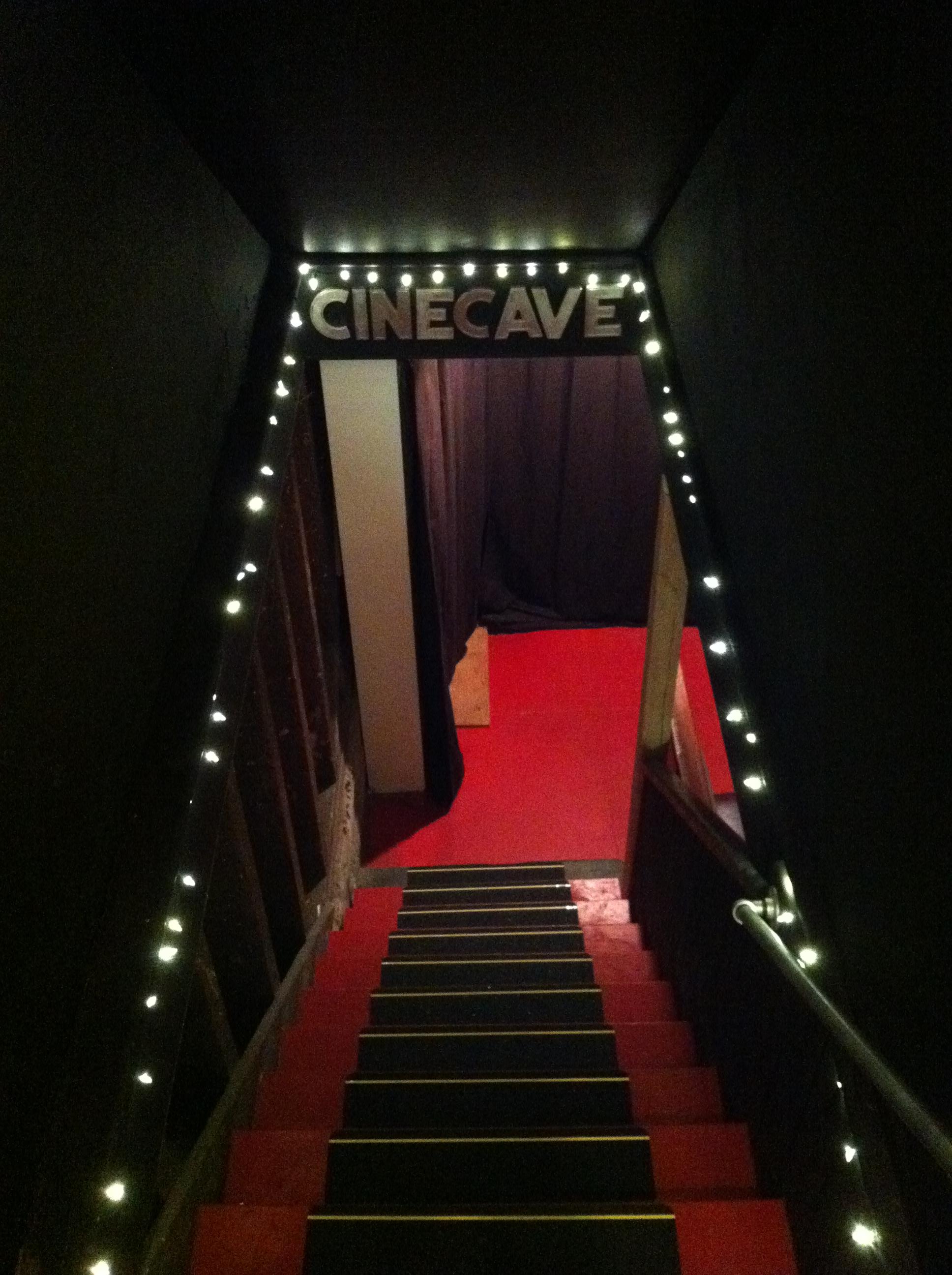
DO go in the basement! Lost Weekend’s new Cinecave opens this week

1

Exciting news rumbling from beneath Valencia Street’s staunchly independent Lost Weekend Video: the micro-theater Cinecave is opening this week with events Thu/29 and Fri/30, after an awesomely successful Kickstarter campaign. The 25-seat screening room, available for members of Lost Weekend’s Cineclub (join at the store), boasts real movie theater seats, a brand-new screen, and kickin’ sound system.

So, what-all’s gonna go down in the Cinecave? According to Lost Weekend’s Kickstarter page:

“We have an enthusiastic staff with wide-ranging tastes all eager to program fun and engaging screenings … from rare films available only on film or from our extensive collection of unavailable-to-rent imports, to sinfully satisfying Buffy marathons. We have projectors and access to thousands of films on video and 16mm film. We’ll also continue to work with local film collectives, present premieres of locally produced shorts and features, ladies’ nights, works in progress, and workshops for filmmakers.

“We’ll have obscure von Trier docs, Van Damme-athons and maybe even stand-up comedy. There will definitely be something for everyone. Most importantly, we’ll still be here and San Francisco will still have access to our many rare films either through traditional rentals or through the shared experience of a live screening. Let’s get people off of their computers and hanging out with each other again. Let’s watch some movies!”

The Cinecave will unveil a regular schedule in July; it’ll also be available for rentals for private events (contact the store for info). There’ll be an open house Thu/29 and an opening night event Sat/30 hosted by Jesse Hawthorne Ficks, a.k.a. the programmer-host of the popular “Midnites for Maniacs” film series at the Castro. Ficks, an occasional Guardian contributor who calls Lost Weekend his “neighborhood video store,” will be programming a once-a-month event at the ‘Cave that celebrates the video format. (Of the opening night event, he hints that the top-secret flicks will be “two of my all-time favorite movies;” reservations for both screenings begin at noon Sat/30 by phone or in person at Lost Weekend.)

“A lot of people have nostalgic feelings toward video stores. I hung out at video stores when I was a kid! But I was trying to think of what would be a good way to get people to come to a video store who have maybe never even been to a video store, a younger generation,” he says. “The idea was, just as the death of film is happening, the death of the video tape, or the laser disc, seemed to be just as important or nostalgic to my generation. I decided that I would host a night that would only screen movies that are available on VHS, Beta, or laser disc — actually putting the video tape in. Sometimes it gets fucked up, and you have to fast-forward, and there are those weird lines…”

So if the tape gets fucked up, I hear you wondering, what’s the point? Well, some movies are only available on these formats and will likely never be released on DVD. Some movies are available on DVD, but certain versions are only available on outdated formats. For collectors and other serious film fanatics, this is important.

“The holy grail for me of laser discs is Texasville. Sequel to The Last Picture Show, it didn’t do too well when it came out, but then, surprisingly, [it had] some real champions. On laser disc only, [there was a version of Texasville] with an extra 30 minutes. And that footage has never been restored to DVD or Blu-Ray. It’s not available on 35mm. The only way you can see the director’s cut on Texasville is on laser disc,” he says.

http://www.youtube.com/watch?v=YoQHwru0Qh8

“I started looking around at more of these movies that sort of fall between the cracks. It happens with every [change in medium] — there are all these lost films,” he explains. “You can get a lot of movies streaming nowadays, but there are also a lot that you can’t get that were even released on DVD or Blu-ray. So I think that’s where the idea [for my Cinecave programming] came from: ‘What weird films have we never even heard of, because they’re only on some obscure format that we don’t even have a player for anymore?'”

“The films that I’m going to screen cannot be screened even in a movie theater. So this isn’t just, that it’s not available on DVD or Netflix. I am running into so many difficult situations [as a programmer] with studios with 35mm prints, where they have a print maybe in the archives but they won’t mail it out. Or they don’t have a print in the archives, but they won’t let you screen a collector’s print. Literally, these movies can’t be seen in rep house programming, and they can’t be seen streaming or on DVD. It’s this weird loophole that I wanted to try and emphasize with this video madness series.”

As a film fan, Ficks is excited by the ‘Cave joining the local cinema scene. “I know they have different programmers who are going to come in. It feels like it’ll be a personal experience,” he says. “Also, I think them renting the theater out is really is amazing — when you go down there, you’ll be like, ‘Shit, I really want to bring my friends here one late night and show my favorite TV show.’ It’s like the greatest living-room set-up you could imagine.”

Open House Fri/29, 8-11pm, free
Opening Night Sat/30, 7 and 9:45pm, suggested donation $10
Lost Weekend Video
1034 Valencia, SF
(415) 643-3373
www.lostweekendvideo.com
www.midnightsformaniacs.com

Scandinavian prudishness surprises Extra Action Marching Band

0

By Lasse Lundberg Andreasen
Photos by Pelle Rink

The young festival worker only offers one piece of advice: “Do not enter their hotel room. They are wack. They will flip you upside down and snort coke from your ass. Also, they might be gay”.

The rumours about Oakland’s 27-piece Extra Action Marching Band (EAMB) had arrived in Copenhagen long before the band. EAMB was invited to the Danish capital to perform at the Distortion street festival in early June this year.

Performances by this massive ensemble include a flag team, barely dressed male and female dancers and a bullhorn performer. A combination, which led to some confusion among the audience. “I’m pretty sure one of them was a transvestite”, a woman says out loud after the show, clearly in doubt about the appropriateness of her own statement.

The Bay Area band was somewhat perplexed about the sexual focus. “This is so weird. It’s the second time someone has asked us about homosexuality since we arrived,” says Violet Angell, a drummer in the band.

“Yes, some in the band are homosexuals, others are brothers or someone’s aunt. It’s not an issue for us at all. The time we just spent on this question is the longest time we have ever spent talking about it. Ever. We have started wondering what the Danish people are hiding in their closets”, Violet Angell adds.

In the US, the bands performances spark other kinds of reactions. “After a gig in the US a woman wanted to know why our female dancers was dancing the way they do. She thought it was degrading for the women. I just told her: You got issues – I play music. That’s it”.

One of the founding members of EAMB, Simon Cheffins, explains, “Our performances are not about entertaining. Rather we want to blur the lines between a band performing and an audience passively receiving. That’s why the dancers and musicians get so intimate with the crowd.”

Later in the evening, it’s time for the second act at the festival. However, this time the performance is not in a hotel and the crowd has been drinking for hours.

“We like to play late gigs. People are more drunk”, a band member says just before EAMB push their way into the massive crowd.

Poverty Scholars Unite

2

This post has been updated. RYME orientation is July 3, not June 27.

July 3 will begin another session of Poor Magazine’s revolutionary youth media education program, or RYME.

Poor Magazine was founded in 1996 as a way to bring together poor people to produce media, teach and learn, and create community. From their space in the Mission, they have launched the printed Poor Magazine, Poor News Network TV and Poor Radio, published dozens of books at Poor Press, and hold programming throughout the year.

One such program is People Skool, sessions for and by the people. Poor rejects status indicators like degrees and job titles in favor of expertise based on experience. People are esteemed as Indigenous Scholars, Poverty Scholars, Youth Scholars, and Mama Scholars share their knowledge at People Skool.

The RYME session is “a multi-generational , mutli-lingual skool,” according to Tiny Gray-Garcia, Poor Magazine’s co-founder.

The program will “teach our children and families back their stolen indigenous languages through art and project based learning– this summer we will be teaching media, radio, music, art and journalism with a focus on eldership, indigenous herstories and histories ” Gray-Garcia said in an email.

Tuition for the program is based on ability to pay, and can range from $90 – 500. There are full scholarships and stipends provided for youth in poverty.

At tomorrow’s orientation, youth can learn about the program, which runs through July 31, and a “healthy homemade lunch” with “vegan and meat options provided” will be served, Gray-Garcia said.

Revolutionary Youth Media Education orientation/registration

July 3, 4pm, free

Poor Magazine

2940 16th St., #301, SF

www.racepovertymediajustice.org

Youth scholars from last summer’s RYME program conduct interviews outside City Hall

The cost of shorter school days

13

Everyone agrees that Jerry Brown is taking a huge gamble, putting big automatic education cuts in his budget in the hope that he’ll convince voters to approve his tax hikes in November. It may be a wise political move: Most voters in California seem to support education spending, even if they still (wrongly) think the state wastes too much money on other services. And they seem to like teachers, even if they think (wrongly) that most other public employees are overpaid and get overly generous pensions. In other words, if you ask voters whether the state needs more money in general, you might get a No — but if you ask whether schools should be cut even further, you might get a better answer.

Still: If this thing goes down, California’s got a disaster on its hands. Already, local school districts are making deep cuts in budgets that were already way too small. And since everything else is already gone, the main thing on the block is the length of the school year.

It used to be 180 days. Now it’s down to 176. And it could go as low as 160. That’s terrible for students — you really can’t eliminate class time and not harm education. It’s also really bad for working parents who have kids too young to be left alone (and some of us have good reason to believe that even high school students shouldn’t be left alone at home all day with nothing to do except get in trouble).

What do parents do when there’s an unexpected furlough day that isn’t a work holiday? How about if there are suddenly 20 (twenty) furlough days, four full weeks of additional time that the kids aren’t in school?

Well, if it’s a day or two they take time off from work if they can — costing both worker and employer money — or they pay someone to watch the kids, costing the worker money. This isn’t trivial for any of us, and it certainly isn’t trivial for low-income families. It means some kids will be home alone, which is fine for the Model Middle Schooler, but really, how many of them do we know?

And Jesus — nobody gets four weeks of paid vacation time. It’s already costing parents a fortune to put kids in summer camp for eight or ten weeks; add four more and I don’t know what people will do.

So basically, furlough days are a tax on working parents (and their employers). Which means it’s a regressive tax that his hardest on those least able to pay. And that’s assuming the tax plan actually passes — if it goes down, expect the furlough days to go up — and the hidden tax burden on working parents to get worse.

Then there’s class size, which is going up now, and could go up a lot more. I’ve volunteered in the SF public schools and I’ve seen the difference between a classroom of 20 kids and a classroom of 30, and it’s huge. At the K-3 level, more than 20 students in the classroom seriously hinders learning. Even in 5th grade, 30 kids is too many for one teacher.

I realize there’s not a lot left to cut in the state budget (although I think I could shift enough money from the prison system to fully fund the schools, but that’s not even on the table). K-12 education is a huge ticket and is going to have to take big hits.

And again: As a political move, threatening to hack the legs out from under the state’s education system will probably bring in some votes in November. But I agree with Calitics — it’s a really scary bet.

Treasure Island Music Fest lineup is out: xx, M83, Public Enemy, Best Coast

0

It’s not ’till October, but the Treasure Island Music Festival lineup was let loose on the web today — and tickets go on sale this week. The popular San Francisco fest, created and curated by Noise Pop, this year includes a buzzy, bloggy mix of EDM and chillwave, rock’n’roll and pop.

As opposed to previous years, the split two day lineups (Saturday and Sunday) seem less rigidly defined by genre. Headliners include Girl Talk, xx, the Presets, M83, Porter Robinson, and Gossip. There are some locals in there as well – Tycho, Dirty Ghosts, K. Flay, Imperial Teen, and the like.

See the current list below (undoubtedly, others will be added down the line).

Saturday: Oct. 13, 2012
Girl Talk
The Presets
Porter Robinson
Public Enemy
SBTRKT
Tycho
Araabmuzik
Matthew Dear
Toro Y Moi
Grimes
The Coup
K. Flay
Dirty Ghosts

http://www.youtube.com/watch?v=JtH68PJIQLE

Sunday: Oct. 14, 2012
The xx
M83
Gossip
Best Coast
Divine Fits
Youth Lagoon
Los Campesinos!
The War on Drugs
Ty Segall
Hospitality
Imperial Teen
Neighbourhood

Two-day tickets ($109.50-$129.50) are on sale Wednesday, June 27 at 10am.
One-day passes ($75) are on sale Friday, June 29 at 10am.

Keep tabs on the festival here.

Eat your veggies and join a union

0

Mom and the AFL-CIO have an intriguing new message for America’s working people: “Eat Your Veggies  – and Join a Union.”

Many moms know, of course, that unionized workers are paid better than their non-union counterparts, have better benefits, better working conditions and stronger voices in what goes on at their workplaces, as well as in off-the-job political activities.

And now comes a Duke University study  –  “Unions – They Do a Body Good ” – which suggests, as the AFL-CIO notes, “that labor unions also are good for your health.” It would indeed be difficult to effectively argue with that conclusion, whether you are pro or anti-union.

 The Duke study was based on a sampling of more than 11,000 full-time union and non-union workers who answered questions about their general health. It showed that , whatever the reason, there are many more unionized workers who consider themselves healthy than there are non-union workers who say they’re healthy.

On the surface, the numbers might not seem significant – 85 percent of unionized workers said they were in good health compared with 82 percent of non-union workers. But that 3 percent gap between 82 and 85 percent represents 3.7 million workers – 3.7 million more healthy union members than healthy non-members.

But why so many more healthy union members? The study’s lead author, doctoral student Megan Reynolds, speculates – correctly I think – that the generally higher pay and benefits earned by union members “help hold off the anxiety that comes with trying to pay rent and feed a family on basement-level wages.”

She notes that  “decent employer-paid health insurance means you’re seeing the doctor when needed. Paid vacation means your body and soul are getting a rest now and then. Grievance procedures and increased job security help you breathe a bit easier.”

Reynolds and co-author David Brady, a Duke sociology professor, believe their study  clearly illustrates “that union membership is another factor – like age, education level and marital status – that affects a person’s health.”

The AFL-CIO, and hopefully your mom, agree. Veggies are indeed good for you, and so are unions. The likelihood of better health for union members should give union organizers a compelling new pitch to make in their attempts to sign up new members.

Better pay, better benefits, a stronger voice on the job and elsewhere – and better health. What more could a worker or a mother ask?

Dick Meister, former labor editor of the SF Chronicle and KQED-TV Newsroom, has covered labor and politics for more than a half-century. Contact him through his website, www.dickmeister.com, which includes

Olague is the swing vote on voting system repeal

58

Conservative Sup. Mark Farrell’s effort to repeal San Francisco’s ranked-choice voting system for citywide elected officials is headed to the Board of Supervisors tomorrow, and all eyes are on swing vote Sup. Christina Olague. She surprised her longtime progressive allies with her early co-sponsorship of the measure when it was introduced in March, but she’s now expressing doubts about the measure.

The board rejected an earlier effort by Farrell and Sup. Sean Elsbernd to repeal RCV outright, but then Farrell tried again with a measure that excludes supervisorial elections and has a primary election in September, and if nobody gets 65 percent of the vote then the two two finishers have a runoff in November.

“I’m not going to support something that calls for a runoff in September,” Olague told the Guardian, referring to the primary election, although she did echo the concerns from RCV’s critics who claim that it confuses voters. She also said that it hasn’t helped elect more progressives and that “some progressives I talked to aren’t 100 percent behind it.”

Such talk worries Steven Hill, the activist who helped create the voter-approved system, and who has been battling to shore up support for it in the face of concerted attacks by more conservative politicians, newspaper columnists, and downtown interests, all of whom preferred the old system of low-turnout, big-money December runoff elections.

“I think it’s working well. San Francisco saves a ton of money by not having two elections,” Hill said. He said downtown money will skew the runoffs elections even more in the wake of the Supreme Court’s Citizen United ruling allowing unlimited political spending. “With Citizen’s United,” he said, “they’ll just do a ton of independent expenditures.”

He said Olague had told him she intended to withdraw her co-sponsorship of the measure, but she hadn’t done so yet. Olague told us that she wanted to discuss the matter with Farrell before withdrawing her support, that she hasn’t been able to reach him yet, and that she’s been focused on other issues she considers more important, such as crime prevention.

The measure currently is being co-sponsored by the board’s five most conservative supervisors and Olague, meaning it will go before voters on the November ballot if they all remain supportive. Hill said that the measure may not be voted on tomorrow because of an administrative snafu dealing with noticing requirements, but the hearing would proceed anyway, possibly offering clues as to the measure’s chances of success.

Announcing the weed winners of this weekend’s High Times Cannabis Cup

1

While thousands took to the streets this weekend to celebrate SF Pride, over in the East Bay an event was taking place that celebrated a freedom of a different sort. 

The third annual Bay Area High Times Cannabis Cup brought together marijuana connoisseurs from across the state to Richmond’s Craneway Pavilion. Although the main event was the judging of some of the kindest buds in the country, the exposition also featured a variety of glass water pipes, portable vaporizers, ice-cold cannabis beverages and miscellaneous cannabis accessories. Outside in the parking lot, a chain-link fence surrounded the Prop 215 area where vendors offered card-carrying cannabis patients tastes of an assortment of potent edibles, dabs of concentrate, and tokes of some of the best medical cannabis strains of sativa and indica the state has to offer.

As the sun lowered over the harbor on Sunday night, a soft amber light shining through the many windows of the pavilion, people gathered around the stage for the start of the awards ceremony. High Times staffers announced awards for best product, booth, glass, concentrate, edibles, hybrid, sativa and indica. After a long afternoon of ingesting cannabis products galore, the winners wound their way up to the stage to accept their honors from Miss High Times Emily Aryn (more on her majesty here). San Jose Patients Group took home first place among indicas for its Cordero Kush Platinum. Playbud Delivery Service received first place for best sativa, an honor claimed by its Premium Jack Herer. 

During the ceremony, a special lifetime achievement award was given to Oaksterdam University founder, Richard Lee. Considered the father of Prop 19, his cannabis university and his dispensary were raided by federal agents last April. For an update on where Lee and Oaksterdam are at now, read our interview with Lee and new Oaksterdam head Dale Sky Jones here

[from the High Times website]

BEST INDICA

1st Place – Cordero Kush Platinum, San Jose Patients Group

2nd Place – Master Yoda Kush, Kush connection

3rd Place – Cherry Cola, Sonoma County Collective

BEST SATIVA

1st Place – Premium Jack Herer, Playbud Delivery Service

2nd Place – Yogi Diesel, Elemental Wellness

3rd Place – XJ-13 Cracker Jack, Santa Cruz Mountain Natural

BEST HYBRID

1st Place – Larry OG Kush, The Cali Connection Seed Company

2nd Place – Ken’s Phantom, Granddaddy Purple Collective

3rd Place – OG Sky, Buddy’s Cannabis

CBD AWARDS

1st Place – MCU ATF Bubble, Hill Farms presents Master Control Unit

2nd Place – Lemon Remedy, Harborside Health Center of SJ

3rd Place – Harlequin, Buds and Roses Collective

BEST CONCENTRATE

1st Place – Hardcore OG Budder, Superior Extracts for West Coast Cures

2nd Place – OG Super Sexy Budder, LA Confidential Caregivers

3rd Place – Unfuckwitable OG Wax, Venice Medical Wax Centers

BEST NON-SOLVENT HASH

1st Place – Solvent-less BAMF Mix Hash, BAMF Extractions for Buds and Roses Collective

BEST EDIBLE

1st Place – Eleve Gourmet Veganic Medicated Truffles, Hills Farmacy

2nd Place – CannaChocolate 44/8mg THC/CBD, Tea House Collective

3rd Place – Spice Orange Drops, Greenway Compassionate Relief Inc.

BEST BOOTH

1st Place – Mamma P’s

2nd Place – Elemental Wellness

3rd Place – Cali Connection

BEST PRODUCT

1st Place – Mama P’s Grinder

2nd Place – KO Nail from KO Domeless Nail

3rd Place – The Grinder Card from V-Syndicate

BEST GLASS

1st Place – Hitman Glass

2nd Place – Pulse Glass

3rd Place – Dopeass Glass

Taxes and pension reform

15

Our friends at CalBuzz, who are almost always right, have a point when they say that the right wing is going to use the lack of comprehensive pension reform against Jerry Brown’s tax measure in the fall. That’s unless the Legislature does something productive in August, which is always a challenge.

But whenever I hear this kind of analysis, I think about some of the political campaigns I’ve seen — the tobacco tax is an excellent example — and I wonder: Will it really make a difference?

No matter what the Leg does, Joel Fox and company are going to raise a ton of money and attack the tax plan — and no matter what happens in August, they’ll use public employees, and public employee pensions, as a flash point.

Brown could propose eliminating every dollar of pension spending tomorrow — and he’d wind up in court, because a lot of this is mandated by contracts. But even if he could get away with it, the righties would still harp about pensions. Because even if we weren’t paying modest pensions today, we used to — and in these campaigns, the facts don’t matter at all. See: Prop. 29. The truth is irrelevant when this much money is involved.

I guarantee the anti-tax groups will find some overpaid public employees and a couple of folks who spiked their pensions and they’ll plaster it all over the airwaves. And the fact that Brown and the Democrats in Sacramento are working 23 hours a day to try to craft a reform plan won’t matter a bit. Even if the reform plan passes, it won’t be enough for these clowns — and if they can outspend Brown’s side by 5-1, well … start holding bake sales for your local public school.

And by the way, who’s going to put up a lot of the money for the Jerry Tax Plan? Public-sector unions.

My point is not that Brown and the Legislature should ignore pension reform (although, as Calbuzz also notes, public-employee pensions aren’t the major cause of the state’s fiscal problems). I know it’s a huge political flashpoint, and the Righties have done an exceptional job at blaming union members for just about everything wrong with the state, and most people now believe that pensions are bankrupting us all and saddling our kids (who will work nonunion jobs with no pensions) with mountains of debt.

(Wait a second. Two wars? More than a trillion dollars wasted? The repeal of the CA vehicle license fee? Prop. 13? But never mind that; the debt’s coming from pensions.)

The missed opportunity here, and the move I wish Brown had been willing to make, was to combine the two in the same package, to wit:

We’re going to ask the public employees, who have already taken tens of millions in pay cuts and furloughs and suffered huge layoffs, to suffer even more and give up part of their pension package. And we’re going to ask everyone who benefits from the Bush tax cuts and all of the corporations who benefit from loopholes in the state code to take a proportional haircut.

Proportional — that is, if a union worker who gets a (typical) $30,000 a year pension has to pay 15 percent more of his or her paycheck a year into the pension fund, then a hedge-fund manager who makes $50 million a year has to pay 15 percent more of that paycheck to help fund for education and public services.

Everyone suffers, equally. Come on, Jerry — put that on the ballot and make Joel Fox fight it.

Thick petition against a big project

45

My old friend Sue Hestor stopped by my house June 24 to ask if any of my neighbors might want to sign the referendum petition on 8 Washington. She was carrying a clipboard with a document the size of a phone book attached to it. Almost 600 pages, neatly bound.

I flipped through it. Lots and lots of background documents on the project, nothing anyone’s ever going to read. But thanks to some slick moves by the developer, Simon Snellgrove, supported by his allies on the Board of Supervisors, the referendum petition has to have all of that material attached.

See, the petition seeks an election to overturn a piece of legislation. Doesn’t happen often in San Francisco, and as far as I know, it’s never been successful. State law, of course, says that you have to show people the bill you want to overturn.

But when activists in Bayview Hunters Point tried to run a referendum campaign on the area’s redevelopment plan, they lost before they even had a chance. The City Attorney’s Office ruled that each petition had to include the entire redevelopment plan, all 62 pages. Since the petitions didn’t include every single page of that plan, the signatures were rejected.

In this case, Snellgrove’s crew made sure that the final legislation approved by the supes included numerous mentions of other documents that were, in legal terms, “included by reference.” Lots of documents. And all of them had to be copied, bound and attached to every set of petitions that every circulator carries.

It’s a bear: You can’t send petitions around by mail, you can’t carry a whole stack to a big event … and it costs $18 to print and bind a set. The foes of 8 Washington will need at least 1,000 sets to get the required 28,000 signatures. That’s $18,000, just to get started.

Which would clearly appear to be a chill on the rights of the people to force a ballot referendum.

Still, they soldier on. Hestor told me she’s “fundraising like crazy” to get enough money not to pay signature-gatherers but just to print the petitions. Jon Golinger, who’s helping run the campaign, says he confident there will be more than enough copies to do the job.

So if you want to get a little exercise for your arms (don’t laugh –one petitioner is already having arm problems lugging this stuff around) and you’re interested in helping out, check out the campaign HQ at 15 Columbus or call 415-894-7008. There’s a rally Saturday/30 at 10am.


Heads Up: 7 must-see concerts this week

0

There must be something about living in California that makes people want to pick up an instrument and strum, pluck, or smash. Be it surf-infused rock’n’rollers in San Diego dedicated to the Church of John Swami Reis (Mrs. Magician), illustrious weirdo harpists (Nevada City, Calif. born Joanna Newsom), San Francisco psych poppers (Magic Trick) or sticky LA streets punks (the Shrine), the sounds of the state continue to boil.

Sure, California boasts hundreds of miles of beachy coast, Hollywood streets lined with gold flecked stars, the bubbling Disney-pocalypse, camp-friendly mountainous ranges, and craggy tourist pits. It’s endless and sunny, (even when it’s foggy). And in different cities throughout this unwieldy giant of a region, scenes of sound have popped up decade after decade. It’s all rather inspiring and decadent if you take a step back and listen.

Here are your must-see Bay Area concerts this week/end:

Joanna Newsom & Philip Glass
It’s a (likely) once-in-a-lifetime opportunity to catch the revered composer and the tree-fairy harpist with pipes of chirping gold, together, in concert. And of course, the show is a benefit for Big Sur’s Henry Miller Memorial Library, which typically hosts forested indie concerts throughout the summer months.
Mon/25, 8pm, $62.50-$140
Warfield
982 Market, SF
(415) 345-0900
www.warfieldtheatre.com
http://www.youtube.com/watch?v=mb5Jp_duKNM

K-Holes
To be in a k-hole is essentially to remain stuck in a drugged, spaced-out soup of one’s own mind. So is all that all that rage funneled into punishing, grinding guitar lines and scratchy howls necessary for K-Holes, the NYC five-piece named after such a state, but which sounds more like an extrovert coke binge than an introvert k-hole? Perhaps not, but it gets the point across. K-Holes (a.k.a Jack Hines of Black Lips, Julie Hines, Sarah Villard, Cameron Michel, and Golden Triangle’s Vashti Windish) have a dragged-from-the-pits-of-hell sonic spark and the anti-capitalist lyrics to back the sludge punk ambiance.
With Dirty Ghosts, Blasted Canyons
Tues/26, 9pm, $8-$10
Brick and Mortar Music Hall
1710 Mission, SF
(415) 371-1631
www.brickandmortarmusic.com
http://www.youtube.com/watch?v=WLgKjlLN-uQ

Gallery Crawl Nightlife: Tim Cohen’s Magic Trick
Here’s yet another win in the brilliant series of Thursday nightlife events at the Cal Academy of Sciences. This time, the earthly sciences wonderland gets transformed into a pop-up museum with guest curators picking the best things to see and hear. Use your senses, friends. Along with a whole lot of bold pop-up art, there’ll be a performance by San Francisco’s own moony rock’n’roll treasure trove Tim Cohen’s Magic Trick, and additional music by folkYEAH! founder-DJ Britt Govea.
Thu/28, 6pm, $10-$12
California Academy of Sciences
55 Music Concourse Drive, SF
(415) 379-8000
www.calacademy.org
http://www.youtube.com/watch?v=zTgs7LjCh60

Mrs. Magician
Check dystopic Zombies-esque single “There’s No God” off this year’s salty Strange Heaven (released by Swami – John “Swami” Reis’ label; FYI, Reis also produced the record). The rolling waves of fuzz, upbeat melodies matched to deathly serious lyrics, and classic surf guitar wobbling should draw you in quick. “There’s no god/la la la la.”
With Mantles, Kids On A Crime Spree
Fri/29, 10pm, $12
Bottom of the Hill
1233 17th St., SF
(415) 621-4455
www.bottomofthehill.com
http://www.youtube.com/watch?v=Bq4r_aBBwC8

Dent May
“With his new release, Do Things — a slice of sun that sounds like the product of playing with a drum machine after listening to “Wouldn’t It Be Nice” on repeat/acid — May proves that the party is wherever he goes.” — Ryan Prendiville
With Quintron and Miss Pussycat
Fri/29, 9pm, $9-$12
New Parish
579 18th St., Oakl.
www.thenewparish.com

Sat/30 9:30pm, $10-$12
With Quintron and Miss Pussycat, Shannon and the Clams
Elbo Room
647 Valencia, SF
(415) 552-7788
www.elbo.com
http://www.youtube.com/watch?v=qXS_C77rbME

The Shrine
LA’s the Shrine just signed to Tee Pee Records, and is about to release growly punk sophomore album Primitive Blast (July 10). From a preliminary and rudimentary listen, I gather the LP is steeped in shredding and skating on sticky Los Angeles nights, which makes sense – the band’s debut album was recorded with the help of pal Chuck Dukowski, he of hardcore punk/City of Lost Angels skateboarders Black Flag fame.
With Glitter Wizard, Hot Lunch
Sat/30, 9:30pm, $8
Hemlock Tavern
1131 Polk Street, SF
(415) 923-0923
www.hemlocktavern.com
http://www.youtube.com/watch?v=r4amJTck5rM

Lower Dens

“The Baltimore outfit’s breakthrough record, Nootropics, doubles down on thick, Krautrockabilly grooves, with the Zen-like propulsion of Lou Reed cruising the Autobahn. The production aesthetic is fascinating, in its ability to sound dry, and soaked in reverb, both at once, and the album’s second half reveals a newfound interest in musique concrete, giving the material an artieredge.” — Taylor Kaplan
With No Joy, Alan Resnick
Sun/1, 8pm, $15
Independent
628 Divisadero, SF
(415) 771-1421
www.theindependentsf.com
http://www.youtube.com/watch?v=GafB7NQvQWg

Telegenic Band Check: Mr. Kind

1

Mr. Kind’s Brian Bergeron and Kyle Kelly-Yahner rocked out on a perfect summer afternoon in an apartment somewhere in the Mission. Catch their EP release at Hotel Utah on July 27.

7 spots for mental regeneration this week

0

Pride is over, and we’re willing to wager your depleted brain cells could stand for some stimulus. Whether you’re into sitting in dimly-lit rooms in North Beach listening to fiction read in a thick Hungarian accent, or dressing to the nines and perusing some edgy new performance art, here are seven cultural hot spots in the city this week.

László Krasznahorka

A Hungarian author emerges from his reclusivity in the hills of Szentlászló in order to present the San Francisco literati with a reading from his novel of scheming, sex, failure, hope, communism, freaky farm collectives, tango, and the devil. Sounds like a can’t-miss situation. City Lights will host celebrated author László Krasznahorka to read Satantango (yes, that’s satan-tango), the book that inspired the seven-and-a-half hour film by remodernist filmmaker, Béla Tarr. 25 years after its original publication date, the novel has finally been translated by George Szirtes, so now we plebeian Californians can get our Hungarian apocalyptic fix. 

Thu/28 7:30pm, free

City Lights Bookstore

261 Columbus, SF

(415) 362-8193

www.citylights.com

Kala Art Institute artist talks 

The busy thoroughfare of Berkeley’s San Pablo Avenue makes an appropriately unsettling backdrop for the Kala Art Institute’s first night of artist talks. From large-scale industrial sculpture, to dystopian watercolor, to engineered photographs of imaginary landscapes, artists Randy Colosky, Vanessa Marsh, and Alison Frost’s work treads an uncanny path between real and surreal. It defamiliarizes the familiar in a fashion of which even Freud would be proud. This series of talks features discussions from Kala fellows during their residencies at the gallery, so look forward to more free inspiration (and free refreshments, which are, um, always a welcome addition for any easel-toting San Francisco artist) in July, August, and September.

Wed/27, 7pm, free 

Kala Gallery 

2990 San Pablo, Berk 

(510) 841-7000

www.kala.org

Raw SF Solstice 

Despite its strictly fashionable cocktail attire mandate and swanky SOMA venue, June’s Raw SF installation offers something for even the freakiest. With a mission to showcase and support emerging, underground artists during the first 10 years of their careers, RAW displays innovative visual art, film, fashion, music, hair and makeup artistry, photography, modeling, and performance art. San Francisco’s installation attendees can also expect henna, organic refreshments, food trucks, a DJ, and a ceremonial tea service.

Thu/28, 7pm-12am, $10 pre-sale tickets, $15 door, $5 after-party (after 9pm)

1015 Folsom, SF

(888) 729-7545

www.rawartists.org

Readers Café and Bookstore poetry series

In support of the San Francisco Public Library, the dusty shelves of Readers Café and Bookstore will be available after hours for the last installment of the shop’s Thursday night poetry readings. Palestinian American poet and historical children’s fiction writer Lorene Zarou-Zouzounis and San Francisco beatnik Martin Hickle will read from their respective collections, and special prices on food and drink will be on offer as you contemplate questions of life and poetry while you gaze out at the Bay from this Fort Mason storefront. 

Thu/28, 6:30pm, free

Readers Bookstore

Building C, Room 165, Fort Mason Center, SF

(415) 771-1076

www.friendssfpl.org

“Evolve: A Woman’s Journey”

Turn what was intended to be a sangria-fueled and nail-painting girls’ night into a celebration of femininity with some real punch. The Fort Mason center showcases Patrick Stull’s work in a diverse series of art from almost all mediums – digital, oil, graphite, sculpture, casting, mixed media, and even original music that chronicles the emotional and physical experience of pregnancy. Much of the art is built to a life-size scale to deal with a subject matter that is as life-large as it gets. 

Fri/29, 9pm, $25

Fort Mason Center

2145 3rd St., SF

www.patrickstull.com

“Only Birds Sing the Music of Heaven in This World”

A million thanks to whoever decided to make food trendy. Combining some of the things NorCal natives hold dear (that’d be food, art, and agriculture) the Museum of Craft and Folk Art hosts a show with curator Harrell Fletcher that displays past and contemporary representations of agriculture, farming, and labor. With a certain focus on alternative farming project imagery, the show links agriculture art with social activism and community building through engaging with various genres, including folk art, outsider art, and craft. 

Sat/30, 11am-6pm, GA $5

Museum of Craft and Folk Art

51 Yerba Buena, SF

(415) 227-4888 

www.mocfa.org

Librotraficante Bay Area Banned Book Reading

As school board officials threaten to ban ethnic studies books and authors — not to mention the subject entirely — in Arizona, Libotraficante is hosting this afternoon of readings from banned books. With more than a dozen performers set to read from controversial tomes, the event is sure to be anything but boring. 

Sun/1 noon-4:30pm, free

Koret Auditorium, San Francisco Public Library

100 Larkin, SF

www.sfpl.org

Students, parents, teachers march in support of Lakeview sit-in

7

More than 100 gathered outside Oakland City Hall for a rally and march June 23 to celebrate the sit-in at Lakeview Elementary School. The school is one of five that the Oakland School Board voted to close last fall, in a move that would save the city $2 million per year. 

The school’s unofficial reopening was initiated by Lakeview parents, and since has been organized and led by Lakeview parents and teachers. Organizers have also run a People’s School for Public Education, with more than 20 elementary-age children enrolled. Classes ran for the past week from 9am to 3pm and include music, art, gardening, social justice, and PE. A daily picket and rally was held to support the sit-in and the Peoples School at 5pm.

Organizers may extend the people’s school for another week.

The children and students involved in the effort led the march yesterday, which left from City Hall around 1pm. Protesters marched to the school, where they held a community barbecue.

At an Oct. 26 Oakland School Board meeting, the board voted to close Lakeview, along with four other elementary schools, at the end of the school year. The Save Oakland Schools campaign has been working to stop these closures. Lakeview officially shut its doors at the end of this school year, but with the ongoing sit-in, organizers hope to keep it open as long as possible.

The city plans to use the school’s building for administrative offices.

Speakers at the rally included parents and teachers of Oakland elementary school teachers. 

On the march, demonstrators chanted “Whose schools? Our schools!” and “Education is a right! For our children we will fight!” In reaction to police at the kid-led march, some chanted “their kids! They’re cute! Get those guns up off your suit!”

“The Lakeview sit-in demands a stop to all school closure, or the resignation of Tony Smith, superintendent of the Oakland Unified School District. The Sit-In at Lakeview is held in solidarity with all parents and teachers struggling to demand quality public education across the country,” according to a press release.

The now week-long action is the result of collaboration between Occupy Oakland and its various offshoots and the parents and teachers of Lakeview, as parents and teachers lead the efforts.

Photo via Justin Beck

Free classes for all

0

Why should you need an expensive libereral arts education to ponder the question of realism, or pricey equipment to take a film making class? You don’t- the University of the Commons (UOTC) dove into its schedule of free, open to all classes a few weeks ago, and the effort is growing.

In a panel discussion at the summer session’s launch June 2, speakers placed the school in a radical context, mentioning other efforts such as D-Q University and Black Panther liberation schools like the Oakland Community School. 

The group’s mission statement says that the UOTC “aims to inspire participants to evolve more equitable and just societies and live more empowered and fulfilling lives.” The school isn’t accredited and students won’t get any formal acknowledgment of having taken classes there. 

It does, however, have some system-approved teachers. Dr. Barbara-Ann Lewis, who is teaching a class called Science Literacy to any and all who show up, is no newbie. She received her PhD in Soil Science from UC Berkeley in 1971, worked as a scientist at Argonne National Laboratory for seven years, and then taught environmental engineering at Northwestern for another 27. Since then she worked a stint as a violin-maker (“it’s good to have a trade,” she told me).

So what’s a pro like Lewis doing in a place like this? For her, its almost civic duty. “I want to teach the public,” she said. “The public votes, but has no idea about some of the real science behind the environmental issues.”

But in many of her university classes, “I had the standard students. They pay tuition, they come in, they don’t know too much about what’s going on in the world. They’ve lost their curiosity.”

She found students with that curiosity in her experience teaching with the Free University of San Francisco last year, Lewis says. “I had an 18-year-old and I had a 50-year-old in the class, lots of kinds of people, who all wanted to learn.”

Warren Lake of the San Francisco Free School, a similar effort that teaches free classes in the city, attended the launch in hopes of joining forces in some way with the UOTC. The Free School, Lake says, started with free yoga classes and has naturally offered movement, dance and other “right-brain pursuits,” compared to the UOTC’s heady academic offerings. Lake sees the Free School as “both a place to incubate teachers and for students to get together.” But when it comes to transferable skills and help along career paths, the picture is more complicated.

The Free School has been around for a few years now, and Lake says the accreditation issue is something he’s “thought about a lot.”

“There are different ways to show expertise,” said Lake. “Making a documentary or writing a book can often work as well as a college degree for showing you are interested of invested in something. There are different ways to market the experience.”

The University of the Commons is a great effort. But it brings up some questions. Who is it for? People who want an education but can’t afford one, now that the cost-free California community college system is a thing of the past? People who are already pretty well educated but always enjoy learning, not to mention generally fulfilling experiences? Students who want to supplement un-creative traditional schooling? People looking for friends and community who enjoy some learning on the side? Real change, liberation?

A Guardian article on a similar effort last year- the San Francisco Free University- pointed out that their effort was promising, admirable, and potentially very beneficial. It was also very white.

June 18, the pretty white- though, as members pointed out, also pretty female and queer- UOTC collective spent the majority of their meeting talking about “diversity and outreach.” They talked about teaching ethnic studies and women’s studies courses that are being cut out of public university curriculum. They talked about ideas for partnerships with organizations around the city that work with different groups, asking to see what kinds of free classes people there might want to participate in or teach. They talked about resources for classes in Mandarin and Spanish. They hope to plug in to existing efforts, and they hope to grow.

As of now, the classes range in the attendance. The students of Occupy U, a class discussing what worked and what didn’t in recent social justice efforts that focuses on Occupy, is about 11 mostly activist types, while From Mahler to the Music Video, a class tracing the history of music, has about 70 students that the instructor John Smalley says includes everyone from “professional musicians to homeless people.”

Next week will be the third week of classes, but you can still join in, although it might be a good idea to contact the instructor beforehand.

Science Literacy w/ Barbara-Ann Lewis

Tuesdays 5:30-7:30pm, Modern Times, 2919 24th St., SF

Responsive Cinema w/ Rand Crook

Tuesdays 7-9pm, the Emerald Tablet, 80 Fresno, SF

Intro to Western music: from Mahler to the music video w/ John Smalley

Saturdays 11am-1pm, Latino/Hispanic Community Meeting Room B, Main San Francisco Public Library, 100 Larkin, SF

History in digital culture w/ Molly Hankwitz

Sundays 6-8pm

Mutiny Radio Café, 2781 21st St

Occupy U w/ Stardust

Sundays 6-8pm, Modern Times, 2919 24th St., SF

www.uotc.org/wordpress

Putting 8 Washington on the ballot

116

The fall ballot’s going to be crowded — and one of the issues that may face a vote is the future of the 8 Washington condo complex, the waterfront multi-zillionaire housing that the city doesn’t need.

Opponents of the project have filed for a referendum on the Board of Supervisors approval, and they’re meeing Satruday June 23 at 15 Columbus at 10am to start the process of gathering signatures. It’s not easy — they need 28,000 signatures in 28 days, and this, I suspect, isn’t going to be one of those money-heavy deals with a lot of paid gatherers.

Former City Attorney Louise Renne will be there to lead off the festivities.

Me, I’d love to see this on the ballot in a high-turnout year when six supervisorial seats are up. Because it’s a great issue to discuss: Who is San Francisco building housing for, and why?

Is it ok that more than 80 percent of the people who work in San Francisco can’t afford to buy or rent a median-priced home? Is it ok that virtually all of the new housing getting constructed is out of reach to virtually all of the people who work here?

Is that in any way sustainable?


Mic Check: Everyone is listening at Sacred Grounds

2

“It’s about writing. We should start the interview with that.” Todd Tholke leans forward across the greasy café table. “The whole reason I came all the way over here today to meet with you is to tell you about this thing that we do that has to do with free speech.”

Tholke emcees open mics, which is something he’s been doing in San Francisco for over 15 years to showcase the works of local artists in a free venue. At present, Tholke is hosting acoustic nights every Thursday at Sacred Grounds Café, which lies north of the Panhandle.

One of the city’s oldest coffee shops, Sacred Grounds has been hosting musicians almost every week since 1967. This pioneering open mic has a legacy that boasts artists such as Joan Baez and Tracey Chapman.

Tholke has been emceeing this event, which he refers to as the Songwriters’ Guild, for eight years, but he has no interest in discussing the event’s venerable past. He lays his ring-laden hands on the table. “I’m a person that’s into the present and the future,” he says with a smile.

In addition to his extensive history in the SF open mic scene, Todd works as a street musician on Haight and has a day job down at the docks. “I work on the docks and I’ve been living aboard my sailboat for fifteen years” says Tholke. “That’s how I supplement my lifestyle as a songwriter and musician in San Francisco. I live on a boat.”

As a known musician and vibrant personality in Upper Haight, Tholke was asked to emcee his first open mic at the now-defunct Coffee Zone. “The way that you become the host is by being asked to do it. I’ve been asked to do it at many different venues in Haight-Ashbury that I’ve been haunting for 25 years.” Tholke’s devotion to the district is emblazoned on his necklace, a metal disc that bears the image of the Haight and Ashbury street signs.

Though he doesn’t get paid to host the Songwriters’ Guild at Sacred Grounds, Tholke has been here once a week for nearly a decade because he believes that what happens there on Thursday night is important. “There’s an element of magic,” he says, “an element of the unknown and of possibility.”

He runs a tight ship in which no acts are favored, no one is barred, and politeness is key. “Sometimes people will come up and they’ll be vulgar or rude,” Tholke explains.

“We have something called clapping someone offstage. We’ll politely clap you right off the stage, and if you don’t get it we’ll give you a standing ovation.”

Unlike most open mics in the city, Sacred Grounds has no PA system. The unplugged aspect of the event forces people be to be quiet and listen, otherwise their chatter would drown out the musician in the small café.

“Everyone here is listening. At the end of the night there’s a camaraderie of people that don’t know each other. They shared two things: they shared their music and they shared the respect,” Tholke says. “At other open mics, everyone is like, ‘blah blah blah I don’t care who else plays and by the time I leave I’m going to be drunk.’” Tholke makes sure that the experience at Sacred Grounds is different.
 
“People come from all walks of life and it doesn’t matter how old you are, what your gender is, none of those things matter. All that matters is that you have your name on the list.”
 
It’s showtime

When I slip in to Sacred Grounds on a Thursday night mid-June, a man named Rainbow is just finishing his set. I count only 12 other people in the room, but it doesn’t feel like a small crowd with the dark paneling and low ceiling in the café.
Like the first time I met him, Todd is dressed in all black. This time his long hair is tied up under a beret. In between performers, he whispers to me, “You came on a really good night.”

After Rainbow, the next performer opens his set by asking the audience, “Anybody think they’re on Obama’s kill list?” Despite the eccentricities and left slant of most of the performers, the music is simple, never offensive, and some is just downright beautiful.

Featured musicians Maria Quiles and Rory Cloud play Nickel Creek-inspired folk lullabies that leave the Songwriters’ Guild literally begging for more. The audience is incredibly involved and tight-knit, addressing one another by name, borrowing instruments, and asking each other how they can buy their music and when their next gigs are.

As Quiles and Cloud leave the stage — more like a designated corner — Quiles calls out, “we met at an open mic! It could happen to you!” She smiles, “Maybe it already has.”
 
Reservations and revelations

After eight years at Sacred Grounds, Tholke isn’t sure he can keep it up. “Every single week I think it’s gonna be the last one and every single week I’m glad that I didn’t quit that week,” he says.  Tholke was paid to host open mics in San Francisco for many years, but the gig at Sacred Grounds is an act of charity. “My win is them winning, but I feel like a loser because I am poor,” says Tholke.  “I’m the most poor person I know. I don’t know anyone that has less than me because I’m not on any programs.”

Despite his reservations, Tholke keeps coming back every Thursday. The open mic got shut down in 2007 because of the musicians’ use of copyrighted materials, but Tholke brought it back.

He struggles with the time commitment, but ultimately he loves the Songwriters’ Guild. Tholke values very little above free speech, and the fact that the open mic is available to everyone for free is something that he thinks is immensely important for San Francisco’s culture.

 “Free speech and freedom and liberty. You can actually have it,” says Tholke, sipping his coffee. “That’s the thing that keeps me coming back.”

Pixar! Vampires! And more new movies to tide you over ’till the return of a certain web-slinger…

1

This week: Frameline continues. Where have you been?

Hollywood’s great hopes this week involve, as Game of Thrones would say, “the pointy end”: the arrow-slingin’ grrl rebel (a character type that’s all the rage lately) in Pixar’s Brave and and the monster-staking activities of the 16th prez in Abraham Lincoln: Vampire Hunter. (Let’s be honest, Abe: mash-ups are kinda 2001, and vampires are so 2008.) Our reviews below.

Also from the factory of mass-marketed dreams is Steve Carell’s uninspiring road trip into the apocalypse, Seeking a Friend for the End of the World. Read Dennis Harvey’s review here.

Abraham Lincoln: Vampire Hunter Are mash-ups really so 2001? Not according to the literary world, where writer Seth Graham-Smith has been doing brisk trade in gore-washing perfectly interesting historical figures and decent works of literature — a fan fiction-rooted strategy that now reeks of a kind of camp cynicism when it comes to a terminally distracted, screen-aholic generation. Still, I was strangely excited by the cinematic kitsch possibilities of Graham-Smith’s Lincoln alternative history-cum-fantasy, here in the hands of Timur Bekmambetov (2004’s Night Watch). Historians, prepare to fume — it helps if you let go of everything you know about reality: as Vampire Hunter opens, young Lincoln learns some harsh lessons about racial injustice, witnessing the effects of slavery and the mistreatment of his black friend Will. As a certain poetic turn would have it, slave owners here are invariably vampires or in cahoots with the undead, as is the wicked figure, Jack Barts (Marton Csokas), who beats both boys and sucks Lincoln’s father dry financially. In between studying to be a lawyer and courting Mary Todd (Mary Elizabeth Winstead), the adult Lincoln (Benjamin Walker) vows to take revenge on the man who caused the death of his mother and enters the tutelage of vampire hunter Henry (Dominic Cooper), who puts Abe’s mad skills with an ax to good use. Toss in a twist or two; more than few freehand, somewhat humorous rewrites of history (yes, we all wish we could have tweaked the facts to have a black man working by Lincoln’s side to abolish slavery); and Bekmambetov’s tendency to direct action with the freewheeling, spectacle-first audacity of a Hong Kong martial arts filmmaker (complete with at least one gaping continuity flaw) — and you have a somewhat amusing, one-joke, B-movie exercise that probably would have made a better short or Grindhouse-esque trailer than a full-length feature — something the makers of the upcoming Pride and Prejudice and Zombies should bear in mind. (1:45) (Kimberly Chun)

http://www.youtube.com/watch?v=TEHWDA_6e3M

Brave Pixar’s latest is a surprisingly familiar fairy tale. Scottish princess Merida (voiced by Kelly Macdonald) would rather ride her horse and shoot arrows than become engaged, but it’s Aladdin-style law that she must marry the eldest son of one of three local clans. (Each boy is so exaggeratedly unappealing that her reluctance seems less tomboy rebellion than common sense.) Her mother (Emma Thompson) is displeased; when they quarrel, Merida decides to change her fate (Little Mermaid-style) by visiting the local spell-caster (a gentle, absent-minded soul that Ursula the Sea Witch would eat for brunch). Naturally, the spell goes awry, but only the youngest of movie viewers will fear that Merida and her mother won’t be able to make things right by the end. Girl power is great, but so are suspense and originality. How, exactly, is Brave different than a zillion other Disney movies about spunky princesses? Well, Merida’s fiery explosion of red curls, so detailed it must have had its own full-time team of animators working on it, is pretty fantastic. (1:33) (Cheryl Eddy)

And, as always, there’s more! A doc shot on the frontlines of the Middle East conflict; a doc shot on the frontlines of the sexual-assault epidemic in the American military; a heroin movie; and a “claustrophobic conspiracy thriller” opening at the Roxie that looks to be this week’s hidden-gem pick.

http://www.youtube.com/watch?v=XID_UuxiGxM

5 Broken Cameras Palestinian Emad Burnat bought his first camcorder in 2005 with the intention of bottling family memories, but when Israeli forces began the construction of settlements in Bil’in (his home village in the West Bank) Burnat stumbled into activist-filmmaker territory. In documenting his community’s nonviolent resistance to the Israeli occupation, Burnat’s friends and family (much like his cameras) are shot at, injured, and even killed. His son Gabreel’s first words are “wall” and “cartridge,” epitomizing the psychological toll of the struggle. Israeli forces are depicted as an eerily faceless entity, with colonialist aspirations run amok. Burnat isn’t interested in highlighting the political delicacy of the situation, and frankly, he’s given us something far more powerful than your average piece of fair-and-balanced journalism on the Israel-Palestine conflict. Splitting the difference between home-video montage and war-zone nightmare, 5 Broken Cameras skillfully merges the political and the personal, profoundly humanizing the Palestinian movement for independence. (1:30) (Taylor Kaplan)

http://www.youtube.com/watch?v=3fBaFQk6aE0

The Invisible War Kirby Dick’s searing documentary takes a look at the prevalence of rape within U.S. military ranks, a problem whose unbelievably high levels of occurrence would long ago have caused huge public outcry and imposed reform in any other institutional context. Yet because it’s the military — where certain codes of loyalty, machismo, and insularity dominate from the grunt level to the highest ranks — the issue has not only been effectively kept secret, but perpetrators almost never suffer any disciplinary measures, let alone jail time or dishonorable discharges. Meanwhile the women — some studies estimate 20% of all female personnel (and 1% of the men) suffer sexual assault from colleagues — are further traumatized by an atmosphere that creates ideal conditions for stalking, rape, and “blame the victim” aftermaths from superiors. (Indeed, for many the superior to whom they would have reported an attack was the one who attacked them.) Most end up quitting promising service careers (often pursued because of generations of family enlistment), dealing with the serious mental health consequences on their own. The subjects who’ve come forward on the issue here are inspiring in their bravery, and dedication to a patriotic cause and vocation that ultimately, bitterly betrayed them. Their stories are so engrossing that The Invisible War is as compulsively watchable as its topic and statistics are inherently appalling. (1:39) (Dennis Harvey)

Oslo, August 31st Heroin movies are rarely much fun, and Oslo is no exception, though here the stress lies not in grisly realism but visceral emotional honesty. Following an abortive, Virginia Woolf-esque suicide attempt during evening leave from his rehab center, recovering addict Anders visits Oslo for a job interview. He reconnects bittersweetly with an old friend, tries and fails to meet up with his sister, and eventually submerges himself in the nightlife that once fueled his self-destruction. Expressionistic editing conveys Anders’ sense of detachment and urge for release, with scenes and sounds intercut achronologically and striking sound design which homes in on stray conversations. A late intellectual milieu is signified throughout, quite humorously, by serious discussions of popular television dramas, presumably an update of similar concerns addressed in Pierre Drieu La Rochelle’s 1931 novel Le Feu follet, on which the film is based. (1:35) (Sam Stander)

http://www.youtube.com/watch?v=vVKLCRnb51U

Ultrasonic Is it madness to imagine a stylish new twist on the claustrophobic conspiracy thriller? Multi-hyphenate director, co-writer, and cinematographer (and musician and software engineer) Rohit Colin Rao manages just that with this head-turning indie feature film debut, while managing to translate a stark indie aesthetic encapsulated by Dischord and Touch and Go bands, lovers of Rust Belt warehouses and waffle houses, culture vultures who revere both Don DeLillo and Wisconsin Death Trip, and critics who lean too hard on the descriptor “angular.” Musician Simon York (Silas Gordon Brigham) is one denizen firmly placed in that cultural landscape, but the pressures of funding his combo’s album, coping with the diminishing returns of his music teacher livelihood, and anticipating the arrival of a baby with his wife, Ruth (Cate Buscher), seem to be piling on his murky brow. Simon begins to hear a hard-to-pin-down sound that no one else can detect, though Ruth’s eccentric and possibly certified conspiracy-theorist brother Jonas (Sam Repshas) is quick to affirm — and build on — his fears. Painting his handsome, stylized mise-en-scène in noiry blacks and wintry whites, Rohit positively revels in this post-punk jewel of a world he’s assembled, and it’s a compelling one even if it’s far from perfect and ultimately shies away from the deepest shadows. (1:30) Roxie. (Chun)

Glass on Glass: an extended interview with the composer

7

Few living composers can claim more influence over the landscape of modern classical music than Philip Glass. A glance at his expansive discography — comprised of symphonies, operas, ballets, film scores, and a broad range of collaborative efforts — reveals a restlessly creative artist, with little regard for categorization. Even after turning 75 earlier this year, Glass continues to work as prolifically as ever.

The latest installment in Glass’ storied career finds the composer joining forces with acclaimed singer-songwriter-harpist Joanna Newsom, for an exclusive, one-off performance Mon/25 to benefit Big Sur’s Henry Miller Memorial Library.

In a phone conversation with the Guardian last week, from his home in Manhattan, Glass detailed the evolution of his creative alliance with Newsom, his burning desire to work with Ornette Coleman and Wynton Marsalis, his likeness to Brian Eno, and his refusal to be labeled a “minimalist”, among a host of other topics.

Our interview was much too extensive for Wednesday’s feature to contain, so read on for more words of wisdom from Glass.

http://www.youtube.com/watch?v=N1C3FtvOZ4g

San Francisco Bay Guardian Are you working on any of your own material recently? Anything you can share with us, that you’re working on for your own purposes?

Philip Glass I finished an opera for Linz, Austria, based on a story about [Austrian novelist-playwright Peter Handke], and now I’m working on another opera, based on… well, that’s a Walt Disney. Besides that, I’m working with Godfrey Reggio on one of his new movies. He’s the one who made Koyaanisqatsi and Powaqqatsi. Besides that, I’m doing concerts. The one [in San Francisco] of course… and I have three in New York this week, and one in Chicago next weekend.

SFBG Solo piano performances?

PG They’re mostly ensemble concerts with my own group. There will be one in New York called the River to River Festival. That’s a group that’s been together for about 35 years or so, and we’re playing pieces that are retrospective of music from those years. Then, I will be doing some collaborative pieces. One concert I’m doing, I’m playing with Laurie Anderson. And I did one last night with Stephin Merritt. The concert in Chicago, which is next weekend, I’m doing with a wonderful violinist named Tim Fain [accompanying Glass and Newsom Mon/25], which is mostly chamber music of mine.

So, I tend to do a variety of things. It keeps everything very interesting for me. It means I’m always practicing and rehearsing [laughs], but it’s more fun to do that than to just play the same thing over and over again. I don’t do that very much.

SGBG Moving on to the show in San Francisco coming up: I spoke with [Magnus Toren, executive director of the Henry Miller Memorial Library] on the phone the other day, and said he’d heard that your rehearsals with Joanna Newsom and Tim Fain are going very well.

PG Yeah, we got along very well, and I’ve known Tim a long time. I knew Joanna from her records when we met for the first time. She spends a lot of time in New York. We met very recently, and we had two sessions here. We’re going to have another rehearsal out there.

What we’re doing, basically… it’s her music and my music. I’m playing one of her new songs, and then she and Tim are playing a number of songs together. Then, we’re playing some of my trios that I adapted for harp, piano, and violin. We’re also doing solo pieces. Violin, harp, and piano: it’s kind of a classic combination. They’re instruments that go very well together, and we found … she’s an excellent player, anyway, and a wonderful singer. But, we found that our music works very well together.

SFBG Are there any songs of [Newsom’s], or just elements of her music that you really connect to?

PG She has a unique way of approaching the harp. I’m not a harpist, so I can’t give you the technical details, but when you hear her play, she has her own style. The way that certain pianists have a certain way of playing the piano. You know, you hear them, you say, “Oh, that’s so-and-so.” You know right away who it is.

She has a bigger tonal range than harp players usually use, because she can change keys very easily, very rapidly. And so, that gives her a lot of flexibility in terms of the tonality. That’s the one thing that I noticed right away. She has a command of the whole range of the instrument, and she can adapt her voice to it very, very well.

SFBG In a recent interview, you said, “all the collaborations I’ve done, have been a way for me to put myself in a place where I haven’t been before.” Based on the time you’ve spent rehearsing with Joanna and Tim, where is this collaboration taking you, that you’ve never been before?

PG I’ve used the harp a lot in orchestral music, where it becomes part of the orchestra. It might not stand out that much. But now, with a harpist right in front of me, there were parts of the instrument that worked very well with parts of my music, and I was able to hear it. Although I knew the instrument, in terms of a large ensemble, I’ve never been in such an intimate relationship with it. It brings out a texture in the music I write, which I’m hearing almost for the first time.

SFBG Besides Newsom, are there any other new artists you’ve been listening to recently, or any currently working musicians who you admire, or take inspiration from?

PG I’m going back to working with a wonderful kora player named Foday Suso. He’s from the Gambia. We toured a lot in the late ’90s, and the early part of this decade, and we’re just trying to start touring again. We haven’t played in a few years. There will be a new percussion ensemble, and we’re going to be playing with them. But, we have concerts coming up in Seattle, and Mexico City, and actually one in Carmel.

I would guess, in terms of a new player, I think Joanna is the newest of the new, given the people I know. I just, last night, was doing a concert with, and played one piece with, Stephin Merritt. I liked playing with him. He’s a very good singer. Do you know his work?

SFBG Magnetic Fields, right?

PG Yeah, that’s right. So, he’s another person I’ve just worked with very recently, who I enjoyed working with.

SFBG So, you’re really known for your collaborations. You’ve done a lot of them. Is there any kind of consistent contribution that you feel you bring to collaborative projects?

PG One of the things that interests me the most is when I work with people who don’t have a background in Western music, as such. Wu Man, who is a wonderful pipa player (it’s like a Chinese mandolin, you could say), we’ve done work together. I’ve worked with Mark Atkins from Australia. He’s a didgeridoo player.

A percussion group from Brazil called Uakti. What I really like, is going outside of my home base. You know, my home base is basically central European art music, as it grew up in Europe and then took root in America. I find, when I’m playing with people from Africa, or Australia, or China, or Japan, or Korea, I find it very stimulating.

SFBG Are there any artists in particular who you’d love to collaborate with?

PG I did a very extensive piece with Leonard Cohen recently [The Book of Longing], and I liked that. I could go back to that collaboration again. But, it’s been four or five years since we did that piece. There are two people I’ve talked to, we’ve never had the time to do it: one is Ornette Coleman, and the other is Wynton Marsalis. We keep on talking about it, but you have to get in the same room long enough to do some work [laughs].

I’d love to go back and do some more pieces with Ravi Shankar, who is still alive, and still writing. I got to know his daughter, Anoushka. Wonderful sitar player. So, that’s a young person I would like to work with. But, she knows that. Ever since she was eight years old. She’s become a wonderful player, these days.

SFBG A few other questions about your music. You seem to reject the “minimalism” tag…

PG Well, here’s the problem: if you would like people to come to a concert of minimalism, and they come to the concert, you’re not going to hear it [laughs]. The reason I object to descriptions that are not going to be found [is that] instead of helping the audience, it creates a kind of obstacle.

The pieces I wrote in ’73, ’74, ’75, ’76: yeah, sure! But, I’m not playing any of those pieces in the concert in San Francisco. I can, and I have. I played Koyaanisqatsi with Godfrey Reggio’s film at the Hollywood Bowl last year. And, that’s close to that period. It was written in 1979. So, it wouldn’t be so outlandish to call it minimalist, but actually, the pieces I’m writing today … it’s misleading.

I don’t know what your situation is, but often, editors will try to find something to sum it up and make a headline of a piece: “Minimalist composer arrives with Joanna Newsom.” But, that’s not going to happen! [Laughs]. So, those are catchy lines, and they’re maybe good journalism, but they’re actually poor preparation.

Look: I’ve been writing music for 40 years. It’s not the same music. So, when people ask me about that, I say, “well, let’s talk about what the concert’s going to be.” Now, in this particular concert, I’m doing pieces with Joanna, and with Tim, that have been written in the last ten years. So, there’s no minimalism in it at all.

When people talk about [Einstein on the Beach]: of course. It resonates with reality. That was the heartland of minimalism in the mid-’70s, and Einstein was one of the apotheosis pieces of that time, that caught that spirit, caught that technique. But, we’re not doing Einstein. We will be doing Einstein at Berkeley, at the Zellerbach, in October.

SFBG Do you have a way, maybe a shorthand, to classify what you’re doing now?

PG You kind of brought it up, yourself. I work with musicians from many different areas, so I’ve become a collaborator. In a way, that informs more about what I do than almost anything else. I don’t care how I’m remembered, in a way, but how I might be remembered as someone who worked with a lot of different people, from Allen Ginsberg, to Twyla Tharp. [That’s the distinctive thing], and it’s definitely reflected in the form of the work.

SFBG A lot of people who were brought up on popular music, even jazz, see a certain exclusivity in classical music. But, looking at your body of work, in contrast, you’ve produced a wide range of work on commission, from operas…

PG Yeah, I got over that label right away! [Laughs].  I’m not even a new music composer anymore. I’m just a composer.

I mean, part of my agenda was to get out of the ghetto, get out of the new music ghetto, into a bigger musical world, where I could work with David Bowie, or Emmylou Harris, or Joanna Newsom. I could work with anybody, and it wouldn’t be a surprise. No one’s going to say “what is he doing now?” because I’ve done it so much that it’s more like, “there he goes again!” [laughs]

SFBG You’ve collaborated with Brian Eno in the past.

PG Yes, that was part of the collaboration with David Bowie, because during the days where they were doing pieces like Heroes and Low (I turned those into symphonies) Brian was a collaborator, for sure.

Also I had a record company at one time [Point Records], and we produced a new performance of Music for Airports [with Bang on a Can]. So, I’ve been involved with his music more than casually. I mean, I’ve actually been involved in recordings, and working on scores with his music. Very interesting composer. Very interesting guy.

SFBG Along those lines: he’s is another artist who’s really made a reputation on versatility, on working within a lot of musical settings. So, do you feel like you might have more in common with, perhaps, someone like Eno, than some of the more traditional figures in Western art music?

PG Well, I think that’s a very good point, because Eno crosses lines very casually, very easily. He wasn’t interested in being in any particular [genre]. I came up at Juilliard, and then [I had] a very high-end academic teacher in Paris called Nadia Boulanger. People who come from that background don’t usually do a lot.  [Pauses]. Trying to think. There was a great producer who produced some Michael Jackson [Quincy Jones]. He was a student of Nadia Boulanger as well. People turn up, but it’s not that common, to be truthful.

SFBG Another quotation from a recent interview, concerning your philosophy on music: you said, “music is a place, and is as real as Chicago, or Indianapolis, or the city you live in. It’s an absolute place, and once you know where that place is, you can go there.” Do you try to bring your audience, your listeners, to a certain place with your music?

PG Well, it’s not that I try to. I’m there already, so if they’re coming to my concerts, they’re going to be there, too. I think that it’s not so much the intention. It’s, more or less, a result of how I work, and who I am. If I tried to do it, I couldn’t do it any better than just, naturally doing what’s natural to me.

I think that’s not uncommon among musicians. We live in this world. It’s not a pastime. It amounts to, almost, an obsession for most musicians. They almost can’t think of anything else, to be truthful. They’re probably boring people to be around if you’re not a fellow musician [laughs]. But, the allure of the world of music is very powerful, and when you’re caught up in it, that’s what it is.

SFBG The place in music that you occupy: do you form any visual associations with it?

PG Not really, though in dreams, I can see things. The language of music is aural. It’s not about seeing; it’s about hearing.

SFBG Is there a piece, or even a section of a piece of yours, that you feel really succinctly encapsulates your approach to music, or what you strive for?

PG Einstein was the piece in the ’70s that captured that for me. But then, six years later, I was doing Koyaanisqatsi. Before Einstein, there was Music in Twelve Parts. Then, after that, there were three operas I did, to the work of Jean Cocteau. These are things that come up throughout my life. Certain pieces kind of sum up everything you’ve been thinking about, and you become aware of it afterwards. It’s hard to know it when it’s happening.

When I look back on certain pieces, [in the mid-’90s there was] Symphony No. 2, which, I didn’t think very much of when I wrote it. And the violin concertos from that time. They both became emblematic pieces of a certain kind.

I can see pieces that way: pieces that seem to sum up a period of search and work, and they seem to be the contestants of those ideas. And then, you move on to, then maybe three, four years of experimentation, of working through things. And then, another piece will pop up, that kind of sums it up. That happens to everybody.

A Benefit for Big Sur’s Henry Miller Memorial Library
Philip Glass and Joanna Newsom with Tim Fain
Mon/25, $62.50-$140
Warfield
982 Market, SF
(415) 345-0900
www.thewarfieldtheatre.com


The Grannies flaunt their finest digs for a good cause

0

The Grannies know how to have fun. After over a decade of raucous good times, including two European tours and years of stage antics, the six remaining members of the local punk band are back, playing in Oakland Fri/22 with Midnight Bombers and the Ardent Sons.

Yet this show extends past the chaotic atmospheres of a typical Grannies show. This show is a benefit for the son of founder and lead guitarist Sluggo Cawley.

Cawley’s four-year-old son Blixa was recently diagnosed with acute leukemia, and he’ll be undergoing treatment for the next four years. The Uptown is accepting donations above the door cover.

“My son is doing well,” says Cawley. “The initial shock is the most horrible. We went into the hospital for a regular checkup, and hearing that news was way out of our scope of reality. But there has been an outpouring of love and money; people offering help in any way that they can.”

Adding, “I used to be kind of a ‘people suck’ kind of person, but I have been proven wrong in the last couple months!”

He says total strangers having been sending in assistance. A punk band in Germany sent over a thousand Euros.

“We do have a lot of expenses, it will add up. I am not super religious, but if people offer us prayers and I appreciate it, every kind of good vibe or feeling helps.”

Usually, Cawley can turn to his bandmates for those good vibes — the Grannies is made up of Granimal, Granzig, Stagger G, Bjorn Toulouse and Drool Cup, who all rock out in full dresses and wigs, classic if outdated grandma-ware.

http://www.youtube.com/watch?v=q78Rv9BeXlk

The group’s online persona is just as amusing. The San Francisco punk band, founded in 1999, notes in various online sites that its interests include knitting, reclining, drinking, burning, rocking, and sleeping. And the musicians’ cynical and ironic sense of humor comes across in songs such as “Denture Breath” and similarly silly album names like Taste the Walker.

Those musicians are excited to play the benefit tonight at the Uptown.

 “The Uptown is a really awesome club,” Cawley says. “[It was] the first venue to offer a benefit show, and for a Friday night, too!”

There’ll be an auction at the show as well, including the poster by well-known artist Gregg Gordon, who has worked on the graphics for Live 105 and its BFD show.

“After original horrible diagnosis, we feel really, really lucky that people have come to help,” Cawley says. “He is a beautiful blonde haired, blue-eyed kid. Right now he looks like a little old man, he has lost all his hair, but it doesn’t bother him. In 10 years it will all be behind him, he will be a normal teenager by then. Any adult in his situation would be worrying and complaining, I would be.”

“He is pretty awesome, I mean even when he had a bad fever for four days, he would still give you a smile.”

The Grannies
With Midnight Bombers, Ardent Sons
Fri/22, 9pm, $10
Uptown
1928 Telegraph, Oakl.
(510) 451-8100
www.uptownnightclub.com

Never underestimate the importance of lube: Fetish fashionista Seven Mitchell on life in latex

0

Modeling by Karma Zabetch

“I have to tell my grandma I make clothes for rock stars.”

The Tenderloin neighborhood’s vivid street culture and its residents’ bold use of alternative sexuality makes it a perfect home for fetish designer and performer Seven Mitchell. Mitchell, a six-foot tall beauty, is a latex designer at Mr. S Leather, not to mention the host of Ice Queen Sundays, a weekly drag and performance night at Truck.

Mitchell greets me at the door and quickly goes into the infamous and gruesome story of a murder that took place at his TL apartment. He describes how the victim was kidnapped and goes into further details I’ll spare you from. “And it happened right behind this wall!” he exclaims as I follow him through the front door. 

Mitchell’s dark tale is juxtaposed by his warm demeanor and kind hospitality. He performs double duty as stylist and makeup artist for the photoshoot we’ve arranged to take place during our interview — a queer renaissance man. We talk about his performance persona Aurora Switchblade, the utility of lube for lovers of latex, and the casual fibs we tell our family about our profession. 

San Francisco Bay Guardian: Where are you originally from?

Seven Mitchell: I was born in Twentynine Palms, California, and I moved and lived in Ohio till I was 10. My family moved to Tampa, Florida next. I went to graduate school at the University of South Florida where I studied anthropology. 

SFBG: How did you go from anthropologist to latex designer?

SM: I had just separated from my long-term partner and wanted to follow my dreams of being a performer and artist. Needless to say, there wasn’t very much in the way of an artistic life in Tampa. So I left graduate school and moved to San Francisco. 

I had tried to make latex apparel on my own prior and wasn’t very successful. When I got to SF my curiosity led me to Mr. S Leather. It had a well-known reputation in the fetish community. I started volunteering for Mr. S during Folsom Street Fair in 2010. They really liked me and took me under their wing. 

I’ve worked for Mr. S Leather for two years now and love it. It fits my personality very well. My boss Skeeter is really amazing — the power dynamics feel quite balanced. She makes really great suggestions as opposed to telling us what to do. I also love working with latex. The longer you work with it the easier it is to design and manipulate.

SFBG: Does latex play a big role in your sex and sexuality?

SM: I have used latex as an element in my sex, but I don’t use it on the regular. It’s not a requirement for me. I am not a hardcore fetish person who has to have it, and I like it when it’s there.

SFBG: What type of fetish person are you?

SM: Well I used to run the Rubber Men of San Francisco. So, I guess I’m into rubber and latex, but after Aurora and Ice Queen Sundays started taking off, I gave it over to this guy Rick Holt, and he’s doing a fantastic job.

I participate now in leather and fetish events like Dore Alley and Folsom [Street Fair] as a participant. I’m looking forward to attending the rubber party this year at the Powerhouse.

SFBG: Where does latex and sexuality meet?

SM: Well for some they don’t meet at all. I think it can meet in that place where your sex becomes your entire body.


SFBG: Can you describe Aurora Switchblade?

SM: She’s a cunt. I mean drag is a hyperbole, and I like to exaggerate all aspects of my drag. Aurora does lots of reading. It’s important for people to know that I’m always kidding. Aurora is a punk, goth, activist. I feel like drag should have a message. So there is a lot of politics in my numbers.

SFBG: Tell us something people should know about latex.

SM: There is a lot of information a person should know about navigating latex. It’s actually like vampire skin. It can’t be exposed to light and it can’t touch metal. When you buy a piece you need to know that it isn’t going to last forever. It will last a long time, but it’s not like textiles.

Oh and you need lube for latex apparel! Latex is under the umbrella of rubber. So you need to use silicone-based lube to get it own. And you do sweat in latex. Your body reaches an equilibrium eventually. Most people who wear latex for the sake of wearing it let’s say at an event like Folsom usually get dehydrated from sweating, drinking alcohol, and partying in latex. 

And if you like your latex to shine use a polish like Black Beauty.

SFBG: Have you gotten any negative feedback for being a latex designer. Do people equate what you do to being a sex worker?

SM: I mean, not in San Francisco. I have to tell my grandma I make clothes for rock stars, but I’m sure she has gone to the Mr. S Leather’s website and knows all about what I actually do. It does change conversation in an instant. A lot of people in SF know about fetish and latex apparel. I find it harder to date in this city. I think people find it intimidating to be with someone who is super knowledgeable about fetish apparel.

Ice Queen Sundays

Every Sunday, 8pm, $5 includes icecream

Truck

1900 Folsom, SF

www.trucksf.com