SFBG Blogs

Party Radar: House of Aviance, John Talabot, Scuba, Rewind, Mykki Blanco, more

2

Tons of great dance music and fab haps on tap this weekend — so much, in fact that I’m giving weeeekend another couple of “e”s, OKeee? Your sountrack choices this week? Perfect summer edits party jams, wiggy contemporary ecstacy techno, clap-your-hands disco-funk loveliness, or hyper-poetic rejection bass. Wut? Do let’s begin — and for more crazy great thingies, including Squarepusher, Erol Alkan, Buraka Som Sistema, and The Pharcyde — hit up our This Week’s Picks section.


>>JOHN TALABOT

The Spaniard delivered pretty much the dance album of the year so far with Fin — further exploring the psychedelic-Balearic release epitomized in his previous work. He’ll be appearing, intimately, in t he public Works Odd Job Loft, bringing some sunshine to the Icee Hot party.Also, this is so far the cognescenti club hit of the summer:

http://www.youtube.com/watch?v=JuJg4WcIO7Q

Thu/2, 9pm-3am, $5 before 11, $10. public Works, 161 erie, SF. www.publicsf.com


>>LEGENDARY

This ought to be insane  — NYC’s House of Aviance descends on San Francisco for some vogue ball realness (more like a showacse, really, as a commenter below points out). Mother Juan Aviance, Nita Aviance, Kevin Aviance, Gehno Aviance, plus DJs Juanita More, Jason Kendig, and capoeiraista Antonio Contreras. It’ll be a bonkers extravaganza for all, queens and admirers both. Get ready to drop! (And Lady Bunny says she’s coming? Ummmm)

Fri/3, 9pm-3am, $15-$25. Beatbox, 314 11th St., SF. www.beatboxsf.com


>>MYKKI BLANCO

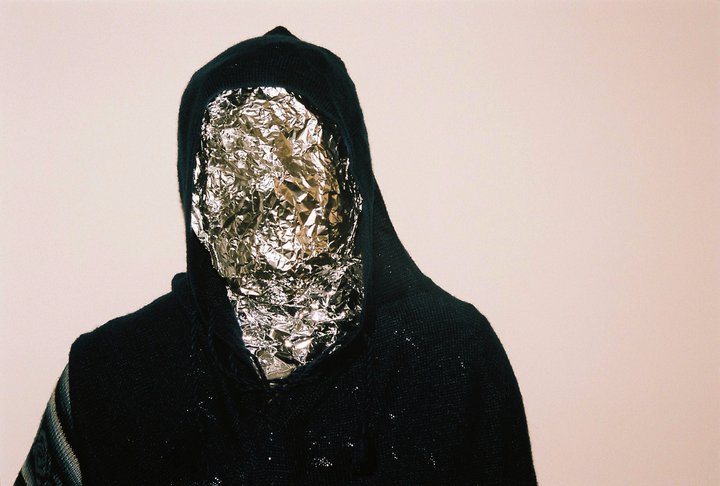
Dark and fierce queer rapper from the future rides a fresh wave of hype to the spooky-neat 120 Minutes party, with Physical Therapy and a performance by the eye-popping Boy Child.

Fri/3, 10pm, $10. Elbo Room, 647 Valencia, SF. www.elbo.com


>>REWIND

The Holy Cow continues to shed its reputation as a somewhat, er, screechy meat market, welcoming in this new Friday underground-vibes techno monthly, kicking off with local faves Nikita, Adnan Sharif, Lt. D, Joseph Lee, and special guest from Vancouver Kota Shibata. 

Fri/3, 10pm, $10. Holy Cow, 1535 Folsom, SF. 


>>SCUBA

The super-hot (like, for me, panties-throwing hot — but also hot in the audial way) British Hotflush label honcho is perfectly schizophrenic, giving us atmospheric dubby-deep bass genius and cerebellum-tickling techno in the harder vein. We like it when both sides come out to play — and why wouldn’t they at this As You like It party, with an amazing sound system and support from the also fascinating Olivier Deutschmann, Epcot (he’s back!), and Mossmoss.

Fri/3, 9pm-4am, $10 before 11pm, $20 after. Public Works, 161 Erie, SF. www.publicsf.com


>>G.A.W.K.

And now for something completely different — it’s OG club kid (and supposed progenitor of queer hip-hop) Jon Sugar’s birthday, and he’s having the party at his raucous regular Gay Artists and Writers Kollective showcase, with bands 5 Pines and Happy Idiots, fantasy solo performances, and an ever-lively crowd of the open-minded. 

Sun/5, 7pm, free. Tikka Masala, 1668 Haight, SF. Email gawksf@yahoo.com for more details. Or just go! 


Antonini, quarterback for development interests, wins the game

20

If there was any doubt about the loyalty to developers of Planning Commissioner Michael Antonini, he put them to rest yesterday shortly after finally winning reappointment to a fourth, four-year on a 6-5 vote by the Board of Supervisors. Afterward, in comments to Examiner reporter Joshua Sabatini, Antonini likened his role on the commission to that of a successful football team’s quarterback.

“You want to knock out the quarterback for the other team,” Antonini said. “It’s a tribute in a way – backhanded.”

The five supervisors who opposed Antonini – Sups. David Chiu, John Avalos, David Campos, Eric Mar, and Jane Kim, the board’s most progressive members – seemed to understand that Antonini saw himself playing for the developers and big corporations that see San Francisco mostly as a place to make money, even at the expense of eastern neighborhoods and the city’s long-term interests.

The voting record of this Republican dentist – an elected member of the San Francisco Republican County Central Committee who advocates for right-wing causes (such as crackdowns on the homeless) and candidates – makes clear which team Antonini plays for, and it isn’t the same team as the vast majority of people in San Francisco, where Republicans constitute less than 10 percent of the electorate.

It says a great deal about the corporatist politics of Mayor Ed Lee for re-appointing him, as well as the politics and integrity of the swing votes, Sups. Malia Cohen and Christina Olague, the Lee appointee now running for election in District 5, one of the city’s most progressive districts.

Both supervisors mouthed meaningless platitudes and justifications for their votes, but in reinstating the developers’ quarterback just as the progressives were about to remove him from the game, one wonders what team they’re playing for – or whether they even understand the dimensions of the game they have unexpectedly found themselves playing.

But Antonini clearly understands. And despite the ridiculous statements that Cohen and Olague made about holding him “accountable,” Antonini now has four more years to continue leading a team that is rapidly gentrifying San Francisco, making it more inviting to the Google-busers and Twitterati and their landlords, but less so for the average teacher, clerk, and social worker.

Seattle’s best record store is Starbucks?

4

“This is a joke right?” “BARFING FOREVER.” “You should be embarrassed that you even thought this was acceptable.” Just few choice responses to the news up north: Seattle Weekly posted its Best of Seattle issue this week, and the winner for Best CD/Record Store? That would be Starbucks.

Granted, the massive coffee chain (yes coffee, not music) did technically start in the city, so I suppose it’s sort of local there. Sort of. But regardless, those few recorded offerings by the register are meant as an after-thought to your supersweet morning scone. Starbucks will never offer deep cuts, rare vinyl, or non-signed local bands to the public. And calling it “Best CD/Record Store” does a disservice to the great people of that city.

As Seattle Weekly posts on the subject, “Hey, why the hell not! They stock all the records you love. They’ve got the Fleet Foxes, the Spoon, the Fiona Apple, and the Jack White.” Um, what about the bands that actually won in their poll, such as Best Hip-Hop Artist THEESatisfaction, or Best Pop Band Deep Sea Diver?

For reference, Seattle does of course have actual record shops, including Sonic Boom, Jive Time Records, Easy Street, and more.

(And in case you were wondering, Amoeba Music won Best Record Store here in the Guardian’s Best of the Bay issue)

Live Shots: SF Street Food Festival 2012 preview

0

The SF Street Food Festival has become such a delight in the summertime. (This year’s takes place on Saturday, August 18.) A chance to sample wonderful treats from the around the world (many developed in the test kitchens of entrepeneurial incubator La Cocina), transporting your taste buds to the far reaches of yumminess. The festival can get crazy crowded, so to help you out, here’s a list of some fave vendors to make a beeline for:


Alicia’s Tamales Los Mayas
– It’s partially that you’ll fall in love with Alicia, who will call you “mi cariño,” but it’s also that her delectable homemade tamales are out of this world, stuffed with pork, chicken or cheese and slathered in fresh salsa verde. You can’t go wrong with this corny bundles of love.

Minnie Bells’ Soul Movement – Think fried chicken and mac and cheese. Really good soul food, simple and delicious. Never tasted such flavorful gumbo!

Chiefo’s Kitchen – Chiefo cooks wonderful West African cuisine, that’s spicy and filled with exotic flavors. Try her mini moi-moi, a savory cake made with blended black eyed peas and topped with a crispy piece of meat.

Global Soul – Here’s the deal. I was handed a piece of meat on a toothpick, dripping in fat and it was the best thing ever. You know you want that too.

Azalina’s – “I love deep frying things!” declared Azalina. And she’s not joking! But what I love about her snacks is that yes, they are perfectly fried and golden, but then layered with roasted meats, fresh veggies and topped with a hot pink raspberry. So unique and beautiful!

Neo Cocoa – Save room for dessert! Christine from Neo Cocoa will be serving up chocolate truffle brownies, layered with such decadent fillings as almond butter.

Guardian editorial: The real Mirkarimi question

74

Do you believe Eliana?

After more than five months of legal and political wrangling, after criminal prosecution and a guilty plea, misconduct charges that are costing both sides hundreds of thousands of dollars, and lengthy hearings at the Ethics Commission, the case against Ross Mirkarimi comes down to a simple question: Do you believe Eliana?

Because if you believe Eliana Lopez, and, tangentially, Linette Peralta Haynes, and take the testimony the two women have given under oath as credible, then the entire prosecution turns into something between a misguided disaster and a mean-spirited political vendetta.

Read more here http://www.sfbg.com/2012/07/31/guardian-editorial-real-mirkarimi-question

Two of SF’s most venerable cannabis dispensaries get shut down

7

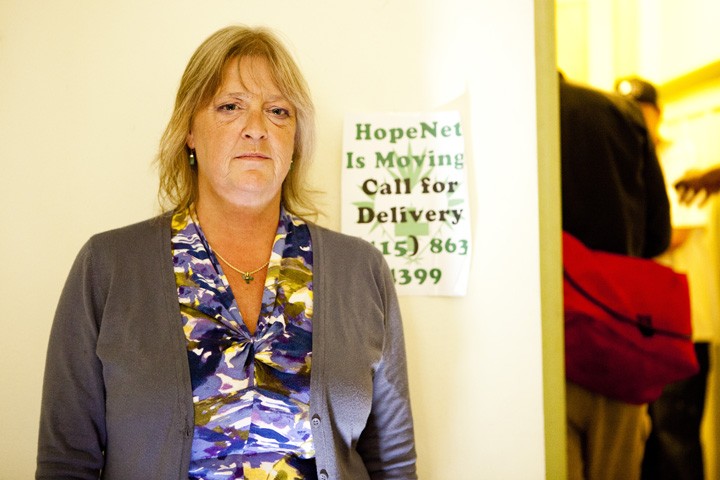
Sadness, anger, and confusion hung thick in the fragrant, smoky air of two of San Francisco’s oldest and most prominent medical marijuana dispensaries – HopeNet in SoMa and Vapor Room in Lower Haight – during their last day in business yesterday, the latest victims of an aggressive federal government crackdown on the industry.

Throughout the day, vendors, patients, neighbors, and well-wishers stopped in to say goodbye and commiserate over a trend that just doesn’t make sense to them, or to the local politicians and city officials that have spent years setting up a regulatory structure that had legitimized the cannabis industry, which thrived as the rest of the economy suffered through the recent recession.

“I’ve always treated this as if it were just a nice coffee house. I’m not an outlaw,” said Martin Olive, whose Vapor Room was a friendly community gathering place and active member of the local business community that gave away free bags of vaporized marijuana to low-income patients on a daily basis. “I almost forgot I was breaking federal law. It was so normal, so legitimate.”

Despite previous promises to respect state laws legalizing medical marijuana, President Barack Obama and federal agencies under his control did a sudden about-face last year, with the Drug Enforcement Agency threatening landlords with property seizure, the Justice Department threatening prison sentences, and the Internal Revenue Service doing audits and refusing to allow routine business expenses.

The result has been the forced closure of eight of San Francisco’s 24 licensed dispensaries in the last seven months, with more closures likely in the coming months. Almost all of the remaining clubs have been forced to deal only in cash after the feds threatened their bankers and credit card companies. The industry that grows and sells California’s biggest cash crop is essentially being driven back underground, hurting patients and the sometimes gritty neighborhoods that dispensaries had improved with security systems and a flow of customers that put more eyes on the streets and cash in the pockets of nearby stores and restaurants.

“The people that live here are afraid the neighborhood is going to come back in here. We took care of the entire block. Before us, it was all dealers, so there’s a safety issue,” HopeNet founder Cathy Smith told me as the once-welcoming club on 9th Street near Howard was reduced to bare walls, noting that the owner of the Starbucks on the corner told her he expects his business to drop by 15 percent.

Olive shared the concerns expressed at HopeNet, which he considers “a sister dispensary,” one that also had a generous compassion program for giving cannabis to low-income patients and offering other free services like yoga.

“I’m curious to see what this neighborhood looks like in six months. I know what it was like six months before we got here,” Olive said of his club’s opening in 2004.

But for now, it’s over. Vapor Room continued to do business for most of the day yesterday, but HopeNet was already stripped bare and essentially shut down, and by 3:30pm they removed the cash register and their pot stock. “The signs are down, we’re no longer a pot club, break out the beer,” announced Smith’s son, Bill, a member of the cooperative, referring to one of the many tight restrictions of what the city allowed in clubs. “I’m the only one making light of things today, as a coping mechanism. I laugh so we don’t cry.”

Like the patients, vendors, and local officials we spoke to – who you’ll hear from in an upcoming Guardian cover story looking the end of medical marijuana’s golden age – Olive and Smith are grappling with a federal crackdown they say has myriad downsides and no benefits to anyone but federal agencies that profit from drug-related seizures and the criminal syndicates that now have less competition.

Both Olive and Smith say they voted for Obama in 2008, they believed his statements that he wouldn’t go after businesses that complied with state and local law, and now they feel betrayed.

“I feel fucked by it, betrayed is too easy a word,” Howard said.

“It’s complicated emotions that I’m feeling – let down, confused – at the end of the day, I don’t understand why this is happening,” Olive said. “It’s a community tragedy, it really is.”

Like MediThrive and other recently shuttered clubs, both Vapor Room and HopeNet will still be operating as delivery-only services, but the future seems less certain now that their direct, brick-and-mortar connection to their community has been severed.

They urge those concerned about the crackdown to contact their political representatives, and to turn out today (Wed/1) at 4pm for a funeral march that starts at Haight and Steiner streets near the now-shuttered Vapor Room and goes to the Federal Building on Golden Gate Avenue, where there will be a rally and speeches starting at 5pm.

Localized Appreesh: Seatraffic

0

Localized Appreesh is our weekly thank-you column to the musicians that make the Bay. To be considered, contact emilysavage@sfbg.com.

On the new seven-inch, Crimes, the persistent flow of Seatraffic feels like it’s washing over you like warm bath water. The San Francisco electronic pop duo takes a page out of the 1980s synth playbook, and executes it with a shiny modern gleam, incorporating dreamy reverb, and heavy, shoe-gazing beats.

If you climb over some sandy rocks at Corona Del Mar State Beach down in Southern California, you can jet down to Little Corona, a more secluded plot of warm sand and water with craggy little caves surrounding it. And if you should ever visit, I suggest playing Seatraffic’s Crimes on your portable record player, and bringing along edibles.

This is because vocalist Mark Zannad and drummer Brandon Harrison created cavernous atmospheres pressed on small white vinyl, just the right speed for a languid dip. It’s Seatraffic’s first physical release, and limited to 300 copies.

The band will perform live from the new release at a DJ-studded Project One gathering this week.

http://www.youtube.com/watch?v=SPOMr-u15q0

Year and location of origin: We formed in summer of 2010, in San Francisco. It was more or less an agreement that one day we’d start making music, we actually didn’t get serious until about six months later.  I (Mark) had been working out a few songs and when Brandon heard them he thought it would be really unique to bring live drums into synthy music.  We gave it a shot and the first time we made music together it just felt right.  Despite having very different musical backgrounds we meshed really well and most of the songs came a long with little stress.

Band name origin:
The word Seatraffic, is suppose to be like Air Traffic, but we like boats better than planes. We had hundreds of names written down, most of them very bad. Seatraffic just sounded right to us, later our writer friend suggested we make it into one word.

Band motto: Never really thought of having a band motto, but if we had one it would be “Stay different, know your Identity”

Description of sound in 10 words or less:
Dreamy blend of whirling synthesizers, organs, bass, and heavy drums.

Instrumentation: Mark Zannad: Vocals, Organs, Synthesizers; Brandon Harrison: Drums, Percussion

Most recent release: Crimes 7-inch (2012).

Best part about life as a Bay Area band: The best part of being a band in the Bay Area is how open minded and diverse music enthusiasts are here.

Worst part about life as a Bay Area band: The worst thing about being a band in the Bay Area is that it is a very saturated place for music, it can be difficult to be heard locally.

First album ever purchased:  Mark: Lion King soundtrack on Cassette; Brandon: Astro Lounge by Smashmouth

Most recent album purchased/downloaded:  Mark: Ariel Pink’s Mature Themes; Brandon: Ty Segall Band’s Slaughterhouse.

Favorite local eatery and dish: This may be the most difficult question we have ever been asked because the food in SF is just so good. Mark: a mini-burger (don’t let the name deceive you) from Super Duper Burger; Brandon: Carne Asada Burrito from Farolito.

Seatraffic
With DJs Boyfren, YR Skull, Shaky Premise, and Epicsauce DJs
Thu/2, 9pm, $3 (free beer before 11pm)
Project One
251 Rhode Island, SF
(415) 938-7173
p1sf.com

Appetite: Southern taste adventures in Louisville, KY

0

Kentucky: land of bourbon, the Derby and Mint Juleps. I’m ever delighted to return to the South, although I’m connected to some areas more than others (ah, New Orleans, my love). I recently spent a week in Louisville, on the judging panel for ADI’s (American Distilling Institute) annual awards. It was an honor to judge with key spirits and cocktail industry folk, spending days tasting (blind, of course) through the latest in a broad range of small US craft spirits – winners here.

In my off time, I roamed Louisville, from downtown to Bardstown Road. Louisville is a small city, not exactly visually beautiful or dense like other US cities, but its distinctly Kentuckian treasures do unfold. The historic Brown Hotel was my home base, its player piano welcoming me with strains of Gershwin and old world elegance in the beautiful lobby.

I’m an American whiskey girl at heart (although I love all spirits), being in bourbon and rye’s epicenter is invigorating, even if I can find the region’s most rare, small batch spirits in my own city. A unique preview came in an early peek at Distilled Spirits Epicenter, shortly before it opened, essentially a distillery “for rent,” where would-be distillers have their visions crafted, try out test batches, or take classes to learn more about distilling. It was founded by David Defoe of Flavorman, a scientific flavor lab that creates sodas, juices and beverage products for numerous companies. My favorite feature is the upstairs apartment which they offer to guests using their facilities as they create a product: it’s an open, brick-walled apartment upstairs in the Flavorman building.

Here are highlights from my travels in food, cocktails, whiskey and unexpectedly the most incredible beer collection I’ve ever seen.

SERGIO’s WORLD OF BEERS
If you can find Sergio’s World of Beers (no, it’s not the dive bar next door), you will walk into an unmarked space and could wait 10 minutes for someone to even come out. I was immediately impressed by the selection of beers lining the dingy front room packed with boxes and glasses. Beer aficionados will freak out over the options available on tap. Numerous rotating beers range from Italian sours to a bourbon barrel rarity made by a guy down the street.

Sergio Ribenboim himself is an avid beer collector (read Imbibe magazine’s article about him last year). With one of the most exhaustive collections in the world, he leads tours of breweries around the globe. After the joys of the front room are uncovered, one realizes they haven’t seen anything. Stocking the halls and back rooms (not to mention Sergio’s home) are over 1000 beers for purchase from every region of the globe, including first editions of cult favorites and rarities, such as a Belgian beer, Smisje Calva Reserva, aged in Calvados barrels.

The humble shop is a beer lovers paradise, every unassuming foot of it. The Renaissance Man – the avid beer fan in my home – and I planned to stop in for 30 minutes but ended up staying over 3 hours. We chatted with Sergio and obsessed beer lovers who dropped in from all over the country, those who, like us, will make Sergio’s a must-stop whenever we’re in Kentucky.

HARVEST
To date, Harvest is my favorite Louisville restaurant. It’s the usual farm-to-table concept, long the standard where I live and more common in recent years around the country. The walls are covered with large black and white photos of Kentucky farmers who supply Harvest’s ingredients.

Here the concept invigorates local classics like the Hot Brown (see Brown Hotel’s English Grill below) in a Hot Brown pizza ($14), a brilliant twist on a local classic. Or burgoo ($16), a Southern stew laden with rabbit, pork and chicken, fresh with snow pea sprouts. Its one flaw was being far too salty so that the heartwarming bowl started to feel “one note” after a few bites.

After a starter of a pretzel bun dipped in addictive amber ale beer cheese sauce ($7) and solid cocktails utilizing house bitters, syrups and tinctures, not to mention engaging service and a manager walking the floor ensuring all of us were satisfied, I found Harvest a “whole package” kind of dining destination. No wonder they were nominated for a James Beard award this year for Best New Restaurant.

BROWN HOTEL’S ENGLISH GRILL
The Hot Brown ($22) is one of Kentucky’s signature dishes, created in 1926 at the Brown Hotel’s English Grill by chef Fred Schmidt. When bored with traditional ham and eggs, he opted for roasted turkey breast over toast points topped with bacon and tomatoes, then slathered it all in Mornay sauce (butter, milk, Parmesan, egg, cream). If that weren’t enough, it’s baked golden brown in Parmesan cheese. Brilliant. Eaten in its home base, the old world elegance of the English Grill, it’s every bit as decadent, gooey, rich, meaty and fabulous as it sounds.

MEAT
Hands-down, the best bar of my visit to Louisville was Meat – and Jared was the best bartender. We lingered for hours, till 3am, watching thunderstorms pass, filling paper bags with their revolving turntable of free snacks, a genius addition of unending servings, including Trader Joe’s favorites from mustard pretzels to peanut butter stuffed pretzels.

Jared joked and flirted with customers from the oval bar at the center of a brick-walled space tucked away upstairs in the back of a building that once housed a butchery in the trendy Butchertown neighborhood. Butcher tools and meats hang in the entrance, while the dim, glowing room is a romantic space filled with couches and comfy nooks.

The menu states, “We love the Prohibition-era cocktail movement. We love Louisville.” Instead of exactly copying big city bars, their mission is to “serve authentic and inventive beverages with a distinctly Louisvillian sense of place.” They list recipes from favorite bartenders around the world alongside house creations (all $10), while Jared whips up some off-menu beauties, including an effervescent mix of Del Maguey mezcal with Moet Imperial champagne.

One of the most delightfully unique menu offerings is a Viking 75. The Nordic twist on a French 75 uses Taffel aquavit, Cynar, house sour mix, demarara syrup and lingonberry jam with Bott Geyl Cremant d’Alsace. Upscale tacky plays well in The Queen’s Tea: Pimm’s, Hendrick’s gin, Campari, Dewar’s Scotch, Chartreuse, lemon, and, yes, 7-Up.

Puerto Rican Wingman was another favorite: Ron Zacapa Solera and Bacardi rums blend with orange curacao and lime into a bright whole where house falernum adds nutty texture, coffee bitters an earthy kick, Abita root beer a punchy finish. Another winner? Hit the smoky side with The Smoke Monster: Ardbeg 10yr Scotch, Vya sweet vermouth, Grand Marnier, orange juice, grenadine, celery seed bitters.

Whatever you order, don’t miss Meat.

HILLBILLY TEA
Hillbilly Tea is a funky, hipster version of Appalachia circa turn-of-the-century. In a gorgeous restored building, two levels of brick walls, rustic wood floors, ’70s rocking chairs, 1800s sewing machines, picnic tables and quilts set a comfortable tone for rounds of tea served on slices of a tree trunk. We sipped aromatic, herbal, mint-inflected Snap green tea ($3.75) and Sweet Smokey Mountain chai boiled with milk and sugar ($4.75) – a little sweet for me (we’re in the South, after all, where “sweet tea” means sweet). I found Twig ($3.75) most soothing: a nutty, toasted green tea.

Brunch is a fun affair, whether a skillet pancake ($8) lathered in Smokey Mountain chai butter and sorghum syrup, or white bean and sage fritters ($5). I particularly enjoyed pork and pone ($8), a mound of BBQ pulled pork on corn pone with garlic mayo, red cabbage chow chow, and choice of side – I opted for healthy braised greens. They serve a tasty biscuit ($3), even better with local honey and a dreamy house-cured bacon ($5). In the locally sourced foods vein with young, hip servers, Hillbilly Tea delivers substance alongside style.

DOC CROW’S

Spacious, extensive Doc Crow’s is a historic, 1880′s downtown Louisville space, particularly charming in the cozy, middle booth section or open back room with wood floors and fireplaces. The menu is a fun range of some of my Southern favorites, heavy on BBQ and oysters, also offering Po Boys, fried green tomatoes, mac n’ cheese, fried catfish and gumbo. Not all of it is the best version possible, but cornmeal fried catfish with hush puppies ($9), for example is generously portioned and satisfying, as are slow-smoked, baby back ribs ($12 1/2 rib, $22 full rib).

Key Lime Pie ($6) is not as tart as my favorite renditions (still remembering Uncle Bubba’s outside Charleston), while seasoned pork rinds ($4) taste great with a boozy lemonade but aren’t comparable to SF’s own cult classic – the best chicharrones I’ve ever had from the South to Mexico – 4505 Meats‘ chicharrones. Overall, Doc Crow’s is a fine downtown choice for value, with large portions, heartwarming food, and a welcoming, all-day space.

GARAGE ON MARKET
The building alone draws one into Garage on Market: a restored gas station with two cars melded together on the front drive, and a picnic table area with astro turf-covered seating under strung white lights. Serving brick oven-cooked pizzas, like the Monte Cristo ($14 – smoked chicken, gouda, egg, sorghum, preserves) or on the sweet side, Nutella Pie ($12 – nutella, banana, cinnamon sugar, butter, syrup), the Garage offers a playful, casual menu and regional country hams.

Brunch is the likes of beignets, poached eggs and ham, with drinks like a Red Hot Bitter ($7): local Red Hot Roasters espresso, chocolate milk, Kahlua, Bailey’s, and chocolate bitters. The cocktail menu in general appeals to cocktail fans while keeping that same approachable, unfussy tone.

PROOF ON MAIN

When it comes to Louisville, the restaurant and bar that almost always comes up is Proof on Main. Inside the 21c Hotel one is immediately impressed by its modern art museum. The dining room makes a statement with dramatic artwork and upholstered seats. But despite how long I’ve heard raves, disappointment set in immediately at the bar with a diffident, seemingly bored bartender who stood off to the side of the bar mixing drinks, only talking to servers vs. interacting with customers – and this was at the mellow hour of 5:30pm with a half empty bar.

The bartender acted as if he was doing us a favor serving an ok round of cocktails from a menu that in the end felt typical. For those of us who travel the world in search of the best food and drink, cocktails should stand on their own, yes, but service sets apart a menu that reads well from a destination-worthy bar. Ordering whiskey pours was the best way to go (we opted for Woodford Reserve’s rye duo), but in terms of the hundreds of top notch bars I’ve visited around the world, I wouldn’t return to Proof.

Once we moved to the dining room, service was friendly and gratifying, redeeming the experience. The food menu is a stimulating mix of modern creativity with Southern ingredients, but at high prices (starters are $8-21, entrees $18-34) I was disappointed in more than one dish, starting with a dry charred octopus ($15) with bagna cauda and lime.

Striped mullet ($27) sounded like a fishy/meaty melange of mussels, fennel, country ham, rutabaga, almonds, and smoked grapefruit but ultimately felt disjointed. The beloved Proof bison burger ($17), which more than half the restaurant seemed to order, piled high with Tillamook cheddar, smoked bacon, Jezebel sauce (a wonderful Southern mix of pineapple preserves, apple jelly, horseradish, mustard, black pepper), was cooked more medium than my medium rare request. I couldn’t help but recall the countless delectable gourmet burgers (whether bison or beef) I’ve had for under $15.

A standout dish was Bison marrow bones ($12), fatty and delectable, smartly paired with apple butter and frisee on toast. For cost to value/taste ratio, I’d recommend visiting the hotel’s museum, then heading on to Harvest or another locale for dinner and drinks.

CELLAR DOOR CHOCOLATES

A local chocolatier, Cellar Door Chocolates, produces crave-worthy sea salt peanut butter dark chocolate cups available at shops like The Wine Market http://www.thewinemarket.net/ on Bardstown Road. Buying a four-pack to sample, I promptly finished each one.

RYE BAR

Rye had just opened in February when I was in Louisville on a hip stretch of Market Street. Young bartenders in a sleek space were looking up recipes in Jim Meehan’s PDT Cocktail Book, slowly crafting drinks requested by guests or on menu. At the time, they seemed not quote yet ready for “prime time”, but served decent standards like a Mezcal Mule or Dark & Stormy (with Ron Zacapa 23 rum), or tongue-in-cheek drinks like The Shit ($9): Plymouth gin, chile-lime syrup, Prosecco.

One of my drinking companions, a well-known distiller, requested a Whiskey Sour with egg white and Whistlepig 10 year Rye (which they pour at $19 a glass) – it was easily the best drink I had here, bright and refreshing. Just mentioned in Food & Wine, this bar should get progressively better as the staff gain a more seamless knowledge of the menu and what they want to offer to customers.

SEELBACH BAR
The Seelbach is a piece of Louisville history dating back nearly 100 years. A dated respite of a bar inside a hotel, it offers an impressive range of bourbons and ryes, including a couple you won’t find outside of Kentucky, like a special Seelbach bottling from 1983 of Rathskeller Rye: a true treat, vibrant and boozy at cask strength. 

JOCKEY SILKS
With over 120 whiskies, Jockey Silks is a hotel bar offering a quiet, dated bar (think lots of wood and red, circa 1970’s) in which to sip a range of bourbons, from “deluxe” pours at $10, premium at $9, or most glasses at $8. It’s affordable and relaxing, a classic Louisville bourbon respite.

THE WINE MARKET OF LOUISVILLE AND OLD TOWN WINE AND SPIRITS
The Wine Market is a small but well-curated selection of wines from Alsace to Bordeaux with friendly staff in a funky, cool building with appealing wording (“weird, independent, proud”) covering the exterior wall. It seems to be Bardstown Road’s finest wine shop. Stronger on the spirits and beer front with a badass drive-through window is Old Town Wine and Spirits – they offer an affordable, wide-ranging selection.

QUILLS COFFEE
I felt right back at home with third wave coffee, excellently roasted beans and proper foam on my cappuccino at Quills Coffee (with two Louisville locations), which appears to be Louisville’s best artisan coffee.

As has long been commonplace on the West Coast and only gained traction in recent years in NY and places East, this hipster coffee haven is full of artists and students on laptops, with chemex and locally roasted beans hailing from Africa to South America.

Subscribe to Virgina’s twice-monthly newsletter, The Perfect Spot, www.theperfectspotsf.com

Don’t say mommy blogger, but mommies should be blogging

0

There is good and bad about the rise of the “mommy blog,” says mother and author Kate Hopper. Good: women should write! Writing spreads one’s voice, motherhood can be an intense time. Bad: why must we qualify them as something apart from any other blogger, memoirist, etc. Hopper promises to discuss these topics — and more saliently, how you can get started on a chapter of your own — at her upcoming appearance at Good Vibrations‘ mothers-specific hang-out, which also features Carol Queen speaking about post-natal nookie, on Wed/1. We caught up with her before she hit SF to get a sneak peek at her relationship with the written word.

SFBG: What’s with the current mommy blogger vogue? Haven’t women always been writing about parenthood? Why is it so popular right now, and why use that particular label?

KH: Women have been writing about parenthood for a long time, but not in [these] numbers and not so publicly. The Internet and blogging have given women a forum to write about their lives in a way that hasn’t happened before. Countless mother bloggers have really found a sense of community in the blogosphere. Motherhood can be so isolating, and blogging can help combat that isolation. And they can make money. I have never advertised on my blog, but I know it can be lucrative.

About the label: I really dislike the term “mommy blogger,” just as I dislike the term “momoir” to describe memoirs that have anything to do with motherhood. The names people use to describe literature or movies — or anything — have an impact on how those things are perceived. And when you categorize books as “chick lit,” “mommy lit,” “momoir,” and blogs as “mommy blogs” you make it easier for people to discard these books and blogs. They are viewed as less serious, less important. Once something is labeled “momoir” or a “mommy blog” people don’t take it seriously as literary venture. And there are some really amazing books and blogs being written by mothers right now.

The motherhood literature I read and review (and the motherhood blogs I read) deal with more than the minutiae of daily life with children. They are dealing with issues of identity, with loss and longing, neurosis and fear, ambivalence and joy. They are about transformation and how we see ourselves in relation to the world in which we live.

SFBG: At what point did you realize motherhood would become the primary thing you write about?

KH: I began writing about motherhood in 2004, a few months after my older daughter was born prematurely. Stella was born two months early and spent a month in the hospital, and the long winter months that followed home with me. At the time I was in the third year of the MFA program at the University of Minnesota, and I had to withdraw from school in order to stay home and care for my fragile and extremely fussy daughter. Up until that point, writing had been the way I processed what was happening in my life. But I couldn’t think much less write in those early months.

It was only when Stella was five months old that I finally realized I needed to find my way back into words. So I went to the coffee shop near our house and pulled out paper and a pen. And the images of my daughter — a miniature thing on an open warming bed, her legs splayed like a frog’s, a white ventilator tube taped over her mouth, purple veins tracking across her skull like spider webs — came spilling out. After an hour, words covered the page. And for the first time since Stella was born, I felt grounded and the world felt a little bigger. I felt less alone. I’ve been writing about motherhood ever since, though in recent years, I’ve spent more time helping other women get their motherhood stories down on paper.

SFBG: You teach women how to write. Is there a particular challenge that you see as being particularly difficult for your students?

KH: One thing that always comes up when you’re teaching creative non-fiction is the ethics of writing about the people in your life. This ethical dilemma is heightened for women writing about their children, because it’s our job as parents to protect these small people. I always tell my students not to worry about this as they are beginning to write. If they do, they will self-censor and might not get to the heart of the stories they need to write. But before they decide to send a piece of writing about their children out into the world, it’s important to acknowledge how their children might react to reading it. It’s a very personal decision and there is no right or wrong way to it, but it’s important to know what you feel comfortable with — what’s the line you won’t cross? — and then trust your gut.

SFBG: Who, in your opinion, are the best mommy bloggers in the game today?

KH: I’m not sure I can say who the “best” motherhood bloggers are, but I know whose writing resonates with me. A few of my favorites are Rachel Turiel, Kristen Spina, Jenn Mattern, Heather King, and Elizabeth Aquino. They are all very talented writers, and their posts are reflective and well thought out. They also all write from the heart and aren’t afraid to be honest. I really respect that.

Kate Hopper at Mommy’s Playdate

Wed/1 7-9pm, free

Good Vibrations

1609 Polk, SF

www.goodvibes.com

Underworld’s dynamic opening ceremony soundtrack

3

Much has been made of London’s opening ceremony, and director Danny Boyle’s cheeky rejection of Beijing’s rigidly coordinated, assembly-line approach. (Seriously, will Queen Elizabeth and James Bond ever share the screen again?) Completely overlooked, however, was the dynamic, propulsive soundtrack, curated by Underworld: the unsung heroes of British electronic music.

The collaboration was a revelation upon its announcement late last year; Underworld’s big moment arrived in 1996, when its anthemic “Born Slippy” was featured prominently in Trainspotting, Boyle’s directorial breakthrough. Providing a driving undercurrent to the action, as well as a lush, ambient backdrop, the track complemented Boyle’s vision beautifully, making a lasting impression on audiences worldwide as it established Underworld’s deeply filmic approach to its craft.

While the group, comprised of Karl Hyde, Rick Smith, and Darren Emerson (until he left the group in 1999, in favor of the DJ circuit) hasn’t exactly landed another gig to rival its Trainspotting moment, it has developed its sound considerably over the past 15 years, from the moody, yet diversely paced, Second Toughest in the Infants (1996), to the clean, shiny Detroit techno-inspired Beaucoup Fish (1999), to the post-Emerson steeliness of A Hundred Days Off (2002) and Oblivion With Bells (2007), to, most recently, the high-gloss raver anthems of Barking (2010).

https://www.youtube.com/watch?v=dWuAc4pnYFc

Underworld put its back catalogue to great use during the opening ceremony, most notably during the long-established Parade of Nations. The Olympic teams marched energetically to uptempo tracks, such as “Dark Train,” “Dirty Epic,” and “Rez,” all of which lent a thumping force to the proceedings; Underworld’s generously layered synths highlighted the electricity in the air.

It makes perfect sense that ambient-music guru Brian Eno collaborated frequently with Hyde over the past few years, given Underworld’s emphasis on muted atmosphere, a rarity among dance-music practitioners. The Parade of Nations benefited greatly from this tone, which a more standard outfit like Chemical Brothers or the Crystal Method simply couldn’t have imparted. Underworld’s music packs a subtle emotional punch that most of its competition cannot equal.

The biggest draw for Underworld fans was the introduction of two new, extended tracks, produced especially for the ceremony’s creative segment. At 17 minutes, “And I Will Kiss” provided the backdrop for a shrewdly choreographed performance-art piece, chronicling Britain’s historic transition from pastoral wonderland to industrial superpower.

Recalling Peter Gabriel’s similarly high-concept OVO: The Millennium Show, held in London 12 years ago, the spectacle combined elaborate set-design and an extensive cast with a loud and pulsating, yet moody and subdued soundtrack. Industrialization represented a sense of forward progress, as well as a loss of innocence, for the British people, and Underworld’s musical contribution aptly reflected this emotional complexity.

The second original piece, “Caliban’s Dream,” filled the arena as a makeshift foundry was rolled onstage, casting the five rings that make up the iconic Olympic logo. Less successful than the other new composition, this track buckled under its own weight, incorporating electronics, orchestral elements, a Lion King-esque choir, and superfluous opera singing, with the hamfistedness of Yanni at the Acropolis. This misstep was understandable, given the sheer scale of Olympic opening ceremonies. However, Underworld thrives on nuance, and by that count, it missed the mark.

https://www.youtube.com/watch?v=Mec8GZkEpD4

Original material aside, Hyde and Smith curated the soundtrack wisely, showcasing Britain’s musical exports in a universally approachable manner. An eclectic range of live performances included electronic composer Mike Oldfield, percussion virtuoso Evelyn Glennie, hip-hop wunderkind Dizzee Rascal, onetime “next-Oasis” Arctic Monkeys with a surprisingly inoffensive cover of “Come Together,” and of course, Sir Paul, himself.

Recorded material was also well chosen, particularly David Bowie’s “Heroes,” which played triumphantly as the British Olympic team marched out to the adoring home crowd. Lesser known artists, like rapper Wretch 32 and experimental duo Fuck Buttons, were thrown in for good measure, and “Eclipse,” the finale from Pink Floyd’s Dark Side of the Moon, closed the ceremony with a bang.

Hyde and Smith churn out first-rate background music, and when Boyle handed them the keys to the opening ceremony, they were given the opportunity of a lifetime. Sure, NBC’s commentators, Matt Lauer and Meredith Vieira, did American viewers a disservice by talking mindlessly over all four hours. In the end, though, Underworld’s soundtrack tinted the ceremony perfectly, framing soft, ambient impulses with an incessant rhythmic drive, while never distracting from the spectacle at the center. Bloody good work.

Hot mess: Total Trash BBQ Weekend revisited

5

Punks, rockers — whatever you want to call it, the scene in Oakland definitely got more than messy this weekend as the Total Trash BBQ lived up to its name and then some. Between night one’s melee that spilled outside after the show (bloodied lips and all) and night two where MOM mucked up the floor (as she does), it’s safe to say partygoers got more than they bargained for.

Lately though I’ve noticed the East Bay does things a little bit different than San Francisco. For instance, Saturday at the time capsule of a venue called The Continental Club, patrons got infected by the sounds of Russell Quan, DJing oldies on full blast in between band sets.

The dance floor was always full of motion as people weren’t afraid to take advantage of the tunes. Comparatively, SF can sometimes be a little stiff. DJs’ sets at shows are often treated as background music. Then of course the whole scuffle incident was something out of the ordinary as people also weren’t afraid to throw punches.

Night One’s Mess:

The blueprint for things to come was laid down during an insanely intense set by LA’s Intelligence. You couldn’t escape the war call of driving drums and fatal sounding keys — I tried. I loved what I was hearing, but a combination of things inside of me had me seeking one of the club’s luxurious (in its own charmingly trashy way) booths to sit down for a spell.

From that vantage point I could see others in the audience reaching drunken thresholds, performing ninja kicks, and an older woman (who looked like she may have served some hard time) shoving her way through the crowd.

I caught my second wind and headed up front to see Shannon and the Clams. But it was towards the end of their set that I’d witness this one surreal episode: the guitarist-singer was supposed to chime in as usual with a distinct backing vocal, but was silent.

Shannon called him out on stage and simply said, “Cody!?” He was staring off to the side, kind of mesmerized. Seemingly dazed, he uttered into his mic, “uh…there’s a fight happening over there.” Sure enough it was the way-too-drunk ninja kicker and another dude who had gotten a little rambunctious during the last two bands.

From what I recall, there were attempts to bounce them. The crowd outside grew into a major distraction. The night pretty much dissolved into chaos at that point with aforementioned punches thrown. My friend and I high-tailed it out of there in an unfortunately expensive trans-bay cab ride after having seen enough.

But the night shouldn’t be characterized as being marred by violence. Overall it was fun to hang out in what truly was an impressive old soul circuit venue that I hope welcomes future shows. Slobsters did a comedic stink up the stage shtick while Rock N Roll Adventure Kids gave off all kinds of positive energy in their performance. Guantanamo Baywatch continued the good vibes so much that I even purchased their latest Burger cassette, Chest Crawl from the merch table.

Night Two, A Different Kind of Mess:

My friend in tow very accurately reviewed evening two at Eli’s Mile High Club by saying there was “purple drank and beaver everywhere.” While I didn’t try the concoction, plenty of bargoers washed grilled corn on the cob down their throats with the mixture out on the back patio.

The corn may have been tasty, but I have to credit MOM for her less-than-delectable (albeit less sweaty, bloody, and messy in general) antics than the last time I saw her. Sometimes she’d hike up her red dress, revealing that indeed she does go commando, other times her exposure just sort of happened as she’d be caught up in the moment writhing around in her own filth while distorted childrens’ music or the on-acid slow groove version of “Spirit in the Sky” played.

Given MOM’s reputation, it wasn’t surprising to see the audience clear a wide path for her performance. That’s not to say there wasn’t some nervous moments of me perched on a barstool, cornered next to her during Spin the Bottle. The only difference in her game was in true MOM form: victims were smothered in cake and pie. Somehow I made it out unscathed from a memorable messy weekend.


All photos by Dallis Willard

Bay Area activists join in anger over Anaheim police shootings

24

Last weekend in Anaheim, police shot and killed two young men. Every day since, protesters have taken to the streets. This weekend, a national day of protest following the killings helped spread the call for justice in Anaheim spread to the Bay Area. 

Manuel Diaz, 25, was unarmed when he was killed by Anaheim police July 21. When a crowd gathered at the scene as Diaz lay bleeding, police fired rubber bullets and pepper balls into the crowd. One police dog got loose, charged at a baby, and bit the child’s father. Police say they used crowd control because the people had grown rowdy, and that some were throwing rocks. The next day, police shot a 21-year-old, Joel Acevedo, who they say shot at officers while fleeing. 

Anaheim police shot another man the next day, a suspected burglar, marking the eighth officer-involved shooting in Anaheim so far this year. Five of the shootings resulted in death, and all but one of those killed were Latino.

“What’s going on here in Orange County is symbolic of a problem with the system,” Eduardo Perez, a 21-year-old student who attended Sunday’s protest told the Orange County Register. “This wouldn’t happen to white people. This is racism, simple as that.” 

Saturday was a designated a national day of action, and protests in New York, Oakland, Seattle, and Chicago took place, while a smaller group marched Friday in San Francisco. 

Tensions boiled over between protesters and Anaheim police Tuesday. Police say that protesters smashed windows and set fires. They shot at a crowd of hundreds with rubber bullets, beanbags and pepper balls, arresting 24 by the end of the night. That was what an Occupy Oakland medic, who preferred to be quoted as Elle, want to head down. 

“I saw an insane amount of force being used to disperse protesters who I think are rightfully angry. I noticed there was nobody there as a medic, reaching out to do first aid,” Elle said. 

On Sunday, protesters rallied at the APD headquarters and attempted a march to Disneyland. Law enforcement officers in camoflauge uniforms, toting tear gas launchers, blocked them the crowd from getting near Disneyland.

“They were stopped by the SWAT team that apparently wears desert camo,” said Elle, noting that Anaheim police and Orange County sheriff’s deputies, many on horseback, also confronted the march. 

Although Elle says that she did observe mounted police “using their horses almost as batons to shove and hit protesters onto the street,” she only treated minor injuries as a medic. 

”The unfortunate thing about being a medic is that these people who are being arrested need your help the most,” she said.

“The arrests they made were pretty violent, the ones that I saw. They hit one guy over the head with their baton as they were taking them to the van. They carried another woman out from a back alley, and she was crying and terrified. They were pretty brutal to the people they were arresting.”

Elle says she wanted to go help in Anaheim in part to help build a unified movement.

“We’re building a movement in Oakland around a really similar situation,” she said.

“If our state, community, country is going to make these murders stop all these communities need to rise up together and say this is unacceptable, we need to stop. It’s going to take a lot of people getting out there into the streets and building constant popular support to say this is an unacceptable use of our tax dollars.”

That “constant popular support” has been mounting in the Bay Area so far in 2012. Occupy Oakland started off the year with a march to the Oakland City Jail, and, the next day, joined with the Oscar Grant Committee for a march and rally commemorating his death. As officer-involved shootings have continued throughout the year, family and supporters have continued to take to the streets in response. 

“I also wanted to help build a bridge between Oakland and Anaheim,” Elle says of her trip. 

“If every community is issuing statements saying we want police to be held accountable for these deaths, we want to revoke the police officers’ bill of rights, we want active legislation preventing stop and frisk, active legislation to protect people’s fourth amendment rights, I think it could accomplish something,” Elle said.

Dick Meister: Good news–and bad–about jobs

2

By Dick Meister

Dick Meister, former labor editor of the SF Chronicle and KQED-TV Newsroom, has covered labor and politics for more than a half century. Contact him through his website, www.dickmeister.com

It’s of course good news that unemployment among workers in private industry has been steadily declining. But that comes along with the bad news that unemployment among public employees has been growing – and with it a decline in vital government services.

A recent  report in the New York Times has made that very clear.  Reporters Shaila Dewan and Motoko Rich noted that government payrolls grew in the early part of the recovery from the Great Recession in 2009, mainly because of federal stimulus measures. But they said that since then, “the public sector has shrunk by 706,000 jobs.  The losses appeared to be tapering off earlier this year, but have accelerated for the last three months, creating the single biggest drag on the recovery in many areas.”

Albeit slowly, the economy generally has been improving, with state tax revenues expected to go beyond pre-recession levels by next year.  Yet the Times’ reported that “governors and legislatures are keeping a tight rein on spending, whether to refill depleted rainy day funds or because of political inclination.”

Holding tight won’t be easy, with the costs of health care, social services, education and employee pensions steadily rising, and property taxes and other tax revenues steadily shrinking.  More than a dozen states have tried to do it by trimming their aid to local governments. And that will undoubtedly lead to more public worker layoffs, more unemployment and more reductions in important public services.

Local governments already have been making budget cuts that far outweigh the slight economic relief that’s come with a recent growth in state and federal jobs.  It’s certain to worsen, since more than 25 percent of municipalities are planning layoffs this year. 

President Obama has proposed easing the financial plight of states and their employees by providing $30 billion more for teachers, police officers and firefighters.  Such aid is essential if public services – and the compensation of those who provide them – are to be maintained at a significant yet reasonable level.

Predictably, the  conservatives who don’t really care for government are in a snit over Obama’s proposal.  The Times quoted Michael D. Tanner, a senior fellow at the Cato Institute, as complaining that the additional public sector jobs  “must be paid for with more debt and taxes borne by the private sector.”

Now, isn’t that a revelation! Imagine that, people taxing themselves and hiring people to provide services they and everyone else needs if they are to live a decent life, if they are to find meaningful work.

We need more, not less government, and we can provide it by employing for reasonable compensation many of the millions of Americans now suffering from unemployment. We need to open more government jobs for them so they may help provide essential services.

The lack of sufficient public workers, as the Times said, “can mean longer response times to fires, larger class sizes, and in some cases lawsuits when short-staffed agencies are unable to provide the required services.”

The Times quoted Mike Whited, president of the firefighters union local in Muncie, Ind., who said the area which could be reached within eight minutes after an alarm was sounded was cut in half.

The Times said, “Mr. Whited chafed at portrayals of public workers as overpaid or greedy, saying his union and others had made concessions, including paying more for their health insurance and forfeiting raises. I think a lot of people don’t understand what we do. They’re looking for somebody to blame, and I think they’re being led the wrong way.”

One of the hardest hit cities, Trenton, New Jersey, has laid off fully one-third of its police force, hundreds of school district workers and at least 150 other public employees, and now faces loss of 60 more firefighters.

More than half the job losses in local governments have come in education.  Thousands of teachers have been laid off throughout the country, and thousands more are being threatened with layoffs.

 Many teachers have agreed to help ease their school districts financial problems by taking unpaid “furlough days” or agreeing to less pay and benefits than they had sought or had been granted in contract negotiations.

The widespread teacher layoffs have nevertheless continued. In Cleveland, for instance, more than 500 teachers were laid off this spring because  of a claimed $66 million budget shortfall. That came after two years of cutbacks and $25 million in concessions, teachers union leader David Quolke told the Times’ reporters.

One consequence: Some classes will have more than 40 students, a serious hardship on students and teachers alike.

Relatively large teacher layoffs and cuts in public jobs and services generally have hit every state hard, including the largest, wealthiest and most influential states.  In California, for example, Gov. Jerry Brown is threatening to eliminate 15,000 state jobs.

The Times said Pennsylvania “has shed 5,400 government jobs this year, and many school districts and social service agencies are contemplating more layoffs.”

Yes, it will take higher taxes and more public debt in Pennsylvania, California and everywhere else to combat the severe economic problems that have left millions of Americans without the jobs  and public services they so badly need.

Dick Meister, former labor editor of the SF Chronicle and KQED-TV Newsroom, has covered labor and politics for more than a half century. Contact him through his website, www.dickmeister.com

Janitors continue pressure as negotiations’ close draws near

19

As contract negotiations with several employers come to an end August 1, the SEIU Local 87 janitors union has been coming out in force. More than 1,000 rallied in Union Square and marched over the weekend. Today, 500 janitors marched through the financial district.

“If we don’t get no contract, you don’t get no peace,” the crowd chanted as it marched down Market, before turning on First towards Mission. The group periodically stopped to picket intersections.

In negotiations with the city, the Westfield Mall, and Macy’s, janitors risk a significant increase in monthly healthcare costs.

Members have voted to strike if demands are not met.

“Our members clean up after companies that got bailed out, and we’re getting screwed,” said Olga Miranda, president of Local 87.

“We depend on our hands. We work hard for our money, We’re not looking for hand-outs.” a union janitor who preferred to be quoted as Elhady said.

“The trash can outside your office? The bathroom? The hallways? No matter how dirty it is, we do it,” Elhady said. “And we’re not given respect.”

After marching, leaders switched from English to Chinese to Spanish to Arabic as they rallied the crowd to continue fighting for health care benefits.

“We clean these buildings, and we’re proud of it,” Miranda said to cheers from the crowd. “Don’t take away my family’s health and welfare.”

Miranda laid out the next few days, telling that if they have not heard that a resolution has been reached by midnight August 1, “it means we have no contract.” However, she said that the strike would not begin immediately Wednesday.

Another action is planned for tomorrow at 2pm.

Heads Up: 8 must-see concerts this week

0

This is a week of ebullient greetings and sorrowful goodbyes. So long Snoop Dogg, welcome Snoop Lion‘s Reincarnated. Back down on earth – and more pertinent to concert-goers in the Bay Area this week – we’ll open our arms to the Yolks, finally on a proper tour. And say nice to see you again to Buraka Som Sistema, and welcome return to Peaking Lights (the duo met here).

And with a single tear rolling down the cheek, we’ll shout bon voyage to the current repertoire of Extra Action Marching Band, in this form at least – they’ll surely regroup with some magical new production soon enough.

Here are your must-see Bay Area concerts this week/end:

Bleached
With the demise of their former band, Mika Miko, LA sisters Jessica and Jennifer Clavin dusted themselves off, imbibed in a steady liquid diet of early melodic punk, girl group pop, and woozy psychedelia, and formed infectious, so-very-California quartet Bleached.
With DIIV, Lenz
Wed/1, 8pm, $12
Rickshaw Stop
155 Fell, SF
(415) 861-2011
www.rickshawstop.com
http://www.youtube.com/watch?v=–PGy31IeI4

Hood Internet
The Chicago-based mashups artists (duo ABX and STV SLV) of Hood Internet have long been hailed as the Next Big Thing in the bridge between hip-hop and alternative rock/indie pop – if you think that sounds like something straight out of ’96 Lollapalooza (or perhaps, Homerpalooza), you wouldn’t be too far off. Recent mashups include Danny Brown vs. Dirty Projectors, and then there’s new single “Won’t Fuck Us Over,” which started as a cover of the National’s “Mr. November,” and features BBU, Annie Hart, and Hart’s screaming baby.
Wed/1, 9pm, $14
Independent
628 Divisadero, SF
(415) 771-1421
www.theindependentsf.com
https://www.youtube.com/watch?v=YQWyqquA_xk

The Yolks
Here’s yet another act from the Windy City. Chicago’s three-chord rock’n’rollers the Yolks are hauling a Hammond Organ out during this, their first actual tour after five years as a band. Though they’ve yet to travel, you may already know their sound thanks to our own Nobunny – he covered “Somewhere New” on his first LP, Love Visions. This week, Nobunny gave the Yolks another boost by enthusiastically noodging social networking fans, “GO SHOW ‘EM SOME LOVE.” You heard the bunny.
With the Okmoniks, the Shrouds
Thu/2, 9:30pm, $7
Knockout
3223 Mission, SF
(415) 550-6994
www.theknockoutsf.com
http://www.youtube.com/watch?v=a_mWgrGCyWQ

Buraka Som Sistema
“Buraka’s a reportedly rough and tumble neighborhood in Lisbon; Som Sistema quickly translates to “sound system”; put it together and you have a partying collective of DJs, producers, MCs, and dancers spreading the Angolan-originated, techno and hip-hop influenced genre of kuduro. Understanding Portuguese is not a prerequisite, as the group’s seemingly competitive desire to hype up a crowd, proves immediate and universal.” – Ryan Prendiville
Thu/2, 9pm, $20
Independent
628 Divisadero, SF
(415) 771-1421
www.theindependentsf.com
http://www.youtube.com/watch?v=wOMe-8Tf1Y0

Judgement Day
Progressive string-metal band Judgement Day should be in high spirits this weekend – the San Francisco trio will be celebrating the release of its third full-length, Polar Shift at Bottom of the Hill. It’s the violin and cello-packed follow-up to 2010’s epic Peacocks/Pink Monsters. Check action-packed single “Forest Battle” below.
With Giant Squid, A Sun That Never Sets
Fri/3, 10pm, $10
Bottom of the Hill
1233 17th St., SF
(415) 621-4455
www.bottomofthehill.com
http://www.youtube.com/watch?v=F_kdTWRDvY0

Peaking Lights
“Originally from the Bay Area, Madison, Wisconsin-based duo Peaking Lights weaves an infectiously stoney web of dub, Krautrock, and loopy, gloopy pop a la Panda Bear, seemingly tailor-made for record collectors and serial name-droppers. “ – Taylor Kaplan
With Woods (co-headlining), Wet Illustrated
Fri/3, 9pm, $16
Great American Music Hall
859 O’Farrell, SF
(415) 885-0750
www.slimspresents.com
http://www.youtube.com/watch?v=HINIs3Sp5Lk

Extra Action Marching Band
Seismic shifts are upon us. As the theatrical, whimsical, horny, and brassy Oakland collective recently stated, “These two shows will be the final performances [of] Extra Action’s current repertoire. We have begun work on an all new show and won’t be performing publicly for quite some time.” Get on that loyal fans, don’t miss the chance to see your favorite “high school marching band on acid.” 
With Itchy-o Marching Band, KROB, Donkey, Staiano
Fri/3, 9pm, $12
Vitus
1410 Ballroom (14th and Broadway), Oakl.
www.vitusoakland.com

With Itchy-O Marching Band
Sat/4, 9pm, $20
Brick and Mortar Music Hall
1710 Mission, SF
(415) 371-1631
www.brickandmortarmusic.com
https://www.youtube.com/watch?v=ffQPG-OjIQc

Drive tour: College, Anoraak, Electric Youth
Are we yet over the chilling, punctuating soundtrack to last year’s Gosselin vehicle, Drive? Nope, not yet ready to shift gears. We’re still very much engulfed in the Krauty, synth-filled drama. Hey Gosling, just keep driving – and check out these performances by bands off the noteworthy soundtrack while you’re at it.
Sat/4, 9pm, $15-$17
Rickshaw Stop
155 Fell, SF
(415) 861-2011
www.rickshawstop.com
http://www.youtube.com/watch?v=BOWPA0oRSd0

Meet the finalists in Oakland’s youth poet laureate competition

4

Bay Area, our young people are wrapping words of wisdom around subjects like survival, poverty, oppression, community, life, and death. It’s time to listen up.

“Just like a picture is worth a thousand words, a word can provoke a thousand memories,” says Tele’Jon Quinn, one of seven 16 to 18-year-old Oakland youth poet laureate finalists. “Memorizing goes hand in hand with reflection. If my words can cause someone to reflect on an important issue or event in their life, then my words were worth sharing.” The East Bay bards are now preparing for the first group performance at the Art and Soul Festival in Oakland on Sat/4.

The Oakland Public Library teams up with Youth Speaks, the local youth spoken word nonprofit, to stage the competition. Like any poet laureate, the chosen versifier will officially represent his or her community via the media and public appearances.

A panel of celebrity judges including California poet laureate Juan Felipe Herrera, and Oakland-based poets Kenju Liu, Arisa White, Juliana Spahr, and Joshua Merchant, will select Oakland’s inaugural poet laureate in September. Every finalist will have their work published in an anthology that comes out in 2013, and the ultimate victor will receive a $5000 scholarship as well as the title of youth poet laureate for Oakland.

Take a moment to read up on seven of the most creative young wordsmiths around, and check out snippets from their creative works.

Oakland youth poet laureates at the Art and Soul Festival, festival entrances at 14th St. and Broadway; 16th St. and San Pablo; Promenade beside City Center West Garage, Oakl. www.oaklandpubliclibrary.orgwww.artandsouloakland.com. Performance at Rotunda Building, 300 Frank Ogawa Plaza. Sat/4 5pm – 7pm, $5-$8 seniors and kids, $10-$15 adults

Stephanie Yun, age 18, Skyline High School

Stephanie Yun has always been a writer. “To me, poetry is pure expression. It’s beautiful, and painful, and liberating, and frightening, all at once,” she tells the Guardian. “It’s being vulnerable, and teaches us to better understand things we never could.” Her poem “‘Til Death”, is infinitely more than your stereotypical love poem. Her lines tackle severe insecurities, body image issues, depression, cutting:

… Before my first and current relationship,

I wondered how potential suitors would react

when their fingertips wandered and read my wrists like Braille

Here lies emotionally unstable girl …

Describing her foray into love, her first boyfriend, her first romance, Yun slips in images of her internal battles, questions of existence, identity. 

… Everything may be fine as I speak this

but I’ve envisioned dream wedding

in the spring 

wearing tulle or lace ball gown

with three-tiered chocolate cake     

fewer times and in less detail

than my suicide … 

Yun says she started writing poetry in second grade, but became actively involved two years ago as a high school sophomore with Youth Speaks. She says writing is a release — she writes out of necessity and tells us doesn’t know if she would be alive today without the ability to lay her words down. “There is just something about letting things out, things we have kept so deep inside of us, or things that threaten to burst from our being,” Yun says. “It’s that transition from containing them within ourselves, to their manifestation into the outside world. We make ourselves vulnerable and are forced to face things head-on, and from there our ideas and feelings exist beyond us, and we can share them with others.”

Tele’jon Quinn, age 17, MetWest High School

Tele’jon Quinn is an activist and spoken word artist. He enjoys performing to large crowds, and uses his creative talents to raise consciousness in his community. His wordplay draws attention to social issues like police brutality, classism, poverty, and community. From his poem “Dialouge”: 

… Because Elites are never open minded unless there is lots for sell 

They have packaged us like we’re bots on shelves 

Robotically boxing each other and concocting diabolical plots 

To exile one another to hell …

Quinn says his poetry is not limited to his own emotions or feelings. He draws some of his material from the social programs he participates with, like Heal the Streets, Bay-Peace, and Youth Speaks. He says that for the past two years, poetry has been his outlet for everything he endures. He seeks to educate, liberate, and inspire members of the Oakland community with his words. In the final lines of “Dialogue” he writes:

So if my poetry could walk she’d walk right here

And tell you a story that gives you hope for the future of her home Oakland

The Navajo people once said you can’t wake a person that pretends to be asleep

So lets stop pretending that we do not see our reality

Open our eyes

And transform the reality we live in …

Robin Levy, age 16, Saint Joseph Notre Dame

Poetry, she says, allows Robin Levy to organize the helter-skelter thoughts that run rampant in her brain. Levy has written poetry in earnest for three years now, and says every time she writes a poem, she records another part of herself. 

“Poetry, for me, is collecting all the scraps of beauty or strangeness or whatever I can find and piecing them together so other people can see just how vivid everything is,” she tells the Guardian. Levy is a big fan of Robert Frost, but her favorite poet is a slam poet who calls herself Jasmine Luve. “The way she writes just seems so unthinkingly perfect, like she just wrote down everything she thought that day and it was already poetry,” Levy says. Her own subject matter evolves from little snippets she hears, reads, or thinks. “Just anything that is accidentally amazing, something that probably didn’t mean to be poetic but is,” she says. “The reason I write what I do is that whenever I read or hear something poetic, I just want to elaborate on it and make it into something more, weave that one thread into a full tapestry.”

In her poem “Before You Were You” Levy’s ability to turn a casual phrase into poetry is apparent. The first lines read:

you told me once

that before you were you

you were a stone.

heavy, immobile,

stranded at the ocean floor

by the cruel grip of gravity.

The poem runs full circle to explore questions of identity and shared existence. It ends with:

you told me once

that before you were you,

you poured from my mind

into the sand

you told me once

that before  you were you,

you were me

Levy asks anyone who reads this to write a poem today.

Kerby Lynch, age 17, Oakland School for the Arts

When asked if she reads poetry, Kerby Lynch responds, “Reading poetry is such an understatement. I live, breathe and eat poetry. Life is poetry. The sun, the moon and the truth is poetry. When one realizes that, life is on a path of divinity.” 

In the middle of this creative flight, she interrupts herself. “Enough of that, I’ll answer the question.” 

It turns out Lynch reads, watches, and listens to a whole gamut of poetry from traditional, to contemporary (particularly Ise Lyfe from Oakland), to spoken word (Def Jam Poetry, season 3), to rappers (Jay-Z, Andre 3000, Kendrick Lamar, Nas, and Lauryn Hill), and her teachers and peers at Oakland School for the Arts. Her favorite song, ever, he adds, is “Mathematics” by Mos Def—largely for the lyrics. 

http://www.youtube.com/watch?v=m5vw4ajnWGA

“These are all my favorite poets and people, because they are who I am,” she says. Lynch has written poetry since she was 14, and says she got heavily into the beauty and complexity of poetry and spoken word in the summer of 2011. “Poetry is me, but not in a pretentious way. Poetry is me in a way that it completes me and aides my purpose in life.” Lynch writes about issues of race and separation, class, social and political issues. Her words are progressive, like a call to action:

Watch your brother. Tell him 

no matter what he wears he will fit the description

tell him about Oscar

tell him about Aiyana

Sean

Carlos

Sergio

Danny 

Shaima

tell him about Trayvon and these statistics that define us…

She says she uses poetry to reflect the “messed up workings of the world,” insecurities and vulnerabilities of people, and as a tool to sway the masses. “I strive to write as if I am using political propaganda,” he says, noting the influences of Martin Luther King Jr., and Stokeley Carmichael. “I use words  for me, the same way words have been used against me. Whether it be in the constitution or in a hate speech. Words are the tools for the bigger machine. Who has access to that machine? We all do. Why don’t we all use it? We didn’t know we could.”

Euna Bonovich, age 16, International High School of San Francisco

Euna Bonovich is half-Korean, half-white. She says the confusion and frustration that goes along with finding herself split between two very different cultures and in the middle of adolescence can only be soothed by writing poetry. She wants to provide a voice for those who are prevented from speaking because of the depression and exhaustion of living, and spread the message that no one is emotionally alone. Her writing is hopeful, soulful, and gets to the roots of human connection. The lines of Bonovich’s “The Gossamer of Our Hope” tell of a connection that is able to reawaken feeling and soul. 

The poem begins:

My soul has slipped away like the fleeting moments of a nightingale

Distant memories that can only be recovered by the breath of the wind

Losing my existence within the grains of sand,

But when I sense the warmth of your fingertips 

I know I’ve found it once more

The song of my sleepless night 

The feeling of laying in cold grass as the sun spreads across my skin

The laughter of a falling snowflake

The fragility of a wet moth’s wing …

Bonovich says the importance of poetry is its ability to show someone beauty in the ugliest thing in existence: life.

Jose Saldona, age 18, Envision Academy of Arts and Technology

Jose Saldona says poetry is a piece of clay; it is up to the artisan to decid its shape, color, texture and size. “It’s up to the customer to figure out its use,” he says. “Words are another set of tools: another way to communicate. Another path to enter the untapped emotions of people. Another method to reach the doubts people have.” Saldona says poetry has always been a way for him to express himself, free from speech and grammatical rules. “Sometimes you can even sneak in a few spelling ‘mistakes’ for effect,” he says. Saldona has written poetry since sixth grade, and spoken poetry since he was three. His poetry speaks to life, truth—he describes his inspirations as, “anything from nature to human nature.” 

“I am a reflection of my community, and my community lives within no boundary,” says Saldona, who describes himself as half-Spaniard, half-Tarahumara, but recognizes himself as a whole-hearted, proud Mexican. “I was raised with the idea of corima, sharing and charity. As I approach this unliberated world, I see poetry as a way to remake that world.” Saldona says stories are shared among people to teach lessons in tribes to the younger folk. He views himself as a chief, the storyteller, the ‘back in Mexico’ kid, who in ninth grade refused to write essays because he felt it took the ideas of others. The 18-year-old messenger wrote he poem “Baby’s First Words” as a dedication to his unborn baby boy:

I’m enslaved to this holy string I pull

perhaps a chord that keeps me fed

I have not an idea what it is, but it keeps me alive.


I stretch and barrage my mommy with kicks.

It gets her to speak and I love hearing her distant, soothing voice.

Yes, that marvelous singing in the raindrops, drizzling

with echoes of angelic harmony,

lulling me to sleep … 


My mouth opens wide in a gaping yawn

that quickly closes around my thumb.

Siesta in my warm incubated cove..

Goodnight.

Victoria Kupu, age 18, Mills College

Victoria Kupu has written poetry since fifth grade, but did not tell anyone about it until her sophomore year in high school. The first-generation Polynesian-American says it is her means of self expression during stressful times, as well as a reflection of her experiences and culture. “I see poetry as seeing the beauty in struggles,” she says. “[It is] an art, a way of self expression.  It can be left up to the artist how they want to convey that to the audience.” Kupu writes to tackle issues that affect people of color, and her poem, “Roots”, is an example of the way her words explore generational and cultural gaps.  

… He whispered, Ou’a foki mai, Osi tala atu ka koi 

My love does not speak your language 

A Polynesian growing up in America left my identity an orphan 

Father America was a con-artist, selling the “American Dream”

Mother liberty stood on her pedestal made of sand and dressed herself up in Monopoly money

She sold herself to the white man, capitalism 

That left no nurturing time for this brown child

I turned my back on my roots, so he turned his back too

He spewed words of my biggest fear

Ou’a  foki Mai, Osi tala atu ka koi

Your heart no longer lives here …

Kupu says she is usually sitting on a bus or in class when a line pops into her head. She writes it down and it expands into a poem. “I also usually try to touch upon issues that are not talked about as much,” Kupu says. “One of my poems talks about colorism. I also like to write about issues or marginalized communities, such as the disabled community. … I am Polynesian-American. I am not only writing to represent other Polynesians but also many other people.”


Guardian Voices: Hassle-free housing

64

I’m talking to the amazing organizers at Causa Justa:: Just Cause (CJJC) about their work to protect homeowners from foreclosure by the big banks, about their long history of tenants’ rights work, and what they are up to right now. Blanca Solis says they’ve launched a new campaign for what they’re calling the “Hassle-Free Housing” ordinance. She’s a grassroots leader from CJJC, and she’s asking for our support. To protect tenants from unscrupulous landlords. To stop unfair evictions. To stop wringing our hands about gentrification and families leaving the city. She says we can do something very straightforward to keep working families in their homes.
 
On Tuesday July 31st, Solis will join other tenant leaders, advocates and supporters at city hall to call for an end to tenant harassment by landlords. The San Francisco Tenants Union will be there. Organizers at CJJC have learned from years of experience with Latino tenants struggling to make ends meet in the midst of this rapidly gentrifying city that “one of the quickest and cheapest ways to evict a tenant is by harassing them until the situation becomes unbearable and the tenant moves on their own. Whey they leave, the landlord has an empty unit that they can rent to new tenants at market-rate rent.”
 
Faced with a pattern of such blatantly unfair practices, tenant activists took the issue to the voters in 2008; when “Prop M” passed, it was an important victory for this still-majority-renter-city. But then, the landlord’s lawyers got hold of it, and sued to stop implementation.
 
No one seems to be denying that landlords do this, and that it’s wrong. But what can a family do to stop the harassment, hold on to their housing and get some relief? Here’s where the “Hassle-Free Housing” ordinance comes in. It builds on Prop M and addresses the landlords’ legal issue. It would “allow tenants to claim damages from their landlords for each incident of harassment in small claims court to collect statutory damages of up to $2,000 for each incident.”
 
Sounds good, let’s do it. City Hall – get on it.
 
All over San Francisco, probably every night, people are sitting around shaking their heads about how expensive the city has become. How families have been pushed and priced out. Folks shrug and say “But, what can you do?”
 
There is a long, proud, and painful history in San Francisco of everyday people organizing to put a stop to unfair evictions, developer-driven displacement, and the over-production of luxury housing. From the African American community’s fight to save the Fillmore from redevelopment’s “negro removal” in the 1960s, to the Filipino-led struggle to stop the eviction of elderly men at the I-Hotel in the 1970s, and to Mission activists’ campaigns to control land use during the intense gentrification of the 1990’s dot-com boom. (Just this week there’s a big celebration marking the 35th Anniversary of the I-Hotel struggle.) 
 
These “housing justice” fights are ultimately about who has the power to shape the future of our city and who has the power to determine who can and cannot afford to live here. That’s where we all come in – all of us who are renters whose lives will be better with a “Hassle-Free Housing” ordinance; all of us whose housing is insecure – because we fear foreclosure or are a paycheck away from homelessness. This is an issue of people power, and you can do something now – attend the press conference at 10am tomorrow on the steps of City Hall, or go to CJJC’s website to sign up as a campaign supporter. Being right is good, but ultimately it’s people power that matters.
 
When Solis was asked why she joined the hassle-free housing campaign and why she’s coming to City Hall tomorrow, she said:
 
“Que los supervisores aseguren que los inquilinos estemos protegidos de los desalojos injustos por parte de los caseros y asi mismo vivamos en lugares dignos, seguros y libres de hostigamiento”
 
“So that the supervisors can ensure that we, tenants, are protected from illegal and unjust evictions by landlords and be able to live in homes that are dignified, safe and free of harassment”
 
Solis and the other incredible grassroots leaders at CJJC are full of courage and determination, and have not given up hope that there is a bright future for San Francisco. Let’s join them!

Tobacco-free cigarettes and Alika: Reggae on the River, through a lens

1

Last week I decided it would be fun to check out Reggae on the River for the first time. I called up my brother DJ Guacamole to see if he’d like to come along, only to discover that he was DJing the late-night dancehall dome at Cooks Valley Campground. Without any further hesitation I jumped in my vintage Beemer and headed up to Sebastopol to meet up with him and his DJ buddy, Jacques of WBLK. Luckily for me, Jacques and Guac are well-connected in the NorCal reggae scene. We piled our stuff in Guac’s van, I stuffed myself into the rear seat between sleeping bags and coolers full of Guinness. Three hours later we were greeted by Guac’s dreaded friend in charge, Chris Tafari. He set us up with an awesome campsite just behind the dome stage.

The next morning, I woke up to scores of cars whose inhabitants were all trying to score the ideal camp spot. It was kinda like the frontier land rushes of the 1800s. Some of the most coveted spots were on the edge of the crystal-clear Eel River. It was that perfect temp that severs any hangover you might be tempted to throw its way. My first splash in the river helped washed away my puffy morning eyes like magic.

While cooling off in the water, I was soothed with the electro-dubstep sounds of Sacramento DJ J-Dubs from the River stage. I met a nice guy who offered me a sample of his hand-rolled, tobacco-free cigarette. Not being a smoker, I was quite hesitant, but seeing that I was at a reggae fest, I figured I’d better see what this stuff is all about. I took a little puff, and realized that the music playing in the background seemed to get a little clearer — and my social skills got a little foggier.

On Saturday I rode a crowded party shuttle to the main festival site. While strolling around the festival, sipping on my Bob Marley coffee, I walked past the vendor booths separating the two main stages. For the shoppers of the world, this festival was a paradise of red, gold, and green accessories.

I was sweetly surprised when I reached the main stage to find the soulful sounds of veteran singer Calypso Rose. She has a confidence and grace that has been built over the greater part of a century. Later in the day I witnessed the much-anticipated Alika, who came all the way from Argentina to tour around the US with her monumental style of Latin reggae. I really enjoyed that her band Quinto Sol — with this mix of music, there’s no way to stop dancing.

http://www.youtube.com/watch?v=BEYFLu3ShNc&feature=fvwrel

Back at the late-night dancehall dome, I watched as Guacamole and Jacques lured people from their afternoon naps to the dancefloor. Eventually, the dome was filled with couples grinding their bodies to the dancehall beats. I really loved the singing of Cocoa Tea and Norris Man. And the great DJ sounds of Jah Warrior Shelter and Silverback. I even got to listen to the great beats of Selecta Konnex, as the sun came up over the Eel River.

Eventually Monday rolled around, and we had to head back to Sebastopol, but no fear. The Monday after, we were treated to a special WBLK show with Alika and DJ Stepwise at the Hopmonk Tavern.

Life is great for a photographer.

The British press: “Nowhere Man” and “Mitt the Twit”

0

I like one liners that make the point.

As Maureen Dowd put it in her Sunday (7/29/2012)  column in the New York Times  on “Mitt’s Olympic Meddle,”

“The alarming thing about Romney is that he has been running for president for  years, but he still doesn’t know how to read a room.”

Why should a Republican dentist decide what gets built in San Francisco?

34

The Board of Supervisors is almost evenly divided on confirming Mayor Ed Lee’s appointment of Republican dentist Michael Antonini to his fourth four-year term on the city’s powerful Planning Commission. After delaying its decision at each of its last two board meetings, the board is expected to finally decide this Tuesday.

Sup. Malia Cohen appears to be the swing vote between the progressive-to-neoliberal bloc of supervisors that would rather see new blood that is more reflective of San Francisco’s values and priorities, and the board’s moderate-to-conservative bloc that wants to keep Antonini there as a sure vote for whatever developers want (a bloc that strangely includes progressive-turned-mayoral-shill Sup. Christina Olague, a former planning commissioner who said during the July 17 discussion that she doesn’t agree with Antonini’s politics and that more diversity was needed on the commission, but that she’s voting for him anyway while offering this hollow threat: “This may be the last time I’ll support this kind of move that doesn’t support a diverse body.”)

Sup. Sean Elsbernd, who led the charge for Antonini, fairly effectively picked apart some of the vague and misleading “diversity” arguments made by some supervisors who oppose the nomination, a discussion that Examiner columnist Melissa Griffin dramatized in yesterday’s paper. And everyone praised Antonini as a hard worker.

But almost the entire discussion skipped over what should be the main point: Why the hell is San Francisco even considering appointing a Republican dentist with no particular land use expertise to a fourth term on the Planning Commission?!?! Shouldn’t someone else – preferably not a rubber stamp for developers – be given a chance to serve the city? And why isn’t Mayor Lee – whose main political benefactor and economic adviser, venture capitalist Ron Conway, is also a longtime Republican – paying a political price for this ridiculous appointment?

While supportive supervisors praised Antonini as thoughtful and fair, I can’t gauge that for myself because this supposed public servant hasn’t returned my phone calls. But I’m not sure it would have mattered because his voting record shows he is a consistent vote for developers and their interests, as even Griffin acknowledged in an otherwise supportive column.

Board President David Chiu came the closest to telling it like it is when he said, “Every person who has reached out to me from the northeast neighborhoods has asked me to oppose this nominee.” And for good reasons: Antonini is a right-winger who votes against neighborhood interests every single time. Not just neighborhood interests, but city interests as well, as shown by the commission’s approval earlier this year of a CPMC project that was found to have fatal flaws that were then exposed by supervisors.

Elsbernd argued that the board should give deference to the appointing authority, noting that he’s often voted for nominees whose politics he doesn’t agree with, including Olague. And there certainly is some value to have different perspectives on appointed bodies. But when we grant a Republican dentist tenure in shaping what this embattled city will look like for generations, and pretend that his ideology is less important than his work ethic, we make a mockery of the political system that is supposed to reflect the values and interests of city residents.

The worst archibishop ever

92

As they say … Jesus!

The new archbishop of San Francisco isn’t just a conservative. All the bishops appointed by this pope are conservatives. The new guy overseeing the Catholic Church in one of the most socially liberal parts of the world is a genuine culture-warrior, someone who (literally) says that same-sex marriage is the work of the devil and who wanted to make the use of contraception a mortal sin.

Salvatore Cordileone also happens to be the father of Proposition 8. The East Bay Express, in an excellent profile, noted in 2009 that he

has cultivated one of the most theologically conservative worldviews imaginable. Especially when it comes to sexual matters, Bishop Sal is conservative and uncompromising.

What I hear through the Catholic rumor mill is that the Vatican folks who screen candidates for these jobs gave the pope a list of three names. He rejected them all and chose Cordileone.

So now the center of the crazy-looney-here-comes-the-devil branch of the Church has a powerful throne here in San Francisco. What this is going to do, of course, is drive gay people, and liberals, and moderates, and pretty much everyone who’s sane to question why they even stay in the Catholic Church. And maybe, as one gay Catholic told me, that’s exactly what Rome has in mind — get rid of the malcontents and the thinkers until the Catholic Taliban is all that’s left.

I suspect Bishop Sal is going to have some problems in his new assignment.

There goes the SF Democratic Party

41

We all knew that the progressives didn’t win a majority on the Democratic County Central Committee, but for a while there it looked as if there might still be a chance to elect someone who isn’t one of the most conservative members of the panel as the chair. But no: Mary Jung, who works for PG&E, now controls the San Francisco Democratic Party.

Jung was elected unanimously July 27, which means the progs realized they didn’t have a candidate who could get a majority. Most of the other leadership roles are from the conservative side of the party. Yes, Alix Rosenthal is second vice-chair, but it’s clear who is going to be in charge of the party — and it’s not the folks who have run it for the past four years.

The slate-card committee, which has the key job of creating and delivering the powerful endorsement card, will be dominated by conservatives, Jung and Tom Hsieh, with only one progressive, Rafael Mandelman. It’s pretty much a train wreck all around.

Samson Wong (who is a good guy) says it’s a new era of civility, which is the same thing we used to say about City Hall (and I agree with him that it’s historic: The mayor, the president of the board and the chair of the party are now Asians). But when civility means you stop fighting (loudly, even if you lose) for things that matter in the name of keeping the peace, I’m against it.

In a press release, the DCCC’s new corresponding secretary, Matt Dorsey, notes that the local party’s priorities this fall are re-electing Barack Obama (who will win California even if the SF DCCC members all take a six-month nap) and restoring Democratic control of the House (which won’t be decided in the Bay Area). No mention of electing progressives to the Board of Supervisors — which is where the local party really matters.

The race to watch will be D1, where incumbent Eric Mar is part of the progressive bloc that lost the DCCC. We’ll see what happens.


Shearwater descends on Bottom of the Hill

2

Back in 2008, someone at a Shearwater show in Chicago posted a shaky video to YouTube, in which the Austin-based ensemble covered Talk Talk’s “The Rainbow,” the ambitiously panoramic opening track from the seminal Spirit of Eden (1988).

Not only did the 10-minute clip showcase a band masterfully replicating a piece of music, previously determined by its creator to be unplayable in a live setting; it demonstrated just how far Shearwater has come since its beginnings in 2001 as a quiet, low-key spinoff of alt-country institution Okkervil River.

The band’s breakthrough effort, Rook (2008), raised the stakes considerably, treating the spacious, naturalistic folk-rock of their earlier output with a loosely psychedelic propulsion (somewhere in between Pink Floyd’s “Echoes” and Neil Young’s “Down By the River”) and a significant expansion of their dynamic range.

Fast-forward to 2012, and the release of Animal Joy: Shearwater’s most unrelentingly loud/quiet/loud statement to date. Last Tuesday, frontman Jonathan Meiburg, and his current, five-piece lineup of supporting players, stopped by Bottom of the Hill in support of their seventh full-length, and first release on Sub Pop.

After two competent, but ultimately dispensable, opening sets from Seattle folk revivalists Gold Leaves, and Australian psych-popsters Husky, Shearwater took the stage authoritatively, beginning with “The Snow Leopard” – the dramatic, erratic climax from Rook.

https://www.youtube.com/watch?v=5dcFdcsAOdw

Undeniably one of the highlights of the evening, it neatly encapsulated Meiburg’s thorough understanding of tension and release, its eerily quiet piano intro crashing into an explosive, beautifully cathartic jam, complete with thunderous drums and crunchy guitar stabs. Did the band shoot their collective wad early on? Arguably. But, what a first impression.

Another outstanding moment came halfway through the show, with “Insolence”, the similarly complex centerpiece from Animal Joy. Shifting between ruminative ballad-territory, and forceful, post-rock aggression, it exemplified Shearwater’s greatest asset: shapeshifting mini-epics whose loud and quiet sections feed symbiotically off one another.

Both “The Snow Leopard” and “Insolence” played to the strengths of Meiburg’s voice, which is a dramatic, versatile instrument, with the soft quiver of Aaron Neville or Roy Orbison, but the ability to pounce like Jeff Buckley at his most confrontational. However, the quieter songs left Meiburg’s vocals longing for the musical backbone they need to truly shine.

Therein lies Shearwater’s greatest fault; about half the time, the vocals are rendered over-theatrical by the the band’s incapacity to keep them in check. So, either the music needed beefing up, or the vocals required a dose of restraint, but something about the status quo certainly felt off.

Meiburg’s facial expressions were compelling, though, in their Jim Varney-esque elasticity. His eyes and mouth opened ferociously wide during more expressive moments, emoting with a “call-the-exorcist” level of wildness.

After a 90-minute set, Meiburg returned to the stage for an encore, which, at some point, crossed the line between “generous” and “overlong.” About half the bearded, bespectacled, plaid-wearing crowd filtered out, as Meiburg shared solo material, paid an a capella tribute to Scott Walker, and invited the band back onstage to close with a cover of REM’s “These Days.”

Though not exactly a hostage situation, one couldn’t help but long to give Meiburg the age-old “less is more” lecture. Still, he looked happy and engaged, so it feels a bit unfair to fault him for going overboard out of the goodness of his heart.

Even a decade into their career, Shearwater keeps searching, and refining their sound. Certain elements pale in comparison to others, as evidenced by their inconsistent appearance last Tuesday, but the stronger moments hint at a project with promising shelf life, and massive potential. Give them another ten years, they might bestow us with their Spirit of Eden moment.