Activists nationwide are pressuring Congress to pass a bill they say would generate hundreds of billions of dollars and stimulate economic growth on Main Street, targeting House Minority Leader Nancy Pelosi and other key congressional votes with a series of protests today.
The Inclusive Prosperity Act, or H.R. 6411, would establish a 0.5 percent tax on the trading of stocks, 50 cents on every $100 of trades and lesser rates on bonds, derivatives and currencies. It’s being touted as the “Robin Hood tax” because it would generate an estimated $350 billion dollars annually that would go towards growing local economies, taking for the rich to help the poor.
Supporters for the national campaign are knocking on the doors of their congressional representatives asking them to back the bill. Campaigners and members of National Nurses United today gathered at Pelosi’s office to ask her for support, but she was nowhere to be found. Roughly two dozen nurses and activists attempted to enter the building when security promptly stopped them, allowing only four members to enter to speak to a Pelosi representative in the lobby.
Inside, the four activists – including Deborah Burger, a registered nurse from Santa Rosa – were told that although the bill fits with her values, Pelosi is currently focused on the November election.
“We were told that after the election she might use her influence to back the legislation,” says Burger. “We do plan to go to Washington to push this bill and we’re going to do it with or without Nancy Pelosi.”
Eighteen days after the stock market crashed in 2008 – four years ago today – Congress approved the Troubled Relief Asset Program, or T.A.R.P., that saved the “too-big-to-fail” banks from financial collapse. Now, the national unemployment rate lingers above 8 percent. HR 6411, introduced by Rep. Keith Ellison of Minnesota, is being promoted as a way to enforce accountability on the part of major Wall Street banking institutions.
“The destruction they’ve done to this country is enormous,” says Charles Idelson, communications director for the California Nurses Association. “They pay no tax when trading and all we’re asking for is Wall Street to pay us back and help local economies.”
When asked why nurses are interested in the bill, Scott Hornback, a nurse at UCSF, said people in his profession spend their days caring for those hit hardest by the recession: “We care about the health of the American worker and the people who make up this economy.”
Supporters say the revenue generated from HR 6411 would also help strengthen Medicare and Medicaid, put more resources into the infrastructure and education, and help tackle climate change.
The obvious question is whether or not such a tax would encourage financial institutions to move their transactions offshore. Idelson rejected this possibility, saying, “When you have something totally computerized, like financial transactions, it’s easy to monitor and track.”
According to National Nurses United, more than 40 countries currently have some form of financial transaction tax in place. Last week Germany and France urged the European Commission to draft FTT proposals for nine nations in the EU.
It’s looking increasingly unlikely that any members of the Board of Supervisors will be recused from next week’s big vote on whether to sustain the official misconduct charges against suspended Sheriff Ross Mirkarimi, particularly given an advice letter written today by attorney Scott Emblidge, who is advising the board.
Mirkarimi and his attorneys were hoping some supervisors would admit discussing the case with Mayor Ed Lee or others – particularly Sup. Christina Olague, who is at the center of the controversy about whether Lee committed perjury when he denied, while testifying under oath, ever consulting with any supervisors about the case – and they were disappointed with Emblidge’s advice.
“Scott Emblidge parrots the language of the City Attorney in his recommendation against recusal,” Mirkarimi attorney David Waggoner told us, taking issue with the relationship Emblidge and his firm have with the city and the fact that he also served as legal counsel to the Ethics Commission, some of whose members were unaware of that dual role and expressed concern. “The board must appoint independent counsel.”
In his advice letter, Emblidge did take a similar position to that urged by the City Attorney’s Office, which argued that supervisors are assumed to be politicians who have some relationship with the person that they’re being asked to judge and that analogizing it to a jury in a criminal case isn’t accurate.
“That analogy is misguided. The Charter does not provide for resolution of official misconduct charges by a body unfamiliar with the parties or the facts of the dispute. Rather, it specifically entrusts that decision to the Board of Supervisors, a body composed of individuals who almost certainly would have had dealings with anyone charged with official misconduct,” Emblidge wrote in a letter requested by Board President David Chiu. “Rather than a jury trial, this proceeding is more like an administrative hearing involving employee discipline or other important rights.”
Emblidge said the legal standards indicate that a supervisor must have a financial interest in the decision or be so “personally embroiled” in the case that he/she would have already demonstrated a strong bias or animus against Mirkarimi. And even then, it would be up to a majority vote by the board to excuse a supervisor from the vote.
Such recusal votes are usually mere formalities once a supervisor claims a conflict-of-interest, as then-Sup. Gavin Newsom sometimes did on votes involving landlord-tenant relations. But given that it takes nine of the 11 votes to remove Mirkarimi – with each recusal effectively being a vote in his favor – claims of a conflict will be carefully scrutinized, which Emblidge thinks is appropriate.
“The bar should be high for recusal because of the three-fourths requirement,” Emblidge told the Guardian, making clear that was his personal rather than legal opinion.
The City Attorney’s Office strongly advised the supervisors earlier this year not to discuss the Mirkarimi case with anyone, and they have all heeded that advice and refused to discuss the case with reporters, adding to the drama surrounding a high-profile decision with huge potential long-term ramifications.
Unlike other big decisions, in which supervisors will publicly stake out positions before the vote, often making clear the political dynamics and swing votes, nobody really knows where any of the supervisors stand right now. It’s widely believed that progressive Sups. John Avalos and David Campos – both of whom have unexpectedly easy paths to reelection in November – are the most likely votes for Mirkarimi, with just one more vote needed to reinstate him.
Olague will be in a tough spot politically, torn between supporting the mayor who appointed her and a district that Mirkarimi once represented, where opposition to his removal seems strongest. Ditto with Sup. Jane Kim, a fellow former Green long allied with Mirkarimi, but also someone who backed Lee last year and has ambitions to be the next board president.
This is also a board filled with Ivy League lawyers, and it’s hard to say what aspect of this complex case will draw their focus. Will they side with those who say the decision is simply about showing zero tolerance for domestic violence, or will they share the concerns of Ethics Chair Benedict Hur, who calls this a potentially dangerous precedent that gives too much power to the mayor.
It’s even possible that someone from the board’s conservative bloc of Sups. Sean Elsbernd, Mark Farrell, and Carmen Chu might object to this costly and distracting move by government to go after one individual, making this more about limited government and deferring to voters rather than the fate of an individual for whom they have no particular fondness.
Until now, it’s been difficult to read these tea leaves, but that might be about to change. Emblidge argues that the grounds for recusal are so narrow and restrictive that even if supervisors make public statements about their thoughts on the case, that wouldn’t present a conflict-of-interest that would prevent them from voting on it, particularly now that they’re actively reviewing the record.
So, are we about to start getting some hints from under the dome about how this is going to play out? We’re listening and we’ll let you know.
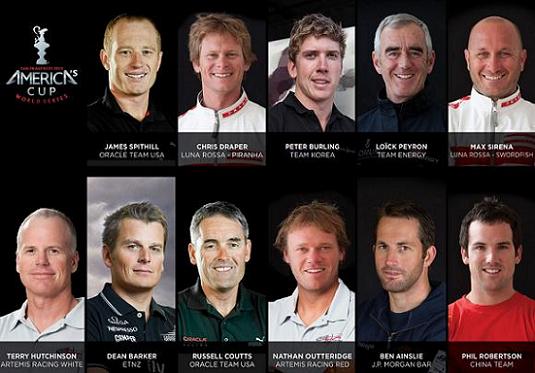
Today starting at 6:15pm you have an excellent chance to revel in the population demographic defined by Urban Dictionary as “a group of people who are blamed for all of the problems in the world.” Yes, it’s white males! And they’re rich, too — or at least they comandeer incredibly expensive toys. The chappies in question are the America’s Cup skippers, who will be on display in the America’s Cup Village (now open 10am-7pm Tuesday-Saturday) at Little Marina Green on Marina Boulevard.
There will be an official presentation of the rugged chaps, then a Q&A sesson and autograph signing. We must say, proof of sailing’s populist appeal has never been more evident. For more skipper mugs, check out the Cup’s “Sailor Faces” Facebook album.
Note: The Guardian and I were delighted, after fighting PG&E since 1969 to enforce the public power mandates of the federal Raker Act, to see the SF Board of Supervisors finally start the process rolling on a veto-proof 8-3 vote. Even the San Francisco Chronicle, after all these decades of opposition to public power, noted in its Monday story by John Cote:
“The move would effectively end Pacific Gas & Electric Co.’s decades-long monopoly on the consumer power market in San Francisco, and it would lay the groundwork for the city to generate its own power in the future.
“Public power has long been a goal of major contingent on the city’s political left. The contract approval comes eight years after the city began setting up a community choice aggregation program, which allows municipalities to choose alternativve energy providers.”
Two of the PG&E 3 are my supervisors–Sup. Sean Elsbernd and Carmen Chiu. (I live in West Portal in Elsbernd’s district and a few blocks from Chiu’s Sunset district.) Sup. Mark Farrell was the third PG&E vote. I was curious how in 2012, after PG&E’s misbehavior in the San Bruno blast and after its corporate shenanigans in San Francisco, after all the work that has been done by public power advocates and the San Francsico Public Utilities Commission on CCA, could Elsbernd, Chiu and Farrell vote with PG&E and against public/clean/renewable power. I sent them emails asking some Impertinent Questions. Farrell and Chiu didn’t reply. Elsbernd to his credit did. Here is the back and forth: . B3 to Sup. Elsbernd, As a constituent, I am curious why you voted last week with PG&E and against clean energy and public power on the PG&E vote and didn’t say anything during the discussion. I am also curious why, as a neighborhood supervisor, you seem to always vote with the Chamber of Commerce (l00 per cent, according to its last score card) and did so again on this vote. On what major vote have you differed with the Chamber and PG&E? I will run your answer on my blog. Thanks, b3 http://www.sfbg.com/bruce/2012/09/18/stop-presses-cleanpowersf-8-pge-3 Sean to B3 I opposed the proposal because I have a real concern about the potential for a number of our neighbors becoming unwilling customers of this program. I said nothing because I believe Supervisor Farrell and Chu expressed the point quite well. Perhaps the biggest issue on which I differed from the Chamber was Proposition A in 2007, the MTA set aside sponsored by Supervisor Peskin. I played a large role in supporting that measure, while the Chamber opposed it.
I am curious – on what issues has the Bay Guardian differed from SEIU 1021? B3 to Sean Thanks, supervisor. Many issues with the SEIU and labor, and many involving their support of what we call Manhattanization and the over building of projects. The Guardian is friendly to SEIU and labor, but we often differ on endorsements of candidates and propositions, as you can see from Wednesday’s edition. b3 Sean to B3 Interesting. I have never seen SEIU 1021 support controversial building proposals; I have, of course seen the Building Trades and other labor support for such construction, just have not see SEIU. I’ll take your word for it.
B3 to Sean
Thanks, supervisor. I like your idea of the new Goat Hill Pizza in West Portal bringing us together.
You have always answered my Impertinent Questions. I appreciate it. I’ll miss you. Good luck. B3
After three years of delays and broken promises, the fate of a dangerous but vital bike route in San Francisco will be decided on Oct. 16. Oak and Fell streets, one of the few major east-west byways in the city, carries tens of thousands of cars each day, according to the San Francisco Municipal Transportation Agency. Right now, there is no bike lane on Oak, and the stripes on Fell are only two feet wide with no buffer, putting cyclists inches from heavy traffic. But all that could change. If the transit agency gives it the green light, the perilous Oak-Fell corridor between Scott and Baker will gain needed concrete barriers and wider bike lanes, according to SFMTA spokesperson Paul Rose and bike advocates. “This has been a long push,” said Leah Shahum, president of the San Francisco Bicycle Coalition, a vocal advocate of the project. If passed, separated bikeways, crosswalk enhancements, traffic signal timing changes, and parking mitigation measures would be installed by the end of 2012, Rose said, and construction of bulbouts and a concrete bikeway barrier would be put in by the summer of 2013. The project has met repeated delays, despite Mayor Ed Lee’s promise that it would be done by the end of 2011. A section of the major bike route “The Wiggle,” its the only game in town if you’re a cyclist who wants to cross the city from east to west. But not everyone favors the fix. Blogger and anti-bike activist Rob Anderson, who sued San Francisco for not performing proper studies on bike lane projects in 2005, calls it a slap in the face to people who must drive to work. “It shows no sympathy or understanding for working people in the neighborhood,” Anderson said. He bemoaned the loss of parking as particularly harmful to residents in the area, which would lose 35 parking spaces, according to SFMTA data. “It’s all about making cyclists comfortable.” Shahum agrees with Anderson on that point, arguing that’s the best way to encourage more people to get on a bike. “Poll after poll, survey after survey say that the biggest deterrent to biking is safety,” Shahum said. Its not just about the accidents, it’s also about people perceptions. If the bike lanes were more safe, more cyclists would ride them, Shahum said. This would pave the way towards San Francisco’s goal of increasing bike ridership to 20 percent of trips made in San Francisco by the year 2020, which is enshrined in legislation passed by the Board of Supervisors two years ago. Currently, about 3.5 percent of bike commutes in the city are by bicycle, a 71 percent increase from 2005, according to the city’s “2012 State of Cycling Report.” One San Francisco politician says that the city wasn’t pedaling fast enough on the redesign. District 5 candidate Christina Olague sent a letter to the SFMTA two weeks ago urging the transit agency to pick up the pace and break ground by year’s end. That may have been a factor in SFBC’s subsequent decision to give Olague it’s top endorsement, with Julian Davis gets its number two spot. Shahum said the SFBC plans to turn out its members on Oct. 16 to ensure passage of a project it has sought for years: “We can breathe when it’s over.”
When you think about it, e-readers haven’t done much to change the reading experience. Besides their portability and the easy access they provide to catalogues of titles, the level of interaction, font, even the physical motion involved with turning pages are pretty much identical to “brick and mortar” books. E-readers and their e-books, especially compared to the world of apps, can seem downright ordinary. But bored tech-novel enthusiasts have cause to rejoice. An app-literary project launched yesterday, from the minds behind McSweeney’s — and backed by everyone’s favorite radio nerd, Ira Glass — named The Silent History aims to change up the e-reading experience.
The cohort behind this undertaking is comprised of the former publisher of McSweeney’s Eli Horowitz, McSweeney’s alum Russell Quinn, and authors Matthew Derby and Kevin Moffett, all of whom have had many a fancy byline. Inspired by Charles Dickens, The Wire , Studs Terkel, and Lawnmower Man, the four banded together to create an app that we found on a Guardian test run to be an intriguing and lively combination of GPS-based storytelling and serialized fiction. (Glass is said to be a fan of the app, he and twee filmmaker Miranda July lend their narration to the app’s promotional trailer.)
The idea for Silent History originated from Horowitz’s refusal to believe that digitized technology and print are naturally adversarial.
“It seemed like people were viewing technology and novels as enemies,” Horowitz told us in an email interview. “As if books had to surrender to some wave of progress —- but actually these new devices should open up new possibilities. We wanted to take an early step down that path.”
Users of Silent History can dive into prose in two ways. The app’s “testimonial” section is a nod to the serialized fiction series of magazine past. The app’s testimonials are organized into volumes in which characters deliver 15 minutes of storytelling, with a new testimonial uploaded daily to the user’s device so that the story unfolds as it is read. The first novel on the new app will be an eponymous-titled 160,000-word work written by all four of the authors.
GPS-linked “field reports” are another way to explore — browse the globe for user-generated storylines connected to spots on Silent History’s global map. As of this writing there are 20 of these reports in San Francisco.
Unfazed by the fact that he and his group are not among the first to attempt to remake the e-book, Derby predicted that his team’s take is the one that will stick.
“Our ambition was to go as big as possible with the project. We’re certainly not the first people to do location-based storytelling or serialized digital fiction, but I think one reason that the existing attempts haven’t gotten a ton of traction has been the lack of depth. We’ve written an entire novel. And that’s just part of the project — it doesn’t take into account all of the field reports spread throughout the world. If this project tanks, it won’t be because we sacrificed narrative richness to achieve some technical goal. It’ll be because of something else we obviously didn’t think of when we were making this thing.”
Other than not making any stupid mistakes, the presidential candidates have one goal for the Oct. 3: “debate” — and it’s the reason not much of substance is going to come out of either one’s mouth.
See, this isn’t a national campaign at this point; it’s all about winning over a few hundred thousand undecided voters in about nine states. Which means that Romney and Obama are going to be talking to a few hundred thousand people mostly in Pennsylvania, Florida, and Ohio.
And who, exactly, are “undecided voters” at this point? Who, after everthing that’s been said and done in a campaign that features two very different candidates with completely different visions for the country, still can make up his or her mind?
Think about that. Think about what kind of a cautious, all-things-to-all-people, America-is-great-if-we-all-work-together kind of message Obama and Romney have to craft to reach the tiny and politically bizarre group that could still change this election. That’s what you’re going to see on the TV screen.
Oh, you’ll see Romney try to knock Obama off balance with some sort of attack or quip or zinger. Not likely to work. You’ll see Obama try to be as presidential as possible, and Romney trying to look august and presidential, too. A lot of it’s visuals.
But really, there won’t be much “debate,” since both candidates have memorized canned responses to every possible question.
It’s a show for a micro-audience. Just remember that when you tune in.
Over the course of a steady stream of heady mixes and original compositions, Max Cooper has been gaining attention in the electronic music world – and not just for his Ph.D in computational biology. With an unconventional sensibility that’s like Philip Glass for the dance floor, Cooper brings a cinematic touch and classical influence to cerebral concepts. We took the opportunity – in advance of a performance at Public Works’s two-year anniversary party – to probe Cooper’s brain.
SFBGHow did reworking composer Michael Nyman come about?
Max Cooper My best remix work seems to happen when I get hold of some real world audio, be it vocal, instrumental or other forms such as field recordings. Maybe because when I work on a remix, I’m always looking for some small element to grab me and give me a feeling or concept to run with – real audio seems to push me in an interesting direction, and even better, the live orchestral works of a great composer like Michael Nyman. So we approached him with the idea and he gave me the green light to break his recordings down.
http://www.youtube.com/watch?v=khlLc7NNOok
SFBGOn the subject of words, your EP and track titles are notoriously intellectual – playing into your biology background. Are the labels a marking of what inspired you or a key to unlocking a deeper (nerdier?) conceptual understanding of the music?
MC More often than not the titles relate to something embedded in the music – The Nyman Deconstruction and Reconstruction for example, literally describing my technical approach to each remix, one taking the original into tiny parts to form something new, the next trying to build the original back up from the deconstructed parts. When I post my tracks on Soundcloud I usually provide an explanation of the concept of each track and how it relates to the music and the title, so that people can delve in a little deeper if they’re interested.
http://www.youtube.com/watch?v=ByYt8IplubE
The links can often be more cryptic than literal though, for example the track I posted up today from my forthcoming EP on Traum is called “Gravity Well” – which describes an area of space warped by a large mass, in which bodies, such as us feel the strong pull of gravity. I wanted to make a track that envelops the listener in a heavy soft feeling. I think a piece of music could be made to fit almost any concept or object – I’d love to do a project where I ask people to submit any idea, and then I have to make pieces of music to represent each one.
SFBGWill computer simulation and modeling be used in the future to make beautiful pieces of music with little to no human intervention?
MC Either someone clever who knows a lot about music makes the program that follows the rules of their knowledge or someone writes software to analyze existing human music and recreate based on machine-learned rules. Either way, the programs are just an extension of us. But yes, given my disclaimer, no doubt computer simulations can make beautiful pieces of music, there are already computer-composed albums out there today which some people find beautiful (David Cope‘s Emily Howell for example).
http://www.youtube.com/watch?v=lOjV5eDXkyc
But will computers ever be able to consistently outperform human composers? I’m not sure. I imagine even if they did capture all the subtleties required, people would still choose human-composed music, as hearing music has a lot more to it than just analyzing a sound wave in our heads. Every piece of information relating to a piece of music is important in how it is heard–just look at the link between promotional budgets and popularity of current music. It’s pretty evident that some objective form of musical merit isn’t what’s important in making a no.1 chart smash. (And you can’t dress a computer up in a tight skirt and make it dance around with all its fit mates. I’m thinking it will be awhile before we get to that stage, whatever weirdness it might entail.)
Robyn Few, innovative sex worker revolutionary and a part of the soul of San Francisco, passed away Sept. 13.
Robyn was a mother, a grandmother, and a wife. She was a leader. She died in her hometown of Paducah, KY after a long battle with cancer.
Robyn ran away from home when she was 13, and started survival sex. When she was 18, she became a legal sex worker. In a 2008 interview, Robyn remembered how much she loved stripping: “I loved it so much; it was so empowering to be able to get up on the stage…I came alive, and for me being paid to dance and to show my body [that] I was so proud of anyway…it was just an amazing experience.” She worked in massage parlors, as an escort, in an illegal brothel. She got married and had a child. After her divorce, Robyn moved to San Francisco.
Here, she got immersed in activism to legalize marijuana, and continued to do sex work, although she wasn’t out about it to most people she knew. But when she was arrested in 2001 in a nationwide sting, she couldn’t hide it anymore.
“When I was arrested, of course, everybody found out about me, and they treated me differently. They absolutely treated me differently. And here I was, the same person before I was arrested as I was after. I mean nothing had changed about me. Yet I was treated differently because people thought that I shouldn’t be a sex worker. So that made me very angry. And I became a major activist,” Robyn remembers in the 2008 interview. “Just because you’re a sex worker doesn’t mean you’re not a great community citizen. And that’s what I proved. And once I proved that, people began to trust me. And being a sex worker wasn’t so bad for them.”
After her arrest, Robyn remained dedicated to marijuana activism and dove into sex workers’ rights activism. She founded the Sex Workers Outreach Project, which now has chapters all over the US and around the globe. She helped create the International Day to End Violence Against Sex Workers, observed annually on Dec. 17. She spearheaded campaigns to decriminalize prostitution in Berkeley, Measure Q, and San Francisco, Prop. K. She consulted with members of the New Zealand Parliament during a successful bid to decriminalize prostitution there.
Yesterday, a loving ceremony in honor of Robyn took place outside City Hall, and people from throughout her family and community shared their memories of her. Here are some of the stories.
“Robyn was one of the only people I’ve ever met to turn every party into a political rally and every political rally into a party.”
“She always brought whores to the stoners and pot to the hookers. And as you can imagine both parties very much appreciated the matchmaking.”
“She was fierce, forceful, amazing.”
“My mom was a really amazing person, and I will always miss her so much…She was so vibrant and amazing. She always was ready to do whatever she could. She was just an amazing person, and I will miss her.”
“The one thing that Robyn blows me away with more than anyone else on this planet is her ability to love absolutely anyone. Somebody a long time ago told me that the sign of a good sex worker is to be able to love absolutely anyone. And Robyn had that down more than anyone else. I have never seen someone give the same respect to every single human being she met. She had a light that shone through her eyes. She was an angle on the planet, and we’re all very, very blessed to have known her.”
“We were having a panel on coming out, should you or shouldn’t you. And she stood up and she proudly said, ‘I’m a whore!’ and I was just so shocked. And she just started screaming, ‘I’m a whore, and I’m proud! I’m a whore!’ It looked like she had just gone through chemo. And I was just so shocked and touched by her….In honor of Robyn, I would like to stand on the steps of City Hall today and declare my whoreness! There’s nothing to be ashamed of. And she was really inspiring. She was a really inspiring person.”
“She taught me so much, especially about the power of people of color in activist movements.”
“I first met Robyn because she was one of the original bitches of ASA (Americans for Sex Access). That’s what they called us, because all the drug policy groups were mostly men. And they were all very single-issue.”
“I, like a lot of educated women, like we like to call ourselves, thought I was a feminist until I met Robyn Few. Then I realized how full of shit I was. I always thought, well, sex work is exploitative right?… Violence against women is constantly tolerated and legitimized by the whole idea that what somebody chooses to do with their body- right, pro-choice- that what somebody chooses to do with their body is the purveyance of the state. Why do you think that the state should be able to tell you what you should do with your body?”
“I grew up in a very conservative place in Idaho, and Robyn has had a huge impact on my life, in just a mindset of things. And the biggest thing that I’ve learned from her is that all my preconceived notions about the way people should behave and the way things should be have been learned. And they can be learned again, or unlearned.”
“I had been arrested for prostitution, and because I was also a teacher at Berkeley High, it made the national news…. Even though I really just wanted to wear a big, enormous hat, huge glasses, and sneak in and out of court to avoid the whole thing…the activist in me said, OK, well the fucking cameras are on me, and they’re wanting to talk to me, so I need to say something and make use of this opportunity….so my life’s falling apart, I’m never going to be able to teach again. I can’t work because my clients are afraid to come see me, I’m all over the fucking news. I’m totally depressed…and Robyn! Every time I see Robyn she’s like, we’re going to take it to the Supreme Court! Because it was right after Lawrence vs. Texas had settled in the Supreme Court. So Robyn was like, the precedent’s been set, the language is there, we’re going to go for it, this is the case!…Robyn was just so happy. She was so supportive, so happy and so fun. She had sign making parties for my press conference, and every time I saw her she was so happy. OK, but here’s the thing. I eventually found out that she was in the middle of her own court case, a federal case, where she was facing time in prison, and didn’t know yet if she was going to prison. Her sentencing hearing was coming up….And here she is, she’s just this ray of sunshine and positive energy, and so happy and buoyant and supportive. And she never mentioned that she was possibly going to be going to prison for her own case.”
“As you all know, her laugh is one to treasure, and her charisma pulls in strangers….When Robyn and I talked about her opting out [of continuing treatment], it wasn’t a gamble on life. It was to choose an end to life, filled with travel and friends and love rather than life’s end governed and shaped by treatment and sterile institutions.”
“She was proud of her whore sisterhood, pleased with what had been accomplished, and confident that the younger SWOP members would continue what she started.”
“She’s created a whole movement. And her tenacity and her drive and her fight and her inspiration is so contagious. It was so contagious.”
“I dedicated a good month trying to help Prop. K pass. And so the day that the decision was going to come down, she rented a limo regardless. She was like, I’m renting a limo, we’re going to party, it’s going to be great. And then I’m hoping, hoping, hoping, I’m all come on Prop. K. We’ve worked so hard on this. Blood, sweat and tears, blood, sweat and tears. And then we hear on the radio the result. And I’m about to cry, and here’s the miracle part. Robyn Few jumps out the top of the limo and she’s all, ‘Yeah! 41.2 percent motherfuckers!’ And that is the miracle mindset…because you did lose the proposition but we won so much….we didn’t lose anything, we gained.”
“Robyn Few died on the same day as one of my other favorite activists, Tupac Shakur. On September 13. And people still remember Tupac’s legacy. And there’s certain activists like that, like Robyn, like Bob Marley. They’re all pot smokers. And I just feel really, really fortunate to have met her, because she is a special activist.”
Do you remember the museum scene in Ferris Bueller’s Day Off (1986) where Sloane and Ferris kiss, while Cameron is off by himself, getting lost in a Seurat painting? There’s no dialogue. Just a particularly contemplative Dream Academy cover of a Smiths song, the museum awash in blue light. It’s a quiet, slow spot in the movie, but it had a big impact – partly because it was so simply done.
There was a moment like that at Beach House’s sold-out show at the Fox Theater in Oakland on Friday. Maybe a few moments.
The dream pop duo of Victoria Legrand and Alex Scally is all for simplicity – they’ve kept to the same musical palette for the whole of their career, restricting themselves to a hazy organ, shoegaze-y electric guitar, tom-tomming drums, and Legrand’s androgynous, smoke-and-honey voice. But they use these things to great dramatic impact – moody, contemplative melodies give way to lush, hope-filled soundscapes, the contrast between the two making for emotional, intimate moments. It’s slow music, carefully constructed, and sometimes drone-y, tight pop melodies notwithstanding; to be honest I wasn’t sure that I’d stay entertained, watching them for an entire set.
But the duo has toured extensively for the past few years, and the show was pretty smooth, the music confidently played, and despite their introverted approach to showmanship, there was enough theatrics to keep things moving, relying on simple changes to the stage, to their body language, to keep things interesting. Legrand, her face hidden behind a birds-nest tangle of hair, was a brooding presence onstage. Her voice soared, but she never moved from behind the keyboard, her fingers locked to it even as she was sometimes seized by fits of headbanging. Her stillness, her unique voice, the complete lack of eye contact made her mesmerizing, the focal point of the stage. Meanwhile, guitarist Alex Scally didn’t say anything at all to the crowd and bounced in his seat, reminding me of a Muppet-like character.
Their stage set up was raw, black and white striped panels and stark white lights. But this slowly developed as the show progressed, into floods of deep red and blue color, constellation-like scatterings of twinkling lights — each minimalist change well-timed, as leisurely as Scally’s delicate guitar playing. And they were long into their set before any film was introduced, or strobes, or multi-colored lights.
When I say long into the set, I do mean long – they played for an hour and a half. Legrand’s voice almost tireless, save for a few glitches here and there – a slightly flat harmony, a catch in her throat. Almost every song drew a yell from the crowd as they stuck to their poppier, upbeat songs, drawing mainly from their most recent, and most successful albums – Teen Dream, and Bloom.
But they did toss out a Scooby snack for the die hards — “Auburn and Ivory” from their first, self-titled album. Legrand said they hadn’t played it in four years, but they did so admirably, the guitar twirling around the steady waltz of Legrand’s organ like a one twirls a finger in their hair.
They played well to their sold out crowd, maintaining their shy distance, yet giving us what we wanted.
Opener: Dustin Wong, formerly of Ponytail, was rad. He had a lot in common with Beach House, preferring a limited palette of instruments as well – in his case, a guitar and scads of pedals. Layering guitar line over guitar line until the piece hit the sublime chaos of a fugue, Wong didn’t talk much to the audience at all, save for his facial expressions as he played. The two acts together made for a night of quiet people who wanted the work to speak for itself.
Why’d we let him do it, United States of America? All of a sudden (maybe this happened awhile ago), the face of “America” was no longer the face of the people who’d been there for millenia, but rather a gun-toting, karate-chopping, Christian blogging white guy (there may have been steps in between the two.)
Reminder brought to you by Gerardo de Sepulveda, the painter behind the comically-rendered “Chuck Norris and the Theft of the American Spirit” and one of the Bay Area Native Americans featured in Galeria de la Raza and the Indigenous Arts Coalition‘s group exhibition “Native Diaspora Now.”
Richard Castaneda’s “Sacred Pipe”
The show is an at-times wry look at Native American life in America today. In another corner of the gallery hangs a multimedia piece by Richard Castaneda. It’s deals in American spirit, too — the kind you smoke. Baby blue and yellow headdress-adorned cigarrette boxes, arranged in the shape of a cross, adorned with feathers hanging from Pepsi bottlecaps. It’s instantly recognizable as coming from a Native tradition, but will cause cognitive woe to anyone whose concept of Native art borrows from the “ethnic print” section of Urban Outfitters.
The same can be said of the rest of the show, which ranges from leather vests hanging in space to video clips that expose deep, wailing wells of hurt, to the bright, witty work of Spencer Keeton Cunningham (who uses those working class-iconic ramen noodles to represent a figure’s heart in one memorable work, aptly titled “Chief Ramen Heart”.) It’s totally — oh dang, am I going to say this? — American in a way that any dude who campaigned for Mike Huckabee could only dream of encapsulating.
Formed in 2008 as a San Francisco Art Institute student group, the Indigenous Arts Coalition is focused on promoting First Peoples art in the Bay Area. The work deserves to be lauded, and the show marks the ascedence of the group, insofar as its website debuted at the interactive computer that is set up by Galeria de la Raza’s front door if by no other metric. Let’s hope “Native Diaspora Now” is a sign of more insightful projects to come.
You can drop by to see the show any time Galeria de la Raza is open, but for a more interactive look, we recommend attending Sat/6 when artists from the Indigenous Artists Coalition will speak on a panel moderated by publisher-poet Mica Valdez. Stick around afterwards for readings from Turtle Island to Abya Yala, music from The Genie and Daniel Rodriguez on the acoustic guitar, and snacks from Rocky’s Frybread.
I never knew that the house minority leader had a hidden zombie estate up in Napa Valley where a bunch of poorly made-up zombies who don’t even know how to be zombies try to kill Goldman Sachs, or maybe the Constitution, or maybe just a little lamb who looks kinda like a goat. They’ve got a pretty boss knife and they speak in Ancient Zombie or something; anyway, there are subtitles.
It’s all part of an ad by John Dennis, who is running against Pelosi and has zero chance to beat her, so he’s doing the weird demon-sheep thing (what is it about barnyard animals and politics? Do I need to ask?)and trying to get some attention.
So ok, he got my attention. Except that it’s a really bad zombie ad. As Cheryl Eddy, our resident expert on all things zombie and horror, explained to me, “if those were real zombies they would have already eaten his brain.” He’s not so fearsome, Mr. Dennis; he has no anti-zombie weapons. He never would have made it out of that Pelosi bunker alive.
And Zombies don’t kill sheep, anyway, not usually.
So get a zombie clue, John Dennis. And if you’re going to attack Nancy Pelosi, you need better makeup.
So much to talk about this week, but the biggest news of course is both Hardly Strictly Bluegrass’ return – for the first time since the death of founder Warren Hellman – and new venue Preservation Hall West at the Chapel.
Below, you’ll get the basic need-to-know info on the shows you must see; but check Tofu and Whiskey, my music column in this week’s paper, for the details behind it all. A sort of Behind the Music on the newly constructed Mission venue and the cherished Golden Gate Park fest, if you will.
Here are your must-see Bay Area concerts this week/end:
Patrick Wolf (acoustic) The glitzy British multi-instrumentalist returns, this time repping hefty sixth record, Sundark and Riverlight. The double album is a career retrospective – marking 10 years since debut studio album, Lycanthropy – that will include rejiggered acoustic versions of his favorite songs. It sees release Oct. 15 on Bloody Chamber Music/Essential Music. With Woodpigeon Tue/2, 8pm, $21 Great American Music Hall 859 O’Farrell, SF (415) 885-0750 www.slimspresents.com http://www.youtube.com/watch?v=SCoJXqGn_kg
Laura Marling While bone-rattling noise has its very important place in my heart, there’s something to be said for warm cooing and surreal lyrics. For that, you can crawl up the grand staircase of the Swedish American and quietly opera clap for English folk plucker Laura Marling. Her honest lilt and fluttering riffs have gained her comparisons to Joni Mitchell, but she has a distinctly British affect to these American ears. She played Grace Cathedral earlier this year and returns on her “Working Holiday Tour” to play from her most recent album A Creature I Don’t Know (Ribbon Music, 2011) at this more intimate venue. Wed/3, 8pm, $25 Swedish American Hall 2174 Market, SF www.cafedunord.com http://www.youtube.com/watch?v=zR-AOZfLh7w
Niki and the Dove “Sweden is exporting a lot more than bedframes and meatballs. Stockholm’s Niki and the Dove is an electro duo giving a dark depth to pop music. Vocalist Malin Dahlström and keyboardist Magnus Böqvist met when writing music for the theater, giving their recorded music and their live shows a dynamic, dramatic quality that pop so often lacks. Dahlström’s sugary voice soars above the churn and chime of Böqvist’s catchy and sometimes unsettling beats.” — Haley Zaremba With WOLF GANG, Popscene DJs Thu/4, 9:30pm, $15 Rickshaw Stop 155 Fell, SF (415)861-2011 www.rickshawstop.com http://www.youtube.com/watch?v=l2f6UbMnlq4
Preservation Hall Jazz Band with Robert Earl Keen The new, all-ages Mission venue kicks its doors wide open for the first time this Thursday with the Preservation Hall Jazz Band – of the much-loved New Orleans venue that inspired the West Coast version. The swinging Pres Hall Jazz Band will play with various Hardly Strictly Bluegrass acts throughout the weekend, but the first show goes to country-folk singer-songwriter Robert Earl Keen. Preservation Hall West at the Chapel 777 Valencia, SF Ticketfly: Preservation Hall West http://www.youtube.com/watch?v=b7M8ZkQma3I
Hardly Strictly Bluegrass It’s free; it’s the best swarming, long-running outdoor bluegrass-folk-rock’n’roll fest in San Francisco. Do you need more? Well there’s Elvis Costello, Chuck Ragan, Jenny Lewis, Lumineers, Robert Earl Keen, the Chieftains, Steve Earle, Red Baraat, the Head and the Heart, Cowboy Junkies, Chris Robinson Brotherhood, Emmylou Harris, Ralph Stanley, Dwight Yoakam, Patti Smith, and more. You get it. Fri/5, 10am-7pm; Sat/6-Sun/7, 11am-7pm Golden Gate Park, SF www.hardlystrictlybluegrass.com http://www.youtube.com/watch?v=9eciObRuQZk
Conor Oberst For those who just can’t get enough Conor Oberst: Oberst will also be playing Hardly Strictly Bluegrass, and will likely bring some of his friends from the fest to this show. (Thinking Jenny Lewis, perhaps? That’s my best guess.) Here’s hoping he plays a broad spectrum of trembling, angsty folk, from Bright Eyes to the Mystic Valley Band. Sun/7, 8pm Fillmore 1805 Geary, SF (415) 346-3000 www.thefillmore.com http://www.youtube.com/watch?v=MfW5cYIIqHc
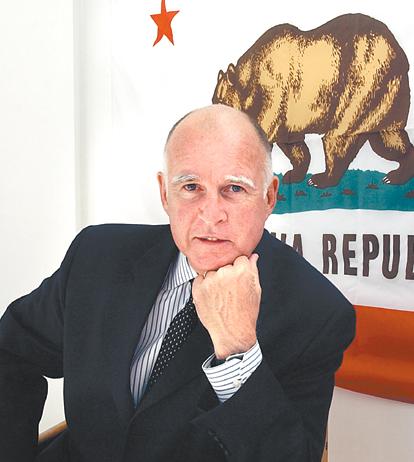
First, the bad news: Jerry Brown has vetoed a couple of important bills by Assemblymember Tom Ammiano, showing that he’s still a strange and unpredictable guy. He rejected a measure that would have provided some basic labor protections to domestic workers and another that would have opened up state prisons to a modicum of media access. His message on domestic workers was confusing (gee, maybe it would cost more to make sure people get meal breaks); on the media access, it was just bizarre:
“Giving criminals celebrity status through repeated appearances on television will glorify their crimes and hurt victims and their families,” Brown wrote in his veto message for Assembly Bill 1270.
What? The notion that the press might be able to interview prisoners about conditions behind bars in an agency that consumes more than $10 billion a year in state funds will “glorify crimes?” Sorry, but Jerry is out of his mind.
From Ammiano’s press release:
“Press access isn’t just to sell newspapers. It’s a way for the public to know that the prisons it pays for are well-run,” Ammiano said. “The CDCR’s unwillingness to be transparent is part of what has led to court orders on prison health care and overcrowding. We should know when the California prisons aren’t being well run before it goes to court. I invite the Governor to visit the SHU [special housing unit/solitary confinement] to see for himself why media access is so important.”
Same goes for the TRUST Act, which had the support of a lot of local police chiefs, the mayor of Los Angeles and Assembly Minority Leader Nancy Pelosi.
On the other hand, Brown did sign a bill by Sen. Mark Leno that could turn out to be the best budget news San Francisco’s had in years. SB 1492 would allow the Board of Supervisors and the voters to reinstate, just in this city, the vehicle license fee that former Governor Arnold Schwarzenegger cut, to such disastrous effect, when he first took office. If the supervisors put it on the ballot and the voters approve, a two percent hike in the car tax could raise $70 million a year for the city — more than triple the amount that the mayor has agreed to raise in his weak gross receipts tax proposal.
That law goes on the books Jan. 1 — and the supes should immediately take up the challenge and approve the VLF hike for the next even-year ballot, November 2014.
Then the Guv vetoed Leno bills protecting cell phone users from warrantless searches and alloing the state to recognize more than two people as parents of a child.
The Spring Standards kids grew up together on the Delaware/Pennsylvania border and got their start playing small folk festivals and around the campfire back in high school. After a break from their collaboration, Heather Robb, James Cleare, and James Smith found themselves in Brooklyn, inspired to pick up where they left off. They’ve been playing together as the Spring Standards for four years and released double EP yellow//gold last spring.
SFBGSo I understand you’ve been on tour for the majority of the past few years. What’s that like?
HR It’s demanding. The hardest part about it is realizing where your regular life is, but luckily touring comes naturally to us. We love getting out, seeing the country, meeting new people, and having weird experiences. We’re still at that level of touring where, on any given night, we could be crashing with complete strangers, which always makes for some great adventure or strange story.
https://www.youtube.com/watch?v=EfO3gB80M_o
SFBGHow would you describe your genre?
HR It’s rock and roll in the sense that it’s free and liberated expression – it’s loud sometimes and raucous and rowdy sometimes – but we also have really deep roots in folk music, Americana, and bluegrass. We’re accessing old school harmony-driven folk rock that was big in the ‘70s. And every so often we decide to totally jump to a different genre and play a heart-wrencher ballad that has nothing to do with rock and roll or a really loud White Stripes song that has nothing to do with folk music.
SFBGDo you try to channel any specific musicians?
HR I think we do sometimes for specific songs. There’s definitely a track off of gold that’s very Fleetwood Mac and in “So Simple So True” I really tried to channel Crosby, Stills and Nash’s “Find the Cost of Freedom.” But, for the most part, I’d say we don’t. We have three songwriters, and I think we just sit down and try to follow what our hearts are telling us on a given day, which can really take us anywhere.
SFBG Can you explain the concept behind ‘yellow//gold’?
HR We hear a lot of different things from a lot of different people about what our sound is, but most consistently we hear that it’s all over the map, which we take as both constructive criticism and praise. The idea for yellow//gold came from wanting to have two opportunities to explore really different sides of our identity musically. We started with this idea of color because it felt intuitive, expressive, and not so limiting. Yellow’s more of the folk-based side of what we do, and gold is the rock-based side. We decided to release them together because they make the most sense when you look at them next to each other.
https://www.youtube.com/watch?v=Cn9LeVtpH0s
SFBGWhat excites you most about playing here in San Francisco?
HR We’re excited to follow up on our June show and love the whole San Francisco scene. And there was a pizza shop I was supposed to visit last time but didn’t get to, so I’ll be looking forward to that!
San Francisco’s wage theft task force, approved in June, had its first meeting today.
The wage theft task force formed to strengthen the city response to workers exploited by wage theft, which can include non-payment of the minimum wage or of hours worked, non-payment of overtime, illegal deductions from worker paychecks, or failure to pay a worker at all.
The group is made up of workers’ rights advocates and government leaders at labor law enforcement agencies, as well as workers and employers. They plan to meet monthly and to release a report in one year with recommendations to the Board of Supervisors for legislation to continue to combat wage theft.
They were also joined by Dolores Huerta at an announcement today celebrating the first meeting. Huerta co-founded the United Farm Workers with César Chávez and has led a life dedicated to ending exploitation of workers. Wage theft, she said, “is not something that only affects workers.”
It hurts employers, she said, by putting “honest employers at a disadvantage.” And “the government loses too,” in the form of dollars lost for social security, unemployment insurance, and other government services funded by taxes on wages paid to employees.
Many workers are reluctant to speak out when they are denied pay, fearing retaliation or losing their jobs.
“When you are living paycheck to paycheck, if you lose your job, your whole family is going to suffer,” said Huerta.
Despite these obstacles, workers have come forward for years to expose the widespread problem.
One such worker, Afredil Colindies, was present at today’s announcement. “I was working seven days a week with no breaks. Sometimes I would get paid, sometimes I would go through extended periods without getting paid,” said Colindies. “When the café where he worked went out of busines, he said, “I still had unpaid wages.”
“The reason we in City Hall finally realized how big a problem this is, is that they had the courage to come forward” said Sup. Campos who helped create the task force alongside Sup. Eric Mar.
About 50 workers were in the room celebrating the launch of the task force, the result of years of work from groups like the Progressive Workers Alliance- a coalition of the Chinese Progressiave Association, Young Workers United, the Filipino Community Center and others. The room broke into an energetic chant of “si se puede,” the rallying cry of United Farm Workers, as the announcement ended.
“What starts in San Francisco goes through California, then all across the country” said Huerta.
“You have to write the book that wants to be written. And if the book will be too difficult for grown-ups, then you write it for children.” — Madeleine L’Engle
She was living proof that not all Christian young adult authors feel the need to concoct elaborate vampire metaphors decrying sexual intimacy. Madeleine L’Engle, in fact, counts as one of the most beloved writers among religious and secular readers of youn adult lit alike (well, some religious people — others condemned her depictions of crystal balls and treatment of Jesus as a learned man.) Her Wrinkle in Time turns the ripe old age of 50 this year, and the SF Public Library has drummed up a line-up of authors just as devoted to its tesseract-traveling plot as you are to commemorate its golden anniversary
For proof that Wrinkle‘s power has hardly taken that tesseract elsewhere, one need only head to 100 Larkin on Sat/13 to hear from a lineup of authors and artists who have been inspired by L’Engle’s most famous work. Rebecca Stead, Gennifer Choldenko, Lewis Buzbee, and Hope Larson, the latter of whom recently released a graphic novel adaptation of Wrinkle, will be talking about how the tale of Meg and Charles Wallace Murray helped guide their creative careers.
L’Engle went from bit role player on Broadway, to celebrated author, to Connecticut general store owner when she and her partner moved to a dairy village to take a break from the hustle and bustle of NYC. Right as she was discovering her Christian faith, she found herself unable to drum up publishers’ interest in her 11th novel, Meet The Austins. That book began with a death, which apparently wasn’t an easy sell in the children’s lit scene in those days (as, one would think, it continues to be now.) She wrote another book, and then, Wrinkle in Time. In 1979, she told Christianity Today:
It was rejected and rejected. I would put the kids to bed, walk down the dirt road in front of the house, weep, and yell at God. I’d say, “God, why are you letting me have all of these rejection slips? You know it’s a good book. I wrote it for you.”
Of course, it was eventually picked up. And, as you can see from the multitudinous book covers we dug up (above), it’s been republished again and again. We love centaurs, and we love Wrinkle. Plus, (as Larson reminds in a recent Huffington Post piece) who else wrote books in 1962 in which the female protagonist spent the entirety of the plot with a black eye? L’Engle’s Meg saved the universe, which we enjoy on a daily basis.
I’ll take whisk(e)y year round. But as summer evolves to fall, it seems all the more appropriate enjoyed on crisp nights, preferably fireside. Thankfully, WhiskyFest approaches this Friday/5, in the usual massive, underground Marriott ballrooms. Recapping past years, VIP early pours of rare whiskies and seminars tend to be highlights. There’s another seminar this week with the legendary, delightful Parker Beam, exploring Japanese Whisky with Suntory brand ambassador Neyah White, and I’m particularly looking forward to beer and single malt pairings with Highland Park brand ambassador Martin Daraz.
There’s a number of new pours this year, including Glenfiddich’s Malt Master which I review below, Parker’s Heritage Collection release for 2012, the Master Distiller’s Blend of Mashbills (Parker Beam’s annual, limited edition releases are among the most exciting American whiskies made), and for the first time ever Nikka Japanese whisky, which I’ve long had to enjoy when in Europe, as you can’t get it here in the US… until this fall, thanks to SF’s very own Anchor Distilling here in SF. Anchor is importing Nikka with, as Anchor President David King told me recently, a few more Japanese whiskies to come — a huge win for whisky lovers like myself who’ve been longing for more imports from Japan. I sampled Taketsuru 12 year, which will also be poured at WhiskyFest, while Anchor will soon import their 17 yr and 21 yr whiskies.
If you aren’t going to WhiskyFest, or even if you are, here are three recently-released American whiskies and two Scotches worth seeking out:
AMERICAN WHISKEY
High West American Prairie Reserve Whiskey($40; 46%/92 proof) – Besides being a real value at $40, I’d deem Prairie Reserve (named after the largest wildlife reserve in the lower 48 states, a 5000 square miles reserve in the works in northeastern Montana) another winner in High West’s Utah-distilled catalogue. With 10% of all sales going to this reserve, High West expresses its love of Western land through whiskey — a blend of two bourbons, to be exact: six-year-old Bourbon from the old Seagrams plant in Lawrenceberg, Indiana (a corn-dominant whiskey at 75% corn, 20% rye, 5% barley malt), and a 10-year-old Four Roses Bourbon (60% corn, 35% rye, 5% barley malt). Orange spice dominates on the nose, there’s the expected bourbon characteristics of vanilla caramel, and sweet, nutty, dark cherries to taste. Though not made from a High West mashbill, it is in keeping with their style, is an elevated cocktail base, yet also a joy sipped neat.
Balcones “1” Texas Single Malt Whisky ($69; 52.7%/105.4 proof) — This new release from the always interesting Balcones Distilling feels Texan namely in its robust character. You could call it a Texas whiskey for the cowboy set but actually their Brimstone smoked corn whiskey, which goes down like a campfire of scrub oak, exhibits a greater ruggedness. The Single Malt, though bracing, is simultaneously smooth, even silky, unfolding with pear, cinnamon spice, even dusty earth. Even though I find Master Distiller Chip Tate’s Brimstone more grab-you-by-the-cojones fascinating, his Texas Single Malt is ultimately more sophisticated and balanced.
WhistlePig TripleOne ($111; 55.5%/111 proof) – The splurge, out this month at a limited 1100 cases, is WhistlePig’s TripleOne from Master Distiller Dave Pickerell, who you may know as Maker’s Mark master distiller for 14 years. As Pickerell said, I was the very first to try TripleOne at Tales of the Cocktail in New Orleans this July. TripleOne is WhistlePig rye but at 111 proof (vs. 100), aged 11 years (vs. 10). The bracing TripleOne doesn’t boast quite as long a finish as the flagship rye, but it’s even more complex, surprisingly akin to applejack or Calvados at first sip, opening up into spicy rye body with citrus and chocolate notes. It’s a beauty showing the elegance possible in rye whiskies.
SCOTCH WHISKEY
Balvenie DoubleWood 17 year ($130; 43%/86 proof) – Balvenie’s new DoubleWood release has been aging 17 years (vs. their classic 12 year), or essentially 17 years in bourbon casks (for 17 years) and 3 to 6 months in Oloroso sherry casks. I prefer bourbon cask liveliness in my Scotch and with the sherry finish there’s merely a whisper of sweet muskiness. Nougat and apples unfold, caramel peeks out, but the body is light and smooth, while still standing up with a hint of briny robustness.
Glenfiddich Master Malt Edition($90; 43%/86 proof) – This brand new, limited-edition whisky was just released in September from the classic distillery, one of only four in Scotland still owned and run by thesame family since the 1800’s. At merely 18,000 bottles, it’s small production for Glenfiddich, celebrating their 125th anniversary. Malt Master Brian Kinsman crafted their first double-matured whisky, which spent roughly 6 to 8 years in used Bourbon barrels, then 4 to 6 years in sherry casks. Sherry sweetness hits first on the nose but thankfully doesn’t overpower the whisky though sherry characteristics dominate (of course there are devotees on both sides of the bourbon or sherry cask-aged whisky spectrum). With whispers of brine, fruitcake and cinnamon, Mitch Bechard, Glenfiddich’s Brand Ambassador, West, said over lunch that it, “Goes down like a penguin in a wet suit”… that is to say, smooth.
If you find a way to taste it, I especially love the new, but already sold out in the States (only 1000 bottles) 1974 edition ($800; 46.8%/93.6 proof), a cask strength single malt, that is surprisingly bright for such age, with pear, vanilla, even passion fruit notes, and a long, spiced finish. A drop of water brings out briny, salty characteristics.
Have you ever listened to KPFA’s “Flashpoints”? A friend described it to me, as we listened to an episode featuring San Francisco’s newest poet laureate – our first Latino laureate – Alejandro Murgía, as a “very pointed” radio show. The host, poet Dennis Bernstein, asked a very pointed question about Obama and Romney’s reactions to the anti-Muslim video that’s causing uproar in the Middle East.
But Murgía changed the subject. What about the racism of the Tucson Unified School District, he asked? Why doesn’t its removal of the Mexican American studies program, and with it books like The Tempest and Pedagogy of the Oppressed, and other books that “emphasize students’ ethnicity rather than their individuality” get talked about more? The more he talked, the more I became convinced that yes, this was a very big deal.
Luckily, the country has an opportunity to talk about the issue of free speech repression via next week’s 30th annual national celebration of Banned Books Week, Sun/30-Oct. 6.
Ethnic studies isn’t the only literature with targets on its back. The national Banned Books Week site has a handy list of the top 10 titles banned in 2011. People get riled up about Hunger Games? Whoa, we’re still incensed by To Kill A Mockingbird and Brave New World?
Free speech suppression is real! Here’s where you can go to break the ban next week. You’ll also want to keep your eyes on the City Lights blog, where you’ll see talks by famous authors on their fave banned books – we’re waiting eagerly for them to post the John Waters’ reading of Lady Chatterly. On a national level, check the Banned Books Week website for information on joining the country-wide “virtual read-out” that the group is organizing.
“Cracking the News with Project Censored”
Every year, the Guardian publishes Project Censored’s list of the top most suppressed stories in the news. (Because sometimes banning starts before publishing does.) On Monday, get a sneak peek with Mickey Huff from PC, who will break down the big events of the year that you didn’t get to hear about.
Perhaps, given the issues we’ve already discussed, the fact that the soccer mom version of a BDSM novel getting restricted in libraries across the country doesn’t seem quite so dire. But sexuality, of course, is still very much a part of us. The library’s conscripted Emily Morse, star of Bravo’s Miss Advised reality show and local self-styled sexpert, to lead a discussion of this bestselling, racy tale of a CEO and his virginal submissive.
Ophelia Coeur de Noir, Carol Queen, and members of the Twilight Vixen Revue strip down and start turning pages for you from their favorite piece of restricted literature at the SF edition of this national network of nudie-bookworm readings.
Today’s 20th anniversary Critical Mass ride has received overwhelming media coverage in the last few days, including a surprisingly laudatory editorial in yesterday’s Examiner, so people are expecting the ride to be huge. But the talk of last night’s CM20 birthday celebration at CELLspace was about Quintin Mecke’s widely circulated letter blasting the San Francisco Bicycle Coalition for refusing to even put the event on its calendar or in its newsletter.
By contrast, even the San Francisco Planning & Urban Research Association (SPUR) – founded and funded by downtown players with little love for Critical Mass – listed today’s “special anniversary ride” and related events throughout the week in its calendar and on its newsletter, recognizing this “monthly bicycling event that began in San Francisco and inspired similar events throughout the world.”
As I wrote in this week’s cover story, SFBC and Critical Mass grew up together on a similar, symbiotic trajectory, effectively working an outside/insider strategy (think MLK/Malcolm X) that has won cyclists a recognized spot on the roadways. But SFBC always warily kept its distance from Critical Mass, worried about offending politicians, the mainstream media, or the driving public.
That’s an understandable strategy, given the persistent resentment many feel toward Critical Mass. But when considered in combination with SFBC’s increasingly corporate culture and sponsorships and its controversial recent decision to allegedly overrule its member vote in its District 5 supervisorial endorsements, SFBC is in danger of losing the allegiance of much of the cycling community (which remains a minority of road users, and thereby political outsiders almost by definition).
David Snyder — SFBC’s executive director through its biggest growth period, SPUR’s former transportation policy director, and currently the executive director of the California Bicycle Coalition — is reluctant to wade into the current controversy, but he does acknowledge the important role Critical Mass played in winning political acceptance for cyclists in San Francisco.
“In the mid-’90s, when the San Francisco Bicycle Coalition was a couple thousand members, the brouhaha around Critical Mass [particularly the crackdown in ’97] increased our membership by 50 percent at one point,” Snyder told us. “At that time, we benefitted hugely form the attention Critical Mass paid to safe streets for bicycles. And I don’t think we need Critical Mass to do that anymore…The Bicycle Coalition’s goal these days isn’t to develop an awareness of unsafe streets, it’s to develop a bold agenda to fix them.”
I spoke with Mecke, who finished second in the 2007 mayor’s race, at last night’s event, and he was frustrated by his follow-up conversations with SFBC leaders, who seem to have taken a very defensive posture instead of welcoming this interesting conversation. I called SFBC Executive Director Leah Shahum to discuss these issues, and I’m waiting to hear back from her and I’ll update this post when I do.
But in the meantime, to feed the discussion, here’s the full text of Mecke’s letter, followed by another letter to SFBC on the endorsement issue:
Dear Bike Coalition:
Sadly, I can’t say I was surprised when I read this week’s SFBC Newsletter and found absolutely zero mention of the 20th Anniversary of Critical Mass. According to your own newsletter, apparently the only thing happening in the San Francisco bike world that is worthy of your 12,000 members knowing about on Friday, Sept. 28 is SFBC’s Valet Bike Parking at the DeYoung Museum. Seriously?
This is the San Francisco Bike Coalition and you couldn’t even bring yourselves to stick a small mention of Critical Mass in your newsletter or on your website (or god forbid you actually celebrate/acknowledge CM and show some pride), a cycling event created here in San Francisco which has spread across the globe to multiple continents since its inception & inspired thousands of cyclists to take to the street? It’s truly amazing that Critical Mass was on the cover of the Guardian this week and even SF Funcheap listed the event but SFBC wouldn’t even put a mention at the bottom in the “Upcoming Events” section, hidden away amongst all the SFBC sponsored events? Not even a listing of the critical mass website or the community events going on all week long? Your website lists the celebration of the 15th anniversary of TransForm but not Critical Mass?
Wow. I’m truly speechless. How embarrassing but more to the point, how sad. Are you afraid of offending Chuck Nevius or Mayor Lee? I don’t know how, why or what SFBC has become as an organization at this point but it’s disappointing as a long time cyclist to see the city’s only (?) organized bike advocacy organization which continually touts how many members you have to not even show the smallest amount of solidarity to your fellow cyclists and to the city’s own cycling history. That being the case, history will march on without you.
Contrary to our “biking” Supervisor David Chiu’s comments in today’s Chronicle (I always enjoy politicians running from anything deemed controversial), it’s actually SFBC that is simply one tiny part of a much larger movement made up of a variety of cyclists from all walks of life whose decision twenty years ago to ride freely in the street once a month for just a few short hours has laid the groundwork for cycling reforms, political action and transformative experiences across the country and the world.
What a shame that instead of celebrating all parts of the cycling community, SFBC has decided to distance itself from the historic roots of its own community in the name of moderation, families on bikes and political expediency.
Enjoy Bike Valet night at the DeYoung Museum, it sounds like an awesome event.
thanks, Quintin
Dear Leah:
My name is Gus Feldman. I am an avid bicyclist, a Bike Coalition member, and the President of the District 8 Democrats.
I’m in receipt of a letter from you, dated September 12, 2012, requesting that I renew my SFBC membership. I am writing to inform you that I will only renew my membership if the SFBC Board of Directors publicly releases the results of the SFBC member vote for the District 5 supervisor race.
While it is clear that the membership vote is one of several factors used by the SFBC Board of Directors to determine endorsements, the refusal of the Board to grant SFBC members the ability to see the results of their votes demonstrates an unacceptable degree of secrecy. By withholding this information, the Board is publicly stripping SFBC members of all agency in the endorsement process.
If in fact the popular suspicion is true – that Julian Davis won the most votes from SFBC members, but the Board decided to grant Christina Olague the top endorsement in the interests of expediting the construction of separated bike lanes on Oak & Fell streets – we would greatly appreciate the Board publicly declaring and explaining the decision. Such a decision is certainly logical, as the Oak/Fell bikes lanes are a key priority for many SFBC members. The fact that the Board has elected to conceal the vote results, as opposed to explaining to SFBC members why and how Olague received the number one endorsement, is highly insulting as it insinuates that the Board does not have faith in SFBC members’ capacity to understand the rationale by which the Board arrived at their determinations.
Please understand that if the Board elects to depart from the current practice of concealing the vote results, and transitions to one of transparency, I will promptly renew my membership.
“Hunee is a good eater,” begins Berlin-based DJ Hunee’s official biography. “Good” here surely means voracious — Hunee may be well-known for his deep disco sets (sometimes running to seven hours in length, especially at his great Hunchin All Night parties) and deep-grooved house productions, but his omnivorous ear takes in everyone from Eric Dolphy and Sergiu Celibidache to N.W.A and Madlib. He creates lovely worlds from these disparate interests, and his generous, off-handedly ironic manner spreads a layer of laidback jazzy soul over the sonic smorgasbord.
On Sun/30, Honey Soundsystem celebrates six years of putting on one of the best weekly parties in San Francisco (it’s honeycomb hexagonal!), Honey Sundays (9pm, $5. Holy Cow, 1535 Folsom, SF.) And to celebrate, the boys flew in this beloved underground soul traveller for an exclusive three-hour set. I caught him over email for a few questions.
SFBGHey Hunee! Thanks for taking the time to answer some questions. You have said that you came from a rap background, but your love of the dance floor soon brought you to disco, and from there into classic house. Can you tell me a few of the records that changed your life and drew you into disco and house?
Hunee Hi! Yea, for sure. The transition def. happened through tunes that were accessible from different sides of the dancefloor. Things that fall into my mind are Colors’ “Am I Gonna Be The One,” Convertion’s “Let’s Do It” (Leroy Burgess production), John Rocca’s “Move,” Chemise’s “She Can’t Love You,” and Definition Of A Track by Backroom Productions. These are not the deepest or most obscure records, but they helped me dance another dance. And shit, I still love playin’ the classics.
SFBGHave you been to San Francisco before? Are there any musicmakers from California who have shaped your aesthetic?
Hunee Never been to the West Coast. When I think of music and California, i connect to N.W.A., 2Pac, Snoop, Madlib, Stones Throw, and of course Dam-Funk. I am not familiar too much with the current dance music from California, but I am hungry to learn about it.
SFBGYou’re well-known for playing epic, hours-long sets, especially at your Hunchin’ parties. Is there any pressure when you have to play shorter sets? How does your sound change, do you think?
Hunee If I play a very long set, I bring even more different type of things, but it doesn’t matter if long or short — I always try to create a dynamic journey. If there is a real memory created for me and the dancers, that’s when I am happy. I love this moment when the vibe changes: the crowd and myself have been through a bit together, and everyone gets loose, and joyful and everything becomes one. That state if more difficult to achieve in short sets, but I also like the challenge of maximum impact in short times.
SFBGYou just took a month off from DJing which you characterized as “long” — can you tell us why you took the break? Beyond that you seem to be insanely busy. What are some of the more memorable parties you’ve played recently?
Hunee Ha ha, yes, after four weeks I was like “Damn, can I even still pull it off? It’s been so long…” Working full-time during the week and playing on the weekends is only fun for some time, and then you’re just tired. There was a need to align different needs and responsibilities. Big nights for me lately were definitely Watergate and Panorama-Bar, Terrassen in Stockholm, and Butter Side Up in Leeds – big up!
http://www.youtube.com/watch?v=fDPun8fe830
SFBGYou’ve lived in Berlin for a long time — what are some of the changes you’ve witnessed lately? Is it still easy for a DJ or music maker with no money and big dreams to move there and survive? You also have strong ties to Amsterdam, especially through the Rush Hour label. Would you ever consider moving there?
Hunee I guess nothing is easy if done right, but everything is possible. Berlin is still very accessible and forgiving and theres are so many opportunities for music minded people. Changes, well, commercialization of the neighbourhoods sucks, upgoing rents, more hostels, more hype, more bikes, more babies – good things, bad things. I love Amsterdam, they built an incredible musical legacy and community, but I am like a bird — I follow the sun. California here I come!
SFBGThis year’s “Tide” had a lovely, twisty-acid ’90s feel — it put me in mind of DJ Kim Ann Foxman, who played an amazing set here last weekend. Do you know her? Are you listening to anyone in particular at the moment?
Hunee I don’t know her personally, but heard great things about her DJing and hope to hear her soon. I mostly listen to Eric Dolphy, Sergiu Celibidache, and Jussi Bjoerling at home, Dance Music wise I dig Daphni, Robert Hood, Roy Davis Jr., Theo and the likes, DJs like Sadar Bahar and Mark Seven make me feel like my only task on earth is to dance.
SFBGSince you’re playing the Honey Soundsystem party, I have to ask: when did you start going by Hunee — is it a childhood nickname, or …?
Hunee Correctly it’s pronounced Who-Knee (and it took me years until I got the honey misunderstanding in english-speaking countries). My mom called me this way since I was able to understand I was an individual person, with an unique name, Hunee.
Emily Jane White played an acoustic concert in a tiny living room in San Francisco and talked about her dark, moody lyrics, before she heads to Portugal next month for a live performance.
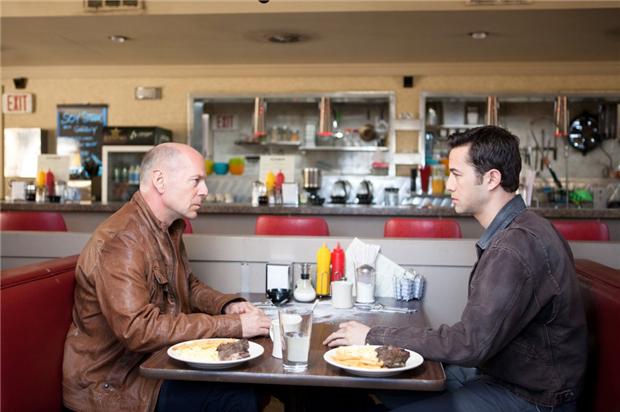
Wait, what are you doing reading this? Why aren’t you watching Looper, the best time-travel movie to come out of Hollywood in ages? Check out Lynn Rapoport’s review below, go see the damn thing (it’s gonna be huge, like Inception huge), and start planning your “Gat Man” Halloween costume this instant.
Marke B. takes on another doc, Detropia, and dubs this look at his hometown “important and beautiful;” full review here.
Two more from H-wood open this week (3D animated monster comedy Hotel Transylvania and YA young-angst tale The Perks of Being a Wallflower), as yet unreviewed — but there’s a bunch more short reviews, including Dennis Harvey’s take on the Vortex Room’s “Aerobicide” triple feature, after the jump.
http://www.youtube.com/watch?v=Y6G_AXzOJKY
“Aerobicide Sunday: A Marathon of Murder in Tights” Two things that made the 1980s taste great, slasher movies and aerobic exercise, were each too crassly, promiscuously commercial not to hook up a few times — even if the sub-sub-genre they created together is even less well remembered than the Lambada musical. Sun/30, however, it shall reign as king at the Vortex, where a triple bill of exer-psycho obscurities will really make you feel the burn. First up is 1987’s Aerobicide a.k.a. Killer Workout, in which the fitness emporium owned by Rhonda (Marcia Karrof of 1984’s Savage Streets) — as sour a grape as you’ll find in pastel spandex and pouf-shouldered Valley Girl dresses — experiences a rash of hard bodies being reduced to bloody pulp by an unknown killer wielding a large killer safety pin. Totally gross! We get many close-ups of overexposed thighs and over assisted cleavage gyrating to heinous dance tracks with inexplicable lyrics like “Hey baby! I’ve got your number! Red and juicy, warm and sweet” — plus some feathered-hair beefcake too — before the culprit turns out to be exactly who you think it is.
This was but an early effort among 32 features to date by writer-director David A. Prior, and based on the evidence present there’s a reason why you’ve never heard of any of them. Slightly slicker was 1990’s Death Spa (a.k.a. Witch Bitch), in which a computer automated gym goes all HAL-slash-The Shining, to the mortal danger of its highly toned staff and clientele. We’re talking death by blender, sauna paneling, and reanimated frozen fish products. The facility’s bitchy programmer is played by Merrick Butrick, who’d portrayed Captain Kirk’s son and a Square Peg earlier in the decade, and died of AIDS before this movie was released. Directed by Austrian Michael Fischa, it’s comparatively glossy but definitely senseless nonsense with a Eurotrash-genre feel. Lastly, in the same vein, and even slicker, there’s 1984’s Murder Rock: Dancing Death a.k.a. Giallo a Disco a.k.a. Slashdance (one of, incredibly, no less than three movies with that third name), a lesser exercise by that occasionally great horror director Lucio Fulci. Rather than a health club, the setting here is a dance school where choreography seems less indebted to Balanchine and Martha Graham than Jane Fonda and Shabba Doo. For that crime the punishment is, of course … death by hatpin? Whatever. If you survive this evening, you will be sore, winded, and desperate to sweat the toxins out of your system. Vortex Room. (Dennis Harvey)
http://www.youtube.com/watch?v=nrf8xoQJ5Ms
BackwardsAthletic disappointment is not a new feeling for Abi (Sarah Megan Thomas, who also wrote the script), who has just learned she’s been named the alternate for the Olympic crew team — a bench warming role she was also relegated to in the last Olympics. But after she quits the team in a huff and moves home, it’s not long before she realizes that her life off the water is pretty depressing, too. Enter former boyfriend Geoff (James Van Der Beek), now the athletic director at the high school where Abi honed her rowing talents, who gives her a job coaching the talented but undisciplined girls who make up the current team. Will this new venture help Abi finally grow up and regain her self-confidence? Will she re-ignite her spark with Geoff? Will there be a last-act conflict involving yet another chance at the Olympics? Will there be multiple training montages? As directed by Ben Hickernell, Backwards hits all of the expected themes about following one’s heart and Doing the Right Thing. Thomas, a former rower herself, has an ordinary-girl appeal, but even Backwards‘ attention to authenticity can’t elevate what’s essentially a very predictable sports drama. (1:29) Sundance Kabuki.(Cheryl Eddy)
http://www.youtube.com/watch?v=eI3ju17W070
Looper It’s 2044 and, thanks to a lengthy bout of exposition by our protagonist, Joe (Joseph Gordon-Levitt), here’s what we know: time travel, an invention 30 years away, will be used by criminals to transport their soon-to-be homicide victims backward, where a class of gunmen called loopers, Joe among them, are employed to “do the necessaries.” More deftly revealed in Brick (2005) writer-director Rian Johnson’s new film is the joylessness of the world in which Joe amorally makes his way, where gangsters from the future control the present (under the supervision of Jeff Daniels), their hit men live large but badly (Joe is addicted to some eyeball-administered narcotic), and the remainder of the urban populace suffers below-subsistence-level poverty. The latest downside for guys like Joe is that a new crime boss has begun sending back a steady stream of aging loopers for termination, or “closing the loop”; soon enough, Joe is staring down a gun barrel at himself plus 30 years.
Being played by Bruce Willis, old Joe is not one to peaceably abide by a death warrant, and young Joe must set off in search of himself so that — with the help of a woman named Sara (Emily Blunt) and her creepy-cute son Cid (Pierce Gagnon) — he can blow his own (future) head off. Having seen the evocatively horrific fate of another escaped looper, we can’t totally blame him. Parsing the daft mechanics of time travel as envisioned here is rough going, but the film’s brisk pacing and talented cast distract, and as one Joe tersely explains to another, if they start talking about it, “we’re gonna be here all day making diagrams with straws” — in other words, some loops just weren’t meant to be closed. (1:58) (Lynn Rapoport)
http://www.youtube.com/watch?v=siEHekc-1oE
Pitch PerfectAs an all-female college a cappella group known as the Barden Bellas launches into Ace of Base’s “The Sign” during the prologue of Pitch Perfect, you can hear the Glee-meets-Bring It On elevator pitch. Which is fine, since Bring It On-meets-anything is clearly worth a shot. In this attempt, Anna Kendrick stars as withdrawn and disaffected college freshman Beca, who dreams of producing music in L.A. but is begrudgingly getting a free ride at Barden University via her comp lit professor father. Clearly his goal is not making sure she receives a liberal arts education, as Barden’s academic jungle extends to the edges of the campus’s competitive a cappella scene, and the closest thing to an intellectual challenge occurs during a “riff-off” between a cappella gangs at the bottom of a mysteriously drained swimming pool. When Beca reluctantly joins the Bellas, she finds herself caring enough about the group’s fate to push for an Ace of Base moratorium and radical steps like performing mashups. Much as 2000’s Bring It On coined terms like “cheerocracy” and “having cheer-sex,” Pitch Perfect gives us the infinitely applicable prefix “a ca-” and descriptives like “getting Treble-boned,” a reference to forbidden sexual relations with the Bellas’ cocky rivals, the Treblemakers. The gags get funnier, dirtier, and weirder, arguably reaching their climax in projectile-vomit snow angels, with Elizabeth Banks and John Michael Higgins as grin-panning competition commentators offering a string of loopily inappropriate observations. (1:52) (Lynn Rapoport)
http://www.youtube.com/watch?v=XSDZNHYLDOY
Solomon KaneConceived by Conan the Barbarian creator Robert E. Howard, this 16th-century hero is cut from the same sword-and-sorcery cloth, being a brawny brute of slippery but generally sorta-kinda upright morals. Solomon (James Purefoy) is slaughtering his way to a North African treasure trove when demons swallow up his likewise greedy, conscience-free cohorts and damn his soul for a lifetime of bad deeds. Suddenly committed to the greater good, he returns homeward to cold gray England, where Jason Flemyng’s evil sorcerer soon imperils both our protagonist and the Puritan family (complete with love interest) he’s befriended. This movie has been around a while — since 2009, to be exact, yet barely beating director Michael J. Bassett’s new Silent Hill: Revelation 3D to U.S. theaters — and is a good illustration of what can happen when you make a fairly expensive ($45 million) fantasy-action adventure without major stars nor any marketable novelty. Which is to say: not much. There is absolutely nothing wrong with the good-looking, watchable but generic-feeling Solomon Kane, save that nothing about it feels remotely original or inspired. It’s the perfectly okay, like-a-thousand-others mall flick you’ll forget you saw by Thanksgiving, despite being peopled with such normally interesting actors as Max Von Sydow, Alice Krige, and the late Pete Postlethwaite. (1:54) (Dennis Harvey)
http://www.youtube.com/watch?v=4mZIwD4K544
“Stars In Shorts” Outside of the festival circuit, it’s an uncommon feat for shorts to make it to the big screen, so it can’t hurt to make name recognition a prerequisite for selection. In writer-director Rupert Friend’s Steve, Keira Knightley plays an embattled Londoner under siege by her lonely, pathologically odd neighbor (Colin Firth). Written by Neil LaBute, Jacob Chase’s After School Special sets up a semi-flirtation between two strangers (Sarah Paulson and Wes Bentley) at a playground, only to deliver the kind of gut-level punch you might expect from the writer-director of 1998’s Your Friends and Neighbors. LaBute’s own Sexting is an entertaining exercise in stream-of-consciousness monologuing by Julia Stiles. As with most shorts programs, “Stars” is a mixed bag. Robert Festinger’s The Procession, in which Lily Tomlin and Modern Family’s Jesse Tyler Ferguson play reluctant participants in a funeral procession, sounds promising, but the conversation palls during the 10-plus minutes we’re stuck in the car with them. Benjamin Grayson’s sci-fi thriller Prodigal, starring Kenneth Branagh, reaches its predictable crisis points several minutes after the viewer has arrived. More successful are Jay Kamen’s musical comedy Not Your Time, starring Seinfeld’s Jason Alexander as an old Hollywood hand whose writing career has stalled out, and Chris Foggin’s Friend Request Pending, which treats viewers to the sight of Dame Judi Dench gamely wading into the social network in search of a date. (1:53) (Lynn Rapoport)
Won’t Back Down If talk of introducing charter schools into the public education mix tends to give you collective-bargaining-related hives, Daniel Barnz’s Won’t Back Down is unlikely to appeal, unless perhaps as the object of a boycott or a picket line. Two embattled mothers, Jamie Fitzpatrick (Maggie Gyllenhaal) and Nona Alberts (Viola Davis), both with children at a failing Pittsburgh elementary school and the latter a teacher there, join forces to change the institutional culture by leading a parent-teacher takeover, with the goal of creating a charter school. As the bureaucratic process for doing so is described by a school district employee, it should take them three to five years to discover that they’ve been hurling themselves at a brick wall; Jamie, an efficient combination of fireball and pit bull, is determined to pulverize the wall in about two months.
Watching her and Nona try to secure more than a third-rate, treading-water education for their kids, it’s hard not to root for the possibility of a transformation, and even an upper-level teachers’ union staffer played by Holly Hunter finds herself climbing the fence. The details of what lies on the other side (and inside Jamie and Nona’s 400-page proposal) stay fairly fuzzy, though. And while Barnz lets his warring factions — desperate mothers and educators, a union boss (Ned Eisenberg) watching the deterioration of the labor movement, a pro-union teacher (Oscar Isaac) ambivalently engaged in the chartering project — impassionedly debate their way through the film, a little more wonkiness might have clarified the arguments of those done waiting for Superman. (2:00) (Lynn Rapoport)